The Global
Competitiveness Report
2010–2011


Klaus Schwab, World Economic Forum
World Economic Forum
Geneva, Switzerland 2010


                                                                          Professor Klaus Schwab
                                                                          World Economic Forum
                                                                          Editor


The Global
Competitiveness Report
2010–2011


Professor Xavier Sala-i-Martin
Columbia University
Chief Advisor of the Centre for Global Competitiveness and Performance


Members of the Global Competitiveness Report Advisory Board
Dr Kemal Dervis
Brookings Institution
Vice-President and Director, Global Economy and Development
Professor Ricardo Hausmann
Harvard University
Director, Center for International Development, John F. Kennedy School of Government
H.E. Dr Felipe Larraín Bascuñán
Minister of Finance of Chile
H.E. Dr Mari Elka Pangestu
Minister of Trade of Indonesia
The Global Competitiveness Report                                    World Economic Forum
2010–2011 is published by the World                                  Geneva
Economic Forum within the framework of
the Centre for Global Competitiveness and                            Copyright © 2010
Performance                                                          by the World Economic Forum

                                                                     All rights reserved. No part of this publication
Professor Klaus Schwab                                               may be reproduced, stored in a retrieval
Executive Chairman                                                   system, or transmitted, in any form or by any
                                                                     means, electronic, mechanical, photocopying,
Professor Xavier Sala-i-Martin
                                                                     or otherwise without the prior permission of
Chief Advisor of the Centre for Global
                                                                     the World Economic Forum.
Competitiveness and Performance
                                                                     ISBN-13: 978-92-95044-87-6
Robert Greenhill
                                                                     ISBN-10: 92-95044-87-8
Chief Business Officer

                                                                     This book is printed on paper suitable for
CENTRE FOR GLOBAL COMPETITIVENESS AND PERFORMANCE
                                                                     recycling and made from fully managed and
Jennifer Blanke, Director, Lead Economist,                           sustained forest sources.
Head of the Centre for Global
Competitiveness and Performance                                      Printed and bound in Switzerland by SRO-Kundig.
Margareta Drzeniek Hanouz, Director,
Senior Economist
Irene Mia, Director, Senior Economist
Thierry Geiger, Associate Director,
Economist
Ciara Browne, Associate Director
Pearl Samandari, Community Manager
Eva Trujillo Herrera, Research Assistant
Carissa Sahli, Coordinator

We thank Hope Steele for her superb editing
work and Neil Weinberg for his excellent
graphic design and layout. We are grateful to
Miriam Poretti for her invaluable research
assistance.

The terms country and nation as used in this
report do not in all cases refer to a territorial
entity that is a state as understood by inter-
national law and practice. The terms cover
well-defined, geographically self-contained
economic areas that may not be states but
for which statistical data are maintained on a
separate and independent basis.


                                    The Global Competitiveness Report 2010-2011 © 2010 World Economic Forum
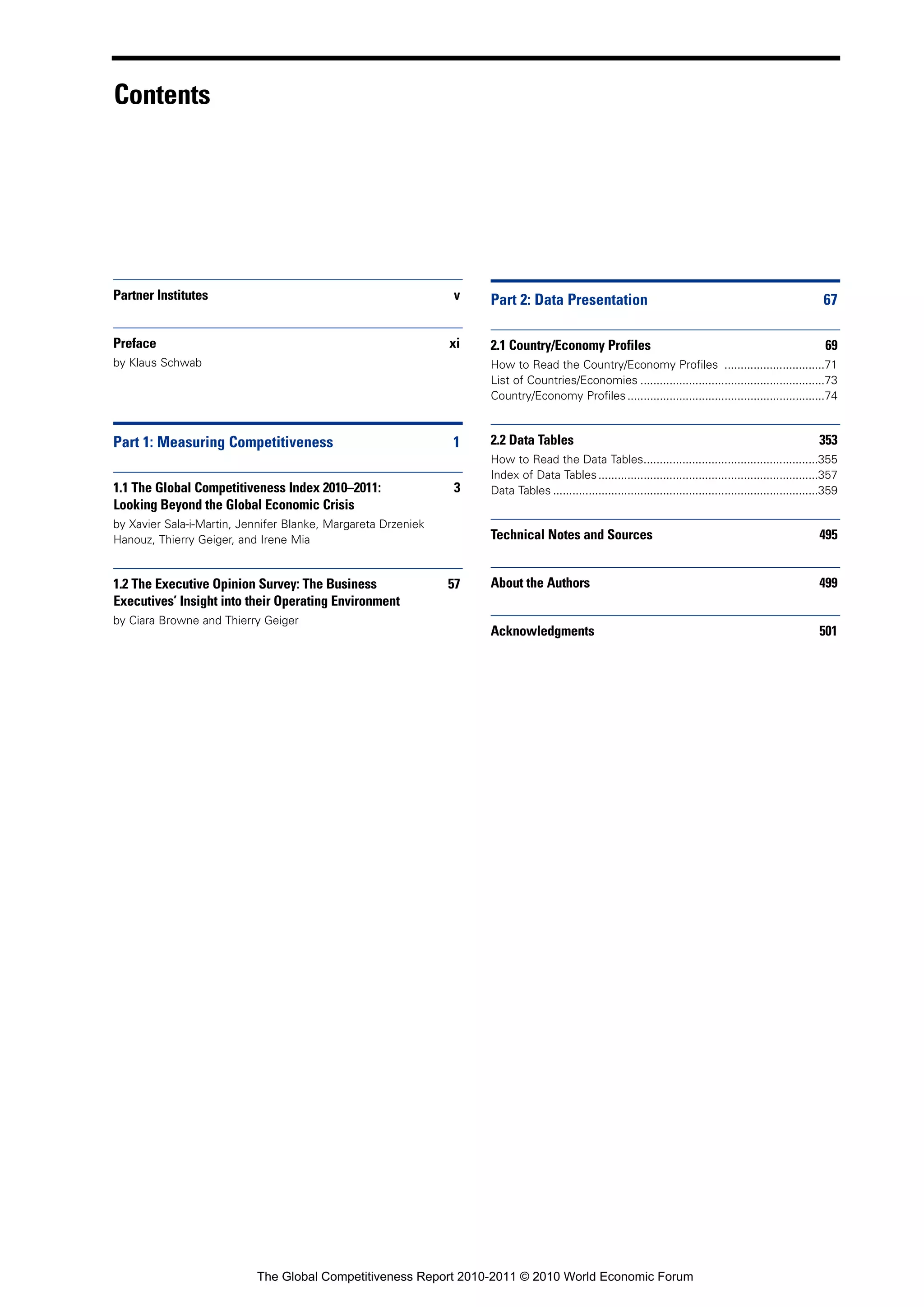
Contents


Partner Institutes                                             v    Part 2: Data Presentation                                                                    67

Preface                                                        xi   2.1 Country/Economy Profiles                                                                 69
by Klaus Schwab                                                     How to Read the Country/Economy Profiles ...............................71
                                                                    List of Countries/Economies .........................................................73
                                                                    Country/Economy Profiles .............................................................74


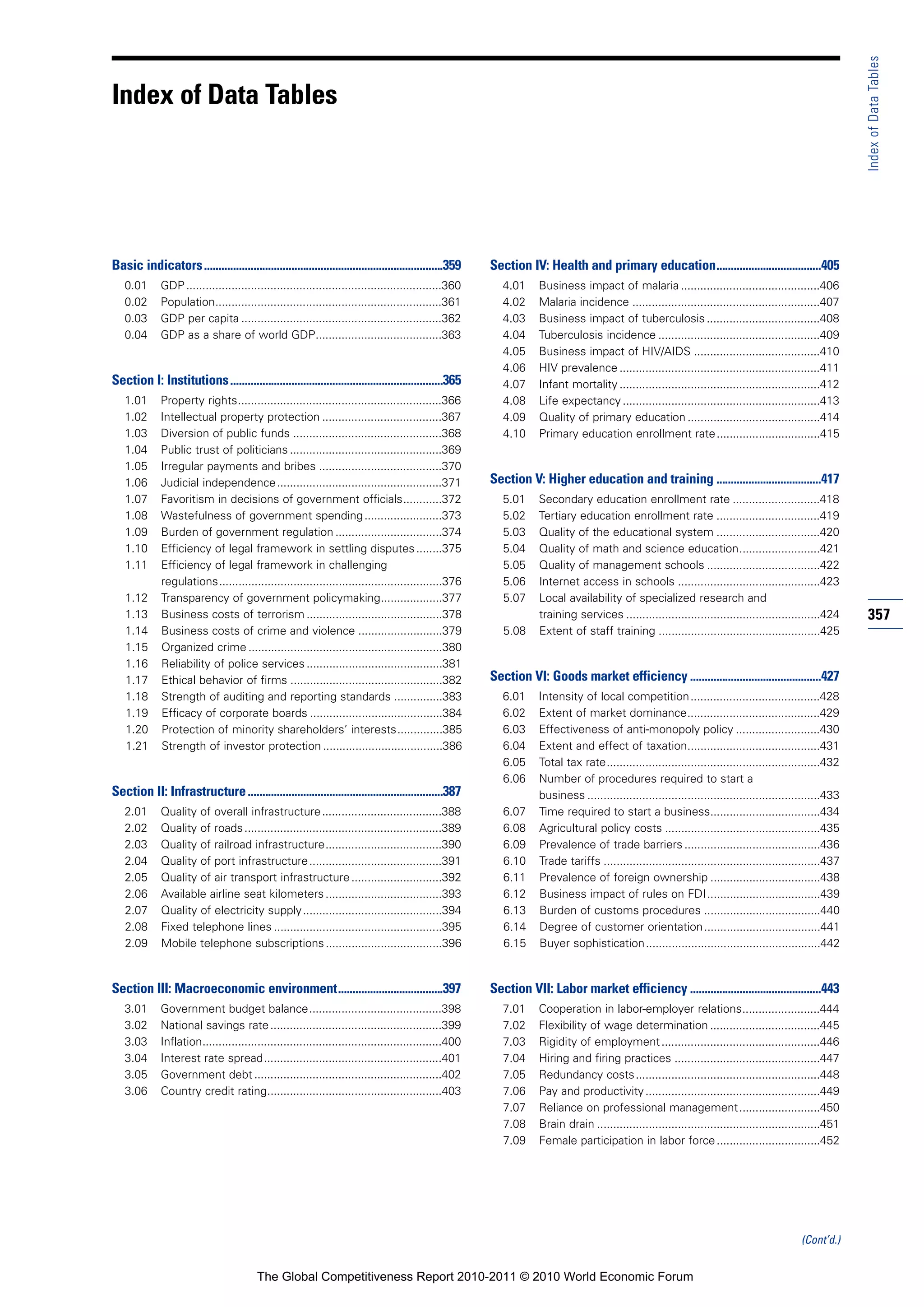
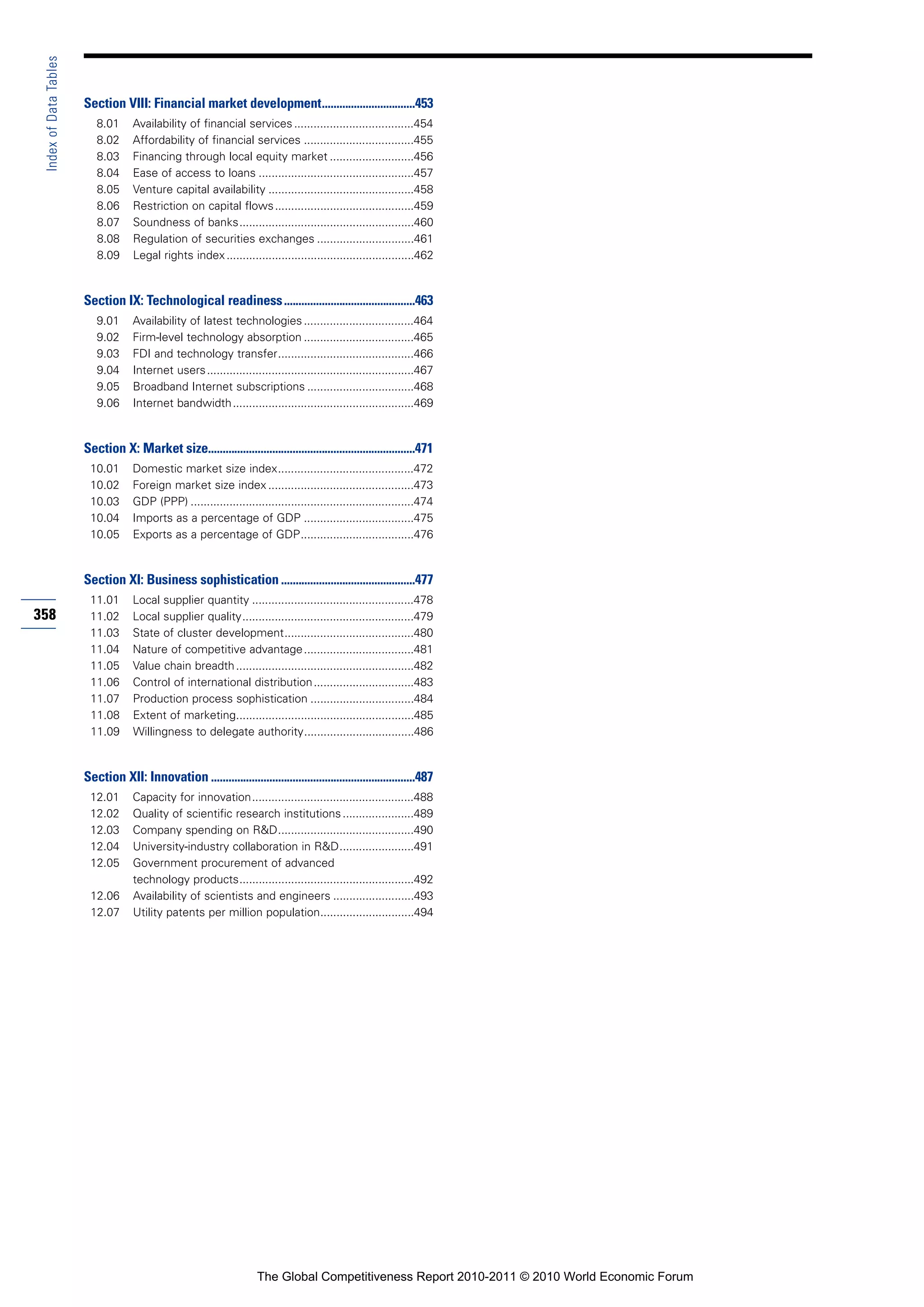
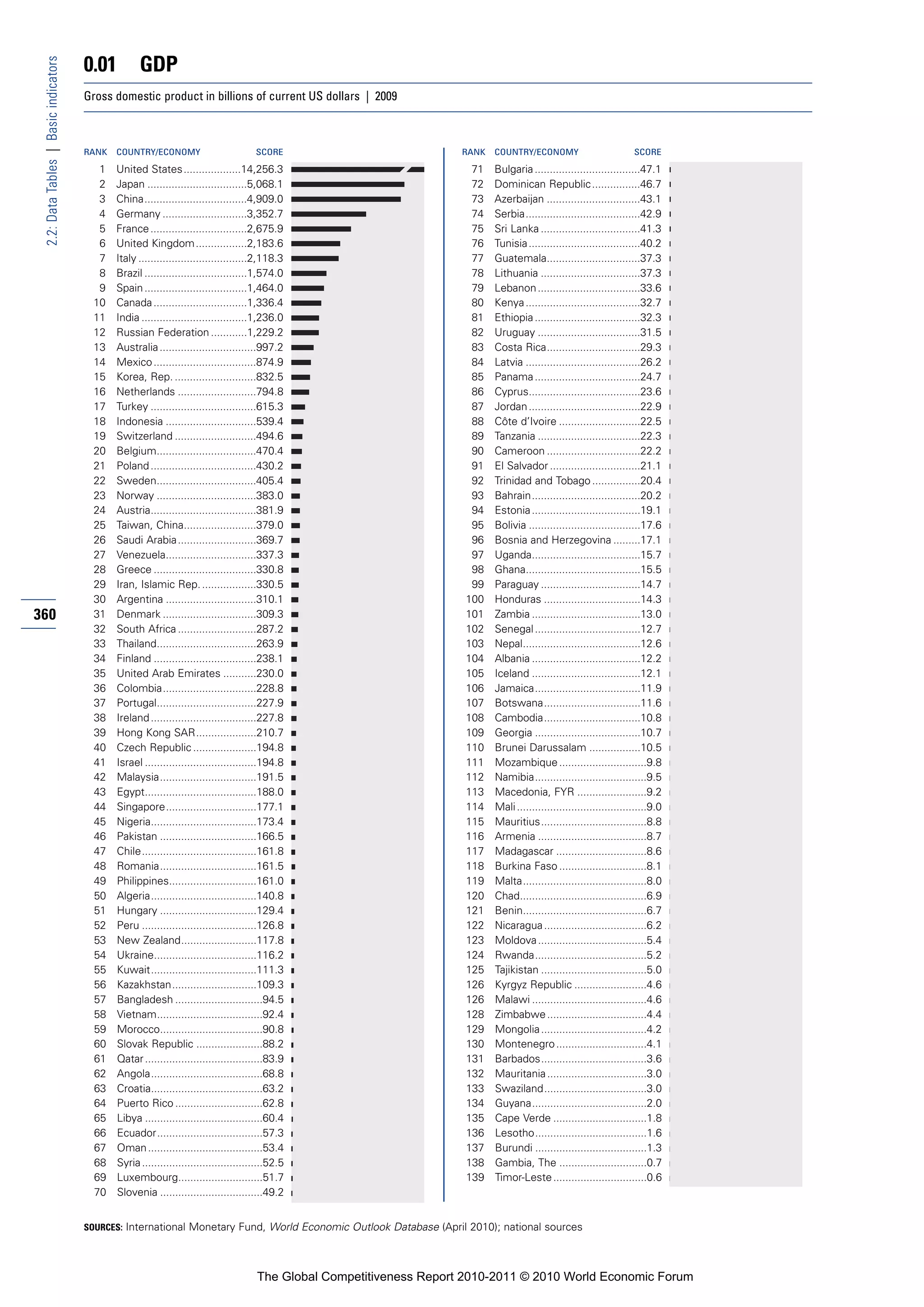
Part 1: Measuring Competitiveness                              1    2.2 Data Tables                                                                            353
                                                                    How to Read the Data Tables......................................................355
                                                                    Index of Data Tables ....................................................................357
1.1 The Global Competitiveness Index 2010–2011:                3    Data Tables ..................................................................................359
Looking Beyond the Global Economic Crisis
by Xavier Sala-i-Martin, Jennifer Blanke, Margareta Drzeniek
Hanouz, Thierry Geiger, and Irene Mia                               Technical Notes and Sources                                                                495


1.2 The Executive Opinion Survey: The Business                 57   About the Authors                                                                          499
Executives’ Insight into their Operating Environment
by Ciara Browne and Thierry Geiger
                                                                    Acknowledgments                                                                            501


                           The Global Competitiveness Report 2010-2011 © 2010 World Economic Forum
The Global Competitiveness Report 2010-2011 © 2010 World Economic Forum
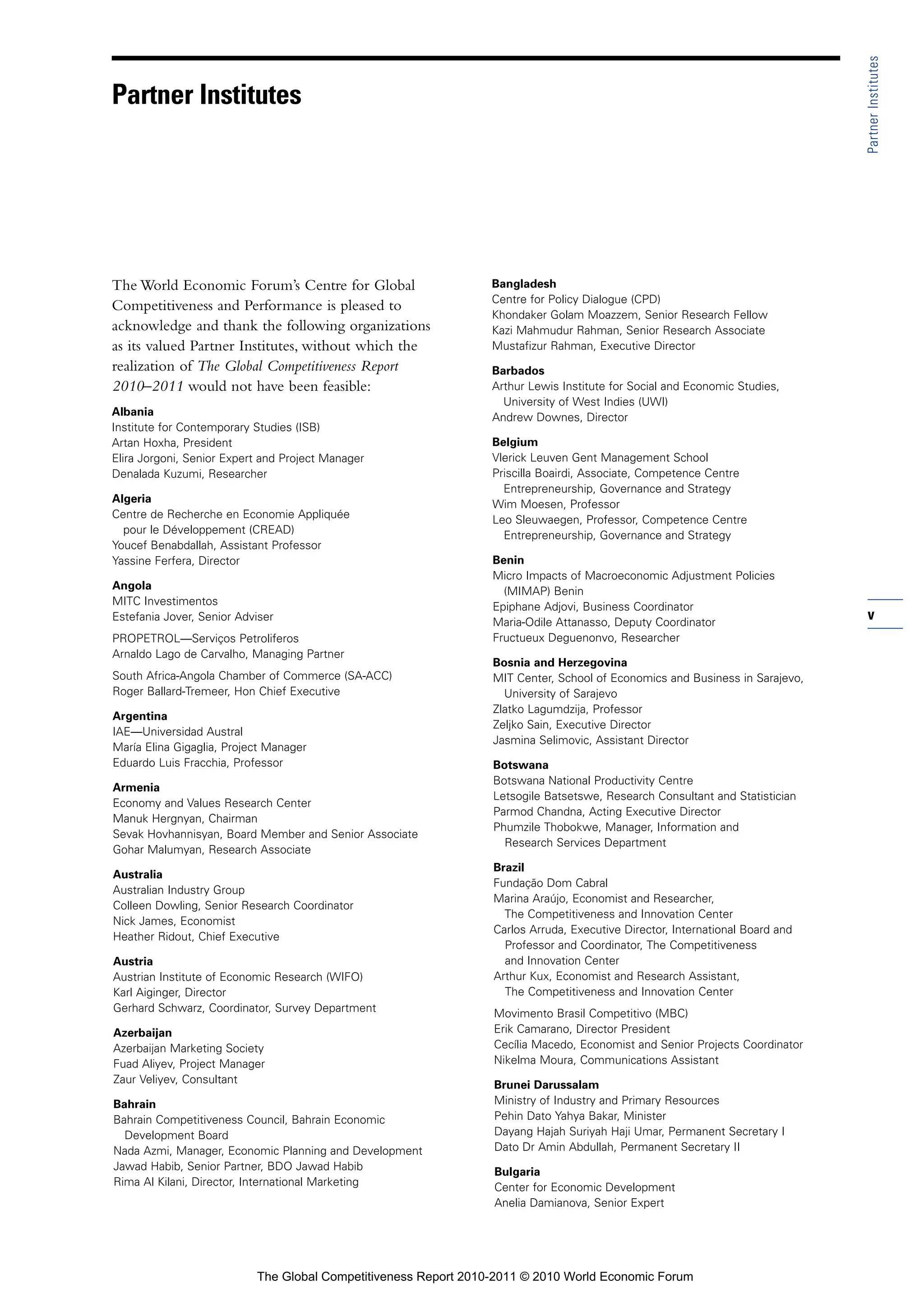
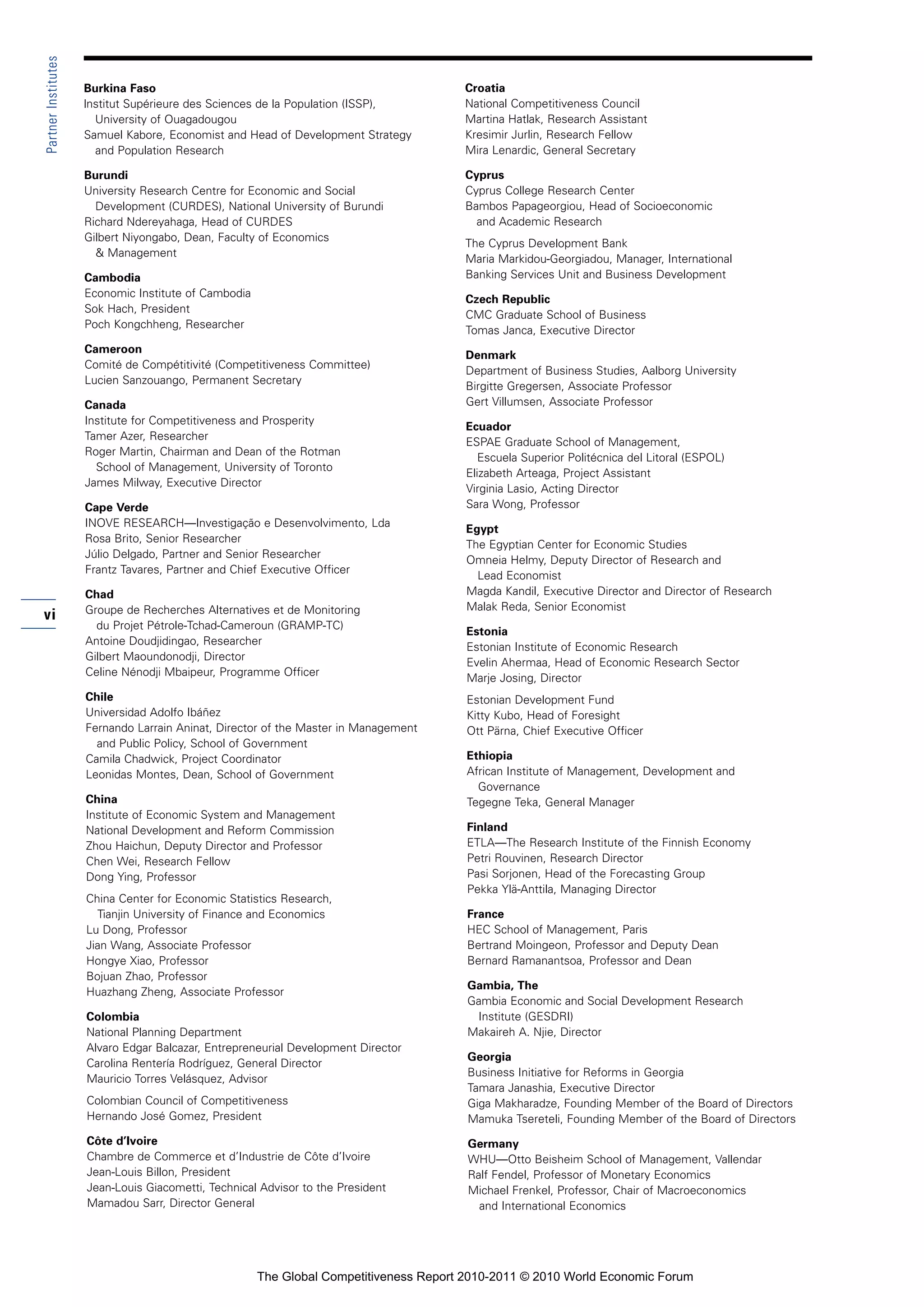
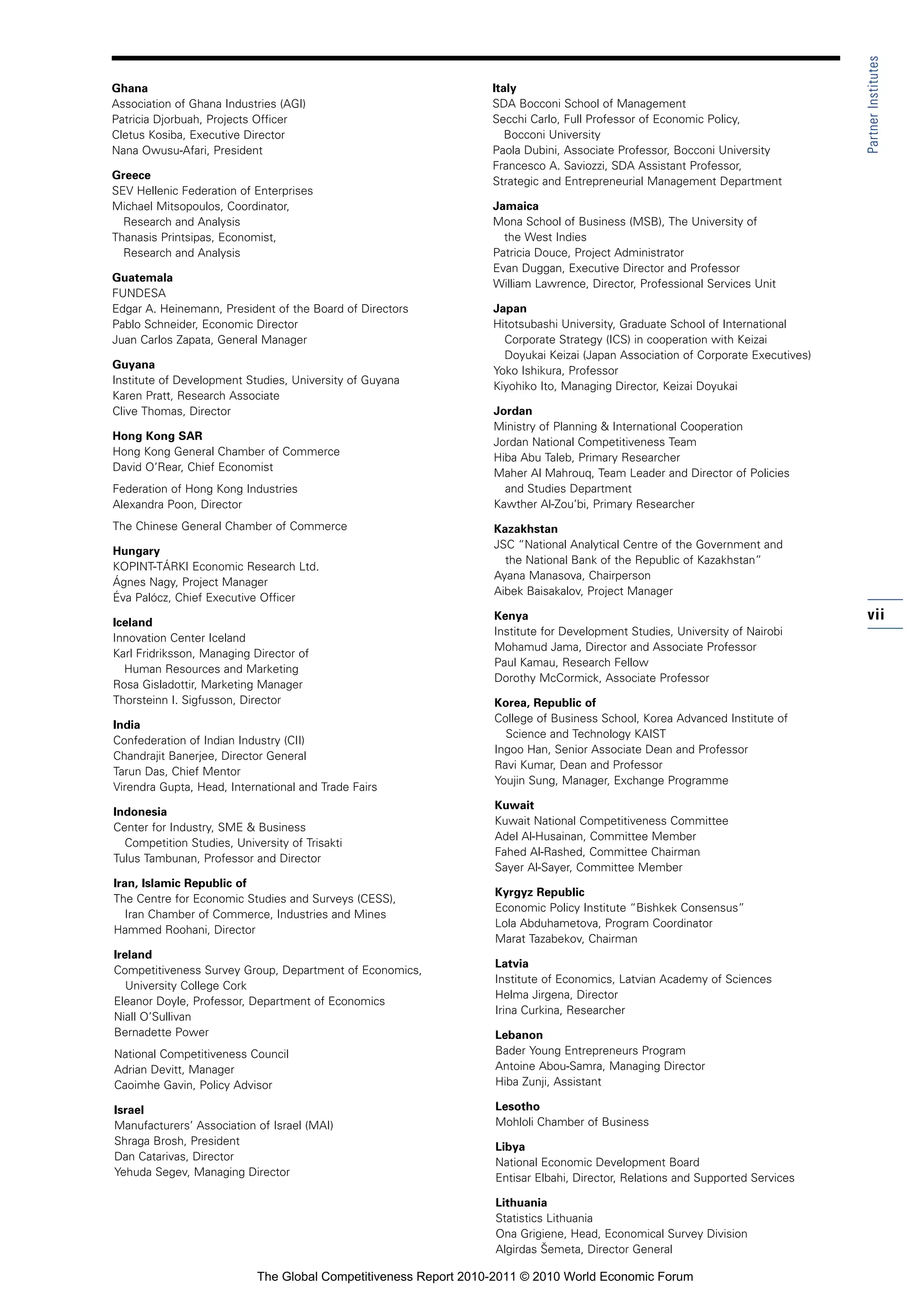
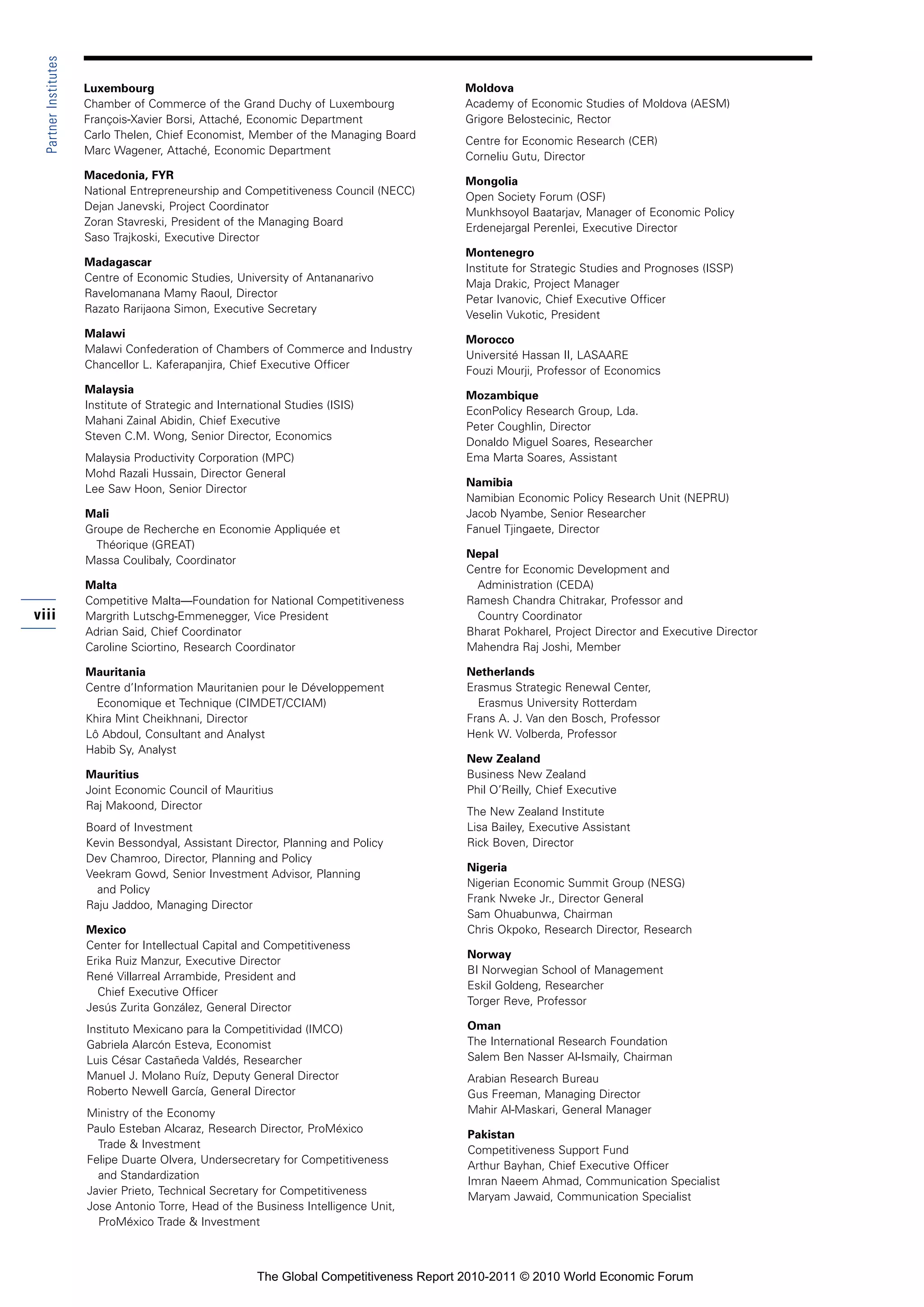
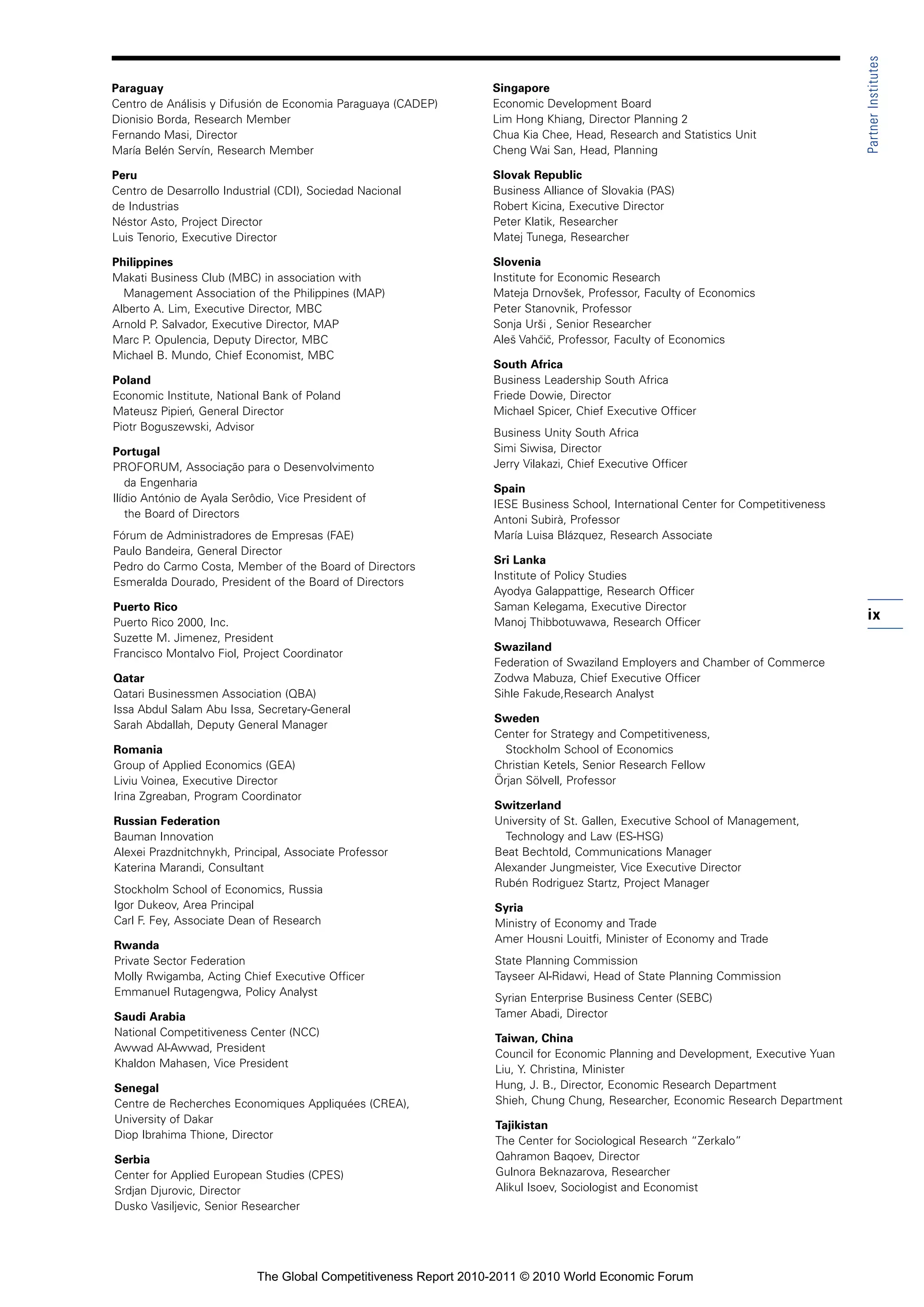
Partner Institutes
Partner Institutes


The World Economic Forum’s Centre for Global                     Bangladesh
                                                                 Centre for Policy Dialogue (CPD)
Competitiveness and Performance is pleased to
                                                                 Khondaker Golam Moazzem, Senior Research Fellow
acknowledge and thank the following organizations                Kazi Mahmudur Rahman, Senior Research Associate
as its valued Partner Institutes, without which the              Mustafizur Rahman, Executive Director
realization of The Global Competitiveness Report                 Barbados
2010–2011 would not have been feasible:                          Arthur Lewis Institute for Social and Economic Studies,
                                                                   University of West Indies (UWI)
Albania                                                          Andrew Downes, Director
Institute for Contemporary Studies (ISB)
Artan Hoxha, President                                           Belgium
Elira Jorgoni, Senior Expert and Project Manager                 Vlerick Leuven Gent Management School
Denalada Kuzumi, Researcher                                      Priscilla Boairdi, Associate, Competence Centre
                                                                   Entrepreneurship, Governance and Strategy
Algeria                                                          Wim Moesen, Professor
Centre de Recherche en Economie Appliquée                        Leo Sleuwaegen, Professor, Competence Centre
  pour le Développement (CREAD)                                    Entrepreneurship, Governance and Strategy
Youcef Benabdallah, Assistant Professor
Yassine Ferfera, Director                                        Benin
                                                                 Micro Impacts of Macroeconomic Adjustment Policies
Angola                                                             (MIMAP) Benin
MITC Investimentos                                               Epiphane Adjovi, Business Coordinator
Estefania Jover, Senior Adviser                                  Maria-Odile Attanasso, Deputy Coordinator
                                                                                                                              v
PROPETROL—Serviços Petroliferos                                  Fructueux Deguenonvo, Researcher
Arnaldo Lago de Carvalho, Managing Partner
                                                                 Bosnia and Herzegovina
South Africa-Angola Chamber of Commerce (SA-ACC)                 MIT Center, School of Economics and Business in Sarajevo,
Roger Ballard-Tremeer, Hon Chief Executive                         University of Sarajevo
                                                                 Zlatko Lagumdzija, Professor
Argentina
                                                                 Zeljko Sain, Executive Director
IAE—Universidad Austral
                                                                 Jasmina Selimovic, Assistant Director
María Elina Gigaglia, Project Manager
Eduardo Luis Fracchia, Professor                                 Botswana
                                                                 Botswana National Productivity Centre
Armenia
                                                                 Letsogile Batsetswe, Research Consultant and Statistician
Economy and Values Research Center
                                                                 Parmod Chandna, Acting Executive Director
Manuk Hergnyan, Chairman
                                                                 Phumzile Thobokwe, Manager, Information and
Sevak Hovhannisyan, Board Member and Senior Associate
                                                                   Research Services Department
Gohar Malumyan, Research Associate
                                                                 Brazil
Australia
                                                                 Fundação Dom Cabral
Australian Industry Group
                                                                 Marina Araújo, Economist and Researcher,
Colleen Dowling, Senior Research Coordinator
                                                                   The Competitiveness and Innovation Center
Nick James, Economist
                                                                 Carlos Arruda, Executive Director, International Board and
Heather Ridout, Chief Executive
                                                                   Professor and Coordinator, The Competitiveness
Austria                                                            and Innovation Center
Austrian Institute of Economic Research (WIFO)                   Arthur Kux, Economist and Research Assistant,
Karl Aiginger, Director                                            The Competitiveness and Innovation Center
Gerhard Schwarz, Coordinator, Survey Department                  Movimento Brasil Competitivo (MBC)
Azerbaijan                                                       Erik Camarano, Director President
Azerbaijan Marketing Society                                     Cecília Macedo, Economist and Senior Projects Coordinator
Fuad Aliyev, Project Manager                                     Nikelma Moura, Communications Assistant
Zaur Veliyev, Consultant                                         Brunei Darussalam
Bahrain                                                          Ministry of Industry and Primary Resources
Bahrain Competitiveness Council, Bahrain Economic                Pehin Dato Yahya Bakar, Minister
  Development Board                                              Dayang Hajah Suriyah Haji Umar, Permanent Secretary I
Nada Azmi, Manager, Economic Planning and Development            Dato Dr Amin Abdullah, Permanent Secretary II
Jawad Habib, Senior Partner, BDO Jawad Habib                     Bulgaria
Rima Al Kilani, Director, International Marketing                Center for Economic Development
                                                                 Anelia Damianova, Senior Expert


                           The Global Competitiveness Report 2010-2011 © 2010 World Economic Forum
Partner Institutes

                     Burkina Faso                                                      Croatia
                     lnstitut Supérieure des Sciences de la Population (ISSP),         National Competitiveness Council
                       University of Ouagadougou                                       Martina Hatlak, Research Assistant
                     Samuel Kabore, Economist and Head of Development Strategy         Kresimir Jurlin, Research Fellow
                       and Population Research                                         Mira Lenardic, General Secretary

                     Burundi                                                           Cyprus
                     University Research Centre for Economic and Social                Cyprus College Research Center
                       Development (CURDES), National University of Burundi            Bambos Papageorgiou, Head of Socioeconomic
                     Richard Ndereyahaga, Head of CURDES                                 and Academic Research
                     Gilbert Niyongabo, Dean, Faculty of Economics
                                                                                       The Cyprus Development Bank
                       & Management
                                                                                       Maria Markidou-Georgiadou, Manager, International
                     Cambodia                                                          Banking Services Unit and Business Development
                     Economic Institute of Cambodia
                                                                                       Czech Republic
                     Sok Hach, President
                                                                                       CMC Graduate School of Business
                     Poch Kongchheng, Researcher
                                                                                       Tomas Janca, Executive Director
                     Cameroon
                                                                                       Denmark
                     Comité de Compétitivité (Competitiveness Committee)
                                                                                       Department of Business Studies, Aalborg University
                     Lucien Sanzouango, Permanent Secretary
                                                                                       Birgitte Gregersen, Associate Professor
                     Canada                                                            Gert Villumsen, Associate Professor
                     Institute for Competitiveness and Prosperity
                                                                                       Ecuador
                     Tamer Azer, Researcher
                                                                                       ESPAE Graduate School of Management,
                     Roger Martin, Chairman and Dean of the Rotman
                                                                                          Escuela Superior Politécnica del Litoral (ESPOL)
                       School of Management, University of Toronto
                                                                                       Elizabeth Arteaga, Project Assistant
                     James Milway, Executive Director
                                                                                       Virginia Lasio, Acting Director
                     Cape Verde                                                        Sara Wong, Professor
                     INOVE RESEARCH—Investigação e Desenvolvimento, Lda
                                                                                        Egypt
                     Rosa Brito, Senior Researcher
                                                                                        The Egyptian Center for Economic Studies
                     Júlio Delgado, Partner and Senior Researcher
                                                                                        Omneia Helmy, Deputy Director of Research and
                     Frantz Tavares, Partner and Chief Executive Officer
                                                                                          Lead Economist
                     Chad                                                               Magda Kandil, Executive Director and Director of Research
                     Groupe de Recherches Alternatives et de Monitoring                 Malak Reda, Senior Economist
vi
                       du Projet Pétrole-Tchad-Cameroun (GRAMP-TC)
                                                                                        Estonia
                     Antoine Doudjidingao, Researcher
                                                                                        Estonian Institute of Economic Research
                     Gilbert Maoundonodji, Director
                                                                                        Evelin Ahermaa, Head of Economic Research Sector
                     Celine Nénodji Mbaipeur, Programme Officer
                                                                                        Marje Josing, Director
                     Chile                                                              Estonian Development Fund
                     Universidad Adolfo Ibáñez                                          Kitty Kubo, Head of Foresight
                     Fernando Larrain Aninat, Director of the Master in Management      Ott Pärna, Chief Executive Officer
                       and Public Policy, School of Government
                     Camila Chadwick, Project Coordinator                               Ethiopia
                     Leonidas Montes, Dean, School of Government                        African Institute of Management, Development and
                                                                                          Governance
                     China                                                              Tegegne Teka, General Manager
                     Institute of Economic System and Management
                     National Development and Reform Commission                         Finland
                     Zhou Haichun, Deputy Director and Professor                        ETLA—The Research Institute of the Finnish Economy
                     Chen Wei, Research Fellow                                          Petri Rouvinen, Research Director
                     Dong Ying, Professor                                               Pasi Sorjonen, Head of the Forecasting Group
                                                                                        Pekka Ylä-Anttila, Managing Director
                     China Center for Economic Statistics Research,
                       Tianjin University of Finance and Economics                      France
                     Lu Dong, Professor                                                 HEC School of Management, Paris
                     Jian Wang, Associate Professor                                     Bertrand Moingeon, Professor and Deputy Dean
                     Hongye Xiao, Professor                                             Bernard Ramanantsoa, Professor and Dean
                     Bojuan Zhao, Professor
                                                                                        Gambia, The
                     Huazhang Zheng, Associate Professor
                                                                                        Gambia Economic and Social Development Research
                     Colombia                                                            Institute (GESDRI)
                     National Planning Department                                       Makaireh A. Njie, Director
                     Alvaro Edgar Balcazar, Entrepreneurial Development Director
                                                                                        Georgia
                     Carolina Rentería Rodríguez, General Director
                                                                                        Business Initiative for Reforms in Georgia
                     Mauricio Torres Velásquez, Advisor
                                                                                        Tamara Janashia, Executive Director
                     Colombian Council of Competitiveness                               Giga Makharadze, Founding Member of the Board of Directors
                     Hernando José Gomez, President                                     Mamuka Tsereteli, Founding Member of the Board of Directors
                     Côte d’Ivoire                                                      Germany
                     Chambre de Commerce et d’Industrie de Côte d’Ivoire                WHU—Otto Beisheim School of Management, Vallendar
                     Jean-Louis Billon, President                                       Ralf Fendel, Professor of Monetary Economics
                     Jean-Louis Giacometti, Technical Advisor to the President          Michael Frenkel, Professor, Chair of Macroeconomics
                     Mamadou Sarr, Director General                                       and International Economics


                                                      The Global Competitiveness Report 2010-2011 © 2010 World Economic Forum
Partner Institutes
Ghana                                                             Italy
Association of Ghana Industries (AGI)                             SDA Bocconi School of Management
Patricia Djorbuah, Projects Officer                               Secchi Carlo, Full Professor of Economic Policy,
Cletus Kosiba, Executive Director                                    Bocconi University
Nana Owusu-Afari, President                                       Paola Dubini, Associate Professor, Bocconi University
                                                                  Francesco A. Saviozzi, SDA Assistant Professor,
Greece
                                                                  Strategic and Entrepreneurial Management Department
SEV Hellenic Federation of Enterprises
Michael Mitsopoulos, Coordinator,                                 Jamaica
  Research and Analysis                                           Mona School of Business (MSB), The University of
Thanasis Printsipas, Economist,                                     the West Indies
  Research and Analysis                                           Patricia Douce, Project Administrator
                                                                  Evan Duggan, Executive Director and Professor
Guatemala
                                                                  William Lawrence, Director, Professional Services Unit
FUNDESA
Edgar A. Heinemann, President of the Board of Directors           Japan
Pablo Schneider, Economic Director                                Hitotsubashi University, Graduate School of International
Juan Carlos Zapata, General Manager                                 Corporate Strategy (ICS) in cooperation with Keizai
                                                                    Doyukai Keizai (Japan Association of Corporate Executives)
Guyana
                                                                  Yoko Ishikura, Professor
Institute of Development Studies, University of Guyana
                                                                  Kiyohiko Ito, Managing Director, Keizai Doyukai
Karen Pratt, Research Associate
Clive Thomas, Director                                            Jordan
                                                                  Ministry of Planning & International Cooperation
Hong Kong SAR
                                                                  Jordan National Competitiveness Team
Hong Kong General Chamber of Commerce
                                                                  Hiba Abu Taleb, Primary Researcher
David O’Rear, Chief Economist
                                                                  Maher Al Mahrouq, Team Leader and Director of Policies
Federation of Hong Kong Industries                                  and Studies Department
Alexandra Poon, Director                                          Kawther Al-Zou’bi, Primary Researcher
The Chinese General Chamber of Commerce                           Kazakhstan
                                                                  JSC “National Analytical Centre of the Government and
Hungary
                                                                    the National Bank of the Republic of Kazakhstan”
KOPINT-TÁRKI Economic Research Ltd.
                                                                  Ayana Manasova, Chairperson
Ágnes Nagy, Project Manager
                                                                  Aibek Baisakalov, Project Manager
Éva Palócz, Chief Executive Officer

Iceland
                                                                  Kenya                                                          vii
                                                                  Institute for Development Studies, University of Nairobi
Innovation Center Iceland
                                                                  Mohamud Jama, Director and Associate Professor
Karl Fridriksson, Managing Director of
                                                                  Paul Kamau, Research Fellow
  Human Resources and Marketing
                                                                  Dorothy McCormick, Associate Professor
Rosa Gisladottir, Marketing Manager
Thorsteinn I. Sigfusson, Director                                 Korea, Republic of
                                                                  College of Business School, Korea Advanced Institute of
India
                                                                    Science and Technology KAIST
Confederation of Indian Industry (CII)
                                                                  Ingoo Han, Senior Associate Dean and Professor
Chandrajit Banerjee, Director General
                                                                  Ravi Kumar, Dean and Professor
Tarun Das, Chief Mentor
                                                                  Youjin Sung, Manager, Exchange Programme
Virendra Gupta, Head, International and Trade Fairs
                                                                  Kuwait
Indonesia
                                                                  Kuwait National Competitiveness Committee
Center for Industry, SME & Business
                                                                  Adel Al-Husainan, Committee Member
  Competition Studies, University of Trisakti
                                                                  Fahed Al-Rashed, Committee Chairman
Tulus Tambunan, Professor and Director
                                                                  Sayer Al-Sayer, Committee Member
Iran, Islamic Republic of
                                                                  Kyrgyz Republic
The Centre for Economic Studies and Surveys (CESS),
                                                                  Economic Policy Institute “Bishkek Consensus”
   Iran Chamber of Commerce, Industries and Mines
                                                                  Lola Abduhametova, Program Coordinator
Hammed Roohani, Director
                                                                  Marat Tazabekov, Chairman
Ireland
                                                                  Latvia
Competitiveness Survey Group, Department of Economics,
                                                                  Institute of Economics, Latvian Academy of Sciences
   University College Cork
                                                                  Helma Jirgena, Director
Eleanor Doyle, Professor, Department of Economics
                                                                  Irina Curkina, Researcher
Niall O’Sullivan
Bernadette Power                                                  Lebanon
National Competitiveness Council                                  Bader Young Entrepreneurs Program
Adrian Devitt, Manager                                            Antoine Abou-Samra, Managing Director
Caoimhe Gavin, Policy Advisor                                     Hiba Zunji, Assistant

Israel                                                            Lesotho
Manufacturers’ Association of Israel (MAI)                        Mohloli Chamber of Business
Shraga Brosh, President                                           Libya
Dan Catarivas, Director                                           National Economic Development Board
Yehuda Segev, Managing Director                                   Entisar Elbahi, Director, Relations and Supported Services

                                                                  Lithuania
                                                                  Statistics Lithuania
                                                                  Ona Grigiene, Head, Economical Survey Division
                                                                  Algirdas Šemeta, Director General

                            The Global Competitiveness Report 2010-2011 © 2010 World Economic Forum
Partner Institutes

                       Luxembourg                                                          Moldova
                       Chamber of Commerce of the Grand Duchy of Luxembourg                Academy of Economic Studies of Moldova (AESM)
                       François-Xavier Borsi, Attaché, Economic Department                 Grigore Belostecinic, Rector
                       Carlo Thelen, Chief Economist, Member of the Managing Board
                                                                                           Centre for Economic Research (CER)
                       Marc Wagener, Attaché, Economic Department
                                                                                           Corneliu Gutu, Director
                       Macedonia, FYR
                                                                                           Mongolia
                       National Entrepreneurship and Competitiveness Council (NECC)
                                                                                           Open Society Forum (OSF)
                       Dejan Janevski, Project Coordinator
                                                                                           Munkhsoyol Baatarjav, Manager of Economic Policy
                       Zoran Stavreski, President of the Managing Board
                                                                                           Erdenejargal Perenlei, Executive Director
                       Saso Trajkoski, Executive Director
                                                                                           Montenegro
                       Madagascar
                                                                                           Institute for Strategic Studies and Prognoses (ISSP)
                       Centre of Economic Studies, University of Antananarivo
                                                                                           Maja Drakic, Project Manager
                       Ravelomanana Mamy Raoul, Director
                                                                                           Petar Ivanovic, Chief Executive Officer
                       Razato Rarijaona Simon, Executive Secretary
                                                                                           Veselin Vukotic, President
                       Malawi
                                                                                           Morocco
                       Malawi Confederation of Chambers of Commerce and Industry
                                                                                           Université Hassan II, LASAARE
                       Chancellor L. Kaferapanjira, Chief Executive Officer
                                                                                           Fouzi Mourji, Professor of Economics
                       Malaysia
                                                                                            Mozambique
                       Institute of Strategic and International Studies (ISIS)
                                                                                            EconPolicy Research Group, Lda.
                       Mahani Zainal Abidin, Chief Executive
                                                                                            Peter Coughlin, Director
                       Steven C.M. Wong, Senior Director, Economics
                                                                                            Donaldo Miguel Soares, Researcher
                       Malaysia Productivity Corporation (MPC)                              Ema Marta Soares, Assistant
                       Mohd Razali Hussain, Director General
                                                                                            Namibia
                       Lee Saw Hoon, Senior Director
                                                                                            Namibian Economic Policy Research Unit (NEPRU)
                       Mali                                                                 Jacob Nyambe, Senior Researcher
                       Groupe de Recherche en Economie Appliquée et                         Fanuel Tjingaete, Director
                         Théorique (GREAT)
                                                                                            Nepal
                       Massa Coulibaly, Coordinator
                                                                                            Centre for Economic Development and
                       Malta                                                                  Administration (CEDA)
                       Competitive Malta—Foundation for National Competitiveness            Ramesh Chandra Chitrakar, Professor and
viii                   Margrith Lutschg-Emmenegger, Vice President                            Country Coordinator
                       Adrian Said, Chief Coordinator                                       Bharat Pokharel, Project Director and Executive Director
                       Caroline Sciortino, Research Coordinator                             Mahendra Raj Joshi, Member

                       Mauritania                                                           Netherlands
                       Centre d’Information Mauritanien pour le Développement               Erasmus Strategic Renewal Center,
                         Economique et Technique (CIMDET/CCIAM)                               Erasmus University Rotterdam
                       Khira Mint Cheikhnani, Director                                      Frans A. J. Van den Bosch, Professor
                       Lô Abdoul, Consultant and Analyst                                    Henk W. Volberda, Professor
                       Habib Sy, Analyst
                                                                                            New Zealand
                       Mauritius                                                            Business New Zealand
                       Joint Economic Council of Mauritius                                  Phil O’Reilly, Chief Executive
                       Raj Makoond, Director
                                                                                            The New Zealand Institute
                       Board of Investment                                                  Lisa Bailey, Executive Assistant
                       Kevin Bessondyal, Assistant Director, Planning and Policy            Rick Boven, Director
                       Dev Chamroo, Director, Planning and Policy
                                                                                            Nigeria
                       Veekram Gowd, Senior Investment Advisor, Planning
                                                                                            Nigerian Economic Summit Group (NESG)
                         and Policy
                                                                                            Frank Nweke Jr., Director General
                       Raju Jaddoo, Managing Director
                                                                                            Sam Ohuabunwa, Chairman
                       Mexico                                                               Chris Okpoko, Research Director, Research
                       Center for Intellectual Capital and Competitiveness
                                                                                            Norway
                       Erika Ruiz Manzur, Executive Director
                                                                                            BI Norwegian School of Management
                       René Villarreal Arrambide, President and
                                                                                            Eskil Goldeng, Researcher
                         Chief Executive Officer
                                                                                            Torger Reve, Professor
                       Jesús Zurita González, General Director
                       Instituto Mexicano para la Competitividad (IMCO)                     Oman
                       Gabriela Alarcón Esteva, Economist                                   The International Research Foundation
                       Luis César Castañeda Valdés, Researcher                              Salem Ben Nasser Al-Ismaily, Chairman
                       Manuel J. Molano Ruíz, Deputy General Director                       Arabian Research Bureau
                       Roberto Newell García, General Director                              Gus Freeman, Managing Director
                       Ministry of the Economy                                              Mahir Al-Maskari, General Manager
                       Paulo Esteban Alcaraz, Research Director, ProMéxico
                                                                                            Pakistan
                         Trade & Investment
                                                                                            Competitiveness Support Fund
                       Felipe Duarte Olvera, Undersecretary for Competitiveness
                                                                                            Arthur Bayhan, Chief Executive Officer
                         and Standardization
                                                                                            Imran Naeem Ahmad, Communication Specialist
                       Javier Prieto, Technical Secretary for Competitiveness
                                                                                            Maryam Jawaid, Communication Specialist
                       Jose Antonio Torre, Head of the Business Intelligence Unit,
                         ProMéxico Trade & Investment


                                                          The Global Competitiveness Report 2010-2011 © 2010 World Economic Forum
Partner Institutes
Paraguay                                                          Singapore
Centro de Análisis y Difusión de Economia Paraguaya (CADEP)       Economic Development Board
Dionisio Borda, Research Member                                   Lim Hong Khiang, Director Planning 2
Fernando Masi, Director                                           Chua Kia Chee, Head, Research and Statistics Unit
María Belén Servín, Research Member                               Cheng Wai San, Head, Planning

Peru                                                              Slovak Republic
Centro de Desarrollo Industrial (CDI), Sociedad Nacional          Business Alliance of Slovakia (PAS)
de Industrias                                                     Robert Kicina, Executive Director
Néstor Asto, Project Director                                     Peter Klatik, Researcher
Luis Tenorio, Executive Director                                  Matej Tunega, Researcher

Philippines                                                       Slovenia
Makati Business Club (MBC) in association with                    Institute for Economic Research
  Management Association of the Philippines (MAP)                 Mateja Drnovšek, Professor, Faculty of Economics
Alberto A. Lim, Executive Director, MBC                           Peter Stanovnik, Professor
Arnold P. Salvador, Executive Director, MAP                       Sonja Urši , Senior Researcher
Marc P. Opulencia, Deputy Director, MBC                           Ales Vahc ˘, Professor, Faculty of Economics
                                                                      ˘     ˘ic
Michael B. Mundo, Chief Economist, MBC
                                                                  South Africa
Poland                                                            Business Leadership South Africa
Economic Institute, National Bank of Poland                       Friede Dowie, Director
Mateusz Pipien General Director
              ´,                                                  Michael Spicer, Chief Executive Officer
Piotr Boguszewski, Advisor
                                                                  Business Unity South Africa
Portugal                                                          Simi Siwisa, Director
PROFORUM, Associação para o Desenvolvimento                       Jerry Vilakazi, Chief Executive Officer
   da Engenharia
                                                                  Spain
Ilídio António de Ayala Serôdio, Vice President of
                                                                  IESE Business School, International Center for Competitiveness
   the Board of Directors
                                                                  Antoni Subirà, Professor
Fórum de Administradores de Empresas (FAE)                        María Luisa Blázquez, Research Associate
Paulo Bandeira, General Director
                                                                  Sri Lanka
Pedro do Carmo Costa, Member of the Board of Directors
                                                                  Institute of Policy Studies
Esmeralda Dourado, President of the Board of Directors
                                                                  Ayodya Galappattige, Research Officer
Puerto Rico                                                       Saman Kelegama, Executive Director
Puerto Rico 2000, Inc.                                            Manoj Thibbotuwawa, Research Officer
                                                                                                                                   ix
Suzette M. Jimenez, President
                                                                  Swaziland
Francisco Montalvo Fiol, Project Coordinator
                                                                  Federation of Swaziland Employers and Chamber of Commerce
Qatar                                                             Zodwa Mabuza, Chief Executive Officer
Qatari Businessmen Association (QBA)                              Sihle Fakude,Research Analyst
Issa Abdul Salam Abu Issa, Secretary-General
                                                                  Sweden
Sarah Abdallah, Deputy General Manager
                                                                  Center for Strategy and Competitiveness,
Romania                                                             Stockholm School of Economics
Group of Applied Economics (GEA)                                  Christian Ketels, Senior Research Fellow
Liviu Voinea, Executive Director                                  Örjan Sölvell, Professor
Irina Zgreaban, Program Coordinator
                                                                  Switzerland
Russian Federation                                                University of St. Gallen, Executive School of Management,
Bauman Innovation                                                   Technology and Law (ES-HSG)
Alexei Prazdnitchnykh, Principal, Associate Professor             Beat Bechtold, Communications Manager
Katerina Marandi, Consultant                                      Alexander Jungmeister, Vice Executive Director
                                                                  Rubén Rodriguez Startz, Project Manager
Stockholm School of Economics, Russia
Igor Dukeov, Area Principal                                       Syria
Carl F. Fey, Associate Dean of Research                           Ministry of Economy and Trade
                                                                  Amer Housni Louitfi, Minister of Economy and Trade
Rwanda
Private Sector Federation                                         State Planning Commission
Molly Rwigamba, Acting Chief Executive Officer                    Tayseer Al-Ridawi, Head of State Planning Commission
Emmanuel Rutagengwa, Policy Analyst
                                                                  Syrian Enterprise Business Center (SEBC)
Saudi Arabia                                                      Tamer Abadi, Director
National Competitiveness Center (NCC)
                                                                  Taiwan, China
Awwad Al-Awwad, President
                                                                  Council for Economic Planning and Development, Executive Yuan
Khaldon Mahasen, Vice President
                                                                  Liu, Y. Christina, Minister
Senegal                                                           Hung, J. B., Director, Economic Research Department
Centre de Recherches Economiques Appliquées (CREA),               Shieh, Chung Chung, Researcher, Economic Research Department
University of Dakar
                                                                  Tajikistan
Diop Ibrahima Thione, Director
                                                                  The Center for Sociological Research “Zerkalo”
Serbia                                                            Qahramon Baqoev, Director
Center for Applied European Studies (CPES)                        Gulnora Beknazarova, Researcher
Srdjan Djurovic, Director                                         Alikul Isoev, Sociologist and Economist
Dusko Vasiljevic, Senior Researcher


                            The Global Competitiveness Report 2010-2011 © 2010 World Economic Forum
Partner Institutes

                     Tanzania                                                           Vietnam
                     Research on Poverty Alleviation (REPOA)                            Central Institute for Economic Management (CIEM)
                     Joseph Semboja, Professor and Executive Director                   Dinh Van An, President
                     Lucas Katera, Director, Commissioned Research                      Phan Thanh Ha, Deputy Director, Department of
                     Cornel Jahari, Researcher, Commissioned Research Department          Macroeconomic Management
                                                                                        Pham Hoang Ha, Senior Researcher, Department of
                     Thailand
                                                                                          Macroeconomic Management
                     Sasin Graduate Institute of Business Administration,
                       Chulalongkorn University                                         Institute for Development Studies in HCMC (HIDS)
                     Pongsak Hoontrakul, Senior Research Fellow                         Nguyen Trong Hoa, Professor and President
                     Toemsakdi Krishnamra, Director of Sasin                            Du Phuoc Tan, Head of Department
                     Piyachart Phiromswad, Faculty of Economics                         Trieu Thanh Son, Researcher

                     Thailand Development Research Institute (TDRI)                     Zambia
                     Somchai Jitsuchon, Research Director                               Institute of Economic and Social Research (INESOR),
                     Chalongphob Sussangkarn, Distinguished Fellow                        University of Zambia
                     Yos Vajragupta, Senior Researcher                                  Mutumba M. Bull, Director
                                                                                        Patricia Funjika, Staff Development Fellow
                     Timor-Leste
                                                                                        Jolly Kamwanga, Coordinator
                     East Timor Development Agency (ETDA)
                     Jose Barreto Goncalves, Survey Supervisor                          Zimbabwe
                     Palmira Pires, Director                                            Graduate School of Management, University of Zimbabwe
                     David Wilkes, Survey Field Officer                                 A. M. Hawkins, Professor

                     Trinidad and Tobago                                                Bolivia, Costa Rica, Dominican Republic, Ecuador, El Salvador,
                     Arthur Lok Jack Graduate School of Business                        Honduras, Nicaragua, Panama
                     Miguel Carillo, Executive Director                                 INCAE Business School, Latin American Center for
                     Harrylal Nirmala, Director, International Centre                     Competitiveness and Sustainable Development (CLACDS)
                                                                                        Arturo Condo, Rector
                     The Competitiveness Company
                                                                                        Marlene de Estrella, Director of External Relations
                     Rolph Balgobin, Chairman
                                                                                        Lawrence Pratt, Director, CLACDS
                     Tunisia                                                            Víctor Umaña, Researcher and Project Manager, CLACDS
                     Institut Arabe des Chefs d’Entreprises
                                                                                         Latvia, Lithuania
                     Majdi Hassen, Executive Counsellor
                                                                                         Stockholm School of Economics in Riga
                     Chekib Nouira, President
                                                                                         Karlis Kreslins, Executive MBA Programme Director
  x                  Turkey                                                              Anders Paalzow, Rector
                     TUSIAD Sabanci University Competitiveness Forum
                     Dilek Cetindamar, Director and Professor
                     Funda Kalemci, Project Specialist

                     Uganda
                     Kabano Research and Development Centre
                     Robert Apunyo, Program Manager
                     Delius Asiimwe, Executive Director
                     Catherine Ssekimpi, Research Associate

                     Ukraine
                     CASE Ukraine, Center for Social and Economic Research
                     Dmytro Boyarchuk, Executive Director
                     Vladimir Dubrovskiy, Leading Economist

                     United Arab Emirates
                     Dubai Economic Council
                     Gayane Afrikian, Director, Dubai Competitiveness Centre
                     Khawla Belqazi, Special Projects Manager
                     Emirates Competitiveness Council
                     Abdullah Nasser Lootah,Secretary General
                     Institute for Social and Economic Research (ISER),
                       Zayed University
                     Nico Vellinga, Professor

                     United Kingdom
                     LSE Enterprise Ltd, London School of Economics and Political
                       Science
                     Niccolo Durazzi, Project Administrator
                     Robyn Klingler Vidra, Researcher
                     Jane Lac, Project Manager

                     Uruguay
                     Universidad ORT
                     Isidoro Hodara, Professor

                     Venezuela
                     CONAPRI—Venezuelan Council for Investment Promotion
                     Eduardo Porcarelli, Executive Director
                     Litsay Guerrero, Manager, Economic Affairs


                                                       The Global Competitiveness Report 2010-2011 © 2010 World Economic Forum
Preface
Preface
KLAUS SCHWAB
Executive Chairman, World Economic Forum


This year’s Global Competitiveness Report is being                  This Report remains the flagship publication within
published amid uncertainty in the global economy and           the Forum’s Centre for Global Competitiveness and
a continuing shift in the balance of economic activity         Performance, which produces a number of research
away from advanced economies and toward developing             studies that truly mirror the increased integration and
ones. Despite significant government stimulus spending         complexity of the world economy. Additional regular
aimed at dampening the recession, growth in advanced           publications include The Global Enabling Trade Report, The
economies remains sluggish as they are mired in persist-       Global Gender Gap Report, The Global Information Technology
ent unemployment and weak demand. Recent concerns              Report, and The Travel & Tourism Competitiveness Report,
about the sustainability of sovereign debt in Europe, and      as well as various regional and country studies.
the stability and efficient functioning of financial mar-            The Global Competitiveness Report 2010–2011 could
kets more generally, have added to the list of concerns.       not have been put together without the thought leader-
The present situation emphasizes the importance of             ship of Professor Xavier Sala-i-Martin at Columbia
mapping out clear exit strategies to get economies back        University, who has provided ongoing intellectual support
on a steady footing. Yet charting out such a process           for our competitiveness research. We have also received
remains elusive in many countries for fear of a “double        important feedback from our Advisory Board: Dr Kemal
dip” as well as for political considerations. On the other     Dervis, Vice-President and Director, Global Economy
hand, developing economies have for the most part              and Development, Brookings Institution; Professor             xi
fared comparatively well during the crisis: countries          Ricardo Hausmann, Director, Center for International
such as Brazil, China, and India are expected to grow          Development, John F. Kennedy School of Government,
at rates of between 5.5 and 10 percent in 2010, with           Harvard University; H.E. Dr Felipe Larraín Bascuñán,
growth holding up well over the next few years. Indeed,        Minister of Finance of Chile; and H.E. Dr Mari Elka
the world increasingly looks to the developing world as        Pangestu, Minister of Trade of Indonesia. Appreciation
the major engine of the global economy.                        also goes to Robert Greenhill, Chief Business Officer at
      Policymakers are struggling with ways of managing        the Forum, and Jennifer Blanke, Head of the Centre for
the present economic challenges while preparing their          Global Competitiveness and Performance, as well as the
economies to perform well in a future economic land-           competitiveness team members Ciara Browne, Margareta
scape characterized by uncertainty and shifting balances.      Drzeniek Hanouz, Thierry Geiger, Irene Mia, Carissa
In such a global economic environment, it is more              Sahli, Pearl Samandari, and Eva Trujillo Herrera. We
important than ever for countries to put into place            thank the Africa Commission and FedEx, our partners in
the fundamentals underpinning economic growth and              this Report, for their support in this important venture.
development. The World Economic Forum has, for more             In addition, this Report would have not been possible
than 30 years, played a facilitating role in this process       without the commitment and enthusiasm of our network
by providing detailed assessments of the productive            of over 150 Partner Institutes worldwide, who carry out
potential of nations worldwide. The Report contributes          the Executive Opinion Survey, which provides the basis
to the understanding of the key factors determining             of this Report. Finally, we would also like to convey our
economic growth, helps to explain why some countries            sincere gratitude to all the business executives around
are more successful than others in raising income levels        the world who took the time to participate in our
and opportunities for their respective populations, and         Executive Opinion Survey, and whose valuable inputs
 offers policymakers and business leaders an important          made the publication of this Report possible.
 tool in the formulation of improved economic policies
 and institutional reforms.
      This year’s Report features a record number of 139
 economies, and thus continues to be the most compre-
 hensive assessment of its kind. It contains a detailed
 profile for each of the economies featured in the study
 as well as an extensive section of data tables with global
 rankings covering over 100 indicators.


                         The Global Competitiveness Report 2010-2011 © 2010 World Economic Forum
The Global Competitiveness Report 2010-2011 © 2010 World Economic Forum
Part 1
Measuring Competitiveness


      The Global Competitiveness Report 2010-2011 © 2010 World Economic Forum
The Global Competitiveness Report 2010-2011 © 2010 World Economic Forum
1.1: The Global Competitiveness Index 2010–2011
CHAPTER 1.1                                                 The Global Competitiveness Report 2010–2011 is being
                                                            released at a time when the global economy continues
                                                            to be characterized by significant uncertainty. Growth
The Global Competitiveness                                  has resumed following important injections, in many
                                                            countries, of government stimulus spending aimed at
Index 2010–2011: Looking                                    counterbalancing the worst global recession in decades.
                                                            Yet economies are advancing at different speeds and
Beyond the Global Economic                                  there is still the risk of a “double dip” in a number of
Crisis                                                      countries. While emerging economies have, for the most
                                                            part, bounced back to healthy growth, advanced
                                                            economies face continuing difficulties such as persisting
XAVIER SALA-I-MARTIN
                                                            unemployment, weak demand, and spiraling debt, while
JENNIFER BLANKE
                                                            still struggling with reforms in the financial and labor
MARGARETA DRZENIEK HANOUZ                                   markets, among other challenges. The International
THIERRY GEIGER                                              Monetary Fund (IMF) predicts growth of 6.25 percent
IRENE MIA                                                   for emerging markets, compared with 2.25 percent for
World Economic Forum                                        advanced economies in 2010.
                                                                   In this context, policymakers are being confronted
                                                            with difficult economic management challenges.
                                                            Following their active stance in addressing the crisis
                                                            and the ensuing recession, governments are struggling
                                                            to unwind their deficit spending in an effort to control
                                                            soaring debts. Indeed, fears of a double dip are hinder-
                                                            ing many governments from articulating clear exit
                                                            strategies, a major topic of discussion in recent G-20
                                                            summits.1 Yet without a clear commitment to getting
                                                            spending under control in the medium term, countries          3
                                                            will compromise their future ability to make pro-growth
                                                            investments in areas such as infrastructure, health, and
                                                            education, which are necessary for sustained develop-
                                                            ment and competitiveness over the longer term.
                                                                  Today’s still-difficult economic environment requires
                                                            not losing sight of long-term competitiveness fundamen-
                                                            tals amid short-term urgencies. Indeed, any exit strategies
                                                            must be complemented by competitiveness-enhancing
                                                            efforts aimed at improving the potential for growth in
                                                            the medium to longer run, which will in turn help to
                                                            eliminate fiscal imbalances. Competitive economies are
                                                            those that have in place factors driving the productivity
                                                            enhancements on which their present and future pros-
                                                            perity is built. A competitiveness-supporting economic
                                                            environment can help national economies to support
                                                            high incomes and ensure that the mechanisms enabling
                                                            solid economic performance going into the future are
                                                            in place.
                                                                   For more than three decades, the World Economic
                                                            Forum’s annual competitiveness reports have examined
                                                            the many factors enabling national economies to achieve
                                                            sustained economic growth and long-term prosperity.
                                                            Our goal over the years has been to provide bench-
                                                            marking tools for business leaders and policymakers to
                                                            identify obstacles to improved competitiveness, thus
                                                            stimulating discussion on the best strategies and policies
                                                            to overcome them. In the current challenging economic
                                                            environment, our work specifically serves as a critical
                                                            reminder of the importance of taking into account the


                       The Global Competitiveness Report 2010-2011 © 2010 World Economic Forum
1.1: The Global Competitiveness Index 2010–2011

                                                  consequences of our present actions on future prosperity            the increasingly direct role played by the state in the
                                                  based on sustained growth.                                          economy of many countries.
                                                        Since 2005, the World Economic Forum has based                      The quality of institutions has a strong bearing on
                                                  its competitiveness analysis on the Global Competitiveness          competitiveness and growth.5 It influences investment
                                                  Index (GCI), a highly comprehensive index for measur-               decisions and the organization of production and plays
                                                  ing national competitiveness, which captures the micro-             a key role in the ways in which societies distribute the
                                                  economic and macroeconomic foundations of national                  benefits and bear the costs of development strategies
                                                  competitiveness.2                                                   and policies. For example, owners of land, corporate
                                                        We define competitiveness as the set of institutions,         shares, or intellectual property are unwilling to invest in
                                                  policies, and factors that determine the level of productivity of   the improvement and upkeep of their property if their
                                                  a country. The level of productivity, in turn, sets the sus-        rights as owners are not protected.6
                                                  tainable level of prosperity that can be earned by an                     The role of institutions goes beyond the legal
                                                  economy. In other words, more competitive economies                 framework. Government attitudes toward markets and
                                                  tend to be able to produce higher levels of income for              freedoms and the efficiency of its operations are also very
                                                  their citizens. The productivity level also determines the          important: excessive bureaucracy and red tape,7 overreg-
                                                  rates of return obtained by investments (physical,                  ulation, corruption, dishonesty in dealing with public
                                                  human, and technological) in an economy. Because the                contracts, lack of transparency and trustworthiness, and
                                                  rates of return are the fundamental drivers of the                  the political dependence of the judicial system impose
                                                  growth rates of the economy, a more competitive econ-               significant economic costs to businesses and slow the
                                                  omy is one that is likely to grow faster in the medium              process of economic development.
                                                  to long run.                                                              In addition, proper management of public finances
                                                        The concept of competitiveness thus involves static           is also critical to ensuring trust in the national business
                                                  and dynamic components: although the productivity of                environment. Indicators capturing the quality of govern-
                                                  a country clearly determines its ability to sustain a high          ment management of public finances are included here
                                                  level of income, it is also one of the central determinants         to complement the measures of macroeconomic stability
                                                  of the returns to investment, which is one of the key               captured in pillar 3 below.
        4                                         factors explaining an economy’s growth potential.                         Although the economic literature has focused
                                                                                                                      mainly on public institutions, private institutions are
                                                                                                                      also an important element in the process of creation
                                                  The 12 pillars of competitiveness                                   of wealth. The recent global financial crisis, along with
                                                  There are many determinants driving productivity and                numerous corporate scandals, has highlighted the rele-
                                                  competitiveness. Understanding the factors behind this              vance of accounting and reporting standards and trans-
                                                  process has occupied the minds of economists for hun-               parency for preventing fraud and mismanagement,
                                                  dreds of years, ranging from Adam Smith’s focus on                  ensuring good governance, and maintaining investor
                                                  specialization and the division of labor to neoclassical            and consumer confidence. An economy is well served
                                                  economists’ emphasis on investment in physical capital              by businesses that are run honestly, where managers
                                                  and infrastructure,3 and, more recently, to interest in             abide by strong ethical practices in their dealings with
                                                  other mechanisms such as education and training, tech-              the government, other firms, and the public at large.8
                                                  nological progress, macroeconomic stability, good gover-            Private-sector transparency is indispensable to business,
                                                  nance, firm sophistication, and market efficiency, among            and can be brought about through the use of standards
                                                  others. While all of these ideas are likely to be impor-            as well as auditing and accounting practices that ensure
                                                  tant, they are not mutually exclusive—two or more of                access to information in a timely manner.9
                                                  them can be true at the same time, and in fact that is
                                                  what has been shown in the economic literature.4                    Second pillar: Infrastructure
                                                        This open-endedness is captured within the GCI                Extensive and efficient infrastructure is critical for
                                                  by including a weighted average of many different com-              ensuring the effective functioning of the economy, as it
                                                  ponents, each measuring a different aspect of competi-               is an important factor determining the location of eco-
                                                  tiveness. These components are grouped into 12 pillars              nomic activity and the kinds of activities or sectors that
                                                  of economic competitiveness:                                        can develop in a particular economy. Well-developed infra-
                                                                                                                      structure reduces the effect of distance between regions,
                                                  First pillar: Institutions                                          integrating the national market and connecting it at low
                                                  The institutional environment is determined by the                  cost to markets in other countries and regions. In addition,
                                                  legal and administrative framework within which indi-               the quality and extensiveness of infrastructure networks
                                                  viduals, firms, and governments interact to generate                significantly impact economic growth and affect income
                                                  income and wealth in the economy. The importance of                 inequalities and poverty in a variety of ways. 10 A well-
                                                  a sound and fair institutional environment has become               developed transport and communications infrastructure
                                                  even more apparent during the economic crisis, given                network is a prerequisite for the access of less-developed


                                                                                  The Global Competitiveness Report 2010-2011 © 2010 World Economic Forum
1.1: The Global Competitiveness Index 2010–2011
communities to core economic activities and services.                In addition to health, this pillar takes into account
      Effective modes of transport, including quality roads,    the quantity and quality of basic education received by
railroads, ports, and air transport, enable entrepreneurs       the population, which is increasingly important in
to get their goods and services to market in a secure and       today’s economy. Basic education increases the efficiency
timely manner and facilitate the movement of workers            of each individual worker. Moreover, workers who have
to the most suitable jobs. Economies also depend on             received little formal education can carry out only sim-
electricity supplies that are free of interruptions and         ple manual work and find it much more difficult to
shortages so that businesses and factories can work             adapt to more advanced production processes and tech-
unimpeded. Finally, a solid and extensive telecommuni-          niques. Lack of basic education can therefore become a
cations network allows for a rapid and free flow of infor-      constraint on business development, with firms finding
mation, which increases overall economic efficiency by          it difficult to move up the value chain by producing
helping to ensure that businesses can communicate and           more sophisticated or value-intensive products.
decisions are made by economic actors taking into                     For the longer term, it will be essential to avoid
account all available relevant information. This is an area     significant reductions in resource allocation to these
where the crisis may prove to have positive longer-term         critical areas, in spite of the fact that government budg-
effects, given the significant resources earmarked for          ets will need to be cut to reduce public debt brought
infrastructure development by many national stimulus            about by the present stimulus spending.
packages, including those of the United States and China.
                                                                Fifth pillar: Higher education and training
Third pillar: Macroeconomic environment                         Quality higher education and training is crucial for
The stability of the macroeconomic environment is               economies that want to move up the value chain
important for business and, therefore, is important for         beyond simple production processes and products.13 In
the overall competitiveness of a country.11 Although            particular, today’s globalizing economy requires countries
it is certainly true that macroeconomic stability alone         to nurture pools of well-educated workers who are able
cannot increase the productivity of a nation, it is also        to adapt rapidly to their changing environment and the
recognized that macroeconomic disarray harms the                evolving needs of the production system. This pillar
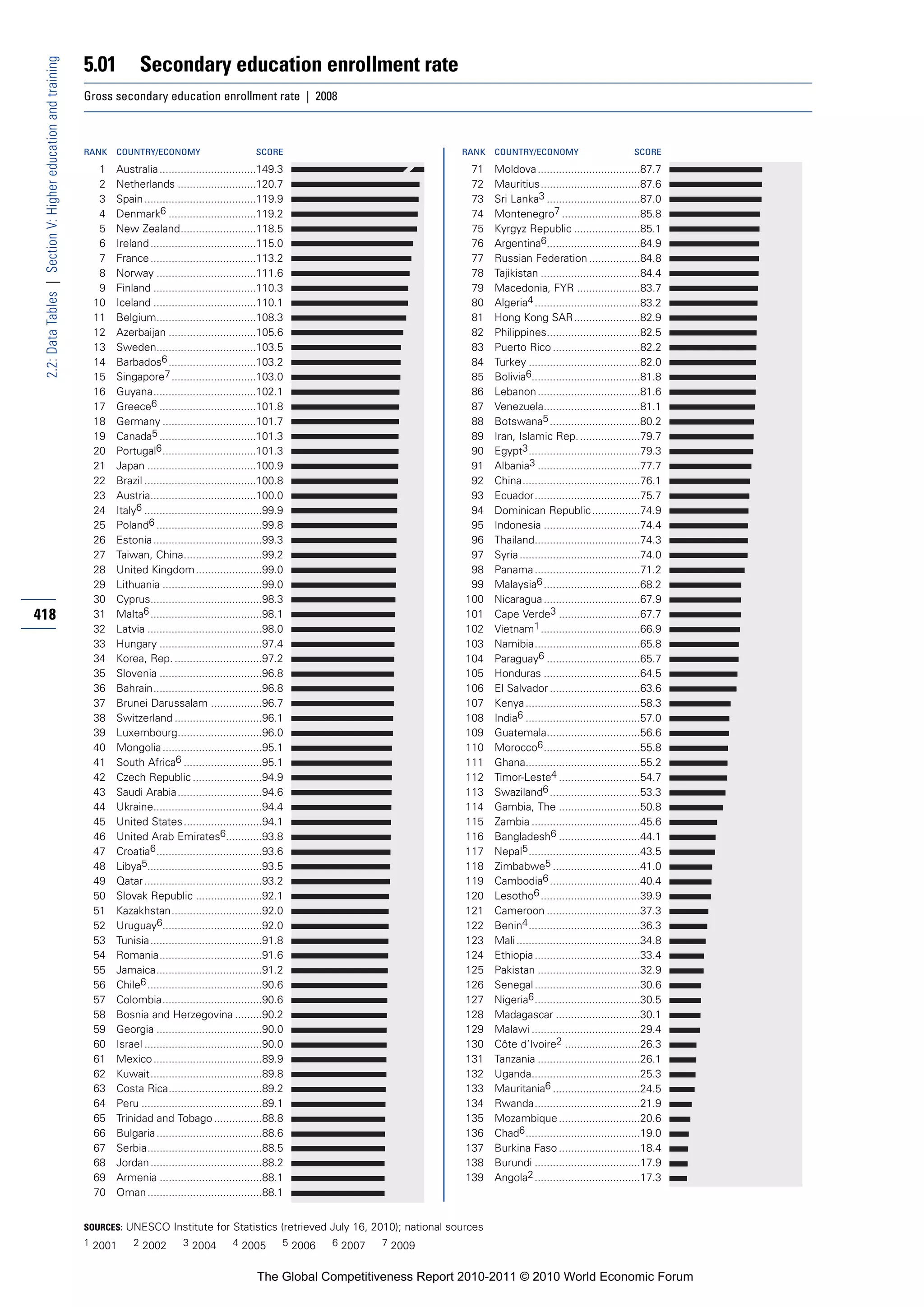
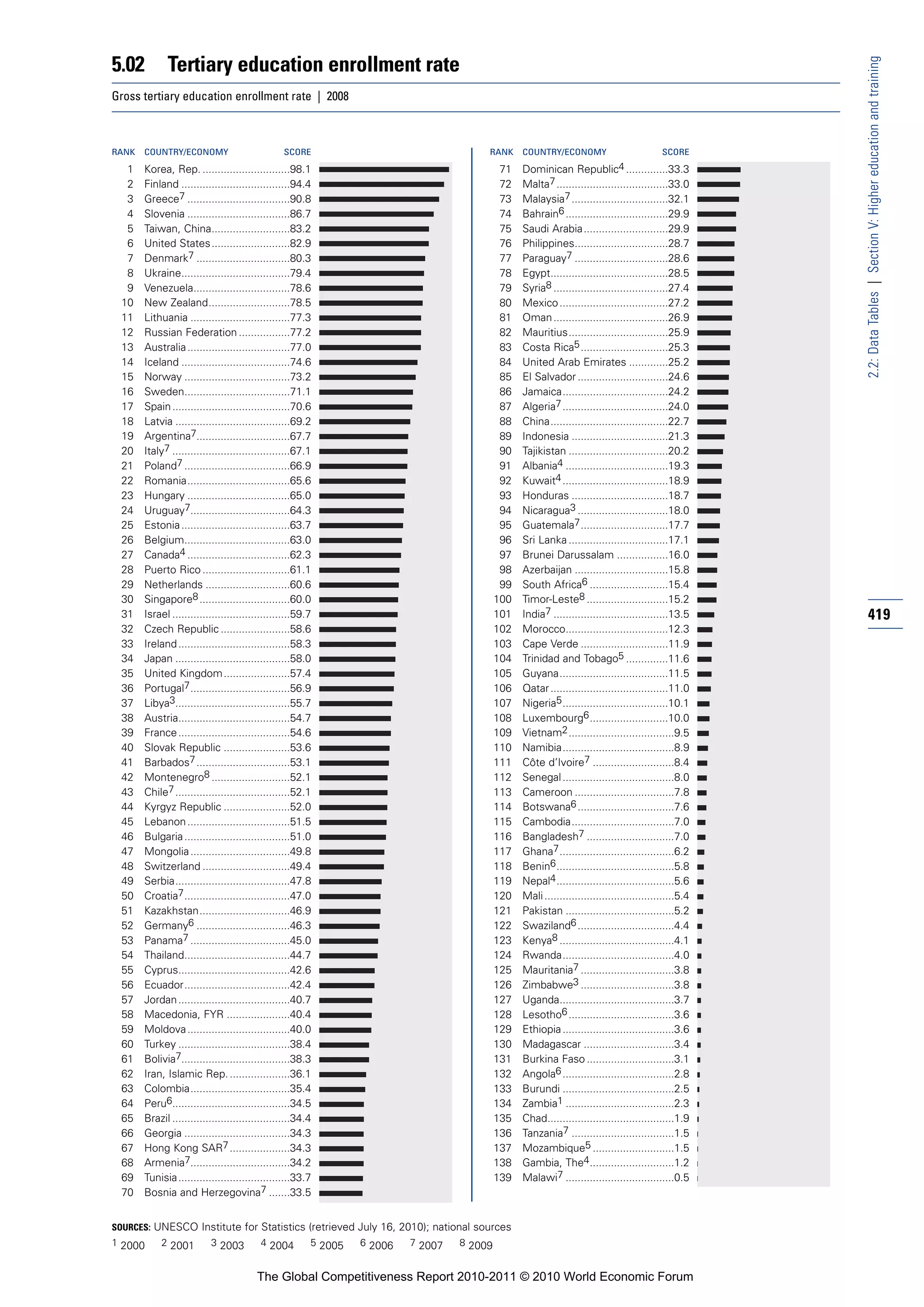
economy. The government cannot provide services                 measures secondary and tertiary enrollment rates as well     5
efficiently if it has to make high-interest payments on         as the quality of education as evaluated by the business
its past debts. Running fiscal deficits limits the govern-      community. The extent of staff training is also taken into
ment’s future ability to react to business cycles. Firms        consideration because of the importance of vocational
cannot operate efficiently when inflation rates are out of      and continuous on-the-job training—which is neglected
hand. In sum, the economy cannot grow in a sustainable          in many economies—for ensuring a constant upgrading
manner unless the macroeconomic environment is stable.          of workers’ skills.
This issue has captured the attention of the public most
recently through discussions on exit strategies to wind         Sixth pillar: Goods market efficiency
down deficit spending, and in the context of the recent         Countries with efficient goods markets are well positioned
buildup of sovereign debt.                                      to produce the right mix of products and services given
      It is important to note that this pillar evaluates the    their particular supply-and-demand conditions, as well
stability of the macroeconomic environment, so it does          as to ensure that these goods can be most effectively
not directly take into account the way in which public          traded in the economy. Healthy market competition,
accounts are managed by the government. This qualita-           both domestic and foreign, is important in driving market
tive dimension is captured in the institutions pillar           efficiency and thus business productivity, by ensuring
described above.                                                that the most efficient firms, producing goods demanded
      Box 1 discusses the relationship between fiscal           by the market, are those that thrive. The best possible
imbalances and competitiveness, of particular relevance         environment for the exchange of goods requires a mini-
given recent fiscal stimulus spending and the discussions       mum of impediments to business activity through gov-
related to the importance of winding down spending              ernment intervention. For example, competitiveness is
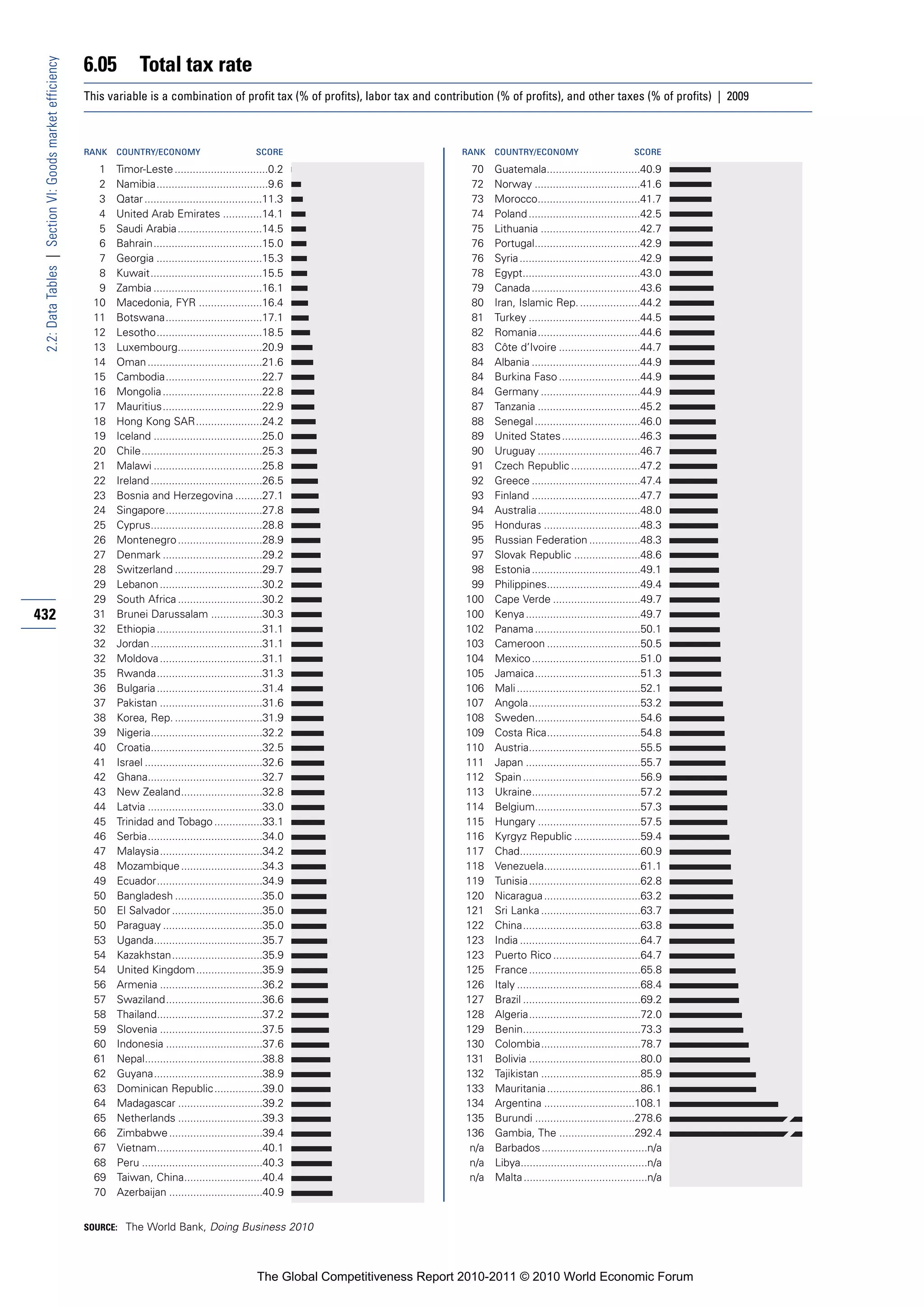
and articulating clear exit strategies.                         hindered by distortionary or burdensome taxes and by
                                                                restrictive and discriminatory rules on foreign direct
Fourth pillar: Health and primary education                     investment (FDI)—limiting foreign ownership—as well
A healthy workforce is vital to a country’s competitive-        as on international trade. The recent economic crisis has
ness and productivity. Workers who are ill cannot function      highlighted the degree of interdependence of economies
to their potential and will be less productive. Poor health     worldwide and the degree to which growth depends on
leads to significant costs to business, as sick workers are     open markets. Protectionist measures are counterpro-
often absent or operate at lower levels of efficiency.          ductive as they reduce aggregate economic activity.
Investment in the provision of health services is thus criti-         Market efficiency also depends on demand conditions
cal for clear economic, as well as moral, considerations.12     such as customer orientation and buyer sophistication.


                         The Global Competitiveness Report 2010-2011 © 2010 World Economic Forum
1.1: The Global Competitiveness Index 2010–2011


                                                  Box 1: Fiscal policy and competitiveness

                                                  As the world emerges from the global recession, the full extent                    be raised in order to repay debt, economic agents will adapt
                                                  of the deterioration of fiscal accounts is becoming visible and                    their growth expectations, investing less and saving more.
                                                  is raising questions about the consequences for longer-term                        Taken together those factors may lower growth, making it even
                                                  competitiveness. In the Global Competitiveness Index, fiscal                       more difficult to repay debt in the future and potentially leading
                                                  policy is assessed by including the budget balance and public                      to a vicious cycle. In countries that are fiscally challenged,
                                                  debt in the macroeconomic environment pillar, based on the                         increases in debt could set off a different type of spiral, as
                                                  belief that, although sound fiscal policy does not contribute                      recently seen in the case of Greece. Debt increases can lead to
                                                  directly to raising productivity and competitiveness, disarray                     downgrades of sovereign risk ratings, thereby sharply raising
                                                  can be very harmful.                                                               the refinancing cost of short-term debt and, in the most extreme
                                                         Continued budget deficits and high public debt are likely to                case, leading to sovereign default.
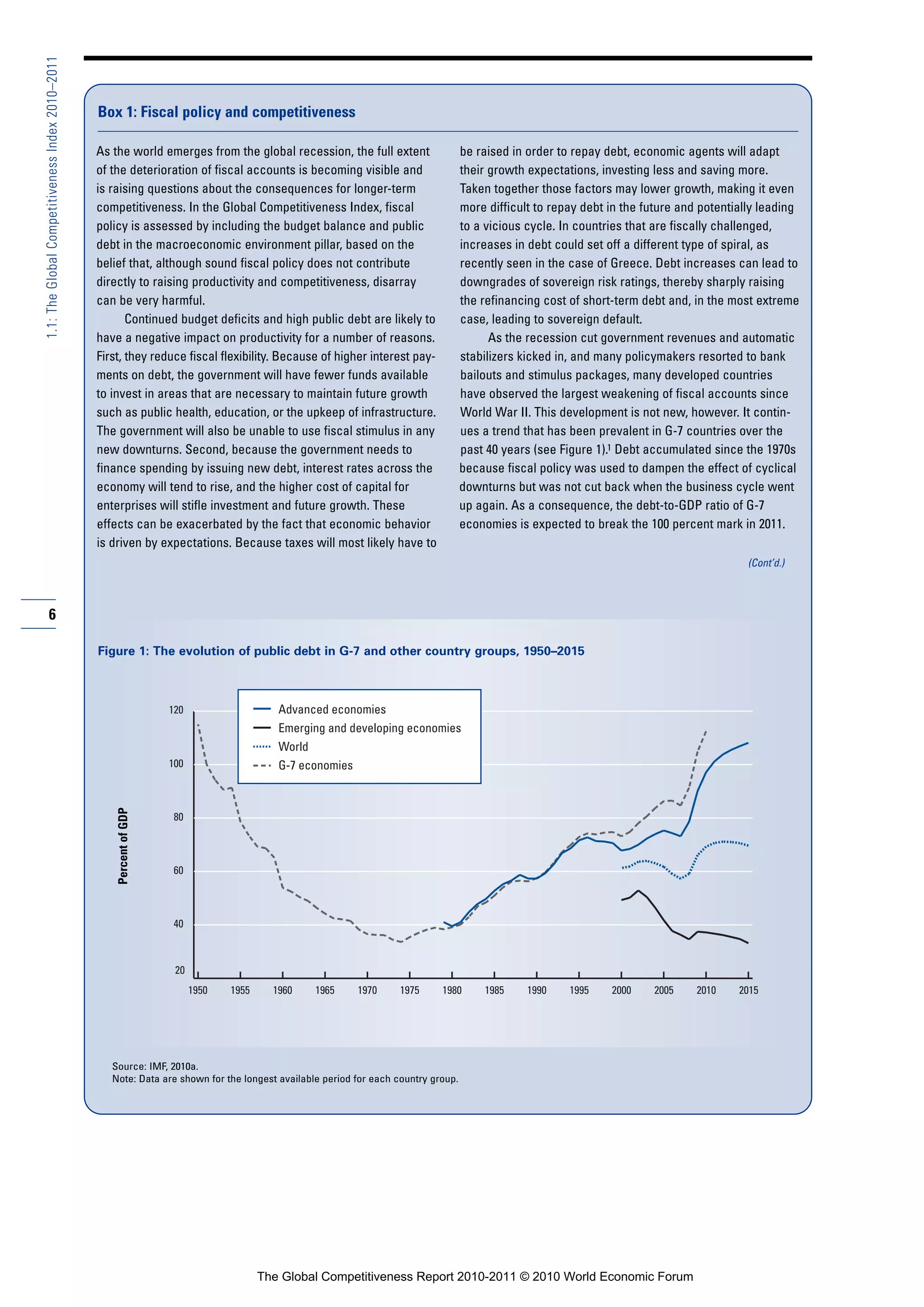
                                                  have a negative impact on productivity for a number of reasons.                          As the recession cut government revenues and automatic
                                                  First, they reduce fiscal flexibility. Because of higher interest pay-             stabilizers kicked in, and many policymakers resorted to bank
                                                  ments on debt, the government will have fewer funds available                      bailouts and stimulus packages, many developed countries
                                                  to invest in areas that are necessary to maintain future growth                    have observed the largest weakening of fiscal accounts since
                                                  such as public health, education, or the upkeep of infrastructure.                 World War II. This development is not new, however. It contin-
                                                  The government will also be unable to use fiscal stimulus in any                   ues a trend that has been prevalent in G-7 countries over the
                                                  new downturns. Second, because the government needs to                             past 40 years (see Figure 1).1 Debt accumulated since the 1970s
                                                  finance spending by issuing new debt, interest rates across the                    because fiscal policy was used to dampen the effect of cyclical
                                                  economy will tend to rise, and the higher cost of capital for                      downturns but was not cut back when the business cycle went
                                                  enterprises will stifle investment and future growth. These                        up again. As a consequence, the debt-to-GDP ratio of G-7
                                                  effects can be exacerbated by the fact that economic behavior                      economies is expected to break the 100 percent mark in 2011.
                                                  is driven by expectations. Because taxes will most likely have to
                                                                                                                                                                                             (Cont’d.)


        6

                                                  Figure 1: The evolution of public debt in G-7 and other country groups, 1950–2015


                                                                       120                    Advanced economies
                                                                                              Emerging and developing economies
                                                                                              World
                                                                       100                    G-7 economies
                                                      Percent of GDP


                                                                        80


                                                                        60


                                                                        40


                                                                        20
                                                                             1950   1955     1960   1965    1970     1975     1980       1985     1990    1995    2000    2005     2010    2015


                                                     Source: IMF, 2010a.
                                                     Note: Data are shown for the longest available period for each country group.


                                                                                           The Global Competitiveness Report 2010-2011 © 2010 World Economic Forum
1.1: The Global Competitiveness Index 2010–2011
  Box 1: Fiscal policy and competitiveness (cont’d.)

  According to research by Reinhardt and Rogoff,2 these levels        effect of fiscal tightening on short-term growth, but they will also
  will have a serious impact on future growth rates of these          enhance growth in the longer term, which in turn will improve
  economies. They estimate that median GDP growth rates in            the fiscal position. Such reforms are of particular importance
  developed economies fall by about one percentage point a year       in the context of Greece, where weakening competitiveness
  once a debt-to-GDP ratio of 90 percent is reached.3                 over the past years has been a root cause of macroeconomic
        In the medium to longer term, in order to maintain macro-     instability.6
  economic stability and competitiveness, fiscal policies—in
  particular in G-7 countries, but also in some European and G-20
  economies—will have to be put on a sounder footing. Toward          Notes
  that end, at their summit in June 2010 in Toronto, G-20 leaders     1 The G-7 countries are Canada, France, Germany, Italy, Japan, the
  agreed on a strategy to cut fiscal deficits in half by 2013 and       United Kingdom, and the United States.

  to stabilize the debt-to-GDP ratio by 2016. The challenge will be   2 Reinhardt and Rogoff 2009.
  to implement fiscal adjustment without undermining the frail        3 In comparison to growth at low debt levels (below 30 percent of
  economic recovery in the shorter term. Although this may seem         GDP), the average rate of growth is reduced by 4 percentage
  politically painful, recent research shows that governments           points.

  that implement painful budgetary reforms tend to be rewarded        4 Alesina et al. 2010.
  politically.4 Fiscal consolidation will have to be accompanied by   5 Blanchard and Cotarelli 2010.
  structural reforms in order to increase overall competitiveness.5
                                                                      6 In the Global Competitiveness Index, the country has dropped
  By sending a signal, these reforms can mitigate the negative          from 61st in the 2006–2007 edition to 83rd this year.


For cultural or historical reasons, customers may be                  ductive uses. It channels resources to those entrepreneurial           7
more demanding in some countries than in others. This                 or investment projects with the highest expected rates
can create an important competitive advantage, as it                  of return rather than to the politically connected. A
forces companies to be more innovative and customer                   thorough and proper assessment of risk is therefore a
oriented and thus imposes the discipline necessary for                key ingredient. Business investment is critical to produc-
efficiency to be achieved in the market.                              tivity. Therefore economies require sophisticated financial
                                                                      markets that can make capital available for private-sector
Seventh pillar: Labor market efficiency                               investment from such sources as loans from a sound
The efficiency and flexibility of the labor market are criti-         banking sector, properly regulated securities exchanges,
cal for ensuring that workers are allocated to their most             venture capital, and other financial products. The impor-
efficient use in the economy and provided with incentives             tance of such access to capital was recently underscored
to give their best effort in their jobs. Labor markets must           by the liquidity crunch experienced by businesses and
therefore have the flexibility to shift workers from one              the public sector in both developing and developed
economic activity to another rapidly and at low cost, and             countries. In order to fulfill all those functions, the
to allow for wage fluctuations without much social dis-               banking sector needs to be trustworthy and transparent,
ruption. 14 The importance of the latter has been dramati-            and—as has been made so clear recently—financial
cally highlighted by the difficulties countries with particu-         markets need appropriate regulation to protect investors
larly rigid labor markets—such as Spain—have encoun-                  and other actors in the economy at large.
tered in recovering from the recent major economic
downturn.                                                             Ninth pillar: Technological readiness
      Efficient labor markets must also ensure a clear rela-          In today’s globalized world, technology has increasingly
tionship between worker incentives and their efforts, as              become an important element for firms to compete
well as equity in the business environment between                    and prosper. The technological readiness pillar measures
women and men.                                                        the agility with which an economy adopts existing tech-
                                                                      nologies to enhance the productivity of its industries,
Eighth pillar: Financial market development                           with specific emphasis on its capacity to fully leverage
The recent financial crisis has highlighted the central               information and communication technologies (ICT) in
role of a sound and well-functioning financial sector for             daily activities and production processes for increased
economic activities. An efficient financial sector allocates          efficiency and competitiveness.15 ICT has evolved into
the resources saved by a nation’s citizens, as well as those          the “general purpose technology” of our time,16 given
entering the economy from abroad, to their most pro-                  the critical spillovers to the other economic sectors and


                           The Global Competitiveness Report 2010-2011 © 2010 World Economic Forum
1.1: The Global Competitiveness Index 2010–2011

                                                  their role as industry-wide enabling infrastructure.               and the production of unique and sophisticated products)
                                                  Therefore ICT access and usage are key enablers of                 all lead to sophisticated and modern business processes.
                                                  countries’ overall technological readiness.
                                                       Whether the technology used has or has not been               Twelfth pillar: Innovation
                                                  developed within national borders is irrelevant for its abili-     The final pillar of competitiveness is technological inno-
                                                  ty to enhance productivity. The central point is that the          vation. Although substantial gains can be obtained by
                                                  firms operating in the country have access to advanced             improving institutions, building infrastructure, reducing
                                                  products and blueprints and the ability to use them.               macroeconomic instability, or improving human capital,
                                                  Among the main sources of foreign technology, FDI often            all these factors eventually seem to run into diminishing
                                                  plays a key role. It is important to note that, in this context,   returns. The same is true for the efficiency of the labor,
                                                  the level of technology available to firms in a country            financial, and goods markets. In the long run, standards
                                                  needs to be distinguished from the country’s ability to            of living can be enhanced only by technological innova-
                                                  innovate and expand the frontiers of knowledge. That is            tion. Innovation is particularly important for economies
                                                  why we separate technological readiness from innovation,           as they approach the frontiers of knowledge and the
                                                  which is captured in the 12th pillar below.                        possibility of integrating and adapting exogenous tech-
                                                                                                                     nologies tends to disappear.19
                                                  Tenth pillar: Market size                                                Although less-advanced countries can still improve
                                                  The size of the market affects productivity since large            their productivity by adopting existing technologies or
                                                  markets allow firms to exploit economies of scale.                 making incremental improvements in other areas, for
                                                  Traditionally, the markets available to firms have been            those that have reached the innovation stage of develop-
                                                  constrained by national borders. In the era of globaliza-          ment, this is no longer sufficient for increasing produc-
                                                  tion, international markets have become a substitute for           tivity. Firms in these countries must design and develop
                                                  domestic markets, especially for small countries. There is         cutting-edge products and processes to maintain a com-
                                                  vast empirical evidence showing that trade openness is             petitive edge. This requires an environment that is con-
                                                  positively associated with growth. Even if some recent             ducive to innovative activity, supported by both the
                                                  research casts doubts on the robustness of this relation-          public and the private sectors. In particular, it means suf-
        8                                         ship, the general sense is that trade has a positive effect        ficient investment in research and development (R&D),
                                                  on growth, especially for countries with small domestic            especially by the private sector; the presence of high-
                                                  markets.17                                                         quality scientific research institutions; extensive collabo-
                                                       Thus exports can be thought of as a substitute for            ration in research between universities and industry; and
                                                  domestic demand in determining the size of the market              the protection of intellectual property. Amid the present
                                                  for the firms of a country.18 By including both domestic           economic uncertainty, it will be important to resist pres-
                                                  and foreign markets in our measure of market size, we              sures to cut back on R&D spending—both at the pri-
                                                  give credit to export-driven economies and geographic              vate and public levels—that will be so critical for sus-
                                                  areas (such as the European Union) that are broken into            tainable growth going into the future.
                                                  many countries but have a single common market.
                                                                                                                     The interrelation of the 12 pillars
                                                  Eleventh pillar: Business sophistication                           While we report the results of the 12 pillars of competi-
                                                  Business sophistication is conducive to higher efficiency          tiveness separately, it is important to keep in mind that
                                                  in the production of goods and services. This leads, in            they are not independent: they tend to reinforce each
                                                  turn, to increased productivity, thus enhancing a nation’s         other, and a weakness in one area often has a negative
                                                  competitiveness. Business sophistication concerns the              impact on other areas. For example, innovation (pillar 12)
                                                  quality of a country’s overall business networks as well as        will be very difficult without a well-educated and trained
                                                  the quality of individual firms’ operations and strategies.        workforce (pillars 4 and 5) that are adept at absorbing
                                                  This is particularly important for countries at an                 new technologies (pillar 9), and without sufficient
                                                  advanced stage of development, when the more basic                 financing (pillar 8) for R&D or an efficient goods mar-
                                                  sources of productivity improvements have been exhaust-            ket that makes it possible to take new innovations to
                                                  ed to a large extent. The quality of a country’s business          market (pillar 6). While the pillars are aggregated into a
                                                  networks and supporting industries, as measured by the             single index, measures are reported for the 12 pillars sep-
                                                  quantity and quality of local suppliers and the extent of          arately because such details provide a sense of the specific
                                                  their interaction, is important for a variety of reasons.          areas in which a particular country needs to improve.
                                                  When companies and suppliers from a particular sector                   Appendix A describes the exact composition of the
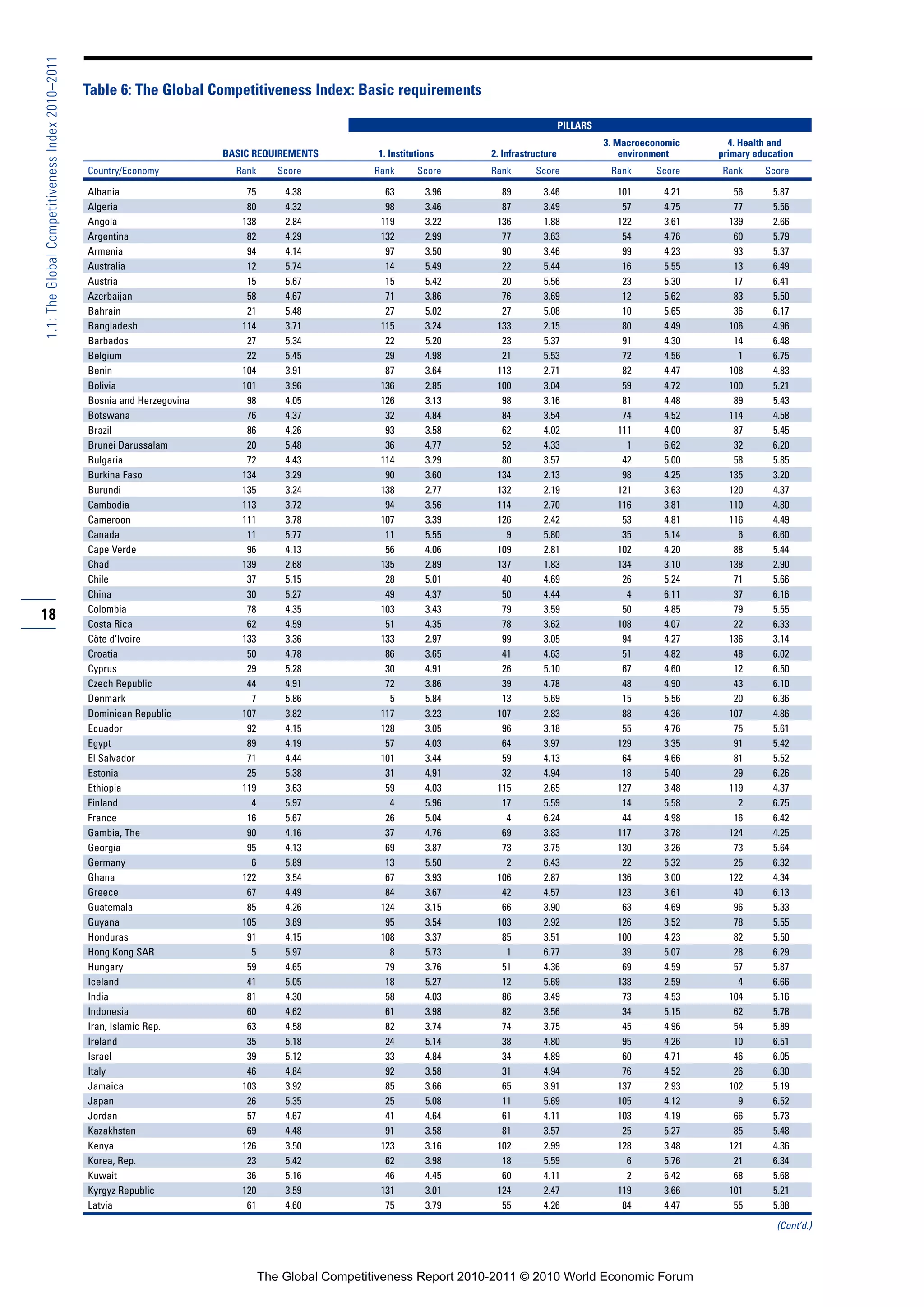
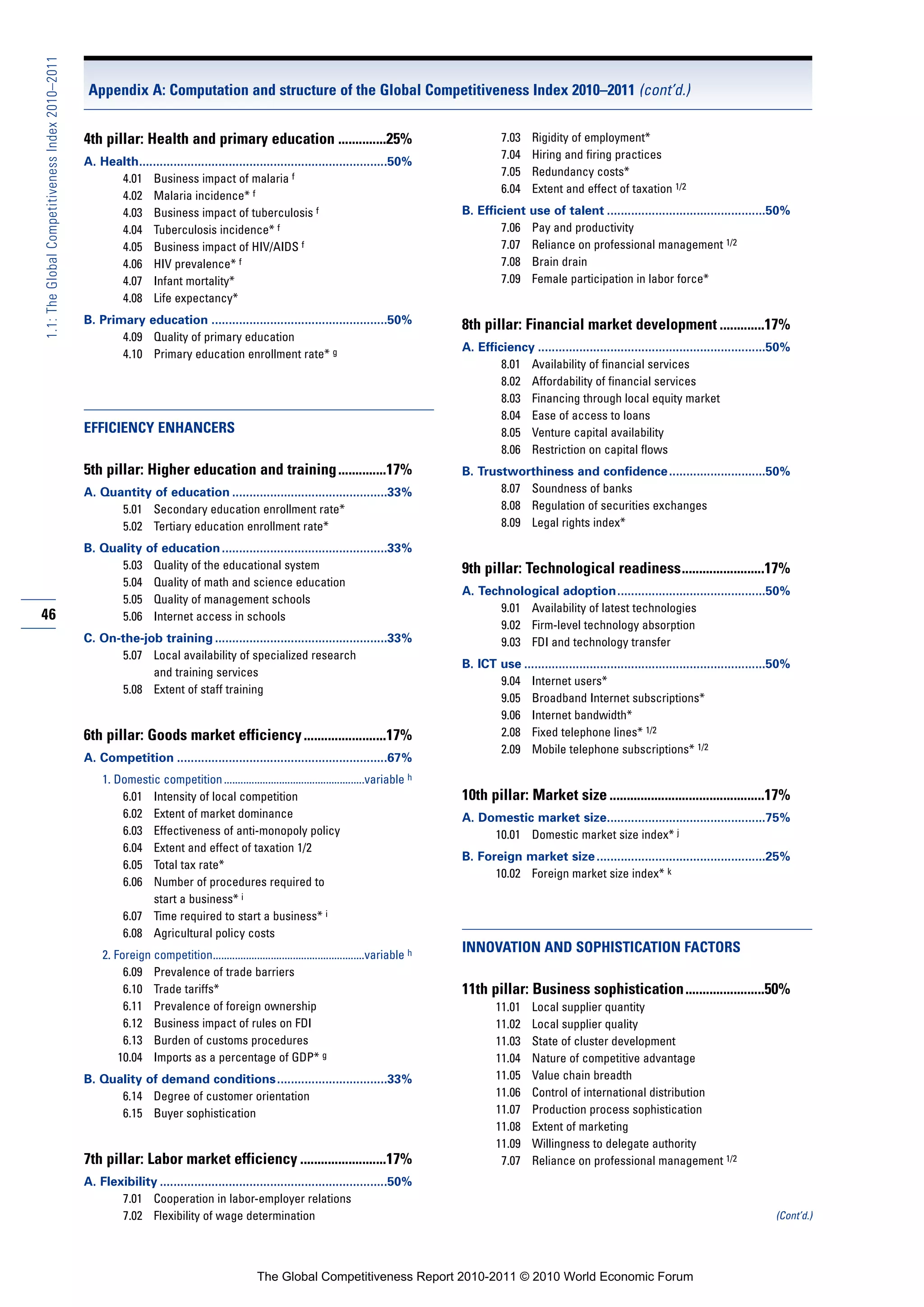
                                                  are interconnected in geographically proximate groups              GCI and technical details of its construction.
                                                  (“clusters”), efficiency is heightened, greater opportunities
                                                  for innovation are created, and barriers to entry for new
                                                  firms are reduced. Individual firms’ operations and strate-
                                                  gies (branding, marketing, the presence of a value chain,


                                                                                 The Global Competitiveness Report 2010-2011 © 2010 World Economic Forum
1.1: The Global Competitiveness Index 2010–2011
Figure 1: The 12 pillars of competitiveness


                 Basic requirements
             •   Institutions                                                                 Key for
             •   Infrastructure                                                           factor-driven
             •   Macroeconomic environment                                                  economies
             •   Health and primary education


                 Efficiency enhancers
             •   Higher education and training
             •   Goods market efficiency                                                      Key for
             •   Labor market efficiency                                                efficiency-driven
             •   Financial market development                                               economies
             •   Technological readiness
             •   Market size


                 Innovation and sophistication factors                                        Key for
             • Business sophistication                                                 innovation-driven
             • Innovation                                                                   economies


                                                                                                                                 9


Stages of development and the weighted Index                    quality because wages have risen and they cannot increase
While all of the pillars described above will matter to a       prices. At this point, competitiveness is increasingly driven
certain extent for all economies, it is clear that they will    by higher education and training (pillar 5), efficient goods
affect them in different ways: the best way for Rwanda          markets (pillar 6), well-functioning labor markets (pillar 7),
to improve its competitiveness is not the same as the           developed financial markets (pillar 8), the ability to harness
best way for Germany to do so. This is because Rwanda           the benefits of existing technologies (pillar 9), and a large
and Germany are in different stages of development: as          domestic or foreign market (pillar 10).
countries move along the development path, wages tend                 Finally, as countries move into the innovation-driven
to increase and, in order to sustain this higher income,        stage, wages will have risen by so much that they are
labor productivity must improve.                                able to sustain those higher wages and the associated
      In line with the well-known economic theory of            standard of living only if their businesses are able to
stages of development, the GCI assumes that, in the first       compete with new and unique products. At this stage,
stage, the economy is factor-driven and countries compete       companies must compete by producing new and differ-
based on their factor endowments: primarily unskilled           ent goods using the most sophisticated production
labor and natural resources.20 Companies compete on             processes (pillar 11) and through innovation (pillar 12).
the basis of price and sell basic products or commodi-                 The GCI takes the stages of development into
ties, with their low productivity reflected in low wages.       account by attributing higher relative weights to those
Maintaining competitiveness at this stage of develop-           pillars that are more relevant for an economy given its
ment hinges primarily on well-functioning public and            particular stage of development. That is, although all 12
private institutions (pillar 1), well-developed infrastruc-     pillars matter to a certain extent for all countries, the
ture (pillar 2), a stable macroeconomic environment (pil-       relative importance of each one depends on a country’s
lar 3), and a healthy workforce that has received at least      particular stage of development. To implement this con-
a basic education (pillar 4).                                   cept, the pillars are organized into three subindexes, each
      As a country becomes more competitive, productivity       critical to a particular stage of development.
will increase and wages will rise with advancing develop-              The basic requirements subindex groups those pillars
ment. Countries will then move into the efficiency-driven       most critical for countries in the factor-driven stage. The
stage of development, when they must begin to develop           efficiency enhancers subindex includes those pillars critical
more efficient production processes and increase product        for countries in the efficiency-driven stage. And the


                           The Global Competitiveness Report 2010-2011 © 2010 World Economic Forum
1.1: The Global Competitiveness Index 2010–2011

                                                  innovation and sophistication factors subindex includes the                       next stage. The classification of countries into stages of
                                                  pillars critical to countries in the innovation-driven                            development is shown in Table 3.
                                                  stage. The three subindexes are shown in Figure 1.
                                                       The weights attributed to each subindex in every
                                                  stage of development are shown in Table 1. To obtain                              Adjustments to the GCI
                                                  the weights, a maximum likelihood regression of GDP                               Over the past year, the Global Competitiveness Index
                                                  per capita was run against each subindex for past years,                          has been put through a rigorous analysis by the Joint
                                                  allowing for different coefficients for each stage of                             Research Centre of the European Commission (JRC).
                                                  development.21 The rounding of these econometric esti-                            The JRC is widely recognized as holding the world’s
                                                  mates led to the choice of weights displayed in Table 1.                          leading expertise on composite indicators, such as the
                                                                                                                                    GCI. Overall the JRC found that the GCI is robust to
                                                  Table 1: Weights of the three main subindexes at each                             changes in weights and is a solid index. Box 2 provides
                                                  stage of development                                                              details of their findings.
                                                                                                                                          In addition to this overall assessment, the JRC made
                                                                                           Factor-     Efficiency-    Innovation-
                                                                                            driven       driven          driven     some recommendations on how to further strengthen
                                                  Subindex                                stage (%)    stage (%)       stage (%)
                                                                                                                                    the GCI. Based on their findings, as well as the Forum’s
                                                  Basic requirements                         60            40             20        own analysis and changes in data availability, some
                                                  Efficiency enhancers                       35            50             50        minor adjustments to the structure of the GCI have
                                                  Innovation and sophistication factors       5            10             30
                                                                                                                                    been made, as follows:
                                                                                                                                           In the institutions pillar (1st), a measure of the extent
                                                                                                                                    of bribery and irregular payments derived from the
                                                                                                                                    Executive Opinion Survey has been added under ethics
                                                  Implementation of stages of development                                           and corruption. The index of the strength of investor pro-
                                                  Two criteria are used to allocate countries into stages of                        tection compiled by the World Bank, previously in the
                                                  development. The first is the level of GDP per capita at                          financial market development pillar, is now included in the
                                                  market exchange rates. This widely available measure is                           private institutions subpillar.
10                                                used as a proxy for wages, because internationally com-                                  Within the infrastructure pillar (2nd), the indicators
                                                  parable data on wages are not available for all countries                         have been reorganized into two relevant subpillars,
                                                  covered. The thresholds used are shown in Table 2. A                              namely transport infrastructure and energy and telephony
                                                  second criterion measures the extent to which countries                           infrastructure. The latter now includes mobile telephone
                                                  are factor driven. This is measured by the share of                               subscriptions. This variable is also part of the technological
                                                  exports of mineral goods in total exports (goods and                              readiness pillar and therefore receives half weight in each
                                                  services), assuming that countries that export more than                          pillar.
                                                  70 percent of mineral products (measured using a five-                                   Within the health and primary education and the high-
                                                  year average) are to a large extent factor driven.22                               er education and training pillars (4th and 5th), we have
                                                                                                                                     dropped the variable on education expenditure as it is
                                                  Table 2: Income thresholds for establishing stages of                              no longer collected by UNESCO.
                                                  development                                                                              In the goods market efficiency pillar (6th), the variable
                                                  Stage of development                      GDP per capita (in US$)
                                                                                                                                     used as a proxy for the tax rate is now given full weight.
                                                                                                                                     Previously, this variable was also included in the labor
                                                  Stage 1: Factor driven                                    < 2,000
                                                                                                                                     market efficiency pillar and in each instance it was given
                                                  Transition from stage 1 to stage 2                   2,000–3,000
                                                  Stage 2: Efficiency driven                           3,000–9,000
                                                                                                                                     half weight.
                                                  Transition from stage 2 to stage 3                  9,000–17,000                         The technological readiness pillar (9th) has been sepa-
                                                  Stage 3: Innovation driven                              > 17,000                   rated into two relevant subpillars: technological adoption
                                                                                                                                     and ICT use. The indicator on personal computers is no
                                                                                                                                     longer included as the data are no longer collected by
                                                                                                                                     the International Telecommunication Union. The densi-
                                                  Any countries falling in between two of the three stages                           ty of fixed telephone lines is included in the ICT use
                                                  are considered to be “in transition.” For these countries,                         category. Since it is also included in the infrastructure pil-
                                                  the weights change smoothly as a country develops,                                 lar, each instance is given half weight. Finally, the vari-
                                                  reflecting the smooth transition from one stage of devel-                          able on the laws relating to ICT was dropped as it was
                                                  opment to another. This allows us to place increasingly                            deemed too specific, given the general scope of the
                                                  more weight on those areas that are becoming more                                  Index. A new variable on Internet bandwidth, on the
                                                  important for the country’s competitiveness as the coun-                           other hand, has been included because of the rising
                                                  try develops, ensuring that the GCI can gradually                                  importance of this factor for competitiveness.
                                                  “penalize” those countries that are not preparing for the


                                                                                       The Global Competitiveness Report 2010-2011 © 2010 World Economic Forum
1.1: The Global Competitiveness Index 2010–2011
Table 3: List of countries/economies at each stage of development

 Stage 1                Transition from 1 to 2      Stage 2                    Transition from 2 to 3   Stage 3

 Bangladesh             Algeria                     Albania                    Bahrain                  Australia
 Benin                  Angola                      Argentina                  Barbados                 Austria
 Bolivia                Armenia                     Bosnia and Herzegovina     Chile                    Belgium
 Burkina Faso           Azerbaijan                  Brazil                     Croatia                  Canada
 Burundi                Botswana                    Bulgaria                   Estonia                  Cyprus
 Cambodia               Brunei Darussalam           Cape Verde                 Hungary                  Czech Republic
 Cameroon               Egypt                       China                      Latvia                   Denmark
 Chad                   Georgia                     Colombia                   Lithuania                Finland
 Côte d’Ivoire          Guatemala                   Costa Rica                 Oman                     France
 Ethiopia               Guyana                      Dominican Republic         Poland                   Germany
 Gambia, The            Indonesia                   Ecuador                    Puerto Rico              Greece
 Ghana                  Iran, Islamic Rep.          El Salvador                Slovak Republic          Hong Kong SAR
 Honduras               Jamaica                     Jordan                     Taiwan, China            Iceland
 India                  Kazakhstan                  Lebanon                    Trinidad and Tobago      Ireland
 Kenya                  Kuwait                      Macedonia, FYR             Uruguay                  Israel
 Kyrgyz Republic        Libya                       Malaysia                                            Italy
 Lesotho                Morocco                     Mauritius                                           Japan
 Madagascar             Paraguay                    Mexico                                              Korea, Rep.
 Malawi                 Qatar                       Montenegro                                          Luxembourg
 Mali                   Saudi Arabia                Namibia                                             Malta
 Mauritania             Sri Lanka                   Panama                                              Netherlands
 Moldova                Swaziland                   Peru                                                New Zealand
 Mongolia               Syria                       Romania                                             Norway
 Mozambique             Ukraine                     Russian Federation                                  Portugal
 Nepal                  Venezuela                   Serbia                                              Singapore
 Nicaragua                                          South Africa                                        Slovenia
 Nigeria                                            Thailand                                            Spain
 Pakistan                                           Tunisia                                             Sweden
 Philippines                                        Turkey                                              Switzerland
 Rwanda                                                                                                 United Arab Emirates
 Senegal                                                                                                United Kingdom           11
 Tajikistan                                                                                             United States
 Tanzania
 Timor-Leste
 Uganda
 Vietnam
 Zambia
 Zimbabwe


     The business sophistication pillar (11th) is no longer       Verde, Rwanda, and Swaziland) and two Middle Eastern
divided into two subpillars, but instead groups all vari-         countries (the Islamic Republic of Iran and Lebanon).
ables together.                                                   Moldova, a country that had been covered for several
     Finally, in order to deal with skewness of two of the        years but was excluded last year because of insufficient
hard data variables (4.10 Primary enrollment and 10.04            Executive Opinion Survey data, has now been reinstated.
Imports as a percentage of GDP), we have employed a               On the other hand, Suriname, which was covered last
logarithmic transformation as one step in converting              year, could not be included in this edition because of a
them to a 1-to-7 scale. All of the adjustments described          lack of Survey data. This has led to an increase in coverage
above are reflected in Appendix A at the end of this              to a total of 139 economies this year.
chapter.

                                                                  The Global Competitiveness Index 2010–2011 rankings
Country coverage                                                  Tables 4 through 8 provide the detailed rankings of this
A number of new countries have been added this year.              year’s GCI. As Table 4 shows, all of the countries in the
These include four African countries (Angola, Cape                top 10 remain the same as last year, with some shifts in


                        The Global Competitiveness Report 2010-2011 © 2010 World Economic Forum
1.1: The Global Competitiveness Index 2010–2011


                                                  Box 2: Testing the robustness of the Global Competitiveness Index

                                                  MICHELA NARDO and PAOLA ANNONI,
                                                  European Commission Joint Research Centre


                                                  Analyzing the robustness of the Global Competitiveness Index        Table 1: Uncertainty intervals of GCI weights
                                                  (GCI) and identifying how a country’s performance improves or
                                                                                                                                                                             Distribution
                                                  deteriorates under certain assumptions are necessary steps          Stage of                                 Reference   assigned for the
                                                                                                                      development                    Weight      value   robustness analysis
                                                  for ensuring the transparency and reliability of the Index and
                                                  putting the results into a contextual framework. Every model        Stage 1: Factor-driven         w11          0.6        U[0.4,0.8]
                                                  depends on a set of assumptions. Changing these assumptions                                        w12          0.35       U[0.2,0.5]

                                                  is likely to affect the inferences drawn from the model.                                           w13          0.05       U[0.0,0.1]

                                                  Robustness analysis assesses the major drivers of uncertainty       Stage 2: Efficiency-driven     w21          0.4        U[0.2,0.6]
                                                  in model predictions, enabling policymakers to derive more                                         w22          0.5        U[0.3,0.7]

                                                  accurate and meaningful conclusions. The Unit of Econometrics                                      w23          0.1        U[0.05,0.3]

                                                  and Applied Statistics at the European Commission Joint             Stage 3: Innovation-driven     w31          0.2        U[0.1,0.4]
                                                  Research Centre has longstanding experience in construc-                                           w32          0.5        U[0.3,0.7]

                                                  ting and testing composite indicators. Together with the                                           w33          0.3        U[0.1,0.4]

                                                  Organisation for Economic Co-operation and Development              Sources: European Commission Joint Research Centre; World Economic
                                                  (OECD), the Unit developed the Handbook on Constructing             Forum, 2009.

                                                  Composite Indicators: Methodology and User Guide, which
                                                  has become the international reference in the field.                      The main outcome of the robustness analysis is shown in
                                                         The robustness analysis performed for the GCI challenges     Figure 1 with median scores and 90 percent confidence intervals
                                                  some of its key assumptions: the differentiated weighting           computed across the 1,200 Monte Carlo simulations. Countries
                                                  scheme adjusted to the countries’ development stage and the         are ordered from best to worst according to their GCI reference
                                                  contribution to the final score of each of the 12 pillars, often    score (black line), the blue dot being the median score. Error
                                                  populated by a different number of indicators.1                     bars represent, for each country, the 90 percent confidence
12                                                                                                                    interval. GCI scores are rather robust: the median score is
                                                                                                                      always close to the reference score. For only 7 countries out of
                                                  The robustness of the GCI with respect to its                       133 is the width of confidence interval slightly higher than 10
                                                  weighting scheme                                                    percent of the GCI reference value—these are Algeria, Bahrain,
                                                  As described in the main text of this chapter, the final GCI        Brunei Darussalam, Namibia, Oman, Suriname, and Syria.
                                                  scores are computed as a weighted average of three subindex-        Relatively higher volatility (longer error bars) is present in the
                                                  es, which describe basic requirements, efficiency enhancers,        middle part of the graph, where the black line of the reference
                                                  and innovation and sophistication factors as follows:               score is less steep, meaning that higher volatility is associated
                                                                                                                      with countries with similar scores. More on the robustness
                                                        GCIij = wj1Basici + wj2Effciencyi                             analysis of the weighting scheme is discussed in Appendix B.
                                                                + (1 − wj1 − wj2)Innovation


                                                  where i is the country index and j is the country development       Evaluating each pillar's contribution to the final
                                                  stage. The robustness of the GCI weighting scheme is tested         score
                                                  by randomly sampling the set of weights wjk, where k = 1,2,3        Is the GCI framework well balanced across the 12 different
                                                  from uniform continuous distributions centered in the corre-        dimensions that define country competitiveness? This is tested
                                                  sponding GCI reference value (see Table 1 in the main text of       by assigning a zero weight to one pillar at a time and comparing
                                                  this chapter). The Monte Carlo simulation comprises 1,200 runs,     the resulting score with the GCI values. The main results are
                                                  each corresponding to a different set of weights of the three       shown in Figure 2. The black line is the median across all coun-
                                                  subindexes. For technical reasons, only the three major devel-      tries and the boxes include 75 percent of the cases. The whole
                                                  opment stages (stages 1, 2, and 3) are considered for the           distribution of the score differences is displayed by the vertical
                                                  robustness analysis. Countries in transition are assigned to the    blue lines. A median close to zero with a small box and a short
                                                  nearest development stage. The range of variation of the set of     blue line indicates a pillar whose exclusion does not affect the
                                                  weights takes into account this simplification by overlapping       final score in a significant manner. The most influential pillars
                                                  uncertainty intervals (see Table 1). The choice of the range of     are institutions, infrastructure, macroeconomic environment,
                                                  variation has been driven by two opposite needs: on the one         health and primary education, and market size. All but the last
                                                  hand, the need to ensure a wide enough interval to have mean-       belong to the basic requirements subindex. The influence is,
                                                  ingful robustness checks; on the other hand, the need to keep       however, moderate in absolute terms. Looking at the shift in ranks
                                                  the rationale of the GCI weighting scheme, originally designed      (see Appendix B), the maximum shift of a country is up to 5
                                                  to take into account intrinsic differences across countries.        positions for 75 percent of the cases. This demonstrates that
                                                  Considering this trade-off, limit values of uncertainty intervals   almost all of the 12 pillars contribute to the GCI score in a
                                                  have been defined as shown in Table 1.                              balanced way.
                                                                                                                                                                                  (Cont’d.)


                                                                                 The Global Competitiveness Report 2010-2011 © 2010 World Economic Forum
1.1: The Global Competitiveness Index 2010–2011
 Box 2: Testing the robustness of the Global Competitiveness Index (cont’d.)

       Overall, the GCI proved to be robust. Country scores and                                                                                            Note
 ranks are not significantly affected by different weighting                                                                                               1 The analysis was carried out on the GCI from The Global
 schemes with only few exceptions. Almost all pillars contribute                                                                                             Competitiveness Report 2009–2010. See World Economic Forum
                                                                                                                                                             2009.
 in a balanced way to the overall GCI score, with the most influ-
 ential pillars being those of the basic requirements subindex.


 Figure 1: Robustness analysis: Median scores and their confidence intervals


                                          7
                                                                                                                                                                                                  Median score
                                                                                                                                                                                                — GCI 2009–2010 score
                                          6


                                          5
       Score


                                          4


                                          3


                                          2


                                          1

                                                                                                                    Countries in the GCI 2009–2010
                                                                                                                                                                                                                                                            13


Sources: European Commission Joint Research Centre; World Economic Forum, 2009.


 Figure 2: GCI framework balance of pillars: Score differences


                                    0.5

                                    0.4

                                    0.3
       GCI score–simulated score


                                    0.2

                                    0.1

                                    0.0

                                   –0.1

                                   –0.2

                                   –0.3

                                   –0.4
                                              Institutions


                                                              Infrastructure


                                                                               Macroeconomic
                                                                                  environment


                                                                                                       Health and
                                                                                                primary education


                                                                                                                       Higher education
                                                                                                                            and training


                                                                                                                                           Goods market
                                                                                                                                              efficiency


                                                                                                                                                              Labor market


                                                                                                                                                                             Financial market
                                                                                                                                                                                 development


                                                                                                                                                                                                Technological
                                                                                                                                                                                                   readiness


                                                                                                                                                                                                                Market size


                                                                                                                                                                                                                                  Business
                                                                                                                                                                                                                              sophistication


                                                                                                                                                                                                                                               Innovation
                                                                                                                                                                efficiency


Sources: European Commission Joint Research Centre; World Economic Forum, 2009.


                                                             The Global Competitiveness Report 2010-2011 © 2010 World Economic Forum
1.1: The Global Competitiveness Index 2010–2011

                                                  rank, highlighting the stability among the top 10 per-        education attainment to ensure sufficient national talent
                                                  formers. The following sections discuss the findings of       to continue contributing to productivity improvements.
                                                  the GCI 2010–2011 for the top 10 performers globally,               Sweden has moved ahead of Singapore and the
                                                  as well as for a number of selected economies in each of      United States to claim 2nd position this year. The coun-
                                                  the five following regions: Europe and Central Asia,          try benefits from the world’s most transparent and effi-
                                                  Latin America and the Caribbean, Asia and the Pacific,        cient public institutions, with very low levels of corrup-
                                                  the Middle East and North Africa, and sub-Saharan             tion and undue influence and a government that is con-
                                                  Africa.23                                                     sidered to be one of the most efficient in the world:
                                                       One trend worth noting is the slight decline on          public trust of politicians is ranked a high 3rd. Private
                                                  average among countries in the most advanced stage of         institutions also receive excellent marks (ranked 3rd),
                                                  development, the innovation-driven stage, while those         with firms that demonstrate the utmost ethical behavior
                                                  countries in the first and second stages have seen a slight   (ranked 1st), strong auditing and reporting standards, and
                                                  improvement in score. In other words, while the com-          well-functioning corporate boards. Goods and financial
                                                  petitiveness of more industrialized economies is worsen-      markets are also very efficient, although labor markets
                                                  ing, developing countries are improving, resulting in a       lack flexibility. Combined with a strong focus on educa-
                                                  small convergence in performance.                             tion over the years (ranked 2nd for higher education
                                                                                                                and training) and the world’s strongest technological
                                                                                                                adoption (ranked 1st in the technological readiness pil-
                                                  Top 10                                                        lar), Sweden has developed a very sophisticated business
                                                  The countries that constitute the top 10 remain the           culture (2nd) and is one of the world’s leading innova-
                                                  same as last year, with some changes in rank among            tors (ranked 5th). These characteristics come together to
                                                  them. Switzerland retains its 1st place position, charac-     make Sweden one of the most productive and competi-
                                                  terized by an excellent capacity for innovation and a         tive economies in the world.
                                                  very sophisticated business culture, ranked 4th for its             Singapore maintains its position at 3rd place, still
                                                  business sophistication and 2nd for its innovation capac-     the highest-ranked country from Asia. The country’s
                                                  ity. Switzerland’s scientific research institutions are       institutions continue to be assessed as the best in the
14                                                among the world’s best, and the strong collaboration          world, ranked 1st for both the lack of corruption in the
                                                  between the academic and business sectors, combined           country and government efficiency. Singapore places 1st
                                                  with high company spending on R&D, ensures that               for the efficiency of its goods and labor markets and 2nd
                                                  much of this research is translated into marketable prod-      for its financial market sophistication, ensuring the prop-
                                                  ucts and processes, reinforced by strong intellectual          er allocation of these factors to their best use. Singapore
                                                  property protection and government support of innova-          also has world-class infrastructure (ranked 5th), with
                                                  tion through its procurement processes. This strong            excellent roads, ports, and air transport facilities. In addi-
                                                  innovative capacity is captured by the high rate of            tion, the country’s competitiveness is buttressed by a
                                                  patenting (158.95 per million inhabitants) in the coun-        strong focus on education, providing individuals with
                                                  try, for which Switzerland ranks 7th worldwide on a per        the skills needed for a rapidly changing global economy.
                                                  capita basis.                                                  In order to strengthen its competitiveness further,
                                                        Public institutions in Switzerland are among the         Singapore could encourage even stronger adoption of
                                                  most effective and transparent in the world (5th), receiv-     the latest technologies as well as policies that enhance
                                                  ing an even better comparative assessment this year than       the sophistication of its companies.
                                                  in past years. Governance structures ensure a level play-            The United States continues the decline that
                                                  ing field, enhancing business confidence; these include        began last year, falling two more places to 4th position.
                                                  an independent judiciary, strong rule of law, and a highly     While many structural features that make its economy
                                                  accountable public sector. Competitiveness is also but-        extremely productive, a number of escalating weaknesses
                                                  tressed by excellent infrastructure (6th), a well-function-    have lowered the US ranking over the past two years.
                                                  ing goods market (4th), and a highly developed financial             US companies are highly sophisticated and innova-
                                                  market (8th) as well as a labor market that is among the       tive, supported by an excellent university system that
                                                  most efficient in the world (2nd, just behind Singapore’s).    collaborates strongly with the business sector in R&D.
                                                  And Switzerland’s macroeconomic environment, after             Combined with the scale opportunities afforded by the
                                                  weakening slightly last year, has bounced back and is          sheer size of its domestic economy—the largest in the
                                                  among the most stable in the world (ranked 5th) at a           world by far—these qualities continue to make the
                                                   time when many countries are struggling in this area.         United States very competitive. Labor markets are
                                                        While Switzerland demonstrates many competitive          ranked 4th, characterized by the ease and affordability
                                                   strengths, the university enrollment rate of 49.4 percent     of hiring workers and significant wage flexibility.
                                                   continues to lag behind many other high-innovation
                                                   countries, placing it 48th on this indicator. With an eye
                                                   to the future, efforts should be made to boost higher


                                                                               The Global Competitiveness Report 2010-2011 © 2010 World Economic Forum
1.1: The Global Competitiveness Index 2010–2011
Table 4: Global Competitiveness Index 2010–2011 rankings and 2009–2010 comparisons

                                        GCI 2010–                                                                           GCI 2010–
                                        2011 rank                                                                           2011 rank
                       GCI 2010–2011   among 2009   GCI 2009–2010                                   GCI 2010–2011          among 2009   GCI 2009–2010
Country/Economy        Rank    Score    countries       rank *        Country/Economy              Rank      Score          countries       rank *

Switzerland              1      5.63       1              1           Kazakhstan                     72       4.12             71             67
Sweden                   2      5.56       2              4           Peru                           73       4.11             72             78
Singapore                3      5.48       3              3           Namibia                        74       4.09             73             74
United States            4      5.43       4              2           Morocco                        75       4.08             74             73
Germany                  5      5.39       5              7           Botswana                       76       4.05             75             66
Japan                    6      5.37       6              8           Croatia                        77       4.04             76             72
Finland                  7      5.37       7              6           Guatemala                      78       4.04             77             80
Netherlands              8      5.33       8             10           Macedonia, FYR                 79       4.02             78             84
Denmark                  9      5.32       9              5           Rwanda                         80       4.00            n/a            n/a
Canada                  10      5.30      10              9           Egypt                          81       4.00             79             70
Hong Kong SAR           11      5.27      11             11           El Salvador                    82       3.99             80             77
United Kingdom          12      5.25      12             13           Greece                         83       3.99             81             71
Taiwan, China           13      5.21      13             12           Trinidad and Tobago            84       3.97             82             86
Norway                  14      5.14      14             14           Philippines                    85       3.96             83             87
France                  15      5.13      15             16           Algeria                        86       3.96             84             83
Australia               16      5.11      16             15           Argentina                      87       3.95             85             85
Qatar                   17      5.10      17             22           Albania                        88       3.94             86             96
Austria                 18      5.09      18             17           Ukraine                        89       3.90             87             82
Belgium                 19      5.07      19             18           Gambia, The                    90       3.90             88             81
Luxembourg              20      5.05      20             21           Honduras                       91       3.89             89             89
Saudi Arabia            21      4.95      21             28           Lebanon                        92       3.89            n/a            n/a
Korea, Rep.             22      4.93      22             19           Georgia                        93       3.86             90             90
New Zealand             23      4.92      23             20           Moldova                        94       3.86            n/a            n/a
Israel                  24      4.91      24             27           Jamaica                        95       3.85             91             91
United Arab Emirates    25      4.89      25             23           Serbia                         96       3.84             92             93
Malaysia                26      4.88      26             24           Syria                          97       3.79             93             94
China                   27      4.84      27             29           Armenia                        98       3.76             94             97
Brunei Darussalam       28      4.75      28             32           Mongolia                       99       3.75             95            117
Ireland                 29      4.74      29             25           Libya                         100       3.74             96             88
Chile                   30      4.69      30             30           Dominican Republic            101       3.72             97             95         15
Iceland                 31      4.68      31             26           Bosnia and Herzegovina        102       3.70             98            109
Tunisia                 32      4.65      32             40           Benin                         103       3.69             99            103
Estonia                 33      4.61      33             35           Senegal                       104       3.67            100             92
Oman                    34      4.61      34             41           Ecuador                       105       3.65            101            105
Kuwait                  35      4.59      35             39           Kenya                         106       3.65            102             98
Czech Republic          36      4.57      36             31           Bangladesh                    107       3.64            103            106
Bahrain                 37      4.54      37             38           Bolivia                       108       3.64            104            120
Thailand                38      4.51      38             36           Cambodia                      109       3.63            105            110
Poland                  39      4.51      39             46           Guyana                        110       3.62            106            104
Cyprus                  40      4.50      40             34           Cameroon                      111       3.58            107            111
Puerto Rico             41      4.49      41             42           Nicaragua                     112       3.57            108            115
Spain                   42      4.49      42             33           Tanzania                      113       3.56            109            100
Barbados                43      4.45      43             44           Ghana                         114       3.56            110            114
Indonesia               44      4.43      44             54           Zambia                        115       3.55            111            112
Slovenia                45      4.42      45             37           Tajikistan                    116       3.53            112            122
Portugal                46      4.38      46             43           Cape Verde                    117       3.51            n/a            n/a
Lithuania               47      4.38      47             53           Uganda                        118       3.51            113            108
Italy                   48      4.37      48             48           Ethiopia                      119       3.51            114            118
Montenegro              49      4.36      49             62           Paraguay                      120       3.49            115            124
Malta                   50      4.34      50             52           Kyrgyz Republic               121       3.49            116            123
India                   51      4.33      51             49           Venezuela                     122       3.48            117            113
Hungary                 52      4.33      52             58           Pakistan                      123       3.48            118            101
Panama                  53      4.33      53             59           Madagascar                    124       3.46            119            121
South Africa            54      4.32      54             45           Malawi                        125       3.45            120            119
Mauritius               55      4.32      55             57           Swaziland                     126       3.40            n/a            n/a
Costa Rica              56      4.31      56             55           Nigeria                       127       3.38            121             99
Azerbaijan              57      4.29      57             51           Lesotho                       128       3.36            122            107
Brazil                  58      4.28      58             56           Côte d’Ivoire                 129       3.35            123            116
Vietnam                 59      4.27      59             75           Nepal                         130       3.34            124            125
Slovak Republic         60      4.25      60             47           Mozambique                    131       3.32            125            129
Turkey                  61      4.25      61             61           Mali                          132       3.28            126            130
Sri Lanka               62      4.25      62             79           Timor-Leste                   133       3.23            127            126
Russian Federation      63      4.24      63             63           Burkina Faso                  134       3.20            128            128
Uruguay                 64      4.23      64             65           Mauritania                    135       3.14            129            127
Jordan                  65      4.21      65             50           Zimbabwe                      136       3.03            130            132
Mexico                  66      4.19      66             60           Burundi                       137       2.96            131            133
Romania                 67      4.16      67             64           Angola                        138       2.93            n/a            n/a
Colombia                68      4.14      68             69           Chad                          139       2.73            132            131
Iran, Islamic Rep.      69      4.14     n/a            n/a
Latvia                  70      4.14      69             68          * The 2009–2010 rank shown is the one published last year out of 133 coun-
                                                                        tries. One country that was included last year, Suriname, has been exclud-
Bulgaria                71      4.13      70             76             ed this year for lack of Survey data. Suriname’s rank of 102 from last year is
                                                         (Cont’d.)      therefore not shown in the table.


                         The Global Competitiveness Report 2010-2011 © 2010 World Economic Forum
1.1: The Global Competitiveness Index 2010–2011

                                                  Table 5: The Global Competitiveness Index 2010–2011

                                                                                                                           SUBINDEXES
                                                                                                                                                  Innovation and
                                                                             OVERALL INDEX        Basic requirements    Efficiency enhancers   sophistication factors
                                                  Country/Economy           Rank      Score       Rank       Score       Rank        Score      Rank        Score

                                                  Switzerland                  1       5.63          1         6.05         4          5.41        2          5.71
                                                  Sweden                       2       5.56          3         5.98         5          5.32        3          5.67
                                                  Singapore                    3       5.48          2         6.05         1          5.49       10          5.07
                                                  United States                4       5.43         32         5.21         3          5.46        4          5.53
                                                  Germany                      5       5.39          6         5.89        13          5.11        5          5.51
                                                  Japan                        6       5.37         26         5.35        11          5.17        1          5.72
                                                  Finland                      7       5.37          4         5.97        14          5.09        6          5.43
                                                  Netherlands                  8       5.33          9         5.82         8          5.24        8          5.16
                                                  Denmark                      9       5.32          7         5.86         9          5.20        9          5.15
                                                  Canada                      10       5.30         11         5.77         6          5.32       14          4.95
                                                  Hong Kong SAR               11       5.27          5         5.97         2          5.48       24          4.46
                                                  United Kingdom              12       5.25         18         5.58         7          5.28       12          4.98
                                                  Taiwan, China               13       5.21         19         5.58        16          5.05        7          5.23
                                                  Norway                      14       5.14         17         5.65        12          5.13       17          4.83
                                                  France                      15       5.13         16         5.67        15          5.09       16          4.83
                                                  Australia                   16       5.11         12         5.74        10          5.20       22          4.54
                                                  Qatar                       17       5.10         13         5.73        26          4.68       23          4.48
                                                  Austria                     18       5.09         15         5.67        19          4.93       13          4.97
                                                  Belgium                     19       5.07         22         5.45        17          5.01       15          4.91
                                                  Luxembourg                  20       5.05         10         5.81        20          4.92       19          4.76
                                                  Saudi Arabia                21       4.95         28         5.32        27          4.67       26          4.41
                                                  Korea, Rep.                 22       4.93         23         5.42        22          4.81       18          4.81
                                                  New Zealand                 23       4.92         14         5.71        18          4.97       28          4.30
                                                  Israel                      24       4.91         39         5.12        23          4.75       11          5.05
                                                  United Arab Emirates        25       4.89          8         5.82        21          4.82       27          4.37
                                                  Malaysia                    26       4.88         33         5.19        24          4.72       25          4.45
                                                  China                       27       4.84         30         5.27        29          4.63       31          4.13
                                                  Brunei Darussalam           28       4.75         20         5.48        67          4.05       72          3.42
16                                                Ireland                     29       4.74         35         5.18        25          4.68       21          4.55
                                                  Chile                       30       4.69         37         5.15        35          4.51       44          3.91
                                                  Iceland                     31       4.68         41         5.05        31          4.57       20          4.61
                                                  Tunisia                     32       4.65         31         5.25        50          4.28       34          4.09
                                                  Estonia                     33       4.61         25         5.38        34          4.52       45          3.90
                                                  Oman                        34       4.61         24         5.41        48          4.30       47          3.87
                                                  Kuwait                      35       4.59         36         5.16        68          4.03       60          3.57
                                                  Czech Republic              36       4.57         44         4.91        28          4.66       30          4.19
                                                  Bahrain                     37       4.54         21         5.48        33          4.54       55          3.67
                                                  Thailand                    38       4.51         48         4.82        39          4.41       49          3.78
                                                  Poland                      39       4.51         56         4.69        30          4.62       50          3.76
                                                  Cyprus                      40       4.50         29         5.28        36          4.46       36          4.07
                                                  Puerto Rico                 41       4.49         43         5.01        40          4.39       29          4.24
                                                  Spain                       42       4.49         38         5.13        32          4.56       41          3.96
                                                  Barbados                    43       4.45         27         5.34        52          4.22       52          3.69
                                                  Indonesia                   44       4.43         60         4.62        51          4.24       37          4.06
                                                  Slovenia                    45       4.42         34         5.18        46          4.33       35          4.08
                                                  Portugal                    46       4.38         42         5.01        43          4.36       39          3.98
                                                  Lithuania                   47       4.38         52         4.77        49          4.28       48          3.79
                                                  Italy                       48       4.37         46         4.84        45          4.33       32          4.11
                                                  Montenegro                  49       4.36         45         4.90        64          4.08       56          3.67
                                                  Malta                       50       4.34         40         5.08        47          4.31       46          3.88
                                                  India                       51       4.33         81         4.30        38          4.42       42          3.96
                                                  Hungary                     52       4.33         59         4.65        41          4.38       51          3.71
                                                  Panama                      53       4.33         49         4.79        62          4.08       54          3.68
                                                  South Africa                54       4.32         79         4.35        42          4.37       43          3.93
                                                  Mauritius                   55       4.32         47         4.82        66          4.05       59          3.61
                                                  Costa Rica                  56       4.31         62         4.59        58          4.13       33          4.11
                                                  Azerbaijan                  57       4.29         58         4.67        75          3.97       66          3.50
                                                  Brazil                      58       4.28         86         4.26        44          4.35       38          4.03
                                                  Vietnam                     59       4.27         74         4.39        57          4.16       53          3.69
                                                  Slovak Republic             60       4.25         53         4.77        37          4.43       63          3.54
                                                  Turkey                      61       4.25         68         4.49        55          4.18       57          3.63
                                                  Sri Lanka                   62       4.25         73         4.42        69          4.01       40          3.97
                                                  Russian Federation          63       4.24         65         4.52        53          4.19       80          3.36
                                                  Uruguay                     64       4.23         51         4.77        74          3.98       70          3.46
                                                  Jordan                      65       4.21         57         4.67        73          3.98       65          3.50
                                                  Mexico                      66       4.19         66         4.51        61          4.09       69          3.46
                                                  Romania                     67       4.16         77         4.36        54          4.18       91          3.24
                                                  Colombia                    68       4.14         78         4.35        60          4.09       61          3.56
                                                  Iran, Islamic Rep.          69       4.14         63         4.58        90          3.76       82          3.34
                                                                                                                                                                        (Cont’d.)


                                                                            The Global Competitiveness Report 2010-2011 © 2010 World Economic Forum
1.1: The Global Competitiveness Index 2010–2011
Table 5: The Global Competitiveness Index 2010–2011 (cont’d.)

                                                                             SUBINDEXES
                                                                                                      Innovation and
                              OVERALL INDEX         Basic requirements    Efficiency enhancers     sophistication factors
Country/Economy              Rank      Score        Rank       Score       Rank        Score        Rank        Score

Latvia                         70       4.14          61         4.60        63          4.08         77          3.37
Bulgaria                       71       4.13          72         4.43        65          4.07         95          3.22
Kazakhstan                     72       4.12          69         4.48        71          4.00        102          3.14
Peru                           73       4.11          87         4.22        56          4.18         89          3.29
Namibia                        74       4.09          54         4.70        91          3.76         92          3.24
Morocco                        75       4.08          64         4.57        88          3.78         79          3.36
Botswana                       76       4.05          76         4.37        85          3.80         93          3.24
Croatia                        77       4.04          50         4.78        76          3.97         85          3.32
Guatemala                      78       4.04          85         4.26        81          3.89         62          3.54
Macedonia, FYR                 79       4.02          70         4.45        83          3.84         97          3.20
Rwanda                         80       4.00          84         4.28        98          3.62         87          3.30
Egypt                          81       4.00          89         4.19        82          3.85         68          3.48
El Salvador                    82       3.99          71         4.44        87          3.78         96          3.20
Greece                         83       3.99          67         4.49        59          4.12         73          3.41
Trinidad and Tobago            84       3.97          55         4.70        77          3.95         78          3.36
Philippines                    85       3.96          99         4.02        78          3.93         75          3.38
Algeria                        86       3.96          80         4.32       107          3.49        108          3.04
Argentina                      87       3.95          82         4.29        86          3.78         71          3.42
Albania                        88       3.94          75         4.38        89          3.77        104          3.09
Ukraine                        89       3.90         102         3.92        72          3.98         88          3.30
Gambia, The                    90       3.90          90         4.16       105          3.51         64          3.53
Honduras                       91       3.89          91         4.15       104          3.55         98          3.20
Lebanon                        92       3.89         106         3.87        70          4.00         74          3.41
Georgia                        93       3.86          95         4.13        94          3.71        121          2.90
Moldova                        94       3.86          97         4.10        99          3.59        123          2.89
Jamaica                        95       3.85         103         3.92        80          3.90         86          3.31
Serbia                         96       3.84          93         4.15        93          3.75        107          3.04
Syria                          97       3.78          83         4.28       117          3.38        115          2.97
Armenia                        98       3.76          94         4.14       106          3.51        114          2.98      17
Mongolia                       99       3.75         100         3.97       109          3.47        119          2.95
Libya                         100       3.74          88         4.20       127          3.19        135          2.62
Dominican Republic            101       3.72         107         3.82        92          3.75         99          3.17
Bosnia and Herzegovina        102       3.70          98         4.05       100          3.57        120          2.93
Benin                         103       3.69         104         3.91       120          3.35         81          3.35
Senegal                       104       3.67         108         3.80       108          3.49         67          3.48
Ecuador                       105       3.65          92         4.15       115          3.41        124          2.89
Kenya                         106       3.65         126         3.50        79          3.90         58          3.63
Bangladesh                    107       3.64         114         3.71        97          3.62        109          3.01
Bolivia                       108       3.64         101         3.96       125          3.20        125          2.88
Cambodia                      109       3.63         113         3.72       103          3.56        106          3.06
Guyana                        110       3.62         105         3.89       112          3.43        103          3.13
Cameroon                      111       3.58         111         3.78       121          3.31        105          3.08
Nicaragua                     112       3.57         109         3.80       122          3.29        126          2.88
Tanzania                      113       3.56         116         3.66       114          3.42         94          3.22
Ghana                         114       3.56         122         3.54        96          3.65        100          3.17
Zambia                        115       3.55         121         3.56       101          3.56         90          3.28
Tajikistan                    116       3.53         112         3.74       123          3.25        118          2.96
Cape Verde                    117       3.51          96         4.13       129          3.16        128          2.84
Uganda                        118       3.51         123         3.53       102          3.56        111          3.00
Ethiopia                      119       3.51         119         3.63       118          3.38        117          2.96
Paraguay                      120       3.49         115         3.69       119          3.37        132          2.71
Kyrgyz Republic               121       3.49         120         3.59       111          3.44        137          2.58
Venezuela                     122       3.48         117         3.66       113          3.43        129          2.79
Pakistan                      123       3.48         132         3.39        95          3.66         76          3.38
Madagascar                    124       3.46         118         3.64       124          3.21        113          2.98
Malawi                        125       3.45         129         3.46       110          3.45         84          3.32
Swaziland                     126       3.40         110         3.79       126          3.20        131          2.77
Nigeria                       127       3.38         136         3.11        84          3.83         83          3.33
Lesotho                       128       3.36         124         3.53       132          3.12        116          2.96
Côte d’Ivoire                 129       3.35         133         3.36       116          3.38        110          3.01
Nepal                         130       3.34         125         3.52       131          3.14        133          2.67
Mozambique                    131       3.32         130         3.43       128          3.16        101          3.14
Mali                          132       3.28         128         3.47       135          2.99        112          3.00
Timor-Leste                   133       3.23         127         3.49       136          2.87        136          2.60
Burkina Faso                  134       3.20         134         3.29       133          3.08        127          2.87
Mauritania                    135       3.14         131         3.39       138          2.79        134          2.63
Zimbabwe                      136       3.03         137         3.05       134          3.01        122          2.89
Burundi                       137       2.96         135         3.24       139          2.53        138          2.56
Angola                        138       2.93         138         2.84       130          3.15        139          2.50
Chad                          139       2.73         139         2.68       137          2.81        130          2.79


                         The Global Competitiveness Report 2010-2011 © 2010 World Economic Forum
1.1: The Global Competitiveness Index 2010–2011

                                                  Table 6: The Global Competitiveness Index: Basic requirements

                                                                                                                                              PILLARS
                                                                                                                                                        3. Macroeconomic     4. Health and
                                                                           BASIC REQUIREMENTS          1. Institutions    2. Infrastructure                 environment    primary education
                                                  Country/Economy            Rank      Score           Rank      Score    Rank       Score               Rank     Score    Rank      Score

                                                  Albania                      75       4.38             63        3.96     89         3.46               101       4.21      56       5.87
                                                  Algeria                      80       4.32             98        3.46     87         3.49                57       4.75      77       5.56
                                                  Angola                      138       2.84            119        3.22    136         1.88               122       3.61     139       2.66
                                                  Argentina                    82       4.29            132        2.99     77         3.63                54       4.76      60       5.79
                                                  Armenia                      94       4.14             97        3.50     90         3.46                99       4.23      93       5.37
                                                  Australia                    12       5.74             14        5.49     22         5.44                16       5.55      13       6.49
                                                  Austria                      15       5.67             15        5.42     20         5.56                23       5.30      17       6.41
                                                  Azerbaijan                   58       4.67             71        3.86     76         3.69                12       5.62      83       5.50
                                                  Bahrain                      21       5.48             27        5.02     27         5.08                10       5.65      36       6.17
                                                  Bangladesh                  114       3.71            115        3.24    133         2.15                80       4.49     106       4.96
                                                  Barbados                     27       5.34             22        5.20     23         5.37                91       4.30      14       6.48
                                                  Belgium                      22       5.45             29        4.98     21         5.53                72       4.56       1       6.75
                                                  Benin                       104       3.91             87        3.64    113         2.71                82       4.47     108       4.83
                                                  Bolivia                     101       3.96            136        2.85    100         3.04                59       4.72     100       5.21
                                                  Bosnia and Herzegovina       98       4.05            126        3.13     98         3.16                81       4.48      89       5.43
                                                  Botswana                     76       4.37             32        4.84     84         3.54                74       4.52     114       4.58
                                                  Brazil                       86       4.26             93        3.58     62         4.02               111       4.00      87       5.45
                                                  Brunei Darussalam            20       5.48             36        4.77     52         4.33                 1       6.62      32       6.20
                                                  Bulgaria                     72       4.43            114        3.29     80         3.57                42       5.00      58       5.85
                                                  Burkina Faso                134       3.29             90        3.60    134         2.13                98       4.25     135       3.20
                                                  Burundi                     135       3.24            138        2.77    132         2.19               121       3.63     120       4.37
                                                  Cambodia                    113       3.72             94        3.56    114         2.70               116       3.81     110       4.80
                                                  Cameroon                    111       3.78            107        3.39    126         2.42                53       4.81     116       4.49
                                                  Canada                       11       5.77             11        5.55      9         5.80                35       5.14       6       6.60
                                                  Cape Verde                   96       4.13             56        4.06    109         2.81               102       4.20      88       5.44
                                                  Chad                        139       2.68            135        2.89    137         1.83               134       3.10     138       2.90
                                                  Chile                        37       5.15             28        5.01     40         4.69                26       5.24      71       5.66
                                                  China                        30       5.27             49        4.37     50         4.44                 4       6.11      37       6.16
                                                  Colombia                     78       4.35            103        3.43     79         3.59                50       4.85      79       5.55
18
                                                  Costa Rica                   62       4.59             51        4.35     78         3.62               108       4.07      22       6.33
                                                  Côte d’Ivoire               133       3.36            133        2.97     99         3.05                94       4.27     136       3.14
                                                  Croatia                      50       4.78             86        3.65     41         4.63                51       4.82      48       6.02
                                                  Cyprus                       29       5.28             30        4.91     26         5.10                67       4.60      12       6.50
                                                  Czech Republic               44       4.91             72        3.86     39         4.78                48       4.90      43       6.10
                                                  Denmark                       7       5.86              5        5.84     13         5.69                15       5.56      20       6.36
                                                  Dominican Republic          107       3.82            117        3.23    107         2.83                88       4.36     107       4.86
                                                  Ecuador                      92       4.15            128        3.05     96         3.18                55       4.76      75       5.61
                                                  Egypt                        89       4.19             57        4.03     64         3.97               129       3.35      91       5.42
                                                  El Salvador                  71       4.44            101        3.44     59         4.13                64       4.66      81       5.52
                                                  Estonia                      25       5.38             31        4.91     32         4.94                18       5.40      29       6.26
                                                  Ethiopia                    119       3.63             59        4.03    115         2.65               127       3.48     119       4.37
                                                  Finland                       4       5.97              4        5.96     17         5.59                14       5.58       2       6.75
                                                  France                       16       5.67             26        5.04      4         6.24                44       4.98      16       6.42
                                                  Gambia, The                  90       4.16             37        4.76     69         3.83               117       3.78     124       4.25
                                                  Georgia                      95       4.13             69        3.87     73         3.75               130       3.26      73       5.64
                                                  Germany                       6       5.89             13        5.50      2         6.43                22       5.32      25       6.32
                                                  Ghana                       122       3.54             67        3.93    106         2.87               136       3.00     122       4.34
                                                  Greece                       67       4.49             84        3.67     42         4.57               123       3.61      40       6.13
                                                  Guatemala                    85       4.26            124        3.15     66         3.90                63       4.69      96       5.33
                                                  Guyana                      105       3.89             95        3.54    103         2.92               126       3.52      78       5.55
                                                  Honduras                     91       4.15            108        3.37     85         3.51               100       4.23      82       5.50
                                                  Hong Kong SAR                 5       5.97              8        5.73      1         6.77                39       5.07      28       6.29
                                                  Hungary                      59       4.65             79        3.76     51         4.36                69       4.59      57       5.87
                                                  Iceland                      41       5.05             18        5.27     12         5.69               138       2.59       4       6.66
                                                  India                        81       4.30             58        4.03     86         3.49                73       4.53     104       5.16
                                                  Indonesia                    60       4.62             61        3.98     82         3.56                34       5.15      62       5.78
                                                  Iran, Islamic Rep.           63       4.58             82        3.74     74         3.75                45       4.96      54       5.89
                                                  Ireland                      35       5.18             24        5.14     38         4.80                95       4.26      10       6.51
                                                  Israel                       39       5.12             33        4.84     34         4.89                60       4.71      46       6.05
                                                  Italy                        46       4.84             92        3.58     31         4.94                76       4.52      26       6.30
                                                  Jamaica                     103       3.92             85        3.66     65         3.91               137       2.93     102       5.19
                                                  Japan                        26       5.35             25        5.08     11         5.69               105       4.12       9       6.52
                                                  Jordan                       57       4.67             41        4.64     61         4.11               103       4.19      66       5.73
                                                  Kazakhstan                   69       4.48             91        3.58     81         3.57                25       5.27      85       5.48
                                                  Kenya                       126       3.50            123        3.16    102         2.99               128       3.48     121       4.36
                                                  Korea, Rep.                  23       5.42             62        3.98     18         5.59                 6       5.76      21       6.34
                                                  Kuwait                       36       5.16             46        4.45     60         4.11                 2       6.42      68       5.68
                                                  Kyrgyz Republic             120       3.59            131        3.01    124         2.47               119       3.66     101       5.21
                                                  Latvia                       61       4.60             75        3.79     55         4.26                84       4.47      55       5.88
                                                                                                                                                                                        (Cont’d.)


                                                                                    The Global Competitiveness Report 2010-2011 © 2010 World Economic Forum
1.1: The Global Competitiveness Index 2010–2011
Table 6: The Global Competitiveness Index: Basic requirements (cont’d.)

                                                                                       PILLARS
                                                                                                 3. Macroeconomic     4. Health and
                       BASIC REQUIREMENTS       1. Institutions    2. Infrastructure                 environment    primary education
Country/Economy          Rank    Score         Rank       Score    Rank       Score               Rank     Score    Rank      Score

Lebanon                   106     3.87          113         3.33    123         2.47               125       3.58      44       6.08
Lesotho                   124     3.53          100         3.45    120         2.56                77       4.50     131       3.61
Libya                      88     4.20          111         3.34     95         3.22                 7       5.72     115       4.53
Lithuania                  52     4.77           60         3.99     43         4.56                71       4.56      52       5.95
Luxembourg                 10     5.81            9         5.73     19         5.56                 9       5.67      27       6.29
Macedonia, FYR             70     4.45           80         3.75     91         3.45                47       4.91      69       5.67
Madagascar                118     3.64          129         3.05    130         2.35               112       3.99     103       5.17
Malawi                    129     3.46           52         4.27    131         2.26               135       3.08     125       4.23
Malaysia                   33     5.19           42         4.62     30         4.97                41       5.01      34       6.18
Mali                      128     3.47          109         3.36    121         2.56                65       4.63     134       3.32
Malta                      40     5.08           34         4.83     48         4.45                52       4.82      30       6.23
Mauritania                131     3.39          116         3.23    122         2.52               118       3.70     127       4.11
Mauritius                  47     4.82           43         4.61     58         4.18                62       4.69      59       5.81
Mexico                     66     4.51          106         3.40     75         3.74                27       5.24      70       5.66
Moldova                    97     4.10          102         3.43     97         3.18                90       4.31      84       5.50
Mongolia                  100     3.97          122         3.17    117         2.61                49       4.90      98       5.22
Montenegro                 45     4.90           45         4.46     67         3.85                36       5.09      33       6.19
Morocco                    64     4.57           66         3.94     71         3.78                30       5.21      94       5.37
Mozambique                130     3.43           99         3.46    119         2.56               104       4.17     133       3.54
Namibia                    54     4.70           38         4.76     54         4.26                40       5.04     112       4.75
Nepal                     125     3.52          130         3.03    139         1.81                86       4.41     109       4.81
Netherlands                 9     5.82           12         5.54      7         5.93                24       5.29       8       6.53
New Zealand                14     5.71            3         6.00     37         4.82                19       5.40       5       6.64
Nicaragua                 109     3.80          127         3.10    111         2.73               110       4.01      95       5.36
Nigeria                   136     3.11          121         3.18    135         2.02                97       4.25     137       3.00
Norway                     17     5.65            6         5.82     29         5.00                17       5.43      24       6.33
Oman                       24     5.41           16         5.37     33         4.94                 3       6.11      99       5.22
Pakistan                  132     3.39          112         3.34    110         2.75               133       3.19     123       4.27
Panama                     49     4.79           73         3.81     44         4.53                29       5.22      76       5.60
                                                                                                                                        19
Paraguay                  115     3.69          137         2.85    125         2.46                93       4.28     105       5.16
Peru                       87     4.22           96         3.53     88         3.47                75       4.52      92       5.38
Philippines                99     4.02          125         3.14    104         2.92                68       4.60      90       5.42
Poland                     56     4.69           54         4.18     72         3.76                61       4.70      39       6.13
Portugal                   42     5.01           48         4.37     24         5.30                96       4.26      41       6.13
Puerto Rico                43     5.01           44         4.58     49         4.44                38       5.07      51       5.95
Qatar                      13     5.73           10         5.55     25         5.24                 8       5.71      15       6.43
Romania                    77     4.36           81         3.74     92         3.44                78       4.50      63       5.77
Russian Federation         65     4.52          118         3.22     47         4.46                79       4.49      53       5.92
Rwanda                     84     4.28           19         5.26    101         2.99               106       4.07     111       4.80
Saudi Arabia               28     5.32           21         5.22     28         5.07                21       5.35      74       5.64
Senegal                   108     3.80           76         3.77    112         2.71                89       4.34     118       4.37
Serbia                     93     4.15          120         3.19     93         3.39               109       4.05      50       5.95
Singapore                   2     6.05            1         6.13      5         6.22                32       5.20       3       6.67
Slovak Republic            53     4.77           89         3.60     57         4.19                31       5.20      45       6.07
Slovenia                   34     5.18           50         4.37     36         4.83                33       5.19      23       6.33
South Africa               79     4.35           47         4.38     63         3.98                43       4.99     129       4.06
Spain                      38     5.13           53         4.25     14         5.67                66       4.60      49       6.01
Sri Lanka                  73     4.42           55         4.06     70         3.82               124       3.60      35       6.18
Swaziland                 110     3.79           70         3.86     94         3.26                92       4.28     130       3.73
Sweden                      3     5.98            2         6.12     10         5.76                13       5.61      18       6.41
Switzerland                 1     6.05            7         5.77      6         6.09                 5       5.81       7       6.56
Syria                      83     4.28           78         3.76    105         2.88                58       4.75      64       5.74
Taiwan, China              19     5.58           35         4.82     16         5.63                20       5.36      11       6.50
Tajikistan                112     3.74           77         3.76    116         2.63               131       3.25      97       5.32
Tanzania                  116     3.66           83         3.74    128         2.37               115       3.87     113       4.67
Thailand                   48     4.82           64         3.95     35         4.84                46       4.93      80       5.55
Timor-Leste               127     3.49          110         3.35    138         1.81                28       5.22     132       3.56
Trinidad and Tobago        55     4.70           68         3.89     45         4.53                70       4.59      61       5.78
Tunisia                    31     5.25           23         5.19     46         4.50                37       5.09      31       6.23
Turkey                     68     4.49           88         3.61     56         4.21                83       4.47      72       5.65
Uganda                    123     3.53          104         3.42    127         2.40               114       3.89     117       4.42
Ukraine                   102     3.92          134         2.96     68         3.83               132       3.20      67       5.70
United Arab Emirates        8     5.82           20         5.25      3         6.26                11       5.65      38       6.14
United Kingdom             18     5.58           17         5.28      8         5.88                56       4.76      19       6.40
United States              32     5.21           40         4.67     15         5.65                87       4.39      42       6.12
Uruguay                    51     4.77           39         4.72     53         4.29               107       4.07      47       6.02
Venezuela                 117     3.66          139         2.43    108         2.82               113       3.90      86       5.47
Vietnam                    74     4.39           74         3.80     83         3.56                85       4.47      65       5.74
Zambia                    121     3.56           65         3.95    118         2.59               120       3.64     128       4.06
Zimbabwe                  137     3.05          105         3.41    129         2.36               139       2.26     126       4.16


                        The Global Competitiveness Report 2010-2011 © 2010 World Economic Forum
1.1: The Global Competitiveness Index 2010–2011

                                                  Table 7: The Global Competitiveness Index: Efficiency enhancers

                                                                                                                                                     PILLARS
                                                                           EFFICIENCY      5. Higher education   6. Goods market   7. Labor market     8. Financial market   9. Technological   10. Market
                                                                           ENHANCERS           and training          efficiency       efficiency           development           readiness          size
                                                  Country/Economy          Rank   Score      Rank     Score       Rank    Score     Rank   Score           Rank      Score     Rank   Score     Rank Score

                                                  Albania                    89    3.77         84      3.86         63     4.19      63     4.46              100    3.74       72     3.53      103     2.84
                                                  Algeria                   107    3.49         98      3.59        126     3.57     123     3.74              135    2.82      106     2.98       50     4.26
                                                  Angola                    130    3.15        138      2.13        133     3.33      87     4.22              134    2.88      130     2.59       64     3.76
                                                  Argentina                  86    3.78         55      4.46        135     3.14     128     3.56              126    3.15       73     3.52       24     4.85
                                                  Armenia                   106    3.51         91      3.66        113     3.72      47     4.61              110    3.60      108     2.96      116     2.50
                                                  Australia                  10    5.20         14      5.53         18     5.02      11     5.13                3    5.45       23     4.97       18     5.12
                                                  Austria                    19    4.93         16      5.38         19     5.00      32     4.75               23    4.74       18     5.09       33     4.59
                                                  Azerbaijan                 75    3.97         77      3.96         93     3.92      25     4.82               71    4.12       70     3.55       76     3.46
                                                  Bahrain                    33    4.54         44      4.64          9     5.13      28     4.78               20    4.90       27     4.88       98     2.94
                                                  Bangladesh                 97    3.62        126      2.77        102     3.83     108     3.98               66    4.18      126     2.65       47     4.32
                                                  Barbados                   52    4.22         27      4.97         55     4.27      49     4.60               38    4.61       22     4.98      133     1.91
                                                  Belgium                    17    5.01          7      5.71         16     5.08      43     4.64               34    4.64       13     5.22       27     4.77
                                                  Benin                     120    3.35        112      3.18        100     3.84      85     4.23               95    3.84      122     2.71      124     2.32
                                                  Bolivia                   125    3.20        100      3.58        136     3.13     136     3.26              118    3.36      127     2.65       86     3.22
                                                  Bosnia and Herzegovina    100    3.57         88      3.80        127     3.56      94     4.17              113    3.47       85     3.36       93     3.10
                                                  Botswana                   85    3.80         94      3.64         58     4.23      61     4.47               47    4.49       99     3.13      102     2.86
                                                  Brazil                     44    4.35         58      4.29        114     3.71      96     4.14               50    4.44       54     3.92       10     5.60
                                                  Brunei Darussalam          67    4.05         64      4.21         78     4.06      10     5.25               55    4.29       49     4.00      118     2.48
                                                  Bulgaria                   65    4.07         67      4.14         82     4.00      58     4.51               91    3.95       48     4.01       63     3.79
                                                  Burkina Faso              133    3.08        135      2.45        120     3.59      91     4.19              128    3.11      124     2.66      119     2.47
                                                  Burundi                   139    2.53        139      2.03        137     2.98      81     4.25              139    2.34      137     2.31      137     1.29
                                                  Cambodia                  103    3.56        122      2.92         81     4.04      51     4.59               92    3.93      115     2.87       96     3.01
                                                  Cameroon                  121    3.31        117      3.00        119     3.65      99     4.10              123    3.25      118     2.75       91     3.11
                                                  Canada                      6    5.32          8      5.66         11     5.11       6     5.42               12    5.16       16     5.14       14     5.46
                                                  Cape Verde                129    3.16        109      3.25        111     3.76     122     3.75              104    3.67       79     3.44      139     1.08
                                                  Chad                      137    2.81        136      2.33        138     2.88      95     4.16              137    2.75      138     2.28      120     2.46
                                                  Chile                      35    4.51         45      4.63         28     4.80      44     4.63               41    4.59       45     4.09       46     4.34
                                                  China                      29    4.63         60      4.24         43     4.40      38     4.70               57    4.28       78     3.44        2     6.71
                                                  Colombia                   60    4.09         69      4.09        103     3.83      69     4.40               79    4.01       63     3.61       32     4.60
20                                                Costa Rica                 58    4.13         43      4.64         48     4.35      45     4.62               85    3.98       57     3.85       82     3.32
                                                  Côte d’Ivoire             116    3.38        116      3.02        118     3.65     105     4.00              112    3.50      102     3.05       94     3.07
                                                  Croatia                    76    3.97         56      4.35        110     3.78     113     3.90               88    3.96       39     4.23       70     3.62
                                                  Cyprus                     36    4.46         29      4.91         20     4.97      42     4.64               15    5.01       38     4.40      104     2.82
                                                  Czech Republic             28    4.66         24      5.11         35     4.58      33     4.75               48    4.49       32     4.55       42     4.47
                                                  Denmark                     9    5.20          3      5.84         13     5.10       5     5.47               18    4.94        6     5.62       52     4.25
                                                  Dominican Republic         92    3.75         99      3.59        109     3.79      89     4.20               99    3.76       66     3.58       71     3.61
                                                  Ecuador                   115    3.41         92      3.65        132     3.36     137     3.24              115    3.42      107     2.97       61     3.81
                                                  Egypt                      82    3.85         97      3.59         90     3.94     133     3.43               82    4.00       87     3.32       26     4.80
                                                  El Salvador                87    3.78        101      3.52         53     4.32      88     4.21               78    4.02       81     3.41       87     3.19
                                                  Estonia                    34    4.52         22      5.17         29     4.71      17     4.91               45    4.50       24     4.94      101     2.89
                                                  Ethiopia                  118    3.38        129      2.72         92     3.93      72     4.38              121    3.27      133     2.51       79     3.44
                                                  Finland                    14    5.09          1      6.06         24     4.92      22     4.85                4    5.38       15     5.17       56     4.15
                                                  France                     15    5.09         17      5.36         32     4.69      60     4.47               16    4.96       12     5.28        7     5.76
                                                  Gambia, The               105    3.51        103      3.50         66     4.17      16     4.94               76    4.02       97     3.16      138     1.29
                                                  Georgia                    94    3.71         90      3.74         64     4.18      31     4.75              108    3.62       98     3.14      107     2.80
                                                  Germany                    13    5.11         19      5.33         21     4.97      70     4.40               36    4.62       10     5.36        5     6.01
                                                  Ghana                      96    3.65        108      3.27         75     4.09      93     4.17               60    4.24      117     2.85       83     3.25
                                                  Greece                     59    4.12         42      4.67         94     3.91     125     3.71               93    3.88       46     4.06       39     4.52
                                                  Guatemala                  81    3.89        104      3.47         61     4.21     101     4.06               44    4.55       67     3.57       75     3.48
                                                  Guyana                    112    3.43         81      3.91         95     3.88     100     4.08              102    3.70      103     3.05      131     1.96
                                                  Honduras                  104    3.55        106      3.35         83     4.00     134     3.41               67    4.16       94     3.23       90     3.13
                                                  Hong Kong SAR               2    5.48         28      4.94          2     5.57       3     5.82                1    5.85        5     5.96       28     4.74
                                                  Hungary                    41    4.38         34      4.81         67     4.16      62     4.46               68    4.16       37     4.41       49     4.27
                                                  Iceland                    31    4.57          6      5.74         30     4.71       7     5.39              122    3.25        4     5.99      122     2.37
                                                  India                      38    4.42         85      3.85         71     4.13      92     4.18               17    4.95       86     3.33        4     6.10
                                                  Indonesia                  51    4.24         66      4.18         49     4.35      84     4.23               62    4.23       91     3.25       15     5.21
                                                  Iran, Islamic Rep.         90    3.76         87      3.80         98     3.85     135     3.37              120    3.29       96     3.19       20     5.09
                                                  Ireland                    25    4.68         23      5.17         14     5.09      20     4.87               98    3.79       21     4.99       54     4.20
                                                  Israel                     23    4.75         33      4.82         37     4.58      19     4.88               14    5.07       26     4.89       53     4.24
                                                  Italy                      45    4.33         47      4.60         68     4.16     118     3.81              101    3.70       43     4.12        9     5.63
                                                  Jamaica                    80    3.90         80      3.92         80     4.04      83     4.23               46    4.49       60     3.76       99     2.94
                                                  Japan                      11    5.17         20      5.28         17     5.06      13     5.08               39    4.61       28     4.87        3     6.11
                                                  Jordan                     73    3.98         57      4.32         46     4.36     112     3.92               54    4.31       62     3.71       84     3.25
                                                  Kazakhstan                 71    4.00         65      4.20         86     3.98      21     4.86              117    3.39       82     3.40       55     4.16
                                                  Kenya                      79    3.90         96      3.62         88     3.96      46     4.62               27    4.69      101     3.06       74     3.49
                                                  Korea, Rep.                22    4.81         15      5.42         38     4.55      78     4.27               83    3.99       19     5.05       11     5.56
                                                  Kuwait                     68    4.03         83      3.87         54     4.32      64     4.45               63    4.22       77     3.46       59     3.88
                                                  Kyrgyz Republic           111    3.44         86      3.83        121     3.58      65     4.42              111    3.54      119     2.75      115     2.53
                                                  Latvia                     63    4.08         35      4.81         72     4.13      52     4.58               86    3.98       51     3.96       95     3.04
                                                                                                                                                                                                        (Cont’d.)


                                                                                  The Global Competitiveness Report 2010-2011 © 2010 World Economic Forum
1.1: The Global Competitiveness Index 2010–2011
Table 7: The Global Competitiveness Index: Efficiency enhancers (cont’d.)

                                                                                                PILLARS
                       EFFICIENCY     5. Higher education   6. Goods market   7. Labor market     8. Financial market   9. Technological   10. Market
                       ENHANCERS          and training          efficiency       efficiency           development           readiness          size
Country/Economy        Rank   Score     Rank     Score       Rank    Score     Rank   Score           Rank      Score     Rank   Score     Rank Score

Lebanon                  70    4.00        48      4.57         42     4.44     103     4.01               53    4.33       92     3.24       80   3.41
Lesotho                 132    3.12       124      2.85         84     3.99      86     4.22              114    3.46      129     2.59      135   1.61
Libya                   127    3.19        95      3.63        134     3.20     139     2.81              130    2.99      114     2.87       69   3.64
Lithuania                49    4.28        25      5.07         73     4.12      48     4.61               89    3.95       33     4.51       77   3.45
Luxembourg               20    4.92        41      4.68          3     5.49      37     4.71                6    5.35        2     6.11       89   3.16
Macedonia, FYR           83    3.84        72      4.04         57     4.24      71     4.38               87    3.97       64     3.60      106   2.80
Madagascar              124    3.21       128      2.76        107     3.80      67     4.41              131    2.94      123     2.70      110   2.68
Malawi                  110    3.45       120      2.92         85     3.98      50     4.59               64    4.21      121     2.71      127   2.26
Malaysia                 24    4.72        49      4.55         27     4.81      35     4.74                7    5.34       40     4.19       29   4.70
Mali                    135    2.99       132      2.56        124     3.57     121     3.78              133    2.92      128     2.64      117   2.50
Malta                    47    4.31        37      4.79         36     4.58      98     4.10               11    5.22       29     4.85      125   2.31
Mauritania              138    2.79       137      2.15        131     3.45     114     3.89              138    2.66      132     2.55      130   2.04
Mauritius                66    4.05        70      4.09         31     4.70      59     4.49               29    4.68       61     3.73      112   2.63
Mexico                   61    4.09        79      3.94         96     3.86     120     3.80               96    3.82       71     3.55       12   5.54
Moldova                  99    3.59        78      3.95        104     3.83      68     4.41              103    3.68       89     3.28      121   2.40
Mongolia                109    3.47        89      3.76         99     3.84      29     4.78              129    3.07      105     3.03      123   2.33
Montenegro               64    4.08        52      4.51         44     4.39      39     4.69               28    4.68       44     4.09      129   2.10
Morocco                  88    3.78       102      3.51         77     4.08     130     3.47               74    4.07       75     3.49       57   4.04
Mozambique              128    3.16       134      2.47        112     3.75     116     3.87              116    3.39      113     2.89      113   2.62
Namibia                  91    3.76       111      3.21         56     4.25      55     4.53               24    4.73       88     3.31      114   2.54
Nepal                   131    3.14       131      2.62        122     3.58     126     3.58              106    3.64      134     2.50      100   2.93
Netherlands               8    5.24        10      5.63          8     5.17      23     4.83               26    4.71        3     5.99       19   5.10
New Zealand              18    4.97        13      5.55          7     5.20      12     5.10               10    5.23       25     4.93       60   3.82
Nicaragua               122    3.29       113      3.17        116     3.68     110     3.95              109    3.60      125     2.66      109   2.68
Nigeria                  84    3.83       118      2.99         87     3.97      74     4.35               84    3.99      104     3.04       30   4.65
Norway                   12    5.13        12      5.59         23     4.95      15     4.97                5    5.35        9     5.56       44   4.34
Oman                     48    4.30        63      4.22         25     4.83      36     4.73               30    4.67       59     3.79       73   3.57
Pakistan                 95    3.66       123      2.91         91     3.94     131     3.45               73    4.09      109     2.94       31   4.63
Panama                   62    4.08        82      3.87         50     4.35     106     4.00               21    4.88       41     4.17       85   3.22
Paraguay                119    3.37       119      2.98        101     3.84     124     3.74               97    3.80      116     2.86       97   3.00
                                                                                                                                                          21
Peru                     56    4.18        76      4.00         69     4.15      56     4.52               42    4.59       74     3.51       48   4.31
Philippines              78    3.93        73      4.02         97     3.86     111     3.93               75    4.04       95     3.20       37   4.54
Poland                   30    4.62        26      5.00         45     4.38      53     4.58               32    4.66       47     4.02       21   5.08
Portugal                 43    4.36        39      4.76         52     4.32     117     3.85               59    4.26       31     4.63       45   4.34
Puerto Rico              40    4.39        38      4.77         34     4.59      41     4.64               40    4.60       52     3.94       62   3.80
Qatar                    26    4.68        32      4.84         12     5.10      14     5.03               19    4.91       36     4.44       66   3.75
Romania                  54    4.18        54      4.47         76     4.08      76     4.32               81    4.01       58     3.82       43   4.41
Russian Federation       53    4.19        50      4.55        123     3.58      57     4.51              125    3.18       69     3.56        8   5.74
Rwanda                   98    3.62       121      2.92         70     4.14       9     5.29               69    4.15      100     3.09      128   2.11
Saudi Arabia             27    4.67        51      4.55         10     5.11      66     4.42               22    4.83       42     4.17       22   4.97
Senegal                 108    3.49       110      3.23         79     4.06     109     3.97              107    3.62       93     3.24      105   2.80
Serbia                   93    3.75        74      4.01        125     3.57     102     4.06               94    3.84       80     3.41       72   3.60
Singapore                 1    5.49         5      5.77          1     5.65       1     5.92                2    5.76       11     5.35       41   4.51
Slovak Republic          37    4.43        53      4.49         51     4.34      40     4.66               37    4.61       34     4.48       58   3.97
Slovenia                 46    4.33        21      5.27         39     4.52      80     4.26               77    4.02       35     4.45       78   3.45
South Africa             42    4.37        75      4.01         40     4.48      97     4.13                9    5.30       76     3.48       25   4.82
Spain                    32    4.56        31      4.85         62     4.20     115     3.88               56    4.28       30     4.64       13   5.47
Sri Lanka                69    4.01        62      4.24         47     4.36     104     4.01               52    4.36       84     3.37       68   3.70
Swaziland               126    3.20       125      2.81        106     3.80      90     4.19               80    4.01      136     2.46      132   1.91
Sweden                    5    5.32         2      5.90          5     5.30      18     4.89               13    5.15        1     6.12       34   4.58
Switzerland               4    5.41         4      5.79          4     5.31       2     5.92                8    5.34        7     5.60       36   4.54
Syria                   117    3.38       107      3.31        115     3.69     132     3.43              124    3.19      111     2.92       65   3.75
Taiwan, China            16    5.05        11      5.63         15     5.09      34     4.74               35    4.63       20     5.04       17   5.15
Tajikistan              123    3.25       105      3.41        128     3.54      73     4.38              127    3.14      120     2.74      126   2.30
Tanzania                114    3.42       133      2.54        108     3.80      77     4.28               90    3.95      131     2.59       81   3.37
Thailand                 39    4.41        59      4.25         41     4.46      24     4.82               51    4.43       68     3.56       23   4.95
Timor-Leste             136    2.87       130      2.66        105     3.82      75     4.32              136    2.78      139     2.23      136   1.39
Trinidad and Tobago      77    3.95        61      4.24         89     3.94      82     4.25               43    4.57       53     3.92      108   2.78
Tunisia                  50    4.28        30      4.89         33     4.68      79     4.26               58    4.27       55     3.86       67   3.72
Turkey                   55    4.18        71      4.04         59     4.21     127     3.57               61    4.23       56     3.85       16   5.17
Uganda                  102    3.56       127      2.76        117     3.67      27     4.80               72    4.11      112     2.92       92   3.11
Ukraine                  72    3.98        46      4.61        129     3.53      54     4.54              119    3.31       83     3.37       38   4.53
United Arab Emirates     21    4.82        36      4.80          6     5.22      26     4.81               33    4.66       14     5.19       51   4.26
United Kingdom            7    5.28        18      5.34         22     4.96       8     5.29               25    4.73        8     5.58        6   5.80
United States             3    5.46         9      5.64         26     4.81       4     5.63               31    4.67       17     5.10        1   6.93
Uruguay                  74    3.98        40      4.68         74     4.09     119     3.80               70    4.13       50     4.00       88   3.18
Venezuela               113    3.43        68      4.10        139     2.83     138     2.91              132    2.93       90     3.27       40   4.51
Vietnam                  57    4.16        93      3.64         60     4.21      30     4.76               65    4.21       65     3.58       35   4.56
Zambia                  101    3.56       114      3.17         65     4.18     107     3.98               49    4.49      110     2.92      111   2.64
Zimbabwe                134    3.01       115      3.07        130     3.52     129     3.51              105    3.64      135     2.48      134   1.84


                        The Global Competitiveness Report 2010-2011 © 2010 World Economic Forum
1.1: The Global Competitiveness Index 2010–2011

                                                  Table 8: The Global Competitiveness Index: Innovation and sophistication factors

                                                                                                       PILLARS                                                                       PILLARS
                                                                       INNOVATION AND                                                                 INNOVATION AND
                                                                        SOPHISTICATION      11. Business         12.                                   SOPHISTICATION     11. Business         12.
                                                                           FACTORS         sophistication    Innovation                                   FACTORS        sophistication    Innovation
                                                  Country/Economy          Rank   Score   Rank    Score     Rank Score         Country/Economy         Rank   Score     Rank    Score     Rank Score

                                                  Albania                   104    3.09     87     3.61      121     2.57      Lebanon                   74     3.41      53     4.16      112    2.65
                                                  Algeria                   108    3.04    108     3.33      107     2.75      Lesotho                  116     2.96     114     3.28      113    2.65
                                                  Angola                    139    2.50    139     2.64      133     2.36      Libya                    135     2.62     136     2.86      131    2.38
                                                  Argentina                  71    3.42     75     3.80       73     3.05      Lithuania                 48     3.79      49     4.21       51    3.38
                                                  Armenia                   114    2.98    109     3.33      116     2.63      Luxembourg                19     4.76      18     4.98       16    4.53
                                                  Australia                  22    4.54     29     4.67       21     4.41      Macedonia, FYR            97     3.20      96     3.52       97    2.88
                                                  Austria                    13    4.97      6     5.46       20     4.48      Madagascar               113     2.98     124     3.16      102    2.80
                                                  Azerbaijan                 66    3.50     72     3.84       61     3.16      Malawi                    84     3.32      89     3.59       72    3.06
                                                  Bahrain                    55    3.67     55     4.14       59     3.21      Malaysia                  25     4.45      25     4.79       24    4.10
                                                  Bangladesh                109    3.01    105     3.42      119     2.61      Mali                     112     3.00     128     3.08       91    2.92
                                                  Barbados                   52    3.69     59     4.07       53     3.32      Malta                     46     3.88      40     4.34       48    3.43
                                                  Belgium                    15    4.91     11     5.24       15     4.59      Mauritania               134     2.63     134     2.90      132    2.36
                                                  Benin                      81    3.35     99     3.49       60     3.20      Mauritius                 59     3.61      47     4.24       82    2.98
                                                  Bolivia                   125    2.88    117     3.26      127     2.50      Mexico                    69     3.46      67     3.91       78    3.01
                                                  Bosnia and Herzegovina    120    2.93    115     3.27      120     2.59      Moldova                  123     2.89     113     3.28      129    2.49
                                                  Botswana                   93    3.24    104     3.44       74     3.04      Mongolia                 119     2.95     127     3.10      100    2.81
                                                  Brazil                     38    4.03     31     4.51       42     3.55      Montenegro                56     3.67      70     3.86       45    3.48
                                                  Brunei Darussalam          72    3.42     77     3.75       69     3.08      Morocco                   79     3.36      78     3.75       81    2.98
                                                  Bulgaria                   95    3.22     95     3.52       92     2.91      Mozambique               101     3.14     110     3.31       84    2.96
                                                  Burkina Faso              127    2.87    137     2.80       90     2.93      Namibia                   92     3.24      88     3.60       96    2.89
                                                  Burundi                   138    2.56    138     2.78      134     2.35      Nepal                    133     2.67     132     3.04      137    2.29
                                                  Cambodia                  106    3.06    106     3.38      108     2.75      Netherlands                8     5.16       5     5.55       13    4.77
                                                  Cameroon                  105    3.08    116     3.27       95     2.90      New Zealand               28     4.30      30     4.59       25    4.01
                                                  Canada                     14    4.95     16     5.03       11     4.87      Nicaragua                126     2.88     118     3.24      124    2.52
                                                  Cape Verde                128    2.84    131     3.05      117     2.63      Nigeria                   83     3.33      76     3.79       98    2.87
                                                  Chad                      130    2.79    133     2.94      115     2.64      Norway                    17     4.83      14     5.17       18    4.49
                                                  Chile                      44    3.91     43     4.33       43     3.50      Oman                      47     3.87      45     4.27       47    3.46
                                                  China                      31    4.13     41     4.34       26     3.92      Pakistan                  76     3.38      79     3.73       75    3.03
                                                  Colombia                   61    3.56     61     4.00       65     3.11      Panama                    54     3.68      46     4.25       64    3.11
22                                                Costa Rica                 33    4.11     32     4.50       35     3.72      Paraguay                 132     2.71     122     3.21      138    2.21
                                                  Côte d’Ivoire             110    3.01    112     3.29      109     2.74      Peru                      89     3.29      71     3.85      110    2.73
                                                  Croatia                    85    3.32     92     3.56       70     3.08      Philippines               75     3.38      60     4.04      111    2.73
                                                  Cyprus                     36    4.07     33     4.47       38     3.66      Poland                    50     3.76      50     4.20       54    3.31
                                                  Czech Republic             30    4.19     34     4.47       27     3.92      Portugal                  39     3.98      51     4.19       32    3.77
                                                  Denmark                     9    5.15      7     5.41       10     4.89      Puerto Rico               29     4.24      27     4.74       33    3.74
                                                  Dominican Republic         99    3.17     82     3.72      118     2.62      Qatar                     23     4.48      21     4.85       23    4.11
                                                  Ecuador                   124    2.89    107     3.34      130     2.43      Romania                   91     3.24      93     3.55       87    2.94
                                                  Egypt                      68    3.48     63     3.98       83     2.97      Russian Federation        80     3.36     101     3.47       57    3.25
                                                  El Salvador                96    3.20     68     3.90      126     2.50      Rwanda                    87     3.30      94     3.53       71    3.07
                                                  Estonia                    45    3.90     56     4.13       37     3.68      Saudi Arabia              26     4.41      19     4.91       28    3.92
                                                  Ethiopia                  117    2.96    123     3.17      105     2.76      Senegal                   67     3.48      84     3.66       55    3.30
                                                  Finland                     6    5.43     10     5.29        3     5.56      Serbia                   107     3.04     125     3.15       88    2.93
                                                  France                     16    4.83     12     5.18       19     4.48      Singapore                 10     5.07      15     5.10        9    5.04
                                                  Gambia, The                64    3.53     65     3.93       62     3.14      Slovak Republic           63     3.54      57     4.12       85    2.95
                                                  Georgia                   121    2.90    111     3.29      125     2.51      Slovenia                  35     4.08      36     4.42       34    3.73
                                                  Germany                     5    5.51      3     5.82        8     5.19      South Africa              43     3.93      38     4.37       44    3.49
                                                  Ghana                     100    3.17     97     3.50       99     2.84      Spain                     41     3.96      35     4.46       46    3.47
                                                  Greece                     73    3.41     74     3.83       79     3.00      Sri Lanka                 40     3.97      39     4.36       40    3.58
                                                  Guatemala                  62    3.54     54     4.15       89     2.93      Swaziland                131     2.77     121     3.22      135    2.33
                                                  Guyana                    103    3.13     86     3.61      114     2.65      Sweden                     3     5.67       2     5.88        5    5.45
                                                  Honduras                   98    3.20     85     3.64      106     2.76      Switzerland                2     5.71       4     5.81        2    5.60
                                                  Hong Kong SAR              24    4.46     17     5.01       29     3.91      Syria                    115     2.97     103     3.45      128    2.49
                                                  Hungary                    51    3.71     69     3.87       41     3.55      Taiwan, China              7     5.23      13     5.17        7    5.29
                                                  Iceland                    20    4.61     28     4.69       17     4.53      Tajikistan               118     2.96     126     3.13      103    2.79
                                                  India                      42    3.96     44     4.30       39     3.62      Tanzania                  94     3.22      98     3.50       86    2.95
                                                  Indonesia                  37    4.06     37     4.40       36     3.71      Thailand                  49     3.78      48     4.23       52    3.34
                                                  Iran, Islamic Rep.         82    3.34     91     3.56       66     3.11      Timor-Leste              136     2.60     135     2.89      136    2.31
                                                  Ireland                    21    4.55     20     4.85       22     4.25      Trinidad and Tobago       78     3.36      73     3.83       94    2.90
                                                  Israel                     11    5.05     26     4.79        6     5.30      Tunisia                   34     4.09      42     4.34       31    3.85
                                                  Italy                      32    4.11     23     4.81       50     3.40      Turkey                    57     3.63      52     4.16       67    3.10
                                                  Jamaica                    86    3.31     81     3.72       93     2.90      Uganda                   111     3.00     120     3.23      104    2.76
                                                  Japan                       1    5.72      1     5.92        4     5.52      Ukraine                   88     3.30     100     3.48       63    3.11
                                                  Jordan                     65    3.50     66     3.91       68     3.10      United Arab Emirates      27     4.37      22     4.84       30    3.91
                                                  Kazakhstan                102    3.14    102     3.47      101     2.81      United Kingdom            12     4.98       9     5.32       14    4.65
                                                  Kenya                      58    3.63     62     3.99       56     3.27      United States              4     5.53       8     5.40        1    5.65
                                                  Korea, Rep.                18    4.81     24     4.81       12     4.81      Uruguay                   70     3.46      83     3.70       58    3.21
                                                  Kuwait                     60    3.57     58     4.12       76     3.03      Venezuela                129     2.79     129     3.06      123    2.53
                                                  Kyrgyz Republic           137    2.58    130     3.05      139     2.12      Vietnam                   53     3.69      64     3.98       49    3.40
                                                  Latvia                     77    3.37     80     3.73       77     3.02      Zambia                    90     3.28      90     3.57       80    3.00
                                                                                                                               Zimbabwe                 122     2.89     119     3.24      122    2.55
                                                                                                                   (Cont’d.)


                                                                                      The Global Competitiveness Report 2010-2011 © 2010 World Economic Forum
1.1: The Global Competitiveness Index 2010–2011
      On the other hand, there are some weaknesses in          capita (279.1 per million inhabitants) that is 2nd world-
particular areas that have deepened since our last assess-     wide, just behind the United States. The country’s over-
ment. The evaluation of institutions has continued to          all competitive performance, however, continues to be
decline, falling from 34th to 40th this year. The public       dragged down by its macroeconomic weaknesses, with
does not demonstrate strong trust of politicians (54th),       high budget deficits over several years (ranked 134th),
and the business community remains concerned about             which have led to the buildup of one of the highest
the government’s ability to maintain arms-length rela-         public debt levels in the world (217.6 percent of GDP
tionships with the private sector (55th) and considers         in 2009, corresponding to a 137th rank, or second to
that the government spends its resources relatively            last on this indicator). Japan’s rise in the rankings can in
wastefully (68th).There is also increasing concern related     large part be traced to the fact that its main areas of
to the functioning of private institutions, with a measur-     weakness, linked to macroeconomic instability and
able weakening of the assessment of auditing and               weaknesses in the banking sector, for example, have now
reporting standards (down from 39th last year to 55th          become concerns for many other countries.
this year), as well as corporate ethics (down from 22nd              Finland and Denmark, while placed a bit further
to 30th). Measures of financial market development have        behind Sweden this year, continue to be ranked among
also continued to decline, dropping from 9th two years         the most competitive economies in the world, at 7th
ago to 31st overall this year in that pillar.                  and 9th positions, respectively. Their macroeconomic
      A lack of macroeconomic stability continues to be        environments are healthy, with government budgets
the United States’ greatest area of weakness (ranked           approximately in balance through 2009, narrow interest
87th). Prior to the crisis, the United States had been         rate spreads (especially in Finland), and excellent coun-
building up large macroeconomic imbalances, with               try credit ratings. Similar to Sweden, they have among
repeated fiscal deficits leading to burgeoning levels of       the best-functioning and most transparent institutions in
public indebtedness; this has been exacerbated by signifi-     the world, as in past years. They also continue to occupy
cant stimulus spending. In this context it is clear that       top positions in the higher education and training pillar,
mapping out a clear exit strategy will be an important         the positive result of a strong focus on education over
step in reinforcing the country’s competitiveness going        recent decades. This has provided the workforce with
into the future.                                               the skills needed to adapt rapidly to a changing environ-      23
      Germany has moved up two places to 5th position.         ment and has laid the ground for their high levels of
The macroeconomic environment has improved com-                technological adoption and innovation. A marked differ-
pared with other advanced economies (up from 30th to           ence among the Nordic countries relates to labor mar-
22nd in this pillar). Germany is ranked 2nd for the qual-      ket flexibility. Denmark (ranked 5th in this pillar) con-
ity of its infrastructure, with particularly good marks for     tinues to distinguish itself as having one of the most
its transport and telephony and electricity infrastructure.     efficient labor markets internationally, with more flexi-
Its goods market is efficient (21st), with intense local        bility in setting wages, firing, and therefore hiring work-
 competition (2nd) and effective antitrust policy.              ers than in the other Nordics and in most European
 Germany has very sophisticated businesses, ranked 3rd,         countries more generally.
 just behind Japan and Sweden; German businesses are                  The Netherlands moves up two positions to 8th
 also aggressive in adopting technologies for productivity      place. Dutch businesses are highly sophisticated (ranked
 enhancements (10th). These attributes allow Germany to         5th) and are among the most aggressive internationally in
 benefit greatly from its significant market size (5th). On     absorbing new technologies for productivity enhance-
 the other hand, Germany’s labor market remains rigid           ments (ranked 3rd for their technological readiness). The
 (126th for the labor market flexibility subpillar), where a    country’s excellent educational system (ranked 8th and
 lack of flexibility in wage determination and the high         10th for the two related pillars) and efficient factor mar-
 cost of firing provide a hindrance to job creation             kets, especially goods markets (ranked 8th), are highly
 (although this has admittedly helped to keep unemploy-         supportive of business activity. The Netherlands is also
 ment down during the crisis).                                  characterized by a comparatively stable macroeconomic
      Japan moves up two places to 6th overall, maintain-       environment, improving on a relative basis compared
 ing its performance compared with last year, while some        with last year. The country’s competitiveness would be
 other countries in the top 10 have weakened (its score         further enhanced by introducing more flexibility into
 since last year remains unchanged). Japan continues to         the labor market (ranked 80th on this subpillar).
 enjoy a major competitive edge in the areas of business              Canada has dropped one place this year to 10th,
 sophistication and innovation, and is ranked 1st and 4th,      with a stable performance and rounding out the top 10.
 respectively, in these two pillars. Company spending on        Canada benefits from highly efficient markets (with
 R&D remains high and the country benefits from the             goods, labor, and financial markets ranked 11th, 6th, and
 availability of many scientists and engineers buttressing a    12th, respectively), well-functioning and transparent
 strong capacity for innovation. Indeed, in terms of inno-      institutions (11th), and excellent infrastructure (9th). In
 vation “output,” this pays off with a rate of patenting per    addition, the country has been successful in nurturing its


                        The Global Competitiveness Report 2010-2011 © 2010 World Economic Forum
1.1: The Global Competitiveness Index 2010–2011

                                                  human resources: it is ranked 6th for health and primary        pillar), buttressed by a highly developed financial market
                                                  education and 8th for higher education and training.            (ranked 16th), are important attributes that have helped
                                                  Improving the sophistication and innovative potential of        to boost the country’s growth potential. On the other
                                                  the private sector, with greater R&D spending and pro-          hand, France’s competitiveness would be enhanced by
                                                  ducing higher on the value chain, would enhance                 injecting more flexibility into its labor market, ranked
                                                  Canada’s competitiveness and productive potential going         a low 105th because of the strict rules on firing and
                                                  into the future.                                                hiring as well as the poor labor-employer relations in
                                                                                                                  the country.
                                                                                                                        Ireland declines in the rankings for the second year
                                                  Europe and Central Asia                                         in a row, to 29th position this year. The country contin-
                                                  The global economic crisis has hit a number of European         ues to benefit from a number of strengths, including
                                                  countries particularly hard, leading to rising unemploy-        excellent health and primary education (ranked 10th)
                                                  ment, plunging demand, and, in some cases, concerns             and strong higher education and training (23rd), as well
                                                  about the sustainability of sovereign debt. However,            as well-functioning goods and labor markets, ranked 14th
                                                  overall Europe continues to feature prominently among           and 20th, respectively. These attributes have fostered a
                                                  the most competitive regions in the world. As described         sophisticated and innovative business culture (ranked 20th
                                                  above, six European countries are among the top 10,             for business sophistication and 22nd for innovation). On
                                                  and twelve are among the top 20, as follows: Switzerland        the other hand, the decline in rank is attributable to a
                                                  (1st), Sweden (2nd), Germany (5th), Finland (7th), the          weakening macroeconomic environment as well as con-
                                                  Netherlands (8th), Denmark (9th), the United Kingdom            tinuing concerns related to financial markets (with a
                                                  (12th), Norway (14th), France (15th), Austria (18th),           precipitous fall from 7th two years ago to 45th last year
                                                  Belgium (19th), and Luxembourg (20th). European                 and 98th position this year in this pillar).
                                                  Commissioner Joaquín Almunia explores the differences                 After already falling six places last year, Iceland
                                                  in competitiveness performance across the EU27 members          drops a further five places to 31st position, mainly
                                                  in Box 3.                                                       because of a continuing deterioration in the macroeco-
                                                       After having fallen four positions over the past two       nomic environment (from 119th to 138th) and weaker
24                                                years, the United Kingdom moves up one spot to 12th             financial markets (down from 20th two years ago to
                                                  place this year, with a stable performance. The country         85th last year and 122nd this year). Yet despite these
                                                  benefits from clear strengths, such as the efficiency of its    concerns, Iceland also benefits from a number of clear
                                                  labor market (8th), standing in contrast to the rigidity of     competitive strengths in moving to a more sustainable
                                                  many other European countries. The country continues            economic situation. These include the country’s top-
                                                  to have sophisticated and innovative businesses that are        notch educational system at all levels (4th and 6th in the
                                                  highly adept at harnessing the latest technologies for          health and primary education and higher education and
                                                  productivity improvements and operating in a very large          training pillars, respectively) coupled with an innovative
                                                  market (ranked 6th for market size). These are all char-         business sector (17th) that is highly adept at adopting
                                                  acteristics that are important for spurring productivity         new technologies for productivity enhancements (4th).
                                                  enhancements. While somewhat improved since last                 Business activity is further supported by an extremely
                                                  year, the macroeconomic environment remains the                  flexible labor market (7th) and well-developed infra-
                                                  country’s greatest competitive weakness, with deficit            structure (12th).
                                                  spending that must be reined in to provide a more                     Despite the fallout of the economic crisis, Estonia
                                                  sustainable economic footing going into the future.              and the Czech Republic remain the best performers
                                                        France is ranked 15th, moving up one place since           within Eastern Europe, ranking 33rd and 36th, respec-
                                                  last year and demonstrating a number of competitive              tively. As in previous years, the countries’ competitive
                                                  strengths. The country’s infrastructure is among the best        strengths are based on a number of common features.
                                                  in the world (ranked 4th), with outstanding transport            They rely on excellent education and highly efficient and
                                                  links, energy infrastructure, and communications. The            well-developed markets for goods, labor, and financial
                                                  health of the workforce and the quality and quantity             services, as well as a strong commitment to advancing
                                                   of education provision are other clear strengths (ranked        technological readiness, particularly in the case of Estonia.
                                                   16th for health and primary education and 17th for              In addition, Estonia’s lead reflects solid institutions and
                                                   higher education and training), providing the economy           improving macroeconomic stability, which is particularly
                                                   with a healthy and educated workforce. These elements           commendable given that the region has been strongly
                                                   have provided the basis for a business culture that is          affected by the economic crisis.
                                                   aggressive in adopting new technologies for productivity              The largest country among the new European
                                                   enhancements (ranked 12th for technological readiness).         Union (EU) members, Poland moves up by seven posi-
                                                   In addition, the sophistication of its business culture         tions to 39th. This significant improvement for a second
                                                   (12th in the business sophistication pillar) and its leader-    year in a row reflects the country’s relatively stronger
                                                   ship in the area of innovation (19th in the innovation          resistance to the economic crisis as a result of more pru-


                                                                               The Global Competitiveness Report 2010-2011 © 2010 World Economic Forum
1.1: The Global Competitiveness Index 2010–2011
Box 3: How competitive is the European Union?

JOAQUÍN ALMUNIA, Vice-President and Commissioner for
  Competition Policy, European Commission


The economic performance of the European Union (EU) has               Table 1: Rankings of the EU27 in the Global
been the subject of much political unease in past few years.             Competitiveness Index 2010–2011
There has been a concern that Europe is not sufficiently
                                                                       Economy                          Rank           Score
equipped to face new global challenges such as the rise of
                                                                       Sweden                              2             5.56
large competitive economies, the need for energy efficiency
                                                                       Germany                             5             5.39
and security, or the rapid pace of technological innovation.           Finland                             7             5.37
These worries seem exaggerated because European                        Netherlands                         8             5.33
economies are generally faring well in relative terms. But many        Denmark                             9             5.32
will agree that Europe is not living up to its full potential and      United Kingdom                     12             5.25
                                                                       France                             15             5.13
that the current crisis is imposing unprecedented stress on the
                                                                       Austria                            18             5.09
most traditional parts of the economy. The European Union has          Belgium                            19             5.07
proposed a new strategy—Europe 2020—for smart, sustainable,            Luxembourg                         20             5.05
and inclusive growth. The strategy consists of consolidating           Ireland                            29             4.74
public finances while promoting economic integration, investing        Estonia                            33             4.61
                                                                       Czech Republic                     36             4.57
in pan-European energy and transport infrastructure, and devel-
                                                                       Poland                             39             4.51
oping further information and communication technologies. A            Cyprus                             40             4.50
strong emphasis is also put on upgrading skills and promoting          Spain                              42             4.49
innovation.                                                            Slovenia                           45             4.42
      Even as the Europe 2020 strategy was being adopted, a            Portugal                           46             4.38
                                                                       Lithuania                          47             4.38
confidence crisis triggered by the severe financial difficulties of
                                                                       Italy                              48             4.37
the Greek government put the financial and monetary stability of       Malta                              50             4.34
the entire euro zone into question. The public perception was          Hungary                            52             4.33
that a few southern countries—notably Greece, Italy, Portugal,         Slovak Republic                    60             4.25               25
and Spain—were facing unsustainable public deficits that               Romania                            67             4.16
                                                                       Latvia                             70             4.14
endangered their growth prospects to the point of potential
                                                                       Bulgaria                           71             4.13
insolvency.                                                            Greece                             83             3.99
      The market appreciation was not accurate, given that the
situation of Greece was particular. It did, nonetheless, remind
us of the fact that the European Union is not a homogeneous
area and that Member States vary in the nature and degree of          population’s basic skills is similar. But Member States within
their competitive advantage. The Global Competitiveness Index         this middle group also have different strengths. Member States
provides a useful tool for disaggregating these differences to        from Eastern Europe have bet more heavily on open and flexible
better understand the strengths and weaknesses of individual          markets for both goods and labor, while Italy and Spain have
EU members and of Europe as a whole. The table shows the              relied instead on the economies of scale their markets can pro-
global competitiveness ranking of EU Member States. Overall,          vide. Spain has also made a notable effort of investment in
the Scandinavian countries, Germany, the United Kingdom,              infrastructure.
France, and the Benelux (Belgium, Netherlands, and                          Although the differences in situation seem to argue
Luxembourg) top the list and are all in the top 20 most competi-      against a one-size-fits-all strategy, it is clear that Europe as a
tive economies in the world. But the sources of their strength        whole faces common challenges. There is still scope for
vary somewhat. The Benelux and the Scandinavian countries             increasing structural reforms to increase market flexibility.
compensate for the lack of market size with excellent skill sets,     More importantly, Europe stands to gain a lot from greater mar-
sound institutions, and, particularly in the case of the              ket integration because this would increase the size of markets
Scandinavian countries, a strong capacity for innovation.             easily accessible to businesses. Also, except for a small subset
      Most of the other EU Members States are among the top           of countries, Europe does not provide an environment that is
50 performers globally, but there are five Member States well         sufficiently conducive to innovation. Market size, flexible labor
below this mark. Greece shows a dismal performance in 2010            markets, and strong innovation are at the core of the US com-
due to the severe deterioration of its macroeconomic environ-         petitive advantage; Europe as a group lags in all three. China
ment, adding to a particularly poor institutional setup and low       shares with mid-range European countries the relative handi-
efficiency of markets. It is notable that the group of countries in   cap of rigid institutions and very low innovation. But the country
the middle ground distinguish themselves from the front-runners       is quickly catching up on infrastructure and market efficiency
particularly in that they have substantially less innovation and a    and will increasingly benefit from its expanding market size.
much poorer institutional environment. On the other hand, their             As infrastructure and market efficiency levels converge
performance with respect to macroeconomic stability and their         among the main global players, Europe cannot afford to lose out

                                                                                                                                (Cont’d.)


                          The Global Competitiveness Report 2010-2011 © 2010 World Economic Forum
1.1: The Global Competitiveness Index 2010–2011


                                                  Box 3: How competitive is the European Union? (cont’d.)

                                                  on the potential of scale economies and innovation. The priori-                    competitive requirements, such as their institutional setting and
                                                  ties of the Europe 2020 strategy should contribute to European                     infrastructure levels; they must also improve their market effi-
                                                  competitiveness by eliminating further barriers to the European                    ciency, technological readiness, and level of skills. It will take
                                                  Single Market, encouraging investment in better skills, and sup-                   the combined effort of all European and national authorities to
                                                  porting innovation. But the data highlight the fact that many                      improve the economic potential of the European Union so that it
                                                  countries still need to take measures to improve basic                             remains a prominent player in the 21st century.


                                                  Figure 1: Comparative performance of selected EU countries


                                                                                                                      Institutions
                                                                                                                               7
                                                                                                Innovation                                Infrastructure
                                                                                                                             6
                                                                                                                             5
                                                                                    Business                                                      Macroeconomic
                                                                                  sophistication                             4                     environment
                                                                                                                             3
                                                                                                                             2                       Health and
                                                                                  Market size                                1                        primary
                                                                                                                                                     education


                                                                                  Technological                                                   Higher education
                                                                                    readiness                                                        and training
26
                                                                                       Financial market                                   Goods market
                                                                                         development                                        efficiency
                                                                                                             Labor market efficiency


                                                                                           Spain              Italy              Poland         Czech Republic


                                                                                                                      Institutions
                                                                                                                               7
                                                                                                Innovation                                Infrastructure
                                                                                                                             6
                                                                                                                             5
                                                                                    Business                                                      Macroeconomic
                                                                                  sophistication                             4                     environment
                                                                                                                             3
                                                                                                                             2                       Health and
                                                                                  Market size                                1                        primary
                                                                                                                                                     education


                                                                                  Technological                                                   Higher education
                                                                                    readiness                                                        and training

                                                                                       Financial market                                   Goods market
                                                                                         development                                        efficiency
                                                                                                             Labor market efficiency


                                                                                         France              Germany             United Kingdom            Sweden


                                                                                The Global Competitiveness Report 2010-2011 © 2010 World Economic Forum
1.1: The Global Competitiveness Index 2010–2011
dent economic policies and its growing domestic market           mine investor confidence, with Italy ranked 92nd overall
size. In fact, Poland was the only European economy to           for its institutional environment.
register positive growth in 2009. The country displays                 Turkey remains stable at 61st position. Turkey
fairly even performance across all 12 pillars of competi-        benefits from its large market, which is characterized
tiveness. Notable strengths include its large market size        by intense local competition (15th) and reasonably
(21st) and high educational standards, in particular its         sophisticated business practices (52nd). The country also
high enrollment rates (18th). The financial sector is well       benefits from reasonably developed infrastructure (56th),
developed (32nd), and the increased confidence in the            particularly roads and air transport infrastructure,
banking sector (18th) has contributed to Poland’s very           although ports and the electricity supply require
good performance over the past years. Maintaining its            upgrading. In order to further enhance its competitive-
improved position will necessitate significant upgrading         ness, Turkey must focus on improving its human
of transport infrastructure, which lags behind interna-          resources base through better primary education and
tional standards by a significant margin, ranked 108th.          better healthcare (72nd), addressing the inefficiencies in
The quality of roads in Poland is particularly poor.             the labor market (127th), and reinforcing the efficiency
And although its institutional framework has improved            and transparency of public institutions (90th).
significantly this year, the business sector remains very               After a significant slide in the rankings last year,
critical of the efficiency of the government (103rd). As         the Russian Federation maintains its 63rd position,
Poland transitions to the innovation-driven stage of             reflecting the fact that the deterioration in macro-
development, it will have to focus more strongly on              economic stability has been somewhat balanced by
developing capacities in innovation and business sophis-         improvements in other areas, notably infrastructure,
tication. Stronger clusters, more R&D orientation of             health, and education, as well as technological readiness.
companies, and intensified collaboration between uni-            At the same time, Russia’s competitiveness continues to
versities and the private sector would help the country to       worsen in what is one of the major areas of concern, the
move toward a more future-oriented development path.             efficiency of goods markets. Competition, both domestic
      Spain has dropped nine ranks this year to 42nd             and foreign, is stifled by inefficient anti-monopoly policies
place. The decline is in large part attributable to an           as well as restrictions on trade and foreign ownership.
increasingly negative assessment of the labor and financial      These inefficiencies in goods markets reduce the coun-          27
markets as well as the level of sophistication of the coun-      try’s ability to take advantage of some of its strengths,
try’s businesses. On a more positive note, Spain’s compet-       in particular its high innovation potential and its solid
itiveness performance continues to be boosted by the             performance in terms of higher education and training.
large market (13th) available to its national companies,         A particular challenge for Russia is related to its very
strong technological adoption (30th in the technological          weak institutions. Ranked 118th in this area, the country
readiness pillar), first-class infrastructure (14th), and good    suffers from insufficient protection of property rights
higher education and training (31st). Overall, the greatest       (126th), undue influence (114th), and weak corporate
area of concern remains the highly inflexible labor mar-          governance standards (119th).
ket (130th on the related subpillar), which discourages                 Ukraine’s performance over the past year reflects
job creation—a matter of particular concern considering           the daunting challenges the country has faced during
the high and persistent unemployment in the country.              the global economic crisis. The country drops by seven
      Italy remains stable at 48th place this year, still         positions to 89th (or by five positions in a constant
by far the lowest-ranked G-7 member country. The                  sample). A particularly severe weakening of its already
country continues to do well in more complex areas                poor macroeconomic stability contributed to this slide,
measured by the GCI, particularly the sophistication              as has a more negative assessment across many of the
of its businesses environment, where it is ranked 23rd,           areas measured by the GCI. The country nevertheless
producing goods high on the value chain and with the              maintains the characteristics that made up its competi-
world’s top business clusters (1st). Italy also benefits          tive strengths in the past years. A well-educated popula-
 from its large market size—the 9th largest in the                tion, flexible and efficient labor markets, and a large
 world—which allows for significant economies of scale.           market size continue to set a good base for the country’s
 However, Italy’s overall competitiveness performance             future growth performance. The new government
 continues to be held back by some critical structural            announced an ambitious reform agenda that, according
 weaknesses in the economy. The labor market remains              to the GCI, should address as a priority the country’s
 highly rigid, ranked 118th for its labor market efficiency,      weak institutional framework (134th) and the highly
 hindering job creation. Financial markets are not suffi-         inefficient markets for goods and services (129th), which
 ciently developed to provide needed finance for business         stifles competition and prevents entrepreneurship from
 development (ranked 101st). Other institutional weak-            flourishing. In this context, the country’s recent accession
 nesses include high levels of corruption and organized           to the World Trade Organization (WTO) should con-
 crime and a perceived lack of independence within the            tribute to intensifying competition in the country, through
 judicial system, which increase business costs and under-        reducing both trade barriers and domestic obstacles such


                         The Global Competitiveness Report 2010-2011 © 2010 World Economic Forum
1.1: The Global Competitiveness Index 2010–2011

                                                  as ineffective anti-monopoly policies (126th). Priority        the economy back from its full competitiveness potential:
                                                  should also be given to fostering the development of the       institutions, financial market development, and labor
                                                  financial sector (119th), the major weaknesses of which        market efficiency. The quality of the institutional frame-
                                                  exacerbated the effects of the crisis on Ukraine. Both         work continues to improve although by small increments,
                                                  financial market efficiency and trustworthiness have           now standing at 35th position, up from 40th in 2008.
                                                  continued to deteriorate since the past edition of the         Thanks to greater efficiency, Taiwan has improved by 19
                                                  Report, down to ranks 123rd and 115th, respectively.           positions in the financial market development pillar to
                                                        Greece falls 12 places in the rankings to 83rd (or       35th, a category where it used to place below the 50th
                                                  by 10 positions in a constant sample) and is the lowest-       mark. The third area of relative weakness is its labor
                                                  ranked country within the European Union. The                  market (34th), where the situation continues to deterio-
                                                  decline follows the well-publicized revision to the            rate with respect to the flexibility. Given its many
                                                  government’s fiscal spending numbers, and the ensuing          strengths, improvements in these areas would make
                                                  sovereign debt crisis, with Greece falling from 103rd          Taiwan an even more competitive economy.
                                                  to 123rd in the macroeconomic environment and also                   Down by one position, Australia now ranks 16th,
                                                  declining by 10 places to 93rd place in measures of            with a stable performance overall, ranking no lower
                                                  financial market development. Given the recent turmoil         than 29th in any of the 12 pillars. The results confirm
                                                  it is perhaps not surprising that the evaluation of public     the continued dynamism and high level of development
                                                  institutions (e.g., government efficiency, corruption,         of Australia’s financial market. While credit access condi-
                                                  undue influence) has also suffered since last year, ranked     tions deteriorated during the financial crisis, the banking
                                                  a low 82nd overall. Another major area of concern is the       sector held out remarkably well. Australia remains a
                                                  country’s inefficient labor market (125th), which will         prime location for doing business, with high efficiency
                                                  make it more difficult to emerge from the crisis, demon-       in both the goods market (18th) and the labor market
                                                  strating the importance of recent efforts to increase the      (11th), and excellent public (14th) and private (11th)
                                                  retirement age and increase labor market flexibility. In       institutions. To progress even further, the country will
                                                  working to overcome the present difficulties, Greece has       need to increase the sophistication of its businesses
                                                  a number of strengths to build upon, including a reason-       (29th) and strengthen its innovation capacity (21st).
28                                                ably well educated workforce that is adept at adopting               The Republic of Korea falls by three places to
                                                  new technologies for productivity enhancements.                22nd position. The country continues to do very well in
                                                        The remaining countries from the region place            most categories. It possesses world-class transport infra-
                                                   below Greece. The regional ranking closes with                 structure (12th), a healthy macroeconomic environment
                                                   Tajikistan at 116th and the Kyrgyz Republic at 121st.          at a time when many industrialized countries are strug-
                                                                                                                  gling in this area (6th, up five positions), and excellent
                                                                                                                  higher education (15th), with the highest rate of tertiary
                                                  Asia and the Pacific                                            education enrollment in the world. Finally, Korea
                                                  For the third consecutive year, Hong Kong SAR                   remains one of the world’s innovation powerhouses
                                                  retains its position at 11th overall, with a slight improve-    (12th in the innovation pillar).
                                                  ment in score. Hong Kong maintains its leadership in                 Yet Korea continues to suffer from weaknesses that
                                                  measures of financial market development and, for the           represent a major drag on its competitiveness. The coun-
                                                  first time, tops the infrastructure pillar. The quality of      try ranks a dismal 124th with respect to labor market
                                                  transport, energy, and telephony infrastructure is simply       flexibility. Business leaders express dismay at the difficulty
                                                  outstanding, with a score of 6.8 out of 7 in the pillar. In     of hiring and firing employees (115th), also reflected in
                                                  total, Hong Kong appears in the top 10 of six of the            the World Bank’s Rigidity of employment index (90th).
                                                  twelve GCI pillars. One of the world’s major trade hubs,        What’s more, the World Bank estimates that the average
                                                  the crisis hit Hong Kong quickly and strongly, with its         severance pay for dismissing an employee is equivalent
                                                  economy growing at a subdued rate in the second half            to 91 weeks worth of salary (placing Korea 114th on
                                                  of 2008 and contracting by 2.7 percent in 2009. But             this indicator). This leads companies to resort extensively
                                                  Hong Kong’s economy has proved resilient and the IMF            to temporary employment, thus creating precarious
                                                  predicts a growth rate of about 5 percent for 2010. It          working conditions and giving rise to tensions—Korea
                                                  offers one of the world’s most business friendly environ-       ranks 138th, ahead only of Venezuela, for the difficult
                                                  ments thanks to world-class institutions, infrastructure,       relations between employers and workers. The second
                                                  market efficiency, and the dynamism of its financial sec-       area of concern is the country’s financial market (83rd),
                                                  tor, and even slightly improves in each these dimensions.       where the assessment has considerably worsened over
                                                  In particular, Hong Kong ranks behind only Singapore            the past year. Access to credit and financing has become
                                                  for government efficiency.                                      more difficult, and the business community continues to
                                                        Taiwan, China ranks 13th, one place lower than            express doubts as to the soundness of the banking sector
                                                  last year. Taiwan ranks among the top 20 economies in           (99th) and complains about the limited availability
                                                  nine pillars, but its performance in three of them holds        (98th) and high costs (82nd) of financial services. Finally,


                                                                               The Global Competitiveness Report 2010-2011 © 2010 World Economic Forum
1.1: The Global Competitiveness Index 2010–2011
Korea has not improved its institutional framework, los-        continues to do well in the categories that matter the
ing further ground at 62nd. Within this pillar, the lack of     most given its stage of development, namely institutions
trust of politicians (105th) and the perceived inefficiency     (36th), health and primary education (32nd), and the
of the government (91st), complaints about excessive            macroeconomic environment (1st). While the basic
regulation (108th), and low transparency of policymak-          requirements are in place, the overall environment for
ing (111th) are particularly worrisome.                         doing business remains challenging. Goods markets are
      Despite losing three positions and a small worsen-        improving but continue to lack efficiency (78th) and
ing in its score, New Zealand (23rd) posts a perform-           financial markets could be further developed (55th).
ance largely in line with last year. The country possesses      Competitiveness would also be enhanced through
some of the best-functioning institutions in the world,         improvements of the higher education system (64th).
ranking 3rd, behind only Singapore and Hong Kong in                   Indonesia (44th) posts an impressive gain of 10
this pillar. Specifically, it ranks 4th for the quality of      places, mainly driven by a healthier macroeconomic
public institutions while it retains its leadership in the      environment and improved education indictors.
private institutions component. Overall, the environ-           Indonesia managed to maintain a relatively healthy
ment is extremely conducive to business, supported by           macroeconomic environment (34th, up 18) throughout
efficient goods (7th) and labor markets (12th) and by           the crisis. While most other countries saw their budget
one of the soundest banking systems in the world (2nd).         deficits surge, Indonesia kept its deficit under control.
Notwithstanding the relatively small size of its domestic       Public debt remains low at 31 percent of GDP, and
and export markets (60th), the area with the most room          savings rose to 33 percent of GDP. In addition, inflation
for improvement remains infrastructure (37th), in partic-       in 2009 slowed down to 4.8 percent, half the rate of
ular roads and railroads (45th in both dimensions).             2008. Moreover, Indonesia has improved across all edu-
      Up two positions to 27th place, China has rein-           cation-related indicators included in the GCI. Yet ample
forced its position within the top 30. It is the only           room for improvement remains in this and other areas.
BRIC country to improve in the rankings this year,              Of particular concern is the quality of Indonesia’s infra-
 thus increasing the gap with the other three.24 China’s        structure (82nd), specifically ports (96th), roads (84th),
performance remains stable in most areas measured with          and the electricity supply (97th). Additionally, several
the Index compared with last year, with its main strengths      indicators highlight the worrisome health situation:            29
its large and growing market size, macroeconomic stabil-        tuberculosis and malaria incidence, as well as infant
ity, and relatively sophisticated and innovated businesses.     mortality rates, remain among the highest in the world.
The two-rank improvement is almost entirely attributa-          A third area of concern relates to technological readiness
ble to a better assessment of its financial market (up 24       (91st). Despite rapid uptake in recent years, ICT use
places to 57th), which has historically been a notable           remains low in international comparison (103rd).
weak point. This is the result of easier access to credit             India’s performance remains quite stable, falling
and financing through equity markets, banks, and ven-            two positions to 51st but with a small improvement in
ture capital, which has been accompanied by a slight             score. India’s competitiveness is based on its large market
improvement in the perceived soundness of the banking            size and good results in more complex areas including
sector (60th, up six places). Technological readiness is         financial markets (17th), business sophistication (44th),
another area where China has traditionally underper-             and innovation (39th). On the other hand, India has failed
formed (78th), with low ICT penetration, although rates          to improve significantly on any of the basic drivers of its
are surging. In 2009 alone, China added over 100 million         competitiveness. It ranks 104th in the health and primary
mobile telephone subscriptions and some 86 million               education pillar, with high rates of communicable diseases
new Internet users. Mobile penetration has reached               and high infant mortality. Indeed, life expectancy in
more than 50 percent, and about a quarter of the popu-           India is 10 years shorter than in Brazil and China. And
lation uses the Internet on a regular basis. Other areas         although primary enrollment is becoming universal, the
for improvement are related to its human resources base.         quality of primary education remains fairly poor (98th).
China has made small strides in the quality of higher            Higher education also remains a weak point, with low
education and training (60th), but there remains consid-         enrollment rates at the secondary and tertiary levels.
erable room for improvement in what constitutes an               Infrastructure (86th) is in need of upgrade, especially
important area going forward. In addition, although the          with respect to quality of roads, ports, and the electricity
labor market is indeed quite efficient, a lack of flexibility    supply, with India falling 10 places in this area this year.
(96th) constitutes a major challenge.                            The macroeconomic environment continues to be char-
      Brunei Darussalam continues to move up the                 acterized by persistent budget deficits, high public debt,
rankings to 28th this year, with improvements across             and high inflation. Labor markets are also in need of
 many areas measured by the GCI. The economy is                  greater efficiency and flexibility (92nd).
 categorized as one in transition from stage 1 to stage 2              Malaysia drops two places to 26th position this
 because of its economy’s dependency on oil and gas              year, with a relatively stable performance since last year.
 (accounting for some 83 percent of exports). Brunei             The country has a well-developed financial market (7th)


                         The Global Competitiveness Report 2010-2011 © 2010 World Economic Forum
1.1: The Global Competitiveness Index 2010–2011

                                                  and an efficient goods market (27th). Malaysia also does        ing, enrollment rates at all levels remain low (ranked 71st,
                                                  relatively well in more complex categories, which mat-          102nd, and 109th for primary, secondary, and tertiary
                                                  ter the most for advanced economies, namely business            enrollments, respectively). In order to further improve its
                                                  sophistication (25th) and innovation (24th), boding well        competitiveness,Vietnam must also continue to strengthen
                                                  for the future. The four-year decline in the quality of         its institutional environment. Regulation is perceived as
                                                  institutions that pushed Malaysia from 17th in to 43rd          burdensome (120th), with the number of procedures
                                                  has finally come to a halt, with the country remaining          (11, 110th) and time (50 days, 118th) required to start a
                                                  stable at 42nd place this year. The main drag within this       business making this a daunting process. In addition,
                                                  pillar remains the security situation (80th, up five). In       there are concerns regarding the level of intellectual
                                                  order to improve its competitiveness further, Malaysia          property protection (109th) and to a lesser extent the
                                                  will need to improve its higher education system, with          respect of property rights (81st). Corruption is consid-
                                                  particularly low enrollment rates at the secondary and          ered frequent and pervasive (107th). On the corporate
                                                  tertiary levels. It would also be well served by encourag-      governance side, the private sector is not seen as being
                                                  ing greater technological adoption, particularly the use        sufficiently accountable (124th), partly because of the
                                                  of ICTs, for productivity enhancements.                         weakness of investor protection in the country (133rd—
                                                        Thailand, at 38th position, has fallen 2 places this      third to last).
                                                  year and 10 ranks since 2006. The assessment of public                Sri Lanka moves up to 62nd position this year, a
                                                  institutions continues to deteriorate (70th) after a drop       rise attributable to improvements across the board.
                                                  of 30 places over the past four years, likely related to        Between 2003 and 2008, annual GDP growth exceeded
                                                  recent problems of social unrest and political instability      5 percent (slowing to 3.5 percent in 2009). As a result
                                                  in the country. However, Thailand continues to benefit          of this healthy growth, Sri Lanka’s GDP is rising and the
                                                  from its relatively large domestic and export markets           country is now transitioning from the factor-driven to
                                                  (23rd), its excellent transport infrastructure (23rd), the      the efficiency-driven stage in the GCI framework. Sri
                                                  efficiency of its labor market (24th), and a relatively well    Lanka needs to bolster the foundations of its competi-
                                                  functioning goods market (ranked 41st). In addition, the        tiveness, while improving on efficiency-enhancing factors,
                                                  country’s business environment is relatively sophisticated      which are becoming increasingly important given this
30                                                with developed clusters (34th) and companies operating          level of development. And this year’s performance indi-
                                                  across the value chain. Going forward, in addition to           cates that the country is making some important
                                                  urgently improving its institutional framework, the             improvements to this end.
                                                   country needs to step up its efforts to improve its health            Sri Lanka achieves higher scores this year in every
                                                   and educational systems and encourage wider adoption           measure of the public institutions category, improving
                                                   of new technologies for productivity enhancements.             its position from 73rd to 55th in the institutions pillar.
                                                   Such efforts will then buttress the country’s innovation       Among other things, the perceived level of security is
                                                   potential, which will become increasingly important as         increasing (106th), although threat of terrorism remains
                                                   it moves toward the most advanced stage of economic             a serious concern (134th). Other areas of improvement
                                                   development.                                                    include health and primary education (35th, up 12)
                                                        Up 16 positions, Vietnam (59th) has improved in            and financial markets (52nd, up 13). Sri Lanka also con-
                                                   10 of the 12 GCI pillars. Among the country’s competi-          tinues to benefit from impressive business sophistication
                                                   tive strengths are its efficient labor market (30th) and its    (39th) and innovation (40th), particularly for a country
                                                   impressive innovation potential given its stage of devel-       at its stage of development. Against this largely positive
                                                   opment (49th), including its relatively large market size       background, three notable areas of weakness persist. The
                                                   (35th) with a particularly large export market. However,        macroeconomic environment has worsened consider-
                                                   trade remains hindered by very high import tariffs (8.2         ably, with debt and deficits going up, the savings rate
                                                   percent, 90th), other trade barriers (112th), and burden-       declining, and a poor credit rating (111th). The labor
                                                   some customs procedures (106th).                                market is another area of major concern (104th), crippled
                                                        Following a hectic period marked by high inflation,        by rigidities and high redundancy costs. Finally, ICT use
                                                   a dramatic fall in the dong, and large swings in interest       remains low (101st), indicating that these tools are not
                                                   rates, the macroeconomic situation improved sharply             yet being sufficiently employed for productivity
                                                   (85th, up 27). Yet the government budget deficit remains        enhancements in the country.
                                                   one of the highest in the world, contributing to rising               Lower in the rankings, Mongolia moves up to 99th
                                                   public debt and pointing to a need to continue efforts          place, while Bangladesh and Cambodia remain quite
                                                   toward macroeconomic stability. In addition, infrastruc-        stable at 107th and 109th, respectively. Pakistan falls to
                                                   ture, strained by rapid economic growth, remains a              123rd place, weakening across most areas measured by
                                                   major challenge for the country despite some improve-           the GCI. Still at an early stage of development, the
                                                   ment in recent years, with particular concerns about the        country will require efforts in particular to improve the
                                                   quality of roads (117th) and ports (97th). And while            basic determinants of its competitiveness, namely its
                                                   there is a sense that the quality of education is improv-       institutions (112th), infrastructure (110th), and macro-


                                                                               The Global Competitiveness Report 2010-2011 © 2010 World Economic Forum
1.1: The Global Competitiveness Index 2010–2011
economic environment (133rd) as well as education at         and opening, resulting in very efficient goods and labor
all levels. The regional ranking closes with Nepal           markets (28th and 44th, respectively), one of the most
(130th) and Timor-Leste (133rd), two countries that          sophisticated financial markets (41st), and the largest
require improvements across virtually all areas captured     pension industry in the region. The liberalization process
within the GCI.                                              took place in the context of sound macroeconomic
                                                             policies (26th for macroeconomic stability) and trans-
                                                             parent institutions (28th in the institutions pillar). These
Latin America and the Caribbean                              attributes have not only spurred growth over the last 20
Reflecting the strong resilience within Latin America         years, but also have provided the country with the
and the Caribbean in the face of the recent severe glob-      resources needed to stimulate the economy in recent
al economic downturn, the GCI assessment for the              times of crisis and to address the pressing reconstruction
region for this year points to the important progress         challenges brought about by the tragic 2009 earthquake.
made by several countries in improving and reinforcing        Indeed, a part of the US$8.4 reconstruction plan envis-
their competitiveness fundamentals. While Bolivia,            aged by the government in the next four years is
Panama, and Paraguay post the largest improvements,           expected to come from the Economic and Stabilization
many other regional economies improve slightly or             Fund—one of the main tools used by the country in its
remain stable; these include Brazil, Chile, Costa Rica,       counter-cyclical policies.26
and Uruguay. These results confirm the important                  On a more negative note, although Chile’s business
strides the region has made in recent decades toward         sector is fairly efficient and sophisticated (43rd), improv-
sounder fiscal management, increased market efficiency       ing its innovation potential is increasingly becoming a
and openness, and export diversification, among other        priority as the country approaches the most advanced,
areas. All of the above, beyond setting the region on a      innovation-driven stage of development. An important
more sustainable growth path in the long run, have           element of the problem is the country’s still-unsatisfactory
helped it weather the global economic crisis that began      quality of its educational system at all levels (ranked 101st
in 2008. In particular, the reduced debt levels (with        for primary education and 45th for higher education
longer maturity profiles) of most countries in the           and training), despite rising educational attainment rates
region, coupled with their increased foreign reserves,       and government efforts to improve educational quality,          31
have been instrumental in reinforcing their resilience       including through increased spending.27 Further efforts
and ability to support their economy with stimulus           should be made to improve teaching quality and training
measures. Although regional GDP contracted by 1.8            as well as secondary and tertiary enrollment rates (90.6
percent in 2009, it is expected to grow by 4 percent in      percent and 52.6 percent, corresponding to 56th and
2010, driven by increased domestic consumption and           43rd place, respectively). Additionally, some of the com-
better external conditions—a satisfactory performance        ponents of an innovation-conducive environment—
 by historical standards and more solid than that project-   including the quality of the research institutions (ranked
 ed for advanced economies, which is considerably lower      55th) and the collaboration between academia and
 at 2.3 percent.25                                           industry (currently ranked 39th)—should be strengthened.
      At the same time, when compared with the rest of            Up one place since last year, Puerto Rico (41st)
the world, the region must improve significantly in          confirms its strong position in the region, displaying
order to catch up with international best practices and      a dynamic and sophisticated business sector (27th),
fully leverage its competitiveness potential. Only Chile     producing all along the value chain (31st), with an
(30th) and the two small Caribbean islands of Puerto         important capacity for innovation (33rd). Also notable
Rico (41st) and Barbados (43rd) feature within the top       competitive strengths are the island’s quality higher
50 most competitive economies in the world. Panama           education and training system (38th) and its well-
(53rd), Costa Rica (56th), Brazil (58th), and Uruguay        functioning goods markets (34th).
(64th) are also included among the top half of the rank-           Closely following Puerto Rico and ranked 3rd in
ings, together with Mexico (66th), Colombia (68th), and      the region, Barbados consolidates its competitiveness
Peru (73rd). Also a large number of regional economies       standing in the rankings at 43rd, thanks to its excellent
continue to appear in the bottom part of the rankings,       institutional environment (22nd), a first-class educational
trailing behind most of the world in competitiveness—        system (ranked 7th and 27th for primary education and
these include Ecuador (105th), Bolivia (108th),              higher education and training, respectively), and well-
Nicaragua (112th), Paraguay (120th), and Venezuela           developed infrastructure (23rd). Beyond its tiny market
(122nd).                                                     size (133rd), the GCI highlights a number of areas in
      Stable at 30th, Chile remains the most competitive     need of improvement, including the country’s macro-
country in Latin America and the Caribbean, with a very      economic stability (91st), with notably high deficit and
convincing performance resting notably on solid basic        debt levels (8.4 and 100.6 percent of GDP, respectively,
requirements (37th) and efficiency enhancers (35th). The     in 2009), and, to a lesser extent, the sophistication and
country has been at the forefront of market liberalization   innovation potential of its business sector (59th


                        The Global Competitiveness Report 2010-2011 © 2010 World Economic Forum
1.1: The Global Competitiveness Index 2010–2011

                                                  and 53rd, respectively, for business sophistication and        ness foundation and in providing a markedly more
                                                  innovation).                                                   business friendly environment for private-sector devel-
                                                       Panama posts one of the largest improvements in           opment. Moreover, this has allowed Brazil to successfully
                                                  the region, climbing to 53rd this year thanks in large         react to the impact of the recent global economic crisis:
                                                  part to a more positive assessment of infrastructure           while the country’s GDP contracted slightly in 2009
                                                  quality (44th, up 21 places from last year), increased         (GDP’s growth rate was –0.18 percent in 2009), the
                                                  macroeconomic stability (29th, up 17 places) and tech-         economy has started to grow again in 2010, with an
                                                  nological readiness (41st, up 18 places). This advance         expected annual growth rate of 5.5 percent.
                                                  reflects the country’s recent important investment in                Notwithstanding these strengths, the competitive-
                                                  upgrading its infrastructure, its sound macroeconomic          ness picture for Brazil remains mixed, with important
                                                  management in recent times of crisis, its prowess in           strengths accompanied by worrisome weaknesses and
                                                  absorbing technology (ranked 7th for the variable on           challenges that must be tackled for Brazil to fully tap
                                                  FDI and technology transfer), and its increase in ICT          its enormous competitive potential. Among its solid
                                                  penetration rates. The country also continues to benefit       competitive advantages are its large market size (10th),
                                                  from well-developed financial markets (21st).                  providing the efficient and dynamic business sector
                                                  Strengthening the quality of its educational system            (ranked 31st for business sophistication) with important
                                                  (ranked 89th and 82nd for primary education and high-          economies of scale, and a large basis on which to absorb
                                                  er education and training, respectively) and increasing        and introduce process and product innovation (ranked
                                                  the flexibility of its labor market and the efficient use      44th and 42nd for technological adoption and innova-
                                                  of talent (107th for the efficiency of the labor market)       tion, respectively). Moreover, Brazil displays one of the
                                                  are crucial to further reinforce Panama’s long-term            most developed and sophisticated financial sectors in the
                                                  growth potential going into the future.                        region (50th), coupled with fairly efficient infrastructure
                                                        Despite losing the top position in Central America       by regional standards (ranked 62nd, up 12 places from
                                                  to Panama, Costa Rica remains quite stable at 56th             2009) and a relatively well functioning higher education
                                                  position, after having climbed 13 ranks from 2006              system (58th), notably in its on-the-job training compo-
                                                  to 2009. The country’s strong position rests on first-         nent (38th). Box 4 examines more in depth the infra-
32                                                class quality education (ranked 23rd and 43rd for              structure challenge for Brazil and Latin America at large.
                                                   primary education and higher education and training,                 On the other hand, despite the progress made
                                                   respectively), fairly transparent institutions (51st), and    toward fiscal sustainability, the macroeconomic environ-
                                                   a sophisticated and innovative business sector (ranked        ment in the country remains worrisome, with notably
                                                   32nd and 35th, respectively), which operates high on          low savings rates (15 percent, 101st), a high interest rate
                                                   the value chain (ranked 28th in the variable measuring        spread (35.4 percent, 136th), and relatively high public
                                                   value chain breadth). Leveraging its well-educated labor      indebtedness (48 percent of GDP, 84th). Goods and
                                                   force, good governance standards, and strategic geographic     labor markets display important rigidities that hinder
                                                   position, the country has been very successful in recent       the allocation of resources to their most efficient use
                                                   years in diversifying its production and export structure      (ranked 114th and 96th, respectively). In addition, the
                                                   toward higher value-added (notably high tech) and              quality of institutions remains poorly assessed at 93rd,
                                                   niche (eco-tourism) sectors. Further, the focus on new         with limited trust of politicians and in the rule of law.
                                                   technologies (including biotech and aerospace) has             Last but not least, further focus and efforts are required
                                                   been highlighted as a priority of the new Chinchilla           to improve the quality of the educational system at all
                                                   administration. However, the soundness of the macro-           levels (ranked 106th for primary education and 97th
                                                   economic environment (108th) remains a problematic             for the quality of the higher education) and to reduce
                                                   area amid increasing security concerns in the country          regional disparities in educational access and attainment.
                                                   (81st). In addition, the quality of the country’s infra-             At 64th, Uruguay overtakes Mexico for the first
                                                   structure (78th) and the development of the financial          time in the rankings. The country’s good showing rests
                                                   market (85th) may represent potential bottlenecks going        on its strong institutions and governance standards (39th),
                                                   forward. 28                                                    its fairly developed infrastructure (53rd), and a strong
                                                       Brazil is fairly stable at 58th, with a slight improve-    educational system (ranked 47th for health and primary
                                                  ment in score (4.3 vs. 4.2 in 2009), after following            education and 40th for higher education and training).
                                                  an impressive upward trend for the last couple of years         An important capacity to leverage technology (ranked
                                                  (up 16 positions between 2007 and 2009). The country’s          50th for technological readiness), notably via FDI (12th
                                                  recent dynamism in the rankings has reflected the               for the FDI and technology transfer variable) coupled
                                                  remarkable strides made in the past 20 years toward             with an increasing ICT adoption (57th) as a key lever in
                                                  macroeconomic stability, liberalizing and opening the           the competitiveness strategy are also notable competitive
                                                  economy, and reducing income inequality, among other            strengths. On a more negative note, insufficient macro-
                                                  dimensions.29 These efforts have been instrumental in           economic stability (at 107th) remains a cause of concern,
                                                  putting the economy on a much sounder competitive-              with increasing levels of public debt and a widening


                                                                               The Global Competitiveness Report 2010-2011 © 2010 World Economic Forum
1.1: The Global Competitiveness Index 2010–2011
Box 4: The infrastructure challenge in Latin America: The case of Brazil

The Global Competitiveness Index highlights the key importance       investment. Furthermore, these investments were concentrated
of well-developed and efficient infrastructure networks for         in a few selected countries (Argentina, Brazil, Chile, Colombia,
countries’ long-term growth, placing infrastructure among the       Peru, and Mexico) and sectors (telecommunications, energy,
basic requirements of competitiveness. The quality of infra-        and transport).2
structure appears to be a shared concern for Latin America                As a consequence, infrastructure development in the
and the Caribbean, with few exceptions. Public investment in        region has lagged behind that of the East Asian tigers or even
infrastructure was the main victim of the stabilization programs    China over the last two decades,3 with severe implications in
implemented in the 1990s in most countries, because cutting         terms of economic growth and poverty reduction. Calderón
this type of investment spending proved easier than cutting         and Servén estimate that upgrading regional infrastructure to
current expenditures to cover salaries and pensions, among          Korea’s levels could increase annual GDP growth rates by 1.4
others: according to the World Bank, public investment in infra-    to 1.8 percent while reducing inequality by 10 to 20 percent.4
structure in the region fell from 3 percent of GDP in 1988 to 1           Table 1 displays the rankings and scores of regional
percent of GDP in 1998.1 The adjustment was particularly dra-       economies in the GCI infrastructure pillar this year, together with
matic because Brazil had increased its current expenditures,        those of selected relevant comparators, including the regional
and therefore needed to make even deeper cuts in long-term          and BRIC averages, Korea, China, and India. The rather large
investment. The idea that the private sector could step in and      gap between the regional average (3.75) and top-ranked Hong
fill the financing gap did not fully materialize. Although Latin    Kong (6.77) or Korea (5.59, ranked 18th) confirms the magnitude
America was the recipient of half of the US$786 billion infra-      of the challenge facing Latin America and the Caribbean in
structure investment in the developing world through public-        upgrading regional infrastructure to international best standards.
private partnerships (PPP) between 1990 and 2003, the private             This challenge is particularly relevant for large emerging
funds did not fully compensate for the shortfalls in public         markets such as Brazil, which are increasingly playing a key


Table 1: Infrastructure: Latin America and the Caribbean and selected comparators
                                                                                                                                              33
                                                                          A. Transport             B. Electricity and telephony
                                    Infrastructure 2010–2011       infrastructure 2010–2011         infrastructure 2010–2011
Country/Economy                       Rank        Score               Rank       Score                 Rank        Score
Hong Kong SAR                            1         6.77                  1         6.69                   1         6.85
Korea, Rep.                             18         5.59                 12         5.73                  30         5.44
Barbados                                23         5.37                 29         4.82                  15         5.93
Chile                                   40         4.69                 37         4.56                  48         4.83
Panama                                  44         4.53                 46         4.15                  44         4.92
Trinidad and Tobago                     45         4.53                 58         3.94                  38         5.12
Puerto Rico                             49         4.44                 30         4.76                  70         4.12
China                                   50         4.44                 31         4.73                  69         4.14
Uruguay                                 53         4.29                 75         3.54                  42         5.03
El Salvador                             59         4.13                 66         3.78                  56         4.49
BRIC average                           n/a         4.10                n/a         4.27                 n/a         3.93
Brazil                                  62         4.02                 67         3.76                  65         4.28
Jamaica                                 65         3.91                 51         4.05                  86         3.76
Guatemala                               66          3.9                 76         3.48                  64         4.31
Latin America & Caribbean average      n/a         3.75                n/a         3.48                 n/a         4.01
Mexico                                  75         3.74                 57         3.96                  92         3.51
Argentina                               77         3.63                 89         3.17                  73         4.08
Costa Rica                              78         3.62                111         2.78                  59         4.45
Colombia                                79         3.59                101         2.94                  68         4.24
Honduras                                85         3.51                 82         3.30                  88         3.73
India                                   86         3.49                 39         4.50                 115         2.49
Peru                                    88         3.47                 94         3.08                  84         3.86
Ecuador                                 96         3.18                 99         2.96                  95         3.39
Bolivia                                100         3.04                122         2.59                  94         3.49
Guyana                                 103         2.92                100         2.95                 102         2.90
Dominican Republic                     107         2.83                 79         3.38                 121         2.28
Venezuela                              108         2.82                123         2.58                  98         3.06
Nicaragua                              111         2.73                102         2.90                 112         2.55
Paraguay                               125         2.46                138         2.10                 104         2.82


                                                                                                                                  (Cont’d.)


                          The Global Competitiveness Report 2010-2011 © 2010 World Economic Forum
1.1: The Global Competitiveness Index 2010–2011


                                                  Box 4: The infrastructure challenge in Latin America: The case of Brazil (cont’d.)

                                                  role in the global economy and for which poor infrastructure             What is more, private investment in physical infrastructure has
                                                  quality results in higher logistics costs and inefficient patterns       been limited and has failed to make up for scarce public
                                                  of interregional and international trade.5 Table 2 provides an           resources and attention. Although PAC has been a significant
                                                  overview of Brazil’s infrastructure as assessed within the GCI           step in the right direction, it has been said that better coordina-
                                                  infrastructure pillar. Although the country has improved eight           tion of responsibilities among federal and state authorities is
                                                  places since 2008 for the overall quality of its infrastructure, it      necessary to achieve higher investment in infrastructure.
                                                  still ranks a middling 62nd in this pillar, with a similar showing             Greater private investment in infrastructure should also be
                                                  for its transport (67th) and electricity and telephony infrastruc-       promoted in Brazil, notably through friendlier and more pre-
                                                  ture (65th). The most problematic areas, as highlighted by the           dictable regulations, risk-mitigation mechanisms, and protected
                                                  GCI, are the quality of port infrastructure (123rd), roads (105th),      returns on investment. The Infrastructure Private Investment
                                                  air transport infrastructure (93rd), and, to a lesser extent, rail-      Attractiveness Index (IPIAI), developed by the World Economic
                                                  road infrastructure (87th) and mobile telephony (76th). This             Forum in 2007 and benchmarking 12 Latin American economies
                                                  assessment reflects the appalling state of transport infrastruc-         for their friendliness to private investment in infrastructure,
                                                  ture in the country, its underdeveloped railroads, the unexploit-        ranked Brazil 2nd in the sample. Among Brazil’s notable com-
                                                  ed potential of its 48,000 kilometers of navigable waterways, its        petitive advantages underscored by the IPIAI in this regard
                                                  congested ports and airports, and its costly and underdevel-             were: a very low political risk, with little unrest or expropriation
                                                  oped telephone infrastructure.6                                          risk; a fairly well developed local capital market; a fairly good
                                                                                                                           track record in private investment in infrastructure, with few
                                                  Table 2: An assessment of infrastructure quality in Brazil               projects cancelled or in distress; and a relatively high level of
                                                                                                                           private investment in infrastructure projects over the 1994–2005
                                                                                                 Rank          Score
                                                                                                                           period (2.2 percent of GDP).9 Figure 1 shows Brazil’s perform-
                                                  2nd pillar: Infrastructure                       62            4.02
                                                                                                                           ance in the IPIAI, with respect to the best performer in that
                                                  A. Transport infrastructure                      67            3.76      index, Chile, and the sample average excluding Chile.
                                                      Quality of overall infrastructure            84            3.79            This bodes well for the country’s capacity to increasingly
                                                      Quality of roads                            105           2.93       involve the private sector in financing and managing infrastruc-
34                                                    Quality of railroad infrastructure           87            1.94      ture networks, thus complementing public funding and ensuring
                                                      Quality of port infrastructure              123            2.94      that infrastructure can truly support Brazil’s competitiveness in
                                                      Quality of air transport infrastructure      93            3.98      the years to come. Brazil’s experience in infrastructure develop-
                                                      Available airline seat kilometers             9        3,001.79      ment is an example of the challenges countries can face in
                                                                                                                           enhancing this critical competitiveness driver.
                                                  B. Electricity and telephony infrastructure      65            4.28
                                                      Quality of electricity supply                63            5.06
                                                      Fixed telephone lines                        62          21.42
                                                                                                                           Notes
                                                      Mobile telephone subscriptions               76          89.79
                                                                                                                           1 The drop contrasts sharply with the amount of public resources
                                                                                                                             invested in health and education (8 percent of GDP) that resulted
                                                                                                                             from an increased focus on poverty reduction.
                                                         Experiences over the past decade or so, such as the ener-
                                                  gy blackout of 2001, have raised awareness among both the                2 See Fay and Morrison 2005.
                                                  public and the government of the importance of quality infra-            3 According to Fay and Morrison (2005), the region should increase
                                                  structure for competitiveness, trade, and balanced development             investment in infrastructure to 4–6 percent of GDP over 20 years
                                                                                                                             in order to attain Korea’s infrastructure coverage and not to lose
                                                  across Brazilian states. It was estimated that investment in
                                                                                                                             further ground with respect to China.
                                                  infrastructure needed to reach 5 percent of GDP to keep it from
                                                                                                                            4 Calderón and Servén 2004.
                                                  becoming a bottleneck for the country’s capacity to achieve
                                                  sustained growth rates going into the future.                             5 Resende 2009.
                                                         Upgrading infrastructure has been a key element of the             6 See Resende 2009 for a detailed analysis of Brazil’s state of infra-
                                                  Lula administration’s ambitious Growth Acceleration Program                 structure and main flaws.
                                                  (PAC), launched in 2007, earmarking a total of R$504 billion in           7 PAC also comprised a number of measures/policies to limit regula-
                                                  investment for the 2007–10 period, distributed as follows: R$171            tory risks and develop risk mitigation mechanisms as well as to
                                                                                                                              improve the framework for PPP. On March 29, 2010, the Brazilian
                                                  billion for social infrastructure, R$275 billion for energy-related
                                                                                                                              government announced a PAC 2, with a total budget of R$1.59 tril-
                                                  projects, and R$58 billion for logistics.7 PAC was conceived as             lion to be invested in the 2011–14 period with emphasis on high
                                                  an integrated approach to infrastructure improvement, aimed at              social sensitivity areas, including housing and health, public transit,
                                                                                                                              energy, transportation, logistics, and roads (see Olson 2010).
                                                  increasing the coverage and quality of infrastructure networks
                                                  together with better access to water, sanitation, housing, elec-          8 See HSBC 2010.
                                                  tricity, transport, and energy. Yet, three years after the launch of      9 See Mia et al. 2007 for more information on the IPIAI’s methodolo-
                                                  PAC, fewer than half of its targets have been met, with much of             gy and Brazil’s performance.
                                                  the financing going to housing (notably to first-time home own-
                                                  ers) rather than to the improvement of physical infrastructure.8

                                                                                                                                                                                          (Cont’d.)


                                                                                           The Global Competitiveness Report 2010-2011 © 2010 World Economic Forum
1.1: The Global Competitiveness Index 2010–2011
  Box 4: The infrastructure challenge in Latin America: The case of Brazil (cont’d.)


  Figure 1: Brazil in the IPIAI


                                                                Macro environment
                                                                           7
                                   Government readiness                    6                    Legal
                                   for private investments                 5                 framework
                                                                           4
                                                                           3
                                                                           2
                                       Government
                                                                           1                         Political risk
                                       and society


                                       Private investment                                      Access to
                                          track records                                       information

                                                             Financial markets enablers


                                                 Brazil       Chile            IPIAI average (excluding Chile)


  Source: Mia et al., 2007.

                                                                                                                                               35


public deficit (2.3 percent of GDP in 2009 as opposed to                       such as the large size of the market available for local
0.1 percent in 2008), while worrisome rigidities persist                       companies (12th) and a sophisticated and innovative
in factor markets, especially labor market inefficiencies                      private sector (ranked 67th for business sophistication
(119th).                                                                       and 78th for innovation) with well-developed clusters
     With an unchanged score of 4.19, Mexico drops                             (50th) and companies operating throughout the value
six places from 2008 to 66th, clearly demonstrating the                        chain (49th for the variable on value chain breadth).
need for continuous improvement in order not to lose                                Notwithstanding these strong attributes and the
ground in competitiveness vis-à-vis the rest of the                            liberalization and steps undertaken in recent years to
world. Mexico has been among the countries in the                              improve the business climate and make the economy
region worst hit by the global economic downturn, in                           more efficient, Mexico’s factor markets remain rigid
large part attributable to its close association with the                      and represent a structural impediment for the country’s
US business cycle (including links through financing,                          growth prospects over the long term. In particular, the
trade, and remittances). Thanks in particular to the                           labor market is ranked at a dismal 120th place, with
remarkably sound fiscal policies implemented in the                            burdensome regulations, high payroll taxes and social
past two decades (27th for macroeconomic stability), the                       contributions (ranked 103rd for flexibility), and a less-
country has shown a certain degree of resilience to the                        than-efficient use of talent (122nd). The reliability and
pernicious consequences of the crisis and has been able                        quality of institutions continue to receive a poor assess-
to stimulate its economy with a number of anti-cyclical                        ment at 106th, with increasing security concerns (134th,
policies.30 Although Mexico’s GDP shrank significantly                         down nine places from last year) among the business
in 2009 (–6.5 percent), it is estimated to grow by 4.2                         community, likely related to recent spiraling drug-related
percent in 2010. Mexico also has a number of important                         violence and civil unrest. Finally, reform of the educational
competitive strengths that are similar to those of Brazil,                     system to boost its quality is necessary to meet the needs


                              The Global Competitiveness Report 2010-2011 © 2010 World Economic Forum
1.1: The Global Competitiveness Index 2010–2011

                                                  of an economy moving toward the most advanced stage            quality of and access to the educational system at all
                                                  of development. In particular, the poorly rated higher         levels (111th for primary education and 76th for higher
                                                  education and training system (79th) does not seem to be       education and training), and reinforcing the capacity to
                                                  producing a highly skilled labor force, notably scientists     absorb technology and generate innovation (ranked 74th
                                                  and engineers (89th), and is not sufficiently conducive        and 110th for technological readiness and innovation,
                                                  to technology adoption and innovation. Although the            respectively).
                                                  current administration has adopted, or plans to adopt,               Argentina is fairly stable at 87th, continuing to
                                                  a number of competitiveness-enhancing reforms                  feature in the bottom part of the rankings despite its
                                                  addressing many of these shortcomings, further action is       many and diverse competitive advantages and the strong
                                                  sorely required to reinforce Mexico’s competitiveness          growth rates experienced by the country after its 2001
                                                  fundamentals.                                                  economic crisis (an average of 8.5 percent between 2002
                                                        Fairly stable at 68th, Colombia displays competitive     and 2008). The competitiveness picture provided by the
                                                  strengths in the quality of its macroeconomic environ-         GCI is rather mixed: important strengths, such as its
                                                  ment (50th), large market size (32nd), and fairly sophisti-    extensive market size (24th) and fairly good educational
                                                  cated businesses (61st), successfully adopting technology      system at the primary and higher levels (ranked 60th
                                                  and enhancing innovation (ranked 63rd and 65th for             and 55th for health and primary education and higher
                                                  technological readiness and innovation, respectively). On      education and training, respectively), do not seem to
                                                  the other hand, notwithstanding the important strides          compensate for the serious and enduring shortcomings
                                                  realized by the last administration in social pacification,    undermining Argentina’s long-term growth potential. In
                                                  the institutional environment is still characterized by        particular, its institutional environment is among the
                                                  weaknesses at 103rd, with continuing concerns over             worst in the world at 132nd, with little public trust
                                                  security (138th). Further investment is required to            of politicians and deep concerns about the rule of law.
                                                  upgrade infrastructure networks to first-class standards       This may reflect a number of discretionary policies
                                                  (ranked now at 79th), while factor markets continue            adopted by the last two administrations—including the
                                                  to suffer from extensive inefficiencies and rigidities,        nationalization of the private pension system and the
                                                  particularly the goods market (103rd).                          recent ousting of the central bank governor following
36                                                      Peru continues its upward march in the rankings           his refusal to let the government tap the central bank’s
                                                  with another five-place progression to 73rd place (up           reserves to finance growing public spending and pay
                                                  by six places in a constant sample), with improvements          its debts—and an erosion in investors’ confidence in
                                                  notably in labor market efficiency (up twenty-one               government transparency and even-handedness in its
                                                  places, to 56th) and, to a lesser extent, in infrastructure     dealings with the private sector. On a related note,
                                                  quality (up nine places to 88th) and higher education           factor markets continue to suffer from worrisome
                                                  and training (up five places to 76th). The country has          rigidities, red tape, and lack of competition, which all
                                                  improved a total of thirteen places since 2007, mirroring       hinder their efficient functioning (ranked 135th, 128th,
                                                  its impressive growth performance in recent years (an           and 126th, respectively, for goods market efficiency, labor
                                                   average of 6.7 percent GDP growth between 2002 and             market efficiency, and financial market development).
                                                   2009). Peru was one of the few countries whose econo-          Improving the flexibility of factor markets as well as
                                                   my did not contract in 2009 but continued to grow              ensuring a more predictable business environment and
                                                   moderately at 0.9 percent. The economy is expected             a greater respect of the rule of law by the government
                                                   to grow strongly again in 2010 and beyond, with an             remain the priorities going forward to restore investors’
                                                   estimated 6.3 percent rate for this year.                      confidence and lay the foundations for sustained long-
                                                        Among the elements underpinning Peru’s strong             term competitiveness.
                                                   competitiveness showing is the competent macroeco-                  Venezuela (122nd) continues its fall in the rank-
                                                   nomic policy pursued over the last decade, with moder-         ings, and is now behind all other Latin American and
                                                   ate public indebtedness levels (26.6 percent of GDP            Caribbean countries and featuring among the least
                                                   in 2009, placing it 41st in the sample), coupled with          competitive countries of the world. Venezuela’s com-
                                                   liberalization of its goods and labor markets, efforts to      petitiveness landscape appears to be worsening every
                                                   encourage trade and FDI, and efficient use of the rev-         year, with a notably dismal assessment of the institutional
                                                   enues from the country’s rich natural and mineral              environment (139th, the worst in the entire sample) and
                                                   resources. The country can notably count on flexible           factor markets efficiency (139th, 138th, and 132nd for
                                                   goods and labor markets (ranked 69th and 56th, respec-         goods market, labor market efficiency, and financial
                                                   tively), well-developed financial market (42nd), and access    market development, respectively). Despite important
                                                   to foreign markets (59th), complementing its relatively        investment in education and basic services, infrastructure
                                                   large domestic market (44th). On the other hand, Peru          remains underdeveloped (108th) and educational stan-
                                                   faces a number of competitiveness challenges that must         dards at all levels are low (86th and 68th for health and
                                                   be addressed going forward, including improving the            primary education and higher education and training,
                                                   poor institutional environment (96th), upgrading the           respectively), while the macroeconomic environment


                                                                               The Global Competitiveness Report 2010-2011 © 2010 World Economic Forum
1.1: The Global Competitiveness Index 2010–2011
continues to deteriorate (now ranked 113th) despite            macroeconomic and financial stability. In international
windfall oil revenues in recent years. Finally, the country    comparison, the country’s macroeconomic environment
lacks companies that demonstrate sufficient sophistication     emerged stronger from the crisis, moving from 13th to
and innovation potential (129th and 123rd for business         8th place. Going forward, reducing the country’s vulner-
sophistication and innovation, respectively).                  ability to commodity price fluctuations will require
     Despite posting important improvements since last         diversification into other sectors of the economy and
year, Bolivia (108th, up sixteen places in a constant          improving some of the areas of competitiveness. Despite
sample), Nicaragua (112th, seven places up in a constant       efforts to strengthen its financial sector, its trustworthi-
sample), and Paraguay (120th, nine places up in a con-         ness and confidence is assessed as low by the business
stant sample) continue to feature in the very bottom           community (62nd), with soundness of banks ranked
of the rankings, trailing behind most of the world in          46th and legal rights of borrowers and lenders under-
competitiveness. Major common flaws in the quality of          protected (103rd). Given its high wage level, the country
their institutional environment, including rampant crime       will also have to foster the use of latest technologies
and violence, widespread red tape, poor educational            (36th) as well as business sophistication and innovation.
standards and infrastructure, and inefficient factor markets         Saudi Arabia moves up by seven places to take
weaken these countries’ competitiveness fundamentals           the second-highest place in the region at 21st. The
and should be addressed as a priority going forward.           country has witnessed a number of improvements to
                                                               its competitiveness in recent years, which resulted in
                                                               a strong a solid institutional framework, efficient
Middle East and North Africa                                   markets, and sophisticated businesses. Improvements to
Following a relatively prosperous period, the Middle           the institutional framework (up by 11 places to 21st),
East and North African (MENA) region experienced               in particular a better assessment of the security situation
a downturn during the global economic crisis, with             by business (19th) and a stronger corporate governance
average growth rates falling from 6.1 in 2008 to 2.2           framework (26th), have contributed to this year’s better
percent in 2009. However, MENA was less affected by            positioning. Additionally, the government enacted a
the downturn than some other regions because it main-          massive stimulus package, improving infrastructure in
tained weak interlinkages with global markets. Further,        the country, although it led to a deterioration of macro-      37
many countries put massive stimulus packages into              economic stability as the budget balance moved into
place, which helped to dampen the recession and in             deficit. As much as the recent improvements are com-
many cases also led to improvements in infrastructure.         mendable, the country faces important challenges going
Overall, the global economic crisis has highlighted some        forward. Health and education do not meet the standards
of the vulnerabilities to which the economies of the            of countries at similar income levels. While some progress
region were exposed and led to a widening gap between          is visible in health outcomes as well as in the assessment
Gulf economies and the rest of the region, a trend that         of the quality of education, improvements are taking
has been observed over recent years. While all the Gulf         place from a low level. As a result, the country continues
countries except for the United Arab Emirates (UAE)             to occupy low ranks in the health and primary education
move up in the rankings, all remaining countries in the         (74th) and higher education and training (51st) pillars.
region with the exception of Tunisia (and new entrants          Both these areas, in addition to a more efficient labor
Iran and Lebanon) decline.                                      market (66th), are of high importance to Saudi Arabia
      Qatar, ranked 17th, enters the top 20 this year and       given the growing numbers of its young people who
reaffirms its position as the most competitive country          will enter the labor market over the next years. Last but
in the MENA region. With a projected growth rate of             not least, some room for improvement remains with
18.5 percent for 2010, the country is the fastest-growing       respect to the use of latest technologies (42nd).
economy in the world, as well as one of the wealthiest.              Israel ranks 24th in this year’s GCI, up three posi-
Its strong competitiveness rests on solid foundations           tions after having suffered losses in competitiveness over
made up of a high-quality institutional framework,              the past years. The country’s main strength remains the
ranked 10th overall, a stable macroeconomic environ-            excellent—and improving—capacity for innovation (6th),
ment (8th), and an efficient goods market (12th). Low           which rests not only on highly innovative businesses but
levels of corruption and undue influence on government          also on the availability of high-quality research institu-
decisions, high government efficiency, and excellent            tions and is reflected in a high number of patents. The
security are the cornerstones of the country’s solid            favorable financial environment (14th) and, in particular,
institutional framework. Compared with many other               the availability of venture capital (10th) have further
economies, the country was relatively unharmed by the           contributed to making Israel an innovation powerhouse.
global economic crisis, with its growth rate slowing to         Future challenges to maintaining and improving national
9 percent in 2009, down from 16.4 in 2008. This high            competitiveness relate to continued upgrading of insti-
 growth, combined with prudent government support               tutions (33rd) and a renewed focus on raising the bar in
 for the financial sector, contributed to maintaining           terms of the quality of education. Low educational out-


                        The Global Competitiveness Report 2010-2011 © 2010 World Economic Forum
1.1: The Global Competitiveness Index 2010–2011

                                                  comes, in particular in the area of math and science,          will need to be addressed and the legal protection of
                                                  could, over the longer term, undermine the country’s           investors’ rights improved. Some progress has been made
                                                  innovation-driven competitiveness strategy if not              with respect to the efficiency of financial markets (35th).
                                                  addressed. As in previous years, the security situation        Different forms of finance are more easily available to the
                                                  remains fragile and imposes a high cost on business            private sector, but restrictions on capital flows are still
                                                  (73rd); room for improvement also remains with respect         considered burdensome by the business community.
                                                  to macroeconomic stability (60th).                                   The Islamic Republic of Iran enters the Global
                                                        Following a difficult year, the United Arab              Competitiveness Index for the first time at 69th position,
                                                  Emirates loses two places in this year’s GCI to take           which reflects a number of pronounced strengths as well
                                                  the 25th position. The country’s overall competitiveness       as important challenges. Transitioning from the first to
                                                  reflects recent investments in infrastructure, where it        the second stage of development, the country should
                                                  ranks an excellent 3rd; high penetration rates of new          focus on developing its basic requirements as well as its
                                                  technologies (14th); and highly efficient goods markets        efficiency enhancers to prepare for the future. Currently,
                                                  (6th). Macroeconomic stability and some positive aspects       Iran boasts a relatively stable macroeconomic environ-
                                                  of the country’s institutions, such as high public trust of    ment (45th), reflecting a high national savings rate (26th)
                                                  politicians and efficient government, round up the list of     and low public debt (17th). It equally benefits from its
                                                  competitive advantages. Over the past year, there has          large market size (20th), which enables businesses to
                                                  been a deterioration in the assessment of institutions         reap economies of scale in the domestic market. This
                                                  overall, and in particular of private institutions, where      advantage could be further strengthened by removing
                                                  accountability standards and the efficacy of corporate         barriers to trade, which shield the country from foreign
                                                  boards are evaluated less positively than before. This         competition. Lower tariffs (135th) and more foreign
                                                  lower assessment is likely related to the difficulties that    ownership (139th) would also raise the efficiency of
                                                  Dubai World, a state-owned company, faced in paying            markets for goods and services (98th). Other priorities
                                                  back debt toward the end of 2009. The difficulties of          for reform include labor markets, which are among the
                                                  Dubai World raised doubts about the sustainability of the      most restrictively regulated worldwide (135th), reflecting
                                                  development model of Dubai, which has since been re-           high brain drain (109th) and incentive structures that
38                                                oriented toward the more traditional role of commercial        are not based only on meritocracy (121 for reliance on
                                                  and logistics hub and away from property development.          professional management and 111th in terms of the link
                                                  Going forward, a continuation of competitiveness-              between pay and productivity). It will also be important
                                                   enhancing structural reforms will be necessary to keep        to foster a more trustworthy and efficient financial sector
                                                   the economy growing, most notably in the areas of             (120th). The limited access to finance (129th) across dif-
                                                   health and education.                                         ferent financial products as well as low confidence in the
                                                        Tunisia retains the lead within North Africa, mov-       banking sector (114th) significantly limit private-sector
                                                   ing up by eight places to 32nd. The country’s efficient       growth in the country. Improvements in productivity
                                                   government institutions remain its main strength, along        could also be achieved by leveraging the latest techno-
                                                   with a high level of security (14th) and an educational        logies available from abroad. Presently, the capacity of
                                                   system that ensures a good quality of education (22nd),        Iranian firms to absorb new technologies is very low
                                                   although enrollment rates in secondary and tertiary            (116th) and access to these technologies is limited
                                                   institutions are fairly low—53rd and 69th, respectively.       (123rd). In this respect, progress could be achieved by
                                                   At the same time, Tunisia boasts relatively efficient          fostering the use of mobile telephony (95th) and access
                                                   domestic markets for goods and services. Despite the           to broadband (101st).
                                                   crisis, the country improved its macroeconomic stability            Egypt moves down to 81st in this year’s GCI rank-
                                                   since the last assessment. Inflation has been lowered          ings. The country’s main competitive strengths are the
                                                   and the savings rate increased while the budget deficit        sheer size of its market (26th) that allows businesses to
                                                   remained stable at around 3 percent. And, although             exploit economies of scale, the fairly well developed
                                                   public debt increased, it remains manageable. This result      private institutions (60th) that ensure good governance,
                                                   is commendable in light of the recent global deteriora-        and its satisfactory transport infrastructure (56th overall).
                                                   tion of macroeconomic stability during the recession.          The challenges, on the other hand, are numerous. The
                                                         Two areas with room for improvement emerge               labor market continues to be overregulated, which
                                                   from the GCI results. First, Tunisia will have to address      reduces its ability to property allocate and employ human
                                                   inefficiencies related to its labor market. The low rank-      resources. Although some progress has been achieved,
                                                   ing of 79th, although improving with respect to the            the continuing labor market rigidities are worrisome
                                                   last edition, reflects in particular rigid employment          because of the widespread unemployment among young
                                                   regulations and wage-setting processes, high taxes, and        people. The country is among the poorest performers in
                                                   the low participation of women in the labor force. And         the GCI sample with respect to the efficiency of using
                                                   second, within the country’s financial markets, the low        talent (133rd). Additionally, the participation of women
                                                   confidence in the stability of the banking system (90th)       in the labor force continues to be low (130th), although


                                                                               The Global Competitiveness Report 2010-2011 © 2010 World Economic Forum
1.1: The Global Competitiveness Index 2010–2011
the government is aiming at increasing women’s partici-         macroeconomic environments (especially Libya), they
pation in the economy and has achieved some prelimi-            face numerous challenges related to the inefficiency
nary positive results in this respect. As in previous years,    of their goods, labor, and financial markets, as well as
Egypt continues to struggle with serious challenges relat-      underdeveloped infrastructures and low levels of techno-
ed to macroeconomic stability, but, unlike in other             logical adoption, among others.
countries, these were not exacerbated in a major way
during the crisis. Government debt has been reduced to
about 80 percent of GDP, following the downward                  Sub-Saharan Africa
trend of previous years, and the budget deficit remained         Africa has experienced impressive growth over the past
stable, at 6.6 percent of GDP in 2009 (6.8 percent in            decade, and has weathered the recent global economic
2008), although inflation has been rising from an already        turmoil relatively well. Indeed, coming out of the crisis,
high level (16.2 percent, which corresponds to the                the IMF predicts GDP growth of 4.7 percent in 2010
135th rank, compared with 11.7 percent in the GCI                 and well above 5 percent for the next few years for
                                                                                      31
                                                                  sub-Saharan Africa. Yet an assessment of the competi-
2009–2010). Furthermore, the solvency of Egypt’s bank-
ing system, despite some improvements, continues to             tiveness of African economies raises questions about
raise concerns, as reflected in its 99th position overall.      how sustainable this growth will be over the longer
      Included for the first time in the GCR, Lebanon           term and highlights areas in need of urgent attention
occupies the 92nd position in the rankings. Following           to allow Africa to achieve its full economic potential.
its low growth performance toward the middle of the             However, despite such concerns, some African countries
decade, growth rates rebounded to 9 percent in 2008             continue to fare quite well. South Africa and Mauritius
and remained unaffected by the economic crisis in               remain in the top half of the rankings, and there have
2009. Competitiveness-enhancing reforms could help              been measurable improvements across specific areas in a
sustain its growth momentum. The GCI results point              number of other African countries. On the other hand,
to a number of strengths upon which Lebanon could               there have been some significant declines registered in
build. The country can depend on a healthy and well-            countries that were previously making strides ahead. More
educated population with advantages in the quality              generally, sub-Saharan Africa as a whole lags behind the
of education, which stands out positively in regional           rest of the world in competitiveness, requiring efforts        39
comparison. Lebanon ranks an excellent 16th for the             across many areas to place the region on a firmly sus-
quality of education, with a particular strength in math        tainable growth and development path going forward.
and science education, where it achieves 7th place, and               South Africa, at 54th overall, remains the highest-
 in the quality of primary education (12th). At the same        ranked country in sub-Saharan Africa. While it has
 time, this excellent educational system should be put at       dropped somewhat in rank since last year, its perform-
 the disposal of an even larger share of the population,        ance has in fact remained stable and the decline reflects
 as enrollment rates in primary and secondary education         improvements in other countries. South Africa still ben-
 remain low (105th and 86th, respectively). Furthermore,        efits from the large size of its economy, particularly by
 the lack of meritocracy in the labor market limits             regional standards (it is ranked 25th in the market size
 employment opportunities for young talent and is one           pillar). It also does well on measures of the quality of
 of the factors that fuel a brain drain from the country.       institutions and factor allocation, such as intellectual
 Other strengths include efficient goods markets, reflect-      property protection (27th), property rights (29th), the
 ing a high intensity of local competition, and a well-         accountability of private institutions (3rd), and goods
 developed financial sector, which provides easy access to      market efficiency (40th). Particularly impressive is the
 loans (36th) and other financial services (39th) and is        country’s financial market development (ranked 9th),
 buttressed by a solvent banking sector (4th). Challenges       indicating high confidence in South Africa’s financial
 to be addressed include dismal infrastructure for trans-        markets at a time when trust has been eroded in many
 port, electricity, and telephony (128th), as well as a frag-    other parts of the world. South Africa also does reason-
 ile macroeconomic environment characterized by poor-            ably well in more complex areas such as business sophis-
 ly managed public finances. Yet the biggest challenges          tication (38th) and innovation (44th), benefiting from
 are associated with reforming the institutional environ-        good scientific research institutions (ranked 29th) and
 ment related to both public institutions and corporate          strong collaboration between universities and the busi-
 governance. Presently, the country is affected by lack of       ness sector in innovation (ranked 24th).
 transparency (129th), high undue influence (130th), and               While a number of attributes therefore make South
 low efficiency of government operations (122nd).                Africa the most competitive economy in the region, in
 Lebanon’s inclusion into the GCR will provide a first           order to further enhance its competitiveness it will need
 step toward creating reform momentum in the country             to address some weaknesses. The country ranks 97th in
 for the benefit of the population.                              labor market efficiency, with inflexible hiring and firing
       The regional ranking closes with Syria (97th)             practices (135th), a lack of flexibility in wage determina-
  and Libya (100th). Although both countries have stable         tion by companies (131st), and poor labor-employer


                         The Global Competitiveness Report 2010-2011 © 2010 World Economic Forum
1.1: The Global Competitiveness Index 2010–2011

                                                  relations (132nd). Efforts must also be made to increase             With regard to weaknesses, as in much of the
                                                  the university enrollment rate of only 15 percent, which       region, Namibia’s health and education indicators are
                                                  places the country 99th overall, in order to better devel-     worrisome. The country is ranked a low 113th on the
                                                  op the country’s innovation potential. In addition, South      health subpillar, with high infant mortality and low life
                                                  Africa’s infrastructure, although good by regional stan-       expectancy—the result in large part of the high rates
                                                  dards, requires upgrading (ranked 63rd) beyond what has        of communicable diseases. On the educational side,
                                                  been achieved in the preparations for the 2010 World           enrollment rates remain low, and the quality of the edu-
                                                  Cup. The poor security situation remains another               cational system remains poor, ranked 124th. In addition,
                                                  important obstacle to doing business in South Africa.          Namibia could do more to harness new technologies to
                                                  The business costs of crime and violence (137th) and           improve its productivity levels, with low penetration
                                                  the sense that the police are unable to provide protec-        rates of new technologies such as mobile phones and
                                                  tion from crime (104th) do not contribute to an envi-          the Internet.
                                                  ronment that fosters competitiveness. Another major                  Although Botswana falls to 76th place, it remains
                                                  concern remains the health of the workforce, ranked            one of the four most competitive economies in the
                                                  127th out of 139 countries, the result of high rates of        region. Among the country’s strengths are its reliable
                                                  communicable diseases and poor health indicators more          and legitimate institutions (32nd), ranked 15th world-
                                                  generally. Improvements in these areas will enhance            wide for the efficiency of government spending, 21st
                                                  South Africa’s productivity and competitiveness.               for public trust of politicians, and 30th for judicial inde-
                                                        Mauritius is ranked 55th this year, up two places        pendence. Botswana is characterized by extremely low
                                                  since last year, and directly following South Africa. The      levels of corruption (ranked 32nd overall, on a par with
                                                  country benefits from strong and transparent public            countries such as France and Japan). While still better
                                                  institutions, with clear property rights, strong judicial      rated than in a number of industrialized countries, there
                                                  independence, and an efficient government (ranked              has been a deterioration in its macroeconomic environ-
                                                  29th). Private institutions are rated as highly accountable    ment, dropping from 41st to 74th over the past year.
                                                  and improving (ranked 14th), with effective auditing and             Botswana’s primary weaknesses continue to be relat-
                                                  accounting standards and strong investor protection. The       ed to the country’s human resources base. Educational
40                                                country’s infrastructure is developed by regional stan-        enrollment rates at all levels remain low by international
                                                  dards, particularly roads, air transport, and fixed telepho-   standards (ranked 111th, 88th, and 114th for primary,
                                                  ny. Health standards are also impressive compared with         secondary, and tertiary enrollment, respectively), and the
                                                   other sub-Saharan African countries. Further, both            quality of the educational system receives mediocre
                                                   goods and financial markets are effective in allocating       marks.Yet it is clear that by far the biggest obstacle facing
                                                   resources (ranked 31st and 29th, respectively).               Botswana in its efforts to improve its competitiveness
                                                         However, efforts continue to be required in the area    remains the health situation in the country. The rates of
                                                   of education. Educational enrollment rates remain low         diseases remain very high (the rates of HIV, malaria, and
                                                   at all levels, and the educational system gets mediocre        tuberculosis are ranked 110th, 100th, and 135th, respec-
                                                   marks for quality. Beyond the educational weaknesses,          tively), although on a positive note these rates are for
                                                   labor markets could be made more efficient, with strin-        the most part coming down. Continuing to improve the
                                                   gent hiring and firing laws (74th) and wages that are not      health and education levels of the workforce remain the
                                                   flexibly determined (99th), although there have been           key priorities for improving Botswana’s competitiveness.
                                                   measurable improvements in the assessment of this area               Rwanda enters the GCI for the first time this year
                                                   since last year.                                               at 80th position, among the top five countries in the
                                                         Namibia remains in 74th place, the same rank as          sub-Saharan African region. As do the other compara-
                                                   last year, although up by one place in a constant sample.      tively successful African countries, Rwanda benefits from
                                                   The country benefits from a strong institutional envi-         strong and well-functioning institutions, with very low
                                                   ronment (ranked 38th). Property rights are well protect-       levels of corruption (certainly related to the govern-
                                                   ed (ranked 24th), the judiciary is perceived as independ-      ment’s non-tolerance policy) and an excellent security
                                                   ent from undue influence (23rd), and there is strong           environment. Labor markets are highly efficient, finan-
                                                   public trust of politicians (30th). The country’s transport    cial markets are relatively well developed, and Rwanda
                                                   infrastructure is also excellent by regional standards         is characterized by a high capacity for innovation for a
                                                   (ranked 35th). Goods (56th) and labor markets (55th)           country at its stage of development. The greatest chal-
                                                   function fairly well, and both have seen improvements          lenges facing Rwanda in improving its competitiveness
                                                   since last year. Financial markets are well developed by       are the state of the country’s infrastructure (especially
                                                   international standards (24th), with strong confidence in      electricity and telephony), low secondary and university
                                                   financial institutions. The country also continues to be       enrollment rates, and the poor health of its workforce
                                                   characterized by good macroeconomic management,                (life expectancy is only 50 years, placing the country
                                                   particularly by today’s standards (ranked 40th).               130th on this indicator).


                                                                               The Global Competitiveness Report 2010-2011 © 2010 World Economic Forum
1.1: The Global Competitiveness Index 2010–2011
      Kenya (ranked 106th overall) has fallen four places     workforce is a serious concern; the country is ranked
this year, not counting the new countries that have           119th in this area, with poor health indicators and high
entered the Index above it. Kenya’s key strengths contin-     levels of diseases such as malaria, tuberculosis, and HIV.
ue to be found in the more complex areas measured by                Ghana is ranked 114th this year, the same position
the GCI. For example, Kenya’s innovative capacity             as last year, although gaining four positions in a constant
is ranked an impressive 56th, with high company spend-        sample. Ghana continues to display strong public institu-
ing on R&D and good scientific research institutions          tions and governance indicators with relatively high
collaborating well with the business sector in research       government efficiency, particularly by regional standards.
activities. Supporting this innovative potential is an        Some aspects of the country’s infrastructure are also good
educational system that—although educating a relatively       by regional standards, particularly ports (ranked 59th).
small proportion of the population compared with most         Financial markets are also relatively well developed
other countries—gets relatively good marks for quality        (ranked 60th). On the other hand, education levels
(56th) as well as for on-the-job training (58th). The         continue to lag behind international standards at all
economy is also supported by financial markets that are       levels, labor markets continue to be characterized by
well developed by international standards (27th) and a        inefficiencies, and the country is not harnessing new
relatively efficient labor market (46th).                     technologies for productivity enhancements (ICT adop-
      On the other hand, Kenya’s overall competitiveness      tion rates are very low). Finally, the country is character-
is held back by a number of factors. Health is an area of     ized by macroeconomic instability, with the government
serious concern (ranked 122nd), with a high prevalence        running high fiscal deficits and building up significant
of communicable diseases contributing to the low life         debt, and with high interest rate spreads pointing to
expectancy of just over 54 years and reducing the pro-        inefficiencies in the financial system.
ductivity of the workforce. Further, there has been a               Nigeria has plunged in the rankings this year to
continued weakening in the assessment of its institution-     127th position, the result of a weakening across many
al environment, with large and increasing concerns            aspects of the Index, most notably in the assessment of
about corruption and aspects of government efficiency.        the institutional environment and the country’s macro-
The security situation in Kenya is also worrisome, par-       economic stability. Indeed, while the macroeconomic
ticularly crime and violence (124th), the potential of         environment was previously the country’s greatest                41
terrorism (133rd), and the prevalence of organized crime       strength, its ranking has gone from 20th last year all the
(123rd). It is hoped that the reforms in the context of        way down to 97th this year. A large fiscal surplus has
the new constitution will bring about improvements in          turned to deficit, the interest rate spread has increased
several of these areas.                                        measurably, and the country credit rating places Nigeria
      Tanzania is ranked 113th, falling by nine positions      91st out of all countries covered. There has also been a
 in a constant sample of countries included last year. The     measurable weakening in measures of Nigeria’s institu-
 country’s performance remains quite stable and the            tional environment, ranked 121st, down from 102nd last
 change in rank is mainly related to other countries           year. There are significant and increasing concerns about
 improving more quickly. Tanzania benefits from public         the protection of property rights, ethics and corruption,
 institutions characterized by reasonable public trust of      undue influence, and government inefficiencies. Private
 politicians (ranked 62nd) and relative evenhandedness         institutions also receive a worsening assessment, with
 in the government’s dealings with the private sector          poor corporate ethics (125th) and weak auditing and
 (ranked 50th). In addition, some aspects of the labor         reporting standards (130th) of particular concern. The
 markets lend themselves to efficiency, such as the high       security situation in the country continues to be dire
 female participation in the labor force (ranked 6th) and      (ranked 123rd). Additionally, Nigeria receives poor
 reasonable taxation and redundancy costs.                     assessments for its infrastructure (135th) as well as its
       However, there are many areas that must be              health and primary education levels (137th). In addition,
 addressed in order to make Tanzania competitive.              the country is not harnessing the latest technologies for
 Infrastructure in the country is underdeveloped (ranked       productivity enhancements, as demonstrated by its low
 128th), with poor-quality roads, ports, and electricity       rates of ICT penetration.
 supply and few telephone lines. And although primary                While the situation is therefore difficult, it is impor-
 education enrollment is commendably high, providing           tant to note that Nigeria also has a number of strengths
 universal access (13th), enrollment rates at the secondary    on which to build its competitiveness. The country
 and university levels are among the lowest in the world       benefits from a relatively large market (30th) providing
 (ranked 131st and 136th, respectively). In addition, the      its companies with opportunities for economies of scale,
 quality of the educational system requires upgrading. This    as well as businesses that are sophisticated by regional
 relates to another area of concern, which is the low level    standards (76th), with some cluster development compa-
 of technological readiness in Tanzania (ranked 131st),         nies that tend to hire professional managers and delegate
 with very low uptake of ICTs such as the Internet and          decision-making authority within the organization.
 mobile telephony. In addition, the basic health of the


                        The Global Competitiveness Report 2010-2011 © 2010 World Economic Forum
1.1: The Global Competitiveness Index 2010–2011

                                                       Zimbabwe continues to be among the lowest-                reforms, with the aim of boosting living standards of the
                                                  ranked countries included in the GCI, ranked fourth            world’s citizens.
                                                  to last at 136th overall, although there have been some
                                                  improvements in individual areas. The assessment of
                                                  public institutions, while still weak, has improved meas-      Notes
                                                  urably, increasing from 125th last year to 113th this year.     1 The G-20 economies include Argentina, Australia, Brazil, Canada,
                                                                                                                    China, the European Union, France, Germany, India, Indonesia,
                                                  Specific areas of improvement are ethics and corruption           Italy, Japan, Mexico, Russia, Saudi Arabia, South Africa, Korea,
                                                  (up from 122nd to 103rd), government inefficiency (up             Rep., Turkey, the United Kingdom, and the United States.

                                                  from 124th to 105th), and the security situation (up            2 The first version of the Global Competitiveness Index was
                                                                                                                    published in 2004. See Sala-i-Martin and Artadi 2004.
                                                  from 85th to 66th). On the other hand, some major
                                                  concerns linger with regard to the protection of proper-        3 Schumpeter 1942; Solow 1956; and Swan 1956.

                                                  ty rights (ranked 136th) and undue influence (126th),           4 See, for example, Sala-i-Martin et al. 2004 for an extensive list of
                                                                                                                    potential robust determinants of economic growth.
                                                  where Zimbabwe continues to be among the lowest-
                                                  ranked countries. And despite efforts to improve its            5 See Easterly and Levine 1997; Acemoglu et al. 2001, 2002; Rodrik
                                                                                                                    et al. 2002; and Sala-i-Martin and Subramanian 2003.
                                                  macroeconomic environment—including the dollariza-
                                                                                                                  6 See de Soto 2000.
                                                  tion of its economy in early 2009, which brought down
                                                  inflation and interest rates—the situation continues to         7 See de Soto and Abbot 1990.

                                                  be bad enough to place Zimbabwe last out of all coun-           8 See Shleifer and Vishny 1997; Zingales 1998.
                                                  tries in this pillar (139th). Weaknesses in other areas         9 See Kaufmann and Vishwanath 2001.
                                                  include health (ranked 135th in the health subpillar),         10 See Aschauer 1989; Canning et al. 1994; Gramlich 1994; and
                                                  low educational enrollment rates, and official markets            Easterly 2002.
                                                  that continue to function with difficulty (particularly        11 See Fischer 1993.
                                                  with regard to goods and labor markets, ranked 130th           12 See Sachs 2001.
                                                  and 129th, respectively).
                                                                                                                 13 See Schultz 1961; Lucas 1988; Becker 1993; and Kremer 1993.

                                                                                                                 14 See Almeida and Carneiro 2009; Amin 2009; and Kaplan 2009
                                                                                                                    for country studies demonstrating the importance of flexible labor
42                                                Conclusions                                                       markets for higher employment rates and, therefore, economic
                                                  This chapter has discussed the results of the Global              performance.

                                                  Competitiveness Index, covering 139 economies from             15 See Aghion and Howitt 1992 and Barro and Sala-i-Martin 2003
                                                                                                                    for a technical exposition of technology-based growth theories.
                                                  all of the world’s regions. The GCI aims at capturing
                                                  the complexity of the phenomenon of national compet-           16 A general purpose technology (GPT), according to Trajtenberg
                                                                                                                    (2005), is one which in any given period gives a particular contri-
                                                  itiveness, which can be improved only through an array            bution to overall economy’s growth thanks to its ability to trans-
                                                  of reforms in different areas that affect the longer-term         form the methods of production in a wide array of industries.
                                                                                                                    Examples of GPTs have been the invention of the steam engine
                                                  productivity of a country. These areas range from good            and the electric dynamo.
                                                  governance and macroeconomic stability to the efficiency
                                                                                                                 17 See Sachs and Warner 1995; Frenkel and Romer 1999; Rodrik
                                                  of factor markets, technological adoption, and innova-            and Rodriguez 1999; Alesina et al. 2005; and Feyrer 2009.
                                                  tion potential, among others. In the present context, it is    18 This is particularly important in a world in which economic borders
                                                  important to bear in mind that economic crises are                are not as clearly delineated as political ones. In other words,
                                                                                                                    when Belgium sells goods to the Netherlands, the national
                                                  short term in nature and related to the business cycle,
                                                                                                                    accounts register the transaction as an export (so the Netherlands
                                                  while competitiveness is very much about a country’s              is a foreign market of Belgium), but when California sells the
                                                  development potential over the medium to long term.               same kind of output to Nevada, the national accounts register
                                                                                                                    the transaction as domestic (so Nevada is a domestic market of
                                                  However, countries that have competitive strengths in a           California).
                                                  variety of areas can be expected to exit the crisis faster     19 See Romer 1990; Grossman and Helpman 1991; and Aghion and
                                                  and to rebound much more strongly, as their develop-              Howitt 1992.
                                                  ment is based on strong productivity fundamentals.             20 Probably the most famous theory of stages of development was
                                                        Since its introduction in 2005, the GCI has been            developed by the American historian W. W. Rostow in the 1960s
                                                                                                                    (see Rostow 1960). Here we adapt Michael Porter’s theory of
                                                  used by an increasing number of countries and institu-            stages (see Porter 1990). Please see Chapter 1.1 of The Global
                                                  tions to benchmark national competitiveness. The clear            Competitiveness Report 2007–2008 for a complete description
                                                                                                                    of how we have adapted Michael Porter’s theory for the present
                                                  and intuitive structure of the GCI framework is useful            application.
                                                  for prioritizing policy reforms because it allows each
                                                                                                                  21 Some restrictions were imposed on the coefficients estimated.
                                                  country to determine the strengths and weaknesses of               For example, the three coefficients for each stage had to add up
                                                  its national competitiveness environment and to identify           to one, and all the weights had to be non-negative.

                                                  those factors most constraining its economic develop-
                                                  ment. More specifically, the GCI provides a platform for
                                                  dialogue among government, business, and civil society
                                                  that can serve as a catalyst for productivity-improving


                                                                               The Global Competitiveness Report 2010-2011 © 2010 World Economic Forum
1.1: The Global Competitiveness Index 2010–2011
 22 In order to capture the resource intensity of the economy, we          ———. 2003. Economic Growth, 2nd edition. Cambridge, MA: MIT
    use as a proxy the exports of mineral products as a share of              Press.
    overall exports according to the sector classification developed
    by the International Trade Centre in their Trade Performance Index.    Becker, G. S. 1993. Human Capital: A Theoretical and Empirical
    In addition to crude oil and gas, this category also contains all           Analysis, with Special Reference to Education, 3rd edition.
    metal ores and other minerals as well as petroleum products,                Chicago: University of Chicago Press.
    liquefied gas, coal, and precious stones. The data used cover          Blanchard, O. and C. Cotarelli. 2010. “Ten Commandments for Fiscal
    the years 2004 through 2008. Further information on these data              Adjustment in Advanced Economies.” VoxEU.org, June 28.
    can be found at the following site: http://www.intracen.org/menus/          Available at http://www.voxeu.org/index.php?q=node/5247.
    countries.htm.
                                                                           Brandt, N. 2010. Chile: Climbing on Giants’ Shoulders: Better Schools
     All countries that export more than 70 percent of mineral products         for all Chilean Children. Economics Department Working Papers
     are considered to be to some extent factor driven. The stage of            No. 784. Paris: OECD.
     development for these countries is adjusted downward smoothly
     depending on the exact primary export share. The higher the           Calderón C. and L. Servén. 2004. “The Effects of Infrastructure
     minerals export share, the stronger the adjustment and the closer          Development on Growth and Income Distribution.” World Bank
     the country will move to stage 1. For example, a country that              Policy Research Paper WPS 3400. Washington, DC: The World
     exports 95 percent of mineral exports and that, based on the               Bank.
     income criteria, would be in stage 3 will be in transition between
     stages 1 and 2. The income and primary exports criteria are           Canning, D., M. Fay, and R. Perotti. 1994. “Infrastructure and Economic
     weighted identically. Stages of development are dictated uniquely          Growth.” In M. Baldarassi, L. Paganetto, and E. Phelps, eds.,
     by income for countries that export less than 70 percent minerals.         International Differences in Growth Rates. New York: MacMillan.
     Countries that export only primary products would automatically       De Soto, H. 2000. The Mystery of Capital: Why Capitalism Triumphs in
     fall into the factor-driven stage (stage 1).                               the West and Fails Everywhere Else. New York: Basic Books.
 23 The reader should note that, as in any benchmarking exercise           De Soto, H. and J. Abbot. 1990. The Other Path: The Economic Answer
    of this nature, the data are necessarily subject to a time lag              to Terrorism. New York: Harper Perennial.
    and do not fully capture economic circumstances at the time of
    publication. However, this does not significantly hinder our ability   Easterly, W. 2002. The Elusive Quest for Growth. Cambridge, MA: MIT
    to assess competitiveness, given its medium- to long-term                   Press.
    nature.
                                                                           Easterly W. and R. Levine. 1997. “Africa’s Growth Tragedy: Policies and
 24 The BRIC countries are Brazil, Russia, India, and China.                    Ethnic Divisions.” Quarterly Journal of Economics CXII: 1203–50.

 25 IMF 2010b.                                                             Fay M. and M. Morrison. 2005. “Infrastructure in Latin America & the
                                                                                Caribbean: Recent Developments and Key Challenges.”
 26 OECD Observer 2010.                                                         Washington, DC: The World Bank, Finance, Private Sector and
 27 Brandt 2010.                                                                Infrastructure Unit – Latin America & the Caribbean Region.

                                                                           Feyrer, J. 2009. “Trade and Income: Exploiting Time Series in
 28 Padgett 2010.                                                                                                                                    43
                                                                                Geography.” NBER Working Paper No. 14910. Cambridge, MA:
 29 For a more detailed analysis on Brazil’s competitiveness enhanced           National Bureau of Economic Research.
    reforms and policies, see Mia et al. 2009.
                                                                           Fischer, S. 1993. “The Role of Macroeconomic Factors in Growth.”
 30 See Sala-i-Martin et al. 2009 for further details.                          Journal of Monetary Economics 32 (3): 485–512.

 31 See the IMF World Economic Outlook Database, April 2010                Frenkel, J. and D. Romer. 1999. “Does Trade Cause Growth?”
    edition. Available online at http://www.imf.org/external/pubs/ft/           American Economic Review 89 (3): 379–99.
    weo/2010/01/weodata/index.aspx.
                                                                           Gramlich, E. M. 1994. “Infrastructure Investment: A Review Essay.”
                                                                                Journal of Economic Literature 32 (3): 1176–96.

                                                                           Grossman, G. and E. Helpman. 1991. Innovation and Growth in the
References                                                                      World Economy. Cambridge, MA: MIT Press. Chapters 3 and 4.
Acemoglu, D., S. Johnson, and J. Robinson. 2001. “The Colonial             Hausmann R., E. Lozoya Austin, and I. Mia. 2009. The Mexico
    Origins of Comparative Development: An Empirical Investigation.”           Competitiveness Report 2009. Geneva: World Economic Forum.
    American Economic Review 91: 1369–401.
                                                                           HSBC. 2010. Brazil Unbound: How Investors See Brazil and Brazil Sees
———. 2002. “Reversal of Fortune: Geography and Institutions in the             the World. Available at http://www.hsbcculturalexchange.com/
   Making of the Modern World Distribution of Income.” Quarterly               uploaded_files/HSBC_EIU_%20report_Brazil_Unbound.pdf.
   Journal of Economics 117 (4): 1231–94.
                                                                           ILO (International Labour Organization). 2008. LABORSTA International
Aghion P. and P. Howitt. 1992. “A Model of Growth through Creative               Labour Office database on labour statistics. Geneva: ILO
     Destruction.” Econometrica LX: 323–51.                                      Department of Statistics. Available at http://laborsta.ilo.org/.
Alesina, A., D. Carloni, and G. Lecce. 2010. “The Electoral                IMF (International Monetary Fund). 2010a. World Economic Outlook
      Consequences of Large Fiscal Adjustments.” VoxEU.org, May 29.              Database. April. Washington, DC: IMF.
      Available at http://www.voxeu.org/index.php?q=node/5114.
                                                                           ———. 2010b. World Economic Outlook: Rebalancing Growth. April.
Alesina, A., E. Spolaore, and R. Enrico. 1998. Endogenous Growth.             Washington, DC: IMF.
      Cambridge, MA: MIT Press.
                                                                           ———. 2010c. Regional Economic Outlook: Western Hemisphere,
———. 2005. “Trade, Growth and the Size of Countries.” In P. Aghion            Taking Advantage of Tailwinds. May. Washington, DC: IMF.
   and S. Durlauf, eds., Handbook of Economic Growth, 1st edition,
   volume 1. Amsterdam: Elsevier. 1499–542.                                ———. 2010d. Regional Economic Outlook: Middle East and Central
                                                                              Asia. May. Washington DC: IMF
Almeida, R., and P. Carneiro, 2009. “Enforcement of Labor Regulation
     and Firm Size.” Journal of Comparative Economics 37 (1): 28–46.       Kaplan, D. 2009. “Job Creation and Labor Reform in Latin America.”
                                                                                Journal of Comparative Economics 37 (1): 91–105.
Amin, M. 2009. “Labor Regulation and Employment in India’s Retail
     Stores.” Journal of Comparative Economics 37 (1): 47–61.              Kaufmann D. and T. Vishwanath. 2001. “Toward Transparency: New
                                                                                Approaches and their Application to Financial Markets.” World
Aschauer, D. A. 1989. “Is Public Expenditure Productive?” Journal of            Bank Observer 16 (1): 41–57.
     Monetary Economics 23 (2): 117–200.
                                                                           Kremer, M. 1993. “The O-Ring Theory of Economic Development.”
Barro, R. J. and X. Sala-i-Martin. 1992. “Convergence.” Journal of             Quarterly Journal of Economics 108 (3): 551–75.
      Political Economy 100 (April): 223–51.


                              The Global Competitiveness Report 2010-2011 © 2010 World Economic Forum
1.1: The Global Competitiveness Index 2010–2011

                                                  Lucas, R. E. 1988. “On the Mechanics of Economic Development.”               Schultz, T. W. 1961. “Investment in Human Capital.” American
                                                       Journal of Monetary Economics 22 (1): 3–42.                                  Economic Review 1 (2): 1–17.

                                                  Mia, I., J. Estrada, and T. Geiger. 2007. “Benchmarking National             Schumpeter, J. 1942. Capitalism, Socialism and Democracy. New York:
                                                        Attractiveness for Private Investment in Latin American                    Harper & Row; 3rd Edition, 1950.
                                                        Infrastructure.” Geneva: World Economic Forum. Available at
                                                        http://www.weforum.org/pdf/Global_Competitiveness_Reports/             Shishiptorova, K. 2009. “PAC: Growth Program Boosts in 2010.” The
                                                        Benchmarking.pdf.                                                            Rio Times. August. Available at http://riotimesonline.com/news/
                                                                                                                                     rio-politics/pac-brazils-growth-program-to-boost-in-2010/.
                                                  Mia, I., E. Lozoya Austin, C. Arruda, and M. Silva Araújo. 2009. The
                                                        Brazil Competitiveness Report 2009. Geneva: World Economic             Shleifer, A. and R. Vishny. 1997, “A Survey of Corporate Governance.”
                                                        Forum.                                                                       Nobel Symposium on Law and Finance, August, 1995. Journal of
                                                                                                                                     Finance 52 (June): 737–83.
                                                  OECD (Organisation for Economic Co-operation and Development),
                                                      Development Centre. 2009. Latin American Economic Outlook                Solow, R. 1956. “A Contribution to the Theory of Economic Growth.”
                                                      2010. Paris: OECD.                                                            Quarterly Journal of Economics 70 (February): 65–94.

                                                  OECD Observer. 2010. “Interview Chile’s Economy.” Available at               Swan, T. W. 1956. “Economic Growth and Capital Accumulation.”
                                                      http://www.oecdobserver.org/news/fullstory.php/aid/3246/                     Economic Record 32 (2): 334–61.
                                                      Interview_Chile_92s_economy.html.                                        Trajtenberg, M. 2005. “Innovation Policy for Development: An
                                                  Olson, M. 2010. “Brazil Announces PAC 2.” April. The Rio Times.                    Overview.” Paper prepared for LAEBA, Second Annual Meeting.
                                                       Available at http://riotimesonline.com/news/rio-politics/                     November 28–29. Tel Aviv University.
                                                       brazil-announces-pac-2/.                                                World Economic Forum. 2009. The Global Competitiveness Report
                                                  Padgett, T. 2010. “Costa Rica’s Generational and Gender Changes.                  2009–2010. Geneva: World Economic Forum.
                                                       Time, February 10. Available at http://www.time.com/time/world/         Zingales, L. 1998. “Corporate Governance.” In P. Newman, ed., The
                                                       article/0,8599,1963355,00.html.                                               New Palgrave Dictionary of Economics and the Law. New York:
                                                  Porter, M. 1990. The Competitive Advantage of Nations. New York:                   Macmillan.
                                                        The Free Press.

                                                  Reinhardt, C. and K. Rogoff. 2009. “Growth in a Time of Debt.” Paper
                                                       prepared for American Economic Review Papers and
                                                       Proceedings.

                                                  Resende, P. 2009. “Infrastructure: Will PAC Really Accelerate Growth?”
                                                       The Brazil Competitiveness Report 2009. Geneva: World
                                                       Economic Forum. 31–39.

                                                  Rodrik, D. and F. Rodriguez. 1999. “Trade Policy and Growth: A
44                                                     Skeptics’ Guide to Cross National Evidence.” NBER Working
                                                        Paper No. 7081, April. Cambridge, MA: National Bureau of
                                                        Economic Research.

                                                  Rodrik, D., A. Subramanian, and F. Trebbi. 2002. “Institutions Rule:
                                                       The Primacy of Institutions over Geography and Integration in
                                                        Economic Development.” Mimeo, Harvard University, October.

                                                  Romer, P. 1990. “Endogenous Technological Change.” Journal of
                                                      Political Economy 98 (October): X71–S102.

                                                  Rostow, W. W. 1960. The Stages of Economic Growth, a Non-
                                                       Communist Manifesto. Cambridge: University Press.

                                                  Sachs, J. 2001. Macroeconomics and Health: Investing in Health for
                                                       Economic Development: Report of the Commission on
                                                       Macroeconomics and Health. Geneva: World Health Organization.

                                                  Sachs, J. and A. Warner. 1995. “Economic Reform and the Process of
                                                       Economic Integration.” Brookings Papers on Economic Activity,
                                                       1995 (1): 1–118.

                                                  Sala-i-Martin, X. and E. V. Artadi, 2004. “The Global Competitiveness
                                                         Index.” The Global Competitiveness Report 2004–2005.
                                                         Hampshire: Palgrave Macmillan. 51–80.

                                                  Sala-i-Martin X., J. Blanke, M. Drneziek Hanouz, T. Geiger, and I. Mia.
                                                         2009. “The Global Competitiveness Index: Contributing to Long-
                                                         Term Prosperity amid the Global Economic Crisis.” The Global
                                                         Competitiveness Report 2009–2010. Geneva: World Economic
                                                         Forum. 3-57.

                                                  Sala-i-Martin X., J. Blanke, M. Drneziek Hanouz, T. Geiger, I. Mia, and F.
                                                         Paua. 2007. “The Global Competitiveness Index: Measuring the
                                                         Productive Potential of Nations.” The Global Competitiveness
                                                         Report 2007–2008. Hampshire: Palgrave Macmillan. 3–50.

                                                  Sala-i-Martin, X., G. Doppelhoffer, and R. Miller. 2004. “Cross-Sectional
                                                         Growth Regressions: Robustness and Bayesian Model
                                                         Averaging.” American Economic Review 94 (4) September.

                                                  Sala-i-Martin, X. and A. Subramanian. 2003. “Addressing the Natural
                                                         Resources Curse: An Illustration From Nigeria.” NBER Working
                                                         Paper No. 9804, June. Cambridge, MA: National Bureau of
                                                         Economic Research.

                                                  Santiso, J. 2008. “La emergencia de las multilatinas.” Revista de la
                                                        CEPAL 95 (August): 8–30.


                                                                                      The Global Competitiveness Report 2010-2011 © 2010 World Economic Forum
1.1: The Global Competitiveness Index 2010–2011
Appendix A: Computation and structure of the Global Competitiveness Index 2010–2011


This appendix presents the structure of the Global                                                                                          Weight (%) within
                                                                                                                                    immediate parent category
Competitiveness Index 2010–2011 (GCI). The number-
ing of the variables matches the numbering of the data          BASIC REQUIREMENTS
tables. The number preceding the period indicates to
which pillar the variable belongs (e.g., variable 1.01          1st pillar: Institutions.................................................25%
belongs to the 1st pillar, and variable 12.04 belongs to        A. Public institutions....................................................75%
the 12th pillar).                                                   1. Property rights .........................................................................20%
     The computation of the GCI is based on successive                   1.01 Property rights
aggregations of scores from the indicator level (i.e., the               1.02 Intellectual property protection 1/2
most disaggregated level) all the way up to the overall             2. Ethics and corruption..............................................................20%
GCI score. Unless mentioned otherwise, we use an                         1.03 Diversion of public funds
                                                                         1.04 Public trust of politicians
arithmetic mean to aggregate individual variables within
                                                                         1.05 Irregular payments and bribes
a category.a For the higher aggregation levels, we use the
                                                                    3. Undue influence.......................................................................20%
percentage shown next to each category. This percentage
                                                                        1.06 Judicial independence
represents the category’s weight within its immediate                   1.07 Favoritism in decisions of government officials
parent category. Reported percentages are rounded to                4. Government inefficiency ........................................................20%
the nearest integer, but exact figures are used in the cal-             1.08 Wastefulness of government spending
culation of the GCI. For example, the score a country                   1.09 Burden of government regulation
achieves in the 9th pillar accounts for 17 percent of this              1.10 Efficiency of legal framework in settling disputes
country’s score in the efficiency enhancers subindex, irre-             1.11 Efficiency of legal framework in challenging
                                                                             regulations
spective of the country’s stage of development. Similarly,
                                                                        1.12 Transparency of government policymaking
the score achieved on the subpillar transport infrastructure
                                                                    5. Security .....................................................................................20%
accounts for 50 percent of the score of the infrastructure              1.13 Business costs of terrorism
pillar.                                                                 1.14 Business costs of crime and violence
                                                                                                                                                                           45
      Unlike the case for the lower levels of aggregation,              1.15 Organized crime
the weight placed on each of the three subindexes                       1.16 Reliability of police services
(basic requirements, efficiency enhancers, and innovation and   B. Private institutions ..................................................25%
sophistication factors) is not fixed. Instead, it depends on        1. Corporate ethics ......................................................................50%
each country’s stage of development, as discussed in the                1.17 Ethical behavior of firms
chapter.b For instance, in the case of Benin—a country              2. Accountability ..........................................................................50%
in the first stage of development—the score in the basic                1.18 Strength of auditing and reporting standards
                                                                        1.19 Efficacy of corporate boards
requirements subindex accounts for 60 percent of its over-
                                                                        1.20 Protection of minority shareholders’ interests
all GCI score, while it represents just 20 percent of the               1.21 Strength of investor protection*
overall GCI score of Australia, a country in the third
stage of development.
     Variables that are not derived from the Executive          2nd pillar: Infrastructure...........................................25%
Opinion Survey (Survey) are identified by an asterisk           A. Transport infrastructure..........................................50%
                                                                       2.01 Quality of overall infrastructure
(*) in the following pages. The Technical Notes and
                                                                       2.02 Quality of roads
Sources section at the end of the Report provides                      2.03 Quality of railroad infrastructure
detailed information about these indicators. To make                   2.04 Quality of port infrastructure
the aggregation possible, these variables are transformed              2.05 Quality of air transport infrastructure
onto a 1-to-7 scale in order to align them with the                    2.06 Available seat kilometers*
Survey results. We apply a min-max transformation,              B. Energy and telephony infrastructure.....................50%
which preserves the order of, and the relative distance               2.07 Quality of electricity supply
                                                                      2.08 Fixed telephone lines* 1/2
between, country scores.c
                                                                      2.09 Mobile telephone subscriptions* 1/2
     Variables that are followed by the designation “1/2”
enter the GCI in two different pillars. In order to avoid
double counting, we assign a half-weight to each                3rd pillar: Macroeconomic environment...............25%
                                                                          3.01      Government budget balance*
instance.d Finally, note that the numbering of variables
                                                                          3.02      National savings rate*
in the 1st, 8th, and 9th pillars has changed this year fol-               3.03      Inflation* e
lowing the adjustments made to the structure of the                       3.04      Interest rate spread*
GCI, as discussed in the text.                                            3.05      Government debt*
                                                                          3.06      Country credit rating*


                         The Global Competitiveness Report 2010-2011 © 2010 World Economic Forum
1.1: The Global Competitiveness Index 2010–2011

                                                   Appendix A: Computation and structure of the Global Competitiveness Index 2010–2011 (cont’d.)


                                                  4th pillar: Health and primary education ..............25%                                              7.03   Rigidity of employment*
                                                                                                                                                          7.04   Hiring and firing practices
                                                  A. Health........................................................................50%
                                                                                                                                                          7.05   Redundancy costs*
                                                        4.01 Business impact of malaria f
                                                                                                                                                          6.04   Extent and effect of taxation 1/2
                                                        4.02 Malaria incidence* f
                                                        4.03 Business impact of tuberculosis f                                                  B. Efficient     use of talent ..............................................50%
                                                        4.04 Tuberculosis incidence* f                                                                  7.06     Pay and productivity
                                                        4.05 Business impact of HIV/AIDS f                                                              7.07     Reliance on professional management 1/2
                                                        4.06 HIV prevalence* f                                                                          7.08     Brain drain
                                                        4.07 Infant mortality*                                                                          7.09     Female participation in labor force*
                                                        4.08 Life expectancy*
                                                  B. Primary education ...................................................50%                   8th pillar: Financial market development .............17%
                                                         4.09 Quality of primary education
                                                                                                                                                A. Efficiency ..................................................................50%
                                                         4.10 Primary education enrollment rate* g
                                                                                                                                                        8.01 Availability of financial services
                                                                                                                                                        8.02 Affordability of financial services
                                                                                                                                                        8.03 Financing through local equity market
                                                                                                                                                        8.04 Ease of access to loans
                                                  EFFICIENCY ENHANCERS                                                                                  8.05 Venture capital availability
                                                                                                                                                        8.06 Restriction on capital flows
                                                  5th pillar: Higher education and training ..............17%                                   B. Trustworthiness and confidence ............................50%
                                                  A. Quantity of education .............................................33%                            8.07 Soundness of banks
                                                        5.01 Secondary education enrollment rate*                                                      8.08 Regulation of securities exchanges
                                                        5.02 Tertiary education enrollment rate*                                                       8.09 Legal rights index*

                                                  B. Quality of education ................................................33%
                                                        5.03 Quality of the educational system                                                  9th pillar: Technological readiness........................17%
                                                        5.04 Quality of math and science education
                                                                                                                                                A. Technological adoption...........................................50%
                                                        5.05 Quality of management schools
                                                                                                                                                      9.01 Availability of latest technologies
46                                                      5.06 Internet access in schools
                                                                                                                                                      9.02 Firm-level technology absorption
                                                  C. On-the-job training ..................................................33%                        9.03 FDI and technology transfer
                                                        5.07 Local availability of specialized research
                                                                                                                                                B. ICT use ......................................................................50%
                                                              and training services
                                                                                                                                                       9.04 Internet users*
                                                        5.08 Extent of staff training
                                                                                                                                                       9.05 Broadband Internet subscriptions*
                                                                                                                                                       9.06 Internet bandwidth*
                                                  6th pillar: Goods market efficiency ........................17%                                      2.08 Fixed telephone lines* 1/2
                                                                                                                                                       2.09 Mobile telephone subscriptions* 1/2
                                                  A. Competition .............................................................67%
                                                      1. Domestic competition ...................................................variable h
                                                          6.01 Intensity of local competition                                                   10th pillar: Market size .............................................17%
                                                          6.02 Extent of market dominance                                                       A. Domestic market size..............................................75%
                                                          6.03 Effectiveness of anti-monopoly policy                                                 10.01 Domestic market size index* j
                                                          6.04 Extent and effect of taxation 1/2
                                                                                                                                                B. Foreign market size .................................................25%
                                                          6.05 Total tax rate*
                                                                                                                                                      10.02 Foreign market size index* k
                                                          6.06 Number of procedures required to
                                                                start a business* i
                                                          6.07 Time required to start a business* i
                                                          6.08 Agricultural policy costs
                                                      2. Foreign competition.......................................................variable h
                                                                                                                                                INNOVATION AND SOPHISTICATION FACTORS
                                                           6.09 Prevalence of trade barriers
                                                           6.10 Trade tariffs*                                                                  11th pillar: Business sophistication.......................50%
                                                           6.11 Prevalence of foreign ownership                                                         11.01    Local supplier quantity
                                                           6.12 Business impact of rules on FDI                                                         11.02    Local supplier quality
                                                           6.13 Burden of customs procedures                                                            11.03    State of cluster development
                                                          10.04 Imports as a percentage of GDP* g                                                       11.04    Nature of competitive advantage
                                                  B. Quality of demand conditions ................................33%                                   11.05    Value chain breadth
                                                        6.14 Degree of customer orientation                                                             11.06    Control of international distribution
                                                        6.15 Buyer sophistication                                                                       11.07    Production process sophistication
                                                                                                                                                        11.08    Extent of marketing
                                                                                                                                                        11.09    Willingness to delegate authority
                                                  7th pillar: Labor market efficiency .........................17%                                       7.07    Reliance on professional management 1/2
                                                  A. Flexibility ..................................................................50%
                                                         7.01 Cooperation in labor-employer relations
                                                         7.02 Flexibility of wage determination                                                                                                                                 (Cont’d.)


                                                                                                 The Global Competitiveness Report 2010-2011 © 2010 World Economic Forum
1.1: The Global Competitiveness Index 2010–2011
 Appendix A: Computation and structure of the Global Competitiveness Index 2010–2011 (cont’d.)


12th pillar: Innovation................................................50%                     f The impact of malaria, tuberculosis, and HIV/AIDS on competitive-
                                                                                                 ness depends not only on their respective incidence rates but
       12.01 Capacity for innovation
                                                                                                 also on how costly they are for business. Therefore, in order to
       12.02 Quality of scientific research institutions                                         estimate the impact of each of the three diseases, we combine
       12.03 Company spending on R&D                                                             its incidence rate with the Survey question on its perceived cost
       12.04 University-industry collaboration in R&D                                            to businesses. To combine these data we first take the ratio of
       12.05 Government procurement of advanced technology                                       each country’s disease incidence rate relative to the highest inci-
                                                                                                 dence rate in the whole sample. The inverse of this ratio is then
             products                                                                            multiplied by each country’s score on the related Survey question.
       12.06 Availability of scientists and engineers                                            This product is then normalized to a 1-to-7 scale. Note that coun-
       12.07 Utility patents*                                                                    tries with zero reported incidence receive a 7, regardless their
        1.02 Intellectual property protection 1/2                                                scores on the related Survey question.

                                                                                               g For this variable we first apply a log-transformation and then a
                                                                                                 min-max transformation.

                                                                                               h The competition subpillar is the weighted average of two compo-
                                                                                                 nents: domestic competition and foreign competition. In both
Notes                                                                                            components, the included variables provide an indication of the
                                                                                                 extent to which competition is distorted. The relative importance
  a Formally, for a category i composed of K indicators, we have:
                                                                                                 of these distortions depends on the relative size of domestic ver-
                           K                                                                     sus foreign competition. This interaction between the domestic
                                indicatork                                                       market and the foreign market is captured by the way we deter-
                          k=1
      categoryi                                                                                  mine the weights of the two components. Domestic competition
                                   K
                                                                                                 is the sum of consumption (C), investment (I), government spend-
                                                                                                 ing (G), and exports (X), while foreign competition is equal to
  b As described in the chapter, the weights are the following:                                  imports (M). Thus we assign a weight of (C + I + G + X)/
                                                                                                 (C + I + G + X + M) to domestic competition and a weight of
                                                    Factor- Efficiency- Innovation-              M/(C + I + G + X + M) to foreign competition.
                                                    driven    driven      driven
      Weights                                     stage (%) stage (%) stage (%)                 i Variables 6.06 and 6.07 combine to form one single variable.
      Basic requirements                              60              40            20
                                                                                                j The size of the domestic market is constructed by taking the
      Efficiency enhancers                            35              50            50            natural log of the sum of the gross domestic product valued
      Innovation and sophistication factors             5             10            30            at purchasing power parity (PPP) plus the total value (PPP esti-
                                                                                                  mates) of imports of goods and services, minus the total value
                                                                                                  (PPP estimates) of exports of goods and services. Data are
                                                                                                                                                                       47
                                                                                                  then normalized on a 1-to-7 scale. PPP estimates of imports
  c Formally, we have:
                                                                                                  and exports are obtained by taking the product of exports as a
                                                                                                  percentage of GDP and GDP valued at PPP. The underlying data
               (country score – sample minimum)                                                   are reported in the data tables section (see Tables 10.03, 10.04,
      6 x                                                        + 1
            (sample maximum – sample minimum)                                                     and 10.05).

                                                                                               k The size of the foreign market is estimated as the natural log of
      The sample minimum and sample maximum are, respectively, the                               the total value (PPP estimates) of exports of goods and services,
      lowest and highest country scores in the sample of economies                               normalized on a 1-to-7 scale. PPP estimates of exports are
      covered by the GCI. In some instances, adjustments were made                               obtained by taking the product of exports as a percentage of GDP
      to account for extreme outliers. For those indicators for which a                          and GDP valued at PPP. The underlying data are reported in the
      higher value indicates a worse outcome (e.g., disease incidence,                           data tables.
      government debt), the transformation formula takes the following
      form, thus ensuring that 1 and 7 still corresponds to the worst
      and best possible outcomes, respectively:


                 (country score – sample minimum)
      –6 x                                                         + 7
              (sample maximum – sample minimum)


  d For those categories that contain one or several half-weight vari-
    ables, country scores for those groups are computed as follows:

      (sum of scores on full-weight variables)      (sum of scores on half-weight variables)

               (count of full-weight variables)      (count of half-weight variables)


  e In order to capture the idea that both high inflation and deflation
    are detrimental, inflation enters the model in a U-shaped manner
    as follows: for values of inflation between 0.5 and 2.9 percent, a
    country receives the highest possible score of 7. Outside this
    range, scores decrease linearly as they move away from these
    values.


                                        The Global Competitiveness Report 2010-2011 © 2010 World Economic Forum
The Global Competitiveness Report 2010-2011 © 2010 World Economic Forum
1.1: The Global Competitiveness Index 2010–2011
Appendix B: The Joint Research Centre assessment of the Global Competitiveness Index

MICHELA NARDO, European Commission Joint Research Centre     Attempting to summarize complex concepts such as
PAOLA ANNONI, European Commission Joint Research Centre      competitiveness in a single metric or index raises a
                                                             number of empirical challenges. These include data
                                                             quality, indicator selection, indicator importance,
                                                             weighting, aggregation, and so on. If done well, the
                                                             exercise could yield a powerful tool capable of capturing
                                                             the societal conditions that drive national competitive-
                                                             ness. It could allow for comparisons across space and
                                                             time by providing the technical ability to monitor
                                                             change and identify problems, and could contribute to
                                                             priority setting and policy formulation. The robustness
                                                             analysis of an index is therefore an essential ingredient
                                                             for validating the significance of its messages.1
                                                                  The Joint Research Centre (JRC) assessment analy-
                                                             sis of the Global Competitiveness Index (GCI) addresses
                                                             two key questions:

                                                                   1. Is the Index internally sound and consistent
                                                                      from a statistical point of view?

                                                                   2. What is the role of the weighting scheme based
                                                                      on the development stage of each economy? Is
                                                                      there a way to assess the importance of each
                                                                      pillar in shaping the GCI results?
                                                                                                                                        49
                                                                   With regard to the first objective, the analysis of
                                                             statistical quality of the Index has been carried out
                                                             through univariate and multivariate statistical analyses.
                                                             The univariate analysis is a detailed statistical analysis
                                                             carried out indicator by indicator and focuses on the
                                                             presence of missing data, outliers, and the impact of
                                                             asymmetric distributions (skewness) on the Index. For
                                                             the multivariate analysis, principal component analysis
                                                             (PCA) has been used to assess the consistency of the
                                                             GCI framework in terms of the number of pillars/sub-
                                                             pillars and the adequacy of indicators in describing each
                                                             pillar.2 PCA has been applied at the pillar level to com-
                                                             pare the number of relevant latent factors with the
                                                             number of subpillars (a top-down analysis), and at the
                                                             subpillar level to identify a unique relevant latent
                                                             dimension (a bottom-up analysis).
                                                                   Overall, the analysis, which was carried out on the
                                                             2009–2010 GCI data, confirms the GCI structure with
                                                             few exceptions. For some pillars, the analysis suggests a
                                                             redundancy in the subpillar division. In other cases,
                                                             some indicators are found to be statistically unrelated
                                                             to the rest of the indicators populating the pillar. This
                                                             means that they may be describing aspects other than
                                                             the one represented by most other indicators included
                                                             in the pillar. These elements have been taken into


                                                             We are grateful to our colleagues C. Garrouste and M. Loi for their col-
                                                             laboration in the analysis.


                        The Global Competitiveness Report 2010-2011 © 2010 World Economic Forum
1.1: The Global Competitiveness Index 2010–2011

                                                  Appendix B: The Joint Research Centre assessment of the Global Competitiveness Index (cont’d.)


                                                  account by the World Economic Forum in the formula-                       Figure B4 shows the median rank (blue dot) and
                                                  tion of the 2010–2011 GCI release, and the relevant                 the 90 percent confidence interval across all the Monte
                                                  adjustments to the model are described in the main text             Carlo simulations for all the countries reordered from
                                                  of this chapter.                                                    best to worst according to their GCI rank (black line).
                                                         The second objective is addressed by a detailed              At the extreme ends of the ranking there are two
                                                  robustness analysis. In every composite indicator analysis,          groups of very stable countries: regardless of the weights
                                                  the final index is the outcome of a number of choices:               they are assigned, the top performers—Switzerland, the
                                                  the framework (usually driven by theoretical models and              United States, Singapore, Sweden, Denmark, and
                                                  experts’ opinions), the indicators to be included, their             Finland—and the bottom performers—Timor-Leste,
                                                  normalization, the weights assigned to each indicator,               Mauritania, Burkina Faso, Mozambique, Mali, Chad,
                                                  and the aggregation method, among other elements.                    Zimbabwe, and Burundi—remain the same. As expect-
                                                  Some of these choices are subjective; others are driven              ed, the most unstable countries are located in the mid-
                                                  by statistical analysis, mathematical simplicity, experts’           dle-to-low area of the competitiveness ladders: these
                                                  opinions, or common practice. The aim of the robust-                 countries are characterized by very similar scores, so that
                                                  ness analysis is to assess to what extent all these choices,         even a small variation in their score causes a compara-
                                                  some of them considered crucial, might affect the final              tively large variation in their rank.
                                                  score and ranking of the index.3                                          Together with the classical uncertainty analysis,
                                                        In the case of the GCI, we decided not to explore              other tests have been carried out to examine the GCI
                                                  all uncertainties in order to check their simultaneous               under different conditions. Alternative scenarios have
                                                  and joint influence on the final score. The complexity of            been simulated: (1) to evaluate the compensability effect
                                                  the GCI would indeed have made it difficult to disen-                intrinsically embedded in the linear structure of the
                                                  tangle influential factors and fully understand the impli-           GCI, (2) to test the assumption of smooth transitions in
                                                  cation of their variability. Instead, the GCI robustness             the definition of development stages, and (3) to assess
                                                  analysis focused on some critical key points and checked             whether the pillars play a balanced role in the GCI
50
                                                  the overall influence of each of them on the Index.                  framework.
                                                         The robustness assessment of the GCI consisted of                  Compensability is present within the GCI given its
                                                  different steps. First, a Monte Carlo experiment was                 linear structure, which intrinsically embeds the possibili-
                                                  used to assess the impact of assigning different weights             ty of offsetting a disadvantage in some pillars by a suffi-
                                                                                                                                                             5
                                                  to the GCI subindexes according to the development                   ciently large advantage in others. This offsetting might
                                                  stage of each country. This exercise was used to test the           not be always desirable when dealing with fundamental
                                                  weighting scheme at subindex level (basic requirements,             aspects of a concept such as competitiveness. Although it
                                                  efficiency enhancers, and innovation and sophistication factors),   is generally difficult to quantify the level of compens-
                                                  which is considered critical for the results of the GCI.4           ability (comparisons with fully non-compensatory
                                                        For technical reasons, all economies are classified           multi-criteria methods should be necessary), the ordered
                                                  into three main development stages in the uncertainty               weighted averaging (OWA), originally proposed by
                                                  analysis. Countries in transition from one stage to the             Yager (1988 and 1996), is applied to the GCI. The
                                                  next were assigned the closest higher or lower develop-             OWA method consists of a family of operators that, for
                                                  ment stage.                                                         any given element (country, region, individual, . . .), map
                                                         Figures B1, B2, and B3 show the main outcomes of             a set of (k) real values {x1, x2, . . ., xk}—that is, indicators
                                                  the 1,200 Monte Carlo simulations, which assessed the               observed for that element—into a single index depend-
                                                  GCI robustness with respect to its weighting scheme.                ing on a set of weights {w1, w2, . . ., wk}:
                                                  For each development stage, the distributions of the                                              k                            k
                                                  rank differences between the GCI and that based on our                   fOWA(x1, x1, ..., xk)   ∑w x  i   (i)   wi ∈ [0,1]   ∑w    i   1
                                                  simulated weights (henceforth termed the simulated                                               i=1                          i=1

                                                  GCI) are plotted country by country. The median rank                where x(i) is the i-th largest xi—that is, {x(1), x(2), . . ., x(k)}
                                                  difference is in black while the boxes represent the                is the series of xi values reordered in descending order.
                                                  interquartile range of the distribution (25th and 75th              OWA operators are not weighted averages since the set
                                                  percentiles). No particular volatility affects the GCI on           of weights depends only on the i-th ordered position of
                                                  average: the median absolute shift of a country ranking             the indicators. OWA operators embed many different
                                                  is smaller than eight positions for all countries. In               types of aggregations depending on the set of weights
                                                  absolute terms we find only 7 volatile countries out of             wi.
                                                  an overall sample of 133 countries considered in the                     In particular, operator f(or) assigns to each country
                                                  GCI 2009–2010. The dispersion around the median is                  the highest indicator value, thus implying full compens-
                                                  lower for economies in development stage 3 than for                 ability among indicators. Consider, for example, the basic
                                                  the others.                                                         requirements subindex, comprised of the first four pillars.


                                                                                  The Global Competitiveness Report 2010-2011 © 2010 World Economic Forum
1.1: The Global Competitiveness Index 2010–2011
Appendix B: The Joint Research Centre assessment of the Global Competitiveness Index (cont’d.)


Figure B1: Uncertainty analysis and GCI rank robustness, countries in development stage 1


                                           40


                                           30


                                           20
     GCI 2009–2010 rank – simulated rank


                                           10


                                             0


                                           –10


                                           –20


                                           –30
                                                 Maximum median value: +8
                                                 Minimum median value: –1
                                           –40
                                                                                           Countries


Sources: European Commission Joint Research Centre; World Economic Forum, 2009.


                                                                                                                                    51


Figure B2: Uncertainty analysis and GCI rank robustness, countries in development stage 2


                                           40


                                           30


                                           20
     GCI 2009–2010 rank – simulated rank


                                           10


                                             0


                                           –10


                                           –20


                                           –30
                                                 Maximum median value: +4
                                                 Minimum median value: –8
                                           –40
                                                                                           Countries


Sources: European Commission Joint Research Centre; World Economic Forum, 2009.


                                                          The Global Competitiveness Report 2010-2011 © 2010 World Economic Forum
1.1: The Global Competitiveness Index 2010–2011

                                                  Appendix B: The Joint Research Centre assessment of the Global Competitiveness Index (cont’d.)


                                                  Figure B3: Uncertainty analysis and GCI rank robustness, countries in development stage 3


                                                                                                            40
                                                                                                                      Maximum median value: +8
                                                                                                                      Minimum median value: –6
                                                                                                            30
                                                       GCI 2009–2010 rank – simulated rank


                                                                                                            20


                                                                                                            10


                                                                                                              0


                                                                                                            –10


                                                                                                            –20


                                                                                                            –30


                                                                                                            –40

                                                                                                                                                                  Countries


                                                  Sources: European Commission Joint Research Centre; World Economic Forum, 2009.
52


                                                  Figure B4: Robustness analysis: Median GCI ranks and confidence intervals


                                                                                                                  1
                                                                                                                  9
                                                                                                                                                                                                Median rank
                                                       GCI 2009-2010 rank and interval of simulated ranks


                                                                                                              17                                                                              — GCI 2009–2010 rank
                                                                                                              25
                                                                                                              33
                                                                                                              41
                                                                                                              49
                                                                                                              57
                                                                                                              65
                                                                                                              73
                                                                                                              81
                                                                                                              89
                                                                                                              97
                                                                                                             105
                                                                                                             113
                                                                                                             121
                                                                                                             129
                                                                                                             133

                                                                                                                                                                   Countries


                                                  Sources: European Commission Joint Research Centre; World Economic Forum, 2009.


                                                                                                                                     The Global Competitiveness Report 2010-2011 © 2010 World Economic Forum
1.1: The Global Competitiveness Index 2010–2011
Appendix B: The Joint Research Centre assessment of the Global Competitiveness Index (cont’d.)


Table B1: Shift of scores and ranks for countries in transition
                                         DEVELOPMENT STAGE                                                                 DEVELOPMENT STAGE
                                    Stage 1                   Stage 2                                                 Stage 2                   Stage 3
       Country             Score (%)          Rank   Score (%)          Rank           Country               Score (%)          Rank   Score (%)          Rank

1.05   Algeria               –0.3              3        6.1         –14         2.04   Romania                 –0.1              0        3.1         –15
1.16   Egypt                 –0.3              1        1.7          –8        2.14    Uruguay                 –0.8              1        5.1         –23
1.24   Libya                 –1.5              7        4.1          –7        2.14    Chile                   –0.7              0        4.3         –10
1.25   Indonesia             –0.1              0        0.4          –1        2.15    Mexico                  –0.7              3        3.6         –10
1.39   Kuwait                –2.1              6        2.6          –3        2.18    Turkey                  –0.6              0        2.5          –7
1.43   Botswana              –1.7              2        2.2         –13        2.24    Oman                    –2.2              8        4.7         –12
1.47   Brunei Darussalam     –3.7              6        3.3          –9        2.35    Russian Federation      –1.6              6        3           –11
1.54   Azerbaijan            –1.7              7        1.5          –4        2.46    Bahrain                 –4.1              8        3.5          –5
1.54   Venezuela             –1.8              5        0.9          –1        2.54    Barbados                –3.4              3        2.8         –11
1.60   Paraguay              –1.1              2        0.8          –1        2.60    Poland                  –1.3              2        0.9          –7
1.75   Morocco               –3.2             11        1.1          –6        2.64    Lithuania               –2.8             10        1.6          –2
1.75   Saudi Arabia          –2.8              4        0.4          –1        2.75    Latvia                  –4.0             11        1.3         –11
1.76   Syria                 –4.0              9        1.3          –2        2.82    Hungary                 –3.1             13        0.7          –2
1.85   Guatemala             –1.4              1        0.2          –3        2.83    Croatia                 –4.6             15        1            –7
1.90   Jamaica                0.4              0        0             1
1.93   Georgia               –2.8              5        0.2          –1        Sources: European Commission Joint Research Centre; World Economic
                                                                                 Forum, 2009.
1.94   Kazakhstan            –1.7              2        0.1          –1
1.95   Qatar                 –4.8              8       –0.6           1


The operator f(or) would be the best value each country                        reflected by their weight values—are expected to score
                                                                                                                                                                 53
scored within the four pillars. This is implicitly equiva-                     higher in the different dimensions of the GCI. A simple
lent to the optimistic criterion, where the satisfaction of                    scenario has been set up for an ex post test of this
at least one aspect is enough. On the contrary, operator                       assumption. The shift in country score and rank (differ-
f(and) assigns to the country its lowest score, implying no                    ence between GCI and the modified GCI) is computed
compensability at all: all aspects must be satisfied in                        for each country in transition by assigning them the
order to be “good” and, in this sense, this is equivalent                      weights of the adjacent lower and higher stage.
to the most restrictive approach. In our example, f(and)                             Table B1 shows results for countries in the first
would be the worst value each country scored within                             transition stage, between stage 1 and 2 (left-hand side),
the four pillars. In between lies the reference GCI, com-                       and in the second transition stage, between stage 2 and
puted with the reference set of weights. The higher the                         3 (right-hand side). For almost all countries, the shift in
difference between the values of f(or) and f(and), the higher                   score (with respect to the reference score) is negative
the compensability effect for that country. Results are                         when assigning weights of the lower stage and positive
shown in Figure B5 where separate pictures are dis-                             when assigning weights of the higher stage. In terms of
played for the three development stages.                                        ranking, most of the countries would gain positions if
       The three graphs show that the width of error bars                       assigned the weights of the adjacent lower-development
tends to decrease as the development stage increases,                           stage and would lose positions if assigned the weights
indicating that countries in the first development stage                        of the adjacent higher-development stage. For instance,
are more affected by compensability within each pillar                          if we assign to Algeria the weights of stage 1, its score
group. On the contrary, the highest-ranked countries,                           would increase by 0.3 percent with respect to the base-
with only a few exceptions, are the least affected by                           line scenario (higher weight is assigned to the pillars
compensability, meaning that best performers have high                          where this country is stronger) and the country would
scores in almost every aspect of competitiveness.                               gain three positions in the global ranking. This indicates
       One of the distinctive characteristics of the GCI is                     that the results are clearly in line with the GCI intention,
the introduction of transition development stages.                              namely to gradually penalize countries that, having the
                                                                                                                                 6
Countries that are in between two of the three major                            capacity, “are not preparing for the next stage.”
stages are assigned a set of weights that gradually change                           Finally, the distinct contribution of the pillars to the
as a country moves to the more advanced stage. This                            final scores and ranks is assessed. All weights are set back
reproduces the smooth transition from a lower stage of                         to their reference values and country scores and ranks
development to the upper level, implying that countries                        are computed by discarding one pillar at a time, for a
possessing the economic capacity to perform better—                            total of 12 simulations. Figure B6 shows results in terms


                           The Global Competitiveness Report 2010-2011 © 2010 World Economic Forum
1.1: The Global Competitiveness Index 2010–2011

                                                  Appendix B: The Joint Research Centre assessment of the Global Competitiveness Index (cont’d.)


                                                  Figure B5: Ordered weighted averaging analysis


                                                      Figure a: Countries in development stage 1

                                                                                                                                                                         f (or)
                                                                                          7                                                                              GCI score

                                                                                          6                                                                              f (and)
                                                           interval of simulated scores
                                                             GCI 2009–2010 score and


                                                                                          5


                                                                                          4


                                                                                          3


                                                                                          2
                                                                                              Maximum bar width: 3.05
                                                                                              Minimum bar width: 1.17
                                                                                          1
                                                                                                                                     Countries


                                                      Figure b: Countries in development stage 2


54                                                                                        7


                                                                                          6
                                                           interval of simulated scores
                                                             GCI 2009–2010 score and


                                                                                          5


                                                                                          4


                                                                                          3


                                                                                          2
                                                                                              Maximum bar width: 2.57
                                                                                              Minimum bar width: 0.68
                                                                                          1
                                                                                                                                     Countries


                                                      Figure c: Countries in development stage 3


                                                                                          7
                                                           interval of simulated scores


                                                                                          6
                                                             GCI 2009–2010 score and


                                                                                          5

                                                                                          4

                                                                                          3

                                                                                          2
                                                                                              Maximum bar width: 2.38
                                                                                              Minimum bar width: 0.51
                                                                                          1
                                                                                                                                     Countries


                                                  Sources: European Commission Joint Research Centre; World Economic Forum, 2009.


                                                                                                         The Global Competitiveness Report 2010-2011 © 2010 World Economic Forum
1.1: The Global Competitiveness Index 2010–2011
Appendix B: The Joint Research Centre assessment of the Global Competitiveness Index (cont’d.)


Figure B6: GCI framework balance of pillars: Rank differences


                                            25

                                            20
     GCI 2009–2010 rank – simulated rank


                                            15

                                            10

                                             5

                                             0

                                           –5

                                           –10

                                           –15

                                           –20

                                           –25
                                                 Institutions


                                                                Infrastructure


                                                                                 Macroeconomic environment


                                                                                                             Health and primary education


                                                                                                                                            Higher education and training


                                                                                                                                                                            Goods market efficiency


                                                                                                                                                                                                                                    Financial market development


                                                                                                                                                                                                                                                                   Technological readiness


                                                                                                                                                                                                                                                                                             Market size


                                                                                                                                                                                                                                                                                                           Business sophistication


                                                                                                                                                                                                                                                                                                                                     Innovation
                                                                                                                                                                                                          Labor market efficiency


                                                                                                                                                                                                                                                                                                                                                  55
Sources: European Commission Joint Research Centre; World Economic Forum, 2009.


of rank differences (score differences are reported in Box                                                                                                                                              3 OECD 2008; Saltelli et al. 2008.

2, Figure 2). The black line is the median rank difference                                                                                                                                              4 The weighting scheme at the pillar level has been tested by
                                                                                                                                                                                                          comparing the GCI weighting structure with weights derived
across all countries and the boxes include 75 percent of
                                                                                                                                                                                                          using principal component analysis, and with equal weighing.
the cases. The entire distribution of the score differences
                                                                                                                                                                                                        5 Munda 2008.
is displayed by the vertical lines. All the boxes are well
                                                                                                                                                                                                        6 Sala-i-Martin et al. 2009, p. 1.
between the band –5 and +5, meaning that the maxi-
mum shift of country rank is up to 5 positions in 75
percent of the times. This confirms that, on average, all
the pillars contribute in a balanced way to the overall                                                                                                                                               References
                                                                                                                                                                                                      Mardia K. V., Kent J. T., and Bibby J. M. 1979. Multivariate Analysis.
GCI score. Almost all of the most influential pillars—
                                                                                                                                                                                                           London and San Diego, CA: Academic Press.
institutions, infrastructure, macroeconomic environment, health
                                                                                                                                                                                                      Munda, G. 2008. Social Multi-Criteria Evaluation for a Sustainable
and primary education, and market size—belong to the                                                                                                                                                      Economy. Berlin Heidelberg: Springer-Verlag.
basic requirements subindex.
                                                                                                                                                                                                      OECD (Organisation for Economic Co-operation and Development).
      Overall, the GCI proved to be robust and consis-                                                                                                                                                    2008. Handbook on Constructing Composite Indicators:
tent. Despite its multifaceted structure, wide coverage of                                                                                                                                                Methodology and User Guide. Paris: OECD.

different countries, and complex weighting scheme, the                                                                                                                                                Sala-i-Martin, X., J. Blanke, M. Drzeniek Hanouz, T. Geiger, and I. Mia.
                                                                                                                                                                                                             2009. “The Global Competitiveness Index 2009–2010:
Index draws a reliable picture of national competitive-                                                                                                                                                      Contributing to Long-Term Prosperity amid the Global Economic
ness and represents a well-balanced plurality of different                                                                                                                                                   Crisis.” The Global Competitiveness Report 2009–2010. Geneva:
                                                                                                                                                                                                             World Economic Forum. 3–47.
fundamental aspects.
                                                                                                                                                                                                      Saltelli A., M. Ratto, T. Andres, F. Campolongo, J. Cariboni, D. Gatelli,
                                                                                                                                                                                                             M. Saisana, and S. Tarantola. 2008. Global Sensitivity Analysis:
                                                                                                                                                                                                             The Primer. Chichester, England: John Wiley & Sons.
Notes
                                                                                                                                                                                                      Yager, R. R. 1988. “On Ordered Weighted Averaging Aggregation
  1 More information on robustness analysis applied to composite
                                                                                                                                                                                                            Operators in Multicriteria Decisionmaking.” IEEE Trans Syst, Man,
    indicators can be found in http://composite-indicators.jrc.ec.
                                                                                                                                                                                                            Cybern 18 (1): 183–90.
    europa.eu/ .
                                                                                                                                                                                                      ———. 1996. “Quantifier Guided Aggregating Using OWA Operators.”
  2 Mardia et al. 1979.
                                                                                                                                                                                                         International Journal of Intelligent Systems 11 (1): 49–73.


                                                                The Global Competitiveness Report 2010-2011 © 2010 World Economic Forum
The Global Competitiveness Report 2010-2011 © 2010 World Economic Forum
1.2: The Executive Opinion Survey
CHAPTER 1.2                                                  The Global Competitiveness Report remains the most
                                                             respected assessment of national competitiveness, provid-
                                                             ing a mirror image of a nation’s economic environment
The Executive Opinion Survey:                                and its ability to achieve sustained levels of prosperity
                                                             and growth. For a portrayal that represents the reality as
The Business Executives’                                     accurately as possible, the World Economic Forum draws
                                                             its data from two sources: international organizations and
Insight into their Operating                                 national sources, and the Forum’s Executive Opinion
Environment                                                  Survey (Survey). The Survey is a one-of-a-kind tool
                                                             for capturing timely and vital information that is not
                                                             available on a global level. The data gathered thus provide
CIARA BROWNE, World Economic Forum
                                                             a unique source of insight and a qualitative portrait of
THIERRY GEIGER, World Economic Forum
                                                             each nation’s economic and business environment, as
                                                             well as how it compares with the situation in other
                                                             countries.
                                                                   The World Economic Forum has conducted its
                                                             annual Survey for over 30 years, and it has evolved over
                                                             time to capture new data points essential to the Global
                                                             Competitiveness Index (GCI) and other Forum indexes.
                                                             It has also expanded the scope of its sample, achieving
                                                             this year a record of over 15,000 surveys from 139
                                                             economies between January and May 2010. Following
                                                             the editing process (see below), a total of 13,607 surveys
                                                             were retained. This represents an average of 98 respon-
                                                             dents per country, while the median country sample size
                                                             is 87 responses. Table 1 shows key attributes of the
                                                             Survey respondents for the 2010 dataset. Given the            57
                                                             extent of the Survey’s coverage and in order to maxi-
                                                             mize its outreach, it is translated into over 20 languages.


                                                              Geographic expansion
                                                              In 1979, the first competitiveness report using survey
                                                              data covering just 16 European countries was launched.
                                                              This year, the Report covers 139 economies where the
                                                              Survey was administered and where a large enough
                                                              sample was collected for inclusion. The Report covers
                                                              economies from all the world’s regions (see Figure 1
                                                              for details), which represent over 98 percent of the
                                                              world’s gross domestic product. Seven new economies
                                                              are included in this edition, with four new African
                                                              countries (Angola, Cape Verde, Rwanda, and Swaziland),
                                                              the Islamic Republic of Iran, and Lebanon, as well as the
                                                                                          1
                                                              re-instatement of Moldova. However, this year, Suriname
                                                             is not included because of the lack of Survey data.


                                                             Survey structure and methodology
                                                             The Survey is divided into 13 sections:

                                                                     I.   About Your Company
                                                                    II.   Overall Perceptions of Your Economy
                                                                   III.   Government and Public Institutions
                                                                   IV.    Infrastructure
                                                                    V.    Innovation and Technology
                                                                  VI.     Financial Environment
                                                                  VII.    Domestic Competition


                        The Global Competitiveness Report 2010-2011 © 2010 World Economic Forum
1.2: The Executive Opinion Survey

                                    Figure 1: Country/economy coverage of the Executive Opinion Survey


                                          I Previous coverage
                                          I 2010 additions


58

                                        VIII. Company Operations and Strategy
                                         IX. Education and Human Capital                              Box 1: Example of a typical Survey question
                                          X. Corruption, Ethics, and Social
                                              Responsibility                                          To what extent is the judiciary in your country
                                         XI. Travel & Tourism                                         independent from influences of members of government,
                                                                                                      citizens, or firms?
                                        XII. Environment
                                        XIII. Health                                                     Heavily influenced < 1 2 3 4 5 6 7 > Entirely independent


                                                                                                     Circling 1....means you agree completely with the answer on
                                         Every year, the set of questions is updated to reflect
                                                                                                                   the left-hand side
                                    changes to the structure of the Forum indexes and meet
                                                                                                     Circling 2....means you largely agree with the left-hand side
                                    the need for new data. In order to keep the Survey as
                                                                                                     Circling 3....means you somewhat agree with the left-hand side
                                    short as possible, some less relevant questions are regularly
                                                                                                     Circling 4....means your opinion is indifferent between the two
                                    dropped. This year, the Survey did not undergo any major
                                                                                                                   answers
                                    change. However, a few new questions were added to
                                                                                                     Circling 5....means you somewhat agree with the right-hand
                                    draw a more accurate picture of the quality and degree                         side
                                    of development of a country’s financial environment in
                                                                                                     Circling 6....means you largely agree with the right-hand side
                                    light of the recent crisis as well as to capture the rapid
                                                                                                      Circling 7....means you agree completely with the answer on
                                    evolution taking place in the areas of technology and                           the right-hand side
                                    innovation.
                                         Most questions in the Survey ask respondents to
                                    evaluate, on a scale of 1 to 7, one particular aspect of
                                    their operating environment. At one end of the scale,
                                    1 represents the worst possible situation; at the other
                                    end of the scale, 7 represents the best (see Box 1 for          administer the Executive Opinion Survey in their
                                    an example).                                                    respective countries. They are chosen because of their
                                         In order to achieve a sample of sufficient size to         capacity to reach out to leading business executives as
                                    be included in the dataset, the Forum’s Centre for              well as their understanding of the national business
                                    Global Competitiveness and Performance works closely            operating environment. The Partner Institutes are, for
                                    with a network of over 150 Partner Institutes that              the most part, recognized economics departments of


                                                                  The Global Competitiveness Report 2010-2011 © 2010 World Economic Forum
1.2: The Executive Opinion Survey
national universities, independent research institutes, or    account for more than 50 percent of the sample in 38
business organizations.2 This valuable collaboration helps    countries and for 90 percent or more in 20 countries.
to ensure that the Survey is conducted in a consistent        Respondents in Estonia, Georgia, Iceland, Israel, and
manner across the globe.                                      Venezuela used the online system exclusively.
     To this end, and in order to obtain a representative          The Partner Institutes also take an active and
and comparable sample of Survey respondents from each         essential part in disseminating the findings of the
economy, the Partner Institutes are each year required to     various reports published by the Centre for Global
follow a detailed set of sampling guidelines. This process    Competitiveness and Performance by holding events
underwent a stringent review in 2008, with the consul-        and press conferences to explain the results at the
tation of an internationally renowned survey consultancy      national level. The further dissemination outreach allows
and in collaboration with the World Economic Forum            the Report’s findings to be used as a tool for improving
and the Institute of Strategy and Competitiveness at the      the competitiveness outlook in each country, whether
Harvard Business School. The improved sampling guide-         by the policymaker or the business executive.
lines have now been adopted in all countries for the last
three rounds of the Survey process, implementing a best
practice procedure and thus ensuring greater data accu-       Who else uses the Executive Opinion Survey?
racy and allowing for more robust comparison across           The Survey data used for the calculation of the GCI
economies.                                                    as the backbone of The Global Competitiveness Report
     The Survey sampling follows a dual stratification        is also used as a prime data source for the Forum’s
based on the size of the company and the sector of            other industry-specific projects, including The Global
activity.3 Specifically, the Survey sampling guidelines       Information Technology Report, The Travel & Tourism
ask the Partner Institutes to carry out the following         Competitiveness Report, The Global Enabling Trade Report,
steps:                                                        The Gender Gap Report, and The Financial Development
                                                              Report. Every year, the data are also used for regional
    1. Prepare a “sample frame,” or large list of potential   studies.
       respondents, which includes firms representing               Furthermore, the Executive Opinion Survey data
       the main sectors of the economy (agriculture,          have long served a number of international and national       59
       manufacturing industry, non-manufacturing              organizations, government bodies, academia, and private-
       industry, and services).                               sector companies for their policy or strategy review. For
                                                              example, the data are used for the elaboration of the
    2. Separate the frame into two lists: one that            renowned Corruption Perceptions Index and the International
       includes only large firms, and a second list that      Bribe Payers Index published by Transparency International
       includes all other firms (both lists representing      as well as a number of academic publications.
       the various economic sectors).4                              Finally, an increasing number of national competi-
                                                              tiveness reports that make use of or refer to the Survey
    3. Based on these lists, and in view of reducing          data are being published worldwide.
       survey bias, choose a random selection of these
       firms to receive the Survey.5
                                                              Data treatment and score computation
     Furthermore, the sampling guidelines specify that        This section details the process whereby individual
the Partner Institute should aim to collect a combination     Survey responses are edited and aggregated in order to
of random respondents with some repeat respondents            produce country scores. These results, together with
for further comparative analysis.                             other indicators obtained from other sources, feed into
     The administration of the Survey may take a variety      the Global Competitiveness Index (GCI) and other
                                                                      6
                                                              projects.
of forms. These include face-to-face interviews with
business executives, mailed or telephone interviews, and
a version administered online as an alternative. Deciding     Data editing
which of these differing methodologies to use may be          The collected respondent-level data are subjected to a
based on the particular country’s infrastructure, distance,   careful editing process. The first editing rule consists of
cultural preferences, and other such issues.                  excluding those surveys with a completion rate inferior
      For energy, time, and cost considerations, the Forum    to 50 percent.7 This is because partially completed
encourages the use of the online Survey administration.       surveys likely demonstrate a lack of sufficient focus
This year, the online version of the instrument was           on the part of the respondent. In a second step, a multi-
available in 13 languages. The share of online participa-     variate outlier analysis is applied to the data using the
tion has significantly increased over the years and now       Mahalanobis distance technique. This test assesses
represents 30 percent of all responses, up from 27 percent    whether each individual survey is representative, given
last year and 19 percent in 2008. Online responses            the overall sample of survey responses in the specific


                        The Global Competitiveness Report 2010-2011 © 2010 World Economic Forum
1.2: The Executive Opinion Survey

                                    Table 1: Distribution of respondents to the Executive Opinion Survey 2010 by country and firm size

                                                                Sample size                         Respondents by firm size as a share (%) of country sample
                                                                                                     101–         501–        1,001–     5,001–
                                    Country/Economy          Count*    Online (%)          <101      500         1,000        5,000      20,000      >20,000    No response

                                    Albania                     85          0                69       26            5           0           0           0            0
                                    Algeria                     30         10                 7       62            0          31           0           0            0
                                    Angola                      33          6                96        2            1           1           0           0            0
                                    Argentina                  104         99                24       30           16          18          10           3            0
                                    Armenia                     78          0                61       22            9           6           0           0            2
                                    Australia                   45         69                44       40            0           8           7           1            0
                                    Austria                     80         33                30       21           23          25           2           0            0
                                    Azerbaijan                  70          1                65        8            0          26           0           0            0
                                    Bahrain                     91         95                35       39            9          14           0           1            1
                                    Bangladesh                  89          0                27       27           11          19           7           6            3
                                    Barbados                    39         18                16       42           42           0           0           0            0
                                    Belgium                     76         96                40       21            5          27           7           0            0
                                    Benin                       91          0                87       13            0           0           0           0            0
                                    Bolivia                     55         98                91        4            5           0           0           0            0
                                    Bosnia and Herzegovina     100          0                58       30            3           7           2           0            0
                                    Botswana                   104         11                75       24            0           0           0           0            0
                                    Brazil                     168         77                23       18           13          21          13          12            1
                                    Brunei Darussalam          111         52                69       26            5           0           0           0            0
                                    Bulgaria                   115          1                38       37           20           3           1           0            1
                                    Burkina Faso                39          0                53       37            0           5           0           0            5
                                    Burundi                     84          0                81       17            2           0           0           0            0
                                    Cambodia                    79          0                50       20           14          12           0           0            4
                                    Cameroon                    71          1                26       20            3          49           0           1            1
                                    Canada                      90         77                31       21            6          31           5           7            0
                                    Cape Verde                 106          0                90        9            1           1           0           0            0
                                    Chad                       130          0                90        7            1           0           0           0            2
                                    Chile                       84         74                29       30           10          18          10           4            0
                                    China                      362          1                27       21           15          23           5           9            0
                                    Colombia                   195         23                43       38           11           2           3           0            2
                                    Costa Rica                  42         74                51       29           10           3           7           0            0
60                                  Côte d’Ivoire               97          0                78       17            4           1           0           0            0
                                    Croatia                     97         15                40       22           19           7           6           0            6
                                    Cyprus                      95          1                40       35           22           4           0           0            0
                                    Czech Republic              78         45                39       33           20           6           0           3            0
                                    Denmark                     35         89                60       22           11           4           3           0            0
                                    Dominican Republic          43          7                 1       82            0           0          16           0            0
                                    Ecuador                     62         18                19       63            0          18           0           0            0
                                    Egypt                       83          0                11       32           29          27           1           0            0
                                    El Salvador                 50         70                26       54           14           6           0           0            0
                                    Estonia                     87        100                64       31            4           1           0           0            0
                                    Ethiopia                    92          0                50       27            4          15           3           0            2
                                    Finland                     35         97                33       32            5          30           0           0            0
                                    France                     128          2                13       17            7          17           8          37            0
                                    Gambia, The                 90          0                79       17            2           0           0           0            2
                                    Georgia                     93        100                76       16            6           2           0           0            0
                                    Germany                     68         46                42       16            0          22           4          17            0
                                    Ghana                       85          1                39       55            3           3           0           0            0
                                    Greece                      91         41                27       21            9          34           9           0            0
                                    Guatemala                   82          0                37       27           11          23           1           0            0
                                    Guyana                      86          0                80       17            1           0           2           0            0
                                    Honduras                    96         23                33       41           18           8           0           0            0
                                    Hong Kong SAR               42         24                56       17           12           7           7           0            0
                                    Hungary                     81          0                24       36           14          23           0           4            0
                                    Iceland                     56        100                58       36            4           2           0           0            0
                                    India                      103         16                12       30            0          25          25           8            0
                                    Indonesia                   86          0                52       26            5           8           4           4            0
                                    Iran, Islamic Rep.         530         48                53       34            7           5           0           0            1
                                    Ireland                     48         60                62       11           14          13           0           0            0
                                    Israel                      91        100                32       53           10           4           0           0            0
                                    Italy                       90          3                19       12           15          16           3          34            1
                                    Jamaica                     65          0                44       34            6          15           0           0            2
                                    Japan                      134         10                 7        4            1          28          21          38            1
                                    Jordan                      93         32                31       34           23          10           0           0            3
                                    Kazakhstan                 122          0                38       50            7           5           0           0            0
                                    Kenya                      101          0                52       25           10           6           4           0            2
                                    Korea, Rep.                176          0                51       19            6          13           7           5            0
                                    Kuwait                      57         28                40       28           19           3           5           3            0
                                    Kyrgyz Republic             79          0                58       31            6           5           0           0            0
                                    Latvia                     138         92                76       17            3           2           2           0            0
                                    Lebanon                     59         98                56       22           14           7           2           0            0
                                    Lesotho                     44          0                89        0            4           0           0           0            6
                                                                                                                                                                     (Cont’d.)


                                                                The Global Competitiveness Report 2010-2011 © 2010 World Economic Forum
1.2: The Executive Opinion Survey
Table 1: Distribution of respondents to the Executive Opinion Survey 2010 by country and firm size (cont’d.)

                                             Sample size                      Respondents by firm size as a share (%) of country sample
                                                                               101–         501–        1,001–     5,001–
 Country/Economy                        Count*        Online (%)     <101      500         1,000        5,000      20,000      >20,000    No response

 Libya                                      32            97          36        22            7          20           9           7            0
 Lithuania                                 137            68          44        42            4          10           1           0            0
 Luxembourg                                 48            96          45        20           16          15           0           4            0
 Macedonia, FYR                             79             0          65        28            5           2           0           0            0
 Madagascar                                 83             0          39        40            5           8           0           0            7
 Malawi                                     86             9          54        13           22           1           0           0           11
 Malaysia                                  110            26          39        22           11          17           7           4            0
 Mali                                      115             0          70        24            4           1           0           0            1
 Malta                                      65             3          55        42            2           2           0           0            0
 Mauritania                                 60             0          86         5            0           0           0           0            9
 Mauritius                                  73            48          41        39            3          14           0           0            3
 Mexico                                     94            79          33        32           18          11           4           0            3
 Moldova                                   105             0          41        32           12          10           3           2            0
 Mongolia                                   81             0          51        44            3           1           0           0            0
 Montenegro                                 79             0          71        22            1           5           0           0            1
 Morocco                                    94             0          75        13            4           2           6           0            0
 Mozambique                                 71             1          72        12           12           4           0           0            0
 Namibia                                    42            10          49         4           23          24           0           0            0
 Nepal                                      98             4          28        50           21           2           0           0            0
 Netherlands                                99            96          27        27           16          19           6           3            1
 New Zealand                                43            98          10        25           23          26          14           0            3
 Nicaragua                                  83            36          73        24            0           3           0           0            0
 Nigeria                                    97             0          47        16            8          14           4           5            6
 Norway                                     72            72          19        37           15          25           2           0            2
 Oman                                      183            99          63        23            7           4           2           0            1
 Pakistan                                  218             2          27        25            9          24           8           3            3
 Panama                                    115            50          62        16            6          11           3           0            2
 Paraguay                                  125             8          54        22           24           1           0           0            0
 Peru                                       86             2          12        30           12          10          18          18            1
 Philippines                                82             1          15        23           18          10          28           2            3
 Poland                                    311            51          23        35           23          18           0           2            0        61
 Portugal                                  103            26          22        30            4          26           7          10            0
 Puerto Rico                                85            95          47        33            9           7           1           1            2
 Qatar                                      75             9          15        54           14          13           2           1            1
 Romania                                   100             2          72         4            0          24           0           0            0
 Russian Federation                        346             0          32        18           31          14           3           2            1
 Rwanda                                     33            12          51        48            1           0           0           0            0
 Saudi Arabia                              152             1          58        11            6          22           2           0            0
 Senegal                                   101             0          86        12            2           0           0           0            0
 Serbia                                     80             0          51        49            0           0           0           0            0
 Singapore                                 122            48          10        41           17          28           4           0            0
 Slovak Republic                            62            69          44        30           11          11           2           0            2
 Slovenia                                  101             0          34        34           21           9           1           0            2
 South Africa                               57            51           7         4            8          28          21          32            0
 Spain                                     177            55          41        19           10          19           7           5            0
 Sri Lanka                                  98             0          36        35           15          12           2           0            0
 Swaziland                                  55             0          77        19            3           1           0           0            0
 Sweden                                     37            81          32        29            3          22          14           0            0
 Switzerland                               119            77          57        23            3           8           3           6            0
 Syria                                     111            13          43        49            0           8           0           0            0
 Taiwan, China                              65            48           0        14           17          39          15          16            0
 Tajikistan                                 98             0          80        13            3           1           0           0            4
 Tanzania                                   86            12          54        29            9           8           0           0            0
 Thailand                                   59             2          10        13           13          55           5           3            0
 Timor-Leste                                30             0          79        11           10           0           0           0            0
 Trinidad and Tobago                        94            35          54        21           12           9           0           3            0
 Tunisia                                   100             0          39        38           17           6           0           0            0
 Turkey                                     87            17           4        48           28          10          10           0            0
 Uganda                                     88             0          65        22            7           6           0           0            0
 Ukraine                                   104             2          41        29           18          10           1           0            0
 United Arab Emirates                      106            35          53        27           10          10           0           0            0
 United Kingdom                            102            96          44        13            6          15           9          10            3
 United States                             437            97          27        18           10          16          12          17            1
 Uruguay                                    79             0          69        18            8           3           0           0            2
 Venezuela                                  38           100          39        20            8          21          12           0            0
 Vietnam                                   104             0          71        16            4           8           0           1            0
 Zambia                                     87             0          73        17            5           2           3           0            1
 Zimbabwe                                   49            18          11        33           13          43           0           0            0

 TOTAL/AVERAGE (%)                      13,607             30         42        26           10          12           5            4           1

*Final count, after editing of the data. See text for details.


                                     The Global Competitiveness Report 2010-2011 © 2010 World Economic Forum
1.2: The Executive Opinion Survey

                                                                                                        Individual answers with an absolute value for
                                      Box 2: A multivariate outlier detection technique:                greater than 3 are dropped.
                                      The Mahalanobis distance

                                      The Mahalonobis distance measure is used to estimate the          Data weighting: Sector-weighted country averages
                                      likelihood that one particular point of N dimensions belongs      Once the data have been edited, individual answers are
                                      to a set of such points. It extends a standard Euclidean          aggregated at the country level. We compute sector-
                                      measure of distance by taking into account the variance and       weighted country averages to obtain a more representative
                                      covariance of points in the set across the N dimensions. It is    average that takes into account the structure of a coun-
                                      therefore perfectly suited for the treatment of survey data. In   try’s economy. The structure is defined by the estimated
                                      effect, one single survey made up of N answers can be             contributions to a country’s gross domestic product of
                                      viewed as the point of N dimensions, while a particular coun-
                                                                                                        each of the four main economic sectors: agriculture,
                                      try sample c is the set of points. The Mahalanobis distance is
                                                                                                        manufacturing industry, non-manufacturing industry,
                                      used to compute the probability that any survey i does not
                                                                                                        and services (see Table 2).8
                                      belong to the sample c. If the probability is high enough—we
                                      use 99.9 percent as the threshold—we conclude that a sur-
                                                                                                              An additional step is taken to prevent individual
                                      vey is a clear outlier and does not “belong” to the sample.       responses within a sample from receiving an excessive
                                              There is a limitation in applying this technique to the   weight when the structure of the sample and the under-
                                      Survey data. In order to compute the Mahalanobis distance,        lying economy differ greatly. As an extreme example,
                                      the number of surveys in a country (i.e., the set of points)      imagine the case of a country where just 3 percent of
                                      must be greater than the number of questions considered           responses come from the services sector, but that sector
                                      (i.e., the dimension or degree of freedom). Given the limited     actually represents 90 percent of the country’s economy.
                                      number of respondents in many countries, we cannot include        By applying the above sector-weighting scheme, we
                                      all the Survey questions—over 150—and therefore limit the         would be giving a very high weight to a very few
                                      test to a group of 67 questions, selected for their relevance
                                                                                                        surveys. This is avoided by trimming the sector weights.
                                      and placement in the Survey instrument. This allows us to
                                                                                                        When for a country the ratio of the weight of one sector
                                      calculate the measure in 104 country samples.1
                                                                                                        in the economy to the percentage of surveys from that
62                                                                                                      sector in the country sample exceeds 5, the sector
                                      Note                                                              weight used for the weighted average is capped to five
                                      1 A total of 241 surveys were excluded based upon the             times the percentage of surveys from that sector in the
                                        Mahalonobis outlier test.                                       sample. The weights of the other sectors are then adjust-
                                                                                                        ed proportionally to their weight in the country’s GDP.
                                                                                                              Formally, the sector-weighted country average of a
                                                                                                        Survey indicator,      , is computed as follows:


                                    country, and allows for the deletion of clear outliers (see
                                    Box 2 for more detail).                                             with                       ,
                                         Following the multivariate outlier test, a univariate
                                    outlier test is applied at the county level for each question
                                                                                                        where
                                    of each Survey. We use the standardized score—or “z-
                                    score”—method, which indicates by how many standard                      is sector s’s contribution to the economy of
                                    deviations any one individual answer deviates from the              country c (e.g., 0.36 for the services sector in Bahrain);
                                    mean of the country sample. Formally, this is calculated
                                    as follows:                                                         and       is the mean of the responses from sector s in
                                                                                                        country c (        is response j from sector s and country c
                                                              –                                         and        is the number of responses from sector s in
                                                    =                   ,
                                                                                                        country c ).

                                    where
                                                                                                        Data weighting: Moving average
                                             is respondent i ’s answer to question q in country         As a final step, the sector-weighted country averages for
                                    c; and                                                              2010 are combined with the 2009 averages to produce
                                                                                                        the country scores that are used for the computation of
                                          and         are the average and standard deviation,           the GCI 2010–2011 and for other projects.9
                                    respectively, of individual answers to question q within                 This moving average technique, introduced in
                                    country c’s sample.                                                 2007, consists of taking a weighted average of the most


                                                                     The Global Competitiveness Report 2010-2011 © 2010 World Economic Forum
1.2: The Executive Opinion Survey
Table 2: Sectoral value-added as a share (%) of GDP

                                         Manu-         Non-                                                                Manu-         Non-
                                       facturing   manufacturing                                                         facturing   manufacturing
Country/Economy          Agriculture    industry     industry    Services      Country/Economy          Agriculture       industry     industry    Services

Albania                       21          12             8          59         Libya                          2              4             74         20
Algeria                        7           5            57          31         Lithuania                      4             19             14         63
Angola                         7           5            63          26         Luxembourg                     0              9              7         84
Argentina                     10          21            11          58         Macedonia, FYR                11             22             12         55
Armenia                       18          15            30          37         Madagascar                    25             15              2         57
Australia                      3          10            19          68         Malawi                        34             14              6         45
Austria                        2          20            10          67         Malaysia                      10             28             20         42
Azerbaijan                     6           4            65          24         Mali                          37              3             21         39
Bahrain                        0          12            51          36         Malta                          3              0             22         75
Bangladesh                    19          18            11          52         Mauritania                    24              5             24         47
Barbados                       4           7            11          78         Mauritius                      4             20              9         67
Belgium                        1          16             8          76         Mexico                         4             19             18         59
Benin                         32           8             6          54         Moldova                       11             14              1         74
Bolivia                       13          14            24          48         Mongolia                      21              4             35         39
Bosnia and Herzegovina         9          14            14          62         Montenegro                     9              7             11         73
Botswana                       2           4            49          45         Morocco                       15             14             16         55
Brazil                         7          16            12          65         Mozambique                    29             14             10         47
Brunei Darussalam              1          10            61          28         Namibia                        9             14             24         53
Bulgaria                       7          15            15          62         Nepal                         34              7              9         50
Burkina Faso                  33          14             9          44         Netherlands                    2             14             11         73
Burundi                       35           9            11          45         New Zealand                    7             16              9         68
Cambodia                      35          16             8          41         Nicaragua                     19             19             11         51
Cameroon                      19          17            14          50         Nigeria                       33              3             39         27
Canada                         2          16            16          66         Norway                         1              9             37         53
Cape Verde                     9           7            11          73         Oman                           2              8             47         43
Chad                          14           7            42          38         Pakistan                      20             20              7         53
Chile                          4          13            30          52         Panama                         6              7             10         76
China                         11          34            14          40         Paraguay                      20             13              6         61
Colombia                       9          16            20          55         Peru                           7             16             20         57
Costa Rica                     7          21             8          64         Philippines                   15             22              9         53
Côte d’Ivoire                 25          18             8          49         Poland                         5             17             14         65      63
Croatia                        6          17            12          65         Portugal                       2             14             10         74
Cyprus                         2           8            12          78         Puerto Rico                    1             40              3         56
Czech Republic                 3          25            13          60         Qatar                          0              8             64         29
Denmark                        1          15            12          73         Romania                        7             21              4         68
Dominican Republic             7          24             9          60         Russian Federation             5             18             19         58
Ecuador                        7          10            31          53         Rwanda                        37              4             10         48
Egypt                         13          16            22          49         Saudi Arabia                   2              8             62         27
El Salvador                   13          22             7          58         Senegal                       16             13              9         63
Estonia                        3          17            12          68         Serbia                        13             25              4         59
Ethiopia                      44           5             8          42         Singapore                      0             21              7         72
Finland                        3          24             9          65         Slovak Republic                3             24             14         59
France                         2          12             9          78         Slovenia                       2             23             11         63
Gambia, The                   29           5            10          56         South Africa                   3             19             15         63
Georgia                       10          12             9          69         Spain                          3             15             15         68
Germany                        1          24             6          69         Sri Lanka                     13             18             11         57
Ghana                         33           6            19          41         Swaziland                      7             44              5         43
Greece                         3          10            10          77         Sweden                         2             20              8         70
Guatemala                     12          20            10          58         Switzerland                    1             20              8         71
Guyana                        28           3            18          50         Syria                         20             13             22         45
Honduras                      14          22             9          55         Taiwan, China                  2             25              4         70
Hong Kong SAR                  0           3             5          92         Tajikistan                    18             16              6         59
Hungary                        4          22             8          66         Tanzania                      45              7             10         37
Iceland                        6          10            14          71         Thailand                      12             35              9         44
India                         17          16            13          54         Timor-Leste                    9              3             21         68
Indonesia                     14          28            20          37         Trinidad and Tobago            0              5             57         37
Iran, Islamic Rep.            10          11            34          45         Tunisia                       10             18             15         58
Ireland                        2          22            12          64         Turkey                         9             18              9         64
Israel                         3          22            10          63         Uganda                        23              8             18         52
Italy                          2          18             9          71         Ukraine                        8             23             14         55
Jamaica                        5           9            17          69         United Arab Emirates           2             12             48         38
Japan                          1          21             8          69         United Kingdom                 1             13             10         76
Jordan                         3          20            14          63         United States                  1             14              8         77
Kazakhstan                     6          13            31          51         Uruguay                       11             18              9         63
Kenya                         27          12             7          54         Venezuela                      4             16             41         38
Korea, Rep.                    3          28             9          60         Vietnam                       22             21             19         38
Kuwait                         0           2            49          49         Zambia                        21             12             35         33
Kyrgyz Republic               30          13             7          51         Zimbabwe                      19             14             10         57
Latvia                         3          11            12          74
Lebanon                        5          10            11          73        Sources: The World Bank; Economist Intelligence Unit.
                                                                              Note: Data are for 2008 or the most recent year available.
Lesotho                        7          16            19          58
                                                                  (Cont’d.)


                               The Global Competitiveness Report 2010-2011 © 2010 World Economic Forum
1.2: The Executive Opinion Survey


                                    Box 3: Country score calculation

                                    This box presents the method applied to compute the 2009–2010 moving average scores.
                                                                                            09–10
                                    For any given Survey question qi , country c’s score, qi,c , is given by:
                                       09–10
                                    qi,c     wc2009                  2009
                                                                  qi,c    wc2010                  2010
                                                                                               qi,c                                                                                                 (1)

                                    where
                                      t
                                    qi,c is country c ’s score on question qi in year t, with t = 2009, 2010, as computed following the
                                    approach described in the text; and
                                     t
                                    wc is the weight applied to country c ’s score in year t (see below).


                                    The weights for each year are determined as follows:

                                                                        Nc2009
                                                       (1    )             2009
                                                                      N   cNc2010
                                    wc2009                                                                                                                                                         (2a)
                                                                      2
                                    and
                                                              Nc2010
                                                              2009
                                                            Nc   Nc2010
                                    wc2010                                                                                                                                                         (2b)
                                                                  2

                                           t
                                    where Nc is the sample size (i.e., the number of respondents) for country c in year t.


                                    Plugging equations (2a) and (2b) into (1) and rearranging yields:
64
                                      09–10        1                                    2009            2010       1      Nc2009                      2009
                                                                                                                                                                     Nc2010               2010
                                    qi,c                     (1           )          qi,c            qi,c                      2009                qi,c                                qi,c    .    (3)
                                                   2                                                               2    N    Nc2010
                                                                                                                              c                                    Nc
                                                                                                                                                                     2009
                                                                                                                                                                        Nc2010
                                                             discounted-past weighted average                                             sample-size weighted average


                                    In equation (3), the first component of the weighting scheme is the discounted-past weighted average.
                                    The second component is the sample-size weighted average. The two components are given half-weight
                                    each. The value for is 0.6, which corresponds to a discount factor of 2/3. That is, the 2009 score of
                                    country c is given 2/3 of the weight given to its 2010 score. One additional property of this approach is
                                    that it prevents a country sample that is much larger in one year from overwhelming the smaller sample
                                    from the other year. Note that in the particular case of a new question—where no past data exist—we
                                                                                                          09–10    2010
                                    have wc2009 = 0 and wc2010 = 1. Equation (1) then simply becomes qi,c       qi,c . The formula is easily gen-
                                    eralized. For any two consecutive editions t1 and t 2 of the Survey, country c’s score on question i is com-
                                    puted as follows:


                                                       1                                t              t       1         Nct      1
                                                                                                                                               t
                                                                                                                                                         Nct        2
                                                                                                                                                                               t
                                       t
                                     qi,c–t
                                        1   2
                                                                 (1       )          qi,c1
                                                                                                    qi,c 2
                                                                                                                         t1                 qi,c
                                                                                                                                               1
                                                                                                                                                                            qi,c
                                                                                                                                                                               2
                                                                                                                                                                                   .                (4)
                                                       2                                                       2       Nc  Nct        2
                                                                                                                                                       N   Nct
                                                                                                                                                             c
                                                                                                                                                              t1        2


                                    Example
                                     q
                                    Let us compute the score of Slovenia on indicator 9.01 on the availability of new technologies. Slovenia’s
                                    score was 5.71 in 2009 and 5.49 in 2010. The weighting scheme described above indicates how the two
                                    scores are combined. In Slovenia, the size of the sample was 110 in 2009 and 101 in 2010. Using = 0.6
                                    and applying formulas (2a) and (2b) yield weights of 46.1 percent for 2009 and 53.9 percent for 2010. The
                                    final country score for this question is given by formula (1):

                                    0.461 5.71                    0.539 5.49                   5.59 .
                                                2009                          2010


                                    This is the final score used in the computation of the GCI and reported in Table 9.01. Although numbers
                                    are rounded to two decimal places in this example and to one decimal place in the data tables, exact fig-
                                    ures are used in all calculations.


                                                                                               The Global Competitiveness Report 2010-2011 © 2010 World Economic Forum
1.2: The Executive Opinion Survey
recent year’s Survey results together with a discounted                    4 Company size is defined as the number of employees of the firm
                                                                             in the country of the Survey respondent. The company size value
average of the previous year. There are several reasons                      used for delineating the large and small company sample frames
for doing this. First, it makes results less sensitive to the                varies across countries. The size value tracks closely with the
                                                                             overall size of the economy. Adjustments were made to the value
specific point in time when the Survey is administered.                      based on searches in company directories and data gathered
Second, it increases the amount of available information                     through the administration of the Survey in past years.
by providing a larger sample size. Additionally, because                   5 In order to reach the required number of surveys in each country
the Survey is carried out during the first quarter of the                    (80 for most economies and 300 for the BRIC countries and the
                                                                             United States), a Partner Institute uses the response rate from
year, the average of the responses in the first quarter of                   previous years.
2009 and first quarter of 2010 better aligns the Survey
                                                                           6 The results are the scores obtained by each country in the various
data with many of the data indicators from sources                           questions of the Survey. The two terms are used interchangeably
other than the Forum, which are often year-average                           throughout the text.

data. For newly introduced questions, for which no time                    7 The completion rate is the proportion of unanswered questions
                                                                             among the 120 core questions in the survey instrument.
series exists, the final country score simply corresponds
to the country score in 2010.                                              8 In a few cases, the respondent has not answered the question
                                                                             relative to their company’s activity. In order to include the surveys
     Practically, to calculate the moving average, a                         with missing sector information in the country averages, the aver-
weighting scheme is used composed of two overlapping                         age response values for the surveys without sector information
                                                                             are apportioned to the other sectors according to the sample
elements. On one hand, we want to give each response                         sizes in those other sectors. This has the effect of including these
an equal weight and, therefore, place more weight on                         surveys on a one-for-one basis as they occur in the sample—that
                                                                             is, with no adjustment for sector.
the year with the larger sample size. At the same time,
we would like to give more weight to the most recent                       9 For details about the 2009 Survey dataset, please refer to Browne
                                                                             and Geiger 2009.
responses because they contain more updated informa-
tion. That is, we also “discount the past.” Box 3 details
the methodology and provides a clarifying example.
                                                                         Reference
                                                                         Browne, C. and T. Geiger. 2009. “Executive Opinion Survey:
                                                                             Capturing the Views of the Business Community.” The Global
Conclusion                                                                   Competitiveness Report 2009–2010. Geneva: World Economic
                                                                             Forum. 49–57.
The Executive Opinion Survey remains the largest poll                                                                                                65
of its kind, collecting the insight of over 13,500 execu-
tives into their business operating environment; this scale
could not be achieved without the tremendous efforts
of the Forum’s network of over 150 Partner Institutes in
carrying out the Survey at a national level. The Survey,
as the backbone of The Global Competitiveness Report, is a
key ingredient that turns the Report into a representative
annual measure of a nation’s economic environment and
its ability to achieve sustained growth. It gathers valuable
information on a broad range of variables for which
data sources are scarce or nonexistent. For this reason,
and for the integrity of our publication and related
research, sampling and comparability across the globe
remains an essential and ongoing endeavor of the
Centre for Global Competitiveness and Performance.


Notes
  1 For these countries, only 2010 Survey data are used.

  2 The World Economic Forum’s Centre for Global Competitiveness
    and Performance would like to acknowledge e-Rewards Market
    Research for carrying out the Executive Opinion Survey 2010 in
    the United States, collecting over 400 surveys following the
    detailed sampling guidelines.

  3 The Survey sampling guidelines each year emphasize the need
    to have a sample with a sufficient presence of large companies
    because these companies tend to have better knowledge about
    the overall economy and the relative quality of the business
    environment. The size stratification of the sample helps to better
    achieve this goal.


                             The Global Competitiveness Report 2010-2011 © 2010 World Economic Forum
The Global Competitiveness Report 2010-2011 © 2010 World Economic Forum
Part 2
Data Presentation


       The Global Competitiveness Report 2010-2011 © 2010 World Economic Forum
The Global Competitiveness Report 2010-2011 © 2010 World Economic Forum
2.1
Country/Economy Profiles


      The Global Competitiveness Report 2010-2011 © 2010 World Economic Forum
The Global Competitiveness Report 2010-2011 © 2010 World Economic Forum
How to Read the Country/Economy Profiles


The Country/Economy Profiles section presents a two-
page profile for each of the 139 economies covered in                   Albania
The Global Competitiveness Report 2010–2011.                            Key indicators, 2009
                                                                                                                                                                                           GDP (PPP) per capita (int'l $), 1980–2009
                                                                        Population (millions)...................................................3.2
                                                                        GDP (US$ billions).....................................................12.2                                                            Albania            Central and Eastern Europe
                                                                                                                                                                                  15,000
                                                                        GDP per capita (US$) .............................................3,825                                   12,000
                                                                        GDP (PPP) as share (%) of world total .................0.03
                                                                                                                                                                                   9,000

                                                                                                                                                                                   6,000

                                                                                                                                                                                   3,000

                                                                                                                                                                                           0
                                                                                                                                                                                               1980 1982 1984 1986 1988 1990 1992 1994 1996 1998 2000 2002 2004 2006 2008


Page 1
                                                                        Global Competitiveness Index
                                                                                                                                                                     Rank     Score                   Stage of development

    Key indicators
                                                                                                                                                               (out of 139)    (1–7)
                                                                        GCI 2010–2011.........................................................88 ......3.9                                                               Transition                      Transition
                                                                                                                                                                                                            1               1–2               2             2–3               3
                                                                        GCI 2009–2010 (out of 133)..................................................96 ........3.7
                                                                        GCI 2008–2009 (out of 134)................................................108 ........3.6                                         Factor                          Efficiency                      Innovation
                                                                                                                                                                                                          driven                            driven                          driven

The first section presents a selection of key indicators:               Basic requirements.............................................................75 ........4.4
                                                                        1st pillar: Institutions ...........................................................63 ........4.0
                                                                        2nd pillar: Infrastructure.....................................................89 ........3.5                                                                   Institutions
                                                                                                                                                                                                                                               7
                                                                        3rd pillar: Macroeconomic environment .......................101 ........4.2                                                                  Innovation                             Infrastructure
                                                                                                                                                                                                                                               6
                                                                        4th pillar: Health and primary education .........................56 ........5.9
                                                                                                                                                                                                                                               5
                                                                                                                                                                                                          Business                                                   Macroeconomic
                                                                        Efficiency enhancers..........................................................89 ........3.8                                                                           4                      environment
                                                                                                                                                                                                        sophistication
                                                                        5th pillar: Higher education and training .........................84 ........3.9                                                                                      3


  • Population figures come from the United Nations                     6th pillar: Goods market efficiency...................................63 ........4.2
                                                                        7th pillar: Labor market efficiency ....................................63 ........4.5
                                                                        8th pillar: Financial market development.......................100 ........3.7
                                                                                                                                                                                                        Market size
                                                                                                                                                                                                                                               2
                                                                                                                                                                                                                                               1
                                                                                                                                                                                                                                                                        Health and
                                                                                                                                                                                                                                                                         primary
                                                                                                                                                                                                                                                                        education

                                                                        9th pillar: Technological readiness...................................72 ........3.5

    Population Fund (UNFPA)’s State of World                            10th pillar: Market size......................................................103 ........2.8
                                                                        Innovation and sophistication factors ..........................104 ........3.1
                                                                                                                                                                                                        Technological
                                                                                                                                                                                                          readiness

                                                                                                                                                                                                               Financial market
                                                                                                                                                                                                                                                                      Higher education


                                                                                                                                                                                                                                                             Goods market
                                                                                                                                                                                                                                                                         and training


                                                                        11th pillar: Business sophistication..................................87 ........3.6                                                     development                                   efficiency


    Population 2009. Figures for Puerto Rico and                        12th pillar: Innovation........................................................121 ........2.6


                                                                                                                                                                                                                         Albania
                                                                                                                                                                                                                                   Labor market efficiency


                                                                                                                                                                                                                                            Efficiency-driven economies


    Taiwan, China are from national sources.
                                                                        The most problematic factors for doing business
                                                                        Access to financing ......................................................14.0
                                                                        Corruption.......................................................................13.6


  • Gross domestic product (GDP) data come from the                     Tax regulations ..............................................................13.4
                                                                        Inefficient government bureaucracy.........................10.6
                                                                        Policy instability...............................................................9.2
                                                                        Inflation .............................................................................8.7


    April 2010 edition of the International Monetary                    Inadequate supply of infrastructure ............................8.5
                                                                        Tax rates ...........................................................................6.0
                                                                        Poor work ethic in national labor force ......................5.0
                                                                        Foreign currency regulations........................................4.6


    Fund (IMF)’s World Economic Outlook Database.                       Inadequately educated workforce...............................4.2
                                                                        Crime and theft ................................................................1.4
                                                                        Government instability/coups .......................................0.3
                                                                        Restrictive labor regulations .........................................0.2
                                                                                                                                                                                                                                                                                         71
    Reported GDP and GDP per capita are valued at                       Poor public health ...........................................................0.2
                                                                                                                                                                     0                 5                  10                15
                                                                                                                                                                                                                 Percent of responses
                                                                                                                                                                                                                                              20                25                30


                                                                        Note: From a list of 15 factors, respondents were asked to select the five most problematic for doing business in their country and to rank them between

    current prices.                                                           1 (most problematic) and 5. The bars in the figure show the responses weighted according to their rankings.


  • The chart on the upper right-hand side displays
    the evolution of GDP per capita based on purchas-
    ing power parity (PPP), from 1980 through 2009           the methodology and results of the GCI, please refer to
    (or the period for which data are available) for the     Chapter 1.1 of this Report. On the right-hand side, a
    economy under review (blue line). The black line         chart shows the country’s performance in the 12 pillars
    plots the GDP-weighted average of GDP per                of the GCI (blue line) measured against the average
    capita of the group of economies to which the            scores across all the economies in the same stage of
    economy under review belongs. We draw on the             development (black line).
    IMF classification, which divides the world into
    six regions: Central and Eastern Europe; Commonwealth         The most problematic factors for doing business
    of Independent States (CIS), which includes Georgia      This chart summarizes those factors seen by business
    and Mongolia although they are not members;              executives as the most problematic for doing business
    Developing Asia; Middle East and North Africa;           in their economy. The information is drawn from the
    Sub-Saharan Africa; and Western Hemisphere. The last     2010 edition of the World Economic Forum’s Executive
    group is made up of Advanced economies. GDP figures      Opinion Survey. From a list of 15 factors, respondents
    come from the IMF’s World Economic Outlook               were asked to select the five most problematic and to
    Database (April 2010). For more information              rank those from 1 (most problematic) to 5. The results
    regarding the classification and the data, please        were then tabulated and weighted according to the
    consult www.imf.org/weo. Note that no data are           ranking assigned by respondents.
    available for Puerto Rico.

    Global Competitiveness Index
This section details the economy’s performance on
the various components of the Global Competitiveness
Index (GCI). The first column shows the country’s
rank among the 139 economies, while the second
column presents the score. For more information on


                        The Global Competitiveness Report 2010-2011 © 2010 World Economic Forum
How to Read the Country/Economy Profiles

                                           Page 2
                                                                                                                                                                                                                                                                                      Albania
                                                                                                                    The Global Competitiveness Index in detail
                                               The Global Competitiveness Index in detail                                   INDICATOR
                                                                                                                            1st pillar: Institutions
                                                                                                                                                                                                            RANK/139                  INDICATOR
                                                                                                                                                                                                                                      6th pillar: Goods market efficiency
                                                                                                                                                                                                                                                                                                                    RANK/139


                                                                                                                     1.01   Property rights.......................................................................116         6.01    Intensity of local competition ................................................113
                                                                                                                     1.02   Intellectual property protection .............................................101                 6.02    Extent of market dominance...................................................63

                                           This page presents the rank achieved by a country on                      1.03
                                                                                                                     1.04
                                                                                                                     1.05
                                                                                                                            Diversion of public funds.........................................................58
                                                                                                                            Public trust of politicians .........................................................63
                                                                                                                            Irregular payments and bribes.................................................68
                                                                                                                                                                                                                              6.03
                                                                                                                                                                                                                              6.04
                                                                                                                                                                                                                              6.05
                                                                                                                                                                                                                                      Effectiveness of anti-monopoly policy ..................................109
                                                                                                                                                                                                                                      Extent and effect of taxation...................................................39
                                                                                                                                                                                                                                      Total tax rate* ..........................................................................84
                                                                                                                     1.06   Judicial independence .............................................................88             6.06    Number of procedures required to start a business* .............23


                                           each of the indicators entering the composition of the                    1.07
                                                                                                                     1.08
                                                                                                                     1.09
                                                                                                                     1.10
                                                                                                                            Favoritism in decisions of government officials ......................65
                                                                                                                            Wastefulness of government spending ..................................53
                                                                                                                            Burden of government regulation ...........................................20
                                                                                                                            Efficiency of legal framework in settling disputes ..................59
                                                                                                                                                                                                                              6.07
                                                                                                                                                                                                                              6.08
                                                                                                                                                                                                                              6.09
                                                                                                                                                                                                                              6.10
                                                                                                                                                                                                                                      Time required to start a business*............................................9
                                                                                                                                                                                                                                      Agricultural policy costs...........................................................90
                                                                                                                                                                                                                                      Prevalence of trade barriers ....................................................49
                                                                                                                                                                                                                                      Trade tariffs*............................................................................44
                                                                                                                     1.11   Efficiency of legal framework in challenging regulations ........56                               6.11    Prevalence of foreign ownership ............................................66


                                           GCI. Indicators are organized by pillar. Please refer to                  1.12
                                                                                                                     1.13
                                                                                                                     1.14
                                                                                                                     1.15
                                                                                                                            Transparency of government policymaking.............................49
                                                                                                                            Business costs of terrorism ....................................................51
                                                                                                                            Business costs of crime and violence.....................................56
                                                                                                                            Organized crime ......................................................................82
                                                                                                                                                                                                                              6.12
                                                                                                                                                                                                                              6.13
                                                                                                                                                                                                                              6.14
                                                                                                                                                                                                                              6.15
                                                                                                                                                                                                                                      Business impact of rules on FDI .............................................53
                                                                                                                                                                                                                                      Burden of customs procedures...............................................82
                                                                                                                                                                                                                                      Degree of customer orientation ..............................................62
                                                                                                                                                                                                                                      Buyer sophistication ................................................................98
                                                                                                                     1.16   Reliability of police services ....................................................57

                                           Appendix A of Chapter 1.1 for the detailed structure of                   1.17
                                                                                                                     1.18
                                                                                                                     1.19
                                                                                                                            Ethical behavior of firms..........................................................58
                                                                                                                            Strength of auditing and reporting standards..........................83
                                                                                                                            Efficacy of corporate boards ...................................................47
                                                                                                                                                                                                                              7.01
                                                                                                                                                                                                                              7.02
                                                                                                                                                                                                                                      7th pillar: Labor market efficiency
                                                                                                                                                                                                                                      Cooperation in labor-employer relations..................................42
                                                                                                                                                                                                                                      Flexibility of wage determination ............................................64
                                                                                                                     1.20   Protection of minority shareholders’ interests ........................82                         7.03    Rigidity of employment* .........................................................64


                                           the GCI. For indicators entering the GCI at half weight                   1.21


                                                                                                                     2.01
                                                                                                                            Strength of investor protection* .............................................15

                                                                                                                            2nd pillar: Infrastructure
                                                                                                                            Quality of overall infrastructure ...............................................78
                                                                                                                                                                                                                              7.04
                                                                                                                                                                                                                              7.05
                                                                                                                                                                                                                              7.06
                                                                                                                                                                                                                              7.07
                                                                                                                                                                                                                                      Hiring and firing practices........................................................21
                                                                                                                                                                                                                                      Redundancy costs* .................................................................89
                                                                                                                                                                                                                                      Pay and productivity ................................................................16
                                                                                                                                                                                                                                      Reliance on professional management ...................................82
                                                                                                                     2.02   Quality of roads .......................................................................81        7.08    Brain drain .............................................................................107


                                           in two different pillars, only the first instance is shown                2.03
                                                                                                                     2.04
                                                                                                                     2.05
                                                                                                                     2.06
                                                                                                                            Quality of railroad infrastructure ............................................109
                                                                                                                            Quality of port infrastructure .................................................100
                                                                                                                            Quality of air transport infrastructure ......................................58
                                                                                                                            Available airline seat kilometers* ..........................................113
                                                                                                                                                                                                                              7.09


                                                                                                                                                                                                                              8.01
                                                                                                                                                                                                                                      Female participation in labor force* ........................................87

                                                                                                                                                                                                                                      8th pillar: Financial market development
                                                                                                                                                                                                                                      Availability of financial services .............................................128
                                                                                                                     2.07   Quality of electricity supply .....................................................90             8.02    Affordability of financial services...........................................113

                                           on this page. For further analysis, the data tables in the                2.08
                                                                                                                     2.09
                                                                                                                            Fixed telephone lines* ............................................................88
                                                                                                                            Mobile telephone subscriptions* ............................................22

                                                                                                                            3rd pillar: Macroeconomic environment
                                                                                                                                                                                                                              8.03
                                                                                                                                                                                                                              8.04
                                                                                                                                                                                                                              8.05
                                                                                                                                                                                                                              8.06
                                                                                                                                                                                                                                      Financing through local equity market ..................................137
                                                                                                                                                                                                                                      Ease of access to loans...........................................................90
                                                                                                                                                                                                                                      Venture capital availability......................................................107
                                                                                                                                                                                                                                      Restriction on capital flows .....................................................50
                                                                                                                     3.01   Government budget balance* ...............................................109                     8.07    Soundness of banks ..............................................................107

                                           following section of the Report provide detailed rankings                 3.02
                                                                                                                     3.03
                                                                                                                     3.04
                                                                                                                            National savings rate* ...........................................................106
                                                                                                                            Inflation*..................................................................................57
                                                                                                                            Interest rate spread* ...............................................................76
                                                                                                                                                                                                                              8.08
                                                                                                                                                                                                                              8.09
                                                                                                                                                                                                                                      Regulation of securities exchanges ......................................131
                                                                                                                                                                                                                                      Legal rights index* ....................................................................6

                                                                                                                     3.05   Government debt* ..................................................................92                     9th pillar: Technological readiness


                                           and scores for all the indicators of the GCI. Those indi-                 3.06


                                                                                                                     4.01
                                                                                                                            Country credit rating*..............................................................88

                                                                                                                            4th pillar: Health and primary education
                                                                                                                            Business impact of malaria .......................................................1
                                                                                                                                                                                                                              9.01
                                                                                                                                                                                                                              9.02
                                                                                                                                                                                                                              9.03
                                                                                                                                                                                                                              9.04
                                                                                                                                                                                                                                      Availability of latest technologies ............................................90
                                                                                                                                                                                                                                      Firm-level technology absorption ............................................92
                                                                                                                                                                                                                                      FDI and technology transfer....................................................74
                                                                                                                                                                                                                                      Internet users* ........................................................................55
                                                                                                                     4.02   Malaria incidence*.....................................................................1          9.05    Broadband Internet subscriptions* .........................................79


                                           cators not derived from the World Economic Forum’s                        4.03
                                                                                                                     4.04
                                                                                                                     4.05
                                                                                                                     4.06
                                                                                                                            Business impact of tuberculosis ...............................................7
                                                                                                                            Tuberculosis incidence* ..........................................................36
                                                                                                                            Business impact of HIV/AIDS....................................................2
                                                                                                                            HIV prevalence* ........................................................................1
                                                                                                                                                                                                                              9.06    Internet bandwidth* ................................................................59

                                                                                                                                                                                                                                      10th pillar: Market size
                                                                                                                                                                                                                             10.01 Domestic market size index*..................................................99
                                                                                                                     4.07   Infant mortality* ......................................................................61       10.02 Foreign market size index* ...................................................116

                                           Executive Opinion Survey are identified by                                4.08
                                                                                                                     4.09
                                                                                                                     4.10
                                                                                                                            Life expectancy* .....................................................................40
                                                                                                                            Quality of primary education ...................................................58
                                                                                                                            Primary education enrollment rate* ........................................85                    11.01
                                                                                                                                                                                                                                      11th pillar: Business sophistication
                                                                                                                                                                                                                                      Local supplier quantity...........................................................112
                                                                                                                                                                                                                             11.02    Local supplier quality .............................................................109
                                                                                                                            5th pillar: Higher education and training

                                           an asterisk(*).                                                           5.01
                                                                                                                     5.02
                                                                                                                     5.03
                                                                                                                            Secondary education enrollment rate* ...................................91
                                                                                                                            Tertiary education enrollment rate*.........................................91
                                                                                                                            Quality of the educational system...........................................54
                                                                                                                                                                                                                             11.03
                                                                                                                                                                                                                             11.04
                                                                                                                                                                                                                             11.05
                                                                                                                                                                                                                             11.06
                                                                                                                                                                                                                                      State of cluster development................................................123
                                                                                                                                                                                                                                      Nature of competitive advantage ............................................95
                                                                                                                                                                                                                                      Value chain breadth ...............................................................129
                                                                                                                                                                                                                                      Control of international distribution .........................................52
                                                                                                                     5.04   Quality of math and science education...................................62                       11.07    Production process sophistication...........................................64


                                                The ranks of those indicators that constitute a                      5.05
                                                                                                                     5.06
                                                                                                                     5.07
                                                                                                                     5.08
                                                                                                                            Quality of management schools .............................................85
                                                                                                                            Internet access in schools.......................................................69
                                                                                                                            Local availability of research and training services..................94
                                                                                                                            Extent of staff training.............................................................55
                                                                                                                                                                                                                             11.08
                                                                                                                                                                                                                             11.09
                                                                                                                                                                                                                                      Extent of marketing.................................................................42
                                                                                                                                                                                                                                      Willingness to delegate authority............................................76

                                                                                                                                                                                                                                      12th pillar: Innovation
                                                                                                                                                                                                                             12.01    Capacity for innovation ..........................................................100


                                           notable competitive advantage are highlighted in blue                                                                                                                             12.02
                                                                                                                                                                                                                             12.03
                                                                                                                                                                                                                             12.04
                                                                                                                                                                                                                             12.05
                                                                                                                                                                                                                                      Quality of scientific research institutions ..............................128
                                                                                                                                                                                                                                      Company spending on R&D....................................................91
                                                                                                                                                                                                                                      University-industry collaboration in R&D ...............................138
                                                                                                                                                                                                                                      Gov’t procurement of advanced tech products ......................63
                                                                                                                                                                                                                             12.06    Availability of scientists and engineers .................................124

                                           bold typeface. Competitive advantages are defined as                                                                                                                              12.07    Utility patents per million population*.....................................90


                                                                                                                    Notes: Ranks of notable competitive advantages are highlighted. An asterisk (*) indicates that data are from sources other than the World Economic Forum.


                                           follows:                                                                        For further details and explanation, please refer to the section “How to Read the Country/Economy Profiles” at the beginning of this chapter.


                                             • For those economies ranked in the top 10 in the
                                               overall GCI, individual indicators ranked from 1
                                               through 10 are considered to be advantages. For
                                               instance, in the case of Sweden—which is ranked
                                               2nd overall—its 3rd rank on indicator 1.04 public
                                               trust of politicians makes this indicator a competitive
72                                             advantage.

                                             • For those economies ranked from 11 through 50
                                               in the overall GCI, variables ranked higher than the
                                               economy’s own rank are considered to be advantages.
                                               In the case of Poland, ranked 39th overall, its rank
                                               of 33rd on indicator 1.21 strength of investor protection
                                               makes this indicator a competitive advantage.

                                             • For those economies ranked lower than 50 in the
                                               overall GCI, any individual indicators ranked higher
                                               than 51 are considered to be advantages. For Mexico,
                                               ranked 66th overall, indicator 3.01 government budget
                                               balance, where Mexico ranks 19th, constitutes a
                                               competitive advantage.


                                                                        The Global Competitiveness Report 2010-2011 © 2010 World Economic Forum
List of Countries/Economies


Country/Economy                  Page      Country/Economy                Page      Country/Economy        Page

Albania                            74      Greece                         168       Norway                 262
Algeria                            76      Guatemala                      170       Oman                   264
Angola                             78      Guyana                         172       Pakistan               266
Argentina                          80      Honduras                       174       Panama                 268
Armenia                            82      Hong Kong SAR                  176       Paraguay               270
Australia                          84      Hungary                        178       Peru                   272
Austria                            86      Iceland                        180       Philippines            274
Azerbaijan                         88      India                          182       Poland                 276
Bahrain                            90      Indonesia                      184       Portugal               278
Bangladesh                         92      Iran, Islamic Rep.             186       Puerto Rico            280
Barbados                           94      Ireland                        188       Qatar                  282
Belgium                            96      Israel                         190       Romania                284
Benin                              98      Italy                          192       Russian Federation     286
Bolivia                           100      Jamaica                        194       Rwanda                 288
Bosnia and Herzegovina            102      Japan                          196       Saudi Arabia           290
Botswana                          104      Jordan                         198       Senegal                292
                                                                                                                  73
Brazil                            106      Kazakhstan                     200       Serbia                 294
Brunei Darussalam                 108      Kenya                          202       Singapore              296
Bulgaria                          110      Korea, Rep.                    204       Slovak Republic        298
Burkina Faso                      112      Kuwait                         206       Slovenia               300
Burundi                           114      Kyrgyz Republic                208       South Africa           302
Cambodia                          116      Latvia                         210       Spain                  304
Cameroon                          118      Lebanon                        212       Sri Lanka              306
Canada                            120      Lesotho                        214       Swaziland              308
Cape Verde                        122      Libya                          216       Sweden                 310
Chad                              124      Lithuania                      218       Switzerland            312
Chile                             126      Luxembourg                     220       Syria                  314
China                             128      Macedonia, FYR                 222       Taiwan, China          316
Colombia                          130      Madagascar                     224       Tajikistan             318
Costa Rica                        132      Malawi                         226       Tanzania               320
Côte d’Ivoire                     134      Malaysia                       228       Thailand               322
Croatia                           136      Mali                           230       Timor-Leste            324
Cyprus                            138      Malta                          232       Trinidad and Tobago    326
Czech Republic                    140      Mauritania                     234       Tunisia                328
Denmark                           142      Mauritius                      236       Turkey                 330
Dominican Republic                144      Mexico                         238       Uganda                 332
Ecuador                           146      Moldova                        240       Ukraine                334
Egypt                             148      Mongolia                       242       United Arab Emirates   336
El Salvador                       150      Montenegro                     244       United Kingdom         338
Estonia                           152      Morocco                        246       United States          340
Ethiopia                          154      Mozambique                     248       Uruguay                342
Finland                           156      Namibia                        250       Venezuela              344
France                            158      Nepal                          252       Vietnam                346
Gambia, The                       160      Netherlands                    254       Zambia                 348
Georgia                           162      New Zealand                    256       Zimbabwe               350
Germany                           164      Nicaragua                      258
Ghana                             166      Nigeria                        260

                         The Global Competitiveness Report 2010-2011 © 2010 World Economic Forum
Albania
2.1: Country/Economy Profiles


                                Key indicators, 2009
                                                                                                                                                   GDP (PPP) per capita (int'l $), 1980–2009
                                Population (millions)...................................................3.2
                                GDP (US$ billions).....................................................12.2                                                            Albania            Central and Eastern Europe
                                                                                                                                          15,000
                                GDP per capita (US$) .............................................3,825                                   12,000
                                GDP (PPP) as share (%) of world total .................0.03
                                                                                                                                           9,000

                                                                                                                                           6,000

                                                                                                                                           3,000

                                                                                                                                                   0
                                                                                                                                                       1980 1982 1984 1986 1988 1990 1992 1994 1996 1998 2000 2002 2004 2006 2008


                                Global Competitiveness Index
                                                                                                                             Rank     Score                   Stage of development
                                                                                                                       (out of 139)    (1–7)
                                GCI 2010–2011.........................................................88 ......3.9                                                               Transition                      Transition
                                                                                                                                                                    1               1–2               2             2–3               3
                                GCI 2009–2010 (out of 133)..................................................96 ........3.7
                                GCI 2008–2009 (out of 134)................................................108 ........3.6                                         Factor                          Efficiency                      Innovation
                                                                                                                                                                  driven                            driven                          driven
                                Basic requirements.............................................................75 ........4.4
                                1st pillar: Institutions ...........................................................63 ........4.0
                                2nd pillar: Infrastructure.....................................................89 ........3.5                                                                   Institutions
                                                                                                                                                                                                       7
                                3rd pillar: Macroeconomic environment .......................101 ........4.2                                                                  Innovation                             Infrastructure
                                                                                                                                                                                                       6
                                4th pillar: Health and primary education .........................56 ........5.9
                                                                                                                                                                                                       5
                                                                                                                                                                  Business                                                   Macroeconomic
                                Efficiency enhancers..........................................................89 ........3.8                                                                           4                      environment
                                                                                                                                                                sophistication
                                5th pillar: Higher education and training .........................84 ........3.9                                                                                      3
74                              6th pillar: Goods market efficiency...................................63 ........4.2                                                                                   2                        Health and
                                7th pillar: Labor market efficiency ....................................63 ........4.5                                          Market size                            1                         primary
                                                                                                                                                                                                                                education
                                8th pillar: Financial market development.......................100 ........3.7
                                9th pillar: Technological readiness...................................72 ........3.5
                                                                                                                                                                Technological                                                 Higher education
                                10th pillar: Market size......................................................103 ........2.8                                     readiness                                                      and training

                                Innovation and sophistication factors ..........................104 ........3.1                                                        Financial market                              Goods market
                                11th pillar: Business sophistication..................................87 ........3.6                                                     development                                   efficiency
                                12th pillar: Innovation........................................................121 ........2.6                                                             Labor market efficiency


                                                                                                                                                                                 Albania            Efficiency-driven economies


                                The most problematic factors for doing business
                                Access to financing ......................................................14.0
                                Corruption.......................................................................13.6
                                Tax regulations ..............................................................13.4
                                Inefficient government bureaucracy.........................10.6
                                Policy instability...............................................................9.2
                                Inflation .............................................................................8.7
                                Inadequate supply of infrastructure ............................8.5
                                Tax rates ...........................................................................6.0
                                Poor work ethic in national labor force ......................5.0
                                Foreign currency regulations........................................4.6
                                Inadequately educated workforce...............................4.2
                                Crime and theft ................................................................1.4
                                Government instability/coups .......................................0.3
                                Restrictive labor regulations .........................................0.2
                                Poor public health ...........................................................0.2
                                                                                                                             0                 5                  10                15                20                25                30
                                                                                                                                                                         Percent of responses

                                Note: From a list of 15 factors, respondents were asked to select the five most problematic for doing business in their country and to rank them between
                                      1 (most problematic) and 5. The bars in the figure show the responses weighted according to their rankings.


                                                                                            The Global Competitiveness Report 2010-2011 © 2010 World Economic Forum
Albania


                                                                                                                                                                                                                 2.1: Country/Economy Profiles
The Global Competitiveness Index in detail
        INDICATOR                                                                       RANK/139                  INDICATOR                                                                     RANK/139
        1st pillar: Institutions                                                                                  6th pillar: Goods market efficiency
 1.01   Property rights.......................................................................116         6.01    Intensity of local competition ................................................113
 1.02   Intellectual property protection .............................................101                 6.02    Extent of market dominance...................................................63
 1.03   Diversion of public funds.........................................................58              6.03    Effectiveness of anti-monopoly policy ..................................109
 1.04   Public trust of politicians .........................................................63           6.04    Extent and effect of taxation...................................................39
 1.05   Irregular payments and bribes.................................................68                  6.05    Total tax rate* ..........................................................................84
 1.06   Judicial independence .............................................................88             6.06    Number of procedures required to start a business* .............23
 1.07   Favoritism in decisions of government officials ......................65                          6.07    Time required to start a business*............................................9
 1.08   Wastefulness of government spending ..................................53                          6.08    Agricultural policy costs...........................................................90
 1.09   Burden of government regulation ...........................................20                     6.09    Prevalence of trade barriers ....................................................49
 1.10   Efficiency of legal framework in settling disputes ..................59                           6.10    Trade tariffs*............................................................................44
 1.11   Efficiency of legal framework in challenging regulations ........56                               6.11    Prevalence of foreign ownership ............................................66
 1.12   Transparency of government policymaking.............................49                            6.12    Business impact of rules on FDI .............................................53
 1.13   Business costs of terrorism ....................................................51                6.13    Burden of customs procedures...............................................82
 1.14   Business costs of crime and violence.....................................56                       6.14    Degree of customer orientation ..............................................62
 1.15   Organized crime ......................................................................82          6.15    Buyer sophistication ................................................................98
 1.16   Reliability of police services ....................................................57
 1.17   Ethical behavior of firms..........................................................58                     7th pillar: Labor market efficiency
 1.18   Strength of auditing and reporting standards..........................83                          7.01    Cooperation in labor-employer relations..................................42
 1.19   Efficacy of corporate boards ...................................................47                7.02    Flexibility of wage determination ............................................64
 1.20   Protection of minority shareholders’ interests ........................82                         7.03    Rigidity of employment* .........................................................64
 1.21   Strength of investor protection* .............................................15                  7.04    Hiring and firing practices........................................................21
                                                                                                          7.05    Redundancy costs* .................................................................89
        2nd pillar: Infrastructure                                                                        7.06    Pay and productivity ................................................................16
 2.01   Quality of overall infrastructure ...............................................78               7.07    Reliance on professional management ...................................82
 2.02   Quality of roads .......................................................................81        7.08    Brain drain .............................................................................107
 2.03   Quality of railroad infrastructure ............................................109                7.09    Female participation in labor force* ........................................87
 2.04   Quality of port infrastructure .................................................100
 2.05   Quality of air transport infrastructure ......................................58                          8th pillar: Financial market development
 2.06   Available airline seat kilometers* ..........................................113                  8.01    Availability of financial services .............................................128
 2.07   Quality of electricity supply .....................................................90             8.02    Affordability of financial services...........................................113
                                                                                                                                                                                                                 75
 2.08   Fixed telephone lines* ............................................................88             8.03    Financing through local equity market ..................................137
 2.09   Mobile telephone subscriptions* ............................................22                    8.04    Ease of access to loans...........................................................90
                                                                                                          8.05    Venture capital availability......................................................107
        3rd pillar: Macroeconomic environment                                                             8.06    Restriction on capital flows .....................................................50
 3.01   Government budget balance* ...............................................109                     8.07    Soundness of banks ..............................................................107
 3.02   National savings rate* ...........................................................106             8.08    Regulation of securities exchanges ......................................131
 3.03   Inflation*..................................................................................57    8.09    Legal rights index* ....................................................................6
 3.04   Interest rate spread* ...............................................................76
 3.05   Government debt* ..................................................................92                     9th pillar: Technological readiness
 3.06   Country credit rating*..............................................................88            9.01    Availability of latest technologies ............................................90
                                                                                                          9.02    Firm-level technology absorption ............................................92
        4th pillar: Health and primary education                                                          9.03    FDI and technology transfer....................................................74
 4.01   Business impact of malaria .......................................................1               9.04    Internet users* ........................................................................55
 4.02   Malaria incidence*.....................................................................1          9.05    Broadband Internet subscriptions* .........................................79
 4.03   Business impact of tuberculosis ...............................................7                  9.06    Internet bandwidth* ................................................................59
 4.04   Tuberculosis incidence* ..........................................................36
 4.05   Business impact of HIV/AIDS....................................................2                          10th pillar: Market size
 4.06   HIV prevalence* ........................................................................1        10.01 Domestic market size index*..................................................99
 4.07   Infant mortality* ......................................................................61       10.02 Foreign market size index* ...................................................116
 4.08   Life expectancy* .....................................................................40
 4.09   Quality of primary education ...................................................58                        11th pillar: Business sophistication
 4.10   Primary education enrollment rate* ........................................85                    11.01    Local supplier quantity...........................................................112
                                                                                                         11.02    Local supplier quality .............................................................109
        5th pillar: Higher education and training                                                        11.03    State of cluster development................................................123
 5.01   Secondary education enrollment rate* ...................................91                       11.04    Nature of competitive advantage ............................................95
 5.02   Tertiary education enrollment rate*.........................................91                   11.05    Value chain breadth ...............................................................129
 5.03   Quality of the educational system...........................................54                   11.06    Control of international distribution .........................................52
 5.04   Quality of math and science education...................................62                       11.07    Production process sophistication...........................................64
 5.05   Quality of management schools .............................................85                    11.08    Extent of marketing.................................................................42
 5.06   Internet access in schools.......................................................69              11.09    Willingness to delegate authority............................................76
 5.07   Local availability of research and training services..................94
 5.08   Extent of staff training.............................................................55                   12th pillar: Innovation
                                                                                                         12.01    Capacity for innovation ..........................................................100
                                                                                                         12.02    Quality of scientific research institutions ..............................128
                                                                                                         12.03    Company spending on R&D....................................................91
                                                                                                         12.04    University-industry collaboration in R&D ...............................138
                                                                                                         12.05    Gov’t procurement of advanced tech products ......................63
                                                                                                         12.06    Availability of scientists and engineers .................................124
                                                                                                         12.07    Utility patents per million population*.....................................90


Notes: Ranks of notable competitive advantages are highlighted. An asterisk (*) indicates that data are from sources other than the World Economic Forum.
       For further details and explanation, please refer to the section “How to Read the Country/Economy Profiles” at the beginning of this chapter.
                                         The Global Competitiveness Report 2010-2011 © 2010 World Economic Forum
Algeria
2.1: Country/Economy Profiles


                                Key indicators, 2009
                                                                                                                                                   GDP (PPP) per capita (int'l $), 1980–2009
                                Population (millions).................................................34.9
                                GDP (US$ billions)...................................................140.8                                                          Algeria             Middle East and North Africa
                                                                                                                                          10,000
                                GDP per capita (US$) .............................................4,027
                                                                                                                                           8,000
                                GDP (PPP) as share (%) of world total .................0.35
                                                                                                                                           6,000

                                                                                                                                           4,000

                                                                                                                                           2,000
                                                                                                                                                    1980 1982 1984 1986 1988 1990 1992 1994 1996 1998 2000 2002 2004 2006 2008


                                Global Competitiveness Index
                                                                                                                             Rank     Score                Stage of development
                                                                                                                       (out of 139)    (1–7)
                                GCI 2010–2011.........................................................86 ......4.0                                                              Transition                      Transition
                                                                                                                                                                 1                 1–2               2             2–3               3
                                GCI 2009–2010 (out of 133)..................................................83 ........3.9
                                GCI 2008–2009 (out of 134)..................................................99 ........3.7                                     Factor                           Efficiency                       Innovation
                                                                                                                                                               driven                             driven                           driven
                                Basic requirements.............................................................80 ........4.3
                                1st pillar: Institutions ...........................................................98 ........3.5
                                2nd pillar: Infrastructure.....................................................87 ........3.5                                                                  Institutions
                                                                                                                                                                                                      7
                                3rd pillar: Macroeconomic environment .........................57 ........4.8                                                              Innovation                              Infrastructure
                                                                                                                                                                                                      6
                                4th pillar: Health and primary education .........................77 ........5.6
                                                                                                                                                                                                      5
                                                                                                                                                               Business                                                     Macroeconomic
                                Efficiency enhancers........................................................107 ........3.5                                                                           4                      environment
                                                                                                                                                             sophistication
                                5th pillar: Higher education and training .........................98 ........3.6                                                                                     3
76                              6th pillar: Goods market efficiency.................................126 ........3.6                                                                                   2                        Health and
                                7th pillar: Labor market efficiency ..................................123 ........3.7                                        Market size                              1                         primary
                                                                                                                                                                                                                               education
                                8th pillar: Financial market development.......................135 ........2.8
                                9th pillar: Technological readiness.................................106 ........3.0
                                                                                                                                                             Technological                                                   Higher education
                                10th pillar: Market size........................................................50 ........4.3                                 readiness                                                        and training

                                Innovation and sophistication factors ..........................108 ........3.0                                                     Financial market                               Goods market
                                11th pillar: Business sophistication................................108 ........3.3                                                   development                                    efficiency
                                12th pillar: Innovation........................................................107 ........2.8                                                           Labor market efficiency


                                                                                                                                                                              Algeria          Economies in transition from 1 to 2


                                The most problematic factors for doing business
                                Inefficient government bureaucracy.........................21.1
                                Access to financing ......................................................16.4
                                Corruption.......................................................................13.8
                                Inadequately educated workforce.............................10.7
                                Policy instability...............................................................8.8
                                Inadequate supply of infrastructure ............................6.1
                                Poor work ethic in national labor force ......................5.3
                                Foreign currency regulations........................................4.4
                                Tax rates ...........................................................................3.7
                                Tax regulations ................................................................2.9
                                Crime and theft ................................................................2.0
                                Restrictive labor regulations .........................................1.8
                                Government instability/coups .......................................1.5
                                Inflation .............................................................................1.5
                                Poor public health ...........................................................0.0
                                                                                                                             0                 5               10                  15                20                25                30
                                                                                                                                                                      Percent of responses

                                Note: From a list of 15 factors, respondents were asked to select the five most problematic for doing business in their country and to rank them between
                                      1 (most problematic) and 5. The bars in the figure show the responses weighted according to their rankings.


                                                                                            The Global Competitiveness Report 2010-2011 © 2010 World Economic Forum
Algeria


                                                                                                                                                                                                                 2.1: Country/Economy Profiles
The Global Competitiveness Index in detail
        INDICATOR                                                                       RANK/139                  INDICATOR                                                                     RANK/139
        1st pillar: Institutions                                                                                  6th pillar: Goods market efficiency
 1.01   Property rights.......................................................................106         6.01    Intensity of local competition ..................................................93
 1.02   Intellectual property protection .............................................105                 6.02    Extent of market dominance...................................................55
 1.03   Diversion of public funds.........................................................67              6.03    Effectiveness of anti-monopoly policy ....................................91
 1.04   Public trust of politicians .........................................................85           6.04    Extent and effect of taxation...................................................56
 1.05   Irregular payments and bribes.................................................97                  6.05    Total tax rate* ........................................................................128
 1.06   Judicial independence ...........................................................112              6.06    Number of procedures required to start a business* ...........126
 1.07   Favoritism in decisions of government officials ......................82                          6.07    Time required to start a business*..........................................79
 1.08   Wastefulness of government spending ..................................64                          6.08    Agricultural policy costs.........................................................119
 1.09   Burden of government regulation .........................................132                      6.09    Prevalence of trade barriers ....................................................56
 1.10   Efficiency of legal framework in settling disputes ..................93                           6.10    Trade tariffs*..........................................................................121
 1.11   Efficiency of legal framework in challenging regulations ......100                                6.11    Prevalence of foreign ownership ..........................................123
 1.12   Transparency of government policymaking...........................121                             6.12    Business impact of rules on FDI ...........................................125
 1.13   Business costs of terrorism ..................................................128                 6.13    Burden of customs procedures.............................................124
 1.14   Business costs of crime and violence.....................................74                       6.14    Degree of customer orientation ............................................108
 1.15   Organized crime ......................................................................87          6.15    Buyer sophistication ..............................................................108
 1.16   Reliability of police services ....................................................79
 1.17   Ethical behavior of firms..........................................................98                     7th pillar: Labor market efficiency
 1.18   Strength of auditing and reporting standards........................104                           7.01    Cooperation in labor-employer relations..................................93
 1.19   Efficacy of corporate boards .................................................110                 7.02    Flexibility of wage determination ..........................................105
 1.20   Protection of minority shareholders’ interests ........................95                         7.03    Rigidity of employment* .......................................................104
 1.21   Strength of investor protection* .............................................59                  7.04    Hiring and firing practices........................................................78
                                                                                                          7.05    Redundancy costs* .................................................................29
        2nd pillar: Infrastructure                                                                        7.06    Pay and productivity ..............................................................105
 2.01   Quality of overall infrastructure ...............................................86               7.07    Reliance on professional management .................................129
 2.02   Quality of roads .......................................................................66        7.08    Brain drain .............................................................................125
 2.03   Quality of railroad infrastructure ..............................................65               7.09    Female participation in labor force* ......................................120
 2.04   Quality of port infrastructure .................................................115
 2.05   Quality of air transport infrastructure ......................................98                          8th pillar: Financial market development
 2.06   Available airline seat kilometers* ............................................70                 8.01    Availability of financial services .............................................131
 2.07   Quality of electricity supply .....................................................69             8.02    Affordability of financial services...........................................136
                                                                                                                                                                                                                 77
 2.08   Fixed telephone lines* ..........................................................102              8.03    Financing through local equity market ..................................127
 2.09   Mobile telephone subscriptions* ............................................72                    8.04    Ease of access to loans...........................................................67
                                                                                                          8.05    Venture capital availability........................................................81
        3rd pillar: Macroeconomic environment                                                             8.06    Restriction on capital flows ...................................................136
 3.01   Government budget balance* ...............................................119                     8.07    Soundness of banks ..............................................................121
 3.02   National savings rate* .............................................................26            8.08    Regulation of securities exchanges ......................................137
 3.03   Inflation*..................................................................................99    8.09    Legal rights index* ................................................................103
 3.04   Interest rate spread* ...............................................................81
 3.05   Government debt* ..................................................................10                     9th pillar: Technological readiness
 3.06   Country credit rating*..............................................................59            9.01    Availability of latest technologies ..........................................109
                                                                                                          9.02    Firm-level technology absorption ..........................................128
        4th pillar: Health and primary education                                                          9.03    FDI and technology transfer..................................................129
 4.01   Business impact of malaria .......................................................1               9.04    Internet users* ........................................................................96
 4.02   Malaria incidence*.....................................................................1          9.05    Broadband Internet subscriptions* .........................................82
 4.03   Business impact of tuberculosis .............................................91                   9.06    Internet bandwidth* ...............................................................n/a
 4.04   Tuberculosis incidence* ..........................................................73
 4.05   Business impact of HIV/AIDS..................................................63                           10th pillar: Market size
 4.06   HIV prevalence* ......................................................................22         10.01 Domestic market size index*..................................................51
 4.07   Infant mortality* ....................................................................104        10.02 Foreign market size index* .....................................................41
 4.08   Life expectancy* .....................................................................77
 4.09   Quality of primary education ...................................................96                        11th pillar: Business sophistication
 4.10   Primary education enrollment rate* ........................................58                    11.01    Local supplier quantity.............................................................59
                                                                                                         11.02    Local supplier quality .............................................................105
        5th pillar: Higher education and training                                                        11.03    State of cluster development................................................126
 5.01   Secondary education enrollment rate* ...................................80                       11.04    Nature of competitive advantage ..........................................129
 5.02   Tertiary education enrollment rate*.........................................87                   11.05    Value chain breadth ...............................................................123
 5.03   Quality of the educational system.........................................117                    11.06    Control of international distribution .......................................109
 5.04   Quality of math and science education...................................84                       11.07    Production process sophistication...........................................83
 5.05   Quality of management schools .............................................91                    11.08    Extent of marketing...............................................................105
 5.06   Internet access in schools.....................................................125               11.09    Willingness to delegate authority..........................................111
 5.07   Local availability of research and training services................105
 5.08   Extent of staff training...........................................................103                    12th pillar: Innovation
                                                                                                         12.01    Capacity for innovation ..........................................................125
                                                                                                         12.02    Quality of scientific research institutions ................................96
                                                                                                         12.03    Company spending on R&D..................................................106
                                                                                                         12.04    University-industry collaboration in R&D ...............................119
                                                                                                         12.05    Gov’t procurement of advanced tech products ....................123
                                                                                                         12.06    Availability of scientists and engineers ...................................43
                                                                                                         12.07    Utility patents per million population*.....................................90


Notes: Ranks of notable competitive advantages are highlighted. An asterisk (*) indicates that data are from sources other than the World Economic Forum.
       For further details and explanation, please refer to the section “How to Read the Country/Economy Profiles” at the beginning of this chapter.
                                         The Global Competitiveness Report 2010-2011 © 2010 World Economic Forum
Angola
2.1: Country/Economy Profiles


                                Key indicators, 2009
                                                                                                                                                   GDP (PPP) per capita (int'l $), 1980–2009
                                Population (millions).................................................18.5
                                GDP (US$ billions).....................................................68.8                                                             Angola             Sub-Saharan Africa
                                                                                                                                          8,000
                                GDP per capita (US$) .............................................3,972
                                                                                                                                          6,000
                                GDP (PPP) as share (%) of world total .................0.15
                                                                                                                                          4,000

                                                                                                                                          2,000

                                                                                                                                                   0
                                                                                                                                                       1980 1982 1984 1986 1988 1990 1992 1994 1996 1998 2000 2002 2004 2006 2008


                                Global Competitiveness Index
                                                                                                                             Rank     Score                    Stage of development
                                                                                                                       (out of 139)    (1–7)
                                GCI 2010–2011.......................................................138 ......2.9                                                                  Transition                      Transition
                                                                                                                                                                    1                 1–2              2              2–3               3
                                GCI 2009–2010 (out of 133)................................................n/a .......n/a
                                GCI 2008–2009 (out of 134)................................................n/a .......n/a                                          Factor                           Efficiency                       Innovation
                                                                                                                                                                  driven                             driven                           driven
                                Basic requirements...........................................................138 ........2.8
                                1st pillar: Institutions .........................................................119 ........3.2
                                2nd pillar: Infrastructure...................................................136 ........1.9                                                                     Institutions
                                                                                                                                                                                                        7
                                3rd pillar: Macroeconomic environment .......................122 ........3.6                                                                   Innovation                             Infrastructure
                                                                                                                                                                                                        6
                                4th pillar: Health and primary education .......................139 ........2.7
                                                                                                                                                                                                        5
                                                                                                                                                                  Business                                                    Macroeconomic
                                Efficiency enhancers........................................................130 ........3.2                                                                             4                      environment
                                                                                                                                                                sophistication
                                5th pillar: Higher education and training .......................138 ........2.1                                                                                        3
78                              6th pillar: Goods market efficiency.................................133 ........3.3                                                                                     2                         Health and
                                7th pillar: Labor market efficiency ....................................87 ........4.2                                          Market size                             1                          primary
                                                                                                                                                                                                                                  education
                                8th pillar: Financial market development.......................134 ........2.9
                                9th pillar: Technological readiness.................................130 ........2.6
                                                                                                                                                                Technological                                                   Higher education
                                10th pillar: Market size........................................................64 ........3.8                                    readiness                                                        and training

                                Innovation and sophistication factors ..........................139 ........2.5                                                         Financial market                              Goods market
                                11th pillar: Business sophistication................................139 ........2.6                                                       development                                   efficiency
                                12th pillar: Innovation........................................................133 ........2.4                                                              Labor market efficiency


                                                                                                                                                                                 Angola           Economies in transition from 1 to 2


                                The most problematic factors for doing business
                                Inefficient government bureaucracy.........................18.4
                                Inadequately educated workforce.............................16.9
                                Inadequate supply of infrastructure ..........................16.7
                                Corruption.......................................................................10.9
                                Access to financing ........................................................9.4
                                Foreign currency regulations........................................9.4
                                Restrictive labor regulations .........................................5.8
                                Poor work ethic in national labor force ......................5.8
                                Inflation .............................................................................2.1
                                Tax regulations ................................................................1.9
                                Policy instability...............................................................1.5
                                Tax rates ...........................................................................0.8
                                Poor public health ...........................................................0.4
                                Government instability/coups .......................................0.0
                                Crime and theft ................................................................0.0
                                                                                                                             0                 5                   10                 15               20                25                 30
                                                                                                                                                                          Percent of responses

                                Note: From a list of 15 factors, respondents were asked to select the five most problematic for doing business in their country and to rank them between
                                      1 (most problematic) and 5. The bars in the figure show the responses weighted according to their rankings.


                                                                                            The Global Competitiveness Report 2010-2011 © 2010 World Economic Forum
Angola


                                                                                                                                                                                                                 2.1: Country/Economy Profiles
The Global Competitiveness Index in detail
        INDICATOR                                                                      RANK/139                  INDICATOR                                                                      RANK/139
        1st pillar: Institutions                                                                                 6th pillar: Goods market efficiency
 1.01   Property rights.......................................................................130        6.01    Intensity of local competition ................................................127
 1.02   Intellectual property protection .............................................120                6.02    Extent of market dominance.................................................130
 1.03   Diversion of public funds.......................................................122              6.03    Effectiveness of anti-monopoly policy ..................................128
 1.04   Public trust of politicians .........................................................66          6.04    Extent and effect of taxation...................................................30
 1.05   Irregular payments and bribes...............................................110                  6.05    Total tax rate* ........................................................................107
 1.06   Judicial independence ...........................................................102             6.06    Number of procedures required to start a business* .............73
 1.07   Favoritism in decisions of government officials ....................132                          6.07    Time required to start a business*........................................129
 1.08   Wastefulness of government spending ................................116                          6.08    Agricultural policy costs...........................................................61
 1.09   Burden of government regulation .........................................137                     6.09    Prevalence of trade barriers ..................................................123
 1.10   Efficiency of legal framework in settling disputes ................120                           6.10    Trade tariffs*............................................................................93
 1.11   Efficiency of legal framework in challenging regulations ........90                              6.11    Prevalence of foreign ownership ............................................83
 1.12   Transparency of government policymaking...........................127                            6.12    Business impact of rules on FDI ...........................................120
 1.13   Business costs of terrorism ....................................................17               6.13    Burden of customs procedures.............................................133
 1.14   Business costs of crime and violence.....................................98                      6.14    Degree of customer orientation ............................................139
 1.15   Organized crime ......................................................................36         6.15    Buyer sophistication ..............................................................119
 1.16   Reliability of police services ....................................................83
 1.17   Ethical behavior of firms........................................................138                     7th pillar: Labor market efficiency
 1.18   Strength of auditing and reporting standards........................132                          7.01    Cooperation in labor-employer relations..................................78
 1.19   Efficacy of corporate boards .................................................137                7.02    Flexibility of wage determination ............................................89
 1.20   Protection of minority shareholders’ interests ......................115                         7.03    Rigidity of employment* .......................................................133
 1.21   Strength of investor protection* .............................................45                 7.04    Hiring and firing practices........................................................81
                                                                                                         7.05    Redundancy costs* .................................................................93
        2nd pillar: Infrastructure                                                                       7.06    Pay and productivity ................................................................68
 2.01   Quality of overall infrastructure .............................................138               7.07    Reliance on professional management .................................132
 2.02   Quality of roads .....................................................................115        7.08    Brain drain ...............................................................................47
 2.03   Quality of railroad infrastructure ............................................107               7.09    Female participation in labor force* ........................................43
 2.04   Quality of port infrastructure .................................................136
 2.05   Quality of air transport infrastructure ....................................128                          8th pillar: Financial market development
 2.06   Available airline seat kilometers* ............................................80                8.01    Availability of financial services .............................................129
 2.07   Quality of electricity supply ...................................................135             8.02    Affordability of financial services...........................................132
                                                                                                                                                                                                                 79
 2.08   Fixed telephone lines* ..........................................................120             8.03    Financing through local equity market ..................................139
 2.09   Mobile telephone subscriptions* ..........................................117                    8.04    Ease of access to loans.........................................................111
                                                                                                         8.05    Venture capital availability......................................................129
        3rd pillar: Macroeconomic environment                                                            8.06    Restriction on capital flows ...................................................138
 3.01   Government budget balance* ...............................................114                    8.07    Soundness of banks ..............................................................102
 3.02   National savings rate* ...........................................................105            8.08    Regulation of securities exchanges ......................................133
 3.03   Inflation*................................................................................132    8.09    Legal rights index* ..................................................................86
 3.04   Interest rate spread* ...............................................................99
 3.05   Government debt* ..................................................................35                    9th pillar: Technological readiness
 3.06   Country credit rating*..............................................................90           9.01    Availability of latest technologies ..........................................138
                                                                                                         9.02    Firm-level technology absorption ..........................................130
        4th pillar: Health and primary education                                                         9.03    FDI and technology transfer....................................................72
 4.01   Business impact of malaria ...................................................139                9.04    Internet users* ......................................................................125
 4.02   Malaria incidence*.................................................................121           9.05    Broadband Internet subscriptions* .......................................114
 4.03   Business impact of tuberculosis ...........................................123                   9.06    Internet bandwidth* ..............................................................125
 4.04   Tuberculosis incidence* ........................................................119
 4.05   Business impact of HIV/AIDS................................................126                           10th pillar: Market size
 4.06   HIV prevalence* ....................................................................120         10.01 Domestic market size index*..................................................72
 4.07   Infant mortality* ....................................................................139       10.02 Foreign market size index* .....................................................51
 4.08   Life expectancy* ...................................................................135
 4.09   Quality of primary education .................................................139                        11th pillar: Business sophistication
 4.10   Primary education enrollment rate* .......................................n/a                   11.01    Local supplier quantity...........................................................139
                                                                                                        11.02    Local supplier quality .............................................................139
        5th pillar: Higher education and training                                                       11.03    State of cluster development................................................137
 5.01   Secondary education enrollment rate* .................................139                       11.04    Nature of competitive advantage ..........................................115
 5.02   Tertiary education enrollment rate*.......................................132                   11.05    Value chain breadth ...............................................................139
 5.03   Quality of the educational system.........................................139                   11.06    Control of international distribution .......................................137
 5.04   Quality of math and science education.................................139                       11.07    Production process sophistication.........................................102
 5.05   Quality of management schools ...........................................139                    11.08    Extent of marketing...............................................................121
 5.06   Internet access in schools.....................................................137              11.09    Willingness to delegate authority..........................................129
 5.07   Local availability of research and training services................133
 5.08   Extent of staff training.............................................................39                  12th pillar: Innovation
                                                                                                        12.01    Capacity for innovation ..........................................................139
                                                                                                        12.02    Quality of scientific research institutions ..............................139
                                                                                                        12.03    Company spending on R&D....................................................89
                                                                                                        12.04    University-industry collaboration in R&D ...............................136
                                                                                                        12.05    Gov’t procurement of advanced tech products ......................35
                                                                                                        12.06    Availability of scientists and engineers .................................134
                                                                                                        12.07    Utility patents per million population*.....................................90


Notes: Ranks of notable competitive advantages are highlighted. An asterisk (*) indicates that data are from sources other than the World Economic Forum.
       For further details and explanation, please refer to the section “How to Read the Country/Economy Profiles” at the beginning of this chapter.
                                        The Global Competitiveness Report 2010-2011 © 2010 World Economic Forum
Argentina
2.1: Country/Economy Profiles


                                Key indicators, 2009
                                                                                                                                                  GDP (PPP) per capita (int'l $), 1980–2009
                                Population (millions).................................................40.3
                                GDP (US$ billions)...................................................310.1                                                         Argentina             Western Hemisphere
                                                                                                                                         15,000
                                GDP per capita (US$) .............................................7,726
                                                                                                                                         12,000
                                GDP (PPP) as share (%) of world total .................0.81
                                                                                                                                          9,000

                                                                                                                                          6,000

                                                                                                                                          3,000
                                                                                                                                                   1980 1982 1984 1986 1988 1990 1992 1994 1996 1998 2000 2002 2004 2006 2008


                                Global Competitiveness Index
                                                                                                                            Rank     Score                Stage of development
                                                                                                                      (out of 139)    (1–7)
                                GCI 2010–2011.........................................................87 ......3.9                                                             Transition                     Transition
                                                                                                                                                                1                 1–2              2             2–3               3
                                GCI 2009–2010 (out of 133)..................................................85 ........3.9
                                GCI 2008–2009 (out of 134)..................................................88 ........3.9                                    Factor                          Efficiency                       Innovation
                                                                                                                                                              driven                            driven                           driven
                                Basic requirements.............................................................82 ........4.3
                                1st pillar: Institutions .........................................................132 ........3.0
                                2nd pillar: Infrastructure.....................................................77 ........3.6                                                                Institutions
                                                                                                                                                                                                    7
                                3rd pillar: Macroeconomic environment .........................54 ........4.8                                                             Innovation                             Infrastructure
                                                                                                                                                                                                    6
                                4th pillar: Health and primary education .........................60 ........5.8
                                                                                                                                                                                                    5
                                                                                                                                                              Business                                                   Macroeconomic
                                Efficiency enhancers..........................................................86 ........3.8                                                                        4                     environment
                                                                                                                                                            sophistication
                                5th pillar: Higher education and training .........................55 ........4.5                                                                                   3
80                              6th pillar: Goods market efficiency.................................135 ........3.1                                                                                 2                        Health and
                                7th pillar: Labor market efficiency ..................................128 ........3.6                                       Market size                             1                         primary
                                                                                                                                                                                                                             education
                                8th pillar: Financial market development.......................126 ........3.2
                                9th pillar: Technological readiness...................................73 ........3.5
                                                                                                                                                            Technological                                                  Higher education
                                10th pillar: Market size........................................................24 ........4.8                                readiness                                                       and training

                                Innovation and sophistication factors ............................71 ........3.4                                                   Financial market                              Goods market
                                11th pillar: Business sophistication..................................75 ........3.8                                                 development                                   efficiency
                                12th pillar: Innovation..........................................................73 ........3.0                                                        Labor market efficiency


                                                                                                                                                                             Argentina            Efficiency-driven economies


                                The most problematic factors for doing business
                                Policy instability.............................................................19.4
                                Inflation ...........................................................................15.1
                                Access to financing ......................................................13.9
                                Corruption.......................................................................12.7
                                Inefficient government bureaucracy...........................9.0
                                Restrictive labor regulations .........................................7.0
                                Tax regulations ................................................................6.4
                                Tax rates ...........................................................................5.9
                                Inadequate supply of infrastructure ............................2.9
                                Poor work ethic in national labor force ......................2.7
                                Government instability/coups .......................................1.6
                                Crime and theft ................................................................1.2
                                Foreign currency regulations........................................1.1
                                Inadequately educated workforce...............................0.6
                                Poor public health ...........................................................0.6
                                                                                                                            0                 5               10                  15               20               25                 30
                                                                                                                                                                     Percent of responses

                                Note: From a list of 15 factors, respondents were asked to select the five most problematic for doing business in their country and to rank them between
                                      1 (most problematic) and 5. The bars in the figure show the responses weighted according to their rankings.


                                                                                           The Global Competitiveness Report 2010-2011 © 2010 World Economic Forum
Argentina


                                                                                                                                                                                                                 2.1: Country/Economy Profiles
The Global Competitiveness Index in detail
        INDICATOR                                                                      RANK/139                  INDICATOR                                                                      RANK/139
        1st pillar: Institutions                                                                                 6th pillar: Goods market efficiency
 1.01   Property rights.......................................................................134        6.01    Intensity of local competition ................................................107
 1.02   Intellectual property protection .............................................126                6.02    Extent of market dominance.................................................104
 1.03   Diversion of public funds.......................................................131              6.03    Effectiveness of anti-monopoly policy ..................................118
 1.04   Public trust of politicians .......................................................138           6.04    Extent and effect of taxation.................................................137
 1.05   Irregular payments and bribes...............................................115                  6.05    Total tax rate* ........................................................................134
 1.06   Judicial independence ...........................................................123             6.06    Number of procedures required to start a business* ...........128
 1.07   Favoritism in decisions of government officials ....................137                          6.07    Time required to start a business*..........................................86
 1.08   Wastefulness of government spending ................................134                          6.08    Agricultural policy costs.........................................................136
 1.09   Burden of government regulation .........................................123                     6.09    Prevalence of trade barriers ..................................................138
 1.10   Efficiency of legal framework in settling disputes ................130                           6.10    Trade tariffs*..........................................................................107
 1.11   Efficiency of legal framework in challenging regulations ......137                               6.11    Prevalence of foreign ownership ............................................33
 1.12   Transparency of government policymaking...........................129                            6.12    Business impact of rules on FDI ...........................................134
 1.13   Business costs of terrorism ....................................................34               6.13    Burden of customs procedures.............................................135
 1.14   Business costs of crime and violence...................................116                       6.14    Degree of customer orientation ............................................118
 1.15   Organized crime ....................................................................115          6.15    Buyer sophistication ................................................................66
 1.16   Reliability of police services ..................................................121
 1.17   Ethical behavior of firms........................................................115                     7th pillar: Labor market efficiency
 1.18   Strength of auditing and reporting standards........................122                          7.01    Cooperation in labor-employer relations................................134
 1.19   Efficacy of corporate boards .................................................104                7.02    Flexibility of wage determination ..........................................135
 1.20   Protection of minority shareholders’ interests ......................121                         7.03    Rigidity of employment* .........................................................50
 1.21   Strength of investor protection* .............................................93                 7.04    Hiring and firing practices......................................................134
                                                                                                         7.05    Redundancy costs* ...............................................................120
        2nd pillar: Infrastructure                                                                       7.06    Pay and productivity ..............................................................133
 2.01   Quality of overall infrastructure .............................................102               7.07    Reliance on professional management ...................................62
 2.02   Quality of roads .......................................................................89       7.08    Brain drain ...............................................................................67
 2.03   Quality of railroad infrastructure ..............................................82              7.09    Female participation in labor force* ........................................94
 2.04   Quality of port infrastructure ...................................................88
 2.05   Quality of air transport infrastructure ....................................115                          8th pillar: Financial market development
 2.06   Available airline seat kilometers* ............................................29                8.01    Availability of financial services .............................................125
 2.07   Quality of electricity supply .....................................................93            8.02    Affordability of financial services...........................................121
                                                                                                                                                                                                                 81
 2.08   Fixed telephone lines* ............................................................53            8.03    Financing through local equity market ..................................118
 2.09   Mobile telephone subscriptions* ............................................25                   8.04    Ease of access to loans.........................................................134
                                                                                                         8.05    Venture capital availability......................................................124
        3rd pillar: Macroeconomic environment                                                            8.06    Restriction on capital flows ...................................................132
 3.01   Government budget balance* .................................................21                   8.07    Soundness of banks ..............................................................123
 3.02   National savings rate* .............................................................44           8.08    Regulation of securities exchanges ......................................106
 3.03   Inflation*................................................................................103    8.09    Legal rights index* ..................................................................86
 3.04   Interest rate spread* ...............................................................46
 3.05   Government debt* ..................................................................85                    9th pillar: Technological readiness
 3.06   Country credit rating*............................................................103            9.01    Availability of latest technologies ............................................83
                                                                                                         9.02    Firm-level technology absorption ............................................94
        4th pillar: Health and primary education                                                         9.03    FDI and technology transfer..................................................115
 4.01   Business impact of malaria .....................................................77               9.04    Internet users* ........................................................................74
 4.02   Malaria incidence*...................................................................74          9.05    Broadband Internet subscriptions* .........................................52
 4.03   Business impact of tuberculosis .............................................57                  9.06    Internet bandwidth* ................................................................55
 4.04   Tuberculosis incidence* ..........................................................55
 4.05   Business impact of HIV/AIDS..................................................72                          10th pillar: Market size
 4.06   HIV prevalence* ......................................................................82        10.01 Domestic market size index*..................................................22
 4.07   Infant mortality* ......................................................................66      10.02 Foreign market size index* .....................................................39
 4.08   Life expectancy* .....................................................................48
 4.09   Quality of primary education .................................................101                        11th pillar: Business sophistication
 4.10   Primary education enrollment rate* ........................................22                   11.01    Local supplier quantity.............................................................85
                                                                                                        11.02    Local supplier quality ...............................................................74
        5th pillar: Higher education and training                                                       11.03    State of cluster development..................................................62
 5.01   Secondary education enrollment rate* ...................................76                      11.04    Nature of competitive advantage ..........................................134
 5.02   Tertiary education enrollment rate*.........................................19                  11.05    Value chain breadth .................................................................92
 5.03   Quality of the educational system...........................................90                  11.06    Control of international distribution .........................................78
 5.04   Quality of math and science education.................................106                       11.07    Production process sophistication...........................................58
 5.05   Quality of management schools .............................................16                   11.08    Extent of marketing.................................................................60
 5.06   Internet access in schools.....................................................111              11.09    Willingness to delegate authority............................................62
 5.07   Local availability of research and training services..................42
 5.08   Extent of staff training.............................................................79                  12th pillar: Innovation
                                                                                                        12.01    Capacity for innovation ............................................................62
                                                                                                        12.02    Quality of scientific research institutions ................................46
                                                                                                        12.03    Company spending on R&D....................................................72
                                                                                                        12.04    University-industry collaboration in R&D .................................53
                                                                                                        12.05    Gov’t procurement of advanced tech products ....................130
                                                                                                        12.06    Availability of scientists and engineers ...................................76
                                                                                                        12.07    Utility patents per million population*.....................................52


Notes: Ranks of notable competitive advantages are highlighted. An asterisk (*) indicates that data are from sources other than the World Economic Forum.
       For further details and explanation, please refer to the section “How to Read the Country/Economy Profiles” at the beginning of this chapter.
                                        The Global Competitiveness Report 2010-2011 © 2010 World Economic Forum
Armenia
2.1: Country/Economy Profiles


                                Key indicators, 2009
                                                                                                                                                   GDP (PPP) per capita (int'l $), 1980–2009
                                Population (millions)...................................................3.1
                                GDP (US$ billions).......................................................8.7                                                           Armenia             Commonwealth of Independent States
                                                                                                                                          12,000
                                GDP per capita (US$) .............................................2,668
                                                                                                                                           9,000
                                GDP (PPP) as share (%) of world total .................0.02
                                                                                                                                           6,000

                                                                                                                                           3,000

                                                                                                                                                   0
                                                                                                                                                       1980 1982 1984 1986 1988 1990 1992 1994 1996 1998 2000 2002 2004 2006 2008


                                Global Competitiveness Index
                                                                                                                             Rank     Score                   Stage of development
                                                                                                                       (out of 139)    (1–7)
                                GCI 2010–2011.........................................................98 ......3.8                                                               Transition                      Transition
                                                                                                                                                                    1               1–2               2             2–3                3
                                GCI 2009–2010 (out of 133)..................................................97 ........3.7
                                GCI 2008–2009 (out of 134)..................................................97 ........3.7                                        Factor                         Efficiency                       Innovation
                                                                                                                                                                  driven                           driven                           driven
                                Basic requirements.............................................................94 ........4.1
                                1st pillar: Institutions ...........................................................97 ........3.5
                                2nd pillar: Infrastructure.....................................................90 ........3.5                                                                   Institutions
                                                                                                                                                                                                       7
                                3rd pillar: Macroeconomic environment .........................99 ........4.2                                                                 Innovation                             Infrastructure
                                                                                                                                                                                                       6
                                4th pillar: Health and primary education .........................93 ........5.4
                                                                                                                                                                                                       5
                                                                                                                                                                  Business                                                   Macroeconomic
                                Efficiency enhancers........................................................106 ........3.5                                                                            4                      environment
                                                                                                                                                                sophistication
                                5th pillar: Higher education and training .........................91 ........3.7                                                                                      3
82                              6th pillar: Goods market efficiency.................................113 ........3.7                                                                                    2                        Health and
                                7th pillar: Labor market efficiency ....................................47 ........4.6                                          Market size                            1                         primary
                                                                                                                                                                                                                                education
                                8th pillar: Financial market development.......................110 ........3.6
                                9th pillar: Technological readiness.................................108 ........3.0
                                                                                                                                                                Technological                                                 Higher education
                                10th pillar: Market size......................................................116 ........2.5                                     readiness                                                      and training

                                Innovation and sophistication factors ..........................114 ........3.0                                                        Financial market                              Goods market
                                11th pillar: Business sophistication................................109 ........3.3                                                      development                                   efficiency
                                12th pillar: Innovation........................................................116 ........2.6                                                             Labor market efficiency


                                                                                                                                                                              Armenia            Economies in transition from 1 to 2


                                The most problematic factors for doing business
                                Corruption.......................................................................16.9
                                Tax regulations ..............................................................16.5
                                Access to financing ......................................................11.4
                                Inefficient government bureaucracy.........................10.8
                                Inadequate supply of infrastructure ..........................10.5
                                Foreign currency regulations......................................10.0
                                Tax rates ...........................................................................7.4
                                Inadequately educated workforce...............................5.4
                                Inflation .............................................................................4.5
                                Policy instability...............................................................2.9
                                Restrictive labor regulations .........................................1.7
                                Poor work ethic in national labor force ......................1.6
                                Crime and theft ................................................................0.2
                                Poor public health ...........................................................0.2
                                Government instability/coups .......................................0.1
                                                                                                                             0                 5                  10                15                20                25                 30
                                                                                                                                                                         Percent of responses

                                Note: From a list of 15 factors, respondents were asked to select the five most problematic for doing business in their country and to rank them between
                                      1 (most problematic) and 5. The bars in the figure show the responses weighted according to their rankings.


                                                                                            The Global Competitiveness Report 2010-2011 © 2010 World Economic Forum
Armenia


                                                                                                                                                                                                                  2.1: Country/Economy Profiles
The Global Competitiveness Index in detail
        INDICATOR                                                                       RANK/139                  INDICATOR                                                                      RANK/139
        1st pillar: Institutions                                                                                  6th pillar: Goods market efficiency
 1.01   Property rights.........................................................................98        6.01    Intensity of local competition ................................................136
 1.02   Intellectual property protection .............................................107                 6.02    Extent of market dominance.................................................133
 1.03   Diversion of public funds.......................................................103               6.03    Effectiveness of anti-monopoly policy ..................................138
 1.04   Public trust of politicians .........................................................89           6.04    Extent and effect of taxation...................................................84
 1.05   Irregular payments and bribes...............................................104                   6.05    Total tax rate* ..........................................................................56
 1.06   Judicial independence ...........................................................118              6.06    Number of procedures required to start a business* .............34
 1.07   Favoritism in decisions of government officials ......................78                          6.07    Time required to start a business*..........................................56
 1.08   Wastefulness of government spending ..................................54                          6.08    Agricultural policy costs...........................................................41
 1.09   Burden of government regulation ...........................................91                     6.09    Prevalence of trade barriers ..................................................100
 1.10   Efficiency of legal framework in settling disputes ................104                            6.10    Trade tariffs*............................................................................35
 1.11   Efficiency of legal framework in challenging regulations ......103                                6.11    Prevalence of foreign ownership ..........................................111
 1.12   Transparency of government policymaking.............................53                            6.12    Business impact of rules on FDI ...........................................102
 1.13   Business costs of terrorism ....................................................32                6.13    Burden of customs procedures.............................................138
 1.14   Business costs of crime and violence.....................................31                       6.14    Degree of customer orientation ............................................134
 1.15   Organized crime ......................................................................66          6.15    Buyer sophistication ................................................................75
 1.16   Reliability of police services ..................................................112
 1.17   Ethical behavior of firms........................................................118                      7th pillar: Labor market efficiency
 1.18   Strength of auditing and reporting standards........................101                           7.01    Cooperation in labor-employer relations..................................53
 1.19   Efficacy of corporate boards .................................................130                 7.02    Flexibility of wage determination ............................................63
 1.20   Protection of minority shareholders’ interests ......................131                          7.03    Rigidity of employment* .........................................................50
 1.21   Strength of investor protection* .............................................77                  7.04    Hiring and firing practices........................................................33
                                                                                                          7.05    Redundancy costs* .................................................................21
        2nd pillar: Infrastructure                                                                        7.06    Pay and productivity ................................................................63
 2.01   Quality of overall infrastructure ...............................................76               7.07    Reliance on professional management .................................117
 2.02   Quality of roads .......................................................................87        7.08    Brain drain ...............................................................................97
 2.03   Quality of railroad infrastructure ..............................................79               7.09    Female participation in labor force* ........................................41
 2.04   Quality of port infrastructure .................................................128
 2.05   Quality of air transport infrastructure ......................................77                          8th pillar: Financial market development
 2.06   Available airline seat kilometers* ..........................................100                  8.01    Availability of financial services .............................................121
 2.07   Quality of electricity supply .....................................................78             8.02    Affordability of financial services...........................................104
                                                                                                                                                                                                                  83
 2.08   Fixed telephone lines* ............................................................64             8.03    Financing through local equity market ..................................131
 2.09   Mobile telephone subscriptions* ............................................81                    8.04    Ease of access to loans.........................................................124
                                                                                                          8.05    Venture capital availability......................................................131
        3rd pillar: Macroeconomic environment                                                             8.06    Restriction on capital flows .....................................................57
 3.01   Government budget balance* ...............................................113                     8.07    Soundness of banks ................................................................81
 3.02   National savings rate* .............................................................49            8.08    Regulation of securities exchanges ......................................121
 3.03   Inflation*..................................................................................78    8.09    Legal rights index* ..................................................................60
 3.04   Interest rate spread* .............................................................112
 3.05   Government debt* ..................................................................70                     9th pillar: Technological readiness
 3.06   Country credit rating*..............................................................86            9.01    Availability of latest technologies ..........................................127
                                                                                                          9.02    Firm-level technology absorption ..........................................121
        4th pillar: Health and primary education                                                          9.03    FDI and technology transfer....................................................79
 4.01   Business impact of malaria .......................................................1               9.04    Internet users* ......................................................................111
 4.02   Malaria incidence*.....................................................................1          9.05    Broadband Internet subscriptions* .......................................108
 4.03   Business impact of tuberculosis .............................................84                   9.06    Internet bandwidth* ................................................................73
 4.04   Tuberculosis incidence* ..........................................................80
 4.05   Business impact of HIV/AIDS..................................................55                           10th pillar: Market size
 4.06   HIV prevalence* ......................................................................22         10.01 Domestic market size index*................................................111
 4.07   Infant mortality* ......................................................................82       10.02 Foreign market size index* ...................................................129
 4.08   Life expectancy* .....................................................................65
 4.09   Quality of primary education ...................................................88                        11th pillar: Business sophistication
 4.10   Primary education enrollment rate* ......................................115                     11.01    Local supplier quantity...........................................................110
                                                                                                         11.02    Local supplier quality .............................................................116
        5th pillar: Higher education and training                                                        11.03    State of cluster development................................................124
 5.01   Secondary education enrollment rate* ...................................69                       11.04    Nature of competitive advantage ............................................39
 5.02   Tertiary education enrollment rate*.........................................68                   11.05    Value chain breadth ...............................................................121
 5.03   Quality of the educational system.........................................115                    11.06    Control of international distribution .......................................110
 5.04   Quality of math and science education...................................74                       11.07    Production process sophistication.........................................100
 5.05   Quality of management schools ...........................................130                     11.08    Extent of marketing...............................................................119
 5.06   Internet access in schools.....................................................107               11.09    Willingness to delegate authority..........................................128
 5.07   Local availability of research and training services................124
 5.08   Extent of staff training...........................................................116                    12th pillar: Innovation
                                                                                                         12.01    Capacity for innovation ............................................................65
                                                                                                         12.02    Quality of scientific research institutions ..............................103
                                                                                                         12.03    Company spending on R&D..................................................127
                                                                                                         12.04    University-industry collaboration in R&D ...............................124
                                                                                                         12.05    Gov’t procurement of advanced tech products ....................134
                                                                                                         12.06    Availability of scientists and engineers ...................................93
                                                                                                         12.07    Utility patents per million population*.....................................90


Notes: Ranks of notable competitive advantages are highlighted. An asterisk (*) indicates that data are from sources other than the World Economic Forum.
       For further details and explanation, please refer to the section “How to Read the Country/Economy Profiles” at the beginning of this chapter.
                                         The Global Competitiveness Report 2010-2011 © 2010 World Economic Forum
Australia
2.1: Country/Economy Profiles


                                Key indicators, 2009
                                                                                                                                                   GDP (PPP) per capita (int'l $), 1980–2009
                                Population (millions).................................................21.3
                                GDP (US$ billions)...................................................997.2                                                             Australia               Advanced economies
                                                                                                                                          40,000
                                GDP per capita (US$) ...........................................45,587
                                                                                                                                          30,000
                                GDP (PPP) as share (%) of world total .................1.17
                                                                                                                                          20,000

                                                                                                                                          10,000

                                                                                                                                                   0
                                                                                                                                                       1980 1982 1984 1986 1988 1990 1992 1994 1996 1998 2000 2002 2004 2006 2008


                                Global Competitiveness Index
                                                                                                                             Rank     Score                   Stage of development
                                                                                                                       (out of 139)    (1–7)
                                GCI 2010–2011.........................................................16 ......5.1                                                                 Transition                        Transition
                                                                                                                                                                    1                 1–2                 2             2–3               3
                                GCI 2009–2010 (out of 133)..................................................15 ........5.2
                                GCI 2008–2009 (out of 134)..................................................18 ........5.2                                        Factor                             Efficiency                       Innovation
                                                                                                                                                                  driven                               driven                           driven
                                Basic requirements.............................................................12 ........5.7
                                1st pillar: Institutions ...........................................................14 ........5.5
                                2nd pillar: Infrastructure.....................................................22 ........5.4                                                                       Institutions
                                                                                                                                                                                                           7
                                3rd pillar: Macroeconomic environment .........................16 ........5.5                                                                 Innovation                                 Infrastructure
                                                                                                                                                                                                           6
                                4th pillar: Health and primary education .........................13 ........6.5
                                                                                                                                                                                                           5
                                                                                                                                                                  Business                                                       Macroeconomic
                                Efficiency enhancers..........................................................10 ........5.2                                                                               4
                                                                                                                                                                                                                                  environment
                                                                                                                                                                sophistication
                                5th pillar: Higher education and training .........................14 ........5.5                                                                                          3
84                              6th pillar: Goods market efficiency...................................18 ........5.0                                                                                       2
                                                                                                                                                                                                                                    Health and
                                7th pillar: Labor market efficiency ....................................11 ........5.1                                          Market size                                1                         primary
                                                                                                                                                                                                                                    education
                                8th pillar: Financial market development...........................3 ........5.5
                                9th pillar: Technological readiness...................................23 ........5.0
                                                                                                                                                                Technological                                                     Higher education
                                10th pillar: Market size........................................................18 ........5.1                                    readiness                                                          and training

                                Innovation and sophistication factors ............................22 ........4.5                                                       Financial market                                  Goods market
                                11th pillar: Business sophistication..................................29 ........4.7                                                     development                                       efficiency
                                12th pillar: Innovation..........................................................21 ........4.4                                                                Labor market efficiency


                                                                                                                                                                                   Australia            Innovation-driven economies


                                The most problematic factors for doing business
                                Access to financing ......................................................17.1
                                Restrictive labor regulations .......................................13.1
                                Tax rates .........................................................................12.0
                                Inadequate supply of infrastructure ..........................11.7
                                Inefficient government bureaucracy.........................11.1
                                Tax regulations ..............................................................10.2
                                Inadequately educated workforce...............................8.3
                                Policy instability...............................................................6.2
                                Inflation .............................................................................3.9
                                Poor work ethic in national labor force ......................3.5
                                Foreign currency regulations........................................1.2
                                Crime and theft ................................................................0.8
                                Corruption.........................................................................0.5
                                Poor public health ...........................................................0.5
                                Government instability/coups .......................................0.0
                                                                                                                             0                 5                  10                   15                 20                25                30
                                                                                                                                                                         Percent of responses

                                Note: From a list of 15 factors, respondents were asked to select the five most problematic for doing business in their country and to rank them between
                                      1 (most problematic) and 5. The bars in the figure show the responses weighted according to their rankings.


                                                                                            The Global Competitiveness Report 2010-2011 © 2010 World Economic Forum
Australia


                                                                                                                                                                                                                  2.1: Country/Economy Profiles
The Global Competitiveness Index in detail
        INDICATOR                                                                       RANK/139                  INDICATOR                                                                      RANK/139
        1st pillar: Institutions                                                                                  6th pillar: Goods market efficiency
 1.01   Property rights.........................................................................14        6.01    Intensity of local competition ..................................................11
 1.02   Intellectual property protection ...............................................14                6.02    Extent of market dominance...................................................11
 1.03   Diversion of public funds.........................................................13              6.03    Effectiveness of anti-monopoly policy ....................................15
 1.04   Public trust of politicians .........................................................17           6.04    Extent and effect of taxation...................................................66
 1.05   Irregular payments and bribes.................................................16                  6.05    Total tax rate* ..........................................................................94
 1.06   Judicial independence ...............................................................9            6.06    Number of procedures required to start a business* ...............3
 1.07   Favoritism in decisions of government officials ......................19                          6.07    Time required to start a business*............................................2
 1.08   Wastefulness of government spending ..................................21                          6.08    Agricultural policy costs.............................................................9
 1.09   Burden of government regulation ...........................................60                     6.09    Prevalence of trade barriers ....................................................24
 1.10   Efficiency of legal framework in settling disputes ..................12                           6.10    Trade tariffs*............................................................................55
 1.11   Efficiency of legal framework in challenging regulations ........13                               6.11    Prevalence of foreign ownership ............................................19
 1.12   Transparency of government policymaking.............................19                            6.12    Business impact of rules on FDI .............................................57
 1.13   Business costs of terrorism ....................................................80                6.13    Burden of customs procedures...............................................24
 1.14   Business costs of crime and violence.....................................45                       6.14    Degree of customer orientation ..............................................20
 1.15   Organized crime ......................................................................32          6.15    Buyer sophistication ................................................................16
 1.16   Reliability of police services ....................................................19
 1.17   Ethical behavior of firms..........................................................10                     7th pillar: Labor market efficiency
 1.18   Strength of auditing and reporting standards..........................14                          7.01    Cooperation in labor-employer relations..................................43
 1.19   Efficacy of corporate boards .....................................................7               7.02    Flexibility of wage determination ..........................................110
 1.20   Protection of minority shareholders’ interests ........................15                         7.03    Rigidity of employment* ...........................................................1
 1.21   Strength of investor protection* .............................................45                  7.04    Hiring and firing practices........................................................79
                                                                                                          7.05    Redundancy costs* ...................................................................6
        2nd pillar: Infrastructure                                                                        7.06    Pay and productivity ................................................................53
 2.01   Quality of overall infrastructure ...............................................34               7.07    Reliance on professional management .....................................8
 2.02   Quality of roads .......................................................................30        7.08    Brain drain ...............................................................................22
 2.03   Quality of railroad infrastructure ..............................................26               7.09    Female participation in labor force* ........................................51
 2.04   Quality of port infrastructure ...................................................46
 2.05   Quality of air transport infrastructure ......................................30                          8th pillar: Financial market development
 2.06   Available airline seat kilometers* ..............................................6                8.01    Availability of financial services ...............................................14
 2.07   Quality of electricity supply .....................................................33             8.02    Affordability of financial services.............................................25
                                                                                                                                                                                                                  85
 2.08   Fixed telephone lines* ............................................................23             8.03    Financing through local equity market ....................................15
 2.09   Mobile telephone subscriptions* ............................................42                    8.04    Ease of access to loans...........................................................16
                                                                                                          8.05    Venture capital availability........................................................12
        3rd pillar: Macroeconomic environment                                                             8.06    Restriction on capital flows .....................................................32
 3.01   Government budget balance* .................................................66                    8.07    Soundness of banks ..................................................................3
 3.02   National savings rate* .............................................................46            8.08    Regulation of securities exchanges ........................................10
 3.03   Inflation*..................................................................................49    8.09    Legal rights index* ....................................................................6
 3.04   Interest rate spread* ...............................................................35
 3.05   Government debt* ..................................................................23                     9th pillar: Technological readiness
 3.06   Country credit rating*..............................................................14            9.01    Availability of latest technologies ............................................22
                                                                                                          9.02    Firm-level technology absorption ............................................19
        4th pillar: Health and primary education                                                          9.03    FDI and technology transfer....................................................22
 4.01   Business impact of malaria .......................................................1               9.04    Internet users* ........................................................................20
 4.02   Malaria incidence*.....................................................................1          9.05    Broadband Internet subscriptions* .........................................18
 4.03   Business impact of tuberculosis .............................................35                   9.06    Internet bandwidth* ................................................................40
 4.04   Tuberculosis incidence* ..........................................................20
 4.05   Business impact of HIV/AIDS..................................................53                           10th pillar: Market size
 4.06   HIV prevalence* ......................................................................55         10.01 Domestic market size index*..................................................17
 4.07   Infant mortality* ......................................................................28       10.02 Foreign market size index* .....................................................30
 4.08   Life expectancy* .......................................................................7
 4.09   Quality of primary education ...................................................14                        11th pillar: Business sophistication
 4.10   Primary education enrollment rate* ........................................42                    11.01    Local supplier quantity.............................................................37
                                                                                                         11.02    Local supplier quality ...............................................................16
        5th pillar: Higher education and training                                                        11.03    State of cluster development..................................................35
 5.01   Secondary education enrollment rate* .....................................1                      11.04    Nature of competitive advantage ............................................59
 5.02   Tertiary education enrollment rate*.........................................13                   11.05    Value chain breadth .................................................................78
 5.03   Quality of the educational system...........................................12                   11.06    Control of international distribution .........................................31
 5.04   Quality of math and science education...................................24                       11.07    Production process sophistication...........................................24
 5.05   Quality of management schools .............................................17                    11.08    Extent of marketing.................................................................16
 5.06   Internet access in schools.......................................................28              11.09    Willingness to delegate authority............................................12
 5.07   Local availability of research and training services..................20
 5.08   Extent of staff training.............................................................20                   12th pillar: Innovation
                                                                                                         12.01    Capacity for innovation ............................................................23
                                                                                                         12.02    Quality of scientific research institutions ................................10
                                                                                                         12.03    Company spending on R&D....................................................23
                                                                                                         12.04    University-industry collaboration in R&D .................................13
                                                                                                         12.05    Gov’t procurement of advanced tech products ......................37
                                                                                                         12.06    Availability of scientists and engineers ...................................45
                                                                                                         12.07    Utility patents per million population*.....................................17


Notes: Ranks of notable competitive advantages are highlighted. An asterisk (*) indicates that data are from sources other than the World Economic Forum.
       For further details and explanation, please refer to the section “How to Read the Country/Economy Profiles” at the beginning of this chapter.
                                         The Global Competitiveness Report 2010-2011 © 2010 World Economic Forum
Austria
2.1: Country/Economy Profiles


                                Key indicators, 2009
                                                                                                                                                   GDP (PPP) per capita (int'l $), 1980–2009
                                Population (millions)...................................................8.4
                                GDP (US$ billions)...................................................381.9                                                             Austria            Advanced economies
                                                                                                                                          40,000
                                GDP per capita (US$) ...........................................45,989
                                                                                                                                          30,000
                                GDP (PPP) as share (%) of world total .................0.46
                                                                                                                                          20,000

                                                                                                                                          10,000

                                                                                                                                                   0
                                                                                                                                                       1980 1982 1984 1986 1988 1990 1992 1994 1996 1998 2000 2002 2004 2006 2008


                                Global Competitiveness Index
                                                                                                                             Rank     Score                   Stage of development
                                                                                                                       (out of 139)    (1–7)
                                GCI 2010–2011.........................................................18 ......5.1                                                               Transition                      Transition
                                                                                                                                                                    1               1–2               2             2–3               3
                                GCI 2009–2010 (out of 133)..................................................17 ........5.1
                                GCI 2008–2009 (out of 134)..................................................14 ........5.2                                        Factor                         Efficiency                       Innovation
                                                                                                                                                                  driven                           driven                           driven
                                Basic requirements.............................................................15 ........5.7
                                1st pillar: Institutions ...........................................................15 ........5.4
                                2nd pillar: Infrastructure.....................................................20 ........5.6                                                                   Institutions
                                                                                                                                                                                                       7
                                3rd pillar: Macroeconomic environment .........................23 ........5.3                                                                 Innovation                             Infrastructure
                                                                                                                                                                                                       6
                                4th pillar: Health and primary education .........................17 ........6.4
                                                                                                                                                                                                       5
                                                                                                                                                                  Business                                                   Macroeconomic
                                Efficiency enhancers..........................................................19 ........4.9                                                                           4
                                                                                                                                                                                                                              environment
                                                                                                                                                                sophistication
                                5th pillar: Higher education and training .........................16 ........5.4                                                                                      3
86                              6th pillar: Goods market efficiency...................................19 ........5.0                                                                                   2
                                                                                                                                                                                                                                Health and
                                7th pillar: Labor market efficiency ....................................32 ........4.8                                          Market size                            1                         primary
                                                                                                                                                                                                                                education
                                8th pillar: Financial market development.........................23 ........4.7
                                9th pillar: Technological readiness...................................18 ........5.1
                                                                                                                                                                Technological                                                 Higher education
                                10th pillar: Market size........................................................33 ........4.6                                    readiness                                                      and training

                                Innovation and sophistication factors ............................13 ........5.0                                                       Financial market                              Goods market
                                11th pillar: Business sophistication....................................6 ........5.5                                                    development                                   efficiency
                                12th pillar: Innovation..........................................................20 ........4.5                                                            Labor market efficiency


                                                                                                                                                                                 Austria           Innovation-driven economies


                                The most problematic factors for doing business
                                Restrictive labor regulations .......................................21.2
                                Inefficient government bureaucracy.........................13.8
                                Tax regulations ..............................................................12.7
                                Tax rates .........................................................................11.4
                                Access to financing ......................................................10.2
                                Inadequately educated workforce...............................8.6
                                Policy instability...............................................................6.1
                                Inadequate supply of infrastructure ............................4.8
                                Poor work ethic in national labor force ......................4.3
                                Inflation .............................................................................3.0
                                Foreign currency regulations........................................1.3
                                Government instability/coups .......................................1.0
                                Corruption.........................................................................0.8
                                Crime and theft ................................................................0.3
                                Poor public health ...........................................................0.3
                                                                                                                             0                 5                  10                15                20                25                30
                                                                                                                                                                         Percent of responses

                                Note: From a list of 15 factors, respondents were asked to select the five most problematic for doing business in their country and to rank them between
                                      1 (most problematic) and 5. The bars in the figure show the responses weighted according to their rankings.


                                                                                            The Global Competitiveness Report 2010-2011 © 2010 World Economic Forum
Austria


                                                                                                                                                                                                                  2.1: Country/Economy Profiles
The Global Competitiveness Index in detail
        INDICATOR                                                                       RANK/139                  INDICATOR                                                                      RANK/139
        1st pillar: Institutions                                                                                  6th pillar: Goods market efficiency
 1.01   Property rights...........................................................................7       6.01    Intensity of local competition ....................................................6
 1.02   Intellectual property protection ...............................................11                6.02    Extent of market dominance.....................................................8
 1.03   Diversion of public funds.........................................................17              6.03    Effectiveness of anti-monopoly policy ....................................16
 1.04   Public trust of politicians .........................................................28           6.04    Extent and effect of taxation...................................................63
 1.05   Irregular payments and bribes.................................................18                  6.05    Total tax rate* ........................................................................110
 1.06   Judicial independence .............................................................18             6.06    Number of procedures required to start a business* .............73
 1.07   Favoritism in decisions of government officials ......................26                          6.07    Time required to start a business*..........................................90
 1.08   Wastefulness of government spending ..................................28                          6.08    Agricultural policy costs...........................................................35
 1.09   Burden of government regulation ...........................................39                     6.09    Prevalence of trade barriers ....................................................17
 1.10   Efficiency of legal framework in settling disputes ..................18                           6.10    Trade tariffs*..............................................................................4
 1.11   Efficiency of legal framework in challenging regulations ........10                               6.11    Prevalence of foreign ownership ............................................34
 1.12   Transparency of government policymaking.............................17                            6.12    Business impact of rules on FDI .............................................47
 1.13   Business costs of terrorism ......................................................7               6.13    Burden of customs procedures...............................................13
 1.14   Business costs of crime and violence.....................................22                       6.14    Degree of customer orientation ................................................2
 1.15   Organized crime ......................................................................10          6.15    Buyer sophistication ................................................................25
 1.16   Reliability of police services ....................................................23
 1.17   Ethical behavior of firms..........................................................11                     7th pillar: Labor market efficiency
 1.18   Strength of auditing and reporting standards..........................17                          7.01    Cooperation in labor-employer relations..................................10
 1.19   Efficacy of corporate boards ...................................................30                7.02    Flexibility of wage determination ..........................................139
 1.20   Protection of minority shareholders’ interests ........................38                         7.03    Rigidity of employment* .........................................................60
 1.21   Strength of investor protection* ...........................................109                   7.04    Hiring and firing practices......................................................105
                                                                                                          7.05    Redundancy costs* ...................................................................5
        2nd pillar: Infrastructure                                                                        7.06    Pay and productivity ................................................................75
 2.01   Quality of overall infrastructure .................................................6              7.07    Reliance on professional management ...................................22
 2.02   Quality of roads .........................................................................7       7.08    Brain drain ...............................................................................30
 2.03   Quality of railroad infrastructure ..............................................15               7.09    Female participation in labor force* ........................................46
 2.04   Quality of port infrastructure ...................................................48
 2.05   Quality of air transport infrastructure ......................................25                          8th pillar: Financial market development
 2.06   Available airline seat kilometers* ............................................43                 8.01    Availability of financial services ...............................................17
 2.07   Quality of electricity supply .......................................................8            8.02    Affordability of financial services.............................................26
                                                                                                                                                                                                                  87
 2.08   Fixed telephone lines* ............................................................29             8.03    Financing through local equity market ....................................58
 2.09   Mobile telephone subscriptions* ............................................15                    8.04    Ease of access to loans...........................................................42
                                                                                                          8.05    Venture capital availability........................................................43
        3rd pillar: Macroeconomic environment                                                             8.06    Restriction on capital flows .....................................................17
 3.01   Government budget balance* .................................................47                    8.07    Soundness of banks ................................................................48
 3.02   National savings rate* .............................................................45            8.08    Regulation of securities exchanges ........................................45
 3.03   Inflation*..................................................................................25    8.09    Legal rights index* ..................................................................39
 3.04   Interest rate spread* .................................................................8
 3.05   Government debt* ................................................................112                      9th pillar: Technological readiness
 3.06   Country credit rating*..............................................................14            9.01    Availability of latest technologies ..............................................8
                                                                                                          9.02    Firm-level technology absorption ............................................16
        4th pillar: Health and primary education                                                          9.03    FDI and technology transfer....................................................63
 4.01   Business impact of malaria .......................................................1               9.04    Internet users* ........................................................................23
 4.02   Malaria incidence*.....................................................................1          9.05    Broadband Internet subscriptions* .........................................25
 4.03   Business impact of tuberculosis ...............................................6                  9.06    Internet bandwidth* ................................................................15
 4.04   Tuberculosis incidence* ............................................................1
 4.05   Business impact of HIV/AIDS....................................................8                          10th pillar: Market size
 4.06   HIV prevalence* ......................................................................55         10.01 Domestic market size index*..................................................34
 4.07   Infant mortality* ......................................................................16       10.02 Foreign market size index* .....................................................32
 4.08   Life expectancy* .....................................................................15
 4.09   Quality of primary education ...................................................21                        11th pillar: Business sophistication
 4.10   Primary education enrollment rate* ........................................30                    11.01    Local supplier quantity...............................................................8
                                                                                                         11.02    Local supplier quality .................................................................1
        5th pillar: Higher education and training                                                        11.03    State of cluster development..................................................22
 5.01   Secondary education enrollment rate* ...................................23                       11.04    Nature of competitive advantage ............................................13
 5.02   Tertiary education enrollment rate*.........................................38                   11.05    Value chain breadth ...................................................................6
 5.03   Quality of the educational system...........................................24                   11.06    Control of international distribution ...........................................4
 5.04   Quality of math and science education...................................37                       11.07    Production process sophistication.............................................7
 5.05   Quality of management schools .............................................33                    11.08    Extent of marketing.................................................................12
 5.06   Internet access in schools.......................................................16              11.09    Willingness to delegate authority............................................18
 5.07   Local availability of research and training services....................6
 5.08   Extent of staff training.............................................................14                   12th pillar: Innovation
                                                                                                         12.01    Capacity for innovation ............................................................11
                                                                                                         12.02    Quality of scientific research institutions ................................20
                                                                                                         12.03    Company spending on R&D....................................................18
                                                                                                         12.04    University-industry collaboration in R&D .................................18
                                                                                                         12.05    Gov’t procurement of advanced tech products ......................38
                                                                                                         12.06    Availability of scientists and engineers ...................................30
                                                                                                         12.07    Utility patents per million population*.....................................16


Notes: Ranks of notable competitive advantages are highlighted. An asterisk (*) indicates that data are from sources other than the World Economic Forum.
       For further details and explanation, please refer to the section “How to Read the Country/Economy Profiles” at the beginning of this chapter.
                                         The Global Competitiveness Report 2010-2011 © 2010 World Economic Forum
Azerbaijan
2.1: Country/Economy Profiles


                                Key indicators, 2009
                                                                                                                                                   GDP (PPP) per capita (int'l $), 1980–2009
                                Population (millions)...................................................8.8
                                GDP (US$ billions).....................................................43.1                                                            Azerbaijan              Commonwealth of Independent States
                                                                                                                                          12,000
                                GDP per capita (US$) .............................................4,807
                                                                                                                                           9,000
                                GDP (PPP) as share (%) of world total .................0.12
                                                                                                                                           6,000

                                                                                                                                           3,000

                                                                                                                                                   0
                                                                                                                                                       1980 1982 1984 1986 1988 1990 1992 1994 1996 1998 2000 2002 2004 2006 2008


                                Global Competitiveness Index
                                                                                                                             Rank     Score                   Stage of development
                                                                                                                       (out of 139)    (1–7)
                                GCI 2010–2011.........................................................57 ......4.3                                                                Transition                       Transition
                                                                                                                                                                    1                1–2                2             2–3                 3
                                GCI 2009–2010 (out of 133)..................................................51 ........4.3
                                GCI 2008–2009 (out of 134)..................................................69 ........4.1                                        Factor                           Efficiency                       Innovation
                                                                                                                                                                  driven                             driven                           driven
                                Basic requirements.............................................................58 ........4.7
                                1st pillar: Institutions ...........................................................71 ........3.9
                                2nd pillar: Infrastructure.....................................................76 ........3.7                                                                     Institutions
                                                                                                                                                                                                         7
                                3rd pillar: Macroeconomic environment .........................12 ........5.6                                                                 Innovation                             Infrastructure
                                                                                                                                                                                                         6
                                4th pillar: Health and primary education .........................83 ........5.5
                                                                                                                                                                                                         5
                                                                                                                                                                  Business                                                   Macroeconomic
                                Efficiency enhancers..........................................................75 ........4.0                                                                             4                    environment
                                                                                                                                                                sophistication
                                5th pillar: Higher education and training .........................77 ........4.0                                                                                        3
88                              6th pillar: Goods market efficiency...................................93 ........3.9                                                                                     2                        Health and
                                7th pillar: Labor market efficiency ....................................25 ........4.8                                          Market size                              1                         primary
                                                                                                                                                                                                                                  education
                                8th pillar: Financial market development.........................71 ........4.1
                                9th pillar: Technological readiness...................................70 ........3.6
                                                                                                                                                                Technological                                                   Higher education
                                10th pillar: Market size........................................................76 ........3.5                                    readiness                                                        and training

                                Innovation and sophistication factors ............................66 ........3.5                                                       Financial market                              Goods market
                                11th pillar: Business sophistication..................................72 ........3.8                                                     development                                   efficiency
                                12th pillar: Innovation..........................................................61 ........3.2                                                            Labor market efficiency


                                                                                                                                                                              Azerbaijan            Economies in transition from 1 to 2


                                The most problematic factors for doing business
                                Corruption.......................................................................21.6
                                Access to financing ......................................................14.3
                                Tax regulations ..............................................................11.9
                                Inefficient government bureaucracy.........................10.8
                                Inadequately educated workforce.............................10.0
                                Inadequate supply of infrastructure ............................7.9
                                Tax rates ...........................................................................7.9
                                Poor work ethic in national labor force ......................5.9
                                Restrictive labor regulations .........................................3.4
                                Inflation .............................................................................2.5
                                Foreign currency regulations........................................1.1
                                Crime and theft ................................................................1.1
                                Policy instability...............................................................0.8
                                Poor public health ...........................................................0.8
                                Government instability/coups .......................................0.0
                                                                                                                             0                 5                  10                 15                 20              25                    30
                                                                                                                                                                         Percent of responses

                                Note: From a list of 15 factors, respondents were asked to select the five most problematic for doing business in their country and to rank them between
                                      1 (most problematic) and 5. The bars in the figure show the responses weighted according to their rankings.


                                                                                            The Global Competitiveness Report 2010-2011 © 2010 World Economic Forum
Azerbaijan


                                                                                                                                                                                                                  2.1: Country/Economy Profiles
The Global Competitiveness Index in detail
        INDICATOR                                                                       RANK/139                  INDICATOR                                                                      RANK/139
        1st pillar: Institutions                                                                                  6th pillar: Goods market efficiency
 1.01   Property rights.........................................................................90        6.01    Intensity of local competition ................................................134
 1.02   Intellectual property protection ...............................................63                6.02    Extent of market dominance.................................................106
 1.03   Diversion of public funds.........................................................88              6.03    Effectiveness of anti-monopoly policy ..................................129
 1.04   Public trust of politicians .........................................................45           6.04    Extent and effect of taxation...................................................76
 1.05   Irregular payments and bribes...............................................101                   6.05    Total tax rate* ..........................................................................70
 1.06   Judicial independence .............................................................87             6.06    Number of procedures required to start a business* .............34
 1.07   Favoritism in decisions of government officials ......................64                          6.07    Time required to start a business*..........................................34
 1.08   Wastefulness of government spending ..................................59                          6.08    Agricultural policy costs...........................................................57
 1.09   Burden of government regulation ...........................................32                     6.09    Prevalence of trade barriers ..................................................132
 1.10   Efficiency of legal framework in settling disputes ..................94                           6.10    Trade tariffs*............................................................................82
 1.11   Efficiency of legal framework in challenging regulations ........62                               6.11    Prevalence of foreign ownership ............................................93
 1.12   Transparency of government policymaking.............................58                            6.12    Business impact of rules on FDI .............................................82
 1.13   Business costs of terrorism ....................................................62                6.13    Burden of customs procedures.............................................108
 1.14   Business costs of crime and violence.....................................46                       6.14    Degree of customer orientation ............................................102
 1.15   Organized crime ......................................................................88          6.15    Buyer sophistication ................................................................41
 1.16   Reliability of police services ....................................................95
 1.17   Ethical behavior of firms..........................................................67                     7th pillar: Labor market efficiency
 1.18   Strength of auditing and reporting standards........................112                           7.01    Cooperation in labor-employer relations..................................55
 1.19   Efficacy of corporate boards .................................................102                 7.02    Flexibility of wage determination ............................................10
 1.20   Protection of minority shareholders’ interests ......................107                          7.03    Rigidity of employment* .........................................................18
 1.21   Strength of investor protection* .............................................20                  7.04    Hiring and firing practices........................................................11
                                                                                                          7.05    Redundancy costs* .................................................................40
        2nd pillar: Infrastructure                                                                        7.06    Pay and productivity ................................................................39
 2.01   Quality of overall infrastructure ...............................................63               7.07    Reliance on professional management .................................103
 2.02   Quality of roads .......................................................................70        7.08    Brain drain ...............................................................................94
 2.03   Quality of railroad infrastructure ..............................................34               7.09    Female participation in labor force* ........................................37
 2.04   Quality of port infrastructure ...................................................70
 2.05   Quality of air transport infrastructure ......................................59                          8th pillar: Financial market development
 2.06   Available airline seat kilometers* ............................................91                 8.01    Availability of financial services .............................................102
 2.07   Quality of electricity supply .....................................................86             8.02    Affordability of financial services.............................................68
                                                                                                                                                                                                                  89
 2.08   Fixed telephone lines* ............................................................79             8.03    Financing through local equity market ....................................79
 2.09   Mobile telephone subscriptions* ............................................78                    8.04    Ease of access to loans...........................................................66
                                                                                                          8.05    Venture capital availability........................................................48
        3rd pillar: Macroeconomic environment                                                             8.06    Restriction on capital flows .....................................................68
 3.01   Government budget balance* ...................................................4                   8.07    Soundness of banks ..............................................................114
 3.02   National savings rate* .............................................................11            8.08    Regulation of securities exchanges ......................................103
 3.03   Inflation*..................................................................................43    8.09    Legal rights index* ..................................................................20
 3.04   Interest rate spread* ...............................................................95
 3.05   Government debt* ....................................................................9                    9th pillar: Technological readiness
 3.06   Country credit rating*..............................................................76            9.01    Availability of latest technologies ............................................81
                                                                                                          9.02    Firm-level technology absorption ............................................62
        4th pillar: Health and primary education                                                          9.03    FDI and technology transfer....................................................65
 4.01   Business impact of malaria .....................................................99                9.04    Internet users* ........................................................................53
 4.02   Malaria incidence*...................................................................77           9.05    Broadband Internet subscriptions* .........................................92
 4.03   Business impact of tuberculosis .............................................93                   9.06    Internet bandwidth* ................................................................66
 4.04   Tuberculosis incidence* ..........................................................91
 4.05   Business impact of HIV/AIDS................................................100                            10th pillar: Market size
 4.06   HIV prevalence* ......................................................................55         10.01 Domestic market size index*..................................................84
 4.07   Infant mortality* ....................................................................100        10.02 Foreign market size index* .....................................................60
 4.08   Life expectancy* .....................................................................93
 4.09   Quality of primary education .................................................109                         11th pillar: Business sophistication
 4.10   Primary education enrollment rate* ........................................49                    11.01    Local supplier quantity.............................................................95
                                                                                                         11.02    Local supplier quality .............................................................102
        5th pillar: Higher education and training                                                        11.03    State of cluster development..................................................88
 5.01   Secondary education enrollment rate* ...................................12                       11.04    Nature of competitive advantage ............................................36
 5.02   Tertiary education enrollment rate*.........................................98                   11.05    Value chain breadth .................................................................53
 5.03   Quality of the educational system.........................................104                    11.06    Control of international distribution .........................................47
 5.04   Quality of math and science education.................................101                        11.07    Production process sophistication...........................................53
 5.05   Quality of management schools ...........................................124                     11.08    Extent of marketing.................................................................81
 5.06   Internet access in schools.......................................................77              11.09    Willingness to delegate authority............................................87
 5.07   Local availability of research and training services..................66
 5.08   Extent of staff training.............................................................68                   12th pillar: Innovation
                                                                                                         12.01    Capacity for innovation ............................................................40
                                                                                                         12.02    Quality of scientific research institutions ................................77
                                                                                                         12.03    Company spending on R&D....................................................88
                                                                                                         12.04    University-industry collaboration in R&D .................................92
                                                                                                         12.05    Gov’t procurement of advanced tech products ......................36
                                                                                                         12.06    Availability of scientists and engineers ...................................78
                                                                                                         12.07    Utility patents per million population*.....................................90


Notes: Ranks of notable competitive advantages are highlighted. An asterisk (*) indicates that data are from sources other than the World Economic Forum.
       For further details and explanation, please refer to the section “How to Read the Country/Economy Profiles” at the beginning of this chapter.
                                         The Global Competitiveness Report 2010-2011 © 2010 World Economic Forum
Bahrain
2.1: Country/Economy Profiles


                                Key indicators, 2009
                                                                                                                                                   GDP (PPP) per capita (int'l $), 1980–2009
                                Population (millions)...................................................0.8
                                GDP (US$ billions).....................................................20.2                                                            Bahrain             Middle East and North Africa
                                                                                                                                          40,000
                                GDP per capita (US$) ...........................................19,455
                                                                                                                                          30,000
                                GDP (PPP) as share (%) of world total .................0.04
                                                                                                                                          20,000

                                                                                                                                          10,000

                                                                                                                                                   0
                                                                                                                                                       1980 1982 1984 1986 1988 1990 1992 1994 1996 1998 2000 2002 2004 2006 2008


                                Global Competitiveness Index
                                                                                                                             Rank     Score                   Stage of development
                                                                                                                       (out of 139)    (1–7)
                                GCI 2010–2011.........................................................37 ......4.5                                                               Transition                       Transition
                                                                                                                                                                    1               1–2                2             2–3                3
                                GCI 2009–2010 (out of 133)..................................................38 ........4.5
                                GCI 2008–2009 (out of 134)..................................................37 ........4.6                                        Factor                          Efficiency                       Innovation
                                                                                                                                                                  driven                            driven                           driven
                                Basic requirements.............................................................21 ........5.5
                                1st pillar: Institutions ...........................................................27 ........5.0
                                2nd pillar: Infrastructure.....................................................27 ........5.1                                                                    Institutions
                                                                                                                                                                                                        7
                                3rd pillar: Macroeconomic environment .........................10 ........5.7                                                                 Innovation                              Infrastructure
                                                                                                                                                                                                        6
                                4th pillar: Health and primary education .........................36 ........6.2
                                                                                                                                                                                                        5
                                                                                                                                                                  Business                                                     Macroeconomic
                                Efficiency enhancers..........................................................33 ........4.5                                                                            4
                                                                                                                                                                                                                                environment
                                                                                                                                                                sophistication
                                5th pillar: Higher education and training .........................44 ........4.6                                                                                       3
90                              6th pillar: Goods market efficiency.....................................9 ........5.1                                                                                   2
                                                                                                                                                                                                                                 Health and
                                7th pillar: Labor market efficiency ....................................28 ........4.8                                          Market size                             1                         primary
                                                                                                                                                                                                                                 education
                                8th pillar: Financial market development.........................20 ........4.9
                                9th pillar: Technological readiness...................................27 ........4.9
                                                                                                                                                                Technological                                                  Higher education
                                10th pillar: Market size........................................................98 ........2.9                                    readiness                                                       and training

                                Innovation and sophistication factors ............................55 ........3.7                                                       Financial market                               Goods market
                                11th pillar: Business sophistication..................................55 ........4.1                                                     development                                    efficiency
                                12th pillar: Innovation..........................................................59 ........3.2                                                             Labor market efficiency


                                                                                                                                                                              Bahrain             Economies in transition from 2 to 3


                                The most problematic factors for doing business
                                Restrictive labor regulations .......................................16.9
                                Poor work ethic in national labor force ....................16.7
                                Inadequately educated workforce.............................13.1
                                Inefficient government bureaucracy.........................12.3
                                Access to financing ......................................................12.2
                                Inadequate supply of infrastructure ............................8.9
                                Inflation .............................................................................6.1
                                Policy instability...............................................................4.7
                                Corruption.........................................................................3.5
                                Foreign currency regulations........................................1.9
                                Poor public health ...........................................................1.7
                                Tax regulations ................................................................0.7
                                Crime and theft ................................................................0.6
                                Government instability/coups .......................................0.2
                                Tax rates ...........................................................................0.2
                                                                                                                             0                 5                  10                15                 20                 25                30
                                                                                                                                                                         Percent of responses

                                Note: From a list of 15 factors, respondents were asked to select the five most problematic for doing business in their country and to rank them between
                                      1 (most problematic) and 5. The bars in the figure show the responses weighted according to their rankings.


                                                                                            The Global Competitiveness Report 2010-2011 © 2010 World Economic Forum
Bahrain


                                                                                                                                                                                                                  2.1: Country/Economy Profiles
The Global Competitiveness Index in detail
        INDICATOR                                                                       RANK/139                  INDICATOR                                                                      RANK/139
        1st pillar: Institutions                                                                                  6th pillar: Goods market efficiency
 1.01   Property rights.........................................................................21        6.01    Intensity of local competition ..................................................40
 1.02   Intellectual property protection ...............................................22                6.02    Extent of market dominance...................................................37
 1.03   Diversion of public funds.........................................................22              6.03    Effectiveness of anti-monopoly policy ....................................27
 1.04   Public trust of politicians .........................................................27           6.04    Extent and effect of taxation.....................................................1
 1.05   Irregular payments and bribes.................................................23                  6.05    Total tax rate* ............................................................................6
 1.06   Judicial independence .............................................................34             6.06    Number of procedures required to start a business* .............57
 1.07   Favoritism in decisions of government officials ......................42                          6.07    Time required to start a business*..........................................30
 1.08   Wastefulness of government spending ....................................8                         6.08    Agricultural policy costs...........................................................20
 1.09   Burden of government regulation ...........................................19                     6.09    Prevalence of trade barriers ....................................................11
 1.10   Efficiency of legal framework in settling disputes ..................58                           6.10    Trade tariffs*............................................................................58
 1.11   Efficiency of legal framework in challenging regulations ........45                               6.11    Prevalence of foreign ownership ............................................14
 1.12   Transparency of government policymaking.............................43                            6.12    Business impact of rules on FDI ...............................................5
 1.13   Business costs of terrorism ....................................................87                6.13    Burden of customs procedures...............................................11
 1.14   Business costs of crime and violence.....................................38                       6.14    Degree of customer orientation ..............................................27
 1.15   Organized crime ......................................................................30          6.15    Buyer sophistication ................................................................33
 1.16   Reliability of police services ....................................................32
 1.17   Ethical behavior of firms..........................................................26                     7th pillar: Labor market efficiency
 1.18   Strength of auditing and reporting standards..........................20                          7.01    Cooperation in labor-employer relations..................................57
 1.19   Efficacy of corporate boards ...................................................24                7.02    Flexibility of wage determination ..............................................8
 1.20   Protection of minority shareholders’ interests ........................20                         7.03    Rigidity of employment* .........................................................18
 1.21   Strength of investor protection* .............................................45                  7.04    Hiring and firing practices........................................................95
                                                                                                          7.05    Redundancy costs* ...................................................................6
        2nd pillar: Infrastructure                                                                        7.06    Pay and productivity ................................................................23
 2.01   Quality of overall infrastructure ...............................................26               7.07    Reliance on professional management ...................................73
 2.02   Quality of roads .......................................................................25        7.08    Brain drain ...............................................................................15
 2.03   Quality of railroad infrastructure .............................................n/a               7.09    Female participation in labor force* ......................................127
 2.04   Quality of port infrastructure ...................................................13
 2.05   Quality of air transport infrastructure ......................................20                          8th pillar: Financial market development
 2.06   Available airline seat kilometers* ............................................56                 8.01    Availability of financial services ...............................................18
 2.07   Quality of electricity supply .....................................................62             8.02    Affordability of financial services.............................................11
                                                                                                                                                                                                                  91
 2.08   Fixed telephone lines* ............................................................43             8.03    Financing through local equity market ....................................51
 2.09   Mobile telephone subscriptions* ..............................................3                   8.04    Ease of access to loans.............................................................2
                                                                                                          8.05    Venture capital availability........................................................18
        3rd pillar: Macroeconomic environment                                                             8.06    Restriction on capital flows .....................................................12
 3.01   Government budget balance* .................................................23                    8.07    Soundness of banks ................................................................19
 3.02   National savings rate* ...............................................................5           8.08    Regulation of securities exchanges ........................................13
 3.03   Inflation*..................................................................................69    8.09    Legal rights index* ..................................................................86
 3.04   Interest rate spread* ...............................................................84
 3.05   Government debt* ..................................................................64                     9th pillar: Technological readiness
 3.06   Country credit rating*..............................................................43            9.01    Availability of latest technologies ............................................29
                                                                                                          9.02    Firm-level technology absorption ............................................48
        4th pillar: Health and primary education                                                          9.03    FDI and technology transfer....................................................11
 4.01   Business impact of malaria .......................................................1               9.04    Internet users* ........................................................................11
 4.02   Malaria incidence*.....................................................................1          9.05    Broadband Internet subscriptions* .........................................30
 4.03   Business impact of tuberculosis .............................................45                   9.06    Internet bandwidth* ................................................................54
 4.04   Tuberculosis incidence* ..........................................................65
 4.05   Business impact of HIV/AIDS..................................................48                           10th pillar: Market size
 4.06   HIV prevalence* ......................................................................47         10.01 Domestic market size index*................................................106
 4.07   Infant mortality* ......................................................................51       10.02 Foreign market size index* .....................................................77
 4.08   Life expectancy* .....................................................................45
 4.09   Quality of primary education ...................................................41                        11th pillar: Business sophistication
 4.10   Primary education enrollment rate* ........................................31                    11.01    Local supplier quantity...........................................................115
                                                                                                         11.02    Local supplier quality ...............................................................71
        5th pillar: Higher education and training                                                        11.03    State of cluster development..................................................14
 5.01   Secondary education enrollment rate* ...................................36                       11.04    Nature of competitive advantage ............................................80
 5.02   Tertiary education enrollment rate*.........................................74                   11.05    Value chain breadth .................................................................77
 5.03   Quality of the educational system...........................................38                   11.06    Control of international distribution .........................................38
 5.04   Quality of math and science education...................................44                       11.07    Production process sophistication...........................................47
 5.05   Quality of management schools .............................................45                    11.08    Extent of marketing.................................................................40
 5.06   Internet access in schools.......................................................32              11.09    Willingness to delegate authority............................................29
 5.07   Local availability of research and training services..................81
 5.08   Extent of staff training.............................................................16                   12th pillar: Innovation
                                                                                                         12.01    Capacity for innovation ............................................................67
                                                                                                         12.02    Quality of scientific research institutions ..............................117
                                                                                                         12.03    Company spending on R&D..................................................101
                                                                                                         12.04    University-industry collaboration in R&D .................................88
                                                                                                         12.05    Gov’t procurement of advanced tech products ......................22
                                                                                                         12.06    Availability of scientists and engineers ...................................41
                                                                                                         12.07    Utility patents per million population*.....................................90


Notes: Ranks of notable competitive advantages are highlighted. An asterisk (*) indicates that data are from sources other than the World Economic Forum.
       For further details and explanation, please refer to the section “How to Read the Country/Economy Profiles” at the beginning of this chapter.
                                         The Global Competitiveness Report 2010-2011 © 2010 World Economic Forum
Bangladesh
2.1: Country/Economy Profiles


                                Key indicators, 2009
                                                                                                                                                   GDP (PPP) per capita (int'l $), 1980–2009
                                Population (millions)...............................................162.2
                                GDP (US$ billions).....................................................94.5                                                             Bangladesh             Developing Asia
                                                                                                                                          5,000
                                GDP per capita (US$) ................................................574                                  4,000
                                GDP (PPP) as share (%) of world total .................0.35
                                                                                                                                          3,000

                                                                                                                                          2,000

                                                                                                                                          1,000

                                                                                                                                                   0
                                                                                                                                                       1980 1982 1984 1986 1988 1990 1992 1994 1996 1998 2000 2002 2004 2006 2008


                                Global Competitiveness Index
                                                                                                                             Rank     Score                    Stage of development
                                                                                                                       (out of 139)    (1–7)
                                GCI 2010–2011.......................................................107 ......3.6                                                                 Transition                       Transition
                                                                                                                                                                    1                1–2               2              2–3               3
                                GCI 2009–2010 (out of 133)................................................106 ........3.6
                                GCI 2008–2009 (out of 134)................................................111 ........3.5                                         Factor                          Efficiency                        Innovation
                                                                                                                                                                  driven                            driven                            driven
                                Basic requirements...........................................................114 ........3.7
                                1st pillar: Institutions .........................................................115 ........3.2
                                2nd pillar: Infrastructure...................................................133 ........2.1                                                                     Institutions
                                                                                                                                                                                                        7
                                3rd pillar: Macroeconomic environment .........................80 ........4.5                                                                  Innovation                             Infrastructure
                                                                                                                                                                                                        6
                                4th pillar: Health and primary education .......................106 ........5.0
                                                                                                                                                                                                        5
                                                                                                                                                                  Business                                                    Macroeconomic
                                Efficiency enhancers..........................................................97 ........3.6                                                                            4
                                                                                                                                                                                                                               environment
                                                                                                                                                                sophistication
                                5th pillar: Higher education and training .......................126 ........2.8                                                                                        3
92                              6th pillar: Goods market efficiency.................................102 ........3.8                                                                                     2
                                                                                                                                                                                                                                  Health and
                                7th pillar: Labor market efficiency ..................................108 ........4.0                                           Market size                             1                          primary
                                                                                                                                                                                                                                  education
                                8th pillar: Financial market development.........................66 ........4.2
                                9th pillar: Technological readiness.................................126 ........2.7
                                                                                                                                                                Technological                                                   Higher education
                                10th pillar: Market size........................................................47 ........4.3                                    readiness                                                        and training

                                Innovation and sophistication factors ..........................109 ........3.0                                                         Financial market                              Goods market
                                11th pillar: Business sophistication................................105 ........3.4                                                       development                                   efficiency
                                12th pillar: Innovation........................................................119 ........2.6                                                              Labor market efficiency


                                                                                                                                                                                  Bangladesh               Factor-driven economies


                                The most problematic factors for doing business
                                Inadequate supply of infrastructure ..........................24.1
                                Inefficient government bureaucracy.........................14.8
                                Corruption.......................................................................14.5
                                Policy instability...............................................................9.1
                                Access to financing ........................................................8.2
                                Inadequately educated workforce...............................6.7
                                Government instability/coups .......................................5.2
                                Tax regulations ................................................................4.4
                                Foreign currency regulations........................................2.6
                                Poor work ethic in national labor force ......................2.6
                                Tax rates ...........................................................................2.4
                                Crime and theft ................................................................2.3
                                Inflation .............................................................................2.3
                                Restrictive labor regulations .........................................0.4
                                Poor public health ...........................................................0.4
                                                                                                                             0                 5                   10                15                20                25                 30
                                                                                                                                                                          Percent of responses

                                Note: From a list of 15 factors, respondents were asked to select the five most problematic for doing business in their country and to rank them between
                                      1 (most problematic) and 5. The bars in the figure show the responses weighted according to their rankings.


                                                                                            The Global Competitiveness Report 2010-2011 © 2010 World Economic Forum
Bangladesh


                                                                                                                                                                                                                 2.1: Country/Economy Profiles
The Global Competitiveness Index in detail
        INDICATOR                                                                      RANK/139                  INDICATOR                                                                      RANK/139
        1st pillar: Institutions                                                                                 6th pillar: Goods market efficiency
 1.01   Property rights.......................................................................113        6.01    Intensity of local competition ..................................................81
 1.02   Intellectual property protection .............................................122                6.02    Extent of market dominance.................................................115
 1.03   Diversion of public funds.......................................................107              6.03    Effectiveness of anti-monopoly policy ..................................102
 1.04   Public trust of politicians .......................................................115           6.04    Extent and effect of taxation...................................................54
 1.05   Irregular payments and bribes...............................................137                  6.05    Total tax rate* ..........................................................................50
 1.06   Judicial independence .............................................................85            6.06    Number of procedures required to start a business* .............57
 1.07   Favoritism in decisions of government officials ....................117                          6.07    Time required to start a business*........................................116
 1.08   Wastefulness of government spending ..................................79                         6.08    Agricultural policy costs...........................................................19
 1.09   Burden of government regulation .........................................102                     6.09    Prevalence of trade barriers ..................................................105
 1.10   Efficiency of legal framework in settling disputes ................113                           6.10    Trade tariffs*..........................................................................120
 1.11   Efficiency of legal framework in challenging regulations ......102                               6.11    Prevalence of foreign ownership ..........................................118
 1.12   Transparency of government policymaking...........................106                            6.12    Business impact of rules on FDI .............................................34
 1.13   Business costs of terrorism ..................................................124                6.13    Burden of customs procedures.............................................119
 1.14   Business costs of crime and violence...................................118                       6.14    Degree of customer orientation ..............................................82
 1.15   Organized crime ....................................................................107          6.15    Buyer sophistication ..............................................................106
 1.16   Reliability of police services ..................................................123
 1.17   Ethical behavior of firms........................................................116                     7th pillar: Labor market efficiency
 1.18   Strength of auditing and reporting standards........................120                          7.01    Cooperation in labor-employer relations..................................86
 1.19   Efficacy of corporate boards .................................................123                7.02    Flexibility of wage determination ............................................67
 1.20   Protection of minority shareholders’ interests ......................125                         7.03    Rigidity of employment* .........................................................71
 1.21   Strength of investor protection* .............................................20                 7.04    Hiring and firing practices........................................................19
                                                                                                         7.05    Redundancy costs* ...............................................................126
        2nd pillar: Infrastructure                                                                       7.06    Pay and productivity ................................................................94
 2.01   Quality of overall infrastructure .............................................130               7.07    Reliance on professional management ...................................91
 2.02   Quality of roads .....................................................................100        7.08    Brain drain ...............................................................................91
 2.03   Quality of railroad infrastructure ..............................................71              7.09    Female participation in labor force* ........................................99
 2.04   Quality of port infrastructure .................................................107
 2.05   Quality of air transport infrastructure ....................................117                          8th pillar: Financial market development
 2.06   Available airline seat kilometers* ............................................59                8.01    Availability of financial services ...............................................97
 2.07   Quality of electricity supply ...................................................134             8.02    Affordability of financial services.............................................88
                                                                                                                                                                                                                 93
 2.08   Fixed telephone lines* ..........................................................127             8.03    Financing through local equity market ....................................12
 2.09   Mobile telephone subscriptions* ..........................................126                    8.04    Ease of access to loans...........................................................79
                                                                                                         8.05    Venture capital availability........................................................97
        3rd pillar: Macroeconomic environment                                                            8.06    Restriction on capital flows ...................................................112
 3.01   Government budget balance* .................................................71                   8.07    Soundness of banks ................................................................82
 3.02   National savings rate* .............................................................37           8.08    Regulation of securities exchanges ........................................58
 3.03   Inflation*................................................................................100    8.09    Legal rights index* ..................................................................39
 3.04   Interest rate spread* ...............................................................86
 3.05   Government debt* ..................................................................68                    9th pillar: Technological readiness
 3.06   Country credit rating*............................................................120            9.01    Availability of latest technologies ..........................................111
                                                                                                         9.02    Firm-level technology absorption ..........................................109
        4th pillar: Health and primary education                                                         9.03    FDI and technology transfer..................................................106
 4.01   Business impact of malaria ...................................................103                9.04    Internet users* ......................................................................138
 4.02   Malaria incidence*.................................................................114           9.05    Broadband Internet subscriptions* .......................................124
 4.03   Business impact of tuberculosis .............................................94                  9.06    Internet bandwidth* ..............................................................134
 4.04   Tuberculosis incidence* ........................................................112
 4.05   Business impact of HIV/AIDS..................................................76                          10th pillar: Market size
 4.06   HIV prevalence* ........................................................................1       10.01 Domestic market size index*..................................................42
 4.07   Infant mortality* ....................................................................106       10.02 Foreign market size index* .....................................................62
 4.08   Life expectancy* ...................................................................107
 4.09   Quality of primary education .................................................119                        11th pillar: Business sophistication
 4.10   Primary education enrollment rate* ......................................112                    11.01    Local supplier quantity.............................................................90
                                                                                                        11.02    Local supplier quality ...............................................................87
        5th pillar: Higher education and training                                                       11.03    State of cluster development..................................................53
 5.01   Secondary education enrollment rate* .................................116                       11.04    Nature of competitive advantage ..........................................137
 5.02   Tertiary education enrollment rate*.......................................116                   11.05    Value chain breadth .................................................................79
 5.03   Quality of the educational system...........................................94                  11.06    Control of international distribution .......................................111
 5.04   Quality of math and science education.................................105                       11.07    Production process sophistication.........................................115
 5.05   Quality of management schools .............................................86                   11.08    Extent of marketing...............................................................108
 5.06   Internet access in schools.....................................................133              11.09    Willingness to delegate authority..........................................126
 5.07   Local availability of research and training services................127
 5.08   Extent of staff training...........................................................129                   12th pillar: Innovation
                                                                                                        12.01    Capacity for innovation ..........................................................115
                                                                                                        12.02    Quality of scientific research institutions ..............................116
                                                                                                        12.03    Company spending on R&D..................................................129
                                                                                                        12.04    University-industry collaboration in R&D ...............................128
                                                                                                        12.05    Gov’t procurement of advanced tech products ....................115
                                                                                                        12.06    Availability of scientists and engineers ...................................75
                                                                                                        12.07    Utility patents per million population*.....................................90


Notes: Ranks of notable competitive advantages are highlighted. An asterisk (*) indicates that data are from sources other than the World Economic Forum.
       For further details and explanation, please refer to the section “How to Read the Country/Economy Profiles” at the beginning of this chapter.
                                        The Global Competitiveness Report 2010-2011 © 2010 World Economic Forum
Barbados
2.1: Country/Economy Profiles


                                Key indicators, 2009
                                                                                                                                                   GDP (PPP) per capita (int'l $), 1980–2009
                                Population (millions)...................................................0.3
                                GDP (US$ billions).......................................................3.6                                                           Barbados            Western Hemisphere
                                                                                                                                          20,000
                                GDP per capita (US$) ...........................................13,003
                                                                                                                                          15,000
                                GDP (PPP) as share (%) of world total .................0.01
                                                                                                                                          10,000

                                                                                                                                           5,000

                                                                                                                                                   0
                                                                                                                                                       1980 1982 1984 1986 1988 1990 1992 1994 1996 1998 2000 2002 2004 2006 2008


                                Global Competitiveness Index
                                                                                                                             Rank     Score                   Stage of development
                                                                                                                       (out of 139)    (1–7)
                                GCI 2010–2011.........................................................43 ......4.5                                                                Transition                     Transition
                                                                                                                                                                    1                1–2              2             2–3                 3
                                GCI 2009–2010 (out of 133)..................................................44 ........4.4
                                GCI 2008–2009 (out of 134)..................................................47 ........4.4                                        Factor                         Efficiency                       Innovation
                                                                                                                                                                  driven                           driven                           driven
                                Basic requirements.............................................................27 ........5.3
                                1st pillar: Institutions ...........................................................22 ........5.2
                                2nd pillar: Infrastructure.....................................................23 ........5.4                                                                   Institutions
                                                                                                                                                                                                       7
                                3rd pillar: Macroeconomic environment .........................91 ........4.3                                                                 Innovation                             Infrastructure
                                                                                                                                                                                                       6
                                4th pillar: Health and primary education .........................14 ........6.5
                                                                                                                                                                                                       5
                                                                                                                                                                  Business                                                   Macroeconomic
                                Efficiency enhancers..........................................................52 ........4.2                                                                           4                      environment
                                                                                                                                                                sophistication
                                5th pillar: Higher education and training .........................27 ........5.0                                                                                      3
94                              6th pillar: Goods market efficiency...................................55 ........4.3                                                                                   2                        Health and
                                7th pillar: Labor market efficiency ....................................49 ........4.6                                          Market size                            1                         primary
                                                                                                                                                                                                                                education
                                8th pillar: Financial market development.........................38 ........4.6
                                9th pillar: Technological readiness...................................22 ........5.0
                                                                                                                                                                Technological                                                 Higher education
                                10th pillar: Market size......................................................133 ........1.9                                     readiness                                                      and training

                                Innovation and sophistication factors ............................52 ........3.7                                                       Financial market                              Goods market
                                11th pillar: Business sophistication..................................59 ........4.1                                                     development                                   efficiency
                                12th pillar: Innovation..........................................................53 ........3.3                                                            Labor market efficiency


                                                                                                                                                                              Barbados            Economies in transition from 2 to 3


                                The most problematic factors for doing business
                                Inefficient government bureaucracy.........................19.6
                                Access to financing ......................................................17.6
                                Poor work ethic in national labor force ....................14.5
                                Foreign currency regulations......................................10.1
                                Restrictive labor regulations .........................................9.0
                                Tax rates ...........................................................................8.3
                                Tax regulations ................................................................5.5
                                Inadequate supply of infrastructure ............................4.6
                                Inflation .............................................................................4.1
                                Inadequately educated workforce...............................3.7
                                Policy instability...............................................................1.8
                                Corruption.........................................................................1.1
                                Poor public health ...........................................................0.4
                                Government instability/coups .......................................0.0
                                Crime and theft ................................................................0.0
                                                                                                                             0                 5                  10                 15               20                25                  30
                                                                                                                                                                         Percent of responses

                                Note: From a list of 15 factors, respondents were asked to select the five most problematic for doing business in their country and to rank them between
                                      1 (most problematic) and 5. The bars in the figure show the responses weighted according to their rankings.


                                                                                            The Global Competitiveness Report 2010-2011 © 2010 World Economic Forum
Barbados


                                                                                                                                                                                                                  2.1: Country/Economy Profiles
The Global Competitiveness Index in detail
        INDICATOR                                                                       RANK/139                  INDICATOR                                                                      RANK/139
        1st pillar: Institutions                                                                                  6th pillar: Goods market efficiency
 1.01   Property rights.........................................................................22        6.01    Intensity of local competition ..................................................80
 1.02   Intellectual property protection ...............................................29                6.02    Extent of market dominance...................................................94
 1.03   Diversion of public funds.........................................................23              6.03    Effectiveness of anti-monopoly policy ....................................69
 1.04   Public trust of politicians .........................................................19           6.04    Extent and effect of taxation...................................................20
 1.05   Irregular payments and bribes.................................................28                  6.05    Total tax rate* .........................................................................n/a
 1.06   Judicial independence .............................................................19             6.06    Number of procedures required to start a business* ............n/a
 1.07   Favoritism in decisions of government officials ......................31                          6.07    Time required to start a business* .........................................n/a
 1.08   Wastefulness of government spending ..................................18                          6.08    Agricultural policy costs...........................................................23
 1.09   Burden of government regulation ...........................................13                     6.09    Prevalence of trade barriers ....................................................93
 1.10   Efficiency of legal framework in settling disputes ..................21                           6.10    Trade tariffs*..........................................................................132
 1.11   Efficiency of legal framework in challenging regulations ........22                               6.11    Prevalence of foreign ownership ............................................52
 1.12   Transparency of government policymaking.............................21                            6.12    Business impact of rules on FDI .............................................40
 1.13   Business costs of terrorism ....................................................68                6.13    Burden of customs procedures...............................................63
 1.14   Business costs of crime and violence.....................................89                       6.14    Degree of customer orientation ............................................101
 1.15   Organized crime ......................................................................23          6.15    Buyer sophistication ................................................................37
 1.16   Reliability of police services ....................................................18
 1.17   Ethical behavior of firms..........................................................20                     7th pillar: Labor market efficiency
 1.18   Strength of auditing and reporting standards..........................10                          7.01    Cooperation in labor-employer relations..................................25
 1.19   Efficacy of corporate boards ...................................................49                7.02    Flexibility of wage determination ..........................................103
 1.20   Protection of minority shareholders’ interests ........................31                         7.03    Rigidity of employment* ........................................................n/a
 1.21   Strength of investor protection* ............................................n/a                  7.04    Hiring and firing practices........................................................82
                                                                                                          7.05    Redundancy costs* ................................................................n/a
        2nd pillar: Infrastructure                                                                        7.06    Pay and productivity ................................................................92
 2.01   Quality of overall infrastructure ...............................................18               7.07    Reliance on professional management ...................................41
 2.02   Quality of roads .......................................................................34        7.08    Brain drain ...............................................................................29
 2.03   Quality of railroad infrastructure .............................................n/a               7.09    Female participation in labor force* ........................................27
 2.04   Quality of port infrastructure ...................................................21
 2.05   Quality of air transport infrastructure ......................................13                          8th pillar: Financial market development
 2.06   Available airline seat kilometers* ............................................84                 8.01    Availability of financial services ...............................................58
 2.07   Quality of electricity supply .....................................................27             8.02    Affordability of financial services.............................................53
                                                                                                                                                                                                                  95
 2.08   Fixed telephone lines* ............................................................14             8.03    Financing through local equity market ....................................74
 2.09   Mobile telephone subscriptions* ............................................23                    8.04    Ease of access to loans...........................................................75
                                                                                                          8.05    Venture capital availability........................................................86
        3rd pillar: Macroeconomic environment                                                             8.06    Restriction on capital flows ...................................................118
 3.01   Government budget balance* ...............................................119                     8.07    Soundness of banks ................................................................12
 3.02   National savings rate* ............................................................n/a            8.08    Regulation of securities exchanges ........................................24
 3.03   Inflation*..................................................................................81    8.09    Legal rights index* .................................................................n/a
 3.04   Interest rate spread* ...............................................................85
 3.05   Government debt* ................................................................126                      9th pillar: Technological readiness
 3.06   Country credit rating*..............................................................48            9.01    Availability of latest technologies ............................................28
                                                                                                          9.02    Firm-level technology absorption ............................................34
        4th pillar: Health and primary education                                                          9.03    FDI and technology transfer....................................................30
 4.01   Business impact of malaria .......................................................1               9.04    Internet users* ........................................................................22
 4.02   Malaria incidence*.....................................................................1          9.05    Broadband Internet subscriptions* .........................................26
 4.03   Business impact of tuberculosis .............................................51                   9.06    Internet bandwidth* ................................................................24
 4.04   Tuberculosis incidence* ............................................................3
 4.05   Business impact of HIV/AIDS................................................112                            10th pillar: Market size
 4.06   HIV prevalence* ....................................................................108          10.01 Domestic market size index*................................................132
 4.07   Infant mortality* ......................................................................52       10.02 Foreign market size index* ...................................................128
 4.08   Life expectancy* .....................................................................39
 4.09   Quality of primary education .....................................................8                       11th pillar: Business sophistication
 4.10   Primary education enrollment rate* ........................................41                    11.01    Local supplier quantity.............................................................97
                                                                                                         11.02    Local supplier quality ...............................................................56
        5th pillar: Higher education and training                                                        11.03    State of cluster development..................................................96
 5.01   Secondary education enrollment rate* ...................................14                       11.04    Nature of competitive advantage ............................................21
 5.02   Tertiary education enrollment rate*.........................................41                   11.05    Value chain breadth .................................................................52
 5.03   Quality of the educational system...........................................15                   11.06    Control of international distribution .........................................74
 5.04   Quality of math and science education...................................13                       11.07    Production process sophistication...........................................63
 5.05   Quality of management schools .............................................29                    11.08    Extent of marketing.................................................................67
 5.06   Internet access in schools.......................................................34              11.09    Willingness to delegate authority............................................79
 5.07   Local availability of research and training services..................70
 5.08   Extent of staff training.............................................................43                   12th pillar: Innovation
                                                                                                         12.01    Capacity for innovation ............................................................93
                                                                                                         12.02    Quality of scientific research institutions ................................50
                                                                                                         12.03    Company spending on R&D....................................................99
                                                                                                         12.04    University-industry collaboration in R&D .................................40
                                                                                                         12.05    Gov’t procurement of advanced tech products ......................49
                                                                                                         12.06    Availability of scientists and engineers ...................................69
                                                                                                         12.07    Utility patents per million population*.....................................90


Notes: Ranks of notable competitive advantages are highlighted. An asterisk (*) indicates that data are from sources other than the World Economic Forum.
       For further details and explanation, please refer to the section “How to Read the Country/Economy Profiles” at the beginning of this chapter.
                                         The Global Competitiveness Report 2010-2011 © 2010 World Economic Forum
Belgium
2.1: Country/Economy Profiles


                                Key indicators, 2009
                                                                                                                                                   GDP (PPP) per capita (int'l $), 1980–2009
                                Population (millions).................................................10.6
                                GDP (US$ billions)...................................................470.4                                                             Belgium             Advanced economies
                                                                                                                                          40,000
                                GDP per capita (US$) ...........................................43,533
                                                                                                                                          30,000
                                GDP (PPP) as share (%) of world total .................0.55
                                                                                                                                          20,000

                                                                                                                                          10,000

                                                                                                                                                   0
                                                                                                                                                       1980 1982 1984 1986 1988 1990 1992 1994 1996 1998 2000 2002 2004 2006 2008


                                Global Competitiveness Index
                                                                                                                             Rank     Score                   Stage of development
                                                                                                                       (out of 139)    (1–7)
                                GCI 2010–2011.........................................................19 ......5.1                                                               Transition                      Transition
                                                                                                                                                                    1               1–2               2             2–3               3
                                GCI 2009–2010 (out of 133)..................................................18 ........5.1
                                GCI 2008–2009 (out of 134)..................................................19 ........5.1                                        Factor                         Efficiency                       Innovation
                                                                                                                                                                  driven                           driven                           driven
                                Basic requirements.............................................................22 ........5.5
                                1st pillar: Institutions ...........................................................29 ........5.0
                                2nd pillar: Infrastructure.....................................................21 ........5.5                                                                   Institutions
                                                                                                                                                                                                       7
                                3rd pillar: Macroeconomic environment .........................72 ........4.6                                                                 Innovation                             Infrastructure
                                                                                                                                                                                                       6
                                4th pillar: Health and primary education ...........................1 ........6.8
                                                                                                                                                                                                       5
                                                                                                                                                                  Business                                                   Macroeconomic
                                Efficiency enhancers..........................................................17 ........5.0                                                                           4
                                                                                                                                                                                                                              environment
                                                                                                                                                                sophistication
                                5th pillar: Higher education and training ...........................7 ........5.7                                                                                     3
96                              6th pillar: Goods market efficiency...................................16 ........5.1                                                                                   2
                                                                                                                                                                                                                                Health and
                                7th pillar: Labor market efficiency ....................................43 ........4.6                                          Market size                            1                         primary
                                                                                                                                                                                                                                education
                                8th pillar: Financial market development.........................34 ........4.6
                                9th pillar: Technological readiness...................................13 ........5.2
                                                                                                                                                                Technological                                                 Higher education
                                10th pillar: Market size........................................................27 ........4.8                                    readiness                                                      and training

                                Innovation and sophistication factors ............................15 ........4.9                                                       Financial market                              Goods market
                                11th pillar: Business sophistication..................................11 ........5.2                                                     development                                   efficiency
                                12th pillar: Innovation..........................................................15 ........4.6                                                            Labor market efficiency


                                                                                                                                                                                 Belgium            Innovation-driven economies


                                The most problematic factors for doing business
                                Restrictive labor regulations .......................................22.1
                                Inefficient government bureaucracy.........................20.5
                                Tax rates .........................................................................16.6
                                Tax regulations ................................................................9.9
                                Policy instability...............................................................7.7
                                Inadequately educated workforce...............................5.8
                                Access to financing ........................................................5.7
                                Poor work ethic in national labor force ......................3.4
                                Government instability/coups .......................................2.6
                                Inadequate supply of infrastructure ............................2.5
                                Inflation .............................................................................1.1
                                Foreign currency regulations........................................0.8
                                Corruption.........................................................................0.6
                                Crime and theft ................................................................0.4
                                Poor public health ...........................................................0.2
                                                                                                                             0                 5                  10                15                20                25                30
                                                                                                                                                                         Percent of responses

                                Note: From a list of 15 factors, respondents were asked to select the five most problematic for doing business in their country and to rank them between
                                      1 (most problematic) and 5. The bars in the figure show the responses weighted according to their rankings.


                                                                                            The Global Competitiveness Report 2010-2011 © 2010 World Economic Forum
Belgium


                                                                                                                                                                                                                  2.1: Country/Economy Profiles
The Global Competitiveness Index in detail
        INDICATOR                                                                       RANK/139                  INDICATOR                                                                      RANK/139
        1st pillar: Institutions                                                                                  6th pillar: Goods market efficiency
 1.01   Property rights.........................................................................26        6.01    Intensity of local competition ....................................................4
 1.02   Intellectual property protection ...............................................23                6.02    Extent of market dominance.....................................................5
 1.03   Diversion of public funds.........................................................31              6.03    Effectiveness of anti-monopoly policy ....................................13
 1.04   Public trust of politicians .........................................................48           6.04    Extent and effect of taxation.................................................135
 1.05   Irregular payments and bribes.................................................25                  6.05    Total tax rate* ........................................................................114
 1.06   Judicial independence .............................................................28             6.06    Number of procedures required to start a business* ...............6
 1.07   Favoritism in decisions of government officials ......................27                          6.07    Time required to start a business*............................................6
 1.08   Wastefulness of government spending ..................................47                          6.08    Agricultural policy costs...........................................................34
 1.09   Burden of government regulation .........................................121                      6.09    Prevalence of trade barriers ......................................................9
 1.10   Efficiency of legal framework in settling disputes ..................52                           6.10    Trade tariffs*..............................................................................4
 1.11   Efficiency of legal framework in challenging regulations ........44                               6.11    Prevalence of foreign ownership ............................................13
 1.12   Transparency of government policymaking.............................62                            6.12    Business impact of rules on FDI .............................................32
 1.13   Business costs of terrorism ....................................................47                6.13    Burden of customs procedures...............................................45
 1.14   Business costs of crime and violence.....................................26                       6.14    Degree of customer orientation ..............................................10
 1.15   Organized crime ......................................................................25          6.15    Buyer sophistication ................................................................15
 1.16   Reliability of police services ....................................................28
 1.17   Ethical behavior of firms..........................................................21                     7th pillar: Labor market efficiency
 1.18   Strength of auditing and reporting standards..........................23                          7.01    Cooperation in labor-employer relations..................................65
 1.19   Efficacy of corporate boards ...................................................27                7.02    Flexibility of wage determination ..........................................126
 1.20   Protection of minority shareholders’ interests ........................29                         7.03    Rigidity of employment* .........................................................37
 1.21   Strength of investor protection* .............................................16                  7.04    Hiring and firing practices......................................................127
                                                                                                          7.05    Redundancy costs* .................................................................28
        2nd pillar: Infrastructure                                                                        7.06    Pay and productivity ................................................................88
 2.01   Quality of overall infrastructure ...............................................20               7.07    Reliance on professional management ...................................17
 2.02   Quality of roads .......................................................................24        7.08    Brain drain ...............................................................................18
 2.03   Quality of railroad infrastructure ..............................................11               7.09    Female participation in labor force* ........................................55
 2.04   Quality of port infrastructure .....................................................4
 2.05   Quality of air transport infrastructure ......................................14                          8th pillar: Financial market development
 2.06   Available airline seat kilometers* ............................................35                 8.01    Availability of financial services ...............................................10
 2.07   Quality of electricity supply .....................................................13             8.02    Affordability of financial services.............................................20
                                                                                                                                                                                                                  97
 2.08   Fixed telephone lines* ............................................................25             8.03    Financing through local equity market ....................................67
 2.09   Mobile telephone subscriptions* ............................................41                    8.04    Ease of access to loans...........................................................17
                                                                                                          8.05    Venture capital availability........................................................25
        3rd pillar: Macroeconomic environment                                                             8.06    Restriction on capital flows .....................................................33
 3.01   Government budget balance* .................................................84                    8.07    Soundness of banks ..............................................................120
 3.02   National savings rate* .............................................................64            8.08    Regulation of securities exchanges ........................................41
 3.03   Inflation*..................................................................................17    8.09    Legal rights index* ..................................................................39
 3.04   Interest rate spread* ...............................................................82
 3.05   Government debt* ................................................................127                      9th pillar: Technological readiness
 3.06   Country credit rating*..............................................................17            9.01    Availability of latest technologies ............................................12
                                                                                                          9.02    Firm-level technology absorption ............................................28
        4th pillar: Health and primary education                                                          9.03    FDI and technology transfer....................................................19
 4.01   Business impact of malaria .......................................................1               9.04    Internet users* ........................................................................18
 4.02   Malaria incidence*.....................................................................1          9.05    Broadband Internet subscriptions* .........................................13
 4.03   Business impact of tuberculosis .............................................10                   9.06    Internet bandwidth* ................................................................13
 4.04   Tuberculosis incidence* ..........................................................26
 4.05   Business impact of HIV/AIDS..................................................18                           10th pillar: Market size
 4.06   HIV prevalence* ......................................................................55         10.01 Domestic market size index*..................................................30
 4.07   Infant mortality* ......................................................................22       10.02 Foreign market size index* .....................................................21
 4.08   Life expectancy* .....................................................................18
 4.09   Quality of primary education .....................................................2                       11th pillar: Business sophistication
 4.10   Primary education enrollment rate* ........................................25                    11.01    Local supplier quantity.............................................................10
                                                                                                         11.02    Local supplier quality .................................................................6
        5th pillar: Higher education and training                                                        11.03    State of cluster development..................................................26
 5.01   Secondary education enrollment rate* ...................................11                       11.04    Nature of competitive advantage ............................................10
 5.02   Tertiary education enrollment rate*.........................................26                   11.05    Value chain breadth .................................................................18
 5.03   Quality of the educational system.............................................7                  11.06    Control of international distribution .........................................39
 5.04   Quality of math and science education.....................................2                      11.07    Production process sophistication.............................................9
 5.05   Quality of management schools ...............................................4                   11.08    Extent of marketing.................................................................14
 5.06   Internet access in schools.......................................................20              11.09    Willingness to delegate authority............................................14
 5.07   Local availability of research and training services....................9
 5.08   Extent of staff training.............................................................15                   12th pillar: Innovation
                                                                                                         12.01    Capacity for innovation ............................................................12
                                                                                                         12.02    Quality of scientific research institutions ..................................7
                                                                                                         12.03    Company spending on R&D....................................................19
                                                                                                         12.04    University-industry collaboration in R&D .................................10
                                                                                                         12.05    Gov’t procurement of advanced tech products ......................47
                                                                                                         12.06    Availability of scientists and engineers ...................................13
                                                                                                         12.07    Utility patents per million population*.....................................18


Notes: Ranks of notable competitive advantages are highlighted. An asterisk (*) indicates that data are from sources other than the World Economic Forum.
       For further details and explanation, please refer to the section “How to Read the Country/Economy Profiles” at the beginning of this chapter.
                                         The Global Competitiveness Report 2010-2011 © 2010 World Economic Forum
Benin
2.1: Country/Economy Profiles


                                Key indicators, 2009
                                                                                                                                                   GDP (PPP) per capita (int'l $), 1980–2009
                                Population (millions)...................................................8.9
                                GDP (US$ billions).......................................................6.7                                                            Benin           Sub-Saharan Africa
                                                                                                                                          3,000
                                GDP per capita (US$) ................................................711
                                GDP (PPP) as share (%) of world total .................0.02                                               2,000


                                                                                                                                          1,000


                                                                                                                                                   0
                                                                                                                                                       1980 1982 1984 1986 1988 1990 1992 1994 1996 1998 2000 2002 2004 2006 2008


                                Global Competitiveness Index
                                                                                                                             Rank     Score                    Stage of development
                                                                                                                       (out of 139)    (1–7)
                                GCI 2010–2011.......................................................103 ......3.7                                                                  Transition                      Transition
                                                                                                                                                                    1                 1–2               2             2–3               3
                                GCI 2009–2010 (out of 133)................................................103 ........3.6
                                GCI 2008–2009 (out of 134)................................................106 ........3.6                                         Factor                           Efficiency                       Innovation
                                                                                                                                                                  driven                             driven                           driven
                                Basic requirements...........................................................104 ........3.9
                                1st pillar: Institutions ...........................................................87 ........3.6
                                2nd pillar: Infrastructure...................................................113 ........2.7                                                                      Institutions
                                                                                                                                                                                                         7
                                3rd pillar: Macroeconomic environment .........................82 ........4.5                                                                   Innovation                             Infrastructure
                                                                                                                                                                                                         6
                                4th pillar: Health and primary education .......................108 ........4.8
                                                                                                                                                                                                         5
                                                                                                                                                                  Business                                                     Macroeconomic
                                Efficiency enhancers........................................................120 ........3.4                                                                              4                      environment
                                                                                                                                                                sophistication
                                5th pillar: Higher education and training .......................112 ........3.2                                                                                         3
98                              6th pillar: Goods market efficiency.................................100 ........3.8                                                                                      2                        Health and
                                7th pillar: Labor market efficiency ....................................85 ........4.2                                          Market size                              1                         primary
                                                                                                                                                                                                                                  education
                                8th pillar: Financial market development.........................95 ........3.8
                                9th pillar: Technological readiness.................................122 ........2.7
                                                                                                                                                                Technological                                                   Higher education
                                10th pillar: Market size......................................................124 ........2.3                                     readiness                                                        and training

                                Innovation and sophistication factors ............................81 ........3.3                                                        Financial market                               Goods market
                                11th pillar: Business sophistication..................................99 ........3.5                                                      development                                    efficiency
                                12th pillar: Innovation..........................................................60 ........3.2                                                              Labor market efficiency


                                                                                                                                                                                     Benin             Factor-driven economies


                                The most problematic factors for doing business
                                Access to financing ......................................................21.5
                                Corruption.......................................................................20.7
                                Tax regulations ..............................................................11.9
                                Inefficient government bureaucracy.........................10.1
                                Tax rates ...........................................................................9.3
                                Inflation .............................................................................8.5
                                Crime and theft ................................................................5.1
                                Inadequate supply of infrastructure ............................4.4
                                Inadequately educated workforce...............................2.8
                                Poor work ethic in national labor force ......................2.4
                                Policy instability...............................................................1.7
                                Poor public health ...........................................................0.7
                                Foreign currency regulations........................................0.6
                                Restrictive labor regulations .........................................0.2
                                Government instability/coups .......................................0.0
                                                                                                                             0                 5                   10                 15                20                25                30
                                                                                                                                                                          Percent of responses

                                Note: From a list of 15 factors, respondents were asked to select the five most problematic for doing business in their country and to rank them between
                                      1 (most problematic) and 5. The bars in the figure show the responses weighted according to their rankings.


                                                                                            The Global Competitiveness Report 2010-2011 © 2010 World Economic Forum
Benin


                                                                                                                                                                                                                  2.1: Country/Economy Profiles
The Global Competitiveness Index in detail
        INDICATOR                                                                       RANK/139                  INDICATOR                                                                      RANK/139
        1st pillar: Institutions                                                                                  6th pillar: Goods market efficiency
 1.01   Property rights.........................................................................55        6.01    Intensity of local competition ..................................................74
 1.02   Intellectual property protection ...............................................91                6.02    Extent of market dominance...................................................24
 1.03   Diversion of public funds.......................................................117               6.03    Effectiveness of anti-monopoly policy ....................................55
 1.04   Public trust of politicians .........................................................80           6.04    Extent and effect of taxation...................................................91
 1.05   Irregular payments and bribes...............................................125                   6.05    Total tax rate* ........................................................................129
 1.06   Judicial independence .............................................................90             6.06    Number of procedures required to start a business* .............57
 1.07   Favoritism in decisions of government officials ......................75                          6.07    Time required to start a business*..........................................95
 1.08   Wastefulness of government spending ..................................40                          6.08    Agricultural policy costs...........................................................93
 1.09   Burden of government regulation ...........................................34                     6.09    Prevalence of trade barriers ..................................................102
 1.10   Efficiency of legal framework in settling disputes ..................66                           6.10    Trade tariffs*............................................................................87
 1.11   Efficiency of legal framework in challenging regulations ........75                               6.11    Prevalence of foreign ownership ............................................90
 1.12   Transparency of government policymaking.............................44                            6.12    Business impact of rules on FDI .............................................93
 1.13   Business costs of terrorism ....................................................78                6.13    Burden of customs procedures...............................................72
 1.14   Business costs of crime and violence.....................................99                       6.14    Degree of customer orientation ............................................106
 1.15   Organized crime ....................................................................128           6.15    Buyer sophistication ................................................................90
 1.16   Reliability of police services ....................................................55
 1.17   Ethical behavior of firms..........................................................96                     7th pillar: Labor market efficiency
 1.18   Strength of auditing and reporting standards........................127                           7.01    Cooperation in labor-employer relations..................................44
 1.19   Efficacy of corporate boards ...................................................37                7.02    Flexibility of wage determination ............................................58
 1.20   Protection of minority shareholders’ interests ........................67                         7.03    Rigidity of employment* .......................................................100
 1.21   Strength of investor protection* ...........................................123                   7.04    Hiring and firing practices........................................................35
                                                                                                          7.05    Redundancy costs* .................................................................70
        2nd pillar: Infrastructure                                                                        7.06    Pay and productivity ..............................................................114
 2.01   Quality of overall infrastructure .............................................125                7.07    Reliance on professional management ...................................89
 2.02   Quality of roads .....................................................................107         7.08    Brain drain ...............................................................................69
 2.03   Quality of railroad infrastructure ..............................................88               7.09    Female participation in labor force* ........................................98
 2.04   Quality of port infrastructure ...................................................76
 2.05   Quality of air transport infrastructure ......................................96                          8th pillar: Financial market development
 2.06   Available airline seat kilometers* ..........................................118                  8.01    Availability of financial services ...............................................84
 2.07   Quality of electricity supply ...................................................108              8.02    Affordability of financial services.............................................77
                                                                                                                                                                                                                  99
 2.08   Fixed telephone lines* ..........................................................121              8.03    Financing through local equity market ....................................62
 2.09   Mobile telephone subscriptions* ..........................................108                     8.04    Ease of access to loans...........................................................57
                                                                                                          8.05    Venture capital availability........................................................62
        3rd pillar: Macroeconomic environment                                                             8.06    Restriction on capital flows .....................................................92
 3.01   Government budget balance* .................................................58                    8.07    Soundness of banks ................................................................76
 3.02   National savings rate* ...........................................................121             8.08    Regulation of securities exchanges ........................................62
 3.03   Inflation*..................................................................................53    8.09    Legal rights index* ................................................................103
 3.04   Interest rate spread* ..............................................................n/a
 3.05   Government debt* ..................................................................12                     9th pillar: Technological readiness
 3.06   Country credit rating*............................................................112             9.01    Availability of latest technologies ..........................................110
                                                                                                          9.02    Firm-level technology absorption ..........................................115
        4th pillar: Health and primary education                                                          9.03    FDI and technology transfer..................................................103
 4.01   Business impact of malaria ...................................................120                 9.04    Internet users* ......................................................................128
 4.02   Malaria incidence*.................................................................134            9.05    Broadband Internet subscriptions* .......................................128
 4.03   Business impact of tuberculosis ...........................................112                    9.06    Internet bandwidth* ..............................................................118
 4.04   Tuberculosis incidence* ..........................................................85
 4.05   Business impact of HIV/AIDS................................................111                            10th pillar: Market size
 4.06   HIV prevalence* ....................................................................108          10.01 Domestic market size index*................................................121
 4.07   Infant mortality* ....................................................................126        10.02 Foreign market size index* ...................................................130
 4.08   Life expectancy* ...................................................................110
 4.09   Quality of primary education ...................................................80                        11th pillar: Business sophistication
 4.10   Primary education enrollment rate* ........................................77                    11.01    Local supplier quantity...........................................................106
                                                                                                         11.02    Local supplier quality ...............................................................81
        5th pillar: Higher education and training                                                        11.03    State of cluster development................................................130
 5.01   Secondary education enrollment rate* .................................122                        11.04    Nature of competitive advantage ............................................91
 5.02   Tertiary education enrollment rate*.......................................118                    11.05    Value chain breadth .................................................................57
 5.03   Quality of the educational system...........................................45                   11.06    Control of international distribution .........................................73
 5.04   Quality of math and science education...................................60                       11.07    Production process sophistication.........................................110
 5.05   Quality of management schools .............................................50                    11.08    Extent of marketing...............................................................118
 5.06   Internet access in schools.....................................................101               11.09    Willingness to delegate authority............................................82
 5.07   Local availability of research and training services..................82
 5.08   Extent of staff training...........................................................104                    12th pillar: Innovation
                                                                                                         12.01    Capacity for innovation ............................................................60
                                                                                                         12.02    Quality of scientific research institutions ................................85
                                                                                                         12.03    Company spending on R&D....................................................42
                                                                                                         12.04    University-industry collaboration in R&D ...............................106
                                                                                                         12.05    Gov’t procurement of advanced tech products ......................21
                                                                                                         12.06    Availability of scientists and engineers ...................................59
                                                                                                         12.07    Utility patents per million population*.....................................90


Notes: Ranks of notable competitive advantages are highlighted. An asterisk (*) indicates that data are from sources other than the World Economic Forum.
       For further details and explanation, please refer to the section “How to Read the Country/Economy Profiles” at the beginning of this chapter.
                                         The Global Competitiveness Report 2010-2011 © 2010 World Economic Forum
Bolivia
 2.1: Country/Economy Profiles


                                 Key indicators, 2009
                                                                                                                                                    GDP (PPP) per capita (int'l $), 1980–2009
                                 Population (millions)...................................................9.9
                                 GDP (US$ billions).....................................................17.6                                                            Bolivia            Western Hemisphere
                                                                                                                                           12,000
                                 GDP per capita (US$) .............................................1,724
                                                                                                                                            9,000
                                 GDP (PPP) as share (%) of world total .................0.07
                                                                                                                                            6,000

                                                                                                                                            3,000

                                                                                                                                                    0
                                                                                                                                                        1980 1982 1984 1986 1988 1990 1992 1994 1996 1998 2000 2002 2004 2006 2008


                                 Global Competitiveness Index
                                                                                                                              Rank     Score                   Stage of development
                                                                                                                        (out of 139)    (1–7)
                                 GCI 2010–2011.......................................................108 ......3.6                                                                Transition                       Transition
                                                                                                                                                                     1               1–2                2             2–3               3
                                 GCI 2009–2010 (out of 133)................................................120 ........3.4
                                 GCI 2008–2009 (out of 134)................................................118 ........3.4                                         Factor                          Efficiency                       Innovation
                                                                                                                                                                   driven                            driven                           driven
                                 Basic requirements...........................................................101 ........4.0
                                 1st pillar: Institutions .........................................................136 ........2.8
                                 2nd pillar: Infrastructure...................................................100 ........3.0                                                                     Institutions
                                                                                                                                                                                                         7
                                 3rd pillar: Macroeconomic environment .........................59 ........4.7                                                                 Innovation                              Infrastructure
                                                                                                                                                                                                         6
                                 4th pillar: Health and primary education .......................100 ........5.2
                                                                                                                                                                                                         5
                                                                                                                                                                   Business                                                    Macroeconomic
                                 Efficiency enhancers........................................................125 ........3.2                                                                             4                      environment
                                                                                                                                                                 sophistication
                                 5th pillar: Higher education and training .......................100 ........3.6                                                                                        3
100                              6th pillar: Goods market efficiency.................................136 ........3.1                                                                                     2                        Health and
                                 7th pillar: Labor market efficiency ..................................136 ........3.3                                           Market size                             1                         primary
                                                                                                                                                                                                                                  education
                                 8th pillar: Financial market development.......................118 ........3.4
                                 9th pillar: Technological readiness.................................127 ........2.7
                                                                                                                                                                 Technological                                                  Higher education
                                 10th pillar: Market size........................................................86 ........3.2                                    readiness                                                       and training

                                 Innovation and sophistication factors ..........................125 ........2.9                                                        Financial market                               Goods market
                                 11th pillar: Business sophistication................................117 ........3.3                                                      development                                    efficiency
                                 12th pillar: Innovation........................................................127 ........2.5                                                              Labor market efficiency


                                                                                                                                                                                    Bolivia            Factor-driven economies


                                 The most problematic factors for doing business
                                 Access to financing ......................................................20.2
                                 Inefficient government bureaucracy.........................14.9
                                 Corruption.......................................................................14.2
                                 Policy instability.............................................................10.2
                                 Restrictive labor regulations .........................................8.8
                                 Inadequately educated workforce...............................7.2
                                 Inadequate supply of infrastructure ............................5.4
                                 Tax regulations ................................................................4.5
                                 Crime and theft ................................................................3.1
                                 Foreign currency regulations........................................2.8
                                 Poor work ethic in national labor force ......................2.3
                                 Government instability/coups .......................................2.1
                                 Tax rates ...........................................................................1.9
                                 Inflation .............................................................................1.9
                                 Poor public health ...........................................................0.7
                                                                                                                              0                 5                  10                15                 20                25                30
                                                                                                                                                                          Percent of responses

                                 Note: From a list of 15 factors, respondents were asked to select the five most problematic for doing business in their country and to rank them between
                                       1 (most problematic) and 5. The bars in the figure show the responses weighted according to their rankings.


                                                                                             The Global Competitiveness Report 2010-2011 © 2010 World Economic Forum
Bolivia


                                                                                                                                                                                                                 2.1: Country/Economy Profiles
The Global Competitiveness Index in detail
        INDICATOR                                                                       RANK/139                  INDICATOR                                                                     RANK/139
        1st pillar: Institutions                                                                                  6th pillar: Goods market efficiency
 1.01   Property rights.......................................................................137         6.01    Intensity of local competition ................................................126
 1.02   Intellectual property protection .............................................139                 6.02    Extent of market dominance.................................................105
 1.03   Diversion of public funds.......................................................119               6.03    Effectiveness of anti-monopoly policy ..................................124
 1.04   Public trust of politicians .......................................................109            6.04    Extent and effect of taxation.................................................111
 1.05   Irregular payments and bribes...............................................120                   6.05    Total tax rate* ........................................................................131
 1.06   Judicial independence ...........................................................129              6.06    Number of procedures required to start a business* ...........128
 1.07   Favoritism in decisions of government officials ....................128                           6.07    Time required to start a business*........................................118
 1.08   Wastefulness of government spending ................................107                           6.08    Agricultural policy costs...........................................................98
 1.09   Burden of government regulation ...........................................74                     6.09    Prevalence of trade barriers ..................................................131
 1.10   Efficiency of legal framework in settling disputes ................136                            6.10    Trade tariffs*............................................................................91
 1.11   Efficiency of legal framework in challenging regulations ......135                                6.11    Prevalence of foreign ownership ..........................................131
 1.12   Transparency of government policymaking...........................132                             6.12    Business impact of rules on FDI ...........................................137
 1.13   Business costs of terrorism ..................................................104                 6.13    Burden of customs procedures.............................................136
 1.14   Business costs of crime and violence...................................110                        6.14    Degree of customer orientation ............................................130
 1.15   Organized crime ....................................................................117           6.15    Buyer sophistication ..............................................................128
 1.16   Reliability of police services ..................................................138
 1.17   Ethical behavior of firms........................................................124                      7th pillar: Labor market efficiency
 1.18   Strength of auditing and reporting standards........................125                           7.01    Cooperation in labor-employer relations................................123
 1.19   Efficacy of corporate boards .................................................129                 7.02    Flexibility of wage determination ............................................95
 1.20   Protection of minority shareholders’ interests ......................135                          7.03    Rigidity of employment* .......................................................136
 1.21   Strength of investor protection* ...........................................109                   7.04    Hiring and firing practices......................................................114
                                                                                                          7.05    Redundancy costs* ...............................................................135
        2nd pillar: Infrastructure                                                                        7.06    Pay and productivity ..............................................................122
 2.01   Quality of overall infrastructure .............................................109                7.07    Reliance on professional management .................................135
 2.02   Quality of roads .....................................................................121         7.08    Brain drain .............................................................................124
 2.03   Quality of railroad infrastructure ..............................................94               7.09    Female participation in labor force* ........................................62
 2.04   Quality of port infrastructure .................................................127
 2.05   Quality of air transport infrastructure ....................................103                           8th pillar: Financial market development
 2.06   Available airline seat kilometers* ............................................94                 8.01    Availability of financial services ...............................................96
 2.07   Quality of electricity supply .....................................................79             8.02    Affordability of financial services.............................................83
                                                                                                                                                                                                                 101
 2.08   Fixed telephone lines* ............................................................99             8.03    Financing through local equity market ....................................95
 2.09   Mobile telephone subscriptions* ............................................94                    8.04    Ease of access to loans.........................................................109
                                                                                                          8.05    Venture capital availability........................................................79
        3rd pillar: Macroeconomic environment                                                             8.06    Restriction on capital flows ...................................................116
 3.01   Government budget balance* .................................................14                    8.07    Soundness of banks ................................................................80
 3.02   National savings rate* .............................................................52            8.08    Regulation of securities exchanges ........................................87
 3.03   Inflation*..................................................................................80    8.09    Legal rights index* ................................................................134
 3.04   Interest rate spread* .............................................................109
 3.05   Government debt* ..................................................................74                     9th pillar: Technological readiness
 3.06   Country credit rating*............................................................114             9.01    Availability of latest technologies ..........................................131
                                                                                                          9.02    Firm-level technology absorption ..........................................135
        4th pillar: Health and primary education                                                          9.03    FDI and technology transfer..................................................135
 4.01   Business impact of malaria ...................................................104                 9.04    Internet users* ......................................................................101
 4.02   Malaria incidence*.................................................................105            9.05    Broadband Internet subscriptions* .........................................78
 4.03   Business impact of tuberculosis .............................................98                   9.06    Internet bandwidth* ................................................................93
 4.04   Tuberculosis incidence* ..........................................................97
 4.05   Business impact of HIV/AIDS..................................................87                           10th pillar: Market size
 4.06   HIV prevalence* ......................................................................55         10.01 Domestic market size index*..................................................89
 4.07   Infant mortality* ....................................................................107        10.02 Foreign market size index* .....................................................81
 4.08   Life expectancy* ...................................................................108
 4.09   Quality of primary education .................................................118                         11th pillar: Business sophistication
 4.10   Primary education enrollment rate* ........................................72                    11.01    Local supplier quantity...........................................................116
                                                                                                         11.02    Local supplier quality .............................................................118
        5th pillar: Higher education and training                                                        11.03    State of cluster development................................................111
 5.01   Secondary education enrollment rate* ...................................85                       11.04    Nature of competitive advantage ..........................................118
 5.02   Tertiary education enrollment rate*.........................................61                   11.05    Value chain breadth ...............................................................102
 5.03   Quality of the educational system.........................................110                    11.06    Control of international distribution .......................................115
 5.04   Quality of math and science education.................................121                        11.07    Production process sophistication.........................................105
 5.05   Quality of management schools ...........................................119                     11.08    Extent of marketing.................................................................99
 5.06   Internet access in schools.....................................................121               11.09    Willingness to delegate authority..........................................105
 5.07   Local availability of research and training services................112
 5.08   Extent of staff training...........................................................121                    12th pillar: Innovation
                                                                                                         12.01    Capacity for innovation ............................................................85
                                                                                                         12.02    Quality of scientific research institutions ..............................123
                                                                                                         12.03    Company spending on R&D..................................................100
                                                                                                         12.04    University-industry collaboration in R&D ...............................126
                                                                                                         12.05    Gov’t procurement of advanced tech products ....................122
                                                                                                         12.06    Availability of scientists and engineers .................................120
                                                                                                         12.07    Utility patents per million population*.....................................78


Notes: Ranks of notable competitive advantages are highlighted. An asterisk (*) indicates that data are from sources other than the World Economic Forum.
       For further details and explanation, please refer to the section “How to Read the Country/Economy Profiles” at the beginning of this chapter.
                                         The Global Competitiveness Report 2010-2011 © 2010 World Economic Forum
Bosnia and Herzegovina
 2.1: Country/Economy Profiles


                                 Key indicators, 2009
                                                                                                                                                    GDP (PPP) per capita (int'l $), 1980–2009
                                 Population (millions)...................................................3.8
                                 GDP (US$ billions).....................................................17.1                                                            Bosnia and Herzegovina              Central and Eastern Europe
                                                                                                                                           16,000
                                 GDP per capita (US$) .............................................4,279
                                                                                                                                           12,000
                                 GDP (PPP) as share (%) of world total .................0.04
                                                                                                                                            8,000

                                                                                                                                            4,000

                                                                                                                                                    0
                                                                                                                                                        1980 1982 1984 1986 1988 1990 1992 1994 1996 1998 2000 2002 2004 2006 2008


                                 Global Competitiveness Index
                                                                                                                              Rank     Score                   Stage of development
                                                                                                                        (out of 139)    (1–7)
                                 GCI 2010–2011.......................................................102 ......3.7                                                                Transition                         Transition
                                                                                                                                                                     1               1–2               2                2–3               3
                                 GCI 2009–2010 (out of 133)................................................109 ........3.5
                                 GCI 2008–2009 (out of 134)................................................107 ........3.6                                         Factor                         Efficiency                          Innovation
                                                                                                                                                                   driven                           driven                              driven
                                 Basic requirements.............................................................98 ........4.1
                                 1st pillar: Institutions .........................................................126 ........3.1
                                 2nd pillar: Infrastructure.....................................................98 ........3.2                                                                   Institutions
                                                                                                                                                                                                        7
                                 3rd pillar: Macroeconomic environment .........................81 ........4.5                                                                 Innovation                              Infrastructure
                                                                                                                                                                                                        6
                                 4th pillar: Health and primary education .........................89 ........5.4
                                                                                                                                                                                                        5
                                                                                                                                                                   Business                                                     Macroeconomic
                                 Efficiency enhancers........................................................100 ........3.6                                                                            4                        environment
                                                                                                                                                                 sophistication
                                 5th pillar: Higher education and training .........................88 ........3.8                                                                                      3
102                              6th pillar: Goods market efficiency.................................127 ........3.6                                                                                    2                           Health and
                                 7th pillar: Labor market efficiency ....................................94 ........4.2                                          Market size                            1                            primary
                                                                                                                                                                                                                                    education
                                 8th pillar: Financial market development.......................113 ........3.5
                                 9th pillar: Technological readiness...................................85 ........3.4
                                                                                                                                                                 Technological                                                    Higher education
                                 10th pillar: Market size........................................................93 ........3.1                                    readiness                                                         and training

                                 Innovation and sophistication factors ..........................120 ........2.9                                                        Financial market                                Goods market
                                 11th pillar: Business sophistication................................115 ........3.3                                                      development                                     efficiency
                                 12th pillar: Innovation........................................................120 ........2.6                                                             Labor market efficiency


                                                                                                                                                                         Bosnia and Herzegovina                 Efficiency-driven economies


                                 The most problematic factors for doing business
                                 Access to financing ......................................................13.5
                                 Tax rates .........................................................................11.8
                                 Inefficient government bureaucracy.........................11.5
                                 Corruption.........................................................................9.2
                                 Tax regulations ................................................................9.1
                                 Government instability/coups .......................................8.6
                                 Inadequate supply of infrastructure ............................8.2
                                 Policy instability...............................................................7.5
                                 Crime and theft ................................................................6.6
                                 Restrictive labor regulations .........................................3.6
                                 Poor work ethic in national labor force ......................2.7
                                 Foreign currency regulations........................................2.5
                                 Inadequately educated workforce...............................2.4
                                 Inflation .............................................................................2.1
                                 Poor public health ...........................................................0.6
                                                                                                                              0                 5                  10                15                20                  25                 30
                                                                                                                                                                          Percent of responses

                                 Note: From a list of 15 factors, respondents were asked to select the five most problematic for doing business in their country and to rank them between
                                       1 (most problematic) and 5. The bars in the figure show the responses weighted according to their rankings.


                                                                                             The Global Competitiveness Report 2010-2011 © 2010 World Economic Forum
Bosnia and Herzegovina


                                                                                                                                                                                                                 2.1: Country/Economy Profiles
The Global Competitiveness Index in detail
        INDICATOR                                                                       RANK/139                  INDICATOR                                                                     RANK/139
        1st pillar: Institutions                                                                                  6th pillar: Goods market efficiency
 1.01   Property rights.......................................................................133         6.01    Intensity of local competition ................................................133
 1.02   Intellectual property protection .............................................133                 6.02    Extent of market dominance.................................................137
 1.03   Diversion of public funds.........................................................64              6.03    Effectiveness of anti-monopoly policy ..................................125
 1.04   Public trust of politicians .......................................................100            6.04    Extent and effect of taxation.................................................132
 1.05   Irregular payments and bribes...............................................100                   6.05    Total tax rate* ..........................................................................23
 1.06   Judicial independence ...........................................................122              6.06    Number of procedures required to start a business* ...........114
 1.07   Favoritism in decisions of government officials ......................96                          6.07    Time required to start a business*........................................121
 1.08   Wastefulness of government spending ................................122                           6.08    Agricultural policy costs.........................................................123
 1.09   Burden of government regulation .........................................107                      6.09    Prevalence of trade barriers ....................................................91
 1.10   Efficiency of legal framework in settling disputes ................137                            6.10    Trade tariffs*............................................................................65
 1.11   Efficiency of legal framework in challenging regulations ......136                                6.11    Prevalence of foreign ownership ............................................96
 1.12   Transparency of government policymaking...........................139                             6.12    Business impact of rules on FDI ...........................................113
 1.13   Business costs of terrorism ....................................................18                6.13    Burden of customs procedures.............................................105
 1.14   Business costs of crime and violence.....................................64                       6.14    Degree of customer orientation ............................................107
 1.15   Organized crime ......................................................................94          6.15    Buyer sophistication ..............................................................117
 1.16   Reliability of police services ....................................................73
 1.17   Ethical behavior of firms........................................................139                      7th pillar: Labor market efficiency
 1.18   Strength of auditing and reporting standards........................131                           7.01    Cooperation in labor-employer relations................................109
 1.19   Efficacy of corporate boards .................................................122                 7.02    Flexibility of wage determination ............................................40
 1.20   Protection of minority shareholders’ interests ......................139                          7.03    Rigidity of employment* .........................................................82
 1.21   Strength of investor protection* .............................................77                  7.04    Hiring and firing practices........................................................10
                                                                                                          7.05    Redundancy costs* .................................................................61
        2nd pillar: Infrastructure                                                                        7.06    Pay and productivity ..............................................................129
 2.01   Quality of overall infrastructure .............................................139                7.07    Reliance on professional management .................................126
 2.02   Quality of roads .....................................................................137         7.08    Brain drain .............................................................................138
 2.03   Quality of railroad infrastructure ..............................................95               7.09    Female participation in labor force* ........................................50
 2.04   Quality of port infrastructure .................................................138
 2.05   Quality of air transport infrastructure ....................................138                           8th pillar: Financial market development
 2.06   Available airline seat kilometers* ..........................................133                  8.01    Availability of financial services .............................................119
 2.07   Quality of electricity supply .....................................................48             8.02    Affordability of financial services...........................................120
                                                                                                                                                                                                                 103
 2.08   Fixed telephone lines* ............................................................50             8.03    Financing through local equity market ..................................102
 2.09   Mobile telephone subscriptions* ............................................79                    8.04    Ease of access to loans.........................................................102
                                                                                                          8.05    Venture capital availability......................................................126
        3rd pillar: Macroeconomic environment                                                             8.06    Restriction on capital flows ...................................................120
 3.01   Government budget balance* .................................................73                    8.07    Soundness of banks ..............................................................100
 3.02   National savings rate* ...........................................................124             8.08    Regulation of securities exchanges ......................................108
 3.03   Inflation*..................................................................................14    8.09    Legal rights index* ..................................................................75
 3.04   Interest rate spread* ...............................................................48
 3.05   Government debt* ..................................................................44                     9th pillar: Technological readiness
 3.06   Country credit rating*............................................................101             9.01    Availability of latest technologies ..........................................116
                                                                                                          9.02    Firm-level technology absorption ..........................................119
        4th pillar: Health and primary education                                                          9.03    FDI and technology transfer..................................................102
 4.01   Business impact of malaria .......................................................1               9.04    Internet users* ........................................................................59
 4.02   Malaria incidence*.....................................................................1          9.05    Broadband Internet subscriptions* .........................................56
 4.03   Business impact of tuberculosis .............................................37                   9.06    Internet bandwidth* ................................................................71
 4.04   Tuberculosis incidence* ..........................................................71
 4.05   Business impact of HIV/AIDS....................................................4                          10th pillar: Market size
 4.06   HIV prevalence* ........................................................................1        10.01 Domestic market size index*..................................................91
 4.07   Infant mortality* ......................................................................62       10.02 Foreign market size index* .....................................................97
 4.08   Life expectancy* .....................................................................50
 4.09   Quality of primary education ...................................................50                        11th pillar: Business sophistication
 4.10   Primary education enrollment rate* .......................................n/a                    11.01    Local supplier quantity...........................................................107
                                                                                                         11.02    Local supplier quality .............................................................112
        5th pillar: Higher education and training                                                        11.03    State of cluster development..................................................82
 5.01   Secondary education enrollment rate* ...................................58                       11.04    Nature of competitive advantage ..........................................122
 5.02   Tertiary education enrollment rate*.........................................70                   11.05    Value chain breadth ...............................................................106
 5.03   Quality of the educational system.........................................102                    11.06    Control of international distribution .......................................130
 5.04   Quality of math and science education...................................36                       11.07    Production process sophistication.........................................114
 5.05   Quality of management schools .............................................82                    11.08    Extent of marketing...............................................................114
 5.06   Internet access in schools.......................................................71              11.09    Willingness to delegate authority............................................94
 5.07   Local availability of research and training services................128
 5.08   Extent of staff training...........................................................136                    12th pillar: Innovation
                                                                                                         12.01    Capacity for innovation ..........................................................116
                                                                                                         12.02    Quality of scientific research institutions ..............................104
                                                                                                         12.03    Company spending on R&D..................................................104
                                                                                                         12.04    University-industry collaboration in R&D ...............................117
                                                                                                         12.05    Gov’t procurement of advanced tech products ....................116
                                                                                                         12.06    Availability of scientists and engineers .................................115
                                                                                                         12.07    Utility patents per million population*.....................................69


Notes: Ranks of notable competitive advantages are highlighted. An asterisk (*) indicates that data are from sources other than the World Economic Forum.
       For further details and explanation, please refer to the section “How to Read the Country/Economy Profiles” at the beginning of this chapter.
                                         The Global Competitiveness Report 2010-2011 © 2010 World Economic Forum
Botswana
 2.1: Country/Economy Profiles


                                 Key indicators, 2009
                                                                                                                                                    GDP (PPP) per capita (int'l $), 1980–2009
                                 Population (millions)...................................................2.0
                                 GDP (US$ billions).....................................................11.6                                                            Botswana            Sub-Saharan Africa
                                                                                                                                           16,000
                                 GDP per capita (US$) .............................................6,407
                                                                                                                                           12,000
                                 GDP (PPP) as share (%) of world total .................0.04
                                                                                                                                            8,000

                                                                                                                                            4,000

                                                                                                                                                    0
                                                                                                                                                        1980 1982 1984 1986 1988 1990 1992 1994 1996 1998 2000 2002 2004 2006 2008


                                 Global Competitiveness Index
                                                                                                                              Rank     Score                   Stage of development
                                                                                                                        (out of 139)    (1–7)
                                 GCI 2010–2011.........................................................76 ......4.1                                                               Transition                      Transition
                                                                                                                                                                     1               1–2               2             2–3                 3
                                 GCI 2009–2010 (out of 133)..................................................66 ........4.1
                                 GCI 2008–2009 (out of 134)..................................................56 ........4.2                                        Factor                         Efficiency                       Innovation
                                                                                                                                                                   driven                           driven                           driven
                                 Basic requirements.............................................................76 ........4.4
                                 1st pillar: Institutions ...........................................................32 ........4.8
                                 2nd pillar: Infrastructure.....................................................84 ........3.5                                                                   Institutions
                                                                                                                                                                                                        7
                                 3rd pillar: Macroeconomic environment .........................74 ........4.5                                                                 Innovation                             Infrastructure
                                                                                                                                                                                                        6
                                 4th pillar: Health and primary education .......................114 ........4.6
                                                                                                                                                                                                        5
                                                                                                                                                                   Business                                                   Macroeconomic
                                 Efficiency enhancers..........................................................85 ........3.8                                                                           4                      environment
                                                                                                                                                                 sophistication
                                 5th pillar: Higher education and training .........................94 ........3.6                                                                                      3
104                              6th pillar: Goods market efficiency...................................58 ........4.2                                                                                   2                        Health and
                                 7th pillar: Labor market efficiency ....................................61 ........4.5                                          Market size                            1                         primary
                                                                                                                                                                                                                                 education
                                 8th pillar: Financial market development.........................47 ........4.5
                                 9th pillar: Technological readiness...................................99 ........3.1
                                                                                                                                                                 Technological                                                 Higher education
                                 10th pillar: Market size......................................................102 ........2.9                                     readiness                                                      and training

                                 Innovation and sophistication factors ............................93 ........3.2                                                       Financial market                              Goods market
                                 11th pillar: Business sophistication................................104 ........3.4                                                      development                                   efficiency
                                 12th pillar: Innovation..........................................................74 ........3.0                                                            Labor market efficiency


                                                                                                                                                                               Botswana            Economies in transition from 1 to 2


                                 The most problematic factors for doing business
                                 Poor work ethic in national labor force ....................17.4
                                 Inadequately educated workforce.............................13.0
                                 Inefficient government bureaucracy.........................12.9
                                 Access to financing ......................................................12.8
                                 Inadequate supply of infrastructure ..........................10.7
                                 Restrictive labor regulations .........................................8.8
                                 Inflation .............................................................................6.2
                                 Corruption.........................................................................4.4
                                 Crime and theft ................................................................3.6
                                 Poor public health ...........................................................2.3
                                 Policy instability...............................................................2.1
                                 Tax rates ...........................................................................2.1
                                 Foreign currency regulations........................................1.5
                                 Tax regulations ................................................................1.5
                                 Government instability/coups .......................................0.8
                                                                                                                              0                 5                  10                15                20                25                  30
                                                                                                                                                                          Percent of responses

                                 Note: From a list of 15 factors, respondents were asked to select the five most problematic for doing business in their country and to rank them between
                                       1 (most problematic) and 5. The bars in the figure show the responses weighted according to their rankings.


                                                                                             The Global Competitiveness Report 2010-2011 © 2010 World Economic Forum
Botswana


                                                                                                                                                                                                                 2.1: Country/Economy Profiles
The Global Competitiveness Index in detail
        INDICATOR                                                                      RANK/139                  INDICATOR                                                                      RANK/139
        1st pillar: Institutions                                                                                 6th pillar: Goods market efficiency
 1.01   Property rights.........................................................................35       6.01    Intensity of local competition ..................................................89
 1.02   Intellectual property protection ...............................................45               6.02    Extent of market dominance...................................................83
 1.03   Diversion of public funds.........................................................33             6.03    Effectiveness of anti-monopoly policy ....................................83
 1.04   Public trust of politicians .........................................................21          6.04    Extent and effect of taxation...................................................13
 1.05   Irregular payments and bribes.................................................38                 6.05    Total tax rate* ..........................................................................11
 1.06   Judicial independence .............................................................30            6.06    Number of procedures required to start a business* .............99
 1.07   Favoritism in decisions of government officials ......................22                         6.07    Time required to start a business*........................................124
 1.08   Wastefulness of government spending ..................................15                         6.08    Agricultural policy costs...........................................................36
 1.09   Burden of government regulation ...........................................44                    6.09    Prevalence of trade barriers ....................................................53
 1.10   Efficiency of legal framework in settling disputes ..................32                          6.10    Trade tariffs*............................................................................75
 1.11   Efficiency of legal framework in challenging regulations ........26                              6.11    Prevalence of foreign ownership ............................................29
 1.12   Transparency of government policymaking.............................26                           6.12    Business impact of rules on FDI .............................................25
 1.13   Business costs of terrorism ....................................................46               6.13    Burden of customs procedures...............................................37
 1.14   Business costs of crime and violence.....................................83                      6.14    Degree of customer orientation ............................................112
 1.15   Organized crime ......................................................................52         6.15    Buyer sophistication ................................................................70
 1.16   Reliability of police services ....................................................43
 1.17   Ethical behavior of firms..........................................................36                    7th pillar: Labor market efficiency
 1.18   Strength of auditing and reporting standards..........................51                         7.01    Cooperation in labor-employer relations..................................48
 1.19   Efficacy of corporate boards ...................................................65               7.02    Flexibility of wage determination ............................................94
 1.20   Protection of minority shareholders’ interests ........................37                        7.03    Rigidity of employment* .........................................................27
 1.21   Strength of investor protection* .............................................33                 7.04    Hiring and firing practices........................................................67
                                                                                                         7.05    Redundancy costs* ...............................................................111
        2nd pillar: Infrastructure                                                                       7.06    Pay and productivity ................................................................73
 2.01   Quality of overall infrastructure ...............................................54              7.07    Reliance on professional management ...................................46
 2.02   Quality of roads .......................................................................47       7.08    Brain drain ...............................................................................46
 2.03   Quality of railroad infrastructure ..............................................44              7.09    Female participation in labor force* ........................................73
 2.04   Quality of port infrastructure ...................................................86
 2.05   Quality of air transport infrastructure ......................................94                         8th pillar: Financial market development
 2.06   Available airline seat kilometers* ..........................................136                 8.01    Availability of financial services ...............................................73
 2.07   Quality of electricity supply .....................................................88            8.02    Affordability of financial services.............................................86
                                                                                                                                                                                                                 105
 2.08   Fixed telephone lines* ..........................................................101             8.03    Financing through local equity market ....................................69
 2.09   Mobile telephone subscriptions* ............................................65                   8.04    Ease of access to loans...........................................................29
                                                                                                         8.05    Venture capital availability........................................................47
        3rd pillar: Macroeconomic environment                                                            8.06    Restriction on capital flows .....................................................27
 3.01   Government budget balance* ...............................................133                    8.07    Soundness of banks ................................................................39
 3.02   National savings rate* .............................................................33           8.08    Regulation of securities exchanges ........................................60
 3.03   Inflation*................................................................................114    8.09    Legal rights index* ..................................................................39
 3.04   Interest rate spread* ...............................................................83
 3.05   Government debt* ....................................................................4                   9th pillar: Technological readiness
 3.06   Country credit rating*..............................................................47           9.01    Availability of latest technologies ............................................78
                                                                                                         9.02    Firm-level technology absorption ............................................81
        4th pillar: Health and primary education                                                         9.03    FDI and technology transfer....................................................81
 4.01   Business impact of malaria ...................................................107                9.04    Internet users* ......................................................................114
 4.02   Malaria incidence*.................................................................100           9.05    Broadband Internet subscriptions* .........................................98
 4.03   Business impact of tuberculosis ...........................................131                   9.06    Internet bandwidth* ................................................................95
 4.04   Tuberculosis incidence* ........................................................135
 4.05   Business impact of HIV/AIDS................................................132                           10th pillar: Market size
 4.06   HIV prevalence* ....................................................................138         10.01 Domestic market size index*................................................101
 4.07   Infant mortality* ......................................................................90      10.02 Foreign market size index* ...................................................102
 4.08   Life expectancy* ...................................................................122
 4.09   Quality of primary education ...................................................57                       11th pillar: Business sophistication
 4.10   Primary education enrollment rate* ......................................111                    11.01    Local supplier quantity...........................................................119
                                                                                                        11.02    Local supplier quality .............................................................108
        5th pillar: Higher education and training                                                       11.03    State of cluster development................................................109
 5.01   Secondary education enrollment rate* ...................................88                      11.04    Nature of competitive advantage ............................................63
 5.02   Tertiary education enrollment rate*.......................................114                   11.05    Value chain breadth ...............................................................125
 5.03   Quality of the educational system...........................................48                  11.06    Control of international distribution .......................................107
 5.04   Quality of math and science education...................................79                      11.07    Production process sophistication...........................................99
 5.05   Quality of management schools ...........................................113                    11.08    Extent of marketing...............................................................117
 5.06   Internet access in schools.......................................................94             11.09    Willingness to delegate authority............................................84
 5.07   Local availability of research and training services................108
 5.08   Extent of staff training.............................................................54                  12th pillar: Innovation
                                                                                                        12.01    Capacity for innovation ..........................................................103
                                                                                                        12.02    Quality of scientific research institutions ................................82
                                                                                                        12.03    Company spending on R&D....................................................70
                                                                                                        12.04    University-industry collaboration in R&D .................................69
                                                                                                        12.05    Gov’t procurement of advanced tech products ......................52
                                                                                                        12.06    Availability of scientists and engineers .................................105
                                                                                                        12.07    Utility patents per million population*.....................................90


Notes: Ranks of notable competitive advantages are highlighted. An asterisk (*) indicates that data are from sources other than the World Economic Forum.
       For further details and explanation, please refer to the section “How to Read the Country/Economy Profiles” at the beginning of this chapter.
                                        The Global Competitiveness Report 2010-2011 © 2010 World Economic Forum
Brazil
 2.1: Country/Economy Profiles


                                 Key indicators, 2009
                                                                                                                                                    GDP (PPP) per capita (int'l $), 1980–2009
                                 Population (millions)...............................................193.7
                                 GDP (US$ billions)................................................1,574.0                                                              Brazil           Western Hemisphere
                                                                                                                                           12,000
                                 GDP per capita (US$) .............................................8,220
                                                                                                                                            9,000
                                 GDP (PPP) as share (%) of world total .................2.87
                                                                                                                                            6,000

                                                                                                                                            3,000

                                                                                                                                                    0
                                                                                                                                                        1980 1982 1984 1986 1988 1990 1992 1994 1996 1998 2000 2002 2004 2006 2008


                                 Global Competitiveness Index
                                                                                                                              Rank     Score                   Stage of development
                                                                                                                        (out of 139)    (1–7)
                                 GCI 2010–2011.........................................................58 ......4.3                                                                 Transition                      Transition
                                                                                                                                                                     1                 1–2               2             2–3               3
                                 GCI 2009–2010 (out of 133)..................................................56 ........4.2
                                 GCI 2008–2009 (out of 134)..................................................64 ........4.1                                        Factor                           Efficiency                       Innovation
                                                                                                                                                                   driven                             driven                           driven
                                 Basic requirements.............................................................86 ........4.3
                                 1st pillar: Institutions ...........................................................93 ........3.6
                                 2nd pillar: Infrastructure.....................................................62 ........4.0                                                                     Institutions
                                                                                                                                                                                                          7
                                 3rd pillar: Macroeconomic environment .......................111 ........4.0                                                                    Innovation                             Infrastructure
                                                                                                                                                                                                          6
                                 4th pillar: Health and primary education .........................87 ........5.5
                                                                                                                                                                                                          5
                                                                                                                                                                   Business                                                     Macroeconomic
                                 Efficiency enhancers..........................................................44 ........4.4                                                                             4
                                                                                                                                                                                                                                 environment
                                                                                                                                                                 sophistication
                                 5th pillar: Higher education and training .........................58 ........4.3                                                                                        3
106                              6th pillar: Goods market efficiency.................................114 ........3.7                                                                                      2
                                                                                                                                                                                                                                   Health and
                                 7th pillar: Labor market efficiency ....................................96 ........4.1                                          Market size                              1                         primary
                                                                                                                                                                                                                                   education
                                 8th pillar: Financial market development.........................50 ........4.4
                                 9th pillar: Technological readiness...................................54 ........3.9
                                                                                                                                                                 Technological                                                   Higher education
                                 10th pillar: Market size........................................................10 ........5.6                                    readiness                                                        and training

                                 Innovation and sophistication factors ............................38 ........4.0                                                       Financial market                                Goods market
                                 11th pillar: Business sophistication..................................31 ........4.5                                                     development                                     efficiency
                                 12th pillar: Innovation..........................................................42 ........3.5                                                              Labor market efficiency


                                                                                                                                                                                     Brazil           Efficiency-driven economies


                                 The most problematic factors for doing business
                                 Tax regulations ..............................................................19.3
                                 Tax rates .........................................................................17.7
                                 Inadequate supply of infrastructure ..........................13.8
                                 Restrictive labor regulations .......................................12.9
                                 Inefficient government bureaucracy.........................11.3
                                 Corruption.........................................................................6.9
                                 Access to financing ........................................................5.6
                                 Inadequately educated workforce...............................5.1
                                 Crime and theft ................................................................2.2
                                 Foreign currency regulations........................................1.7
                                 Policy instability...............................................................1.7
                                 Poor public health ...........................................................0.8
                                 Inflation .............................................................................0.5
                                 Poor work ethic in national labor force ......................0.5
                                 Government instability/coups .......................................0.2
                                                                                                                              0                 5                  10                  15                20                25                30
                                                                                                                                                                          Percent of responses

                                 Note: From a list of 15 factors, respondents were asked to select the five most problematic for doing business in their country and to rank them between
                                       1 (most problematic) and 5. The bars in the figure show the responses weighted according to their rankings.


                                                                                             The Global Competitiveness Report 2010-2011 © 2010 World Economic Forum
Brazil


                                                                                                                                                                                                                  2.1: Country/Economy Profiles
The Global Competitiveness Index in detail
        INDICATOR                                                                       RANK/139                  INDICATOR                                                                      RANK/139
        1st pillar: Institutions                                                                                  6th pillar: Goods market efficiency
 1.01   Property rights.........................................................................72        6.01    Intensity of local competition ..................................................50
 1.02   Intellectual property protection ...............................................89                6.02    Extent of market dominance...................................................46
 1.03   Diversion of public funds.......................................................121               6.03    Effectiveness of anti-monopoly policy ....................................39
 1.04   Public trust of politicians .......................................................127            6.04    Extent and effect of taxation.................................................139
 1.05   Irregular payments and bribes.................................................71                  6.05    Total tax rate* ........................................................................127
 1.06   Judicial independence .............................................................76             6.06    Number of procedures required to start a business* ...........132
 1.07   Favoritism in decisions of government officials ......................74                          6.07    Time required to start a business*........................................135
 1.08   Wastefulness of government spending ................................136                           6.08    Agricultural policy costs...........................................................25
 1.09   Burden of government regulation .........................................139                      6.09    Prevalence of trade barriers ..................................................119
 1.10   Efficiency of legal framework in settling disputes ..................83                           6.10    Trade tariffs*..........................................................................114
 1.11   Efficiency of legal framework in challenging regulations ........71                               6.11    Prevalence of foreign ownership ............................................76
 1.12   Transparency of government policymaking.............................87                            6.12    Business impact of rules on FDI .............................................81
 1.13   Business costs of terrorism ....................................................15                6.13    Burden of customs procedures.............................................122
 1.14   Business costs of crime and violence...................................123                        6.14    Degree of customer orientation ..............................................50
 1.15   Organized crime ....................................................................125           6.15    Buyer sophistication ................................................................52
 1.16   Reliability of police services ....................................................74
 1.17   Ethical behavior of firms..........................................................94                     7th pillar: Labor market efficiency
 1.18   Strength of auditing and reporting standards..........................64                          7.01    Cooperation in labor-employer relations..................................90
 1.19   Efficacy of corporate boards ...................................................67                7.02    Flexibility of wage determination ..........................................116
 1.20   Protection of minority shareholders’ interests ........................64                         7.03    Rigidity of employment* .......................................................114
 1.21   Strength of investor protection* .............................................59                  7.04    Hiring and firing practices......................................................131
                                                                                                          7.05    Redundancy costs* .................................................................80
        2nd pillar: Infrastructure                                                                        7.06    Pay and productivity ................................................................85
 2.01   Quality of overall infrastructure ...............................................84               7.07    Reliance on professional management ...................................52
 2.02   Quality of roads .....................................................................105         7.08    Brain drain ...............................................................................39
 2.03   Quality of railroad infrastructure ..............................................87               7.09    Female participation in labor force* ........................................80
 2.04   Quality of port infrastructure .................................................123
 2.05   Quality of air transport infrastructure ......................................93                          8th pillar: Financial market development
 2.06   Available airline seat kilometers* ..............................................9                8.01    Availability of financial services ...............................................27
 2.07   Quality of electricity supply .....................................................63             8.02    Affordability of financial services.............................................52
                                                                                                                                                                                                                  107
 2.08   Fixed telephone lines* ............................................................62             8.03    Financing through local equity market ....................................45
 2.09   Mobile telephone subscriptions* ............................................76                    8.04    Ease of access to loans...........................................................65
                                                                                                          8.05    Venture capital availability........................................................60
        3rd pillar: Macroeconomic environment                                                             8.06    Restriction on capital flows .....................................................73
 3.01   Government budget balance* .................................................50                    8.07    Soundness of banks ................................................................14
 3.02   National savings rate* ...........................................................101             8.08    Regulation of securities exchanges ..........................................5
 3.03   Inflation*..................................................................................93    8.09    Legal rights index* ................................................................103
 3.04   Interest rate spread* .............................................................136
 3.05   Government debt* ..................................................................84                     9th pillar: Technological readiness
 3.06   Country credit rating*..............................................................46            9.01    Availability of latest technologies ............................................50
                                                                                                          9.02    Firm-level technology absorption ............................................46
        4th pillar: Health and primary education                                                          9.03    FDI and technology transfer....................................................23
 4.01   Business impact of malaria .....................................................81                9.04    Internet users* ........................................................................57
 4.02   Malaria incidence*.................................................................104            9.05    Broadband Internet subscriptions* .........................................58
 4.03   Business impact of tuberculosis .............................................55                   9.06    Internet bandwidth* ................................................................56
 4.04   Tuberculosis incidence* ..........................................................66
 4.05   Business impact of HIV/AIDS..................................................68                           10th pillar: Market size
 4.06   HIV prevalence* ......................................................................89         10.01 Domestic market size index*....................................................8
 4.07   Infant mortality* ......................................................................76       10.02 Foreign market size index* .....................................................24
 4.08   Life expectancy* .....................................................................76
 4.09   Quality of primary education .................................................127                         11th pillar: Business sophistication
 4.10   Primary education enrollment rate* ........................................68                    11.01    Local supplier quantity...............................................................9
                                                                                                         11.02    Local supplier quality ...............................................................29
        5th pillar: Higher education and training                                                        11.03    State of cluster development..................................................23
 5.01   Secondary education enrollment rate* ...................................22                       11.04    Nature of competitive advantage ............................................89
 5.02   Tertiary education enrollment rate*.........................................65                   11.05    Value chain breadth .................................................................60
 5.03   Quality of the educational system.........................................103                    11.06    Control of international distribution .........................................27
 5.04   Quality of math and science education.................................126                        11.07    Production process sophistication...........................................29
 5.05   Quality of management schools .............................................73                    11.08    Extent of marketing.................................................................22
 5.06   Internet access in schools.......................................................72              11.09    Willingness to delegate authority............................................43
 5.07   Local availability of research and training services..................36
 5.08   Extent of staff training.............................................................53                   12th pillar: Innovation
                                                                                                         12.01    Capacity for innovation ............................................................29
                                                                                                         12.02    Quality of scientific research institutions ................................42
                                                                                                         12.03    Company spending on R&D....................................................29
                                                                                                         12.04    University-industry collaboration in R&D .................................34
                                                                                                         12.05    Gov’t procurement of advanced tech products ......................50
                                                                                                         12.06    Availability of scientists and engineers ...................................68
                                                                                                         12.07    Utility patents per million population*.....................................61


Notes: Ranks of notable competitive advantages are highlighted. An asterisk (*) indicates that data are from sources other than the World Economic Forum.
       For further details and explanation, please refer to the section “How to Read the Country/Economy Profiles” at the beginning of this chapter.
                                         The Global Competitiveness Report 2010-2011 © 2010 World Economic Forum
Brunei Darussalam
 2.1: Country/Economy Profiles


                                 Key indicators, 2009
                                                                                                                                                    GDP (PPP) per capita (int'l $), 1980–2009
                                 Population (millions)...................................................0.4
                                 GDP (US$ billions).....................................................10.5                                                            Brunei Darussalam            Developing Asia
                                                                                                                                           80,000
                                 GDP per capita (US$) ...........................................26,325
                                                                                                                                           60,000
                                 GDP (PPP) as share (%) of world total .................0.03
                                                                                                                                           40,000

                                                                                                                                           20,000

                                                                                                                                                    0
                                                                                                                                                        1980 1982 1984 1986 1988 1990 1992 1994 1996 1998 2000 2002 2004 2006 2008


                                 Global Competitiveness Index
                                                                                                                              Rank     Score                   Stage of development
                                                                                                                        (out of 139)    (1–7)
                                 GCI 2010–2011.........................................................28 ......4.8                                                               Transition                         Transition
                                                                                                                                                                     1               1–2               2                2–3               3
                                 GCI 2009–2010 (out of 133)..................................................32 ........4.6
                                 GCI 2008–2009 (out of 134)..................................................39 ........4.5                                        Factor                         Efficiency                          Innovation
                                                                                                                                                                   driven                           driven                              driven
                                 Basic requirements.............................................................20 ........5.5
                                 1st pillar: Institutions ...........................................................36 ........4.8
                                 2nd pillar: Infrastructure.....................................................52 ........4.3                                                                   Institutions
                                                                                                                                                                                                        7
                                 3rd pillar: Macroeconomic environment ...........................1 ........6.6                                                                Innovation                             Infrastructure
                                                                                                                                                                                                        6
                                 4th pillar: Health and primary education .........................32 ........6.2
                                                                                                                                                                                                        5
                                                                                                                                                                   Business                                                    Macroeconomic
                                 Efficiency enhancers..........................................................67 ........4.0                                                                           4
                                                                                                                                                                                                                                environment
                                                                                                                                                                 sophistication
                                 5th pillar: Higher education and training .........................64 ........4.2                                                                                      3
108                              6th pillar: Goods market efficiency...................................78 ........4.1                                                                                   2
                                                                                                                                                                                                                                    Health and
                                 7th pillar: Labor market efficiency ....................................10 ........5.2                                          Market size                            1                            primary
                                                                                                                                                                                                                                    education
                                 8th pillar: Financial market development.........................55 ........4.3
                                 9th pillar: Technological readiness...................................49 ........4.0
                                                                                                                                                                 Technological                                                    Higher education
                                 10th pillar: Market size......................................................118 ........2.5                                     readiness                                                         and training

                                 Innovation and sophistication factors ............................72 ........3.4                                                       Financial market                               Goods market
                                 11th pillar: Business sophistication..................................77 ........3.8                                                     development                                    efficiency
                                 12th pillar: Innovation..........................................................69 ........3.1                                                            Labor market efficiency


                                                                                                                                                                            Brunei Darussalam               Economies in transition from 1 to 2


                                 The most problematic factors for doing business
                                 Restrictive labor regulations .......................................19.3
                                 Poor work ethic in national labor force ....................15.5
                                 Inefficient government bureaucracy.........................15.1
                                 Access to financing ......................................................12.3
                                 Inadequate supply of infrastructure ..........................10.2
                                 Inadequately educated workforce...............................9.8
                                 Policy instability...............................................................5.9
                                 Corruption.........................................................................2.3
                                 Inflation .............................................................................2.0
                                 Crime and theft ................................................................1.9
                                 Tax rates ...........................................................................1.7
                                 Tax regulations ................................................................1.7
                                 Foreign currency regulations........................................1.5
                                 Government instability/coups .......................................0.5
                                 Poor public health ...........................................................0.1
                                                                                                                              0                 5                  10                15                20                 25                  30
                                                                                                                                                                          Percent of responses

                                 Note: From a list of 15 factors, respondents were asked to select the five most problematic for doing business in their country and to rank them between
                                       1 (most problematic) and 5. The bars in the figure show the responses weighted according to their rankings.


                                                                                             The Global Competitiveness Report 2010-2011 © 2010 World Economic Forum
Brunei Darussalam


                                                                                                                                                                                                                  2.1: Country/Economy Profiles
The Global Competitiveness Index in detail
        INDICATOR                                                                       RANK/139                  INDICATOR                                                                      RANK/139
        1st pillar: Institutions                                                                                  6th pillar: Goods market efficiency
 1.01   Property rights.........................................................................52        6.01    Intensity of local competition ..................................................61
 1.02   Intellectual property protection ...............................................55                6.02    Extent of market dominance...................................................74
 1.03   Diversion of public funds.........................................................29              6.03    Effectiveness of anti-monopoly policy ....................................75
 1.04   Public trust of politicians .........................................................18           6.04    Extent and effect of taxation...................................................15
 1.05   Irregular payments and bribes.................................................34                  6.05    Total tax rate* ..........................................................................31
 1.06   Judicial independence .............................................................43             6.06    Number of procedures required to start a business* ...........134
 1.07   Favoritism in decisions of government officials ......................30                          6.07    Time required to start a business*........................................134
 1.08   Wastefulness of government spending ..................................19                          6.08    Agricultural policy costs...........................................................32
 1.09   Burden of government regulation ...........................................33                     6.09    Prevalence of trade barriers ....................................................46
 1.10   Efficiency of legal framework in settling disputes ..................36                           6.10    Trade tariffs*............................................................................67
 1.11   Efficiency of legal framework in challenging regulations ........59                               6.11    Prevalence of foreign ownership ............................................85
 1.12   Transparency of government policymaking.............................88                            6.12    Business impact of rules on FDI .............................................70
 1.13   Business costs of terrorism ....................................................23                6.13    Burden of customs procedures...............................................51
 1.14   Business costs of crime and violence.....................................18                       6.14    Degree of customer orientation ..............................................58
 1.15   Organized crime ......................................................................22          6.15    Buyer sophistication ................................................................97
 1.16   Reliability of police services ....................................................36
 1.17   Ethical behavior of firms..........................................................32                     7th pillar: Labor market efficiency
 1.18   Strength of auditing and reporting standards..........................53                          7.01    Cooperation in labor-employer relations..................................14
 1.19   Efficacy of corporate boards ...................................................46                7.02    Flexibility of wage determination ............................................23
 1.20   Protection of minority shareholders’ interests ........................39                         7.03    Rigidity of employment* ...........................................................1
 1.21   Strength of investor protection* .............................................99                  7.04    Hiring and firing practices........................................................37
                                                                                                          7.05    Redundancy costs* ...................................................................6
        2nd pillar: Infrastructure                                                                        7.06    Pay and productivity ................................................................13
 2.01   Quality of overall infrastructure ...............................................36               7.07    Reliance on professional management ...................................42
 2.02   Quality of roads .......................................................................33        7.08    Brain drain ...............................................................................40
 2.03   Quality of railroad infrastructure .............................................n/a               7.09    Female participation in labor force* ........................................72
 2.04   Quality of port infrastructure ...................................................58
 2.05   Quality of air transport infrastructure ......................................60                          8th pillar: Financial market development
 2.06   Available airline seat kilometers* ............................................89                 8.01    Availability of financial services ...............................................70
 2.07   Quality of electricity supply .....................................................55             8.02    Affordability of financial services.............................................48
                                                                                                                                                                                                                  109
 2.08   Fixed telephone lines* ............................................................67             8.03    Financing through local equity market ..................................112
 2.09   Mobile telephone subscriptions* ............................................52                    8.04    Ease of access to loans...........................................................33
                                                                                                          8.05    Venture capital availability........................................................46
        3rd pillar: Macroeconomic environment                                                             8.06    Restriction on capital flows .....................................................72
 3.01   Government budget balance* ...................................................6                   8.07    Soundness of banks ................................................................45
 3.02   National savings rate* ...............................................................2           8.08    Regulation of securities exchanges ........................................96
 3.03   Inflation*..................................................................................48    8.09    Legal rights index* ..................................................................39
 3.04   Interest rate spread* ...............................................................55
 3.05   Government debt* .................................................................n/a                     9th pillar: Technological readiness
 3.06   Country credit rating* .............................................................n/a           9.01    Availability of latest technologies ............................................58
                                                                                                          9.02    Firm-level technology absorption ............................................71
        4th pillar: Health and primary education                                                          9.03    FDI and technology transfer....................................................87
 4.01   Business impact of malaria .......................................................1               9.04    Internet users* ........................................................................13
 4.02   Malaria incidence*.....................................................................1          9.05    Broadband Internet subscriptions* .........................................69
 4.03   Business impact of tuberculosis .............................................89                   9.06    Internet bandwidth* ................................................................65
 4.04   Tuberculosis incidence* ..........................................................76
 4.05   Business impact of HIV/AIDS..................................................77                           10th pillar: Market size
 4.06   HIV prevalence* ........................................................................1        10.01 Domestic market size index*................................................126
 4.07   Infant mortality* ......................................................................33       10.02 Foreign market size index* .....................................................90
 4.08   Life expectancy* .....................................................................37
 4.09   Quality of primary education ...................................................23                        11th pillar: Business sophistication
 4.10   Primary education enrollment rate* ........................................75                    11.01    Local supplier quantity.............................................................98
                                                                                                         11.02    Local supplier quality ...............................................................75
        5th pillar: Higher education and training                                                        11.03    State of cluster development..................................................73
 5.01   Secondary education enrollment rate* ...................................37                       11.04    Nature of competitive advantage ............................................72
 5.02   Tertiary education enrollment rate*.........................................97                   11.05    Value chain breadth ...............................................................111
 5.03   Quality of the educational system...........................................31                   11.06    Control of international distribution .........................................68
 5.04   Quality of math and science education...................................27                       11.07    Production process sophistication...........................................79
 5.05   Quality of management schools .............................................69                    11.08    Extent of marketing.................................................................93
 5.06   Internet access in schools.......................................................38              11.09    Willingness to delegate authority............................................51
 5.07   Local availability of research and training services................115
 5.08   Extent of staff training.............................................................60                   12th pillar: Innovation
                                                                                                         12.01    Capacity for innovation ............................................................83
                                                                                                         12.02    Quality of scientific research institutions ................................91
                                                                                                         12.03    Company spending on R&D....................................................80
                                                                                                         12.04    University-industry collaboration in R&D .................................60
                                                                                                         12.05    Gov’t procurement of advanced tech products ......................33
                                                                                                         12.06    Availability of scientists and engineers .................................110
                                                                                                         12.07    Utility patents per million population*.....................................39


Notes: Ranks of notable competitive advantages are highlighted. An asterisk (*) indicates that data are from sources other than the World Economic Forum.
       For further details and explanation, please refer to the section “How to Read the Country/Economy Profiles” at the beginning of this chapter.
                                         The Global Competitiveness Report 2010-2011 © 2010 World Economic Forum
Bulgaria
 2.1: Country/Economy Profiles


                                 Key indicators, 2009
                                                                                                                                                    GDP (PPP) per capita (int'l $), 1980–2009
                                 Population (millions)...................................................7.5
                                 GDP (US$ billions).....................................................47.1                                                            Bulgaria            Central and Eastern Europe
                                                                                                                                           16,000
                                 GDP per capita (US$) .............................................6,223
                                                                                                                                           12,000
                                 GDP (PPP) as share (%) of world total .................0.13
                                                                                                                                            8,000

                                                                                                                                            4,000

                                                                                                                                                    0
                                                                                                                                                        1980 1982 1984 1986 1988 1990 1992 1994 1996 1998 2000 2002 2004 2006 2008


                                 Global Competitiveness Index
                                                                                                                              Rank     Score                   Stage of development
                                                                                                                        (out of 139)    (1–7)
                                 GCI 2010–2011.........................................................71 ......4.1                                                                Transition                       Transition
                                                                                                                                                                     1                1–2                2             2–3               3
                                 GCI 2009–2010 (out of 133)..................................................76 ........4.0
                                 GCI 2008–2009 (out of 134)..................................................76 ........4.0                                        Factor                           Efficiency                       Innovation
                                                                                                                                                                   driven                             driven                           driven
                                 Basic requirements.............................................................72 ........4.4
                                 1st pillar: Institutions .........................................................114 ........3.3
                                 2nd pillar: Infrastructure.....................................................80 ........3.6                                                                     Institutions
                                                                                                                                                                                                          7
                                 3rd pillar: Macroeconomic environment .........................42 ........5.0                                                                 Innovation                               Infrastructure
                                                                                                                                                                                                          6
                                 4th pillar: Health and primary education .........................58 ........5.8
                                                                                                                                                                                                          5
                                                                                                                                                                   Business                                                     Macroeconomic
                                 Efficiency enhancers..........................................................65 ........4.1                                                                             4
                                                                                                                                                                                                                                 environment
                                                                                                                                                                 sophistication
                                 5th pillar: Higher education and training .........................67 ........4.1                                                                                        3
110                              6th pillar: Goods market efficiency...................................82 ........4.0                                                                                     2
                                                                                                                                                                                                                                   Health and
                                 7th pillar: Labor market efficiency ....................................58 ........4.5                                          Market size                              1                         primary
                                                                                                                                                                                                                                   education
                                 8th pillar: Financial market development.........................91 ........4.0
                                 9th pillar: Technological readiness...................................48 ........4.0
                                                                                                                                                                 Technological                                                   Higher education
                                 10th pillar: Market size........................................................63 ........3.8                                    readiness                                                        and training

                                 Innovation and sophistication factors ............................95 ........3.2                                                       Financial market                                Goods market
                                 11th pillar: Business sophistication..................................95 ........3.5                                                     development                                     efficiency
                                 12th pillar: Innovation..........................................................92 ........2.9                                                              Labor market efficiency


                                                                                                                                                                                   Bulgaria            Efficiency-driven economies


                                 The most problematic factors for doing business
                                 Corruption.......................................................................15.1
                                 Access to financing ......................................................13.8
                                 Inefficient government bureaucracy...........................9.7
                                 Inadequate supply of infrastructure ............................9.3
                                 Inadequately educated workforce...............................8.0
                                 Poor work ethic in national labor force ......................7.6
                                 Tax regulations ................................................................6.7
                                 Inflation .............................................................................5.2
                                 Crime and theft ................................................................4.9
                                 Policy instability...............................................................4.8
                                 Government instability/coups .......................................4.4
                                 Tax rates ...........................................................................3.5
                                 Poor public health ...........................................................2.7
                                 Restrictive labor regulations .........................................2.4
                                 Foreign currency regulations........................................1.7
                                                                                                                              0                 5                  10                 15                 20                25                30
                                                                                                                                                                          Percent of responses

                                 Note: From a list of 15 factors, respondents were asked to select the five most problematic for doing business in their country and to rank them between
                                       1 (most problematic) and 5. The bars in the figure show the responses weighted according to their rankings.


                                                                                             The Global Competitiveness Report 2010-2011 © 2010 World Economic Forum
Bulgaria


                                                                                                                                                                                                                  2.1: Country/Economy Profiles
The Global Competitiveness Index in detail
        INDICATOR                                                                       RANK/139                  INDICATOR                                                                      RANK/139
        1st pillar: Institutions                                                                                  6th pillar: Goods market efficiency
 1.01   Property rights.......................................................................121         6.01    Intensity of local competition ..................................................94
 1.02   Intellectual property protection .............................................112                 6.02    Extent of market dominance...................................................87
 1.03   Diversion of public funds.......................................................101               6.03    Effectiveness of anti-monopoly policy ..................................114
 1.04   Public trust of politicians .......................................................104            6.04    Extent and effect of taxation...................................................83
 1.05   Irregular payments and bribes.................................................94                  6.05    Total tax rate* ..........................................................................36
 1.06   Judicial independence ...........................................................101              6.06    Number of procedures required to start a business* .............14
 1.07   Favoritism in decisions of government officials ....................111                           6.07    Time required to start a business*..........................................65
 1.08   Wastefulness of government spending ..................................90                          6.08    Agricultural policy costs.........................................................137
 1.09   Burden of government regulation ...........................................76                     6.09    Prevalence of trade barriers ..................................................107
 1.10   Efficiency of legal framework in settling disputes ................125                            6.10    Trade tariffs*..............................................................................4
 1.11   Efficiency of legal framework in challenging regulations ......119                                6.11    Prevalence of foreign ownership ..........................................102
 1.12   Transparency of government policymaking...........................130                             6.12    Business impact of rules on FDI ...........................................126
 1.13   Business costs of terrorism ....................................................92                6.13    Burden of customs procedures.............................................112
 1.14   Business costs of crime and violence...................................103                        6.14    Degree of customer orientation ..............................................89
 1.15   Organized crime ....................................................................124           6.15    Buyer sophistication ................................................................84
 1.16   Reliability of police services ..................................................111
 1.17   Ethical behavior of firms........................................................110                      7th pillar: Labor market efficiency
 1.18   Strength of auditing and reporting standards..........................91                          7.01    Cooperation in labor-employer relations................................113
 1.19   Efficacy of corporate boards .................................................111                 7.02    Flexibility of wage determination ............................................59
 1.20   Protection of minority shareholders’ interests ......................124                          7.03    Rigidity of employment* .........................................................46
 1.21   Strength of investor protection* .............................................33                  7.04    Hiring and firing practices........................................................42
                                                                                                          7.05    Redundancy costs* .................................................................16
        2nd pillar: Infrastructure                                                                        7.06    Pay and productivity ................................................................58
 2.01   Quality of overall infrastructure .............................................120                7.07    Reliance on professional management .................................116
 2.02   Quality of roads .....................................................................135         7.08    Brain drain .............................................................................127
 2.03   Quality of railroad infrastructure ..............................................54               7.09    Female participation in labor force* ........................................35
 2.04   Quality of port infrastructure ...................................................87
 2.05   Quality of air transport infrastructure ......................................90                          8th pillar: Financial market development
 2.06   Available airline seat kilometers* ............................................82                 8.01    Availability of financial services ...............................................95
 2.07   Quality of electricity supply .....................................................96             8.02    Affordability of financial services...........................................111
                                                                                                                                                                                                                  111
 2.08   Fixed telephone lines* ............................................................45             8.03    Financing through local equity market ....................................90
 2.09   Mobile telephone subscriptions* ............................................16                    8.04    Ease of access to loans...........................................................62
                                                                                                          8.05    Venture capital availability........................................................71
        3rd pillar: Macroeconomic environment                                                             8.06    Restriction on capital flows ...................................................111
 3.01   Government budget balance* .................................................63                    8.07    Soundness of banks ..............................................................105
 3.02   National savings rate* .............................................................84            8.08    Regulation of securities exchanges ......................................109
 3.03   Inflation*..................................................................................62    8.09    Legal rights index* ..................................................................20
 3.04   Interest rate spread* ...............................................................64
 3.05   Government debt* ..................................................................13                     9th pillar: Technological readiness
 3.06   Country credit rating*..............................................................67            9.01    Availability of latest technologies ..........................................100
                                                                                                          9.02    Firm-level technology absorption ..........................................127
        4th pillar: Health and primary education                                                          9.03    FDI and technology transfer....................................................98
 4.01   Business impact of malaria .......................................................1               9.04    Internet users* ........................................................................48
 4.02   Malaria incidence*.....................................................................1          9.05    Broadband Internet subscriptions* .........................................44
 4.03   Business impact of tuberculosis .............................................86                   9.06    Internet bandwidth* ..................................................................7
 4.04   Tuberculosis incidence* ..........................................................64
 4.05   Business impact of HIV/AIDS..................................................71                           10th pillar: Market size
 4.06   HIV prevalence* ........................................................................1        10.01 Domestic market size index*..................................................64
 4.07   Infant mortality* ......................................................................47       10.02 Foreign market size index* .....................................................65
 4.08   Life expectancy* .....................................................................67
 4.09   Quality of primary education ...................................................76                        11th pillar: Business sophistication
 4.10   Primary education enrollment rate* ........................................51                    11.01    Local supplier quantity.............................................................72
                                                                                                         11.02    Local supplier quality ...............................................................82
        5th pillar: Higher education and training                                                        11.03    State of cluster development................................................112
 5.01   Secondary education enrollment rate* ...................................66                       11.04    Nature of competitive advantage ............................................81
 5.02   Tertiary education enrollment rate*.........................................46                   11.05    Value chain breadth .................................................................90
 5.03   Quality of the educational system...........................................85                   11.06    Control of international distribution .......................................100
 5.04   Quality of math and science education...................................69                       11.07    Production process sophistication...........................................89
 5.05   Quality of management schools .............................................94                    11.08    Extent of marketing...............................................................100
 5.06   Internet access in schools.......................................................45              11.09    Willingness to delegate authority..........................................100
 5.07   Local availability of research and training services..................80
 5.08   Extent of staff training...........................................................135                    12th pillar: Innovation
                                                                                                         12.01    Capacity for innovation ............................................................79
                                                                                                         12.02    Quality of scientific research institutions ................................73
                                                                                                         12.03    Company spending on R&D....................................................96
                                                                                                         12.04    University-industry collaboration in R&D ...............................110
                                                                                                         12.05    Gov’t procurement of advanced tech products ......................87
                                                                                                         12.06    Availability of scientists and engineers ...................................77
                                                                                                         12.07    Utility patents per million population*.....................................31


Notes: Ranks of notable competitive advantages are highlighted. An asterisk (*) indicates that data are from sources other than the World Economic Forum.
       For further details and explanation, please refer to the section “How to Read the Country/Economy Profiles” at the beginning of this chapter.
                                         The Global Competitiveness Report 2010-2011 © 2010 World Economic Forum
Burkina Faso
 2.1: Country/Economy Profiles


                                 Key indicators, 2009
                                                                                                                                                    GDP (PPP) per capita (int'l $), 1980–2009
                                 Population (millions).................................................15.8
                                 GDP (US$ billions).......................................................8.1                                                            Burkina Faso            Sub-Saharan Africa
                                                                                                                                           3,000
                                 GDP per capita (US$) ................................................564
                                 GDP (PPP) as share (%) of world total .................0.03                                               2,000


                                                                                                                                           1,000


                                                                                                                                                    0
                                                                                                                                                        1980 1982 1984 1986 1988 1990 1992 1994 1996 1998 2000 2002 2004 2006 2008


                                 Global Competitiveness Index
                                                                                                                              Rank     Score                    Stage of development
                                                                                                                        (out of 139)    (1–7)
                                 GCI 2010–2011.......................................................134 ......3.2                                                                 Transition                        Transition
                                                                                                                                                                     1                1–2               2               2–3               3
                                 GCI 2009–2010 (out of 133)................................................128 ........3.2
                                 GCI 2008–2009 (out of 134)................................................127 ........3.4                                         Factor                          Efficiency                         Innovation
                                                                                                                                                                   driven                            driven                             driven
                                 Basic requirements...........................................................134 ........3.3
                                 1st pillar: Institutions ...........................................................90 ........3.6
                                 2nd pillar: Infrastructure...................................................134 ........2.1                                                                     Institutions
                                                                                                                                                                                                         7
                                 3rd pillar: Macroeconomic environment .........................98 ........4.2                                                                  Innovation                             Infrastructure
                                                                                                                                                                                                         6
                                 4th pillar: Health and primary education .......................135 ........3.2
                                                                                                                                                                                                         5
                                                                                                                                                                   Business                                                    Macroeconomic
                                 Efficiency enhancers........................................................133 ........3.1                                                                             4
                                                                                                                                                                                                                                environment
                                                                                                                                                                 sophistication
                                 5th pillar: Higher education and training .......................135 ........2.5                                                                                        3
112                              6th pillar: Goods market efficiency.................................120 ........3.6                                                                                     2
                                                                                                                                                                                                                                    Health and
                                 7th pillar: Labor market efficiency ....................................91 ........4.2                                          Market size                             1                           primary
                                                                                                                                                                                                                                    education
                                 8th pillar: Financial market development.......................128 ........3.1
                                 9th pillar: Technological readiness.................................124 ........2.7
                                                                                                                                                                 Technological                                                    Higher education
                                 10th pillar: Market size......................................................119 ........2.5                                     readiness                                                         and training

                                 Innovation and sophistication factors ..........................127 ........2.9                                                         Financial market                              Goods market
                                 11th pillar: Business sophistication................................137 ........2.8                                                       development                                   efficiency
                                 12th pillar: Innovation..........................................................90 ........2.9                                                             Labor market efficiency


                                                                                                                                                                                  Burkina Faso               Factor-driven economies


                                 The most problematic factors for doing business
                                 Access to financing ......................................................24.3
                                 Corruption.......................................................................15.8
                                 Tax regulations ..............................................................11.4
                                 Inadequate supply of infrastructure ............................9.7
                                 Inadequately educated workforce...............................8.0
                                 Inefficient government bureaucracy...........................7.0
                                 Tax rates ...........................................................................6.6
                                 Restrictive labor regulations .........................................4.8
                                 Inflation .............................................................................3.4
                                 Poor work ethic in national labor force ......................3.1
                                 Foreign currency regulations........................................2.4
                                 Poor public health ...........................................................2.0
                                 Crime and theft ................................................................0.7
                                 Policy instability...............................................................0.5
                                 Government instability/coups .......................................0.5
                                                                                                                              0                 5                   10                  15              20                25                  30
                                                                                                                                                                           Percent of responses

                                 Note: From a list of 15 factors, respondents were asked to select the five most problematic for doing business in their country and to rank them between
                                       1 (most problematic) and 5. The bars in the figure show the responses weighted according to their rankings.


                                                                                             The Global Competitiveness Report 2010-2011 © 2010 World Economic Forum
Burkina Faso


                                                                                                                                                                                                                 2.1: Country/Economy Profiles
The Global Competitiveness Index in detail
        INDICATOR                                                                       RANK/139                  INDICATOR                                                                     RANK/139
        1st pillar: Institutions                                                                                  6th pillar: Goods market efficiency
 1.01   Property rights.........................................................................78        6.01    Intensity of local competition ................................................128
 1.02   Intellectual property protection ...............................................77                6.02    Extent of market dominance.................................................118
 1.03   Diversion of public funds.......................................................115               6.03    Effectiveness of anti-monopoly policy ....................................88
 1.04   Public trust of politicians .........................................................87           6.04    Extent and effect of taxation...................................................86
 1.05   Irregular payments and bribes...............................................114                   6.05    Total tax rate* ..........................................................................84
 1.06   Judicial independence ...........................................................127              6.06    Number of procedures required to start a business* .............14
 1.07   Favoritism in decisions of government officials ......................67                          6.07    Time required to start a business*..........................................52
 1.08   Wastefulness of government spending ..................................77                          6.08    Agricultural policy costs...........................................................72
 1.09   Burden of government regulation ...........................................65                     6.09    Prevalence of trade barriers ....................................................44
 1.10   Efficiency of legal framework in settling disputes ..................69                           6.10    Trade tariffs*............................................................................97
 1.11   Efficiency of legal framework in challenging regulations ........92                               6.11    Prevalence of foreign ownership ..........................................101
 1.12   Transparency of government policymaking.............................86                            6.12    Business impact of rules on FDI .............................................68
 1.13   Business costs of terrorism ....................................................52                6.13    Burden of customs procedures...............................................56
 1.14   Business costs of crime and violence.....................................63                       6.14    Degree of customer orientation ............................................113
 1.15   Organized crime ......................................................................81          6.15    Buyer sophistication ..............................................................139
 1.16   Reliability of police services ....................................................85
 1.17   Ethical behavior of firms..........................................................97                     7th pillar: Labor market efficiency
 1.18   Strength of auditing and reporting standards........................110                           7.01    Cooperation in labor-employer relations................................124
 1.19   Efficacy of corporate boards ...................................................71                7.02    Flexibility of wage determination ............................................93
 1.20   Protection of minority shareholders’ interests ........................77                         7.03    Rigidity of employment* .........................................................50
 1.21   Strength of investor protection* ...........................................119                   7.04    Hiring and firing practices........................................................55
                                                                                                          7.05    Redundancy costs* .................................................................67
        2nd pillar: Infrastructure                                                                        7.06    Pay and productivity ..............................................................138
 2.01   Quality of overall infrastructure .............................................128                7.07    Reliance on professional management .................................114
 2.02   Quality of roads .....................................................................122         7.08    Brain drain .............................................................................106
 2.03   Quality of railroad infrastructure ..............................................92               7.09    Female participation in labor force* ........................................30
 2.04   Quality of port infrastructure ...................................................80
 2.05   Quality of air transport infrastructure ....................................131                           8th pillar: Financial market development
 2.06   Available airline seat kilometers* ..........................................126                  8.01    Availability of financial services .............................................132
 2.07   Quality of electricity supply ...................................................127              8.02    Affordability of financial services...........................................135
                                                                                                                                                                                                                 113
 2.08   Fixed telephone lines* ..........................................................126              8.03    Financing through local equity market ....................................87
 2.09   Mobile telephone subscriptions* ..........................................135                     8.04    Ease of access to loans.........................................................137
                                                                                                          8.05    Venture capital availability......................................................138
        3rd pillar: Macroeconomic environment                                                             8.06    Restriction on capital flows ...................................................126
 3.01   Government budget balance* .................................................97                    8.07    Soundness of banks ................................................................86
 3.02   National savings rate* ...........................................................114             8.08    Regulation of securities exchanges ......................................117
 3.03   Inflation*..................................................................................66    8.09    Legal rights index* ................................................................103
 3.04   Interest rate spread* ..............................................................n/a
 3.05   Government debt* ..................................................................26                     9th pillar: Technological readiness
 3.06   Country credit rating*............................................................118             9.01    Availability of latest technologies ..........................................113
                                                                                                          9.02    Firm-level technology absorption ..........................................101
        4th pillar: Health and primary education                                                          9.03    FDI and technology transfer..................................................104
 4.01   Business impact of malaria ...................................................127                 9.04    Internet users* ......................................................................134
 4.02   Malaria incidence*.................................................................138            9.05    Broadband Internet subscriptions* .......................................123
 4.03   Business impact of tuberculosis ...........................................115                    9.06    Internet bandwidth* ..............................................................126
 4.04   Tuberculosis incidence* ........................................................111
 4.05   Business impact of HIV/AIDS................................................113                            10th pillar: Market size
 4.06   HIV prevalence* ....................................................................114          10.01 Domestic market size index*................................................112
 4.07   Infant mortality* ....................................................................134        10.02 Foreign market size index* ...................................................131
 4.08   Life expectancy* ...................................................................125
 4.09   Quality of primary education .................................................108                         11th pillar: Business sophistication
 4.10   Primary education enrollment rate* ......................................135                     11.01    Local supplier quantity.............................................................96
                                                                                                         11.02    Local supplier quality .............................................................110
        5th pillar: Higher education and training                                                        11.03    State of cluster development................................................139
 5.01   Secondary education enrollment rate* .................................137                        11.04    Nature of competitive advantage ..........................................125
 5.02   Tertiary education enrollment rate*.......................................131                    11.05    Value chain breadth ...............................................................136
 5.03   Quality of the educational system.........................................129                    11.06    Control of international distribution .......................................139
 5.04   Quality of math and science education...................................87                       11.07    Production process sophistication.........................................137
 5.05   Quality of management schools .............................................89                    11.08    Extent of marketing...............................................................135
 5.06   Internet access in schools.....................................................136               11.09    Willingness to delegate authority..........................................138
 5.07   Local availability of research and training services..................91
 5.08   Extent of staff training...........................................................134                    12th pillar: Innovation
                                                                                                         12.01    Capacity for innovation ..........................................................128
                                                                                                         12.02    Quality of scientific research institutions ................................58
                                                                                                         12.03    Company spending on R&D..................................................109
                                                                                                         12.04    University-industry collaboration in R&D .................................83
                                                                                                         12.05    Gov’t procurement of advanced tech products ......................70
                                                                                                         12.06    Availability of scientists and engineers ...................................94
                                                                                                         12.07    Utility patents per million population*.....................................82


Notes: Ranks of notable competitive advantages are highlighted. An asterisk (*) indicates that data are from sources other than the World Economic Forum.
       For further details and explanation, please refer to the section “How to Read the Country/Economy Profiles” at the beginning of this chapter.
                                         The Global Competitiveness Report 2010-2011 © 2010 World Economic Forum
Burundi
 2.1: Country/Economy Profiles


                                 Key indicators, 2009
                                                                                                                                                    GDP (PPP) per capita (int'l $), 1980–2009
                                 Population (millions)...................................................8.3
                                 GDP (US$ billions).......................................................1.3                                                            Burundi             Sub-Saharan Africa
                                                                                                                                           3,000
                                 GDP per capita (US$) ................................................163
                                 GDP (PPP) as share (%) of world total .................0.01                                               2,000


                                                                                                                                           1,000


                                                                                                                                                    0
                                                                                                                                                        1980 1982 1984 1986 1988 1990 1992 1994 1996 1998 2000 2002 2004 2006 2008


                                 Global Competitiveness Index
                                                                                                                              Rank     Score                    Stage of development
                                                                                                                        (out of 139)    (1–7)
                                 GCI 2010–2011.......................................................137 ......3.0                                                                 Transition                       Transition
                                                                                                                                                                     1                1–2                2             2–3               3
                                 GCI 2009–2010 (out of 133)................................................133 ........2.6
                                 GCI 2008–2009 (out of 134)................................................132 ........3.0                                         Factor                           Efficiency                       Innovation
                                                                                                                                                                   driven                             driven                           driven
                                 Basic requirements...........................................................135 ........3.2
                                 1st pillar: Institutions .........................................................138 ........2.8
                                 2nd pillar: Infrastructure...................................................132 ........2.2                                                                      Institutions
                                                                                                                                                                                                          7
                                 3rd pillar: Macroeconomic environment .......................121 ........3.6                                                                   Innovation                              Infrastructure
                                                                                                                                                                                                          6
                                 4th pillar: Health and primary education .......................120 ........4.4
                                                                                                                                                                                                          5
                                                                                                                                                                   Business                                                     Macroeconomic
                                 Efficiency enhancers........................................................139 ........2.5                                                                              4
                                                                                                                                                                                                                                 environment
                                                                                                                                                                 sophistication
                                 5th pillar: Higher education and training .......................139 ........2.0                                                                                         3
114                              6th pillar: Goods market efficiency.................................137 ........3.0                                                                                      2
                                                                                                                                                                                                                                   Health and
                                 7th pillar: Labor market efficiency ....................................81 ........4.3                                          Market size                              1                         primary
                                                                                                                                                                                                                                   education
                                 8th pillar: Financial market development.......................139 ........2.3
                                 9th pillar: Technological readiness.................................137 ........2.3
                                                                                                                                                                 Technological                                                   Higher education
                                 10th pillar: Market size......................................................137 ........1.3                                     readiness                                                        and training

                                 Innovation and sophistication factors ..........................138 ........2.6                                                         Financial market                               Goods market
                                 11th pillar: Business sophistication................................138 ........2.8                                                       development                                    efficiency
                                 12th pillar: Innovation........................................................134 ........2.3                                                               Labor market efficiency


                                                                                                                                                                                     Burundi             Factor-driven economies


                                 The most problematic factors for doing business
                                 Access to financing ......................................................20.0
                                 Corruption.......................................................................19.5
                                 Policy instability.............................................................10.6
                                 Tax regulations ..............................................................10.5
                                 Tax rates ...........................................................................7.4
                                 Inadequate supply of infrastructure ............................7.2
                                 Inefficient government bureaucracy...........................5.8
                                 Inflation .............................................................................5.0
                                 Inadequately educated workforce...............................3.5
                                 Crime and theft ................................................................2.8
                                 Restrictive labor regulations .........................................2.5
                                 Government instability/coups .......................................2.0
                                 Foreign currency regulations........................................1.9
                                 Poor work ethic in national labor force ......................1.1
                                 Poor public health ...........................................................0.2
                                                                                                                              0                 5                   10                15                 20                25                30
                                                                                                                                                                           Percent of responses

                                 Note: From a list of 15 factors, respondents were asked to select the five most problematic for doing business in their country and to rank them between
                                       1 (most problematic) and 5. The bars in the figure show the responses weighted according to their rankings.


                                                                                             The Global Competitiveness Report 2010-2011 © 2010 World Economic Forum
Burundi


                                                                                                                                                                                                                2.1: Country/Economy Profiles
The Global Competitiveness Index in detail
        INDICATOR                                                                      RANK/139                  INDICATOR                                                                     RANK/139
        1st pillar: Institutions                                                                                 6th pillar: Goods market efficiency
 1.01   Property rights.......................................................................127        6.01    Intensity of local competition ................................................135
 1.02   Intellectual property protection .............................................138                6.02    Extent of market dominance...................................................50
 1.03   Diversion of public funds.......................................................139              6.03    Effectiveness of anti-monopoly policy ..................................134
 1.04   Public trust of politicians .......................................................123           6.04    Extent and effect of taxation.................................................127
 1.05   Irregular payments and bribes...............................................135                  6.05    Total tax rate* ........................................................................135
 1.06   Judicial independence ...........................................................136             6.06    Number of procedures required to start a business* ...........110
 1.07   Favoritism in decisions of government officials ....................113                          6.07    Time required to start a business*..........................................98
 1.08   Wastefulness of government spending ................................125                          6.08    Agricultural policy costs.........................................................111
 1.09   Burden of government regulation ...........................................75                    6.09    Prevalence of trade barriers ..................................................129
 1.10   Efficiency of legal framework in settling disputes ................116                           6.10    Trade tariffs*..........................................................................112
 1.11   Efficiency of legal framework in challenging regulations ......128                               6.11    Prevalence of foreign ownership ..........................................138
 1.12   Transparency of government policymaking...........................134                            6.12    Business impact of rules on FDI ...........................................117
 1.13   Business costs of terrorism ..................................................130                6.13    Burden of customs procedures.............................................130
 1.14   Business costs of crime and violence...................................129                       6.14    Degree of customer orientation ............................................135
 1.15   Organized crime ....................................................................126          6.15    Buyer sophistication ..............................................................138
 1.16   Reliability of police services ..................................................135
 1.17   Ethical behavior of firms........................................................132                     7th pillar: Labor market efficiency
 1.18   Strength of auditing and reporting standards........................139                          7.01    Cooperation in labor-employer relations................................125
 1.19   Efficacy of corporate boards ...................................................69               7.02    Flexibility of wage determination ............................................16
 1.20   Protection of minority shareholders’ interests ......................129                         7.03    Rigidity of employment* .........................................................71
 1.21   Strength of investor protection* ...........................................123                  7.04    Hiring and firing practices........................................................86
                                                                                                         7.05    Redundancy costs* .................................................................48
        2nd pillar: Infrastructure                                                                       7.06    Pay and productivity ..............................................................128
 2.01   Quality of overall infrastructure .............................................126               7.07    Reliance on professional management .................................136
 2.02   Quality of roads .....................................................................120        7.08    Brain drain .............................................................................132
 2.03   Quality of railroad infrastructure .............................................n/a              7.09    Female participation in labor force* ..........................................5
 2.04   Quality of port infrastructure .................................................120
 2.05   Quality of air transport infrastructure ....................................121                          8th pillar: Financial market development
 2.06   Available airline seat kilometers* ..........................................137                 8.01    Availability of financial services .............................................135
 2.07   Quality of electricity supply ...................................................123             8.02    Affordability of financial services...........................................134
                                                                                                                                                                                                                115
 2.08   Fixed telephone lines* ..........................................................134             8.03    Financing through local equity market ..................................138
 2.09   Mobile telephone subscriptions* ..........................................138                    8.04    Ease of access to loans.........................................................135
                                                                                                         8.05    Venture capital availability......................................................139
        3rd pillar: Macroeconomic environment                                                            8.06    Restriction on capital flows ...................................................135
 3.01   Government budget balance* .................................................68                   8.07    Soundness of banks ..............................................................134
 3.02   National savings rate* ...........................................................129            8.08    Regulation of securities exchanges ......................................139
 3.03   Inflation*................................................................................124    8.09    Legal rights index* ................................................................129
 3.04   Interest rate spread* .............................................................108
 3.05   Government debt* ..................................................................43                    9th pillar: Technological readiness
 3.06   Country credit rating*............................................................136            9.01    Availability of latest technologies ..........................................137
                                                                                                         9.02    Firm-level technology absorption ..........................................136
        4th pillar: Health and primary education                                                         9.03    FDI and technology transfer..................................................126
 4.01   Business impact of malaria ...................................................125                9.04    Internet users* ......................................................................135
 4.02   Malaria incidence*.................................................................122           9.05    Broadband Internet subscriptions* .......................................137
 4.03   Business impact of tuberculosis ...........................................120                   9.06    Internet bandwidth* ..............................................................137
 4.04   Tuberculosis incidence* ........................................................126
 4.05   Business impact of HIV/AIDS................................................129                           10th pillar: Market size
 4.06   HIV prevalence* ....................................................................119         10.01 Domestic market size index*................................................137
 4.07   Infant mortality* ....................................................................136       10.02 Foreign market size index* ...................................................138
 4.08   Life expectancy* ...................................................................129
 4.09   Quality of primary education .................................................132                        11th pillar: Business sophistication
 4.10   Primary education enrollment rate* ........................................12                   11.01    Local supplier quantity...........................................................102
                                                                                                        11.02    Local supplier quality .............................................................128
        5th pillar: Higher education and training                                                       11.03    State of cluster development................................................138
 5.01   Secondary education enrollment rate* .................................138                       11.04    Nature of competitive advantage ..........................................127
 5.02   Tertiary education enrollment rate*.......................................133                   11.05    Value chain breadth ...............................................................133
 5.03   Quality of the educational system.........................................134                   11.06    Control of international distribution .......................................136
 5.04   Quality of math and science education.................................110                       11.07    Production process sophistication.........................................139
 5.05   Quality of management schools ...........................................131                    11.08    Extent of marketing...............................................................138
 5.06   Internet access in schools.....................................................139              11.09    Willingness to delegate authority..........................................136
 5.07   Local availability of research and training services................138
 5.08   Extent of staff training...........................................................133                   12th pillar: Innovation
                                                                                                        12.01    Capacity for innovation ..........................................................137
                                                                                                        12.02    Quality of scientific research institutions ..............................129
                                                                                                        12.03    Company spending on R&D..................................................134
                                                                                                        12.04    University-industry collaboration in R&D ...............................127
                                                                                                        12.05    Gov’t procurement of advanced tech products ....................128
                                                                                                        12.06    Availability of scientists and engineers .................................106
                                                                                                        12.07    Utility patents per million population*.....................................90


Notes: Ranks of notable competitive advantages are highlighted. An asterisk (*) indicates that data are from sources other than the World Economic Forum.
       For further details and explanation, please refer to the section “How to Read the Country/Economy Profiles” at the beginning of this chapter.
                                        The Global Competitiveness Report 2010-2011 © 2010 World Economic Forum
Cambodia
 2.1: Country/Economy Profiles


                                 Key indicators, 2009
                                                                                                                                                    GDP (PPP) per capita (int'l $), 1980–2009
                                 Population (millions).................................................14.8
                                                                                                                                         5,000
                                 GDP (US$ billions).....................................................10.8                                                          Cambodia            Developing Asia
                                                                                                                                         4,000
                                 GDP per capita (US$) ................................................775
                                                                                                                                         3,000
                                 GDP (PPP) as share (%) of world total .................0.04
                                                                                                                                         2,000

                                                                                                                                         1,000

                                                                                                                                                0
                                                                                                                                                    1980 1982 1984 1986 1988 1990 1992 1994 1996 1998 2000 2002 2004 2006 2008


                                 Global Competitiveness Index
                                                                                                                              Rank     Score                  Stage of development
                                                                                                                        (out of 139)    (1–7)
                                 GCI 2010–2011.......................................................109 ......3.6                                                               Transition                     Transition
                                                                                                                                                                   1                1–2              2             2–3               3
                                 GCI 2009–2010 (out of 133)................................................110 ........3.5
                                 GCI 2008–2009 (out of 134)................................................109 ........3.5                                       Factor                         Efficiency                       Innovation
                                                                                                                                                                 driven                           driven                           driven
                                 Basic requirements...........................................................113 ........3.7
                                 1st pillar: Institutions ...........................................................94 ........3.6
                                 2nd pillar: Infrastructure...................................................114 ........2.7                                                                  Institutions
                                                                                                                                                                                                      7
                                 3rd pillar: Macroeconomic environment .......................116 ........3.8                                                                Innovation                             Infrastructure
                                                                                                                                                                                                      6
                                 4th pillar: Health and primary education .......................110 ........4.8
                                                                                                                                                                                                      5
                                                                                                                                                                 Business                                                   Macroeconomic
                                 Efficiency enhancers........................................................103 ........3.6                                                                          4
                                                                                                                                                                                                                             environment
                                                                                                                                                               sophistication
                                 5th pillar: Higher education and training .......................122 ........2.9                                                                                     3
116                              6th pillar: Goods market efficiency...................................81 ........4.0                                                                                 2
                                                                                                                                                                                                                               Health and
                                 7th pillar: Labor market efficiency ....................................51 ........4.6                                        Market size                            1                         primary
                                                                                                                                                                                                                               education
                                 8th pillar: Financial market development.........................92 ........3.9
                                 9th pillar: Technological readiness.................................115 ........2.9
                                                                                                                                                               Technological                                                 Higher education
                                 10th pillar: Market size........................................................96 ........3.0                                  readiness                                                      and training

                                 Innovation and sophistication factors ..........................106 ........3.1                                                      Financial market                              Goods market
                                 11th pillar: Business sophistication ...............................106 ........3.4                                                    development                                   efficiency
                                 12th pillar: Innovation........................................................108 ........2.7                                                           Labor market efficiency


                                                                                                                                                                                 Cambodia             Factor-driven economies


                                 The most problematic factors for doing business
                                 Corruption.......................................................................21.5
                                 Inefficient government bureaucracy.........................17.7
                                 Inadequately educated workforce.............................12.2
                                 Inadequate supply of infrastructure ..........................12.1
                                 Access to financing ........................................................7.8
                                 Tax rates ...........................................................................5.1
                                 Tax regulations ................................................................4.9
                                 Poor work ethic in national labor force ......................4.4
                                 Inflation .............................................................................3.4
                                 Restrictive labor regulations .........................................2.8
                                 Policy instability...............................................................2.6
                                 Poor public health ...........................................................2.2
                                 Foreign currency regulations........................................1.4
                                 Crime and theft ................................................................1.2
                                 Government instability/coups .......................................0.8
                                                                                                                              0                 5                10                 15               20                25                30
                                                                                                                                                                        Percent of responses

                                 Note: From a list of 15 factors, respondents were asked to select the five most problematic for doing business in their country and to rank them between
                                       1 (most problematic) and 5. The bars in the figure show the responses weighted according to their rankings.


                                                                                             The Global Competitiveness Report 2010-2011 © 2010 World Economic Forum
Cambodia


                                                                                                                                                                                                                  2.1: Country/Economy Profiles
The Global Competitiveness Index in detail
        INDICATOR                                                                       RANK/139                  INDICATOR                                                                      RANK/139
        1st pillar: Institutions                                                                                  6th pillar: Goods market efficiency
 1.01   Property rights.......................................................................110         6.01    Intensity of local competition ................................................106
 1.02   Intellectual property protection ...............................................99                6.02    Extent of market dominance...................................................80
 1.03   Diversion of public funds.........................................................87              6.03    Effectiveness of anti-monopoly policy ....................................79
 1.04   Public trust of politicians .........................................................49           6.04    Extent and effect of taxation...................................................61
 1.05   Irregular payments and bribes...............................................124                   6.05    Total tax rate* ..........................................................................15
 1.06   Judicial independence ...........................................................108              6.06    Number of procedures required to start a business* .............88
 1.07   Favoritism in decisions of government officials ......................58                          6.07    Time required to start a business*........................................132
 1.08   Wastefulness of government spending ..................................50                          6.08    Agricultural policy costs...........................................................47
 1.09   Burden of government regulation ...........................................64                     6.09    Prevalence of trade barriers ....................................................77
 1.10   Efficiency of legal framework in settling disputes ..................72                           6.10    Trade tariffs*..........................................................................116
 1.11   Efficiency of legal framework in challenging regulations ........61                               6.11    Prevalence of foreign ownership ............................................91
 1.12   Transparency of government policymaking...........................125                             6.12    Business impact of rules on FDI .............................................37
 1.13   Business costs of terrorism ..................................................107                 6.13    Burden of customs procedures.............................................115
 1.14   Business costs of crime and violence.....................................95                       6.14    Degree of customer orientation ..............................................69
 1.15   Organized crime ......................................................................90          6.15    Buyer sophistication ................................................................53
 1.16   Reliability of police services ..................................................115
 1.17   Ethical behavior of firms..........................................................85                     7th pillar: Labor market efficiency
 1.18   Strength of auditing and reporting standards........................121                           7.01    Cooperation in labor-employer relations..................................80
 1.19   Efficacy of corporate boards ...................................................95                7.02    Flexibility of wage determination ............................................87
 1.20   Protection of minority shareholders’ interests ......................103                          7.03    Rigidity of employment* .........................................................89
 1.21   Strength of investor protection* .............................................59                  7.04    Hiring and firing practices........................................................45
                                                                                                          7.05    Redundancy costs* .................................................................75
        2nd pillar: Infrastructure                                                                        7.06    Pay and productivity ................................................................35
 2.01   Quality of overall infrastructure ...............................................83               7.07    Reliance on professional management ...................................97
 2.02   Quality of roads .......................................................................73        7.08    Brain drain ...............................................................................53
 2.03   Quality of railroad infrastructure ..............................................99               7.09    Female participation in labor force* ........................................33
 2.04   Quality of port infrastructure ...................................................82
 2.05   Quality of air transport infrastructure ......................................83                          8th pillar: Financial market development
 2.06   Available airline seat kilometers* ............................................95                 8.01    Availability of financial services ...............................................88
 2.07   Quality of electricity supply ...................................................112              8.02    Affordability of financial services.............................................71
                                                                                                                                                                                                                  117
 2.08   Fixed telephone lines* ..........................................................135              8.03    Financing through local equity market ..................................123
 2.09   Mobile telephone subscriptions* ..........................................122                     8.04    Ease of access to loans...........................................................92
                                                                                                          8.05    Venture capital availability........................................................76
        3rd pillar: Macroeconomic environment                                                             8.06    Restriction on capital flows .....................................................54
 3.01   Government budget balance* ...............................................107                     8.07    Soundness of banks ..............................................................101
 3.02   National savings rate* ...........................................................110             8.08    Regulation of securities exchanges ......................................122
 3.03   Inflation*..................................................................................12    8.09    Legal rights index* ..................................................................20
 3.04   Interest rate spread* .............................................................125
 3.05   Government debt* ..................................................................45                     9th pillar: Technological readiness
 3.06   Country credit rating*............................................................109             9.01    Availability of latest technologies ..........................................103
                                                                                                          9.02    Firm-level technology absorption ............................................93
        4th pillar: Health and primary education                                                          9.03    FDI and technology transfer....................................................38
 4.01   Business impact of malaria ...................................................113                 9.04    Internet users* ......................................................................137
 4.02   Malaria incidence*.................................................................113            9.05    Broadband Internet subscriptions* .......................................107
 4.03   Business impact of tuberculosis ...........................................118                    9.06    Internet bandwidth* ..............................................................122
 4.04   Tuberculosis incidence* ........................................................132
 4.05   Business impact of HIV/AIDS................................................114                            10th pillar: Market size
 4.06   HIV prevalence* ......................................................................97         10.01 Domestic market size index*..................................................96
 4.07   Infant mortality* ....................................................................120        10.02 Foreign market size index* .....................................................95
 4.08   Life expectancy* ...................................................................113
 4.09   Quality of primary education .................................................111                         11th pillar: Business sophistication
 4.10   Primary education enrollment rate* ......................................104                     11.01    Local supplier quantity...........................................................129
                                                                                                         11.02    Local supplier quality .............................................................121
        5th pillar: Higher education and training                                                        11.03    State of cluster development..................................................51
 5.01   Secondary education enrollment rate* .................................119                        11.04    Nature of competitive advantage ............................................77
 5.02   Tertiary education enrollment rate*.......................................115                    11.05    Value chain breadth ...............................................................103
 5.03   Quality of the educational system...........................................82                   11.06    Control of international distribution .......................................124
 5.04   Quality of math and science education.................................111                        11.07    Production process sophistication.........................................118
 5.05   Quality of management schools ...........................................118                     11.08    Extent of marketing...............................................................109
 5.06   Internet access in schools.....................................................110               11.09    Willingness to delegate authority..........................................104
 5.07   Local availability of research and training services................111
 5.08   Extent of staff training.............................................................92                   12th pillar: Innovation
                                                                                                         12.01    Capacity for innovation ..........................................................101
                                                                                                         12.02    Quality of scientific research institutions ..............................106
                                                                                                         12.03    Company spending on R&D....................................................82
                                                                                                         12.04    University-industry collaboration in R&D ...............................115
                                                                                                         12.05    Gov’t procurement of advanced tech products ......................65
                                                                                                         12.06    Availability of scientists and engineers .................................121
                                                                                                         12.07    Utility patents per million population*.....................................90


Notes: Ranks of notable competitive advantages are highlighted. An asterisk (*) indicates that data are from sources other than the World Economic Forum.
       For further details and explanation, please refer to the section “How to Read the Country/Economy Profiles” at the beginning of this chapter.
                                         The Global Competitiveness Report 2010-2011 © 2010 World Economic Forum
Cameroon
 2.1: Country/Economy Profiles


                                 Key indicators, 2009
                                                                                                                                                    GDP (PPP) per capita (int'l $), 1980–2009
                                 Population (millions).................................................19.5
                                 GDP (US$ billions).....................................................22.2                                                             Cameroon             Sub-Saharan Africa
                                                                                                                                           3,000
                                 GDP per capita (US$) .............................................1,115
                                 GDP (PPP) as share (%) of world total .................0.06                                               2,000


                                                                                                                                           1,000


                                                                                                                                                    0
                                                                                                                                                        1980 1982 1984 1986 1988 1990 1992 1994 1996 1998 2000 2002 2004 2006 2008


                                 Global Competitiveness Index
                                                                                                                              Rank     Score                    Stage of development
                                                                                                                        (out of 139)    (1–7)
                                 GCI 2010–2011.......................................................111 ......3.6                                                                 Transition                      Transition
                                                                                                                                                                     1                1–2               2             2–3               3
                                 GCI 2009–2010 (out of 133)................................................111 ........3.5
                                 GCI 2008–2009 (out of 134)................................................114 ........3.5                                         Factor                          Efficiency                       Innovation
                                                                                                                                                                   driven                            driven                           driven
                                 Basic requirements...........................................................111 ........3.8
                                 1st pillar: Institutions .........................................................107 ........3.4
                                 2nd pillar: Infrastructure...................................................126 ........2.4                                                                     Institutions
                                                                                                                                                                                                         7
                                 3rd pillar: Macroeconomic environment .........................53 ........4.8                                                                  Innovation                             Infrastructure
                                                                                                                                                                                                         6
                                 4th pillar: Health and primary education .......................116 ........4.5
                                                                                                                                                                                                         5
                                                                                                                                                                   Business                                                    Macroeconomic
                                 Efficiency enhancers........................................................121 ........3.3                                                                             4
                                                                                                                                                                                                                                environment
                                                                                                                                                                 sophistication
                                 5th pillar: Higher education and training .......................117 ........3.0                                                                                        3
118                              6th pillar: Goods market efficiency.................................119 ........3.6                                                                                     2
                                                                                                                                                                                                                                  Health and
                                 7th pillar: Labor market efficiency ....................................99 ........4.1                                          Market size                             1                         primary
                                                                                                                                                                                                                                  education
                                 8th pillar: Financial market development.......................123 ........3.3
                                 9th pillar: Technological readiness.................................118 ........2.8
                                                                                                                                                                 Technological                                                  Higher education
                                 10th pillar: Market size........................................................91 ........3.1                                    readiness                                                       and training

                                 Innovation and sophistication factors ..........................105 ........3.1                                                         Financial market                              Goods market
                                 11th pillar: Business sophistication................................116 ........3.3                                                       development                                   efficiency
                                 12th pillar: Innovation..........................................................95 ........2.9                                                             Labor market efficiency


                                                                                                                                                                                    Cameroon             Factor-driven economies


                                 The most problematic factors for doing business
                                 Corruption.......................................................................21.3
                                 Access to financing ......................................................20.7
                                 Tax regulations ..............................................................13.2
                                 Inadequate supply of infrastructure ..........................12.1
                                 Inefficient government bureaucracy.........................11.4
                                 Tax rates .........................................................................10.9
                                 Restrictive labor regulations .........................................2.5
                                 Poor work ethic in national labor force ......................2.5
                                 Inflation .............................................................................2.2
                                 Foreign currency regulations........................................1.4
                                 Inadequately educated workforce...............................1.0
                                 Crime and theft ................................................................0.3
                                 Policy instability...............................................................0.2
                                 Poor public health ...........................................................0.1
                                 Government instability/coups .......................................0.0
                                                                                                                              0                 5                   10                15                20                25                30
                                                                                                                                                                           Percent of responses

                                 Note: From a list of 15 factors, respondents were asked to select the five most problematic for doing business in their country and to rank them between
                                       1 (most problematic) and 5. The bars in the figure show the responses weighted according to their rankings.


                                                                                             The Global Competitiveness Report 2010-2011 © 2010 World Economic Forum
Cameroon


                                                                                                                                                                                                                 2.1: Country/Economy Profiles
The Global Competitiveness Index in detail
        INDICATOR                                                                       RANK/139                  INDICATOR                                                                     RANK/139
        1st pillar: Institutions                                                                                  6th pillar: Goods market efficiency
 1.01   Property rights.........................................................................96        6.01    Intensity of local competition ..................................................57
 1.02   Intellectual property protection .............................................106                 6.02    Extent of market dominance...................................................75
 1.03   Diversion of public funds.......................................................124               6.03    Effectiveness of anti-monopoly policy ....................................77
 1.04   Public trust of politicians .......................................................101            6.04    Extent and effect of taxation.................................................119
 1.05   Irregular payments and bribes...............................................123                   6.05    Total tax rate* ........................................................................103
 1.06   Judicial independence ...........................................................117              6.06    Number of procedures required to start a business* ...........114
 1.07   Favoritism in decisions of government officials ......................80                          6.07    Time required to start a business*........................................102
 1.08   Wastefulness of government spending ................................100                           6.08    Agricultural policy costs...........................................................55
 1.09   Burden of government regulation .........................................101                      6.09    Prevalence of trade barriers ....................................................32
 1.10   Efficiency of legal framework in settling disputes ..................90                           6.10    Trade tariffs*..........................................................................125
 1.11   Efficiency of legal framework in challenging regulations ........97                               6.11    Prevalence of foreign ownership ............................................41
 1.12   Transparency of government policymaking...........................117                             6.12    Business impact of rules on FDI ...........................................108
 1.13   Business costs of terrorism ....................................................70                6.13    Burden of customs procedures...............................................90
 1.14   Business costs of crime and violence.....................................81                       6.14    Degree of customer orientation ..............................................88
 1.15   Organized crime ......................................................................80          6.15    Buyer sophistication ..............................................................133
 1.16   Reliability of police services ..................................................103
 1.17   Ethical behavior of firms........................................................121                      7th pillar: Labor market efficiency
 1.18   Strength of auditing and reporting standards........................123                           7.01    Cooperation in labor-employer relations..................................98
 1.19   Efficacy of corporate boards ...................................................48                7.02    Flexibility of wage determination ............................................74
 1.20   Protection of minority shareholders’ interests ........................65                         7.03    Rigidity of employment* .........................................................96
 1.21   Strength of investor protection* .............................................99                  7.04    Hiring and firing practices........................................................16
                                                                                                          7.05    Redundancy costs* .................................................................66
        2nd pillar: Infrastructure                                                                        7.06    Pay and productivity ..............................................................108
 2.01   Quality of overall infrastructure .............................................121                7.07    Reliance on professional management ...................................85
 2.02   Quality of roads .....................................................................116         7.08    Brain drain .............................................................................117
 2.03   Quality of railroad infrastructure ..............................................75               7.09    Female participation in labor force* ........................................95
 2.04   Quality of port infrastructure .................................................110
 2.05   Quality of air transport infrastructure ....................................122                           8th pillar: Financial market development
 2.06   Available airline seat kilometers* ..........................................102                  8.01    Availability of financial services .............................................127
 2.07   Quality of electricity supply ...................................................118              8.02    Affordability of financial services...........................................127
                                                                                                                                                                                                                 119
 2.08   Fixed telephone lines* ..........................................................119              8.03    Financing through local equity market ....................................88
 2.09   Mobile telephone subscriptions* ..........................................121                     8.04    Ease of access to loans.........................................................132
                                                                                                          8.05    Venture capital availability......................................................128
        3rd pillar: Macroeconomic environment                                                             8.06    Restriction on capital flows ...................................................100
 3.01   Government budget balance* .................................................11                    8.07    Soundness of banks ................................................................84
 3.02   National savings rate* .............................................................81            8.08    Regulation of securities exchanges ......................................120
 3.03   Inflation*..................................................................................72    8.09    Legal rights index* ................................................................103
 3.04   Interest rate spread* .............................................................115
 3.05   Government debt* ..................................................................14                     9th pillar: Technological readiness
 3.06   Country credit rating*............................................................115             9.01    Availability of latest technologies ..........................................114
                                                                                                          9.02    Firm-level technology absorption ............................................95
        4th pillar: Health and primary education                                                          9.03    FDI and technology transfer....................................................99
 4.01   Business impact of malaria ...................................................129                 9.04    Internet users* ......................................................................122
 4.02   Malaria incidence*.................................................................123            9.05    Broadband Internet subscriptions* .......................................135
 4.03   Business impact of tuberculosis ...........................................119                    9.06    Internet bandwidth* ..............................................................121
 4.04   Tuberculosis incidence* ........................................................104
 4.05   Business impact of HIV/AIDS................................................117                            10th pillar: Market size
 4.06   HIV prevalence* ....................................................................127          10.01 Domestic market size index*..................................................88
 4.07   Infant mortality* ....................................................................130        10.02 Foreign market size index* ...................................................101
 4.08   Life expectancy* ...................................................................128
 4.09   Quality of primary education ...................................................77                        11th pillar: Business sophistication
 4.10   Primary education enrollment rate* ......................................106                     11.01    Local supplier quantity.............................................................88
                                                                                                         11.02    Local supplier quality ...............................................................99
        5th pillar: Higher education and training                                                        11.03    State of cluster development................................................131
 5.01   Secondary education enrollment rate* .................................121                        11.04    Nature of competitive advantage ..........................................131
 5.02   Tertiary education enrollment rate*.......................................113                    11.05    Value chain breadth .................................................................99
 5.03   Quality of the educational system...........................................79                   11.06    Control of international distribution .......................................127
 5.04   Quality of math and science education...................................81                       11.07    Production process sophistication.........................................107
 5.05   Quality of management schools .............................................74                    11.08    Extent of marketing...............................................................101
 5.06   Internet access in schools.....................................................122               11.09    Willingness to delegate authority..........................................113
 5.07   Local availability of research and training services..................96
 5.08   Extent of staff training.............................................................93                   12th pillar: Innovation
                                                                                                         12.01    Capacity for innovation ..........................................................102
                                                                                                         12.02    Quality of scientific research institutions ................................97
                                                                                                         12.03    Company spending on R&D....................................................63
                                                                                                         12.04    University-industry collaboration in R&D ...............................113
                                                                                                         12.05    Gov’t procurement of advanced tech products ....................109
                                                                                                         12.06    Availability of scientists and engineers ...................................39
                                                                                                         12.07    Utility patents per million population*.....................................83


Notes: Ranks of notable competitive advantages are highlighted. An asterisk (*) indicates that data are from sources other than the World Economic Forum.
       For further details and explanation, please refer to the section “How to Read the Country/Economy Profiles” at the beginning of this chapter.
                                         The Global Competitiveness Report 2010-2011 © 2010 World Economic Forum
Canada
 2.1: Country/Economy Profiles


                                 Key indicators, 2009
                                                                                                                                                    GDP (PPP) per capita (int'l $), 1980–2009
                                 Population (millions).................................................33.6
                                 GDP (US$ billions)................................................1,336.4                                                              Canada             Advanced economies
                                                                                                                                           50,000
                                 GDP per capita (US$) ...........................................39,669                                    40,000
                                 GDP (PPP) as share (%) of world total .................1.85
                                                                                                                                           30,000

                                                                                                                                           20,000

                                                                                                                                           10,000

                                                                                                                                                    0
                                                                                                                                                        1980 1982 1984 1986 1988 1990 1992 1994 1996 1998 2000 2002 2004 2006 2008


                                 Global Competitiveness Index
                                                                                                                              Rank     Score                   Stage of development
                                                                                                                        (out of 139)    (1–7)
                                 GCI 2010–2011.........................................................10 ......5.3                                                               Transition                      Transition
                                                                                                                                                                     1               1–2               2             2–3               3
                                 GCI 2009–2010 (out of 133)....................................................9 ........5.3
                                 GCI 2008–2009 (out of 134)..................................................10 ........5.4                                        Factor                         Efficiency                       Innovation
                                                                                                                                                                   driven                           driven                           driven
                                 Basic requirements.............................................................11 ........5.8
                                 1st pillar: Institutions ...........................................................11 ........5.6
                                 2nd pillar: Infrastructure.......................................................9 ........5.8                                                                  Institutions
                                                                                                                                                                                                        7
                                 3rd pillar: Macroeconomic environment .........................35 ........5.1                                                                 Innovation                             Infrastructure
                                                                                                                                                                                                        6
                                 4th pillar: Health and primary education ...........................6 ........6.6
                                                                                                                                                                                                        5
                                                                                                                                                                   Business                                                   Macroeconomic
                                 Efficiency enhancers............................................................6 ........5.3                                                                          4
                                                                                                                                                                                                                               environment
                                                                                                                                                                 sophistication
                                 5th pillar: Higher education and training ...........................8 ........5.7                                                                                     3
120                              6th pillar: Goods market efficiency...................................11 ........5.1                                                                                   2
                                                                                                                                                                                                                                 Health and
                                 7th pillar: Labor market efficiency ......................................6 ........5.4                                         Market size                            1                         primary
                                                                                                                                                                                                                                 education
                                 8th pillar: Financial market development.........................12 ........5.2
                                 9th pillar: Technological readiness...................................16 ........5.1
                                                                                                                                                                 Technological                                                 Higher education
                                 10th pillar: Market size........................................................14 ........5.5                                    readiness                                                      and training

                                 Innovation and sophistication factors ............................14 ........5.0                                                       Financial market                              Goods market
                                 11th pillar: Business sophistication..................................16 ........5.0                                                     development                                   efficiency
                                 12th pillar: Innovation..........................................................11 ........4.9                                                            Labor market efficiency


                                                                                                                                                                                  Canada             Innovation-driven economies


                                 The most problematic factors for doing business
                                 Tax rates .........................................................................18.0
                                 Access to financing ......................................................15.4
                                 Inefficient government bureaucracy.........................13.2
                                 Tax regulations ..............................................................13.1
                                 Restrictive labor regulations .......................................12.1
                                 Inadequate supply of infrastructure ............................7.3
                                 Inadequately educated workforce...............................6.0
                                 Policy instability...............................................................5.7
                                 Poor work ethic in national labor force ......................4.4
                                 Inflation .............................................................................2.1
                                 Foreign currency regulations........................................1.3
                                 Crime and theft ................................................................0.5
                                 Government instability/coups .......................................0.4
                                 Poor public health ...........................................................0.3
                                 Corruption.........................................................................0.2
                                                                                                                              0                 5                  10                15                20                25                30
                                                                                                                                                                          Percent of responses

                                 Note: From a list of 15 factors, respondents were asked to select the five most problematic for doing business in their country and to rank them between
                                       1 (most problematic) and 5. The bars in the figure show the responses weighted according to their rankings.


                                                                                             The Global Competitiveness Report 2010-2011 © 2010 World Economic Forum
Canada


                                                                                                                                                                                                                   2.1: Country/Economy Profiles
The Global Competitiveness Index in detail
        INDICATOR                                                                       RANK/139                  INDICATOR                                                                       RANK/139
        1st pillar: Institutions                                                                                  6th pillar: Goods market efficiency
 1.01   Property rights.........................................................................10        6.01    Intensity of local competition ..................................................20
 1.02   Intellectual property protection ...............................................13                6.02    Extent of market dominance...................................................13
 1.03   Diversion of public funds.........................................................16              6.03    Effectiveness of anti-monopoly policy ....................................14
 1.04   Public trust of politicians .........................................................23           6.04    Extent and effect of taxation...................................................48
 1.05   Irregular payments and bribes.................................................12                  6.05    Total tax rate* ..........................................................................79
 1.06   Judicial independence .............................................................11             6.06    Number of procedures required to start a business* ...............1
 1.07   Favoritism in decisions of government officials ......................20                          6.07    Time required to start a business*............................................9
 1.08   Wastefulness of government spending ..................................32                          6.08    Agricultural policy costs...........................................................28
 1.09   Burden of government regulation ...........................................41                     6.09    Prevalence of trade barriers ....................................................45
 1.10   Efficiency of legal framework in settling disputes ..................14                           6.10    Trade tariffs*............................................................................38
 1.11   Efficiency of legal framework in challenging regulations ........18                               6.11    Prevalence of foreign ownership ............................................11
 1.12   Transparency of government policymaking.............................11                            6.12    Business impact of rules on FDI .............................................48
 1.13   Business costs of terrorism ....................................................96                6.13    Burden of customs procedures...............................................27
 1.14   Business costs of crime and violence.....................................49                       6.14    Degree of customer orientation ..............................................13
 1.15   Organized crime ......................................................................50          6.15    Buyer sophistication ..................................................................6
 1.16   Reliability of police services ......................................................7
 1.17   Ethical behavior of firms............................................................8                    7th pillar: Labor market efficiency
 1.18   Strength of auditing and reporting standards............................6                         7.01    Cooperation in labor-employer relations..................................28
 1.19   Efficacy of corporate boards .....................................................4               7.02    Flexibility of wage determination ............................................33
 1.20   Protection of minority shareholders’ interests ..........................8                        7.03    Rigidity of employment* ...........................................................8
 1.21   Strength of investor protection* ...............................................5                 7.04    Hiring and firing practices........................................................15
                                                                                                          7.05    Redundancy costs* .................................................................55
        2nd pillar: Infrastructure                                                                        7.06    Pay and productivity ................................................................30
 2.01   Quality of overall infrastructure ...............................................13               7.07    Reliance on professional management .....................................5
 2.02   Quality of roads .......................................................................17        7.08    Brain drain .................................................................................9
 2.03   Quality of railroad infrastructure ..............................................16               7.09    Female participation in labor force* ........................................24
 2.04   Quality of port infrastructure ...................................................14
 2.05   Quality of air transport infrastructure ......................................23                          8th pillar: Financial market development
 2.06   Available airline seat kilometers* ............................................10                 8.01    Availability of financial services .................................................2
 2.07   Quality of electricity supply .....................................................14             8.02    Affordability of financial services.............................................14
                                                                                                                                                                                                                   121
 2.08   Fixed telephone lines* ............................................................12             8.03    Financing through local equity market ......................................8
 2.09   Mobile telephone subscriptions* ..........................................100                     8.04    Ease of access to loans...........................................................24
                                                                                                          8.05    Venture capital availability........................................................19
        3rd pillar: Macroeconomic environment                                                             8.06    Restriction on capital flows .....................................................39
 3.01   Government budget balance* .................................................33                    8.07    Soundness of banks ..................................................................1
 3.02   National savings rate* .............................................................80            8.08    Regulation of securities exchanges ........................................22
 3.03   Inflation*..................................................................................24    8.09    Legal rights index* ..................................................................60
 3.04   Interest rate spread* ...............................................................20
 3.05   Government debt* ................................................................120                      9th pillar: Technological readiness
 3.06   Country credit rating*................................................................4           9.01    Availability of latest technologies ............................................14
                                                                                                          9.02    Firm-level technology absorption ............................................22
        4th pillar: Health and primary education                                                          9.03    FDI and technology transfer....................................................29
 4.01   Business impact of malaria .......................................................1               9.04    Internet users* ........................................................................15
 4.02   Malaria incidence*.....................................................................1          9.05    Broadband Internet subscriptions* .........................................12
 4.03   Business impact of tuberculosis ...............................................9                  9.06    Internet bandwidth* ................................................................18
 4.04   Tuberculosis incidence* ............................................................8
 4.05   Business impact of HIV/AIDS..................................................25                           10th pillar: Market size
 4.06   HIV prevalence* ......................................................................77         10.01 Domestic market size index*..................................................14
 4.07   Infant mortality* ......................................................................35       10.02 Foreign market size index* .....................................................18
 4.08   Life expectancy* .....................................................................11
 4.09   Quality of primary education .....................................................9                       11th pillar: Business sophistication
 4.10   Primary education enrollment rate* ..........................................8                   11.01    Local supplier quantity.............................................................20
                                                                                                         11.02    Local supplier quality .................................................................7
        5th pillar: Higher education and training                                                        11.03    State of cluster development..................................................11
 5.01   Secondary education enrollment rate* ...................................19                       11.04    Nature of competitive advantage ............................................56
 5.02   Tertiary education enrollment rate*.........................................27                   11.05    Value chain breadth .................................................................33
 5.03   Quality of the educational system.............................................5                  11.06    Control of international distribution .........................................36
 5.04   Quality of math and science education...................................10                       11.07    Production process sophistication...........................................15
 5.05   Quality of management schools ...............................................3                   11.08    Extent of marketing.................................................................10
 5.06   Internet access in schools.......................................................13              11.09    Willingness to delegate authority..............................................7
 5.07   Local availability of research and training services..................11
 5.08   Extent of staff training.............................................................12                   12th pillar: Innovation
                                                                                                         12.01    Capacity for innovation ............................................................19
                                                                                                         12.02    Quality of scientific research institutions ..................................8
                                                                                                         12.03    Company spending on R&D....................................................20
                                                                                                         12.04    University-industry collaboration in R&D ...................................7
                                                                                                         12.05    Gov’t procurement of advanced tech products ......................26
                                                                                                         12.06    Availability of scientists and engineers .....................................6
                                                                                                         12.07    Utility patents per million population*.....................................10


Notes: Ranks of notable competitive advantages are highlighted. An asterisk (*) indicates that data are from sources other than the World Economic Forum.
       For further details and explanation, please refer to the section “How to Read the Country/Economy Profiles” at the beginning of this chapter.
                                         The Global Competitiveness Report 2010-2011 © 2010 World Economic Forum
Cape Verde
 2.1: Country/Economy Profiles


                                 Key indicators, 2009
                                                                                                                                                    GDP (PPP) per capita (int'l $), 1980–2009
                                 Population (millions)...................................................0.5
                                 GDP (US$ billions).......................................................1.8                                                            Cape Verde             Sub-Saharan Africa
                                                                                                                                           4,000
                                 GDP per capita (US$) .............................................3,445
                                                                                                                                           3,000
                                 GDP (PPP) as share (%) of world total .................0.00
                                                                                                                                           2,000

                                                                                                                                           1,000

                                                                                                                                                    0
                                                                                                                                                        1980 1982 1984 1986 1988 1990 1992 1994 1996 1998 2000 2002 2004 2006 2008


                                 Global Competitiveness Index
                                                                                                                              Rank     Score                    Stage of development
                                                                                                                        (out of 139)    (1–7)
                                 GCI 2010–2011.......................................................117 ......3.5                                                                 Transition                        Transition
                                                                                                                                                                     1                1–2               2               2–3               3
                                 GCI 2009–2010 (out of 133)................................................n/a .......n/a
                                 GCI 2008–2009 (out of 134)................................................n/a .......n/a                                          Factor                           Efficiency                        Innovation
                                                                                                                                                                   driven                             driven                            driven
                                 Basic requirements.............................................................96 ........4.1
                                 1st pillar: Institutions ...........................................................56 ........4.1
                                 2nd pillar: Infrastructure...................................................109 ........2.8                                                                     Institutions
                                                                                                                                                                                                         7
                                 3rd pillar: Macroeconomic environment .......................102 ........4.2                                                                   Innovation                             Infrastructure
                                                                                                                                                                                                         6
                                 4th pillar: Health and primary education .........................88 ........5.4
                                                                                                                                                                                                         5
                                                                                                                                                                   Business                                                    Macroeconomic
                                 Efficiency enhancers........................................................129 ........3.2                                                                             4
                                                                                                                                                                                                                                environment
                                                                                                                                                                 sophistication
                                 5th pillar: Higher education and training .......................109 ........3.3                                                                                        3
122                              6th pillar: Goods market efficiency.................................111 ........3.8                                                                                     2
                                                                                                                                                                                                                                    Health and
                                 7th pillar: Labor market efficiency ..................................122 ........3.7                                           Market size                             1                           primary
                                                                                                                                                                                                                                    education
                                 8th pillar: Financial market development.......................104 ........3.7
                                 9th pillar: Technological readiness...................................79 ........3.4
                                                                                                                                                                 Technological                                                    Higher education
                                 10th pillar: Market size......................................................139 ........1.1                                     readiness                                                         and training

                                 Innovation and sophistication factors ..........................128 ........2.8                                                         Financial market                              Goods market
                                 11th pillar: Business sophistication................................131 ........3.0                                                       development                                   efficiency
                                 12th pillar: Innovation........................................................117 ........2.6                                                              Labor market efficiency


                                                                                                                                                                                  Cape Verde            Efficiency-driven economies


                                 The most problematic factors for doing business
                                 Access to financing ......................................................22.1
                                 Inadequately educated workforce.............................12.6
                                 Inefficient government bureaucracy.........................12.5
                                 Tax regulations ..............................................................10.6
                                 Tax rates .........................................................................10.4
                                 Inadequate supply of infrastructure ............................9.7
                                 Poor work ethic in national labor force ......................6.5
                                 Restrictive labor regulations .........................................5.4
                                 Crime and theft ................................................................2.3
                                 Corruption.........................................................................2.1
                                 Poor public health ...........................................................2.0
                                 Foreign currency regulations........................................1.5
                                 Inflation .............................................................................1.1
                                 Policy instability...............................................................0.7
                                 Government instability/coups .......................................0.6
                                                                                                                              0                 5                   10                15                20                25                  30
                                                                                                                                                                           Percent of responses

                                 Note: From a list of 15 factors, respondents were asked to select the five most problematic for doing business in their country and to rank them between
                                       1 (most problematic) and 5. The bars in the figure show the responses weighted according to their rankings.


                                                                                             The Global Competitiveness Report 2010-2011 © 2010 World Economic Forum
Cape Verde


                                                                                                                                                                                                                  2.1: Country/Economy Profiles
The Global Competitiveness Index in detail
        INDICATOR                                                                       RANK/139                  INDICATOR                                                                      RANK/139
        1st pillar: Institutions                                                                                  6th pillar: Goods market efficiency
 1.01   Property rights.......................................................................100         6.01    Intensity of local competition ................................................121
 1.02   Intellectual property protection .............................................127                 6.02    Extent of market dominance...................................................84
 1.03   Diversion of public funds.........................................................39              6.03    Effectiveness of anti-monopoly policy ....................................74
 1.04   Public trust of politicians .........................................................24           6.04    Extent and effect of taxation...................................................94
 1.05   Irregular payments and bribes.................................................45                  6.05    Total tax rate* ........................................................................100
 1.06   Judicial independence .............................................................58             6.06    Number of procedures required to start a business* .............88
 1.07   Favoritism in decisions of government officials ......................43                          6.07    Time required to start a business*..........................................79
 1.08   Wastefulness of government spending ..................................43                          6.08    Agricultural policy costs...........................................................66
 1.09   Burden of government regulation ...........................................67                     6.09    Prevalence of trade barriers ..................................................125
 1.10   Efficiency of legal framework in settling disputes ..................82                           6.10    Trade tariffs*..........................................................................103
 1.11   Efficiency of legal framework in challenging regulations ........88                               6.11    Prevalence of foreign ownership ............................................67
 1.12   Transparency of government policymaking.............................50                            6.12    Business impact of rules on FDI .............................................72
 1.13   Business costs of terrorism ....................................................72                6.13    Burden of customs procedures.............................................127
 1.14   Business costs of crime and violence.....................................96                       6.14    Degree of customer orientation ............................................136
 1.15   Organized crime ......................................................................93          6.15    Buyer sophistication ..............................................................100
 1.16   Reliability of police services ....................................................63
 1.17   Ethical behavior of firms..........................................................44                     7th pillar: Labor market efficiency
 1.18   Strength of auditing and reporting standards..........................99                          7.01    Cooperation in labor-employer relations..................................92
 1.19   Efficacy of corporate boards .................................................116                 7.02    Flexibility of wage determination ............................................46
 1.20   Protection of minority shareholders’ interests ........................75                         7.03    Rigidity of employment* .......................................................114
 1.21   Strength of investor protection* ...........................................109                   7.04    Hiring and firing practices......................................................109
                                                                                                          7.05    Redundancy costs* ...............................................................119
        2nd pillar: Infrastructure                                                                        7.06    Pay and productivity ..............................................................117
 2.01   Quality of overall infrastructure ...............................................99               7.07    Reliance on professional management .................................109
 2.02   Quality of roads .......................................................................68        7.08    Brain drain ...............................................................................75
 2.03   Quality of railroad infrastructure .............................................n/a               7.09    Female participation in labor force* ......................................102
 2.04   Quality of port infrastructure .................................................102
 2.05   Quality of air transport infrastructure ......................................82                          8th pillar: Financial market development
 2.06   Available airline seat kilometers* ..........................................107                  8.01    Availability of financial services .............................................113
 2.07   Quality of electricity supply ...................................................131              8.02    Affordability of financial services.............................................98
                                                                                                                                                                                                                  123
 2.08   Fixed telephone lines* ............................................................85             8.03    Financing through local equity market ....................................55
 2.09   Mobile telephone subscriptions* ............................................91                    8.04    Ease of access to loans.........................................................103
                                                                                                          8.05    Venture capital availability......................................................115
        3rd pillar: Macroeconomic environment                                                             8.06    Restriction on capital flows .....................................................78
 3.01   Government budget balance* ...............................................102                     8.07    Soundness of banks ................................................................54
 3.02   National savings rate* .............................................................82            8.08    Regulation of securities exchanges ........................................51
 3.03   Inflation*..................................................................................39    8.09    Legal rights index* ................................................................129
 3.04   Interest rate spread* ...............................................................89
 3.05   Government debt* ................................................................104                      9th pillar: Technological readiness
 3.06   Country credit rating*..............................................................94            9.01    Availability of latest technologies ............................................72
                                                                                                          9.02    Firm-level technology absorption ............................................63
        4th pillar: Health and primary education                                                          9.03    FDI and technology transfer....................................................69
 4.01   Business impact of malaria ...................................................100                 9.04    Internet users* ........................................................................75
 4.02   Malaria incidence*...................................................................82           9.05    Broadband Internet subscriptions* .........................................90
 4.03   Business impact of tuberculosis .............................................92                   9.06    Internet bandwidth* ................................................................88
 4.04   Tuberculosis incidence* ..........................................................98
 4.05   Business impact of HIV/AIDS..................................................85                           10th pillar: Market size
 4.06   HIV prevalence* ......................................................................97         10.01 Domestic market size index*................................................139
 4.07   Infant mortality* ......................................................................87       10.02 Foreign market size index* ...................................................137
 4.08   Life expectancy* .....................................................................90
 4.09   Quality of primary education ...................................................69                        11th pillar: Business sophistication
 4.10   Primary education enrollment rate* ......................................114                     11.01    Local supplier quantity...........................................................128
                                                                                                         11.02    Local supplier quality .............................................................130
        5th pillar: Higher education and training                                                        11.03    State of cluster development................................................134
 5.01   Secondary education enrollment rate* .................................101                        11.04    Nature of competitive advantage ............................................62
 5.02   Tertiary education enrollment rate*.......................................103                    11.05    Value chain breadth ...............................................................137
 5.03   Quality of the educational system...........................................65                   11.06    Control of international distribution .......................................134
 5.04   Quality of math and science education...................................97                       11.07    Production process sophistication.........................................113
 5.05   Quality of management schools ...........................................121                     11.08    Extent of marketing...............................................................113
 5.06   Internet access in schools.......................................................90              11.09    Willingness to delegate authority..........................................132
 5.07   Local availability of research and training services................129
 5.08   Extent of staff training...........................................................120                    12th pillar: Innovation
                                                                                                         12.01    Capacity for innovation ..........................................................135
                                                                                                         12.02    Quality of scientific research institutions ..............................121
                                                                                                         12.03    Company spending on R&D..................................................136
                                                                                                         12.04    University-industry collaboration in R&D .................................89
                                                                                                         12.05    Gov’t procurement of advanced tech products ......................46
                                                                                                         12.06    Availability of scientists and engineers .................................107
                                                                                                         12.07    Utility patents per million population*.....................................90


Notes: Ranks of notable competitive advantages are highlighted. An asterisk (*) indicates that data are from sources other than the World Economic Forum.
       For further details and explanation, please refer to the section “How to Read the Country/Economy Profiles” at the beginning of this chapter.
                                         The Global Competitiveness Report 2010-2011 © 2010 World Economic Forum
Chad
 2.1: Country/Economy Profiles


                                 Key indicators, 2009
                                                                                                                                                    GDP (PPP) per capita (int'l $), 1980–2009
                                 Population (millions).................................................11.2
                                 GDP (US$ billions).......................................................6.9                                                            Chad          Sub-Saharan Africa
                                                                                                                                           3,000
                                 GDP per capita (US$) ................................................687
                                 GDP (PPP) as share (%) of world total .................0.02                                               2,000


                                                                                                                                           1,000


                                                                                                                                                    0
                                                                                                                                                        1980 1982 1984 1986 1988 1990 1992 1994 1996 1998 2000 2002 2004 2006 2008


                                 Global Competitiveness Index
                                                                                                                              Rank     Score                    Stage of development
                                                                                                                        (out of 139)    (1–7)
                                 GCI 2010–2011.......................................................139 ......2.7                                                                 Transition                      Transition
                                                                                                                                                                     1                1–2               2             2–3               3
                                 GCI 2009–2010 (out of 133)................................................131 ........2.9
                                 GCI 2008–2009 (out of 134)................................................134 ........2.8                                         Factor                          Efficiency                       Innovation
                                                                                                                                                                   driven                            driven                           driven
                                 Basic requirements...........................................................139 ........2.7
                                 1st pillar: Institutions .........................................................135 ........2.9
                                 2nd pillar: Infrastructure...................................................137 ........1.8                                                                     Institutions
                                                                                                                                                                                                         7
                                 3rd pillar: Macroeconomic environment .......................134 ........3.1                                                                   Innovation                             Infrastructure
                                                                                                                                                                                                         6
                                 4th pillar: Health and primary education .......................138 ........2.9
                                                                                                                                                                                                         5
                                                                                                                                                                   Business                                                    Macroeconomic
                                 Efficiency enhancers........................................................137 ........2.8                                                                             4
                                                                                                                                                                                                                                environment
                                                                                                                                                                 sophistication
                                 5th pillar: Higher education and training .......................136 ........2.3                                                                                        3
124                              6th pillar: Goods market efficiency.................................138 ........2.9                                                                                     2
                                                                                                                                                                                                                                  Health and
                                 7th pillar: Labor market efficiency ....................................95 ........4.2                                          Market size                             1                         primary
                                                                                                                                                                                                                                  education
                                 8th pillar: Financial market development.......................137 ........2.8
                                 9th pillar: Technological readiness.................................138 ........2.3
                                                                                                                                                                 Technological                                                  Higher education
                                 10th pillar: Market size......................................................120 ........2.5                                     readiness                                                       and training

                                 Innovation and sophistication factors ..........................130 ........2.8                                                         Financial market                              Goods market
                                 11th pillar: Business sophistication................................133 ........2.9                                                       development                                   efficiency
                                 12th pillar: Innovation........................................................115 ........2.6                                                              Labor market efficiency


                                                                                                                                                                                      Chad            Factor-driven economies


                                 The most problematic factors for doing business
                                 Corruption.......................................................................19.3
                                 Access to financing ......................................................16.9
                                 Tax regulations ..............................................................10.1
                                 Tax rates ...........................................................................9.0
                                 Inadequate supply of infrastructure ............................8.6
                                 Government instability/coups .......................................5.8
                                 Policy instability...............................................................5.7
                                 Inadequately educated workforce...............................5.7
                                 Inefficient government bureaucracy...........................3.9
                                 Crime and theft ................................................................3.4
                                 Poor work ethic in national labor force ......................3.0
                                 Inflation .............................................................................3.0
                                 Poor public health ...........................................................2.2
                                 Restrictive labor regulations .........................................2.0
                                 Foreign currency regulations........................................1.3
                                                                                                                              0                 5                   10                15                20                25                30
                                                                                                                                                                           Percent of responses

                                 Note: From a list of 15 factors, respondents were asked to select the five most problematic for doing business in their country and to rank them between
                                       1 (most problematic) and 5. The bars in the figure show the responses weighted according to their rankings.


                                                                                             The Global Competitiveness Report 2010-2011 © 2010 World Economic Forum
Chad


                                                                                                                                                                                                                2.1: Country/Economy Profiles
The Global Competitiveness Index in detail
        INDICATOR                                                                      RANK/139                  INDICATOR                                                                     RANK/139
        1st pillar: Institutions                                                                                 6th pillar: Goods market efficiency
 1.01   Property rights.......................................................................136        6.01    Intensity of local competition ................................................139
 1.02   Intellectual property protection .............................................131                6.02    Extent of market dominance...................................................81
 1.03   Diversion of public funds.......................................................133              6.03    Effectiveness of anti-monopoly policy ..................................121
 1.04   Public trust of politicians .......................................................117           6.04    Extent and effect of taxation.................................................129
 1.05   Irregular payments and bribes...............................................138                  6.05    Total tax rate* ........................................................................117
 1.06   Judicial independence ...........................................................116             6.06    Number of procedures required to start a business* ...........136
 1.07   Favoritism in decisions of government officials ......................97                         6.07    Time required to start a business*........................................130
 1.08   Wastefulness of government spending ................................111                          6.08    Agricultural policy costs...........................................................96
 1.09   Burden of government regulation .........................................100                     6.09    Prevalence of trade barriers ..................................................136
 1.10   Efficiency of legal framework in settling disputes ................119                           6.10    Trade tariffs*..........................................................................126
 1.11   Efficiency of legal framework in challenging regulations ......105                               6.11    Prevalence of foreign ownership ..........................................134
 1.12   Transparency of government policymaking...........................138                            6.12    Business impact of rules on FDI ...........................................132
 1.13   Business costs of terrorism ..................................................114                6.13    Burden of customs procedures.............................................137
 1.14   Business costs of crime and violence...................................114                       6.14    Degree of customer orientation ............................................137
 1.15   Organized crime ....................................................................129          6.15    Buyer sophistication ..............................................................137
 1.16   Reliability of police services ..................................................131
 1.17   Ethical behavior of firms........................................................128                     7th pillar: Labor market efficiency
 1.18   Strength of auditing and reporting standards........................134                          7.01    Cooperation in labor-employer relations................................133
 1.19   Efficacy of corporate boards .................................................132                7.02    Flexibility of wage determination ............................................75
 1.20   Protection of minority shareholders’ interests ......................110                         7.03    Rigidity of employment* .........................................................82
 1.21   Strength of investor protection* ...........................................109                  7.04    Hiring and firing practices........................................................72
                                                                                                         7.05    Redundancy costs* .................................................................70
        2nd pillar: Infrastructure                                                                       7.06    Pay and productivity ..............................................................113
 2.01   Quality of overall infrastructure .............................................131               7.07    Reliance on professional management .................................138
 2.02   Quality of roads .....................................................................126        7.08    Brain drain .............................................................................105
 2.03   Quality of railroad infrastructure .............................................n/a              7.09    Female participation in labor force* ........................................12
 2.04   Quality of port infrastructure .................................................133
 2.05   Quality of air transport infrastructure ....................................136                          8th pillar: Financial market development
 2.06   Available airline seat kilometers* ..........................................129                 8.01    Availability of financial services .............................................138
 2.07   Quality of electricity supply ...................................................137             8.02    Affordability of financial services...........................................133
                                                                                                                                                                                                                125
 2.08   Fixed telephone lines* ..........................................................139             8.03    Financing through local equity market ..................................119
 2.09   Mobile telephone subscriptions* ..........................................133                    8.04    Ease of access to loans.........................................................115
                                                                                                         8.05    Venture capital availability........................................................92
        3rd pillar: Macroeconomic environment                                                            8.06    Restriction on capital flows ...................................................130
 3.01   Government budget balance* ...............................................131                    8.07    Soundness of banks ..............................................................132
 3.02   National savings rate* ...........................................................125            8.08    Regulation of securities exchanges ......................................134
 3.03   Inflation*................................................................................120    8.09    Legal rights index* ................................................................103
 3.04   Interest rate spread* .............................................................119
 3.05   Government debt* ..................................................................31                    9th pillar: Technological readiness
 3.06   Country credit rating*............................................................137            9.01    Availability of latest technologies ..........................................139
                                                                                                         9.02    Firm-level technology absorption ..........................................138
        4th pillar: Health and primary education                                                         9.03    FDI and technology transfer..................................................132
 4.01   Business impact of malaria ...................................................137                9.04    Internet users* ......................................................................131
 4.02   Malaria incidence*.................................................................137           9.05    Broadband Internet subscriptions* .......................................138
 4.03   Business impact of tuberculosis ...........................................134                   9.06    Internet bandwidth* ..............................................................138
 4.04   Tuberculosis incidence* ........................................................118
 4.05   Business impact of HIV/AIDS................................................133                           10th pillar: Market size
 4.06   HIV prevalence* ....................................................................125         10.01 Domestic market size index*................................................123
 4.07   Infant mortality* ....................................................................138       10.02 Foreign market size index* ...................................................108
 4.08   Life expectancy* ...................................................................131
 4.09   Quality of primary education .................................................112                        11th pillar: Business sophistication
 4.10   Primary education enrollment rate* ......................................134                    11.01    Local supplier quantity...........................................................100
                                                                                                        11.02    Local supplier quality .............................................................135
        5th pillar: Higher education and training                                                       11.03    State of cluster development................................................119
 5.01   Secondary education enrollment rate* .................................136                       11.04    Nature of competitive advantage ..........................................103
 5.02   Tertiary education enrollment rate*.......................................135                   11.05    Value chain breadth ...............................................................122
 5.03   Quality of the educational system...........................................97                  11.06    Control of international distribution .......................................138
 5.04   Quality of math and science education.................................103                       11.07    Production process sophistication.........................................128
 5.05   Quality of management schools ...........................................120                    11.08    Extent of marketing...............................................................136
 5.06   Internet access in schools.....................................................138              11.09    Willingness to delegate authority..........................................124
 5.07   Local availability of research and training services................131
 5.08   Extent of staff training...........................................................125                   12th pillar: Innovation
                                                                                                        12.01    Capacity for innovation ..........................................................118
                                                                                                        12.02    Quality of scientific research institutions ..............................124
                                                                                                        12.03    Company spending on R&D....................................................66
                                                                                                        12.04    University-industry collaboration in R&D ...............................116
                                                                                                        12.05    Gov’t procurement of advanced tech products ....................114
                                                                                                        12.06    Availability of scientists and engineers ...................................97
                                                                                                        12.07    Utility patents per million population*.....................................90


Notes: Ranks of notable competitive advantages are highlighted. An asterisk (*) indicates that data are from sources other than the World Economic Forum.
       For further details and explanation, please refer to the section “How to Read the Country/Economy Profiles” at the beginning of this chapter.
                                        The Global Competitiveness Report 2010-2011 © 2010 World Economic Forum
Chile
 2.1: Country/Economy Profiles


                                 Key indicators, 2009
                                                                                                                                                    GDP (PPP) per capita (int'l $), 1980–2009
                                 Population (millions).................................................17.0
                                 GDP (US$ billions)...................................................161.8                                                             Chile             Western Hemisphere
                                                                                                                                           16,000
                                 GDP per capita (US$) .............................................9,525
                                                                                                                                           12,000
                                 GDP (PPP) as share (%) of world total .................0.35
                                                                                                                                            8,000

                                                                                                                                            4,000

                                                                                                                                                    0
                                                                                                                                                        1980 1982 1984 1986 1988 1990 1992 1994 1996 1998 2000 2002 2004 2006 2008


                                 Global Competitiveness Index
                                                                                                                              Rank     Score                   Stage of development
                                                                                                                        (out of 139)    (1–7)
                                 GCI 2010–2011.........................................................30 ......4.7                                                                Transition                       Transition
                                                                                                                                                                     1                1–2               2              2–3               3
                                 GCI 2009–2010 (out of 133)..................................................30 ........4.7
                                 GCI 2008–2009 (out of 134)..................................................28 ........4.7                                        Factor                          Efficiency                        Innovation
                                                                                                                                                                   driven                            driven                            driven
                                 Basic requirements.............................................................37 ........5.2
                                 1st pillar: Institutions ...........................................................28 ........5.0
                                 2nd pillar: Infrastructure.....................................................40 ........4.7                                                                    Institutions
                                                                                                                                                                                                         7
                                 3rd pillar: Macroeconomic environment .........................26 ........5.2                                                                  Innovation                             Infrastructure
                                                                                                                                                                                                         6
                                 4th pillar: Health and primary education .........................71 ........5.7
                                                                                                                                                                                                         5
                                                                                                                                                                   Business                                                    Macroeconomic
                                 Efficiency enhancers..........................................................35 ........4.5                                                                            4
                                                                                                                                                                                                                                environment
                                                                                                                                                                 sophistication
                                 5th pillar: Higher education and training .........................45 ........4.6                                                                                       3
126                              6th pillar: Goods market efficiency...................................28 ........4.8                                                                                    2
                                                                                                                                                                                                                                   Health and
                                 7th pillar: Labor market efficiency ....................................44 ........4.6                                          Market size                             1                          primary
                                                                                                                                                                                                                                   education
                                 8th pillar: Financial market development.........................41 ........4.6
                                 9th pillar: Technological readiness...................................45 ........4.1
                                                                                                                                                                 Technological                                                   Higher education
                                 10th pillar: Market size........................................................46 ........4.3                                    readiness                                                        and training

                                 Innovation and sophistication factors ............................44 ........3.9                                                       Financial market                               Goods market
                                 11th pillar: Business sophistication..................................43 ........4.3                                                     development                                    efficiency
                                 12th pillar: Innovation..........................................................43 ........3.5                                                             Labor market efficiency


                                                                                                                                                                                  Chile           Economies in transition from 2 to 3


                                 The most problematic factors for doing business
                                 Restrictive labor regulations .......................................27.3
                                 Inefficient government bureaucracy.........................18.1
                                 Inadequately educated workforce.............................14.6
                                 Access to financing ........................................................7.8
                                 Tax rates ...........................................................................5.8
                                 Poor work ethic in national labor force ......................5.2
                                 Inadequate supply of infrastructure ............................4.9
                                 Tax regulations ................................................................4.8
                                 Crime and theft ................................................................3.9
                                 Poor public health ...........................................................2.3
                                 Corruption.........................................................................2.2
                                 Foreign currency regulations........................................1.4
                                 Policy instability...............................................................0.9
                                 Inflation .............................................................................0.7
                                 Government instability/coups .......................................0.1
                                                                                                                              0                 5                  10                 15                20                25                 30
                                                                                                                                                                          Percent of responses

                                 Note: From a list of 15 factors, respondents were asked to select the five most problematic for doing business in their country and to rank them between
                                       1 (most problematic) and 5. The bars in the figure show the responses weighted according to their rankings.


                                                                                             The Global Competitiveness Report 2010-2011 © 2010 World Economic Forum
Chile


                                                                                                                                                                                                                  2.1: Country/Economy Profiles
The Global Competitiveness Index in detail
        INDICATOR                                                                       RANK/139                  INDICATOR                                                                      RANK/139
        1st pillar: Institutions                                                                                  6th pillar: Goods market efficiency
 1.01   Property rights.........................................................................37        6.01    Intensity of local competition ..................................................25
 1.02   Intellectual property protection ...............................................59                6.02    Extent of market dominance...................................................78
 1.03   Diversion of public funds.........................................................35              6.03    Effectiveness of anti-monopoly policy ....................................22
 1.04   Public trust of politicians .........................................................34           6.04    Extent and effect of taxation...................................................19
 1.05   Irregular payments and bribes.................................................24                  6.05    Total tax rate* ..........................................................................20
 1.06   Judicial independence .............................................................25             6.06    Number of procedures required to start a business* .............88
 1.07   Favoritism in decisions of government officials ......................21                          6.07    Time required to start a business*..........................................86
 1.08   Wastefulness of government spending ..................................26                          6.08    Agricultural policy costs.............................................................4
 1.09   Burden of government regulation ...........................................45                     6.09    Prevalence of trade barriers ......................................................4
 1.10   Efficiency of legal framework in settling disputes ..................26                           6.10    Trade tariffs*............................................................................62
 1.11   Efficiency of legal framework in challenging regulations ........24                               6.11    Prevalence of foreign ownership ..............................................9
 1.12   Transparency of government policymaking.............................10                            6.12    Business impact of rules on FDI .............................................12
 1.13   Business costs of terrorism ....................................................21                6.13    Burden of customs procedures.................................................7
 1.14   Business costs of crime and violence.....................................78                       6.14    Degree of customer orientation ..............................................51
 1.15   Organized crime ......................................................................45          6.15    Buyer sophistication ................................................................27
 1.16   Reliability of police services ......................................................5
 1.17   Ethical behavior of firms..........................................................19                     7th pillar: Labor market efficiency
 1.18   Strength of auditing and reporting standards..........................24                          7.01    Cooperation in labor-employer relations..................................39
 1.19   Efficacy of corporate boards ...................................................18                7.02    Flexibility of wage determination ............................................25
 1.20   Protection of minority shareholders’ interests ........................36                         7.03    Rigidity of employment* .........................................................42
 1.21   Strength of investor protection* .............................................33                  7.04    Hiring and firing practices......................................................111
                                                                                                          7.05    Redundancy costs* .................................................................85
        2nd pillar: Infrastructure                                                                        7.06    Pay and productivity ................................................................37
 2.01   Quality of overall infrastructure ...............................................24               7.07    Reliance on professional management ...................................28
 2.02   Quality of roads .......................................................................12        7.08    Brain drain ...............................................................................13
 2.03   Quality of railroad infrastructure ..............................................77               7.09    Female participation in labor force* ......................................110
 2.04   Quality of port infrastructure ...................................................24
 2.05   Quality of air transport infrastructure ......................................26                          8th pillar: Financial market development
 2.06   Available airline seat kilometers* ............................................39                 8.01    Availability of financial services ...............................................19
 2.07   Quality of electricity supply .....................................................30             8.02    Affordability of financial services.............................................13
                                                                                                                                                                                                                  127
 2.08   Fixed telephone lines* ............................................................63             8.03    Financing through local equity market ....................................19
 2.09   Mobile telephone subscriptions* ............................................64                    8.04    Ease of access to loans...........................................................23
                                                                                                          8.05    Venture capital availability........................................................34
        3rd pillar: Macroeconomic environment                                                             8.06    Restriction on capital flows .....................................................20
 3.01   Government budget balance* .................................................75                    8.07    Soundness of banks ..................................................................5
 3.02   National savings rate* .............................................................61            8.08    Regulation of securities exchanges ......................................104
 3.03   Inflation*..................................................................................46    8.09    Legal rights index* ..................................................................86
 3.04   Interest rate spread* ...............................................................67
 3.05   Government debt* ..................................................................29                     9th pillar: Technological readiness
 3.06   Country credit rating*..............................................................26            9.01    Availability of latest technologies ............................................26
                                                                                                          9.02    Firm-level technology absorption ............................................37
        4th pillar: Health and primary education                                                          9.03    FDI and technology transfer....................................................20
 4.01   Business impact of malaria .......................................................1               9.04    Internet users* ........................................................................68
 4.02   Malaria incidence*.....................................................................1          9.05    Broadband Internet subscriptions* .........................................48
 4.03   Business impact of tuberculosis .............................................31                   9.06    Internet bandwidth* ................................................................47
 4.04   Tuberculosis incidence* ..........................................................29
 4.05   Business impact of HIV/AIDS..................................................32                           10th pillar: Market size
 4.06   HIV prevalence* ......................................................................71         10.01 Domestic market size index*..................................................46
 4.07   Infant mortality* ......................................................................44       10.02 Foreign market size index* .....................................................45
 4.08   Life expectancy* .....................................................................31
 4.09   Quality of primary education .................................................121                         11th pillar: Business sophistication
 4.10   Primary education enrollment rate* ........................................65                    11.01    Local supplier quantity.............................................................58
                                                                                                         11.02    Local supplier quality ...............................................................27
        5th pillar: Higher education and training                                                        11.03    State of cluster development..................................................38
 5.01   Secondary education enrollment rate* ...................................56                       11.04    Nature of competitive advantage ............................................92
 5.02   Tertiary education enrollment rate*.........................................43                   11.05    Value chain breadth .................................................................48
 5.03   Quality of the educational system.........................................100                    11.06    Control of international distribution .........................................40
 5.04   Quality of math and science education.................................123                        11.07    Production process sophistication...........................................31
 5.05   Quality of management schools .............................................15                    11.08    Extent of marketing.................................................................27
 5.06   Internet access in schools.......................................................42              11.09    Willingness to delegate authority............................................67
 5.07   Local availability of research and training services..................31
 5.08   Extent of staff training.............................................................33                   12th pillar: Innovation
                                                                                                         12.01    Capacity for innovation ............................................................59
                                                                                                         12.02    Quality of scientific research institutions ................................55
                                                                                                         12.03    Company spending on R&D....................................................52
                                                                                                         12.04    University-industry collaboration in R&D .................................39
                                                                                                         12.05    Gov’t procurement of advanced tech products ......................44
                                                                                                         12.06    Availability of scientists and engineers ...................................24
                                                                                                         12.07    Utility patents per million population*.....................................50


Notes: Ranks of notable competitive advantages are highlighted. An asterisk (*) indicates that data are from sources other than the World Economic Forum.
       For further details and explanation, please refer to the section “How to Read the Country/Economy Profiles” at the beginning of this chapter.
                                         The Global Competitiveness Report 2010-2011 © 2010 World Economic Forum
China
 2.1: Country/Economy Profiles


                                 Key indicators, 2009
                                                                                                                                                    GDP (PPP) per capita (int'l $), 1980–2009
                                 Population (millions)............................................1,345.8
                                 GDP (US$ billions)................................................4,909.0                                                               China           Developing Asia
                                                                                                                                           8,000
                                 GDP per capita (US$) .............................................3,678
                                                                                                                                           6,000
                                 GDP (PPP) as share (%) of world total ...............12.52
                                                                                                                                           4,000

                                                                                                                                           2,000

                                                                                                                                                    0
                                                                                                                                                        1980 1982 1984 1986 1988 1990 1992 1994 1996 1998 2000 2002 2004 2006 2008


                                 Global Competitiveness Index
                                                                                                                              Rank     Score                    Stage of development
                                                                                                                        (out of 139)    (1–7)
                                 GCI 2010–2011.........................................................27 ......4.8                                                                 Transition                      Transition
                                                                                                                                                                     1                 1–2               2             2–3               3
                                 GCI 2009–2010 (out of 133)..................................................29 ........4.7
                                 GCI 2008–2009 (out of 134)..................................................30 ........4.7                                        Factor                           Efficiency                       Innovation
                                                                                                                                                                   driven                             driven                           driven
                                 Basic requirements.............................................................30 ........5.3
                                 1st pillar: Institutions ...........................................................49 ........4.4
                                 2nd pillar: Infrastructure.....................................................50 ........4.4                                                                     Institutions
                                                                                                                                                                                                           7
                                 3rd pillar: Macroeconomic environment ...........................4 ........6.1                                                                  Innovation                             Infrastructure
                                                                                                                                                                                                           6
                                 4th pillar: Health and primary education .........................37 ........6.2
                                                                                                                                                                                                           5
                                                                                                                                                                   Business                                                     Macroeconomic
                                 Efficiency enhancers..........................................................29 ........4.6                                                                              4
                                                                                                                                                                                                                                 environment
                                                                                                                                                                 sophistication
                                 5th pillar: Higher education and training .........................60 ........4.2                                                                                         3
128                              6th pillar: Goods market efficiency...................................43 ........4.4                                                                                      2
                                                                                                                                                                                                                                   Health and
                                 7th pillar: Labor market efficiency ....................................38 ........4.7                                          Market size                               1                        primary
                                                                                                                                                                                                                                   education
                                 8th pillar: Financial market development.........................57 ........4.3
                                 9th pillar: Technological readiness...................................78 ........3.4
                                                                                                                                                                 Technological                                                   Higher education
                                 10th pillar: Market size..........................................................2 ........6.7                                   readiness                                                        and training

                                 Innovation and sophistication factors ............................31 ........4.1                                                        Financial market                               Goods market
                                 11th pillar: Business sophistication..................................41 ........4.3                                                      development                                    efficiency
                                 12th pillar: Innovation..........................................................26 ........3.9                                                              Labor market efficiency


                                                                                                                                                                                     China            Efficiency-driven economies


                                 The most problematic factors for doing business
                                 Access to financing ......................................................13.2
                                 Policy instability.............................................................10.1
                                 Corruption.........................................................................9.5
                                 Inefficient government bureaucracy...........................9.0
                                 Inflation .............................................................................9.0
                                 Tax regulations ................................................................8.4
                                 Inadequate supply of infrastructure ............................8.0
                                 Inadequately educated workforce...............................7.4
                                 Tax rates ...........................................................................7.1
                                 Poor work ethic in national labor force ......................5.7
                                 Restrictive labor regulations .........................................3.9
                                 Foreign currency regulations........................................3.9
                                 Government instability/coups .......................................2.0
                                 Poor public health ...........................................................1.8
                                 Crime and theft ................................................................1.1
                                                                                                                              0                 5                   10                 15                20                25                30
                                                                                                                                                                           Percent of responses

                                 Note: From a list of 15 factors, respondents were asked to select the five most problematic for doing business in their country and to rank them between
                                       1 (most problematic) and 5. The bars in the figure show the responses weighted according to their rankings.


                                                                                             The Global Competitiveness Report 2010-2011 © 2010 World Economic Forum
China


                                                                                                                                                                                                                  2.1: Country/Economy Profiles
The Global Competitiveness Index in detail
        INDICATOR                                                                       RANK/139                  INDICATOR                                                                      RANK/139
        1st pillar: Institutions                                                                                  6th pillar: Goods market efficiency
 1.01   Property rights.........................................................................38        6.01    Intensity of local competition ..................................................19
 1.02   Intellectual property protection ...............................................49                6.02    Extent of market dominance...................................................23
 1.03   Diversion of public funds.........................................................55              6.03    Effectiveness of anti-monopoly policy ....................................50
 1.04   Public trust of politicians .........................................................22           6.04    Extent and effect of taxation...................................................29
 1.05   Irregular payments and bribes.................................................63                  6.05    Total tax rate* ........................................................................122
 1.06   Judicial independence .............................................................62             6.06    Number of procedures required to start a business* ...........126
 1.07   Favoritism in decisions of government officials ......................37                          6.07    Time required to start a business*........................................108
 1.08   Wastefulness of government spending ..................................35                          6.08    Agricultural policy costs.............................................................5
 1.09   Burden of government regulation ...........................................21                     6.09    Prevalence of trade barriers ....................................................69
 1.10   Efficiency of legal framework in settling disputes ..................44                           6.10    Trade tariffs*..........................................................................122
 1.11   Efficiency of legal framework in challenging regulations ........51                               6.11    Prevalence of foreign ownership ..........................................103
 1.12   Transparency of government policymaking.............................38                            6.12    Business impact of rules on FDI .............................................18
 1.13   Business costs of terrorism ....................................................79                6.13    Burden of customs procedures...............................................46
 1.14   Business costs of crime and violence.....................................47                       6.14    Degree of customer orientation ..............................................70
 1.15   Organized crime ......................................................................76          6.15    Buyer sophistication ..................................................................7
 1.16   Reliability of police services ....................................................51
 1.17   Ethical behavior of firms..........................................................55                     7th pillar: Labor market efficiency
 1.18   Strength of auditing and reporting standards..........................61                          7.01    Cooperation in labor-employer relations..................................58
 1.19   Efficacy of corporate boards ...................................................85                7.02    Flexibility of wage determination ............................................56
 1.20   Protection of minority shareholders’ interests ........................66                         7.03    Rigidity of employment* .........................................................78
 1.21   Strength of investor protection* .............................................77                  7.04    Hiring and firing practices........................................................62
                                                                                                          7.05    Redundancy costs* ...............................................................114
        2nd pillar: Infrastructure                                                                        7.06    Pay and productivity ................................................................15
 2.01   Quality of overall infrastructure ...............................................72               7.07    Reliance on professional management ...................................50
 2.02   Quality of roads .......................................................................53        7.08    Brain drain ...............................................................................37
 2.03   Quality of railroad infrastructure ..............................................27               7.09    Female participation in labor force* ........................................23
 2.04   Quality of port infrastructure ...................................................67
 2.05   Quality of air transport infrastructure ......................................79                          8th pillar: Financial market development
 2.06   Available airline seat kilometers* ..............................................2                8.01    Availability of financial services ...............................................71
 2.07   Quality of electricity supply .....................................................52             8.02    Affordability of financial services.............................................44
                                                                                                                                                                                                                  129
 2.08   Fixed telephone lines* ............................................................57             8.03    Financing through local equity market ....................................52
 2.09   Mobile telephone subscriptions* ..........................................111                     8.04    Ease of access to loans...........................................................51
                                                                                                          8.05    Venture capital availability........................................................27
        3rd pillar: Macroeconomic environment                                                             8.06    Restriction on capital flows ...................................................123
 3.01   Government budget balance* .................................................34                    8.07    Soundness of banks ................................................................60
 3.02   National savings rate* ...............................................................3           8.08    Regulation of securities exchanges ........................................61
 3.03   Inflation*..................................................................................10    8.09    Legal rights index* ..................................................................60
 3.04   Interest rate spread* ...............................................................33
 3.05   Government debt* ..................................................................18                     9th pillar: Technological readiness
 3.06   Country credit rating*..............................................................32            9.01    Availability of latest technologies ............................................94
                                                                                                          9.02    Firm-level technology absorption ............................................61
        4th pillar: Health and primary education                                                          9.03    FDI and technology transfer....................................................80
 4.01   Business impact of malaria .....................................................90                9.04    Internet users* ........................................................................77
 4.02   Malaria incidence*...................................................................80           9.05    Broadband Internet subscriptions* .........................................57
 4.03   Business impact of tuberculosis .............................................74                   9.06    Internet bandwidth* ................................................................80
 4.04   Tuberculosis incidence* ..........................................................86
 4.05   Business impact of HIV/AIDS..................................................56                           10th pillar: Market size
 4.06   HIV prevalence* ......................................................................22         10.01 Domestic market size index*....................................................2
 4.07   Infant mortality* ......................................................................75       10.02 Foreign market size index* .......................................................1
 4.08   Life expectancy* .....................................................................70
 4.09   Quality of primary education ...................................................35                        11th pillar: Business sophistication
 4.10   Primary education enrollment rate* ..........................................7                   11.01    Local supplier quantity.............................................................19
                                                                                                         11.02    Local supplier quality ...............................................................54
        5th pillar: Higher education and training                                                        11.03    State of cluster development..................................................17
 5.01   Secondary education enrollment rate* ...................................92                       11.04    Nature of competitive advantage ............................................48
 5.02   Tertiary education enrollment rate*.........................................88                   11.05    Value chain breadth .................................................................41
 5.03   Quality of the educational system...........................................53                   11.06    Control of international distribution .........................................42
 5.04   Quality of math and science education...................................33                       11.07    Production process sophistication...........................................55
 5.05   Quality of management schools .............................................63                    11.08    Extent of marketing.................................................................49
 5.06   Internet access in schools.......................................................22              11.09    Willingness to delegate authority............................................68
 5.07   Local availability of research and training services..................50
 5.08   Extent of staff training.............................................................57                   12th pillar: Innovation
                                                                                                         12.01    Capacity for innovation ............................................................21
                                                                                                         12.02    Quality of scientific research institutions ................................39
                                                                                                         12.03    Company spending on R&D....................................................22
                                                                                                         12.04    University-industry collaboration in R&D .................................25
                                                                                                         12.05    Gov’t procurement of advanced tech products ......................12
                                                                                                         12.06    Availability of scientists and engineers ...................................35
                                                                                                         12.07    Utility patents per million population*.....................................51


Notes: Ranks of notable competitive advantages are highlighted. An asterisk (*) indicates that data are from sources other than the World Economic Forum.
       For further details and explanation, please refer to the section “How to Read the Country/Economy Profiles” at the beginning of this chapter.
                                         The Global Competitiveness Report 2010-2011 © 2010 World Economic Forum
Colombia
 2.1: Country/Economy Profiles


                                 Key indicators, 2009
                                                                                                                                                    GDP (PPP) per capita (int'l $), 1980–2009
                                 Population (millions).................................................45.7
                                 GDP (US$ billions)...................................................228.8                                                             Colombia            Western Hemisphere
                                                                                                                                           12,000
                                 GDP per capita (US$) .............................................5,087
                                                                                                                                            9,000
                                 GDP (PPP) as share (%) of world total .................0.58
                                                                                                                                            6,000

                                                                                                                                            3,000

                                                                                                                                                    0
                                                                                                                                                        1980 1982 1984 1986 1988 1990 1992 1994 1996 1998 2000 2002 2004 2006 2008


                                 Global Competitiveness Index
                                                                                                                              Rank     Score                   Stage of development
                                                                                                                        (out of 139)    (1–7)
                                 GCI 2010–2011.........................................................68 ......4.1                                                                Transition                     Transition
                                                                                                                                                                     1                1–2              2             2–3               3
                                 GCI 2009–2010 (out of 133)..................................................69 ........4.1
                                 GCI 2008–2009 (out of 134)..................................................74 ........4.0                                        Factor                         Efficiency                       Innovation
                                                                                                                                                                   driven                           driven                           driven
                                 Basic requirements.............................................................78 ........4.4
                                 1st pillar: Institutions .........................................................103 ........3.4
                                 2nd pillar: Infrastructure.....................................................79 ........3.6                                                                   Institutions
                                                                                                                                                                                                        7
                                 3rd pillar: Macroeconomic environment .........................50 ........4.8                                                                 Innovation                             Infrastructure
                                                                                                                                                                                                        6
                                 4th pillar: Health and primary education .........................79 ........5.6
                                                                                                                                                                                                        5
                                                                                                                                                                   Business                                                   Macroeconomic
                                 Efficiency enhancers..........................................................60 ........4.1                                                                           4
                                                                                                                                                                                                                               environment
                                                                                                                                                                 sophistication
                                 5th pillar: Higher education and training .........................69 ........4.1                                                                                      3
130                              6th pillar: Goods market efficiency.................................103 ........3.8                                                                                    2
                                                                                                                                                                                                                                 Health and
                                 7th pillar: Labor market efficiency ....................................69 ........4.4                                          Market size                            1                         primary
                                                                                                                                                                                                                                 education
                                 8th pillar: Financial market development.........................79 ........4.0
                                 9th pillar: Technological readiness...................................63 ........3.6
                                                                                                                                                                 Technological                                                 Higher education
                                 10th pillar: Market size........................................................32 ........4.6                                    readiness                                                      and training

                                 Innovation and sophistication factors ............................61 ........3.6                                                       Financial market                              Goods market
                                 11th pillar: Business sophistication..................................61 ........4.0                                                     development                                   efficiency
                                 12th pillar: Innovation..........................................................65 ........3.1                                                            Labor market efficiency


                                                                                                                                                                                   Colombia           Efficiency-driven economies


                                 The most problematic factors for doing business
                                 Corruption.......................................................................16.6
                                 Tax rates .........................................................................11.3
                                 Access to financing ......................................................11.1
                                 Inefficient government bureaucracy.........................10.7
                                 Tax regulations ..............................................................10.1
                                 Inadequate supply of infrastructure ............................7.5
                                 Restrictive labor regulations .........................................6.7
                                 Inflation .............................................................................5.5
                                 Foreign currency regulations........................................4.6
                                 Crime and theft ................................................................4.6
                                 Inadequately educated workforce...............................4.0
                                 Policy instability...............................................................2.7
                                 Poor work ethic in national labor force ......................2.0
                                 Poor public health ...........................................................1.6
                                 Government instability/coups .......................................1.0
                                                                                                                              0                 5                  10                 15               20                25                30
                                                                                                                                                                          Percent of responses

                                 Note: From a list of 15 factors, respondents were asked to select the five most problematic for doing business in their country and to rank them between
                                       1 (most problematic) and 5. The bars in the figure show the responses weighted according to their rankings.


                                                                                             The Global Competitiveness Report 2010-2011 © 2010 World Economic Forum
Colombia


                                                                                                                                                                                                                  2.1: Country/Economy Profiles
The Global Competitiveness Index in detail
        INDICATOR                                                                       RANK/139                  INDICATOR                                                                      RANK/139
        1st pillar: Institutions                                                                                  6th pillar: Goods market efficiency
 1.01   Property rights.........................................................................91        6.01    Intensity of local competition ..................................................82
 1.02   Intellectual property protection ...............................................93                6.02    Extent of market dominance.................................................124
 1.03   Diversion of public funds.......................................................106               6.03    Effectiveness of anti-monopoly policy ....................................90
 1.04   Public trust of politicians .........................................................97           6.04    Extent and effect of taxation.................................................128
 1.05   Irregular payments and bribes.................................................90                  6.05    Total tax rate* ........................................................................130
 1.06   Judicial independence .............................................................78             6.06    Number of procedures required to start a business* .............88
 1.07   Favoritism in decisions of government officials ....................118                           6.07    Time required to start a business*..........................................71
 1.08   Wastefulness of government spending ..................................87                          6.08    Agricultural policy costs...........................................................89
 1.09   Burden of government regulation .........................................124                      6.09    Prevalence of trade barriers ..................................................134
 1.10   Efficiency of legal framework in settling disputes ..................87                           6.10    Trade tariffs*..........................................................................101
 1.11   Efficiency of legal framework in challenging regulations ........73                               6.11    Prevalence of foreign ownership ............................................92
 1.12   Transparency of government policymaking.............................60                            6.12    Business impact of rules on FDI .............................................88
 1.13   Business costs of terrorism ..................................................139                 6.13    Burden of customs procedures...............................................76
 1.14   Business costs of crime and violence...................................134                        6.14    Degree of customer orientation ..............................................15
 1.15   Organized crime ....................................................................137           6.15    Buyer sophistication ................................................................71
 1.16   Reliability of police services ....................................................64
 1.17   Ethical behavior of firms..........................................................63                     7th pillar: Labor market efficiency
 1.18   Strength of auditing and reporting standards..........................89                          7.01    Cooperation in labor-employer relations..................................46
 1.19   Efficacy of corporate boards ...................................................60                7.02    Flexibility of wage determination ............................................50
 1.20   Protection of minority shareholders’ interests ........................90                         7.03    Rigidity of employment* .........................................................18
 1.21   Strength of investor protection* ...............................................5                 7.04    Hiring and firing practices........................................................70
                                                                                                          7.05    Redundancy costs* .................................................................94
        2nd pillar: Infrastructure                                                                        7.06    Pay and productivity ..............................................................104
 2.01   Quality of overall infrastructure ...............................................97               7.07    Reliance on professional management ...................................74
 2.02   Quality of roads .....................................................................108         7.08    Brain drain ...............................................................................84
 2.03   Quality of railroad infrastructure ............................................102                7.09    Female participation in labor force* ........................................54
 2.04   Quality of port infrastructure .................................................105
 2.05   Quality of air transport infrastructure ......................................89                          8th pillar: Financial market development
 2.06   Available airline seat kilometers* ............................................41                 8.01    Availability of financial services ...............................................54
 2.07   Quality of electricity supply .....................................................57             8.02    Affordability of financial services.............................................66
                                                                                                                                                                                                                  131
 2.08   Fixed telephone lines* ............................................................77             8.03    Financing through local equity market ....................................72
 2.09   Mobile telephone subscriptions* ............................................74                    8.04    Ease of access to loans...........................................................61
                                                                                                          8.05    Venture capital availability........................................................66
        3rd pillar: Macroeconomic environment                                                             8.06    Restriction on capital flows ...................................................104
 3.01   Government budget balance* .................................................42                    8.07    Soundness of banks ................................................................34
 3.02   National savings rate* .............................................................54            8.08    Regulation of securities exchanges ......................................113
 3.03   Inflation*..................................................................................87    8.09    Legal rights index* ..................................................................75
 3.04   Interest rate spread* ...............................................................88
 3.05   Government debt* ..................................................................78                     9th pillar: Technological readiness
 3.06   Country credit rating*..............................................................58            9.01    Availability of latest technologies ............................................87
                                                                                                          9.02    Firm-level technology absorption ............................................85
        4th pillar: Health and primary education                                                          9.03    FDI and technology transfer....................................................58
 4.01   Business impact of malaria .....................................................96                9.04    Internet users* ........................................................................47
 4.02   Malaria incidence*.................................................................107            9.05    Broadband Internet subscriptions* .........................................70
 4.03   Business impact of tuberculosis .............................................83                   9.06    Internet bandwidth* ................................................................49
 4.04   Tuberculosis incidence* ..........................................................62
 4.05   Business impact of HIV/AIDS................................................101                            10th pillar: Market size
 4.06   HIV prevalence* ......................................................................89         10.01 Domestic market size index*..................................................28
 4.07   Infant mortality* ......................................................................73       10.02 Foreign market size index* .....................................................52
 4.08   Life expectancy* .....................................................................72
 4.09   Quality of primary education ...................................................90                        11th pillar: Business sophistication
 4.10   Primary education enrollment rate* ........................................92                    11.01    Local supplier quantity.............................................................50
                                                                                                         11.02    Local supplier quality ...............................................................42
        5th pillar: Higher education and training                                                        11.03    State of cluster development..................................................40
 5.01   Secondary education enrollment rate* ...................................57                       11.04    Nature of competitive advantage ............................................83
 5.02   Tertiary education enrollment rate*.........................................63                   11.05    Value chain breadth .................................................................72
 5.03   Quality of the educational system...........................................80                   11.06    Control of international distribution .........................................62
 5.04   Quality of math and science education...................................93                       11.07    Production process sophistication...........................................68
 5.05   Quality of management schools .............................................59                    11.08    Extent of marketing.................................................................86
 5.06   Internet access in schools.......................................................88              11.09    Willingness to delegate authority............................................53
 5.07   Local availability of research and training services..................65
 5.08   Extent of staff training.............................................................99                   12th pillar: Innovation
                                                                                                         12.01    Capacity for innovation ............................................................70
                                                                                                         12.02    Quality of scientific research institutions ................................81
                                                                                                         12.03    Company spending on R&D....................................................79
                                                                                                         12.04    University-industry collaboration in R&D .................................47
                                                                                                         12.05    Gov’t procurement of advanced tech products ......................51
                                                                                                         12.06    Availability of scientists and engineers ...................................86
                                                                                                         12.07    Utility patents per million population*.....................................77


Notes: Ranks of notable competitive advantages are highlighted. An asterisk (*) indicates that data are from sources other than the World Economic Forum.
       For further details and explanation, please refer to the section “How to Read the Country/Economy Profiles” at the beginning of this chapter.
                                         The Global Competitiveness Report 2010-2011 © 2010 World Economic Forum
Costa Rica
 2.1: Country/Economy Profiles


                                 Key indicators, 2009
                                                                                                                                                    GDP (PPP) per capita (int'l $), 1980–2009
                                 Population (millions)...................................................4.6
                                 GDP (US$ billions).....................................................29.3                                                            Costa Rica              Western Hemisphere
                                                                                                                                           12,000
                                 GDP per capita (US$) .............................................6,345
                                                                                                                                            9,000
                                 GDP (PPP) as share (%) of world total .................0.07
                                                                                                                                            6,000

                                                                                                                                            3,000

                                                                                                                                                    0
                                                                                                                                                        1980 1982 1984 1986 1988 1990 1992 1994 1996 1998 2000 2002 2004 2006 2008


                                 Global Competitiveness Index
                                                                                                                              Rank     Score                   Stage of development
                                                                                                                        (out of 139)    (1–7)
                                 GCI 2010–2011.........................................................56 ......4.3                                                                Transition                        Transition
                                                                                                                                                                     1                1–2                2              2–3               3
                                 GCI 2009–2010 (out of 133)..................................................55 ........4.2
                                 GCI 2008–2009 (out of 134)..................................................59 ........4.2                                        Factor                           Efficiency                        Innovation
                                                                                                                                                                   driven                             driven                            driven
                                 Basic requirements.............................................................62 ........4.6
                                 1st pillar: Institutions ...........................................................51 ........4.4
                                 2nd pillar: Infrastructure.....................................................78 ........3.6                                                                     Institutions
                                                                                                                                                                                                          7
                                 3rd pillar: Macroeconomic environment .......................108 ........4.1                                                                  Innovation                             Infrastructure
                                                                                                                                                                                                          6
                                 4th pillar: Health and primary education .........................22 ........6.3
                                                                                                                                                                                                          5
                                                                                                                                                                   Business                                                    Macroeconomic
                                 Efficiency enhancers..........................................................58 ........4.1                                                                             4
                                                                                                                                                                                                                                environment
                                                                                                                                                                 sophistication
                                 5th pillar: Higher education and training .........................43 ........4.6                                                                                        3
132                              6th pillar: Goods market efficiency...................................48 ........4.4                                                                                     2
                                                                                                                                                                                                                                    Health and
                                 7th pillar: Labor market efficiency ....................................45 ........4.6                                          Market size                              1                          primary
                                                                                                                                                                                                                                    education
                                 8th pillar: Financial market development.........................85 ........4.0
                                 9th pillar: Technological readiness...................................57 ........3.8
                                                                                                                                                                 Technological                                                    Higher education
                                 10th pillar: Market size........................................................82 ........3.3                                    readiness                                                         and training

                                 Innovation and sophistication factors ............................33 ........4.1                                                       Financial market                               Goods market
                                 11th pillar: Business sophistication..................................32 ........4.5                                                     development                                    efficiency
                                 12th pillar: Innovation..........................................................35 ........3.7                                                            Labor market efficiency


                                                                                                                                                                                  Costa Rica             Efficiency-driven economies


                                 The most problematic factors for doing business
                                 Inefficient government bureaucracy.........................22.4
                                 Inadequate supply of infrastructure ..........................19.5
                                 Access to financing ......................................................13.8
                                 Inflation .............................................................................5.8
                                 Corruption.........................................................................5.6
                                 Restrictive labor regulations .........................................5.3
                                 Tax regulations ................................................................5.2
                                 Inadequately educated workforce...............................5.1
                                 Tax rates ...........................................................................4.6
                                 Crime and theft ................................................................4.5
                                 Foreign currency regulations........................................3.6
                                 Poor work ethic in national labor force ......................3.1
                                 Policy instability...............................................................1.2
                                 Government instability/coups .......................................0.3
                                 Poor public health ...........................................................0.0
                                                                                                                              0                 5                  10                 15                 20               25                  30
                                                                                                                                                                          Percent of responses

                                 Note: From a list of 15 factors, respondents were asked to select the five most problematic for doing business in their country and to rank them between
                                       1 (most problematic) and 5. The bars in the figure show the responses weighted according to their rankings.


                                                                                             The Global Competitiveness Report 2010-2011 © 2010 World Economic Forum
Costa Rica


                                                                                                                                                                                                                 2.1: Country/Economy Profiles
The Global Competitiveness Index in detail
        INDICATOR                                                                      RANK/139                  INDICATOR                                                                      RANK/139
        1st pillar: Institutions                                                                                 6th pillar: Goods market efficiency
 1.01   Property rights.........................................................................67       6.01    Intensity of local competition ..................................................59
 1.02   Intellectual property protection ...............................................68               6.02    Extent of market dominance...................................................29
 1.03   Diversion of public funds.........................................................49             6.03    Effectiveness of anti-monopoly policy ....................................41
 1.04   Public trust of politicians .........................................................41          6.04    Extent and effect of taxation...................................................41
 1.05   Irregular payments and bribes.................................................52                 6.05    Total tax rate* ........................................................................109
 1.06   Judicial independence .............................................................26            6.06    Number of procedures required to start a business* ...........114
 1.07   Favoritism in decisions of government officials ......................39                         6.07    Time required to start a business*........................................121
 1.08   Wastefulness of government spending ..................................46                         6.08    Agricultural policy costs...........................................................21
 1.09   Burden of government regulation ...........................................69                    6.09    Prevalence of trade barriers ..................................................101
 1.10   Efficiency of legal framework in settling disputes ..................53                          6.10    Trade tariffs*............................................................................42
 1.11   Efficiency of legal framework in challenging regulations ........38                              6.11    Prevalence of foreign ownership ............................................20
 1.12   Transparency of government policymaking.............................56                           6.12    Business impact of rules on FDI .............................................36
 1.13   Business costs of terrorism ....................................................40               6.13    Burden of customs procedures...............................................84
 1.14   Business costs of crime and violence...................................115                       6.14    Degree of customer orientation ..............................................39
 1.15   Organized crime ....................................................................101          6.15    Buyer sophistication ................................................................44
 1.16   Reliability of police services ....................................................49
 1.17   Ethical behavior of firms..........................................................35                    7th pillar: Labor market efficiency
 1.18   Strength of auditing and reporting standards..........................62                         7.01    Cooperation in labor-employer relations..................................12
 1.19   Efficacy of corporate boards ...................................................40               7.02    Flexibility of wage determination ............................................80
 1.20   Protection of minority shareholders’ interests ........................59                        7.03    Rigidity of employment* .........................................................96
 1.21   Strength of investor protection* ...........................................127                  7.04    Hiring and firing practices........................................................43
                                                                                                         7.05    Redundancy costs* .................................................................57
        2nd pillar: Infrastructure                                                                       7.06    Pay and productivity ................................................................49
 2.01   Quality of overall infrastructure ...............................................77              7.07    Reliance on professional management ...................................55
 2.02   Quality of roads .....................................................................111        7.08    Brain drain ...............................................................................16
 2.03   Quality of railroad infrastructure ............................................100               7.09    Female participation in labor force* ......................................114
 2.04   Quality of port infrastructure .................................................132
 2.05   Quality of air transport infrastructure ......................................80                         8th pillar: Financial market development
 2.06   Available airline seat kilometers* ............................................75                8.01    Availability of financial services ...............................................65
 2.07   Quality of electricity supply .....................................................43            8.02    Affordability of financial services.............................................55
                                                                                                                                                                                                                 133
 2.08   Fixed telephone lines* ............................................................38            8.03    Financing through local equity market ..................................114
 2.09   Mobile telephone subscriptions* ..........................................119                    8.04    Ease of access to loans...........................................................95
                                                                                                         8.05    Venture capital availability........................................................83
        3rd pillar: Macroeconomic environment                                                            8.06    Restriction on capital flows .....................................................87
 3.01   Government budget balance* .................................................48                   8.07    Soundness of banks ................................................................22
 3.02   National savings rate* ...........................................................113            8.08    Regulation of securities exchanges ......................................100
 3.03   Inflation*................................................................................113    8.09    Legal rights index* ..................................................................75
 3.04   Interest rate spread* .............................................................124
 3.05   Government debt* ..................................................................77                    9th pillar: Technological readiness
 3.06   Country credit rating*..............................................................62           9.01    Availability of latest technologies ............................................70
                                                                                                         9.02    Firm-level technology absorption ............................................50
        4th pillar: Health and primary education                                                         9.03    FDI and technology transfer......................................................4
 4.01   Business impact of malaria .....................................................73               9.04    Internet users* ........................................................................66
 4.02   Malaria incidence*...................................................................98          9.05    Broadband Internet subscriptions* .........................................63
 4.03   Business impact of tuberculosis .............................................19                  9.06    Internet bandwidth* ................................................................45
 4.04   Tuberculosis incidence* ..........................................................28
 4.05   Business impact of HIV/AIDS..................................................45                          10th pillar: Market size
 4.06   HIV prevalence* ......................................................................77        10.01 Domestic market size index*..................................................82
 4.07   Infant mortality* ......................................................................50      10.02 Foreign market size index* .....................................................76
 4.08   Life expectancy* .....................................................................29
 4.09   Quality of primary education ...................................................33                       11th pillar: Business sophistication
 4.10   Primary education enrollment rate* ..........................................1                  11.01    Local supplier quantity.............................................................44
                                                                                                        11.02    Local supplier quality ...............................................................28
        5th pillar: Higher education and training                                                       11.03    State of cluster development..................................................52
 5.01   Secondary education enrollment rate* ...................................63                      11.04    Nature of competitive advantage ............................................27
 5.02   Tertiary education enrollment rate*.........................................83                  11.05    Value chain breadth .................................................................28
 5.03   Quality of the educational system...........................................22                  11.06    Control of international distribution .........................................48
 5.04   Quality of math and science education...................................50                      11.07    Production process sophistication...........................................32
 5.05   Quality of management schools .............................................13                   11.08    Extent of marketing.................................................................36
 5.06   Internet access in schools.......................................................64             11.09    Willingness to delegate authority............................................27
 5.07   Local availability of research and training services..................32
 5.08   Extent of staff training.............................................................22                  12th pillar: Innovation
                                                                                                        12.01    Capacity for innovation ............................................................44
                                                                                                        12.02    Quality of scientific research institutions ................................31
                                                                                                        12.03    Company spending on R&D....................................................31
                                                                                                        12.04    University-industry collaboration in R&D .................................28
                                                                                                        12.05    Gov’t procurement of advanced tech products ......................55
                                                                                                        12.06    Availability of scientists and engineers ...................................28
                                                                                                        12.07    Utility patents per million population*.....................................38


Notes: Ranks of notable competitive advantages are highlighted. An asterisk (*) indicates that data are from sources other than the World Economic Forum.
       For further details and explanation, please refer to the section “How to Read the Country/Economy Profiles” at the beginning of this chapter.
                                        The Global Competitiveness Report 2010-2011 © 2010 World Economic Forum
Côte d’Ivoire
 2.1: Country/Economy Profiles


                                 Key indicators, 2009
                                                                                                                                                    GDP (PPP) per capita (int'l $), 1980–2009
                                 Population (millions).................................................21.1
                                 GDP (US$ billions).....................................................22.5                                                             Côte d’Ivoire           Sub-Saharan Africa
                                                                                                                                           3,000
                                 GDP per capita (US$) .............................................1,052
                                 GDP (PPP) as share (%) of world total .................0.05                                               2,000


                                                                                                                                           1,000


                                                                                                                                                    0
                                                                                                                                                        1980 1982 1984 1986 1988 1990 1992 1994 1996 1998 2000 2002 2004 2006 2008


                                 Global Competitiveness Index
                                                                                                                              Rank     Score                    Stage of development
                                                                                                                        (out of 139)    (1–7)
                                 GCI 2010–2011.......................................................129 ......3.3                                                                 Transition                         Transition
                                                                                                                                                                     1                1–2                2               2–3               3
                                 GCI 2009–2010 (out of 133)................................................116 ........3.4
                                 GCI 2008–2009 (out of 134)................................................110 ........3.5                                         Factor                           Efficiency                         Innovation
                                                                                                                                                                   driven                             driven                             driven
                                 Basic requirements...........................................................133 ........3.4
                                 1st pillar: Institutions .........................................................133 ........3.0
                                 2nd pillar: Infrastructure.....................................................99 ........3.1                                                                     Institutions
                                                                                                                                                                                                          7
                                 3rd pillar: Macroeconomic environment .........................94 ........4.3                                                                  Innovation                              Infrastructure
                                                                                                                                                                                                          6
                                 4th pillar: Health and primary education .......................136 ........3.1
                                                                                                                                                                                                          5
                                                                                                                                                                   Business                                                     Macroeconomic
                                 Efficiency enhancers........................................................116 ........3.4                                                                              4
                                                                                                                                                                                                                                 environment
                                                                                                                                                                 sophistication
                                 5th pillar: Higher education and training .......................116 ........3.0                                                                                         3
134                              6th pillar: Goods market efficiency.................................118 ........3.7                                                                                      2
                                                                                                                                                                                                                                     Health and
                                 7th pillar: Labor market efficiency ..................................105 ........4.0                                           Market size                              1                           primary
                                                                                                                                                                                                                                     education
                                 8th pillar: Financial market development.......................112 ........3.5
                                 9th pillar: Technological readiness.................................102 ........3.1
                                                                                                                                                                 Technological                                                     Higher education
                                 10th pillar: Market size........................................................94 ........3.1                                    readiness                                                          and training

                                 Innovation and sophistication factors ..........................110 ........3.0                                                         Financial market                               Goods market
                                 11th pillar: Business sophistication................................112 ........3.3                                                       development                                    efficiency
                                 12th pillar: Innovation........................................................109 ........2.7                                                               Labor market efficiency


                                                                                                                                                                                  Côte d’Ivoire               Factor-driven economies


                                 The most problematic factors for doing business
                                 Access to financing ......................................................19.8
                                 Corruption.......................................................................19.7
                                 Government instability/coups .....................................17.7
                                 Policy instability.............................................................10.6
                                 Tax regulations ................................................................6.4
                                 Crime and theft ................................................................5.0
                                 Tax rates ...........................................................................4.5
                                 Inefficient government bureaucracy...........................4.2
                                 Inadequate supply of infrastructure ............................3.8
                                 Inadequately educated workforce...............................2.6
                                 Poor work ethic in national labor force ......................2.1
                                 Restrictive labor regulations .........................................1.9
                                 Poor public health ...........................................................0.7
                                 Inflation .............................................................................0.6
                                 Foreign currency regulations........................................0.3
                                                                                                                              0                 5                   10                   15              20                25                  30
                                                                                                                                                                           Percent of responses

                                 Note: From a list of 15 factors, respondents were asked to select the five most problematic for doing business in their country and to rank them between
                                       1 (most problematic) and 5. The bars in the figure show the responses weighted according to their rankings.


                                                                                             The Global Competitiveness Report 2010-2011 © 2010 World Economic Forum
Côte d’Ivoire


                                                                                                                                                                                                                  2.1: Country/Economy Profiles
The Global Competitiveness Index in detail
        INDICATOR                                                                       RANK/139                  INDICATOR                                                                      RANK/139
        1st pillar: Institutions                                                                                  6th pillar: Goods market efficiency
 1.01   Property rights.......................................................................114         6.01    Intensity of local competition ..................................................76
 1.02   Intellectual property protection .............................................136                 6.02    Extent of market dominance.................................................108
 1.03   Diversion of public funds.......................................................132               6.03    Effectiveness of anti-monopoly policy ....................................89
 1.04   Public trust of politicians .......................................................137            6.04    Extent and effect of taxation.................................................103
 1.05   Irregular payments and bribes...............................................136                   6.05    Total tax rate* ..........................................................................83
 1.06   Judicial independence ...........................................................137              6.06    Number of procedures required to start a business* .............99
 1.07   Favoritism in decisions of government officials ....................129                           6.07    Time required to start a business*........................................112
 1.08   Wastefulness of government spending ................................132                           6.08    Agricultural policy costs...........................................................76
 1.09   Burden of government regulation .........................................103                      6.09    Prevalence of trade barriers ....................................................71
 1.10   Efficiency of legal framework in settling disputes ................112                            6.10    Trade tariffs*..........................................................................102
 1.11   Efficiency of legal framework in challenging regulations ......117                                6.11    Prevalence of foreign ownership ............................................26
 1.12   Transparency of government policymaking...........................110                             6.12    Business impact of rules on FDI .............................................67
 1.13   Business costs of terrorism ....................................................54                6.13    Burden of customs procedures...............................................94
 1.14   Business costs of crime and violence...................................128                        6.14    Degree of customer orientation ..............................................80
 1.15   Organized crime ....................................................................132           6.15    Buyer sophistication ..............................................................136
 1.16   Reliability of police services ..................................................137
 1.17   Ethical behavior of firms........................................................114                      7th pillar: Labor market efficiency
 1.18   Strength of auditing and reporting standards........................118                           7.01    Cooperation in labor-employer relations..................................69
 1.19   Efficacy of corporate boards ...................................................22                7.02    Flexibility of wage determination ............................................43
 1.20   Protection of minority shareholders’ interests ........................99                         7.03    Rigidity of employment* .........................................................82
 1.21   Strength of investor protection* ...........................................123                   7.04    Hiring and firing practices........................................................27
                                                                                                          7.05    Redundancy costs* .................................................................83
        2nd pillar: Infrastructure                                                                        7.06    Pay and productivity ................................................................95
 2.01   Quality of overall infrastructure ...............................................80               7.07    Reliance on professional management ...................................75
 2.02   Quality of roads .......................................................................93        7.08    Brain drain ...............................................................................78
 2.03   Quality of railroad infrastructure ..............................................80               7.09    Female participation in labor force* ......................................122
 2.04   Quality of port infrastructure ...................................................42
 2.05   Quality of air transport infrastructure ......................................75                          8th pillar: Financial market development
 2.06   Available airline seat kilometers* ..........................................104                  8.01    Availability of financial services .............................................105
 2.07   Quality of electricity supply ...................................................100              8.02    Affordability of financial services...........................................101
                                                                                                                                                                                                                  135
 2.08   Fixed telephone lines* ..........................................................122              8.03    Financing through local equity market ....................................34
 2.09   Mobile telephone subscriptions* ..........................................106                     8.04    Ease of access to loans.........................................................138
                                                                                                          8.05    Venture capital availability......................................................137
        3rd pillar: Macroeconomic environment                                                             8.06    Restriction on capital flows ...................................................107
 3.01   Government budget balance* ...................................................7                   8.07    Soundness of banks ................................................................98
 3.02   National savings rate* ...........................................................112             8.08    Regulation of securities exchanges ........................................63
 3.03   Inflation*..................................................................................36    8.09    Legal rights index* ................................................................103
 3.04   Interest rate spread* ...............................................................92
 3.05   Government debt* ................................................................121                      9th pillar: Technological readiness
 3.06   Country credit rating*............................................................128             9.01    Availability of latest technologies ............................................79
                                                                                                          9.02    Firm-level technology absorption ............................................64
        4th pillar: Health and primary education                                                          9.03    FDI and technology transfer....................................................78
 4.01   Business impact of malaria ...................................................130                 9.04    Internet users* ......................................................................120
 4.02   Malaria incidence*.................................................................135            9.05    Broadband Internet subscriptions* .......................................122
 4.03   Business impact of tuberculosis ...........................................122                    9.06    Internet bandwidth* ..............................................................112
 4.04   Tuberculosis incidence* ........................................................129
 4.05   Business impact of HIV/AIDS................................................123                            10th pillar: Market size
 4.06   HIV prevalence* ....................................................................126          10.01 Domestic market size index*..................................................94
 4.07   Infant mortality* ....................................................................129        10.02 Foreign market size index* .....................................................86
 4.08   Life expectancy* ...................................................................115
 4.09   Quality of primary education ...................................................97                        11th pillar: Business sophistication
 4.10   Primary education enrollment rate* ......................................136                     11.01    Local supplier quantity.............................................................81
                                                                                                         11.02    Local supplier quality ...............................................................79
        5th pillar: Higher education and training                                                        11.03    State of cluster development................................................133
 5.01   Secondary education enrollment rate* .................................130                        11.04    Nature of competitive advantage ..........................................123
 5.02   Tertiary education enrollment rate*.......................................111                    11.05    Value chain breadth ...............................................................114
 5.03   Quality of the educational system.........................................106                    11.06    Control of international distribution .......................................128
 5.04   Quality of math and science education...................................83                       11.07    Production process sophistication.........................................119
 5.05   Quality of management schools ...........................................100                     11.08    Extent of marketing.................................................................89
 5.06   Internet access in schools.....................................................124               11.09    Willingness to delegate authority..........................................134
 5.07   Local availability of research and training services..................63
 5.08   Extent of staff training.............................................................44                   12th pillar: Innovation
                                                                                                         12.01    Capacity for innovation ..........................................................132
                                                                                                         12.02    Quality of scientific research institutions ................................92
                                                                                                         12.03    Company spending on R&D....................................................93
                                                                                                         12.04    University-industry collaboration in R&D ...............................130
                                                                                                         12.05    Gov’t procurement of advanced tech products ....................100
                                                                                                         12.06    Availability of scientists and engineers ...................................42
                                                                                                         12.07    Utility patents per million population*.....................................90


Notes: Ranks of notable competitive advantages are highlighted. An asterisk (*) indicates that data are from sources other than the World Economic Forum.
       For further details and explanation, please refer to the section “How to Read the Country/Economy Profiles” at the beginning of this chapter.
                                         The Global Competitiveness Report 2010-2011 © 2010 World Economic Forum
Croatia
 2.1: Country/Economy Profiles


                                 Key indicators, 2009
                                                                                                                                                    GDP (PPP) per capita (int'l $), 1980–2009
                                 Population (millions)...................................................4.4
                                 GDP (US$ billions).....................................................63.2                                                            Croatia             Central and Eastern Europe
                                                                                                                                           20,000
                                 GDP per capita (US$) ...........................................14,243
                                                                                                                                           15,000
                                 GDP (PPP) as share (%) of world total .................0.11
                                                                                                                                           10,000

                                                                                                                                            5,000

                                                                                                                                                    0
                                                                                                                                                        1980 1982 1984 1986 1988 1990 1992 1994 1996 1998 2000 2002 2004 2006 2008


                                 Global Competitiveness Index
                                                                                                                              Rank     Score                   Stage of development
                                                                                                                        (out of 139)    (1–7)
                                 GCI 2010–2011.........................................................77 ......4.0                                                                 Transition                     Transition
                                                                                                                                                                     1                 1–2               2            2–3                3
                                 GCI 2009–2010 (out of 133)..................................................72 ........4.0
                                 GCI 2008–2009 (out of 134)..................................................61 ........4.2                                        Factor                           Efficiency                      Innovation
                                                                                                                                                                   driven                             driven                          driven
                                 Basic requirements.............................................................50 ........4.8
                                 1st pillar: Institutions ...........................................................86 ........3.6
                                 2nd pillar: Infrastructure.....................................................41 ........4.6                                                                     Institutions
                                                                                                                                                                                                          7
                                 3rd pillar: Macroeconomic environment .........................51 ........4.8                                                                 Innovation                              Infrastructure
                                                                                                                                                                                                          6
                                 4th pillar: Health and primary education .........................48 ........6.0
                                                                                                                                                                                                          5
                                                                                                                                                                   Business                                                    Macroeconomic
                                 Efficiency enhancers..........................................................76 ........4.0                                                                             4
                                                                                                                                                                                                                                environment
                                                                                                                                                                 sophistication
                                 5th pillar: Higher education and training .........................56 ........4.3                                                                                        3
136                              6th pillar: Goods market efficiency.................................110 ........3.8                                                                                      2
                                                                                                                                                                                                                                  Health and
                                 7th pillar: Labor market efficiency ..................................113 ........3.9                                           Market size                              1                        primary
                                                                                                                                                                                                                                  education
                                 8th pillar: Financial market development.........................88 ........4.0
                                 9th pillar: Technological readiness...................................39 ........4.2
                                                                                                                                                                 Technological                                                  Higher education
                                 10th pillar: Market size........................................................70 ........3.6                                    readiness                                                       and training

                                 Innovation and sophistication factors ............................85 ........3.3                                                       Financial market                               Goods market
                                 11th pillar: Business sophistication..................................92 ........3.6                                                     development                                    efficiency
                                 12th pillar: Innovation..........................................................70 ........3.1                                                             Labor market efficiency


                                                                                                                                                                                  Croatia          Economies in transition from 2 to 3


                                 The most problematic factors for doing business
                                 Inefficient government bureaucracy.........................18.8
                                 Tax rates .........................................................................13.8
                                 Tax regulations ..............................................................13.5
                                 Corruption.......................................................................13.2
                                 Access to financing ......................................................10.9
                                 Restrictive labor regulations .........................................8.8
                                 Crime and theft ................................................................5.4
                                 Poor work ethic in national labor force ......................2.9
                                 Policy instability...............................................................2.9
                                 Inadequately educated workforce...............................2.7
                                 Inflation .............................................................................2.1
                                 Foreign currency regulations........................................2.0
                                 Inadequate supply of infrastructure ............................1.4
                                 Government instability/coups .......................................1.2
                                 Poor public health ...........................................................0.4
                                                                                                                              0                 5                  10                  15                20               25                 30
                                                                                                                                                                          Percent of responses

                                 Note: From a list of 15 factors, respondents were asked to select the five most problematic for doing business in their country and to rank them between
                                       1 (most problematic) and 5. The bars in the figure show the responses weighted according to their rankings.


                                                                                             The Global Competitiveness Report 2010-2011 © 2010 World Economic Forum
Croatia


                                                                                                                                                                                                                 2.1: Country/Economy Profiles
The Global Competitiveness Index in detail
        INDICATOR                                                                       RANK/139                  INDICATOR                                                                     RANK/139
        1st pillar: Institutions                                                                                  6th pillar: Goods market efficiency
 1.01   Property rights.........................................................................87        6.01    Intensity of local competition ................................................114
 1.02   Intellectual property protection ...............................................70                6.02    Extent of market dominance.................................................121
 1.03   Diversion of public funds.........................................................90              6.03    Effectiveness of anti-monopoly policy ....................................98
 1.04   Public trust of politicians .........................................................96           6.04    Extent and effect of taxation.................................................134
 1.05   Irregular payments and bribes.................................................80                  6.05    Total tax rate* ..........................................................................40
 1.06   Judicial independence .............................................................97             6.06    Number of procedures required to start a business* .............57
 1.07   Favoritism in decisions of government officials ......................93                          6.07    Time required to start a business*..........................................75
 1.08   Wastefulness of government spending ................................121                           6.08    Agricultural policy costs.........................................................134
 1.09   Burden of government regulation .........................................136                      6.09    Prevalence of trade barriers ....................................................66
 1.10   Efficiency of legal framework in settling disputes ................126                            6.10    Trade tariffs*............................................................................41
 1.11   Efficiency of legal framework in challenging regulations ......126                                6.11    Prevalence of foreign ownership ..........................................110
 1.12   Transparency of government policymaking.............................71                            6.12    Business impact of rules on FDI ...........................................131
 1.13   Business costs of terrorism ....................................................14                6.13    Burden of customs procedures...............................................75
 1.14   Business costs of crime and violence.....................................40                       6.14    Degree of customer orientation ..............................................99
 1.15   Organized crime ......................................................................74          6.15    Buyer sophistication ..............................................................113
 1.16   Reliability of police services ....................................................58
 1.17   Ethical behavior of firms..........................................................73                     7th pillar: Labor market efficiency
 1.18   Strength of auditing and reporting standards..........................81                          7.01    Cooperation in labor-employer relations................................136
 1.19   Efficacy of corporate boards .................................................131                 7.02    Flexibility of wage determination ............................................76
 1.20   Protection of minority shareholders’ interests ......................123                          7.03    Rigidity of employment* .......................................................121
 1.21   Strength of investor protection* ...........................................109                   7.04    Hiring and firing practices......................................................106
                                                                                                          7.05    Redundancy costs* .................................................................75
        2nd pillar: Infrastructure                                                                        7.06    Pay and productivity ................................................................96
 2.01   Quality of overall infrastructure ...............................................42               7.07    Reliance on professional management .................................106
 2.02   Quality of roads .......................................................................31        7.08    Brain drain .............................................................................122
 2.03   Quality of railroad infrastructure ..............................................48               7.09    Female participation in labor force* ........................................69
 2.04   Quality of port infrastructure ...................................................79
 2.05   Quality of air transport infrastructure ......................................72                          8th pillar: Financial market development
 2.06   Available airline seat kilometers* ............................................88                 8.01    Availability of financial services ...............................................83
 2.07   Quality of electricity supply .....................................................49             8.02    Affordability of financial services.............................................94
                                                                                                                                                                                                                 137
 2.08   Fixed telephone lines* ............................................................24             8.03    Financing through local equity market ....................................96
 2.09   Mobile telephone subscriptions* ............................................20                    8.04    Ease of access to loans...........................................................81
                                                                                                          8.05    Venture capital availability......................................................108
        3rd pillar: Macroeconomic environment                                                             8.06    Restriction on capital flows .....................................................91
 3.01   Government budget balance* .................................................56                    8.07    Soundness of banks ................................................................66
 3.02   National savings rate* .............................................................65            8.08    Regulation of securities exchanges ........................................74
 3.03   Inflation*..................................................................................60    8.09    Legal rights index* ..................................................................60
 3.04   Interest rate spread* .............................................................103
 3.05   Government debt* ..................................................................61                     9th pillar: Technological readiness
 3.06   Country credit rating*..............................................................60            9.01    Availability of latest technologies ............................................55
                                                                                                          9.02    Firm-level technology absorption ............................................98
        4th pillar: Health and primary education                                                          9.03    FDI and technology transfer..................................................111
 4.01   Business impact of malaria .......................................................1               9.04    Internet users* ........................................................................40
 4.02   Malaria incidence*.....................................................................1          9.05    Broadband Internet subscriptions* .........................................38
 4.03   Business impact of tuberculosis .............................................21                   9.06    Internet bandwidth* ................................................................20
 4.04   Tuberculosis incidence* ..........................................................54
 4.05   Business impact of HIV/AIDS..................................................14                           10th pillar: Market size
 4.06   HIV prevalence* ........................................................................1        10.01 Domestic market size index*..................................................71
 4.07   Infant mortality* ......................................................................31       10.02 Foreign market size index* .....................................................75
 4.08   Life expectancy* .....................................................................44
 4.09   Quality of primary education ...................................................37                        11th pillar: Business sophistication
 4.10   Primary education enrollment rate* ........................................89                    11.01    Local supplier quantity.............................................................99
                                                                                                         11.02    Local supplier quality ...............................................................76
        5th pillar: Higher education and training                                                        11.03    State of cluster development................................................104
 5.01   Secondary education enrollment rate* ...................................47                       11.04    Nature of competitive advantage ............................................60
 5.02   Tertiary education enrollment rate*.........................................50                   11.05    Value chain breadth ...............................................................101
 5.03   Quality of the educational system...........................................89                   11.06    Control of international distribution .........................................92
 5.04   Quality of math and science education...................................22                       11.07    Production process sophistication...........................................88
 5.05   Quality of management schools .............................................88                    11.08    Extent of marketing.................................................................83
 5.06   Internet access in schools.......................................................44              11.09    Willingness to delegate authority..........................................106
 5.07   Local availability of research and training services..................61
 5.08   Extent of staff training...........................................................128                    12th pillar: Innovation
                                                                                                         12.01    Capacity for innovation ............................................................66
                                                                                                         12.02    Quality of scientific research institutions ................................51
                                                                                                         12.03    Company spending on R&D....................................................60
                                                                                                         12.04    University-industry collaboration in R&D .................................75
                                                                                                         12.05    Gov’t procurement of advanced tech products ....................121
                                                                                                         12.06    Availability of scientists and engineers ...................................85
                                                                                                         12.07    Utility patents per million population*.....................................35


Notes: Ranks of notable competitive advantages are highlighted. An asterisk (*) indicates that data are from sources other than the World Economic Forum.
       For further details and explanation, please refer to the section “How to Read the Country/Economy Profiles” at the beginning of this chapter.
                                         The Global Competitiveness Report 2010-2011 © 2010 World Economic Forum
Cyprus
 2.1: Country/Economy Profiles


                                 Key indicators, 2009
                                                                                                                                                    GDP (PPP) per capita (int'l $), 1980–2009
                                 Population (millions)...................................................0.9
                                 GDP (US$ billions).....................................................23.6                                                            Cyprus             Advanced economies
                                                                                                                                           50,000
                                 GDP per capita (US$) ...........................................29,620                                    40,000
                                 GDP (PPP) as share (%) of world total .................0.03
                                                                                                                                           30,000

                                                                                                                                           20,000

                                                                                                                                           10,000

                                                                                                                                                    0
                                                                                                                                                        1980 1982 1984 1986 1988 1990 1992 1994 1996 1998 2000 2002 2004 2006 2008


                                 Global Competitiveness Index
                                                                                                                              Rank     Score                   Stage of development
                                                                                                                        (out of 139)    (1–7)
                                 GCI 2010–2011.........................................................40 ......4.5                                                               Transition                      Transition
                                                                                                                                                                     1               1–2               2             2–3               3
                                 GCI 2009–2010 (out of 133)..................................................34 ........4.6
                                 GCI 2008–2009 (out of 134)..................................................40 ........4.5                                        Factor                         Efficiency                       Innovation
                                                                                                                                                                   driven                           driven                           driven
                                 Basic requirements.............................................................29 ........5.3
                                 1st pillar: Institutions ...........................................................30 ........4.9
                                 2nd pillar: Infrastructure.....................................................26 ........5.1                                                                   Institutions
                                                                                                                                                                                                        7
                                 3rd pillar: Macroeconomic environment .........................67 ........4.6                                                                 Innovation                             Infrastructure
                                                                                                                                                                                                        6
                                 4th pillar: Health and primary education .........................12 ........6.5
                                                                                                                                                                                                        5
                                                                                                                                                                   Business                                                   Macroeconomic
                                 Efficiency enhancers..........................................................36 ........4.5                                                                           4
                                                                                                                                                                                                                               environment
                                                                                                                                                                 sophistication
                                 5th pillar: Higher education and training .........................29 ........4.9                                                                                      3
138                              6th pillar: Goods market efficiency...................................20 ........5.0                                                                                   2
                                                                                                                                                                                                                                 Health and
                                 7th pillar: Labor market efficiency ....................................42 ........4.6                                          Market size                            1                         primary
                                                                                                                                                                                                                                 education
                                 8th pillar: Financial market development.........................15 ........5.0
                                 9th pillar: Technological readiness...................................38 ........4.4
                                                                                                                                                                 Technological                                                 Higher education
                                 10th pillar: Market size......................................................104 ........2.8                                     readiness                                                      and training

                                 Innovation and sophistication factors ............................36 ........4.1                                                       Financial market                              Goods market
                                 11th pillar: Business sophistication..................................33 ........4.5                                                     development                                   efficiency
                                 12th pillar: Innovation..........................................................38 ........3.7                                                            Labor market efficiency


                                                                                                                                                                                  Cyprus            Innovation-driven economies


                                 The most problematic factors for doing business
                                 Inefficient government bureaucracy.........................17.2
                                 Access to financing ......................................................16.9
                                 Restrictive labor regulations .......................................11.2
                                 Tax rates ...........................................................................8.5
                                 Corruption.........................................................................7.1
                                 Inadequate supply of infrastructure ............................6.9
                                 Tax regulations ................................................................6.1
                                 Inflation .............................................................................5.1
                                 Poor work ethic in national labor force ......................4.8
                                 Inadequately educated workforce...............................4.6
                                 Poor public health ...........................................................3.1
                                 Crime and theft ................................................................2.9
                                 Policy instability...............................................................2.5
                                 Foreign currency regulations........................................1.9
                                 Government instability/coups .......................................1.4
                                                                                                                              0                 5                  10                15                20                25                30
                                                                                                                                                                          Percent of responses

                                 Note: From a list of 15 factors, respondents were asked to select the five most problematic for doing business in their country and to rank them between
                                       1 (most problematic) and 5. The bars in the figure show the responses weighted according to their rankings.


                                                                                             The Global Competitiveness Report 2010-2011 © 2010 World Economic Forum
Cyprus


                                                                                                                                                                                                                  2.1: Country/Economy Profiles
The Global Competitiveness Index in detail
        INDICATOR                                                                       RANK/139                  INDICATOR                                                                      RANK/139
        1st pillar: Institutions                                                                                  6th pillar: Goods market efficiency
 1.01   Property rights.........................................................................27        6.01    Intensity of local competition ..................................................18
 1.02   Intellectual property protection ...............................................32                6.02    Extent of market dominance...................................................31
 1.03   Diversion of public funds.........................................................32              6.03    Effectiveness of anti-monopoly policy ....................................26
 1.04   Public trust of politicians .........................................................26           6.04    Extent and effect of taxation...................................................12
 1.05   Irregular payments and bribes.................................................31                  6.05    Total tax rate* ..........................................................................25
 1.06   Judicial independence .............................................................22             6.06    Number of procedures required to start a business* .............34
 1.07   Favoritism in decisions of government officials ......................40                          6.07    Time required to start a business*..........................................27
 1.08   Wastefulness of government spending ..................................29                          6.08    Agricultural policy costs...........................................................50
 1.09   Burden of government regulation ...........................................23                     6.09    Prevalence of trade barriers ....................................................25
 1.10   Efficiency of legal framework in settling disputes ..................28                           6.10    Trade tariffs*..............................................................................4
 1.11   Efficiency of legal framework in challenging regulations ........21                               6.11    Prevalence of foreign ownership ............................................78
 1.12   Transparency of government policymaking.............................31                            6.12    Business impact of rules on FDI .............................................33
 1.13   Business costs of terrorism ....................................................53                6.13    Burden of customs procedures...............................................23
 1.14   Business costs of crime and violence.....................................25                       6.14    Degree of customer orientation ..............................................26
 1.15   Organized crime ......................................................................40          6.15    Buyer sophistication ................................................................19
 1.16   Reliability of police services ....................................................40
 1.17   Ethical behavior of firms..........................................................39                     7th pillar: Labor market efficiency
 1.18   Strength of auditing and reporting standards..........................18                          7.01    Cooperation in labor-employer relations..................................21
 1.19   Efficacy of corporate boards .................................................108                 7.02    Flexibility of wage determination ............................................97
 1.20   Protection of minority shareholders’ interests ........................21                         7.03    Rigidity of employment* .........................................................60
 1.21   Strength of investor protection* .............................................77                  7.04    Hiring and firing practices........................................................60
                                                                                                          7.05    Redundancy costs* .................................................................96
        2nd pillar: Infrastructure                                                                        7.06    Pay and productivity ................................................................66
 2.01   Quality of overall infrastructure ...............................................31               7.07    Reliance on professional management ...................................77
 2.02   Quality of roads .......................................................................23        7.08    Brain drain ...............................................................................36
 2.03   Quality of railroad infrastructure .............................................n/a               7.09    Female participation in labor force* ........................................58
 2.04   Quality of port infrastructure ...................................................39
 2.05   Quality of air transport infrastructure ......................................43                          8th pillar: Financial market development
 2.06   Available airline seat kilometers* ............................................61                 8.01    Availability of financial services ...............................................37
 2.07   Quality of electricity supply .....................................................31             8.02    Affordability of financial services.............................................46
                                                                                                                                                                                                                  139
 2.08   Fixed telephone lines* ............................................................17             8.03    Financing through local equity market ....................................65
 2.09   Mobile telephone subscriptions* ............................................45                    8.04    Ease of access to loans...........................................................18
                                                                                                          8.05    Venture capital availability........................................................23
        3rd pillar: Macroeconomic environment                                                             8.06    Restriction on capital flows .....................................................23
 3.01   Government budget balance* .................................................96                    8.07    Soundness of banks ................................................................31
 3.02   National savings rate* ...........................................................127             8.08    Regulation of securities exchanges ........................................34
 3.03   Inflation*..................................................................................22    8.09    Legal rights index* ....................................................................6
 3.04   Interest rate spread* ...............................................................49
 3.05   Government debt* ................................................................100                      9th pillar: Technological readiness
 3.06   Country credit rating*..............................................................35            9.01    Availability of latest technologies ............................................36
                                                                                                          9.02    Firm-level technology absorption ............................................43
        4th pillar: Health and primary education                                                          9.03    FDI and technology transfer....................................................75
 4.01   Business impact of malaria .......................................................1               9.04    Internet users* ........................................................................44
 4.02   Malaria incidence*.....................................................................1          9.05    Broadband Internet subscriptions* .........................................31
 4.03   Business impact of tuberculosis .............................................23                   9.06    Internet bandwidth* ................................................................63
 4.04   Tuberculosis incidence* ..........................................................11
 4.05   Business impact of HIV/AIDS..................................................21                           10th pillar: Market size
 4.06   HIV prevalence* ......................................................................47         10.01 Domestic market size index*................................................104
 4.07   Infant mortality* ......................................................................17       10.02 Foreign market size index* ...................................................100
 4.08   Life expectancy* .....................................................................25
 4.09   Quality of primary education ...................................................15                        11th pillar: Business sophistication
 4.10   Primary education enrollment rate* ........................................18                    11.01    Local supplier quantity.............................................................53
                                                                                                         11.02    Local supplier quality ...............................................................34
        5th pillar: Higher education and training                                                        11.03    State of cluster development..................................................44
 5.01   Secondary education enrollment rate* ...................................30                       11.04    Nature of competitive advantage ............................................23
 5.02   Tertiary education enrollment rate*.........................................55                   11.05    Value chain breadth .................................................................44
 5.03   Quality of the educational system...........................................13                   11.06    Control of international distribution .........................................10
 5.04   Quality of math and science education...................................16                       11.07    Production process sophistication...........................................44
 5.05   Quality of management schools .............................................30                    11.08    Extent of marketing.................................................................35
 5.06   Internet access in schools.......................................................37              11.09    Willingness to delegate authority............................................44
 5.07   Local availability of research and training services..................43
 5.08   Extent of staff training.............................................................35                   12th pillar: Innovation
                                                                                                         12.01    Capacity for innovation ............................................................43
                                                                                                         12.02    Quality of scientific research institutions ................................41
                                                                                                         12.03    Company spending on R&D....................................................43
                                                                                                         12.04    University-industry collaboration in R&D .................................45
                                                                                                         12.05    Gov’t procurement of advanced tech products ......................29
                                                                                                         12.06    Availability of scientists and engineers ...................................32
                                                                                                         12.07    Utility patents per million population*.....................................33


Notes: Ranks of notable competitive advantages are highlighted. An asterisk (*) indicates that data are from sources other than the World Economic Forum.
       For further details and explanation, please refer to the section “How to Read the Country/Economy Profiles” at the beginning of this chapter.
                                         The Global Competitiveness Report 2010-2011 © 2010 World Economic Forum
Czech Republic
 2.1: Country/Economy Profiles


                                 Key indicators, 2009
                                                                                                                                                    GDP (PPP) per capita (int'l $), 1980–2009
                                 Population (millions).................................................10.4
                                 GDP (US$ billions)...................................................194.8                                                             Czech Republic            Advanced economies
                                                                                                                                           50,000
                                 GDP per capita (US$) ...........................................18,557                                    40,000
                                 GDP (PPP) as share (%) of world total .................0.37
                                                                                                                                           30,000

                                                                                                                                           20,000

                                                                                                                                           10,000

                                                                                                                                                    0
                                                                                                                                                        1980 1982 1984 1986 1988 1990 1992 1994 1996 1998 2000 2002 2004 2006 2008


                                 Global Competitiveness Index
                                                                                                                              Rank     Score                   Stage of development
                                                                                                                        (out of 139)    (1–7)
                                 GCI 2010–2011.........................................................36 ......4.6                                                               Transition                        Transition
                                                                                                                                                                     1               1–2               2               2–3               3
                                 GCI 2009–2010 (out of 133)..................................................31 ........4.7
                                 GCI 2008–2009 (out of 134)..................................................33 ........4.6                                        Factor                         Efficiency                         Innovation
                                                                                                                                                                   driven                           driven                             driven
                                 Basic requirements.............................................................44 ........4.9
                                 1st pillar: Institutions ...........................................................72 ........3.9
                                 2nd pillar: Infrastructure.....................................................39 ........4.8                                                                   Institutions
                                                                                                                                                                                                        7
                                 3rd pillar: Macroeconomic environment .........................48 ........4.9                                                                 Innovation                             Infrastructure
                                                                                                                                                                                                        6
                                 4th pillar: Health and primary education .........................43 ........6.1
                                                                                                                                                                                                        5
                                                                                                                                                                   Business                                                   Macroeconomic
                                 Efficiency enhancers..........................................................28 ........4.7                                                                           4
                                                                                                                                                                                                                               environment
                                                                                                                                                                 sophistication
                                 5th pillar: Higher education and training .........................24 ........5.1                                                                                      3
140                              6th pillar: Goods market efficiency...................................35 ........4.6                                                                                   2
                                                                                                                                                                                                                                   Health and
                                 7th pillar: Labor market efficiency ....................................33 ........4.7                                          Market size                            1                           primary
                                                                                                                                                                                                                                   education
                                 8th pillar: Financial market development.........................48 ........4.5
                                 9th pillar: Technological readiness...................................32 ........4.5
                                                                                                                                                                 Technological                                                   Higher education
                                 10th pillar: Market size........................................................42 ........4.5                                    readiness                                                        and training

                                 Innovation and sophistication factors ............................30 ........4.2                                                       Financial market                              Goods market
                                 11th pillar: Business sophistication..................................34 ........4.5                                                     development                                   efficiency
                                 12th pillar: Innovation..........................................................27 ........3.9                                                            Labor market efficiency


                                                                                                                                                                               Czech Republic              Innovation-driven economies


                                 The most problematic factors for doing business
                                 Corruption.......................................................................15.4
                                 Inefficient government bureaucracy.........................15.0
                                 Access to financing ......................................................11.7
                                 Policy instability...............................................................8.7
                                 Tax rates ...........................................................................7.8
                                 Poor work ethic in national labor force ......................7.4
                                 Restrictive labor regulations .........................................7.2
                                 Tax regulations ................................................................6.6
                                 Inadequately educated workforce...............................5.5
                                 Inadequate supply of infrastructure ............................4.9
                                 Foreign currency regulations........................................2.7
                                 Government instability/coups .......................................2.7
                                 Crime and theft ................................................................2.7
                                 Poor public health ...........................................................0.9
                                 Inflation .............................................................................0.8
                                                                                                                              0                 5                  10                15                20                25                  30
                                                                                                                                                                          Percent of responses

                                 Note: From a list of 15 factors, respondents were asked to select the five most problematic for doing business in their country and to rank them between
                                       1 (most problematic) and 5. The bars in the figure show the responses weighted according to their rankings.


                                                                                             The Global Competitiveness Report 2010-2011 © 2010 World Economic Forum
Czech Republic


                                                                                                                                                                                                                  2.1: Country/Economy Profiles
The Global Competitiveness Index in detail
        INDICATOR                                                                       RANK/139                  INDICATOR                                                                      RANK/139
        1st pillar: Institutions                                                                                  6th pillar: Goods market efficiency
 1.01   Property rights.........................................................................65        6.01    Intensity of local competition ..................................................12
 1.02   Intellectual property protection ...............................................52                6.02    Extent of market dominance...................................................15
 1.03   Diversion of public funds.......................................................102               6.03    Effectiveness of anti-monopoly policy ....................................31
 1.04   Public trust of politicians .......................................................121            6.04    Extent and effect of taxation...................................................49
 1.05   Irregular payments and bribes.................................................67                  6.05    Total tax rate* ..........................................................................91
 1.06   Judicial independence .............................................................61             6.06    Number of procedures required to start a business* .............73
 1.07   Favoritism in decisions of government officials ....................107                           6.07    Time required to start a business*..........................................56
 1.08   Wastefulness of government spending ..................................95                          6.08    Agricultural policy costs...........................................................64
 1.09   Burden of government regulation .........................................118                      6.09    Prevalence of trade barriers ....................................................12
 1.10   Efficiency of legal framework in settling disputes ..................97                           6.10    Trade tariffs*..............................................................................4
 1.11   Efficiency of legal framework in challenging regulations ........84                               6.11    Prevalence of foreign ownership ............................................42
 1.12   Transparency of government policymaking...........................102                             6.12    Business impact of rules on FDI .............................................22
 1.13   Business costs of terrorism ....................................................24                6.13    Burden of customs procedures...............................................43
 1.14   Business costs of crime and violence.....................................35                       6.14    Degree of customer orientation ..............................................59
 1.15   Organized crime ......................................................................49          6.15    Buyer sophistication ................................................................36
 1.16   Reliability of police services ....................................................86
 1.17   Ethical behavior of firms..........................................................90                     7th pillar: Labor market efficiency
 1.18   Strength of auditing and reporting standards..........................47                          7.01    Cooperation in labor-employer relations..................................50
 1.19   Efficacy of corporate boards ...................................................43                7.02    Flexibility of wage determination ............................................69
 1.20   Protection of minority shareholders’ interests ........................89                         7.03    Rigidity of employment* .........................................................25
 1.21   Strength of investor protection* .............................................77                  7.04    Hiring and firing practices......................................................119
                                                                                                          7.05    Redundancy costs* .................................................................40
        2nd pillar: Infrastructure                                                                        7.06    Pay and productivity ................................................................22
 2.01   Quality of overall infrastructure ...............................................37               7.07    Reliance on professional management ...................................33
 2.02   Quality of roads .......................................................................80        7.08    Brain drain ...............................................................................61
 2.03   Quality of railroad infrastructure ..............................................22               7.09    Female participation in labor force* ........................................61
 2.04   Quality of port infrastructure ...................................................54
 2.05   Quality of air transport infrastructure ......................................17                          8th pillar: Financial market development
 2.06   Available airline seat kilometers* ............................................60                 8.01    Availability of financial services ...............................................47
 2.07   Quality of electricity supply .....................................................18             8.02    Affordability of financial services.............................................96
                                                                                                                                                                                                                  141
 2.08   Fixed telephone lines* ............................................................66             8.03    Financing through local equity market ....................................39
 2.09   Mobile telephone subscriptions* ............................................19                    8.04    Ease of access to loans...........................................................47
                                                                                                          8.05    Venture capital availability........................................................63
        3rd pillar: Macroeconomic environment                                                             8.06    Restriction on capital flows .....................................................25
 3.01   Government budget balance* ...............................................101                     8.07    Soundness of banks ................................................................24
 3.02   National savings rate* .............................................................78            8.08    Regulation of securities exchanges ........................................47
 3.03   Inflation*..................................................................................37    8.09    Legal rights index* ..................................................................60
 3.04   Interest rate spread* ...............................................................54
 3.05   Government debt* ..................................................................75                     9th pillar: Technological readiness
 3.06   Country credit rating*..............................................................31            9.01    Availability of latest technologies ............................................46
                                                                                                          9.02    Firm-level technology absorption ............................................36
        4th pillar: Health and primary education                                                          9.03    FDI and technology transfer....................................................15
 4.01   Business impact of malaria .......................................................1               9.04    Internet users* ........................................................................30
 4.02   Malaria incidence*.....................................................................1          9.05    Broadband Internet subscriptions* .........................................33
 4.03   Business impact of tuberculosis .............................................41                   9.06    Internet bandwidth* ................................................................34
 4.04   Tuberculosis incidence* ..........................................................27
 4.05   Business impact of HIV/AIDS..................................................52                           10th pillar: Market size
 4.06   HIV prevalence* ........................................................................1        10.01 Domestic market size index*..................................................45
 4.07   Infant mortality* ......................................................................13       10.02 Foreign market size index* .....................................................28
 4.08   Life expectancy* .....................................................................38
 4.09   Quality of primary education ...................................................26                        11th pillar: Business sophistication
 4.10   Primary education enrollment rate* ........................................97                    11.01    Local supplier quantity.............................................................22
                                                                                                         11.02    Local supplier quality ...............................................................17
        5th pillar: Higher education and training                                                        11.03    State of cluster development..................................................41
 5.01   Secondary education enrollment rate* ...................................42                       11.04    Nature of competitive advantage ............................................42
 5.02   Tertiary education enrollment rate*.........................................32                   11.05    Value chain breadth .................................................................29
 5.03   Quality of the educational system...........................................34                   11.06    Control of international distribution .......................................117
 5.04   Quality of math and science education...................................25                       11.07    Production process sophistication...........................................34
 5.05   Quality of management schools .............................................56                    11.08    Extent of marketing.................................................................41
 5.06   Internet access in schools.......................................................24              11.09    Willingness to delegate authority............................................24
 5.07   Local availability of research and training services..................17
 5.08   Extent of staff training.............................................................40                   12th pillar: Innovation
                                                                                                         12.01    Capacity for innovation ............................................................24
                                                                                                         12.02    Quality of scientific research institutions ................................21
                                                                                                         12.03    Company spending on R&D....................................................25
                                                                                                         12.04    University-industry collaboration in R&D .................................29
                                                                                                         12.05    Gov’t procurement of advanced tech products ......................31
                                                                                                         12.06    Availability of scientists and engineers ...................................50
                                                                                                         12.07    Utility patents per million population*.....................................34


Notes: Ranks of notable competitive advantages are highlighted. An asterisk (*) indicates that data are from sources other than the World Economic Forum.
       For further details and explanation, please refer to the section “How to Read the Country/Economy Profiles” at the beginning of this chapter.
                                         The Global Competitiveness Report 2010-2011 © 2010 World Economic Forum
Denmark
 2.1: Country/Economy Profiles


                                 Key indicators, 2009
                                                                                                                                                    GDP (PPP) per capita (int'l $), 1980–2009
                                 Population (millions)...................................................5.5
                                 GDP (US$ billions)...................................................309.3                                                             Denmark             Advanced economies
                                                                                                                                           50,000
                                 GDP per capita (US$) ...........................................56,115                                    40,000
                                 GDP (PPP) as share (%) of world total .................0.29
                                                                                                                                           30,000

                                                                                                                                           20,000

                                                                                                                                           10,000

                                                                                                                                                    0
                                                                                                                                                        1980 1982 1984 1986 1988 1990 1992 1994 1996 1998 2000 2002 2004 2006 2008


                                 Global Competitiveness Index
                                                                                                                              Rank     Score                   Stage of development
                                                                                                                        (out of 139)    (1–7)
                                 GCI 2010–2011...........................................................9 ......5.3                                                              Transition                      Transition
                                                                                                                                                                     1               1–2               2             2–3               3
                                 GCI 2009–2010 (out of 133)....................................................5 ........5.5
                                 GCI 2008–2009 (out of 134)....................................................3 ........5.6                                       Factor                         Efficiency                       Innovation
                                                                                                                                                                   driven                           driven                           driven
                                 Basic requirements...............................................................7 ........5.9
                                 1st pillar: Institutions .............................................................5 ........5.8
                                 2nd pillar: Infrastructure.....................................................13 ........5.7                                                                   Institutions
                                                                                                                                                                                                        7
                                 3rd pillar: Macroeconomic environment .........................15 ........5.6                                                                 Innovation                             Infrastructure
                                                                                                                                                                                                        6
                                 4th pillar: Health and primary education .........................20 ........6.4
                                                                                                                                                                                                        5
                                                                                                                                                                   Business                                                   Macroeconomic
                                 Efficiency enhancers............................................................9 ........5.2                                                                          4
                                                                                                                                                                                                                               environment
                                                                                                                                                                 sophistication
                                 5th pillar: Higher education and training ...........................3 ........5.8                                                                                     3
142                              6th pillar: Goods market efficiency...................................13 ........5.1                                                                                   2
                                                                                                                                                                                                                                 Health and
                                 7th pillar: Labor market efficiency ......................................5 ........5.5                                         Market size                            1                         primary
                                                                                                                                                                                                                                 education
                                 8th pillar: Financial market development.........................18 ........4.9
                                 9th pillar: Technological readiness.....................................6 ........5.6
                                                                                                                                                                 Technological                                                 Higher education
                                 10th pillar: Market size........................................................52 ........4.3                                    readiness                                                      and training

                                 Innovation and sophistication factors ..............................9 ........5.1                                                      Financial market                              Goods market
                                 11th pillar: Business sophistication....................................7 ........5.4                                                    development                                   efficiency
                                 12th pillar: Innovation..........................................................10 ........4.9                                                            Labor market efficiency


                                                                                                                                                                                  Denmark            Innovation-driven economies


                                 The most problematic factors for doing business
                                 Tax rates .........................................................................24.7
                                 Access to financing ......................................................21.5
                                 Tax regulations ..............................................................12.9
                                 Inefficient government bureaucracy...........................9.6
                                 Restrictive labor regulations .........................................7.6
                                 Foreign currency regulations........................................7.6
                                 Inadequately educated workforce...............................4.0
                                 Policy instability...............................................................3.1
                                 Inadequate supply of infrastructure ............................2.7
                                 Poor work ethic in national labor force ......................2.2
                                 Government instability/coups .......................................1.5
                                 Inflation .............................................................................1.4
                                 Poor public health ...........................................................0.7
                                 Crime and theft ................................................................0.5
                                 Corruption.........................................................................0.0
                                                                                                                              0                 5                  10                15                20                25                30
                                                                                                                                                                          Percent of responses

                                 Note: From a list of 15 factors, respondents were asked to select the five most problematic for doing business in their country and to rank them between
                                       1 (most problematic) and 5. The bars in the figure show the responses weighted according to their rankings.


                                                                                             The Global Competitiveness Report 2010-2011 © 2010 World Economic Forum
Denmark


                                                                                                                                                                                                                  2.1: Country/Economy Profiles
The Global Competitiveness Index in detail
        INDICATOR                                                                       RANK/139                  INDICATOR                                                                      RANK/139
        1st pillar: Institutions                                                                                  6th pillar: Goods market efficiency
 1.01   Property rights.........................................................................11        6.01    Intensity of local competition ..................................................23
 1.02   Intellectual property protection ...............................................12                6.02    Extent of market dominance...................................................12
 1.03   Diversion of public funds...........................................................4             6.03    Effectiveness of anti-monopoly policy ......................................6
 1.04   Public trust of politicians .........................................................10           6.04    Extent and effect of taxation.................................................130
 1.05   Irregular payments and bribes...................................................5                 6.05    Total tax rate* ..........................................................................27
 1.06   Judicial independence ...............................................................3            6.06    Number of procedures required to start a business* .............14
 1.07   Favoritism in decisions of government officials ........................5                         6.07    Time required to start a business*..........................................13
 1.08   Wastefulness of government spending ..................................16                          6.08    Agricultural policy costs...........................................................45
 1.09   Burden of government regulation ...........................................26                     6.09    Prevalence of trade barriers ....................................................31
 1.10   Efficiency of legal framework in settling disputes ..................13                           6.10    Trade tariffs*..............................................................................4
 1.11   Efficiency of legal framework in challenging regulations ........11                               6.11    Prevalence of foreign ownership ............................................44
 1.12   Transparency of government policymaking...............................9                           6.12    Business impact of rules on FDI .............................................78
 1.13   Business costs of terrorism ....................................................36                6.13    Burden of customs procedures.................................................9
 1.14   Business costs of crime and violence.....................................15                       6.14    Degree of customer orientation ................................................7
 1.15   Organized crime ......................................................................12          6.15    Buyer sophistication ................................................................21
 1.16   Reliability of police services ....................................................10
 1.17   Ethical behavior of firms............................................................5                    7th pillar: Labor market efficiency
 1.18   Strength of auditing and reporting standards..........................19                          7.01    Cooperation in labor-employer relations....................................8
 1.19   Efficacy of corporate boards ...................................................13                7.02    Flexibility of wage determination ..........................................107
 1.20   Protection of minority shareholders’ interests ..........................9                        7.03    Rigidity of employment* .........................................................10
 1.21   Strength of investor protection* .............................................27                  7.04    Hiring and firing practices..........................................................3
                                                                                                          7.05    Redundancy costs* ...................................................................1
        2nd pillar: Infrastructure                                                                        7.06    Pay and productivity ................................................................27
 2.01   Quality of overall infrastructure ...............................................10               7.07    Reliance on professional management ...................................11
 2.02   Quality of roads .........................................................................9       7.08    Brain drain ...............................................................................23
 2.03   Quality of railroad infrastructure ..............................................12               7.09    Female participation in labor force* ........................................19
 2.04   Quality of port infrastructure ...................................................10
 2.05   Quality of air transport infrastructure ........................................6                         8th pillar: Financial market development
 2.06   Available airline seat kilometers* ............................................42                 8.01    Availability of financial services ...............................................28
 2.07   Quality of electricity supply .......................................................3            8.02    Affordability of financial services.............................................35
                                                                                                                                                                                                                  143
 2.08   Fixed telephone lines* ............................................................31             8.03    Financing through local equity market ....................................60
 2.09   Mobile telephone subscriptions* ............................................21                    8.04    Ease of access to loans...........................................................28
                                                                                                          8.05    Venture capital availability........................................................29
        3rd pillar: Macroeconomic environment                                                             8.06    Restriction on capital flows .....................................................36
 3.01   Government budget balance* .................................................16                    8.07    Soundness of banks ................................................................85
 3.02   National savings rate* .............................................................60            8.08    Regulation of securities exchanges ........................................14
 3.03   Inflation*..................................................................................41    8.09    Legal rights index* ....................................................................6
 3.04   Interest rate spread* ...............................................................36
 3.05   Government debt* ..................................................................90                     9th pillar: Technological readiness
 3.06   Country credit rating*................................................................8           9.01    Availability of latest technologies ............................................13
                                                                                                          9.02    Firm-level technology absorption ............................................13
        4th pillar: Health and primary education                                                          9.03    FDI and technology transfer....................................................43
 4.01   Business impact of malaria .......................................................1               9.04    Internet users* ..........................................................................6
 4.02   Malaria incidence*.....................................................................1          9.05    Broadband Internet subscriptions* ...........................................2
 4.03   Business impact of tuberculosis ...............................................4                  9.06    Internet bandwidth* ..................................................................8
 4.04   Tuberculosis incidence* ..........................................................22
 4.05   Business impact of HIV/AIDS..................................................26                           10th pillar: Market size
 4.06   HIV prevalence* ......................................................................55         10.01 Domestic market size index*..................................................50
 4.07   Infant mortality* ......................................................................20       10.02 Foreign market size index* .....................................................44
 4.08   Life expectancy* .....................................................................30
 4.09   Quality of primary education ...................................................18                        11th pillar: Business sophistication
 4.10   Primary education enrollment rate* ........................................54                    11.01    Local supplier quantity.............................................................38
                                                                                                         11.02    Local supplier quality ...............................................................13
        5th pillar: Higher education and training                                                        11.03    State of cluster development..................................................20
 5.01   Secondary education enrollment rate* .....................................4                      11.04    Nature of competitive advantage ..............................................6
 5.02   Tertiary education enrollment rate*...........................................7                  11.05    Value chain breadth ...................................................................8
 5.03   Quality of the educational system...........................................10                   11.06    Control of international distribution .........................................16
 5.04   Quality of math and science education...................................19                       11.07    Production process sophistication...........................................12
 5.05   Quality of management schools .............................................14                    11.08    Extent of marketing.................................................................11
 5.06   Internet access in schools.......................................................10              11.09    Willingness to delegate authority..............................................3
 5.07   Local availability of research and training services....................8
 5.08   Extent of staff training...............................................................7                  12th pillar: Innovation
                                                                                                         12.01    Capacity for innovation ..............................................................9
                                                                                                         12.02    Quality of scientific research institutions ................................12
                                                                                                         12.03    Company spending on R&D......................................................7
                                                                                                         12.04    University-industry collaboration in R&D ...................................8
                                                                                                         12.05    Gov’t procurement of advanced tech products ........................9
                                                                                                         12.06    Availability of scientists and engineers ...................................19
                                                                                                         12.07    Utility patents per million population*.....................................15


Notes: Ranks of notable competitive advantages are highlighted. An asterisk (*) indicates that data are from sources other than the World Economic Forum.
       For further details and explanation, please refer to the section “How to Read the Country/Economy Profiles” at the beginning of this chapter.
                                         The Global Competitiveness Report 2010-2011 © 2010 World Economic Forum
Dominican Republic
 2.1: Country/Economy Profiles


                                 Key indicators, 2009
                                                                                                                                                    GDP (PPP) per capita (int'l $), 1980–2009
                                 Population (millions).................................................10.1
                                 GDP (US$ billions).....................................................46.7                                                            Dominican Republic            Western Hemisphere
                                                                                                                                           12,000
                                 GDP per capita (US$) .............................................5,176
                                                                                                                                            9,000
                                 GDP (PPP) as share (%) of world total .................0.11
                                                                                                                                            6,000

                                                                                                                                            3,000

                                                                                                                                                    0
                                                                                                                                                        1980 1982 1984 1986 1988 1990 1992 1994 1996 1998 2000 2002 2004 2006 2008


                                 Global Competitiveness Index
                                                                                                                              Rank     Score                   Stage of development
                                                                                                                        (out of 139)    (1–7)
                                 GCI 2010–2011.......................................................101 ......3.7                                                                Transition                       Transition
                                                                                                                                                                     1               1–2               2              2–3               3
                                 GCI 2009–2010 (out of 133)..................................................95 ........3.8
                                 GCI 2008–2009 (out of 134)..................................................98 ........3.7                                        Factor                         Efficiency                        Innovation
                                                                                                                                                                   driven                           driven                            driven
                                 Basic requirements...........................................................107 ........3.8
                                 1st pillar: Institutions .........................................................117 ........3.2
                                 2nd pillar: Infrastructure...................................................107 ........2.8                                                                    Institutions
                                                                                                                                                                                                        7
                                 3rd pillar: Macroeconomic environment .........................88 ........4.4                                                                 Innovation                             Infrastructure
                                                                                                                                                                                                        6
                                 4th pillar: Health and primary education .......................107 ........4.9
                                                                                                                                                                                                        5
                                                                                                                                                                   Business                                                   Macroeconomic
                                 Efficiency enhancers..........................................................92 ........3.8                                                                           4
                                                                                                                                                                                                                               environment
                                                                                                                                                                 sophistication
                                 5th pillar: Higher education and training .........................99 ........3.6                                                                                      3
144                              6th pillar: Goods market efficiency.................................109 ........3.8                                                                                    2
                                                                                                                                                                                                                                  Health and
                                 7th pillar: Labor market efficiency ....................................89 ........4.2                                          Market size                            1                          primary
                                                                                                                                                                                                                                  education
                                 8th pillar: Financial market development.........................99 ........3.8
                                 9th pillar: Technological readiness...................................66 ........3.6
                                                                                                                                                                 Technological                                                  Higher education
                                 10th pillar: Market size........................................................71 ........3.6                                    readiness                                                       and training

                                 Innovation and sophistication factors ............................99 ........3.2                                                       Financial market                              Goods market
                                 11th pillar: Business sophistication..................................82 ........3.7                                                     development                                   efficiency
                                 12th pillar: Innovation........................................................118 ........2.6                                                             Labor market efficiency


                                                                                                                                                                            Dominican Republic              Efficiency-driven economies


                                 The most problematic factors for doing business
                                 Corruption.......................................................................19.3
                                 Inefficient government bureaucracy.........................12.8
                                 Access to financing ......................................................10.7
                                 Tax rates .........................................................................10.3
                                 Tax regulations ................................................................8.5
                                 Inadequate supply of infrastructure ............................7.7
                                 Inadequately educated workforce...............................5.4
                                 Crime and theft ................................................................5.2
                                 Poor work ethic in national labor force ......................4.9
                                 Restrictive labor regulations .........................................4.3
                                 Policy instability...............................................................3.1
                                 Inflation .............................................................................3.0
                                 Poor public health ...........................................................3.0
                                 Foreign currency regulations........................................1.5
                                 Government instability/coups .......................................0.3
                                                                                                                              0                 5                  10                15                20                25                 30
                                                                                                                                                                          Percent of responses

                                 Note: From a list of 15 factors, respondents were asked to select the five most problematic for doing business in their country and to rank them between
                                       1 (most problematic) and 5. The bars in the figure show the responses weighted according to their rankings.


                                                                                             The Global Competitiveness Report 2010-2011 © 2010 World Economic Forum
Dominican Republic


                                                                                                                                                                                                                  2.1: Country/Economy Profiles
The Global Competitiveness Index in detail
        INDICATOR                                                                       RANK/139                  INDICATOR                                                                      RANK/139
        1st pillar: Institutions                                                                                  6th pillar: Goods market efficiency
 1.01   Property rights.........................................................................86        6.01    Intensity of local competition ..................................................86
 1.02   Intellectual property protection .............................................104                 6.02    Extent of market dominance.................................................131
 1.03   Diversion of public funds.......................................................134               6.03    Effectiveness of anti-monopoly policy ..................................120
 1.04   Public trust of politicians .......................................................126            6.04    Extent and effect of taxation.................................................115
 1.05   Irregular payments and bribes.................................................96                  6.05    Total tax rate* ..........................................................................63
 1.06   Judicial independence .............................................................99             6.06    Number of procedures required to start a business* .............73
 1.07   Favoritism in decisions of government officials ....................139                           6.07    Time required to start a business*..........................................68
 1.08   Wastefulness of government spending ................................138                           6.08    Agricultural policy costs.........................................................102
 1.09   Burden of government regulation ...........................................78                     6.09    Prevalence of trade barriers ..................................................121
 1.10   Efficiency of legal framework in settling disputes ..................78                           6.10    Trade tariffs*............................................................................80
 1.11   Efficiency of legal framework in challenging regulations ......120                                6.11    Prevalence of foreign ownership ............................................39
 1.12   Transparency of government policymaking.............................61                            6.12    Business impact of rules on FDI .............................................59
 1.13   Business costs of terrorism ....................................................88                6.13    Burden of customs procedures...............................................40
 1.14   Business costs of crime and violence...................................125                        6.14    Degree of customer orientation ..............................................87
 1.15   Organized crime ....................................................................121           6.15    Buyer sophistication ................................................................99
 1.16   Reliability of police services ..................................................134
 1.17   Ethical behavior of firms........................................................109                      7th pillar: Labor market efficiency
 1.18   Strength of auditing and reporting standards..........................93                          7.01    Cooperation in labor-employer relations..................................41
 1.19   Efficacy of corporate boards ...................................................77                7.02    Flexibility of wage determination ............................................51
 1.20   Protection of minority shareholders’ interests ......................109                          7.03    Rigidity of employment* .........................................................50
 1.21   Strength of investor protection* .............................................45                  7.04    Hiring and firing practices........................................................87
                                                                                                          7.05    Redundancy costs* ...............................................................110
        2nd pillar: Infrastructure                                                                        7.06    Pay and productivity ................................................................99
 2.01   Quality of overall infrastructure .............................................111                7.07    Reliance on professional management .................................112
 2.02   Quality of roads .......................................................................78        7.08    Brain drain ...............................................................................73
 2.03   Quality of railroad infrastructure ..............................................83               7.09    Female participation in labor force* ........................................65
 2.04   Quality of port infrastructure ...................................................65
 2.05   Quality of air transport infrastructure ......................................51                          8th pillar: Financial market development
 2.06   Available airline seat kilometers* ............................................51                 8.01    Availability of financial services ...............................................68
 2.07   Quality of electricity supply ...................................................132              8.02    Affordability of financial services.............................................73
                                                                                                                                                                                                                  145
 2.08   Fixed telephone lines* ............................................................96             8.03    Financing through local equity market ..................................117
 2.09   Mobile telephone subscriptions* ............................................80                    8.04    Ease of access to loans...........................................................80
                                                                                                          8.05    Venture capital availability......................................................112
        3rd pillar: Macroeconomic environment                                                             8.06    Restriction on capital flows .....................................................48
 3.01   Government budget balance* .................................................53                    8.07    Soundness of banks ................................................................52
 3.02   National savings rate* ...........................................................123             8.08    Regulation of securities exchanges ........................................79
 3.03   Inflation*..................................................................................44    8.09    Legal rights index* ................................................................103
 3.04   Interest rate spread* .............................................................113
 3.05   Government debt* ..................................................................48                     9th pillar: Technological readiness
 3.06   Country credit rating*..............................................................87            9.01    Availability of latest technologies ............................................56
                                                                                                          9.02    Firm-level technology absorption ............................................57
        4th pillar: Health and primary education                                                          9.03    FDI and technology transfer....................................................50
 4.01   Business impact of malaria .....................................................91                9.04    Internet users* ........................................................................84
 4.02   Malaria incidence*...................................................................93           9.05    Broadband Internet subscriptions* .........................................73
 4.03   Business impact of tuberculosis .............................................81                   9.06    Internet bandwidth* ................................................................67
 4.04   Tuberculosis incidence* ..........................................................81
 4.05   Business impact of HIV/AIDS................................................103                            10th pillar: Market size
 4.06   HIV prevalence* ....................................................................106          10.01 Domestic market size index*..................................................67
 4.07   Infant mortality* ......................................................................95       10.02 Foreign market size index* .....................................................80
 4.08   Life expectancy* .....................................................................74
 4.09   Quality of primary education .................................................137                         11th pillar: Business sophistication
 4.10   Primary education enrollment rate* ......................................120                     11.01    Local supplier quantity.............................................................64
                                                                                                         11.02    Local supplier quality ...............................................................85
        5th pillar: Higher education and training                                                        11.03    State of cluster development..................................................63
 5.01   Secondary education enrollment rate* ...................................94                       11.04    Nature of competitive advantage ..........................................113
 5.02   Tertiary education enrollment rate*.........................................71                   11.05    Value chain breadth .................................................................88
 5.03   Quality of the educational system.........................................133                    11.06    Control of international distribution .........................................49
 5.04   Quality of math and science education.................................136                        11.07    Production process sophistication...........................................87
 5.05   Quality of management schools .............................................93                    11.08    Extent of marketing.................................................................66
 5.06   Internet access in schools.......................................................92              11.09    Willingness to delegate authority............................................90
 5.07   Local availability of research and training services..................78
 5.08   Extent of staff training.............................................................94                   12th pillar: Innovation
                                                                                                         12.01    Capacity for innovation ..........................................................121
                                                                                                         12.02    Quality of scientific research institutions ..............................122
                                                                                                         12.03    Company spending on R&D..................................................124
                                                                                                         12.04    University-industry collaboration in R&D .................................93
                                                                                                         12.05    Gov’t procurement of advanced tech products ......................77
                                                                                                         12.06    Availability of scientists and engineers .................................117
                                                                                                         12.07    Utility patents per million population*.....................................67


Notes: Ranks of notable competitive advantages are highlighted. An asterisk (*) indicates that data are from sources other than the World Economic Forum.
       For further details and explanation, please refer to the section “How to Read the Country/Economy Profiles” at the beginning of this chapter.
                                         The Global Competitiveness Report 2010-2011 © 2010 World Economic Forum
Ecuador
 2.1: Country/Economy Profiles


                                 Key indicators, 2009
                                                                                                                                                    GDP (PPP) per capita (int'l $), 1980–2009
                                 Population (millions).................................................13.6
                                 GDP (US$ billions).....................................................57.3                                                            Ecuador             Western Hemisphere
                                                                                                                                           12,000
                                 GDP per capita (US$) .............................................4,059
                                                                                                                                            9,000
                                 GDP (PPP) as share (%) of world total .................0.16
                                                                                                                                            6,000

                                                                                                                                            3,000

                                                                                                                                                    0
                                                                                                                                                        1980 1982 1984 1986 1988 1990 1992 1994 1996 1998 2000 2002 2004 2006 2008


                                 Global Competitiveness Index
                                                                                                                              Rank     Score                   Stage of development
                                                                                                                        (out of 139)    (1–7)
                                 GCI 2010–2011.......................................................105 ......3.7                                                                Transition                      Transition
                                                                                                                                                                     1               1–2               2             2–3               3
                                 GCI 2009–2010 (out of 133)................................................105 ........3.6
                                 GCI 2008–2009 (out of 134)................................................104 ........3.6                                         Factor                         Efficiency                       Innovation
                                                                                                                                                                   driven                           driven                           driven
                                 Basic requirements.............................................................92 ........4.1
                                 1st pillar: Institutions .........................................................128 ........3.0
                                 2nd pillar: Infrastructure.....................................................96 ........3.2                                                                   Institutions
                                                                                                                                                                                                        7
                                 3rd pillar: Macroeconomic environment .........................55 ........4.8                                                                 Innovation                             Infrastructure
                                                                                                                                                                                                        6
                                 4th pillar: Health and primary education .........................75 ........5.6
                                                                                                                                                                                                        5
                                                                                                                                                                   Business                                                   Macroeconomic
                                 Efficiency enhancers........................................................115 ........3.4                                                                            4
                                                                                                                                                                                                                               environment
                                                                                                                                                                 sophistication
                                 5th pillar: Higher education and training .........................92 ........3.6                                                                                      3
146                              6th pillar: Goods market efficiency.................................132 ........3.4                                                                                    2
                                                                                                                                                                                                                                 Health and
                                 7th pillar: Labor market efficiency ..................................137 ........3.2                                           Market size                            1                         primary
                                                                                                                                                                                                                                 education
                                 8th pillar: Financial market development.......................115 ........3.4
                                 9th pillar: Technological readiness.................................107 ........3.0
                                                                                                                                                                 Technological                                                 Higher education
                                 10th pillar: Market size........................................................61 ........3.8                                    readiness                                                      and training

                                 Innovation and sophistication factors ..........................124 ........2.9                                                        Financial market                              Goods market
                                 11th pillar: Business sophistication................................107 ........3.3                                                      development                                   efficiency
                                 12th pillar: Innovation........................................................130 ........2.4                                                             Labor market efficiency


                                                                                                                                                                                  Ecuador            Efficiency-driven economies


                                 The most problematic factors for doing business
                                 Policy instability.............................................................17.8
                                 Corruption.......................................................................15.7
                                 Restrictive labor regulations .......................................13.5
                                 Inefficient government bureaucracy.........................10.6
                                 Tax regulations ..............................................................10.2
                                 Government instability/coups .......................................6.7
                                 Access to financing ........................................................6.4
                                 Tax rates ...........................................................................5.9
                                 Crime and theft ................................................................3.5
                                 Inadequate supply of infrastructure ............................3.1
                                 Foreign currency regulations........................................2.9
                                 Inadequately educated workforce...............................1.6
                                 Poor work ethic in national labor force ......................1.4
                                 Inflation .............................................................................0.4
                                 Poor public health ...........................................................0.1
                                                                                                                              0                 5                  10                15                20                25                30
                                                                                                                                                                          Percent of responses

                                 Note: From a list of 15 factors, respondents were asked to select the five most problematic for doing business in their country and to rank them between
                                       1 (most problematic) and 5. The bars in the figure show the responses weighted according to their rankings.


                                                                                             The Global Competitiveness Report 2010-2011 © 2010 World Economic Forum
Ecuador


                                                                                                                                                                                                                 2.1: Country/Economy Profiles
The Global Competitiveness Index in detail
        INDICATOR                                                                       RANK/139                  INDICATOR                                                                     RANK/139
        1st pillar: Institutions                                                                                  6th pillar: Goods market efficiency
 1.01   Property rights.......................................................................123         6.01    Intensity of local competition ................................................116
 1.02   Intellectual property protection .............................................128                 6.02    Extent of market dominance.................................................132
 1.03   Diversion of public funds.......................................................130               6.03    Effectiveness of anti-monopoly policy ..................................133
 1.04   Public trust of politicians .......................................................124            6.04    Extent and effect of taxation.................................................124
 1.05   Irregular payments and bribes...............................................103                   6.05    Total tax rate* ..........................................................................49
 1.06   Judicial independence ...........................................................135              6.06    Number of procedures required to start a business* ...........121
 1.07   Favoritism in decisions of government officials ....................112                           6.07    Time required to start a business*........................................126
 1.08   Wastefulness of government spending ................................133                           6.08    Agricultural policy costs.........................................................115
 1.09   Burden of government regulation ...........................................97                     6.09    Prevalence of trade barriers ..................................................139
 1.10   Efficiency of legal framework in settling disputes ................135                            6.10    Trade tariffs*............................................................................86
 1.11   Efficiency of legal framework in challenging regulations ......132                                6.11    Prevalence of foreign ownership ..........................................119
 1.12   Transparency of government policymaking...........................112                             6.12    Business impact of rules on FDI ...........................................138
 1.13   Business costs of terrorism ....................................................98                6.13    Burden of customs procedures.............................................111
 1.14   Business costs of crime and violence...................................117                        6.14    Degree of customer orientation ............................................129
 1.15   Organized crime ....................................................................113           6.15    Buyer sophistication ................................................................92
 1.16   Reliability of police services ..................................................120
 1.17   Ethical behavior of firms........................................................113                      7th pillar: Labor market efficiency
 1.18   Strength of auditing and reporting standards........................108                           7.01    Cooperation in labor-employer relations................................122
 1.19   Efficacy of corporate boards .................................................103                 7.02    Flexibility of wage determination ..........................................114
 1.20   Protection of minority shareholders’ interests ......................113                          7.03    Rigidity of employment* .........................................................90
 1.21   Strength of investor protection* ...........................................109                   7.04    Hiring and firing practices......................................................136
                                                                                                          7.05    Redundancy costs* ...............................................................130
        2nd pillar: Infrastructure                                                                        7.06    Pay and productivity ..............................................................135
 2.01   Quality of overall infrastructure ...............................................98               7.07    Reliance on professional management .................................127
 2.02   Quality of roads .......................................................................83        7.08    Brain drain .............................................................................112
 2.03   Quality of railroad infrastructure ............................................113                7.09    Female participation in labor force* ......................................100
 2.04   Quality of port infrastructure ...................................................92
 2.05   Quality of air transport infrastructure ......................................73                          8th pillar: Financial market development
 2.06   Available airline seat kilometers* ............................................72                 8.01    Availability of financial services .............................................110
 2.07   Quality of electricity supply ...................................................102              8.02    Affordability of financial services...........................................114
                                                                                                                                                                                                                 147
 2.08   Fixed telephone lines* ............................................................83             8.03    Financing through local equity market ....................................97
 2.09   Mobile telephone subscriptions* ............................................59                    8.04    Ease of access to loans.........................................................108
                                                                                                          8.05    Venture capital availability......................................................117
        3rd pillar: Macroeconomic environment                                                             8.06    Restriction on capital flows ...................................................133
 3.01   Government budget balance* .................................................63                    8.07    Soundness of banks ................................................................83
 3.02   National savings rate* .............................................................43            8.08    Regulation of securities exchanges ........................................71
 3.03   Inflation*..................................................................................95    8.09    Legal rights index* ................................................................103
 3.04   Interest rate spread* ...............................................................44
 3.05   Government debt* ..................................................................21                     9th pillar: Technological readiness
 3.06   Country credit rating*............................................................129             9.01    Availability of latest technologies ..........................................106
                                                                                                          9.02    Firm-level technology absorption ..........................................106
        4th pillar: Health and primary education                                                          9.03    FDI and technology transfer..................................................131
 4.01   Business impact of malaria .....................................................95                9.04    Internet users* ........................................................................94
 4.02   Malaria incidence*...................................................................99           9.05    Broadband Internet subscriptions* .........................................85
 4.03   Business impact of tuberculosis .............................................79                   9.06    Internet bandwidth* ................................................................84
 4.04   Tuberculosis incidence* ..........................................................79
 4.05   Business impact of HIV/AIDS..................................................75                           10th pillar: Market size
 4.06   HIV prevalence* ......................................................................71         10.01 Domestic market size index*..................................................60
 4.07   Infant mortality* ......................................................................83       10.02 Foreign market size index* .....................................................72
 4.08   Life expectancy* .....................................................................49
 4.09   Quality of primary education .................................................117                         11th pillar: Business sophistication
 4.10   Primary education enrollment rate* ........................................43                    11.01    Local supplier quantity...........................................................117
                                                                                                         11.02    Local supplier quality .............................................................104
        5th pillar: Higher education and training                                                        11.03    State of cluster development................................................110
 5.01   Secondary education enrollment rate* ...................................93                       11.04    Nature of competitive advantage ..........................................126
 5.02   Tertiary education enrollment rate*.........................................56                   11.05    Value chain breadth .................................................................86
 5.03   Quality of the educational system.........................................122                    11.06    Control of international distribution .........................................97
 5.04   Quality of math and science education.................................117                        11.07    Production process sophistication.........................................101
 5.05   Quality of management schools ...........................................103                     11.08    Extent of marketing.................................................................97
 5.06   Internet access in schools.....................................................109               11.09    Willingness to delegate authority..........................................114
 5.07   Local availability of research and training services................103
 5.08   Extent of staff training...........................................................107                    12th pillar: Innovation
                                                                                                         12.01    Capacity for innovation ..........................................................114
                                                                                                         12.02    Quality of scientific research institutions ..............................132
                                                                                                         12.03    Company spending on R&D..................................................120
                                                                                                         12.04    University-industry collaboration in R&D ...............................122
                                                                                                         12.05    Gov’t procurement of advanced tech products ....................118
                                                                                                         12.06    Availability of scientists and engineers .................................132
                                                                                                         12.07    Utility patents per million population*.....................................73


Notes: Ranks of notable competitive advantages are highlighted. An asterisk (*) indicates that data are from sources other than the World Economic Forum.
       For further details and explanation, please refer to the section “How to Read the Country/Economy Profiles” at the beginning of this chapter.
                                         The Global Competitiveness Report 2010-2011 © 2010 World Economic Forum
Egypt
 2.1: Country/Economy Profiles


                                 Key indicators, 2009
                                                                                                                                                   GDP (PPP) per capita (int'l $), 1980–2009
                                 Population (millions).................................................83.0
                                 GDP (US$ billions)...................................................188.0                                                            Egypt             Middle East and North Africa
                                                                                                                                          12,000
                                 GDP per capita (US$) .............................................2,450
                                                                                                                                           9,000
                                 GDP (PPP) as share (%) of world total .................0.68
                                                                                                                                           6,000

                                                                                                                                           3,000

                                                                                                                                                   0
                                                                                                                                                       1980 1982 1984 1986 1988 1990 1992 1994 1996 1998 2000 2002 2004 2006 2008


                                 Global Competitiveness Index
                                                                                                                             Rank     Score                   Stage of development
                                                                                                                       (out of 139)    (1–7)
                                 GCI 2010–2011.........................................................81 ......4.0                                                               Transition                      Transition
                                                                                                                                                                    1                1–2               2             2–3               3
                                 GCI 2009–2010 (out of 133)..................................................70 ........4.0
                                 GCI 2008–2009 (out of 134)..................................................81 ........4.0                                       Factor                           Efficiency                      Innovation
                                                                                                                                                                  driven                             driven                          driven
                                 Basic requirements.............................................................89 ........4.2
                                 1st pillar: Institutions ...........................................................57 ........4.0
                                 2nd pillar: Infrastructure.....................................................64 ........4.0                                                                   Institutions
                                                                                                                                                                                                        7
                                 3rd pillar: Macroeconomic environment .......................129 ........3.4                                                                  Innovation                             Infrastructure
                                                                                                                                                                                                        6
                                 4th pillar: Health and primary education .........................91 ........5.4
                                                                                                                                                                                                        5
                                                                                                                                                                  Business                                                    Macroeconomic
                                 Efficiency enhancers..........................................................82 ........3.8                                                                           4                      environment
                                                                                                                                                                sophistication
                                 5th pillar: Higher education and training .........................97 ........3.6                                                                                      3
148                              6th pillar: Goods market efficiency...................................90 ........3.9                                                                                   2                        Health and
                                 7th pillar: Labor market efficiency ..................................133 ........3.4                                          Market size                             1                         primary
                                                                                                                                                                                                                                 education
                                 8th pillar: Financial market development.........................82 ........4.0
                                 9th pillar: Technological readiness...................................87 ........3.3
                                                                                                                                                                Technological                                                  Higher education
                                 10th pillar: Market size........................................................26 ........4.8                                   readiness                                                       and training

                                 Innovation and sophistication factors ............................68 ........3.5                                                      Financial market                               Goods market
                                 11th pillar: Business sophistication..................................63 ........4.0                                                    development                                    efficiency
                                 12th pillar: Innovation..........................................................83 ........3.0                                                            Labor market efficiency


                                                                                                                                                                                 Egypt           Economies in transition from 1 to 2


                                 The most problematic factors for doing business
                                 Corruption.......................................................................19.0
                                 Inflation ...........................................................................14.8
                                 Inadequately educated workforce.............................10.1
                                 Tax regulations ................................................................9.2
                                 Access to financing ........................................................8.2
                                 Inefficient government bureaucracy...........................6.1
                                 Restrictive labor regulations .........................................5.9
                                 Poor work ethic in national labor force ......................5.6
                                 Tax rates ...........................................................................4.5
                                 Policy instability...............................................................4.5
                                 Inadequate supply of infrastructure ............................3.8
                                 Crime and theft ................................................................3.5
                                 Poor public health ...........................................................3.2
                                 Foreign currency regulations........................................0.9
                                 Government instability/coups .......................................0.6
                                                                                                                             0                 5                  10                 15                20                25                30
                                                                                                                                                                         Percent of responses

                                 Note: From a list of 15 factors, respondents were asked to select the five most problematic for doing business in their country and to rank them between
                                       1 (most problematic) and 5. The bars in the figure show the responses weighted according to their rankings.


                                                                                            The Global Competitiveness Report 2010-2011 © 2010 World Economic Forum
Egypt


                                                                                                                                                                                                                2.1: Country/Economy Profiles
The Global Competitiveness Index in detail
        INDICATOR                                                                      RANK/139                  INDICATOR                                                                     RANK/139
        1st pillar: Institutions                                                                                 6th pillar: Goods market efficiency
 1.01   Property rights.........................................................................56       6.01    Intensity of local competition ..................................................91
 1.02   Intellectual property protection ...............................................67               6.02    Extent of market dominance...................................................95
 1.03   Diversion of public funds.........................................................83             6.03    Effectiveness of anti-monopoly policy ..................................106
 1.04   Public trust of politicians .........................................................40          6.04    Extent and effect of taxation...................................................75
 1.05   Irregular payments and bribes.................................................64                 6.05    Total tax rate* ..........................................................................78
 1.06   Judicial independence .............................................................63            6.06    Number of procedures required to start a business* .............34
 1.07   Favoritism in decisions of government officials ......................95                         6.07    Time required to start a business*..........................................21
 1.08   Wastefulness of government spending ..................................51                         6.08    Agricultural policy costs...........................................................84
 1.09   Burden of government regulation ...........................................79                    6.09    Prevalence of trade barriers ..................................................114
 1.10   Efficiency of legal framework in settling disputes ..................40                          6.10    Trade tariffs*..........................................................................123
 1.11   Efficiency of legal framework in challenging regulations ........69                              6.11    Prevalence of foreign ownership ..........................................100
 1.12   Transparency of government policymaking.............................68                           6.12    Business impact of rules on FDI .............................................75
 1.13   Business costs of terrorism ..................................................132                6.13    Burden of customs procedures...............................................50
 1.14   Business costs of crime and violence.....................................97                      6.14    Degree of customer orientation ..............................................63
 1.15   Organized crime ......................................................................14         6.15    Buyer sophistication ..............................................................126
 1.16   Reliability of police services ....................................................81
 1.17   Ethical behavior of firms..........................................................59                    7th pillar: Labor market efficiency
 1.18   Strength of auditing and reporting standards..........................58                         7.01    Cooperation in labor-employer relations..................................99
 1.19   Efficacy of corporate boards ...................................................82               7.02    Flexibility of wage determination ............................................60
 1.20   Protection of minority shareholders’ interests ........................46                        7.03    Rigidity of employment* .........................................................67
 1.21   Strength of investor protection* .............................................59                 7.04    Hiring and firing practices........................................................76
                                                                                                         7.05    Redundancy costs* ...............................................................128
        2nd pillar: Infrastructure                                                                       7.06    Pay and productivity ................................................................76
 2.01   Quality of overall infrastructure ...............................................68              7.07    Reliance on professional management ...................................86
 2.02   Quality of roads .......................................................................75       7.08    Brain drain .............................................................................114
 2.03   Quality of railroad infrastructure ..............................................46              7.09    Female participation in labor force* ......................................130
 2.04   Quality of port infrastructure ...................................................69
 2.05   Quality of air transport infrastructure ......................................39                         8th pillar: Financial market development
 2.06   Available airline seat kilometers* ............................................33                8.01    Availability of financial services ...............................................60
 2.07   Quality of electricity supply .....................................................53            8.02    Affordability of financial services.............................................69
                                                                                                                                                                                                                149
 2.08   Fixed telephone lines* ............................................................87            8.03    Financing through local equity market ....................................29
 2.09   Mobile telephone subscriptions* ..........................................102                    8.04    Ease of access to loans...........................................................49
                                                                                                         8.05    Venture capital availability........................................................41
        3rd pillar: Macroeconomic environment                                                            8.06    Restriction on capital flows .....................................................84
 3.01   Government budget balance* ...............................................106                    8.07    Soundness of banks ................................................................61
 3.02   National savings rate* ...........................................................108            8.08    Regulation of securities exchanges ........................................67
 3.03   Inflation*................................................................................135    8.09    Legal rights index* ................................................................103
 3.04   Interest rate spread* ...............................................................69
 3.05   Government debt* ................................................................119                     9th pillar: Technological readiness
 3.06   Country credit rating*..............................................................69           9.01    Availability of latest technologies ............................................91
                                                                                                         9.02    Firm-level technology absorption ............................................58
        4th pillar: Health and primary education                                                         9.03    FDI and technology transfer....................................................53
 4.01   Business impact of malaria .......................................................1              9.04    Internet users* ........................................................................90
 4.02   Malaria incidence*.....................................................................1         9.05    Broadband Internet subscriptions* .........................................91
 4.03   Business impact of tuberculosis .............................................32                  9.06    Internet bandwidth* ................................................................72
 4.04   Tuberculosis incidence* ..........................................................44
 4.05   Business impact of HIV/AIDS..................................................29                          10th pillar: Market size
 4.06   HIV prevalence* ........................................................................1       10.01 Domestic market size index*..................................................27
 4.07   Infant mortality* ......................................................................80      10.02 Foreign market size index* .....................................................27
 4.08   Life expectancy* .....................................................................94
 4.09   Quality of primary education .................................................126                        11th pillar: Business sophistication
 4.10   Primary education enrollment rate* ........................................73                   11.01    Local supplier quantity.............................................................36
                                                                                                        11.02    Local supplier quality ...............................................................89
        5th pillar: Higher education and training                                                       11.03    State of cluster development..................................................66
 5.01   Secondary education enrollment rate* ...................................90                      11.04    Nature of competitive advantage ............................................35
 5.02   Tertiary education enrollment rate*.........................................78                  11.05    Value chain breadth .................................................................67
 5.03   Quality of the educational system.........................................131                   11.06    Control of international distribution .........................................94
 5.04   Quality of math and science education.................................125                       11.07    Production process sophistication...........................................46
 5.05   Quality of management schools ...........................................122                    11.08    Extent of marketing.................................................................79
 5.06   Internet access in schools.......................................................96             11.09    Willingness to delegate authority............................................57
 5.07   Local availability of research and training services..................64
 5.08   Extent of staff training...........................................................112                   12th pillar: Innovation
                                                                                                        12.01    Capacity for innovation ..........................................................109
                                                                                                        12.02    Quality of scientific research institutions ..............................110
                                                                                                        12.03    Company spending on R&D....................................................74
                                                                                                        12.04    University-industry collaboration in R&D ...............................120
                                                                                                        12.05    Gov’t procurement of advanced tech products ......................86
                                                                                                        12.06    Availability of scientists and engineers ...................................25
                                                                                                        12.07    Utility patents per million population*.....................................84


Notes: Ranks of notable competitive advantages are highlighted. An asterisk (*) indicates that data are from sources other than the World Economic Forum.
       For further details and explanation, please refer to the section “How to Read the Country/Economy Profiles” at the beginning of this chapter.
                                        The Global Competitiveness Report 2010-2011 © 2010 World Economic Forum
El Salvador
 2.1: Country/Economy Profiles


                                 Key indicators, 2009
                                                                                                                                                    GDP (PPP) per capita (int'l $), 1980–2009
                                 Population (millions)...................................................6.2
                                 GDP (US$ billions).....................................................21.1                                                            El Salvador             Western Hemisphere
                                                                                                                                           12,000
                                 GDP per capita (US$) .............................................3,623
                                                                                                                                            9,000
                                 GDP (PPP) as share (%) of world total .................0.06
                                                                                                                                            6,000

                                                                                                                                            3,000

                                                                                                                                                    0
                                                                                                                                                        1980 1982 1984 1986 1988 1990 1992 1994 1996 1998 2000 2002 2004 2006 2008


                                 Global Competitiveness Index
                                                                                                                              Rank     Score                   Stage of development
                                                                                                                        (out of 139)    (1–7)
                                 GCI 2010–2011.........................................................82 ......4.0                                                                Transition                      Transition
                                                                                                                                                                     1                1–2               2             2–3               3
                                 GCI 2009–2010 (out of 133)..................................................77 ........4.0
                                 GCI 2008–2009 (out of 134)..................................................79 ........4.0                                        Factor                           Efficiency                      Innovation
                                                                                                                                                                   driven                             driven                          driven
                                 Basic requirements.............................................................71 ........4.4
                                 1st pillar: Institutions .........................................................101 ........3.4
                                 2nd pillar: Infrastructure.....................................................59 ........4.1                                                                    Institutions
                                                                                                                                                                                                         7
                                 3rd pillar: Macroeconomic environment .........................64 ........4.7                                                                 Innovation                             Infrastructure
                                                                                                                                                                                                         6
                                 4th pillar: Health and primary education .........................81 ........5.5
                                                                                                                                                                                                         5
                                                                                                                                                                   Business                                                   Macroeconomic
                                 Efficiency enhancers..........................................................87 ........3.8                                                                            4
                                                                                                                                                                                                                               environment
                                                                                                                                                                 sophistication
                                 5th pillar: Higher education and training .......................101 ........3.5                                                                                        3
150                              6th pillar: Goods market efficiency...................................53 ........4.3                                                                                    2
                                                                                                                                                                                                                                  Health and
                                 7th pillar: Labor market efficiency ....................................88 ........4.2                                          Market size                             1                         primary
                                                                                                                                                                                                                                  education
                                 8th pillar: Financial market development.........................78 ........4.0
                                 9th pillar: Technological readiness...................................81 ........3.4
                                                                                                                                                                 Technological                                                  Higher education
                                 10th pillar: Market size........................................................87 ........3.2                                    readiness                                                       and training

                                 Innovation and sophistication factors ............................96 ........3.2                                                       Financial market                              Goods market
                                 11th pillar: Business sophistication..................................68 ........3.9                                                     development                                   efficiency
                                 12th pillar: Innovation........................................................126 ........2.5                                                             Labor market efficiency


                                                                                                                                                                                  El Salvador           Efficiency-driven economies


                                 The most problematic factors for doing business
                                 Crime and theft ..............................................................25.7
                                 Policy instability.............................................................17.3
                                 Access to financing ......................................................13.4
                                 Inefficient government bureaucracy...........................9.4
                                 Corruption.........................................................................9.3
                                 Tax regulations ................................................................4.8
                                 Inflation .............................................................................3.9
                                 Tax rates ...........................................................................3.5
                                 Inadequately educated workforce...............................3.4
                                 Inadequate supply of infrastructure ............................3.0
                                 Government instability/coups .......................................3.0
                                 Restrictive labor regulations .........................................1.4
                                 Poor public health ...........................................................1.0
                                 Poor work ethic in national labor force ......................0.9
                                 Foreign currency regulations........................................0.1
                                                                                                                              0                 5                  10                 15                20               25                 30
                                                                                                                                                                          Percent of responses

                                 Note: From a list of 15 factors, respondents were asked to select the five most problematic for doing business in their country and to rank them between
                                       1 (most problematic) and 5. The bars in the figure show the responses weighted according to their rankings.


                                                                                             The Global Competitiveness Report 2010-2011 © 2010 World Economic Forum
El Salvador


                                                                                                                                                                                                                  2.1: Country/Economy Profiles
The Global Competitiveness Index in detail
        INDICATOR                                                                       RANK/139                  INDICATOR                                                                      RANK/139
        1st pillar: Institutions                                                                                  6th pillar: Goods market efficiency
 1.01   Property rights.........................................................................82        6.01    Intensity of local competition ..................................................41
 1.02   Intellectual property protection ...............................................96                6.02    Extent of market dominance...................................................99
 1.03   Diversion of public funds.........................................................74              6.03    Effectiveness of anti-monopoly policy ....................................96
 1.04   Public trust of politicians .........................................................98           6.04    Extent and effect of taxation...................................................35
 1.05   Irregular payments and bribes.................................................74                  6.05    Total tax rate* ..........................................................................50
 1.06   Judicial independence ...........................................................100              6.06    Number of procedures required to start a business* .............73
 1.07   Favoritism in decisions of government officials ....................108                           6.07    Time required to start a business*..........................................63
 1.08   Wastefulness of government spending ..................................69                          6.08    Agricultural policy costs...........................................................56
 1.09   Burden of government regulation ...........................................55                     6.09    Prevalence of trade barriers ....................................................51
 1.10   Efficiency of legal framework in settling disputes ................101                            6.10    Trade tariffs*............................................................................46
 1.11   Efficiency of legal framework in challenging regulations ......101                                6.11    Prevalence of foreign ownership ............................................38
 1.12   Transparency of government policymaking.............................74                            6.12    Business impact of rules on FDI .............................................66
 1.13   Business costs of terrorism ..................................................113                 6.13    Burden of customs procedures...............................................68
 1.14   Business costs of crime and violence...................................138                        6.14    Degree of customer orientation ..............................................32
 1.15   Organized crime ....................................................................139           6.15    Buyer sophistication ................................................................73
 1.16   Reliability of police services ....................................................99
 1.17   Ethical behavior of firms..........................................................62                     7th pillar: Labor market efficiency
 1.18   Strength of auditing and reporting standards..........................63                          7.01    Cooperation in labor-employer relations..................................29
 1.19   Efficacy of corporate boards ...................................................25                7.02    Flexibility of wage determination ............................................27
 1.20   Protection of minority shareholders’ interests ......................106                          7.03    Rigidity of employment* .........................................................60
 1.21   Strength of investor protection* .............................................99                  7.04    Hiring and firing practices........................................................13
                                                                                                          7.05    Redundancy costs* ...............................................................107
        2nd pillar: Infrastructure                                                                        7.06    Pay and productivity ................................................................81
 2.01   Quality of overall infrastructure ...............................................44               7.07    Reliance on professional management ...................................94
 2.02   Quality of roads .......................................................................29        7.08    Brain drain ...............................................................................87
 2.03   Quality of railroad infrastructure ............................................110                7.09    Female participation in labor force* ......................................106
 2.04   Quality of port infrastructure ...................................................71
 2.05   Quality of air transport infrastructure ......................................33                          8th pillar: Financial market development
 2.06   Available airline seat kilometers* ............................................86                 8.01    Availability of financial services ...............................................55
 2.07   Quality of electricity supply .....................................................60             8.02    Affordability of financial services.............................................70
                                                                                                                                                                                                                  151
 2.08   Fixed telephone lines* ............................................................70             8.03    Financing through local equity market ..................................104
 2.09   Mobile telephone subscriptions* ............................................31                    8.04    Ease of access to loans...........................................................93
                                                                                                          8.05    Venture capital availability........................................................91
        3rd pillar: Macroeconomic environment                                                             8.06    Restriction on capital flows .....................................................38
 3.01   Government budget balance* .................................................60                    8.07    Soundness of banks ................................................................32
 3.02   National savings rate* ...........................................................118             8.08    Regulation of securities exchanges ......................................105
 3.03   Inflation*..................................................................................27    8.09    Legal rights index* ..................................................................75
 3.04   Interest rate spread* ...............................................................45
 3.05   Government debt* ..................................................................75                     9th pillar: Technological readiness
 3.06   Country credit rating*..............................................................77            9.01    Availability of latest technologies ............................................67
                                                                                                          9.02    Firm-level technology absorption ............................................82
        4th pillar: Health and primary education                                                          9.03    FDI and technology transfer....................................................73
 4.01   Business impact of malaria .....................................................80                9.04    Internet users* ........................................................................95
 4.02   Malaria incidence*...................................................................73           9.05    Broadband Internet subscriptions* .........................................81
 4.03   Business impact of tuberculosis .............................................58                   9.06    Internet bandwidth* ................................................................91
 4.04   Tuberculosis incidence* ..........................................................58
 4.05   Business impact of HIV/AIDS..................................................73                           10th pillar: Market size
 4.06   HIV prevalence* ......................................................................97         10.01 Domestic market size index*..................................................81
 4.07   Infant mortality* ......................................................................71       10.02 Foreign market size index* .....................................................99
 4.08   Life expectancy* .....................................................................89
 4.09   Quality of primary education .................................................114                         11th pillar: Business sophistication
 4.10   Primary education enrollment rate* ........................................70                    11.01    Local supplier quantity.............................................................70
                                                                                                         11.02    Local supplier quality ...............................................................49
        5th pillar: Higher education and training                                                        11.03    State of cluster development..................................................80
 5.01   Secondary education enrollment rate* .................................106                        11.04    Nature of competitive advantage ............................................54
 5.02   Tertiary education enrollment rate*.........................................85                   11.05    Value chain breadth .................................................................61
 5.03   Quality of the educational system.........................................121                    11.06    Control of international distribution .........................................85
 5.04   Quality of math and science education.................................124                        11.07    Production process sophistication...........................................91
 5.05   Quality of management schools .............................................79                    11.08    Extent of marketing.................................................................68
 5.06   Internet access in schools.....................................................105               11.09    Willingness to delegate authority............................................54
 5.07   Local availability of research and training services..................83
 5.08   Extent of staff training.............................................................63                   12th pillar: Innovation
                                                                                                         12.01    Capacity for innovation ..........................................................117
                                                                                                         12.02    Quality of scientific research institutions ..............................133
                                                                                                         12.03    Company spending on R&D..................................................122
                                                                                                         12.04    University-industry collaboration in R&D ...............................114
                                                                                                         12.05    Gov’t procurement of advanced tech products ....................113
                                                                                                         12.06    Availability of scientists and engineers .................................125
                                                                                                         12.07    Utility patents per million population*.....................................90


Notes: Ranks of notable competitive advantages are highlighted. An asterisk (*) indicates that data are from sources other than the World Economic Forum.
       For further details and explanation, please refer to the section “How to Read the Country/Economy Profiles” at the beginning of this chapter.
                                         The Global Competitiveness Report 2010-2011 © 2010 World Economic Forum
Estonia
 2.1: Country/Economy Profiles


                                 Key indicators, 2009
                                                                                                                                                    GDP (PPP) per capita (int'l $), 1980–2009
                                 Population (millions)...................................................1.3
                                 GDP (US$ billions).....................................................19.1                                                            Estonia             Central and Eastern Europe
                                                                                                                                           30,000
                                 GDP per capita (US$) ...........................................14,267
                                 GDP (PPP) as share (%) of world total .................0.04                                               20,000


                                                                                                                                           10,000


                                                                                                                                                    0
                                                                                                                                                        1980 1982 1984 1986 1988 1990 1992 1994 1996 1998 2000 2002 2004 2006 2008


                                 Global Competitiveness Index
                                                                                                                              Rank     Score                   Stage of development
                                                                                                                        (out of 139)    (1–7)
                                 GCI 2010–2011.........................................................33 ......4.6                                                                 Transition                     Transition
                                                                                                                                                                     1                 1–2               2            2–3                3
                                 GCI 2009–2010 (out of 133)..................................................35 ........4.6
                                 GCI 2008–2009 (out of 134)..................................................32 ........4.7                                        Factor                           Efficiency                      Innovation
                                                                                                                                                                   driven                             driven                          driven
                                 Basic requirements.............................................................25 ........5.4
                                 1st pillar: Institutions ...........................................................31 ........4.9
                                 2nd pillar: Infrastructure.....................................................32 ........4.9                                                                     Institutions
                                                                                                                                                                                                          7
                                 3rd pillar: Macroeconomic environment .........................18 ........5.4                                                                 Innovation                              Infrastructure
                                                                                                                                                                                                          6
                                 4th pillar: Health and primary education .........................29 ........6.3
                                                                                                                                                                                                          5
                                                                                                                                                                   Business                                                    Macroeconomic
                                 Efficiency enhancers..........................................................34 ........4.5                                                                             4
                                                                                                                                                                                                                                environment
                                                                                                                                                                 sophistication
                                 5th pillar: Higher education and training .........................22 ........5.2                                                                                        3
152                              6th pillar: Goods market efficiency...................................29 ........4.7                                                                                     2
                                                                                                                                                                                                                                  Health and
                                 7th pillar: Labor market efficiency ....................................17 ........4.9                                          Market size                              1                        primary
                                                                                                                                                                                                                                  education
                                 8th pillar: Financial market development.........................45 ........4.5
                                 9th pillar: Technological readiness...................................24 ........4.9
                                                                                                                                                                 Technological                                                  Higher education
                                 10th pillar: Market size......................................................101 ........2.9                                     readiness                                                       and training

                                 Innovation and sophistication factors ............................45 ........3.9                                                       Financial market                               Goods market
                                 11th pillar: Business sophistication..................................56 ........4.1                                                     development                                    efficiency
                                 12th pillar: Innovation..........................................................37 ........3.7                                                             Labor market efficiency


                                                                                                                                                                                  Estonia          Economies in transition from 2 to 3


                                 The most problematic factors for doing business
                                 Access to financing ......................................................18.9
                                 Inadequately educated workforce.............................12.2
                                 Tax rates .........................................................................11.5
                                 Inefficient government bureaucracy.........................10.3
                                 Tax regulations ................................................................9.3
                                 Poor work ethic in national labor force ......................6.8
                                 Inadequate supply of infrastructure ............................6.8
                                 Restrictive labor regulations .........................................6.0
                                 Policy instability...............................................................4.0
                                 Corruption.........................................................................3.5
                                 Government instability/coups .......................................2.8
                                 Inflation .............................................................................2.8
                                 Poor public health ...........................................................2.3
                                 Foreign currency regulations........................................1.8
                                 Crime and theft ................................................................0.9
                                                                                                                              0                 5                  10                  15                20               25                 30
                                                                                                                                                                          Percent of responses

                                 Note: From a list of 15 factors, respondents were asked to select the five most problematic for doing business in their country and to rank them between
                                       1 (most problematic) and 5. The bars in the figure show the responses weighted according to their rankings.


                                                                                             The Global Competitiveness Report 2010-2011 © 2010 World Economic Forum
Estonia


                                                                                                                                                                                                                  2.1: Country/Economy Profiles
The Global Competitiveness Index in detail
        INDICATOR                                                                       RANK/139                  INDICATOR                                                                      RANK/139
        1st pillar: Institutions                                                                                  6th pillar: Goods market efficiency
 1.01   Property rights.........................................................................33        6.01    Intensity of local competition ..................................................31
 1.02   Intellectual property protection ...............................................34                6.02    Extent of market dominance...................................................38
 1.03   Diversion of public funds.........................................................37              6.03    Effectiveness of anti-monopoly policy ....................................46
 1.04   Public trust of politicians .........................................................53           6.04    Extent and effect of taxation...................................................18
 1.05   Irregular payments and bribes.................................................30                  6.05    Total tax rate* ..........................................................................98
 1.06   Judicial independence .............................................................24             6.06    Number of procedures required to start a business* .............23
 1.07   Favoritism in decisions of government officials ......................36                          6.07    Time required to start a business*..........................................21
 1.08   Wastefulness of government spending ..................................49                          6.08    Agricultural policy costs...........................................................42
 1.09   Burden of government regulation .............................................7                    6.09    Prevalence of trade barriers ....................................................14
 1.10   Efficiency of legal framework in settling disputes ..................41                           6.10    Trade tariffs*..............................................................................4
 1.11   Efficiency of legal framework in challenging regulations ........40                               6.11    Prevalence of foreign ownership ............................................48
 1.12   Transparency of government policymaking.............................14                            6.12    Business impact of rules on FDI .............................................23
 1.13   Business costs of terrorism ....................................................12                6.13    Burden of customs procedures...............................................12
 1.14   Business costs of crime and violence.....................................30                       6.14    Degree of customer orientation ..............................................40
 1.15   Organized crime ......................................................................19          6.15    Buyer sophistication ................................................................78
 1.16   Reliability of police services ....................................................33
 1.17   Ethical behavior of firms..........................................................33                     7th pillar: Labor market efficiency
 1.18   Strength of auditing and reporting standards..........................26                          7.01    Cooperation in labor-employer relations..................................37
 1.19   Efficacy of corporate boards ...................................................66                7.02    Flexibility of wage determination ..............................................5
 1.20   Protection of minority shareholders’ interests ........................54                         7.03    Rigidity of employment* .......................................................123
 1.21   Strength of investor protection* .............................................45                  7.04    Hiring and firing practices........................................................56
                                                                                                          7.05    Redundancy costs* .................................................................68
        2nd pillar: Infrastructure                                                                        7.06    Pay and productivity ..................................................................8
 2.01   Quality of overall infrastructure ...............................................28               7.07    Reliance on professional management ...................................29
 2.02   Quality of roads .......................................................................48        7.08    Brain drain ...............................................................................57
 2.03   Quality of railroad infrastructure ..............................................36               7.09    Female participation in labor force* ........................................17
 2.04   Quality of port infrastructure ...................................................17
 2.05   Quality of air transport infrastructure ......................................74                          8th pillar: Financial market development
 2.06   Available airline seat kilometers* ..........................................125                  8.01    Availability of financial services ...............................................43
 2.07   Quality of electricity supply .....................................................39             8.02    Affordability of financial services.............................................49
                                                                                                                                                                                                                  153
 2.08   Fixed telephone lines* ............................................................32             8.03    Financing through local equity market ....................................68
 2.09   Mobile telephone subscriptions* ..............................................2                   8.04    Ease of access to loans...........................................................50
                                                                                                          8.05    Venture capital availability........................................................30
        3rd pillar: Macroeconomic environment                                                             8.06    Restriction on capital flows .....................................................11
 3.01   Government budget balance* .................................................28                    8.07    Soundness of banks ................................................................72
 3.02   National savings rate* .............................................................47            8.08    Regulation of securities exchanges ........................................44
 3.03   Inflation*..................................................................................18    8.09    Legal rights index* ..................................................................60
 3.04   Interest rate spread* ...............................................................51
 3.05   Government debt* ....................................................................5                    9th pillar: Technological readiness
 3.06   Country credit rating*..............................................................56            9.01    Availability of latest technologies ............................................31
                                                                                                          9.02    Firm-level technology absorption ............................................42
        4th pillar: Health and primary education                                                          9.03    FDI and technology transfer....................................................40
 4.01   Business impact of malaria .......................................................1               9.04    Internet users* ........................................................................25
 4.02   Malaria incidence*.....................................................................1          9.05    Broadband Internet subscriptions* .........................................19
 4.03   Business impact of tuberculosis .............................................52                   9.06    Internet bandwidth* ................................................................27
 4.04   Tuberculosis incidence* ..........................................................60
 4.05   Business impact of HIV/AIDS..................................................57                           10th pillar: Market size
 4.06   HIV prevalence* ....................................................................110          10.01 Domestic market size index*................................................107
 4.07   Infant mortality* ......................................................................25       10.02 Foreign market size index* .....................................................84
 4.08   Life expectancy* .....................................................................62
 4.09   Quality of primary education ...................................................16                        11th pillar: Business sophistication
 4.10   Primary education enrollment rate* ........................................66                    11.01    Local supplier quantity.............................................................94
                                                                                                         11.02    Local supplier quality ...............................................................36
        5th pillar: Higher education and training                                                        11.03    State of cluster development..................................................92
 5.01   Secondary education enrollment rate* ...................................26                       11.04    Nature of competitive advantage ............................................53
 5.02   Tertiary education enrollment rate*.........................................25                   11.05    Value chain breadth .................................................................58
 5.03   Quality of the educational system...........................................42                   11.06    Control of international distribution .........................................79
 5.04   Quality of math and science education...................................21                       11.07    Production process sophistication...........................................41
 5.05   Quality of management schools .............................................41                    11.08    Extent of marketing.................................................................61
 5.06   Internet access in schools.........................................................2             11.09    Willingness to delegate authority............................................25
 5.07   Local availability of research and training services..................33
 5.08   Extent of staff training.............................................................48                   12th pillar: Innovation
                                                                                                         12.01    Capacity for innovation ............................................................34
                                                                                                         12.02    Quality of scientific research institutions ................................26
                                                                                                         12.03    Company spending on R&D....................................................46
                                                                                                         12.04    University-industry collaboration in R&D .................................36
                                                                                                         12.05    Gov’t procurement of advanced tech products ......................43
                                                                                                         12.06    Availability of scientists and engineers ...................................58
                                                                                                         12.07    Utility patents per million population*.....................................40


Notes: Ranks of notable competitive advantages are highlighted. An asterisk (*) indicates that data are from sources other than the World Economic Forum.
       For further details and explanation, please refer to the section “How to Read the Country/Economy Profiles” at the beginning of this chapter.
                                         The Global Competitiveness Report 2010-2011 © 2010 World Economic Forum
Ethiopia
 2.1: Country/Economy Profiles


                                 Key indicators, 2009
                                                                                                                                                   GDP (PPP) per capita (int'l $), 1980–2009
                                 Population (millions).................................................82.8
                                 GDP (US$ billions).....................................................32.3                                                            Ethiopia            Sub-Saharan Africa
                                                                                                                                          3,000
                                 GDP per capita (US$) ................................................390
                                 GDP (PPP) as share (%) of world total .................0.11                                              2,000


                                                                                                                                          1,000


                                                                                                                                                   0
                                                                                                                                                       1980 1982 1984 1986 1988 1990 1992 1994 1996 1998 2000 2002 2004 2006 2008


                                 Global Competitiveness Index
                                                                                                                             Rank     Score                    Stage of development
                                                                                                                       (out of 139)    (1–7)
                                 GCI 2010–2011.......................................................119 ......3.5                                                                 Transition                      Transition
                                                                                                                                                                    1                 1–2               2             2–3               3
                                 GCI 2009–2010 (out of 133)................................................118 ........3.4
                                 GCI 2008–2009 (out of 134)................................................121 ........3.4                                        Factor                           Efficiency                       Innovation
                                                                                                                                                                  driven                             driven                           driven
                                 Basic requirements...........................................................119 ........3.6
                                 1st pillar: Institutions ...........................................................59 ........4.0
                                 2nd pillar: Infrastructure...................................................115 ........2.7                                                                     Institutions
                                                                                                                                                                                                         7
                                 3rd pillar: Macroeconomic environment .......................127 ........3.5                                                                  Innovation                              Infrastructure
                                                                                                                                                                                                         6
                                 4th pillar: Health and primary education .......................119 ........4.4
                                                                                                                                                                                                         5
                                                                                                                                                                  Business                                                     Macroeconomic
                                 Efficiency enhancers........................................................118 ........3.4                                                                             4
                                                                                                                                                                                                                                environment
                                                                                                                                                                sophistication
                                 5th pillar: Higher education and training .......................129 ........2.7                                                                                        3
154                              6th pillar: Goods market efficiency...................................92 ........3.9                                                                                    2
                                                                                                                                                                                                                                  Health and
                                 7th pillar: Labor market efficiency ....................................72 ........4.4                                         Market size                              1                         primary
                                                                                                                                                                                                                                  education
                                 8th pillar: Financial market development.......................121 ........3.3
                                 9th pillar: Technological readiness.................................133 ........2.5
                                                                                                                                                                Technological                                                   Higher education
                                 10th pillar: Market size........................................................79 ........3.4                                   readiness                                                        and training

                                 Innovation and sophistication factors ..........................117 ........3.0                                                        Financial market                               Goods market
                                 11th pillar: Business sophistication123...........................3.2                                                                    development                                    efficiency
                                 12th pillar: Innovation........................................................105 ........2.8                                                              Labor market efficiency


                                                                                                                                                                                    Ethiopia            Factor-driven economies


                                 The most problematic factors for doing business
                                 Foreign currency regulations......................................19.0
                                 Access to financing ......................................................16.8
                                 Inflation ...........................................................................11.6
                                 Inefficient government bureaucracy...........................9.8
                                 Corruption.........................................................................8.8
                                 Inadequate supply of infrastructure ............................6.7
                                 Tax regulations ................................................................6.0
                                 Inadequately educated workforce...............................5.8
                                 Poor work ethic in national labor force ......................5.0
                                 Tax rates ...........................................................................4.5
                                 Policy instability...............................................................3.5
                                 Restrictive labor regulations .........................................1.2
                                 Poor public health ...........................................................0.9
                                 Crime and theft ................................................................0.5
                                 Government instability/coups .......................................0.0
                                                                                                                             0                 5                   10                 15                20                25                30
                                                                                                                                                                          Percent of responses

                                 Note: From a list of 15 factors, respondents were asked to select the five most problematic for doing business in their country and to rank them between
                                       1 (most problematic) and 5. The bars in the figure show the responses weighted according to their rankings.


                                                                                            The Global Competitiveness Report 2010-2011 © 2010 World Economic Forum
Ethiopia


                                                                                                                                                                                                                 2.1: Country/Economy Profiles
The Global Competitiveness Index in detail
        INDICATOR                                                                      RANK/139                  INDICATOR                                                                      RANK/139
        1st pillar: Institutions                                                                                 6th pillar: Goods market efficiency
 1.01   Property rights.........................................................................60       6.01    Intensity of local competition ................................................111
 1.02   Intellectual property protection ...............................................71               6.02    Extent of market dominance...................................................82
 1.03   Diversion of public funds.........................................................54             6.03    Effectiveness of anti-monopoly policy ..................................103
 1.04   Public trust of politicians .........................................................56          6.04    Extent and effect of taxation...................................................62
 1.05   Irregular payments and bribes.................................................88                 6.05    Total tax rate* ..........................................................................32
 1.06   Judicial independence .............................................................89            6.06    Number of procedures required to start a business* .............23
 1.07   Favoritism in decisions of government officials ......................51                         6.07    Time required to start a business*..........................................30
 1.08   Wastefulness of government spending ..................................31                         6.08    Agricultural policy costs...........................................................39
 1.09   Burden of government regulation ...........................................27                    6.09    Prevalence of trade barriers ..................................................108
 1.10   Efficiency of legal framework in settling disputes ..................67                          6.10    Trade tariffs*..........................................................................118
 1.11   Efficiency of legal framework in challenging regulations ........70                              6.11    Prevalence of foreign ownership ..........................................125
 1.12   Transparency of government policymaking...........................100                            6.12    Business impact of rules on FDI .............................................79
 1.13   Business costs of terrorism ..................................................100                6.13    Burden of customs procedures.............................................100
 1.14   Business costs of crime and violence.....................................54                      6.14    Degree of customer orientation ............................................100
 1.15   Organized crime ......................................................................51         6.15    Buyer sophistication ..............................................................102
 1.16   Reliability of police services ....................................................59
 1.17   Ethical behavior of firms..........................................................65                    7th pillar: Labor market efficiency
 1.18   Strength of auditing and reporting standards..........................90                         7.01    Cooperation in labor-employer relations................................105
 1.19   Efficacy of corporate boards ...................................................80               7.02    Flexibility of wage determination ............................................48
 1.20   Protection of minority shareholders’ interests ........................28                        7.03    Rigidity of employment* .........................................................71
 1.21   Strength of investor protection* .............................................99                 7.04    Hiring and firing practices........................................................84
                                                                                                         7.05    Redundancy costs* .................................................................77
        2nd pillar: Infrastructure                                                                       7.06    Pay and productivity ................................................................90
 2.01   Quality of overall infrastructure ...............................................87              7.07    Reliance on professional management .................................110
 2.02   Quality of roads .......................................................................60       7.08    Brain drain ...............................................................................96
 2.03   Quality of railroad infrastructure ............................................103               7.09    Female participation in labor force* ........................................26
 2.04   Quality of port infrastructure ...................................................60
 2.05   Quality of air transport infrastructure ......................................48                         8th pillar: Financial market development
 2.06   Available airline seat kilometers* ............................................68                8.01    Availability of financial services .............................................124
 2.07   Quality of electricity supply ...................................................119             8.02    Affordability of financial services...........................................119
                                                                                                                                                                                                                 155
 2.08   Fixed telephone lines* ..........................................................125             8.03    Financing through local equity market ..................................100
 2.09   Mobile telephone subscriptions* ..........................................139                    8.04    Ease of access to loans.........................................................120
                                                                                                         8.05    Venture capital availability......................................................114
        3rd pillar: Macroeconomic environment                                                            8.06    Restriction on capital flows ...................................................129
 3.01   Government budget balance* .................................................59                   8.07    Soundness of banks ................................................................91
 3.02   National savings rate* .............................................................94           8.08    Regulation of securities exchanges ......................................123
 3.03   Inflation*................................................................................139    8.09    Legal rights index* ..................................................................86
 3.04   Interest rate spread* ...............................................................59
 3.05   Government debt* ..................................................................65                    9th pillar: Technological readiness
 3.06   Country credit rating*............................................................132            9.01    Availability of latest technologies ..........................................129
                                                                                                         9.02    Firm-level technology absorption ..........................................124
        4th pillar: Health and primary education                                                         9.03    FDI and technology transfer..................................................107
 4.01   Business impact of malaria ...................................................117                9.04    Internet users* ......................................................................136
 4.02   Malaria incidence*.................................................................118           9.05    Broadband Internet subscriptions* .......................................136
 4.03   Business impact of tuberculosis ...........................................125                   9.06    Internet bandwidth* ..............................................................135
 4.04   Tuberculosis incidence* ........................................................127
 4.05   Business impact of HIV/AIDS................................................124                           10th pillar: Market size
 4.06   HIV prevalence* ....................................................................120         10.01 Domestic market size index*..................................................68
 4.07   Infant mortality* ....................................................................121       10.02 Foreign market size index* ...................................................107
 4.08   Life expectancy* ...................................................................121
 4.09   Quality of primary education ...................................................91                       11th pillar: Business sophistication
 4.10   Primary education enrollment rate* ......................................123                    11.01    Local supplier quantity...........................................................118
                                                                                                        11.02    Local supplier quality .............................................................123
        5th pillar: Higher education and training                                                       11.03    State of cluster development................................................114
 5.01   Secondary education enrollment rate* .................................124                       11.04    Nature of competitive advantage ..........................................132
 5.02   Tertiary education enrollment rate*.......................................129                   11.05    Value chain breadth ...............................................................115
 5.03   Quality of the educational system...........................................60                  11.06    Control of international distribution .........................................77
 5.04   Quality of math and science education...................................94                      11.07    Production process sophistication.........................................129
 5.05   Quality of management schools ...........................................106                    11.08    Extent of marketing...............................................................132
 5.06   Internet access in schools.....................................................127              11.09    Willingness to delegate authority............................................98
 5.07   Local availability of research and training services................122
 5.08   Extent of staff training...........................................................122                   12th pillar: Innovation
                                                                                                        12.01    Capacity for innovation ..........................................................106
                                                                                                        12.02    Quality of scientific research institutions ..............................102
                                                                                                        12.03    Company spending on R&D..................................................123
                                                                                                        12.04    University-industry collaboration in R&D ...............................101
                                                                                                        12.05    Gov’t procurement of advanced tech products ......................54
                                                                                                        12.06    Availability of scientists and engineers .................................129
                                                                                                        12.07    Utility patents per million population*.....................................90


Notes: Ranks of notable competitive advantages are highlighted. An asterisk (*) indicates that data are from sources other than the World Economic Forum.
       For further details and explanation, please refer to the section “How to Read the Country/Economy Profiles” at the beginning of this chapter.
                                        The Global Competitiveness Report 2010-2011 © 2010 World Economic Forum
Finland
 2.1: Country/Economy Profiles


                                 Key indicators, 2009
                                                                                                                                                    GDP (PPP) per capita (int'l $), 1980–2009
                                 Population (millions)...................................................5.3
                                 GDP (US$ billions)...................................................238.1                                                             Finland            Advanced economies
                                                                                                                                           50,000
                                 GDP per capita (US$) ...........................................44,492                                    40,000
                                 GDP (PPP) as share (%) of world total .................0.26
                                                                                                                                           30,000

                                                                                                                                           20,000

                                                                                                                                           10,000

                                                                                                                                                    0
                                                                                                                                                        1980 1982 1984 1986 1988 1990 1992 1994 1996 1998 2000 2002 2004 2006 2008


                                 Global Competitiveness Index
                                                                                                                              Rank     Score                   Stage of development
                                                                                                                        (out of 139)    (1–7)
                                 GCI 2010–2011...........................................................7 ......5.4                                                              Transition                      Transition
                                                                                                                                                                     1               1–2               2             2–3               3
                                 GCI 2009–2010 (out of 133)....................................................6 ........5.4
                                 GCI 2008–2009 (out of 134)....................................................6 ........5.5                                       Factor                         Efficiency                       Innovation
                                                                                                                                                                   driven                           driven                           driven
                                 Basic requirements...............................................................4 ........6.0
                                 1st pillar: Institutions .............................................................4 ........6.0
                                 2nd pillar: Infrastructure.....................................................17 ........5.6                                                                   Institutions
                                                                                                                                                                                                        7
                                 3rd pillar: Macroeconomic environment .........................14 ........5.6                                                                 Innovation                             Infrastructure
                                                                                                                                                                                                        6
                                 4th pillar: Health and primary education ...........................2 ........6.8
                                                                                                                                                                                                        5
                                                                                                                                                                   Business                                                   Macroeconomic
                                 Efficiency enhancers..........................................................14 ........5.1                                                                           4
                                                                                                                                                                                                                               environment
                                                                                                                                                                 sophistication
                                 5th pillar: Higher education and training ...........................1 ........6.1                                                                                     3
156                              6th pillar: Goods market efficiency...................................24 ........4.9                                                                                   2
                                                                                                                                                                                                                                 Health and
                                 7th pillar: Labor market efficiency ....................................22 ........4.8                                          Market size                            1                         primary
                                                                                                                                                                                                                                 education
                                 8th pillar: Financial market development...........................4 ........5.4
                                 9th pillar: Technological readiness...................................15 ........5.2
                                                                                                                                                                 Technological                                                 Higher education
                                 10th pillar: Market size........................................................56 ........4.1                                    readiness                                                      and training

                                 Innovation and sophistication factors ..............................6 ........5.4                                                      Financial market                              Goods market
                                 11th pillar: Business sophistication..................................10 ........5.3                                                     development                                   efficiency
                                 12th pillar: Innovation............................................................3 ........5.6                                                           Labor market efficiency


                                                                                                                                                                                  Finland           Innovation-driven economies


                                 The most problematic factors for doing business
                                 Tax rates .........................................................................24.6
                                 Restrictive labor regulations .......................................21.9
                                 Tax regulations ..............................................................15.4
                                 Inefficient government bureaucracy.........................13.6
                                 Access to financing ........................................................9.8
                                 Inadequately educated workforce...............................3.4
                                 Poor work ethic in national labor force ......................3.3
                                 Policy instability...............................................................2.9
                                 Inadequate supply of infrastructure ............................1.8
                                 Government instability/coups .......................................1.1
                                 Inflation .............................................................................0.9
                                 Poor public health ...........................................................0.9
                                 Corruption.........................................................................0.4
                                 Foreign currency regulations........................................0.0
                                 Crime and theft ................................................................0.0
                                                                                                                              0                 5                  10                15                20                25                30
                                                                                                                                                                          Percent of responses

                                 Note: From a list of 15 factors, respondents were asked to select the five most problematic for doing business in their country and to rank them between
                                       1 (most problematic) and 5. The bars in the figure show the responses weighted according to their rankings.


                                                                                             The Global Competitiveness Report 2010-2011 © 2010 World Economic Forum
Finland


                                                                                                                                                                                                                  2.1: Country/Economy Profiles
The Global Competitiveness Index in detail
        INDICATOR                                                                       RANK/139                  INDICATOR                                                                      RANK/139
        1st pillar: Institutions                                                                                  6th pillar: Goods market efficiency
 1.01   Property rights...........................................................................2       6.01    Intensity of local competition ..................................................52
 1.02   Intellectual property protection .................................................2               6.02    Extent of market dominance...................................................27
 1.03   Diversion of public funds...........................................................5             6.03    Effectiveness of anti-monopoly policy ......................................4
 1.04   Public trust of politicians .........................................................13           6.04    Extent and effect of taxation.................................................114
 1.05   Irregular payments and bribes...................................................4                 6.05    Total tax rate* ..........................................................................93
 1.06   Judicial independence ...............................................................6            6.06    Number of procedures required to start a business* ...............6
 1.07   Favoritism in decisions of government officials ........................9                         6.07    Time required to start a business*..........................................52
 1.08   Wastefulness of government spending ..................................14                          6.08    Agricultural policy costs...........................................................99
 1.09   Burden of government regulation ...........................................10                     6.09    Prevalence of trade barriers ......................................................8
 1.10   Efficiency of legal framework in settling disputes ....................7                          6.10    Trade tariffs*..............................................................................4
 1.11   Efficiency of legal framework in challenging regulations ..........4                              6.11    Prevalence of foreign ownership ............................................23
 1.12   Transparency of government policymaking...............................8                           6.12    Business impact of rules on FDI .............................................41
 1.13   Business costs of terrorism ......................................................8               6.13    Burden of customs procedures.................................................6
 1.14   Business costs of crime and violence.....................................10                       6.14    Degree of customer orientation ..............................................25
 1.15   Organized crime ........................................................................5         6.15    Buyer sophistication ................................................................17
 1.16   Reliability of police services ......................................................1
 1.17   Ethical behavior of firms............................................................3                    7th pillar: Labor market efficiency
 1.18   Strength of auditing and reporting standards............................5                         7.01    Cooperation in labor-employer relations..................................15
 1.19   Efficacy of corporate boards .....................................................9               7.02    Flexibility of wage determination ..........................................132
 1.20   Protection of minority shareholders’ interests ..........................2                        7.03    Rigidity of employment* .......................................................104
 1.21   Strength of investor protection* .............................................45                  7.04    Hiring and firing practices........................................................73
                                                                                                          7.05    Redundancy costs* .................................................................48
        2nd pillar: Infrastructure                                                                        7.06    Pay and productivity ................................................................69
 2.01   Quality of overall infrastructure .................................................8              7.07    Reliance on professional management .....................................4
 2.02   Quality of roads .......................................................................13        7.08    Brain drain ...............................................................................20
 2.03   Quality of railroad infrastructure ................................................7              7.09    Female participation in labor force* ..........................................9
 2.04   Quality of port infrastructure .....................................................6
 2.05   Quality of air transport infrastructure ......................................15                          8th pillar: Financial market development
 2.06   Available airline seat kilometers* ............................................49                 8.01    Availability of financial services ...............................................12
 2.07   Quality of electricity supply .......................................................4            8.02    Affordability of financial services...............................................6
                                                                                                                                                                                                                  157
 2.08   Fixed telephone lines* ............................................................49             8.03    Financing through local equity market ....................................48
 2.09   Mobile telephone subscriptions* ............................................13                    8.04    Ease of access to loans.............................................................5
                                                                                                          8.05    Venture capital availability..........................................................4
        3rd pillar: Macroeconomic environment                                                             8.06    Restriction on capital flows .......................................................2
 3.01   Government budget balance* .................................................18                    8.07    Soundness of banks ................................................................11
 3.02   National savings rate* .............................................................82            8.08    Regulation of securities exchanges ..........................................7
 3.03   Inflation*..................................................................................45    8.09    Legal rights index* ..................................................................39
 3.04   Interest rate spread* .................................................................6
 3.05   Government debt* ..................................................................93                     9th pillar: Technological readiness
 3.06   Country credit rating*................................................................7           9.01    Availability of latest technologies ..............................................4
                                                                                                          9.02    Firm-level technology absorption ............................................12
        4th pillar: Health and primary education                                                          9.03    FDI and technology transfer....................................................93
 4.01   Business impact of malaria .......................................................1               9.04    Internet users* ..........................................................................8
 4.02   Malaria incidence*.....................................................................1          9.05    Broadband Internet subscriptions* .........................................14
 4.03   Business impact of tuberculosis ...............................................1                  9.06    Internet bandwidth* ................................................................17
 4.04   Tuberculosis incidence* ..........................................................23
 4.05   Business impact of HIV/AIDS....................................................6                          10th pillar: Market size
 4.06   HIV prevalence* ......................................................................22         10.01 Domestic market size index*..................................................53
 4.07   Infant mortality* ........................................................................7      10.02 Foreign market size index* .....................................................54
 4.08   Life expectancy* .....................................................................24
 4.09   Quality of primary education .....................................................1                       11th pillar: Business sophistication
 4.10   Primary education enrollment rate* ........................................48                    11.01    Local supplier quantity.............................................................80
                                                                                                         11.02    Local supplier quality ...............................................................19
        5th pillar: Higher education and training                                                        11.03    State of cluster development....................................................9
 5.01   Secondary education enrollment rate* .....................................9                      11.04    Nature of competitive advantage ..............................................4
 5.02   Tertiary education enrollment rate*...........................................2                  11.05    Value chain breadth ...................................................................9
 5.03   Quality of the educational system.............................................6                  11.06    Control of international distribution .........................................25
 5.04   Quality of math and science education.....................................3                      11.07    Production process sophistication.............................................5
 5.05   Quality of management schools .............................................18                    11.08    Extent of marketing.................................................................29
 5.06   Internet access in schools.......................................................11              11.09    Willingness to delegate authority..............................................6
 5.07   Local availability of research and training services....................7
 5.08   Extent of staff training...............................................................9                  12th pillar: Innovation
                                                                                                         12.01    Capacity for innovation ..............................................................5
                                                                                                         12.02    Quality of scientific research institutions ................................13
                                                                                                         12.03    Company spending on R&D......................................................5
                                                                                                         12.04    University-industry collaboration in R&D ...................................3
                                                                                                         12.05    Gov’t procurement of advanced tech products ........................6
                                                                                                         12.06    Availability of scientists and engineers .....................................1
                                                                                                         12.07    Utility patents per million population*.......................................6


Notes: Ranks of notable competitive advantages are highlighted. An asterisk (*) indicates that data are from sources other than the World Economic Forum.
       For further details and explanation, please refer to the section “How to Read the Country/Economy Profiles” at the beginning of this chapter.
                                         The Global Competitiveness Report 2010-2011 © 2010 World Economic Forum
France
 2.1: Country/Economy Profiles


                                 Key indicators, 2009
                                                                                                                                                    GDP (PPP) per capita (int'l $), 1980–2009
                                 Population (millions).................................................62.3
                                 GDP (US$ billions)................................................2,675.9                                                              France             Advanced economies
                                                                                                                                           50,000
                                 GDP per capita (US$) ...........................................42,747                                    40,000
                                 GDP (PPP) as share (%) of world total .................3.03
                                                                                                                                           30,000

                                                                                                                                           20,000

                                                                                                                                           10,000

                                                                                                                                                    0
                                                                                                                                                        1980 1982 1984 1986 1988 1990 1992 1994 1996 1998 2000 2002 2004 2006 2008


                                 Global Competitiveness Index
                                                                                                                              Rank     Score                   Stage of development
                                                                                                                        (out of 139)    (1–7)
                                 GCI 2010–2011.........................................................15 ......5.1                                                               Transition                      Transition
                                                                                                                                                                     1               1–2               2             2–3               3
                                 GCI 2009–2010 (out of 133)..................................................16 ........5.1
                                 GCI 2008–2009 (out of 134)..................................................16 ........5.2                                        Factor                         Efficiency                       Innovation
                                                                                                                                                                   driven                           driven                           driven
                                 Basic requirements.............................................................16 ........5.7
                                 1st pillar: Institutions ...........................................................26 ........5.0
                                 2nd pillar: Infrastructure.......................................................4 ........6.2                                                                  Institutions
                                                                                                                                                                                                        7
                                 3rd pillar: Macroeconomic environment .........................44 ........5.0                                                                 Innovation                             Infrastructure
                                                                                                                                                                                                        6
                                 4th pillar: Health and primary education .........................16 ........6.4
                                                                                                                                                                                                        5
                                                                                                                                                                   Business                                                   Macroeconomic
                                 Efficiency enhancers..........................................................15 ........5.1                                                                           4
                                                                                                                                                                                                                               environment
                                                                                                                                                                 sophistication
                                 5th pillar: Higher education and training .........................17 ........5.4                                                                                      3
158                              6th pillar: Goods market efficiency...................................32 ........4.7                                                                                   2
                                                                                                                                                                                                                                 Health and
                                 7th pillar: Labor market efficiency ....................................60 ........4.5                                          Market size                            1                         primary
                                                                                                                                                                                                                                 education
                                 8th pillar: Financial market development.........................16 ........5.0
                                 9th pillar: Technological readiness...................................12 ........5.3
                                                                                                                                                                 Technological                                                 Higher education
                                 10th pillar: Market size..........................................................7 ........5.8                                   readiness                                                      and training

                                 Innovation and sophistication factors ............................16 ........4.8                                                       Financial market                              Goods market
                                 11th pillar: Business sophistication..................................12 ........5.2                                                     development                                   efficiency
                                 12th pillar: Innovation..........................................................19 ........4.5                                                            Labor market efficiency


                                                                                                                                                                                  France            Innovation-driven economies


                                 The most problematic factors for doing business
                                 Restrictive labor regulations .......................................23.1
                                 Tax rates .........................................................................19.2
                                 Access to financing ......................................................19.1
                                 Tax regulations ..............................................................17.0
                                 Inefficient government bureaucracy...........................8.9
                                 Inadequately educated workforce...............................3.1
                                 Policy instability...............................................................2.0
                                 Inadequate supply of infrastructure ............................1.7
                                 Poor work ethic in national labor force ......................1.7
                                 Foreign currency regulations........................................1.6
                                 Inflation .............................................................................1.0
                                 Corruption.........................................................................0.8
                                 Crime and theft ................................................................0.5
                                 Poor public health ...........................................................0.3
                                 Government instability/coups .......................................0.1
                                                                                                                              0                 5                  10                15                20                25                30
                                                                                                                                                                          Percent of responses

                                 Note: From a list of 15 factors, respondents were asked to select the five most problematic for doing business in their country and to rank them between
                                       1 (most problematic) and 5. The bars in the figure show the responses weighted according to their rankings.


                                                                                             The Global Competitiveness Report 2010-2011 © 2010 World Economic Forum
France


                                                                                                                                                                                                                  2.1: Country/Economy Profiles
The Global Competitiveness Index in detail
        INDICATOR                                                                       RANK/139                  INDICATOR                                                                      RANK/139
        1st pillar: Institutions                                                                                  6th pillar: Goods market efficiency
 1.01   Property rights.........................................................................16        6.01    Intensity of local competition ..................................................17
 1.02   Intellectual property protection .................................................6               6.02    Extent of market dominance...................................................22
 1.03   Diversion of public funds.........................................................25              6.03    Effectiveness of anti-monopoly policy ....................................10
 1.04   Public trust of politicians .........................................................31           6.04    Extent and effect of taxation.................................................108
 1.05   Irregular payments and bribes.................................................29                  6.05    Total tax rate* ........................................................................125
 1.06   Judicial independence .............................................................39             6.06    Number of procedures required to start a business* .............23
 1.07   Favoritism in decisions of government officials ......................32                          6.07    Time required to start a business*..........................................21
 1.08   Wastefulness of government spending ..................................48                          6.08    Agricultural policy costs...........................................................46
 1.09   Burden of government regulation .........................................122                      6.09    Prevalence of trade barriers ....................................................27
 1.10   Efficiency of legal framework in settling disputes ..................23                           6.10    Trade tariffs*..............................................................................4
 1.11   Efficiency of legal framework in challenging regulations ........17                               6.11    Prevalence of foreign ownership ............................................16
 1.12   Transparency of government policymaking.............................28                            6.12    Business impact of rules on FDI .............................................62
 1.13   Business costs of terrorism ....................................................74                6.13    Burden of customs procedures...............................................26
 1.14   Business costs of crime and violence.....................................42                       6.14    Degree of customer orientation ..............................................35
 1.15   Organized crime ......................................................................46          6.15    Buyer sophistication ................................................................26
 1.16   Reliability of police services ....................................................27
 1.17   Ethical behavior of firms..........................................................17                     7th pillar: Labor market efficiency
 1.18   Strength of auditing and reporting standards..........................27                          7.01    Cooperation in labor-employer relations................................129
 1.19   Efficacy of corporate boards ...................................................31                7.02    Flexibility of wage determination ............................................53
 1.20   Protection of minority shareholders’ interests ........................43                         7.03    Rigidity of employment* .......................................................124
 1.21   Strength of investor protection* .............................................59                  7.04    Hiring and firing practices......................................................125
                                                                                                          7.05    Redundancy costs* .................................................................65
        2nd pillar: Infrastructure                                                                        7.06    Pay and productivity ................................................................55
 2.01   Quality of overall infrastructure .................................................4              7.07    Reliance on professional management ...................................30
 2.02   Quality of roads .........................................................................2       7.08    Brain drain ...............................................................................41
 2.03   Quality of railroad infrastructure ................................................4              7.09    Female participation in labor force* ........................................34
 2.04   Quality of port infrastructure ...................................................12
 2.05   Quality of air transport infrastructure ........................................9                         8th pillar: Financial market development
 2.06   Available airline seat kilometers* ..............................................7                8.01    Availability of financial services ...............................................16
 2.07   Quality of electricity supply .....................................................10             8.02    Affordability of financial services.............................................16
                                                                                                                                                                                                                  159
 2.08   Fixed telephone lines* ..............................................................8            8.03    Financing through local equity market ......................................6
 2.09   Mobile telephone subscriptions* ............................................67                    8.04    Ease of access to loans...........................................................35
                                                                                                          8.05    Venture capital availability........................................................32
        3rd pillar: Macroeconomic environment                                                             8.06    Restriction on capital flows .....................................................46
 3.01   Government budget balance* .................................................86                    8.07    Soundness of banks ................................................................40
 3.02   National savings rate* .............................................................87            8.08    Regulation of securities exchanges ........................................17
 3.03   Inflation*..................................................................................21    8.09    Legal rights index* ..................................................................39
 3.04   Interest rate spread* .................................................................4
 3.05   Government debt* ................................................................116                      9th pillar: Technological readiness
 3.06   Country credit rating*................................................................9           9.01    Availability of latest technologies ............................................16
                                                                                                          9.02    Firm-level technology absorption ............................................23
        4th pillar: Health and primary education                                                          9.03    FDI and technology transfer....................................................51
 4.01   Business impact of malaria .......................................................1               9.04    Internet users* ........................................................................26
 4.02   Malaria incidence*.....................................................................1          9.05    Broadband Internet subscriptions* ...........................................9
 4.03   Business impact of tuberculosis .............................................29                   9.06    Internet bandwidth* ................................................................10
 4.04   Tuberculosis incidence* ..........................................................17
 4.05   Business impact of HIV/AIDS..................................................51                           10th pillar: Market size
 4.06   HIV prevalence* ......................................................................77         10.01 Domestic market size index*....................................................7
 4.07   Infant mortality* ......................................................................14       10.02 Foreign market size index* .....................................................10
 4.08   Life expectancy* .......................................................................6
 4.09   Quality of primary education ...................................................24                        11th pillar: Business sophistication
 4.10   Primary education enrollment rate* ........................................24                    11.01    Local supplier quantity.............................................................17
                                                                                                         11.02    Local supplier quality ...............................................................10
        5th pillar: Higher education and training                                                        11.03    State of cluster development..................................................30
 5.01   Secondary education enrollment rate* .....................................7                      11.04    Nature of competitive advantage ............................................15
 5.02   Tertiary education enrollment rate*.........................................39                   11.05    Value chain breadth ...................................................................5
 5.03   Quality of the educational system...........................................29                   11.06    Control of international distribution .........................................13
 5.04   Quality of math and science education...................................11                       11.07    Production process sophistication...........................................13
 5.05   Quality of management schools ...............................................5                   11.08    Extent of marketing...................................................................8
 5.06   Internet access in schools.......................................................41              11.09    Willingness to delegate authority............................................47
 5.07   Local availability of research and training services....................5
 5.08   Extent of staff training.............................................................30                   12th pillar: Innovation
                                                                                                         12.01    Capacity for innovation ..............................................................8
                                                                                                         12.02    Quality of scientific research institutions ................................19
                                                                                                         12.03    Company spending on R&D....................................................13
                                                                                                         12.04    University-industry collaboration in R&D .................................44
                                                                                                         12.05    Gov’t procurement of advanced tech products ......................48
                                                                                                         12.06    Availability of scientists and engineers ...................................12
                                                                                                         12.07    Utility patents per million population*.....................................21


Notes: Ranks of notable competitive advantages are highlighted. An asterisk (*) indicates that data are from sources other than the World Economic Forum.
       For further details and explanation, please refer to the section “How to Read the Country/Economy Profiles” at the beginning of this chapter.
                                         The Global Competitiveness Report 2010-2011 © 2010 World Economic Forum
Gambia, The
 2.1: Country/Economy Profiles


                                 Key indicators, 2009
                                                                                                                                                    GDP (PPP) per capita (int'l $), 1980–2009
                                 Population (millions)...................................................1.7
                                 GDP (US$ billions).......................................................0.7                                                      The Gambia             Sub-Saharan Africa
                                                                                                                                           3,000
                                 GDP per capita (US$) ................................................440
                                 GDP (PPP) as share (%) of world total .................0.00                                               2,000


                                                                                                                                           1,000


                                                                                                                                                    0


                                 Global Competitiveness Index
                                                                                                                              Rank     Score               Stage of development
                                                                                                                        (out of 139)    (1–7)
                                 GCI 2010–2011.........................................................90 ......3.9                                                          Transition                        Transition
                                                                                                                                                                1               1–2               2               2–3               3
                                 GCI 2009–2010 (out of 133)..................................................81 ........4.0
                                 GCI 2008–2009 (out of 134)..................................................87 ........3.9                                   Factor                         Efficiency                         Innovation
                                                                                                                                                              driven                           driven                             driven
                                 Basic requirements.............................................................90 ........4.2
                                 1st pillar: Institutions ...........................................................37 ........4.8
                                 2nd pillar: Infrastructure.....................................................69 ........3.8                                                              Institutions
                                                                                                                                                                                                   7
                                 3rd pillar: Macroeconomic environment .......................117 ........3.8                                                             Innovation                             Infrastructure
                                                                                                                                                                                                   6
                                 4th pillar: Health and primary education .......................124 ........4.2
                                                                                                                                                                                                   5
                                                                                                                                                              Business                                                   Macroeconomic
                                 Efficiency enhancers........................................................105 ........3.5                                                                       4                      environment
                                                                                                                                                            sophistication
                                 5th pillar: Higher education and training .......................103 ........3.5                                                                                  3
160                              6th pillar: Goods market efficiency...................................66 ........4.2                                                                              2                          Health and
                                 7th pillar: Labor market efficiency ....................................16 ........4.9                                     Market size                            1                           primary
                                                                                                                                                                                                                              education
                                 8th pillar: Financial market development.........................76 ........4.0
                                 9th pillar: Technological readiness...................................97 ........3.2
                                                                                                                                                            Technological                                                   Higher education
                                 10th pillar: Market size......................................................138 ........1.3                                readiness                                                        and training

                                 Innovation and sophistication factors ............................64 ........3.5                                                  Financial market                              Goods market
                                 11th pillar: Business sophistication..................................65 ........3.9                                                development                                   efficiency
                                 12th pillar: Innovation..........................................................62 ........3.1                                                       Labor market efficiency


                                                                                                                                                                             The Gambia               Factor-driven economies


                                 The most problematic factors for doing business
                                 Access to financing ......................................................25.0
                                 Tax rates .........................................................................16.9
                                 Poor work ethic in national labor force ......................8.3
                                 Inadequate supply of infrastructure ............................7.9
                                 Inadequately educated workforce...............................7.2
                                 Inflation .............................................................................7.1
                                 Tax regulations ................................................................7.0
                                 Policy instability...............................................................5.2
                                 Inefficient government bureaucracy...........................4.5
                                 Foreign currency regulations........................................3.2
                                 Corruption.........................................................................2.8
                                 Restrictive labor regulations .........................................1.9
                                 Poor public health ...........................................................1.7
                                 Crime and theft ................................................................0.9
                                 Government instability/coups .......................................0.4
                                                                                                                              0                 5             10                15                20                25                  30
                                                                                                                                                                     Percent of responses

                                 Note: From a list of 15 factors, respondents were asked to select the five most problematic for doing business in their country and to rank them between
                                       1 (most problematic) and 5. The bars in the figure show the responses weighted according to their rankings.


                                                                                             The Global Competitiveness Report 2010-2011 © 2010 World Economic Forum
Gambia, The


                                                                                                                                                                                                                  2.1: Country/Economy Profiles
The Global Competitiveness Index in detail
        INDICATOR                                                                       RANK/139                  INDICATOR                                                                      RANK/139
        1st pillar: Institutions                                                                                  6th pillar: Goods market efficiency
 1.01   Property rights.........................................................................39        6.01    Intensity of local competition ..................................................90
 1.02   Intellectual property protection ...............................................35                6.02    Extent of market dominance...................................................35
 1.03   Diversion of public funds.........................................................40              6.03    Effectiveness of anti-monopoly policy ....................................42
 1.04   Public trust of politicians .........................................................20           6.04    Extent and effect of taxation...................................................60
 1.05   Irregular payments and bribes.................................................54                  6.05    Total tax rate* ........................................................................136
 1.06   Judicial independence .............................................................50             6.06    Number of procedures required to start a business* .............73
 1.07   Favoritism in decisions of government officials ......................18                          6.07    Time required to start a business*..........................................86
 1.08   Wastefulness of government spending ..................................10                          6.08    Agricultural policy costs.............................................................3
 1.09   Burden of government regulation .............................................5                    6.09    Prevalence of trade barriers ....................................................50
 1.10   Efficiency of legal framework in settling disputes ..................25                           6.10    Trade tariffs*..........................................................................129
 1.11   Efficiency of legal framework in challenging regulations ........36                               6.11    Prevalence of foreign ownership ............................................31
 1.12   Transparency of government policymaking.............................30                            6.12    Business impact of rules on FDI .............................................24
 1.13   Business costs of terrorism ....................................................71                6.13    Burden of customs procedures...............................................10
 1.14   Business costs of crime and violence.....................................51                       6.14    Degree of customer orientation ..............................................45
 1.15   Organized crime ......................................................................47          6.15    Buyer sophistication ................................................................89
 1.16   Reliability of police services ....................................................38
 1.17   Ethical behavior of firms..........................................................43                     7th pillar: Labor market efficiency
 1.18   Strength of auditing and reporting standards..........................41                          7.01    Cooperation in labor-employer relations..................................27
 1.19   Efficacy of corporate boards ...................................................38                7.02    Flexibility of wage determination ............................................42
 1.20   Protection of minority shareholders’ interests ........................22                         7.03    Rigidity of employment* .........................................................67
 1.21   Strength of investor protection* ...........................................133                   7.04    Hiring and firing practices........................................................28
                                                                                                          7.05    Redundancy costs* .................................................................48
        2nd pillar: Infrastructure                                                                        7.06    Pay and productivity ................................................................36
 2.01   Quality of overall infrastructure ...............................................52               7.07    Reliance on professional management ...................................27
 2.02   Quality of roads .......................................................................51        7.08    Brain drain ...............................................................................45
 2.03   Quality of railroad infrastructure .............................................n/a               7.09    Female participation in labor force* ........................................45
 2.04   Quality of port infrastructure ...................................................40
 2.05   Quality of air transport infrastructure ......................................61                          8th pillar: Financial market development
 2.06   Available airline seat kilometers* ..........................................128                  8.01    Availability of financial services ...............................................72
 2.07   Quality of electricity supply .....................................................67             8.02    Affordability of financial services.............................................61
                                                                                                                                                                                                                  161
 2.08   Fixed telephone lines* ..........................................................112              8.03    Financing through local equity market ....................................91
 2.09   Mobile telephone subscriptions* ............................................85                    8.04    Ease of access to loans...........................................................60
                                                                                                          8.05    Venture capital availability........................................................73
        3rd pillar: Macroeconomic environment                                                             8.06    Restriction on capital flows .....................................................65
 3.01   Government budget balance* .................................................75                    8.07    Soundness of banks ................................................................75
 3.02   National savings rate* ...........................................................114             8.08    Regulation of securities exchanges ........................................80
 3.03   Inflation*..................................................................................90    8.09    Legal rights index* ..................................................................75
 3.04   Interest rate spread* .............................................................126
 3.05   Government debt* ..................................................................56                     9th pillar: Technological readiness
 3.06   Country credit rating*............................................................134             9.01    Availability of latest technologies ............................................76
                                                                                                          9.02    Firm-level technology absorption ............................................69
        4th pillar: Health and primary education                                                          9.03    FDI and technology transfer....................................................66
 4.01   Business impact of malaria ...................................................116                 9.04    Internet users* ......................................................................108
 4.02   Malaria incidence*.................................................................124            9.05    Broadband Internet subscriptions* .......................................132
 4.03   Business impact of tuberculosis ...........................................101                    9.06    Internet bandwidth* ..............................................................113
 4.04   Tuberculosis incidence* ........................................................115
 4.05   Business impact of HIV/AIDS..................................................90                           10th pillar: Market size
 4.06   HIV prevalence* ....................................................................103          10.01 Domestic market size index*................................................138
 4.07   Infant mortality* ....................................................................127        10.02 Foreign market size index* ...................................................136
 4.08   Life expectancy* ...................................................................118
 4.09   Quality of primary education ...................................................46                        11th pillar: Business sophistication
 4.10   Primary education enrollment rate* ......................................130                     11.01    Local supplier quantity.............................................................65
                                                                                                         11.02    Local supplier quality ...............................................................58
        5th pillar: Higher education and training                                                        11.03    State of cluster development..................................................74
 5.01   Secondary education enrollment rate* .................................114                        11.04    Nature of competitive advantage ............................................55
 5.02   Tertiary education enrollment rate*.......................................138                    11.05    Value chain breadth .................................................................66
 5.03   Quality of the educational system...........................................33                   11.06    Control of international distribution .........................................63
 5.04   Quality of math and science education...................................86                       11.07    Production process sophistication.........................................108
 5.05   Quality of management schools .............................................53                    11.08    Extent of marketing.................................................................95
 5.06   Internet access in schools.......................................................78              11.09    Willingness to delegate authority............................................35
 5.07   Local availability of research and training services..................72
 5.08   Extent of staff training.............................................................32                   12th pillar: Innovation
                                                                                                         12.01    Capacity for innovation ............................................................63
                                                                                                         12.02    Quality of scientific research institutions ................................78
                                                                                                         12.03    Company spending on R&D....................................................86
                                                                                                         12.04    University-industry collaboration in R&D .................................63
                                                                                                         12.05    Gov’t procurement of advanced tech products ......................23
                                                                                                         12.06    Availability of scientists and engineers .................................128
                                                                                                         12.07    Utility patents per million population*.....................................90


Notes: Ranks of notable competitive advantages are highlighted. An asterisk (*) indicates that data are from sources other than the World Economic Forum.
       For further details and explanation, please refer to the section “How to Read the Country/Economy Profiles” at the beginning of this chapter.
                                         The Global Competitiveness Report 2010-2011 © 2010 World Economic Forum
Georgia
 2.1: Country/Economy Profiles


                                 Key indicators, 2009
                                                                                                                                                    GDP (PPP) per capita (int'l $), 1980–2009
                                 Population (millions)...................................................4.3
                                 GDP (US$ billions).....................................................10.7                                                            Georgia             Commonwealth of Independent States
                                                                                                                                           12,000
                                 GDP per capita (US$) .............................................2,448
                                                                                                                                            9,000
                                 GDP (PPP) as share (%) of world total .................0.03
                                                                                                                                            6,000

                                                                                                                                            3,000

                                                                                                                                                    0
                                                                                                                                                        1980 1982 1984 1986 1988 1990 1992 1994 1996 1998 2000 2002 2004 2006 2008


                                 Global Competitiveness Index
                                                                                                                              Rank     Score                   Stage of development
                                                                                                                        (out of 139)    (1–7)
                                 GCI 2010–2011.........................................................93 ......3.9                                                               Transition                       Transition
                                                                                                                                                                     1               1–2                2             2–3                3
                                 GCI 2009–2010 (out of 133)..................................................90 ........3.8
                                 GCI 2008–2009 (out of 134)..................................................90 ........3.9                                        Factor                          Efficiency                       Innovation
                                                                                                                                                                   driven                            driven                           driven
                                 Basic requirements.............................................................95 ........4.1
                                 1st pillar: Institutions ...........................................................69 ........3.9
                                 2nd pillar: Infrastructure.....................................................73 ........3.8                                                                    Institutions
                                                                                                                                                                                                         7
                                 3rd pillar: Macroeconomic environment .......................130 ........3.3                                                                  Innovation                              Infrastructure
                                                                                                                                                                                                         6
                                 4th pillar: Health and primary education .........................73 ........5.6
                                                                                                                                                                                                         5
                                                                                                                                                                   Business                                                    Macroeconomic
                                 Efficiency enhancers..........................................................94 ........3.7                                                                            4                      environment
                                                                                                                                                                 sophistication
                                 5th pillar: Higher education and training .........................90 ........3.7                                                                                       3
162                              6th pillar: Goods market efficiency...................................64 ........4.2                                                                                    2                        Health and
                                 7th pillar: Labor market efficiency ....................................31 ........4.8                                          Market size                             1                         primary
                                                                                                                                                                                                                                  education
                                 8th pillar: Financial market development.......................108 ........3.6
                                 9th pillar: Technological readiness...................................98 ........3.1
                                                                                                                                                                 Technological                                                  Higher education
                                 10th pillar: Market size......................................................107 ........2.8                                     readiness                                                       and training

                                 Innovation and sophistication factors ..........................121 ........2.9                                                        Financial market                               Goods market
                                 11th pillar: Business sophistication................................111 ........3.3                                                      development                                    efficiency
                                 12th pillar: Innovation........................................................125 ........2.5                                                              Labor market efficiency


                                                                                                                                                                               Georgia             Economies in transition from 1 to 2


                                 The most problematic factors for doing business
                                 Access to financing ......................................................14.4
                                 Policy instability.............................................................14.4
                                 Inadequately educated workforce.............................13.3
                                 Poor work ethic in national labor force ....................10.9
                                 Government instability/coups .....................................10.9
                                 Tax regulations ................................................................9.7
                                 Inadequate supply of infrastructure ............................5.9
                                 Tax rates ...........................................................................5.8
                                 Inflation .............................................................................3.3
                                 Inefficient government bureaucracy...........................2.9
                                 Poor public health ...........................................................2.8
                                 Restrictive labor regulations .........................................2.4
                                 Corruption.........................................................................1.8
                                 Foreign currency regulations........................................1.2
                                 Crime and theft ................................................................0.4
                                                                                                                              0                 5                  10                15                 20                25                 30
                                                                                                                                                                          Percent of responses

                                 Note: From a list of 15 factors, respondents were asked to select the five most problematic for doing business in their country and to rank them between
                                       1 (most problematic) and 5. The bars in the figure show the responses weighted according to their rankings.


                                                                                             The Global Competitiveness Report 2010-2011 © 2010 World Economic Forum
Georgia


                                                                                                                                                                                                                  2.1: Country/Economy Profiles
The Global Competitiveness Index in detail
        INDICATOR                                                                       RANK/139                  INDICATOR                                                                      RANK/139
        1st pillar: Institutions                                                                                  6th pillar: Goods market efficiency
 1.01   Property rights.......................................................................120         6.01    Intensity of local competition ................................................124
 1.02   Intellectual property protection ...............................................97                6.02    Extent of market dominance.................................................113
 1.03   Diversion of public funds.........................................................46              6.03    Effectiveness of anti-monopoly policy ..................................135
 1.04   Public trust of politicians .........................................................78           6.04    Extent and effect of taxation...................................................24
 1.05   Irregular payments and bribes.................................................42                  6.05    Total tax rate* ............................................................................7
 1.06   Judicial independence ...........................................................104              6.06    Number of procedures required to start a business* ...............6
 1.07   Favoritism in decisions of government officials ......................68                          6.07    Time required to start a business*............................................3
 1.08   Wastefulness of government spending ..................................52                          6.08    Agricultural policy costs.........................................................114
 1.09   Burden of government regulation .............................................4                    6.09    Prevalence of trade barriers ....................................................33
 1.10   Efficiency of legal framework in settling disputes ..................89                           6.10    Trade tariffs*..............................................................................3
 1.11   Efficiency of legal framework in challenging regulations ........98                               6.11    Prevalence of foreign ownership ............................................89
 1.12   Transparency of government policymaking.............................33                            6.12    Business impact of rules on FDI .............................................44
 1.13   Business costs of terrorism ....................................................61                6.13    Burden of customs procedures...............................................39
 1.14   Business costs of crime and violence.....................................41                       6.14    Degree of customer orientation ............................................127
 1.15   Organized crime ......................................................................63          6.15    Buyer sophistication ................................................................87
 1.16   Reliability of police services ....................................................45
 1.17   Ethical behavior of firms..........................................................78                     7th pillar: Labor market efficiency
 1.18   Strength of auditing and reporting standards..........................92                          7.01    Cooperation in labor-employer relations..................................77
 1.19   Efficacy of corporate boards .................................................109                 7.02    Flexibility of wage determination ............................................26
 1.20   Protection of minority shareholders’ interests ......................122                          7.03    Rigidity of employment* .........................................................10
 1.21   Strength of investor protection* .............................................33                  7.04    Hiring and firing practices..........................................................9
                                                                                                          7.05    Redundancy costs* ...................................................................6
        2nd pillar: Infrastructure                                                                        7.06    Pay and productivity ................................................................59
 2.01   Quality of overall infrastructure ...............................................62               7.07    Reliance on professional management ...................................88
 2.02   Quality of roads .......................................................................65        7.08    Brain drain .............................................................................104
 2.03   Quality of railroad infrastructure ..............................................41               7.09    Female participation in labor force* ........................................81
 2.04   Quality of port infrastructure ...................................................75
 2.05   Quality of air transport infrastructure ......................................86                          8th pillar: Financial market development
 2.06   Available airline seat kilometers* ..........................................111                  8.01    Availability of financial services .............................................106
 2.07   Quality of electricity supply .....................................................58             8.02    Affordability of financial services...........................................108
                                                                                                                                                                                                                  163
 2.08   Fixed telephone lines* ............................................................84             8.03    Financing through local equity market ..................................125
 2.09   Mobile telephone subscriptions* ..........................................103                     8.04    Ease of access to loans...........................................................83
                                                                                                          8.05    Venture capital availability......................................................109
        3rd pillar: Macroeconomic environment                                                             8.06    Restriction on capital flows .....................................................40
 3.01   Government budget balance* ...............................................127                     8.07    Soundness of banks ..............................................................109
 3.02   National savings rate* ...........................................................110             8.08    Regulation of securities exchanges ......................................124
 3.03   Inflation*..................................................................................47    8.09    Legal rights index* ..................................................................60
 3.04   Interest rate spread* .............................................................128
 3.05   Government debt* .................................................................n/a                     9th pillar: Technological readiness
 3.06   Country credit rating*............................................................104             9.01    Availability of latest technologies ............................................98
                                                                                                          9.02    Firm-level technology absorption ..........................................125
        4th pillar: Health and primary education                                                          9.03    FDI and technology transfer....................................................92
 4.01   Business impact of malaria .....................................................79                9.04    Internet users* ........................................................................73
 4.02   Malaria incidence*...................................................................76           9.05    Broadband Internet subscriptions* .........................................75
 4.03   Business impact of tuberculosis .............................................78                   9.06    Internet bandwidth* ................................................................77
 4.04   Tuberculosis incidence* ..........................................................89
 4.05   Business impact of HIV/AIDS..................................................70                           10th pillar: Market size
 4.06   HIV prevalence* ......................................................................22         10.01 Domestic market size index*................................................102
 4.07   Infant mortality* ......................................................................92       10.02 Foreign market size index* ...................................................115
 4.08   Life expectancy* .....................................................................86
 4.09   Quality of primary education .................................................105                         11th pillar: Business sophistication
 4.10   Primary education enrollment rate* ........................................17                    11.01    Local supplier quantity...........................................................137
                                                                                                         11.02    Local supplier quality .............................................................131
        5th pillar: Higher education and training                                                        11.03    State of cluster development..................................................98
 5.01   Secondary education enrollment rate* ...................................59                       11.04    Nature of competitive advantage ............................................82
 5.02   Tertiary education enrollment rate*.........................................66                   11.05    Value chain breadth .................................................................93
 5.03   Quality of the educational system.........................................119                    11.06    Control of international distribution .........................................88
 5.04   Quality of math and science education.................................104                        11.07    Production process sophistication.........................................116
 5.05   Quality of management schools ...........................................116                     11.08    Extent of marketing...............................................................102
 5.06   Internet access in schools.......................................................74              11.09    Willingness to delegate authority..........................................115
 5.07   Local availability of research and training services................125
 5.08   Extent of staff training...........................................................108                    12th pillar: Innovation
                                                                                                         12.01    Capacity for innovation ..........................................................112
                                                                                                         12.02    Quality of scientific research institutions ..............................119
                                                                                                         12.03    Company spending on R&D..................................................132
                                                                                                         12.04    University-industry collaboration in R&D ...............................134
                                                                                                         12.05    Gov’t procurement of advanced tech products ....................102
                                                                                                         12.06    Availability of scientists and engineers .................................122
                                                                                                         12.07    Utility patents per million population*.....................................72


Notes: Ranks of notable competitive advantages are highlighted. An asterisk (*) indicates that data are from sources other than the World Economic Forum.
       For further details and explanation, please refer to the section “How to Read the Country/Economy Profiles” at the beginning of this chapter.
                                         The Global Competitiveness Report 2010-2011 © 2010 World Economic Forum
Germany
 2.1: Country/Economy Profiles


                                 Key indicators, 2009
                                                                                                                                                    GDP (PPP) per capita (int'l $), 1980–2009
                                 Population (millions).................................................82.2
                                 GDP (US$ billions)................................................3,352.7                                                              Germany             Advanced economies
                                                                                                                                           50,000
                                 GDP per capita (US$) ...........................................40,875                                    40,000
                                 GDP (PPP) as share (%) of world total .................4.03
                                                                                                                                           30,000

                                                                                                                                           20,000

                                                                                                                                           10,000

                                                                                                                                                    0
                                                                                                                                                        1980 1982 1984 1986 1988 1990 1992 1994 1996 1998 2000 2002 2004 2006 2008


                                 Global Competitiveness Index
                                                                                                                              Rank     Score                   Stage of development
                                                                                                                        (out of 139)    (1–7)
                                 GCI 2010–2011...........................................................5 ......5.4                                                              Transition                      Transition
                                                                                                                                                                     1               1–2               2             2–3               3
                                 GCI 2009–2010 (out of 133)....................................................7 ........5.4
                                 GCI 2008–2009 (out of 134)....................................................7 ........5.5                                       Factor                         Efficiency                       Innovation
                                                                                                                                                                   driven                           driven                           driven
                                 Basic requirements...............................................................6 ........5.9
                                 1st pillar: Institutions ...........................................................13 ........5.5
                                 2nd pillar: Infrastructure.......................................................2 ........6.4                                                                  Institutions
                                                                                                                                                                                                        7
                                 3rd pillar: Macroeconomic environment .........................22 ........5.3                                                                 Innovation                             Infrastructure
                                                                                                                                                                                                        6
                                 4th pillar: Health and primary education .........................25 ........6.3
                                                                                                                                                                                                        5
                                                                                                                                                                   Business                                                   Macroeconomic
                                 Efficiency enhancers..........................................................13 ........5.1                                                                           4
                                                                                                                                                                                                                               environment
                                                                                                                                                                 sophistication
                                 5th pillar: Higher education and training .........................19 ........5.3                                                                                      3
164                              6th pillar: Goods market efficiency...................................21 ........5.0                                                                                   2
                                                                                                                                                                                                                                 Health and
                                 7th pillar: Labor market efficiency ....................................70 ........4.4                                          Market size                            1                         primary
                                                                                                                                                                                                                                 education
                                 8th pillar: Financial market development.........................36 ........4.6
                                 9th pillar: Technological readiness...................................10 ........5.4
                                                                                                                                                                 Technological                                                 Higher education
                                 10th pillar: Market size..........................................................5 ........6.0                                   readiness                                                      and training

                                 Innovation and sophistication factors ..............................5 ........5.5                                                      Financial market                              Goods market
                                 11th pillar: Business sophistication....................................3 ........5.8                                                    development                                   efficiency
                                 12th pillar: Innovation............................................................8 ........5.2                                                           Labor market efficiency


                                                                                                                                                                                  Germany            Innovation-driven economies


                                 The most problematic factors for doing business
                                 Tax regulations ..............................................................20.1
                                 Restrictive labor regulations .......................................17.4
                                 Access to financing ......................................................16.1
                                 Tax rates .........................................................................12.9
                                 Inefficient government bureaucracy.........................10.7
                                 Inadequately educated workforce...............................8.2
                                 Policy instability...............................................................6.8
                                 Inadequate supply of infrastructure ............................2.6
                                 Poor work ethic in national labor force ......................2.5
                                 Inflation .............................................................................1.1
                                 Government instability/coups .......................................0.9
                                 Crime and theft ................................................................0.3
                                 Corruption.........................................................................0.2
                                 Foreign currency regulations........................................0.1
                                 Poor public health ...........................................................0.0
                                                                                                                              0                 5                  10                15                20                25                30
                                                                                                                                                                          Percent of responses

                                 Note: From a list of 15 factors, respondents were asked to select the five most problematic for doing business in their country and to rank them between
                                       1 (most problematic) and 5. The bars in the figure show the responses weighted according to their rankings.


                                                                                             The Global Competitiveness Report 2010-2011 © 2010 World Economic Forum
Germany


                                                                                                                                                                                                                  2.1: Country/Economy Profiles
The Global Competitiveness Index in detail
        INDICATOR                                                                       RANK/139                  INDICATOR                                                                      RANK/139
        1st pillar: Institutions                                                                                  6th pillar: Goods market efficiency
 1.01   Property rights...........................................................................8       6.01    Intensity of local competition ....................................................2
 1.02   Intellectual property protection .................................................9               6.02    Extent of market dominance.....................................................1
 1.03   Diversion of public funds.........................................................14              6.03    Effectiveness of anti-monopoly policy ......................................3
 1.04   Public trust of politicians .........................................................29           6.04    Extent and effect of taxation...................................................90
 1.05   Irregular payments and bribes.................................................20                  6.05    Total tax rate* ..........................................................................84
 1.06   Judicial independence ...............................................................5            6.06    Number of procedures required to start a business* .............88
 1.07   Favoritism in decisions of government officials ......................16                          6.07    Time required to start a business*..........................................65
 1.08   Wastefulness of government spending ..................................33                          6.08    Agricultural policy costs...........................................................85
 1.09   Burden of government regulation ...........................................92                     6.09    Prevalence of trade barriers ....................................................36
 1.10   Efficiency of legal framework in settling disputes ..................15                           6.10    Trade tariffs*..............................................................................4
 1.11   Efficiency of legal framework in challenging regulations ..........8                              6.11    Prevalence of foreign ownership ............................................36
 1.12   Transparency of government policymaking.............................13                            6.12    Business impact of rules on FDI .............................................63
 1.13   Business costs of terrorism ....................................................56                6.13    Burden of customs procedures...............................................21
 1.14   Business costs of crime and violence.....................................23                       6.14    Degree of customer orientation ..............................................11
 1.15   Organized crime ......................................................................28          6.15    Buyer sophistication ................................................................18
 1.16   Reliability of police services ....................................................12
 1.17   Ethical behavior of firms..........................................................13                     7th pillar: Labor market efficiency
 1.18   Strength of auditing and reporting standards..........................21                          7.01    Cooperation in labor-employer relations..................................18
 1.19   Efficacy of corporate boards ...................................................15                7.02    Flexibility of wage determination ..........................................136
 1.20   Protection of minority shareholders’ interests ........................13                         7.03    Rigidity of employment* .......................................................108
 1.21   Strength of investor protection* .............................................77                  7.04    Hiring and firing practices......................................................133
                                                                                                          7.05    Redundancy costs* .................................................................98
        2nd pillar: Infrastructure                                                                        7.06    Pay and productivity ................................................................43
 2.01   Quality of overall infrastructure .................................................9              7.07    Reliance on professional management ...................................14
 2.02   Quality of roads .........................................................................5       7.08    Brain drain ...............................................................................31
 2.03   Quality of railroad infrastructure ................................................5              7.09    Female participation in labor force* ........................................44
 2.04   Quality of port infrastructure .....................................................5
 2.05   Quality of air transport infrastructure ........................................3                         8th pillar: Financial market development
 2.06   Available airline seat kilometers* ..............................................5                8.01    Availability of financial services .................................................8
 2.07   Quality of electricity supply .......................................................6            8.02    Affordability of financial services.............................................18
                                                                                                                                                                                                                  165
 2.08   Fixed telephone lines* ..............................................................5            8.03    Financing through local equity market ....................................49
 2.09   Mobile telephone subscriptions* ............................................26                    8.04    Ease of access to loans...........................................................69
                                                                                                          8.05    Venture capital availability........................................................52
        3rd pillar: Macroeconomic environment                                                             8.06    Restriction on capital flows .....................................................15
 3.01   Government budget balance* .................................................25                    8.07    Soundness of banks ..............................................................112
 3.02   National savings rate* .............................................................56            8.08    Regulation of securities exchanges ........................................35
 3.03   Inflation*..................................................................................20    8.09    Legal rights index* ..................................................................39
 3.04   Interest rate spread* ...............................................................28
 3.05   Government debt* ................................................................114                      9th pillar: Technological readiness
 3.06   Country credit rating*................................................................6           9.01    Availability of latest technologies ............................................17
                                                                                                          9.02    Firm-level technology absorption ............................................14
        4th pillar: Health and primary education                                                          9.03    FDI and technology transfer....................................................85
 4.01   Business impact of malaria .......................................................1               9.04    Internet users* ........................................................................14
 4.02   Malaria incidence*.....................................................................1          9.05    Broadband Internet subscriptions* .........................................10
 4.03   Business impact of tuberculosis .............................................11                   9.06    Internet bandwidth* ................................................................12
 4.04   Tuberculosis incidence* ............................................................9
 4.05   Business impact of HIV/AIDS..................................................12                           10th pillar: Market size
 4.06   HIV prevalence* ......................................................................22         10.01 Domestic market size index*....................................................5
 4.07   Infant mortality* ......................................................................20       10.02 Foreign market size index* .......................................................3
 4.08   Life expectancy* .....................................................................19
 4.09   Quality of primary education ...................................................36                        11th pillar: Business sophistication
 4.10   Primary education enrollment rate* ........................................27                    11.01    Local supplier quantity...............................................................3
                                                                                                         11.02    Local supplier quality .................................................................3
        5th pillar: Higher education and training                                                        11.03    State of cluster development..................................................12
 5.01   Secondary education enrollment rate* ...................................18                       11.04    Nature of competitive advantage ..............................................3
 5.02   Tertiary education enrollment rate*.........................................52                   11.05    Value chain breadth ...................................................................1
 5.03   Quality of the educational system...........................................18                   11.06    Control of international distribution ...........................................2
 5.04   Quality of math and science education...................................39                       11.07    Production process sophistication.............................................2
 5.05   Quality of management schools .............................................31                    11.08    Extent of marketing...................................................................7
 5.06   Internet access in schools.......................................................39              11.09    Willingness to delegate authority..............................................9
 5.07   Local availability of research and training services....................2
 5.08   Extent of staff training...............................................................8                  12th pillar: Innovation
                                                                                                         12.01    Capacity for innovation ..............................................................1
                                                                                                         12.02    Quality of scientific research institutions ..................................6
                                                                                                         12.03    Company spending on R&D......................................................4
                                                                                                         12.04    University-industry collaboration in R&D ...................................9
                                                                                                         12.05    Gov’t procurement of advanced tech products ......................32
                                                                                                         12.06    Availability of scientists and engineers ...................................27
                                                                                                         12.07    Utility patents per million population*.......................................9


Notes: Ranks of notable competitive advantages are highlighted. An asterisk (*) indicates that data are from sources other than the World Economic Forum.
       For further details and explanation, please refer to the section “How to Read the Country/Economy Profiles” at the beginning of this chapter.
                                         The Global Competitiveness Report 2010-2011 © 2010 World Economic Forum
Ghana
 2.1: Country/Economy Profiles


                                 Key indicators, 2009
                                                                                                                                                   GDP (PPP) per capita (int'l $), 1980–2009
                                 Population (millions).................................................23.8
                                 GDP (US$ billions).....................................................15.5                                                            Ghana              Sub-Saharan Africa
                                                                                                                                          3,000
                                 GDP per capita (US$) ................................................671
                                 GDP (PPP) as share (%) of world total .................0.05                                              2,000


                                                                                                                                          1,000


                                                                                                                                                   0
                                                                                                                                                       1980 1982 1984 1986 1988 1990 1992 1994 1996 1998 2000 2002 2004 2006 2008


                                 Global Competitiveness Index
                                                                                                                             Rank     Score                    Stage of development
                                                                                                                       (out of 139)    (1–7)
                                 GCI 2010–2011.......................................................114 ......3.6                                                                 Transition                      Transition
                                                                                                                                                                    1                 1–2               2             2–3               3
                                 GCI 2009–2010 (out of 133)................................................114 ........3.4
                                 GCI 2008–2009 (out of 134)................................................102 ........3.6                                        Factor                           Efficiency                       Innovation
                                                                                                                                                                  driven                             driven                           driven
                                 Basic requirements...........................................................122 ........3.5
                                 1st pillar: Institutions ...........................................................67 ........3.9
                                 2nd pillar: Infrastructure...................................................106 ........2.9                                                                     Institutions
                                                                                                                                                                                                         7
                                 3rd pillar: Macroeconomic environment .......................136 ........3.0                                                                   Innovation                             Infrastructure
                                                                                                                                                                                                         6
                                 4th pillar: Health and primary education .......................122 ........4.3
                                                                                                                                                                                                         5
                                                                                                                                                                  Business                                                     Macroeconomic
                                 Efficiency enhancers..........................................................96 ........3.6                                                                            4                      environment
                                                                                                                                                                sophistication
                                 5th pillar: Higher education and training .......................108 ........3.3                                                                                        3
166                              6th pillar: Goods market efficiency...................................75 ........4.1                                                                                    2                        Health and
                                 7th pillar: Labor market efficiency ....................................93 ........4.2                                         Market size                              1                         primary
                                                                                                                                                                                                                                  education
                                 8th pillar: Financial market development.........................60 ........4.2
                                 9th pillar: Technological readiness.................................117 ........2.8
                                                                                                                                                                Technological                                                   Higher education
                                 10th pillar: Market size........................................................83 ........3.3                                   readiness                                                        and training

                                 Innovation and sophistication factors ..........................100 ........3.2                                                        Financial market                               Goods market
                                 11th pillar: Business sophistication..................................97 ........3.5                                                     development                                    efficiency
                                 12th pillar: Innovation..........................................................99 ........2.8                                                             Labor market efficiency


                                                                                                                                                                                     Ghana             Factor-driven economies


                                 The most problematic factors for doing business
                                 Access to financing ......................................................21.1
                                 Inadequate supply of infrastructure ..........................12.5
                                 Inflation ...........................................................................12.2
                                 Inefficient government bureaucracy...........................8.6
                                 Corruption.........................................................................8.5
                                 Tax rates ...........................................................................8.5
                                 Poor work ethic in national labor force ......................7.9
                                 Policy instability...............................................................4.1
                                 Tax regulations ................................................................4.1
                                 Inadequately educated workforce...............................3.9
                                 Crime and theft ................................................................3.5
                                 Foreign currency regulations........................................3.0
                                 Restrictive labor regulations .........................................1.0
                                 Poor public health ...........................................................0.7
                                 Government instability/coups .......................................0.4
                                                                                                                             0                 5                   10                 15                20                25                30
                                                                                                                                                                          Percent of responses

                                 Note: From a list of 15 factors, respondents were asked to select the five most problematic for doing business in their country and to rank them between
                                       1 (most problematic) and 5. The bars in the figure show the responses weighted according to their rankings.


                                                                                            The Global Competitiveness Report 2010-2011 © 2010 World Economic Forum
Ghana


                                                                                                                                                                                                                 2.1: Country/Economy Profiles
The Global Competitiveness Index in detail
        INDICATOR                                                                      RANK/139                  INDICATOR                                                                      RANK/139
        1st pillar: Institutions                                                                                 6th pillar: Goods market efficiency
 1.01   Property rights.........................................................................76       6.01    Intensity of local competition ..................................................71
 1.02   Intellectual property protection ...............................................76               6.02    Extent of market dominance...................................................44
 1.03   Diversion of public funds.........................................................68             6.03    Effectiveness of anti-monopoly policy ....................................65
 1.04   Public trust of politicians .........................................................67          6.04    Extent and effect of taxation...................................................40
 1.05   Irregular payments and bribes.................................................92                 6.05    Total tax rate* ..........................................................................42
 1.06   Judicial independence .............................................................68            6.06    Number of procedures required to start a business* .............73
 1.07   Favoritism in decisions of government officials ......................79                         6.07    Time required to start a business*........................................101
 1.08   Wastefulness of government spending ..................................67                         6.08    Agricultural policy costs...........................................................71
 1.09   Burden of government regulation ...........................................47                    6.09    Prevalence of trade barriers ....................................................40
 1.10   Efficiency of legal framework in settling disputes ..................50                          6.10    Trade tariffs*..........................................................................100
 1.11   Efficiency of legal framework in challenging regulations ........57                              6.11    Prevalence of foreign ownership ............................................55
 1.12   Transparency of government policymaking.............................99                           6.12    Business impact of rules on FDI .............................................56
 1.13   Business costs of terrorism ....................................................60               6.13    Burden of customs procedures...............................................95
 1.14   Business costs of crime and violence...................................102                       6.14    Degree of customer orientation ............................................111
 1.15   Organized crime ......................................................................70         6.15    Buyer sophistication ................................................................91
 1.16   Reliability of police services ....................................................70
 1.17   Ethical behavior of firms..........................................................66                    7th pillar: Labor market efficiency
 1.18   Strength of auditing and reporting standards..........................73                         7.01    Cooperation in labor-employer relations..................................61
 1.19   Efficacy of corporate boards ...................................................53               7.02    Flexibility of wage determination ..........................................118
 1.20   Protection of minority shareholders’ interests ........................49                        7.03    Rigidity of employment* .........................................................67
 1.21   Strength of investor protection* .............................................33                 7.04    Hiring and firing practices........................................................57
                                                                                                         7.05    Redundancy costs* ...............................................................131
        2nd pillar: Infrastructure                                                                       7.06    Pay and productivity ..............................................................119
 2.01   Quality of overall infrastructure ...............................................85              7.07    Reliance on professional management ...................................51
 2.02   Quality of roads .......................................................................86       7.08    Brain drain ...............................................................................64
 2.03   Quality of railroad infrastructure ............................................106               7.09    Female participation in labor force* ..........................................3
 2.04   Quality of port infrastructure ...................................................59
 2.05   Quality of air transport infrastructure ......................................85                         8th pillar: Financial market development
 2.06   Available airline seat kilometers* ............................................79                8.01    Availability of financial services ...............................................78
 2.07   Quality of electricity supply ...................................................109             8.02    Affordability of financial services.............................................89
                                                                                                                                                                                                                 167
 2.08   Fixed telephone lines* ..........................................................124             8.03    Financing through local equity market ....................................38
 2.09   Mobile telephone subscriptions* ..........................................105                    8.04    Ease of access to loans.........................................................105
                                                                                                         8.05    Venture capital availability......................................................111
        3rd pillar: Macroeconomic environment                                                            8.06    Restriction on capital flows .....................................................70
 3.01   Government budget balance* ...............................................129                    8.07    Soundness of banks ................................................................65
 3.02   National savings rate* .............................................................34           8.08    Regulation of securities exchanges ........................................55
 3.03   Inflation*................................................................................136    8.09    Legal rights index* ..................................................................39
 3.04   Interest rate spread* .............................................................120
 3.05   Government debt* ..................................................................88                    9th pillar: Technological readiness
 3.06   Country credit rating*..............................................................94           9.01    Availability of latest technologies ............................................95
                                                                                                         9.02    Firm-level technology absorption ..........................................112
        4th pillar: Health and primary education                                                         9.03    FDI and technology transfer....................................................83
 4.01   Business impact of malaria ...................................................126                9.04    Internet users* ......................................................................117
 4.02   Malaria incidence*.................................................................128           9.05    Broadband Internet subscriptions* .......................................113
 4.03   Business impact of tuberculosis ...........................................103                   9.06    Internet bandwidth* ..............................................................104
 4.04   Tuberculosis incidence* ........................................................109
 4.05   Business impact of HIV/AIDS................................................109                           10th pillar: Market size
 4.06   HIV prevalence* ....................................................................118         10.01 Domestic market size index*..................................................83
 4.07   Infant mortality* ....................................................................110       10.02 Foreign market size index* .....................................................88
 4.08   Life expectancy* ...................................................................117
 4.09   Quality of primary education ...................................................82                       11th pillar: Business sophistication
 4.10   Primary education enrollment rate* ......................................125                    11.01    Local supplier quantity.............................................................83
                                                                                                        11.02    Local supplier quality .............................................................106
        5th pillar: Higher education and training                                                       11.03    State of cluster development..................................................90
 5.01   Secondary education enrollment rate* .................................111                       11.04    Nature of competitive advantage ..........................................105
 5.02   Tertiary education enrollment rate*.......................................117                   11.05    Value chain breadth ...............................................................108
 5.03   Quality of the educational system...........................................71                  11.06    Control of international distribution .........................................99
 5.04   Quality of math and science education...................................98                      11.07    Production process sophistication.........................................104
 5.05   Quality of management schools .............................................64                   11.08    Extent of marketing.................................................................96
 5.06   Internet access in schools.....................................................104              11.09    Willingness to delegate authority............................................91
 5.07   Local availability of research and training services..................98
 5.08   Extent of staff training.............................................................77                  12th pillar: Innovation
                                                                                                        12.01    Capacity for innovation ..........................................................110
                                                                                                        12.02    Quality of scientific research institutions ................................64
                                                                                                        12.03    Company spending on R&D..................................................133
                                                                                                        12.04    University-industry collaboration in R&D .................................98
                                                                                                        12.05    Gov’t procurement of advanced tech products ....................101
                                                                                                        12.06    Availability of scientists and engineers ...................................90
                                                                                                        12.07    Utility patents per million population*.....................................90


Notes: Ranks of notable competitive advantages are highlighted. An asterisk (*) indicates that data are from sources other than the World Economic Forum.
       For further details and explanation, please refer to the section “How to Read the Country/Economy Profiles” at the beginning of this chapter.
                                        The Global Competitiveness Report 2010-2011 © 2010 World Economic Forum
Greece
 2.1: Country/Economy Profiles


                                 Key indicators, 2009
                                                                                                                                                    GDP (PPP) per capita (int'l $), 1980–2009
                                 Population (millions).................................................11.2
                                 GDP (US$ billions)...................................................330.8                                                             Greece             Advanced economies
                                                                                                                                           50,000
                                 GDP per capita (US$) ...........................................29,635                                    40,000
                                 GDP (PPP) as share (%) of world total .................0.49
                                                                                                                                           30,000

                                                                                                                                           20,000

                                                                                                                                           10,000

                                                                                                                                                    0
                                                                                                                                                        1980 1982 1984 1986 1988 1990 1992 1994 1996 1998 2000 2002 2004 2006 2008


                                 Global Competitiveness Index
                                                                                                                              Rank     Score                   Stage of development
                                                                                                                        (out of 139)    (1–7)
                                 GCI 2010–2011.........................................................83 ......4.0                                                               Transition                      Transition
                                                                                                                                                                     1               1–2               2             2–3               3
                                 GCI 2009–2010 (out of 133)..................................................71 ........4.0
                                 GCI 2008–2009 (out of 134)..................................................67 ........4.1                                        Factor                         Efficiency                       Innovation
                                                                                                                                                                   driven                           driven                           driven
                                 Basic requirements.............................................................67 ........4.5
                                 1st pillar: Institutions ...........................................................84 ........3.7
                                 2nd pillar: Infrastructure.....................................................42 ........4.6                                                                   Institutions
                                                                                                                                                                                                        7
                                 3rd pillar: Macroeconomic environment .......................123 ........3.6                                                                  Innovation                             Infrastructure
                                                                                                                                                                                                        6
                                 4th pillar: Health and primary education .........................40 ........6.1
                                                                                                                                                                                                        5
                                                                                                                                                                   Business                                                   Macroeconomic
                                 Efficiency enhancers..........................................................59 ........4.1                                                                           4
                                                                                                                                                                                                                               environment
                                                                                                                                                                 sophistication
                                 5th pillar: Higher education and training .........................42 ........4.7                                                                                      3
168                              6th pillar: Goods market efficiency...................................94 ........3.9                                                                                   2
                                                                                                                                                                                                                                 Health and
                                 7th pillar: Labor market efficiency ..................................125 ........3.7                                           Market size                            1                         primary
                                                                                                                                                                                                                                 education
                                 8th pillar: Financial market development.........................93 ........3.9
                                 9th pillar: Technological readiness...................................46 ........4.1
                                                                                                                                                                 Technological                                                 Higher education
                                 10th pillar: Market size........................................................39 ........4.5                                    readiness                                                      and training

                                 Innovation and sophistication factors ............................73 ........3.4                                                       Financial market                              Goods market
                                 11th pillar: Business sophistication..................................74 ........3.8                                                     development                                   efficiency
                                 12th pillar: Innovation..........................................................79 ........3.0                                                            Labor market efficiency


                                                                                                                                                                                  Greece            Innovation-driven economies


                                 The most problematic factors for doing business
                                 Inefficient government bureaucracy.........................27.2
                                 Corruption.......................................................................14.0
                                 Restrictive labor regulations .......................................12.0
                                 Policy instability.............................................................11.5
                                 Tax regulations ..............................................................11.1
                                 Access to financing ........................................................9.9
                                 Inadequate supply of infrastructure ............................3.9
                                 Tax rates ...........................................................................3.7
                                 Poor work ethic in national labor force ......................2.3
                                 Government instability/coups .......................................2.3
                                 Inadequately educated workforce...............................1.4
                                 Inflation .............................................................................0.6
                                 Crime and theft ................................................................0.1
                                 Poor public health ...........................................................0.1
                                 Foreign currency regulations........................................0.0
                                                                                                                              0                 5                  10                15                20                25                30
                                                                                                                                                                          Percent of responses

                                 Note: From a list of 15 factors, respondents were asked to select the five most problematic for doing business in their country and to rank them between
                                       1 (most problematic) and 5. The bars in the figure show the responses weighted according to their rankings.


                                                                                             The Global Competitiveness Report 2010-2011 © 2010 World Economic Forum
Greece


                                                                                                                                                                                                                  2.1: Country/Economy Profiles
The Global Competitiveness Index in detail
        INDICATOR                                                                       RANK/139                  INDICATOR                                                                      RANK/139
        1st pillar: Institutions                                                                                  6th pillar: Goods market efficiency
 1.01   Property rights.........................................................................53        6.01    Intensity of local competition ..................................................77
 1.02   Intellectual property protection ...............................................50                6.02    Extent of market dominance...................................................67
 1.03   Diversion of public funds.........................................................94              6.03    Effectiveness of anti-monopoly policy ....................................72
 1.04   Public trust of politicians .........................................................93           6.04    Extent and effect of taxation...................................................99
 1.05   Irregular payments and bribes.................................................89                  6.05    Total tax rate* ..........................................................................92
 1.06   Judicial independence .............................................................75             6.06    Number of procedures required to start a business* ...........128
 1.07   Favoritism in decisions of government officials ....................105                           6.07    Time required to start a business*..........................................68
 1.08   Wastefulness of government spending ................................128                           6.08    Agricultural policy costs.........................................................131
 1.09   Burden of government regulation .........................................129                      6.09    Prevalence of trade barriers ....................................................26
 1.10   Efficiency of legal framework in settling disputes ..................98                           6.10    Trade tariffs*..............................................................................4
 1.11   Efficiency of legal framework in challenging regulations ........94                               6.11    Prevalence of foreign ownership ............................................79
 1.12   Transparency of government policymaking.............................89                            6.12    Business impact of rules on FDI ...........................................122
 1.13   Business costs of terrorism ....................................................94                6.13    Burden of customs procedures...............................................78
 1.14   Business costs of crime and violence.....................................79                       6.14    Degree of customer orientation ..............................................72
 1.15   Organized crime ......................................................................56          6.15    Buyer sophistication ................................................................58
 1.16   Reliability of police services ....................................................92
 1.17   Ethical behavior of firms........................................................106                      7th pillar: Labor market efficiency
 1.18   Strength of auditing and reporting standards..........................71                          7.01    Cooperation in labor-employer relations................................127
 1.19   Efficacy of corporate boards .................................................120                 7.02    Flexibility of wage determination ..........................................133
 1.20   Protection of minority shareholders’ interests ........................35                         7.03    Rigidity of employment* .......................................................121
 1.21   Strength of investor protection* ...........................................123                   7.04    Hiring and firing practices......................................................126
                                                                                                          7.05    Redundancy costs* .................................................................44
        2nd pillar: Infrastructure                                                                        7.06    Pay and productivity ..............................................................118
 2.01   Quality of overall infrastructure ...............................................58               7.07    Reliance on professional management ...................................98
 2.02   Quality of roads .......................................................................57        7.08    Brain drain .............................................................................103
 2.03   Quality of railroad infrastructure ..............................................64               7.09    Female participation in labor force* ........................................91
 2.04   Quality of port infrastructure ...................................................74
 2.05   Quality of air transport infrastructure ......................................45                          8th pillar: Financial market development
 2.06   Available airline seat kilometers* ............................................34                 8.01    Availability of financial services ...............................................64
 2.07   Quality of electricity supply .....................................................65             8.02    Affordability of financial services.............................................75
                                                                                                                                                                                                                  169
 2.08   Fixed telephone lines* ............................................................13             8.03    Financing through local equity market ....................................66
 2.09   Mobile telephone subscriptions* ............................................37                    8.04    Ease of access to loans...........................................................76
                                                                                                          8.05    Venture capital availability........................................................87
        3rd pillar: Macroeconomic environment                                                             8.06    Restriction on capital flows .....................................................52
 3.01   Government budget balance* ...............................................138                     8.07    Soundness of banks ................................................................70
 3.02   National savings rate* ...........................................................132             8.08    Regulation of securities exchanges ........................................69
 3.03   Inflation*..................................................................................42    8.09    Legal rights index* ................................................................103
 3.04   Interest rate spread* ...............................................................41
 3.05   Government debt* ................................................................133                      9th pillar: Technological readiness
 3.06   Country credit rating*..............................................................35            9.01    Availability of latest technologies ............................................59
                                                                                                          9.02    Firm-level technology absorption ............................................91
        4th pillar: Health and primary education                                                          9.03    FDI and technology transfer..................................................109
 4.01   Business impact of malaria .......................................................1               9.04    Internet users* ........................................................................50
 4.02   Malaria incidence*.....................................................................1          9.05    Broadband Internet subscriptions* .........................................37
 4.03   Business impact of tuberculosis .............................................18                   9.06    Internet bandwidth* ................................................................44
 4.04   Tuberculosis incidence* ..........................................................10
 4.05   Business impact of HIV/AIDS..................................................19                           10th pillar: Market size
 4.06   HIV prevalence* ......................................................................55         10.01 Domestic market size index*..................................................31
 4.07   Infant mortality* ......................................................................14       10.02 Foreign market size index* .....................................................57
 4.08   Life expectancy* .....................................................................20
 4.09   Quality of primary education ...................................................71                        11th pillar: Business sophistication
 4.10   Primary education enrollment rate* ........................................11                    11.01    Local supplier quantity.............................................................69
                                                                                                         11.02    Local supplier quality ...............................................................68
        5th pillar: Higher education and training                                                        11.03    State of cluster development..................................................99
 5.01   Secondary education enrollment rate* ...................................17                       11.04    Nature of competitive advantage ............................................50
 5.02   Tertiary education enrollment rate*...........................................3                  11.05    Value chain breadth .................................................................75
 5.03   Quality of the educational system.........................................118                    11.06    Control of international distribution .........................................61
 5.04   Quality of math and science education...................................56                       11.07    Production process sophistication...........................................70
 5.05   Quality of management schools .............................................97                    11.08    Extent of marketing.................................................................58
 5.06   Internet access in schools.......................................................81              11.09    Willingness to delegate authority..........................................102
 5.07   Local availability of research and training services..................88
 5.08   Extent of staff training...........................................................105                    12th pillar: Innovation
                                                                                                         12.01    Capacity for innovation ..........................................................105
                                                                                                         12.02    Quality of scientific research institutions ................................88
                                                                                                         12.03    Company spending on R&D..................................................126
                                                                                                         12.04    University-industry collaboration in R&D ...............................112
                                                                                                         12.05    Gov’t procurement of advanced tech products ....................108
                                                                                                         12.06    Availability of scientists and engineers ...................................21
                                                                                                         12.07    Utility patents per million population*.....................................37


Notes: Ranks of notable competitive advantages are highlighted. An asterisk (*) indicates that data are from sources other than the World Economic Forum.
       For further details and explanation, please refer to the section “How to Read the Country/Economy Profiles” at the beginning of this chapter.
                                         The Global Competitiveness Report 2010-2011 © 2010 World Economic Forum
Guatemala
 2.1: Country/Economy Profiles


                                 Key indicators, 2009
                                                                                                                                                    GDP (PPP) per capita (int'l $), 1980–2009
                                 Population (millions).................................................14.0
                                 GDP (US$ billions).....................................................37.3                                                            Guatemala              Western Hemisphere
                                                                                                                                           12,000
                                 GDP per capita (US$) .............................................2,662
                                                                                                                                            9,000
                                 GDP (PPP) as share (%) of world total .................0.10
                                                                                                                                            6,000

                                                                                                                                            3,000

                                                                                                                                                    0
                                                                                                                                                        1980 1982 1984 1986 1988 1990 1992 1994 1996 1998 2000 2002 2004 2006 2008


                                 Global Competitiveness Index
                                                                                                                              Rank     Score                   Stage of development
                                                                                                                        (out of 139)    (1–7)
                                 GCI 2010–2011.........................................................78 ......4.0                                                               Transition                        Transition
                                                                                                                                                                     1               1–2                2              2–3                3
                                 GCI 2009–2010 (out of 133)..................................................80 ........4.0
                                 GCI 2008–2009 (out of 134)..................................................84 ........3.9                                        Factor                          Efficiency                        Innovation
                                                                                                                                                                   driven                            driven                            driven
                                 Basic requirements.............................................................85 ........4.3
                                 1st pillar: Institutions .........................................................124 ........3.1
                                 2nd pillar: Infrastructure.....................................................66 ........3.9                                                                    Institutions
                                                                                                                                                                                                         7
                                 3rd pillar: Macroeconomic environment .........................63 ........4.7                                                                 Innovation                             Infrastructure
                                                                                                                                                                                                         6
                                 4th pillar: Health and primary education .........................96 ........5.3
                                                                                                                                                                                                         5
                                                                                                                                                                   Business                                                   Macroeconomic
                                 Efficiency enhancers..........................................................81 ........3.9                                                                            4                     environment
                                                                                                                                                                 sophistication
                                 5th pillar: Higher education and training .......................104 ........3.5                                                                                        3
170                              6th pillar: Goods market efficiency...................................61 ........4.2                                                                                    2                         Health and
                                 7th pillar: Labor market efficiency ..................................101 ........4.1                                           Market size                             1                          primary
                                                                                                                                                                                                                                   education
                                 8th pillar: Financial market development.........................44 ........4.6
                                 9th pillar: Technological readiness...................................67 ........3.6
                                                                                                                                                                 Technological                                                   Higher education
                                 10th pillar: Market size........................................................75 ........3.5                                    readiness                                                        and training

                                 Innovation and sophistication factors ............................62 ........3.5                                                       Financial market                              Goods market
                                 11th pillar: Business sophistication..................................54 ........4.2                                                     development                                   efficiency
                                 12th pillar: Innovation..........................................................89 ........2.9                                                            Labor market efficiency


                                                                                                                                                                               Guatemala            Economies in transition from 1 to 2


                                 The most problematic factors for doing business
                                 Crime and theft ..............................................................25.6
                                 Corruption.......................................................................18.5
                                 Policy instability.............................................................10.6
                                 Inefficient government bureaucracy.........................10.4
                                 Inadequate supply of infrastructure ............................6.3
                                 Inadequately educated workforce...............................6.3
                                 Tax rates ...........................................................................4.4
                                 Tax regulations ................................................................4.2
                                 Access to financing ........................................................4.0
                                 Restrictive labor regulations .........................................4.0
                                 Poor work ethic in national labor force ......................2.6
                                 Poor public health ...........................................................1.4
                                 Inflation .............................................................................0.9
                                 Government instability/coups .......................................0.7
                                 Foreign currency regulations........................................0.4
                                                                                                                              0                 5                  10                15                 20               25                   30
                                                                                                                                                                          Percent of responses

                                 Note: From a list of 15 factors, respondents were asked to select the five most problematic for doing business in their country and to rank them between
                                       1 (most problematic) and 5. The bars in the figure show the responses weighted according to their rankings.


                                                                                             The Global Competitiveness Report 2010-2011 © 2010 World Economic Forum
Guatemala


                                                                                                                                                                                                                  2.1: Country/Economy Profiles
The Global Competitiveness Index in detail
        INDICATOR                                                                       RANK/139                  INDICATOR                                                                      RANK/139
        1st pillar: Institutions                                                                                  6th pillar: Goods market efficiency
 1.01   Property rights.......................................................................102         6.01    Intensity of local competition ..................................................48
 1.02   Intellectual property protection .............................................121                 6.02    Extent of market dominance...................................................51
 1.03   Diversion of public funds.......................................................128               6.03    Effectiveness of anti-monopoly policy ..................................101
 1.04   Public trust of politicians .......................................................131            6.04    Extent and effect of taxation...................................................68
 1.05   Irregular payments and bribes.................................................85                  6.05    Total tax rate* ..........................................................................70
 1.06   Judicial independence ...........................................................114              6.06    Number of procedures required to start a business* ...........110
 1.07   Favoritism in decisions of government officials ....................126                           6.07    Time required to start a business*..........................................91
 1.08   Wastefulness of government spending ................................129                           6.08    Agricultural policy costs...........................................................29
 1.09   Burden of government regulation ...........................................46                     6.09    Prevalence of trade barriers ....................................................68
 1.10   Efficiency of legal framework in settling disputes ................105                            6.10    Trade tariffs*............................................................................45
 1.11   Efficiency of legal framework in challenging regulations ......104                                6.11    Prevalence of foreign ownership ............................................40
 1.12   Transparency of government policymaking.............................46                            6.12    Business impact of rules on FDI .............................................95
 1.13   Business costs of terrorism ..................................................123                 6.13    Burden of customs procedures...............................................67
 1.14   Business costs of crime and violence...................................139                        6.14    Degree of customer orientation ..............................................37
 1.15   Organized crime ....................................................................138           6.15    Buyer sophistication ................................................................67
 1.16   Reliability of police services ..................................................133
 1.17   Ethical behavior of firms..........................................................75                     7th pillar: Labor market efficiency
 1.18   Strength of auditing and reporting standards..........................84                          7.01    Cooperation in labor-employer relations..................................31
 1.19   Efficacy of corporate boards ...................................................29                7.02    Flexibility of wage determination ............................................57
 1.20   Protection of minority shareholders’ interests ......................108                          7.03    Rigidity of employment* .........................................................71
 1.21   Strength of investor protection* ...........................................109                   7.04    Hiring and firing practices........................................................64
                                                                                                          7.05    Redundancy costs* ...............................................................125
        2nd pillar: Infrastructure                                                                        7.06    Pay and productivity ................................................................80
 2.01   Quality of overall infrastructure ...............................................50               7.07    Reliance on professional management ...................................66
 2.02   Quality of roads .......................................................................61        7.08    Brain drain ...............................................................................49
 2.03   Quality of railroad infrastructure ............................................114                7.09    Female participation in labor force* ......................................116
 2.04   Quality of port infrastructure ...................................................57
 2.05   Quality of air transport infrastructure ......................................49                          8th pillar: Financial market development
 2.06   Available airline seat kilometers* ............................................97                 8.01    Availability of financial services ...............................................34
 2.07   Quality of electricity supply .....................................................61             8.02    Affordability of financial services.............................................27
                                                                                                                                                                                                                  171
 2.08   Fixed telephone lines* ............................................................95             8.03    Financing through local equity market ..................................126
 2.09   Mobile telephone subscriptions* ............................................30                    8.04    Ease of access to loans...........................................................63
                                                                                                          8.05    Venture capital availability........................................................78
        3rd pillar: Macroeconomic environment                                                             8.06    Restriction on capital flows .....................................................29
 3.01   Government budget balance* .................................................50                    8.07    Soundness of banks ................................................................35
 3.02   National savings rate* ...........................................................104             8.08    Regulation of securities exchanges ........................................59
 3.03   Inflation*..................................................................................51    8.09    Legal rights index* ..................................................................20
 3.04   Interest rate spread* .............................................................102
 3.05   Government debt* ..................................................................33                     9th pillar: Technological readiness
 3.06   Country credit rating*..............................................................81            9.01    Availability of latest technologies ............................................45
                                                                                                          9.02    Firm-level technology absorption ............................................44
        4th pillar: Health and primary education                                                          9.03    FDI and technology transfer....................................................61
 4.01   Business impact of malaria .....................................................85                9.04    Internet users* ........................................................................92
 4.02   Malaria incidence*.................................................................110            9.05    Broadband Internet subscriptions* .........................................97
 4.03   Business impact of tuberculosis .............................................43                   9.06    Internet bandwidth* ................................................................98
 4.04   Tuberculosis incidence* ..........................................................74
 4.05   Business impact of HIV/AIDS..................................................61                           10th pillar: Market size
 4.06   HIV prevalence* ......................................................................97         10.01 Domestic market size index*..................................................73
 4.07   Infant mortality* ......................................................................96       10.02 Foreign market size index* .....................................................87
 4.08   Life expectancy* .....................................................................92
 4.09   Quality of primary education .................................................134                         11th pillar: Business sophistication
 4.10   Primary education enrollment rate* ........................................57                    11.01    Local supplier quantity.............................................................33
                                                                                                         11.02    Local supplier quality ...............................................................40
        5th pillar: Higher education and training                                                        11.03    State of cluster development..................................................42
 5.01   Secondary education enrollment rate* .................................109                        11.04    Nature of competitive advantage ............................................90
 5.02   Tertiary education enrollment rate*.........................................95                   11.05    Value chain breadth .................................................................47
 5.03   Quality of the educational system.........................................126                    11.06    Control of international distribution .........................................56
 5.04   Quality of math and science education.................................131                        11.07    Production process sophistication...........................................62
 5.05   Quality of management schools .............................................43                    11.08    Extent of marketing.................................................................54
 5.06   Internet access in schools.....................................................106               11.09    Willingness to delegate authority............................................49
 5.07   Local availability of research and training services..................54
 5.08   Extent of staff training.............................................................56                   12th pillar: Innovation
                                                                                                         12.01    Capacity for innovation ............................................................71
                                                                                                         12.02    Quality of scientific research institutions ................................94
                                                                                                         12.03    Company spending on R&D....................................................65
                                                                                                         12.04    University-industry collaboration in R&D .................................54
                                                                                                         12.05    Gov’t procurement of advanced tech products ....................120
                                                                                                         12.06    Availability of scientists and engineers ...................................82
                                                                                                         12.07    Utility patents per million population*.....................................90


Notes: Ranks of notable competitive advantages are highlighted. An asterisk (*) indicates that data are from sources other than the World Economic Forum.
       For further details and explanation, please refer to the section “How to Read the Country/Economy Profiles” at the beginning of this chapter.
                                         The Global Competitiveness Report 2010-2011 © 2010 World Economic Forum
Guyana
 2.1: Country/Economy Profiles


                                 Key indicators, 2009
                                                                                                                                                   GDP (PPP) per capita (int'l $), 1980–2009
                                 Population (millions)...................................................0.8
                                 GDP (US$ billions).......................................................2.0                                                          Guyana             Western Hemisphere
                                                                                                                                          12,000
                                 GDP per capita (US$) .............................................2,629
                                                                                                                                           9,000
                                 GDP (PPP) as share (%) of world total .................0.01
                                                                                                                                           6,000

                                                                                                                                           3,000

                                                                                                                                                   0
                                                                                                                                                       1980 1982 1984 1986 1988 1990 1992 1994 1996 1998 2000 2002 2004 2006 2008


                                 Global Competitiveness Index
                                                                                                                             Rank     Score                   Stage of development
                                                                                                                       (out of 139)    (1–7)
                                 GCI 2010–2011.......................................................110 ......3.6                                                               Transition                      Transition
                                                                                                                                                                    1               1–2               2             2–3                3
                                 GCI 2009–2010 (out of 133)................................................104 ........3.6
                                 GCI 2008–2009 (out of 134)................................................115 ........3.5                                        Factor                         Efficiency                       Innovation
                                                                                                                                                                  driven                           driven                           driven
                                 Basic requirements...........................................................105 ........3.9
                                 1st pillar: Institutions ...........................................................95 ........3.5
                                 2nd pillar: Infrastructure...................................................103 ........2.9                                                                   Institutions
                                                                                                                                                                                                       7
                                 3rd pillar: Macroeconomic environment .......................126 ........3.5                                                                 Innovation                             Infrastructure
                                                                                                                                                                                                       6
                                 4th pillar: Health and primary education .........................78 ........5.6
                                                                                                                                                                                                       5
                                                                                                                                                                  Business                                                   Macroeconomic
                                 Efficiency enhancers........................................................112 ........3.4                                                                           4                      environment
                                                                                                                                                                sophistication
                                 5th pillar: Higher education and training .........................81 ........3.9                                                                                     3
172                              6th pillar: Goods market efficiency...................................95 ........3.9                                                                                  2                        Health and
                                 7th pillar: Labor market efficiency ..................................100 ........4.1                                          Market size                            1                         primary
                                                                                                                                                                                                                                education
                                 8th pillar: Financial market development.......................102 ........3.7
                                 9th pillar: Technological readiness.................................103 ........3.1
                                                                                                                                                                Technological                                                 Higher education
                                 10th pillar: Market size......................................................131 ........2.0                                    readiness                                                      and training

                                 Innovation and sophistication factors ..........................103 ........3.1                                                       Financial market                              Goods market
                                 11th pillar: Business sophistication..................................86 ........3.6                                                    development                                   efficiency
                                 12th pillar: Innovation........................................................114 ........2.6                                                            Labor market efficiency


                                                                                                                                                                              Guyana             Economies in transition from 1 to 2


                                 The most problematic factors for doing business
                                 Tax rates .......................................................................15.29
                                 Crime and theft ............................................................11.94
                                 Inadequately educated workforce...........................10.79
                                 Poor work ethic in national labor force ..................10.14
                                 Access to financing ......................................................9.24
                                 Corruption.......................................................................8.91
                                 Inefficient government bureaucracy.........................8.75
                                 Tax regulations ..............................................................8.34
                                 Inadequate supply of infrastructure ..........................7.03
                                 Inflation ...........................................................................3.60
                                 Restrictive labor regulations .......................................2.62
                                 Foreign currency regulations......................................1.39
                                 Policy instability.............................................................1.14
                                 Government instability/coups .....................................0.65
                                 Poor public health .........................................................0.16
                                                                                                                             0                 5                  10                15                20                25                 30
                                                                                                                                                                         Percent of responses

                                 Note: From a list of 15 factors, respondents were asked to select the five most problematic for doing business in their country and to rank them between
                                       1 (most problematic) and 5. The bars in the figure show the responses weighted according to their rankings.


                                                                                            The Global Competitiveness Report 2010-2011 © 2010 World Economic Forum
Guyana


                                                                                                                                                                                                                 2.1: Country/Economy Profiles
The Global Competitiveness Index in detail
        INDICATOR                                                                       RANK/139                  INDICATOR                                                                     RANK/139
        1st pillar: Institutions                                                                                  6th pillar: Goods market efficiency
 1.01   Property rights.........................................................................95        6.01    Intensity of local competition ..................................................99
 1.02   Intellectual property protection ...............................................90                6.02    Extent of market dominance...................................................79
 1.03   Diversion of public funds.........................................................80              6.03    Effectiveness of anti-monopoly policy ....................................95
 1.04   Public trust of politicians .........................................................77           6.04    Extent and effect of taxation.................................................125
 1.05   Irregular payments and bribes...............................................109                   6.05    Total tax rate* ..........................................................................62
 1.06   Judicial independence .............................................................86             6.06    Number of procedures required to start a business* .............73
 1.07   Favoritism in decisions of government officials ......................99                          6.07    Time required to start a business*........................................102
 1.08   Wastefulness of government spending ..................................61                          6.08    Agricultural policy costs...........................................................40
 1.09   Burden of government regulation ...........................................48                     6.09    Prevalence of trade barriers ....................................................78
 1.10   Efficiency of legal framework in settling disputes ................109                            6.10    Trade tariffs*..........................................................................110
 1.11   Efficiency of legal framework in challenging regulations ......107                                6.11    Prevalence of foreign ownership ..........................................122
 1.12   Transparency of government policymaking.............................84                            6.12    Business impact of rules on FDI .............................................85
 1.13   Business costs of terrorism ....................................................82                6.13    Burden of customs procedures.............................................121
 1.14   Business costs of crime and violence...................................127                        6.14    Degree of customer orientation ..............................................77
 1.15   Organized crime ......................................................................96          6.15    Buyer sophistication ..............................................................120
 1.16   Reliability of police services ..................................................114
 1.17   Ethical behavior of firms..........................................................83                     7th pillar: Labor market efficiency
 1.18   Strength of auditing and reporting standards..........................88                          7.01    Cooperation in labor-employer relations..................................75
 1.19   Efficacy of corporate boards ...................................................72                7.02    Flexibility of wage determination ............................................73
 1.20   Protection of minority shareholders’ interests ......................105                          7.03    Rigidity of employment* .........................................................46
 1.21   Strength of investor protection* .............................................59                  7.04    Hiring and firing practices........................................................20
                                                                                                          7.05    Redundancy costs* .................................................................89
        2nd pillar: Infrastructure                                                                        7.06    Pay and productivity ................................................................70
 2.01   Quality of overall infrastructure ...............................................96               7.07    Reliance on professional management ...................................65
 2.02   Quality of roads .......................................................................69        7.08    Brain drain .............................................................................131
 2.03   Quality of railroad infrastructure ..............................................90               7.09    Female participation in labor force* ......................................107
 2.04   Quality of port infrastructure .................................................103
 2.05   Quality of air transport infrastructure ....................................105                           8th pillar: Financial market development
 2.06   Available airline seat kilometers* ..........................................130                  8.01    Availability of financial services ...............................................91
 2.07   Quality of electricity supply ...................................................116              8.02    Affordability of financial services.............................................91
                                                                                                                                                                                                                 173
 2.08   Fixed telephone lines* ............................................................75             8.03    Financing through local equity market ....................................98
 2.09   Mobile telephone subscriptions* ............................................99                    8.04    Ease of access to loans...........................................................94
                                                                                                          8.05    Venture capital availability......................................................100
        3rd pillar: Macroeconomic environment                                                             8.06    Restriction on capital flows .....................................................71
 3.01   Government budget balance* ...............................................100                     8.07    Soundness of banks ................................................................55
 3.02   National savings rate* .............................................................67            8.08    Regulation of securities exchanges ......................................110
 3.03   Inflation*..................................................................................70    8.09    Legal rights index* ..................................................................86
 3.04   Interest rate spread* .............................................................122
 3.05   Government debt* ................................................................129                      9th pillar: Technological readiness
 3.06   Country credit rating*............................................................122             9.01    Availability of latest technologies ..........................................107
                                                                                                          9.02    Firm-level technology absorption ..........................................111
        4th pillar: Health and primary education                                                          9.03    FDI and technology transfer..................................................116
 4.01   Business impact of malaria ...................................................118                 9.04    Internet users* ........................................................................76
 4.02   Malaria incidence*.................................................................116            9.05    Broadband Internet subscriptions* .......................................105
 4.03   Business impact of tuberculosis ...........................................108                    9.06    Internet bandwidth* ..............................................................110
 4.04   Tuberculosis incidence* ..........................................................92
 4.05   Business impact of HIV/AIDS................................................122                            10th pillar: Market size
 4.06   HIV prevalence* ....................................................................122          10.01 Domestic market size index*................................................131
 4.07   Infant mortality* ....................................................................108        10.02 Foreign market size index* ...................................................124
 4.08   Life expectancy* ...................................................................101
 4.09   Quality of primary education ...................................................53                        11th pillar: Business sophistication
 4.10   Primary education enrollment rate* ........................................61                    11.01    Local supplier quantity.............................................................79
                                                                                                         11.02    Local supplier quality ...............................................................77
        5th pillar: Higher education and training                                                        11.03    State of cluster development..................................................95
 5.01   Secondary education enrollment rate* ...................................16                       11.04    Nature of competitive advantage ............................................78
 5.02   Tertiary education enrollment rate*.......................................105                    11.05    Value chain breadth .................................................................84
 5.03   Quality of the educational system...........................................68                   11.06    Control of international distribution .........................................83
 5.04   Quality of math and science education...................................71                       11.07    Production process sophistication...........................................97
 5.05   Quality of management schools .............................................76                    11.08    Extent of marketing...............................................................112
 5.06   Internet access in schools.....................................................108               11.09    Willingness to delegate authority............................................80
 5.07   Local availability of research and training services................106
 5.08   Extent of staff training.............................................................61                   12th pillar: Innovation
                                                                                                         12.01    Capacity for innovation ............................................................89
                                                                                                         12.02    Quality of scientific research institutions ..............................120
                                                                                                         12.03    Company spending on R&D....................................................73
                                                                                                         12.04    University-industry collaboration in R&D ...............................121
                                                                                                         12.05    Gov’t procurement of advanced tech products ......................95
                                                                                                         12.06    Availability of scientists and engineers .................................133
                                                                                                         12.07    Utility patents per million population*.....................................90


Notes: Ranks of notable competitive advantages are highlighted. An asterisk (*) indicates that data are from sources other than the World Economic Forum.
       For further details and explanation, please refer to the section “How to Read the Country/Economy Profiles” at the beginning of this chapter.
                                         The Global Competitiveness Report 2010-2011 © 2010 World Economic Forum
Honduras
 2.1: Country/Economy Profiles


                                 Key indicators, 2009
                                                                                                                                                    GDP (PPP) per capita (int'l $), 1980–2009
                                 Population (millions)...................................................7.5
                                 GDP (US$ billions).....................................................14.3                                                            Honduras            Western Hemisphere
                                                                                                                                           12,000
                                 GDP per capita (US$) .............................................1,823
                                                                                                                                            9,000
                                 GDP (PPP) as share (%) of world total .................0.05
                                                                                                                                            6,000

                                                                                                                                            3,000

                                                                                                                                                    0
                                                                                                                                                        1980 1982 1984 1986 1988 1990 1992 1994 1996 1998 2000 2002 2004 2006 2008


                                 Global Competitiveness Index
                                                                                                                              Rank     Score                   Stage of development
                                                                                                                        (out of 139)    (1–7)
                                 GCI 2010–2011.........................................................91 ......3.9                                                                Transition                     Transition
                                                                                                                                                                     1                1–2              2             2–3               3
                                 GCI 2009–2010 (out of 133)..................................................89 ........3.9
                                 GCI 2008–2009 (out of 134)..................................................82 ........4.0                                        Factor                         Efficiency                       Innovation
                                                                                                                                                                   driven                           driven                           driven
                                 Basic requirements.............................................................91 ........4.2
                                 1st pillar: Institutions .........................................................108 ........3.4
                                 2nd pillar: Infrastructure.....................................................85 ........3.5                                                                   Institutions
                                                                                                                                                                                                        7
                                 3rd pillar: Macroeconomic environment .......................100 ........4.2                                                                  Innovation                             Infrastructure
                                                                                                                                                                                                        6
                                 4th pillar: Health and primary education .........................82 ........5.5
                                                                                                                                                                                                        5
                                                                                                                                                                   Business                                                   Macroeconomic
                                 Efficiency enhancers........................................................104 ........3.5                                                                            4                      environment
                                                                                                                                                                 sophistication
                                 5th pillar: Higher education and training .......................106 ........3.4                                                                                       3
174                              6th pillar: Goods market efficiency...................................83 ........4.0                                                                                   2                        Health and
                                 7th pillar: Labor market efficiency ..................................134 ........3.4                                           Market size                            1                         primary
                                                                                                                                                                                                                                 education
                                 8th pillar: Financial market development.........................67 ........4.2
                                 9th pillar: Technological readiness...................................94 ........3.2
                                                                                                                                                                 Technological                                                 Higher education
                                 10th pillar: Market size........................................................90 ........3.1                                    readiness                                                      and training

                                 Innovation and sophistication factors ............................98 ........3.2                                                       Financial market                              Goods market
                                 11th pillar: Business sophistication..................................85 ........3.6                                                     development                                   efficiency
                                 12th pillar: Innovation........................................................106 ........2.8                                                             Labor market efficiency


                                                                                                                                                                                    Honduras            Factor-driven economies


                                 The most problematic factors for doing business
                                 Corruption.......................................................................17.5
                                 Access to financing ......................................................14.0
                                 Crime and theft ..............................................................13.1
                                 Inefficient government bureaucracy.........................11.9
                                 Policy instability...............................................................7.5
                                 Restrictive labor regulations .........................................7.5
                                 Inadequately educated workforce...............................5.0
                                 Poor work ethic in national labor force ......................4.9
                                 Tax rates ...........................................................................4.8
                                 Government instability/coups .......................................4.6
                                 Inadequate supply of infrastructure ............................3.9
                                 Inflation .............................................................................1.7
                                 Tax regulations ................................................................1.4
                                 Poor public health ...........................................................1.3
                                 Foreign currency regulations........................................0.9
                                                                                                                              0                 5                  10                 15               20                25                30
                                                                                                                                                                          Percent of responses

                                 Note: From a list of 15 factors, respondents were asked to select the five most problematic for doing business in their country and to rank them between
                                       1 (most problematic) and 5. The bars in the figure show the responses weighted according to their rankings.


                                                                                             The Global Competitiveness Report 2010-2011 © 2010 World Economic Forum
Honduras


                                                                                                                                                                                                                  2.1: Country/Economy Profiles
The Global Competitiveness Index in detail
        INDICATOR                                                                       RANK/139                  INDICATOR                                                                      RANK/139
        1st pillar: Institutions                                                                                  6th pillar: Goods market efficiency
 1.01   Property rights.........................................................................93        6.01    Intensity of local competition ..................................................97
 1.02   Intellectual property protection ...............................................80                6.02    Extent of market dominance.................................................120
 1.03   Diversion of public funds.......................................................110               6.03    Effectiveness of anti-monopoly policy ..................................105
 1.04   Public trust of politicians .........................................................90           6.04    Extent and effect of taxation...................................................51
 1.05   Irregular payments and bribes...............................................105                   6.05    Total tax rate* ..........................................................................95
 1.06   Judicial independence .............................................................96             6.06    Number of procedures required to start a business* ...........121
 1.07   Favoritism in decisions of government officials ....................119                           6.07    Time required to start a business*..........................................52
 1.08   Wastefulness of government spending ................................123                           6.08    Agricultural policy costs...........................................................63
 1.09   Burden of government regulation ...........................................35                     6.09    Prevalence of trade barriers ....................................................81
 1.10   Efficiency of legal framework in settling disputes ..................95                           6.10    Trade tariffs*............................................................................51
 1.11   Efficiency of legal framework in challenging regulations ........76                               6.11    Prevalence of foreign ownership ............................................50
 1.12   Transparency of government policymaking.............................83                            6.12    Business impact of rules on FDI .............................................96
 1.13   Business costs of terrorism ..................................................111                 6.13    Burden of customs procedures...............................................70
 1.14   Business costs of crime and violence...................................133                        6.14    Degree of customer orientation ..............................................93
 1.15   Organized crime ....................................................................133           6.15    Buyer sophistication ................................................................77
 1.16   Reliability of police services ..................................................106
 1.17   Ethical behavior of firms..........................................................81                     7th pillar: Labor market efficiency
 1.18   Strength of auditing and reporting standards..........................82                          7.01    Cooperation in labor-employer relations..................................72
 1.19   Efficacy of corporate boards ...................................................59                7.02    Flexibility of wage determination ..........................................108
 1.20   Protection of minority shareholders’ interests ........................88                         7.03    Rigidity of employment* .......................................................130
 1.21   Strength of investor protection* ...........................................127                   7.04    Hiring and firing practices........................................................91
                                                                                                          7.05    Redundancy costs* ...............................................................120
        2nd pillar: Infrastructure                                                                        7.06    Pay and productivity ..............................................................110
 2.01   Quality of overall infrastructure ...............................................82               7.07    Reliance on professional management .................................107
 2.02   Quality of roads .......................................................................82        7.08    Brain drain ...............................................................................88
 2.03   Quality of railroad infrastructure ............................................105                7.09    Female participation in labor force* ......................................123
 2.04   Quality of port infrastructure ...................................................32
 2.05   Quality of air transport infrastructure ......................................70                          8th pillar: Financial market development
 2.06   Available airline seat kilometers* ..........................................110                  8.01    Availability of financial services ...............................................66
 2.07   Quality of electricity supply .....................................................82             8.02    Affordability of financial services.............................................60
                                                                                                                                                                                                                  175
 2.08   Fixed telephone lines* ............................................................90             8.03    Financing through local equity market ..................................132
 2.09   Mobile telephone subscriptions* ............................................54                    8.04    Ease of access to loans...........................................................97
                                                                                                          8.05    Venture capital availability........................................................93
        3rd pillar: Macroeconomic environment                                                             8.06    Restriction on capital flows .....................................................79
 3.01   Government budget balance* ...............................................103                     8.07    Soundness of banks ................................................................37
 3.02   National savings rate* .............................................................91            8.08    Regulation of securities exchanges ........................................39
 3.03   Inflation*..................................................................................97    8.09    Legal rights index* ..................................................................60
 3.04   Interest rate spread* .............................................................104
 3.05   Government debt* ..................................................................33                     9th pillar: Technological readiness
 3.06   Country credit rating*..............................................................98            9.01    Availability of latest technologies ............................................84
                                                                                                          9.02    Firm-level technology absorption ............................................78
        4th pillar: Health and primary education                                                          9.03    FDI and technology transfer....................................................67
 4.01   Business impact of malaria .....................................................89                9.04    Internet users* ........................................................................97
 4.02   Malaria incidence*.................................................................103            9.05    Broadband Internet subscriptions* .......................................138
 4.03   Business impact of tuberculosis .............................................65                   9.06    Internet bandwidth* ................................................................92
 4.04   Tuberculosis incidence* ..........................................................75
 4.05   Business impact of HIV/AIDS..................................................88                           10th pillar: Market size
 4.06   HIV prevalence* ......................................................................95         10.01 Domestic market size index*..................................................92
 4.07   Infant mortality* ......................................................................88       10.02 Foreign market size index* .....................................................91
 4.08   Life expectancy* .....................................................................79
 4.09   Quality of primary education .................................................123                         11th pillar: Business sophistication
 4.10   Primary education enrollment rate* ........................................46                    11.01    Local supplier quantity.............................................................92
                                                                                                         11.02    Local supplier quality ...............................................................88
        5th pillar: Higher education and training                                                        11.03    State of cluster development..................................................77
 5.01   Secondary education enrollment rate* .................................105                        11.04    Nature of competitive advantage ............................................94
 5.02   Tertiary education enrollment rate*.........................................93                   11.05    Value chain breadth .................................................................64
 5.03   Quality of the educational system.........................................123                    11.06    Control of international distribution .........................................82
 5.04   Quality of math and science education.................................130                        11.07    Production process sophistication...........................................96
 5.05   Quality of management schools ...........................................110                     11.08    Extent of marketing.................................................................94
 5.06   Internet access in schools.......................................................98              11.09    Willingness to delegate authority............................................59
 5.07   Local availability of research and training services..................89
 5.08   Extent of staff training.............................................................80                   12th pillar: Innovation
                                                                                                         12.01    Capacity for innovation ............................................................90
                                                                                                         12.02    Quality of scientific research institutions ..............................114
                                                                                                         12.03    Company spending on R&D....................................................98
                                                                                                         12.04    University-industry collaboration in R&D .................................91
                                                                                                         12.05    Gov’t procurement of advanced tech products ......................89
                                                                                                         12.06    Availability of scientists and engineers .................................114
                                                                                                         12.07    Utility patents per million population*.....................................90


Notes: Ranks of notable competitive advantages are highlighted. An asterisk (*) indicates that data are from sources other than the World Economic Forum.
       For further details and explanation, please refer to the section “How to Read the Country/Economy Profiles” at the beginning of this chapter.
                                         The Global Competitiveness Report 2010-2011 © 2010 World Economic Forum
Hong Kong SAR
 2.1: Country/Economy Profiles


                                 Key indicators, 2009
                                                                                                                                                   GDP (PPP) per capita (int'l $), 1980–2009
                                 Population (millions)...................................................7.0
                                 GDP (US$ billions)...................................................210.7                                                            Hong Kong SAR             Advanced economies
                                                                                                                                          50000
                                 GDP per capita (US$) ...........................................29,826                                   40000
                                 GDP (PPP) as share (%) of world total .................0.43
                                                                                                                                          30000

                                                                                                                                          20000

                                                                                                                                          10000

                                                                                                                                                   0
                                                                                                                                                       1980 1982 1984 1986 1988 1990 1992 1994 1996 1998 2000 2002 2004 2006 2008


                                 Global Competitiveness Index
                                                                                                                             Rank     Score                    Stage of development
                                                                                                                       (out of 139)    (1–7)
                                 GCI 2010–2011.........................................................11 ......5.3                                                              Transition                       Transition
                                                                                                                                                                    1               1–2               2              2–3                3
                                 GCI 2009–2010 (out of 133)..................................................11 ........5.2
                                 GCI 2008–2009 (out of 134)..................................................11 ........5.3                                       Factor                         Efficiency                        Innovation
                                                                                                                                                                  driven                           driven                            driven
                                 Basic requirements...............................................................5 ........6.0
                                 1st pillar: Institutions .............................................................8 ........5.7
                                 2nd pillar: Infrastructure.......................................................1 ........6.8                                                                 Institutions
                                                                                                                                                                                                       7
                                 3rd pillar: Macroeconomic environment .........................39 ........5.1                                                                Innovation                             Infrastructure
                                                                                                                                                                                                       6
                                 4th pillar: Health and primary education .........................28 ........6.3
                                                                                                                                                                                                       5
                                                                                                                                                                  Business                                                   Macroeconomic
                                 Efficiency enhancers............................................................2 ........5.5                                                                         4
                                                                                                                                                                                                                              environment
                                                                                                                                                                sophistication
                                 5th pillar: Higher education and training .........................28 ........4.9                                                                                     3
176                              6th pillar: Goods market efficiency.....................................2 ........5.6                                                                                 2
                                                                                                                                                                                                                                 Health and
                                 7th pillar: Labor market efficiency ......................................3 ........5.8                                        Market size                            1                          primary
                                                                                                                                                                                                                                 education
                                 8th pillar: Financial market development...........................1 ........5.9
                                 9th pillar: Technological readiness.....................................5 ........6.0
                                                                                                                                                                Technological                                                  Higher education
                                 10th pillar: Market size........................................................28 ........4.7                                   readiness                                                       and training

                                 Innovation and sophistication factors ............................24 ........4.5                                                      Financial market                              Goods market
                                 11th pillar: Business sophistication..................................17 ........5.0                                                    development                                   efficiency
                                 12th pillar: Innovation..........................................................29 ........3.9                                                           Labor market efficiency


                                                                                                                                                                              Hong Kong SAR               Innovation-driven economies


                                 The most problematic factors for doing business
                                 Inflation ...........................................................................16.9
                                 Restrictive labor regulations .......................................13.0
                                 Inefficient government bureaucracy.........................12.8
                                 Inadequately educated workforce.............................11.9
                                 Tax regulations ................................................................8.2
                                 Poor public health ...........................................................5.9
                                 Access to financing ........................................................5.7
                                 Tax rates ...........................................................................5.7
                                 Policy instability...............................................................5.0
                                 Foreign currency regulations........................................4.3
                                 Inadequate supply of infrastructure ............................4.1
                                 Corruption.........................................................................3.4
                                 Poor work ethic in national labor force ......................1.6
                                 Government instability/coups .......................................1.1
                                 Crime and theft ................................................................0.0
                                                                                                                             0                 5                  10                15                20                25                  30
                                                                                                                                                                         Percent of responses

                                 Note: From a list of 15 factors, respondents were asked to select the five most problematic for doing business in their country and to rank them between
                                       1 (most problematic) and 5. The bars in the figure show the responses weighted according to their rankings.


                                                                                            The Global Competitiveness Report 2010-2011 © 2010 World Economic Forum
Hong Kong SAR


                                                                                                                                                                                                                   2.1: Country/Economy Profiles
The Global Competitiveness Index in detail
        INDICATOR                                                                       RANK/139                  INDICATOR                                                                       RANK/139
        1st pillar: Institutions                                                                                  6th pillar: Goods market efficiency
 1.01   Property rights...........................................................................4       6.01    Intensity of local competition ..................................................32
 1.02   Intellectual property protection ...............................................18                6.02    Extent of market dominance...................................................66
 1.03   Diversion of public funds...........................................................8             6.03    Effectiveness of anti-monopoly policy ....................................63
 1.04   Public trust of politicians .........................................................16           6.04    Extent and effect of taxation.....................................................2
 1.05   Irregular payments and bribes...................................................8                 6.05    Total tax rate* ..........................................................................18
 1.06   Judicial independence .............................................................15             6.06    Number of procedures required to start a business* ...............6
 1.07   Favoritism in decisions of government officials ......................25                          6.07    Time required to start a business*..........................................13
 1.08   Wastefulness of government spending ..................................11                          6.08    Agricultural policy costs.............................................................2
 1.09   Burden of government regulation .............................................2                    6.09    Prevalence of trade barriers ......................................................2
 1.10   Efficiency of legal framework in settling disputes ....................3                          6.10    Trade tariffs*..............................................................................1
 1.11   Efficiency of legal framework in challenging regulations ..........2                              6.11    Prevalence of foreign ownership ..............................................3
 1.12   Transparency of government policymaking...............................2                           6.12    Business impact of rules on FDI ...............................................3
 1.13   Business costs of terrorism ....................................................41                6.13    Burden of customs procedures.................................................1
 1.14   Business costs of crime and violence.......................................8                      6.14    Degree of customer orientation ................................................6
 1.15   Organized crime ......................................................................29          6.15    Buyer sophistication ................................................................14
 1.16   Reliability of police services ......................................................4
 1.17   Ethical behavior of firms..........................................................15                     7th pillar: Labor market efficiency
 1.18   Strength of auditing and reporting standards............................9                         7.01    Cooperation in labor-employer relations....................................6
 1.19   Efficacy of corporate boards ...................................................44                7.02    Flexibility of wage determination ..............................................1
 1.20   Protection of minority shareholders’ interests ........................32                         7.03    Rigidity of employment* ...........................................................1
 1.21   Strength of investor protection* ...............................................3                 7.04    Hiring and firing practices..........................................................1
                                                                                                          7.05    Redundancy costs* .................................................................19
        2nd pillar: Infrastructure                                                                        7.06    Pay and productivity ..................................................................2
 2.01   Quality of overall infrastructure .................................................2              7.07    Reliance on professional management ...................................35
 2.02   Quality of roads .........................................................................4       7.08    Brain drain .................................................................................8
 2.03   Quality of railroad infrastructure ................................................2              7.09    Female participation in labor force* ........................................71
 2.04   Quality of port infrastructure .....................................................1
 2.05   Quality of air transport infrastructure ........................................1                         8th pillar: Financial market development
 2.06   Available airline seat kilometers* ............................................15                 8.01    Availability of financial services .................................................4
 2.07   Quality of electricity supply .......................................................1            8.02    Affordability of financial services...............................................3
                                                                                                                                                                                                                   177
 2.08   Fixed telephone lines* ..............................................................4            8.03    Financing through local equity market ......................................2
 2.09   Mobile telephone subscriptions* ..............................................6                   8.04    Ease of access to loans.............................................................9
                                                                                                          8.05    Venture capital availability..........................................................1
        3rd pillar: Macroeconomic environment                                                             8.06    Restriction on capital flows .......................................................1
 3.01   Government budget balance* ...............................................124                     8.07    Soundness of banks ..................................................................8
 3.02   National savings rate* .............................................................18            8.08    Regulation of securities exchanges ........................................11
 3.03   Inflation*..................................................................................26    8.09    Legal rights index* ....................................................................1
 3.04   Interest rate spread* ...............................................................58
 3.05   Government debt* ..................................................................57                     9th pillar: Technological readiness
 3.06   Country credit rating*..............................................................21            9.01    Availability of latest technologies ............................................10
                                                                                                          9.02    Firm-level technology absorption ............................................18
        4th pillar: Health and primary education                                                          9.03    FDI and technology transfer....................................................10
 4.01   Business impact of malaria .....................................................78                9.04    Internet users* ........................................................................34
 4.02   Malaria incidence*...................................................................72           9.05    Broadband Internet subscriptions* .........................................15
 4.03   Business impact of tuberculosis .............................................59                   9.06    Internet bandwidth* ..................................................................2
 4.04   Tuberculosis incidence* ..........................................................82
 4.05   Business impact of HIV/AIDS..................................................37                           10th pillar: Market size
 4.06   HIV prevalence* ........................................................................1        10.01 Domestic market size index*..................................................40
 4.07   Infant mortality* ........................................................................1      10.02 Foreign market size index* .......................................................8
 4.08   Life expectancy* .......................................................................2
 4.09   Quality of primary education ...................................................25                        11th pillar: Business sophistication
 4.10   Primary education enrollment rate* ........................................74                    11.01    Local supplier quantity.............................................................34
                                                                                                         11.02    Local supplier quality ...............................................................20
        5th pillar: Higher education and training                                                        11.03    State of cluster development....................................................7
 5.01   Secondary education enrollment rate* ...................................81                       11.04    Nature of competitive advantage ............................................16
 5.02   Tertiary education enrollment rate*.........................................67                   11.05    Value chain breadth .................................................................13
 5.03   Quality of the educational system...........................................25                   11.06    Control of international distribution .........................................28
 5.04   Quality of math and science education...................................12                       11.07    Production process sophistication...........................................33
 5.05   Quality of management schools .............................................24                    11.08    Extent of marketing.................................................................13
 5.06   Internet access in schools.........................................................9             11.09    Willingness to delegate authority............................................33
 5.07   Local availability of research and training services..................15
 5.08   Extent of staff training.............................................................27                   12th pillar: Innovation
                                                                                                         12.01    Capacity for innovation ............................................................49
                                                                                                         12.02    Quality of scientific research institutions ................................35
                                                                                                         12.03    Company spending on R&D....................................................36
                                                                                                         12.04    University-industry collaboration in R&D .................................26
                                                                                                         12.05    Gov’t procurement of advanced tech products ......................27
                                                                                                         12.06    Availability of scientists and engineers ...................................64
                                                                                                         12.07    Utility patents per million population*.....................................22


Notes: Ranks of notable competitive advantages are highlighted. An asterisk (*) indicates that data are from sources other than the World Economic Forum.
       For further details and explanation, please refer to the section “How to Read the Country/Economy Profiles” at the beginning of this chapter.
                                         The Global Competitiveness Report 2010-2011 © 2010 World Economic Forum
Hungary
 2.1: Country/Economy Profiles


                                 Key indicators, 2009
                                                                                                                                                    GDP (PPP) per capita (int'l $), 1980–2009
                                 Population (millions).................................................10.0
                                 GDP (US$ billions)...................................................129.4                                                             Hungary             Central and Eastern Europe
                                                                                                                                           20,000
                                 GDP per capita (US$) ...........................................12,927
                                                                                                                                           15,000
                                 GDP (PPP) as share (%) of world total .................0.27
                                                                                                                                           10,000

                                                                                                                                            5,000

                                                                                                                                                    0
                                                                                                                                                        1980 1982 1984 1986 1988 1990 1992 1994 1996 1998 2000 2002 2004 2006 2008


                                 Global Competitiveness Index
                                                                                                                              Rank     Score                   Stage of development
                                                                                                                        (out of 139)    (1–7)
                                 GCI 2010–2011.........................................................52 ......4.3                                                               Transition                       Transition
                                                                                                                                                                     1               1–2               2              2–3                3
                                 GCI 2009–2010 (out of 133)..................................................58 ........4.2
                                 GCI 2008–2009 (out of 134)..................................................62 ........4.2                                        Factor                          Efficiency                       Innovation
                                                                                                                                                                   driven                            driven                           driven
                                 Basic requirements.............................................................59 ........4.6
                                 1st pillar: Institutions ...........................................................79 ........3.8
                                 2nd pillar: Infrastructure.....................................................51 ........4.4                                                                   Institutions
                                                                                                                                                                                                        7
                                 3rd pillar: Macroeconomic environment .........................69 ........4.6                                                                 Innovation                             Infrastructure
                                                                                                                                                                                                        6
                                 4th pillar: Health and primary education .........................57 ........5.9
                                                                                                                                                                                                        5
                                                                                                                                                                   Business                                                   Macroeconomic
                                 Efficiency enhancers..........................................................41 ........4.4                                                                           4                      environment
                                                                                                                                                                 sophistication
                                 5th pillar: Higher education and training .........................34 ........4.8                                                                                      3
178                              6th pillar: Goods market efficiency...................................67 ........4.2                                                                                   2                         Health and
                                 7th pillar: Labor market efficiency ....................................62 ........4.5                                          Market size                            1                          primary
                                                                                                                                                                                                                                  education
                                 8th pillar: Financial market development.........................68 ........4.2
                                 9th pillar: Technological readiness...................................37 ........4.4
                                                                                                                                                                 Technological                                                  Higher education
                                 10th pillar: Market size........................................................49 ........4.3                                    readiness                                                       and training

                                 Innovation and sophistication factors ............................51 ........3.7                                                       Financial market                              Goods market
                                 11th pillar: Business sophistication..................................69 ........3.9                                                     development                                   efficiency
                                 12th pillar: Innovation..........................................................41 ........3.6                                                            Labor market efficiency


                                                                                                                                                                               Hungary             Economies in transition from 2 to 3


                                 The most problematic factors for doing business
                                 Tax rates .........................................................................17.3
                                 Tax regulations ..............................................................16.7
                                 Access to financing ......................................................14.6
                                 Corruption.......................................................................12.0
                                 Policy instability.............................................................10.6
                                 Inefficient government bureaucracy...........................7.4
                                 Poor work ethic in national labor force ......................5.2
                                 Inadequately educated workforce...............................4.5
                                 Restrictive labor regulations .........................................4.5
                                 Inflation .............................................................................2.3
                                 Inadequate supply of infrastructure ............................1.5
                                 Foreign currency regulations........................................1.1
                                 Government instability/coups .......................................1.0
                                 Crime and theft ................................................................0.8
                                 Poor public health ...........................................................0.4
                                                                                                                              0                 5                  10                15                20                25                  30
                                                                                                                                                                          Percent of responses

                                 Note: From a list of 15 factors, respondents were asked to select the five most problematic for doing business in their country and to rank them between
                                       1 (most problematic) and 5. The bars in the figure show the responses weighted according to their rankings.


                                                                                             The Global Competitiveness Report 2010-2011 © 2010 World Economic Forum
Hungary


                                                                                                                                                                                                                  2.1: Country/Economy Profiles
The Global Competitiveness Index in detail
        INDICATOR                                                                       RANK/139                  INDICATOR                                                                      RANK/139
        1st pillar: Institutions                                                                                  6th pillar: Goods market efficiency
 1.01   Property rights.........................................................................66        6.01    Intensity of local competition ..................................................39
 1.02   Intellectual property protection ...............................................51                6.02    Extent of market dominance...................................................62
 1.03   Diversion of public funds.......................................................100               6.03    Effectiveness of anti-monopoly policy ....................................66
 1.04   Public trust of politicians .......................................................128            6.04    Extent and effect of taxation.................................................138
 1.05   Irregular payments and bribes.................................................60                  6.05    Total tax rate* ........................................................................115
 1.06   Judicial independence .............................................................59             6.06    Number of procedures required to start a business* .............14
 1.07   Favoritism in decisions of government officials ....................109                           6.07    Time required to start a business*............................................6
 1.08   Wastefulness of government spending ................................126                           6.08    Agricultural policy costs...........................................................92
 1.09   Burden of government regulation .........................................134                      6.09    Prevalence of trade barriers ....................................................15
 1.10   Efficiency of legal framework in settling disputes ..................92                           6.10    Trade tariffs*..............................................................................4
 1.11   Efficiency of legal framework in challenging regulations ......114                                6.11    Prevalence of foreign ownership ............................................10
 1.12   Transparency of government policymaking.............................94                            6.12    Business impact of rules on FDI .............................................60
 1.13   Business costs of terrorism ....................................................22                6.13    Burden of customs procedures...............................................59
 1.14   Business costs of crime and violence.....................................61                       6.14    Degree of customer orientation ..............................................92
 1.15   Organized crime ......................................................................72          6.15    Buyer sophistication ..............................................................101
 1.16   Reliability of police services ....................................................67
 1.17   Ethical behavior of firms........................................................105                      7th pillar: Labor market efficiency
 1.18   Strength of auditing and reporting standards..........................31                          7.01    Cooperation in labor-employer relations..................................73
 1.19   Efficacy of corporate boards ...................................................68                7.02    Flexibility of wage determination ............................................35
 1.20   Protection of minority shareholders’ interests ........................78                         7.03    Rigidity of employment* .........................................................58
 1.21   Strength of investor protection* .............................................99                  7.04    Hiring and firing practices........................................................61
                                                                                                          7.05    Redundancy costs* .................................................................68
        2nd pillar: Infrastructure                                                                        7.06    Pay and productivity ................................................................48
 2.01   Quality of overall infrastructure ...............................................49               7.07    Reliance on professional management ...................................67
 2.02   Quality of roads .......................................................................63        7.08    Brain drain ...............................................................................99
 2.03   Quality of railroad infrastructure ..............................................43               7.09    Female participation in labor force* ........................................63
 2.04   Quality of port infrastructure ...................................................77
 2.05   Quality of air transport infrastructure ......................................66                          8th pillar: Financial market development
 2.06   Available airline seat kilometers* ............................................76                 8.01    Availability of financial services ...............................................51
 2.07   Quality of electricity supply .....................................................46             8.02    Affordability of financial services...........................................110
                                                                                                                                                                                                                  179
 2.08   Fixed telephone lines* ............................................................42             8.03    Financing through local equity market ..................................111
 2.09   Mobile telephone subscriptions* ............................................38                    8.04    Ease of access to loans...........................................................86
                                                                                                          8.05    Venture capital availability......................................................105
        3rd pillar: Macroeconomic environment                                                             8.06    Restriction on capital flows .....................................................28
 3.01   Government budget balance* .................................................67                    8.07    Soundness of banks ................................................................90
 3.02   National savings rate* .............................................................62            8.08    Regulation of securities exchanges ........................................52
 3.03   Inflation*..................................................................................88    8.09    Legal rights index* ..................................................................39
 3.04   Interest rate spread* ...............................................................31
 3.05   Government debt* ................................................................123                      9th pillar: Technological readiness
 3.06   Country credit rating*..............................................................55            9.01    Availability of latest technologies ............................................47
                                                                                                          9.02    Firm-level technology absorption ............................................70
        4th pillar: Health and primary education                                                          9.03    FDI and technology transfer....................................................25
 4.01   Business impact of malaria .......................................................1               9.04    Internet users* ........................................................................33
 4.02   Malaria incidence*.....................................................................1          9.05    Broadband Internet subscriptions* .........................................35
 4.03   Business impact of tuberculosis .............................................26                   9.06    Internet bandwidth* ................................................................38
 4.04   Tuberculosis incidence* ..........................................................37
 4.05   Business impact of HIV/AIDS..................................................15                           10th pillar: Market size
 4.06   HIV prevalence* ......................................................................22         10.01 Domestic market size index*..................................................54
 4.07   Infant mortality* ......................................................................32       10.02 Foreign market size index* .....................................................35
 4.08   Life expectancy* .....................................................................61
 4.09   Quality of primary education ...................................................51                        11th pillar: Business sophistication
 4.10   Primary education enrollment rate* ........................................96                    11.01    Local supplier quantity.............................................................73
                                                                                                         11.02    Local supplier quality ...............................................................62
        5th pillar: Higher education and training                                                        11.03    State of cluster development................................................101
 5.01   Secondary education enrollment rate* ...................................33                       11.04    Nature of competitive advantage ............................................64
 5.02   Tertiary education enrollment rate*.........................................23                   11.05    Value chain breadth .................................................................46
 5.03   Quality of the educational system...........................................75                   11.06    Control of international distribution .........................................96
 5.04   Quality of math and science education...................................30                       11.07    Production process sophistication...........................................56
 5.05   Quality of management schools .............................................71                    11.08    Extent of marketing.................................................................52
 5.06   Internet access in schools.......................................................31              11.09    Willingness to delegate authority..........................................108
 5.07   Local availability of research and training services..................47
 5.08   Extent of staff training.............................................................88                   12th pillar: Innovation
                                                                                                         12.01    Capacity for innovation ............................................................46
                                                                                                         12.02    Quality of scientific research institutions ................................18
                                                                                                         12.03    Company spending on R&D....................................................75
                                                                                                         12.04    University-industry collaboration in R&D .................................32
                                                                                                         12.05    Gov’t procurement of advanced tech products ....................106
                                                                                                         12.06    Availability of scientists and engineers ...................................48
                                                                                                         12.07    Utility patents per million population*.....................................32


Notes: Ranks of notable competitive advantages are highlighted. An asterisk (*) indicates that data are from sources other than the World Economic Forum.
       For further details and explanation, please refer to the section “How to Read the Country/Economy Profiles” at the beginning of this chapter.
                                         The Global Competitiveness Report 2010-2011 © 2010 World Economic Forum
Iceland
 2.1: Country/Economy Profiles


                                 Key indicators, 2009
                                                                                                                                                   GDP (PPP) per capita (int'l $), 1980–2009
                                 Population (millions)...................................................0.3
                                 GDP (US$ billions).....................................................12.1                                                           Iceland            Advanced economies
                                                                                                                                          50,000
                                 GDP per capita (US$) ...........................................37,977                                   40,000
                                 GDP (PPP) as share (%) of world total .................0.02
                                                                                                                                          30,000

                                                                                                                                          20,000

                                                                                                                                          10,000

                                                                                                                                                   0
                                                                                                                                                       1980 1982 1984 1986 1988 1990 1992 1994 1996 1998 2000 2002 2004 2006 2008


                                 Global Competitiveness Index
                                                                                                                             Rank     Score                   Stage of development
                                                                                                                       (out of 139)    (1–7)
                                 GCI 2010–2011.........................................................31 ......4.7                                                              Transition                      Transition
                                                                                                                                                                    1               1–2               2             2–3               3
                                 GCI 2009–2010 (out of 133)..................................................26 ........4.8
                                 GCI 2008–2009 (out of 134)..................................................20 ........5.0                                       Factor                         Efficiency                       Innovation
                                                                                                                                                                  driven                           driven                           driven
                                 Basic requirements.............................................................41 ........5.1
                                 1st pillar: Institutions ...........................................................18 ........5.3
                                 2nd pillar: Infrastructure.....................................................12 ........5.7                                                                  Institutions
                                                                                                                                                                                                       7
                                 3rd pillar: Macroeconomic environment .......................138 ........2.6                                                                 Innovation                             Infrastructure
                                                                                                                                                                                                       6
                                 4th pillar: Health and primary education ...........................4 ........6.7
                                                                                                                                                                                                       5
                                                                                                                                                                  Business                                                   Macroeconomic
                                 Efficiency enhancers..........................................................31 ........4.6                                                                          4
                                                                                                                                                                                                                              environment
                                                                                                                                                                sophistication
                                 5th pillar: Higher education and training ...........................6 ........5.7                                                                                    3
180                              6th pillar: Goods market efficiency...................................30 ........4.7                                                                                  2
                                                                                                                                                                                                                                Health and
                                 7th pillar: Labor market efficiency ......................................7 ........5.4                                        Market size                            1                         primary
                                                                                                                                                                                                                                education
                                 8th pillar: Financial market development.......................122 ........3.3
                                 9th pillar: Technological readiness.....................................4 ........6.0
                                                                                                                                                                Technological                                                 Higher education
                                 10th pillar: Market size......................................................122 ........2.4                                    readiness                                                      and training

                                 Innovation and sophistication factors ............................20 ........4.6                                                      Financial market                              Goods market
                                 11th pillar: Business sophistication..................................28 ........4.7                                                    development                                   efficiency
                                 12th pillar: Innovation..........................................................17 ........4.5                                                           Labor market efficiency


                                                                                                                                                                                 Iceland           Innovation-driven economies


                                 The most problematic factors for doing business
                                 Access to financing ......................................................25.2
                                 Foreign currency regulations......................................18.9
                                 Inflation ...........................................................................14.2
                                 Tax rates .........................................................................11.4
                                 Government instability/coups .......................................9.2
                                 Inefficient government bureaucracy...........................6.7
                                 Tax regulations ................................................................5.2
                                 Policy instability...............................................................4.7
                                 Poor work ethic in national labor force ......................1.4
                                 Inadequate supply of infrastructure ............................1.0
                                 Inadequately educated workforce...............................0.9
                                 Restrictive labor regulations .........................................0.7
                                 Corruption.........................................................................0.6
                                 Crime and theft ................................................................0.0
                                 Poor public health ...........................................................0.0
                                                                                                                             0                 5                  10                15                20                25                30
                                                                                                                                                                         Percent of responses

                                 Note: From a list of 15 factors, respondents were asked to select the five most problematic for doing business in their country and to rank them between
                                       1 (most problematic) and 5. The bars in the figure show the responses weighted according to their rankings.


                                                                                            The Global Competitiveness Report 2010-2011 © 2010 World Economic Forum
Iceland


                                                                                                                                                                                                                 2.1: Country/Economy Profiles
The Global Competitiveness Index in detail
        INDICATOR                                                                      RANK/139                  INDICATOR                                                                      RANK/139
        1st pillar: Institutions                                                                                 6th pillar: Goods market efficiency
 1.01   Property rights.........................................................................32       6.01    Intensity of local competition ..................................................66
 1.02   Intellectual property protection ...............................................25               6.02    Extent of market dominance.................................................107
 1.03   Diversion of public funds.........................................................19             6.03    Effectiveness of anti-monopoly policy ....................................44
 1.04   Public trust of politicians .........................................................44          6.04    Extent and effect of taxation...................................................37
 1.05   Irregular payments and bribes...................................................6                6.05    Total tax rate* ..........................................................................19
 1.06   Judicial independence .............................................................16            6.06    Number of procedures required to start a business* .............23
 1.07   Favoritism in decisions of government officials ......................29                         6.07    Time required to start a business*............................................9
 1.08   Wastefulness of government spending ..................................24                         6.08    Agricultural policy costs.........................................................107
 1.09   Burden of government regulation ...........................................12                    6.09    Prevalence of trade barriers ....................................................98
 1.10   Efficiency of legal framework in settling disputes ..................20                          6.10    Trade tariffs*............................................................................43
 1.11   Efficiency of legal framework in challenging regulations ........14                              6.11    Prevalence of foreign ownership ..........................................132
 1.12   Transparency of government policymaking.............................16                           6.12    Business impact of rules on FDI ...........................................133
 1.13   Business costs of terrorism ......................................................3              6.13    Burden of customs procedures...............................................14
 1.14   Business costs of crime and violence.......................................7                     6.14    Degree of customer orientation ................................................5
 1.15   Organized crime ........................................................................2        6.15    Buyer sophistication ................................................................38
 1.16   Reliability of police services ......................................................3
 1.17   Ethical behavior of firms..........................................................16                    7th pillar: Labor market efficiency
 1.18   Strength of auditing and reporting standards..........................76                         7.01    Cooperation in labor-employer relations....................................4
 1.19   Efficacy of corporate boards ...................................................51               7.02    Flexibility of wage determination ..........................................100
 1.20   Protection of minority shareholders’ interests ........................83                        7.03    Rigidity of employment* .........................................................50
 1.21   Strength of investor protection* .............................................59                 7.04    Hiring and firing practices..........................................................5
                                                                                                         7.05    Redundancy costs* .................................................................21
        2nd pillar: Infrastructure                                                                       7.06    Pay and productivity ................................................................28
 2.01   Quality of overall infrastructure .................................................5             7.07    Reliance on professional management ...................................20
 2.02   Quality of roads .......................................................................28       7.08    Brain drain ...............................................................................17
 2.03   Quality of railroad infrastructure .............................................n/a              7.09    Female participation in labor force* ........................................13
 2.04   Quality of port infrastructure .....................................................7
 2.05   Quality of air transport infrastructure ........................................7                        8th pillar: Financial market development
 2.06   Available airline seat kilometers* ............................................83                8.01    Availability of financial services .............................................103
 2.07   Quality of electricity supply .......................................................2           8.02    Affordability of financial services...........................................116
                                                                                                                                                                                                                 181
 2.08   Fixed telephone lines* ..............................................................7           8.03    Financing through local equity market ..................................134
 2.09   Mobile telephone subscriptions* ............................................50                   8.04    Ease of access to loans.........................................................104
                                                                                                         8.05    Venture capital availability........................................................84
        3rd pillar: Macroeconomic environment                                                            8.06    Restriction on capital flows ...................................................137
 3.01   Government budget balance* ...............................................139                    8.07    Soundness of banks ..............................................................137
 3.02   National savings rate* ...........................................................120            8.08    Regulation of securities exchanges ........................................94
 3.03   Inflation*................................................................................127    8.09    Legal rights index* ..................................................................39
 3.04   Interest rate spread* .............................................................110
 3.05   Government debt* ................................................................134                     9th pillar: Technological readiness
 3.06   Country credit rating*..............................................................71           9.01    Availability of latest technologies ..............................................2
                                                                                                         9.02    Firm-level technology absorption ..............................................1
        4th pillar: Health and primary education                                                         9.03    FDI and technology transfer....................................................82
 4.01   Business impact of malaria .......................................................1              9.04    Internet users* ..........................................................................1
 4.02   Malaria incidence*.....................................................................1         9.05    Broadband Internet subscriptions* ...........................................7
 4.03   Business impact of tuberculosis ...............................................8                 9.06    Internet bandwidth* ..................................................................4
 4.04   Tuberculosis incidence* ............................................................4
 4.05   Business impact of HIV/AIDS....................................................7                         10th pillar: Market size
 4.06   HIV prevalence* ......................................................................55        10.01 Domestic market size index*................................................125
 4.07   Infant mortality* ........................................................................2     10.02 Foreign market size index* ...................................................112
 4.08   Life expectancy* .......................................................................5
 4.09   Quality of primary education .....................................................4                      11th pillar: Business sophistication
 4.10   Primary education enrollment rate* ........................................34                   11.01    Local supplier quantity.............................................................89
                                                                                                        11.02    Local supplier quality ...............................................................25
        5th pillar: Higher education and training                                                       11.03    State of cluster development..................................................60
 5.01   Secondary education enrollment rate* ...................................10                      11.04    Nature of competitive advantage ............................................38
 5.02   Tertiary education enrollment rate*.........................................14                  11.05    Value chain breadth .................................................................40
 5.03   Quality of the educational system.............................................3                 11.06    Control of international distribution ...........................................5
 5.04   Quality of math and science education...................................14                      11.07    Production process sophistication...........................................19
 5.05   Quality of management schools ...............................................9                  11.08    Extent of marketing.................................................................25
 5.06   Internet access in schools.........................................................1            11.09    Willingness to delegate authority............................................11
 5.07   Local availability of research and training services..................16
 5.08   Extent of staff training.............................................................24                  12th pillar: Innovation
                                                                                                        12.01    Capacity for innovation ............................................................20
                                                                                                        12.02    Quality of scientific research institutions ................................24
                                                                                                        12.03    Company spending on R&D....................................................27
                                                                                                        12.04    University-industry collaboration in R&D .................................16
                                                                                                        12.05    Gov’t procurement of advanced tech products ......................25
                                                                                                        12.06    Availability of scientists and engineers .....................................5
                                                                                                        12.07    Utility patents per million population*.....................................12


Notes: Ranks of notable competitive advantages are highlighted. An asterisk (*) indicates that data are from sources other than the World Economic Forum.
       For further details and explanation, please refer to the section “How to Read the Country/Economy Profiles” at the beginning of this chapter.
                                        The Global Competitiveness Report 2010-2011 © 2010 World Economic Forum
India
 2.1: Country/Economy Profiles


                                 Key indicators, 2009
                                                                                                                                                    GDP (PPP) per capita (int'l $), 1980–2009
                                 Population (millions)............................................1,198.0
                                 GDP (US$ billions)................................................1,236.0                                                               India          Developing Asia
                                                                                                                                           5,000
                                 GDP per capita (US$) .............................................1,031                                   4,000
                                 GDP (PPP) as share (%) of world total .................5.06
                                                                                                                                           3,000

                                                                                                                                           2,000

                                                                                                                                           1,000

                                                                                                                                                    0
                                                                                                                                                        1980 1982 1984 1986 1988 1990 1992 1994 1996 1998 2000 2002 2004 2006 2008


                                 Global Competitiveness Index
                                                                                                                              Rank     Score                    Stage of development
                                                                                                                        (out of 139)    (1–7)
                                 GCI 2010–2011.........................................................51 ......4.3                                                                 Transition                       Transition
                                                                                                                                                                     1                 1–2                2             2–3               3
                                 GCI 2009–2010 (out of 133)..................................................49 ........4.3
                                 GCI 2008–2009 (out of 134)..................................................50 ........4.3                                        Factor                            Efficiency                       Innovation
                                                                                                                                                                   driven                              driven                           driven
                                 Basic requirements.............................................................81 ........4.3
                                 1st pillar: Institutions ...........................................................58 ........4.0
                                 2nd pillar: Infrastructure.....................................................86 ........3.5                                                                      Institutions
                                                                                                                                                                                                           7
                                 3rd pillar: Macroeconomic environment .........................73 ........4.5                                                                   Innovation                              Infrastructure
                                                                                                                                                                                                           6
                                 4th pillar: Health and primary education .......................104 ........5.2
                                                                                                                                                                                                           5
                                                                                                                                                                   Business                                                      Macroeconomic
                                 Efficiency enhancers..........................................................38 ........4.4                                                                              4                      environment
                                                                                                                                                                 sophistication
                                 5th pillar: Higher education and training .........................85 ........3.9                                                                                         3
182                              6th pillar: Goods market efficiency...................................71 ........4.1                                                                                      2                        Health and
                                 7th pillar: Labor market efficiency ....................................92 ........4.2                                          Market size                               1                         primary
                                                                                                                                                                                                                                    education
                                 8th pillar: Financial market development.........................17 ........4.9
                                 9th pillar: Technological readiness...................................86 ........3.3
                                                                                                                                                                 Technological                                                    Higher education
                                 10th pillar: Market size..........................................................4 ........6.1                                   readiness                                                         and training

                                 Innovation and sophistication factors ............................42 ........4.0                                                        Financial market                                Goods market
                                 11th pillar: Business sophistication..................................44 ........4.3                                                      development                                     efficiency
                                 12th pillar: Innovation..........................................................39 ........3.6                                                               Labor market efficiency


                                                                                                                                                                                       India            Factor-driven economies


                                 The most problematic factors for doing business
                                 Inadequate supply of infrastructure ..........................18.5
                                 Corruption.......................................................................17.3
                                 Inefficient government bureaucracy.........................14.4
                                 Restrictive labor regulations .........................................9.5
                                 Access to financing ........................................................6.5
                                 Tax regulations ................................................................6.0
                                 Policy instability...............................................................5.6
                                 Inadequately educated workforce...............................4.6
                                 Inflation .............................................................................4.4
                                 Tax rates ...........................................................................3.5
                                 Poor work ethic in national labor force ......................2.8
                                 Government instability/coups .......................................2.6
                                 Crime and theft ................................................................1.6
                                 Poor public health ...........................................................1.4
                                 Foreign currency regulations........................................1.2
                                                                                                                              0                 5                   10                 15                 20                25                30
                                                                                                                                                                           Percent of responses

                                 Note: From a list of 15 factors, respondents were asked to select the five most problematic for doing business in their country and to rank them between
                                       1 (most problematic) and 5. The bars in the figure show the responses weighted according to their rankings.


                                                                                             The Global Competitiveness Report 2010-2011 © 2010 World Economic Forum
India


                                                                                                                                                                                                                 2.1: Country/Economy Profiles
The Global Competitiveness Index in detail
        INDICATOR                                                                      RANK/139                  INDICATOR                                                                      RANK/139
        1st pillar: Institutions                                                                                 6th pillar: Goods market efficiency
 1.01   Property rights.........................................................................61       6.01    Intensity of local competition ..................................................30
 1.02   Intellectual property protection ...............................................66               6.02    Extent of market dominance...................................................26
 1.03   Diversion of public funds.........................................................71             6.03    Effectiveness of anti-monopoly policy ....................................29
 1.04   Public trust of politicians .........................................................88          6.04    Extent and effect of taxation...................................................36
 1.05   Irregular payments and bribes.................................................83                 6.05    Total tax rate* ........................................................................123
 1.06   Judicial independence .............................................................41            6.06    Number of procedures required to start a business* ...........121
 1.07   Favoritism in decisions of government officials ......................72                         6.07    Time required to start a business*..........................................93
 1.08   Wastefulness of government spending ..................................57                         6.08    Agricultural policy costs...........................................................81
 1.09   Burden of government regulation ...........................................95                    6.09    Prevalence of trade barriers ....................................................96
 1.10   Efficiency of legal framework in settling disputes ..................47                          6.10    Trade tariffs*..........................................................................124
 1.11   Efficiency of legal framework in challenging regulations ........37                              6.11    Prevalence of foreign ownership ............................................81
 1.12   Transparency of government policymaking.............................42                           6.12    Business impact of rules on FDI .............................................46
 1.13   Business costs of terrorism ..................................................127                6.13    Burden of customs procedures...............................................81
 1.14   Business costs of crime and violence.....................................67                      6.14    Degree of customer orientation ..............................................64
 1.15   Organized crime ......................................................................73         6.15    Buyer sophistication ................................................................43
 1.16   Reliability of police services ....................................................68
 1.17   Ethical behavior of firms..........................................................70                    7th pillar: Labor market efficiency
 1.18   Strength of auditing and reporting standards..........................45                         7.01    Cooperation in labor-employer relations..................................49
 1.19   Efficacy of corporate boards ...................................................76               7.02    Flexibility of wage determination ............................................61
 1.20   Protection of minority shareholders’ interests ........................55                        7.03    Rigidity of employment* .........................................................77
 1.21   Strength of investor protection* .............................................33                 7.04    Hiring and firing practices........................................................89
                                                                                                         7.05    Redundancy costs* .................................................................89
        2nd pillar: Infrastructure                                                                       7.06    Pay and productivity ................................................................61
 2.01   Quality of overall infrastructure ...............................................91              7.07    Reliance on professional management ...................................49
 2.02   Quality of roads .......................................................................90       7.08    Brain drain ...............................................................................34
 2.03   Quality of railroad infrastructure ..............................................23              7.09    Female participation in labor force* ......................................128
 2.04   Quality of port infrastructure ...................................................83
 2.05   Quality of air transport infrastructure ......................................71                         8th pillar: Financial market development
 2.06   Available airline seat kilometers* ............................................12                8.01    Availability of financial services ...............................................45
 2.07   Quality of electricity supply ...................................................110             8.02    Affordability of financial services.............................................38
                                                                                                                                                                                                                 183
 2.08   Fixed telephone lines* ..........................................................110             8.03    Financing through local equity market ....................................10
 2.09   Mobile telephone subscriptions* ..........................................118                    8.04    Ease of access to loans...........................................................39
                                                                                                         8.05    Venture capital availability........................................................31
        3rd pillar: Macroeconomic environment                                                            8.06    Restriction on capital flows .....................................................75
 3.01   Government budget balance* .................................................80                   8.07    Soundness of banks ................................................................25
 3.02   National savings rate* ...............................................................9          8.08    Regulation of securities exchanges ........................................15
 3.03   Inflation*................................................................................123    8.09    Legal rights index* ..................................................................20
 3.04   Interest rate spread* ...............................................................65
 3.05   Government debt* ................................................................115                     9th pillar: Technological readiness
 3.06   Country credit rating*..............................................................50           9.01    Availability of latest technologies ............................................41
                                                                                                         9.02    Firm-level technology absorption ............................................39
        4th pillar: Health and primary education                                                         9.03    FDI and technology transfer....................................................28
 4.01   Business impact of malaria ...................................................102                9.04    Internet users* ......................................................................118
 4.02   Malaria incidence*.................................................................108           9.05    Broadband Internet subscriptions* .......................................100
 4.03   Business impact of tuberculosis .............................................87                  9.06    Internet bandwidth* ..............................................................119
 4.04   Tuberculosis incidence* ........................................................101
 4.05   Business impact of HIV/AIDS..................................................99                          10th pillar: Market size
 4.06   HIV prevalence* ......................................................................71        10.01 Domestic market size index*....................................................4
 4.07   Infant mortality* ....................................................................111       10.02 Foreign market size index* .......................................................4
 4.08   Life expectancy* ...................................................................109
 4.09   Quality of primary education ...................................................98                       11th pillar: Business sophistication
 4.10   Primary education enrollment rate* ........................................95                   11.01    Local supplier quantity...............................................................7
                                                                                                        11.02    Local supplier quality ...............................................................60
        5th pillar: Higher education and training                                                       11.03    State of cluster development..................................................29
 5.01   Secondary education enrollment rate* .................................108                       11.04    Nature of competitive advantage ............................................61
 5.02   Tertiary education enrollment rate*.......................................101                   11.05    Value chain breadth .................................................................42
 5.03   Quality of the educational system...........................................39                  11.06    Control of international distribution .........................................64
 5.04   Quality of math and science education...................................38                      11.07    Production process sophistication...........................................43
 5.05   Quality of management schools .............................................23                   11.08    Extent of marketing.................................................................57
 5.06   Internet access in schools.......................................................70             11.09    Willingness to delegate authority............................................48
 5.07   Local availability of research and training services..................51
 5.08   Extent of staff training.............................................................59                  12th pillar: Innovation
                                                                                                        12.01    Capacity for innovation ............................................................33
                                                                                                        12.02    Quality of scientific research institutions ................................30
                                                                                                        12.03    Company spending on R&D....................................................37
                                                                                                        12.04    University-industry collaboration in R&D .................................58
                                                                                                        12.05    Gov’t procurement of advanced tech products ......................76
                                                                                                        12.06    Availability of scientists and engineers ...................................15
                                                                                                        12.07    Utility patents per million population*.....................................59


Notes: Ranks of notable competitive advantages are highlighted. An asterisk (*) indicates that data are from sources other than the World Economic Forum.
       For further details and explanation, please refer to the section “How to Read the Country/Economy Profiles” at the beginning of this chapter.
                                        The Global Competitiveness Report 2010-2011 © 2010 World Economic Forum
Indonesia
 2.1: Country/Economy Profiles


                                 Key indicators, 2009
                                                                                                                                                    GDP (PPP) per capita (int'l $), 1980–2009
                                 Population (millions)...............................................230.0
                                 GDP (US$ billions)...................................................539.4                                                              Indonesia            Developing Asia
                                                                                                                                           5,000
                                 GDP per capita (US$) .............................................2,329                                   4,000
                                 GDP (PPP) as share (%) of world total .................1.38
                                                                                                                                           3,000

                                                                                                                                           2,000

                                                                                                                                           1,000

                                                                                                                                                    0
                                                                                                                                                        1980 1982 1984 1986 1988 1990 1992 1994 1996 1998 2000 2002 2004 2006 2008


                                 Global Competitiveness Index
                                                                                                                              Rank     Score                    Stage of development
                                                                                                                        (out of 139)    (1–7)
                                 GCI 2010–2011.........................................................44 ......4.4                                                                  Transition                    Transition
                                                                                                                                                                     1                  1–2             2             2–3                 3
                                 GCI 2009–2010 (out of 133)..................................................54 ........4.3
                                 GCI 2008–2009 (out of 134)..................................................55 ........4.3                                        Factor                          Efficiency                       Innovation
                                                                                                                                                                   driven                            driven                           driven
                                 Basic requirements.............................................................60 ........4.6
                                 1st pillar: Institutions ...........................................................61 ........4.0
                                 2nd pillar: Infrastructure.....................................................82 ........3.6                                                                    Institutions
                                                                                                                                                                                                         7
                                 3rd pillar: Macroeconomic environment .........................34 ........5.2                                                                  Innovation                             Infrastructure
                                                                                                                                                                                                         6
                                 4th pillar: Health and primary education .........................62 ........5.8
                                                                                                                                                                                                         5
                                                                                                                                                                   Business                                                    Macroeconomic
                                 Efficiency enhancers..........................................................51 ........4.2                                                                            4                      environment
                                                                                                                                                                 sophistication
                                 5th pillar: Higher education and training .........................66 ........4.2                                                                                       3
184                              6th pillar: Goods market efficiency...................................49 ........4.3                                                                                    2                        Health and
                                 7th pillar: Labor market efficiency ....................................84 ........4.2                                          Market size                             1                         primary
                                                                                                                                                                                                                                  education
                                 8th pillar: Financial market development.........................62 ........4.2
                                 9th pillar: Technological readiness...................................91 ........3.2
                                                                                                                                                                 Technological                                                  Higher education
                                 10th pillar: Market size........................................................15 ........5.2                                    readiness                                                       and training

                                 Innovation and sophistication factors ............................37 ........4.1                                                        Financial market                              Goods market
                                 11th pillar: Business sophistication..................................37 ........4.4                                                      development                                   efficiency
                                 12th pillar: Innovation..........................................................36 ........3.7                                                             Labor market efficiency


                                                                                                                                                                               Indonesia            Economies in transition from 1 to 2


                                 The most problematic factors for doing business
                                 Inefficient government bureaucracy.........................16.2
                                 Corruption.......................................................................16.0
                                 Inadequate supply of infrastructure ............................8.4
                                 Access to financing ........................................................7.8
                                 Inflation .............................................................................6.7
                                 Government instability/coups .......................................6.4
                                 Policy instability...............................................................6.0
                                 Tax regulations ................................................................5.6
                                 Inadequately educated workforce...............................5.4
                                 Restrictive labor regulations .........................................5.3
                                 Poor work ethic in national labor force ......................4.9
                                 Crime and theft ................................................................3.6
                                 Tax rates ...........................................................................2.7
                                 Poor public health ...........................................................2.7
                                 Foreign currency regulations........................................2.2
                                                                                                                              0                 5                   10                  15              20                25                  30
                                                                                                                                                                           Percent of responses

                                 Note: From a list of 15 factors, respondents were asked to select the five most problematic for doing business in their country and to rank them between
                                       1 (most problematic) and 5. The bars in the figure show the responses weighted according to their rankings.


                                                                                             The Global Competitiveness Report 2010-2011 © 2010 World Economic Forum
Indonesia


                                                                                                                                                                                                                  2.1: Country/Economy Profiles
The Global Competitiveness Index in detail
        INDICATOR                                                                       RANK/139                  INDICATOR                                                                      RANK/139
        1st pillar: Institutions                                                                                  6th pillar: Goods market efficiency
 1.01   Property rights.........................................................................84        6.01    Intensity of local competition ..................................................54
 1.02   Intellectual property protection ...............................................58                6.02    Extent of market dominance...................................................42
 1.03   Diversion of public funds.........................................................60              6.03    Effectiveness of anti-monopoly policy ....................................35
 1.04   Public trust of politicians .........................................................51           6.04    Extent and effect of taxation...................................................17
 1.05   Irregular payments and bribes.................................................95                  6.05    Total tax rate* ..........................................................................60
 1.06   Judicial independence .............................................................67             6.06    Number of procedures required to start a business* .............88
 1.07   Favoritism in decisions of government officials ......................28                          6.07    Time required to start a business*........................................121
 1.08   Wastefulness of government spending ..................................30                          6.08    Agricultural policy costs...........................................................22
 1.09   Burden of government regulation ...........................................36                     6.09    Prevalence of trade barriers ....................................................58
 1.10   Efficiency of legal framework in settling disputes ..................60                           6.10    Trade tariffs*............................................................................48
 1.11   Efficiency of legal framework in challenging regulations ........55                               6.11    Prevalence of foreign ownership ............................................54
 1.12   Transparency of government policymaking.............................91                            6.12    Business impact of rules on FDI .............................................49
 1.13   Business costs of terrorism ..................................................101                 6.13    Burden of customs procedures...............................................89
 1.14   Business costs of crime and violence.....................................75                       6.14    Degree of customer orientation ..............................................60
 1.15   Organized crime ......................................................................98          6.15    Buyer sophistication ................................................................35
 1.16   Reliability of police services ....................................................80
 1.17   Ethical behavior of firms..........................................................99                     7th pillar: Labor market efficiency
 1.18   Strength of auditing and reporting standards..........................78                          7.01    Cooperation in labor-employer relations..................................47
 1.19   Efficacy of corporate boards ...................................................54                7.02    Flexibility of wage determination ............................................98
 1.20   Protection of minority shareholders’ interests ........................48                         7.03    Rigidity of employment* .......................................................100
 1.21   Strength of investor protection* .............................................33                  7.04    Hiring and firing practices........................................................38
                                                                                                          7.05    Redundancy costs* ...............................................................127
        2nd pillar: Infrastructure                                                                        7.06    Pay and productivity ................................................................20
 2.01   Quality of overall infrastructure ...............................................90               7.07    Reliance on professional management ...................................57
 2.02   Quality of roads .......................................................................84        7.08    Brain drain ...............................................................................27
 2.03   Quality of railroad infrastructure ..............................................56               7.09    Female participation in labor force* ......................................109
 2.04   Quality of port infrastructure ...................................................96
 2.05   Quality of air transport infrastructure ......................................69                          8th pillar: Financial market development
 2.06   Available airline seat kilometers* ............................................21                 8.01    Availability of financial services ...............................................59
 2.07   Quality of electricity supply .....................................................97             8.02    Affordability of financial services.............................................59
                                                                                                                                                                                                                  185
 2.08   Fixed telephone lines* ............................................................82             8.03    Financing through local equity market ....................................13
 2.09   Mobile telephone subscriptions* ............................................98                    8.04    Ease of access to loans...........................................................14
                                                                                                          8.05    Venture capital availability..........................................................9
        3rd pillar: Macroeconomic environment                                                             8.06    Restriction on capital flows .....................................................49
 3.01   Government budget balance* .................................................40                    8.07    Soundness of banks ................................................................92
 3.02   National savings rate* .............................................................16            8.08    Regulation of securities exchanges ........................................49
 3.03   Inflation*..................................................................................92    8.09    Legal rights index* ................................................................103
 3.04   Interest rate spread* ...............................................................66
 3.05   Government debt* ..................................................................51                     9th pillar: Technological readiness
 3.06   Country credit rating*..............................................................72            9.01    Availability of latest technologies ............................................77
                                                                                                          9.02    Firm-level technology absorption ............................................65
        4th pillar: Health and primary education                                                          9.03    FDI and technology transfer....................................................54
 4.01   Business impact of malaria ...................................................106                 9.04    Internet users* ......................................................................107
 4.02   Malaria incidence*.................................................................111            9.05    Broadband Internet subscriptions* .........................................99
 4.03   Business impact of tuberculosis ...........................................102                    9.06    Internet bandwidth* ..............................................................102
 4.04   Tuberculosis incidence* ........................................................105
 4.05   Business impact of HIV/AIDS..................................................95                           10th pillar: Market size
 4.06   HIV prevalence* ......................................................................55         10.01 Domestic market size index*..................................................15
 4.07   Infant mortality* ......................................................................97       10.02 Foreign market size index* .....................................................23
 4.08   Life expectancy* .....................................................................91
 4.09   Quality of primary education ...................................................55                        11th pillar: Business sophistication
 4.10   Primary education enrollment rate* ........................................52                    11.01    Local supplier quantity.............................................................43
                                                                                                         11.02    Local supplier quality ...............................................................61
        5th pillar: Higher education and training                                                        11.03    State of cluster development..................................................24
 5.01   Secondary education enrollment rate* ...................................95                       11.04    Nature of competitive advantage ............................................33
 5.02   Tertiary education enrollment rate*.........................................89                   11.05    Value chain breadth .................................................................26
 5.03   Quality of the educational system...........................................40                   11.06    Control of international distribution .........................................33
 5.04   Quality of math and science education...................................46                       11.07    Production process sophistication...........................................52
 5.05   Quality of management schools .............................................55                    11.08    Extent of marketing.................................................................56
 5.06   Internet access in schools.......................................................50              11.09    Willingness to delegate authority............................................32
 5.07   Local availability of research and training services..................52
 5.08   Extent of staff training.............................................................36                   12th pillar: Innovation
                                                                                                         12.01    Capacity for innovation ............................................................30
                                                                                                         12.02    Quality of scientific research institutions ................................44
                                                                                                         12.03    Company spending on R&D....................................................26
                                                                                                         12.04    University-industry collaboration in R&D .................................38
                                                                                                         12.05    Gov’t procurement of advanced tech products ......................30
                                                                                                         12.06    Availability of scientists and engineers ...................................31
                                                                                                         12.07    Utility patents per million population*.....................................89


Notes: Ranks of notable competitive advantages are highlighted. An asterisk (*) indicates that data are from sources other than the World Economic Forum.
       For further details and explanation, please refer to the section “How to Read the Country/Economy Profiles” at the beginning of this chapter.
                                         The Global Competitiveness Report 2010-2011 © 2010 World Economic Forum
Iran, Islamic Rep.
 2.1: Country/Economy Profiles


                                 Key indicators, 2009
                                                                                                                                                   GDP (PPP) per capita (int'l $), 1980–2009
                                 Population (millions).................................................74.2
                                 GDP (US$ billions)...................................................330.5                                                            Iran, Islamic Rep.           Middle East and North Africa
                                                                                                                                          12,000
                                 GDP per capita (US$) .............................................4,460
                                                                                                                                           9,000
                                 GDP (PPP) as share (%) of world total .................1.19
                                                                                                                                           6,000

                                                                                                                                           3,000

                                                                                                                                                   0
                                                                                                                                                       1980 1982 1984 1986 1988 1990 1992 1994 1996 1998 2000 2002 2004 2006 2008


                                 Global Competitiveness Index
                                                                                                                             Rank     Score                   Stage of development
                                                                                                                       (out of 139)    (1–7)
                                 GCI 2010–2011.........................................................69 ......4.1                                                               Transition                      Transition
                                                                                                                                                                    1                1–2               2             2–3               3
                                 GCI 2009–2010 (out of 133)................................................n/a .......n/a
                                 GCI 2008–2009 (out of 134)................................................n/a .......n/a                                         Factor                          Efficiency                       Innovation
                                                                                                                                                                  driven                            driven                           driven
                                 Basic requirements.............................................................63 ........4.6
                                 1st pillar: Institutions ...........................................................82 ........3.7
                                 2nd pillar: Infrastructure.....................................................74 ........3.7                                                                   Institutions
                                                                                                                                                                                                        7
                                 3rd pillar: Macroeconomic environment .........................45 ........5.0                                                                Innovation                              Infrastructure
                                                                                                                                                                                                        6
                                 4th pillar: Health and primary education .........................54 ........5.9
                                                                                                                                                                                                        5
                                                                                                                                                                  Business                                                    Macroeconomic
                                 Efficiency enhancers..........................................................90 ........3.8                                                                           4                      environment
                                                                                                                                                                sophistication
                                 5th pillar: Higher education and training .........................87 ........3.8                                                                                      3
186                              6th pillar: Goods market efficiency...................................98 ........3.8                                                                                   2                        Health and
                                 7th pillar: Labor market efficiency ..................................135 ........3.4                                          Market size                             1                         primary
                                                                                                                                                                                                                                 education
                                 8th pillar: Financial market development.......................120 ........3.3
                                 9th pillar: Technological readiness...................................96 ........3.2
                                                                                                                                                                Technological                                                  Higher education
                                 10th pillar: Market size........................................................20 ........5.1                                   readiness                                                       and training

                                 Innovation and sophistication factors ............................82 ........3.3                                                      Financial market                               Goods market
                                 11th pillar: Business sophistication..................................91 ........3.6                                                    development                                    efficiency
                                 12th pillar: Innovation..........................................................66 ........3.1                                                            Labor market efficiency


                                                                                                                                                                           Iran, Islamic Rep.          Economies in transition from 1 to 2


                                 The most problematic factors for doing business
                                 Access to financing ......................................................18.3
                                 Policy instability.............................................................14.4
                                 Inflation ...........................................................................12.1
                                 Inefficient government bureaucracy.........................11.3
                                 Inadequate supply of infrastructure ..........................11.1
                                 Restrictive labor regulations .........................................7.1
                                 Inadequately educated workforce...............................4.6
                                 Poor work ethic in national labor force ......................4.5
                                 Corruption.........................................................................4.4
                                 Foreign currency regulations........................................3.9
                                 Tax regulations ................................................................3.1
                                 Tax rates ...........................................................................2.3
                                 Government instability/coups .......................................1.7
                                 Poor public health ...........................................................0.6
                                 Crime and theft ................................................................0.6
                                                                                                                             0                 5                  10                 15                20                25                30
                                                                                                                                                                         Percent of responses

                                 Note: From a list of 15 factors, respondents were asked to select the five most problematic for doing business in their country and to rank them between
                                       1 (most problematic) and 5. The bars in the figure show the responses weighted according to their rankings.


                                                                                            The Global Competitiveness Report 2010-2011 © 2010 World Economic Forum
Iran, Islamic Rep.


                                                                                                                                                                                                                2.1: Country/Economy Profiles
The Global Competitiveness Index in detail
        INDICATOR                                                                      RANK/139                  INDICATOR                                                                     RANK/139
        1st pillar: Institutions                                                                                 6th pillar: Goods market efficiency
 1.01   Property rights.........................................................................70       6.01    Intensity of local competition ................................................112
 1.02   Intellectual property protection .............................................114                6.02    Extent of market dominance...................................................54
 1.03   Diversion of public funds.........................................................62             6.03    Effectiveness of anti-monopoly policy ....................................59
 1.04   Public trust of politicians .........................................................39          6.04    Extent and effect of taxation...................................................72
 1.05   Irregular payments and bribes.................................................69                 6.05    Total tax rate* ..........................................................................80
 1.06   Judicial independence .............................................................65            6.06    Number of procedures required to start a business* .............57
 1.07   Favoritism in decisions of government officials ......................48                         6.07    Time required to start a business*..........................................30
 1.08   Wastefulness of government spending ..................................85                         6.08    Agricultural policy costs...........................................................60
 1.09   Burden of government regulation ...........................................99                    6.09    Prevalence of trade barriers ..................................................135
 1.10   Efficiency of legal framework in settling disputes ..................79                          6.10    Trade tariffs*..........................................................................135
 1.11   Efficiency of legal framework in challenging regulations ......112                               6.11    Prevalence of foreign ownership ..........................................139
 1.12   Transparency of government policymaking...........................124                            6.12    Business impact of rules on FDI ...........................................129
 1.13   Business costs of terrorism ..................................................119                6.13    Burden of customs procedures.............................................114
 1.14   Business costs of crime and violence...................................101                       6.14    Degree of customer orientation ............................................114
 1.15   Organized crime ....................................................................102          6.15    Buyer sophistication ................................................................64
 1.16   Reliability of police services ....................................................53
 1.17   Ethical behavior of firms..........................................................84                    7th pillar: Labor market efficiency
 1.18   Strength of auditing and reporting standards........................107                          7.01    Cooperation in labor-employer relations................................118
 1.19   Efficacy of corporate boards .................................................101                7.02    Flexibility of wage determination ..........................................127
 1.20   Protection of minority shareholders’ interests ........................98                        7.03    Rigidity of employment* .........................................................75
 1.21   Strength of investor protection* ...........................................127                  7.04    Hiring and firing practices........................................................90
                                                                                                         7.05    Redundancy costs* ...............................................................108
        2nd pillar: Infrastructure                                                                       7.06    Pay and productivity ..............................................................111
 2.01   Quality of overall infrastructure ...............................................75              7.07    Reliance on professional management .................................121
 2.02   Quality of roads .......................................................................74       7.08    Brain drain .............................................................................109
 2.03   Quality of railroad infrastructure ..............................................53              7.09    Female participation in labor force* ......................................126
 2.04   Quality of port infrastructure ...................................................84
 2.05   Quality of air transport infrastructure ....................................130                          8th pillar: Financial market development
 2.06   Available airline seat kilometers* ............................................50                8.01    Availability of financial services .............................................133
 2.07   Quality of electricity supply .....................................................70            8.02    Affordability of financial services...........................................129
                                                                                                                                                                                                                187
 2.08   Fixed telephone lines* ............................................................36            8.03    Financing through local equity market ....................................82
 2.09   Mobile telephone subscriptions* ............................................95                   8.04    Ease of access to loans.........................................................136
                                                                                                         8.05    Venture capital availability......................................................133
        3rd pillar: Macroeconomic environment                                                            8.06    Restriction on capital flows ...................................................124
 3.01   Government budget balance* .................................................42                   8.07    Soundness of banks ..............................................................113
 3.02   National savings rate* .............................................................26           8.08    Regulation of securities exchanges ........................................88
 3.03   Inflation*................................................................................121    8.09    Legal rights index* ..................................................................86
 3.04   Interest rate spread* .................................................................3
 3.05   Government debt* ..................................................................17                    9th pillar: Technological readiness
 3.06   Country credit rating*..............................................................97           9.01    Availability of latest technologies ..........................................123
                                                                                                         9.02    Firm-level technology absorption ..........................................116
        4th pillar: Health and primary education                                                         9.03    FDI and technology transfer..................................................114
 4.01   Business impact of malaria .....................................................86               9.04    Internet users* ........................................................................60
 4.02   Malaria incidence*...................................................................87          9.05    Broadband Internet subscriptions* .......................................101
 4.03   Business impact of tuberculosis .............................................76                  9.06    Internet bandwidth* ................................................................99
 4.04   Tuberculosis incidence* ..........................................................43
 4.05   Business impact of HIV/AIDS..................................................66                          10th pillar: Market size
 4.06   HIV prevalence* ......................................................................55        10.01 Domestic market size index*..................................................18
 4.07   Infant mortality* ......................................................................94      10.02 Foreign market size index* .....................................................25
 4.08   Life expectancy* .....................................................................87
 4.09   Quality of primary education ...................................................70                       11th pillar: Business sophistication
 4.10   Primary education enrollment rate* ..........................................5                  11.01    Local supplier quantity.............................................................56
                                                                                                        11.02    Local supplier quality .............................................................125
        5th pillar: Higher education and training                                                       11.03    State of cluster development..................................................91
 5.01   Secondary education enrollment rate* ...................................89                      11.04    Nature of competitive advantage ..........................................102
 5.02   Tertiary education enrollment rate*.........................................62                  11.05    Value chain breadth .................................................................94
 5.03   Quality of the educational system.........................................108                   11.06    Control of international distribution .........................................15
 5.04   Quality of math and science education...................................41                      11.07    Production process sophistication...........................................75
 5.05   Quality of management schools .............................................87                   11.08    Extent of marketing...............................................................107
 5.06   Internet access in schools.....................................................114              11.09    Willingness to delegate authority..........................................121
 5.07   Local availability of research and training services..................74
 5.08   Extent of staff training...........................................................132                   12th pillar: Innovation
                                                                                                        12.01    Capacity for innovation ............................................................68
                                                                                                        12.02    Quality of scientific research institutions ................................52
                                                                                                        12.03    Company spending on R&D..................................................107
                                                                                                        12.04    University-industry collaboration in R&D .................................97
                                                                                                        12.05    Gov’t procurement of advanced tech products ......................60
                                                                                                        12.06    Availability of scientists and engineers ...................................37
                                                                                                        12.07    Utility patents per million population*.....................................80


Notes: Ranks of notable competitive advantages are highlighted. An asterisk (*) indicates that data are from sources other than the World Economic Forum.
       For further details and explanation, please refer to the section “How to Read the Country/Economy Profiles” at the beginning of this chapter.
                                        The Global Competitiveness Report 2010-2011 © 2010 World Economic Forum
Ireland
 2.1: Country/Economy Profiles


                                 Key indicators, 2009
                                                                                                                                                    GDP (PPP) per capita (int'l $), 1980–2009
                                 Population (millions)...................................................4.5
                                 GDP (US$ billions)...................................................227.8                                                             Ireland            Advanced economies
                                                                                                                                           50,000
                                 GDP per capita (US$) ...........................................51,356                                    40,000
                                 GDP (PPP) as share (%) of world total .................0.25
                                                                                                                                           30,000

                                                                                                                                           20,000

                                                                                                                                           10,000

                                                                                                                                                    0
                                                                                                                                                        1980 1982 1984 1986 1988 1990 1992 1994 1996 1998 2000 2002 2004 2006 2008


                                 Global Competitiveness Index
                                                                                                                              Rank     Score                   Stage of development
                                                                                                                        (out of 139)    (1–7)
                                 GCI 2010–2011.........................................................29 ......4.7                                                               Transition                      Transition
                                                                                                                                                                     1               1–2               2             2–3               3
                                 GCI 2009–2010 (out of 133)..................................................25 ........4.8
                                 GCI 2008–2009 (out of 134)..................................................22 ........5.0                                        Factor                         Efficiency                       Innovation
                                                                                                                                                                   driven                           driven                           driven
                                 Basic requirements.............................................................35 ........5.2
                                 1st pillar: Institutions ...........................................................24 ........5.1
                                 2nd pillar: Infrastructure.....................................................38 ........4.8                                                                   Institutions
                                                                                                                                                                                                        7
                                 3rd pillar: Macroeconomic environment .........................95 ........4.3                                                                 Innovation                             Infrastructure
                                                                                                                                                                                                        6
                                 4th pillar: Health and primary education .........................10 ........6.5
                                                                                                                                                                                                        5
                                                                                                                                                                   Business                                                   Macroeconomic
                                 Efficiency enhancers..........................................................25 ........4.7                                                                           4
                                                                                                                                                                                                                               environment
                                                                                                                                                                 sophistication
                                 5th pillar: Higher education and training .........................23 ........5.2                                                                                      3
188                              6th pillar: Goods market efficiency...................................14 ........5.1                                                                                   2
                                                                                                                                                                                                                                 Health and
                                 7th pillar: Labor market efficiency ....................................20 ........4.9                                          Market size                            1                         primary
                                                                                                                                                                                                                                 education
                                 8th pillar: Financial market development.........................98 ........3.8
                                 9th pillar: Technological readiness...................................21 ........5.0
                                                                                                                                                                 Technological                                                 Higher education
                                 10th pillar: Market size........................................................54 ........4.2                                    readiness                                                      and training

                                 Innovation and sophistication factors ............................21 ........4.5                                                       Financial market                              Goods market
                                 11th pillar: Business sophistication..................................20 ........4.8                                                     development                                   efficiency
                                 12th pillar: Innovation..........................................................22 ........4.2                                                            Labor market efficiency


                                                                                                                                                                                  Ireland           Innovation-driven economies


                                 The most problematic factors for doing business
                                 Access to financing ......................................................26.7
                                 Inefficient government bureaucracy.........................18.8
                                 Inadequate supply of infrastructure ..........................13.8
                                 Restrictive labor regulations .........................................9.9
                                 Policy instability...............................................................7.0
                                 Tax rates ...........................................................................5.8
                                 Poor work ethic in national labor force ......................4.0
                                 Inflation .............................................................................3.7
                                 Tax regulations ................................................................3.0
                                 Inadequately educated workforce...............................2.2
                                 Foreign currency regulations........................................1.3
                                 Government instability/coups .......................................1.2
                                 Poor public health ...........................................................1.2
                                 Crime and theft ................................................................0.7
                                 Corruption.........................................................................0.7
                                                                                                                              0                 5                  10                15                20                25                30
                                                                                                                                                                          Percent of responses

                                 Note: From a list of 15 factors, respondents were asked to select the five most problematic for doing business in their country and to rank them between
                                       1 (most problematic) and 5. The bars in the figure show the responses weighted according to their rankings.


                                                                                             The Global Competitiveness Report 2010-2011 © 2010 World Economic Forum
Ireland


                                                                                                                                                                                                                   2.1: Country/Economy Profiles
The Global Competitiveness Index in detail
        INDICATOR                                                                        RANK/139                  INDICATOR                                                                      RANK/139
        1st pillar: Institutions                                                                                   6th pillar: Goods market efficiency
 1.01   Property rights.........................................................................13         6.01    Intensity of local competition ..................................................51
 1.02   Intellectual property protection ...............................................15                 6.02    Extent of market dominance...................................................36
 1.03   Diversion of public funds.........................................................21               6.03    Effectiveness of anti-monopoly policy ....................................25
 1.04   Public trust of politicians .........................................................65            6.04    Extent and effect of taxation...................................................38
 1.05   Irregular payments and bribes.................................................14                   6.05    Total tax rate* ..........................................................................22
 1.06   Judicial independence .............................................................10              6.06    Number of procedures required to start a business* .............14
 1.07   Favoritism in decisions of government officials ......................41                           6.07    Time required to start a business*..........................................45
 1.08   Wastefulness of government spending ..................................93                           6.08    Agricultural policy costs...........................................................49
 1.09   Burden of government regulation ...........................................87                      6.09    Prevalence of trade barriers ....................................................16
 1.10   Efficiency of legal framework in settling disputes ..................34                            6.10    Trade tariffs*..............................................................................4
 1.11   Efficiency of legal framework in challenging regulations ........27                                6.11    Prevalence of foreign ownership ............................................12
 1.12   Transparency of government policymaking.............................25                             6.12    Business impact of rules on FDI ...............................................2
 1.13   Business costs of terrorism ....................................................29                 6.13    Burden of customs procedures...............................................18
 1.14   Business costs of crime and violence.....................................28                        6.14    Degree of customer orientation ..............................................19
 1.15   Organized crime ......................................................................18           6.15    Buyer sophistication ................................................................23
 1.16   Reliability of police services ....................................................17
 1.17   Ethical behavior of firms..........................................................25                      7th pillar: Labor market efficiency
 1.18   Strength of auditing and reporting standards..........................69                           7.01    Cooperation in labor-employer relations..................................35
 1.19   Efficacy of corporate boards ...................................................84                 7.02    Flexibility of wage determination ..........................................128
 1.20   Protection of minority shareholders’ interests ........................57                          7.03    Rigidity of employment* .........................................................18
 1.21   Strength of investor protection* ...............................................5                  7.04    Hiring and firing practices........................................................85
                                                                                                           7.05    Redundancy costs* .................................................................38
        2nd pillar: Infrastructure                                                                         7.06    Pay and productivity ................................................................56
 2.01   Quality of overall infrastructure ...............................................69                7.07    Reliance on professional management ...................................13
 2.02   Quality of roads .......................................................................52         7.08    Brain drain ...............................................................................19
 2.03   Quality of railroad infrastructure ..............................................42                7.09    Female participation in labor force* ........................................74
 2.04   Quality of port infrastructure ...................................................45
 2.05   Quality of air transport infrastructure ......................................52                           8th pillar: Financial market development
 2.06   Available airline seat kilometers* ............................................45                  8.01    Availability of financial services ...............................................50
 2.07   Quality of electricity supply .....................................................25              8.02    Affordability of financial services.............................................50
                                                                                                                                                                                                                   189
 2.08   Fixed telephone lines* ............................................................18              8.03    Financing through local equity market ..................................105
 2.09   Mobile telephone subscriptions* ............................................51                     8.04    Ease of access to loans.........................................................117
                                                                                                           8.05    Venture capital availability........................................................89
        3rd pillar: Macroeconomic environment                                                              8.06    Restriction on capital flows .....................................................14
 3.01   Government budget balance* ...............................................130                      8.07    Soundness of banks ..............................................................139
 3.02   National savings rate* ...........................................................119              8.08    Regulation of securities exchanges ........................................90
 3.03   Inflation*....................................................................................3    8.09    Legal rights index* ..................................................................20
 3.04   Interest rate spread* ...............................................................11
 3.05   Government debt* ................................................................112                       9th pillar: Technological readiness
 3.06   Country credit rating*..............................................................24             9.01    Availability of latest technologies ............................................34
                                                                                                           9.02    Firm-level technology absorption ............................................32
        4th pillar: Health and primary education                                                           9.03    FDI and technology transfer......................................................1
 4.01   Business impact of malaria .......................................................1                9.04    Internet users* ........................................................................28
 4.02   Malaria incidence*.....................................................................1           9.05    Broadband Internet subscriptions* .........................................28
 4.03   Business impact of tuberculosis .............................................24                    9.06    Internet bandwidth* ................................................................21
 4.04   Tuberculosis incidence* ..........................................................25
 4.05   Business impact of HIV/AIDS..................................................17                            10th pillar: Market size
 4.06   HIV prevalence* ......................................................................55          10.01 Domestic market size index*..................................................57
 4.07   Infant mortality* ......................................................................11        10.02 Foreign market size index* .....................................................33
 4.08   Life expectancy* .....................................................................22
 4.09   Quality of primary education ...................................................11                         11th pillar: Business sophistication
 4.10   Primary education enrollment rate* ........................................37                     11.01    Local supplier quantity.............................................................62
                                                                                                          11.02    Local supplier quality ...............................................................23
        5th pillar: Higher education and training                                                         11.03    State of cluster development..................................................32
 5.01   Secondary education enrollment rate* .....................................6                       11.04    Nature of competitive advantage ............................................17
 5.02   Tertiary education enrollment rate*.........................................33                    11.05    Value chain breadth .................................................................19
 5.03   Quality of the educational system...........................................11                    11.06    Control of international distribution .........................................70
 5.04   Quality of math and science education...................................34                        11.07    Production process sophistication...........................................21
 5.05   Quality of management schools .............................................26                     11.08    Extent of marketing.................................................................24
 5.06   Internet access in schools.......................................................58               11.09    Willingness to delegate authority............................................23
 5.07   Local availability of research and training services..................24
 5.08   Extent of staff training.............................................................23                    12th pillar: Innovation
                                                                                                          12.01    Capacity for innovation ............................................................31
                                                                                                          12.02    Quality of scientific research institutions ................................16
                                                                                                          12.03    Company spending on R&D....................................................21
                                                                                                          12.04    University-industry collaboration in R&D .................................17
                                                                                                          12.05    Gov’t procurement of advanced tech products ......................75
                                                                                                          12.06    Availability of scientists and engineers ...................................16
                                                                                                          12.07    Utility patents per million population*.....................................23


Notes: Ranks of notable competitive advantages are highlighted. An asterisk (*) indicates that data are from sources other than the World Economic Forum.
       For further details and explanation, please refer to the section “How to Read the Country/Economy Profiles” at the beginning of this chapter.
                                         The Global Competitiveness Report 2010-2011 © 2010 World Economic Forum
Israel
 2.1: Country/Economy Profiles


                                 Key indicators, 2009
                                                                                                                                                    GDP (PPP) per capita (int'l $), 1980–2009
                                 Population (millions)...................................................7.2
                                 GDP (US$ billions)...................................................194.8                                                             Israel           Advanced economies
                                                                                                                                           50,000
                                 GDP per capita (US$) ...........................................26,797                                    40,000
                                 GDP (PPP) as share (%) of world total .................0.30
                                                                                                                                           30,000

                                                                                                                                           20,000

                                                                                                                                           10,000

                                                                                                                                                    0
                                                                                                                                                        1980 1982 1984 1986 1988 1990 1992 1994 1996 1998 2000 2002 2004 2006 2008


                                 Global Competitiveness Index
                                                                                                                              Rank     Score                   Stage of development
                                                                                                                        (out of 139)    (1–7)
                                 GCI 2010–2011.........................................................24 ......4.9                                                                 Transition                      Transition
                                                                                                                                                                     1                 1–2               2             2–3               3
                                 GCI 2009–2010 (out of 133)..................................................27 ........4.8
                                 GCI 2008–2009 (out of 134)..................................................23 ........5.0                                        Factor                           Efficiency                       Innovation
                                                                                                                                                                   driven                             driven                           driven
                                 Basic requirements.............................................................39 ........5.1
                                 1st pillar: Institutions ...........................................................33 ........4.8
                                 2nd pillar: Infrastructure.....................................................34 ........4.9                                                                     Institutions
                                                                                                                                                                                                          7
                                 3rd pillar: Macroeconomic environment .........................60 ........4.7                                                                   Innovation                             Infrastructure
                                                                                                                                                                                                          6
                                 4th pillar: Health and primary education .........................46 ........6.0
                                                                                                                                                                                                          5
                                                                                                                                                                   Business                                                     Macroeconomic
                                 Efficiency enhancers..........................................................23 ........4.7                                                                             4
                                                                                                                                                                                                                                 environment
                                                                                                                                                                 sophistication
                                 5th pillar: Higher education and training .........................33 ........4.8                                                                                        3
190                              6th pillar: Goods market efficiency...................................37 ........4.6                                                                                     2
                                                                                                                                                                                                                                   Health and
                                 7th pillar: Labor market efficiency ....................................19 ........4.9                                          Market size                              1                         primary
                                                                                                                                                                                                                                   education
                                 8th pillar: Financial market development.........................14 ........5.1
                                 9th pillar: Technological readiness...................................26 ........4.9
                                                                                                                                                                 Technological                                                   Higher education
                                 10th pillar: Market size........................................................53 ........4.2                                    readiness                                                        and training

                                 Innovation and sophistication factors ............................11 ........5.0                                                       Financial market                                Goods market
                                 11th pillar: Business sophistication..................................26 ........4.8                                                     development                                     efficiency
                                 12th pillar: Innovation............................................................6 ........5.3                                                             Labor market efficiency


                                                                                                                                                                                     Israel           Innovation-driven economies


                                 The most problematic factors for doing business
                                 Inefficient government bureaucracy.........................21.5
                                 Inadequate supply of infrastructure ..........................10.1
                                 Tax rates .........................................................................10.0
                                 Inadequately educated workforce...............................8.9
                                 Restrictive labor regulations .........................................7.8
                                 Policy instability...............................................................7.8
                                 Access to financing ........................................................7.0
                                 Poor work ethic in national labor force ......................6.4
                                 Tax regulations ................................................................5.7
                                 Government instability/coups .......................................5.3
                                 Foreign currency regulations........................................3.6
                                 Corruption.........................................................................2.9
                                 Inflation .............................................................................1.6
                                 Crime and theft ................................................................1.4
                                 Poor public health ...........................................................0.1
                                                                                                                              0                 5                  10                  15                20                25                30
                                                                                                                                                                          Percent of responses

                                 Note: From a list of 15 factors, respondents were asked to select the five most problematic for doing business in their country and to rank them between
                                       1 (most problematic) and 5. The bars in the figure show the responses weighted according to their rankings.


                                                                                             The Global Competitiveness Report 2010-2011 © 2010 World Economic Forum
Israel


                                                                                                                                                                                                                  2.1: Country/Economy Profiles
The Global Competitiveness Index in detail
        INDICATOR                                                                       RANK/139                  INDICATOR                                                                      RANK/139
        1st pillar: Institutions                                                                                  6th pillar: Goods market efficiency
 1.01   Property rights.........................................................................49        6.01    Intensity of local competition ..................................................22
 1.02   Intellectual property protection ...............................................43                6.02    Extent of market dominance.................................................117
 1.03   Diversion of public funds.........................................................24              6.03    Effectiveness of anti-monopoly policy ....................................38
 1.04   Public trust of politicians .........................................................37           6.04    Extent and effect of taxation...................................................45
 1.05   Irregular payments and bribes.................................................15                  6.05    Total tax rate* ..........................................................................41
 1.06   Judicial independence .............................................................14             6.06    Number of procedures required to start a business* .............23
 1.07   Favoritism in decisions of government officials ......................34                          6.07    Time required to start a business*........................................102
 1.08   Wastefulness of government spending ..................................44                          6.08    Agricultural policy costs...........................................................10
 1.09   Burden of government regulation ...........................................85                     6.09    Prevalence of trade barriers ....................................................18
 1.10   Efficiency of legal framework in settling disputes ..................45                           6.10    Trade tariffs*............................................................................49
 1.11   Efficiency of legal framework in challenging regulations ........43                               6.11    Prevalence of foreign ownership ............................................53
 1.12   Transparency of government policymaking.............................90                            6.12    Business impact of rules on FDI .............................................65
 1.13   Business costs of terrorism ..................................................105                 6.13    Burden of customs procedures...............................................61
 1.14   Business costs of crime and violence.....................................44                       6.14    Degree of customer orientation ..............................................41
 1.15   Organized crime ......................................................................57          6.15    Buyer sophistication ................................................................74
 1.16   Reliability of police services ....................................................78
 1.17   Ethical behavior of firms..........................................................24                     7th pillar: Labor market efficiency
 1.18   Strength of auditing and reporting standards..........................28                          7.01    Cooperation in labor-employer relations..................................24
 1.19   Efficacy of corporate boards ...................................................62                7.02    Flexibility of wage determination ............................................28
 1.20   Protection of minority shareholders’ interests ........................25                         7.03    Rigidity of employment* .........................................................37
 1.21   Strength of investor protection* ...............................................5                 7.04    Hiring and firing practices........................................................44
                                                                                                          7.05    Redundancy costs* ...............................................................114
        2nd pillar: Infrastructure                                                                        7.06    Pay and productivity ................................................................21
 2.01   Quality of overall infrastructure ...............................................47               7.07    Reliance on professional management ...................................24
 2.02   Quality of roads .......................................................................50        7.08    Brain drain ...............................................................................32
 2.03   Quality of railroad infrastructure ..............................................52               7.09    Female participation in labor force* ........................................29
 2.04   Quality of port infrastructure ...................................................53
 2.05   Quality of air transport infrastructure ......................................37                          8th pillar: Financial market development
 2.06   Available airline seat kilometers* ............................................37                 8.01    Availability of financial services ...............................................29
 2.07   Quality of electricity supply .....................................................34             8.02    Affordability of financial services.............................................51
                                                                                                                                                                                                                  191
 2.08   Fixed telephone lines* ............................................................19             8.03    Financing through local equity market ....................................37
 2.09   Mobile telephone subscriptions* ............................................28                    8.04    Ease of access to loans...........................................................54
                                                                                                          8.05    Venture capital availability........................................................10
        3rd pillar: Macroeconomic environment                                                             8.06    Restriction on capital flows .....................................................53
 3.01   Government budget balance* .................................................88                    8.07    Soundness of banks ................................................................13
 3.02   National savings rate* .............................................................70            8.08    Regulation of securities exchanges ........................................32
 3.03   Inflation*..................................................................................76    8.09    Legal rights index* ....................................................................6
 3.04   Interest rate spread* ...............................................................24
 3.05   Government debt* ................................................................117                      9th pillar: Technological readiness
 3.06   Country credit rating*..............................................................41            9.01    Availability of latest technologies ..............................................6
                                                                                                          9.02    Firm-level technology absorption ..............................................7
        4th pillar: Health and primary education                                                          9.03    FDI and technology transfer....................................................26
 4.01   Business impact of malaria .......................................................1               9.04    Internet users* ........................................................................43
 4.02   Malaria incidence*.....................................................................1          9.05    Broadband Internet subscriptions* .........................................17
 4.03   Business impact of tuberculosis .............................................12                   9.06    Internet bandwidth* ................................................................57
 4.04   Tuberculosis incidence* ..........................................................14
 4.05   Business impact of HIV/AIDS....................................................9                          10th pillar: Market size
 4.06   HIV prevalence* ......................................................................22         10.01 Domestic market size index*..................................................48
 4.07   Infant mortality* ......................................................................19       10.02 Foreign market size index* .....................................................50
 4.08   Life expectancy* .....................................................................10
 4.09   Quality of primary education ...................................................75                        11th pillar: Business sophistication
 4.10   Primary education enrollment rate* ........................................39                    11.01    Local supplier quantity.............................................................31
                                                                                                         11.02    Local supplier quality ...............................................................21
        5th pillar: Higher education and training                                                        11.03    State of cluster development..................................................67
 5.01   Secondary education enrollment rate* ...................................60                       11.04    Nature of competitive advantage ..............................................7
 5.02   Tertiary education enrollment rate*.........................................31                   11.05    Value chain breadth .................................................................23
 5.03   Quality of the educational system...........................................74                   11.06    Control of international distribution .........................................60
 5.04   Quality of math and science education...................................95                       11.07    Production process sophistication...........................................22
 5.05   Quality of management schools .............................................46                    11.08    Extent of marketing.................................................................34
 5.06   Internet access in schools.......................................................33              11.09    Willingness to delegate authority............................................28
 5.07   Local availability of research and training services..................30
 5.08   Extent of staff training.............................................................25                   12th pillar: Innovation
                                                                                                         12.01    Capacity for innovation ..............................................................7
                                                                                                         12.02    Quality of scientific research institutions ..................................1
                                                                                                         12.03    Company spending on R&D....................................................11
                                                                                                         12.04    University-industry collaboration in R&D .................................14
                                                                                                         12.05    Gov’t procurement of advanced tech products ......................20
                                                                                                         12.06    Availability of scientists and engineers ...................................17
                                                                                                         12.07    Utility patents per million population*.......................................4


Notes: Ranks of notable competitive advantages are highlighted. An asterisk (*) indicates that data are from sources other than the World Economic Forum.
       For further details and explanation, please refer to the section “How to Read the Country/Economy Profiles” at the beginning of this chapter.
                                         The Global Competitiveness Report 2010-2011 © 2010 World Economic Forum
Italy
 2.1: Country/Economy Profiles


                                 Key indicators, 2009
                                                                                                                                                    GDP (PPP) per capita (int'l $), 1980–2009
                                 Population (millions).................................................59.9
                                                                                                                                         50,000
                                 GDP (US$ billions)................................................2,118.3                                                           Italy         Advanced economies
                                                                                                                                         40,000
                                 GDP per capita (US$) ...........................................35,435
                                                                                                                                         30,000
                                 GDP (PPP) as share (%) of world total .................2.51
                                                                                                                                         20,000

                                                                                                                                         10,000

                                                                                                                                                0
                                                                                                                                                    1980 1982 1984 1986 1988 1990 1992 1994 1996 1998 2000 2002 2004 2006 2008


                                 Global Competitiveness Index
                                                                                                                              Rank     Score                 Stage of development
                                                                                                                        (out of 139)    (1–7)
                                 GCI 2010–2011.........................................................48 ......4.4                                                             Transition                      Transition
                                                                                                                                                                  1                1–2               2             2–3               3
                                 GCI 2009–2010 (out of 133)..................................................48 ........4.3
                                 GCI 2008–2009 (out of 134)..................................................49 ........4.4                                     Factor                          Efficiency                       Innovation
                                                                                                                                                                driven                            driven                           driven
                                 Basic requirements.............................................................46 ........4.8
                                 1st pillar: Institutions ...........................................................92 ........3.6
                                 2nd pillar: Infrastructure.....................................................31 ........4.9                                                                 Institutions
                                                                                                                                                                                                      7
                                 3rd pillar: Macroeconomic environment .........................76 ........4.5                                                               Innovation                             Infrastructure
                                                                                                                                                                                                      6
                                 4th pillar: Health and primary education .........................26 ........6.3
                                                                                                                                                                                                      5
                                                                                                                                                                Business                                                    Macroeconomic
                                 Efficiency enhancers..........................................................45 ........4.3                                                                         4
                                                                                                                                                                                                                             environment
                                                                                                                                                              sophistication
                                 5th pillar: Higher education and training .........................47 ........4.6                                                                                    3
192                              6th pillar: Goods market efficiency...................................68 ........4.2                                                                                 2
                                                                                                                                                                                                                               Health and
                                 7th pillar: Labor market efficiency ..................................118 ........3.8                                        Market size                             1                         primary
                                                                                                                                                                                                                               education
                                 8th pillar: Financial market development.......................101 ........3.7
                                 9th pillar: Technological readiness...................................43 ........4.1
                                                                                                                                                              Technological                                                  Higher education
                                 10th pillar: Market size..........................................................9 ........5.6                                readiness                                                       and training

                                 Innovation and sophistication factors ............................32 ........4.1                                                    Financial market                               Goods market
                                 11th pillar: Business sophistication..................................23 ........4.8                                                  development                                    efficiency
                                 12th pillar: Innovation..........................................................50 ........3.4                                                          Labor market efficiency


                                                                                                                                                                                 Italy           Innovation-driven economies


                                 The most problematic factors for doing business
                                 Inefficient government bureaucracy.........................19.3
                                 Access to financing ......................................................15.2
                                 Tax rates .........................................................................14.9
                                 Tax regulations ..............................................................13.0
                                 Inadequate supply of infrastructure ..........................11.9
                                 Restrictive labor regulations .........................................9.1
                                 Corruption.........................................................................5.8
                                 Policy instability...............................................................3.2
                                 Crime and theft ................................................................2.1
                                 Poor work ethic in national labor force ......................2.0
                                 Inadequately educated workforce...............................1.7
                                 Poor public health ...........................................................0.8
                                 Inflation .............................................................................0.6
                                 Foreign currency regulations........................................0.3
                                 Government instability/coups .......................................0.1
                                                                                                                              0                 5               10                 15                20                25                30
                                                                                                                                                                       Percent of responses

                                 Note: From a list of 15 factors, respondents were asked to select the five most problematic for doing business in their country and to rank them between
                                       1 (most problematic) and 5. The bars in the figure show the responses weighted according to their rankings.


                                                                                             The Global Competitiveness Report 2010-2011 © 2010 World Economic Forum
Italy


                                                                                                                                                                                                                  2.1: Country/Economy Profiles
The Global Competitiveness Index in detail
        INDICATOR                                                                       RANK/139                  INDICATOR                                                                      RANK/139
        1st pillar: Institutions                                                                                  6th pillar: Goods market efficiency
 1.01   Property rights.........................................................................69        6.01    Intensity of local competition ..................................................84
 1.02   Intellectual property protection ...............................................61                6.02    Extent of market dominance...................................................16
 1.03   Diversion of public funds.........................................................77              6.03    Effectiveness of anti-monopoly policy ....................................93
 1.04   Public trust of politicians .......................................................110            6.04    Extent and effect of taxation.................................................133
 1.05   Irregular payments and bribes.................................................73                  6.05    Total tax rate* ........................................................................126
 1.06   Judicial independence .............................................................81             6.06    Number of procedures required to start a business* .............34
 1.07   Favoritism in decisions of government officials ....................115                           6.07    Time required to start a business*..........................................34
 1.08   Wastefulness of government spending ................................108                           6.08    Agricultural policy costs...........................................................52
 1.09   Burden of government regulation .........................................133                      6.09    Prevalence of trade barriers ....................................................41
 1.10   Efficiency of legal framework in settling disputes ................129                            6.10    Trade tariffs*..............................................................................4
 1.11   Efficiency of legal framework in challenging regulations ......122                                6.11    Prevalence of foreign ownership ..........................................112
 1.12   Transparency of government policymaking...........................119                             6.12    Business impact of rules on FDI ...........................................118
 1.13   Business costs of terrorism ....................................................73                6.13    Burden of customs procedures...............................................69
 1.14   Business costs of crime and violence.....................................92                       6.14    Degree of customer orientation ..............................................55
 1.15   Organized crime ....................................................................130           6.15    Buyer sophistication ................................................................34
 1.16   Reliability of police services ....................................................44
 1.17   Ethical behavior of firms..........................................................82                     7th pillar: Labor market efficiency
 1.18   Strength of auditing and reporting standards........................111                           7.01    Cooperation in labor-employer relations................................121
 1.19   Efficacy of corporate boards .................................................126                 7.02    Flexibility of wage determination ..........................................130
 1.20   Protection of minority shareholders’ interests ......................128                          7.03    Rigidity of employment* .........................................................90
 1.21   Strength of investor protection* .............................................45                  7.04    Hiring and firing practices......................................................129
                                                                                                          7.05    Redundancy costs* .................................................................20
        2nd pillar: Infrastructure                                                                        7.06    Pay and productivity ..............................................................124
 2.01   Quality of overall infrastructure ...............................................73               7.07    Reliance on professional management .................................119
 2.02   Quality of roads .......................................................................54        7.08    Brain drain ...............................................................................92
 2.03   Quality of railroad infrastructure ..............................................39               7.09    Female participation in labor force* ........................................89
 2.04   Quality of port infrastructure ...................................................81
 2.05   Quality of air transport infrastructure ......................................84                          8th pillar: Financial market development
 2.06   Available airline seat kilometers* ............................................14                 8.01    Availability of financial services ...............................................82
 2.07   Quality of electricity supply .....................................................47             8.02    Affordability of financial services...........................................106
                                                                                                                                                                                                                  193
 2.08   Fixed telephone lines* ............................................................33             8.03    Financing through local equity market ....................................73
 2.09   Mobile telephone subscriptions* ..............................................9                   8.04    Ease of access to loans.........................................................113
                                                                                                          8.05    Venture capital availability......................................................104
        3rd pillar: Macroeconomic environment                                                             8.06    Restriction on capital flows .....................................................80
 3.01   Government budget balance* .................................................65                    8.07    Soundness of banks ................................................................57
 3.02   National savings rate* .............................................................95            8.08    Regulation of securities exchanges ........................................72
 3.03   Inflation*..................................................................................29    8.09    Legal rights index* ................................................................103
 3.04   Interest rate spread* ...............................................................27
 3.05   Government debt* ................................................................131                      9th pillar: Technological readiness
 3.06   Country credit rating*..............................................................25            9.01    Availability of latest technologies ............................................73
                                                                                                          9.02    Firm-level technology absorption ..........................................102
        4th pillar: Health and primary education                                                          9.03    FDI and technology transfer..................................................112
 4.01   Business impact of malaria .......................................................1               9.04    Internet users* ........................................................................45
 4.02   Malaria incidence*.....................................................................1          9.05    Broadband Internet subscriptions* .........................................32
 4.03   Business impact of tuberculosis .............................................20                   9.06    Internet bandwidth* ................................................................26
 4.04   Tuberculosis incidence* ..........................................................19
 4.05   Business impact of HIV/AIDS..................................................36                           10th pillar: Market size
 4.06   HIV prevalence* ......................................................................77         10.01 Domestic market size index*..................................................10
 4.07   Infant mortality* ......................................................................11       10.02 Foreign market size index* .....................................................14
 4.08   Life expectancy* .......................................................................4
 4.09   Quality of primary education ...................................................47                        11th pillar: Business sophistication
 4.10   Primary education enrollment rate* ........................................20                    11.01    Local supplier quantity.............................................................13
                                                                                                         11.02    Local supplier quality ...............................................................35
        5th pillar: Higher education and training                                                        11.03    State of cluster development....................................................1
 5.01   Secondary education enrollment rate* ...................................24                       11.04    Nature of competitive advantage ............................................11
 5.02   Tertiary education enrollment rate*.........................................20                   11.05    Value chain breadth .................................................................12
 5.03   Quality of the educational system...........................................83                   11.06    Control of international distribution .........................................43
 5.04   Quality of math and science education...................................82                       11.07    Production process sophistication...........................................27
 5.05   Quality of management schools .............................................38                    11.08    Extent of marketing.................................................................47
 5.06   Internet access in schools.......................................................85              11.09    Willingness to delegate authority............................................97
 5.07   Local availability of research and training services..................37
 5.08   Extent of staff training...........................................................127                    12th pillar: Innovation
                                                                                                         12.01    Capacity for innovation ............................................................27
                                                                                                         12.02    Quality of scientific research institutions ................................65
                                                                                                         12.03    Company spending on R&D....................................................39
                                                                                                         12.04    University-industry collaboration in R&D .................................70
                                                                                                         12.05    Gov’t procurement of advanced tech products ....................117
                                                                                                         12.06    Availability of scientists and engineers ...................................54
                                                                                                         12.07    Utility patents per million population*.....................................25


Notes: Ranks of notable competitive advantages are highlighted. An asterisk (*) indicates that data are from sources other than the World Economic Forum.
       For further details and explanation, please refer to the section “How to Read the Country/Economy Profiles” at the beginning of this chapter.
                                         The Global Competitiveness Report 2010-2011 © 2010 World Economic Forum
Jamaica
 2.1: Country/Economy Profiles


                                 Key indicators, 2009
                                                                                                                                                    GDP (PPP) per capita (int'l $), 1980–2009
                                 Population (millions)...................................................2.7
                                 GDP (US$ billions).....................................................11.9                                                            Jamaica             Western Hemisphere
                                                                                                                                           12,000
                                 GDP per capita (US$) .............................................4,390
                                                                                                                                            9,000
                                 GDP (PPP) as share (%) of world total .................0.03
                                                                                                                                            6,000

                                                                                                                                            3,000

                                                                                                                                                    0
                                                                                                                                                        1980 1982 1984 1986 1988 1990 1992 1994 1996 1998 2000 2002 2004 2006 2008


                                 Global Competitiveness Index
                                                                                                                              Rank     Score                   Stage of development
                                                                                                                        (out of 139)    (1–7)
                                 GCI 2010–2011.........................................................95 ......3.9                                                               Transition                      Transition
                                                                                                                                                                     1               1–2               2             2–3                3
                                 GCI 2009–2010 (out of 133)..................................................91 ........3.8
                                 GCI 2008–2009 (out of 134)..................................................86 ........3.9                                        Factor                         Efficiency                       Innovation
                                                                                                                                                                   driven                           driven                           driven
                                 Basic requirements...........................................................103 ........3.9
                                 1st pillar: Institutions ...........................................................85 ........3.7
                                 2nd pillar: Infrastructure.....................................................65 ........3.9                                                                   Institutions
                                                                                                                                                                                                        7
                                 3rd pillar: Macroeconomic environment .......................137 ........2.9                                                                  Innovation                             Infrastructure
                                                                                                                                                                                                        6
                                 4th pillar: Health and primary education .......................102 ........5.2
                                                                                                                                                                                                        5
                                                                                                                                                                   Business                                                   Macroeconomic
                                 Efficiency enhancers..........................................................80 ........3.9                                                                           4                      environment
                                                                                                                                                                 sophistication
                                 5th pillar: Higher education and training .........................80 ........3.9                                                                                      3
194                              6th pillar: Goods market efficiency...................................80 ........4.0                                                                                   2                        Health and
                                 7th pillar: Labor market efficiency ....................................83 ........4.2                                          Market size                            1                         primary
                                                                                                                                                                                                                                 education
                                 8th pillar: Financial market development.........................46 ........4.5
                                 9th pillar: Technological readiness...................................60 ........3.8
                                                                                                                                                                 Technological                                                 Higher education
                                 10th pillar: Market size........................................................99 ........2.9                                    readiness                                                      and training

                                 Innovation and sophistication factors ............................86 ........3.3                                                       Financial market                              Goods market
                                 11th pillar: Business sophistication..................................81 ........3.7                                                     development                                   efficiency
                                 12th pillar: Innovation..........................................................93 ........2.9                                                            Labor market efficiency


                                                                                                                                                                               Jamaica            Economies in transition from 1 to 2


                                 The most problematic factors for doing business
                                 Crime and theft ..............................................................22.9
                                 Inefficient government bureaucracy.........................13.1
                                 Corruption.......................................................................12.7
                                 Access to financing ........................................................8.7
                                 Inadequately educated workforce...............................8.7
                                 Inflation .............................................................................8.2
                                 Poor work ethic in national labor force ......................7.8
                                 Tax rates ...........................................................................6.6
                                 Policy instability...............................................................2.8
                                 Tax regulations ................................................................2.8
                                 Inadequate supply of infrastructure ............................2.1
                                 Restrictive labor regulations .........................................1.4
                                 Foreign currency regulations........................................1.4
                                 Poor public health ...........................................................0.6
                                 Government instability/coups .......................................0.1
                                                                                                                              0                 5                  10                15                20                25                 30
                                                                                                                                                                          Percent of responses

                                 Note: From a list of 15 factors, respondents were asked to select the five most problematic for doing business in their country and to rank them between
                                       1 (most problematic) and 5. The bars in the figure show the responses weighted according to their rankings.


                                                                                             The Global Competitiveness Report 2010-2011 © 2010 World Economic Forum
Jamaica


                                                                                                                                                                                                                 2.1: Country/Economy Profiles
The Global Competitiveness Index in detail
        INDICATOR                                                                      RANK/139                  INDICATOR                                                                      RANK/139
        1st pillar: Institutions                                                                                 6th pillar: Goods market efficiency
 1.01   Property rights.........................................................................73       6.01    Intensity of local competition ..................................................72
 1.02   Intellectual property protection ...............................................79               6.02    Extent of market dominance...................................................93
 1.03   Diversion of public funds.........................................................78             6.03    Effectiveness of anti-monopoly policy ....................................62
 1.04   Public trust of politicians .......................................................107           6.04    Extent and effect of taxation.................................................121
 1.05   Irregular payments and bribes.................................................79                 6.05    Total tax rate* ........................................................................105
 1.06   Judicial independence .............................................................51            6.06    Number of procedures required to start a business* .............34
 1.07   Favoritism in decisions of government officials ....................116                          6.07    Time required to start a business*..........................................27
 1.08   Wastefulness of government spending ..................................98                         6.08    Agricultural policy costs...........................................................48
 1.09   Burden of government regulation .........................................112                     6.09    Prevalence of trade barriers ....................................................62
 1.10   Efficiency of legal framework in settling disputes ..................85                          6.10    Trade tariffs*............................................................................95
 1.11   Efficiency of legal framework in challenging regulations ........81                              6.11    Prevalence of foreign ownership ............................................46
 1.12   Transparency of government policymaking.............................64                           6.12    Business impact of rules on FDI .............................................51
 1.13   Business costs of terrorism ....................................................76               6.13    Burden of customs procedures...............................................93
 1.14   Business costs of crime and violence...................................136                       6.14    Degree of customer orientation ............................................117
 1.15   Organized crime ....................................................................134          6.15    Buyer sophistication ................................................................69
 1.16   Reliability of police services ..................................................109
 1.17   Ethical behavior of firms..........................................................64                    7th pillar: Labor market efficiency
 1.18   Strength of auditing and reporting standards..........................38                         7.01    Cooperation in labor-employer relations................................115
 1.19   Efficacy of corporate boards ...................................................91               7.02    Flexibility of wage determination ............................................65
 1.20   Protection of minority shareholders’ interests ........................50                        7.03    Rigidity of employment* ...........................................................8
 1.21   Strength of investor protection* .............................................59                 7.04    Hiring and firing practices........................................................59
                                                                                                         7.05    Redundancy costs* .................................................................95
        2nd pillar: Infrastructure                                                                       7.06    Pay and productivity ..............................................................116
 2.01   Quality of overall infrastructure ...............................................64              7.07    Reliance on professional management ...................................58
 2.02   Quality of roads .......................................................................71       7.08    Brain drain ...............................................................................98
 2.03   Quality of railroad infrastructure .............................................n/a              7.09    Female participation in labor force* ........................................78
 2.04   Quality of port infrastructure ...................................................31
 2.05   Quality of air transport infrastructure ......................................47                         8th pillar: Financial market development
 2.06   Available airline seat kilometers* ............................................71                8.01    Availability of financial services ...............................................63
 2.07   Quality of electricity supply .....................................................83            8.02    Affordability of financial services.............................................95
                                                                                                                                                                                                                 195
 2.08   Fixed telephone lines* ............................................................89            8.03    Financing through local equity market ....................................47
 2.09   Mobile telephone subscriptions* ............................................49                   8.04    Ease of access to loans.........................................................128
                                                                                                         8.05    Venture capital availability......................................................125
        3rd pillar: Macroeconomic environment                                                            8.06    Restriction on capital flows .....................................................47
 3.01   Government budget balance* ...............................................131                    8.07    Soundness of banks ................................................................47
 3.02   National savings rate* .............................................................75           8.08    Regulation of securities exchanges ........................................23
 3.03   Inflation*................................................................................119    8.09    Legal rights index* ..................................................................20
 3.04   Interest rate spread* .............................................................111
 3.05   Government debt* ................................................................132                     9th pillar: Technological readiness
 3.06   Country credit rating*..............................................................89           9.01    Availability of latest technologies ............................................52
                                                                                                         9.02    Firm-level technology absorption ............................................75
        4th pillar: Health and primary education                                                         9.03    FDI and technology transfer....................................................90
 4.01   Business impact of malaria .....................................................84               9.04    Internet users* ........................................................................38
 4.02   Malaria incidence*...................................................................84          9.05    Broadband Internet subscriptions* .........................................72
 4.03   Business impact of tuberculosis .............................................54                  9.06    Internet bandwidth* ................................................................78
 4.04   Tuberculosis incidence* ..........................................................18
 4.05   Business impact of HIV/AIDS................................................108                           10th pillar: Market size
 4.06   HIV prevalence* ....................................................................114         10.01 Domestic market size index*..................................................97
 4.07   Infant mortality* ......................................................................91      10.02 Foreign market size index* ...................................................104
 4.08   Life expectancy* .....................................................................83
 4.09   Quality of primary education ...................................................89                       11th pillar: Business sophistication
 4.10   Primary education enrollment rate* ......................................119                    11.01    Local supplier quantity...........................................................111
                                                                                                        11.02    Local supplier quality ...............................................................84
        5th pillar: Higher education and training                                                       11.03    State of cluster development..................................................79
 5.01   Secondary education enrollment rate* ...................................55                      11.04    Nature of competitive advantage ............................................31
 5.02   Tertiary education enrollment rate*.........................................86                  11.05    Value chain breadth .................................................................83
 5.03   Quality of the educational system...........................................98                  11.06    Control of international distribution .......................................102
 5.04   Quality of math and science education.................................115                       11.07    Production process sophistication...........................................92
 5.05   Quality of management schools .............................................70                   11.08    Extent of marketing.................................................................82
 5.06   Internet access in schools.......................................................80             11.09    Willingness to delegate authority............................................89
 5.07   Local availability of research and training services..................99
 5.08   Extent of staff training.............................................................49                  12th pillar: Innovation
                                                                                                        12.01    Capacity for innovation ..........................................................107
                                                                                                        12.02    Quality of scientific research institutions ................................67
                                                                                                        12.03    Company spending on R&D....................................................83
                                                                                                        12.04    University-industry collaboration in R&D .................................66
                                                                                                        12.05    Gov’t procurement of advanced tech products ......................92
                                                                                                        12.06    Availability of scientists and engineers .................................123
                                                                                                        12.07    Utility patents per million population*.....................................53


Notes: Ranks of notable competitive advantages are highlighted. An asterisk (*) indicates that data are from sources other than the World Economic Forum.
       For further details and explanation, please refer to the section “How to Read the Country/Economy Profiles” at the beginning of this chapter.
                                        The Global Competitiveness Report 2010-2011 © 2010 World Economic Forum
Japan
 2.1: Country/Economy Profiles


                                 Key indicators, 2009
                                                                                                                                                    GDP (PPP) per capita (int'l $), 1980–2009
                                 Population (millions)...............................................127.2
                                 GDP (US$ billions)................................................5,068.1                                                              Japan           Advanced economies
                                                                                                                                           50,000
                                 GDP per capita (US$) ...........................................39,731                                    40,000
                                 GDP (PPP) as share (%) of world total .................6.00
                                                                                                                                           30,000

                                                                                                                                           20,000

                                                                                                                                           10,000

                                                                                                                                                    0
                                                                                                                                                        1980 1982 1984 1986 1988 1990 1992 1994 1996 1998 2000 2002 2004 2006 2008


                                 Global Competitiveness Index
                                                                                                                              Rank     Score                   Stage of development
                                                                                                                        (out of 139)    (1–7)
                                 GCI 2010–2011...........................................................6 ......5.4                                                               Transition                      Transition
                                                                                                                                                                     1                1–2               2             2–3               3
                                 GCI 2009–2010 (out of 133)....................................................8 ........5.4
                                 GCI 2008–2009 (out of 134)....................................................9 ........5.4                                       Factor                          Efficiency                       Innovation
                                                                                                                                                                   driven                            driven                           driven
                                 Basic requirements.............................................................26 ........5.4
                                 1st pillar: Institutions ...........................................................25 ........5.1
                                 2nd pillar: Infrastructure.....................................................11 ........5.7                                                                    Institutions
                                                                                                                                                                                                         7
                                 3rd pillar: Macroeconomic environment .......................105 ........4.1                                                                   Innovation                             Infrastructure
                                                                                                                                                                                                         6
                                 4th pillar: Health and primary education ...........................9 ........6.5
                                                                                                                                                                                                         5
                                                                                                                                                                   Business                                                    Macroeconomic
                                 Efficiency enhancers..........................................................11 ........5.2                                                                            4
                                                                                                                                                                                                                                environment
                                                                                                                                                                 sophistication
                                 5th pillar: Higher education and training .........................20 ........5.3                                                                                       3
196                              6th pillar: Goods market efficiency...................................17 ........5.1                                                                                    2
                                                                                                                                                                                                                                  Health and
                                 7th pillar: Labor market efficiency ....................................13 ........5.1                                          Market size                             1                         primary
                                                                                                                                                                                                                                  education
                                 8th pillar: Financial market development.........................39 ........4.6
                                 9th pillar: Technological readiness...................................28 ........4.9
                                                                                                                                                                 Technological                                                  Higher education
                                 10th pillar: Market size..........................................................3 ........6.1                                   readiness                                                       and training

                                 Innovation and sophistication factors ..............................1 ........5.7                                                      Financial market                               Goods market
                                 11th pillar: Business sophistication....................................1 ........5.9                                                    development                                    efficiency
                                 12th pillar: Innovation............................................................4 ........5.5                                                            Labor market efficiency


                                                                                                                                                                                   Japan             Innovation-driven economies


                                 The most problematic factors for doing business
                                 Policy instability.............................................................21.1
                                 Tax rates .........................................................................17.8
                                 Tax regulations ..............................................................17.8
                                 Inefficient government bureaucracy.........................14.4
                                 Government instability/coups .....................................10.0
                                 Restrictive labor regulations .........................................8.5
                                 Access to financing ........................................................3.0
                                 Inadequate supply of infrastructure ............................2.2
                                 Inflation .............................................................................1.5
                                 Poor work ethic in national labor force ......................1.4
                                 Inadequately educated workforce...............................1.4
                                 Foreign currency regulations........................................0.4
                                 Poor public health ...........................................................0.3
                                 Corruption.........................................................................0.1
                                 Crime and theft ................................................................0.1
                                                                                                                              0                 5                  10                 15                20                25                30
                                                                                                                                                                          Percent of responses

                                 Note: From a list of 15 factors, respondents were asked to select the five most problematic for doing business in their country and to rank them between
                                       1 (most problematic) and 5. The bars in the figure show the responses weighted according to their rankings.


                                                                                             The Global Competitiveness Report 2010-2011 © 2010 World Economic Forum
Japan


                                                                                                                                                                                                                   2.1: Country/Economy Profiles
The Global Competitiveness Index in detail
        INDICATOR                                                                        RANK/139                  INDICATOR                                                                      RANK/139
        1st pillar: Institutions                                                                                   6th pillar: Goods market efficiency
 1.01   Property rights.........................................................................23         6.01    Intensity of local competition ....................................................7
 1.02   Intellectual property protection ...............................................21                 6.02    Extent of market dominance.....................................................2
 1.03   Diversion of public funds.........................................................27               6.03    Effectiveness of anti-monopoly policy ......................................7
 1.04   Public trust of politicians .........................................................58            6.04    Extent and effect of taxation.................................................102
 1.05   Irregular payments and bribes.................................................11                   6.05    Total tax rate* ........................................................................111
 1.06   Judicial independence .............................................................20              6.06    Number of procedures required to start a business* .............73
 1.07   Favoritism in decisions of government officials ......................14                           6.07    Time required to start a business*..........................................77
 1.08   Wastefulness of government spending ..................................91                           6.08    Agricultural policy costs.........................................................133
 1.09   Burden of government regulation ...........................................70                      6.09    Prevalence of trade barriers ....................................................85
 1.10   Efficiency of legal framework in settling disputes ..................27                            6.10    Trade tariffs*............................................................................36
 1.11   Efficiency of legal framework in challenging regulations ........33                                6.11    Prevalence of foreign ownership ............................................97
 1.12   Transparency of government policymaking.............................48                             6.12    Business impact of rules on FDI .............................................91
 1.13   Business costs of terrorism ....................................................95                 6.13    Burden of customs procedures...............................................41
 1.14   Business costs of crime and violence.....................................53                        6.14    Degree of customer orientation ................................................1
 1.15   Organized crime ......................................................................71           6.15    Buyer sophistication ..................................................................1
 1.16   Reliability of police services ....................................................22
 1.17   Ethical behavior of firms..........................................................18                      7th pillar: Labor market efficiency
 1.18   Strength of auditing and reporting standards..........................33                           7.01    Cooperation in labor-employer relations....................................7
 1.19   Efficacy of corporate boards ...................................................19                 7.02    Flexibility of wage determination ............................................15
 1.20   Protection of minority shareholders’ interests ........................27                          7.03    Rigidity of employment* .........................................................36
 1.21   Strength of investor protection* .............................................16                   7.04    Hiring and firing practices......................................................121
                                                                                                           7.05    Redundancy costs* ...................................................................6
        2nd pillar: Infrastructure                                                                         7.06    Pay and productivity ................................................................12
 2.01   Quality of overall infrastructure ...............................................15                7.07    Reliance on professional management ...................................16
 2.02   Quality of roads .......................................................................22         7.08    Brain drain ...............................................................................26
 2.03   Quality of railroad infrastructure ................................................3               7.09    Female participation in labor force* ........................................88
 2.04   Quality of port infrastructure ...................................................37
 2.05   Quality of air transport infrastructure ......................................54                           8th pillar: Financial market development
 2.06   Available airline seat kilometers* ..............................................4                 8.01    Availability of financial services ...............................................41
 2.07   Quality of electricity supply .......................................................5             8.02    Affordability of financial services.............................................33
                                                                                                                                                                                                                   197
 2.08   Fixed telephone lines* ............................................................34              8.03    Financing through local equity market ....................................24
 2.09   Mobile telephone subscriptions* ............................................75                     8.04    Ease of access to loans...........................................................46
                                                                                                           8.05    Venture capital availability........................................................49
        3rd pillar: Macroeconomic environment                                                              8.06    Restriction on capital flows .....................................................51
 3.01   Government budget balance* ...............................................134                      8.07    Soundness of banks ................................................................77
 3.02   National savings rate* .............................................................51             8.08    Regulation of securities exchanges ........................................40
 3.03   Inflation*....................................................................................4    8.09    Legal rights index* ..................................................................39
 3.04   Interest rate spread* .................................................................7
 3.05   Government debt* ................................................................137                       9th pillar: Technological readiness
 3.06   Country credit rating*..............................................................16             9.01    Availability of latest technologies ............................................18
                                                                                                           9.02    Firm-level technology absorption ..............................................3
        4th pillar: Health and primary education                                                           9.03    FDI and technology transfer....................................................68
 4.01   Business impact of malaria .......................................................1                9.04    Internet users* ........................................................................21
 4.02   Malaria incidence*.....................................................................1           9.05    Broadband Internet subscriptions* .........................................20
 4.03   Business impact of tuberculosis .............................................50                    9.06    Internet bandwidth* ................................................................39
 4.04   Tuberculosis incidence* ..........................................................45
 4.05   Business impact of HIV/AIDS..................................................42                            10th pillar: Market size
 4.06   HIV prevalence* ........................................................................1         10.01 Domestic market size index*....................................................3
 4.07   Infant mortality* ........................................................................6       10.02 Foreign market size index* .......................................................9
 4.08   Life expectancy* .......................................................................1
 4.09   Quality of primary education ...................................................20                         11th pillar: Business sophistication
 4.10   Primary education enrollment rate* ..........................................2                    11.01    Local supplier quantity...............................................................1
                                                                                                          11.02    Local supplier quality .................................................................4
        5th pillar: Higher education and training                                                         11.03    State of cluster development....................................................2
 5.01   Secondary education enrollment rate* ...................................21                        11.04    Nature of competitive advantage ..............................................1
 5.02   Tertiary education enrollment rate*.........................................34                    11.05    Value chain breadth ...................................................................2
 5.03   Quality of the educational system...........................................35                    11.06    Control of international distribution ...........................................1
 5.04   Quality of math and science education...................................28                        11.07    Production process sophistication.............................................1
 5.05   Quality of management schools .............................................65                     11.08    Extent of marketing...................................................................9
 5.06   Internet access in schools.......................................................40               11.09    Willingness to delegate authority............................................13
 5.07   Local availability of research and training services..................13
 5.08   Extent of staff training...............................................................6                   12th pillar: Innovation
                                                                                                          12.01    Capacity for innovation ..............................................................2
                                                                                                          12.02    Quality of scientific research institutions ................................15
                                                                                                          12.03    Company spending on R&D......................................................3
                                                                                                          12.04    University-industry collaboration in R&D .................................19
                                                                                                          12.05    Gov’t procurement of advanced tech products ......................41
                                                                                                          12.06    Availability of scientists and engineers .....................................2
                                                                                                          12.07    Utility patents per million population*.......................................2


Notes: Ranks of notable competitive advantages are highlighted. An asterisk (*) indicates that data are from sources other than the World Economic Forum.
       For further details and explanation, please refer to the section “How to Read the Country/Economy Profiles” at the beginning of this chapter.
                                         The Global Competitiveness Report 2010-2011 © 2010 World Economic Forum
Jordan
 2.1: Country/Economy Profiles


                                 Key indicators, 2009
                                                                                                                                                    GDP (PPP) per capita (int'l $), 1980–2009
                                 Population (millions)...................................................6.3
                                 GDP (US$ billions).....................................................22.9                                                            Jordan             Middle East and North Africa
                                                                                                                                           12,000
                                 GDP per capita (US$) .............................................3,829
                                                                                                                                            9,000
                                 GDP (PPP) as share (%) of world total .................0.05
                                                                                                                                            6,000

                                                                                                                                            3,000

                                                                                                                                                    0
                                                                                                                                                        1980 1982 1984 1986 1988 1990 1992 1994 1996 1998 2000 2002 2004 2006 2008


                                 Global Competitiveness Index
                                                                                                                              Rank     Score                   Stage of development
                                                                                                                        (out of 139)    (1–7)
                                 GCI 2010–2011.........................................................65 ......4.2                                                               Transition                       Transition
                                                                                                                                                                     1               1–2                2             2–3               3
                                 GCI 2009–2010 (out of 133)..................................................50 ........4.3
                                 GCI 2008–2009 (out of 134)..................................................48 ........4.4                                        Factor                          Efficiency                       Innovation
                                                                                                                                                                   driven                            driven                           driven
                                 Basic requirements.............................................................57 ........4.7
                                 1st pillar: Institutions ...........................................................41 ........4.6
                                 2nd pillar: Infrastructure.....................................................61 ........4.1                                                                    Institutions
                                                                                                                                                                                                         7
                                 3rd pillar: Macroeconomic environment .......................103 ........4.2                                                                  Innovation                              Infrastructure
                                                                                                                                                                                                         6
                                 4th pillar: Health and primary education .........................65 ........5.7
                                                                                                                                                                                                         5
                                                                                                                                                                   Business                                                    Macroeconomic
                                 Efficiency enhancers..........................................................73 ........4.0                                                                            4
                                                                                                                                                                                                                                environment
                                                                                                                                                                 sophistication
                                 5th pillar: Higher education and training .........................57 ........4.3                                                                                       3
198                              6th pillar: Goods market efficiency...................................46 ........4.4                                                                                    2
                                                                                                                                                                                                                                  Health and
                                 7th pillar: Labor market efficiency ..................................112 ........3.9                                           Market size                             1                         primary
                                                                                                                                                                                                                                  education
                                 8th pillar: Financial market development.........................54 ........4.3
                                 9th pillar: Technological readiness...................................62 ........3.7
                                                                                                                                                                 Technological                                                  Higher education
                                 10th pillar: Market size........................................................84 ........3.3                                    readiness                                                       and training

                                 Innovation and sophistication factors ............................65 ........3.5                                                       Financial market                               Goods market
                                 11th pillar: Business sophistication..................................66 ........3.9                                                     development                                    efficiency
                                 12th pillar: Innovation..........................................................68 ........3.1                                                             Labor market efficiency


                                                                                                                                                                                  Jordan              Efficiency-driven economies


                                 The most problematic factors for doing business
                                 Tax regulations ..............................................................14.6
                                 Tax rates .........................................................................13.2
                                 Access to financing ......................................................12.6
                                 Inadequately educated workforce.............................10.3
                                 Restrictive labor regulations .........................................9.9
                                 Inefficient government bureaucracy...........................9.9
                                 Poor work ethic in national labor force ......................7.9
                                 Inflation .............................................................................6.8
                                 Corruption.........................................................................5.4
                                 Inadequate supply of infrastructure ............................3.3
                                 Policy instability...............................................................2.7
                                 Government instability/coups .......................................1.5
                                 Foreign currency regulations........................................1.0
                                 Poor public health ...........................................................0.7
                                 Crime and theft ................................................................0.2
                                                                                                                              0                 5                  10                15                 20                25                30
                                                                                                                                                                          Percent of responses

                                 Note: From a list of 15 factors, respondents were asked to select the five most problematic for doing business in their country and to rank them between
                                       1 (most problematic) and 5. The bars in the figure show the responses weighted according to their rankings.


                                                                                             The Global Competitiveness Report 2010-2011 © 2010 World Economic Forum
Jordan


                                                                                                                                                                                                                  2.1: Country/Economy Profiles
The Global Competitiveness Index in detail
        INDICATOR                                                                       RANK/139                  INDICATOR                                                                      RANK/139
        1st pillar: Institutions                                                                                  6th pillar: Goods market efficiency
 1.01   Property rights.........................................................................30        6.01    Intensity of local competition ..................................................46
 1.02   Intellectual property protection ...............................................38                6.02    Extent of market dominance...................................................58
 1.03   Diversion of public funds.........................................................41              6.03    Effectiveness of anti-monopoly policy ....................................51
 1.04   Public trust of politicians .........................................................43           6.04    Extent and effect of taxation...................................................92
 1.05   Irregular payments and bribes.................................................47                  6.05    Total tax rate* ..........................................................................32
 1.06   Judicial independence .............................................................48             6.06    Number of procedures required to start a business* .............73
 1.07   Favoritism in decisions of government officials ......................44                          6.07    Time required to start a business*..........................................45
 1.08   Wastefulness of government spending ..................................42                          6.08    Agricultural policy costs...........................................................65
 1.09   Burden of government regulation ...........................................50                     6.09    Prevalence of trade barriers ....................................................84
 1.10   Efficiency of legal framework in settling disputes ..................39                           6.10    Trade tariffs*............................................................................98
 1.11   Efficiency of legal framework in challenging regulations ........50                               6.11    Prevalence of foreign ownership ............................................58
 1.12   Transparency of government policymaking.............................55                            6.12    Business impact of rules on FDI .............................................45
 1.13   Business costs of terrorism ....................................................65                6.13    Burden of customs procedures...............................................53
 1.14   Business costs of crime and violence.....................................21                       6.14    Degree of customer orientation ..............................................65
 1.15   Organized crime ......................................................................13          6.15    Buyer sophistication ................................................................85
 1.16   Reliability of police services ....................................................24
 1.17   Ethical behavior of firms..........................................................48                     7th pillar: Labor market efficiency
 1.18   Strength of auditing and reporting standards..........................36                          7.01    Cooperation in labor-employer relations..................................84
 1.19   Efficacy of corporate boards ...................................................81                7.02    Flexibility of wage determination ............................................36
 1.20   Protection of minority shareholders’ interests ........................30                         7.03    Rigidity of employment* .........................................................60
 1.21   Strength of investor protection* .............................................99                  7.04    Hiring and firing practices........................................................92
                                                                                                          7.05    Redundancy costs* ...................................................................6
        2nd pillar: Infrastructure                                                                        7.06    Pay and productivity ................................................................77
 2.01   Quality of overall infrastructure ...............................................35               7.07    Reliance on professional management .................................100
 2.02   Quality of roads .......................................................................44        7.08    Brain drain ...............................................................................66
 2.03   Quality of railroad infrastructure ..............................................98               7.09    Female participation in labor force* ......................................139
 2.04   Quality of port infrastructure ...................................................64
 2.05   Quality of air transport infrastructure ......................................35                          8th pillar: Financial market development
 2.06   Available airline seat kilometers* ............................................65                 8.01    Availability of financial services ...............................................67
 2.07   Quality of electricity supply .....................................................38             8.02    Affordability of financial services.............................................58
                                                                                                                                                                                                                  199
 2.08   Fixed telephone lines* ..........................................................100              8.03    Financing through local equity market ....................................33
 2.09   Mobile telephone subscriptions* ............................................68                    8.04    Ease of access to loans...........................................................52
                                                                                                          8.05    Venture capital availability........................................................54
        3rd pillar: Macroeconomic environment                                                             8.06    Restriction on capital flows .....................................................35
 3.01   Government budget balance* ...............................................136                     8.07    Soundness of banks ................................................................51
 3.02   National savings rate* .............................................................23            8.08    Regulation of securities exchanges ........................................29
 3.03   Inflation*..................................................................................11    8.09    Legal rights index* ..................................................................86
 3.04   Interest rate spread* ...............................................................47
 3.05   Government debt* ................................................................106                      9th pillar: Technological readiness
 3.06   Country credit rating*..............................................................79            9.01    Availability of latest technologies ............................................49
                                                                                                          9.02    Firm-level technology absorption ............................................29
        4th pillar: Health and primary education                                                          9.03    FDI and technology transfer....................................................36
 4.01   Business impact of malaria .......................................................1               9.04    Internet users* ........................................................................82
 4.02   Malaria incidence*.....................................................................1          9.05    Broadband Internet subscriptions* .........................................76
 4.03   Business impact of tuberculosis .............................................46                   9.06    Internet bandwidth* ................................................................62
 4.04   Tuberculosis incidence* ..........................................................15
 4.05   Business impact of HIV/AIDS..................................................31                           10th pillar: Market size
 4.06   HIV prevalence* ......................................................................46         10.01 Domestic market size index*..................................................85
 4.07   Infant mortality* ......................................................................74       10.02 Foreign market size index* .....................................................82
 4.08   Life expectancy* .....................................................................73
 4.09   Quality of primary education ...................................................63                        11th pillar: Business sophistication
 4.10   Primary education enrollment rate* ........................................98                    11.01    Local supplier quantity.............................................................60
                                                                                                         11.02    Local supplier quality ...............................................................86
        5th pillar: Higher education and training                                                        11.03    State of cluster development..................................................71
 5.01   Secondary education enrollment rate* ...................................68                       11.04    Nature of competitive advantage ............................................51
 5.02   Tertiary education enrollment rate*.........................................57                   11.05    Value chain breadth .................................................................62
 5.03   Quality of the educational system...........................................55                   11.06    Control of international distribution .........................................51
 5.04   Quality of math and science education...................................53                       11.07    Production process sophistication...........................................65
 5.05   Quality of management schools .............................................83                    11.08    Extent of marketing.................................................................75
 5.06   Internet access in schools.......................................................51              11.09    Willingness to delegate authority............................................72
 5.07   Local availability of research and training services..................48
 5.08   Extent of staff training...........................................................101                    12th pillar: Innovation
                                                                                                         12.01    Capacity for innovation ............................................................96
                                                                                                         12.02    Quality of scientific research institutions ................................98
                                                                                                         12.03    Company spending on R&D..................................................116
                                                                                                         12.04    University-industry collaboration in R&D .................................99
                                                                                                         12.05    Gov’t procurement of advanced tech products ......................57
                                                                                                         12.06    Availability of scientists and engineers ...................................26
                                                                                                         12.07    Utility patents per million population*.....................................76


Notes: Ranks of notable competitive advantages are highlighted. An asterisk (*) indicates that data are from sources other than the World Economic Forum.
       For further details and explanation, please refer to the section “How to Read the Country/Economy Profiles” at the beginning of this chapter.
                                         The Global Competitiveness Report 2010-2011 © 2010 World Economic Forum
Kazakhstan
 2.1: Country/Economy Profiles


                                 Key indicators, 2009
                                                                                                                                                    GDP (PPP) per capita (int'l $), 1980–2009
                                 Population (millions).................................................15.6
                                 GDP (US$ billions)...................................................109.3                                                             Kazakhstan             Commonwealth of Independent States
                                                                                                                                           16,000
                                 GDP per capita (US$) .............................................7,019
                                                                                                                                           12,000
                                 GDP (PPP) as share (%) of world total .................0.25
                                                                                                                                            8,000

                                                                                                                                            4,000

                                                                                                                                                    0
                                                                                                                                                        1980 1982 1984 1986 1988 1990 1992 1994 1996 1998 2000 2002 2004 2006 2008


                                 Global Competitiveness Index
                                                                                                                              Rank     Score                   Stage of development
                                                                                                                        (out of 139)    (1–7)
                                 GCI 2010–2011.........................................................72 ......4.1                                                               Transition                      Transition
                                                                                                                                                                     1               1–2               2             2–3               3
                                 GCI 2009–2010 (out of 133)..................................................67 ........4.1
                                 GCI 2008–2009 (out of 134)..................................................66 ........4.1                                        Factor                          Efficiency                      Innovation
                                                                                                                                                                   driven                            driven                          driven
                                 Basic requirements.............................................................69 ........4.5
                                 1st pillar: Institutions ...........................................................91 ........3.6
                                 2nd pillar: Infrastructure.....................................................81 ........3.6                                                                   Institutions
                                                                                                                                                                                                        7
                                 3rd pillar: Macroeconomic environment .........................25 ........5.3                                                                 Innovation                             Infrastructure
                                                                                                                                                                                                        6
                                 4th pillar: Health and primary education .........................85 ........5.5
                                                                                                                                                                                                        5
                                                                                                                                                                   Business                                                   Macroeconomic
                                 Efficiency enhancers..........................................................71 ........4.0                                                                           4                      environment
                                                                                                                                                                 sophistication
                                 5th pillar: Higher education and training .........................65 ........4.2                                                                                      3
200                              6th pillar: Goods market efficiency...................................86 ........4.0                                                                                   2                        Health and
                                 7th pillar: Labor market efficiency ....................................21 ........4.9                                          Market size                            1                         primary
                                                                                                                                                                                                                                 education
                                 8th pillar: Financial market development.......................117 ........3.4
                                 9th pillar: Technological readiness...................................82 ........3.4
                                                                                                                                                                 Technological                                                 Higher education
                                 10th pillar: Market size........................................................55 ........4.2                                    readiness                                                      and training

                                 Innovation and sophistication factors ..........................102 ........3.1                                                        Financial market                              Goods market
                                 11th pillar: Business sophistication................................102 ........3.5                                                      development                                   efficiency
                                 12th pillar: Innovation........................................................101 ........2.8                                                             Labor market efficiency


                                                                                                                                                                               Kazakhstan           Economies in transition from 1 to 2


                                 The most problematic factors for doing business
                                 Corruption.......................................................................17.3
                                 Inadequately educated workforce.............................12.3
                                 Access to financing ......................................................12.1
                                 Inefficient government bureaucracy.........................10.8
                                 Tax regulations ................................................................8.9
                                 Inflation .............................................................................7.6
                                 Tax rates ...........................................................................7.3
                                 Poor work ethic in national labor force ......................6.0
                                 Inadequate supply of infrastructure ............................5.3
                                 Crime and theft ................................................................3.3
                                 Foreign currency regulations........................................3.0
                                 Restrictive labor regulations .........................................2.1
                                 Poor public health ...........................................................2.0
                                 Government instability/coups .......................................1.3
                                 Policy instability...............................................................0.8
                                                                                                                              0                 5                  10                15                20                25                30
                                                                                                                                                                          Percent of responses

                                 Note: From a list of 15 factors, respondents were asked to select the five most problematic for doing business in their country and to rank them between
                                       1 (most problematic) and 5. The bars in the figure show the responses weighted according to their rankings.


                                                                                             The Global Competitiveness Report 2010-2011 © 2010 World Economic Forum
Kazakhstan


                                                                                                                                                                                                                 2.1: Country/Economy Profiles
The Global Competitiveness Index in detail
        INDICATOR                                                                      RANK/139                  INDICATOR                                                                      RANK/139
        1st pillar: Institutions                                                                                 6th pillar: Goods market efficiency
 1.01   Property rights.......................................................................112        6.01    Intensity of local competition ................................................109
 1.02   Intellectual property protection ...............................................98               6.02    Extent of market dominance...................................................91
 1.03   Diversion of public funds.........................................................97             6.03    Effectiveness of anti-monopoly policy ..................................113
 1.04   Public trust of politicians .........................................................47          6.04    Extent and effect of taxation...................................................74
 1.05   Irregular payments and bribes.................................................93                 6.05    Total tax rate* ..........................................................................54
 1.06   Judicial independence ...........................................................109             6.06    Number of procedures required to start a business* .............57
 1.07   Favoritism in decisions of government officials ......................81                         6.07    Time required to start a business*..........................................71
 1.08   Wastefulness of government spending ..................................55                         6.08    Agricultural policy costs...........................................................62
 1.09   Burden of government regulation ...........................................73                    6.09    Prevalence of trade barriers ..................................................116
 1.10   Efficiency of legal framework in settling disputes ..................86                          6.10    Trade tariffs*............................................................................50
 1.11   Efficiency of legal framework in challenging regulations ........85                              6.11    Prevalence of foreign ownership ..........................................113
 1.12   Transparency of government policymaking.............................75                           6.12    Business impact of rules on FDI ...........................................101
 1.13   Business costs of terrorism ....................................................81               6.13    Burden of customs procedures.............................................107
 1.14   Business costs of crime and violence.....................................72                      6.14    Degree of customer orientation ............................................105
 1.15   Organized crime ......................................................................95         6.15    Buyer sophistication ................................................................49
 1.16   Reliability of police services ..................................................113
 1.17   Ethical behavior of firms..........................................................87                    7th pillar: Labor market efficiency
 1.18   Strength of auditing and reporting standards..........................98                         7.01    Cooperation in labor-employer relations..................................85
 1.19   Efficacy of corporate boards ...................................................86               7.02    Flexibility of wage determination ............................................30
 1.20   Protection of minority shareholders’ interests ......................116                         7.03    Rigidity of employment* .........................................................37
 1.21   Strength of investor protection* .............................................45                 7.04    Hiring and firing practices........................................................29
                                                                                                         7.05    Redundancy costs* .................................................................16
        2nd pillar: Infrastructure                                                                       7.06    Pay and productivity ................................................................19
 2.01   Quality of overall infrastructure ...............................................74              7.07    Reliance on professional management .................................118
 2.02   Quality of roads .....................................................................124        7.08    Brain drain ...............................................................................80
 2.03   Quality of railroad infrastructure ..............................................32              7.09    Female participation in labor force* ........................................22
 2.04   Quality of port infrastructure .................................................111
 2.05   Quality of air transport infrastructure ......................................95                         8th pillar: Financial market development
 2.06   Available airline seat kilometers* ............................................67                8.01    Availability of financial services ...............................................93
 2.07   Quality of electricity supply .....................................................84            8.02    Affordability of financial services...........................................102
                                                                                                                                                                                                                 201
 2.08   Fixed telephone lines* ............................................................54            8.03    Financing through local equity market ..................................106
 2.09   Mobile telephone subscriptions* ............................................66                   8.04    Ease of access to loans.........................................................121
                                                                                                         8.05    Venture capital availability........................................................82
        3rd pillar: Macroeconomic environment                                                            8.06    Restriction on capital flows ...................................................106
 3.01   Government budget balance* .................................................32                   8.07    Soundness of banks ..............................................................131
 3.02   National savings rate* .............................................................31           8.08    Regulation of securities exchanges ......................................119
 3.03   Inflation*................................................................................110    8.09    Legal rights index* ..................................................................75
 3.04   Interest rate spread* ...............................................................23
 3.05   Government debt* ....................................................................7                   9th pillar: Technological readiness
 3.06   Country credit rating*..............................................................73           9.01    Availability of latest technologies ............................................97
                                                                                                         9.02    Firm-level technology absorption ..........................................105
        4th pillar: Health and primary education                                                         9.03    FDI and technology transfer..................................................108
 4.01   Business impact of malaria .......................................................1              9.04    Internet users* ........................................................................69
 4.02   Malaria incidence*.....................................................................1         9.05    Broadband Internet subscriptions* .........................................53
 4.03   Business impact of tuberculosis ...........................................104                   9.06    Internet bandwidth* ................................................................69
 4.04   Tuberculosis incidence* ........................................................103
 4.05   Business impact of HIV/AIDS..................................................86                          10th pillar: Market size
 4.06   HIV prevalence* ......................................................................22        10.01 Domestic market size index*..................................................55
 4.07   Infant mortality* ......................................................................93      10.02 Foreign market size index* .....................................................46
 4.08   Life expectancy* ...................................................................106
 4.09   Quality of primary education ...................................................74                       11th pillar: Business sophistication
 4.10   Primary education enrollment rate* ........................................87                   11.01    Local supplier quantity...........................................................113
                                                                                                        11.02    Local supplier quality ...............................................................97
        5th pillar: Higher education and training                                                       11.03    State of cluster development..................................................85
 5.01   Secondary education enrollment rate* ...................................51                      11.04    Nature of competitive advantage ..........................................112
 5.02   Tertiary education enrollment rate*.........................................51                  11.05    Value chain breadth ...............................................................109
 5.03   Quality of the educational system...........................................93                  11.06    Control of international distribution .........................................95
 5.04   Quality of math and science education...................................78                      11.07    Production process sophistication...........................................80
 5.05   Quality of management schools ...........................................104                    11.08    Extent of marketing.................................................................85
 5.06   Internet access in schools.......................................................63             11.09    Willingness to delegate authority............................................95
 5.07   Local availability of research and training services..................76
 5.08   Extent of staff training.............................................................98                  12th pillar: Innovation
                                                                                                        12.01    Capacity for innovation ............................................................75
                                                                                                        12.02    Quality of scientific research institutions ..............................112
                                                                                                        12.03    Company spending on R&D....................................................84
                                                                                                        12.04    University-industry collaboration in R&D ...............................111
                                                                                                        12.05    Gov’t procurement of advanced tech products ......................83
                                                                                                        12.06    Availability of scientists and engineers ...................................91
                                                                                                        12.07    Utility patents per million population*.....................................81


Notes: Ranks of notable competitive advantages are highlighted. An asterisk (*) indicates that data are from sources other than the World Economic Forum.
       For further details and explanation, please refer to the section “How to Read the Country/Economy Profiles” at the beginning of this chapter.
                                        The Global Competitiveness Report 2010-2011 © 2010 World Economic Forum
Kenya
 2.1: Country/Economy Profiles


                                 Key indicators, 2009
                                                                                                                                                    GDP (PPP) per capita (int'l $), 1980–2009
                                 Population (millions).................................................39.8
                                 GDP (US$ billions).....................................................32.7                                                             Kenya           Sub-Saharan Africa
                                                                                                                                           3,000
                                 GDP per capita (US$) ................................................912
                                 GDP (PPP) as share (%) of world total .................0.09                                               2,000


                                                                                                                                           1,000


                                                                                                                                                    0
                                                                                                                                                        1980 1982 1984 1986 1988 1990 1992 1994 1996 1998 2000 2002 2004 2006 2008


                                 Global Competitiveness Index
                                                                                                                              Rank     Score                    Stage of development
                                                                                                                        (out of 139)    (1–7)
                                 GCI 2010–2011.......................................................106 ......3.6                                                                  Transition                      Transition
                                                                                                                                                                     1                 1–2               2             2–3               3
                                 GCI 2009–2010 (out of 133)..................................................98 ........3.7
                                 GCI 2008–2009 (out of 134)..................................................93 ........3.8                                        Factor                           Efficiency                       Innovation
                                                                                                                                                                   driven                             driven                           driven
                                 Basic requirements...........................................................126 ........3.5
                                 1st pillar: Institutions .........................................................123 ........3.2
                                 2nd pillar: Infrastructure...................................................102 ........3.0                                                                      Institutions
                                                                                                                                                                                                          7
                                 3rd pillar: Macroeconomic environment .......................128 ........3.5                                                                    Innovation                             Infrastructure
                                                                                                                                                                                                          6
                                 4th pillar: Health and primary education .......................121 ........4.4
                                                                                                                                                                                                          5
                                                                                                                                                                   Business                                                     Macroeconomic
                                 Efficiency enhancers..........................................................79 ........3.9                                                                             4                      environment
                                                                                                                                                                 sophistication
                                 5th pillar: Higher education and training .........................96 ........3.6                                                                                        3
202                              6th pillar: Goods market efficiency...................................88 ........4.0                                                                                     2                        Health and
                                 7th pillar: Labor market efficiency ....................................46 ........4.6                                          Market size                              1                         primary
                                                                                                                                                                                                                                   education
                                 8th pillar: Financial market development.........................27 ........4.7
                                 9th pillar: Technological readiness.................................101 ........3.1
                                                                                                                                                                 Technological                                                   Higher education
                                 10th pillar: Market size........................................................74 ........3.5                                    readiness                                                        and training

                                 Innovation and sophistication factors ............................58 ........3.6                                                        Financial market                               Goods market
                                 11th pillar: Business sophistication..................................62 ........4.0                                                      development                                    efficiency
                                 12th pillar: Innovation..........................................................56 ........3.3                                                              Labor market efficiency


                                                                                                                                                                                      Kenya             Factor-driven economies


                                 The most problematic factors for doing business
                                 Corruption.......................................................................21.7
                                 Access to financing ......................................................12.9
                                 Inefficient government bureaucracy.........................12.2
                                 Inadequate supply of infrastructure ............................9.5
                                 Crime and theft ................................................................8.0
                                 Inflation .............................................................................7.5
                                 Tax rates ...........................................................................7.2
                                 Tax regulations ................................................................5.0
                                 Policy instability...............................................................3.4
                                 Poor work ethic in national labor force ......................3.1
                                 Government instability/coups .......................................2.9
                                 Restrictive labor regulations .........................................2.6
                                 Foreign currency regulations........................................1.8
                                 Inadequately educated workforce...............................1.1
                                 Poor public health ...........................................................0.9
                                                                                                                              0                 5                   10                 15                20                25                30
                                                                                                                                                                           Percent of responses

                                 Note: From a list of 15 factors, respondents were asked to select the five most problematic for doing business in their country and to rank them between
                                       1 (most problematic) and 5. The bars in the figure show the responses weighted according to their rankings.


                                                                                             The Global Competitiveness Report 2010-2011 © 2010 World Economic Forum
Kenya


                                                                                                                                                                                                                 2.1: Country/Economy Profiles
The Global Competitiveness Index in detail
        INDICATOR                                                                      RANK/139                  INDICATOR                                                                      RANK/139
        1st pillar: Institutions                                                                                 6th pillar: Goods market efficiency
 1.01   Property rights.......................................................................103        6.01    Intensity of local competition ..................................................55
 1.02   Intellectual property protection ...............................................94               6.02    Extent of market dominance...................................................49
 1.03   Diversion of public funds.......................................................127              6.03    Effectiveness of anti-monopoly policy ....................................54
 1.04   Public trust of politicians .......................................................129           6.04    Extent and effect of taxation.................................................122
 1.05   Irregular payments and bribes...............................................134                  6.05    Total tax rate* ........................................................................100
 1.06   Judicial independence ...........................................................121             6.06    Number of procedures required to start a business* ...........114
 1.07   Favoritism in decisions of government officials ....................121                          6.07    Time required to start a business*........................................102
 1.08   Wastefulness of government spending ................................103                          6.08    Agricultural policy costs...........................................................80
 1.09   Burden of government regulation .........................................106                     6.09    Prevalence of trade barriers ....................................................87
 1.10   Efficiency of legal framework in settling disputes ................100                           6.10    Trade tariffs*............................................................................85
 1.11   Efficiency of legal framework in challenging regulations ......108                               6.11    Prevalence of foreign ownership ............................................69
 1.12   Transparency of government policymaking...........................109                            6.12    Business impact of rules on FDI .............................................84
 1.13   Business costs of terrorism ..................................................133                6.13    Burden of customs procedures.............................................120
 1.14   Business costs of crime and violence...................................124                       6.14    Degree of customer orientation ..............................................48
 1.15   Organized crime ....................................................................123          6.15    Buyer sophistication ................................................................88
 1.16   Reliability of police services ..................................................117
 1.17   Ethical behavior of firms........................................................117                     7th pillar: Labor market efficiency
 1.18   Strength of auditing and reporting standards..........................66                         7.01    Cooperation in labor-employer relations..................................83
 1.19   Efficacy of corporate boards ...................................................92               7.02    Flexibility of wage determination ............................................81
 1.20   Protection of minority shareholders’ interests ......................100                         7.03    Rigidity of employment* .........................................................37
 1.21   Strength of investor protection* .............................................77                 7.04    Hiring and firing practices........................................................12
                                                                                                         7.05    Redundancy costs* .................................................................81
        2nd pillar: Infrastructure                                                                       7.06    Pay and productivity ................................................................67
 2.01   Quality of overall infrastructure ...............................................88              7.07    Reliance on professional management ...................................79
 2.02   Quality of roads .......................................................................77       7.08    Brain drain ...............................................................................56
 2.03   Quality of railroad infrastructure ..............................................74              7.09    Female participation in labor force* ........................................39
 2.04   Quality of port infrastructure ...................................................85
 2.05   Quality of air transport infrastructure ......................................57                         8th pillar: Financial market development
 2.06   Available airline seat kilometers* ............................................54                8.01    Availability of financial services ...............................................53
 2.07   Quality of electricity supply ...................................................103             8.02    Affordability of financial services.............................................67
                                                                                                                                                                                                                 203
 2.08   Fixed telephone lines* ..........................................................118             8.03    Financing through local equity market ....................................21
 2.09   Mobile telephone subscriptions* ..........................................114                    8.04    Ease of access to loans...........................................................21
                                                                                                         8.05    Venture capital availability........................................................35
        3rd pillar: Macroeconomic environment                                                            8.06    Restriction on capital flows .....................................................82
 3.01   Government budget balance* .................................................90                   8.07    Soundness of banks ................................................................74
 3.02   National savings rate* ...........................................................100            8.08    Regulation of securities exchanges ........................................98
 3.03   Inflation*................................................................................126    8.09    Legal rights index* ....................................................................1
 3.04   Interest rate spread* .............................................................107
 3.05   Government debt* ................................................................107                     9th pillar: Technological readiness
 3.06   Country credit rating*............................................................112            9.01    Availability of latest technologies ............................................82
                                                                                                         9.02    Firm-level technology absorption ............................................67
        4th pillar: Health and primary education                                                         9.03    FDI and technology transfer....................................................77
 4.01   Business impact of malaria ...................................................119                9.04    Internet users* ......................................................................103
 4.02   Malaria incidence*.................................................................126           9.05    Broadband Internet subscriptions* .......................................127
 4.03   Business impact of tuberculosis ...........................................126                   9.06    Internet bandwidth* ................................................................85
 4.04   Tuberculosis incidence* ........................................................125
 4.05   Business impact of HIV/AIDS................................................127                           10th pillar: Market size
 4.06   HIV prevalence* ....................................................................130         10.01 Domestic market size index*..................................................74
 4.07   Infant mortality* ....................................................................128       10.02 Foreign market size index* .....................................................83
 4.08   Life expectancy* ...................................................................123
 4.09   Quality of primary education ...................................................61                       11th pillar: Business sophistication
 4.10   Primary education enrollment rate* ......................................118                    11.01    Local supplier quantity.............................................................57
                                                                                                        11.02    Local supplier quality ...............................................................69
        5th pillar: Higher education and training                                                       11.03    State of cluster development..................................................43
 5.01   Secondary education enrollment rate* .................................107                       11.04    Nature of competitive advantage ............................................65
 5.02   Tertiary education enrollment rate*.......................................123                   11.05    Value chain breadth .................................................................63
 5.03   Quality of the educational system...........................................32                  11.06    Control of international distribution .........................................53
 5.04   Quality of math and science education...................................63                      11.07    Production process sophistication...........................................66
 5.05   Quality of management schools .............................................51                   11.08    Extent of marketing.................................................................73
 5.06   Internet access in schools.......................................................91             11.09    Willingness to delegate authority............................................63
 5.07   Local availability of research and training services..................56
 5.08   Extent of staff training.............................................................70                  12th pillar: Innovation
                                                                                                        12.01    Capacity for innovation ............................................................52
                                                                                                        12.02    Quality of scientific research institutions ................................54
                                                                                                        12.03    Company spending on R&D....................................................34
                                                                                                        12.04    University-industry collaboration in R&D .................................55
                                                                                                        12.05    Gov’t procurement of advanced tech products ......................81
                                                                                                        12.06    Availability of scientists and engineers ...................................70
                                                                                                        12.07    Utility patents per million population*.....................................75


Notes: Ranks of notable competitive advantages are highlighted. An asterisk (*) indicates that data are from sources other than the World Economic Forum.
       For further details and explanation, please refer to the section “How to Read the Country/Economy Profiles” at the beginning of this chapter.
                                        The Global Competitiveness Report 2010-2011 © 2010 World Economic Forum
Korea, Rep.
 2.1: Country/Economy Profiles


                                 Key indicators, 2009
                                                                                                                                                    GDP (PPP) per capita (int'l $), 1980–2009
                                 Population (millions).................................................48.3
                                 GDP (US$ billions)...................................................832.5                                                             Korea, Rep.             Advanced economies
                                                                                                                                           50,000
                                 GDP per capita (US$) ...........................................17,074                                    40,000
                                 GDP (PPP) as share (%) of world total .................1.94
                                                                                                                                           30,000

                                                                                                                                           20,000

                                                                                                                                           10,000

                                                                                                                                                    0
                                                                                                                                                        1980 1982 1984 1986 1988 1990 1992 1994 1996 1998 2000 2002 2004 2006 2008


                                 Global Competitiveness Index
                                                                                                                              Rank     Score                   Stage of development
                                                                                                                        (out of 139)    (1–7)
                                 GCI 2010–2011.........................................................22 ......4.9                                                                Transition                     Transition
                                                                                                                                                                     1                1–2               2            2–3               3
                                 GCI 2009–2010 (out of 133)..................................................19 ........5.0
                                 GCI 2008–2009 (out of 134)..................................................13 ........5.3                                        Factor                          Efficiency                      Innovation
                                                                                                                                                                   driven                            driven                          driven
                                 Basic requirements.............................................................23 ........5.4
                                 1st pillar: Institutions ...........................................................62 ........4.0
                                 2nd pillar: Infrastructure.....................................................18 ........5.6                                                                    Institutions
                                                                                                                                                                                                         7
                                 3rd pillar: Macroeconomic environment ...........................6 ........5.8                                                                Innovation                             Infrastructure
                                                                                                                                                                                                         6
                                 4th pillar: Health and primary education .........................21 ........6.3
                                                                                                                                                                                                         5
                                                                                                                                                                   Business                                                   Macroeconomic
                                 Efficiency enhancers..........................................................22 ........4.8                                                                            4
                                                                                                                                                                                                                               environment
                                                                                                                                                                 sophistication
                                 5th pillar: Higher education and training .........................15 ........5.4                                                                                       3
204                              6th pillar: Goods market efficiency...................................38 ........4.5                                                                                    2
                                                                                                                                                                                                                                 Health and
                                 7th pillar: Labor market efficiency ....................................78 ........4.3                                          Market size                             1                        primary
                                                                                                                                                                                                                                 education
                                 8th pillar: Financial market development.........................83 ........4.0
                                 9th pillar: Technological readiness...................................19 ........5.0
                                                                                                                                                                 Technological                                                 Higher education
                                 10th pillar: Market size........................................................11 ........5.6                                    readiness                                                      and training

                                 Innovation and sophistication factors ............................18 ........4.8                                                       Financial market                              Goods market
                                 11th pillar: Business sophistication..................................24 ........4.8                                                     development                                   efficiency
                                 12th pillar: Innovation..........................................................12 ........4.8                                                            Labor market efficiency


                                                                                                                                                                                  Korea, Rep.           Innovation-driven economies


                                 The most problematic factors for doing business
                                 Access to financing ......................................................15.3
                                 Inefficient government bureaucracy.........................15.3
                                 Policy instability.............................................................15.2
                                 Restrictive labor regulations .......................................12.7
                                 Tax regulations ................................................................8.1
                                 Inadequately educated workforce...............................7.7
                                 Corruption.........................................................................5.9
                                 Inadequate supply of infrastructure ............................5.5
                                 Tax rates ...........................................................................3.9
                                 Inflation .............................................................................3.7
                                 Foreign currency regulations........................................2.4
                                 Poor work ethic in national labor force ......................2.4
                                 Government instability/coups .......................................1.5
                                 Crime and theft ................................................................0.3
                                 Poor public health ...........................................................0.2
                                                                                                                              0                 5                  10                  15               20               25                30
                                                                                                                                                                          Percent of responses

                                 Note: From a list of 15 factors, respondents were asked to select the five most problematic for doing business in their country and to rank them between
                                       1 (most problematic) and 5. The bars in the figure show the responses weighted according to their rankings.


                                                                                             The Global Competitiveness Report 2010-2011 © 2010 World Economic Forum
Korea, Rep.


                                                                                                                                                                                                                  2.1: Country/Economy Profiles
The Global Competitiveness Index in detail
        INDICATOR                                                                       RANK/139                  INDICATOR                                                                      RANK/139
        1st pillar: Institutions                                                                                  6th pillar: Goods market efficiency
 1.01   Property rights.........................................................................54        6.01    Intensity of local competition ..................................................14
 1.02   Intellectual property protection ...............................................44                6.02    Extent of market dominance.................................................112
 1.03   Diversion of public funds.........................................................56              6.03    Effectiveness of anti-monopoly policy ....................................43
 1.04   Public trust of politicians .......................................................105            6.04    Extent and effect of taxation...................................................81
 1.05   Irregular payments and bribes.................................................51                  6.05    Total tax rate* ..........................................................................38
 1.06   Judicial independence .............................................................60             6.06    Number of procedures required to start a business* .............73
 1.07   Favoritism in decisions of government officials ......................84                          6.07    Time required to start a business*..........................................52
 1.08   Wastefulness of government spending ..................................71                          6.08    Agricultural policy costs.........................................................117
 1.09   Burden of government regulation .........................................108                      6.09    Prevalence of trade barriers ..................................................111
 1.10   Efficiency of legal framework in settling disputes ..................75                           6.10    Trade tariffs*............................................................................81
 1.11   Efficiency of legal framework in challenging regulations ........87                               6.11    Prevalence of foreign ownership ..........................................106
 1.12   Transparency of government policymaking...........................111                             6.12    Business impact of rules on FDI .............................................97
 1.13   Business costs of terrorism ....................................................91                6.13    Burden of customs procedures...............................................47
 1.14   Business costs of crime and violence.....................................80                       6.14    Degree of customer orientation ..............................................21
 1.15   Organized crime ......................................................................85          6.15    Buyer sophistication ................................................................11
 1.16   Reliability of police services ....................................................46
 1.17   Ethical behavior of firms..........................................................57                     7th pillar: Labor market efficiency
 1.18   Strength of auditing and reporting standards..........................95                          7.01    Cooperation in labor-employer relations................................138
 1.19   Efficacy of corporate boards ...................................................98                7.02    Flexibility of wage determination ............................................38
 1.20   Protection of minority shareholders’ interests ......................102                          7.03    Rigidity of employment* .........................................................90
 1.21   Strength of investor protection* .............................................59                  7.04    Hiring and firing practices......................................................115
                                                                                                          7.05    Redundancy costs* ...............................................................114
        2nd pillar: Infrastructure                                                                        7.06    Pay and productivity ................................................................24
 2.01   Quality of overall infrastructure ...............................................12               7.07    Reliance on professional management ...................................38
 2.02   Quality of roads .......................................................................14        7.08    Brain drain ...............................................................................21
 2.03   Quality of railroad infrastructure ..............................................10               7.09    Female participation in labor force* ........................................93
 2.04   Quality of port infrastructure ...................................................25
 2.05   Quality of air transport infrastructure ......................................22                          8th pillar: Financial market development
 2.06   Available airline seat kilometers* ............................................18                 8.01    Availability of financial services ...............................................98
 2.07   Quality of electricity supply .....................................................19             8.02    Affordability of financial services.............................................82
                                                                                                                                                                                                                  205
 2.08   Fixed telephone lines* ............................................................26             8.03    Financing through local equity market ....................................59
 2.09   Mobile telephone subscriptions* ............................................62                    8.04    Ease of access to loans.........................................................118
                                                                                                          8.05    Venture capital availability........................................................98
        3rd pillar: Macroeconomic environment                                                             8.06    Restriction on capital flows .....................................................94
 3.01   Government budget balance* .................................................17                    8.07    Soundness of banks ................................................................99
 3.02   National savings rate* .............................................................20            8.08    Regulation of securities exchanges ........................................75
 3.03   Inflation*..................................................................................68    8.09    Legal rights index* ..................................................................39
 3.04   Interest rate spread* ...............................................................16
 3.05   Government debt* ..................................................................58                     9th pillar: Technological readiness
 3.06   Country credit rating*..............................................................37            9.01    Availability of latest technologies ............................................23
                                                                                                          9.02    Firm-level technology absorption ..............................................9
        4th pillar: Health and primary education                                                          9.03    FDI and technology transfer....................................................86
 4.01   Business impact of malaria .....................................................76                9.04    Internet users* ........................................................................12
 4.02   Malaria incidence*...................................................................83           9.05    Broadband Internet subscriptions* ...........................................6
 4.03   Business impact of tuberculosis .............................................48                   9.06    Internet bandwidth* ................................................................37
 4.04   Tuberculosis incidence* ..........................................................84
 4.05   Business impact of HIV/AIDS..................................................41                           10th pillar: Market size
 4.06   HIV prevalence* ........................................................................1        10.01 Domestic market size index*..................................................13
 4.07   Infant mortality* ......................................................................27       10.02 Foreign market size index* .......................................................5
 4.08   Life expectancy* .....................................................................23
 4.09   Quality of primary education ...................................................31                        11th pillar: Business sophistication
 4.10   Primary education enrollment rate* ........................................15                    11.01    Local supplier quantity.............................................................25
                                                                                                         11.02    Local supplier quality ...............................................................33
        5th pillar: Higher education and training                                                        11.03    State of cluster development..................................................25
 5.01   Secondary education enrollment rate* ...................................34                       11.04    Nature of competitive advantage ............................................18
 5.02   Tertiary education enrollment rate*...........................................1                  11.05    Value chain breadth .................................................................14
 5.03   Quality of the educational system...........................................57                   11.06    Control of international distribution .........................................24
 5.04   Quality of math and science education...................................18                       11.07    Production process sophistication...........................................23
 5.05   Quality of management schools .............................................47                    11.08    Extent of marketing.................................................................32
 5.06   Internet access in schools.......................................................12              11.09    Willingness to delegate authority............................................88
 5.07   Local availability of research and training services..................39
 5.08   Extent of staff training.............................................................42                   12th pillar: Innovation
                                                                                                         12.01    Capacity for innovation ............................................................18
                                                                                                         12.02    Quality of scientific research institutions ................................25
                                                                                                         12.03    Company spending on R&D....................................................12
                                                                                                         12.04    University-industry collaboration in R&D .................................23
                                                                                                         12.05    Gov’t procurement of advanced tech products ......................39
                                                                                                         12.06    Availability of scientists and engineers ...................................23
                                                                                                         12.07    Utility patents per million population*.......................................5


Notes: Ranks of notable competitive advantages are highlighted. An asterisk (*) indicates that data are from sources other than the World Economic Forum.
       For further details and explanation, please refer to the section “How to Read the Country/Economy Profiles” at the beginning of this chapter.
                                         The Global Competitiveness Report 2010-2011 © 2010 World Economic Forum
Kuwait
 2.1: Country/Economy Profiles


                                 Key indicators, 2009
                                                                                                                                                    GDP (PPP) per capita (int'l $), 1980–2009
                                 Population (millions)...................................................3.0
                                 GDP (US$ billions)...................................................111.3                                                             Kuwait             Middle East and North Africa
                                                                                                                                           50,000
                                 GDP per capita (US$) ...........................................31,482                                    40,000
                                 GDP (PPP) as share (%) of world total .................0.20
                                                                                                                                           30,000

                                                                                                                                           20,000

                                                                                                                                           10,000

                                                                                                                                                    0
                                                                                                                                                        1980 1982 1984 1986 1988 1990 1992 1994 1996 1998 2000 2002 2004 2006 2008


                                 Global Competitiveness Index
                                                                                                                              Rank     Score                   Stage of development
                                                                                                                        (out of 139)    (1–7)
                                 GCI 2010–2011.........................................................35 ......4.6                                                                Transition                       Transition
                                                                                                                                                                     1                1–2               2              2–3               3
                                 GCI 2009–2010 (out of 133)..................................................39 ........4.5
                                 GCI 2008–2009 (out of 134)..................................................35 ........4.6                                        Factor                          Efficiency                        Innovation
                                                                                                                                                                   driven                            driven                            driven
                                 Basic requirements.............................................................36 ........5.2
                                 1st pillar: Institutions ...........................................................46 ........4.4
                                 2nd pillar: Infrastructure.....................................................60 ........4.1                                                                    Institutions
                                                                                                                                                                                                         7
                                 3rd pillar: Macroeconomic environment ...........................2 ........6.4                                                                Innovation                              Infrastructure
                                                                                                                                                                                                         6
                                 4th pillar: Health and primary education .........................68 ........5.7
                                                                                                                                                                                                         5
                                                                                                                                                                   Business                                                    Macroeconomic
                                 Efficiency enhancers..........................................................68 ........4.0                                                                            4                      environment
                                                                                                                                                                 sophistication
                                 5th pillar: Higher education and training .........................83 ........3.9                                                                                       3
206                              6th pillar: Goods market efficiency...................................54 ........4.3                                                                                    2                         Health and
                                 7th pillar: Labor market efficiency ....................................64 ........4.4                                          Market size                             1                          primary
                                                                                                                                                                                                                                   education
                                 8th pillar: Financial market development.........................63 ........4.2
                                 9th pillar: Technological readiness...................................77 ........3.5
                                                                                                                                                                 Technological                                                   Higher education
                                 10th pillar: Market size........................................................59 ........3.9                                    readiness                                                        and training

                                 Innovation and sophistication factors ............................60 ........3.6                                                       Financial market                               Goods market
                                 11th pillar: Business sophistication..................................58 ........4.1                                                     development                                    efficiency
                                 12th pillar: Innovation..........................................................76 ........3.0                                                             Labor market efficiency


                                                                                                                                                                                 Kuwait            Economies in transition from 1 to 2


                                 The most problematic factors for doing business
                                 Inefficient government bureaucracy.........................21.5
                                 Access to financing ......................................................17.4
                                 Restrictive labor regulations .......................................17.3
                                 Inadequately educated workforce...............................9.7
                                 Inadequate supply of infrastructure ............................8.1
                                 Corruption.........................................................................7.6
                                 Poor work ethic in national labor force ......................6.4
                                 Policy instability...............................................................4.9
                                 Government instability/coups .......................................2.1
                                 Inflation .............................................................................2.0
                                 Foreign currency regulations........................................1.5
                                 Poor public health ...........................................................1.3
                                 Crime and theft ................................................................0.1
                                 Tax regulations ................................................................0.0
                                 Tax rates ...........................................................................0.0
                                                                                                                              0                 5                  10                 15                20                25                 30
                                                                                                                                                                          Percent of responses

                                 Note: From a list of 15 factors, respondents were asked to select the five most problematic for doing business in their country and to rank them between
                                       1 (most problematic) and 5. The bars in the figure show the responses weighted according to their rankings.


                                                                                             The Global Competitiveness Report 2010-2011 © 2010 World Economic Forum
Kuwait


                                                                                                                                                                                                                  2.1: Country/Economy Profiles
The Global Competitiveness Index in detail
        INDICATOR                                                                       RANK/139                  INDICATOR                                                                      RANK/139
        1st pillar: Institutions                                                                                  6th pillar: Goods market efficiency
 1.01   Property rights.........................................................................46        6.01    Intensity of local competition ..................................................60
 1.02   Intellectual property protection ...............................................47                6.02    Extent of market dominance...................................................60
 1.03   Diversion of public funds.........................................................57              6.03    Effectiveness of anti-monopoly policy ....................................87
 1.04   Public trust of politicians .........................................................46           6.04    Extent and effect of taxation.....................................................6
 1.05   Irregular payments and bribes.................................................53                  6.05    Total tax rate* ............................................................................8
 1.06   Judicial independence .............................................................36             6.06    Number of procedures required to start a business* ...........121
 1.07   Favoritism in decisions of government officials ......................47                          6.07    Time required to start a business*........................................106
 1.08   Wastefulness of government spending ..................................66                          6.08    Agricultural policy costs...........................................................44
 1.09   Burden of government regulation .........................................117                      6.09    Prevalence of trade barriers ....................................................38
 1.10   Efficiency of legal framework in settling disputes ..................38                           6.10    Trade tariffs*............................................................................53
 1.11   Efficiency of legal framework in challenging regulations ........41                               6.11    Prevalence of foreign ownership ..........................................136
 1.12   Transparency of government policymaking...........................118                             6.12    Business impact of rules on FDI ...........................................130
 1.13   Business costs of terrorism ....................................................50                6.13    Burden of customs procedures...............................................80
 1.14   Business costs of crime and violence.......................................9                      6.14    Degree of customer orientation ..............................................54
 1.15   Organized crime ......................................................................27          6.15    Buyer sophistication ................................................................72
 1.16   Reliability of police services ....................................................39
 1.17   Ethical behavior of firms..........................................................51                     7th pillar: Labor market efficiency
 1.18   Strength of auditing and reporting standards..........................65                          7.01    Cooperation in labor-employer relations..................................45
 1.19   Efficacy of corporate boards .................................................114                 7.02    Flexibility of wage determination ............................................17
 1.20   Protection of minority shareholders’ interests ........................84                         7.03    Rigidity of employment* ...........................................................1
 1.21   Strength of investor protection* .............................................27                  7.04    Hiring and firing practices........................................................65
                                                                                                          7.05    Redundancy costs* ...............................................................101
        2nd pillar: Infrastructure                                                                        7.06    Pay and productivity ................................................................57
 2.01   Quality of overall infrastructure ...............................................45               7.07    Reliance on professional management .................................104
 2.02   Quality of roads .......................................................................40        7.08    Brain drain ...............................................................................43
 2.03   Quality of railroad infrastructure .............................................n/a               7.09    Female participation in labor force* ......................................118
 2.04   Quality of port infrastructure ...................................................63
 2.05   Quality of air transport infrastructure ......................................64                          8th pillar: Financial market development
 2.06   Available airline seat kilometers* ............................................57                 8.01    Availability of financial services ...............................................46
 2.07   Quality of electricity supply .....................................................71             8.02    Affordability of financial services.............................................39
                                                                                                                                                                                                                  207
 2.08   Fixed telephone lines* ............................................................69             8.03    Financing through local equity market ....................................42
 2.09   Mobile telephone subscriptions* ............................................61                    8.04    Ease of access to loans...........................................................26
                                                                                                          8.05    Venture capital availability........................................................22
        3rd pillar: Macroeconomic environment                                                             8.06    Restriction on capital flows .....................................................77
 3.01   Government budget balance* ...................................................2                   8.07    Soundness of banks ................................................................64
 3.02   National savings rate* ...............................................................1           8.08    Regulation of securities exchanges ........................................77
 3.03   Inflation*..................................................................................91    8.09    Legal rights index* ..................................................................86
 3.04   Interest rate spread* ...............................................................37
 3.05   Government debt* ....................................................................6                    9th pillar: Technological readiness
 3.06   Country credit rating*..............................................................34            9.01    Availability of latest technologies ............................................63
                                                                                                          9.02    Firm-level technology absorption ............................................38
        4th pillar: Health and primary education                                                          9.03    FDI and technology transfer..................................................134
 4.01   Business impact of malaria .......................................................1               9.04    Internet users* ........................................................................61
 4.02   Malaria incidence*.....................................................................1          9.05    Broadband Internet subscriptions* .........................................86
 4.03   Business impact of tuberculosis .............................................67                   9.06    Internet bandwidth* ................................................................76
 4.04   Tuberculosis incidence* ..........................................................61
 4.05   Business impact of HIV/AIDS..................................................39                           10th pillar: Market size
 4.06   HIV prevalence* ......................................................................47         10.01 Domestic market size index*..................................................61
 4.07   Infant mortality* ......................................................................49       10.02 Foreign market size index* .....................................................56
 4.08   Life expectancy* .....................................................................35
 4.09   Quality of primary education ...................................................79                        11th pillar: Business sophistication
 4.10   Primary education enrollment rate* ......................................108                     11.01    Local supplier quantity.............................................................32
                                                                                                         11.02    Local supplier quality ...............................................................65
        5th pillar: Higher education and training                                                        11.03    State of cluster development..................................................59
 5.01   Secondary education enrollment rate* ...................................62                       11.04    Nature of competitive advantage ............................................52
 5.02   Tertiary education enrollment rate*.........................................92                   11.05    Value chain breadth .................................................................71
 5.03   Quality of the educational system...........................................88                   11.06    Control of international distribution .........................................26
 5.04   Quality of math and science education...................................89                       11.07    Production process sophistication...........................................67
 5.05   Quality of management schools .............................................95                    11.08    Extent of marketing.................................................................62
 5.06   Internet access in schools.......................................................67              11.09    Willingness to delegate authority............................................26
 5.07   Local availability of research and training services..................75
 5.08   Extent of staff training.............................................................96                   12th pillar: Innovation
                                                                                                         12.01    Capacity for innovation ............................................................97
                                                                                                         12.02    Quality of scientific research institutions ................................75
                                                                                                         12.03    Company spending on R&D..................................................102
                                                                                                         12.04    University-industry collaboration in R&D .................................96
                                                                                                         12.05    Gov’t procurement of advanced tech products ......................90
                                                                                                         12.06    Availability of scientists and engineers ...................................57
                                                                                                         12.07    Utility patents per million population*.....................................30


Notes: Ranks of notable competitive advantages are highlighted. An asterisk (*) indicates that data are from sources other than the World Economic Forum.
       For further details and explanation, please refer to the section “How to Read the Country/Economy Profiles” at the beginning of this chapter.
                                         The Global Competitiveness Report 2010-2011 © 2010 World Economic Forum
Kyrgyz Republic
 2.1: Country/Economy Profiles


                                 Key indicators, 2009
                                                                                                                                                    GDP (PPP) per capita (int'l $), 1980–2009
                                 Population (millions)...................................................5.5
                                 GDP (US$ billions).......................................................4.6                                                           Kyrgyz Republic             Commonwealth of Independent States
                                                                                                                                           12,000
                                 GDP per capita (US$) ................................................851
                                                                                                                                            9,000
                                 GDP (PPP) as share (%) of world total .................0.02
                                                                                                                                            6,000

                                                                                                                                            3,000

                                                                                                                                                    0
                                                                                                                                                        1980 1982 1984 1986 1988 1990 1992 1994 1996 1998 2000 2002 2004 2006 2008


                                 Global Competitiveness Index
                                                                                                                              Rank     Score                   Stage of development
                                                                                                                        (out of 139)    (1–7)
                                 GCI 2010–2011.......................................................121 ......3.5                                                                Transition                        Transition
                                                                                                                                                                     1               1–2                 2             2–3               3
                                 GCI 2009–2010 (out of 133)................................................123 ........3.4
                                 GCI 2008–2009 (out of 134)................................................122 ........3.4                                         Factor                           Efficiency                       Innovation
                                                                                                                                                                   driven                             driven                           driven
                                 Basic requirements...........................................................120 ........3.6
                                 1st pillar: Institutions .........................................................131 ........3.0
                                 2nd pillar: Infrastructure...................................................124 ........2.5                                                                      Institutions
                                                                                                                                                                                                          7
                                 3rd pillar: Macroeconomic environment .......................119 ........3.7                                                                  Innovation                             Infrastructure
                                                                                                                                                                                                          6
                                 4th pillar: Health and primary education .......................101 ........5.2
                                                                                                                                                                                                          5
                                                                                                                                                                   Business                                                    Macroeconomic
                                 Efficiency enhancers........................................................111 ........3.4                                                                              4                     environment
                                                                                                                                                                 sophistication
                                 5th pillar: Higher education and training .........................86 ........3.8                                                                                        3
208                              6th pillar: Goods market efficiency.................................121 ........3.6                                                                                      2                        Health and
                                 7th pillar: Labor market efficiency ....................................65 ........4.4                                          Market size                              1                         primary
                                                                                                                                                                                                                                   education
                                 8th pillar: Financial market development.......................111 ........3.5
                                 9th pillar: Technological readiness.................................119 ........2.7
                                                                                                                                                                 Technological                                                   Higher education
                                 10th pillar: Market size......................................................115 ........2.5                                     readiness                                                        and training

                                 Innovation and sophistication factors ..........................137 ........2.6                                                        Financial market                               Goods market
                                 11th pillar: Business sophistication................................130 ........3.0                                                      development                                    efficiency
                                 12th pillar: Innovation........................................................139 ........2.1                                                             Labor market efficiency


                                                                                                                                                                                 Kyrgyz Republic              Factor-driven economies


                                 The most problematic factors for doing business
                                 Corruption.......................................................................17.3
                                 Policy instability.............................................................16.1
                                 Government instability/coups .....................................12.9
                                 Access to financing ........................................................7.7
                                 Tax regulations ................................................................7.5
                                 Tax rates ...........................................................................7.2
                                 Inefficient government bureaucracy...........................6.2
                                 Inflation .............................................................................6.0
                                 Inadequately educated workforce...............................4.3
                                 Crime and theft ................................................................3.6
                                 Inadequate supply of infrastructure ............................3.0
                                 Poor work ethic in national labor force ......................2.8
                                 Restrictive labor regulations .........................................2.5
                                 Foreign currency regulations........................................1.8
                                 Poor public health ...........................................................0.9
                                                                                                                              0                 5                  10                 15                 20               25                 30
                                                                                                                                                                          Percent of responses

                                 Note: From a list of 15 factors, respondents were asked to select the five most problematic for doing business in their country and to rank them between
                                       1 (most problematic) and 5. The bars in the figure show the responses weighted according to their rankings.


                                                                                             The Global Competitiveness Report 2010-2011 © 2010 World Economic Forum
Kyrgyz Republic


                                                                                                                                                                                                                2.1: Country/Economy Profiles
The Global Competitiveness Index in detail
        INDICATOR                                                                      RANK/139                  INDICATOR                                                                     RANK/139
        1st pillar: Institutions                                                                                 6th pillar: Goods market efficiency
 1.01   Property rights.......................................................................132        6.01    Intensity of local competition ................................................129
 1.02   Intellectual property protection .............................................129                6.02    Extent of market dominance.................................................126
 1.03   Diversion of public funds.......................................................120              6.03    Effectiveness of anti-monopoly policy ..................................130
 1.04   Public trust of politicians .......................................................111           6.04    Extent and effect of taxation.................................................106
 1.05   Irregular payments and bribes...............................................132                  6.05    Total tax rate* ........................................................................116
 1.06   Judicial independence ...........................................................133             6.06    Number of procedures required to start a business* ...............6
 1.07   Favoritism in decisions of government officials ......................92                         6.07    Time required to start a business*..........................................39
 1.08   Wastefulness of government spending ................................113                          6.08    Agricultural policy costs.........................................................125
 1.09   Burden of government regulation ...........................................84                    6.09    Prevalence of trade barriers ..................................................130
 1.10   Efficiency of legal framework in settling disputes ................127                           6.10    Trade tariffs*..........................................................................105
 1.11   Efficiency of legal framework in challenging regulations ......127                               6.11    Prevalence of foreign ownership ..........................................127
 1.12   Transparency of government policymaking.............................95                           6.12    Business impact of rules on FDI ...........................................135
 1.13   Business costs of terrorism ..................................................116                6.13    Burden of customs procedures.............................................128
 1.14   Business costs of crime and violence...................................100                       6.14    Degree of customer orientation ............................................133
 1.15   Organized crime ....................................................................108          6.15    Buyer sophistication ................................................................81
 1.16   Reliability of police services ..................................................130
 1.17   Ethical behavior of firms........................................................135                     7th pillar: Labor market efficiency
 1.18   Strength of auditing and reporting standards........................129                          7.01    Cooperation in labor-employer relations..................................87
 1.19   Efficacy of corporate boards .................................................121                7.02    Flexibility of wage determination ............................................19
 1.20   Protection of minority shareholders’ interests ......................136                         7.03    Rigidity of employment* .........................................................42
 1.21   Strength of investor protection* .............................................12                 7.04    Hiring and firing practices........................................................25
                                                                                                         7.05    Redundancy costs* .................................................................29
        2nd pillar: Infrastructure                                                                       7.06    Pay and productivity ................................................................32
 2.01   Quality of overall infrastructure .............................................101               7.07    Reliance on professional management .................................124
 2.02   Quality of roads .....................................................................118        7.08    Brain drain .............................................................................139
 2.03   Quality of railroad infrastructure ..............................................60              7.09    Female participation in labor force* ........................................85
 2.04   Quality of port infrastructure .................................................139
 2.05   Quality of air transport infrastructure ....................................132                          8th pillar: Financial market development
 2.06   Available airline seat kilometers* ..........................................115                 8.01    Availability of financial services .............................................123
 2.07   Quality of electricity supply ...................................................126             8.02    Affordability of financial services...........................................126
                                                                                                                                                                                                                209
 2.08   Fixed telephone lines* ............................................................97            8.03    Financing through local equity market ..................................121
 2.09   Mobile telephone subscriptions* ............................................87                   8.04    Ease of access to loans.........................................................129
                                                                                                         8.05    Venture capital availability......................................................130
        3rd pillar: Macroeconomic environment                                                            8.06    Restriction on capital flows ...................................................127
 3.01   Government budget balance* .................................................61                   8.07    Soundness of banks ..............................................................130
 3.02   National savings rate* .............................................................79           8.08    Regulation of securities exchanges ......................................132
 3.03   Inflation*................................................................................106    8.09    Legal rights index* ....................................................................1
 3.04   Interest rate spread* .............................................................130
 3.05   Government debt* ..................................................................97                    9th pillar: Technological readiness
 3.06   Country credit rating*............................................................123            9.01    Availability of latest technologies ..........................................135
                                                                                                         9.02    Firm-level technology absorption ..........................................137
        4th pillar: Health and primary education                                                         9.03    FDI and technology transfer..................................................139
 4.01   Business impact of malaria .....................................................97               9.04    Internet users* ........................................................................56
 4.02   Malaria incidence*...................................................................79          9.05    Broadband Internet subscriptions* .......................................115
 4.03   Business impact of tuberculosis ...........................................116                   9.06    Internet bandwidth* ..............................................................103
 4.04   Tuberculosis incidence* ..........................................................99
 4.05   Business impact of HIV/AIDS................................................107                           10th pillar: Market size
 4.06   HIV prevalence* ......................................................................22        10.01 Domestic market size index*................................................120
 4.07   Infant mortality* ....................................................................102       10.02 Foreign market size index* ...................................................109
 4.08   Life expectancy* ...................................................................100
 4.09   Quality of primary education ...................................................81                       11th pillar: Business sophistication
 4.10   Primary education enrollment rate* ......................................116                    11.01    Local supplier quantity...........................................................133
                                                                                                        11.02    Local supplier quality .............................................................122
        5th pillar: Higher education and training                                                       11.03    State of cluster development................................................121
 5.01   Secondary education enrollment rate* ...................................75                      11.04    Nature of competitive advantage ..........................................111
 5.02   Tertiary education enrollment rate*.........................................44                  11.05    Value chain breadth ...............................................................118
 5.03   Quality of the educational system...........................................91                  11.06    Control of international distribution .......................................133
 5.04   Quality of math and science education...................................88                      11.07    Production process sophistication.........................................130
 5.05   Quality of management schools ...........................................129                    11.08    Extent of marketing...............................................................116
 5.06   Internet access in schools.......................................................97             11.09    Willingness to delegate authority..........................................116
 5.07   Local availability of research and training services................120
 5.08   Extent of staff training...........................................................124                   12th pillar: Innovation
                                                                                                        12.01    Capacity for innovation ..........................................................131
                                                                                                        12.02    Quality of scientific research institutions ..............................134
                                                                                                        12.03    Company spending on R&D..................................................138
                                                                                                        12.04    University-industry collaboration in R&D ...............................139
                                                                                                        12.05    Gov’t procurement of advanced tech products ....................138
                                                                                                        12.06    Availability of scientists and engineers .................................136
                                                                                                        12.07    Utility patents per million population*.....................................90


Notes: Ranks of notable competitive advantages are highlighted. An asterisk (*) indicates that data are from sources other than the World Economic Forum.
       For further details and explanation, please refer to the section “How to Read the Country/Economy Profiles” at the beginning of this chapter.
                                        The Global Competitiveness Report 2010-2011 © 2010 World Economic Forum
Latvia
 2.1: Country/Economy Profiles


                                 Key indicators, 2009
                                                                                                                                                    GDP (PPP) per capita (int'l $), 1980–2009
                                 Population (millions)...................................................2.2
                                 GDP (US$ billions).....................................................26.2                                                            Latvia             Central and Eastern Europe
                                                                                                                                           20,000
                                 GDP per capita (US$) ...........................................11,607
                                                                                                                                           15,000
                                 GDP (PPP) as share (%) of world total .................0.05
                                                                                                                                           10,000

                                                                                                                                            5,000

                                                                                                                                                    0
                                                                                                                                                        1980 1982 1984 1986 1988 1990 1992 1994 1996 1998 2000 2002 2004 2006 2008


                                 Global Competitiveness Index
                                                                                                                              Rank     Score                   Stage of development
                                                                                                                        (out of 139)    (1–7)
                                 GCI 2010–2011.........................................................70 ......4.1                                                                 Transition                      Transition
                                                                                                                                                                     1                 1–2               2             2–3               3
                                 GCI 2009–2010 (out of 133)..................................................68 ........4.1
                                 GCI 2008–2009 (out of 134)..................................................54 ........4.3                                        Factor                           Efficiency                       Innovation
                                                                                                                                                                   driven                             driven                           driven
                                 Basic requirements.............................................................61 ........4.6
                                 1st pillar: Institutions ...........................................................75 ........3.8
                                 2nd pillar: Infrastructure.....................................................55 ........4.3                                                                     Institutions
                                                                                                                                                                                                          7
                                 3rd pillar: Macroeconomic environment .........................84 ........4.5                                                                   Innovation                             Infrastructure
                                                                                                                                                                                                          6
                                 4th pillar: Health and primary education .........................55 ........5.9
                                                                                                                                                                                                          5
                                                                                                                                                                   Business                                                     Macroeconomic
                                 Efficiency enhancers..........................................................63 ........4.1                                                                             4
                                                                                                                                                                                                                                 environment
                                                                                                                                                                 sophistication
                                 5th pillar: Higher education and training .........................35 ........4.8                                                                                        3
210                              6th pillar: Goods market efficiency...................................72 ........4.1                                                                                     2
                                                                                                                                                                                                                                   Health and
                                 7th pillar: Labor market efficiency ....................................52 ........4.6                                          Market size                              1                         primary
                                                                                                                                                                                                                                   education
                                 8th pillar: Financial market development.........................86 ........4.0
                                 9th pillar: Technological readiness...................................51 ........4.0
                                                                                                                                                                 Technological                                                   Higher education
                                 10th pillar: Market size........................................................95 ........3.0                                    readiness                                                        and training

                                 Innovation and sophistication factors ............................77 ........3.4                                                       Financial market                                Goods market
                                 11th pillar: Business sophistication..................................80 ........3.7                                                     development                                     efficiency
                                 12th pillar: Innovation..........................................................77 ........3.0                                                              Labor market efficiency


                                                                                                                                                                                  Latvia           Economies in transition from 2 to 3


                                 The most problematic factors for doing business
                                 Tax regulations ..............................................................16.7
                                 Inefficient government bureaucracy.........................15.3
                                 Access to financing ......................................................15.2
                                 Tax rates .........................................................................12.7
                                 Corruption.......................................................................12.0
                                 Policy instability.............................................................10.1
                                 Government instability/coups .......................................7.2
                                 Inadequate supply of infrastructure ............................2.3
                                 Inflation .............................................................................1.9
                                 Poor work ethic in national labor force ......................1.8
                                 Inadequately educated workforce...............................1.3
                                 Foreign currency regulations........................................1.2
                                 Restrictive labor regulations .........................................1.0
                                 Crime and theft ................................................................0.7
                                 Poor public health ...........................................................0.5
                                                                                                                              0                 5                  10                  15                20                25                30
                                                                                                                                                                          Percent of responses

                                 Note: From a list of 15 factors, respondents were asked to select the five most problematic for doing business in their country and to rank them between
                                       1 (most problematic) and 5. The bars in the figure show the responses weighted according to their rankings.


                                                                                             The Global Competitiveness Report 2010-2011 © 2010 World Economic Forum
Latvia


                                                                                                                                                                                                                  2.1: Country/Economy Profiles
The Global Competitiveness Index in detail
        INDICATOR                                                                       RANK/139                  INDICATOR                                                                      RANK/139
        1st pillar: Institutions                                                                                  6th pillar: Goods market efficiency
 1.01   Property rights.........................................................................71        6.01    Intensity of local competition ..................................................92
 1.02   Intellectual property protection ...............................................64                6.02    Extent of market dominance...................................................70
 1.03   Diversion of public funds.........................................................79              6.03    Effectiveness of anti-monopoly policy ....................................78
 1.04   Public trust of politicians .......................................................119            6.04    Extent and effect of taxation.................................................117
 1.05   Irregular payments and bribes.................................................75                  6.05    Total tax rate* ..........................................................................44
 1.06   Judicial independence .............................................................71             6.06    Number of procedures required to start a business* .............23
 1.07   Favoritism in decisions of government officials ....................104                           6.07    Time required to start a business*..........................................61
 1.08   Wastefulness of government spending ................................120                           6.08    Agricultural policy costs.........................................................100
 1.09   Burden of government regulation ...........................................88                     6.09    Prevalence of trade barriers ....................................................29
 1.10   Efficiency of legal framework in settling disputes ................117                            6.10    Trade tariffs*..............................................................................4
 1.11   Efficiency of legal framework in challenging regulations ......118                                6.11    Prevalence of foreign ownership ............................................63
 1.12   Transparency of government policymaking.............................77                            6.12    Business impact of rules on FDI ...........................................103
 1.13   Business costs of terrorism ....................................................20                6.13    Burden of customs procedures...............................................73
 1.14   Business costs of crime and violence.....................................43                       6.14    Degree of customer orientation ..............................................73
 1.15   Organized crime ......................................................................37          6.15    Buyer sophistication ................................................................86
 1.16   Reliability of police services ....................................................75
 1.17   Ethical behavior of firms..........................................................95                     7th pillar: Labor market efficiency
 1.18   Strength of auditing and reporting standards..........................79                          7.01    Cooperation in labor-employer relations..................................70
 1.19   Efficacy of corporate boards ...................................................89                7.02    Flexibility of wage determination ............................................21
 1.20   Protection of minority shareholders’ interests ........................93                         7.03    Rigidity of employment* .......................................................110
 1.21   Strength of investor protection* .............................................45                  7.04    Hiring and firing practices........................................................48
                                                                                                          7.05    Redundancy costs* .................................................................29
        2nd pillar: Infrastructure                                                                        7.06    Pay and productivity ................................................................42
 2.01   Quality of overall infrastructure ...............................................51               7.07    Reliance on professional management ...................................76
 2.02   Quality of roads .......................................................................98        7.08    Brain drain ...............................................................................93
 2.03   Quality of railroad infrastructure ..............................................33               7.09    Female participation in labor force* ........................................28
 2.04   Quality of port infrastructure ...................................................52
 2.05   Quality of air transport infrastructure ......................................42                          8th pillar: Financial market development
 2.06   Available airline seat kilometers* ............................................85                 8.01    Availability of financial services ...............................................86
 2.07   Quality of electricity supply .....................................................50             8.02    Affordability of financial services.............................................76
                                                                                                                                                                                                                  211
 2.08   Fixed telephone lines* ............................................................46             8.03    Financing through local equity market ..................................116
 2.09   Mobile telephone subscriptions* ............................................60                    8.04    Ease of access to loans.........................................................125
                                                                                                          8.05    Venture capital availability......................................................101
        3rd pillar: Macroeconomic environment                                                             8.06    Restriction on capital flows .....................................................55
 3.01   Government budget balance* ...............................................125                     8.07    Soundness of banks ..............................................................127
 3.02   National savings rate* .............................................................25            8.08    Regulation of securities exchanges ........................................99
 3.03   Inflation*..................................................................................75    8.09    Legal rights index* ....................................................................6
 3.04   Interest rate spread* .............................................................101
 3.05   Government debt* ..................................................................63                     9th pillar: Technological readiness
 3.06   Country credit rating*..............................................................80            9.01    Availability of latest technologies ............................................65
                                                                                                          9.02    Firm-level technology absorption ............................................89
        4th pillar: Health and primary education                                                          9.03    FDI and technology transfer....................................................94
 4.01   Business impact of malaria .......................................................1               9.04    Internet users* ........................................................................29
 4.02   Malaria incidence*.....................................................................1          9.05    Broadband Internet subscriptions* .........................................45
 4.03   Business impact of tuberculosis .............................................77                   9.06    Internet bandwidth* ................................................................48
 4.04   Tuberculosis incidence* ..........................................................70
 4.05   Business impact of HIV/AIDS..................................................64                           10th pillar: Market size
 4.06   HIV prevalence* ......................................................................97         10.01 Domestic market size index*..................................................95
 4.07   Infant mortality* ......................................................................45       10.02 Foreign market size index* .....................................................92
 4.08   Life expectancy* .....................................................................78
 4.09   Quality of primary education ...................................................45                        11th pillar: Business sophistication
 4.10   Primary education enrollment rate* ........................................90                    11.01    Local supplier quantity...........................................................130
                                                                                                         11.02    Local supplier quality ...............................................................53
        5th pillar: Higher education and training                                                        11.03    State of cluster development................................................103
 5.01   Secondary education enrollment rate* ...................................32                       11.04    Nature of competitive advantage ............................................49
 5.02   Tertiary education enrollment rate*.........................................18                   11.05    Value chain breadth .................................................................82
 5.03   Quality of the educational system...........................................64                   11.06    Control of international distribution .......................................101
 5.04   Quality of math and science education...................................59                       11.07    Production process sophistication...........................................72
 5.05   Quality of management schools .............................................67                    11.08    Extent of marketing.................................................................69
 5.06   Internet access in schools.......................................................30              11.09    Willingness to delegate authority............................................73
 5.07   Local availability of research and training services..................68
 5.08   Extent of staff training.............................................................76                   12th pillar: Innovation
                                                                                                         12.01    Capacity for innovation ............................................................57
                                                                                                         12.02    Quality of scientific research institutions ................................61
                                                                                                         12.03    Company spending on R&D....................................................94
                                                                                                         12.04    University-industry collaboration in R&D .................................73
                                                                                                         12.05    Gov’t procurement of advanced tech products ....................111
                                                                                                         12.06    Availability of scientists and engineers ...................................98
                                                                                                         12.07    Utility patents per million population*.....................................41


Notes: Ranks of notable competitive advantages are highlighted. An asterisk (*) indicates that data are from sources other than the World Economic Forum.
       For further details and explanation, please refer to the section “How to Read the Country/Economy Profiles” at the beginning of this chapter.
                                         The Global Competitiveness Report 2010-2011 © 2010 World Economic Forum
Lebanon
 2.1: Country/Economy Profiles


                                 Key indicators, 2009
                                                                                                                                                    GDP (PPP) per capita (int'l $), 1980–2009
                                 Population (millions)...................................................4.2
                                 GDP (US$ billions).....................................................33.6                                                            Lebanon             Middle East and North Africa
                                                                                                                                           16,000
                                 GDP per capita (US$) .............................................8,707
                                                                                                                                           12,000
                                 GDP (PPP) as share (%) of world total .................0.08
                                                                                                                                            8,000

                                                                                                                                            4,000

                                                                                                                                                    0
                                                                                                                                                        1980 1982 1984 1986 1988 1990 1992 1994 1996 1998 2000 2002 2004 2006 2008


                                 Global Competitiveness Index
                                                                                                                              Rank     Score                   Stage of development
                                                                                                                        (out of 139)    (1–7)
                                 GCI 2010–2011.........................................................92 ......3.9                                                               Transition                      Transition
                                                                                                                                                                     1               1–2               2             2–3                3
                                 GCI 2009–2010 (out of 133)................................................n/a .......n/a
                                 GCI 2008–2009 (out of 134)................................................n/a .......n/a                                          Factor                          Efficiency                       Innovation
                                                                                                                                                                   driven                            driven                           driven
                                 Basic requirements...........................................................106 ........3.9
                                 1st pillar: Institutions .........................................................113 ........3.3
                                 2nd pillar: Infrastructure...................................................123 ........2.5                                                                    Institutions
                                                                                                                                                                                                        7
                                 3rd pillar: Macroeconomic environment .......................125 ........3.6                                                                  Innovation                             Infrastructure
                                                                                                                                                                                                        6
                                 4th pillar: Health and primary education .........................44 ........6.1
                                                                                                                                                                                                        5
                                                                                                                                                                   Business                                                     Macroeconomic
                                 Efficiency enhancers..........................................................70 ........4.0                                                                           4                        environment
                                                                                                                                                                 sophistication
                                 5th pillar: Higher education and training .........................48 ........4.6                                                                                      3
212                              6th pillar: Goods market efficiency...................................42 ........4.4                                                                                   2                         Health and
                                 7th pillar: Labor market efficiency ..................................103 ........4.0                                           Market size                            1                          primary
                                                                                                                                                                                                                                  education
                                 8th pillar: Financial market development.........................53 ........4.3
                                 9th pillar: Technological readiness...................................92 ........3.2
                                                                                                                                                                 Technological                                                  Higher education
                                 10th pillar: Market size........................................................80 ........3.4                                    readiness                                                       and training

                                 Innovation and sophistication factors ............................74 ........3.4                                                       Financial market                              Goods market
                                 11th pillar: Business sophistication..................................53 ........4.2                                                     development                                   efficiency
                                 12th pillar: Innovation........................................................112 ........2.7                                                             Labor market efficiency


                                                                                                                                                                                  Lebanon             Efficiency-driven economies


                                 The most problematic factors for doing business
                                 Inadequate supply of infrastructure ..........................18.5
                                 Inefficient government bureaucracy.........................17.7
                                 Government instability/coups .....................................15.9
                                 Corruption.......................................................................12.3
                                 Policy instability.............................................................11.4
                                 Access to financing ........................................................6.7
                                 Inadequately educated workforce...............................3.9
                                 Restrictive labor regulations .........................................3.1
                                 Poor work ethic in national labor force ......................3.1
                                 Tax regulations ................................................................2.6
                                 Inflation .............................................................................2.6
                                 Tax rates ...........................................................................1.5
                                 Poor public health ...........................................................0.6
                                 Crime and theft ................................................................0.2
                                 Foreign currency regulations........................................0.0
                                                                                                                              0                 5                  10                15                20                  25               30
                                                                                                                                                                          Percent of responses

                                 Note: From a list of 15 factors, respondents were asked to select the five most problematic for doing business in their country and to rank them between
                                       1 (most problematic) and 5. The bars in the figure show the responses weighted according to their rankings.


                                                                                             The Global Competitiveness Report 2010-2011 © 2010 World Economic Forum
Lebanon


                                                                                                                                                                                                                 2.1: Country/Economy Profiles
The Global Competitiveness Index in detail
        INDICATOR                                                                       RANK/139                  INDICATOR                                                                     RANK/139
        1st pillar: Institutions                                                                                  6th pillar: Goods market efficiency
 1.01   Property rights.........................................................................57        6.01    Intensity of local competition ..................................................21
 1.02   Intellectual property protection .............................................110                 6.02    Extent of market dominance...................................................71
 1.03   Diversion of public funds.......................................................116               6.03    Effectiveness of anti-monopoly policy ..................................127
 1.04   Public trust of politicians .......................................................136            6.04    Extent and effect of taxation...................................................22
 1.05   Irregular payments and bribes...............................................118                   6.05    Total tax rate* ..........................................................................29
 1.06   Judicial independence ...........................................................113              6.06    Number of procedures required to start a business* .............23
 1.07   Favoritism in decisions of government officials ....................136                           6.07    Time required to start a business*..........................................30
 1.08   Wastefulness of government spending ................................130                           6.08    Agricultural policy costs...........................................................73
 1.09   Burden of government regulation ...........................................82                     6.09    Prevalence of trade barriers ....................................................63
 1.10   Efficiency of legal framework in settling disputes ................107                            6.10    Trade tariffs*............................................................................79
 1.11   Efficiency of legal framework in challenging regulations ......133                                6.11    Prevalence of foreign ownership ............................................98
 1.12   Transparency of government policymaking...........................104                             6.12    Business impact of rules on FDI .............................................61
 1.13   Business costs of terrorism ..................................................136                 6.13    Burden of customs procedures.............................................110
 1.14   Business costs of crime and violence.....................................62                       6.14    Degree of customer orientation ..............................................43
 1.15   Organized crime ......................................................................59          6.15    Buyer sophistication ................................................................28
 1.16   Reliability of police services ..................................................108
 1.17   Ethical behavior of firms........................................................123                      7th pillar: Labor market efficiency
 1.18   Strength of auditing and reporting standards..........................80                          7.01    Cooperation in labor-employer relations..................................62
 1.19   Efficacy of corporate boards ...................................................96                7.02    Flexibility of wage determination ............................................14
 1.20   Protection of minority shareholders’ interests ........................72                         7.03    Rigidity of employment* .........................................................64
 1.21   Strength of investor protection* .............................................77                  7.04    Hiring and firing practices........................................................53
                                                                                                          7.05    Redundancy costs* .................................................................29
        2nd pillar: Infrastructure                                                                        7.06    Pay and productivity ................................................................79
 2.01   Quality of overall infrastructure .............................................132                7.07    Reliance on professional management .................................108
 2.02   Quality of roads .....................................................................101         7.08    Brain drain .............................................................................113
 2.03   Quality of railroad infrastructure ............................................116                7.09    Female participation in labor force* ......................................134
 2.04   Quality of port infrastructure ...................................................55
 2.05   Quality of air transport infrastructure ......................................36                          8th pillar: Financial market development
 2.06   Available airline seat kilometers* ............................................69                 8.01    Availability of financial services ...............................................39
 2.07   Quality of electricity supply ...................................................136              8.02    Affordability of financial services.............................................36
                                                                                                                                                                                                                 213
 2.08   Fixed telephone lines* ............................................................71             8.03    Financing through local equity market ..................................115
 2.09   Mobile telephone subscriptions* ..........................................123                     8.04    Ease of access to loans...........................................................36
                                                                                                          8.05    Venture capital availability........................................................67
        3rd pillar: Macroeconomic environment                                                             8.06    Restriction on capital flows .......................................................5
 3.01   Government budget balance* ...............................................137                     8.07    Soundness of banks ..................................................................4
 3.02   National savings rate* .............................................................42            8.08    Regulation of securities exchanges ........................................50
 3.03   Inflation*..................................................................................38    8.09    Legal rights index* ................................................................103
 3.04   Interest rate spread* ...............................................................19
 3.05   Government debt* ................................................................135                      9th pillar: Technological readiness
 3.06   Country credit rating*............................................................108             9.01    Availability of latest technologies ............................................75
                                                                                                          9.02    Firm-level technology absorption ............................................68
        4th pillar: Health and primary education                                                          9.03    FDI and technology transfer..................................................117
 4.01   Business impact of malaria .......................................................1               9.04    Internet users* ........................................................................88
 4.02   Malaria incidence*.....................................................................1          9.05    Broadband Internet subscriptions* .........................................67
 4.03   Business impact of tuberculosis .............................................71                   9.06    Internet bandwidth* ................................................................94
 4.04   Tuberculosis incidence* ..........................................................33
 4.05   Business impact of HIV/AIDS..................................................59                           10th pillar: Market size
 4.06   HIV prevalence* ......................................................................22         10.01 Domestic market size index*..................................................76
 4.07   Infant mortality* ......................................................................58       10.02 Foreign market size index* .....................................................96
 4.08   Life expectancy* .....................................................................80
 4.09   Quality of primary education ...................................................12                        11th pillar: Business sophistication
 4.10   Primary education enrollment rate* ......................................105                     11.01    Local supplier quantity.............................................................24
                                                                                                         11.02    Local supplier quality ...............................................................52
        5th pillar: Higher education and training                                                        11.03    State of cluster development..................................................78
 5.01   Secondary education enrollment rate* ...................................86                       11.04    Nature of competitive advantage ............................................26
 5.02   Tertiary education enrollment rate*.........................................45                   11.05    Value chain breadth .................................................................35
 5.03   Quality of the educational system...........................................16                   11.06    Control of international distribution ...........................................9
 5.04   Quality of math and science education.....................................7                      11.07    Production process sophistication...........................................81
 5.05   Quality of management schools .............................................20                    11.08    Extent of marketing.................................................................37
 5.06   Internet access in schools.......................................................79              11.09    Willingness to delegate authority..........................................133
 5.07   Local availability of research and training services..................53
 5.08   Extent of staff training...........................................................102                    12th pillar: Innovation
                                                                                                         12.01    Capacity for innovation ............................................................99
                                                                                                         12.02    Quality of scientific research institutions ..............................130
                                                                                                         12.03    Company spending on R&D..................................................119
                                                                                                         12.04    University-industry collaboration in R&D ...............................109
                                                                                                         12.05    Gov’t procurement of advanced tech products ....................139
                                                                                                         12.06    Availability of scientists and engineers ...................................36
                                                                                                         12.07    Utility patents per million population*.....................................57


Notes: Ranks of notable competitive advantages are highlighted. An asterisk (*) indicates that data are from sources other than the World Economic Forum.
       For further details and explanation, please refer to the section “How to Read the Country/Economy Profiles” at the beginning of this chapter.
                                         The Global Competitiveness Report 2010-2011 © 2010 World Economic Forum
Lesotho
 2.1: Country/Economy Profiles


                                 Key indicators, 2009
                                                                                                                                                    GDP (PPP) per capita (int'l $), 1980–2009
                                 Population (millions)...................................................2.1
                                 GDP (US$ billions).......................................................1.6                                                            Lesotho             Sub-Saharan Africa
                                                                                                                                           3,000
                                 GDP per capita (US$) ................................................642
                                 GDP (PPP) as share (%) of world total .................0.01                                               2,000


                                                                                                                                           1,000


                                                                                                                                                    0
                                                                                                                                                        1980 1982 1984 1986 1988 1990 1992 1994 1996 1998 2000 2002 2004 2006 2008


                                 Global Competitiveness Index
                                                                                                                              Rank     Score                    Stage of development
                                                                                                                        (out of 139)    (1–7)
                                 GCI 2010–2011.......................................................128 ......3.4                                                                 Transition                       Transition
                                                                                                                                                                     1                1–2                2             2–3               3
                                 GCI 2009–2010 (out of 133)................................................107 ........3.5
                                 GCI 2008–2009 (out of 134)................................................123 ........3.4                                         Factor                           Efficiency                       Innovation
                                                                                                                                                                   driven                             driven                           driven
                                 Basic requirements...........................................................124 ........3.5
                                 1st pillar: Institutions .........................................................100 ........3.4
                                 2nd pillar: Infrastructure...................................................120 ........2.6                                                                      Institutions
                                                                                                                                                                                                          7
                                 3rd pillar: Macroeconomic environment .........................77 ........4.5                                                                  Innovation                              Infrastructure
                                                                                                                                                                                                          6
                                 4th pillar: Health and primary education .......................131 ........3.6
                                                                                                                                                                                                          5
                                                                                                                                                                   Business                                                     Macroeconomic
                                 Efficiency enhancers........................................................132 ........3.1                                                                              4                      environment
                                                                                                                                                                 sophistication
                                 5th pillar: Higher education and training .......................124 ........2.8                                                                                         3
214                              6th pillar: Goods market efficiency...................................84 ........4.0                                                                                     2                        Health and
                                 7th pillar: Labor market efficiency ....................................86 ........4.2                                          Market size                              1                         primary
                                                                                                                                                                                                                                   education
                                 8th pillar: Financial market development.......................114 ........3.5
                                 9th pillar: Technological readiness.................................129 ........2.6
                                                                                                                                                                 Technological                                                   Higher education
                                 10th pillar: Market size......................................................135 ........1.6                                     readiness                                                        and training

                                 Innovation and sophistication factors ..........................116 ........3.0                                                         Financial market                               Goods market
                                 11th pillar: Business sophistication................................114 ........3.3                                                       development                                    efficiency
                                 12th pillar: Innovation........................................................113 ........2.6                                                               Labor market efficiency


                                                                                                                                                                                     Lesotho             Factor-driven economies


                                 The most problematic factors for doing business
                                 Access to financing ......................................................23.5
                                 Inadequate supply of infrastructure ..........................16.2
                                 Corruption.......................................................................13.0
                                 Inefficient government bureaucracy...........................8.3
                                 Poor work ethic in national labor force ......................6.4
                                 Crime and theft ................................................................5.2
                                 Government instability/coups .......................................5.1
                                 Restrictive labor regulations .........................................4.5
                                 Tax rates ...........................................................................3.8
                                 Inflation .............................................................................3.2
                                 Inadequately educated workforce...............................3.0
                                 Poor public health ...........................................................2.9
                                 Tax regulations ................................................................2.1
                                 Policy instability...............................................................1.6
                                 Foreign currency regulations........................................1.3
                                                                                                                              0                 5                   10                15                 20                25                30
                                                                                                                                                                           Percent of responses

                                 Note: From a list of 15 factors, respondents were asked to select the five most problematic for doing business in their country and to rank them between
                                       1 (most problematic) and 5. The bars in the figure show the responses weighted according to their rankings.


                                                                                             The Global Competitiveness Report 2010-2011 © 2010 World Economic Forum
Lesotho


                                                                                                                                                                                                                2.1: Country/Economy Profiles
The Global Competitiveness Index in detail
        INDICATOR                                                                      RANK/139                  INDICATOR                                                                     RANK/139
        1st pillar: Institutions                                                                                 6th pillar: Goods market efficiency
 1.01   Property rights.......................................................................101        6.01    Intensity of local competition ................................................110
 1.02   Intellectual property protection ...............................................92               6.02    Extent of market dominance.................................................103
 1.03   Diversion of public funds.........................................................73             6.03    Effectiveness of anti-monopoly policy ....................................99
 1.04   Public trust of politicians .........................................................71          6.04    Extent and effect of taxation...................................................80
 1.05   Irregular payments and bribes.................................................98                 6.05    Total tax rate* ..........................................................................12
 1.06   Judicial independence .............................................................91            6.06    Number of procedures required to start a business* .............57
 1.07   Favoritism in decisions of government officials ......................90                         6.07    Time required to start a business*........................................112
 1.08   Wastefulness of government spending ..................................78                         6.08    Agricultural policy costs.........................................................128
 1.09   Burden of government regulation ...........................................62                    6.09    Prevalence of trade barriers ..................................................115
 1.10   Efficiency of legal framework in settling disputes ................110                           6.10    Trade tariffs*............................................................................74
 1.11   Efficiency of legal framework in challenging regulations ......124                               6.11    Prevalence of foreign ownership ............................................61
 1.12   Transparency of government policymaking...........................122                            6.12    Business impact of rules on FDI .............................................80
 1.13   Business costs of terrorism ....................................................90               6.13    Burden of customs procedures...............................................92
 1.14   Business costs of crime and violence...................................111                       6.14    Degree of customer orientation ..............................................85
 1.15   Organized crime ......................................................................91         6.15    Buyer sophistication ..............................................................122
 1.16   Reliability of police services ..................................................102
 1.17   Ethical behavior of firms........................................................119                     7th pillar: Labor market efficiency
 1.18   Strength of auditing and reporting standards........................114                          7.01    Cooperation in labor-employer relations................................102
 1.19   Efficacy of corporate boards ...................................................70               7.02    Flexibility of wage determination ..........................................109
 1.20   Protection of minority shareholders’ interests ......................114                         7.03    Rigidity of employment* .........................................................33
 1.21   Strength of investor protection* ...........................................119                  7.04    Hiring and firing practices........................................................68
                                                                                                         7.05    Redundancy costs* .................................................................78
        2nd pillar: Infrastructure                                                                       7.06    Pay and productivity ..............................................................123
 2.01   Quality of overall infrastructure .............................................104               7.07    Reliance on professional management ...................................92
 2.02   Quality of roads .....................................................................109        7.08    Brain drain .............................................................................133
 2.03   Quality of railroad infrastructure .............................................n/a              7.09    Female participation in labor force* ........................................21
 2.04   Quality of port infrastructure .................................................118
 2.05   Quality of air transport infrastructure ....................................139                          8th pillar: Financial market development
 2.06   Available airline seat kilometers* ..........................................139                 8.01    Availability of financial services .............................................134
 2.07   Quality of electricity supply .....................................................99            8.02    Affordability of financial services...........................................130
                                                                                                                                                                                                                215
 2.08   Fixed telephone lines* ..........................................................117             8.03    Financing through local equity market ..................................130
 2.09   Mobile telephone subscriptions* ..........................................125                    8.04    Ease of access to loans.........................................................101
                                                                                                         8.05    Venture capital availability......................................................116
        3rd pillar: Macroeconomic environment                                                            8.06    Restriction on capital flows ...................................................108
 3.01   Government budget balance* .................................................74                   8.07    Soundness of banks ..............................................................108
 3.02   National savings rate* .............................................................15           8.08    Regulation of securities exchanges ......................................125
 3.03   Inflation*................................................................................112    8.09    Legal rights index* ..................................................................39
 3.04   Interest rate spread* .............................................................100
 3.05   Government debt* ..................................................................72                    9th pillar: Technological readiness
 3.06   Country credit rating*..............................................................92           9.01    Availability of latest technologies ..........................................125
                                                                                                         9.02    Firm-level technology absorption ..........................................114
        4th pillar: Health and primary education                                                         9.03    FDI and technology transfer..................................................122
 4.01   Business impact of malaria .......................................................1              9.04    Internet users* ......................................................................123
 4.02   Malaria incidence*.....................................................................1         9.05    Broadband Internet subscriptions* .......................................130
 4.03   Business impact of tuberculosis ...........................................137                   9.06    Internet bandwidth* ..............................................................131
 4.04   Tuberculosis incidence* ........................................................134
 4.05   Business impact of HIV/AIDS................................................137                           10th pillar: Market size
 4.06   HIV prevalence* ....................................................................137         10.01 Domestic market size index*................................................136
 4.07   Infant mortality* ....................................................................116       10.02 Foreign market size index* ...................................................133
 4.08   Life expectancy* ...................................................................138
 4.09   Quality of primary education ...................................................95                       11th pillar: Business sophistication
 4.10   Primary education enrollment rate* ......................................128                    11.01    Local supplier quantity...........................................................135
                                                                                                        11.02    Local supplier quality .............................................................133
        5th pillar: Higher education and training                                                       11.03    State of cluster development..................................................72
 5.01   Secondary education enrollment rate* .................................120                       11.04    Nature of competitive advantage ............................................75
 5.02   Tertiary education enrollment rate*.......................................128                   11.05    Value chain breadth .................................................................95
 5.03   Quality of the educational system...........................................77                  11.06    Control of international distribution .......................................129
 5.04   Quality of math and science education.................................100                       11.07    Production process sophistication.........................................127
 5.05   Quality of management schools ...........................................111                    11.08    Extent of marketing...............................................................125
 5.06   Internet access in schools.....................................................132              11.09    Willingness to delegate authority............................................74
 5.07   Local availability of research and training services................117
 5.08   Extent of staff training.............................................................83                  12th pillar: Innovation
                                                                                                        12.01    Capacity for innovation ..........................................................133
                                                                                                        12.02    Quality of scientific research institutions ..............................118
                                                                                                        12.03    Company spending on R&D....................................................59
                                                                                                        12.04    University-industry collaboration in R&D ...............................107
                                                                                                        12.05    Gov’t procurement of advanced tech products ......................99
                                                                                                        12.06    Availability of scientists and engineers .................................127
                                                                                                        12.07    Utility patents per million population*.....................................90


Notes: Ranks of notable competitive advantages are highlighted. An asterisk (*) indicates that data are from sources other than the World Economic Forum.
       For further details and explanation, please refer to the section “How to Read the Country/Economy Profiles” at the beginning of this chapter.
                                        The Global Competitiveness Report 2010-2011 © 2010 World Economic Forum
Libya
 2.1: Country/Economy Profiles


                                 Key indicators, 2009
                                                                                                                                                    GDP (PPP) per capita (int'l $), 1980–2009
                                 Population (millions)...................................................6.4
                                 GDP (US$ billions).....................................................60.4                                                            Libya             Middle East and North Africa
                                                                                                                                           16,000
                                 GDP per capita (US$) .............................................9,529
                                                                                                                                           12,000
                                 GDP (PPP) as share (%) of world total .................0.13
                                                                                                                                            8,000

                                                                                                                                            4,000

                                                                                                                                                    0
                                                                                                                                                        1980 1982 1984 1986 1988 1990 1992 1994 1996 1998 2000 2002 2004 2006 2008


                                 Global Competitiveness Index
                                                                                                                              Rank     Score                   Stage of development
                                                                                                                        (out of 139)    (1–7)
                                 GCI 2010–2011.......................................................100 ......3.7                                                                 Transition                      Transition
                                                                                                                                                                     1                1–2                2            2–3               3
                                 GCI 2009–2010 (out of 133)..................................................88 ........3.9
                                 GCI 2008–2009 (out of 134)..................................................91 ........3.9                                        Factor                           Efficiency                      Innovation
                                                                                                                                                                   driven                             driven                          driven
                                 Basic requirements.............................................................88 ........4.2
                                 1st pillar: Institutions .........................................................111 ........3.3
                                 2nd pillar: Infrastructure.....................................................95 ........3.2                                                                     Institutions
                                                                                                                                                                                                          7
                                 3rd pillar: Macroeconomic environment ...........................7 ........5.7                                                                 Innovation                             Infrastructure
                                                                                                                                                                                                          6
                                 4th pillar: Health and primary education .......................115 ........4.5
                                                                                                                                                                                                          5
                                                                                                                                                                   Business                                                     Macroeconomic
                                 Efficiency enhancers........................................................127 ........3.2                                                                              4                      environment
                                                                                                                                                                 sophistication
                                 5th pillar: Higher education and training .........................95 ........3.6                                                                                        3
216                              6th pillar: Goods market efficiency.................................134 ........3.2                                                                                      2                       Health and
                                 7th pillar: Labor market efficiency ..................................139 ........2.8                                           Market size                              1                        primary
                                                                                                                                                                                                                                  education
                                 8th pillar: Financial market development.......................130 ........3.0
                                 9th pillar: Technological readiness.................................114 ........2.9
                                                                                                                                                                 Technological                                                  Higher education
                                 10th pillar: Market size........................................................69 ........3.6                                    readiness                                                       and training

                                 Innovation and sophistication factors ..........................135 ........2.6                                                        Financial market                                 Goods market
                                 11th pillar: Business sophistication................................136 ........2.9                                                      development                                      efficiency
                                 12th pillar: Innovation........................................................131 ........2.4                                                              Labor market efficiency


                                                                                                                                                                                  Libya           Economies in transition from 1 to 2


                                 The most problematic factors for doing business
                                 Corruption.......................................................................20.9
                                 Inefficient government bureaucracy.........................16.4
                                 Policy instability.............................................................12.3
                                 Inadequately educated workforce.............................10.9
                                 Inadequate supply of infrastructure ..........................10.4
                                 Access to financing ........................................................8.8
                                 Restrictive labor regulations .........................................7.1
                                 Poor work ethic in national labor force ......................4.5
                                 Government instability/coups .......................................3.3
                                 Poor public health ...........................................................3.1
                                 Tax regulations ................................................................1.2
                                 Foreign currency regulations........................................0.9
                                 Tax rates ...........................................................................0.2
                                 Crime and theft ................................................................0.0
                                 Inflation .............................................................................0.0
                                                                                                                              0                 5                  10                 15                 20                25               30
                                                                                                                                                                          Percent of responses

                                 Note: From a list of 15 factors, respondents were asked to select the five most problematic for doing business in their country and to rank them between
                                       1 (most problematic) and 5. The bars in the figure show the responses weighted according to their rankings.


                                                                                             The Global Competitiveness Report 2010-2011 © 2010 World Economic Forum
Libya


                                                                                                                                                                                                                 2.1: Country/Economy Profiles
The Global Competitiveness Index in detail
        INDICATOR                                                                       RANK/139                  INDICATOR                                                                     RANK/139
        1st pillar: Institutions                                                                                  6th pillar: Goods market efficiency
 1.01   Property rights.......................................................................111         6.01    Intensity of local competition ................................................130
 1.02   Intellectual property protection .............................................102                 6.02    Extent of market dominance.................................................134
 1.03   Diversion of public funds.......................................................123               6.03    Effectiveness of anti-monopoly policy ..................................136
 1.04   Public trust of politicians .........................................................73           6.04    Extent and effect of taxation...................................................34
 1.05   Irregular payments and bribes...............................................126                   6.05    Total tax rate* .........................................................................n/a
 1.06   Judicial independence .............................................................95             6.06    Number of procedures required to start a business* ............n/a
 1.07   Favoritism in decisions of government officials ....................122                           6.07    Time required to start a business* .........................................n/a
 1.08   Wastefulness of government spending ..................................65                          6.08    Agricultural policy costs...........................................................74
 1.09   Burden of government regulation .........................................109                      6.09    Prevalence of trade barriers ....................................................92
 1.10   Efficiency of legal framework in settling disputes ..................70                           6.10    Trade tariffs*...........................................................................n/a
 1.11   Efficiency of legal framework in challenging regulations ........68                               6.11    Prevalence of foreign ownership ..........................................130
 1.12   Transparency of government policymaking...........................135                             6.12    Business impact of rules on FDI ...........................................121
 1.13   Business costs of terrorism ....................................................39                6.13    Burden of customs procedures.............................................109
 1.14   Business costs of crime and violence.....................................24                       6.14    Degree of customer orientation ............................................131
 1.15   Organized crime ......................................................................48          6.15    Buyer sophistication ..............................................................121
 1.16   Reliability of police services ..................................................100
 1.17   Ethical behavior of firms........................................................137                      7th pillar: Labor market efficiency
 1.18   Strength of auditing and reporting standards........................135                           7.01    Cooperation in labor-employer relations................................117
 1.19   Efficacy of corporate boards .................................................139                 7.02    Flexibility of wage determination ..........................................123
 1.20   Protection of minority shareholders’ interests ......................118                          7.03    Rigidity of employment* ........................................................n/a
 1.21   Strength of investor protection* ............................................n/a                  7.04    Hiring and firing practices......................................................130
                                                                                                          7.05    Redundancy costs* ................................................................n/a
        2nd pillar: Infrastructure                                                                        7.06    Pay and productivity ..............................................................139
 2.01   Quality of overall infrastructure .............................................115                7.07    Reliance on professional management .................................139
 2.02   Quality of roads .......................................................................97        7.08    Brain drain .............................................................................134
 2.03   Quality of railroad infrastructure .............................................n/a               7.09    Female participation in labor force* ......................................133
 2.04   Quality of port infrastructure .................................................116
 2.05   Quality of air transport infrastructure ....................................133                           8th pillar: Financial market development
 2.06   Available airline seat kilometers* ............................................77                 8.01    Availability of financial services .............................................136
 2.07   Quality of electricity supply .....................................................81             8.02    Affordability of financial services...........................................139
                                                                                                                                                                                                                 217
 2.08   Fixed telephone lines* ............................................................74             8.03    Financing through local equity market ..................................122
 2.09   Mobile telephone subscriptions* ............................................90                    8.04    Ease of access to loans...........................................................87
                                                                                                          8.05    Venture capital availability........................................................55
        3rd pillar: Macroeconomic environment                                                             8.06    Restriction on capital flows ...................................................134
 3.01   Government budget balance* ...................................................3                   8.07    Soundness of banks ..............................................................116
 3.02   National savings rate* .............................................................39            8.08    Regulation of securities exchanges ......................................135
 3.03   Inflation*..................................................................................67    8.09    Legal rights index* .................................................................n/a
 3.04   Interest rate spread* ...............................................................42
 3.05   Government debt* ....................................................................2                    9th pillar: Technological readiness
 3.06   Country credit rating*..............................................................70            9.01    Availability of latest technologies ............................................96
                                                                                                          9.02    Firm-level technology absorption ............................................99
        4th pillar: Health and primary education                                                          9.03    FDI and technology transfer..................................................127
 4.01   Business impact of malaria .......................................................1               9.04    Internet users* ......................................................................116
 4.02   Malaria incidence*.....................................................................1          9.05    Broadband Internet subscriptions* .......................................110
 4.03   Business impact of tuberculosis .............................................62                   9.06    Internet bandwidth* ..............................................................109
 4.04   Tuberculosis incidence* ..........................................................38
 4.05   Business impact of HIV/AIDS..................................................89                           10th pillar: Market size
 4.06   HIV prevalence* ......................................................................47         10.01 Domestic market size index*..................................................75
 4.07   Infant mortality* ......................................................................69       10.02 Foreign market size index* .....................................................63
 4.08   Life expectancy* .....................................................................55
 4.09   Quality of primary education .................................................128                         11th pillar: Business sophistication
 4.10   Primary education enrollment rate* .......................................n/a                    11.01    Local supplier quantity...........................................................105
                                                                                                         11.02    Local supplier quality .............................................................136
        5th pillar: Higher education and training                                                        11.03    State of cluster development................................................136
 5.01   Secondary education enrollment rate* ...................................48                       11.04    Nature of competitive advantage ..........................................139
 5.02   Tertiary education enrollment rate*.........................................37                   11.05    Value chain breadth ...............................................................132
 5.03   Quality of the educational system.........................................138                    11.06    Control of international distribution .......................................116
 5.04   Quality of math and science education.................................113                        11.07    Production process sophistication.........................................117
 5.05   Quality of management schools ...........................................137                     11.08    Extent of marketing...............................................................129
 5.06   Internet access in schools.....................................................129               11.09    Willingness to delegate authority..........................................139
 5.07   Local availability of research and training services................134
 5.08   Extent of staff training...........................................................110                    12th pillar: Innovation
                                                                                                         12.01    Capacity for innovation ..........................................................136
                                                                                                         12.02    Quality of scientific research institutions ..............................125
                                                                                                         12.03    Company spending on R&D..................................................139
                                                                                                         12.04    University-industry collaboration in R&D ...............................131
                                                                                                         12.05    Gov’t procurement of advanced tech products ....................126
                                                                                                         12.06    Availability of scientists and engineers .................................104
                                                                                                         12.07    Utility patents per million population*.....................................90


Notes: Ranks of notable competitive advantages are highlighted. An asterisk (*) indicates that data are from sources other than the World Economic Forum.
       For further details and explanation, please refer to the section “How to Read the Country/Economy Profiles” at the beginning of this chapter.
                                         The Global Competitiveness Report 2010-2011 © 2010 World Economic Forum
Lithuania
 2.1: Country/Economy Profiles


                                 Key indicators, 2009
                                                                                                                                                    GDP (PPP) per capita (int'l $), 1980–2009
                                 Population (millions)...................................................3.3
                                 GDP (US$ billions).....................................................37.3                                                            Lithuania           Central and Eastern Europe
                                                                                                                                           20,000
                                 GDP per capita (US$) ...........................................11,172
                                                                                                                                           15,000
                                 GDP (PPP) as share (%) of world total .................0.08
                                                                                                                                           10,000

                                                                                                                                            5,000

                                                                                                                                                    0
                                                                                                                                                        1980 1982 1984 1986 1988 1990 1992 1994 1996 1998 2000 2002 2004 2006 2008


                                 Global Competitiveness Index
                                                                                                                              Rank     Score                   Stage of development
                                                                                                                        (out of 139)    (1–7)
                                 GCI 2010–2011.........................................................47 ......4.4                                                                 Transition                    Transition
                                                                                                                                                                     1                 1–2             2             2–3                 3
                                 GCI 2009–2010 (out of 133)..................................................53 ........4.3
                                 GCI 2008–2009 (out of 134)..................................................44 ........4.4                                        Factor                         Efficiency                       Innovation
                                                                                                                                                                   driven                           driven                           driven
                                 Basic requirements.............................................................52 ........4.8
                                 1st pillar: Institutions ...........................................................60 ........4.0
                                 2nd pillar: Infrastructure.....................................................43 ........4.6                                                                   Institutions
                                                                                                                                                                                                        7
                                 3rd pillar: Macroeconomic environment .........................71 ........4.6                                                                 Innovation                             Infrastructure
                                                                                                                                                                                                        6
                                 4th pillar: Health and primary education .........................52 ........5.9
                                                                                                                                                                                                        5
                                                                                                                                                                   Business                                                   Macroeconomic
                                 Efficiency enhancers..........................................................49 ........4.3                                                                           4
                                                                                                                                                                                                                               environment
                                                                                                                                                                 sophistication
                                 5th pillar: Higher education and training .........................25 ........5.1                                                                                      3
218                              6th pillar: Goods market efficiency...................................73 ........4.1                                                                                   2
                                                                                                                                                                                                                                 Health and
                                 7th pillar: Labor market efficiency ....................................48 ........4.6                                          Market size                            1                         primary
                                                                                                                                                                                                                                 education
                                 8th pillar: Financial market development.........................89 ........4.0
                                 9th pillar: Technological readiness...................................33 ........4.5
                                                                                                                                                                 Technological                                                 Higher education
                                 10th pillar: Market size........................................................77 ........3.5                                    readiness                                                      and training

                                 Innovation and sophistication factors ............................48 ........3.8                                                       Financial market                              Goods market
                                 11th pillar: Business sophistication..................................49 ........4.2                                                     development                                   efficiency
                                 12th pillar: Innovation..........................................................51 ........3.4                                                            Labor market efficiency


                                                                                                                                                                               Lithuania           Economies in transition from 2 to 3


                                 The most problematic factors for doing business
                                 Inefficient government bureaucracy.........................16.3
                                 Tax regulations ..............................................................14.2
                                 Access to financing ......................................................14.0
                                 Tax rates .........................................................................13.2
                                 Corruption.........................................................................9.3
                                 Policy instability...............................................................9.1
                                 Restrictive labor regulations .........................................8.8
                                 Government instability/coups .......................................3.0
                                 Poor work ethic in national labor force ......................3.0
                                 Inflation .............................................................................2.8
                                 Inadequate supply of infrastructure ............................2.2
                                 Inadequately educated workforce...............................2.2
                                 Crime and theft ................................................................1.0
                                 Poor public health ...........................................................0.8
                                 Foreign currency regulations........................................0.2
                                                                                                                              0                 5                  10                  15              20                25                  30
                                                                                                                                                                          Percent of responses

                                 Note: From a list of 15 factors, respondents were asked to select the five most problematic for doing business in their country and to rank them between
                                       1 (most problematic) and 5. The bars in the figure show the responses weighted according to their rankings.


                                                                                             The Global Competitiveness Report 2010-2011 © 2010 World Economic Forum
Lithuania


                                                                                                                                                                                                                  2.1: Country/Economy Profiles
The Global Competitiveness Index in detail
        INDICATOR                                                                       RANK/139                  INDICATOR                                                                      RANK/139
        1st pillar: Institutions                                                                                  6th pillar: Goods market efficiency
 1.01   Property rights.........................................................................68        6.01    Intensity of local competition ..................................................78
 1.02   Intellectual property protection ...............................................69                6.02    Extent of market dominance...................................................97
 1.03   Diversion of public funds.........................................................70              6.03    Effectiveness of anti-monopoly policy ..................................111
 1.04   Public trust of politicians .......................................................108            6.04    Extent and effect of taxation.................................................126
 1.05   Irregular payments and bribes.................................................50                  6.05    Total tax rate* ..........................................................................75
 1.06   Judicial independence .............................................................73             6.06    Number of procedures required to start a business* .............57
 1.07   Favoritism in decisions of government officials ......................54                          6.07    Time required to start a business*..........................................84
 1.08   Wastefulness of government spending ................................117                           6.08    Agricultural policy costs...........................................................91
 1.09   Burden of government regulation .........................................115                      6.09    Prevalence of trade barriers ....................................................64
 1.10   Efficiency of legal framework in settling disputes ..................77                           6.10    Trade tariffs*..............................................................................4
 1.11   Efficiency of legal framework in challenging regulations ........91                               6.11    Prevalence of foreign ownership ............................................99
 1.12   Transparency of government policymaking.............................45                            6.12    Business impact of rules on FDI ...........................................124
 1.13   Business costs of terrorism ......................................................5               6.13    Burden of customs procedures...............................................34
 1.14   Business costs of crime and violence.....................................37                       6.14    Degree of customer orientation ..............................................34
 1.15   Organized crime ......................................................................38          6.15    Buyer sophistication ..............................................................105
 1.16   Reliability of police services ....................................................76
 1.17   Ethical behavior of firms..........................................................69                     7th pillar: Labor market efficiency
 1.18   Strength of auditing and reporting standards..........................43                          7.01    Cooperation in labor-employer relations..................................67
 1.19   Efficacy of corporate boards ...................................................35                7.02    Flexibility of wage determination ..............................................9
 1.20   Protection of minority shareholders’ interests ........................85                         7.03    Rigidity of employment* .........................................................90
 1.21   Strength of investor protection* .............................................77                  7.04    Hiring and firing practices......................................................107
                                                                                                          7.05    Redundancy costs* .................................................................58
        2nd pillar: Infrastructure                                                                        7.06    Pay and productivity ................................................................18
 2.01   Quality of overall infrastructure ...............................................41               7.07    Reliance on professional management ...................................54
 2.02   Quality of roads .......................................................................32        7.08    Brain drain .............................................................................110
 2.03   Quality of railroad infrastructure ..............................................28               7.09    Female participation in labor force* ........................................14
 2.04   Quality of port infrastructure ...................................................50
 2.05   Quality of air transport infrastructure ....................................114                           8th pillar: Financial market development
 2.06   Available airline seat kilometers* ..........................................105                  8.01    Availability of financial services ...............................................74
 2.07   Quality of electricity supply .....................................................45             8.02    Affordability of financial services.............................................65
                                                                                                                                                                                                                  219
 2.08   Fixed telephone lines* ............................................................58             8.03    Financing through local equity market ....................................83
 2.09   Mobile telephone subscriptions* ............................................10                    8.04    Ease of access to loans.........................................................112
                                                                                                          8.05    Venture capital availability......................................................103
        3rd pillar: Macroeconomic environment                                                             8.06    Restriction on capital flows .....................................................66
 3.01   Government budget balance* ...............................................123                     8.07    Soundness of banks ................................................................87
 3.02   National savings rate* .............................................................93            8.08    Regulation of securities exchanges ........................................57
 3.03   Inflation*..................................................................................86    8.09    Legal rights index* ..................................................................75
 3.04   Interest rate spread* ...............................................................13
 3.05   Government debt* ..................................................................46                     9th pillar: Technological readiness
 3.06   Country credit rating*..............................................................64            9.01    Availability of latest technologies ............................................37
                                                                                                          9.02    Firm-level technology absorption ............................................56
        4th pillar: Health and primary education                                                          9.03    FDI and technology transfer....................................................62
 4.01   Business impact of malaria .......................................................1               9.04    Internet users* ........................................................................35
 4.02   Malaria incidence*.....................................................................1          9.05    Broadband Internet subscriptions* .........................................34
 4.03   Business impact of tuberculosis .............................................63                   9.06    Internet bandwidth* ................................................................22
 4.04   Tuberculosis incidence* ..........................................................78
 4.05   Business impact of HIV/AIDS..................................................35                           10th pillar: Market size
 4.06   HIV prevalence* ......................................................................22         10.01 Domestic market size index*..................................................79
 4.07   Infant mortality* ......................................................................38       10.02 Foreign market size index* .....................................................71
 4.08   Life expectancy* .....................................................................85
 4.09   Quality of primary education ...................................................44                        11th pillar: Business sophistication
 4.10   Primary education enrollment rate* ........................................78                    11.01    Local supplier quantity.............................................................45
                                                                                                         11.02    Local supplier quality ...............................................................44
        5th pillar: Higher education and training                                                        11.03    State of cluster development................................................105
 5.01   Secondary education enrollment rate* ...................................29                       11.04    Nature of competitive advantage ............................................43
 5.02   Tertiary education enrollment rate*.........................................11                   11.05    Value chain breadth .................................................................34
 5.03   Quality of the educational system...........................................70                   11.06    Control of international distribution .........................................32
 5.04   Quality of math and science education...................................29                       11.07    Production process sophistication...........................................51
 5.05   Quality of management schools .............................................68                    11.08    Extent of marketing.................................................................45
 5.06   Internet access in schools.......................................................27              11.09    Willingness to delegate authority............................................52
 5.07   Local availability of research and training services..................38
 5.08   Extent of staff training.............................................................64                   12th pillar: Innovation
                                                                                                         12.01    Capacity for innovation ............................................................48
                                                                                                         12.02    Quality of scientific research institutions ................................40
                                                                                                         12.03    Company spending on R&D....................................................57
                                                                                                         12.04    University-industry collaboration in R&D .................................35
                                                                                                         12.05    Gov’t procurement of advanced tech products ....................104
                                                                                                         12.06    Availability of scientists and engineers ...................................51
                                                                                                         12.07    Utility patents per million population*.....................................55


Notes: Ranks of notable competitive advantages are highlighted. An asterisk (*) indicates that data are from sources other than the World Economic Forum.
       For further details and explanation, please refer to the section “How to Read the Country/Economy Profiles” at the beginning of this chapter.
                                         The Global Competitiveness Report 2010-2011 © 2010 World Economic Forum
Luxembourg
 2.1: Country/Economy Profiles


                                 Key indicators, 2009
                                                                                                                                                    GDP (PPP) per capita (int'l $), 1980–2009
                                 Population (millions)...................................................0.5
                                 GDP (US$ billions).....................................................51.7                                                            Luxembourg             Advanced economies
                                                                                                                                           80,000
                                 GDP per capita (US$) .........................................104,512
                                                                                                                                           60,000
                                 GDP (PPP) as share (%) of world total .................0.06
                                                                                                                                           40,000

                                                                                                                                           20,000

                                                                                                                                                    0
                                                                                                                                                        1980 1982 1984 1986 1988 1990 1992 1994 1996 1998 2000 2002 2004 2006 2008


                                 Global Competitiveness Index
                                                                                                                              Rank     Score                   Stage of development
                                                                                                                        (out of 139)    (1–7)
                                 GCI 2010–2011.........................................................20 ......5.0                                                               Transition                      Transition
                                                                                                                                                                     1               1–2               2             2–3               3
                                 GCI 2009–2010 (out of 133)..................................................21 ........5.0
                                 GCI 2008–2009 (out of 134)..................................................25 ........4.9                                        Factor                         Efficiency                       Innovation
                                                                                                                                                                   driven                           driven                           driven
                                 Basic requirements.............................................................10 ........5.8
                                 1st pillar: Institutions .............................................................9 ........5.7
                                 2nd pillar: Infrastructure.....................................................19 ........5.6                                                                   Institutions
                                                                                                                                                                                                        7
                                 3rd pillar: Macroeconomic environment ...........................9 ........5.7                                                                Innovation                             Infrastructure
                                                                                                                                                                                                        6
                                 4th pillar: Health and primary education .........................27 ........6.3
                                                                                                                                                                                                        5
                                                                                                                                                                   Business                                                   Macroeconomic
                                 Efficiency enhancers..........................................................20 ........4.9                                                                           4
                                                                                                                                                                                                                               environment
                                                                                                                                                                 sophistication
                                 5th pillar: Higher education and training .........................41 ........4.7                                                                                      3
220                              6th pillar: Goods market efficiency.....................................3 ........5.5                                                                                  2
                                                                                                                                                                                                                                 Health and
                                 7th pillar: Labor market efficiency ....................................37 ........4.7                                          Market size                            1                         primary
                                                                                                                                                                                                                                 education
                                 8th pillar: Financial market development...........................6 ........5.3
                                 9th pillar: Technological readiness.....................................2 ........6.1
                                                                                                                                                                 Technological                                                 Higher education
                                 10th pillar: Market size........................................................89 ........3.2                                    readiness                                                      and training

                                 Innovation and sophistication factors ............................19 ........4.8                                                       Financial market                              Goods market
                                 11th pillar: Business sophistication..................................18 ........5.0                                                     development                                   efficiency
                                 12th pillar: Innovation..........................................................16 ........4.5                                                            Labor market efficiency


                                                                                                                                                                                 Luxembourg            Innovation-driven economies


                                 The most problematic factors for doing business
                                 Restrictive labor regulations .......................................18.3
                                 Inefficient government bureaucracy.........................15.9
                                 Inadequately educated workforce.............................14.9
                                 Access to financing ......................................................13.9
                                 Inadequate supply of infrastructure ............................9.9
                                 Tax regulations ................................................................7.1
                                 Inflation .............................................................................7.0
                                 Tax rates ...........................................................................6.2
                                 Poor work ethic in national labor force ......................2.1
                                 Policy instability...............................................................1.8
                                 Poor public health ...........................................................1.0
                                 Foreign currency regulations........................................0.8
                                 Crime and theft ................................................................0.6
                                 Corruption.........................................................................0.5
                                 Government instability/coups .......................................0.0
                                                                                                                              0                 5                  10                15                20                25                30
                                                                                                                                                                          Percent of responses

                                 Note: From a list of 15 factors, respondents were asked to select the five most problematic for doing business in their country and to rank them between
                                       1 (most problematic) and 5. The bars in the figure show the responses weighted according to their rankings.


                                                                                             The Global Competitiveness Report 2010-2011 © 2010 World Economic Forum
Luxembourg


                                                                                                                                                                                                                  2.1: Country/Economy Profiles
The Global Competitiveness Index in detail
        INDICATOR                                                                       RANK/139                  INDICATOR                                                                      RANK/139
        1st pillar: Institutions                                                                                  6th pillar: Goods market efficiency
 1.01   Property rights...........................................................................6       6.01    Intensity of local competition ..................................................44
 1.02   Intellectual property protection .................................................5               6.02    Extent of market dominance...................................................28
 1.03   Diversion of public funds...........................................................6             6.03    Effectiveness of anti-monopoly policy ....................................20
 1.04   Public trust of politicians ...........................................................4          6.04    Extent and effect of taxation.....................................................7
 1.05   Irregular payments and bribes...................................................9                 6.05    Total tax rate* ..........................................................................13
 1.06   Judicial independence .............................................................17             6.06    Number of procedures required to start a business* .............34
 1.07   Favoritism in decisions of government officials ......................11                          6.07    Time required to start a business*..........................................79
 1.08   Wastefulness of government spending ..................................13                          6.08    Agricultural policy costs...........................................................13
 1.09   Burden of government regulation ...........................................22                     6.09    Prevalence of trade barriers ......................................................7
 1.10   Efficiency of legal framework in settling disputes ..................11                           6.10    Trade tariffs*..............................................................................4
 1.11   Efficiency of legal framework in challenging regulations ..........3                              6.11    Prevalence of foreign ownership ..............................................5
 1.12   Transparency of government policymaking...............................4                           6.12    Business impact of rules on FDI ...............................................4
 1.13   Business costs of terrorism ....................................................35                6.13    Burden of customs procedures.................................................8
 1.14   Business costs of crime and violence.....................................13                       6.14    Degree of customer orientation ..............................................14
 1.15   Organized crime ........................................................................3         6.15    Buyer sophistication ..................................................................4
 1.16   Reliability of police services ....................................................16
 1.17   Ethical behavior of firms..........................................................12                     7th pillar: Labor market efficiency
 1.18   Strength of auditing and reporting standards..........................16                          7.01    Cooperation in labor-employer relations..................................11
 1.19   Efficacy of corporate boards ...................................................11                7.02    Flexibility of wage determination ..........................................112
 1.20   Protection of minority shareholders’ interests ........................23                         7.03    Rigidity of employment* .......................................................127
 1.21   Strength of investor protection* .............................................99                  7.04    Hiring and firing practices......................................................112
                                                                                                          7.05    Redundancy costs* .................................................................85
        2nd pillar: Infrastructure                                                                        7.06    Pay and productivity ................................................................44
 2.01   Quality of overall infrastructure ...............................................16               7.07    Reliance on professional management ...................................18
 2.02   Quality of roads .......................................................................11        7.08    Brain drain ...............................................................................12
 2.03   Quality of railroad infrastructure ..............................................17               7.09    Female participation in labor force* ........................................68
 2.04   Quality of port infrastructure ...................................................29
 2.05   Quality of air transport infrastructure ......................................27                          8th pillar: Financial market development
 2.06   Available airline seat kilometers* ..........................................116                  8.01    Availability of financial services .................................................3
 2.07   Quality of electricity supply .....................................................20             8.02    Affordability of financial services...............................................7
                                                                                                                                                                                                                  221
 2.08   Fixed telephone lines* ..............................................................9            8.03    Financing through local equity market ....................................26
 2.09   Mobile telephone subscriptions* ............................................11                    8.04    Ease of access to loans.............................................................3
                                                                                                          8.05    Venture capital availability..........................................................5
        3rd pillar: Macroeconomic environment                                                             8.06    Restriction on capital flows .....................................................13
 3.01   Government budget balance* .................................................22                    8.07    Soundness of banks ................................................................27
 3.02   National savings rate* ...........................................................117             8.08    Regulation of securities exchanges ..........................................8
 3.03   Inflation*..................................................................................30    8.09    Legal rights index* ..................................................................39
 3.04   Interest rate spread* .................................................................9
 3.05   Government debt* ..................................................................22                     9th pillar: Technological readiness
 3.06   Country credit rating*................................................................2           9.01    Availability of latest technologies ............................................21
                                                                                                          9.02    Firm-level technology absorption ............................................20
        4th pillar: Health and primary education                                                          9.03    FDI and technology transfer......................................................8
 4.01   Business impact of malaria .......................................................1               9.04    Internet users* ..........................................................................5
 4.02   Malaria incidence*.....................................................................1          9.05    Broadband Internet subscriptions* ...........................................8
 4.03   Business impact of tuberculosis .............................................17                   9.06    Internet bandwidth* ..................................................................1
 4.04   Tuberculosis incidence* ............................................................1
 4.05   Business impact of HIV/AIDS..................................................28                           10th pillar: Market size
 4.06   HIV prevalence* ......................................................................55         10.01 Domestic market size index*................................................103
 4.07   Infant mortality* ........................................................................2      10.02 Foreign market size index* .....................................................58
 4.08   Life expectancy* .....................................................................14
 4.09   Quality of primary education ...................................................32                        11th pillar: Business sophistication
 4.10   Primary education enrollment rate* ........................................53                    11.01    Local supplier quantity...........................................................108
                                                                                                         11.02    Local supplier quality ...............................................................31
        5th pillar: Higher education and training                                                        11.03    State of cluster development..................................................16
 5.01   Secondary education enrollment rate* ...................................39                       11.04    Nature of competitive advantage ............................................12
 5.02   Tertiary education enrollment rate*.......................................108                    11.05    Value chain breadth .................................................................17
 5.03   Quality of the educational system...........................................36                   11.06    Control of international distribution .........................................55
 5.04   Quality of math and science education...................................45                       11.07    Production process sophistication...........................................18
 5.05   Quality of management schools .............................................66                    11.08    Extent of marketing.................................................................17
 5.06   Internet access in schools.......................................................19              11.09    Willingness to delegate authority............................................15
 5.07   Local availability of research and training services..................28
 5.08   Extent of staff training...............................................................5                  12th pillar: Innovation
                                                                                                         12.01    Capacity for innovation ............................................................16
                                                                                                         12.02    Quality of scientific research institutions ................................34
                                                                                                         12.03    Company spending on R&D....................................................10
                                                                                                         12.04    University-industry collaboration in R&D .................................15
                                                                                                         12.05    Gov’t procurement of advanced tech products ........................4
                                                                                                         12.06    Availability of scientists and engineers ...................................81
                                                                                                         12.07    Utility patents per million population*.....................................14


Notes: Ranks of notable competitive advantages are highlighted. An asterisk (*) indicates that data are from sources other than the World Economic Forum.
       For further details and explanation, please refer to the section “How to Read the Country/Economy Profiles” at the beginning of this chapter.
                                         The Global Competitiveness Report 2010-2011 © 2010 World Economic Forum
Macedonia, FYR
 2.1: Country/Economy Profiles


                                 Key indicators, 2009
                                                                                                                                                    GDP (PPP) per capita (int'l $), 1980–2009
                                 Population (millions)...................................................2.0
                                 GDP (US$ billions).......................................................9.2                                                           Macedonia, FYR            Central and Eastern Europe
                                                                                                                                           16,000
                                 GDP per capita (US$) .............................................4,482
                                                                                                                                           12,000
                                 GDP (PPP) as share (%) of world total .................0.03
                                                                                                                                            8,000

                                                                                                                                            4,000

                                                                                                                                                    0
                                                                                                                                                        1980 1982 1984 1986 1988 1990 1992 1994 1996 1998 2000 2002 2004 2006 2008


                                 Global Competitiveness Index
                                                                                                                              Rank     Score                   Stage of development
                                                                                                                        (out of 139)    (1–7)
                                 GCI 2010–2011.........................................................79 ......4.0                                                               Transition                        Transition
                                                                                                                                                                     1               1–2               2               2–3                3
                                 GCI 2009–2010 (out of 133)..................................................84 ........3.9
                                 GCI 2008–2009 (out of 134)..................................................89 ........3.9                                        Factor                         Efficiency                         Innovation
                                                                                                                                                                   driven                           driven                             driven
                                 Basic requirements.............................................................70 ........4.4
                                 1st pillar: Institutions ...........................................................80 ........3.8
                                 2nd pillar: Infrastructure.....................................................91 ........3.5                                                                   Institutions
                                                                                                                                                                                                        7
                                 3rd pillar: Macroeconomic environment .........................47 ........4.9                                                                 Innovation                             Infrastructure
                                                                                                                                                                                                        6
                                 4th pillar: Health and primary education .........................69 ........5.7
                                                                                                                                                                                                        5
                                                                                                                                                                   Business                                                    Macroeconomic
                                 Efficiency enhancers..........................................................83 ........3.8                                                                           4                       environment
                                                                                                                                                                 sophistication
                                 5th pillar: Higher education and training .........................72 ........4.0                                                                                      3
222                              6th pillar: Goods market efficiency...................................57 ........4.2                                                                                   2                          Health and
                                 7th pillar: Labor market efficiency ....................................71 ........4.4                                          Market size                            1                           primary
                                                                                                                                                                                                                                   education
                                 8th pillar: Financial market development.........................87 ........4.0
                                 9th pillar: Technological readiness...................................64 ........3.6
                                                                                                                                                                 Technological                                                   Higher education
                                 10th pillar: Market size......................................................106 ........2.8                                     readiness                                                        and training

                                 Innovation and sophistication factors ............................97 ........3.2                                                       Financial market                              Goods market
                                 11th pillar: Business sophistication..................................96 ........3.5                                                     development                                   efficiency
                                 12th pillar: Innovation..........................................................97 ........2.9                                                            Labor market efficiency


                                                                                                                                                                               Macedonia, FYR               Efficiency-driven economies


                                 The most problematic factors for doing business
                                 Inefficient government bureaucracy.........................18.0
                                 Access to financing ......................................................15.1
                                 Policy instability.............................................................12.7
                                 Corruption.........................................................................8.3
                                 Inadequate supply of infrastructure ............................8.1
                                 Inadequately educated workforce...............................7.7
                                 Poor work ethic in national labor force ......................6.4
                                 Tax regulations ................................................................6.4
                                 Restrictive labor regulations .........................................6.0
                                 Tax rates ...........................................................................4.2
                                 Government instability/coups .......................................2.4
                                 Crime and theft ................................................................1.9
                                 Poor public health ...........................................................1.4
                                 Inflation .............................................................................1.2
                                 Foreign currency regulations........................................0.3
                                                                                                                              0                 5                  10                15                20                 25                  30
                                                                                                                                                                          Percent of responses

                                 Note: From a list of 15 factors, respondents were asked to select the five most problematic for doing business in their country and to rank them between
                                       1 (most problematic) and 5. The bars in the figure show the responses weighted according to their rankings.


                                                                                             The Global Competitiveness Report 2010-2011 © 2010 World Economic Forum
Macedonia, FYR


                                                                                                                                                                                                                  2.1: Country/Economy Profiles
The Global Competitiveness Index in detail
        INDICATOR                                                                        RANK/139                  INDICATOR                                                                     RANK/139
        1st pillar: Institutions                                                                                   6th pillar: Goods market efficiency
 1.01   Property rights.......................................................................105          6.01    Intensity of local competition ..................................................96
 1.02   Intellectual property protection ...............................................87                 6.02    Extent of market dominance...................................................85
 1.03   Diversion of public funds.........................................................59               6.03    Effectiveness of anti-monopoly policy ....................................94
 1.04   Public trust of politicians .........................................................68            6.04    Extent and effect of taxation...................................................42
 1.05   Irregular payments and bribes.................................................56                   6.05    Total tax rate* ..........................................................................10
 1.06   Judicial independence ...........................................................103               6.06    Number of procedures required to start a business* .............14
 1.07   Favoritism in decisions of government officials ......................71                           6.07    Time required to start a business*............................................6
 1.08   Wastefulness of government spending ..................................86                           6.08    Agricultural policy costs...........................................................33
 1.09   Burden of government regulation ...........................................90                      6.09    Prevalence of trade barriers ....................................................76
 1.10   Efficiency of legal framework in settling disputes ..................99                            6.10    Trade tariffs*............................................................................69
 1.11   Efficiency of legal framework in challenging regulations ......110                                 6.11    Prevalence of foreign ownership ..........................................124
 1.12   Transparency of government policymaking.............................80                             6.12    Business impact of rules on FDI ...........................................115
 1.13   Business costs of terrorism ....................................................66                 6.13    Burden of customs procedures...............................................62
 1.14   Business costs of crime and violence.....................................66                        6.14    Degree of customer orientation ..............................................74
 1.15   Organized crime ......................................................................92           6.15    Buyer sophistication ..............................................................110
 1.16   Reliability of police services ....................................................69
 1.17   Ethical behavior of firms..........................................................77                      7th pillar: Labor market efficiency
 1.18   Strength of auditing and reporting standards..........................70                           7.01    Cooperation in labor-employer relations..................................82
 1.19   Efficacy of corporate boards .................................................106                  7.02    Flexibility of wage determination ..............................................6
 1.20   Protection of minority shareholders’ interests ......................112                           7.03    Rigidity of employment* .........................................................33
 1.21   Strength of investor protection* .............................................20                   7.04    Hiring and firing practices........................................................40
                                                                                                           7.05    Redundancy costs* .................................................................48
        2nd pillar: Infrastructure                                                                         7.06    Pay and productivity ................................................................51
 2.01   Quality of overall infrastructure ...............................................89                7.07    Reliance on professional management .................................115
 2.02   Quality of roads .......................................................................99         7.08    Brain drain .............................................................................126
 2.03   Quality of railroad infrastructure ..............................................81                7.09    Female participation in labor force* ......................................101
 2.04   Quality of port infrastructure ...................................................90
 2.05   Quality of air transport infrastructure ....................................127                            8th pillar: Financial market development
 2.06   Available airline seat kilometers* ..........................................134                   8.01    Availability of financial services .............................................122
 2.07   Quality of electricity supply .....................................................72              8.02    Affordability of financial services...........................................112
                                                                                                                                                                                                                  223
 2.08   Fixed telephone lines* ............................................................61              8.03    Financing through local equity market ....................................85
 2.09   Mobile telephone subscriptions* ............................................69                     8.04    Ease of access to loans.........................................................122
                                                                                                           8.05    Venture capital availability........................................................72
        3rd pillar: Macroeconomic environment                                                              8.06    Restriction on capital flows ...................................................103
 3.01   Government budget balance* .................................................44                     8.07    Soundness of banks ................................................................78
 3.02   National savings rate* .............................................................99             8.08    Regulation of securities exchanges ........................................65
 3.03   Inflation*....................................................................................9    8.09    Legal rights index* ..................................................................39
 3.04   Interest rate spread* ...............................................................32
 3.05   Government debt* ..................................................................27                      9th pillar: Technological readiness
 3.06   Country credit rating*..............................................................82             9.01    Availability of latest technologies ............................................80
                                                                                                           9.02    Firm-level technology absorption ..........................................113
        4th pillar: Health and primary education                                                           9.03    FDI and technology transfer..................................................105
 4.01   Business impact of malaria .......................................................1                9.04    Internet users* ........................................................................42
 4.02   Malaria incidence*.....................................................................1           9.05    Broadband Internet subscriptions* .........................................47
 4.03   Business impact of tuberculosis .............................................70                    9.06    Internet bandwidth* ..............................................................124
 4.04   Tuberculosis incidence* ..........................................................52
 4.05   Business impact of HIV/AIDS..................................................46                            10th pillar: Market size
 4.06   HIV prevalence* ........................................................................1         10.01 Domestic market size index*................................................108
 4.07   Infant mortality* ......................................................................54        10.02 Foreign market size index* .....................................................98
 4.08   Life expectancy* .....................................................................58
 4.09   Quality of primary education ...................................................68                         11th pillar: Business sophistication
 4.10   Primary education enrollment rate* ......................................110                      11.01    Local supplier quantity.............................................................66
                                                                                                          11.02    Local supplier quality ...............................................................83
        5th pillar: Higher education and training                                                         11.03    State of cluster development................................................107
 5.01   Secondary education enrollment rate* ...................................79                        11.04    Nature of competitive advantage ..........................................130
 5.02   Tertiary education enrollment rate*.........................................58                    11.05    Value chain breadth .................................................................80
 5.03   Quality of the educational system...........................................59                    11.06    Control of international distribution .........................................80
 5.04   Quality of math and science education...................................61                        11.07    Production process sophistication...........................................90
 5.05   Quality of management schools .............................................75                     11.08    Extent of marketing.................................................................98
 5.06   Internet access in schools.......................................................54               11.09    Willingness to delegate authority............................................93
 5.07   Local availability of research and training services................102
 5.08   Extent of staff training...........................................................119                     12th pillar: Innovation
                                                                                                          12.01    Capacity for innovation ............................................................87
                                                                                                          12.02    Quality of scientific research institutions ................................71
                                                                                                          12.03    Company spending on R&D..................................................111
                                                                                                          12.04    University-industry collaboration in R&D .................................74
                                                                                                          12.05    Gov’t procurement of advanced tech products ....................110
                                                                                                          12.06    Availability of scientists and engineers ...................................95
                                                                                                          12.07    Utility patents per million population*.....................................90


Notes: Ranks of notable competitive advantages are highlighted. An asterisk (*) indicates that data are from sources other than the World Economic Forum.
       For further details and explanation, please refer to the section “How to Read the Country/Economy Profiles” at the beginning of this chapter.
                                         The Global Competitiveness Report 2010-2011 © 2010 World Economic Forum
Madagascar
 2.1: Country/Economy Profiles


                                 Key indicators, 2009
                                                                                                                                                    GDP (PPP) per capita (int'l $), 1980–2009
                                 Population (millions).................................................19.6
                                 GDP (US$ billions).......................................................8.6                                                            Madagascar             Sub-Saharan Africa
                                                                                                                                           3,000
                                 GDP per capita (US$) ................................................412
                                 GDP (PPP) as share (%) of world total .................0.03                                               2,000


                                                                                                                                           1,000


                                                                                                                                                    0
                                                                                                                                                        1980 1982 1984 1986 1988 1990 1992 1994 1996 1998 2000 2002 2004 2006 2008


                                 Global Competitiveness Index
                                                                                                                              Rank     Score                    Stage of development
                                                                                                                        (out of 139)    (1–7)
                                 GCI 2010–2011.......................................................124 ......3.5                                                                 Transition                        Transition
                                                                                                                                                                     1                1–2               2               2–3               3
                                 GCI 2009–2010 (out of 133)................................................121 ........3.4
                                 GCI 2008–2009 (out of 134)................................................125 ........3.4                                         Factor                          Efficiency                         Innovation
                                                                                                                                                                   driven                            driven                             driven
                                 Basic requirements...........................................................118 ........3.6
                                 1st pillar: Institutions .........................................................129 ........3.0
                                 2nd pillar: Infrastructure...................................................130 ........2.4                                                                     Institutions
                                                                                                                                                                                                         7
                                 3rd pillar: Macroeconomic environment .......................112 ........4.0                                                                   Innovation                             Infrastructure
                                                                                                                                                                                                         6
                                 4th pillar: Health and primary education .......................103 ........5.2
                                                                                                                                                                                                         5
                                                                                                                                                                   Business                                                    Macroeconomic
                                 Efficiency enhancers........................................................124 ........3.2                                                                             4                      environment
                                                                                                                                                                 sophistication
                                 5th pillar: Higher education and training .......................128 ........2.8                                                                                        3
224                              6th pillar: Goods market efficiency.................................107 ........3.8                                                                                     2                          Health and
                                 7th pillar: Labor market efficiency ....................................67 ........4.4                                          Market size                             1                           primary
                                                                                                                                                                                                                                    education
                                 8th pillar: Financial market development.......................131 ........2.9
                                 9th pillar: Technological readiness.................................123 ........2.7
                                                                                                                                                                 Technological                                                    Higher education
                                 10th pillar: Market size......................................................110 ........2.7                                     readiness                                                         and training

                                 Innovation and sophistication factors ..........................113 ........3.0                                                         Financial market                              Goods market
                                 11th pillar: Business sophistication................................124 ........3.2                                                       development                                   efficiency
                                 12th pillar: Innovation........................................................102 ........2.8                                                              Labor market efficiency


                                                                                                                                                                                  Madagascar                 Factor-driven economies


                                 The most problematic factors for doing business
                                 Government instability/coups .....................................19.7
                                 Policy instability.............................................................17.2
                                 Corruption.......................................................................13.2
                                 Access to financing ........................................................9.9
                                 Crime and theft ................................................................8.1
                                 Inflation .............................................................................7.1
                                 Tax regulations ................................................................5.3
                                 Inadequate supply of infrastructure ............................5.2
                                 Tax rates ...........................................................................3.5
                                 Poor work ethic in national labor force ......................3.2
                                 Inefficient government bureaucracy...........................3.0
                                 Foreign currency regulations........................................2.0
                                 Inadequately educated workforce...............................1.8
                                 Restrictive labor regulations .........................................0.7
                                 Poor public health ...........................................................0.2
                                                                                                                              0                 5                   10                15                20                25                  30
                                                                                                                                                                           Percent of responses

                                 Note: From a list of 15 factors, respondents were asked to select the five most problematic for doing business in their country and to rank them between
                                       1 (most problematic) and 5. The bars in the figure show the responses weighted according to their rankings.


                                                                                             The Global Competitiveness Report 2010-2011 © 2010 World Economic Forum
Madagascar


                                                                                                                                                                                                                 2.1: Country/Economy Profiles
The Global Competitiveness Index in detail
        INDICATOR                                                                      RANK/139                  INDICATOR                                                                      RANK/139
        1st pillar: Institutions                                                                                 6th pillar: Goods market efficiency
 1.01   Property rights.......................................................................126        6.01    Intensity of local competition ................................................103
 1.02   Intellectual property protection .............................................134                6.02    Extent of market dominance.................................................111
 1.03   Diversion of public funds.......................................................111              6.03    Effectiveness of anti-monopoly policy ..................................122
 1.04   Public trust of politicians .......................................................135           6.04    Extent and effect of taxation.................................................105
 1.05   Irregular payments and bribes...............................................113                  6.05    Total tax rate* ..........................................................................64
 1.06   Judicial independence ...........................................................126             6.06    Number of procedures required to start a business* ...............3
 1.07   Favoritism in decisions of government officials ....................100                          6.07    Time required to start a business*..........................................21
 1.08   Wastefulness of government spending ................................109                          6.08    Agricultural policy costs...........................................................87
 1.09   Burden of government regulation ...........................................93                    6.09    Prevalence of trade barriers ....................................................80
 1.10   Efficiency of legal framework in settling disputes ................121                           6.10    Trade tariffs*............................................................................94
 1.11   Efficiency of legal framework in challenging regulations ......106                               6.11    Prevalence of foreign ownership ..........................................115
 1.12   Transparency of government policymaking...........................128                            6.12    Business impact of rules on FDI ...........................................111
 1.13   Business costs of terrorism ..................................................122                6.13    Burden of customs procedures...............................................88
 1.14   Business costs of crime and violence...................................122                       6.14    Degree of customer orientation ..............................................83
 1.15   Organized crime ....................................................................110          6.15    Buyer sophistication ..............................................................134
 1.16   Reliability of police services ..................................................127
 1.17   Ethical behavior of firms........................................................126                     7th pillar: Labor market efficiency
 1.18   Strength of auditing and reporting standards........................136                          7.01    Cooperation in labor-employer relations..................................76
 1.19   Efficacy of corporate boards ...................................................97               7.02    Flexibility of wage determination ............................................68
 1.20   Protection of minority shareholders’ interests ......................120                         7.03    Rigidity of employment* .......................................................127
 1.21   Strength of investor protection* .............................................45                 7.04    Hiring and firing practices........................................................30
                                                                                                         7.05    Redundancy costs* .................................................................58
        2nd pillar: Infrastructure                                                                       7.06    Pay and productivity ................................................................84
 2.01   Quality of overall infrastructure .............................................112               7.07    Reliance on professional management ...................................83
 2.02   Quality of roads .....................................................................106        7.08    Brain drain ...............................................................................95
 2.03   Quality of railroad infrastructure ..............................................96              7.09    Female participation in labor force* ........................................10
 2.04   Quality of port infrastructure .................................................108
 2.05   Quality of air transport infrastructure ....................................106                          8th pillar: Financial market development
 2.06   Available airline seat kilometers* ..........................................103                 8.01    Availability of financial services .............................................117
 2.07   Quality of electricity supply ...................................................121             8.02    Affordability of financial services...........................................131
                                                                                                                                                                                                                 225
 2.08   Fixed telephone lines* ..........................................................128             8.03    Financing through local equity market ..................................136
 2.09   Mobile telephone subscriptions* ..........................................127                    8.04    Ease of access to loans...........................................................58
                                                                                                         8.05    Venture capital availability........................................................70
        3rd pillar: Macroeconomic environment                                                            8.06    Restriction on capital flows ...................................................131
 3.01   Government budget balance* .................................................35                   8.07    Soundness of banks ................................................................89
 3.02   National savings rate* .............................................................14           8.08    Regulation of securities exchanges ......................................136
 3.03   Inflation*................................................................................117    8.09    Legal rights index* ................................................................129
 3.04   Interest rate spread* .............................................................135
 3.05   Government debt* ..................................................................39                    9th pillar: Technological readiness
 3.06   Country credit rating*............................................................124            9.01    Availability of latest technologies ..........................................105
                                                                                                         9.02    Firm-level technology absorption ..........................................107
        4th pillar: Health and primary education                                                         9.03    FDI and technology transfer....................................................97
 4.01   Business impact of malaria ...................................................121                9.04    Internet users* ......................................................................132
 4.02   Malaria incidence*.................................................................115           9.05    Broadband Internet subscriptions* .......................................126
 4.03   Business impact of tuberculosis ...........................................105                   9.06    Internet bandwidth* ..............................................................127
 4.04   Tuberculosis incidence* ........................................................114
 4.05   Business impact of HIV/AIDS..................................................97                          10th pillar: Market size
 4.06   HIV prevalence* ......................................................................22        10.01 Domestic market size index*................................................105
 4.07   Infant mortality* ....................................................................119       10.02 Foreign market size index* ...................................................121
 4.08   Life expectancy* ...................................................................114
 4.09   Quality of primary education .................................................107                        11th pillar: Business sophistication
 4.10   Primary education enrollment rate* ........................................23                   11.01    Local supplier quantity.............................................................78
                                                                                                        11.02    Local supplier quality .............................................................111
        5th pillar: Higher education and training                                                       11.03    State of cluster development................................................125
 5.01   Secondary education enrollment rate* .................................128                       11.04    Nature of competitive advantage ..........................................121
 5.02   Tertiary education enrollment rate*.......................................130                   11.05    Value chain breadth ...............................................................113
 5.03   Quality of the educational system...........................................92                  11.06    Control of international distribution .......................................131
 5.04   Quality of math and science education...................................85                      11.07    Production process sophistication.........................................131
 5.05   Quality of management schools .............................................77                   11.08    Extent of marketing...............................................................130
 5.06   Internet access in schools.....................................................118              11.09    Willingness to delegate authority..........................................118
 5.07   Local availability of research and training services................110
 5.08   Extent of staff training...........................................................114                   12th pillar: Innovation
                                                                                                        12.01    Capacity for innovation ............................................................98
                                                                                                        12.02    Quality of scientific research institutions ..............................115
                                                                                                        12.03    Company spending on R&D..................................................115
                                                                                                        12.04    University-industry collaboration in R&D ...............................100
                                                                                                        12.05    Gov’t procurement of advanced tech products ......................79
                                                                                                        12.06    Availability of scientists and engineers ...................................52
                                                                                                        12.07    Utility patents per million population*.....................................90


Notes: Ranks of notable competitive advantages are highlighted. An asterisk (*) indicates that data are from sources other than the World Economic Forum.
       For further details and explanation, please refer to the section “How to Read the Country/Economy Profiles” at the beginning of this chapter.
                                        The Global Competitiveness Report 2010-2011 © 2010 World Economic Forum
Malawi
 2.1: Country/Economy Profiles


                                 Key indicators, 2009
                                                                                                                                                    GDP (PPP) per capita (int'l $), 1980–2009
                                 Population (millions).................................................15.3
                                 GDP (US$ billions).......................................................4.6                                                            Malawi             Sub-Saharan Africa
                                                                                                                                           3,000
                                 GDP per capita (US$) ................................................328
                                 GDP (PPP) as share (%) of world total .................0.02                                               2,000


                                                                                                                                           1,000


                                                                                                                                                    0
                                                                                                                                                        1980 1982 1984 1986 1988 1990 1992 1994 1996 1998 2000 2002 2004 2006 2008


                                 Global Competitiveness Index
                                                                                                                              Rank     Score                    Stage of development
                                                                                                                        (out of 139)    (1–7)
                                 GCI 2010–2011.......................................................125 ......3.4                                                                 Transition                      Transition
                                                                                                                                                                     1                1–2               2             2–3               3
                                 GCI 2009–2010 (out of 133)................................................119 ........3.4
                                 GCI 2008–2009 (out of 134)................................................119 ........3.4                                         Factor                          Efficiency                       Innovation
                                                                                                                                                                   driven                            driven                           driven
                                 Basic requirements...........................................................129 ........3.5
                                 1st pillar: Institutions ...........................................................52 ........4.3
                                 2nd pillar: Infrastructure...................................................131 ........2.3                                                                     Institutions
                                                                                                                                                                                                         7
                                 3rd pillar: Macroeconomic environment .......................135 ........3.1                                                                   Innovation                             Infrastructure
                                                                                                                                                                                                         6
                                 4th pillar: Health and primary education .......................125 ........4.2
                                                                                                                                                                                                         5
                                                                                                                                                                   Business                                                    Macroeconomic
                                 Efficiency enhancers........................................................110 ........3.4                                                                             4
                                                                                                                                                                                                                                environment
                                                                                                                                                                 sophistication
                                 5th pillar: Higher education and training .......................120 ........2.9                                                                                        3
226                              6th pillar: Goods market efficiency...................................85 ........4.0                                                                                    2
                                                                                                                                                                                                                                  Health and
                                 7th pillar: Labor market efficiency ....................................50 ........4.6                                          Market size                             1                         primary
                                                                                                                                                                                                                                  education
                                 8th pillar: Financial market development.........................64 ........4.2
                                 9th pillar: Technological readiness.................................121 ........2.7
                                                                                                                                                                 Technological                                                  Higher education
                                 10th pillar: Market size......................................................127 ........2.3                                     readiness                                                       and training

                                 Innovation and sophistication factors ............................84 ........3.3                                                        Financial market                              Goods market
                                 11th pillar: Business sophistication..................................89 ........3.6                                                      development                                   efficiency
                                 12th pillar: Innovation..........................................................72 ........3.1                                                             Labor market efficiency


                                                                                                                                                                                     Malawi             Factor-driven economies


                                 The most problematic factors for doing business
                                 Access to financing ......................................................22.7
                                 Foreign currency regulations......................................20.8
                                 Inadequate supply of infrastructure ..........................11.0
                                 Tax rates .........................................................................10.4
                                 Tax regulations ................................................................7.5
                                 Corruption.........................................................................6.4
                                 Inadequately educated workforce...............................4.7
                                 Poor work ethic in national labor force ......................3.7
                                 Crime and theft ................................................................3.5
                                 Inefficient government bureaucracy...........................3.2
                                 Inflation .............................................................................3.2
                                 Policy instability...............................................................1.3
                                 Restrictive labor regulations .........................................0.9
                                 Poor public health ...........................................................0.6
                                 Government instability/coups .......................................0.1
                                                                                                                              0                 5                   10                15                20                25                30
                                                                                                                                                                           Percent of responses

                                 Note: From a list of 15 factors, respondents were asked to select the five most problematic for doing business in their country and to rank them between
                                       1 (most problematic) and 5. The bars in the figure show the responses weighted according to their rankings.


                                                                                             The Global Competitiveness Report 2010-2011 © 2010 World Economic Forum
Malawi


                                                                                                                                                                                                                 2.1: Country/Economy Profiles
The Global Competitiveness Index in detail
        INDICATOR                                                                      RANK/139                  INDICATOR                                                                      RANK/139
        1st pillar: Institutions                                                                                 6th pillar: Goods market efficiency
 1.01   Property rights.........................................................................77       6.01    Intensity of local competition ..................................................83
 1.02   Intellectual property protection ...............................................56               6.02    Extent of market dominance.................................................100
 1.03   Diversion of public funds.........................................................53             6.03    Effectiveness of anti-monopoly policy ....................................57
 1.04   Public trust of politicians .........................................................61          6.04    Extent and effect of taxation...................................................96
 1.05   Irregular payments and bribes.................................................59                 6.05    Total tax rate* ..........................................................................21
 1.06   Judicial independence .............................................................47            6.06    Number of procedures required to start a business* .............99
 1.07   Favoritism in decisions of government officials ......................53                         6.07    Time required to start a business*........................................110
 1.08   Wastefulness of government spending ..................................34                         6.08    Agricultural policy costs...........................................................30
 1.09   Burden of government regulation ...........................................37                    6.09    Prevalence of trade barriers ..................................................120
 1.10   Efficiency of legal framework in settling disputes ..................56                          6.10    Trade tariffs*..........................................................................119
 1.11   Efficiency of legal framework in challenging regulations ........52                              6.11    Prevalence of foreign ownership ............................................64
 1.12   Transparency of government policymaking.............................57                           6.12    Business impact of rules on FDI .............................................87
 1.13   Business costs of terrorism ....................................................45               6.13    Burden of customs procedures...............................................86
 1.14   Business costs of crime and violence.....................................91                      6.14    Degree of customer orientation ..............................................61
 1.15   Organized crime ......................................................................44         6.15    Buyer sophistication ..............................................................124
 1.16   Reliability of police services ....................................................52
 1.17   Ethical behavior of firms..........................................................53                    7th pillar: Labor market efficiency
 1.18   Strength of auditing and reporting standards..........................50                         7.01    Cooperation in labor-employer relations..................................63
 1.19   Efficacy of corporate boards ...................................................57               7.02    Flexibility of wage determination ............................................11
 1.20   Protection of minority shareholders’ interests ........................61                        7.03    Rigidity of employment* .........................................................50
 1.21   Strength of investor protection* .............................................59                 7.04    Hiring and firing practices........................................................32
                                                                                                         7.05    Redundancy costs* ...............................................................104
        2nd pillar: Infrastructure                                                                       7.06    Pay and productivity ................................................................87
 2.01   Quality of overall infrastructure .............................................106               7.07    Reliance on professional management ...................................45
 2.02   Quality of roads .......................................................................76       7.08    Brain drain ...............................................................................71
 2.03   Quality of railroad infrastructure ..............................................78              7.09    Female participation in labor force* ..........................................8
 2.04   Quality of port infrastructure ...................................................99
 2.05   Quality of air transport infrastructure ....................................119                          8th pillar: Financial market development
 2.06   Available airline seat kilometers* ..........................................131                 8.01    Availability of financial services ...............................................99
 2.07   Quality of electricity supply ...................................................129             8.02    Affordability of financial services...........................................107
                                                                                                                                                                                                                 227
 2.08   Fixed telephone lines* ..........................................................123             8.03    Financing through local equity market ....................................41
 2.09   Mobile telephone subscriptions* ..........................................136                    8.04    Ease of access to loans.........................................................114
                                                                                                         8.05    Venture capital availability......................................................132
        3rd pillar: Macroeconomic environment                                                            8.06    Restriction on capital flows ...................................................110
 3.01   Government budget balance* .................................................90                   8.07    Soundness of banks ................................................................29
 3.02   National savings rate* ...........................................................136            8.08    Regulation of securities exchanges ........................................70
 3.03   Inflation*................................................................................116    8.09    Legal rights index* ..................................................................20
 3.04   Interest rate spread* .............................................................133
 3.05   Government debt* ..................................................................69                    9th pillar: Technological readiness
 3.06   Country credit rating*............................................................127            9.01    Availability of latest technologies ..........................................108
                                                                                                         9.02    Firm-level technology absorption ..........................................103
        4th pillar: Health and primary education                                                         9.03    FDI and technology transfer....................................................91
 4.01   Business impact of malaria ...................................................133                9.04    Internet users* ......................................................................119
 4.02   Malaria incidence*.................................................................129           9.05    Broadband Internet subscriptions* .......................................125
 4.03   Business impact of tuberculosis ...........................................133                   9.06    Internet bandwidth* ..............................................................133
 4.04   Tuberculosis incidence* ........................................................124
 4.05   Business impact of HIV/AIDS................................................135                           10th pillar: Market size
 4.06   HIV prevalence* ....................................................................131         10.01 Domestic market size index*................................................119
 4.07   Infant mortality* ....................................................................117       10.02 Foreign market size index* ...................................................132
 4.08   Life expectancy* ...................................................................124
 4.09   Quality of primary education .................................................104                        11th pillar: Business sophistication
 4.10   Primary education enrollment rate* ........................................86                   11.01    Local supplier quantity.............................................................84
                                                                                                        11.02    Local supplier quality ...............................................................93
        5th pillar: Higher education and training                                                       11.03    State of cluster development..................................................57
 5.01   Secondary education enrollment rate* .................................129                       11.04    Nature of competitive advantage ..........................................104
 5.02   Tertiary education enrollment rate*.......................................139                   11.05    Value chain breadth .................................................................89
 5.03   Quality of the educational system...........................................49                  11.06    Control of international distribution .........................................87
 5.04   Quality of math and science education...................................80                      11.07    Production process sophistication.........................................123
 5.05   Quality of management schools .............................................96                   11.08    Extent of marketing...............................................................124
 5.06   Internet access in schools.....................................................126              11.09    Willingness to delegate authority............................................55
 5.07   Local availability of research and training services..................92
 5.08   Extent of staff training.............................................................67                  12th pillar: Innovation
                                                                                                        12.01    Capacity for innovation ............................................................84
                                                                                                        12.02    Quality of scientific research institutions ................................76
                                                                                                        12.03    Company spending on R&D....................................................76
                                                                                                        12.04    University-industry collaboration in R&D .................................79
                                                                                                        12.05    Gov’t procurement of advanced tech products ......................68
                                                                                                        12.06    Availability of scientists and engineers ...................................83
                                                                                                        12.07    Utility patents per million population*.....................................90


Notes: Ranks of notable competitive advantages are highlighted. An asterisk (*) indicates that data are from sources other than the World Economic Forum.
       For further details and explanation, please refer to the section “How to Read the Country/Economy Profiles” at the beginning of this chapter.
                                        The Global Competitiveness Report 2010-2011 © 2010 World Economic Forum
Malaysia
 2.1: Country/Economy Profiles


                                 Key indicators, 2009
                                                                                                                                                    GDP (PPP) per capita (int'l $), 1980–2009
                                 Population (millions).................................................27.5
                                 GDP (US$ billions)...................................................191.5                                                             Malaysia            Developing Asia
                                                                                                                                           16,000
                                 GDP per capita (US$) .............................................6,897
                                                                                                                                           12,000
                                 GDP (PPP) as share (%) of world total .................0.54
                                                                                                                                            8,000

                                                                                                                                            4,000

                                                                                                                                                    0
                                                                                                                                                        1980 1982 1984 1986 1988 1990 1992 1994 1996 1998 2000 2002 2004 2006 2008


                                 Global Competitiveness Index
                                                                                                                              Rank     Score                   Stage of development
                                                                                                                        (out of 139)    (1–7)
                                 GCI 2010–2011.........................................................26 ......4.9                                                                Transition                     Transition
                                                                                                                                                                     1                1–2              2             2–3               3
                                 GCI 2009–2010 (out of 133)..................................................24 ........4.9
                                 GCI 2008–2009 (out of 134)..................................................21 ........5.0                                        Factor                         Efficiency                       Innovation
                                                                                                                                                                   driven                           driven                           driven
                                 Basic requirements.............................................................33 ........5.2
                                 1st pillar: Institutions ...........................................................42 ........4.6
                                 2nd pillar: Infrastructure.....................................................30 ........5.0                                                                   Institutions
                                                                                                                                                                                                        7
                                 3rd pillar: Macroeconomic environment .........................41 ........5.0                                                                 Innovation                             Infrastructure
                                                                                                                                                                                                        6
                                 4th pillar: Health and primary education .........................34 ........6.2
                                                                                                                                                                                                        5
                                                                                                                                                                   Business                                                   Macroeconomic
                                 Efficiency enhancers..........................................................24 ........4.7                                                                           4                      environment
                                                                                                                                                                 sophistication
                                 5th pillar: Higher education and training .........................49 ........4.6                                                                                      3
228                              6th pillar: Goods market efficiency...................................27 ........4.8                                                                                   2                        Health and
                                 7th pillar: Labor market efficiency ....................................35 ........4.7                                          Market size                            1                         primary
                                                                                                                                                                                                                                 education
                                 8th pillar: Financial market development...........................7 ........5.3
                                 9th pillar: Technological readiness...................................40 ........4.2
                                                                                                                                                                 Technological                                                 Higher education
                                 10th pillar: Market size........................................................29 ........4.7                                    readiness                                                      and training

                                 Innovation and sophistication factors ............................25 ........4.4                                                       Financial market                              Goods market
                                 11th pillar: Business sophistication..................................25 ........4.8                                                     development                                   efficiency
                                 12th pillar: Innovation..........................................................24 ........4.1                                                            Labor market efficiency


                                                                                                                                                                                   Malaysia           Efficiency-driven economies


                                 The most problematic factors for doing business
                                 Inefficient government bureaucracy.........................13.0
                                 Access to financing ......................................................10.5
                                 Policy instability...............................................................9.9
                                 Inadequately educated workforce...............................9.5
                                 Restrictive labor regulations .........................................9.4
                                 Corruption.........................................................................8.0
                                 Poor work ethic in national labor force ......................7.9
                                 Inadequate supply of infrastructure ............................6.3
                                 Tax regulations ................................................................6.2
                                 Tax rates ...........................................................................5.6
                                 Inflation .............................................................................4.7
                                 Crime and theft ................................................................4.4
                                 Foreign currency regulations........................................1.8
                                 Government instability/coups .......................................1.4
                                 Poor public health ...........................................................1.4
                                                                                                                              0                 5                  10                 15               20                25                30
                                                                                                                                                                          Percent of responses

                                 Note: From a list of 15 factors, respondents were asked to select the five most problematic for doing business in their country and to rank them between
                                       1 (most problematic) and 5. The bars in the figure show the responses weighted according to their rankings.


                                                                                             The Global Competitiveness Report 2010-2011 © 2010 World Economic Forum
Malaysia


                                                                                                                                                                                                                  2.1: Country/Economy Profiles
The Global Competitiveness Index in detail
        INDICATOR                                                                       RANK/139                  INDICATOR                                                                      RANK/139
        1st pillar: Institutions                                                                                  6th pillar: Goods market efficiency
 1.01   Property rights.........................................................................41        6.01    Intensity of local competition ..................................................38
 1.02   Intellectual property protection ...............................................33                6.02    Extent of market dominance...................................................30
 1.03   Diversion of public funds.........................................................47              6.03    Effectiveness of anti-monopoly policy ....................................32
 1.04   Public trust of politicians .........................................................35           6.04    Extent and effect of taxation...................................................28
 1.05   Irregular payments and bribes.................................................55                  6.05    Total tax rate* ..........................................................................47
 1.06   Judicial independence .............................................................52             6.06    Number of procedures required to start a business* .............88
 1.07   Favoritism in decisions of government officials ......................38                          6.07    Time required to start a business*..........................................39
 1.08   Wastefulness of government spending ..................................25                          6.08    Agricultural policy costs...........................................................12
 1.09   Burden of government regulation ...........................................17                     6.09    Prevalence of trade barriers ....................................................88
 1.10   Efficiency of legal framework in settling disputes ..................30                           6.10    Trade tariffs*............................................................................72
 1.11   Efficiency of legal framework in challenging regulations ........30                               6.11    Prevalence of foreign ownership ............................................56
 1.12   Transparency of government policymaking.............................37                            6.12    Business impact of rules on FDI .............................................31
 1.13   Business costs of terrorism ..................................................103                 6.13    Burden of customs procedures...............................................32
 1.14   Business costs of crime and violence.....................................93                       6.14    Degree of customer orientation ..............................................23
 1.15   Organized crime ......................................................................77          6.15    Buyer sophistication ................................................................24
 1.16   Reliability of police services ....................................................50
 1.17   Ethical behavior of firms..........................................................42                     7th pillar: Labor market efficiency
 1.18   Strength of auditing and reporting standards..........................32                          7.01    Cooperation in labor-employer relations..................................16
 1.19   Efficacy of corporate boards ...................................................17                7.02    Flexibility of wage determination ............................................44
 1.20   Protection of minority shareholders’ interests ........................26                         7.03    Rigidity of employment* .........................................................18
 1.21   Strength of investor protection* ...............................................4                 7.04    Hiring and firing practices........................................................50
                                                                                                          7.05    Redundancy costs* ...............................................................100
        2nd pillar: Infrastructure                                                                        7.06    Pay and productivity ..................................................................6
 2.01   Quality of overall infrastructure ...............................................27               7.07    Reliance on professional management ...................................25
 2.02   Quality of roads .......................................................................21        7.08    Brain drain ...............................................................................28
 2.03   Quality of railroad infrastructure ..............................................20               7.09    Female participation in labor force* ......................................111
 2.04   Quality of port infrastructure ...................................................19
 2.05   Quality of air transport infrastructure ......................................29                          8th pillar: Financial market development
 2.06   Available airline seat kilometers* ............................................22                 8.01    Availability of financial services ...............................................24
 2.07   Quality of electricity supply .....................................................40             8.02    Affordability of financial services.............................................15
                                                                                                                                                                                                                  229
 2.08   Fixed telephone lines* ............................................................80             8.03    Financing through local equity market ....................................11
 2.09   Mobile telephone subscriptions* ............................................47                    8.04    Ease of access to loans...........................................................10
                                                                                                          8.05    Venture capital availability..........................................................8
        3rd pillar: Macroeconomic environment                                                             8.06    Restriction on capital flows .....................................................74
 3.01   Government budget balance* ...............................................111                     8.07    Soundness of banks ................................................................33
 3.02   National savings rate* .............................................................28            8.08    Regulation of securities exchanges ........................................19
 3.03   Inflation*..................................................................................28    8.09    Legal rights index* ....................................................................1
 3.04   Interest rate spread* ...............................................................29
 3.05   Government debt* ..................................................................95                     9th pillar: Technological readiness
 3.06   Country credit rating*..............................................................40            9.01    Availability of latest technologies ............................................35
                                                                                                          9.02    Firm-level technology absorption ............................................30
        4th pillar: Health and primary education                                                          9.03    FDI and technology transfer....................................................16
 4.01   Business impact of malaria .....................................................98                9.04    Internet users* ........................................................................39
 4.02   Malaria incidence*...................................................................90           9.05    Broadband Internet subscriptions* .........................................62
 4.03   Business impact of tuberculosis .............................................88                   9.06    Internet bandwidth* ................................................................41
 4.04   Tuberculosis incidence* ..........................................................88
 4.05   Business impact of HIV/AIDS..................................................93                           10th pillar: Market size
 4.06   HIV prevalence* ......................................................................82         10.01 Domestic market size index*..................................................36
 4.07   Infant mortality* ......................................................................37       10.02 Foreign market size index* .....................................................16
 4.08   Life expectancy* .....................................................................53
 4.09   Quality of primary education ...................................................30                        11th pillar: Business sophistication
 4.10   Primary education enrollment rate* ........................................47                    11.01    Local supplier quantity.............................................................29
                                                                                                         11.02    Local supplier quality ...............................................................37
        5th pillar: Higher education and training                                                        11.03    State of cluster development..................................................15
 5.01   Secondary education enrollment rate* ...................................99                       11.04    Nature of competitive advantage ............................................34
 5.02   Tertiary education enrollment rate*.........................................73                   11.05    Value chain breadth .................................................................20
 5.03   Quality of the educational system...........................................23                   11.06    Control of international distribution .........................................17
 5.04   Quality of math and science education...................................31                       11.07    Production process sophistication...........................................30
 5.05   Quality of management schools .............................................35                    11.08    Extent of marketing.................................................................31
 5.06   Internet access in schools.......................................................36              11.09    Willingness to delegate authority............................................17
 5.07   Local availability of research and training services..................25
 5.08   Extent of staff training.............................................................13                   12th pillar: Innovation
                                                                                                         12.01    Capacity for innovation ............................................................25
                                                                                                         12.02    Quality of scientific research institutions ................................32
                                                                                                         12.03    Company spending on R&D....................................................16
                                                                                                         12.04    University-industry collaboration in R&D .................................22
                                                                                                         12.05    Gov’t procurement of advanced tech products ........................8
                                                                                                         12.06    Availability of scientists and engineers ...................................33
                                                                                                         12.07    Utility patents per million population*.....................................29


Notes: Ranks of notable competitive advantages are highlighted. An asterisk (*) indicates that data are from sources other than the World Economic Forum.
       For further details and explanation, please refer to the section “How to Read the Country/Economy Profiles” at the beginning of this chapter.
                                         The Global Competitiveness Report 2010-2011 © 2010 World Economic Forum
Mali
 2.1: Country/Economy Profiles


                                 Key indicators, 2009
                                                                                                                                                    GDP (PPP) per capita (int'l $), 1980–2009
                                 Population (millions).................................................13.0
                                 GDP (US$ billions).......................................................9.0                                                            Mali          Sub-Saharan Africa
                                                                                                                                           3,000
                                 GDP per capita (US$) ................................................656
                                 GDP (PPP) as share (%) of world total .................0.02                                               2,000


                                                                                                                                           1,000


                                                                                                                                                    0
                                                                                                                                                        1980 1982 1984 1986 1988 1990 1992 1994 1996 1998 2000 2002 2004 2006 2008


                                 Global Competitiveness Index
                                                                                                                              Rank     Score                    Stage of development
                                                                                                                        (out of 139)    (1–7)
                                 GCI 2010–2011.......................................................132 ......3.3                                                                 Transition                      Transition
                                                                                                                                                                     1                1–2               2             2–3               3
                                 GCI 2009–2010 (out of 133)................................................130 ........3.2
                                 GCI 2008–2009 (out of 134)................................................117 ........3.4                                         Factor                          Efficiency                       Innovation
                                                                                                                                                                   driven                            driven                           driven
                                 Basic requirements...........................................................128 ........3.5
                                 1st pillar: Institutions .........................................................109 ........3.4
                                 2nd pillar: Infrastructure...................................................121 ........2.6                                                                     Institutions
                                                                                                                                                                                                         7
                                 3rd pillar: Macroeconomic environment .........................65 ........4.6                                                                  Innovation                             Infrastructure
                                                                                                                                                                                                         6
                                 4th pillar: Health and primary education .......................134 ........3.3
                                                                                                                                                                                                         5
                                                                                                                                                                   Business                                                    Macroeconomic
                                 Efficiency enhancers........................................................135 ........3.0                                                                             4
                                                                                                                                                                                                                                environment
                                                                                                                                                                 sophistication
                                 5th pillar: Higher education and training .......................132 ........2.6                                                                                        3
230                              6th pillar: Goods market efficiency.................................124 ........3.6                                                                                     2
                                                                                                                                                                                                                                  Health and
                                 7th pillar: Labor market efficiency ..................................121 ........3.8                                           Market size                             1                         primary
                                                                                                                                                                                                                                  education
                                 8th pillar: Financial market development.......................133 ........2.9
                                 9th pillar: Technological readiness.................................128 ........2.6
                                                                                                                                                                 Technological                                                  Higher education
                                 10th pillar: Market size......................................................117 ........2.5                                     readiness                                                       and training

                                 Innovation and sophistication factors ..........................112 ........3.0                                                         Financial market                              Goods market
                                 11th pillar: Business sophistication................................128 ........3.1                                                       development                                   efficiency
                                 12th pillar: Innovation..........................................................91 ........2.9                                                             Labor market efficiency


                                                                                                                                                                                      Mali            Factor-driven economies


                                 The most problematic factors for doing business
                                 Access to financing ......................................................19.8
                                 Corruption.......................................................................18.7
                                 Inadequate supply of infrastructure ..........................14.2
                                 Tax regulations ..............................................................10.8
                                 Inefficient government bureaucracy...........................9.7
                                 Inadequately educated workforce...............................6.4
                                 Tax rates ...........................................................................6.0
                                 Restrictive labor regulations .........................................4.8
                                 Poor work ethic in national labor force ......................3.2
                                 Foreign currency regulations........................................2.6
                                 Poor public health ...........................................................1.5
                                 Policy instability...............................................................1.3
                                 Inflation .............................................................................0.8
                                 Crime and theft ................................................................0.1
                                 Government instability/coups .......................................0.0
                                                                                                                              0                 5                   10                15                20                25                30
                                                                                                                                                                           Percent of responses

                                 Note: From a list of 15 factors, respondents were asked to select the five most problematic for doing business in their country and to rank them between
                                       1 (most problematic) and 5. The bars in the figure show the responses weighted according to their rankings.


                                                                                             The Global Competitiveness Report 2010-2011 © 2010 World Economic Forum
Mali


                                                                                                                                                                                                                 2.1: Country/Economy Profiles
The Global Competitiveness Index in detail
        INDICATOR                                                                       RANK/139                  INDICATOR                                                                     RANK/139
        1st pillar: Institutions                                                                                  6th pillar: Goods market efficiency
 1.01   Property rights.......................................................................109         6.01    Intensity of local competition ..................................................73
 1.02   Intellectual property protection .............................................108                 6.02    Extent of market dominance...................................................76
 1.03   Diversion of public funds.......................................................108               6.03    Effectiveness of anti-monopoly policy ..................................112
 1.04   Public trust of politicians .........................................................95           6.04    Extent and effect of taxation.................................................116
 1.05   Irregular payments and bribes...............................................139                   6.05    Total tax rate* ........................................................................106
 1.06   Judicial independence ...........................................................110              6.06    Number of procedures required to start a business* .............57
 1.07   Favoritism in decisions of government officials ....................114                           6.07    Time required to start a business*..........................................56
 1.08   Wastefulness of government spending ..................................94                          6.08    Agricultural policy costs...........................................................78
 1.09   Burden of government regulation ...........................................54                     6.09    Prevalence of trade barriers ..................................................110
 1.10   Efficiency of legal framework in settling disputes ..................80                           6.10    Trade tariffs*............................................................................96
 1.11   Efficiency of legal framework in challenging regulations ........67                               6.11    Prevalence of foreign ownership ..........................................129
 1.12   Transparency of government policymaking.............................78                            6.12    Business impact of rules on FDI ...........................................112
 1.13   Business costs of terrorism ....................................................83                6.13    Burden of customs procedures...............................................79
 1.14   Business costs of crime and violence.....................................58                       6.14    Degree of customer orientation ............................................109
 1.15   Organized crime ......................................................................78          6.15    Buyer sophistication ..............................................................135
 1.16   Reliability of police services ..................................................110
 1.17   Ethical behavior of firms........................................................111                      7th pillar: Labor market efficiency
 1.18   Strength of auditing and reporting standards........................126                           7.01    Cooperation in labor-employer relations................................111
 1.19   Efficacy of corporate boards .................................................124                 7.02    Flexibility of wage determination ..........................................102
 1.20   Protection of minority shareholders’ interests ......................101                          7.03    Rigidity of employment* .........................................................78
 1.21   Strength of investor protection* ...........................................119                   7.04    Hiring and firing practices........................................................58
                                                                                                          7.05    Redundancy costs* .................................................................61
        2nd pillar: Infrastructure                                                                        7.06    Pay and productivity ..............................................................131
 2.01   Quality of overall infrastructure .............................................107                7.07    Reliance on professional management .................................131
 2.02   Quality of roads .....................................................................103         7.08    Brain drain .............................................................................120
 2.03   Quality of railroad infrastructure ..............................................85               7.09    Female participation in labor force* ......................................112
 2.04   Quality of port infrastructure ...................................................91
 2.05   Quality of air transport infrastructure ....................................123                           8th pillar: Financial market development
 2.06   Available airline seat kilometers* ..........................................108                  8.01    Availability of financial services .............................................112
 2.07   Quality of electricity supply ...................................................104              8.02    Affordability of financial services...........................................123
                                                                                                                                                                                                                 231
 2.08   Fixed telephone lines* ..........................................................132              8.03    Financing through local equity market ..................................113
 2.09   Mobile telephone subscriptions* ..........................................128                     8.04    Ease of access to loans.........................................................131
                                                                                                          8.05    Venture capital availability......................................................135
        3rd pillar: Macroeconomic environment                                                             8.06    Restriction on capital flows ...................................................122
 3.01   Government budget balance* .................................................82                    8.07    Soundness of banks ..............................................................128
 3.02   National savings rate* .............................................................67            8.08    Regulation of securities exchanges ......................................130
 3.03   Inflation*..................................................................................56    8.09    Legal rights index* ................................................................103
 3.04   Interest rate spread* ...............................................................78
 3.05   Government debt* ..................................................................32                     9th pillar: Technological readiness
 3.06   Country credit rating*............................................................119             9.01    Availability of latest technologies ..........................................124
                                                                                                          9.02    Firm-level technology absorption ..........................................100
        4th pillar: Health and primary education                                                          9.03    FDI and technology transfer..................................................119
 4.01   Business impact of malaria ...................................................134                 9.04    Internet users* ......................................................................130
 4.02   Malaria incidence*.................................................................133            9.05    Broadband Internet subscriptions* .......................................117
 4.03   Business impact of tuberculosis ...........................................117                    9.06    Internet bandwidth* ..............................................................108
 4.04   Tuberculosis incidence* ........................................................122
 4.05   Business impact of HIV/AIDS................................................121                            10th pillar: Market size
 4.06   HIV prevalence* ....................................................................112          10.01 Domestic market size index*................................................117
 4.07   Infant mortality* ....................................................................137        10.02 Foreign market size index* ...................................................118
 4.08   Life expectancy* ...................................................................132
 4.09   Quality of primary education .................................................136                         11th pillar: Business sophistication
 4.10   Primary education enrollment rate* ......................................129                     11.01    Local supplier quantity...........................................................104
                                                                                                         11.02    Local supplier quality .............................................................120
        5th pillar: Higher education and training                                                        11.03    State of cluster development..................................................97
 5.01   Secondary education enrollment rate* .................................123                        11.04    Nature of competitive advantage ..........................................128
 5.02   Tertiary education enrollment rate*.......................................120                    11.05    Value chain breadth ...............................................................120
 5.03   Quality of the educational system.........................................125                    11.06    Control of international distribution .......................................122
 5.04   Quality of math and science education.................................134                        11.07    Production process sophistication.........................................133
 5.05   Quality of management schools ...........................................126                     11.08    Extent of marketing...............................................................133
 5.06   Internet access in schools.....................................................117               11.09    Willingness to delegate authority..........................................125
 5.07   Local availability of research and training services................113
 5.08   Extent of staff training...........................................................131                    12th pillar: Innovation
                                                                                                         12.01    Capacity for innovation ..........................................................111
                                                                                                         12.02    Quality of scientific research institutions ................................72
                                                                                                         12.03    Company spending on R&D....................................................78
                                                                                                         12.04    University-industry collaboration in R&D .................................90
                                                                                                         12.05    Gov’t procurement of advanced tech products ......................58
                                                                                                         12.06    Availability of scientists and engineers .................................100
                                                                                                         12.07    Utility patents per million population*.....................................90


Notes: Ranks of notable competitive advantages are highlighted. An asterisk (*) indicates that data are from sources other than the World Economic Forum.
       For further details and explanation, please refer to the section “How to Read the Country/Economy Profiles” at the beginning of this chapter.
                                         The Global Competitiveness Report 2010-2011 © 2010 World Economic Forum
Malta
 2.1: Country/Economy Profiles


                                 Key indicators, 2009
                                                                                                                                                    GDP (PPP) per capita (int'l $), 1980–2009
                                 Population (millions)...................................................0.4
                                 GDP (US$ billions).......................................................8.0                                                           Malta           Advanced economies
                                                                                                                                           50,000
                                 GDP per capita (US$) ...........................................19,111                                    40,000
                                 GDP (PPP) as share (%) of world total .................0.01
                                                                                                                                           30,000

                                                                                                                                           20,000

                                                                                                                                           10,000

                                                                                                                                                    0
                                                                                                                                                        1980 1982 1984 1986 1988 1990 1992 1994 1996 1998 2000 2002 2004 2006 2008


                                 Global Competitiveness Index
                                                                                                                              Rank     Score                   Stage of development
                                                                                                                        (out of 139)    (1–7)
                                 GCI 2010–2011.........................................................50 ......4.3                                                                Transition                      Transition
                                                                                                                                                                     1                1–2               2             2–3               3
                                 GCI 2009–2010 (out of 133)..................................................52 ........4.3
                                 GCI 2008–2009 (out of 134)..................................................52 ........4.3                                        Factor                          Efficiency                       Innovation
                                                                                                                                                                   driven                            driven                           driven
                                 Basic requirements.............................................................40 ........5.1
                                 1st pillar: Institutions ...........................................................34 ........4.8
                                 2nd pillar: Infrastructure.....................................................48 ........4.4                                                                    Institutions
                                                                                                                                                                                                         7
                                 3rd pillar: Macroeconomic environment .........................52 ........4.8                                                                  Innovation                             Infrastructure
                                                                                                                                                                                                         6
                                 4th pillar: Health and primary education .........................30 ........6.2
                                                                                                                                                                                                         5
                                                                                                                                                                   Business                                                    Macroeconomic
                                 Efficiency enhancers..........................................................47 ........4.3                                                                            4
                                                                                                                                                                                                                                environment
                                                                                                                                                                 sophistication
                                 5th pillar: Higher education and training .........................37 ........4.8                                                                                       3
232                              6th pillar: Goods market efficiency...................................36 ........4.6                                                                                    2
                                                                                                                                                                                                                                  Health and
                                 7th pillar: Labor market efficiency ....................................98 ........4.1                                          Market size                             1                         primary
                                                                                                                                                                                                                                  education
                                 8th pillar: Financial market development.........................11 ........5.2
                                 9th pillar: Technological readiness...................................29 ........4.9
                                                                                                                                                                 Technological                                                  Higher education
                                 10th pillar: Market size......................................................125 ........2.3                                     readiness                                                       and training

                                 Innovation and sophistication factors ............................46 ........3.9                                                       Financial market                               Goods market
                                 11th pillar: Business sophistication..................................40 ........4.3                                                     development                                    efficiency
                                 12th pillar: Innovation..........................................................48 ........3.4                                                             Labor market efficiency


                                                                                                                                                                                   Malta             Innovation-driven economies


                                 The most problematic factors for doing business
                                 Inefficient government bureaucracy.........................21.0
                                 Inadequate supply of infrastructure ..........................11.3
                                 Tax rates .........................................................................10.3
                                 Inadequately educated workforce...............................9.9
                                 Access to financing ........................................................8.8
                                 Inflation .............................................................................8.2
                                 Restrictive labor regulations .........................................7.7
                                 Tax regulations ................................................................7.4
                                 Poor work ethic in national labor force ......................6.6
                                 Corruption.........................................................................3.8
                                 Policy instability...............................................................3.1
                                 Crime and theft ................................................................0.9
                                 Government instability/coups .......................................0.6
                                 Poor public health ...........................................................0.4
                                 Foreign currency regulations........................................0.0
                                                                                                                              0                 5                  10                 15                20                25                30
                                                                                                                                                                          Percent of responses

                                 Note: From a list of 15 factors, respondents were asked to select the five most problematic for doing business in their country and to rank them between
                                       1 (most problematic) and 5. The bars in the figure show the responses weighted according to their rankings.


                                                                                             The Global Competitiveness Report 2010-2011 © 2010 World Economic Forum
Malta


                                                                                                                                                                                                                  2.1: Country/Economy Profiles
The Global Competitiveness Index in detail
        INDICATOR                                                                       RANK/139                  INDICATOR                                                                      RANK/139
        1st pillar: Institutions                                                                                  6th pillar: Goods market efficiency
 1.01   Property rights.........................................................................34        6.01    Intensity of local competition ....................................................9
 1.02   Intellectual property protection ...............................................36                6.02    Extent of market dominance...................................................47
 1.03   Diversion of public funds.........................................................38              6.03    Effectiveness of anti-monopoly policy ....................................37
 1.04   Public trust of politicians .........................................................33           6.04    Extent and effect of taxation...................................................32
 1.05   Irregular payments and bribes.................................................48                  6.05    Total tax rate* .........................................................................n/a
 1.06   Judicial independence .............................................................33             6.06    Number of procedures required to start a business* ............n/a
 1.07   Favoritism in decisions of government officials ......................46                          6.07    Time required to start a business* .........................................n/a
 1.08   Wastefulness of government spending ..................................37                          6.08    Agricultural policy costs...........................................................15
 1.09   Burden of government regulation ...........................................96                     6.09    Prevalence of trade barriers ....................................................20
 1.10   Efficiency of legal framework in settling disputes ..................43                           6.10    Trade tariffs*..............................................................................4
 1.11   Efficiency of legal framework in challenging regulations ........49                               6.11    Prevalence of foreign ownership ............................................65
 1.12   Transparency of government policymaking.............................51                            6.12    Business impact of rules on FDI ...............................................7
 1.13   Business costs of terrorism ....................................................16                6.13    Burden of customs procedures...............................................25
 1.14   Business costs of crime and violence.....................................11                       6.14    Degree of customer orientation ..............................................71
 1.15   Organized crime ........................................................................8         6.15    Buyer sophistication ................................................................59
 1.16   Reliability of police services ....................................................35
 1.17   Ethical behavior of firms..........................................................40                     7th pillar: Labor market efficiency
 1.18   Strength of auditing and reporting standards............................8                         7.01    Cooperation in labor-employer relations..................................40
 1.19   Efficacy of corporate boards ...................................................58                7.02    Flexibility of wage determination ............................................86
 1.20   Protection of minority shareholders’ interests ........................10                         7.03    Rigidity of employment* ........................................................n/a
 1.21   Strength of investor protection* ............................................n/a                  7.04    Hiring and firing practices........................................................93
                                                                                                          7.05    Redundancy costs* ................................................................n/a
        2nd pillar: Infrastructure                                                                        7.06    Pay and productivity ................................................................64
 2.01   Quality of overall infrastructure ...............................................55               7.07    Reliance on professional management ...................................59
 2.02   Quality of roads .....................................................................113         7.08    Brain drain ...............................................................................44
 2.03   Quality of railroad infrastructure .............................................n/a               7.09    Female participation in labor force* ......................................119
 2.04   Quality of port infrastructure ...................................................20
 2.05   Quality of air transport infrastructure ......................................21                          8th pillar: Financial market development
 2.06   Available airline seat kilometers* ............................................92                 8.01    Availability of financial services ...............................................33
 2.07   Quality of electricity supply .....................................................89             8.02    Affordability of financial services.............................................30
                                                                                                                                                                                                                  233
 2.08   Fixed telephone lines* ..............................................................2            8.03    Financing through local equity market ......................................9
 2.09   Mobile telephone subscriptions* ............................................55                    8.04    Ease of access to loans...........................................................12
                                                                                                          8.05    Venture capital availability........................................................36
        3rd pillar: Macroeconomic environment                                                             8.06    Restriction on capital flows .....................................................30
 3.01   Government budget balance* .................................................49                    8.07    Soundness of banks ................................................................10
 3.02   National savings rate* ...........................................................133             8.08    Regulation of securities exchanges ........................................12
 3.03   Inflation*..................................................................................50    8.09    Legal rights index* .................................................................n/a
 3.04   Interest rate spread* ...............................................................10
 3.05   Government debt* ................................................................111                      9th pillar: Technological readiness
 3.06   Country credit rating*..............................................................28            9.01    Availability of latest technologies ............................................30
                                                                                                          9.02    Firm-level technology absorption ............................................31
        4th pillar: Health and primary education                                                          9.03    FDI and technology transfer....................................................21
 4.01   Business impact of malaria .......................................................1               9.04    Internet users* ........................................................................37
 4.02   Malaria incidence*.....................................................................1          9.05    Broadband Internet subscriptions* .........................................21
 4.03   Business impact of tuberculosis .............................................34                   9.06    Internet bandwidth* ................................................................32
 4.04   Tuberculosis incidence* ..........................................................34
 4.05   Business impact of HIV/AIDS..................................................43                           10th pillar: Market size
 4.06   HIV prevalence* ......................................................................22         10.01 Domestic market size index*................................................128
 4.07   Infant mortality* ......................................................................33       10.02 Foreign market size index* ...................................................106
 4.08   Life expectancy* .....................................................................26
 4.09   Quality of primary education ...................................................19                        11th pillar: Business sophistication
 4.10   Primary education enrollment rate* ........................................84                    11.01    Local supplier quantity.............................................................16
                                                                                                         11.02    Local supplier quality ...............................................................57
        5th pillar: Higher education and training                                                        11.03    State of cluster development..................................................58
 5.01   Secondary education enrollment rate* ...................................31                       11.04    Nature of competitive advantage ............................................30
 5.02   Tertiary education enrollment rate*.........................................72                   11.05    Value chain breadth .................................................................38
 5.03   Quality of the educational system...........................................21                   11.06    Control of international distribution .........................................46
 5.04   Quality of math and science education...................................23                       11.07    Production process sophistication...........................................37
 5.05   Quality of management schools .............................................36                    11.08    Extent of marketing.................................................................59
 5.06   Internet access in schools.......................................................17              11.09    Willingness to delegate authority............................................50
 5.07   Local availability of research and training services..................44
 5.08   Extent of staff training.............................................................47                   12th pillar: Innovation
                                                                                                         12.01    Capacity for innovation ............................................................54
                                                                                                         12.02    Quality of scientific research institutions ................................70
                                                                                                         12.03    Company spending on R&D....................................................55
                                                                                                         12.04    University-industry collaboration in R&D .................................56
                                                                                                         12.05    Gov’t procurement of advanced tech products ......................19
                                                                                                         12.06    Availability of scientists and engineers ...................................74
                                                                                                         12.07    Utility patents per million population*.....................................26


Notes: Ranks of notable competitive advantages are highlighted. An asterisk (*) indicates that data are from sources other than the World Economic Forum.
       For further details and explanation, please refer to the section “How to Read the Country/Economy Profiles” at the beginning of this chapter.
                                         The Global Competitiveness Report 2010-2011 © 2010 World Economic Forum
Mauritania
 2.1: Country/Economy Profiles


                                 Key indicators, 2009
                                                                                                                                                    GDP (PPP) per capita (int'l $), 1980–2009
                                 Population (millions)...................................................3.3
                                 GDP (US$ billions).......................................................3.0                                                           Mauritania             Middle East and North Africa
                                                                                                                                           10,000
                                 GDP per capita (US$) ................................................975                                   8,000
                                 GDP (PPP) as share (%) of world total .................0.01
                                                                                                                                            6,000

                                                                                                                                            4,000

                                                                                                                                            2,000

                                                                                                                                                    0
                                                                                                                                                        1980 1982 1984 1986 1988 1990 1992 1994 1996 1998 2000 2002 2004 2006 2008


                                 Global Competitiveness Index
                                                                                                                              Rank     Score                   Stage of development
                                                                                                                        (out of 139)    (1–7)
                                 GCI 2010–2011.......................................................135 ......3.1                                                                Transition                         Transition
                                                                                                                                                                     1               1–2                2               2–3               3
                                 GCI 2009–2010 (out of 133)................................................127 ........3.3
                                 GCI 2008–2009 (out of 134)................................................131 ........3.1                                         Factor                           Efficiency                        Innovation
                                                                                                                                                                   driven                             driven                            driven
                                 Basic requirements...........................................................131 ........3.4
                                 1st pillar: Institutions .........................................................116 ........3.2
                                 2nd pillar: Infrastructure...................................................122 ........2.5                                                                     Institutions
                                                                                                                                                                                                         7
                                 3rd pillar: Macroeconomic environment .......................118 ........3.7                                                                  Innovation                             Infrastructure
                                                                                                                                                                                                         6
                                 4th pillar: Health and primary education .......................127 ........4.1
                                                                                                                                                                                                         5
                                                                                                                                                                   Business                                                    Macroeconomic
                                 Efficiency enhancers........................................................138 ........2.8                                                                             4                      environment
                                                                                                                                                                 sophistication
                                 5th pillar: Higher education and training .......................137 ........2.2                                                                                        3
234                              6th pillar: Goods market efficiency.................................131 ........3.5                                                                                     2                          Health and
                                 7th pillar: Labor market efficiency ..................................114 ........3.9                                           Market size                             1                           primary
                                                                                                                                                                                                                                    education
                                 8th pillar: Financial market development.......................138 ........2.7
                                 9th pillar: Technological readiness.................................132 ........2.5
                                                                                                                                                                 Technological                                                    Higher education
                                 10th pillar: Market size......................................................130 ........2.0                                     readiness                                                         and training

                                 Innovation and sophistication factors ..........................134 ........2.6                                                        Financial market                               Goods market
                                 11th pillar: Business sophistication................................134 ........2.9                                                      development                                    efficiency
                                 12th pillar: Innovation........................................................132 ........2.4                                                             Labor market efficiency


                                                                                                                                                                                  Mauritania                Factor-driven economies


                                 The most problematic factors for doing business
                                 Access to financing ......................................................24.5
                                 Inadequate supply of infrastructure ..........................12.5
                                 Inadequately educated workforce...............................9.8
                                 Government instability/coups .......................................8.8
                                 Corruption.........................................................................7.9
                                 Policy instability...............................................................7.8
                                 Inefficient government bureaucracy...........................7.7
                                 Foreign currency regulations........................................6.5
                                 Poor work ethic in national labor force ......................4.4
                                 Tax regulations ................................................................3.7
                                 Restrictive labor regulations .........................................2.9
                                 Tax rates ...........................................................................1.2
                                 Inflation .............................................................................1.1
                                 Crime and theft ................................................................0.7
                                 Poor public health ...........................................................0.4
                                                                                                                              0                 5                  10                15                 20                25                  30
                                                                                                                                                                          Percent of responses

                                 Note: From a list of 15 factors, respondents were asked to select the five most problematic for doing business in their country and to rank them between
                                       1 (most problematic) and 5. The bars in the figure show the responses weighted according to their rankings.


                                                                                             The Global Competitiveness Report 2010-2011 © 2010 World Economic Forum
Mauritania


                                                                                                                                                                                                                 2.1: Country/Economy Profiles
The Global Competitiveness Index in detail
        INDICATOR                                                                       RANK/139                  INDICATOR                                                                     RANK/139
        1st pillar: Institutions                                                                                  6th pillar: Goods market efficiency
 1.01   Property rights.......................................................................108         6.01    Intensity of local competition ................................................132
 1.02   Intellectual property protection .............................................125                 6.02    Extent of market dominance.................................................122
 1.03   Diversion of public funds.......................................................105               6.03    Effectiveness of anti-monopoly policy ....................................82
 1.04   Public trust of politicians .......................................................112            6.04    Extent and effect of taxation...................................................87
 1.05   Irregular payments and bribes...............................................133                   6.05    Total tax rate* ........................................................................133
 1.06   Judicial independence ...........................................................128              6.06    Number of procedures required to start a business* .............88
 1.07   Favoritism in decisions of government officials ....................101                           6.07    Time required to start a business*..........................................68
 1.08   Wastefulness of government spending ..................................70                          6.08    Agricultural policy costs.........................................................129
 1.09   Burden of government regulation .............................................9                    6.09    Prevalence of trade barriers ....................................................95
 1.10   Efficiency of legal framework in settling disputes ..................84                           6.10    Trade tariffs*............................................................................88
 1.11   Efficiency of legal framework in challenging regulations ........83                               6.11    Prevalence of foreign ownership ..........................................133
 1.12   Transparency of government policymaking.............................92                            6.12    Business impact of rules on FDI ...........................................109
 1.13   Business costs of terrorism ..................................................129                 6.13    Burden of customs procedures...............................................52
 1.14   Business costs of crime and violence.....................................68                       6.14    Degree of customer orientation ............................................121
 1.15   Organized crime ......................................................................65          6.15    Buyer sophistication ..............................................................130
 1.16   Reliability of police services ..................................................129
 1.17   Ethical behavior of firms........................................................131                      7th pillar: Labor market efficiency
 1.18   Strength of auditing and reporting standards........................138                           7.01    Cooperation in labor-employer relations................................130
 1.19   Efficacy of corporate boards .................................................138                 7.02    Flexibility of wage determination ............................................62
 1.20   Protection of minority shareholders’ interests ........................71                         7.03    Rigidity of employment* .........................................................96
 1.21   Strength of investor protection* ...........................................119                   7.04    Hiring and firing practices........................................................46
                                                                                                          7.05    Redundancy costs* .................................................................61
        2nd pillar: Infrastructure                                                                        7.06    Pay and productivity ..............................................................137
 2.01   Quality of overall infrastructure .............................................127                7.07    Reliance on professional management .................................137
 2.02   Quality of roads .....................................................................127         7.08    Brain drain .............................................................................135
 2.03   Quality of railroad infrastructure ..............................................86               7.09    Female participation in labor force* ........................................75
 2.04   Quality of port infrastructure ...................................................98
 2.05   Quality of air transport infrastructure ....................................135                           8th pillar: Financial market development
 2.06   Available airline seat kilometers* ..........................................132                  8.01    Availability of financial services .............................................137
 2.07   Quality of electricity supply ...................................................114              8.02    Affordability of financial services...........................................138
                                                                                                                                                                                                                 235
 2.08   Fixed telephone lines* ..........................................................114              8.03    Financing through local equity market ..................................133
 2.09   Mobile telephone subscriptions* ..........................................104                     8.04    Ease of access to loans.........................................................133
                                                                                                          8.05    Venture capital availability......................................................123
        3rd pillar: Macroeconomic environment                                                             8.06    Restriction on capital flows ...................................................128
 3.01   Government budget balance* ...................................................7                   8.07    Soundness of banks ..............................................................124
 3.02   National savings rate* ...........................................................109             8.08    Regulation of securities exchanges ......................................138
 3.03   Inflation*..................................................................................58    8.09    Legal rights index* ................................................................103
 3.04   Interest rate spread* .............................................................129
 3.05   Government debt* ................................................................128                      9th pillar: Technological readiness
 3.06   Country credit rating*............................................................131             9.01    Availability of latest technologies ..........................................118
                                                                                                          9.02    Firm-level technology absorption ..........................................131
        4th pillar: Health and primary education                                                          9.03    FDI and technology transfer..................................................137
 4.01   Business impact of malaria ...................................................124                 9.04    Internet users* ......................................................................127
 4.02   Malaria incidence*.................................................................119            9.05    Broadband Internet subscriptions* .......................................104
 4.03   Business impact of tuberculosis ...........................................127                    9.06    Internet bandwidth* ..............................................................105
 4.04   Tuberculosis incidence* ........................................................123
 4.05   Business impact of HIV/AIDS................................................120                            10th pillar: Market size
 4.06   HIV prevalence* ......................................................................97         10.01 Domestic market size index*................................................130
 4.07   Infant mortality* ....................................................................125        10.02 Foreign market size index* ...................................................125
 4.08   Life expectancy* ...................................................................116
 4.09   Quality of primary education .................................................124                         11th pillar: Business sophistication
 4.10   Primary education enrollment rate* ......................................124                     11.01    Local supplier quantity.............................................................42
                                                                                                         11.02    Local supplier quality .............................................................137
        5th pillar: Higher education and training                                                        11.03    State of cluster development................................................129
 5.01   Secondary education enrollment rate* .................................133                        11.04    Nature of competitive advantage ..........................................120
 5.02   Tertiary education enrollment rate*.......................................125                    11.05    Value chain breadth ...............................................................126
 5.03   Quality of the educational system.........................................135                    11.06    Control of international distribution .......................................112
 5.04   Quality of math and science education.................................107                        11.07    Production process sophistication.........................................138
 5.05   Quality of management schools ...........................................136                     11.08    Extent of marketing...............................................................139
 5.06   Internet access in schools.....................................................130               11.09    Willingness to delegate authority..........................................135
 5.07   Local availability of research and training services................135
 5.08   Extent of staff training...........................................................138                    12th pillar: Innovation
                                                                                                         12.01    Capacity for innovation ..........................................................123
                                                                                                         12.02    Quality of scientific research institutions ..............................137
                                                                                                         12.03    Company spending on R&D..................................................105
                                                                                                         12.04    University-industry collaboration in R&D ...............................135
                                                                                                         12.05    Gov’t procurement of advanced tech products ....................136
                                                                                                         12.06    Availability of scientists and engineers .................................103
                                                                                                         12.07    Utility patents per million population*.....................................90


Notes: Ranks of notable competitive advantages are highlighted. An asterisk (*) indicates that data are from sources other than the World Economic Forum.
       For further details and explanation, please refer to the section “How to Read the Country/Economy Profiles” at the beginning of this chapter.
                                         The Global Competitiveness Report 2010-2011 © 2010 World Economic Forum
Mauritius
 2.1: Country/Economy Profiles


                                 Key indicators, 2009
                                                                                                                                                    GDP (PPP) per capita (int'l $), 1980–2009
                                 Population (millions)...................................................1.3
                                 GDP (US$ billions).......................................................8.8                                                           Mauritius             Sub-Saharan Africa
                                                                                                                                           16,000
                                 GDP per capita (US$) .............................................6,838
                                                                                                                                           12,000
                                 GDP (PPP) as share (%) of world total .................0.02
                                                                                                                                            8,000

                                                                                                                                            4,000

                                                                                                                                                    0
                                                                                                                                                        1980 1982 1984 1986 1988 1990 1992 1994 1996 1998 2000 2002 2004 2006 2008


                                 Global Competitiveness Index
                                                                                                                              Rank     Score                   Stage of development
                                                                                                                        (out of 139)    (1–7)
                                 GCI 2010–2011.........................................................55 ......4.3                                                                 Transition                     Transition
                                                                                                                                                                     1                 1–2              2             2–3               3
                                 GCI 2009–2010 (out of 133)..................................................57 ........4.2
                                 GCI 2008–2009 (out of 134)..................................................57 ........4.2                                        Factor                           Efficiency                      Innovation
                                                                                                                                                                   driven                             driven                          driven
                                 Basic requirements.............................................................47 ........4.8
                                 1st pillar: Institutions ...........................................................43 ........4.6
                                 2nd pillar: Infrastructure.....................................................58 ........4.2                                                                    Institutions
                                                                                                                                                                                                         7
                                 3rd pillar: Macroeconomic environment .........................62 ........4.7                                                                 Innovation                             Infrastructure
                                                                                                                                                                                                         6
                                 4th pillar: Health and primary education .........................59 ........5.8
                                                                                                                                                                                                         5
                                                                                                                                                                   Business                                                   Macroeconomic
                                 Efficiency enhancers..........................................................66 ........4.1                                                                            4                     environment
                                                                                                                                                                 sophistication
                                 5th pillar: Higher education and training .........................70 ........4.1                                                                                       3
236                              6th pillar: Goods market efficiency...................................31 ........4.7                                                                                    2                        Health and
                                 7th pillar: Labor market efficiency ....................................59 ........4.5                                          Market size                             1                         primary
                                                                                                                                                                                                                                  education
                                 8th pillar: Financial market development.........................29 ........4.7
                                 9th pillar: Technological readiness...................................61 ........3.7
                                                                                                                                                                 Technological                                                  Higher education
                                 10th pillar: Market size......................................................112 ........2.6                                     readiness                                                       and training

                                 Innovation and sophistication factors ............................59 ........3.6                                                       Financial market                              Goods market
                                 11th pillar: Business sophistication..................................47 ........4.2                                                     development                                   efficiency
                                 12th pillar: Innovation..........................................................82 ........3.0                                                            Labor market efficiency


                                                                                                                                                                                  Mauritius            Efficiency-driven economies


                                 The most problematic factors for doing business
                                 Inefficient government bureaucracy.........................15.8
                                 Inadequate supply of infrastructure ..........................15.5
                                 Inadequately educated workforce.............................14.3
                                 Poor work ethic in national labor force ....................12.2
                                 Access to financing ........................................................9.1
                                 Corruption.........................................................................7.0
                                 Restrictive labor regulations .........................................4.9
                                 Inflation .............................................................................4.7
                                 Crime and theft ................................................................4.2
                                 Tax regulations ................................................................4.0
                                 Foreign currency regulations........................................2.5
                                 Policy instability...............................................................2.4
                                 Poor public health ...........................................................2.1
                                 Tax rates ...........................................................................1.0
                                 Government instability/coups .......................................0.4
                                                                                                                              0                 5                  10                  15               20               25                 30
                                                                                                                                                                          Percent of responses

                                 Note: From a list of 15 factors, respondents were asked to select the five most problematic for doing business in their country and to rank them between
                                       1 (most problematic) and 5. The bars in the figure show the responses weighted according to their rankings.


                                                                                             The Global Competitiveness Report 2010-2011 © 2010 World Economic Forum
Mauritius


                                                                                                                                                                                                                  2.1: Country/Economy Profiles
The Global Competitiveness Index in detail
        INDICATOR                                                                       RANK/139                  INDICATOR                                                                      RANK/139
        1st pillar: Institutions                                                                                  6th pillar: Goods market efficiency
 1.01   Property rights.........................................................................36        6.01    Intensity of local competition ..................................................56
 1.02   Intellectual property protection ...............................................54                6.02    Extent of market dominance.................................................116
 1.03   Diversion of public funds.........................................................48              6.03    Effectiveness of anti-monopoly policy ....................................64
 1.04   Public trust of politicians .........................................................60           6.04    Extent and effect of taxation.....................................................8
 1.05   Irregular payments and bribes.................................................46                  6.05    Total tax rate* ..........................................................................17
 1.06   Judicial independence .............................................................38             6.06    Number of procedures required to start a business* .............23
 1.07   Favoritism in decisions of government officials ......................62                          6.07    Time required to start a business*..........................................13
 1.08   Wastefulness of government spending ..................................36                          6.08    Agricultural policy costs...........................................................16
 1.09   Burden of government regulation ...........................................29                     6.09    Prevalence of trade barriers ....................................................39
 1.10   Efficiency of legal framework in settling disputes ..................29                           6.10    Trade tariffs*............................................................................31
 1.11   Efficiency of legal framework in challenging regulations ........28                               6.11    Prevalence of foreign ownership ............................................72
 1.12   Transparency of government policymaking.............................24                            6.12    Business impact of rules on FDI ...............................................8
 1.13   Business costs of terrorism ....................................................49                6.13    Burden of customs procedures...............................................42
 1.14   Business costs of crime and violence.....................................69                       6.14    Degree of customer orientation ..............................................38
 1.15   Organized crime ......................................................................34          6.15    Buyer sophistication ................................................................68
 1.16   Reliability of police services ....................................................65
 1.17   Ethical behavior of firms..........................................................46                     7th pillar: Labor market efficiency
 1.18   Strength of auditing and reporting standards..........................29                          7.01    Cooperation in labor-employer relations..................................36
 1.19   Efficacy of corporate boards ...................................................42                7.02    Flexibility of wage determination ............................................99
 1.20   Protection of minority shareholders’ interests ........................16                         7.03    Rigidity of employment* .........................................................42
 1.21   Strength of investor protection* .............................................12                  7.04    Hiring and firing practices........................................................74
                                                                                                          7.05    Redundancy costs* ...................................................................6
        2nd pillar: Infrastructure                                                                        7.06    Pay and productivity ................................................................60
 2.01   Quality of overall infrastructure ...............................................57               7.07    Reliance on professional management ...................................64
 2.02   Quality of roads .......................................................................58        7.08    Brain drain ...............................................................................70
 2.03   Quality of railroad infrastructure .............................................n/a               7.09    Female participation in labor force* ......................................113
 2.04   Quality of port infrastructure ...................................................56
 2.05   Quality of air transport infrastructure ......................................56                          8th pillar: Financial market development
 2.06   Available airline seat kilometers* ............................................66                 8.01    Availability of financial services ...............................................44
 2.07   Quality of electricity supply .....................................................64             8.02    Affordability of financial services.............................................41
                                                                                                                                                                                                                  237
 2.08   Fixed telephone lines* ............................................................44             8.03    Financing through local equity market ....................................53
 2.09   Mobile telephone subscriptions* ............................................83                    8.04    Ease of access to loans...........................................................32
                                                                                                          8.05    Venture capital availability........................................................50
        3rd pillar: Macroeconomic environment                                                             8.06    Restriction on capital flows .......................................................8
 3.01   Government budget balance* .................................................57                    8.07    Soundness of banks ................................................................16
 3.02   National savings rate* .............................................................21            8.08    Regulation of securities exchanges ........................................28
 3.03   Inflation*..................................................................................63    8.09    Legal rights index* ..................................................................75
 3.04   Interest rate spread* .............................................................116
 3.05   Government debt* ................................................................103                      9th pillar: Technological readiness
 3.06   Country credit rating*..............................................................61            9.01    Availability of latest technologies ............................................54
                                                                                                          9.02    Firm-level technology absorption ............................................54
        4th pillar: Health and primary education                                                          9.03    FDI and technology transfer....................................................56
 4.01   Business impact of malaria .......................................................1               9.04    Internet users* ........................................................................89
 4.02   Malaria incidence*.....................................................................1          9.05    Broadband Internet subscriptions* .........................................60
 4.03   Business impact of tuberculosis .............................................40                   9.06    Internet bandwidth* ................................................................87
 4.04   Tuberculosis incidence* ..........................................................47
 4.05   Business impact of HIV/AIDS..................................................79                           10th pillar: Market size
 4.06   HIV prevalence* ....................................................................117          10.01 Domestic market size index*................................................116
 4.07   Infant mortality* ......................................................................67       10.02 Foreign market size index* ...................................................105
 4.08   Life expectancy* .....................................................................75
 4.09   Quality of primary education ...................................................66                        11th pillar: Business sophistication
 4.10   Primary education enrollment rate* ........................................76                    11.01    Local supplier quantity.............................................................75
                                                                                                         11.02    Local supplier quality ...............................................................66
        5th pillar: Higher education and training                                                        11.03    State of cluster development..................................................37
 5.01   Secondary education enrollment rate* ...................................72                       11.04    Nature of competitive advantage ............................................37
 5.02   Tertiary education enrollment rate*.........................................82                   11.05    Value chain breadth .................................................................27
 5.03   Quality of the educational system...........................................50                   11.06    Control of international distribution .........................................21
 5.04   Quality of math and science education...................................68                       11.07    Production process sophistication...........................................50
 5.05   Quality of management schools .............................................90                    11.08    Extent of marketing.................................................................65
 5.06   Internet access in schools.......................................................73              11.09    Willingness to delegate authority............................................58
 5.07   Local availability of research and training services..................87
 5.08   Extent of staff training.............................................................41                   12th pillar: Innovation
                                                                                                         12.01    Capacity for innovation ............................................................76
                                                                                                         12.02    Quality of scientific research institutions ................................86
                                                                                                         12.03    Company spending on R&D....................................................64
                                                                                                         12.04    University-industry collaboration in R&D .................................94
                                                                                                         12.05    Gov’t procurement of advanced tech products ......................67
                                                                                                         12.06    Availability of scientists and engineers .................................112
                                                                                                         12.07    Utility patents per million population*.....................................90


Notes: Ranks of notable competitive advantages are highlighted. An asterisk (*) indicates that data are from sources other than the World Economic Forum.
       For further details and explanation, please refer to the section “How to Read the Country/Economy Profiles” at the beginning of this chapter.
                                         The Global Competitiveness Report 2010-2011 © 2010 World Economic Forum
Mexico
 2.1: Country/Economy Profiles


                                 Key indicators, 2009
                                                                                                                                                    GDP (PPP) per capita (int'l $), 1980–2009
                                 Population (millions)...............................................109.6
                                 GDP (US$ billions)...................................................874.9                                                             Mexico             Western Hemisphere
                                                                                                                                           16,000
                                 GDP per capita (US$) .............................................8,135
                                                                                                                                           12,000
                                 GDP (PPP) as share (%) of world total .................2.09
                                                                                                                                            8,000

                                                                                                                                            4,000

                                                                                                                                                    0
                                                                                                                                                        1980 1982 1984 1986 1988 1990 1992 1994 1996 1998 2000 2002 2004 2006 2008


                                 Global Competitiveness Index
                                                                                                                              Rank     Score                   Stage of development
                                                                                                                        (out of 139)    (1–7)
                                 GCI 2010–2011.........................................................66 ......4.2                                                               Transition                      Transition
                                                                                                                                                                     1               1–2               2             2–3               3
                                 GCI 2009–2010 (out of 133)..................................................60 ........4.2
                                 GCI 2008–2009 (out of 134)..................................................60 ........4.2                                        Factor                         Efficiency                       Innovation
                                                                                                                                                                   driven                           driven                           driven
                                 Basic requirements.............................................................66 ........4.5
                                 1st pillar: Institutions .........................................................106 ........3.4
                                 2nd pillar: Infrastructure.....................................................75 ........3.7                                                                   Institutions
                                                                                                                                                                                                        7
                                 3rd pillar: Macroeconomic environment .........................27 ........5.2                                                                 Innovation                             Infrastructure
                                                                                                                                                                                                        6
                                 4th pillar: Health and primary education .........................70 ........5.7
                                                                                                                                                                                                        5
                                                                                                                                                                   Business                                                   Macroeconomic
                                 Efficiency enhancers..........................................................61 ........4.1                                                                           4                      environment
                                                                                                                                                                 sophistication
                                 5th pillar: Higher education and training .........................79 ........3.9                                                                                      3
238                              6th pillar: Goods market efficiency...................................96 ........3.9                                                                                   2                        Health and
                                 7th pillar: Labor market efficiency ..................................120 ........3.8                                           Market size                            1                         primary
                                                                                                                                                                                                                                 education
                                 8th pillar: Financial market development.........................96 ........3.8
                                 9th pillar: Technological readiness...................................71 ........3.6
                                                                                                                                                                 Technological                                                 Higher education
                                 10th pillar: Market size........................................................12 ........5.5                                    readiness                                                      and training

                                 Innovation and sophistication factors ............................69 ........3.5                                                       Financial market                              Goods market
                                 11th pillar: Business sophistication..................................67 ........3.9                                                     development                                   efficiency
                                 12th pillar: Innovation..........................................................78 ........3.0                                                            Labor market efficiency


                                                                                                                                                                                  Mexico             Efficiency-driven economies


                                 The most problematic factors for doing business
                                 Inefficient government bureaucracy.........................16.0
                                 Corruption.......................................................................14.2
                                 Access to financing ......................................................13.0
                                 Crime and theft ..............................................................12.7
                                 Restrictive labor regulations .........................................9.3
                                 Inadequate supply of infrastructure ............................7.1
                                 Tax regulations ................................................................6.8
                                 Tax rates ...........................................................................6.6
                                 Inadequately educated workforce...............................4.1
                                 Policy instability...............................................................3.9
                                 Inflation .............................................................................3.4
                                 Poor work ethic in national labor force ......................2.2
                                 Government instability/coups .......................................0.3
                                 Foreign currency regulations........................................0.3
                                 Poor public health ...........................................................0.1
                                                                                                                              0                 5                  10                15                20                25                30
                                                                                                                                                                          Percent of responses

                                 Note: From a list of 15 factors, respondents were asked to select the five most problematic for doing business in their country and to rank them between
                                       1 (most problematic) and 5. The bars in the figure show the responses weighted according to their rankings.


                                                                                             The Global Competitiveness Report 2010-2011 © 2010 World Economic Forum
Mexico


                                                                                                                                                                                                                  2.1: Country/Economy Profiles
The Global Competitiveness Index in detail
        INDICATOR                                                                       RANK/139                  INDICATOR                                                                      RANK/139
        1st pillar: Institutions                                                                                  6th pillar: Goods market efficiency
 1.01   Property rights.........................................................................88        6.01    Intensity of local competition ..................................................98
 1.02   Intellectual property protection ...............................................85                6.02    Extent of market dominance.................................................127
 1.03   Diversion of public funds.........................................................98              6.03    Effectiveness of anti-monopoly policy ..................................116
 1.04   Public trust of politicians .........................................................94           6.04    Extent and effect of taxation.................................................113
 1.05   Irregular payments and bribes.................................................91                  6.05    Total tax rate* ........................................................................104
 1.06   Judicial independence .............................................................92             6.06    Number of procedures required to start a business* .............73
 1.07   Favoritism in decisions of government officials ......................83                          6.07    Time required to start a business*..........................................45
 1.08   Wastefulness of government spending ..................................81                          6.08    Agricultural policy costs.........................................................126
 1.09   Burden of government regulation .........................................116                      6.09    Prevalence of trade barriers ....................................................55
 1.10   Efficiency of legal framework in settling disputes ................102                            6.10    Trade tariffs*............................................................................92
 1.11   Efficiency of legal framework in challenging regulations ........77                               6.11    Prevalence of foreign ownership ............................................22
 1.12   Transparency of government policymaking.............................79                            6.12    Business impact of rules on FDI .............................................64
 1.13   Business costs of terrorism ..................................................112                 6.13    Burden of customs procedures...............................................87
 1.14   Business costs of crime and violence...................................132                        6.14    Degree of customer orientation ..............................................68
 1.15   Organized crime ....................................................................136           6.15    Buyer sophistication ................................................................79
 1.16   Reliability of police services ..................................................132
 1.17   Ethical behavior of firms..........................................................93                     7th pillar: Labor market efficiency
 1.18   Strength of auditing and reporting standards..........................68                          7.01    Cooperation in labor-employer relations..................................74
 1.19   Efficacy of corporate boards .................................................112                 7.02    Flexibility of wage determination ............................................92
 1.20   Protection of minority shareholders’ interests ........................81                         7.03    Rigidity of employment* .......................................................104
 1.21   Strength of investor protection* .............................................33                  7.04    Hiring and firing practices......................................................120
                                                                                                          7.05    Redundancy costs* .................................................................81
        2nd pillar: Infrastructure                                                                        7.06    Pay and productivity ................................................................98
 2.01   Quality of overall infrastructure ...............................................79               7.07    Reliance on professional management .................................102
 2.02   Quality of roads .......................................................................62        7.08    Brain drain ...............................................................................74
 2.03   Quality of railroad infrastructure ..............................................76               7.09    Female participation in labor force* ......................................117
 2.04   Quality of port infrastructure ...................................................89
 2.05   Quality of air transport infrastructure ......................................65                          8th pillar: Financial market development
 2.06   Available airline seat kilometers* ............................................20                 8.01    Availability of financial services ...............................................79
 2.07   Quality of electricity supply .....................................................91             8.02    Affordability of financial services...........................................105
                                                                                                                                                                                                                  239
 2.08   Fixed telephone lines* ............................................................72             8.03    Financing through local equity market ....................................94
 2.09   Mobile telephone subscriptions* ............................................93                    8.04    Ease of access to loans...........................................................96
                                                                                                          8.05    Venture capital availability........................................................96
        3rd pillar: Macroeconomic environment                                                             8.06    Restriction on capital flows .....................................................42
 3.01   Government budget balance* .................................................19                    8.07    Soundness of banks ................................................................42
 3.02   National savings rate* .............................................................59            8.08    Regulation of securities exchanges ........................................91
 3.03   Inflation*..................................................................................96    8.09    Legal rights index* ..................................................................86
 3.04   Interest rate spread* ...............................................................62
 3.05   Government debt* ..................................................................50                     9th pillar: Technological readiness
 3.06   Country credit rating*..............................................................45            9.01    Availability of latest technologies ............................................74
                                                                                                          9.02    Firm-level technology absorption ............................................87
        4th pillar: Health and primary education                                                          9.03    FDI and technology transfer....................................................32
 4.01   Business impact of malaria .....................................................74                9.04    Internet users* ........................................................................85
 4.02   Malaria incidence*...................................................................81           9.05    Broadband Internet subscriptions* .........................................51
 4.03   Business impact of tuberculosis .............................................44                   9.06    Internet bandwidth* ................................................................89
 4.04   Tuberculosis incidence* ..........................................................42
 4.05   Business impact of HIV/AIDS..................................................78                           10th pillar: Market size
 4.06   HIV prevalence* ......................................................................71         10.01 Domestic market size index*..................................................11
 4.07   Infant mortality* ......................................................................70       10.02 Foreign market size index* .....................................................15
 4.08   Life expectancy* .....................................................................51
 4.09   Quality of primary education .................................................120                         11th pillar: Business sophistication
 4.10   Primary education enrollment rate* ........................................29                    11.01    Local supplier quantity.............................................................71
                                                                                                         11.02    Local supplier quality ...............................................................55
        5th pillar: Higher education and training                                                        11.03    State of cluster development..................................................50
 5.01   Secondary education enrollment rate* ...................................61                       11.04    Nature of competitive advantage ............................................85
 5.02   Tertiary education enrollment rate*.........................................80                   11.05    Value chain breadth .................................................................49
 5.03   Quality of the educational system.........................................120                    11.06    Control of international distribution .........................................76
 5.04   Quality of math and science education.................................128                        11.07    Production process sophistication...........................................61
 5.05   Quality of management schools .............................................52                    11.08    Extent of marketing.................................................................72
 5.06   Internet access in schools.......................................................89              11.09    Willingness to delegate authority............................................86
 5.07   Local availability of research and training services..................55
 5.08   Extent of staff training.............................................................84                   12th pillar: Innovation
                                                                                                         12.01    Capacity for innovation ............................................................86
                                                                                                         12.02    Quality of scientific research institutions ................................60
                                                                                                         12.03    Company spending on R&D....................................................90
                                                                                                         12.04    University-industry collaboration in R&D .................................59
                                                                                                         12.05    Gov’t procurement of advanced tech products ......................96
                                                                                                         12.06    Availability of scientists and engineers ...................................89
                                                                                                         12.07    Utility patents per million population*.....................................60


Notes: Ranks of notable competitive advantages are highlighted. An asterisk (*) indicates that data are from sources other than the World Economic Forum.
       For further details and explanation, please refer to the section “How to Read the Country/Economy Profiles” at the beginning of this chapter.
                                         The Global Competitiveness Report 2010-2011 © 2010 World Economic Forum
Moldova
 2.1: Country/Economy Profiles


                                 Key indicators, 2009
                                                                                                                                                    GDP (PPP) per capita (int'l $), 1980–2009
                                 Population (millions)...................................................3.6
                                 GDP (US$ billions).......................................................5.4                                                           Moldova             Commonwealth of Independent States
                                                                                                                                           12,000
                                 GDP per capita (US$) .............................................1,514
                                                                                                                                            9,000
                                 GDP (PPP) as share (%) of world total .................0.01
                                                                                                                                            6,000

                                                                                                                                            3,000

                                                                                                                                                    0
                                                                                                                                                        1980 1982 1984 1986 1988 1990 1992 1994 1996 1998 2000 2002 2004 2006 2008


                                 Global Competitiveness Index
                                                                                                                              Rank     Score                   Stage of development
                                                                                                                        (out of 139)    (1–7)
                                 GCI 2010–2011.........................................................94 ......3.9                                                               Transition                      Transition
                                                                                                                                                                     1               1–2               2             2–3               3
                                 GCI 2009–2010 (out of 133)................................................n/a .......n/a
                                 GCI 2008–2009 (out of 134)................................................n/a .......n/a                                          Factor                         Efficiency                       Innovation
                                                                                                                                                                   driven                           driven                           driven
                                 Basic requirements.............................................................97 ........4.1
                                 1st pillar: Institutions .........................................................102 ........3.4
                                 2nd pillar: Infrastructure.....................................................97 ........3.2                                                                   Institutions
                                                                                                                                                                                                        7
                                 3rd pillar: Macroeconomic environment .........................90 ........4.3                                                                 Innovation                             Infrastructure
                                                                                                                                                                                                        6
                                 4th pillar: Health and primary education .........................84 ........5.5
                                                                                                                                                                                                        5
                                                                                                                                                                   Business                                                   Macroeconomic
                                 Efficiency enhancers..........................................................99 ........3.6                                                                           4                      environment
                                                                                                                                                                 sophistication
                                 5th pillar: Higher education and training .........................78 ........3.9                                                                                      3
240                              6th pillar: Goods market efficiency.................................104 ........3.8                                                                                    2                        Health and
                                 7th pillar: Labor market efficiency ....................................68 ........4.4                                          Market size                            1                         primary
                                                                                                                                                                                                                                 education
                                 8th pillar: Financial market development.......................103 ........3.7
                                 9th pillar: Technological readiness...................................89 ........3.3
                                                                                                                                                                 Technological                                                 Higher education
                                 10th pillar: Market size......................................................121 ........2.4                                     readiness                                                      and training

                                 Innovation and sophistication factors ..........................123 ........2.9                                                        Financial market                              Goods market
                                 11th pillar: Business sophistication................................113 ........3.3                                                      development                                   efficiency
                                 12th pillar: Innovation........................................................129 ........2.5                                                             Labor market efficiency


                                                                                                                                                                                   Moldova             Factor-driven economies


                                 The most problematic factors for doing business
                                 Policy instability.............................................................20.3
                                 Access to financing ......................................................14.2
                                 Corruption.......................................................................13.0
                                 Inefficient government bureaucracy.........................10.6
                                 Government instability/coups .......................................8.4
                                 Inadequate supply of infrastructure ............................6.8
                                 Tax regulations ................................................................5.8
                                 Inadequately educated workforce...............................5.5
                                 Restrictive labor regulations .........................................3.1
                                 Poor work ethic in national labor force ......................3.1
                                 Foreign currency regulations........................................2.8
                                 Tax rates ...........................................................................2.3
                                 Inflation .............................................................................2.3
                                 Crime and theft ................................................................1.2
                                 Poor public health ...........................................................0.7
                                                                                                                              0                 5                  10                15                20                25                30
                                                                                                                                                                          Percent of responses

                                 Note: From a list of 15 factors, respondents were asked to select the five most problematic for doing business in their country and to rank them between
                                       1 (most problematic) and 5. The bars in the figure show the responses weighted according to their rankings.


                                                                                             The Global Competitiveness Report 2010-2011 © 2010 World Economic Forum
Moldova


                                                                                                                                                                                                                 2.1: Country/Economy Profiles
The Global Competitiveness Index in detail
        INDICATOR                                                                       RANK/139                  INDICATOR                                                                     RANK/139
        1st pillar: Institutions                                                                                  6th pillar: Goods market efficiency
 1.01   Property rights.......................................................................119         6.01    Intensity of local competition ................................................101
 1.02   Intellectual property protection .............................................118                 6.02    Extent of market dominance.................................................102
 1.03   Diversion of public funds.........................................................96              6.03    Effectiveness of anti-monopoly policy ..................................119
 1.04   Public trust of politicians .........................................................76           6.04    Extent and effect of taxation...................................................55
 1.05   Irregular payments and bribes...............................................102                   6.05    Total tax rate* ..........................................................................32
 1.06   Judicial independence ...........................................................130              6.06    Number of procedures required to start a business* .............73
 1.07   Favoritism in decisions of government officials ......................94                          6.07    Time required to start a business*..........................................34
 1.08   Wastefulness of government spending ..................................89                          6.08    Agricultural policy costs.........................................................132
 1.09   Burden of government regulation .........................................104                      6.09    Prevalence of trade barriers ....................................................86
 1.10   Efficiency of legal framework in settling disputes ................111                            6.10    Trade tariffs*...........................................................................n/a
 1.11   Efficiency of legal framework in challenging regulations ........99                               6.11    Prevalence of foreign ownership ..........................................120
 1.12   Transparency of government policymaking.............................67                            6.12    Business impact of rules on FDI ...........................................100
 1.13   Business costs of terrorism ....................................................48                6.13    Burden of customs procedures.............................................118
 1.14   Business costs of crime and violence.....................................60                       6.14    Degree of customer orientation ............................................120
 1.15   Organized crime ......................................................................68          6.15    Buyer sophistication ................................................................94
 1.16   Reliability of police services ..................................................116
 1.17   Ethical behavior of firms........................................................107                      7th pillar: Labor market efficiency
 1.18   Strength of auditing and reporting standards..........................96                          7.01    Cooperation in labor-employer relations................................106
 1.19   Efficacy of corporate boards ...................................................79                7.02    Flexibility of wage determination ............................................39
 1.20   Protection of minority shareholders’ interests ......................111                          7.03    Rigidity of employment* .......................................................104
 1.21   Strength of investor protection* .............................................93                  7.04    Hiring and firing practices......................................................100
                                                                                                          7.05    Redundancy costs* .................................................................72
        2nd pillar: Infrastructure                                                                        7.06    Pay and productivity ................................................................41
 2.01   Quality of overall infrastructure .............................................119                7.07    Reliance on professional management ...................................99
 2.02   Quality of roads .....................................................................139         7.08    Brain drain .............................................................................130
 2.03   Quality of railroad infrastructure ..............................................67               7.09    Female participation in labor force* ..........................................4
 2.04   Quality of port infrastructure .................................................124
 2.05   Quality of air transport infrastructure ....................................109                           8th pillar: Financial market development
 2.06   Available airline seat kilometers* ..........................................124                  8.01    Availability of financial services .............................................114
 2.07   Quality of electricity supply .....................................................87             8.02    Affordability of financial services...........................................128
                                                                                                                                                                                                                 241
 2.08   Fixed telephone lines* ............................................................40             8.03    Financing through local equity market ..................................124
 2.09   Mobile telephone subscriptions* ............................................92                    8.04    Ease of access to loans.........................................................119
                                                                                                          8.05    Venture capital availability......................................................127
        3rd pillar: Macroeconomic environment                                                             8.06    Restriction on capital flows ...................................................102
 3.01   Government budget balance* ...............................................108                     8.07    Soundness of banks ..............................................................106
 3.02   National savings rate* .............................................................96            8.08    Regulation of securities exchanges ......................................116
 3.03   Inflation*..................................................................................19    8.09    Legal rights index* ..................................................................20
 3.04   Interest rate spread* ...............................................................73
 3.05   Government debt* ..................................................................49                     9th pillar: Technological readiness
 3.06   Country credit rating*............................................................117             9.01    Availability of latest technologies ..........................................112
                                                                                                          9.02    Firm-level technology absorption ..........................................133
        4th pillar: Health and primary education                                                          9.03    FDI and technology transfer..................................................110
 4.01   Business impact of malaria .......................................................1               9.04    Internet users* ........................................................................64
 4.02   Malaria incidence*.....................................................................1          9.05    Broadband Internet subscriptions* .........................................68
 4.03   Business impact of tuberculosis .............................................95                   9.06    Internet bandwidth* ................................................................36
 4.04   Tuberculosis incidence* ........................................................102
 4.05   Business impact of HIV/AIDS..................................................74                           10th pillar: Market size
 4.06   HIV prevalence* ......................................................................77         10.01 Domestic market size index*................................................122
 4.07   Infant mortality* ......................................................................68       10.02 Foreign market size index* ...................................................122
 4.08   Life expectancy* .....................................................................97
 4.09   Quality of primary education ...................................................72                        11th pillar: Business sophistication
 4.10   Primary education enrollment rate* ......................................107                     11.01    Local supplier quantity...........................................................122
                                                                                                         11.02    Local supplier quality .............................................................113
        5th pillar: Higher education and training                                                        11.03    State of cluster development................................................135
 5.01   Secondary education enrollment rate* ...................................71                       11.04    Nature of competitive advantage ..........................................106
 5.02   Tertiary education enrollment rate*.........................................59                   11.05    Value chain breadth .................................................................73
 5.03   Quality of the educational system...........................................96                   11.06    Control of international distribution .........................................86
 5.04   Quality of math and science education...................................75                       11.07    Production process sophistication.........................................126
 5.05   Quality of management schools ...........................................123                     11.08    Extent of marketing...............................................................106
 5.06   Internet access in schools.......................................................61              11.09    Willingness to delegate authority..........................................112
 5.07   Local availability of research and training services..................93
 5.08   Extent of staff training...........................................................117                    12th pillar: Innovation
                                                                                                         12.01    Capacity for innovation ............................................................91
                                                                                                         12.02    Quality of scientific research institutions ..............................105
                                                                                                         12.03    Company spending on R&D..................................................135
                                                                                                         12.04    University-industry collaboration in R&D ...............................125
                                                                                                         12.05    Gov’t procurement of advanced tech products ....................135
                                                                                                         12.06    Availability of scientists and engineers .................................118
                                                                                                         12.07    Utility patents per million population*.....................................90


Notes: Ranks of notable competitive advantages are highlighted. An asterisk (*) indicates that data are from sources other than the World Economic Forum.
       For further details and explanation, please refer to the section “How to Read the Country/Economy Profiles” at the beginning of this chapter.
                                         The Global Competitiveness Report 2010-2011 © 2010 World Economic Forum
Mongolia
 2.1: Country/Economy Profiles


                                 Key indicators, 2009
                                                                                                                                                    GDP (PPP) per capita (int'l $), 1980–2009
                                 Population (millions)...................................................2.7
                                 GDP (US$ billions).......................................................4.2                                                           Mongolia            Commonwealth of Independent States
                                                                                                                                           12,000
                                 GDP per capita (US$) .............................................1,560
                                                                                                                                            9,000
                                 GDP (PPP) as share (%) of world total .................0.01
                                                                                                                                            6,000

                                                                                                                                            3,000

                                                                                                                                                    0
                                                                                                                                                        1980 1982 1984 1986 1988 1990 1992 1994 1996 1998 2000 2002 2004 2006 2008


                                 Global Competitiveness Index
                                                                                                                              Rank     Score                   Stage of development
                                                                                                                        (out of 139)    (1–7)
                                 GCI 2010–2011.........................................................99 ......3.7                                                                Transition                     Transition
                                                                                                                                                                     1                1–2              2             2–3               3
                                 GCI 2009–2010 (out of 133)................................................117 ........3.4
                                 GCI 2008–2009 (out of 134)................................................100 ........3.7                                         Factor                         Efficiency                       Innovation
                                                                                                                                                                   driven                           driven                           driven
                                 Basic requirements...........................................................100 ........4.0
                                 1st pillar: Institutions .........................................................122 ........3.2
                                 2nd pillar: Infrastructure...................................................117 ........2.6                                                                    Institutions
                                                                                                                                                                                                        7
                                 3rd pillar: Macroeconomic environment .........................49 ........4.9                                                                 Innovation                             Infrastructure
                                                                                                                                                                                                        6
                                 4th pillar: Health and primary education .........................98 ........5.2
                                                                                                                                                                                                        5
                                                                                                                                                                   Business                                                   Macroeconomic
                                 Efficiency enhancers........................................................109 ........3.5                                                                            4                      environment
                                                                                                                                                                 sophistication
                                 5th pillar: Higher education and training .........................89 ........3.8                                                                                      3
242                              6th pillar: Goods market efficiency...................................99 ........3.8                                                                                   2                        Health and
                                 7th pillar: Labor market efficiency ....................................29 ........4.8                                          Market size                            1                         primary
                                                                                                                                                                                                                                 education
                                 8th pillar: Financial market development.......................129 ........3.1
                                 9th pillar: Technological readiness.................................105 ........3.0
                                                                                                                                                                 Technological                                                 Higher education
                                 10th pillar: Market size......................................................123 ........2.3                                     readiness                                                      and training

                                 Innovation and sophistication factors ..........................119 ........3.0                                                        Financial market                              Goods market
                                 11th pillar: Business sophistication................................127 ........3.1                                                      development                                   efficiency
                                 12th pillar: Innovation........................................................100 ........2.8                                                             Labor market efficiency


                                                                                                                                                                                    Mongolia            Factor-driven economies


                                 The most problematic factors for doing business
                                 Inefficient government bureaucracy.........................19.7
                                 Access to financing ......................................................16.1
                                 Corruption.......................................................................12.2
                                 Inadequately educated workforce.............................10.0
                                 Policy instability...............................................................9.5
                                 Inadequate supply of infrastructure ............................6.7
                                 Poor work ethic in national labor force ......................5.7
                                 Inflation .............................................................................4.2
                                 Tax rates ...........................................................................4.0
                                 Foreign currency regulations........................................3.8
                                 Tax regulations ................................................................3.6
                                 Government instability/coups .......................................2.2
                                 Crime and theft ................................................................1.0
                                 Restrictive labor regulations .........................................0.7
                                 Poor public health ...........................................................0.6
                                                                                                                              0                 5                  10                 15               20                25                30
                                                                                                                                                                          Percent of responses

                                 Note: From a list of 15 factors, respondents were asked to select the five most problematic for doing business in their country and to rank them between
                                       1 (most problematic) and 5. The bars in the figure show the responses weighted according to their rankings.


                                                                                             The Global Competitiveness Report 2010-2011 © 2010 World Economic Forum
Mongolia


                                                                                                                                                                                                                2.1: Country/Economy Profiles
The Global Competitiveness Index in detail
        INDICATOR                                                                      RANK/139                  INDICATOR                                                                     RANK/139
        1st pillar: Institutions                                                                                 6th pillar: Goods market efficiency
 1.01   Property rights.......................................................................115        6.01    Intensity of local competition ..................................................95
 1.02   Intellectual property protection .............................................130                6.02    Extent of market dominance.................................................139
 1.03   Diversion of public funds.......................................................125              6.03    Effectiveness of anti-monopoly policy ..................................117
 1.04   Public trust of politicians .......................................................118           6.04    Extent and effect of taxation...................................................69
 1.05   Irregular payments and bribes...............................................119                  6.05    Total tax rate* ..........................................................................16
 1.06   Judicial independence ...........................................................120             6.06    Number of procedures required to start a business* .............57
 1.07   Favoritism in decisions of government officials ....................134                          6.07    Time required to start a business*..........................................45
 1.08   Wastefulness of government spending ................................139                          6.08    Agricultural policy costs.........................................................101
 1.09   Burden of government regulation .........................................113                     6.09    Prevalence of trade barriers ....................................................74
 1.10   Efficiency of legal framework in settling disputes ................124                           6.10    Trade tariffs*............................................................................63
 1.11   Efficiency of legal framework in challenging regulations ......113                               6.11    Prevalence of foreign ownership ............................................59
 1.12   Transparency of government policymaking...........................120                            6.12    Business impact of rules on FDI ...........................................105
 1.13   Business costs of terrorism ....................................................19               6.13    Burden of customs procedures.............................................123
 1.14   Business costs of crime and violence.....................................73                      6.14    Degree of customer orientation ............................................123
 1.15   Organized crime ......................................................................84         6.15    Buyer sophistication ..............................................................116
 1.16   Reliability of police services ....................................................96
 1.17   Ethical behavior of firms........................................................133                     7th pillar: Labor market efficiency
 1.18   Strength of auditing and reporting standards........................117                          7.01    Cooperation in labor-employer relations..................................89
 1.19   Efficacy of corporate boards .................................................128                7.02    Flexibility of wage determination ............................................13
 1.20   Protection of minority shareholders’ interests ......................134                         7.03    Rigidity of employment* .........................................................37
 1.21   Strength of investor protection* .............................................27                 7.04    Hiring and firing practices........................................................23
                                                                                                         7.05    Redundancy costs* .................................................................16
        2nd pillar: Infrastructure                                                                       7.06    Pay and productivity ................................................................38
 2.01   Quality of overall infrastructure .............................................137               7.07    Reliance on professional management .................................125
 2.02   Quality of roads .....................................................................138        7.08    Brain drain .............................................................................123
 2.03   Quality of railroad infrastructure ..............................................69              7.09    Female participation in labor force* ..........................................7
 2.04   Quality of port infrastructure .................................................112
 2.05   Quality of air transport infrastructure ....................................129                          8th pillar: Financial market development
 2.06   Available airline seat kilometers* ..........................................119                 8.01    Availability of financial services .............................................126
 2.07   Quality of electricity supply ...................................................111             8.02    Affordability of financial services...........................................124
                                                                                                                                                                                                                243
 2.08   Fixed telephone lines* ..........................................................103             8.03    Financing through local equity market ....................................99
 2.09   Mobile telephone subscriptions* ............................................84                   8.04    Ease of access to loans.........................................................139
                                                                                                         8.05    Venture capital availability......................................................136
        3rd pillar: Macroeconomic environment                                                            8.06    Restriction on capital flows .....................................................97
 3.01   Government budget balance* .................................................94                   8.07    Soundness of banks ..............................................................136
 3.02   National savings rate* ...............................................................4          8.08    Regulation of securities exchanges ......................................129
 3.03   Inflation*................................................................................102    8.09    Legal rights index* ..................................................................60
 3.04   Interest rate spread* ...............................................................92
 3.05   Government debt* ..................................................................42                    9th pillar: Technological readiness
 3.06   Country credit rating*..............................................................93           9.01    Availability of latest technologies ..........................................119
                                                                                                         9.02    Firm-level technology absorption ............................................84
        4th pillar: Health and primary education                                                         9.03    FDI and technology transfer....................................................96
 4.01   Business impact of malaria .......................................................1              9.04    Internet users* ........................................................................98
 4.02   Malaria incidence*.....................................................................1         9.05    Broadband Internet subscriptions* .........................................94
 4.03   Business impact of tuberculosis .............................................96                  9.06    Internet bandwidth* ................................................................50
 4.04   Tuberculosis incidence* ........................................................110
 4.05   Business impact of HIV/AIDS..................................................67                          10th pillar: Market size
 4.06   HIV prevalence* ......................................................................22        10.01 Domestic market size index*................................................127
 4.07   Infant mortality* ....................................................................103       10.02 Foreign market size index* ...................................................113
 4.08   Life expectancy* ...................................................................104
 4.09   Quality of primary education .................................................106                        11th pillar: Business sophistication
 4.10   Primary education enrollment rate* ......................................103                    11.01    Local supplier quantity...........................................................131
                                                                                                        11.02    Local supplier quality .............................................................134
        5th pillar: Higher education and training                                                       11.03    State of cluster development................................................127
 5.01   Secondary education enrollment rate* ...................................40                      11.04    Nature of competitive advantage ............................................76
 5.02   Tertiary education enrollment rate*.........................................47                  11.05    Value chain breadth ...............................................................128
 5.03   Quality of the educational system.........................................136                   11.06    Control of international distribution .......................................135
 5.04   Quality of math and science education...................................73                      11.07    Production process sophistication.........................................109
 5.05   Quality of management schools ...........................................135                    11.08    Extent of marketing.................................................................84
 5.06   Internet access in schools.......................................................86             11.09    Willingness to delegate authority..........................................137
 5.07   Local availability of research and training services................139
 5.08   Extent of staff training.............................................................82                  12th pillar: Innovation
                                                                                                        12.01    Capacity for innovation ............................................................74
                                                                                                        12.02    Quality of scientific research institutions ..............................111
                                                                                                        12.03    Company spending on R&D..................................................110
                                                                                                        12.04    University-industry collaboration in R&D .................................86
                                                                                                        12.05    Gov’t procurement of advanced tech products ......................94
                                                                                                        12.06    Availability of scientists and engineers ...................................72
                                                                                                        12.07    Utility patents per million population*.....................................90


Notes: Ranks of notable competitive advantages are highlighted. An asterisk (*) indicates that data are from sources other than the World Economic Forum.
       For further details and explanation, please refer to the section “How to Read the Country/Economy Profiles” at the beginning of this chapter.
                                        The Global Competitiveness Report 2010-2011 © 2010 World Economic Forum
Montenegro
 2.1: Country/Economy Profiles


                                 Key indicators, 2009
                                                                                                                                                    GDP (PPP) per capita (int'l $), 1980–2009
                                 Population (millions)...................................................0.6
                                 GDP (US$ billions).......................................................4.1                                                           Montenegro              Central and Eastern Europe
                                                                                                                                           16,000
                                 GDP per capita (US$) .............................................7,300
                                                                                                                                           12,000
                                 GDP (PPP) as share (%) of world total .................0.01
                                                                                                                                            8,000

                                                                                                                                            4,000

                                                                                                                                                    0
                                                                                                                                                        1980 1982 1984 1986 1988 1990 1992 1994 1996 1998 2000 2002 2004 2006 2008


                                 Global Competitiveness Index
                                                                                                                              Rank     Score                   Stage of development
                                                                                                                        (out of 139)    (1–7)
                                 GCI 2010–2011.........................................................49 ......4.4                                                                Transition                     Transition
                                                                                                                                                                     1                1–2               2            2–3               3
                                 GCI 2009–2010 (out of 133)..................................................62 ........4.2
                                 GCI 2008–2009 (out of 134)..................................................65 ........4.1                                        Factor                          Efficiency                      Innovation
                                                                                                                                                                   driven                            driven                          driven
                                 Basic requirements.............................................................45 ........4.9
                                 1st pillar: Institutions ...........................................................45 ........4.5
                                 2nd pillar: Infrastructure.....................................................67 ........3.8                                                                    Institutions
                                                                                                                                                                                                         7
                                 3rd pillar: Macroeconomic environment .........................36 ........5.1                                                                 Innovation                             Infrastructure
                                                                                                                                                                                                         6
                                 4th pillar: Health and primary education .........................33 ........6.2
                                                                                                                                                                                                         5
                                                                                                                                                                   Business                                                   Macroeconomic
                                 Efficiency enhancers..........................................................64 ........4.1                                                                            4                     environment
                                                                                                                                                                 sophistication
                                 5th pillar: Higher education and training .........................52 ........4.5                                                                                       3
244                              6th pillar: Goods market efficiency...................................44 ........4.4                                                                                    2                       Health and
                                 7th pillar: Labor market efficiency ....................................39 ........4.7                                          Market size                             1                        primary
                                                                                                                                                                                                                                 education
                                 8th pillar: Financial market development.........................28 ........4.7
                                 9th pillar: Technological readiness...................................44 ........4.1
                                                                                                                                                                 Technological                                                 Higher education
                                 10th pillar: Market size......................................................129 ........2.1                                     readiness                                                      and training

                                 Innovation and sophistication factors ............................56 ........3.7                                                       Financial market                              Goods market
                                 11th pillar: Business sophistication..................................70 ........3.9                                                     development                                   efficiency
                                 12th pillar: Innovation..........................................................45 ........3.5                                                            Labor market efficiency


                                                                                                                                                                                  Montenegro            Efficiency-driven economies


                                 The most problematic factors for doing business
                                 Inadequate supply of infrastructure ..........................18.4
                                 Access to financing ......................................................16.4
                                 Inefficient government bureaucracy.........................12.6
                                 Inadequately educated workforce.............................12.3
                                 Corruption.........................................................................8.4
                                 Poor work ethic in national labor force ......................7.3
                                 Restrictive labor regulations .........................................5.8
                                 Tax rates ...........................................................................5.6
                                 Tax regulations ................................................................5.1
                                 Crime and theft ................................................................2.8
                                 Inflation .............................................................................2.7
                                 Government instability/coups .......................................1.1
                                 Foreign currency regulations........................................0.6
                                 Policy instability...............................................................0.6
                                 Poor public health ...........................................................0.3
                                                                                                                              0                 5                  10                 15                20               25                30
                                                                                                                                                                          Percent of responses

                                 Note: From a list of 15 factors, respondents were asked to select the five most problematic for doing business in their country and to rank them between
                                       1 (most problematic) and 5. The bars in the figure show the responses weighted according to their rankings.


                                                                                             The Global Competitiveness Report 2010-2011 © 2010 World Economic Forum
Montenegro


                                                                                                                                                                                                                  2.1: Country/Economy Profiles
The Global Competitiveness Index in detail
        INDICATOR                                                                       RANK/139                  INDICATOR                                                                      RANK/139
        1st pillar: Institutions                                                                                  6th pillar: Goods market efficiency
 1.01   Property rights.........................................................................48        6.01    Intensity of local competition ................................................122
 1.02   Intellectual property protection ...............................................62                6.02    Extent of market dominance...................................................52
 1.03   Diversion of public funds.........................................................42              6.03    Effectiveness of anti-monopoly policy ....................................84
 1.04   Public trust of politicians .........................................................38           6.04    Extent and effect of taxation...................................................21
 1.05   Irregular payments and bribes.................................................58                  6.05    Total tax rate* ..........................................................................26
 1.06   Judicial independence .............................................................57             6.06    Number of procedures required to start a business* ...........114
 1.07   Favoritism in decisions of government officials ......................33                          6.07    Time required to start a business*..........................................45
 1.08   Wastefulness of government spending ..................................23                          6.08    Agricultural policy costs...........................................................26
 1.09   Burden of government regulation ...........................................31                     6.09    Prevalence of trade barriers ....................................................37
 1.10   Efficiency of legal framework in settling disputes ..................48                           6.10    Trade tariffs*............................................................................56
 1.11   Efficiency of legal framework in challenging regulations ........39                               6.11    Prevalence of foreign ownership ............................................51
 1.12   Transparency of government policymaking.............................36                            6.12    Business impact of rules on FDI .............................................21
 1.13   Business costs of terrorism ....................................................13                6.13    Burden of customs procedures...............................................58
 1.14   Business costs of crime and violence.....................................20                       6.14    Degree of customer orientation ..............................................84
 1.15   Organized crime ......................................................................53          6.15    Buyer sophistication ................................................................57
 1.16   Reliability of police services ....................................................47
 1.17   Ethical behavior of firms..........................................................52                     7th pillar: Labor market efficiency
 1.18   Strength of auditing and reporting standards..........................85                          7.01    Cooperation in labor-employer relations..................................81
 1.19   Efficacy of corporate boards ...................................................75                7.02    Flexibility of wage determination ............................................77
 1.20   Protection of minority shareholders’ interests ........................87                         7.03    Rigidity of employment* .........................................................27
 1.21   Strength of investor protection* .............................................27                  7.04    Hiring and firing practices........................................................41
                                                                                                          7.05    Redundancy costs* .................................................................55
        2nd pillar: Infrastructure                                                                        7.06    Pay and productivity ................................................................62
 2.01   Quality of overall infrastructure .............................................118                7.07    Reliance on professional management ...................................78
 2.02   Quality of roads .....................................................................112         7.08    Brain drain ...............................................................................55
 2.03   Quality of railroad infrastructure ..............................................68               7.09    Female participation in labor force* ........................................59
 2.04   Quality of port infrastructure .................................................106
 2.05   Quality of air transport infrastructure ......................................91                          8th pillar: Financial market development
 2.06   Available airline seat kilometers* ..........................................123                  8.01    Availability of financial services ...............................................76
 2.07   Quality of electricity supply .....................................................92             8.02    Affordability of financial services.............................................62
                                                                                                                                                                                                                  245
 2.08   Fixed telephone lines* ..............................................................6            8.03    Financing through local equity market ....................................50
 2.09   Mobile telephone subscriptions* ............................................35                    8.04    Ease of access to loans...........................................................25
                                                                                                          8.05    Venture capital availability........................................................24
        3rd pillar: Macroeconomic environment                                                             8.06    Restriction on capital flows .....................................................37
 3.01   Government budget balance* .................................................46                    8.07    Soundness of banks ................................................................94
 3.02   National savings rate* ............................................................n/a            8.08    Regulation of securities exchanges ........................................48
 3.03   Inflation*..................................................................................83    8.09    Legal rights index* ....................................................................6
 3.04   Interest rate spread* ...............................................................72
 3.05   Government debt* ..................................................................83                     9th pillar: Technological readiness
 3.06   Country credit rating*..............................................................84            9.01    Availability of latest technologies ............................................85
                                                                                                          9.02    Firm-level technology absorption ............................................90
        4th pillar: Health and primary education                                                          9.03    FDI and technology transfer....................................................44
 4.01   Business impact of malaria .......................................................1               9.04    Internet users* ........................................................................49
 4.02   Malaria incidence*.....................................................................1          9.05    Broadband Internet subscriptions* .........................................41
 4.03   Business impact of tuberculosis .............................................22                   9.06    Internet bandwidth* ................................................................70
 4.04   Tuberculosis incidence* ..........................................................49
 4.05   Business impact of HIV/AIDS..................................................20                           10th pillar: Market size
 4.06   HIV prevalence* ........................................................................1        10.01 Domestic market size index*................................................129
 4.07   Infant mortality* ......................................................................42       10.02 Foreign market size index* ...................................................127
 4.08   Life expectancy* .....................................................................60
 4.09   Quality of primary education ...................................................40                        11th pillar: Business sophistication
 4.10   Primary education enrollment rate* ........................................21                    11.01    Local supplier quantity...........................................................101
                                                                                                         11.02    Local supplier quality ...............................................................80
        5th pillar: Higher education and training                                                        11.03    State of cluster development................................................115
 5.01   Secondary education enrollment rate* ...................................74                       11.04    Nature of competitive advantage ............................................47
 5.02   Tertiary education enrollment rate*.........................................42                   11.05    Value chain breadth .................................................................68
 5.03   Quality of the educational system...........................................37                   11.06    Control of international distribution .........................................44
 5.04   Quality of math and science education...................................35                       11.07    Production process sophistication...........................................84
 5.05   Quality of management schools .............................................48                    11.08    Extent of marketing.................................................................63
 5.06   Internet access in schools.......................................................56              11.09    Willingness to delegate authority............................................36
 5.07   Local availability of research and training services..................79
 5.08   Extent of staff training.............................................................69                   12th pillar: Innovation
                                                                                                         12.01    Capacity for innovation ............................................................51
                                                                                                         12.02    Quality of scientific research institutions ................................36
                                                                                                         12.03    Company spending on R&D....................................................44
                                                                                                         12.04    University-industry collaboration in R&D .................................52
                                                                                                         12.05    Gov’t procurement of advanced tech products ......................28
                                                                                                         12.06    Availability of scientists and engineers ...................................63
                                                                                                         12.07    Utility patents per million population*.....................................90


Notes: Ranks of notable competitive advantages are highlighted. An asterisk (*) indicates that data are from sources other than the World Economic Forum.
       For further details and explanation, please refer to the section “How to Read the Country/Economy Profiles” at the beginning of this chapter.
                                         The Global Competitiveness Report 2010-2011 © 2010 World Economic Forum
Morocco
 2.1: Country/Economy Profiles


                                 Key indicators, 2009
                                                                                                                                                    GDP (PPP) per capita (int'l $), 1980–2009
                                 Population (millions).................................................32.0
                                 GDP (US$ billions).....................................................90.8                                                            Morocco             Middle East and North Africa
                                                                                                                                           12,000
                                 GDP per capita (US$) .............................................2,865
                                                                                                                                            9,000
                                 GDP (PPP) as share (%) of world total .................0.21
                                                                                                                                            6,000

                                                                                                                                            3,000

                                                                                                                                                    0
                                                                                                                                                        1980 1982 1984 1986 1988 1990 1992 1994 1996 1998 2000 2002 2004 2006 2008


                                 Global Competitiveness Index
                                                                                                                              Rank     Score                   Stage of development
                                                                                                                        (out of 139)    (1–7)
                                 GCI 2010–2011.........................................................75 ......4.1                                                               Transition                      Transition
                                                                                                                                                                     1               1–2               2             2–3                 3
                                 GCI 2009–2010 (out of 133)..................................................73 ........4.0
                                 GCI 2008–2009 (out of 134)..................................................73 ........4.1                                        Factor                         Efficiency                       Innovation
                                                                                                                                                                   driven                           driven                           driven
                                 Basic requirements.............................................................64 ........4.6
                                 1st pillar: Institutions ...........................................................66 ........3.9
                                 2nd pillar: Infrastructure.....................................................71 ........3.8                                                                   Institutions
                                                                                                                                                                                                        7
                                 3rd pillar: Macroeconomic environment .........................30 ........5.2                                                                 Innovation                             Infrastructure
                                                                                                                                                                                                        6
                                 4th pillar: Health and primary education .........................94 ........5.4
                                                                                                                                                                                                        5
                                                                                                                                                                   Business                                                   Macroeconomic
                                 Efficiency enhancers..........................................................88 ........3.8                                                                           4                      environment
                                                                                                                                                                 sophistication
                                 5th pillar: Higher education and training .......................102 ........3.5                                                                                       3
246                              6th pillar: Goods market efficiency...................................77 ........4.1                                                                                   2                        Health and
                                 7th pillar: Labor market efficiency ..................................130 ........3.5                                           Market size                            1                         primary
                                                                                                                                                                                                                                 education
                                 8th pillar: Financial market development.........................74 ........4.1
                                 9th pillar: Technological readiness...................................75 ........3.5
                                                                                                                                                                 Technological                                                 Higher education
                                 10th pillar: Market size........................................................57 ........4.0                                    readiness                                                      and training

                                 Innovation and sophistication factors ............................79 ........3.4                                                       Financial market                              Goods market
                                 11th pillar: Business sophistication..................................78 ........3.7                                                     development                                   efficiency
                                 12th pillar: Innovation..........................................................81 ........3.0                                                            Labor market efficiency


                                                                                                                                                                               Morocco             Economies in transition from 1 to 2


                                 The most problematic factors for doing business
                                 Access to financing ......................................................18.6
                                 Corruption.......................................................................17.7
                                 Inadequate supply of infrastructure ..........................11.6
                                 Inefficient government bureaucracy.........................10.0
                                 Tax rates ...........................................................................9.4
                                 Tax regulations ................................................................9.3
                                 Inadequately educated workforce...............................5.7
                                 Restrictive labor regulations .........................................4.7
                                 Inflation .............................................................................3.8
                                 Poor work ethic in national labor force ......................3.5
                                 Crime and theft ................................................................1.6
                                 Foreign currency regulations........................................1.3
                                 Poor public health ...........................................................1.3
                                 Policy instability...............................................................1.0
                                 Government instability/coups .......................................0.6
                                                                                                                              0                 5                  10                15                20                25                  30
                                                                                                                                                                          Percent of responses

                                 Note: From a list of 15 factors, respondents were asked to select the five most problematic for doing business in their country and to rank them between
                                       1 (most problematic) and 5. The bars in the figure show the responses weighted according to their rankings.


                                                                                             The Global Competitiveness Report 2010-2011 © 2010 World Economic Forum
Morocco


                                                                                                                                                                                                                  2.1: Country/Economy Profiles
The Global Competitiveness Index in detail
        INDICATOR                                                                       RANK/139                  INDICATOR                                                                      RANK/139
        1st pillar: Institutions                                                                                  6th pillar: Goods market efficiency
 1.01   Property rights.........................................................................63        6.01    Intensity of local competition ..................................................69
 1.02   Intellectual property protection ...............................................72                6.02    Extent of market dominance...................................................68
 1.03   Diversion of public funds.........................................................63              6.03    Effectiveness of anti-monopoly policy ....................................71
 1.04   Public trust of politicians .........................................................59           6.04    Extent and effect of taxation.................................................100
 1.05   Irregular payments and bribes.................................................82                  6.05    Total tax rate* ..........................................................................73
 1.06   Judicial independence .............................................................79             6.06    Number of procedures required to start a business* .............34
 1.07   Favoritism in decisions of government officials ......................52                          6.07    Time required to start a business*..........................................42
 1.08   Wastefulness of government spending ..................................74                          6.08    Agricultural policy costs.........................................................108
 1.09   Burden of government regulation ...........................................61                     6.09    Prevalence of trade barriers ..................................................104
 1.10   Efficiency of legal framework in settling disputes ..................57                           6.10    Trade tariffs*..........................................................................128
 1.11   Efficiency of legal framework in challenging regulations ........53                               6.11    Prevalence of foreign ownership ............................................74
 1.12   Transparency of government policymaking.............................76                            6.12    Business impact of rules on FDI .............................................74
 1.13   Business costs of terrorism ....................................................84                6.13    Burden of customs procedures...............................................60
 1.14   Business costs of crime and violence.....................................57                       6.14    Degree of customer orientation ..............................................57
 1.15   Organized crime ......................................................................58          6.15    Buyer sophistication ................................................................95
 1.16   Reliability of police services ....................................................62
 1.17   Ethical behavior of firms..........................................................76                     7th pillar: Labor market efficiency
 1.18   Strength of auditing and reporting standards........................100                           7.01    Cooperation in labor-employer relations................................120
 1.19   Efficacy of corporate boards ...................................................64                7.02    Flexibility of wage determination ............................................71
 1.20   Protection of minority shareholders’ interests ........................58                         7.03    Rigidity of employment* .......................................................132
 1.21   Strength of investor protection* ...........................................127                   7.04    Hiring and firing practices........................................................66
                                                                                                          7.05    Redundancy costs* ...............................................................106
        2nd pillar: Infrastructure                                                                        7.06    Pay and productivity ................................................................50
 2.01   Quality of overall infrastructure ...............................................71               7.07    Reliance on professional management .................................105
 2.02   Quality of roads .......................................................................88        7.08    Brain drain ...............................................................................76
 2.03   Quality of railroad infrastructure ..............................................37               7.09    Female participation in labor force* ......................................135
 2.04   Quality of port infrastructure ...................................................62
 2.05   Quality of air transport infrastructure ......................................67                          8th pillar: Financial market development
 2.06   Available airline seat kilometers* ............................................46                 8.01    Availability of financial services ...............................................61
 2.07   Quality of electricity supply .....................................................66             8.02    Affordability of financial services.............................................56
                                                                                                                                                                                                                  247
 2.08   Fixed telephone lines* ............................................................91             8.03    Financing through local equity market ....................................31
 2.09   Mobile telephone subscriptions* ............................................89                    8.04    Ease of access to loans...........................................................44
                                                                                                          8.05    Venture capital availability........................................................40
        3rd pillar: Macroeconomic environment                                                             8.06    Restriction on capital flows ...................................................105
 3.01   Government budget balance* .................................................39                    8.07    Soundness of banks ................................................................69
 3.02   National savings rate* .............................................................21            8.08    Regulation of securities exchanges ........................................43
 3.03   Inflation*..................................................................................33    8.09    Legal rights index* ................................................................103
 3.04   Interest rate spread* ...............................................................21
 3.05   Government debt* ..................................................................98                     9th pillar: Technological readiness
 3.06   Country credit rating*..............................................................63            9.01    Availability of latest technologies ............................................68
                                                                                                          9.02    Firm-level technology absorption ............................................74
        4th pillar: Health and primary education                                                          9.03    FDI and technology transfer....................................................45
 4.01   Business impact of malaria .......................................................1               9.04    Internet users* ........................................................................71
 4.02   Malaria incidence*.....................................................................1          9.05    Broadband Internet subscriptions* .........................................87
 4.03   Business impact of tuberculosis .............................................99                   9.06    Internet bandwidth* ................................................................64
 4.04   Tuberculosis incidence* ..........................................................93
 4.05   Business impact of HIV/AIDS................................................105                            10th pillar: Market size
 4.06   HIV prevalence* ......................................................................22         10.01 Domestic market size index*..................................................56
 4.07   Infant mortality* ....................................................................101        10.02 Foreign market size index* .....................................................68
 4.08   Life expectancy* .....................................................................88
 4.09   Quality of primary education .................................................100                         11th pillar: Business sophistication
 4.10   Primary education enrollment rate* ........................................99                    11.01    Local supplier quantity.............................................................52
                                                                                                         11.02    Local supplier quality ...............................................................78
        5th pillar: Higher education and training                                                        11.03    State of cluster development..................................................69
 5.01   Secondary education enrollment rate* .................................110                        11.04    Nature of competitive advantage ............................................73
 5.02   Tertiary education enrollment rate*.......................................102                    11.05    Value chain breadth .................................................................70
 5.03   Quality of the educational system.........................................105                    11.06    Control of international distribution .......................................103
 5.04   Quality of math and science education...................................67                       11.07    Production process sophistication...........................................71
 5.05   Quality of management schools .............................................49                    11.08    Extent of marketing.................................................................76
 5.06   Internet access in schools.......................................................83              11.09    Willingness to delegate authority............................................96
 5.07   Local availability of research and training services..................60
 5.08   Extent of staff training.............................................................87                   12th pillar: Innovation
                                                                                                         12.01    Capacity for innovation ............................................................94
                                                                                                         12.02    Quality of scientific research institutions ................................93
                                                                                                         12.03    Company spending on R&D....................................................97
                                                                                                         12.04    University-industry collaboration in R&D ...............................104
                                                                                                         12.05    Gov’t procurement of advanced tech products ......................71
                                                                                                         12.06    Availability of scientists and engineers ...................................46
                                                                                                         12.07    Utility patents per million population*.....................................86


Notes: Ranks of notable competitive advantages are highlighted. An asterisk (*) indicates that data are from sources other than the World Economic Forum.
       For further details and explanation, please refer to the section “How to Read the Country/Economy Profiles” at the beginning of this chapter.
                                         The Global Competitiveness Report 2010-2011 © 2010 World Economic Forum
Mozambique
 2.1: Country/Economy Profiles


                                 Key indicators, 2009
                                                                                                                                                    GDP (PPP) per capita (int'l $), 1980–2009
                                 Population (millions).................................................22.9
                                 GDP (US$ billions).......................................................9.8                                                            Mozambique             Sub-Saharan Africa
                                                                                                                                           3,000
                                 GDP per capita (US$) ................................................465
                                 GDP (PPP) as share (%) of world total .................0.03                                               2,000


                                                                                                                                           1,000


                                                                                                                                                    0
                                                                                                                                                        1980 1982 1984 1986 1988 1990 1992 1994 1996 1998 2000 2002 2004 2006 2008


                                 Global Competitiveness Index
                                                                                                                              Rank     Score                    Stage of development
                                                                                                                        (out of 139)    (1–7)
                                 GCI 2010–2011.......................................................131 ......3.3                                                                 Transition                        Transition
                                                                                                                                                                     1                1–2               2               2–3               3
                                 GCI 2009–2010 (out of 133)................................................129 ........3.2
                                 GCI 2008–2009 (out of 134)................................................130 ........3.1                                         Factor                          Efficiency                         Innovation
                                                                                                                                                                   driven                            driven                             driven
                                 Basic requirements...........................................................130 ........3.4
                                 1st pillar: Institutions ...........................................................99 ........3.5
                                 2nd pillar: Infrastructure...................................................119 ........2.6                                                                     Institutions
                                                                                                                                                                                                         7
                                 3rd pillar: Macroeconomic environment .......................104 ........4.2                                                                   Innovation                             Infrastructure
                                                                                                                                                                                                         6
                                 4th pillar: Health and primary education .......................133 ........3.5
                                                                                                                                                                                                         5
                                                                                                                                                                   Business                                                    Macroeconomic
                                 Efficiency enhancers........................................................128 ........3.2                                                                             4                      environment
                                                                                                                                                                 sophistication
                                 5th pillar: Higher education and training .......................134 ........2.5                                                                                        3
248                              6th pillar: Goods market efficiency.................................112 ........3.7                                                                                     2                          Health and
                                 7th pillar: Labor market efficiency ..................................116 ........3.9                                           Market size                             1                           primary
                                                                                                                                                                                                                                    education
                                 8th pillar: Financial market development.......................116 ........3.4
                                 9th pillar: Technological readiness.................................113 ........2.9
                                                                                                                                                                 Technological                                                    Higher education
                                 10th pillar: Market size......................................................113 ........2.6                                     readiness                                                         and training

                                 Innovation and sophistication factors ..........................101 ........3.1                                                         Financial market                              Goods market
                                 11th pillar: Business sophistication................................110 ........3.3                                                       development                                   efficiency
                                 12th pillar: Innovation..........................................................84 ........3.0                                                             Labor market efficiency


                                                                                                                                                                                  Mozambique                 Factor-driven economies


                                 The most problematic factors for doing business
                                 Access to financing ......................................................18.9
                                 Corruption.......................................................................17.2
                                 Inefficient government bureaucracy.........................12.2
                                 Inflation .............................................................................9.1
                                 Inadequate supply of infrastructure ............................7.3
                                 Foreign currency regulations........................................6.4
                                 Crime and theft ................................................................5.7
                                 Inadequately educated workforce...............................5.4
                                 Tax rates ...........................................................................4.4
                                 Tax regulations ................................................................4.0
                                 Restrictive labor regulations .........................................3.2
                                 Poor work ethic in national labor force ......................2.4
                                 Poor public health ...........................................................1.9
                                 Policy instability...............................................................1.8
                                 Government instability/coups .......................................0.0
                                                                                                                              0                 5                   10                15                20                25                  30
                                                                                                                                                                           Percent of responses

                                 Note: From a list of 15 factors, respondents were asked to select the five most problematic for doing business in their country and to rank them between
                                       1 (most problematic) and 5. The bars in the figure show the responses weighted according to their rankings.


                                                                                             The Global Competitiveness Report 2010-2011 © 2010 World Economic Forum
Mozambique


                                                                                                                                                                                                                  2.1: Country/Economy Profiles
The Global Competitiveness Index in detail
        INDICATOR                                                                       RANK/139                  INDICATOR                                                                      RANK/139
        1st pillar: Institutions                                                                                  6th pillar: Goods market efficiency
 1.01   Property rights.......................................................................117         6.01    Intensity of local competition ................................................120
 1.02   Intellectual property protection .............................................124                 6.02    Extent of market dominance.................................................114
 1.03   Diversion of public funds.......................................................114               6.03    Effectiveness of anti-monopoly policy ..................................100
 1.04   Public trust of politicians .........................................................64           6.04    Extent and effect of taxation...................................................88
 1.05   Irregular payments and bribes.................................................84                  6.05    Total tax rate* ..........................................................................48
 1.06   Judicial independence ...........................................................105              6.06    Number of procedures required to start a business* .............99
 1.07   Favoritism in decisions of government officials ......................70                          6.07    Time required to start a business*..........................................84
 1.08   Wastefulness of government spending ..................................80                          6.08    Agricultural policy costs.........................................................109
 1.09   Burden of government regulation ...........................................57                     6.09    Prevalence of trade barriers ..................................................117
 1.10   Efficiency of legal framework in settling disputes ..................76                           6.10    Trade tariffs*............................................................................84
 1.11   Efficiency of legal framework in challenging regulations ........78                               6.11    Prevalence of foreign ownership ............................................71
 1.12   Transparency of government policymaking.............................66                            6.12    Business impact of rules on FDI .............................................69
 1.13   Business costs of terrorism ....................................................97                6.13    Burden of customs procedures...............................................97
 1.14   Business costs of crime and violence...................................106                        6.14    Degree of customer orientation ............................................110
 1.15   Organized crime ....................................................................122           6.15    Buyer sophistication ..............................................................111
 1.16   Reliability of police services ....................................................90
 1.17   Ethical behavior of firms........................................................108                      7th pillar: Labor market efficiency
 1.18   Strength of auditing and reporting standards........................103                           7.01    Cooperation in labor-employer relations................................114
 1.19   Efficacy of corporate boards .................................................125                 7.02    Flexibility of wage determination ..........................................120
 1.20   Protection of minority shareholders’ interests ........................92                         7.03    Rigidity of employment* .......................................................100
 1.21   Strength of investor protection* .............................................33                  7.04    Hiring and firing practices......................................................110
                                                                                                          7.05    Redundancy costs* ...............................................................129
        2nd pillar: Infrastructure                                                                        7.06    Pay and productivity ..............................................................126
 2.01   Quality of overall infrastructure .............................................110                7.07    Reliance on professional management .................................111
 2.02   Quality of roads .....................................................................129         7.08    Brain drain ...............................................................................63
 2.03   Quality of railroad infrastructure ..............................................73               7.09    Female participation in labor force* ..........................................1
 2.04   Quality of port infrastructure .................................................104
 2.05   Quality of air transport infrastructure ......................................92                          8th pillar: Financial market development
 2.06   Available airline seat kilometers* ..........................................112                  8.01    Availability of financial services ...............................................92
 2.07   Quality of electricity supply ...................................................105              8.02    Affordability of financial services.............................................93
                                                                                                                                                                                                                  249
 2.08   Fixed telephone lines* ..........................................................136              8.03    Financing through local equity market ....................................93
 2.09   Mobile telephone subscriptions* ..........................................130                     8.04    Ease of access to loans.........................................................123
                                                                                                          8.05    Venture capital availability......................................................110
        3rd pillar: Macroeconomic environment                                                             8.06    Restriction on capital flows ...................................................121
 3.01   Government budget balance* .................................................98                    8.07    Soundness of banks ................................................................71
 3.02   National savings rate* ...........................................................127             8.08    Regulation of securities exchanges ......................................101
 3.03   Inflation*..................................................................................74    8.09    Legal rights index* ................................................................129
 3.04   Interest rate spread* ...............................................................80
 3.05   Government debt* ..................................................................67                     9th pillar: Technological readiness
 3.06   Country credit rating*............................................................116             9.01    Availability of latest technologies ..........................................104
                                                                                                          9.02    Firm-level technology absorption ............................................97
        4th pillar: Health and primary education                                                          9.03    FDI and technology transfer....................................................18
 4.01   Business impact of malaria ...................................................128                 9.04    Internet users* ......................................................................126
 4.02   Malaria incidence*.................................................................131            9.05    Broadband Internet subscriptions* .......................................119
 4.03   Business impact of tuberculosis ...........................................130                    9.06    Internet bandwidth* ..............................................................107
 4.04   Tuberculosis incidence* ........................................................130
 4.05   Business impact of HIV/AIDS................................................130                            10th pillar: Market size
 4.06   HIV prevalence* ....................................................................132          10.01 Domestic market size index*................................................109
 4.07   Infant mortality* ....................................................................132        10.02 Foreign market size index* ...................................................119
 4.08   Life expectancy* ...................................................................134
 4.09   Quality of primary education .................................................130                         11th pillar: Business sophistication
 4.10   Primary education enrollment rate* ......................................121                     11.01    Local supplier quantity...........................................................120
                                                                                                         11.02    Local supplier quality .............................................................127
        5th pillar: Higher education and training                                                        11.03    State of cluster development................................................100
 5.01   Secondary education enrollment rate* .................................135                        11.04    Nature of competitive advantage ..........................................107
 5.02   Tertiary education enrollment rate*.......................................137                    11.05    Value chain breadth .................................................................96
 5.03   Quality of the educational system...........................................81                   11.06    Control of international distribution .......................................106
 5.04   Quality of math and science education.................................118                        11.07    Production process sophistication.........................................112
 5.05   Quality of management schools ...........................................117                     11.08    Extent of marketing.................................................................92
 5.06   Internet access in schools.....................................................120               11.09    Willingness to delegate authority..........................................120
 5.07   Local availability of research and training services................126
 5.08   Extent of staff training...........................................................111                    12th pillar: Innovation
                                                                                                         12.01    Capacity for innovation ..........................................................108
                                                                                                         12.02    Quality of scientific research institutions ................................84
                                                                                                         12.03    Company spending on R&D....................................................81
                                                                                                         12.04    University-industry collaboration in R&D .................................48
                                                                                                         12.05    Gov’t procurement of advanced tech products ......................42
                                                                                                         12.06    Availability of scientists and engineers .................................119
                                                                                                         12.07    Utility patents per million population*.....................................90


Notes: Ranks of notable competitive advantages are highlighted. An asterisk (*) indicates that data are from sources other than the World Economic Forum.
       For further details and explanation, please refer to the section “How to Read the Country/Economy Profiles” at the beginning of this chapter.
                                         The Global Competitiveness Report 2010-2011 © 2010 World Economic Forum
Namibia
 2.1: Country/Economy Profiles


                                 Key indicators, 2009
                                                                                                                                                    GDP (PPP) per capita (int'l $), 1980–2009
                                 Population (millions)...................................................2.2
                                 GDP (US$ billions).......................................................9.5                                                            Namibia             Sub-Saharan Africa
                                                                                                                                           8,000
                                 GDP per capita (US$) .............................................4,543
                                                                                                                                           6,000
                                 GDP (PPP) as share (%) of world total .................0.02
                                                                                                                                           4,000

                                                                                                                                           2,000

                                                                                                                                                    0
                                                                                                                                                        1980 1982 1984 1986 1988 1990 1992 1994 1996 1998 2000 2002 2004 2006 2008


                                 Global Competitiveness Index
                                                                                                                              Rank     Score                    Stage of development
                                                                                                                        (out of 139)    (1–7)
                                 GCI 2010–2011.........................................................74 ......4.1                                                                Transition                      Transition
                                                                                                                                                                     1                1–2               2             2–3               3
                                 GCI 2009–2010 (out of 133)..................................................74 ........4.0
                                 GCI 2008–2009 (out of 134)..................................................80 ........4.0                                        Factor                           Efficiency                      Innovation
                                                                                                                                                                   driven                             driven                          driven
                                 Basic requirements.............................................................54 ........4.7
                                 1st pillar: Institutions ...........................................................38 ........4.8
                                 2nd pillar: Infrastructure.....................................................54 ........4.3                                                                    Institutions
                                                                                                                                                                                                         7
                                 3rd pillar: Macroeconomic environment .........................40 ........5.0                                                                  Innovation                             Infrastructure
                                                                                                                                                                                                         6
                                 4th pillar: Health and primary education .......................112 ........4.8
                                                                                                                                                                                                         5
                                                                                                                                                                   Business                                                    Macroeconomic
                                 Efficiency enhancers..........................................................91 ........3.8                                                                            4                      environment
                                                                                                                                                                 sophistication
                                 5th pillar: Higher education and training .......................111 ........3.2                                                                                        3
250                              6th pillar: Goods market efficiency...................................56 ........4.2                                                                                    2                        Health and
                                 7th pillar: Labor market efficiency ....................................55 ........4.5                                          Market size                             1                         primary
                                                                                                                                                                                                                                  education
                                 8th pillar: Financial market development.........................24 ........4.7
                                 9th pillar: Technological readiness...................................88 ........3.3
                                                                                                                                                                 Technological                                                  Higher education
                                 10th pillar: Market size......................................................114 ........2.5                                     readiness                                                       and training

                                 Innovation and sophistication factors ............................92 ........3.2                                                        Financial market                              Goods market
                                 11th pillar: Business sophistication..................................88 ........3.6                                                      development                                   efficiency
                                 12th pillar: Innovation..........................................................96 ........2.9                                                             Labor market efficiency


                                                                                                                                                                                   Namibia            Efficiency-driven economies


                                 The most problematic factors for doing business
                                 Inadequately educated workforce.............................19.2
                                 Access to financing ......................................................16.8
                                 Inefficient government bureaucracy.........................11.1
                                 Restrictive labor regulations .......................................10.2
                                 Poor work ethic in national labor force ....................10.2
                                 Corruption.........................................................................7.4
                                 Tax rates ...........................................................................6.7
                                 Inadequate supply of infrastructure ............................5.5
                                 Crime and theft ................................................................4.3
                                 Inflation .............................................................................2.9
                                 Tax regulations ................................................................2.4
                                 Poor public health ...........................................................1.6
                                 Foreign currency regulations........................................1.2
                                 Policy instability...............................................................0.2
                                 Government instability/coups .......................................0.2
                                                                                                                              0                 5                   10                15                20                25                30
                                                                                                                                                                           Percent of responses

                                 Note: From a list of 15 factors, respondents were asked to select the five most problematic for doing business in their country and to rank them between
                                       1 (most problematic) and 5. The bars in the figure show the responses weighted according to their rankings.


                                                                                             The Global Competitiveness Report 2010-2011 © 2010 World Economic Forum
Namibia


                                                                                                                                                                                                                 2.1: Country/Economy Profiles
The Global Competitiveness Index in detail
        INDICATOR                                                                      RANK/139                  INDICATOR                                                                      RANK/139
        1st pillar: Institutions                                                                                 6th pillar: Goods market efficiency
 1.01   Property rights.........................................................................20       6.01    Intensity of local competition ..................................................88
 1.02   Intellectual property protection ...............................................31               6.02    Extent of market dominance...................................................86
 1.03   Diversion of public funds.........................................................44             6.03    Effectiveness of anti-monopoly policy ....................................60
 1.04   Public trust of politicians .........................................................30          6.04    Extent and effect of taxation...................................................33
 1.05   Irregular payments and bribes.................................................44                 6.05    Total tax rate* ............................................................................2
 1.06   Judicial independence .............................................................23            6.06    Number of procedures required to start a business* .............99
 1.07   Favoritism in decisions of government officials ......................45                         6.07    Time required to start a business*........................................128
 1.08   Wastefulness of government spending ..................................27                         6.08    Agricultural policy costs...........................................................17
 1.09   Burden of government regulation ...........................................38                    6.09    Prevalence of trade barriers ....................................................75
 1.10   Efficiency of legal framework in settling disputes ..................24                          6.10    Trade tariffs*............................................................................77
 1.11   Efficiency of legal framework in challenging regulations ........15                              6.11    Prevalence of foreign ownership ............................................32
 1.12   Transparency of government policymaking.............................39                           6.12    Business impact of rules on FDI .............................................42
 1.13   Business costs of terrorism ....................................................37               6.13    Burden of customs procedures...............................................65
 1.14   Business costs of crime and violence...................................107                       6.14    Degree of customer orientation ............................................115
 1.15   Organized crime ......................................................................75         6.15    Buyer sophistication ................................................................61
 1.16   Reliability of police services ....................................................54
 1.17   Ethical behavior of firms..........................................................45                    7th pillar: Labor market efficiency
 1.18   Strength of auditing and reporting standards..........................11                         7.01    Cooperation in labor-employer relations................................108
 1.19   Efficacy of corporate boards ...................................................21               7.02    Flexibility of wage determination ............................................83
 1.20   Protection of minority shareholders’ interests ........................14                        7.03    Rigidity of employment* .........................................................27
 1.21   Strength of investor protection* .............................................59                 7.04    Hiring and firing practices......................................................124
                                                                                                         7.05    Redundancy costs* .................................................................44
        2nd pillar: Infrastructure                                                                       7.06    Pay and productivity ..............................................................107
 2.01   Quality of overall infrastructure ...............................................25              7.07    Reliance on professional management ...................................39
 2.02   Quality of roads .......................................................................15       7.08    Brain drain ...............................................................................54
 2.03   Quality of railroad infrastructure ..............................................30              7.09    Female participation in labor force* ........................................53
 2.04   Quality of port infrastructure ...................................................16
 2.05   Quality of air transport infrastructure ......................................55                         8th pillar: Financial market development
 2.06   Available airline seat kilometers* ..........................................106                 8.01    Availability of financial services ...............................................36
 2.07   Quality of electricity supply .....................................................41            8.02    Affordability of financial services.............................................79
                                                                                                                                                                                                                 251
 2.08   Fixed telephone lines* ..........................................................104             8.03    Financing through local equity market ....................................57
 2.09   Mobile telephone subscriptions* ..........................................109                    8.04    Ease of access to loans...........................................................48
                                                                                                         8.05    Venture capital availability........................................................65
        3rd pillar: Macroeconomic environment                                                            8.06    Restriction on capital flows .....................................................90
 3.01   Government budget balance* .................................................30                   8.07    Soundness of banks ................................................................15
 3.02   National savings rate* .............................................................29           8.08    Regulation of securities exchanges ........................................30
 3.03   Inflation*................................................................................118    8.09    Legal rights index* ..................................................................20
 3.04   Interest rate spread* ...............................................................56
 3.05   Government debt* ..................................................................15                    9th pillar: Technological readiness
 3.06   Country credit rating*..............................................................68           9.01    Availability of latest technologies ............................................44
                                                                                                         9.02    Firm-level technology absorption ............................................45
        4th pillar: Health and primary education                                                         9.03    FDI and technology transfer....................................................47
 4.01   Business impact of malaria ...................................................115                9.04    Internet users* ......................................................................115
 4.02   Malaria incidence*.................................................................112           9.05    Broadband Internet subscriptions* .......................................129
 4.03   Business impact of tuberculosis ...........................................121                   9.06    Internet bandwidth* ..............................................................120
 4.04   Tuberculosis incidence* ........................................................136
 4.05   Business impact of HIV/AIDS................................................128                           10th pillar: Market size
 4.06   HIV prevalence* ....................................................................134         10.01 Domestic market size index*................................................118
 4.07   Infant mortality* ......................................................................99      10.02 Foreign market size index* ...................................................111
 4.08   Life expectancy* ...................................................................112
 4.09   Quality of primary education ...................................................87                       11th pillar: Business sophistication
 4.10   Primary education enrollment rate* ......................................101                    11.01    Local supplier quantity...........................................................127
                                                                                                        11.02    Local supplier quality ...............................................................72
        5th pillar: Higher education and training                                                       11.03    State of cluster development..................................................81
 5.01   Secondary education enrollment rate* .................................103                       11.04    Nature of competitive advantage ............................................79
 5.02   Tertiary education enrollment rate*.......................................110                   11.05    Value chain breadth ...............................................................131
 5.03   Quality of the educational system.........................................112                   11.06    Control of international distribution .......................................119
 5.04   Quality of math and science education.................................120                       11.07    Production process sophistication...........................................82
 5.05   Quality of management schools ...........................................127                    11.08    Extent of marketing.................................................................87
 5.06   Internet access in schools.....................................................103              11.09    Willingness to delegate authority............................................56
 5.07   Local availability of research and training services................116
 5.08   Extent of staff training.............................................................66                  12th pillar: Innovation
                                                                                                        12.01    Capacity for innovation ..........................................................113
                                                                                                        12.02    Quality of scientific research institutions ................................80
                                                                                                        12.03    Company spending on R&D....................................................92
                                                                                                        12.04    University-industry collaboration in R&D .................................80
                                                                                                        12.05    Gov’t procurement of advanced tech products ......................85
                                                                                                        12.06    Availability of scientists and engineers .................................135
                                                                                                        12.07    Utility patents per million population*.....................................90


Notes: Ranks of notable competitive advantages are highlighted. An asterisk (*) indicates that data are from sources other than the World Economic Forum.
       For further details and explanation, please refer to the section “How to Read the Country/Economy Profiles” at the beginning of this chapter.
                                        The Global Competitiveness Report 2010-2011 © 2010 World Economic Forum
Nepal
 2.1: Country/Economy Profiles


                                 Key indicators, 2009
                                                                                                                                                    GDP (PPP) per capita (int'l $), 1980–2009
                                 Population (millions).................................................29.3
                                 GDP (US$ billions).....................................................12.6                                                             Nepal           Developing Asia
                                                                                                                                           5,000
                                 GDP per capita (US$) ................................................452                                  4,000
                                 GDP (PPP) as share (%) of world total .................0.05
                                                                                                                                           3,000

                                                                                                                                           2,000

                                                                                                                                           1,000

                                                                                                                                                    0
                                                                                                                                                        1980 1982 1984 1986 1988 1990 1992 1994 1996 1998 2000 2002 2004 2006 2008


                                 Global Competitiveness Index
                                                                                                                              Rank     Score                    Stage of development
                                                                                                                        (out of 139)    (1–7)
                                 GCI 2010–2011.......................................................130 ......3.3                                                                  Transition                      Transition
                                                                                                                                                                     1                 1–2               2             2–3               3
                                 GCI 2009–2010 (out of 133)................................................125 ........3.3
                                 GCI 2008–2009 (out of 134)................................................126 ........3.4                                         Factor                           Efficiency                       Innovation
                                                                                                                                                                   driven                             driven                           driven
                                 Basic requirements...........................................................125 ........3.5
                                 1st pillar: Institutions .........................................................130 ........3.0
                                 2nd pillar: Infrastructure...................................................139 ........1.8                                                                      Institutions
                                                                                                                                                                                                          7
                                 3rd pillar: Macroeconomic environment .........................86 ........4.4                                                                   Innovation                             Infrastructure
                                                                                                                                                                                                          6
                                 4th pillar: Health and primary education .......................109 ........4.8
                                                                                                                                                                                                          5
                                                                                                                                                                   Business                                                     Macroeconomic
                                 Efficiency enhancers........................................................131 ........3.1                                                                              4                      environment
                                                                                                                                                                 sophistication
                                 5th pillar: Higher education and training .......................131 ........2.6                                                                                         3
252                              6th pillar: Goods market efficiency.................................122 ........3.6                                                                                      2                        Health and
                                 7th pillar: Labor market efficiency ..................................126 ........3.6                                           Market size                              1                         primary
                                                                                                                                                                                                                                   education
                                 8th pillar: Financial market development.......................106 ........3.6
                                 9th pillar: Technological readiness.................................134 ........2.5
                                                                                                                                                                 Technological                                                   Higher education
                                 10th pillar: Market size......................................................100 ........2.9                                     readiness                                                        and training

                                 Innovation and sophistication factors ..........................133 ........2.7                                                         Financial market                               Goods market
                                 11th pillar: Business sophistication................................132 ........3.0                                                       development                                    efficiency
                                 12th pillar: Innovation........................................................137 ........2.3                                                               Labor market efficiency


                                                                                                                                                                                      Nepal             Factor-driven economies


                                 The most problematic factors for doing business
                                 Government instability/coups .....................................21.8
                                 Corruption.......................................................................12.1
                                 Policy instability.............................................................11.5
                                 Inefficient government bureaucracy.........................10.4
                                 Inadequate supply of infrastructure ............................8.9
                                 Restrictive labor regulations .........................................7.9
                                 Poor work ethic in national labor force ......................6.7
                                 Inadequately educated workforce...............................4.8
                                 Inflation .............................................................................3.8
                                 Crime and theft ................................................................3.5
                                 Access to financing ........................................................3.2
                                 Tax regulations ................................................................1.9
                                 Foreign currency regulations........................................1.3
                                 Poor public health ...........................................................1.1
                                 Tax rates ...........................................................................1.0
                                                                                                                              0                 5                   10                 15                20                25                30
                                                                                                                                                                           Percent of responses

                                 Note: From a list of 15 factors, respondents were asked to select the five most problematic for doing business in their country and to rank them between
                                       1 (most problematic) and 5. The bars in the figure show the responses weighted according to their rankings.


                                                                                             The Global Competitiveness Report 2010-2011 © 2010 World Economic Forum
Nepal


                                                                                                                                                                                                                2.1: Country/Economy Profiles
The Global Competitiveness Index in detail
        INDICATOR                                                                      RANK/139                  INDICATOR                                                                     RANK/139
        1st pillar: Institutions                                                                                 6th pillar: Goods market efficiency
 1.01   Property rights.......................................................................125        6.01    Intensity of local competition ................................................108
 1.02   Intellectual property protection .............................................116                6.02    Extent of market dominance.................................................136
 1.03   Diversion of public funds.......................................................112              6.03    Effectiveness of anti-monopoly policy ..................................107
 1.04   Public trust of politicians .......................................................130           6.04    Extent and effect of taxation...................................................70
 1.05   Irregular payments and bribes...............................................130                  6.05    Total tax rate* ..........................................................................61
 1.06   Judicial independence .............................................................93            6.06    Number of procedures required to start a business* .............57
 1.07   Favoritism in decisions of government officials ......................66                         6.07    Time required to start a business*..........................................95
 1.08   Wastefulness of government spending ..................................99                         6.08    Agricultural policy costs.........................................................122
 1.09   Burden of government regulation .........................................114                     6.09    Prevalence of trade barriers ..................................................109
 1.10   Efficiency of legal framework in settling disputes ................128                           6.10    Trade tariffs*..........................................................................131
 1.11   Efficiency of legal framework in challenging regulations ......123                               6.11    Prevalence of foreign ownership ..........................................135
 1.12   Transparency of government policymaking.............................98                           6.12    Business impact of rules on FDI ...........................................110
 1.13   Business costs of terrorism ..................................................137                6.13    Burden of customs procedures.............................................117
 1.14   Business costs of crime and violence...................................130                       6.14    Degree of customer orientation ..............................................91
 1.15   Organized crime ....................................................................131          6.15    Buyer sophistication ..............................................................123
 1.16   Reliability of police services ..................................................124
 1.17   Ethical behavior of firms........................................................134                     7th pillar: Labor market efficiency
 1.18   Strength of auditing and reporting standards........................106                          7.01    Cooperation in labor-employer relations................................137
 1.19   Efficacy of corporate boards .................................................119                7.02    Flexibility of wage determination ..........................................111
 1.20   Protection of minority shareholders’ interests ......................126                         7.03    Rigidity of employment* .......................................................114
 1.21   Strength of investor protection* .............................................59                 7.04    Hiring and firing practices........................................................98
                                                                                                         7.05    Redundancy costs* ...............................................................111
        2nd pillar: Infrastructure                                                                       7.06    Pay and productivity ..............................................................125
 2.01   Quality of overall infrastructure .............................................133               7.07    Reliance on professional management .................................120
 2.02   Quality of roads .....................................................................130        7.08    Brain drain .............................................................................129
 2.03   Quality of railroad infrastructure ............................................112               7.09    Female participation in labor force* ........................................70
 2.04   Quality of port infrastructure .................................................125
 2.05   Quality of air transport infrastructure ....................................116                          8th pillar: Financial market development
 2.06   Available airline seat kilometers* ............................................87                8.01    Availability of financial services .............................................116
 2.07   Quality of electricity supply ...................................................139             8.02    Affordability of financial services...........................................117
                                                                                                                                                                                                                253
 2.08   Fixed telephone lines* ..........................................................113             8.03    Financing through local equity market ....................................14
 2.09   Mobile telephone subscriptions* ..........................................131                    8.04    Ease of access to loans...........................................................88
                                                                                                         8.05    Venture capital availability......................................................106
        3rd pillar: Macroeconomic environment                                                            8.06    Restriction on capital flows ...................................................115
 3.01   Government budget balance* .................................................38                   8.07    Soundness of banks ..............................................................117
 3.02   National savings rate* ...............................................................8          8.08    Regulation of securities exchanges ......................................111
 3.03   Inflation*................................................................................130    8.09    Legal rights index* ..................................................................75
 3.04   Interest rate spread* ...............................................................69
 3.05   Government debt* ..................................................................79                    9th pillar: Technological readiness
 3.06   Country credit rating*............................................................121            9.01    Availability of latest technologies ..........................................128
                                                                                                         9.02    Firm-level technology absorption ..........................................129
        4th pillar: Health and primary education                                                         9.03    FDI and technology transfer..................................................128
 4.01   Business impact of malaria ...................................................109                9.04    Internet users* ......................................................................129
 4.02   Malaria incidence*...................................................................95          9.05    Broadband Internet subscriptions* .......................................106
 4.03   Business impact of tuberculosis ...........................................111                   9.06    Internet bandwidth* ..............................................................130
 4.04   Tuberculosis incidence* ........................................................100
 4.05   Business impact of HIV/AIDS................................................115                           10th pillar: Market size
 4.06   HIV prevalence* ......................................................................82        10.01 Domestic market size index*..................................................90
 4.07   Infant mortality* ....................................................................105       10.02 Foreign market size index* ...................................................123
 4.08   Life expectancy* ...................................................................103
 4.09   Quality of primary education .................................................116                        11th pillar: Business sophistication
 4.10   Primary education enrollment rate* ......................................122                    11.01    Local supplier quantity...........................................................121
                                                                                                        11.02    Local supplier quality .............................................................132
        5th pillar: Higher education and training                                                       11.03    State of cluster development..................................................86
 5.01   Secondary education enrollment rate* .................................117                       11.04    Nature of competitive advantage ..........................................119
 5.02   Tertiary education enrollment rate*.......................................119                   11.05    Value chain breadth ...............................................................127
 5.03   Quality of the educational system.........................................116                   11.06    Control of international distribution .......................................113
 5.04   Quality of math and science education.................................109                       11.07    Production process sophistication.........................................135
 5.05   Quality of management schools ...........................................125                    11.08    Extent of marketing...............................................................134
 5.06   Internet access in schools.....................................................112              11.09    Willingness to delegate authority..........................................131
 5.07   Local availability of research and training services................132
 5.08   Extent of staff training...........................................................137                   12th pillar: Innovation
                                                                                                        12.01    Capacity for innovation ..........................................................126
                                                                                                        12.02    Quality of scientific research institutions ..............................136
                                                                                                        12.03    Company spending on R&D..................................................130
                                                                                                        12.04    University-industry collaboration in R&D ...............................133
                                                                                                        12.05    Gov’t procurement of advanced tech products ....................133
                                                                                                        12.06    Availability of scientists and engineers .................................130
                                                                                                        12.07    Utility patents per million population*.....................................90


Notes: Ranks of notable competitive advantages are highlighted. An asterisk (*) indicates that data are from sources other than the World Economic Forum.
       For further details and explanation, please refer to the section “How to Read the Country/Economy Profiles” at the beginning of this chapter.
                                        The Global Competitiveness Report 2010-2011 © 2010 World Economic Forum
Netherlands
 2.1: Country/Economy Profiles


                                 Key indicators, 2009
                                                                                                                                                    GDP (PPP) per capita (int'l $), 1980–2009
                                 Population (millions).................................................16.6
                                 GDP (US$ billions)...................................................794.8                                                             Netherlands             Advanced economies
                                                                                                                                           50,000
                                 GDP per capita (US$) ...........................................48,223                                    40,000
                                 GDP (PPP) as share (%) of world total .................0.95
                                                                                                                                           30,000

                                                                                                                                           20,000

                                                                                                                                           10,000

                                                                                                                                                    0
                                                                                                                                                        1980 1982 1984 1986 1988 1990 1992 1994 1996 1998 2000 2002 2004 2006 2008


                                 Global Competitiveness Index
                                                                                                                              Rank     Score                   Stage of development
                                                                                                                        (out of 139)    (1–7)
                                 GCI 2010–2011...........................................................8 ......5.3                                                               Transition                     Transition
                                                                                                                                                                     1                1–2               2            2–3               3
                                 GCI 2009–2010 (out of 133)..................................................10 ........5.3
                                 GCI 2008–2009 (out of 134)....................................................8 ........5.4                                       Factor                          Efficiency                      Innovation
                                                                                                                                                                   driven                            driven                          driven
                                 Basic requirements...............................................................9 ........5.8
                                 1st pillar: Institutions ...........................................................12 ........5.5
                                 2nd pillar: Infrastructure.......................................................7 ........5.9                                                                   Institutions
                                                                                                                                                                                                         7
                                 3rd pillar: Macroeconomic environment .........................24 ........5.3                                                                 Innovation                             Infrastructure
                                                                                                                                                                                                         6
                                 4th pillar: Health and primary education ...........................8 ........6.5
                                                                                                                                                                                                         5
                                                                                                                                                                   Business                                                   Macroeconomic
                                 Efficiency enhancers............................................................8 ........5.2                                                                           4
                                                                                                                                                                                                                               environment
                                                                                                                                                                 sophistication
                                 5th pillar: Higher education and training .........................10 ........5.6                                                                                       3
254                              6th pillar: Goods market efficiency.....................................8 ........5.2                                                                                   2
                                                                                                                                                                                                                                 Health and
                                 7th pillar: Labor market efficiency ....................................23 ........4.8                                          Market size                             1                        primary
                                                                                                                                                                                                                                 education
                                 8th pillar: Financial market development.........................26 ........4.7
                                 9th pillar: Technological readiness.....................................3 ........6.0
                                                                                                                                                                 Technological                                                 Higher education
                                 10th pillar: Market size........................................................19 ........5.1                                    readiness                                                      and training

                                 Innovation and sophistication factors ..............................8 ........5.2                                                      Financial market                              Goods market
                                 11th pillar: Business sophistication....................................5 ........5.6                                                    development                                   efficiency
                                 12th pillar: Innovation..........................................................13 ........4.8                                                            Labor market efficiency


                                                                                                                                                                                 Netherlands            Innovation-driven economies


                                 The most problematic factors for doing business
                                 Access to financing ......................................................21.3
                                 Restrictive labor regulations .......................................17.0
                                 Inefficient government bureaucracy.........................15.0
                                 Tax regulations ................................................................7.9
                                 Tax rates ...........................................................................7.8
                                 Inadequately educated workforce...............................7.2
                                 Inadequate supply of infrastructure ............................6.4
                                 Policy instability...............................................................6.0
                                 Poor work ethic in national labor force ......................3.9
                                 Inflation .............................................................................3.0
                                 Government instability/coups .......................................2.9
                                 Foreign currency regulations........................................1.3
                                 Crime and theft ................................................................0.2
                                 Corruption.........................................................................0.1
                                 Poor public health ...........................................................0.0
                                                                                                                              0                 5                  10                 15                20               25                30
                                                                                                                                                                          Percent of responses

                                 Note: From a list of 15 factors, respondents were asked to select the five most problematic for doing business in their country and to rank them between
                                       1 (most problematic) and 5. The bars in the figure show the responses weighted according to their rankings.


                                                                                             The Global Competitiveness Report 2010-2011 © 2010 World Economic Forum
Netherlands


                                                                                                                                                                                                                  2.1: Country/Economy Profiles
The Global Competitiveness Index in detail
        INDICATOR                                                                       RANK/139                  INDICATOR                                                                      RANK/139
        1st pillar: Institutions                                                                                  6th pillar: Goods market efficiency
 1.01   Property rights.........................................................................15        6.01    Intensity of local competition ..................................................10
 1.02   Intellectual property protection ...............................................10                6.02    Extent of market dominance.....................................................6
 1.03   Diversion of public funds.........................................................10              6.03    Effectiveness of anti-monopoly policy ......................................2
 1.04   Public trust of politicians .........................................................14           6.04    Extent and effect of taxation...................................................59
 1.05   Irregular payments and bribes.................................................13                  6.05    Total tax rate* ..........................................................................65
 1.06   Judicial independence .............................................................12             6.06    Number of procedures required to start a business* .............34
 1.07   Favoritism in decisions of government officials ........................6                         6.07    Time required to start a business*..........................................34
 1.08   Wastefulness of government spending ..................................17                          6.08    Agricultural policy costs...........................................................27
 1.09   Burden of government regulation ...........................................77                     6.09    Prevalence of trade barriers ....................................................22
 1.10   Efficiency of legal framework in settling disputes ....................9                          6.10    Trade tariffs*..............................................................................4
 1.11   Efficiency of legal framework in challenging regulations ........12                               6.11    Prevalence of foreign ownership ............................................27
 1.12   Transparency of government policymaking.............................18                            6.12    Business impact of rules on FDI .............................................38
 1.13   Business costs of terrorism ....................................................75                6.13    Burden of customs procedures...............................................15
 1.14   Business costs of crime and violence.....................................59                       6.14    Degree of customer orientation ..............................................28
 1.15   Organized crime ......................................................................41          6.15    Buyer sophistication ..................................................................9
 1.16   Reliability of police services ....................................................15
 1.17   Ethical behavior of firms............................................................9                    7th pillar: Labor market efficiency
 1.18   Strength of auditing and reporting standards..........................15                          7.01    Cooperation in labor-employer relations....................................9
 1.19   Efficacy of corporate boards ...................................................12                7.02    Flexibility of wage determination ..........................................129
 1.20   Protection of minority shareholders’ interests ........................18                         7.03    Rigidity of employment* .......................................................108
 1.21   Strength of investor protection* .............................................93                  7.04    Hiring and firing practices......................................................113
                                                                                                          7.05    Redundancy costs* .................................................................29
        2nd pillar: Infrastructure                                                                        7.06    Pay and productivity ................................................................74
 2.01   Quality of overall infrastructure ...............................................17               7.07    Reliance on professional management .....................................6
 2.02   Quality of roads .......................................................................27        7.08    Brain drain ...............................................................................11
 2.03   Quality of railroad infrastructure ................................................9              7.09    Female participation in labor force* ........................................42
 2.04   Quality of port infrastructure .....................................................3
 2.05   Quality of air transport infrastructure ........................................8                         8th pillar: Financial market development
 2.06   Available airline seat kilometers* ............................................19                 8.01    Availability of financial services ...............................................13
 2.07   Quality of electricity supply .....................................................11             8.02    Affordability of financial services.............................................17
                                                                                                                                                                                                                  255
 2.08   Fixed telephone lines* ............................................................21             8.03    Financing through local equity market ....................................61
 2.09   Mobile telephone subscriptions* ............................................27                    8.04    Ease of access to loans...........................................................20
                                                                                                          8.05    Venture capital availability........................................................17
        3rd pillar: Macroeconomic environment                                                             8.06    Restriction on capital flows .....................................................19
 3.01   Government budget balance* .................................................79                    8.07    Soundness of banks ..............................................................104
 3.02   National savings rate* .............................................................50            8.08    Regulation of securities exchanges ........................................21
 3.03   Inflation*..................................................................................34    8.09    Legal rights index* ..................................................................60
 3.04   Interest rate spread* .................................................................1
 3.05   Government debt* ................................................................109                      9th pillar: Technological readiness
 3.06   Country credit rating*................................................................5           9.01    Availability of latest technologies ..............................................9
                                                                                                          9.02    Firm-level technology absorption ............................................25
        4th pillar: Health and primary education                                                          9.03    FDI and technology transfer....................................................33
 4.01   Business impact of malaria .......................................................1               9.04    Internet users* ..........................................................................4
 4.02   Malaria incidence*.....................................................................1          9.05    Broadband Internet subscriptions* ...........................................4
 4.03   Business impact of tuberculosis .............................................28                   9.06    Internet bandwidth* ..................................................................3
 4.04   Tuberculosis incidence* ..........................................................21
 4.05   Business impact of HIV/AIDS..................................................34                           10th pillar: Market size
 4.06   HIV prevalence* ......................................................................55         10.01 Domestic market size index*..................................................21
 4.07   Infant mortality* ......................................................................23       10.02 Foreign market size index* .....................................................13
 4.08   Life expectancy* .....................................................................16
 4.09   Quality of primary education ...................................................13                        11th pillar: Business sophistication
 4.10   Primary education enrollment rate* ........................................16                    11.01    Local supplier quantity.............................................................12
                                                                                                         11.02    Local supplier quality .................................................................8
        5th pillar: Higher education and training                                                        11.03    State of cluster development..................................................19
 5.01   Secondary education enrollment rate* .....................................2                      11.04    Nature of competitive advantage ..............................................8
 5.02   Tertiary education enrollment rate*.........................................29                   11.05    Value chain breadth ...................................................................7
 5.03   Quality of the educational system...........................................14                   11.06    Control of international distribution .........................................11
 5.04   Quality of math and science education...................................15                       11.07    Production process sophistication.............................................6
 5.05   Quality of management schools .............................................12                    11.08    Extent of marketing...................................................................5
 5.06   Internet access in schools.........................................................6             11.09    Willingness to delegate authority..............................................4
 5.07   Local availability of research and training services....................4
 5.08   Extent of staff training.............................................................11                   12th pillar: Innovation
                                                                                                         12.01    Capacity for innovation ............................................................10
                                                                                                         12.02    Quality of scientific research institutions ..................................9
                                                                                                         12.03    Company spending on R&D....................................................15
                                                                                                         12.04    University-industry collaboration in R&D .................................11
                                                                                                         12.05    Gov’t procurement of advanced tech products ......................24
                                                                                                         12.06    Availability of scientists and engineers ...................................22
                                                                                                         12.07    Utility patents per million population*.....................................13


Notes: Ranks of notable competitive advantages are highlighted. An asterisk (*) indicates that data are from sources other than the World Economic Forum.
       For further details and explanation, please refer to the section “How to Read the Country/Economy Profiles” at the beginning of this chapter.
                                         The Global Competitiveness Report 2010-2011 © 2010 World Economic Forum
New Zealand
 2.1: Country/Economy Profiles


                                 Key indicators, 2009
                                                                                                                                                    GDP (PPP) per capita (int'l $), 1980–2009
                                 Population (millions)...................................................4.3
                                 GDP (US$ billions)...................................................117.8                                                             New Zealand             Advanced economies
                                                                                                                                           40,000
                                 GDP per capita (US$) ...........................................27,259
                                                                                                                                           30,000
                                 GDP (PPP) as share (%) of world total .................0.17
                                                                                                                                           20,000

                                                                                                                                           10,000

                                                                                                                                                    0
                                                                                                                                                        1980 1982 1984 1986 1988 1990 1992 1994 1996 1998 2000 2002 2004 2006 2008


                                 Global Competitiveness Index
                                                                                                                              Rank     Score                   Stage of development
                                                                                                                        (out of 139)    (1–7)
                                 GCI 2010–2011.........................................................23 ......4.9                                                               Transition                      Transition
                                                                                                                                                                     1               1–2               2             2–3               3
                                 GCI 2009–2010 (out of 133)..................................................20 ........5.0
                                 GCI 2008–2009 (out of 134)..................................................24 ........4.9                                        Factor                         Efficiency                       Innovation
                                                                                                                                                                   driven                           driven                           driven
                                 Basic requirements.............................................................14 ........5.7
                                 1st pillar: Institutions .............................................................3 ........6.0
                                 2nd pillar: Infrastructure.....................................................37 ........4.8                                                                   Institutions
                                                                                                                                                                                                        7
                                 3rd pillar: Macroeconomic environment .........................19 ........5.4                                                                 Innovation                             Infrastructure
                                                                                                                                                                                                        6
                                 4th pillar: Health and primary education ...........................5 ........6.6
                                                                                                                                                                                                        5
                                                                                                                                                                   Business                                                   Macroeconomic
                                 Efficiency enhancers..........................................................18 ........5.0                                                                           4                      environment
                                                                                                                                                                 sophistication
                                 5th pillar: Higher education and training .........................13 ........5.5                                                                                      3
256                              6th pillar: Goods market efficiency.....................................7 ........5.2                                                                                  2                        Health and
                                 7th pillar: Labor market efficiency ....................................12 ........5.1                                          Market size                            1                         primary
                                                                                                                                                                                                                                 education
                                 8th pillar: Financial market development.........................10 ........5.2
                                 9th pillar: Technological readiness...................................25 ........4.9
                                                                                                                                                                 Technological                                                 Higher education
                                 10th pillar: Market size........................................................60 ........3.8                                    readiness                                                      and training

                                 Innovation and sophistication factors ............................28 ........4.3                                                       Financial market                              Goods market
                                 11th pillar: Business sophistication..................................30 ........4.6                                                     development                                   efficiency
                                 12th pillar: Innovation..........................................................25 ........4.0                                                            Labor market efficiency


                                                                                                                                                                               New Zealand              Innovation-driven economies


                                 The most problematic factors for doing business
                                 Inadequate supply of infrastructure ..........................19.2
                                 Access to financing ......................................................16.9
                                 Tax rates .........................................................................14.9
                                 Inadequately educated workforce.............................10.5
                                 Inefficient government bureaucracy...........................8.3
                                 Restrictive labor regulations .........................................7.8
                                 Tax regulations ................................................................7.0
                                 Policy instability...............................................................5.8
                                 Poor work ethic in national labor force ......................5.3
                                 Inflation .............................................................................3.0
                                 Foreign currency regulations........................................0.6
                                 Poor public health ...........................................................0.6
                                 Government instability/coups .......................................0.0
                                 Crime and theft ................................................................0.0
                                 Corruption.........................................................................0.0
                                                                                                                              0                 5                  10                 15               20                25                30
                                                                                                                                                                          Percent of responses

                                 Note: From a list of 15 factors, respondents were asked to select the five most problematic for doing business in their country and to rank them between
                                       1 (most problematic) and 5. The bars in the figure show the responses weighted according to their rankings.


                                                                                             The Global Competitiveness Report 2010-2011 © 2010 World Economic Forum
New Zealand


                                                                                                                                                                                                                  2.1: Country/Economy Profiles
The Global Competitiveness Index in detail
        INDICATOR                                                                       RANK/139                  INDICATOR                                                                      RANK/139
        1st pillar: Institutions                                                                                  6th pillar: Goods market efficiency
 1.01   Property rights.........................................................................18        6.01    Intensity of local competition ..................................................64
 1.02   Intellectual property protection .................................................7               6.02    Extent of market dominance...................................................40
 1.03   Diversion of public funds...........................................................1             6.03    Effectiveness of anti-monopoly policy ......................................5
 1.04   Public trust of politicians ...........................................................5          6.04    Extent and effect of taxation...................................................44
 1.05   Irregular payments and bribes...................................................1                 6.05    Total tax rate* ..........................................................................43
 1.06   Judicial independence ...............................................................1            6.06    Number of procedures required to start a business* ...............1
 1.07   Favoritism in decisions of government officials ........................2                         6.07    Time required to start a business*............................................1
 1.08   Wastefulness of government spending ..................................22                          6.08    Agricultural policy costs.............................................................1
 1.09   Burden of government regulation ...........................................25                     6.09    Prevalence of trade barriers ......................................................3
 1.10   Efficiency of legal framework in settling disputes ....................5                          6.10    Trade tariffs*............................................................................33
 1.11   Efficiency of legal framework in challenging regulations ..........7                              6.11    Prevalence of foreign ownership ..............................................8
 1.12   Transparency of government policymaking...............................3                           6.12    Business impact of rules on FDI .............................................55
 1.13   Business costs of terrorism ....................................................67                6.13    Burden of customs procedures.................................................4
 1.14   Business costs of crime and violence.....................................34                       6.14    Degree of customer orientation ................................................9
 1.15   Organized crime ......................................................................21          6.15    Buyer sophistication ................................................................31
 1.16   Reliability of police services ....................................................13
 1.17   Ethical behavior of firms............................................................2                    7th pillar: Labor market efficiency
 1.18   Strength of auditing and reporting standards............................3                         7.01    Cooperation in labor-employer relations..................................13
 1.19   Efficacy of corporate boards .....................................................8               7.02    Flexibility of wage determination ............................................31
 1.20   Protection of minority shareholders’ interests ..........................5                        7.03    Rigidity of employment* .........................................................10
 1.21   Strength of investor protection* ...............................................1                 7.04    Hiring and firing practices........................................................83
                                                                                                          7.05    Redundancy costs* ...................................................................1
        2nd pillar: Infrastructure                                                                        7.06    Pay and productivity ................................................................34
 2.01   Quality of overall infrastructure ...............................................48               7.07    Reliance on professional management .....................................3
 2.02   Quality of roads .......................................................................45        7.08    Brain drain ...............................................................................86
 2.03   Quality of railroad infrastructure ..............................................45               7.09    Female participation in labor force* ........................................48
 2.04   Quality of port infrastructure ...................................................26
 2.05   Quality of air transport infrastructure ......................................11                          8th pillar: Financial market development
 2.06   Available airline seat kilometers* ............................................31                 8.01    Availability of financial services ...............................................35
 2.07   Quality of electricity supply .....................................................56             8.02    Affordability of financial services.............................................45
                                                                                                                                                                                                                  257
 2.08   Fixed telephone lines* ............................................................22             8.03    Financing through local equity market ....................................23
 2.09   Mobile telephone subscriptions* ............................................48                    8.04    Ease of access to loans...........................................................27
                                                                                                          8.05    Venture capital availability........................................................26
        3rd pillar: Macroeconomic environment                                                             8.06    Restriction on capital flows .....................................................18
 3.01   Government budget balance* .................................................13                    8.07    Soundness of banks ..................................................................2
 3.02   National savings rate* .............................................................90            8.08    Regulation of securities exchanges ........................................25
 3.03   Inflation*..................................................................................52    8.09    Legal rights index* ....................................................................6
 3.04   Interest rate spread* ...............................................................79
 3.05   Government debt* ..................................................................59                     9th pillar: Technological readiness
 3.06   Country credit rating*..............................................................19            9.01    Availability of latest technologies ............................................27
                                                                                                          9.02    Firm-level technology absorption ............................................17
        4th pillar: Health and primary education                                                          9.03    FDI and technology transfer....................................................59
 4.01   Business impact of malaria .......................................................1               9.04    Internet users* ..........................................................................7
 4.02   Malaria incidence*.....................................................................1          9.05    Broadband Internet subscriptions* .........................................24
 4.03   Business impact of tuberculosis .............................................16                   9.06    Internet bandwidth* ................................................................43
 4.04   Tuberculosis incidence* ..........................................................24
 4.05   Business impact of HIV/AIDS..................................................10                           10th pillar: Market size
 4.06   HIV prevalence* ......................................................................22         10.01 Domestic market size index*..................................................59
 4.07   Infant mortality* ......................................................................28       10.02 Foreign market size index* .....................................................70
 4.08   Life expectancy* .....................................................................17
 4.09   Quality of primary education .....................................................7                       11th pillar: Business sophistication
 4.10   Primary education enrollment rate* ........................................10                    11.01    Local supplier quantity.............................................................77
                                                                                                         11.02    Local supplier quality ...............................................................15
        5th pillar: Higher education and training                                                        11.03    State of cluster development..................................................56
 5.01   Secondary education enrollment rate* .....................................5                      11.04    Nature of competitive advantage ............................................74
 5.02   Tertiary education enrollment rate*.........................................10                   11.05    Value chain breadth .................................................................51
 5.03   Quality of the educational system.............................................9                  11.06    Control of international distribution .........................................37
 5.04   Quality of math and science education.....................................9                      11.07    Production process sophistication...........................................26
 5.05   Quality of management schools .............................................25                    11.08    Extent of marketing.................................................................23
 5.06   Internet access in schools.......................................................21              11.09    Willingness to delegate authority............................................10
 5.07   Local availability of research and training services..................29
 5.08   Extent of staff training.............................................................21                   12th pillar: Innovation
                                                                                                         12.01    Capacity for innovation ............................................................28
                                                                                                         12.02    Quality of scientific research institutions ................................14
                                                                                                         12.03    Company spending on R&D....................................................38
                                                                                                         12.04    University-industry collaboration in R&D .................................21
                                                                                                         12.05    Gov’t procurement of advanced tech products ......................73
                                                                                                         12.06    Availability of scientists and engineers ...................................67
                                                                                                         12.07    Utility patents per million population*.....................................24


Notes: Ranks of notable competitive advantages are highlighted. An asterisk (*) indicates that data are from sources other than the World Economic Forum.
       For further details and explanation, please refer to the section “How to Read the Country/Economy Profiles” at the beginning of this chapter.
                                         The Global Competitiveness Report 2010-2011 © 2010 World Economic Forum
Nicaragua
 2.1: Country/Economy Profiles


                                 Key indicators, 2009
                                                                                                                                                    GDP (PPP) per capita (int'l $), 1980–2009
                                 Population (millions)...................................................5.7
                                 GDP (US$ billions).......................................................6.2                                                           Nicaragua            Western Hemisphere
                                                                                                                                           12,000
                                 GDP per capita (US$) ................................................972
                                                                                                                                            9,000
                                 GDP (PPP) as share (%) of world total .................0.02
                                                                                                                                            6,000

                                                                                                                                            3,000

                                                                                                                                                    0
                                                                                                                                                        1980 1982 1984 1986 1988 1990 1992 1994 1996 1998 2000 2002 2004 2006 2008


                                 Global Competitiveness Index
                                                                                                                              Rank     Score                   Stage of development
                                                                                                                        (out of 139)    (1–7)
                                 GCI 2010–2011.......................................................112 ......3.6                                                                Transition                      Transition
                                                                                                                                                                     1               1–2               2             2–3               3
                                 GCI 2009–2010 (out of 133)................................................115 ........3.4
                                 GCI 2008–2009 (out of 134)................................................120 ........3.4                                         Factor                         Efficiency                       Innovation
                                                                                                                                                                   driven                           driven                           driven
                                 Basic requirements...........................................................109 ........3.8
                                 1st pillar: Institutions .........................................................127 ........3.1
                                 2nd pillar: Infrastructure...................................................111 ........2.7                                                                    Institutions
                                                                                                                                                                                                        7
                                 3rd pillar: Macroeconomic environment .......................110 ........4.0                                                                  Innovation                             Infrastructure
                                                                                                                                                                                                        6
                                 4th pillar: Health and primary education .........................95 ........5.4
                                                                                                                                                                                                        5
                                                                                                                                                                   Business                                                   Macroeconomic
                                 Efficiency enhancers........................................................122 ........3.3                                                                            4                      environment
                                                                                                                                                                 sophistication
                                 5th pillar: Higher education and training .......................113 ........3.2                                                                                       3
258                              6th pillar: Goods market efficiency.................................116 ........3.7                                                                                    2                        Health and
                                 7th pillar: Labor market efficiency ..................................110 ........3.9                                           Market size                            1                         primary
                                                                                                                                                                                                                                 education
                                 8th pillar: Financial market development.......................109 ........3.6
                                 9th pillar: Technological readiness.................................125 ........2.7
                                                                                                                                                                 Technological                                                 Higher education
                                 10th pillar: Market size......................................................109 ........2.7                                     readiness                                                      and training

                                 Innovation and sophistication factors ..........................126 ........2.9                                                        Financial market                              Goods market
                                 11th pillar: Business sophistication................................118 ........3.2                                                      development                                   efficiency
                                 12th pillar: Innovation........................................................124 ........2.5                                                             Labor market efficiency


                                                                                                                                                                                    Nicaragua           Factor-driven economies


                                 The most problematic factors for doing business
                                 Policy instability.............................................................21.5
                                 Corruption.......................................................................12.9
                                 Inefficient government bureaucracy.........................11.8
                                 Inadequately educated workforce...............................8.3
                                 Inadequate supply of infrastructure ............................7.2
                                 Government instability/coups .......................................6.5
                                 Tax rates ...........................................................................6.2
                                 Access to financing ........................................................5.7
                                 Tax regulations ................................................................5.6
                                 Poor work ethic in national labor force ......................3.7
                                 Crime and theft ................................................................3.3
                                 Restrictive labor regulations .........................................2.9
                                 Inflation .............................................................................2.4
                                 Foreign currency regulations........................................1.8
                                 Poor public health ...........................................................0.2
                                                                                                                              0                 5                  10                 15               20                25                30
                                                                                                                                                                          Percent of responses

                                 Note: From a list of 15 factors, respondents were asked to select the five most problematic for doing business in their country and to rank them between
                                       1 (most problematic) and 5. The bars in the figure show the responses weighted according to their rankings.


                                                                                             The Global Competitiveness Report 2010-2011 © 2010 World Economic Forum
Nicaragua


                                                                                                                                                                                                                 2.1: Country/Economy Profiles
The Global Competitiveness Index in detail
        INDICATOR                                                                       RANK/139                  INDICATOR                                                                     RANK/139
        1st pillar: Institutions                                                                                  6th pillar: Goods market efficiency
 1.01   Property rights.......................................................................124         6.01    Intensity of local competition ................................................125
 1.02   Intellectual property protection .............................................115                 6.02    Extent of market dominance.................................................129
 1.03   Diversion of public funds.......................................................118               6.03    Effectiveness of anti-monopoly policy ..................................123
 1.04   Public trust of politicians .......................................................113            6.04    Extent and effect of taxation...................................................82
 1.05   Irregular payments and bribes...............................................108                   6.05    Total tax rate* ........................................................................120
 1.06   Judicial independence ...........................................................132              6.06    Number of procedures required to start a business* .............34
 1.07   Favoritism in decisions of government officials ....................130                           6.07    Time required to start a business*........................................110
 1.08   Wastefulness of government spending ................................105                           6.08    Agricultural policy costs...........................................................86
 1.09   Burden of government regulation ...........................................63                     6.09    Prevalence of trade barriers ..................................................113
 1.10   Efficiency of legal framework in settling disputes ................131                            6.10    Trade tariffs*............................................................................47
 1.11   Efficiency of legal framework in challenging regulations ......134                                6.11    Prevalence of foreign ownership ............................................94
 1.12   Transparency of government policymaking...........................116                             6.12    Business impact of rules on FDI ...........................................106
 1.13   Business costs of terrorism ..................................................118                 6.13    Burden of customs procedures.............................................102
 1.14   Business costs of crime and violence...................................105                        6.14    Degree of customer orientation ............................................125
 1.15   Organized crime ....................................................................105           6.15    Buyer sophistication ................................................................96
 1.16   Reliability of police services ..................................................101
 1.17   Ethical behavior of firms........................................................122                      7th pillar: Labor market efficiency
 1.18   Strength of auditing and reporting standards........................102                           7.01    Cooperation in labor-employer relations..................................66
 1.19   Efficacy of corporate boards ...................................................99                7.02    Flexibility of wage determination ............................................85
 1.20   Protection of minority shareholders’ interests ......................127                          7.03    Rigidity of employment* .........................................................67
 1.21   Strength of investor protection* .............................................77                  7.04    Hiring and firing practices........................................................47
                                                                                                          7.05    Redundancy costs* .................................................................40
        2nd pillar: Infrastructure                                                                        7.06    Pay and productivity ................................................................97
 2.01   Quality of overall infrastructure .............................................114                7.07    Reliance on professional management .................................123
 2.02   Quality of roads .......................................................................95        7.08    Brain drain .............................................................................102
 2.03   Quality of railroad infrastructure .............................................n/a               7.09    Female participation in labor force* ......................................124
 2.04   Quality of port infrastructure .................................................126
 2.05   Quality of air transport infrastructure ......................................87                          8th pillar: Financial market development
 2.06   Available airline seat kilometers* ..........................................120                  8.01    Availability of financial services ...............................................89
 2.07   Quality of electricity supply ...................................................113              8.02    Affordability of financial services.............................................87
                                                                                                                                                                                                                 259
 2.08   Fixed telephone lines* ..........................................................107              8.03    Financing through local equity market ..................................108
 2.09   Mobile telephone subscriptions* ..........................................110                     8.04    Ease of access to loans...........................................................89
                                                                                                          8.05    Venture capital availability........................................................85
        3rd pillar: Macroeconomic environment                                                             8.06    Restriction on capital flows .....................................................61
 3.01   Government budget balance* .................................................35                    8.07    Soundness of banks ................................................................93
 3.02   National savings rate* ...........................................................103             8.08    Regulation of securities exchanges ........................................81
 3.03   Inflation*..................................................................................84    8.09    Legal rights index* ................................................................103
 3.04   Interest rate spread* ...............................................................98
 3.05   Government debt* ................................................................118                      9th pillar: Technological readiness
 3.06   Country credit rating*............................................................133             9.01    Availability of latest technologies ..........................................130
                                                                                                          9.02    Firm-level technology absorption ..........................................118
        4th pillar: Health and primary education                                                          9.03    FDI and technology transfer..................................................118
 4.01   Business impact of malaria ...................................................108                 9.04    Internet users* ......................................................................124
 4.02   Malaria incidence*...................................................................94           9.05    Broadband Internet subscriptions* .........................................96
 4.03   Business impact of tuberculosis ...........................................100                    9.06    Internet bandwidth* ..............................................................100
 4.04   Tuberculosis incidence* ..........................................................67
 4.05   Business impact of HIV/AIDS..................................................98                           10th pillar: Market size
 4.06   HIV prevalence* ......................................................................55         10.01 Domestic market size index*................................................110
 4.07   Infant mortality* ......................................................................85       10.02 Foreign market size index* ...................................................114
 4.08   Life expectancy* .....................................................................69
 4.09   Quality of primary education .................................................131                         11th pillar: Business sophistication
 4.10   Primary education enrollment rate* ........................................80                    11.01    Local supplier quantity...........................................................132
                                                                                                         11.02    Local supplier quality .............................................................103
        5th pillar: Higher education and training                                                        11.03    State of cluster development..................................................89
 5.01   Secondary education enrollment rate* .................................100                        11.04    Nature of competitive advantage ..........................................124
 5.02   Tertiary education enrollment rate*.........................................94                   11.05    Value chain breadth ...............................................................117
 5.03   Quality of the educational system.........................................132                    11.06    Control of international distribution .......................................104
 5.04   Quality of math and science education.................................132                        11.07    Production process sophistication.........................................120
 5.05   Quality of management schools ...........................................112                     11.08    Extent of marketing...............................................................120
 5.06   Internet access in schools.....................................................119               11.09    Willingness to delegate authority............................................99
 5.07   Local availability of research and training services................119
 5.08   Extent of staff training.............................................................95                   12th pillar: Innovation
                                                                                                         12.01    Capacity for innovation ............................................................92
                                                                                                         12.02    Quality of scientific research institutions ..............................126
                                                                                                         12.03    Company spending on R&D..................................................112
                                                                                                         12.04    University-industry collaboration in R&D ...............................118
                                                                                                         12.05    Gov’t procurement of advanced tech products ....................125
                                                                                                         12.06    Availability of scientists and engineers .................................126
                                                                                                         12.07    Utility patents per million population*.....................................90


Notes: Ranks of notable competitive advantages are highlighted. An asterisk (*) indicates that data are from sources other than the World Economic Forum.
       For further details and explanation, please refer to the section “How to Read the Country/Economy Profiles” at the beginning of this chapter.
                                         The Global Competitiveness Report 2010-2011 © 2010 World Economic Forum
Nigeria
 2.1: Country/Economy Profiles


                                 Key indicators, 2009
                                                                                                                                                    GDP (PPP) per capita (int'l $), 1980–2009
                                 Population (millions)...............................................154.7
                                 GDP (US$ billions)...................................................173.4                                                              Nigeria            Sub-Saharan Africa
                                                                                                                                           3,000
                                 GDP per capita (US$) .............................................1,142
                                 GDP (PPP) as share (%) of world total .................0.48                                               2,000


                                                                                                                                           1,000


                                                                                                                                                    0
                                                                                                                                                        1980 1982 1984 1986 1988 1990 1992 1994 1996 1998 2000 2002 2004 2006 2008


                                 Global Competitiveness Index
                                                                                                                              Rank     Score                    Stage of development
                                                                                                                        (out of 139)    (1–7)
                                 GCI 2010–2011.......................................................127 ......3.4                                                                 Transition                      Transition
                                                                                                                                                                     1                1–2               2             2–3               3
                                 GCI 2009–2010 (out of 133)..................................................99 ........3.6
                                 GCI 2008–2009 (out of 134)..................................................94 ........3.8                                        Factor                           Efficiency                      Innovation
                                                                                                                                                                   driven                             driven                          driven
                                 Basic requirements...........................................................136 ........3.1
                                 1st pillar: Institutions .........................................................121 ........3.2
                                 2nd pillar: Infrastructure...................................................135 ........2.0                                                                     Institutions
                                                                                                                                                                                                         7
                                 3rd pillar: Macroeconomic environment .........................97 ........4.3                                                                  Innovation                             Infrastructure
                                                                                                                                                                                                         6
                                 4th pillar: Health and primary education .......................137 ........3.0
                                                                                                                                                                                                         5
                                                                                                                                                                   Business                                                    Macroeconomic
                                 Efficiency enhancers..........................................................84 ........3.8                                                                            4                      environment
                                                                                                                                                                 sophistication
                                 5th pillar: Higher education and training .......................118 ........3.0                                                                                        3
260                              6th pillar: Goods market efficiency...................................87 ........4.0                                                                                    2                        Health and
                                 7th pillar: Labor market efficiency ....................................74 ........4.3                                          Market size                             1                         primary
                                                                                                                                                                                                                                  education
                                 8th pillar: Financial market development.........................84 ........4.0
                                 9th pillar: Technological readiness.................................104 ........3.0
                                                                                                                                                                 Technological                                                  Higher education
                                 10th pillar: Market size........................................................30 ........4.6                                    readiness                                                       and training

                                 Innovation and sophistication factors ............................83 ........3.3                                                        Financial market                              Goods market
                                 11th pillar: Business sophistication..................................76 ........3.8                                                      development                                   efficiency
                                 12th pillar: Innovation..........................................................98 ........2.9                                                             Labor market efficiency


                                                                                                                                                                                     Nigeria            Factor-driven economies


                                 The most problematic factors for doing business
                                 Access to financing ......................................................24.6
                                 Inadequate supply of infrastructure ..........................21.2
                                 Corruption.......................................................................15.0
                                 Policy instability...............................................................9.8
                                 Government instability/coups .......................................5.7
                                 Inefficient government bureaucracy...........................5.5
                                 Inflation .............................................................................3.4
                                 Inadequately educated workforce...............................2.8
                                 Crime and theft ................................................................2.8
                                 Poor work ethic in national labor force ......................2.5
                                 Foreign currency regulations........................................1.7
                                 Restrictive labor regulations .........................................1.4
                                 Poor public health ...........................................................1.4
                                 Tax regulations ................................................................1.1
                                 Tax rates ...........................................................................1.1
                                                                                                                              0                 5                   10                15                20                25                30
                                                                                                                                                                           Percent of responses

                                 Note: From a list of 15 factors, respondents were asked to select the five most problematic for doing business in their country and to rank them between
                                       1 (most problematic) and 5. The bars in the figure show the responses weighted according to their rankings.


                                                                                             The Global Competitiveness Report 2010-2011 © 2010 World Economic Forum
Nigeria


                                                                                                                                                                                                                 2.1: Country/Economy Profiles
The Global Competitiveness Index in detail
        INDICATOR                                                                      RANK/139                  INDICATOR                                                                      RANK/139
        1st pillar: Institutions                                                                                 6th pillar: Goods market efficiency
 1.01   Property rights.......................................................................118        6.01    Intensity of local competition ..................................................62
 1.02   Intellectual property protection ...............................................95               6.02    Extent of market dominance...................................................61
 1.03   Diversion of public funds.......................................................126              6.03    Effectiveness of anti-monopoly policy ....................................68
 1.04   Public trust of politicians .......................................................125           6.04    Extent and effect of taxation...................................................50
 1.05   Irregular payments and bribes...............................................121                  6.05    Total tax rate* ..........................................................................39
 1.06   Judicial independence .............................................................80            6.06    Number of procedures required to start a business* .............73
 1.07   Favoritism in decisions of government officials ....................124                          6.07    Time required to start a business*..........................................95
 1.08   Wastefulness of government spending ................................135                          6.08    Agricultural policy costs.........................................................127
 1.09   Burden of government regulation ...........................................86                    6.09    Prevalence of trade barriers ..................................................127
 1.10   Efficiency of legal framework in settling disputes ..................68                          6.10    Trade tariffs*..........................................................................108
 1.11   Efficiency of legal framework in challenging regulations ........80                              6.11    Prevalence of foreign ownership ............................................88
 1.12   Transparency of government policymaking...........................126                            6.12    Business impact of rules on FDI .............................................86
 1.13   Business costs of terrorism ..................................................121                6.13    Burden of customs procedures.............................................126
 1.14   Business costs of crime and violence...................................120                       6.14    Degree of customer orientation ..............................................86
 1.15   Organized crime ....................................................................119          6.15    Buyer sophistication ................................................................80
 1.16   Reliability of police services ..................................................125
 1.17   Ethical behavior of firms........................................................125                     7th pillar: Labor market efficiency
 1.18   Strength of auditing and reporting standards........................130                          7.01    Cooperation in labor-employer relations................................112
 1.19   Efficacy of corporate boards .................................................107                7.02    Flexibility of wage determination ............................................41
 1.20   Protection of minority shareholders’ interests ......................117                         7.03    Rigidity of employment* .........................................................10
 1.21   Strength of investor protection* .............................................45                 7.04    Hiring and firing practices..........................................................8
                                                                                                         7.05    Redundancy costs* .................................................................84
        2nd pillar: Infrastructure                                                                       7.06    Pay and productivity ................................................................78
 2.01   Quality of overall infrastructure .............................................134               7.07    Reliance on professional management ...................................70
 2.02   Quality of roads .....................................................................128        7.08    Brain drain ...............................................................................77
 2.03   Quality of railroad infrastructure ............................................104               7.09    Female participation in labor force* ......................................115
 2.04   Quality of port infrastructure .................................................121
 2.05   Quality of air transport infrastructure ....................................101                          8th pillar: Financial market development
 2.06   Available airline seat kilometers* ............................................53                8.01    Availability of financial services ...............................................90
 2.07   Quality of electricity supply ...................................................138             8.02    Affordability of financial services.............................................84
                                                                                                                                                                                                                 261
 2.08   Fixed telephone lines* ..........................................................129             8.03    Financing through local equity market ....................................40
 2.09   Mobile telephone subscriptions* ..........................................115                    8.04    Ease of access to loans.........................................................126
                                                                                                         8.05    Venture capital availability......................................................120
        3rd pillar: Macroeconomic environment                                                            8.06    Restriction on capital flows .....................................................89
 3.01   Government budget balance* .................................................89                   8.07    Soundness of banks ..............................................................122
 3.02   National savings rate* .............................................................56           8.08    Regulation of securities exchanges ........................................82
 3.03   Inflation*................................................................................129    8.09    Legal rights index* ..................................................................20
 3.04   Interest rate spread* ...............................................................74
 3.05   Government debt* ..................................................................11                    9th pillar: Technological readiness
 3.06   Country credit rating*..............................................................91           9.01    Availability of latest technologies ..........................................115
                                                                                                         9.02    Firm-level technology absorption ............................................77
        4th pillar: Health and primary education                                                         9.03    FDI and technology transfer....................................................89
 4.01   Business impact of malaria ...................................................135                9.04    Internet users* ........................................................................78
 4.02   Malaria incidence*.................................................................136           9.05    Broadband Internet subscriptions* .......................................121
 4.03   Business impact of tuberculosis ...........................................124                   9.06    Internet bandwidth* ..............................................................132
 4.04   Tuberculosis incidence* ........................................................120
 4.05   Business impact of HIV/AIDS................................................118                           10th pillar: Market size
 4.06   HIV prevalence* ....................................................................124         10.01 Domestic market size index*..................................................29
 4.07   Infant mortality* ....................................................................135       10.02 Foreign market size index* .....................................................40
 4.08   Life expectancy* ...................................................................133
 4.09   Quality of primary education .................................................122                        11th pillar: Business sophistication
 4.10   Primary education enrollment rate* ......................................133                    11.01    Local supplier quantity.............................................................30
                                                                                                        11.02    Local supplier quality .............................................................101
        5th pillar: Higher education and training                                                       11.03    State of cluster development..................................................48
 5.01   Secondary education enrollment rate* .................................127                       11.04    Nature of competitive advantage ............................................66
 5.02   Tertiary education enrollment rate*.......................................107                   11.05    Value chain breadth .................................................................98
 5.03   Quality of the educational system...........................................63                  11.06    Control of international distribution .........................................71
 5.04   Quality of math and science education.................................119                       11.07    Production process sophistication...........................................98
 5.05   Quality of management schools .............................................99                   11.08    Extent of marketing...............................................................103
 5.06   Internet access in schools.......................................................99             11.09    Willingness to delegate authority............................................42
 5.07   Local availability of research and training services..................90
 5.08   Extent of staff training.............................................................74                  12th pillar: Innovation
                                                                                                        12.01    Capacity for innovation ............................................................73
                                                                                                        12.02    Quality of scientific research institutions ..............................113
                                                                                                        12.03    Company spending on R&D....................................................53
                                                                                                        12.04    University-industry collaboration in R&D ...............................102
                                                                                                        12.05    Gov’t procurement of advanced tech products ....................107
                                                                                                        12.06    Availability of scientists and engineers ...................................79
                                                                                                        12.07    Utility patents per million population*.....................................90


Notes: Ranks of notable competitive advantages are highlighted. An asterisk (*) indicates that data are from sources other than the World Economic Forum.
       For further details and explanation, please refer to the section “How to Read the Country/Economy Profiles” at the beginning of this chapter.
                                        The Global Competitiveness Report 2010-2011 © 2010 World Economic Forum
Norway
 2.1: Country/Economy Profiles


                                 Key indicators, 2009
                                                                                                                                                    GDP (PPP) per capita (int'l $), 1980–2009
                                 Population (millions)...................................................4.8
                                 GDP (US$ billions)...................................................383.0                                                             Norway              Advanced economies
                                                                                                                                           60,000
                                 GDP per capita (US$) ...........................................79,085
                                 GDP (PPP) as share (%) of world total .................0.37                                               40,000


                                                                                                                                           20,000


                                                                                                                                                    0
                                                                                                                                                        1980 1982 1984 1986 1988 1990 1992 1994 1996 1998 2000 2002 2004 2006 2008


                                 Global Competitiveness Index
                                                                                                                              Rank     Score                   Stage of development
                                                                                                                        (out of 139)    (1–7)
                                 GCI 2010–2011.........................................................14 ......5.1                                                               Transition                       Transition
                                                                                                                                                                     1               1–2                2             2–3               3
                                 GCI 2009–2010 (out of 133)..................................................14 ........5.2
                                 GCI 2008–2009 (out of 134)..................................................15 ........5.2                                        Factor                          Efficiency                       Innovation
                                                                                                                                                                   driven                            driven                           driven
                                 Basic requirements.............................................................17 ........5.6
                                 1st pillar: Institutions .............................................................6 ........5.8
                                 2nd pillar: Infrastructure.....................................................29 ........5.0                                                                    Institutions
                                                                                                                                                                                                         7
                                 3rd pillar: Macroeconomic environment .........................17 ........5.4                                                                 Innovation                              Infrastructure
                                                                                                                                                                                                         6
                                 4th pillar: Health and primary education .........................24 ........6.3
                                                                                                                                                                                                         5
                                                                                                                                                                   Business                                                    Macroeconomic
                                 Efficiency enhancers..........................................................12 ........5.1                                                                            4
                                                                                                                                                                                                                                environment
                                                                                                                                                                 sophistication
                                 5th pillar: Higher education and training .........................12 ........5.6                                                                                       3
262                              6th pillar: Goods market efficiency...................................23 ........5.0                                                                                    2
                                                                                                                                                                                                                                  Health and
                                 7th pillar: Labor market efficiency ....................................15 ........5.0                                          Market size                             1                         primary
                                                                                                                                                                                                                                  education
                                 8th pillar: Financial market development...........................5 ........5.4
                                 9th pillar: Technological readiness.....................................9 ........5.6
                                                                                                                                                                 Technological                                                  Higher education
                                 10th pillar: Market size........................................................44 ........4.3                                    readiness                                                       and training

                                 Innovation and sophistication factors ............................17 ........4.8                                                       Financial market                               Goods market
                                 11th pillar: Business sophistication..................................14 ........5.2                                                     development                                    efficiency
                                 12th pillar: Innovation..........................................................18 ........4.5                                                             Labor market efficiency


                                                                                                                                                                                  Norway              Innovation-driven economies


                                 The most problematic factors for doing business
                                 Restrictive labor regulations .......................................19.0
                                 Inefficient government bureaucracy.........................15.4
                                 Tax regulations ..............................................................15.1
                                 Tax rates .........................................................................14.3
                                 Inadequate supply of infrastructure ..........................10.1
                                 Access to financing ........................................................8.2
                                 Poor work ethic in national labor force ......................5.0
                                 Policy instability...............................................................4.3
                                 Inadequately educated workforce...............................3.9
                                 Foreign currency regulations........................................2.2
                                 Inflation .............................................................................1.6
                                 Crime and theft ................................................................0.4
                                 Government instability/coups .......................................0.3
                                 Corruption.........................................................................0.1
                                 Poor public health ...........................................................0.0
                                                                                                                              0                 5                  10                15                 20                25                30
                                                                                                                                                                          Percent of responses

                                 Note: From a list of 15 factors, respondents were asked to select the five most problematic for doing business in their country and to rank them between
                                       1 (most problematic) and 5. The bars in the figure show the responses weighted according to their rankings.


                                                                                             The Global Competitiveness Report 2010-2011 © 2010 World Economic Forum
Norway


                                                                                                                                                                                                                   2.1: Country/Economy Profiles
The Global Competitiveness Index in detail
        INDICATOR                                                                       RANK/139                  INDICATOR                                                                       RANK/139
        1st pillar: Institutions                                                                                  6th pillar: Goods market efficiency
 1.01   Property rights...........................................................................9       6.01    Intensity of local competition ..................................................27
 1.02   Intellectual property protection ...............................................16                6.02    Extent of market dominance...................................................18
 1.03   Diversion of public funds...........................................................9             6.03    Effectiveness of anti-monopoly policy ....................................11
 1.04   Public trust of politicians ...........................................................6          6.04    Extent and effect of taxation...................................................64
 1.05   Irregular payments and bribes...................................................7                 6.05    Total tax rate* ..........................................................................72
 1.06   Judicial independence .............................................................13             6.06    Number of procedures required to start a business* .............23
 1.07   Favoritism in decisions of government officials ........................7                         6.07    Time required to start a business*..........................................21
 1.08   Wastefulness of government spending ..................................20                          6.08    Agricultural policy costs.........................................................112
 1.09   Burden of government regulation ...........................................59                     6.09    Prevalence of trade barriers ....................................................99
 1.10   Efficiency of legal framework in settling disputes ....................4                          6.10    Trade tariffs*............................................................................39
 1.11   Efficiency of legal framework in challenging regulations ..........9                              6.11    Prevalence of foreign ownership ............................................24
 1.12   Transparency of government policymaking.............................12                            6.12    Business impact of rules on FDI .............................................83
 1.13   Business costs of terrorism ....................................................25                6.13    Burden of customs procedures...............................................17
 1.14   Business costs of crime and violence.....................................14                       6.14    Degree of customer orientation ..............................................17
 1.15   Organized crime ......................................................................11          6.15    Buyer sophistication ................................................................12
 1.16   Reliability of police services ......................................................8
 1.17   Ethical behavior of firms............................................................7                    7th pillar: Labor market efficiency
 1.18   Strength of auditing and reporting standards............................7                         7.01    Cooperation in labor-employer relations....................................3
 1.19   Efficacy of corporate boards .....................................................6               7.02    Flexibility of wage determination ..........................................125
 1.20   Protection of minority shareholders’ interests ..........................3                        7.03    Rigidity of employment* .......................................................113
 1.21   Strength of investor protection* .............................................20                  7.04    Hiring and firing practices......................................................123
                                                                                                          7.05    Redundancy costs* .................................................................21
        2nd pillar: Infrastructure                                                                        7.06    Pay and productivity ................................................................65
 2.01   Quality of overall infrastructure ...............................................38               7.07    Reliance on professional management .....................................2
 2.02   Quality of roads .......................................................................79        7.08    Brain drain .................................................................................7
 2.03   Quality of railroad infrastructure ..............................................50               7.09    Female participation in labor force* ........................................15
 2.04   Quality of port infrastructure ...................................................15
 2.05   Quality of air transport infrastructure ......................................10                          8th pillar: Financial market development
 2.06   Available airline seat kilometers* ............................................40                 8.01    Availability of financial services .................................................9
 2.07   Quality of electricity supply .....................................................16             8.02    Affordability of financial services...............................................9
                                                                                                                                                                                                                   263
 2.08   Fixed telephone lines* ............................................................27             8.03    Financing through local equity market ....................................16
 2.09   Mobile telephone subscriptions* ............................................46                    8.04    Ease of access to loans.............................................................7
                                                                                                          8.05    Venture capital availability..........................................................2
        3rd pillar: Macroeconomic environment                                                             8.06    Restriction on capital flows .....................................................26
 3.01   Government budget balance* ...............................................110                     8.07    Soundness of banks ................................................................17
 3.02   National savings rate* .............................................................12            8.08    Regulation of securities exchanges ..........................................4
 3.03   Inflation*..................................................................................55    8.09    Legal rights index* ..................................................................39
 3.04   Interest rate spread* ...............................................................15
 3.05   Government debt* ..................................................................87                     9th pillar: Technological readiness
 3.06   Country credit rating*................................................................3           9.01    Availability of latest technologies ..............................................3
                                                                                                          9.02    Firm-level technology absorption ..............................................6
        4th pillar: Health and primary education                                                          9.03    FDI and technology transfer....................................................76
 4.01   Business impact of malaria .......................................................1               9.04    Internet users* ..........................................................................2
 4.02   Malaria incidence*.....................................................................1          9.05    Broadband Internet subscriptions* ...........................................3
 4.03   Business impact of tuberculosis ...............................................3                  9.06    Internet bandwidth* ................................................................11
 4.04   Tuberculosis incidence* ..........................................................16
 4.05   Business impact of HIV/AIDS....................................................1                          10th pillar: Market size
 4.06   HIV prevalence* ......................................................................22         10.01 Domestic market size index*..................................................47
 4.07   Infant mortality* ........................................................................8      10.02 Foreign market size index* .....................................................42
 4.08   Life expectancy* .....................................................................12
 4.09   Quality of primary education ...................................................38                        11th pillar: Business sophistication
 4.10   Primary education enrollment rate* ........................................19                    11.01    Local supplier quantity.............................................................51
                                                                                                         11.02    Local supplier quality ...............................................................12
        5th pillar: Higher education and training                                                        11.03    State of cluster development..................................................18
 5.01   Secondary education enrollment rate* .....................................8                      11.04    Nature of competitive advantage ............................................25
 5.02   Tertiary education enrollment rate*.........................................15                   11.05    Value chain breadth .................................................................30
 5.03   Quality of the educational system...........................................19                   11.06    Control of international distribution .........................................20
 5.04   Quality of math and science education...................................64                       11.07    Production process sophistication...........................................10
 5.05   Quality of management schools .............................................19                    11.08    Extent of marketing.................................................................15
 5.06   Internet access in schools.......................................................15              11.09    Willingness to delegate authority..............................................2
 5.07   Local availability of research and training services..................14
 5.08   Extent of staff training...............................................................3                  12th pillar: Innovation
                                                                                                         12.01    Capacity for innovation ............................................................13
                                                                                                         12.02    Quality of scientific research institutions ................................23
                                                                                                         12.03    Company spending on R&D....................................................17
                                                                                                         12.04    University-industry collaboration in R&D .................................20
                                                                                                         12.05    Gov’t procurement of advanced tech products ......................34
                                                                                                         12.06    Availability of scientists and engineers ...................................18
                                                                                                         12.07    Utility patents per million population*.....................................19


Notes: Ranks of notable competitive advantages are highlighted. An asterisk (*) indicates that data are from sources other than the World Economic Forum.
       For further details and explanation, please refer to the section “How to Read the Country/Economy Profiles” at the beginning of this chapter.
                                         The Global Competitiveness Report 2010-2011 © 2010 World Economic Forum
Oman
 2.1: Country/Economy Profiles


                                 Key indicators, 2009
                                                                                                                                                    GDP (PPP) per capita (int'l $), 1980–2009
                                 Population (millions)...................................................2.8
                                 GDP (US$ billions).....................................................53.4                                                            Oman             Middle East and North Africa
                                                                                                                                           30,000
                                 GDP per capita (US$) ...........................................18,013
                                 GDP (PPP) as share (%) of world total .................0.10                                               20,000


                                                                                                                                           10,000


                                                                                                                                                    0
                                                                                                                                                        1980 1982 1984 1986 1988 1990 1992 1994 1996 1998 2000 2002 2004 2006 2008


                                 Global Competitiveness Index
                                                                                                                              Rank     Score                   Stage of development
                                                                                                                        (out of 139)    (1–7)
                                 GCI 2010–2011.........................................................34 ......4.6                                                                Transition                     Transition
                                                                                                                                                                     1                1–2              2             2–3               3
                                 GCI 2009–2010 (out of 133)..................................................41 ........4.5
                                 GCI 2008–2009 (out of 134)..................................................38 ........4.6                                        Factor                         Efficiency                       Innovation
                                                                                                                                                                   driven                           driven                           driven
                                 Basic requirements.............................................................24 ........5.4
                                 1st pillar: Institutions ...........................................................16 ........5.4
                                 2nd pillar: Infrastructure.....................................................33 ........4.9                                                                   Institutions
                                                                                                                                                                                                        7
                                 3rd pillar: Macroeconomic environment ...........................3 ........6.1                                                                Innovation                             Infrastructure
                                                                                                                                                                                                        6
                                 4th pillar: Health and primary education .........................99 ........5.2
                                                                                                                                                                                                        5
                                                                                                                                                                   Business                                                   Macroeconomic
                                 Efficiency enhancers..........................................................48 ........4.3                                                                           4
                                                                                                                                                                                                                               environment
                                                                                                                                                                 sophistication
                                 5th pillar: Higher education and training .........................63 ........4.2                                                                                      3
264                              6th pillar: Goods market efficiency...................................25 ........4.8                                                                                   2
                                                                                                                                                                                                                                 Health and
                                 7th pillar: Labor market efficiency ....................................36 ........4.7                                          Market size                            1                         primary
                                                                                                                                                                                                                                 education
                                 8th pillar: Financial market development.........................30 ........4.7
                                 9th pillar: Technological readiness...................................59 ........3.8
                                                                                                                                                                 Technological                                                 Higher education
                                 10th pillar: Market size........................................................73 ........3.6                                    readiness                                                      and training

                                 Innovation and sophistication factors ............................47 ........3.9                                                       Financial market                              Goods market
                                 11th pillar: Business sophistication..................................45 ........4.3                                                     development                                   efficiency
                                 12th pillar: Innovation..........................................................47 ........3.5                                                            Labor market efficiency


                                                                                                                                                                                  Oman           Economies in transition from 2 to 3


                                 The most problematic factors for doing business
                                 Restrictive labor regulations .......................................28.3
                                 Inadequately educated workforce.............................15.6
                                 Access to financing ......................................................13.5
                                 Poor work ethic in national labor force ....................12.9
                                 Inadequate supply of infrastructure ............................8.6
                                 Foreign currency regulations........................................4.7
                                 Inefficient government bureaucracy...........................4.5
                                 Inflation .............................................................................3.7
                                 Policy instability...............................................................3.3
                                 Corruption.........................................................................1.6
                                 Crime and theft ................................................................0.8
                                 Government instability/coups .......................................0.8
                                 Tax regulations ................................................................0.7
                                 Poor public health ...........................................................0.6
                                 Tax rates ...........................................................................0.3
                                                                                                                              0                 5                  10                 15               20                25                30
                                                                                                                                                                          Percent of responses

                                 Note: From a list of 15 factors, respondents were asked to select the five most problematic for doing business in their country and to rank them between
                                       1 (most problematic) and 5. The bars in the figure show the responses weighted according to their rankings.


                                                                                             The Global Competitiveness Report 2010-2011 © 2010 World Economic Forum
Oman


                                                                                                                                                                                                                  2.1: Country/Economy Profiles
The Global Competitiveness Index in detail
        INDICATOR                                                                       RANK/139                  INDICATOR                                                                      RANK/139
        1st pillar: Institutions                                                                                  6th pillar: Goods market efficiency
 1.01   Property rights.........................................................................24        6.01    Intensity of local competition ..................................................53
 1.02   Intellectual property protection ...............................................20                6.02    Extent of market dominance...................................................72
 1.03   Diversion of public funds.........................................................18              6.03    Effectiveness of anti-monopoly policy ....................................36
 1.04   Public trust of politicians .........................................................11           6.04    Extent and effect of taxation.....................................................4
 1.05   Irregular payments and bribes.................................................22                  6.05    Total tax rate* ..........................................................................14
 1.06   Judicial independence .............................................................31             6.06    Number of procedures required to start a business* .............23
 1.07   Favoritism in decisions of government officials ......................17                          6.07    Time required to start a business*..........................................42
 1.08   Wastefulness of government spending ....................................4                         6.08    Agricultural policy costs...........................................................77
 1.09   Burden of government regulation .............................................8                    6.09    Prevalence of trade barriers ....................................................28
 1.10   Efficiency of legal framework in settling disputes ..................16                           6.10    Trade tariffs*............................................................................59
 1.11   Efficiency of legal framework in challenging regulations ........23                               6.11    Prevalence of foreign ownership ............................................87
 1.12   Transparency of government policymaking.............................32                            6.12    Business impact of rules on FDI .............................................54
 1.13   Business costs of terrorism ....................................................11                6.13    Burden of customs procedures...............................................19
 1.14   Business costs of crime and violence.......................................2                      6.14    Degree of customer orientation ..............................................29
 1.15   Organized crime ......................................................................15          6.15    Buyer sophistication ................................................................42
 1.16   Reliability of police services ....................................................20
 1.17   Ethical behavior of firms..........................................................23                     7th pillar: Labor market efficiency
 1.18   Strength of auditing and reporting standards..........................37                          7.01    Cooperation in labor-employer relations..................................23
 1.19   Efficacy of corporate boards ...................................................32                7.02    Flexibility of wage determination ............................................37
 1.20   Protection of minority shareholders’ interests ........................12                         7.03    Rigidity of employment* .........................................................27
 1.21   Strength of investor protection* .............................................77                  7.04    Hiring and firing practices........................................................39
                                                                                                          7.05    Redundancy costs* ...................................................................6
        2nd pillar: Infrastructure                                                                        7.06    Pay and productivity ................................................................31
 2.01   Quality of overall infrastructure ...............................................21               7.07    Reliance on professional management ...................................44
 2.02   Quality of roads .......................................................................10        7.08    Brain drain ...............................................................................24
 2.03   Quality of railroad infrastructure .............................................n/a               7.09    Female participation in labor force* ......................................132
 2.04   Quality of port infrastructure ...................................................33
 2.05   Quality of air transport infrastructure ......................................41                          8th pillar: Financial market development
 2.06   Available airline seat kilometers* ............................................73                 8.01    Availability of financial services ...............................................57
 2.07   Quality of electricity supply .....................................................22             8.02    Affordability of financial services.............................................28
                                                                                                                                                                                                                  265
 2.08   Fixed telephone lines* ............................................................92             8.03    Financing through local equity market ....................................18
 2.09   Mobile telephone subscriptions* ............................................18                    8.04    Ease of access to loans...........................................................13
                                                                                                          8.05    Venture capital availability........................................................15
        3rd pillar: Macroeconomic environment                                                             8.06    Restriction on capital flows .....................................................34
 3.01   Government budget balance* ...................................................9                   8.07    Soundness of banks ................................................................28
 3.02   National savings rate* ...............................................................7           8.08    Regulation of securities exchanges ........................................16
 3.03   Inflation*..................................................................................82    8.09    Legal rights index* ..................................................................86
 3.04   Interest rate spread* ...............................................................38
 3.05   Government debt* ....................................................................3                    9th pillar: Technological readiness
 3.06   Country credit rating*..............................................................42            9.01    Availability of latest technologies ............................................57
                                                                                                          9.02    Firm-level technology absorption ............................................52
        4th pillar: Health and primary education                                                          9.03    FDI and technology transfer....................................................52
 4.01   Business impact of malaria .......................................................1               9.04    Internet users* ........................................................................51
 4.02   Malaria incidence*.....................................................................1          9.05    Broadband Internet subscriptions* .........................................89
 4.03   Business impact of tuberculosis .............................................68                   9.06    Internet bandwidth* ................................................................68
 4.04   Tuberculosis incidence* ..........................................................35
 4.05   Business impact of HIV/AIDS..................................................60                           10th pillar: Market size
 4.06   HIV prevalence* ........................................................................1        10.01 Domestic market size index*..................................................77
 4.07   Infant mortality* ......................................................................53       10.02 Foreign market size index* .....................................................66
 4.08   Life expectancy* .....................................................................43
 4.09   Quality of primary education ...................................................48                        11th pillar: Business sophistication
 4.10   Primary education enrollment rate* ......................................131                     11.01    Local supplier quantity.............................................................74
                                                                                                         11.02    Local supplier quality ...............................................................50
        5th pillar: Higher education and training                                                        11.03    State of cluster development..................................................31
 5.01   Secondary education enrollment rate* ...................................70                       11.04    Nature of competitive advantage ............................................46
 5.02   Tertiary education enrollment rate*.........................................81                   11.05    Value chain breadth .................................................................56
 5.03   Quality of the educational system...........................................43                   11.06    Control of international distribution .........................................22
 5.04   Quality of math and science education...................................58                       11.07    Production process sophistication...........................................45
 5.05   Quality of management schools .............................................81                    11.08    Extent of marketing.................................................................64
 5.06   Internet access in schools.......................................................46              11.09    Willingness to delegate authority............................................39
 5.07   Local availability of research and training services..................85
 5.08   Extent of staff training.............................................................45                   12th pillar: Innovation
                                                                                                         12.01    Capacity for innovation ............................................................61
                                                                                                         12.02    Quality of scientific research institutions ................................57
                                                                                                         12.03    Company spending on R&D....................................................51
                                                                                                         12.04    University-industry collaboration in R&D .................................50
                                                                                                         12.05    Gov’t procurement of advanced tech products ......................11
                                                                                                         12.06    Availability of scientists and engineers ...................................87
                                                                                                         12.07    Utility patents per million population*.....................................63


Notes: Ranks of notable competitive advantages are highlighted. An asterisk (*) indicates that data are from sources other than the World Economic Forum.
       For further details and explanation, please refer to the section “How to Read the Country/Economy Profiles” at the beginning of this chapter.
                                         The Global Competitiveness Report 2010-2011 © 2010 World Economic Forum
Pakistan
 2.1: Country/Economy Profiles


                                 Key indicators, 2009
                                                                                                                                                    GDP (PPP) per capita (int'l $), 1980–2009
                                 Population (millions)...............................................180.8
                                 GDP (US$ billions)...................................................166.5                                                              Pakistan            Developing Asia
                                                                                                                                           5,000
                                 GDP per capita (US$) .............................................1,017                                   4,000
                                 GDP (PPP) as share (%) of world total .................0.63
                                                                                                                                           3,000

                                                                                                                                           2,000

                                                                                                                                           1,000

                                                                                                                                                    0
                                                                                                                                                        1980 1982 1984 1986 1988 1990 1992 1994 1996 1998 2000 2002 2004 2006 2008


                                 Global Competitiveness Index
                                                                                                                              Rank     Score                    Stage of development
                                                                                                                        (out of 139)    (1–7)
                                 GCI 2010–2011.......................................................123 ......3.5                                                                  Transition                     Transition
                                                                                                                                                                     1                 1–2              2             2–3               3
                                 GCI 2009–2010 (out of 133)................................................101 ........3.6
                                 GCI 2008–2009 (out of 134)................................................101 ........3.7                                         Factor                           Efficiency                      Innovation
                                                                                                                                                                   driven                             driven                          driven
                                 Basic requirements...........................................................132 ........3.4
                                 1st pillar: Institutions .........................................................112 ........3.3
                                 2nd pillar: Infrastructure...................................................110 ........2.8                                                                     Institutions
                                                                                                                                                                                                         7
                                 3rd pillar: Macroeconomic environment .......................133 ........3.2                                                                   Innovation                             Infrastructure
                                                                                                                                                                                                         6
                                 4th pillar: Health and primary education .......................123 ........4.3
                                                                                                                                                                                                         5
                                                                                                                                                                   Business                                                    Macroeconomic
                                 Efficiency enhancers..........................................................95 ........3.7                                                                            4                      environment
                                                                                                                                                                 sophistication
                                 5th pillar: Higher education and training .......................123 ........2.9                                                                                        3
266                              6th pillar: Goods market efficiency...................................91 ........3.9                                                                                    2                        Health and
                                 7th pillar: Labor market efficiency ..................................131 ........3.5                                           Market size                             1                         primary
                                                                                                                                                                                                                                  education
                                 8th pillar: Financial market development.........................73 ........4.1
                                 9th pillar: Technological readiness.................................109 ........2.9
                                                                                                                                                                 Technological                                                  Higher education
                                 10th pillar: Market size........................................................31 ........4.6                                    readiness                                                       and training

                                 Innovation and sophistication factors ............................76 ........3.4                                                        Financial market                              Goods market
                                 11th pillar: Business sophistication..................................79 ........3.7                                                      development                                   efficiency
                                 12th pillar: Innovation..........................................................75 ........3.0                                                             Labor market efficiency


                                                                                                                                                                                     Pakistan           Factor-driven economies


                                 The most problematic factors for doing business
                                 Corruption.......................................................................18.4
                                 Government instability/coups .....................................16.4
                                 Policy instability...............................................................9.8
                                 Inflation .............................................................................9.6
                                 Inefficient government bureaucracy...........................8.9
                                 Crime and theft ................................................................7.9
                                 Access to financing ........................................................5.2
                                 Tax rates ...........................................................................5.0
                                 Inadequate supply of infrastructure ............................4.7
                                 Inadequately educated workforce...............................3.6
                                 Tax regulations ................................................................3.6
                                 Poor work ethic in national labor force ......................3.1
                                 Foreign currency regulations........................................1.8
                                 Poor public health ...........................................................1.3
                                 Restrictive labor regulations .........................................0.6
                                                                                                                              0                 5                   10                 15               20                25                30
                                                                                                                                                                           Percent of responses

                                 Note: From a list of 15 factors, respondents were asked to select the five most problematic for doing business in their country and to rank them between
                                       1 (most problematic) and 5. The bars in the figure show the responses weighted according to their rankings.


                                                                                             The Global Competitiveness Report 2010-2011 © 2010 World Economic Forum
Pakistan


                                                                                                                                                                                                                 2.1: Country/Economy Profiles
The Global Competitiveness Index in detail
        INDICATOR                                                                      RANK/139                  INDICATOR                                                                      RANK/139
        1st pillar: Institutions                                                                                 6th pillar: Goods market efficiency
 1.01   Property rights.......................................................................107        6.01    Intensity of local competition ..................................................87
 1.02   Intellectual property protection ...............................................86               6.02    Extent of market dominance...................................................65
 1.03   Diversion of public funds.........................................................92             6.03    Effectiveness of anti-monopoly policy ....................................73
 1.04   Public trust of politicians .........................................................91          6.04    Extent and effect of taxation...................................................46
 1.05   Irregular payments and bribes...............................................117                  6.05    Total tax rate* ..........................................................................37
 1.06   Judicial independence .............................................................74            6.06    Number of procedures required to start a business* .............99
 1.07   Favoritism in decisions of government officials ......................87                         6.07    Time required to start a business*..........................................71
 1.08   Wastefulness of government spending ..................................58                         6.08    Agricultural policy costs.........................................................106
 1.09   Burden of government regulation ...........................................72                    6.09    Prevalence of trade barriers ..................................................106
 1.10   Efficiency of legal framework in settling disputes ................103                           6.10    Trade tariffs*..........................................................................133
 1.11   Efficiency of legal framework in challenging regulations ........96                              6.11    Prevalence of foreign ownership ..........................................109
 1.12   Transparency of government policymaking...........................115                            6.12    Business impact of rules on FDI .............................................73
 1.13   Business costs of terrorism ..................................................138                6.13    Burden of customs procedures...............................................98
 1.14   Business costs of crime and violence...................................126                       6.14    Degree of customer orientation ..............................................97
 1.15   Organized crime ....................................................................127          6.15    Buyer sophistication ................................................................62
 1.16   Reliability of police services ..................................................119
 1.17   Ethical behavior of firms........................................................100                     7th pillar: Labor market efficiency
 1.18   Strength of auditing and reporting standards..........................97                         7.01    Cooperation in labor-employer relations................................104
 1.19   Efficacy of corporate boards .................................................115                7.02    Flexibility of wage determination ..........................................104
 1.20   Protection of minority shareholders’ interests ........................94                        7.03    Rigidity of employment* .......................................................110
 1.21   Strength of investor protection* .............................................27                 7.04    Hiring and firing practices........................................................51
                                                                                                         7.05    Redundancy costs* ...............................................................111
        2nd pillar: Infrastructure                                                                       7.06    Pay and productivity ................................................................93
 2.01   Quality of overall infrastructure .............................................100               7.07    Reliance on professional management ...................................87
 2.02   Quality of roads .......................................................................72       7.08    Brain drain ...............................................................................68
 2.03   Quality of railroad infrastructure ..............................................55              7.09    Female participation in labor force* ......................................137
 2.04   Quality of port infrastructure ...................................................73
 2.05   Quality of air transport infrastructure ......................................81                         8th pillar: Financial market development
 2.06   Available airline seat kilometers* ............................................48                8.01    Availability of financial services .............................................101
 2.07   Quality of electricity supply ...................................................128             8.02    Affordability of financial services.............................................85
                                                                                                                                                                                                                 267
 2.08   Fixed telephone lines* ..........................................................115             8.03    Financing through local equity market ....................................43
 2.09   Mobile telephone subscriptions* ..........................................107                    8.04    Ease of access to loans...........................................................40
                                                                                                         8.05    Venture capital availability........................................................51
        3rd pillar: Macroeconomic environment                                                            8.06    Restriction on capital flows .....................................................83
 3.01   Government budget balance* .................................................90                   8.07    Soundness of banks ................................................................88
 3.02   National savings rate* .............................................................89           8.08    Regulation of securities exchanges ........................................76
 3.03   Inflation*................................................................................137    8.09    Legal rights index* ..................................................................60
 3.04   Interest rate spread* ...............................................................94
 3.05   Government debt* ..................................................................82                    9th pillar: Technological readiness
 3.06   Country credit rating*............................................................125            9.01    Availability of latest technologies ............................................88
                                                                                                         9.02    Firm-level technology absorption ............................................88
        4th pillar: Health and primary education                                                         9.03    FDI and technology transfer..................................................100
 4.01   Business impact of malaria ...................................................111                9.04    Internet users* ......................................................................100
 4.02   Malaria incidence*.................................................................109           9.05    Broadband Internet subscriptions* .......................................103
 4.03   Business impact of tuberculosis ...........................................114                   9.06    Internet bandwidth* ..............................................................111
 4.04   Tuberculosis incidence* ........................................................113
 4.05   Business impact of HIV/AIDS................................................102                           10th pillar: Market size
 4.06   HIV prevalence* ......................................................................22        10.01 Domestic market size index*..................................................26
 4.07   Infant mortality* ....................................................................123       10.02 Foreign market size index* .....................................................61
 4.08   Life expectancy* ...................................................................105
 4.09   Quality of primary education .................................................103                        11th pillar: Business sophistication
 4.10   Primary education enrollment rate* ......................................132                    11.01    Local supplier quantity.............................................................87
                                                                                                        11.02    Local supplier quality ...............................................................95
        5th pillar: Higher education and training                                                       11.03    State of cluster development..................................................46
 5.01   Secondary education enrollment rate* .................................125                       11.04    Nature of competitive advantage ............................................84
 5.02   Tertiary education enrollment rate*.......................................121                   11.05    Value chain breadth .................................................................69
 5.03   Quality of the educational system...........................................87                  11.06    Control of international distribution .........................................89
 5.04   Quality of math and science education...................................90                      11.07    Production process sophistication...........................................76
 5.05   Quality of management schools .............................................80                   11.08    Extent of marketing.................................................................90
 5.06   Internet access in schools.......................................................84             11.09    Willingness to delegate authority............................................85
 5.07   Local availability of research and training services..................97
 5.08   Extent of staff training...........................................................115                   12th pillar: Innovation
                                                                                                        12.01    Capacity for innovation ............................................................58
                                                                                                        12.02    Quality of scientific research institutions ................................79
                                                                                                        12.03    Company spending on R&D....................................................67
                                                                                                        12.04    University-industry collaboration in R&D .................................81
                                                                                                        12.05    Gov’t procurement of advanced tech products ......................84
                                                                                                        12.06    Availability of scientists and engineers ...................................80
                                                                                                        12.07    Utility patents per million population*.....................................88


Notes: Ranks of notable competitive advantages are highlighted. An asterisk (*) indicates that data are from sources other than the World Economic Forum.
       For further details and explanation, please refer to the section “How to Read the Country/Economy Profiles” at the beginning of this chapter.
                                        The Global Competitiveness Report 2010-2011 © 2010 World Economic Forum
Panama
 2.1: Country/Economy Profiles


                                 Key indicators, 2009
                                                                                                                                                    GDP (PPP) per capita (int'l $), 1980–2009
                                 Population (millions)...................................................3.5
                                 GDP (US$ billions).....................................................24.7                                                            Panama              Western Hemisphere
                                                                                                                                           12,000
                                 GDP per capita (US$) .............................................7,133
                                                                                                                                            9,000
                                 GDP (PPP) as share (%) of world total .................0.06
                                                                                                                                            6,000

                                                                                                                                            3,000

                                                                                                                                                    0
                                                                                                                                                        1980 1982 1984 1986 1988 1990 1992 1994 1996 1998 2000 2002 2004 2006 2008


                                 Global Competitiveness Index
                                                                                                                              Rank     Score                   Stage of development
                                                                                                                        (out of 139)    (1–7)
                                 GCI 2010–2011.........................................................53 ......4.3                                                               Transition                      Transition
                                                                                                                                                                     1               1–2               2             2–3               3
                                 GCI 2009–2010 (out of 133)..................................................59 ........4.2
                                 GCI 2008–2009 (out of 134)..................................................58 ........4.2                                        Factor                         Efficiency                       Innovation
                                                                                                                                                                   driven                           driven                           driven
                                 Basic requirements.............................................................49 ........4.8
                                 1st pillar: Institutions ...........................................................73 ........3.8
                                 2nd pillar: Infrastructure.....................................................44 ........4.5                                                                   Institutions
                                                                                                                                                                                                        7
                                 3rd pillar: Macroeconomic environment .........................29 ........5.2                                                                 Innovation                             Infrastructure
                                                                                                                                                                                                        6
                                 4th pillar: Health and primary education .........................76 ........5.6
                                                                                                                                                                                                        5
                                                                                                                                                                   Business                                                   Macroeconomic
                                 Efficiency enhancers..........................................................62 ........4.1                                                                           4                      environment
                                                                                                                                                                 sophistication
                                 5th pillar: Higher education and training .........................82 ........3.9                                                                                      3
268                              6th pillar: Goods market efficiency...................................50 ........4.3                                                                                   2                        Health and
                                 7th pillar: Labor market efficiency ..................................106 ........4.0                                           Market size                            1                         primary
                                                                                                                                                                                                                                 education
                                 8th pillar: Financial market development.........................21 ........4.9
                                 9th pillar: Technological readiness...................................41 ........4.2
                                                                                                                                                                 Technological                                                 Higher education
                                 10th pillar: Market size........................................................85 ........3.2                                    readiness                                                      and training

                                 Innovation and sophistication factors ............................54 ........3.7                                                       Financial market                              Goods market
                                 11th pillar: Business sophistication..................................46 ........4.3                                                     development                                   efficiency
                                 12th pillar: Innovation..........................................................64 ........3.1                                                            Labor market efficiency


                                                                                                                                                                                  Panama             Efficiency-driven economies


                                 The most problematic factors for doing business
                                 Inefficient government bureaucracy.........................19.2
                                 Corruption.......................................................................15.8
                                 Restrictive labor regulations .......................................15.6
                                 Inadequately educated workforce.............................15.6
                                 Crime and theft ................................................................7.7
                                 Poor work ethic in national labor force ......................6.8
                                 Access to financing ........................................................5.7
                                 Inadequate supply of infrastructure ............................3.4
                                 Tax rates ...........................................................................2.9
                                 Tax regulations ................................................................2.4
                                 Policy instability...............................................................2.1
                                 Poor public health ...........................................................1.6
                                 Inflation .............................................................................0.8
                                 Government instability/coups .......................................0.2
                                 Foreign currency regulations........................................0.2
                                                                                                                              0                 5                  10                15                20                25                30
                                                                                                                                                                          Percent of responses

                                 Note: From a list of 15 factors, respondents were asked to select the five most problematic for doing business in their country and to rank them between
                                       1 (most problematic) and 5. The bars in the figure show the responses weighted according to their rankings.


                                                                                             The Global Competitiveness Report 2010-2011 © 2010 World Economic Forum
Panama


                                                                                                                                                                                                                  2.1: Country/Economy Profiles
The Global Competitiveness Index in detail
        INDICATOR                                                                       RANK/139                  INDICATOR                                                                      RANK/139
        1st pillar: Institutions                                                                                  6th pillar: Goods market efficiency
 1.01   Property rights.........................................................................51        6.01    Intensity of local competition ..................................................58
 1.02   Intellectual property protection ...............................................48                6.02    Extent of market dominance...................................................41
 1.03   Diversion of public funds.........................................................75              6.03    Effectiveness of anti-monopoly policy ....................................48
 1.04   Public trust of politicians .......................................................102            6.04    Extent and effect of taxation...................................................43
 1.05   Irregular payments and bribes.................................................78                  6.05    Total tax rate* ........................................................................102
 1.06   Judicial independence ...........................................................125              6.06    Number of procedures required to start a business* .............34
 1.07   Favoritism in decisions of government officials ....................103                           6.07    Time required to start a business*..........................................42
 1.08   Wastefulness of government spending ..................................84                          6.08    Agricultural policy costs...........................................................88
 1.09   Burden of government regulation ...........................................40                     6.09    Prevalence of trade barriers ....................................................54
 1.10   Efficiency of legal framework in settling disputes ..................91                           6.10    Trade tariffs*............................................................................66
 1.11   Efficiency of legal framework in challenging regulations ........86                               6.11    Prevalence of foreign ownership ............................................15
 1.12   Transparency of government policymaking.............................52                            6.12    Business impact of rules on FDI .............................................11
 1.13   Business costs of terrorism ....................................................77                6.13    Burden of customs procedures...............................................57
 1.14   Business costs of crime and violence...................................112                        6.14    Degree of customer orientation ..............................................79
 1.15   Organized crime ....................................................................103           6.15    Buyer sophistication ................................................................48
 1.16   Reliability of police services ....................................................82
 1.17   Ethical behavior of firms..........................................................56                     7th pillar: Labor market efficiency
 1.18   Strength of auditing and reporting standards..........................52                          7.01    Cooperation in labor-employer relations..................................59
 1.19   Efficacy of corporate boards ...................................................63                7.02    Flexibility of wage determination ............................................88
 1.20   Protection of minority shareholders’ interests ........................45                         7.03    Rigidity of employment* .......................................................133
 1.21   Strength of investor protection* .............................................93                  7.04    Hiring and firing practices......................................................117
                                                                                                          7.05    Redundancy costs* .................................................................78
        2nd pillar: Infrastructure                                                                        7.06    Pay and productivity ..............................................................103
 2.01   Quality of overall infrastructure ...............................................66               7.07    Reliance on professional management ...................................80
 2.02   Quality of roads .......................................................................59        7.08    Brain drain ...............................................................................33
 2.03   Quality of railroad infrastructure ..............................................58               7.09    Female participation in labor force* ......................................105
 2.04   Quality of port infrastructure ...................................................11
 2.05   Quality of air transport infrastructure ......................................24                          8th pillar: Financial market development
 2.06   Available airline seat kilometers* ............................................58                 8.01    Availability of financial services ...............................................11
 2.07   Quality of electricity supply .....................................................51             8.02    Affordability of financial services...............................................4
                                                                                                                                                                                                                  269
 2.08   Fixed telephone lines* ............................................................81             8.03    Financing through local equity market ....................................30
 2.09   Mobile telephone subscriptions* ..............................................7                   8.04    Ease of access to loans...........................................................15
                                                                                                          8.05    Venture capital availability........................................................28
        3rd pillar: Macroeconomic environment                                                             8.06    Restriction on capital flows .....................................................31
 3.01   Government budget balance* .................................................24                    8.07    Soundness of banks ..................................................................7
 3.02   National savings rate* .............................................................40            8.08    Regulation of securities exchanges ........................................78
 3.03   Inflation*..................................................................................61    8.09    Legal rights index* ..................................................................60
 3.04   Interest rate spread* ...............................................................53
 3.05   Government debt* ..................................................................80                     9th pillar: Technological readiness
 3.06   Country credit rating*..............................................................57            9.01    Availability of latest technologies ............................................43
                                                                                                          9.02    Firm-level technology absorption ............................................41
        4th pillar: Health and primary education                                                          9.03    FDI and technology transfer......................................................7
 4.01   Business impact of malaria .....................................................82                9.04    Internet users* ........................................................................80
 4.02   Malaria incidence*...................................................................97           9.05    Broadband Internet subscriptions* .........................................65
 4.03   Business impact of tuberculosis .............................................61                   9.06    Internet bandwidth* ................................................................19
 4.04   Tuberculosis incidence* ..........................................................68
 4.05   Business impact of HIV/AIDS..................................................81                           10th pillar: Market size
 4.06   HIV prevalence* ....................................................................104          10.01 Domestic market size index*..................................................93
 4.07   Infant mortality* ......................................................................79       10.02 Foreign market size index* .....................................................74
 4.08   Life expectancy* .....................................................................46
 4.09   Quality of primary education .................................................129                         11th pillar: Business sophistication
 4.10   Primary education enrollment rate* ........................................26                    11.01    Local supplier quantity.............................................................46
                                                                                                         11.02    Local supplier quality ...............................................................46
        5th pillar: Higher education and training                                                        11.03    State of cluster development..................................................47
 5.01   Secondary education enrollment rate* ...................................98                       11.04    Nature of competitive advantage ............................................40
 5.02   Tertiary education enrollment rate*.........................................53                   11.05    Value chain breadth .................................................................45
 5.03   Quality of the educational system.........................................128                    11.06    Control of international distribution .........................................69
 5.04   Quality of math and science education.................................129                        11.07    Production process sophistication...........................................57
 5.05   Quality of management schools ...........................................109                     11.08    Extent of marketing.................................................................30
 5.06   Internet access in schools.......................................................75              11.09    Willingness to delegate authority............................................37
 5.07   Local availability of research and training services..................62
 5.08   Extent of staff training.............................................................50                   12th pillar: Innovation
                                                                                                         12.01    Capacity for innovation ............................................................81
                                                                                                         12.02    Quality of scientific research institutions ................................66
                                                                                                         12.03    Company spending on R&D....................................................58
                                                                                                         12.04    University-industry collaboration in R&D .................................84
                                                                                                         12.05    Gov’t procurement of advanced tech products ......................56
                                                                                                         12.06    Availability of scientists and engineers ...................................99
                                                                                                         12.07    Utility patents per million population*.....................................58


Notes: Ranks of notable competitive advantages are highlighted. An asterisk (*) indicates that data are from sources other than the World Economic Forum.
       For further details and explanation, please refer to the section “How to Read the Country/Economy Profiles” at the beginning of this chapter.
                                         The Global Competitiveness Report 2010-2011 © 2010 World Economic Forum
Paraguay
 2.1: Country/Economy Profiles


                                 Key indicators, 2009
                                                                                                                                                    GDP (PPP) per capita (int'l $), 1980–2009
                                 Population (millions)...................................................6.3
                                 GDP (US$ billions).....................................................14.7                                                            Paraguay            Western Hemisphere
                                                                                                                                           12,000
                                 GDP per capita (US$) .............................................2,337
                                                                                                                                            9,000
                                 GDP (PPP) as share (%) of world total .................0.04
                                                                                                                                            6,000

                                                                                                                                            3,000

                                                                                                                                                    0
                                                                                                                                                        1980 1982 1984 1986 1988 1990 1992 1994 1996 1998 2000 2002 2004 2006 2008


                                 Global Competitiveness Index
                                                                                                                              Rank     Score                   Stage of development
                                                                                                                        (out of 139)    (1–7)
                                 GCI 2010–2011.......................................................120 ......3.5                                                                 Transition                     Transition
                                                                                                                                                                     1                1–2              2             2–3                 3
                                 GCI 2009–2010 (out of 133)................................................124 ........3.4
                                 GCI 2008–2009 (out of 134)................................................124 ........3.4                                         Factor                         Efficiency                       Innovation
                                                                                                                                                                   driven                           driven                           driven
                                 Basic requirements...........................................................115 ........3.7
                                 1st pillar: Institutions .........................................................137 ........2.8
                                 2nd pillar: Infrastructure...................................................125 ........2.5                                                                    Institutions
                                                                                                                                                                                                        7
                                 3rd pillar: Macroeconomic environment .........................93 ........4.3                                                                 Innovation                             Infrastructure
                                                                                                                                                                                                        6
                                 4th pillar: Health and primary education .......................105 ........5.2
                                                                                                                                                                                                        5
                                                                                                                                                                   Business                                                   Macroeconomic
                                 Efficiency enhancers........................................................119 ........3.4                                                                            4                      environment
                                                                                                                                                                 sophistication
                                 5th pillar: Higher education and training .......................119 ........3.0                                                                                       3
270                              6th pillar: Goods market efficiency.................................101 ........3.8                                                                                    2                        Health and
                                 7th pillar: Labor market efficiency ..................................124 ........3.7                                           Market size                            1                         primary
                                                                                                                                                                                                                                 education
                                 8th pillar: Financial market development.........................97 ........3.8
                                 9th pillar: Technological readiness.................................116 ........2.9
                                                                                                                                                                 Technological                                                 Higher education
                                 10th pillar: Market size........................................................97 ........3.0                                    readiness                                                      and training

                                 Innovation and sophistication factors ..........................132 ........2.7                                                        Financial market                              Goods market
                                 11th pillar: Business sophistication................................122 ........3.2                                                      development                                   efficiency
                                 12th pillar: Innovation........................................................138 ........2.2                                                             Labor market efficiency


                                                                                                                                                                               Paraguay            Economies in transition from 1 to 2


                                 The most problematic factors for doing business
                                 Corruption.......................................................................17.0
                                 Inefficient government bureaucracy.........................15.6
                                 Inadequately educated workforce.............................13.8
                                 Access to financing ......................................................11.3
                                 Inadequate supply of infrastructure ..........................10.3
                                 Policy instability...............................................................8.2
                                 Restrictive labor regulations .........................................7.4
                                 Poor work ethic in national labor force ......................5.1
                                 Crime and theft ................................................................4.2
                                 Tax regulations ................................................................1.9
                                 Poor public health ...........................................................1.7
                                 Government instability/coups .......................................1.0
                                 Tax rates ...........................................................................0.9
                                 Foreign currency regulations........................................0.9
                                 Inflation .............................................................................0.9
                                                                                                                              0                 5                  10                 15               20                25                  30
                                                                                                                                                                          Percent of responses

                                 Note: From a list of 15 factors, respondents were asked to select the five most problematic for doing business in their country and to rank them between
                                       1 (most problematic) and 5. The bars in the figure show the responses weighted according to their rankings.


                                                                                             The Global Competitiveness Report 2010-2011 © 2010 World Economic Forum
Paraguay


                                                                                                                                                                                                                 2.1: Country/Economy Profiles
The Global Competitiveness Index in detail
        INDICATOR                                                                       RANK/139                  INDICATOR                                                                     RANK/139
        1st pillar: Institutions                                                                                  6th pillar: Goods market efficiency
 1.01   Property rights.......................................................................129         6.01    Intensity of local competition ................................................117
 1.02   Intellectual property protection .............................................135                 6.02    Extent of market dominance.................................................110
 1.03   Diversion of public funds.......................................................138               6.03    Effectiveness of anti-monopoly policy ..................................132
 1.04   Public trust of politicians .......................................................133            6.04    Extent and effect of taxation...................................................23
 1.05   Irregular payments and bribes...............................................131                   6.05    Total tax rate* ..........................................................................50
 1.06   Judicial independence ...........................................................138              6.06    Number of procedures required to start a business* .............57
 1.07   Favoritism in decisions of government officials ....................133                           6.07    Time required to start a business*........................................106
 1.08   Wastefulness of government spending ................................127                           6.08    Agricultural policy costs...........................................................82
 1.09   Burden of government regulation ...........................................58                     6.09    Prevalence of trade barriers ....................................................83
 1.10   Efficiency of legal framework in settling disputes ................134                            6.10    Trade tariffs*............................................................................83
 1.11   Efficiency of legal framework in challenging regulations ......129                                6.11    Prevalence of foreign ownership ..........................................105
 1.12   Transparency of government policymaking...........................108                             6.12    Business impact of rules on FDI ...........................................119
 1.13   Business costs of terrorism ..................................................108                 6.13    Burden of customs procedures...............................................91
 1.14   Business costs of crime and violence...................................121                        6.14    Degree of customer orientation ..............................................96
 1.15   Organized crime ....................................................................120           6.15    Buyer sophistication ..............................................................109
 1.16   Reliability of police services ..................................................136
 1.17   Ethical behavior of firms........................................................136                      7th pillar: Labor market efficiency
 1.18   Strength of auditing and reporting standards........................113                           7.01    Cooperation in labor-employer relations................................107
 1.19   Efficacy of corporate boards .................................................127                 7.02    Flexibility of wage determination ............................................84
 1.20   Protection of minority shareholders’ interests ......................104                          7.03    Rigidity of employment* .......................................................127
 1.21   Strength of investor protection* .............................................45                  7.04    Hiring and firing practices......................................................103
                                                                                                          7.05    Redundancy costs* ...............................................................124
        2nd pillar: Infrastructure                                                                        7.06    Pay and productivity ..............................................................121
 2.01   Quality of overall infrastructure .............................................135                7.07    Reliance on professional management .................................134
 2.02   Quality of roads .....................................................................133         7.08    Brain drain .............................................................................119
 2.03   Quality of railroad infrastructure ............................................115                7.09    Female participation in labor force* ........................................38
 2.04   Quality of port infrastructure .................................................109
 2.05   Quality of air transport infrastructure ....................................137                           8th pillar: Financial market development
 2.06   Available airline seat kilometers* ..........................................122                  8.01    Availability of financial services ...............................................75
 2.07   Quality of electricity supply ...................................................115              8.02    Affordability of financial services.............................................57
                                                                                                                                                                                                                 271
 2.08   Fixed telephone lines* ..........................................................105              8.03    Financing through local equity market ....................................78
 2.09   Mobile telephone subscriptions* ............................................77                    8.04    Ease of access to loans...........................................................73
                                                                                                          8.05    Venture capital availability........................................................88
        3rd pillar: Macroeconomic environment                                                             8.06    Restriction on capital flows .....................................................56
 3.01   Government budget balance* .................................................14                    8.07    Soundness of banks ................................................................62
 3.02   National savings rate* .............................................................88            8.08    Regulation of securities exchanges ........................................92
 3.03   Inflation*..................................................................................65    8.09    Legal rights index* ................................................................103
 3.04   Interest rate spread* .............................................................134
 3.05   Government debt* ..................................................................25                     9th pillar: Technological readiness
 3.06   Country credit rating*............................................................101             9.01    Availability of latest technologies ..........................................121
                                                                                                          9.02    Firm-level technology absorption ..........................................117
        4th pillar: Health and primary education                                                          9.03    FDI and technology transfer..................................................130
 4.01   Business impact of malaria .....................................................94                9.04    Internet users* ........................................................................93
 4.02   Malaria incidence*...................................................................88           9.05    Broadband Internet subscriptions* .........................................83
 4.03   Business impact of tuberculosis .............................................85                   9.06    Internet bandwidth* ................................................................79
 4.04   Tuberculosis incidence* ..........................................................69
 4.05   Business impact of HIV/AIDS..................................................91                           10th pillar: Market size
 4.06   HIV prevalence* ......................................................................89         10.01 Domestic market size index*..................................................98
 4.07   Infant mortality* ......................................................................86       10.02 Foreign market size index* .....................................................93
 4.08   Life expectancy* .....................................................................82
 4.09   Quality of primary education .................................................138                         11th pillar: Business sophistication
 4.10   Primary education enrollment rate* ........................................93                    11.01    Local supplier quantity...........................................................114
                                                                                                         11.02    Local supplier quality ...............................................................94
        5th pillar: Higher education and training                                                        11.03    State of cluster development................................................116
 5.01   Secondary education enrollment rate* .................................104                        11.04    Nature of competitive advantage ..........................................135
 5.02   Tertiary education enrollment rate*.........................................77                   11.05    Value chain breadth ...............................................................112
 5.03   Quality of the educational system.........................................137                    11.06    Control of international distribution .........................................84
 5.04   Quality of math and science education.................................135                        11.07    Production process sophistication.........................................122
 5.05   Quality of management schools ...........................................132                     11.08    Extent of marketing...............................................................110
 5.06   Internet access in schools.....................................................135               11.09    Willingness to delegate authority..........................................123
 5.07   Local availability of research and training services................130
 5.08   Extent of staff training...........................................................123                    12th pillar: Innovation
                                                                                                         12.01    Capacity for innovation ..........................................................120
                                                                                                         12.02    Quality of scientific research institutions ..............................138
                                                                                                         12.03    Company spending on R&D..................................................125
                                                                                                         12.04    University-industry collaboration in R&D ...............................129
                                                                                                         12.05    Gov’t procurement of advanced tech products ....................132
                                                                                                         12.06    Availability of scientists and engineers .................................137
                                                                                                         12.07    Utility patents per million population*.....................................90


Notes: Ranks of notable competitive advantages are highlighted. An asterisk (*) indicates that data are from sources other than the World Economic Forum.
       For further details and explanation, please refer to the section “How to Read the Country/Economy Profiles” at the beginning of this chapter.
                                         The Global Competitiveness Report 2010-2011 © 2010 World Economic Forum
Peru
 2.1: Country/Economy Profiles


                                 Key indicators, 2009
                                                                                                                                                    GDP (PPP) per capita (int'l $), 1980–2009
                                 Population (millions).................................................29.2
                                 GDP (US$ billions)...................................................126.8                                                             Peru          Western Hemisphere
                                                                                                                                           12,000
                                 GDP per capita (US$) .............................................4,356
                                                                                                                                            9,000
                                 GDP (PPP) as share (%) of world total .................0.36
                                                                                                                                            6,000

                                                                                                                                            3,000

                                                                                                                                                    0
                                                                                                                                                        1980 1982 1984 1986 1988 1990 1992 1994 1996 1998 2000 2002 2004 2006 2008


                                 Global Competitiveness Index
                                                                                                                              Rank     Score                   Stage of development
                                                                                                                        (out of 139)    (1–7)
                                 GCI 2010–2011.........................................................73 ......4.1                                                               Transition                      Transition
                                                                                                                                                                     1               1–2               2             2–3               3
                                 GCI 2009–2010 (out of 133)..................................................78 ........4.0
                                 GCI 2008–2009 (out of 134)..................................................83 ........3.9                                        Factor                         Efficiency                       Innovation
                                                                                                                                                                   driven                           driven                           driven
                                 Basic requirements.............................................................87 ........4.2
                                 1st pillar: Institutions ...........................................................96 ........3.5
                                 2nd pillar: Infrastructure.....................................................88 ........3.5                                                                   Institutions
                                                                                                                                                                                                        7
                                 3rd pillar: Macroeconomic environment .........................75 ........4.5                                                                 Innovation                             Infrastructure
                                                                                                                                                                                                        6
                                 4th pillar: Health and primary education .........................92 ........5.4
                                                                                                                                                                                                        5
                                                                                                                                                                   Business                                                   Macroeconomic
                                 Efficiency enhancers..........................................................56 ........4.2                                                                           4                      environment
                                                                                                                                                                 sophistication
                                 5th pillar: Higher education and training .........................76 ........4.0                                                                                      3
272                              6th pillar: Goods market efficiency...................................69 ........4.2                                                                                   2                        Health and
                                 7th pillar: Labor market efficiency ....................................56 ........4.5                                          Market size                            1                         primary
                                                                                                                                                                                                                                 education
                                 8th pillar: Financial market development.........................42 ........4.6
                                 9th pillar: Technological readiness...................................74 ........3.5
                                                                                                                                                                 Technological                                                 Higher education
                                 10th pillar: Market size........................................................48 ........4.3                                    readiness                                                      and training

                                 Innovation and sophistication factors ............................89 ........3.3                                                       Financial market                              Goods market
                                 11th pillar: Business sophistication..................................71 ........3.8                                                     development                                   efficiency
                                 12th pillar: Innovation........................................................110 ........2.7                                                             Labor market efficiency


                                                                                                                                                                                    Peru           Efficiency-driven economies


                                 The most problematic factors for doing business
                                 Inefficient government bureaucracy.........................19.4
                                 Corruption.......................................................................15.3
                                 Restrictive labor regulations .......................................14.9
                                 Inadequate supply of infrastructure ..........................10.9
                                 Tax regulations ................................................................7.1
                                 Inadequately educated workforce...............................6.9
                                 Tax rates ...........................................................................6.8
                                 Access to financing ........................................................4.9
                                 Crime and theft ................................................................4.4
                                 Policy instability...............................................................3.7
                                 Poor work ethic in national labor force ......................3.5
                                 Poor public health ...........................................................2.0
                                 Foreign currency regulations........................................0.1
                                 Government instability/coups .......................................0.1
                                 Inflation .............................................................................0.0
                                                                                                                              0                 5                  10                15                20                25                30
                                                                                                                                                                          Percent of responses

                                 Note: From a list of 15 factors, respondents were asked to select the five most problematic for doing business in their country and to rank them between
                                       1 (most problematic) and 5. The bars in the figure show the responses weighted according to their rankings.


                                                                                             The Global Competitiveness Report 2010-2011 © 2010 World Economic Forum
Peru


                                                                                                                                                                                                                  2.1: Country/Economy Profiles
The Global Competitiveness Index in detail
        INDICATOR                                                                       RANK/139                  INDICATOR                                                                      RANK/139
        1st pillar: Institutions                                                                                  6th pillar: Goods market efficiency
 1.01   Property rights.........................................................................92        6.01    Intensity of local competition ..................................................68
 1.02   Intellectual property protection .............................................123                 6.02    Extent of market dominance...................................................90
 1.03   Diversion of public funds.........................................................86              6.03    Effectiveness of anti-monopoly policy ....................................76
 1.04   Public trust of politicians .......................................................120            6.04    Extent and effect of taxation...................................................47
 1.05   Irregular payments and bribes.................................................66                  6.05    Total tax rate* ..........................................................................68
 1.06   Judicial independence ...........................................................119              6.06    Number of procedures required to start a business* .............88
 1.07   Favoritism in decisions of government officials ......................73                          6.07    Time required to start a business*........................................114
 1.08   Wastefulness of government spending ..................................38                          6.08    Agricultural policy costs...........................................................37
 1.09   Burden of government regulation .........................................119                      6.09    Prevalence of trade barriers ....................................................34
 1.10   Efficiency of legal framework in settling disputes ................108                            6.10    Trade tariffs*............................................................................37
 1.11   Efficiency of legal framework in challenging regulations ........93                               6.11    Prevalence of foreign ownership ............................................21
 1.12   Transparency of government policymaking.............................59                            6.12    Business impact of rules on FDI .............................................17
 1.13   Business costs of terrorism ..................................................115                 6.13    Burden of customs procedures...............................................49
 1.14   Business costs of crime and violence...................................119                        6.14    Degree of customer orientation ..............................................47
 1.15   Organized crime ....................................................................109           6.15    Buyer sophistication ................................................................65
 1.16   Reliability of police services ..................................................118
 1.17   Ethical behavior of firms..........................................................86                     7th pillar: Labor market efficiency
 1.18   Strength of auditing and reporting standards..........................60                          7.01    Cooperation in labor-employer relations..................................52
 1.19   Efficacy of corporate boards ...................................................55                7.02    Flexibility of wage determination ............................................32
 1.20   Protection of minority shareholders’ interests ........................63                         7.03    Rigidity of employment* .........................................................96
 1.21   Strength of investor protection* .............................................20                  7.04    Hiring and firing practices......................................................102
                                                                                                          7.05    Redundancy costs* .................................................................29
        2nd pillar: Infrastructure                                                                        7.06    Pay and productivity ................................................................86
 2.01   Quality of overall infrastructure ...............................................92               7.07    Reliance on professional management ...................................61
 2.02   Quality of roads .......................................................................92        7.08    Brain drain ...............................................................................50
 2.03   Quality of railroad infrastructure ..............................................91               7.09    Female participation in labor force* ........................................76
 2.04   Quality of port infrastructure .................................................113
 2.05   Quality of air transport infrastructure ......................................78                          8th pillar: Financial market development
 2.06   Available airline seat kilometers* ............................................47                 8.01    Availability of financial services ...............................................31
 2.07   Quality of electricity supply .....................................................68             8.02    Affordability of financial services.............................................32
                                                                                                                                                                                                                  273
 2.08   Fixed telephone lines* ............................................................94             8.03    Financing through local equity market ....................................63
 2.09   Mobile telephone subscriptions* ............................................82                    8.04    Ease of access to loans...........................................................37
                                                                                                          8.05    Venture capital availability........................................................42
        3rd pillar: Macroeconomic environment                                                             8.06    Restriction on capital flows .....................................................22
 3.01   Government budget balance* .................................................30                    8.07    Soundness of banks ................................................................18
 3.02   National savings rate* .............................................................67            8.08    Regulation of securities exchanges ......................................114
 3.03   Inflation*..................................................................................71    8.09    Legal rights index* ..................................................................39
 3.04   Interest rate spread* .............................................................132
 3.05   Government debt* ..................................................................41                     9th pillar: Technological readiness
 3.06   Country credit rating*..............................................................52            9.01    Availability of latest technologies ............................................66
                                                                                                          9.02    Firm-level technology absorption ............................................73
        4th pillar: Health and primary education                                                          9.03    FDI and technology transfer....................................................42
 4.01   Business impact of malaria .....................................................83                9.04    Internet users* ........................................................................81
 4.02   Malaria incidence*.................................................................106            9.05    Broadband Internet subscriptions* .........................................80
 4.03   Business impact of tuberculosis .............................................82                   9.06    Internet bandwidth* ................................................................53
 4.04   Tuberculosis incidence* ..........................................................94
 4.05   Business impact of HIV/AIDS..................................................65                           10th pillar: Market size
 4.06   HIV prevalence* ......................................................................82         10.01 Domestic market size index*..................................................44
 4.07   Infant mortality* ......................................................................84       10.02 Foreign market size index* .....................................................59
 4.08   Life expectancy* .....................................................................68
 4.09   Quality of primary education .................................................133                         11th pillar: Business sophistication
 4.10   Primary education enrollment rate* ........................................64                    11.01    Local supplier quantity.............................................................54
                                                                                                         11.02    Local supplier quality ...............................................................64
        5th pillar: Higher education and training                                                        11.03    State of cluster development..................................................76
 5.01   Secondary education enrollment rate* ...................................64                       11.04    Nature of competitive advantage ..........................................109
 5.02   Tertiary education enrollment rate*.........................................64                   11.05    Value chain breadth .................................................................74
 5.03   Quality of the educational system.........................................124                    11.06    Control of international distribution .........................................67
 5.04   Quality of math and science education.................................133                        11.07    Production process sophistication...........................................74
 5.05   Quality of management schools .............................................42                    11.08    Extent of marketing.................................................................71
 5.06   Internet access in schools.......................................................66              11.09    Willingness to delegate authority............................................65
 5.07   Local availability of research and training services..................73
 5.08   Extent of staff training.............................................................78                   12th pillar: Innovation
                                                                                                         12.01    Capacity for innovation ............................................................95
                                                                                                         12.02    Quality of scientific research institutions ..............................109
                                                                                                         12.03    Company spending on R&D..................................................113
                                                                                                         12.04    University-industry collaboration in R&D .................................95
                                                                                                         12.05    Gov’t procurement of advanced tech products ......................93
                                                                                                         12.06    Availability of scientists and engineers .................................101
                                                                                                         12.07    Utility patents per million population*.....................................85


Notes: Ranks of notable competitive advantages are highlighted. An asterisk (*) indicates that data are from sources other than the World Economic Forum.
       For further details and explanation, please refer to the section “How to Read the Country/Economy Profiles” at the beginning of this chapter.
                                         The Global Competitiveness Report 2010-2011 © 2010 World Economic Forum
Philippines
 2.1: Country/Economy Profiles


                                 Key indicators, 2009
                                                                                                                                                    GDP (PPP) per capita (int'l $), 1980–2009
                                 Population (millions).................................................92.0
                                 GDP (US$ billions)...................................................161.0                                                              Philippines            Developing Asia
                                                                                                                                           5,000
                                 GDP per capita (US$) .............................................1,746                                   4,000
                                 GDP (PPP) as share (%) of world total .................0.47
                                                                                                                                           3,000

                                                                                                                                           2,000

                                                                                                                                           1,000

                                                                                                                                                    0
                                                                                                                                                        1980 1982 1984 1986 1988 1990 1992 1994 1996 1998 2000 2002 2004 2006 2008


                                 Global Competitiveness Index
                                                                                                                              Rank     Score                    Stage of development
                                                                                                                        (out of 139)    (1–7)
                                 GCI 2010–2011.........................................................85 ......4.0                                                                Transition                         Transition
                                                                                                                                                                     1                1–2                2               2–3               3
                                 GCI 2009–2010 (out of 133)..................................................87 ........3.9
                                 GCI 2008–2009 (out of 134)..................................................71 ........4.1                                        Factor                           Efficiency                         Innovation
                                                                                                                                                                   driven                             driven                             driven
                                 Basic requirements.............................................................99 ........4.0
                                 1st pillar: Institutions .........................................................125 ........3.1
                                 2nd pillar: Infrastructure...................................................104 ........2.9                                                                      Institutions
                                                                                                                                                                                                          7
                                 3rd pillar: Macroeconomic environment .........................68 ........4.6                                                                  Innovation                             Infrastructure
                                                                                                                                                                                                          6
                                 4th pillar: Health and primary education .........................90 ........5.4
                                                                                                                                                                                                          5
                                                                                                                                                                   Business                                                     Macroeconomic
                                 Efficiency enhancers..........................................................78 ........3.9                                                                             4                      environment
                                                                                                                                                                 sophistication
                                 5th pillar: Higher education and training .........................73 ........4.0                                                                                        3
274                              6th pillar: Goods market efficiency...................................97 ........3.9                                                                                     2                          Health and
                                 7th pillar: Labor market efficiency ..................................111 ........3.9                                           Market size                              1                           primary
                                                                                                                                                                                                                                     education
                                 8th pillar: Financial market development.........................75 ........4.0
                                 9th pillar: Technological readiness...................................95 ........3.2
                                                                                                                                                                 Technological                                                     Higher education
                                 10th pillar: Market size........................................................37 ........4.5                                    readiness                                                          and training

                                 Innovation and sophistication factors ............................75 ........3.4                                                        Financial market                               Goods market
                                 11th pillar: Business sophistication..................................60 ........4.0                                                      development                                    efficiency
                                 12th pillar: Innovation........................................................111 ........2.7                                                              Labor market efficiency


                                                                                                                                                                                   Philippines               Factor-driven economies


                                 The most problematic factors for doing business
                                 Corruption.......................................................................22.7
                                 Inefficient government bureaucracy.........................18.3
                                 Inadequate supply of infrastructure ..........................15.4
                                 Policy instability.............................................................11.8
                                 Tax regulations ................................................................9.2
                                 Tax rates ...........................................................................5.1
                                 Restrictive labor regulations .........................................4.0
                                 Inadequately educated workforce...............................2.3
                                 Government instability/coups .......................................2.3
                                 Access to financing ........................................................2.1
                                 Poor work ethic in national labor force ......................1.7
                                 Crime and theft ................................................................1.7
                                 Foreign currency regulations........................................1.3
                                 Inflation .............................................................................1.2
                                 Poor public health ...........................................................1.0
                                                                                                                              0                 5                   10                 15                20                25                  30
                                                                                                                                                                           Percent of responses

                                 Note: From a list of 15 factors, respondents were asked to select the five most problematic for doing business in their country and to rank them between
                                       1 (most problematic) and 5. The bars in the figure show the responses weighted according to their rankings.


                                                                                             The Global Competitiveness Report 2010-2011 © 2010 World Economic Forum
Philippines


                                                                                                                                                                                                                  2.1: Country/Economy Profiles
The Global Competitiveness Index in detail
        INDICATOR                                                                       RANK/139                  INDICATOR                                                                      RANK/139
        1st pillar: Institutions                                                                                  6th pillar: Goods market efficiency
 1.01   Property rights.........................................................................99        6.01    Intensity of local competition ..................................................65
 1.02   Intellectual property protection .............................................103                 6.02    Extent of market dominance.................................................109
 1.03   Diversion of public funds.......................................................135               6.03    Effectiveness of anti-monopoly policy ....................................92
 1.04   Public trust of politicians .......................................................134            6.04    Extent and effect of taxation...................................................77
 1.05   Irregular payments and bribes...............................................128                   6.05    Total tax rate* ..........................................................................99
 1.06   Judicial independence ...........................................................111              6.06    Number of procedures required to start a business* ...........128
 1.07   Favoritism in decisions of government officials ....................131                           6.07    Time required to start a business*........................................120
 1.08   Wastefulness of government spending ................................118                           6.08    Agricultural policy costs...........................................................95
 1.09   Burden of government regulation .........................................126                      6.09    Prevalence of trade barriers ....................................................89
 1.10   Efficiency of legal framework in settling disputes ................122                            6.10    Trade tariffs*............................................................................52
 1.11   Efficiency of legal framework in challenging regulations ......116                                6.11    Prevalence of foreign ownership ..........................................104
 1.12   Transparency of government policymaking...........................123                             6.12    Business impact of rules on FDI .............................................98
 1.13   Business costs of terrorism ..................................................126                 6.13    Burden of customs procedures.............................................129
 1.14   Business costs of crime and violence...................................104                        6.14    Degree of customer orientation ..............................................42
 1.15   Organized crime ....................................................................106           6.15    Buyer sophistication ................................................................60
 1.16   Reliability of police services ..................................................105
 1.17   Ethical behavior of firms........................................................129                      7th pillar: Labor market efficiency
 1.18   Strength of auditing and reporting standards..........................75                          7.01    Cooperation in labor-employer relations..................................56
 1.19   Efficacy of corporate boards ...................................................56                7.02    Flexibility of wage determination ............................................96
 1.20   Protection of minority shareholders’ interests ........................80                         7.03    Rigidity of employment* .........................................................75
 1.21   Strength of investor protection* ...........................................109                   7.04    Hiring and firing practices......................................................116
                                                                                                          7.05    Redundancy costs* ...............................................................114
        2nd pillar: Infrastructure                                                                        7.06    Pay and productivity ................................................................82
 2.01   Quality of overall infrastructure .............................................113                7.07    Reliance on professional management ...................................47
 2.02   Quality of roads .....................................................................114         7.08    Brain drain ...............................................................................85
 2.03   Quality of railroad infrastructure ..............................................97               7.09    Female participation in labor force* ......................................104
 2.04   Quality of port infrastructure .................................................131
 2.05   Quality of air transport infrastructure ....................................112                           8th pillar: Financial market development
 2.06   Available airline seat kilometers* ............................................28                 8.01    Availability of financial services ...............................................49
 2.07   Quality of electricity supply ...................................................101              8.02    Affordability of financial services.............................................37
                                                                                                                                                                                                                  275
 2.08   Fixed telephone lines* ..........................................................106              8.03    Financing through local equity market ....................................56
 2.09   Mobile telephone subscriptions* ............................................88                    8.04    Ease of access to loans...........................................................55
                                                                                                          8.05    Venture capital availability........................................................75
        3rd pillar: Macroeconomic environment                                                             8.06    Restriction on capital flows .....................................................64
 3.01   Government budget balance* .................................................62                    8.07    Soundness of banks ................................................................38
 3.02   National savings rate* .............................................................74            8.08    Regulation of securities exchanges ........................................73
 3.03   Inflation*..................................................................................73    8.09    Legal rights index* ................................................................103
 3.04   Interest rate spread* ...............................................................75
 3.05   Government debt* ................................................................102                      9th pillar: Technological readiness
 3.06   Country credit rating*..............................................................75            9.01    Availability of latest technologies ............................................62
                                                                                                          9.02    Firm-level technology absorption ............................................59
        4th pillar: Health and primary education                                                          9.03    FDI and technology transfer....................................................88
 4.01   Business impact of malaria ...................................................101                 9.04    Internet users* ......................................................................112
 4.02   Malaria incidence*...................................................................96           9.05    Broadband Internet subscriptions* .........................................84
 4.03   Business impact of tuberculosis ...........................................106                    9.06    Internet bandwidth* ..............................................................101
 4.04   Tuberculosis incidence* ........................................................117
 4.05   Business impact of HIV/AIDS..................................................83                           10th pillar: Market size
 4.06   HIV prevalence* ........................................................................1        10.01 Domestic market size index*..................................................33
 4.07   Infant mortality* ......................................................................89       10.02 Foreign market size index* .....................................................43
 4.08   Life expectancy* .....................................................................84
 4.09   Quality of primary education ...................................................99                        11th pillar: Business sophistication
 4.10   Primary education enrollment rate* ........................................82                    11.01    Local supplier quantity.............................................................68
                                                                                                         11.02    Local supplier quality ...............................................................70
        5th pillar: Higher education and training                                                        11.03    State of cluster development..................................................55
 5.01   Secondary education enrollment rate* ...................................82                       11.04    Nature of competitive advantage ............................................67
 5.02   Tertiary education enrollment rate*.........................................76                   11.05    Value chain breadth .................................................................59
 5.03   Quality of the educational system...........................................69                   11.06    Control of international distribution .........................................45
 5.04   Quality of math and science education.................................112                        11.07    Production process sophistication...........................................86
 5.05   Quality of management schools .............................................61                    11.08    Extent of marketing.................................................................50
 5.06   Internet access in schools.......................................................76              11.09    Willingness to delegate authority............................................38
 5.07   Local availability of research and training services..................77
 5.08   Extent of staff training.............................................................46                   12th pillar: Innovation
                                                                                                         12.01    Capacity for innovation ............................................................80
                                                                                                         12.02    Quality of scientific research institutions ..............................108
                                                                                                         12.03    Company spending on R&D....................................................85
                                                                                                         12.04    University-industry collaboration in R&D .................................85
                                                                                                         12.05    Gov’t procurement of advanced tech products ....................129
                                                                                                         12.06    Availability of scientists and engineers ...................................96
                                                                                                         12.07    Utility patents per million population*.....................................71


Notes: Ranks of notable competitive advantages are highlighted. An asterisk (*) indicates that data are from sources other than the World Economic Forum.
       For further details and explanation, please refer to the section “How to Read the Country/Economy Profiles” at the beginning of this chapter.
                                         The Global Competitiveness Report 2010-2011 © 2010 World Economic Forum
Poland
 2.1: Country/Economy Profiles


                                 Key indicators, 2009
                                                                                                                                                    GDP (PPP) per capita (int'l $), 1980–2009
                                 Population (millions).................................................38.1
                                 GDP (US$ billions)...................................................430.2                                                             Poland             Central and Eastern Europe
                                                                                                                                           20,000
                                 GDP per capita (US$) ...........................................11,288
                                                                                                                                           15,000
                                 GDP (PPP) as share (%) of world total .................0.98
                                                                                                                                           10,000

                                                                                                                                            5,000

                                                                                                                                                    0
                                                                                                                                                        1980 1982 1984 1986 1988 1990 1992 1994 1996 1998 2000 2002 2004 2006 2008


                                 Global Competitiveness Index
                                                                                                                              Rank     Score                   Stage of development
                                                                                                                        (out of 139)    (1–7)
                                 GCI 2010–2011.........................................................39 ......4.5                                                                Transition                       Transition
                                                                                                                                                                     1                1–2               2              2–3               3
                                 GCI 2009–2010 (out of 133)..................................................46 ........4.3
                                 GCI 2008–2009 (out of 134)..................................................53 ........4.3                                        Factor                          Efficiency                        Innovation
                                                                                                                                                                   driven                            driven                            driven
                                 Basic requirements.............................................................56 ........4.7
                                 1st pillar: Institutions ...........................................................54 ........4.2
                                 2nd pillar: Infrastructure.....................................................72 ........3.8                                                                    Institutions
                                                                                                                                                                                                         7
                                 3rd pillar: Macroeconomic environment .........................61 ........4.7                                                                 Innovation                              Infrastructure
                                                                                                                                                                                                         6
                                 4th pillar: Health and primary education .........................39 ........6.1
                                                                                                                                                                                                         5
                                                                                                                                                                   Business                                                    Macroeconomic
                                 Efficiency enhancers..........................................................30 ........4.6                                                                            4
                                                                                                                                                                                                                                environment
                                                                                                                                                                 sophistication
                                 5th pillar: Higher education and training .........................26 ........5.0                                                                                       3
276                              6th pillar: Goods market efficiency...................................45 ........4.4                                                                                    2
                                                                                                                                                                                                                                   Health and
                                 7th pillar: Labor market efficiency ....................................53 ........4.6                                          Market size                             1                          primary
                                                                                                                                                                                                                                   education
                                 8th pillar: Financial market development.........................32 ........4.7
                                 9th pillar: Technological readiness...................................47 ........4.0
                                                                                                                                                                 Technological                                                   Higher education
                                 10th pillar: Market size........................................................21 ........5.1                                    readiness                                                        and training

                                 Innovation and sophistication factors ............................50 ........3.8                                                       Financial market                                Goods market
                                 11th pillar: Business sophistication..................................50 ........4.2                                                     development                                     efficiency
                                 12th pillar: Innovation..........................................................54 ........3.3                                                             Labor market efficiency


                                                                                                                                                                                 Poland            Economies in transition from 2 to 3


                                 The most problematic factors for doing business
                                 Tax regulations ..............................................................21.8
                                 Inefficient government bureaucracy.........................14.0
                                 Restrictive labor regulations .......................................13.2
                                 Access to financing ......................................................12.5
                                 Tax rates .........................................................................10.4
                                 Inadequate supply of infrastructure ............................8.8
                                 Poor work ethic in national labor force ......................4.2
                                 Inadequately educated workforce...............................4.0
                                 Corruption.........................................................................3.8
                                 Policy instability...............................................................2.5
                                 Foreign currency regulations........................................1.6
                                 Poor public health ...........................................................1.1
                                 Government instability/coups .......................................1.0
                                 Inflation .............................................................................0.9
                                 Crime and theft ................................................................0.3
                                                                                                                              0                 5                  10                 15                20                25                 30
                                                                                                                                                                          Percent of responses

                                 Note: From a list of 15 factors, respondents were asked to select the five most problematic for doing business in their country and to rank them between
                                       1 (most problematic) and 5. The bars in the figure show the responses weighted according to their rankings.


                                                                                             The Global Competitiveness Report 2010-2011 © 2010 World Economic Forum
Poland


                                                                                                                                                                                                                  2.1: Country/Economy Profiles
The Global Competitiveness Index in detail
        INDICATOR                                                                       RANK/139                  INDICATOR                                                                      RANK/139
        1st pillar: Institutions                                                                                  6th pillar: Goods market efficiency
 1.01   Property rights.........................................................................59        6.01    Intensity of local competition ..................................................35
 1.02   Intellectual property protection ...............................................60                6.02    Extent of market dominance...................................................39
 1.03   Diversion of public funds.........................................................43              6.03    Effectiveness of anti-monopoly policy ....................................52
 1.04   Public trust of politicians .........................................................82           6.04    Extent and effect of taxation.................................................107
 1.05   Irregular payments and bribes.................................................41                  6.05    Total tax rate* ..........................................................................74
 1.06   Judicial independence .............................................................53             6.06    Number of procedures required to start a business* .............34
 1.07   Favoritism in decisions of government officials ......................49                          6.07    Time required to start a business*..........................................98
 1.08   Wastefulness of government spending ..................................76                          6.08    Agricultural policy costs...........................................................79
 1.09   Burden of government regulation .........................................111                      6.09    Prevalence of trade barriers ....................................................47
 1.10   Efficiency of legal framework in settling disputes ................106                            6.10    Trade tariffs*..............................................................................4
 1.11   Efficiency of legal framework in challenging regulations ........95                               6.11    Prevalence of foreign ownership ............................................62
 1.12   Transparency of government policymaking...........................113                             6.12    Business impact of rules on FDI .............................................94
 1.13   Business costs of terrorism ....................................................59                6.13    Burden of customs procedures...............................................64
 1.14   Business costs of crime and violence.....................................50                       6.14    Degree of customer orientation ..............................................53
 1.15   Organized crime ......................................................................55          6.15    Buyer sophistication ................................................................51
 1.16   Reliability of police services ....................................................60
 1.17   Ethical behavior of firms..........................................................54                     7th pillar: Labor market efficiency
 1.18   Strength of auditing and reporting standards..........................46                          7.01    Cooperation in labor-employer relations..................................88
 1.19   Efficacy of corporate boards ...................................................73                7.02    Flexibility of wage determination ............................................47
 1.20   Protection of minority shareholders’ interests ........................60                         7.03    Rigidity of employment* .........................................................64
 1.21   Strength of investor protection* .............................................33                  7.04    Hiring and firing practices......................................................108
                                                                                                          7.05    Redundancy costs* .................................................................21
        2nd pillar: Infrastructure                                                                        7.06    Pay and productivity ................................................................54
 2.01   Quality of overall infrastructure .............................................108                7.07    Reliance on professional management ...................................53
 2.02   Quality of roads .....................................................................131         7.08    Brain drain ...............................................................................79
 2.03   Quality of railroad infrastructure ..............................................62               7.09    Female participation in labor force* ........................................56
 2.04   Quality of port infrastructure .................................................114
 2.05   Quality of air transport infrastructure ....................................108                           8th pillar: Financial market development
 2.06   Available airline seat kilometers* ............................................52                 8.01    Availability of financial services ...............................................62
 2.07   Quality of electricity supply .....................................................54             8.02    Affordability of financial services.............................................63
                                                                                                                                                                                                                  277
 2.08   Fixed telephone lines* ............................................................51             8.03    Financing through local equity market ....................................64
 2.09   Mobile telephone subscriptions* ............................................39                    8.04    Ease of access to loans...........................................................59
                                                                                                          8.05    Venture capital availability........................................................56
        3rd pillar: Macroeconomic environment                                                             8.06    Restriction on capital flows .....................................................67
 3.01   Government budget balance* ...............................................112                     8.07    Soundness of banks ................................................................73
 3.02   National savings rate* .............................................................84            8.08    Regulation of securities exchanges ........................................31
 3.03   Inflation*..................................................................................79    8.09    Legal rights index* ....................................................................6
 3.04   Interest rate spread* ...............................................................40
 3.05   Government debt* ..................................................................89                     9th pillar: Technological readiness
 3.06   Country credit rating*..............................................................39            9.01    Availability of latest technologies ............................................86
                                                                                                          9.02    Firm-level technology absorption ............................................83
        4th pillar: Health and primary education                                                          9.03    FDI and technology transfer....................................................35
 4.01   Business impact of malaria .......................................................1               9.04    Internet users* ........................................................................36
 4.02   Malaria incidence*.....................................................................1          9.05    Broadband Internet subscriptions* .........................................42
 4.03   Business impact of tuberculosis .............................................39                   9.06    Internet bandwidth* ................................................................51
 4.04   Tuberculosis incidence* ..........................................................53
 4.05   Business impact of HIV/AIDS..................................................24                           10th pillar: Market size
 4.06   HIV prevalence* ......................................................................22         10.01 Domestic market size index*..................................................19
 4.07   Infant mortality* ......................................................................36       10.02 Foreign market size index* .....................................................22
 4.08   Life expectancy* .....................................................................47
 4.09   Quality of primary education ...................................................42                        11th pillar: Business sophistication
 4.10   Primary education enrollment rate* ........................................55                    11.01    Local supplier quantity.............................................................18
                                                                                                         11.02    Local supplier quality ...............................................................41
        5th pillar: Higher education and training                                                        11.03    State of cluster development................................................108
 5.01   Secondary education enrollment rate* ...................................25                       11.04    Nature of competitive advantage ............................................57
 5.02   Tertiary education enrollment rate*.........................................21                   11.05    Value chain breadth .................................................................39
 5.03   Quality of the educational system...........................................62                   11.06    Control of international distribution .........................................59
 5.04   Quality of math and science education...................................40                       11.07    Production process sophistication...........................................48
 5.05   Quality of management schools .............................................62                    11.08    Extent of marketing.................................................................44
 5.06   Internet access in schools.......................................................48              11.09    Willingness to delegate authority............................................40
 5.07   Local availability of research and training services..................22
 5.08   Extent of staff training.............................................................52                   12th pillar: Innovation
                                                                                                         12.01    Capacity for innovation ............................................................50
                                                                                                         12.02    Quality of scientific research institutions ................................47
                                                                                                         12.03    Company spending on R&D....................................................61
                                                                                                         12.04    University-industry collaboration in R&D .................................64
                                                                                                         12.05    Gov’t procurement of advanced tech products ......................61
                                                                                                         12.06    Availability of scientists and engineers ...................................60
                                                                                                         12.07    Utility patents per million population*.....................................54


Notes: Ranks of notable competitive advantages are highlighted. An asterisk (*) indicates that data are from sources other than the World Economic Forum.
       For further details and explanation, please refer to the section “How to Read the Country/Economy Profiles” at the beginning of this chapter.
                                         The Global Competitiveness Report 2010-2011 © 2010 World Economic Forum
Portugal
 2.1: Country/Economy Profiles


                                 Key indicators, 2009
                                                                                                                                                    GDP (PPP) per capita (int'l $), 1980–2009
                                 Population (millions).................................................10.7
                                 GDP (US$ billions)...................................................227.9                                                             Portugal            Advanced economies
                                                                                                                                           40,000
                                 GDP per capita (US$) ...........................................21,408
                                                                                                                                           30,000
                                 GDP (PPP) as share (%) of world total .................0.33
                                                                                                                                           20,000

                                                                                                                                           10,000

                                                                                                                                                    0
                                                                                                                                                        1980 1982 1984 1986 1988 1990 1992 1994 1996 1998 2000 2002 2004 2006 2008


                                 Global Competitiveness Index
                                                                                                                              Rank     Score                   Stage of development
                                                                                                                        (out of 139)    (1–7)
                                 GCI 2010–2011.........................................................46 ......4.4                                                                Transition                       Transition
                                                                                                                                                                     1                1–2                2             2–3               3
                                 GCI 2009–2010 (out of 133)..................................................43 ........4.4
                                 GCI 2008–2009 (out of 134)..................................................43 ........4.5                                        Factor                           Efficiency                       Innovation
                                                                                                                                                                   driven                             driven                           driven
                                 Basic requirements.............................................................42 ........5.0
                                 1st pillar: Institutions ...........................................................48 ........4.4
                                 2nd pillar: Infrastructure.....................................................24 ........5.3                                                                     Institutions
                                                                                                                                                                                                          7
                                 3rd pillar: Macroeconomic environment .........................96 ........4.3                                                                 Innovation                               Infrastructure
                                                                                                                                                                                                          6
                                 4th pillar: Health and primary education .........................41 ........6.1
                                                                                                                                                                                                          5
                                                                                                                                                                   Business                                                     Macroeconomic
                                 Efficiency enhancers..........................................................43 ........4.4                                                                             4
                                                                                                                                                                                                                                 environment
                                                                                                                                                                 sophistication
                                 5th pillar: Higher education and training .........................39 ........4.8                                                                                        3
278                              6th pillar: Goods market efficiency...................................52 ........4.3                                                                                     2
                                                                                                                                                                                                                                   Health and
                                 7th pillar: Labor market efficiency ..................................117 ........3.9                                           Market size                              1                         primary
                                                                                                                                                                                                                                   education
                                 8th pillar: Financial market development.........................59 ........4.3
                                 9th pillar: Technological readiness...................................31 ........4.6
                                                                                                                                                                 Technological                                                   Higher education
                                 10th pillar: Market size........................................................45 ........4.3                                    readiness                                                        and training

                                 Innovation and sophistication factors ............................39 ........4.0                                                       Financial market                                Goods market
                                 11th pillar: Business sophistication..................................51 ........4.2                                                     development                                     efficiency
                                 12th pillar: Innovation..........................................................32 ........3.8                                                              Labor market efficiency


                                                                                                                                                                                   Portugal            Innovation-driven economies


                                 The most problematic factors for doing business
                                 Inefficient government bureaucracy.........................20.6
                                 Restrictive labor regulations .......................................19.2
                                 Policy instability.............................................................13.5
                                 Tax rates .........................................................................10.3
                                 Access to financing ........................................................9.9
                                 Tax regulations ................................................................9.5
                                 Inadequately educated workforce...............................7.7
                                 Corruption.........................................................................4.4
                                 Poor work ethic in national labor force ......................2.0
                                 Inadequate supply of infrastructure ............................1.6
                                 Poor public health ...........................................................0.4
                                 Government instability/coups .......................................0.3
                                 Crime and theft ................................................................0.3
                                 Inflation .............................................................................0.3
                                 Foreign currency regulations........................................0.1
                                                                                                                              0                 5                  10                 15                 20                25                30
                                                                                                                                                                          Percent of responses

                                 Note: From a list of 15 factors, respondents were asked to select the five most problematic for doing business in their country and to rank them between
                                       1 (most problematic) and 5. The bars in the figure show the responses weighted according to their rankings.


                                                                                             The Global Competitiveness Report 2010-2011 © 2010 World Economic Forum
Portugal


                                                                                                                                                                                                                   2.1: Country/Economy Profiles
The Global Competitiveness Index in detail
        INDICATOR                                                                        RANK/139                  INDICATOR                                                                      RANK/139
        1st pillar: Institutions                                                                                   6th pillar: Goods market efficiency
 1.01   Property rights.........................................................................42         6.01    Intensity of local competition ..................................................45
 1.02   Intellectual property protection ...............................................40                 6.02    Extent of market dominance...................................................96
 1.03   Diversion of public funds.........................................................45               6.03    Effectiveness of anti-monopoly policy ....................................49
 1.04   Public trust of politicians .........................................................57            6.04    Extent and effect of taxation.................................................123
 1.05   Irregular payments and bribes.................................................35                   6.05    Total tax rate* ..........................................................................76
 1.06   Judicial independence .............................................................55              6.06    Number of procedures required to start a business* .............34
 1.07   Favoritism in decisions of government officials ......................63                           6.07    Time required to start a business*..........................................13
 1.08   Wastefulness of government spending ................................114                            6.08    Agricultural policy costs.........................................................116
 1.09   Burden of government regulation .........................................127                       6.09    Prevalence of trade barriers ....................................................13
 1.10   Efficiency of legal framework in settling disputes ................123                             6.10    Trade tariffs*..............................................................................4
 1.11   Efficiency of legal framework in challenging regulations ......109                                 6.11    Prevalence of foreign ownership ............................................75
 1.12   Transparency of government policymaking.............................72                             6.12    Business impact of rules on FDI .............................................50
 1.13   Business costs of terrorism ....................................................33                 6.13    Burden of customs procedures...............................................30
 1.14   Business costs of crime and violence.....................................33                        6.14    Degree of customer orientation ..............................................56
 1.15   Organized crime ......................................................................31           6.15    Buyer sophistication ................................................................56
 1.16   Reliability of police services ....................................................37
 1.17   Ethical behavior of firms..........................................................47                      7th pillar: Labor market efficiency
 1.18   Strength of auditing and reporting standards..........................56                           7.01    Cooperation in labor-employer relations..................................96
 1.19   Efficacy of corporate boards ...................................................94                 7.02    Flexibility of wage determination ..........................................119
 1.20   Protection of minority shareholders’ interests ........................52                          7.03    Rigidity of employment* .......................................................110
 1.21   Strength of investor protection* .............................................33                   7.04    Hiring and firing practices......................................................138
                                                                                                           7.05    Redundancy costs* ...............................................................123
        2nd pillar: Infrastructure                                                                         7.06    Pay and productivity ..............................................................106
 2.01   Quality of overall infrastructure ...............................................14                7.07    Reliance on professional management ...................................71
 2.02   Quality of roads .........................................................................8        7.08    Brain drain ...............................................................................65
 2.03   Quality of railroad infrastructure ..............................................24                7.09    Female participation in labor force* ........................................36
 2.04   Quality of port infrastructure ...................................................47
 2.05   Quality of air transport infrastructure ......................................50                           8th pillar: Financial market development
 2.06   Available airline seat kilometers* ............................................32                  8.01    Availability of financial services ...............................................22
 2.07   Quality of electricity supply .....................................................26              8.02    Affordability of financial services.............................................24
                                                                                                                                                                                                                   279
 2.08   Fixed telephone lines* ............................................................30              8.03    Financing through local equity market ....................................71
 2.09   Mobile telephone subscriptions* ............................................14                     8.04    Ease of access to loans...........................................................53
                                                                                                           8.05    Venture capital availability........................................................53
        3rd pillar: Macroeconomic environment                                                              8.06    Restriction on capital flows .....................................................21
 3.01   Government budget balance* ...............................................115                      8.07    Soundness of banks ................................................................79
 3.02   National savings rate* ...........................................................126              8.08    Regulation of securities exchanges ........................................33
 3.03   Inflation*....................................................................................6    8.09    Legal rights index* ................................................................103
 3.04   Interest rate spread* ...............................................................22
 3.05   Government debt* ................................................................125                       9th pillar: Technological readiness
 3.06   Country credit rating*..............................................................23             9.01    Availability of latest technologies ............................................19
                                                                                                           9.02    Firm-level technology absorption ............................................27
        4th pillar: Health and primary education                                                           9.03    FDI and technology transfer....................................................14
 4.01   Business impact of malaria .......................................................1                9.04    Internet users* ........................................................................46
 4.02   Malaria incidence*.....................................................................1           9.05    Broadband Internet subscriptions* .........................................36
 4.03   Business impact of tuberculosis .............................................42                    9.06    Internet bandwidth* ................................................................42
 4.04   Tuberculosis incidence* ..........................................................57
 4.05   Business impact of HIV/AIDS..................................................38                            10th pillar: Market size
 4.06   HIV prevalence* ......................................................................82          10.01 Domestic market size index*..................................................43
 4.07   Infant mortality* ........................................................................8       10.02 Foreign market size index* .....................................................53
 4.08   Life expectancy* .....................................................................27
 4.09   Quality of primary education ...................................................67                         11th pillar: Business sophistication
 4.10   Primary education enrollment rate* ........................................14                     11.01    Local supplier quantity.............................................................41
                                                                                                          11.02    Local supplier quality ...............................................................51
        5th pillar: Higher education and training                                                         11.03    State of cluster development..................................................54
 5.01   Secondary education enrollment rate* ...................................20                        11.04    Nature of competitive advantage ............................................45
 5.02   Tertiary education enrollment rate*.........................................36                    11.05    Value chain breadth .................................................................50
 5.03   Quality of the educational system...........................................76                    11.06    Control of international distribution .........................................65
 5.04   Quality of math and science education.................................108                         11.07    Production process sophistication...........................................36
 5.05   Quality of management schools .............................................32                     11.08    Extent of marketing.................................................................39
 5.06   Internet access in schools.......................................................25               11.09    Willingness to delegate authority............................................78
 5.07   Local availability of research and training services..................40
 5.08   Extent of staff training.............................................................73                    12th pillar: Innovation
                                                                                                          12.01    Capacity for innovation ............................................................39
                                                                                                          12.02    Quality of scientific research institutions ................................28
                                                                                                          12.03    Company spending on R&D....................................................45
                                                                                                          12.04    University-industry collaboration in R&D .................................30
                                                                                                          12.05    Gov’t procurement of advanced tech products ......................17
                                                                                                          12.06    Availability of scientists and engineers ...................................38
                                                                                                          12.07    Utility patents per million population*.....................................45


Notes: Ranks of notable competitive advantages are highlighted. An asterisk (*) indicates that data are from sources other than the World Economic Forum.
       For further details and explanation, please refer to the section “How to Read the Country/Economy Profiles” at the beginning of this chapter.
                                         The Global Competitiveness Report 2010-2011 © 2010 World Economic Forum
Puerto Rico
 2.1: Country/Economy Profiles


                                 Key indicators, 2009
                                 Population (millions)...................................................4.0
                                 GDP (US$ billions).....................................................62.8
                                 GDP per capita (US$) ...........................................15,846
                                 GDP (PPP) as share (%) of world total...................n/a


                                 Global Competitiveness Index
                                                                                                                              Rank     Score        Stage of development
                                                                                                                        (out of 139)    (1–7)
                                 GCI 2010–2011.........................................................41 ......4.5                                                   Transition                      Transition
                                                                                                                                                         1               1–2               2             2–3               3
                                 GCI 2009–2010 (out of 133)..................................................42 ........4.5
                                 GCI 2008– 2009 (out of 134).................................................41 ........4.5                            Factor                         Efficiency                       Innovation
                                                                                                                                                       driven                           driven                           driven
                                 Basic requirements.............................................................43 ........5.0
                                 1st pillar: Institutions ...........................................................44 ........4.6
                                 2nd pillar: Infrastructure.....................................................49 ........4.4                                                       Institutions
                                                                                                                                                                                            7
                                 3rd pillar: Macroeconomic environment .........................38 ........5.1                                                     Innovation                             Infrastructure
                                                                                                                                                                                            6
                                 4th pillar: Health and primary education .........................51 ........5.9
                                                                                                                                                                                            5
                                                                                                                                                       Business                                                   Macroeconomic
                                 Efficiency enhancers..........................................................40 ........4.4                                                               4
                                                                                                                                                                                                                   environment
                                                                                                                                                     sophistication
                                 5th pillar: Higher education and training .........................38 ........4.8                                                                          3
280                              6th pillar: Goods market efficiency...................................34 ........4.6                                                                       2
                                                                                                                                                                                                                     Health and
                                 7th pillar: Labor market efficiency ....................................41 ........4.6                             Market size                             1                         primary
                                                                                                                                                                                                                     education
                                 8th pillar: Financial market development.........................40 ........4.6
                                 9th pillar: Technological readiness...................................52 ........3.9
                                                                                                                                                    Technological                                                  Higher education
                                 10th pillar: Market size........................................................62 ........3.8                       readiness                                                       and training

                                 Innovation and sophistication factors ............................29 ........4.2                                           Financial market                              Goods market
                                 11th pillar: Business sophistication .................................27 ........4.7                                         development                                   efficiency
                                 12th pillar: Innovation..........................................................33 ........3.7                                                Labor market efficiency


                                                                                                                                                                  Puerto Rico           Economies in transition from 2 to 3


                                 The most problematic factors for doing business
                                 Inefficient government bureaucracy.........................24.9
                                 Restrictive labor regulations .......................................17.1
                                 Access to financing ......................................................10.1
                                 Tax rates ...........................................................................9.5
                                 Tax regulations ................................................................8.6
                                 Inflation .............................................................................4.9
                                 Poor work ethic in national labor force ......................4.8
                                 Corruption.........................................................................4.7
                                 Policy instability...............................................................4.2
                                 Inadequate supply of infrastructure ............................3.4
                                 Crime and theft ................................................................3.3
                                 Government instability/coups .......................................2.2
                                 Inadequately educated workforce...............................1.4
                                 Poor public health ...........................................................0.6
                                 Foreign currency regulations........................................0.3
                                                                                                                              0                 5      10                15                20                25                30
                                                                                                                                                              Percent of responses

                                 Note: From a list of 15 factors, respondents were asked to select the five most problematic for doing business in their country and to rank them between
                                       1 (most problematic) and 5. The bars in the figure show the responses weighted according to their rankings.


                                                                                             The Global Competitiveness Report 2010-2011 © 2010 World Economic Forum
Puerto Rico


                                                                                                                                                                                                                  2.1: Country/Economy Profiles
The Global Competitiveness Index in detail
        INDICATOR                                                                       RANK/139                  INDICATOR                                                                      RANK/139
        1st pillar: Institutions                                                                                  6th pillar: Goods market efficiency
 1.01   Property rights.........................................................................12        6.01    Intensity of local competition ..................................................29
 1.02   Intellectual property protection .................................................8               6.02    Extent of market dominance...................................................20
 1.03   Diversion of public funds.........................................................51              6.03    Effectiveness of anti-monopoly policy ....................................19
 1.04   Public trust of politicians .........................................................79           6.04    Extent and effect of taxation.................................................109
 1.05   Irregular payments and bribes.................................................43                  6.05    Total tax rate* ........................................................................123
 1.06   Judicial independence .............................................................42             6.06    Number of procedures required to start a business* .............57
 1.07   Favoritism in decisions of government officials ......................88                          6.07    Time required to start a business*..........................................21
 1.08   Wastefulness of government spending ................................102                           6.08    Agricultural policy costs...........................................................97
 1.09   Burden of government regulation .........................................138                      6.09    Prevalence of trade barriers ....................................................52
 1.10   Efficiency of legal framework in settling disputes ..................31                           6.10    Trade tariffs*...........................................................................n/a
 1.11   Efficiency of legal framework in challenging regulations ........31                               6.11    Prevalence of foreign ownership ............................................30
 1.12   Transparency of government policymaking.............................96                            6.12    Business impact of rules on FDI .............................................28
 1.13   Business costs of terrorism ....................................................69                6.13    Burden of customs procedures...............................................36
 1.14   Business costs of crime and violence...................................108                        6.14    Degree of customer orientation ..............................................49
 1.15   Organized crime ......................................................................67          6.15    Buyer sophistication ................................................................30
 1.16   Reliability of police services ....................................................42
 1.17   Ethical behavior of firms..........................................................38                     7th pillar: Labor market efficiency
 1.18   Strength of auditing and reporting standards..........................13                          7.01    Cooperation in labor-employer relations..................................54
 1.19   Efficacy of corporate boards ...................................................20                7.02    Flexibility of wage determination ............................................66
 1.20   Protection of minority shareholders’ interests ..........................4                        7.03    Rigidity of employment* .........................................................33
 1.21   Strength of investor protection* .............................................16                  7.04    Hiring and firing practices........................................................97
                                                                                                          7.05    Redundancy costs* ...................................................................1
        2nd pillar: Infrastructure                                                                        7.06    Pay and productivity ................................................................46
 2.01   Quality of overall infrastructure ...............................................43               7.07    Reliance on professional management ...................................21
 2.02   Quality of roads .......................................................................38        7.08    Brain drain ...............................................................................72
 2.03   Quality of railroad infrastructure .............................................n/a               7.09    Female participation in labor force* ........................................97
 2.04   Quality of port infrastructure ...................................................28
 2.05   Quality of air transport infrastructure ......................................19                          8th pillar: Financial market development
 2.06   Available airline seat kilometers* ............................................38                 8.01    Availability of financial services ...............................................21
 2.07   Quality of electricity supply .....................................................59             8.02    Affordability of financial services.............................................22
                                                                                                                                                                                                                  281
 2.08   Fixed telephone lines* ............................................................60             8.03    Financing through local equity market ....................................70
 2.09   Mobile telephone subscriptions* ..........................................101                     8.04    Ease of access to loans...........................................................45
                                                                                                          8.05    Venture capital availability........................................................37
        3rd pillar: Macroeconomic environment                                                             8.06    Restriction on capital flows .....................................................63
 3.01   Government budget balance* .................................................68                    8.07    Soundness of banks ..............................................................103
 3.02   National savings rate* ............................................................n/a            8.08    Regulation of securities exchanges ........................................18
 3.03   Inflation*..................................................................................89    8.09    Legal rights index* ..................................................................39
 3.04   Interest rate spread* .............................................................118
 3.05   Government debt* ..................................................................99                     9th pillar: Technological readiness
 3.06   Country credit rating*..............................................................11            9.01    Availability of latest technologies ............................................24
                                                                                                          9.02    Firm-level technology absorption ............................................24
        4th pillar: Health and primary education                                                          9.03    FDI and technology transfer....................................................60
 4.01   Business impact of malaria .......................................................1               9.04    Internet users* ........................................................................87
 4.02   Malaria incidence*.....................................................................1          9.05    Broadband Internet subscriptions* .........................................46
 4.03   Business impact of tuberculosis .............................................27                   9.06    Internet bandwidth* ................................................................60
 4.04   Tuberculosis incidence* ............................................................5
 4.05   Business impact of HIV/AIDS..................................................69                           10th pillar: Market size
 4.06   HIV prevalence* ......................................................................76         10.01 Domestic market size index*..................................................70
 4.07   Infant mortality* ......................................................................46       10.02 Foreign market size index* .....................................................48
 4.08   Life expectancy* .....................................................................33
 4.09   Quality of primary education ...................................................84                        11th pillar: Business sophistication
 4.10   Primary education enrollment rate* ........................................28                    11.01    Local supplier quantity.............................................................48
                                                                                                         11.02    Local supplier quality ...............................................................18
        5th pillar: Higher education and training                                                        11.03    State of cluster development..................................................45
 5.01   Secondary education enrollment rate* ...................................83                       11.04    Nature of competitive advantage ............................................22
 5.02   Tertiary education enrollment rate*.........................................28                   11.05    Value chain breadth .................................................................31
 5.03   Quality of the educational system...........................................51                   11.06    Control of international distribution .........................................90
 5.04   Quality of math and science education...................................96                       11.07    Production process sophistication...........................................20
 5.05   Quality of management schools .............................................54                    11.08    Extent of marketing.................................................................21
 5.06   Internet access in schools.......................................................59              11.09    Willingness to delegate authority............................................22
 5.07   Local availability of research and training services..................18
 5.08   Extent of staff training.............................................................17                   12th pillar: Innovation
                                                                                                         12.01    Capacity for innovation ............................................................53
                                                                                                         12.02    Quality of scientific research institutions ................................33
                                                                                                         12.03    Company spending on R&D....................................................54
                                                                                                         12.04    University-industry collaboration in R&D .................................31
                                                                                                         12.05    Gov’t procurement of advanced tech products ......................78
                                                                                                         12.06    Availability of scientists and engineers ...................................14
                                                                                                         12.07    Utility patents per million population*.....................................36


Notes: Ranks of notable competitive advantages are highlighted. An asterisk (*) indicates that data are from sources other than the World Economic Forum.
       For further details and explanation, please refer to the section “How to Read the Country/Economy Profiles” at the beginning of this chapter.
                                         The Global Competitiveness Report 2010-2011 © 2010 World Economic Forum
Qatar
 2.1: Country/Economy Profiles


                                 Key indicators, 2009
                                                                                                                                                    GDP (PPP) per capita (int'l $), 1980–2009
                                 Population (millions)...................................................1.4
                                 GDP (US$ billions).....................................................83.9                                                            Qatar             Middle East and North Africa
                                                                                                                                          100,000
                                 GDP per capita (US$) ...........................................68,872
                                                                                                                                           75,000
                                 GDP (PPP) as share (%) of world total .................0.15
                                                                                                                                           50,000

                                                                                                                                           25,000

                                                                                                                                                    0
                                                                                                                                                        1980 1982 1984 1986 1988 1990 1992 1994 1996 1998 2000 2002 2004 2006 2008


                                 Global Competitiveness Index
                                                                                                                              Rank     Score                   Stage of development
                                                                                                                        (out of 139)    (1–7)
                                 GCI 2010–2011.........................................................17 ......5.1                                                                Transition                      Transition
                                                                                                                                                                     1                1–2               2             2–3               3
                                 GCI 2009–2010 (out of 133)..................................................22 ........4.9
                                 GCI 2008–2009 (out of 134)..................................................26 ........4.8                                        Factor                           Efficiency                      Innovation
                                                                                                                                                                   driven                             driven                          driven
                                 Basic requirements.............................................................13 ........5.7
                                 1st pillar: Institutions ...........................................................10 ........5.6
                                 2nd pillar: Infrastructure.....................................................25 ........5.2                                                                    Institutions
                                                                                                                                                                                                         7
                                 3rd pillar: Macroeconomic environment ...........................8 ........5.7                                                                 Innovation                             Infrastructure
                                                                                                                                                                                                         6
                                 4th pillar: Health and primary education .........................15 ........6.4
                                                                                                                                                                                                         5
                                                                                                                                                                   Business                                                    Macroeconomic
                                 Efficiency enhancers..........................................................26 ........4.7                                                                            4                      environment
                                                                                                                                                                 sophistication
                                 5th pillar: Higher education and training .........................32 ........4.8                                                                                       3
282                              6th pillar: Goods market efficiency...................................12 ........5.1                                                                                    2                        Health and
                                 7th pillar: Labor market efficiency ....................................14 ........5.0                                         Market size                              1                         primary
                                                                                                                                                                                                                                  education
                                 8th pillar: Financial market development.........................19 ........4.9
                                 9th pillar: Technological readiness...................................36 ........4.4
                                                                                                                                                                Technological                                                   Higher education
                                 10th pillar: Market size........................................................66 ........3.7                                   readiness                                                        and training

                                 Innovation and sophistication factors ............................23 ........4.5                                                       Financial market                               Goods market
                                 11th pillar: Business sophistication..................................21 ........4.8                                                     development                                    efficiency
                                 12th pillar: Innovation..........................................................23 ........4.1                                                             Labor market efficiency


                                                                                                                                                                                  Qatar           Economies in transition from 1 to 2


                                 The most problematic factors for doing business
                                 Restrictive labor regulations .......................................27.7
                                 Access to financing ......................................................22.3
                                 Inadequately educated workforce.............................10.6
                                 Inadequate supply of infrastructure ............................8.2
                                 Foreign currency regulations........................................7.0
                                 Inflation .............................................................................6.8
                                 Inefficient government bureaucracy...........................6.2
                                 Poor public health ...........................................................4.8
                                 Policy instability...............................................................3.0
                                 Poor work ethic in national labor force ......................2.1
                                 Tax regulations ................................................................0.6
                                 Government instability/coups .......................................0.4
                                 Tax rates ...........................................................................0.4
                                 Crime and theft ................................................................0.0
                                 Corruption.........................................................................0.0
                                                                                                                              0                 5                  10                 15                20                25                30
                                                                                                                                                                          Percent of responses

                                 Note: From a list of 15 factors, respondents were asked to select the five most problematic for doing business in their country and to rank them between
                                       1 (most problematic) and 5. The bars in the figure show the responses weighted according to their rankings.


                                                                                             The Global Competitiveness Report 2010-2011 © 2010 World Economic Forum
Qatar


                                                                                                                                                                                                                    2.1: Country/Economy Profiles
The Global Competitiveness Index in detail
        INDICATOR                                                                        RANK/139                  INDICATOR                                                                       RANK/139
        1st pillar: Institutions                                                                                   6th pillar: Goods market efficiency
 1.01   Property rights.........................................................................25         6.01    Intensity of local competition ....................................................3
 1.02   Intellectual property protection ...............................................28                 6.02    Extent of market dominance.....................................................7
 1.03   Diversion of public funds.........................................................12               6.03    Effectiveness of anti-monopoly policy ....................................30
 1.04   Public trust of politicians ...........................................................2           6.04    Extent and effect of taxation...................................................11
 1.05   Irregular payments and bribes.................................................17                   6.05    Total tax rate* ............................................................................3
 1.06   Judicial independence ...............................................................7             6.06    Number of procedures required to start a business* .............34
 1.07   Favoritism in decisions of government officials ........................4                          6.07    Time required to start a business*..........................................13
 1.08   Wastefulness of government spending ....................................3                          6.08    Agricultural policy costs...........................................................68
 1.09   Burden of government regulation .............................................6                     6.09    Prevalence of trade barriers ......................................................1
 1.10   Efficiency of legal framework in settling disputes ....................6                           6.10    Trade tariffs*............................................................................61
 1.11   Efficiency of legal framework in challenging regulations ........32                                6.11    Prevalence of foreign ownership ............................................25
 1.12   Transparency of government policymaking.............................15                             6.12    Business impact of rules on FDI .............................................10
 1.13   Business costs of terrorism ....................................................38                 6.13    Burden of customs procedures...............................................29
 1.14   Business costs of crime and violence.......................................3                       6.14    Degree of customer orientation ..............................................12
 1.15   Organized crime ......................................................................26           6.15    Buyer sophistication ................................................................39
 1.16   Reliability of police services ......................................................9
 1.17   Ethical behavior of firms..........................................................28                      7th pillar: Labor market efficiency
 1.18   Strength of auditing and reporting standards..........................12                           7.01    Cooperation in labor-employer relations..................................20
 1.19   Efficacy of corporate boards ...................................................10                 7.02    Flexibility of wage determination ..............................................2
 1.20   Protection of minority shareholders’ interests ........................33                          7.03    Rigidity of employment* .........................................................27
 1.21   Strength of investor protection* .............................................77                   7.04    Hiring and firing practices........................................................14
                                                                                                           7.05    Redundancy costs* .................................................................98
        2nd pillar: Infrastructure                                                                         7.06    Pay and productivity ..................................................................7
 2.01   Quality of overall infrastructure ...............................................39                7.07    Reliance on professional management ...................................12
 2.02   Quality of roads .......................................................................41         7.08    Brain drain .................................................................................2
 2.03   Quality of railroad infrastructure .............................................n/a                7.09    Female participation in labor force* ......................................121
 2.04   Quality of port infrastructure ...................................................27
 2.05   Quality of air transport infrastructure ......................................16                           8th pillar: Financial market development
 2.06   Available airline seat kilometers* ............................................30                  8.01    Availability of financial services ...............................................26
 2.07   Quality of electricity supply .....................................................21              8.02    Affordability of financial services...............................................8
                                                                                                                                                                                                                    283
 2.08   Fixed telephone lines* ............................................................65              8.03    Financing through local equity market ......................................1
 2.09   Mobile telephone subscriptions* ..............................................4                    8.04    Ease of access to loans.............................................................1
                                                                                                           8.05    Venture capital availability..........................................................6
        3rd pillar: Macroeconomic environment                                                              8.06    Restriction on capital flows .......................................................9
 3.01   Government budget balance* ...................................................5                    8.07    Soundness of banks ................................................................46
 3.02   National savings rate* .............................................................10             8.08    Regulation of securities exchanges ..........................................6
 3.03   Inflation*....................................................................................2    8.09    Legal rights index* ................................................................103
 3.04   Interest rate spread* ...............................................................61
 3.05   Government debt* ..................................................................16                      9th pillar: Technological readiness
 3.06   Country credit rating*..............................................................29             9.01    Availability of latest technologies ............................................25
                                                                                                           9.02    Firm-level technology absorption ..............................................8
        4th pillar: Health and primary education                                                           9.03    FDI and technology transfer......................................................2
 4.01   Business impact of malaria .......................................................1                9.04    Internet users* ........................................................................79
 4.02   Malaria incidence*.....................................................................1           9.05    Broadband Internet subscriptions* .........................................49
 4.03   Business impact of tuberculosis .............................................72                    9.06    Internet bandwidth* ................................................................58
 4.04   Tuberculosis incidence* ..........................................................72
 4.05   Business impact of HIV/AIDS..................................................94                            10th pillar: Market size
 4.06   HIV prevalence* ......................................................................47          10.01 Domestic market size index*..................................................66
 4.07   Infant mortality* ......................................................................48        10.02 Foreign market size index* .....................................................64
 4.08   Life expectancy* .....................................................................42
 4.09   Quality of primary education .....................................................5                        11th pillar: Business sophistication
 4.10   Primary education enrollment rate* ........................................69                     11.01    Local supplier quantity...............................................................2
                                                                                                          11.02    Local supplier quality .................................................................9
        5th pillar: Higher education and training                                                         11.03    State of cluster development..................................................21
 5.01   Secondary education enrollment rate* ...................................49                        11.04    Nature of competitive advantage ............................................58
 5.02   Tertiary education enrollment rate*.......................................106                     11.05    Value chain breadth .................................................................85
 5.03   Quality of the educational system.............................................4                   11.06    Control of international distribution .........................................50
 5.04   Quality of math and science education.....................................4                       11.07    Production process sophistication.............................................8
 5.05   Quality of management schools ...............................................1                    11.08    Extent of marketing...................................................................6
 5.06   Internet access in schools.........................................................4              11.09    Willingness to delegate authority............................................41
 5.07   Local availability of research and training services..................71
 5.08   Extent of staff training.............................................................19                    12th pillar: Innovation
                                                                                                          12.01    Capacity for innovation ............................................................45
                                                                                                          12.02    Quality of scientific research institutions ................................22
                                                                                                          12.03    Company spending on R&D....................................................41
                                                                                                          12.04    University-industry collaboration in R&D .................................27
                                                                                                          12.05    Gov’t procurement of advanced tech products ........................1
                                                                                                          12.06    Availability of scientists and engineers .....................................9
                                                                                                          12.07    Utility patents per million population*.....................................48


Notes: Ranks of notable competitive advantages are highlighted. An asterisk (*) indicates that data are from sources other than the World Economic Forum.
       For further details and explanation, please refer to the section “How to Read the Country/Economy Profiles” at the beginning of this chapter.
                                         The Global Competitiveness Report 2010-2011 © 2010 World Economic Forum
Romania
 2.1: Country/Economy Profiles


                                 Key indicators, 2009
                                                                                                                                                    GDP (PPP) per capita (int'l $), 1980–2009
                                 Population (millions).................................................21.3
                                 GDP (US$ billions)...................................................161.5                                                             Romania             Central and Eastern Europe
                                                                                                                                           16,000
                                 GDP per capita (US$) .............................................7,542
                                                                                                                                           12,000
                                 GDP (PPP) as share (%) of world total .................0.36
                                                                                                                                            8,000

                                                                                                                                            4,000

                                                                                                                                                    0
                                                                                                                                                        1980 1982 1984 1986 1988 1990 1992 1994 1996 1998 2000 2002 2004 2006 2008


                                 Global Competitiveness Index
                                                                                                                              Rank     Score                   Stage of development
                                                                                                                        (out of 139)    (1–7)
                                 GCI 2010–2011.........................................................67 ......4.2                                                               Transition                      Transition
                                                                                                                                                                     1               1–2               2             2–3               3
                                 GCI 2009–2010 (out of 133)..................................................64 ........4.1
                                 GCI 2008–2009 (out of 134)..................................................68 ........4.1                                        Factor                          Efficiency                      Innovation
                                                                                                                                                                   driven                            driven                          driven
                                 Basic requirements.............................................................77 ........4.4
                                 1st pillar: Institutions ...........................................................81 ........3.7
                                 2nd pillar: Infrastructure.....................................................92 ........3.4                                                                   Institutions
                                                                                                                                                                                                        7
                                 3rd pillar: Macroeconomic environment .........................78 ........4.5                                                                 Innovation                             Infrastructure
                                                                                                                                                                                                        6
                                 4th pillar: Health and primary education .........................63 ........5.8
                                                                                                                                                                                                        5
                                                                                                                                                                   Business                                                   Macroeconomic
                                 Efficiency enhancers..........................................................54 ........4.2                                                                           4                      environment
                                                                                                                                                                 sophistication
                                 5th pillar: Higher education and training .........................54 ........4.5                                                                                      3
284                              6th pillar: Goods market efficiency...................................76 ........4.1                                                                                   2                        Health and
                                 7th pillar: Labor market efficiency ....................................76 ........4.3                                          Market size                            1                         primary
                                                                                                                                                                                                                                 education
                                 8th pillar: Financial market development.........................81 ........4.0
                                 9th pillar: Technological readiness...................................58 ........3.8
                                                                                                                                                                 Technological                                                 Higher education
                                 10th pillar: Market size........................................................43 ........4.4                                    readiness                                                      and training

                                 Innovation and sophistication factors ............................91 ........3.2                                                       Financial market                              Goods market
                                 11th pillar: Business sophistication..................................93 ........3.5                                                     development                                   efficiency
                                 12th pillar: Innovation..........................................................87 ........2.9                                                            Labor market efficiency


                                                                                                                                                                                  Romania             Efficiency-driven economies


                                 The most problematic factors for doing business
                                 Access to financing ......................................................15.9
                                 Inadequate supply of infrastructure ..........................13.9
                                 Inefficient government bureaucracy.........................12.2
                                 Tax rates .........................................................................11.6
                                 Tax regulations ..............................................................11.2
                                 Policy instability...............................................................8.6
                                 Corruption.........................................................................6.9
                                 Restrictive labor regulations .........................................5.2
                                 Inadequately educated workforce...............................4.7
                                 Inflation .............................................................................3.5
                                 Poor work ethic in national labor force ......................2.5
                                 Foreign currency regulations........................................2.5
                                 Crime and theft ................................................................0.6
                                 Government instability/coups .......................................0.4
                                 Poor public health ...........................................................0.1
                                                                                                                              0                 5                  10                15                20                25                30
                                                                                                                                                                          Percent of responses

                                 Note: From a list of 15 factors, respondents were asked to select the five most problematic for doing business in their country and to rank them between
                                       1 (most problematic) and 5. The bars in the figure show the responses weighted according to their rankings.


                                                                                             The Global Competitiveness Report 2010-2011 © 2010 World Economic Forum
Romania


                                                                                                                                                                                                                  2.1: Country/Economy Profiles
The Global Competitiveness Index in detail
        INDICATOR                                                                       RANK/139                  INDICATOR                                                                      RANK/139
        1st pillar: Institutions                                                                                  6th pillar: Goods market efficiency
 1.01   Property rights.........................................................................79        6.01    Intensity of local competition ..................................................79
 1.02   Intellectual property protection ...............................................81                6.02    Extent of market dominance...................................................59
 1.03   Diversion of public funds.........................................................84              6.03    Effectiveness of anti-monopoly policy ....................................85
 1.04   Public trust of politicians .......................................................116            6.04    Extent and effect of taxation.................................................131
 1.05   Irregular payments and bribes.................................................57                  6.05    Total tax rate* ..........................................................................82
 1.06   Judicial independence .............................................................82             6.06    Number of procedures required to start a business* .............34
 1.07   Favoritism in decisions of government officials ....................123                           6.07    Time required to start a business*..........................................34
 1.08   Wastefulness of government spending ................................110                           6.08    Agricultural policy costs.........................................................130
 1.09   Burden of government regulation ...........................................98                     6.09    Prevalence of trade barriers ....................................................42
 1.10   Efficiency of legal framework in settling disputes ................115                            6.10    Trade tariffs*..............................................................................4
 1.11   Efficiency of legal framework in challenging regulations ......111                                6.11    Prevalence of foreign ownership ............................................68
 1.12   Transparency of government policymaking...........................137                             6.12    Business impact of rules on FDI .............................................90
 1.13   Business costs of terrorism ....................................................27                6.13    Burden of customs procedures...............................................85
 1.14   Business costs of crime and violence.....................................32                       6.14    Degree of customer orientation ..............................................98
 1.15   Organized crime ......................................................................43          6.15    Buyer sophistication ................................................................55
 1.16   Reliability of police services ....................................................72
 1.17   Ethical behavior of firms..........................................................92                     7th pillar: Labor market efficiency
 1.18   Strength of auditing and reporting standards..........................77                          7.01    Cooperation in labor-employer relations................................128
 1.19   Efficacy of corporate boards ...................................................88                7.02    Flexibility of wage determination ............................................82
 1.20   Protection of minority shareholders’ interests ........................79                         7.03    Rigidity of employment* .......................................................114
 1.21   Strength of investor protection* .............................................33                  7.04    Hiring and firing practices........................................................77
                                                                                                          7.05    Redundancy costs* .................................................................15
        2nd pillar: Infrastructure                                                                        7.06    Pay and productivity ................................................................33
 2.01   Quality of overall infrastructure .............................................136                7.07    Reliance on professional management ...................................63
 2.02   Quality of roads .....................................................................134         7.08    Brain drain .............................................................................116
 2.03   Quality of railroad infrastructure ..............................................70               7.09    Female participation in labor force* ........................................66
 2.04   Quality of port infrastructure .................................................122
 2.05   Quality of air transport infrastructure ....................................102                           8th pillar: Financial market development
 2.06   Available airline seat kilometers* ............................................63                 8.01    Availability of financial services .............................................104
 2.07   Quality of electricity supply .....................................................77             8.02    Affordability of financial services...........................................100
                                                                                                                                                                                                                  285
 2.08   Fixed telephone lines* ............................................................52             8.03    Financing through local equity market ....................................89
 2.09   Mobile telephone subscriptions* ............................................36                    8.04    Ease of access to loans...........................................................78
                                                                                                          8.05    Venture capital availability........................................................80
        3rd pillar: Macroeconomic environment                                                             8.06    Restriction on capital flows .....................................................85
 3.01   Government budget balance* ...............................................118                     8.07    Soundness of banks ................................................................97
 3.02   National savings rate* .............................................................66            8.08    Regulation of securities exchanges ........................................97
 3.03   Inflation*..................................................................................98    8.09    Legal rights index* ..................................................................20
 3.04   Interest rate spread* ...............................................................68
 3.05   Government debt* ..................................................................38                     9th pillar: Technological readiness
 3.06   Country credit rating*..............................................................65            9.01    Availability of latest technologies ............................................99
                                                                                                          9.02    Firm-level technology absorption ..........................................108
        4th pillar: Health and primary education                                                          9.03    FDI and technology transfer....................................................70
 4.01   Business impact of malaria .......................................................1               9.04    Internet users* ........................................................................62
 4.02   Malaria incidence*.....................................................................1          9.05    Broadband Internet subscriptions* .........................................43
 4.03   Business impact of tuberculosis .............................................73                   9.06    Internet bandwidth* ................................................................16
 4.04   Tuberculosis incidence* ..........................................................95
 4.05   Business impact of HIV/AIDS..................................................58                           10th pillar: Market size
 4.06   HIV prevalence* ......................................................................22         10.01 Domestic market size index*..................................................41
 4.07   Infant mortality* ......................................................................55       10.02 Foreign market size index* .....................................................49
 4.08   Life expectancy* .....................................................................66
 4.09   Quality of primary education ...................................................60                        11th pillar: Business sophistication
 4.10   Primary education enrollment rate* ........................................88                    11.01    Local supplier quantity.............................................................93
                                                                                                         11.02    Local supplier quality ...............................................................96
        5th pillar: Higher education and training                                                        11.03    State of cluster development................................................113
 5.01   Secondary education enrollment rate* ...................................54                       11.04    Nature of competitive advantage ............................................96
 5.02   Tertiary education enrollment rate*.........................................22                   11.05    Value chain breadth ...............................................................110
 5.03   Quality of the educational system...........................................84                   11.06    Control of international distribution .......................................105
 5.04   Quality of math and science education...................................43                       11.07    Production process sophistication...........................................77
 5.05   Quality of management schools .............................................98                    11.08    Extent of marketing.................................................................78
 5.06   Internet access in schools.......................................................55              11.09    Willingness to delegate authority............................................81
 5.07   Local availability of research and training services..................95
 5.08   Extent of staff training.............................................................72                   12th pillar: Innovation
                                                                                                         12.01    Capacity for innovation ............................................................72
                                                                                                         12.02    Quality of scientific research institutions ................................83
                                                                                                         12.03    Company spending on R&D..................................................103
                                                                                                         12.04    University-industry collaboration in R&D ...............................103
                                                                                                         12.05    Gov’t procurement of advanced tech products ....................105
                                                                                                         12.06    Availability of scientists and engineers ...................................55
                                                                                                         12.07    Utility patents per million population*.....................................62


Notes: Ranks of notable competitive advantages are highlighted. An asterisk (*) indicates that data are from sources other than the World Economic Forum.
       For further details and explanation, please refer to the section “How to Read the Country/Economy Profiles” at the beginning of this chapter.
                                         The Global Competitiveness Report 2010-2011 © 2010 World Economic Forum
Russian Federation
 2.1: Country/Economy Profiles


                                 Key indicators, 2009
                                                                                                                                                    GDP (PPP) per capita (int'l $), 1980–2009
                                 Population (millions)...............................................140.9
                                 GDP (US$ billions)................................................1,229.2                                                        Russian Federation             Commonwealth of Independent States
                                                                                                                                           16,000
                                 GDP per capita (US$) .............................................8,694
                                                                                                                                           12,000
                                 GDP (PPP) as share (%) of world total .................3.05
                                                                                                                                            8,000

                                                                                                                                            4,000

                                                                                                                                                    0
                                                                                                                                                        1980 1982 1984 1986 1988 1990 1992 1994 1996 1998 2000 2002 2004 2006 2008


                                 Global Competitiveness Index
                                                                                                                              Rank     Score                   Stage of development
                                                                                                                        (out of 139)    (1–7)
                                 GCI 2010–2011.........................................................63 ......4.2                                                               Transition                        Transition
                                                                                                                                                                     1               1–2               2               2–3                3
                                 GCI 2009–2010 (out of 133)..................................................63 ........4.2
                                 GCI 2008–2009 (out of 134)..................................................51 ........4.3                                        Factor                         Efficiency                         Innovation
                                                                                                                                                                   driven                           driven                             driven
                                 Basic requirements.............................................................65 ........4.5
                                 1st pillar: Institutions .........................................................118 ........3.2
                                 2nd pillar: Infrastructure.....................................................47 ........4.5                                                                   Institutions
                                                                                                                                                                                                        7
                                 3rd pillar: Macroeconomic environment .........................79 ........4.5                                                                 Innovation                             Infrastructure
                                                                                                                                                                                                        6
                                 4th pillar: Health and primary education .........................53 ........5.9
                                                                                                                                                                                                        5
                                                                                                                                                                   Business                                                   Macroeconomic
                                 Efficiency enhancers..........................................................53 ........4.2                                                                           4                      environment
                                                                                                                                                                 sophistication
                                 5th pillar: Higher education and training .........................50 ........4.6                                                                                      3
286                              6th pillar: Goods market efficiency.................................123 ........3.6                                                                                    2                          Health and
                                 7th pillar: Labor market efficiency ....................................57 ........4.5                                          Market size                            1                           primary
                                                                                                                                                                                                                                   education
                                 8th pillar: Financial market development.......................125 ........3.2
                                 9th pillar: Technological readiness...................................69 ........3.6
                                                                                                                                                                 Technological                                                   Higher education
                                 10th pillar: Market size..........................................................8 ........5.7                                   readiness                                                        and training

                                 Innovation and sophistication factors ............................80 ........3.4                                                       Financial market                              Goods market
                                 11th pillar: Business sophistication................................101 ........3.5                                                      development                                   efficiency
                                 12th pillar: Innovation..........................................................57 ........3.2                                                            Labor market efficiency


                                                                                                                                                                            Russian Federation              Efficiency-driven economies


                                 The most problematic factors for doing business
                                 Corruption.......................................................................21.2
                                 Access to financing ......................................................15.5
                                 Tax regulations ..............................................................11.4
                                 Crime and theft ................................................................9.4
                                 Inflation .............................................................................8.5
                                 Inefficient government bureaucracy...........................8.4
                                 Tax rates ...........................................................................7.5
                                 Inadequately educated workforce...............................4.9
                                 Poor work ethic in national labor force ......................3.2
                                 Inadequate supply of infrastructure ............................3.0
                                 Policy instability...............................................................2.3
                                 Foreign currency regulations........................................1.4
                                 Government instability/coups .......................................1.4
                                 Restrictive labor regulations .........................................1.0
                                 Poor public health ...........................................................0.8
                                                                                                                              0                 5                  10                15                20                25                   30
                                                                                                                                                                          Percent of responses

                                 Note: From a list of 15 factors, respondents were asked to select the five most problematic for doing business in their country and to rank them between
                                       1 (most problematic) and 5. The bars in the figure show the responses weighted according to their rankings.


                                                                                             The Global Competitiveness Report 2010-2011 © 2010 World Economic Forum
Russian Federation


                                                                                                                                                                                                                  2.1: Country/Economy Profiles
The Global Competitiveness Index in detail
        INDICATOR                                                                      RANK/139                   INDICATOR                                                                      RANK/139
        1st pillar: Institutions                                                                                  6th pillar: Goods market efficiency
 1.01   Property rights.......................................................................128         6.01    Intensity of local competition ................................................115
 1.02   Intellectual property protection .............................................119                 6.02    Extent of market dominance...................................................88
 1.03   Diversion of public funds.......................................................109               6.03    Effectiveness of anti-monopoly policy ..................................108
 1.04   Public trust of politicians .........................................................69           6.04    Extent and effect of taxation...................................................97
 1.05   Irregular payments and bribes...............................................111                   6.05    Total tax rate* ..........................................................................95
 1.06   Judicial independence ...........................................................115              6.06    Number of procedures required to start a business* .............88
 1.07   Favoritism in decisions of government officials ....................106                           6.07    Time required to start a business*..........................................93
 1.08   Wastefulness of government spending ..................................82                          6.08    Agricultural policy costs.........................................................121
 1.09   Burden of government regulation .........................................128                      6.09    Prevalence of trade barriers ..................................................133
 1.10   Efficiency of legal framework in settling disputes ................114                            6.10    Trade tariffs*..........................................................................111
 1.11   Efficiency of legal framework in challenging regulations ......115                                6.11    Prevalence of foreign ownership ..........................................126
 1.12   Transparency of government policymaking...........................105                             6.12    Business impact of rules on FDI ...........................................127
 1.13   Business costs of terrorism ....................................................93                6.13    Burden of customs procedures.............................................132
 1.14   Business costs of crime and violence.....................................90                       6.14    Degree of customer orientation ............................................132
 1.15   Organized crime ....................................................................112           6.15    Buyer sophistication ................................................................50
 1.16   Reliability of police services ..................................................128
 1.17   Ethical behavior of firms........................................................112                      7th pillar: Labor market efficiency
 1.18   Strength of auditing and reporting standards........................116                           7.01    Cooperation in labor-employer relations................................116
 1.19   Efficacy of corporate boards .................................................113                 7.02    Flexibility of wage determination ............................................78
 1.20   Protection of minority shareholders’ interests ......................132                          7.03    Rigidity of employment* .........................................................90
 1.21   Strength of investor protection* .............................................77                  7.04    Hiring and firing practices........................................................75
                                                                                                          7.05    Redundancy costs* .................................................................29
        2nd pillar: Infrastructure                                                                        7.06    Pay and productivity ................................................................47
 2.01   Quality of overall infrastructure ...............................................94               7.07    Reliance on professional management .................................101
 2.02   Quality of roads .....................................................................125         7.08    Brain drain ...............................................................................82
 2.03   Quality of railroad infrastructure ..............................................31               7.09    Female participation in labor force* ........................................25
 2.04   Quality of port infrastructure ...................................................93
 2.05   Quality of air transport infrastructure ....................................104                           8th pillar: Financial market development
 2.06   Available airline seat kilometers* ............................................13                 8.01    Availability of financial services .............................................109
 2.07   Quality of electricity supply .....................................................80             8.02    Affordability of financial services.............................................92
                                                                                                                                                                                                                  287
 2.08   Fixed telephone lines* ............................................................39             8.03    Financing through local equity market ..................................107
 2.09   Mobile telephone subscriptions* ..............................................8                   8.04    Ease of access to loans.........................................................107
                                                                                                          8.05    Venture capital availability........................................................95
        3rd pillar: Macroeconomic environment                                                             8.06    Restriction on capital flows ...................................................119
 3.01   Government budget balance* ...............................................105                     8.07    Soundness of banks ..............................................................129
 3.02   National savings rate* .............................................................58            8.08    Regulation of securities exchanges ......................................118
 3.03   Inflation*................................................................................125     8.09    Legal rights index* ................................................................103
 3.04   Interest rate spread* ...............................................................87
 3.05   Government debt* ....................................................................8                    9th pillar: Technological readiness
 3.06   Country credit rating*..............................................................49            9.01    Availability of latest technologies ..........................................122
                                                                                                          9.02    Firm-level technology absorption ..........................................120
        4th pillar: Health and primary education                                                          9.03    FDI and technology transfer..................................................120
 4.01   Business impact of malaria .......................................................1               9.04    Internet users* ........................................................................52
 4.02   Malaria incidence*.....................................................................1          9.05    Broadband Internet subscriptions* .........................................50
 4.03   Business impact of tuberculosis .............................................66                   9.06    Internet bandwidth* ................................................................83
 4.04   Tuberculosis incidence* ..........................................................90
 4.05   Business impact of HIV/AIDS..................................................62                           10th pillar: Market size
 4.06   HIV prevalence* ....................................................................106          10.01 Domestic market size index*....................................................9
 4.07   Infant mortality* ......................................................................59       10.02 Foreign market size index* .......................................................7
 4.08   Life expectancy* .....................................................................99
 4.09   Quality of primary education ...................................................65                        11th pillar: Business sophistication
 4.10   Primary education enrollment rate* ..........................................3                   11.01    Local supplier quantity...........................................................103
                                                                                                         11.02    Local supplier quality .............................................................114
        5th pillar: Higher education and training                                                        11.03    State of cluster development..................................................87
 5.01   Secondary education enrollment rate* ...................................77                       11.04    Nature of competitive advantage ............................................98
 5.02   Tertiary education enrollment rate*.........................................12                   11.05    Value chain breadth ...............................................................104
 5.03   Quality of the educational system...........................................78                   11.06    Control of international distribution .........................................91
 5.04   Quality of math and science education...................................54                       11.07    Production process sophistication...........................................93
 5.05   Quality of management schools .............................................92                    11.08    Extent of marketing.................................................................88
 5.06   Internet access in schools.......................................................62              11.09    Willingness to delegate authority..........................................103
 5.07   Local availability of research and training services..................67
 5.08   Extent of staff training.............................................................90                   12th pillar: Innovation
                                                                                                         12.01    Capacity for innovation ............................................................38
                                                                                                         12.02    Quality of scientific research institutions ................................53
                                                                                                         12.03    Company spending on R&D....................................................50
                                                                                                         12.04    University-industry collaboration in R&D .................................61
                                                                                                         12.05    Gov’t procurement of advanced tech products ......................82
                                                                                                         12.06    Availability of scientists and engineers ...................................56
                                                                                                         12.07    Utility patents per million population*.....................................49


Notes: Ranks of notable competitive advantages are highlighted. An asterisk (*) indicates that data are from sources other than the World Economic Forum.
       For further details and explanation, please refer to the section “How to Read the Country/Economy Profiles” at the beginning of this chapter.
                                        The Global Competitiveness Report 2010-2011 © 2010 World Economic Forum
Rwanda
 2.1: Country/Economy Profiles


                                 Key indicators, 2009
                                                                                                                                                    GDP (PPP) per capita (int'l $), 1980–2009
                                 Population (millions).................................................10.0
                                 GDP (US$ billions).......................................................5.2                                                            Rwanda              Sub-Saharan Africa
                                                                                                                                           3,000
                                 GDP per capita (US$) ................................................536
                                 GDP (PPP) as share (%) of world total .................0.02                                               2,000


                                                                                                                                           1,000


                                                                                                                                                    0
                                                                                                                                                        1980 1982 1984 1986 1988 1990 1992 1994 1996 1998 2000 2002 2004 2006 2008


                                 Global Competitiveness Index
                                                                                                                              Rank     Score                    Stage of development
                                                                                                                        (out of 139)    (1–7)
                                 GCI 2010–2011.........................................................80 ......4.0                                                                Transition                      Transition
                                                                                                                                                                     1                1–2               2             2–3               3
                                 GCI 2009–2010 (out of 133)................................................n/a .......n/a
                                 GCI 2008–2009 (out of 134)................................................n/a .......n/a                                          Factor                           Efficiency                      Innovation
                                                                                                                                                                   driven                             driven                          driven
                                 Basic requirements.............................................................83 ........4.3
                                 1st pillar: Institutions ...........................................................19 ........5.3
                                 2nd pillar: Infrastructure...................................................101 ........3.0                                                                     Institutions
                                                                                                                                                                                                         7
                                 3rd pillar: Macroeconomic environment .......................106 ........4.1                                                                   Innovation                             Infrastructure
                                                                                                                                                                                                         6
                                 4th pillar: Health and primary education .......................111 ........4.8
                                                                                                                                                                                                         5
                                                                                                                                                                   Business                                                    Macroeconomic
                                 Efficiency enhancers..........................................................98 ........3.6                                                                            4                      environment
                                                                                                                                                                 sophistication
                                 5th pillar: Higher education and training .......................121 ........2.9                                                                                        3
288                              6th pillar: Goods market efficiency...................................70 ........4.1                                                                                    2                        Health and
                                 7th pillar: Labor market efficiency ......................................9 ........5.3                                         Market size                             1                         primary
                                                                                                                                                                                                                                  education
                                 8th pillar: Financial market development.........................69 ........4.1
                                 9th pillar: Technological readiness.................................100 ........3.1
                                                                                                                                                                 Technological                                                  Higher education
                                 10th pillar: Market size......................................................128 ........2.1                                     readiness                                                       and training

                                 Innovation and sophistication factors ............................87 ........3.3                                                        Financial market                              Goods market
                                 11th pillar: Business sophistication..................................94 ........3.5                                                      development                                   efficiency
                                 12th pillar: Innovation..........................................................71 ........3.1                                                             Labor market efficiency


                                                                                                                                                                                     Rwanda             Factor-driven economies


                                 The most problematic factors for doing business
                                 Access to financing ......................................................24.9
                                 Tax regulations ..............................................................15.1
                                 Tax rates .........................................................................13.9
                                 Inadequate supply of infrastructure ..........................10.9
                                 Inadequately educated workforce...............................9.6
                                 Poor work ethic in national labor force ......................7.2
                                 Inefficient government bureaucracy...........................4.7
                                 Policy instability...............................................................4.5
                                 Inflation .............................................................................3.6
                                 Foreign currency regulations........................................2.1
                                 Poor public health ...........................................................2.1
                                 Corruption.........................................................................0.6
                                 Crime and theft ................................................................0.4
                                 Restrictive labor regulations .........................................0.2
                                 Government instability/coups .......................................0.0
                                                                                                                              0                 5                   10                15                20                25                30
                                                                                                                                                                           Percent of responses

                                 Note: From a list of 15 factors, respondents were asked to select the five most problematic for doing business in their country and to rank them between
                                       1 (most problematic) and 5. The bars in the figure show the responses weighted according to their rankings.


                                                                                             The Global Competitiveness Report 2010-2011 © 2010 World Economic Forum
Rwanda


                                                                                                                                                                                                                 2.1: Country/Economy Profiles
The Global Competitiveness Index in detail
        INDICATOR                                                                      RANK/139                  INDICATOR                                                                      RANK/139
        1st pillar: Institutions                                                                                 6th pillar: Goods market efficiency
 1.01   Property rights.........................................................................44       6.01    Intensity of local competition ................................................100
 1.02   Intellectual property protection ...............................................41               6.02    Extent of market dominance...................................................89
 1.03   Diversion of public funds.........................................................15             6.03    Effectiveness of anti-monopoly policy ....................................47
 1.04   Public trust of politicians ...........................................................8         6.04    Extent and effect of taxation...................................................57
 1.05   Irregular payments and bribes.................................................27                 6.05    Total tax rate* ..........................................................................35
 1.06   Judicial independence .............................................................32            6.06    Number of procedures required to start a business* ...............3
 1.07   Favoritism in decisions of government officials ........................8                        6.07    Time required to start a business*............................................3
 1.08   Wastefulness of government spending ....................................2                        6.08    Agricultural policy costs.............................................................7
 1.09   Burden of government regulation .............................................3                   6.09    Prevalence of trade barriers ..................................................128
 1.10   Efficiency of legal framework in settling disputes ..................35                          6.10    Trade tariffs*..........................................................................130
 1.11   Efficiency of legal framework in challenging regulations ........42                              6.11    Prevalence of foreign ownership ............................................73
 1.12   Transparency of government policymaking.............................22                           6.12    Business impact of rules on FDI .............................................19
 1.13   Business costs of terrorism ......................................................2              6.13    Burden of customs procedures...............................................33
 1.14   Business costs of crime and violence.......................................6                     6.14    Degree of customer orientation ............................................116
 1.15   Organized crime ........................................................................1        6.15    Buyer sophistication ..............................................................125
 1.16   Reliability of police services ....................................................21
 1.17   Ethical behavior of firms..........................................................34                    7th pillar: Labor market efficiency
 1.18   Strength of auditing and reporting standards..........................86                         7.01    Cooperation in labor-employer relations..................................22
 1.19   Efficacy of corporate boards .....................................................3              7.02    Flexibility of wage determination ............................................12
 1.20   Protection of minority shareholders’ interests ........................42                        7.03    Rigidity of employment* .........................................................10
 1.21   Strength of investor protection* .............................................27                 7.04    Hiring and firing practices........................................................24
                                                                                                         7.05    Redundancy costs* .................................................................48
        2nd pillar: Infrastructure                                                                       7.06    Pay and productivity ................................................................45
 2.01   Quality of overall infrastructure ...............................................67              7.07    Reliance on professional management ...................................32
 2.02   Quality of roads .......................................................................56       7.08    Brain drain ...............................................................................35
 2.03   Quality of railroad infrastructure .............................................n/a              7.09    Female participation in labor force* ..........................................2
 2.04   Quality of port infrastructure .................................................130
 2.05   Quality of air transport infrastructure ......................................97                         8th pillar: Financial market development
 2.06   Available airline seat kilometers* ..........................................135                 8.01    Availability of financial services .............................................100
 2.07   Quality of electricity supply .....................................................85            8.02    Affordability of financial services.............................................80
                                                                                                                                                                                                                 289
 2.08   Fixed telephone lines* ..........................................................137             8.03    Financing through local equity market ....................................92
 2.09   Mobile telephone subscriptions* ..........................................132                    8.04    Ease of access to loans.........................................................110
                                                                                                         8.05    Venture capital availability........................................................77
        3rd pillar: Macroeconomic environment                                                            8.06    Restriction on capital flows .....................................................59
 3.01   Government budget balance* .................................................29                   8.07    Soundness of banks ................................................................95
 3.02   National savings rate* ...........................................................114            8.08    Regulation of securities exchanges ........................................68
 3.03   Inflation*................................................................................122    8.09    Legal rights index* ..................................................................20
 3.04   Interest rate spread* ...............................................................96
 3.05   Government debt* ..................................................................29                    9th pillar: Technological readiness
 3.06   Country credit rating*............................................................129            9.01    Availability of latest technologies ............................................71
                                                                                                         9.02    Firm-level technology absorption ............................................53
        4th pillar: Health and primary education                                                         9.03    FDI and technology transfer....................................................48
 4.01   Business impact of malaria ...................................................123                9.04    Internet users* ......................................................................121
 4.02   Malaria incidence*.................................................................130           9.05    Broadband Internet subscriptions* .......................................116
 4.03   Business impact of tuberculosis ...........................................110                   9.06    Internet bandwidth* ..............................................................117
 4.04   Tuberculosis incidence* ........................................................128
 4.05   Business impact of HIV/AIDS................................................116                           10th pillar: Market size
 4.06   HIV prevalence* ....................................................................123         10.01 Domestic market size index*................................................124
 4.07   Infant mortality* ....................................................................122       10.02 Foreign market size index* ...................................................134
 4.08   Life expectancy* ...................................................................130
 4.09   Quality of primary education ...................................................56                       11th pillar: Business sophistication
 4.10   Primary education enrollment rate* ........................................50                   11.01    Local supplier quantity...........................................................136
                                                                                                        11.02    Local supplier quality .............................................................117
        5th pillar: Higher education and training                                                       11.03    State of cluster development..................................................65
 5.01   Secondary education enrollment rate* .................................134                       11.04    Nature of competitive advantage ............................................69
 5.02   Tertiary education enrollment rate*.......................................124                   11.05    Value chain breadth .................................................................87
 5.03   Quality of the educational system...........................................58                  11.06    Control of international distribution .........................................54
 5.04   Quality of math and science education...................................66                      11.07    Production process sophistication.........................................121
 5.05   Quality of management schools ...........................................102                    11.08    Extent of marketing...............................................................127
 5.06   Internet access in schools.......................................................93             11.09    Willingness to delegate authority............................................70
 5.07   Local availability of research and training services................118
 5.08   Extent of staff training.............................................................38                  12th pillar: Innovation
                                                                                                        12.01    Capacity for innovation ..........................................................119
                                                                                                        12.02    Quality of scientific research institutions ................................95
                                                                                                        12.03    Company spending on R&D....................................................77
                                                                                                        12.04    University-industry collaboration in R&D .................................65
                                                                                                        12.05    Gov’t procurement of advanced tech products ......................15
                                                                                                        12.06    Availability of scientists and engineers .................................108
                                                                                                        12.07    Utility patents per million population*.....................................90


Notes: Ranks of notable competitive advantages are highlighted. An asterisk (*) indicates that data are from sources other than the World Economic Forum.
       For further details and explanation, please refer to the section “How to Read the Country/Economy Profiles” at the beginning of this chapter.
                                        The Global Competitiveness Report 2010-2011 © 2010 World Economic Forum
Saudi Arabia
 2.1: Country/Economy Profiles


                                 Key indicators, 2009
                                                                                                                                                    GDP (PPP) per capita (int'l $), 1980–2009
                                 Population (millions).................................................25.7
                                 GDP (US$ billions)...................................................369.7                                                             Saudi Arabia           Middle East and North Africa
                                                                                                                                           30,000
                                 GDP per capita (US$) ...........................................14,486
                                 GDP (PPP) as share (%) of world total .................0.86                                               20,000


                                                                                                                                           10,000


                                                                                                                                                    0
                                                                                                                                                        1980 1982 1984 1986 1988 1990 1992 1994 1996 1998 2000 2002 2004 2006 2008


                                 Global Competitiveness Index
                                                                                                                              Rank     Score                   Stage of development
                                                                                                                        (out of 139)    (1–7)
                                 GCI 2010–2011.........................................................21 ......4.9                                                               Transition                      Transition
                                                                                                                                                                     1               1–2               2             2–3               3
                                 GCI 2009–2010 (out of 133)..................................................28 ........4.7
                                 GCI 2008–2009 (out of 134)..................................................27 ........4.7                                        Factor                         Efficiency                       Innovation
                                                                                                                                                                   driven                           driven                           driven
                                 Basic requirements.............................................................28 ........5.3
                                 1st pillar: Institutions ...........................................................21 ........5.2
                                 2nd pillar: Infrastructure.....................................................28 ........5.1                                                                   Institutions
                                                                                                                                                                                                        7
                                 3rd pillar: Macroeconomic environment .........................21 ........5.3                                                                 Innovation                             Infrastructure
                                                                                                                                                                                                        6
                                 4th pillar: Health and primary education .........................74 ........5.6
                                                                                                                                                                                                        5
                                                                                                                                                                   Business                                                   Macroeconomic
                                 Efficiency enhancers..........................................................27 ........4.7                                                                           4                      environment
                                                                                                                                                                 sophistication
                                 5th pillar: Higher education and training .........................51 ........4.5                                                                                      3
290                              6th pillar: Goods market efficiency...................................10 ........5.1                                                                                   2                        Health and
                                 7th pillar: Labor market efficiency ....................................66 ........4.4                                          Market size                            1                         primary
                                                                                                                                                                                                                                 education
                                 8th pillar: Financial market development.........................22 ........4.8
                                 9th pillar: Technological readiness...................................42 ........4.2
                                                                                                                                                                 Technological                                                 Higher education
                                 10th pillar: Market size........................................................22 ........5.0                                    readiness                                                      and training

                                 Innovation and sophistication factors ............................26 ........4.4                                                       Financial market                              Goods market
                                 11th pillar: Business sophistication..................................19 ........4.9                                                     development                                   efficiency
                                 12th pillar: Innovation..........................................................28 ........3.9                                                            Labor market efficiency


                                                                                                                                                                               Saudi Arabia           Economies in transition from 1 to 2


                                 The most problematic factors for doing business
                                 Restrictive labor regulations .......................................22.0
                                 Access to financing ......................................................18.9
                                 Inadequately educated workforce.............................17.0
                                 Inefficient government bureaucracy.........................10.2
                                 Inadequate supply of infrastructure ............................8.8
                                 Poor work ethic in national labor force ......................6.1
                                 Tax rates ...........................................................................3.6
                                 Foreign currency regulations........................................3.2
                                 Tax regulations ................................................................3.1
                                 Corruption.........................................................................2.5
                                 Inflation .............................................................................1.9
                                 Policy instability...............................................................1.2
                                 Crime and theft ................................................................0.9
                                 Poor public health ...........................................................0.6
                                 Government instability/coups .......................................0.1
                                                                                                                              0                 5                  10                  15              20                25                 30
                                                                                                                                                                          Percent of responses

                                 Note: From a list of 15 factors, respondents were asked to select the five most problematic for doing business in their country and to rank them between
                                       1 (most problematic) and 5. The bars in the figure show the responses weighted according to their rankings.


                                                                                             The Global Competitiveness Report 2010-2011 © 2010 World Economic Forum
Saudi Arabia


                                                                                                                                                                                                                  2.1: Country/Economy Profiles
The Global Competitiveness Index in detail
        INDICATOR                                                                       RANK/139                  INDICATOR                                                                      RANK/139
        1st pillar: Institutions                                                                                  6th pillar: Goods market efficiency
 1.01   Property rights.........................................................................28        6.01    Intensity of local competition ..................................................24
 1.02   Intellectual property protection ...............................................30                6.02    Extent of market dominance...................................................25
 1.03   Diversion of public funds.........................................................28              6.03    Effectiveness of anti-monopoly policy ....................................28
 1.04   Public trust of politicians ...........................................................9          6.04    Extent and effect of taxation.....................................................9
 1.05   Irregular payments and bribes.................................................26                  6.05    Total tax rate* ............................................................................5
 1.06   Judicial independence .............................................................29             6.06    Number of procedures required to start a business* .............14
 1.07   Favoritism in decisions of government officials ......................13                          6.07    Time required to start a business*............................................9
 1.08   Wastefulness of government spending ....................................6                         6.08    Agricultural policy costs...........................................................11
 1.09   Burden of government regulation ...........................................18                     6.09    Prevalence of trade barriers ....................................................23
 1.10   Efficiency of legal framework in settling disputes ..................37                           6.10    Trade tariffs*............................................................................54
 1.11   Efficiency of legal framework in challenging regulations ........29                               6.11    Prevalence of foreign ownership ............................................84
 1.12   Transparency of government policymaking.............................40                            6.12    Business impact of rules on FDI .............................................35
 1.13   Business costs of terrorism ....................................................57                6.13    Burden of customs procedures...............................................28
 1.14   Business costs of crime and violence.....................................16                       6.14    Degree of customer orientation ..............................................31
 1.15   Organized crime ......................................................................16          6.15    Buyer sophistication ................................................................20
 1.16   Reliability of police services ....................................................30
 1.17   Ethical behavior of firms..........................................................31                     7th pillar: Labor market efficiency
 1.18   Strength of auditing and reporting standards..........................35                          7.01    Cooperation in labor-employer relations..................................30
 1.19   Efficacy of corporate boards ...................................................26                7.02    Flexibility of wage determination ............................................24
 1.20   Protection of minority shareholders’ interests ........................19                         7.03    Rigidity of employment* .........................................................27
 1.21   Strength of investor protection* .............................................16                  7.04    Hiring and firing practices........................................................22
                                                                                                          7.05    Redundancy costs* ...............................................................102
        2nd pillar: Infrastructure                                                                        7.06    Pay and productivity ................................................................14
 2.01   Quality of overall infrastructure ...............................................29               7.07    Reliance on professional management ...................................37
 2.02   Quality of roads .......................................................................26        7.08    Brain drain ...............................................................................14
 2.03   Quality of railroad infrastructure ..............................................38               7.09    Female participation in labor force* ......................................138
 2.04   Quality of port infrastructure ...................................................36
 2.05   Quality of air transport infrastructure ......................................46                          8th pillar: Financial market development
 2.06   Available airline seat kilometers* ............................................26                 8.01    Availability of financial services ...............................................30
 2.07   Quality of electricity supply .....................................................29             8.02    Affordability of financial services.............................................19
                                                                                                                                                                                                                  291
 2.08   Fixed telephone lines* ............................................................78             8.03    Financing through local equity market ......................................3
 2.09   Mobile telephone subscriptions* ..............................................5                   8.04    Ease of access to loans.............................................................6
                                                                                                          8.05    Venture capital availability........................................................14
        3rd pillar: Macroeconomic environment                                                             8.06    Restriction on capital flows .....................................................24
 3.01   Government budget balance* .................................................52                    8.07    Soundness of banks ................................................................20
 3.02   National savings rate* .............................................................13            8.08    Regulation of securities exchanges ........................................26
 3.03   Inflation*..................................................................................94    8.09    Legal rights index* ..................................................................86
 3.04   Interest rate spread* ...............................................................77
 3.05   Government debt* ..................................................................37                     9th pillar: Technological readiness
 3.06   Country credit rating*..............................................................38            9.01    Availability of latest technologies ............................................39
                                                                                                          9.02    Firm-level technology absorption ............................................26
        4th pillar: Health and primary education                                                          9.03    FDI and technology transfer......................................................9
 4.01   Business impact of malaria .....................................................75                9.04    Internet users* ........................................................................58
 4.02   Malaria incidence*...................................................................78           9.05    Broadband Internet subscriptions* .........................................66
 4.03   Business impact of tuberculosis .............................................38                   9.06    Internet bandwidth* ................................................................61
 4.04   Tuberculosis incidence* ..........................................................41
 4.05   Business impact of HIV/AIDS..................................................30                           10th pillar: Market size
 4.06   HIV prevalence* ........................................................................1        10.01 Domestic market size index*..................................................23
 4.07   Infant mortality* ......................................................................78       10.02 Foreign market size index* .....................................................20
 4.08   Life expectancy* .....................................................................71
 4.09   Quality of primary education ...................................................54                        11th pillar: Business sophistication
 4.10   Primary education enrollment rate* ......................................113                     11.01    Local supplier quantity...............................................................5
                                                                                                         11.02    Local supplier quality ...............................................................24
        5th pillar: Higher education and training                                                        11.03    State of cluster development..................................................27
 5.01   Secondary education enrollment rate* ...................................43                       11.04    Nature of competitive advantage ............................................28
 5.02   Tertiary education enrollment rate*.........................................75                   11.05    Value chain breadth .................................................................21
 5.03   Quality of the educational system...........................................41                   11.06    Control of international distribution ...........................................7
 5.04   Quality of math and science education...................................49                       11.07    Production process sophistication...........................................25
 5.05   Quality of management schools .............................................60                    11.08    Extent of marketing.................................................................26
 5.06   Internet access in schools.......................................................52              11.09    Willingness to delegate authority............................................19
 5.07   Local availability of research and training services..................34
 5.08   Extent of staff training.............................................................34                   12th pillar: Innovation
                                                                                                         12.01    Capacity for innovation ............................................................26
                                                                                                         12.02    Quality of scientific research institutions ................................37
                                                                                                         12.03    Company spending on R&D....................................................24
                                                                                                         12.04    University-industry collaboration in R&D .................................33
                                                                                                         12.05    Gov’t procurement of advanced tech products ......................10
                                                                                                         12.06    Availability of scientists and engineers ...................................34
                                                                                                         12.07    Utility patents per million population*.....................................56


Notes: Ranks of notable competitive advantages are highlighted. An asterisk (*) indicates that data are from sources other than the World Economic Forum.
       For further details and explanation, please refer to the section “How to Read the Country/Economy Profiles” at the beginning of this chapter.
                                         The Global Competitiveness Report 2010-2011 © 2010 World Economic Forum
Senegal
 2.1: Country/Economy Profiles


                                 Key indicators, 2009
                                                                                                                                                    GDP (PPP) per capita (int'l $), 1980–2009
                                 Population (millions).................................................12.5
                                 GDP (US$ billions).....................................................12.7                                                             Senegal             Sub-Saharan Africa
                                                                                                                                           3,000
                                 GDP per capita (US$) ................................................994
                                 GDP (PPP) as share (%) of world total .................0.03                                               2,000


                                                                                                                                           1,000


                                                                                                                                                    0
                                                                                                                                                        1980 1982 1984 1986 1988 1990 1992 1994 1996 1998 2000 2002 2004 2006 2008


                                 Global Competitiveness Index
                                                                                                                              Rank     Score                    Stage of development
                                                                                                                        (out of 139)    (1–7)
                                 GCI 2010–2011.......................................................104 ......3.7                                                                 Transition                      Transition
                                                                                                                                                                     1                1–2               2             2–3               3
                                 GCI 2009–2010 (out of 133)..................................................92 ........3.8
                                 GCI 2008–2009 (out of 134)..................................................96 ........3.7                                        Factor                           Efficiency                      Innovation
                                                                                                                                                                   driven                             driven                          driven
                                 Basic requirements...........................................................108 ........3.8
                                 1st pillar: Institutions ...........................................................76 ........3.8
                                 2nd pillar: Infrastructure...................................................112 ........2.7                                                                     Institutions
                                                                                                                                                                                                         7
                                 3rd pillar: Macroeconomic environment .........................89 ........4.3                                                                  Innovation                             Infrastructure
                                                                                                                                                                                                         6
                                 4th pillar: Health and primary education .......................118 ........4.4
                                                                                                                                                                                                         5
                                                                                                                                                                   Business                                                    Macroeconomic
                                 Efficiency enhancers........................................................108 ........3.5                                                                             4                      environment
                                                                                                                                                                 sophistication
                                 5th pillar: Higher education and training .......................110 ........3.2                                                                                        3
292                              6th pillar: Goods market efficiency...................................79 ........4.1                                                                                    2                        Health and
                                 7th pillar: Labor market efficiency ..................................109 ........4.0                                           Market size                             1                         primary
                                                                                                                                                                                                                                  education
                                 8th pillar: Financial market development.......................107 ........3.6
                                 9th pillar: Technological readiness...................................93 ........3.2
                                                                                                                                                                 Technological                                                  Higher education
                                 10th pillar: Market size......................................................105 ........2.8                                     readiness                                                       and training

                                 Innovation and sophistication factors ............................67 ........3.5                                                        Financial market                              Goods market
                                 11th pillar: Business sophistication..................................84 ........3.7                                                      development                                   efficiency
                                 12th pillar: Innovation..........................................................55 ........3.3                                                             Labor market efficiency


                                                                                                                                                                                     Senegal            Factor-driven economies


                                 The most problematic factors for doing business
                                 Access to financing ......................................................18.8
                                 Tax regulations ..............................................................15.1
                                 Corruption.......................................................................11.3
                                 Tax rates .........................................................................10.9
                                 Inadequate supply of infrastructure ............................9.7
                                 Inflation .............................................................................5.7
                                 Restrictive labor regulations .........................................5.2
                                 Inefficient government bureaucracy...........................4.8
                                 Foreign currency regulations........................................4.1
                                 Inadequately educated workforce...............................3.8
                                 Poor work ethic in national labor force ......................3.5
                                 Policy instability...............................................................2.7
                                 Crime and theft ................................................................1.8
                                 Poor public health ...........................................................1.5
                                 Government instability/coups .......................................0.9
                                                                                                                              0                 5                   10                15                20                25                30
                                                                                                                                                                           Percent of responses

                                 Note: From a list of 15 factors, respondents were asked to select the five most problematic for doing business in their country and to rank them between
                                       1 (most problematic) and 5. The bars in the figure show the responses weighted according to their rankings.


                                                                                             The Global Competitiveness Report 2010-2011 © 2010 World Economic Forum
Senegal


                                                                                                                                                                                                                   2.1: Country/Economy Profiles
The Global Competitiveness Index in detail
        INDICATOR                                                                        RANK/139                  INDICATOR                                                                      RANK/139
        1st pillar: Institutions                                                                                   6th pillar: Goods market efficiency
 1.01   Property rights.........................................................................85         6.01    Intensity of local competition ..................................................49
 1.02   Intellectual property protection ...............................................82                 6.02    Extent of market dominance...................................................53
 1.03   Diversion of public funds.........................................................99               6.03    Effectiveness of anti-monopoly policy ....................................70
 1.04   Public trust of politicians .......................................................106             6.04    Extent and effect of taxation.................................................101
 1.05   Irregular payments and bribes.................................................86                   6.05    Total tax rate* ..........................................................................88
 1.06   Judicial independence .............................................................98              6.06    Number of procedures required to start a business* .............14
 1.07   Favoritism in decisions of government officials ......................86                           6.07    Time required to start a business*..........................................27
 1.08   Wastefulness of government spending ................................104                            6.08    Agricultural policy costs.........................................................118
 1.09   Burden of government regulation ...........................................56                      6.09    Prevalence of trade barriers ....................................................73
 1.10   Efficiency of legal framework in settling disputes ..................71                            6.10    Trade tariffs*............................................................................99
 1.11   Efficiency of legal framework in challenging regulations ........82                                6.11    Prevalence of foreign ownership ............................................57
 1.12   Transparency of government policymaking...........................103                              6.12    Business impact of rules on FDI .............................................92
 1.13   Business costs of terrorism ....................................................31                 6.13    Burden of customs procedures...............................................35
 1.14   Business costs of crime and violence.....................................29                        6.14    Degree of customer orientation ..............................................52
 1.15   Organized crime ......................................................................35           6.15    Buyer sophistication ..............................................................132
 1.16   Reliability of police services ....................................................66
 1.17   Ethical behavior of firms..........................................................74                      7th pillar: Labor market efficiency
 1.18   Strength of auditing and reporting standards..........................74                           7.01    Cooperation in labor-employer relations..................................97
 1.19   Efficacy of corporate boards ...................................................61                 7.02    Flexibility of wage determination ..........................................101
 1.20   Protection of minority shareholders’ interests ........................53                          7.03    Rigidity of employment* .......................................................131
 1.21   Strength of investor protection* ...........................................127                    7.04    Hiring and firing practices........................................................71
                                                                                                           7.05    Redundancy costs* .................................................................74
        2nd pillar: Infrastructure                                                                         7.06    Pay and productivity ..............................................................101
 2.01   Quality of overall infrastructure ...............................................81                7.07    Reliance on professional management ...................................93
 2.02   Quality of roads .......................................................................91         7.08    Brain drain ...............................................................................89
 2.03   Quality of railroad infrastructure ..............................................89                7.09    Female participation in labor force* ........................................92
 2.04   Quality of port infrastructure ...................................................51
 2.05   Quality of air transport infrastructure ......................................76                           8th pillar: Financial market development
 2.06   Available airline seat kilometers* ............................................78                  8.01    Availability of financial services ...............................................85
 2.07   Quality of electricity supply ...................................................125               8.02    Affordability of financial services.............................................81
                                                                                                                                                                                                                   293
 2.08   Fixed telephone lines* ..........................................................116               8.03    Financing through local equity market ....................................80
 2.09   Mobile telephone subscriptions* ..........................................113                      8.04    Ease of access to loans...........................................................98
                                                                                                           8.05    Venture capital availability........................................................94
        3rd pillar: Macroeconomic environment                                                              8.06    Restriction on capital flows ...................................................109
 3.01   Government budget balance* .................................................81                     8.07    Soundness of banks ................................................................53
 3.02   National savings rate* .............................................................52             8.08    Regulation of securities exchanges ......................................107
 3.03   Inflation*....................................................................................5    8.09    Legal rights index* ................................................................103
 3.04   Interest rate spread* .............................................................117
 3.05   Government debt* ..................................................................55                      9th pillar: Technological readiness
 3.06   Country credit rating*..............................................................96             9.01    Availability of latest technologies ............................................53
                                                                                                           9.02    Firm-level technology absorption ............................................40
        4th pillar: Health and primary education                                                           9.03    FDI and technology transfer....................................................84
 4.01   Business impact of malaria ...................................................122                  9.04    Internet users* ......................................................................110
 4.02   Malaria incidence*.................................................................117             9.05    Broadband Internet subscriptions* .......................................102
 4.03   Business impact of tuberculosis ...........................................109                     9.06    Internet bandwidth* ................................................................86
 4.04   Tuberculosis incidence* ........................................................116
 4.05   Business impact of HIV/AIDS..................................................92                            10th pillar: Market size
 4.06   HIV prevalence* ....................................................................104           10.01 Domestic market size index*................................................100
 4.07   Infant mortality* ....................................................................113         10.02 Foreign market size index* ...................................................117
 4.08   Life expectancy* ...................................................................120
 4.09   Quality of primary education ...................................................83                         11th pillar: Business sophistication
 4.10   Primary education enrollment rate* ......................................127                      11.01    Local supplier quantity.............................................................76
                                                                                                          11.02    Local supplier quality ...............................................................67
        5th pillar: Higher education and training                                                         11.03    State of cluster development................................................117
 5.01   Secondary education enrollment rate* .................................126                         11.04    Nature of competitive advantage ............................................71
 5.02   Tertiary education enrollment rate*.......................................112                     11.05    Value chain breadth .................................................................55
 5.03   Quality of the educational system...........................................73                    11.06    Control of international distribution .........................................81
 5.04   Quality of math and science education...................................72                        11.07    Production process sophistication...........................................95
 5.05   Quality of management schools .............................................40                     11.08    Extent of marketing.................................................................77
 5.06   Internet access in schools.......................................................60               11.09    Willingness to delegate authority..........................................117
 5.07   Local availability of research and training services..................45
 5.08   Extent of staff training...........................................................113                     12th pillar: Innovation
                                                                                                          12.01    Capacity for innovation ............................................................77
                                                                                                          12.02    Quality of scientific research institutions ................................48
                                                                                                          12.03    Company spending on R&D....................................................49
                                                                                                          12.04    University-industry collaboration in R&D .................................51
                                                                                                          12.05    Gov’t procurement of advanced tech products ......................45
                                                                                                          12.06    Availability of scientists and engineers ...................................61
                                                                                                          12.07    Utility patents per million population*.....................................90


Notes: Ranks of notable competitive advantages are highlighted. An asterisk (*) indicates that data are from sources other than the World Economic Forum.
       For further details and explanation, please refer to the section “How to Read the Country/Economy Profiles” at the beginning of this chapter.
                                         The Global Competitiveness Report 2010-2011 © 2010 World Economic Forum
Serbia
 2.1: Country/Economy Profiles


                                 Key indicators, 2009
                                                                                                                                                    GDP (PPP) per capita (int'l $), 1980–2009
                                 Population (millions)...................................................9.9
                                 GDP (US$ billions).....................................................42.9                                                            Serbia              Central and Eastern Europe
                                                                                                                                           16,000
                                 GDP per capita (US$) .............................................5,809
                                                                                                                                           12,000
                                 GDP (PPP) as share (%) of world total .................0.11
                                                                                                                                            8,000

                                                                                                                                            4,000

                                                                                                                                                    0
                                                                                                                                                        1980 1982 1984 1986 1988 1990 1992 1994 1996 1998 2000 2002 2004 2006 2008


                                 Global Competitiveness Index
                                                                                                                              Rank     Score                   Stage of development
                                                                                                                        (out of 139)    (1–7)
                                 GCI 2010–2011.........................................................96 ......3.8                                                                 Transition                      Transition
                                                                                                                                                                     1                 1–2               2             2–3                3
                                 GCI 2009–2010 (out of 133)..................................................93 ........3.8
                                 GCI 2008–2009 (out of 134)..................................................85 ........3.9                                        Factor                            Efficiency                       Innovation
                                                                                                                                                                   driven                              driven                           driven
                                 Basic requirements.............................................................93 ........4.1
                                 1st pillar: Institutions .........................................................120 ........3.2
                                 2nd pillar: Infrastructure.....................................................93 ........3.4                                                                     Institutions
                                                                                                                                                                                                          7
                                 3rd pillar: Macroeconomic environment .......................109 ........4.0                                                                    Innovation                              Infrastructure
                                                                                                                                                                                                          6
                                 4th pillar: Health and primary education .........................50 ........6.0
                                                                                                                                                                                                          5
                                                                                                                                                                   Business                                                      Macroeconomic
                                 Efficiency enhancers..........................................................93 ........3.7                                                                             4                       environment
                                                                                                                                                                 sophistication
                                 5th pillar: Higher education and training .........................74 ........4.0                                                                                        3
294                              6th pillar: Goods market efficiency.................................125 ........3.6                                                                                      2                         Health and
                                 7th pillar: Labor market efficiency ..................................102 ........4.1                                           Market size                              1                          primary
                                                                                                                                                                                                                                    education
                                 8th pillar: Financial market development.........................94 ........3.8
                                 9th pillar: Technological readiness...................................80 ........3.4
                                                                                                                                                                 Technological                                                   Higher education
                                 10th pillar: Market size........................................................72 ........3.6                                    readiness                                                        and training

                                 Innovation and sophistication factors ..........................107 ........3.0                                                        Financial market                                 Goods market
                                 11th pillar: Business sophistication................................125 ........3.2                                                      development                                      efficiency
                                 12th pillar: Innovation..........................................................88 ........2.9                                                              Labor market efficiency


                                                                                                                                                                                    Serbia             Efficiency-driven economies


                                 The most problematic factors for doing business
                                 Corruption.......................................................................16.0
                                 Inefficient government bureaucracy.........................12.6
                                 Policy instability.............................................................10.3
                                 Access to financing ........................................................9.1
                                 Tax regulations ................................................................8.9
                                 Crime and theft ................................................................8.3
                                 Inflation .............................................................................7.7
                                 Poor work ethic in national labor force ......................5.0
                                 Tax rates ...........................................................................5.0
                                 Inadequate supply of infrastructure ............................4.7
                                 Inadequately educated workforce...............................4.1
                                 Foreign currency regulations........................................3.8
                                 Restrictive labor regulations .........................................2.3
                                 Government instability/coups .......................................2.1
                                 Poor public health ...........................................................0.2
                                                                                                                              0                 5                  10                  15                20                 25                30
                                                                                                                                                                          Percent of responses

                                 Note: From a list of 15 factors, respondents were asked to select the five most problematic for doing business in their country and to rank them between
                                       1 (most problematic) and 5. The bars in the figure show the responses weighted according to their rankings.


                                                                                             The Global Competitiveness Report 2010-2011 © 2010 World Economic Forum
Serbia


                                                                                                                                                                                                                2.1: Country/Economy Profiles
The Global Competitiveness Index in detail
        INDICATOR                                                                      RANK/139                  INDICATOR                                                                     RANK/139
        1st pillar: Institutions                                                                                 6th pillar: Goods market efficiency
 1.01   Property rights.......................................................................122        6.01    Intensity of local competition ................................................131
 1.02   Intellectual property protection .............................................111                6.02    Extent of market dominance.................................................138
 1.03   Diversion of public funds.........................................................95             6.03    Effectiveness of anti-monopoly policy ..................................137
 1.04   Public trust of politicians .........................................................99          6.04    Extent and effect of taxation.................................................120
 1.05   Irregular payments and bribes.................................................87                 6.05    Total tax rate* ..........................................................................46
 1.06   Judicial independence ...........................................................124             6.06    Number of procedures required to start a business* .............57
 1.07   Favoritism in decisions of government officials ....................125                          6.07    Time required to start a business*..........................................45
 1.08   Wastefulness of government spending ................................124                          6.08    Agricultural policy costs.........................................................103
 1.09   Burden of government regulation .........................................131                     6.09    Prevalence of trade barriers ....................................................82
 1.10   Efficiency of legal framework in settling disputes ................132                           6.10    Trade tariffs*............................................................................68
 1.11   Efficiency of legal framework in challenging regulations ......125                               6.11    Prevalence of foreign ownership ..........................................107
 1.12   Transparency of government policymaking.............................97                           6.12    Business impact of rules on FDI ...........................................123
 1.13   Business costs of terrorism ....................................................86               6.13    Burden of customs procedures.............................................101
 1.14   Business costs of crime and violence.....................................94                      6.14    Degree of customer orientation ............................................119
 1.15   Organized crime ....................................................................111          6.15    Buyer sophistication ..............................................................131
 1.16   Reliability of police services ....................................................97
 1.17   Ethical behavior of firms........................................................120                     7th pillar: Labor market efficiency
 1.18   Strength of auditing and reporting standards........................115                          7.01    Cooperation in labor-employer relations................................135
 1.19   Efficacy of corporate boards .................................................134                7.02    Flexibility of wage determination ............................................70
 1.20   Protection of minority shareholders’ interests ......................137                         7.03    Rigidity of employment* .........................................................86
 1.21   Strength of investor protection* .............................................59                 7.04    Hiring and firing practices........................................................80
                                                                                                         7.05    Redundancy costs* .................................................................47
        2nd pillar: Infrastructure                                                                       7.06    Pay and productivity ................................................................91
 2.01   Quality of overall infrastructure .............................................122               7.07    Reliance on professional management .................................128
 2.02   Quality of roads .....................................................................123        7.08    Brain drain .............................................................................136
 2.03   Quality of railroad infrastructure ..............................................93              7.09    Female participation in labor force* ........................................59
 2.04   Quality of port infrastructure .................................................129
 2.05   Quality of air transport infrastructure ....................................124                          8th pillar: Financial market development
 2.06   Available airline seat kilometers* ............................................96                8.01    Availability of financial services .............................................111
 2.07   Quality of electricity supply .....................................................74            8.02    Affordability of financial services.............................................99
                                                                                                                                                                                                                295
 2.08   Fixed telephone lines* ............................................................41            8.03    Financing through local equity market ..................................101
 2.09   Mobile telephone subscriptions* ............................................57                   8.04    Ease of access to loans...........................................................91
                                                                                                         8.05    Venture capital availability......................................................102
        3rd pillar: Macroeconomic environment                                                            8.06    Restriction on capital flows .....................................................86
 3.01   Government budget balance* .................................................72                   8.07    Soundness of banks ..............................................................115
 3.02   National savings rate* ...........................................................131            8.08    Regulation of securities exchanges ......................................115
 3.03   Inflation*................................................................................115    8.09    Legal rights index* ..................................................................20
 3.04   Interest rate spread* .............................................................106
 3.05   Government debt* ..................................................................53                    9th pillar: Technological readiness
 3.06   Country credit rating*..............................................................83           9.01    Availability of latest technologies ..........................................117
                                                                                                         9.02    Firm-level technology absorption ..........................................134
        4th pillar: Health and primary education                                                         9.03    FDI and technology transfer..................................................113
 4.01   Business impact of malaria .......................................................1              9.04    Internet users* ........................................................................54
 4.02   Malaria incidence*.....................................................................1         9.05    Broadband Internet subscriptions* .........................................64
 4.03   Business impact of tuberculosis .............................................56                  9.06    Internet bandwidth* ................................................................30
 4.04   Tuberculosis incidence* ..........................................................40
 4.05   Business impact of HIV/AIDS..................................................44                          10th pillar: Market size
 4.06   HIV prevalence* ......................................................................22        10.01 Domestic market size index*..................................................65
 4.07   Infant mortality* ......................................................................39      10.02 Foreign market size index* .....................................................85
 4.08   Life expectancy* .....................................................................63
 4.09   Quality of primary education ...................................................62                       11th pillar: Business sophistication
 4.10   Primary education enrollment rate* ........................................59                   11.01    Local supplier quantity.............................................................86
                                                                                                        11.02    Local supplier quality .............................................................107
        5th pillar: Higher education and training                                                       11.03    State of cluster development................................................122
 5.01   Secondary education enrollment rate* ...................................67                      11.04    Nature of competitive advantage ..........................................133
 5.02   Tertiary education enrollment rate*.........................................49                  11.05    Value chain breadth ...............................................................116
 5.03   Quality of the educational system...........................................86                  11.06    Control of international distribution .......................................120
 5.04   Quality of math and science education...................................48                      11.07    Production process sophistication.........................................125
 5.05   Quality of management schools ...........................................101                    11.08    Extent of marketing...............................................................122
 5.06   Internet access in schools.......................................................87             11.09    Willingness to delegate authority..........................................127
 5.07   Local availability of research and training services................100
 5.08   Extent of staff training...........................................................130                   12th pillar: Innovation
                                                                                                        12.01    Capacity for innovation ............................................................82
                                                                                                        12.02    Quality of scientific research institutions ................................56
                                                                                                        12.03    Company spending on R&D..................................................108
                                                                                                        12.04    University-industry collaboration in R&D .................................71
                                                                                                        12.05    Gov’t procurement of advanced tech products ......................98
                                                                                                        12.06    Availability of scientists and engineers ...................................92
                                                                                                        12.07    Utility patents per million population*.....................................78


Notes: Ranks of notable competitive advantages are highlighted. An asterisk (*) indicates that data are from sources other than the World Economic Forum.
       For further details and explanation, please refer to the section “How to Read the Country/Economy Profiles” at the beginning of this chapter.
                                        The Global Competitiveness Report 2010-2011 © 2010 World Economic Forum
Singapore
 2.1: Country/Economy Profiles


                                 Key indicators, 2009
                                                                                                                                                   GDP (PPP) per capita (int'l $), 1980–2009
                                 Population (millions)...................................................4.7
                                 GDP (US$ billions)...................................................177.1                                                            Singapore             Advanced economies
                                                                                                                                          60,000
                                 GDP per capita (US$) ...........................................37,293
                                 GDP (PPP) as share (%) of world total .................0.34                                              40,000


                                                                                                                                          20,000


                                                                                                                                                   0
                                                                                                                                                       1980 1982 1984 1986 1988 1990 1992 1994 1996 1998 2000 2002 2004 2006 2008


                                 Global Competitiveness Index
                                                                                                                             Rank     Score                   Stage of development
                                                                                                                       (out of 139)    (1–7)
                                 GCI 2010–2011...........................................................3 ......5.5                                                              Transition                      Transition
                                                                                                                                                                    1                1–2              2              2–3               3
                                 GCI 2009–2010 (out of 133)....................................................3 ........5.5
                                 GCI 2008–2009 (out of 134)....................................................5 ........5.5                                      Factor                         Efficiency                        Innovation
                                                                                                                                                                  driven                           driven                            driven
                                 Basic requirements...............................................................2 ........6.1
                                 1st pillar: Institutions .............................................................1 ........6.1
                                 2nd pillar: Infrastructure.......................................................5 ........6.2                                                                 Institutions
                                                                                                                                                                                                       7
                                 3rd pillar: Macroeconomic environment .........................32 ........5.2                                                                Innovation                             Infrastructure
                                                                                                                                                                                                       6
                                 4th pillar: Health and primary education ...........................3 ........6.7
                                                                                                                                                                                                       5
                                                                                                                                                                  Business                                                   Macroeconomic
                                 Efficiency enhancers............................................................1 ........5.5                                                                         4                      environment
                                                                                                                                                                sophistication
                                 5th pillar: Higher education and training ...........................5 ........5.8                                                                                    3
296                              6th pillar: Goods market efficiency.....................................1 ........5.7                                                                                 2                         Health and
                                 7th pillar: Labor market efficiency ......................................1 ........5.9                                        Market size                            1                          primary
                                                                                                                                                                                                                                 education
                                 8th pillar: Financial market development...........................2 ........5.8
                                 9th pillar: Technological readiness...................................11 ........5.3
                                                                                                                                                                Technological                                                  Higher education
                                 10th pillar: Market size........................................................41 ........4.5                                   readiness                                                       and training

                                 Innovation and sophistication factors ............................10 ........5.1                                                      Financial market                              Goods market
                                 11th pillar: Business sophistication..................................15 ........5.1                                                    development                                   efficiency
                                 12th pillar: Innovation............................................................9 ........5.0                                                          Labor market efficiency


                                                                                                                                                                                 Singapore           Innovation-driven economies


                                 The most problematic factors for doing business
                                 Inflation ...........................................................................21.6
                                 Restrictive labor regulations .......................................14.4
                                 Inadequately educated workforce.............................13.6
                                 Access to financing ........................................................9.2
                                 Tax rates ...........................................................................9.2
                                 Poor work ethic in national labor force ......................8.5
                                 Inadequate supply of infrastructure ............................7.7
                                 Tax regulations ................................................................7.3
                                 Foreign currency regulations........................................3.7
                                 Inefficient government bureaucracy...........................3.3
                                 Policy instability...............................................................1.1
                                 Poor public health ...........................................................0.2
                                 Crime and theft ................................................................0.1
                                 Corruption.........................................................................0.1
                                 Government instability/coups .......................................0.0
                                                                                                                             0                 5                  10                 15               20                25                 30
                                                                                                                                                                         Percent of responses

                                 Note: From a list of 15 factors, respondents were asked to select the five most problematic for doing business in their country and to rank them between
                                       1 (most problematic) and 5. The bars in the figure show the responses weighted according to their rankings.


                                                                                            The Global Competitiveness Report 2010-2011 © 2010 World Economic Forum
Singapore


                                                                                                                                                                                                                   2.1: Country/Economy Profiles
The Global Competitiveness Index in detail
        INDICATOR                                                                       RANK/139                  INDICATOR                                                                       RANK/139
        1st pillar: Institutions                                                                                  6th pillar: Goods market efficiency
 1.01   Property rights...........................................................................3       6.01    Intensity of local competition ..................................................28
 1.02   Intellectual property protection .................................................3               6.02    Extent of market dominance...................................................14
 1.03   Diversion of public funds...........................................................3             6.03    Effectiveness of anti-monopoly policy ......................................9
 1.04   Public trust of politicians ...........................................................1          6.04    Extent and effect of taxation.....................................................3
 1.05   Irregular payments and bribes...................................................3                 6.05    Total tax rate* ..........................................................................24
 1.06   Judicial independence .............................................................21             6.06    Number of procedures required to start a business* ...............6
 1.07   Favoritism in decisions of government officials ........................3                         6.07    Time required to start a business*............................................3
 1.08   Wastefulness of government spending ....................................1                         6.08    Agricultural policy costs.............................................................6
 1.09   Burden of government regulation .............................................1                    6.09    Prevalence of trade barriers ......................................................5
 1.10   Efficiency of legal framework in settling disputes ....................1                          6.10    Trade tariffs*..............................................................................2
 1.11   Efficiency of legal framework in challenging regulations ..........6                              6.11    Prevalence of foreign ownership ..............................................2
 1.12   Transparency of government policymaking...............................1                           6.12    Business impact of rules on FDI ...............................................1
 1.13   Business costs of terrorism ..................................................102                 6.13    Burden of customs procedures.................................................2
 1.14   Business costs of crime and violence.....................................17                       6.14    Degree of customer orientation ..............................................18
 1.15   Organized crime ........................................................................4         6.15    Buyer sophistication ................................................................10
 1.16   Reliability of police services ......................................................2
 1.17   Ethical behavior of firms............................................................4                    7th pillar: Labor market efficiency
 1.18   Strength of auditing and reporting standards............................4                         7.01    Cooperation in labor-employer relations....................................1
 1.19   Efficacy of corporate boards .....................................................5               7.02    Flexibility of wage determination ..............................................3
 1.20   Protection of minority shareholders’ interests ..........................7                        7.03    Rigidity of employment* ...........................................................1
 1.21   Strength of investor protection* ...............................................2                 7.04    Hiring and firing practices..........................................................2
                                                                                                          7.05    Redundancy costs* ...................................................................6
        2nd pillar: Infrastructure                                                                        7.06    Pay and productivity ..................................................................1
 2.01   Quality of overall infrastructure .................................................3              7.07    Reliance on professional management .....................................9
 2.02   Quality of roads .........................................................................1       7.08    Brain drain .................................................................................4
 2.03   Quality of railroad infrastructure ................................................6              7.09    Female participation in labor force* ........................................86
 2.04   Quality of port infrastructure .....................................................2
 2.05   Quality of air transport infrastructure ........................................2                         8th pillar: Financial market development
 2.06   Available airline seat kilometers* ............................................17                 8.01    Availability of financial services ...............................................20
 2.07   Quality of electricity supply .......................................................9            8.02    Affordability of financial services...............................................5
                                                                                                                                                                                                                   297
 2.08   Fixed telephone lines* ............................................................28             8.03    Financing through local equity market ......................................5
 2.09   Mobile telephone subscriptions* ............................................17                    8.04    Ease of access to loans.............................................................4
                                                                                                          8.05    Venture capital availability..........................................................3
        3rd pillar: Macroeconomic environment                                                             8.06    Restriction on capital flows .......................................................6
 3.01   Government budget balance* .................................................27                    8.07    Soundness of banks ..................................................................9
 3.02   National savings rate* ...............................................................6           8.08    Regulation of securities exchanges ..........................................3
 3.03   Inflation*..................................................................................23    8.09    Legal rights index* ....................................................................1
 3.04   Interest rate spread* ...............................................................63
 3.05   Government debt* ................................................................130                      9th pillar: Technological readiness
 3.06   Country credit rating*..............................................................10            9.01    Availability of latest technologies ............................................20
                                                                                                          9.02    Firm-level technology absorption ............................................15
        4th pillar: Health and primary education                                                          9.03    FDI and technology transfer......................................................3
 4.01   Business impact of malaria .......................................................1               9.04    Internet users* ........................................................................16
 4.02   Malaria incidence*.....................................................................1          9.05    Broadband Internet subscriptions* .........................................22
 4.03   Business impact of tuberculosis .............................................47                   9.06    Internet bandwidth* ................................................................14
 4.04   Tuberculosis incidence* ..........................................................63
 4.05   Business impact of HIV/AIDS..................................................47                           10th pillar: Market size
 4.06   HIV prevalence* ......................................................................55         10.01 Domestic market size index*..................................................49
 4.07   Infant mortality* ........................................................................4      10.02 Foreign market size index* .....................................................11
 4.08   Life expectancy* .....................................................................12
 4.09   Quality of primary education .....................................................3                       11th pillar: Business sophistication
 4.10   Primary education enrollment rate* ........................................44                    11.01    Local supplier quantity.............................................................63
                                                                                                         11.02    Local supplier quality ...............................................................39
        5th pillar: Higher education and training                                                        11.03    State of cluster development....................................................5
 5.01   Secondary education enrollment rate* ...................................15                       11.04    Nature of competitive advantage ............................................14
 5.02   Tertiary education enrollment rate*.........................................30                   11.05    Value chain breadth .................................................................10
 5.03   Quality of the educational system.............................................1                  11.06    Control of international distribution .........................................58
 5.04   Quality of math and science education.....................................1                      11.07    Production process sophistication...........................................14
 5.05   Quality of management schools ...............................................6                   11.08    Extent of marketing.................................................................20
 5.06   Internet access in schools.........................................................5             11.09    Willingness to delegate authority............................................21
 5.07   Local availability of research and training services..................19
 5.08   Extent of staff training...............................................................4                  12th pillar: Innovation
                                                                                                         12.01    Capacity for innovation ............................................................17
                                                                                                         12.02    Quality of scientific research institutions ................................11
                                                                                                         12.03    Company spending on R&D......................................................8
                                                                                                         12.04    University-industry collaboration in R&D ...................................6
                                                                                                         12.05    Gov’t procurement of advanced tech products ........................2
                                                                                                         12.06    Availability of scientists and engineers ...................................10
                                                                                                         12.07    Utility patents per million population*.....................................11


Notes: Ranks of notable competitive advantages are highlighted. An asterisk (*) indicates that data are from sources other than the World Economic Forum.
       For further details and explanation, please refer to the section “How to Read the Country/Economy Profiles” at the beginning of this chapter.
                                         The Global Competitiveness Report 2010-2011 © 2010 World Economic Forum
Slovak Republic
 2.1: Country/Economy Profiles


                                 Key indicators, 2009
                                                                                                                                                    GDP (PPP) per capita (int'l $), 1980–2009
                                 Population (millions)...................................................5.4
                                 GDP (US$ billions).....................................................88.2                                                            Slovak Republic           Advanced economies
                                                                                                                                           40,000
                                 GDP per capita (US$) ...........................................16,282
                                                                                                                                           30,000
                                 GDP (PPP) as share (%) of world total .................0.17
                                                                                                                                           20,000

                                                                                                                                           10,000

                                                                                                                                                    0
                                                                                                                                                        1980 1982 1984 1986 1988 1990 1992 1994 1996 1998 2000 2002 2004 2006 2008


                                 Global Competitiveness Index
                                                                                                                              Rank     Score                   Stage of development
                                                                                                                        (out of 139)    (1–7)
                                 GCI 2010–2011.........................................................60 ......4.2                                                               Transition                      Transition
                                                                                                                                                                     1               1–2               2             2–3               3
                                 GCI 2009–2010 (out of 133)..................................................47 ........4.3
                                 GCI 2008–2009 (out of 134)..................................................46 ........4.4                                        Factor                         Efficiency                       Innovation
                                                                                                                                                                   driven                           driven                           driven
                                 Basic requirements.............................................................53 ........4.8
                                 1st pillar: Institutions ...........................................................89 ........3.6
                                 2nd pillar: Infrastructure.....................................................57 ........4.2                                                                   Institutions
                                                                                                                                                                                                        7
                                 3rd pillar: Macroeconomic environment .........................31 ........5.2                                                                 Innovation                             Infrastructure
                                                                                                                                                                                                        6
                                 4th pillar: Health and primary education .........................45 ........6.1
                                                                                                                                                                                                        5
                                                                                                                                                                   Business                                                   Macroeconomic
                                 Efficiency enhancers..........................................................37 ........4.4                                                                           4
                                                                                                                                                                                                                               environment
                                                                                                                                                                 sophistication
                                 5th pillar: Higher education and training .........................53 ........4.5                                                                                      3
298                              6th pillar: Goods market efficiency...................................51 ........4.3                                                                                   2
                                                                                                                                                                                                                                 Health and
                                 7th pillar: Labor market efficiency ....................................40 ........4.7                                          Market size                            1                         primary
                                                                                                                                                                                                                                 education
                                 8th pillar: Financial market development.........................37 ........4.6
                                 9th pillar: Technological readiness...................................34 ........4.5
                                                                                                                                                                 Technological                                                 Higher education
                                 10th pillar: Market size........................................................58 ........4.0                                    readiness                                                      and training

                                 Innovation and sophistication factors ............................63 ........3.5                                                       Financial market                              Goods market
                                 11th pillar: Business sophistication..................................57 ........4.1                                                     development                                   efficiency
                                 12th pillar: Innovation..........................................................85 ........3.0                                                            Labor market efficiency


                                                                                                                                                                            Slovak Republic            Economies in transition from 2 to 3


                                 The most problematic factors for doing business
                                 Inefficient government bureaucracy.........................21.4
                                 Corruption.......................................................................20.7
                                 Restrictive labor regulations .......................................14.8
                                 Inadequate supply of infrastructure ..........................10.1
                                 Policy instability...............................................................9.1
                                 Access to financing ........................................................6.9
                                 Tax regulations ................................................................5.4
                                 Poor work ethic in national labor force ......................3.1
                                 Tax rates ...........................................................................2.8
                                 Inadequately educated workforce...............................2.7
                                 Government instability/coups .......................................1.3
                                 Crime and theft ................................................................1.3
                                 Poor public health ...........................................................0.4
                                 Foreign currency regulations........................................0.0
                                 Inflation .............................................................................0.0
                                                                                                                              0                 5                  10                15                20                25                30
                                                                                                                                                                          Percent of responses

                                 Note: From a list of 15 factors, respondents were asked to select the five most problematic for doing business in their country and to rank them between
                                       1 (most problematic) and 5. The bars in the figure show the responses weighted according to their rankings.


                                                                                             The Global Competitiveness Report 2010-2011 © 2010 World Economic Forum
Slovak Republic


                                                                                                                                                                                                                  2.1: Country/Economy Profiles
The Global Competitiveness Index in detail
        INDICATOR                                                                       RANK/139                  INDICATOR                                                                      RANK/139
        1st pillar: Institutions                                                                                  6th pillar: Goods market efficiency
 1.01   Property rights.........................................................................74        6.01    Intensity of local competition ..................................................33
 1.02   Intellectual property protection ...............................................57                6.02    Extent of market dominance...................................................33
 1.03   Diversion of public funds.......................................................113               6.03    Effectiveness of anti-monopoly policy ....................................61
 1.04   Public trust of politicians .......................................................132            6.04    Extent and effect of taxation...................................................27
 1.05   Irregular payments and bribes.................................................72                  6.05    Total tax rate* ..........................................................................97
 1.06   Judicial independence ...........................................................106              6.06    Number of procedures required to start a business* .............34
 1.07   Favoritism in decisions of government officials ....................138                           6.07    Time required to start a business*..........................................61
 1.08   Wastefulness of government spending ................................119                           6.08    Agricultural policy costs.........................................................124
 1.09   Burden of government regulation .........................................105                      6.09    Prevalence of trade barriers ....................................................19
 1.10   Efficiency of legal framework in settling disputes ................133                            6.10    Trade tariffs*..............................................................................4
 1.11   Efficiency of legal framework in challenging regulations ......131                                6.11    Prevalence of foreign ownership ..............................................1
 1.12   Transparency of government policymaking.............................82                            6.12    Business impact of rules on FDI .............................................13
 1.13   Business costs of terrorism ......................................................4               6.13    Burden of customs procedures...............................................54
 1.14   Business costs of crime and violence.....................................48                       6.14    Degree of customer orientation ..............................................81
 1.15   Organized crime ......................................................................79          6.15    Buyer sophistication ................................................................93
 1.16   Reliability of police services ....................................................89
 1.17   Ethical behavior of firms..........................................................91                     7th pillar: Labor market efficiency
 1.18   Strength of auditing and reporting standards..........................59                          7.01    Cooperation in labor-employer relations..................................51
 1.19   Efficacy of corporate boards ...................................................36                7.02    Flexibility of wage determination ............................................49
 1.20   Protection of minority shareholders’ interests ........................73                         7.03    Rigidity of employment* .........................................................58
 1.21   Strength of investor protection* .............................................93                  7.04    Hiring and firing practices......................................................104
                                                                                                          7.05    Redundancy costs* .................................................................48
        2nd pillar: Infrastructure                                                                        7.06    Pay and productivity ................................................................10
 2.01   Quality of overall infrastructure ...............................................65               7.07    Reliance on professional management ...................................36
 2.02   Quality of roads .......................................................................67        7.08    Brain drain .............................................................................101
 2.03   Quality of railroad infrastructure ..............................................21               7.09    Female participation in labor force* ........................................67
 2.04   Quality of port infrastructure ...................................................78
 2.05   Quality of air transport infrastructure ....................................120                           8th pillar: Financial market development
 2.06   Available airline seat kilometers* ..........................................117                  8.01    Availability of financial services ...............................................38
 2.07   Quality of electricity supply .....................................................28             8.02    Affordability of financial services.............................................47
                                                                                                                                                                                                                  299
 2.08   Fixed telephone lines* ............................................................68             8.03    Financing through local equity market ..................................110
 2.09   Mobile telephone subscriptions* ............................................56                    8.04    Ease of access to loans...........................................................43
                                                                                                          8.05    Venture capital availability........................................................61
        3rd pillar: Macroeconomic environment                                                             8.06    Restriction on capital flows .....................................................43
 3.01   Government budget balance* .................................................85                    8.07    Soundness of banks ................................................................23
 3.02   National savings rate* .............................................................86            8.08    Regulation of securities exchanges ........................................89
 3.03   Inflation*..................................................................................32    8.09    Legal rights index* ....................................................................6
 3.04   Interest rate spread* .................................................................5
 3.05   Government debt* ..................................................................60                     9th pillar: Technological readiness
 3.06   Country credit rating*..............................................................32            9.01    Availability of latest technologies ............................................40
                                                                                                          9.02    Firm-level technology absorption ............................................55
        4th pillar: Health and primary education                                                          9.03    FDI and technology transfer......................................................5
 4.01   Business impact of malaria .......................................................1               9.04    Internet users* ........................................................................19
 4.02   Malaria incidence*.....................................................................1          9.05    Broadband Internet subscriptions* .........................................40
 4.03   Business impact of tuberculosis .............................................15                   9.06    Internet bandwidth* ................................................................33
 4.04   Tuberculosis incidence* ..........................................................31
 4.05   Business impact of HIV/AIDS....................................................3                          10th pillar: Market size
 4.06   HIV prevalence* ........................................................................1        10.01 Domestic market size index*..................................................58
 4.07   Infant mortality* ......................................................................40       10.02 Foreign market size index* .....................................................47
 4.08   Life expectancy* .....................................................................52
 4.09   Quality of primary education ...................................................52                        11th pillar: Business sophistication
 4.10   Primary education enrollment rate* ........................................45                    11.01    Local supplier quantity.............................................................39
                                                                                                         11.02    Local supplier quality ...............................................................47
        5th pillar: Higher education and training                                                        11.03    State of cluster development..................................................64
 5.01   Secondary education enrollment rate* ...................................50                       11.04    Nature of competitive advantage ............................................97
 5.02   Tertiary education enrollment rate*.........................................40                   11.05    Value chain breadth .................................................................54
 5.03   Quality of the educational system.........................................111                    11.06    Control of international distribution .......................................118
 5.04   Quality of math and science education...................................65                       11.07    Production process sophistication...........................................35
 5.05   Quality of management schools ...........................................114                     11.08    Extent of marketing.................................................................43
 5.06   Internet access in schools.......................................................35              11.09    Willingness to delegate authority............................................45
 5.07   Local availability of research and training services..................41
 5.08   Extent of staff training.............................................................75                   12th pillar: Innovation
                                                                                                         12.01    Capacity for innovation ............................................................69
                                                                                                         12.02    Quality of scientific research institutions ................................90
                                                                                                         12.03    Company spending on R&D....................................................68
                                                                                                         12.04    University-industry collaboration in R&D .................................87
                                                                                                         12.05    Gov’t procurement of advanced tech products ....................127
                                                                                                         12.06    Availability of scientists and engineers ...................................71
                                                                                                         12.07    Utility patents per million population*.....................................44


Notes: Ranks of notable competitive advantages are highlighted. An asterisk (*) indicates that data are from sources other than the World Economic Forum.
       For further details and explanation, please refer to the section “How to Read the Country/Economy Profiles” at the beginning of this chapter.
                                         The Global Competitiveness Report 2010-2011 © 2010 World Economic Forum
Slovenia
 2.1: Country/Economy Profiles


                                 Key indicators, 2009
                                                                                                                                                    GDP (PPP) per capita (int'l $), 1980–2009
                                 Population (millions)...................................................2.0
                                 GDP (US$ billions).....................................................49.2                                                            Slovenia            Advanced economies
                                                                                                                                           40,000
                                 GDP per capita (US$) ...........................................24,417
                                                                                                                                           30,000
                                 GDP (PPP) as share (%) of world total .................0.08
                                                                                                                                           20,000

                                                                                                                                           10,000

                                                                                                                                                    0
                                                                                                                                                        1980 1982 1984 1986 1988 1990 1992 1994 1996 1998 2000 2002 2004 2006 2008


                                 Global Competitiveness Index
                                                                                                                              Rank     Score                   Stage of development
                                                                                                                        (out of 139)    (1–7)
                                 GCI 2010–2011.........................................................45 ......4.4                                                                Transition                       Transition
                                                                                                                                                                     1                1–2                2             2–3               3
                                 GCI 2009–2010 (out of 133)..................................................37 ........4.6
                                 GCI 2008–2009 (out of 134)..................................................42 ........4.5                                        Factor                           Efficiency                       Innovation
                                                                                                                                                                   driven                             driven                           driven
                                 Basic requirements.............................................................34 ........5.2
                                 1st pillar: Institutions ...........................................................50 ........4.4
                                 2nd pillar: Infrastructure.....................................................36 ........4.8                                                                     Institutions
                                                                                                                                                                                                          7
                                 3rd pillar: Macroeconomic environment .........................33 ........5.2                                                                 Innovation                               Infrastructure
                                                                                                                                                                                                          6
                                 4th pillar: Health and primary education .........................23 ........6.3
                                                                                                                                                                                                          5
                                                                                                                                                                   Business                                                     Macroeconomic
                                 Efficiency enhancers..........................................................46 ........4.3                                                                             4
                                                                                                                                                                                                                                 environment
                                                                                                                                                                 sophistication
                                 5th pillar: Higher education and training .........................21 ........5.3                                                                                        3
300                              6th pillar: Goods market efficiency...................................39 ........4.5                                                                                     2
                                                                                                                                                                                                                                   Health and
                                 7th pillar: Labor market efficiency ....................................80 ........4.3                                          Market size                              1                         primary
                                                                                                                                                                                                                                   education
                                 8th pillar: Financial market development.........................77 ........4.0
                                 9th pillar: Technological readiness...................................35 ........4.5
                                                                                                                                                                 Technological                                                   Higher education
                                 10th pillar: Market size........................................................78 ........3.4                                    readiness                                                        and training

                                 Innovation and sophistication factors ............................35 ........4.1                                                       Financial market                                Goods market
                                 11th pillar: Business sophistication..................................36 ........4.4                                                     development                                     efficiency
                                 12th pillar: Innovation..........................................................34 ........3.7                                                              Labor market efficiency


                                                                                                                                                                                   Slovenia            Innovation-driven economies


                                 The most problematic factors for doing business
                                 Access to financing ......................................................17.4
                                 Inefficient government bureaucracy.........................15.6
                                 Restrictive labor regulations .......................................14.5
                                 Tax rates .........................................................................13.6
                                 Tax regulations ..............................................................13.0
                                 Corruption.........................................................................6.4
                                 Poor work ethic in national labor force ......................5.0
                                 Inadequate supply of infrastructure ............................4.4
                                 Inadequately educated workforce...............................4.2
                                 Policy instability...............................................................2.1
                                 Government instability/coups .......................................1.6
                                 Inflation .............................................................................1.2
                                 Crime and theft ................................................................0.5
                                 Foreign currency regulations........................................0.3
                                 Poor public health ...........................................................0.1
                                                                                                                              0                 5                  10                 15                 20                25                30
                                                                                                                                                                          Percent of responses

                                 Note: From a list of 15 factors, respondents were asked to select the five most problematic for doing business in their country and to rank them between
                                       1 (most problematic) and 5. The bars in the figure show the responses weighted according to their rankings.


                                                                                             The Global Competitiveness Report 2010-2011 © 2010 World Economic Forum
Slovenia


                                                                                                                                                                                                                  2.1: Country/Economy Profiles
The Global Competitiveness Index in detail
        INDICATOR                                                                       RANK/139                  INDICATOR                                                                      RANK/139
        1st pillar: Institutions                                                                                  6th pillar: Goods market efficiency
 1.01   Property rights.........................................................................58        6.01    Intensity of local competition ..................................................43
 1.02   Intellectual property protection ...............................................39                6.02    Extent of market dominance...................................................57
 1.03   Diversion of public funds.........................................................52              6.03    Effectiveness of anti-monopoly policy ....................................40
 1.04   Public trust of politicians .........................................................70           6.04    Extent and effect of taxation...................................................89
 1.05   Irregular payments and bribes.................................................36                  6.05    Total tax rate* ..........................................................................59
 1.06   Judicial independence .............................................................56             6.06    Number of procedures required to start a business* ...............6
 1.07   Favoritism in decisions of government officials ......................69                          6.07    Time required to start a business*..........................................13
 1.08   Wastefulness of government spending ..................................92                          6.08    Agricultural policy costs...........................................................69
 1.09   Burden of government regulation ...........................................52                     6.09    Prevalence of trade barriers ....................................................30
 1.10   Efficiency of legal framework in settling disputes ..................81                           6.10    Trade tariffs*..............................................................................4
 1.11   Efficiency of legal framework in challenging regulations ........79                               6.11    Prevalence of foreign ownership ..........................................116
 1.12   Transparency of government policymaking.............................23                            6.12    Business impact of rules on FDI ...........................................116
 1.13   Business costs of terrorism ....................................................10                6.13    Burden of customs procedures...............................................16
 1.14   Business costs of crime and violence.....................................19                       6.14    Degree of customer orientation ..............................................46
 1.15   Organized crime ......................................................................42          6.15    Buyer sophistication ................................................................63
 1.16   Reliability of police services ....................................................48
 1.17   Ethical behavior of firms..........................................................49                     7th pillar: Labor market efficiency
 1.18   Strength of auditing and reporting standards..........................48                          7.01    Cooperation in labor-employer relations..................................91
 1.19   Efficacy of corporate boards .................................................118                 7.02    Flexibility of wage determination ..........................................117
 1.20   Protection of minority shareholders’ interests ......................119                          7.03    Rigidity of employment* .......................................................125
 1.21   Strength of investor protection* .............................................20                  7.04    Hiring and firing practices......................................................132
                                                                                                          7.05    Redundancy costs* .................................................................72
        2nd pillar: Infrastructure                                                                        7.06    Pay and productivity ................................................................72
 2.01   Quality of overall infrastructure ...............................................32               7.07    Reliance on professional management ...................................68
 2.02   Quality of roads .......................................................................42        7.08    Brain drain ...............................................................................48
 2.03   Quality of railroad infrastructure ..............................................49               7.09    Female participation in labor force* ........................................31
 2.04   Quality of port infrastructure ...................................................34
 2.05   Quality of air transport infrastructure ......................................63                          8th pillar: Financial market development
 2.06   Available airline seat kilometers* ..........................................121                  8.01    Availability of financial services ...............................................77
 2.07   Quality of electricity supply .....................................................32             8.02    Affordability of financial services.............................................78
                                                                                                                                                                                                                  301
 2.08   Fixed telephone lines* ............................................................15             8.03    Financing through local equity market ....................................84
 2.09   Mobile telephone subscriptions* ............................................53                    8.04    Ease of access to loans...........................................................56
                                                                                                          8.05    Venture capital availability........................................................45
        3rd pillar: Macroeconomic environment                                                             8.06    Restriction on capital flows .....................................................81
 3.01   Government budget balance* .................................................87                    8.07    Soundness of banks ..............................................................110
 3.02   National savings rate* .............................................................54            8.08    Regulation of securities exchanges ........................................66
 3.03   Inflation*..................................................................................31    8.09    Legal rights index* ..................................................................60
 3.04   Interest rate spread* ...............................................................52
 3.05   Government debt* ..................................................................61                     9th pillar: Technological readiness
 3.06   Country credit rating*..............................................................20            9.01    Availability of latest technologies ............................................38
                                                                                                          9.02    Firm-level technology absorption ............................................72
        4th pillar: Health and primary education                                                          9.03    FDI and technology transfer..................................................101
 4.01   Business impact of malaria .......................................................1               9.04    Internet users* ........................................................................31
 4.02   Malaria incidence*.....................................................................1          9.05    Broadband Internet subscriptions* .........................................23
 4.03   Business impact of tuberculosis .............................................25                   9.06    Internet bandwidth* ................................................................35
 4.04   Tuberculosis incidence* ..........................................................30
 4.05   Business impact of HIV/AIDS..................................................11                           10th pillar: Market size
 4.06   HIV prevalence* ........................................................................1        10.01 Domestic market size index*..................................................80
 4.07   Infant mortality* ........................................................................8      10.02 Foreign market size index* .....................................................69
 4.08   Life expectancy* .....................................................................28
 4.09   Quality of primary education ...................................................28                        11th pillar: Business sophistication
 4.10   Primary education enrollment rate* ........................................40                    11.01    Local supplier quantity.............................................................47
                                                                                                         11.02    Local supplier quality ...............................................................32
        5th pillar: Higher education and training                                                        11.03    State of cluster development..................................................49
 5.01   Secondary education enrollment rate* ...................................35                       11.04    Nature of competitive advantage ............................................29
 5.02   Tertiary education enrollment rate*...........................................4                  11.05    Value chain breadth .................................................................32
 5.03   Quality of the educational system...........................................47                   11.06    Control of international distribution .........................................30
 5.04   Quality of math and science education...................................17                       11.07    Production process sophistication...........................................42
 5.05   Quality of management schools .............................................44                    11.08    Extent of marketing.................................................................48
 5.06   Internet access in schools.......................................................23              11.09    Willingness to delegate authority............................................34
 5.07   Local availability of research and training services..................35
 5.08   Extent of staff training.............................................................65                   12th pillar: Innovation
                                                                                                         12.01    Capacity for innovation ............................................................22
                                                                                                         12.02    Quality of scientific research institutions ................................27
                                                                                                         12.03    Company spending on R&D....................................................32
                                                                                                         12.04    University-industry collaboration in R&D .................................37
                                                                                                         12.05    Gov’t procurement of advanced tech products ......................64
                                                                                                         12.06    Availability of scientists and engineers ...................................73
                                                                                                         12.07    Utility patents per million population*.....................................27


Notes: Ranks of notable competitive advantages are highlighted. An asterisk (*) indicates that data are from sources other than the World Economic Forum.
       For further details and explanation, please refer to the section “How to Read the Country/Economy Profiles” at the beginning of this chapter.
                                         The Global Competitiveness Report 2010-2011 © 2010 World Economic Forum
South Africa
 2.1: Country/Economy Profiles


                                 Key indicators, 2009
                                                                                                                                                    GDP (PPP) per capita (int'l $), 1980–2009
                                 Population (millions).................................................50.1
                                 GDP (US$ billions)...................................................287.2                                                             South Africa            Sub-Saharan Africa
                                                                                                                                           12,000
                                 GDP per capita (US$) .............................................5,824
                                                                                                                                            9,000
                                 GDP (PPP) as share (%) of world total .................0.70
                                                                                                                                            6,000

                                                                                                                                            3,000

                                                                                                                                                    0
                                                                                                                                                        1980 1982 1984 1986 1988 1990 1992 1994 1996 1998 2000 2002 2004 2006 2008


                                 Global Competitiveness Index
                                                                                                                              Rank     Score                   Stage of development
                                                                                                                        (out of 139)    (1–7)
                                 GCI 2010–2011.........................................................54 ......4.3                                                                Transition                     Transition
                                                                                                                                                                     1                1–2               2            2–3               3
                                 GCI 2009–2010 (out of 133)..................................................45 ........4.3
                                 GCI 2008–2009 (out of 134)..................................................45 ........4.4                                        Factor                          Efficiency                      Innovation
                                                                                                                                                                   driven                            driven                          driven
                                 Basic requirements.............................................................79 ........4.4
                                 1st pillar: Institutions ...........................................................47 ........4.4
                                 2nd pillar: Infrastructure.....................................................63 ........4.0                                                                    Institutions
                                                                                                                                                                                                         7
                                 3rd pillar: Macroeconomic environment .........................43 ........5.0                                                                 Innovation                             Infrastructure
                                                                                                                                                                                                         6
                                 4th pillar: Health and primary education .......................129 ........4.1
                                                                                                                                                                                                         5
                                                                                                                                                                   Business                                                   Macroeconomic
                                 Efficiency enhancers..........................................................42 ........4.4                                                                            4                     environment
                                                                                                                                                                 sophistication
                                 5th pillar: Higher education and training .........................75 ........4.0                                                                                       3
302                              6th pillar: Goods market efficiency...................................40 ........4.5                                                                                    2                       Health and
                                 7th pillar: Labor market efficiency ....................................97 ........4.1                                          Market size                             1                        primary
                                                                                                                                                                                                                                 education
                                 8th pillar: Financial market development...........................9 ........5.3
                                 9th pillar: Technological readiness...................................76 ........3.5
                                                                                                                                                                 Technological                                                 Higher education
                                 10th pillar: Market size........................................................25 ........4.8                                    readiness                                                      and training

                                 Innovation and sophistication factors ............................43 ........3.9                                                       Financial market                              Goods market
                                 11th pillar: Business sophistication..................................38 ........4.4                                                     development                                   efficiency
                                 12th pillar: Innovation..........................................................44 ........3.5                                                            Labor market efficiency


                                                                                                                                                                                 South Africa           Efficiency-driven economies


                                 The most problematic factors for doing business
                                 Inefficient government bureaucracy.........................18.5
                                 Inadequately educated workforce.............................16.2
                                 Crime and theft ..............................................................14.9
                                 Restrictive labor regulations .......................................13.4
                                 Corruption.........................................................................9.8
                                 Inadequate supply of infrastructure ............................7.8
                                 Poor work ethic in national labor force ......................4.4
                                 Access to financing ........................................................4.1
                                 Policy instability...............................................................2.9
                                 Poor public health ...........................................................2.5
                                 Foreign currency regulations........................................2.1
                                 Inflation .............................................................................1.3
                                 Tax rates ...........................................................................1.2
                                 Tax regulations ................................................................0.6
                                 Government instability/coups .......................................0.2
                                                                                                                              0                 5                  10                  15               20               25                30
                                                                                                                                                                          Percent of responses

                                 Note: From a list of 15 factors, respondents were asked to select the five most problematic for doing business in their country and to rank them between
                                       1 (most problematic) and 5. The bars in the figure show the responses weighted according to their rankings.


                                                                                             The Global Competitiveness Report 2010-2011 © 2010 World Economic Forum
South Africa


                                                                                                                                                                                                                 2.1: Country/Economy Profiles
The Global Competitiveness Index in detail
        INDICATOR                                                                      RANK/139                  INDICATOR                                                                      RANK/139
        1st pillar: Institutions                                                                                 6th pillar: Goods market efficiency
 1.01   Property rights.........................................................................29       6.01    Intensity of local competition ..................................................63
 1.02   Intellectual property protection ...............................................27               6.02    Extent of market dominance...................................................43
 1.03   Diversion of public funds.........................................................82             6.03    Effectiveness of anti-monopoly policy ....................................12
 1.04   Public trust of politicians .........................................................86          6.04    Extent and effect of taxation...................................................31
 1.05   Irregular payments and bribes.................................................49                 6.05    Total tax rate* ..........................................................................29
 1.06   Judicial independence .............................................................44            6.06    Number of procedures required to start a business* .............34
 1.07   Favoritism in decisions of government officials ....................102                          6.07    Time required to start a business*..........................................75
 1.08   Wastefulness of government spending ..................................60                         6.08    Agricultural policy costs...........................................................43
 1.09   Burden of government regulation ...........................................94                    6.09    Prevalence of trade barriers ....................................................61
 1.10   Efficiency of legal framework in settling disputes ..................19                          6.10    Trade tariffs*............................................................................71
 1.11   Efficiency of legal framework in challenging regulations ........20                              6.11    Prevalence of foreign ownership ............................................43
 1.12   Transparency of government policymaking.............................27                           6.12    Business impact of rules on FDI .............................................71
 1.13   Business costs of terrorism ....................................................42               6.13    Burden of customs procedures...............................................55
 1.14   Business costs of crime and violence...................................137                       6.14    Degree of customer orientation ..............................................75
 1.15   Organized crime ....................................................................114          6.15    Buyer sophistication ................................................................29
 1.16   Reliability of police services ..................................................104
 1.17   Ethical behavior of firms..........................................................50                    7th pillar: Labor market efficiency
 1.18   Strength of auditing and reporting standards............................1                        7.01    Cooperation in labor-employer relations................................132
 1.19   Efficacy of corporate boards .....................................................2              7.02    Flexibility of wage determination ..........................................131
 1.20   Protection of minority shareholders’ interests ..........................6                       7.03    Rigidity of employment* .........................................................86
 1.21   Strength of investor protection* .............................................10                 7.04    Hiring and firing practices......................................................135
                                                                                                         7.05    Redundancy costs* .................................................................44
        2nd pillar: Infrastructure                                                                       7.06    Pay and productivity ..............................................................112
 2.01   Quality of overall infrastructure ...............................................56              7.07    Reliance on professional management ...................................19
 2.02   Quality of roads .......................................................................43       7.08    Brain drain ...............................................................................62
 2.03   Quality of railroad infrastructure ..............................................47              7.09    Female participation in labor force* ........................................64
 2.04   Quality of port infrastructure ...................................................49
 2.05   Quality of air transport infrastructure ......................................18                         8th pillar: Financial market development
 2.06   Available airline seat kilometers* ............................................24                8.01    Availability of financial services .................................................7
 2.07   Quality of electricity supply .....................................................94            8.02    Affordability of financial services.............................................43
                                                                                                                                                                                                                 303
 2.08   Fixed telephone lines* ............................................................98            8.03    Financing through local equity market ......................................7
 2.09   Mobile telephone subscriptions* ............................................73                   8.04    Ease of access to loans...........................................................41
                                                                                                         8.05    Venture capital availability........................................................39
        3rd pillar: Macroeconomic environment                                                            8.06    Restriction on capital flows .....................................................99
 3.01   Government budget balance* .................................................26                   8.07    Soundness of banks ..................................................................6
 3.02   National savings rate* .............................................................98           8.08    Regulation of securities exchanges ..........................................1
 3.03   Inflation*................................................................................109    8.09    Legal rights index* ....................................................................6
 3.04   Interest rate spread* ...............................................................34
 3.05   Government debt* ..................................................................47                    9th pillar: Technological readiness
 3.06   Country credit rating*..............................................................51           9.01    Availability of latest technologies ............................................51
                                                                                                         9.02    Firm-level technology absorption ............................................35
        4th pillar: Health and primary education                                                         9.03    FDI and technology transfer....................................................37
 4.01   Business impact of malaria ...................................................105                9.04    Internet users* ......................................................................105
 4.02   Malaria incidence*...................................................................91          9.05    Broadband Internet subscriptions* .........................................93
 4.03   Business impact of tuberculosis ...........................................135                   9.06    Internet bandwidth* ..............................................................106
 4.04   Tuberculosis incidence* ........................................................138
 4.05   Business impact of HIV/AIDS................................................138                           10th pillar: Market size
 4.06   HIV prevalence* ....................................................................136         10.01 Domestic market size index*..................................................24
 4.07   Infant mortality* ....................................................................109       10.02 Foreign market size index* .....................................................36
 4.08   Life expectancy* ...................................................................127
 4.09   Quality of primary education .................................................125                        11th pillar: Business sophistication
 4.10   Primary education enrollment rate* ......................................109                    11.01    Local supplier quantity.............................................................35
                                                                                                        11.02    Local supplier quality ...............................................................22
        5th pillar: Higher education and training                                                       11.03    State of cluster development..................................................39
 5.01   Secondary education enrollment rate* ...................................41                      11.04    Nature of competitive advantage ............................................87
 5.02   Tertiary education enrollment rate*.........................................99                  11.05    Value chain breadth .................................................................91
 5.03   Quality of the educational system.........................................130                   11.06    Control of international distribution .........................................23
 5.04   Quality of math and science education.................................137                       11.07    Production process sophistication...........................................39
 5.05   Quality of management schools .............................................21                   11.08    Extent of marketing.................................................................28
 5.06   Internet access in schools.....................................................100              11.09    Willingness to delegate authority............................................31
 5.07   Local availability of research and training services..................49
 5.08   Extent of staff training.............................................................26                  12th pillar: Innovation
                                                                                                        12.01    Capacity for innovation ............................................................47
                                                                                                        12.02    Quality of scientific research institutions ................................29
                                                                                                        12.03    Company spending on R&D....................................................40
                                                                                                        12.04    University-industry collaboration in R&D .................................24
                                                                                                        12.05    Gov’t procurement of advanced tech products ....................103
                                                                                                        12.06    Availability of scientists and engineers .................................116
                                                                                                        12.07    Utility patents per million population*.....................................43


Notes: Ranks of notable competitive advantages are highlighted. An asterisk (*) indicates that data are from sources other than the World Economic Forum.
       For further details and explanation, please refer to the section “How to Read the Country/Economy Profiles” at the beginning of this chapter.
                                        The Global Competitiveness Report 2010-2011 © 2010 World Economic Forum
Spain
 2.1: Country/Economy Profiles


                                 Key indicators, 2009
                                                                                                                                                    GDP (PPP) per capita (int'l $), 1980–2009
                                 Population (millions).................................................44.9
                                 GDP (US$ billions)................................................1,464.0                                                              Spain           Advanced economies
                                                                                                                                           50,000
                                 GDP per capita (US$) ...........................................31,946                                    40,000
                                 GDP (PPP) as share (%) of world total .................1.96
                                                                                                                                           30,000

                                                                                                                                           20,000

                                                                                                                                           10,000

                                                                                                                                                    0
                                                                                                                                                        1980 1982 1984 1986 1988 1990 1992 1994 1996 1998 2000 2002 2004 2006 2008


                                 Global Competitiveness Index
                                                                                                                              Rank     Score                   Stage of development
                                                                                                                        (out of 139)    (1–7)
                                 GCI 2010–2011.........................................................42 ......4.5                                                                Transition                      Transition
                                                                                                                                                                     1                1–2               2             2–3               3
                                 GCI 2009–2010 (out of 133)..................................................33 ........4.6
                                 GCI 2008–2009 (out of 134)..................................................29 ........4.7                                        Factor                          Efficiency                       Innovation
                                                                                                                                                                   driven                            driven                           driven
                                 Basic requirements.............................................................38 ........5.1
                                 1st pillar: Institutions ...........................................................53 ........4.3
                                 2nd pillar: Infrastructure.....................................................14 ........5.7                                                                    Institutions
                                                                                                                                                                                                         7
                                 3rd pillar: Macroeconomic environment .........................66 ........4.6                                                                  Innovation                             Infrastructure
                                                                                                                                                                                                         6
                                 4th pillar: Health and primary education .........................49 ........6.0
                                                                                                                                                                                                         5
                                                                                                                                                                   Business                                                    Macroeconomic
                                 Efficiency enhancers..........................................................32 ........4.6                                                                            4
                                                                                                                                                                                                                                environment
                                                                                                                                                                 sophistication
                                 5th pillar: Higher education and training .........................31 ........4.9                                                                                       3
304                              6th pillar: Goods market efficiency...................................62 ........4.2                                                                                    2
                                                                                                                                                                                                                                  Health and
                                 7th pillar: Labor market efficiency ..................................115 ........3.9                                           Market size                             1                         primary
                                                                                                                                                                                                                                  education
                                 8th pillar: Financial market development.........................56 ........4.3
                                 9th pillar: Technological readiness...................................30 ........4.6
                                                                                                                                                                 Technological                                                  Higher education
                                 10th pillar: Market size........................................................13 ........5.5                                    readiness                                                       and training

                                 Innovation and sophistication factors ............................41 ........4.0                                                       Financial market                               Goods market
                                 11th pillar: Business sophistication..................................35 ........4.5                                                     development                                    efficiency
                                 12th pillar: Innovation..........................................................46 ........3.5                                                             Labor market efficiency


                                                                                                                                                                                    Spain            Innovation-driven economies


                                 The most problematic factors for doing business
                                 Access to financing ......................................................23.4
                                 Restrictive labor regulations .......................................21.6
                                 Inefficient government bureaucracy.........................15.9
                                 Inadequately educated workforce...............................8.6
                                 Tax rates ...........................................................................8.6
                                 Tax regulations ................................................................7.9
                                 Poor work ethic in national labor force ......................3.1
                                 Corruption.........................................................................2.9
                                 Inadequate supply of infrastructure ............................2.6
                                 Policy instability...............................................................2.4
                                 Inflation .............................................................................1.3
                                 Poor public health ...........................................................0.6
                                 Foreign currency regulations........................................0.5
                                 Government instability/coups .......................................0.5
                                 Crime and theft ................................................................0.2
                                                                                                                              0                 5                  10                 15                20                25                30
                                                                                                                                                                          Percent of responses

                                 Note: From a list of 15 factors, respondents were asked to select the five most problematic for doing business in their country and to rank them between
                                       1 (most problematic) and 5. The bars in the figure show the responses weighted according to their rankings.


                                                                                             The Global Competitiveness Report 2010-2011 © 2010 World Economic Forum
Spain


                                                                                                                                                                                                                  2.1: Country/Economy Profiles
The Global Competitiveness Index in detail
        INDICATOR                                                                       RANK/139                  INDICATOR                                                                      RANK/139
        1st pillar: Institutions                                                                                  6th pillar: Goods market efficiency
 1.01   Property rights.........................................................................45        6.01    Intensity of local competition ..................................................26
 1.02   Intellectual property protection ...............................................42                6.02    Extent of market dominance...................................................32
 1.03   Diversion of public funds.........................................................50              6.03    Effectiveness of anti-monopoly policy ....................................33
 1.04   Public trust of politicians .........................................................75           6.04    Extent and effect of taxation.................................................112
 1.05   Irregular payments and bribes.................................................39                  6.05    Total tax rate* ........................................................................112
 1.06   Judicial independence .............................................................66             6.06    Number of procedures required to start a business* .............99
 1.07   Favoritism in decisions of government officials ......................57                          6.07    Time required to start a business*........................................117
 1.08   Wastefulness of government spending ................................101                           6.08    Agricultural policy costs.........................................................105
 1.09   Burden of government regulation .........................................110                      6.09    Prevalence of trade barriers ....................................................35
 1.10   Efficiency of legal framework in settling disputes ..................74                           6.10    Trade tariffs*..............................................................................4
 1.11   Efficiency of legal framework in challenging regulations ........65                               6.11    Prevalence of foreign ownership ............................................28
 1.12   Transparency of government policymaking.............................70                            6.12    Business impact of rules on FDI .............................................76
 1.13   Business costs of terrorism ..................................................117                 6.13    Burden of customs procedures...............................................44
 1.14   Business costs of crime and violence.....................................52                       6.14    Degree of customer orientation ..............................................66
 1.15   Organized crime ......................................................................60          6.15    Buyer sophistication ................................................................47
 1.16   Reliability of police services ....................................................25
 1.17   Ethical behavior of firms..........................................................41                     7th pillar: Labor market efficiency
 1.18   Strength of auditing and reporting standards..........................57                          7.01    Cooperation in labor-employer relations................................103
 1.19   Efficacy of corporate boards ...................................................93                7.02    Flexibility of wage determination ..........................................124
 1.20   Protection of minority shareholders’ interests ........................74                         7.03    Rigidity of employment* .......................................................119
 1.21   Strength of investor protection* .............................................77                  7.04    Hiring and firing practices......................................................137
                                                                                                          7.05    Redundancy costs* .................................................................89
        2nd pillar: Infrastructure                                                                        7.06    Pay and productivity ..............................................................109
 2.01   Quality of overall infrastructure ...............................................22               7.07    Reliance on professional management ...................................56
 2.02   Quality of roads .......................................................................20        7.08    Brain drain ...............................................................................52
 2.03   Quality of railroad infrastructure ..............................................13               7.09    Female participation in labor force* ........................................83
 2.04   Quality of port infrastructure ...................................................18
 2.05   Quality of air transport infrastructure ......................................31                          8th pillar: Financial market development
 2.06   Available airline seat kilometers* ..............................................8                8.01    Availability of financial services ...............................................25
 2.07   Quality of electricity supply .....................................................36             8.02    Affordability of financial services.............................................23
                                                                                                                                                                                                                  305
 2.08   Fixed telephone lines* ............................................................20             8.03    Financing through local equity market ....................................81
 2.09   Mobile telephone subscriptions* ............................................43                    8.04    Ease of access to loans...........................................................85
                                                                                                          8.05    Venture capital availability........................................................58
        3rd pillar: Macroeconomic environment                                                             8.06    Restriction on capital flows .....................................................44
 3.01   Government budget balance* ...............................................121                     8.07    Soundness of banks ................................................................43
 3.02   National savings rate* .............................................................71            8.08    Regulation of securities exchanges ......................................112
 3.03   Inflation*..................................................................................16    8.09    Legal rights index* ..................................................................60
 3.04   Interest rate spread* ...............................................................50
 3.05   Government debt* ................................................................105                      9th pillar: Technological readiness
 3.06   Country credit rating*..............................................................22            9.01    Availability of latest technologies ............................................32
                                                                                                          9.02    Firm-level technology absorption ............................................49
        4th pillar: Health and primary education                                                          9.03    FDI and technology transfer....................................................57
 4.01   Business impact of malaria .......................................................1               9.04    Internet users* ........................................................................32
 4.02   Malaria incidence*.....................................................................1          9.05    Broadband Internet subscriptions* .........................................29
 4.03   Business impact of tuberculosis .............................................14                   9.06    Internet bandwidth* ................................................................28
 4.04   Tuberculosis incidence* ..........................................................39
 4.05   Business impact of HIV/AIDS..................................................22                           10th pillar: Market size
 4.06   HIV prevalence* ......................................................................82         10.01 Domestic market size index*..................................................12
 4.07   Infant mortality* ......................................................................17       10.02 Foreign market size index* .....................................................19
 4.08   Life expectancy* .......................................................................9
 4.09   Quality of primary education ...................................................93                        11th pillar: Business sophistication
 4.10   Primary education enrollment rate* ..........................................4                   11.01    Local supplier quantity.............................................................15
                                                                                                         11.02    Local supplier quality ...............................................................26
        5th pillar: Higher education and training                                                        11.03    State of cluster development..................................................36
 5.01   Secondary education enrollment rate* .....................................3                      11.04    Nature of competitive advantage ............................................32
 5.02   Tertiary education enrollment rate*.........................................17                   11.05    Value chain breadth .................................................................25
 5.03   Quality of the educational system.........................................107                    11.06    Control of international distribution .........................................57
 5.04   Quality of math and science education.................................114                        11.07    Production process sophistication...........................................40
 5.05   Quality of management schools ...............................................8                   11.08    Extent of marketing.................................................................38
 5.06   Internet access in schools.......................................................53              11.09    Willingness to delegate authority............................................61
 5.07   Local availability of research and training services..................26
 5.08   Extent of staff training.............................................................89                   12th pillar: Innovation
                                                                                                         12.01    Capacity for innovation ............................................................42
                                                                                                         12.02    Quality of scientific research institutions ................................43
                                                                                                         12.03    Company spending on R&D....................................................47
                                                                                                         12.04    University-industry collaboration in R&D .................................46
                                                                                                         12.05    Gov’t procurement of advanced tech products ......................88
                                                                                                         12.06    Availability of scientists and engineers ...................................47
                                                                                                         12.07    Utility patents per million population*.....................................28


Notes: Ranks of notable competitive advantages are highlighted. An asterisk (*) indicates that data are from sources other than the World Economic Forum.
       For further details and explanation, please refer to the section “How to Read the Country/Economy Profiles” at the beginning of this chapter.
                                         The Global Competitiveness Report 2010-2011 © 2010 World Economic Forum
Sri Lanka
 2.1: Country/Economy Profiles


                                 Key indicators, 2009
                                                                                                                                                    GDP (PPP) per capita (int'l $), 1980–2009
                                 Population (millions).................................................20.2
                                 GDP (US$ billions).....................................................41.3                                                             Sri Lanka           Developing Asia
                                                                                                                                           6,000
                                 GDP per capita (US$) .............................................2,041
                                 GDP (PPP) as share (%) of world total .................0.14                                               4,000


                                                                                                                                           2,000


                                                                                                                                                    0
                                                                                                                                                        1980 1982 1984 1986 1988 1990 1992 1994 1996 1998 2000 2002 2004 2006 2008


                                 Global Competitiveness Index
                                                                                                                              Rank     Score                    Stage of development
                                                                                                                        (out of 139)    (1–7)
                                 GCI 2010–2011.........................................................62 ......4.2                                                                  Transition                    Transition
                                                                                                                                                                     1                  1–2             2             2–3                 3
                                 GCI 2009–2010 (out of 133)..................................................79 ........4.0
                                 GCI 2008–2009 (out of 134)..................................................77 ........4.0                                        Factor                          Efficiency                       Innovation
                                                                                                                                                                   driven                            driven                           driven
                                 Basic requirements.............................................................73 ........4.4
                                 1st pillar: Institutions ...........................................................55 ........4.1
                                 2nd pillar: Infrastructure.....................................................70 ........3.8                                                                    Institutions
                                                                                                                                                                                                         7
                                 3rd pillar: Macroeconomic environment .......................124 ........3.6                                                                   Innovation                             Infrastructure
                                                                                                                                                                                                         6
                                 4th pillar: Health and primary education .........................35 ........6.2
                                                                                                                                                                                                         5
                                                                                                                                                                   Business                                                    Macroeconomic
                                 Efficiency enhancers..........................................................69 ........4.0                                                                            4                      environment
                                                                                                                                                                 sophistication
                                 5th pillar: Higher education and training .........................62 ........4.2                                                                                       3
306                              6th pillar: Goods market efficiency...................................47 ........4.4                                                                                    2                        Health and
                                 7th pillar: Labor market efficiency ..................................104 ........4.0                                           Market size                             1                         primary
                                                                                                                                                                                                                                  education
                                 8th pillar: Financial market development.........................52 ........4.4
                                 9th pillar: Technological readiness...................................84 ........3.4
                                                                                                                                                                 Technological                                                  Higher education
                                 10th pillar: Market size........................................................68 ........3.7                                    readiness                                                       and training

                                 Innovation and sophistication factors ............................40 ........4.0                                                        Financial market                              Goods market
                                 11th pillar: Business sophistication..................................39 ........4.4                                                      development                                   efficiency
                                 12th pillar: Innovation..........................................................40 ........3.6                                                             Labor market efficiency


                                                                                                                                                                               Sri Lanka            Economies in transition from 1 to 2


                                 The most problematic factors for doing business
                                 Tax regulations ..............................................................16.3
                                 Tax rates .........................................................................15.2
                                 Access to financing ......................................................10.7
                                 Corruption.......................................................................10.5
                                 Inefficient government bureaucracy...........................9.3
                                 Inflation .............................................................................7.6
                                 Restrictive labor regulations .........................................7.4
                                 Inadequate supply of infrastructure ............................7.2
                                 Policy instability...............................................................6.3
                                 Poor work ethic in national labor force ......................2.9
                                 Foreign currency regulations........................................2.2
                                 Government instability/coups .......................................1.9
                                 Inadequately educated workforce...............................1.7
                                 Crime and theft ................................................................0.7
                                 Poor public health ...........................................................0.1
                                                                                                                              0                 5                   10                  15              20                25                  30
                                                                                                                                                                           Percent of responses

                                 Note: From a list of 15 factors, respondents were asked to select the five most problematic for doing business in their country and to rank them between
                                       1 (most problematic) and 5. The bars in the figure show the responses weighted according to their rankings.


                                                                                             The Global Competitiveness Report 2010-2011 © 2010 World Economic Forum
Sri Lanka


                                                                                                                                                                                                                  2.1: Country/Economy Profiles
The Global Competitiveness Index in detail
        INDICATOR                                                                       RANK/139                  INDICATOR                                                                      RANK/139
        1st pillar: Institutions                                                                                  6th pillar: Goods market efficiency
 1.01   Property rights.........................................................................64        6.01    Intensity of local competition ..................................................42
 1.02   Intellectual property protection ...............................................46                6.02    Extent of market dominance...................................................34
 1.03   Diversion of public funds.........................................................61              6.03    Effectiveness of anti-monopoly policy ....................................45
 1.04   Public trust of politicians .........................................................74           6.04    Extent and effect of taxation...................................................52
 1.05   Irregular payments and bribes.................................................62                  6.05    Total tax rate* ........................................................................121
 1.06   Judicial independence .............................................................46             6.06    Number of procedures required to start a business* .............14
 1.07   Favoritism in decisions of government officials ......................60                          6.07    Time required to start a business*........................................109
 1.08   Wastefulness of government spending ..................................56                          6.08    Agricultural policy costs...........................................................51
 1.09   Burden of government regulation ...........................................68                     6.09    Prevalence of trade barriers ..................................................103
 1.10   Efficiency of legal framework in settling disputes ..................42                           6.10    Trade tariffs*..........................................................................113
 1.11   Efficiency of legal framework in challenging regulations ........47                               6.11    Prevalence of foreign ownership ............................................80
 1.12   Transparency of government policymaking...........................107                             6.12    Business impact of rules on FDI .............................................43
 1.13   Business costs of terrorism ..................................................134                 6.13    Burden of customs procedures...............................................66
 1.14   Business costs of crime and violence.....................................85                       6.14    Degree of customer orientation ..............................................30
 1.15   Organized crime ......................................................................89          6.15    Buyer sophistication ................................................................32
 1.16   Reliability of police services ....................................................91
 1.17   Ethical behavior of firms..........................................................60                     7th pillar: Labor market efficiency
 1.18   Strength of auditing and reporting standards..........................40                          7.01    Cooperation in labor-employer relations..................................64
 1.19   Efficacy of corporate boards ...................................................34                7.02    Flexibility of wage determination ............................................72
 1.20   Protection of minority shareholders’ interests ........................47                         7.03    Rigidity of employment* .........................................................48
 1.21   Strength of investor protection* .............................................59                  7.04    Hiring and firing practices........................................................94
                                                                                                          7.05    Redundancy costs* ...............................................................133
        2nd pillar: Infrastructure                                                                        7.06    Pay and productivity ................................................................40
 2.01   Quality of overall infrastructure ...............................................61               7.07    Reliance on professional management ...................................31
 2.02   Quality of roads .......................................................................55        7.08    Brain drain ...............................................................................51
 2.03   Quality of railroad infrastructure ..............................................40               7.09    Female participation in labor force* ......................................108
 2.04   Quality of port infrastructure ...................................................44
 2.05   Quality of air transport infrastructure ......................................62                          8th pillar: Financial market development
 2.06   Available airline seat kilometers* ............................................64                 8.01    Availability of financial services ...............................................48
 2.07   Quality of electricity supply .....................................................76             8.02    Affordability of financial services.............................................42
                                                                                                                                                                                                                  307
 2.08   Fixed telephone lines* ............................................................76             8.03    Financing through local equity market ....................................17
 2.09   Mobile telephone subscriptions* ............................................97                    8.04    Ease of access to loans...........................................................38
                                                                                                          8.05    Venture capital availability........................................................33
        3rd pillar: Macroeconomic environment                                                             8.06    Restriction on capital flows .....................................................62
 3.01   Government budget balance* ...............................................128                     8.07    Soundness of banks ................................................................67
 3.02   National savings rate* .............................................................76            8.08    Regulation of securities exchanges ........................................37
 3.03   Inflation*..................................................................................77    8.09    Legal rights index* ..................................................................86
 3.04   Interest rate spread* ...............................................................97
 3.05   Government debt* ................................................................124                      9th pillar: Technological readiness
 3.06   Country credit rating*............................................................111             9.01    Availability of latest technologies ............................................61
                                                                                                          9.02    Firm-level technology absorption ............................................47
        4th pillar: Health and primary education                                                          9.03    FDI and technology transfer....................................................49
 4.01   Business impact of malaria .....................................................87                9.04    Internet users* ......................................................................106
 4.02   Malaria incidence*...................................................................85           9.05    Broadband Internet subscriptions* .........................................95
 4.03   Business impact of tuberculosis .............................................60                   9.06    Internet bandwidth* ................................................................97
 4.04   Tuberculosis incidence* ..........................................................77
 4.05   Business impact of HIV/AIDS..................................................40                           10th pillar: Market size
 4.06   HIV prevalence* ........................................................................1        10.01 Domestic market size index*..................................................62
 4.07   Infant mortality* ......................................................................63       10.02 Foreign market size index* .....................................................78
 4.08   Life expectancy* .....................................................................59
 4.09   Quality of primary education ...................................................39                        11th pillar: Business sophistication
 4.10   Primary education enrollment rate* ..........................................9                   11.01    Local supplier quantity.............................................................55
                                                                                                         11.02    Local supplier quality ...............................................................48
        5th pillar: Higher education and training                                                        11.03    State of cluster development..................................................33
 5.01   Secondary education enrollment rate* ...................................73                       11.04    Nature of competitive advantage ............................................41
 5.02   Tertiary education enrollment rate*.........................................96                   11.05    Value chain breadth .................................................................36
 5.03   Quality of the educational system...........................................44                   11.06    Control of international distribution .........................................34
 5.04   Quality of math and science education...................................47                       11.07    Production process sophistication...........................................54
 5.05   Quality of management schools .............................................37                    11.08    Extent of marketing.................................................................53
 5.06   Internet access in schools.......................................................82              11.09    Willingness to delegate authority............................................30
 5.07   Local availability of research and training services..................46
 5.08   Extent of staff training.............................................................37                   12th pillar: Innovation
                                                                                                         12.01    Capacity for innovation ............................................................41
                                                                                                         12.02    Quality of scientific research institutions ................................49
                                                                                                         12.03    Company spending on R&D....................................................30
                                                                                                         12.04    University-industry collaboration in R&D .................................49
                                                                                                         12.05    Gov’t procurement of advanced tech products ......................40
                                                                                                         12.06    Availability of scientists and engineers ...................................49
                                                                                                         12.07    Utility patents per million population*.....................................74


Notes: Ranks of notable competitive advantages are highlighted. An asterisk (*) indicates that data are from sources other than the World Economic Forum.
       For further details and explanation, please refer to the section “How to Read the Country/Economy Profiles” at the beginning of this chapter.
                                         The Global Competitiveness Report 2010-2011 © 2010 World Economic Forum
Swaziland
 2.1: Country/Economy Profiles


                                 Key indicators, 2009
                                                                                                                                                    GDP (PPP) per capita (int'l $), 1980–2009
                                 Population (millions)...................................................1.2
                                 GDP (US$ billions).......................................................3.0                                                            Swaziland            Sub-Saharan Africa
                                                                                                                                           6,000
                                 GDP per capita (US$) .............................................2,907
                                 GDP (PPP) as share (%) of world total .................0.01                                               4,000


                                                                                                                                           2,000


                                                                                                                                                    0
                                                                                                                                                        1980 1982 1984 1986 1988 1990 1992 1994 1996 1998 2000 2002 2004 2006 2008


                                 Global Competitiveness Index
                                                                                                                              Rank     Score                    Stage of development
                                                                                                                        (out of 139)    (1–7)
                                 GCI 2010–2011.......................................................126 ......3.4                                                                 Transition                      Transition
                                                                                                                                                                     1                1–2               2             2–3                 3
                                 GCI 2009–2010 (out of 133)................................................n/a .......n/a
                                 GCI 2008–2009 (out of 134)................................................n/a .......n/a                                          Factor                          Efficiency                       Innovation
                                                                                                                                                                   driven                            driven                           driven
                                 Basic requirements...........................................................110 ........3.8
                                 1st pillar: Institutions ...........................................................70 ........3.9
                                 2nd pillar: Infrastructure.....................................................94 ........3.3                                                                    Institutions
                                                                                                                                                                                                         7
                                 3rd pillar: Macroeconomic environment .........................92 ........4.3                                                                  Innovation                             Infrastructure
                                                                                                                                                                                                         6
                                 4th pillar: Health and primary education .......................130 ........3.7
                                                                                                                                                                                                         5
                                                                                                                                                                   Business                                                    Macroeconomic
                                 Efficiency enhancers........................................................126 ........3.2                                                                             4                      environment
                                                                                                                                                                 sophistication
                                 5th pillar: Higher education and training .......................125 ........2.8                                                                                        3
308                              6th pillar: Goods market efficiency.................................106 ........3.8                                                                                     2                        Health and
                                 7th pillar: Labor market efficiency ....................................90 ........4.2                                          Market size                             1                         primary
                                                                                                                                                                                                                                  education
                                 8th pillar: Financial market development.........................80 ........4.0
                                 9th pillar: Technological readiness.................................136 ........2.5
                                                                                                                                                                 Technological                                                  Higher education
                                 10th pillar: Market size......................................................132 ........1.9                                     readiness                                                       and training

                                 Innovation and sophistication factors ..........................131 ........2.8                                                         Financial market                              Goods market
                                 11th pillar: Business sophistication................................121 ........3.2                                                       development                                   efficiency
                                 12th pillar: Innovation........................................................135 ........2.3                                                              Labor market efficiency


                                                                                                                                                                               Swaziland            Economies in transition from 1 to 2


                                 The most problematic factors for doing business
                                 Inefficient government bureaucracy.........................15.5
                                 Corruption.......................................................................13.0
                                 Access to financing ......................................................12.3
                                 Inadequately educated workforce...............................6.8
                                 Tax rates ...........................................................................6.8
                                 Inadequate supply of infrastructure ............................6.5
                                 Inflation .............................................................................5.8
                                 Poor work ethic in national labor force ......................5.6
                                 Tax regulations ................................................................5.4
                                 Policy instability...............................................................5.1
                                 Crime and theft ................................................................5.1
                                 Restrictive labor regulations .........................................4.8
                                 Poor public health ...........................................................4.8
                                 Foreign currency regulations........................................1.3
                                 Government instability/coups .......................................1.2
                                                                                                                              0                 5                   10                15                20                25                  30
                                                                                                                                                                           Percent of responses

                                 Note: From a list of 15 factors, respondents were asked to select the five most problematic for doing business in their country and to rank them between
                                       1 (most problematic) and 5. The bars in the figure show the responses weighted according to their rankings.


                                                                                             The Global Competitiveness Report 2010-2011 © 2010 World Economic Forum
Swaziland


                                                                                                                                                                                                                2.1: Country/Economy Profiles
The Global Competitiveness Index in detail
        INDICATOR                                                                      RANK/139                  INDICATOR                                                                     RANK/139
        1st pillar: Institutions                                                                                 6th pillar: Goods market efficiency
 1.01   Property rights.........................................................................47       6.01    Intensity of local competition ................................................102
 1.02   Intellectual property protection ...............................................78               6.02    Extent of market dominance...................................................92
 1.03   Diversion of public funds.........................................................91             6.03    Effectiveness of anti-monopoly policy ....................................97
 1.04   Public trust of politicians .........................................................72          6.04    Extent and effect of taxation...................................................73
 1.05   Irregular payments and bribes.................................................61                 6.05    Total tax rate* ..........................................................................57
 1.06   Judicial independence .............................................................72            6.06    Number of procedures required to start a business* ...........121
 1.07   Favoritism in decisions of government officials ......................85                         6.07    Time required to start a business*........................................124
 1.08   Wastefulness of government spending ................................106                          6.08    Agricultural policy costs...........................................................67
 1.09   Burden of government regulation ...........................................71                    6.09    Prevalence of trade barriers ..................................................122
 1.10   Efficiency of legal framework in settling disputes ..................49                          6.10    Trade tariffs*............................................................................73
 1.11   Efficiency of legal framework in challenging regulations ........60                              6.11    Prevalence of foreign ownership ............................................82
 1.12   Transparency of government policymaking.............................93                           6.12    Business impact of rules on FDI .............................................99
 1.13   Business costs of terrorism ....................................................44               6.13    Burden of customs procedures.............................................113
 1.14   Business costs of crime and violence.....................................77                      6.14    Degree of customer orientation ..............................................95
 1.15   Organized crime ......................................................................54         6.15    Buyer sophistication ..............................................................115
 1.16   Reliability of police services ....................................................61
 1.17   Ethical behavior of firms........................................................102                     7th pillar: Labor market efficiency
 1.18   Strength of auditing and reporting standards..........................44                         7.01    Cooperation in labor-employer relations..................................68
 1.19   Efficacy of corporate boards ...................................................87               7.02    Flexibility of wage determination ..........................................113
 1.20   Protection of minority shareholders’ interests ........................69                        7.03    Rigidity of employment* .........................................................18
 1.21   Strength of investor protection* ...........................................136                  7.04    Hiring and firing practices........................................................96
                                                                                                         7.05    Redundancy costs* .................................................................87
        2nd pillar: Infrastructure                                                                       7.06    Pay and productivity ..............................................................132
 2.01   Quality of overall infrastructure ...............................................60              7.07    Reliance on professional management ...................................69
 2.02   Quality of roads .......................................................................39       7.08    Brain drain .............................................................................137
 2.03   Quality of railroad infrastructure ..............................................35              7.09    Female participation in labor force* ........................................16
 2.04   Quality of port infrastructure ...................................................68
 2.05   Quality of air transport infrastructure ....................................125                          8th pillar: Financial market development
 2.06   Available airline seat kilometers* ..........................................138                 8.01    Availability of financial services ...............................................94
 2.07   Quality of electricity supply .....................................................95            8.02    Affordability of financial services...........................................103
                                                                                                                                                                                                                309
 2.08   Fixed telephone lines* ..........................................................109             8.03    Financing through local equity market ....................................86
 2.09   Mobile telephone subscriptions* ..........................................112                    8.04    Ease of access to loans...........................................................68
                                                                                                         8.05    Venture capital availability........................................................90
        3rd pillar: Macroeconomic environment                                                            8.06    Restriction on capital flows .....................................................93
 3.01   Government budget balance* .................................................53                   8.07    Soundness of banks ................................................................44
 3.02   National savings rate* ...........................................................134            8.08    Regulation of securities exchanges ........................................83
 3.03   Inflation*................................................................................111    8.09    Legal rights index* ..................................................................60
 3.04   Interest rate spread* ...............................................................69
 3.05   Government debt* ..................................................................19                    9th pillar: Technological readiness
 3.06   Country credit rating*............................................................105            9.01    Availability of latest technologies ..........................................134
                                                                                                         9.02    Firm-level technology absorption ..........................................132
        4th pillar: Health and primary education                                                         9.03    FDI and technology transfer..................................................138
 4.01   Business impact of malaria ...................................................112                9.04    Internet users* ......................................................................109
 4.02   Malaria incidence*...................................................................86          9.05    Broadband Internet subscriptions* .......................................112
 4.03   Business impact of tuberculosis ...........................................139                   9.06    Internet bandwidth* ..............................................................116
 4.04   Tuberculosis incidence* ........................................................139
 4.05   Business impact of HIV/AIDS................................................139                           10th pillar: Market size
 4.06   HIV prevalence* ....................................................................139         10.01 Domestic market size index*................................................133
 4.07   Infant mortality* ....................................................................114       10.02 Foreign market size index* ...................................................120
 4.08   Life expectancy* ...................................................................136
 4.09   Quality of primary education ...................................................59                       11th pillar: Business sophistication
 4.10   Primary education enrollment rate* ......................................117                    11.01    Local supplier quantity...........................................................125
                                                                                                        11.02    Local supplier quality ...............................................................92
        5th pillar: Higher education and training                                                       11.03    State of cluster development..................................................93
 5.01   Secondary education enrollment rate* .................................113                       11.04    Nature of competitive advantage ..........................................116
 5.02   Tertiary education enrollment rate*.......................................122                   11.05    Value chain breadth ...............................................................135
 5.03   Quality of the educational system.........................................101                   11.06    Control of international distribution .......................................123
 5.04   Quality of math and science education...................................91                      11.07    Production process sophistication.........................................124
 5.05   Quality of management schools ...........................................134                    11.08    Extent of marketing...............................................................126
 5.06   Internet access in schools.....................................................116              11.09    Willingness to delegate authority..........................................101
 5.07   Local availability of research and training services................137
 5.08   Extent of staff training.............................................................97                  12th pillar: Innovation
                                                                                                        12.01    Capacity for innovation ..........................................................130
                                                                                                        12.02    Quality of scientific research institutions ..............................131
                                                                                                        12.03    Company spending on R&D..................................................131
                                                                                                        12.04    University-industry collaboration in R&D ...............................123
                                                                                                        12.05    Gov’t procurement of advanced tech products ....................131
                                                                                                        12.06    Availability of scientists and engineers .................................139
                                                                                                        12.07    Utility patents per million population*.....................................90


Notes: Ranks of notable competitive advantages are highlighted. An asterisk (*) indicates that data are from sources other than the World Economic Forum.
       For further details and explanation, please refer to the section “How to Read the Country/Economy Profiles” at the beginning of this chapter.
                                        The Global Competitiveness Report 2010-2011 © 2010 World Economic Forum
Sweden
 2.1: Country/Economy Profiles


                                 Key indicators, 2009
                                                                                                                                                    GDP (PPP) per capita (int'l $), 1980–2009
                                 Population (millions)...................................................9.2
                                 GDP (US$ billions)...................................................405.4                                                             Sweden              Advanced economies
                                                                                                                                           50,000
                                 GDP per capita (US$) ...........................................43,986                                    40,000
                                 GDP (PPP) as share (%) of world total .................0.48
                                                                                                                                           30,000

                                                                                                                                           20,000

                                                                                                                                           10,000

                                                                                                                                                    0
                                                                                                                                                        1980 1982 1984 1986 1988 1990 1992 1994 1996 1998 2000 2002 2004 2006 2008


                                 Global Competitiveness Index
                                                                                                                              Rank     Score                   Stage of development
                                                                                                                        (out of 139)    (1–7)
                                 GCI 2010–2011...........................................................2 ......5.6                                                              Transition                      Transition
                                                                                                                                                                     1               1–2               2             2–3               3
                                 GCI 2009–2010 (out of 133)....................................................4 ........5.5
                                 GCI 2008–2009 (out of 134)....................................................4 ........5.5                                       Factor                         Efficiency                       Innovation
                                                                                                                                                                   driven                           driven                           driven
                                 Basic requirements...............................................................3 ........6.0
                                 1st pillar: Institutions .............................................................2 ........6.1
                                 2nd pillar: Infrastructure.....................................................10 ........5.8                                                                   Institutions
                                                                                                                                                                                                        7
                                 3rd pillar: Macroeconomic environment .........................13 ........5.6                                                                 Innovation                             Infrastructure
                                                                                                                                                                                                        6
                                 4th pillar: Health and primary education .........................18 ........6.4
                                                                                                                                                                                                        5
                                                                                                                                                                   Business                                                   Macroeconomic
                                 Efficiency enhancers............................................................5 ........5.3                                                                          4
                                                                                                                                                                                                                               environment
                                                                                                                                                                 sophistication
                                 5th pillar: Higher education and training ...........................2 ........5.9                                                                                     3
310                              6th pillar: Goods market efficiency.....................................5 ........5.3                                                                                  2
                                                                                                                                                                                                                                 Health and
                                 7th pillar: Labor market efficiency ....................................18 ........4.9                                          Market size                            1                         primary
                                                                                                                                                                                                                                 education
                                 8th pillar: Financial market development.........................13 ........5.1
                                 9th pillar: Technological readiness.....................................1 ........6.1
                                                                                                                                                                 Technological                                                 Higher education
                                 10th pillar: Market size........................................................34 ........4.6                                    readiness                                                      and training

                                 Innovation and sophistication factors ..............................3 ........5.7                                                      Financial market                              Goods market
                                 11th pillar: Business sophistication....................................2 ........5.9                                                    development                                   efficiency
                                 12th pillar: Innovation............................................................5 ........5.5                                                           Labor market efficiency


                                                                                                                                                                                  Sweden             Innovation-driven economies


                                 The most problematic factors for doing business
                                 Restrictive labor regulations .......................................25.5
                                 Tax rates .........................................................................22.6
                                 Tax regulations ..............................................................16.1
                                 Access to financing ......................................................10.6
                                 Inadequate supply of infrastructure ............................6.5
                                 Policy instability...............................................................5.9
                                 Inefficient government bureaucracy...........................5.7
                                 Inadequately educated workforce...............................2.0
                                 Poor work ethic in national labor force ......................2.0
                                 Inflation .............................................................................1.4
                                 Foreign currency regulations........................................1.0
                                 Government instability/coups .......................................0.6
                                 Crime and theft ................................................................0.2
                                 Corruption.........................................................................0.0
                                 Poor public health ...........................................................0.0
                                                                                                                              0                 5                  10                15                20                25                30
                                                                                                                                                                          Percent of responses

                                 Note: From a list of 15 factors, respondents were asked to select the five most problematic for doing business in their country and to rank them between
                                       1 (most problematic) and 5. The bars in the figure show the responses weighted according to their rankings.


                                                                                             The Global Competitiveness Report 2010-2011 © 2010 World Economic Forum
Sweden


                                                                                                                                                                                                                   2.1: Country/Economy Profiles
The Global Competitiveness Index in detail
        INDICATOR                                                                       RANK/139                  INDICATOR                                                                       RANK/139
        1st pillar: Institutions                                                                                  6th pillar: Goods market efficiency
 1.01   Property rights...........................................................................5       6.01    Intensity of local competition ....................................................5
 1.02   Intellectual property protection .................................................1               6.02    Extent of market dominance...................................................19
 1.03   Diversion of public funds...........................................................2             6.03    Effectiveness of anti-monopoly policy ......................................1
 1.04   Public trust of politicians ...........................................................3          6.04    Extent and effect of taxation.................................................110
 1.05   Irregular payments and bribes...................................................2                 6.05    Total tax rate* ........................................................................108
 1.06   Judicial independence ...............................................................2            6.06    Number of procedures required to start a business* ...............6
 1.07   Favoritism in decisions of government officials ........................1                         6.07    Time required to start a business*..........................................56
 1.08   Wastefulness of government spending ..................................12                          6.08    Agricultural policy costs...........................................................18
 1.09   Burden of government regulation ...........................................16                     6.09    Prevalence of trade barriers ......................................................6
 1.10   Efficiency of legal framework in settling disputes ....................2                          6.10    Trade tariffs*..............................................................................4
 1.11   Efficiency of legal framework in challenging regulations ..........1                              6.11    Prevalence of foreign ownership ..............................................4
 1.12   Transparency of government policymaking...............................6                           6.12    Business impact of rules on FDI .............................................15
 1.13   Business costs of terrorism ....................................................30                6.13    Burden of customs procedures.................................................3
 1.14   Business costs of crime and violence.....................................27                       6.14    Degree of customer orientation ................................................4
 1.15   Organized crime ........................................................................9         6.15    Buyer sophistication ..................................................................3
 1.16   Reliability of police services ....................................................14
 1.17   Ethical behavior of firms............................................................1                    7th pillar: Labor market efficiency
 1.18   Strength of auditing and reporting standards............................2                         7.01    Cooperation in labor-employer relations....................................5
 1.19   Efficacy of corporate boards .....................................................1               7.02    Flexibility of wage determination ..........................................134
 1.20   Protection of minority shareholders’ interests ..........................1                        7.03    Rigidity of employment* .........................................................90
 1.21   Strength of investor protection* .............................................45                  7.04    Hiring and firing practices......................................................128
                                                                                                          7.05    Redundancy costs* .................................................................48
        2nd pillar: Infrastructure                                                                        7.06    Pay and productivity ................................................................83
 2.01   Quality of overall infrastructure .................................................7              7.07    Reliance on professional management .....................................1
 2.02   Quality of roads .......................................................................18        7.08    Brain drain .................................................................................6
 2.03   Quality of railroad infrastructure ..............................................14               7.09    Female participation in labor force* ........................................11
 2.04   Quality of port infrastructure .....................................................9
 2.05   Quality of air transport infrastructure ......................................12                          8th pillar: Financial market development
 2.06   Available airline seat kilometers* ............................................44                 8.01    Availability of financial services .................................................6
 2.07   Quality of electricity supply .....................................................12             8.02    Affordability of financial services.............................................12
                                                                                                                                                                                                                   311
 2.08   Fixed telephone lines* ............................................................10             8.03    Financing through local equity market ....................................20
 2.09   Mobile telephone subscriptions* ............................................29                    8.04    Ease of access to loans...........................................................11
                                                                                                          8.05    Venture capital availability..........................................................7
        3rd pillar: Macroeconomic environment                                                             8.06    Restriction on capital flows .......................................................4
 3.01   Government budget balance* .................................................20                    8.07    Soundness of banks ................................................................26
 3.02   National savings rate* .............................................................48            8.08    Regulation of securities exchanges ..........................................2
 3.03   Inflation*..................................................................................59    8.09    Legal rights index* ..................................................................75
 3.04   Interest rate spread* ...............................................................11
 3.05   Government debt* ..................................................................90                     9th pillar: Technological readiness
 3.06   Country credit rating*..............................................................13            9.01    Availability of latest technologies ..............................................1
                                                                                                          9.02    Firm-level technology absorption ..............................................2
        4th pillar: Health and primary education                                                          9.03    FDI and technology transfer....................................................24
 4.01   Business impact of malaria .......................................................1               9.04    Internet users* ..........................................................................3
 4.02   Malaria incidence*.....................................................................1          9.05    Broadband Internet subscriptions* ...........................................1
 4.03   Business impact of tuberculosis ...............................................2                  9.06    Internet bandwidth* ..................................................................5
 4.04   Tuberculosis incidence* ..........................................................13
 4.05   Business impact of HIV/AIDS....................................................5                          10th pillar: Market size
 4.06   HIV prevalence* ......................................................................22         10.01 Domestic market size index*..................................................35
 4.07   Infant mortality* ........................................................................4      10.02 Foreign market size index* .....................................................31
 4.08   Life expectancy* .......................................................................8
 4.09   Quality of primary education ...................................................17                        11th pillar: Business sophistication
 4.10   Primary education enrollment rate* ........................................62                    11.01    Local supplier quantity.............................................................28
                                                                                                         11.02    Local supplier quality .................................................................5
        5th pillar: Higher education and training                                                        11.03    State of cluster development....................................................8
 5.01   Secondary education enrollment rate* ...................................13                       11.04    Nature of competitive advantage ..............................................5
 5.02   Tertiary education enrollment rate*.........................................16                   11.05    Value chain breadth ...................................................................3
 5.03   Quality of the educational system.............................................8                  11.06    Control of international distribution ...........................................3
 5.04   Quality of math and science education...................................20                       11.07    Production process sophistication.............................................4
 5.05   Quality of management schools ...............................................7                   11.08    Extent of marketing...................................................................2
 5.06   Internet access in schools.........................................................3             11.09    Willingness to delegate authority..............................................1
 5.07   Local availability of research and training services....................3
 5.08   Extent of staff training...............................................................1                  12th pillar: Innovation
                                                                                                         12.01    Capacity for innovation ..............................................................3
                                                                                                         12.02    Quality of scientific research institutions ..................................5
                                                                                                         12.03    Company spending on R&D......................................................1
                                                                                                         12.04    University-industry collaboration in R&D ...................................5
                                                                                                         12.05    Gov’t procurement of advanced tech products ......................13
                                                                                                         12.06    Availability of scientists and engineers .....................................3
                                                                                                         12.07    Utility patents per million population*.......................................8


Notes: Ranks of notable competitive advantages are highlighted. An asterisk (*) indicates that data are from sources other than the World Economic Forum.
       For further details and explanation, please refer to the section “How to Read the Country/Economy Profiles” at the beginning of this chapter.
                                         The Global Competitiveness Report 2010-2011 © 2010 World Economic Forum
Switzerland
 2.1: Country/Economy Profiles


                                 Key indicators, 2009
                                                                                                                                                    GDP (PPP) per capita (int'l $), 1980–2009
                                 Population (millions)...................................................7.6
                                 GDP (US$ billions)...................................................494.6                                                             Switzerland            Advanced economies
                                                                                                                                           50,000
                                 GDP per capita (US$) ...........................................67,560                                    40,000
                                 GDP (PPP) as share (%) of world total .................0.45
                                                                                                                                           30,000

                                                                                                                                           20,000

                                                                                                                                           10,000

                                                                                                                                                    0
                                                                                                                                                        1980 1982 1984 1986 1988 1990 1992 1994 1996 1998 2000 2002 2004 2006 2008


                                 Global Competitiveness Index
                                                                                                                              Rank     Score                   Stage of development
                                                                                                                        (out of 139)    (1–7)
                                 GCI 2010–2011...........................................................1 ......5.6                                                              Transition                      Transition
                                                                                                                                                                     1               1–2               2             2–3               3
                                 GCI 2009–2010 (out of 133)....................................................1 ........5.6
                                 GCI 2008–2009 (out of 134)....................................................2 ........5.6                                       Factor                         Efficiency                       Innovation
                                                                                                                                                                   driven                           driven                           driven
                                 Basic requirements...............................................................1 ........6.1
                                 1st pillar: Institutions .............................................................7 ........5.8
                                 2nd pillar: Infrastructure.......................................................6 ........6.1                                                                  Institutions
                                                                                                                                                                                                        7
                                 3rd pillar: Macroeconomic environment ...........................5 ........5.8                                                                Innovation                             Infrastructure
                                                                                                                                                                                                        6
                                 4th pillar: Health and primary education ...........................7 ........6.6
                                                                                                                                                                                                        5
                                                                                                                                                                   Business                                                   Macroeconomic
                                 Efficiency enhancers............................................................4 ........5.4                                                                          4
                                                                                                                                                                                                                               environment
                                                                                                                                                                 sophistication
                                 5th pillar: Higher education and training ...........................4 ........5.8                                                                                     3
312                              6th pillar: Goods market efficiency.....................................4 ........5.3                                                                                  2
                                                                                                                                                                                                                                 Health and
                                 7th pillar: Labor market efficiency ......................................2 ........5.9                                         Market size                            1                         primary
                                                                                                                                                                                                                                 education
                                 8th pillar: Financial market development...........................8 ........5.3
                                 9th pillar: Technological readiness.....................................7 ........5.6
                                                                                                                                                                 Technological                                                 Higher education
                                 10th pillar: Market size........................................................36 ........4.5                                    readiness                                                      and training

                                 Innovation and sophistication factors ..............................2 ........5.7                                                      Financial market                              Goods market
                                 11th pillar: Business sophistication....................................4 ........5.8                                                    development                                   efficiency
                                 12th pillar: Innovation............................................................2 ........5.6                                                           Labor market efficiency


                                                                                                                                                                                 Switzerland           Innovation-driven economies


                                 The most problematic factors for doing business
                                 Inefficient government bureaucracy.........................14.8
                                 Tax regulations ..............................................................14.1
                                 Restrictive labor regulations .......................................13.2
                                 Access to financing ......................................................12.4
                                 Inadequately educated workforce.............................12.0
                                 Policy instability...............................................................9.5
                                 Tax rates ...........................................................................7.8
                                 Poor work ethic in national labor force ......................4.4
                                 Inadequate supply of infrastructure ............................3.8
                                 Foreign currency regulations........................................3.4
                                 Inflation .............................................................................2.3
                                 Government instability/coups .......................................1.2
                                 Crime and theft ................................................................0.5
                                 Corruption.........................................................................0.4
                                 Poor public health ...........................................................0.1
                                                                                                                              0                 5                  10                 15               20                25                30
                                                                                                                                                                          Percent of responses

                                 Note: From a list of 15 factors, respondents were asked to select the five most problematic for doing business in their country and to rank them between
                                       1 (most problematic) and 5. The bars in the figure show the responses weighted according to their rankings.


                                                                                             The Global Competitiveness Report 2010-2011 © 2010 World Economic Forum
Switzerland


                                                                                                                                                                                                                   2.1: Country/Economy Profiles
The Global Competitiveness Index in detail
        INDICATOR                                                                       RANK/139                  INDICATOR                                                                       RANK/139
        1st pillar: Institutions                                                                                  6th pillar: Goods market efficiency
 1.01   Property rights...........................................................................1       6.01    Intensity of local competition ..................................................36
 1.02   Intellectual property protection .................................................4               6.02    Extent of market dominance.....................................................3
 1.03   Diversion of public funds...........................................................7             6.03    Effectiveness of anti-monopoly policy ....................................23
 1.04   Public trust of politicians .........................................................12           6.04    Extent and effect of taxation...................................................10
 1.05   Irregular payments and bribes.................................................10                  6.05    Total tax rate* ..........................................................................28
 1.06   Judicial independence ...............................................................4            6.06    Number of procedures required to start a business* .............34
 1.07   Favoritism in decisions of government officials ......................10                          6.07    Time required to start a business*..........................................71
 1.08   Wastefulness of government spending ....................................9                         6.08    Agricultural policy costs.........................................................113
 1.09   Burden of government regulation ...........................................14                     6.09    Prevalence of trade barriers ....................................................94
 1.10   Efficiency of legal framework in settling disputes ..................10                           6.10    Trade tariffs*............................................................................34
 1.11   Efficiency of legal framework in challenging regulations ..........5                              6.11    Prevalence of foreign ownership ............................................17
 1.12   Transparency of government policymaking...............................5                           6.12    Business impact of rules on FDI .............................................26
 1.13   Business costs of terrorism ....................................................26                6.13    Burden of customs procedures...............................................20
 1.14   Business costs of crime and violence.....................................12                       6.14    Degree of customer orientation ................................................3
 1.15   Organized crime ......................................................................20          6.15    Buyer sophistication ..................................................................2
 1.16   Reliability of police services ......................................................6
 1.17   Ethical behavior of firms............................................................6                    7th pillar: Labor market efficiency
 1.18   Strength of auditing and reporting standards..........................25                          7.01    Cooperation in labor-employer relations....................................2
 1.19   Efficacy of corporate boards ...................................................14                7.02    Flexibility of wage determination ............................................22
 1.20   Protection of minority shareholders’ interests ........................41                         7.03    Rigidity of employment* .........................................................10
 1.21   Strength of investor protection* ...........................................127                   7.04    Hiring and firing practices..........................................................4
                                                                                                          7.05    Redundancy costs* .................................................................21
        2nd pillar: Infrastructure                                                                        7.06    Pay and productivity ..................................................................5
 2.01   Quality of overall infrastructure .................................................1              7.07    Reliance on professional management ...................................10
 2.02   Quality of roads .........................................................................3       7.08    Brain drain .................................................................................1
 2.03   Quality of railroad infrastructure ................................................1              7.09    Female participation in labor force* ........................................40
 2.04   Quality of port infrastructure ...................................................35
 2.05   Quality of air transport infrastructure ........................................5                         8th pillar: Financial market development
 2.06   Available airline seat kilometers* ............................................27                 8.01    Availability of financial services .................................................1
 2.07   Quality of electricity supply .......................................................7            8.02    Affordability of financial services...............................................1
                                                                                                                                                                                                                   313
 2.08   Fixed telephone lines* ..............................................................3            8.03    Financing through local equity market ....................................22
 2.09   Mobile telephone subscriptions* ............................................33                    8.04    Ease of access to loans...........................................................22
                                                                                                          8.05    Venture capital availability........................................................20
        3rd pillar: Macroeconomic environment                                                             8.06    Restriction on capital flows .......................................................3
 3.01   Government budget balance* .................................................10                    8.07    Soundness of banks ................................................................41
 3.02   National savings rate* .............................................................34            8.08    Regulation of securities exchanges ..........................................9
 3.03   Inflation*..................................................................................13    8.09    Legal rights index* ..................................................................20
 3.04   Interest rate spread* ...............................................................25
 3.05   Government debt* ..................................................................73                     9th pillar: Technological readiness
 3.06   Country credit rating*................................................................1           9.01    Availability of latest technologies ..............................................5
                                                                                                          9.02    Firm-level technology absorption ..............................................4
        4th pillar: Health and primary education                                                          9.03    FDI and technology transfer....................................................46
 4.01   Business impact of malaria .......................................................1               9.04    Internet users* ........................................................................24
 4.02   Malaria incidence*.....................................................................1          9.05    Broadband Internet subscriptions* ...........................................5
 4.03   Business impact of tuberculosis .............................................13                   9.06    Internet bandwidth* ..................................................................9
 4.04   Tuberculosis incidence* ............................................................7
 4.05   Business impact of HIV/AIDS..................................................13                           10th pillar: Market size
 4.06   HIV prevalence* ......................................................................89         10.01 Domestic market size index*..................................................38
 4.07   Infant mortality* ......................................................................23       10.02 Foreign market size index* .....................................................34
 4.08   Life expectancy* .......................................................................3
 4.09   Quality of primary education .....................................................6                       11th pillar: Business sophistication
 4.10   Primary education enrollment rate* ........................................67                    11.01    Local supplier quantity...............................................................6
                                                                                                         11.02    Local supplier quality .................................................................2
        5th pillar: Higher education and training                                                        11.03    State of cluster development....................................................4
 5.01   Secondary education enrollment rate* ...................................38                       11.04    Nature of competitive advantage ..............................................2
 5.02   Tertiary education enrollment rate*.........................................48                   11.05    Value chain breadth ...................................................................4
 5.03   Quality of the educational system.............................................2                  11.06    Control of international distribution ...........................................6
 5.04   Quality of math and science education.....................................5                      11.07    Production process sophistication.............................................3
 5.05   Quality of management schools ...............................................2                   11.08    Extent of marketing...................................................................3
 5.06   Internet access in schools.........................................................7             11.09    Willingness to delegate authority..............................................5
 5.07   Local availability of research and training services....................1
 5.08   Extent of staff training...............................................................2                  12th pillar: Innovation
                                                                                                         12.01    Capacity for innovation ..............................................................4
                                                                                                         12.02    Quality of scientific research institutions ..................................2
                                                                                                         12.03    Company spending on R&D......................................................2
                                                                                                         12.04    University-industry collaboration in R&D ...................................2
                                                                                                         12.05    Gov’t procurement of advanced tech products ......................16
                                                                                                         12.06    Availability of scientists and engineers ...................................11
                                                                                                         12.07    Utility patents per million population*.......................................7


Notes: Ranks of notable competitive advantages are highlighted. An asterisk (*) indicates that data are from sources other than the World Economic Forum.
       For further details and explanation, please refer to the section “How to Read the Country/Economy Profiles” at the beginning of this chapter.
                                         The Global Competitiveness Report 2010-2011 © 2010 World Economic Forum
Syria
 2.1: Country/Economy Profiles


                                 Key indicators, 2009
                                                                                                                                                    GDP (PPP) per capita (int'l $), 1980–2009
                                 Population (millions).................................................21.9
                                 GDP (US$ billions).....................................................52.5                                                            Syria             Middle East and North Africa
                                                                                                                                           12,000
                                 GDP per capita (US$) .............................................2,579
                                                                                                                                            9,000
                                 GDP (PPP) as share (%) of world total .................0.14
                                                                                                                                            6,000

                                                                                                                                            3,000

                                                                                                                                                    0
                                                                                                                                                        1980 1982 1984 1986 1988 1990 1992 1994 1996 1998 2000 2002 2004 2006 2008


                                 Global Competitiveness Index
                                                                                                                              Rank     Score                   Stage of development
                                                                                                                        (out of 139)    (1–7)
                                 GCI 2010–2011.........................................................97 ......3.8                                                                Transition                       Transition
                                                                                                                                                                     1                1–2                2             2–3               3
                                 GCI 2009–2010 (out of 133)..................................................94 ........3.8
                                 GCI 2008–2009 (out of 134)..................................................78 ........4.0                                        Factor                           Efficiency                       Innovation
                                                                                                                                                                   driven                             driven                           driven
                                 Basic requirements.............................................................84 ........4.3
                                 1st pillar: Institutions ...........................................................78 ........3.8
                                 2nd pillar: Infrastructure...................................................105 ........2.9                                                                      Institutions
                                                                                                                                                                                                          7
                                 3rd pillar: Macroeconomic environment .........................58 ........4.8                                                                  Innovation                             Infrastructure
                                                                                                                                                                                                          6
                                 4th pillar: Health and primary education .........................67 ........5.7
                                                                                                                                                                                                          5
                                                                                                                                                                   Business                                                     Macroeconomic
                                 Efficiency enhancers........................................................117 ........3.4                                                                              4                      environment
                                                                                                                                                                 sophistication
                                 5th pillar: Higher education and training .......................107 ........3.3                                                                                         3
314                              6th pillar: Goods market efficiency.................................115 ........3.7                                                                                      2                        Health and
                                 7th pillar: Labor market efficiency ..................................132 ........3.4                                           Market size                              1                         primary
                                                                                                                                                                                                                                   education
                                 8th pillar: Financial market development.......................124 ........3.2
                                 9th pillar: Technological readiness.................................111 ........2.9
                                                                                                                                                                 Technological                                                   Higher education
                                 10th pillar: Market size........................................................65 ........3.7                                    readiness                                                        and training

                                 Innovation and sophistication factors ..........................115 ........3.0                                                        Financial market                                 Goods market
                                 11th pillar: Business sophistication................................103 ........3.5                                                      development                                      efficiency
                                 12th pillar: Innovation........................................................128 ........2.5                                                              Labor market efficiency


                                                                                                                                                                                  Syria           Economies in transition from 1 to 2


                                 The most problematic factors for doing business
                                 Inadequately educated workforce.............................16.2
                                 Inefficient government bureaucracy.........................15.2
                                 Restrictive labor regulations .......................................14.4
                                 Access to financing ......................................................10.7
                                 Corruption.........................................................................9.4
                                 Poor work ethic in national labor force ......................9.0
                                 Tax regulations ................................................................6.6
                                 Inadequate supply of infrastructure ............................6.1
                                 Tax rates ...........................................................................4.6
                                 Foreign currency regulations........................................4.0
                                 Inflation .............................................................................2.3
                                 Policy instability...............................................................0.8
                                 Poor public health ...........................................................0.8
                                 Government instability/coups .......................................0.0
                                 Crime and theft ................................................................0.0
                                                                                                                              0                 5                  10                 15                 20                25                30
                                                                                                                                                                          Percent of responses

                                 Note: From a list of 15 factors, respondents were asked to select the five most problematic for doing business in their country and to rank them between
                                       1 (most problematic) and 5. The bars in the figure show the responses weighted according to their rankings.


                                                                                             The Global Competitiveness Report 2010-2011 © 2010 World Economic Forum
Syria


                                                                                                                                                                                                                 2.1: Country/Economy Profiles
The Global Competitiveness Index in detail
        INDICATOR                                                                       RANK/139                  INDICATOR                                                                     RANK/139
        1st pillar: Institutions                                                                                  6th pillar: Goods market efficiency
 1.01   Property rights.........................................................................62        6.01    Intensity of local competition ..................................................70
 1.02   Intellectual property protection ...............................................75                6.02    Extent of market dominance.................................................119
 1.03   Diversion of public funds.........................................................93              6.03    Effectiveness of anti-monopoly policy ..................................110
 1.04   Public trust of politicians .........................................................50           6.04    Extent and effect of taxation...................................................67
 1.05   Irregular payments and bribes...............................................116                   6.05    Total tax rate* ..........................................................................76
 1.06   Judicial independence ...........................................................107              6.06    Number of procedures required to start a business* .............57
 1.07   Favoritism in decisions of government officials ......................91                          6.07    Time required to start a business*..........................................63
 1.08   Wastefulness of government spending ..................................73                          6.08    Agricultural policy costs...........................................................59
 1.09   Burden of government regulation .........................................130                      6.09    Prevalence of trade barriers ..................................................118
 1.10   Efficiency of legal framework in settling disputes ................118                            6.10    Trade tariffs*..........................................................................109
 1.11   Efficiency of legal framework in challenging regulations ......121                                6.11    Prevalence of foreign ownership ..........................................137
 1.12   Transparency of government policymaking...........................133                             6.12    Business impact of rules on FDI ...........................................114
 1.13   Business costs of terrorism ......................................................6               6.13    Burden of customs procedures.............................................134
 1.14   Business costs of crime and violence.......................................1                      6.14    Degree of customer orientation ............................................104
 1.15   Organized crime ........................................................................6         6.15    Buyer sophistication ..............................................................127
 1.16   Reliability of police services ....................................................94
 1.17   Ethical behavior of firms..........................................................80                     7th pillar: Labor market efficiency
 1.18   Strength of auditing and reporting standards........................133                           7.01    Cooperation in labor-employer relations..................................94
 1.19   Efficacy of corporate boards .................................................117                 7.02    Flexibility of wage determination ............................................52
 1.20   Protection of minority shareholders’ interests ........................56                         7.03    Rigidity of employment* .........................................................48
 1.21   Strength of investor protection* .............................................99                  7.04    Hiring and firing practices........................................................99
                                                                                                          7.05    Redundancy costs* ...............................................................102
        2nd pillar: Infrastructure                                                                        7.06    Pay and productivity ..............................................................100
 2.01   Quality of overall infrastructure ...............................................95               7.07    Reliance on professional management .................................133
 2.02   Quality of roads .......................................................................85        7.08    Brain drain .............................................................................118
 2.03   Quality of railroad infrastructure ..............................................66               7.09    Female participation in labor force* ......................................136
 2.04   Quality of port infrastructure .................................................117
 2.05   Quality of air transport infrastructure ....................................126                           8th pillar: Financial market development
 2.06   Available airline seat kilometers* ............................................81                 8.01    Availability of financial services .............................................130
 2.07   Quality of electricity supply ...................................................107              8.02    Affordability of financial services...........................................125
                                                                                                                                                                                                                 315
 2.08   Fixed telephone lines* ............................................................73             8.03    Financing through local equity market ..................................103
 2.09   Mobile telephone subscriptions* ..........................................116                     8.04    Ease of access to loans.........................................................100
                                                                                                          8.05    Venture capital availability......................................................113
        3rd pillar: Macroeconomic environment                                                             8.06    Restriction on capital flows ...................................................117
 3.01   Government budget balance* .................................................98                    8.07    Soundness of banks ................................................................63
 3.02   National savings rate* .............................................................41            8.08    Regulation of securities exchanges ......................................102
 3.03   Inflation*..................................................................................64    8.09    Legal rights index* ................................................................134
 3.04   Interest rate spread* ...............................................................43
 3.05   Government debt* ..................................................................54                     9th pillar: Technological readiness
 3.06   Country credit rating*............................................................106             9.01    Availability of latest technologies ..........................................126
                                                                                                          9.02    Firm-level technology absorption ............................................76
        4th pillar: Health and primary education                                                          9.03    FDI and technology transfer..................................................121
 4.01   Business impact of malaria .......................................................1               9.04    Internet users* ........................................................................91
 4.02   Malaria incidence*.....................................................................1          9.05    Broadband Internet subscriptions* .......................................109
 4.03   Business impact of tuberculosis .............................................49                   9.06    Internet bandwidth* ................................................................90
 4.04   Tuberculosis incidence* ..........................................................48
 4.05   Business impact of HIV/AIDS..................................................33                           10th pillar: Market size
 4.06   HIV prevalence* ........................................................................1        10.01 Domestic market size index*..................................................63
 4.07   Infant mortality* ......................................................................65       10.02 Foreign market size index* .....................................................73
 4.08   Life expectancy* .....................................................................57
 4.09   Quality of primary education ...................................................86                        11th pillar: Business sophistication
 4.10   Primary education enrollment rate* ........................................63                    11.01    Local supplier quantity.............................................................67
                                                                                                         11.02    Local supplier quality .............................................................124
        5th pillar: Higher education and training                                                        11.03    State of cluster development................................................102
 5.01   Secondary education enrollment rate* ...................................97                       11.04    Nature of competitive advantage ..........................................114
 5.02   Tertiary education enrollment rate*.........................................79                   11.05    Value chain breadth ...............................................................100
 5.03   Quality of the educational system.........................................109                    11.06    Control of international distribution .........................................35
 5.04   Quality of math and science education...................................70                       11.07    Production process sophistication...........................................85
 5.05   Quality of management schools ...........................................115                     11.08    Extent of marketing...............................................................123
 5.06   Internet access in schools.....................................................131               11.09    Willingness to delegate authority............................................92
 5.07   Local availability of research and training services................114
 5.08   Extent of staff training...........................................................139                    12th pillar: Innovation
                                                                                                         12.01    Capacity for innovation ..........................................................134
                                                                                                         12.02    Quality of scientific research institutions ..............................127
                                                                                                         12.03    Company spending on R&D..................................................137
                                                                                                         12.04    University-industry collaboration in R&D ...............................137
                                                                                                         12.05    Gov’t procurement of advanced tech products ....................119
                                                                                                         12.06    Availability of scientists and engineers ...................................62
                                                                                                         12.07    Utility patents per million population*.....................................90


Notes: Ranks of notable competitive advantages are highlighted. An asterisk (*) indicates that data are from sources other than the World Economic Forum.
       For further details and explanation, please refer to the section “How to Read the Country/Economy Profiles” at the beginning of this chapter.
                                         The Global Competitiveness Report 2010-2011 © 2010 World Economic Forum
Taiwan, China
 2.1: Country/Economy Profiles


                                 Key indicators, 2009
                                                                                                                                                    GDP (PPP) per capita (int'l $), 1980–2009
                                 Population (millions).................................................23.1
                                 GDP (US$ billions)...................................................379.0                                                             Taiwan, China           Advanced economies
                                                                                                                                           50,000
                                 GDP per capita (US$) ...........................................16,392                                    40,000
                                 GDP (PPP) as share (%) of world total .................0.99
                                                                                                                                           30,000

                                                                                                                                           20,000

                                                                                                                                           10,000

                                                                                                                                                    0
                                                                                                                                                        1980 1982 1984 1986 1988 1990 1992 1994 1996 1998 2000 2002 2004 2006 2008


                                 Global Competitiveness Index
                                                                                                                              Rank     Score                   Stage of development
                                                                                                                        (out of 139)    (1–7)
                                 GCI 2010–2011.........................................................13 ......5.2                                                               Transition                      Transition
                                                                                                                                                                     1               1–2               2             2–3               3
                                 GCI 2009–2010 (out of 133)..................................................12 ........5.2
                                 GCI 2008–2009 (out of 134)..................................................17 ........5.2                                        Factor                         Efficiency                       Innovation
                                                                                                                                                                   driven                           driven                           driven
                                 Basic requirements.............................................................19 ........5.6
                                 1st pillar: Institutions ...........................................................35 ........4.8
                                 2nd pillar: Infrastructure.....................................................16 ........5.6                                                                   Institutions
                                                                                                                                                                                                        7
                                 3rd pillar: Macroeconomic environment .........................20 ........5.4                                                                 Innovation                             Infrastructure
                                                                                                                                                                                                        6
                                 4th pillar: Health and primary education .........................11 ........6.5
                                                                                                                                                                                                        5
                                                                                                                                                                   Business                                                   Macroeconomic
                                 Efficiency enhancers..........................................................16 ........5.0                                                                           4
                                                                                                                                                                                                                               environment
                                                                                                                                                                 sophistication
                                 5th pillar: Higher education and training .........................11 ........5.6                                                                                      3
316                              6th pillar: Goods market efficiency...................................15 ........5.1                                                                                   2
                                                                                                                                                                                                                                 Health and
                                 7th pillar: Labor market efficiency ....................................34 ........4.7                                          Market size                            1                         primary
                                                                                                                                                                                                                                 education
                                 8th pillar: Financial market development.........................35 ........4.6
                                 9th pillar: Technological readiness...................................20 ........5.0
                                                                                                                                                                 Technological                                                 Higher education
                                 10th pillar: Market size........................................................17 ........5.2                                    readiness                                                      and training

                                 Innovation and sophistication factors ..............................7 ........5.2                                                      Financial market                              Goods market
                                 11th pillar: Business sophistication..................................13 ........5.2                                                     development                                   efficiency
                                 12th pillar: Innovation............................................................7 ........5.3                                                           Labor market efficiency


                                                                                                                                                                               Taiwan, China           Economies in transition from 2 to 3


                                 The most problematic factors for doing business
                                 Policy instability.............................................................21.2
                                 Inefficient government bureaucracy.........................17.3
                                 Restrictive labor regulations .......................................11.0
                                 Tax rates ...........................................................................9.6
                                 Foreign currency regulations........................................9.4
                                 Tax regulations ................................................................9.0
                                 Access to financing ........................................................5.0
                                 Inflation .............................................................................4.6
                                 Inadequately educated workforce...............................3.0
                                 Corruption.........................................................................2.6
                                 Government instability/coups .......................................2.5
                                 Poor work ethic in national labor force ......................2.2
                                 Inadequate supply of infrastructure ............................2.1
                                 Crime and theft ................................................................0.6
                                 Poor public health ...........................................................0.0
                                                                                                                              0                 5                  10                15                20                25                30
                                                                                                                                                                          Percent of responses

                                 Note: From a list of 15 factors, respondents were asked to select the five most problematic for doing business in their country and to rank them between
                                       1 (most problematic) and 5. The bars in the figure show the responses weighted according to their rankings.


                                                                                             The Global Competitiveness Report 2010-2011 © 2010 World Economic Forum
Taiwan, China


                                                                                                                                                                                                                   2.1: Country/Economy Profiles
The Global Competitiveness Index in detail
        INDICATOR                                                                        RANK/139                  INDICATOR                                                                      RANK/139
        1st pillar: Institutions                                                                                   6th pillar: Goods market efficiency
 1.01   Property rights.........................................................................19         6.01    Intensity of local competition ....................................................1
 1.02   Intellectual property protection ...............................................26                 6.02    Extent of market dominance.....................................................4
 1.03   Diversion of public funds.........................................................36               6.03    Effectiveness of anti-monopoly policy ....................................21
 1.04   Public trust of politicians .........................................................36            6.04    Extent and effect of taxation...................................................25
 1.05   Irregular payments and bribes.................................................37                   6.05    Total tax rate* ..........................................................................69
 1.06   Judicial independence .............................................................49              6.06    Number of procedures required to start a business* .............34
 1.07   Favoritism in decisions of government officials ......................35                           6.07    Time required to start a business*..........................................77
 1.08   Wastefulness of government spending ..................................39                           6.08    Agricultural policy costs...........................................................31
 1.09   Burden of government regulation ...........................................30                      6.09    Prevalence of trade barriers ....................................................59
 1.10   Efficiency of legal framework in settling disputes ..................51                            6.10    Trade tariffs*............................................................................76
 1.11   Efficiency of legal framework in challenging regulations ........46                                6.11    Prevalence of foreign ownership ............................................37
 1.12   Transparency of government policymaking...............................7                            6.12    Business impact of rules on FDI .............................................20
 1.13   Business costs of terrorism ....................................................63                 6.13    Burden of customs procedures...............................................22
 1.14   Business costs of crime and violence.....................................39                        6.14    Degree of customer orientation ................................................8
 1.15   Organized crime ......................................................................61           6.15    Buyer sophistication ..................................................................5
 1.16   Reliability of police services ....................................................34
 1.17   Ethical behavior of firms..........................................................37                      7th pillar: Labor market efficiency
 1.18   Strength of auditing and reporting standards..........................30                           7.01    Cooperation in labor-employer relations..................................19
 1.19   Efficacy of corporate boards ...................................................23                 7.02    Flexibility of wage determination ............................................18
 1.20   Protection of minority shareholders’ interests ........................34                          7.03    Rigidity of employment* .......................................................114
 1.21   Strength of investor protection* .............................................59                   7.04    Hiring and firing practices........................................................26
                                                                                                           7.05    Redundancy costs* ...............................................................114
        2nd pillar: Infrastructure                                                                         7.06    Pay and productivity ..................................................................3
 2.01   Quality of overall infrastructure ...............................................19                7.07    Reliance on professional management ...................................26
 2.02   Quality of roads .......................................................................16         7.08    Brain drain ...............................................................................25
 2.03   Quality of railroad infrastructure ................................................8               7.09    Female participation in labor force* ........................................96
 2.04   Quality of port infrastructure ...................................................30
 2.05   Quality of air transport infrastructure ......................................53                           8th pillar: Financial market development
 2.06   Available airline seat kilometers* ............................................25                  8.01    Availability of financial services ...............................................23
 2.07   Quality of electricity supply .....................................................24              8.02    Affordability of financial services...............................................2
                                                                                                                                                                                                                   317
 2.08   Fixed telephone lines* ..............................................................1             8.03    Financing through local equity market ......................................4
 2.09   Mobile telephone subscriptions* ............................................40                     8.04    Ease of access to loans...........................................................19
                                                                                                           8.05    Venture capital availability........................................................11
        3rd pillar: Macroeconomic environment                                                              8.06    Restriction on capital flows ...................................................101
 3.01   Government budget balance* .................................................68                     8.07    Soundness of banks ................................................................58
 3.02   National savings rate* .............................................................32             8.08    Regulation of securities exchanges ........................................20
 3.03   Inflation*....................................................................................7    8.09    Legal rights index* ..................................................................86
 3.04   Interest rate spread* ...............................................................14
 3.05   Government debt* ..................................................................66                      9th pillar: Technological readiness
 3.06   Country credit rating*..............................................................27             9.01    Availability of latest technologies ............................................33
                                                                                                           9.02    Firm-level technology absorption ............................................10
        4th pillar: Health and primary education                                                           9.03    FDI and technology transfer....................................................27
 4.01   Business impact of malaria .......................................................1                9.04    Internet users* ........................................................................27
 4.02   Malaria incidence*.....................................................................1           9.05    Broadband Internet subscriptions* .........................................27
 4.03   Business impact of tuberculosis .............................................64                    9.06    Internet bandwidth* ................................................................23
 4.04   Tuberculosis incidence* ..........................................................83
 4.05   Business impact of HIV/AIDS..................................................49                            10th pillar: Market size
 4.06   HIV prevalence* ......................................................................47          10.01 Domestic market size index*..................................................20
 4.07   Infant mortality* ......................................................................26        10.02 Foreign market size index* .....................................................12
 4.08   Life expectancy* .....................................................................32
 4.09   Quality of primary education ...................................................10                         11th pillar: Business sophistication
 4.10   Primary education enrollment rate* ........................................32                     11.01    Local supplier quantity...............................................................4
                                                                                                          11.02    Local supplier quality ...............................................................11
        5th pillar: Higher education and training                                                         11.03    State of cluster development....................................................3
 5.01   Secondary education enrollment rate* ...................................27                        11.04    Nature of competitive advantage ............................................20
 5.02   Tertiary education enrollment rate*...........................................5                   11.05    Value chain breadth .................................................................16
 5.03   Quality of the educational system...........................................17                    11.06    Control of international distribution .........................................14
 5.04   Quality of math and science education.....................................6                       11.07    Production process sophistication...........................................16
 5.05   Quality of management schools .............................................27                     11.08    Extent of marketing.................................................................18
 5.06   Internet access in schools.........................................................8              11.09    Willingness to delegate authority............................................46
 5.07   Local availability of research and training services..................21
 5.08   Extent of staff training.............................................................31                    12th pillar: Innovation
                                                                                                          12.01    Capacity for innovation ............................................................14
                                                                                                          12.02    Quality of scientific research institutions ................................17
                                                                                                          12.03    Company spending on R&D......................................................9
                                                                                                          12.04    University-industry collaboration in R&D .................................12
                                                                                                          12.05    Gov’t procurement of advanced tech products ........................7
                                                                                                          12.06    Availability of scientists and engineers .....................................8
                                                                                                          12.07    Utility patents per million population*.......................................1


Notes: Ranks of notable competitive advantages are highlighted. An asterisk (*) indicates that data are from sources other than the World Economic Forum.
       For further details and explanation, please refer to the section “How to Read the Country/Economy Profiles” at the beginning of this chapter.
                                         The Global Competitiveness Report 2010-2011 © 2010 World Economic Forum
Tajikistan
 2.1: Country/Economy Profiles


                                 Key indicators, 2009
                                                                                                                                                    GDP (PPP) per capita (int'l $), 1980–2009
                                 Population (millions)...................................................7.0
                                 GDP (US$ billions).......................................................5.0                                                           Tajikistan            Commonwealth of Independent States
                                                                                                                                           12,000
                                 GDP per capita (US$) ................................................767
                                                                                                                                            9,000
                                 GDP (PPP) as share (%) of world total .................0.02
                                                                                                                                            6,000

                                                                                                                                            3,000

                                                                                                                                                    0
                                                                                                                                                        1980 1982 1984 1986 1988 1990 1992 1994 1996 1998 2000 2002 2004 2006 2008


                                 Global Competitiveness Index
                                                                                                                              Rank     Score                   Stage of development
                                                                                                                        (out of 139)    (1–7)
                                 GCI 2010–2011.......................................................116 ......3.5                                                                   Transition                     Transition
                                                                                                                                                                     1                  1–2              2             2–3               3
                                 GCI 2009–2010 (out of 133)................................................122 ........3.4
                                 GCI 2008–2009 (out of 134)................................................116 ........3.5                                         Factor                           Efficiency                       Innovation
                                                                                                                                                                   driven                             driven                           driven
                                 Basic requirements...........................................................112 ........3.7
                                 1st pillar: Institutions ...........................................................77 ........3.8
                                 2nd pillar: Infrastructure...................................................116 ........2.6                                                                      Institutions
                                                                                                                                                                                                          7
                                 3rd pillar: Macroeconomic environment .......................131 ........3.3                                                                  Innovation                              Infrastructure
                                                                                                                                                                                                          6
                                 4th pillar: Health and primary education .........................97 ........5.3
                                                                                                                                                                                                          5
                                                                                                                                                                   Business                                                    Macroeconomic
                                 Efficiency enhancers........................................................123 ........3.3                                                                              4                     environment
                                                                                                                                                                 sophistication
                                 5th pillar: Higher education and training .......................105 ........3.4                                                                                         3
318                              6th pillar: Goods market efficiency.................................128 ........3.5                                                                                      2                        Health and
                                 7th pillar: Labor market efficiency ....................................73 ........4.4                                          Market size                              1                         primary
                                                                                                                                                                                                                                   education
                                 8th pillar: Financial market development.......................127 ........3.1
                                 9th pillar: Technological readiness.................................120 ........2.7
                                                                                                                                                                 Technological                                                   Higher education
                                 10th pillar: Market size......................................................126 ........2.3                                     readiness                                                        and training

                                 Innovation and sophistication factors ..........................118 ........3.0                                                        Financial market                               Goods market
                                 11th pillar: Business sophistication................................126 ........3.1                                                      development                                    efficiency
                                 12th pillar: Innovation........................................................103 ........2.8                                                              Labor market efficiency


                                                                                                                                                                                      Tajikistan          Factor-driven economies


                                 The most problematic factors for doing business
                                 Access to financing ......................................................17.9
                                 Tax regulations ..............................................................13.7
                                 Tax rates .........................................................................13.7
                                 Corruption.......................................................................10.5
                                 Poor work ethic in national labor force ......................9.4
                                 Inadequately educated workforce...............................6.9
                                 Inefficient government bureaucracy...........................5.9
                                 Inflation .............................................................................5.7
                                 Poor public health ...........................................................3.7
                                 Foreign currency regulations........................................3.2
                                 Inadequate supply of infrastructure ............................3.1
                                 Restrictive labor regulations .........................................2.1
                                 Crime and theft ................................................................1.7
                                 Policy instability...............................................................1.5
                                 Government instability/coups .......................................1.0
                                                                                                                              0                 5                  10                   15               20               25                 30
                                                                                                                                                                          Percent of responses

                                 Note: From a list of 15 factors, respondents were asked to select the five most problematic for doing business in their country and to rank them between
                                       1 (most problematic) and 5. The bars in the figure show the responses weighted according to their rankings.


                                                                                             The Global Competitiveness Report 2010-2011 © 2010 World Economic Forum
Tajikistan


                                                                                                                                                                                                                2.1: Country/Economy Profiles
The Global Competitiveness Index in detail
        INDICATOR                                                                      RANK/139                  INDICATOR                                                                     RANK/139
        1st pillar: Institutions                                                                                 6th pillar: Goods market efficiency
 1.01   Property rights.........................................................................97       6.01    Intensity of local competition ................................................123
 1.02   Intellectual property protection ...............................................83               6.02    Extent of market dominance...................................................98
 1.03   Diversion of public funds.........................................................69             6.03    Effectiveness of anti-monopoly policy ..................................115
 1.04   Public trust of politicians .........................................................42          6.04    Extent and effect of taxation...................................................78
 1.05   Irregular payments and bribes...............................................106                  6.05    Total tax rate* ........................................................................132
 1.06   Judicial independence .............................................................94            6.06    Number of procedures required to start a business* ...........114
 1.07   Favoritism in decisions of government officials ......................56                         6.07    Time required to start a business*..........................................82
 1.08   Wastefulness of government spending ..................................41                         6.08    Agricultural policy costs...........................................................83
 1.09   Burden of government regulation ...........................................43                    6.09    Prevalence of trade barriers ..................................................124
 1.10   Efficiency of legal framework in settling disputes ..................64                          6.10    Trade tariffs*............................................................................64
 1.11   Efficiency of legal framework in challenging regulations ........64                              6.11    Prevalence of foreign ownership ..........................................128
 1.12   Transparency of government policymaking...........................101                            6.12    Business impact of rules on FDI ...........................................107
 1.13   Business costs of terrorism ....................................................64               6.13    Burden of customs procedures.............................................104
 1.14   Business costs of crime and violence.....................................36                      6.14    Degree of customer orientation ............................................126
 1.15   Organized crime ......................................................................62         6.15    Buyer sophistication ..............................................................104
 1.16   Reliability of police services ....................................................88
 1.17   Ethical behavior of firms........................................................101                     7th pillar: Labor market efficiency
 1.18   Strength of auditing and reporting standards........................124                          7.01    Cooperation in labor-employer relations..................................95
 1.19   Efficacy of corporate boards .................................................135                7.02    Flexibility of wage determination ............................................45
 1.20   Protection of minority shareholders’ interests ........................96                        7.03    Rigidity of employment* .......................................................119
 1.21   Strength of investor protection* .............................................59                 7.04    Hiring and firing practices........................................................54
                                                                                                         7.05    Redundancy costs* .................................................................58
        2nd pillar: Infrastructure                                                                       7.06    Pay and productivity ................................................................17
 2.01   Quality of overall infrastructure ...............................................93              7.07    Reliance on professional management .................................130
 2.02   Quality of roads .....................................................................102        7.08    Brain drain .............................................................................111
 2.03   Quality of railroad infrastructure ..............................................51              7.09    Female participation in labor force* ........................................52
 2.04   Quality of port infrastructure .................................................137
 2.05   Quality of air transport infrastructure ....................................107                          8th pillar: Financial market development
 2.06   Available airline seat kilometers* ..........................................101                 8.01    Availability of financial services .............................................118
 2.07   Quality of electricity supply ...................................................120             8.02    Affordability of financial services...........................................118
                                                                                                                                                                                                                319
 2.08   Fixed telephone lines* ..........................................................108             8.03    Financing through local equity market ..................................109
 2.09   Mobile telephone subscriptions* ............................................96                   8.04    Ease of access to loans...........................................................84
                                                                                                         8.05    Venture capital availability........................................................69
        3rd pillar: Macroeconomic environment                                                            8.06    Restriction on capital flows ...................................................114
 3.01   Government budget balance* ...............................................122                    8.07    Soundness of banks ..............................................................125
 3.02   National savings rate* .............................................................92           8.08    Regulation of securities exchanges ......................................126
 3.03   Inflation*................................................................................104    8.09    Legal rights index* ................................................................103
 3.04   Interest rate spread* .............................................................131
 3.05   Government debt* ..................................................................71                    9th pillar: Technological readiness
 3.06   Country credit rating*............................................................135            9.01    Availability of latest technologies ..........................................120
                                                                                                         9.02    Firm-level technology absorption ..........................................122
        4th pillar: Health and primary education                                                         9.03    FDI and technology transfer..................................................123
 4.01   Business impact of malaria ...................................................110                9.04    Internet users* ......................................................................102
 4.02   Malaria incidence*...................................................................89          9.05    Broadband Internet subscriptions* .......................................120
 4.03   Business impact of tuberculosis ...........................................107                   9.06    Internet bandwidth* ..............................................................114
 4.04   Tuberculosis incidence* ........................................................107
 4.05   Business impact of HIV/AIDS................................................104                           10th pillar: Market size
 4.06   HIV prevalence* ......................................................................71        10.01 Domestic market size index*................................................113
 4.07   Infant mortality* ....................................................................112       10.02 Foreign market size index* ...................................................135
 4.08   Life expectancy* ...................................................................102
 4.09   Quality of primary education .................................................113                        11th pillar: Business sophistication
 4.10   Primary education enrollment rate* ........................................36                   11.01    Local supplier quantity...........................................................126
                                                                                                        11.02    Local supplier quality .............................................................126
        5th pillar: Higher education and training                                                       11.03    State of cluster development................................................128
 5.01   Secondary education enrollment rate* ...................................78                      11.04    Nature of competitive advantage ..........................................100
 5.02   Tertiary education enrollment rate*.........................................90                  11.05    Value chain breadth ...............................................................124
 5.03   Quality of the educational system.........................................113                   11.06    Control of international distribution .......................................125
 5.04   Quality of math and science education.................................122                       11.07    Production process sophistication.........................................103
 5.05   Quality of management schools ...........................................133                    11.08    Extent of marketing...............................................................128
 5.06   Internet access in schools.......................................................95             11.09    Willingness to delegate authority..........................................110
 5.07   Local availability of research and training services................121
 5.08   Extent of staff training...........................................................118                   12th pillar: Innovation
                                                                                                        12.01    Capacity for innovation ............................................................88
                                                                                                        12.02    Quality of scientific research institutions ..............................100
                                                                                                        12.03    Company spending on R&D..................................................118
                                                                                                        12.04    University-industry collaboration in R&D ...............................108
                                                                                                        12.05    Gov’t procurement of advanced tech products ......................66
                                                                                                        12.06    Availability of scientists and engineers .................................111
                                                                                                        12.07    Utility patents per million population*.....................................90


Notes: Ranks of notable competitive advantages are highlighted. An asterisk (*) indicates that data are from sources other than the World Economic Forum.
       For further details and explanation, please refer to the section “How to Read the Country/Economy Profiles” at the beginning of this chapter.
                                        The Global Competitiveness Report 2010-2011 © 2010 World Economic Forum
Tanzania
 2.1: Country/Economy Profiles


                                 Key indicators, 2009
                                                                                                                                                    GDP (PPP) per capita (int'l $), 1980–2009
                                 Population (millions).................................................43.7
                                 GDP (US$ billions).....................................................22.3                                                             Tanzania            Sub-Saharan Africa
                                                                                                                                           3,000
                                 GDP per capita (US$) ................................................551
                                 GDP (PPP) as share (%) of world total .................0.08                                               2,000


                                                                                                                                           1,000


                                                                                                                                                    0
                                                                                                                                                        1980 1982 1984 1986 1988 1990 1992 1994 1996 1998 2000 2002 2004 2006 2008


                                 Global Competitiveness Index
                                                                                                                              Rank     Score                    Stage of development
                                                                                                                        (out of 139)    (1–7)
                                 GCI 2010–2011.......................................................113 ......3.6                                                                  Transition                     Transition
                                                                                                                                                                     1                 1–2              2             2–3               3
                                 GCI 2009–2010 (out of 133)................................................100 ........3.6
                                 GCI 2008–2009 (out of 134)................................................113 ........3.5                                         Factor                          Efficiency                       Innovation
                                                                                                                                                                   driven                            driven                           driven
                                 Basic requirements...........................................................116 ........3.7
                                 1st pillar: Institutions ...........................................................83 ........3.7
                                 2nd pillar: Infrastructure...................................................128 ........2.4                                                                     Institutions
                                                                                                                                                                                                         7
                                 3rd pillar: Macroeconomic environment .......................115 ........3.9                                                                   Innovation                             Infrastructure
                                                                                                                                                                                                         6
                                 4th pillar: Health and primary education .......................113 ........4.7
                                                                                                                                                                                                         5
                                                                                                                                                                   Business                                                    Macroeconomic
                                 Efficiency enhancers........................................................114 ........3.4                                                                             4                      environment
                                                                                                                                                                 sophistication
                                 5th pillar: Higher education and training .......................133 ........2.5                                                                                        3
320                              6th pillar: Goods market efficiency.................................108 ........3.8                                                                                     2                        Health and
                                 7th pillar: Labor market efficiency ....................................77 ........4.3                                          Market size                             1                         primary
                                                                                                                                                                                                                                  education
                                 8th pillar: Financial market development.........................90 ........4.0
                                 9th pillar: Technological readiness.................................131 ........2.6
                                                                                                                                                                 Technological                                                  Higher education
                                 10th pillar: Market size........................................................81 ........3.4                                    readiness                                                       and training

                                 Innovation and sophistication factors ............................94 ........3.2                                                        Financial market                              Goods market
                                 11th pillar: Business sophistication..................................98 ........3.5                                                      development                                   efficiency
                                 12th pillar: Innovation..........................................................86 ........2.9                                                             Labor market efficiency


                                                                                                                                                                                     Tanzania           Factor-driven economies


                                 The most problematic factors for doing business
                                 Corruption.......................................................................17.4
                                 Access to financing ......................................................15.1
                                 Inadequate supply of infrastructure ..........................13.3
                                 Tax rates ...........................................................................9.0
                                 Tax regulations ................................................................7.9
                                 Crime and theft ................................................................6.3
                                 Inefficient government bureaucracy...........................6.2
                                 Inflation .............................................................................6.0
                                 Poor work ethic in national labor force ......................4.0
                                 Inadequately educated workforce...............................3.9
                                 Restrictive labor regulations .........................................3.6
                                 Foreign currency regulations........................................3.2
                                 Poor public health ...........................................................2.6
                                 Policy instability...............................................................1.2
                                 Government instability/coups .......................................0.2
                                                                                                                              0                 5                   10                 15               20                25                30
                                                                                                                                                                           Percent of responses

                                 Note: From a list of 15 factors, respondents were asked to select the five most problematic for doing business in their country and to rank them between
                                       1 (most problematic) and 5. The bars in the figure show the responses weighted according to their rankings.


                                                                                             The Global Competitiveness Report 2010-2011 © 2010 World Economic Forum
Tanzania


                                                                                                                                                                                                                 2.1: Country/Economy Profiles
The Global Competitiveness Index in detail
        INDICATOR                                                                      RANK/139                  INDICATOR                                                                      RANK/139
        1st pillar: Institutions                                                                                 6th pillar: Goods market efficiency
 1.01   Property rights.......................................................................104        6.01    Intensity of local competition ................................................104
 1.02   Intellectual property protection ...............................................74               6.02    Extent of market dominance...................................................73
 1.03   Diversion of public funds.........................................................85             6.03    Effectiveness of anti-monopoly policy ....................................67
 1.04   Public trust of politicians .........................................................62          6.04    Extent and effect of taxation...................................................65
 1.05   Irregular payments and bribes...............................................112                  6.05    Total tax rate* ..........................................................................87
 1.06   Judicial independence .............................................................77            6.06    Number of procedures required to start a business* ...........114
 1.07   Favoritism in decisions of government officials ......................50                         6.07    Time required to start a business*..........................................91
 1.08   Wastefulness of government spending ..................................63                         6.08    Agricultural policy costs.........................................................110
 1.09   Burden of government regulation ...........................................66                    6.09    Prevalence of trade barriers ....................................................97
 1.10   Efficiency of legal framework in settling disputes ..................65                          6.10    Trade tariffs*............................................................................89
 1.11   Efficiency of legal framework in challenging regulations ........72                              6.11    Prevalence of foreign ownership ............................................95
 1.12   Transparency of government policymaking.............................85                           6.12    Business impact of rules on FDI .............................................89
 1.13   Business costs of terrorism ....................................................85               6.13    Burden of customs procedures.............................................116
 1.14   Business costs of crime and violence.....................................76                      6.14    Degree of customer orientation ..............................................94
 1.15   Organized crime ......................................................................69         6.15    Buyer sophistication ..............................................................112
 1.16   Reliability of police services ....................................................84
 1.17   Ethical behavior of firms..........................................................89                    7th pillar: Labor market efficiency
 1.18   Strength of auditing and reporting standards..........................94                         7.01    Cooperation in labor-employer relations................................100
 1.19   Efficacy of corporate boards .................................................100                7.02    Flexibility of wage determination ..........................................121
 1.20   Protection of minority shareholders’ interests ........................91                        7.03    Rigidity of employment* .......................................................125
 1.21   Strength of investor protection* .............................................77                 7.04    Hiring and firing practices........................................................88
                                                                                                         7.05    Redundancy costs* .................................................................38
        2nd pillar: Infrastructure                                                                       7.06    Pay and productivity ..............................................................127
 2.01   Quality of overall infrastructure .............................................124               7.07    Reliance on professional management ...................................84
 2.02   Quality of roads .....................................................................104        7.08    Brain drain ...............................................................................83
 2.03   Quality of railroad infrastructure ..............................................72              7.09    Female participation in labor force* ..........................................6
 2.04   Quality of port infrastructure .................................................119
 2.05   Quality of air transport infrastructure ....................................118                          8th pillar: Financial market development
 2.06   Available airline seat kilometers* ............................................93                8.01    Availability of financial services .............................................120
 2.07   Quality of electricity supply ...................................................122             8.02    Affordability of financial services...........................................115
                                                                                                                                                                                                                 321
 2.08   Fixed telephone lines* ..........................................................133             8.03    Financing through local equity market ....................................75
 2.09   Mobile telephone subscriptions* ..........................................120                    8.04    Ease of access to loans...........................................................64
                                                                                                         8.05    Venture capital availability........................................................64
        3rd pillar: Macroeconomic environment                                                            8.06    Restriction on capital flows .....................................................95
 3.01   Government budget balance* .................................................82                   8.07    Soundness of banks ..............................................................119
 3.02   National savings rate* ...........................................................121            8.08    Regulation of securities exchanges ........................................93
 3.03   Inflation*................................................................................128    8.09    Legal rights index* ..................................................................20
 3.04   Interest rate spread* ...............................................................90
 3.05   Government debt* ..................................................................28                    9th pillar: Technological readiness
 3.06   Country credit rating*............................................................106            9.01    Availability of latest technologies ..........................................132
                                                                                                         9.02    Firm-level technology absorption ..........................................123
        4th pillar: Health and primary education                                                         9.03    FDI and technology transfer....................................................95
 4.01   Business impact of malaria ...................................................131                9.04    Internet users* ......................................................................133
 4.02   Malaria incidence*.................................................................125           9.05    Broadband Internet subscriptions* .......................................133
 4.03   Business impact of tuberculosis ...........................................129                   9.06    Internet bandwidth* ..............................................................136
 4.04   Tuberculosis incidence* ........................................................106
 4.05   Business impact of HIV/AIDS................................................125                           10th pillar: Market size
 4.06   HIV prevalence* ....................................................................129         10.01 Domestic market size index*..................................................78
 4.07   Infant mortality* ....................................................................118       10.02 Foreign market size index* .....................................................89
 4.08   Life expectancy* ...................................................................119
 4.09   Quality of primary education .................................................115                        11th pillar: Business sophistication
 4.10   Primary education enrollment rate* ........................................13                   11.01    Local supplier quantity...........................................................109
                                                                                                        11.02    Local supplier quality .............................................................115
        5th pillar: Higher education and training                                                       11.03    State of cluster development..................................................68
 5.01   Secondary education enrollment rate* .................................131                       11.04    Nature of competitive advantage ............................................93
 5.02   Tertiary education enrollment rate*.......................................136                   11.05    Value chain breadth ...............................................................105
 5.03   Quality of the educational system...........................................99                  11.06    Control of international distribution .........................................93
 5.04   Quality of math and science education.................................127                       11.07    Production process sophistication.........................................111
 5.05   Quality of management schools ...........................................128                    11.08    Extent of marketing...............................................................104
 5.06   Internet access in schools.....................................................123              11.09    Willingness to delegate authority............................................71
 5.07   Local availability of research and training services................107
 5.08   Extent of staff training...........................................................106                   12th pillar: Innovation
                                                                                                        12.01    Capacity for innovation ............................................................78
                                                                                                        12.02    Quality of scientific research institutions ................................87
                                                                                                        12.03    Company spending on R&D....................................................71
                                                                                                        12.04    University-industry collaboration in R&D .................................77
                                                                                                        12.05    Gov’t procurement of advanced tech products ......................74
                                                                                                        12.06    Availability of scientists and engineers .................................113
                                                                                                        12.07    Utility patents per million population*.....................................90


Notes: Ranks of notable competitive advantages are highlighted. An asterisk (*) indicates that data are from sources other than the World Economic Forum.
       For further details and explanation, please refer to the section “How to Read the Country/Economy Profiles” at the beginning of this chapter.
                                        The Global Competitiveness Report 2010-2011 © 2010 World Economic Forum
Thailand
 2.1: Country/Economy Profiles


                                 Key indicators, 2009
                                                                                                                                                    GDP (PPP) per capita (int'l $), 1980–2009
                                 Population (millions).................................................67.8
                                 GDP (US$ billions)...................................................263.9                                                             Thailand            Developing Asia
                                                                                                                                           12,000
                                 GDP per capita (US$) .............................................3,940
                                                                                                                                            9,000
                                 GDP (PPP) as share (%) of world total .................0.77
                                                                                                                                            6,000

                                                                                                                                            3,000

                                                                                                                                                    0
                                                                                                                                                        1980 1982 1984 1986 1988 1990 1992 1994 1996 1998 2000 2002 2004 2006 2008


                                 Global Competitiveness Index
                                                                                                                              Rank     Score                   Stage of development
                                                                                                                        (out of 139)    (1–7)
                                 GCI 2010–2011.........................................................38 ......4.5                                                                Transition                       Transition
                                                                                                                                                                     1                1–2                2             2–3               3
                                 GCI 2009–2010 (out of 133)..................................................36 ........4.6
                                 GCI 2008–2009 (out of 134)..................................................34 ........4.6                                        Factor                           Efficiency                       Innovation
                                                                                                                                                                   driven                             driven                           driven
                                 Basic requirements.............................................................48 ........4.8
                                 1st pillar: Institutions ...........................................................64 ........4.0
                                 2nd pillar: Infrastructure.....................................................35 ........4.8                                                                     Institutions
                                                                                                                                                                                                          7
                                 3rd pillar: Macroeconomic environment .........................46 ........4.9                                                                 Innovation                               Infrastructure
                                                                                                                                                                                                          6
                                 4th pillar: Health and primary education .........................80 ........5.6
                                                                                                                                                                                                          5
                                                                                                                                                                   Business                                                     Macroeconomic
                                 Efficiency enhancers..........................................................39 ........4.4                                                                             4                      environment
                                                                                                                                                                 sophistication
                                 5th pillar: Higher education and training .........................59 ........4.3                                                                                        3
322                              6th pillar: Goods market efficiency...................................41 ........4.5                                                                                     2                        Health and
                                 7th pillar: Labor market efficiency ....................................24 ........4.8                                          Market size                              1                         primary
                                                                                                                                                                                                                                   education
                                 8th pillar: Financial market development.........................51 ........4.4
                                 9th pillar: Technological readiness...................................68 ........3.6
                                                                                                                                                                 Technological                                                   Higher education
                                 10th pillar: Market size........................................................23 ........4.9                                    readiness                                                        and training

                                 Innovation and sophistication factors ............................49 ........3.8                                                       Financial market                                Goods market
                                 11th pillar: Business sophistication..................................48 ........4.2                                                     development                                     efficiency
                                 12th pillar: Innovation..........................................................52 ........3.3                                                              Labor market efficiency


                                                                                                                                                                                   Thailand            Efficiency-driven economies


                                 The most problematic factors for doing business
                                 Government instability/coups .....................................24.8
                                 Policy instability.............................................................16.4
                                 Inefficient government bureaucracy.........................13.4
                                 Corruption.......................................................................11.4
                                 Inadequately educated workforce...............................7.1
                                 Access to financing ........................................................4.9
                                 Inadequate supply of infrastructure ............................4.7
                                 Tax rates ...........................................................................4.2
                                 Poor work ethic in national labor force ......................4.0
                                 Tax regulations ................................................................3.9
                                 Restrictive labor regulations .........................................1.6
                                 Foreign currency regulations........................................1.6
                                 Inflation .............................................................................0.8
                                 Crime and theft ................................................................0.7
                                 Poor public health ...........................................................0.5
                                                                                                                              0                 5                  10                 15                 20                25                30
                                                                                                                                                                          Percent of responses

                                 Note: From a list of 15 factors, respondents were asked to select the five most problematic for doing business in their country and to rank them between
                                       1 (most problematic) and 5. The bars in the figure show the responses weighted according to their rankings.


                                                                                             The Global Competitiveness Report 2010-2011 © 2010 World Economic Forum
Thailand


                                                                                                                                                                                                                   2.1: Country/Economy Profiles
The Global Competitiveness Index in detail
        INDICATOR                                                                        RANK/139                  INDICATOR                                                                      RANK/139
        1st pillar: Institutions                                                                                   6th pillar: Goods market efficiency
 1.01   Property rights.........................................................................89         6.01    Intensity of local competition ..................................................37
 1.02   Intellectual property protection ...............................................84                 6.02    Extent of market dominance...................................................69
 1.03   Diversion of public funds.........................................................65               6.03    Effectiveness of anti-monopoly policy ....................................56
 1.04   Public trust of politicians .........................................................83            6.04    Extent and effect of taxation...................................................53
 1.05   Irregular payments and bribes.................................................70                   6.05    Total tax rate* ..........................................................................58
 1.06   Judicial independence .............................................................54              6.06    Number of procedures required to start a business* .............57
 1.07   Favoritism in decisions of government officials ......................76                           6.07    Time required to start a business*..........................................98
 1.08   Wastefulness of government spending ..................................45                           6.08    Agricultural policy costs...........................................................94
 1.09   Burden of government regulation ...........................................42                      6.09    Prevalence of trade barriers ....................................................70
 1.10   Efficiency of legal framework in settling disputes ..................46                            6.10    Trade tariffs*............................................................................70
 1.11   Efficiency of legal framework in challenging regulations ........48                                6.11    Prevalence of foreign ownership ............................................60
 1.12   Transparency of government policymaking.............................63                             6.12    Business impact of rules on FDI .............................................39
 1.13   Business costs of terrorism ..................................................120                  6.13    Burden of customs procedures...............................................74
 1.14   Business costs of crime and violence.....................................82                        6.14    Degree of customer orientation ..............................................24
 1.15   Organized crime ......................................................................83           6.15    Buyer sophistication ................................................................46
 1.16   Reliability of police services ....................................................87
 1.17   Ethical behavior of firms..........................................................71                      7th pillar: Labor market efficiency
 1.18   Strength of auditing and reporting standards..........................42                           7.01    Cooperation in labor-employer relations..................................34
 1.19   Efficacy of corporate boards ...................................................78                 7.02    Flexibility of wage determination ............................................90
 1.20   Protection of minority shareholders’ interests ........................44                          7.03    Rigidity of employment* .........................................................25
 1.21   Strength of investor protection* .............................................12                   7.04    Hiring and firing practices........................................................31
                                                                                                           7.05    Redundancy costs* .................................................................88
        2nd pillar: Infrastructure                                                                         7.06    Pay and productivity ................................................................29
 2.01   Quality of overall infrastructure ...............................................46                7.07    Reliance on professional management ...................................60
 2.02   Quality of roads .......................................................................36         7.08    Brain drain ...............................................................................38
 2.03   Quality of railroad infrastructure ..............................................57                7.09    Female participation in labor force* ........................................57
 2.04   Quality of port infrastructure ...................................................43
 2.05   Quality of air transport infrastructure ......................................28                           8th pillar: Financial market development
 2.06   Available airline seat kilometers* ............................................16                  8.01    Availability of financial services ...............................................40
 2.07   Quality of electricity supply .....................................................42              8.02    Affordability of financial services.............................................29
                                                                                                                                                                                                                   323
 2.08   Fixed telephone lines* ............................................................93              8.03    Financing through local equity market ....................................28
 2.09   Mobile telephone subscriptions* ............................................32                     8.04    Ease of access to loans...........................................................31
                                                                                                           8.05    Venture capital availability........................................................44
        3rd pillar: Macroeconomic environment                                                              8.06    Restriction on capital flows .....................................................76
 3.01   Government budget balance* .................................................78                     8.07    Soundness of banks ................................................................30
 3.02   National savings rate* .............................................................30             8.08    Regulation of securities exchanges ........................................36
 3.03   Inflation*....................................................................................8    8.09    Legal rights index* ..................................................................86
 3.04   Interest rate spread* ...............................................................57
 3.05   Government debt* ..................................................................86                      9th pillar: Technological readiness
 3.06   Country credit rating*..............................................................54             9.01    Availability of latest technologies ............................................64
                                                                                                           9.02    Firm-level technology absorption ............................................66
        4th pillar: Health and primary education                                                           9.03    FDI and technology transfer....................................................34
 4.01   Business impact of malaria .....................................................88                 9.04    Internet users* ........................................................................86
 4.02   Malaria incidence*.................................................................101             9.05    Broadband Internet subscriptions* .........................................88
 4.03   Business impact of tuberculosis .............................................75                    9.06    Internet bandwidth* ................................................................75
 4.04   Tuberculosis incidence* ..........................................................96
 4.05   Business impact of HIV/AIDS................................................106                             10th pillar: Market size
 4.06   HIV prevalence* ....................................................................111           10.01 Domestic market size index*..................................................25
 4.07   Infant mortality* ......................................................................60        10.02 Foreign market size index* .....................................................17
 4.08   Life expectancy* .....................................................................96
 4.09   Quality of primary education ...................................................73                         11th pillar: Business sophistication
 4.10   Primary education enrollment rate* ......................................100                      11.01    Local supplier quantity.............................................................26
                                                                                                          11.02    Local supplier quality ...............................................................43
        5th pillar: Higher education and training                                                         11.03    State of cluster development..................................................34
 5.01   Secondary education enrollment rate* ...................................96                        11.04    Nature of competitive advantage ............................................70
 5.02   Tertiary education enrollment rate*.........................................54                    11.05    Value chain breadth .................................................................37
 5.03   Quality of the educational system...........................................66                    11.06    Control of international distribution .........................................41
 5.04   Quality of math and science education...................................57                        11.07    Production process sophistication...........................................60
 5.05   Quality of management schools .............................................58                     11.08    Extent of marketing.................................................................46
 5.06   Internet access in schools.......................................................43               11.09    Willingness to delegate authority............................................77
 5.07   Local availability of research and training services..................69
 5.08   Extent of staff training.............................................................62                    12th pillar: Innovation
                                                                                                          12.01    Capacity for innovation ............................................................56
                                                                                                          12.02    Quality of scientific research institutions ................................59
                                                                                                          12.03    Company spending on R&D....................................................48
                                                                                                          12.04    University-industry collaboration in R&D .................................42
                                                                                                          12.05    Gov’t procurement of advanced tech products ......................59
                                                                                                          12.06    Availability of scientists and engineers ...................................40
                                                                                                          12.07    Utility patents per million population*.....................................65


Notes: Ranks of notable competitive advantages are highlighted. An asterisk (*) indicates that data are from sources other than the World Economic Forum.
       For further details and explanation, please refer to the section “How to Read the Country/Economy Profiles” at the beginning of this chapter.
                                         The Global Competitiveness Report 2010-2011 © 2010 World Economic Forum
Timor-Leste
 2.1: Country/Economy Profiles


                                 Key indicators, 2009
                                                                                                                                                    GDP (PPP) per capita (int'l $), 1980–2009
                                 Population (millions)...................................................1.1
                                 GDP (US$ billions).......................................................0.6                                                            Timor-Leste            Developing Asia
                                                                                                                                           5,000
                                 GDP per capita (US$) ................................................543                                  4,000
                                 GDP (PPP) as share (%) of world total .................0.00
                                                                                                                                           3,000

                                                                                                                                           2,000

                                                                                                                                           1,000

                                                                                                                                                    0
                                                                                                                                                        1980 1982 1984 1986 1988 1990 1992 1994 1996 1998 2000 2002 2004 2006 2008


                                 Global Competitiveness Index
                                                                                                                              Rank     Score                    Stage of development
                                                                                                                        (out of 139)    (1–7)
                                 GCI 2010–2011.......................................................133 ......3.2                                                                 Transition                       Transition
                                                                                                                                                                     1                1–2               2              2–3               3
                                 GCI 2009–2010 (out of 133)................................................126 ........3.3
                                 GCI 2008–2009 (out of 134)................................................129 ........3.2                                         Factor                           Efficiency                       Innovation
                                                                                                                                                                   driven                             driven                           driven
                                 Basic requirements...........................................................127 ........3.5
                                 1st pillar: Institutions .........................................................110 ........3.3
                                 2nd pillar: Infrastructure...................................................138 ........1.8                                                                     Institutions
                                                                                                                                                                                                         7
                                 3rd pillar: Macroeconomic environment .........................28 ........5.2                                                                  Innovation                             Infrastructure
                                                                                                                                                                                                         6
                                 4th pillar: Health and primary education .......................132 ........3.6
                                                                                                                                                                                                         5
                                                                                                                                                                   Business                                                    Macroeconomic
                                 Efficiency enhancers........................................................136 ........2.9                                                                             4                      environment
                                                                                                                                                                 sophistication
                                 5th pillar: Higher education and training .......................130 ........2.7                                                                                        3
324                              6th pillar: Goods market efficiency.................................105 ........3.8                                                                                     2                         Health and
                                 7th pillar: Labor market efficiency ....................................75 ........4.3                                          Market size                             1                          primary
                                                                                                                                                                                                                                   education
                                 8th pillar: Financial market development.......................136 ........2.8
                                 9th pillar: Technological readiness.................................139 ........2.2
                                                                                                                                                                 Technological                                                   Higher education
                                 10th pillar: Market size......................................................136 ........1.4                                     readiness                                                        and training

                                 Innovation and sophistication factors ..........................136 ........2.6                                                         Financial market                              Goods market
                                 11th pillar: Business sophistication................................135 ........2.9                                                       development                                   efficiency
                                 12th pillar: Innovation........................................................136 ........2.3                                                              Labor market efficiency


                                                                                                                                                                                   Timor-Leste              Factor-driven economies


                                 The most problematic factors for doing business
                                 Access to financing ......................................................19.9
                                 Poor work ethic in national labor force ....................19.2
                                 Inefficient government bureaucracy.........................17.8
                                 Inadequate supply of infrastructure ..........................16.8
                                 Corruption.......................................................................10.7
                                 Inadequately educated workforce...............................6.3
                                 Policy instability...............................................................2.1
                                 Restrictive labor regulations .........................................1.9
                                 Poor public health ...........................................................1.9
                                 Government instability/coups .......................................1.6
                                 Crime and theft ................................................................0.7
                                 Tax rates ...........................................................................0.7
                                 Inflation .............................................................................0.5
                                 Foreign currency regulations........................................0.0
                                 Tax regulations ................................................................0.0
                                                                                                                              0                 5                   10                 15               20                25                 30
                                                                                                                                                                           Percent of responses

                                 Note: From a list of 15 factors, respondents were asked to select the five most problematic for doing business in their country and to rank them between
                                       1 (most problematic) and 5. The bars in the figure show the responses weighted according to their rankings.


                                                                                             The Global Competitiveness Report 2010-2011 © 2010 World Economic Forum
Timor-Leste


                                                                                                                                                                                                                  2.1: Country/Economy Profiles
The Global Competitiveness Index in detail
        INDICATOR                                                                       RANK/139                  INDICATOR                                                                      RANK/139
        1st pillar: Institutions                                                                                  6th pillar: Goods market efficiency
 1.01   Property rights.......................................................................131         6.01    Intensity of local competition ................................................137
 1.02   Intellectual property protection .............................................132                 6.02    Extent of market dominance.................................................123
 1.03   Diversion of public funds.........................................................72              6.03    Effectiveness of anti-monopoly policy ..................................131
 1.04   Public trust of politicians .........................................................52           6.04    Extent and effect of taxation...................................................16
 1.05   Irregular payments and bribes.................................................99                  6.05    Total tax rate* ............................................................................1
 1.06   Judicial independence .............................................................70             6.06    Number of procedures required to start a business* .............99
 1.07   Favoritism in decisions of government officials ......................98                          6.07    Time required to start a business*........................................131
 1.08   Wastefulness of government spending ..................................62                          6.08    Agricultural policy costs.........................................................104
 1.09   Burden of government regulation ...........................................53                     6.09    Prevalence of trade barriers ....................................................90
 1.10   Efficiency of legal framework in settling disputes ..................96                           6.10    Trade tariffs*...........................................................................n/a
 1.11   Efficiency of legal framework in challenging regulations ........89                               6.11    Prevalence of foreign ownership ............................................77
 1.12   Transparency of government policymaking...........................131                             6.12    Business impact of rules on FDI ...........................................104
 1.13   Business costs of terrorism ..................................................106                 6.13    Burden of customs procedures.............................................103
 1.14   Business costs of crime and violence...................................109                        6.14    Degree of customer orientation ............................................122
 1.15   Organized crime ....................................................................118           6.15    Buyer sophistication ..............................................................118
 1.16   Reliability of police services ....................................................93
 1.17   Ethical behavior of firms........................................................103                      7th pillar: Labor market efficiency
 1.18   Strength of auditing and reporting standards........................137                           7.01    Cooperation in labor-employer relations................................101
 1.19   Efficacy of corporate boards .................................................136                 7.02    Flexibility of wage determination ............................................79
 1.20   Protection of minority shareholders’ interests ......................133                          7.03    Rigidity of employment* .........................................................81
 1.21   Strength of investor protection* ...........................................109                   7.04    Hiring and firing practices......................................................101
                                                                                                          7.05    Redundancy costs* .................................................................29
        2nd pillar: Infrastructure                                                                        7.06    Pay and productivity ................................................................89
 2.01   Quality of overall infrastructure .............................................129                7.07    Reliance on professional management .................................113
 2.02   Quality of roads .....................................................................132         7.08    Brain drain ...............................................................................59
 2.03   Quality of railroad infrastructure .............................................n/a               7.09    Female participation in labor force* ........................................90
 2.04   Quality of port infrastructure .................................................134
 2.05   Quality of air transport infrastructure ....................................134                           8th pillar: Financial market development
 2.06   Available airline seat kilometers* ..........................................127                  8.01    Availability of financial services .............................................139
 2.07   Quality of electricity supply ...................................................133              8.02    Affordability of financial services...........................................137
                                                                                                                                                                                                                  325
 2.08   Fixed telephone lines* ..........................................................138              8.03    Financing through local equity market ..................................135
 2.09   Mobile telephone subscriptions* ..........................................137                     8.04    Ease of access to loans...........................................................72
                                                                                                          8.05    Venture capital availability........................................................59
        3rd pillar: Macroeconomic environment                                                             8.06    Restriction on capital flows .....................................................98
 3.01   Government budget balance* ...................................................1                   8.07    Soundness of banks ..............................................................118
 3.02   National savings rate* .............................................................19            8.08    Regulation of securities exchanges ......................................128
 3.03   Inflation*..................................................................................40    8.09    Legal rights index* ................................................................134
 3.04   Interest rate spread* .............................................................114
 3.05   Government debt* ....................................................................1                    9th pillar: Technological readiness
 3.06   Country credit rating*............................................................126             9.01    Availability of latest technologies ..........................................136
                                                                                                          9.02    Firm-level technology absorption ..........................................139
        4th pillar: Health and primary education                                                          9.03    FDI and technology transfer..................................................133
 4.01   Business impact of malaria ...................................................138                 9.04    Internet users* ......................................................................139
 4.02   Malaria incidence*.................................................................139            9.05    Broadband Internet subscriptions* .......................................134
 4.03   Business impact of tuberculosis ...........................................138                    9.06    Internet bandwidth* ..............................................................128
 4.04   Tuberculosis incidence* ........................................................133
 4.05   Business impact of HIV/AIDS................................................110                            10th pillar: Market size
 4.06   HIV prevalence* ......................................................................47         10.01 Domestic market size index*................................................135
 4.07   Infant mortality* ....................................................................124        10.02 Foreign market size index* ...................................................139
 4.08   Life expectancy* ...................................................................111
 4.09   Quality of primary education .................................................135                         11th pillar: Business sophistication
 4.10   Primary education enrollment rate* ......................................126                     11.01    Local supplier quantity...........................................................134
                                                                                                         11.02    Local supplier quality .............................................................138
        5th pillar: Higher education and training                                                        11.03    State of cluster development..................................................94
 5.01   Secondary education enrollment rate* .................................112                        11.04    Nature of competitive advantage ..........................................101
 5.02   Tertiary education enrollment rate*.......................................100                    11.05    Value chain breadth ...............................................................130
 5.03   Quality of the educational system.........................................114                    11.06    Control of international distribution .......................................132
 5.04   Quality of math and science education.................................138                        11.07    Production process sophistication.........................................136
 5.05   Quality of management schools ...........................................138                     11.08    Extent of marketing...............................................................137
 5.06   Internet access in schools.....................................................134               11.09    Willingness to delegate authority..........................................130
 5.07   Local availability of research and training services................136
 5.08   Extent of staff training...........................................................126                    12th pillar: Innovation
                                                                                                         12.01    Capacity for innovation ..........................................................124
                                                                                                         12.02    Quality of scientific research institutions ..............................135
                                                                                                         12.03    Company spending on R&D..................................................128
                                                                                                         12.04    University-industry collaboration in R&D ...............................132
                                                                                                         12.05    Gov’t procurement of advanced tech products ......................80
                                                                                                         12.06    Availability of scientists and engineers .................................138
                                                                                                         12.07    Utility patents per million population*.....................................90


Notes: Ranks of notable competitive advantages are highlighted. An asterisk (*) indicates that data are from sources other than the World Economic Forum.
       For further details and explanation, please refer to the section “How to Read the Country/Economy Profiles” at the beginning of this chapter.
                                         The Global Competitiveness Report 2010-2011 © 2010 World Economic Forum
Trinidad and Tobago
 2.1: Country/Economy Profiles


                                 Key indicators, 2009
                                                                                                                                                    GDP (PPP) per capita (int'l $), 1980–2009
                                 Population (millions)...................................................1.3
                                 GDP (US$ billions).....................................................20.4                                                            Trinidad and Tobago            Western Hemisphere
                                                                                                                                           20,000
                                 GDP per capita (US$) ...........................................15,581
                                                                                                                                           15,000
                                 GDP (PPP) as share (%) of world total .................0.04
                                                                                                                                           10,000

                                                                                                                                            5,000

                                                                                                                                                    0
                                                                                                                                                        1980 1982 1984 1986 1988 1990 1992 1994 1996 1998 2000 2002 2004 2006 2008


                                 Global Competitiveness Index
                                                                                                                              Rank     Score                   Stage of development
                                                                                                                        (out of 139)    (1–7)
                                 GCI 2010–2011.........................................................84 ......4.0                                                               Transition                         Transition
                                                                                                                                                                     1               1–2                2               2–3               3
                                 GCI 2009–2010 (out of 133)..................................................86 ........3.9
                                 GCI 2008–2009 (out of 134)..................................................92 ........3.9                                        Factor                          Efficiency                         Innovation
                                                                                                                                                                   driven                            driven                             driven
                                 Basic requirements.............................................................55 ........4.7
                                 1st pillar: Institutions ...........................................................68 ........3.9
                                 2nd pillar: Infrastructure.....................................................45 ........4.5                                                                    Institutions
                                                                                                                                                                                                         7
                                 3rd pillar: Macroeconomic environment .........................70 ........4.6                                                                 Innovation                              Infrastructure
                                                                                                                                                                                                         6
                                 4th pillar: Health and primary education .........................61 ........5.8
                                                                                                                                                                                                         5
                                                                                                                                                                   Business                                                     Macroeconomic
                                 Efficiency enhancers..........................................................77 ........4.0                                                                            4
                                                                                                                                                                                                                                 environment
                                                                                                                                                                 sophistication
                                 5th pillar: Higher education and training .........................61 ........4.2                                                                                       3
326                              6th pillar: Goods market efficiency...................................89 ........3.9                                                                                    2
                                                                                                                                                                                                                                    Health and
                                 7th pillar: Labor market efficiency ....................................82 ........4.3                                          Market size                             1                           primary
                                                                                                                                                                                                                                    education
                                 8th pillar: Financial market development.........................43 ........4.6
                                 9th pillar: Technological readiness...................................53 ........3.9
                                                                                                                                                                 Technological                                                    Higher education
                                 10th pillar: Market size......................................................108 ........2.8                                     readiness                                                         and training

                                 Innovation and sophistication factors ............................78 ........3.4                                                       Financial market                               Goods market
                                 11th pillar: Business sophistication..................................73 ........3.8                                                     development                                    efficiency
                                 12th pillar: Innovation..........................................................94 ........2.9                                                            Labor market efficiency


                                                                                                                                                                            Trinidad and Tobago              Economies in transition from 2 to 3


                                 The most problematic factors for doing business
                                 Crime and theft ..............................................................18.3
                                 Poor work ethic in national labor force ....................17.6
                                 Corruption.......................................................................11.7
                                 Inefficient government bureaucracy.........................10.9
                                 Access to financing ........................................................8.4
                                 Inadequate supply of infrastructure ............................7.4
                                 Inflation .............................................................................6.8
                                 Inadequately educated workforce...............................4.9
                                 Tax rates ...........................................................................2.6
                                 Restrictive labor regulations .........................................2.6
                                 Poor public health ...........................................................2.4
                                 Foreign currency regulations........................................2.1
                                 Tax regulations ................................................................2.1
                                 Policy instability...............................................................1.8
                                 Government instability/coups .......................................0.5
                                                                                                                              0                 5                  10                15                 20                 25                 30
                                                                                                                                                                          Percent of responses

                                 Note: From a list of 15 factors, respondents were asked to select the five most problematic for doing business in their country and to rank them between
                                       1 (most problematic) and 5. The bars in the figure show the responses weighted according to their rankings.


                                                                                             The Global Competitiveness Report 2010-2011 © 2010 World Economic Forum
Trinidad and Tobago


                                                                                                                                                                                                                 2.1: Country/Economy Profiles
The Global Competitiveness Index in detail
        INDICATOR                                                                      RANK/139                  INDICATOR                                                                      RANK/139
        1st pillar: Institutions                                                                                 6th pillar: Goods market efficiency
 1.01   Property rights.........................................................................75       6.01    Intensity of local competition ..................................................47
 1.02   Intellectual property protection ...............................................73               6.02    Extent of market dominance.................................................101
 1.03   Diversion of public funds.........................................................81             6.03    Effectiveness of anti-monopoly policy ....................................81
 1.04   Public trust of politicians .......................................................103           6.04    Extent and effect of taxation...................................................26
 1.05   Irregular payments and bribes.................................................65                 6.05    Total tax rate* ..........................................................................45
 1.06   Judicial independence .............................................................45            6.06    Number of procedures required to start a business* .............88
 1.07   Favoritism in decisions of government officials ......................77                         6.07    Time required to start a business*........................................115
 1.08   Wastefulness of government spending ..................................75                         6.08    Agricultural policy costs.........................................................120
 1.09   Burden of government regulation ...........................................51                    6.09    Prevalence of trade barriers ....................................................43
 1.10   Efficiency of legal framework in settling disputes ..................62                          6.10    Trade tariffs*..........................................................................104
 1.11   Efficiency of legal framework in challenging regulations ........54                              6.11    Prevalence of foreign ownership ............................................70
 1.12   Transparency of government policymaking.............................81                           6.12    Business impact of rules on FDI .............................................52
 1.13   Business costs of terrorism ....................................................89               6.13    Burden of customs procedures.............................................125
 1.14   Business costs of crime and violence...................................131                       6.14    Degree of customer orientation ............................................128
 1.15   Organized crime ......................................................................99         6.15    Buyer sophistication ................................................................54
 1.16   Reliability of police services ..................................................107
 1.17   Ethical behavior of firms..........................................................61                    7th pillar: Labor market efficiency
 1.18   Strength of auditing and reporting standards..........................39                         7.01    Cooperation in labor-employer relations................................126
 1.19   Efficacy of corporate boards ...................................................41               7.02    Flexibility of wage determination ..........................................106
 1.20   Protection of minority shareholders’ interests ........................76                        7.03    Rigidity of employment* .........................................................10
 1.21   Strength of investor protection* .............................................20                 7.04    Hiring and firing practices........................................................69
                                                                                                         7.05    Redundancy costs* .................................................................97
        2nd pillar: Infrastructure                                                                       7.06    Pay and productivity ..............................................................115
 2.01   Quality of overall infrastructure ...............................................53              7.07    Reliance on professional management ...................................43
 2.02   Quality of roads .......................................................................64       7.08    Brain drain ...............................................................................58
 2.03   Quality of railroad infrastructure .............................................n/a              7.09    Female participation in labor force* ........................................84
 2.04   Quality of port infrastructure ...................................................66
 2.05   Quality of air transport infrastructure ......................................40                         8th pillar: Financial market development
 2.06   Available airline seat kilometers* ............................................90                8.01    Availability of financial services ...............................................56
 2.07   Quality of electricity supply .....................................................44            8.02    Affordability of financial services.............................................54
                                                                                                                                                                                                                 327
 2.08   Fixed telephone lines* ............................................................56            8.03    Financing through local equity market ....................................76
 2.09   Mobile telephone subscriptions* ............................................12                   8.04    Ease of access to loans...........................................................82
                                                                                                         8.05    Venture capital availability........................................................68
        3rd pillar: Macroeconomic environment                                                            8.06    Restriction on capital flows .....................................................58
 3.01   Government budget balance* .................................................90                   8.07    Soundness of banks ................................................................21
 3.02   National savings rate* .............................................................73           8.08    Regulation of securities exchanges ........................................53
 3.03   Inflation*................................................................................107    8.09    Legal rights index* ..................................................................20
 3.04   Interest rate spread* .............................................................104
 3.05   Government debt* ..................................................................40                    9th pillar: Technological readiness
 3.06   Country credit rating*..............................................................43           9.01    Availability of latest technologies ............................................60
                                                                                                         9.02    Firm-level technology absorption ............................................80
        4th pillar: Health and primary education                                                         9.03    FDI and technology transfer....................................................41
 4.01   Business impact of malaria .......................................................1              9.04    Internet users* ........................................................................63
 4.02   Malaria incidence*.....................................................................1         9.05    Broadband Internet subscriptions* .........................................55
 4.03   Business impact of tuberculosis .............................................97                  9.06    Internet bandwidth* ................................................................31
 4.04   Tuberculosis incidence* ..........................................................51
 4.05   Business impact of HIV/AIDS................................................119                           10th pillar: Market size
 4.06   HIV prevalence* ....................................................................112         10.01 Domestic market size index*................................................115
 4.07   Infant mortality* ......................................................................98      10.02 Foreign market size index* .....................................................79
 4.08   Life expectancy* .....................................................................95
 4.09   Quality of primary education ...................................................43                       11th pillar: Business sophistication
 4.10   Primary education enrollment rate* ........................................81                   11.01    Local supplier quantity.............................................................40
                                                                                                        11.02    Local supplier quality ...............................................................63
        5th pillar: Higher education and training                                                       11.03    State of cluster development..................................................84
 5.01   Secondary education enrollment rate* ...................................65                      11.04    Nature of competitive advantage ..........................................117
 5.02   Tertiary education enrollment rate*.......................................104                   11.05    Value chain breadth .................................................................97
 5.03   Quality of the educational system...........................................30                  11.06    Control of international distribution .........................................66
 5.04   Quality of math and science education...................................32                      11.07    Production process sophistication...........................................59
 5.05   Quality of management schools .............................................34                   11.08    Extent of marketing.................................................................70
 5.06   Internet access in schools.......................................................65             11.09    Willingness to delegate authority............................................83
 5.07   Local availability of research and training services..................59
 5.08   Extent of staff training.............................................................51                  12th pillar: Innovation
                                                                                                        12.01    Capacity for innovation ..........................................................138
                                                                                                        12.02    Quality of scientific research institutions ................................69
                                                                                                        12.03    Company spending on R&D..................................................114
                                                                                                        12.04    University-industry collaboration in R&D .................................68
                                                                                                        12.05    Gov’t procurement of advanced tech products ......................97
                                                                                                        12.06    Availability of scientists and engineers ...................................65
                                                                                                        12.07    Utility patents per million population*.....................................46


Notes: Ranks of notable competitive advantages are highlighted. An asterisk (*) indicates that data are from sources other than the World Economic Forum.
       For further details and explanation, please refer to the section “How to Read the Country/Economy Profiles” at the beginning of this chapter.
                                        The Global Competitiveness Report 2010-2011 © 2010 World Economic Forum
Tunisia
 2.1: Country/Economy Profiles


                                 Key indicators, 2009
                                                                                                                                                    GDP (PPP) per capita (int'l $), 1980–2009
                                 Population (millions).................................................10.3
                                 GDP (US$ billions).....................................................40.2                                                             Tunisia            Middle East and North Africa
                                                                                                                                           9,000
                                 GDP per capita (US$) .............................................3,852
                                 GDP (PPP) as share (%) of world total .................0.12                                               6,000


                                                                                                                                           3,000


                                                                                                                                                    0
                                                                                                                                                        1980 1982 1984 1986 1988 1990 1992 1994 1996 1998 2000 2002 2004 2006 2008


                                 Global Competitiveness Index
                                                                                                                              Rank     Score                    Stage of development
                                                                                                                        (out of 139)    (1–7)
                                 GCI 2010–2011.........................................................32 ......4.7                                                                Transition                       Transition
                                                                                                                                                                     1                1–2                2             2–3               3
                                 GCI 2009–2010 (out of 133)..................................................40 ........4.5
                                 GCI 2008–2009 (out of 134)..................................................36 ........4.6                                        Factor                           Efficiency                       Innovation
                                                                                                                                                                   driven                             driven                           driven
                                 Basic requirements.............................................................31 ........5.3
                                 1st pillar: Institutions ...........................................................23 ........5.2
                                 2nd pillar: Infrastructure.....................................................46 ........4.5                                                                     Institutions
                                                                                                                                                                                                          7
                                 3rd pillar: Macroeconomic environment .........................37 ........5.1                                                                  Innovation                              Infrastructure
                                                                                                                                                                                                          6
                                 4th pillar: Health and primary education .........................31 ........6.2
                                                                                                                                                                                                          5
                                                                                                                                                                   Business                                                     Macroeconomic
                                 Efficiency enhancers..........................................................50 ........4.3                                                                             4                      environment
                                                                                                                                                                 sophistication
                                 5th pillar: Higher education and training .........................30 ........4.9                                                                                        3
328                              6th pillar: Goods market efficiency...................................33 ........4.7                                                                                     2                        Health and
                                 7th pillar: Labor market efficiency ....................................79 ........4.3                                          Market size                              1                         primary
                                                                                                                                                                                                                                   education
                                 8th pillar: Financial market development.........................58 ........4.3
                                 9th pillar: Technological readiness...................................55 ........3.9
                                                                                                                                                                 Technological                                                   Higher education
                                 10th pillar: Market size........................................................67 ........3.7                                    readiness                                                        and training

                                 Innovation and sophistication factors ............................34 ........4.1                                                        Financial market                               Goods market
                                 11th pillar: Business sophistication..................................42 ........4.3                                                      development                                    efficiency
                                 12th pillar: Innovation..........................................................31 ........3.8                                                              Labor market efficiency


                                                                                                                                                                                   Tunisia             Efficiency-driven economies


                                 The most problematic factors for doing business
                                 Access to financing ......................................................17.7
                                 Restrictive labor regulations .......................................11.7
                                 Inefficient government bureaucracy.........................11.0
                                 Foreign currency regulations......................................10.5
                                 Inadequately educated workforce...............................8.6
                                 Poor work ethic in national labor force ......................8.2
                                 Inadequate supply of infrastructure ............................8.0
                                 Tax rates ...........................................................................7.9
                                 Tax regulations ................................................................7.8
                                 Inflation .............................................................................4.4
                                 Corruption.........................................................................3.0
                                 Policy instability...............................................................0.9
                                 Government instability/coups .......................................0.2
                                 Crime and theft ................................................................0.2
                                 Poor public health ...........................................................0.0
                                                                                                                              0                 5                   10                15                 20                25                30
                                                                                                                                                                           Percent of responses

                                 Note: From a list of 15 factors, respondents were asked to select the five most problematic for doing business in their country and to rank them between
                                       1 (most problematic) and 5. The bars in the figure show the responses weighted according to their rankings.


                                                                                             The Global Competitiveness Report 2010-2011 © 2010 World Economic Forum
Tunisia


                                                                                                                                                                                                                  2.1: Country/Economy Profiles
The Global Competitiveness Index in detail
        INDICATOR                                                                       RANK/139                  INDICATOR                                                                      RANK/139
        1st pillar: Institutions                                                                                  6th pillar: Goods market efficiency
 1.01   Property rights.........................................................................31        6.01    Intensity of local competition ..................................................34
 1.02   Intellectual property protection ...............................................37                6.02    Extent of market dominance...................................................17
 1.03   Diversion of public funds.........................................................20              6.03    Effectiveness of anti-monopoly policy ....................................18
 1.04   Public trust of politicians .........................................................15           6.04    Extent and effect of taxation...................................................14
 1.05   Irregular payments and bribes.................................................33                  6.05    Total tax rate* ........................................................................119
 1.06   Judicial independence .............................................................40             6.06    Number of procedures required to start a business* .............99
 1.07   Favoritism in decisions of government officials ......................12                          6.07    Time required to start a business*..........................................39
 1.08   Wastefulness of government spending ....................................5                         6.08    Agricultural policy costs.............................................................8
 1.09   Burden of government regulation ...........................................15                     6.09    Prevalence of trade barriers ....................................................57
 1.10   Efficiency of legal framework in settling disputes ..................17                           6.10    Trade tariffs*..........................................................................127
 1.11   Efficiency of legal framework in challenging regulations ........19                               6.11    Prevalence of foreign ownership ............................................45
 1.12   Transparency of government policymaking.............................20                            6.12    Business impact of rules on FDI ...............................................6
 1.13   Business costs of terrorism ....................................................28                6.13    Burden of customs procedures...............................................38
 1.14   Business costs of crime and violence.......................................5                      6.14    Degree of customer orientation ..............................................36
 1.15   Organized crime ......................................................................17          6.15    Buyer sophistication ................................................................40
 1.16   Reliability of police services ....................................................29
 1.17   Ethical behavior of firms..........................................................29                     7th pillar: Labor market efficiency
 1.18   Strength of auditing and reporting standards..........................54                          7.01    Cooperation in labor-employer relations..................................32
 1.19   Efficacy of corporate boards ...................................................33                7.02    Flexibility of wage determination ..........................................115
 1.20   Protection of minority shareholders’ interests ........................11                         7.03    Rigidity of employment* .......................................................100
 1.21   Strength of investor protection* .............................................59                  7.04    Hiring and firing practices........................................................52
                                                                                                          7.05    Redundancy costs* .................................................................29
        2nd pillar: Infrastructure                                                                        7.06    Pay and productivity ................................................................52
 2.01   Quality of overall infrastructure ...............................................30               7.07    Reliance on professional management ...................................40
 2.02   Quality of roads .......................................................................37        7.08    Brain drain ...............................................................................42
 2.03   Quality of railroad infrastructure ..............................................29               7.09    Female participation in labor force* ......................................129
 2.04   Quality of port infrastructure ...................................................41
 2.05   Quality of air transport infrastructure ......................................38                          8th pillar: Financial market development
 2.06   Available airline seat kilometers* ............................................74                 8.01    Availability of financial services ...............................................42
 2.07   Quality of electricity supply .....................................................35             8.02    Affordability of financial services.............................................31
                                                                                                                                                                                                                  329
 2.08   Fixed telephone lines* ............................................................86             8.03    Financing through local equity market ....................................25
 2.09   Mobile telephone subscriptions* ............................................70                    8.04    Ease of access to loans...........................................................30
                                                                                                          8.05    Venture capital availability........................................................21
        3rd pillar: Macroeconomic environment                                                             8.06    Restriction on capital flows .....................................................88
 3.01   Government budget balance* .................................................45                    8.07    Soundness of banks ................................................................59
 3.02   National savings rate* .............................................................38            8.08    Regulation of securities exchanges ........................................38
 3.03   Inflation*..................................................................................85    8.09    Legal rights index* ................................................................103
 3.04   Interest rate spread* ...............................................................30
 3.05   Government debt* ..................................................................94                     9th pillar: Technological readiness
 3.06   Country credit rating*..............................................................53            9.01    Availability of latest technologies ............................................42
                                                                                                          9.02    Firm-level technology absorption ............................................33
        4th pillar: Health and primary education                                                          9.03    FDI and technology transfer....................................................13
 4.01   Business impact of malaria .......................................................1               9.04    Internet users* ........................................................................67
 4.02   Malaria incidence*.....................................................................1          9.05    Broadband Internet subscriptions* .........................................74
 4.03   Business impact of tuberculosis .............................................33                   9.06    Internet bandwidth* ................................................................52
 4.04   Tuberculosis incidence* ..........................................................50
 4.05   Business impact of HIV/AIDS..................................................16                           10th pillar: Market size
 4.06   HIV prevalence* ......................................................................22         10.01 Domestic market size index*..................................................69
 4.07   Infant mortality* ......................................................................76       10.02 Foreign market size index* .....................................................67
 4.08   Life expectancy* .....................................................................56
 4.09   Quality of primary education ...................................................22                        11th pillar: Business sophistication
 4.10   Primary education enrollment rate* ........................................33                    11.01    Local supplier quantity.............................................................14
                                                                                                         11.02    Local supplier quality ...............................................................45
        5th pillar: Higher education and training                                                        11.03    State of cluster development..................................................75
 5.01   Secondary education enrollment rate* ...................................53                       11.04    Nature of competitive advantage ............................................44
 5.02   Tertiary education enrollment rate*.........................................69                   11.05    Value chain breadth .................................................................24
 5.03   Quality of the educational system...........................................20                   11.06    Control of international distribution .........................................29
 5.04   Quality of math and science education.....................................8                      11.07    Production process sophistication...........................................49
 5.05   Quality of management schools .............................................22                    11.08    Extent of marketing.................................................................55
 5.06   Internet access in schools.......................................................47              11.09    Willingness to delegate authority............................................60
 5.07   Local availability of research and training services..................27
 5.08   Extent of staff training.............................................................18                   12th pillar: Innovation
                                                                                                         12.01    Capacity for innovation ............................................................36
                                                                                                         12.02    Quality of scientific research institutions ................................38
                                                                                                         12.03    Company spending on R&D....................................................35
                                                                                                         12.04    University-industry collaboration in R&D .................................41
                                                                                                         12.05    Gov’t procurement of advanced tech products ......................14
                                                                                                         12.06    Availability of scientists and engineers .....................................7
                                                                                                         12.07    Utility patents per million population*.....................................90


Notes: Ranks of notable competitive advantages are highlighted. An asterisk (*) indicates that data are from sources other than the World Economic Forum.
       For further details and explanation, please refer to the section “How to Read the Country/Economy Profiles” at the beginning of this chapter.
                                         The Global Competitiveness Report 2010-2011 © 2010 World Economic Forum
Turkey
 2.1: Country/Economy Profiles


                                 Key indicators, 2009
                                                                                                                                                    GDP (PPP) per capita (int'l $), 1980–2009
                                 Population (millions).................................................74.8
                                 GDP (US$ billions)...................................................615.3                                                             Turkey              Central and Eastern Europe
                                                                                                                                           16,000
                                 GDP per capita (US$) .............................................8,723
                                                                                                                                           12,000
                                 GDP (PPP) as share (%) of world total .................1.25
                                                                                                                                            8,000

                                                                                                                                            4,000

                                                                                                                                                    0
                                                                                                                                                        1980 1982 1984 1986 1988 1990 1992 1994 1996 1998 2000 2002 2004 2006 2008


                                 Global Competitiveness Index
                                                                                                                              Rank     Score                   Stage of development
                                                                                                                        (out of 139)    (1–7)
                                 GCI 2010–2011.........................................................61 ......4.2                                                                 Transition                      Transition
                                                                                                                                                                     1                 1–2               2             2–3                3
                                 GCI 2009–2010 (out of 133)..................................................61 ........4.2
                                 GCI 2008–2009 (out of 134)..................................................63 ........4.1                                        Factor                            Efficiency                       Innovation
                                                                                                                                                                   driven                              driven                           driven
                                 Basic requirements.............................................................68 ........4.5
                                 1st pillar: Institutions ...........................................................88 ........3.6
                                 2nd pillar: Infrastructure.....................................................56 ........4.2                                                                     Institutions
                                                                                                                                                                                                          7
                                 3rd pillar: Macroeconomic environment .........................83 ........4.5                                                                   Innovation                              Infrastructure
                                                                                                                                                                                                          6
                                 4th pillar: Health and primary education .........................72 ........5.6
                                                                                                                                                                                                          5
                                                                                                                                                                   Business                                                      Macroeconomic
                                 Efficiency enhancers..........................................................55 ........4.2                                                                             4
                                                                                                                                                                                                                                  environment
                                                                                                                                                                 sophistication
                                 5th pillar: Higher education and training .........................71 ........4.0                                                                                        3
330                              6th pillar: Goods market efficiency...................................59 ........4.2                                                                                     2
                                                                                                                                                                                                                                    Health and
                                 7th pillar: Labor market efficiency ..................................127 ........3.6                                           Market size                              1                          primary
                                                                                                                                                                                                                                    education
                                 8th pillar: Financial market development.........................61 ........4.2
                                 9th pillar: Technological readiness...................................56 ........3.9
                                                                                                                                                                 Technological                                                   Higher education
                                 10th pillar: Market size........................................................16 ........5.2                                    readiness                                                        and training

                                 Innovation and sophistication factors ............................57 ........3.6                                                       Financial market                                 Goods market
                                 11th pillar: Business sophistication..................................52 ........4.2                                                     development                                      efficiency
                                 12th pillar: Innovation..........................................................67 ........3.1                                                              Labor market efficiency


                                                                                                                                                                                    Turkey             Efficiency-driven economies


                                 The most problematic factors for doing business
                                 Inefficient government bureaucracy.........................13.4
                                 Policy instability.............................................................12.1
                                 Tax regulations ..............................................................11.2
                                 Access to financing ......................................................10.4
                                 Tax rates .........................................................................10.3
                                 Inadequately educated workforce.............................10.3
                                 Inadequate supply of infrastructure ............................6.7
                                 Foreign currency regulations........................................4.8
                                 Restrictive labor regulations .........................................4.5
                                 Government instability/coups .......................................4.5
                                 Poor work ethic in national labor force ......................4.3
                                 Corruption.........................................................................3.2
                                 Inflation .............................................................................2.8
                                 Poor public health ...........................................................1.3
                                 Crime and theft ................................................................0.4
                                                                                                                              0                 5                  10                  15                20                 25                30
                                                                                                                                                                          Percent of responses

                                 Note: From a list of 15 factors, respondents were asked to select the five most problematic for doing business in their country and to rank them between
                                       1 (most problematic) and 5. The bars in the figure show the responses weighted according to their rankings.


                                                                                             The Global Competitiveness Report 2010-2011 © 2010 World Economic Forum
Turkey


                                                                                                                                                                                                                 2.1: Country/Economy Profiles
The Global Competitiveness Index in detail
        INDICATOR                                                                      RANK/139                  INDICATOR                                                                      RANK/139
        1st pillar: Institutions                                                                                 6th pillar: Goods market efficiency
 1.01   Property rights.........................................................................83       6.01    Intensity of local competition ..................................................15
 1.02   Intellectual property protection .............................................117                6.02    Extent of market dominance...................................................45
 1.03   Diversion of public funds.........................................................76             6.03    Effectiveness of anti-monopoly policy ....................................34
 1.04   Public trust of politicians .........................................................81          6.04    Extent and effect of taxation.................................................118
 1.05   Irregular payments and bribes.................................................76                 6.05    Total tax rate* ..........................................................................81
 1.06   Judicial independence .............................................................83            6.06    Number of procedures required to start a business* .............34
 1.07   Favoritism in decisions of government officials ......................89                         6.07    Time required to start a business*..........................................13
 1.08   Wastefulness of government spending ..................................96                         6.08    Agricultural policy costs...........................................................70
 1.09   Burden of government regulation ...........................................81                    6.09    Prevalence of trade barriers ....................................................65
 1.10   Efficiency of legal framework in settling disputes ..................73                          6.10    Trade tariffs*............................................................................60
 1.11   Efficiency of legal framework in challenging regulations ........74                              6.11    Prevalence of foreign ownership ............................................86
 1.12   Transparency of government policymaking.............................54                           6.12    Business impact of rules on FDI .............................................58
 1.13   Business costs of terrorism ..................................................135                6.13    Burden of customs procedures...............................................96
 1.14   Business costs of crime and violence.....................................86                      6.14    Degree of customer orientation ..............................................33
 1.15   Organized crime ....................................................................104          6.15    Buyer sophistication ..............................................................114
 1.16   Reliability of police services ....................................................98
 1.17   Ethical behavior of firms..........................................................79                    7th pillar: Labor market efficiency
 1.18   Strength of auditingand reporting standards...........................87                         7.01    Cooperation in labor-employer relations................................119
 1.19   Efficacy of corporate boards .................................................105                7.02    Flexibility of wage determination ............................................55
 1.20   Protection of minority shareholders’ interests ........................97                        7.03    Rigidity of employment* .........................................................86
 1.21   Strength of investor protection* .............................................45                 7.04    Hiring and firing practices........................................................63
                                                                                                         7.05    Redundancy costs* ...............................................................120
        2nd pillar: Infrastructure                                                                       7.06    Pay and productivity ................................................................71
 2.01   Quality of overall infrastructure ...............................................40              7.07    Reliance on professional management ...................................81
 2.02   Quality of roads .......................................................................46       7.08    Brain drain ...............................................................................90
 2.03   Quality of railroad infrastructure ..............................................63              7.09    Female participation in labor force* ......................................131
 2.04   Quality of port infrastructure ...................................................72
 2.05   Quality of air transport infrastructure ......................................44                         8th pillar: Financial market development
 2.06   Available airline seat kilometers* ............................................23                8.01    Availability of financial services ...............................................52
 2.07   Quality of electricity supply .....................................................73            8.02    Affordability of financial services.............................................40
                                                                                                                                                                                                                 331
 2.08   Fixed telephone lines* ............................................................59            8.03    Financing through local equity market ....................................46
 2.09   Mobile telephone subscriptions* ............................................86                   8.04    Ease of access to loans...........................................................77
                                                                                                         8.05    Venture capital availability........................................................99
        3rd pillar: Macroeconomic environment                                                            8.06    Restriction on capital flows .....................................................41
 3.01   Government budget balance* .................................................95                   8.07    Soundness of banks ................................................................36
 3.02   National savings rate* ...........................................................102            8.08    Regulation of securities exchanges ........................................46
 3.03   Inflation*................................................................................101    8.09    Legal rights index* ..................................................................86
 3.04   Interest rate spread* ...............................................................39
 3.05   Government debt* ..................................................................81                    9th pillar: Technological readiness
 3.06   Country credit rating*..............................................................66           9.01    Availability of latest technologies ............................................48
                                                                                                         9.02    Firm-level technology absorption ............................................51
        4th pillar: Health and primary education                                                         9.03    FDI and technology transfer....................................................64
 4.01   Business impact of malaria .....................................................72               9.04    Internet users* ........................................................................65
 4.02   Malaria incidence*...................................................................75          9.05    Broadband Internet subscriptions* .........................................54
 4.03   Business impact of tuberculosis .............................................30                  9.06    Internet bandwidth* ................................................................46
 4.04   Tuberculosis incidence* ..........................................................56
 4.05   Business impact of HIV/AIDS..................................................23                          10th pillar: Market size
 4.06   HIV prevalence* ........................................................................1       10.01 Domestic market size index*..................................................16
 4.07   Infant mortality* ......................................................................81      10.02 Foreign market size index* .....................................................26
 4.08   Life expectancy* .....................................................................81
 4.09   Quality of primary education ...................................................94                       11th pillar: Business sophistication
 4.10   Primary education enrollment rate* ........................................60                   11.01    Local supplier quantity.............................................................27
                                                                                                        11.02    Local supplier quality ...............................................................59
        5th pillar: Higher education and training                                                       11.03    State of cluster development..................................................61
 5.01   Secondary education enrollment rate* ...................................84                      11.04    Nature of competitive advantage ............................................68
 5.02   Tertiary education enrollment rate*.........................................60                  11.05    Value chain breadth .................................................................43
 5.03   Quality of the educational system...........................................95                  11.06    Control of international distribution .........................................18
 5.04   Quality of math and science education...................................99                      11.07    Production process sophistication...........................................38
 5.05   Quality of management schools ...........................................105                    11.08    Extent of marketing.................................................................33
 5.06   Internet access in schools.......................................................57             11.09    Willingness to delegate authority..........................................122
 5.07   Local availability of research and training services..................58
 5.08   Extent of staff training.............................................................85                  12th pillar: Innovation
                                                                                                        12.01    Capacity for innovation ............................................................55
                                                                                                        12.02    Quality of scientific research institutions ................................89
                                                                                                        12.03    Company spending on R&D....................................................62
                                                                                                        12.04    University-industry collaboration in R&D .................................82
                                                                                                        12.05    Gov’t procurement of advanced tech products ......................62
                                                                                                        12.06    Availability of scientists and engineers ...................................44
                                                                                                        12.07    Utility patents per million population*.....................................70


Notes: Ranks of notable competitive advantages are highlighted. An asterisk (*) indicates that data are from sources other than the World Economic Forum.
       For further details and explanation, please refer to the section “How to Read the Country/Economy Profiles” at the beginning of this chapter.
                                        The Global Competitiveness Report 2010-2011 © 2010 World Economic Forum
Uganda
 2.1: Country/Economy Profiles


                                 Key indicators, 2009
                                                                                                                                                    GDP (PPP) per capita (int'l $), 1980–2009
                                 Population (millions).................................................32.7
                                 GDP (US$ billions).....................................................15.7                                                             Uganda             Sub-Saharan Africa
                                                                                                                                           3,000
                                 GDP per capita (US$) ................................................474
                                 GDP (PPP) as share (%) of world total .................0.06                                               2,000


                                                                                                                                           1,000


                                                                                                                                                    0
                                                                                                                                                        1980 1982 1984 1986 1988 1990 1992 1994 1996 1998 2000 2002 2004 2006 2008


                                 Global Competitiveness Index
                                                                                                                              Rank     Score                    Stage of development
                                                                                                                        (out of 139)    (1–7)
                                 GCI 2010–2011.......................................................118 ......3.5                                                                 Transition                      Transition
                                                                                                                                                                     1                1–2               2             2–3               3
                                 GCI 2009–2010 (out of 133)................................................108 ........3.5
                                 GCI 2008–2009 (out of 134)................................................128 ........3.3                                         Factor                          Efficiency                       Innovation
                                                                                                                                                                   driven                            driven                           driven
                                 Basic requirements...........................................................123 ........3.5
                                 1st pillar: Institutions .........................................................104 ........3.4
                                 2nd pillar: Infrastructure...................................................127 ........2.4                                                                     Institutions
                                                                                                                                                                                                         7
                                 3rd pillar: Macroeconomic environment .......................114 ........3.9                                                                   Innovation                             Infrastructure
                                                                                                                                                                                                         6
                                 4th pillar: Health and primary education .......................117 ........4.4
                                                                                                                                                                                                         5
                                                                                                                                                                   Business                                                    Macroeconomic
                                 Efficiency enhancers........................................................102 ........3.6                                                                             4                      environment
                                                                                                                                                                 sophistication
                                 5th pillar: Higher education and training .......................127 ........2.8                                                                                        3
332                              6th pillar: Goods market efficiency.................................117 ........3.7                                                                                     2                        Health and
                                 7th pillar: Labor market efficiency ....................................27 ........4.8                                          Market size                             1                         primary
                                                                                                                                                                                                                                  education
                                 8th pillar: Financial market development.........................72 ........4.1
                                 9th pillar: Technological readiness.................................112 ........2.9
                                                                                                                                                                 Technological                                                  Higher education
                                 10th pillar: Market size........................................................92 ........3.1                                    readiness                                                       and training

                                 Innovation and sophistication factors ..........................111 ........3.0                                                         Financial market                              Goods market
                                 11th pillar: Business sophistication................................120 ........3.2                                                       development                                   efficiency
                                 12th pillar: Innovation........................................................104 ........2.8                                                              Labor market efficiency


                                                                                                                                                                                     Uganda             Factor-driven economies


                                 The most problematic factors for doing business
                                 Corruption.......................................................................21.9
                                 Access to financing ......................................................15.3
                                 Inadequate supply of infrastructure ..........................13.0
                                 Tax rates ...........................................................................8.9
                                 Poor work ethic in national labor force ......................7.1
                                 Inefficient government bureaucracy...........................6.7
                                 Inflation .............................................................................6.3
                                 Inadequately educated workforce...............................5.0
                                 Tax regulations ................................................................4.4
                                 Crime and theft ................................................................3.1
                                 Poor public health ...........................................................2.7
                                 Policy instability...............................................................2.4
                                 Foreign currency regulations........................................2.0
                                 Restrictive labor regulations .........................................0.8
                                 Government instability/coups .......................................0.5
                                                                                                                              0                 5                   10                15                20                25                30
                                                                                                                                                                           Percent of responses

                                 Note: From a list of 15 factors, respondents were asked to select the five most problematic for doing business in their country and to rank them between
                                       1 (most problematic) and 5. The bars in the figure show the responses weighted according to their rankings.


                                                                                             The Global Competitiveness Report 2010-2011 © 2010 World Economic Forum
Uganda


                                                                                                                                                                                                                2.1: Country/Economy Profiles
The Global Competitiveness Index in detail
        INDICATOR                                                                      RANK/139                  INDICATOR                                                                     RANK/139
        1st pillar: Institutions                                                                                 6th pillar: Goods market efficiency
 1.01   Property rights.........................................................................94       6.01    Intensity of local competition ..................................................67
 1.02   Intellectual property protection .............................................100                6.02    Extent of market dominance.................................................125
 1.03   Diversion of public funds.......................................................136              6.03    Effectiveness of anti-monopoly policy ....................................80
 1.04   Public trust of politicians .........................................................92          6.04    Extent and effect of taxation...................................................85
 1.05   Irregular payments and bribes...............................................122                  6.05    Total tax rate* ..........................................................................53
 1.06   Judicial independence .............................................................84            6.06    Number of procedures required to start a business* ...........134
 1.07   Favoritism in decisions of government officials ....................120                          6.07    Time required to start a business*..........................................82
 1.08   Wastefulness of government spending ................................112                          6.08    Agricultural policy costs...........................................................75
 1.09   Burden of government regulation ...........................................24                    6.09    Prevalence of trade barriers ....................................................72
 1.10   Efficiency of legal framework in settling disputes ..................63                          6.10    Trade tariffs*..........................................................................115
 1.11   Efficiency of legal framework in challenging regulations ........63                              6.11    Prevalence of foreign ownership ............................................35
 1.12   Transparency of government policymaking.............................69                           6.12    Business impact of rules on FDI .............................................27
 1.13   Business costs of terrorism ..................................................131                6.13    Burden of customs procedures...............................................77
 1.14   Business costs of crime and violence...................................113                       6.14    Degree of customer orientation ..............................................90
 1.15   Organized crime ....................................................................100          6.15    Buyer sophistication ..............................................................129
 1.16   Reliability of police services ....................................................77
 1.17   Ethical behavior of firms........................................................104                     7th pillar: Labor market efficiency
 1.18   Strength of auditing and reporting standards........................105                          7.01    Cooperation in labor-employer relations..................................60
 1.19   Efficacy of corporate boards ...................................................52               7.02    Flexibility of wage determination ..............................................4
 1.20   Protection of minority shareholders’ interests ........................86                        7.03    Rigidity of employment* ...........................................................1
 1.21   Strength of investor protection* ...........................................109                  7.04    Hiring and firing practices..........................................................7
                                                                                                         7.05    Redundancy costs* .................................................................21
        2nd pillar: Infrastructure                                                                       7.06    Pay and productivity ..............................................................130
 2.01   Quality of overall infrastructure .............................................105               7.07    Reliance on professional management ...................................95
 2.02   Quality of roads .....................................................................119        7.08    Brain drain .............................................................................100
 2.03   Quality of railroad infrastructure ............................................111               7.09    Female participation in labor force* ........................................18
 2.04   Quality of port infrastructure .................................................101
 2.05   Quality of air transport infrastructure ....................................100                          8th pillar: Financial market development
 2.06   Available airline seat kilometers* ............................................99                8.01    Availability of financial services ...............................................80
 2.07   Quality of electricity supply ...................................................117             8.02    Affordability of financial services.............................................90
                                                                                                                                                                                                                333
 2.08   Fixed telephone lines* ..........................................................130             8.03    Financing through local equity market ....................................77
 2.09   Mobile telephone subscriptions* ..........................................129                    8.04    Ease of access to loans...........................................................99
                                                                                                         8.05    Venture capital availability......................................................122
        3rd pillar: Macroeconomic environment                                                            8.06    Restriction on capital flows .....................................................45
 3.01   Government budget balance* .................................................40                   8.07    Soundness of banks ................................................................68
 3.02   National savings rate* .............................................................72           8.08    Regulation of securities exchanges ........................................84
 3.03   Inflation*................................................................................133    8.09    Legal rights index* ..................................................................39
 3.04   Interest rate spread* .............................................................121
 3.05   Government debt* ..................................................................24                    9th pillar: Technological readiness
 3.06   Country credit rating*............................................................100            9.01    Availability of latest technologies ............................................93
                                                                                                         9.02    Firm-level technology absorption ..........................................104
        4th pillar: Health and primary education                                                         9.03    FDI and technology transfer....................................................39
 4.01   Business impact of malaria ...................................................136                9.04    Internet users* ......................................................................104
 4.02   Malaria incidence*.................................................................132           9.05    Broadband Internet subscriptions* .......................................131
 4.03   Business impact of tuberculosis ...........................................128                   9.06    Internet bandwidth* ..............................................................115
 4.04   Tuberculosis incidence* ........................................................121
 4.05   Business impact of HIV/AIDS................................................134                           10th pillar: Market size
 4.06   HIV prevalence* ....................................................................128         10.01 Domestic market size index*..................................................87
 4.07   Infant mortality* ....................................................................131       10.02 Foreign market size index* ...................................................103
 4.08   Life expectancy* ...................................................................126
 4.09   Quality of primary education .................................................102                        11th pillar: Business sophistication
 4.10   Primary education enrollment rate* ........................................38                   11.01    Local supplier quantity.............................................................49
                                                                                                        11.02    Local supplier quality ...............................................................90
        5th pillar: Higher education and training                                                       11.03    State of cluster development................................................118
 5.01   Secondary education enrollment rate* .................................132                       11.04    Nature of competitive advantage ..........................................108
 5.02   Tertiary education enrollment rate*.......................................127                   11.05    Value chain breadth ...............................................................119
 5.03   Quality of the educational system...........................................72                  11.06    Control of international distribution .......................................126
 5.04   Quality of math and science education.................................102                       11.07    Production process sophistication.........................................134
 5.05   Quality of management schools .............................................84                   11.08    Extent of marketing...............................................................131
 5.06   Internet access in schools.....................................................115              11.09    Willingness to delegate authority..........................................119
 5.07   Local availability of research and training services................101
 5.08   Extent of staff training...........................................................100                   12th pillar: Innovation
                                                                                                        12.01    Capacity for innovation ..........................................................129
                                                                                                        12.02    Quality of scientific research institutions ................................99
                                                                                                        12.03    Company spending on R&D....................................................95
                                                                                                        12.04    University-industry collaboration in R&D .................................78
                                                                                                        12.05    Gov’t procurement of advanced tech products ......................91
                                                                                                        12.06    Availability of scientists and engineers .................................102
                                                                                                        12.07    Utility patents per million population*.....................................90


Notes: Ranks of notable competitive advantages are highlighted. An asterisk (*) indicates that data are from sources other than the World Economic Forum.
       For further details and explanation, please refer to the section “How to Read the Country/Economy Profiles” at the beginning of this chapter.
                                        The Global Competitiveness Report 2010-2011 © 2010 World Economic Forum
Ukraine
 2.1: Country/Economy Profiles


                                 Key indicators, 2009
                                                                                                                                                    GDP (PPP) per capita (int'l $), 1980–2009
                                 Population (millions).................................................45.7
                                 GDP (US$ billions)...................................................116.2                                                         Ukraine           Commonwealth of Independent States
                                                                                                                                           12,000
                                 GDP per capita (US$) .............................................2,542
                                                                                                                                            9,000
                                 GDP (PPP) as share (%) of world total .................0.42
                                                                                                                                            6,000

                                                                                                                                            3,000

                                                                                                                                                    0
                                                                                                                                                        1980 1982 1984 1986 1988 1990 1992 1994 1996 1998 2000 2002 2004 2006 2008


                                 Global Competitiveness Index
                                                                                                                              Rank     Score                   Stage of development
                                                                                                                        (out of 139)    (1–7)
                                 GCI 2010–2011.........................................................89 ......3.9                                                               Transition                      Transition
                                                                                                                                                                     1               1–2               2             2–3                3
                                 GCI 2009–2010 (out of 133)..................................................82 ........4.0
                                 GCI 2008–2009 (out of 134)..................................................72 ........4.1                                        Factor                         Efficiency                       Innovation
                                                                                                                                                                   driven                           driven                           driven
                                 Basic requirements...........................................................102 ........3.9
                                 1st pillar: Institutions .........................................................134 ........3.0
                                 2nd pillar: Infrastructure.....................................................68 ........3.8                                                                   Institutions
                                                                                                                                                                                                        7
                                 3rd pillar: Macroeconomic environment .......................132 ........3.2                                                                  Innovation                             Infrastructure
                                                                                                                                                                                                        6
                                 4th pillar: Health and primary education .........................66 ........5.7
                                                                                                                                                                                                        5
                                                                                                                                                                   Business                                                   Macroeconomic
                                 Efficiency enhancers..........................................................72 ........4.0                                                                           4                      environment
                                                                                                                                                                 sophistication
                                 5th pillar: Higher education and training .........................46 ........4.6                                                                                      3
334                              6th pillar: Goods market efficiency.................................129 ........3.5                                                                                    2                        Health and
                                 7th pillar: Labor market efficiency ....................................54 ........4.5                                          Market size                            1                         primary
                                                                                                                                                                                                                                 education
                                 8th pillar: Financial market development.......................119 ........3.3
                                 9th pillar: Technological readiness...................................83 ........3.4
                                                                                                                                                                 Technological                                                 Higher education
                                 10th pillar: Market size........................................................38 ........4.5                                    readiness                                                      and training

                                 Innovation and sophistication factors ............................88 ........3.3                                                       Financial market                              Goods market
                                 11th pillar: Business sophistication................................100 ........3.5                                                      development                                   efficiency
                                 12th pillar: Innovation..........................................................63 ........3.1                                                            Labor market efficiency


                                                                                                                                                                               Ukraine            Economies in transition from 1 to 2


                                 The most problematic factors for doing business
                                 Policy instability.............................................................15.6
                                 Corruption.......................................................................13.9
                                 Access to financing ......................................................10.8
                                 Tax regulations ................................................................9.6
                                 Government instability/coups .......................................9.5
                                 Inefficient government bureaucracy...........................8.8
                                 Inflation .............................................................................8.8
                                 Tax rates ...........................................................................8.4
                                 Restrictive labor regulations .........................................2.8
                                 Foreign currency regulations........................................2.8
                                 Poor public health ...........................................................2.8
                                 Crime and theft ................................................................2.5
                                 Inadequate supply of infrastructure ............................1.5
                                 Inadequately educated workforce...............................1.4
                                 Poor work ethic in national labor force ......................0.8
                                                                                                                              0                 5                  10                15                20                25                 30
                                                                                                                                                                          Percent of responses

                                 Note: From a list of 15 factors, respondents were asked to select the five most problematic for doing business in their country and to rank them between
                                       1 (most problematic) and 5. The bars in the figure show the responses weighted according to their rankings.


                                                                                             The Global Competitiveness Report 2010-2011 © 2010 World Economic Forum
Ukraine


                                                                                                                                                                                                                2.1: Country/Economy Profiles
The Global Competitiveness Index in detail
        INDICATOR                                                                      RANK/139                  INDICATOR                                                                     RANK/139
        1st pillar: Institutions                                                                                 6th pillar: Goods market efficiency
 1.01   Property rights.......................................................................135        6.01    Intensity of local competition ................................................118
 1.02   Intellectual property protection .............................................113                6.02    Extent of market dominance.................................................128
 1.03   Diversion of public funds.......................................................129              6.03    Effectiveness of anti-monopoly policy ..................................126
 1.04   Public trust of politicians .......................................................122           6.04    Extent and effect of taxation.................................................136
 1.05   Irregular payments and bribes...............................................127                  6.05    Total tax rate* ........................................................................113
 1.06   Judicial independence ...........................................................134             6.06    Number of procedures required to start a business* .............99
 1.07   Favoritism in decisions of government officials ....................127                          6.07    Time required to start a business*..........................................86
 1.08   Wastefulness of government spending ................................131                          6.08    Agricultural policy costs.........................................................135
 1.09   Burden of government regulation .........................................125                     6.09    Prevalence of trade barriers ..................................................126
 1.10   Efficiency of legal framework in settling disputes ................138                           6.10    Trade tariffs*............................................................................40
 1.11   Efficiency of legal framework in challenging regulations ......138                               6.11    Prevalence of foreign ownership ..........................................121
 1.12   Transparency of government policymaking...........................114                            6.12    Business impact of rules on FDI ...........................................128
 1.13   Business costs of terrorism ....................................................58               6.13    Burden of customs procedures.............................................131
 1.14   Business costs of crime and violence.....................................65                      6.14    Degree of customer orientation ............................................103
 1.15   Organized crime ....................................................................116          6.15    Buyer sophistication ................................................................83
 1.16   Reliability of police services ..................................................122
 1.17   Ethical behavior of firms........................................................130                     7th pillar: Labor market efficiency
 1.18   Strength of auditing and reporting standards........................128                          7.01    Cooperation in labor-employer relations................................110
 1.19   Efficacy of corporate boards ...................................................90               7.02    Flexibility of wage determination ............................................54
 1.20   Protection of minority shareholders’ interests ......................138                         7.03    Rigidity of employment* .........................................................78
 1.21   Strength of investor protection* .............................................93                 7.04    Hiring and firing practices........................................................18
                                                                                                         7.05    Redundancy costs* .................................................................21
        2nd pillar: Infrastructure                                                                       7.06    Pay and productivity ................................................................26
 2.01   Quality of overall infrastructure ...............................................70              7.07    Reliance on professional management .................................122
 2.02   Quality of roads .....................................................................136        7.08    Brain drain .............................................................................115
 2.03   Quality of railroad infrastructure ..............................................25              7.09    Female participation in labor force* ........................................32
 2.04   Quality of port infrastructure ...................................................94
 2.05   Quality of air transport infrastructure ....................................110                          8th pillar: Financial market development
 2.06   Available airline seat kilometers* ............................................62                8.01    Availability of financial services .............................................108
 2.07   Quality of electricity supply .....................................................75            8.02    Affordability of financial services...........................................122
                                                                                                                                                                                                                335
 2.08   Fixed telephone lines* ............................................................47            8.03    Financing through local equity market ..................................120
 2.09   Mobile telephone subscriptions* ............................................34                   8.04    Ease of access to loans.........................................................130
                                                                                                         8.05    Venture capital availability......................................................121
        3rd pillar: Macroeconomic environment                                                            8.06    Restriction on capital flows ...................................................125
 3.01   Government budget balance* ...............................................134                    8.07    Soundness of banks ..............................................................138
 3.02   National savings rate* .............................................................96           8.08    Regulation of securities exchanges ......................................127
 3.03   Inflation*................................................................................134    8.09    Legal rights index* ....................................................................6
 3.04   Interest rate spread* ...............................................................91
 3.05   Government debt* ..................................................................52                    9th pillar: Technological readiness
 3.06   Country credit rating*..............................................................99           9.01    Availability of latest technologies ............................................92
                                                                                                         9.02    Firm-level technology absorption ............................................96
        4th pillar: Health and primary education                                                         9.03    FDI and technology transfer..................................................124
 4.01   Business impact of malaria .......................................................1              9.04    Internet users* ........................................................................70
 4.02   Malaria incidence*.....................................................................1         9.05    Broadband Internet subscriptions* .........................................71
 4.03   Business impact of tuberculosis ...........................................113                   9.06    Internet bandwidth* ................................................................96
 4.04   Tuberculosis incidence* ..........................................................87
 4.05   Business impact of HIV/AIDS..................................................96                          10th pillar: Market size
 4.06   HIV prevalence* ....................................................................114         10.01 Domestic market size index*..................................................37
 4.07   Infant mortality* ......................................................................64      10.02 Foreign market size index* .....................................................37
 4.08   Life expectancy* .....................................................................98
 4.09   Quality of primary education ...................................................49                       11th pillar: Business sophistication
 4.10   Primary education enrollment rate* ......................................102                    11.01    Local supplier quantity.............................................................91
                                                                                                        11.02    Local supplier quality .............................................................100
        5th pillar: Higher education and training                                                       11.03    State of cluster development................................................106
 5.01   Secondary education enrollment rate* ...................................44                      11.04    Nature of competitive advantage ............................................99
 5.02   Tertiary education enrollment rate*...........................................8                 11.05    Value chain breadth .................................................................81
 5.03   Quality of the educational system...........................................56                  11.06    Control of international distribution .......................................108
 5.04   Quality of math and science education...................................42                      11.07    Production process sophistication...........................................78
 5.05   Quality of management schools ...........................................108                    11.08    Extent of marketing.................................................................91
 5.06   Internet access in schools.......................................................68             11.09    Willingness to delegate authority..........................................109
 5.07   Local availability of research and training services..................84
 5.08   Extent of staff training...........................................................109                   12th pillar: Innovation
                                                                                                        12.01    Capacity for innovation ............................................................37
                                                                                                        12.02    Quality of scientific research institutions ................................68
                                                                                                        12.03    Company spending on R&D....................................................69
                                                                                                        12.04    University-industry collaboration in R&D .................................72
                                                                                                        12.05    Gov’t procurement of advanced tech products ....................112
                                                                                                        12.06    Availability of scientists and engineers ...................................53
                                                                                                        12.07    Utility patents per million population*.....................................64


Notes: Ranks of notable competitive advantages are highlighted. An asterisk (*) indicates that data are from sources other than the World Economic Forum.
       For further details and explanation, please refer to the section “How to Read the Country/Economy Profiles” at the beginning of this chapter.
                                        The Global Competitiveness Report 2010-2011 © 2010 World Economic Forum
United Arab Emirates
 2.1: Country/Economy Profiles


                                 Key indicators, 2009
                                                                                                                                                   GDP (PPP) per capita (int'l $), 1980–2009
                                 Population (millions)...................................................4.6
                                 GDP (US$ billions)...................................................230.0                                                        United Arab Emirates             Middle East and North Africa
                                                                                                                                          40,000
                                 GDP per capita (US$) ...........................................46,857
                                                                                                                                          30,000
                                 GDP (PPP) as share (%) of world total .................0.27
                                                                                                                                          20,000

                                                                                                                                          10,000

                                                                                                                                                   0
                                                                                                                                                       1980 1982 1984 1986 1988 1990 1992 1994 1996 1998 2000 2002 2004 2006 2008


                                 Global Competitiveness Index
                                                                                                                             Rank     Score                   Stage of development
                                                                                                                       (out of 139)    (1–7)
                                 GCI 2010–2011.........................................................25 ......4.9                                                              Transition                      Transition
                                                                                                                                                                    1               1–2               2             2–3               3
                                 GCI 2009–2010 (out of 133)..................................................23 ........4.9
                                 GCI 2008–2009 (out of 134)..................................................31 ........4.7                                       Factor                          Efficiency                      Innovation
                                                                                                                                                                  driven                            driven                          driven
                                 Basic requirements...............................................................8 ........5.8
                                 1st pillar: Institutions ...........................................................20 ........5.3
                                 2nd pillar: Infrastructure.......................................................3 ........6.3                                                                 Institutions
                                                                                                                                                                                                       7
                                 3rd pillar: Macroeconomic environment .........................11 ........5.6                                                                Innovation                             Infrastructure
                                                                                                                                                                                                       6
                                 4th pillar: Health and primary education .........................38 ........6.1
                                                                                                                                                                                                       5
                                                                                                                                                                  Business                                                   Macroeconomic
                                 Efficiency enhancers..........................................................21 ........4.8                                                                          4                      environment
                                                                                                                                                                sophistication
                                 5th pillar: Higher education and training .........................36 ........4.8                                                                                     3
336                              6th pillar: Goods market efficiency.....................................6 ........5.2                                                                                 2                        Health and
                                 7th pillar: Labor market efficiency ....................................26 ........4.8                                         Market size                            1                         primary
                                                                                                                                                                                                                                education
                                 8th pillar: Financial market development.........................33 ........4.7
                                 9th pillar: Technological readiness...................................14 ........5.2
                                                                                                                                                                Technological                                                 Higher education
                                 10th pillar: Market size........................................................51 ........4.3                                   readiness                                                      and training

                                 Innovation and sophistication factors ............................27 ........4.4                                                      Financial market                              Goods market
                                 11th pillar: Business sophistication..................................22 ........4.8                                                    development                                   efficiency
                                 12th pillar: Innovation..........................................................30 ........3.9                                                           Labor market efficiency


                                                                                                                                                                           United Arab Emirates            Innovation-driven economies


                                 The most problematic factors for doing business
                                 Access to financing ......................................................20.0
                                 Inadequately educated workforce.............................14.8
                                 Restrictive labor regulations .......................................14.6
                                 Inflation ...........................................................................12.1
                                 Inefficient government bureaucracy.........................11.0
                                 Policy instability...............................................................8.0
                                 Poor work ethic in national labor force ......................7.7
                                 Inadequate supply of infrastructure ............................5.2
                                 Poor public health ...........................................................1.7
                                 Foreign currency regulations........................................1.4
                                 Government instability/coups .......................................1.2
                                 Tax regulations ................................................................0.8
                                 Corruption.........................................................................0.5
                                 Crime and theft ................................................................0.4
                                 Tax rates ...........................................................................0.4
                                                                                                                             0                 5                  10                15                20                25                30
                                                                                                                                                                         Percent of responses

                                 Note: From a list of 15 factors, respondents were asked to select the five most problematic for doing business in their country and to rank them between
                                       1 (most problematic) and 5. The bars in the figure show the responses weighted according to their rankings.


                                                                                            The Global Competitiveness Report 2010-2011 © 2010 World Economic Forum
United Arab Emirates


                                                                                                                                                                                                                   2.1: Country/Economy Profiles
The Global Competitiveness Index in detail
        INDICATOR                                                                       RANK/139                  INDICATOR                                                                       RANK/139
        1st pillar: Institutions                                                                                  6th pillar: Goods market efficiency
 1.01   Property rights.........................................................................43        6.01    Intensity of local competition ..................................................13
 1.02   Intellectual property protection ...............................................19                6.02    Extent of market dominance...................................................21
 1.03   Diversion of public funds.........................................................26              6.03    Effectiveness of anti-monopoly policy ....................................24
 1.04   Public trust of politicians ...........................................................7          6.04    Extent and effect of taxation.....................................................5
 1.05   Irregular payments and bribes.................................................19                  6.05    Total tax rate* ............................................................................4
 1.06   Judicial independence .............................................................37             6.06    Number of procedures required to start a business* .............73
 1.07   Favoritism in decisions of government officials ......................15                          6.07    Time required to start a business*..........................................56
 1.08   Wastefulness of government spending ....................................7                         6.08    Agricultural policy costs...........................................................38
 1.09   Burden of government regulation ...........................................11                     6.09    Prevalence of trade barriers ....................................................10
 1.10   Efficiency of legal framework in settling disputes ..................22                           6.10    Trade tariffs*............................................................................57
 1.11   Efficiency of legal framework in challenging regulations ........25                               6.11    Prevalence of foreign ownership ............................................49
 1.12   Transparency of government policymaking.............................35                            6.12    Business impact of rules on FDI .............................................16
 1.13   Business costs of terrorism ....................................................43                6.13    Burden of customs procedures.................................................5
 1.14   Business costs of crime and violence.......................................4                      6.14    Degree of customer orientation ..............................................16
 1.15   Organized crime ........................................................................7         6.15    Buyer sophistication ................................................................22
 1.16   Reliability of police services ....................................................11
 1.17   Ethical behavior of firms..........................................................22                     7th pillar: Labor market efficiency
 1.18   Strength of auditing and reporting standards..........................34                          7.01    Cooperation in labor-employer relations..................................17
 1.19   Efficacy of corporate boards ...................................................45                7.02    Flexibility of wage determination ..............................................7
 1.20   Protection of minority shareholders’ interests ........................24                         7.03    Rigidity of employment* .........................................................10
 1.21   Strength of investor protection* .............................................99                  7.04    Hiring and firing practices........................................................17
                                                                                                          7.05    Redundancy costs* ...............................................................104
        2nd pillar: Infrastructure                                                                        7.06    Pay and productivity ................................................................11
 2.01   Quality of overall infrastructure ...............................................11               7.07    Reliance on professional management ...................................34
 2.02   Quality of roads .........................................................................6       7.08    Brain drain .................................................................................5
 2.03   Quality of railroad infrastructure .............................................n/a               7.09    Female participation in labor force* ......................................125
 2.04   Quality of port infrastructure .....................................................8
 2.05   Quality of air transport infrastructure ........................................4                         8th pillar: Financial market development
 2.06   Available airline seat kilometers* ............................................11                 8.01    Availability of financial services ...............................................32
 2.07   Quality of electricity supply .....................................................17             8.02    Affordability of financial services.............................................34
                                                                                                                                                                                                                   337
 2.08   Fixed telephone lines* ............................................................37             8.03    Financing through local equity market ....................................27
 2.09   Mobile telephone subscriptions* ..............................................1                   8.04    Ease of access to loans.............................................................8
                                                                                                          8.05    Venture capital availability........................................................16
        3rd pillar: Macroeconomic environment                                                             8.06    Restriction on capital flows .....................................................16
 3.01   Government budget balance* .................................................11                    8.07    Soundness of banks ................................................................50
 3.02   National savings rate* .............................................................24            8.08    Regulation of securities exchanges ........................................27
 3.03   Inflation*..................................................................................35    8.09    Legal rights index* ..................................................................86
 3.04   Interest rate spread* ...............................................................17
 3.05   Government debt* ................................................................101                      9th pillar: Technological readiness
 3.06   Country credit rating*..............................................................30            9.01    Availability of latest technologies ............................................11
                                                                                                          9.02    Firm-level technology absorption ..............................................5
        4th pillar: Health and primary education                                                          9.03    FDI and technology transfer......................................................6
 4.01   Business impact of malaria .......................................................1               9.04    Internet users* ........................................................................10
 4.02   Malaria incidence*.....................................................................1          9.05    Broadband Internet subscriptions* .........................................39
 4.03   Business impact of tuberculosis .............................................69                   9.06    Internet bandwidth* ................................................................25
 4.04   Tuberculosis incidence* ..........................................................12
 4.05   Business impact of HIV/AIDS..................................................50                           10th pillar: Market size
 4.06   HIV prevalence* ......................................................................47         10.01 Domestic market size index*..................................................52
 4.07   Infant mortality* ......................................................................43       10.02 Foreign market size index* .....................................................38
 4.08   Life expectancy* .....................................................................36
 4.09   Quality of primary education ...................................................29                        11th pillar: Business sophistication
 4.10   Primary education enrollment rate* ........................................83                    11.01    Local supplier quantity.............................................................21
                                                                                                         11.02    Local supplier quality ...............................................................38
        5th pillar: Higher education and training                                                        11.03    State of cluster development..................................................28
 5.01   Secondary education enrollment rate* ...................................46                       11.04    Nature of competitive advantage ............................................24
 5.02   Tertiary education enrollment rate*.........................................84                   11.05    Value chain breadth .................................................................22
 5.03   Quality of the educational system...........................................27                   11.06    Control of international distribution .........................................12
 5.04   Quality of math and science education...................................26                       11.07    Production process sophistication...........................................28
 5.05   Quality of management schools .............................................28                    11.08    Extent of marketing.................................................................19
 5.06   Internet access in schools.......................................................29              11.09    Willingness to delegate authority............................................20
 5.07   Local availability of research and training services..................23
 5.08   Extent of staff training.............................................................29                   12th pillar: Innovation
                                                                                                         12.01    Capacity for innovation ............................................................35
                                                                                                         12.02    Quality of scientific research institutions ................................45
                                                                                                         12.03    Company spending on R&D....................................................28
                                                                                                         12.04    University-industry collaboration in R&D .................................43
                                                                                                         12.05    Gov’t procurement of advanced tech products ........................3
                                                                                                         12.06    Availability of scientists and engineers ...................................20
                                                                                                         12.07    Utility patents per million population*.....................................42


Notes: Ranks of notable competitive advantages are highlighted. An asterisk (*) indicates that data are from sources other than the World Economic Forum.
       For further details and explanation, please refer to the section “How to Read the Country/Economy Profiles” at the beginning of this chapter.
                                         The Global Competitiveness Report 2010-2011 © 2010 World Economic Forum
United Kingdom
 2.1: Country/Economy Profiles


                                 Key indicators, 2009
                                                                                                                                                    GDP (PPP) per capita (int'l $), 1980–2009
                                 Population (millions).................................................61.6
                                 GDP (US$ billions)................................................2,183.6                                                              United Kingdom            Advanced economies
                                                                                                                                           40,000
                                 GDP per capita (US$) ...........................................35,334
                                                                                                                                           30,000
                                 GDP (PPP) as share (%) of world total .................3.10
                                                                                                                                           20,000

                                                                                                                                           10,000

                                                                                                                                                    0
                                                                                                                                                        1980 1982 1984 1986 1988 1990 1992 1994 1996 1998 2000 2002 2004 2006 2008


                                 Global Competitiveness Index
                                                                                                                              Rank     Score                   Stage of development
                                                                                                                        (out of 139)    (1–7)
                                 GCI 2010–2011.........................................................12 ......5.3                                                               Transition                        Transition
                                                                                                                                                                     1               1–2               2               2–3               3
                                 GCI 2009–2010 (out of 133)..................................................13 ........5.2
                                 GCI 2008–2009 (out of 134)..................................................12 ........5.3                                        Factor                         Efficiency                         Innovation
                                                                                                                                                                   driven                           driven                             driven
                                 Basic requirements.............................................................18 ........5.6
                                 1st pillar: Institutions ...........................................................17 ........5.3
                                 2nd pillar: Infrastructure.......................................................8 ........5.9                                                                  Institutions
                                                                                                                                                                                                        7
                                 3rd pillar: Macroeconomic environment .........................56 ........4.8                                                                 Innovation                             Infrastructure
                                                                                                                                                                                                        6
                                 4th pillar: Health and primary education .........................19 ........6.4
                                                                                                                                                                                                        5
                                                                                                                                                                   Business                                                   Macroeconomic
                                 Efficiency enhancers............................................................7 ........5.3                                                                          4
                                                                                                                                                                                                                               environment
                                                                                                                                                                 sophistication
                                 5th pillar: Higher education and training .........................18 ........5.3                                                                                      3
338                              6th pillar: Goods market efficiency...................................22 ........5.0                                                                                   2
                                                                                                                                                                                                                                   Health and
                                 7th pillar: Labor market efficiency ......................................8 ........5.3                                         Market size                            1                           primary
                                                                                                                                                                                                                                   education
                                 8th pillar: Financial market development.........................25 ........4.7
                                 9th pillar: Technological readiness.....................................8 ........5.6
                                                                                                                                                                 Technological                                                   Higher education
                                 10th pillar: Market size..........................................................6 ........5.8                                   readiness                                                        and training

                                 Innovation and sophistication factors ............................12 ........5.0                                                       Financial market                              Goods market
                                 11th pillar: Business sophistication....................................9 ........5.3                                                    development                                   efficiency
                                 12th pillar: Innovation..........................................................14 ........4.6                                                            Labor market efficiency


                                                                                                                                                                               United Kingdom              Innovation-driven economies


                                 The most problematic factors for doing business
                                 Tax rates .........................................................................18.0
                                 Access to financing ......................................................16.4
                                 Tax regulations ..............................................................15.7
                                 Inefficient government bureaucracy.........................12.8
                                 Policy instability...............................................................8.9
                                 Restrictive labor regulations .........................................6.4
                                 Inadequately educated workforce...............................5.4
                                 Inadequate supply of infrastructure ............................4.8
                                 Poor work ethic in national labor force ......................3.8
                                 Inflation .............................................................................3.4
                                 Government instability/coups .......................................1.8
                                 Foreign currency regulations........................................1.0
                                 Crime and theft ................................................................0.6
                                 Corruption.........................................................................0.6
                                 Poor public health ...........................................................0.3
                                                                                                                              0                 5                  10                15                20                25                  30
                                                                                                                                                                          Percent of responses

                                 Note: From a list of 15 factors, respondents were asked to select the five most problematic for doing business in their country and to rank them between
                                       1 (most problematic) and 5. The bars in the figure show the responses weighted according to their rankings.


                                                                                             The Global Competitiveness Report 2010-2011 © 2010 World Economic Forum
United Kingdom


                                                                                                                                                                                                                  2.1: Country/Economy Profiles
The Global Competitiveness Index in detail
        INDICATOR                                                                       RANK/139                  INDICATOR                                                                      RANK/139
        1st pillar: Institutions                                                                                  6th pillar: Goods market efficiency
 1.01   Property rights.........................................................................17        6.01    Intensity of local competition ....................................................8
 1.02   Intellectual property protection ...............................................17                6.02    Extent of market dominance...................................................10
 1.03   Diversion of public funds.........................................................11              6.03    Effectiveness of anti-monopoly policy ......................................8
 1.04   Public trust of politicians .........................................................55           6.04    Extent and effect of taxation...................................................95
 1.05   Irregular payments and bribes.................................................21                  6.05    Total tax rate* ..........................................................................54
 1.06   Judicial independence ...............................................................8            6.06    Number of procedures required to start a business* .............34
 1.07   Favoritism in decisions of government officials ......................23                          6.07    Time required to start a business*..........................................45
 1.08   Wastefulness of government spending ..................................72                          6.08    Agricultural policy costs...........................................................53
 1.09   Burden of government regulation ...........................................89                     6.09    Prevalence of trade barriers ....................................................21
 1.10   Efficiency of legal framework in settling disputes ....................8                          6.10    Trade tariffs*..............................................................................4
 1.11   Efficiency of legal framework in challenging regulations ........16                               6.11    Prevalence of foreign ownership ..............................................7
 1.12   Transparency of government policymaking.............................34                            6.12    Business impact of rules on FDI .............................................14
 1.13   Business costs of terrorism ....................................................99                6.13    Burden of customs procedures...............................................31
 1.14   Business costs of crime and violence.....................................55                       6.14    Degree of customer orientation ..............................................44
 1.15   Organized crime ......................................................................39          6.15    Buyer sophistication ..................................................................8
 1.16   Reliability of police services ....................................................31
 1.17   Ethical behavior of firms..........................................................14                     7th pillar: Labor market efficiency
 1.18   Strength of auditing and reporting standards..........................22                          7.01    Cooperation in labor-employer relations..................................26
 1.19   Efficacy of corporate boards ...................................................16                7.02    Flexibility of wage determination ............................................20
 1.20   Protection of minority shareholders’ interests ........................17                         7.03    Rigidity of employment* .........................................................18
 1.21   Strength of investor protection* .............................................10                  7.04    Hiring and firing practices........................................................49
                                                                                                          7.05    Redundancy costs* .................................................................40
        2nd pillar: Infrastructure                                                                        7.06    Pay and productivity ................................................................25
 2.01   Quality of overall infrastructure ...............................................33               7.07    Reliance on professional management .....................................7
 2.02   Quality of roads .......................................................................35        7.08    Brain drain ...............................................................................10
 2.03   Quality of railroad infrastructure ..............................................19               7.09    Female participation in labor force* ........................................47
 2.04   Quality of port infrastructure ...................................................23
 2.05   Quality of air transport infrastructure ......................................34                          8th pillar: Financial market development
 2.06   Available airline seat kilometers* ..............................................3                8.01    Availability of financial services .................................................5
 2.07   Quality of electricity supply .....................................................15             8.02    Affordability of financial services.............................................10
                                                                                                                                                                                                                  339
 2.08   Fixed telephone lines* ............................................................11             8.03    Financing through local equity market ....................................32
 2.09   Mobile telephone subscriptions* ............................................24                    8.04    Ease of access to loans...........................................................74
                                                                                                          8.05    Venture capital availability........................................................38
        3rd pillar: Macroeconomic environment                                                             8.06    Restriction on capital flows .....................................................10
 3.01   Government budget balance* ...............................................116                     8.07    Soundness of banks ..............................................................133
 3.02   National savings rate* ...........................................................107             8.08    Regulation of securities exchanges ........................................42
 3.03   Inflation*..................................................................................54    8.09    Legal rights index* ....................................................................6
 3.04   Interest rate spread* .................................................................2
 3.05   Government debt* ................................................................108                      9th pillar: Technological readiness
 3.06   Country credit rating*..............................................................18            9.01    Availability of latest technologies ............................................15
                                                                                                          9.02    Firm-level technology absorption ............................................21
        4th pillar: Health and primary education                                                          9.03    FDI and technology transfer....................................................17
 4.01   Business impact of malaria .......................................................1               9.04    Internet users* ..........................................................................9
 4.02   Malaria incidence*.....................................................................1          9.05    Broadband Internet subscriptions* .........................................11
 4.03   Business impact of tuberculosis .............................................36                   9.06    Internet bandwidth* ..................................................................6
 4.04   Tuberculosis incidence* ..........................................................32
 4.05   Business impact of HIV/AIDS..................................................54                           10th pillar: Market size
 4.06   HIV prevalence* ......................................................................55         10.01 Domestic market size index*....................................................6
 4.07   Infant mortality* ......................................................................28       10.02 Foreign market size index* .......................................................6
 4.08   Life expectancy* .....................................................................21
 4.09   Quality of primary education ...................................................27                        11th pillar: Business sophistication
 4.10   Primary education enrollment rate* ..........................................6                   11.01    Local supplier quantity.............................................................23
                                                                                                         11.02    Local supplier quality ...............................................................30
        5th pillar: Higher education and training                                                        11.03    State of cluster development..................................................10
 5.01   Secondary education enrollment rate* ...................................28                       11.04    Nature of competitive advantage ..............................................9
 5.02   Tertiary education enrollment rate*.........................................35                   11.05    Value chain breadth .................................................................11
 5.03   Quality of the educational system...........................................28                   11.06    Control of international distribution .........................................19
 5.04   Quality of math and science education...................................55                       11.07    Production process sophistication...........................................17
 5.05   Quality of management schools .............................................10                    11.08    Extent of marketing...................................................................4
 5.06   Internet access in schools.......................................................18              11.09    Willingness to delegate authority............................................16
 5.07   Local availability of research and training services..................12
 5.08   Extent of staff training.............................................................28                   12th pillar: Innovation
                                                                                                         12.01    Capacity for innovation ............................................................15
                                                                                                         12.02    Quality of scientific research institutions ..................................3
                                                                                                         12.03    Company spending on R&D....................................................14
                                                                                                         12.04    University-industry collaboration in R&D ...................................4
                                                                                                         12.05    Gov’t procurement of advanced tech products ......................53
                                                                                                         12.06    Availability of scientists and engineers ...................................29
                                                                                                         12.07    Utility patents per million population*.....................................20


Notes: Ranks of notable competitive advantages are highlighted. An asterisk (*) indicates that data are from sources other than the World Economic Forum.
       For further details and explanation, please refer to the section “How to Read the Country/Economy Profiles” at the beginning of this chapter.
                                         The Global Competitiveness Report 2010-2011 © 2010 World Economic Forum
United States
 2.1: Country/Economy Profiles


                                 Key indicators, 2009
                                                                                                                                                    GDP (PPP) per capita (int'l $), 1980–2009
                                 Population (millions)...............................................314.7
                                 GDP (US$ billions)..............................................14,256.3                                                               United States            Advanced economies
                                                                                                                                           50,000
                                 GDP per capita (US$) ...........................................46,381                                    40,000
                                 GDP (PPP) as share (%) of world total ...............20.46
                                                                                                                                           30,000

                                                                                                                                           20,000

                                                                                                                                           10,000

                                                                                                                                                    0
                                                                                                                                                        1980 1982 1984 1986 1988 1990 1992 1994 1996 1998 2000 2002 2004 2006 2008


                                 Global Competitiveness Index
                                                                                                                              Rank     Score                   Stage of development
                                                                                                                        (out of 139)    (1–7)
                                 GCI 2010–2011...........................................................4 ......5.4                                                              Transition                       Transition
                                                                                                                                                                     1               1–2                2             2–3               3
                                 GCI 2009–2010 (out of 133)....................................................2 ........5.6
                                 GCI 2008–2009 (out of 134)....................................................1 ........5.7                                       Factor                          Efficiency                       Innovation
                                                                                                                                                                   driven                            driven                           driven
                                 Basic requirements.............................................................32 ........5.2
                                 1st pillar: Institutions ...........................................................40 ........4.7
                                 2nd pillar: Infrastructure.....................................................15 ........5.7                                                                    Institutions
                                                                                                                                                                                                            7
                                 3rd pillar: Macroeconomic environment .........................87 ........4.4                                                                 Innovation                              Infrastructure
                                                                                                                                                                                                            6
                                 4th pillar: Health and primary education .........................42 ........6.1
                                                                                                                                                                                                            5
                                                                                                                                                                   Business                                                    Macroeconomic
                                 Efficiency enhancers............................................................3 ........5.5                                                                              4                   environment
                                                                                                                                                                 sophistication
                                 5th pillar: Higher education and training ...........................9 ........5.6                                                                                         3
340                              6th pillar: Goods market efficiency...................................26 ........4.8                                                                                       2                     Health and
                                 7th pillar: Labor market efficiency ......................................4 ........5.6                                         Market size                             1                         primary
                                                                                                                                                                                                                                  education
                                 8th pillar: Financial market development.........................31 ........4.7
                                 9th pillar: Technological readiness...................................17 ........5.1
                                                                                                                                                                 Technological                                                  Higher education
                                 10th pillar: Market size..........................................................1 ........6.9                                   readiness                                                       and training

                                 Innovation and sophistication factors ..............................4 ........5.5                                                      Financial market                               Goods market
                                 11th pillar: Business sophistication....................................8 ........5.4                                                    development                                    efficiency
                                 12th pillar: Innovation............................................................1 ........5.7                                                            Labor market efficiency


                                                                                                                                                                               United States             Innovation-driven economies


                                 The most problematic factors for doing business
                                 Access to financing ......................................................14.4
                                 Inefficient government bureaucracy.........................13.3
                                 Tax rates .........................................................................13.2
                                 Tax regulations ..............................................................12.5
                                 Inflation .............................................................................8.0
                                 Inadequately educated workforce...............................6.4
                                 Poor work ethic in national labor force ......................6.3
                                 Policy instability...............................................................6.0
                                 Restrictive labor regulations .........................................5.2
                                 Inadequate supply of infrastructure ............................3.3
                                 Corruption.........................................................................2.8
                                 Foreign currency regulations........................................2.5
                                 Crime and theft ................................................................2.2
                                 Government instability/coups .......................................2.2
                                 Poor public health ...........................................................1.6
                                                                                                                              0                 5                  10                   15              20                25                30
                                                                                                                                                                          Percent of responses

                                 Note: From a list of 15 factors, respondents were asked to select the five most problematic for doing business in their country and to rank them between
                                       1 (most problematic) and 5. The bars in the figure show the responses weighted according to their rankings.


                                                                                             The Global Competitiveness Report 2010-2011 © 2010 World Economic Forum
United States


                                                                                                                                                                                                                   2.1: Country/Economy Profiles
The Global Competitiveness Index in detail
        INDICATOR                                                                       RANK/139                  INDICATOR                                                                       RANK/139
        1st pillar: Institutions                                                                                  6th pillar: Goods market efficiency
 1.01   Property rights.........................................................................40        6.01    Intensity of local competition ..................................................16
 1.02   Intellectual property protection ...............................................24                6.02    Extent of market dominance.....................................................9
 1.03   Diversion of public funds.........................................................34              6.03    Effectiveness of anti-monopoly policy ....................................17
 1.04   Public trust of politicians .........................................................54           6.04    Extent and effect of taxation...................................................71
 1.05   Irregular payments and bribes.................................................40                  6.05    Total tax rate* ..........................................................................89
 1.06   Judicial independence .............................................................35             6.06    Number of procedures required to start a business* .............34
 1.07   Favoritism in decisions of government officials ......................55                          6.07    Time required to start a business*..........................................13
 1.08   Wastefulness of government spending ..................................68                          6.08    Agricultural policy costs...........................................................58
 1.09   Burden of government regulation ...........................................49                     6.09    Prevalence of trade barriers ....................................................67
 1.10   Efficiency of legal framework in settling disputes ..................33                           6.10    Trade tariffs*............................................................................32
 1.11   Efficiency of legal framework in challenging regulations ........35                               6.11    Prevalence of foreign ownership ............................................47
 1.12   Transparency of government policymaking.............................41                            6.12    Business impact of rules on FDI .............................................77
 1.13   Business costs of terrorism ..................................................125                 6.13    Burden of customs procedures...............................................48
 1.14   Business costs of crime and violence.....................................84                       6.14    Degree of customer orientation ..............................................22
 1.15   Organized crime ......................................................................86          6.15    Buyer sophistication ................................................................13
 1.16   Reliability of police services ....................................................26
 1.17   Ethical behavior of firms..........................................................30                     7th pillar: Labor market efficiency
 1.18   Strength of auditing and reporting standards..........................55                          7.01    Cooperation in labor-employer relations..................................33
 1.19   Efficacy of corporate boards ...................................................28                7.02    Flexibility of wage determination ............................................34
 1.20   Protection of minority shareholders’ interests ........................40                         7.03    Rigidity of employment* ...........................................................1
 1.21   Strength of investor protection* ...............................................5                 7.04    Hiring and firing practices..........................................................6
                                                                                                          7.05    Redundancy costs* ...................................................................1
        2nd pillar: Infrastructure                                                                        7.06    Pay and productivity ..................................................................9
 2.01   Quality of overall infrastructure ...............................................23               7.07    Reliance on professional management ...................................15
 2.02   Quality of roads .......................................................................19        7.08    Brain drain .................................................................................3
 2.03   Quality of railroad infrastructure ..............................................18               7.09    Female participation in labor force* ........................................49
 2.04   Quality of port infrastructure ...................................................22
 2.05   Quality of air transport infrastructure ......................................32                          8th pillar: Financial market development
 2.06   Available airline seat kilometers* ..............................................1                8.01    Availability of financial services ...............................................15
 2.07   Quality of electricity supply .....................................................23             8.02    Affordability of financial services.............................................21
                                                                                                                                                                                                                   341
 2.08   Fixed telephone lines* ............................................................16             8.03    Financing through local equity market ....................................36
 2.09   Mobile telephone subscriptions* ............................................71                    8.04    Ease of access to loans...........................................................34
                                                                                                          8.05    Venture capital availability........................................................13
        3rd pillar: Macroeconomic environment                                                             8.06    Restriction on capital flows .....................................................69
 3.01   Government budget balance* ...............................................117                     8.07    Soundness of banks ..............................................................111
 3.02   National savings rate* ...........................................................130             8.08    Regulation of securities exchanges ........................................64
 3.03   Inflation*..................................................................................15    8.09    Legal rights index* ..................................................................20
 3.04   Interest rate spread* ...............................................................26
 3.05   Government debt* ................................................................122                      9th pillar: Technological readiness
 3.06   Country credit rating*..............................................................11            9.01    Availability of latest technologies ..............................................7
                                                                                                          9.02    Firm-level technology absorption ............................................11
        4th pillar: Health and primary education                                                          9.03    FDI and technology transfer....................................................55
 4.01   Business impact of malaria .......................................................1               9.04    Internet users* ........................................................................17
 4.02   Malaria incidence*.....................................................................1          9.05    Broadband Internet subscriptions* .........................................16
 4.03   Business impact of tuberculosis .............................................53                   9.06    Internet bandwidth* ................................................................29
 4.04   Tuberculosis incidence* ............................................................6
 4.05   Business impact of HIV/AIDS..................................................80                           10th pillar: Market size
 4.06   HIV prevalence* ......................................................................89         10.01 Domestic market size index*....................................................1
 4.07   Infant mortality* ......................................................................41       10.02 Foreign market size index* .......................................................2
 4.08   Life expectancy* .....................................................................34
 4.09   Quality of primary education ...................................................34                        11th pillar: Business sophistication
 4.10   Primary education enrollment rate* ........................................79                    11.01    Local supplier quantity.............................................................11
                                                                                                         11.02    Local supplier quality ...............................................................14
        5th pillar: Higher education and training                                                        11.03    State of cluster development....................................................6
 5.01   Secondary education enrollment rate* ...................................45                       11.04    Nature of competitive advantage ............................................19
 5.02   Tertiary education enrollment rate*...........................................6                  11.05    Value chain breadth .................................................................15
 5.03   Quality of the educational system...........................................26                   11.06    Control of international distribution ...........................................8
 5.04   Quality of math and science education...................................52                       11.07    Production process sophistication...........................................11
 5.05   Quality of management schools .............................................11                    11.08    Extent of marketing...................................................................1
 5.06   Internet access in schools.......................................................14              11.09    Willingness to delegate authority..............................................8
 5.07   Local availability of research and training services..................10
 5.08   Extent of staff training.............................................................10                   12th pillar: Innovation
                                                                                                         12.01    Capacity for innovation ..............................................................6
                                                                                                         12.02    Quality of scientific research institutions ..................................4
                                                                                                         12.03    Company spending on R&D......................................................6
                                                                                                         12.04    University-industry collaboration in R&D ...................................1
                                                                                                         12.05    Gov’t procurement of advanced tech products ........................5
                                                                                                         12.06    Availability of scientists and engineers .....................................4
                                                                                                         12.07    Utility patents per million population*.......................................3


Notes: Ranks of notable competitive advantages are highlighted. An asterisk (*) indicates that data are from sources other than the World Economic Forum.
       For further details and explanation, please refer to the section “How to Read the Country/Economy Profiles” at the beginning of this chapter.
                                         The Global Competitiveness Report 2010-2011 © 2010 World Economic Forum
Uruguay
 2.1: Country/Economy Profiles


                                 Key indicators, 2009
                                                                                                                                                    GDP (PPP) per capita (int'l $), 1980–2009
                                 Population (millions)...................................................3.4
                                 GDP (US$ billions).....................................................31.5                                                            Uruguay             Western Hemisphere
                                                                                                                                          16,000
                                 GDP per capita (US$) .............................................9,426
                                                                                                                                          12,000
                                 GDP (PPP) as share (%) of world total .................0.06
                                                                                                                                            8,000

                                                                                                                                            4,000

                                                                                                                                                    0
                                                                                                                                                        1980 1982 1984 1986 1988 1990 1992 1994 1996 1998 2000 2002 2004 2006 2008


                                 Global Competitiveness Index
                                                                                                                              Rank     Score                   Stage of development
                                                                                                                        (out of 139)    (1–7)
                                 GCI 2010–2011.........................................................64 ......4.2                                                               Transition                      Transition
                                                                                                                                                                     1               1–2               2             2–3                3
                                 GCI 2009–2010 (out of 133)..................................................65 ........4.1
                                 GCI 2008–2009 (out of 134)..................................................75 ........4.0                                        Factor                         Efficiency                       Innovation
                                                                                                                                                                   driven                           driven                           driven
                                 Basic requirements.............................................................51 ........4.8
                                 1st pillar: Institutions ...........................................................39 ........4.7
                                 2nd pillar: Infrastructure.....................................................53 ........4.3                                                                   Institutions
                                                                                                                                                                                                        7
                                 3rd pillar: Macroeconomic environment .......................107 ........4.1                                                                  Innovation                             Infrastructure
                                                                                                                                                                                                        6
                                 4th pillar: Health and primary education .........................47 ........6.0
                                                                                                                                                                                                        5
                                                                                                                                                                   Business                                                   Macroeconomic
                                 Efficiency enhancers..........................................................74 ........4.0                                                                           4
                                                                                                                                                                                                                               environment
                                                                                                                                                                 sophistication
                                 5th pillar: Higher education and training .........................40 ........4.7                                                                                      3
342                              6th pillar: Goods market efficiency...................................74 ........4.1                                                                                   2
                                                                                                                                                                                                                                 Health and
                                 7th pillar: Labor market efficiency ..................................119 ........3.8                                           Market size                            1                         primary
                                                                                                                                                                                                                                 education
                                 8th pillar: Financial market development.........................70 ........4.1
                                 9th pillar: Technological readiness...................................50 ........4.0
                                                                                                                                                                 Technological                                                 Higher education
                                 10th pillar: Market size........................................................88 ........3.2                                    readiness                                                      and training

                                 Innovation and sophistication factors ............................70 ........3.5                                                       Financial market                              Goods market
                                 11th pillar: Business sophistication..................................83 ........3.7                                                     development                                   efficiency
                                 12th pillar: Innovation..........................................................58 ........3.2                                                            Labor market efficiency


                                                                                                                                                                               Uruguay            Economies in transition from 2 to 3


                                 The most problematic factors for doing business
                                 Restrictive labor regulations .......................................24.8
                                 Inefficient government bureaucracy.........................21.4
                                 Tax rates .........................................................................13.2
                                 Access to financing ......................................................11.7
                                 Inadequate supply of infrastructure ............................8.7
                                 Tax regulations ................................................................7.3
                                 Inadequately educated workforce...............................5.1
                                 Inflation .............................................................................2.6
                                 Poor work ethic in national labor force ......................2.2
                                 Crime and theft ................................................................1.7
                                 Foreign currency regulations........................................0.5
                                 Poor public health ...........................................................0.4
                                 Policy instability...............................................................0.2
                                 Government instability/coups .......................................0.2
                                 Corruption.........................................................................0.1
                                                                                                                              0                 5                  10                15                20                25                 30
                                                                                                                                                                          Percent of responses

                                 Note: From a list of 15 factors, respondents were asked to select the five most problematic for doing business in their country and to rank them between
                                       1 (most problematic) and 5. The bars in the figure show the responses weighted according to their rankings.


                                                                                             The Global Competitiveness Report 2010-2011 © 2010 World Economic Forum
Uruguay


                                                                                                                                                                                                                2.1: Country/Economy Profiles
The Global Competitiveness Index in detail
        INDICATOR                                                                      RANK/139                  INDICATOR                                                                     RANK/139
        1st pillar: Institutions                                                                                 6th pillar: Goods market efficiency
 1.01   Property rights.........................................................................50       6.01    Intensity of local competition ................................................105
 1.02   Intellectual property protection ...............................................53               6.02    Extent of market dominance...................................................56
 1.03   Diversion of public funds.........................................................30             6.03    Effectiveness of anti-monopoly policy ..................................104
 1.04   Public trust of politicians .........................................................25          6.04    Extent and effect of taxation.................................................104
 1.05   Irregular payments and bribes.................................................32                 6.05    Total tax rate* ..........................................................................90
 1.06   Judicial independence .............................................................27            6.06    Number of procedures required to start a business* ...........110
 1.07   Favoritism in decisions of government officials ......................24                         6.07    Time required to start a business*........................................127
 1.08   Wastefulness of government spending ..................................97                         6.08    Agricultural policy costs...........................................................14
 1.09   Burden of government regulation ...........................................83                    6.09    Prevalence of trade barriers ....................................................60
 1.10   Efficiency of legal framework in settling disputes ..................55                          6.10    Trade tariffs*............................................................................78
 1.11   Efficiency of legal framework in challenging regulations ........34                              6.11    Prevalence of foreign ownership ..............................................6
 1.12   Transparency of government policymaking.............................29                           6.12    Business impact of rules on FDI ...............................................9
 1.13   Business costs of terrorism ......................................................1              6.13    Burden of customs procedures...............................................83
 1.14   Business costs of crime and violence.....................................70                      6.14    Degree of customer orientation ..............................................67
 1.15   Organized crime ......................................................................24         6.15    Buyer sophistication ................................................................76
 1.16   Reliability of police services ....................................................56
 1.17   Ethical behavior of firms..........................................................27                    7th pillar: Labor market efficiency
 1.18   Strength of auditing and reporting standards..........................67                         7.01    Cooperation in labor-employer relations................................131
 1.19   Efficacy of corporate boards ...................................................83               7.02    Flexibility of wage determination ..........................................138
 1.20   Protection of minority shareholders’ interests ........................68                        7.03    Rigidity of employment* .........................................................42
 1.21   Strength of investor protection* .............................................77                 7.04    Hiring and firing practices......................................................118
                                                                                                         7.05    Redundancy costs* .................................................................61
        2nd pillar: Infrastructure                                                                       7.06    Pay and productivity ..............................................................134
 2.01   Quality of overall infrastructure ...............................................59              7.07    Reliance on professional management ...................................90
 2.02   Quality of roads .......................................................................49       7.08    Brain drain .............................................................................108
 2.03   Quality of railroad infrastructure ............................................108               7.09    Female participation in labor force* ........................................79
 2.04   Quality of port infrastructure ...................................................38
 2.05   Quality of air transport infrastructure ......................................68                         8th pillar: Financial market development
 2.06   Available airline seat kilometers* ............................................98                8.01    Availability of financial services ...............................................81
 2.07   Quality of electricity supply .....................................................37            8.02    Affordability of financial services.............................................64
                                                                                                                                                                                                                343
 2.08   Fixed telephone lines* ............................................................48            8.03    Financing through local equity market ..................................129
 2.09   Mobile telephone subscriptions* ............................................44                   8.04    Ease of access to loans...........................................................70
                                                                                                         8.05    Venture capital availability........................................................74
        3rd pillar: Macroeconomic environment                                                            8.06    Restriction on capital flows .......................................................7
 3.01   Government budget balance* .................................................35                   8.07    Soundness of banks ................................................................49
 3.02   National savings rate* .............................................................77           8.08    Regulation of securities exchanges ........................................54
 3.03   Inflation*................................................................................108    8.09    Legal rights index* ..................................................................75
 3.04   Interest rate spread* .............................................................123
 3.05   Government debt* ................................................................110                     9th pillar: Technological readiness
 3.06   Country credit rating*..............................................................74           9.01    Availability of latest technologies ............................................69
                                                                                                         9.02    Firm-level technology absorption ............................................79
        4th pillar: Health and primary education                                                         9.03    FDI and technology transfer....................................................12
 4.01   Business impact of malaria .......................................................1              9.04    Internet users* ........................................................................41
 4.02   Malaria incidence*.....................................................................1         9.05    Broadband Internet subscriptions* .........................................59
 4.03   Business impact of tuberculosis ...............................................5                 9.06    Internet bandwidth* ................................................................74
 4.04   Tuberculosis incidence* ..........................................................46
 4.05   Business impact of HIV/AIDS..................................................27                          10th pillar: Market size
 4.06   HIV prevalence* ......................................................................89        10.01 Domestic market size index*..................................................86
 4.07   Infant mortality* ......................................................................56      10.02 Foreign market size index* .....................................................94
 4.08   Life expectancy* .....................................................................41
 4.09   Quality of primary education ...................................................64                       11th pillar: Business sophistication
 4.10   Primary education enrollment rate* ........................................35                   11.01    Local supplier quantity...........................................................124
                                                                                                        11.02    Local supplier quality ...............................................................73
        5th pillar: Higher education and training                                                       11.03    State of cluster development..................................................83
 5.01   Secondary education enrollment rate* ...................................52                      11.04    Nature of competitive advantage ............................................88
 5.02   Tertiary education enrollment rate*.........................................24                  11.05    Value chain breadth .................................................................65
 5.03   Quality of the educational system...........................................67                  11.06    Control of international distribution .........................................75
 5.04   Quality of math and science education...................................92                      11.07    Production process sophistication...........................................73
 5.05   Quality of management schools .............................................39                   11.08    Extent of marketing.................................................................74
 5.06   Internet access in schools.......................................................26             11.09    Willingness to delegate authority............................................75
 5.07   Local availability of research and training services..................57
 5.08   Extent of staff training.............................................................86                  12th pillar: Innovation
                                                                                                        12.01    Capacity for innovation ............................................................64
                                                                                                        12.02    Quality of scientific research institutions ................................62
                                                                                                        12.03    Company spending on R&D....................................................56
                                                                                                        12.04    University-industry collaboration in R&D .................................57
                                                                                                        12.05    Gov’t procurement of advanced tech products ......................69
                                                                                                        12.06    Availability of scientists and engineers ...................................84
                                                                                                        12.07    Utility patents per million population*.....................................47


Notes: Ranks of notable competitive advantages are highlighted. An asterisk (*) indicates that data are from sources other than the World Economic Forum.
       For further details and explanation, please refer to the section “How to Read the Country/Economy Profiles” at the beginning of this chapter.
                                        The Global Competitiveness Report 2010-2011 © 2010 World Economic Forum
Venezuela
 2.1: Country/Economy Profiles


                                 Key indicators, 2009
                                                                                                                                                    GDP (PPP) per capita (int'l $), 1980–2009
                                 Population (millions).................................................28.6
                                 GDP (US$ billions)...................................................337.3                                                             Venezuela            Western Hemisphere
                                                                                                                                          16,000
                                 GDP per capita (US$) ...........................................11,789
                                                                                                                                          12,000
                                 GDP (PPP) as share (%) of world total .................0.50
                                                                                                                                            8,000

                                                                                                                                            4,000

                                                                                                                                                    0
                                                                                                                                                        1980 1982 1984 1986 1988 1990 1992 1994 1996 1998 2000 2002 2004 2006 2008


                                 Global Competitiveness Index
                                                                                                                              Rank     Score                   Stage of development
                                                                                                                        (out of 139)    (1–7)
                                 GCI 2010–2011.......................................................122 ......3.5                                                                Transition                      Transition
                                                                                                                                                                     1               1–2               2             2–3                 3
                                 GCI 2009–2010 (out of 133)................................................113 ........3.5
                                 GCI 2008–2009 (out of 134)................................................105 ........3.6                                         Factor                         Efficiency                       Innovation
                                                                                                                                                                   driven                           driven                           driven
                                 Basic requirements...........................................................117 ........3.7
                                 1st pillar: Institutions .........................................................139 ........2.4
                                 2nd pillar: Infrastructure...................................................108 ........2.8                                                                    Institutions
                                                                                                                                                                                                        7
                                 3rd pillar: Macroeconomic environment .......................113 ........3.9                                                                  Innovation                             Infrastructure
                                                                                                                                                                                                        6
                                 4th pillar: Health and primary education .........................86 ........5.5
                                                                                                                                                                                                        5
                                                                                                                                                                   Business                                                   Macroeconomic
                                 Efficiency enhancers........................................................113 ........3.4                                                                            4                      environment
                                                                                                                                                                 sophistication
                                 5th pillar: Higher education and training .........................68 ........4.1                                                                                      3
344                              6th pillar: Goods market efficiency.................................139 ........2.8                                                                                    2                        Health and
                                 7th pillar: Labor market efficiency ..................................138 ........2.9                                           Market size                            1                         primary
                                                                                                                                                                                                                                 education
                                 8th pillar: Financial market development.......................132 ........2.9
                                 9th pillar: Technological readiness...................................90 ........3.3
                                                                                                                                                                 Technological                                                 Higher education
                                 10th pillar: Market size........................................................40 ........4.5                                    readiness                                                      and training

                                 Innovation and sophistication factors ..........................129 ........2.8                                                        Financial market                              Goods market
                                 11th pillar: Business sophistication................................129 ........3.1                                                      development                                   efficiency
                                 12th pillar: Innovation........................................................123 ........2.5                                                             Labor market efficiency


                                                                                                                                                                               Venezuela           Economies in transition from 1 to 2


                                 The most problematic factors for doing business
                                 Foreign currency regulations......................................24.0
                                 Policy instability.............................................................15.2
                                 Restrictive labor regulations .......................................12.4
                                 Inefficient government bureaucracy.........................12.1
                                 Inflation .............................................................................8.7
                                 Corruption.........................................................................8.4
                                 Crime and theft ................................................................7.5
                                 Tax regulations ................................................................2.8
                                 Inadequate supply of infrastructure ............................2.3
                                 Access to financing ........................................................2.2
                                 Poor work ethic in national labor force ......................1.5
                                 Inadequately educated workforce...............................1.0
                                 Government instability/coups .......................................1.0
                                 Tax rates ...........................................................................0.8
                                 Poor public health ...........................................................0.0
                                                                                                                              0                 5                  10                15                20                25                  30
                                                                                                                                                                          Percent of responses

                                 Note: From a list of 15 factors, respondents were asked to select the five most problematic for doing business in their country and to rank them between
                                       1 (most problematic) and 5. The bars in the figure show the responses weighted according to their rankings.


                                                                                             The Global Competitiveness Report 2010-2011 © 2010 World Economic Forum
Venezuela


                                                                                                                                                                                                                2.1: Country/Economy Profiles
The Global Competitiveness Index in detail
        INDICATOR                                                                      RANK/139                  INDICATOR                                                                     RANK/139
        1st pillar: Institutions                                                                                 6th pillar: Goods market efficiency
 1.01   Property rights.......................................................................139        6.01    Intensity of local competition ................................................138
 1.02   Intellectual property protection .............................................137                6.02    Extent of market dominance.................................................135
 1.03   Diversion of public funds.......................................................137              6.03    Effectiveness of anti-monopoly policy ..................................139
 1.04   Public trust of politicians .......................................................139           6.04    Extent and effect of taxation...................................................98
 1.05   Irregular payments and bribes...............................................129                  6.05    Total tax rate* ........................................................................118
 1.06   Judicial independence ...........................................................139             6.06    Number of procedures required to start a business* ...........132
 1.07   Favoritism in decisions of government officials ....................135                          6.07    Time required to start a business*........................................136
 1.08   Wastefulness of government spending ................................137                          6.08    Agricultural policy costs.........................................................138
 1.09   Burden of government regulation .........................................135                     6.09    Prevalence of trade barriers ..................................................137
 1.10   Efficiency of legal framework in settling disputes ................139                           6.10    Trade tariffs*..........................................................................117
 1.11   Efficiency of legal framework in challenging regulations ......139                               6.11    Prevalence of foreign ownership ..........................................117
 1.12   Transparency of government policymaking...........................136                            6.12    Business impact of rules on FDI ...........................................139
 1.13   Business costs of terrorism ..................................................110                6.13    Burden of customs procedures.............................................139
 1.14   Business costs of crime and violence...................................135                       6.14    Degree of customer orientation ............................................138
 1.15   Organized crime ....................................................................135          6.15    Buyer sophistication ................................................................82
 1.16   Reliability of police services ..................................................139
 1.17   Ethical behavior of firms........................................................127                     7th pillar: Labor market efficiency
 1.18   Strength of auditing and reporting standards........................109                          7.01    Cooperation in labor-employer relations................................139
 1.19   Efficacy of corporate boards .................................................133                7.02    Flexibility of wage determination ..........................................122
 1.20   Protection of minority shareholders’ interests ......................130                         7.03    Rigidity of employment* .......................................................135
 1.21   Strength of investor protection* ...........................................135                  7.04    Hiring and firing practices......................................................139
                                                                                                         7.05    Redundancy costs* ...............................................................135
        2nd pillar: Infrastructure                                                                       7.06    Pay and productivity ..............................................................136
 2.01   Quality of overall infrastructure .............................................117               7.07    Reliance on professional management ...................................96
 2.02   Quality of roads .......................................................................96       7.08    Brain drain .............................................................................128
 2.03   Quality of railroad infrastructure ............................................101               7.09    Female participation in labor force* ......................................103
 2.04   Quality of port infrastructure .................................................135
 2.05   Quality of air transport infrastructure ....................................113                          8th pillar: Financial market development
 2.06   Available airline seat kilometers* ............................................55                8.01    Availability of financial services .............................................107
 2.07   Quality of electricity supply ...................................................124             8.02    Affordability of financial services...........................................109
                                                                                                                                                                                                                345
 2.08   Fixed telephone lines* ............................................................55            8.03    Financing through local equity market ..................................128
 2.09   Mobile telephone subscriptions* ............................................63                   8.04    Ease of access to loans.........................................................116
                                                                                                         8.05    Venture capital availability......................................................119
        3rd pillar: Macroeconomic environment                                                            8.06    Restriction on capital flows ...................................................139
 3.01   Government budget balance* ...............................................104                    8.07    Soundness of banks ..............................................................126
 3.02   National savings rate* .............................................................36           8.08    Regulation of securities exchanges ........................................95
 3.03   Inflation*................................................................................138    8.09    Legal rights index* ................................................................129
 3.04   Interest rate spread* ...............................................................59
 3.05   Government debt* ..................................................................19                    9th pillar: Technological readiness
 3.06   Country credit rating*..............................................................85           9.01    Availability of latest technologies ..........................................101
                                                                                                         9.02    Firm-level technology absorption ..........................................110
        4th pillar: Health and primary education                                                         9.03    FDI and technology transfer..................................................125
 4.01   Business impact of malaria .....................................................93               9.04    Internet users* ........................................................................72
 4.02   Malaria incidence*.................................................................102           9.05    Broadband Internet subscriptions* .........................................61
 4.03   Business impact of tuberculosis .............................................80                  9.06    Internet bandwidth* ................................................................81
 4.04   Tuberculosis incidence* ..........................................................59
 4.05   Business impact of HIV/AIDS..................................................82                          10th pillar: Market size
 4.06   HIV prevalence* ......................................................................95        10.01 Domestic market size index*..................................................32
 4.07   Infant mortality* ......................................................................72      10.02 Foreign market size index* .....................................................55
 4.08   Life expectancy* .....................................................................64
 4.09   Quality of primary education .................................................110                        11th pillar: Business sophistication
 4.10   Primary education enrollment rate* ........................................91                   11.01    Local supplier quantity...........................................................138
                                                                                                        11.02    Local supplier quality .............................................................129
        5th pillar: Higher education and training                                                       11.03    State of cluster development................................................132
 5.01   Secondary education enrollment rate* ...................................87                      11.04    Nature of competitive advantage ..........................................138
 5.02   Tertiary education enrollment rate*...........................................9                 11.05    Value chain breadth ...............................................................138
 5.03   Quality of the educational system.........................................127                   11.06    Control of international distribution .......................................121
 5.04   Quality of math and science education.................................116                       11.07    Production process sophistication...........................................94
 5.05   Quality of management schools .............................................57                   11.08    Extent of marketing.................................................................80
 5.06   Internet access in schools.....................................................102              11.09    Willingness to delegate authority..........................................107
 5.07   Local availability of research and training services................123
 5.08   Extent of staff training.............................................................91                  12th pillar: Innovation
                                                                                                        12.01    Capacity for innovation ..........................................................127
                                                                                                        12.02    Quality of scientific research institutions ..............................101
                                                                                                        12.03    Company spending on R&D..................................................121
                                                                                                        12.04    University-industry collaboration in R&D .................................76
                                                                                                        12.05    Gov’t procurement of advanced tech products ....................137
                                                                                                        12.06    Availability of scientists and engineers .................................109
                                                                                                        12.07    Utility patents per million population*.....................................68


Notes: Ranks of notable competitive advantages are highlighted. An asterisk (*) indicates that data are from sources other than the World Economic Forum.
       For further details and explanation, please refer to the section “How to Read the Country/Economy Profiles” at the beginning of this chapter.
                                        The Global Competitiveness Report 2010-2011 © 2010 World Economic Forum
Vietnam
 2.1: Country/Economy Profiles


                                 Key indicators, 2009
                                                                                                                                                   GDP (PPP) per capita (int'l $), 1980–2009
                                 Population (millions).................................................88.1
                                 GDP (US$ billions).....................................................92.4                                                            Vietnam             Developing Asia
                                                                                                                                          6,000
                                 GDP per capita (US$) .............................................1,060
                                 GDP (PPP) as share (%) of world total .................0.37                                              4,000


                                                                                                                                          2,000


                                                                                                                                                   0
                                                                                                                                                       1980 1982 1984 1986 1988 1990 1992 1994 1996 1998 2000 2002 2004 2006 2008


                                 Global Competitiveness Index
                                                                                                                             Rank     Score                    Stage of development
                                                                                                                       (out of 139)    (1–7)
                                 GCI 2010–2011.........................................................59 ......4.3                                                               Transition                      Transition
                                                                                                                                                                    1                1–2                2            2–3               3
                                 GCI 2009–2010 (out of 133)..................................................75 ........4.0
                                 GCI 2008–2009 (out of 134)..................................................70 ........4.1                                       Factor                           Efficiency                      Innovation
                                                                                                                                                                  driven                             driven                          driven
                                 Basic requirements.............................................................74 ........4.4
                                 1st pillar: Institutions ...........................................................74 ........3.8
                                 2nd pillar: Infrastructure.....................................................83 ........3.6                                                                    Institutions
                                                                                                                                                                                                         7
                                 3rd pillar: Macroeconomic environment .........................85 ........4.5                                                                 Innovation                             Infrastructure
                                                                                                                                                                                                         6
                                 4th pillar: Health and primary education .........................64 ........5.7
                                                                                                                                                                                                         5
                                                                                                                                                                  Business                                                    Macroeconomic
                                 Efficiency enhancers..........................................................57 ........4.2                                                                            4                     environment
                                                                                                                                                                sophistication
                                 5th pillar: Higher education and training .........................93 ........3.6                                                                                       3
346                              6th pillar: Goods market efficiency...................................60 ........4.2                                                                                    2                       Health and
                                 7th pillar: Labor market efficiency ....................................30 ........4.8                                         Market size                              1                        primary
                                                                                                                                                                                                                                 education
                                 8th pillar: Financial market development.........................65 ........4.2
                                 9th pillar: Technological readiness...................................65 ........3.6
                                                                                                                                                                Technological                                                  Higher education
                                 10th pillar: Market size........................................................35 ........4.6                                   readiness                                                       and training

                                 Innovation and sophistication factors ............................53 ........3.7                                                       Financial market                              Goods market
                                 11th pillar: Business sophistication..................................64 ........4.0                                                     development                                   efficiency
                                 12th pillar: Innovation..........................................................49 ........3.4                                                            Labor market efficiency


                                                                                                                                                                                    Vietnam             Factor-driven economies


                                 The most problematic factors for doing business
                                 Access to financing ......................................................17.7
                                 Inflation ...........................................................................12.7
                                 Policy instability.............................................................10.9
                                 Inadequately educated workforce.............................10.2
                                 Inadequate supply of infrastructure ............................9.9
                                 Foreign currency regulations........................................8.2
                                 Tax regulations ................................................................7.0
                                 Poor work ethic in national labor force ......................5.4
                                 Corruption.........................................................................4.8
                                 Tax rates ...........................................................................4.8
                                 Inefficient government bureaucracy...........................3.9
                                 Government instability/coups .......................................2.2
                                 Restrictive labor regulations .........................................1.4
                                 Crime and theft ................................................................0.8
                                 Poor public health ...........................................................0.1
                                                                                                                             0                 5                   10                15                 20               25                30
                                                                                                                                                                          Percent of responses

                                 Note: From a list of 15 factors, respondents were asked to select the five most problematic for doing business in their country and to rank them between
                                       1 (most problematic) and 5. The bars in the figure show the responses weighted according to their rankings.


                                                                                            The Global Competitiveness Report 2010-2011 © 2010 World Economic Forum
Vietnam


                                                                                                                                                                                                                 2.1: Country/Economy Profiles
The Global Competitiveness Index in detail
        INDICATOR                                                                      RANK/139                  INDICATOR                                                                      RANK/139
        1st pillar: Institutions                                                                                 6th pillar: Goods market efficiency
 1.01   Property rights.........................................................................81       6.01    Intensity of local competition ..................................................75
 1.02   Intellectual property protection .............................................109                6.02    Extent of market dominance...................................................48
 1.03   Diversion of public funds.........................................................66             6.03    Effectiveness of anti-monopoly policy ....................................58
 1.04   Public trust of politicians .........................................................32          6.04    Extent and effect of taxation...................................................58
 1.05   Irregular payments and bribes...............................................107                  6.05    Total tax rate* ..........................................................................67
 1.06   Judicial independence .............................................................64            6.06    Number of procedures required to start a business* ...........110
 1.07   Favoritism in decisions of government officials ......................61                         6.07    Time required to start a business*........................................118
 1.08   Wastefulness of government spending ..................................83                         6.08    Agricultural policy costs...........................................................24
 1.09   Burden of government regulation .........................................120                     6.09    Prevalence of trade barriers ..................................................112
 1.10   Efficiency of legal framework in settling disputes ..................61                          6.10    Trade tariffs*............................................................................90
 1.11   Efficiency of legal framework in challenging regulations ........58                              6.11    Prevalence of foreign ownership ..........................................114
 1.12   Transparency of government policymaking.............................73                           6.12    Business impact of rules on FDI .............................................29
 1.13   Business costs of terrorism ..................................................109                6.13    Burden of customs procedures.............................................106
 1.14   Business costs of crime and violence.....................................88                      6.14    Degree of customer orientation ..............................................76
 1.15   Organized crime ......................................................................97         6.15    Buyer sophistication ................................................................45
 1.16   Reliability of police services ....................................................41
 1.17   Ethical behavior of firms..........................................................68                    7th pillar: Labor market efficiency
 1.18   Strength of auditing and reporting standards........................119                          7.01    Cooperation in labor-employer relations..................................38
 1.19   Efficacy of corporate boards ...................................................74               7.02    Flexibility of wage determination ............................................29
 1.20   Protection of minority shareholders’ interests ........................70                        7.03    Rigidity of employment* .........................................................50
 1.21   Strength of investor protection* ...........................................133                  7.04    Hiring and firing practices........................................................34
                                                                                                         7.05    Redundancy costs* ...............................................................108
        2nd pillar: Infrastructure                                                                       7.06    Pay and productivity ..................................................................4
 2.01   Quality of overall infrastructure .............................................123               7.07    Reliance on professional management ...................................72
 2.02   Quality of roads .....................................................................117        7.08    Brain drain ...............................................................................60
 2.03   Quality of railroad infrastructure ..............................................59              7.09    Female participation in labor force* ........................................20
 2.04   Quality of port infrastructure ...................................................97
 2.05   Quality of air transport infrastructure ......................................88                         8th pillar: Financial market development
 2.06   Available airline seat kilometers* ............................................36                8.01    Availability of financial services ...............................................87
 2.07   Quality of electricity supply .....................................................98            8.02    Affordability of financial services.............................................72
                                                                                                                                                                                                                 347
 2.08   Fixed telephone lines* ............................................................35            8.03    Financing through local equity market ....................................35
 2.09   Mobile telephone subscriptions* ............................................58                   8.04    Ease of access to loans...........................................................71
                                                                                                         8.05    Venture capital availability........................................................57
        3rd pillar: Macroeconomic environment                                                            8.06    Restriction on capital flows .....................................................96
 3.01   Government budget balance* ...............................................126                    8.07    Soundness of banks ................................................................96
 3.02   National savings rate* .............................................................17           8.08    Regulation of securities exchanges ........................................86
 3.03   Inflation*................................................................................105    8.09    Legal rights index* ..................................................................20
 3.04   Interest rate spread* ...............................................................18
 3.05   Government debt* ..................................................................95                    9th pillar: Technological readiness
 3.06   Country credit rating*..............................................................78           9.01    Availability of latest technologies ..........................................102
                                                                                                         9.02    Firm-level technology absorption ............................................60
        4th pillar: Health and primary education                                                         9.03    FDI and technology transfer....................................................31
 4.01   Business impact of malaria .....................................................92               9.04    Internet users* ........................................................................83
 4.02   Malaria incidence*...................................................................92          9.05    Broadband Internet subscriptions* .........................................77
 4.03   Business impact of tuberculosis .............................................90                  9.06    Internet bandwidth* ................................................................82
 4.04   Tuberculosis incidence* ........................................................108
 4.05   Business impact of HIV/AIDS..................................................84                          10th pillar: Market size
 4.06   HIV prevalence* ......................................................................82        10.01 Domestic market size index*..................................................39
 4.07   Infant mortality* ......................................................................57      10.02 Foreign market size index* .....................................................29
 4.08   Life expectancy* .....................................................................54
 4.09   Quality of primary education ...................................................78                       11th pillar: Business sophistication
 4.10   Primary education enrollment rate* ........................................71                   11.01    Local supplier quantity.............................................................61
                                                                                                        11.02    Local supplier quality ...............................................................91
        5th pillar: Higher education and training                                                       11.03    State of cluster development..................................................13
 5.01   Secondary education enrollment rate* .................................102                       11.04    Nature of competitive advantage ..........................................110
 5.02   Tertiary education enrollment rate*.......................................109                   11.05    Value chain breadth .................................................................76
 5.03   Quality of the educational system...........................................61                  11.06    Control of international distribution .........................................72
 5.04   Quality of math and science education...................................51                      11.07    Production process sophistication...........................................69
 5.05   Quality of management schools ...........................................107                    11.08    Extent of marketing.................................................................51
 5.06   Internet access in schools.......................................................49             11.09    Willingness to delegate authority............................................64
 5.07   Local availability of research and training services................104
 5.08   Extent of staff training.............................................................58                  12th pillar: Innovation
                                                                                                        12.01    Capacity for innovation ............................................................32
                                                                                                        12.02    Quality of scientific research institutions ................................63
                                                                                                        12.03    Company spending on R&D....................................................33
                                                                                                        12.04    University-industry collaboration in R&D .................................62
                                                                                                        12.05    Gov’t procurement of advanced tech products ......................18
                                                                                                        12.06    Availability of scientists and engineers ...................................66
                                                                                                        12.07    Utility patents per million population*.....................................87


Notes: Ranks of notable competitive advantages are highlighted. An asterisk (*) indicates that data are from sources other than the World Economic Forum.
       For further details and explanation, please refer to the section “How to Read the Country/Economy Profiles” at the beginning of this chapter.
                                        The Global Competitiveness Report 2010-2011 © 2010 World Economic Forum
Zambia
 2.1: Country/Economy Profiles


                                 Key indicators, 2009
                                                                                                                                                    GDP (PPP) per capita (int'l $), 1980–2009
                                 Population (millions).................................................12.9
                                 GDP (US$ billions).....................................................13.0                                                         Zambia             Sub-Saharan Africa
                                                                                                                                          3,000
                                 GDP per capita (US$) .............................................1,086
                                 GDP (PPP) as share (%) of world total .................0.03                                              2,000


                                                                                                                                          1,000


                                                                                                                                                0
                                                                                                                                                    1980 1982 1984 1986 1988 1990 1992 1994 1996 1998 2000 2002 2004 2006 2008


                                 Global Competitiveness Index
                                                                                                                              Rank     Score                Stage of development
                                                                                                                        (out of 139)    (1–7)
                                 GCI 2010–2011.......................................................115 ......3.5                                                             Transition                      Transition
                                                                                                                                                                  1               1–2               2             2–3               3
                                 GCI 2009–2010 (out of 133)................................................112 ........3.5
                                 GCI 2008–2009 (out of 134)................................................112 ........3.5                                      Factor                          Efficiency                      Innovation
                                                                                                                                                                driven                            driven                          driven
                                 Basic requirements...........................................................121 ........3.6
                                 1st pillar: Institutions ...........................................................65 ........3.9
                                 2nd pillar: Infrastructure...................................................118 ........2.6                                                                 Institutions
                                                                                                                                                                                                     7
                                 3rd pillar: Macroeconomic environment .......................120 ........3.6                                                               Innovation                             Infrastructure
                                                                                                                                                                                                     6
                                 4th pillar: Health and primary education .......................128 ........4.1
                                                                                                                                                                                                     5
                                                                                                                                                                Business                                                   Macroeconomic
                                 Efficiency enhancers........................................................101 ........3.6                                                                         4                      environment
                                                                                                                                                              sophistication
                                 5th pillar: Higher education and training .......................114 ........3.2                                                                                    3
348                              6th pillar: Goods market efficiency...................................65 ........4.2                                                                                2                        Health and
                                 7th pillar: Labor market efficiency ..................................107 ........4.0                                       Market size                             1                         primary
                                                                                                                                                                                                                              education
                                 8th pillar: Financial market development.........................49 ........4.5
                                 9th pillar: Technological readiness.................................110 ........2.9
                                                                                                                                                              Technological                                                 Higher education
                                 10th pillar: Market size......................................................111 ........2.6                                  readiness                                                      and training

                                 Innovation and sophistication factors ............................90 ........3.3                                                    Financial market                              Goods market
                                 11th pillar: Business sophistication..................................90 ........3.6                                                  development                                   efficiency
                                 12th pillar: Innovation..........................................................80 ........3.0                                                         Labor market efficiency


                                                                                                                                                                                 Zambia             Factor-driven economies


                                 The most problematic factors for doing business
                                 Access to financing ......................................................18.8
                                 Corruption.......................................................................14.6
                                 Inadequate supply of infrastructure ..........................10.5
                                 Tax rates ...........................................................................8.9
                                 Inefficient government bureaucracy...........................8.8
                                 Inflation .............................................................................7.2
                                 Poor work ethic in national labor force ......................6.8
                                 Tax regulations ................................................................6.2
                                 Crime and theft ................................................................3.9
                                 Inadequately educated workforce...............................3.8
                                 Policy instability...............................................................3.2
                                 Foreign currency regulations........................................3.2
                                 Poor public health ...........................................................2.1
                                 Restrictive labor regulations .........................................1.7
                                 Government instability/coups .......................................0.4
                                                                                                                              0                 5               10                15                20                25                30
                                                                                                                                                                       Percent of responses

                                 Note: From a list of 15 factors, respondents were asked to select the five most problematic for doing business in their country and to rank them between
                                       1 (most problematic) and 5. The bars in the figure show the responses weighted according to their rankings.


                                                                                             The Global Competitiveness Report 2010-2011 © 2010 World Economic Forum
Zambia


                                                                                                                                                                                                                 2.1: Country/Economy Profiles
The Global Competitiveness Index in detail
        INDICATOR                                                                      RANK/139                  INDICATOR                                                                      RANK/139
        1st pillar: Institutions                                                                                 6th pillar: Goods market efficiency
 1.01   Property rights.........................................................................80       6.01    Intensity of local competition ..................................................85
 1.02   Intellectual property protection ...............................................65               6.02    Extent of market dominance...................................................77
 1.03   Diversion of public funds.........................................................89             6.03    Effectiveness of anti-monopoly policy ....................................53
 1.04   Public trust of politicians .........................................................84          6.04    Extent and effect of taxation...................................................79
 1.05   Irregular payments and bribes.................................................81                 6.05    Total tax rate* ............................................................................9
 1.06   Judicial independence .............................................................69            6.06    Number of procedures required to start a business* .............34
 1.07   Favoritism in decisions of government officials ......................59                         6.07    Time required to start a business*..........................................65
 1.08   Wastefulness of government spending ..................................88                         6.08    Agricultural policy costs...........................................................54
 1.09   Burden of government regulation ...........................................28                    6.09    Prevalence of trade barriers ....................................................48
 1.10   Efficiency of legal framework in settling disputes ..................54                          6.10    Trade tariffs*..........................................................................106
 1.11   Efficiency of legal framework in challenging regulations ........66                              6.11    Prevalence of foreign ownership ............................................18
 1.12   Transparency of government policymaking.............................47                           6.12    Business impact of rules on FDI .............................................30
 1.13   Business costs of terrorism ....................................................55               6.13    Burden of customs procedures...............................................71
 1.14   Business costs of crime and violence.....................................87                      6.14    Degree of customer orientation ..............................................78
 1.15   Organized crime ......................................................................64         6.15    Buyer sophistication ..............................................................107
 1.16   Reliability of police services ....................................................71
 1.17   Ethical behavior of firms..........................................................72                    7th pillar: Labor market efficiency
 1.18   Strength of auditing and reporting standards..........................72                         7.01    Cooperation in labor-employer relations..................................71
 1.19   Efficacy of corporate boards ...................................................39               7.02    Flexibility of wage determination ............................................91
 1.20   Protection of minority shareholders’ interests ........................62                        7.03    Rigidity of employment* .........................................................50
 1.21   Strength of investor protection* .............................................59                 7.04    Hiring and firing practices........................................................36
                                                                                                         7.05    Redundancy costs* ...............................................................131
        2nd pillar: Infrastructure                                                                       7.06    Pay and productivity ..............................................................102
 2.01   Quality of overall infrastructure .............................................103               7.07    Reliance on professional management ...................................48
 2.02   Quality of roads .....................................................................110        7.08    Brain drain ...............................................................................81
 2.03   Quality of railroad infrastructure ..............................................84              7.09    Female participation in labor force* ........................................82
 2.04   Quality of port infrastructure ...................................................95
 2.05   Quality of air transport infrastructure ....................................111                          8th pillar: Financial market development
 2.06   Available airline seat kilometers* ..........................................109                 8.01    Availability of financial services ...............................................69
 2.07   Quality of electricity supply ...................................................106             8.02    Affordability of financial services.............................................74
                                                                                                                                                                                                                 349
 2.08   Fixed telephone lines* ..........................................................131             8.03    Financing through local equity market ....................................54
 2.09   Mobile telephone subscriptions* ..........................................124                    8.04    Ease of access to loans.........................................................106
                                                                                                         8.05    Venture capital availability......................................................118
        3rd pillar: Macroeconomic environment                                                            8.06    Restriction on capital flows .....................................................60
 3.01   Government budget balance* .................................................75                   8.07    Soundness of banks ................................................................56
 3.02   National savings rate* .............................................................62           8.08    Regulation of securities exchanges ........................................56
 3.03   Inflation*................................................................................131    8.09    Legal rights index* ....................................................................6
 3.04   Interest rate spread* .............................................................127
 3.05   Government debt* ..................................................................35                    9th pillar: Technological readiness
 3.06   Country credit rating*............................................................110            9.01    Availability of latest technologies ............................................89
                                                                                                         9.02    Firm-level technology absorption ............................................86
        4th pillar: Health and primary education                                                         9.03    FDI and technology transfer....................................................71
 4.01   Business impact of malaria ...................................................132                9.04    Internet users* ......................................................................113
 4.02   Malaria incidence*.................................................................127           9.05    Broadband Internet subscriptions* .......................................118
 4.03   Business impact of tuberculosis ...........................................136                   9.06    Internet bandwidth* ..............................................................129
 4.04   Tuberculosis incidence* ........................................................131
 4.05   Business impact of HIV/AIDS................................................136                           10th pillar: Market size
 4.06   HIV prevalence* ....................................................................133         10.01 Domestic market size index*................................................114
 4.07   Infant mortality* ....................................................................133       10.02 Foreign market size index* ...................................................110
 4.08   Life expectancy* ...................................................................137
 4.09   Quality of primary education ...................................................92                       11th pillar: Business sophistication
 4.10   Primary education enrollment rate* ........................................56                   11.01    Local supplier quantity.............................................................82
                                                                                                        11.02    Local supplier quality ...............................................................98
        5th pillar: Higher education and training                                                       11.03    State of cluster development..................................................70
 5.01   Secondary education enrollment rate* .................................115                       11.04    Nature of competitive advantage ............................................86
 5.02   Tertiary education enrollment rate*.......................................134                   11.05    Value chain breadth ...............................................................107
 5.03   Quality of the educational system...........................................52                  11.06    Control of international distribution .......................................114
 5.04   Quality of math and science education...................................77                      11.07    Production process sophistication.........................................106
 5.05   Quality of management schools .............................................78                   11.08    Extent of marketing...............................................................111
 5.06   Internet access in schools.....................................................113              11.09    Willingness to delegate authority............................................66
 5.07   Local availability of research and training services..................86
 5.08   Extent of staff training.............................................................81                  12th pillar: Innovation
                                                                                                        12.01    Capacity for innovation ..........................................................104
                                                                                                        12.02    Quality of scientific research institutions ................................74
                                                                                                        12.03    Company spending on R&D....................................................87
                                                                                                        12.04    University-industry collaboration in R&D .................................67
                                                                                                        12.05    Gov’t procurement of advanced tech products ......................72
                                                                                                        12.06    Availability of scientists and engineers ...................................88
                                                                                                        12.07    Utility patents per million population*.....................................90


Notes: Ranks of notable competitive advantages are highlighted. An asterisk (*) indicates that data are from sources other than the World Economic Forum.
       For further details and explanation, please refer to the section “How to Read the Country/Economy Profiles” at the beginning of this chapter.
                                        The Global Competitiveness Report 2010-2011 © 2010 World Economic Forum
Zimbabwe
 2.1: Country/Economy Profiles


                                 Key indicators, 2009
                                                                                                                                                    GDP (PPP) per capita (int'l $), 1980–2009
                                 Population (millions).................................................12.5
                                 GDP (US$ billions).......................................................4.4                                                        Zimbabwe             Sub-Saharan Africa
                                                                                                                                          3,000
                                 GDP per capita (US$) ................................................375
                                 GDP (PPP) as share (%) of world total .................0.01                                              2,000


                                                                                                                                          1,000


                                                                                                                                                0
                                                                                                                                                    1980 1982 1984 1986 1988 1990 1992 1994 1996 1998 2000 2002 2004 2006 2008


                                 Global Competitiveness Index
                                                                                                                              Rank     Score                Stage of development
                                                                                                                        (out of 139)    (1–7)
                                 GCI 2010–2011.......................................................136 ......3.0                                                             Transition                      Transition
                                                                                                                                                                  1               1–2               2             2–3               3
                                 GCI 2009–2010 (out of 133)................................................132 ........2.8
                                 GCI 2008–2009 (out of 134)................................................133 ........2.9                                      Factor                         Efficiency                       Innovation
                                                                                                                                                                driven                           driven                           driven
                                 Basic requirements...........................................................137 ........3.0
                                 1st pillar: Institutions .........................................................105 ........3.4
                                 2nd pillar: Infrastructure...................................................129 ........2.4                                                                 Institutions
                                                                                                                                                                                                     7
                                 3rd pillar: Macroeconomic environment .......................139 ........2.3                                                               Innovation                             Infrastructure
                                                                                                                                                                                                     6
                                 4th pillar: Health and primary education .......................126 ........4.2
                                                                                                                                                                                                     5
                                                                                                                                                                Business                                                   Macroeconomic
                                 Efficiency enhancers........................................................134 ........3.0                                                                         4                      environment
                                                                                                                                                              sophistication
                                 5th pillar: Higher education and training .......................115 ........3.1                                                                                    3
350                              6th pillar: Goods market efficiency.................................130 ........3.5                                                                                 2                        Health and
                                 7th pillar: Labor market efficiency ..................................129 ........3.5                                       Market size                             1                         primary
                                                                                                                                                                                                                              education
                                 8th pillar: Financial market development.......................105 ........3.6
                                 9th pillar: Technological readiness.................................135 ........2.5
                                                                                                                                                              Technological                                                 Higher education
                                 10th pillar: Market size......................................................134 ........1.8                                  readiness                                                      and training

                                 Innovation and sophistication factors ..........................122 ........2.9                                                     Financial market                              Goods market
                                 11th pillar: Business sophistication................................119 ........3.2                                                   development                                   efficiency
                                 12th pillar: Innovation........................................................122 ........2.5                                                          Labor market efficiency


                                                                                                                                                                                Zimbabwe             Factor-driven economies


                                 The most problematic factors for doing business
                                 Access to financing ......................................................25.4
                                 Policy instability.............................................................19.3
                                 Inadequate supply of infrastructure ..........................17.4
                                 Government instability/coups .....................................11.5
                                 Inefficient government bureaucracy...........................6.9
                                 Corruption.........................................................................6.4
                                 Restrictive labor regulations .........................................3.6
                                 Crime and theft ................................................................2.8
                                 Poor public health ...........................................................2.1
                                 Tax rates ...........................................................................1.7
                                 Tax regulations ................................................................1.3
                                 Poor work ethic in national labor force ......................1.0
                                 Inadequately educated workforce...............................0.4
                                 Foreign currency regulations........................................0.3
                                 Inflation .............................................................................0.0
                                                                                                                              0                 5               10                15                20                25                30
                                                                                                                                                                       Percent of responses

                                 Note: From a list of 15 factors, respondents were asked to select the five most problematic for doing business in their country and to rank them between
                                       1 (most problematic) and 5. The bars in the figure show the responses weighted according to their rankings.


                                                                                             The Global Competitiveness Report 2010-2011 © 2010 World Economic Forum
Zimbabwe


                                                                                                                                                                                                                  2.1: Country/Economy Profiles
The Global Competitiveness Index in detail
        INDICATOR                                                                        RANK/139                  INDICATOR                                                                     RANK/139
        1st pillar: Institutions                                                                                   6th pillar: Goods market efficiency
 1.01   Property rights.......................................................................138          6.01    Intensity of local competition ................................................119
 1.02   Intellectual property protection ...............................................88                 6.02    Extent of market dominance...................................................64
 1.03   Diversion of public funds.......................................................104                6.03    Effectiveness of anti-monopoly policy ....................................86
 1.04   Public trust of politicians .......................................................114             6.04    Extent and effect of taxation...................................................93
 1.05   Irregular payments and bribes.................................................77                   6.05    Total tax rate* ..........................................................................66
 1.06   Judicial independence ...........................................................131               6.06    Number of procedures required to start a business* .............99
 1.07   Favoritism in decisions of government officials ....................110                            6.07    Time required to start a business*........................................133
 1.08   Wastefulness of government spending ................................115                            6.08    Agricultural policy costs.........................................................139
 1.09   Burden of government regulation ...........................................80                      6.09    Prevalence of trade barriers ....................................................79
 1.10   Efficiency of legal framework in settling disputes ..................88                            6.10    Trade tariffs*..........................................................................134
 1.11   Efficiency of legal framework in challenging regulations ......130                                 6.11    Prevalence of foreign ownership ..........................................108
 1.12   Transparency of government policymaking.............................65                             6.12    Business impact of rules on FDI ...........................................136
 1.13   Business costs of terrorism ......................................................9                6.13    Burden of customs procedures...............................................99
 1.14   Business costs of crime and violence.....................................71                        6.14    Degree of customer orientation ............................................124
 1.15   Organized crime ......................................................................33           6.15    Buyer sophistication ..............................................................103
 1.16   Reliability of police services ..................................................126
 1.17   Ethical behavior of firms..........................................................88                      7th pillar: Labor market efficiency
 1.18   Strength of auditing and reporting standards..........................49                           7.01    Cooperation in labor-employer relations..................................79
 1.19   Efficacy of corporate boards ...................................................50                 7.02    Flexibility of wage determination ..........................................137
 1.20   Protection of minority shareholders’ interests ........................51                          7.03    Rigidity of employment* .........................................................82
 1.21   Strength of investor protection* .............................................99                   7.04    Hiring and firing practices......................................................122
                                                                                                           7.05    Redundancy costs* ...............................................................134
        2nd pillar: Infrastructure                                                                         7.06    Pay and productivity ..............................................................120
 2.01   Quality of overall infrastructure .............................................116                 7.07    Reliance on professional management ...................................23
 2.02   Quality of roads .......................................................................94         7.08    Brain drain .............................................................................121
 2.03   Quality of railroad infrastructure ..............................................61                7.09    Female participation in labor force* ........................................77
 2.04   Quality of port infrastructure ...................................................61
 2.05   Quality of air transport infrastructure ......................................99                           8th pillar: Financial market development
 2.06   Available airline seat kilometers* ..........................................114                   8.01    Availability of financial services .............................................115
 2.07   Quality of electricity supply ...................................................130               8.02    Affordability of financial services.............................................97
                                                                                                                                                                                                                  351
 2.08   Fixed telephone lines* ..........................................................111               8.03    Financing through local equity market ....................................44
 2.09   Mobile telephone subscriptions* ..........................................134                      8.04    Ease of access to loans.........................................................127
                                                                                                           8.05    Venture capital availability......................................................134
        3rd pillar: Macroeconomic environment                                                              8.06    Restriction on capital flows ...................................................113
 3.01   Government budget balance* .................................................53                     8.07    Soundness of banks ..............................................................135
 3.02   National savings rate* ...........................................................135              8.08    Regulation of securities exchanges ........................................85
 3.03   Inflation*....................................................................................1    8.09    Legal rights index* ..................................................................39
 3.04   Interest rate spread* .............................................................137
 3.05   Government debt* ................................................................136                       9th pillar: Technological readiness
 3.06   Country credit rating*............................................................138              9.01    Availability of latest technologies ..........................................133
                                                                                                           9.02    Firm-level technology absorption ..........................................126
        4th pillar: Health and primary education                                                           9.03    FDI and technology transfer..................................................136
 4.01   Business impact of malaria ...................................................114                  9.04    Internet users* ........................................................................99
 4.02   Malaria incidence*.................................................................120             9.05    Broadband Internet subscriptions* .......................................111
 4.03   Business impact of tuberculosis ...........................................132                     9.06    Internet bandwidth* ..............................................................123
 4.04   Tuberculosis incidence* ........................................................137
 4.05   Business impact of HIV/AIDS................................................131                             10th pillar: Market size
 4.06   HIV prevalence* ....................................................................134           10.01 Domestic market size index*................................................134
 4.07   Infant mortality* ....................................................................115         10.02 Foreign market size index* ...................................................126
 4.08   Life expectancy* ...................................................................139
 4.09   Quality of primary education ...................................................85                         11th pillar: Business sophistication
 4.10   Primary education enrollment rate* ........................................94                     11.01    Local supplier quantity...........................................................123
                                                                                                          11.02    Local supplier quality .............................................................119
        5th pillar: Higher education and training                                                         11.03    State of cluster development................................................120
 5.01   Secondary education enrollment rate* .................................118                         11.04    Nature of competitive advantage ..........................................136
 5.02   Tertiary education enrollment rate*.......................................126                     11.05    Value chain breadth ...............................................................134
 5.03   Quality of the educational system...........................................46                    11.06    Control of international distribution .........................................98
 5.04   Quality of math and science education...................................76                        11.07    Production process sophistication.........................................132
 5.05   Quality of management schools .............................................72                     11.08    Extent of marketing...............................................................115
 5.06   Internet access in schools.....................................................128                11.09    Willingness to delegate authority............................................69
 5.07   Local availability of research and training services................109
 5.08   Extent of staff training.............................................................71                    12th pillar: Innovation
                                                                                                          12.01    Capacity for innovation ..........................................................122
                                                                                                          12.02    Quality of scientific research institutions ..............................107
                                                                                                          12.03    Company spending on R&D..................................................117
                                                                                                          12.04    University-industry collaboration in R&D ...............................105
                                                                                                          12.05    Gov’t procurement of advanced tech products ....................124
                                                                                                          12.06    Availability of scientists and engineers .................................131
                                                                                                          12.07    Utility patents per million population*.....................................66


Notes: Ranks of notable competitive advantages are highlighted. An asterisk (*) indicates that data are from sources other than the World Economic Forum.
       For further details and explanation, please refer to the section “How to Read the Country/Economy Profiles” at the beginning of this chapter.
                                         The Global Competitiveness Report 2010-2011 © 2010 World Economic Forum
The Global Competitiveness Report 2010-2011 © 2010 World Economic Forum
2.2
Data Tables


      The Global Competitiveness Report 2010-2011 © 2010 World Economic Forum
The Global Competitiveness Report 2010-2011 © 2010 World Economic Forum
How to Read the Data Tables


The following pages provide detailed data for all 139                                                                                                                     The 12 numbered sections correspond to the 12
economies included in The Global Competitiveness Report                                                                                                              pillars of the Global Competitiveness Index (GCI).
2010–2011. The data tables are organized into 13 sec-
tions:
                                                                                                                                                                     Executive Opinion Survey indicators
                           Basic indicators                                                                                                                               In the tables, indicators derived from the World
         I.                Institutions                                                                                                                              Economic Forum’s Executive Opinion Survey (Survey)
        II.                Infrastructure                                                                                                                            have country scores represented by blue-colored bar
      III.                 Macroeconomic environment                                                                                                                 graphs. Survey questions asked for responses on a scale
       IV.                 Health and primary education                                                                                                              of 1 to 7, where an answer of 1 or 7 always corresponds
        V.                 Higher education and training                                                                                                             to the worst or best possible outcome, respectively. In
      VI.                  Goods market efficiency                                                                                                                   the tables, the Survey question and the two extreme
     VII.                  Labor market efficiency                                                                                                                   answers are shown above the rankings. Country scores
     VIII.                 Financial market development                                                                                                              are reported with a precision of one decimal point,
      IX.                  Technological readiness                                                                                                                   although exact figures are used to determine rankings.
        X.                 Market size                                                                                                                               The sample mean is represented by a dotted line run-
      XI.                  Business sophistication                                                                                                                   ning across the bar graphs. For more information on the     355
      XII.                 Innovation                                                                                                                                Executive Opinion Survey and a detailed explanation of
                                                                                                                                                                     how country scores are computed, please refer to
                                                                                                                                                                     Chapter 1.2 of the Report.
                                                                                                                                                                          Note that in Table 2.03, “n/appl.” is used for
                                                                                                                                                                     economies with no railroad infrastructure. In Table 4.01,
                                                                                                                                                                     which shows the results of the Survey question about
                                                                                                                                                                     the business impact of malaria, “n/appl.” is used when
                                                                                                                                                                     malaria is not endemic or when no case was reported in
       1.01          Property rights
       How would you rate the protection of property rights, including financial assets, in your country? [1 = very weak; 7 = very strong] | 2009–10
       weighted average
                                                                                                                                                                     the economy. Malaria incidence is shown in Table 4.02,
       RANK

         1
              COUNTRY/ECONOMY                        SCORE

              Switzerland ............................6.4
                                                                 1   MEAN: 4.4     7   RANK

                                                                                        71
                                                                                              COUNTRY/ECONOMY                        SCORE

                                                                                              Latvia .....................................4.3
                                                                                                                                                 1   MEAN: 4.4   7   where “(NE)” stands for non-endemic, indicating that
         2    Finland ...................................6.4                            72    Brazil ......................................4.3
         3
         4
         5
              Singapore ..............................6.3
              Hong Kong SAR ....................6.3
              Sweden .................................6.3
                                                                                        73
                                                                                        74
                                                                                        75
                                                                                              Jamaica .................................4.3
                                                                                              Slovak Republic .....................4.2
                                                                                              Trinidad and Tobago...............4.2
                                                                                                                                                                     malaria is not present in the country because of its geo-
         6
         7
         8
              Luxembourg ..........................6.2
              Austria ...................................6.2
              Germany................................6.1
                                                                                        76
                                                                                        77
                                                                                        78
                                                                                              Ghana ....................................4.2
                                                                                              Malawi ...................................4.2
                                                                                              Burkina Faso..........................4.2
                                                                                                                                                                     graphical characteristics.
         9    Norway ..................................6.1                              79    Romania ................................4.2
        10    Canada...................................6.1                              80    Zambia...................................4.1
        11    Denmark................................6.0                                81    Vietnam .................................4.1
        12    Puerto Rico............................5.9                                82    El Salvador.............................4.1
        13    Ireland....................................5.9                            83    Turkey ....................................4.0
        14    Australia.................................5.9                             84    Indonesia ...............................4.0
        15    Netherlands ...........................5.8                                85    Senegal..................................4.0
        16    France....................................5.8                             86    Dominican Republic...............4.0
        17    United Kingdom.....................5.8                                    87    Croatia ...................................4.0
        18    New Zealand .........................5.7                                  88    Mexico...................................3.9
        19    Taiwan, China ........................5.6                                 89    Thailand .................................3.9
        20    Namibia .................................5.6                              90    Azerbaijan ..............................3.9
        21    Bahrain ..................................5.6                             91    Colombia ...............................3.8
        22    Barbados ...............................5.6                               92    Peru .......................................3.8
        23    Japan .....................................5.6                            93    Honduras ...............................3.8
        24    Oman.....................................5.5                              94    Uganda ..................................3.8
        25    Qatar......................................5.5                            95    Guyana ..................................3.7
        26    Belgium .................................5.4                              96    Cameroon..............................3.7
        27    Cyprus ...................................5.4                             97    Tajikistan ................................3.7
        28    Saudi Arabia...........................5.4                                98    Armenia .................................3.7
        29    South Africa...........................5.4                                99    Philippines .............................3.7
        30    Jordan....................................5.4                            100    Cape Verde ............................3.7
        31    Tunisia....................................5.4                           101    Lesotho .................................3.7
        32    Iceland ...................................5.4                           102    Guatemala .............................3.7
        33    Estonia...................................5.3                            103    Kenya.....................................3.7
        34    Malta .....................................5.3                           104    Tanzania .................................3.7
        35    Botswana ..............................5.3                               105    Macedonia, FYR ....................3.6
        36    Mauritius ...............................5.3                             106    Algeria ...................................3.6
        37    Chile ......................................5.2                          107    Pakistan .................................3.6
        38    China .....................................5.1                           108    Mauritania..............................3.5
        39    Gambia, The ..........................5.1                                109    Mali........................................3.5
        40    United States.........................5.1                                110    Cambodia ..............................3.5
        41    Malaysia ................................5.1                             111    Libya ......................................3.5
        42    Portugal .................................5.0                            112    Kazakhstan ............................3.5
        43    United Arab Emirates ............5.0                                     113    Bangladesh............................3.4
        44    Rwanda .................................5.0                              114    Côte d’Ivoire ..........................3.4
        45    Spain......................................4.9                           115    Mongolia................................3.4
        46    Kuwait ...................................4.9                            116    Albania...................................3.3
        47    Swaziland ..............................4.9                              117    Mozambique..........................3.3
        48    Montenegro...........................4.8                                 118    Nigeria ...................................3.3
        49    Israel......................................4.7                          119    Moldova.................................3.3
        50    Uruguay .................................4.7                             120    Georgia ..................................3.2
        51    Panama..................................4.7                              121    Bulgaria..................................3.2
        52    Brunei Darussalam ................4.7                                    122    Serbia ....................................3.2
        53    Greece...................................4.7                             123    Ecuador .................................3.2
        54    Korea, Rep.............................4.7                               124    Nicaragua...............................3.1
        55    Benin .....................................4.7                           125    Nepal .....................................3.0
        56    Egypt .....................................4.6                           126    Madagascar ...........................3.0
        57    Lebanon.................................4.6                              127    Burundi ..................................3.0
        58    Slovenia .................................4.6                            128    Russian Federation................2.9
        59    Poland....................................4.6                            129    Paraguay ................................2.9
        60    Ethiopia..................................4.5                            130    Angola ...................................2.9
        61    India.......................................4.5                          131    Timor-Leste............................2.8
        62    Syria.......................................4.4                          132    Kyrgyz Republic .....................2.8
        63    Morocco ................................4.4                              133    Bosnia and Herzegovina ........2.7
        64    Sri Lanka................................4.4                             134    Argentina ...............................2.7
        65    Czech Republic......................4.4                                  135    Ukraine ..................................2.6
        66    Hungary .................................4.4                             136    Chad ......................................2.4
        67    Costa Rica .............................4.4                              137    Bolivia ....................................2.2
        68    Lithuania ................................4.3                            138    Zimbabwe..............................2.2
        69    Italy........................................4.3                         139    Venezuela ..............................1.8
        70    Iran, Islamic Rep....................4.3


       SOURCE: World Economic Forum, Executive Opinion Survey


                                                                                 The Global Competitiveness Report 2010-2011 © 2010 World Economic Forum
How to Read the Data Tables


                                                                                                                                                                       Other indicators
                               0.01         GDP                                                                                                                             Indicators not derived from the Executive Opinion
                               Gross domestic product in billions of current US dollars | 2009


                               RANK   COUNTRY/ECONOMY                          SCORE                      RANK   COUNTRY/ECONOMY                           SCORE
                                                                                                                                                                       Survey are presented in black-shaded bar graphs. For each
                                 1
                                 2
                                 3
                                      United States ...................14,256.3
                                      Japan .................................5,068.1
                                      China..................................4,909.0
                                                                                                            71
                                                                                                            72
                                                                                                            73
                                                                                                                 Bulgaria ...................................47.1
                                                                                                                 Dominican Republic ................46.7
                                                                                                                 Azerbaijan ...............................43.1
                                                                                                                                                                       indicator, a short description appears at the top of the
                                 4    Germany ............................3,352.7                           74   Serbia......................................42.9
                                 5
                                 6
                                 7
                                      France ................................2,675.9
                                      United Kingdom .................2,183.6
                                      Italy ....................................2,118.3
                                                                                                            75
                                                                                                            76
                                                                                                            77
                                                                                                                 Sri Lanka .................................41.3
                                                                                                                 Tunisia .....................................40.2
                                                                                                                 Guatemala...............................37.3
                                                                                                                                                                       page. The base year (i.e., the year when a majority of the
                                 8    Brazil ..................................1,574.0                      78   Lithuania .................................37.3
                                 9
                                10
                                11
                                      Spain ..................................1,464.0
                                      Canada ...............................1,336.4
                                      India ...................................1,236.0
                                                                                                            79
                                                                                                            80
                                                                                                            81
                                                                                                                 Lebanon ..................................33.6
                                                                                                                 Kenya ......................................32.7
                                                                                                                 Ethiopia ...................................32.3
                                                                                                                                                                       data were collected) follows the description. When the
                                12    Russian Federation ............1,229.2                                82   Uruguay ..................................31.5
                                13
                                14
                                      Australia ................................997.2
                                      Mexico ..................................874.9
                                                                                                            83
                                                                                                            84
                                                                                                                 Costa Rica...............................29.3
                                                                                                                 Latvia ......................................26.2
                                                                                                                                                                       year differs from the base year for a particular economy,
                                15    Korea, Rep. ...........................832.5                          85   Panama ...................................24.7
                                16
                                17
                                18
                                      Netherlands ..........................794.8
                                      Turkey ...................................615.3
                                      Indonesia ..............................539.4
                                                                                                            86
                                                                                                            87
                                                                                                            88
                                                                                                                 Cyprus.....................................23.6
                                                                                                                 Jordan .....................................22.9
                                                                                                                 Côte d’Ivoire ...........................22.5
                                                                                                                                                                       this is indicated in a footnote. A more detailed descrip-
                                19    Switzerland ...........................494.6                          89   Tanzania ..................................22.3
                                20
                                21
                                22
                                      Belgium.................................470.4
                                      Poland ...................................430.2
                                      Sweden.................................405.4
                                                                                                            90
                                                                                                            91
                                                                                                            92
                                                                                                                 Cameroon ...............................22.2
                                                                                                                 El Salvador ..............................21.1
                                                                                                                 Trinidad and Tobago ................20.4
                                                                                                                                                                       tion and the full source for each indicator can be found
                                23    Norway .................................383.0                         93   Bahrain....................................20.2
                                24
                                25
                                26
                                      Austria...................................381.9
                                      Taiwan, China........................379.0
                                      Saudi Arabia ..........................369.7
                                                                                                            94
                                                                                                            95
                                                                                                            96
                                                                                                                 Estonia ....................................19.1
                                                                                                                 Bolivia .....................................17.6
                                                                                                                 Bosnia and Herzegovina .........17.1
                                                                                                                                                                       in the Technical Notes and Sources section at the end of
                                27    Venezuela..............................337.3                          97   Uganda....................................15.7
                                28
                                29
                                30
                                      Greece ..................................330.8
                                      Iran, Islamic Rep. ..................330.5
                                      Argentina ..............................310.1
                                                                                                            98
                                                                                                            99
                                                                                                           100
                                                                                                                 Ghana......................................15.5
                                                                                                                 Paraguay .................................14.7
                                                                                                                 Honduras ................................14.3
                                                                                                                                                                       the Report. When data are not available or are too out-
                                31    Denmark ...............................309.3                         101   Zambia ....................................13.0
                                32
                                33
                                      South Africa ..........................287.2
                                      Thailand.................................263.9
                                                                                                           102
                                                                                                           103
                                                                                                                 Senegal ...................................12.7
                                                                                                                 Nepal.......................................12.6
                                                                                                                                                                       dated, “n/a” is used in lieu of the rank and the value.
                                34    Finland ..................................238.1                      104   Albania ....................................12.2
                                35
                                36
                                37
                                      United Arab Emirates ...........230.0
                                      Colombia...............................228.8
                                      Portugal.................................227.9
                                                                                                           105
                                                                                                           106
                                                                                                           107
                                                                                                                 Iceland ....................................12.1
                                                                                                                 Jamaica...................................11.9
                                                                                                                 Botswana................................11.6
                                                                                                                                                                             Due to the nature of data, ties between two or
                                38    Ireland ...................................227.8                     108   Cambodia................................10.8
                                39
                                40
                                41
                                      Hong Kong SAR....................210.7
                                      Czech Republic .....................194.8
                                      Israel .....................................194.8
                                                                                                           109
                                                                                                           110
                                                                                                           111
                                                                                                                 Georgia ...................................10.7
                                                                                                                 Brunei Darussalam .................10.5
                                                                                                                 Mozambique .............................9.8
                                                                                                                                                                       more countries are possible. In such cases, shared rank-
                                42    Malaysia................................191.5                        112   Namibia.....................................9.5
                                43
                                44
                                45
                                      Egypt.....................................188.0
                                      Singapore..............................177.1
                                      Nigeria...................................173.4
                                                                                                           113
                                                                                                           114
                                                                                                           115
                                                                                                                 Macedonia, FYR .......................9.2
                                                                                                                 Mali ...........................................9.0
                                                                                                                 Mauritius...................................8.8
                                                                                                                                                                       ings are indicated accordingly. For example, Belgium,
                                46    Pakistan ................................166.5                       116   Armenia ....................................8.7
                                47
                                48
                                      Chile......................................161.8
                                      Romania................................161.5
                                                                                                           117
                                                                                                           118
                                                                                                                 Madagascar ..............................8.6
                                                                                                                 Burkina Faso .............................8.1
                                                                                                                                                                       Japan, Puerto Rico, and Saudi Arabia obtain the same
                                49    Philippines.............................161.0                        119   Malta.........................................8.0
                                50
                                51
                                52
                                      Algeria...................................140.8
                                      Hungary ................................129.4
                                      Peru ......................................126.8
                                                                                                           120
                                                                                                           121
                                                                                                           122
                                                                                                                 Chad..........................................6.9
                                                                                                                 Benin.........................................6.7
                                                                                                                 Nicaragua ..................................6.2
                                                                                                                                                                       score (7.0 out of 10) on indicator 1.21, Strength of
                                53    New Zealand.........................117.8                            123   Moldova ....................................5.4
                                54
                                55
                                56
                                      Ukraine..................................116.2
                                      Kuwait...................................111.3
                                      Kazakhstan............................109.3
                                                                                                           124
                                                                                                           125
                                                                                                           126
                                                                                                                 Rwanda.....................................5.2
                                                                                                                 Tajikistan ...................................5.0
                                                                                                                 Kyrgyz Republic ........................4.6
                                                                                                                                                                       investor protection, an index created by the World Bank.
                                57    Bangladesh .............................94.5                         126   Malawi ......................................4.6
                                58
                                59
                                60
                                      Vietnam...................................92.4
                                      Morocco..................................90.8
                                      Slovak Republic ......................88.2
                                                                                                           128
                                                                                                           129
                                                                                                           130
                                                                                                                 Zimbabwe .................................4.4
                                                                                                                 Mongolia ...................................4.2
                                                                                                                 Montenegro ..............................4.1
                                                                                                                                                                       As a result, in Table 1.21 the four countries appear in
                                61    Qatar .......................................83.9                    131   Barbados...................................3.6
                                62
                                63
                                64
                                      Angola.....................................68.8
                                      Croatia.....................................63.2
                                      Puerto Rico .............................62.8
                                                                                                           132
                                                                                                           133
                                                                                                           134
                                                                                                                 Mauritania .................................3.0
                                                                                                                 Swaziland..................................3.0
                                                                                                                 Guyana......................................2.0
                                                                                                                                                                       16th position, listed alphabetically.
                                65    Libya .......................................60.4                    135   Cape Verde ...............................1.8
                                66    Ecuador...................................57.3                       136   Lesotho.....................................1.6
                                67    Oman ......................................53.4                      137   Burundi .....................................1.3
                                68    Syria ........................................52.5                   138   Gambia, The .............................0.7
                                69    Luxembourg............................51.7                           139   Timor-Leste ...............................0.6
                                70    Slovenia ..................................49.2


                               SOURCES: International Monetary Fund, World Economic Outlook Database (April 2010); national sources


356


                                                                                                        The Global Competitiveness Report 2010-2011 © 2010 World Economic Forum
Index of Data Tables


Basic indicators ..................................................................................359   Section IV: Health and primary education....................................405
   0.01       GDP ...............................................................................360        4.01    Business impact of malaria ...........................................406
   0.02       Population......................................................................361           4.02    Malaria incidence ..........................................................407
   0.03       GDP per capita ..............................................................362              4.03    Business impact of tuberculosis ...................................408
   0.04       GDP as a share of world GDP.......................................363                         4.04    Tuberculosis incidence ..................................................409
                                                                                                            4.05    Business impact of HIV/AIDS .......................................410
                                                                                                            4.06    HIV prevalence ..............................................................411
Section I: Institutions .........................................................................365        4.07    Infant mortality ..............................................................412
   1.01       Property rights...............................................................366             4.08    Life expectancy .............................................................413
   1.02       Intellectual property protection .....................................367                     4.09    Quality of primary education .........................................414
   1.03       Diversion of public funds ..............................................368                   4.10    Primary education enrollment rate ................................415
   1.04       Public trust of politicians ...............................................369
   1.05       Irregular payments and bribes ......................................370
   1.06       Judicial independence ...................................................371               Section V: Higher education and training ....................................417
   1.07       Favoritism in decisions of government officials............372                                5.01    Secondary education enrollment rate ...........................418
   1.08       Wastefulness of government spending ........................373                               5.02    Tertiary education enrollment rate ................................419
   1.09       Burden of government regulation .................................374                          5.03    Quality of the educational system ................................420
   1.10       Efficiency of legal framework in settling disputes ........375                                5.04    Quality of math and science education.........................421
   1.11       Efficiency of legal framework in challenging                                                  5.05    Quality of management schools ...................................422
              regulations.....................................................................376           5.06    Internet access in schools ............................................423
   1.12       Transparency of government policymaking...................377                                 5.07    Local availability of specialized research and
   1.13       Business costs of terrorism ..........................................378                             training services ............................................................424      357
   1.14       Business costs of crime and violence ..........................379                            5.08    Extent of staff training ..................................................425
   1.15       Organized crime ............................................................380
   1.16       Reliability of police services ..........................................381
   1.17       Ethical behavior of firms ...............................................382               Section VI: Goods market efficiency .............................................427
   1.18       Strength of auditing and reporting standards ...............383                               6.01    Intensity of local competition ........................................428
   1.19       Efficacy of corporate boards .........................................384                     6.02    Extent of market dominance.........................................429
   1.20       Protection of minority shareholders’ interests..............385                               6.03    Effectiveness of anti-monopoly policy ..........................430
   1.21       Strength of investor protection .....................................386                      6.04    Extent and effect of taxation.........................................431
                                                                                                            6.05    Total tax rate..................................................................432
                                                                                                            6.06    Number of procedures required to start a
Section II: Infrastructure ...................................................................387                   business ........................................................................433
   2.01       Quality of overall infrastructure .....................................388                    6.07    Time required to start a business..................................434
   2.02       Quality of roads .............................................................389             6.08    Agricultural policy costs ................................................435
   2.03       Quality of railroad infrastructure....................................390                     6.09    Prevalence of trade barriers ..........................................436
   2.04       Quality of port infrastructure .........................................391                   6.10    Trade tariffs ...................................................................437
   2.05       Quality of air transport infrastructure ............................392                       6.11    Prevalence of foreign ownership ..................................438
   2.06       Available airline seat kilometers ....................................393                     6.12    Business impact of rules on FDI ...................................439
   2.07       Quality of electricity supply ...........................................394                  6.13    Burden of customs procedures ....................................440
   2.08       Fixed telephone lines ....................................................395                 6.14    Degree of customer orientation ....................................441
   2.09       Mobile telephone subscriptions ....................................396                        6.15    Buyer sophistication ......................................................442


Section III: Macroeconomic environment....................................397                            Section VII: Labor market efficiency .............................................443
   3.01       Government budget balance.........................................398                         7.01    Cooperation in labor-employer relations........................444
   3.02       National savings rate .....................................................399                7.02    Flexibility of wage determination ..................................445
   3.03       Inflation..........................................................................400        7.03    Rigidity of employment .................................................446
   3.04       Interest rate spread.......................................................401                7.04    Hiring and firing practices .............................................447
   3.05       Government debt ..........................................................402                 7.05    Redundancy costs .........................................................448
   3.06       Country credit rating......................................................403                7.06    Pay and productivity ......................................................449
                                                                                                            7.07    Reliance on professional management .........................450
                                                                                                            7.08    Brain drain .....................................................................451
                                                                                                            7.09    Female participation in labor force ................................452


                                                                                                                                                                                             (Cont’d.)


                                          The Global Competitiveness Report 2010-2011 © 2010 World Economic Forum
Index of Data Tables


                        Section VIII: Financial market development................................453
                           8.01      Availability of financial services .....................................454
                           8.02      Affordability of financial services ..................................455
                           8.03      Financing through local equity market ..........................456
                           8.04      Ease of access to loans ................................................457
                           8.05      Venture capital availability .............................................458
                           8.06      Restriction on capital flows ...........................................459
                           8.07      Soundness of banks......................................................460
                           8.08      Regulation of securities exchanges ..............................461
                           8.09      Legal rights index ..........................................................462


                        Section IX: Technological readiness .............................................463
                           9.01      Availability of latest technologies ..................................464
                           9.02      Firm-level technology absorption ..................................465
                           9.03      FDI and technology transfer..........................................466
                           9.04      Internet users ................................................................467
                           9.05      Broadband Internet subscriptions .................................468
                           9.06      Internet bandwidth ........................................................469


                        Section X: Market size.......................................................................471
                         10.01       Domestic market size index..........................................472
                         10.02       Foreign market size index .............................................473
                         10.03       GDP (PPP) .....................................................................474
                         10.04       Imports as a percentage of GDP ..................................475
                         10.05       Exports as a percentage of GDP...................................476


                        Section XI: Business sophistication ..............................................477
                         11.01       Local supplier quantity ..................................................478
358                      11.02       Local supplier quality.....................................................479
                         11.03       State of cluster development........................................480
                         11.04       Nature of competitive advantage ..................................481
                         11.05       Value chain breadth .......................................................482
                         11.06       Control of international distribution ...............................483
                         11.07       Production process sophistication ................................484
                         11.08       Extent of marketing.......................................................485
                         11.09       Willingness to delegate authority..................................486


                        Section XII: Innovation ......................................................................487
                         12.01       Capacity for innovation..................................................488
                         12.02       Quality of scientific research institutions ......................489
                         12.03       Company spending on R&D..........................................490
                         12.04       University-industry collaboration in R&D.......................491
                         12.05       Government procurement of advanced
                                     technology products......................................................492
                         12.06       Availability of scientists and engineers .........................493
                         12.07       Utility patents per million population.............................494


                                                                        The Global Competitiveness Report 2010-2011 © 2010 World Economic Forum
Data Tables


Basic Indicators

                                                                                        359


              The Global Competitiveness Report 2010-2011 © 2010 World Economic Forum
0.01         GDP
 2.2: Data Tables | Basic indicators


                                       Gross domestic product in billions of current US dollars | 2009


                                       RANK   COUNTRY/ECONOMY                          SCORE                            RANK   COUNTRY/ECONOMY                           SCORE

                                         1    United States ...................14,256.3                                  71    Bulgaria ...................................47.1
                                         2    Japan .................................5,068.1                             72    Dominican Republic ................46.7
                                         3    China..................................4,909.0                             73    Azerbaijan ...............................43.1
                                         4    Germany ............................3,352.7                                74    Serbia......................................42.9
                                         5    France ................................2,675.9                             75    Sri Lanka .................................41.3
                                         6    United Kingdom .................2,183.6                                    76    Tunisia .....................................40.2
                                         7    Italy ....................................2,118.3                          77    Guatemala...............................37.3
                                         8    Brazil ..................................1,574.0                           78    Lithuania .................................37.3
                                         9    Spain ..................................1,464.0                            79    Lebanon ..................................33.6
                                        10    Canada ...............................1,336.4                              80    Kenya ......................................32.7
                                        11    India ...................................1,236.0                           81    Ethiopia ...................................32.3
                                        12    Russian Federation ............1,229.2                                     82    Uruguay ..................................31.5
                                        13    Australia ................................997.2                            83    Costa Rica...............................29.3
                                        14    Mexico ..................................874.9                             84    Latvia ......................................26.2
                                        15    Korea, Rep. ...........................832.5                               85    Panama ...................................24.7
                                        16    Netherlands ..........................794.8                                86    Cyprus.....................................23.6
                                        17    Turkey ...................................615.3                            87    Jordan .....................................22.9
                                        18    Indonesia ..............................539.4                              88    Côte d’Ivoire ...........................22.5
                                        19    Switzerland ...........................494.6                               89    Tanzania ..................................22.3
                                        20    Belgium.................................470.4                              90    Cameroon ...............................22.2
                                        21    Poland ...................................430.2                            91    El Salvador ..............................21.1
                                        22    Sweden.................................405.4                               92    Trinidad and Tobago ................20.4
                                        23    Norway .................................383.0                              93    Bahrain....................................20.2
                                        24    Austria...................................381.9                            94    Estonia ....................................19.1
                                        25    Taiwan, China........................379.0                                 95    Bolivia .....................................17.6
                                        26    Saudi Arabia ..........................369.7                               96    Bosnia and Herzegovina .........17.1
                                        27    Venezuela..............................337.3                               97    Uganda....................................15.7
                                        28    Greece ..................................330.8                             98    Ghana......................................15.5
                                        29    Iran, Islamic Rep. ..................330.5                                 99    Paraguay .................................14.7
                                        30    Argentina ..............................310.1                             100    Honduras ................................14.3
360                                     31    Denmark ...............................309.3                              101    Zambia ....................................13.0
                                        32    South Africa ..........................287.2                              102    Senegal ...................................12.7
                                        33    Thailand.................................263.9                            103    Nepal.......................................12.6
                                        34    Finland ..................................238.1                           104    Albania ....................................12.2
                                        35    United Arab Emirates ...........230.0                                     105    Iceland ....................................12.1
                                        36    Colombia...............................228.8                              106    Jamaica...................................11.9
                                        37    Portugal.................................227.9                            107    Botswana................................11.6
                                        38    Ireland ...................................227.8                          108    Cambodia................................10.8
                                        39    Hong Kong SAR....................210.7                                    109    Georgia ...................................10.7
                                        40    Czech Republic .....................194.8                                 110    Brunei Darussalam .................10.5
                                        41    Israel .....................................194.8                         111    Mozambique .............................9.8
                                        42    Malaysia................................191.5                             112    Namibia.....................................9.5
                                        43    Egypt.....................................188.0                           113    Macedonia, FYR .......................9.2
                                        44    Singapore..............................177.1                              114    Mali ...........................................9.0
                                        45    Nigeria...................................173.4                           115    Mauritius...................................8.8
                                        46    Pakistan ................................166.5                            116    Armenia ....................................8.7
                                        47    Chile......................................161.8                          117    Madagascar ..............................8.6
                                        48    Romania................................161.5                              118    Burkina Faso .............................8.1
                                        49    Philippines.............................161.0                             119    Malta.........................................8.0
                                        50    Algeria...................................140.8                           120    Chad..........................................6.9
                                        51    Hungary ................................129.4                             121    Benin.........................................6.7
                                        52    Peru ......................................126.8                          122    Nicaragua ..................................6.2
                                        53    New Zealand.........................117.8                                 123    Moldova ....................................5.4
                                        54    Ukraine..................................116.2                            124    Rwanda.....................................5.2
                                        55    Kuwait...................................111.3                            125    Tajikistan ...................................5.0
                                        56    Kazakhstan............................109.3                               126    Kyrgyz Republic ........................4.6
                                        57    Bangladesh .............................94.5                              126    Malawi ......................................4.6
                                        58    Vietnam...................................92.4                            128    Zimbabwe .................................4.4
                                        59    Morocco..................................90.8                             129    Mongolia ...................................4.2
                                        60    Slovak Republic ......................88.2                                130    Montenegro ..............................4.1
                                        61    Qatar .......................................83.9                         131    Barbados...................................3.6
                                        62    Angola.....................................68.8                           132    Mauritania .................................3.0
                                        63    Croatia.....................................63.2                          133    Swaziland..................................3.0
                                        64    Puerto Rico .............................62.8                             134    Guyana......................................2.0
                                        65    Libya .......................................60.4                         135    Cape Verde ...............................1.8
                                        66    Ecuador...................................57.3                            136    Lesotho.....................................1.6
                                        67    Oman ......................................53.4                           137    Burundi .....................................1.3
                                        68    Syria ........................................52.5                        138    Gambia, The .............................0.7
                                        69    Luxembourg............................51.7                                139    Timor-Leste ...............................0.6
                                        70    Slovenia ..................................49.2


                                       SOURCES: International Monetary Fund, World Economic Outlook Database (April 2010); national sources


                                                                                       The Global Competitiveness Report 2010-2011 © 2010 World Economic Forum
0.02          Population


                                                                                                                                           2.2: Data Tables | Basic indicators
Total population in millions | 2009


RANK   COUNTRY/ECONOMY                           SCORE                        RANK   COUNTRY/ECONOMY                           SCORE

   1   China..................................1,345.8                           71   Hungary ..................................10.0
   2   India ...................................1,198.0                         71   Rwanda...................................10.0
   3   United States ........................314.7                              73   Bolivia .......................................9.9
   4   Indonesia ..............................230.0                            73   Serbia........................................9.9
   5   Brazil .....................................193.7                        75   Sweden.....................................9.2
   6   Pakistan ................................180.8                           76   Benin.........................................8.9
   7   Bangladesh ...........................162.2                              77   Azerbaijan .................................8.8
   8   Nigeria...................................154.7                          78   Austria.......................................8.4
   9   Russian Federation ...............140.9                                  79   Burundi .....................................8.3
  10   Japan ....................................127.2                          80   Switzerland ...............................7.6
  11   Mexico ..................................109.6                           81   Bulgaria .....................................7.5
  12   Philippines...............................92.0                           81   Honduras ..................................7.5
  13   Vietnam...................................88.1                           83   Israel .........................................7.2
  14   Egypt.......................................83.0                         84   Hong Kong SAR........................7.0
  15   Ethiopia ...................................82.8                         84   Tajikistan ...................................7.0
  16   Germany .................................82.2                            86   Libya .........................................6.4
  17   Turkey .....................................74.8                         87   Jordan .......................................6.3
  18   Iran, Islamic Rep. ....................74.2                              87   Paraguay ...................................6.3
  19   Thailand...................................67.8                          89   El Salvador ................................6.2
  20   France .....................................62.3                         90   Nicaragua ..................................5.7
  21   United Kingdom ......................61.6                                91   Denmark ...................................5.5
  22   Italy .........................................59.9                      91   Kyrgyz Republic ........................5.5
  23   South Africa ............................50.1                            93   Slovak Republic ........................5.4
  24   Korea, Rep. .............................48.3                            94   Finland ......................................5.3
  25   Colombia.................................45.7                            95   Norway .....................................4.8
  25   Ukraine....................................45.7                          96   Singapore..................................4.7
  27   Spain .......................................44.9                        97   Costa Rica.................................4.6
  28   Tanzania ..................................43.7                          97   United Arab Emirates ...............4.6
  29   Argentina ................................40.3                           99   Ireland .......................................4.5
  30   Kenya ......................................39.8                        100   Croatia.......................................4.4
  31   Poland .....................................38.1                        101   Georgia .....................................4.3      361
  32   Algeria.....................................34.9                        101   New Zealand.............................4.3
  33   Canada ....................................33.6                         103   Lebanon ....................................4.2
  34   Uganda....................................32.7                          104   Puerto Rico ...............................4.0
  35   Morocco..................................32.0                           105   Bosnia and Herzegovina ...........3.8
  36   Nepal.......................................29.3                        106   Moldova ....................................3.6
  37   Peru ........................................29.2                       107   Panama .....................................3.5
  38   Venezuela................................28.6                           108   Uruguay ....................................3.4
  39   Malaysia..................................27.5                          109   Lithuania ...................................3.3
  40   Saudi Arabia ............................25.7                           109   Mauritania .................................3.3
  41   Ghana......................................23.8                         111   Albania ......................................3.2
  42   Taiwan, China..........................23.1                             112   Armenia ....................................3.1
  43   Mozambique ...........................22.9                              113   Kuwait.......................................3.0
  44   Syria ........................................21.9                      114   Oman ........................................2.8
  45   Australia ..................................21.3                        115   Jamaica.....................................2.7
  45   Romania..................................21.3                           115   Mongolia ...................................2.7
  47   Côte d’Ivoire ...........................21.1                           117   Latvia ........................................2.2
  48   Sri Lanka .................................20.2                         117   Namibia.....................................2.2
  49   Madagascar ............................19.6                             119   Lesotho.....................................2.1
  50   Cameroon ...............................19.5                            120   Botswana..................................2.0
  51   Angola.....................................18.5                         120   Macedonia, FYR .......................2.0
  52   Chile........................................17.0                       120   Slovenia ....................................2.0
  53   Netherlands ............................16.6                            123   Gambia, The .............................1.7
  54   Burkina Faso ...........................15.8                            124   Qatar .........................................1.4
  55   Kazakhstan..............................15.6                            125   Estonia ......................................1.3
  56   Malawi ....................................15.3                         125   Mauritius...................................1.3
  57   Cambodia................................14.8                            125   Trinidad and Tobago ..................1.3
  58   Guatemala...............................14.0                            128   Swaziland..................................1.2
  59   Ecuador...................................13.6                          129   Timor-Leste ...............................1.1
  60   Mali .........................................13.0                      130   Cyprus.......................................0.9
  61   Zambia ....................................12.9                         131   Bahrain......................................0.8
  62   Senegal ...................................12.5                         131   Guyana......................................0.8
  62   Zimbabwe ...............................12.5                            133   Montenegro ..............................0.6
  64   Chad........................................11.2                        134   Cape Verde ...............................0.5
  64   Greece ....................................11.2                         134   Luxembourg..............................0.5
  66   Portugal...................................10.7                         136   Brunei Darussalam ...................0.4
  67   Belgium...................................10.6                          136   Malta.........................................0.4
  68   Czech Republic .......................10.4                              138   Barbados...................................0.3
  69   Tunisia .....................................10.3                       138   Iceland ......................................0.3
  70   Dominican Republic ................10.1


SOURCES: United Nations Population Fund, State of World Population 2009; national sources


                                         The Global Competitiveness Report 2010-2011 © 2010 World Economic Forum
0.03         GDP per capita
 2.2: Data Tables | Basic indicators


                                       Gross domestic product per capita in current US dollars | 2009


                                       RANK   COUNTRY/ECONOMY                         SCORE                             RANK   COUNTRY/ECONOMY                          SCORE

                                         1    Luxembourg......................104,512                                    71    Dominican Republic ..............5,176
                                         2    Norway ...............................79,085                               72    Colombia...............................5,087
                                         3    Qatar ...................................68,872                            73    Azerbaijan .............................4,807
                                         4    Switzerland .........................67,560                                74    Namibia.................................4,543
                                         5    Denmark .............................56,115                                75    Macedonia, FYR ...................4,482
                                         6    Ireland .................................51,356                            76    Iran, Islamic Rep. ..................4,460
                                         7    Netherlands ........................48,223                                 77    Jamaica.................................4,390
                                         8    United Arab Emirates .........46,857                                       78    Peru ......................................4,356
                                         9    United States ......................46,381                                 79    Bosnia and Herzegovina .......4,279
                                        10    Austria.................................45,989                             80    Ecuador.................................4,059
                                        11    Australia ..............................45,587                             81    Algeria...................................4,027
                                        12    Finland ................................44,492                             82    Angola...................................3,972
                                        13    Sweden...............................43,986                                83    Thailand.................................3,940
                                        14    Belgium...............................43,533                               84    Tunisia ...................................3,852
                                        15    France .................................42,747                             85    Jordan ...................................3,829
                                        16    Germany .............................40,875                                86    Albania ..................................3,825
                                        17    Japan ..................................39,731                             87    China.....................................3,678
                                        18    Canada ................................39,669                              88    El Salvador ............................3,623
                                        19    Iceland ................................37,977                             89    Cape Verde ...........................3,445
                                        20    Singapore............................37,293                                90    Swaziland..............................2,907
                                        21    Italy .....................................35,435                          91    Morocco................................2,865
                                        22    United Kingdom ..................35,334                                    92    Armenia ................................2,668
                                        23    Spain ...................................31,946                            93    Guatemala.............................2,662
                                        24    Kuwait.................................31,482                              94    Guyana..................................2,629
                                        25    Hong Kong SAR..................29,826                                      95    Syria ......................................2,579
                                        26    Greece ................................29,635                              96    Ukraine..................................2,542
                                        27    Cyprus.................................29,620                              97    Egypt.....................................2,450
                                        28    New Zealand.......................27,259                                   98    Georgia .................................2,448
                                        29    Israel ...................................26,797                           99    Paraguay ...............................2,337
                                        30    Brunei Darussalam .............26,325                                     100    Indonesia ..............................2,329
362                                     31    Slovenia ..............................24,417                             101    Sri Lanka ...............................2,041
                                        32    Portugal...............................21,408                             102    Honduras ..............................1,823
                                        33    Bahrain................................19,455                             103    Philippines.............................1,746
                                        34    Malta...................................19,111                            104    Bolivia ...................................1,724
                                        35    Czech Republic ...................18,557                                  105    Mongolia ...............................1,560
                                        36    Oman ..................................18,013                             106    Moldova ................................1,514
                                        37    Korea, Rep. .........................17,074                               107    Nigeria...................................1,142
                                        38    Taiwan, China......................16,392                                 108    Cameroon .............................1,115
                                        39    Slovak Republic ..................16,282                                  109    Zambia ..................................1,086
                                        40    Puerto Rico .........................15,846                               110    Vietnam.................................1,060
                                        41    Trinidad and Tobago ............15,581                                    111    Côte d’Ivoire .........................1,052
                                        42    Saudi Arabia ........................14,486                               112    India ......................................1,031
                                        43    Estonia ................................14,267                            113    Pakistan ................................1,017
                                        44    Croatia.................................14,243                            114    Senegal ....................................994
                                        45    Barbados.............................13,003                               115    Mauritania ................................975
                                        46    Hungary ..............................12,927                              116    Nicaragua .................................972
                                        47    Venezuela............................11,789                               117    Kenya .......................................912
                                        48    Latvia ..................................11,607                           118    Kyrgyz Republic .......................851
                                        49    Poland .................................11,288                            119    Cambodia.................................775
                                        50    Lithuania .............................11,172                             120    Tajikistan ..................................767
                                        51    Libya .....................................9,529                          121    Benin........................................711
                                        52    Chile......................................9,525                          122    Chad.........................................687
                                        53    Uruguay ................................9,426                             123    Ghana.......................................671
                                        54    Turkey ...................................8,723                           124    Mali ..........................................656
                                        55    Lebanon ................................8,707                             125    Lesotho....................................642
                                        56    Russian Federation ...............8,694                                   126    Bangladesh ..............................574
                                        57    Brazil .....................................8,220                         127    Burkina Faso ............................564
                                        58    Mexico ..................................8,135                            128    Tanzania ...................................551
                                        59    Argentina ..............................7,726                             129    Timor-Leste ..............................543
                                        60    Romania................................7,542                              130    Rwanda....................................536
                                        61    Montenegro ..........................7,300                                131    Uganda.....................................474
                                        62    Panama .................................7,133                             132    Mozambique ............................465
                                        63    Kazakhstan............................7,019                               133    Nepal........................................452
                                        64    Malaysia................................6,897                             134    Gambia, The ............................440
                                        65    Mauritius...............................6,838                             135    Madagascar .............................412
                                        66    Botswana..............................6,407                               136    Ethiopia ....................................390
                                        67    Costa Rica.............................6,345                              137    Zimbabwe ................................375
                                        68    Bulgaria .................................6,223                           138    Malawi .....................................328
                                        69    South Africa ..........................5,824                              139    Burundi ....................................163
                                        70    Serbia....................................5,809


                                       SOURCES: International Monetary Fund, World Economic Outlook Database (April 2010); national sources


                                                                                       The Global Competitiveness Report 2010-2011 © 2010 World Economic Forum
0.04          GDP as a share of world GDP


                                                                                                                                           2.2: Data Tables | Basic indicators
Gross domestic product based on purchasing power parity as a percentage of world GDP | 2009


RANK   COUNTRY/ECONOMY                           SCORE                        RANK    COUNTRY/ECONOMY                          SCORE

  1    United States ........................20.46                              71    Dominican Republic ................0.11
  2    China.....................................12.52                          71    Serbia......................................0.11
  3    Japan ......................................6.00                         73    Ethiopia ...................................0.11
  4    India ........................................5.06                       74    Oman ......................................0.10
  5    Germany .................................4.03                            75    Guatemala...............................0.10
  6    United Kingdom ......................3.10                                76    Kenya ......................................0.09
  7    Russian Federation .................3.05                                 77    Slovenia ..................................0.08
  8    France .....................................3.03                         77    Tanzania ..................................0.08
  9    Brazil .......................................2.87                       79    Lebanon ..................................0.08
 10    Italy .........................................2.51                      80    Lithuania .................................0.08
 11    Mexico ....................................2.09                          81    Costa Rica...............................0.07
 12    Spain .......................................1.96                        82    Bolivia .....................................0.07
 13    Korea, Rep. .............................1.94                            83    El Salvador ..............................0.06
 14    Canada ....................................1.85                          83    Uruguay ..................................0.06
 15    Indonesia ................................1.38                           85    Cameroon ...............................0.06
 16    Turkey .....................................1.25                         86    Panama ...................................0.06
 17    Iran, Islamic Rep. ....................1.19                              86    Uganda....................................0.06
 18    Australia ..................................1.17                         88    Luxembourg............................0.06
 19    Taiwan, China..........................0.99                              89    Ghana......................................0.05
 20    Poland .....................................0.98                         90    Côte d’Ivoire ...........................0.05
 21    Netherlands ............................0.95                             91    Jordan .....................................0.05
 22    Saudi Arabia ............................0.86                            92    Nepal.......................................0.05
 23    Argentina ................................0.81                           93    Honduras ................................0.05
 24    Thailand...................................0.77                          94    Latvia ......................................0.05
 25    South Africa ............................0.70                            95    Bosnia and Herzegovina .........0.04
 26    Egypt.......................................0.68                         96    Bahrain....................................0.04
 27    Pakistan ..................................0.63                          96    Paraguay .................................0.04
 28    Colombia.................................0.58                            98    Cambodia................................0.04
 29    Belgium...................................0.55                           99    Trinidad and Tobago ................0.04
 30    Malaysia..................................0.54                          100    Botswana................................0.04
 31    Venezuela................................0.50                           100    Estonia ....................................0.04     363
 32    Greece ....................................0.49                         102    Jamaica...................................0.03
 33    Nigeria.....................................0.48                        103    Cyprus.....................................0.03
 34    Sweden...................................0.48                           104    Albania ....................................0.03
 35    Philippines...............................0.47                          104    Senegal ...................................0.03
 36    Austria.....................................0.46                        106    Georgia ...................................0.03
 37    Switzerland .............................0.45                           107    Brunei Darussalam .................0.03
 38    Hong Kong SAR......................0.43                                 107    Madagascar ............................0.03
 39    Ukraine....................................0.42                         109    Mozambique ...........................0.03
 40    Norway ...................................0.37                          110    Burkina Faso ...........................0.03
 40    Vietnam...................................0.37                          110    Macedonia, FYR .....................0.03
 42    Czech Republic .......................0.37                              110    Zambia ....................................0.03
 43    Peru ........................................0.36                       113    Chad........................................0.02
 44    Romania..................................0.36                           113    Nicaragua ................................0.02
 45    Chile........................................0.35                       115    Armenia ..................................0.02
 46    Algeria.....................................0.35                        115    Mali .........................................0.02
 46    Bangladesh .............................0.35                            115    Mauritius.................................0.02
 48    Singapore................................0.34                           118    Benin.......................................0.02
 49    Portugal...................................0.33                         118    Namibia...................................0.02
 50    Israel .......................................0.30                      120    Tajikistan .................................0.02
 51    Denmark .................................0.29                           121    Malawi ....................................0.02
 52    United Arab Emirates .............0.27                                  122    Iceland ....................................0.02
 53    Hungary ..................................0.27                          122    Kyrgyz Republic ......................0.02
 54    Finland ....................................0.26                        124    Rwanda...................................0.02
 55    Kazakhstan..............................0.25                            125    Malta.......................................0.01
 56    Ireland .....................................0.25                       125    Moldova ..................................0.01
 57    Morocco..................................0.21                           125    Mongolia .................................0.01
 58    Kuwait.....................................0.20                         128    Montenegro ............................0.01
 59    Slovak Republic ......................0.17                              129    Mauritania ...............................0.01
 60    New Zealand...........................0.17                              129    Swaziland................................0.01
 61    Ecuador...................................0.16                          131    Barbados.................................0.01
 62    Angola.....................................0.15                         131    Guyana....................................0.01
 62    Qatar .......................................0.15                       133    Burundi ...................................0.01
 64    Syria ........................................0.14                      133    Lesotho...................................0.01
 65    Sri Lanka .................................0.14                         133    Zimbabwe ...............................0.01
 66    Libya .......................................0.13                       136    Timor-Leste .............................0.00
 67    Bulgaria ...................................0.13                        137    Cape Verde .............................0.00
 68    Tunisia .....................................0.12                       137    Gambia, The ...........................0.00
 69    Azerbaijan ...............................0.12                           n/a   Puerto Rico ...............................n/a
 70    Croatia.....................................0.11


SOURCES: International Monetary Fund, World Economic Outlook Database (April 2010); national sources


                                         The Global Competitiveness Report 2010-2011 © 2010 World Economic Forum
The Global Competitiveness Report 2010-2011 © 2010 World Economic Forum
Data Tables


Section I
Institutions

                                                                                        365


              The Global Competitiveness Report 2010-2011 © 2010 World Economic Forum
1.01          Property rights
 2.2: Data Tables | Section I: Institutions


                                              How would you rate the protection of property rights, including financial assets, in your country? [1 = very weak; 7 = very strong] | 2009–10
                                              weighted average


                                              RANK   COUNTRY/ECONOMY                         SCORE       1   MEAN: 4.4   7       RANK   COUNTRY/ECONOMY                        SCORE       1   MEAN: 4.4   7

                                                1    Switzerland ............................6.4                                  71    Latvia .....................................4.3
                                                2    Finland ...................................6.4                               72    Brazil ......................................4.3
                                                3    Singapore ..............................6.3                                  73    Jamaica .................................4.3
                                                4    Hong Kong SAR ....................6.3                                        74    Slovak Republic .....................4.2
                                                5    Sweden .................................6.3                                  75    Trinidad and Tobago...............4.2
                                                6    Luxembourg ..........................6.2                                     76    Ghana ....................................4.2
                                                7    Austria ...................................6.2                               77    Malawi ...................................4.2
                                                8    Germany ................................6.1                                  78    Burkina Faso..........................4.2
                                                9    Norway ..................................6.1                                 79    Romania ................................4.2
                                               10    Canada...................................6.1                                 80    Zambia...................................4.1
                                               11    Denmark ................................6.0                                  81    Vietnam .................................4.1
                                               12    Puerto Rico............................5.9                                   82    El Salvador.............................4.1
                                               13    Ireland....................................5.9                               83    Turkey ....................................4.0
                                               14    Australia.................................5.9                                84    Indonesia ...............................4.0
                                               15    Netherlands ...........................5.8                                   85    Senegal..................................4.0
                                               16    France....................................5.8                                86    Dominican Republic...............4.0
                                               17    United Kingdom.....................5.8                                       87    Croatia ...................................4.0
                                               18    New Zealand .........................5.7                                     88    Mexico...................................3.9
                                               19    Taiwan, China ........................5.6                                    89    Thailand .................................3.9
                                               20    Namibia .................................5.6                                 90    Azerbaijan ..............................3.9
                                               21    Bahrain ..................................5.6                                91    Colombia ...............................3.8
                                               22    Barbados ...............................5.6                                  92    Peru .......................................3.8
                                               23    Japan .....................................5.6                               93    Honduras ...............................3.8
                                               24    Oman.....................................5.5                                 94    Uganda ..................................3.8
                                               25    Qatar......................................5.5                               95    Guyana ..................................3.7
                                               26    Belgium .................................5.4                                 96    Cameroon..............................3.7
                                               27    Cyprus ...................................5.4                                97    Tajikistan ................................3.7
                                               28    Saudi Arabia...........................5.4                                   98    Armenia .................................3.7
                                               29    South Africa...........................5.4                                   99    Philippines .............................3.7
                                               30    Jordan....................................5.4                               100    Cape Verde ............................3.7
366                                            31    Tunisia....................................5.4                              101    Lesotho .................................3.7
                                               32    Iceland ...................................5.4                              102    Guatemala .............................3.7
                                               33    Estonia...................................5.3                               103    Kenya.....................................3.7
                                               34    Malta .....................................5.3                              104    Tanzania .................................3.7
                                               35    Botswana ..............................5.3                                  105    Macedonia, FYR ....................3.6
                                               36    Mauritius ...............................5.3                                106    Algeria ...................................3.6
                                               37    Chile ......................................5.2                             107    Pakistan .................................3.6
                                               38    China .....................................5.1                              108    Mauritania..............................3.5
                                               39    Gambia, The ..........................5.1                                   109    Mali........................................3.5
                                               40    United States.........................5.1                                   110    Cambodia ..............................3.5
                                               41    Malaysia ................................5.1                                111    Libya ......................................3.5
                                               42    Portugal .................................5.0                               112    Kazakhstan ............................3.5
                                               43    United Arab Emirates ............5.0                                        113    Bangladesh............................3.4
                                               44    Rwanda .................................5.0                                 114    Côte d’Ivoire ..........................3.4
                                               45    Spain......................................4.9                              115    Mongolia................................3.4
                                               46    Kuwait ...................................4.9                               116    Albania...................................3.3
                                               47    Swaziland ..............................4.9                                 117    Mozambique..........................3.3
                                               48    Montenegro...........................4.8                                    118    Nigeria ...................................3.3
                                               49    Israel ......................................4.7                            119    Moldova.................................3.3
                                               50    Uruguay .................................4.7                                120    Georgia ..................................3.2
                                               51    Panama..................................4.7                                 121    Bulgaria..................................3.2
                                               52    Brunei Darussalam ................4.7                                       122    Serbia ....................................3.2
                                               53    Greece...................................4.7                                123    Ecuador .................................3.2
                                               54    Korea, Rep.............................4.7                                  124    Nicaragua...............................3.1
                                               55    Benin .....................................4.7                              125    Nepal .....................................3.0
                                               56    Egypt .....................................4.6                              126    Madagascar ...........................3.0
                                               57    Lebanon.................................4.6                                 127    Burundi ..................................3.0
                                               58    Slovenia .................................4.6                               128    Russian Federation................2.9
                                               59    Poland....................................4.6                               129    Paraguay................................2.9
                                               60    Ethiopia..................................4.5                               130    Angola ...................................2.9
                                               61    India.......................................4.5                             131    Timor-Leste............................2.8
                                               62    Syria.......................................4.4                             132    Kyrgyz Republic .....................2.8
                                               63    Morocco ................................4.4                                 133    Bosnia and Herzegovina........2.7
                                               64    Sri Lanka................................4.4                                134    Argentina ...............................2.7
                                               65    Czech Republic......................4.4                                     135    Ukraine ..................................2.6
                                               66    Hungary .................................4.4                                136    Chad ......................................2.4
                                               67    Costa Rica .............................4.4                                 137    Bolivia ....................................2.2
                                               68    Lithuania ................................4.3                               138    Zimbabwe..............................2.2
                                               69    Italy ........................................4.3                           139    Venezuela ..............................1.8
                                               70    Iran, Islamic Rep....................4.3


                                              SOURCE: World Economic Forum, Executive Opinion Survey


                                                                                                The Global Competitiveness Report 2010-2011 © 2010 World Economic Forum
1.02          Intellectual property protection


                                                                                                                                                             2.2: Data Tables | Section I: Institutions
How would you rate intellectual property protection, including anti-counterfeiting measures, in your country? [1 = very weak; 7 = very strong] |
2009–10 weighted average


RANK   COUNTRY/ECONOMY                         SCORE       1   MEAN: 3.7   7   RANK   COUNTRY/ECONOMY                        SCORE       1   MEAN: 3.7   7

  1    Sweden .................................6.2                               71   Ethiopia..................................3.4
  2    Finland ...................................6.2                            72   Morocco ................................3.4
  3    Singapore ..............................6.1                               73   Trinidad and Tobago...............3.3
  4    Switzerland ............................6.0                               74   Tanzania .................................3.3
  5    Luxembourg ..........................6.0                                  75   Syria.......................................3.3
  6    France....................................5.9                             76   Ghana ....................................3.3
  7    New Zealand .........................5.8                                  77   Burkina Faso..........................3.3
  8    Puerto Rico............................5.8                                78   Swaziland ..............................3.2
  9    Germany ................................5.7                               79   Jamaica .................................3.2
 10    Netherlands ...........................5.7                                80   Honduras ...............................3.2
 11    Austria ...................................5.7                            81   Romania ................................3.2
 12    Denmark ................................5.7                               82   Senegal..................................3.2
 13    Canada...................................5.6                              83   Tajikistan ................................3.1
 14    Australia.................................5.6                             84   Thailand .................................3.1
 15    Ireland....................................5.6                            85   Mexico...................................3.1
 16    Norway ..................................5.6                              86   Pakistan .................................3.1
 17    United Kingdom.....................5.5                                    87   Macedonia, FYR ....................3.1
 18    Hong Kong SAR ....................5.4                                     88   Zimbabwe..............................3.1
 19    United Arab Emirates ............5.3                                      89   Brazil ......................................3.1
 20    Oman.....................................5.3                              90   Guyana ..................................3.1
 21    Japan .....................................5.2                            91   Benin .....................................3.0
 22    Bahrain ..................................5.2                             92   Lesotho .................................3.0
 23    Belgium .................................5.1                              93   Colombia ...............................3.0
 24    United States.........................5.1                                 94   Kenya.....................................2.9
 25    Iceland ...................................5.1                            95   Nigeria ...................................2.9
 26    Taiwan, China ........................4.9                                 96   El Salvador.............................2.9
 27    South Africa...........................4.9                                97   Georgia ..................................2.9
 28    Qatar......................................4.8                            98   Kazakhstan ............................2.8
 29    Barbados ...............................4.8                               99   Cambodia ..............................2.8
 30    Saudi Arabia...........................4.8                               100   Uganda ..................................2.8
 31    Namibia .................................4.8                             101   Albania...................................2.8                          367
 32    Cyprus ...................................4.7                            102   Libya ......................................2.8
 33    Malaysia ................................4.7                             103   Philippines .............................2.8
 34    Estonia...................................4.6                            104   Dominican Republic...............2.8
 35    Gambia, The ..........................4.6                                105   Algeria ...................................2.7
 36    Malta .....................................4.6                           106   Cameroon..............................2.7
 37    Tunisia....................................4.4                           107   Armenia .................................2.7
 38    Jordan....................................4.4                            108   Mali........................................2.7
 39    Slovenia .................................4.4                            109   Vietnam .................................2.7
 40    Portugal .................................4.4                            110   Lebanon.................................2.7
 41    Rwanda .................................4.4                              111   Serbia ....................................2.6
 42    Spain......................................4.3                           112   Bulgaria..................................2.6
 43    Israel ......................................4.2                         113   Ukraine ..................................2.6
 44    Korea, Rep.............................4.1                               114   Iran, Islamic Rep....................2.6
 45    Botswana ..............................4.1                               115   Nicaragua...............................2.6
 46    Sri Lanka................................4.1                             116   Nepal .....................................2.6
 47    Kuwait ...................................4.1                            117   Turkey ....................................2.6
 48    Panama..................................4.0                              118   Moldova.................................2.6
 49    China .....................................4.0                           119   Russian Federation................2.6
 50    Greece...................................4.0                             120   Angola ...................................2.6
 51    Hungary .................................4.0                             121   Guatemala .............................2.6
 52    Czech Republic......................3.9                                  122   Bangladesh............................2.6
 53    Uruguay .................................3.9                             123   Peru .......................................2.6
 54    Mauritius ...............................3.9                             124   Mozambique..........................2.5
 55    Brunei Darussalam ................3.9                                    125   Mauritania..............................2.5
 56    Malawi ...................................3.8                            126   Argentina ...............................2.5
 57    Slovak Republic .....................3.8                                 127   Cape Verde ............................2.5
 58    Indonesia ...............................3.8                             128   Ecuador .................................2.5
 59    Chile ......................................3.7                          129   Kyrgyz Republic .....................2.3
 60    Poland....................................3.7                            130   Mongolia................................2.3
 61    Italy ........................................3.7                        131   Chad ......................................2.3
 62    Montenegro...........................3.6                                 132   Timor-Leste............................2.3
 63    Azerbaijan ..............................3.6                             133   Bosnia and Herzegovina........2.2
 64    Latvia .....................................3.6                          134   Madagascar ...........................2.2
 65    Zambia...................................3.6                             135   Paraguay................................2.2
 66    India.......................................3.6                          136   Côte d’Ivoire ..........................2.2
 67    Egypt .....................................3.6                           137   Venezuela ..............................1.9
 68    Costa Rica .............................3.6                              138   Burundi ..................................1.9
 69    Lithuania ................................3.5                            139   Bolivia ....................................1.9
 70    Croatia ...................................3.5


SOURCE: World Economic Forum, Executive Opinion Survey


                                          The Global Competitiveness Report 2010-2011 © 2010 World Economic Forum
1.03          Diversion of public funds
 2.2: Data Tables | Section I: Institutions


                                              In your country, how common is diversion of public funds to companies, individuals, or groups due to corruption? [1 = very common; 7 = never
                                              occurs] | 2009–10 weighted average


                                              RANK   COUNTRY/ECONOMY                        SCORE       1   MEAN: 3.7   7       RANK   COUNTRY/ECONOMY                        SCORE       1   MEAN: 3.7   7

                                                1    New Zealand .........................6.6                                    71    India.......................................3.2
                                                2    Sweden .................................6.5                                 72    Timor-Leste............................3.2
                                                3    Singapore ..............................6.4                                 73    Lesotho .................................3.2
                                                4    Denmark ................................6.4                                 74    El Salvador.............................3.2
                                                5    Finland ...................................6.3                              75    Panama..................................3.2
                                                6    Luxembourg ..........................6.1                                    76    Turkey ....................................3.2
                                                7    Switzerland ............................6.1                                 77    Italy........................................3.1
                                                8    Hong Kong SAR ....................6.0                                       78    Jamaica .................................3.1
                                                9    Norway ..................................5.9                                79    Latvia .....................................3.1
                                               10    Netherlands ...........................5.9                                  80    Guyana ..................................3.1
                                               11    United Kingdom.....................5.8                                      81    Trinidad and Tobago...............3.1
                                               12    Qatar......................................5.8                              82    South Africa...........................3.1
                                               13    Australia.................................5.8                               83    Egypt .....................................3.1
                                               14    Germany ................................5.7                                 84    Romania ................................3.1
                                               15    Rwanda .................................5.7                                 85    Tanzania .................................3.1
                                               16    Canada...................................5.7                                86    Peru .......................................3.1
                                               17    Austria ...................................5.7                              87    Cambodia ..............................3.0
                                               18    Oman.....................................5.5                                88    Azerbaijan ..............................3.0
                                               19    Iceland ...................................5.5                              89    Zambia...................................3.0
                                               20    Tunisia....................................5.5                              90    Croatia ...................................3.0
                                               21    Ireland....................................5.3                              91    Swaziland ..............................3.0
                                               22    Bahrain ..................................5.3                               92    Pakistan .................................3.0
                                               23    Barbados ...............................5.3                                 93    Syria.......................................2.9
                                               24    Israel ......................................5.3                            94    Greece...................................2.9
                                               25    France....................................5.2                               95    Serbia ....................................2.9
                                               26    United Arab Emirates ............5.2                                        96    Moldova.................................2.8
                                               27    Japan .....................................5.2                              97    Kazakhstan ............................2.8
                                               28    Saudi Arabia...........................5.1                                  98    Mexico...................................2.8
                                               29    Brunei Darussalam ................5.1                                       99    Senegal..................................2.8
                                               30    Uruguay .................................5.1                               100    Hungary .................................2.7
368                                            31    Belgium .................................5.1                               101    Bulgaria..................................2.7
                                               32    Cyprus ...................................5.0                              102    Czech Republic......................2.7
                                               33    Botswana ..............................4.8                                 103    Armenia .................................2.7
                                               34    United States.........................4.7                                  104    Zimbabwe..............................2.7
                                               35    Chile ......................................4.6                            105    Mauritania..............................2.7
                                               36    Taiwan, China ........................4.6                                  106    Colombia ...............................2.6
                                               37    Estonia...................................4.6                              107    Bangladesh............................2.6
                                               38    Malta .....................................4.5                             108    Mali........................................2.6
                                               39    Cape Verde ............................4.5                                 109    Russian Federation................2.6
                                               40    Gambia, The ..........................4.5                                  110    Honduras ...............................2.6
                                               41    Jordan....................................4.3                              111    Madagascar ...........................2.6
                                               42    Montenegro...........................4.2                                   112    Nepal .....................................2.6
                                               43    Poland....................................4.2                              113    Slovak Republic .....................2.5
                                               44    Namibia .................................4.2                               114    Mozambique..........................2.5
                                               45    Portugal .................................4.1                              115    Burkina Faso..........................2.5
                                               46    Georgia ..................................4.1                              116    Lebanon.................................2.4
                                               47    Malaysia ................................4.1                               117    Benin .....................................2.4
                                               48    Mauritius ...............................4.1                               118    Nicaragua...............................2.4
                                               49    Costa Rica .............................4.1                                119    Bolivia ....................................2.3
                                               50    Spain......................................4.0                             120    Kyrgyz Republic .....................2.3
                                               51    Puerto Rico............................3.9                                 121    Brazil ......................................2.3
                                               52    Slovenia .................................3.9                              122    Angola ...................................2.3
                                               53    Malawi ...................................3.9                              123    Libya ......................................2.3
                                               54    Ethiopia..................................3.9                              124    Cameroon..............................2.3
                                               55    China .....................................3.8                             125    Mongolia................................2.3
                                               56    Korea, Rep.............................3.7                                 126    Nigeria ...................................2.2
                                               57    Kuwait ...................................3.6                              127    Kenya.....................................2.2
                                               58    Albania...................................3.6                              128    Guatemala .............................2.2
                                               59    Macedonia, FYR ....................3.5                                     129    Ukraine ..................................2.2
                                               60    Indonesia ...............................3.5                               130    Ecuador .................................2.1
                                               61    Sri Lanka................................3.5                               131    Argentina ...............................2.1
                                               62    Iran, Islamic Rep....................3.4                                   132    Côte d’Ivoire ..........................2.0
                                               63    Morocco ................................3.4                                133    Chad ......................................2.0
                                               64    Bosnia and Herzegovina........3.4                                          134    Dominican Republic...............2.0
                                               65    Thailand .................................3.3                              135    Philippines .............................2.0
                                               66    Vietnam .................................3.3                               136    Uganda ..................................2.0
                                               67    Algeria ...................................3.3                             137    Venezuela ..............................1.9
                                               68    Ghana ....................................3.3                              138    Paraguay................................1.9
                                               69    Tajikistan ................................3.3                             139    Burundi ..................................1.8
                                               70    Lithuania ................................3.3


                                              SOURCE: World Economic Forum, Executive Opinion Survey


                                                                                               The Global Competitiveness Report 2010-2011 © 2010 World Economic Forum
1.04          Public trust of politicians


                                                                                                                                                            2.2: Data Tables | Section I: Institutions
How would you rate the level of public trust in the ethical standards of politicians in your country? [1 = very low; 7 = very high] | 2009–10
weighted average


RANK   COUNTRY/ECONOMY                        SCORE       1   MEAN: 3.1   7   RANK   COUNTRY/ECONOMY                        SCORE       1   MEAN: 3.1   7

   1   Singapore ..............................6.4                              71   Lesotho .................................2.8
   2   Qatar......................................6.1                           72   Swaziland ..............................2.8
   3   Sweden .................................5.8                              73   Libya ......................................2.8
   4   Luxembourg ..........................5.8                                 74   Sri Lanka................................2.7
   5   New Zealand .........................5.6                                 75   Spain......................................2.6
   6   Norway ..................................5.6                             76   Moldova.................................2.6
   7   United Arab Emirates ............5.6                                     77   Guyana ..................................2.6
   8   Rwanda .................................5.4                              78   Georgia ..................................2.6
   9   Saudi Arabia...........................5.4                               79   Puerto Rico............................2.5
  10   Denmark ................................5.4                              80   Benin .....................................2.5
  11   Oman.....................................5.3                             81   Turkey ....................................2.5
  12   Switzerland ............................5.2                              82   Poland....................................2.5
  13   Finland ...................................5.1                           83   Thailand .................................2.5
  14   Netherlands ...........................5.0                               84   Zambia...................................2.4
  15   Tunisia....................................5.0                           85   Algeria ...................................2.4
  16   Hong Kong SAR ....................4.7                                    86   South Africa...........................2.4
  17   Australia.................................4.6                            87   Burkina Faso..........................2.4
  18   Brunei Darussalam ................4.6                                    88   India.......................................2.3
  19   Barbados ...............................4.6                              89   Armenia .................................2.3
  20   Gambia, The ..........................4.4                                90   Honduras ...............................2.3
  21   Botswana ..............................4.4                               91   Pakistan .................................2.3
  22   China .....................................4.3                           92   Uganda ..................................2.2
  23   Canada...................................4.2                             93   Greece...................................2.2
  24   Cape Verde ............................4.2                               94   Mexico...................................2.2
  25   Uruguay .................................4.2                             95   Mali........................................2.2
  26   Cyprus ...................................4.2                            96   Croatia ...................................2.2
  27   Bahrain ..................................4.1                            97   Colombia ...............................2.2
  28   Austria ...................................4.0                           98   El Salvador.............................2.2
  29   Germany ................................4.0                              99   Serbia ....................................2.1
  30   Namibia .................................4.0                            100   Bosnia and Herzegovina........2.1
  31   France....................................3.9                           101   Cameroon..............................2.1                              369
  32   Vietnam .................................3.9                            102   Panama..................................2.1
  33   Malta .....................................3.9                          103   Trinidad and Tobago...............2.1
  34   Chile ......................................3.8                         104   Bulgaria..................................2.1
  35   Malaysia ................................3.8                            105   Korea, Rep.............................2.1
  36   Taiwan, China ........................3.7                               106   Senegal..................................2.1
  37   Israel ......................................3.7                        107   Jamaica .................................2.1
  38   Montenegro...........................3.7                                108   Lithuania ................................2.0
  39   Iran, Islamic Rep....................3.7                                109   Bolivia ....................................2.0
  40   Egypt .....................................3.6                          110   Italy........................................2.0
  41   Costa Rica .............................3.6                             111   Kyrgyz Republic .....................2.0
  42   Tajikistan ................................3.6                          112   Mauritania..............................2.0
  43   Jordan....................................3.5                           113   Nicaragua...............................2.0
  44   Iceland ...................................3.5                          114   Zimbabwe..............................2.0
  45   Azerbaijan ..............................3.5                            115   Bangladesh............................2.0
  46   Kuwait ...................................3.4                           116   Romania ................................2.0
  47   Kazakhstan ............................3.4                              117   Chad ......................................1.9
  48   Belgium .................................3.4                            118   Mongolia................................1.9
  49   Cambodia ..............................3.3                              119   Latvia .....................................1.9
  50   Syria.......................................3.3                         120   Peru .......................................1.9
  51   Indonesia ...............................3.3                            121   Czech Republic......................1.9
  52   Timor-Leste............................3.3                              122   Ukraine ..................................1.9
  53   Estonia...................................3.3                           123   Burundi ..................................1.9
  54   United States.........................3.3                               124   Ecuador .................................1.8
  55   United Kingdom.....................3.2                                  125   Nigeria ...................................1.8
  56   Ethiopia..................................3.2                           126   Dominican Republic...............1.8
  57   Portugal .................................3.2                           127   Brazil ......................................1.8
  58   Japan .....................................3.1                          128   Hungary .................................1.8
  59   Morocco ................................3.1                             129   Kenya.....................................1.7
  60   Mauritius ...............................3.1                            130   Nepal .....................................1.7
  61   Malawi ...................................3.1                           131   Guatemala .............................1.7
  62   Tanzania .................................3.1                           132   Slovak Republic .....................1.7
  63   Albania...................................3.0                           133   Paraguay................................1.7
  64   Mozambique..........................3.0                                 134   Philippines .............................1.6
  65   Ireland....................................3.0                          135   Madagascar ...........................1.6
  66   Angola ...................................3.0                           136   Lebanon.................................1.6
  67   Ghana ....................................2.9                           137   Côte d’Ivoire ..........................1.6
  68   Macedonia, FYR ....................2.9                                  138   Argentina ...............................1.5
  69   Russian Federation................2.9                                   139   Venezuela ..............................1.5
  70   Slovenia .................................2.9


SOURCE: World Economic Forum, Executive Opinion Survey


                                         The Global Competitiveness Report 2010-2011 © 2010 World Economic Forum
1.05          Irregular payments and bribes
 2.2: Data Tables | Section I: Institutions


                                              This indicator represents the average score across the five components of the following Executive Opinion Survey question: In your country, how
                                              common is it for firms to make undocumented extra payments or bribes connected with (a) imports and exports; (b) public utilities; (c) annual tax
                                              payments; (d) awarding of public contracts and licenses; (e) obtaining favorable judicial decisions. The answer to each question ranges from 1
                                              (very common) to 7 (never occurs). | 2009–10 weighted average


                                              RANK   COUNTRY/ECONOMY                        SCORE       1   MEAN: 4.3   7       RANK   COUNTRY/ECONOMY                        SCORE       1   MEAN: 4.3   7

                                                1    New Zealand .........................6.7                                    71    Brazil ......................................4.0
                                                2    Sweden .................................6.6                                 72    Slovak Republic .....................3.9
                                                3    Singapore ..............................6.6                                 73    Italy........................................3.9
                                                4    Finland ...................................6.5                              74    El Salvador.............................3.9
                                                5    Denmark ................................6.5                                 75    Latvia .....................................3.9
                                                6    Iceland ...................................6.4                              76    Turkey ....................................3.9
                                                7    Norway ..................................6.4                                77    Zimbabwe..............................3.9
                                                8    Hong Kong SAR ....................6.3                                       78    Panama..................................3.9
                                                9    Luxembourg ..........................6.3                                    79    Jamaica .................................3.9
                                               10    Switzerland ............................6.3                                 80    Croatia ...................................3.8
                                               11    Japan .....................................6.2                              81    Zambia...................................3.8
                                               12    Canada...................................6.2                                82    Morocco ................................3.8
                                               13    Netherlands ...........................6.1                                  83    India.......................................3.7
                                               14    Ireland....................................6.1                              84    Mozambique..........................3.7
                                               15    Israel ......................................6.0                            85    Guatemala .............................3.7
                                               16    Australia.................................6.0                               86    Senegal..................................3.7
                                               17    Qatar......................................6.0                              87    Serbia ....................................3.7
                                               18    Austria ...................................6.0                              88    Ethiopia..................................3.6
                                               19    United Arab Emirates ............5.9                                        89    Greece...................................3.6
                                               20    Germany ................................5.9                                 90    Colombia ...............................3.6
                                               21    United Kingdom.....................5.9                                      91    Mexico...................................3.6
                                               22    Oman.....................................5.9                                92    Ghana ....................................3.5
                                               23    Bahrain ..................................5.8                               93    Kazakhstan ............................3.5
                                               24    Chile ......................................5.7                             94    Bulgaria..................................3.5
                                               25    Belgium .................................5.7                                95    Indonesia ...............................3.4
                                               26    Saudi Arabia...........................5.6                                  96    Dominican Republic...............3.4
                                               27    Rwanda .................................5.6                                 97    Algeria ...................................3.4
                                               28    Barbados ...............................5.6                                 98    Lesotho .................................3.4
370                                            29    France....................................5.5                               99    Timor-Leste............................3.4
                                               30    Estonia...................................5.5                              100    Bosnia and Herzegovina........3.3
                                               31    Cyprus ...................................5.5                              101    Azerbaijan ..............................3.3
                                               32    Uruguay .................................5.4                               102    Moldova.................................3.3
                                               33    Tunisia....................................5.4                             103    Ecuador .................................3.3
                                               34    Brunei Darussalam ................5.3                                      104    Armenia .................................3.3
                                               35    Portugal .................................5.3                              105    Honduras ...............................3.3
                                               36    Slovenia .................................5.2                              106    Tajikistan ................................3.3
                                               37    Taiwan, China ........................5.1                                  107    Vietnam .................................3.2
                                               38    Botswana ..............................5.1                                 108    Nicaragua...............................3.2
                                               39    Spain......................................5.0                             109    Guyana ..................................3.2
                                               40    United States.........................5.0                                  110    Angola ...................................3.2
                                               41    Poland....................................4.9                              111    Russian Federation................3.2
                                               42    Georgia ..................................4.9                              112    Tanzania .................................3.1
                                               43    Puerto Rico............................4.9                                 113    Madagascar ...........................3.1
                                               44    Namibia .................................4.8                               114    Burkina Faso..........................3.1
                                               45    Cape Verde ............................4.8                                 115    Argentina ...............................3.1
                                               46    Mauritius ...............................4.8                               116    Syria.......................................3.0
                                               47    Jordan....................................4.8                              117    Pakistan .................................3.0
                                               48    Malta .....................................4.8                             118    Lebanon.................................3.0
                                               49    South Africa...........................4.6                                 119    Mongolia................................3.0
                                               50    Lithuania ................................4.6                              120    Bolivia ....................................2.9
                                               51    Korea, Rep.............................4.6                                 121    Nigeria ...................................2.9
                                               52    Costa Rica .............................4.6                                122    Uganda ..................................2.9
                                               53    Kuwait ...................................4.5                              123    Cameroon..............................2.9
                                               54    Gambia, The ..........................4.5                                  124    Cambodia ..............................2.8
                                               55    Malaysia ................................4.5                               125    Benin .....................................2.8
                                               56    Macedonia, FYR ....................4.4                                     126    Libya ......................................2.8
                                               57    Romania ................................4.4                                127    Ukraine ..................................2.8
                                               58    Montenegro...........................4.3                                   128    Philippines .............................2.8
                                               59    Malawi ...................................4.2                              129    Venezuela ..............................2.7
                                               60    Hungary .................................4.2                               130    Nepal .....................................2.7
                                               61    Swaziland ..............................4.1                                131    Paraguay................................2.7
                                               62    Sri Lanka................................4.1                               132    Kyrgyz Republic .....................2.7
                                               63    China .....................................4.1                             133    Mauritania..............................2.6
                                               64    Egypt .....................................4.1                             134    Kenya.....................................2.6
                                               65    Trinidad and Tobago...............4.1                                      135    Burundi ..................................2.6
                                               66    Peru .......................................4.1                            136    Côte d’Ivoire ..........................2.6
                                               67    Czech Republic......................4.0                                    137    Bangladesh............................2.5
                                               68    Albania...................................4.0                              138    Chad ......................................2.5
                                               69    Iran, Islamic Rep....................4.0                                   139    Mali........................................2.5
                                               70    Thailand .................................4.0


                                              SOURCE: World Economic Forum, Executive Opinion Survey

                                                                                               The Global Competitiveness Report 2010-2011 © 2010 World Economic Forum
1.06          Judicial independence


                                                                                                                                                            2.2: Data Tables | Section I: Institutions
To what extent is the judiciary in your country independent from influences of members of government, citizens, or firms? [1 = heavily influenced;
7 = entirely independent] | 2009–10 weighted average


RANK   COUNTRY/ECONOMY                        SCORE       1   MEAN: 4.0   7   RANK   COUNTRY/ECONOMY                        SCORE       1   MEAN: 4.0   7

  1    New Zealand .........................6.8                                 71   Latvia .....................................3.7
  2    Sweden .................................6.6                              72   Swaziland ..............................3.6
  3    Denmark ................................6.4                              73   Lithuania ................................3.6
  4    Switzerland ............................6.4                              74   Pakistan .................................3.6
  5    Germany ................................6.4                              75   Greece...................................3.5
  6    Finland ...................................6.3                           76   Brazil ......................................3.5
  7    Qatar......................................6.3                           77   Tanzania .................................3.5
  8    United Kingdom.....................6.3                                   78   Colombia ...............................3.5
  9    Australia.................................6.3                            79   Morocco ................................3.5
 10    Ireland....................................6.2                           80   Nigeria ...................................3.5
 11    Canada...................................6.2                             81   Italy........................................3.5
 12    Netherlands ...........................6.2                               82   Romania ................................3.5
 13    Norway ..................................6.2                             83   Turkey ....................................3.4
 14    Israel ......................................6.2                         84   Uganda ..................................3.4
 15    Hong Kong SAR ....................6.1                                    85   Bangladesh............................3.4
 16    Iceland ...................................5.9                           86   Guyana ..................................3.4
 17    Luxembourg ..........................5.9                                 87   Azerbaijan ..............................3.3
 18    Austria ...................................5.8                           88   Albania...................................3.3
 19    Barbados ...............................5.7                              89   Ethiopia..................................3.3
 20    Japan .....................................5.7                           90   Benin .....................................3.3
 21    Singapore ..............................5.6                              91   Lesotho .................................3.2
 22    Cyprus ...................................5.5                            92   Mexico...................................3.2
 23    Namibia .................................5.5                             93   Nepal .....................................3.2
 24    Estonia...................................5.5                            94   Tajikistan ................................3.2
 25    Chile ......................................5.4                          95   Libya ......................................3.1
 26    Costa Rica .............................5.3                              96   Honduras ...............................3.1
 27    Uruguay .................................5.3                             97   Croatia ...................................3.1
 28    Belgium .................................5.2                             98   Senegal..................................3.1
 29    Saudi Arabia...........................5.2                               99   Dominican Republic...............3.1
 30    Botswana ..............................5.2                              100   El Salvador.............................3.0
 31    Oman.....................................5.1                            101   Bulgaria..................................3.0                          371
 32    Rwanda .................................5.1                             102   Angola ...................................3.0
 33    Malta .....................................5.0                          103   Macedonia, FYR ....................2.9
 34    Bahrain ..................................5.0                           104   Georgia ..................................2.9
 35    United States.........................5.0                               105   Mozambique..........................2.9
 36    Kuwait ...................................4.9                           106   Slovak Republic .....................2.9
 37    United Arab Emirates ............4.9                                    107   Syria.......................................2.9
 38    Mauritius ...............................4.8                            108   Cambodia ..............................2.9
 39    France....................................4.8                           109   Kazakhstan ............................2.9
 40    Tunisia....................................4.8                          110   Mali........................................2.8
 41    India.......................................4.8                         111   Philippines .............................2.8
 42    Puerto Rico............................4.7                              112   Algeria ...................................2.8
 43    Brunei Darussalam ................4.7                                   113   Lebanon.................................2.7
 44    South Africa...........................4.7                              114   Guatemala .............................2.7
 45    Trinidad and Tobago...............4.7                                   115   Russian Federation................2.7
 46    Sri Lanka................................4.7                            116   Chad ......................................2.7
 47    Malawi ...................................4.6                           117   Cameroon..............................2.6
 48    Jordan....................................4.6                           118   Armenia .................................2.6
 49    Taiwan, China ........................4.6                               119   Peru .......................................2.6
 50    Gambia, The ..........................4.6                               120   Mongolia................................2.6
 51    Jamaica .................................4.5                            121   Kenya.....................................2.6
 52    Malaysia ................................4.3                            122   Bosnia and Herzegovina........2.6
 53    Poland....................................4.3                           123   Argentina ...............................2.6
 54    Thailand .................................4.3                           124   Serbia ....................................2.5
 55    Portugal .................................4.3                           125   Panama..................................2.5
 56    Slovenia .................................4.2                           126   Madagascar ...........................2.5
 57    Montenegro...........................4.1                                127   Burkina Faso..........................2.5
 58    Cape Verde ............................4.1                              128   Mauritania..............................2.4
 59    Hungary .................................4.0                            129   Bolivia ....................................2.3
 60    Korea, Rep.............................4.0                              130   Moldova.................................2.3
 61    Czech Republic......................4.0                                 131   Zimbabwe..............................2.3
 62    China .....................................4.0                          132   Nicaragua...............................2.1
 63    Egypt .....................................3.9                          133   Kyrgyz Republic .....................2.1
 64    Vietnam .................................3.9                            134   Ukraine ..................................2.0
 65    Iran, Islamic Rep....................3.8                                135   Ecuador .................................2.0
 66    Spain......................................3.8                          136   Burundi ..................................1.9
 67    Indonesia ...............................3.8                            137   Côte d’Ivoire ..........................1.9
 68    Ghana ....................................3.8                           138   Paraguay................................1.7
 69    Zambia...................................3.8                            139   Venezuela ..............................1.7
 70    Timor-Leste............................3.7


SOURCE: World Economic Forum, Executive Opinion Survey


                                         The Global Competitiveness Report 2010-2011 © 2010 World Economic Forum
1.07          Favoritism in decisions of government officials
 2.2: Data Tables | Section I: Institutions


                                              To what extent do government officials in your country show favoritism to well-connected firms and individuals when deciding upon policies and
                                              contracts? [1 = always show favoritism; 7 = never show favoritism] | 2009–10 weighted average


                                              RANK   COUNTRY/ECONOMY                        SCORE       1   MEAN: 3.3   7       RANK   COUNTRY/ECONOMY                        SCORE       1   MEAN: 3.3   7

                                                1    Sweden .................................6.0                                 71    Macedonia, FYR ....................2.9
                                                2    New Zealand .........................5.7                                    72    India.......................................2.9
                                                3    Singapore ..............................5.6                                 73    Peru .......................................2.9
                                                4    Qatar......................................5.4                              74    Brazil ......................................2.9
                                                5    Denmark ................................5.4                                 75    Benin .....................................2.9
                                                6    Netherlands ...........................5.2                                  76    Thailand .................................2.9
                                                7    Norway ..................................5.2                                77    Trinidad and Tobago...............2.8
                                                8    Rwanda .................................5.1                                 78    Armenia .................................2.8
                                                9    Finland ...................................5.0                              79    Ghana ....................................2.8
                                               10    Switzerland ............................4.8                                 80    Cameroon..............................2.8
                                               11    Luxembourg ..........................4.8                                    81    Kazakhstan ............................2.8
                                               12    Tunisia....................................4.7                              82    Algeria ...................................2.8
                                               13    Saudi Arabia...........................4.6                                  83    Mexico...................................2.8
                                               14    Japan .....................................4.6                              84    Korea, Rep.............................2.8
                                               15    United Arab Emirates ............4.6                                        85    Swaziland ..............................2.8
                                               16    Germany ................................4.6                                 86    Senegal..................................2.8
                                               17    Oman.....................................4.6                                87    Pakistan .................................2.8
                                               18    Gambia, The ..........................4.6                                   88    Puerto Rico............................2.8
                                               19    Australia.................................4.6                               89    Turkey ....................................2.8
                                               20    Canada...................................4.3                                90    Lesotho .................................2.7
                                               21    Chile ......................................4.3                             91    Syria.......................................2.7
                                               22    Botswana ..............................4.2                                  92    Kyrgyz Republic .....................2.7
                                               23    United Kingdom.....................4.2                                      93    Croatia ...................................2.7
                                               24    Uruguay .................................4.1                                94    Moldova.................................2.7
                                               25    Hong Kong SAR ....................4.0                                       95    Egypt .....................................2.7
                                               26    Austria ...................................4.0                              96    Bosnia and Herzegovina........2.7
                                               27    Belgium .................................3.9                                97    Chad ......................................2.7
                                               28    Indonesia ...............................3.9                                98    Timor-Leste............................2.7
                                               29    Iceland ...................................3.9                              99    Guyana ..................................2.7
                                               30    Brunei Darussalam ................3.9                                      100    Madagascar ...........................2.6
372                                            31    Barbados ...............................3.9                                101    Mauritania..............................2.6
                                               32    France....................................3.8                              102    South Africa...........................2.6
                                               33    Montenegro...........................3.8                                   103    Panama..................................2.6
                                               34    Israel ......................................3.8                           104    Latvia .....................................2.6
                                               35    Taiwan, China ........................3.8                                  105    Greece...................................2.6
                                               36    Estonia...................................3.8                              106    Russian Federation................2.6
                                               37    China .....................................3.8                             107    Czech Republic......................2.6
                                               38    Malaysia ................................3.7                               108    El Salvador.............................2.6
                                               39    Costa Rica .............................3.6                                109    Hungary .................................2.6
                                               40    Cyprus ...................................3.6                              110    Zimbabwe..............................2.6
                                               41    Ireland....................................3.6                             111    Bulgaria..................................2.6
                                               42    Bahrain ..................................3.6                              112    Ecuador .................................2.6
                                               43    Cape Verde ............................3.5                                 113    Burundi ..................................2.5
                                               44    Jordan....................................3.5                              114    Mali........................................2.5
                                               45    Namibia .................................3.5                               115    Italy........................................2.5
                                               46    Malta .....................................3.5                             116    Jamaica .................................2.5
                                               47    Kuwait ...................................3.5                              117    Bangladesh............................2.5
                                               48    Iran, Islamic Rep....................3.5                                   118    Colombia ...............................2.5
                                               49    Poland....................................3.4                              119    Honduras ...............................2.5
                                               50    Tanzania .................................3.4                              120    Uganda ..................................2.4
                                               51    Ethiopia..................................3.3                              121    Kenya.....................................2.4
                                               52    Morocco ................................3.3                                122    Libya ......................................2.4
                                               53    Malawi ...................................3.3                              123    Romania ................................2.4
                                               54    Lithuania ................................3.3                              124    Nigeria ...................................2.4
                                               55    United States.........................3.3                                  125    Serbia ....................................2.4
                                               56    Tajikistan ................................3.3                             126    Guatemala .............................2.3
                                               57    Spain......................................3.2                             127    Ukraine ..................................2.3
                                               58    Cambodia ..............................3.2                                 128    Bolivia ....................................2.3
                                               59    Zambia...................................3.2                               129    Côte d’Ivoire ..........................2.3
                                               60    Sri Lanka................................3.2                               130    Nicaragua...............................2.3
                                               61    Vietnam .................................3.1                               131    Philippines .............................2.2
                                               62    Mauritius ...............................3.1                               132    Angola ...................................2.2
                                               63    Portugal .................................3.1                              133    Paraguay................................2.2
                                               64    Azerbaijan ..............................3.1                               134    Mongolia................................2.2
                                               65    Albania...................................3.1                              135    Venezuela ..............................2.0
                                               66    Nepal .....................................3.0                             136    Lebanon.................................2.0
                                               67    Burkina Faso..........................3.0                                  137    Argentina ...............................1.9
                                               68    Georgia ..................................3.0                              138    Slovak Republic .....................1.9
                                               69    Slovenia .................................3.0                              139    Dominican Republic...............1.8
                                               70    Mozambique..........................3.0


                                              SOURCE: World Economic Forum, Executive Opinion Survey


                                                                                               The Global Competitiveness Report 2010-2011 © 2010 World Economic Forum
1.08          Wastefulness of government spending


                                                                                                                                                            2.2: Data Tables | Section I: Institutions
How would you rate the composition of public spending in your country? [1 = extremely wasteful; 7 = highly efficient in providing necessary goods
and services] | 2009–10 weighted average


RANK   COUNTRY/ECONOMY                        SCORE       1   MEAN: 3.4   7   RANK   COUNTRY/ECONOMY                        SCORE       1   MEAN: 3.4   7

  1    Singapore ..............................6.1                              71   Korea, Rep.............................3.2
  2    Rwanda .................................5.8                              72   United Kingdom.....................3.2
  3    Qatar......................................5.7                           73   Syria.......................................3.2
  4    Oman.....................................5.6                             74   Morocco ................................3.2
  5    Tunisia....................................5.3                           75   Trinidad and Tobago...............3.1
  6    Saudi Arabia...........................5.2                               76   Poland....................................3.1
  7    United Arab Emirates ............5.2                                     77   Burkina Faso..........................3.1
  8    Bahrain ..................................5.1                            78   Lesotho .................................3.1
  9    Switzerland ............................5.0                              79   Bangladesh............................3.1
 10    Gambia, The ..........................5.0                                80   Mozambique..........................3.1
 11    Hong Kong SAR ....................5.0                                    81   Mexico...................................3.1
 12    Sweden .................................4.9                              82   Russian Federation................3.1
 13    Luxembourg ..........................4.8                                 83   Vietnam .................................3.1
 14    Finland ...................................4.7                           84   Panama..................................3.1
 15    Botswana ..............................4.7                               85   Iran, Islamic Rep....................3.0
 16    Denmark ................................4.6                              86   Macedonia, FYR ....................3.0
 17    Netherlands ...........................4.6                               87   Colombia ...............................3.0
 18    Barbados ...............................4.5                              88   Zambia...................................3.0
 19    Brunei Darussalam ................4.5                                    89   Moldova.................................3.0
 20    Norway ..................................4.4                             90   Bulgaria..................................3.0
 21    Australia.................................4.4                            91   Japan .....................................3.0
 22    New Zealand .........................4.3                                 92   Slovenia .................................2.9
 23    Montenegro...........................4.3                                 93   Ireland....................................2.9
 24    Iceland ...................................4.2                           94   Mali........................................2.9
 25    Malaysia ................................4.2                             95   Czech Republic......................2.9
 26    Chile ......................................4.2                          96   Turkey ....................................2.9
 27    Namibia .................................4.2                             97   Uruguay .................................2.8
 28    Austria ...................................4.2                           98   Jamaica .................................2.8
 29    Cyprus ...................................4.2                            99   Nepal .....................................2.8
 30    Indonesia ...............................4.2                            100   Cameroon..............................2.8
 31    Ethiopia..................................4.1                           101   Spain......................................2.7                         373
 32    Canada...................................4.1                            102   Puerto Rico............................2.7
 33    Germany ................................4.0                             103   Kenya.....................................2.7
 34    Malawi ...................................4.0                           104   Senegal..................................2.7
 35    China .....................................3.9                          105   Nicaragua...............................2.7
 36    Mauritius ...............................3.9                            106   Swaziland ..............................2.6
 37    Malta .....................................3.8                          107   Bolivia ....................................2.6
 38    Peru .......................................3.8                         108   Italy........................................2.6
 39    Taiwan, China ........................3.8                               109   Madagascar ...........................2.5
 40    Benin .....................................3.7                          110   Romania ................................2.5
 41    Tajikistan ................................3.7                          111   Chad ......................................2.5
 42    Jordan....................................3.7                           112   Uganda ..................................2.5
 43    Cape Verde ............................3.6                              113   Kyrgyz Republic .....................2.5
 44    Israel ......................................3.6                        114   Portugal .................................2.5
 45    Thailand .................................3.6                           115   Zimbabwe..............................2.5
 46    Costa Rica .............................3.6                             116   Angola ...................................2.4
 47    Belgium .................................3.6                            117   Lithuania ................................2.4
 48    France....................................3.5                           118   Philippines .............................2.4
 49    Estonia...................................3.5                           119   Slovak Republic .....................2.4
 50    Cambodia ..............................3.5                              120   Latvia .....................................2.4
 51    Egypt .....................................3.5                          121   Croatia ...................................2.4
 52    Georgia ..................................3.4                           122   Bosnia and Herzegovina........2.4
 53    Albania...................................3.4                           123   Honduras ...............................2.3
 54    Armenia .................................3.4                            124   Serbia ....................................2.3
 55    Kazakhstan ............................3.4                              125   Burundi ..................................2.3
 56    Sri Lanka................................3.4                            126   Hungary .................................2.2
 57    India.......................................3.4                         127   Paraguay................................2.2
 58    Pakistan .................................3.4                           128   Greece...................................2.2
 59    Azerbaijan ..............................3.4                            129   Guatemala .............................2.2
 60    South Africa...........................3.4                              130   Lebanon.................................2.2
 61    Guyana ..................................3.4                            131   Ukraine ..................................2.1
 62    Timor-Leste............................3.3                              132   Côte d’Ivoire ..........................2.1
 63    Tanzania .................................3.3                           133   Ecuador .................................2.1
 64    Algeria ...................................3.3                          134   Argentina ...............................2.1
 65    Libya ......................................3.3                         135   Nigeria ...................................2.0
 66    Kuwait ...................................3.3                           136   Brazil ......................................1.8
 67    Ghana ....................................3.3                           137   Venezuela ..............................1.7
 68    United States.........................3.3                               138   Dominican Republic...............1.7
 69    El Salvador.............................3.3                             139   Mongolia................................1.6
 70    Mauritania..............................3.3


SOURCE: World Economic Forum, Executive Opinion Survey


                                         The Global Competitiveness Report 2010-2011 © 2010 World Economic Forum
1.09         Burden of government regulation
 2.2: Data Tables | Section I: Institutions


                                              How burdensome is it for businesses in your country to comply with governmental administrative requirements (e.g., permits, regulations,
                                              reporting)? [1 = extremely burdensome; 7 = not burdensome at all] | 2009–10 weighted average


                                              RANK   COUNTRY/ECONOMY                       SCORE       1   MEAN: 3.3   7        RANK   COUNTRY/ECONOMY                        SCORE       1   MEAN: 3.3   7

                                                1    Singapore ..............................5.5                                 71    Swaziland ..............................3.2
                                                2    Hong Kong SAR ....................5.1                                       72    Pakistan .................................3.2
                                                3    Rwanda .................................5.0                                 73    Kazakhstan ............................3.2
                                                4    Georgia ..................................4.6                               74    Bolivia ....................................3.2
                                                5    Gambia, The ..........................4.6                                   75    Burundi ..................................3.2
                                                6    Qatar......................................4.5                              76    Bulgaria..................................3.2
                                                7    Estonia...................................4.4                               77    Netherlands ...........................3.1
                                                8    Oman.....................................4.3                                78    Dominican Republic...............3.1
                                                9    Mauritania..............................4.3                                 79    Egypt .....................................3.1
                                               10    Finland ...................................4.3                              80    Zimbabwe..............................3.1
                                               11    United Arab Emirates ............4.3                                        81    Turkey ....................................3.1
                                               12    Iceland ...................................4.3                              82    Lebanon.................................3.1
                                               13    Barbados ...............................4.3                                 83    Uruguay .................................3.1
                                               14    Switzerland ............................4.2                                 84    Kyrgyz Republic .....................3.1
                                               15    Tunisia....................................4.2                              85    Israel......................................3.1
                                               16    Sweden .................................4.0                                 86    Nigeria ...................................3.1
                                               17    Malaysia ................................4.0                                87    Ireland....................................3.1
                                               18    Saudi Arabia...........................4.0                                  88    Latvia .....................................3.1
                                               19    Bahrain ..................................4.0                               89    United Kingdom.....................3.1
                                               20    Albania...................................4.0                               90    Macedonia, FYR ....................3.1
                                               21    China .....................................4.0                              91    Armenia .................................3.1
                                               22    Luxembourg ..........................4.0                                    92    Germany................................3.0
                                               23    Cyprus ...................................4.0                               93    Madagascar ...........................3.0
                                               24    Uganda ..................................3.9                                94    South Africa...........................3.0
                                               25    New Zealand .........................3.9                                    95    India.......................................3.0
                                               26    Denmark ................................3.8                                 96    Malta .....................................3.0
                                               27    Ethiopia..................................3.8                               97    Ecuador .................................2.9
                                               28    Zambia...................................3.8                                98    Romania ................................2.9
                                               29    Mauritius ...............................3.8                                99    Iran, Islamic Rep....................2.9
                                               30    Taiwan, China ........................3.7                                  100    Chad ......................................2.9
374                                            31    Montenegro...........................3.7                                   101    Cameroon..............................2.9
                                               32    Azerbaijan ..............................3.7                               102    Bangladesh............................2.9
                                               33    Brunei Darussalam ................3.7                                      103    Côte d’Ivoire ..........................2.9
                                               34    Benin .....................................3.7                             104    Moldova.................................2.8
                                               35    Honduras ...............................3.7                                105    Slovak Republic .....................2.8
                                               36    Indonesia ...............................3.7                               106    Kenya.....................................2.8
                                               37    Malawi ...................................3.7                              107    Bosnia and Herzegovina........2.8
                                               38    Namibia .................................3.6                               108    Korea, Rep.............................2.8
                                               39    Austria ...................................3.6                             109    Libya ......................................2.8
                                               40    Panama..................................3.6                                110    Spain......................................2.8
                                               41    Canada...................................3.6                               111    Poland....................................2.7
                                               42    Thailand .................................3.6                              112    Jamaica .................................2.7
                                               43    Tajikistan ................................3.6                             113    Mongolia................................2.7
                                               44    Botswana ..............................3.6                                 114    Nepal .....................................2.7
                                               45    Chile ......................................3.6                            115    Lithuania ................................2.7
                                               46    Guatemala .............................3.6                                 116    Mexico...................................2.7
                                               47    Ghana ....................................3.5                              117    Kuwait ...................................2.7
                                               48    Guyana ..................................3.5                               118    Czech Republic......................2.7
                                               49    United States.........................3.5                                  119    Peru .......................................2.7
                                               50    Jordan....................................3.5                              120    Vietnam .................................2.6
                                               51    Trinidad and Tobago...............3.5                                      121    Belgium .................................2.6
                                               52    Slovenia .................................3.5                              122    France....................................2.6
                                               53    Timor-Leste............................3.5                                 123    Argentina ...............................2.6
                                               54    Mali........................................3.4                            124    Colombia ...............................2.6
                                               55    El Salvador.............................3.4                                125    Ukraine ..................................2.6
                                               56    Senegal..................................3.4                               126    Philippines .............................2.5
                                               57    Mozambique..........................3.4                                    127    Portugal .................................2.5
                                               58    Paraguay ................................3.4                               128    Russian Federation................2.5
                                               59    Norway ..................................3.4                               129    Greece...................................2.4
                                               60    Australia.................................3.4                              130    Syria.......................................2.3
                                               61    Morocco ................................3.4                                131    Serbia ....................................2.3
                                               62    Lesotho .................................3.4                               132    Algeria ...................................2.3
                                               63    Nicaragua...............................3.4                                133    Italy........................................2.2
                                               64    Cambodia ..............................3.4                                 134    Hungary .................................2.2
                                               65    Burkina Faso..........................3.3                                  135    Venezuela ..............................2.1
                                               66    Tanzania .................................3.3                              136    Croatia ...................................2.1
                                               67    Cape Verde ............................3.3                                 137    Angola ...................................2.0
                                               68    Sri Lanka................................3.3                               138    Puerto Rico............................2.0
                                               69    Costa Rica .............................3.3                                139    Brazil ......................................1.9
                                               70    Japan .....................................3.3


                                              SOURCE: World Economic Forum, Executive Opinion Survey


                                                                                               The Global Competitiveness Report 2010-2011 © 2010 World Economic Forum
1.10          Efficiency of legal framework in settling disputes


                                                                                                                                                             2.2: Data Tables | Section I: Institutions
How efficient is the legal framework in your country for private businesses in settling disputes? [1 = extremely inefficient; 7 = highly efficient] |
2009–10 weighted average


RANK   COUNTRY/ECONOMY                        SCORE       1   MEAN: 3.8   7    RANK   COUNTRY/ECONOMY                        SCORE       1   MEAN: 3.8   7

   1   Singapore ..............................6.3                               71   Senegal..................................3.6
   2   Sweden .................................6.1                               72   Cambodia ..............................3.6
   3   Hong Kong SAR ....................6.1                                     73   Turkey ....................................3.6
   4   Norway ..................................5.8                              74   Spain......................................3.6
   5   New Zealand .........................5.7                                  75   Korea, Rep.............................3.5
   6   Qatar......................................5.6                            76   Mozambique..........................3.5
   7   Finland ...................................5.5                            77   Lithuania ................................3.5
   8   United Kingdom.....................5.5                                    78   Dominican Republic...............3.5
   9   Netherlands ...........................5.4                                79   Iran, Islamic Rep....................3.4
  10   Switzerland ............................5.4                               80   Mali........................................3.4
  11   Luxembourg ..........................5.4                                  81   Slovenia .................................3.4
  12   Australia.................................5.4                             82   Cape Verde ............................3.4
  13   Denmark ................................5.4                               83   Brazil ......................................3.4
  14   Canada...................................5.3                              84   Mauritania..............................3.4
  15   Germany ................................5.3                               85   Jamaica .................................3.4
  16   Oman.....................................5.2                              86   Kazakhstan ............................3.4
  17   Tunisia....................................5.2                            87   Colombia ...............................3.4
  18   Austria ...................................5.1                            88   Zimbabwe..............................3.4
  19   South Africa...........................5.1                                89   Georgia ..................................3.4
  20   Iceland ...................................5.1                            90   Cameroon..............................3.3
  21   Barbados ...............................5.0                               91   Panama..................................3.3
  22   United Arab Emirates ............4.9                                      92   Hungary .................................3.3
  23   France....................................4.9                             93   Algeria ...................................3.3
  24   Namibia .................................4.9                              94   Azerbaijan ..............................3.3
  25   Gambia, The ..........................4.9                                 95   Honduras ...............................3.2
  26   Chile ......................................4.8                           96   Timor-Leste............................3.2
  27   Japan .....................................4.7                            97   Czech Republic......................3.2
  28   Cyprus ...................................4.7                             98   Greece...................................3.2
  29   Mauritius ...............................4.7                              99   Macedonia, FYR ....................3.1
  30   Malaysia ................................4.6                             100   Kenya.....................................3.1
  31   Puerto Rico............................4.6                               101   El Salvador.............................3.1                            375
  32   Botswana ..............................4.6                               102   Mexico...................................3.1
  33   United States.........................4.6                                103   Pakistan .................................3.1
  34   Ireland....................................4.5                           104   Armenia .................................3.1
  35   Rwanda .................................4.5                              105   Guatemala .............................3.1
  36   Brunei Darussalam ................4.4                                    106   Poland....................................3.1
  37   Saudi Arabia...........................4.4                               107   Lebanon.................................3.0
  38   Kuwait ...................................4.4                            108   Peru .......................................3.0
  39   Jordan....................................4.4                            109   Guyana ..................................3.0
  40   Egypt .....................................4.3                           110   Lesotho .................................3.0
  41   Estonia...................................4.3                            111   Moldova.................................3.0
  42   Sri Lanka................................4.3                             112   Côte d’Ivoire ..........................3.0
  43   Malta .....................................4.2                           113   Bangladesh............................2.9
  44   China .....................................4.2                           114   Russian Federation................2.9
  45   Israel ......................................4.2                         115   Romania ................................2.9
  46   Thailand .................................4.1                            116   Burundi ..................................2.9
  47   India.......................................4.1                          117   Latvia .....................................2.9
  48   Montenegro...........................4.1                                 118   Syria.......................................2.9
  49   Swaziland ..............................4.0                              119   Chad ......................................2.9
  50   Ghana ....................................4.0                            120   Angola ...................................2.9
  51   Taiwan, China ........................4.0                                121   Madagascar ...........................2.8
  52   Belgium .................................4.0                             122   Philippines .............................2.8
  53   Costa Rica .............................4.0                              123   Portugal .................................2.8
  54   Zambia...................................3.9                             124   Mongolia................................2.8
  55   Uruguay .................................3.9                             125   Bulgaria..................................2.7
  56   Malawi ...................................3.9                            126   Croatia ...................................2.7
  57   Morocco ................................3.9                              127   Kyrgyz Republic .....................2.7
  58   Bahrain ..................................3.9                            128   Nepal .....................................2.7
  59   Albania...................................3.8                            129   Italy........................................2.6
  60   Indonesia ...............................3.8                             130   Argentina ...............................2.6
  61   Vietnam .................................3.8                             131   Nicaragua...............................2.6
  62   Trinidad and Tobago...............3.8                                    132   Serbia ....................................2.6
  63   Uganda ..................................3.7                             133   Slovak Republic .....................2.6
  64   Tajikistan ................................3.7                           134   Paraguay................................2.5
  65   Tanzania .................................3.7                            135   Ecuador .................................2.5
  66   Benin .....................................3.7                           136   Bolivia ....................................2.5
  67   Ethiopia..................................3.7                            137   Bosnia and Herzegovina........2.3
  68   Nigeria ...................................3.7                           138   Ukraine ..................................2.3
  69   Burkina Faso..........................3.7                                139   Venezuela ..............................2.0
  70   Libya ......................................3.7


SOURCE: World Economic Forum, Executive Opinion Survey


                                         The Global Competitiveness Report 2010-2011 © 2010 World Economic Forum
1.11          Efficiency of legal framework in challenging regulations
 2.2: Data Tables | Section I: Institutions


                                              How efficient is the legal framework in your country for private businesses in challenging the legality of government actions and/or regulations?
                                              [1 = extremely inefficient; 7 = highly efficient] | 2009–10 weighted average


                                              RANK   COUNTRY/ECONOMY                        SCORE       1   MEAN: 3.7   7       RANK   COUNTRY/ECONOMY                        SCORE       1   MEAN: 3.7   7

                                                1    Sweden .................................5.8                                 71    Brazil ......................................3.5
                                                2    Hong Kong SAR ....................5.8                                       72    Tanzania .................................3.5
                                                3    Luxembourg ..........................5.6                                    73    Colombia ...............................3.4
                                                4    Finland ...................................5.5                              74    Turkey ....................................3.4
                                                5    Switzerland ............................5.4                                 75    Benin .....................................3.4
                                                6    Singapore ..............................5.3                                 76    Honduras ...............................3.4
                                                7    New Zealand .........................5.3                                    77    Mexico...................................3.4
                                                8    Germany ................................5.3                                 78    Mozambique..........................3.4
                                                9    Norway ..................................5.3                                79    Slovenia .................................3.4
                                               10    Austria ...................................5.2                              80    Nigeria ...................................3.3
                                               11    Denmark ................................5.2                                 81    Jamaica .................................3.3
                                               12    Netherlands ...........................5.1                                  82    Senegal..................................3.3
                                               13    Australia.................................5.0                               83    Mauritania..............................3.3
                                               14    Iceland ...................................5.0                              84    Czech Republic......................3.3
                                               15    Namibia .................................4.9                                85    Kazakhstan ............................3.3
                                               16    United Kingdom.....................4.9                                      86    Panama..................................3.2
                                               17    France....................................4.9                               87    Korea, Rep.............................3.2
                                               18    Canada...................................4.9                                88    Cape Verde ............................3.2
                                               19    Tunisia....................................4.8                              89    Timor-Leste............................3.2
                                               20    South Africa...........................4.7                                  90    Angola ...................................3.2
                                               21    Cyprus ...................................4.7                               91    Lithuania ................................3.2
                                               22    Barbados ...............................4.7                                 92    Burkina Faso..........................3.2
                                               23    Oman.....................................4.7                                93    Peru .......................................3.1
                                               24    Chile ......................................4.6                             94    Greece...................................3.1
                                               25    United Arab Emirates ............4.5                                        95    Poland....................................3.1
                                               26    Botswana ..............................4.5                                  96    Pakistan .................................3.1
                                               27    Ireland....................................4.5                              97    Cameroon..............................3.1
                                               28    Mauritius ...............................4.4                                98    Georgia ..................................3.1
                                               29    Saudi Arabia...........................4.4                                  99    Moldova.................................3.1
                                               30    Malaysia ................................4.4                               100    Algeria ...................................3.1
376                                            31    Puerto Rico............................4.3                                 101    El Salvador.............................3.0
                                               32    Qatar......................................4.3                             102    Bangladesh............................3.0
                                               33    Japan .....................................4.3                             103    Armenia .................................3.0
                                               34    Uruguay .................................4.3                               104    Guatemala .............................3.0
                                               35    United States.........................4.3                                  105    Chad ......................................3.0
                                               36    Gambia, The ..........................4.2                                  106    Madagascar ...........................3.0
                                               37    India.......................................4.2                            107    Guyana ..................................3.0
                                               38    Costa Rica .............................4.2                                108    Kenya.....................................3.0
                                               39    Montenegro...........................4.2                                   109    Portugal .................................3.0
                                               40    Estonia...................................4.2                              110    Macedonia, FYR ....................3.0
                                               41    Kuwait ...................................4.2                              111    Romania ................................2.9
                                               42    Rwanda .................................4.2                                112    Iran, Islamic Rep....................2.9
                                               43    Israel ......................................4.1                           113    Mongolia................................2.9
                                               44    Belgium .................................4.1                               114    Hungary .................................2.8
                                               45    Bahrain ..................................4.1                              115    Russian Federation................2.8
                                               46    Taiwan, China ........................4.1                                  116    Philippines .............................2.8
                                               47    Sri Lanka................................4.1                               117    Côte d’Ivoire ..........................2.8
                                               48    Thailand .................................4.0                              118    Latvia .....................................2.8
                                               49    Malta .....................................4.0                             119    Bulgaria..................................2.8
                                               50    Jordan....................................4.0                              120    Dominican Republic...............2.8
                                               51    China .....................................4.0                             121    Syria.......................................2.7
                                               52    Malawi ...................................3.9                              122    Italy........................................2.7
                                               53    Morocco ................................3.9                                123    Nepal .....................................2.7
                                               54    Trinidad and Tobago...............3.9                                      124    Lesotho .................................2.7
                                               55    Indonesia ...............................3.9                               125    Serbia ....................................2.7
                                               56    Albania...................................3.8                              126    Croatia ...................................2.6
                                               57    Ghana ....................................3.8                              127    Kyrgyz Republic .....................2.6
                                               58    Vietnam .................................3.8                               128    Burundi ..................................2.6
                                               59    Brunei Darussalam ................3.8                                      129    Paraguay................................2.5
                                               60    Swaziland ..............................3.8                                130    Zimbabwe..............................2.4
                                               61    Cambodia ..............................3.8                                 131    Slovak Republic .....................2.4
                                               62    Azerbaijan ..............................3.7                               132    Ecuador .................................2.4
                                               63    Uganda ..................................3.7                               133    Lebanon.................................2.4
                                               64    Tajikistan ................................3.7                             134    Nicaragua...............................2.3
                                               65    Spain......................................3.7                             135    Bolivia ....................................2.3
                                               66    Zambia...................................3.6                               136    Bosnia and Herzegovina........2.3
                                               67    Mali........................................3.6                            137    Argentina ...............................2.3
                                               68    Libya ......................................3.5                            138    Ukraine ..................................2.3
                                               69    Egypt .....................................3.5                             139    Venezuela ..............................1.5
                                               70    Ethiopia..................................3.5


                                              SOURCE: World Economic Forum, Executive Opinion Survey


                                                                                               The Global Competitiveness Report 2010-2011 © 2010 World Economic Forum
1.12         Transparency of government policymaking


                                                                                                                                                           2.2: Data Tables | Section I: Institutions
How easy is it for businesses in your country to obtain information about changes in government policies and regulations affecting their
activities? [1 = impossible; 7 = extremely easy] | 2009–10 weighted average


RANK   COUNTRY/ECONOMY                       SCORE       1   MEAN: 4.4   7   RANK   COUNTRY/ECONOMY                        SCORE       1   MEAN: 4.4   7

  1    Singapore ..............................6.3                             71   Croatia ...................................4.3
  2    Hong Kong SAR ....................6.2                                   72   Portugal .................................4.3
  3    New Zealand .........................6.0                                73   Vietnam .................................4.3
  4    Luxembourg ..........................5.9                                74   El Salvador.............................4.2
  5    Switzerland ............................5.8                             75   Kazakhstan ............................4.2
  6    Sweden .................................5.8                             76   Morocco ................................4.2
  7    Taiwan, China ........................5.7                               77   Latvia .....................................4.2
  8    Finland ...................................5.6                          78   Mali........................................4.2
  9    Denmark ................................5.6                             79   Mexico...................................4.2
 10    Chile ......................................5.6                         80   Macedonia, FYR ....................4.2
 11    Canada...................................5.5                            81   Trinidad and Tobago...............4.2
 12    Norway ..................................5.4                            82   Slovak Republic .....................4.2
 13    Germany ................................5.4                             83   Honduras ...............................4.2
 14    Estonia...................................5.4                           84   Guyana ..................................4.1
 15    Qatar......................................5.3                          85   Tanzania .................................4.1
 16    Iceland ...................................5.3                          86   Burkina Faso..........................4.1
 17    Austria ...................................5.3                          87   Brazil ......................................4.1
 18    Netherlands ...........................5.2                              88   Brunei Darussalam ................4.1
 19    Australia.................................5.2                           89   Greece...................................4.1
 20    Tunisia....................................5.2                          90   Israel......................................4.1
 21    Barbados ...............................5.2                             91   Indonesia ...............................4.1
 22    Rwanda .................................5.1                             92   Mauritania..............................4.1
 23    Slovenia .................................5.1                           93   Swaziland ..............................4.1
 24    Mauritius ...............................5.1                            94   Hungary .................................4.0
 25    Ireland....................................5.1                          95   Kyrgyz Republic .....................4.0
 26    Botswana ..............................5.0                              96   Puerto Rico............................4.0
 27    South Africa...........................5.0                              97   Serbia ....................................4.0
 28    France....................................4.9                           98   Nepal .....................................4.0
 29    Uruguay .................................4.9                            99   Ghana ....................................3.9
 30    Gambia, The ..........................4.9                              100   Ethiopia..................................3.9
 31    Cyprus ...................................4.9                          101   Tajikistan ................................3.9                         377
 32    Oman.....................................4.9                           102   Czech Republic......................3.9
 33    Georgia ..................................4.9                          103   Senegal..................................3.9
 34    United Kingdom.....................4.9                                 104   Lebanon.................................3.9
 35    United Arab Emirates ............4.8                                   105   Russian Federation................3.8
 36    Montenegro...........................4.8                               106   Bangladesh............................3.8
 37    Malaysia ................................4.8                           107   Sri Lanka................................3.8
 38    China .....................................4.8                         108   Paraguay................................3.8
 39    Namibia .................................4.8                           109   Kenya.....................................3.8
 40    Saudi Arabia...........................4.8                             110   Côte d’Ivoire ..........................3.8
 41    United States.........................4.7                              111   Korea, Rep.............................3.8
 42    India.......................................4.7                        112   Ecuador .................................3.7
 43    Bahrain ..................................4.7                          113   Poland....................................3.7
 44    Benin .....................................4.6                         114   Ukraine ..................................3.7
 45    Lithuania ................................4.6                          115   Pakistan .................................3.7
 46    Guatemala .............................4.6                             116   Nicaragua...............................3.7
 47    Zambia...................................4.6                           117   Cameroon..............................3.7
 48    Japan .....................................4.6                         118   Kuwait ...................................3.7
 49    Albania...................................4.6                          119   Italy........................................3.7
 50    Cape Verde ............................4.6                             120   Mongolia................................3.6
 51    Malta .....................................4.6                         121   Algeria ...................................3.6
 52    Panama..................................4.5                            122   Lesotho .................................3.6
 53    Armenia .................................4.5                           123   Philippines .............................3.6
 54    Turkey ....................................4.5                         124   Iran, Islamic Rep....................3.6
 55    Jordan....................................4.5                          125   Cambodia ..............................3.6
 56    Costa Rica .............................4.5                            126   Nigeria ...................................3.6
 57    Malawi ...................................4.5                          127   Angola ...................................3.5
 58    Azerbaijan ..............................4.5                           128   Madagascar ...........................3.5
 59    Peru .......................................4.4                        129   Argentina ...............................3.5
 60    Colombia ...............................4.4                            130   Bulgaria..................................3.5
 61    Dominican Republic...............4.4                                   131   Timor-Leste............................3.4
 62    Belgium .................................4.3                           132   Bolivia ....................................3.4
 63    Thailand .................................4.3                          133   Syria.......................................3.3
 64    Jamaica .................................4.3                           134   Burundi ..................................3.3
 65    Zimbabwe..............................4.3                              135   Libya ......................................3.0
 66    Mozambique..........................4.3                                136   Venezuela ..............................3.0
 67    Moldova.................................4.3                            137   Romania ................................2.9
 68    Egypt .....................................4.3                         138   Chad ......................................2.8
 69    Uganda ..................................4.3                           139   Bosnia and Herzegovina........2.7
 70    Spain......................................4.3


SOURCE: World Economic Forum, Executive Opinion Survey


                                        The Global Competitiveness Report 2010-2011 © 2010 World Economic Forum
1.13          Business costs of terrorism
 2.2: Data Tables | Section I: Institutions


                                              To what extent does the threat of terrorism impose costs on businesses in your country? [1 = significant costs; 7 = no costs] | 2009–10 weighted
                                              average


                                              RANK   COUNTRY/ECONOMY                        SCORE       1   MEAN: 5.6   7       RANK   COUNTRY/ECONOMY                        SCORE       1   MEAN: 5.6   7

                                                1    Uruguay .................................6.8                                71    Gambia, The ..........................5.7
                                                2    Rwanda .................................6.7                                 72    Cape Verde ............................5.7
                                                3    Iceland ...................................6.7                              73    Italy........................................5.7
                                                4    Slovak Republic .....................6.7                                    74    France....................................5.6
                                                5    Lithuania ................................6.7                               75    Netherlands ...........................5.6
                                                6    Syria.......................................6.7                             76    Jamaica .................................5.6
                                                7    Austria ...................................6.7                              77    Panama..................................5.6
                                                8    Finland ...................................6.7                              78    Benin .....................................5.5
                                                9    Zimbabwe..............................6.6                                   79    China .....................................5.5
                                               10    Slovenia .................................6.6                               80    Australia.................................5.5
                                               11    Oman.....................................6.6                                81    Kazakhstan ............................5.5
                                               12    Estonia...................................6.6                               82    Guyana ..................................5.5
                                               13    Montenegro...........................6.6                                    83    Mali........................................5.4
                                               14    Croatia ...................................6.6                              84    Morocco ................................5.4
                                               15    Brazil ......................................6.6                            85    Tanzania .................................5.4
                                               16    Malta .....................................6.6                              86    Serbia ....................................5.4
                                               17    Angola ...................................6.5                               87    Bahrain ..................................5.4
                                               18    Bosnia and Herzegovina........6.5                                           88    Dominican Republic...............5.4
                                               19    Mongolia................................6.5                                 89    Trinidad and Tobago...............5.4
                                               20    Latvia .....................................6.5                             90    Lesotho .................................5.3
                                               21    Chile ......................................6.4                             91    Korea, Rep.............................5.3
                                               22    Hungary .................................6.4                                92    Bulgaria..................................5.3
                                               23    Brunei Darussalam ................6.4                                       93    Russian Federation................5.3
                                               24    Czech Republic......................6.4                                     94    Greece...................................5.3
                                               25    Norway ..................................6.4                                95    Japan .....................................5.3
                                               26    Switzerland ............................6.4                                 96    Canada...................................5.3
                                               27    Romania ................................6.4                                 97    Mozambique..........................5.2
                                               28    Tunisia....................................6.4                              98    Ecuador .................................5.2
                                               29    Ireland....................................6.4                              99    United Kingdom.....................5.2
                                               30    Sweden .................................6.4                                100    Ethiopia..................................5.2
378                                            31    Senegal..................................6.4                               101    Indonesia ...............................5.1
                                               32    Armenia .................................6.4                               102    Singapore ..............................5.1
                                               33    Portugal .................................6.4                              103    Malaysia ................................5.1
                                               34    Argentina ...............................6.4                               104    Bolivia ....................................5.1
                                               35    Luxembourg ..........................6.4                                   105    Israel......................................5.1
                                               36    Denmark ................................6.3                                106    Timor-Leste............................5.1
                                               37    Namibia .................................6.3                               107    Cambodia ..............................5.0
                                               38    Qatar......................................6.3                             108    Paraguay................................5.0
                                               39    Libya ......................................6.3                            109    Vietnam .................................5.0
                                               40    Costa Rica .............................6.3                                110    Venezuela ..............................4.9
                                               41    Hong Kong SAR ....................6.3                                      111    Honduras ...............................4.9
                                               42    South Africa...........................6.3                                 112    Mexico...................................4.9
                                               43    United Arab Emirates ............6.2                                       113    El Salvador.............................4.9
                                               44    Swaziland ..............................6.2                                114    Chad ......................................4.8
                                               45    Malawi ...................................6.2                              115    Peru .......................................4.8
                                               46    Botswana ..............................6.2                                 116    Kyrgyz Republic .....................4.8
                                               47    Belgium .................................6.2                               117    Spain......................................4.8
                                               48    Moldova.................................6.2                                118    Nicaragua...............................4.8
                                               49    Mauritius ...............................6.1                               119    Iran, Islamic Rep....................4.8
                                               50    Kuwait ...................................6.1                              120    Thailand .................................4.7
                                               51    Albania...................................6.1                              121    Nigeria ...................................4.7
                                               52    Burkina Faso..........................6.1                                  122    Madagascar ...........................4.7
                                               53    Cyprus ...................................6.1                              123    Guatemala .............................4.6
                                               54    Côte d’Ivoire ..........................6.1                                124    Bangladesh............................4.6
                                               55    Zambia...................................6.1                               125    United States.........................4.5
                                               56    Germany ................................6.1                                126    Philippines .............................4.4
                                               57    Saudi Arabia...........................6.1                                 127    India.......................................4.4
                                               58    Ukraine ..................................6.0                              128    Algeria ...................................4.4
                                               59    Poland....................................6.0                              129    Mauritania..............................4.4
                                               60    Ghana ....................................6.0                              130    Burundi ..................................4.3
                                               61    Georgia ..................................5.9                              131    Uganda ..................................4.2
                                               62    Azerbaijan ..............................5.9                               132    Egypt .....................................4.1
                                               63    Taiwan, China ........................5.9                                  133    Kenya.....................................4.1
                                               64    Tajikistan ................................5.9                             134    Sri Lanka................................4.0
                                               65    Jordan....................................5.9                              135    Turkey ....................................4.0
                                               66    Macedonia, FYR ....................5.8                                     136    Lebanon.................................3.8
                                               67    New Zealand .........................5.8                                   137    Nepal .....................................3.4
                                               68    Barbados ...............................5.8                                138    Pakistan .................................2.9
                                               69    Puerto Rico............................5.8                                 139    Colombia ...............................2.5
                                               70    Cameroon..............................5.8


                                              SOURCE: World Economic Forum, Executive Opinion Survey


                                                                                               The Global Competitiveness Report 2010-2011 © 2010 World Economic Forum
1.14          Business costs of crime and violence


                                                                                                                                                            2.2: Data Tables | Section I: Institutions
To what extent does the incidence of crime and violence impose costs on businesses in your country? [1 = significant costs; 7 = no costs] |
2009–10 weighted average


RANK   COUNTRY/ECONOMY                        SCORE       1   MEAN: 4.8   7   RANK   COUNTRY/ECONOMY                        SCORE       1   MEAN: 4.8   7

  1    Syria.......................................6.6                          71   Zimbabwe..............................4.9
  2    Oman.....................................6.5                             72   Kazakhstan ............................4.8
  3    Qatar......................................6.4                           73   Mongolia................................4.8
  4    United Arab Emirates ............6.4                                     74   Algeria ...................................4.8
  5    Tunisia....................................6.4                           75   Indonesia ...............................4.7
  6    Rwanda .................................6.4                              76   Tanzania .................................4.7
  7    Iceland ...................................6.4                           77   Swaziland ..............................4.7
  8    Hong Kong SAR ....................6.4                                    78   Chile ......................................4.6
  9    Kuwait ...................................6.3                            79   Greece...................................4.6
 10    Finland ...................................6.2                           80   Korea, Rep.............................4.6
 11    Malta .....................................6.2                           81   Cameroon..............................4.6
 12    Switzerland ............................6.2                              82   Thailand .................................4.6
 13    Luxembourg ..........................6.2                                 83   Botswana ..............................4.6
 14    Norway ..................................6.2                             84   United States.........................4.5
 15    Denmark ................................6.1                              85   Sri Lanka................................4.5
 16    Saudi Arabia...........................6.1                               86   Turkey ....................................4.5
 17    Singapore ..............................6.0                              87   Zambia...................................4.5
 18    Brunei Darussalam ................6.0                                    88   Vietnam .................................4.5
 19    Slovenia .................................6.0                            89   Barbados ...............................4.5
 20    Montenegro...........................6.0                                 90   Russian Federation................4.5
 21    Jordan....................................5.9                            91   Malawi ...................................4.5
 22    Austria ...................................5.9                           92   Italy........................................4.5
 23    Germany ................................5.9                              93   Malaysia ................................4.4
 24    Libya ......................................5.9                          94   Serbia ....................................4.4
 25    Cyprus ...................................5.9                            95   Cambodia ..............................4.4
 26    Belgium .................................5.8                             96   Cape Verde ............................4.3
 27    Sweden .................................5.8                              97   Egypt .....................................4.3
 28    Ireland....................................5.8                           98   Angola ...................................4.2
 29    Senegal..................................5.8                             99   Benin .....................................4.2
 30    Estonia...................................5.7                           100   Kyrgyz Republic .....................4.2
 31    Armenia .................................5.7                            101   Iran, Islamic Rep....................4.2                               379
 32    Romania ................................5.7                             102   Ghana ....................................4.2
 33    Portugal .................................5.6                           103   Bulgaria..................................4.2
 34    New Zealand .........................5.6                                104   Philippines .............................4.0
 35    Czech Republic......................5.6                                 105   Nicaragua...............................4.0
 36    Tajikistan ................................5.5                          106   Mozambique..........................4.0
 37    Lithuania ................................5.5                           107   Namibia .................................4.0
 38    Bahrain ..................................5.5                           108   Puerto Rico............................4.0
 39    Taiwan, China ........................5.5                               109   Timor-Leste............................4.0
 40    Croatia ...................................5.5                          110   Bolivia ....................................4.0
 41    Georgia ..................................5.5                           111   Lesotho .................................3.9
 42    France....................................5.5                           112   Panama..................................3.8
 43    Latvia .....................................5.4                         113   Uganda ..................................3.8
 44    Israel ......................................5.4                        114   Chad ......................................3.8
 45    Australia.................................5.4                           115   Costa Rica .............................3.7
 46    Azerbaijan ..............................5.4                            116   Argentina ...............................3.7
 47    China .....................................5.3                          117   Ecuador .................................3.7
 48    Slovak Republic .....................5.3                                118   Bangladesh............................3.6
 49    Canada...................................5.3                            119   Peru .......................................3.6
 50    Poland....................................5.3                           120   Nigeria ...................................3.5
 51    Gambia, The ..........................5.3                               121   Paraguay................................3.4
 52    Spain......................................5.2                          122   Madagascar ...........................3.4
 53    Japan .....................................5.2                          123   Brazil ......................................3.3
 54    Ethiopia..................................5.2                           124   Kenya.....................................3.3
 55    United Kingdom.....................5.2                                  125   Dominican Republic...............3.3
 56    Albania...................................5.2                           126   Pakistan .................................3.2
 57    Morocco ................................5.2                             127   Guyana ..................................3.1
 58    Mali........................................5.1                         128   Côte d’Ivoire ..........................3.1
 59    Netherlands ...........................5.1                              129   Burundi ..................................3.1
 60    Moldova.................................5.1                             130   Nepal .....................................3.0
 61    Hungary .................................5.0                            131   Trinidad and Tobago...............2.9
 62    Lebanon.................................5.0                             132   Mexico...................................2.7
 63    Burkina Faso..........................5.0                               133   Honduras ...............................2.7
 64    Bosnia and Herzegovina........5.0                                       134   Colombia ...............................2.5
 65    Ukraine ..................................5.0                           135   Venezuela ..............................2.3
 66    Macedonia, FYR ....................5.0                                  136   Jamaica .................................2.1
 67    India.......................................5.0                         137   South Africa...........................2.1
 68    Mauritania..............................4.9                             138   El Salvador.............................1.8
 69    Mauritius ...............................4.9                            139   Guatemala .............................1.7
 70    Uruguay .................................4.9


SOURCE: World Economic Forum, Executive Opinion Survey


                                         The Global Competitiveness Report 2010-2011 © 2010 World Economic Forum
1.15          Organized crime
 2.2: Data Tables | Section I: Institutions


                                              To what extent does organized crime (mafia-oriented racketeering, extortion) impose costs on businesses in your country? [1 = significant costs;
                                              7 = no costs] | 2009–10 weighted average


                                              RANK   COUNTRY/ECONOMY                        SCORE       1   MEAN: 5.2   7       RANK   COUNTRY/ECONOMY                        SCORE       1   MEAN: 5.2   7

                                                1    Rwanda .................................6.9                                 71    Japan .....................................5.3
                                                2    Iceland ...................................6.8                              72    Hungary .................................5.3
                                                3    Luxembourg ..........................6.8                                    73    India.......................................5.3
                                                4    Singapore ..............................6.7                                 74    Croatia ...................................5.3
                                                5    Finland ...................................6.7                              75    Namibia .................................5.3
                                                6    Syria.......................................6.7                             76    China .....................................5.2
                                                7    United Arab Emirates ............6.7                                        77    Malaysia ................................5.2
                                                8    Malta .....................................6.7                              78    Mali........................................5.2
                                                9    Sweden .................................6.7                                 79    Slovak Republic .....................5.2
                                               10    Austria ...................................6.6                              80    Cameroon..............................5.2
                                               11    Norway ..................................6.6                                81    Burkina Faso..........................5.2
                                               12    Denmark ................................6.6                                 82    Albania...................................5.2
                                               13    Jordan....................................6.6                               83    Thailand .................................5.1
                                               14    Egypt .....................................6.6                              84    Mongolia................................5.1
                                               15    Oman.....................................6.6                                85    Korea, Rep.............................5.1
                                               16    Saudi Arabia...........................6.6                                  86    United States.........................5.1
                                               17    Tunisia....................................6.6                              87    Algeria ...................................5.1
                                               18    Ireland....................................6.5                              88    Azerbaijan ..............................5.0
                                               19    Estonia...................................6.5                               89    Sri Lanka................................5.0
                                               20    Switzerland ............................6.5                                 90    Cambodia ..............................4.9
                                               21    New Zealand .........................6.5                                    91    Lesotho .................................4.9
                                               22    Brunei Darussalam ................6.5                                       92    Macedonia, FYR ....................4.8
                                               23    Barbados ...............................6.4                                 93    Cape Verde ............................4.8
                                               24    Uruguay .................................6.4                                94    Bosnia and Herzegovina........4.8
                                               25    Belgium .................................6.3                                95    Kazakhstan ............................4.8
                                               26    Qatar......................................6.3                              96    Guyana ..................................4.7
                                               27    Kuwait ...................................6.3                               97    Vietnam .................................4.7
                                               28    Germany ................................6.3                                 98    Indonesia ...............................4.7
                                               29    Hong Kong SAR ....................6.2                                       99    Trinidad and Tobago...............4.7
                                               30    Bahrain ..................................6.2                              100    Uganda ..................................4.7
380                                            31    Portugal .................................6.2                              101    Costa Rica .............................4.7
                                               32    Australia.................................6.2                              102    Iran, Islamic Rep....................4.6
                                               33    Zimbabwe..............................6.1                                  103    Panama..................................4.5
                                               34    Mauritius ...............................6.1                               104    Turkey ....................................4.4
                                               35    Senegal..................................6.0                               105    Nicaragua...............................4.4
                                               36    Angola ...................................6.0                              106    Philippines .............................4.4
                                               37    Latvia .....................................6.0                            107    Bangladesh............................4.4
                                               38    Lithuania ................................6.0                              108    Kyrgyz Republic .....................4.4
                                               39    United Kingdom.....................6.0                                     109    Peru .......................................4.3
                                               40    Cyprus ...................................6.0                              110    Madagascar ...........................4.3
                                               41    Netherlands ...........................6.0                                 111    Serbia ....................................4.3
                                               42    Slovenia .................................6.0                              112    Russian Federation................4.3
                                               43    Romania ................................5.9                                113    Ecuador .................................4.3
                                               44    Malawi ...................................5.9                              114    South Africa...........................4.3
                                               45    Chile ......................................5.8                            115    Argentina ...............................4.2
                                               46    France....................................5.8                              116    Ukraine ..................................4.2
                                               47    Gambia, The ..........................5.8                                  117    Bolivia ....................................4.2
                                               48    Libya ......................................5.8                            118    Timor-Leste............................4.2
                                               49    Czech Republic......................5.8                                    119    Nigeria ...................................4.2
                                               50    Canada...................................5.8                               120    Paraguay................................4.1
                                               51    Ethiopia..................................5.7                              121    Dominican Republic...............4.1
                                               52    Botswana ..............................5.7                                 122    Mozambique..........................4.0
                                               53    Montenegro...........................5.7                                   123    Kenya.....................................4.0
                                               54    Swaziland ..............................5.7                                124    Bulgaria..................................3.9
                                               55    Poland....................................5.7                              125    Brazil ......................................3.9
                                               56    Greece...................................5.6                               126    Burundi ..................................3.9
                                               57    Israel ......................................5.6                           127    Pakistan .................................3.9
                                               58    Morocco ................................5.6                                128    Benin .....................................3.8
                                               59    Lebanon.................................5.6                                129    Chad ......................................3.8
                                               60    Spain......................................5.6                             130    Italy........................................3.7
                                               61    Taiwan, China ........................5.5                                  131    Nepal .....................................3.7
                                               62    Tajikistan ................................5.5                             132    Côte d’Ivoire ..........................3.4
                                               63    Georgia ..................................5.4                              133    Honduras ...............................3.2
                                               64    Zambia...................................5.4                               134    Jamaica .................................3.2
                                               65    Mauritania..............................5.4                                135    Venezuela ..............................3.0
                                               66    Armenia .................................5.4                               136    Mexico...................................2.9
                                               67    Puerto Rico............................5.4                                 137    Colombia ...............................2.5
                                               68    Moldova.................................5.3                                138    Guatemala .............................2.2
                                               69    Tanzania .................................5.3                              139    El Salvador.............................2.2
                                               70    Ghana ....................................5.3


                                              SOURCE: World Economic Forum, Executive Opinion Survey


                                                                                               The Global Competitiveness Report 2010-2011 © 2010 World Economic Forum
1.16          Reliability of police services


                                                                                                                                                             2.2: Data Tables | Section I: Institutions
To what extent can police services be relied upon to enforce law and order in your country? [1 = cannot be relied upon at all; 7 = can always be
relied upon] | 2009–10 weighted average


RANK   COUNTRY/ECONOMY                         SCORE       1   MEAN: 4.3   7   RANK   COUNTRY/ECONOMY                        SCORE       1   MEAN: 4.3   7

  1    Finland ...................................6.6                            71   Zambia...................................4.2
  2    Singapore ..............................6.4                               72   Romania ................................4.2
  3    Iceland ...................................6.4                            73   Bosnia and Herzegovina........4.1
  4    Hong Kong SAR ....................6.3                                     74   Brazil ......................................4.1
  5    Chile ......................................6.3                           75   Latvia .....................................4.1
  6    Switzerland ............................6.3                               76   Lithuania ................................4.0
  7    Canada...................................6.2                              77   Uganda ..................................4.0
  8    Norway ..................................6.2                              78   Israel......................................4.0
  9    Qatar......................................6.2                            79   Algeria ...................................4.0
 10    Denmark ................................6.2                               80   Indonesia ...............................4.0
 11    United Arab Emirates ............6.2                                      81   Egypt .....................................4.0
 12    Germany ................................6.2                               82   Panama..................................3.9
 13    New Zealand .........................6.2                                  83   Angola ...................................3.8
 14    Sweden .................................6.1                               84   Tanzania .................................3.8
 15    Netherlands ...........................6.0                                85   Burkina Faso..........................3.8
 16    Luxembourg ..........................6.0                                  86   Czech Republic......................3.8
 17    Ireland....................................6.0                            87   Thailand .................................3.8
 18    Barbados ...............................6.0                               88   Tajikistan ................................3.8
 19    Australia.................................5.9                             89   Slovak Republic .....................3.8
 20    Oman.....................................5.9                              90   Mozambique..........................3.7
 21    Rwanda .................................5.8                               91   Sri Lanka................................3.7
 22    Japan .....................................5.8                            92   Greece...................................3.7
 23    Austria ...................................5.7                            93   Timor-Leste............................3.7
 24    Jordan....................................5.7                             94   Syria.......................................3.7
 25    Spain......................................5.7                            95   Azerbaijan ..............................3.7
 26    United States.........................5.6                                 96   Mongolia................................3.6
 27    France....................................5.6                             97   Serbia ....................................3.6
 28    Belgium .................................5.6                              98   Turkey ....................................3.6
 29    Tunisia....................................5.5                            99   El Salvador.............................3.5
 30    Saudi Arabia...........................5.5                               100   Libya ......................................3.5
 31    United Kingdom.....................5.5                                   101   Nicaragua...............................3.5                            381
 32    Bahrain ..................................5.4                            102   Lesotho .................................3.5
 33    Estonia...................................5.4                            103   Cameroon..............................3.5
 34    Taiwan, China ........................5.4                                104   South Africa...........................3.4
 35    Malta .....................................5.3                           105   Philippines .............................3.4
 36    Brunei Darussalam ................5.1                                    106   Honduras ...............................3.4
 37    Portugal .................................5.1                            107   Trinidad and Tobago...............3.4
 38    Gambia, The ..........................5.1                                108   Lebanon.................................3.4
 39    Kuwait ...................................5.0                            109   Jamaica .................................3.4
 40    Cyprus ...................................5.0                            110   Mali........................................3.3
 41    Vietnam .................................4.9                             111   Bulgaria..................................3.3
 42    Puerto Rico............................4.9                               112   Armenia .................................3.3
 43    Botswana ..............................4.8                               113   Kazakhstan ............................3.3
 44    Italy ........................................4.8                        114   Guyana ..................................3.3
 45    Georgia ..................................4.7                            115   Cambodia ..............................3.2
 46    Korea, Rep.............................4.7                               116   Moldova.................................3.2
 47    Montenegro...........................4.7                                 117   Kenya.....................................3.1
 48    Slovenia .................................4.7                            118   Peru .......................................3.1
 49    Costa Rica .............................4.6                              119   Pakistan .................................3.1
 50    Malaysia ................................4.6                             120   Ecuador .................................3.0
 51    China .....................................4.6                           121   Argentina ...............................3.0
 52    Malawi ...................................4.6                            122   Ukraine ..................................3.0
 53    Iran, Islamic Rep....................4.6                                 123   Bangladesh............................2.9
 54    Namibia .................................4.5                             124   Nepal .....................................2.9
 55    Benin .....................................4.5                           125   Nigeria ...................................2.8
 56    Uruguay .................................4.5                             126   Zimbabwe..............................2.8
 57    Albania...................................4.5                            127   Madagascar ...........................2.7
 58    Croatia ...................................4.4                           128   Russian Federation................2.7
 59    Ethiopia..................................4.4                            129   Mauritania..............................2.7
 60    Poland....................................4.4                            130   Kyrgyz Republic .....................2.6
 61    Swaziland ..............................4.4                              131   Chad ......................................2.6
 62    Morocco ................................4.3                              132   Mexico...................................2.5
 63    Cape Verde ............................4.3                               133   Guatemala .............................2.3
 64    Colombia ...............................4.3                              134   Dominican Republic...............2.3
 65    Mauritius ...............................4.3                             135   Burundi ..................................2.3
 66    Senegal..................................4.2                             136   Paraguay................................2.3
 67    Hungary .................................4.2                             137   Côte d’Ivoire ..........................2.3
 68    India.......................................4.2                          138   Bolivia ....................................2.1
 69    Macedonia, FYR ....................4.2                                   139   Venezuela ..............................2.1
 70    Ghana ....................................4.2


SOURCE: World Economic Forum, Executive Opinion Survey


                                          The Global Competitiveness Report 2010-2011 © 2010 World Economic Forum
1.17          Ethical behavior of firms
 2.2: Data Tables | Section I: Institutions


                                              How would you compare the corporate ethics (ethical behavior in interactions with public officials, politicians, and other enterprises) of firms in
                                              your country with those of other countries in the world? [1 = among the worst in the world; 7 = among the best in the world] | 2009–10 weighted
                                              average


                                              RANK   COUNTRY/ECONOMY                        SCORE       1   MEAN: 4.2   7       RANK   COUNTRY/ECONOMY                        SCORE       1   MEAN: 4.2   7

                                                1    Sweden .................................6.8                                 71    Thailand .................................3.8
                                                2    New Zealand .........................6.7                                    72    Zambia...................................3.8
                                                3    Finland ...................................6.6                              73    Croatia ...................................3.8
                                                4    Singapore ..............................6.6                                 74    Senegal..................................3.8
                                                5    Denmark ................................6.5                                 75    Guatemala .............................3.8
                                                6    Switzerland ............................6.4                                 76    Morocco ................................3.8
                                                7    Norway ..................................6.4                                77    Macedonia, FYR ....................3.8
                                                8    Canada...................................6.3                                78    Georgia ..................................3.8
                                                9    Netherlands ...........................6.3                                  79    Turkey ....................................3.7
                                               10    Australia.................................6.2                               80    Syria.......................................3.7
                                               11    Austria ...................................6.2                              81    Honduras ...............................3.7
                                               12    Luxembourg ..........................6.1                                    82    Italy........................................3.7
                                               13    Germany ................................6.0                                 83    Guyana ..................................3.7
                                               14    United Kingdom.....................6.0                                      84    Iran, Islamic Rep....................3.7
                                               15    Hong Kong SAR ....................6.0                                       85    Cambodia ..............................3.7
                                               16    Iceland ...................................5.7                              86    Peru .......................................3.6
                                               17    France....................................5.7                               87    Kazakhstan ............................3.6
                                               18    Japan .....................................5.6                              88    Zimbabwe..............................3.6
                                               19    Chile ......................................5.6                             89    Tanzania .................................3.6
                                               20    Barbados ...............................5.5                                 90    Czech Republic......................3.6
                                               21    Belgium .................................5.5                                91    Slovak Republic .....................3.6
                                               22    United Arab Emirates ............5.4                                        92    Romania ................................3.6
                                               23    Oman.....................................5.4                                93    Mexico...................................3.6
                                               24    Israel ......................................5.3                            94    Brazil ......................................3.5
                                               25    Ireland....................................5.3                              95    Latvia .....................................3.5
                                               26    Bahrain ..................................5.3                               96    Benin .....................................3.5
                                               27    Uruguay .................................5.3                                97    Burkina Faso..........................3.5
                                               28    Qatar......................................5.2                              98    Algeria ...................................3.5
382                                            29    Tunisia....................................5.2                              99    Indonesia ...............................3.5
                                               30    United States.........................5.2                                  100    Pakistan .................................3.4
                                               31    Saudi Arabia...........................5.2                                 101    Tajikistan ................................3.4
                                               32    Brunei Darussalam ................5.0                                      102    Swaziland ..............................3.4
                                               33    Estonia...................................5.0                              103    Timor-Leste............................3.4
                                               34    Rwanda .................................5.0                                104    Uganda ..................................3.4
                                               35    Costa Rica .............................5.0                                105    Hungary .................................3.3
                                               36    Botswana ..............................5.0                                 106    Greece...................................3.3
                                               37    Taiwan, China ........................4.9                                  107    Moldova.................................3.3
                                               38    Puerto Rico............................4.9                                 108    Mozambique..........................3.3
                                               39    Cyprus ...................................4.7                              109    Dominican Republic...............3.3
                                               40    Malta .....................................4.7                             110    Bulgaria..................................3.3
                                               41    Spain......................................4.7                             111    Mali........................................3.3
                                               42    Malaysia ................................4.7                               112    Russian Federation................3.3
                                               43    Gambia, The ..........................4.7                                  113    Ecuador .................................3.3
                                               44    Cape Verde ............................4.6                                 114    Côte d’Ivoire ..........................3.3
                                               45    Namibia .................................4.6                               115    Argentina ...............................3.3
                                               46    Mauritius ...............................4.6                               116    Bangladesh............................3.3
                                               47    Portugal .................................4.6                              117    Kenya.....................................3.3
                                               48    Jordan....................................4.5                              118    Armenia .................................3.2
                                               49    Slovenia .................................4.5                              119    Lesotho .................................3.2
                                               50    South Africa...........................4.5                                 120    Serbia ....................................3.2
                                               51    Kuwait ...................................4.4                              121    Cameroon..............................3.2
                                               52    Montenegro...........................4.4                                   122    Nicaragua...............................3.2
                                               53    Malawi ...................................4.3                              123    Lebanon.................................3.2
                                               54    Poland....................................4.2                              124    Bolivia ....................................3.2
                                               55    China .....................................4.2                             125    Nigeria ...................................3.1
                                               56    Panama..................................4.2                                126    Madagascar ...........................3.1
                                               57    Korea, Rep.............................4.1                                 127    Venezuela ..............................3.1
                                               58    Albania...................................4.1                              128    Chad ......................................3.1
                                               59    Egypt .....................................4.1                             129    Philippines .............................3.0
                                               60    Sri Lanka................................4.1                               130    Ukraine ..................................3.0
                                               61    Trinidad and Tobago...............4.0                                      131    Mauritania..............................2.9
                                               62    El Salvador.............................4.0                                132    Burundi ..................................2.9
                                               63    Colombia ...............................3.9                                133    Mongolia................................2.9
                                               64    Jamaica .................................3.9                               134    Nepal .....................................2.9
                                               65    Ethiopia..................................3.9                              135    Kyrgyz Republic .....................2.9
                                               66    Ghana ....................................3.9                              136    Paraguay................................2.8
                                               67    Azerbaijan ..............................3.9                               137    Libya ......................................2.8
                                               68    Vietnam .................................3.9                               138    Angola ...................................2.7
                                               69    Lithuania ................................3.9                              139    Bosnia and Herzegovina........2.6
                                               70    India.......................................3.9


                                              SOURCE: World Economic Forum, Executive Opinion Survey

                                                                                               The Global Competitiveness Report 2010-2011 © 2010 World Economic Forum
1.18          Strength of auditing and reporting standards


                                                                                                                                                            2.2: Data Tables | Section I: Institutions
In your country, how would you assess financial auditing and reporting standards regarding company financial performance? [1 = extremely
weak; 7 = extremely strong] | 2009–10 weighted average


RANK   COUNTRY/ECONOMY                        SCORE       1   MEAN: 4.7   7   RANK   COUNTRY/ECONOMY                        SCORE       1   MEAN: 4.7   7

  1    South Africa...........................6.4                               71   Greece...................................4.7
  2    Sweden .................................6.3                              72   Zambia...................................4.7
  3    New Zealand .........................6.2                                 73   Ghana ....................................4.7
  4    Singapore ..............................6.2                              74   Senegal..................................4.7
  5    Finland ...................................6.2                           75   Philippines .............................4.6
  6    Canada...................................6.1                             76   Iceland ...................................4.6
  7    Norway ..................................6.1                             77   Romania ................................4.6
  8    Malta .....................................6.0                           78   Indonesia ...............................4.6
  9    Hong Kong SAR ....................5.9                                    79   Latvia .....................................4.6
 10    Barbados ...............................5.9                              80   Lebanon.................................4.6
 11    Namibia .................................5.9                             81   Croatia ...................................4.5
 12    Qatar......................................5.8                           82   Honduras ...............................4.5
 13    Puerto Rico............................5.8                               83   Albania...................................4.5
 14    Australia.................................5.8                            84   Guatemala .............................4.5
 15    Netherlands ...........................5.8                               85   Montenegro...........................4.4
 16    Luxembourg ..........................5.8                                 86   Rwanda .................................4.4
 17    Austria ...................................5.7                           87   Turkey ....................................4.4
 18    Cyprus ...................................5.7                            88   Guyana ..................................4.4
 19    Denmark ................................5.7                              89   Colombia ...............................4.3
 20    Bahrain ..................................5.6                            90   Ethiopia..................................4.3
 21    Germany ................................5.6                              91   Bulgaria..................................4.3
 22    United Kingdom.....................5.6                                   92   Georgia ..................................4.3
 23    Belgium .................................5.6                             93   Dominican Republic...............4.3
 24    Chile ......................................5.6                          94   Tanzania .................................4.3
 25    Switzerland ............................5.6                              95   Korea, Rep.............................4.3
 26    Estonia...................................5.6                            96   Moldova.................................4.3
 27    France....................................5.5                            97   Pakistan .................................4.2
 28    Israel ......................................5.5                         98   Kazakhstan ............................4.2
 29    Mauritius ...............................5.5                             99   Cape Verde ............................4.2
 30    Taiwan, China ........................5.4                               100   Morocco ................................4.2
 31    Hungary .................................5.4                            101   Armenia .................................4.2                           383
 32    Malaysia ................................5.4                            102   Nicaragua...............................4.1
 33    Japan .....................................5.4                          103   Mozambique..........................4.1
 34    United Arab Emirates ............5.4                                    104   Algeria ...................................4.0
 35    Saudi Arabia...........................5.4                              105   Uganda ..................................4.0
 36    Jordan....................................5.3                           106   Nepal .....................................4.0
 37    Oman.....................................5.3                            107   Iran, Islamic Rep....................4.0
 38    Jamaica .................................5.3                            108   Ecuador .................................4.0
 39    Trinidad and Tobago...............5.3                                   109   Venezuela ..............................4.0
 40    Sri Lanka................................5.2                            110   Burkina Faso..........................4.0
 41    Gambia, The ..........................5.2                               111   Italy........................................4.0
 42    Thailand .................................5.1                           112   Azerbaijan ..............................3.9
 43    Lithuania ................................5.1                           113   Paraguay................................3.9
 44    Swaziland ..............................5.1                             114   Lesotho .................................3.9
 45    India.......................................5.1                         115   Serbia ....................................3.8
 46    Poland....................................5.1                           116   Russian Federation................3.8
 47    Czech Republic......................5.1                                 117   Mongolia................................3.8
 48    Slovenia .................................5.1                           118   Côte d’Ivoire ..........................3.8
 49    Zimbabwe..............................5.1                               119   Vietnam .................................3.8
 50    Malawi ...................................5.1                           120   Bangladesh............................3.8
 51    Botswana ..............................5.0                              121   Cambodia ..............................3.8
 52    Panama..................................5.0                             122   Argentina ...............................3.8
 53    Brunei Darussalam ................5.0                                   123   Cameroon..............................3.8
 54    Tunisia....................................5.0                          124   Tajikistan ................................3.7
 55    United States.........................5.0                               125   Bolivia ....................................3.6
 56    Portugal .................................4.9                           126   Mali........................................3.6
 57    Spain......................................4.9                          127   Benin .....................................3.5
 58    Egypt .....................................4.8                          128   Ukraine ..................................3.5
 59    Slovak Republic .....................4.8                                129   Kyrgyz Republic .....................3.5
 60    Peru .......................................4.8                         130   Nigeria ...................................3.4
 61    China .....................................4.8                          131   Bosnia and Herzegovina........3.4
 62    Costa Rica .............................4.8                             132   Angola ...................................3.4
 63    El Salvador.............................4.8                             133   Syria.......................................3.4
 64    Brazil ......................................4.8                        134   Chad ......................................3.4
 65    Kuwait ...................................4.8                           135   Libya ......................................3.4
 66    Kenya.....................................4.7                           136   Madagascar ...........................3.3
 67    Uruguay .................................4.7                            137   Timor-Leste............................3.2
 68    Mexico...................................4.7                            138   Mauritania..............................3.1
 69    Ireland....................................4.7                          139   Burundi ..................................2.9
 70    Macedonia, FYR ....................4.7


SOURCE: World Economic Forum, Executive Opinion Survey


                                         The Global Competitiveness Report 2010-2011 © 2010 World Economic Forum
1.19          Efficacy of corporate boards
 2.2: Data Tables | Section I: Institutions


                                              How would you characterize corporate governance by investors and boards of directors in your country? [1 = management has little
                                              accountability to investors and boards; 7 = investors and boards exert strong supervision of management decisions] | 2009–10 weighted average


                                              RANK   COUNTRY/ECONOMY                        SCORE       1   MEAN: 4.6   7       RANK   COUNTRY/ECONOMY                        SCORE       1   MEAN: 4.6   7

                                                1    Sweden .................................5.9                                 71    Burkina Faso..........................4.5
                                                2    South Africa...........................5.8                                  72    Guyana ..................................4.5
                                                3    Rwanda .................................5.8                                 73    Poland....................................4.5
                                                4    Canada...................................5.7                                74    Vietnam .................................4.5
                                                5    Singapore ..............................5.6                                 75    Montenegro...........................4.5
                                                6    Norway ..................................5.5                                76    India.......................................4.5
                                                7    Australia.................................5.5                               77    Dominican Republic...............4.5
                                                8    New Zealand .........................5.5                                    78    Thailand .................................4.5
                                                9    Finland ...................................5.5                              79    Moldova.................................4.4
                                               10    Qatar......................................5.4                              80    Ethiopia..................................4.4
                                               11    Luxembourg ..........................5.3                                    81    Jordan....................................4.4
                                               12    Netherlands ...........................5.3                                  82    Egypt .....................................4.4
                                               13    Denmark ................................5.2                                 83    Uruguay .................................4.4
                                               14    Switzerland ............................5.2                                 84    Ireland....................................4.4
                                               15    Germany ................................5.2                                 85    China .....................................4.4
                                               16    United Kingdom.....................5.2                                      86    Kazakhstan ............................4.4
                                               17    Malaysia ................................5.2                                87    Swaziland ..............................4.4
                                               18    Chile ......................................5.1                             88    Romania ................................4.4
                                               19    Japan .....................................5.1                              89    Latvia .....................................4.4
                                               20    Puerto Rico............................5.1                                  90    Ukraine ..................................4.3
                                               21    Namibia .................................5.0                                91    Jamaica .................................4.3
                                               22    Côte d’Ivoire ..........................5.0                                 92    Kenya.....................................4.3
                                               23    Taiwan, China ........................5.0                                   93    Spain......................................4.3
                                               24    Bahrain ..................................5.0                               94    Portugal .................................4.3
                                               25    El Salvador.............................5.0                                 95    Cambodia ..............................4.3
                                               26    Saudi Arabia...........................5.0                                  96    Lebanon.................................4.3
                                               27    Belgium .................................5.0                                97    Madagascar ...........................4.2
                                               28    United States.........................5.0                                   98    Korea, Rep.............................4.2
                                               29    Guatemala .............................5.0                                  99    Nicaragua...............................4.2
                                               30    Austria ...................................5.0                             100    Tanzania .................................4.2
384                                            31    France....................................5.0                              101    Iran, Islamic Rep....................4.2
                                               32    Oman.....................................4.9                               102    Azerbaijan ..............................4.2
                                               33    Tunisia....................................4.9                             103    Ecuador .................................4.2
                                               34    Sri Lanka................................4.9                               104    Argentina ...............................4.2
                                               35    Lithuania ................................4.9                              105    Turkey ....................................4.2
                                               36    Slovak Republic .....................4.9                                   106    Macedonia, FYR ....................4.1
                                               37    Benin .....................................4.9                             107    Nigeria ...................................4.1
                                               38    Gambia, The ..........................4.9                                  108    Cyprus ...................................4.1
                                               39    Zambia...................................4.9                               109    Georgia ..................................4.1
                                               40    Costa Rica .............................4.8                                110    Algeria ...................................4.1
                                               41    Trinidad and Tobago...............4.8                                      111    Bulgaria..................................4.1
                                               42    Mauritius ...............................4.8                               112    Mexico...................................4.1
                                               43    Czech Republic......................4.8                                    113    Russian Federation................4.1
                                               44    Hong Kong SAR ....................4.8                                      114    Kuwait ...................................4.1
                                               45    United Arab Emirates ............4.8                                       115    Pakistan .................................4.1
                                               46    Brunei Darussalam ................4.8                                      116    Cape Verde ............................4.1
                                               47    Albania...................................4.8                              117    Syria.......................................4.0
                                               48    Cameroon..............................4.8                                  118    Slovenia .................................4.0
                                               49    Barbados ...............................4.8                                119    Nepal .....................................4.0
                                               50    Zimbabwe..............................4.8                                  120    Greece...................................4.0
                                               51    Iceland ...................................4.8                             121    Kyrgyz Republic .....................4.0
                                               52    Uganda ..................................4.7                               122    Bosnia and Herzegovina........4.0
                                               53    Ghana ....................................4.7                              123    Bangladesh............................4.0
                                               54    Indonesia ...............................4.7                               124    Mali........................................4.0
                                               55    Peru .......................................4.7                            125    Mozambique..........................4.0
                                               56    Philippines .............................4.7                               126    Italy........................................3.9
                                               57    Malawi ...................................4.7                              127    Paraguay................................3.9
                                               58    Malta .....................................4.7                             128    Mongolia................................3.9
                                               59    Honduras ...............................4.7                                129    Bolivia ....................................3.9
                                               60    Colombia ...............................4.7                                130    Armenia .................................3.9
                                               61    Senegal..................................4.7                               131    Croatia ...................................3.8
                                               62    Israel ......................................4.6                           132    Chad ......................................3.8
                                               63    Panama..................................4.6                                133    Venezuela ..............................3.8
                                               64    Morocco ................................4.6                                134    Serbia ....................................3.7
                                               65    Botswana ..............................4.6                                 135    Tajikistan ................................3.6
                                               66    Estonia...................................4.6                              136    Timor-Leste............................3.6
                                               67    Brazil ......................................4.5                           137    Angola ...................................3.6
                                               68    Hungary .................................4.5                               138    Mauritania..............................3.5
                                               69    Burundi ..................................4.5                              139    Libya ......................................2.8
                                               70    Lesotho .................................4.5


                                              SOURCE: World Economic Forum, Executive Opinion Survey


                                                                                               The Global Competitiveness Report 2010-2011 © 2010 World Economic Forum
1.20          Protection of minority shareholders’ interests


                                                                                                                                                            2.2: Data Tables | Section I: Institutions
In your country, to what extent are the interests of minority shareholders protected by the legal system? [1 = not protected at all; 7 = fully
protected] | 2009–10 weighted average


RANK   COUNTRY/ECONOMY                        SCORE       1   MEAN: 4.3   7   RANK   COUNTRY/ECONOMY                        SCORE       1   MEAN: 4.3   7

   1   Sweden .................................6.0                              71   Mauritania..............................4.3
   2   Finland ...................................5.9                           72   Lebanon.................................4.2
   3   Norway ..................................5.8                             73   Slovak Republic .....................4.2
   4   Puerto Rico............................5.8                               74   Spain......................................4.1
   5   New Zealand .........................5.6                                 75   Cape Verde ............................4.1
   6   South Africa...........................5.6                               76   Trinidad and Tobago...............4.1
   7   Singapore ..............................5.5                              77   Burkina Faso..........................4.1
   8   Canada...................................5.4                             78   Hungary .................................4.1
   9   Denmark ................................5.4                              79   Romania ................................4.1
  10   Malta .....................................5.4                           80   Philippines .............................4.1
  11   Tunisia....................................5.3                           81   Mexico...................................4.1
  12   Oman.....................................5.3                             82   Albania...................................4.0
  13   Germany ................................5.2                              83   Iceland ...................................4.0
  14   Namibia .................................5.2                             84   Kuwait ...................................4.0
  15   Australia.................................5.2                            85   Lithuania ................................4.0
  16   Mauritius ...............................5.2                             86   Uganda ..................................4.0
  17   United Kingdom.....................5.1                                   87   Montenegro...........................4.0
  18   Netherlands ...........................5.1                               88   Honduras ...............................4.0
  19   Saudi Arabia...........................5.1                               89   Czech Republic......................4.0
  20   Bahrain ..................................5.1                            90   Colombia ...............................4.0
  21   Cyprus ...................................5.1                            91   Tanzania .................................4.0
  22   Gambia, The ..........................5.1                                92   Mozambique..........................3.9
  23   Luxembourg ..........................5.1                                 93   Latvia .....................................3.9
  24   United Arab Emirates ............5.1                                     94   Pakistan .................................3.9
  25   Israel ......................................5.0                         95   Algeria ...................................3.9
  26   Malaysia ................................5.0                             96   Tajikistan ................................3.9
  27   Japan .....................................5.0                           97   Turkey ....................................3.9
  28   Ethiopia..................................4.9                            98   Iran, Islamic Rep....................3.9
  29   Belgium .................................4.9                             99   Côte d’Ivoire ..........................3.9
  30   Jordan....................................4.9                           100   Kenya.....................................3.9
  31   Barbados ...............................4.9                             101   Mali........................................3.8                        385
  32   Hong Kong SAR ....................4.9                                   102   Korea, Rep.............................3.8
  33   Qatar......................................4.8                          103   Cambodia ..............................3.8
  34   Taiwan, China ........................4.8                               104   Paraguay................................3.8
  35   Greece...................................4.8                            105   Guyana ..................................3.8
  36   Chile ......................................4.8                         106   El Salvador.............................3.8
  37   Botswana ..............................4.8                              107   Azerbaijan ..............................3.8
  38   Austria ...................................4.8                          108   Guatemala .............................3.8
  39   Brunei Darussalam ................4.8                                   109   Dominican Republic...............3.8
  40   United States.........................4.8                               110   Chad ......................................3.7
  41   Switzerland ............................4.7                             111   Moldova.................................3.7
  42   Rwanda .................................4.7                             112   Macedonia, FYR ....................3.7
  43   France....................................4.7                           113   Ecuador .................................3.7
  44   Thailand .................................4.6                           114   Lesotho .................................3.6
  45   Panama..................................4.6                             115   Angola ...................................3.6
  46   Egypt .....................................4.6                          116   Kazakhstan ............................3.6
  47   Sri Lanka................................4.6                            117   Nigeria ...................................3.6
  48   Indonesia ...............................4.6                            118   Libya ......................................3.6
  49   Ghana ....................................4.6                           119   Slovenia .................................3.6
  50   Jamaica .................................4.6                            120   Madagascar ...........................3.5
  51   Zimbabwe..............................4.6                               121   Argentina ...............................3.5
  52   Portugal .................................4.5                           122   Georgia ..................................3.5
  53   Senegal..................................4.5                            123   Croatia ...................................3.5
  54   Estonia...................................4.5                           124   Bulgaria..................................3.5
  55   India.......................................4.5                         125   Bangladesh............................3.4
  56   Syria.......................................4.5                         126   Nepal .....................................3.4
  57   Ireland....................................4.5                          127   Nicaragua...............................3.4
  58   Morocco ................................4.5                             128   Italy........................................3.4
  59   Costa Rica .............................4.5                             129   Burundi ..................................3.3
  60   Poland....................................4.5                           130   Venezuela ..............................3.3
  61   Malawi ...................................4.4                           131   Armenia .................................3.2
  62   Zambia...................................4.4                            132   Russian Federation................3.2
  63   Peru .......................................4.4                         133   Timor-Leste............................3.1
  64   Brazil ......................................4.4                        134   Mongolia................................3.1
  65   Cameroon..............................4.4                               135   Bolivia ....................................3.0
  66   China .....................................4.4                          136   Kyrgyz Republic .....................3.0
  67   Benin .....................................4.3                          137   Serbia ....................................2.9
  68   Uruguay .................................4.3                            138   Ukraine ..................................2.8
  69   Swaziland ..............................4.3                             139   Bosnia and Herzegovina........2.7
  70   Vietnam .................................4.3


SOURCE: World Economic Forum, Executive Opinion Survey


                                         The Global Competitiveness Report 2010-2011 © 2010 World Economic Forum
1.21          Strength of investor protection
 2.2: Data Tables | Section I: Institutions


                                              Strength of Investor Protection Index on a 0–10 (best) scale | 2009


                                              RANK   COUNTRY/ECONOMY                            SCORE                            RANK   COUNTRY/ECONOMY                           SCORE

                                                1    New Zealand.............................9.7                                  59    Serbia........................................5.3
                                                2    Singapore..................................9.3                               59    Sri Lanka ...................................5.3
                                                3    Hong Kong SAR........................9.0                                     59    Taiwan, China............................5.3
                                                4    Malaysia....................................8.7                              59    Tajikistan ...................................5.3
                                                5    Canada ......................................8.3                             59    Tunisia .......................................5.3
                                                5    Colombia...................................8.3                               59    Zambia ......................................5.3
                                                5    Ireland .......................................8.3                           77    Armenia ....................................5.0
                                                5    Israel .........................................8.3                          77    Bosnia and Herzegovina ...........5.0
                                                5    United States ............................8.3                                77    China.........................................5.0
                                               10    South Africa ..............................8.0                               77    Cyprus.......................................5.0
                                               10    United Kingdom ........................8.0                                   77    Czech Republic .........................5.0
                                               12    Kyrgyz Republic ........................7.7                                  77    Germany ...................................5.0
                                               12    Mauritius...................................7.7                              77    Kenya ........................................5.0
                                               12    Thailand.....................................7.7                             77    Lebanon ....................................5.0
                                               15    Albania ......................................7.3                            77    Lithuania ...................................5.0
                                               16    Belgium.....................................7.0                              77    Nicaragua ..................................5.0
                                               16    Japan ........................................7.0                            77    Oman ........................................5.0
                                               16    Puerto Rico ...............................7.0                               77    Qatar .........................................5.0
                                               16    Saudi Arabia ..............................7.0                               77    Russian Federation ...................5.0
                                               20    Azerbaijan .................................6.7                              77    Spain .........................................5.0
                                               20    Bangladesh ...............................6.7                                77    Tanzania ....................................5.0
                                               20    Macedonia, FYR .......................6.7                                    77    Uruguay ....................................5.0
                                               20    Norway .....................................6.7                              93    Argentina ..................................4.7
                                               20    Peru ..........................................6.7                           93    Moldova ....................................4.7
                                               20    Slovenia ....................................6.7                             93    Netherlands ..............................4.7
                                               20    Trinidad and Tobago ..................6.7                                    93    Panama .....................................4.7
                                               27    Denmark ...................................6.3                               93    Slovak Republic ........................4.7
                                               27    Kuwait.......................................6.3                             93    Ukraine......................................4.7
                                               27    Mongolia ...................................6.3                              99    Brunei Darussalam ...................4.3
                                               27    Montenegro ..............................6.3                                 99    Cameroon .................................4.3
386                                            27    Pakistan ....................................6.3                             99    El Salvador ................................4.3
                                               27    Rwanda.....................................6.3                               99    Ethiopia .....................................4.3
                                               33    Botswana..................................6.0                                99    Hungary ....................................4.3
                                               33    Bulgaria .....................................6.0                            99    Jordan .......................................4.3
                                               33    Chile..........................................6.0                           99    Luxembourg..............................4.3
                                               33    Georgia .....................................6.0                             99    Syria ..........................................4.3
                                               33    Ghana........................................6.0                             99    United Arab Emirates ...............4.3
                                               33    India ..........................................6.0                          99    Zimbabwe .................................4.3
                                               33    Indonesia ..................................6.0                             109    Austria.......................................4.0
                                               33    Mexico ......................................6.0                            109    Bolivia .......................................4.0
                                               33    Mozambique .............................6.0                                 109    Cape Verde ...............................4.0
                                               33    Poland .......................................6.0                           109    Chad..........................................4.0
                                               33    Portugal.....................................6.0                            109    Croatia.......................................4.0
                                               33    Romania....................................6.0                              109    Ecuador.....................................4.0
                                               45    Angola.......................................5.7                            109    Guatemala.................................4.0
                                               45    Australia ....................................5.7                           109    Philippines.................................4.0
                                               45    Bahrain......................................5.7                            109    Timor-Leste ...............................4.0
                                               45    Dominican Republic ..................5.7                                    109    Uganda......................................4.0
                                               45    Estonia ......................................5.7                           119    Burkina Faso .............................3.7
                                               45    Finland ......................................5.7                           119    Lesotho.....................................3.7
                                               45    Italy ...........................................5.7                        119    Mali ...........................................3.7
                                               45    Kazakhstan................................5.7                               119    Mauritania .................................3.7
                                               45    Latvia ........................................5.7                          123    Benin.........................................3.3
                                               45    Madagascar ..............................5.7                                123    Burundi .....................................3.3
                                               45    Nigeria.......................................5.7                           123    Côte d’Ivoire .............................3.3
                                               45    Paraguay ...................................5.7                             123    Greece ......................................3.3
                                               45    Sweden.....................................5.7                              127    Costa Rica.................................3.0
                                               45    Turkey .......................................5.7                           127    Honduras ..................................3.0
                                               59    Algeria.......................................5.3                           127    Iran, Islamic Rep. ......................3.0
                                               59    Brazil .........................................5.3                         127    Morocco....................................3.0
                                               59    Cambodia..................................5.3                               127    Senegal .....................................3.0
                                               59    Egypt.........................................5.3                           127    Switzerland ...............................3.0
                                               59    France .......................................5.3                           133    Gambia, The .............................2.7
                                               59    Guyana......................................5.3                             133    Vietnam.....................................2.7
                                               59    Iceland ......................................5.3                           135    Venezuela..................................2.3
                                               59    Jamaica.....................................5.3                             136    Swaziland..................................2.0
                                               59    Korea, Rep. ...............................5.3                               n/a   Barbados ...................................n/a
                                               59    Malawi ......................................5.3                             n/a   Libya..........................................n/a
                                               59    Namibia.....................................5.3                              n/a   Malta .........................................n/a
                                               59    Nepal.........................................5.3


                                              SOURCE: The World Bank, Doing Business 2010


                                                                                                The Global Competitiveness Report 2010-2011 © 2010 World Economic Forum
Data Tables


Section II
Infrastructure

                                                                                        387


              The Global Competitiveness Report 2010-2011 © 2010 World Economic Forum
2.01          Quality of overall infrastructure
 2.2: Data Tables | Section II: Infrastructure


                                                 How would you assess general infrastructure (e.g., transport, telephony, and energy) in your country? [1 = extremely underdeveloped;
                                                 7 = extensive and efficient by international standards] | 2009–10 weighted average


                                                 RANK   COUNTRY/ECONOMY                        SCORE       1   MEAN: 4.3   7       RANK   COUNTRY/ECONOMY                        SCORE       1   MEAN: 4.3   7

                                                   1    Switzerland ............................6.8                                 71    Morocco ................................4.1
                                                   2    Hong Kong SAR ....................6.7                                       72    China .....................................4.1
                                                   3    Singapore ..............................6.6                                 73    Italy........................................4.0
                                                   4    France....................................6.6                               74    Kazakhstan ............................4.0
                                                   5    Iceland ...................................6.6                              75    Iran, Islamic Rep....................4.0
                                                   6    Austria ...................................6.4                              76    Armenia .................................4.0
                                                   7    Sweden .................................6.4                                 77    Costa Rica .............................3.9
                                                   8    Finland ...................................6.4                              78    Albania...................................3.9
                                                   9    Germany ................................6.3                                 79    Mexico...................................3.9
                                                  10    Denmark ................................6.3                                 80    Côte d’Ivoire ..........................3.9
                                                  11    United Arab Emirates ............6.2                                        81    Senegal..................................3.9
                                                  12    Korea, Rep.............................6.0                                  82    Honduras ...............................3.8
                                                  13    Canada...................................6.0                                83    Cambodia ..............................3.8
                                                  14    Portugal .................................6.0                               84    Brazil ......................................3.8
                                                  15    Japan .....................................6.0                              85    Ghana ....................................3.8
                                                  16    Luxembourg ..........................6.0                                    86    Algeria ...................................3.8
                                                  17    Netherlands ...........................5.9                                  87    Ethiopia..................................3.8
                                                  18    Barbados ...............................5.9                                 88    Kenya.....................................3.8
                                                  19    Taiwan, China ........................5.9                                   89    Macedonia, FYR ....................3.7
                                                  20    Belgium .................................5.8                                90    Indonesia ...............................3.7
                                                  21    Oman.....................................5.8                                91    India.......................................3.6
                                                  22    Spain......................................5.8                              92    Peru .......................................3.6
                                                  23    United States.........................5.8                                   93    Tajikistan ................................3.6
                                                  24    Chile ......................................5.7                             94    Russian Federation................3.6
                                                  25    Namibia .................................5.6                                95    Syria.......................................3.6
                                                  26    Bahrain ..................................5.6                               96    Guyana ..................................3.6
                                                  27    Malaysia ................................5.5                                97    Colombia ...............................3.6
                                                  28    Estonia...................................5.5                               98    Ecuador .................................3.5
                                                  29    Saudi Arabia...........................5.5                                  99    Cape Verde ............................3.5
                                                  30    Tunisia....................................5.5                             100    Pakistan .................................3.5
388                                               31    Cyprus ...................................5.4                              101    Kyrgyz Republic .....................3.5
                                                  32    Slovenia .................................5.3                              102    Argentina ...............................3.5
                                                  33    United Kingdom.....................5.3                                     103    Zambia...................................3.4
                                                  34    Australia.................................5.2                              104    Lesotho .................................3.4
                                                  35    Jordan....................................5.2                              105    Uganda ..................................3.4
                                                  36    Brunei Darussalam ................5.1                                      106    Malawi ...................................3.4
                                                  37    Czech Republic......................5.1                                    107    Mali........................................3.4
                                                  38    Norway ..................................5.1                               108    Poland....................................3.4
                                                  39    Qatar......................................5.1                             109    Bolivia ....................................3.3
                                                  40    Turkey ....................................5.1                             110    Mozambique..........................3.3
                                                  41    Lithuania ................................5.1                              111    Dominican Republic...............3.2
                                                  42    Croatia ...................................5.1                             112    Madagascar ...........................3.2
                                                  43    Puerto Rico............................5.1                                 113    Philippines .............................3.2
                                                  44    El Salvador.............................5.1                                114    Nicaragua...............................3.2
                                                  45    Kuwait ...................................4.9                              115    Libya ......................................3.2
                                                  46    Thailand .................................4.9                              116    Zimbabwe..............................3.2
                                                  47    Israel ......................................4.9                           117    Venezuela ..............................3.1
                                                  48    New Zealand .........................4.8                                   118    Montenegro...........................3.1
                                                  49    Hungary .................................4.8                               119    Moldova.................................3.1
                                                  50    Guatemala .............................4.8                                 120    Bulgaria..................................3.1
                                                  51    Latvia .....................................4.7                            121    Cameroon..............................3.1
                                                  52    Gambia, The ..........................4.7                                  122    Serbia ....................................3.0
                                                  53    Trinidad and Tobago...............4.7                                      123    Vietnam .................................3.0
                                                  54    Botswana ..............................4.7                                 124    Tanzania .................................3.0
                                                  55    Malta .....................................4.7                             125    Benin .....................................2.9
                                                  56    South Africa...........................4.6                                 126    Burundi ..................................2.8
                                                  57    Mauritius ...............................4.6                               127    Mauritania..............................2.8
                                                  58    Greece...................................4.5                               128    Burkina Faso..........................2.8
                                                  59    Uruguay .................................4.5                               129    Timor-Leste............................2.7
                                                  60    Swaziland ..............................4.5                                130    Bangladesh............................2.7
                                                  61    Sri Lanka................................4.4                               131    Chad ......................................2.5
                                                  62    Georgia ..................................4.4                              132    Lebanon.................................2.5
                                                  63    Azerbaijan ..............................4.4                               133    Nepal .....................................2.4
                                                  64    Jamaica .................................4.4                               134    Nigeria ...................................2.4
                                                  65    Slovak Republic .....................4.4                                   135    Paraguay................................2.4
                                                  66    Panama..................................4.3                                136    Romania ................................2.4
                                                  67    Rwanda .................................4.3                                137    Mongolia................................2.3
                                                  68    Egypt .....................................4.3                             138    Angola ...................................2.2
                                                  69    Ireland....................................4.2                             139    Bosnia and Herzegovina........2.0
                                                  70    Ukraine ..................................4.1


                                                 SOURCE: World Economic Forum, Executive Opinion Survey


                                                                                                  The Global Competitiveness Report 2010-2011 © 2010 World Economic Forum
2.02          Quality of roads


                                                                                                                                                             2.2: Data Tables | Section II: Infrastructure
How would you assess roads in your country? [1 = extremely underdeveloped; 7 = extensive and efficient by international standards] | 2009–10
weighted average


RANK   COUNTRY/ECONOMY                         SCORE       1   MEAN: 4.0   7   RANK   COUNTRY/ECONOMY                        SCORE       1   MEAN: 4.0   7

  1    Singapore ..............................6.6                               71   Jamaica .................................3.8
  2    France....................................6.6                             72   Pakistan .................................3.8
  3    Switzerland ............................6.5                               73   Cambodia ..............................3.8
  4    Hong Kong SAR ....................6.5                                     74   Iran, Islamic Rep....................3.7
  5    Germany ................................6.4                               75   Egypt .....................................3.7
  6    United Arab Emirates ............6.3                                      76   Malawi ...................................3.6
  7    Austria ...................................6.3                            77   Kenya.....................................3.6
  8    Portugal .................................6.2                             78   Dominican Republic...............3.6
  9    Denmark ................................6.2                               79   Norway ..................................3.6
 10    Oman.....................................6.2                              80   Czech Republic......................3.6
 11    Luxembourg ..........................5.9                                  81   Albania...................................3.5
 12    Chile ......................................5.9                           82   Honduras ...............................3.5
 13    Finland ...................................5.9                            83   Ecuador .................................3.5
 14    Korea, Rep.............................5.8                                84   Indonesia ...............................3.5
 15    Namibia .................................5.8                              85   Syria.......................................3.5
 16    Taiwan, China ........................5.8                                 86   Ghana ....................................3.4
 17    Canada...................................5.7                              87   Armenia .................................3.4
 18    Sweden .................................5.7                               88   Morocco ................................3.4
 19    United States.........................5.7                                 89   Argentina ...............................3.3
 20    Spain......................................5.7                            90   India.......................................3.3
 21    Malaysia ................................5.7                              91   Senegal..................................3.3
 22    Japan .....................................5.6                            92   Peru .......................................3.3
 23    Cyprus ...................................5.6                             93   Côte d’Ivoire ..........................3.2
 24    Belgium .................................5.5                              94   Zimbabwe..............................3.2
 25    Bahrain ..................................5.5                             95   Nicaragua...............................3.2
 26    Saudi Arabia...........................5.5                                96   Venezuela ..............................3.2
 27    Netherlands ...........................5.4                                97   Libya ......................................3.1
 28    Iceland ...................................5.4                            98   Latvia .....................................3.1
 29    El Salvador.............................5.4                               99   Macedonia, FYR ....................3.1
 30    Australia.................................5.3                            100   Bangladesh............................3.0
 31    Croatia ...................................5.3                           101   Lebanon.................................3.0                            389
 32    Lithuania ................................5.3                            102   Tajikistan ................................3.0
 33    Brunei Darussalam ................5.3                                    103   Mali........................................2.9
 34    Barbados ...............................5.3                              104   Tanzania .................................2.9
 35    United Kingdom.....................5.1                                   105   Brazil ......................................2.9
 36    Thailand .................................5.1                            106   Madagascar ...........................2.9
 37    Tunisia....................................5.1                           107   Benin .....................................2.9
 38    Puerto Rico............................5.1                               108   Colombia ...............................2.9
 39    Swaziland ..............................5.1                              109   Lesotho .................................2.9
 40    Kuwait ...................................5.0                            110   Zambia...................................2.8
 41    Qatar......................................4.9                           111   Costa Rica .............................2.8
 42    Slovenia .................................4.8                            112   Montenegro...........................2.8
 43    South Africa...........................4.8                               113   Malta .....................................2.8
 44    Jordan....................................4.7                            114   Philippines .............................2.8
 45    New Zealand .........................4.7                                 115   Angola ...................................2.8
 46    Turkey ....................................4.7                           116   Cameroon..............................2.8
 47    Botswana ..............................4.6                               117   Vietnam .................................2.7
 48    Estonia...................................4.5                            118   Kyrgyz Republic .....................2.7
 49    Uruguay .................................4.4                             119   Uganda ..................................2.7
 50    Israel ......................................4.4                         120   Burundi ..................................2.7
 51    Gambia, The ..........................4.3                                121   Bolivia ....................................2.6
 52    Ireland....................................4.3                           122   Burkina Faso..........................2.6
 53    China .....................................4.3                           123   Serbia ....................................2.5
 54    Italy ........................................4.2                        124   Kazakhstan ............................2.4
 55    Sri Lanka................................4.2                             125   Russian Federation................2.4
 56    Rwanda .................................4.1                              126   Chad ......................................2.4
 57    Greece...................................4.1                             127   Mauritania..............................2.4
 58    Mauritius ...............................4.1                             128   Nigeria ...................................2.4
 59    Panama..................................4.1                              129   Mozambique..........................2.4
 60    Ethiopia..................................4.1                            130   Nepal .....................................2.3
 61    Guatemala .............................4.1                               131   Poland....................................2.2
 62    Mexico...................................4.1                             132   Timor-Leste............................2.2
 63    Hungary .................................4.1                             133   Paraguay................................2.2
 64    Trinidad and Tobago...............4.0                                    134   Romania ................................2.1
 65    Georgia ..................................3.9                            135   Bulgaria..................................2.1
 66    Algeria ...................................3.9                           136   Ukraine ..................................2.0
 67    Slovak Republic .....................3.9                                 137   Bosnia and Herzegovina........1.8
 68    Cape Verde ............................3.9                               138   Mongolia................................1.7
 69    Guyana ..................................3.9                             139   Moldova.................................1.3
 70    Azerbaijan ..............................3.8


SOURCE: World Economic Forum, Executive Opinion Survey


                                          The Global Competitiveness Report 2010-2011 © 2010 World Economic Forum
2.03          Quality of railroad infrastructure
 2.2: Data Tables | Section II: Infrastructure


                                                 How would you assess the railroad system in your country? [1 = extremely underdeveloped; 7 = extensive and efficient by international standards]
                                                 | 2009–10 weighted average


                                                 RANK   COUNTRY/ECONOMY                         SCORE       1   MEAN: 3.2   7       RANK   COUNTRY/ECONOMY                        SCORE       1   MEAN: 3.2   7

                                                   1    Switzerland ............................6.8                                  71    Bangladesh............................2.5
                                                   2    Hong Kong SAR ....................6.7                                        72    Tanzania .................................2.4
                                                   3    Japan .....................................6.6                               73    Mozambique..........................2.4
                                                   4    France....................................6.5                                74    Kenya.....................................2.3
                                                   5    Germany ................................6.2                                  75    Cameroon..............................2.3
                                                   6    Singapore ..............................5.8                                  76    Mexico...................................2.3
                                                   7    Finland ...................................5.8                               77    Chile ......................................2.2
                                                   8    Taiwan, China ........................5.7                                    78    Malawi ...................................2.2
                                                   9    Netherlands ...........................5.7                                   79    Armenia .................................2.2
                                                  10    Korea, Rep.............................5.7                                   80    Côte d’Ivoire ..........................2.1
                                                  11    Belgium .................................5.5                                 81    Macedonia, FYR ....................2.1
                                                  12    Denmark ................................5.4                                  82    Argentina ...............................2.1
                                                  13    Spain......................................5.4                               83    Dominican Republic...............2.0
                                                  14    Sweden .................................5.4                                  84    Zambia...................................2.0
                                                  15    Austria ...................................5.3                               85    Mali........................................2.0
                                                  16    Canada...................................5.3                                 86    Mauritania..............................2.0
                                                  17    Luxembourg ..........................5.2                                     87    Brazil ......................................1.9
                                                  18    United States.........................4.8                                    88    Benin .....................................1.9
                                                  19    United Kingdom.....................4.7                                       89    Senegal..................................1.9
                                                  20    Malaysia ................................4.7                                 90    Guyana ..................................1.9
                                                  21    Slovak Republic .....................4.7                                     91    Peru .......................................1.9
                                                  22    Czech Republic......................4.6                                      92    Burkina Faso..........................1.8
                                                  23    India.......................................4.6                              93    Serbia ....................................1.7
                                                  24    Portugal .................................4.5                                94    Bolivia ....................................1.7
                                                  25    Ukraine ..................................4.4                                95    Bosnia and Herzegovina........1.7
                                                  26    Australia.................................4.4                                96    Madagascar ...........................1.7
                                                  27    China .....................................4.3                               97    Philippines .............................1.7
                                                  28    Lithuania ................................4.3                                98    Jordan....................................1.6
                                                  29    Tunisia....................................4.2                               99    Cambodia ..............................1.6
                                                  30    Namibia .................................4.1                                100    Costa Rica .............................1.6
390                                               31    Russian Federation................4.1                                       101    Venezuela ..............................1.5
                                                  32    Kazakhstan ............................4.0                                  102    Colombia ...............................1.5
                                                  33    Latvia .....................................3.9                             103    Ethiopia..................................1.5
                                                  34    Azerbaijan ..............................3.9                                104    Nigeria ...................................1.5
                                                  35    Swaziland ..............................3.7                                 105    Honduras ...............................1.5
                                                  36    Estonia...................................3.7                               106    Ghana ....................................1.4
                                                  37    Morocco ................................3.7                                 107    Angola ...................................1.4
                                                  38    Saudi Arabia...........................3.6                                  108    Uruguay .................................1.4
                                                  39    Italy ........................................3.6                           109    Albania...................................1.3
                                                  40    Sri Lanka................................3.6                                110    El Salvador.............................1.2
                                                  41    Georgia ..................................3.6                               111    Uganda ..................................1.2
                                                  42    Ireland....................................3.5                              112    Nepal .....................................1.2
                                                  43    Hungary .................................3.5                                113    Ecuador .................................1.1
                                                  44    Botswana ..............................3.5                                  114    Guatemala .............................1.1
                                                  45    New Zealand .........................3.4                                    115    Paraguay................................1.0
                                                  46    Egypt .....................................3.4                              116    Lebanon.................................1.0
                                                  47    South Africa...........................3.3                                         Bahrain.............................n/appl.
                                                  48    Croatia ...................................3.3                                     Barbados..........................n/appl.
                                                  49    Slovenia .................................3.2                                      Brunei Darussalam...........n/appl.
                                                  50    Norway ..................................3.2                                       Burundi ............................n/appl.
                                                  51    Tajikistan ................................3.2                                     Cape Verde ......................n/appl.
                                                  52    Israel ......................................3.2                                   Chad.................................n/appl.
                                                  53    Iran, Islamic Rep....................3.2                                           Cyprus..............................n/appl.
                                                  54    Bulgaria..................................3.1                                      Gambia, The.....................n/appl.
                                                  55    Pakistan .................................3.1                                      Iceland .............................n/appl.
                                                  56    Indonesia ...............................3.0                                       Jamaica............................n/appl.
                                                  57    Thailand .................................3.0                                      Kuwait ..............................n/appl.
                                                  58    Panama..................................3.0                                        Lesotho............................n/appl.
                                                  59    Vietnam .................................2.9                                       Libya ................................n/appl.
                                                  60    Kyrgyz Republic .....................2.8                                           Malta ................................n/appl.
                                                  61    Zimbabwe..............................2.8                                          Mauritius ..........................n/appl.
                                                  62    Poland....................................2.7                                      Nicaragua .........................n/appl.
                                                  63    Turkey ....................................2.7                                     Oman ...............................n/appl.
                                                  64    Greece...................................2.7                                       Puerto Rico ......................n/appl.
                                                  65    Algeria ...................................2.7                                     Qatar ................................n/appl.
                                                  66    Syria.......................................2.6                                    Rwanda............................n/appl.
                                                  67    Moldova.................................2.6                                        Timor-Leste ......................n/appl.
                                                  68    Montenegro...........................2.6                                           Trinidad and Tobago .........n/appl.
                                                  69    Mongolia................................2.5                                        United Arab Emirates ......n/appl.
                                                  70    Romania ................................2.5


                                                 SOURCE: World Economic Forum, Executive Opinion Survey


                                                                                                   The Global Competitiveness Report 2010-2011 © 2010 World Economic Forum
2.04          Quality of port infrastructure


                                                                                                                                                            2.2: Data Tables | Section II: Infrastructure
How would you assess port facilities in your country? [1 = extremely underdeveloped; 7 = well developed and efficient by international standards]
For landlocked countries, the question is as follows: How accessible are port facilities? [1 = extremely inaccessible; 7 = extremely accessible] |
2009–10 weighted average


RANK   COUNTRY/ECONOMY                        SCORE       1   MEAN: 4.3   7   RANK   COUNTRY/ECONOMY                        SCORE       1   MEAN: 4.3   7

  1    Hong Kong SAR ....................6.8                                    71   El Salvador.............................4.1
  2    Singapore ..............................6.8                              72   Turkey ....................................4.1
  3    Netherlands ...........................6.6                               73   Pakistan .................................4.0
  4    Belgium .................................6.4                             74   Greece...................................4.0
  5    Germany ................................6.4                              75   Georgia ..................................4.0
  6    Finland ...................................6.4                           76   Benin .....................................4.0
  7    Iceland ...................................6.3                           77   Hungary .................................4.0
  8    United Arab Emirates ............6.2                                     78   Slovak Republic .....................4.0
  9    Sweden .................................6.2                              79   Croatia ...................................4.0
 10    Denmark ................................6.1                              80   Burkina Faso..........................3.9
 11    Panama..................................6.0                              81   Italy........................................3.9
 12    France....................................5.9                            82   Cambodia ..............................3.9
 13    Bahrain ..................................5.8                            83   India.......................................3.9
 14    Canada...................................5.7                             84   Iran, Islamic Rep....................3.9
 15    Norway ..................................5.7                             85   Kenya.....................................3.8
 16    Namibia .................................5.6                             86   Botswana ..............................3.8
 17    Estonia...................................5.6                            87   Bulgaria..................................3.8
 18    Spain......................................5.6                           88   Argentina ...............................3.8
 19    Malaysia ................................5.6                             89   Mexico...................................3.7
 20    Malta .....................................5.6                           90   Macedonia, FYR ....................3.7
 21    Barbados ...............................5.5                              91   Mali........................................3.7
 22    United States.........................5.5                                92   Ecuador .................................3.7
 23    United Kingdom.....................5.5                                   93   Russian Federation................3.7
 24    Chile ......................................5.5                          94   Ukraine ..................................3.6
 25    Korea, Rep.............................5.5                               95   Zambia...................................3.6
 26    New Zealand .........................5.4                                 96   Indonesia ...............................3.6
 27    Qatar......................................5.4                           97   Vietnam .................................3.6
 28    Puerto Rico............................5.4                               98   Mauritania..............................3.6
 29    Luxembourg ..........................5.4                                 99   Malawi ...................................3.6                          391
 30    Taiwan, China ........................5.4                               100   Albania...................................3.5
 31    Jamaica .................................5.3                            101   Uganda ..................................3.5
 32    Honduras ...............................5.3                             102   Cape Verde ............................3.5
 33    Oman.....................................5.3                            103   Guyana ..................................3.5
 34    Slovenia .................................5.3                           104   Mozambique..........................3.5
 35    Switzerland ............................5.2                             105   Colombia ...............................3.5
 36    Saudi Arabia...........................5.2                              106   Montenegro...........................3.4
 37    Japan .....................................5.2                          107   Bangladesh............................3.4
 38    Uruguay .................................5.2                            108   Madagascar ...........................3.4
 39    Cyprus ...................................5.1                           109   Paraguay................................3.4
 40    Gambia, The ..........................5.1                               110   Cameroon..............................3.3
 41    Tunisia....................................5.0                          111   Kazakhstan ............................3.3
 42    Côte d’Ivoire ..........................5.0                             112   Mongolia................................3.3
 43    Thailand .................................5.0                           113   Peru .......................................3.3
 44    Sri Lanka................................4.9                            114   Poland....................................3.3
 45    Ireland....................................4.9                          115   Algeria ...................................3.2
 46    Australia.................................4.9                           116   Libya ......................................3.2
 47    Portugal .................................4.9                           117   Syria.......................................3.1
 48    Austria ...................................4.8                          118   Lesotho .................................3.1
 49    South Africa...........................4.7                              119   Tanzania .................................3.0
 50    Lithuania ................................4.7                           120   Burundi ..................................3.0
 51    Senegal..................................4.7                            121   Nigeria ...................................3.0
 52    Latvia .....................................4.7                         122   Romania ................................3.0
 53    Israel ......................................4.6                        123   Brazil ......................................2.9
 54    Czech Republic......................4.6                                 124   Moldova.................................2.9
 55    Lebanon.................................4.5                             125   Nepal .....................................2.9
 56    Mauritius ...............................4.5                            126   Nicaragua...............................2.9
 57    Guatemala .............................4.5                              127   Bolivia ....................................2.9
 58    Brunei Darussalam ................4.5                                   128   Armenia .................................2.9
 59    Ghana ....................................4.5                           129   Serbia ....................................2.8
 60    Ethiopia..................................4.4                           130   Rwanda .................................2.8
 61    Zimbabwe..............................4.4                               131   Philippines .............................2.8
 62    Morocco ................................4.4                             132   Costa Rica .............................2.7
 63    Kuwait ...................................4.4                           133   Chad ......................................2.6
 64    Jordan....................................4.4                           134   Timor-Leste............................2.5
 65    Dominican Republic...............4.3                                    135   Venezuela ..............................2.4
 66    Trinidad and Tobago...............4.3                                   136   Angola ...................................2.1
 67    China .....................................4.3                          137   Tajikistan ................................1.9
 68    Swaziland ..............................4.2                             138   Bosnia and Herzegovina........1.6
 69    Egypt .....................................4.2                          139   Kyrgyz Republic .....................1.4
 70    Azerbaijan ..............................4.2


SOURCE: World Economic Forum, Executive Opinion Survey

                                         The Global Competitiveness Report 2010-2011 © 2010 World Economic Forum
2.05          Quality of air transport infrastructure
 2.2: Data Tables | Section II: Infrastructure


                                                 How would you assess passenger air transport infrastructure in your country? [1 = extremely underdeveloped; 7 = extensive and efficient by
                                                 international standards] | 2009–10 weighted average


                                                 RANK   COUNTRY/ECONOMY                        SCORE       1   MEAN: 4.7   7       RANK   COUNTRY/ECONOMY                        SCORE       1   MEAN: 4.7   7

                                                   1    Hong Kong SAR ....................6.9                                       71    India.......................................4.6
                                                   2    Singapore ..............................6.9                                 72    Croatia ...................................4.6
                                                   3    Germany ................................6.6                                 73    Ecuador .................................4.6
                                                   4    United Arab Emirates ............6.6                                        74    Estonia...................................4.6
                                                   5    Switzerland ............................6.5                                 75    Côte d’Ivoire ..........................4.5
                                                   6    Denmark ................................6.4                                 76    Senegal..................................4.5
                                                   7    Iceland ...................................6.4                              77    Armenia .................................4.5
                                                   8    Netherlands ...........................6.3                                  78    Peru .......................................4.5
                                                   9    France....................................6.3                               79    China .....................................4.4
                                                  10    Norway ..................................6.2                                80    Costa Rica .............................4.4
                                                  11    New Zealand .........................6.2                                    81    Pakistan .................................4.3
                                                  12    Sweden .................................6.2                                 82    Cape Verde ............................4.3
                                                  13    Barbados ...............................6.2                                 83    Cambodia ..............................4.3
                                                  14    Belgium .................................6.2                                84    Italy........................................4.3
                                                  15    Finland ...................................6.2                              85    Ghana ....................................4.2
                                                  16    Qatar......................................6.1                              86    Georgia ..................................4.2
                                                  17    Czech Republic......................6.1                                     87    Nicaragua...............................4.2
                                                  18    South Africa...........................6.1                                  88    Vietnam .................................4.2
                                                  19    Puerto Rico............................6.0                                  89    Colombia ...............................4.1
                                                  20    Bahrain ..................................6.0                               90    Bulgaria..................................4.1
                                                  21    Malta .....................................6.0                              91    Montenegro...........................4.1
                                                  22    Korea, Rep.............................6.0                                  92    Mozambique..........................4.1
                                                  23    Canada...................................6.0                                93    Brazil ......................................4.0
                                                  24    Panama..................................6.0                                 94    Botswana ..............................4.0
                                                  25    Austria ...................................6.0                              95    Kazakhstan ............................3.9
                                                  26    Chile ......................................5.9                             96    Benin .....................................3.9
                                                  27    Luxembourg ..........................5.9                                    97    Rwanda .................................3.9
                                                  28    Thailand .................................5.9                               98    Algeria ...................................3.9
                                                  29    Malaysia ................................5.9                                99    Zimbabwe..............................3.9
                                                  30    Australia.................................5.8                              100    Uganda ..................................3.9
392                                               31    Spain......................................5.8                             101    Nigeria ...................................3.9
                                                  32    United States.........................5.8                                  102    Romania ................................3.9
                                                  33    El Salvador.............................5.7                                103    Bolivia ....................................3.8
                                                  34    United Kingdom.....................5.7                                     104    Russian Federation................3.8
                                                  35    Jordan....................................5.7                              105    Guyana ..................................3.8
                                                  36    Lebanon.................................5.7                                106    Madagascar ...........................3.8
                                                  37    Israel ......................................5.6                           107    Tajikistan ................................3.8
                                                  38    Tunisia....................................5.6                             108    Poland....................................3.6
                                                  39    Egypt .....................................5.5                             109    Moldova.................................3.6
                                                  40    Trinidad and Tobago...............5.5                                      110    Ukraine ..................................3.6
                                                  41    Oman.....................................5.5                               111    Zambia...................................3.6
                                                  42    Latvia .....................................5.4                            112    Philippines .............................3.6
                                                  43    Cyprus ...................................5.4                              113    Venezuela ..............................3.6
                                                  44    Turkey ....................................5.4                             114    Lithuania ................................3.6
                                                  45    Greece...................................5.4                               115    Argentina ...............................3.6
                                                  46    Saudi Arabia...........................5.4                                 116    Nepal .....................................3.5
                                                  47    Jamaica .................................5.4                               117    Bangladesh............................3.5
                                                  48    Ethiopia..................................5.4                              118    Tanzania .................................3.4
                                                  49    Guatemala .............................5.4                                 119    Malawi ...................................3.3
                                                  50    Portugal .................................5.3                              120    Slovak Republic .....................3.3
                                                  51    Dominican Republic...............5.3                                       121    Burundi ..................................3.3
                                                  52    Ireland....................................5.2                             122    Cameroon..............................3.3
                                                  53    Taiwan, China ........................5.2                                  123    Mali........................................3.2
                                                  54    Japan .....................................5.1                             124    Serbia ....................................3.2
                                                  55    Namibia .................................5.1                               125    Swaziland ..............................3.2
                                                  56    Mauritius ...............................5.0                               126    Syria.......................................3.1
                                                  57    Kenya.....................................5.0                              127    Macedonia, FYR ....................3.1
                                                  58    Albania...................................4.9                              128    Angola ...................................3.0
                                                  59    Azerbaijan ..............................4.9                               129    Mongolia................................3.0
                                                  60    Brunei Darussalam ................4.9                                      130    Iran, Islamic Rep....................3.0
                                                  61    Gambia, The ..........................4.8                                  131    Burkina Faso..........................3.0
                                                  62    Sri Lanka................................4.8                               132    Kyrgyz Republic .....................3.0
                                                  63    Slovenia .................................4.8                              133    Libya ......................................2.9
                                                  64    Kuwait ...................................4.7                              134    Timor-Leste............................2.9
                                                  65    Mexico...................................4.7                               135    Mauritania..............................2.9
                                                  66    Hungary .................................4.7                               136    Chad ......................................2.8
                                                  67    Morocco ................................4.7                                137    Paraguay................................2.6
                                                  68    Uruguay .................................4.7                               138    Bosnia and Herzegovina........2.5
                                                  69    Indonesia ...............................4.6                               139    Lesotho .................................2.3
                                                  70    Honduras ...............................4.6


                                                 SOURCE: World Economic Forum, Executive Opinion Survey


                                                                                                  The Global Competitiveness Report 2010-2011 © 2010 World Economic Forum
2.06         Available airline seat kilometers


                                                                                                                                           2.2: Data Tables | Section II: Infrastructure
Scheduled available airline seat kilometers per week originating in country (in millions) | January 2010 and July 2010 average


RANK   COUNTRY/ECONOMY                         SCORE                           RANK   COUNTRY/ECONOMY                          SCORE

   1   United States ...................31,076.0                                71    Jamaica.................................140.3
   2   China..................................9,126.5                           72    Ecuador.................................139.3
   3   United Kingdom .................6,076.5                                  73    Oman ....................................135.9
   4   Japan .................................4,796.8                           74    Tunisia ...................................129.4
   5   Germany ............................4,365.4                              75    Costa Rica.............................124.1
   6   Australia .............................3,587.1                           76    Hungary ................................123.8
   7   France ................................3,501.5                           77    Libya .....................................123.6
   8   Spain ..................................3,353.1                          78    Senegal .................................107.0
   9   Brazil ..................................3,001.8                         79    Ghana......................................96.1
  10   Canada ...............................2,959.0                            80    Angola.....................................93.4
  11   United Arab Emirates ........2,899.5                                     81    Syria ........................................91.4
  12   India ...................................2,770.2                         82    Bulgaria ...................................85.2
  13   Russian Federation ............2,517.3                                   83    Iceland ....................................77.0
  14   Italy ....................................2,266.4                        84    Barbados.................................72.7
  15   Hong Kong SAR.................2,079.6                                    85    Latvia ......................................72.5
  16   Thailand..............................2,028.7                            86    El Salvador ..............................70.2
  17   Singapore...........................1,908.6                              87    Nepal.......................................66.0
  18   Korea, Rep. ........................1,665.3                              88    Croatia.....................................62.4
  19   Netherlands .......................1,639.2                               89    Brunei Darussalam .................62.1
  20   Mexico ...............................1,561.1                            90    Trinidad and Tobago ................61.5
  21   Indonesia ...........................1,450.9                             91    Azerbaijan ...............................59.7
  22   Malaysia.............................1,294.7                             92    Malta.......................................58.2
  23   Turkey ................................1,250.2                           93    Tanzania ..................................56.9
  24   South Africa .......................1,139.4                              94    Bolivia .....................................55.6
  25   Taiwan, China........................835.0                               95    Cambodia................................49.6
  26   Saudi Arabia ..........................822.4                             96    Serbia......................................46.9
  27   Switzerland ...........................799.2                             97    Guatemala...............................43.4
  28   Philippines.............................788.7                            98    Uruguay ..................................43.3
  29   Argentina ..............................708.3                            99    Uganda....................................40.8
  30   Qatar .....................................699.7                        100    Armenia ..................................40.0
  31   New Zealand.........................667.6                               101    Tajikistan .................................39.7     393
  32   Portugal.................................658.8                          102    Cameroon ...............................39.7
  33   Egypt.....................................658.6                         103    Madagascar ............................37.6
  34   Greece ..................................569.3                          104    Côte d’Ivoire ...........................34.5
  35   Belgium.................................506.0                           105    Lithuania .................................32.8
  36   Vietnam.................................493.4                           106    Namibia...................................30.5
  37   Israel .....................................470.5                       107    Cape Verde .............................28.9
  38   Puerto Rico ...........................461.7                            108    Mali .........................................26.6
  39   Chile......................................426.0                        109    Zambia ....................................25.5
  40   Norway .................................424.7                           110    Honduras ................................24.1
  41   Colombia...............................403.1                            111    Georgia ...................................23.6
  42   Denmark ...............................397.8                            112    Mozambique ...........................23.2
  43   Austria...................................393.0                         113    Albania ....................................22.9
  44   Sweden.................................391.0                            114    Zimbabwe ...............................22.7
  45   Ireland ...................................384.6                        115    Kyrgyz Republic ......................21.8
  46   Morocco................................364.8                            116    Luxembourg............................20.1
  47   Peru ......................................352.8                        117    Slovak Republic ......................20.0
  48   Pakistan ................................345.6                          118    Benin.......................................18.7
  49   Finland ..................................341.4                         119    Mongolia .................................18.6
  50   Iran, Islamic Rep. ..................318.9                              120    Nicaragua ................................17.8
  51   Dominican Republic ..............297.2                                  121    Slovenia ..................................14.9
  52   Poland ...................................289.3                         122    Paraguay .................................14.5
  53   Nigeria...................................276.6                         123    Montenegro ............................13.7
  54   Kenya ....................................257.5                         124    Moldova ..................................13.6
  55   Venezuela..............................246.8                            125    Estonia ....................................13.6
  56   Bahrain..................................240.3                          126    Burkina Faso ...........................13.3
  57   Kuwait...................................230.7                          127    Timor-Leste ...............................9.8
  58   Panama .................................203.1                           128    Gambia, The .............................8.0
  59   Bangladesh ...........................197.2                             129    Chad..........................................7.7
  60   Czech Republic .....................180.5                               130    Guyana......................................7.5
  61   Cyprus...................................180.5                          131    Malawi ......................................7.3
  62   Ukraine..................................179.3                          132    Mauritania .................................7.2
  63   Romania................................177.9                            133    Bosnia and Herzegovina ...........6.9
  64   Sri Lanka ...............................177.7                          134    Macedonia, FYR .......................5.3
  65   Jordan ...................................171.4                         135    Rwanda.....................................4.1
  66   Mauritius...............................167.3                           136    Botswana..................................3.5
  67   Kazakhstan............................163.2                             137    Burundi .....................................2.1
  68   Ethiopia .................................152.3                         138    Swaziland..................................0.4
  69   Lebanon ................................151.4                           139    Lesotho.....................................0.3
  70   Algeria...................................147.2


SOURCES: International Air Transport Association, SRS Analyser; national sources


                                       The Global Competitiveness Report 2010-2011 © 2010 World Economic Forum
2.07          Quality of electricity supply
 2.2: Data Tables | Section II: Infrastructure


                                                 How would you assess the quality of the electricity supply in your country (lack of interruptions and lack of voltage fluctuations)? [1 = insufficient
                                                 and suffers frequent interruptions; 7 = sufficient and reliable] | 2009–10 weighted average


                                                 RANK   COUNTRY/ECONOMY                         SCORE       1   MEAN: 4.5   7       RANK   COUNTRY/ECONOMY                       SCORE       1   MEAN: 4.5   7

                                                    1   Hong Kong SAR ....................6.9                                        71    Kuwait ...................................4.7
                                                    2   Iceland ...................................6.9                               72    Macedonia, FYR ....................4.6
                                                    3   Denmark ................................6.9                                  73    Turkey ....................................4.6
                                                    4   Finland ...................................6.8                               74    Serbia ....................................4.6
                                                    5   Japan .....................................6.8                               75    Ukraine ..................................4.6
                                                    6   Germany ................................6.8                                  76    Sri Lanka................................4.6
                                                    7   Switzerland ............................6.8                                  77    Romania ................................4.5
                                                    8   Austria ...................................6.7                               78    Armenia .................................4.4
                                                    9   Singapore ..............................6.7                                  79    Bolivia ....................................4.4
                                                   10   France....................................6.7                                80    Russian Federation................4.3
                                                   11   Netherlands ...........................6.7                                   81    Libya ......................................4.3
                                                   12   Sweden .................................6.7                                  82    Honduras ...............................4.2
                                                   13   Belgium .................................6.7                                 83    Jamaica .................................4.2
                                                   14   Canada...................................6.6                                 84    Kazakhstan ............................4.1
                                                   15   United Kingdom.....................6.6                                       85    Rwanda .................................4.1
                                                   16   Norway ..................................6.6                                 86    Azerbaijan ..............................4.1
                                                   17   United Arab Emirates ............6.5                                         87    Moldova.................................4.1
                                                   18   Czech Republic......................6.4                                      88    Botswana ..............................4.1
                                                   19   Korea, Rep.............................6.3                                   89    Malta .....................................4.0
                                                   20   Luxembourg ..........................6.3                                     90    Albania...................................4.0
                                                   21   Qatar......................................6.3                               91    Mexico...................................3.9
                                                   22   Oman.....................................6.2                                 92    Montenegro...........................3.9
                                                   23   United States.........................6.2                                    93    Argentina ...............................3.8
                                                   24   Taiwan, China ........................6.2                                    94    South Africa...........................3.8
                                                   25   Ireland....................................6.2                               95    Swaziland ..............................3.8
                                                   26   Portugal .................................6.1                                96    Bulgaria..................................3.7
                                                   27   Barbados ...............................6.1                                  97    Indonesia ...............................3.6
                                                   28   Slovak Republic .....................6.1                                     98    Vietnam .................................3.6
                                                   29   Saudi Arabia...........................6.1                                   99    Lesotho .................................3.6
                                                   30   Chile ......................................6.0                             100    Côte d’Ivoire ..........................3.5
394                                                31   Cyprus ...................................6.0                               101    Philippines .............................3.4
                                                   32   Slovenia .................................6.0                               102    Ecuador .................................3.4
                                                   33   Australia.................................6.0                               103    Kenya.....................................3.4
                                                   34   Israel ......................................5.9                            104    Mali........................................3.3
                                                   35   Tunisia....................................5.9                              105    Mozambique..........................3.3
                                                   36   Spain......................................5.9                              106    Zambia...................................3.3
                                                   37   Uruguay .................................5.8                                107    Syria.......................................3.3
                                                   38   Jordan....................................5.8                               108    Benin .....................................3.3
                                                   39   Estonia...................................5.7                               109    Ghana ....................................3.2
                                                   40   Malaysia ................................5.7                                110    India.......................................3.1
                                                   41   Namibia .................................5.7                                111    Mongolia................................3.1
                                                   42   Thailand .................................5.7                               112    Cambodia ..............................3.1
                                                   43   Costa Rica .............................5.7                                 113    Nicaragua...............................3.0
                                                   44   Trinidad and Tobago...............5.6                                       114    Mauritania..............................3.0
                                                   45   Lithuania ................................5.6                               115    Paraguay................................2.9
                                                   46   Hungary .................................5.5                                116    Guyana ..................................2.9
                                                   47   Italy ........................................5.5                           117    Uganda ..................................2.8
                                                   48   Bosnia and Herzegovina........5.4                                           118    Cameroon..............................2.8
                                                   49   Croatia ...................................5.4                              119    Ethiopia..................................2.7
                                                   50   Latvia .....................................5.3                             120    Tajikistan ................................2.6
                                                   51   Panama..................................5.3                                 121    Madagascar ...........................2.6
                                                   52   China .....................................5.3                              122    Tanzania .................................2.5
                                                   53   Egypt .....................................5.3                              123    Burundi ..................................2.5
                                                   54   Poland....................................5.2                               124    Venezuela ..............................2.3
                                                   55   Brunei Darussalam ................5.2                                       125    Senegal..................................2.3
                                                   56   New Zealand .........................5.2                                    126    Kyrgyz Republic .....................2.3
                                                   57   Colombia ...............................5.2                                 127    Burkina Faso..........................2.2
                                                   58   Georgia ..................................5.1                               128    Pakistan .................................2.1
                                                   59   Puerto Rico............................5.1                                  129    Malawi ...................................2.0
                                                   60   El Salvador.............................5.1                                 130    Zimbabwe..............................1.8
                                                   61   Guatemala .............................5.1                                  131    Cape Verde ............................1.8
                                                   62   Bahrain ..................................5.1                               132    Dominican Republic...............1.7
                                                   63   Brazil ......................................5.1                            133    Timor-Leste............................1.6
                                                   64   Mauritius ...............................5.1                                134    Bangladesh............................1.6
                                                   65   Greece...................................5.0                                135    Angola ...................................1.5
                                                   66   Morocco ................................4.9                                 136    Lebanon.................................1.5
                                                   67   Gambia, The ..........................4.8                                   137    Chad ......................................1.5
                                                   68   Peru .......................................4.8                             138    Nigeria ...................................1.3
                                                   69   Algeria ...................................4.8                              139    Nepal .....................................1.2
                                                   70   Iran, Islamic Rep....................4.7


                                                 SOURCE: World Economic Forum, Executive Opinion Survey


                                                                                                   The Global Competitiveness Report 2010-2011 © 2010 World Economic Forum
2.08          Fixed telephone lines


                                                                                                                                           2.2: Data Tables | Section II: Infrastructure
Number of active fixed telephone lines per 100 population | 2009


RANK   COUNTRY/ECONOMY                           SCORE                        RANK   COUNTRY/ECONOMY                           SCORE

  1    Taiwan, China..........................63.2                              71   Lebanon ..................................17.8
  2    Malta.......................................61.8                         72   Mexico ....................................17.7
  3    Switzerland .............................61.4                            73   Syria ........................................17.7
  4    Hong Kong SAR......................59.6                                  74   Libya .......................................17.1
  5    Germany .................................59.3                            75   Guyana....................................17.0
  6    Montenegro ............................58.7                              76   Sri Lanka .................................17.0
  7    Iceland ....................................57.4                         77   Colombia.................................16.4
  8    France .....................................56.9                         78   Saudi Arabia ............................16.2
  9    Luxembourg............................56.3                               79   Azerbaijan ...............................15.8
 10    Sweden...................................55.6                            80   Malaysia..................................15.7
 11    United Kingdom ......................54.6                                81   Panama ...................................15.6
 12    Canada ....................................54.4                          82   Indonesia ................................14.8
 13    Greece ....................................53.1                          83   Ecuador...................................14.7
 14    Barbados.................................53.0                            84   Georgia ...................................14.6
 15    Slovenia ..................................51.2                          85   Cape Verde .............................14.3
 16    United States ..........................49.3                             86   Tunisia .....................................12.4
 17    Cyprus.....................................47.6                          87   Egypt.......................................12.4
 18    Ireland .....................................46.1                        88   Albania ....................................11.5
 19    Israel .......................................45.3                       89   Jamaica...................................11.1
 20    Spain .......................................44.7                        90   Honduras ................................11.1
 21    Netherlands ............................44.1                             91   Morocco..................................11.0
 22    New Zealand...........................43.8                               92   Oman ......................................10.5
 23    Australia ..................................42.4                         93   Thailand...................................10.4
 24    Croatia.....................................42.1                         94   Peru ........................................10.2
 25    Belgium...................................40.0                           95   Guatemala...............................10.1
 26    Korea, Rep. .............................39.9                            96   Dominican Republic ..................9.6
 27    Norway ...................................39.5                           97   Kyrgyz Republic ........................9.1
 28    Singapore................................39.1                            98   South Africa ..............................8.6
 29    Austria.....................................38.9                         99   Bolivia .......................................8.2
 30    Portugal...................................37.8                         100   Jordan .......................................7.9
 31    Denmark .................................37.7                           101   Botswana..................................7.4         395
 32    Estonia ....................................36.8                        102   Algeria.......................................7.4
 33    Italy .........................................35.6                     103   Mongolia ...................................7.1
 34    Japan ......................................34.9                        104   Namibia.....................................6.5
 35    Vietnam...................................34.9                          105   Paraguay ...................................6.1
 36    Iran, Islamic Rep. ....................34.8                             106   Philippines.................................4.5
 37    United Arab Emirates .............33.9                                  107   Nicaragua ..................................4.4
 38    Costa Rica...............................32.6                           108   Tajikistan ...................................4.2
 39    Russian Federation .................31.8                                109   Swaziland..................................3.7
 40    Moldova ..................................31.6                          110   India ..........................................3.1
 41    Serbia......................................31.5                        111   Zimbabwe .................................3.1
 42    Hungary ..................................30.7                          112   Gambia, The .............................2.9
 43    Bahrain....................................30.1                         113   Nepal.........................................2.8
 44    Mauritius.................................29.4                          114   Mauritania .................................2.3
 45    Bulgaria ...................................28.7                        115   Pakistan ....................................2.2
 46    Latvia ......................................28.6                       116   Senegal .....................................2.2
 47    Ukraine....................................28.5                         117   Lesotho.....................................1.9
 48    Uruguay ..................................28.4                          118   Kenya ........................................1.7
 49    Finland ....................................26.9                        119   Cameroon .................................1.7
 50    Bosnia and Herzegovina .........26.5                                    120   Angola.......................................1.6
 51    Poland .....................................25.1                        121   Benin.........................................1.4
 52    Romania..................................25.0                           122   Côte d’Ivoire .............................1.3
 53    Argentina ................................24.2                          123   Malawi ......................................1.1
 54    Kazakhstan..............................24.1                            124   Ghana........................................1.1
 55    Venezuela................................24.0                           125   Ethiopia .....................................1.1
 56    Trinidad and Tobago ................23.5                                126   Burkina Faso .............................1.1
 57    China.......................................23.3                        127   Bangladesh ...............................0.9
 58    Lithuania .................................22.7                         128   Madagascar ..............................0.9
 59    Turkey .....................................22.1                        129   Nigeria.......................................0.9
 60    Puerto Rico .............................21.9                           130   Uganda......................................0.7
 61    Macedonia, FYR .....................21.7                                131   Zambia ......................................0.7
 62    Brazil .......................................21.4                      132   Mali ...........................................0.6
 63    Chile........................................21.1                       133   Tanzania ....................................0.4
 64    Armenia ..................................20.4                          134   Burundi .....................................0.4
 65    Qatar .......................................20.2                       135   Cambodia..................................0.4
 66    Czech Republic .......................20.2                              136   Mozambique .............................0.4
 67    Brunei Darussalam .................20.2                                 137   Rwanda.....................................0.3
 68    Slovak Republic ......................18.9                              138   Timor-Leste ...............................0.2
 69    Kuwait.....................................18.5                         139   Chad..........................................0.1
 70    El Salvador ..............................17.8


SOURCES: International Telecommunication Union, World Telecommunication/ICT Indicators 2010 (June 2010 edition); national sources


                                         The Global Competitiveness Report 2010-2011 © 2010 World Economic Forum
2.09         Mobile telephone subscriptions
 2.2: Data Tables | Section II: Infrastructure


                                                 Number of mobile cellular telephone subscriptions per 100 population | 2009


                                                 RANK   COUNTRY/ECONOMY                          SCORE                             RANK   COUNTRY/ECONOMY                          SCORE

                                                   1    United Arab Emirates ...........232.1                                       71    United States ..........................94.8
                                                   2    Estonia ..................................203.0                             72    Algeria.....................................93.8
                                                   3    Bahrain..................................199.4                              73    South Africa ............................92.7
                                                   4    Qatar .....................................175.4                            74    Colombia.................................92.3
                                                   5    Saudi Arabia ..........................174.4                                75    Japan ......................................90.4
                                                   6    Hong Kong SAR....................173.8                                      76    Brazil .......................................89.8
                                                   7    Panama .................................164.4                               77    Paraguay .................................88.5
                                                   8    Russian Federation ...............163.6                                     78    Azerbaijan ...............................87.8
                                                   9    Italy .......................................151.3                          79    Bosnia and Herzegovina .........86.5
                                                  10    Lithuania ...............................151.0                              80    Dominican Republic ................85.5
                                                  11    Luxembourg..........................147.9                                   81    Armenia ..................................85.0
                                                  12    Trinidad and Tobago ..............147.2                                     82    Peru ........................................84.7
                                                  13    Finland ..................................144.6                             83    Mauritius.................................84.4
                                                  14    Portugal.................................141.8                              84    Mongolia .................................84.2
                                                  15    Austria...................................140.8                             85    Gambia, The ...........................84.0
                                                  16    Bulgaria .................................140.7                             86    Turkey .....................................83.9
                                                  17    Singapore..............................140.4                                87    Kyrgyz Republic ......................81.8
                                                  18    Oman ....................................139.5                              88    Philippines...............................81.0
                                                  19    Czech Republic .....................137.5                                   89    Morocco..................................79.1
                                                  20    Croatia...................................136.7                             90    Libya .......................................77.9
                                                  21    Denmark ...............................135.4                                91    Cape Verde .............................77.5
                                                  22    Albania ..................................131.9                             92    Moldova ..................................77.3
                                                  23    Barbados...............................131.7                                93    Mexico ....................................76.2
                                                  24    United Kingdom ....................130.6                                    94    Bolivia .....................................72.5
                                                  25    Argentina ..............................128.8                               95    Iran, Islamic Rep. ....................70.8
                                                  26    Germany ...............................127.8                                96    Tajikistan .................................70.5
                                                  27    Netherlands ..........................127.7                                 97    Sri Lanka .................................69.6
                                                  28    Israel .....................................125.8                           98    Indonesia ................................69.2
                                                  29    Sweden.................................123.5                                99    Guyana1 ..................................69.0
                                                  30    Guatemala.............................123.4                                100    Canada ....................................68.7
396                                               31    El Salvador ............................122.8                              101    Puerto Rico .............................68.2
                                                  32    Thailand.................................122.6                             102    Egypt.......................................66.7
                                                  33    Switzerland ...........................122.3                               103    Georgia ...................................66.6
                                                  34    Ukraine..................................121.1                             104    Mauritania ...............................66.3
                                                  35    Montenegro ..........................120.5                                 105    Ghana......................................63.4
                                                  36    Romania................................119.3                               106    Côte d’Ivoire ...........................63.3
                                                  37    Greece ..................................119.1                             107    Pakistan ..................................57.0
                                                  38    Hungary ................................118.0                              108    Benin.......................................56.3
                                                  39    Poland ...................................117.0                            109    Namibia...................................56.1
                                                  40    Taiwan, China........................116.7                                 110    Nicaragua ................................55.8
                                                  41    Belgium.................................116.6                              111    China.......................................55.5
                                                  42    Australia ................................113.7                            112    Swaziland................................55.4
                                                  43    Spain .....................................113.6                           113    Senegal ...................................55.1
                                                  44    Uruguay ................................113.1                              114    Kenya ......................................48.7
                                                  45    Cyprus...................................112.2                             115    Nigeria.....................................47.2
                                                  46    Norway .................................110.9                              116    Syria ........................................44.3
                                                  47    Malaysia................................110.6                              117    Angola.....................................43.8
                                                  48    New Zealand.........................110.2                                  118    India ........................................43.8
                                                  49    Jamaica.................................109.3                              119    Costa Rica...............................42.6
                                                  50    Iceland ..................................108.1                            120    Tanzania ..................................39.9
                                                  51    Ireland ...................................107.9                           121    Cameroon ...............................37.9
                                                  52    Brunei Darussalam ...............106.7                                     122    Cambodia................................37.8
                                                  53    Slovenia ................................104.0                             123    Lebanon ..................................36.1
                                                  54    Honduras ..............................103.3                               124    Zambia ....................................34.1
                                                  55    Malta.....................................103.3                            125    Lesotho...................................32.0
                                                  56    Slovak Republic ....................101.7                                  126    Bangladesh .............................31.1
                                                  57    Serbia....................................100.6                            127    Madagascar ............................30.6
                                                  58    Vietnam.................................100.6                              128    Mali .........................................28.8
                                                  59    Ecuador.................................100.1                              129    Uganda....................................28.7
                                                  60    Latvia ......................................99.7                          130    Mozambique ...........................26.1
                                                  61    Kuwait1 ...................................99.6                            131    Nepal.......................................26.0
                                                  62    Korea, Rep. .............................99.2                              132    Rwanda...................................24.3
                                                  63    Venezuela................................98.4                              133    Chad........................................24.0
                                                  64    Chile........................................96.9                          134    Zimbabwe ...............................23.9
                                                  65    Botswana................................96.1                               135    Burkina Faso ...........................20.9
                                                  66    Kazakhstan..............................95.9                               136    Malawi ....................................15.7
                                                  67    France .....................................95.5                           137    Timor-Leste .............................10.2
                                                  68    Jordan .....................................95.2                           138    Burundi ...................................10.1
                                                  69    Macedonia, FYR .....................95.1                                   139    Ethiopia .....................................4.9
                                                  70    Tunisia .....................................95.0


                                                 SOURCES: International Telecommunication Union, World Telecommunication/ICT Indicators 2010 (June 2010 edition); national sources
                                                 1 2008


                                                                                                  The Global Competitiveness Report 2010-2011 © 2010 World Economic Forum
Data Tables


Section III
Macroeconomic environment

                                                                                        397


              The Global Competitiveness Report 2010-2011 © 2010 World Economic Forum
3.01          Government budget balance
 2.2: Data Tables | Section III: Macroeconomic environment


                                                             Government budget balance as a percentage of GDP | 2009


                                                             RANK   COUNTRY/ECONOMY                           SCORE                            RANK   COUNTRY/ECONOMY                          SCORE

                                                               1    Timor-Leste ...........................178.0                                71    Bangladesh .............................–4.0
                                                               2    Kuwait.....................................18.9                             72    Serbia ......................................–4.1
                                                               3    Libya .........................................9.6                          73    Bosnia and Herzegovina .........–4.1
                                                               4    Azerbaijan .................................9.4                             74    Lesotho ...................................–4.1
                                                               5    Qatar .........................................9.2                          75    Chile ........................................–4.4
                                                               6    Brunei Darussalam ...................3.7                                    75    Gambia, The............................–4.4
                                                               7    Côte d’Ivoire .............................1.1                              75    Zambia ....................................–4.4
                                                               7    Mauritania .................................1.1                             78    Thailand...................................–4.4
                                                               9    Oman ........................................0.8                            79    Netherlands.............................–4.5
                                                              10    Switzerland ...............................0.7                              80    India ........................................–4.6
                                                              11    Cameroon .................................0.4                               81    Senegal ...................................–4.6
                                                              11    United Arab Emirates ...............0.4                                     82    Mali .........................................–4.7
                                                              13    New Zealand.............................0.4                                 82    Tanzania...................................–4.7
                                                              14    Bolivia .......................................0.1                          84    Belgium...................................–4.8
                                                              14    Paraguay ...................................0.1                             85    Slovak Republic.......................–4.9
                                                              16    Denmark ...................................0.0                              86    France .....................................–4.9
                                                              17    Korea, Rep. ...............................0.0                              87    Slovenia...................................–4.9
                                                              18    Finland.....................................–0.1                            88    Israel .......................................–5.1
                                                              19    Mexico ....................................–0.2                             89    Nigeria.....................................–5.2
                                                              20    Sweden...................................–0.6                               90    Kenya ......................................–5.4
                                                              21    Argentina.................................–0.7                              90    Malawi ....................................–5.4
                                                              22    Luxembourg............................–0.7                                  90    Pakistan...................................–5.4
                                                              23    Bahrain ....................................–0.9                            90    Trinidad and Tobago ................–5.4
                                                              24    Panama ...................................–1.0                              94    Mongolia .................................–5.4
                                                              25    Germany .................................–1.1                               95    Turkey .....................................–5.5
                                                              26    South Africa ............................–1.2                               96    Cyprus.....................................–5.5
                                                              27    Singapore ................................–1.6                              97    Burkina Faso ...........................–5.6
                                                              28    Estonia ....................................–1.7                            98    Mozambique ...........................–5.7
                                                              29    Rwanda ...................................–1.9                              98    Syria ........................................–5.7
                                                              30    Namibia ...................................–2.0                            100    Guyana ....................................–5.8
398                                                           30    Peru.........................................–2.0                          101    Czech Republic .......................–5.9
                                                              32    Kazakhstan ..............................–2.0                              102    Cape Verde .............................–6.0
                                                              33    Canada ....................................–2.0                            103    Honduras.................................–6.1
                                                              34    China .......................................–2.2                          104    Venezuela................................–6.2
                                                              35    Madagascar.............................–2.3                                105    Russian Federation .................–6.2
                                                              35    Nicaragua ................................–2.3                             106    Egypt.......................................–6.6
                                                              35    Uruguay...................................–2.3                             107    Cambodia ................................–6.7
                                                              38    Nepal.......................................–2.4                           108    Moldova ..................................–6.8
                                                              39    Morocco..................................–2.5                              109    Albania ....................................–6.8
                                                              40    Indonesia.................................–2.6                             110    Norway....................................–6.8
                                                              40    Uganda....................................–2.6                             111    Malaysia ..................................–7.0
                                                              42    Colombia .................................–2.7                             112    Poland .....................................–7.1
                                                              42    Iran, Islamic Rep. ....................–2.7                                113    Armenia...................................–7.7
                                                              44    Macedonia, FYR......................–2.9                                   114    Angola .....................................–7.7
                                                              45    Tunisia .....................................–2.9                          115    Portugal...................................–7.8
                                                              46    Montenegro ............................–2.9                                116    United Kingdom ......................–7.8
                                                              47    Austria.....................................–3.0                           117    United States ..........................–7.9
                                                              48    Costa Rica ...............................–3.0                             118    Romania ..................................–8.3
                                                              49    Malta .......................................–3.1                          119    Algeria .....................................–8.4
                                                              50    Brazil .......................................–3.2                         119    Barbados .................................–8.4
                                                              50    Guatemala...............................–3.2                               121    Spain .......................................–8.4
                                                              52    Saudi Arabia ............................–3.2                              122    Tajikistan..................................–8.5
                                                              53    Dominican Republic ................–3.3                                    123    Lithuania..................................–8.9
                                                              53    Swaziland ................................–3.3                             124    Hong Kong SAR ......................–8.9
                                                              53    Zimbabwe ...............................–3.3                               125    Latvia.......................................–8.9
                                                              56    Croatia.....................................–3.3                           126    Vietnam...................................–9.0
                                                              57    Mauritius .................................–3.4                            127    Georgia....................................–9.4
                                                              58    Benin.......................................–3.6                           128    Sri Lanka .................................–9.7
                                                              59    Ethiopia ...................................–3.7                           129    Ghana....................................–10.0
                                                              60    El Salvador ..............................–3.8                             130    Ireland ...................................–10.0
                                                              61    Kyrgyz Republic ......................–3.8                                 131    Chad......................................–10.8
                                                              62    Philippines...............................–3.9                             131    Jamaica .................................–10.8
                                                              63    Bulgaria ...................................–3.9                           133    Botswana ..............................–11.1
                                                              63    Ecuador ...................................–3.9                            134    Japan.....................................–11.4
                                                              65    Italy .........................................–3.9                        134    Ukraine..................................–11.4
                                                              66    Australia ..................................–4.0                           136    Jordan ...................................–11.8
                                                              67    Hungary...................................–4.0                             137    Lebanon ................................–12.3
                                                              68    Burundi....................................–4.0                            138    Greece ..................................–13.1
                                                              68    Puerto Rico .............................–4.0                              139    Iceland...................................–15.5
                                                              68    Taiwan, China..........................–4.0


                                                             SOURCES: African Development Bank; European Bank for Reconstruction and Development; Inter-American Development Bank; International Monetary
                                                                      Fund; Organisation for Economic Co-operation and Development; Economist Intelligence Unit, CountryData Database (July 2010); national
                                                                      sources

                                                                                                              The Global Competitiveness Report 2010-2011 © 2010 World Economic Forum
3.02         National savings rate


                                                                                                                                                2.2: Data Tables | Section III: Macroeconomic environment
National savings rate as a percentage of GDP | 2009


RANK   COUNTRY/ECONOMY                          SCORE                        RANK    COUNTRY/ECONOMY                           SCORE

  1    Kuwait.....................................54.1                         71    Spain .......................................19.8
  2    Brunei Darussalam1 ................53.5                                 72    Uganda....................................19.5
  3    China.......................................52.3                        73    Trinidad and Tobago ................19.4
  4    Mongolia1 ...............................46.3                           74    Philippines...............................19.3
  5    Bahrain....................................41.3                         75    Jamaica...................................19.2
  6    Singapore................................40.1                           76    Sri Lanka .................................18.9
  7    Oman ......................................39.1                         77    Uruguay ..................................18.8
  8    Nepal3 .....................................37.9                        78    Czech Republic .......................18.6
  9    India ........................................37.5                      79    Kyrgyz Republic ......................18.6
 10    Qatar .......................................37.1                       80    Canada ....................................18.5
 11    Azerbaijan ...............................35.6                          81    Cameroon ...............................18.2
 12    Norway ...................................35.4                          82    Cape Verde .............................18.1
 13    Saudi Arabia ............................33.3                           82    Finland ....................................18.1
 14    Madagascar ............................33.1                             84    Bulgaria ...................................17.6
 15    Lesotho...................................33.0                          84    Poland .....................................17.6
 16    Indonesia ................................32.9                          86    Slovak Republic ......................17.4
 17    Vietnam...................................31.6                          87    France .....................................16.7
 18    Hong Kong SAR......................31.3                                 88    Paraguay .................................16.5
 19    Timor-Leste3 ...........................31.2                            89    Pakistan ..................................16.4
 20    Korea, Rep. .............................31.0                           90    New Zealand...........................16.3
 21    Mauritius.................................31.0                          91    Honduras ................................16.2
 21    Morocco..................................31.0                           92    Tajikistan .................................16.1
 23    Jordan .....................................30.7                        93    Lithuania .................................15.9
 24    United Arab Emirates .............30.6                                  94    Ethiopia ...................................15.8
 25    Latvia ......................................30.2                       95    Italy .........................................15.7
 26    Algeria.....................................30.0                        96    Moldova ..................................15.6
 26    Iran, Islamic Rep. ....................30.0                             96    Ukraine....................................15.6
 28    Malaysia..................................29.9                          98    South Africa ............................15.5
 29    Namibia...................................29.7                          99    Macedonia, FYR .....................15.4
 30    Thailand...................................29.5                        100    Kenya ......................................15.2
 31    Kazakhstan..............................28.9                           101    Brazil .......................................15.0         399
 32    Taiwan, China..........................28.5                            102    Turkey .....................................14.8
 33    Botswana................................28.5                           103    Nicaragua2 ..............................14.3
 34    Ghana......................................27.5                        104    Guatemala3 .............................14.2
 34    Switzerland .............................27.5                          105    Angola.....................................13.8
 36    Venezuela................................27.4                          106    Albania ....................................13.4
 37    Bangladesh .............................27.4                           107    United Kingdom ......................12.6
 38    Tunisia .....................................26.9                      108    Egypt.......................................12.5
 39    Libya .......................................26.5                      109    Mauritania ...............................12.4
 40    Panama3 .................................26.2                          110    Cambodia................................12.3
 41    Syria ........................................25.9                     110    Georgia ...................................12.3
 42    Lebanon ..................................25.7                         112    Côte d’Ivoire3 .........................12.2
 43    Ecuador...................................25.5                         113    Costa Rica...............................11.9
 44    Argentina ................................24.9                         114    Burkina Faso ...........................11.9
 45    Austria.....................................24.1                       114    Gambia, The ...........................11.9
 46    Australia ..................................24.1                       114    Rwanda...................................11.9
 47    Estonia ....................................24.1                       117    Luxembourg3 ..........................11.8
 48    Sweden...................................24.0                          118    El Salvador ..............................11.1
 49    Armenia ..................................23.8                         119    Ireland .....................................10.9
 50    Netherlands ............................23.6                           120    Iceland ....................................10.9
 51    Japan ......................................23.1                       121    Benin.......................................10.5
 52    Bolivia .....................................22.7                      121    Tanzania ..................................10.5
 52    Senegal ...................................22.7                        123    Dominican Republic ................10.0
 54    Colombia.................................22.4                          124    Bosnia and Herzegovina3 .........9.6
 54    Slovenia ..................................22.4                        125    Chad..........................................9.2
 56    Germany .................................22.1                          126    Portugal.....................................8.8
 56    Nigeria.....................................22.1                       127    Cyprus.......................................8.7
 58    Russian Federation .................21.9                               127    Mozambique .............................8.7
 59    Mexico ....................................21.7                        129    Burundi .....................................8.5
 60    Denmark .................................21.7                          130    United States ............................8.5
 61    Chile........................................21.6                      131    Serbia3 ......................................7.2
 62    Hungary ..................................21.3                         132    Greece ......................................6.9
 62    Zambia ....................................21.3                        133    Malta.........................................6.9
 64    Belgium...................................21.2                         134    Swaziland..................................6.8
 65    Croatia.....................................21.1                       135    Zimbabwe .................................1.0
 66    Romania..................................20.6                          136    Malawi ......................................0.6
 67    Guyana....................................20.2                          n/a   Barbados ...................................n/a
 67    Mali .........................................20.2                      n/a   Montenegro ..............................n/a
 67    Peru ........................................20.2                       n/a   Puerto Rico ...............................n/a
 70    Israel .......................................19.8


SOURCES: Economist Intelligence Unit, CountryData Database (June/July 2010); International Monetary Fund; The World Bank Group,World dataBank
         (July 2010); national sources
1 2006      2 2007         3 2008

                                        The Global Competitiveness Report 2010-2011 © 2010 World Economic Forum
3.03            Inflation
 2.2: Data Tables | Section III: Macroeconomic environment


                                                             Annual percent change in consumer price index (year average) | 2009


                                                             RANK     COUNTRY/ECONOMY                            SCORE                            RANK   COUNTRY/ECONOMY                           SCORE

                                                                1     Zimbabwe ...............................–7.7                                 71    Peru ..........................................2.9
                                                                2     Qatar .......................................–4.9                            72    Cameroon .................................3.0
                                                                3     Ireland .....................................–1.7                            73    Philippines.................................3.2
                                                                4     Japan.......................................–1.4                             74    Mozambique .............................3.3
                                                                5     Senegal ...................................–1.1                              75    Latvia ........................................3.3
                                                                6     Portugal...................................–0.9                              76    Israel .........................................3.3
                                                                7     Taiwan, China..........................–0.9                                  77    Sri Lanka ...................................3.4
                                                                8     Thailand...................................–0.8                              78    Armenia ....................................3.4
                                                                9     Macedonia, FYR......................–0.8                                     79    Poland .......................................3.5
                                                               10     China .......................................–0.7                            80    Bolivia .......................................3.5
                                                               11     Jordan .....................................–0.7                             81    Barbados...................................3.5
                                                               12     Cambodia ................................–0.7                                82    Oman ........................................3.5
                                                               13     Switzerland .............................–0.4                                83    Montenegro ..............................3.6
                                                               14     Bosnia and Herzegovina .........–0.4                                         84    Nicaragua ..................................3.7
                                                               15     United States ..........................–0.3                                 85    Tunisia .......................................3.7
                                                               16     Spain .......................................–0.3                            86    Lithuania ...................................4.2
                                                               17     Belgium...................................–0.2                               87    Colombia...................................4.2
                                                               18     Estonia ....................................–0.1                             88    Hungary ....................................4.2
                                                               19     Moldova ....................................0.0                              89    Puerto Rico ...............................4.4
                                                               20     Germany ...................................0.1                               90    Gambia, The .............................4.6
                                                               21     France .......................................0.1                            91    Kuwait.......................................4.7
                                                               22     Cyprus.......................................0.2                             92    Indonesia ..................................4.8
                                                               23     Singapore..................................0.2                               93    Brazil .........................................4.9
                                                               24     Canada ......................................0.3                             94    Saudi Arabia ..............................5.1
                                                               25     Austria.......................................0.4                            95    Ecuador.....................................5.1
                                                               26     Hong Kong SAR........................0.5                                     96    Mexico ......................................5.3
                                                               27     El Salvador ................................0.5                              97    Honduras ..................................5.5
                                                               28     Malaysia....................................0.6                              98    Romania....................................5.6
                                                               29     Italy ...........................................0.8                         99    Algeria.......................................5.7
                                                               30     Luxembourg..............................0.8                                 100    Bangladesh ...............................6.1
400                                                            31     Slovenia ....................................0.8                            101    Turkey .......................................6.3
                                                               32     Slovak Republic ........................0.9                                 102    Mongolia ...................................6.3
                                                               33     Morocco....................................1.0                              103    Argentina ..................................6.3
                                                               34     Netherlands ..............................1.0                               104    Tajikistan ...................................6.5
                                                               35     United Arab Emirates ...............1.0                                     105    Vietnam.....................................6.7
                                                               36     Côte d’Ivoire .............................1.0                              106    Kyrgyz Republic ........................6.8
                                                               37     Czech Republic .........................1.0                                 107    Trinidad and Tobago ..................7.0
                                                               38     Lebanon ....................................1.2                             108    Uruguay ....................................7.1
                                                               39     Cape Verde ...............................1.2                               109    South Africa ..............................7.1
                                                               40     Timor-Leste ...............................1.3                              110    Kazakhstan................................7.3
                                                               41     Denmark ...................................1.3                              111    Swaziland..................................7.6
                                                               42     Greece ......................................1.4                            112    Lesotho.....................................7.7
                                                               43     Azerbaijan .................................1.5                             113    Costa Rica.................................7.8
                                                               44     Dominican Republic ..................1.5                                    114    Botswana..................................8.1
                                                               45     Finland ......................................1.6                           115    Serbia........................................8.1
                                                               46     Chile..........................................1.7                          116    Malawi ......................................8.4
                                                               47     Georgia .....................................1.7                            117    Madagascar ..............................9.0
                                                               48     Brunei Darussalam ...................1.8                                    118    Namibia.....................................9.1
                                                               49     Australia ....................................1.8                           119    Jamaica.....................................9.6
                                                               50     Malta.........................................1.8                           120    Chad........................................10.1
                                                               51     Guatemala.................................1.9                               121    Iran, Islamic Rep. ....................10.3
                                                               52     New Zealand.............................2.1                                 122    Rwanda...................................10.4
                                                               53     Benin.........................................2.2                           123    India ........................................10.9
                                                               54     United Kingdom ........................2.2                                  124    Burundi ...................................11.3
                                                               55     Norway .....................................2.2                             125    Russian Federation .................11.7
                                                               56     Mali ...........................................2.2                         126    Kenya ......................................11.8
                                                               57     Albania ......................................2.2                           127    Iceland ....................................12.0
                                                               58     Mauritania .................................2.2                             128    Tanzania ..................................12.1
                                                               59     Sweden.....................................2.2                              129    Nigeria.....................................12.4
                                                               60     Croatia.......................................2.4                           130    Nepal.......................................13.2
                                                               61     Panama .....................................2.4                             131    Zambia ....................................13.4
                                                               62     Bulgaria .....................................2.5                           132    Angola.....................................14.0
                                                               63     Mauritius...................................2.5                             133    Uganda....................................14.2
                                                               64     Syria ..........................................2.5                         134    Ukraine....................................15.9
                                                               65     Paraguay ...................................2.6                             135    Egypt.......................................16.2
                                                               66     Burkina Faso .............................2.6                               136    Ghana......................................19.3
                                                               67     Libya .........................................2.7                          137    Pakistan ..................................20.8
                                                               68     Korea, Rep. ...............................2.8                              138    Venezuela................................27.1
                                                               69     Bahrain......................................2.8                            139    Ethiopia ...................................36.4
                                                               70     Guyana......................................2.9


                                                             SOURCES: International Monetary Fund, World Economic Outlook Database (April 2010); national sources

                                                             NOTES:     Economies are ranked in ascending order for presentation purposes only. See Appendix A of Chapter 1.1 for details about the treatment of
                                                                        deflationary economies in the Global Competitiveness Index.
                                                                                                                 The Global Competitiveness Report 2010-2011 © 2010 World Economic Forum
3.04          Interest rate spread


                                                                                                                                                       2.2: Data Tables | Section III: Macroeconomic environment
Average interest rate spread between typical lending and deposit rates | 2009


RANK   COUNTRY/ECONOMY                            SCORE                        RANK    COUNTRY/ECONOMY                           SCORE

   1   Netherlands .............................-0.6                             69    Swaziland..................................5.5
   2   United Kingdom ........................0.2                                72    Montenegro ..............................5.6
   3   Iran, Islamic Rep. ......................0.3                              73    Moldova ....................................5.6
   4   France .......................................0.7                         74    Nigeria.......................................5.8
   5   Slovak Republic ........................0.8                               75    Philippines.................................5.8
   6   Finland ......................................0.9                         76    Albania ......................................5.9
   7   Japan ........................................1.1                         77    Saudi Arabia ..............................6.0
   8   Austria.......................................1.2                         78    Mali ...........................................6.0
   9   Luxembourg..............................1.5                               79    New Zealand.............................6.1
  10   Malta.........................................1.6                         80    Mozambique .............................6.2
  11   Ireland .......................................1.9                        81    Algeria.......................................6.2
  11   Sweden.....................................1.9                            82    Belgium.....................................6.3
  13   Lithuania ...................................1.9                          83    Botswana..................................6.3
  14   Taiwan, China............................2.1                              84    Bahrain......................................6.4
  15   Norway .....................................2.1                           85    Barbados...................................6.4
  16   Korea, Rep. ...............................2.2                            86    Bangladesh ...............................6.4
  17   United Arab Emirates ...............2.2                                   87    Russian Federation ...................6.7
  18   Vietnam.....................................2.2                           88    Colombia...................................6.8
  19   Lebanon ....................................2.3                           89    Cape Verde ...............................7.0
  20   Canada ......................................2.3                          90    Tanzania ....................................7.1
  21   Morocco....................................2.4                            91    Ukraine......................................7.1
  22   Portugal.....................................2.6                          92    Côte d’Ivoire .............................7.5
  23   Kazakhstan................................2.6                             92    Mongolia ...................................7.5
  24   Israel .........................................2.6                       94    Pakistan ....................................7.7
  25   Switzerland ...............................2.7                            95    Azerbaijan .................................7.8
  26   United States ............................2.7                             96    Rwanda.....................................7.9
  27   Italy ...........................................2.7                      97    Sri Lanka ...................................8.0
  28   Germany ...................................2.7                            98    Nicaragua ..................................8.0
  29   Malaysia....................................2.8                           99    Angola.......................................8.1
  30   Tunisia .......................................2.9                       100    Lesotho.....................................8.1
  31   Hungary ....................................2.9                          101    Latvia ........................................8.2              401
  32   Macedonia, FYR .......................3.0                                102    Guatemala.................................8.3
  33   China.........................................3.1                        103    Croatia.......................................8.4
  34   South Africa ..............................3.2                           104    Honduras ..................................8.5
  35   Australia ....................................3.2                        104    Trinidad and Tobago ..................8.5
  36   Denmark ...................................3.2                           106    Serbia........................................8.7
  37   Kuwait.......................................3.2                         107    Kenya ........................................8.8
  38   Oman ........................................3.3                         108    Burundi .....................................8.9
  39   Turkey .......................................3.4                        109    Bolivia .......................................9.0
  40   Poland .......................................3.4                        110    Iceland ......................................9.3
  41   Greece ......................................3.4                         111    Jamaica.....................................9.5
  42   Libya .........................................3.5                       112    Armenia ..................................10.1
  43   Syria ..........................................3.6                      113    Dominican Republic ................10.3
  44   Ecuador.....................................3.8                          114    Timor-Leste .............................10.4
  45   El Salvador ................................3.9                          115    Cameroon ...............................10.7
  46   Argentina ..................................4.1                          116    Mauritius.................................10.8
  47   Jordan .......................................4.3                        117    Senegal ...................................11.0
  48   Bosnia and Herzegovina ...........4.3                                    118    Puerto Rico .............................11.5
  49   Cyprus.......................................4.4                         119    Chad........................................11.7
  50   Spain .........................................4.5                       120    Ghana......................................11.7
  51   Estonia ......................................4.6                        121    Uganda....................................12.0
  52   Slovenia ....................................4.6                         122    Guyana....................................12.2
  53   Panama .....................................4.7                          123    Uruguay ..................................12.3
  54   Czech Republic .........................4.7                              124    Costa Rica...............................12.8
  55   Brunei Darussalam ...................4.8                                 125    Cambodia................................14.2
  56   Namibia.....................................4.9                          126    Gambia, The ...........................14.6
  57   Thailand.....................................4.9                         127    Zambia ....................................15.0
  58   Hong Kong SAR........................5.0                                 128    Georgia ...................................15.2
  59   Ethiopia .....................................5.0                        129    Mauritania1 .............................15.5
  59   Venezuela..................................5.0                           130    Kyrgyz Republic ......................15.8
  61   Qatar .........................................5.0                       131    Tajikistan .................................17.1
  62   Mexico ......................................5.1                         132    Peru ........................................18.2
  63   Singapore..................................5.1                           133    Malawi ....................................21.8
  64   Bulgaria .....................................5.2                        134    Paraguay .................................27.2
  65   India ..........................................5.2                      135    Madagascar ............................33.2
  66   Indonesia ..................................5.2                          136    Brazil .......................................35.4
  67   Chile..........................................5.3                       137    Zimbabwe ...............................75.0
  68   Romania....................................5.4                            n/a   Benin.........................................n/a
  69   Egypt.........................................5.5                         n/a   Burkina Faso .............................n/a
  69   Nepal.........................................5.5


SOURCES: Economist Intelligence Unit, CountryData Database (July 2010); International Monetary Fund, International Financial Statistics (July 2010);
         national sources
1 2007

                                          The Global Competitiveness Report 2010-2011 © 2010 World Economic Forum
3.05         Government debt
 2.2: Data Tables | Section III: Macroeconomic environment


                                                             General government gross debt as a percentage of GDP | 2009


                                                             RANK   COUNTRY/ECONOMY                          SCORE                             RANK   COUNTRY/ECONOMY                          SCORE

                                                               1    Timor-Leste ...............................0.0                              71    Tajikistan .................................41.0
                                                               2    Libya .........................................3.9                          72    Lesotho...................................41.4
                                                               3    Oman ........................................4.5                            73    Switzerland .............................41.6
                                                               4    Botswana..................................6.8                               74    Bolivia .....................................42.0
                                                               5    Estonia ......................................7.2                           75    Czech Republic .......................42.1
                                                               6    Kuwait.......................................8.1                            75    El Salvador ..............................42.1
                                                               7    Kazakhstan................................8.5                               77    Costa Rica...............................42.3
                                                               8    Russian Federation ...................8.5                                   78    Colombia.................................42.7
                                                               9    Azerbaijan .................................9.9                             79    Nepal1 .....................................44.1
                                                              10    Algeria.....................................13.5                            80    Panama ...................................45.1
                                                              11    Nigeria.....................................14.3                            81    Turkey .....................................45.2
                                                              12    Benin.......................................14.5                            82    Pakistan ..................................46.2
                                                              13    Bulgaria ...................................14.8                            83    Montenegro ............................46.5
                                                              14    Cameroon ...............................14.9                                84    Brazil .......................................48.0
                                                              15    Namibia...................................15.1                              85    Argentina ................................48.8
                                                              16    Qatar .......................................15.7                           86    Thailand...................................49.0
                                                              17    Iran, Islamic Rep. ....................16.3                                 87    Norway ...................................49.2
                                                              18    China.......................................16.9                            88    Ghana......................................49.8
                                                              19    Swaziland................................17.3                               89    Poland .....................................51.0
                                                              19    Venezuela................................17.3                               90    Denmark .................................51.8
                                                              21    Ecuador...................................17.9                              90    Sweden...................................51.8
                                                              22    Luxembourg............................18.2                                  92    Albania ....................................51.9
                                                              23    Australia ..................................19.2                            93    Finland ....................................52.6
                                                              24    Uganda....................................19.7                              94    Tunisia .....................................53.0
                                                              25    Paraguay .................................20.0                              95    Malaysia..................................53.7
                                                              26    Burkina Faso ...........................21.0                                95    Vietnam...................................53.7
                                                              27    Macedonia, FYR .....................21.3                                    97    Kyrgyz Republic ......................54.8
                                                              28    Tanzania ..................................21.4                             98    Morocco..................................55.1
                                                              29    Chile........................................22.1                           99    Puerto Rico .............................55.4
                                                              29    Rwanda...................................22.1                              100    Cyprus.....................................56.2
402                                                           31    Chad........................................22.3                           101    United Arab Emirates .............56.3
                                                              32    Mali .........................................22.4                         102    Philippines...............................57.3
                                                              33    Guatemala...............................22.7                               103    Mauritius.................................59.7
                                                              33    Honduras ................................22.7                              104    Cape Verde .............................60.5
                                                              35    Angola.....................................22.8                            105    Spain .......................................62.6
                                                              35    Zambia ....................................22.8                            106    Jordan .....................................64.4
                                                              37    Saudi Arabia ............................22.9                              107    Kenya ......................................66.7
                                                              38    Romania..................................23.7                              108    United Kingdom ......................68.2
                                                              39    Madagascar ............................24.2                                109    Netherlands ............................68.6
                                                              40    Trinidad and Tobago ................26.0                                   110    Uruguay ..................................68.9
                                                              41    Peru ........................................26.6                          111    Malta.......................................69.1
                                                              42    Mongolia .................................26.9                             112    Austria.....................................70.3
                                                              43    Burundi ...................................28.3                            112    Ireland .....................................70.3
                                                              44    Bosnia and Herzegovina .........28.8                                       114    Germany .................................72.5
                                                              45    Cambodia................................29.2                               115    India ........................................73.1
                                                              46    Lithuania .................................29.3                            116    France .....................................77.4
                                                              47    South Africa ............................29.5                              117    Israel .......................................78.4
                                                              48    Dominican Republic ................29.9                                    118    Nicaragua ................................78.5
                                                              49    Moldova ..................................30.0                             119    Egypt.......................................80.1
                                                              50    Mexico ....................................30.3                            120    Canada ....................................81.6
                                                              51    Indonesia ................................31.1                             121    Côte d’Ivoire ...........................82.1
                                                              52    Ukraine....................................31.3                            122    United States ..........................83.2
                                                              53    Serbia......................................31.6                           123    Hungary ..................................84.3
                                                              54    Syria ........................................31.9                         124    Sri Lanka .................................86.7
                                                              55    Senegal ...................................32.1                            125    Portugal...................................87.0
                                                              56    Gambia, The ...........................33.3                                126    Barbados...............................100.6
                                                              57    Hong Kong SAR......................33.4                                    127    Belgium.................................101.0
                                                              58    Korea, Rep. .............................34.9                              128    Mauritania .............................103.1
                                                              59    New Zealand...........................35.0                                 129    Guyana..................................108.6
                                                              60    Slovak Republic ......................35.7                                 130    Singapore..............................113.1
                                                              61    Croatia.....................................35.9                           131    Italy .......................................115.8
                                                              61    Slovenia ..................................35.9                            132    Jamaica.................................117.1
                                                              63    Latvia ......................................36.1                          133    Greece ..................................119.0
                                                              64    Bahrain....................................36.3                            134    Iceland ..................................122.7
                                                              65    Ethiopia ...................................36.8                           135    Lebanon ................................162.0
                                                              66    Taiwan, China..........................38.0                                136    Zimbabwe .............................162.5
                                                              67    Mozambique ...........................38.1                                 137    Japan ....................................217.6
                                                              68    Bangladesh .............................38.8                                n/a   Brunei Darussalam....................n/a
                                                              69    Malawi ....................................39.5                             n/a   Georgia......................................n/a
                                                              70    Armenia ..................................40.1


                                                             SOURCES: African Development Bank; African Development Bank and OECD Development Centre, Africa Economic Outlook (retrieved July 6, 2010);
                                                                      European Bank for Reconstruction and Development; International Monetary Fund; Economist Intelligence Unit, CountryData Database (July
                                                                      2010); national sources
                                                             1 2008
                                                                                                              The Global Competitiveness Report 2010-2011 © 2010 World Economic Forum
3.06          Country credit rating


                                                                                                                                                         2.2: Data Tables | Section III: Macroeconomic environment
Expert assessment of the probability of sovereign debt default on a 0–100 (lowest probability) scale | September 2009


RANK   COUNTRY/ECONOMY                           SCORE                         RANK    COUNTRY/ECONOMY                          SCORE

   1   Switzerland .............................92.8                             71    Iceland ....................................50.3
   2   Luxembourg............................92.6                                72    Indonesia ................................50.1
   3   Norway ...................................92.5                            73    Kazakhstan..............................49.8
   4   Canada ....................................92.1                           74    Uruguay ..................................49.0
   5   Netherlands ............................91.7                              75    Philippines...............................48.5
   6   Germany .................................91.5                             76    Azerbaijan ...............................48.2
   7   Finland ....................................90.6                          77    El Salvador ..............................47.9
   8   Denmark .................................90.4                             78    Vietnam...................................46.8
   9   France .....................................90.2                          79    Jordan .....................................45.5
  10   Singapore................................89.1                             80    Latvia ......................................45.1
  11   Puerto Rico .............................88.9                             81    Guatemala...............................44.9
  11   United States ..........................88.9                              82    Macedonia, FYR .....................42.7
  13   Sweden...................................88.8                             83    Serbia......................................42.3
  14   Australia ..................................87.6                          84    Montenegro ............................40.8
  14   Austria.....................................87.6                          85    Venezuela................................40.1
  16   Japan ......................................87.3                          86    Armenia ..................................39.0
  17   Belgium...................................87.2                            87    Dominican Republic ................38.3
  18   United Kingdom ......................86.8                                 88    Albania ....................................38.2
  19   New Zealand...........................83.9                                89    Jamaica...................................37.1
  20   Slovenia ..................................82.6                           90    Angola.....................................36.4
  21   Hong Kong SAR......................82.1                                   91    Nigeria.....................................36.1
  22   Spain .......................................81.6                         92    Lesotho...................................35.3
  23   Portugal...................................80.1                           93    Mongolia .................................34.5
  24   Ireland .....................................80.0                         94    Cape Verde .............................33.8
  25   Italy .........................................78.5                       94    Ghana......................................33.8
  26   Chile........................................77.9                         96    Senegal ...................................33.5
  27   Taiwan, China..........................77.7                               97    Iran, Islamic Rep. ....................33.1
  28   Malta.......................................76.8                          98    Honduras ................................32.7
  29   Qatar .......................................76.7                         99    Ukraine....................................32.1
  30   United Arab Emirates .............76.5                                   100    Uganda....................................31.9
  31   Czech Republic .......................75.5                               101    Bosnia and Herzegovina .........31.4                              403
  32   China.......................................75.4                         101    Paraguay .................................31.4
  32   Slovak Republic ......................75.4                               103    Argentina ................................31.1
  34   Kuwait.....................................75.0                          104    Georgia ...................................30.9
  35   Cyprus.....................................74.9                          105    Swaziland................................30.4
  35   Greece ....................................74.9                          106    Syria ........................................29.5
  37   Korea, Rep. .............................72.7                            106    Tanzania ..................................29.5
  38   Saudi Arabia ............................72.2                            108    Lebanon ..................................29.4
  39   Poland .....................................70.5                         109    Cambodia................................29.2
  40   Malaysia..................................70.1                           110    Zambia ....................................29.0
  41   Israel .......................................69.4                       111    Sri Lanka .................................28.9
  42   Oman ......................................69.1                          112    Benin.......................................28.6
  43   Bahrain....................................68.4                          112    Kenya ......................................28.6
  43   Trinidad and Tobago ................68.4                                 114    Bolivia .....................................28.4
  45   Mexico ....................................66.0                          115    Cameroon ...............................28.2
  46   Brazil .......................................65.3                       116    Mozambique ...........................27.4
  47   Botswana................................64.7                             117    Moldova ..................................27.1
  48   Barbados.................................63.4                            118    Burkina Faso ...........................26.9
  49   Russian Federation .................63.2                                 119    Mali .........................................26.5
  50   India ........................................62.2                       120    Bangladesh .............................25.4
  51   South Africa ............................62.0                            121    Nepal.......................................25.3
  52   Peru ........................................59.5                        122    Guyana....................................25.0
  53   Tunisia .....................................59.2                        123    Kyrgyz Republic ......................24.7
  54   Thailand...................................58.5                          124    Madagascar ............................23.9
  55   Hungary ..................................57.6                           125    Pakistan ..................................23.4
  56   Estonia ....................................57.1                         126    Timor-Leste .............................22.6
  57   Panama ...................................56.7                           127    Malawi ....................................21.4
  58   Colombia.................................56.3                            128    Côte d’Ivoire ...........................20.4
  59   Algeria.....................................55.9                         129    Ecuador...................................20.3
  60   Croatia.....................................55.8                         129    Rwanda...................................20.3
  61   Mauritius.................................54.3                           131    Mauritania ...............................19.9
  62   Costa Rica...............................53.7                            132    Ethiopia ...................................19.7
  63   Morocco..................................53.3                            133    Nicaragua ................................19.5
  64   Lithuania .................................52.7                          134    Gambia, The ...........................18.4
  65   Romania..................................52.6                            135    Tajikistan .................................16.7
  66   Turkey .....................................52.5                         136    Burundi ...................................14.1
  67   Bulgaria ...................................52.4                         137    Chad........................................12.8
  68   Namibia...................................51.8                           138    Zimbabwe .................................6.7
  69   Egypt.......................................51.4                          n/a   Brunei Darussalam....................n/a
  70   Libya .......................................50.9


SOURCE: © Institutional Investor, 2010. No further copying or transmission of this material is allowed without the express permission of Institutional
         Investor (publisher@institutionalinvestor.com).


                                         The Global Competitiveness Report 2010-2011 © 2010 World Economic Forum
The Global Competitiveness Report 2010-2011 © 2010 World Economic Forum
Data Tables


Section IV
Health and primary education

                                                                                        405


              The Global Competitiveness Report 2010-2011 © 2010 World Economic Forum
4.01         Business impact of malaria
 2.2: Data Tables | Section IV: Health and primary education


                                                               How serious an impact do you consider malaria will have on your company in the next five years (e.g., death, disability, medical and funeral
                                                               expenses, productivity and absenteeism, recruitment and training expenses, revenues)? [1 = a serious impact; 7 = no impact at all] | 2009–10
                                                               weighted average


                                                               RANK   COUNTRY/ECONOMY                       SCORE       1   MEAN: 4.7   7       RANK   COUNTRY/ECONOMY                        SCORE       1   MEAN: 4.7   7

                                                                  1   Albania .............................n/appl.                                1    Uruguay ...........................n/appl.
                                                                  1   Algeria ..............................n/appl.                              72    Turkey ....................................6.7
                                                                  1   Armenia ...........................n/appl.                                 73    Costa Rica .............................6.6
                                                                  1   Australia ...........................n/appl.                               74    Mexico...................................6.4
                                                                  1   Austria..............................n/appl.                               75    Saudi Arabia...........................6.3
                                                                  1   Bahrain .............................n/appl.                               76    Korea, Rep.............................6.3
                                                                  1   Barbados..........................n/appl.                                  77    Argentina ...............................6.3
                                                                  1   Belgium............................n/appl.                                 78    Hong Kong SAR ....................6.2
                                                                  1   Bosnia and Herzegovina ..n/appl.                                           79    Georgia ..................................6.2
                                                                  1   Brunei Darussalam...........n/appl.                                        80    El Salvador.............................6.1
                                                                  1   Bulgaria ............................n/appl.                               81    Brazil ......................................6.1
                                                                  1   Canada .............................n/appl.                                82    Panama..................................6.0
                                                                  1   Chile.................................n/appl.                              83    Peru .......................................6.0
                                                                  1   Croatia..............................n/appl.                               84    Jamaica .................................5.9
                                                                  1   Cyprus..............................n/appl.                                85    Guatemala .............................5.9
                                                                  1   Czech Republic ................n/appl.                                     86    Iran, Islamic Rep....................5.8
                                                                  1   Denmark ..........................n/appl.                                  87    Sri Lanka................................5.7
                                                                  1   Egypt................................n/appl.                               88    Thailand .................................5.7
                                                                  1   Estonia .............................n/appl.                               89    Honduras ...............................5.7
                                                                  1   Finland .............................n/appl.                               90    China .....................................5.7
                                                                  1   France ..............................n/appl.                               91    Dominican Republic...............5.7
                                                                  1   Germany ..........................n/appl.                                  92    Vietnam .................................5.5
                                                                  1   Greece .............................n/appl.                                93    Venezuela ..............................5.5
                                                                  1   Hungary ...........................n/appl.                                 94    Paraguay................................5.4
                                                                  1   Iceland .............................n/appl.                               95    Ecuador .................................5.4
                                                                  1   Ireland ..............................n/appl.                              96    Colombia ...............................5.4
                                                                  1   Israel ................................n/appl.                             97    Kyrgyz Republic .....................5.3
                                                                  1   Italy ..................................n/appl.                            98    Malaysia ................................5.3
                                                                  1   Japan ...............................n/appl.                               99    Azerbaijan ..............................5.2
406                                                               1   Jordan ..............................n/appl.                              100    Cape Verde ............................5.1
                                                                  1   Kazakhstan .......................n/appl.                                 101    Philippines .............................5.1
                                                                  1   Kuwait ..............................n/appl.                              102    India.......................................5.1
                                                                  1   Latvia ...............................n/appl.                             103    Bangladesh............................5.0
                                                                  1   Lebanon ...........................n/appl.                                104    Bolivia ....................................5.0
                                                                  1   Lesotho............................n/appl.                                105    South Africa...........................4.9
                                                                  1   Libya ................................n/appl.                             106    Indonesia ...............................4.8
                                                                  1   Lithuania ..........................n/appl.                               107    Botswana ..............................4.8
                                                                  1   Luxembourg.....................n/appl.                                    108    Nicaragua...............................4.7
                                                                  1   Macedonia, FYR...............n/appl.                                      109    Nepal .....................................4.7
                                                                  1   Malta ................................n/appl.                             110    Tajikistan ................................4.6
                                                                  1   Mauritius ..........................n/appl.                               111    Pakistan .................................4.4
                                                                  1   Moldova ...........................n/appl.                                112    Swaziland ..............................4.4
                                                                  1   Mongolia ..........................n/appl.                                113    Cambodia ..............................4.4
                                                                  1   Montenegro .....................n/appl.                                   114    Zimbabwe..............................4.4
                                                                  1   Morocco...........................n/appl.                                 115    Namibia .................................4.2
                                                                  1   Netherlands .....................n/appl.                                  116    Gambia, The ..........................4.1
                                                                  1   New Zealand....................n/appl.                                    117    Ethiopia..................................4.1
                                                                  1   Norway ............................n/appl.                                118    Guyana ..................................4.1
                                                                  1   Oman ...............................n/appl.                               119    Kenya.....................................3.9
                                                                  1   Poland ..............................n/appl.                              120    Benin .....................................3.7
                                                                  1   Portugal............................n/appl.                               121    Madagascar ...........................3.5
                                                                  1   Puerto Rico ......................n/appl.                                 122    Senegal..................................3.5
                                                                  1   Qatar ................................n/appl.                             123    Rwanda .................................3.5
                                                                  1   Romania...........................n/appl.                                 124    Mauritania..............................3.5
                                                                  1   Russian Federation ..........n/appl.                                      125    Burundi ..................................3.3
                                                                  1   Serbia ...............................n/appl.                             126    Ghana ....................................3.3
                                                                  1   Singapore.........................n/appl.                                 127    Burkina Faso..........................3.3
                                                                  1   Slovak Republic................n/appl.                                    128    Mozambique..........................3.2
                                                                  1   Slovenia ...........................n/appl.                               129    Cameroon..............................3.2
                                                                  1   Spain ................................n/appl.                             130    Côte d’Ivoire ..........................3.1
                                                                  1   Sweden............................n/appl.                                 131    Tanzania .................................3.0
                                                                  1   Switzerland ......................n/appl.                                 132    Zambia...................................2.9
                                                                  1   Syria .................................n/appl.                            133    Malawi ...................................2.8
                                                                  1   Taiwan, China...................n/appl.                                   134    Mali........................................2.7
                                                                  1   Trinidad and Tobago .........n/appl.                                      135    Nigeria ...................................2.6
                                                                  1   Tunisia ..............................n/appl.                             136    Uganda ..................................2.6
                                                                  1   Ukraine.............................n/appl.                               137    Chad ......................................2.6
                                                                  1   United Arab Emirates ......n/appl.                                        138    Timor-Leste............................2.5
                                                                  1   United Kingdom ...............n/appl.                                     139    Angola ...................................2.1
                                                                  1   United States ...................n/appl.


                                                               SOURCE: World Economic Forum, Executive Opinion Survey


                                                                                                               The Global Competitiveness Report 2010-2011 © 2010 World Economic Forum
4.02          Malaria incidence


                                                                                                                                         2.2: Data Tables | Section IV: Health and primary education
Number of malaria cases per 100,000 population | 2006


RANK   COUNTRY/ECONOMY                           SCORE                        RANK   COUNTRY/ECONOMY                         SCORE

   1   Albania ....................................(NE)                          1   Uruguay...................................(NE)
   1   Algeria.......................................0.0                        72   Hong Kong SAR1 ......................0.4
   1   Armenia ....................................0.0                          73   El Salvador ................................1.3
   1   Australia ..................................(NE)                         74   Argentina ..................................1.3
   1   Austria.....................................(NE)                         75   Turkey .......................................1.7
   1   Bahrain ....................................(NE)                         76   Georgia .....................................1.9
   1   Barbados .................................(NE)                           77   Azerbaijan .................................2.4
   1   Belgium...................................(NE)                           78   Saudi Arabia ..............................6.1
   1   Bosnia and Herzegovina .........(NE)                                     79   Kyrgyz Republic ........................7.1
   1   Brunei Darussalam..................(NE)                                  80   China.........................................7.5
   1   Bulgaria ...................................(NE)                         81   Mexico ......................................9.0
   1   Canada ....................................(NE)                          82   Cape Verde .............................11.8
   1   Chile ........................................(NE)                       83   Korea, Rep. .............................13.5
   1   Croatia.....................................(NE)                         84   Jamaica...................................14.2
   1   Cyprus.....................................(NE)                          85   Sri Lanka .................................16.9
   1   Czech Republic .......................(NE)                               86   Swaziland................................17.5
   1   Denmark .................................(NE)                            87   Iran, Islamic Rep. ....................26.1
   1   Egypt.........................................0.0                        88   Paraguay .................................32.8
   1   Estonia ....................................(NE)                         89   Tajikistan .................................35.7
   1   Finland.....................................(NE)                         90   Malaysia..................................55.9
   1   France .....................................(NE)                         91   South Africa ............................67.4
   1   Germany .................................(NE)                            92   Vietnam...................................81.6
   1   Greece ....................................(NE)                          93   Dominican Republic ................88.9
   1   Hungary...................................(NE)                           94   Nicaragua ..............................105.2
   1   Iceland.....................................(NE)                         95   Nepal.....................................112.1
   1   Ireland .....................................(NE)                        96   Philippines.............................143.9
   1   Israel .......................................(NE)                       97   Panama .................................161.7
   1   Italy .........................................(NE)                      98   Costa Rica.............................210.9
   1   Japan.......................................(NE)                         99   Ecuador.................................238.8
   1   Jordan .....................................(NE)                        100   Botswana..............................361.8
   1   Kazakhstan ..............................(NE)                           101   Thailand.................................405.1      407
   1   Kuwait .....................................(NE)                        102   Venezuela..............................435.6
   1   Latvia.......................................(NE)                       103   Honduras ..............................484.3
   1   Lebanon ..................................(NE)                          104   Brazil .....................................728.2
   1   Lesotho ...................................(NE)                         105   Bolivia ...................................788.9
   1   Libya........................................(NE)                       106   Peru ......................................804.0
   1   Lithuania..................................(NE)                         107   Colombia...............................896.3
   1   Luxembourg............................(NE)                              108   India ......................................924.6
   1   Macedonia, FYR......................(NE)                                109   Pakistan ................................931.3
   1   Malta .......................................(NE)                       110   Guatemala..........................1,078.7
   1   Mauritius...................................0.0                         111   Indonesia ...........................1,100.2
   1   Moldova ..................................(NE)                          112   Namibia..............................1,698.5
   1   Mongolia .................................(NE)                          113   Cambodia...........................1,845.2
   1   Montenegro ............................(NE)                             114   Bangladesh ........................1,906.9
   1   Morocco....................................0.0                          115   Madagascar .......................3,355.9
   1   Netherlands.............................(NE)                            116   Guyana...............................7,848.1
   1   New Zealand ...........................(NE)                             117   Senegal ............................12,063.3
   1   Norway....................................(NE)                          118   Ethiopia ............................15,311.1
   1   Oman ........................................0.0                        119   Mauritania ........................18,382.1
   1   Poland .....................................(NE)                        120   Zimbabwe ........................20,367.9
   1   Portugal...................................(NE)                         121   Angola..............................21,470.7
   1   Puerto Rico .............................(NE)                           122   Burundi ............................27,784.8
   1   Qatar .......................................(NE)                       123   Cameroon ........................28,013.1
   1   Romania ..................................(NE)                          124   Gambia, The ....................28,224.5
   1   Russian Federation ...................0.0                               125   Tanzania ...........................29,245.4
   1   Serbia ......................................(NE)                       126   Kenya ...............................31,027.8
   1   Singapore ................................(NE)                          127   Zambia .............................31,251.3
   1   Slovak Republic.......................(NE)                              128   Ghana...............................31,650.9
   1   Slovenia...................................(NE)                         129   Malawi .............................33,363.4
   1   Spain .......................................(NE)                       130   Rwanda............................34,352.0
   1   Sweden...................................(NE)                           131   Mozambique ....................35,441.2
   1   Switzerland .............................(NE)                           132   Uganda.............................35,543.2
   1   Syria ..........................................0.0                     133   Mali ..................................36,074.1
   1   Taiwan, China2 ..........................0.0                            134   Benin................................36,976.0
   1   Trinidad and Tobago ................(NE)                                135   Côte d’Ivoire ....................37,162.0
   1   Tunisia .....................................(NE)                       136   Nigeria..............................39,736.4
   1   Ukraine....................................(NE)                         137   Chad.................................39,920.4
   1   United Arab Emirates..............(NE)                                  138   Burkina Faso ....................43,365.7
   1   United Kingdom ......................(NE)                               139   Timor-Leste ......................47,481.5
   1   United States ..........................(NE)


SOURCES: World Health Organization, World Malaria Report 2008; national sources

NOTE: (NE) indicates that malaria is not endemic.
1 2008      2 2009
                                         The Global Competitiveness Report 2010-2011 © 2010 World Economic Forum
4.03          Business impact of tuberculosis
 2.2: Data Tables | Section IV: Health and primary education


                                                               How serious an impact do you consider tuberculosis will have on your company in the next five years (e.g., death, disability, medical and funeral
                                                               expenses, productivity and absenteeism, recruitment and training expenses, revenues)? [1 = a serious impact; 7 = no impact at all] | 2009–10
                                                               weighted average


                                                               RANK   COUNTRY/ECONOMY                         SCORE       1   MEAN: 5.4   7       RANK   COUNTRY/ECONOMY                       SCORE       1   MEAN: 5.4   7

                                                                 1    Finland ...................................7.0                               71    Lebanon.................................5.6
                                                                 2    Sweden .................................6.9                                  72    Qatar......................................5.6
                                                                 3    Norway ..................................6.9                                 73    Romania ................................5.5
                                                                 4    Denmark ................................6.8                                  74    China .....................................5.5
                                                                 5    Uruguay .................................6.7                                 75    Thailand .................................5.5
                                                                 6    Austria ...................................6.7                               76    Iran, Islamic Rep....................5.5
                                                                 7    Albania...................................6.7                                77    Latvia .....................................5.4
                                                                 8    Iceland ...................................6.7                               78    Georgia ..................................5.4
                                                                 9    Canada...................................6.7                                 79    Ecuador .................................5.4
                                                                10    Belgium .................................6.7                                 80    Venezuela ..............................5.3
                                                                11    Germany ................................6.7                                  81    Dominican Republic...............5.3
                                                                12    Israel ......................................6.7                             82    Peru .......................................5.3
                                                                13    Switzerland ............................6.7                                  83    Colombia ...............................5.3
                                                                14    Spain......................................6.7                               84    Armenia .................................5.2
                                                                15    Slovak Republic .....................6.7                                     85    Paraguay................................5.2
                                                                16    New Zealand .........................6.6                                     86    Bulgaria..................................5.2
                                                                17    Luxembourg ..........................6.6                                     87    India.......................................5.2
                                                                18    Greece...................................6.6                                 88    Malaysia ................................5.0
                                                                19    Costa Rica .............................6.6                                  89    Brunei Darussalam ................5.0
                                                                20    Italy ........................................6.6                            90    Vietnam .................................5.0
                                                                21    Croatia ...................................6.6                               91    Algeria ...................................5.0
                                                                22    Montenegro...........................6.5                                     92    Cape Verde ............................5.0
                                                                23    Cyprus ...................................6.5                                93    Azerbaijan ..............................4.9
                                                                24    Ireland....................................6.5                               94    Bangladesh............................4.8
                                                                25    Slovenia .................................6.5                                95    Moldova.................................4.8
                                                                26    Hungary .................................6.5                                 96    Mongolia................................4.8
                                                                27    Puerto Rico............................6.5                                   97    Trinidad and Tobago...............4.8
                                                                28    Netherlands ...........................6.5                                   98    Bolivia ....................................4.7
408                                                             29    France....................................6.5                                99    Morocco ................................4.7
                                                                30    Turkey ....................................6.4                              100    Nicaragua...............................4.7
                                                                31    Chile ......................................6.4                             101    Gambia, The ..........................4.7
                                                                32    Egypt .....................................6.4                              102    Indonesia ...............................4.7
                                                                33    Tunisia....................................6.3                              103    Ghana ....................................4.7
                                                                34    Malta .....................................6.3                              104    Kazakhstan ............................4.5
                                                                35    Australia.................................6.3                               105    Madagascar ...........................4.5
                                                                36    United Kingdom.....................6.3                                      106    Philippines .............................4.5
                                                                37    Bosnia and Herzegovina........6.3                                           107    Tajikistan ................................4.5
                                                                38    Saudi Arabia...........................6.2                                  108    Guyana ..................................4.5
                                                                39    Poland....................................6.2                               109    Senegal..................................4.5
                                                                40    Mauritius ...............................6.1                                110    Rwanda .................................4.5
                                                                41    Czech Republic......................6.1                                     111    Nepal .....................................4.4
                                                                42    Portugal .................................6.1                               112    Benin .....................................4.3
                                                                43    Guatemala .............................6.1                                  113    Ukraine ..................................4.3
                                                                44    Mexico...................................6.1                                114    Pakistan .................................4.3
                                                                45    Bahrain ..................................6.1                               115    Burkina Faso..........................4.2
                                                                46    Jordan....................................6.1                               116    Kyrgyz Republic .....................4.2
                                                                47    Singapore ..............................6.0                                 117    Mali........................................4.2
                                                                48    Korea, Rep.............................6.0                                  118    Cambodia ..............................4.2
                                                                49    Syria.......................................6.0                             119    Cameroon..............................4.2
                                                                50    Japan .....................................6.0                              120    Burundi ..................................4.1
                                                                51    Barbados ...............................6.0                                 121    Namibia .................................4.0
                                                                52    Estonia...................................5.9                               122    Côte d’Ivoire ..........................4.0
                                                                53    United States.........................5.9                                   123    Angola ...................................3.9
                                                                54    Jamaica .................................5.9                                124    Nigeria ...................................3.9
                                                                55    Brazil ......................................5.9                            125    Ethiopia..................................3.8
                                                                56    Serbia ....................................5.9                              126    Kenya.....................................3.8
                                                                57    Argentina ...............................5.9                                127    Mauritania..............................3.7
                                                                58    El Salvador.............................5.9                                 128    Uganda ..................................3.6
                                                                59    Hong Kong SAR ....................5.9                                       129    Tanzania .................................3.6
                                                                60    Sri Lanka................................5.8                                130    Mozambique..........................3.6
                                                                61    Panama..................................5.8                                 131    Botswana ..............................3.6
                                                                62    Libya ......................................5.8                             132    Zimbabwe..............................3.5
                                                                63    Lithuania ................................5.8                               133    Malawi ...................................3.3
                                                                64    Taiwan, China ........................5.8                                   134    Chad ......................................3.2
                                                                65    Honduras ...............................5.7                                 135    South Africa...........................3.2
                                                                66    Russian Federation................5.7                                       136    Zambia...................................3.1
                                                                67    Kuwait ...................................5.7                               137    Lesotho .................................3.0
                                                                68    Oman.....................................5.7                                138    Timor-Leste............................2.9
                                                                69    United Arab Emirates ............5.7                                        139    Swaziland ..............................2.2
                                                                70    Macedonia, FYR ....................5.7


                                                               SOURCE: World Economic Forum, Executive Opinion Survey

                                                                                                                 The Global Competitiveness Report 2010-2011 © 2010 World Economic Forum
4.04          Tuberculosis incidence


                                                                                                                                          2.2: Data Tables | Section IV: Health and primary education
Number of tuberculosis cases per 100,000 population | 2008


RANK   COUNTRY/ECONOMY                            SCORE                        RANK   COUNTRY/ECONOMY                         SCORE

  1    Austria.......................................0.0                         71   Bosnia and Herzegovina .........50.6
  1    Luxembourg..............................0.0                               72   Qatar .......................................54.7
  3    Barbados...................................1.4                            73   Algeria.....................................57.9
  4    Iceland ......................................2.2                         74   Guatemala...............................62.9
  5    Puerto Rico ...............................2.4                            75   Honduras ................................64.4
  6    United States ............................4.8                             76   Brunei Darussalam .................65.4
  7    Switzerland ...............................4.9                            77   Sri Lanka .................................66.2
  8    Canada ......................................5.0                          78   Lithuania .................................70.9
  9    Germany ...................................5.1                            79   Ecuador...................................71.9
 10    Greece ......................................5.5                          80   Armenia ..................................72.6
 11    Cyprus.......................................5.6                          81   Dominican Republic ................72.9
 12    United Arab Emirates ...............5.6                                   82   Hong Kong SAR......................82.1
 13    Sweden.....................................5.7                            83   Taiwan, China..........................84.0
 14    Israel .........................................6.0                       84   Korea, Rep. .............................88.0
 15    Jordan .......................................6.1                         85   Benin.......................................91.8
 16    Norway .....................................6.1                           86   China.......................................97.3
 17    France .......................................6.2                         87   Ukraine..................................101.5
 18    Jamaica.....................................6.5                           88   Malaysia................................102.4
 19    Italy ...........................................6.6                      89   Georgia .................................106.6
 20    Australia ....................................6.6                         90   Russian Federation ...............106.7
 21    Netherlands ..............................6.7                             91   Azerbaijan .............................109.7
 22    Denmark ...................................7.0                            92   Guyana..................................112.5
 23    Finland ......................................7.2                         93   Morocco................................116.3
 24    New Zealand.............................7.9                               94   Peru ......................................119.1
 25    Ireland .......................................8.7                        95   Romania................................133.8
 26    Belgium.....................................8.8                           96   Thailand.................................136.7
 27    Czech Republic .........................9.0                               97   Bolivia ...................................143.9
 28    Costa Rica...............................10.7                             98   Cape Verde ...........................149.2
 29    Chile........................................11.5                         99   Kyrgyz Republic ....................159.0
 30    Slovenia ..................................11.9                          100   Nepal.....................................163.2
 31    Slovak Republic ......................11.9                               101   India ......................................167.8   409
 32    United Kingdom ......................12.4                                102   Moldova ................................174.7
 33    Lebanon ..................................13.7                           103   Kazakhstan............................175.1
 34    Malta.......................................13.8                         104   Cameroon .............................186.7
 35    Oman ......................................14.4                          105   Indonesia ..............................189.0
 36    Albania ....................................15.6                         106   Tanzania ................................189.8
 37    Hungary ..................................16.4                           107   Tajikistan ...............................199.1
 38    Libya .......................................16.7                        108   Vietnam.................................200.5
 39    Spain .......................................17.5                        109   Ghana....................................201.8
 40    Serbia......................................18.4                         110   Mongolia ...............................205.4
 41    Saudi Arabia ............................18.6                            111   Burkina Faso .........................220.3
 42    Mexico ....................................18.7                          112   Bangladesh ...........................224.8
 43    Iran, Islamic Rep. ....................19.8                              113   Pakistan ................................231.4
 44    Egypt.......................................20.3                         114   Madagascar ..........................255.9
 45    Japan ......................................21.8                         115   Gambia, The .........................263.4
 46    Uruguay ..................................22.0                           116   Senegal .................................276.9
 47    Mauritius.................................22.1                           117   Philippines.............................284.8
 48    Syria ........................................22.3                       118   Chad......................................291.0
 49    Montenegro ............................22.6                              119   Angola...................................292.1
 50    Tunisia .....................................23.9                        120   Nigeria...................................302.7
 51    Trinidad and Tobago ................24.1                                 121   Uganda..................................310.7
 52    Macedonia, FYR .....................24.2                                 122   Mali .......................................321.7
 53    Poland .....................................24.5                         123   Mauritania .............................323.9
 54    Croatia.....................................25.5                         124   Malawi ..................................324.5
 55    Argentina ................................29.6                           125   Kenya ....................................327.6
 56    Turkey .....................................30.1                         126   Burundi .................................357.5
 57    Portugal...................................30.3                          127   Ethiopia .................................368.4
 58    El Salvador ..............................31.8                           128   Rwanda.................................386.7
 59    Venezuela................................33.5                            129   Côte d’Ivoire .........................409.6
 60    Estonia ....................................34.0                         130   Mozambique .........................420.2
 61    Kuwait.....................................34.2                          131   Zambia ..................................468.4
 62    Colombia.................................36.0                            132   Cambodia..............................490.2
 63    Singapore................................38.6                            133   Timor-Leste ...........................498.5
 64    Bulgaria ...................................42.6                         134   Lesotho.................................635.4
 65    Bahrain....................................45.6                          135   Botswana..............................712.4
 66    Brazil .......................................46.5                       136   Namibia.................................746.9
 67    Nicaragua ................................46.5                           137   Zimbabwe .............................761.8
 68    Panama ...................................47.4                           138   South Africa ..........................959.8
 69    Paraguay .................................47.5                           139   Swaziland...........................1,227.2
 70    Latvia ......................................49.8


SOURCE: The World Bank, Data Catalog (retrieved July 27, 2010)


                                          The Global Competitiveness Report 2010-2011 © 2010 World Economic Forum
4.05          Business impact of HIV/AIDS
 2.2: Data Tables | Section IV: Health and primary education


                                                               How serious an impact do you consider HIV/AIDS will have on your company in the next five years (e.g., death, disability, medical and funeral
                                                               expenses, productivity and absenteeism, recruitment and training expenses, revenues)? [1 = a serious impact; 7 = no impact at all] | 2009–10
                                                               weighted average


                                                               RANK   COUNTRY/ECONOMY                         SCORE       1   MEAN: 5.1   7       RANK   COUNTRY/ECONOMY                       SCORE       1   MEAN: 5.1   7

                                                                 1    Norway ..................................6.7                                 71    Bulgaria..................................5.2
                                                                 2    Albania...................................6.7                                72    Argentina ...............................5.2
                                                                 3    Slovak Republic .....................6.7                                     73    El Salvador.............................5.2
                                                                 4    Bosnia and Herzegovina........6.6                                            74    Moldova.................................5.2
                                                                 5    Sweden .................................6.6                                  75    Ecuador .................................5.2
                                                                 6    Finland ...................................6.6                               76    Bangladesh............................5.2
                                                                 7    Iceland ...................................6.6                               77    Brunei Darussalam ................5.2
                                                                 8    Austria ...................................6.5                               78    Mexico...................................5.2
                                                                 9    Israel ......................................6.5                             79    Mauritius ...............................5.1
                                                                10    New Zealand .........................6.5                                     80    United States.........................5.1
                                                                11    Slovenia .................................6.4                                81    Panama..................................5.1
                                                                12    Germany ................................6.4                                  82    Venezuela ..............................5.1
                                                                13    Switzerland ............................6.4                                  83    Philippines .............................5.0
                                                                14    Croatia ...................................6.4                               84    Vietnam .................................5.0
                                                                15    Hungary .................................6.4                                 85    Cape Verde ............................5.0
                                                                16    Tunisia....................................6.3                               86    Kazakhstan ............................4.9
                                                                17    Ireland....................................6.3                               87    Bolivia ....................................4.9
                                                                18    Belgium .................................6.3                                 88    Honduras ...............................4.9
                                                                19    Greece...................................6.3                                 89    Libya ......................................4.9
                                                                20    Montenegro...........................6.2                                     90    Gambia, The ..........................4.9
                                                                21    Cyprus ...................................6.2                                91    Paraguay................................4.9
                                                                22    Spain......................................6.2                               92    Senegal..................................4.8
                                                                23    Turkey ....................................6.2                               93    Malaysia ................................4.8
                                                                24    Poland....................................6.2                                94    Qatar......................................4.7
                                                                25    Canada...................................6.2                                 95    Indonesia ...............................4.7
                                                                26    Denmark ................................6.1                                  96    Ukraine ..................................4.7
                                                                27    Uruguay .................................6.1                                 97    Madagascar ...........................4.7
                                                                28    Luxembourg ..........................6.1                                     98    Nicaragua...............................4.7
410                                                             29    Egypt .....................................6.1                               99    India.......................................4.7
                                                                30    Saudi Arabia...........................6.1                                  100    Azerbaijan ..............................4.6
                                                                31    Jordan....................................6.1                               101    Colombia ...............................4.6
                                                                32    Chile ......................................6.1                             102    Pakistan .................................4.6
                                                                33    Syria.......................................6.0                             103    Dominican Republic...............4.6
                                                                34    Netherlands ...........................6.0                                  104    Tajikistan ................................4.6
                                                                35    Lithuania ................................6.0                               105    Morocco ................................4.5
                                                                36    Italy ........................................6.0                           106    Thailand .................................4.4
                                                                37    Hong Kong SAR ....................5.9                                       107    Kyrgyz Republic .....................4.4
                                                                38    Portugal .................................5.9                               108    Jamaica .................................4.4
                                                                39    Kuwait ...................................5.9                               109    Ghana ....................................4.4
                                                                40    Sri Lanka................................5.9                                110    Timor-Leste............................4.3
                                                                41    Korea, Rep.............................5.9                                  111    Benin .....................................4.2
                                                                42    Japan .....................................5.9                              112    Barbados ...............................4.2
                                                                43    Malta .....................................5.9                              113    Burkina Faso..........................3.9
                                                                44    Serbia ....................................5.8                              114    Cambodia ..............................3.9
                                                                45    Costa Rica .............................5.8                                 115    Nepal .....................................3.9
                                                                46    Macedonia, FYR ....................5.8                                      116    Rwanda .................................3.8
                                                                47    Singapore ..............................5.8                                 117    Cameroon..............................3.8
                                                                48    Bahrain ..................................5.7                               118    Nigeria ...................................3.7
                                                                49    Taiwan, China ........................5.7                                   119    Trinidad and Tobago...............3.7
                                                                50    United Arab Emirates ............5.7                                        120    Mauritania..............................3.7
                                                                51    France....................................5.7                               121    Mali........................................3.7
                                                                52    Czech Republic......................5.6                                     122    Guyana ..................................3.6
                                                                53    Australia.................................5.6                               123    Côte d’Ivoire ..........................3.6
                                                                54    United Kingdom.....................5.6                                      124    Ethiopia..................................3.4
                                                                55    Armenia .................................5.5                                125    Tanzania .................................3.4
                                                                56    China .....................................5.5                              126    Angola ...................................3.3
                                                                57    Estonia...................................5.5                               127    Kenya.....................................3.3
                                                                58    Romania ................................5.5                                 128    Namibia .................................3.2
                                                                59    Lebanon.................................5.5                                 129    Burundi ..................................3.1
                                                                60    Oman.....................................5.4                                130    Mozambique..........................3.1
                                                                61    Guatemala .............................5.4                                  131    Zimbabwe..............................2.9
                                                                62    Russian Federation................5.4                                       132    Botswana ..............................2.9
                                                                63    Algeria ...................................5.4                              133    Chad ......................................2.7
                                                                64    Latvia .....................................5.4                             134    Uganda ..................................2.7
                                                                65    Peru .......................................5.3                             135    Malawi ...................................2.7
                                                                66    Iran, Islamic Rep....................5.3                                    136    Zambia...................................2.7
                                                                67    Mongolia................................5.3                                 137    Lesotho .................................2.5
                                                                68    Brazil ......................................5.3                            138    South Africa...........................2.5
                                                                69    Puerto Rico............................5.3                                  139    Swaziland ..............................1.6
                                                                70    Georgia ..................................5.3


                                                               SOURCE: World Economic Forum, Executive Opinion Survey

                                                                                                                 The Global Competitiveness Report 2010-2011 © 2010 World Economic Forum
4.06          HIV prevalence


                                                                                                                                            2.2: Data Tables | Section IV: Health and primary education
HIV prevalence as a percentage of adults aged 15–49 years | 2007


RANK   COUNTRY/ECONOMY                           SCORE                        RANK   COUNTRY/ECONOMY                            SCORE

  1    Albania4 ..................................<0.1                          71   Chile..........................................0.3
  1    Bangladesh.............................<0.1                              71   Ecuador.....................................0.3
  1    Bosnia and Herzegovina.........<0.1                                      71   India ..........................................0.3
  1    Brunei Darussalam2 ...............<0.1                                   71   Mexico ......................................0.3
  1    Bulgaria3 .................................<0.1                          71   Tajikistan ...................................0.3
  1    Croatia ....................................<0.1                         76   Puerto Rico3 .............................0.4
  1    Czech Republic3 .....................<0.1                                77   Canada ......................................0.4
  1    Egypt ......................................<0.1                         77   Costa Rica.................................0.4
  1    Hong Kong SAR2....................<0.1                                   77   France .......................................0.4
  1    Japan3 ....................................<0.1                          77   Italy ...........................................0.4
  1    Korea, Rep..............................<0.1                             77   Moldova ....................................0.4
  1    Macedonia, FYR .....................<0.1                                 82   Argentina ..................................0.5
  1    Montenegro3 ..........................<0.1                               82   Malaysia....................................0.5
  1    Oman2 ....................................<0.1                           82   Nepal.........................................0.5
  1    Philippines4 ............................<0.1                            82   Peru ..........................................0.5
  1    Saudi Arabia3 ..........................<0.1                             82   Portugal.....................................0.5
  1    Slovak Republic ......................<0.1                               82   Spain .........................................0.5
  1    Slovenia ..................................<0.1                          82   Vietnam.....................................0.5
  1    Sri Lanka1 ...............................<0.1                           89   Brazil .........................................0.6
  1    Syria3 ......................................<0.1                        89   Colombia...................................0.6
  1    Turkey2 ...................................<0.1                          89   Paraguay ...................................0.6
 22    Algeria.......................................0.1                        89   Switzerland ...............................0.6
 22    Armenia ....................................0.1                          89   United States ............................0.6
 22    China.........................................0.1                        89   Uruguay ....................................0.6
 22    Finland ......................................0.1                        95   Honduras ..................................0.7
 22    Georgia .....................................0.1                         95   Venezuela1 ................................0.7
 22    Germany ...................................0.1                           97   Cambodia..................................0.8
 22    Hungary ....................................0.1                          97   Cape Verde ...............................0.8
 22    Israel .........................................0.1                      97   El Salvador ................................0.8
 22    Kazakhstan................................0.1                            97   Guatemala.................................0.8
 22    Kyrgyz Republic ........................0.1                              97   Latvia ........................................0.8     411
 22    Lebanon ....................................0.1                          97   Mauritania .................................0.8
 22    Lithuania ...................................0.1                        103   Gambia, The .............................0.9
 22    Madagascar ..............................0.1                            104   Panama .....................................1.0
 22    Malta.........................................0.1                       104   Senegal .....................................1.0
 22    Mongolia ...................................0.1                         106   Dominican Republic ..................1.1
 22    Morocco....................................0.1                          106   Russian Federation ...................1.1
 22    New Zealand.............................0.1                             108   Barbados...................................1.2
 22    Norway .....................................0.1                         108   Benin.........................................1.2
 22    Pakistan ....................................0.1                        110   Estonia ......................................1.3
 22    Poland .......................................0.1                       111   Thailand.....................................1.4
 22    Romania....................................0.1                          112   Mali ...........................................1.5
 22    Serbia........................................0.1                       112   Trinidad and Tobago ..................1.5
 22    Sweden.....................................0.1                          114   Burkina Faso .............................1.6
 22    Tunisia .......................................0.1                      114   Jamaica.....................................1.6
 46    Jordan3 .....................................0.1                        114   Ukraine......................................1.6
 47    Bahrain1..................................<0.2                          117   Mauritius...................................1.7
 47    Cyprus ....................................<0.2                         118   Ghana........................................1.9
 47    Kuwait ....................................<0.2                         119   Burundi .....................................2.0
 47    Libya1 .....................................<0.2                        120   Angola.......................................2.1
 47    Qatar1 .....................................<0.2                        120   Ethiopia .....................................2.1
 47    Taiwan, China2 .......................<0.2                              122   Guyana......................................2.5
 47    Timor-Leste1 ...........................<0.2                            123   Rwanda.....................................2.8
 47    United Arab Emirates1 ...........<0.2                                   124   Nigeria.......................................3.1
 55    Australia ....................................0.2                       125   Chad..........................................3.5
 55    Austria.......................................0.2                       126   Côte d’Ivoire .............................3.9
 55    Azerbaijan .................................0.2                         127   Cameroon .................................5.1
 55    Belgium.....................................0.2                         128   Uganda......................................5.4
 55    Bolivia .......................................0.2                      129   Tanzania ....................................6.2
 55    Denmark ...................................0.2                          130   Kenya ........................................7.1
 55    Greece ......................................0.2                        131   Malawi ....................................11.9
 55    Iceland ......................................0.2                       132   Mozambique ...........................12.5
 55    Indonesia ..................................0.2                         133   Zambia ....................................15.2
 55    Iran, Islamic Rep. ......................0.2                            134   Namibia...................................15.3
 55    Ireland .......................................0.2                      134   Zimbabwe ...............................15.3
 55    Luxembourg..............................0.2                             136   South Africa ............................18.1
 55    Netherlands ..............................0.2                           137   Lesotho...................................23.2
 55    Nicaragua ..................................0.2                         138   Botswana................................23.9
 55    Singapore..................................0.2                          139   Swaziland................................26.1
 55    United Kingdom ........................0.2


SOURCES: UNAIDS/World Health Organization, 2008 Report on the Global AIDS Epidemic; United Nations Development Programme, Human
         Development Report 2007/2008; national sources
1 2005      2 2008         3 2009         4 2010

                                         The Global Competitiveness Report 2010-2011 © 2010 World Economic Forum
4.07          Infant mortality
 2.2: Data Tables | Section IV: Health and primary education


                                                               Infant (children aged 0–12 months) mortality per 1,000 live births | 2008


                                                               RANK   COUNTRY/ECONOMY                            SCORE                            RANK   COUNTRY/ECONOMY                          SCORE

                                                                 1    Hong Kong SAR........................1.8                                     71    El Salvador ..............................15.6
                                                                 2    Iceland ......................................1.9                            72    Venezuela................................15.8
                                                                 2    Luxembourg..............................1.9                                  73    Colombia.................................16.5
                                                                 4    Singapore..................................2.3                               74    Jordan .....................................17.0
                                                                 4    Sweden.....................................2.3                               75    China.......................................17.8
                                                                 6    Japan ........................................2.5                            76    Brazil .......................................18.3
                                                                 7    Finland ......................................2.7                            76    Tunisia .....................................18.3
                                                                 8    Norway .....................................2.9                              78    Saudi Arabia ............................18.4
                                                                 8    Portugal.....................................2.9                             79    Panama ...................................19.3
                                                                 8    Slovenia ....................................2.9                             80    Egypt.......................................19.8
                                                                11    Ireland .......................................3.0                           81    Turkey .....................................19.9
                                                                11    Italy ...........................................3.0                         82    Armenia ..................................20.7
                                                                13    Czech Republic .........................3.1                                  83    Ecuador...................................21.1
                                                                14    France .......................................3.3                            84    Peru ........................................21.9
                                                                14    Greece ......................................3.3                             85    Nicaragua ................................22.9
                                                                16    Austria.......................................3.4                            86    Paraguay .................................24.0
                                                                17    Cyprus.......................................3.5                             87    Cape Verde .............................24.2
                                                                17    Spain .........................................3.5                           88    Honduras ................................25.7
                                                                19    Israel .........................................3.6                          89    Philippines...............................25.7
                                                                20    Denmark ...................................3.7                               90    Botswana................................26.0
                                                                20    Germany ...................................3.7                               91    Jamaica...................................26.0
                                                                22    Belgium.....................................3.9                              92    Georgia ...................................26.5
                                                                23    Netherlands ..............................4.0                                93    Kazakhstan..............................26.9
                                                                23    Switzerland ...............................4.0                               94    Iran, Islamic Rep. ....................27.1
                                                                25    Estonia ......................................4.4                            95    Dominican Republic ................27.2
                                                                26    Taiwan, China............................4.5                                 96    Guatemala...............................28.6
                                                                27    Korea, Rep. ...............................4.7                               97    Indonesia ................................30.7
                                                                28    Australia ....................................4.9                            98    Trinidad and Tobago ................31.1
                                                                28    New Zealand.............................4.9                                  99    Namibia...................................31.4
                                                                28    United Kingdom ........................4.9                                  100    Azerbaijan ...............................31.9
412                                                             31    Croatia.......................................5.1                           101    Morocco..................................32.3
                                                                32    Hungary ....................................5.4                             102    Kyrgyz Republic ......................33.3
                                                                33    Brunei Darussalam ...................5.5                                    103    Mongolia .................................33.5
                                                                33    Malta.........................................5.5                           104    Algeria.....................................36.0
                                                                35    Canada ......................................5.7                            105    Nepal.......................................40.8
                                                                36    Poland .......................................5.8                           106    Bangladesh .............................42.9
                                                                37    Malaysia....................................5.9                             107    Bolivia .....................................45.7
                                                                38    Lithuania ...................................6.1                            108    Guyana....................................46.5
                                                                39    Serbia........................................6.3                           109    South Africa ............................47.9
                                                                40    Slovak Republic ........................6.6                                 110    Ghana......................................51.0
                                                                41    United States ............................6.7                               111    India ........................................52.3
                                                                42    Montenegro ..............................6.9                                112    Tajikistan .................................54.1
                                                                43    United Arab Emirates ...............7.1                                     113    Senegal ...................................56.9
                                                                44    Chile..........................................7.2                          114    Swaziland................................58.8
                                                                45    Latvia ........................................7.9                          115    Zimbabwe ...............................61.5
                                                                46    Puerto Rico1 .............................8.6                               116    Lesotho...................................63.1
                                                                47    Bulgaria .....................................8.8                           117    Malawi ....................................64.7
                                                                48    Qatar .........................................9.2                          118    Tanzania ..................................66.8
                                                                49    Kuwait.......................................9.4                            119    Madagascar ............................68.1
                                                                50    Costa Rica.................................9.6                              120    Cambodia................................69.3
                                                                51    Bahrain......................................9.6                            121    Ethiopia ...................................69.4
                                                                52    Barbados.................................10.1                               122    Rwanda...................................71.6
                                                                53    Oman ......................................10.3                             123    Pakistan ..................................71.9
                                                                54    Macedonia, FYR .....................10.5                                    124    Timor-Leste .............................74.6
                                                                55    Romania..................................11.6                               125    Mauritania ...............................74.6
                                                                56    Uruguay ..................................11.7                              126    Benin.......................................76.3
                                                                57    Vietnam...................................11.8                              127    Gambia, The ...........................79.9
                                                                58    Lebanon ..................................11.9                              128    Kenya ......................................80.5
                                                                59    Russian Federation .................11.9                                    129    Côte d’Ivoire ...........................80.9
                                                                60    Thailand...................................12.5                             130    Cameroon ...............................82.3
                                                                61    Albania ....................................12.6                            131    Uganda....................................84.5
                                                                62    Bosnia and Herzegovina .........12.7                                        132    Mozambique ...........................90.4
                                                                63    Sri Lanka .................................13.1                             133    Zambia ....................................92.0
                                                                64    Ukraine....................................13.7                             134    Burkina Faso ...........................92.1
                                                                65    Syria ........................................14.3                          135    Nigeria.....................................95.8
                                                                66    Argentina ................................14.6                              136    Burundi .................................101.9
                                                                67    Mauritius.................................15.1                              137    Mali .......................................102.5
                                                                68    Moldova ..................................15.2                              138    Chad......................................124.0
                                                                69    Libya .......................................15.3                           139    Angola...................................130.3
                                                                70    Mexico ....................................15.3


                                                               SOURCES: The World Bank, Data Catalog (retrieved June 23, 2010); national sources
                                                               1 2006


                                                                                                                 The Global Competitiveness Report 2010-2011 © 2010 World Economic Forum
4.08          Life expectancy


                                                                                                                                          2.2: Data Tables | Section IV: Health and primary education
Life expectancy at birth (years) | 2008


RANK   COUNTRY/ECONOMY                           SCORE                        RANK   COUNTRY/ECONOMY                          SCORE

  1    Japan ......................................82.6                         71   Saudi Arabia ............................73.1
  2    Hong Kong SAR......................82.3                                  72   Colombia.................................73.0
  3    Switzerland .............................82.2                            73   Jordan .....................................72.7
  4    Italy .........................................81.9                      74   Dominican Republic ................72.6
  5    Iceland ....................................81.6                         75   Mauritius.................................72.6
  6    France .....................................81.5                         76   Brazil .......................................72.4
  7    Australia ..................................81.4                         77   Algeria.....................................72.4
  8    Sweden...................................81.2                            78   Latvia ......................................72.2
  9    Spain .......................................81.1                        79   Honduras ................................72.2
 10    Israel .......................................81.0                       80   Lebanon ..................................72.0
 11    Canada ....................................81.0                          81   Turkey .....................................71.9
 12    Norway ...................................80.7                           82   Paraguay .................................71.9
 12    Singapore................................80.7                            83   Jamaica...................................71.8
 14    Luxembourg............................80.5                               84   Philippines...............................71.8
 15    Austria.....................................80.4                         85   Lithuania .................................71.8
 16    Netherlands ............................80.4                             86   Georgia ...................................71.5
 17    New Zealand...........................80.2                               87   Iran, Islamic Rep. ....................71.4
 18    Belgium...................................80.1                           88   Morocco..................................71.3
 19    Germany .................................80.1                            89   El Salvador ..............................71.3
 20    Greece ....................................80.0                          90   Cape Verde .............................71.0
 21    United Kingdom ......................79.9                                91   Indonesia ................................70.8
 22    Ireland .....................................79.9                        92   Guatemala...............................70.3
 23    Korea, Rep. .............................79.8                            93   Azerbaijan ...............................70.2
 24    Finland ....................................79.8                         94   Egypt.......................................70.1
 25    Cyprus.....................................79.7                          95   Trinidad and Tobago ................69.3
 26    Malta.......................................79.6                         96   Thailand...................................68.9
 27    Portugal...................................79.2                          97   Moldova ..................................68.4
 28    Slovenia ..................................79.0                          98   Ukraine....................................68.3
 29    Costa Rica...............................78.9                            99   Russian Federation .................67.8
 30    Denmark .................................78.7                           100   Kyrgyz Republic ......................67.4
 31    Chile........................................78.6                       101   Guyana....................................67.1       413
 32    Taiwan, China..........................78.6                             102   Tajikistan .................................66.7
 33    Puerto Rico .............................78.6                           103   Nepal.......................................66.7
 34    United States ..........................78.4                            104   Mongolia .................................66.6
 35    Kuwait.....................................78.0                         105   Pakistan ..................................66.5
 36    United Arab Emirates .............77.7                                  106   Kazakhstan..............................66.4
 37    Brunei Darussalam .................77.4                                 107   Bangladesh .............................66.1
 38    Czech Republic .......................77.2                              108   Bolivia .....................................65.7
 39    Barbados.................................77.0                           109   India ........................................63.7
 40    Albania ....................................76.6                        110   Benin.......................................61.4
 41    Uruguay ..................................76.0                          111   Timor-Leste .............................61.1
 42    Qatar .......................................75.9                       112   Namibia...................................61.0
 43    Oman ......................................75.9                         113   Cambodia................................61.0
 44    Croatia.....................................75.9                        114   Madagascar ............................60.3
 45    Bahrain....................................75.9                         115   Côte d’Ivoire ...........................57.4
 46    Panama ...................................75.7                          116   Mauritania ...............................56.7
 47    Poland .....................................75.5                        117   Ghana......................................56.6
 48    Argentina ................................75.3                          118   Gambia, The ...........................55.9
 49    Ecuador...................................75.1                          119   Tanzania ..................................55.6
 50    Bosnia and Herzegovina .........75.1                                    120   Senegal ...................................55.6
 51    Mexico ....................................75.1                         121   Ethiopia ...................................55.2
 52    Slovak Republic ......................74.8                              122   Botswana................................54.2
 53    Malaysia..................................74.4                          123   Kenya ......................................54.2
 54    Vietnam...................................74.4                          124   Malawi ....................................53.1
 55    Libya .......................................74.3                       125   Burkina Faso ...........................53.0
 56    Tunisia .....................................74.3                       126   Uganda....................................52.7
 57    Syria ........................................74.2                      127   South Africa ............................51.5
 58    Macedonia, FYR .....................74.2                                128   Cameroon ...............................51.1
 59    Sri Lanka .................................74.1                         129   Burundi ...................................50.4
 60    Montenegro ............................74.1                             130   Rwanda...................................50.1
 61    Hungary ..................................74.0                          131   Chad........................................48.7
 62    Estonia ....................................74.0                        132   Mali .........................................48.4
 63    Serbia......................................73.6                        133   Nigeria.....................................47.9
 64    Venezuela................................73.5                           134   Mozambique ...........................47.9
 65    Armenia ..................................73.5                          135   Angola.....................................47.0
 66    Romania..................................73.4                           136   Swaziland................................45.8
 67    Bulgaria ...................................73.3                        137   Zambia ....................................45.4
 68    Peru ........................................73.3                       138   Lesotho...................................45.0
 69    Nicaragua ................................73.1                          139   Zimbabwe ...............................44.2
 70    China.......................................73.1


SOURCES: The World Bank, Data Catalog (retrieved July 27, 2010); national sources


                                         The Global Competitiveness Report 2010-2011 © 2010 World Economic Forum
4.09          Quality of primary education
 2.2: Data Tables | Section IV: Health and primary education


                                                               How would you assess the quality of primary schools in your country? [1 = poor; 7 = excellent—among the best in the world] | 2009–10 weighted
                                                               average


                                                               RANK   COUNTRY/ECONOMY                         SCORE       1   MEAN: 3.9   7       RANK   COUNTRY/ECONOMY                        SCORE       1   MEAN: 3.9   7

                                                                 1    Finland ...................................6.6                               71    Greece...................................3.8
                                                                 2    Belgium .................................6.4                                 72    Moldova.................................3.7
                                                                 3    Singapore ..............................6.2                                  73    Thailand .................................3.7
                                                                 4    Iceland ...................................6.0                               74    Kazakhstan ............................3.7
                                                                 5    Qatar......................................6.0                               75    Israel......................................3.6
                                                                 6    Switzerland ............................5.9                                  76    Bulgaria..................................3.6
                                                                 7    New Zealand .........................5.8                                     77    Cameroon..............................3.6
                                                                 8    Barbados ...............................5.8                                  78    Vietnam .................................3.6
                                                                 9    Canada...................................5.6                                 79    Kuwait ...................................3.5
                                                                10    Taiwan, China ........................5.6                                    80    Benin .....................................3.5
                                                                11    Ireland....................................5.6                               81    Kyrgyz Republic .....................3.5
                                                                12    Lebanon.................................5.5                                  82    Ghana ....................................3.4
                                                                13    Netherlands ...........................5.4                                   83    Senegal..................................3.4
                                                                14    Australia.................................5.4                                84    Puerto Rico............................3.4
                                                                15    Cyprus ...................................5.4                                85    Zimbabwe..............................3.3
                                                                16    Estonia...................................5.3                                86    Syria.......................................3.3
                                                                17    Sweden .................................5.3                                  87    Namibia .................................3.3
                                                                18    Denmark ................................5.2                                  88    Armenia .................................3.3
                                                                19    Malta .....................................5.1                               89    Jamaica .................................3.3
                                                                20    Japan .....................................5.1                               90    Colombia ...............................3.3
                                                                21    Austria ...................................5.0                               91    Ethiopia..................................3.3
                                                                22    Tunisia....................................5.0                               92    Zambia...................................3.2
                                                                23    Brunei Darussalam ................5.0                                        93    Spain......................................3.2
                                                                24    France....................................5.0                                94    Turkey ....................................3.2
                                                                25    Hong Kong SAR ....................4.9                                        95    Lesotho .................................3.2
                                                                26    Czech Republic......................4.9                                      96    Algeria ...................................3.1
                                                                27    United Kingdom.....................4.9                                       97    Côte d’Ivoire ..........................3.1
                                                                28    Slovenia .................................4.9                                98    India.......................................3.1
                                                                29    United Arab Emirates ............4.9                                         99    Philippines .............................3.1
                                                                30    Malaysia ................................4.9                                100    Morocco ................................3.1
414                                                             31    Korea, Rep.............................4.8                                  101    Argentina ...............................3.1
                                                                32    Luxembourg ..........................4.8                                    102    Uganda ..................................3.0
                                                                33    Costa Rica .............................4.7                                 103    Pakistan .................................3.0
                                                                34    United States.........................4.7                                   104    Malawi ...................................3.0
                                                                35    China .....................................4.7                              105    Georgia ..................................3.0
                                                                36    Germany ................................4.6                                 106    Mongolia................................3.0
                                                                37    Croatia ...................................4.6                              107    Madagascar ...........................3.0
                                                                38    Norway ..................................4.6                                108    Burkina Faso..........................2.9
                                                                39    Sri Lanka................................4.6                                109    Azerbaijan ..............................2.9
                                                                40    Montenegro...........................4.5                                    110    Venezuela ..............................2.9
                                                                41    Bahrain ..................................4.5                               111    Cambodia ..............................2.9
                                                                42    Poland....................................4.5                               112    Chad ......................................2.9
                                                                43    Trinidad and Tobago...............4.5                                       113    Tajikistan ................................2.8
                                                                44    Lithuania ................................4.5                               114    El Salvador.............................2.7
                                                                45    Latvia .....................................4.4                             115    Tanzania .................................2.7
                                                                46    Gambia, The ..........................4.4                                   116    Nepal .....................................2.7
                                                                47    Italy ........................................4.4                           117    Ecuador .................................2.7
                                                                48    Oman.....................................4.4                                118    Bolivia ....................................2.6
                                                                49    Ukraine ..................................4.4                               119    Bangladesh............................2.6
                                                                50    Bosnia and Herzegovina........4.2                                           120    Mexico...................................2.6
                                                                51    Hungary .................................4.2                                121    Chile ......................................2.6
                                                                52    Slovak Republic .....................4.2                                    122    Nigeria ...................................2.6
                                                                53    Guyana ..................................4.2                                123    Honduras ...............................2.6
                                                                54    Saudi Arabia...........................4.2                                  124    Mauritania..............................2.5
                                                                55    Indonesia ...............................4.1                                125    South Africa...........................2.5
                                                                56    Rwanda .................................4.1                                 126    Egypt .....................................2.5
                                                                57    Botswana ..............................4.1                                  127    Brazil ......................................2.5
                                                                58    Albania...................................4.1                               128    Libya ......................................2.5
                                                                59    Swaziland ..............................4.1                                 129    Panama..................................2.4
                                                                60    Romania ................................4.0                                 130    Mozambique..........................2.4
                                                                61    Kenya.....................................4.0                               131    Nicaragua...............................2.4
                                                                62    Serbia ....................................4.0                              132    Burundi ..................................2.3
                                                                63    Jordan....................................4.0                               133    Peru .......................................2.3
                                                                64    Uruguay .................................4.0                                134    Guatemala .............................2.2
                                                                65    Russian Federation................3.9                                       135    Timor-Leste............................2.1
                                                                66    Mauritius ...............................3.9                                136    Mali........................................2.1
                                                                67    Portugal .................................3.9                               137    Dominican Republic...............2.0
                                                                68    Macedonia, FYR ....................3.9                                      138    Paraguay................................1.9
                                                                69    Cape Verde ............................3.9                                  139    Angola ...................................1.5
                                                                70    Iran, Islamic Rep....................3.8


                                                               SOURCE: World Economic Forum, Executive Opinion Survey


                                                                                                                 The Global Competitiveness Report 2010-2011 © 2010 World Economic Forum
4.10          Primary education enrollment rate


                                                                                                                                                        2.2: Data Tables | Section IV: Health and primary education
Net primary education enrollment rate | 2008


RANK   COUNTRY/ECONOMY                          SCORE                                       RANK   COUNTRY/ECONOMY                          SCORE

  1    Costa Rica.............................100.0                                          71    Vietnam2 .................................94.0
  2    Japan ....................................100.0                                       72    Bolivia8....................................93.7
  3    Russian Federation .................99.8                                              73    Egypt8 .....................................93.6
  4    Spain .......................................99.8                                     74    Hong Kong SAR6 ....................93.5
  5    Iran, Islamic Rep.5 ..................99.7                                            75    Brunei Darussalam .................93.3
  6    United Kingdom ......................99.6                                             76    Mauritius.................................93.1
  7    China.......................................99.5                                      77    Benin.......................................92.8
  8    Canada1 ..................................99.5                                        78    Lithuania .................................92.2
  9    Sri Lanka .................................99.5                                       79    United States ..........................92.0
 10    New Zealand...........................99.5                                            80    Nicaragua ................................91.8
 11    Greece8 ..................................99.4                                        81    Trinidad and Tobago ................91.8
 12    Burundi ...................................99.4                                       82    Philippines...............................91.7
 13    Tanzania ..................................99.3                                       83    United Arab Emirates8............91.6
 14    Portugal8 .................................98.9                                       84    Malta8 .....................................91.4
 15    Korea, Rep. .............................98.8                                         85    Albania5 ..................................90.8
 16    Netherlands ............................98.7                                          86    Malawi ....................................90.6
 17    Georgia ...................................98.7                                       87    Kazakhstan..............................90.3
 18    Cyprus.....................................98.7                                       88    Romania..................................90.3
 19    Norway ...................................98.7                                        89    Croatia8 ...................................90.2
 20    Italy8 .......................................98.6                                    90    Latvia6.....................................90.1
 21    Montenegro ............................98.5                                           91    Venezuela................................90.1
 22    Argentina6...............................98.5                                         92    Colombia.................................90.0
 23    Madagascar8...........................98.5                                            93    Paraguay8 ...............................90.0
 24    France .....................................98.4                                      94    Zimbabwe7 .............................89.9
 25    Belgium...................................98.4                                        95    India8 ......................................89.8
 26    Panama ...................................98.3                                        96    Hungary ..................................89.7
 27    Germany8 ...............................98.2                                          97    Czech Republic7 .....................89.6
 28    Puerto Rico .............................98.2                                         98    Jordan .....................................89.5
 29    Mexico ....................................98.1                                       99    Morocco..................................89.5
 30    Austria7 ...................................97.9                                     100    Thailand...................................89.1
 31    Bahrain....................................97.9                                      101    Namibia...................................89.0       415
 32    Taiwan, China..........................97.7                                          102    Ukraine....................................88.9
 33    Tunisia .....................................97.7                                    103    Mongolia .................................88.7
 34    Iceland ....................................97.6                                     104    Cambodia................................88.6
 35    Uruguay8.................................97.5                                        105    Lebanon ..................................88.3
 36    Tajikistan .................................97.3                                     106    Cameroon ...............................88.3
 37    Ireland .....................................97.1                                    107    Moldova ..................................87.7
 38    Uganda....................................97.1                                       108    Kuwait.....................................87.6
 39    Israel .......................................97.1                                   109    South Africa8 ..........................87.5
 40    Slovenia ..................................97.0                                      110    Macedonia, FYR8 ....................86.5
 41    Barbados.................................96.9                                        111    Botswana................................85.6
 42    Australia ..................................96.9                                     112    Bangladesh .............................85.5
 43    Ecuador8 .................................96.9                                       113    Saudi Arabia ............................84.5
 44    Singapore9 ..............................96.8                                        114    Cape Verde .............................84.4
 45    Slovak Republic ......................96.7                                           115    Armenia8.................................84.1
 46    Honduras ................................96.6                                        116    Kyrgyz Republic ......................83.5
 47    Malaysia8 ................................96.1                                       117    Swaziland8 ..............................82.8
 48    Finland ....................................96.0                                     118    Kenya ......................................81.5
 49    Azerbaijan ...............................96.0                                       119    Jamaica...................................80.2
 50    Rwanda...................................95.9                                        120    Dominican Republic ................80.0
 51    Bulgaria ...................................95.8                                     121    Mozambique ...........................79.9
 52    Indonesia ................................95.7                                       122    Nepal5 .....................................78.8
 53    Luxembourg............................95.7                                           123    Ethiopia ...................................78.2
 54    Denmark8 ...............................95.6                                         124    Mauritania ...............................76.5
 55    Poland8 ...................................95.6                                      125    Ghana......................................76.5
 56    Zambia ....................................95.2                                      126    Timor-Leste .............................75.9
 57    Guatemala...............................95.1                                         127    Senegal ...................................72.9
 58    Algeria.....................................94.9                                     128    Lesotho8 .................................72.7
 59    Serbia......................................94.8                                     129    Mali .........................................71.5
 60    Turkey .....................................94.7                                     130    Gambia, The ...........................68.7
 61    Guyana....................................94.7                                       131    Oman ......................................68.3
 62    Sweden...................................94.6                                        132    Pakistan ..................................66.1
 63    Syria3 ......................................94.5                                    133    Nigeria8 ...................................61.4
 64    Peru ........................................94.4                                    134    Chad4 ......................................61.0
 65    Chile8 ......................................94.4                                    135    Burkina Faso ...........................60.1
 66    Estonia ....................................94.3                                     136    Côte d’Ivoire4 .........................56.0
 67    Switzerland .............................94.2                                         n/a   Angola .......................................n/a
 68    Brazil .......................................94.2                                    n/a   Bosnia and Herzegovina ...........n/a
 69    Qatar4 .....................................94.1                                      n/a   Libya..........................................n/a
 70    El Salvador ..............................94.0


SOURCES: UNESCO Institute for Statistics (retrieved July 16, 2010); The World Bank, EdStats query (retrieved July 16, 2010); national sources
1 2000      2 2001         3 2002        4 2003         5 2004   6 2005   7 2006   8 2007     9 2009


                                        The Global Competitiveness Report 2010-2011 © 2010 World Economic Forum
The Global Competitiveness Report 2010-2011 © 2010 World Economic Forum
Data Tables


Section V
Higher education and training

                                                                                        417


              The Global Competitiveness Report 2010-2011 © 2010 World Economic Forum
5.01          Secondary education enrollment rate
 2.2: Data Tables | Section V: Higher education and training


                                                               Gross secondary education enrollment rate | 2008


                                                               RANK   COUNTRY/ECONOMY                          SCORE                              RANK   COUNTRY/ECONOMY                          SCORE

                                                                  1   Australia ................................149.3                              71    Moldova ..................................87.7
                                                                  2   Netherlands ..........................120.7                                  72    Mauritius.................................87.6
                                                                  3   Spain .....................................119.9                             73    Sri Lanka3 ...............................87.0
                                                                  4   Denmark6 .............................119.2                                  74    Montenegro7 ..........................85.8
                                                                  5   New Zealand.........................118.5                                    75    Kyrgyz Republic ......................85.1
                                                                  6   Ireland ...................................115.0                             76    Argentina6...............................84.9
                                                                  7   France ...................................113.2                              77    Russian Federation .................84.8
                                                                  8   Norway .................................111.6                                78    Tajikistan .................................84.4
                                                                  9   Finland ..................................110.3                              79    Macedonia, FYR .....................83.7
                                                                 10   Iceland ..................................110.1                              80    Algeria4 ...................................83.2
                                                                 11   Belgium.................................108.3                                81    Hong Kong SAR......................82.9
                                                                 12   Azerbaijan .............................105.6                                82    Philippines...............................82.5
                                                                 13   Sweden.................................103.5                                 83    Puerto Rico .............................82.2
                                                                 14   Barbados6 .............................103.2                                 84    Turkey .....................................82.0
                                                                 15   Singapore7 ............................103.0                                 85    Bolivia6....................................81.8
                                                                 16   Guyana..................................102.1                                86    Lebanon ..................................81.6
                                                                 17   Greece6 ................................101.8                                87    Venezuela................................81.1
                                                                 18   Germany ...............................101.7                                 88    Botswana5 ..............................80.2
                                                                 19   Canada5 ................................101.3                                89    Iran, Islamic Rep. ....................79.7
                                                                 20   Portugal6 ...............................101.3                               90    Egypt3 .....................................79.3
                                                                 21   Japan ....................................100.9                              91    Albania3 ..................................77.7
                                                                 22   Brazil .....................................100.8                            92    China.......................................76.1
                                                                 23   Austria...................................100.0                              93    Ecuador...................................75.7
                                                                 24   Italy6 .......................................99.9                           94    Dominican Republic ................74.9
                                                                 25   Poland6 ...................................99.8                              95    Indonesia ................................74.4
                                                                 26   Estonia ....................................99.3                             96    Thailand...................................74.3
                                                                 27   Taiwan, China..........................99.2                                  97    Syria ........................................74.0
                                                                 28   United Kingdom ......................99.0                                    98    Panama ...................................71.2
                                                                 29   Lithuania .................................99.0                              99    Malaysia6 ................................68.2
                                                                 30   Cyprus.....................................98.3                             100    Nicaragua ................................67.9
418                                                              31   Malta6 .....................................98.1                            101    Cape Verde3 ...........................67.7
                                                                 32   Latvia ......................................98.0                           102    Vietnam1 .................................66.9
                                                                 33   Hungary ..................................97.4                              103    Namibia...................................65.8
                                                                 34   Korea, Rep. .............................97.2                               104    Paraguay6 ...............................65.7
                                                                 35   Slovenia ..................................96.8                             105    Honduras ................................64.5
                                                                 36   Bahrain....................................96.8                             106    El Salvador ..............................63.6
                                                                 37   Brunei Darussalam .................96.7                                     107    Kenya ......................................58.3
                                                                 38   Switzerland .............................96.1                               108    India6 ......................................57.0
                                                                 39   Luxembourg............................96.0                                  109    Guatemala...............................56.6
                                                                 40   Mongolia .................................95.1                              110    Morocco6 ................................55.8
                                                                 41   South Africa6 ..........................95.1                                111    Ghana......................................55.2
                                                                 42   Czech Republic .......................94.9                                  112    Timor-Leste4 ...........................54.7
                                                                 43   Saudi Arabia ............................94.6                               113    Swaziland6 ..............................53.3
                                                                 44   Ukraine....................................94.4                             114    Gambia, The ...........................50.8
                                                                 45   United States ..........................94.1                                115    Zambia ....................................45.6
                                                                 46   United Arab Emirates6............93.8                                       116    Bangladesh6 ...........................44.1
                                                                 47   Croatia6 ...................................93.6                            117    Nepal5 .....................................43.5
                                                                 48   Libya5......................................93.5                            118    Zimbabwe5 .............................41.0
                                                                 49   Qatar .......................................93.2                           119    Cambodia6 ..............................40.4
                                                                 50   Slovak Republic ......................92.1                                  120    Lesotho6 .................................39.9
                                                                 51   Kazakhstan..............................92.0                                121    Cameroon ...............................37.3
                                                                 52   Uruguay6.................................92.0                               122    Benin4 .....................................36.3
                                                                 53   Tunisia .....................................91.8                           123    Mali .........................................34.8
                                                                 54   Romania..................................91.6                               124    Ethiopia ...................................33.4
                                                                 55   Jamaica...................................91.2                              125    Pakistan ..................................32.9
                                                                 56   Chile6 ......................................90.6                           126    Senegal ...................................30.6
                                                                 57   Colombia.................................90.6                               127    Nigeria6 ...................................30.5
                                                                 58   Bosnia and Herzegovina .........90.2                                        128    Madagascar ............................30.1
                                                                 59   Georgia ...................................90.0                             129    Malawi ....................................29.4
                                                                 60   Israel .......................................90.0                          130    Côte d’Ivoire2 .........................26.3
                                                                 61   Mexico ....................................89.9                             131    Tanzania ..................................26.1
                                                                 62   Kuwait.....................................89.8                             132    Uganda....................................25.3
                                                                 63   Costa Rica...............................89.2                               133    Mauritania6 .............................24.5
                                                                 64   Peru ........................................89.1                           134    Rwanda...................................21.9
                                                                 65   Trinidad and Tobago ................88.8                                    135    Mozambique ...........................20.6
                                                                 66   Bulgaria ...................................88.6                            136    Chad6 ......................................19.0
                                                                 67   Serbia......................................88.5                            137    Burkina Faso ...........................18.4
                                                                 68   Jordan .....................................88.2                            138    Burundi ...................................17.9
                                                                 69   Armenia ..................................88.1                              139    Angola2 ...................................17.3
                                                                 70   Oman ......................................88.1


                                                               SOURCES: UNESCO Institute for Statistics (retrieved July 16, 2010); national sources
                                                               1 2001      2 2002         3 2004        4 2005         5 2006   6 2007   7 2009


                                                                                                                The Global Competitiveness Report 2010-2011 © 2010 World Economic Forum
5.02          Tertiary education enrollment rate


                                                                                                                                                        2.2: Data Tables | Section V: Higher education and training
Gross tertiary education enrollment rate | 2008


RANK   COUNTRY/ECONOMY                          SCORE                                   RANK      COUNTRY/ECONOMY                           SCORE

   1   Korea, Rep. .............................98.1                                         71   Dominican Republic4 ..............33.3
   2   Finland ....................................94.4                                      72   Malta7 .....................................33.0
   3   Greece7 ..................................90.8                                        73   Malaysia7 ................................32.1
   4   Slovenia ..................................86.7                                       74   Bahrain6 ..................................29.9
   5   Taiwan, China..........................83.2                                           75   Saudi Arabia ............................29.9
   6   United States ..........................82.9                                          76   Philippines...............................28.7
   7   Denmark7 ...............................80.3                                          77   Paraguay7 ...............................28.6
   8   Ukraine....................................79.4                                       78   Egypt.......................................28.5
   9   Venezuela................................78.6                                         79   Syria8 ......................................27.4
  10   New Zealand...........................78.5                                            80   Mexico ....................................27.2
  11   Lithuania .................................77.3                                       81   Oman ......................................26.9
  12   Russian Federation .................77.2                                              82   Mauritius.................................25.9
  13   Australia ..................................77.0                                      83   Costa Rica5 .............................25.3
  14   Iceland ....................................74.6                                      84   United Arab Emirates .............25.2
  15   Norway ...................................73.2                                        85   El Salvador ..............................24.6
  16   Sweden...................................71.1                                         86   Jamaica...................................24.2
  17   Spain .......................................70.6                                     87   Algeria7 ...................................24.0
  18   Latvia ......................................69.2                                     88   China.......................................22.7
  19   Argentina7...............................67.7                                         89   Indonesia ................................21.3
  20   Italy7 .......................................67.1                                    90   Tajikistan .................................20.2
  21   Poland7 ...................................66.9                                       91   Albania4 ..................................19.3
  22   Romania..................................65.6                                         92   Kuwait4 ...................................18.9
  23   Hungary ..................................65.0                                        93   Honduras ................................18.7
  24   Uruguay7.................................64.3                                         94   Nicaragua3 ..............................18.0
  25   Estonia ....................................63.7                                      95   Guatemala7 .............................17.7
  26   Belgium...................................63.0                                        96   Sri Lanka .................................17.1
  27   Canada4 ..................................62.3                                        97   Brunei Darussalam .................16.0
  28   Puerto Rico .............................61.1                                         98   Azerbaijan ...............................15.8
  29   Netherlands ............................60.6                                          99   South Africa6 ..........................15.4
  30   Singapore8 ..............................60.0                                        100   Timor-Leste8 ...........................15.2
  31   Israel .......................................59.7                                   101   India7 ......................................13.5     419
  32   Czech Republic .......................58.6                                           102   Morocco..................................12.3
  33   Ireland .....................................58.3                                    103   Cape Verde .............................11.9
  34   Japan ......................................58.0                                     104   Trinidad and Tobago5 ..............11.6
  35   United Kingdom ......................57.4                                            105   Guyana....................................11.5
  36   Portugal7 .................................56.9                                      106   Qatar .......................................11.0
  37   Libya3......................................55.7                                     107   Nigeria5 ...................................10.1
  38   Austria.....................................54.7                                     108   Luxembourg6 ..........................10.0
  39   France .....................................54.6                                     109   Vietnam2 ...................................9.5
  40   Slovak Republic ......................53.6                                           110   Namibia.....................................8.9
  41   Barbados7 ...............................53.1                                        111   Côte d’Ivoire7 ...........................8.4
  42   Montenegro8 ..........................52.1                                           112   Senegal .....................................8.0
  43   Chile7 ......................................52.1                                    113   Cameroon .................................7.8
  44   Kyrgyz Republic ......................52.0                                           114   Botswana6 ................................7.6
  45   Lebanon ..................................51.5                                       115   Cambodia..................................7.0
  46   Bulgaria ...................................51.0                                     116   Bangladesh7 .............................7.0
  47   Mongolia .................................49.8                                       117   Ghana7 ......................................6.2
  48   Switzerland .............................49.4                                        118   Benin6 .......................................5.8
  49   Serbia......................................47.8                                     119   Nepal4 .......................................5.6
  50   Croatia7 ...................................47.0                                     120   Mali ...........................................5.4
  51   Kazakhstan..............................46.9                                         121   Pakistan ....................................5.2
  52   Germany6 ...............................46.3                                         122   Swaziland6 ................................4.4
  53   Panama7 .................................45.0                                        123   Kenya8 ......................................4.1
  54   Thailand...................................44.7                                      124   Rwanda.....................................4.0
  55   Cyprus.....................................42.6                                      125   Mauritania7 ...............................3.8
  56   Ecuador...................................42.4                                       126   Zimbabwe3 ...............................3.8
  57   Jordan .....................................40.7                                     127   Uganda......................................3.7
  58   Macedonia, FYR .....................40.4                                             128   Lesotho6 ...................................3.6
  59   Moldova ..................................40.0                                       129   Ethiopia .....................................3.6
  60   Turkey .....................................38.4                                     130   Madagascar ..............................3.4
  61   Bolivia7....................................38.3                                     131   Burkina Faso .............................3.1
  62   Iran, Islamic Rep. ....................36.1                                          132   Angola6 .....................................2.8
  63   Colombia.................................35.4                                        133   Burundi .....................................2.5
  64   Peru6.......................................34.5                                     134   Zambia1 ....................................2.3
  65   Brazil .......................................34.4                                   135   Chad..........................................1.9
  66   Georgia ...................................34.3                                      136   Tanzania7 ..................................1.5
  67   Hong Kong SAR7 ....................34.3                                              137   Mozambique5 ...........................1.5
  68   Armenia7.................................34.2                                        138   Gambia, The4 ............................1.2
  69   Tunisia .....................................33.7                                    139   Malawi7 ....................................0.5
  70   Bosnia and Herzegovina7 .......33.5


SOURCES: UNESCO Institute for Statistics (retrieved July 16, 2010); national sources
1 2000      2 2001         3 2003        4 2004         5 2005   6 2006   7 2007   8 2009


                                        The Global Competitiveness Report 2010-2011 © 2010 World Economic Forum
5.03         Quality of the educational system
 2.2: Data Tables | Section V: Higher education and training


                                                               How well does the educational system in your country meet the needs of a competitive economy? [1 = not well at all; 7 = very well] | 2009–10
                                                               weighted average


                                                               RANK   COUNTRY/ECONOMY                       SCORE       1   MEAN: 3.8   7        RANK   COUNTRY/ECONOMY                        SCORE       1   MEAN: 3.8   7

                                                                 1    Singapore ..............................6.1                                 71    Ghana ....................................3.7
                                                                 2    Switzerland ............................6.0                                 72    Uganda ..................................3.6
                                                                 3    Iceland ...................................5.9                              73    Senegal..................................3.6
                                                                 4    Qatar......................................5.7                              74    Israel......................................3.6
                                                                 5    Canada...................................5.7                                75    Hungary .................................3.6
                                                                 6    Finland ...................................5.6                              76    Portugal .................................3.6
                                                                 7    Belgium .................................5.5                                77    Lesotho .................................3.6
                                                                 8    Sweden .................................5.4                                 78    Russian Federation................3.6
                                                                 9    New Zealand .........................5.4                                    79    Cameroon..............................3.5
                                                                10    Denmark ................................5.3                                 80    Colombia ...............................3.5
                                                                11    Ireland....................................5.3                              81    Mozambique..........................3.5
                                                                12    Australia.................................5.2                               82    Cambodia ..............................3.4
                                                                13    Cyprus ...................................5.1                               83    Italy........................................3.4
                                                                14    Netherlands ...........................5.1                                  84    Romania ................................3.4
                                                                15    Barbados ...............................5.0                                 85    Bulgaria..................................3.4
                                                                16    Lebanon.................................5.0                                 86    Serbia ....................................3.3
                                                                17    Taiwan, China ........................5.0                                   87    Pakistan .................................3.3
                                                                18    Germany ................................5.0                                 88    Kuwait ...................................3.3
                                                                19    Norway ..................................5.0                                89    Croatia ...................................3.3
                                                                20    Tunisia....................................5.0                              90    Argentina ...............................3.3
                                                                21    Malta .....................................4.9                              91    Kyrgyz Republic .....................3.3
                                                                22    Costa Rica .............................4.9                                 92    Madagascar ...........................3.3
                                                                23    Malaysia ................................4.9                                93    Kazakhstan ............................3.3
                                                                24    Austria ...................................4.9                              94    Bangladesh............................3.3
                                                                25    Hong Kong SAR ....................4.8                                       95    Turkey ....................................3.2
                                                                26    United States.........................4.8                                   96    Moldova.................................3.2
                                                                27    United Arab Emirates ............4.7                                        97    Chad ......................................3.2
                                                                28    United Kingdom.....................4.7                                      98    Jamaica .................................3.2
                                                                29    France....................................4.7                               99    Tanzania .................................3.2
                                                                30    Trinidad and Tobago...............4.6                                      100    Chile ......................................3.2
420                                                             31    Brunei Darussalam ................4.5                                      101    Swaziland ..............................3.2
                                                                32    Kenya.....................................4.5                              102    Bosnia and Herzegovina........3.1
                                                                33    Gambia, The ..........................4.5                                  103    Brazil ......................................3.1
                                                                34    Czech Republic......................4.5                                    104    Azerbaijan ..............................3.1
                                                                35    Japan .....................................4.5                             105    Morocco ................................3.1
                                                                36    Luxembourg ..........................4.4                                   106    Côte d’Ivoire ..........................3.1
                                                                37    Montenegro...........................4.4                                   107    Spain......................................3.1
                                                                38    Bahrain ..................................4.4                              108    Iran, Islamic Rep....................3.1
                                                                39    India.......................................4.3                            109    Syria.......................................3.1
                                                                40    Indonesia ...............................4.3                               110    Bolivia ....................................3.1
                                                                41    Saudi Arabia...........................4.3                                 111    Slovak Republic .....................3.1
                                                                42    Estonia...................................4.3                              112    Namibia .................................3.0
                                                                43    Oman.....................................4.2                               113    Tajikistan ................................3.0
                                                                44    Sri Lanka................................4.2                               114    Timor-Leste............................3.0
                                                                45    Benin .....................................4.2                             115    Armenia .................................3.0
                                                                46    Zimbabwe..............................4.2                                  116    Nepal .....................................3.0
                                                                47    Slovenia .................................4.2                              117    Algeria ...................................2.9
                                                                48    Botswana ..............................4.1                                 118    Greece...................................2.9
                                                                49    Malawi ...................................4.0                              119    Georgia ..................................2.9
                                                                50    Mauritius ...............................4.0                               120    Mexico...................................2.9
                                                                51    Puerto Rico............................4.0                                 121    El Salvador.............................2.9
                                                                52    Zambia...................................4.0                               122    Ecuador .................................2.8
                                                                53    China .....................................4.0                             123    Honduras ...............................2.8
                                                                54    Albania...................................3.9                              124    Peru .......................................2.7
                                                                55    Jordan....................................3.9                              125    Mali........................................2.7
                                                                56    Ukraine ..................................3.9                              126    Guatemala .............................2.6
                                                                57    Korea, Rep.............................3.9                                 127    Venezuela ..............................2.6
                                                                58    Rwanda .................................3.9                                128    Panama..................................2.6
                                                                59    Macedonia, FYR ....................3.9                                     129    Burkina Faso..........................2.5
                                                                60    Ethiopia..................................3.8                              130    South Africa...........................2.5
                                                                61    Vietnam .................................3.8                               131    Egypt .....................................2.5
                                                                62    Poland....................................3.8                              132    Nicaragua...............................2.5
                                                                63    Nigeria ...................................3.8                             133    Dominican Republic...............2.4
                                                                64    Latvia .....................................3.8                            134    Burundi ..................................2.3
                                                                65    Cape Verde ............................3.8                                 135    Mauritania..............................2.3
                                                                66    Thailand .................................3.7                              136    Mongolia................................2.2
                                                                67    Uruguay .................................3.7                               137    Paraguay................................2.1
                                                                68    Guyana ..................................3.7                               138    Libya ......................................2.0
                                                                69    Philippines .............................3.7                               139    Angola ...................................2.0
                                                                70    Lithuania ................................3.7


                                                               SOURCE: World Economic Forum, Executive Opinion Survey


                                                                                                                The Global Competitiveness Report 2010-2011 © 2010 World Economic Forum
5.04         Quality of math and science education


                                                                                                                                                           2.2: Data Tables | Section V: Higher education and training
How would you assess the quality of math and science education in your country’s schools? [1 = poor; 7 = excellent – among the best in the
world] | 2009–10 weighted average


RANK   COUNTRY/ECONOMY                       SCORE       1   MEAN: 4.0   7   RANK   COUNTRY/ECONOMY                        SCORE       1   MEAN: 4.0   7

  1    Singapore ..............................6.5                             71   Guyana ..................................3.9
  2    Belgium .................................6.2                            72   Senegal..................................3.9
  3    Finland ...................................6.2                          73   Mongolia................................3.8
  4    Qatar......................................5.9                          74   Armenia .................................3.8
  5    Switzerland ............................5.8                             75   Moldova.................................3.8
  6    Taiwan, China ........................5.7                               76   Zimbabwe..............................3.8
  7    Lebanon.................................5.6                             77   Zambia...................................3.8
  8    Tunisia....................................5.6                          78   Kazakhstan ............................3.8
  9    New Zealand .........................5.5                                79   Botswana ..............................3.7
 10    Canada...................................5.4                            80   Malawi ...................................3.7
 11    France....................................5.4                           81   Cameroon..............................3.7
 12    Hong Kong SAR ....................5.4                                   82   Italy........................................3.6
 13    Barbados ...............................5.3                             83   Côte d’Ivoire ..........................3.6
 14    Iceland ...................................5.3                          84   Algeria ...................................3.6
 15    Netherlands ...........................5.2                              85   Madagascar ...........................3.6
 16    Cyprus ...................................5.2                           86   Gambia, The ..........................3.6
 17    Slovenia .................................5.2                           87   Burkina Faso..........................3.6
 18    Korea, Rep.............................5.1                              88   Kyrgyz Republic .....................3.6
 19    Denmark ................................5.1                             89   Kuwait ...................................3.5
 20    Sweden .................................5.0                             90   Pakistan .................................3.5
 21    Estonia...................................4.9                           91   Swaziland ..............................3.5
 22    Croatia ...................................4.9                          92   Uruguay .................................3.5
 23    Malta .....................................4.9                          93   Colombia ...............................3.5
 24    Australia.................................4.9                           94   Ethiopia..................................3.5
 25    Czech Republic......................4.9                                 95   Israel......................................3.5
 26    United Arab Emirates ............4.9                                    96   Puerto Rico............................3.5
 27    Brunei Darussalam ................4.9                                   97   Cape Verde ............................3.4
 28    Japan .....................................4.9                          98   Ghana ....................................3.4
 29    Lithuania ................................4.9                           99   Turkey ....................................3.4
 30    Hungary .................................4.8                           100   Lesotho .................................3.4
 31    Malaysia ................................4.8                           101   Azerbaijan ..............................3.3                           421
 32    Trinidad and Tobago...............4.8                                  102   Uganda ..................................3.3
 33    China .....................................4.7                         103   Chad ......................................3.3
 34    Ireland....................................4.7                         104   Georgia ..................................3.2
 35    Montenegro...........................4.7                               105   Bangladesh............................3.2
 36    Bosnia and Herzegovina........4.7                                      106   Argentina ...............................3.2
 37    Austria ...................................4.7                         107   Mauritania..............................3.2
 38    India.......................................4.7                        108   Portugal .................................3.2
 39    Germany ................................4.7                            109   Nepal .....................................3.2
 40    Poland....................................4.6                          110   Burundi ..................................3.1
 41    Iran, Islamic Rep....................4.6                               111   Cambodia ..............................3.1
 42    Ukraine ..................................4.6                          112   Philippines .............................3.1
 43    Romania ................................4.6                            113   Libya ......................................3.1
 44    Bahrain ..................................4.5                          114   Spain......................................3.1
 45    Luxembourg ..........................4.5                               115   Jamaica .................................2.9
 46    Indonesia ...............................4.5                           116   Venezuela ..............................2.9
 47    Sri Lanka................................4.5                           117   Ecuador .................................2.9
 48    Serbia ....................................4.5                         118   Mozambique..........................2.9
 49    Saudi Arabia...........................4.5                             119   Nigeria ...................................2.9
 50    Costa Rica .............................4.4                            120   Namibia .................................2.8
 51    Vietnam .................................4.4                           121   Bolivia ....................................2.8
 52    United States.........................4.4                              122   Tajikistan ................................2.8
 53    Jordan....................................4.4                          123   Chile ......................................2.8
 54    Russian Federation................4.4                                  124   El Salvador.............................2.7
 55    United Kingdom.....................4.4                                 125   Egypt .....................................2.7
 56    Greece...................................4.3                           126   Brazil ......................................2.7
 57    Thailand .................................4.3                          127   Tanzania .................................2.7
 58    Oman.....................................4.2                           128   Mexico...................................2.6
 59    Latvia .....................................4.2                        129   Panama..................................2.6
 60    Benin .....................................4.2                         130   Honduras ...............................2.6
 61    Macedonia, FYR ....................4.2                                 131   Guatemala .............................2.6
 62    Albania...................................4.2                          132   Nicaragua...............................2.5
 63    Kenya.....................................4.2                          133   Peru .......................................2.5
 64    Norway ..................................4.1                           134   Mali........................................2.4
 65    Slovak Republic .....................4.1                               135   Paraguay................................2.1
 66    Rwanda .................................4.1                            136   Dominican Republic...............2.0
 67    Morocco ................................4.0                            137   South Africa...........................2.0
 68    Mauritius ...............................4.0                           138   Timor-Leste............................2.0
 69    Bulgaria..................................4.0                          139   Angola ...................................1.6
 70    Syria.......................................3.9


SOURCE: World Economic Forum, Executive Opinion Survey


                                        The Global Competitiveness Report 2010-2011 © 2010 World Economic Forum
5.05          Quality of management schools
 2.2: Data Tables | Section V: Higher education and training


                                                               How would you assess the quality of management or business schools in your country? [1 = poor; 7 = excellent – among the best in the world] |
                                                               2009–10 weighted average


                                                               RANK   COUNTRY/ECONOMY                         SCORE       1   MEAN: 4.2   7       RANK   COUNTRY/ECONOMY                        SCORE       1   MEAN: 4.2   7

                                                                 1    Qatar......................................6.1                               71    Hungary .................................4.1
                                                                 2    Switzerland ............................6.1                                  72    Zimbabwe..............................4.1
                                                                 3    Canada...................................6.0                                 73    Brazil ......................................4.1
                                                                 4    Belgium .................................6.0                                 74    Cameroon..............................4.0
                                                                 5    France....................................5.7                                75    Macedonia, FYR ....................4.0
                                                                 6    Singapore ..............................5.7                                  76    Guyana ..................................4.0
                                                                 7    Sweden .................................5.6                                  77    Madagascar ...........................4.0
                                                                 8    Spain......................................5.6                               78    Zambia...................................4.0
                                                                 9    Iceland ...................................5.6                               79    El Salvador.............................4.0
                                                                10    United Kingdom.....................5.5                                       80    Pakistan .................................4.0
                                                                11    United States.........................5.5                                    81    Oman.....................................4.0
                                                                12    Netherlands ...........................5.5                                   82    Bosnia and Herzegovina........3.9
                                                                13    Costa Rica .............................5.5                                  83    Jordan....................................3.9
                                                                14    Denmark ................................5.4                                  84    Uganda ..................................3.9
                                                                15    Chile ......................................5.3                              85    Albania...................................3.8
                                                                16    Argentina ...............................5.3                                 86    Bangladesh............................3.8
                                                                17    Australia.................................5.3                                87    Iran, Islamic Rep....................3.8
                                                                18    Finland ...................................5.3                               88    Croatia ...................................3.8
                                                                19    Norway ..................................5.2                                 89    Burkina Faso..........................3.8
                                                                20    Lebanon.................................5.1                                  90    Mauritius ...............................3.8
                                                                21    South Africa...........................5.1                                   91    Algeria ...................................3.8
                                                                22    Tunisia....................................5.1                               92    Russian Federation................3.8
                                                                23    India.......................................5.1                              93    Dominican Republic...............3.7
                                                                24    Hong Kong SAR ....................5.1                                        94    Bulgaria..................................3.7
                                                                25    New Zealand .........................5.0                                     95    Kuwait ...................................3.7
                                                                26    Ireland....................................5.0                               96    Malawi ...................................3.7
                                                                27    Taiwan, China ........................5.0                                    97    Greece...................................3.7
                                                                28    United Arab Emirates ............5.0                                         98    Romania ................................3.7
                                                                29    Barbados ...............................5.0                                  99    Nigeria ...................................3.7
                                                                30    Cyprus ...................................4.9                               100    Côte d’Ivoire ..........................3.7
422                                                             31    Germany ................................4.9                                 101    Serbia ....................................3.6
                                                                32    Portugal .................................4.9                               102    Rwanda .................................3.6
                                                                33    Austria ...................................4.9                              103    Ecuador .................................3.6
                                                                34    Trinidad and Tobago...............4.9                                       104    Kazakhstan ............................3.6
                                                                35    Malaysia ................................4.7                                105    Turkey ....................................3.6
                                                                36    Malta .....................................4.7                              106    Ethiopia..................................3.6
                                                                37    Sri Lanka................................4.7                                107    Vietnam .................................3.5
                                                                38    Italy ........................................4.7                           108    Ukraine ..................................3.5
                                                                39    Uruguay .................................4.7                                109    Panama..................................3.5
                                                                40    Senegal..................................4.6                                110    Honduras ...............................3.5
                                                                41    Estonia...................................4.6                               111    Lesotho .................................3.5
                                                                42    Peru .......................................4.6                             112    Nicaragua...............................3.5
                                                                43    Guatemala .............................4.6                                  113    Botswana ..............................3.5
                                                                44    Slovenia .................................4.6                               114    Slovak Republic .....................3.4
                                                                45    Bahrain ..................................4.6                               115    Syria.......................................3.4
                                                                46    Israel ......................................4.6                            116    Georgia ..................................3.4
                                                                47    Korea, Rep.............................4.5                                  117    Mozambique..........................3.3
                                                                48    Montenegro...........................4.5                                    118    Cambodia ..............................3.3
                                                                49    Morocco ................................4.5                                 119    Bolivia ....................................3.3
                                                                50    Benin .....................................4.5                              120    Chad ......................................3.3
                                                                51    Kenya.....................................4.5                               121    Cape Verde ............................3.3
                                                                52    Mexico...................................4.5                                122    Egypt .....................................3.3
                                                                53    Gambia, The ..........................4.5                                   123    Moldova.................................3.3
                                                                54    Puerto Rico............................4.4                                  124    Azerbaijan ..............................3.2
                                                                55    Indonesia ...............................4.4                                125    Nepal .....................................3.2
                                                                56    Czech Republic......................4.4                                     126    Mali........................................3.1
                                                                57    Venezuela ..............................4.4                                 127    Namibia .................................3.1
                                                                58    Thailand .................................4.4                               128    Tanzania .................................3.0
                                                                59    Colombia ...............................4.3                                 129    Kyrgyz Republic .....................3.0
                                                                60    Saudi Arabia...........................4.3                                  130    Armenia .................................2.9
                                                                61    Philippines .............................4.3                                131    Burundi ..................................2.9
                                                                62    Poland....................................4.2                               132    Paraguay................................2.9
                                                                63    China .....................................4.2                              133    Tajikistan ................................2.8
                                                                64    Ghana ....................................4.2                               134    Swaziland ..............................2.7
                                                                65    Japan .....................................4.2                              135    Mongolia................................2.7
                                                                66    Luxembourg ..........................4.2                                    136    Mauritania..............................2.4
                                                                67    Latvia .....................................4.2                             137    Libya ......................................2.2
                                                                68    Lithuania ................................4.2                               138    Timor-Leste............................2.2
                                                                69    Brunei Darussalam ................4.1                                       139    Angola ...................................1.8
                                                                70    Jamaica .................................4.1


                                                               SOURCE: World Economic Forum, Executive Opinion Survey


                                                                                                                 The Global Competitiveness Report 2010-2011 © 2010 World Economic Forum
5.06          Internet access in schools


                                                                                                                                                            2.2: Data Tables | Section V: Higher education and training
How would you rate the level of access to the Internet in schools in your country? [1 = very limited; 7 = extensive] | 2009–10 weighted average


RANK   COUNTRY/ECONOMY                        SCORE       1   MEAN: 4.1   7   RANK   COUNTRY/ECONOMY                        SCORE       1   MEAN: 4.1   7

  1    Iceland ...................................6.8                           71   Bosnia and Herzegovina........3.8
  2    Estonia...................................6.4                            72   Brazil ......................................3.8
  3    Sweden .................................6.4                              73   Mauritius ...............................3.7
  4    Qatar......................................6.3                           74   Georgia ..................................3.7
  5    Singapore ..............................6.2                              75   Panama..................................3.7
  6    Netherlands ...........................6.2                               76   Philippines .............................3.7
  7    Switzerland ............................6.2                              77   Azerbaijan ..............................3.7
  8    Taiwan, China ........................6.1                                78   Gambia, The ..........................3.7
  9    Hong Kong SAR ....................6.1                                    79   Lebanon.................................3.7
 10    Denmark ................................6.1                              80   Jamaica .................................3.6
 11    Finland ...................................6.1                           81   Greece...................................3.6
 12    Korea, Rep.............................6.0                               82   Sri Lanka................................3.6
 13    Canada...................................6.0                             83   Morocco ................................3.6
 14    United States.........................5.9                                84   Pakistan .................................3.6
 15    Norway ..................................5.9                             85   Italy........................................3.6
 16    Austria ...................................5.8                           86   Mongolia................................3.6
 17    Malta .....................................5.8                           87   Serbia ....................................3.5
 18    United Kingdom.....................5.8                                   88   Colombia ...............................3.5
 19    Luxembourg ..........................5.8                                 89   Mexico...................................3.5
 20    Belgium .................................5.8                             90   Cape Verde ............................3.4
 21    New Zealand .........................5.8                                 91   Kenya.....................................3.4
 22    China .....................................5.7                           92   Dominican Republic...............3.3
 23    Slovenia .................................5.7                            93   Rwanda .................................3.3
 24    Czech Republic......................5.7                                  94   Botswana ..............................3.3
 25    Portugal .................................5.6                            95   Tajikistan ................................3.3
 26    Uruguay .................................5.5                             96   Egypt .....................................3.3
 27    Lithuania ................................5.5                            97   Kyrgyz Republic .....................3.2
 28    Australia.................................5.5                            98   Honduras ...............................3.2
 29    United Arab Emirates ............5.4                                     99   Nigeria ...................................3.2
 30    Latvia .....................................5.4                         100   South Africa...........................3.2
 31    Hungary .................................5.4                            101   Benin .....................................3.1                         423
 32    Bahrain ..................................5.3                           102   Venezuela ..............................3.1
 33    Israel ......................................5.2                        103   Namibia .................................3.1
 34    Barbados ...............................5.0                             104   Ghana ....................................3.1
 35    Slovak Republic .....................5.0                                105   El Salvador.............................3.0
 36    Malaysia ................................5.0                            106   Guatemala .............................3.0
 37    Cyprus ...................................4.9                           107   Armenia .................................3.0
 38    Brunei Darussalam ................4.9                                   108   Guyana ..................................3.0
 39    Germany ................................4.9                             109   Ecuador .................................3.0
 40    Japan .....................................4.9                          110   Cambodia ..............................3.0
 41    France....................................4.8                           111   Argentina ...............................3.0
 42    Chile ......................................4.7                         112   Nepal .....................................2.8
 43    Thailand .................................4.7                           113   Zambia...................................2.8
 44    Croatia ...................................4.7                          114   Iran, Islamic Rep....................2.8
 45    Bulgaria..................................4.6                           115   Uganda ..................................2.8
 46    Oman.....................................4.6                            116   Swaziland ..............................2.8
 47    Tunisia....................................4.5                          117   Mali........................................2.8
 48    Poland....................................4.5                           118   Madagascar ...........................2.7
 49    Vietnam .................................4.5                            119   Nicaragua...............................2.7
 50    Indonesia ...............................4.5                            120   Mozambique..........................2.6
 51    Jordan....................................4.4                           121   Bolivia ....................................2.6
 52    Saudi Arabia...........................4.4                              122   Cameroon..............................2.6
 53    Spain......................................4.4                          123   Tanzania .................................2.6
 54    Macedonia, FYR ....................4.4                                  124   Côte d’Ivoire ..........................2.6
 55    Romania ................................4.3                             125   Algeria ...................................2.5
 56    Montenegro...........................4.3                                126   Malawi ...................................2.5
 57    Turkey ....................................4.3                          127   Ethiopia..................................2.4
 58    Ireland....................................4.2                          128   Zimbabwe..............................2.3
 59    Puerto Rico............................4.2                              129   Libya ......................................2.3
 60    Senegal..................................4.2                            130   Mauritania..............................2.2
 61    Moldova.................................4.1                             131   Syria.......................................2.1
 62    Russian Federation................4.1                                   132   Lesotho .................................2.1
 63    Kazakhstan ............................4.1                              133   Bangladesh............................2.1
 64    Costa Rica .............................4.1                             134   Timor-Leste............................2.0
 65    Trinidad and Tobago...............4.0                                   135   Paraguay................................2.0
 66    Peru .......................................3.9                         136   Burkina Faso..........................1.9
 67    Kuwait ...................................3.9                           137   Angola ...................................1.8
 68    Ukraine ..................................3.8                           138   Chad ......................................1.6
 69    Albania...................................3.8                           139   Burundi ..................................1.6
 70    India.......................................3.8


SOURCE: World Economic Forum, Executive Opinion Survey


                                         The Global Competitiveness Report 2010-2011 © 2010 World Economic Forum
5.07          Local availability of specialized research and training services
 2.2: Data Tables | Section V: Higher education and training


                                                               In your country, to what extent are high-quality, specialized training services available? [1 = not available; 7 = widely available] | 2009–10
                                                               weighted average


                                                               RANK   COUNTRY/ECONOMY                         SCORE       1   MEAN: 4.1   7       RANK   COUNTRY/ECONOMY                       SCORE       1   MEAN: 4.1   7

                                                                  1   Switzerland ............................6.5                                  71    Qatar......................................4.1
                                                                  2   Germany ................................6.2                                  72    Gambia, The ..........................4.0
                                                                  3   Sweden .................................6.1                                  73    Peru .......................................4.0
                                                                  4   Netherlands ...........................6.0                                   74    Iran, Islamic Rep....................4.0
                                                                  5   France....................................5.9                                75    Kuwait ...................................4.0
                                                                  6   Austria ...................................5.9                               76    Kazakhstan ............................4.0
                                                                  7   Finland ...................................5.8                               77    Philippines .............................4.0
                                                                  8   Denmark ................................5.8                                  78    Dominican Republic...............3.9
                                                                  9   Belgium .................................5.8                                 79    Montenegro...........................3.9
                                                                 10   United States.........................5.8                                    80    Bulgaria..................................3.9
                                                                 11   Canada...................................5.7                                 81    Bahrain ..................................3.9
                                                                 12   United Kingdom.....................5.7                                       82    Benin .....................................3.9
                                                                 13   Japan .....................................5.6                               83    El Salvador.............................3.9
                                                                 14   Norway ..................................5.5                                 84    Ukraine ..................................3.9
                                                                 15   Hong Kong SAR ....................5.4                                        85    Oman.....................................3.8
                                                                 16   Iceland ...................................5.4                               86    Zambia...................................3.8
                                                                 17   Czech Republic......................5.4                                      87    Mauritius ...............................3.8
                                                                 18   Puerto Rico............................5.3                                   88    Greece...................................3.7
                                                                 19   Singapore ..............................5.3                                  89    Honduras ...............................3.7
                                                                 20   Australia.................................5.3                                90    Nigeria ...................................3.7
                                                                 21   Taiwan, China ........................5.2                                    91    Burkina Faso..........................3.7
                                                                 22   Poland....................................5.1                                92    Malawi ...................................3.7
                                                                 23   United Arab Emirates ............5.1                                         93    Moldova.................................3.6
                                                                 24   Ireland....................................5.0                               94    Albania...................................3.6
                                                                 25   Malaysia ................................5.0                                 95    Romania ................................3.5
                                                                 26   Spain......................................5.0                               96    Cameroon..............................3.5
                                                                 27   Tunisia....................................5.0                               97    Pakistan .................................3.5
                                                                 28   Luxembourg ..........................4.9                                     98    Ghana ....................................3.5
                                                                 29   New Zealand .........................4.9                                     99    Jamaica .................................3.5
                                                                 30   Israel ......................................4.9                            100    Serbia ....................................3.5
424                                                              31   Chile ......................................4.9                             101    Uganda ..................................3.4
                                                                 32   Costa Rica .............................4.9                                 102    Macedonia, FYR ....................3.4
                                                                 33   Estonia...................................4.8                               103    Ecuador .................................3.4
                                                                 34   Saudi Arabia...........................4.7                                  104    Vietnam .................................3.4
                                                                 35   Slovenia .................................4.7                               105    Algeria ...................................3.4
                                                                 36   Brazil ......................................4.7                            106    Guyana ..................................3.4
                                                                 37   Italy ........................................4.7                           107    Tanzania .................................3.4
                                                                 38   Lithuania ................................4.6                               108    Botswana ..............................3.4
                                                                 39   Korea, Rep.............................4.6                                  109    Zimbabwe..............................3.3
                                                                 40   Portugal .................................4.6                               110    Madagascar ...........................3.3
                                                                 41   Slovak Republic .....................4.6                                    111    Cambodia ..............................3.3
                                                                 42   Argentina ...............................4.5                                112    Bolivia ....................................3.3
                                                                 43   Cyprus ...................................4.5                               113    Mali........................................3.3
                                                                 44   Malta .....................................4.5                              114    Syria.......................................3.3
                                                                 45   Senegal..................................4.5                                115    Brunei Darussalam ................3.2
                                                                 46   Sri Lanka................................4.4                                116    Namibia .................................3.2
                                                                 47   Hungary .................................4.4                                117    Lesotho .................................3.2
                                                                 48   Jordan....................................4.4                               118    Rwanda .................................3.2
                                                                 49   South Africa...........................4.4                                  119    Nicaragua...............................3.1
                                                                 50   China .....................................4.4                              120    Kyrgyz Republic .....................3.1
                                                                 51   India.......................................4.4                             121    Tajikistan ................................3.1
                                                                 52   Indonesia ...............................4.4                                122    Ethiopia..................................3.1
                                                                 53   Lebanon.................................4.4                                 123    Venezuela ..............................3.0
                                                                 54   Guatemala .............................4.4                                  124    Armenia .................................3.0
                                                                 55   Mexico...................................4.3                                125    Georgia ..................................3.0
                                                                 56   Kenya.....................................4.3                               126    Mozambique..........................3.0
                                                                 57   Uruguay .................................4.3                                127    Bangladesh............................3.0
                                                                 58   Turkey ....................................4.2                              128    Bosnia and Herzegovina........3.0
                                                                 59   Trinidad and Tobago...............4.2                                       129    Cape Verde ............................2.9
                                                                 60   Morocco ................................4.2                                 130    Paraguay................................2.9
                                                                 61   Croatia ...................................4.2                              131    Chad ......................................2.9
                                                                 62   Panama..................................4.2                                 132    Nepal .....................................2.7
                                                                 63   Côte d’Ivoire ..........................4.2                                 133    Angola ...................................2.7
                                                                 64   Egypt .....................................4.1                              134    Libya ......................................2.7
                                                                 65   Colombia ...............................4.1                                 135    Mauritania..............................2.6
                                                                 66   Azerbaijan ..............................4.1                                136    Timor-Leste............................2.6
                                                                 67   Russian Federation................4.1                                       137    Swaziland ..............................2.3
                                                                 68   Latvia .....................................4.1                             138    Burundi ..................................2.2
                                                                 69   Thailand .................................4.1                               139    Mongolia................................1.9
                                                                 70   Barbados ...............................4.1


                                                               SOURCE: World Economic Forum, Executive Opinion Survey


                                                                                                                 The Global Competitiveness Report 2010-2011 © 2010 World Economic Forum
5.08          Extent of staff training


                                                                                                                                                            2.2: Data Tables | Section V: Higher education and training
To what extent do companies in your country invest in training and employee development? [1 = hardly at all; 7 = to a great extent] | 2009–10
weighted average


RANK   COUNTRY/ECONOMY                        SCORE       1   MEAN: 4.0   7   RANK   COUNTRY/ECONOMY                        SCORE       1   MEAN: 4.0   7

  1    Sweden .................................5.7                              71   Zimbabwe..............................3.9
  2    Switzerland ............................5.5                              72   Romania ................................3.9
  3    Norway ..................................5.5                             73   Portugal .................................3.9
  4    Singapore ..............................5.5                              74   Nigeria ...................................3.9
  5    Luxembourg ..........................5.4                                 75   Slovak Republic .....................3.9
  6    Japan .....................................5.4                           76   Latvia .....................................3.9
  7    Denmark ................................5.4                              77   Ghana ....................................3.8
  8    Germany ................................5.2                              78   Peru .......................................3.8
  9    Finland ...................................5.2                           79   Argentina ...............................3.8
 10    United States.........................5.1                                80   Honduras ...............................3.8
 11    Netherlands ...........................5.1                               81   Zambia...................................3.8
 12    Canada...................................5.0                             82   Mongolia................................3.8
 13    Malaysia ................................5.0                             83   Lesotho .................................3.8
 14    Austria ...................................4.9                           84   Mexico...................................3.8
 15    Belgium .................................4.9                             85   Turkey ....................................3.7
 16    Bahrain ..................................4.9                            86   Uruguay .................................3.7
 17    Puerto Rico............................4.9                               87   Morocco ................................3.7
 18    Tunisia....................................4.8                           88   Hungary .................................3.7
 19    Qatar......................................4.8                           89   Spain......................................3.7
 20    Australia.................................4.8                            90   Russian Federation................3.7
 21    New Zealand .........................4.8                                 91   Venezuela ..............................3.7
 22    Costa Rica .............................4.8                              92   Cambodia ..............................3.7
 23    Ireland....................................4.7                           93   Cameroon..............................3.7
 24    Iceland ...................................4.7                           94   Dominican Republic...............3.6
 25    Israel ......................................4.7                         95   Nicaragua...............................3.6
 26    South Africa...........................4.7                               96   Kuwait ...................................3.6
 27    Hong Kong SAR ....................4.7                                    97   Swaziland ..............................3.6
 28    United Kingdom.....................4.7                                   98   Kazakhstan ............................3.6
 29    United Arab Emirates ............4.7                                     99   Colombia ...............................3.6
 30    France....................................4.7                           100   Uganda ..................................3.6
 31    Taiwan, China ........................4.7                               101   Jordan....................................3.6                          425
 32    Gambia, The ..........................4.4                               102   Lebanon.................................3.5
 33    Chile ......................................4.4                         103   Algeria ...................................3.5
 34    Saudi Arabia...........................4.4                              104   Benin .....................................3.5
 35    Cyprus ...................................4.4                           105   Greece...................................3.5
 36    Indonesia ...............................4.4                            106   Tanzania .................................3.4
 37    Sri Lanka................................4.4                            107   Ecuador .................................3.4
 38    Rwanda .................................4.4                             108   Georgia ..................................3.4
 39    Angola ...................................4.4                           109   Ukraine ..................................3.4
 40    Czech Republic......................4.4                                 110   Libya ......................................3.4
 41    Mauritius ...............................4.4                            111   Mozambique..........................3.4
 42    Korea, Rep.............................4.4                              112   Egypt .....................................3.3
 43    Barbados ...............................4.3                             113   Senegal..................................3.3
 44    Côte d’Ivoire ..........................4.3                             114   Madagascar ...........................3.3
 45    Oman.....................................4.3                            115   Pakistan .................................3.3
 46    Philippines .............................4.3                            116   Armenia .................................3.3
 47    Malta .....................................4.3                          117   Moldova.................................3.3
 48    Estonia...................................4.3                           118   Tajikistan ................................3.3
 49    Jamaica .................................4.2                            119   Macedonia, FYR ....................3.3
 50    Panama..................................4.2                             120   Cape Verde ............................3.3
 51    Trinidad and Tobago...............4.2                                   121   Bolivia ....................................3.3
 52    Poland....................................4.2                           122   Ethiopia..................................3.2
 53    Brazil ......................................4.2                        123   Paraguay................................3.2
 54    Botswana ..............................4.2                              124   Kyrgyz Republic .....................3.2
 55    Albania...................................4.2                           125   Chad ......................................3.2
 56    Guatemala .............................4.2                              126   Timor-Leste............................3.2
 57    China .....................................4.1                          127   Italy........................................3.2
 58    Vietnam .................................4.1                            128   Croatia ...................................3.1
 59    India.......................................4.1                         129   Bangladesh............................3.1
 60    Brunei Darussalam ................4.1                                   130   Serbia ....................................3.0
 61    Guyana ..................................4.1                            131   Mali........................................3.0
 62    Thailand .................................4.1                           132   Iran, Islamic Rep....................2.9
 63    El Salvador.............................4.1                             133   Burundi ..................................2.9
 64    Lithuania ................................4.1                           134   Burkina Faso..........................2.9
 65    Slovenia .................................4.1                           135   Bulgaria..................................2.8
 66    Namibia .................................4.0                            136   Bosnia and Herzegovina........2.7
 67    Malawi ...................................4.0                           137   Nepal .....................................2.7
 68    Azerbaijan ..............................4.0                            138   Mauritania..............................2.6
 69    Montenegro...........................4.0                                139   Syria.......................................2.5
 70    Kenya.....................................3.9


SOURCE: World Economic Forum, Executive Opinion Survey


                                         The Global Competitiveness Report 2010-2011 © 2010 World Economic Forum
The Global Competitiveness Report 2010-2011 © 2010 World Economic Forum
Data Tables


Section VI
Goods market efficiency

                                                                                        427


              The Global Competitiveness Report 2010-2011 © 2010 World Economic Forum
6.01          Intensity of local competition
 2.2: Data Tables | Section VI: Goods market efficiency


                                                          How would you assess the intensity of competition in the local markets in your country? [1 = limited in most industries; 7 = intense in most
                                                          industries] | 2009–10 weighted average


                                                          RANK   COUNTRY/ECONOMY                        SCORE       1   MEAN: 4.8   7       RANK   COUNTRY/ECONOMY                        SCORE       1   MEAN: 4.8   7

                                                            1    Taiwan, China ........................6.1                                   71    Ghana ....................................4.8
                                                            2    Germany ................................6.1                                 72    Jamaica .................................4.8
                                                            3    Qatar......................................6.1                              73    Mali........................................4.8
                                                            4    Belgium .................................5.9                                74    Benin .....................................4.8
                                                            5    Sweden .................................5.9                                 75    Vietnam .................................4.8
                                                            6    Austria ...................................5.9                              76    Côte d’Ivoire ..........................4.8
                                                            7    Japan .....................................5.8                              77    Greece...................................4.7
                                                            8    United Kingdom.....................5.8                                      78    Lithuania ................................4.7
                                                            9    Malta .....................................5.8                              79    Romania ................................4.7
                                                           10    Netherlands ...........................5.8                                  80    Barbados ...............................4.7
                                                           11    Australia.................................5.7                               81    Bangladesh............................4.7
                                                           12    Czech Republic......................5.7                                     82    Colombia ...............................4.7
                                                           13    United Arab Emirates ............5.7                                        83    Malawi ...................................4.7
                                                           14    Korea, Rep.............................5.7                                  84    Italy........................................4.7
                                                           15    Turkey ....................................5.7                              85    Zambia...................................4.6
                                                           16    United States.........................5.6                                   86    Dominican Republic...............4.6
                                                           17    France....................................5.6                               87    Pakistan .................................4.6
                                                           18    Cyprus ...................................5.6                               88    Namibia .................................4.6
                                                           19    China .....................................5.6                              89    Botswana ..............................4.6
                                                           20    Canada...................................5.6                                90    Gambia, The ..........................4.6
                                                           21    Lebanon.................................5.6                                 91    Egypt .....................................4.6
                                                           22    Israel ......................................5.6                            92    Latvia .....................................4.6
                                                           23    Denmark ................................5.6                                 93    Algeria ...................................4.5
                                                           24    Saudi Arabia...........................5.6                                  94    Bulgaria..................................4.5
                                                           25    Chile ......................................5.5                             95    Mongolia................................4.5
                                                           26    Spain......................................5.5                              96    Macedonia, FYR ....................4.5
                                                           27    Norway ..................................5.5                                97    Honduras ...............................4.5
                                                           28    Singapore ..............................5.5                                 98    Mexico...................................4.5
                                                           29    Puerto Rico............................5.5                                  99    Guyana ..................................4.5
                                                           30    India.......................................5.4                            100    Rwanda .................................4.3
428                                                        31    Estonia...................................5.4                              101    Moldova.................................4.3
                                                           32    Hong Kong SAR ....................5.4                                      102    Swaziland ..............................4.3
                                                           33    Slovak Republic .....................5.4                                   103    Madagascar ...........................4.3
                                                           34    Tunisia....................................5.4                             104    Tanzania .................................4.3
                                                           35    Poland....................................5.4                              105    Uruguay .................................4.3
                                                           36    Switzerland ............................5.4                                106    Cambodia ..............................4.3
                                                           37    Thailand .................................5.3                              107    Argentina ...............................4.3
                                                           38    Malaysia ................................5.3                               108    Nepal .....................................4.2
                                                           39    Hungary .................................5.3                               109    Kazakhstan ............................4.2
                                                           40    Bahrain ..................................5.2                              110    Lesotho .................................4.2
                                                           41    El Salvador.............................5.2                                111    Ethiopia..................................4.2
                                                           42    Sri Lanka................................5.2                               112    Iran, Islamic Rep....................4.2
                                                           43    Slovenia .................................5.2                              113    Albania...................................4.2
                                                           44    Luxembourg ..........................5.2                                   114    Croatia ...................................4.2
                                                           45    Portugal .................................5.2                              115    Russian Federation................4.1
                                                           46    Jordan....................................5.2                              116    Ecuador .................................4.1
                                                           47    Trinidad and Tobago...............5.2                                      117    Paraguay................................4.1
                                                           48    Guatemala .............................5.2                                 118    Ukraine ..................................4.1
                                                           49    Senegal..................................5.1                               119    Zimbabwe..............................4.1
                                                           50    Brazil ......................................5.1                           120    Mozambique..........................4.0
                                                           51    Ireland....................................5.1                             121    Cape Verde ............................4.0
                                                           52    Finland ...................................5.1                             122    Montenegro...........................4.0
                                                           53    Oman.....................................5.1                               123    Tajikistan ................................4.0
                                                           54    Indonesia ...............................5.1                               124    Georgia ..................................3.9
                                                           55    Kenya.....................................5.1                              125    Nicaragua...............................3.9
                                                           56    Mauritius ...............................5.1                               126    Bolivia ....................................3.9
                                                           57    Cameroon..............................5.0                                  127    Angola ...................................3.9
                                                           58    Panama..................................5.0                                128    Burkina Faso..........................3.9
                                                           59    Costa Rica .............................5.0                                129    Kyrgyz Republic .....................3.8
                                                           60    Kuwait ...................................5.0                              130    Libya ......................................3.8
                                                           61    Brunei Darussalam ................5.0                                      131    Serbia ....................................3.8
                                                           62    Nigeria ...................................5.0                             132    Mauritania..............................3.8
                                                           63    South Africa...........................5.0                                 133    Bosnia and Herzegovina........3.7
                                                           64    New Zealand .........................5.0                                   134    Azerbaijan ..............................3.7
                                                           65    Philippines .............................4.9                               135    Burundi ..................................3.6
                                                           66    Iceland ...................................4.9                             136    Armenia .................................3.5
                                                           67    Uganda ..................................4.9                               137    Timor-Leste............................3.5
                                                           68    Peru .......................................4.9                            138    Venezuela ..............................3.2
                                                           69    Morocco ................................4.9                                139    Chad ......................................3.1
                                                           70    Syria.......................................4.9


                                                          SOURCE: World Economic Forum, Executive Opinion Survey


                                                                                                           The Global Competitiveness Report 2010-2011 © 2010 World Economic Forum
6.02          Extent of market dominance


                                                                                                                                                            2.2: Data Tables | Section VI: Goods market efficiency
How would you characterize corporate activity in your country? [1 = dominated by a few business groups; 7 = spread among many firms] |
2009–10 weighted average


RANK   COUNTRY/ECONOMY                         SCORE       1   MEAN: 3.8   7   RANK   COUNTRY/ECONOMY                       SCORE       1   MEAN: 3.8   7

  1    Germany ................................5.9                               71   Lebanon.................................3.6
  2    Japan .....................................5.9                            72   Oman.....................................3.6
  3    Switzerland ............................5.7                               73   Tanzania .................................3.6
  4    Taiwan, China ........................5.7                                 74   Brunei Darussalam ................3.6
  5    Belgium .................................5.5                              75   Cameroon..............................3.6
  6    Netherlands ...........................5.4                                76   Mali........................................3.5
  7    Qatar......................................5.3                            77   Zambia...................................3.5
  8    Austria ...................................5.3                            78   Chile ......................................3.5
  9    United States.........................5.3                                 79   Guyana ..................................3.5
 10    United Kingdom.....................5.2                                    80   Cambodia ..............................3.5
 11    Australia.................................5.1                             81   Chad ......................................3.5
 12    Denmark ................................5.1                               82   Ethiopia..................................3.5
 13    Canada...................................5.0                              83   Botswana ..............................3.4
 14    Singapore ..............................5.0                               84   Cape Verde ............................3.4
 15    Czech Republic......................5.0                                   85   Macedonia, FYR ....................3.4
 16    Italy ........................................4.9                         86   Namibia .................................3.4
 17    Tunisia....................................4.9                            87   Bulgaria..................................3.4
 18    Norway ..................................4.9                              88   Russian Federation................3.4
 19    Sweden .................................4.9                               89   Rwanda .................................3.4
 20    Puerto Rico............................4.8                                90   Peru .......................................3.4
 21    United Arab Emirates ............4.8                                      91   Kazakhstan ............................3.4
 22    France....................................4.8                             92   Swaziland ..............................3.3
 23    China .....................................4.8                            93   Jamaica .................................3.3
 24    Benin .....................................4.8                            94   Barbados ...............................3.3
 25    Saudi Arabia...........................4.7                                95   Egypt .....................................3.3
 26    India.......................................4.7                           96   Portugal .................................3.3
 27    Finland ...................................4.7                            97   Lithuania ................................3.3
 28    Luxembourg ..........................4.6                                  98   Tajikistan ................................3.3
 29    Costa Rica .............................4.6                               99   El Salvador.............................3.3
 30    Malaysia ................................4.6                             100   Malawi ...................................3.3
 31    Cyprus ...................................4.6                            101   Trinidad and Tobago...............3.3                                 429
 32    Spain......................................4.5                           102   Moldova.................................3.3
 33    Slovak Republic .....................4.5                                 103   Lesotho .................................3.3
 34    Sri Lanka................................4.4                             104   Argentina ...............................3.3
 35    Gambia, The ..........................4.4                                105   Bolivia ....................................3.2
 36    Ireland....................................4.4                           106   Azerbaijan ..............................3.2
 37    Bahrain ..................................4.3                            107   Iceland ...................................3.2
 38    Estonia...................................4.2                            108   Côte d’Ivoire ..........................3.2
 39    Poland....................................4.2                            109   Philippines .............................3.2
 40    New Zealand .........................4.2                                 110   Paraguay................................3.2
 41    Panama..................................4.2                              111   Madagascar ...........................3.2
 42    Indonesia ...............................4.2                             112   Korea, Rep.............................3.2
 43    South Africa...........................4.2                               113   Georgia ..................................3.2
 44    Ghana ....................................4.2                            114   Mozambique..........................3.1
 45    Turkey ....................................4.2                           115   Bangladesh............................3.1
 46    Brazil ......................................4.2                         116   Mauritius ...............................3.1
 47    Malta .....................................4.1                           117   Israel......................................3.1
 48    Vietnam .................................4.0                             118   Burkina Faso..........................3.1
 49    Kenya.....................................4.0                            119   Syria.......................................3.1
 50    Burundi ..................................4.0                            120   Honduras ...............................3.1
 51    Guatemala .............................4.0                               121   Croatia ...................................3.0
 52    Montenegro...........................3.9                                 122   Mauritania..............................3.0
 53    Senegal..................................3.9                             123   Timor-Leste............................3.0
 54    Iran, Islamic Rep....................3.9                                 124   Colombia ...............................3.0
 55    Algeria ...................................3.9                           125   Uganda ..................................3.0
 56    Uruguay .................................3.9                             126   Kyrgyz Republic .....................2.9
 57    Slovenia .................................3.9                            127   Mexico...................................2.9
 58    Jordan....................................3.9                            128   Ukraine ..................................2.9
 59    Romania ................................3.8                              129   Nicaragua...............................2.8
 60    Kuwait ...................................3.8                            130   Angola ...................................2.8
 61    Nigeria ...................................3.8                           131   Dominican Republic...............2.8
 62    Hungary .................................3.7                             132   Ecuador .................................2.8
 63    Albania...................................3.7                            133   Armenia .................................2.8
 64    Zimbabwe..............................3.7                                134   Libya ......................................2.7
 65    Pakistan .................................3.7                            135   Venezuela ..............................2.7
 66    Hong Kong SAR ....................3.7                                    136   Nepal .....................................2.6
 67    Greece...................................3.7                             137   Bosnia and Herzegovina........2.5
 68    Morocco ................................3.7                              138   Serbia ....................................2.5
 69    Thailand .................................3.7                            139   Mongolia................................2.2
 70    Latvia .....................................3.7


SOURCE: World Economic Forum, Executive Opinion Survey


                                          The Global Competitiveness Report 2010-2011 © 2010 World Economic Forum
6.03          Effectiveness of anti-monopoly policy
 2.2: Data Tables | Section VI: Goods market efficiency


                                                          To what extent does anti-monopoly policy promote competition in your country? [1 = does not promote competition; 7 = effectively promotes
                                                          competition] | 2009–10 weighted average


                                                          RANK   COUNTRY/ECONOMY                        SCORE       1   MEAN: 4.1   7       RANK   COUNTRY/ECONOMY                        SCORE       1   MEAN: 4.1   7

                                                            1    Sweden .................................5.8                                 71    Morocco ................................4.0
                                                            2    Netherlands ...........................5.8                                  72    Greece...................................4.0
                                                            3    Germany ................................5.5                                 73    Pakistan .................................3.9
                                                            4    Finland ...................................5.4                              74    Cape Verde ............................3.9
                                                            5    New Zealand .........................5.4                                    75    Brunei Darussalam ................3.9
                                                            6    Denmark ................................5.4                                 76    Peru .......................................3.9
                                                            7    Japan .....................................5.4                              77    Cameroon..............................3.9
                                                            8    United Kingdom.....................5.4                                      78    Latvia .....................................3.9
                                                            9    Singapore ..............................5.3                                 79    Cambodia ..............................3.9
                                                           10    France....................................5.3                               80    Uganda ..................................3.8
                                                           11    Norway ..................................5.3                                81    Trinidad and Tobago...............3.8
                                                           12    South Africa...........................5.2                                  82    Mauritania..............................3.8
                                                           13    Belgium .................................5.2                                83    Botswana ..............................3.8
                                                           14    Canada...................................5.2                                84    Montenegro...........................3.8
                                                           15    Australia.................................5.2                               85    Romania ................................3.8
                                                           16    Austria ...................................5.1                              86    Zimbabwe..............................3.8
                                                           17    United States.........................5.1                                   87    Kuwait ...................................3.8
                                                           18    Tunisia....................................5.0                              88    Burkina Faso..........................3.8
                                                           19    Puerto Rico............................5.0                                  89    Côte d’Ivoire ..........................3.8
                                                           20    Luxembourg ..........................5.0                                    90    Colombia ...............................3.8
                                                           21    Taiwan, China ........................4.9                                   91    Algeria ...................................3.7
                                                           22    Chile ......................................4.9                             92    Philippines .............................3.7
                                                           23    Switzerland ............................4.9                                 93    Italy........................................3.7
                                                           24    United Arab Emirates ............4.9                                        94    Macedonia, FYR ....................3.7
                                                           25    Ireland....................................4.8                              95    Guyana ..................................3.7
                                                           26    Cyprus ...................................4.8                               96    El Salvador.............................3.7
                                                           27    Bahrain ..................................4.8                               97    Swaziland ..............................3.7
                                                           28    Saudi Arabia...........................4.8                                  98    Croatia ...................................3.6
                                                           29    India.......................................4.8                             99    Lesotho .................................3.6
                                                           30    Qatar......................................4.7                             100    Mozambique..........................3.6
430                                                        31    Czech Republic......................4.6                                    101    Guatemala .............................3.6
                                                           32    Malaysia ................................4.6                               102    Bangladesh............................3.6
                                                           33    Spain......................................4.6                             103    Ethiopia..................................3.6
                                                           34    Turkey ....................................4.6                             104    Uruguay .................................3.6
                                                           35    Indonesia ...............................4.6                               105    Honduras ...............................3.5
                                                           36    Oman.....................................4.6                               106    Egypt .....................................3.5
                                                           37    Malta .....................................4.5                             107    Nepal .....................................3.5
                                                           38    Israel ......................................4.5                           108    Russian Federation................3.4
                                                           39    Brazil ......................................4.5                           109    Albania...................................3.4
                                                           40    Slovenia .................................4.5                              110    Syria.......................................3.4
                                                           41    Costa Rica .............................4.5                                111    Lithuania ................................3.4
                                                           42    Gambia, The ..........................4.5                                  112    Mali........................................3.4
                                                           43    Korea, Rep.............................4.4                                 113    Kazakhstan ............................3.4
                                                           44    Iceland ...................................4.4                             114    Bulgaria..................................3.3
                                                           45    Sri Lanka................................4.4                               115    Tajikistan ................................3.3
                                                           46    Estonia...................................4.4                              116    Mexico...................................3.3
                                                           47    Rwanda .................................4.4                                117    Mongolia................................3.3
                                                           48    Panama..................................4.4                                118    Argentina ...............................3.3
                                                           49    Portugal .................................4.4                              119    Moldova.................................3.2
                                                           50    China .....................................4.4                             120    Dominican Republic...............3.2
                                                           51    Jordan....................................4.4                              121    Chad ......................................3.2
                                                           52    Poland....................................4.3                              122    Madagascar ...........................3.2
                                                           53    Zambia...................................4.3                               123    Nicaragua...............................3.1
                                                           54    Kenya.....................................4.3                              124    Bolivia ....................................3.1
                                                           55    Benin .....................................4.3                             125    Bosnia and Herzegovina........3.1
                                                           56    Thailand .................................4.2                              126    Ukraine ..................................3.1
                                                           57    Malawi ...................................4.2                              127    Lebanon.................................3.1
                                                           58    Vietnam .................................4.2                               128    Angola ...................................3.1
                                                           59    Iran, Islamic Rep....................4.2                                   129    Azerbaijan ..............................3.0
                                                           60    Namibia .................................4.2                               130    Kyrgyz Republic .....................3.0
                                                           61    Slovak Republic .....................4.2                                   131    Timor-Leste............................3.0
                                                           62    Jamaica .................................4.2                               132    Paraguay................................3.0
                                                           63    Hong Kong SAR ....................4.1                                      133    Ecuador .................................2.9
                                                           64    Mauritius ...............................4.1                               134    Burundi ..................................2.9
                                                           65    Ghana ....................................4.0                              135    Georgia ..................................2.8
                                                           66    Hungary .................................4.0                               136    Libya ......................................2.8
                                                           67    Tanzania .................................4.0                              137    Serbia ....................................2.8
                                                           68    Nigeria ...................................4.0                             138    Armenia .................................2.6
                                                           69    Barbados ...............................4.0                                139    Venezuela ..............................2.6
                                                           70    Senegal..................................4.0


                                                          SOURCE: World Economic Forum, Executive Opinion Survey


                                                                                                           The Global Competitiveness Report 2010-2011 © 2010 World Economic Forum
6.04          Extent and effect of taxation


                                                                                                                                                            2.2: Data Tables | Section VI: Goods market efficiency
What impact does the level of taxes in your country have on incentives to work or invest? [1 = significantly limits incentives to work or invest;
7 = has no impact on incentives to work or invest] | 2009–10 weighted average


RANK   COUNTRY/ECONOMY                        SCORE       1   MEAN: 3.6   7   RANK   COUNTRY/ECONOMY                        SCORE       1   MEAN: 3.6   7

   1   Bahrain ..................................6.1                            71   United States.........................3.5
   2   Hong Kong SAR ....................6.0                                    72   Iran, Islamic Rep....................3.5
   3   Singapore ..............................5.6                              73   Swaziland ..............................3.5
   4   Oman.....................................5.6                             74   Kazakhstan ............................3.5
   5   United Arab Emirates ............5.5                                     75   Egypt .....................................3.5
   6   Kuwait ...................................5.5                            76   Azerbaijan ..............................3.5
   7   Luxembourg ..........................5.4                                 77   Philippines .............................3.5
   8   Mauritius ...............................5.4                             78   Tajikistan ................................3.5
   9   Saudi Arabia...........................5.3                               79   Zambia...................................3.5
  10   Switzerland ............................5.0                              80   Lesotho .................................3.4
  11   Qatar......................................4.8                           81   Korea, Rep.............................3.4
  12   Cyprus ...................................4.7                            82   Nicaragua...............................3.4
  13   Botswana ..............................4.6                               83   Bulgaria..................................3.4
  14   Tunisia....................................4.5                           84   Armenia .................................3.4
  15   Brunei Darussalam ................4.5                                    85   Uganda ..................................3.3
  16   Timor-Leste............................4.5                               86   Burkina Faso..........................3.3
  17   Indonesia ...............................4.4                             87   Mauritania..............................3.3
  18   Estonia...................................4.3                            88   Mozambique..........................3.3
  19   Chile ......................................4.3                          89   Slovenia .................................3.3
  20   Barbados ...............................4.3                              90   Germany................................3.3
  21   Montenegro...........................4.3                                 91   Benin .....................................3.2
  22   Lebanon.................................4.3                              92   Jordan....................................3.2
  23   Paraguay ................................4.3                             93   Zimbabwe..............................3.2
  24   Georgia ..................................4.2                            94   Cape Verde ............................3.2
  25   Taiwan, China ........................4.2                                95   United Kingdom.....................3.2
  26   Trinidad and Tobago...............4.2                                    96   Malawi ...................................3.2
  27   Slovak Republic .....................4.1                                 97   Russian Federation................3.2
  28   Malaysia ................................4.1                             98   Venezuela ..............................3.2
  29   China .....................................4.1                           99   Greece...................................3.2
  30   Angola ...................................4.1                           100   Morocco ................................3.2
  31   South Africa...........................4.1                              101   Senegal..................................3.1                           431
  32   Malta .....................................4.0                          102   Japan .....................................3.1
  33   Namibia .................................4.0                            103   Côte d’Ivoire ..........................3.1
  34   Libya ......................................4.0                         104   Uruguay .................................3.1
  35   El Salvador.............................4.0                             105   Madagascar ...........................3.1
  36   India.......................................4.0                         106   Kyrgyz Republic .....................3.1
  37   Iceland ...................................3.9                          107   Poland....................................3.1
  38   Ireland....................................3.9                          108   France....................................3.1
  39   Albania...................................3.8                           109   Puerto Rico............................3.1
  40   Ghana ....................................3.8                           110   Sweden .................................3.0
  41   Costa Rica .............................3.8                             111   Bolivia ....................................3.0
  42   Macedonia, FYR ....................3.8                                  112   Spain......................................3.0
  43   Panama..................................3.8                             113   Mexico...................................3.0
  44   New Zealand .........................3.8                                114   Finland ...................................3.0
  45   Israel ......................................3.8                        115   Dominican Republic...............3.0
  46   Pakistan .................................3.8                           116   Mali........................................2.9
  47   Peru .......................................3.8                         117   Latvia .....................................2.9
  48   Canada...................................3.8                            118   Turkey ....................................2.9
  49   Czech Republic......................3.8                                 119   Cameroon..............................2.9
  50   Nigeria ...................................3.7                          120   Serbia ....................................2.8
  51   Honduras ...............................3.7                             121   Jamaica .................................2.8
  52   Sri Lanka................................3.7                            122   Kenya.....................................2.8
  53   Thailand .................................3.7                           123   Portugal .................................2.8
  54   Bangladesh............................3.7                               124   Ecuador .................................2.8
  55   Moldova.................................3.7                             125   Guyana ..................................2.8
  56   Algeria ...................................3.7                          126   Lithuania ................................2.7
  57   Rwanda .................................3.7                             127   Burundi ..................................2.7
  58   Vietnam .................................3.7                            128   Colombia ...............................2.6
  59   Netherlands ...........................3.7                              129   Chad ......................................2.6
  60   Gambia, The ..........................3.7                               130   Denmark................................2.6
  61   Cambodia ..............................3.7                              131   Romania ................................2.5
  62   Ethiopia..................................3.7                           132   Bosnia and Herzegovina........2.4
  63   Austria ...................................3.6                          133   Italy........................................2.4
  64   Norway ..................................3.6                            134   Croatia ...................................2.4
  65   Tanzania .................................3.6                           135   Belgium .................................2.3
  66   Australia.................................3.6                           136   Ukraine ..................................2.3
  67   Syria.......................................3.6                         137   Argentina ...............................2.2
  68   Guatemala .............................3.6                              138   Hungary .................................2.1
  69   Mongolia................................3.6                             139   Brazil ......................................2.0
  70   Nepal .....................................3.6


SOURCE: World Economic Forum, Executive Opinion Survey


                                         The Global Competitiveness Report 2010-2011 © 2010 World Economic Forum
6.05         Total tax rate
 2.2: Data Tables | Section VI: Goods market efficiency


                                                          This variable is a combination of profit tax (% of profits), labor tax and contribution (% of profits), and other taxes (% of profits) | 2009


                                                          RANK   COUNTRY/ECONOMY                          SCORE                             RANK   COUNTRY/ECONOMY                           SCORE

                                                             1   Timor-Leste ...............................0.2                              70    Guatemala...............................40.9
                                                             2   Namibia.....................................9.6                             72    Norway ...................................41.6
                                                             3   Qatar .......................................11.3                           73    Morocco..................................41.7
                                                             4   United Arab Emirates .............14.1                                      74    Poland .....................................42.5
                                                             5   Saudi Arabia ............................14.5                               75    Lithuania .................................42.7
                                                             6   Bahrain....................................15.0                             76    Portugal...................................42.9
                                                             7   Georgia ...................................15.3                             76    Syria ........................................42.9
                                                             8   Kuwait.....................................15.5                             78    Egypt.......................................43.0
                                                             9   Zambia ....................................16.1                             79    Canada ....................................43.6
                                                            10   Macedonia, FYR .....................16.4                                    80    Iran, Islamic Rep. ....................44.2
                                                            11   Botswana................................17.1                                81    Turkey .....................................44.5
                                                            12   Lesotho...................................18.5                              82    Romania..................................44.6
                                                            13   Luxembourg............................20.9                                  83    Côte d’Ivoire ...........................44.7
                                                            14   Oman ......................................21.6                             84    Albania ....................................44.9
                                                            15   Cambodia................................22.7                                84    Burkina Faso ...........................44.9
                                                            16   Mongolia .................................22.8                              84    Germany .................................44.9
                                                            17   Mauritius.................................22.9                              87    Tanzania ..................................45.2
                                                            18   Hong Kong SAR......................24.2                                     88    Senegal ...................................46.0
                                                            19   Iceland ....................................25.0                            89    United States ..........................46.3
                                                            20   Chile........................................25.3                           90    Uruguay ..................................46.7
                                                            21   Malawi ....................................25.8                             91    Czech Republic .......................47.2
                                                            22   Ireland .....................................26.5                           92    Greece ....................................47.4
                                                            23   Bosnia and Herzegovina .........27.1                                        93    Finland ....................................47.7
                                                            24   Singapore................................27.8                               94    Australia ..................................48.0
                                                            25   Cyprus.....................................28.8                             95    Honduras ................................48.3
                                                            26   Montenegro ............................28.9                                 95    Russian Federation .................48.3
                                                            27   Denmark .................................29.2                               97    Slovak Republic ......................48.6
                                                            28   Switzerland .............................29.7                               98    Estonia ....................................49.1
                                                            29   Lebanon ..................................30.2                              99    Philippines...............................49.4
                                                            29   South Africa ............................30.2                              100    Cape Verde .............................49.7
432                                                         31   Brunei Darussalam .................30.3                                    100    Kenya ......................................49.7
                                                            32   Ethiopia ...................................31.1                           102    Panama ...................................50.1
                                                            32   Jordan .....................................31.1                           103    Cameroon ...............................50.5
                                                            32   Moldova ..................................31.1                             104    Mexico ....................................51.0
                                                            35   Rwanda...................................31.3                              105    Jamaica...................................51.3
                                                            36   Bulgaria ...................................31.4                           106    Mali .........................................52.1
                                                            37   Pakistan ..................................31.6                            107    Angola.....................................53.2
                                                            38   Korea, Rep. .............................31.9                              108    Sweden...................................54.6
                                                            39   Nigeria.....................................32.2                           109    Costa Rica...............................54.8
                                                            40   Croatia.....................................32.5                           110    Austria.....................................55.5
                                                            41   Israel .......................................32.6                         111    Japan ......................................55.7
                                                            42   Ghana......................................32.7                            112    Spain .......................................56.9
                                                            43   New Zealand...........................32.8                                 113    Ukraine....................................57.2
                                                            44   Latvia ......................................33.0                          114    Belgium...................................57.3
                                                            45   Trinidad and Tobago ................33.1                                   115    Hungary ..................................57.5
                                                            46   Serbia......................................34.0                           116    Kyrgyz Republic ......................59.4
                                                            47   Malaysia..................................34.2                             117    Chad........................................60.9
                                                            48   Mozambique ...........................34.3                                 118    Venezuela................................61.1
                                                            49   Ecuador...................................34.9                             119    Tunisia .....................................62.8
                                                            50   Bangladesh .............................35.0                               120    Nicaragua ................................63.2
                                                            50   El Salvador ..............................35.0                             121    Sri Lanka .................................63.7
                                                            50   Paraguay .................................35.0                             122    China.......................................63.8
                                                            53   Uganda....................................35.7                             123    India ........................................64.7
                                                            54   Kazakhstan..............................35.9                               123    Puerto Rico .............................64.7
                                                            54   United Kingdom ......................35.9                                  125    France .....................................65.8
                                                            56   Armenia ..................................36.2                             126    Italy .........................................68.4
                                                            57   Swaziland................................36.6                              127    Brazil .......................................69.2
                                                            58   Thailand...................................37.2                            128    Algeria.....................................72.0
                                                            59   Slovenia ..................................37.5                            129    Benin.......................................73.3
                                                            60   Indonesia ................................37.6                             130    Colombia.................................78.7
                                                            61   Nepal.......................................38.8                           131    Bolivia .....................................80.0
                                                            62   Guyana....................................38.9                             132    Tajikistan .................................85.9
                                                            63   Dominican Republic ................39.0                                    133    Mauritania ...............................86.1
                                                            64   Madagascar ............................39.2                                134    Argentina ..............................108.1
                                                            65   Netherlands ............................39.3                               135    Burundi .................................278.6
                                                            66   Zimbabwe ...............................39.4                               136    Gambia, The .........................292.4
                                                            67   Vietnam...................................40.1                              n/a   Barbados ...................................n/a
                                                            68   Peru ........................................40.3                           n/a   Libya..........................................n/a
                                                            69   Taiwan, China..........................40.4                                 n/a   Malta .........................................n/a
                                                            70   Azerbaijan ...............................40.9


                                                          SOURCE: The World Bank, Doing Business 2010


                                                                                                           The Global Competitiveness Report 2010-2011 © 2010 World Economic Forum
6.06          Number of procedures required to start a business


                                                                                                                                              2.2: Data Tables | Section VI: Goods market efficiency
Number of procedures required to start a business | 2009


RANK   COUNTRY/ECONOMY                             SCORE                       RANK    COUNTRY/ECONOMY                            SCORE

  1    Canada .........................................1                         57    Syria .............................................7
  1    New Zealand................................1                              57    Thailand........................................7
  3    Australia .......................................2                        73    Angola..........................................8
  3    Madagascar .................................2                             73    Austria..........................................8
  3    Rwanda........................................2                           73    Czech Republic ............................8
  6    Belgium........................................3                          73    Dominican Republic .....................8
  6    Finland .........................................3                        73    El Salvador ...................................8
  6    Georgia ........................................3                         73    Gambia, The ................................8
  6    Hong Kong SAR...........................3                                 73    Ghana...........................................8
  6    Kyrgyz Republic ...........................3                              73    Guyana.........................................8
  6    Singapore.....................................3                           73    Japan ...........................................8
  6    Slovenia .......................................3                         73    Jordan ..........................................8
  6    Sweden........................................3                           73    Korea, Rep. ..................................8
 14    Bulgaria ........................................4                        73    Mexico .........................................8
 14    Burkina Faso ................................4                            73    Moldova .......................................8
 14    Denmark ......................................4                           73    Nigeria..........................................8
 14    Hungary .......................................4                          73    United Arab Emirates ..................8
 14    Ireland ..........................................4                       88    Cambodia.....................................9
 14    Macedonia, FYR ..........................4                                88    Cape Verde ..................................9
 14    Saudi Arabia .................................4                           88    Chile.............................................9
 14    Senegal ........................................4                         88    Colombia......................................9
 14    Sri Lanka ......................................4                         88    Germany ......................................9
 23    Albania .........................................5                        88    Indonesia .....................................9
 23    Estonia .........................................5                        88    Malaysia.......................................9
 23    Ethiopia ........................................5                        88    Mauritania ....................................9
 23    France ..........................................5                        88    Peru .............................................9
 23    Iceland .........................................5                        88    Russian Federation ......................9
 23    Israel ............................................5                      88    Trinidad and Tobago .....................9
 23    Latvia ...........................................5                       99    Botswana...................................10
 23    Lebanon .......................................5                          99    Côte d’Ivoire ..............................10
 23    Mauritius......................................5                          99    Malawi .......................................10       433
 23    Norway ........................................5                          99    Mozambique ..............................10
 23    Oman ...........................................5                         99    Namibia......................................10
 34    Armenia .......................................6                          99    Pakistan .....................................10
 34    Azerbaijan ....................................6                          99    Spain ..........................................10
 34    Cyprus..........................................6                         99    Timor-Leste ................................10
 34    Egypt............................................6                        99    Tunisia ........................................10
 34    Italy ..............................................6                     99    Ukraine.......................................10
 34    Jamaica........................................6                          99    Zimbabwe ..................................10
 34    Luxembourg.................................6                             110    Burundi ......................................11
 34    Morocco.......................................6                          110    Guatemala..................................11
 34    Netherlands .................................6                           110    Uruguay .....................................11
 34    Nicaragua .....................................6                         110    Vietnam......................................11
 34    Panama ........................................6                         114    Bosnia and Herzegovina ............12
 34    Poland ..........................................6                       114    Cameroon ..................................12
 34    Portugal........................................6                        114    Costa Rica..................................12
 34    Qatar ............................................6                      114    Kenya .........................................12
 34    Romania.......................................6                          114    Montenegro ...............................12
 34    Slovak Republic ...........................6                             114    Tajikistan ....................................12
 34    South Africa .................................6                          114    Tanzania .....................................12
 34    Switzerland ..................................6                          121    Ecuador......................................13
 34    Taiwan, China...............................6                            121    Honduras ...................................13
 34    Turkey ..........................................6                       121    India ...........................................13
 34    United Kingdom ...........................6                              121    Kuwait........................................13
 34    United States ...............................6                           121    Swaziland...................................13
 34    Zambia .........................................6                        126    Algeria........................................14
 57    Bahrain.........................................7                        126    China..........................................14
 57    Bangladesh ..................................7                           128    Argentina ...................................15
 57    Benin............................................7                       128    Bolivia ........................................15
 57    Croatia..........................................7                       128    Greece .......................................15
 57    Iran, Islamic Rep. .........................7                            128    Philippines..................................15
 57    Kazakhstan...................................7                           132    Brazil ..........................................16
 57    Lesotho........................................7                         132    Venezuela...................................16
 57    Lithuania ......................................7                        134    Brunei Darussalam ....................18
 57    Mali ..............................................7                     134    Uganda.......................................18
 57    Mongolia ......................................7                         136    Chad...........................................19
 57    Nepal............................................7                        n/a   Barbados ...................................n/a
 57    Paraguay ......................................7                          n/a   Libya..........................................n/a
 57    Puerto Rico ..................................7                           n/a   Malta .........................................n/a
 57    Serbia...........................................7


SOURCE: The World Bank, Doing Business 2010


                                          The Global Competitiveness Report 2010-2011 © 2010 World Economic Forum
6.07          Time required to start a business
 2.2: Data Tables | Section VI: Goods market efficiency


                                                          Number of days required to start a business | 2009


                                                          RANK   COUNTRY/ECONOMY                         SCORE                               RANK   COUNTRY/ECONOMY                           SCORE

                                                            1    New Zealand................................1                                 71    Colombia....................................20
                                                            2    Australia .......................................2                           71    Kazakhstan.................................20
                                                            3    Georgia ........................................3                            71    Pakistan .....................................20
                                                            3    Rwanda........................................3                              71    Switzerland ................................20
                                                            3    Singapore.....................................3                              75    Croatia........................................22
                                                            6    Belgium........................................4                             75    South Africa ...............................22
                                                            6    Hungary .......................................4                             77    Japan .........................................23
                                                            6    Macedonia, FYR ..........................4                                   77    Taiwan, China.............................23
                                                            9    Albania .........................................5                           79    Algeria........................................24
                                                            9    Canada .........................................5                            79    Cape Verde ................................24
                                                            9    Iceland .........................................5                           79    Luxembourg...............................24
                                                            9    Saudi Arabia .................................5                              82    Tajikistan ....................................25
                                                           13    Denmark ......................................6                              82    Uganda.......................................25
                                                           13    Hong Kong SAR...........................6                                    84    Lithuania ....................................26
                                                           13    Mauritius......................................6                             84    Mozambique ..............................26
                                                           13    Portugal........................................6                            86    Argentina ...................................27
                                                           13    Qatar ............................................6                          86    Chile...........................................27
                                                           13    Slovenia .......................................6                            86    Gambia, The ..............................27
                                                           13    Turkey ..........................................6                           86    Ukraine.......................................27
                                                           13    United States ...............................6                               90    Austria........................................28
                                                           21    Egypt............................................7                           91    Guatemala..................................29
                                                           21    Estonia .........................................7                           91    Tanzania .....................................29
                                                           21    France ..........................................7                           93    India ...........................................30
                                                           21    Madagascar .................................7                                93    Russian Federation ....................30
                                                           21    Norway ........................................7                             95    Benin..........................................31
                                                           21    Puerto Rico ..................................7                              95    Nepal..........................................31
                                                           27    Cyprus..........................................8                            95    Nigeria........................................31
                                                           27    Jamaica........................................8                             98    Burundi ......................................32
                                                           27    Senegal ........................................8                            98    Poland ........................................32
                                                           30    Bahrain.........................................9                            98    Thailand......................................32
434                                                        30    Ethiopia ........................................9                          101    Ghana.........................................33
                                                           30    Iran, Islamic Rep. .........................9                               102    Cameroon ..................................34
                                                           30    Lebanon .......................................9                            102    Guyana.......................................34
                                                           34    Azerbaijan ..................................10                             102    Israel ..........................................34
                                                           34    Italy ............................................10                        102    Kenya .........................................34
                                                           34    Moldova .....................................10                             106    Kuwait........................................35
                                                           34    Netherlands ...............................10                               106    Paraguay ....................................35
                                                           34    Romania.....................................10                              108    China..........................................37
                                                           39    Kyrgyz Republic .........................11                                 109    Sri Lanka ....................................38
                                                           39    Malaysia.....................................11                             110    Malawi .......................................39
                                                           39    Tunisia ........................................11                          110    Nicaragua ...................................39
                                                           42    Morocco.....................................12                              112    Côte d’Ivoire ..............................40
                                                           42    Oman .........................................12                            112    Lesotho......................................40
                                                           42    Panama ......................................12                             114    Peru ...........................................41
                                                           45    Ireland ........................................13                          115    Trinidad and Tobago ...................43
                                                           45    Jordan ........................................13                           116    Bangladesh ................................44
                                                           45    Mexico .......................................13                            117    Spain ..........................................47
                                                           45    Mongolia ....................................13                             118    Bolivia ........................................50
                                                           45    Montenegro ...............................13                                118    Vietnam......................................50
                                                           45    Serbia.........................................13                           120    Philippines..................................52
                                                           45    United Kingdom .........................13                                  121    Bosnia and Herzegovina ............60
                                                           52    Burkina Faso ..............................14                               121    Costa Rica..................................60
                                                           52    Finland .......................................14                           121    Indonesia ...................................60
                                                           52    Honduras ...................................14                              124    Botswana...................................61
                                                           52    Korea, Rep. ................................14                              124    Swaziland...................................61
                                                           56    Armenia .....................................15                             126    Ecuador......................................64
                                                           56    Czech Republic ..........................15                                 127    Uruguay .....................................65
                                                           56    Mali ............................................15                         128    Namibia......................................66
                                                           56    Sweden......................................15                              129    Angola........................................68
                                                           56    United Arab Emirates ................15                                     130    Chad...........................................75
                                                           61    Latvia .........................................16                          131    Timor-Leste ................................83
                                                           61    Slovak Republic .........................16                                 132    Cambodia...................................85
                                                           63    El Salvador .................................17                             133    Zimbabwe ..................................96
                                                           63    Syria ...........................................17                         134    Brunei Darussalam ..................116
                                                           65    Bulgaria ......................................18                           135    Brazil ........................................120
                                                           65    Germany ....................................18                              136    Venezuela.................................141
                                                           65    Zambia .......................................18                             n/a   Barbados ...................................n/a
                                                           68    Dominican Republic ...................19                                     n/a   Libya..........................................n/a
                                                           68    Greece .......................................19                             n/a   Malta .........................................n/a
                                                           68    Mauritania ..................................19


                                                          SOURCE: The World Bank, Doing Business 2010


                                                                                                            The Global Competitiveness Report 2010-2011 © 2010 World Economic Forum
6.08          Agricultural policy costs


                                                                                                                                                            2.2: Data Tables | Section VI: Goods market efficiency
How would you assess the agricultural policy in your country? [1 = excessively burdensome for the economy; 7 = balances the interests of
taxpayers, consumers, and producers] | 2009–10 weighted average


RANK   COUNTRY/ECONOMY                         SCORE       1   MEAN: 3.9   7   RANK   COUNTRY/ECONOMY                       SCORE       1   MEAN: 3.9   7

  1    New Zealand .........................5.9                                  71   Ghana ....................................3.8
  2    Hong Kong SAR ....................5.5                                     72   Burkina Faso..........................3.8
  3    Gambia, The ..........................5.2                                 73   Lebanon.................................3.8
  4    Chile ......................................5.1                           74   Libya ......................................3.8
  5    China .....................................5.0                            75   Uganda ..................................3.8
  6    Singapore ..............................5.0                               76   Côte d’Ivoire ..........................3.8
  7    Rwanda .................................4.9                               77   Oman.....................................3.7
  8    Tunisia....................................4.9                            78   Mali........................................3.7
  9    Australia.................................4.8                             79   Poland....................................3.7
 10    Israel ......................................4.8                          80   Kenya.....................................3.7
 11    Saudi Arabia...........................4.8                                81   India.......................................3.7
 12    Malaysia ................................4.8                              82   Paraguay................................3.7
 13    Luxembourg ..........................4.8                                  83   Tajikistan ................................3.7
 14    Uruguay .................................4.8                              84   Egypt .....................................3.7
 15    Malta .....................................4.7                            85   Germany................................3.7
 16    Mauritius ...............................4.7                              86   Nicaragua...............................3.7
 17    Namibia .................................4.6                              87   Madagascar ...........................3.7
 18    Sweden .................................4.6                               88   Panama..................................3.7
 19    Bangladesh............................4.5                                 89   Colombia ...............................3.6
 20    Bahrain ..................................4.5                             90   Albania...................................3.6
 21    Costa Rica .............................4.4                               91   Lithuania ................................3.6
 22    Indonesia ...............................4.4                              92   Hungary .................................3.6
 23    Barbados ...............................4.4                               93   Benin .....................................3.6
 24    Vietnam .................................4.4                              94   Thailand .................................3.6
 25    Brazil ......................................4.4                          95   Philippines .............................3.6
 26    Montenegro...........................4.4                                  96   Chad ......................................3.6
 27    Netherlands ...........................4.4                                97   Puerto Rico............................3.6
 28    Canada...................................4.4                              98   Bolivia ....................................3.6
 29    Guatemala .............................4.4                                99   Finland ...................................3.6
 30    Malawi ...................................4.4                            100   Latvia .....................................3.5
 31    Taiwan, China ........................4.4                                101   Mongolia................................3.5                           435
 32    Brunei Darussalam ................4.3                                    102   Dominican Republic...............3.5
 33    Macedonia, FYR ....................4.3                                   103   Serbia ....................................3.5
 34    Belgium .................................4.3                             104   Timor-Leste............................3.5
 35    Austria ...................................4.3                           105   Spain......................................3.5
 36    Botswana ..............................4.3                               106   Pakistan .................................3.5
 37    Peru .......................................4.2                          107   Iceland ...................................3.5
 38    United Arab Emirates ............4.2                                     108   Morocco ................................3.5
 39    Ethiopia..................................4.2                            109   Mozambique..........................3.5
 40    Guyana ..................................4.2                             110   Tanzania .................................3.5
 41    Armenia .................................4.2                             111   Burundi ..................................3.5
 42    Estonia...................................4.2                            112   Norway ..................................3.5
 43    South Africa...........................4.2                               113   Switzerland ............................3.5
 44    Kuwait ...................................4.1                            114   Georgia ..................................3.5
 45    Denmark ................................4.1                              115   Ecuador .................................3.4
 46    France....................................4.1                            116   Portugal .................................3.4
 47    Cambodia ..............................4.1                               117   Korea, Rep.............................3.4
 48    Jamaica .................................4.1                             118   Senegal..................................3.4
 49    Ireland....................................4.1                           119   Algeria ...................................3.4
 50    Cyprus ...................................4.1                            120   Trinidad and Tobago...............3.3
 51    Sri Lanka................................4.0                             121   Russian Federation................3.3
 52    Italy ........................................4.0                        122   Nepal .....................................3.3
 53    United Kingdom.....................4.0                                   123   Bosnia and Herzegovina........3.3
 54    Zambia...................................4.0                             124   Slovak Republic .....................3.3
 55    Cameroon..............................4.0                                125   Kyrgyz Republic .....................3.2
 56    El Salvador.............................4.0                              126   Mexico...................................3.2
 57    Azerbaijan ..............................4.0                             127   Nigeria ...................................3.2
 58    United States.........................4.0                                128   Lesotho .................................3.2
 59    Syria.......................................4.0                          129   Mauritania..............................3.2
 60    Iran, Islamic Rep....................3.9                                 130   Romania ................................3.2
 61    Angola ...................................3.9                            131   Greece...................................3.1
 62    Kazakhstan ............................3.9                               132   Moldova.................................3.0
 63    Honduras ...............................3.9                              133   Japan .....................................3.0
 64    Czech Republic......................3.9                                  134   Croatia ...................................3.0
 65    Jordan....................................3.9                            135   Ukraine ..................................2.8
 66    Cape Verde ............................3.8                               136   Argentina ...............................2.8
 67    Swaziland ..............................3.8                              137   Bulgaria..................................2.6
 68    Qatar......................................3.8                           138   Venezuela ..............................2.4
 69    Slovenia .................................3.8                            139   Zimbabwe..............................2.2
 70    Turkey ....................................3.8


SOURCE: World Economic Forum, Executive Opinion Survey


                                          The Global Competitiveness Report 2010-2011 © 2010 World Economic Forum
6.09          Prevalence of trade barriers
 2.2: Data Tables | Section VI: Goods market efficiency


                                                          In your country, to what extent do tariff and non-tariff barriers limit the ability of imported goods to compete in the domestic market? [1 = strongly
                                                          limit; 7 = do not limit] | 2009–10 weighted average


                                                          RANK   COUNTRY/ECONOMY                         SCORE       1   MEAN: 4.6   7       RANK   COUNTRY/ECONOMY                        SCORE       1   MEAN: 4.6   7

                                                             1   Qatar......................................6.4                               71    Côte d’Ivoire ..........................4.6
                                                             2   Hong Kong SAR ....................6.3                                        72    Uganda ..................................4.6
                                                             3   New Zealand .........................6.3                                     73    Senegal..................................4.5
                                                             4   Chile ......................................6.3                              74    Mongolia................................4.5
                                                             5   Singapore ..............................6.2                                  75    Namibia .................................4.5
                                                             6   Sweden .................................6.2                                  76    Macedonia, FYR ....................4.5
                                                             7   Luxembourg ..........................6.1                                     77    Cambodia ..............................4.4
                                                             8   Finland ...................................5.9                               78    Guyana ..................................4.4
                                                             9   Belgium .................................5.9                                 79    Zimbabwe..............................4.4
                                                            10   United Arab Emirates ............5.9                                         80    Madagascar ...........................4.4
                                                            11   Bahrain ..................................5.8                                81    Honduras ...............................4.4
                                                            12   Czech Republic......................5.7                                      82    Serbia ....................................4.4
                                                            13   Portugal .................................5.6                                83    Paraguay................................4.4
                                                            14   Estonia...................................5.6                                84    Jordan....................................4.4
                                                            15   Hungary .................................5.6                                 85    Japan .....................................4.4
                                                            16   Ireland....................................5.6                               86    Moldova.................................4.4
                                                            17   Austria ...................................5.5                               87    Kenya.....................................4.3
                                                            18   Israel ......................................5.5                             88    Malaysia ................................4.3
                                                            19   Slovak Republic .....................5.5                                     89    Philippines .............................4.3
                                                            20   Malta .....................................5.5                               90    Timor-Leste............................4.3
                                                            21   United Kingdom.....................5.4                                       91    Bosnia and Herzegovina........4.3
                                                            22   Netherlands ...........................5.4                                   92    Libya ......................................4.3
                                                            23   Saudi Arabia...........................5.3                                   93    Barbados ...............................4.3
                                                            24   Australia.................................5.3                                94    Switzerland ............................4.2
                                                            25   Cyprus ...................................5.3                                95    Mauritania..............................4.2
                                                            26   Greece...................................5.2                                 96    India.......................................4.2
                                                            27   France....................................5.2                                97    Tanzania .................................4.2
                                                            28   Oman.....................................5.2                                 98    Iceland ...................................4.2
                                                            29   Latvia .....................................5.2                              99    Norway ..................................4.2
                                                            30   Slovenia .................................5.1                               100    Armenia .................................4.2
436                                                         31   Denmark ................................5.1                                 101    Costa Rica .............................4.2
                                                            32   Cameroon..............................5.0                                   102    Benin .....................................4.2
                                                            33   Georgia ..................................5.0                               103    Sri Lanka................................4.2
                                                            34   Peru .......................................5.0                             104    Morocco ................................4.1
                                                            35   Spain......................................5.0                              105    Bangladesh............................4.1
                                                            36   Germany ................................5.0                                 106    Pakistan .................................4.1
                                                            37   Montenegro...........................5.0                                    107    Bulgaria..................................4.1
                                                            38   Kuwait ...................................5.0                               108    Ethiopia..................................4.0
                                                            39   Mauritius ...............................5.0                                109    Nepal .....................................4.0
                                                            40   Ghana ....................................4.9                               110    Mali........................................4.0
                                                            41   Italy ........................................4.9                           111    Korea, Rep.............................4.0
                                                            42   Romania ................................4.9                                 112    Vietnam .................................4.0
                                                            43   Trinidad and Tobago...............4.9                                       113    Nicaragua...............................4.0
                                                            44   Burkina Faso..........................4.9                                   114    Egypt .....................................4.0
                                                            45   Canada...................................4.9                                115    Lesotho .................................3.9
                                                            46   Brunei Darussalam ................4.8                                       116    Kazakhstan ............................3.9
                                                            47   Poland....................................4.8                               117    Mozambique..........................3.9
                                                            48   Zambia...................................4.8                                118    Syria.......................................3.9
                                                            49   Albania...................................4.8                               119    Brazil ......................................3.9
                                                            50   Gambia, The ..........................4.8                                   120    Malawi ...................................3.8
                                                            51   El Salvador.............................4.8                                 121    Dominican Republic...............3.8
                                                            52   Puerto Rico............................4.8                                  122    Swaziland ..............................3.8
                                                            53   Botswana ..............................4.8                                  123    Angola ...................................3.7
                                                            54   Panama..................................4.8                                 124    Tajikistan ................................3.7
                                                            55   Mexico...................................4.8                                125    Cape Verde ............................3.7
                                                            56   Algeria ...................................4.7                              126    Ukraine ..................................3.6
                                                            57   Tunisia....................................4.7                              127    Nigeria ...................................3.6
                                                            58   Indonesia ...............................4.7                                128    Rwanda .................................3.6
                                                            59   Taiwan, China ........................4.7                                   129    Burundi ..................................3.6
                                                            60   Uruguay .................................4.7                                130    Kyrgyz Republic .....................3.6
                                                            61   South Africa...........................4.7                                  131    Bolivia ....................................3.6
                                                            62   Jamaica .................................4.7                                132    Azerbaijan ..............................3.5
                                                            63   Lebanon.................................4.7                                 133    Russian Federation................3.5
                                                            64   Lithuania ................................4.7                               134    Colombia ...............................3.5
                                                            65   Turkey ....................................4.6                              135    Iran, Islamic Rep....................3.4
                                                            66   Croatia ...................................4.6                              136    Chad ......................................3.4
                                                            67   United States.........................4.6                                   137    Venezuela ..............................3.2
                                                            68   Guatemala .............................4.6                                  138    Argentina ...............................2.8
                                                            69   China .....................................4.6                              139    Ecuador .................................2.6
                                                            70   Thailand .................................4.6


                                                          SOURCE: World Economic Forum, Executive Opinion Survey


                                                                                                            The Global Competitiveness Report 2010-2011 © 2010 World Economic Forum
6.10          Trade tariffs


                                                                                                                                             2.2: Data Tables | Section VI: Goods market efficiency
Trade-weighted average tariff rate | 2009


RANK   COUNTRY/ECONOMY                            SCORE                        RANK    COUNTRY/ECONOMY                           SCORE

  1    Hong Kong SAR........................0.0                                  71    South Africa ..............................5.9
  2    Singapore3 ................................0.0                            72    Malaysia2 ..................................6.0
  3    Georgia .....................................0.7                          73    Swaziland..................................6.1
  4    Austria.......................................0.9                         74    Lesotho.....................................6.1
  4    Belgium.....................................0.9                           75    Botswana..................................6.1
  4    Bulgaria .....................................0.9                         76    Taiwan, China3 ..........................6.1
  4    Cyprus.......................................0.9                          77    Namibia.....................................6.1
  4    Czech Republic .........................0.9                               78    Uruguay ....................................6.1
  4    Denmark ...................................0.9                            79    Lebanon2 ..................................6.2
  4    Estonia ......................................0.9                         80    Dominican Republic3 ................6.2
  4    Finland ......................................0.9                         81    Korea, Rep.2 .............................6.6
  4    France .......................................0.9                         82    Azerbaijan .................................6.9
  4    Germany ...................................0.9                            83    Paraguay ...................................7.2
  4    Greece ......................................0.9                          84    Mozambique .............................7.5
  4    Hungary ....................................0.9                           85    Kenya ........................................7.7
  4    Ireland .......................................0.9                        86    Ecuador.....................................7.7
  4    Italy ...........................................0.9                      87    Benin.........................................7.8
  4    Latvia ........................................0.9                        88    Mauritania2 ...............................8.0
  4    Lithuania ...................................0.9                          89    Tanzania ....................................8.1
  4    Luxembourg..............................0.9                               90    Vietnam3 ...................................8.2
  4    Malta.........................................0.9                         91    Bolivia .......................................8.3
  4    Netherlands ..............................0.9                             92    Mexico ......................................8.3
  4    Poland .......................................0.9                         93    Angola.......................................8.6
  4    Portugal.....................................0.9                          94    Madagascar3.............................9.0
  4    Romania....................................0.9                            95    Jamaica1 ...................................9.1
  4    Slovak Republic ........................0.9                               96    Mali ...........................................9.8
  4    Slovenia ....................................0.9                          97    Burkina Faso .............................9.8
  4    Spain .........................................0.9                        98    Jordan2 .....................................9.8
  4    Sweden.....................................0.9                            99    Senegal .....................................9.8
  4    United Kingdom ........................0.9                               100    Ghana......................................10.0
 31    Mauritius...................................1.2                          101    Colombia.................................10.0         437
 32    United States ............................1.5                            102    Côte d’Ivoire ...........................10.6
 33    New Zealand3 ...........................1.7                              103    Cape Verde .............................10.6
 34    Switzerland ...............................2.1                           104    Trinidad and Tobago3 ..............10.8
 35    Armenia3...................................2.3                           105    Kyrgyz Republic ......................11.0
 36    Japan3.......................................2.4                         106    Zambia ....................................11.0
 37    Peru ..........................................2.7                       107    Argentina ................................11.2
 38    Canada ......................................2.8                         108    Nigeria.....................................11.2
 39    Norway .....................................2.8                          109    Syria ........................................11.5
 40    Ukraine......................................2.9                         110    Guyana3 ..................................11.5
 41    Croatia.......................................2.9                        111    Russian Federation .................11.6
 42    Costa Rica.................................3.0                           112    Burundi3..................................11.6
 43    Iceland ......................................3.0                        113    Sri Lanka .................................11.8
 44    Albania3 ....................................3.3                         114    Brazil .......................................11.9
 45    Guatemala.................................3.3                            115    Uganda....................................12.2
 46    El Salvador ................................3.4                          116    Cambodia2 ..............................12.4
 47    Nicaragua ..................................3.7                          117    Venezuela................................12.4
 48    Indonesia ..................................3.8                          118    Ethiopia ...................................12.7
 49    Israel3 .......................................4.1                       119    Malawi ....................................12.9
 50    Kazakhstan3 ..............................4.1                            120    Bangladesh2 ...........................12.9
 51    Honduras3.................................4.2                            121    Algeria.....................................13.3
 52    Philippines2 ...............................4.3                          122    China.......................................13.3
 53    Kuwait.......................................4.3                         123    Egypt.......................................13.8
 54    Saudi Arabia ..............................4.3                           124    India ........................................14.4
 55    Australia ....................................4.3                        125    Cameroon ...............................14.7
 56    Montenegro ..............................4.4                             126    Chad........................................14.7
 57    United Arab Emirates ...............4.4                                  127    Tunisia3 ...................................14.7
 58    Bahrain......................................4.4                         128    Morocco..................................15.4
 59    Oman ........................................4.4                         129    Gambia, The ...........................15.8
 60    Turkey .......................................4.4                        130    Rwanda3 .................................16.3
 61    Qatar .........................................4.4                       131    Nepal.......................................16.4
 62    Chile3 ........................................4.7                       132    Barbados2 ...............................17.0
 63    Mongolia3 .................................5.0                           133    Pakistan ..................................17.1
 64    Tajikistan1 .................................5.0                         134    Zimbabwe2 .............................19.9
 65    Bosnia and Herzegovina ...........5.1                                    135    Iran, Islamic Rep.3 ..................23.1
 66    Panama3 ...................................5.3                            n/a   Libya..........................................n/a
 67    Brunei Darussalam2 ..................5.3                                  n/a   Moldova ....................................n/a
 68    Serbia........................................5.3                         n/a   Puerto Rico ...............................n/a
 69    Macedonia, FYR .......................5.4                                 n/a   Timor-Leste ...............................n/a
 70    Thailand1 ...................................5.7


SOURCE: International Trade Centre
1 2006      2 2007         3 2008


                                          The Global Competitiveness Report 2010-2011 © 2010 World Economic Forum
6.11          Prevalence of foreign ownership
 2.2: Data Tables | Section VI: Goods market efficiency


                                                          How prevalent is foreign ownership of companies in your country? [1 = very rare; 7 = highly prevalent] | 2009–10 weighted average


                                                          RANK   COUNTRY/ECONOMY                        SCORE       1   MEAN: 4.7   7       RANK   COUNTRY/ECONOMY                        SCORE       1   MEAN: 4.7   7

                                                            1    Slovak Republic .....................6.3                                    71    Mozambique..........................4.7
                                                            2    Singapore ..............................6.3                                 72    Mauritius ...............................4.7
                                                            3    Hong Kong SAR ....................6.2                                       73    Rwanda .................................4.6
                                                            4    Sweden .................................6.2                                 74    Morocco ................................4.6
                                                            5    Luxembourg ..........................6.2                                    75    Portugal .................................4.6
                                                            6    Uruguay .................................6.1                                76    Brazil ......................................4.6
                                                            7    United Kingdom.....................6.1                                      77    Timor-Leste............................4.6
                                                            8    New Zealand .........................6.0                                    78    Cyprus ...................................4.6
                                                            9    Chile ......................................6.0                             79    Greece...................................4.6
                                                           10    Hungary .................................5.9                                80    Sri Lanka................................4.6
                                                           11    Canada...................................5.8                                81    India.......................................4.6
                                                           12    Ireland....................................5.8                              82    Swaziland ..............................4.6
                                                           13    Belgium .................................5.8                                83    Angola ...................................4.6
                                                           14    Bahrain ..................................5.7                               84    Saudi Arabia...........................4.6
                                                           15    Panama..................................5.7                                 85    Brunei Darussalam ................4.5
                                                           16    France....................................5.7                               86    Turkey ....................................4.5
                                                           17    Switzerland ............................5.7                                 87    Oman.....................................4.5
                                                           18    Zambia...................................5.7                                88    Nigeria ...................................4.5
                                                           19    Australia.................................5.6                               89    Georgia ..................................4.5
                                                           20    Costa Rica .............................5.6                                 90    Benin .....................................4.5
                                                           21    Peru .......................................5.6                             91    Cambodia ..............................4.5
                                                           22    Mexico...................................5.6                                92    Colombia ...............................4.5
                                                           23    Finland ...................................5.6                              93    Azerbaijan ..............................4.5
                                                           24    Norway ..................................5.5                                94    Nicaragua...............................4.5
                                                           25    Qatar......................................5.5                              95    Tanzania .................................4.5
                                                           26    Côte d’Ivoire ..........................5.5                                 96    Bosnia and Herzegovina........4.5
                                                           27    Netherlands ...........................5.5                                  97    Japan .....................................4.5
                                                           28    Spain......................................5.4                              98    Lebanon.................................4.5
                                                           29    Botswana ..............................5.4                                  99    Lithuania ................................4.5
                                                           30    Puerto Rico............................5.4                                 100    Egypt .....................................4.5
438                                                        31    Gambia, The ..........................5.4                                  101    Burkina Faso..........................4.4
                                                           32    Namibia .................................5.3                               102    Bulgaria..................................4.4
                                                           33    Argentina ...............................5.3                               103    China .....................................4.4
                                                           34    Austria ...................................5.3                             104    Philippines .............................4.4
                                                           35    Uganda ..................................5.3                               105    Paraguay................................4.3
                                                           36    Germany ................................5.3                                106    Korea, Rep.............................4.3
                                                           37    Taiwan, China ........................5.3                                  107    Serbia ....................................4.2
                                                           38    El Salvador.............................5.3                                108    Zimbabwe..............................4.2
                                                           39    Dominican Republic...............5.2                                       109    Pakistan .................................4.1
                                                           40    Guatemala .............................5.2                                 110    Croatia ...................................4.1
                                                           41    Cameroon..............................5.2                                  111    Armenia .................................4.1
                                                           42    Czech Republic......................5.2                                    112    Italy........................................4.1
                                                           43    South Africa...........................5.2                                 113    Kazakhstan ............................4.1
                                                           44    Denmark ................................5.2                                114    Vietnam .................................4.1
                                                           45    Tunisia....................................5.1                             115    Madagascar ...........................4.0
                                                           46    Jamaica .................................5.1                               116    Slovenia .................................4.0
                                                           47    United States.........................5.1                                  117    Venezuela ..............................3.9
                                                           48    Estonia...................................5.1                              118    Bangladesh............................3.9
                                                           49    United Arab Emirates ............5.1                                       119    Ecuador .................................3.9
                                                           50    Honduras ...............................5.1                                120    Moldova.................................3.9
                                                           51    Montenegro...........................5.0                                   121    Ukraine ..................................3.8
                                                           52    Barbados ...............................5.0                                122    Guyana ..................................3.8
                                                           53    Israel ......................................4.9                           123    Algeria ...................................3.8
                                                           54    Indonesia ...............................4.9                               124    Macedonia, FYR ....................3.7
                                                           55    Ghana ....................................4.9                              125    Ethiopia..................................3.6
                                                           56    Malaysia ................................4.9                               126    Russian Federation................3.6
                                                           57    Senegal..................................4.9                               127    Kyrgyz Republic .....................3.6
                                                           58    Jordan....................................4.9                              128    Tajikistan ................................3.4
                                                           59    Mongolia................................4.8                                129    Mali........................................3.4
                                                           60    Thailand .................................4.8                              130    Libya ......................................3.3
                                                           61    Lesotho .................................4.8                               131    Bolivia ....................................3.3
                                                           62    Poland....................................4.8                              132    Iceland ...................................3.2
                                                           63    Latvia .....................................4.8                            133    Mauritania..............................3.1
                                                           64    Malawi ...................................4.8                              134    Chad ......................................3.1
                                                           65    Malta .....................................4.8                             135    Nepal .....................................3.0
                                                           66    Albania...................................4.8                              136    Kuwait ...................................3.0
                                                           67    Cape Verde ............................4.8                                 137    Syria.......................................2.9
                                                           68    Romania ................................4.7                                138    Burundi ..................................2.9
                                                           69    Kenya.....................................4.7                              139    Iran, Islamic Rep....................2.4
                                                           70    Trinidad and Tobago...............4.7


                                                          SOURCE: World Economic Forum, Executive Opinion Survey


                                                                                                           The Global Competitiveness Report 2010-2011 © 2010 World Economic Forum
6.12          Business impact of rules on FDI


                                                                                                                                                            2.2: Data Tables | Section VI: Goods market efficiency
To what extent do rules governing foreign direct investment (FDI) encourage or discourage it? [1 = strongly discourage FDI; 7 = strongly
encourage FDI] | 2009–10 weighted average


RANK   COUNTRY/ECONOMY                        SCORE       1   MEAN: 4.6   7   RANK   COUNTRY/ECONOMY                        SCORE       1   MEAN: 4.6   7

  1    Singapore ..............................6.5                              71   South Africa...........................4.7
  2    Ireland....................................6.4                           72   Cape Verde ............................4.7
  3    Hong Kong SAR ....................6.2                                    73   Pakistan .................................4.7
  4    Luxembourg ..........................6.0                                 74   Morocco ................................4.7
  5    Bahrain ..................................5.9                            75   Egypt .....................................4.6
  6    Tunisia....................................5.8                           76   Spain......................................4.6
  7    Malta .....................................5.7                           77   United States.........................4.6
  8    Mauritius ...............................5.7                             78   Denmark................................4.6
  9    Uruguay .................................5.6                             79   Ethiopia..................................4.6
 10    Qatar......................................5.6                           80   Lesotho .................................4.6
 11    Panama..................................5.6                              81   Brazil ......................................4.6
 12    Chile ......................................5.6                          82   Azerbaijan ..............................4.5
 13    Slovak Republic .....................5.5                                 83   Norway ..................................4.5
 14    United Kingdom.....................5.5                                   84   Kenya.....................................4.5
 15    Sweden .................................5.5                              85   Guyana ..................................4.5
 16    United Arab Emirates ............5.5                                     86   Nigeria ...................................4.5
 17    Peru .......................................5.4                          87   Malawi ...................................4.5
 18    China .....................................5.4                           88   Colombia ...............................4.5
 19    Rwanda .................................5.4                              89   Tanzania .................................4.5
 20    Taiwan, China ........................5.4                                90   Romania ................................4.5
 21    Montenegro...........................5.4                                 91   Japan .....................................4.4
 22    Czech Republic......................5.4                                  92   Senegal..................................4.4
 23    Estonia...................................5.3                            93   Benin .....................................4.4
 24    Gambia, The ..........................5.3                                94   Poland....................................4.4
 25    Botswana ..............................5.3                               95   Guatemala .............................4.4
 26    Switzerland ............................5.3                              96   Honduras ...............................4.3
 27    Uganda ..................................5.3                             97   Korea, Rep.............................4.3
 28    Puerto Rico............................5.3                               98   Philippines .............................4.3
 29    Vietnam .................................5.3                             99   Swaziland ..............................4.3
 30    Zambia...................................5.2                            100   Moldova.................................4.2
 31    Malaysia ................................5.2                            101   Kazakhstan ............................4.2                             439
 32    Belgium .................................5.2                            102   Armenia .................................4.2
 33    Cyprus ...................................5.2                           103   Latvia .....................................4.2
 34    Bangladesh............................5.2                               104   Timor-Leste............................4.2
 35    Saudi Arabia...........................5.1                              105   Mongolia................................4.1
 36    Costa Rica .............................5.1                             106   Nicaragua...............................4.1
 37    Cambodia ..............................5.1                              107   Tajikistan ................................4.1
 38    Netherlands ...........................5.1                              108   Cameroon..............................4.1
 39    Thailand .................................5.1                           109   Mauritania..............................4.1
 40    Barbados ...............................5.1                             110   Nepal .....................................4.0
 41    Finland ...................................5.1                          111   Madagascar ...........................3.9
 42    Namibia .................................5.1                            112   Mali........................................3.9
 43    Sri Lanka................................5.1                            113   Bosnia and Herzegovina........3.9
 44    Georgia ..................................5.0                           114   Syria.......................................3.9
 45    Jordan....................................5.0                           115   Macedonia, FYR ....................3.8
 46    India.......................................5.0                         116   Slovenia .................................3.8
 47    Austria ...................................5.0                          117   Burundi ..................................3.8
 48    Canada...................................5.0                            118   Italy........................................3.8
 49    Indonesia ...............................5.0                            119   Paraguay................................3.8
 50    Portugal .................................5.0                           120   Angola ...................................3.8
 51    Jamaica .................................4.9                            121   Libya ......................................3.8
 52    Trinidad and Tobago...............4.9                                   122   Greece...................................3.7
 53    Albania...................................4.9                           123   Serbia ....................................3.7
 54    Oman.....................................4.9                            124   Lithuania ................................3.7
 55    New Zealand .........................4.9                                125   Algeria ...................................3.7
 56    Ghana ....................................4.9                           126   Bulgaria..................................3.7
 57    Australia.................................4.9                           127   Russian Federation................3.6
 58    Turkey ....................................4.9                          128   Ukraine ..................................3.5
 59    Dominican Republic...............4.9                                    129   Iran, Islamic Rep....................3.5
 60    Hungary .................................4.9                            130   Kuwait ...................................3.4
 61    Lebanon.................................4.9                             131   Croatia ...................................3.3
 62    France....................................4.8                           132   Chad ......................................3.3
 63    Germany ................................4.8                             133   Iceland ...................................3.3
 64    Mexico...................................4.8                            134   Argentina ...............................3.2
 65    Israel ......................................4.8                        135   Kyrgyz Republic .....................3.2
 66    El Salvador.............................4.8                             136   Zimbabwe..............................2.8
 67    Côte d’Ivoire ..........................4.8                             137   Bolivia ....................................2.8
 68    Burkina Faso..........................4.8                               138   Ecuador .................................2.5
 69    Mozambique..........................4.7                                 139   Venezuela ..............................2.2
 70    Brunei Darussalam ................4.7


SOURCE: World Economic Forum, Executive Opinion Survey


                                         The Global Competitiveness Report 2010-2011 © 2010 World Economic Forum
6.13          Burden of customs procedures
 2.2: Data Tables | Section VI: Goods market efficiency


                                                          How would you rate the level of efficiency of customs procedures (related to the entry and exit of merchandise) in your country? [1 = extremely
                                                          inefficient; 7 = extremely efficient] | 2009–10 weighted average


                                                          RANK   COUNTRY/ECONOMY                         SCORE       1   MEAN: 4.2   7       RANK   COUNTRY/ECONOMY                        SCORE       1   MEAN: 4.2   7

                                                            1    Hong Kong SAR ....................6.5                                        71    Zambia...................................4.2
                                                            2    Singapore ..............................6.3                                  72    Benin .....................................4.2
                                                            3    Sweden .................................5.8                                  73    Latvia .....................................4.1
                                                            4    New Zealand .........................5.8                                     74    Thailand .................................4.1
                                                            5    United Arab Emirates ............5.8                                         75    Croatia ...................................4.1
                                                            6    Finland ...................................5.7                               76    Colombia ...............................4.1
                                                            7    Chile ......................................5.7                              77    Uganda ..................................4.1
                                                            8    Luxembourg ..........................5.7                                     78    Greece...................................4.1
                                                            9    Denmark ................................5.6                                  79    Mali........................................4.1
                                                           10    Gambia, The ..........................5.4                                    80    Kuwait ...................................4.1
                                                           11    Bahrain ..................................5.3                                81    India.......................................4.0
                                                           12    Estonia...................................5.3                                82    Albania...................................4.0
                                                           13    Austria ...................................5.3                               83    Uruguay .................................4.0
                                                           14    Iceland ...................................5.2                               84    Costa Rica .............................4.0
                                                           15    Netherlands ...........................5.2                                   85    Romania ................................3.9
                                                           16    Slovenia .................................5.2                                86    Malawi ...................................3.9
                                                           17    Norway ..................................5.2                                 87    Mexico...................................3.9
                                                           18    Ireland....................................5.2                               88    Madagascar ...........................3.9
                                                           19    Oman.....................................5.2                                 89    Indonesia ...............................3.9
                                                           20    Switzerland ............................5.1                                  90    Cameroon..............................3.8
                                                           21    Germany ................................5.1                                  91    Paraguay................................3.8
                                                           22    Taiwan, China ........................5.1                                    92    Lesotho .................................3.8
                                                           23    Cyprus ...................................5.0                                93    Jamaica .................................3.8
                                                           24    Australia.................................5.0                                94    Côte d’Ivoire ..........................3.8
                                                           25    Malta .....................................5.0                               95    Ghana ....................................3.8
                                                           26    France....................................4.9                                96    Turkey ....................................3.8
                                                           27    Canada...................................4.9                                 97    Mozambique..........................3.7
                                                           28    Saudi Arabia...........................4.9                                   98    Pakistan .................................3.6
                                                           29    Qatar......................................4.9                               99    Zimbabwe..............................3.6
                                                           30    Portugal .................................4.9                               100    Ethiopia..................................3.6
440                                                        31    United Kingdom.....................4.8                                      101    Serbia ....................................3.6
                                                           32    Malaysia ................................4.8                                102    Nicaragua...............................3.6
                                                           33    Rwanda .................................4.8                                 103    Timor-Leste............................3.6
                                                           34    Lithuania ................................4.8                               104    Tajikistan ................................3.6
                                                           35    Senegal..................................4.7                                105    Bosnia and Herzegovina........3.6
                                                           36    Puerto Rico............................4.7                                  106    Vietnam .................................3.6
                                                           37    Botswana ..............................4.7                                  107    Kazakhstan ............................3.5
                                                           38    Tunisia....................................4.7                              108    Azerbaijan ..............................3.5
                                                           39    Georgia ..................................4.7                               109    Libya ......................................3.5
                                                           40    Dominican Republic...............4.7                                        110    Lebanon.................................3.5
                                                           41    Japan .....................................4.6                              111    Ecuador .................................3.5
                                                           42    Mauritius ...............................4.6                                112    Bulgaria..................................3.5
                                                           43    Czech Republic......................4.6                                     113    Swaziland ..............................3.5
                                                           44    Spain......................................4.6                              114    Iran, Islamic Rep....................3.5
                                                           45    Belgium .................................4.6                                115    Cambodia ..............................3.5
                                                           46    China .....................................4.5                              116    Tanzania .................................3.4
                                                           47    Korea, Rep.............................4.5                                  117    Nepal .....................................3.4
                                                           48    United States.........................4.5                                   118    Moldova.................................3.4
                                                           49    Peru .......................................4.5                             119    Bangladesh............................3.4
                                                           50    Egypt .....................................4.5                              120    Kenya.....................................3.3
                                                           51    Brunei Darussalam ................4.5                                       121    Guyana ..................................3.3
                                                           52    Mauritania..............................4.5                                 122    Brazil ......................................3.3
                                                           53    Jordan....................................4.5                               123    Mongolia................................3.3
                                                           54    Slovak Republic .....................4.4                                    124    Algeria ...................................3.2
                                                           55    South Africa...........................4.4                                  125    Trinidad and Tobago...............3.1
                                                           56    Burkina Faso..........................4.4                                   126    Nigeria ...................................3.1
                                                           57    Panama..................................4.4                                 127    Cape Verde ............................3.1
                                                           58    Montenegro...........................4.3                                    128    Kyrgyz Republic .....................3.0
                                                           59    Hungary .................................4.3                                129    Philippines .............................3.0
                                                           60    Morocco ................................4.3                                 130    Burundi ..................................3.0
                                                           61    Israel ......................................4.3                            131    Ukraine ..................................3.0
                                                           62    Macedonia, FYR ....................4.3                                      132    Russian Federation................2.9
                                                           63    Barbados ...............................4.3                                 133    Angola ...................................2.8
                                                           64    Poland....................................4.3                               134    Syria.......................................2.8
                                                           65    Namibia .................................4.2                                135    Argentina ...............................2.7
                                                           66    Sri Lanka................................4.2                                136    Bolivia ....................................2.7
                                                           67    Guatemala .............................4.2                                  137    Chad ......................................2.7
                                                           68    El Salvador.............................4.2                                 138    Armenia .................................2.6
                                                           69    Italy ........................................4.2                           139    Venezuela ..............................2.2
                                                           70    Honduras ...............................4.2


                                                          SOURCE: World Economic Forum, Executive Opinion Survey


                                                                                                            The Global Competitiveness Report 2010-2011 © 2010 World Economic Forum
6.14          Degree of customer orientation


                                                                                                                                                            2.2: Data Tables | Section VI: Goods market efficiency
How well do companies in your country treat customers? [1 = generally treat their customers badly; 7 = are highly responsive to customers and
customer retention] | 2009–10 weighted average


RANK   COUNTRY/ECONOMY                         SCORE       1   MEAN: 4.6   7   RANK   COUNTRY/ECONOMY                       SCORE       1   MEAN: 4.6   7

  1    Japan .....................................6.4                            71   Malta .....................................4.5
  2    Austria ...................................6.0                            72   Greece...................................4.5
  3    Switzerland ............................6.0                               73   Latvia .....................................4.5
  4    Sweden .................................5.8                               74   Macedonia, FYR ....................4.5
  5    Iceland ...................................5.7                            75   South Africa...........................4.5
  6    Hong Kong SAR ....................5.7                                     76   Vietnam .................................4.4
  7    Denmark ................................5.7                               77   Guyana ..................................4.4
  8    Taiwan, China ........................5.6                                 78   Zambia...................................4.4
  9    New Zealand .........................5.6                                  79   Panama..................................4.4
 10    Belgium .................................5.6                              80   Côte d’Ivoire ..........................4.4
 11    Germany ................................5.6                               81   Slovak Republic .....................4.4
 12    Qatar......................................5.6                            82   Bangladesh............................4.4
 13    Canada...................................5.5                              83   Madagascar ...........................4.4
 14    Luxembourg ..........................5.5                                  84   Montenegro...........................4.3
 15    Colombia ...............................5.5                               85   Lesotho .................................4.3
 16    United Arab Emirates ............5.5                                      86   Nigeria ...................................4.3
 17    Norway ..................................5.4                              87   Dominican Republic...............4.3
 18    Singapore ..............................5.4                               88   Cameroon..............................4.3
 19    Ireland....................................5.4                            89   Bulgaria..................................4.3
 20    Australia.................................5.4                             90   Uganda ..................................4.3
 21    Korea, Rep.............................5.4                                91   Nepal .....................................4.3
 22    United States.........................5.3                                 92   Hungary .................................4.3
 23    Malaysia ................................5.3                              93   Honduras ...............................4.3
 24    Thailand .................................5.3                             94   Tanzania .................................4.3
 25    Finland ...................................5.3                            95   Swaziland ..............................4.3
 26    Cyprus ...................................5.3                             96   Paraguay................................4.2
 27    Bahrain ..................................5.3                             97   Pakistan .................................4.2
 28    Netherlands ...........................5.2                                98   Romania ................................4.2
 29    Oman.....................................5.2                              99   Croatia ...................................4.2
 30    Sri Lanka................................5.2                             100   Ethiopia..................................4.2
 31    Saudi Arabia...........................5.2                               101   Barbados ...............................4.2                           441
 32    El Salvador.............................5.1                              102   Azerbaijan ..............................4.2
 33    Turkey ....................................5.1                           103   Ukraine ..................................4.2
 34    Lithuania ................................5.1                            104   Syria.......................................4.2
 35    France....................................5.1                            105   Kazakhstan ............................4.1
 36    Tunisia....................................5.1                           106   Benin .....................................4.1
 37    Guatemala .............................5.1                               107   Bosnia and Herzegovina........4.1
 38    Mauritius ...............................5.1                             108   Algeria ...................................4.0
 39    Costa Rica .............................5.1                              109   Mali........................................4.0
 40    Estonia...................................5.0                            110   Mozambique..........................4.0
 41    Israel ......................................5.0                         111   Ghana ....................................4.0
 42    Philippines .............................5.0                             112   Botswana ..............................4.0
 43    Lebanon.................................5.0                              113   Burkina Faso..........................3.9
 44    United Kingdom.....................5.0                                   114   Iran, Islamic Rep....................3.9
 45    Gambia, The ..........................5.0                                115   Namibia .................................3.9
 46    Slovenia .................................4.9                            116   Rwanda .................................3.9
 47    Peru .......................................4.9                          117   Jamaica .................................3.9
 48    Kenya.....................................4.9                            118   Argentina ...............................3.8
 49    Puerto Rico............................4.9                               119   Serbia ....................................3.8
 50    Brazil ......................................4.9                         120   Moldova.................................3.8
 51    Chile ......................................4.9                          121   Mauritania..............................3.8
 52    Senegal..................................4.9                             122   Timor-Leste............................3.8
 53    Poland....................................4.8                            123   Mongolia................................3.8
 54    Kuwait ...................................4.8                            124   Zimbabwe..............................3.7
 55    Italy ........................................4.8                        125   Nicaragua...............................3.7
 56    Portugal .................................4.8                            126   Tajikistan ................................3.7
 57    Morocco ................................4.8                              127   Georgia ..................................3.7
 58    Brunei Darussalam ................4.8                                    128   Trinidad and Tobago...............3.7
 59    Czech Republic......................4.8                                  129   Ecuador .................................3.7
 60    Indonesia ...............................4.8                             130   Bolivia ....................................3.6
 61    Malawi ...................................4.8                            131   Libya ......................................3.6
 62    Albania...................................4.7                            132   Russian Federation................3.5
 63    Egypt .....................................4.7                           133   Kyrgyz Republic .....................3.5
 64    India.......................................4.7                          134   Armenia .................................3.5
 65    Jordan....................................4.6                            135   Burundi ..................................3.4
 66    Spain......................................4.6                           136   Cape Verde ............................3.4
 67    Uruguay .................................4.6                             137   Chad ......................................3.4
 68    Mexico...................................4.6                             138   Venezuela ..............................3.2
 69    Cambodia ..............................4.5                               139   Angola ...................................2.9
 70    China .....................................4.5


SOURCE: World Economic Forum, Executive Opinion Survey


                                          The Global Competitiveness Report 2010-2011 © 2010 World Economic Forum
6.15          Buyer sophistication
 2.2: Data Tables | Section VI: Goods market efficiency


                                                          In your country, how do buyers make purchasing decisions? [1 = based solely on the lowest price; 7 = based on a sophisticated analysis of
                                                          performance attributes] | 2009–10 weighted average


                                                          RANK   COUNTRY/ECONOMY                         SCORE       1   MEAN: 3.5   7       RANK   COUNTRY/ECONOMY                       SCORE       1   MEAN: 3.5   7

                                                            1    Japan .....................................5.2                               71    Colombia ...............................3.4
                                                            2    Switzerland ............................5.2                                  72    Kuwait ...................................3.4
                                                            3    Sweden .................................5.0                                  73    El Salvador.............................3.4
                                                            4    Luxembourg ..........................4.9                                     74    Israel......................................3.4
                                                            5    Taiwan, China ........................4.7                                    75    Armenia .................................3.4
                                                            6    Canada...................................4.7                                 76    Uruguay .................................3.3
                                                            7    China .....................................4.6                               77    Honduras ...............................3.3
                                                            8    United Kingdom.....................4.6                                       78    Estonia...................................3.3
                                                            9    Netherlands ...........................4.6                                   79    Mexico...................................3.3
                                                           10    Singapore ..............................4.6                                  80    Nigeria ...................................3.3
                                                           11    Korea, Rep.............................4.6                                   81    Kyrgyz Republic .....................3.2
                                                           12    Norway ..................................4.5                                 82    Venezuela ..............................3.2
                                                           13    United States.........................4.5                                    83    Ukraine ..................................3.2
                                                           14    Hong Kong SAR ....................4.4                                        84    Bulgaria..................................3.2
                                                           15    Belgium .................................4.4                                 85    Jordan....................................3.2
                                                           16    Australia.................................4.4                                86    Latvia .....................................3.2
                                                           17    Finland ...................................4.4                               87    Georgia ..................................3.2
                                                           18    Germany ................................4.4                                  88    Kenya.....................................3.2
                                                           19    Cyprus ...................................4.3                                89    Gambia, The ..........................3.1
                                                           20    Saudi Arabia...........................4.3                                   90    Benin .....................................3.1
                                                           21    Denmark ................................4.3                                  91    Ghana ....................................3.1
                                                           22    United Arab Emirates ............4.3                                         92    Ecuador .................................3.1
                                                           23    Ireland....................................4.2                               93    Slovak Republic .....................3.1
                                                           24    Malaysia ................................4.1                                 94    Moldova.................................3.1
                                                           25    Austria ...................................4.1                               95    Morocco ................................3.1
                                                           26    France....................................4.1                                96    Nicaragua...............................3.1
                                                           27    Chile ......................................4.1                              97    Brunei Darussalam ................3.1
                                                           28    Lebanon.................................4.1                                  98    Albania...................................3.1
                                                           29    South Africa...........................4.1                                   99    Dominican Republic...............3.0
                                                           30    Puerto Rico............................4.0                                  100    Cape Verde ............................3.0
442                                                        31    New Zealand .........................4.0                                    101    Hungary .................................3.0
                                                           32    Sri Lanka................................4.0                                102    Ethiopia..................................3.0
                                                           33    Bahrain ..................................4.0                               103    Zimbabwe..............................3.0
                                                           34    Italy ........................................4.0                           104    Tajikistan ................................3.0
                                                           35    Indonesia ...............................3.9                                105    Lithuania ................................3.0
                                                           36    Czech Republic......................3.9                                     106    Bangladesh............................3.0
                                                           37    Barbados ...............................3.9                                 107    Zambia...................................2.9
                                                           38    Iceland ...................................3.9                              108    Algeria ...................................2.9
                                                           39    Qatar......................................3.9                              109    Paraguay................................2.9
                                                           40    Tunisia....................................3.8                              110    Macedonia, FYR ....................2.9
                                                           41    Azerbaijan ..............................3.8                                111    Mozambique..........................2.9
                                                           42    Oman.....................................3.8                                112    Tanzania .................................2.9
                                                           43    India.......................................3.8                             113    Croatia ...................................2.9
                                                           44    Costa Rica .............................3.8                                 114    Turkey ....................................2.9
                                                           45    Vietnam .................................3.8                                115    Swaziland ..............................2.8
                                                           46    Thailand .................................3.8                               116    Mongolia................................2.8
                                                           47    Spain......................................3.8                              117    Bosnia and Herzegovina........2.8
                                                           48    Panama..................................3.8                                 118    Timor-Leste............................2.7
                                                           49    Kazakhstan ............................3.7                                  119    Angola ...................................2.7
                                                           50    Russian Federation................3.7                                       120    Guyana ..................................2.7
                                                           51    Poland....................................3.6                               121    Libya ......................................2.7
                                                           52    Brazil ......................................3.6                            122    Lesotho .................................2.7
                                                           53    Cambodia ..............................3.6                                  123    Nepal .....................................2.7
                                                           54    Trinidad and Tobago...............3.6                                       124    Malawi ...................................2.6
                                                           55    Romania ................................3.6                                 125    Rwanda .................................2.6
                                                           56    Portugal .................................3.6                               126    Egypt .....................................2.6
                                                           57    Montenegro...........................3.6                                    127    Syria.......................................2.5
                                                           58    Greece...................................3.6                                128    Bolivia ....................................2.5
                                                           59    Malta .....................................3.6                              129    Uganda ..................................2.4
                                                           60    Philippines .............................3.5                                130    Mauritania..............................2.4
                                                           61    Namibia .................................3.5                                131    Serbia ....................................2.4
                                                           62    Pakistan .................................3.5                               132    Senegal..................................2.3
                                                           63    Slovenia .................................3.5                               133    Cameroon..............................2.3
                                                           64    Iran, Islamic Rep....................3.5                                    134    Madagascar ...........................2.3
                                                           65    Peru .......................................3.5                             135    Mali........................................2.2
                                                           66    Argentina ...............................3.5                                136    Côte d’Ivoire ..........................2.1
                                                           67    Guatemala .............................3.5                                  137    Chad ......................................2.0
                                                           68    Mauritius ...............................3.5                                138    Burundi ..................................1.9
                                                           69    Jamaica .................................3.4                                139    Burkina Faso..........................1.8
                                                           70    Botswana ..............................3.4


                                                          SOURCE: World Economic Forum, Executive Opinion Survey


                                                                                                            The Global Competitiveness Report 2010-2011 © 2010 World Economic Forum
Data Tables


Section VII
Labor market efficiency

                                                                                        443


              The Global Competitiveness Report 2010-2011 © 2010 World Economic Forum
7.01          Cooperation in labor-employer relations
 2.2: Data Tables | Section VII: Labor market efficiency


                                                           How would you characterize labor-employer relations in your country? [1 = generally confrontational; 7 = generally cooperative] | 2009–10
                                                           weighted average


                                                           RANK   COUNTRY/ECONOMY                        SCORE       1   MEAN: 4.4   7       RANK   COUNTRY/ECONOMY                        SCORE       1   MEAN: 4.4   7

                                                             1    Singapore ..............................6.2                                 71    Zambia...................................4.3
                                                             2    Switzerland ............................6.2                                 72    Honduras ...............................4.3
                                                             3    Norway ..................................5.9                                73    Hungary .................................4.3
                                                             4    Iceland ...................................5.9                              74    Mexico...................................4.3
                                                             5    Sweden .................................5.9                                 75    Guyana ..................................4.2
                                                             6    Hong Kong SAR ....................5.7                                       76    Madagascar ...........................4.2
                                                             7    Japan .....................................5.7                              77    Georgia ..................................4.2
                                                             8    Denmark ................................5.7                                 78    Angola ...................................4.2
                                                             9    Netherlands ...........................5.7                                  79    Zimbabwe..............................4.2
                                                            10    Austria ...................................5.6                              80    Cambodia ..............................4.2
                                                            11    Luxembourg ..........................5.6                                    81    Montenegro...........................4.2
                                                            12    Costa Rica .............................5.6                                 82    Macedonia, FYR ....................4.2
                                                            13    New Zealand .........................5.5                                    83    Kenya.....................................4.2
                                                            14    Brunei Darussalam ................5.3                                       84    Jordan....................................4.1
                                                            15    Finland ...................................5.3                              85    Kazakhstan ............................4.1
                                                            16    Malaysia ................................5.3                                86    Bangladesh............................4.1
                                                            17    United Arab Emirates ............5.3                                        87    Kyrgyz Republic .....................4.1
                                                            18    Germany ................................5.3                                 88    Poland....................................4.1
                                                            19    Taiwan, China ........................5.2                                   89    Mongolia................................4.1
                                                            20    Qatar......................................5.2                              90    Brazil ......................................4.1
                                                            21    Cyprus ...................................5.2                               91    Slovenia .................................4.1
                                                            22    Rwanda .................................5.1                                 92    Cape Verde ............................4.1
                                                            23    Oman.....................................5.1                                93    Algeria ...................................4.1
                                                            24    Israel ......................................5.1                            94    Syria.......................................4.1
                                                            25    Barbados ...............................5.0                                 95    Tajikistan ................................4.1
                                                            26    United Kingdom.....................5.0                                      96    Portugal .................................4.0
                                                            27    Gambia, The ..........................5.0                                   97    Senegal..................................4.0
                                                            28    Canada...................................5.0                                98    Cameroon..............................4.0
                                                            29    El Salvador.............................5.0                                 99    Egypt .....................................4.0
                                                            30    Saudi Arabia...........................4.9                                 100    Tanzania .................................4.0
444                                                         31    Guatemala .............................4.9                                 101    Timor-Leste............................4.0
                                                            32    Tunisia....................................4.9                             102    Lesotho .................................4.0
                                                            33    United States.........................4.9                                  103    Spain......................................4.0
                                                            34    Thailand .................................4.9                              104    Pakistan .................................4.0
                                                            35    Ireland....................................4.9                             105    Ethiopia..................................4.0
                                                            36    Mauritius ...............................4.8                               106    Moldova.................................4.0
                                                            37    Estonia...................................4.8                              107    Paraguay................................4.0
                                                            38    Vietnam .................................4.7                               108    Namibia .................................3.9
                                                            39    Chile ......................................4.7                            109    Bosnia and Herzegovina........3.9
                                                            40    Malta .....................................4.7                             110    Ukraine ..................................3.9
                                                            41    Dominican Republic...............4.7                                       111    Mali........................................3.9
                                                            42    Albania...................................4.7                              112    Nigeria ...................................3.9
                                                            43    Australia.................................4.7                              113    Bulgaria..................................3.9
                                                            44    Benin .....................................4.6                             114    Mozambique..........................3.8
                                                            45    Kuwait ...................................4.6                              115    Jamaica .................................3.8
                                                            46    Colombia ...............................4.6                                116    Russian Federation................3.8
                                                            47    Indonesia ...............................4.6                               117    Libya ......................................3.8
                                                            48    Botswana ..............................4.6                                 118    Iran, Islamic Rep....................3.8
                                                            49    India.......................................4.6                            119    Turkey ....................................3.8
                                                            50    Czech Republic......................4.5                                    120    Morocco ................................3.7
                                                            51    Slovak Republic .....................4.5                                   121    Italy........................................3.7
                                                            52    Peru .......................................4.5                            122    Ecuador .................................3.7
                                                            53    Armenia .................................4.5                               123    Bolivia ....................................3.7
                                                            54    Puerto Rico............................4.5                                 124    Burkina Faso..........................3.7
                                                            55    Azerbaijan ..............................4.5                               125    Burundi ..................................3.6
                                                            56    Philippines .............................4.5                               126    Trinidad and Tobago...............3.6
                                                            57    Bahrain ..................................4.5                              127    Greece...................................3.6
                                                            58    China .....................................4.5                             128    Romania ................................3.6
                                                            59    Panama..................................4.5                                129    France....................................3.5
                                                            60    Uganda ..................................4.4                               130    Mauritania..............................3.5
                                                            61    Ghana ....................................4.4                              131    Uruguay .................................3.5
                                                            62    Lebanon.................................4.4                                132    South Africa...........................3.5
                                                            63    Malawi ...................................4.4                              133    Chad ......................................3.5
                                                            64    Sri Lanka................................4.4                               134    Argentina ...............................3.4
                                                            65    Belgium .................................4.4                               135    Serbia ....................................3.4
                                                            66    Nicaragua...............................4.4                                136    Croatia ...................................3.3
                                                            67    Lithuania ................................4.4                              137    Nepal .....................................3.1
                                                            68    Swaziland ..............................4.4                                138    Korea, Rep.............................3.0
                                                            69    Côte d’Ivoire ..........................4.3                                139    Venezuela ..............................3.0
                                                            70    Latvia .....................................4.3


                                                           SOURCE: World Economic Forum, Executive Opinion Survey


                                                                                                            The Global Competitiveness Report 2010-2011 © 2010 World Economic Forum
7.02          Flexibility of wage determination


                                                                                                                                                            2.2: Data Tables | Section VII: Labor market efficiency
How are wages generally set in your country? [1 = by a centralized bargaining process; 7 = up to each individual company] | 2009–10 weighted
average


RANK   COUNTRY/ECONOMY                        SCORE       1   MEAN: 4.9   7   RANK   COUNTRY/ECONOMY                        SCORE       1   MEAN: 4.9   7

  1    Hong Kong SAR ....................6.4                                    71   Morocco ................................5.1
  2    Qatar......................................6.2                           72   Sri Lanka................................5.1
  3    Singapore ..............................6.1                              73   Guyana ..................................5.1
  4    Uganda ..................................6.1                             74   Cameroon..............................5.0
  5    Estonia...................................6.0                            75   Chad ......................................5.0
  6    Macedonia, FYR ....................6.0                                   76   Croatia ...................................5.0
  7    United Arab Emirates ............6.0                                     77   Montenegro...........................5.0
  8    Bahrain ..................................6.0                            78   Russian Federation................5.0
  9    Lithuania ................................5.9                            79   Timor-Leste............................5.0
 10    Azerbaijan ..............................5.8                             80   Costa Rica .............................5.0
 11    Malawi ...................................5.8                            81   Kenya.....................................5.0
 12    Rwanda .................................5.8                              82   Romania ................................5.0
 13    Mongolia................................5.8                              83   Namibia .................................5.0
 14    Lebanon.................................5.8                              84   Paraguay................................4.9
 15    Japan .....................................5.8                           85   Nicaragua...............................4.9
 16    Burundi ..................................5.7                            86   Malta .....................................4.9
 17    Kuwait ...................................5.7                            87   Cambodia ..............................4.9
 18    Taiwan, China ........................5.7                                88   Panama..................................4.8
 19    Kyrgyz Republic .....................5.7                                 89   Angola ...................................4.8
 20    United Kingdom.....................5.7                                   90   Thailand .................................4.8
 21    Latvia .....................................5.7                          91   Zambia...................................4.7
 22    Switzerland ............................5.7                              92   Mexico...................................4.7
 23    Brunei Darussalam ................5.7                                    93   Burkina Faso..........................4.7
 24    Saudi Arabia...........................5.6                               94   Botswana ..............................4.7
 25    Chile ......................................5.6                          95   Bolivia ....................................4.7
 26    Georgia ..................................5.6                            96   Philippines .............................4.6
 27    El Salvador.............................5.6                              97   Cyprus ...................................4.6
 28    Israel ......................................5.6                         98   Indonesia ...............................4.6
 29    Vietnam .................................5.6                             99   Mauritius ...............................4.6
 30    Kazakhstan ............................5.6                              100   Iceland ...................................4.6
 31    New Zealand .........................5.6                                101   Senegal..................................4.6                           445
 32    Peru .......................................5.5                         102   Mali........................................4.6
 33    Canada...................................5.5                            103   Barbados ...............................4.5
 34    United States.........................5.5                               104   Pakistan .................................4.5
 35    Hungary .................................5.5                            105   Algeria ...................................4.5
 36    Jordan....................................5.5                           106   Trinidad and Tobago...............4.5
 37    Oman.....................................5.5                            107   Denmark................................4.5
 38    Korea, Rep.............................5.5                              108   Honduras ...............................4.5
 39    Moldova.................................5.5                             109   Lesotho .................................4.5
 40    Bosnia and Herzegovina........5.4                                       110   Australia.................................4.4
 41    Nigeria ...................................5.4                          111   Nepal .....................................4.4
 42    Gambia, The ..........................5.4                               112   Luxembourg ..........................4.3
 43    Côte d’Ivoire ..........................5.4                             113   Swaziland ..............................4.3
 44    Malaysia ................................5.4                            114   Ecuador .................................4.3
 45    Tajikistan ................................5.4                          115   Tunisia....................................4.3
 46    Cape Verde ............................5.4                              116   Brazil ......................................4.3
 47    Poland....................................5.4                           117   Slovenia .................................4.2
 48    Ethiopia..................................5.4                           118   Ghana ....................................4.2
 49    Slovak Republic .....................5.3                                119   Portugal .................................4.2
 50    Colombia ...............................5.3                             120   Mozambique..........................4.1
 51    Dominican Republic...............5.3                                    121   Tanzania .................................4.1
 52    Syria.......................................5.3                         122   Venezuela ..............................3.9
 53    France....................................5.3                           123   Libya ......................................3.7
 54    Ukraine ..................................5.3                           124   Spain......................................3.7
 55    Turkey ....................................5.3                          125   Norway ..................................3.6
 56    China .....................................5.3                          126   Belgium .................................3.6
 57    Guatemala .............................5.3                              127   Iran, Islamic Rep....................3.5
 58    Benin .....................................5.3                          128   Ireland....................................3.4
 59    Bulgaria..................................5.2                           129   Netherlands ...........................3.4
 60    Egypt .....................................5.2                          130   Italy........................................3.3
 61    India.......................................5.2                         131   South Africa...........................3.1
 62    Mauritania..............................5.2                             132   Finland ...................................3.1
 63    Armenia .................................5.2                            133   Greece...................................3.1
 64    Albania...................................5.2                           134   Sweden .................................3.1
 65    Jamaica .................................5.2                            135   Argentina ...............................3.0
 66    Puerto Rico............................5.1                              136   Germany................................2.9
 67    Bangladesh............................5.1                               137   Zimbabwe..............................2.8
 68    Madagascar ...........................5.1                               138   Uruguay .................................2.4
 69    Czech Republic......................5.1                                 139   Austria ...................................2.4
 70    Serbia ....................................5.1


SOURCE: World Economic Forum, Executive Opinion Survey


                                         The Global Competitiveness Report 2010-2011 © 2010 World Economic Forum
7.03          Rigidity of employment
 2.2: Data Tables | Section VII: Labor market efficiency


                                                           Rigidity of Employment Index on a 0–100 (worst) scale | 2009


                                                           RANK   COUNTRY/ECONOMY                           SCORE                            RANK   COUNTRY/ECONOMY                            SCORE

                                                             1    Australia .......................................0                          71    Bangladesh ................................28
                                                             1    Brunei Darussalam ......................0                                   71    Burundi ......................................28
                                                             1    Hong Kong SAR...........................0                                   71    Ethiopia ......................................28
                                                             1    Kuwait..........................................0                           71    Guatemala..................................28
                                                             1    Singapore.....................................0                             75    Iran, Islamic Rep. .......................29
                                                             1    Uganda.........................................0                            75    Philippines..................................29
                                                             1    United States ...............................0                              77    India ...........................................30
                                                             8    Canada .........................................4                           78    China..........................................31
                                                             8    Jamaica........................................4                            78    Mali ............................................31
                                                            10    Denmark ......................................7                             78    Ukraine.......................................31
                                                            10    Georgia ........................................7                           81    Timor-Leste ................................32
                                                            10    New Zealand................................7                                82    Bosnia and Herzegovina ............33
                                                            10    Nigeria..........................................7                          82    Chad...........................................33
                                                            10    Rwanda........................................7                             82    Côte d’Ivoire ..............................33
                                                            10    Switzerland ..................................7                             82    Zimbabwe ..................................33
                                                            10    Trinidad and Tobago .....................7                                  86    Serbia.........................................35
                                                            10    United Arab Emirates ..................7                                    86    South Africa ...............................35
                                                            18    Azerbaijan ..................................10                             86    Turkey ........................................35
                                                            18    Bahrain.......................................10                            89    Cambodia...................................36
                                                            18    Colombia....................................10                              90    Ecuador......................................38
                                                            18    Ireland ........................................10                          90    Italy ............................................38
                                                            18    Malaysia.....................................10                             90    Korea, Rep. ................................38
                                                            18    Swaziland...................................10                              90    Lithuania ....................................38
                                                            18    United Kingdom .........................10                                  90    Russian Federation ....................38
                                                            25    Czech Republic ..........................11                                 90    Sweden......................................38
                                                            25    Thailand......................................11                            96    Cameroon ..................................39
                                                            27    Botswana...................................13                               96    Costa Rica..................................39
                                                            27    Montenegro ...............................13                                96    Mauritania ..................................39
                                                            27    Namibia......................................13                             96    Peru ...........................................39
                                                            27    Oman .........................................13                           100    Benin..........................................40
446                                                         27    Qatar ..........................................13                         100    Indonesia ...................................40
                                                            27    Saudi Arabia ...............................13                             100    Mozambique ..............................40
                                                            33    Lesotho......................................14                            100    Tunisia ........................................40
                                                            33    Macedonia, FYR ........................14                                  104    Algeria........................................41
                                                            33    Puerto Rico ................................14                             104    Finland .......................................41
                                                            36    Japan .........................................16                          104    Mexico .......................................41
                                                            37    Belgium......................................17                            104    Moldova .....................................41
                                                            37    Israel ..........................................17                        108    Germany ....................................42
                                                            37    Kazakhstan.................................17                              108    Netherlands ...............................42
                                                            37    Kenya .........................................17                          110    Latvia .........................................43
                                                            37    Mongolia ....................................17                            110    Pakistan .....................................43
                                                            42    Chile...........................................18                         110    Portugal......................................43
                                                            42    Kyrgyz Republic .........................18                                113    Norway ......................................44
                                                            42    Mauritius....................................18                            114    Brazil ..........................................46
                                                            42    Uruguay .....................................18                            114    Cape Verde ................................46
                                                            46    Bulgaria ......................................19                          114    Nepal..........................................46
                                                            46    Guyana.......................................19                            114    Romania.....................................46
                                                            48    Sri Lanka ....................................20                           114    Taiwan, China.............................46
                                                            48    Syria ...........................................20                        119    Spain ..........................................49
                                                            50    Argentina ...................................21                            119    Tajikistan ....................................49
                                                            50    Armenia .....................................21                            121    Croatia........................................50
                                                            50    Burkina Faso ..............................21                              121    Greece .......................................50
                                                            50    Dominican Republic ...................21                                   123    Estonia .......................................51
                                                            50    Iceland .......................................21                          124    France ........................................52
                                                            50    Malawi .......................................21                           125    Slovenia .....................................54
                                                            50    Vietnam......................................21                            125    Tanzania .....................................54
                                                            50    Zambia .......................................21                           127    Luxembourg...............................56
                                                            58    Hungary .....................................22                            127    Madagascar ...............................56
                                                            58    Slovak Republic .........................22                                127    Paraguay ....................................56
                                                            60    Austria........................................24                          130    Honduras ...................................57
                                                            60    Cyprus........................................24                           131    Senegal ......................................59
                                                            60    El Salvador .................................24                            132    Morocco.....................................60
                                                            60    Jordan ........................................24                          133    Angola........................................66
                                                            64    Albania .......................................25                          133    Panama ......................................66
                                                            64    Lebanon .....................................25                            135    Venezuela...................................69
                                                            64    Poland ........................................25                          136    Bolivia ........................................77
                                                            67    Egypt..........................................27                           n/a   Barbados ...................................n/a
                                                            67    Gambia, The ..............................27                                n/a   Libya..........................................n/a
                                                            67    Ghana.........................................27                            n/a   Malta .........................................n/a
                                                            67    Nicaragua ...................................27


                                                           SOURCE: The World Bank, Doing Business 2010


                                                                                                            The Global Competitiveness Report 2010-2011 © 2010 World Economic Forum
7.04          Hiring and firing practices


                                                                                                                                                            2.2: Data Tables | Section VII: Labor market efficiency
How would you characterize the hiring and firing of workers in your country? [1 = impeded by regulations; 7 = flexibly determined by employers] |
2009–10 weighted average


RANK   COUNTRY/ECONOMY                        SCORE       1   MEAN: 3.9   7   RANK   COUNTRY/ECONOMY                        SCORE       1   MEAN: 3.9   7

  1    Hong Kong SAR ....................6.0                                    71   Senegal..................................3.9
  2    Singapore ..............................5.9                              72   Chad ......................................3.9
  3    Denmark ................................5.8                              73   Finland ...................................3.9
  4    Switzerland ............................5.7                              74   Mauritius ...............................3.9
  5    Iceland ...................................5.5                           75   Russian Federation................3.9
  6    United States.........................5.2                                76   Egypt .....................................3.9
  7    Uganda ..................................5.2                             77   Romania ................................3.8
  8    Nigeria ...................................5.2                           78   Algeria ...................................3.8
  9    Georgia ..................................5.2                            79   Australia.................................3.8
 10    Bosnia and Herzegovina........5.0                                        80   Serbia ....................................3.8
 11    Azerbaijan ..............................5.0                             81   Angola ...................................3.8
 12    Kenya.....................................4.9                            82   Barbados ...............................3.8
 13    El Salvador.............................4.9                              83   New Zealand .........................3.8
 14    Qatar......................................4.9                           84   Ethiopia..................................3.7
 15    Canada...................................4.8                             85   Ireland....................................3.7
 16    Cameroon..............................4.7                                86   Burundi ..................................3.7
 17    United Arab Emirates ............4.7                                     87   Dominican Republic...............3.7
 18    Ukraine ..................................4.7                            88   Tanzania .................................3.7
 19    Bangladesh............................4.7                                89   India.......................................3.7
 20    Guyana ..................................4.6                             90   Iran, Islamic Rep....................3.6
 21    Albania...................................4.6                            91   Honduras ...............................3.5
 22    Saudi Arabia...........................4.6                               92   Jordan....................................3.5
 23    Mongolia................................4.6                              93   Malta .....................................3.5
 24    Rwanda .................................4.6                              94   Sri Lanka................................3.5
 25    Kyrgyz Republic .....................4.6                                 95   Bahrain ..................................3.5
 26    Taiwan, China ........................4.5                                96   Swaziland ..............................3.5
 27    Côte d’Ivoire ..........................4.5                              97   Puerto Rico............................3.5
 28    Gambia, The ..........................4.5                                98   Nepal .....................................3.5
 29    Kazakhstan ............................4.5                               99   Syria.......................................3.4
 30    Madagascar ...........................4.5                               100   Moldova.................................3.4
 31    Thailand .................................4.5                           101   Timor-Leste............................3.4                             447
 32    Malawi ...................................4.5                           102   Peru .......................................3.4
 33    Armenia .................................4.5                            103   Paraguay................................3.4
 34    Vietnam .................................4.5                            104   Slovak Republic .....................3.4
 35    Benin .....................................4.5                          105   Austria ...................................3.4
 36    Zambia...................................4.4                            106   Croatia ...................................3.3
 37    Brunei Darussalam ................4.4                                   107   Lithuania ................................3.3
 38    Indonesia ...............................4.4                            108   Poland....................................3.3
 39    Oman.....................................4.4                            109   Cape Verde ............................3.3
 40    Macedonia, FYR ....................4.4                                  110   Mozambique..........................3.3
 41    Montenegro...........................4.3                                111   Chile ......................................3.3
 42    Bulgaria..................................4.3                           112   Luxembourg ..........................3.2
 43    Costa Rica .............................4.2                             113   Netherlands ...........................3.2
 44    Israel ......................................4.2                        114   Bolivia ....................................3.2
 45    Cambodia ..............................4.2                              115   Korea, Rep.............................3.2
 46    Mauritania..............................4.2                             116   Philippines .............................3.2
 47    Nicaragua...............................4.2                             117   Panama..................................3.0
 48    Latvia .....................................4.2                         118   Uruguay .................................3.0
 49    United Kingdom.....................4.2                                  119   Czech Republic......................3.0
 50    Malaysia ................................4.2                            120   Mexico...................................3.0
 51    Pakistan .................................4.2                           121   Japan .....................................3.0
 52    Tunisia....................................4.2                          122   Zimbabwe..............................3.0
 53    Lebanon.................................4.2                             123   Norway ..................................2.9
 54    Tajikistan ................................4.2                          124   Namibia .................................2.9
 55    Burkina Faso..........................4.1                               125   France....................................2.9
 56    Estonia...................................4.1                           126   Greece...................................2.9
 57    Ghana ....................................4.1                           127   Belgium .................................2.9
 58    Mali........................................4.1                         128   Sweden .................................2.9
 59    Jamaica .................................4.1                            129   Italy........................................2.9
 60    Cyprus ...................................4.1                           130   Libya ......................................2.8
 61    Hungary .................................4.1                            131   Brazil ......................................2.8
 62    China .....................................4.1                          132   Slovenia .................................2.7
 63    Turkey ....................................4.0                          133   Germany................................2.7
 64    Guatemala .............................4.0                              134   Argentina ...............................2.7
 65    Kuwait ...................................4.0                           135   South Africa...........................2.5
 66    Morocco ................................4.0                             136   Ecuador .................................2.5
 67    Botswana ..............................3.9                              137   Spain......................................2.4
 68    Lesotho .................................3.9                            138   Portugal .................................2.3
 69    Trinidad and Tobago...............3.9                                   139   Venezuela ..............................2.2
 70    Colombia ...............................3.9


SOURCE: World Economic Forum, Executive Opinion Survey


                                         The Global Competitiveness Report 2010-2011 © 2010 World Economic Forum
7.05          Redundancy costs
 2.2: Data Tables | Section VII: Labor market efficiency


                                                           Redundancy costs in weeks of salary | 2009


                                                           RANK   COUNTRY/ECONOMY                            SCORE                            RANK   COUNTRY/ECONOMY                           SCORE

                                                             1    Denmark ......................................0                              70    Chad...........................................36
                                                             1    New Zealand................................0                                 72    Moldova .....................................37
                                                             1    Puerto Rico ..................................0                              72    Slovenia .....................................37
                                                             1    United States ...............................0                               74    Senegal ......................................38
                                                             5    Austria..........................................2                           75    Cambodia...................................39
                                                             6    Australia .......................................4                           75    Croatia........................................39
                                                             6    Bahrain.........................................4                            77    Ethiopia ......................................40
                                                             6    Brunei Darussalam ......................4                                    78    Lesotho......................................44
                                                             6    Georgia ........................................4                            78    Panama ......................................44
                                                             6    Japan ...........................................4                           80    Brazil ..........................................46
                                                             6    Jordan ..........................................4                           81    Kenya .........................................47
                                                             6    Mauritius......................................4                             81    Mexico .......................................47
                                                             6    Oman ...........................................4                            83    Côte d’Ivoire ..............................49
                                                             6    Singapore.....................................4                              84    Nigeria........................................50
                                                            15    Romania.......................................8                              85    Chile...........................................52
                                                            16    Bulgaria ........................................9                           85    Luxembourg...............................52
                                                            16    Kazakhstan...................................9                               87    Swaziland...................................53
                                                            16    Mongolia ......................................9                             88    Thailand......................................54
                                                            19    Hong Kong SAR.........................10                                     89    Albania .......................................56
                                                            20    Italy ............................................11                         89    Guyana.......................................56
                                                            21    Armenia .....................................13                              89    India ...........................................56
                                                            21    Iceland .......................................13                            89    Spain ..........................................56
                                                            21    Norway ......................................13                              93    Angola........................................58
                                                            21    Poland ........................................13                            94    Colombia....................................59
                                                            21    Switzerland ................................13                               95    Jamaica......................................62
                                                            21    Uganda.......................................13                              96    Cyprus........................................64
                                                            21    Ukraine.......................................13                             97    Trinidad and Tobago ...................67
                                                            28    Belgium......................................16                              98    Germany ....................................69
                                                            29    Algeria........................................17                            98    Qatar ..........................................69
                                                            29    Kyrgyz Republic .........................17                                 100    Malaysia.....................................75
448                                                         29    Latvia .........................................17                          101    Kuwait........................................78
                                                            29    Lebanon .....................................17                             102    Saudi Arabia ...............................80
                                                            29    Netherlands ...............................17                               102    Syria ...........................................80
                                                            29    Peru ...........................................17                          104    Malawi .......................................84
                                                            29    Russian Federation ....................17                                   104    United Arab Emirates ................84
                                                            29    Timor-Leste ................................17                              106    Morocco.....................................85
                                                            29    Tunisia ........................................17                          107    El Salvador .................................86
                                                            38    Ireland ........................................18                          108    Iran, Islamic Rep. .......................87
                                                            38    Tanzania .....................................18                            108    Vietnam......................................87
                                                            40    Azerbaijan ..................................22                             110    Dominican Republic ...................88
                                                            40    Czech Republic ..........................22                                 111    Botswana...................................90
                                                            40    Nicaragua ...................................22                             111    Nepal..........................................90
                                                            40    United Kingdom .........................22                                  111    Pakistan .....................................90
                                                            44    Greece .......................................24                            114    China..........................................91
                                                            44    Namibia......................................24                             114    Israel ..........................................91
                                                            44    South Africa ...............................24                              114    Korea, Rep. ................................91
                                                            47    Serbia.........................................25                           114    Philippines..................................91
                                                            48    Burundi ......................................26                            114    Taiwan, China.............................91
                                                            48    Finland .......................................26                           119    Cape Verde ................................93
                                                            48    Gambia, The ..............................26                                120    Argentina ...................................95
                                                            48    Macedonia, FYR ........................26                                   120    Honduras ...................................95
                                                            48    Rwanda......................................26                              120    Turkey ........................................95
                                                            48    Slovak Republic .........................26                                 123    Portugal......................................97
                                                            48    Sweden......................................26                              124    Paraguay ....................................99
                                                            55    Canada .......................................28                            125    Guatemala................................101
                                                            55    Montenegro ...............................28                                126    Bangladesh ..............................104
                                                            57    Costa Rica..................................29                              127    Indonesia .................................108
                                                            58    Lithuania ....................................30                            128    Egypt........................................132
                                                            58    Madagascar ...............................30                                129    Mozambique ............................134
                                                            58    Tajikistan ....................................30                           130    Ecuador....................................135
                                                            61    Bosnia and Herzegovina ............31                                       131    Ghana.......................................178
                                                            61    Mali ............................................31                         131    Zambia .....................................178
                                                            61    Mauritania ..................................31                             133    Sri Lanka ..................................217
                                                            61    Uruguay .....................................31                             134    Zimbabwe ................................446
                                                            65    France ........................................32                           135    Bolivia .........................not possible
                                                            66    Cameroon ..................................33                               135    Venezuela ...................not possible
                                                            67    Burkina Faso ..............................34                                n/a   Barbados ...................................n/a
                                                            68    Estonia .......................................35                            n/a   Libya..........................................n/a
                                                            68    Hungary .....................................35                              n/a   Malta .........................................n/a
                                                            70    Benin..........................................36


                                                           SOURCE: The World Bank, Doing Business 2010


                                                                                                             The Global Competitiveness Report 2010-2011 © 2010 World Economic Forum
7.06          Pay and productivity


                                                                                                                                                            2.2: Data Tables | Section VII: Labor market efficiency
To what extent is pay in your country related to productivity? [1 = not related to worker productivity; 7 = strongly related to worker productivity] |
2009–10 weighted average


RANK   COUNTRY/ECONOMY                        SCORE       1   MEAN: 3.9   7   RANK   COUNTRY/ECONOMY                        SCORE       1   MEAN: 3.9   7

   1   Singapore ..............................5.6                              71   Turkey ....................................3.9
   2   Hong Kong SAR ....................5.5                                    72   Slovenia .................................3.9
   3   Taiwan, China ........................5.4                                73   Botswana ..............................3.9
   4   Vietnam .................................5.1                             74   Netherlands ...........................3.9
   5   Switzerland ............................5.1                              75   Austria ...................................3.9
   6   Malaysia ................................5.1                             76   Egypt .....................................3.9
   7   Qatar......................................5.0                           77   Jordan....................................3.9
   8   Estonia...................................5.0                            78   Nigeria ...................................3.9
   9   United States.........................4.9                                79   Lebanon.................................3.8
  10   Slovak Republic .....................4.9                                 80   Guatemala .............................3.8
  11   United Arab Emirates ............4.8                                     81   El Salvador.............................3.8
  12   Japan .....................................4.8                           82   Philippines .............................3.8
  13   Brunei Darussalam ................4.8                                    83   Sweden .................................3.8
  14   Saudi Arabia...........................4.8                               84   Madagascar ...........................3.8
  15   China .....................................4.7                           85   Brazil ......................................3.7
  16   Albania...................................4.7                            86   Peru .......................................3.7
  17   Tajikistan ................................4.7                           87   Malawi ...................................3.7
  18   Lithuania ................................4.7                            88   Belgium .................................3.7
  19   Kazakhstan ............................4.7                               89   Timor-Leste............................3.7
  20   Indonesia ...............................4.6                             90   Ethiopia..................................3.7
  21   Israel ......................................4.6                         91   Serbia ....................................3.6
  22   Czech Republic......................4.6                                  92   Barbados ...............................3.6
  23   Bahrain ..................................4.6                            93   Pakistan .................................3.6
  24   Korea, Rep.............................4.5                               94   Bangladesh............................3.5
  25   United Kingdom.....................4.5                                   95   Côte d’Ivoire ..........................3.5
  26   Ukraine ..................................4.5                            96   Croatia ...................................3.5
  27   Denmark ................................4.5                              97   Nicaragua...............................3.5
  28   Iceland ...................................4.5                           98   Mexico...................................3.5
  29   Thailand .................................4.5                            99   Dominican Republic...............3.5
  30   Canada...................................4.4                            100   Syria.......................................3.5
  31   Oman.....................................4.4                            101   Senegal..................................3.5                           449
  32   Kyrgyz Republic .....................4.4                                102   Zambia...................................3.4
  33   Romania ................................4.4                             103   Panama..................................3.4
  34   New Zealand .........................4.4                                104   Colombia ...............................3.4
  35   Cambodia ..............................4.4                              105   Algeria ...................................3.4
  36   Gambia, The ..........................4.3                               106   Portugal .................................3.3
  37   Chile ......................................4.3                         107   Namibia .................................3.3
  38   Mongolia................................4.3                             108   Cameroon..............................3.3
  39   Azerbaijan ..............................4.3                            109   Spain......................................3.3
  40   Sri Lanka................................4.3                            110   Honduras ...............................3.2
  41   Moldova.................................4.3                             111   Iran, Islamic Rep....................3.2
  42   Latvia .....................................4.3                         112   South Africa...........................3.2
  43   Germany ................................4.3                             113   Chad ......................................3.2
  44   Luxembourg ..........................4.3                                114   Benin .....................................3.1
  45   Rwanda .................................4.2                             115   Trinidad and Tobago...............3.1
  46   Puerto Rico............................4.2                              116   Jamaica .................................3.1
  47   Russian Federation................4.2                                   117   Cape Verde ............................3.1
  48   Hungary .................................4.2                            118   Greece...................................3.1
  49   Costa Rica .............................4.2                             119   Ghana ....................................3.1
  50   Morocco ................................4.2                             120   Zimbabwe..............................3.1
  51   Macedonia, FYR ....................4.2                                  121   Paraguay................................3.1
  52   Tunisia....................................4.2                          122   Bolivia ....................................3.1
  53   Australia.................................4.2                           123   Lesotho .................................3.1
  54   Poland....................................4.2                           124   Italy........................................3.1
  55   France....................................4.2                           125   Nepal .....................................3.0
  56   Ireland....................................4.1                          126   Mozambique..........................3.0
  57   Kuwait ...................................4.1                           127   Tanzania .................................3.0
  58   Bulgaria..................................4.1                           128   Burundi ..................................3.0
  59   Georgia ..................................4.1                           129   Bosnia and Herzegovina........3.0
  60   Mauritius ...............................4.0                            130   Uganda ..................................3.0
  61   India.......................................4.0                         131   Mali........................................2.9
  62   Montenegro...........................4.0                                132   Swaziland ..............................2.9
  63   Armenia .................................4.0                            133   Argentina ...............................2.8
  64   Malta .....................................4.0                          134   Uruguay .................................2.8
  65   Norway ..................................4.0                            135   Ecuador .................................2.7
  66   Cyprus ...................................4.0                           136   Venezuela ..............................2.7
  67   Kenya.....................................4.0                           137   Mauritania..............................2.6
  68   Angola ...................................3.9                           138   Burkina Faso..........................2.6
  69   Finland ...................................3.9                          139   Libya ......................................2.1
  70   Guyana ..................................3.9


SOURCE: World Economic Forum, Executive Opinion Survey


                                         The Global Competitiveness Report 2010-2011 © 2010 World Economic Forum
7.07          Reliance on professional management
 2.2: Data Tables | Section VII: Labor market efficiency


                                                           In your country, who holds senior management positions? [1 = usually relatives or friends without regard to merit; 7 = mostly professional
                                                           managers chosen for merit and qualifications] | 2009–10 weighted average


                                                           RANK   COUNTRY/ECONOMY                        SCORE       1   MEAN: 4.4   7       RANK   COUNTRY/ECONOMY                        SCORE       1   MEAN: 4.4   7

                                                             1    Sweden .................................6.5                                 71    Portugal .................................4.2
                                                             2    Norway ..................................6.3                                72    Vietnam .................................4.2
                                                             3    New Zealand .........................6.2                                    73    Bahrain ..................................4.2
                                                             4    Finland ...................................6.1                              74    Colombia ...............................4.2
                                                             5    Canada...................................6.1                                75    Côte d’Ivoire ..........................4.2
                                                             6    Netherlands ...........................6.0                                  76    Latvia .....................................4.2
                                                             7    United Kingdom.....................6.0                                      77    Cyprus ...................................4.2
                                                             8    Australia.................................6.0                               78    Montenegro...........................4.2
                                                             9    Singapore ..............................5.9                                 79    Kenya.....................................4.2
                                                            10    Switzerland ............................5.9                                 80    Panama..................................4.1
                                                            11    Denmark ................................5.8                                 81    Turkey ....................................4.1
                                                            12    Qatar......................................5.8                              82    Albania...................................4.1
                                                            13    Ireland....................................5.8                              83    Madagascar ...........................4.1
                                                            14    Germany ................................5.7                                 84    Tanzania .................................4.1
                                                            15    United States.........................5.6                                   85    Cameroon..............................4.1
                                                            16    Japan .....................................5.6                              86    Egypt .....................................4.1
                                                            17    Belgium .................................5.5                                87    Pakistan .................................4.0
                                                            18    Luxembourg ..........................5.5                                    88    Georgia ..................................4.0
                                                            19    South Africa...........................5.5                                  89    Benin .....................................4.0
                                                            20    Iceland ...................................5.4                              90    Uruguay .................................4.0
                                                            21    Puerto Rico............................5.4                                  91    Bangladesh............................3.9
                                                            22    Austria ...................................5.3                              92    Lesotho .................................3.9
                                                            23    Zimbabwe..............................5.3                                   93    Senegal..................................3.9
                                                            24    Israel ......................................5.3                            94    El Salvador.............................3.9
                                                            25    Malaysia ................................5.3                                95    Uganda ..................................3.9
                                                            26    Taiwan, China ........................5.2                                   96    Venezuela ..............................3.9
                                                            27    Gambia, The ..........................5.2                                   97    Cambodia ..............................3.9
                                                            28    Chile ......................................5.1                             98    Greece...................................3.9
                                                            29    Estonia...................................5.1                               99    Moldova.................................3.9
                                                            30    France....................................5.1                              100    Jordan....................................3.9
450                                                         31    Sri Lanka................................5.0                               101    Russian Federation................3.9
                                                            32    Rwanda .................................5.0                                102    Mexico...................................3.8
                                                            33    Czech Republic......................5.0                                    103    Azerbaijan ..............................3.8
                                                            34    United Arab Emirates ............5.0                                       104    Kuwait ...................................3.8
                                                            35    Hong Kong SAR ....................5.0                                      105    Morocco ................................3.7
                                                            36    Slovak Republic .....................4.9                                   106    Croatia ...................................3.7
                                                            37    Saudi Arabia...........................4.9                                 107    Honduras ...............................3.7
                                                            38    Korea, Rep.............................4.9                                 108    Lebanon.................................3.7
                                                            39    Namibia .................................4.9                               109    Cape Verde ............................3.6
                                                            40    Tunisia....................................4.9                             110    Ethiopia..................................3.6
                                                            41    Barbados ...............................4.8                                111    Mozambique..........................3.6
                                                            42    Brunei Darussalam ................4.8                                      112    Dominican Republic...............3.6
                                                            43    Trinidad and Tobago...............4.8                                      113    Timor-Leste............................3.6
                                                            44    Oman.....................................4.7                               114    Burkina Faso..........................3.6
                                                            45    Malawi ...................................4.7                              115    Macedonia, FYR ....................3.6
                                                            46    Botswana ..............................4.7                                 116    Bulgaria..................................3.6
                                                            47    Philippines .............................4.7                               117    Armenia .................................3.6
                                                            48    Zambia...................................4.7                               118    Kazakhstan ............................3.5
                                                            49    India.......................................4.7                            119    Italy........................................3.5
                                                            50    China .....................................4.7                             120    Nepal .....................................3.5
                                                            51    Ghana ....................................4.7                              121    Iran, Islamic Rep....................3.5
                                                            52    Brazil ......................................4.7                           122    Ukraine ..................................3.5
                                                            53    Poland....................................4.6                              123    Nicaragua...............................3.5
                                                            54    Lithuania ................................4.6                              124    Kyrgyz Republic .....................3.4
                                                            55    Costa Rica .............................4.6                                125    Mongolia................................3.4
                                                            56    Spain......................................4.6                             126    Bosnia and Herzegovina........3.4
                                                            57    Indonesia ...............................4.5                               127    Ecuador .................................3.4
                                                            58    Jamaica .................................4.5                               128    Serbia ....................................3.3
                                                            59    Malta .....................................4.5                             129    Algeria ...................................3.3
                                                            60    Thailand .................................4.5                              130    Tajikistan ................................3.3
                                                            61    Peru .......................................4.5                            131    Mali........................................3.3
                                                            62    Argentina ...............................4.5                               132    Angola ...................................3.2
                                                            63    Romania ................................4.4                                133    Syria.......................................3.2
                                                            64    Mauritius ...............................4.4                               134    Paraguay................................3.1
                                                            65    Guyana ..................................4.4                               135    Bolivia ....................................3.0
                                                            66    Guatemala .............................4.3                                 136    Burundi ..................................3.0
                                                            67    Hungary .................................4.3                               137    Mauritania..............................2.9
                                                            68    Slovenia .................................4.3                              138    Chad ......................................2.6
                                                            69    Swaziland ..............................4.3                                139    Libya ......................................2.5
                                                            70    Nigeria ...................................4.3


                                                           SOURCE: World Economic Forum, Executive Opinion Survey


                                                                                                            The Global Competitiveness Report 2010-2011 © 2010 World Economic Forum
7.08          Brain drain


                                                                                                                                                            2.2: Data Tables | Section VII: Labor market efficiency
Does your country retain and attract talented people? [1 = no, the best and brightest normally leave to pursue opportunities in other countries;
7 = yes, there are many opportunities for talented people within the country] | 2009–10 weighted average


RANK   COUNTRY/ECONOMY                        SCORE       1   MEAN: 3.5   7   RANK   COUNTRY/ECONOMY                        SCORE       1   MEAN: 3.5   7

  1    Switzerland ............................6.3                              71   Malawi ...................................3.2
  2    Qatar......................................6.0                           72   Puerto Rico............................3.2
  3    United States.........................5.9                                73   Dominican Republic...............3.2
  4    Singapore ..............................5.8                              74   Mexico...................................3.2
  5    United Arab Emirates ............5.5                                     75   Cape Verde ............................3.2
  6    Sweden .................................5.4                              76   Morocco ................................3.2
  7    Norway ..................................5.3                             77   Nigeria ...................................3.2
  8    Hong Kong SAR ....................5.2                                    78   Côte d’Ivoire ..........................3.2
  9    Canada...................................5.2                             79   Poland....................................3.2
 10    United Kingdom.....................5.2                                   80   Kazakhstan ............................3.1
 11    Netherlands ...........................5.2                               81   Zambia...................................3.1
 12    Luxembourg ..........................5.1                                 82   Russian Federation................3.1
 13    Chile ......................................5.0                          83   Tanzania .................................3.1
 14    Saudi Arabia...........................5.0                               84   Colombia ...............................3.1
 15    Bahrain ..................................5.0                            85   Philippines .............................3.1
 16    Costa Rica .............................4.9                              86   New Zealand .........................3.0
 17    Iceland ...................................4.9                           87   El Salvador.............................3.0
 18    Belgium .................................4.9                             88   Honduras ...............................3.0
 19    Ireland....................................4.8                           89   Senegal..................................3.0
 20    Finland ...................................4.8                           90   Turkey ....................................3.0
 21    Korea, Rep.............................4.8                               91   Bangladesh............................2.8
 22    Australia.................................4.8                            92   Italy........................................2.8
 23    Denmark ................................4.8                              93   Latvia .....................................2.8
 24    Oman.....................................4.8                             94   Azerbaijan ..............................2.8
 25    Taiwan, China ........................4.7                                95   Madagascar ...........................2.8
 26    Japan .....................................4.7                           96   Ethiopia..................................2.8
 27    Indonesia ...............................4.6                             97   Armenia .................................2.8
 28    Malaysia ................................4.6                             98   Jamaica .................................2.7
 29    Barbados ...............................4.5                              99   Hungary .................................2.7
 30    Austria ...................................4.5                          100   Uganda ..................................2.7
 31    Germany ................................4.5                             101   Slovak Republic .....................2.7                               451
 32    Israel ......................................4.4                        102   Nicaragua...............................2.7
 33    Panama..................................4.3                             103   Greece...................................2.7
 34    India.......................................4.3                         104   Georgia ..................................2.7
 35    Rwanda .................................4.3                             105   Chad ......................................2.7
 36    Cyprus ...................................4.3                           106   Burkina Faso..........................2.7
 37    China .....................................4.3                          107   Albania...................................2.7
 38    Thailand .................................4.2                           108   Uruguay .................................2.7
 39    Brazil ......................................4.2                        109   Iran, Islamic Rep....................2.7
 40    Brunei Darussalam ................4.2                                   110   Lithuania ................................2.6
 41    France....................................4.1                           111   Tajikistan ................................2.6
 42    Tunisia....................................4.1                          112   Ecuador .................................2.5
 43    Kuwait ...................................4.1                           113   Lebanon.................................2.5
 44    Malta .....................................4.0                          114   Egypt .....................................2.5
 45    Gambia, The ..........................4.0                               115   Ukraine ..................................2.5
 46    Botswana ..............................3.9                              116   Romania ................................2.4
 47    Angola ...................................3.9                           117   Cameroon..............................2.4
 48    Slovenia .................................3.8                           118   Syria.......................................2.4
 49    Guatemala .............................3.7                              119   Paraguay................................2.4
 50    Peru .......................................3.7                         120   Mali........................................2.4
 51    Sri Lanka................................3.7                            121   Zimbabwe..............................2.4
 52    Spain......................................3.7                          122   Croatia ...................................2.3
 53    Cambodia ..............................3.6                              123   Mongolia................................2.3
 54    Namibia .................................3.6                            124   Bolivia ....................................2.2
 55    Montenegro...........................3.6                                125   Algeria ...................................2.2
 56    Kenya.....................................3.6                           126   Macedonia, FYR ....................2.2
 57    Estonia...................................3.5                           127   Bulgaria..................................2.2
 58    Trinidad and Tobago...............3.5                                   128   Venezuela ..............................2.1
 59    Timor-Leste............................3.5                              129   Nepal .....................................2.1
 60    Vietnam .................................3.5                            130   Moldova.................................2.1
 61    Czech Republic......................3.5                                 131   Guyana ..................................2.1
 62    South Africa...........................3.5                              132   Burundi ..................................2.1
 63    Mozambique..........................3.4                                 133   Lesotho .................................2.0
 64    Ghana ....................................3.4                           134   Libya ......................................2.0
 65    Portugal .................................3.4                           135   Mauritania..............................2.0
 66    Jordan....................................3.4                           136   Serbia ....................................2.0
 67    Argentina ...............................3.3                            137   Swaziland ..............................2.0
 68    Pakistan .................................3.3                           138   Bosnia and Herzegovina........2.0
 69    Benin .....................................3.3                          139   Kyrgyz Republic .....................2.0
 70    Mauritius ...............................3.2


SOURCE: World Economic Forum, Executive Opinion Survey


                                         The Global Competitiveness Report 2010-2011 © 2010 World Economic Forum
7.09         Female participation in labor force
 2.2: Data Tables | Section VII: Labor market efficiency


                                                           Female-to-male participation ratio in the labor force | 2008


                                                           RANK   COUNTRY/ECONOMY                          SCORE                             RANK   COUNTRY/ECONOMY                           SCORE

                                                             1    Mozambique ...........................1.16                                  71    Hong Kong SAR......................0.79
                                                             2    Rwanda...................................1.02                               72    Brunei Darussalam .................0.79
                                                             3    Ghana......................................1.00                             73    Botswana................................0.78
                                                             4    Moldova ..................................0.99                              74    Ireland .....................................0.78
                                                             5    Burundi ...................................0.99                             75    Mauritania ...............................0.78
                                                             6    Tanzania ..................................0.98                             76    Peru ........................................0.78
                                                             7    Mongolia .................................0.98                              77    Zimbabwe ...............................0.77
                                                             8    Malawi ....................................0.96                             78    Jamaica...................................0.77
                                                             9    Finland ....................................0.96                            79    Uruguay ..................................0.77
                                                            10    Madagascar ............................0.95                                 80    Brazil .......................................0.76
                                                            11    Sweden...................................0.95                               81    Georgia ...................................0.75
                                                            12    Chad........................................0.95                            82    Zambia ....................................0.75
                                                            13    Iceland ....................................0.94                            83    Spain .......................................0.75
                                                            14    Lithuania .................................0.94                             84    Trinidad and Tobago ................0.74
                                                            15    Norway ...................................0.93                              85    Kyrgyz Republic ......................0.73
                                                            16    Swaziland................................0.93                               86    Singapore................................0.73
                                                            17    Estonia ....................................0.93                            87    Albania ....................................0.73
                                                            18    Uganda....................................0.92                              88    Japan ......................................0.73
                                                            19    Denmark .................................0.92                               89    Italy .........................................0.72
                                                            20    Vietnam...................................0.92                              90    Timor-Leste .............................0.72
                                                            21    Lesotho...................................0.92                              91    Greece ....................................0.72
                                                            22    Kazakhstan..............................0.91                                92    Senegal ...................................0.72
                                                            23    China.......................................0.91                            93    Korea, Rep. .............................0.71
                                                            24    Canada ....................................0.91                             94    Argentina ................................0.70
                                                            25    Russian Federation .................0.90                                    95    Cameroon ...............................0.70
                                                            26    Ethiopia ...................................0.90                            96    Taiwan, China..........................0.70
                                                            27    Barbados.................................0.89                               97    Puerto Rico .............................0.70
                                                            28    Latvia ......................................0.89                           98    Benin.......................................0.70
                                                            29    Israel .......................................0.89                          99    Bangladesh .............................0.69
                                                            30    Burkina Faso ...........................0.88                               100    Ecuador...................................0.68
452                                                         31    Slovenia ..................................0.88                            101    Macedonia, FYR .....................0.66
                                                            32    Ukraine....................................0.88                            102    Cape Verde .............................0.66
                                                            33    Cambodia................................0.88                               103    Venezuela................................0.66
                                                            34    France .....................................0.87                           104    Philippines...............................0.63
                                                            35    Bulgaria ...................................0.87                           105    Panama ...................................0.62
                                                            36    Portugal...................................0.87                            106    El Salvador ..............................0.61
                                                            37    Azerbaijan ...............................0.87                             107    Guyana....................................0.61
                                                            38    Paraguay .................................0.87                             108    Sri Lanka .................................0.59
                                                            39    Kenya ......................................0.86                           109    Indonesia ................................0.58
                                                            40    Switzerland .............................0.86                              110    Chile........................................0.58
                                                            41    Armenia ..................................0.86                             111    Malaysia..................................0.58
                                                            42    Netherlands ............................0.86                               112    Mali .........................................0.58
                                                            43    Angola.....................................0.86                            113    Mauritius.................................0.57
                                                            44    Germany .................................0.85                              114    Costa Rica...............................0.57
                                                            45    Gambia, The ...........................0.85                                115    Nigeria.....................................0.56
                                                            46    Austria.....................................0.85                           116    Guatemala...............................0.55
                                                            47    United Kingdom ......................0.85                                  117    Mexico ....................................0.54
                                                            48    New Zealand...........................0.85                                 118    Kuwait.....................................0.54
                                                            49    United States ..........................0.85                               119    Malta.......................................0.52
                                                            50    Bosnia and Herzegovina .........0.85                                       120    Algeria.....................................0.49
                                                            51    Australia ..................................0.85                           121    Qatar .......................................0.48
                                                            52    Tajikistan .................................0.84                           122    Côte d’Ivoire ...........................0.47
                                                            53    Namibia...................................0.84                             123    Honduras ................................0.46
                                                            54    Colombia.................................0.84                              124    Nicaragua ................................0.45
                                                            55    Belgium...................................0.83                             125    United Arab Emirates .............0.44
                                                            56    Poland .....................................0.83                           126    Iran, Islamic Rep. ....................0.43
                                                            57    Thailand...................................0.82                            127    Bahrain....................................0.43
                                                            58    Cyprus.....................................0.82                            128    India ........................................0.42
                                                            59    Montenegro ............................0.82                                129    Tunisia .....................................0.38
                                                            59    Serbia......................................0.82                           130    Egypt.......................................0.35
                                                            61    Czech Republic .......................0.82                                 131    Turkey .....................................0.35
                                                            62    Bolivia .....................................0.81                          132    Oman ......................................0.35
                                                            63    Hungary ..................................0.81                             133    Libya .......................................0.35
                                                            64    South Africa ............................0.81                              134    Lebanon ..................................0.34
                                                            65    Dominican Republic ................0.81                                    135    Morocco..................................0.32
                                                            66    Romania..................................0.81                              136    Syria ........................................0.28
                                                            67    Slovak Republic ......................0.81                                 137    Pakistan ..................................0.26
                                                            68    Luxembourg............................0.81                                 138    Saudi Arabia ............................0.25
                                                            69    Croatia.....................................0.80                           139    Jordan .....................................0.22
                                                            70    Nepal.......................................0.80


                                                           SOURCE: International Labour Organization, KIILM Net (retrieved June 28, 2010)


                                                                                                            The Global Competitiveness Report 2010-2011 © 2010 World Economic Forum
Data Tables


Section VIII
Financial market development

                                                                                        453


              The Global Competitiveness Report 2010-2011 © 2010 World Economic Forum
8.01          Availability of financial services
 2.2: Data Tables | Section VIII: Financial market development


                                                                 To what extent does competition among providers of financial services in your country ensure the provision of financial services at affordable
                                                                 prices? [1 = not at all; 7 = extremely well] | 2010


                                                                 RANK   COUNTRY/ECONOMY                        SCORE       1   MEAN: 4.6   7       RANK   COUNTRY/ECONOMY                        SCORE       1   MEAN: 4.6   7

                                                                   1    Switzerland ............................6.6                                 71    China .....................................4.6
                                                                   2    Canada...................................6.4                                72    Gambia, The ..........................4.6
                                                                   3    Luxembourg ..........................6.4                                    73    Botswana ..............................4.5
                                                                   4    Hong Kong SAR ....................6.3                                       74    Lithuania ................................4.5
                                                                   5    United Kingdom.....................6.3                                      75    Paraguay................................4.5
                                                                   6    Sweden .................................6.3                                 76    Montenegro...........................4.4
                                                                   7    South Africa...........................6.2                                  77    Slovenia .................................4.3
                                                                   8    Germany ................................6.1                                 78    Ghana ....................................4.3
                                                                   9    Norway ..................................6.1                                79    Mexico...................................4.3
                                                                  10    Belgium .................................6.1                                80    Uganda ..................................4.3
                                                                  11    Panama..................................6.1                                 81    Uruguay .................................4.3
                                                                  12    Finland ...................................6.0                              82    Italy........................................4.3
                                                                  13    Netherlands ...........................6.0                                  83    Croatia ...................................4.3
                                                                  14    Australia.................................6.0                               84    Benin .....................................4.3
                                                                  15    United States.........................6.0                                   85    Senegal..................................4.3
                                                                  16    France....................................5.9                               86    Latvia .....................................4.3
                                                                  17    Austria ...................................5.9                              87    Vietnam .................................4.2
                                                                  18    Bahrain ..................................5.8                               88    Cambodia ..............................4.2
                                                                  19    Chile ......................................5.8                             89    Nicaragua...............................4.2
                                                                  20    Singapore ..............................5.7                                 90    Nigeria ...................................4.2
                                                                  21    Puerto Rico............................5.7                                  91    Guyana ..................................4.2
                                                                  22    Portugal .................................5.6                               92    Mozambique..........................4.2
                                                                  23    Taiwan, China ........................5.6                                   93    Kazakhstan ............................4.1
                                                                  24    Malaysia ................................5.6                                94    Swaziland ..............................4.1
                                                                  25    Spain......................................5.6                              95    Bulgaria..................................4.1
                                                                  26    Qatar......................................5.6                              96    Bolivia ....................................4.1
                                                                  27    Brazil ......................................5.6                            97    Bangladesh............................4.1
                                                                  28    Denmark ................................5.6                                 98    Korea, Rep.............................4.0
                                                                  29    Israel ......................................5.5                            99    Malawi ...................................4.0
                                                                  30    Saudi Arabia...........................5.5                                 100    Rwanda .................................4.0
454                                                               31    Peru .......................................5.5                            101    Pakistan .................................4.0
                                                                  32    United Arab Emirates ............5.4                                       102    Azerbaijan ..............................4.0
                                                                  33    Malta .....................................5.4                             103    Iceland ...................................4.0
                                                                  34    Guatemala .............................5.3                                 104    Romania ................................3.9
                                                                  35    New Zealand .........................5.3                                   105    Côte d’Ivoire ..........................3.9
                                                                  36    Namibia .................................5.2                               106    Georgia ..................................3.9
                                                                  37    Cyprus ...................................5.2                              107    Venezuela ..............................3.9
                                                                  38    Slovak Republic .....................5.2                                   108    Ukraine ..................................3.8
                                                                  39    Lebanon.................................5.2                                109    Russian Federation................3.8
                                                                  40    Thailand .................................5.2                              110    Ecuador .................................3.8
                                                                  41    Japan .....................................5.2                             111    Serbia ....................................3.8
                                                                  42    Tunisia....................................5.2                             112    Mali........................................3.7
                                                                  43    Estonia...................................5.1                              113    Cape Verde ............................3.7
                                                                  44    Mauritius ...............................5.1                               114    Moldova.................................3.7
                                                                  45    India.......................................5.1                            115    Zimbabwe..............................3.6
                                                                  46    Kuwait ...................................5.1                              116    Nepal .....................................3.6
                                                                  47    Czech Republic......................5.1                                    117    Madagascar ...........................3.6
                                                                  48    Sri Lanka................................5.1                               118    Tajikistan ................................3.6
                                                                  49    Philippines .............................5.1                               119    Bosnia and Herzegovina........3.6
                                                                  50    Ireland....................................5.0                             120    Tanzania .................................3.6
                                                                  51    Hungary .................................5.0                               121    Armenia .................................3.5
                                                                  52    Turkey ....................................5.0                             122    Macedonia, FYR ....................3.5
                                                                  53    Kenya.....................................5.0                              123    Kyrgyz Republic .....................3.5
                                                                  54    Colombia ...............................4.9                                124    Ethiopia..................................3.4
                                                                  55    El Salvador.............................4.9                                125    Argentina ...............................3.4
                                                                  56    Trinidad and Tobago...............4.9                                      126    Mongolia................................3.4
                                                                  57    Oman.....................................4.9                               127    Cameroon..............................3.3
                                                                  58    Barbados ...............................4.9                                128    Albania...................................3.3
                                                                  59    Indonesia ...............................4.8                               129    Angola ...................................3.3
                                                                  60    Egypt .....................................4.8                             130    Syria.......................................3.3
                                                                  61    Morocco ................................4.8                                131    Algeria ...................................3.2
                                                                  62    Poland....................................4.8                              132    Burkina Faso..........................3.1
                                                                  63    Jamaica .................................4.8                               133    Iran, Islamic Rep....................3.0
                                                                  64    Greece...................................4.7                               134    Lesotho .................................3.0
                                                                  65    Costa Rica .............................4.7                                135    Burundi ..................................2.9
                                                                  66    Honduras ...............................4.7                                136    Libya ......................................2.7
                                                                  67    Jordan....................................4.7                              137    Mauritania..............................2.6
                                                                  68    Dominican Republic...............4.7                                       138    Chad ......................................2.5
                                                                  69    Zambia...................................4.7                               139    Timor-Leste............................2.4
                                                                  70    Brunei Darussalam ................4.6


                                                                 SOURCE: World Economic Forum, Executive Opinion Survey


                                                                                                                  The Global Competitiveness Report 2010-2011 © 2010 World Economic Forum
8.02          Affordability of financial services


                                                                                                                                                            2.2: Data Tables | Section VIII: Financial market development
To what extent does competition among providers of financial services in your country ensure the provision of financial services at affordable
prices? [1 = not at all; 7 = extremely well] | 2010


RANK   COUNTRY/ECONOMY                        SCORE       1   MEAN: 4.2   7   RANK   COUNTRY/ECONOMY                        SCORE       1   MEAN: 4.2   7

  1    Switzerland ............................6.0                              71   Cambodia ..............................4.1
  2    Taiwan, China ........................6.0                                72   Vietnam .................................4.1
  3    Hong Kong SAR ....................5.8                                    73   Dominican Republic...............4.1
  4    Panama..................................5.8                              74   Zambia...................................4.1
  5    Singapore ..............................5.8                              75   Greece...................................4.1
  6    Finland ...................................5.7                           76   Latvia .....................................4.1
  7    Luxembourg ..........................5.7                                 77   Benin .....................................4.1
  8    Qatar......................................5.6                           78   Slovenia .................................4.1
  9    Norway ..................................5.6                             79   Namibia .................................4.0
 10    United Kingdom.....................5.6                                   80   Rwanda .................................4.0
 11    Bahrain ..................................5.5                            81   Senegal..................................4.0
 12    Sweden .................................5.5                              82   Korea, Rep.............................4.0
 13    Chile ......................................5.5                          83   Bolivia ....................................3.9
 14    Canada...................................5.5                             84   Nigeria ...................................3.9
 15    Malaysia ................................5.5                             85   Pakistan .................................3.9
 16    France....................................5.4                            86   Botswana ..............................3.9
 17    Netherlands ...........................5.4                               87   Nicaragua...............................3.9
 18    Germany ................................5.4                              88   Bangladesh............................3.9
 19    Saudi Arabia...........................5.4                               89   Ghana ....................................3.9
 20    Belgium .................................5.3                             90   Uganda ..................................3.8
 21    United States.........................5.3                                91   Guyana ..................................3.8
 22    Puerto Rico............................5.3                               92   Russian Federation................3.8
 23    Spain......................................5.2                           93   Mozambique..........................3.8
 24    Portugal .................................5.2                            94   Croatia ...................................3.8
 25    Australia.................................5.1                            95   Jamaica .................................3.8
 26    Austria ...................................5.1                           96   Czech Republic......................3.7
 27    Guatemala .............................5.0                               97   Zimbabwe..............................3.7
 28    Oman.....................................5.0                             98   Cape Verde ............................3.7
 29    Thailand .................................5.0                            99   Serbia ....................................3.6
 30    Malta .....................................5.0                          100   Romania ................................3.6
 31    Tunisia....................................5.0                          101   Côte d’Ivoire ..........................3.6                            455
 32    Peru .......................................5.0                         102   Kazakhstan ............................3.6
 33    Japan .....................................5.0                          103   Swaziland ..............................3.6
 34    United Arab Emirates ............5.0                                    104   Armenia .................................3.6
 35    Denmark ................................5.0                             105   Mexico...................................3.6
 36    Lebanon.................................4.9                             106   Italy........................................3.5
 37    Philippines .............................4.8                            107   Malawi ...................................3.5
 38    India.......................................4.8                         108   Georgia ..................................3.5
 39    Kuwait ...................................4.8                           109   Venezuela ..............................3.5
 40    Turkey ....................................4.8                          110   Hungary .................................3.5
 41    Mauritius ...............................4.8                            111   Bulgaria..................................3.5
 42    Sri Lanka................................4.8                            112   Macedonia, FYR ....................3.5
 43    South Africa...........................4.7                              113   Albania...................................3.5
 44    China .....................................4.7                          114   Ecuador .................................3.4
 45    New Zealand .........................4.6                                115   Tanzania .................................3.4
 46    Cyprus ...................................4.6                           116   Iceland ...................................3.4
 47    Slovak Republic .....................4.6                                117   Nepal .....................................3.4
 48    Brunei Darussalam ................4.5                                   118   Tajikistan ................................3.4
 49    Estonia...................................4.5                           119   Ethiopia..................................3.3
 50    Ireland....................................4.5                          120   Bosnia and Herzegovina........3.2
 51    Israel ......................................4.5                        121   Argentina ...............................3.2
 52    Brazil ......................................4.5                        122   Ukraine ..................................3.2
 53    Barbados ...............................4.5                             123   Mali........................................3.2
 54    Trinidad and Tobago...............4.5                                   124   Mongolia................................3.2
 55    Costa Rica .............................4.5                             125   Syria.......................................3.2
 56    Morocco ................................4.5                             126   Kyrgyz Republic .....................3.1
 57    Paraguay ................................4.4                            127   Cameroon..............................3.1
 58    Jordan....................................4.4                           128   Moldova.................................3.1
 59    Indonesia ...............................4.4                            129   Iran, Islamic Rep....................3.1
 60    Honduras ...............................4.4                             130   Lesotho .................................3.1
 61    Gambia, The ..........................4.4                               131   Madagascar ...........................2.9
 62    Montenegro...........................4.3                                132   Angola ...................................2.9
 63    Poland....................................4.3                           133   Chad ......................................2.8
 64    Uruguay .................................4.3                            134   Burundi ..................................2.8
 65    Lithuania ................................4.3                           135   Burkina Faso..........................2.7
 66    Colombia ...............................4.3                             136   Algeria ...................................2.7
 67    Kenya.....................................4.3                           137   Timor-Leste............................2.6
 68    Azerbaijan ..............................4.2                            138   Mauritania..............................2.6
 69    Egypt .....................................4.2                          139   Libya ......................................2.4
 70    El Salvador.............................4.1


SOURCE: World Economic Forum, Executive Opinion Survey


                                         The Global Competitiveness Report 2010-2011 © 2010 World Economic Forum
8.03          Financing through local equity market
 2.2: Data Tables | Section VIII: Financial market development


                                                                 How easy is it to raise money by issuing shares on the stock market in your country? [1 = very difficult; 7 = very easy] | 2009–10 weighted
                                                                 average


                                                                 RANK   COUNTRY/ECONOMY                        SCORE       1   MEAN: 3.4   7       RANK   COUNTRY/ECONOMY                        SCORE       1   MEAN: 3.4   7

                                                                   1    Qatar......................................5.2                              71    Portugal .................................3.5
                                                                   2    Hong Kong SAR ....................5.2                                       72    Colombia ...............................3.5
                                                                   3    Saudi Arabia...........................4.8                                  73    Italy........................................3.5
                                                                   4    Taiwan, China ........................4.8                                   74    Barbados ...............................3.4
                                                                   5    Singapore ..............................4.8                                 75    Tanzania .................................3.4
                                                                   6    France....................................4.8                               76    Trinidad and Tobago...............3.4
                                                                   7    South Africa...........................4.7                                  77    Uganda ..................................3.4
                                                                   8    Canada...................................4.7                                78    Paraguay................................3.4
                                                                   9    Malta .....................................4.7                              79    Azerbaijan ..............................3.3
                                                                  10    India.......................................4.7                             80    Senegal..................................3.3
                                                                  11    Malaysia ................................4.7                                81    Spain......................................3.3
                                                                  12    Bangladesh............................4.6                                   82    Iran, Islamic Rep....................3.3
                                                                  13    Indonesia ...............................4.6                                83    Lithuania ................................3.3
                                                                  14    Nepal .....................................4.6                              84    Slovenia .................................3.2
                                                                  15    Australia.................................4.6                               85    Macedonia, FYR ....................3.2
                                                                  16    Norway ..................................4.6                                86    Swaziland ..............................3.2
                                                                  17    Sri Lanka................................4.5                                87    Burkina Faso..........................3.1
                                                                  18    Oman.....................................4.4                                88    Cameroon..............................3.1
                                                                  19    Chile ......................................4.4                             89    Romania ................................3.1
                                                                  20    Sweden .................................4.4                                 90    Bulgaria..................................3.1
                                                                  21    Kenya.....................................4.4                               91    Gambia, The ..........................3.1
                                                                  22    Switzerland ............................4.4                                 92    Rwanda .................................3.1
                                                                  23    New Zealand .........................4.4                                    93    Mozambique..........................3.0
                                                                  24    Japan .....................................4.4                              94    Mexico...................................3.0
                                                                  25    Tunisia....................................4.4                              95    Bolivia ....................................2.9
                                                                  26    Luxembourg ..........................4.3                                    96    Croatia ...................................2.9
                                                                  27    United Arab Emirates ............4.3                                        97    Ecuador .................................2.8
                                                                  28    Thailand .................................4.3                               98    Guyana ..................................2.8
                                                                  29    Egypt .....................................4.2                              99    Mongolia................................2.8
                                                                  30    Panama..................................4.2                                100    Ethiopia..................................2.8
456                                                               31    Morocco ................................4.2                                101    Serbia ....................................2.8
                                                                  32    United Kingdom.....................4.1                                     102    Bosnia and Herzegovina........2.8
                                                                  33    Jordan....................................4.1                              103    Syria.......................................2.8
                                                                  34    Côte d’Ivoire ..........................4.1                                104    El Salvador.............................2.8
                                                                  35    Vietnam .................................4.1                               105    Ireland....................................2.8
                                                                  36    United States.........................4.1                                  106    Kazakhstan ............................2.8
                                                                  37    Israel ......................................4.0                           107    Russian Federation................2.7
                                                                  38    Ghana ....................................4.0                              108    Nicaragua...............................2.7
                                                                  39    Czech Republic......................4.0                                    109    Tajikistan ................................2.7
                                                                  40    Nigeria ...................................4.0                             110    Slovak Republic .....................2.6
                                                                  41    Malawi ...................................3.9                              111    Hungary .................................2.6
                                                                  42    Kuwait ...................................3.9                              112    Brunei Darussalam ................2.6
                                                                  43    Pakistan .................................3.9                              113    Mali........................................2.5
                                                                  44    Zimbabwe..............................3.9                                  114    Costa Rica .............................2.5
                                                                  45    Brazil ......................................3.9                           115    Lebanon.................................2.5
                                                                  46    Turkey ....................................3.9                             116    Latvia .....................................2.5
                                                                  47    Jamaica .................................3.9                               117    Dominican Republic...............2.5
                                                                  48    Finland ...................................3.9                             118    Argentina ...............................2.4
                                                                  49    Germany ................................3.9                                119    Chad ......................................2.4
                                                                  50    Montenegro...........................3.9                                   120    Ukraine ..................................2.3
                                                                  51    Bahrain ..................................3.9                              121    Kyrgyz Republic .....................2.3
                                                                  52    China .....................................3.8                             122    Libya ......................................2.3
                                                                  53    Mauritius ...............................3.8                               123    Cambodia ..............................2.3
                                                                  54    Zambia...................................3.8                               124    Moldova.................................2.2
                                                                  55    Cape Verde ............................3.8                                 125    Georgia ..................................2.2
                                                                  56    Philippines .............................3.8                               126    Guatemala .............................2.2
                                                                  57    Namibia .................................3.8                               127    Algeria ...................................2.2
                                                                  58    Austria ...................................3.8                             128    Venezuela ..............................2.1
                                                                  59    Korea, Rep.............................3.8                                 129    Uruguay .................................2.1
                                                                  60    Denmark ................................3.7                                130    Lesotho .................................2.1
                                                                  61    Netherlands ...........................3.7                                 131    Armenia .................................2.0
                                                                  62    Benin .....................................3.7                             132    Honduras ...............................2.0
                                                                  63    Peru .......................................3.7                            133    Mauritania..............................2.0
                                                                  64    Poland....................................3.7                              134    Iceland ...................................1.9
                                                                  65    Cyprus ...................................3.6                              135    Timor-Leste............................1.9
                                                                  66    Greece...................................3.6                               136    Madagascar ...........................1.8
                                                                  67    Belgium .................................3.6                               137    Albania...................................1.8
                                                                  68    Estonia...................................3.6                              138    Burundi ..................................1.5
                                                                  69    Botswana ..............................3.6                                 139    Angola ...................................1.5
                                                                  70    Puerto Rico............................3.6


                                                                 SOURCE: World Economic Forum, Executive Opinion Survey


                                                                                                                  The Global Competitiveness Report 2010-2011 © 2010 World Economic Forum
8.04          Ease of access to loans


                                                                                                                                                            2.2: Data Tables | Section VIII: Financial market development
How easy is it to obtain a bank loan in your country with only a good business plan and no collateral? [1 = very difficult; 7 = very easy] | 2009–10
weighted average


RANK   COUNTRY/ECONOMY                        SCORE       1   MEAN: 2.9   7   RANK   COUNTRY/ECONOMY                        SCORE       1   MEAN: 2.9   7

  1    Qatar......................................5.0                           71   Vietnam .................................2.7
  2    Bahrain ..................................4.9                            72   Timor-Leste............................2.7
  3    Luxembourg ..........................4.7                                 73   Paraguay................................2.7
  4    Singapore ..............................4.5                              74   United Kingdom.....................2.7
  5    Finland ...................................4.5                           75   Barbados ...............................2.7
  6    Saudi Arabia...........................4.4                               76   Greece...................................2.6
  7    Norway ..................................4.4                             77   Turkey ....................................2.6
  8    United Arab Emirates ............4.3                                     78   Romania ................................2.6
  9    Hong Kong SAR ....................4.2                                    79   Bangladesh............................2.6
 10    Malaysia ................................4.2                             80   Dominican Republic...............2.5
 11    Sweden .................................4.2                              81   Croatia ...................................2.5
 12    Malta .....................................4.2                           82   Trinidad and Tobago...............2.5
 13    Oman.....................................4.1                             83   Georgia ..................................2.5
 14    Indonesia ...............................4.0                             84   Tajikistan ................................2.5
 15    Panama..................................4.0                              85   Spain......................................2.5
 16    Australia.................................3.9                            86   Hungary .................................2.5
 17    Belgium .................................3.9                             87   Libya ......................................2.5
 18    Cyprus ...................................3.8                            88   Nepal .....................................2.5
 19    Taiwan, China ........................3.7                                89   Nicaragua...............................2.5
 20    Netherlands ...........................3.7                               90   Albania...................................2.4
 21    Kenya.....................................3.7                            91   Serbia ....................................2.4
 22    Switzerland ............................3.7                              92   Cambodia ..............................2.4
 23    Chile ......................................3.7                          93   El Salvador.............................2.4
 24    Canada...................................3.6                             94   Guyana ..................................2.4
 25    Montenegro...........................3.6                                 95   Costa Rica .............................2.4
 26    Kuwait ...................................3.6                            96   Mexico...................................2.4
 27    New Zealand .........................3.6                                 97   Honduras ...............................2.3
 28    Denmark ................................3.5                              98   Senegal..................................2.3
 29    Botswana ..............................3.5                               99   Uganda ..................................2.3
 30    Tunisia....................................3.5                          100   Syria.......................................2.3
 31    Thailand .................................3.4                           101   Lesotho .................................2.3                           457
 32    Mauritius ...............................3.4                            102   Bosnia and Herzegovina........2.3
 33    Brunei Darussalam ................3.4                                   103   Cape Verde ............................2.3
 34    United States.........................3.4                               104   Iceland ...................................2.3
 35    France....................................3.4                           105   Ghana ....................................2.3
 36    Lebanon.................................3.3                             106   Zambia...................................2.3
 37    Peru .......................................3.3                         107   Russian Federation................2.3
 38    Sri Lanka................................3.3                            108   Ecuador .................................2.3
 39    India.......................................3.3                         109   Bolivia ....................................2.3
 40    Pakistan .................................3.3                           110   Rwanda .................................2.2
 41    South Africa...........................3.2                              111   Angola ...................................2.2
 42    Austria ...................................3.2                          112   Lithuania ................................2.2
 43    Slovak Republic .....................3.2                                113   Italy........................................2.2
 44    Morocco ................................3.1                             114   Malawi ...................................2.2
 45    Puerto Rico............................3.1                              115   Chad ......................................2.1
 46    Japan .....................................3.1                          116   Venezuela ..............................2.1
 47    Czech Republic......................3.1                                 117   Ireland....................................2.1
 48    Namibia .................................3.1                            118   Korea, Rep.............................2.1
 49    Egypt .....................................3.0                          119   Moldova.................................2.1
 50    Estonia...................................3.0                           120   Ethiopia..................................2.1
 51    China .....................................3.0                          121   Kazakhstan ............................2.1
 52    Jordan....................................3.0                           122   Macedonia, FYR ....................2.1
 53    Portugal .................................3.0                           123   Mozambique..........................2.0
 54    Israel ......................................2.9                        124   Armenia .................................2.0
 55    Philippines .............................2.9                            125   Latvia .....................................2.0
 56    Slovenia .................................2.9                           126   Nigeria ...................................2.0
 57    Benin .....................................2.9                          127   Zimbabwe..............................2.0
 58    Madagascar ...........................2.9                               128   Jamaica .................................2.0
 59    Poland....................................2.9                           129   Kyrgyz Republic .....................2.0
 60    Gambia, The ..........................2.9                               130   Ukraine ..................................1.9
 61    Colombia ...............................2.9                             131   Mali........................................1.9
 62    Bulgaria..................................2.8                           132   Cameroon..............................1.9
 63    Guatemala .............................2.8                              133   Mauritania..............................1.8
 64    Tanzania .................................2.8                           134   Argentina ...............................1.7
 65    Brazil ......................................2.8                        135   Burundi ..................................1.6
 66    Azerbaijan ..............................2.8                            136   Iran, Islamic Rep....................1.6
 67    Algeria ...................................2.8                          137   Burkina Faso..........................1.6
 68    Swaziland ..............................2.8                             138   Côte d’Ivoire ..........................1.5
 69    Germany ................................2.8                             139   Mongolia................................1.5
 70    Uruguay .................................2.7


SOURCE: World Economic Forum, Executive Opinion Survey


                                         The Global Competitiveness Report 2010-2011 © 2010 World Economic Forum
8.05          Venture capital availability
 2.2: Data Tables | Section VIII: Financial market development


                                                                 In your country, how easy is it for entrepreneurs with innovative but risky projects to find venture capital? [1 = very difficult; 7 = very easy] |
                                                                 2009–10 weighted average


                                                                 RANK   COUNTRY/ECONOMY                        SCORE       1   MEAN: 2.7   7       RANK   COUNTRY/ECONOMY                        SCORE       1   MEAN: 2.7   7

                                                                    1   Hong Kong SAR ....................4.4                                       71    Bulgaria..................................2.5
                                                                    2   Norway ..................................4.3                                72    Macedonia, FYR ....................2.5
                                                                    3   Singapore ..............................4.2                                 73    Gambia, The ..........................2.5
                                                                    4   Finland ...................................4.2                              74    Uruguay .................................2.5
                                                                    5   Luxembourg ..........................4.2                                    75    Philippines .............................2.5
                                                                    6   Qatar......................................4.1                              76    Cambodia ..............................2.5
                                                                    7   Sweden .................................4.0                                 77    Rwanda .................................2.5
                                                                    8   Malaysia ................................3.9                                78    Guatemala .............................2.4
                                                                    9   Indonesia ...............................3.9                                79    Bolivia ....................................2.4
                                                                   10   Israel ......................................3.9                            80    Romania ................................2.4
                                                                   11   Taiwan, China ........................3.9                                   81    Algeria ...................................2.4
                                                                   12   Australia.................................3.8                               82    Kazakhstan ............................2.4
                                                                   13   United States.........................3.8                                   83    Costa Rica .............................2.4
                                                                   14   Saudi Arabia...........................3.8                                  84    Iceland ...................................2.4
                                                                   15   Oman.....................................3.8                                85    Nicaragua...............................2.4
                                                                   16   United Arab Emirates ............3.7                                        86    Barbados ...............................2.3
                                                                   17   Netherlands ...........................3.7                                  87    Greece...................................2.3
                                                                   18   Bahrain ..................................3.7                               88    Paraguay................................2.3
                                                                   19   Canada...................................3.7                                89    Ireland....................................2.3
                                                                   20   Switzerland ............................3.5                                 90    Swaziland ..............................2.3
                                                                   21   Tunisia....................................3.5                              91    El Salvador.............................2.3
                                                                   22   Kuwait ...................................3.4                               92    Chad ......................................2.3
                                                                   23   Cyprus ...................................3.4                               93    Honduras ...............................2.3
                                                                   24   Montenegro...........................3.4                                    94    Senegal..................................2.3
                                                                   25   Belgium .................................3.3                                95    Russian Federation................2.3
                                                                   26   New Zealand .........................3.3                                    96    Mexico...................................2.3
                                                                   27   China .....................................3.3                              97    Bangladesh............................2.2
                                                                   28   Panama..................................3.3                                 98    Korea, Rep.............................2.2
                                                                   29   Denmark ................................3.3                                 99    Turkey ....................................2.2
                                                                   30   Estonia...................................3.3                              100    Guyana ..................................2.2
458                                                                31   India.......................................3.2                            101    Latvia .....................................2.2
                                                                   32   France....................................3.2                              102    Serbia ....................................2.2
                                                                   33   Sri Lanka................................3.2                               103    Lithuania ................................2.2
                                                                   34   Chile ......................................3.2                            104    Italy........................................2.2
                                                                   35   Kenya.....................................3.1                              105    Hungary .................................2.2
                                                                   36   Malta .....................................3.1                             106    Nepal .....................................2.2
                                                                   37   Puerto Rico............................3.1                                 107    Albania...................................2.1
                                                                   38   United Kingdom.....................3.0                                     108    Croatia ...................................2.1
                                                                   39   South Africa...........................3.0                                 109    Georgia ..................................2.1
                                                                   40   Morocco ................................3.0                                110    Mozambique..........................2.1
                                                                   41   Egypt .....................................3.0                             111    Ghana ....................................2.1
                                                                   42   Peru .......................................2.9                            112    Dominican Republic...............2.1
                                                                   43   Austria ...................................2.9                             113    Syria.......................................2.1
                                                                   44   Thailand .................................2.9                              114    Ethiopia..................................2.1
                                                                   45   Slovenia .................................2.9                              115    Cape Verde ............................2.1
                                                                   46   Brunei Darussalam ................2.9                                      116    Lesotho .................................2.1
                                                                   47   Botswana ..............................2.9                                 117    Ecuador .................................2.0
                                                                   48   Azerbaijan ..............................2.9                               118    Zambia...................................2.0
                                                                   49   Japan .....................................2.8                             119    Venezuela ..............................2.0
                                                                   50   Mauritius ...............................2.8                               120    Nigeria ...................................2.0
                                                                   51   Pakistan .................................2.8                              121    Ukraine ..................................1.9
                                                                   52   Germany ................................2.8                                122    Uganda ..................................1.9
                                                                   53   Portugal .................................2.7                              123    Mauritania..............................1.9
                                                                   54   Jordan....................................2.7                              124    Argentina ...............................1.9
                                                                   55   Libya ......................................2.7                            125    Jamaica .................................1.9
                                                                   56   Poland....................................2.7                              126    Bosnia and Herzegovina........1.9
                                                                   57   Vietnam .................................2.7                               127    Moldova.................................1.9
                                                                   58   Spain......................................2.6                             128    Cameroon..............................1.8
                                                                   59   Timor-Leste............................2.6                                 129    Angola ...................................1.8
                                                                   60   Brazil ......................................2.6                           130    Kyrgyz Republic .....................1.8
                                                                   61   Slovak Republic .....................2.6                                   131    Armenia .................................1.8
                                                                   62   Benin .....................................2.6                             132    Malawi ...................................1.8
                                                                   63   Czech Republic......................2.6                                    133    Iran, Islamic Rep....................1.8
                                                                   64   Tanzania .................................2.6                              134    Zimbabwe..............................1.7
                                                                   65   Namibia .................................2.6                               135    Mali........................................1.7
                                                                   66   Colombia ...............................2.5                                136    Mongolia................................1.7
                                                                   67   Lebanon.................................2.5                                137    Côte d’Ivoire ..........................1.6
                                                                   68   Trinidad and Tobago...............2.5                                      138    Burkina Faso..........................1.5
                                                                   69   Tajikistan ................................2.5                             139    Burundi ..................................1.5
                                                                   70   Madagascar ...........................2.5


                                                                 SOURCE: World Economic Forum, Executive Opinion Survey


                                                                                                                  The Global Competitiveness Report 2010-2011 © 2010 World Economic Forum
8.06          Restriction on capital flows


                                                                                                                                                              2.2: Data Tables | Section VIII: Financial market development
How restrictive are regulations in your country related to international capital flows? [1 = highly restrictive; 7 = not restrictive at all] | 2009–10
weighted average


RANK   COUNTRY/ECONOMY                        SCORE       1   MEAN: 4.4   7     RANK   COUNTRY/ECONOMY                        SCORE       1   MEAN: 4.4   7

   1   Hong Kong SAR ....................6.5                                      71   Guyana ..................................4.4
   2   Finland ...................................6.1                             72   Brunei Darussalam ................4.4
   3   Switzerland ............................6.0                                73   Brazil ......................................4.4
   4   Sweden .................................5.9                                74   Malaysia ................................4.4
   5   Lebanon.................................5.9                                75   India.......................................4.4
   6   Singapore ..............................5.9                                76   Thailand .................................4.4
   7   Uruguay .................................5.8                               77   Kuwait ...................................4.3
   8   Mauritius ...............................5.7                               78   Cape Verde ............................4.3
   9   Qatar......................................5.7                             79   Honduras ...............................4.3
  10   United Kingdom.....................5.7                                     80   Italy........................................4.3
  11   Estonia...................................5.7                              81   Slovenia .................................4.2
  12   Bahrain ..................................5.6                              82   Kenya.....................................4.2
  13   Luxembourg ..........................5.6                                   83   Pakistan .................................4.2
  14   Ireland....................................5.6                             84   Egypt .....................................4.1
  15   Germany ................................5.5                                85   Romania ................................4.1
  16   United Arab Emirates ............5.5                                       86   Serbia ....................................4.1
  17   Austria ...................................5.4                             87   Costa Rica .............................4.1
  18   New Zealand .........................5.4                                   88   Tunisia....................................4.1
  19   Netherlands ...........................5.4                                 89   Nigeria ...................................4.0
  20   Chile ......................................5.4                            90   Namibia .................................4.0
  21   Portugal .................................5.4                              91   Croatia ...................................4.0
  22   Peru .......................................5.3                            92   Benin .....................................4.0
  23   Cyprus ...................................5.3                              93   Swaziland ..............................4.0
  24   Saudi Arabia...........................5.3                                 94   Korea, Rep.............................4.0
  25   Czech Republic......................5.2                                    95   Tanzania .................................3.9
  26   Norway ..................................5.2                               96   Vietnam .................................3.9
  27   Botswana ..............................5.2                                 97   Mongolia................................3.9
  28   Hungary .................................5.2                               98   Timor-Leste............................3.9
  29   Guatemala .............................5.2                                 99   South Africa...........................3.9
  30   Malta .....................................5.1                            100   Cameroon..............................3.9
  31   Panama..................................5.1                               101   Taiwan, China ........................3.8                              459
  32   Australia.................................5.1                             102   Moldova.................................3.8
  33   Belgium .................................5.1                              103   Macedonia, FYR ....................3.8
  34   Oman.....................................5.1                              104   Colombia ...............................3.8
  35   Jordan....................................5.1                             105   Morocco ................................3.8
  36   Denmark ................................5.1                               106   Kazakhstan ............................3.7
  37   Montenegro...........................5.1                                  107   Côte d’Ivoire ..........................3.7
  38   El Salvador.............................5.1                               108   Lesotho .................................3.7
  39   Canada...................................5.0                              109   Senegal..................................3.7
  40   Georgia ..................................5.0                             110   Malawi ...................................3.7
  41   Turkey ....................................5.0                            111   Bulgaria..................................3.7
  42   Mexico...................................4.9                              112   Bangladesh............................3.6
  43   Slovak Republic .....................4.9                                  113   Zimbabwe..............................3.6
  44   Spain......................................4.9                            114   Tajikistan ................................3.6
  45   Uganda ..................................4.8                              115   Nepal .....................................3.6
  46   France....................................4.8                             116   Bolivia ....................................3.6
  47   Jamaica .................................4.8                              117   Syria.......................................3.5
  48   Dominican Republic...............4.8                                      118   Barbados ...............................3.5
  49   Indonesia ...............................4.8                              119   Russian Federation................3.4
  50   Albania...................................4.7                             120   Bosnia and Herzegovina........3.4
  51   Japan .....................................4.7                            121   Mozambique..........................3.4
  52   Greece...................................4.7                              122   Mali........................................3.3
  53   Israel ......................................4.7                          123   China .....................................3.3
  54   Cambodia ..............................4.7                                124   Iran, Islamic Rep....................3.2
  55   Latvia .....................................4.7                           125   Ukraine ..................................3.2
  56   Paraguay ................................4.7                              126   Burkina Faso..........................3.2
  57   Armenia .................................4.7                              127   Kyrgyz Republic .....................3.1
  58   Trinidad and Tobago...............4.6                                     128   Mauritania..............................3.1
  59   Rwanda .................................4.6                               129   Ethiopia..................................3.1
  60   Zambia...................................4.6                              130   Chad ......................................3.0
  61   Nicaragua...............................4.5                               131   Madagascar ...........................3.0
  62   Sri Lanka................................4.5                              132   Argentina ...............................3.0
  63   Puerto Rico............................4.5                                133   Ecuador .................................2.9
  64   Philippines .............................4.5                              134   Libya ......................................2.9
  65   Gambia, The ..........................4.5                                 135   Burundi ..................................2.7
  66   Lithuania ................................4.5                             136   Algeria ...................................2.3
  67   Poland....................................4.5                             137   Iceland ...................................2.1
  68   Azerbaijan ..............................4.5                              138   Angola ...................................1.9
  69   United States.........................4.5                                 139   Venezuela ..............................1.8
  70   Ghana ....................................4.5


SOURCE: World Economic Forum, Executive Opinion Survey


                                         The Global Competitiveness Report 2010-2011 © 2010 World Economic Forum
8.07          Soundness of banks
 2.2: Data Tables | Section VIII: Financial market development


                                                                 How would you assess the soundness of banks in your country? [1 = insolvent and may require a government bailout; 7 = generally healthy with
                                                                 sound balance sheets] | 2009–10 weighted average


                                                                 RANK   COUNTRY/ECONOMY                         SCORE       1   MEAN: 5.1   7       RANK   COUNTRY/ECONOMY                       SCORE       1   MEAN: 5.1   7

                                                                   1    Canada...................................6.7                                 71    Mozambique..........................5.2
                                                                   2    New Zealand .........................6.6                                     72    Estonia...................................5.2
                                                                   3    Australia.................................6.5                                73    Poland....................................5.2
                                                                   4    Lebanon.................................6.5                                  74    Kenya.....................................5.1
                                                                   5    Chile ......................................6.5                              75    Gambia, The ..........................5.1
                                                                   6    South Africa...........................6.5                                   76    Benin .....................................5.1
                                                                   7    Panama..................................6.4                                  77    Japan .....................................5.1
                                                                   8    Hong Kong SAR ....................6.4                                        78    Macedonia, FYR ....................5.1
                                                                   9    Singapore ..............................6.3                                  79    Portugal .................................5.1
                                                                  10    Malta .....................................6.3                               80    Bolivia ....................................5.0
                                                                  11    Finland ...................................6.3                               81    Armenia .................................5.0
                                                                  12    Barbados ...............................6.3                                  82    Bangladesh............................5.0
                                                                  13    Israel ......................................6.3                             83    Ecuador .................................4.9
                                                                  14    Brazil ......................................6.2                             84    Cameroon..............................4.9
                                                                  15    Namibia .................................6.2                                 85    Denmark................................4.8
                                                                  16    Mauritius ...............................6.1                                 86    Burkina Faso..........................4.8
                                                                  17    Norway ..................................6.1                                 87    Lithuania ................................4.8
                                                                  18    Peru .......................................6.0                              88    Pakistan .................................4.8
                                                                  19    Bahrain ..................................5.9                                89    Madagascar ...........................4.8
                                                                  20    Saudi Arabia...........................5.9                                   90    Hungary .................................4.8
                                                                  21    Trinidad and Tobago...............5.9                                        91    Ethiopia..................................4.7
                                                                  22    Costa Rica .............................5.9                                  92    Indonesia ...............................4.7
                                                                  23    Slovak Republic .....................5.9                                     93    Nicaragua...............................4.7
                                                                  24    Czech Republic......................5.9                                      94    Montenegro...........................4.7
                                                                  25    India.......................................5.8                              95    Rwanda .................................4.7
                                                                  26    Sweden .................................5.8                                  96    Vietnam .................................4.7
                                                                  27    Luxembourg ..........................5.8                                     97    Romania ................................4.7
                                                                  28    Oman.....................................5.7                                 98    Côte d’Ivoire ..........................4.7
                                                                  29    Malawi ...................................5.7                                99    Korea, Rep.............................4.7
                                                                  30    Thailand .................................5.7                               100    Bosnia and Herzegovina........4.6
460                                                               31    Cyprus ...................................5.7                               101    Cambodia ..............................4.6
                                                                  32    El Salvador.............................5.7                                 102    Angola ...................................4.6
                                                                  33    Malaysia ................................5.7                                103    Puerto Rico............................4.6
                                                                  34    Colombia ...............................5.7                                 104    Netherlands ...........................4.6
                                                                  35    Guatemala .............................5.6                                  105    Bulgaria..................................4.5
                                                                  36    Turkey ....................................5.6                              106    Moldova.................................4.5
                                                                  37    Honduras ...............................5.6                                 107    Albania...................................4.5
                                                                  38    Philippines .............................5.6                                108    Lesotho .................................4.5
                                                                  39    Botswana ..............................5.6                                  109    Georgia ..................................4.5
                                                                  40    France....................................5.6                               110    Slovenia .................................4.4
                                                                  41    Switzerland ............................5.6                                 111    United States.........................4.4
                                                                  42    Mexico...................................5.5                                112    Germany................................4.4
                                                                  43    Spain......................................5.5                              113    Iran, Islamic Rep....................4.4
                                                                  44    Swaziland ..............................5.5                                 114    Azerbaijan ..............................4.4
                                                                  45    Brunei Darussalam ................5.5                                       115    Serbia ....................................4.4
                                                                  46    Qatar......................................5.5                              116    Libya ......................................4.4
                                                                  47    Jamaica .................................5.5                                117    Nepal .....................................4.4
                                                                  48    Austria ...................................5.5                              118    Timor-Leste............................4.3
                                                                  49    Uruguay .................................5.4                                119    Tanzania .................................4.3
                                                                  50    United Arab Emirates ............5.4                                        120    Belgium .................................4.2
                                                                  51    Jordan....................................5.4                               121    Algeria ...................................4.2
                                                                  52    Dominican Republic...............5.4                                        122    Nigeria ...................................4.1
                                                                  53    Senegal..................................5.4                                123    Argentina ...............................4.1
                                                                  54    Cape Verde ............................5.4                                  124    Mauritania..............................4.1
                                                                  55    Guyana ..................................5.4                                125    Tajikistan ................................4.0
                                                                  56    Zambia...................................5.3                                126    Venezuela ..............................4.0
                                                                  57    Italy ........................................5.3                           127    Latvia .....................................3.9
                                                                  58    Taiwan, China ........................5.3                                   128    Mali........................................3.9
                                                                  59    Tunisia....................................5.3                              129    Russian Federation................3.8
                                                                  60    China .....................................5.3                              130    Kyrgyz Republic .....................3.7
                                                                  61    Egypt .....................................5.3                              131    Kazakhstan ............................3.7
                                                                  62    Paraguay ................................5.3                                132    Chad ......................................3.6
                                                                  63    Syria.......................................5.3                             133    United Kingdom.....................3.6
                                                                  64    Kuwait ...................................5.3                               134    Burundi ..................................3.5
                                                                  65    Ghana ....................................5.3                               135    Zimbabwe..............................3.4
                                                                  66    Croatia ...................................5.3                              136    Mongolia................................2.9
                                                                  67    Sri Lanka................................5.3                                137    Iceland ...................................2.5
                                                                  68    Uganda ..................................5.2                                138    Ukraine ..................................2.5
                                                                  69    Morocco ................................5.2                                 139    Ireland....................................2.0
                                                                  70    Greece...................................5.2


                                                                 SOURCE: World Economic Forum, Executive Opinion Survey


                                                                                                                   The Global Competitiveness Report 2010-2011 © 2010 World Economic Forum
8.08          Regulation of securities exchanges


                                                                                                                                                            2.2: Data Tables | Section VIII: Financial market development
How would you assess the regulation and supervision of securities exchanges in your country? [1 = ineffective; 7 = effective] | 2009–10 weighted
average


RANK   COUNTRY/ECONOMY                        SCORE       1   MEAN: 4.2   7   RANK   COUNTRY/ECONOMY                        SCORE       1   MEAN: 4.2   7

  1    South Africa...........................6.0                               71   Ecuador .................................4.2
  2    Sweden .................................5.9                              72   Italy........................................4.1
  3    Singapore ..............................5.8                              73   Philippines .............................4.1
  4    Norway ..................................5.7                             74   Croatia ...................................4.1
  5    Brazil ......................................5.7                         75   Korea, Rep.............................4.1
  6    Qatar......................................5.6                           76   Pakistan .................................4.0
  7    Finland ...................................5.6                           77   Kuwait ...................................4.0
  8    Luxembourg ..........................5.6                                 78   Panama..................................4.0
  9    Switzerland ............................5.6                              79   Dominican Republic...............4.0
 10    Australia.................................5.5                            80   Gambia, The ..........................4.0
 11    Hong Kong SAR ....................5.4                                    81   Nicaragua...............................4.0
 12    Malta .....................................5.4                           82   Nigeria ...................................4.0
 13    Bahrain ..................................5.4                            83   Swaziland ..............................3.9
 14    Denmark ................................5.3                              84   Uganda ..................................3.9
 15    India.......................................5.3                          85   Zimbabwe..............................3.9
 16    Oman.....................................5.3                             86   Vietnam .................................3.9
 17    France....................................5.2                            87   Bolivia ....................................3.9
 18    Puerto Rico............................5.2                               88   Iran, Islamic Rep....................3.9
 19    Malaysia ................................5.2                             89   Slovak Republic .....................3.9
 20    Taiwan, China ........................5.2                                90   Ireland....................................3.8
 21    Netherlands ...........................5.2                               91   Mexico...................................3.8
 22    Canada...................................5.2                             92   Paraguay................................3.8
 23    Jamaica .................................5.1                             93   Tanzania .................................3.8
 24    Barbados ...............................5.1                              94   Iceland ...................................3.8
 25    New Zealand .........................5.1                                 95   Venezuela ..............................3.7
 26    Saudi Arabia...........................5.1                               96   Brunei Darussalam ................3.7
 27    United Arab Emirates ............5.1                                     97   Romania ................................3.7
 28    Mauritius ...............................5.1                             98   Kenya.....................................3.7
 29    Jordan....................................5.0                            99   Latvia .....................................3.7
 30    Namibia .................................5.0                            100   Costa Rica .............................3.7
 31    Poland....................................5.0                           101   Mozambique..........................3.7                                461
 32    Israel ......................................5.0                        102   Syria.......................................3.7
 33    Portugal .................................5.0                           103   Azerbaijan ..............................3.7
 34    Cyprus ...................................4.9                           104   Chile ......................................3.7
 35    Germany ................................4.9                             105   El Salvador.............................3.6
 36    Thailand .................................4.8                           106   Argentina ...............................3.6
 37    Sri Lanka................................4.8                            107   Senegal..................................3.6
 38    Tunisia....................................4.8                          108   Bosnia and Herzegovina........3.6
 39    Honduras ...............................4.8                             109   Bulgaria..................................3.6
 40    Japan .....................................4.8                          110   Guyana ..................................3.6
 41    Belgium .................................4.8                            111   Nepal .....................................3.5
 42    United Kingdom.....................4.8                                  112   Spain......................................3.5
 43    Morocco ................................4.7                             113   Colombia ...............................3.5
 44    Estonia...................................4.7                           114   Peru .......................................3.4
 45    Austria ...................................4.7                          115   Serbia ....................................3.4
 46    Turkey ....................................4.6                          116   Moldova.................................3.4
 47    Czech Republic......................4.6                                 117   Burkina Faso..........................3.4
 48    Montenegro...........................4.6                                118   Russian Federation................3.3
 49    Indonesia ...............................4.6                            119   Kazakhstan ............................3.3
 50    Lebanon.................................4.5                             120   Cameroon..............................3.2
 51    Cape Verde ............................4.5                              121   Armenia .................................3.2
 52    Hungary .................................4.5                            122   Cambodia ..............................3.1
 53    Trinidad and Tobago...............4.5                                   123   Ethiopia..................................3.1
 54    Uruguay .................................4.5                            124   Georgia ..................................3.1
 55    Ghana ....................................4.5                           125   Lesotho .................................2.9
 56    Zambia...................................4.4                            126   Tajikistan ................................2.8
 57    Lithuania ................................4.4                           127   Ukraine ..................................2.7
 58    Bangladesh............................4.4                               128   Timor-Leste............................2.7
 59    Guatemala .............................4.4                              129   Mongolia................................2.7
 60    Botswana ..............................4.4                              130   Mali........................................2.6
 61    China .....................................4.4                          131   Albania...................................2.6
 62    Benin .....................................4.3                          132   Kyrgyz Republic .....................2.6
 63    Côte d’Ivoire ..........................4.3                             133   Angola ...................................2.5
 64    United States.........................4.3                               134   Chad ......................................2.5
 65    Macedonia, FYR ....................4.3                                  135   Libya ......................................2.4
 66    Slovenia .................................4.3                           136   Madagascar ...........................2.2
 67    Egypt .....................................4.3                          137   Algeria ...................................2.1
 68    Rwanda .................................4.2                             138   Mauritania..............................2.1
 69    Greece...................................4.2                            139   Burundi ..................................1.9
 70    Malawi ...................................4.2


SOURCE: World Economic Forum, Executive Opinion Survey


                                         The Global Competitiveness Report 2010-2011 © 2010 World Economic Forum
8.09          Legal rights index
 2.2: Data Tables | Section VIII: Financial market development


                                                                 Degree of legal protection of borrowers and lenders’ rights on a 0–10 (best) scale | 2009


                                                                 RANK   COUNTRY/ECONOMY                            SCORE                            RANK   COUNTRY/ECONOMY                             SCORE

                                                                   1    Hong Kong SAR.........................10                                     60    Panama ........................................6
                                                                   1    Kenya .........................................10                            60    Slovenia .......................................6
                                                                   1    Kyrgyz Republic .........................10                                  60    Spain ............................................6
                                                                   1    Malaysia.....................................10                              60    Swaziland.....................................6
                                                                   1    Singapore...................................10                               75    Bosnia and Herzegovina ..............5
                                                                   6    Albania .........................................9                           75    Colombia......................................5
                                                                   6    Australia .......................................9                           75    Costa Rica....................................5
                                                                   6    Cyprus..........................................9                            75    El Salvador ...................................5
                                                                   6    Denmark ......................................9                              75    Gambia, The ................................5
                                                                   6    Israel ............................................9                         75    Kazakhstan...................................5
                                                                   6    Latvia ...........................................9                          75    Lithuania ......................................5
                                                                   6    Montenegro .................................9                                75    Mauritius......................................5
                                                                   6    New Zealand................................9                                 75    Nepal............................................5
                                                                   6    Poland ..........................................9                           75    Sweden........................................5
                                                                   6    Slovak Republic ...........................9                                 75    Uruguay .......................................5
                                                                   6    South Africa .................................9                              86    Angola..........................................4
                                                                   6    Ukraine.........................................9                            86    Argentina .....................................4
                                                                   6    United Kingdom ...........................9                                  86    Bahrain.........................................4
                                                                   6    Zambia .........................................9                            86    Chile.............................................4
                                                                  20    Azerbaijan ....................................8                             86    Ethiopia ........................................4
                                                                  20    Bulgaria ........................................8                           86    Guyana.........................................4
                                                                  20    Cambodia.....................................8                               86    Iran, Islamic Rep. .........................4
                                                                  20    Guatemala....................................8                               86    Jordan ..........................................4
                                                                  20    India .............................................8                         86    Kuwait..........................................4
                                                                  20    Ireland ..........................................8                          86    Mexico .........................................4
                                                                  20    Jamaica........................................8                             86    Oman ...........................................4
                                                                  20    Malawi .........................................8                            86    Saudi Arabia .................................4
                                                                  20    Moldova .......................................8                             86    Sri Lanka ......................................4
                                                                  20    Namibia........................................8                             86    Taiwan, China...............................4
                                                                  20    Nigeria..........................................8                           86    Thailand........................................4
462                                                               20    Romania.......................................8                              86    Turkey ..........................................4
                                                                  20    Rwanda........................................8                              86    United Arab Emirates ..................4
                                                                  20    Serbia...........................................8                          103    Algeria..........................................3
                                                                  20    Switzerland ..................................8                             103    Benin............................................3
                                                                  20    Tanzania .......................................8                           103    Brazil ............................................3
                                                                  20    Trinidad and Tobago .....................8                                  103    Burkina Faso ................................3
                                                                  20    United States ...............................8                              103    Cameroon ....................................3
                                                                  20    Vietnam........................................8                            103    Chad.............................................3
                                                                  39    Austria..........................................7                          103    Côte d’Ivoire ................................3
                                                                  39    Bangladesh ..................................7                              103    Dominican Republic .....................3
                                                                  39    Belgium........................................7                            103    Ecuador........................................3
                                                                  39    Botswana.....................................7                              103    Egypt............................................3
                                                                  39    Brunei Darussalam ......................7                                   103    Greece .........................................3
                                                                  39    Finland .........................................7                          103    Indonesia .....................................3
                                                                  39    France ..........................................7                          103    Italy ..............................................3
                                                                  39    Germany ......................................7                             103    Lebanon .......................................3
                                                                  39    Ghana...........................................7                           103    Mali ..............................................3
                                                                  39    Hungary .......................................7                            103    Mauritania ....................................3
                                                                  39    Iceland .........................................7                          103    Morocco.......................................3
                                                                  39    Japan ...........................................7                          103    Nicaragua .....................................3
                                                                  39    Korea, Rep. ..................................7                             103    Paraguay ......................................3
                                                                  39    Lesotho........................................7                            103    Philippines....................................3
                                                                  39    Luxembourg.................................7                                103    Portugal........................................3
                                                                  39    Macedonia, FYR ..........................7                                  103    Qatar ............................................3
                                                                  39    Norway ........................................7                            103    Russian Federation ......................3
                                                                  39    Peru .............................................7                         103    Senegal ........................................3
                                                                  39    Puerto Rico ..................................7                             103    Tajikistan ......................................3
                                                                  39    Uganda.........................................7                            103    Tunisia ..........................................3
                                                                  39    Zimbabwe ....................................7                              129    Burundi ........................................2
                                                                  60    Armenia .......................................6                            129    Cape Verde ..................................2
                                                                  60    Canada .........................................6                           129    Madagascar .................................2
                                                                  60    China............................................6                          129    Mozambique ................................2
                                                                  60    Croatia..........................................6                          129    Venezuela.....................................2
                                                                  60    Czech Republic ............................6                                134    Bolivia ..........................................1
                                                                  60    Estonia .........................................6                          134    Syria .............................................1
                                                                  60    Georgia ........................................6                           134    Timor-Leste ..................................1
                                                                  60    Honduras .....................................6                              n/a   Barbados ...................................n/a
                                                                  60    Mongolia ......................................6                             n/a   Libya..........................................n/a
                                                                  60    Netherlands .................................6                               n/a   Malta .........................................n/a
                                                                  60    Pakistan .......................................6


                                                                 SOURCE: The World Bank, Doing Business 2010


                                                                                                                   The Global Competitiveness Report 2010-2011 © 2010 World Economic Forum
Data Tables


Section IX
Technological readiness

                                                                                        463


              The Global Competitiveness Report 2010-2011 © 2010 World Economic Forum
9.01          Availability of latest technologies
 2.2: Data Tables | Section IX: Technological readiness


                                                          To what extent are the latest technologies available in your country? [1 = not available; 7 = widely available] | 2009–10 weighted average


                                                          RANK   COUNTRY/ECONOMY                        SCORE       1   MEAN: 5.1   7       RANK   COUNTRY/ECONOMY                        SCORE       1   MEAN: 5.1   7

                                                            1    Sweden .................................6.8                                 71    Rwanda .................................5.0
                                                            2    Iceland ...................................6.8                              72    Cape Verde ............................5.0
                                                            3    Norway ..................................6.7                                73    Italy........................................5.0
                                                            4    Finland ...................................6.6                              74    Mexico...................................4.9
                                                            5    Switzerland ............................6.6                                 75    Lebanon.................................4.9
                                                            6    Israel ......................................6.4                            76    Gambia, The ..........................4.9
                                                            7    United States.........................6.4                                   77    Indonesia ...............................4.8
                                                            8    Austria ...................................6.4                              78    Botswana ..............................4.8
                                                            9    Netherlands ...........................6.4                                  79    Côte d’Ivoire ..........................4.8
                                                           10    Hong Kong SAR ....................6.4                                       80    Macedonia, FYR ....................4.8
                                                           11    United Arab Emirates ............6.4                                        81    Azerbaijan ..............................4.8
                                                           12    Belgium .................................6.4                                82    Kenya.....................................4.7
                                                           13    Denmark ................................6.4                                 83    Argentina ...............................4.7
                                                           14    Canada...................................6.4                                84    Honduras ...............................4.7
                                                           15    United Kingdom.....................6.4                                      85    Montenegro...........................4.7
                                                           16    France....................................6.4                               86    Poland....................................4.7
                                                           17    Germany ................................6.3                                 87    Colombia ...............................4.7
                                                           18    Japan .....................................6.3                              88    Pakistan .................................4.6
                                                           19    Portugal .................................6.3                               89    Zambia...................................4.6
                                                           20    Singapore ..............................6.3                                 90    Albania...................................4.6
                                                           21    Luxembourg ..........................6.2                                    91    Egypt .....................................4.6
                                                           22    Australia.................................6.1                               92    Ukraine ..................................4.5
                                                           23    Korea, Rep.............................6.1                                  93    Uganda ..................................4.4
                                                           24    Puerto Rico............................6.1                                  94    China .....................................4.4
                                                           25    Qatar......................................6.1                              95    Ghana ....................................4.4
                                                           26    Chile ......................................6.0                             96    Libya ......................................4.4
                                                           27    New Zealand .........................6.0                                    97    Kazakhstan ............................4.4
                                                           28    Barbados ...............................6.0                                 98    Georgia ..................................4.3
                                                           29    Bahrain ..................................6.0                               99    Romania ................................4.3
                                                           30    Malta .....................................6.0                             100    Bulgaria..................................4.3
464                                                        31    Estonia...................................5.8                              101    Venezuela ..............................4.3
                                                           32    Spain......................................5.8                             102    Vietnam .................................4.3
                                                           33    Taiwan, China ........................5.8                                  103    Cambodia ..............................4.3
                                                           34    Ireland....................................5.8                             104    Mozambique..........................4.3
                                                           35    Malaysia ................................5.7                               105    Madagascar ...........................4.3
                                                           36    Cyprus ...................................5.7                              106    Ecuador .................................4.3
                                                           37    Lithuania ................................5.6                              107    Guyana ..................................4.3
                                                           38    Slovenia .................................5.6                              108    Malawi ...................................4.3
                                                           39    Saudi Arabia...........................5.6                                 109    Algeria ...................................4.2
                                                           40    Slovak Republic .....................5.6                                   110    Benin .....................................4.2
                                                           41    India.......................................5.6                            111    Bangladesh............................4.2
                                                           42    Tunisia....................................5.6                             112    Moldova.................................4.2
                                                           43    Panama..................................5.6                                113    Burkina Faso..........................4.2
                                                           44    Namibia .................................5.5                               114    Cameroon..............................4.2
                                                           45    Guatemala .............................5.5                                 115    Nigeria ...................................4.2
                                                           46    Czech Republic......................5.5                                    116    Bosnia and Herzegovina........4.2
                                                           47    Hungary .................................5.5                               117    Serbia ....................................4.2
                                                           48    Turkey ....................................5.5                             118    Mauritania..............................4.2
                                                           49    Jordan....................................5.5                              119    Mongolia................................4.2
                                                           50    Brazil ......................................5.5                           120    Tajikistan ................................4.2
                                                           51    South Africa...........................5.5                                 121    Paraguay................................4.2
                                                           52    Jamaica .................................5.5                               122    Russian Federation................4.2
                                                           53    Senegal..................................5.5                               123    Iran, Islamic Rep....................4.1
                                                           54    Mauritius ...............................5.4                               124    Mali........................................4.1
                                                           55    Croatia ...................................5.4                             125    Lesotho .................................4.1
                                                           56    Dominican Republic...............5.3                                       126    Syria.......................................4.0
                                                           57    Oman.....................................5.3                               127    Armenia .................................3.9
                                                           58    Brunei Darussalam ................5.2                                      128    Nepal .....................................3.9
                                                           59    Greece...................................5.2                               129    Ethiopia..................................3.9
                                                           60    Trinidad and Tobago...............5.2                                      130    Nicaragua...............................3.9
                                                           61    Sri Lanka................................5.2                               131    Bolivia ....................................3.8
                                                           62    Philippines .............................5.1                               132    Tanzania .................................3.8
                                                           63    Kuwait ...................................5.1                              133    Zimbabwe..............................3.6
                                                           64    Thailand .................................5.1                              134    Swaziland ..............................3.6
                                                           65    Latvia .....................................5.1                            135    Kyrgyz Republic .....................3.5
                                                           66    Peru .......................................5.1                            136    Timor-Leste............................3.5
                                                           67    El Salvador.............................5.1                                137    Burundi ..................................3.5
                                                           68    Morocco ................................5.0                                138    Angola ...................................3.4
                                                           69    Uruguay .................................5.0                               139    Chad ......................................3.3
                                                           70    Costa Rica .............................5.0


                                                          SOURCE: World Economic Forum, Executive Opinion Survey


                                                                                                           The Global Competitiveness Report 2010-2011 © 2010 World Economic Forum
9.02          Firm-level technology absorption


                                                                                                                                                            2.2: Data Tables | Section IX: Technological readiness
To what extent do businesses in your country absorb new technology? [1 = not at all; 7 = aggressively absorb] | 2009–10 weighted average


RANK   COUNTRY/ECONOMY                        SCORE       1   MEAN: 4.9   7   RANK   COUNTRY/ECONOMY                        SCORE       1   MEAN: 4.9   7

  1    Iceland ...................................6.5                           71   Brunei Darussalam ................4.8
  2    Sweden .................................6.4                              72   Slovenia .................................4.8
  3    Japan .....................................6.3                           73   Peru .......................................4.8
  4    Switzerland ............................6.3                              74   Morocco ................................4.8
  5    United Arab Emirates ............6.2                                     75   Jamaica .................................4.7
  6    Norway ..................................6.2                             76   Syria.......................................4.7
  7    Israel ......................................6.1                         77   Nigeria ...................................4.7
  8    Qatar......................................6.1                           78   Honduras ...............................4.6
  9    Korea, Rep.............................6.1                               79   Uruguay .................................4.6
 10    Taiwan, China ........................6.1                                80   Trinidad and Tobago...............4.6
 11    United States.........................6.0                                81   Botswana ..............................4.6
 12    Finland ...................................6.0                           82   El Salvador.............................4.6
 13    Denmark ................................6.0                              83   Poland....................................4.6
 14    Germany ................................6.0                              84   Mongolia................................4.6
 15    Singapore ..............................6.0                              85   Colombia ...............................4.5
 16    Austria ...................................6.0                           86   Zambia...................................4.5
 17    New Zealand .........................5.9                                 87   Mexico...................................4.5
 18    Hong Kong SAR ....................5.9                                    88   Pakistan .................................4.5
 19    Australia.................................5.9                            89   Latvia .....................................4.5
 20    Luxembourg ..........................5.7                                 90   Montenegro...........................4.5
 21    United Kingdom.....................5.7                                   91   Greece...................................4.4
 22    Canada...................................5.6                             92   Albania...................................4.4
 23    France....................................5.6                            93   Cambodia ..............................4.4
 24    Puerto Rico............................5.6                               94   Argentina ...............................4.4
 25    Netherlands ...........................5.6                               95   Cameroon..............................4.4
 26    Saudi Arabia...........................5.6                               96   Ukraine ..................................4.4
 27    Portugal .................................5.6                            97   Mozambique..........................4.4
 28    Belgium .................................5.5                             98   Croatia ...................................4.4
 29    Jordan....................................5.5                            99   Libya ......................................4.4
 30    Malaysia ................................5.5                            100   Mali........................................4.3
 31    Malta .....................................5.5                          101   Burkina Faso..........................4.3                              465
 32    Ireland....................................5.5                          102   Italy........................................4.3
 33    Tunisia....................................5.4                          103   Malawi ...................................4.3
 34    Barbados ...............................5.4                             104   Uganda ..................................4.3
 35    South Africa...........................5.4                              105   Kazakhstan ............................4.3
 36    Czech Republic......................5.4                                 106   Ecuador .................................4.3
 37    Chile ......................................5.3                         107   Madagascar ...........................4.2
 38    Kuwait ...................................5.3                           108   Romania ................................4.2
 39    India.......................................5.3                         109   Bangladesh............................4.2
 40    Senegal..................................5.3                            110   Venezuela ..............................4.2
 41    Panama..................................5.3                             111   Guyana ..................................4.2
 42    Estonia...................................5.3                           112   Ghana ....................................4.1
 43    Cyprus ...................................5.3                           113   Macedonia, FYR ....................4.1
 44    Guatemala .............................5.2                              114   Lesotho .................................4.1
 45    Namibia .................................5.2                            115   Benin .....................................4.1
 46    Brazil ......................................5.2                        116   Iran, Islamic Rep....................4.1
 47    Sri Lanka................................5.2                            117   Paraguay................................4.0
 48    Bahrain ..................................5.2                           118   Nicaragua...............................4.0
 49    Spain......................................5.2                          119   Bosnia and Herzegovina........4.0
 50    Costa Rica .............................5.1                             120   Russian Federation................4.0
 51    Turkey ....................................5.1                          121   Armenia .................................4.0
 52    Oman.....................................5.1                            122   Tajikistan ................................4.0
 53    Rwanda .................................5.1                             123   Tanzania .................................4.0
 54    Mauritius ...............................5.1                            124   Ethiopia..................................4.0
 55    Slovak Republic .....................5.0                                125   Georgia ..................................4.0
 56    Lithuania ................................5.0                           126   Zimbabwe..............................4.0
 57    Dominican Republic...............5.0                                    127   Bulgaria..................................4.0
 58    Egypt .....................................5.0                          128   Algeria ...................................3.9
 59    Philippines .............................5.0                            129   Nepal .....................................3.9
 60    Vietnam .................................5.0                            130   Angola ...................................3.7
 61    China .....................................4.9                          131   Mauritania..............................3.7
 62    Azerbaijan ..............................4.9                            132   Swaziland ..............................3.7
 63    Cape Verde ............................4.9                              133   Moldova.................................3.7
 64    Côte d’Ivoire ..........................4.9                             134   Serbia ....................................3.7
 65    Indonesia ...............................4.9                            135   Bolivia ....................................3.7
 66    Thailand .................................4.9                           136   Burundi ..................................3.6
 67    Kenya.....................................4.9                           137   Kyrgyz Republic .....................3.5
 68    Lebanon.................................4.8                             138   Chad ......................................3.5
 69    Gambia, The ..........................4.8                               139   Timor-Leste............................3.2
 70    Hungary .................................4.8


SOURCE: World Economic Forum, Executive Opinion Survey


                                         The Global Competitiveness Report 2010-2011 © 2010 World Economic Forum
9.03          FDI and technology transfer
 2.2: Data Tables | Section IX: Technological readiness


                                                          To what extent does foreign direct investment (FDI) bring new technology into your country? [1 = not at all; 7 = FDI is a key source of new
                                                          technology] | 2009–10 weighted average


                                                          RANK   COUNTRY/ECONOMY                        SCORE       1   MEAN: 4.6   7       RANK   COUNTRY/ECONOMY                        SCORE       1   MEAN: 4.6   7

                                                            1    Ireland....................................6.3                              71    Zambia...................................4.7
                                                            2    Qatar......................................6.0                              72    Angola ...................................4.7
                                                            3    Singapore ..............................6.0                                 73    El Salvador.............................4.7
                                                            4    Costa Rica .............................5.7                                 74    Albania...................................4.6
                                                            5    Slovak Republic .....................5.7                                    75    Cyprus ...................................4.6
                                                            6    United Arab Emirates ............5.7                                        76    Norway ..................................4.6
                                                            7    Panama..................................5.6                                 77    Kenya.....................................4.6
                                                            8    Luxembourg ..........................5.5                                    78    Côte d’Ivoire ..........................4.6
                                                            9    Saudi Arabia...........................5.5                                  79    Armenia .................................4.6
                                                           10    Hong Kong SAR ....................5.4                                       80    China .....................................4.6
                                                           11    Bahrain ..................................5.4                               81    Botswana ..............................4.6
                                                           12    Uruguay .................................5.4                                82    Iceland ...................................4.5
                                                           13    Tunisia....................................5.3                              83    Ghana ....................................4.5
                                                           14    Portugal .................................5.3                               84    Senegal..................................4.5
                                                           15    Czech Republic......................5.3                                     85    Germany................................4.5
                                                           16    Malaysia ................................5.3                                86    Korea, Rep.............................4.5
                                                           17    United Kingdom.....................5.3                                      87    Brunei Darussalam ................4.4
                                                           18    Mozambique..........................5.2                                     88    Philippines .............................4.4
                                                           19    Belgium .................................5.2                                89    Nigeria ...................................4.4
                                                           20    Chile ......................................5.2                             90    Jamaica .................................4.4
                                                           21    Malta .....................................5.2                              91    Malawi ...................................4.3
                                                           22    Australia.................................5.2                               92    Georgia ..................................4.3
                                                           23    Brazil ......................................5.2                            93    Finland ...................................4.3
                                                           24    Sweden .................................5.2                                 94    Latvia .....................................4.3
                                                           25    Hungary .................................5.2                                95    Tanzania .................................4.3
                                                           26    Israel ......................................5.2                            96    Mongolia................................4.3
                                                           27    Taiwan, China ........................5.1                                   97    Madagascar ...........................4.2
                                                           28    India.......................................5.1                             98    Bulgaria..................................4.2
                                                           29    Canada...................................5.1                                99    Cameroon..............................4.2
                                                           30    Barbados ...............................5.1                                100    Pakistan .................................4.2
466                                                        31    Vietnam .................................5.1                               101    Slovenia .................................4.2
                                                           32    Mexico...................................5.0                               102    Bosnia and Herzegovina........4.2
                                                           33    Netherlands ...........................5.0                                 103    Benin .....................................4.1
                                                           34    Thailand .................................5.0                              104    Burkina Faso..........................4.1
                                                           35    Poland....................................5.0                              105    Macedonia, FYR ....................4.1
                                                           36    Jordan....................................5.0                              106    Bangladesh............................4.1
                                                           37    South Africa...........................5.0                                 107    Ethiopia..................................4.1
                                                           38    Cambodia ..............................5.0                                 108    Kazakhstan ............................4.1
                                                           39    Uganda ..................................5.0                               109    Greece...................................4.1
                                                           40    Estonia...................................5.0                              110    Moldova.................................4.0
                                                           41    Trinidad and Tobago...............5.0                                      111    Croatia ...................................4.0
                                                           42    Peru .......................................5.0                            112    Italy........................................4.0
                                                           43    Denmark ................................5.0                                113    Serbia ....................................4.0
                                                           44    Montenegro...........................5.0                                   114    Iran, Islamic Rep....................4.0
                                                           45    Morocco ................................5.0                                115    Argentina ...............................3.9
                                                           46    Switzerland ............................5.0                                116    Guyana ..................................3.9
                                                           47    Namibia .................................5.0                               117    Lebanon.................................3.9
                                                           48    Rwanda .................................5.0                                118    Nicaragua...............................3.9
                                                           49    Sri Lanka................................4.9                               119    Mali........................................3.9
                                                           50    Dominican Republic...............4.9                                       120    Russian Federation................3.9
                                                           51    France....................................4.9                              121    Syria.......................................3.8
                                                           52    Oman.....................................4.9                               122    Lesotho .................................3.8
                                                           53    Egypt .....................................4.9                             123    Tajikistan ................................3.8
                                                           54    Indonesia ...............................4.9                               124    Ukraine ..................................3.8
                                                           55    United States.........................4.9                                  125    Venezuela ..............................3.7
                                                           56    Mauritius ...............................4.9                               126    Burundi ..................................3.7
                                                           57    Spain......................................4.9                             127    Libya ......................................3.7
                                                           58    Colombia ...............................4.9                                128    Nepal .....................................3.7
                                                           59    New Zealand .........................4.9                                   129    Algeria ...................................3.6
                                                           60    Puerto Rico............................4.9                                 130    Paraguay................................3.6
                                                           61    Guatemala .............................4.9                                 131    Ecuador .................................3.6
                                                           62    Lithuania ................................4.8                              132    Chad ......................................3.5
                                                           63    Austria ...................................4.8                             133    Timor-Leste............................3.5
                                                           64    Turkey ....................................4.8                             134    Kuwait ...................................3.4
                                                           65    Azerbaijan ..............................4.8                               135    Bolivia ....................................3.4
                                                           66    Gambia, The ..........................4.7                                  136    Zimbabwe..............................3.3
                                                           67    Honduras ...............................4.7                                137    Mauritania..............................3.3
                                                           68    Japan .....................................4.7                             138    Swaziland ..............................3.3
                                                           69    Cape Verde ............................4.7                                 139    Kyrgyz Republic .....................3.1
                                                           70    Romania ................................4.7


                                                          SOURCE: World Economic Forum, Executive Opinion Survey


                                                                                                           The Global Competitiveness Report 2010-2011 © 2010 World Economic Forum
9.04          Internet users


                                                                                                                                           2.2: Data Tables | Section IX: Technological readiness
Number of estimated Internet users per 100 population | 2009


RANK   COUNTRY/ECONOMY                           SCORE                        RANK   COUNTRY/ECONOMY                           SCORE

  1    Iceland ....................................93.5                         71   Morocco..................................32.2
  2    Norway ...................................92.1                           72   Venezuela................................30.9
  3    Sweden...................................90.8                            73   Georgia ...................................30.5
  4    Netherlands ............................89.6                             74   Argentina ................................30.4
  5    Luxembourg............................87.3                               75   Cape Verde .............................29.7
  6    Denmark .................................86.8                            76   Guyana....................................28.9
  7    New Zealand...........................84.4                               77   China.......................................28.5
  8    Finland ....................................84.1                         78   Nigeria.....................................28.4
  9    United Kingdom ......................83.6                                79   Qatar .......................................28.3
 10    United Arab Emirates .............82.2                                   80   Panama ...................................27.8
 11    Bahrain....................................82.0                          81   Peru ........................................27.7
 12    Korea, Rep. .............................81.6                            82   Jordan .....................................27.6
 13    Brunei Darussalam .................79.8                                  83   Vietnam...................................27.3
 14    Germany .................................79.3                            84   Dominican Republic ................26.8
 15    Canada ....................................78.1                          85   Mexico ....................................25.9
 16    Singapore................................77.2                            86   Thailand...................................25.8
 17    United States ..........................76.2                             87   Puerto Rico .............................25.1
 18    Belgium...................................76.2                           88   Lebanon ..................................23.7
 19    Slovak Republic ......................75.2                               89   Mauritius.................................22.5
 20    Australia ..................................74.0                         90   Egypt.......................................20.0
 21    Japan ......................................74.0                         91   Syria ........................................18.0
 22    Barbados1 ...............................73.7                            92   Guatemala...............................16.3
 23    Austria.....................................73.5                         93   Paraguay .................................15.8
 24    Switzerland .............................72.4                            94   Ecuador...................................15.1
 25    Estonia ....................................72.4                         95   El Salvador ..............................14.4
 26    France .....................................71.6                         96   Algeria.....................................13.5
 27    Taiwan, China..........................69.8                              97   Honduras ................................13.4
 28    Ireland .....................................67.4                        98   Mongolia .................................13.1
 29    Latvia ......................................66.8                        99   Zimbabwe ...............................11.4
 30    Czech Republic .......................64.4                              100   Pakistan ..................................11.3
 31    Slovenia ..................................64.3                         101   Bolivia .....................................11.2     467
 32    Spain .......................................62.6                       102   Tajikistan .................................10.1
 33    Hungary ..................................61.8                          103   Kenya ......................................10.0
 34    Hong Kong SAR......................61.2                                 104   Uganda......................................9.8
 35    Lithuania .................................59.8                         105   South Africa ..............................8.8
 36    Poland .....................................59.0                        106   Sri Lanka ...................................8.8
 37    Malta.......................................58.9                        107   Indonesia ..................................8.7
 38    Jamaica...................................58.2                          108   Gambia, The .............................7.6
 39    Malaysia..................................57.6                          109   Swaziland..................................7.6
 40    Croatia.....................................56.5                        110   Senegal .....................................7.4
 41    Uruguay ..................................55.2                          111   Armenia ....................................6.8
 42    Macedonia, FYR .....................51.8                                112   Philippines.................................6.5
 43    Israel .......................................51.6                      113   Zambia ......................................6.3
 44    Cyprus.....................................49.8                         114   Botswana..................................6.2
 45    Italy .........................................48.8                     115   Namibia.....................................5.9
 46    Portugal...................................48.3                         116   Libya .........................................5.5
 47    Colombia.................................45.5                           117   Ghana........................................5.4
 48    Bulgaria ...................................45.0                        118   India ..........................................5.1
 49    Montenegro ............................44.9                             119   Malawi ......................................4.7
 50    Greece ....................................44.5                         120   Côte d’Ivoire .............................4.6
 51    Oman ......................................43.5                         121   Rwanda.....................................4.5
 52    Russian Federation .................42.4                                122   Cameroon .................................3.8
 53    Azerbaijan ...............................41.8                          123   Lesotho.....................................3.7
 54    Serbia......................................41.7                        124   Nicaragua ..................................3.5
 55    Albania ....................................41.2                        125   Angola.......................................3.3
 56    Kyrgyz Republic ......................40.0                              126   Mozambique .............................2.7
 57    Brazil .......................................38.7                      127   Mauritania .................................2.3
 58    Saudi Arabia ............................38.1                           128   Benin.........................................2.2
 59    Bosnia and Herzegovina .........37.7                                    129   Nepal.........................................2.1
 60    Iran, Islamic Rep. ....................37.6                             130   Mali ...........................................1.9
 61    Kuwait.....................................36.9                         131   Chad..........................................1.7
 62    Romania..................................36.6                           132   Madagascar ..............................1.6
 63    Trinidad and Tobago ................36.2                                133   Tanzania ....................................1.5
 64    Moldova ..................................35.9                          134   Burkina Faso .............................1.1
 65    Turkey .....................................35.3                        135   Burundi .....................................0.8
 66    Costa Rica...............................34.5                           136   Ethiopia .....................................0.5
 67    Tunisia .....................................34.1                       137   Cambodia..................................0.5
 68    Chile........................................34.0                       138   Bangladesh ...............................0.4
 69    Kazakhstan..............................33.9                            139   Timor-Leste ...............................0.2
 70    Ukraine....................................33.5


SOURCES: International Telecommunication Union, World Telecommunication/ICT Indicators (June 2010 edition); The World Bank, Data Catalog
         (retrieved July 19, 2010); national sources
1 2008

                                         The Global Competitiveness Report 2010-2011 © 2010 World Economic Forum
9.05          Broadband Internet subscriptions
 2.2: Data Tables | Section IX: Technological readiness


                                                          Number of fixed broadband Internet subscriptions per 100 population | 2009


                                                          RANK   COUNTRY/ECONOMY                           SCORE                            RANK   COUNTRY/ECONOMY                           SCORE

                                                            1    Sweden...................................41.1                               71    Ukraine......................................4.2
                                                            2    Denmark .................................37.9                               72    Jamaica.....................................4.1
                                                            3    Norway ...................................37.3                              73    Dominican Republic ..................3.9
                                                            4    Netherlands ............................35.6                                74    Tunisia .......................................3.6
                                                            5    Switzerland .............................34.6                               75    Georgia .....................................3.5
                                                            6    Korea, Rep. .............................33.8                               76    Jordan .......................................3.2
                                                            7    Iceland ....................................33.2                            77    Vietnam.....................................3.0
                                                            8    Luxembourg............................32.9                                  78    Bolivia .......................................2.9
                                                            9    France .....................................31.1                            79    Albania ......................................2.9
                                                           10    Germany .................................30.4                               80    Peru ..........................................2.8
                                                           11    United Kingdom ......................29.8                                   81    El Salvador ................................2.4
                                                           12    Canada ....................................29.7                             82    Algeria.......................................2.3
                                                           13    Belgium...................................29.4                              83    Paraguay ...................................2.2
                                                           14    Finland ....................................29.4                            84    Philippines.................................1.9
                                                           15    Hong Kong SAR......................29.3                                     85    Ecuador.....................................1.8
                                                           16    United States ..........................27.1                                86    Kuwait.......................................1.5
                                                           17    Israel .......................................25.8                          87    Morocco....................................1.5
                                                           18    Australia ..................................25.4                            88    Thailand.....................................1.5
                                                           19    Estonia ....................................25.3                            89    Oman ........................................1.4
                                                           20    Japan ......................................24.9                            90    Cape Verde ...............................1.4
                                                           21    Malta.......................................24.4                            91    Egypt.........................................1.3
                                                           22    Singapore................................23.7                               92    Azerbaijan .................................1.1
                                                           23    Slovenia ..................................23.1                             93    South Africa ..............................1.0
                                                           24    New Zealand...........................23.0                                  94    Mongolia ...................................0.9
                                                           25    Austria.....................................22.5                            95    Sri Lanka ...................................0.8
                                                           26    Barbados.................................22.4                               96    Nicaragua ..................................0.8
                                                           27    Taiwan, China..........................21.6                                 97    Guatemala.................................0.8
                                                           28    Ireland .....................................21.6                           98    Botswana..................................0.8
                                                           29    Spain .......................................21.5                           99    Indonesia ..................................0.7
                                                           30    Bahrain....................................20.8                            100    India ..........................................0.6
468                                                        31    Cyprus.....................................20.2                            101    Iran, Islamic Rep. ......................0.5
                                                           32    Italy .........................................19.7                        102    Senegal .....................................0.5
                                                           33    Czech Republic .......................19.5                                 103    Pakistan ....................................0.3
                                                           34    Lithuania .................................19.3                            104    Mauritania .................................0.3
                                                           35    Hungary ..................................18.8                             105    Guyana......................................0.3
                                                           36    Portugal...................................17.4                            106    Nepal.........................................0.3
                                                           37    Greece ....................................17.2                            107    Cambodia..................................0.2
                                                           38    Croatia.....................................15.5                           108    Armenia ....................................0.2
                                                           39    United Arab Emirates .............15.0                                     109    Syria ..........................................0.2
                                                           40    Slovak Republic ......................14.4                                 110    Libya .........................................0.2
                                                           41    Montenegro ............................14.1                                111    Zimbabwe .................................0.1
                                                           42    Poland .....................................13.6                           112    Swaziland..................................0.1
                                                           43    Romania..................................13.2                              113    Ghana........................................0.1
                                                           44    Bulgaria ...................................13.0                           114    Angola.......................................0.1
                                                           45    Latvia ......................................11.5                          115    Kyrgyz Republic ........................0.1
                                                           46    Puerto Rico1 ...........................10.8                               116    Rwanda.....................................0.1
                                                           47    Macedonia, FYR .....................10.6                                   117    Mali ...........................................0.1
                                                           48    Chile..........................................9.8                         118    Zambia ......................................0.1
                                                           49    Qatar .........................................9.2                         119    Mozambique .............................0.1
                                                           50    Russian Federation ...................9.2                                  120    Tajikistan1 .................................0.1
                                                           51    Mexico ......................................9.1                           121    Nigeria.......................................0.1
                                                           52    Argentina ..................................8.8                            122    Côte d’Ivoire .............................0.0
                                                           53    Kazakhstan................................8.7                              123    Burkina Faso .............................0.0
                                                           54    Turkey .......................................8.5                          124    Bangladesh ...............................0.0
                                                           55    Trinidad and Tobago ..................7.8                                  125    Malawi ......................................0.0
                                                           56    Bosnia and Herzegovina ...........7.8                                      126    Madagascar ..............................0.0
                                                           57    China.........................................7.7                          127    Kenya ........................................0.0
                                                           58    Brazil .........................................7.5                        128    Benin.........................................0.0
                                                           59    Uruguay1...................................7.3                             129    Namibia.....................................0.0
                                                           60    Mauritius...................................7.2                            130    Lesotho.....................................0.0
                                                           61    Venezuela..................................6.5                             131    Uganda......................................0.0
                                                           62    Malaysia....................................6.1                            132    Gambia, The .............................0.0
                                                           63    Costa Rica.................................6.0                             133    Tanzania1 ..................................0.0
                                                           64    Serbia........................................6.0                          134    Timor-Leste ...............................0.0
                                                           65    Panama .....................................5.8                            135    Cameroon .................................0.0
                                                           66    Saudi Arabia ..............................5.6                             136    Ethiopia .....................................0.0
                                                           67    Lebanon ....................................5.3                            137    Burundi .....................................0.0
                                                           68    Moldova ....................................5.2                            138    Chad1 ........................................0.0
                                                           69    Brunei Darussalam ...................5.0                                   138    Honduras1.................................0.0
                                                           70    Colombia...................................4.6


                                                          SOURCE: International Telecommunication Union, World Telecommunication/ICT Indicators (June 2010 edition)
                                                          1 2008


                                                                                                           The Global Competitiveness Report 2010-2011 © 2010 World Economic Forum
9.06         Internet bandwidth


                                                                                                                                           2.2: Data Tables | Section IX: Technological readiness
International Internet bandwidth (Mb/s) per 10,000 population | 2007


RANK   COUNTRY/ECONOMY                          SCORE                        RANK    COUNTRY/ECONOMY                           SCORE

  1    Luxembourg.....................72,825.3                                 71    Bosnia and Herzegovina .........11.9
  2    Hong Kong SAR.................5,595.2                                   72    Egypt.......................................11.7
  3    Netherlands ..........................777.9                             73    Armenia1.................................11.4
  4    Iceland ..................................619.8                         74    Uruguay ....................................9.0
  5    Sweden.................................497.7                            75    Thailand.....................................8.2
  6    United Kingdom ....................397.2                                76    Kuwait.......................................8.1
  7    Bulgaria .................................378.1                         77    Georgia .....................................7.5
  8    Denmark ...............................346.1                            78    Jamaica.....................................7.4
  9    Switzerland ...........................295.6                            79    Paraguay ...................................6.6
 10    France ...................................294.6                         80    China.........................................6.4
 11    Norway .................................268.4                           81    Venezuela..................................6.2
 12    Germany ...............................256.3                            82    Vietnam.....................................5.7
 13    Belgium.................................251.7                           83    Russian Federation ...................5.7
 14    Singapore..............................233.1                            84    Ecuador.....................................4.8
 15    Austria...................................203.1                         85    Kenya ........................................4.8
 16    Romania................................184.5                            86    Senegal .....................................3.7
 17    Finland ..................................172.4                         87    Mauritius...................................3.6
 18    Canada ..................................162.1                          88    Cape Verde ...............................3.1
 19    Panama .................................159.6                           89    Mexico ......................................3.1
 20    Croatia...................................159.3                         90    Syria ..........................................2.5
 21    Ireland ...................................152.7                        91    El Salvador ................................2.4
 22    Lithuania ...............................145.3                          92    Honduras ..................................2.4
 23    Taiwan, China........................143.4                              93    Bolivia .......................................2.3
 24    Barbados...............................139.9                            94    Lebanon ....................................2.2
 25    United Arab Emirates ...........132.3                                   95    Botswana..................................2.2
 26    Italy .......................................130.4                      96    Ukraine......................................2.1
 27    Estonia ..................................126.7                         97    Sri Lanka ...................................1.9
 28    Spain .....................................112.1                        98    Guatemala.................................1.9
 29    United States ........................110.2                             99    Iran, Islamic Rep. ......................1.5
 30    Serbia......................................94.1                       100    Nicaragua ..................................1.4
 31    Trinidad and Tobago ................79.2                               101    Philippines.................................1.1       469
 32    Malta.......................................76.3                       102    Indonesia ..................................1.1
 33    Slovak Republic ......................75.8                             103    Kyrgyz Republic ........................1.1
 34    Czech Republic .......................71.2                             104    Ghana........................................1.0
 35    Slovenia ..................................67.5                        105    Mauritania .................................0.8
 36    Moldova ..................................66.6                         106    South Africa ..............................0.7
 37    Korea, Rep. .............................61.2                          107    Mozambique .............................0.6
 38    Hungary ..................................60.0                         108    Mali ...........................................0.5
 39    Japan ......................................57.9                       109    Libya .........................................0.5
 40    Australia ..................................55.1                       110    Guyana......................................0.5
 41    Malaysia..................................51.0                         111    Pakistan ....................................0.4
 42    Portugal...................................47.8                        112    Côte d’Ivoire .............................0.4
 43    New Zealand...........................45.8                             113    Gambia, The .............................0.4
 44    Greece ....................................45.7                        114    Tajikistan ...................................0.4
 45    Costa Rica...............................43.3                          115    Uganda......................................0.4
 46    Turkey .....................................43.2                       116    Swaziland..................................0.4
 47    Chile........................................40.8                      117    Rwanda.....................................0.4
 48    Latvia ......................................35.5                      118    Benin.........................................0.3
 49    Colombia.................................29.4                          119    India ..........................................0.3
 50    Mongolia .................................29.2                         120    Namibia.....................................0.3
 51    Poland .....................................27.5                       121    Cameroon .................................0.2
 52    Tunisia .....................................27.4                      122    Cambodia..................................0.2
 53    Peru ........................................26.5                      123    Zimbabwe .................................0.2
 54    Bahrain....................................25.2                        124    Macedonia, FYR .......................0.2
 55    Argentina ................................23.2                         125    Angola.......................................0.2
 56    Brazil .......................................21.1                     126    Burkina Faso .............................0.1
 57    Israel .......................................20.7                     127    Madagascar ..............................0.1
 58    Qatar .......................................20.4                      128    Timor-Leste ...............................0.1
 59    Albania ....................................19.0                       129    Zambia ......................................0.1
 60    Puerto Rico .............................17.6                          130    Nepal.........................................0.0
 61    Saudi Arabia ............................17.1                          131    Lesotho.....................................0.0
 62    Jordan .....................................17.1                       132    Nigeria.......................................0.0
 63    Cyprus.....................................16.0                        133    Malawi ......................................0.0
 64    Morocco..................................16.0                          134    Bangladesh ...............................0.0
 65    Brunei Darussalam .................15.8                                135    Ethiopia .....................................0.0
 66    Azerbaijan ...............................13.9                         136    Tanzania ....................................0.0
 67    Dominican Republic ................13.9                                137    Burundi .....................................0.0
 68    Oman ......................................13.7                        138    Chad..........................................0.0
 69    Kazakhstan..............................13.6                            n/a   Algeria .......................................n/a
 70    Montenegro ............................12.1


SOURCES: International Telecommunication Union, World Telecommunication/ICT Indicators (June 2010 edition); national sources
1 2010


                                        The Global Competitiveness Report 2010-2011 © 2010 World Economic Forum
The Global Competitiveness Report 2010-2011 © 2010 World Economic Forum
Data Tables


Section X
Market size

                                                                                        471


              The Global Competitiveness Report 2010-2011 © 2010 World Economic Forum
10.01 Domestic market size index
 2.2: Data Tables | Section X: Market size


                                             Sum of gross domestic product plus value of imports of goods and services, minus value of exports of goods and services, normalized on a 1–7
                                             (best) scale | 2009


                                             RANK   COUNTRY/ECONOMY                            SCORE                            RANK   COUNTRY/ECONOMY                           SCORE

                                                1   United States ............................7.0                                71    Croatia.......................................3.4
                                                2   China.........................................6.6                            72    Angola.......................................3.4
                                                3   Japan ........................................6.1                            73    Guatemala.................................3.4
                                                4   India ..........................................6.1                          74    Kenya ........................................3.4
                                                5   Germany ...................................5.8                               75    Libya .........................................3.4
                                                6   United Kingdom ........................5.7                                   76    Lebanon ....................................3.3
                                                7   France .......................................5.7                            77    Oman ........................................3.3
                                                8   Brazil .........................................5.6                          78    Tanzania ....................................3.2
                                                9   Russian Federation ...................5.6                                    79    Lithuania ...................................3.2
                                               10   Italy ...........................................5.5                         80    Slovenia ....................................3.2
                                               11   Mexico ......................................5.4                             81    El Salvador ................................3.1
                                               12   Spain .........................................5.4                           82    Costa Rica.................................3.1
                                               13   Korea, Rep. ...............................5.3                               83    Ghana........................................3.1
                                               14   Canada ......................................5.3                             84    Azerbaijan .................................3.1
                                               15   Indonesia ..................................5.1                              85    Jordan .......................................3.1
                                               16   Turkey .......................................5.1                            86    Uruguay ....................................3.0
                                               17   Australia ....................................5.1                            87    Uganda......................................3.0
                                               18   Iran, Islamic Rep. ......................5.0                                 88    Cameroon .................................3.0
                                               19   Poland .......................................4.9                            89    Bolivia .......................................3.0
                                               20   Taiwan, China............................4.9                                 90    Nepal.........................................3.0
                                               21   Netherlands ..............................4.8                                91    Bosnia and Herzegovina ...........2.9
                                               22   Argentina ..................................4.8                              92    Honduras ..................................2.9
                                               23   Saudi Arabia ..............................4.7                               93    Panama .....................................2.9
                                               24   South Africa ..............................4.7                               94    Côte d’Ivoire .............................2.8
                                               25   Thailand.....................................4.7                             95    Latvia ........................................2.8
                                               26   Pakistan ....................................4.6                             96    Cambodia..................................2.8
                                               27   Egypt.........................................4.6                            97    Jamaica.....................................2.8
                                               28   Colombia...................................4.6                               98    Paraguay ...................................2.8
                                               29   Nigeria.......................................4.5                            99    Albania ......................................2.7
                                               30   Belgium.....................................4.5                             100    Senegal .....................................2.7
472                                            31   Greece ......................................4.5                            101    Botswana..................................2.7
                                               32   Venezuela..................................4.5                              102    Georgia .....................................2.7
                                               33   Philippines.................................4.4                             103    Luxembourg..............................2.7
                                               34   Austria.......................................4.4                           104    Cyprus.......................................2.6
                                               35   Sweden.....................................4.3                              105    Madagascar ..............................2.6
                                               36   Malaysia....................................4.3                             106    Bahrain......................................2.6
                                               37   Ukraine......................................4.3                            107    Estonia ......................................2.6
                                               38   Switzerland ...............................4.3                              108    Macedonia, FYR .......................2.6
                                               39   Vietnam.....................................4.3                             109    Mozambique .............................2.5
                                               40   Hong Kong SAR........................4.3                                    110    Nicaragua ..................................2.5
                                               41   Romania....................................4.3                              111    Armenia ....................................2.5
                                               42   Bangladesh ...............................4.2                               112    Burkina Faso .............................2.5
                                               43   Portugal.....................................4.2                            113    Tajikistan ...................................2.5
                                               44   Peru ..........................................4.2                          114    Zambia ......................................2.4
                                               45   Czech Republic .........................4.2                                 115    Trinidad and Tobago ..................2.4
                                               46   Chile..........................................4.1                          116    Mauritius...................................2.4
                                               47   Norway .....................................4.1                             117    Mali ...........................................2.4
                                               48   Israel .........................................4.1                         118    Namibia.....................................2.3
                                               49   Singapore..................................4.0                              119    Malawi ......................................2.3
                                               50   Denmark ...................................4.0                              120    Kyrgyz Republic ........................2.3
                                               51   Algeria.......................................4.0                           121    Benin.........................................2.3
                                               52   United Arab Emirates ...............4.0                                     122    Moldova ....................................2.2
                                               53   Finland ......................................4.0                           123    Chad..........................................2.2
                                               54   Hungary ....................................4.0                             124    Rwanda.....................................2.2
                                               55   Kazakhstan................................3.9                               125    Iceland ......................................2.1
                                               56   Morocco....................................3.9                              126    Brunei Darussalam ...................2.1
                                               57   Ireland .......................................3.8                          127    Mongolia ...................................2.1
                                               58   Slovak Republic ........................3.7                                 128    Malta.........................................2.0
                                               59   New Zealand.............................3.7                                 129    Montenegro ..............................1.9
                                               60   Ecuador.....................................3.7                             130    Mauritania .................................1.8
                                               61   Kuwait.......................................3.6                            131    Guyana......................................1.7
                                               62   Sri Lanka ...................................3.6                            132    Barbados...................................1.7
                                               63   Syria ..........................................3.6                         133    Swaziland..................................1.6
                                               64   Bulgaria .....................................3.6                           134    Zimbabwe .................................1.5
                                               65   Serbia........................................3.5                           135    Timor-Leste ...............................1.5
                                               66   Qatar .........................................3.5                          136    Lesotho.....................................1.4
                                               67   Dominican Republic ..................3.5                                    137    Burundi .....................................1.4
                                               68   Ethiopia .....................................3.5                           138    Gambia, The .............................1.1
                                               69   Tunisia .......................................3.5                          139    Cape Verde ...............................1.0
                                               70   Puerto Rico ...............................3.5


                                             SOURCE: Authors’ calculation. For more details please refer to Appendix A in Chapter 1.1 of this Report.


                                                                                               The Global Competitiveness Report 2010-2011 © 2010 World Economic Forum
10.02 Foreign market size index


                                                                                                                                            2.2: Data Tables | Section X: Market size
Value of exports of goods and services, normalized on a 1–7 (best) scale | 2009


RANK   COUNTRY/ECONOMY                            SCORE                        RANK   COUNTRY/ECONOMY                           SCORE

   1   China.........................................7.0                         71   Lithuania ...................................4.3
   2   United States ............................6.7                             72   Ecuador.....................................4.2
   3   Germany ...................................6.5                            73   Syria ..........................................4.2
   4   India ..........................................6.2                       74   Panama .....................................4.2
   5   Korea, Rep. ...............................6.2                            75   Croatia.......................................4.2
   6   United Kingdom ........................6.1                                76   Costa Rica.................................4.0
   7   Russian Federation ...................6.1                                 77   Bahrain......................................4.0
   8   Hong Kong SAR........................6.1                                  78   Sri Lanka ...................................4.0
   9   Japan ........................................6.0                         79   Trinidad and Tobago ..................3.9
  10   France .......................................6.0                         80   Dominican Republic ..................3.9
  11   Singapore..................................6.0                            81   Bolivia .......................................3.9
  12   Taiwan, China............................5.9                              82   Jordan .......................................3.9
  13   Netherlands ..............................5.9                             83   Kenya ........................................3.9
  14   Italy ...........................................5.9                      84   Estonia ......................................3.8
  15   Mexico ......................................5.9                          85   Serbia........................................3.8
  16   Malaysia....................................5.8                           86   Côte d’Ivoire .............................3.8
  17   Thailand.....................................5.8                          87   Guatemala.................................3.8
  18   Canada ......................................5.8                          88   Ghana........................................3.8
  19   Spain .........................................5.7                        89   Tanzania ....................................3.8
  20   Saudi Arabia ..............................5.7                            90   Brunei Darussalam ...................3.7
  21   Belgium.....................................5.6                           91   Honduras ..................................3.7
  22   Poland .......................................5.6                         92   Latvia ........................................3.7
  23   Indonesia ..................................5.5                           93   Paraguay ...................................3.7
  24   Brazil .........................................5.5                       94   Uruguay ....................................3.6
  25   Iran, Islamic Rep. ......................5.5                              95   Cambodia..................................3.6
  26   Turkey .......................................5.4                         96   Lebanon ....................................3.6
  27   Egypt.........................................5.3                         97   Bosnia and Herzegovina ...........3.6
  28   Czech Republic .........................5.3                               98   Macedonia, FYR .......................3.5
  29   Vietnam.....................................5.3                           99   El Salvador ................................3.5
  30   Australia ....................................5.3                        100   Cyprus.......................................3.4
  31   Sweden.....................................5.3                           101   Cameroon .................................3.4         473
  32   Austria.......................................5.3                        102   Botswana..................................3.4
  33   Ireland .......................................5.3                       103   Uganda......................................3.4
  34   Switzerland ...............................5.3                           104   Jamaica.....................................3.4
  35   Hungary ....................................5.2                          105   Mauritius...................................3.3
  36   South Africa ..............................5.2                           106   Malta.........................................3.3
  37   Ukraine......................................5.2                         107   Ethiopia .....................................3.3
  38   United Arab Emirates ...............5.1                                  108   Chad..........................................3.3
  39   Argentina ..................................5.1                          109   Kyrgyz Republic ........................3.3
  40   Nigeria.......................................5.1                        110   Zambia ......................................3.3
  41   Algeria.......................................5.0                        111   Namibia.....................................3.2
  42   Norway .....................................5.0                          112   Iceland ......................................3.2
  43   Philippines.................................5.0                          113   Mongolia ...................................3.2
  44   Denmark ...................................4.9                           114   Nicaragua ..................................3.2
  45   Chile..........................................4.9                       115   Georgia .....................................3.2
  46   Kazakhstan................................4.9                            116   Albania ......................................3.1
  47   Slovak Republic ........................4.8                              117   Senegal .....................................3.1
  48   Puerto Rico ...............................4.8                           118   Mali ...........................................2.9
  49   Romania....................................4.8                           119   Mozambique .............................2.9
  50   Israel .........................................4.8                      120   Swaziland..................................2.9
  51   Angola.......................................4.7                         121   Madagascar ..............................2.9
  52   Colombia...................................4.7                           122   Moldova ....................................2.9
  53   Portugal.....................................4.7                         123   Nepal.........................................2.9
  54   Finland ......................................4.7                        124   Guyana......................................2.8
  55   Venezuela..................................4.7                           125   Mauritania .................................2.8
  56   Kuwait.......................................4.7                         126   Zimbabwe .................................2.7
  57   Greece ......................................4.7                         127   Montenegro ..............................2.7
  58   Luxembourg..............................4.7                              128   Barbados...................................2.6
  59   Peru ..........................................4.7                       129   Armenia ....................................2.5
  60   Azerbaijan .................................4.6                          130   Benin.........................................2.4
  61   Pakistan ....................................4.6                         131   Burkina Faso .............................2.4
  62   Bangladesh ...............................4.5                            132   Malawi ......................................2.2
  63   Libya .........................................4.5                       133   Lesotho.....................................2.1
  64   Qatar .........................................4.5                       134   Rwanda.....................................1.9
  65   Bulgaria .....................................4.5                        135   Tajikistan ...................................1.8
  66   Oman ........................................4.4                         136   Gambia, The .............................1.8
  67   Tunisia .......................................4.4                       137   Cape Verde ...............................1.3
  68   Morocco....................................4.4                           138   Burundi .....................................1.1
  69   Slovenia ....................................4.3                         139   Timor-Leste ...............................1.0
  70   New Zealand.............................4.3


SOURCE: Authors’ calculation. For more details please refer to Appendix A in Chapter 1.1 of this Report.


                                          The Global Competitiveness Report 2010-2011 © 2010 World Economic Forum
10.03 GDP (PPP)
 2.2: Data Tables | Section X: Market size


                                             Gross domestic product valued at purchasing power parity in billions of international dollars | 2009


                                             RANK   COUNTRY/ECONOMY                          SCORE                            RANK   COUNTRY/ECONOMY                          SCORE

                                               1    United States ...................14,256.3                                  71    Ethiopia ...................................79.0
                                               2    China..................................8,765.2                             72    Croatia.....................................78.5
                                               3    Japan .................................4,159.4                             73    Serbia......................................78.5
                                               4    India ...................................3,526.1                           74    Oman ......................................74.4
                                               5    Germany ............................2,806.3                                75    Puerto Rico .............................67.9
                                               6    United Kingdom .................2,139.4                                    76    Guatemala...............................67.8
                                               7    Russian Federation ............2,109.6                                     77    Kenya ......................................62.1
                                               8    France ................................2,108.2                             78    Tanzania ..................................57.4
                                               9    Brazil ..................................2,013.2                           79    Slovenia ..................................55.7
                                              10    Italy ....................................1,740.1                          80    Lithuania .................................55.2
                                              11    Mexico ...............................1,465.7                              81    Lebanon ..................................54.9
                                              12    Korea, Rep. ........................1,364.1                                82    Costa Rica...............................48.9
                                              13    Spain ..................................1,360.6                            83    Bolivia .....................................45.6
                                              14    Canada ...............................1,281.1                              84    Uruguay ..................................44.0
                                              15    Indonesia ..............................962.5                              85    El Salvador ..............................42.9
                                              16    Turkey ...................................880.1                            86    Cameroon ...............................42.8
                                              17    Australia ................................851.2                            87    Panama ...................................40.8
                                              18    Iran, Islamic Rep. ..................827.9                                 88    Uganda....................................39.7
                                              19    Taiwan, China........................736.0                                 89    Luxembourg............................38.8
                                              20    Poland ...................................688.8                            90    Ghana......................................35.8
                                              21    Netherlands ..........................658.2                                91    Côte d’Ivoire ...........................35.8
                                              22    Saudi Arabia ..........................592.6                               92    Jordan .....................................33.7
                                              23    Argentina ..............................584.4                              93    Nepal.......................................33.6
                                              24    Thailand.................................539.9                             94    Honduras ................................32.5
                                              25    South Africa ..........................505.2                               95    Latvia ......................................32.2
                                              26    Egypt.....................................469.7                            96    Bosnia and Herzegovina .........29.5
                                              27    Pakistan ................................435.8                             97    Paraguay .................................28.5
                                              28    Colombia...............................402.0                               98    Bahrain....................................28.1
                                              29    Belgium.................................382.7                              99    Cambodia................................28.1
                                              30    Malaysia................................382.3                             100    Trinidad and Tobago ................25.9
474                                           31    Venezuela..............................349.1                              101    Botswana................................25.4
                                              32    Nigeria...................................341.6                           102    Estonia ....................................24.0
                                              33    Greece ..................................333.5                            103    Jamaica...................................23.8
                                              34    Sweden.................................331.5                              104    Albania ....................................22.8
                                              35    Philippines.............................324.7                             105    Cyprus.....................................22.7
                                              36    Austria...................................322.5                           106    Senegal ...................................22.3
                                              37    Switzerland ...........................314.9                              107    Georgia ...................................20.9
                                              38    Hong Kong SAR....................302.0                                    108    Mozambique ...........................19.8
                                              39    Ukraine..................................289.7                            109    Brunei Darussalam .................19.7
                                              40    Vietnam.................................256.6                             110    Madagascar ............................19.4
                                              41    Romania................................255.2                              111    Macedonia, FYR .....................18.9
                                              42    Norway .................................254.5                             112    Burkina Faso ...........................18.7
                                              43    Czech Republic .....................253.0                                 113    Zambia ....................................18.5
                                              44    Peru ......................................251.4                          114    Nicaragua ................................16.6
                                              45    Chile......................................243.6                          115    Armenia ..................................16.2
                                              46    Bangladesh ...........................241.3                               116    Chad........................................16.1
                                              47    Algeria...................................240.3                           117    Mauritius.................................16.1
                                              48    Singapore..............................240.0                              118    Mali .........................................16.0
                                              49    Portugal.................................232.7                            119    Namibia...................................13.8
                                              50    Israel .....................................206.4                         120    Tajikistan .................................13.7
                                              51    Denmark ...............................197.1                              121    Benin.......................................13.6
                                              52    Hungary ................................185.9                             122    Malawi ....................................12.3
                                              53    Kazakhstan............................182.0                               123    Iceland ....................................12.1
                                              54    Finland ..................................179.6                           124    Kyrgyz Republic ......................12.1
                                              55    United Arab Emirates ...........179.3                                     125    Rwanda...................................11.3
                                              56    Ireland ...................................175.1                          126    Moldova ..................................10.1
                                              57    Morocco................................146.0                              127    Malta.........................................9.8
                                              58    Kuwait...................................135.4                            128    Mongolia ...................................9.4
                                              59    New Zealand.........................115.4                                 129    Montenegro ..............................6.5
                                              60    Slovak Republic ....................115.1                                 130    Mauritania .................................6.3
                                              61    Ecuador.................................111.2                             131    Swaziland..................................5.9
                                              62    Angola...................................105.9                            132    Guyana......................................5.1
                                              63    Qatar .....................................102.1                          133    Barbados...................................5.0
                                              64    Syria ........................................99.5                        134    Zimbabwe .................................4.2
                                              65    Sri Lanka .................................96.5                           135    Burundi .....................................3.2
                                              66    Libya .......................................90.7                         136    Lesotho.....................................3.0
                                              67    Bulgaria ...................................90.1                          137    Timor-Leste ...............................2.7
                                              68    Tunisia .....................................86.1                         138    Gambia, The .............................2.4
                                              69    Azerbaijan ...............................85.8                            139    Cape Verde ...............................1.8
                                              70    Dominican Republic ................80.3


                                             SOURCES: International Monetary Fund, World Economic Outlook Database (April 2010); national sources


                                                                                             The Global Competitiveness Report 2010-2011 © 2010 World Economic Forum
10.04 Imports as a percentage of GDP


                                                                                                                                                        2.2: Data Tables | Section X: Market size
Imports of goods and services as a percentage of gross domestic product | 2009


RANK   COUNTRY/ECONOMY                         SCORE                          RANK   COUNTRY/ECONOMY                           SCORE

  1    Hong Kong SAR....................186.7                                  71    Morocco..................................39.3
  2    Singapore..............................177.1                            72    Poland .....................................39.0
  3    Puerto Rico ...........................141.1                            73    Serbia......................................38.3
  4    Luxembourg..........................126.7                               74    Armenia ..................................38.2
  5    Zimbabwe ...............................91.6                            75    Botswana................................38.0
  6    Jordan .....................................87.4                        76    Côte d’Ivoire ...........................37.3
  7    Timor-Leste .............................86.4                           77    Romania..................................37.2
  8    Guyana....................................81.5                          78    Kazakhstan..............................36.9
  9    Kyrgyz Republic ......................80.6                              78    Zambia ....................................36.9
 10    Lesotho...................................80.3                          80    El Salvador ..............................36.9
 11    Vietnam...................................78.7                          81    Germany .................................36.0
 12    Mongolia .................................76.9                          82    Portugal...................................35.8
 13    Ghana......................................75.5                         83    Dominican Republic ................34.1
 14    Malaysia..................................75.4                          84    Egypt.......................................33.8
 15    Montenegro2 ..........................74.7                              85    Finland ....................................33.4
 16    Ireland .....................................73.5                       86    Bolivia .....................................33.0
 17    Moldova ..................................73.4                          87    Guatemala...............................32.6
 18    Barbados.................................72.2                           88    Israel .......................................32.4
 19    Macedonia, FYR .....................71.6                                89    Malawi ....................................32.2
 20    Hungary ..................................70.9                          90    Syria ........................................31.8
 21    Belgium...................................70.6                          91    Qatar .......................................31.4
 22    Slovak Republic ......................70.4                              92    Philippines...............................30.5
 23    United Arab Emirates .............70.2                                  93    Bangladesh .............................30.5
 24    Malta.......................................69.7                        94    Canada ....................................30.4
 25    Bosnia and Herzegovina2 .......69.5                                     95    Chile........................................30.4
 26    Jamaica...................................65.6                          96    Tanzania ..................................30.3
 27    Estonia ....................................65.2                        97    Ecuador...................................30.2
 28    Mauritania1 .............................64.9                           97    Nepal.......................................30.2
 29    Czech Republic .......................63.8                              99    United Kingdom ......................30.2
 30    Netherlands ............................62.1                           100    Libya .......................................30.0
 31    Honduras ................................62.0                          101    Uganda....................................29.8                     475
 32    Nicaragua ................................61.1                         102    Mexico ....................................29.3
 33    Panama ...................................60.8                         103    Greece ....................................28.5
 34    Namibia...................................59.9                         104    Sri Lanka .................................28.5
 35    Lithuania .................................59.2                        105    Uruguay ..................................28.2
 36    Swaziland................................58.0                          106    Mali .........................................28.0
 37    Bahrain....................................57.9                        107    South Africa ............................28.0
 38    Thailand...................................57.9                        108    Norway ...................................27.3
 39    Bulgaria ...................................57.7                       109    Mozambique ...........................27.2
 40    Mauritius.................................57.5                         110    New Zealand...........................27.1
 41    Slovenia ..................................57.4                        111    Burundi ...................................26.5
 42    Cambodia................................57.3                           112    Spain .......................................25.7
 43    Georgia ...................................55.1                        113    Brunei Darussalam .................25.7
 44    Taiwan, China..........................53.6                            114    India ........................................25.3
 45    Paraguay .................................53.4                         115    France .....................................25.0
 46    Albania ....................................51.6                       116    Kuwait.....................................24.4
 47    Tunisia .....................................49.2                      117    Turkey .....................................24.3
 48    Lebanon ..................................49.1                         118    Italy .........................................24.3
 49    Ukraine....................................48.0                        119    Chad........................................23.9
 50    Tajikistan .................................46.8                       120    Benin.......................................23.2
 51    Nigeria.....................................46.4                       121    Algeria.....................................22.9
 52    Senegal ...................................46.2                        122    China.......................................22.7
 53    Korea, Rep. .............................46.0                          123    Azerbaijan ...............................21.7
 54    Austria.....................................45.7                       124    Indonesia ................................21.3
 55    Cyprus.....................................45.2                        125    Cameroon ...............................21.1
 56    Kenya ......................................44.5                       126    Russian Federation .................20.5
 57    Iceland ....................................44.2                       127    Venezuela................................20.5
 58    Denmark .................................43.8                          128    Peru ........................................20.4
 59    Oman ......................................43.2                        129    Australia ..................................20.4
 60    Latvia ......................................43.1                      130    Pakistan ..................................20.4
 61    Costa Rica...............................42.8                          131    Colombia.................................20.0
 62    Saudi Arabia ............................42.6                          132    Rwanda...................................19.5
 63    Cape Verde .............................42.3                           133    Ethiopia ...................................19.1
 64    Madagascar ............................42.1                            134    Iran, Islamic Rep. ....................17.5
 65    Gambia, The ...........................41.3                            135    Burkina Faso ...........................16.8
 66    Angola.....................................40.9                        136    Argentina ................................16.0
 66    Trinidad and Tobago ................40.9                               137    United States ..........................13.7
 68    Switzerland .............................40.3                          138    Japan ......................................12.2
 69    Sweden...................................40.1                          139    Brazil .......................................11.3
 70    Croatia.....................................39.4


SOURCES: Economist Intelligence Unit, CountryData Database (retrieved July 1, 2010); The World Bank, Data Catalog (retrieved July 13, 2010); national
         sources
1 2007      2 2008

                                        The Global Competitiveness Report 2010-2011 © 2010 World Economic Forum
10.05 Exports as a percentage of GDP
 2.2: Data Tables | Section X: Market size


                                             Exports of goods and services as a percentage of gross domestic product | 2009


                                             RANK   COUNTRY/ECONOMY                         SCORE                             RANK   COUNTRY/ECONOMY                           SCORE

                                               1    Singapore..............................196.9                               71    Bosnia and Herzegovina1 .......36.8
                                               2    Hong Kong SAR....................193.8                                     72    Finland ....................................36.2
                                               3    Luxembourg..........................160.3                                  73    Zambia ....................................36.2
                                               4    Puerto Rico ...........................118.5                               74    Croatia.....................................36.1
                                               5    Malaysia..................................96.9                             75    Nicaragua ................................35.1
                                               6    Ireland .....................................90.8                          76    Israel .......................................34.7
                                               7    Hungary ..................................77.9                             77    Jamaica...................................33.4
                                               8    Bahrain....................................74.4                            78    Nigeria.....................................33.3
                                               9    Belgium...................................73.5                             79    Botswana................................32.6
                                              10    United Arab Emirates .............72.6                                     80    Philippines...............................31.3
                                              11    Malta.......................................72.6                           81    Romania..................................31.2
                                              12    Trinidad and Tobago ................72.1                                   82    Syria ........................................29.5
                                              13    Estonia ....................................70.6                           83    Canada ....................................28.7
                                              14    Brunei Darussalam .................70.3                                    84    Ecuador...................................28.3
                                              15    Slovak Republic ......................70.1                                 85    Portugal...................................28.3
                                              16    Zimbabwe ...............................69.9                               86    Russian Federation .................28.2
                                              17    Panama ...................................69.6                             87    New Zealand...........................28.2
                                              18    Czech Republic .......................69.5                                 88    China.......................................27.9
                                              19    Netherlands ............................69.3                               88    Uruguay ..................................27.9
                                              20    Thailand...................................68.4                            90    United Kingdom ......................27.9
                                              21    Vietnam...................................68.3                             91    Mexico ....................................27.8
                                              22    Swaziland................................66.6                              92    Morocco..................................27.7
                                              23    Azerbaijan ...............................66.1                             93    Kenya ......................................27.5
                                              24    Angola.....................................65.6                            94    Georgia ...................................27.3
                                              25    Mongolia .................................63.1                             95    South Africa ............................27.1
                                              26    Taiwan, China..........................62.6                                96    Gambia, The ...........................25.9
                                              27    Guyana....................................60.7                             96    Iran, Islamic Rep. ....................25.9
                                              28    Slovenia ..................................58.9                            98    Tanzania ..................................25.6
                                              29    Lithuania .................................58.0                            99    Mali .........................................24.8
                                              30    Oman ......................................57.7                           100    Albania ....................................24.6
476                                           31    Kyrgyz Republic ......................56.2                                101    Senegal ...................................24.3
                                              32    Saudi Arabia ............................52.7                             102    Indonesia ................................24.1
                                              33    Iceland ....................................52.3                          103    Peru ........................................24.0
                                              34    Macedonia, FYR .....................52.1                                  104    Italy .........................................23.9
                                              35    Jordan .....................................50.9                          105    Spain .......................................23.7
                                              36    Barbados.................................50.6                             106    Turkey .....................................23.2
                                              37    Libya .......................................50.3                         107    Dominican Republic ................23.2
                                              38    Switzerland .............................50.3                             108    France .....................................23.0
                                              39    Bulgaria ...................................50.0                          109    Guatemala...............................22.4
                                              40    Korea, Rep. .............................49.9                             110    Lebanon ..................................22.3
                                              41    Austria.....................................49.6                          111    El Salvador ..............................21.8
                                              42    Sweden...................................48.8                             112    Argentina ................................21.4
                                              43    Mauritania ...............................48.8                            113    Sri Lanka .................................21.3
                                              44    Tunisia .....................................48.6                         114    Bangladesh .............................20.9
                                              45    Denmark .................................47.2                             115    Serbia......................................20.9
                                              46    Mauritius.................................47.1                            116    Uganda....................................20.7
                                              47    Kuwait.....................................47.0                           117    India ........................................20.6
                                              47    Paraguay .................................47.0                            118    Cameroon ...............................20.4
                                              49    Namibia...................................46.6                            119    Mozambique ...........................20.1
                                              50    Ukraine....................................46.3                           120    Madagascar ............................20.0
                                              51    Kazakhstan..............................45.9                              121    Australia ..................................19.8
                                              52    Algeria.....................................45.6                          122    Greece ....................................18.8
                                              53    Côte d’Ivoire ...........................44.7                             123    Venezuela................................18.3
                                              54    Qatar .......................................44.1                         124    Cape Verde .............................17.4
                                              55    Cambodia................................43.7                              125    Colombia.................................16.4
                                              56    Chad........................................43.2                          126    Benin.......................................13.3
                                              57    Costa Rica...............................42.9                             127    Armenia ..................................13.1
                                              58    Honduras ................................42.3                             128    Pakistan ..................................12.8
                                              59    Latvia ......................................42.2                         129    Japan ......................................12.5
                                              60    Norway ...................................42.0                            130    Brazil .......................................11.3
                                              61    Ghana......................................41.3                           131    United States ..........................11.0
                                              62    Germany .................................40.7                             132    Nepal.......................................10.5
                                              63    Montenegro1 ..........................40.3                                133    Malawi ......................................9.9
                                              64    Cyprus.....................................39.4                           134    Burkina Faso .............................9.6
                                              65    Poland .....................................39.0                          135    Ethiopia .....................................8.8
                                              66    Bolivia .....................................38.8                         136    Rwanda.....................................7.5
                                              67    Chile........................................38.1                         137    Timor-Leste ...............................6.9
                                              68    Egypt.......................................37.8                          138    Burundi .....................................6.6
                                              69    Lesotho...................................36.8                            139    Tajikistan ...................................5.2
                                              69    Moldova ..................................36.8


                                             SOURCES: Economist Intelligence Unit, CountryData Database (retrieved July 1, 2010); The World Bank, Data Catalog (retrieved July 14, 2010); national
                                                      sources
                                             1 2008

                                                                                             The Global Competitiveness Report 2010-2011 © 2010 World Economic Forum
Data Tables


Section XI
Business sophistication

                                                                                        477


              The Global Competitiveness Report 2010-2011 © 2010 World Economic Forum
11.01 Local supplier quantity
 2.2: Data Tables | Section XI: Business sophistication


                                                          How numerous are local suppliers in your country? [1 = largely nonexistent; 7 = very numerous] | 2009–10 weighted average


                                                          RANK   COUNTRY/ECONOMY                         SCORE       1   MEAN: 4.7   7       RANK   COUNTRY/ECONOMY                       SCORE       1   MEAN: 4.7   7

                                                            1    Japan .....................................6.4                               71    Mexico...................................4.7
                                                            2    Qatar......................................6.2                               72    Bulgaria..................................4.7
                                                            3    Germany ................................6.0                                  73    Hungary .................................4.7
                                                            4    Taiwan, China ........................5.8                                    74    Oman.....................................4.7
                                                            5    Saudi Arabia...........................5.7                                   75    Mauritius ...............................4.7
                                                            6    Switzerland ............................5.7                                  76    Senegal..................................4.7
                                                            7    India.......................................5.7                              77    New Zealand .........................4.7
                                                            8    Austria ...................................5.7                               78    Madagascar ...........................4.6
                                                            9    Brazil ......................................5.7                             79    Guyana ..................................4.6
                                                           10    Belgium .................................5.6                                 80    Finland ...................................4.6
                                                           11    United States.........................5.6                                    81    Côte d’Ivoire ..........................4.6
                                                           12    Netherlands ...........................5.6                                   82    Zambia...................................4.6
                                                           13    Italy ........................................5.6                            83    Ghana ....................................4.6
                                                           14    Tunisia....................................5.5                               84    Malawi ...................................4.6
                                                           15    Spain......................................5.5                               85    Argentina ...............................4.6
                                                           16    Malta .....................................5.5                               86    Serbia ....................................4.5
                                                           17    France....................................5.5                                87    Pakistan .................................4.5
                                                           18    Poland....................................5.4                                88    Cameroon..............................4.5
                                                           19    China .....................................5.4                               89    Iceland ...................................4.5
                                                           20    Canada...................................5.4                                 90    Bangladesh............................4.5
                                                           21    United Arab Emirates ............5.4                                         91    Ukraine ..................................4.5
                                                           22    Czech Republic......................5.4                                      92    Honduras ...............................4.4
                                                           23    United Kingdom.....................5.4                                       93    Romania ................................4.4
                                                           24    Lebanon.................................5.4                                  94    Estonia...................................4.4
                                                           25    Korea, Rep.............................5.3                                   95    Azerbaijan ..............................4.4
                                                           26    Thailand .................................5.3                                96    Burkina Faso..........................4.4
                                                           27    Turkey ....................................5.3                               97    Barbados ...............................4.4
                                                           28    Sweden .................................5.3                                  98    Brunei Darussalam ................4.3
                                                           29    Malaysia ................................5.3                                 99    Croatia ...................................4.3
                                                           30    Nigeria ...................................5.2                              100    Chad ......................................4.3
478                                                        31    Israel ......................................5.2                            101    Montenegro...........................4.3
                                                           32    Kuwait ...................................5.2                               102    Burundi ..................................4.3
                                                           33    Guatemala .............................5.2                                  103    Russian Federation................4.3
                                                           34    Hong Kong SAR ....................5.2                                       104    Mali........................................4.3
                                                           35    South Africa...........................5.1                                  105    Libya ......................................4.3
                                                           36    Egypt .....................................5.1                              106    Benin .....................................4.2
                                                           37    Australia.................................5.1                               107    Bosnia and Herzegovina........4.2
                                                           38    Denmark ................................5.1                                 108    Luxembourg ..........................4.2
                                                           39    Slovak Republic .....................5.1                                    109    Tanzania .................................4.2
                                                           40    Trinidad and Tobago...............5.0                                       110    Armenia .................................4.2
                                                           41    Portugal .................................5.0                               111    Jamaica .................................4.2
                                                           42    Mauritania..............................5.0                                 112    Albania...................................4.2
                                                           43    Indonesia ...............................5.0                                113    Kazakhstan ............................4.2
                                                           44    Costa Rica .............................5.0                                 114    Paraguay................................4.1
                                                           45    Lithuania ................................5.0                               115    Bahrain ..................................4.1
                                                           46    Panama..................................5.0                                 116    Bolivia ....................................4.1
                                                           47    Slovenia .................................5.0                               117    Ecuador .................................4.1
                                                           48    Puerto Rico............................5.0                                  118    Ethiopia..................................4.1
                                                           49    Uganda ..................................5.0                                119    Botswana ..............................4.1
                                                           50    Colombia ...............................5.0                                 120    Mozambique..........................4.1
                                                           51    Norway ..................................5.0                                121    Nepal .....................................4.1
                                                           52    Morocco ................................5.0                                 122    Moldova.................................4.0
                                                           53    Cyprus ...................................5.0                               123    Zimbabwe..............................4.0
                                                           54    Peru .......................................4.9                             124    Uruguay .................................4.0
                                                           55    Sri Lanka................................4.9                                125    Swaziland ..............................4.0
                                                           56    Iran, Islamic Rep....................4.9                                    126    Tajikistan ................................4.0
                                                           57    Kenya.....................................4.9                               127    Namibia .................................4.0
                                                           58    Chile ......................................4.9                             128    Cape Verde ............................3.9
                                                           59    Algeria ...................................4.9                              129    Cambodia ..............................3.9
                                                           60    Jordan....................................4.9                               130    Latvia .....................................3.9
                                                           61    Vietnam .................................4.9                                131    Mongolia................................3.8
                                                           62    Ireland....................................4.9                              132    Nicaragua...............................3.8
                                                           63    Singapore ..............................4.8                                 133    Kyrgyz Republic .....................3.7
                                                           64    Dominican Republic...............4.8                                        134    Timor-Leste............................3.7
                                                           65    Gambia, The ..........................4.8                                   135    Lesotho .................................3.6
                                                           66    Macedonia, FYR ....................4.8                                      136    Rwanda .................................3.6
                                                           67    Syria.......................................4.8                             137    Georgia ..................................3.6
                                                           68    Philippines .............................4.8                                138    Venezuela ..............................3.3
                                                           69    Greece...................................4.8                                139    Angola ...................................2.5
                                                           70    El Salvador.............................4.8


                                                          SOURCE: World Economic Forum, Executive Opinion Survey


                                                                                                            The Global Competitiveness Report 2010-2011 © 2010 World Economic Forum
11.02 Local supplier quality


                                                                                                                                                            2.2: Data Tables | Section XI: Business sophistication
How would you assess the quality of local suppliers in your country? [1 = very poor; 7 = very good] | 2009–10 weighted average


RANK   COUNTRY/ECONOMY                         SCORE       1   MEAN: 4.5   7   RANK   COUNTRY/ECONOMY                       SCORE       1   MEAN: 4.5   7

  1    Austria ...................................6.3                            71   Bahrain ..................................4.4
  2    Switzerland ............................6.2                               72   Namibia .................................4.4
  3    Germany ................................6.2                               73   Uruguay .................................4.4
  4    Japan .....................................6.2                            74   Argentina ...............................4.4
  5    Sweden .................................6.0                               75   Brunei Darussalam ................4.4
  6    Belgium .................................5.9                              76   Croatia ...................................4.4
  7    Canada...................................5.8                              77   Guyana ..................................4.4
  8    Netherlands ...........................5.8                                78   Morocco ................................4.3
  9    Qatar......................................5.7                            79   Côte d’Ivoire ..........................4.3
 10    France....................................5.7                             80   Montenegro...........................4.3
 11    Taiwan, China ........................5.7                                 81   Benin .....................................4.3
 12    Norway ..................................5.6                              82   Bulgaria..................................4.3
 13    Denmark ................................5.6                               83   Macedonia, FYR ....................4.3
 14    United States.........................5.6                                 84   Jamaica .................................4.3
 15    New Zealand .........................5.5                                  85   Dominican Republic...............4.2
 16    Australia.................................5.5                             86   Jordan....................................4.2
 17    Czech Republic......................5.4                                   87   Bangladesh............................4.2
 18    Puerto Rico............................5.4                                88   Honduras ...............................4.2
 19    Finland ...................................5.4                            89   Egypt .....................................4.2
 20    Hong Kong SAR ....................5.4                                     90   Uganda ..................................4.1
 21    Israel ......................................5.4                          91   Vietnam .................................4.1
 22    South Africa...........................5.3                                92   Swaziland ..............................4.1
 23    Ireland....................................5.3                            93   Malawi ...................................4.1
 24    Saudi Arabia...........................5.3                                94   Paraguay................................4.1
 25    Iceland ...................................5.3                            95   Pakistan .................................4.1
 26    Spain......................................5.2                            96   Romania ................................4.0
 27    Chile ......................................5.2                           97   Kazakhstan ............................4.0
 28    Costa Rica .............................5.2                               98   Zambia...................................4.0
 29    Brazil ......................................5.2                          99   Cameroon..............................4.0
 30    United Kingdom.....................5.2                                   100   Ukraine ..................................4.0
 31    Luxembourg ..........................5.2                                 101   Nigeria ...................................4.0                        479
 32    Slovenia .................................5.2                            102   Azerbaijan ..............................4.0
 33    Korea, Rep.............................5.2                               103   Nicaragua...............................3.9
 34    Cyprus ...................................5.1                            104   Ecuador .................................3.9
 35    Italy ........................................5.1                        105   Algeria ...................................3.9
 36    Estonia...................................5.1                            106   Ghana ....................................3.9
 37    Malaysia ................................5.1                             107   Serbia ....................................3.9
 38    United Arab Emirates ............5.1                                     108   Botswana ..............................3.9
 39    Singapore ..............................5.1                              109   Albania...................................3.9
 40    Guatemala .............................5.0                               110   Burkina Faso..........................3.9
 41    Poland....................................5.0                            111   Madagascar ...........................3.9
 42    Colombia ...............................5.0                              112   Bosnia and Herzegovina........3.9
 43    Thailand .................................5.0                            113   Moldova.................................3.9
 44    Lithuania ................................5.0                            114   Russian Federation................3.8
 45    Tunisia....................................4.9                           115   Tanzania .................................3.8
 46    Panama..................................4.9                              116   Armenia .................................3.8
 47    Slovak Republic .....................4.9                                 117   Rwanda .................................3.8
 48    Sri Lanka................................4.9                             118   Bolivia ....................................3.7
 49    El Salvador.............................4.9                              119   Zimbabwe..............................3.7
 50    Oman.....................................4.8                             120   Mali........................................3.7
 51    Portugal .................................4.8                            121   Cambodia ..............................3.7
 52    Lebanon.................................4.7                              122   Kyrgyz Republic .....................3.7
 53    Latvia .....................................4.7                          123   Ethiopia..................................3.7
 54    China .....................................4.7                           124   Syria.......................................3.7
 55    Mexico...................................4.7                             125   Iran, Islamic Rep....................3.6
 56    Barbados ...............................4.7                              126   Tajikistan ................................3.6
 57    Malta .....................................4.7                           127   Mozambique..........................3.6
 58    Gambia, The ..........................4.7                                128   Burundi ..................................3.6
 59    Turkey ....................................4.6                           129   Venezuela ..............................3.6
 60    India.......................................4.6                          130   Cape Verde ............................3.5
 61    Indonesia ...............................4.6                             131   Georgia ..................................3.4
 62    Hungary .................................4.6                             132   Nepal .....................................3.4
 63    Trinidad and Tobago...............4.6                                    133   Lesotho .................................3.4
 64    Peru .......................................4.6                          134   Mongolia................................3.4
 65    Kuwait ...................................4.5                            135   Chad ......................................3.3
 66    Mauritius ...............................4.5                             136   Libya ......................................3.3
 67    Senegal..................................4.5                             137   Mauritania..............................3.2
 68    Greece...................................4.5                             138   Timor-Leste............................3.0
 69    Kenya.....................................4.4                            139   Angola ...................................2.7
 70    Philippines .............................4.4


SOURCE: World Economic Forum, Executive Opinion Survey


                                          The Global Competitiveness Report 2010-2011 © 2010 World Economic Forum
11.03 State of cluster development
 2.2: Data Tables | Section XI: Business sophistication


                                                          In your country’s economy, how prevalent are well-developed and deep clusters? [1 = nonexistent; 7 = widespread in many fields] | 2009–10
                                                          weighted average


                                                          RANK   COUNTRY/ECONOMY                         SCORE       1   MEAN: 3.6   7       RANK   COUNTRY/ECONOMY                       SCORE       1   MEAN: 3.6   7

                                                            1    Italy ........................................5.5                            71    Jordan....................................3.4
                                                            2    Japan .....................................5.4                               72    Lesotho .................................3.4
                                                            3    Taiwan, China ........................5.4                                    73    Brunei Darussalam ................3.4
                                                            4    Switzerland ............................5.2                                  74    Gambia, The ..........................3.4
                                                            5    Singapore ..............................5.2                                  75    Tunisia....................................3.4
                                                            6    United States.........................5.1                                    76    Peru .......................................3.4
                                                            7    Hong Kong SAR ....................5.1                                        77    Honduras ...............................3.3
                                                            8    Sweden .................................5.1                                  78    Lebanon.................................3.3
                                                            9    Finland ...................................5.1                               79    Jamaica .................................3.3
                                                           10    United Kingdom.....................5.0                                       80    El Salvador.............................3.3
                                                           11    Canada...................................5.0                                 81    Namibia .................................3.3
                                                           12    Germany ................................5.0                                  82    Bosnia and Herzegovina........3.2
                                                           13    Vietnam .................................4.9                                 83    Uruguay .................................3.2
                                                           14    Bahrain ..................................4.8                                84    Trinidad and Tobago...............3.2
                                                           15    Malaysia ................................4.8                                 85    Kazakhstan ............................3.2
                                                           16    Luxembourg ..........................4.8                                     86    Nepal .....................................3.2
                                                           17    China .....................................4.7                               87    Russian Federation................3.2
                                                           18    Norway ..................................4.7                                 88    Azerbaijan ..............................3.2
                                                           19    Netherlands ...........................4.7                                   89    Nicaragua...............................3.1
                                                           20    Denmark ................................4.6                                  90    Ghana ....................................3.1
                                                           21    Qatar......................................4.6                               91    Iran, Islamic Rep....................3.1
                                                           22    Austria ...................................4.6                               92    Estonia...................................3.1
                                                           23    Brazil ......................................4.5                             93    Swaziland ..............................3.1
                                                           24    Indonesia ...............................4.5                                 94    Timor-Leste............................3.0
                                                           25    Korea, Rep.............................4.4                                   95    Guyana ..................................3.0
                                                           26    Belgium .................................4.3                                 96    Barbados ...............................3.0
                                                           27    Saudi Arabia...........................4.3                                   97    Mali........................................3.0
                                                           28    United Arab Emirates ............4.3                                         98    Georgia ..................................3.0
                                                           29    India.......................................4.2                              99    Greece...................................2.9
                                                           30    France....................................4.2                               100    Mozambique..........................2.9
480                                                        31    Oman.....................................4.1                                101    Hungary .................................2.9
                                                           32    Ireland....................................4.1                              102    Syria.......................................2.9
                                                           33    Sri Lanka................................4.1                                103    Latvia .....................................2.9
                                                           34    Thailand .................................4.1                               104    Croatia ...................................2.9
                                                           35    Australia.................................4.1                               105    Lithuania ................................2.9
                                                           36    Spain......................................4.1                              106    Ukraine ..................................2.9
                                                           37    Mauritius ...............................4.1                                107    Macedonia, FYR ....................2.9
                                                           38    Chile ......................................4.1                             108    Poland....................................2.9
                                                           39    South Africa...........................4.0                                  109    Botswana ..............................2.9
                                                           40    Colombia ...............................4.0                                 110    Ecuador .................................2.9
                                                           41    Czech Republic......................4.0                                     111    Bolivia ....................................2.8
                                                           42    Guatemala .............................4.0                                  112    Bulgaria..................................2.8
                                                           43    Kenya.....................................4.0                               113    Romania ................................2.8
                                                           44    Cyprus ...................................4.0                               114    Ethiopia..................................2.8
                                                           45    Puerto Rico............................4.0                                  115    Montenegro...........................2.8
                                                           46    Pakistan .................................4.0                               116    Paraguay................................2.8
                                                           47    Panama..................................3.9                                 117    Senegal..................................2.8
                                                           48    Nigeria ...................................3.8                              118    Uganda ..................................2.8
                                                           49    Slovenia .................................3.8                               119    Chad ......................................2.7
                                                           50    Mexico...................................3.8                                120    Zimbabwe..............................2.7
                                                           51    Cambodia ..............................3.8                                  121    Kyrgyz Republic .....................2.6
                                                           52    Costa Rica .............................3.8                                 122    Serbia ....................................2.6
                                                           53    Bangladesh............................3.7                                   123    Albania...................................2.6
                                                           54    Portugal .................................3.7                               124    Armenia .................................2.6
                                                           55    Philippines .............................3.7                                125    Madagascar ...........................2.6
                                                           56    New Zealand .........................3.7                                    126    Algeria ...................................2.5
                                                           57    Malawi ...................................3.7                               127    Mongolia................................2.5
                                                           58    Malta .....................................3.7                              128    Tajikistan ................................2.5
                                                           59    Kuwait ...................................3.7                               129    Mauritania..............................2.4
                                                           60    Iceland ...................................3.7                              130    Benin .....................................2.4
                                                           61    Turkey ....................................3.6                              131    Cameroon..............................2.4
                                                           62    Argentina ...............................3.6                                132    Venezuela ..............................2.4
                                                           63    Dominican Republic...............3.6                                        133    Côte d’Ivoire ..........................2.4
                                                           64    Slovak Republic .....................3.6                                    134    Cape Verde ............................2.3
                                                           65    Rwanda .................................3.6                                 135    Moldova.................................2.3
                                                           66    Egypt .....................................3.5                              136    Libya ......................................2.3
                                                           67    Israel ......................................3.5                            137    Angola ...................................2.2
                                                           68    Tanzania .................................3.5                               138    Burundi ..................................2.2
                                                           69    Morocco ................................3.4                                 139    Burkina Faso..........................1.9
                                                           70    Zambia...................................3.4


                                                          SOURCE: World Economic Forum, Executive Opinion Survey


                                                                                                            The Global Competitiveness Report 2010-2011 © 2010 World Economic Forum
11.04 Nature of competitive advantage


                                                                                                                                                             2.2: Data Tables | Section XI: Business sophistication
What is the nature of competitive advantage of your country’s companies in international markets based upon? [1 = low-cost or natural resources;
7 = unique products and processes] | 2009–10 weighted average


RANK   COUNTRY/ECONOMY                         SCORE       1   MEAN: 3.6   7   RANK   COUNTRY/ECONOMY                        SCORE       1   MEAN: 3.6   7

  1    Japan .....................................6.4                            71   Senegal..................................3.3
  2    Switzerland ............................6.3                               72   Brunei Darussalam ................3.3
  3    Germany ................................6.3                               73   Morocco ................................3.3
  4    Finland ...................................6.0                            74   New Zealand .........................3.2
  5    Sweden .................................6.0                               75   Lesotho .................................3.2
  6    Denmark ................................5.9                               76   Mongolia................................3.2
  7    Israel ......................................5.8                          77   Cambodia ..............................3.2
  8    Netherlands ...........................5.8                                78   Guyana ..................................3.2
  9    United Kingdom.....................5.7                                    79   Namibia .................................3.2
 10    Belgium .................................5.7                              80   Bahrain ..................................3.1
 11    Italy ........................................5.7                         81   Bulgaria..................................3.1
 12    Luxembourg ..........................5.7                                  82   Georgia ..................................3.1
 13    Austria ...................................5.7                            83   Colombia ...............................3.1
 14    Singapore ..............................5.6                               84   Pakistan .................................3.1
 15    France....................................5.5                             85   Mexico...................................3.1
 16    Hong Kong SAR ....................5.5                                     86   Zambia...................................3.1
 17    Ireland....................................5.3                            87   South Africa...........................3.0
 18    Korea, Rep.............................5.3                                88   Uruguay .................................3.0
 19    United States.........................5.2                                 89   Brazil ......................................3.0
 20    Taiwan, China ........................5.1                                 90   Guatemala .............................3.0
 21    Barbados ...............................5.1                               91   Benin .....................................3.0
 22    Puerto Rico............................5.0                                92   Chile ......................................3.0
 23    Cyprus ...................................4.6                             93   Tanzania .................................3.0
 24    United Arab Emirates ............4.6                                      94   Honduras ...............................3.0
 25    Norway ..................................4.6                              95   Albania...................................3.0
 26    Lebanon.................................4.4                               96   Romania ................................2.9
 27    Costa Rica .............................4.4                               97   Slovak Republic .....................2.9
 28    Saudi Arabia...........................4.2                                98   Russian Federation................2.9
 29    Slovenia .................................4.2                             99   Ukraine ..................................2.9
 30    Malta .....................................4.2                           100   Tajikistan ................................2.9
 31    Jamaica .................................4.2                             101   Timor-Leste............................2.9                             481
 32    Spain......................................4.1                           102   Iran, Islamic Rep....................2.9
 33    Indonesia ...............................4.1                             103   Chad ......................................2.8
 34    Malaysia ................................4.1                             104   Malawi ...................................2.8
 35    Egypt .....................................4.0                           105   Ghana ....................................2.8
 36    Azerbaijan ..............................3.9                             106   Moldova.................................2.8
 37    Mauritius ...............................3.9                             107   Mozambique..........................2.8
 38    Iceland ...................................3.9                           108   Uganda ..................................2.8
 39    Armenia .................................3.9                             109   Peru .......................................2.8
 40    Panama..................................3.9                              110   Vietnam .................................2.8
 41    Sri Lanka................................3.8                             111   Kyrgyz Republic .....................2.7
 42    Czech Republic......................3.8                                  112   Kazakhstan ............................2.7
 43    Lithuania ................................3.8                            113   Dominican Republic...............2.7
 44    Tunisia....................................3.8                           114   Syria.......................................2.7
 45    Portugal .................................3.8                            115   Angola ...................................2.7
 46    Oman.....................................3.8                             116   Swaziland ..............................2.7
 47    Montenegro...........................3.7                                 117   Trinidad and Tobago...............2.6
 48    China .....................................3.7                           118   Bolivia ....................................2.6
 49    Latvia .....................................3.6                          119   Nepal .....................................2.6
 50    Greece...................................3.6                             120   Mauritania..............................2.6
 51    Jordan....................................3.6                            121   Madagascar ...........................2.6
 52    Kuwait ...................................3.6                            122   Bosnia and Herzegovina........2.6
 53    Estonia...................................3.6                            123   Côte d’Ivoire ..........................2.6
 54    El Salvador.............................3.6                              124   Nicaragua...............................2.6
 55    Gambia, The ..........................3.6                                125   Burkina Faso..........................2.6
 56    Canada...................................3.5                             126   Ecuador .................................2.6
 57    Poland....................................3.5                            127   Burundi ..................................2.6
 58    Qatar......................................3.5                           128   Mali........................................2.5
 59    Australia.................................3.4                            129   Algeria ...................................2.5
 60    Croatia ...................................3.4                           130   Macedonia, FYR ....................2.5
 61    India.......................................3.4                          131   Cameroon..............................2.5
 62    Cape Verde ............................3.4                               132   Ethiopia..................................2.5
 63    Botswana ..............................3.4                               133   Serbia ....................................2.4
 64    Hungary .................................3.4                             134   Argentina ...............................2.4
 65    Kenya.....................................3.3                            135   Paraguay................................2.4
 66    Nigeria ...................................3.3                           136   Zimbabwe..............................2.3
 67    Philippines .............................3.3                             137   Bangladesh............................2.3
 68    Turkey ....................................3.3                           138   Venezuela ..............................2.2
 69    Rwanda .................................3.3                              139   Libya ......................................2.1
 70    Thailand .................................3.3


SOURCE: World Economic Forum, Executive Opinion Survey


                                          The Global Competitiveness Report 2010-2011 © 2010 World Economic Forum
11.05 Value chain breadth
 2.2: Data Tables | Section XI: Business sophistication


                                                          In your country, do exporting companies have a narrow or broad presence in the value chain? [1 = narrow, primarily involved in individual steps
                                                          of the value chain (e.g., resource extraction or production); 7 = broad, present across the entire value chain (i.e., do not only produce but also
                                                          perform product design, marketing sales, logistics, and after-sales services)] | 2009–10 weighted average


                                                          RANK   COUNTRY/ECONOMY                         SCORE       1   MEAN: 3.7   7       RANK   COUNTRY/ECONOMY                       SCORE       1   MEAN: 3.7   7

                                                            1    Germany ................................6.3                                  71    Kuwait ...................................3.5
                                                            2    Japan .....................................6.3                               72    Colombia ...............................3.5
                                                            3    Sweden .................................6.2                                  73    Moldova.................................3.5
                                                            4    Switzerland ............................6.1                                  74    Peru .......................................3.4
                                                            5    France....................................5.7                                75    Greece...................................3.4
                                                            6    Austria ...................................5.7                               76    Vietnam .................................3.4
                                                            7    Netherlands ...........................5.6                                   77    Bahrain ..................................3.4
                                                            8    Denmark ................................5.4                                  78    Australia.................................3.4
                                                            9    Finland ...................................5.3                               79    Bangladesh............................3.4
                                                           10    Singapore ..............................5.3                                  80    Macedonia, FYR ....................3.4
                                                           11    United Kingdom.....................5.3                                       81    Ukraine ..................................3.4
                                                           12    Italy ........................................5.2                            82    Latvia .....................................3.3
                                                           13    Hong Kong SAR ....................5.2                                        83    Jamaica .................................3.3
                                                           14    Korea, Rep.............................5.1                                   84    Guyana ..................................3.3
                                                           15    United States.........................5.1                                    85    Qatar......................................3.3
                                                           16    Taiwan, China ........................5.1                                    86    Ecuador .................................3.3
                                                           17    Luxembourg ..........................5.1                                     87    Rwanda .................................3.2
                                                           18    Belgium .................................5.0                                 88    Dominican Republic...............3.2
                                                           19    Ireland....................................4.9                               89    Malawi ...................................3.2
                                                           20    Malaysia ................................4.8                                 90    Bulgaria..................................3.2
                                                           21    Saudi Arabia...........................4.7                                   91    South Africa...........................3.2
                                                           22    United Arab Emirates ............4.7                                         92    Argentina ...............................3.2
                                                           23    Israel ......................................4.6                             93    Georgia ..................................3.2
                                                           24    Tunisia....................................4.5                               94    Iran, Islamic Rep....................3.1
                                                           25    Spain......................................4.4                               95    Lesotho .................................3.1
                                                           26    Indonesia ...............................4.4                                 96    Mozambique..........................3.1
                                                           27    Mauritius ...............................4.4                                 97    Trinidad and Tobago...............3.1
                                                           28    Costa Rica .............................4.4                                  98    Nigeria ...................................3.1
482                                                        29    Czech Republic......................4.3                                      99    Cameroon..............................3.1
                                                           30    Norway ..................................4.3                                100    Syria.......................................3.1
                                                           31    Puerto Rico............................4.3                                  101    Croatia ...................................3.1
                                                           32    Slovenia .................................4.3                               102    Bolivia ....................................3.1
                                                           33    Canada...................................4.2                                103    Cambodia ..............................3.1
                                                           34    Lithuania ................................4.2                               104    Russian Federation................3.0
                                                           35    Lebanon.................................4.1                                 105    Tanzania .................................3.0
                                                           36    Sri Lanka................................4.1                                106    Bosnia and Herzegovina........3.0
                                                           37    Thailand .................................4.1                               107    Zambia...................................3.0
                                                           38    Malta .....................................4.1                              108    Ghana ....................................3.0
                                                           39    Poland....................................4.0                               109    Kazakhstan ............................3.0
                                                           40    Iceland ...................................4.0                              110    Romania ................................3.0
                                                           41    China .....................................4.0                              111    Brunei Darussalam ................2.9
                                                           42    India.......................................3.9                             112    Paraguay................................2.9
                                                           43    Turkey ....................................3.9                              113    Madagascar ...........................2.9
                                                           44    Cyprus ...................................3.9                               114    Côte d’Ivoire ..........................2.9
                                                           45    Panama..................................3.9                                 115    Ethiopia..................................2.9
                                                           46    Hungary .................................3.8                                116    Serbia ....................................2.9
                                                           47    Guatemala .............................3.8                                  117    Nicaragua...............................2.9
                                                           48    Chile ......................................3.8                             118    Kyrgyz Republic .....................2.9
                                                           49    Mexico...................................3.8                                119    Uganda ..................................2.9
                                                           50    Portugal .................................3.8                               120    Mali........................................2.9
                                                           51    New Zealand .........................3.8                                    121    Armenia .................................2.9
                                                           52    Barbados ...............................3.8                                 122    Chad ......................................2.8
                                                           53    Azerbaijan ..............................3.8                                123    Algeria ...................................2.8
                                                           54    Slovak Republic .....................3.8                                    124    Tajikistan ................................2.8
                                                           55    Senegal..................................3.8                                125    Botswana ..............................2.8
                                                           56    Oman.....................................3.7                                126    Mauritania..............................2.8
                                                           57    Benin .....................................3.7                              127    Nepal .....................................2.7
                                                           58    Estonia...................................3.7                               128    Mongolia................................2.7
                                                           59    Philippines .............................3.7                                129    Albania...................................2.7
                                                           60    Brazil ......................................3.7                            130    Timor-Leste............................2.7
                                                           61    El Salvador.............................3.6                                 131    Namibia .................................2.6
                                                           62    Jordan....................................3.6                               132    Libya ......................................2.5
                                                           63    Kenya.....................................3.6                               133    Burundi ..................................2.5
                                                           64    Honduras ...............................3.6                                 134    Zimbabwe..............................2.4
                                                           65    Uruguay .................................3.6                                135    Swaziland ..............................2.4
                                                           66    Gambia, The ..........................3.6                                   136    Burkina Faso..........................2.4
                                                           67    Egypt .....................................3.6                              137    Cape Verde ............................2.2
                                                           68    Montenegro...........................3.6                                    138    Venezuela ..............................2.1
                                                           69    Pakistan .................................3.5                               139    Angola ...................................1.7
                                                           70    Morocco ................................3.5


                                                          SOURCE: World Economic Forum, Executive Opinion Survey

                                                                                                            The Global Competitiveness Report 2010-2011 © 2010 World Economic Forum
11.06 Control of international distribution


                                                                                                                                                            2.2: Data Tables | Section XI: Business sophistication
To what extent are international distribution and marketing from your country owned and controlled by domestic companies? [1 = not at all, they
take place through foreign companies; 7 = extensively, they are primarily owned and controlled by domestic companies] | 2009–10 weighted
average


RANK   COUNTRY/ECONOMY                         SCORE       1   MEAN: 4.0   7   RANK   COUNTRY/ECONOMY                       SCORE       1   MEAN: 4.0   7

  1    Japan .....................................5.6                            71   Nigeria ...................................4.0
  2    Germany ................................5.5                               72   Vietnam .................................4.0
  3    Sweden .................................5.4                               73   Benin .....................................4.0
  4    Austria ...................................5.3                            74   Barbados ...............................4.0
  5    Iceland ...................................5.3                            75   Uruguay .................................3.9
  6    Switzerland ............................5.2                               76   Mexico...................................3.9
  7    Saudi Arabia...........................5.2                                77   Ethiopia..................................3.9
  8    United States.........................5.1                                 78   Argentina ...............................3.9
  9    Lebanon.................................5.0                               79   Estonia...................................3.9
 10    Cyprus ...................................4.9                             80   Macedonia, FYR ....................3.9
 11    Netherlands ...........................4.9                                81   Senegal..................................3.9
 12    United Arab Emirates ............4.8                                      82   Honduras ...............................3.8
 13    France....................................4.8                             83   Guyana ..................................3.8
 14    Taiwan, China ........................4.8                                 84   Paraguay................................3.8
 15    Iran, Islamic Rep....................4.8                                  85   El Salvador.............................3.8
 16    Denmark ................................4.8                               86   Moldova.................................3.8
 17    Malaysia ................................4.8                              87   Malawi ...................................3.8
 18    Turkey ....................................4.7                            88   Georgia ..................................3.8
 19    United Kingdom.....................4.7                                    89   Pakistan .................................3.8
 20    Norway ..................................4.7                              90   Puerto Rico............................3.8
 21    Mauritius ...............................4.7                              91   Russian Federation................3.7
 22    Oman.....................................4.6                              92   Croatia ...................................3.7
 23    South Africa...........................4.6                                93   Tanzania .................................3.7
 24    Korea, Rep.............................4.6                                94   Egypt .....................................3.7
 25    Finland ...................................4.6                            95   Kazakhstan ............................3.7
 26    Kuwait ...................................4.6                             96   Hungary .................................3.7
 27    Brazil ......................................4.6                          97   Ecuador .................................3.7
 28    Hong Kong SAR ....................4.6                                     98   Zimbabwe..............................3.7
 29    Tunisia....................................4.5                            99   Ghana ....................................3.7                         483
 30    Slovenia .................................4.5                            100   Bulgaria..................................3.7
 31    Australia.................................4.5                            101   Latvia .....................................3.6
 32    Lithuania ................................4.5                            102   Jamaica .................................3.6
 33    Indonesia ...............................4.4                             103   Morocco ................................3.6
 34    Sri Lanka................................4.4                             104   Nicaragua...............................3.6
 35    Syria.......................................4.4                          105   Romania ................................3.6
 36    Canada...................................4.4                             106   Mozambique..........................3.6
 37    New Zealand .........................4.4                                 107   Botswana ..............................3.6
 38    Bahrain ..................................4.4                            108   Ukraine ..................................3.6
 39    Belgium .................................4.4                             109   Algeria ...................................3.6
 40    Chile ......................................4.4                          110   Armenia .................................3.6
 41    Thailand .................................4.3                            111   Bangladesh............................3.5
 42    China .....................................4.3                           112   Mauritania..............................3.5
 43    Italy ........................................4.3                        113   Nepal .....................................3.5
 44    Montenegro...........................4.3                                 114   Zambia...................................3.5
 45    Philippines .............................4.3                             115   Bolivia ....................................3.5
 46    Malta .....................................4.3                           116   Libya ......................................3.5
 47    Azerbaijan ..............................4.3                             117   Czech Republic......................3.5
 48    Costa Rica .............................4.3                              118   Slovak Republic .....................3.5
 49    Dominican Republic...............4.2                                     119   Namibia .................................3.4
 50    Qatar......................................4.2                           120   Serbia ....................................3.4
 51    Jordan....................................4.2                            121   Venezuela ..............................3.4
 52    Albania...................................4.2                            122   Mali........................................3.4
 53    Kenya.....................................4.2                            123   Swaziland ..............................3.3
 54    Rwanda .................................4.2                              124   Cambodia ..............................3.3
 55    Luxembourg ..........................4.2                                 125   Tajikistan ................................3.3
 56    Guatemala .............................4.2                               126   Uganda ..................................3.2
 57    Spain......................................4.2                           127   Cameroon..............................3.2
 58    Singapore ..............................4.1                              128   Côte d’Ivoire ..........................3.2
 59    Poland....................................4.1                            129   Lesotho .................................3.1
 60    Israel ......................................4.1                         130   Bosnia and Herzegovina........3.1
 61    Greece...................................4.1                             131   Madagascar ...........................3.1
 62    Colombia ...............................4.1                              132   Timor-Leste............................3.0
 63    Gambia, The ..........................4.1                                133   Kyrgyz Republic .....................3.0
 64    India.......................................4.1                          134   Cape Verde ............................3.0
 65    Portugal .................................4.1                            135   Mongolia................................2.9
 66    Trinidad and Tobago...............4.1                                    136   Burundi ..................................2.9
 67    Peru .......................................4.0                          137   Angola ...................................2.9
 68    Brunei Darussalam ................4.0                                    138   Chad ......................................2.8
 69    Panama..................................4.0                              139   Burkina Faso..........................2.5
 70    Ireland....................................4.0


SOURCE: World Economic Forum, Executive Opinion Survey

                                          The Global Competitiveness Report 2010-2011 © 2010 World Economic Forum
11.07 Production process sophistication
 2.2: Data Tables | Section XI: Business sophistication


                                                          In your country, how sophisticated are production processes? [1 = not at all—labor-intensive methods or previous generations of process
                                                          technology prevail; 7 = highly—the world’s best and most efficient process technology prevails] | 2009–10 weighted average


                                                          RANK   COUNTRY/ECONOMY                         SCORE       1   MEAN: 3.9   7       RANK   COUNTRY/ECONOMY                       SCORE       1   MEAN: 3.9   7

                                                            1    Japan .....................................6.6                               71    Morocco ................................3.6
                                                            2    Germany ................................6.5                                  72    Latvia .....................................3.5
                                                            3    Switzerland ............................6.4                                  73    Uruguay .................................3.5
                                                            4    Sweden .................................6.2                                  74    Peru .......................................3.5
                                                            5    Finland ...................................6.1                               75    Iran, Islamic Rep....................3.5
                                                            6    Netherlands ...........................6.0                                   76    Pakistan .................................3.4
                                                            7    Austria ...................................5.9                               77    Romania ................................3.4
                                                            8    Qatar......................................5.9                               78    Ukraine ..................................3.4
                                                            9    Belgium .................................5.8                                 79    Brunei Darussalam ................3.4
                                                           10    Norway ..................................5.7                                 80    Kazakhstan ............................3.4
                                                           11    United States.........................5.7                                    81    Lebanon.................................3.4
                                                           12    Denmark ................................5.7                                  82    Namibia .................................3.4
                                                           13    France....................................5.7                                83    Algeria ...................................3.4
                                                           14    Singapore ..............................5.6                                  84    Montenegro...........................3.4
                                                           15    Canada...................................5.5                                 85    Syria.......................................3.3
                                                           16    Taiwan, China ........................5.5                                    86    Philippines .............................3.3
                                                           17    United Kingdom.....................5.5                                       87    Dominican Republic...............3.3
                                                           18    Luxembourg ..........................5.4                                     88    Croatia ...................................3.3
                                                           19    Iceland ...................................5.4                               89    Bulgaria..................................3.2
                                                           20    Puerto Rico............................5.3                                   90    Macedonia, FYR ....................3.2
                                                           21    Ireland....................................5.3                               91    El Salvador.............................3.2
                                                           22    Israel ......................................5.2                             92    Jamaica .................................3.2
                                                           23    Korea, Rep.............................5.2                                   93    Russian Federation................3.2
                                                           24    Australia.................................5.2                                94    Venezuela ..............................3.2
                                                           25    Saudi Arabia...........................5.1                                   95    Senegal..................................3.2
                                                           26    New Zealand .........................4.9                                     96    Honduras ...............................3.2
                                                           27    Italy ........................................4.9                            97    Guyana ..................................3.1
                                                           28    United Arab Emirates ............4.8                                         98    Nigeria ...................................3.1
                                                           29    Brazil ......................................4.7                             99    Botswana ..............................3.1
                                                           30    Malaysia ................................4.6                                100    Armenia .................................3.1
484                                                        31    Chile ......................................4.6                             101    Ecuador .................................3.1
                                                           32    Costa Rica .............................4.6                                 102    Angola ...................................3.1
                                                           33    Hong Kong SAR ....................4.6                                       103    Tajikistan ................................3.1
                                                           34    Czech Republic......................4.6                                     104    Ghana ....................................3.1
                                                           35    Slovak Republic .....................4.5                                    105    Bolivia ....................................3.1
                                                           36    Portugal .................................4.4                               106    Zambia...................................3.0
                                                           37    Malta .....................................4.4                              107    Cameroon..............................3.0
                                                           38    Turkey ....................................4.4                              108    Gambia, The ..........................3.0
                                                           39    South Africa...........................4.4                                  109    Mongolia................................3.0
                                                           40    Spain......................................4.4                              110    Benin .....................................3.0
                                                           41    Estonia...................................4.3                               111    Tanzania .................................3.0
                                                           42    Slovenia .................................4.3                               112    Mozambique..........................3.0
                                                           43    India.......................................4.3                             113    Cape Verde ............................2.9
                                                           44    Cyprus ...................................4.3                               114    Bosnia and Herzegovina........2.9
                                                           45    Oman.....................................4.2                                115    Bangladesh............................2.9
                                                           46    Egypt .....................................4.1                              116    Georgia ..................................2.9
                                                           47    Bahrain ..................................4.1                               117    Libya ......................................2.9
                                                           48    Poland....................................4.1                               118    Cambodia ..............................2.9
                                                           49    Tunisia....................................4.1                              119    Côte d’Ivoire ..........................2.8
                                                           50    Mauritius ...............................4.0                                120    Nicaragua...............................2.8
                                                           51    Lithuania ................................4.0                               121    Rwanda .................................2.8
                                                           52    Indonesia ...............................4.0                                122    Paraguay................................2.8
                                                           53    Azerbaijan ..............................4.0                                123    Malawi ...................................2.8
                                                           54    Sri Lanka................................4.0                                124    Swaziland ..............................2.7
                                                           55    China .....................................3.9                              125    Serbia ....................................2.7
                                                           56    Hungary .................................3.9                                126    Moldova.................................2.7
                                                           57    Panama..................................3.9                                 127    Lesotho .................................2.6
                                                           58    Argentina ...............................3.8                                128    Chad ......................................2.6
                                                           59    Trinidad and Tobago...............3.8                                       129    Ethiopia..................................2.5
                                                           60    Thailand .................................3.8                               130    Kyrgyz Republic .....................2.5
                                                           61    Mexico...................................3.8                                131    Madagascar ...........................2.5
                                                           62    Guatemala .............................3.7                                  132    Zimbabwe..............................2.5
                                                           63    Barbados ...............................3.7                                 133    Mali........................................2.4
                                                           64    Albania...................................3.7                               134    Uganda ..................................2.4
                                                           65    Jordan....................................3.7                               135    Nepal .....................................2.3
                                                           66    Kenya.....................................3.7                               136    Timor-Leste............................2.3
                                                           67    Kuwait ...................................3.7                               137    Burkina Faso..........................2.3
                                                           68    Colombia ...............................3.6                                 138    Mauritania..............................2.3
                                                           69    Vietnam .................................3.6                                139    Burundi ..................................2.2
                                                           70    Greece...................................3.6


                                                          SOURCE: World Economic Forum, Executive Opinion Survey


                                                                                                            The Global Competitiveness Report 2010-2011 © 2010 World Economic Forum
11.08 Extent of marketing


                                                                                                                                                            2.2: Data Tables | Section XI: Business sophistication
In your country, to what extent do companies use sophisticated marketing tools and techniques? [1 = very little; 7 = extensively] | 2009–10
weighted average


RANK   COUNTRY/ECONOMY                         SCORE       1   MEAN: 4.1   7   RANK   COUNTRY/ECONOMY                       SCORE       1   MEAN: 4.1   7

  1    United States.........................6.0                                 71   Peru .......................................4.1
  2    Sweden .................................6.0                               72   Mexico...................................4.0
  3    Switzerland ............................5.9                               73   Kenya.....................................4.0
  4    United Kingdom.....................5.9                                    74   Uruguay .................................4.0
  5    Netherlands ...........................5.8                                75   Jordan....................................3.9
  6    Qatar......................................5.8                            76   Morocco ................................3.9
  7    Germany ................................5.8                               77   Senegal..................................3.9
  8    France....................................5.7                             78   Romania ................................3.9
  9    Japan .....................................5.7                            79   Egypt .....................................3.9
 10    Canada...................................5.7                              80   Venezuela ..............................3.8
 11    Denmark ................................5.6                               81   Azerbaijan ..............................3.8
 12    Austria ...................................5.6                            82   Jamaica .................................3.8
 13    Hong Kong SAR ....................5.5                                     83   Croatia ...................................3.8
 14    Belgium .................................5.4                              84   Mongolia................................3.8
 15    Norway ..................................5.4                              85   Kazakhstan ............................3.8
 16    Australia.................................5.3                             86   Colombia ...............................3.8
 17    Luxembourg ..........................5.3                                  87   Namibia .................................3.8
 18    Taiwan, China ........................5.3                                 88   Russian Federation................3.8
 19    United Arab Emirates ............5.3                                      89   Côte d’Ivoire ..........................3.7
 20    Singapore ..............................5.3                               90   Pakistan .................................3.7
 21    Puerto Rico............................5.2                                91   Ukraine ..................................3.7
 22    Brazil ......................................5.2                          92   Mozambique..........................3.6
 23    New Zealand .........................5.2                                  93   Brunei Darussalam ................3.6
 24    Ireland....................................5.1                            94   Honduras ...............................3.6
 25    Iceland ...................................5.1                            95   Gambia, The ..........................3.5
 26    Saudi Arabia...........................5.0                                96   Ghana ....................................3.5
 27    Chile ......................................5.0                           97   Ecuador .................................3.5
 28    South Africa...........................4.9                                98   Macedonia, FYR ....................3.5
 29    Finland ...................................4.9                            99   Bolivia ....................................3.5
 30    Panama..................................4.9                              100   Bulgaria..................................3.5
 31    Malaysia ................................4.9                             101   Cameroon..............................3.4                             485
 32    Korea, Rep.............................4.9                               102   Georgia ..................................3.4
 33    Turkey ....................................4.8                           103   Nigeria ...................................3.4
 34    Israel ......................................4.7                         104   Tanzania .................................3.4
 35    Cyprus ...................................4.7                            105   Algeria ...................................3.4
 36    Costa Rica .............................4.6                              106   Moldova.................................3.3
 37    Lebanon.................................4.6                              107   Iran, Islamic Rep....................3.3
 38    Spain......................................4.6                           108   Bangladesh............................3.3
 39    Portugal .................................4.6                            109   Cambodia ..............................3.3
 40    Bahrain ..................................4.6                            110   Paraguay................................3.2
 41    Czech Republic......................4.6                                  111   Zambia...................................3.2
 42    Albania...................................4.6                            112   Guyana ..................................3.2
 43    Slovak Republic .....................4.6                                 113   Cape Verde ............................3.2
 44    Poland....................................4.5                            114   Bosnia and Herzegovina........3.2
 45    Lithuania ................................4.5                            115   Zimbabwe..............................3.2
 46    Thailand .................................4.5                            116   Kyrgyz Republic .....................3.1
 47    Italy ........................................4.5                        117   Botswana ..............................3.1
 48    Slovenia .................................4.5                            118   Benin .....................................3.1
 49    China .....................................4.5                           119   Armenia .................................3.1
 50    Philippines .............................4.5                             120   Nicaragua...............................3.1
 51    Vietnam .................................4.4                             121   Angola ...................................3.1
 52    Hungary .................................4.4                             122   Serbia ....................................3.0
 53    Sri Lanka................................4.4                             123   Syria.......................................3.0
 54    Guatemala .............................4.4                               124   Malawi ...................................3.0
 55    Tunisia....................................4.4                           125   Lesotho .................................3.0
 56    Indonesia ...............................4.4                             126   Swaziland ..............................3.0
 57    India.......................................4.4                          127   Rwanda .................................3.0
 58    Greece...................................4.3                             128   Tajikistan ................................3.0
 59    Malta .....................................4.3                           129   Libya ......................................2.9
 60    Argentina ...............................4.3                             130   Madagascar ...........................2.8
 61    Estonia...................................4.3                            131   Uganda ..................................2.7
 62    Kuwait ...................................4.3                            132   Ethiopia..................................2.7
 63    Montenegro...........................4.2                                 133   Mali........................................2.7
 64    Oman.....................................4.2                             134   Nepal .....................................2.6
 65    Mauritius ...............................4.2                             135   Burkina Faso..........................2.5
 66    Dominican Republic...............4.1                                     136   Chad ......................................2.4
 67    Barbados ...............................4.1                              137   Timor-Leste............................2.3
 68    El Salvador.............................4.1                              138   Burundi ..................................2.3
 69    Latvia .....................................4.1                          139   Mauritania..............................1.8
 70    Trinidad and Tobago...............4.1


SOURCE: World Economic Forum, Executive Opinion Survey


                                          The Global Competitiveness Report 2010-2011 © 2010 World Economic Forum
11.09 Willingness to delegate authority
 2.2: Data Tables | Section XI: Business sophistication


                                                          In your country, how do you assess the willingness to delegate authority to subordinates? [1 = low—top management controls all important
                                                          decisions; 7 = high—authority is mostly delegated to business unit heads and other lower-level managers] | 2009–10 weighted average


                                                          RANK   COUNTRY/ECONOMY                        SCORE       1   MEAN: 3.7   7       RANK   COUNTRY/ECONOMY                        SCORE       1   MEAN: 3.7   7

                                                            1    Sweden .................................6.5                                 71    Tanzania .................................3.6
                                                            2    Norway ..................................5.9                                72    Jordan....................................3.6
                                                            3    Denmark ................................5.8                                 73    Latvia .....................................3.5
                                                            4    Netherlands ...........................5.7                                  74    Lesotho .................................3.5
                                                            5    Switzerland ............................5.2                                 75    Uruguay .................................3.5
                                                            6    Finland ...................................5.2                              76    Albania...................................3.5
                                                            7    Canada...................................5.1                                77    Thailand .................................3.5
                                                            8    United States.........................5.1                                   78    Portugal .................................3.5
                                                            9    Germany ................................5.0                                 79    Barbados ...............................3.5
                                                           10    New Zealand .........................5.0                                    80    Guyana ..................................3.4
                                                           11    Iceland ...................................4.9                              81    Romania ................................3.4
                                                           12    Australia.................................4.9                               82    Benin .....................................3.4
                                                           13    Japan .....................................4.8                              83    Trinidad and Tobago...............3.4
                                                           14    Belgium .................................4.8                                84    Botswana ..............................3.4
                                                           15    Luxembourg ..........................4.8                                    85    Pakistan .................................3.3
                                                           16    United Kingdom.....................4.8                                      86    Mexico...................................3.3
                                                           17    Malaysia ................................4.6                                87    Azerbaijan ..............................3.3
                                                           18    Austria ...................................4.6                              88    Korea, Rep.............................3.3
                                                           19    Saudi Arabia...........................4.6                                  89    Jamaica .................................3.3
                                                           20    United Arab Emirates ............4.6                                        90    Dominican Republic...............3.3
                                                           21    Singapore ..............................4.5                                 91    Ghana ....................................3.2
                                                           22    Puerto Rico............................4.4                                  92    Syria.......................................3.2
                                                           23    Ireland....................................4.3                              93    Macedonia, FYR ....................3.2
                                                           24    Czech Republic......................4.3                                     94    Bosnia and Herzegovina........3.2
                                                           25    Estonia...................................4.3                               95    Kazakhstan ............................3.2
                                                           26    Kuwait ...................................4.2                               96    Morocco ................................3.2
                                                           27    Costa Rica .............................4.2                                 97    Italy........................................3.2
                                                           28    Israel ......................................4.2                            98    Ethiopia..................................3.2
                                                           29    Bahrain ..................................4.2                               99    Nicaragua...............................3.1
                                                           30    Sri Lanka................................4.2                               100    Bulgaria..................................3.1
486                                                        31    South Africa...........................4.1                                 101    Swaziland ..............................3.1
                                                           32    Indonesia ...............................4.1                               102    Greece...................................3.1
                                                           33    Hong Kong SAR ....................4.1                                      103    Russian Federation................3.1
                                                           34    Slovenia .................................4.1                              104    Cambodia ..............................3.1
                                                           35    Gambia, The ..........................4.1                                  105    Bolivia ....................................3.1
                                                           36    Montenegro...........................4.1                                   106    Croatia ...................................3.1
                                                           37    Panama..................................4.0                                107    Venezuela ..............................3.1
                                                           38    Philippines .............................4.0                               108    Hungary .................................3.0
                                                           39    Oman.....................................4.0                               109    Ukraine ..................................3.0
                                                           40    Poland....................................4.0                              110    Tajikistan ................................3.0
                                                           41    Qatar......................................4.0                             111    Algeria ...................................3.0
                                                           42    Nigeria ...................................4.0                             112    Moldova.................................3.0
                                                           43    Brazil ......................................3.9                           113    Cameroon..............................3.0
                                                           44    Cyprus ...................................3.9                              114    Ecuador .................................3.0
                                                           45    Slovak Republic .....................3.9                                   115    Georgia ..................................3.0
                                                           46    Taiwan, China ........................3.9                                  116    Kyrgyz Republic .....................2.9
                                                           47    France....................................3.9                              117    Senegal..................................2.9
                                                           48    India.......................................3.9                            118    Madagascar ...........................2.9
                                                           49    Guatemala .............................3.9                                 119    Uganda ..................................2.9
                                                           50    Malta .....................................3.9                             120    Mozambique..........................2.9
                                                           51    Brunei Darussalam ................3.9                                      121    Iran, Islamic Rep....................2.9
                                                           52    Lithuania ................................3.9                              122    Turkey ....................................2.8
                                                           53    Colombia ...............................3.9                                123    Paraguay................................2.8
                                                           54    El Salvador.............................3.8                                124    Chad ......................................2.8
                                                           55    Malawi ...................................3.7                              125    Mali........................................2.8
                                                           56    Namibia .................................3.7                               126    Bangladesh............................2.8
                                                           57    Egypt .....................................3.7                             127    Serbia ....................................2.7
                                                           58    Mauritius ...............................3.7                               128    Armenia .................................2.7
                                                           59    Honduras ...............................3.7                                129    Angola ...................................2.7
                                                           60    Tunisia....................................3.7                             130    Timor-Leste............................2.7
                                                           61    Spain......................................3.7                             131    Nepal .....................................2.7
                                                           62    Argentina ...............................3.7                               132    Cape Verde ............................2.7
                                                           63    Kenya.....................................3.6                              133    Lebanon.................................2.7
                                                           64    Vietnam .................................3.6                               134    Côte d’Ivoire ..........................2.5
                                                           65    Peru .......................................3.6                            135    Mauritania..............................2.5
                                                           66    Zambia...................................3.6                               136    Burundi ..................................2.4
                                                           67    Chile ......................................3.6                            137    Mongolia................................2.4
                                                           68    China .....................................3.6                             138    Burkina Faso..........................2.4
                                                           69    Zimbabwe..............................3.6                                  139    Libya ......................................2.3
                                                           70    Rwanda .................................3.6


                                                          SOURCE: World Economic Forum, Executive Opinion Survey


                                                                                                           The Global Competitiveness Report 2010-2011 © 2010 World Economic Forum
Data Tables


Section XII
Innovation

                                                                                        487


              The Global Competitiveness Report 2010-2011 © 2010 World Economic Forum
12.01 Capacity for innovation
 2.2: Data Tables | Section XII: Innovation


                                              In your country, how do companies obtain technology? [1 = exclusively from licensing or imitating foreign companies; 7 = by conducting formal
                                              research and pioneering their own new products and processes] | 2009–10 weighted average


                                              RANK   COUNTRY/ECONOMY                         SCORE       1   MEAN: 3.2   7       RANK   COUNTRY/ECONOMY                       SCORE       1   MEAN: 3.2   7

                                                1    Germany ................................5.9                                  71    Guatemala .............................2.9
                                                2    Japan .....................................5.8                               72    Romania ................................2.9
                                                3    Sweden .................................5.7                                  73    Nigeria ...................................2.9
                                                4    Switzerland ............................5.7                                  74    Mongolia................................2.8
                                                5    Finland ...................................5.6                               75    Kazakhstan ............................2.8
                                                6    United States.........................5.3                                    76    Mauritius ...............................2.8
                                                7    Israel ......................................5.3                             77    Senegal..................................2.8
                                                8    France....................................5.1                                78    Tanzania .................................2.8
                                                9    Denmark ................................4.9                                  79    Bulgaria..................................2.8
                                               10    Netherlands ...........................4.9                                   80    Philippines .............................2.8
                                               11    Austria ...................................4.7                               81    Panama..................................2.7
                                               12    Belgium .................................4.7                                 82    Serbia ....................................2.7
                                               13    Norway ..................................4.7                                 83    Brunei Darussalam ................2.7
                                               14    Taiwan, China ........................4.7                                    84    Malawi ...................................2.7
                                               15    United Kingdom.....................4.7                                       85    Bolivia ....................................2.7
                                               16    Luxembourg ..........................4.6                                     86    Mexico...................................2.7
                                               17    Singapore ..............................4.3                                  87    Macedonia, FYR ....................2.7
                                               18    Korea, Rep.............................4.3                                   88    Tajikistan ................................2.7
                                               19    Canada...................................4.2                                 89    Guyana ..................................2.7
                                               20    Iceland ...................................4.2                               90    Honduras ...............................2.7
                                               21    China .....................................4.2                               91    Moldova.................................2.7
                                               22    Slovenia .................................4.2                                92    Nicaragua...............................2.7
                                               23    Australia.................................4.1                                93    Barbados ...............................2.7
                                               24    Czech Republic......................4.1                                      94    Morocco ................................2.7
                                               25    Malaysia ................................4.1                                 95    Peru .......................................2.6
                                               26    Saudi Arabia...........................4.0                                   96    Jordan....................................2.6
                                               27    Italy ........................................4.0                            97    Kuwait ...................................2.6
                                               28    New Zealand .........................3.9                                     98    Madagascar ...........................2.6
                                               29    Brazil ......................................3.8                             99    Lebanon.................................2.6
                                               30    Indonesia ...............................3.7                                100    Albania...................................2.6
488                                            31    Ireland....................................3.7                              101    Cambodia ..............................2.6
                                               32    Vietnam .................................3.6                                102    Cameroon..............................2.6
                                               33    India.......................................3.6                             103    Botswana ..............................2.5
                                               34    Estonia...................................3.6                               104    Zambia...................................2.5
                                               35    United Arab Emirates ............3.6                                        105    Greece...................................2.5
                                               36    Tunisia....................................3.5                              106    Ethiopia..................................2.5
                                               37    Ukraine ..................................3.5                               107    Jamaica .................................2.5
                                               38    Russian Federation................3.5                                       108    Mozambique..........................2.5
                                               39    Portugal .................................3.5                               109    Egypt .....................................2.5
                                               40    Azerbaijan ..............................3.5                                110    Ghana ....................................2.5
                                               41    Sri Lanka................................3.5                                111    Mali........................................2.5
                                               42    Spain......................................3.4                              112    Georgia ..................................2.4
                                               43    Cyprus ...................................3.4                               113    Namibia .................................2.4
                                               44    Costa Rica .............................3.4                                 114    Ecuador .................................2.4
                                               45    Qatar......................................3.4                              115    Bangladesh............................2.4
                                               46    Hungary .................................3.4                                116    Bosnia and Herzegovina........2.4
                                               47    South Africa...........................3.4                                  117    El Salvador.............................2.4
                                               48    Lithuania ................................3.3                               118    Chad ......................................2.4
                                               49    Hong Kong SAR ....................3.3                                       119    Rwanda .................................2.3
                                               50    Poland....................................3.3                               120    Paraguay................................2.3
                                               51    Montenegro...........................3.3                                    121    Dominican Republic...............2.3
                                               52    Kenya.....................................3.2                               122    Zimbabwe..............................2.3
                                               53    Puerto Rico............................3.2                                  123    Mauritania..............................2.3
                                               54    Malta .....................................3.1                              124    Timor-Leste............................2.3
                                               55    Turkey ....................................3.1                              125    Algeria ...................................2.3
                                               56    Thailand .................................3.1                               126    Nepal .....................................2.3
                                               57    Latvia .....................................3.1                             127    Venezuela ..............................2.3
                                               58    Pakistan .................................3.1                               128    Burkina Faso..........................2.2
                                               59    Chile ......................................3.1                             129    Uganda ..................................2.2
                                               60    Benin .....................................3.1                              130    Swaziland ..............................2.2
                                               61    Oman.....................................3.0                                131    Kyrgyz Republic .....................2.2
                                               62    Argentina ...............................3.0                                132    Côte d’Ivoire ..........................2.2
                                               63    Gambia, The ..........................3.0                                   133    Lesotho .................................2.2
                                               64    Uruguay .................................3.0                                134    Syria.......................................2.1
                                               65    Armenia .................................3.0                                135    Cape Verde ............................2.0
                                               66    Croatia ...................................3.0                              136    Libya ......................................2.0
                                               67    Bahrain ..................................2.9                               137    Burundi ..................................2.0
                                               68    Iran, Islamic Rep....................2.9                                    138    Trinidad and Tobago...............2.0
                                               69    Slovak Republic .....................2.9                                    139    Angola ...................................1.7
                                               70    Colombia ...............................2.9


                                              SOURCE: World Economic Forum, Executive Opinion Survey


                                                                                                The Global Competitiveness Report 2010-2011 © 2010 World Economic Forum
12.02 Quality of scientific research institutions


                                                                                                                                                            2.2: Data Tables | Section XII: Innovation
How would you assess the quality of scientific research institutions in your country? [1 = very poor; 7 = the best in their field internationally] |
2009–10 weighted average


RANK   COUNTRY/ECONOMY                         SCORE       1   MEAN: 3.8   7   RANK   COUNTRY/ECONOMY                       SCORE       1   MEAN: 3.8   7

   1   Israel ......................................6.2                          71   Macedonia, FYR ....................3.5
   2   Switzerland ............................6.2                               72   Mali........................................3.5
   3   United Kingdom.....................6.0                                    73   Bulgaria..................................3.5
   4   United States.........................6.0                                 74   Zambia...................................3.5
   5   Sweden .................................5.9                               75   Kuwait ...................................3.5
   6   Germany ................................5.9                               76   Malawi ...................................3.4
   7   Belgium .................................5.7                              77   Azerbaijan ..............................3.4
   8   Canada...................................5.7                              78   Gambia, The ..........................3.4
   9   Netherlands ...........................5.6                                79   Pakistan .................................3.4
  10   Australia.................................5.6                             80   Namibia .................................3.4
  11   Singapore ..............................5.5                               81   Colombia ...............................3.3
  12   Denmark ................................5.5                               82   Botswana ..............................3.3
  13   Finland ...................................5.4                            83   Romania ................................3.3
  14   New Zealand .........................5.3                                  84   Mozambique..........................3.3
  15   Japan .....................................5.3                            85   Benin .....................................3.3
  16   Ireland....................................5.3                            86   Mauritius ...............................3.3
  17   Taiwan, China ........................5.2                                 87   Tanzania .................................3.3
  18   Hungary .................................5.2                              88   Greece...................................3.3
  19   France....................................5.2                             89   Turkey ....................................3.3
  20   Austria ...................................5.1                            90   Slovak Republic .....................3.3
  21   Czech Republic......................5.1                                   91   Brunei Darussalam ................3.2
  22   Qatar......................................5.1                            92   Côte d’Ivoire ..........................3.2
  23   Norway ..................................5.0                              93   Morocco ................................3.1
  24   Iceland ...................................5.0                            94   Guatemala .............................3.1
  25   Korea, Rep.............................4.8                                95   Rwanda .................................3.1
  26   Estonia...................................4.7                             96   Algeria ...................................3.1
  27   Slovenia .................................4.7                             97   Cameroon..............................3.1
  28   Portugal .................................4.7                             98   Jordan....................................3.1
  29   South Africa...........................4.7                                99   Uganda ..................................3.0
  30   India.......................................4.7                          100   Tajikistan ................................3.0
  31   Costa Rica .............................4.7                              101   Venezuela ..............................3.0                           489
  32   Malaysia ................................4.7                             102   Ethiopia..................................3.0
  33   Puerto Rico............................4.6                               103   Armenia .................................3.0
  34   Luxembourg ..........................4.6                                 104   Bosnia and Herzegovina........3.0
  35   Hong Kong SAR ....................4.5                                    105   Moldova.................................3.0
  36   Montenegro...........................4.4                                 106   Cambodia ..............................2.9
  37   Saudi Arabia...........................4.4                               107   Zimbabwe..............................2.9
  38   Tunisia....................................4.3                           108   Philippines .............................2.9
  39   China .....................................4.3                           109   Peru .......................................2.9
  40   Lithuania ................................4.2                            110   Egypt .....................................2.9
  41   Cyprus ...................................4.2                            111   Mongolia................................2.9
  42   Brazil ......................................4.2                         112   Kazakhstan ............................2.9
  43   Spain......................................4.2                           113   Nigeria ...................................2.8
  44   Indonesia ...............................4.2                             114   Honduras ...............................2.8
  45   United Arab Emirates ............4.1                                     115   Madagascar ...........................2.8
  46   Argentina ...............................4.1                             116   Bangladesh............................2.8
  47   Poland....................................4.1                            117   Bahrain ..................................2.8
  48   Senegal..................................4.1                             118   Lesotho .................................2.7
  49   Sri Lanka................................4.1                             119   Georgia ..................................2.7
  50   Barbados ...............................4.0                              120   Guyana ..................................2.6
  51   Croatia ...................................4.0                           121   Cape Verde ............................2.6
  52   Iran, Islamic Rep....................4.0                                 122   Dominican Republic...............2.6
  53   Russian Federation................3.9                                    123   Bolivia ....................................2.6
  54   Kenya.....................................3.9                            124   Chad ......................................2.6
  55   Chile ......................................3.9                          125   Libya ......................................2.6
  56   Serbia ....................................3.9                           126   Nicaragua...............................2.5
  57   Oman.....................................3.9                             127   Syria.......................................2.5
  58   Burkina Faso..........................3.8                                128   Albania...................................2.5
  59   Thailand .................................3.8                            129   Burundi ..................................2.5
  60   Mexico...................................3.8                             130   Lebanon.................................2.4
  61   Latvia .....................................3.8                          131   Swaziland ..............................2.4
  62   Uruguay .................................3.8                             132   Ecuador .................................2.4
  63   Vietnam .................................3.8                             133   El Salvador.............................2.3
  64   Ghana ....................................3.8                            134   Kyrgyz Republic .....................2.2
  65   Italy ........................................3.8                        135   Timor-Leste............................2.1
  66   Panama..................................3.7                              136   Nepal .....................................2.1
  67   Jamaica .................................3.7                             137   Mauritania..............................2.0
  68   Ukraine ..................................3.6                            138   Paraguay................................1.8
  69   Trinidad and Tobago...............3.6                                    139   Angola ...................................1.5
  70   Malta .....................................3.5


SOURCE: World Economic Forum, Executive Opinion Survey


                                          The Global Competitiveness Report 2010-2011 © 2010 World Economic Forum
12.03 Company spending on R&D
 2.2: Data Tables | Section XII: Innovation


                                              To what extent do companies in your country spend on R&D? [1 = do not spend on R&D; 7 = spend heavily on R&D] | 2009–10 weighted average


                                              RANK   COUNTRY/ECONOMY                         SCORE       1   MEAN: 3.2   7       RANK   COUNTRY/ECONOMY                       SCORE       1   MEAN: 3.2   7

                                                1    Sweden .................................6.0                                  71    Tanzania .................................3.0
                                                2    Switzerland ............................5.9                                  72    Argentina ...............................3.0
                                                3    Japan .....................................5.9                               73    Guyana ..................................3.0
                                                4    Germany ................................5.7                                  74    Egypt .....................................3.0
                                                5    Finland ...................................5.4                               75    Hungary .................................3.0
                                                6    United States.........................5.4                                    76    Malawi ...................................3.0
                                                7    Denmark ................................5.2                                  77    Rwanda .................................3.0
                                                8    Singapore ..............................5.0                                  78    Mali........................................2.9
                                                9    Taiwan, China ........................5.0                                    79    Colombia ...............................2.9
                                               10    Luxembourg ..........................4.8                                     80    Brunei Darussalam ................2.9
                                               11    Israel ......................................4.7                             81    Mozambique..........................2.8
                                               12    Korea, Rep.............................4.7                                   82    Cambodia ..............................2.8
                                               13    France....................................4.7                                83    Jamaica .................................2.8
                                               14    United Kingdom.....................4.6                                       84    Kazakhstan ............................2.8
                                               15    Netherlands ...........................4.6                                   85    Philippines .............................2.8
                                               16    Malaysia ................................4.5                                 86    Gambia, The ..........................2.8
                                               17    Norway ..................................4.4                                 87    Zambia...................................2.8
                                               18    Austria ...................................4.3                               88    Azerbaijan ..............................2.8
                                               19    Belgium .................................4.3                                 89    Angola ...................................2.7
                                               20    Canada...................................4.2                                 90    Mexico...................................2.7
                                               21    Ireland....................................4.2                               91    Albania...................................2.7
                                               22    China .....................................4.1                               92    Namibia .................................2.7
                                               23    Australia.................................4.1                                93    Côte d’Ivoire ..........................2.7
                                               24    Saudi Arabia...........................4.1                                   94    Latvia .....................................2.7
                                               25    Czech Republic......................4.0                                      95    Uganda ..................................2.7
                                               26    Indonesia ...............................4.0                                 96    Bulgaria..................................2.7
                                               27    Iceland ...................................3.9                               97    Morocco ................................2.7
                                               28    United Arab Emirates ............3.9                                         98    Honduras ...............................2.7
                                               29    Brazil ......................................3.8                             99    Barbados ...............................2.7
                                               30    Sri Lanka................................3.8                                100    Bolivia ....................................2.7
490                                            31    Costa Rica .............................3.8                                 101    Bahrain ..................................2.7
                                               32    Slovenia .................................3.7                               102    Kuwait ...................................2.7
                                               33    Vietnam .................................3.6                                103    Romania ................................2.7
                                               34    Kenya.....................................3.6                               104    Bosnia and Herzegovina........2.6
                                               35    Tunisia....................................3.6                              105    Mauritania..............................2.6
                                               36    Hong Kong SAR ....................3.6                                       106    Algeria ...................................2.6
                                               37    India.......................................3.6                             107    Iran, Islamic Rep....................2.6
                                               38    New Zealand .........................3.6                                    108    Serbia ....................................2.6
                                               39    Italy ........................................3.5                           109    Burkina Faso..........................2.6
                                               40    South Africa...........................3.5                                  110    Mongolia................................2.6
                                               41    Qatar......................................3.5                              111    Macedonia, FYR ....................2.6
                                               42    Benin .....................................3.4                              112    Nicaragua...............................2.6
                                               43    Cyprus ...................................3.4                               113    Peru .......................................2.6
                                               44    Montenegro...........................3.4                                    114    Trinidad and Tobago...............2.6
                                               45    Portugal .................................3.4                               115    Madagascar ...........................2.6
                                               46    Estonia...................................3.3                               116    Jordan....................................2.5
                                               47    Spain......................................3.2                              117    Zimbabwe..............................2.5
                                               48    Thailand .................................3.2                               118    Tajikistan ................................2.5
                                               49    Senegal..................................3.2                                119    Lebanon.................................2.5
                                               50    Russian Federation................3.2                                       120    Ecuador .................................2.5
                                               51    Oman.....................................3.2                                121    Venezuela ..............................2.5
                                               52    Chile ......................................3.2                             122    El Salvador.............................2.5
                                               53    Nigeria ...................................3.2                              123    Ethiopia..................................2.5
                                               54    Puerto Rico............................3.2                                  124    Dominican Republic...............2.4
                                               55    Malta .....................................3.1                              125    Paraguay................................2.4
                                               56    Uruguay .................................3.1                                126    Greece...................................2.4
                                               57    Lithuania ................................3.1                               127    Armenia .................................2.4
                                               58    Panama..................................3.1                                 128    Timor-Leste............................2.4
                                               59    Lesotho .................................3.1                                129    Bangladesh............................2.4
                                               60    Croatia ...................................3.1                              130    Nepal .....................................2.4
                                               61    Poland....................................3.0                               131    Swaziland ..............................2.4
                                               62    Turkey ....................................3.0                              132    Georgia ..................................2.3
                                               63    Cameroon..............................3.0                                   133    Ghana ....................................2.3
                                               64    Mauritius ...............................3.0                                134    Burundi ..................................2.3
                                               65    Guatemala .............................3.0                                  135    Moldova.................................2.2
                                               66    Chad ......................................3.0                              136    Cape Verde ............................2.1
                                               67    Pakistan .................................3.0                               137    Syria.......................................2.0
                                               68    Slovak Republic .....................3.0                                    138    Kyrgyz Republic .....................2.0
                                               69    Ukraine ..................................3.0                               139    Libya ......................................2.0
                                               70    Botswana ..............................3.0


                                              SOURCE: World Economic Forum, Executive Opinion Survey


                                                                                                The Global Competitiveness Report 2010-2011 © 2010 World Economic Forum
12.04 University-industry collaboration in R&D


                                                                                                                                                            2.2: Data Tables | Section XII: Innovation
To what extent do business and universities collaborate on research and development (R&D) in your country? [1 = do not collaborate at all;
7 = collaborate extensively] | 2009–10 weighted average


RANK   COUNTRY/ECONOMY                         SCORE       1   MEAN: 3.7   7   RANK   COUNTRY/ECONOMY                       SCORE       1   MEAN: 3.7   7

  1    United States.........................5.8                                 71   Serbia ....................................3.5
  2    Switzerland ............................5.7                               72   Ukraine ..................................3.5
  3    Finland ...................................5.6                            73   Latvia .....................................3.5
  4    United Kingdom.....................5.6                                    74   Macedonia, FYR ....................3.5
  5    Sweden .................................5.5                               75   Croatia ...................................3.4
  6    Singapore ..............................5.4                               76   Venezuela ..............................3.4
  7    Canada...................................5.4                              77   Tanzania .................................3.4
  8    Denmark ................................5.3                               78   Uganda ..................................3.4
  9    Germany ................................5.2                               79   Malawi ...................................3.4
 10    Belgium .................................5.2                              80   Namibia .................................3.4
 11    Netherlands ...........................5.2                                81   Pakistan .................................3.4
 12    Taiwan, China ........................5.2                                 82   Turkey ....................................3.4
 13    Australia.................................5.1                             83   Burkina Faso..........................3.3
 14    Israel ......................................5.1                          84   Panama..................................3.3
 15    Luxembourg ..........................5.1                                  85   Philippines .............................3.3
 16    Iceland ...................................5.0                            86   Mongolia................................3.3
 17    Ireland....................................5.0                            87   Slovak Republic .....................3.3
 18    Austria ...................................4.9                            88   Bahrain ..................................3.3
 19    Japan .....................................4.9                            89   Cape Verde ............................3.3
 20    Norway ..................................4.9                              90   Mali........................................3.2
 21    New Zealand .........................4.8                                  91   Honduras ...............................3.2
 22    Malaysia ................................4.7                              92   Azerbaijan ..............................3.2
 23    Korea, Rep.............................4.7                                93   Dominican Republic...............3.2
 24    South Africa...........................4.6                                94   Mauritius ...............................3.2
 25    China .....................................4.6                            95   Peru .......................................3.2
 26    Hong Kong SAR ....................4.6                                     96   Kuwait ...................................3.2
 27    Qatar......................................4.5                            97   Iran, Islamic Rep....................3.2
 28    Costa Rica .............................4.5                               98   Ghana ....................................3.1
 29    Czech Republic......................4.5                                   99   Jordan....................................3.1
 30    Portugal .................................4.5                            100   Madagascar ...........................3.1
 31    Puerto Rico............................4.4                               101   Ethiopia..................................3.1                         491
 32    Hungary .................................4.3                             102   Nigeria ...................................3.1
 33    Saudi Arabia...........................4.3                               103   Romania ................................3.1
 34    Brazil ......................................4.3                         104   Morocco ................................3.1
 35    Lithuania ................................4.2                            105   Zimbabwe..............................3.1
 36    Estonia...................................4.2                            106   Benin .....................................3.1
 37    Slovenia .................................4.2                            107   Lesotho .................................3.1
 38    Indonesia ...............................4.2                             108   Tajikistan ................................3.1
 39    Chile ......................................4.2                          109   Lebanon.................................3.1
 40    Barbados ...............................4.1                              110   Bulgaria..................................3.0
 41    Tunisia....................................4.1                           111   Kazakhstan ............................3.0
 42    Thailand .................................4.1                            112   Greece...................................3.0
 43    United Arab Emirates ............4.1                                     113   Cameroon..............................3.0
 44    France....................................4.0                            114   El Salvador.............................3.0
 45    Cyprus ...................................4.0                            115   Cambodia ..............................3.0
 46    Spain......................................4.0                           116   Chad ......................................3.0
 47    Colombia ...............................4.0                              117   Bosnia and Herzegovina........3.0
 48    Mozambique..........................4.0                                  118   Nicaragua...............................2.9
 49    Sri Lanka................................3.9                             119   Algeria ...................................2.9
 50    Oman.....................................3.9                             120   Egypt .....................................2.8
 51    Senegal..................................3.9                             121   Guyana ..................................2.8
 52    Montenegro...........................3.8                                 122   Ecuador .................................2.8
 53    Argentina ...............................3.8                             123   Swaziland ..............................2.8
 54    Guatemala .............................3.8                               124   Armenia .................................2.8
 55    Kenya.....................................3.8                            125   Moldova.................................2.8
 56    Malta .....................................3.8                           126   Bolivia ....................................2.8
 57    Uruguay .................................3.8                             127   Burundi ..................................2.8
 58    India.......................................3.7                          128   Bangladesh............................2.7
 59    Mexico...................................3.7                             129   Paraguay................................2.7
 60    Brunei Darussalam ................3.7                                    130   Côte d’Ivoire ..........................2.6
 61    Russian Federation................3.7                                    131   Libya ......................................2.6
 62    Vietnam .................................3.7                             132   Timor-Leste............................2.5
 63    Gambia, The ..........................3.6                                133   Nepal .....................................2.5
 64    Poland....................................3.6                            134   Georgia ..................................2.5
 65    Rwanda .................................3.6                              135   Mauritania..............................2.4
 66    Jamaica .................................3.6                             136   Angola ...................................2.4
 67    Zambia...................................3.5                             137   Syria.......................................2.3
 68    Trinidad and Tobago...............3.5                                    138   Albania...................................2.2
 69    Botswana ..............................3.5                               139   Kyrgyz Republic .....................2.2
 70    Italy ........................................3.5


SOURCE: World Economic Forum, Executive Opinion Survey


                                          The Global Competitiveness Report 2010-2011 © 2010 World Economic Forum
12.05 Government procurement of advanced technology products
 2.2: Data Tables | Section XII: Innovation


                                              Do government procurement decisions foster technological innovation in your country? [1 = no, not at all; 7 = yes, extremely effectively] |
                                              2009–10 weighted average


                                              RANK   COUNTRY/ECONOMY                        SCORE       1   MEAN: 3.7   7       RANK   COUNTRY/ECONOMY                        SCORE       1   MEAN: 3.7   7

                                                1    Qatar......................................5.5                              71    Morocco ................................3.6
                                                2    Singapore ..............................5.4                                 72    Zambia...................................3.6
                                                3    United Arab Emirates ............5.0                                        73    New Zealand .........................3.6
                                                4    Luxembourg ..........................4.9                                    74    Tanzania .................................3.6
                                                5    United States.........................4.7                                   75    Ireland....................................3.6
                                                6    Finland ...................................4.7                              76    India.......................................3.5
                                                7    Taiwan, China ........................4.7                                   77    Dominican Republic...............3.5
                                                8    Malaysia ................................4.7                                78    Puerto Rico............................3.5
                                                9    Denmark ................................4.6                                 79    Madagascar ...........................3.5
                                               10    Saudi Arabia...........................4.6                                  80    Timor-Leste............................3.5
                                               11    Oman.....................................4.5                                81    Kenya.....................................3.5
                                               12    China .....................................4.5                              82    Russian Federation................3.5
                                               13    Sweden .................................4.5                                 83    Kazakhstan ............................3.4
                                               14    Tunisia....................................4.5                              84    Pakistan .................................3.4
                                               15    Rwanda .................................4.4                                 85    Namibia .................................3.4
                                               16    Switzerland ............................4.4                                 86    Egypt .....................................3.4
                                               17    Portugal .................................4.4                               87    Bulgaria..................................3.4
                                               18    Vietnam .................................4.4                                88    Spain......................................3.4
                                               19    Malta .....................................4.4                              89    Honduras ...............................3.4
                                               20    Israel ......................................4.4                            90    Kuwait ...................................3.4
                                               21    Benin .....................................4.4                              91    Uganda ..................................3.4
                                               22    Bahrain ..................................4.3                               92    Jamaica .................................3.3
                                               23    Gambia, The ..........................4.3                                   93    Peru .......................................3.3
                                               24    Netherlands ...........................4.3                                  94    Mongolia................................3.3
                                               25    Iceland ...................................4.3                              95    Guyana ..................................3.3
                                               26    Canada...................................4.3                                96    Mexico...................................3.3
                                               27    Hong Kong SAR ....................4.3                                       97    Trinidad and Tobago...............3.3
                                               28    Montenegro...........................4.2                                    98    Serbia ....................................3.2
                                               29    Cyprus ...................................4.2                               99    Lesotho .................................3.2
                                               30    Indonesia ...............................4.2                               100    Côte d’Ivoire ..........................3.2
492                                            31    Czech Republic......................4.2                                    101    Ghana ....................................3.2
                                               32    Germany ................................4.2                                102    Georgia ..................................3.2
                                               33    Brunei Darussalam ................4.2                                      103    South Africa...........................3.2
                                               34    Norway ..................................4.2                               104    Lithuania ................................3.2
                                               35    Angola ...................................4.2                              105    Romania ................................3.2
                                               36    Azerbaijan ..............................4.1                               106    Hungary .................................3.2
                                               37    Australia.................................4.1                              107    Nigeria ...................................3.2
                                               38    Austria ...................................4.1                             108    Greece...................................3.2
                                               39    Korea, Rep.............................4.1                                 109    Cameroon..............................3.1
                                               40    Sri Lanka................................4.1                               110    Macedonia, FYR ....................3.1
                                               41    Japan .....................................4.1                             111    Latvia .....................................3.1
                                               42    Mozambique..........................4.1                                    112    Ukraine ..................................3.1
                                               43    Estonia...................................4.1                              113    El Salvador.............................3.0
                                               44    Chile ......................................4.1                            114    Chad ......................................3.0
                                               45    Senegal..................................4.0                               115    Bangladesh............................3.0
                                               46    Cape Verde ............................4.0                                 116    Bosnia and Herzegovina........3.0
                                               47    Belgium .................................4.0                               117    Italy........................................3.0
                                               48    France....................................4.0                              118    Ecuador .................................3.0
                                               49    Barbados ...............................3.9                                119    Syria.......................................2.9
                                               50    Brazil ......................................3.9                           120    Guatemala .............................2.9
                                               51    Colombia ...............................3.9                                121    Croatia ...................................2.9
                                               52    Botswana ..............................3.9                                 122    Bolivia ....................................2.9
                                               53    United Kingdom.....................3.8                                     123    Algeria ...................................2.9
                                               54    Ethiopia..................................3.8                              124    Zimbabwe..............................2.8
                                               55    Costa Rica .............................3.8                                125    Nicaragua...............................2.8
                                               56    Panama..................................3.8                                126    Libya ......................................2.8
                                               57    Jordan....................................3.8                              127    Slovak Republic .....................2.7
                                               58    Mali........................................3.8                            128    Burundi ..................................2.7
                                               59    Thailand .................................3.7                              129    Philippines .............................2.7
                                               60    Iran, Islamic Rep....................3.7                                   130    Argentina ...............................2.7
                                               61    Poland....................................3.7                              131    Swaziland ..............................2.7
                                               62    Turkey ....................................3.7                             132    Paraguay................................2.6
                                               63    Albania...................................3.7                              133    Nepal .....................................2.6
                                               64    Slovenia .................................3.7                              134    Armenia .................................2.6
                                               65    Cambodia ..............................3.7                                 135    Moldova.................................2.6
                                               66    Tajikistan ................................3.7                             136    Mauritania..............................2.6
                                               67    Mauritius ...............................3.7                               137    Venezuela ..............................2.4
                                               68    Malawi ...................................3.7                              138    Kyrgyz Republic .....................2.4
                                               69    Uruguay .................................3.7                               139    Lebanon.................................2.4
                                               70    Burkina Faso..........................3.6


                                              SOURCE: World Economic Forum, Executive Opinion Survey


                                                                                               The Global Competitiveness Report 2010-2011 © 2010 World Economic Forum
12.06 Availability of scientists and engineers


                                                                                                                                                            2.2: Data Tables | Section XII: Innovation
To what extent are scientists and engineers available in your country? [1 = not at all; 7 = widely available] | 2009–10 weighted average


RANK   COUNTRY/ECONOMY                         SCORE       1   MEAN: 4.1   7   RANK   COUNTRY/ECONOMY                       SCORE       1   MEAN: 4.1   7

  1    Finland ...................................6.0                            71   Slovak Republic .....................4.0
  2    Japan .....................................5.8                            72   Mongolia................................4.0
  3    Sweden .................................5.8                               73   Slovenia .................................4.0
  4    United States.........................5.7                                 74   Malta .....................................4.0
  5    Iceland ...................................5.7                            75   Bangladesh............................4.0
  6    Canada...................................5.6                              76   Argentina ...............................4.0
  7    Tunisia....................................5.6                            77   Bulgaria..................................4.0
  8    Taiwan, China ........................5.5                                 78   Azerbaijan ..............................4.0
  9    Qatar......................................5.3                            79   Nigeria ...................................3.9
 10    Singapore ..............................5.3                               80   Pakistan .................................3.9
 11    Switzerland ............................5.3                               81   Luxembourg ..........................3.9
 12    France....................................5.3                             82   Guatemala .............................3.9
 13    Belgium .................................5.2                              83   Malawi ...................................3.9
 14    Puerto Rico............................5.2                                84   Uruguay .................................3.9
 15    India.......................................5.2                           85   Croatia ...................................3.8
 16    Ireland....................................5.1                            86   Colombia ...............................3.8
 17    Israel ......................................5.1                          87   Oman.....................................3.8
 18    Norway ..................................5.1                              88   Zambia...................................3.8
 19    Denmark ................................5.1                               89   Mexico...................................3.8
 20    United Arab Emirates ............5.0                                      90   Ghana ....................................3.7
 21    Greece...................................5.0                              91   Kazakhstan ............................3.7
 22    Netherlands ...........................5.0                                92   Serbia ....................................3.7
 23    Korea, Rep.............................4.9                                93   Armenia .................................3.7
 24    Chile ......................................4.9                           94   Burkina Faso..........................3.7
 25    Egypt .....................................4.9                            95   Macedonia, FYR ....................3.6
 26    Jordan....................................4.9                             96   Philippines .............................3.6
 27    Germany ................................4.8                               97   Chad ......................................3.6
 28    Costa Rica .............................4.8                               98   Latvia .....................................3.6
 29    United Kingdom.....................4.8                                    99   Panama..................................3.6
 30    Austria ...................................4.7                           100   Mali........................................3.6
 31    Indonesia ...............................4.7                             101   Peru .......................................3.6                       493
 32    Cyprus ...................................4.7                            102   Uganda ..................................3.6
 33    Malaysia ................................4.7                             103   Mauritania..............................3.5
 34    Saudi Arabia...........................4.6                               104   Libya ......................................3.5
 35    China .....................................4.6                           105   Botswana ..............................3.5
 36    Lebanon.................................4.6                              106   Burundi ..................................3.5
 37    Iran, Islamic Rep....................4.6                                 107   Cape Verde ............................3.5
 38    Portugal .................................4.6                            108   Rwanda .................................3.4
 39    Cameroon..............................4.5                                109   Venezuela ..............................3.4
 40    Thailand .................................4.5                            110   Brunei Darussalam ................3.4
 41    Bahrain ..................................4.5                            111   Tajikistan ................................3.4
 42    Côte d’Ivoire ..........................4.5                              112   Mauritius ...............................3.4
 43    Algeria ...................................4.5                           113   Tanzania .................................3.4
 44    Turkey ....................................4.5                           114   Honduras ...............................3.4
 45    Australia.................................4.5                            115   Bosnia and Herzegovina........3.3
 46    Morocco ................................4.5                              116   South Africa...........................3.3
 47    Spain......................................4.4                           117   Dominican Republic...............3.2
 48    Hungary .................................4.4                             118   Moldova.................................3.2
 49    Sri Lanka................................4.4                             119   Mozambique..........................3.2
 50    Czech Republic......................4.4                                  120   Bolivia ....................................3.2
 51    Lithuania ................................4.4                            121   Cambodia ..............................3.2
 52    Madagascar ...........................4.4                                122   Georgia ..................................3.2
 53    Ukraine ..................................4.3                            123   Jamaica .................................3.1
 54    Italy ........................................4.3                        124   Albania...................................3.1
 55    Romania ................................4.3                              125   El Salvador.............................3.1
 56    Russian Federation................4.3                                    126   Nicaragua...............................3.1
 57    Kuwait ...................................4.3                            127   Lesotho .................................3.1
 58    Estonia...................................4.2                            128   Gambia, The ..........................3.0
 59    Benin .....................................4.2                           129   Ethiopia..................................3.0
 60    Poland....................................4.2                            130   Nepal .....................................3.0
 61    Senegal..................................4.2                             131   Zimbabwe..............................2.9
 62    Syria.......................................4.2                          132   Ecuador .................................2.9
 63    Montenegro...........................4.2                                 133   Guyana ..................................2.9
 64    Hong Kong SAR ....................4.1                                    134   Angola ...................................2.9
 65    Trinidad and Tobago...............4.1                                    135   Namibia .................................2.9
 66    Vietnam .................................4.1                             136   Kyrgyz Republic .....................2.8
 67    New Zealand .........................4.1                                 137   Paraguay................................2.6
 68    Brazil ......................................4.0                         138   Timor-Leste............................2.4
 69    Barbados ...............................4.0                              139   Swaziland ..............................2.4
 70    Kenya.....................................4.0


SOURCE: World Economic Forum, Executive Opinion Survey


                                          The Global Competitiveness Report 2010-2011 © 2010 World Economic Forum
12.07 Utility patents per million population
 2.2: Data Tables | Section XII: Innovation


                                              Number of utility patents (i.e., patents for invention) granted in 2009, per million population | 2009


                                              RANK   COUNTRY/ECONOMY                           SCORE                            RANK   COUNTRY/ECONOMY                           SCORE

                                                 1   Taiwan, China........................287.1                                  71    Philippines.................................0.3
                                                 2   Japan ....................................279.1                             72    Georgia .....................................0.2
                                                 3   United States ........................261.7                                 73    Ecuador.....................................0.2
                                                 4   Israel .....................................195.0                           74    Sri Lanka ...................................0.2
                                                 5   Korea, Rep. ...........................181.4                                75    Kenya ........................................0.2
                                                 6   Finland ..................................163.0                             76    Jordan .......................................0.2
                                                 7   Switzerland ...........................158.9                                77    Colombia...................................0.2
                                                 8   Sweden.................................110.2                                78    Bolivia .......................................0.1
                                                 9   Germany ...............................109.5                                78    Serbia........................................0.1
                                                10   Canada ..................................108.8                              80    Iran, Islamic Rep. ......................0.1
                                                11   Singapore................................92.8                               81    Kazakhstan................................0.1
                                                12   Iceland ....................................80.0                            82    Burkina Faso .............................0.1
                                                13   Netherlands ............................77.6                                83    Cameroon .................................0.1
                                                14   Luxembourg............................72.0                                  84    Egypt.........................................0.0
                                                15   Denmark .................................70.9                               85    Peru ..........................................0.0
                                                16   Austria.....................................59.9                            86    Morocco....................................0.0
                                                17   Australia ..................................57.3                            87    Vietnam.....................................0.0
                                                18   Belgium...................................56.0                              88    Pakistan ....................................0.0
                                                19   Norway ...................................55.2                              89    Indonesia ..................................0.0
                                                20   United Kingdom ......................51.5                                   90    Albania ......................................0.0
                                                21   France .....................................50.4                            90    Algeria.......................................0.0
                                                22   Hong Kong SAR......................43.6                                     90    Angola.......................................0.0
                                                23   Ireland .....................................39.3                           90    Armenia ....................................0.0
                                                24   New Zealand...........................29.5                                  90    Azerbaijan .................................0.0
                                                25   Italy .........................................22.5                         90    Bahrain......................................0.0
                                                26   Malta.......................................15.0                            90    Bangladesh ...............................0.0
                                                27   Slovenia ..................................11.0                             90    Barbados...................................0.0
                                                28   Spain .........................................7.1                          90    Benin.........................................0.0
                                                29   Malaysia....................................5.7                             90    Botswana..................................0.0
                                                30   Kuwait.......................................5.0                            90    Burundi .....................................0.0
494                                             31   Bulgaria .....................................4.8                           90    Cambodia..................................0.0
                                                32   Hungary ....................................4.6                             90    Cape Verde ...............................0.0
                                                33   Cyprus.......................................4.4                            90    Chad..........................................0.0
                                                34   Czech Republic .........................4.2                                 90    Côte d’Ivoire .............................0.0
                                                35   Croatia.......................................3.6                           90    El Salvador ................................0.0
                                                36   Puerto Rico ...............................3.5                              90    Ethiopia .....................................0.0
                                                37   Greece ......................................3.0                            90    Gambia, The .............................0.0
                                                38   Costa Rica.................................2.6                              90    Ghana........................................0.0
                                                39   Brunei Darussalam ...................2.5                                    90    Guatemala.................................0.0
                                                40   Estonia ......................................2.3                           90    Guyana......................................0.0
                                                41   Latvia ........................................2.3                          90    Honduras ..................................0.0
                                                42   United Arab Emirates ...............2.0                                     90    Kyrgyz Republic ........................0.0
                                                43   South Africa ..............................1.9                              90    Lesotho.....................................0.0
                                                44   Slovak Republic ........................1.9                                 90    Libya .........................................0.0
                                                45   Portugal.....................................1.6                            90    Macedonia, FYR .......................0.0
                                                46   Trinidad and Tobago ..................1.5                                   90    Madagascar ..............................0.0
                                                47   Uruguay ....................................1.5                             90    Malawi ......................................0.0
                                                48   Qatar .........................................1.4                          90    Mali ...........................................0.0
                                                49   Russian Federation ...................1.4                                   90    Mauritania .................................0.0
                                                50   Chile..........................................1.2                          90    Mauritius...................................0.0
                                                51   China.........................................1.2                           90    Moldova ....................................0.0
                                                52   Argentina ..................................1.1                             90    Mongolia ...................................0.0
                                                53   Jamaica.....................................1.1                             90    Montenegro ..............................0.0
                                                54   Poland .......................................0.9                           90    Mozambique .............................0.0
                                                55   Lithuania ...................................0.9                            90    Namibia.....................................0.0
                                                56   Saudi Arabia ..............................0.9                              90    Nepal.........................................0.0
                                                57   Lebanon ....................................0.7                             90    Nicaragua ..................................0.0
                                                58   Panama .....................................0.6                             90    Nigeria.......................................0.0
                                                59   India ..........................................0.6                         90    Paraguay ...................................0.0
                                                60   Mexico ......................................0.5                            90    Rwanda.....................................0.0
                                                61   Brazil .........................................0.5                         90    Senegal .....................................0.0
                                                62   Romania....................................0.4                              90    Swaziland..................................0.0
                                                63   Oman ........................................0.4                            90    Syria ..........................................0.0
                                                64   Ukraine......................................0.4                            90    Tajikistan ...................................0.0
                                                65   Thailand.....................................0.3                            90    Tanzania ....................................0.0
                                                66   Zimbabwe .................................0.3                               90    Timor-Leste ...............................0.0
                                                67   Dominican Republic ..................0.3                                    90    Tunisia .......................................0.0
                                                68   Venezuela..................................0.3                              90    Uganda......................................0.0
                                                69   Bosnia and Herzegovina ...........0.3                                       90    Zambia ......................................0.0
                                                70   Turkey .......................................0.3


                                              SOURCE: The United States Patent and Trademark Office


                                                                                               The Global Competitiveness Report 2010-2011 © 2010 World Economic Forum
Technical Notes and Sources


This section complements the data tables by providing                       Section II: Infrastructure
additional information for those indicators that are not
                                                                            2.06 Available airline seat kilometers
derived from the World Economic Forum’s Executive                                 Scheduled available airline seat kilometers per week
Opinion Survey. The number next to the variable corre-                            originating in country (in millions) | January 2010 and July
sponds to the number of the data table that shows the                             2010 average
                                                                                  This variable measures the total passenger-carrying capacity
ranks and scores for all countries/economies on this                              of all scheduled flights, including domestic flights, originating
particular indicator. Indicators in Sections I through XII                        from a country. It is computed by taking the number of seats
                                                                                  available on each flight multiplied by the flight distance in
enter the composition of the Global Competitiveness                               kilometers, by summing the result across all scheduled flights
Index 2010–2011.                                                                  in a week during January (winter schedule) and July (summer
                                                                                  schedule) 2010, and by taking the average capacity of the two
     The data used in this Report represent the best                              weeks.
available estimates at the time the Report was prepared. It
                                                                                  Sources: International Air Transport Association, SRS Analyser;
is possible that some data will have been updated or                              national sources
revised after publication.
                                                                            2.08 Fixed telephone lines
                                                                                  Number of active fixed telephone lines per 100 population |
                                                                                  2009
Basic indicators                                                                  A fixed telephone line is an active line connecting the sub-
                                                                                  scriber’s terminal equipment to the public switched telephone
0.01 GDP                                                                          network (PSTN) and that has a dedicated port in the telephone       495
      Gross domestic product in billions of current US dollars |                  exchange equipment. Active lines are those that have regis-
      2009                                                                        tered an activity in the past three months.
      Sources: International Monetary Fund, World Economic Outlook                Sources: International Telecommunication Union, World
      Database (April 2010); national sources                                     Telecommunication/ICT Indicators 2010 (June 2010 edition);
                                                                                  national sources
0.02 Population
      Total population in millions | 2009                                   2.09 Mobile telephone subscriptions
      Sources: UNFPA, State of World Population 2009; national                    Number of mobile cellular telephone subscriptions per 100
      sources                                                                     population | 2009
                                                                                  This measure refers to the subscriptions to a public mobile
0.03 GDP per capita                                                               telephone service and provides access to the public switched
      Gross domestic product per capita in current US dollars |                   telephone network (PSTN) using cellular technology, including
      2009                                                                        the number of pre-paid SIM cards active during the past
      Sources: International Monetary Fund, World Economic Outlook                three months. This includes both analogue and digital cellular
      Database (April 2010); national sources                                     systems and 4G subscriptions, but excludes mobile broadband
                                                                                  subscriptions via data cards or USB modems.
0.04 GDP as a share of world GDP
                                                                                  Sources: International Telecommunication Union, World
      Gross domestic product based on purchasing power parity                     Telecommunication/ICT Indicators 2010 (June 2010 edition);
      as a percentage of world GDP | 2009                                         national sources
      Sources: International Monetary Fund, World Economic Outlook
      Database (April 2010); national sources

                                                                            Section III: Macroeconomic environment
Section I: Institutions                                                     3.01 Government budget balance
                                                                                  Government budget balance as a percentage of GDP |
1.21 Strength of investor protection                                              2009
      Strength of Investor Protection Index on a 0–10 (best)                      Sources: African Development Bank; European Bank for
      scale | 2009                                                                Reconstruction and Development; Inter-American Development
      This variable is a combination of the Extent of disclosure index            Bank; International Monetary Fund; Organisation for Economic
      (transparency of transactions), the Extent of director liability            Co-operation and Development; Economist Intelligence Unit,
      index (liability for self-dealing), and the Ease of shareholder             CountryData Database (July 2010); national sources
      suit index (shareholders’ ability to sue officers and directors for
      misconduct).

      Source: The World Bank, Doing Business 2010


                             The Global Competitiveness Report 2010-2011 © 2010 World Economic Forum
Technical Notes and Sources

                               3.02 National savings rate                                               4.06 HIV prevalence
                                    National savings rate as a percentage of GDP | 2009                       HIV prevalence as a percentage of adults aged 15–49
                                    Aggregate national savings is defined as public- and private-             years | 2007
                                    sector savings as a percentage of nominal GDP. National savings           Sources: UNAIDS/World Health Organization, 2008 Report on
                                    equals gross domestic investment plus the current-account                 the Global AIDS Epidemic; United Nations Development
                                    balance.                                                                  Programme, Human Development Report 2007/2008; national
                                                                                                              sources
                                    Sources: Economist Intelligence Unit, CountryData Database
                                    (June/July 2010); International Monetary Fund; The World Bank
                                                                                                        4.07 Infant mortality
                                    Group,World dataBank (July 2010); national sources
                                                                                                              Infant (children aged 0–12 months) mortality per 1,000 live
                                                                                                              births | 2008
                               3.03 Inflation
                                                                                                              Sources: The World Bank, Data Catalog (retrieved June 23,
                                    Annual percent change in consumer price index (year
                                                                                                              2010); national sources
                                    average) | 2009
                                    Sources: International Monetary Fund, World Economic Outlook
                                                                                                        4.08 Life expectancy
                                    Database (April 2010); national sources
                                                                                                              Life expectancy at birth (years) | 2008
                               3.04 Interest rate spread                                                      Sources: The World Bank, Data Catalog (retrieved July 27,
                                                                                                              2010); national sources
                                    Average interest rate spread between typical lending and
                                    deposit rates | 2009
                                                                                                        4.10 Primary education enrollment rate
                                    This measures the difference between the typical short-term
                                    lending and deposit rates.                                                Net primary education enrollment rate | 2008
                                                                                                              The reported value corresponds to the ratio of children of
                                    Sources: Economist Intelligence Unit, CountryData Database                official school age (as defined by the national education
                                    (July 2010); International Monetary Fund, International Financial         system) who are enrolled in school to the population of the
                                    Statistics (July 2010); national sources                                  corresponding official school age. Primary education (ISCED
                                                                                                              level 1) provides children with basic reading, writing, and
                               3.05 Government debt                                                           mathematics skills along with an elementary understanding
                                    General government gross debt as a percentage of GDP |                    of such subjects as history, geography, natural science, social
                                    2009                                                                      science, art, and music.
                                    The government debt may include papers, issued by the                     Sources: UNESCO Institute for Statistics (retrieved July 16,
                                    monetary authorities/central banks, that are used for purposes            2010); The World Bank, EdStats query (retrieved July 16, 2010);
                                    other than financing budget deficits.                                     national sources
                                    Sources: African Development Bank; African Development
                                    Bank and OECD Development Centre, Africa Economic Outlook
                                    (retrieved July 6, 2010); European Bank for Reconstruction and
496                                 Development; International Monetary Fund; Economist                 Section V: Higher education and training
                                    Intelligence Unit, CountryData Database (July 2010); national
                                    sources                                                             5.01 Secondary education enrollment rate
                                                                                                              Gross secondary education enrollment rate | 2008
                               3.06 Country credit rating                                                     The reported value corresponds to the ratio of total secondary
                                    Expert assessment of the probability of sovereign debt                    enrollment, regardless of age, to the population of the age
                                    default on a 0–100 (lowest probability) scale | September                 group that officially corresponds to the secondary education
                                    2009                                                                      level. Secondary education (ISCED levels 2 and 3) completes
                                    Institutional Investor’s Country Credit ratings developed by              the provision of basic education that began at the primary level,
                                    Institutional Investor are based on information provided by sen-          and aims at laying the foundations for lifelong learning and
                                    ior economist and sovereign-debt analysts at leading global               human development, by offering more subject- or skills-oriented
                                    banks and money management and security firms. Twice a                    instruction using more specialized teachers.
                                    year, the respondents grade each country on a scale of 0 to
                                                                                                              Sources: UNESCO Institute for Statistics (retrieved July 16,
                                    100, with 100 representing the least chance of default.
                                                                                                              2010); national sources
                                     Source: © Institutional Investor, 2010. No further copying
                                     or transmission of this material is allowed without the            5.02 Tertiary education enrollment rate
                                     express permission of Institutional Investor (publisher@                 Gross tertiary education enrollment rate | 2008
                                     institutionalinvestor.com).                                              The reported value corresponds to the ratio of total tertiary
                                                                                                              enrollment, regardless of age, to the population of the age
                                                                                                              group that officially corresponds to the tertiary education level.
                                                                                                              Tertiary education (ISCED levels 5 and 6), whether or not
                               Section IV: Health and primary education                                       leading to an advanced research qualification, normally
                                                                                                              requires, as a minimum condition of admission, the successful
                               4.02 Malaria incidence                                                         completion of education at the secondary level.
                                    Number of malaria cases per 100,000 population | 2006
                                                                                                              Sources: UNESCO Institute for Statistics (retrieved July 16,
                                    Country data are provided only for economies in which malaria             2010); national sources
                                    is considered to be endemic. In the table, “(NE)” denotes an
                                    economy where malaria is not endemic. Incidence rates in
                                    Cape Verde and Jamaica are calculated based on reported
                                    cases, as countrywide estimates are not available. Incidence
                                    rates in these two countries are likely to be underestimated.

                                    Sources: World Health Organization, World Malaria Report
                                    2008; national sources

                               4.04 Tuberculosis incidence
                                    Number of tuberculosis cases per 100,000 population |
                                    2008
                                    Source: The World Bank, Data Catalog (retrieved July 27, 2010)


                                                                The Global Competitiveness Report 2010-2011 © 2010 World Economic Forum
Technical Notes and Sources
Section VI: Goods market efficiency                                       Section VIII: Financial market development
6.05 Total tax rate                                                       8.09 Legal rights index
      This variable is a combination of profit tax (% of profits),              Degree of legal protection of borrowers and lenders’ rights
      labor tax and contribution (% of profits), and other taxes                on a 0–10 (best) scale | 2009
      (% of profits) | 2009                                                     This index measures the degree to which collateral and
      The total tax rate measures the amount of taxes and mandatory             bankruptcy laws protect borrowers’ and lenders’ rights and
      contributions payable by the business in the second year of               thus facilitate lending.
      operation, expressed as a share of commercial profits. The total
      amount of taxes is the sum of five different types of taxes and           Source: The World Bank, Doing Business 2010
      contributions payable after accounting for deductions and
      exemptions: profit or corporate income tax, social contributions
      and labor taxes paid by the employer, property taxes, turnover
      taxes, and other small taxes. For more details about the            Section IX: Technological readiness
      methodology employed and the assumptions made to compute
      this indicator, please visit http://www.doingbusiness.org/          9.04 Internet users
      methodologysurveys/.                                                      Number of estimated Internet users per 100 population |
                                                                                2009
      Source: The World Bank, Doing Business 2010
                                                                                Internet users refers to people using the Internet from any
                                                                                device (including mobile phones) in the last 12 months.
6.06 Number of procedures required to start a business
      Number of procedures required to start a business | 2009                  Sources: International Telecommunication Union, World
      For details about the methodology employed and the                        Telecommunication/ICT Indicators (June 2010 edition); The
      assumptions made to compute this indicator, please visit                  World Bank, Data Catalog (retrieved July 19, 2010); national
      http://www.doingbusiness.org/methodologysurveys/.                         sources

      Source: The World Bank, Doing Business 2010                         9.05 Broadband Internet subscriptions
                                                                                Number of fixed broadband Internet subscriptions per 100
6.07 Time required to start a business                                          population | 2009
      Number of days required to start a business | 2009                        Fixed (wired) broadband Internet subscriptions refers to all
      For details about the methodology employed and the                        subscriptions to high-speed access to the public Internet (a
      assumptions made to compute this indicator, please visit                  TCP/IP connection) at downstream speeds equal to, or greater
      http://www.doingbusiness.org/methodologysurveys/.                         than, 256 kb/s. This can include, for example, cable modem, DSL,
                                                                                fiber-to-the-home/building, and other fixed broadband subscrip-
      Source: The World Bank, Doing Business 2010
                                                                                tions. This total is measured irrespective of the method of pay-
                                                                                ment. It excludes subscriptions that have access to
6.10 Trade tariffs                                                              data communications (including the Internet) via mobile cellular
      Trade-weighted average tariff rate | 2009                                 networks.                                                           497
      This indicator is calculated as the average of the applied tariff
      rates, including preferential rates that a country applies to the         Source: International Telecommunication Union, World
      rest of the world. The trade pattern of the importing country’s           Telecommunication/ICT Indicators (June 2010 edition)
      reference group (2007 data) is used as a weighting.
                                                                          9.06 Internet bandwidth
      Source: International Trade Centre                                        International Internet bandwidth (Mb/s) per 10,000
                                                                                population | 2007
                                                                                Internet bandwidth is measured as the sum of capacity of all
                                                                                Internet exchanges offering international bandwidth.
Section VII: Labor market efficiency
                                                                                Sources: International Telecommunication Union, World
7.03 Rigidity of employment                                                     Telecommunication/ICT Indicators (June 2010 edition); national
      Rigidity of Employment Index on a 0–100 (worst) scale |                   sources
      2009
      This index is the average of three subindexes: Difficulty of
      hiring, Rigidity of hours, and Difficulty of firing. The three
      subindexes have several components and all take values              Section X: Market size
      between 0 and 100, with higher values indicating more rigid
      regulation.                                                         10.01 Domestic market size index
                                                                                Sum of gross domestic product plus value of imports of
      Source: The World Bank, Doing Business 2010                               goods and services, minus value of exports of goods and
                                                                                services, normalized on a 1–7 (best) scale | 2009
7.05 Redundancy costs                                                           The size of the domestic market is calculated as the natural log
      Redundancy costs in weeks of salary | 2009                                of the sum of the gross domestic product valued at PPP plus
      This variable estimates the cost of advance notice requirements,          the total value (PPP estimates) of imports of goods and services,
      severance payments, and penalties due when terminating a                  minus the total value (PPP estimates) of exports of goods and
      redundant worker, expressed in weekly wages.In Bolivia and                services. Data are then normalized on a 1–7 scale. PPP esti-
      Venezuela it is not possible to terminate a worker for economic           mates of imports and exports are obtained by taking the prod-
      reasons.                                                                  uct of exports as a percentage of GDP and GDP valued at PPP.

      Source: The World Bank, Doing Business 2010                               Source: Authors’ calculation. For more details please refer to
                                                                                Appendix A in Chapter 1.1 of this Report.
7.09 Female participation in labor force
      Female-to-male participation ratio in the labor force | 2008
      This measure is the percentage of women aged 15–64
      participating in the labor force divided by the percentage of
      men aged 15–64 participating in the labor force.

      Source: International Labour Organization, KIILM Net (retrieved
      June 28, 2010)


                             The Global Competitiveness Report 2010-2011 © 2010 World Economic Forum
Technical Notes and Sources

                               10.02 Foreign market size index
                                     Value of exports of goods and services, normalized on a 1–7
                                     (best) scale | 2009
                                     The size of the foreign market is estimated as the natural log
                                     of the total value (PPP estimates) of exports of goods and
                                     services, normalized on a 1–7 scale. PPP estimates of exports
                                     are obtained by taking the product of exports as a percentage
                                     of GDP and GDP valued at PPP.

                                      Source: Authors’ calculation. For more details please refer to
                                      Appendix A in Chapter 1.1 of this Report.

                               10.03 GDP (PPP)
                                     Gross domestic product valued at purchasing power parity
                                     in billions of international dollars | 2009
                                     Sources: International Monetary Fund, World Economic Outlook
                                     Database (April 2010); national sources

                               10.04 Imports as a percentage of GDP
                                     Imports of goods and services as a percentage of gross
                                     domestic product | 2009
                                     Sources: Economist Intelligence Unit, CountryData Database
                                     (retrieved July 1, 2010); The World Bank, Data Catalog
                                     (retrieved July 13, 2010); national sources

                               10.05 Exports as a percentage of GDP
                                     Exports of goods and services as a percentage of gross
                                     domestic product | 2009
                                     Sources: Economist Intelligence Unit, CountryData Database
                                     (retrieved July 1, 2010); The World Bank, Data Catalog
                                     (retrieved July 14, 2010); national sources


                               Section XII: Innovation

498                            12.07 Utility patents per million population
                                     Number of utility patents (i.e., patents for invention)
                                     granted in 2009, per million population | 2009
                                     Utility patents are recorded such that the origin of the patent is
                                     determined by the first-named inventor at the time of the grant.

                                     Source: The United States Patent and Trademark Office


                                                                  The Global Competitiveness Report 2010-2011 © 2010 World Economic Forum
About the Authors
About the Authors


Joaquín Almunia                                                      Jennifer Blanke
    Joaquín Almunia has been a prominent member of                       Jennifer Blanke is Director, Lead Economist, and Head of
    the European Commission since 2004. He is currently                  the Centre for Global Competitiveness and Performance
    Vice-President, with specific responsibility for the                 at the World Economic Forum. Since joining the team in
    Competition portfolio, and was previously responsible                2002, she has written and lectured extensively on issues
    for Economic and Monetary Affairs. Almunia was Chief                 related to national competitiveness and has edited a
    Economist of the Unión General de Trabajadores, the                  number of competitiveness reports, with a particular
    Spanish trade union affiliated with the Socialist Workers’           regional focus on Western Europe and sub-Saharan Africa.
    Party (PSOE), until he became a Member of the Cortes                 From 1998 to 2002, she was Senior Programme Manager
    Generales in 1979. He remained a Member of Parliament                responsible for developing the business, management,
    until 2004, representing Madrid. He served as Minister of            and technology section of the World Economic Forum’s
    Employment and Social Security from 1982 to 1986 and                 Annual Meeting in Davos. Before joining the Forum, Dr
    Minister of Public Administration from 1986 to 1991, as              Blanke worked for a number of years as a management
    well as PSOE Spokesperson from 1994 to 1997 and Party                consultant for Eurogroup, Mazars Group in Paris, France,
    Leader between 1997 and 2000. Almunia graduated in                   where she specialized in banking and financial market
    Law and Economics from the University of Deusto and                  organization. Dr Blanke obtained a Master of International
    completed follow-up studies at the École Pratique des                Affairs from Columbia University and an MA and a PhD in
    Hautes Études in Paris and at the Senior Managers in                 International Economics from the Graduate Institute of
    Government program at the John F. Kennedy School of                  International Studies (Geneva).
    Government at Harvard University. He was an Associate
                                                                                                                                      499
    Lecturer on Employment and Social Security Law at                Ciara Browne
    the University of Alcalá de Henares and Director of the               Ciara Browne is Associate Director of the Centre for
    research program on equality and redistribution of income             Global Competitiveness and Performance at the World
    at the Fundación Argentaria from 1991 to 1994. In 2002,               Economic Forum, where her responsibilities include
    he founded and was Director of the progressive think                  coordinating the Executive Opinion Survey process and
     tank Laboratorio de Alternativas.                                    managing the network of over 150 Partner Institutes
                                                                          worldwide, as well as providing input intoThe Global
Paola Annoni                                                             Competitiveness Report and several of the Forum’s other
    Paola Annoni joined the European Commission Joint                    benchmarking studies. She also works closely with the
    Research Centre (JRC) – Unit of Econometrics and                     Forum’s media team in articulating the findings of the
    Applied Statistics in 2008 as a Post-Doctoral Researcher.            various competitiveness reports to the media and the
    Her areas of research are sensitivity and uncertainty                public. Before joining the Forum, she served for several
    analysis, construction and assessment of composite                   years with the International Organization for Migration,
    indicators, multi-criteria ranking, and prioritization. Before       where she worked for a mass claims processing pro-
    joining the JRC, Dr Annoni was a researcher at the                   gram. She has a BA (Hons) degree from the University of
    Department of Economics, Business and Statistics                     Manchester.
    (University of Milan) with her main research interests in
    the area of applied statistics and mathematics: linear and
    non-linear multivariate statistics for social-economical and
    environmental data, measurement of latent phenomena,
    discrete mathematics, and partial order. In the decade
     1991–2000, Dr Annoni worked as an environmental
     physicist at the Environmental Department of an Italian
     research center, with her primary area of research in
     mathematical and numerical modeling of surface and
     groundwater flows. Her most recent publications are
     mostly devoted to the development of sound statistical
     methods for practical applications, especially in the field
     of measurement and prioritization. Dr Annoni has a PhD
     in Statistics (University of Milan-Bicocca) and an MS from
     the School of Physics (University of Milan).


                           The Global Competitiveness Report 2010-2011 © 2010 World Economic Forum
About the Authors

                     Margareta Drzeniek Hanouz                                          Michela Nardo
                         Margareta Drzeniek Hanouz is Director and Senior                   Michela Nardo is currently Researcher at the European
                         Economist with the Centre for Global Competitiveness               Commission Joint Research Centre (JRC) – Unit of
                         and Performance at the World Economic Forum,                       Econometrics and Applied Statistics. Her research inter-
                         where she researches and writes on issues of national              ests span from econometrics (Kalman filtering and the
                         competitiveness, in particular related to the Arab world,          quantification of qualitative survey data) to education and
                         Eastern Europe, and international trade. She is lead               the construction of composite indicators. Since 2004, she
                         author or editor of a number of regional and topical               has led the Statistical Indicators for Policy Analysis (SIPA,
                         reports and papers, including The Global Enabling                  http://easu.jrc.ec.europa.eu/eas/sipa/index.htm). Dr Nardo
                         Trade Report. Previously, she oversaw the economic                 co-authored the JRC/OECD handbook on constructing
                         modeling for some of the Forum’s scenario projects and             composite indicators (http://composite-indicators.jrc.ec.
                         was charged with developing the economics section of               europa.eu/) and has published in many international jour-
                         the program for the World Economic Forum’s Annual                  nals on statistical methodologies for composite indicators
                         Meeting in Davos. Before joining the Centre for Global             building. Before joining the JRC, Dr Nardo was Assistant
                         Competitiveness and Performance, Dr Drzeniek Hanouz                Professor of Econometrics at the University Pompeu
                         worked for several years with the International Trade              Fabra and Universitat Autónoma de Barcelona. Dr Nardo
                         Centre in Geneva, where she was in charge of relations             has a PhD in Economics from the Universitat Autónoma
                         with Central and Eastern European countries. Dr Drzeniek           de Barcelona, Spain.
                         Hanouz received a Diploma in Economics from the
                         University of Münster and holds a PhD in International         Xavier Sala-i-Martin
                         Economics from the University of Bochum, both in                   Xavier Sala-i-Martin is a Professor in the Department of
                         Germany.                                                           Economics at Columbia University. He was previously
                                                                                            Associate Professor at the Department of Economics at
                     Thierry Geiger                                                         Yale University and a Visiting Professor at Universitat
                          Thierry Geiger is Economist and Associate Director within         Pompeum Fabra. His research interests include economic
                          the Centre for Global Competitiveness and Performance             growth, macroeconomics, public finance and social
                          and an alumnus of the Global Leadership Fellow                    security, health and population economics, monetary
                          Programme at the World Economic Forum. His responsi-              economics, poverty, inequality, estimation of the world
                          bilities include the development and computation of a             distribution of income, and measuring competitiveness.
                          wide range of composite indicators as well as analysis for        He is a consultant on growth and competitiveness for
                          a number of regional and topical projects. His main areas         a number of countries, international institutions, and
500                       of expertise are benchmarking, applied economics, and             corporations. Professor Sala-i-Martin is a Research
                          international trade, while his geographical focus is Asia.        Associate at the National Bureau of Economic Research.
                          He is a co-author of The Global Competitiveness Report,           He earned his MA and his PhD in Economics from
                         The Global Information Technology Report, and The                  Harvard University. He collaborates closely with the World
                         Global Enabling Trade Report. Most recently he co-edited           Economic Forum in his capacity as Chief Advisor to the
                         the study Enabling Trade in the Greater ASEAN Region               Centre for Global Competitiveness and Performance.
                         and The India Competitiveness Review. A Swiss national,
                         Mr Geiger holds a BA in Economics from the University
                         of Geneva with a specialization in monetary and financial
                         economics, and an MA in Economics from the University
                         of British Columbia. Prior to joining the Forum, he worked
                         for the World Trade Organization and Caterpillar Inc. He is
                         Co-Founder of Procab Studio, a Geneva-based IT company.

                     Irene Mia
                          Irene Mia is Director and Senior Economist within the
                          Centre for Global Competitiveness and Performance at
                          the World Economic Forum. She is also responsible for
                          competitiveness research on Latin America and Iberia.
                          She has written and spoken extensively on issues related
                          to national competitiveness, serving as lead author and
                          editor on a number of regional and topical competitive-
                          ness papers and reports; notably, she is the co-editor of
                          The Global Information Technology Report series. Before
                          joining the Forum, she worked at the headquarters of
                          Sudameris Bank in Paris for a number of years, holding
                          various positions in the international affairs and interna-
                          tional trade divisions. Her main research interests are in
                          the fields of development, international trade, economic
                          integration (with special reference to the Latin American
                          region), innovation, and competitiveness. Dr Mia holds an
                          MA in Latin American Studies from the Institute of Latin
                          American Studies, London University, and a PhD in
                          International Economic and Trade Law from L. Bocconi
                          University (Italy).


                                                    The Global Competitiveness Report 2010-2011 © 2010 World Economic Forum
Acknowledgments
            The World Economic Forum would like to thank the Africa Commission and
            FedEx for their invaluable support of this Report.


            The Africa Commission was launched by the Prime Minister of Denmark in 2008 to help Africa
            benefit more from globalization. The Commission consisted of Heads of State and governments,
            politicians, experts, and representatives from international and regional organizations as well as the
            business community, civil society and the academic world. The majority of the Commissioners
            were from Africa, which reflected the Commission’s overriding commitment to ensure African
            ownership of its recommendations and initiatives.
                  The Africa Commission presented its findings in the report Realising the Potential of Africa’s
            Youth, which was published in May 2009. Drawing on existing analyses and best practices, the
            Africa Commission presented specific policy recommendations and launched five international
            initiatives aimed at creating jobs for young men and women in Africa through private sector–led
            growth and improved competitiveness of African economies. Special emphasis was given to cre-
            ating decent jobs, fostering entrepreneurship, and providing greater opportunities through educa-
            tion, skills development and access to finance. The Africa Commission is supported by a
            Secretariat established within the Danish Ministry of Foreign Affairs.
                  For further information about the Africa Commission and the Danish Ministry of Foreign
            Affairs, visit www.africacommission.um.dk.


            FedEx continues to support the World Economic Forum’s annual Global Competitiveness Report,
                                                                                                                     501
            providing reliable global distribution services.
                 FedEx is committed to advancing free trade and driving global commerce and economic
            development. We support the World Economic Forum’s dedication to improving the state of the
            world by engaging leaders in regulatory, industry, and economic cooperation.
                 Access can be defined as the ability to connect that drives positive change. FedEx is a
            strong supporter that access makes it easier for people and businesses to connect empowers
            them with the ability and confidence to improve their current conditions and future prospects.
            Access—whether it’s a computer or the ability to ship a package overnight anywhere in the
            world—creates new opportunities and changes what’s possible. Information gleaned from an
            SRI International study commissioned by FedEx, titled “The Dynamic Force of Access: An
            Update of the Access Index” complements the insights found in the Forum’s Global
            Competitiveness Report.
                 FedEx Corp. (NYSE: FDX) provides customers and businesses worldwide with a broad port-
            folio of transportation, e-commerce, and business services. With annual revenues of $35 billion,
            the company offers integrated business applications through operating companies competing
            collectively and managed collaboratively, under the respected FedEx brand. Consistently ranked
            among the world’s most admired and trusted employers, FedEx inspires its more than 280,000
            team members to remain “absolutely, positively” focused on safety, the highest ethical and pro-
            fessional standards, and the needs of their customers and communities.
                 For more information, visit www.news.fedex.com.


The Global Competitiveness Report 2010-2011 © 2010 World Economic Forum
More than three decades after its first publication in 1979, The Global Competitiveness
Report series continues to provide the world’s most respected assessment of national
competitiveness. This year’s Report is being released at a time of great uncertainty
about the global economy and a shift in the balance of economic activity away from
advanced economies and toward emerging markets. Policymakers are increasingly
struggling to manage new challenges while preparing their economies to perform
well in a rapidly changing global environment.


The present context makes it more important than ever for countries to put into place
the fundamentals underpinning growth and development. The Global Competitiveness
Report 2010–2011 facilitates this process by providing detailed analysis of the productive
potential of nations worldwide. The Report offers policymakers, business executives,
and academics, as well as the public at large, valuable insights into the policies,
institutions, and factors that enable robust economic development and long-term
prosperity.


Produced in collaboration with leading academics and a global network of Partner
Institutes, The Global Competitiveness Report 2010–2011 offers users a unique dataset
on a broad array of competitiveness indicators for a record number of 139 economies.
The data used in the Report come from leading international sources as well as from the
World Economic Forum’s annual Executive Opinion Survey, which provides a distinctive
source capturing the perceptions of several thousand business leaders on topics related
to national competitiveness.


The Report presents the rankings of the Global Competitiveness Index (GCI), developed
by Professor Xavier Sala-i-Martin and introduced in 2005. The GCI is based on 12 pillars
of competitiveness, providing a comprehensive picture of the competitiveness landscape
in countries around the world at different stages of economic development. The Report
also contains detailed profiles highlighting competitive strengths and weaknesses for
each of the 139 economies featured, as well as an extensive section of data tables
displaying relative rankings for more than 100 variables.


                                                                                             Cover design: Neil Weinberg
                                                                                             Cover art: Getty Images;
                                                                                             Getty Images; iStock
                                                                                             Photography; Getty Images

                                                                                             ISBN-13: 978-92-95044-87-6

Global competitiveness report wef 2010 11

  • 1.
  • 2.
    World Economic Forum Geneva,Switzerland 2010 Professor Klaus Schwab World Economic Forum Editor The Global Competitiveness Report 2010–2011 Professor Xavier Sala-i-Martin Columbia University Chief Advisor of the Centre for Global Competitiveness and Performance Members of the Global Competitiveness Report Advisory Board Dr Kemal Dervis Brookings Institution Vice-President and Director, Global Economy and Development Professor Ricardo Hausmann Harvard University Director, Center for International Development, John F. Kennedy School of Government H.E. Dr Felipe Larraín Bascuñán Minister of Finance of Chile H.E. Dr Mari Elka Pangestu Minister of Trade of Indonesia
  • 3.
    The Global CompetitivenessReport World Economic Forum 2010–2011 is published by the World Geneva Economic Forum within the framework of the Centre for Global Competitiveness and Copyright © 2010 Performance by the World Economic Forum All rights reserved. No part of this publication Professor Klaus Schwab may be reproduced, stored in a retrieval Executive Chairman system, or transmitted, in any form or by any means, electronic, mechanical, photocopying, Professor Xavier Sala-i-Martin or otherwise without the prior permission of Chief Advisor of the Centre for Global the World Economic Forum. Competitiveness and Performance ISBN-13: 978-92-95044-87-6 Robert Greenhill ISBN-10: 92-95044-87-8 Chief Business Officer This book is printed on paper suitable for CENTRE FOR GLOBAL COMPETITIVENESS AND PERFORMANCE recycling and made from fully managed and Jennifer Blanke, Director, Lead Economist, sustained forest sources. Head of the Centre for Global Competitiveness and Performance Printed and bound in Switzerland by SRO-Kundig. Margareta Drzeniek Hanouz, Director, Senior Economist Irene Mia, Director, Senior Economist Thierry Geiger, Associate Director, Economist Ciara Browne, Associate Director Pearl Samandari, Community Manager Eva Trujillo Herrera, Research Assistant Carissa Sahli, Coordinator We thank Hope Steele for her superb editing work and Neil Weinberg for his excellent graphic design and layout. We are grateful to Miriam Poretti for her invaluable research assistance. The terms country and nation as used in this report do not in all cases refer to a territorial entity that is a state as understood by inter- national law and practice. The terms cover well-defined, geographically self-contained economic areas that may not be states but for which statistical data are maintained on a separate and independent basis. The Global Competitiveness Report 2010-2011 © 2010 World Economic Forum

  • 4.
    Contents Partner Institutes v Part 2: Data Presentation 67 Preface xi 2.1 Country/Economy Profiles 69 by Klaus Schwab How to Read the Country/Economy Profiles ...............................71 List of Countries/Economies .........................................................73 Country/Economy Profiles .............................................................74 Part 1: Measuring Competitiveness 1 2.2 Data Tables 353 How to Read the Data Tables......................................................355 Index of Data Tables ....................................................................357 1.1 The Global Competitiveness Index 2010–2011: 3 Data Tables ..................................................................................359 Looking Beyond the Global Economic Crisis by Xavier Sala-i-Martin, Jennifer Blanke, Margareta Drzeniek Hanouz, Thierry Geiger, and Irene Mia Technical Notes and Sources 495 1.2 The Executive Opinion Survey: The Business 57 About the Authors 499 Executives’ Insight into their Operating Environment by Ciara Browne and Thierry Geiger Acknowledgments 501 The Global Competitiveness Report 2010-2011 © 2010 World Economic Forum
  • 5.
    The Global CompetitivenessReport 2010-2011 © 2010 World Economic Forum
  • 6.
    Partner Institutes Partner Institutes TheWorld Economic Forum’s Centre for Global Bangladesh Centre for Policy Dialogue (CPD) Competitiveness and Performance is pleased to Khondaker Golam Moazzem, Senior Research Fellow acknowledge and thank the following organizations Kazi Mahmudur Rahman, Senior Research Associate as its valued Partner Institutes, without which the Mustafizur Rahman, Executive Director realization of The Global Competitiveness Report Barbados 2010–2011 would not have been feasible: Arthur Lewis Institute for Social and Economic Studies, University of West Indies (UWI) Albania Andrew Downes, Director Institute for Contemporary Studies (ISB) Artan Hoxha, President Belgium Elira Jorgoni, Senior Expert and Project Manager Vlerick Leuven Gent Management School Denalada Kuzumi, Researcher Priscilla Boairdi, Associate, Competence Centre Entrepreneurship, Governance and Strategy Algeria Wim Moesen, Professor Centre de Recherche en Economie Appliquée Leo Sleuwaegen, Professor, Competence Centre pour le Développement (CREAD) Entrepreneurship, Governance and Strategy Youcef Benabdallah, Assistant Professor Yassine Ferfera, Director Benin Micro Impacts of Macroeconomic Adjustment Policies Angola (MIMAP) Benin MITC Investimentos Epiphane Adjovi, Business Coordinator Estefania Jover, Senior Adviser Maria-Odile Attanasso, Deputy Coordinator v PROPETROL—Serviços Petroliferos Fructueux Deguenonvo, Researcher Arnaldo Lago de Carvalho, Managing Partner Bosnia and Herzegovina South Africa-Angola Chamber of Commerce (SA-ACC) MIT Center, School of Economics and Business in Sarajevo, Roger Ballard-Tremeer, Hon Chief Executive University of Sarajevo Zlatko Lagumdzija, Professor Argentina Zeljko Sain, Executive Director IAE—Universidad Austral Jasmina Selimovic, Assistant Director María Elina Gigaglia, Project Manager Eduardo Luis Fracchia, Professor Botswana Botswana National Productivity Centre Armenia Letsogile Batsetswe, Research Consultant and Statistician Economy and Values Research Center Parmod Chandna, Acting Executive Director Manuk Hergnyan, Chairman Phumzile Thobokwe, Manager, Information and Sevak Hovhannisyan, Board Member and Senior Associate Research Services Department Gohar Malumyan, Research Associate Brazil Australia Fundação Dom Cabral Australian Industry Group Marina Araújo, Economist and Researcher, Colleen Dowling, Senior Research Coordinator The Competitiveness and Innovation Center Nick James, Economist Carlos Arruda, Executive Director, International Board and Heather Ridout, Chief Executive Professor and Coordinator, The Competitiveness Austria and Innovation Center Austrian Institute of Economic Research (WIFO) Arthur Kux, Economist and Research Assistant, Karl Aiginger, Director The Competitiveness and Innovation Center Gerhard Schwarz, Coordinator, Survey Department Movimento Brasil Competitivo (MBC) Azerbaijan Erik Camarano, Director President Azerbaijan Marketing Society Cecília Macedo, Economist and Senior Projects Coordinator Fuad Aliyev, Project Manager Nikelma Moura, Communications Assistant Zaur Veliyev, Consultant Brunei Darussalam Bahrain Ministry of Industry and Primary Resources Bahrain Competitiveness Council, Bahrain Economic Pehin Dato Yahya Bakar, Minister Development Board Dayang Hajah Suriyah Haji Umar, Permanent Secretary I Nada Azmi, Manager, Economic Planning and Development Dato Dr Amin Abdullah, Permanent Secretary II Jawad Habib, Senior Partner, BDO Jawad Habib Bulgaria Rima Al Kilani, Director, International Marketing Center for Economic Development Anelia Damianova, Senior Expert The Global Competitiveness Report 2010-2011 © 2010 World Economic Forum
  • 7.
    Partner Institutes Burkina Faso Croatia lnstitut Supérieure des Sciences de la Population (ISSP), National Competitiveness Council University of Ouagadougou Martina Hatlak, Research Assistant Samuel Kabore, Economist and Head of Development Strategy Kresimir Jurlin, Research Fellow and Population Research Mira Lenardic, General Secretary Burundi Cyprus University Research Centre for Economic and Social Cyprus College Research Center Development (CURDES), National University of Burundi Bambos Papageorgiou, Head of Socioeconomic Richard Ndereyahaga, Head of CURDES and Academic Research Gilbert Niyongabo, Dean, Faculty of Economics The Cyprus Development Bank & Management Maria Markidou-Georgiadou, Manager, International Cambodia Banking Services Unit and Business Development Economic Institute of Cambodia Czech Republic Sok Hach, President CMC Graduate School of Business Poch Kongchheng, Researcher Tomas Janca, Executive Director Cameroon Denmark Comité de Compétitivité (Competitiveness Committee) Department of Business Studies, Aalborg University Lucien Sanzouango, Permanent Secretary Birgitte Gregersen, Associate Professor Canada Gert Villumsen, Associate Professor Institute for Competitiveness and Prosperity Ecuador Tamer Azer, Researcher ESPAE Graduate School of Management, Roger Martin, Chairman and Dean of the Rotman Escuela Superior Politécnica del Litoral (ESPOL) School of Management, University of Toronto Elizabeth Arteaga, Project Assistant James Milway, Executive Director Virginia Lasio, Acting Director Cape Verde Sara Wong, Professor INOVE RESEARCH—Investigação e Desenvolvimento, Lda Egypt Rosa Brito, Senior Researcher The Egyptian Center for Economic Studies Júlio Delgado, Partner and Senior Researcher Omneia Helmy, Deputy Director of Research and Frantz Tavares, Partner and Chief Executive Officer Lead Economist Chad Magda Kandil, Executive Director and Director of Research Groupe de Recherches Alternatives et de Monitoring Malak Reda, Senior Economist vi du Projet Pétrole-Tchad-Cameroun (GRAMP-TC) Estonia Antoine Doudjidingao, Researcher Estonian Institute of Economic Research Gilbert Maoundonodji, Director Evelin Ahermaa, Head of Economic Research Sector Celine Nénodji Mbaipeur, Programme Officer Marje Josing, Director Chile Estonian Development Fund Universidad Adolfo Ibáñez Kitty Kubo, Head of Foresight Fernando Larrain Aninat, Director of the Master in Management Ott Pärna, Chief Executive Officer and Public Policy, School of Government Camila Chadwick, Project Coordinator Ethiopia Leonidas Montes, Dean, School of Government African Institute of Management, Development and Governance China Tegegne Teka, General Manager Institute of Economic System and Management National Development and Reform Commission Finland Zhou Haichun, Deputy Director and Professor ETLA—The Research Institute of the Finnish Economy Chen Wei, Research Fellow Petri Rouvinen, Research Director Dong Ying, Professor Pasi Sorjonen, Head of the Forecasting Group Pekka Ylä-Anttila, Managing Director China Center for Economic Statistics Research, Tianjin University of Finance and Economics France Lu Dong, Professor HEC School of Management, Paris Jian Wang, Associate Professor Bertrand Moingeon, Professor and Deputy Dean Hongye Xiao, Professor Bernard Ramanantsoa, Professor and Dean Bojuan Zhao, Professor Gambia, The Huazhang Zheng, Associate Professor Gambia Economic and Social Development Research Colombia Institute (GESDRI) National Planning Department Makaireh A. Njie, Director Alvaro Edgar Balcazar, Entrepreneurial Development Director Georgia Carolina Rentería Rodríguez, General Director Business Initiative for Reforms in Georgia Mauricio Torres Velásquez, Advisor Tamara Janashia, Executive Director Colombian Council of Competitiveness Giga Makharadze, Founding Member of the Board of Directors Hernando José Gomez, President Mamuka Tsereteli, Founding Member of the Board of Directors Côte d’Ivoire Germany Chambre de Commerce et d’Industrie de Côte d’Ivoire WHU—Otto Beisheim School of Management, Vallendar Jean-Louis Billon, President Ralf Fendel, Professor of Monetary Economics Jean-Louis Giacometti, Technical Advisor to the President Michael Frenkel, Professor, Chair of Macroeconomics Mamadou Sarr, Director General and International Economics The Global Competitiveness Report 2010-2011 © 2010 World Economic Forum
  • 8.
    Partner Institutes Ghana Italy Association of Ghana Industries (AGI) SDA Bocconi School of Management Patricia Djorbuah, Projects Officer Secchi Carlo, Full Professor of Economic Policy, Cletus Kosiba, Executive Director Bocconi University Nana Owusu-Afari, President Paola Dubini, Associate Professor, Bocconi University Francesco A. Saviozzi, SDA Assistant Professor, Greece Strategic and Entrepreneurial Management Department SEV Hellenic Federation of Enterprises Michael Mitsopoulos, Coordinator, Jamaica Research and Analysis Mona School of Business (MSB), The University of Thanasis Printsipas, Economist, the West Indies Research and Analysis Patricia Douce, Project Administrator Evan Duggan, Executive Director and Professor Guatemala William Lawrence, Director, Professional Services Unit FUNDESA Edgar A. Heinemann, President of the Board of Directors Japan Pablo Schneider, Economic Director Hitotsubashi University, Graduate School of International Juan Carlos Zapata, General Manager Corporate Strategy (ICS) in cooperation with Keizai Doyukai Keizai (Japan Association of Corporate Executives) Guyana Yoko Ishikura, Professor Institute of Development Studies, University of Guyana Kiyohiko Ito, Managing Director, Keizai Doyukai Karen Pratt, Research Associate Clive Thomas, Director Jordan Ministry of Planning & International Cooperation Hong Kong SAR Jordan National Competitiveness Team Hong Kong General Chamber of Commerce Hiba Abu Taleb, Primary Researcher David O’Rear, Chief Economist Maher Al Mahrouq, Team Leader and Director of Policies Federation of Hong Kong Industries and Studies Department Alexandra Poon, Director Kawther Al-Zou’bi, Primary Researcher The Chinese General Chamber of Commerce Kazakhstan JSC “National Analytical Centre of the Government and Hungary the National Bank of the Republic of Kazakhstan” KOPINT-TÁRKI Economic Research Ltd. Ayana Manasova, Chairperson Ágnes Nagy, Project Manager Aibek Baisakalov, Project Manager Éva Palócz, Chief Executive Officer Iceland Kenya vii Institute for Development Studies, University of Nairobi Innovation Center Iceland Mohamud Jama, Director and Associate Professor Karl Fridriksson, Managing Director of Paul Kamau, Research Fellow Human Resources and Marketing Dorothy McCormick, Associate Professor Rosa Gisladottir, Marketing Manager Thorsteinn I. Sigfusson, Director Korea, Republic of College of Business School, Korea Advanced Institute of India Science and Technology KAIST Confederation of Indian Industry (CII) Ingoo Han, Senior Associate Dean and Professor Chandrajit Banerjee, Director General Ravi Kumar, Dean and Professor Tarun Das, Chief Mentor Youjin Sung, Manager, Exchange Programme Virendra Gupta, Head, International and Trade Fairs Kuwait Indonesia Kuwait National Competitiveness Committee Center for Industry, SME & Business Adel Al-Husainan, Committee Member Competition Studies, University of Trisakti Fahed Al-Rashed, Committee Chairman Tulus Tambunan, Professor and Director Sayer Al-Sayer, Committee Member Iran, Islamic Republic of Kyrgyz Republic The Centre for Economic Studies and Surveys (CESS), Economic Policy Institute “Bishkek Consensus” Iran Chamber of Commerce, Industries and Mines Lola Abduhametova, Program Coordinator Hammed Roohani, Director Marat Tazabekov, Chairman Ireland Latvia Competitiveness Survey Group, Department of Economics, Institute of Economics, Latvian Academy of Sciences University College Cork Helma Jirgena, Director Eleanor Doyle, Professor, Department of Economics Irina Curkina, Researcher Niall O’Sullivan Bernadette Power Lebanon National Competitiveness Council Bader Young Entrepreneurs Program Adrian Devitt, Manager Antoine Abou-Samra, Managing Director Caoimhe Gavin, Policy Advisor Hiba Zunji, Assistant Israel Lesotho Manufacturers’ Association of Israel (MAI) Mohloli Chamber of Business Shraga Brosh, President Libya Dan Catarivas, Director National Economic Development Board Yehuda Segev, Managing Director Entisar Elbahi, Director, Relations and Supported Services Lithuania Statistics Lithuania Ona Grigiene, Head, Economical Survey Division Algirdas Šemeta, Director General The Global Competitiveness Report 2010-2011 © 2010 World Economic Forum
  • 9.
    Partner Institutes Luxembourg Moldova Chamber of Commerce of the Grand Duchy of Luxembourg Academy of Economic Studies of Moldova (AESM) François-Xavier Borsi, Attaché, Economic Department Grigore Belostecinic, Rector Carlo Thelen, Chief Economist, Member of the Managing Board Centre for Economic Research (CER) Marc Wagener, Attaché, Economic Department Corneliu Gutu, Director Macedonia, FYR Mongolia National Entrepreneurship and Competitiveness Council (NECC) Open Society Forum (OSF) Dejan Janevski, Project Coordinator Munkhsoyol Baatarjav, Manager of Economic Policy Zoran Stavreski, President of the Managing Board Erdenejargal Perenlei, Executive Director Saso Trajkoski, Executive Director Montenegro Madagascar Institute for Strategic Studies and Prognoses (ISSP) Centre of Economic Studies, University of Antananarivo Maja Drakic, Project Manager Ravelomanana Mamy Raoul, Director Petar Ivanovic, Chief Executive Officer Razato Rarijaona Simon, Executive Secretary Veselin Vukotic, President Malawi Morocco Malawi Confederation of Chambers of Commerce and Industry Université Hassan II, LASAARE Chancellor L. Kaferapanjira, Chief Executive Officer Fouzi Mourji, Professor of Economics Malaysia Mozambique Institute of Strategic and International Studies (ISIS) EconPolicy Research Group, Lda. Mahani Zainal Abidin, Chief Executive Peter Coughlin, Director Steven C.M. Wong, Senior Director, Economics Donaldo Miguel Soares, Researcher Malaysia Productivity Corporation (MPC) Ema Marta Soares, Assistant Mohd Razali Hussain, Director General Namibia Lee Saw Hoon, Senior Director Namibian Economic Policy Research Unit (NEPRU) Mali Jacob Nyambe, Senior Researcher Groupe de Recherche en Economie Appliquée et Fanuel Tjingaete, Director Théorique (GREAT) Nepal Massa Coulibaly, Coordinator Centre for Economic Development and Malta Administration (CEDA) Competitive Malta—Foundation for National Competitiveness Ramesh Chandra Chitrakar, Professor and viii Margrith Lutschg-Emmenegger, Vice President Country Coordinator Adrian Said, Chief Coordinator Bharat Pokharel, Project Director and Executive Director Caroline Sciortino, Research Coordinator Mahendra Raj Joshi, Member Mauritania Netherlands Centre d’Information Mauritanien pour le Développement Erasmus Strategic Renewal Center, Economique et Technique (CIMDET/CCIAM) Erasmus University Rotterdam Khira Mint Cheikhnani, Director Frans A. J. Van den Bosch, Professor Lô Abdoul, Consultant and Analyst Henk W. Volberda, Professor Habib Sy, Analyst New Zealand Mauritius Business New Zealand Joint Economic Council of Mauritius Phil O’Reilly, Chief Executive Raj Makoond, Director The New Zealand Institute Board of Investment Lisa Bailey, Executive Assistant Kevin Bessondyal, Assistant Director, Planning and Policy Rick Boven, Director Dev Chamroo, Director, Planning and Policy Nigeria Veekram Gowd, Senior Investment Advisor, Planning Nigerian Economic Summit Group (NESG) and Policy Frank Nweke Jr., Director General Raju Jaddoo, Managing Director Sam Ohuabunwa, Chairman Mexico Chris Okpoko, Research Director, Research Center for Intellectual Capital and Competitiveness Norway Erika Ruiz Manzur, Executive Director BI Norwegian School of Management René Villarreal Arrambide, President and Eskil Goldeng, Researcher Chief Executive Officer Torger Reve, Professor Jesús Zurita González, General Director Instituto Mexicano para la Competitividad (IMCO) Oman Gabriela Alarcón Esteva, Economist The International Research Foundation Luis César Castañeda Valdés, Researcher Salem Ben Nasser Al-Ismaily, Chairman Manuel J. Molano Ruíz, Deputy General Director Arabian Research Bureau Roberto Newell García, General Director Gus Freeman, Managing Director Ministry of the Economy Mahir Al-Maskari, General Manager Paulo Esteban Alcaraz, Research Director, ProMéxico Pakistan Trade & Investment Competitiveness Support Fund Felipe Duarte Olvera, Undersecretary for Competitiveness Arthur Bayhan, Chief Executive Officer and Standardization Imran Naeem Ahmad, Communication Specialist Javier Prieto, Technical Secretary for Competitiveness Maryam Jawaid, Communication Specialist Jose Antonio Torre, Head of the Business Intelligence Unit, ProMéxico Trade & Investment The Global Competitiveness Report 2010-2011 © 2010 World Economic Forum
  • 10.
    Partner Institutes Paraguay Singapore Centro de Análisis y Difusión de Economia Paraguaya (CADEP) Economic Development Board Dionisio Borda, Research Member Lim Hong Khiang, Director Planning 2 Fernando Masi, Director Chua Kia Chee, Head, Research and Statistics Unit María Belén Servín, Research Member Cheng Wai San, Head, Planning Peru Slovak Republic Centro de Desarrollo Industrial (CDI), Sociedad Nacional Business Alliance of Slovakia (PAS) de Industrias Robert Kicina, Executive Director Néstor Asto, Project Director Peter Klatik, Researcher Luis Tenorio, Executive Director Matej Tunega, Researcher Philippines Slovenia Makati Business Club (MBC) in association with Institute for Economic Research Management Association of the Philippines (MAP) Mateja Drnovšek, Professor, Faculty of Economics Alberto A. Lim, Executive Director, MBC Peter Stanovnik, Professor Arnold P. Salvador, Executive Director, MAP Sonja Urši , Senior Researcher Marc P. Opulencia, Deputy Director, MBC Ales Vahc ˘, Professor, Faculty of Economics ˘ ˘ic Michael B. Mundo, Chief Economist, MBC South Africa Poland Business Leadership South Africa Economic Institute, National Bank of Poland Friede Dowie, Director Mateusz Pipien General Director ´, Michael Spicer, Chief Executive Officer Piotr Boguszewski, Advisor Business Unity South Africa Portugal Simi Siwisa, Director PROFORUM, Associação para o Desenvolvimento Jerry Vilakazi, Chief Executive Officer da Engenharia Spain Ilídio António de Ayala Serôdio, Vice President of IESE Business School, International Center for Competitiveness the Board of Directors Antoni Subirà, Professor Fórum de Administradores de Empresas (FAE) María Luisa Blázquez, Research Associate Paulo Bandeira, General Director Sri Lanka Pedro do Carmo Costa, Member of the Board of Directors Institute of Policy Studies Esmeralda Dourado, President of the Board of Directors Ayodya Galappattige, Research Officer Puerto Rico Saman Kelegama, Executive Director Puerto Rico 2000, Inc. Manoj Thibbotuwawa, Research Officer ix Suzette M. Jimenez, President Swaziland Francisco Montalvo Fiol, Project Coordinator Federation of Swaziland Employers and Chamber of Commerce Qatar Zodwa Mabuza, Chief Executive Officer Qatari Businessmen Association (QBA) Sihle Fakude,Research Analyst Issa Abdul Salam Abu Issa, Secretary-General Sweden Sarah Abdallah, Deputy General Manager Center for Strategy and Competitiveness, Romania Stockholm School of Economics Group of Applied Economics (GEA) Christian Ketels, Senior Research Fellow Liviu Voinea, Executive Director Örjan Sölvell, Professor Irina Zgreaban, Program Coordinator Switzerland Russian Federation University of St. Gallen, Executive School of Management, Bauman Innovation Technology and Law (ES-HSG) Alexei Prazdnitchnykh, Principal, Associate Professor Beat Bechtold, Communications Manager Katerina Marandi, Consultant Alexander Jungmeister, Vice Executive Director Rubén Rodriguez Startz, Project Manager Stockholm School of Economics, Russia Igor Dukeov, Area Principal Syria Carl F. Fey, Associate Dean of Research Ministry of Economy and Trade Amer Housni Louitfi, Minister of Economy and Trade Rwanda Private Sector Federation State Planning Commission Molly Rwigamba, Acting Chief Executive Officer Tayseer Al-Ridawi, Head of State Planning Commission Emmanuel Rutagengwa, Policy Analyst Syrian Enterprise Business Center (SEBC) Saudi Arabia Tamer Abadi, Director National Competitiveness Center (NCC) Taiwan, China Awwad Al-Awwad, President Council for Economic Planning and Development, Executive Yuan Khaldon Mahasen, Vice President Liu, Y. Christina, Minister Senegal Hung, J. B., Director, Economic Research Department Centre de Recherches Economiques Appliquées (CREA), Shieh, Chung Chung, Researcher, Economic Research Department University of Dakar Tajikistan Diop Ibrahima Thione, Director The Center for Sociological Research “Zerkalo” Serbia Qahramon Baqoev, Director Center for Applied European Studies (CPES) Gulnora Beknazarova, Researcher Srdjan Djurovic, Director Alikul Isoev, Sociologist and Economist Dusko Vasiljevic, Senior Researcher The Global Competitiveness Report 2010-2011 © 2010 World Economic Forum
  • 11.
    Partner Institutes Tanzania Vietnam Research on Poverty Alleviation (REPOA) Central Institute for Economic Management (CIEM) Joseph Semboja, Professor and Executive Director Dinh Van An, President Lucas Katera, Director, Commissioned Research Phan Thanh Ha, Deputy Director, Department of Cornel Jahari, Researcher, Commissioned Research Department Macroeconomic Management Pham Hoang Ha, Senior Researcher, Department of Thailand Macroeconomic Management Sasin Graduate Institute of Business Administration, Chulalongkorn University Institute for Development Studies in HCMC (HIDS) Pongsak Hoontrakul, Senior Research Fellow Nguyen Trong Hoa, Professor and President Toemsakdi Krishnamra, Director of Sasin Du Phuoc Tan, Head of Department Piyachart Phiromswad, Faculty of Economics Trieu Thanh Son, Researcher Thailand Development Research Institute (TDRI) Zambia Somchai Jitsuchon, Research Director Institute of Economic and Social Research (INESOR), Chalongphob Sussangkarn, Distinguished Fellow University of Zambia Yos Vajragupta, Senior Researcher Mutumba M. Bull, Director Patricia Funjika, Staff Development Fellow Timor-Leste Jolly Kamwanga, Coordinator East Timor Development Agency (ETDA) Jose Barreto Goncalves, Survey Supervisor Zimbabwe Palmira Pires, Director Graduate School of Management, University of Zimbabwe David Wilkes, Survey Field Officer A. M. Hawkins, Professor Trinidad and Tobago Bolivia, Costa Rica, Dominican Republic, Ecuador, El Salvador, Arthur Lok Jack Graduate School of Business Honduras, Nicaragua, Panama Miguel Carillo, Executive Director INCAE Business School, Latin American Center for Harrylal Nirmala, Director, International Centre Competitiveness and Sustainable Development (CLACDS) Arturo Condo, Rector The Competitiveness Company Marlene de Estrella, Director of External Relations Rolph Balgobin, Chairman Lawrence Pratt, Director, CLACDS Tunisia Víctor Umaña, Researcher and Project Manager, CLACDS Institut Arabe des Chefs d’Entreprises Latvia, Lithuania Majdi Hassen, Executive Counsellor Stockholm School of Economics in Riga Chekib Nouira, President Karlis Kreslins, Executive MBA Programme Director x Turkey Anders Paalzow, Rector TUSIAD Sabanci University Competitiveness Forum Dilek Cetindamar, Director and Professor Funda Kalemci, Project Specialist Uganda Kabano Research and Development Centre Robert Apunyo, Program Manager Delius Asiimwe, Executive Director Catherine Ssekimpi, Research Associate Ukraine CASE Ukraine, Center for Social and Economic Research Dmytro Boyarchuk, Executive Director Vladimir Dubrovskiy, Leading Economist United Arab Emirates Dubai Economic Council Gayane Afrikian, Director, Dubai Competitiveness Centre Khawla Belqazi, Special Projects Manager Emirates Competitiveness Council Abdullah Nasser Lootah,Secretary General Institute for Social and Economic Research (ISER), Zayed University Nico Vellinga, Professor United Kingdom LSE Enterprise Ltd, London School of Economics and Political Science Niccolo Durazzi, Project Administrator Robyn Klingler Vidra, Researcher Jane Lac, Project Manager Uruguay Universidad ORT Isidoro Hodara, Professor Venezuela CONAPRI—Venezuelan Council for Investment Promotion Eduardo Porcarelli, Executive Director Litsay Guerrero, Manager, Economic Affairs The Global Competitiveness Report 2010-2011 © 2010 World Economic Forum
  • 12.
    Preface Preface KLAUS SCHWAB Executive Chairman,World Economic Forum This year’s Global Competitiveness Report is being This Report remains the flagship publication within published amid uncertainty in the global economy and the Forum’s Centre for Global Competitiveness and a continuing shift in the balance of economic activity Performance, which produces a number of research away from advanced economies and toward developing studies that truly mirror the increased integration and ones. Despite significant government stimulus spending complexity of the world economy. Additional regular aimed at dampening the recession, growth in advanced publications include The Global Enabling Trade Report, The economies remains sluggish as they are mired in persist- Global Gender Gap Report, The Global Information Technology ent unemployment and weak demand. Recent concerns Report, and The Travel & Tourism Competitiveness Report, about the sustainability of sovereign debt in Europe, and as well as various regional and country studies. the stability and efficient functioning of financial mar- The Global Competitiveness Report 2010–2011 could kets more generally, have added to the list of concerns. not have been put together without the thought leader- The present situation emphasizes the importance of ship of Professor Xavier Sala-i-Martin at Columbia mapping out clear exit strategies to get economies back University, who has provided ongoing intellectual support on a steady footing. Yet charting out such a process for our competitiveness research. We have also received remains elusive in many countries for fear of a “double important feedback from our Advisory Board: Dr Kemal dip” as well as for political considerations. On the other Dervis, Vice-President and Director, Global Economy hand, developing economies have for the most part and Development, Brookings Institution; Professor xi fared comparatively well during the crisis: countries Ricardo Hausmann, Director, Center for International such as Brazil, China, and India are expected to grow Development, John F. Kennedy School of Government, at rates of between 5.5 and 10 percent in 2010, with Harvard University; H.E. Dr Felipe Larraín Bascuñán, growth holding up well over the next few years. Indeed, Minister of Finance of Chile; and H.E. Dr Mari Elka the world increasingly looks to the developing world as Pangestu, Minister of Trade of Indonesia. Appreciation the major engine of the global economy. also goes to Robert Greenhill, Chief Business Officer at Policymakers are struggling with ways of managing the Forum, and Jennifer Blanke, Head of the Centre for the present economic challenges while preparing their Global Competitiveness and Performance, as well as the economies to perform well in a future economic land- competitiveness team members Ciara Browne, Margareta scape characterized by uncertainty and shifting balances. Drzeniek Hanouz, Thierry Geiger, Irene Mia, Carissa In such a global economic environment, it is more Sahli, Pearl Samandari, and Eva Trujillo Herrera. We important than ever for countries to put into place thank the Africa Commission and FedEx, our partners in the fundamentals underpinning economic growth and this Report, for their support in this important venture. development. The World Economic Forum has, for more In addition, this Report would have not been possible than 30 years, played a facilitating role in this process without the commitment and enthusiasm of our network by providing detailed assessments of the productive of over 150 Partner Institutes worldwide, who carry out potential of nations worldwide. The Report contributes the Executive Opinion Survey, which provides the basis to the understanding of the key factors determining of this Report. Finally, we would also like to convey our economic growth, helps to explain why some countries sincere gratitude to all the business executives around are more successful than others in raising income levels the world who took the time to participate in our and opportunities for their respective populations, and Executive Opinion Survey, and whose valuable inputs offers policymakers and business leaders an important made the publication of this Report possible. tool in the formulation of improved economic policies and institutional reforms. This year’s Report features a record number of 139 economies, and thus continues to be the most compre- hensive assessment of its kind. It contains a detailed profile for each of the economies featured in the study as well as an extensive section of data tables with global rankings covering over 100 indicators. The Global Competitiveness Report 2010-2011 © 2010 World Economic Forum
  • 13.
    The Global CompetitivenessReport 2010-2011 © 2010 World Economic Forum
  • 14.
    Part 1 Measuring Competitiveness The Global Competitiveness Report 2010-2011 © 2010 World Economic Forum
  • 15.
    The Global CompetitivenessReport 2010-2011 © 2010 World Economic Forum
  • 16.
    1.1: The GlobalCompetitiveness Index 2010–2011 CHAPTER 1.1 The Global Competitiveness Report 2010–2011 is being released at a time when the global economy continues to be characterized by significant uncertainty. Growth The Global Competitiveness has resumed following important injections, in many countries, of government stimulus spending aimed at Index 2010–2011: Looking counterbalancing the worst global recession in decades. Yet economies are advancing at different speeds and Beyond the Global Economic there is still the risk of a “double dip” in a number of Crisis countries. While emerging economies have, for the most part, bounced back to healthy growth, advanced economies face continuing difficulties such as persisting XAVIER SALA-I-MARTIN unemployment, weak demand, and spiraling debt, while JENNIFER BLANKE still struggling with reforms in the financial and labor MARGARETA DRZENIEK HANOUZ markets, among other challenges. The International THIERRY GEIGER Monetary Fund (IMF) predicts growth of 6.25 percent IRENE MIA for emerging markets, compared with 2.25 percent for World Economic Forum advanced economies in 2010. In this context, policymakers are being confronted with difficult economic management challenges. Following their active stance in addressing the crisis and the ensuing recession, governments are struggling to unwind their deficit spending in an effort to control soaring debts. Indeed, fears of a double dip are hinder- ing many governments from articulating clear exit strategies, a major topic of discussion in recent G-20 summits.1 Yet without a clear commitment to getting spending under control in the medium term, countries 3 will compromise their future ability to make pro-growth investments in areas such as infrastructure, health, and education, which are necessary for sustained develop- ment and competitiveness over the longer term. Today’s still-difficult economic environment requires not losing sight of long-term competitiveness fundamen- tals amid short-term urgencies. Indeed, any exit strategies must be complemented by competitiveness-enhancing efforts aimed at improving the potential for growth in the medium to longer run, which will in turn help to eliminate fiscal imbalances. Competitive economies are those that have in place factors driving the productivity enhancements on which their present and future pros- perity is built. A competitiveness-supporting economic environment can help national economies to support high incomes and ensure that the mechanisms enabling solid economic performance going into the future are in place. For more than three decades, the World Economic Forum’s annual competitiveness reports have examined the many factors enabling national economies to achieve sustained economic growth and long-term prosperity. Our goal over the years has been to provide bench- marking tools for business leaders and policymakers to identify obstacles to improved competitiveness, thus stimulating discussion on the best strategies and policies to overcome them. In the current challenging economic environment, our work specifically serves as a critical reminder of the importance of taking into account the The Global Competitiveness Report 2010-2011 © 2010 World Economic Forum
  • 17.
    1.1: The GlobalCompetitiveness Index 2010–2011 consequences of our present actions on future prosperity the increasingly direct role played by the state in the based on sustained growth. economy of many countries. Since 2005, the World Economic Forum has based The quality of institutions has a strong bearing on its competitiveness analysis on the Global Competitiveness competitiveness and growth.5 It influences investment Index (GCI), a highly comprehensive index for measur- decisions and the organization of production and plays ing national competitiveness, which captures the micro- a key role in the ways in which societies distribute the economic and macroeconomic foundations of national benefits and bear the costs of development strategies competitiveness.2 and policies. For example, owners of land, corporate We define competitiveness as the set of institutions, shares, or intellectual property are unwilling to invest in policies, and factors that determine the level of productivity of the improvement and upkeep of their property if their a country. The level of productivity, in turn, sets the sus- rights as owners are not protected.6 tainable level of prosperity that can be earned by an The role of institutions goes beyond the legal economy. In other words, more competitive economies framework. Government attitudes toward markets and tend to be able to produce higher levels of income for freedoms and the efficiency of its operations are also very their citizens. The productivity level also determines the important: excessive bureaucracy and red tape,7 overreg- rates of return obtained by investments (physical, ulation, corruption, dishonesty in dealing with public human, and technological) in an economy. Because the contracts, lack of transparency and trustworthiness, and rates of return are the fundamental drivers of the the political dependence of the judicial system impose growth rates of the economy, a more competitive econ- significant economic costs to businesses and slow the omy is one that is likely to grow faster in the medium process of economic development. to long run. In addition, proper management of public finances The concept of competitiveness thus involves static is also critical to ensuring trust in the national business and dynamic components: although the productivity of environment. Indicators capturing the quality of govern- a country clearly determines its ability to sustain a high ment management of public finances are included here level of income, it is also one of the central determinants to complement the measures of macroeconomic stability of the returns to investment, which is one of the key captured in pillar 3 below. 4 factors explaining an economy’s growth potential. Although the economic literature has focused mainly on public institutions, private institutions are also an important element in the process of creation The 12 pillars of competitiveness of wealth. The recent global financial crisis, along with There are many determinants driving productivity and numerous corporate scandals, has highlighted the rele- competitiveness. Understanding the factors behind this vance of accounting and reporting standards and trans- process has occupied the minds of economists for hun- parency for preventing fraud and mismanagement, dreds of years, ranging from Adam Smith’s focus on ensuring good governance, and maintaining investor specialization and the division of labor to neoclassical and consumer confidence. An economy is well served economists’ emphasis on investment in physical capital by businesses that are run honestly, where managers and infrastructure,3 and, more recently, to interest in abide by strong ethical practices in their dealings with other mechanisms such as education and training, tech- the government, other firms, and the public at large.8 nological progress, macroeconomic stability, good gover- Private-sector transparency is indispensable to business, nance, firm sophistication, and market efficiency, among and can be brought about through the use of standards others. While all of these ideas are likely to be impor- as well as auditing and accounting practices that ensure tant, they are not mutually exclusive—two or more of access to information in a timely manner.9 them can be true at the same time, and in fact that is what has been shown in the economic literature.4 Second pillar: Infrastructure This open-endedness is captured within the GCI Extensive and efficient infrastructure is critical for by including a weighted average of many different com- ensuring the effective functioning of the economy, as it ponents, each measuring a different aspect of competi- is an important factor determining the location of eco- tiveness. These components are grouped into 12 pillars nomic activity and the kinds of activities or sectors that of economic competitiveness: can develop in a particular economy. Well-developed infra- structure reduces the effect of distance between regions, First pillar: Institutions integrating the national market and connecting it at low The institutional environment is determined by the cost to markets in other countries and regions. In addition, legal and administrative framework within which indi- the quality and extensiveness of infrastructure networks viduals, firms, and governments interact to generate significantly impact economic growth and affect income income and wealth in the economy. The importance of inequalities and poverty in a variety of ways. 10 A well- a sound and fair institutional environment has become developed transport and communications infrastructure even more apparent during the economic crisis, given network is a prerequisite for the access of less-developed The Global Competitiveness Report 2010-2011 © 2010 World Economic Forum
  • 18.
    1.1: The GlobalCompetitiveness Index 2010–2011 communities to core economic activities and services. In addition to health, this pillar takes into account Effective modes of transport, including quality roads, the quantity and quality of basic education received by railroads, ports, and air transport, enable entrepreneurs the population, which is increasingly important in to get their goods and services to market in a secure and today’s economy. Basic education increases the efficiency timely manner and facilitate the movement of workers of each individual worker. Moreover, workers who have to the most suitable jobs. Economies also depend on received little formal education can carry out only sim- electricity supplies that are free of interruptions and ple manual work and find it much more difficult to shortages so that businesses and factories can work adapt to more advanced production processes and tech- unimpeded. Finally, a solid and extensive telecommuni- niques. Lack of basic education can therefore become a cations network allows for a rapid and free flow of infor- constraint on business development, with firms finding mation, which increases overall economic efficiency by it difficult to move up the value chain by producing helping to ensure that businesses can communicate and more sophisticated or value-intensive products. decisions are made by economic actors taking into For the longer term, it will be essential to avoid account all available relevant information. This is an area significant reductions in resource allocation to these where the crisis may prove to have positive longer-term critical areas, in spite of the fact that government budg- effects, given the significant resources earmarked for ets will need to be cut to reduce public debt brought infrastructure development by many national stimulus about by the present stimulus spending. packages, including those of the United States and China. Fifth pillar: Higher education and training Third pillar: Macroeconomic environment Quality higher education and training is crucial for The stability of the macroeconomic environment is economies that want to move up the value chain important for business and, therefore, is important for beyond simple production processes and products.13 In the overall competitiveness of a country.11 Although particular, today’s globalizing economy requires countries it is certainly true that macroeconomic stability alone to nurture pools of well-educated workers who are able cannot increase the productivity of a nation, it is also to adapt rapidly to their changing environment and the recognized that macroeconomic disarray harms the evolving needs of the production system. This pillar economy. The government cannot provide services measures secondary and tertiary enrollment rates as well 5 efficiently if it has to make high-interest payments on as the quality of education as evaluated by the business its past debts. Running fiscal deficits limits the govern- community. The extent of staff training is also taken into ment’s future ability to react to business cycles. Firms consideration because of the importance of vocational cannot operate efficiently when inflation rates are out of and continuous on-the-job training—which is neglected hand. In sum, the economy cannot grow in a sustainable in many economies—for ensuring a constant upgrading manner unless the macroeconomic environment is stable. of workers’ skills. This issue has captured the attention of the public most recently through discussions on exit strategies to wind Sixth pillar: Goods market efficiency down deficit spending, and in the context of the recent Countries with efficient goods markets are well positioned buildup of sovereign debt. to produce the right mix of products and services given It is important to note that this pillar evaluates the their particular supply-and-demand conditions, as well stability of the macroeconomic environment, so it does as to ensure that these goods can be most effectively not directly take into account the way in which public traded in the economy. Healthy market competition, accounts are managed by the government. This qualita- both domestic and foreign, is important in driving market tive dimension is captured in the institutions pillar efficiency and thus business productivity, by ensuring described above. that the most efficient firms, producing goods demanded Box 1 discusses the relationship between fiscal by the market, are those that thrive. The best possible imbalances and competitiveness, of particular relevance environment for the exchange of goods requires a mini- given recent fiscal stimulus spending and the discussions mum of impediments to business activity through gov- related to the importance of winding down spending ernment intervention. For example, competitiveness is and articulating clear exit strategies. hindered by distortionary or burdensome taxes and by restrictive and discriminatory rules on foreign direct Fourth pillar: Health and primary education investment (FDI)—limiting foreign ownership—as well A healthy workforce is vital to a country’s competitive- as on international trade. The recent economic crisis has ness and productivity. Workers who are ill cannot function highlighted the degree of interdependence of economies to their potential and will be less productive. Poor health worldwide and the degree to which growth depends on leads to significant costs to business, as sick workers are open markets. Protectionist measures are counterpro- often absent or operate at lower levels of efficiency. ductive as they reduce aggregate economic activity. Investment in the provision of health services is thus criti- Market efficiency also depends on demand conditions cal for clear economic, as well as moral, considerations.12 such as customer orientation and buyer sophistication. The Global Competitiveness Report 2010-2011 © 2010 World Economic Forum
  • 19.
    1.1: The GlobalCompetitiveness Index 2010–2011 Box 1: Fiscal policy and competitiveness As the world emerges from the global recession, the full extent be raised in order to repay debt, economic agents will adapt of the deterioration of fiscal accounts is becoming visible and their growth expectations, investing less and saving more. is raising questions about the consequences for longer-term Taken together those factors may lower growth, making it even competitiveness. In the Global Competitiveness Index, fiscal more difficult to repay debt in the future and potentially leading policy is assessed by including the budget balance and public to a vicious cycle. In countries that are fiscally challenged, debt in the macroeconomic environment pillar, based on the increases in debt could set off a different type of spiral, as belief that, although sound fiscal policy does not contribute recently seen in the case of Greece. Debt increases can lead to directly to raising productivity and competitiveness, disarray downgrades of sovereign risk ratings, thereby sharply raising can be very harmful. the refinancing cost of short-term debt and, in the most extreme Continued budget deficits and high public debt are likely to case, leading to sovereign default. have a negative impact on productivity for a number of reasons. As the recession cut government revenues and automatic First, they reduce fiscal flexibility. Because of higher interest pay- stabilizers kicked in, and many policymakers resorted to bank ments on debt, the government will have fewer funds available bailouts and stimulus packages, many developed countries to invest in areas that are necessary to maintain future growth have observed the largest weakening of fiscal accounts since such as public health, education, or the upkeep of infrastructure. World War II. This development is not new, however. It contin- The government will also be unable to use fiscal stimulus in any ues a trend that has been prevalent in G-7 countries over the new downturns. Second, because the government needs to past 40 years (see Figure 1).1 Debt accumulated since the 1970s finance spending by issuing new debt, interest rates across the because fiscal policy was used to dampen the effect of cyclical economy will tend to rise, and the higher cost of capital for downturns but was not cut back when the business cycle went enterprises will stifle investment and future growth. These up again. As a consequence, the debt-to-GDP ratio of G-7 effects can be exacerbated by the fact that economic behavior economies is expected to break the 100 percent mark in 2011. is driven by expectations. Because taxes will most likely have to (Cont’d.) 6 Figure 1: The evolution of public debt in G-7 and other country groups, 1950–2015 120 Advanced economies Emerging and developing economies World 100 G-7 economies Percent of GDP 80 60 40 20 1950 1955 1960 1965 1970 1975 1980 1985 1990 1995 2000 2005 2010 2015 Source: IMF, 2010a. Note: Data are shown for the longest available period for each country group. The Global Competitiveness Report 2010-2011 © 2010 World Economic Forum
  • 20.
    1.1: The GlobalCompetitiveness Index 2010–2011 Box 1: Fiscal policy and competitiveness (cont’d.) According to research by Reinhardt and Rogoff,2 these levels effect of fiscal tightening on short-term growth, but they will also will have a serious impact on future growth rates of these enhance growth in the longer term, which in turn will improve economies. They estimate that median GDP growth rates in the fiscal position. Such reforms are of particular importance developed economies fall by about one percentage point a year in the context of Greece, where weakening competitiveness once a debt-to-GDP ratio of 90 percent is reached.3 over the past years has been a root cause of macroeconomic In the medium to longer term, in order to maintain macro- instability.6 economic stability and competitiveness, fiscal policies—in particular in G-7 countries, but also in some European and G-20 economies—will have to be put on a sounder footing. Toward Notes that end, at their summit in June 2010 in Toronto, G-20 leaders 1 The G-7 countries are Canada, France, Germany, Italy, Japan, the agreed on a strategy to cut fiscal deficits in half by 2013 and United Kingdom, and the United States. to stabilize the debt-to-GDP ratio by 2016. The challenge will be 2 Reinhardt and Rogoff 2009. to implement fiscal adjustment without undermining the frail 3 In comparison to growth at low debt levels (below 30 percent of economic recovery in the shorter term. Although this may seem GDP), the average rate of growth is reduced by 4 percentage politically painful, recent research shows that governments points. that implement painful budgetary reforms tend to be rewarded 4 Alesina et al. 2010. politically.4 Fiscal consolidation will have to be accompanied by 5 Blanchard and Cotarelli 2010. structural reforms in order to increase overall competitiveness.5 6 In the Global Competitiveness Index, the country has dropped By sending a signal, these reforms can mitigate the negative from 61st in the 2006–2007 edition to 83rd this year. For cultural or historical reasons, customers may be ductive uses. It channels resources to those entrepreneurial 7 more demanding in some countries than in others. This or investment projects with the highest expected rates can create an important competitive advantage, as it of return rather than to the politically connected. A forces companies to be more innovative and customer thorough and proper assessment of risk is therefore a oriented and thus imposes the discipline necessary for key ingredient. Business investment is critical to produc- efficiency to be achieved in the market. tivity. Therefore economies require sophisticated financial markets that can make capital available for private-sector Seventh pillar: Labor market efficiency investment from such sources as loans from a sound The efficiency and flexibility of the labor market are criti- banking sector, properly regulated securities exchanges, cal for ensuring that workers are allocated to their most venture capital, and other financial products. The impor- efficient use in the economy and provided with incentives tance of such access to capital was recently underscored to give their best effort in their jobs. Labor markets must by the liquidity crunch experienced by businesses and therefore have the flexibility to shift workers from one the public sector in both developing and developed economic activity to another rapidly and at low cost, and countries. In order to fulfill all those functions, the to allow for wage fluctuations without much social dis- banking sector needs to be trustworthy and transparent, ruption. 14 The importance of the latter has been dramati- and—as has been made so clear recently—financial cally highlighted by the difficulties countries with particu- markets need appropriate regulation to protect investors larly rigid labor markets—such as Spain—have encoun- and other actors in the economy at large. tered in recovering from the recent major economic downturn. Ninth pillar: Technological readiness Efficient labor markets must also ensure a clear rela- In today’s globalized world, technology has increasingly tionship between worker incentives and their efforts, as become an important element for firms to compete well as equity in the business environment between and prosper. The technological readiness pillar measures women and men. the agility with which an economy adopts existing tech- nologies to enhance the productivity of its industries, Eighth pillar: Financial market development with specific emphasis on its capacity to fully leverage The recent financial crisis has highlighted the central information and communication technologies (ICT) in role of a sound and well-functioning financial sector for daily activities and production processes for increased economic activities. An efficient financial sector allocates efficiency and competitiveness.15 ICT has evolved into the resources saved by a nation’s citizens, as well as those the “general purpose technology” of our time,16 given entering the economy from abroad, to their most pro- the critical spillovers to the other economic sectors and The Global Competitiveness Report 2010-2011 © 2010 World Economic Forum
  • 21.
    1.1: The GlobalCompetitiveness Index 2010–2011 their role as industry-wide enabling infrastructure. and the production of unique and sophisticated products) Therefore ICT access and usage are key enablers of all lead to sophisticated and modern business processes. countries’ overall technological readiness. Whether the technology used has or has not been Twelfth pillar: Innovation developed within national borders is irrelevant for its abili- The final pillar of competitiveness is technological inno- ty to enhance productivity. The central point is that the vation. Although substantial gains can be obtained by firms operating in the country have access to advanced improving institutions, building infrastructure, reducing products and blueprints and the ability to use them. macroeconomic instability, or improving human capital, Among the main sources of foreign technology, FDI often all these factors eventually seem to run into diminishing plays a key role. It is important to note that, in this context, returns. The same is true for the efficiency of the labor, the level of technology available to firms in a country financial, and goods markets. In the long run, standards needs to be distinguished from the country’s ability to of living can be enhanced only by technological innova- innovate and expand the frontiers of knowledge. That is tion. Innovation is particularly important for economies why we separate technological readiness from innovation, as they approach the frontiers of knowledge and the which is captured in the 12th pillar below. possibility of integrating and adapting exogenous tech- nologies tends to disappear.19 Tenth pillar: Market size Although less-advanced countries can still improve The size of the market affects productivity since large their productivity by adopting existing technologies or markets allow firms to exploit economies of scale. making incremental improvements in other areas, for Traditionally, the markets available to firms have been those that have reached the innovation stage of develop- constrained by national borders. In the era of globaliza- ment, this is no longer sufficient for increasing produc- tion, international markets have become a substitute for tivity. Firms in these countries must design and develop domestic markets, especially for small countries. There is cutting-edge products and processes to maintain a com- vast empirical evidence showing that trade openness is petitive edge. This requires an environment that is con- positively associated with growth. Even if some recent ducive to innovative activity, supported by both the research casts doubts on the robustness of this relation- public and the private sectors. In particular, it means suf- 8 ship, the general sense is that trade has a positive effect ficient investment in research and development (R&D), on growth, especially for countries with small domestic especially by the private sector; the presence of high- markets.17 quality scientific research institutions; extensive collabo- Thus exports can be thought of as a substitute for ration in research between universities and industry; and domestic demand in determining the size of the market the protection of intellectual property. Amid the present for the firms of a country.18 By including both domestic economic uncertainty, it will be important to resist pres- and foreign markets in our measure of market size, we sures to cut back on R&D spending—both at the pri- give credit to export-driven economies and geographic vate and public levels—that will be so critical for sus- areas (such as the European Union) that are broken into tainable growth going into the future. many countries but have a single common market. The interrelation of the 12 pillars Eleventh pillar: Business sophistication While we report the results of the 12 pillars of competi- Business sophistication is conducive to higher efficiency tiveness separately, it is important to keep in mind that in the production of goods and services. This leads, in they are not independent: they tend to reinforce each turn, to increased productivity, thus enhancing a nation’s other, and a weakness in one area often has a negative competitiveness. Business sophistication concerns the impact on other areas. For example, innovation (pillar 12) quality of a country’s overall business networks as well as will be very difficult without a well-educated and trained the quality of individual firms’ operations and strategies. workforce (pillars 4 and 5) that are adept at absorbing This is particularly important for countries at an new technologies (pillar 9), and without sufficient advanced stage of development, when the more basic financing (pillar 8) for R&D or an efficient goods mar- sources of productivity improvements have been exhaust- ket that makes it possible to take new innovations to ed to a large extent. The quality of a country’s business market (pillar 6). While the pillars are aggregated into a networks and supporting industries, as measured by the single index, measures are reported for the 12 pillars sep- quantity and quality of local suppliers and the extent of arately because such details provide a sense of the specific their interaction, is important for a variety of reasons. areas in which a particular country needs to improve. When companies and suppliers from a particular sector Appendix A describes the exact composition of the are interconnected in geographically proximate groups GCI and technical details of its construction. (“clusters”), efficiency is heightened, greater opportunities for innovation are created, and barriers to entry for new firms are reduced. Individual firms’ operations and strate- gies (branding, marketing, the presence of a value chain, The Global Competitiveness Report 2010-2011 © 2010 World Economic Forum
  • 22.
    1.1: The GlobalCompetitiveness Index 2010–2011 Figure 1: The 12 pillars of competitiveness Basic requirements • Institutions Key for • Infrastructure factor-driven • Macroeconomic environment economies • Health and primary education Efficiency enhancers • Higher education and training • Goods market efficiency Key for • Labor market efficiency efficiency-driven • Financial market development economies • Technological readiness • Market size Innovation and sophistication factors Key for • Business sophistication innovation-driven • Innovation economies 9 Stages of development and the weighted Index quality because wages have risen and they cannot increase While all of the pillars described above will matter to a prices. At this point, competitiveness is increasingly driven certain extent for all economies, it is clear that they will by higher education and training (pillar 5), efficient goods affect them in different ways: the best way for Rwanda markets (pillar 6), well-functioning labor markets (pillar 7), to improve its competitiveness is not the same as the developed financial markets (pillar 8), the ability to harness best way for Germany to do so. This is because Rwanda the benefits of existing technologies (pillar 9), and a large and Germany are in different stages of development: as domestic or foreign market (pillar 10). countries move along the development path, wages tend Finally, as countries move into the innovation-driven to increase and, in order to sustain this higher income, stage, wages will have risen by so much that they are labor productivity must improve. able to sustain those higher wages and the associated In line with the well-known economic theory of standard of living only if their businesses are able to stages of development, the GCI assumes that, in the first compete with new and unique products. At this stage, stage, the economy is factor-driven and countries compete companies must compete by producing new and differ- based on their factor endowments: primarily unskilled ent goods using the most sophisticated production labor and natural resources.20 Companies compete on processes (pillar 11) and through innovation (pillar 12). the basis of price and sell basic products or commodi- The GCI takes the stages of development into ties, with their low productivity reflected in low wages. account by attributing higher relative weights to those Maintaining competitiveness at this stage of develop- pillars that are more relevant for an economy given its ment hinges primarily on well-functioning public and particular stage of development. That is, although all 12 private institutions (pillar 1), well-developed infrastruc- pillars matter to a certain extent for all countries, the ture (pillar 2), a stable macroeconomic environment (pil- relative importance of each one depends on a country’s lar 3), and a healthy workforce that has received at least particular stage of development. To implement this con- a basic education (pillar 4). cept, the pillars are organized into three subindexes, each As a country becomes more competitive, productivity critical to a particular stage of development. will increase and wages will rise with advancing develop- The basic requirements subindex groups those pillars ment. Countries will then move into the efficiency-driven most critical for countries in the factor-driven stage. The stage of development, when they must begin to develop efficiency enhancers subindex includes those pillars critical more efficient production processes and increase product for countries in the efficiency-driven stage. And the The Global Competitiveness Report 2010-2011 © 2010 World Economic Forum
  • 23.
    1.1: The GlobalCompetitiveness Index 2010–2011 innovation and sophistication factors subindex includes the next stage. The classification of countries into stages of pillars critical to countries in the innovation-driven development is shown in Table 3. stage. The three subindexes are shown in Figure 1. The weights attributed to each subindex in every stage of development are shown in Table 1. To obtain Adjustments to the GCI the weights, a maximum likelihood regression of GDP Over the past year, the Global Competitiveness Index per capita was run against each subindex for past years, has been put through a rigorous analysis by the Joint allowing for different coefficients for each stage of Research Centre of the European Commission (JRC). development.21 The rounding of these econometric esti- The JRC is widely recognized as holding the world’s mates led to the choice of weights displayed in Table 1. leading expertise on composite indicators, such as the GCI. Overall the JRC found that the GCI is robust to Table 1: Weights of the three main subindexes at each changes in weights and is a solid index. Box 2 provides stage of development details of their findings. In addition to this overall assessment, the JRC made Factor- Efficiency- Innovation- driven driven driven some recommendations on how to further strengthen Subindex stage (%) stage (%) stage (%) the GCI. Based on their findings, as well as the Forum’s Basic requirements 60 40 20 own analysis and changes in data availability, some Efficiency enhancers 35 50 50 minor adjustments to the structure of the GCI have Innovation and sophistication factors 5 10 30 been made, as follows: In the institutions pillar (1st), a measure of the extent of bribery and irregular payments derived from the Executive Opinion Survey has been added under ethics Implementation of stages of development and corruption. The index of the strength of investor pro- Two criteria are used to allocate countries into stages of tection compiled by the World Bank, previously in the development. The first is the level of GDP per capita at financial market development pillar, is now included in the market exchange rates. This widely available measure is private institutions subpillar. 10 used as a proxy for wages, because internationally com- Within the infrastructure pillar (2nd), the indicators parable data on wages are not available for all countries have been reorganized into two relevant subpillars, covered. The thresholds used are shown in Table 2. A namely transport infrastructure and energy and telephony second criterion measures the extent to which countries infrastructure. The latter now includes mobile telephone are factor driven. This is measured by the share of subscriptions. This variable is also part of the technological exports of mineral goods in total exports (goods and readiness pillar and therefore receives half weight in each services), assuming that countries that export more than pillar. 70 percent of mineral products (measured using a five- Within the health and primary education and the high- year average) are to a large extent factor driven.22 er education and training pillars (4th and 5th), we have dropped the variable on education expenditure as it is Table 2: Income thresholds for establishing stages of no longer collected by UNESCO. development In the goods market efficiency pillar (6th), the variable Stage of development GDP per capita (in US$) used as a proxy for the tax rate is now given full weight. Previously, this variable was also included in the labor Stage 1: Factor driven < 2,000 market efficiency pillar and in each instance it was given Transition from stage 1 to stage 2 2,000–3,000 Stage 2: Efficiency driven 3,000–9,000 half weight. Transition from stage 2 to stage 3 9,000–17,000 The technological readiness pillar (9th) has been sepa- Stage 3: Innovation driven > 17,000 rated into two relevant subpillars: technological adoption and ICT use. The indicator on personal computers is no longer included as the data are no longer collected by the International Telecommunication Union. The densi- Any countries falling in between two of the three stages ty of fixed telephone lines is included in the ICT use are considered to be “in transition.” For these countries, category. Since it is also included in the infrastructure pil- the weights change smoothly as a country develops, lar, each instance is given half weight. Finally, the vari- reflecting the smooth transition from one stage of devel- able on the laws relating to ICT was dropped as it was opment to another. This allows us to place increasingly deemed too specific, given the general scope of the more weight on those areas that are becoming more Index. A new variable on Internet bandwidth, on the important for the country’s competitiveness as the coun- other hand, has been included because of the rising try develops, ensuring that the GCI can gradually importance of this factor for competitiveness. “penalize” those countries that are not preparing for the The Global Competitiveness Report 2010-2011 © 2010 World Economic Forum
  • 24.
    1.1: The GlobalCompetitiveness Index 2010–2011 Table 3: List of countries/economies at each stage of development Stage 1 Transition from 1 to 2 Stage 2 Transition from 2 to 3 Stage 3 Bangladesh Algeria Albania Bahrain Australia Benin Angola Argentina Barbados Austria Bolivia Armenia Bosnia and Herzegovina Chile Belgium Burkina Faso Azerbaijan Brazil Croatia Canada Burundi Botswana Bulgaria Estonia Cyprus Cambodia Brunei Darussalam Cape Verde Hungary Czech Republic Cameroon Egypt China Latvia Denmark Chad Georgia Colombia Lithuania Finland Côte d’Ivoire Guatemala Costa Rica Oman France Ethiopia Guyana Dominican Republic Poland Germany Gambia, The Indonesia Ecuador Puerto Rico Greece Ghana Iran, Islamic Rep. El Salvador Slovak Republic Hong Kong SAR Honduras Jamaica Jordan Taiwan, China Iceland India Kazakhstan Lebanon Trinidad and Tobago Ireland Kenya Kuwait Macedonia, FYR Uruguay Israel Kyrgyz Republic Libya Malaysia Italy Lesotho Morocco Mauritius Japan Madagascar Paraguay Mexico Korea, Rep. Malawi Qatar Montenegro Luxembourg Mali Saudi Arabia Namibia Malta Mauritania Sri Lanka Panama Netherlands Moldova Swaziland Peru New Zealand Mongolia Syria Romania Norway Mozambique Ukraine Russian Federation Portugal Nepal Venezuela Serbia Singapore Nicaragua South Africa Slovenia Nigeria Thailand Spain Pakistan Tunisia Sweden Philippines Turkey Switzerland Rwanda United Arab Emirates Senegal United Kingdom 11 Tajikistan United States Tanzania Timor-Leste Uganda Vietnam Zambia Zimbabwe The business sophistication pillar (11th) is no longer Verde, Rwanda, and Swaziland) and two Middle Eastern divided into two subpillars, but instead groups all vari- countries (the Islamic Republic of Iran and Lebanon). ables together. Moldova, a country that had been covered for several Finally, in order to deal with skewness of two of the years but was excluded last year because of insufficient hard data variables (4.10 Primary enrollment and 10.04 Executive Opinion Survey data, has now been reinstated. Imports as a percentage of GDP), we have employed a On the other hand, Suriname, which was covered last logarithmic transformation as one step in converting year, could not be included in this edition because of a them to a 1-to-7 scale. All of the adjustments described lack of Survey data. This has led to an increase in coverage above are reflected in Appendix A at the end of this to a total of 139 economies this year. chapter. The Global Competitiveness Index 2010–2011 rankings Country coverage Tables 4 through 8 provide the detailed rankings of this A number of new countries have been added this year. year’s GCI. As Table 4 shows, all of the countries in the These include four African countries (Angola, Cape top 10 remain the same as last year, with some shifts in The Global Competitiveness Report 2010-2011 © 2010 World Economic Forum
  • 25.
    1.1: The GlobalCompetitiveness Index 2010–2011 Box 2: Testing the robustness of the Global Competitiveness Index MICHELA NARDO and PAOLA ANNONI, European Commission Joint Research Centre Analyzing the robustness of the Global Competitiveness Index Table 1: Uncertainty intervals of GCI weights (GCI) and identifying how a country’s performance improves or Distribution deteriorates under certain assumptions are necessary steps Stage of Reference assigned for the development Weight value robustness analysis for ensuring the transparency and reliability of the Index and putting the results into a contextual framework. Every model Stage 1: Factor-driven w11 0.6 U[0.4,0.8] depends on a set of assumptions. Changing these assumptions w12 0.35 U[0.2,0.5] is likely to affect the inferences drawn from the model. w13 0.05 U[0.0,0.1] Robustness analysis assesses the major drivers of uncertainty Stage 2: Efficiency-driven w21 0.4 U[0.2,0.6] in model predictions, enabling policymakers to derive more w22 0.5 U[0.3,0.7] accurate and meaningful conclusions. The Unit of Econometrics w23 0.1 U[0.05,0.3] and Applied Statistics at the European Commission Joint Stage 3: Innovation-driven w31 0.2 U[0.1,0.4] Research Centre has longstanding experience in construc- w32 0.5 U[0.3,0.7] ting and testing composite indicators. Together with the w33 0.3 U[0.1,0.4] Organisation for Economic Co-operation and Development Sources: European Commission Joint Research Centre; World Economic (OECD), the Unit developed the Handbook on Constructing Forum, 2009. Composite Indicators: Methodology and User Guide, which has become the international reference in the field. The main outcome of the robustness analysis is shown in The robustness analysis performed for the GCI challenges Figure 1 with median scores and 90 percent confidence intervals some of its key assumptions: the differentiated weighting computed across the 1,200 Monte Carlo simulations. Countries scheme adjusted to the countries’ development stage and the are ordered from best to worst according to their GCI reference contribution to the final score of each of the 12 pillars, often score (black line), the blue dot being the median score. Error populated by a different number of indicators.1 bars represent, for each country, the 90 percent confidence 12 interval. GCI scores are rather robust: the median score is always close to the reference score. For only 7 countries out of The robustness of the GCI with respect to its 133 is the width of confidence interval slightly higher than 10 weighting scheme percent of the GCI reference value—these are Algeria, Bahrain, As described in the main text of this chapter, the final GCI Brunei Darussalam, Namibia, Oman, Suriname, and Syria. scores are computed as a weighted average of three subindex- Relatively higher volatility (longer error bars) is present in the es, which describe basic requirements, efficiency enhancers, middle part of the graph, where the black line of the reference and innovation and sophistication factors as follows: score is less steep, meaning that higher volatility is associated with countries with similar scores. More on the robustness GCIij = wj1Basici + wj2Effciencyi analysis of the weighting scheme is discussed in Appendix B. + (1 − wj1 − wj2)Innovation where i is the country index and j is the country development Evaluating each pillar's contribution to the final stage. The robustness of the GCI weighting scheme is tested score by randomly sampling the set of weights wjk, where k = 1,2,3 Is the GCI framework well balanced across the 12 different from uniform continuous distributions centered in the corre- dimensions that define country competitiveness? This is tested sponding GCI reference value (see Table 1 in the main text of by assigning a zero weight to one pillar at a time and comparing this chapter). The Monte Carlo simulation comprises 1,200 runs, the resulting score with the GCI values. The main results are each corresponding to a different set of weights of the three shown in Figure 2. The black line is the median across all coun- subindexes. For technical reasons, only the three major devel- tries and the boxes include 75 percent of the cases. The whole opment stages (stages 1, 2, and 3) are considered for the distribution of the score differences is displayed by the vertical robustness analysis. Countries in transition are assigned to the blue lines. A median close to zero with a small box and a short nearest development stage. The range of variation of the set of blue line indicates a pillar whose exclusion does not affect the weights takes into account this simplification by overlapping final score in a significant manner. The most influential pillars uncertainty intervals (see Table 1). The choice of the range of are institutions, infrastructure, macroeconomic environment, variation has been driven by two opposite needs: on the one health and primary education, and market size. All but the last hand, the need to ensure a wide enough interval to have mean- belong to the basic requirements subindex. The influence is, ingful robustness checks; on the other hand, the need to keep however, moderate in absolute terms. Looking at the shift in ranks the rationale of the GCI weighting scheme, originally designed (see Appendix B), the maximum shift of a country is up to 5 to take into account intrinsic differences across countries. positions for 75 percent of the cases. This demonstrates that Considering this trade-off, limit values of uncertainty intervals almost all of the 12 pillars contribute to the GCI score in a have been defined as shown in Table 1. balanced way. (Cont’d.) The Global Competitiveness Report 2010-2011 © 2010 World Economic Forum
  • 26.
    1.1: The GlobalCompetitiveness Index 2010–2011 Box 2: Testing the robustness of the Global Competitiveness Index (cont’d.) Overall, the GCI proved to be robust. Country scores and Note ranks are not significantly affected by different weighting 1 The analysis was carried out on the GCI from The Global schemes with only few exceptions. Almost all pillars contribute Competitiveness Report 2009–2010. See World Economic Forum 2009. in a balanced way to the overall GCI score, with the most influ- ential pillars being those of the basic requirements subindex. Figure 1: Robustness analysis: Median scores and their confidence intervals 7 Median score — GCI 2009–2010 score 6 5 Score 4 3 2 1 Countries in the GCI 2009–2010 13 Sources: European Commission Joint Research Centre; World Economic Forum, 2009. Figure 2: GCI framework balance of pillars: Score differences 0.5 0.4 0.3 GCI score–simulated score 0.2 0.1 0.0 –0.1 –0.2 –0.3 –0.4 Institutions Infrastructure Macroeconomic environment Health and primary education Higher education and training Goods market efficiency Labor market Financial market development Technological readiness Market size Business sophistication Innovation efficiency Sources: European Commission Joint Research Centre; World Economic Forum, 2009. The Global Competitiveness Report 2010-2011 © 2010 World Economic Forum
  • 27.
    1.1: The GlobalCompetitiveness Index 2010–2011 rank, highlighting the stability among the top 10 per- education attainment to ensure sufficient national talent formers. The following sections discuss the findings of to continue contributing to productivity improvements. the GCI 2010–2011 for the top 10 performers globally, Sweden has moved ahead of Singapore and the as well as for a number of selected economies in each of United States to claim 2nd position this year. The coun- the five following regions: Europe and Central Asia, try benefits from the world’s most transparent and effi- Latin America and the Caribbean, Asia and the Pacific, cient public institutions, with very low levels of corrup- the Middle East and North Africa, and sub-Saharan tion and undue influence and a government that is con- Africa.23 sidered to be one of the most efficient in the world: One trend worth noting is the slight decline on public trust of politicians is ranked a high 3rd. Private average among countries in the most advanced stage of institutions also receive excellent marks (ranked 3rd), development, the innovation-driven stage, while those with firms that demonstrate the utmost ethical behavior countries in the first and second stages have seen a slight (ranked 1st), strong auditing and reporting standards, and improvement in score. In other words, while the com- well-functioning corporate boards. Goods and financial petitiveness of more industrialized economies is worsen- markets are also very efficient, although labor markets ing, developing countries are improving, resulting in a lack flexibility. Combined with a strong focus on educa- small convergence in performance. tion over the years (ranked 2nd for higher education and training) and the world’s strongest technological adoption (ranked 1st in the technological readiness pil- Top 10 lar), Sweden has developed a very sophisticated business The countries that constitute the top 10 remain the culture (2nd) and is one of the world’s leading innova- same as last year, with some changes in rank among tors (ranked 5th). These characteristics come together to them. Switzerland retains its 1st place position, charac- make Sweden one of the most productive and competi- terized by an excellent capacity for innovation and a tive economies in the world. very sophisticated business culture, ranked 4th for its Singapore maintains its position at 3rd place, still business sophistication and 2nd for its innovation capac- the highest-ranked country from Asia. The country’s ity. Switzerland’s scientific research institutions are institutions continue to be assessed as the best in the 14 among the world’s best, and the strong collaboration world, ranked 1st for both the lack of corruption in the between the academic and business sectors, combined country and government efficiency. Singapore places 1st with high company spending on R&D, ensures that for the efficiency of its goods and labor markets and 2nd much of this research is translated into marketable prod- for its financial market sophistication, ensuring the prop- ucts and processes, reinforced by strong intellectual er allocation of these factors to their best use. Singapore property protection and government support of innova- also has world-class infrastructure (ranked 5th), with tion through its procurement processes. This strong excellent roads, ports, and air transport facilities. In addi- innovative capacity is captured by the high rate of tion, the country’s competitiveness is buttressed by a patenting (158.95 per million inhabitants) in the coun- strong focus on education, providing individuals with try, for which Switzerland ranks 7th worldwide on a per the skills needed for a rapidly changing global economy. capita basis. In order to strengthen its competitiveness further, Public institutions in Switzerland are among the Singapore could encourage even stronger adoption of most effective and transparent in the world (5th), receiv- the latest technologies as well as policies that enhance ing an even better comparative assessment this year than the sophistication of its companies. in past years. Governance structures ensure a level play- The United States continues the decline that ing field, enhancing business confidence; these include began last year, falling two more places to 4th position. an independent judiciary, strong rule of law, and a highly While many structural features that make its economy accountable public sector. Competitiveness is also but- extremely productive, a number of escalating weaknesses tressed by excellent infrastructure (6th), a well-function- have lowered the US ranking over the past two years. ing goods market (4th), and a highly developed financial US companies are highly sophisticated and innova- market (8th) as well as a labor market that is among the tive, supported by an excellent university system that most efficient in the world (2nd, just behind Singapore’s). collaborates strongly with the business sector in R&D. And Switzerland’s macroeconomic environment, after Combined with the scale opportunities afforded by the weakening slightly last year, has bounced back and is sheer size of its domestic economy—the largest in the among the most stable in the world (ranked 5th) at a world by far—these qualities continue to make the time when many countries are struggling in this area. United States very competitive. Labor markets are While Switzerland demonstrates many competitive ranked 4th, characterized by the ease and affordability strengths, the university enrollment rate of 49.4 percent of hiring workers and significant wage flexibility. continues to lag behind many other high-innovation countries, placing it 48th on this indicator. With an eye to the future, efforts should be made to boost higher The Global Competitiveness Report 2010-2011 © 2010 World Economic Forum
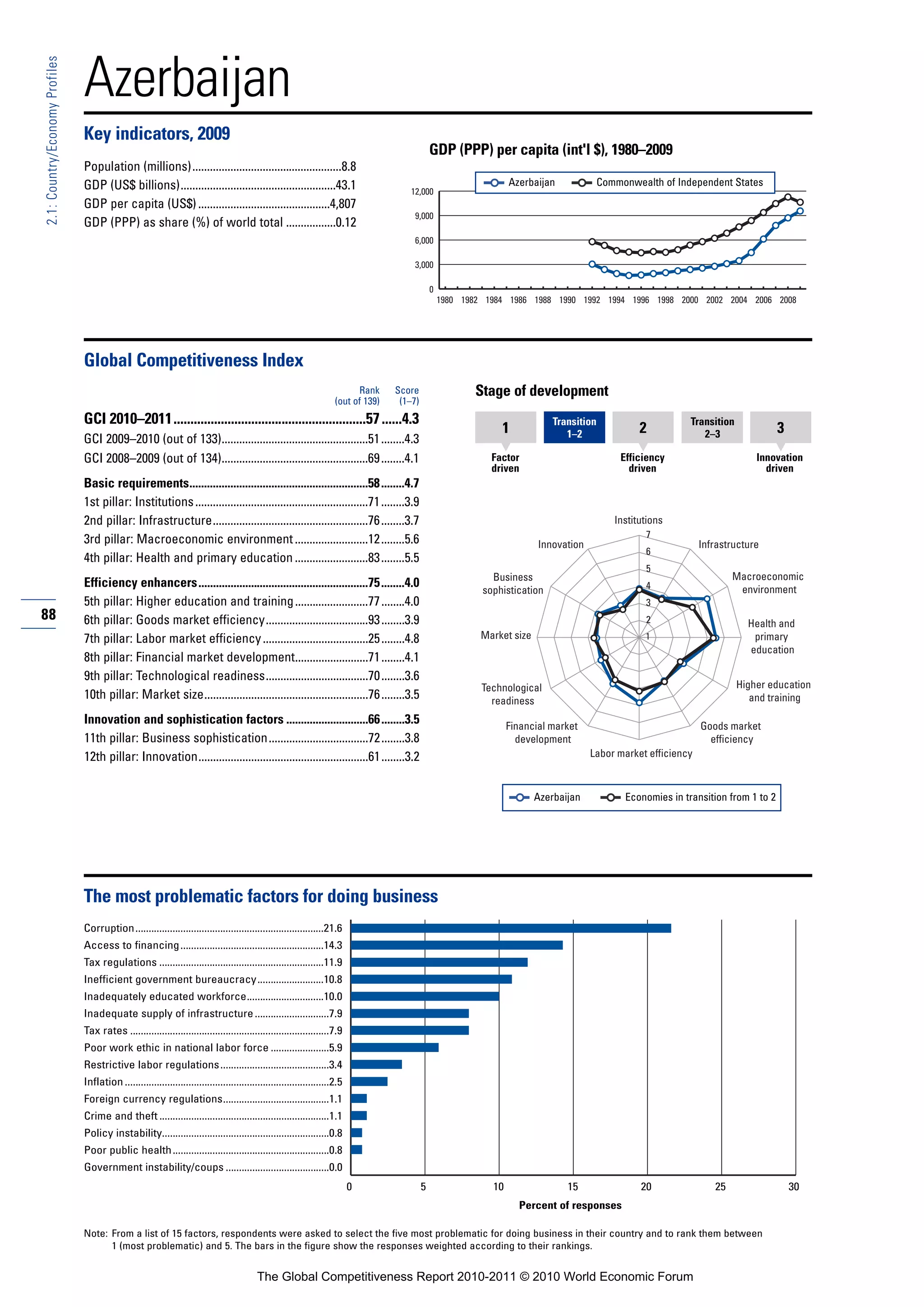
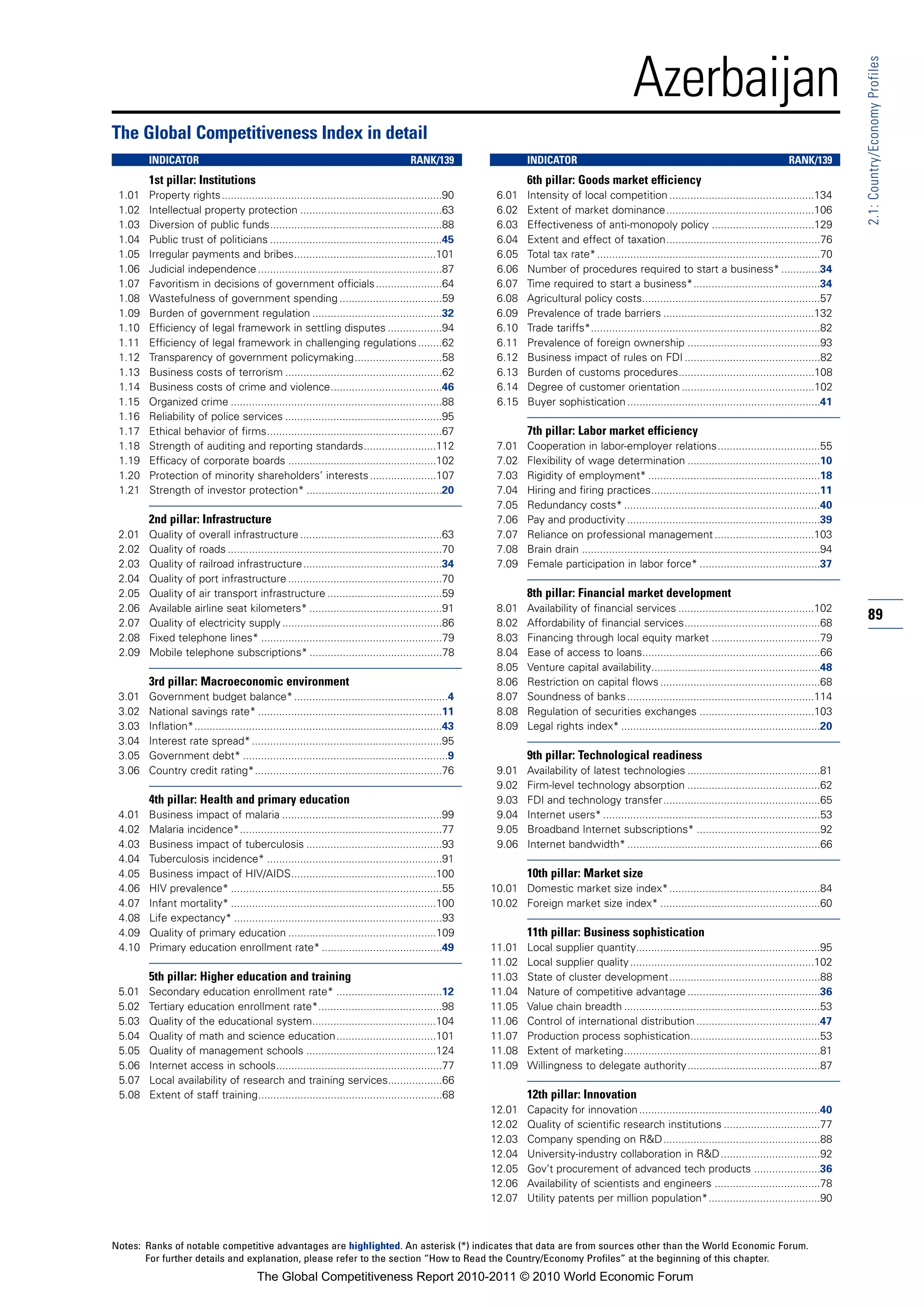
  • 28.
    1.1: The GlobalCompetitiveness Index 2010–2011 Table 4: Global Competitiveness Index 2010–2011 rankings and 2009–2010 comparisons GCI 2010– GCI 2010– 2011 rank 2011 rank GCI 2010–2011 among 2009 GCI 2009–2010 GCI 2010–2011 among 2009 GCI 2009–2010 Country/Economy Rank Score countries rank * Country/Economy Rank Score countries rank * Switzerland 1 5.63 1 1 Kazakhstan 72 4.12 71 67 Sweden 2 5.56 2 4 Peru 73 4.11 72 78 Singapore 3 5.48 3 3 Namibia 74 4.09 73 74 United States 4 5.43 4 2 Morocco 75 4.08 74 73 Germany 5 5.39 5 7 Botswana 76 4.05 75 66 Japan 6 5.37 6 8 Croatia 77 4.04 76 72 Finland 7 5.37 7 6 Guatemala 78 4.04 77 80 Netherlands 8 5.33 8 10 Macedonia, FYR 79 4.02 78 84 Denmark 9 5.32 9 5 Rwanda 80 4.00 n/a n/a Canada 10 5.30 10 9 Egypt 81 4.00 79 70 Hong Kong SAR 11 5.27 11 11 El Salvador 82 3.99 80 77 United Kingdom 12 5.25 12 13 Greece 83 3.99 81 71 Taiwan, China 13 5.21 13 12 Trinidad and Tobago 84 3.97 82 86 Norway 14 5.14 14 14 Philippines 85 3.96 83 87 France 15 5.13 15 16 Algeria 86 3.96 84 83 Australia 16 5.11 16 15 Argentina 87 3.95 85 85 Qatar 17 5.10 17 22 Albania 88 3.94 86 96 Austria 18 5.09 18 17 Ukraine 89 3.90 87 82 Belgium 19 5.07 19 18 Gambia, The 90 3.90 88 81 Luxembourg 20 5.05 20 21 Honduras 91 3.89 89 89 Saudi Arabia 21 4.95 21 28 Lebanon 92 3.89 n/a n/a Korea, Rep. 22 4.93 22 19 Georgia 93 3.86 90 90 New Zealand 23 4.92 23 20 Moldova 94 3.86 n/a n/a Israel 24 4.91 24 27 Jamaica 95 3.85 91 91 United Arab Emirates 25 4.89 25 23 Serbia 96 3.84 92 93 Malaysia 26 4.88 26 24 Syria 97 3.79 93 94 China 27 4.84 27 29 Armenia 98 3.76 94 97 Brunei Darussalam 28 4.75 28 32 Mongolia 99 3.75 95 117 Ireland 29 4.74 29 25 Libya 100 3.74 96 88 Chile 30 4.69 30 30 Dominican Republic 101 3.72 97 95 15 Iceland 31 4.68 31 26 Bosnia and Herzegovina 102 3.70 98 109 Tunisia 32 4.65 32 40 Benin 103 3.69 99 103 Estonia 33 4.61 33 35 Senegal 104 3.67 100 92 Oman 34 4.61 34 41 Ecuador 105 3.65 101 105 Kuwait 35 4.59 35 39 Kenya 106 3.65 102 98 Czech Republic 36 4.57 36 31 Bangladesh 107 3.64 103 106 Bahrain 37 4.54 37 38 Bolivia 108 3.64 104 120 Thailand 38 4.51 38 36 Cambodia 109 3.63 105 110 Poland 39 4.51 39 46 Guyana 110 3.62 106 104 Cyprus 40 4.50 40 34 Cameroon 111 3.58 107 111 Puerto Rico 41 4.49 41 42 Nicaragua 112 3.57 108 115 Spain 42 4.49 42 33 Tanzania 113 3.56 109 100 Barbados 43 4.45 43 44 Ghana 114 3.56 110 114 Indonesia 44 4.43 44 54 Zambia 115 3.55 111 112 Slovenia 45 4.42 45 37 Tajikistan 116 3.53 112 122 Portugal 46 4.38 46 43 Cape Verde 117 3.51 n/a n/a Lithuania 47 4.38 47 53 Uganda 118 3.51 113 108 Italy 48 4.37 48 48 Ethiopia 119 3.51 114 118 Montenegro 49 4.36 49 62 Paraguay 120 3.49 115 124 Malta 50 4.34 50 52 Kyrgyz Republic 121 3.49 116 123 India 51 4.33 51 49 Venezuela 122 3.48 117 113 Hungary 52 4.33 52 58 Pakistan 123 3.48 118 101 Panama 53 4.33 53 59 Madagascar 124 3.46 119 121 South Africa 54 4.32 54 45 Malawi 125 3.45 120 119 Mauritius 55 4.32 55 57 Swaziland 126 3.40 n/a n/a Costa Rica 56 4.31 56 55 Nigeria 127 3.38 121 99 Azerbaijan 57 4.29 57 51 Lesotho 128 3.36 122 107 Brazil 58 4.28 58 56 Côte d’Ivoire 129 3.35 123 116 Vietnam 59 4.27 59 75 Nepal 130 3.34 124 125 Slovak Republic 60 4.25 60 47 Mozambique 131 3.32 125 129 Turkey 61 4.25 61 61 Mali 132 3.28 126 130 Sri Lanka 62 4.25 62 79 Timor-Leste 133 3.23 127 126 Russian Federation 63 4.24 63 63 Burkina Faso 134 3.20 128 128 Uruguay 64 4.23 64 65 Mauritania 135 3.14 129 127 Jordan 65 4.21 65 50 Zimbabwe 136 3.03 130 132 Mexico 66 4.19 66 60 Burundi 137 2.96 131 133 Romania 67 4.16 67 64 Angola 138 2.93 n/a n/a Colombia 68 4.14 68 69 Chad 139 2.73 132 131 Iran, Islamic Rep. 69 4.14 n/a n/a Latvia 70 4.14 69 68 * The 2009–2010 rank shown is the one published last year out of 133 coun- tries. One country that was included last year, Suriname, has been exclud- Bulgaria 71 4.13 70 76 ed this year for lack of Survey data. Suriname’s rank of 102 from last year is (Cont’d.) therefore not shown in the table. The Global Competitiveness Report 2010-2011 © 2010 World Economic Forum
  • 29.
    1.1: The GlobalCompetitiveness Index 2010–2011 Table 5: The Global Competitiveness Index 2010–2011 SUBINDEXES Innovation and OVERALL INDEX Basic requirements Efficiency enhancers sophistication factors Country/Economy Rank Score Rank Score Rank Score Rank Score Switzerland 1 5.63 1 6.05 4 5.41 2 5.71 Sweden 2 5.56 3 5.98 5 5.32 3 5.67 Singapore 3 5.48 2 6.05 1 5.49 10 5.07 United States 4 5.43 32 5.21 3 5.46 4 5.53 Germany 5 5.39 6 5.89 13 5.11 5 5.51 Japan 6 5.37 26 5.35 11 5.17 1 5.72 Finland 7 5.37 4 5.97 14 5.09 6 5.43 Netherlands 8 5.33 9 5.82 8 5.24 8 5.16 Denmark 9 5.32 7 5.86 9 5.20 9 5.15 Canada 10 5.30 11 5.77 6 5.32 14 4.95 Hong Kong SAR 11 5.27 5 5.97 2 5.48 24 4.46 United Kingdom 12 5.25 18 5.58 7 5.28 12 4.98 Taiwan, China 13 5.21 19 5.58 16 5.05 7 5.23 Norway 14 5.14 17 5.65 12 5.13 17 4.83 France 15 5.13 16 5.67 15 5.09 16 4.83 Australia 16 5.11 12 5.74 10 5.20 22 4.54 Qatar 17 5.10 13 5.73 26 4.68 23 4.48 Austria 18 5.09 15 5.67 19 4.93 13 4.97 Belgium 19 5.07 22 5.45 17 5.01 15 4.91 Luxembourg 20 5.05 10 5.81 20 4.92 19 4.76 Saudi Arabia 21 4.95 28 5.32 27 4.67 26 4.41 Korea, Rep. 22 4.93 23 5.42 22 4.81 18 4.81 New Zealand 23 4.92 14 5.71 18 4.97 28 4.30 Israel 24 4.91 39 5.12 23 4.75 11 5.05 United Arab Emirates 25 4.89 8 5.82 21 4.82 27 4.37 Malaysia 26 4.88 33 5.19 24 4.72 25 4.45 China 27 4.84 30 5.27 29 4.63 31 4.13 Brunei Darussalam 28 4.75 20 5.48 67 4.05 72 3.42 16 Ireland 29 4.74 35 5.18 25 4.68 21 4.55 Chile 30 4.69 37 5.15 35 4.51 44 3.91 Iceland 31 4.68 41 5.05 31 4.57 20 4.61 Tunisia 32 4.65 31 5.25 50 4.28 34 4.09 Estonia 33 4.61 25 5.38 34 4.52 45 3.90 Oman 34 4.61 24 5.41 48 4.30 47 3.87 Kuwait 35 4.59 36 5.16 68 4.03 60 3.57 Czech Republic 36 4.57 44 4.91 28 4.66 30 4.19 Bahrain 37 4.54 21 5.48 33 4.54 55 3.67 Thailand 38 4.51 48 4.82 39 4.41 49 3.78 Poland 39 4.51 56 4.69 30 4.62 50 3.76 Cyprus 40 4.50 29 5.28 36 4.46 36 4.07 Puerto Rico 41 4.49 43 5.01 40 4.39 29 4.24 Spain 42 4.49 38 5.13 32 4.56 41 3.96 Barbados 43 4.45 27 5.34 52 4.22 52 3.69 Indonesia 44 4.43 60 4.62 51 4.24 37 4.06 Slovenia 45 4.42 34 5.18 46 4.33 35 4.08 Portugal 46 4.38 42 5.01 43 4.36 39 3.98 Lithuania 47 4.38 52 4.77 49 4.28 48 3.79 Italy 48 4.37 46 4.84 45 4.33 32 4.11 Montenegro 49 4.36 45 4.90 64 4.08 56 3.67 Malta 50 4.34 40 5.08 47 4.31 46 3.88 India 51 4.33 81 4.30 38 4.42 42 3.96 Hungary 52 4.33 59 4.65 41 4.38 51 3.71 Panama 53 4.33 49 4.79 62 4.08 54 3.68 South Africa 54 4.32 79 4.35 42 4.37 43 3.93 Mauritius 55 4.32 47 4.82 66 4.05 59 3.61 Costa Rica 56 4.31 62 4.59 58 4.13 33 4.11 Azerbaijan 57 4.29 58 4.67 75 3.97 66 3.50 Brazil 58 4.28 86 4.26 44 4.35 38 4.03 Vietnam 59 4.27 74 4.39 57 4.16 53 3.69 Slovak Republic 60 4.25 53 4.77 37 4.43 63 3.54 Turkey 61 4.25 68 4.49 55 4.18 57 3.63 Sri Lanka 62 4.25 73 4.42 69 4.01 40 3.97 Russian Federation 63 4.24 65 4.52 53 4.19 80 3.36 Uruguay 64 4.23 51 4.77 74 3.98 70 3.46 Jordan 65 4.21 57 4.67 73 3.98 65 3.50 Mexico 66 4.19 66 4.51 61 4.09 69 3.46 Romania 67 4.16 77 4.36 54 4.18 91 3.24 Colombia 68 4.14 78 4.35 60 4.09 61 3.56 Iran, Islamic Rep. 69 4.14 63 4.58 90 3.76 82 3.34 (Cont’d.) The Global Competitiveness Report 2010-2011 © 2010 World Economic Forum
  • 30.
    1.1: The GlobalCompetitiveness Index 2010–2011 Table 5: The Global Competitiveness Index 2010–2011 (cont’d.) SUBINDEXES Innovation and OVERALL INDEX Basic requirements Efficiency enhancers sophistication factors Country/Economy Rank Score Rank Score Rank Score Rank Score Latvia 70 4.14 61 4.60 63 4.08 77 3.37 Bulgaria 71 4.13 72 4.43 65 4.07 95 3.22 Kazakhstan 72 4.12 69 4.48 71 4.00 102 3.14 Peru 73 4.11 87 4.22 56 4.18 89 3.29 Namibia 74 4.09 54 4.70 91 3.76 92 3.24 Morocco 75 4.08 64 4.57 88 3.78 79 3.36 Botswana 76 4.05 76 4.37 85 3.80 93 3.24 Croatia 77 4.04 50 4.78 76 3.97 85 3.32 Guatemala 78 4.04 85 4.26 81 3.89 62 3.54 Macedonia, FYR 79 4.02 70 4.45 83 3.84 97 3.20 Rwanda 80 4.00 84 4.28 98 3.62 87 3.30 Egypt 81 4.00 89 4.19 82 3.85 68 3.48 El Salvador 82 3.99 71 4.44 87 3.78 96 3.20 Greece 83 3.99 67 4.49 59 4.12 73 3.41 Trinidad and Tobago 84 3.97 55 4.70 77 3.95 78 3.36 Philippines 85 3.96 99 4.02 78 3.93 75 3.38 Algeria 86 3.96 80 4.32 107 3.49 108 3.04 Argentina 87 3.95 82 4.29 86 3.78 71 3.42 Albania 88 3.94 75 4.38 89 3.77 104 3.09 Ukraine 89 3.90 102 3.92 72 3.98 88 3.30 Gambia, The 90 3.90 90 4.16 105 3.51 64 3.53 Honduras 91 3.89 91 4.15 104 3.55 98 3.20 Lebanon 92 3.89 106 3.87 70 4.00 74 3.41 Georgia 93 3.86 95 4.13 94 3.71 121 2.90 Moldova 94 3.86 97 4.10 99 3.59 123 2.89 Jamaica 95 3.85 103 3.92 80 3.90 86 3.31 Serbia 96 3.84 93 4.15 93 3.75 107 3.04 Syria 97 3.78 83 4.28 117 3.38 115 2.97 Armenia 98 3.76 94 4.14 106 3.51 114 2.98 17 Mongolia 99 3.75 100 3.97 109 3.47 119 2.95 Libya 100 3.74 88 4.20 127 3.19 135 2.62 Dominican Republic 101 3.72 107 3.82 92 3.75 99 3.17 Bosnia and Herzegovina 102 3.70 98 4.05 100 3.57 120 2.93 Benin 103 3.69 104 3.91 120 3.35 81 3.35 Senegal 104 3.67 108 3.80 108 3.49 67 3.48 Ecuador 105 3.65 92 4.15 115 3.41 124 2.89 Kenya 106 3.65 126 3.50 79 3.90 58 3.63 Bangladesh 107 3.64 114 3.71 97 3.62 109 3.01 Bolivia 108 3.64 101 3.96 125 3.20 125 2.88 Cambodia 109 3.63 113 3.72 103 3.56 106 3.06 Guyana 110 3.62 105 3.89 112 3.43 103 3.13 Cameroon 111 3.58 111 3.78 121 3.31 105 3.08 Nicaragua 112 3.57 109 3.80 122 3.29 126 2.88 Tanzania 113 3.56 116 3.66 114 3.42 94 3.22 Ghana 114 3.56 122 3.54 96 3.65 100 3.17 Zambia 115 3.55 121 3.56 101 3.56 90 3.28 Tajikistan 116 3.53 112 3.74 123 3.25 118 2.96 Cape Verde 117 3.51 96 4.13 129 3.16 128 2.84 Uganda 118 3.51 123 3.53 102 3.56 111 3.00 Ethiopia 119 3.51 119 3.63 118 3.38 117 2.96 Paraguay 120 3.49 115 3.69 119 3.37 132 2.71 Kyrgyz Republic 121 3.49 120 3.59 111 3.44 137 2.58 Venezuela 122 3.48 117 3.66 113 3.43 129 2.79 Pakistan 123 3.48 132 3.39 95 3.66 76 3.38 Madagascar 124 3.46 118 3.64 124 3.21 113 2.98 Malawi 125 3.45 129 3.46 110 3.45 84 3.32 Swaziland 126 3.40 110 3.79 126 3.20 131 2.77 Nigeria 127 3.38 136 3.11 84 3.83 83 3.33 Lesotho 128 3.36 124 3.53 132 3.12 116 2.96 Côte d’Ivoire 129 3.35 133 3.36 116 3.38 110 3.01 Nepal 130 3.34 125 3.52 131 3.14 133 2.67 Mozambique 131 3.32 130 3.43 128 3.16 101 3.14 Mali 132 3.28 128 3.47 135 2.99 112 3.00 Timor-Leste 133 3.23 127 3.49 136 2.87 136 2.60 Burkina Faso 134 3.20 134 3.29 133 3.08 127 2.87 Mauritania 135 3.14 131 3.39 138 2.79 134 2.63 Zimbabwe 136 3.03 137 3.05 134 3.01 122 2.89 Burundi 137 2.96 135 3.24 139 2.53 138 2.56 Angola 138 2.93 138 2.84 130 3.15 139 2.50 Chad 139 2.73 139 2.68 137 2.81 130 2.79 The Global Competitiveness Report 2010-2011 © 2010 World Economic Forum
  • 31.
    1.1: The GlobalCompetitiveness Index 2010–2011 Table 6: The Global Competitiveness Index: Basic requirements PILLARS 3. Macroeconomic 4. Health and BASIC REQUIREMENTS 1. Institutions 2. Infrastructure environment primary education Country/Economy Rank Score Rank Score Rank Score Rank Score Rank Score Albania 75 4.38 63 3.96 89 3.46 101 4.21 56 5.87 Algeria 80 4.32 98 3.46 87 3.49 57 4.75 77 5.56 Angola 138 2.84 119 3.22 136 1.88 122 3.61 139 2.66 Argentina 82 4.29 132 2.99 77 3.63 54 4.76 60 5.79 Armenia 94 4.14 97 3.50 90 3.46 99 4.23 93 5.37 Australia 12 5.74 14 5.49 22 5.44 16 5.55 13 6.49 Austria 15 5.67 15 5.42 20 5.56 23 5.30 17 6.41 Azerbaijan 58 4.67 71 3.86 76 3.69 12 5.62 83 5.50 Bahrain 21 5.48 27 5.02 27 5.08 10 5.65 36 6.17 Bangladesh 114 3.71 115 3.24 133 2.15 80 4.49 106 4.96 Barbados 27 5.34 22 5.20 23 5.37 91 4.30 14 6.48 Belgium 22 5.45 29 4.98 21 5.53 72 4.56 1 6.75 Benin 104 3.91 87 3.64 113 2.71 82 4.47 108 4.83 Bolivia 101 3.96 136 2.85 100 3.04 59 4.72 100 5.21 Bosnia and Herzegovina 98 4.05 126 3.13 98 3.16 81 4.48 89 5.43 Botswana 76 4.37 32 4.84 84 3.54 74 4.52 114 4.58 Brazil 86 4.26 93 3.58 62 4.02 111 4.00 87 5.45 Brunei Darussalam 20 5.48 36 4.77 52 4.33 1 6.62 32 6.20 Bulgaria 72 4.43 114 3.29 80 3.57 42 5.00 58 5.85 Burkina Faso 134 3.29 90 3.60 134 2.13 98 4.25 135 3.20 Burundi 135 3.24 138 2.77 132 2.19 121 3.63 120 4.37 Cambodia 113 3.72 94 3.56 114 2.70 116 3.81 110 4.80 Cameroon 111 3.78 107 3.39 126 2.42 53 4.81 116 4.49 Canada 11 5.77 11 5.55 9 5.80 35 5.14 6 6.60 Cape Verde 96 4.13 56 4.06 109 2.81 102 4.20 88 5.44 Chad 139 2.68 135 2.89 137 1.83 134 3.10 138 2.90 Chile 37 5.15 28 5.01 40 4.69 26 5.24 71 5.66 China 30 5.27 49 4.37 50 4.44 4 6.11 37 6.16 Colombia 78 4.35 103 3.43 79 3.59 50 4.85 79 5.55 18 Costa Rica 62 4.59 51 4.35 78 3.62 108 4.07 22 6.33 Côte d’Ivoire 133 3.36 133 2.97 99 3.05 94 4.27 136 3.14 Croatia 50 4.78 86 3.65 41 4.63 51 4.82 48 6.02 Cyprus 29 5.28 30 4.91 26 5.10 67 4.60 12 6.50 Czech Republic 44 4.91 72 3.86 39 4.78 48 4.90 43 6.10 Denmark 7 5.86 5 5.84 13 5.69 15 5.56 20 6.36 Dominican Republic 107 3.82 117 3.23 107 2.83 88 4.36 107 4.86 Ecuador 92 4.15 128 3.05 96 3.18 55 4.76 75 5.61 Egypt 89 4.19 57 4.03 64 3.97 129 3.35 91 5.42 El Salvador 71 4.44 101 3.44 59 4.13 64 4.66 81 5.52 Estonia 25 5.38 31 4.91 32 4.94 18 5.40 29 6.26 Ethiopia 119 3.63 59 4.03 115 2.65 127 3.48 119 4.37 Finland 4 5.97 4 5.96 17 5.59 14 5.58 2 6.75 France 16 5.67 26 5.04 4 6.24 44 4.98 16 6.42 Gambia, The 90 4.16 37 4.76 69 3.83 117 3.78 124 4.25 Georgia 95 4.13 69 3.87 73 3.75 130 3.26 73 5.64 Germany 6 5.89 13 5.50 2 6.43 22 5.32 25 6.32 Ghana 122 3.54 67 3.93 106 2.87 136 3.00 122 4.34 Greece 67 4.49 84 3.67 42 4.57 123 3.61 40 6.13 Guatemala 85 4.26 124 3.15 66 3.90 63 4.69 96 5.33 Guyana 105 3.89 95 3.54 103 2.92 126 3.52 78 5.55 Honduras 91 4.15 108 3.37 85 3.51 100 4.23 82 5.50 Hong Kong SAR 5 5.97 8 5.73 1 6.77 39 5.07 28 6.29 Hungary 59 4.65 79 3.76 51 4.36 69 4.59 57 5.87 Iceland 41 5.05 18 5.27 12 5.69 138 2.59 4 6.66 India 81 4.30 58 4.03 86 3.49 73 4.53 104 5.16 Indonesia 60 4.62 61 3.98 82 3.56 34 5.15 62 5.78 Iran, Islamic Rep. 63 4.58 82 3.74 74 3.75 45 4.96 54 5.89 Ireland 35 5.18 24 5.14 38 4.80 95 4.26 10 6.51 Israel 39 5.12 33 4.84 34 4.89 60 4.71 46 6.05 Italy 46 4.84 92 3.58 31 4.94 76 4.52 26 6.30 Jamaica 103 3.92 85 3.66 65 3.91 137 2.93 102 5.19 Japan 26 5.35 25 5.08 11 5.69 105 4.12 9 6.52 Jordan 57 4.67 41 4.64 61 4.11 103 4.19 66 5.73 Kazakhstan 69 4.48 91 3.58 81 3.57 25 5.27 85 5.48 Kenya 126 3.50 123 3.16 102 2.99 128 3.48 121 4.36 Korea, Rep. 23 5.42 62 3.98 18 5.59 6 5.76 21 6.34 Kuwait 36 5.16 46 4.45 60 4.11 2 6.42 68 5.68 Kyrgyz Republic 120 3.59 131 3.01 124 2.47 119 3.66 101 5.21 Latvia 61 4.60 75 3.79 55 4.26 84 4.47 55 5.88 (Cont’d.) The Global Competitiveness Report 2010-2011 © 2010 World Economic Forum
  • 32.
    1.1: The GlobalCompetitiveness Index 2010–2011 Table 6: The Global Competitiveness Index: Basic requirements (cont’d.) PILLARS 3. Macroeconomic 4. Health and BASIC REQUIREMENTS 1. Institutions 2. Infrastructure environment primary education Country/Economy Rank Score Rank Score Rank Score Rank Score Rank Score Lebanon 106 3.87 113 3.33 123 2.47 125 3.58 44 6.08 Lesotho 124 3.53 100 3.45 120 2.56 77 4.50 131 3.61 Libya 88 4.20 111 3.34 95 3.22 7 5.72 115 4.53 Lithuania 52 4.77 60 3.99 43 4.56 71 4.56 52 5.95 Luxembourg 10 5.81 9 5.73 19 5.56 9 5.67 27 6.29 Macedonia, FYR 70 4.45 80 3.75 91 3.45 47 4.91 69 5.67 Madagascar 118 3.64 129 3.05 130 2.35 112 3.99 103 5.17 Malawi 129 3.46 52 4.27 131 2.26 135 3.08 125 4.23 Malaysia 33 5.19 42 4.62 30 4.97 41 5.01 34 6.18 Mali 128 3.47 109 3.36 121 2.56 65 4.63 134 3.32 Malta 40 5.08 34 4.83 48 4.45 52 4.82 30 6.23 Mauritania 131 3.39 116 3.23 122 2.52 118 3.70 127 4.11 Mauritius 47 4.82 43 4.61 58 4.18 62 4.69 59 5.81 Mexico 66 4.51 106 3.40 75 3.74 27 5.24 70 5.66 Moldova 97 4.10 102 3.43 97 3.18 90 4.31 84 5.50 Mongolia 100 3.97 122 3.17 117 2.61 49 4.90 98 5.22 Montenegro 45 4.90 45 4.46 67 3.85 36 5.09 33 6.19 Morocco 64 4.57 66 3.94 71 3.78 30 5.21 94 5.37 Mozambique 130 3.43 99 3.46 119 2.56 104 4.17 133 3.54 Namibia 54 4.70 38 4.76 54 4.26 40 5.04 112 4.75 Nepal 125 3.52 130 3.03 139 1.81 86 4.41 109 4.81 Netherlands 9 5.82 12 5.54 7 5.93 24 5.29 8 6.53 New Zealand 14 5.71 3 6.00 37 4.82 19 5.40 5 6.64 Nicaragua 109 3.80 127 3.10 111 2.73 110 4.01 95 5.36 Nigeria 136 3.11 121 3.18 135 2.02 97 4.25 137 3.00 Norway 17 5.65 6 5.82 29 5.00 17 5.43 24 6.33 Oman 24 5.41 16 5.37 33 4.94 3 6.11 99 5.22 Pakistan 132 3.39 112 3.34 110 2.75 133 3.19 123 4.27 Panama 49 4.79 73 3.81 44 4.53 29 5.22 76 5.60 19 Paraguay 115 3.69 137 2.85 125 2.46 93 4.28 105 5.16 Peru 87 4.22 96 3.53 88 3.47 75 4.52 92 5.38 Philippines 99 4.02 125 3.14 104 2.92 68 4.60 90 5.42 Poland 56 4.69 54 4.18 72 3.76 61 4.70 39 6.13 Portugal 42 5.01 48 4.37 24 5.30 96 4.26 41 6.13 Puerto Rico 43 5.01 44 4.58 49 4.44 38 5.07 51 5.95 Qatar 13 5.73 10 5.55 25 5.24 8 5.71 15 6.43 Romania 77 4.36 81 3.74 92 3.44 78 4.50 63 5.77 Russian Federation 65 4.52 118 3.22 47 4.46 79 4.49 53 5.92 Rwanda 84 4.28 19 5.26 101 2.99 106 4.07 111 4.80 Saudi Arabia 28 5.32 21 5.22 28 5.07 21 5.35 74 5.64 Senegal 108 3.80 76 3.77 112 2.71 89 4.34 118 4.37 Serbia 93 4.15 120 3.19 93 3.39 109 4.05 50 5.95 Singapore 2 6.05 1 6.13 5 6.22 32 5.20 3 6.67 Slovak Republic 53 4.77 89 3.60 57 4.19 31 5.20 45 6.07 Slovenia 34 5.18 50 4.37 36 4.83 33 5.19 23 6.33 South Africa 79 4.35 47 4.38 63 3.98 43 4.99 129 4.06 Spain 38 5.13 53 4.25 14 5.67 66 4.60 49 6.01 Sri Lanka 73 4.42 55 4.06 70 3.82 124 3.60 35 6.18 Swaziland 110 3.79 70 3.86 94 3.26 92 4.28 130 3.73 Sweden 3 5.98 2 6.12 10 5.76 13 5.61 18 6.41 Switzerland 1 6.05 7 5.77 6 6.09 5 5.81 7 6.56 Syria 83 4.28 78 3.76 105 2.88 58 4.75 64 5.74 Taiwan, China 19 5.58 35 4.82 16 5.63 20 5.36 11 6.50 Tajikistan 112 3.74 77 3.76 116 2.63 131 3.25 97 5.32 Tanzania 116 3.66 83 3.74 128 2.37 115 3.87 113 4.67 Thailand 48 4.82 64 3.95 35 4.84 46 4.93 80 5.55 Timor-Leste 127 3.49 110 3.35 138 1.81 28 5.22 132 3.56 Trinidad and Tobago 55 4.70 68 3.89 45 4.53 70 4.59 61 5.78 Tunisia 31 5.25 23 5.19 46 4.50 37 5.09 31 6.23 Turkey 68 4.49 88 3.61 56 4.21 83 4.47 72 5.65 Uganda 123 3.53 104 3.42 127 2.40 114 3.89 117 4.42 Ukraine 102 3.92 134 2.96 68 3.83 132 3.20 67 5.70 United Arab Emirates 8 5.82 20 5.25 3 6.26 11 5.65 38 6.14 United Kingdom 18 5.58 17 5.28 8 5.88 56 4.76 19 6.40 United States 32 5.21 40 4.67 15 5.65 87 4.39 42 6.12 Uruguay 51 4.77 39 4.72 53 4.29 107 4.07 47 6.02 Venezuela 117 3.66 139 2.43 108 2.82 113 3.90 86 5.47 Vietnam 74 4.39 74 3.80 83 3.56 85 4.47 65 5.74 Zambia 121 3.56 65 3.95 118 2.59 120 3.64 128 4.06 Zimbabwe 137 3.05 105 3.41 129 2.36 139 2.26 126 4.16 The Global Competitiveness Report 2010-2011 © 2010 World Economic Forum
  • 33.
    1.1: The GlobalCompetitiveness Index 2010–2011 Table 7: The Global Competitiveness Index: Efficiency enhancers PILLARS EFFICIENCY 5. Higher education 6. Goods market 7. Labor market 8. Financial market 9. Technological 10. Market ENHANCERS and training efficiency efficiency development readiness size Country/Economy Rank Score Rank Score Rank Score Rank Score Rank Score Rank Score Rank Score Albania 89 3.77 84 3.86 63 4.19 63 4.46 100 3.74 72 3.53 103 2.84 Algeria 107 3.49 98 3.59 126 3.57 123 3.74 135 2.82 106 2.98 50 4.26 Angola 130 3.15 138 2.13 133 3.33 87 4.22 134 2.88 130 2.59 64 3.76 Argentina 86 3.78 55 4.46 135 3.14 128 3.56 126 3.15 73 3.52 24 4.85 Armenia 106 3.51 91 3.66 113 3.72 47 4.61 110 3.60 108 2.96 116 2.50 Australia 10 5.20 14 5.53 18 5.02 11 5.13 3 5.45 23 4.97 18 5.12 Austria 19 4.93 16 5.38 19 5.00 32 4.75 23 4.74 18 5.09 33 4.59 Azerbaijan 75 3.97 77 3.96 93 3.92 25 4.82 71 4.12 70 3.55 76 3.46 Bahrain 33 4.54 44 4.64 9 5.13 28 4.78 20 4.90 27 4.88 98 2.94 Bangladesh 97 3.62 126 2.77 102 3.83 108 3.98 66 4.18 126 2.65 47 4.32 Barbados 52 4.22 27 4.97 55 4.27 49 4.60 38 4.61 22 4.98 133 1.91 Belgium 17 5.01 7 5.71 16 5.08 43 4.64 34 4.64 13 5.22 27 4.77 Benin 120 3.35 112 3.18 100 3.84 85 4.23 95 3.84 122 2.71 124 2.32 Bolivia 125 3.20 100 3.58 136 3.13 136 3.26 118 3.36 127 2.65 86 3.22 Bosnia and Herzegovina 100 3.57 88 3.80 127 3.56 94 4.17 113 3.47 85 3.36 93 3.10 Botswana 85 3.80 94 3.64 58 4.23 61 4.47 47 4.49 99 3.13 102 2.86 Brazil 44 4.35 58 4.29 114 3.71 96 4.14 50 4.44 54 3.92 10 5.60 Brunei Darussalam 67 4.05 64 4.21 78 4.06 10 5.25 55 4.29 49 4.00 118 2.48 Bulgaria 65 4.07 67 4.14 82 4.00 58 4.51 91 3.95 48 4.01 63 3.79 Burkina Faso 133 3.08 135 2.45 120 3.59 91 4.19 128 3.11 124 2.66 119 2.47 Burundi 139 2.53 139 2.03 137 2.98 81 4.25 139 2.34 137 2.31 137 1.29 Cambodia 103 3.56 122 2.92 81 4.04 51 4.59 92 3.93 115 2.87 96 3.01 Cameroon 121 3.31 117 3.00 119 3.65 99 4.10 123 3.25 118 2.75 91 3.11 Canada 6 5.32 8 5.66 11 5.11 6 5.42 12 5.16 16 5.14 14 5.46 Cape Verde 129 3.16 109 3.25 111 3.76 122 3.75 104 3.67 79 3.44 139 1.08 Chad 137 2.81 136 2.33 138 2.88 95 4.16 137 2.75 138 2.28 120 2.46 Chile 35 4.51 45 4.63 28 4.80 44 4.63 41 4.59 45 4.09 46 4.34 China 29 4.63 60 4.24 43 4.40 38 4.70 57 4.28 78 3.44 2 6.71 Colombia 60 4.09 69 4.09 103 3.83 69 4.40 79 4.01 63 3.61 32 4.60 20 Costa Rica 58 4.13 43 4.64 48 4.35 45 4.62 85 3.98 57 3.85 82 3.32 Côte d’Ivoire 116 3.38 116 3.02 118 3.65 105 4.00 112 3.50 102 3.05 94 3.07 Croatia 76 3.97 56 4.35 110 3.78 113 3.90 88 3.96 39 4.23 70 3.62 Cyprus 36 4.46 29 4.91 20 4.97 42 4.64 15 5.01 38 4.40 104 2.82 Czech Republic 28 4.66 24 5.11 35 4.58 33 4.75 48 4.49 32 4.55 42 4.47 Denmark 9 5.20 3 5.84 13 5.10 5 5.47 18 4.94 6 5.62 52 4.25 Dominican Republic 92 3.75 99 3.59 109 3.79 89 4.20 99 3.76 66 3.58 71 3.61 Ecuador 115 3.41 92 3.65 132 3.36 137 3.24 115 3.42 107 2.97 61 3.81 Egypt 82 3.85 97 3.59 90 3.94 133 3.43 82 4.00 87 3.32 26 4.80 El Salvador 87 3.78 101 3.52 53 4.32 88 4.21 78 4.02 81 3.41 87 3.19 Estonia 34 4.52 22 5.17 29 4.71 17 4.91 45 4.50 24 4.94 101 2.89 Ethiopia 118 3.38 129 2.72 92 3.93 72 4.38 121 3.27 133 2.51 79 3.44 Finland 14 5.09 1 6.06 24 4.92 22 4.85 4 5.38 15 5.17 56 4.15 France 15 5.09 17 5.36 32 4.69 60 4.47 16 4.96 12 5.28 7 5.76 Gambia, The 105 3.51 103 3.50 66 4.17 16 4.94 76 4.02 97 3.16 138 1.29 Georgia 94 3.71 90 3.74 64 4.18 31 4.75 108 3.62 98 3.14 107 2.80 Germany 13 5.11 19 5.33 21 4.97 70 4.40 36 4.62 10 5.36 5 6.01 Ghana 96 3.65 108 3.27 75 4.09 93 4.17 60 4.24 117 2.85 83 3.25 Greece 59 4.12 42 4.67 94 3.91 125 3.71 93 3.88 46 4.06 39 4.52 Guatemala 81 3.89 104 3.47 61 4.21 101 4.06 44 4.55 67 3.57 75 3.48 Guyana 112 3.43 81 3.91 95 3.88 100 4.08 102 3.70 103 3.05 131 1.96 Honduras 104 3.55 106 3.35 83 4.00 134 3.41 67 4.16 94 3.23 90 3.13 Hong Kong SAR 2 5.48 28 4.94 2 5.57 3 5.82 1 5.85 5 5.96 28 4.74 Hungary 41 4.38 34 4.81 67 4.16 62 4.46 68 4.16 37 4.41 49 4.27 Iceland 31 4.57 6 5.74 30 4.71 7 5.39 122 3.25 4 5.99 122 2.37 India 38 4.42 85 3.85 71 4.13 92 4.18 17 4.95 86 3.33 4 6.10 Indonesia 51 4.24 66 4.18 49 4.35 84 4.23 62 4.23 91 3.25 15 5.21 Iran, Islamic Rep. 90 3.76 87 3.80 98 3.85 135 3.37 120 3.29 96 3.19 20 5.09 Ireland 25 4.68 23 5.17 14 5.09 20 4.87 98 3.79 21 4.99 54 4.20 Israel 23 4.75 33 4.82 37 4.58 19 4.88 14 5.07 26 4.89 53 4.24 Italy 45 4.33 47 4.60 68 4.16 118 3.81 101 3.70 43 4.12 9 5.63 Jamaica 80 3.90 80 3.92 80 4.04 83 4.23 46 4.49 60 3.76 99 2.94 Japan 11 5.17 20 5.28 17 5.06 13 5.08 39 4.61 28 4.87 3 6.11 Jordan 73 3.98 57 4.32 46 4.36 112 3.92 54 4.31 62 3.71 84 3.25 Kazakhstan 71 4.00 65 4.20 86 3.98 21 4.86 117 3.39 82 3.40 55 4.16 Kenya 79 3.90 96 3.62 88 3.96 46 4.62 27 4.69 101 3.06 74 3.49 Korea, Rep. 22 4.81 15 5.42 38 4.55 78 4.27 83 3.99 19 5.05 11 5.56 Kuwait 68 4.03 83 3.87 54 4.32 64 4.45 63 4.22 77 3.46 59 3.88 Kyrgyz Republic 111 3.44 86 3.83 121 3.58 65 4.42 111 3.54 119 2.75 115 2.53 Latvia 63 4.08 35 4.81 72 4.13 52 4.58 86 3.98 51 3.96 95 3.04 (Cont’d.) The Global Competitiveness Report 2010-2011 © 2010 World Economic Forum
  • 34.
    1.1: The GlobalCompetitiveness Index 2010–2011 Table 7: The Global Competitiveness Index: Efficiency enhancers (cont’d.) PILLARS EFFICIENCY 5. Higher education 6. Goods market 7. Labor market 8. Financial market 9. Technological 10. Market ENHANCERS and training efficiency efficiency development readiness size Country/Economy Rank Score Rank Score Rank Score Rank Score Rank Score Rank Score Rank Score Lebanon 70 4.00 48 4.57 42 4.44 103 4.01 53 4.33 92 3.24 80 3.41 Lesotho 132 3.12 124 2.85 84 3.99 86 4.22 114 3.46 129 2.59 135 1.61 Libya 127 3.19 95 3.63 134 3.20 139 2.81 130 2.99 114 2.87 69 3.64 Lithuania 49 4.28 25 5.07 73 4.12 48 4.61 89 3.95 33 4.51 77 3.45 Luxembourg 20 4.92 41 4.68 3 5.49 37 4.71 6 5.35 2 6.11 89 3.16 Macedonia, FYR 83 3.84 72 4.04 57 4.24 71 4.38 87 3.97 64 3.60 106 2.80 Madagascar 124 3.21 128 2.76 107 3.80 67 4.41 131 2.94 123 2.70 110 2.68 Malawi 110 3.45 120 2.92 85 3.98 50 4.59 64 4.21 121 2.71 127 2.26 Malaysia 24 4.72 49 4.55 27 4.81 35 4.74 7 5.34 40 4.19 29 4.70 Mali 135 2.99 132 2.56 124 3.57 121 3.78 133 2.92 128 2.64 117 2.50 Malta 47 4.31 37 4.79 36 4.58 98 4.10 11 5.22 29 4.85 125 2.31 Mauritania 138 2.79 137 2.15 131 3.45 114 3.89 138 2.66 132 2.55 130 2.04 Mauritius 66 4.05 70 4.09 31 4.70 59 4.49 29 4.68 61 3.73 112 2.63 Mexico 61 4.09 79 3.94 96 3.86 120 3.80 96 3.82 71 3.55 12 5.54 Moldova 99 3.59 78 3.95 104 3.83 68 4.41 103 3.68 89 3.28 121 2.40 Mongolia 109 3.47 89 3.76 99 3.84 29 4.78 129 3.07 105 3.03 123 2.33 Montenegro 64 4.08 52 4.51 44 4.39 39 4.69 28 4.68 44 4.09 129 2.10 Morocco 88 3.78 102 3.51 77 4.08 130 3.47 74 4.07 75 3.49 57 4.04 Mozambique 128 3.16 134 2.47 112 3.75 116 3.87 116 3.39 113 2.89 113 2.62 Namibia 91 3.76 111 3.21 56 4.25 55 4.53 24 4.73 88 3.31 114 2.54 Nepal 131 3.14 131 2.62 122 3.58 126 3.58 106 3.64 134 2.50 100 2.93 Netherlands 8 5.24 10 5.63 8 5.17 23 4.83 26 4.71 3 5.99 19 5.10 New Zealand 18 4.97 13 5.55 7 5.20 12 5.10 10 5.23 25 4.93 60 3.82 Nicaragua 122 3.29 113 3.17 116 3.68 110 3.95 109 3.60 125 2.66 109 2.68 Nigeria 84 3.83 118 2.99 87 3.97 74 4.35 84 3.99 104 3.04 30 4.65 Norway 12 5.13 12 5.59 23 4.95 15 4.97 5 5.35 9 5.56 44 4.34 Oman 48 4.30 63 4.22 25 4.83 36 4.73 30 4.67 59 3.79 73 3.57 Pakistan 95 3.66 123 2.91 91 3.94 131 3.45 73 4.09 109 2.94 31 4.63 Panama 62 4.08 82 3.87 50 4.35 106 4.00 21 4.88 41 4.17 85 3.22 Paraguay 119 3.37 119 2.98 101 3.84 124 3.74 97 3.80 116 2.86 97 3.00 21 Peru 56 4.18 76 4.00 69 4.15 56 4.52 42 4.59 74 3.51 48 4.31 Philippines 78 3.93 73 4.02 97 3.86 111 3.93 75 4.04 95 3.20 37 4.54 Poland 30 4.62 26 5.00 45 4.38 53 4.58 32 4.66 47 4.02 21 5.08 Portugal 43 4.36 39 4.76 52 4.32 117 3.85 59 4.26 31 4.63 45 4.34 Puerto Rico 40 4.39 38 4.77 34 4.59 41 4.64 40 4.60 52 3.94 62 3.80 Qatar 26 4.68 32 4.84 12 5.10 14 5.03 19 4.91 36 4.44 66 3.75 Romania 54 4.18 54 4.47 76 4.08 76 4.32 81 4.01 58 3.82 43 4.41 Russian Federation 53 4.19 50 4.55 123 3.58 57 4.51 125 3.18 69 3.56 8 5.74 Rwanda 98 3.62 121 2.92 70 4.14 9 5.29 69 4.15 100 3.09 128 2.11 Saudi Arabia 27 4.67 51 4.55 10 5.11 66 4.42 22 4.83 42 4.17 22 4.97 Senegal 108 3.49 110 3.23 79 4.06 109 3.97 107 3.62 93 3.24 105 2.80 Serbia 93 3.75 74 4.01 125 3.57 102 4.06 94 3.84 80 3.41 72 3.60 Singapore 1 5.49 5 5.77 1 5.65 1 5.92 2 5.76 11 5.35 41 4.51 Slovak Republic 37 4.43 53 4.49 51 4.34 40 4.66 37 4.61 34 4.48 58 3.97 Slovenia 46 4.33 21 5.27 39 4.52 80 4.26 77 4.02 35 4.45 78 3.45 South Africa 42 4.37 75 4.01 40 4.48 97 4.13 9 5.30 76 3.48 25 4.82 Spain 32 4.56 31 4.85 62 4.20 115 3.88 56 4.28 30 4.64 13 5.47 Sri Lanka 69 4.01 62 4.24 47 4.36 104 4.01 52 4.36 84 3.37 68 3.70 Swaziland 126 3.20 125 2.81 106 3.80 90 4.19 80 4.01 136 2.46 132 1.91 Sweden 5 5.32 2 5.90 5 5.30 18 4.89 13 5.15 1 6.12 34 4.58 Switzerland 4 5.41 4 5.79 4 5.31 2 5.92 8 5.34 7 5.60 36 4.54 Syria 117 3.38 107 3.31 115 3.69 132 3.43 124 3.19 111 2.92 65 3.75 Taiwan, China 16 5.05 11 5.63 15 5.09 34 4.74 35 4.63 20 5.04 17 5.15 Tajikistan 123 3.25 105 3.41 128 3.54 73 4.38 127 3.14 120 2.74 126 2.30 Tanzania 114 3.42 133 2.54 108 3.80 77 4.28 90 3.95 131 2.59 81 3.37 Thailand 39 4.41 59 4.25 41 4.46 24 4.82 51 4.43 68 3.56 23 4.95 Timor-Leste 136 2.87 130 2.66 105 3.82 75 4.32 136 2.78 139 2.23 136 1.39 Trinidad and Tobago 77 3.95 61 4.24 89 3.94 82 4.25 43 4.57 53 3.92 108 2.78 Tunisia 50 4.28 30 4.89 33 4.68 79 4.26 58 4.27 55 3.86 67 3.72 Turkey 55 4.18 71 4.04 59 4.21 127 3.57 61 4.23 56 3.85 16 5.17 Uganda 102 3.56 127 2.76 117 3.67 27 4.80 72 4.11 112 2.92 92 3.11 Ukraine 72 3.98 46 4.61 129 3.53 54 4.54 119 3.31 83 3.37 38 4.53 United Arab Emirates 21 4.82 36 4.80 6 5.22 26 4.81 33 4.66 14 5.19 51 4.26 United Kingdom 7 5.28 18 5.34 22 4.96 8 5.29 25 4.73 8 5.58 6 5.80 United States 3 5.46 9 5.64 26 4.81 4 5.63 31 4.67 17 5.10 1 6.93 Uruguay 74 3.98 40 4.68 74 4.09 119 3.80 70 4.13 50 4.00 88 3.18 Venezuela 113 3.43 68 4.10 139 2.83 138 2.91 132 2.93 90 3.27 40 4.51 Vietnam 57 4.16 93 3.64 60 4.21 30 4.76 65 4.21 65 3.58 35 4.56 Zambia 101 3.56 114 3.17 65 4.18 107 3.98 49 4.49 110 2.92 111 2.64 Zimbabwe 134 3.01 115 3.07 130 3.52 129 3.51 105 3.64 135 2.48 134 1.84 The Global Competitiveness Report 2010-2011 © 2010 World Economic Forum
  • 35.
    1.1: The GlobalCompetitiveness Index 2010–2011 Table 8: The Global Competitiveness Index: Innovation and sophistication factors PILLARS PILLARS INNOVATION AND INNOVATION AND SOPHISTICATION 11. Business 12. SOPHISTICATION 11. Business 12. FACTORS sophistication Innovation FACTORS sophistication Innovation Country/Economy Rank Score Rank Score Rank Score Country/Economy Rank Score Rank Score Rank Score Albania 104 3.09 87 3.61 121 2.57 Lebanon 74 3.41 53 4.16 112 2.65 Algeria 108 3.04 108 3.33 107 2.75 Lesotho 116 2.96 114 3.28 113 2.65 Angola 139 2.50 139 2.64 133 2.36 Libya 135 2.62 136 2.86 131 2.38 Argentina 71 3.42 75 3.80 73 3.05 Lithuania 48 3.79 49 4.21 51 3.38 Armenia 114 2.98 109 3.33 116 2.63 Luxembourg 19 4.76 18 4.98 16 4.53 Australia 22 4.54 29 4.67 21 4.41 Macedonia, FYR 97 3.20 96 3.52 97 2.88 Austria 13 4.97 6 5.46 20 4.48 Madagascar 113 2.98 124 3.16 102 2.80 Azerbaijan 66 3.50 72 3.84 61 3.16 Malawi 84 3.32 89 3.59 72 3.06 Bahrain 55 3.67 55 4.14 59 3.21 Malaysia 25 4.45 25 4.79 24 4.10 Bangladesh 109 3.01 105 3.42 119 2.61 Mali 112 3.00 128 3.08 91 2.92 Barbados 52 3.69 59 4.07 53 3.32 Malta 46 3.88 40 4.34 48 3.43 Belgium 15 4.91 11 5.24 15 4.59 Mauritania 134 2.63 134 2.90 132 2.36 Benin 81 3.35 99 3.49 60 3.20 Mauritius 59 3.61 47 4.24 82 2.98 Bolivia 125 2.88 117 3.26 127 2.50 Mexico 69 3.46 67 3.91 78 3.01 Bosnia and Herzegovina 120 2.93 115 3.27 120 2.59 Moldova 123 2.89 113 3.28 129 2.49 Botswana 93 3.24 104 3.44 74 3.04 Mongolia 119 2.95 127 3.10 100 2.81 Brazil 38 4.03 31 4.51 42 3.55 Montenegro 56 3.67 70 3.86 45 3.48 Brunei Darussalam 72 3.42 77 3.75 69 3.08 Morocco 79 3.36 78 3.75 81 2.98 Bulgaria 95 3.22 95 3.52 92 2.91 Mozambique 101 3.14 110 3.31 84 2.96 Burkina Faso 127 2.87 137 2.80 90 2.93 Namibia 92 3.24 88 3.60 96 2.89 Burundi 138 2.56 138 2.78 134 2.35 Nepal 133 2.67 132 3.04 137 2.29 Cambodia 106 3.06 106 3.38 108 2.75 Netherlands 8 5.16 5 5.55 13 4.77 Cameroon 105 3.08 116 3.27 95 2.90 New Zealand 28 4.30 30 4.59 25 4.01 Canada 14 4.95 16 5.03 11 4.87 Nicaragua 126 2.88 118 3.24 124 2.52 Cape Verde 128 2.84 131 3.05 117 2.63 Nigeria 83 3.33 76 3.79 98 2.87 Chad 130 2.79 133 2.94 115 2.64 Norway 17 4.83 14 5.17 18 4.49 Chile 44 3.91 43 4.33 43 3.50 Oman 47 3.87 45 4.27 47 3.46 China 31 4.13 41 4.34 26 3.92 Pakistan 76 3.38 79 3.73 75 3.03 Colombia 61 3.56 61 4.00 65 3.11 Panama 54 3.68 46 4.25 64 3.11 22 Costa Rica 33 4.11 32 4.50 35 3.72 Paraguay 132 2.71 122 3.21 138 2.21 Côte d’Ivoire 110 3.01 112 3.29 109 2.74 Peru 89 3.29 71 3.85 110 2.73 Croatia 85 3.32 92 3.56 70 3.08 Philippines 75 3.38 60 4.04 111 2.73 Cyprus 36 4.07 33 4.47 38 3.66 Poland 50 3.76 50 4.20 54 3.31 Czech Republic 30 4.19 34 4.47 27 3.92 Portugal 39 3.98 51 4.19 32 3.77 Denmark 9 5.15 7 5.41 10 4.89 Puerto Rico 29 4.24 27 4.74 33 3.74 Dominican Republic 99 3.17 82 3.72 118 2.62 Qatar 23 4.48 21 4.85 23 4.11 Ecuador 124 2.89 107 3.34 130 2.43 Romania 91 3.24 93 3.55 87 2.94 Egypt 68 3.48 63 3.98 83 2.97 Russian Federation 80 3.36 101 3.47 57 3.25 El Salvador 96 3.20 68 3.90 126 2.50 Rwanda 87 3.30 94 3.53 71 3.07 Estonia 45 3.90 56 4.13 37 3.68 Saudi Arabia 26 4.41 19 4.91 28 3.92 Ethiopia 117 2.96 123 3.17 105 2.76 Senegal 67 3.48 84 3.66 55 3.30 Finland 6 5.43 10 5.29 3 5.56 Serbia 107 3.04 125 3.15 88 2.93 France 16 4.83 12 5.18 19 4.48 Singapore 10 5.07 15 5.10 9 5.04 Gambia, The 64 3.53 65 3.93 62 3.14 Slovak Republic 63 3.54 57 4.12 85 2.95 Georgia 121 2.90 111 3.29 125 2.51 Slovenia 35 4.08 36 4.42 34 3.73 Germany 5 5.51 3 5.82 8 5.19 South Africa 43 3.93 38 4.37 44 3.49 Ghana 100 3.17 97 3.50 99 2.84 Spain 41 3.96 35 4.46 46 3.47 Greece 73 3.41 74 3.83 79 3.00 Sri Lanka 40 3.97 39 4.36 40 3.58 Guatemala 62 3.54 54 4.15 89 2.93 Swaziland 131 2.77 121 3.22 135 2.33 Guyana 103 3.13 86 3.61 114 2.65 Sweden 3 5.67 2 5.88 5 5.45 Honduras 98 3.20 85 3.64 106 2.76 Switzerland 2 5.71 4 5.81 2 5.60 Hong Kong SAR 24 4.46 17 5.01 29 3.91 Syria 115 2.97 103 3.45 128 2.49 Hungary 51 3.71 69 3.87 41 3.55 Taiwan, China 7 5.23 13 5.17 7 5.29 Iceland 20 4.61 28 4.69 17 4.53 Tajikistan 118 2.96 126 3.13 103 2.79 India 42 3.96 44 4.30 39 3.62 Tanzania 94 3.22 98 3.50 86 2.95 Indonesia 37 4.06 37 4.40 36 3.71 Thailand 49 3.78 48 4.23 52 3.34 Iran, Islamic Rep. 82 3.34 91 3.56 66 3.11 Timor-Leste 136 2.60 135 2.89 136 2.31 Ireland 21 4.55 20 4.85 22 4.25 Trinidad and Tobago 78 3.36 73 3.83 94 2.90 Israel 11 5.05 26 4.79 6 5.30 Tunisia 34 4.09 42 4.34 31 3.85 Italy 32 4.11 23 4.81 50 3.40 Turkey 57 3.63 52 4.16 67 3.10 Jamaica 86 3.31 81 3.72 93 2.90 Uganda 111 3.00 120 3.23 104 2.76 Japan 1 5.72 1 5.92 4 5.52 Ukraine 88 3.30 100 3.48 63 3.11 Jordan 65 3.50 66 3.91 68 3.10 United Arab Emirates 27 4.37 22 4.84 30 3.91 Kazakhstan 102 3.14 102 3.47 101 2.81 United Kingdom 12 4.98 9 5.32 14 4.65 Kenya 58 3.63 62 3.99 56 3.27 United States 4 5.53 8 5.40 1 5.65 Korea, Rep. 18 4.81 24 4.81 12 4.81 Uruguay 70 3.46 83 3.70 58 3.21 Kuwait 60 3.57 58 4.12 76 3.03 Venezuela 129 2.79 129 3.06 123 2.53 Kyrgyz Republic 137 2.58 130 3.05 139 2.12 Vietnam 53 3.69 64 3.98 49 3.40 Latvia 77 3.37 80 3.73 77 3.02 Zambia 90 3.28 90 3.57 80 3.00 Zimbabwe 122 2.89 119 3.24 122 2.55 (Cont’d.) The Global Competitiveness Report 2010-2011 © 2010 World Economic Forum
  • 36.
    1.1: The GlobalCompetitiveness Index 2010–2011 On the other hand, there are some weaknesses in capita (279.1 per million inhabitants) that is 2nd world- particular areas that have deepened since our last assess- wide, just behind the United States. The country’s over- ment. The evaluation of institutions has continued to all competitive performance, however, continues to be decline, falling from 34th to 40th this year. The public dragged down by its macroeconomic weaknesses, with does not demonstrate strong trust of politicians (54th), high budget deficits over several years (ranked 134th), and the business community remains concerned about which have led to the buildup of one of the highest the government’s ability to maintain arms-length rela- public debt levels in the world (217.6 percent of GDP tionships with the private sector (55th) and considers in 2009, corresponding to a 137th rank, or second to that the government spends its resources relatively last on this indicator). Japan’s rise in the rankings can in wastefully (68th).There is also increasing concern related large part be traced to the fact that its main areas of to the functioning of private institutions, with a measur- weakness, linked to macroeconomic instability and able weakening of the assessment of auditing and weaknesses in the banking sector, for example, have now reporting standards (down from 39th last year to 55th become concerns for many other countries. this year), as well as corporate ethics (down from 22nd Finland and Denmark, while placed a bit further to 30th). Measures of financial market development have behind Sweden this year, continue to be ranked among also continued to decline, dropping from 9th two years the most competitive economies in the world, at 7th ago to 31st overall this year in that pillar. and 9th positions, respectively. Their macroeconomic A lack of macroeconomic stability continues to be environments are healthy, with government budgets the United States’ greatest area of weakness (ranked approximately in balance through 2009, narrow interest 87th). Prior to the crisis, the United States had been rate spreads (especially in Finland), and excellent coun- building up large macroeconomic imbalances, with try credit ratings. Similar to Sweden, they have among repeated fiscal deficits leading to burgeoning levels of the best-functioning and most transparent institutions in public indebtedness; this has been exacerbated by signifi- the world, as in past years. They also continue to occupy cant stimulus spending. In this context it is clear that top positions in the higher education and training pillar, mapping out a clear exit strategy will be an important the positive result of a strong focus on education over step in reinforcing the country’s competitiveness going recent decades. This has provided the workforce with into the future. the skills needed to adapt rapidly to a changing environ- 23 Germany has moved up two places to 5th position. ment and has laid the ground for their high levels of The macroeconomic environment has improved com- technological adoption and innovation. A marked differ- pared with other advanced economies (up from 30th to ence among the Nordic countries relates to labor mar- 22nd in this pillar). Germany is ranked 2nd for the qual- ket flexibility. Denmark (ranked 5th in this pillar) con- ity of its infrastructure, with particularly good marks for tinues to distinguish itself as having one of the most its transport and telephony and electricity infrastructure. efficient labor markets internationally, with more flexi- Its goods market is efficient (21st), with intense local bility in setting wages, firing, and therefore hiring work- competition (2nd) and effective antitrust policy. ers than in the other Nordics and in most European Germany has very sophisticated businesses, ranked 3rd, countries more generally. just behind Japan and Sweden; German businesses are The Netherlands moves up two positions to 8th also aggressive in adopting technologies for productivity place. Dutch businesses are highly sophisticated (ranked enhancements (10th). These attributes allow Germany to 5th) and are among the most aggressive internationally in benefit greatly from its significant market size (5th). On absorbing new technologies for productivity enhance- the other hand, Germany’s labor market remains rigid ments (ranked 3rd for their technological readiness). The (126th for the labor market flexibility subpillar), where a country’s excellent educational system (ranked 8th and lack of flexibility in wage determination and the high 10th for the two related pillars) and efficient factor mar- cost of firing provide a hindrance to job creation kets, especially goods markets (ranked 8th), are highly (although this has admittedly helped to keep unemploy- supportive of business activity. The Netherlands is also ment down during the crisis). characterized by a comparatively stable macroeconomic Japan moves up two places to 6th overall, maintain- environment, improving on a relative basis compared ing its performance compared with last year, while some with last year. The country’s competitiveness would be other countries in the top 10 have weakened (its score further enhanced by introducing more flexibility into since last year remains unchanged). Japan continues to the labor market (ranked 80th on this subpillar). enjoy a major competitive edge in the areas of business Canada has dropped one place this year to 10th, sophistication and innovation, and is ranked 1st and 4th, with a stable performance and rounding out the top 10. respectively, in these two pillars. Company spending on Canada benefits from highly efficient markets (with R&D remains high and the country benefits from the goods, labor, and financial markets ranked 11th, 6th, and availability of many scientists and engineers buttressing a 12th, respectively), well-functioning and transparent strong capacity for innovation. Indeed, in terms of inno- institutions (11th), and excellent infrastructure (9th). In vation “output,” this pays off with a rate of patenting per addition, the country has been successful in nurturing its The Global Competitiveness Report 2010-2011 © 2010 World Economic Forum
  • 37.
    1.1: The GlobalCompetitiveness Index 2010–2011 human resources: it is ranked 6th for health and primary pillar), buttressed by a highly developed financial market education and 8th for higher education and training. (ranked 16th), are important attributes that have helped Improving the sophistication and innovative potential of to boost the country’s growth potential. On the other the private sector, with greater R&D spending and pro- hand, France’s competitiveness would be enhanced by ducing higher on the value chain, would enhance injecting more flexibility into its labor market, ranked Canada’s competitiveness and productive potential going a low 105th because of the strict rules on firing and into the future. hiring as well as the poor labor-employer relations in the country. Ireland declines in the rankings for the second year Europe and Central Asia in a row, to 29th position this year. The country contin- The global economic crisis has hit a number of European ues to benefit from a number of strengths, including countries particularly hard, leading to rising unemploy- excellent health and primary education (ranked 10th) ment, plunging demand, and, in some cases, concerns and strong higher education and training (23rd), as well about the sustainability of sovereign debt. However, as well-functioning goods and labor markets, ranked 14th overall Europe continues to feature prominently among and 20th, respectively. These attributes have fostered a the most competitive regions in the world. As described sophisticated and innovative business culture (ranked 20th above, six European countries are among the top 10, for business sophistication and 22nd for innovation). On and twelve are among the top 20, as follows: Switzerland the other hand, the decline in rank is attributable to a (1st), Sweden (2nd), Germany (5th), Finland (7th), the weakening macroeconomic environment as well as con- Netherlands (8th), Denmark (9th), the United Kingdom tinuing concerns related to financial markets (with a (12th), Norway (14th), France (15th), Austria (18th), precipitous fall from 7th two years ago to 45th last year Belgium (19th), and Luxembourg (20th). European and 98th position this year in this pillar). Commissioner Joaquín Almunia explores the differences After already falling six places last year, Iceland in competitiveness performance across the EU27 members drops a further five places to 31st position, mainly in Box 3. because of a continuing deterioration in the macroeco- After having fallen four positions over the past two nomic environment (from 119th to 138th) and weaker 24 years, the United Kingdom moves up one spot to 12th financial markets (down from 20th two years ago to place this year, with a stable performance. The country 85th last year and 122nd this year). Yet despite these benefits from clear strengths, such as the efficiency of its concerns, Iceland also benefits from a number of clear labor market (8th), standing in contrast to the rigidity of competitive strengths in moving to a more sustainable many other European countries. The country continues economic situation. These include the country’s top- to have sophisticated and innovative businesses that are notch educational system at all levels (4th and 6th in the highly adept at harnessing the latest technologies for health and primary education and higher education and productivity improvements and operating in a very large training pillars, respectively) coupled with an innovative market (ranked 6th for market size). These are all char- business sector (17th) that is highly adept at adopting acteristics that are important for spurring productivity new technologies for productivity enhancements (4th). enhancements. While somewhat improved since last Business activity is further supported by an extremely year, the macroeconomic environment remains the flexible labor market (7th) and well-developed infra- country’s greatest competitive weakness, with deficit structure (12th). spending that must be reined in to provide a more Despite the fallout of the economic crisis, Estonia sustainable economic footing going into the future. and the Czech Republic remain the best performers France is ranked 15th, moving up one place since within Eastern Europe, ranking 33rd and 36th, respec- last year and demonstrating a number of competitive tively. As in previous years, the countries’ competitive strengths. The country’s infrastructure is among the best strengths are based on a number of common features. in the world (ranked 4th), with outstanding transport They rely on excellent education and highly efficient and links, energy infrastructure, and communications. The well-developed markets for goods, labor, and financial health of the workforce and the quality and quantity services, as well as a strong commitment to advancing of education provision are other clear strengths (ranked technological readiness, particularly in the case of Estonia. 16th for health and primary education and 17th for In addition, Estonia’s lead reflects solid institutions and higher education and training), providing the economy improving macroeconomic stability, which is particularly with a healthy and educated workforce. These elements commendable given that the region has been strongly have provided the basis for a business culture that is affected by the economic crisis. aggressive in adopting new technologies for productivity The largest country among the new European enhancements (ranked 12th for technological readiness). Union (EU) members, Poland moves up by seven posi- In addition, the sophistication of its business culture tions to 39th. This significant improvement for a second (12th in the business sophistication pillar) and its leader- year in a row reflects the country’s relatively stronger ship in the area of innovation (19th in the innovation resistance to the economic crisis as a result of more pru- The Global Competitiveness Report 2010-2011 © 2010 World Economic Forum
  • 38.
    1.1: The GlobalCompetitiveness Index 2010–2011 Box 3: How competitive is the European Union? JOAQUÍN ALMUNIA, Vice-President and Commissioner for Competition Policy, European Commission The economic performance of the European Union (EU) has Table 1: Rankings of the EU27 in the Global been the subject of much political unease in past few years. Competitiveness Index 2010–2011 There has been a concern that Europe is not sufficiently Economy Rank Score equipped to face new global challenges such as the rise of Sweden 2 5.56 large competitive economies, the need for energy efficiency Germany 5 5.39 and security, or the rapid pace of technological innovation. Finland 7 5.37 These worries seem exaggerated because European Netherlands 8 5.33 economies are generally faring well in relative terms. But many Denmark 9 5.32 will agree that Europe is not living up to its full potential and United Kingdom 12 5.25 France 15 5.13 that the current crisis is imposing unprecedented stress on the Austria 18 5.09 most traditional parts of the economy. The European Union has Belgium 19 5.07 proposed a new strategy—Europe 2020—for smart, sustainable, Luxembourg 20 5.05 and inclusive growth. The strategy consists of consolidating Ireland 29 4.74 public finances while promoting economic integration, investing Estonia 33 4.61 Czech Republic 36 4.57 in pan-European energy and transport infrastructure, and devel- Poland 39 4.51 oping further information and communication technologies. A Cyprus 40 4.50 strong emphasis is also put on upgrading skills and promoting Spain 42 4.49 innovation. Slovenia 45 4.42 Even as the Europe 2020 strategy was being adopted, a Portugal 46 4.38 Lithuania 47 4.38 confidence crisis triggered by the severe financial difficulties of Italy 48 4.37 the Greek government put the financial and monetary stability of Malta 50 4.34 the entire euro zone into question. The public perception was Hungary 52 4.33 that a few southern countries—notably Greece, Italy, Portugal, Slovak Republic 60 4.25 25 and Spain—were facing unsustainable public deficits that Romania 67 4.16 Latvia 70 4.14 endangered their growth prospects to the point of potential Bulgaria 71 4.13 insolvency. Greece 83 3.99 The market appreciation was not accurate, given that the situation of Greece was particular. It did, nonetheless, remind us of the fact that the European Union is not a homogeneous area and that Member States vary in the nature and degree of population’s basic skills is similar. But Member States within their competitive advantage. The Global Competitiveness Index this middle group also have different strengths. Member States provides a useful tool for disaggregating these differences to from Eastern Europe have bet more heavily on open and flexible better understand the strengths and weaknesses of individual markets for both goods and labor, while Italy and Spain have EU members and of Europe as a whole. The table shows the relied instead on the economies of scale their markets can pro- global competitiveness ranking of EU Member States. Overall, vide. Spain has also made a notable effort of investment in the Scandinavian countries, Germany, the United Kingdom, infrastructure. France, and the Benelux (Belgium, Netherlands, and Although the differences in situation seem to argue Luxembourg) top the list and are all in the top 20 most competi- against a one-size-fits-all strategy, it is clear that Europe as a tive economies in the world. But the sources of their strength whole faces common challenges. There is still scope for vary somewhat. The Benelux and the Scandinavian countries increasing structural reforms to increase market flexibility. compensate for the lack of market size with excellent skill sets, More importantly, Europe stands to gain a lot from greater mar- sound institutions, and, particularly in the case of the ket integration because this would increase the size of markets Scandinavian countries, a strong capacity for innovation. easily accessible to businesses. Also, except for a small subset Most of the other EU Members States are among the top of countries, Europe does not provide an environment that is 50 performers globally, but there are five Member States well sufficiently conducive to innovation. Market size, flexible labor below this mark. Greece shows a dismal performance in 2010 markets, and strong innovation are at the core of the US com- due to the severe deterioration of its macroeconomic environ- petitive advantage; Europe as a group lags in all three. China ment, adding to a particularly poor institutional setup and low shares with mid-range European countries the relative handi- efficiency of markets. It is notable that the group of countries in cap of rigid institutions and very low innovation. But the country the middle ground distinguish themselves from the front-runners is quickly catching up on infrastructure and market efficiency particularly in that they have substantially less innovation and a and will increasingly benefit from its expanding market size. much poorer institutional environment. On the other hand, their As infrastructure and market efficiency levels converge performance with respect to macroeconomic stability and their among the main global players, Europe cannot afford to lose out (Cont’d.) The Global Competitiveness Report 2010-2011 © 2010 World Economic Forum
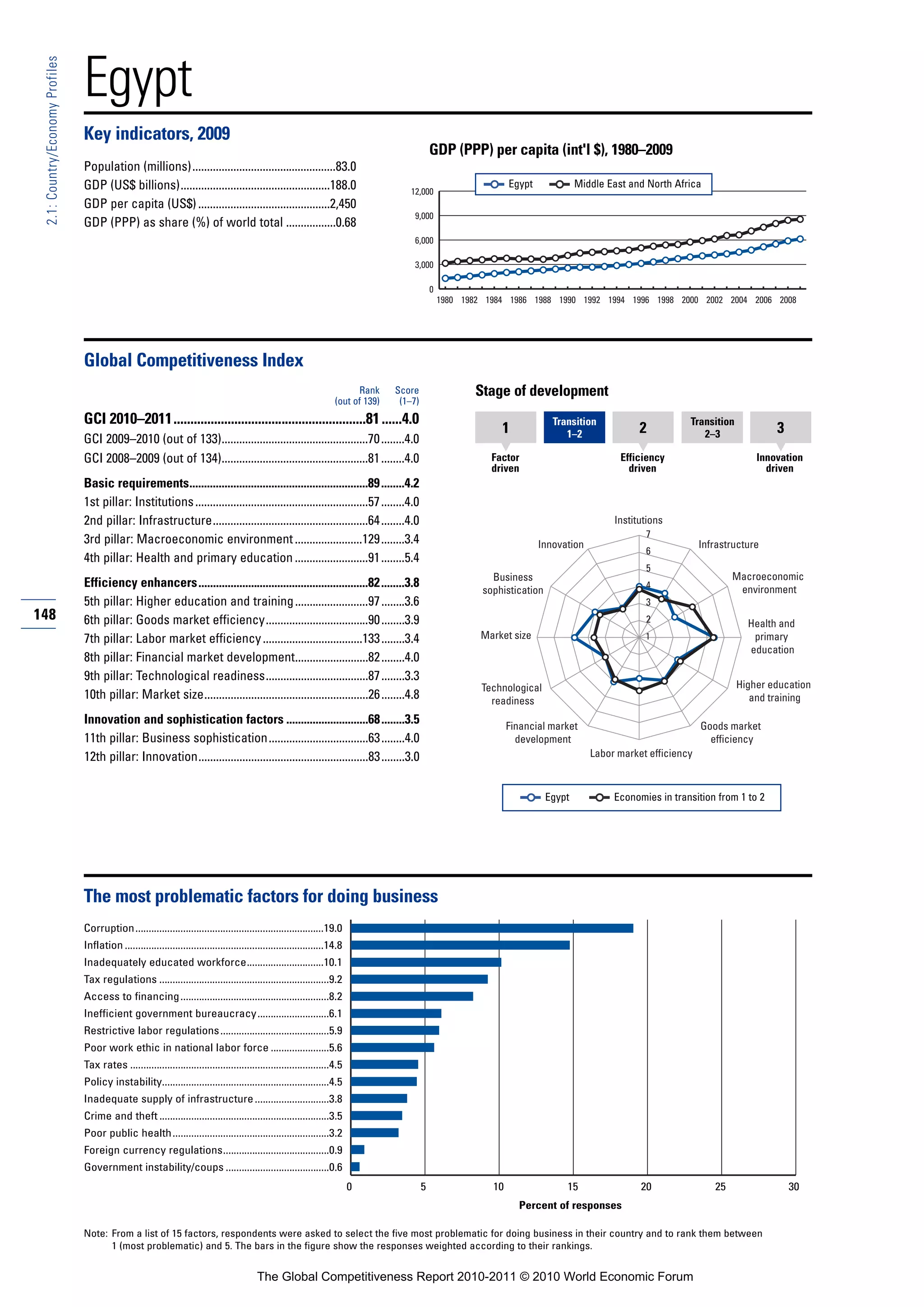
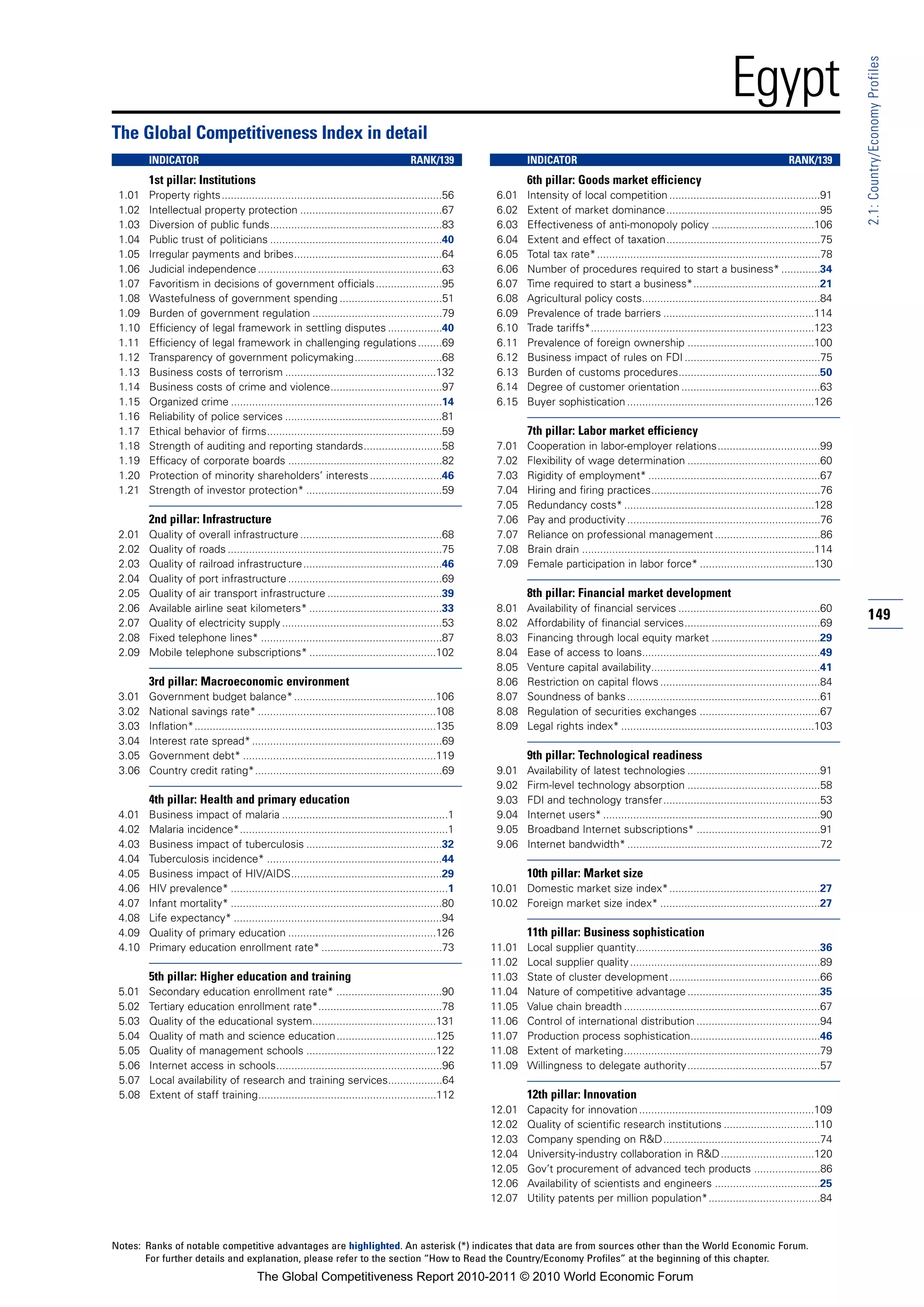
  • 39.
    1.1: The GlobalCompetitiveness Index 2010–2011 Box 3: How competitive is the European Union? (cont’d.) on the potential of scale economies and innovation. The priori- competitive requirements, such as their institutional setting and ties of the Europe 2020 strategy should contribute to European infrastructure levels; they must also improve their market effi- competitiveness by eliminating further barriers to the European ciency, technological readiness, and level of skills. It will take Single Market, encouraging investment in better skills, and sup- the combined effort of all European and national authorities to porting innovation. But the data highlight the fact that many improve the economic potential of the European Union so that it countries still need to take measures to improve basic remains a prominent player in the 21st century. Figure 1: Comparative performance of selected EU countries Institutions 7 Innovation Infrastructure 6 5 Business Macroeconomic sophistication 4 environment 3 2 Health and Market size 1 primary education Technological Higher education readiness and training 26 Financial market Goods market development efficiency Labor market efficiency Spain Italy Poland Czech Republic Institutions 7 Innovation Infrastructure 6 5 Business Macroeconomic sophistication 4 environment 3 2 Health and Market size 1 primary education Technological Higher education readiness and training Financial market Goods market development efficiency Labor market efficiency France Germany United Kingdom Sweden The Global Competitiveness Report 2010-2011 © 2010 World Economic Forum
  • 40.
    1.1: The GlobalCompetitiveness Index 2010–2011 dent economic policies and its growing domestic market mine investor confidence, with Italy ranked 92nd overall size. In fact, Poland was the only European economy to for its institutional environment. register positive growth in 2009. The country displays Turkey remains stable at 61st position. Turkey fairly even performance across all 12 pillars of competi- benefits from its large market, which is characterized tiveness. Notable strengths include its large market size by intense local competition (15th) and reasonably (21st) and high educational standards, in particular its sophisticated business practices (52nd). The country also high enrollment rates (18th). The financial sector is well benefits from reasonably developed infrastructure (56th), developed (32nd), and the increased confidence in the particularly roads and air transport infrastructure, banking sector (18th) has contributed to Poland’s very although ports and the electricity supply require good performance over the past years. Maintaining its upgrading. In order to further enhance its competitive- improved position will necessitate significant upgrading ness, Turkey must focus on improving its human of transport infrastructure, which lags behind interna- resources base through better primary education and tional standards by a significant margin, ranked 108th. better healthcare (72nd), addressing the inefficiencies in The quality of roads in Poland is particularly poor. the labor market (127th), and reinforcing the efficiency And although its institutional framework has improved and transparency of public institutions (90th). significantly this year, the business sector remains very After a significant slide in the rankings last year, critical of the efficiency of the government (103rd). As the Russian Federation maintains its 63rd position, Poland transitions to the innovation-driven stage of reflecting the fact that the deterioration in macro- development, it will have to focus more strongly on economic stability has been somewhat balanced by developing capacities in innovation and business sophis- improvements in other areas, notably infrastructure, tication. Stronger clusters, more R&D orientation of health, and education, as well as technological readiness. companies, and intensified collaboration between uni- At the same time, Russia’s competitiveness continues to versities and the private sector would help the country to worsen in what is one of the major areas of concern, the move toward a more future-oriented development path. efficiency of goods markets. Competition, both domestic Spain has dropped nine ranks this year to 42nd and foreign, is stifled by inefficient anti-monopoly policies place. The decline is in large part attributable to an as well as restrictions on trade and foreign ownership. increasingly negative assessment of the labor and financial These inefficiencies in goods markets reduce the coun- 27 markets as well as the level of sophistication of the coun- try’s ability to take advantage of some of its strengths, try’s businesses. On a more positive note, Spain’s compet- in particular its high innovation potential and its solid itiveness performance continues to be boosted by the performance in terms of higher education and training. large market (13th) available to its national companies, A particular challenge for Russia is related to its very strong technological adoption (30th in the technological weak institutions. Ranked 118th in this area, the country readiness pillar), first-class infrastructure (14th), and good suffers from insufficient protection of property rights higher education and training (31st). Overall, the greatest (126th), undue influence (114th), and weak corporate area of concern remains the highly inflexible labor mar- governance standards (119th). ket (130th on the related subpillar), which discourages Ukraine’s performance over the past year reflects job creation—a matter of particular concern considering the daunting challenges the country has faced during the high and persistent unemployment in the country. the global economic crisis. The country drops by seven Italy remains stable at 48th place this year, still positions to 89th (or by five positions in a constant by far the lowest-ranked G-7 member country. The sample). A particularly severe weakening of its already country continues to do well in more complex areas poor macroeconomic stability contributed to this slide, measured by the GCI, particularly the sophistication as has a more negative assessment across many of the of its businesses environment, where it is ranked 23rd, areas measured by the GCI. The country nevertheless producing goods high on the value chain and with the maintains the characteristics that made up its competi- world’s top business clusters (1st). Italy also benefits tive strengths in the past years. A well-educated popula- from its large market size—the 9th largest in the tion, flexible and efficient labor markets, and a large world—which allows for significant economies of scale. market size continue to set a good base for the country’s However, Italy’s overall competitiveness performance future growth performance. The new government continues to be held back by some critical structural announced an ambitious reform agenda that, according weaknesses in the economy. The labor market remains to the GCI, should address as a priority the country’s highly rigid, ranked 118th for its labor market efficiency, weak institutional framework (134th) and the highly hindering job creation. Financial markets are not suffi- inefficient markets for goods and services (129th), which ciently developed to provide needed finance for business stifles competition and prevents entrepreneurship from development (ranked 101st). Other institutional weak- flourishing. In this context, the country’s recent accession nesses include high levels of corruption and organized to the World Trade Organization (WTO) should con- crime and a perceived lack of independence within the tribute to intensifying competition in the country, through judicial system, which increase business costs and under- reducing both trade barriers and domestic obstacles such The Global Competitiveness Report 2010-2011 © 2010 World Economic Forum
  • 41.
    1.1: The GlobalCompetitiveness Index 2010–2011 as ineffective anti-monopoly policies (126th). Priority the economy back from its full competitiveness potential: should also be given to fostering the development of the institutions, financial market development, and labor financial sector (119th), the major weaknesses of which market efficiency. The quality of the institutional frame- exacerbated the effects of the crisis on Ukraine. Both work continues to improve although by small increments, financial market efficiency and trustworthiness have now standing at 35th position, up from 40th in 2008. continued to deteriorate since the past edition of the Thanks to greater efficiency, Taiwan has improved by 19 Report, down to ranks 123rd and 115th, respectively. positions in the financial market development pillar to Greece falls 12 places in the rankings to 83rd (or 35th, a category where it used to place below the 50th by 10 positions in a constant sample) and is the lowest- mark. The third area of relative weakness is its labor ranked country within the European Union. The market (34th), where the situation continues to deterio- decline follows the well-publicized revision to the rate with respect to the flexibility. Given its many government’s fiscal spending numbers, and the ensuing strengths, improvements in these areas would make sovereign debt crisis, with Greece falling from 103rd Taiwan an even more competitive economy. to 123rd in the macroeconomic environment and also Down by one position, Australia now ranks 16th, declining by 10 places to 93rd place in measures of with a stable performance overall, ranking no lower financial market development. Given the recent turmoil than 29th in any of the 12 pillars. The results confirm it is perhaps not surprising that the evaluation of public the continued dynamism and high level of development institutions (e.g., government efficiency, corruption, of Australia’s financial market. While credit access condi- undue influence) has also suffered since last year, ranked tions deteriorated during the financial crisis, the banking a low 82nd overall. Another major area of concern is the sector held out remarkably well. Australia remains a country’s inefficient labor market (125th), which will prime location for doing business, with high efficiency make it more difficult to emerge from the crisis, demon- in both the goods market (18th) and the labor market strating the importance of recent efforts to increase the (11th), and excellent public (14th) and private (11th) retirement age and increase labor market flexibility. In institutions. To progress even further, the country will working to overcome the present difficulties, Greece has need to increase the sophistication of its businesses a number of strengths to build upon, including a reason- (29th) and strengthen its innovation capacity (21st). 28 ably well educated workforce that is adept at adopting The Republic of Korea falls by three places to new technologies for productivity enhancements. 22nd position. The country continues to do very well in The remaining countries from the region place most categories. It possesses world-class transport infra- below Greece. The regional ranking closes with structure (12th), a healthy macroeconomic environment Tajikistan at 116th and the Kyrgyz Republic at 121st. at a time when many industrialized countries are strug- gling in this area (6th, up five positions), and excellent higher education (15th), with the highest rate of tertiary Asia and the Pacific education enrollment in the world. Finally, Korea For the third consecutive year, Hong Kong SAR remains one of the world’s innovation powerhouses retains its position at 11th overall, with a slight improve- (12th in the innovation pillar). ment in score. Hong Kong maintains its leadership in Yet Korea continues to suffer from weaknesses that measures of financial market development and, for the represent a major drag on its competitiveness. The coun- first time, tops the infrastructure pillar. The quality of try ranks a dismal 124th with respect to labor market transport, energy, and telephony infrastructure is simply flexibility. Business leaders express dismay at the difficulty outstanding, with a score of 6.8 out of 7 in the pillar. In of hiring and firing employees (115th), also reflected in total, Hong Kong appears in the top 10 of six of the the World Bank’s Rigidity of employment index (90th). twelve GCI pillars. One of the world’s major trade hubs, What’s more, the World Bank estimates that the average the crisis hit Hong Kong quickly and strongly, with its severance pay for dismissing an employee is equivalent economy growing at a subdued rate in the second half to 91 weeks worth of salary (placing Korea 114th on of 2008 and contracting by 2.7 percent in 2009. But this indicator). This leads companies to resort extensively Hong Kong’s economy has proved resilient and the IMF to temporary employment, thus creating precarious predicts a growth rate of about 5 percent for 2010. It working conditions and giving rise to tensions—Korea offers one of the world’s most business friendly environ- ranks 138th, ahead only of Venezuela, for the difficult ments thanks to world-class institutions, infrastructure, relations between employers and workers. The second market efficiency, and the dynamism of its financial sec- area of concern is the country’s financial market (83rd), tor, and even slightly improves in each these dimensions. where the assessment has considerably worsened over In particular, Hong Kong ranks behind only Singapore the past year. Access to credit and financing has become for government efficiency. more difficult, and the business community continues to Taiwan, China ranks 13th, one place lower than express doubts as to the soundness of the banking sector last year. Taiwan ranks among the top 20 economies in (99th) and complains about the limited availability nine pillars, but its performance in three of them holds (98th) and high costs (82nd) of financial services. Finally, The Global Competitiveness Report 2010-2011 © 2010 World Economic Forum
  • 42.
    1.1: The GlobalCompetitiveness Index 2010–2011 Korea has not improved its institutional framework, los- continues to do well in the categories that matter the ing further ground at 62nd. Within this pillar, the lack of most given its stage of development, namely institutions trust of politicians (105th) and the perceived inefficiency (36th), health and primary education (32nd), and the of the government (91st), complaints about excessive macroeconomic environment (1st). While the basic regulation (108th), and low transparency of policymak- requirements are in place, the overall environment for ing (111th) are particularly worrisome. doing business remains challenging. Goods markets are Despite losing three positions and a small worsen- improving but continue to lack efficiency (78th) and ing in its score, New Zealand (23rd) posts a perform- financial markets could be further developed (55th). ance largely in line with last year. The country possesses Competitiveness would also be enhanced through some of the best-functioning institutions in the world, improvements of the higher education system (64th). ranking 3rd, behind only Singapore and Hong Kong in Indonesia (44th) posts an impressive gain of 10 this pillar. Specifically, it ranks 4th for the quality of places, mainly driven by a healthier macroeconomic public institutions while it retains its leadership in the environment and improved education indictors. private institutions component. Overall, the environ- Indonesia managed to maintain a relatively healthy ment is extremely conducive to business, supported by macroeconomic environment (34th, up 18) throughout efficient goods (7th) and labor markets (12th) and by the crisis. While most other countries saw their budget one of the soundest banking systems in the world (2nd). deficits surge, Indonesia kept its deficit under control. Notwithstanding the relatively small size of its domestic Public debt remains low at 31 percent of GDP, and and export markets (60th), the area with the most room savings rose to 33 percent of GDP. In addition, inflation for improvement remains infrastructure (37th), in partic- in 2009 slowed down to 4.8 percent, half the rate of ular roads and railroads (45th in both dimensions). 2008. Moreover, Indonesia has improved across all edu- Up two positions to 27th place, China has rein- cation-related indicators included in the GCI. Yet ample forced its position within the top 30. It is the only room for improvement remains in this and other areas. BRIC country to improve in the rankings this year, Of particular concern is the quality of Indonesia’s infra- thus increasing the gap with the other three.24 China’s structure (82nd), specifically ports (96th), roads (84th), performance remains stable in most areas measured with and the electricity supply (97th). Additionally, several the Index compared with last year, with its main strengths indicators highlight the worrisome health situation: 29 its large and growing market size, macroeconomic stabil- tuberculosis and malaria incidence, as well as infant ity, and relatively sophisticated and innovated businesses. mortality rates, remain among the highest in the world. The two-rank improvement is almost entirely attributa- A third area of concern relates to technological readiness ble to a better assessment of its financial market (up 24 (91st). Despite rapid uptake in recent years, ICT use places to 57th), which has historically been a notable remains low in international comparison (103rd). weak point. This is the result of easier access to credit India’s performance remains quite stable, falling and financing through equity markets, banks, and ven- two positions to 51st but with a small improvement in ture capital, which has been accompanied by a slight score. India’s competitiveness is based on its large market improvement in the perceived soundness of the banking size and good results in more complex areas including sector (60th, up six places). Technological readiness is financial markets (17th), business sophistication (44th), another area where China has traditionally underper- and innovation (39th). On the other hand, India has failed formed (78th), with low ICT penetration, although rates to improve significantly on any of the basic drivers of its are surging. In 2009 alone, China added over 100 million competitiveness. It ranks 104th in the health and primary mobile telephone subscriptions and some 86 million education pillar, with high rates of communicable diseases new Internet users. Mobile penetration has reached and high infant mortality. Indeed, life expectancy in more than 50 percent, and about a quarter of the popu- India is 10 years shorter than in Brazil and China. And lation uses the Internet on a regular basis. Other areas although primary enrollment is becoming universal, the for improvement are related to its human resources base. quality of primary education remains fairly poor (98th). China has made small strides in the quality of higher Higher education also remains a weak point, with low education and training (60th), but there remains consid- enrollment rates at the secondary and tertiary levels. erable room for improvement in what constitutes an Infrastructure (86th) is in need of upgrade, especially important area going forward. In addition, although the with respect to quality of roads, ports, and the electricity labor market is indeed quite efficient, a lack of flexibility supply, with India falling 10 places in this area this year. (96th) constitutes a major challenge. The macroeconomic environment continues to be char- Brunei Darussalam continues to move up the acterized by persistent budget deficits, high public debt, rankings to 28th this year, with improvements across and high inflation. Labor markets are also in need of many areas measured by the GCI. The economy is greater efficiency and flexibility (92nd). categorized as one in transition from stage 1 to stage 2 Malaysia drops two places to 26th position this because of its economy’s dependency on oil and gas year, with a relatively stable performance since last year. (accounting for some 83 percent of exports). Brunei The country has a well-developed financial market (7th) The Global Competitiveness Report 2010-2011 © 2010 World Economic Forum
  • 43.
    1.1: The GlobalCompetitiveness Index 2010–2011 and an efficient goods market (27th). Malaysia also does ing, enrollment rates at all levels remain low (ranked 71st, relatively well in more complex categories, which mat- 102nd, and 109th for primary, secondary, and tertiary ter the most for advanced economies, namely business enrollments, respectively). In order to further improve its sophistication (25th) and innovation (24th), boding well competitiveness,Vietnam must also continue to strengthen for the future. The four-year decline in the quality of its institutional environment. Regulation is perceived as institutions that pushed Malaysia from 17th in to 43rd burdensome (120th), with the number of procedures has finally come to a halt, with the country remaining (11, 110th) and time (50 days, 118th) required to start a stable at 42nd place this year. The main drag within this business making this a daunting process. In addition, pillar remains the security situation (80th, up five). In there are concerns regarding the level of intellectual order to improve its competitiveness further, Malaysia property protection (109th) and to a lesser extent the will need to improve its higher education system, with respect of property rights (81st). Corruption is consid- particularly low enrollment rates at the secondary and ered frequent and pervasive (107th). On the corporate tertiary levels. It would also be well served by encourag- governance side, the private sector is not seen as being ing greater technological adoption, particularly the use sufficiently accountable (124th), partly because of the of ICTs, for productivity enhancements. weakness of investor protection in the country (133rd— Thailand, at 38th position, has fallen 2 places this third to last). year and 10 ranks since 2006. The assessment of public Sri Lanka moves up to 62nd position this year, a institutions continues to deteriorate (70th) after a drop rise attributable to improvements across the board. of 30 places over the past four years, likely related to Between 2003 and 2008, annual GDP growth exceeded recent problems of social unrest and political instability 5 percent (slowing to 3.5 percent in 2009). As a result in the country. However, Thailand continues to benefit of this healthy growth, Sri Lanka’s GDP is rising and the from its relatively large domestic and export markets country is now transitioning from the factor-driven to (23rd), its excellent transport infrastructure (23rd), the the efficiency-driven stage in the GCI framework. Sri efficiency of its labor market (24th), and a relatively well Lanka needs to bolster the foundations of its competi- functioning goods market (ranked 41st). In addition, the tiveness, while improving on efficiency-enhancing factors, country’s business environment is relatively sophisticated which are becoming increasingly important given this 30 with developed clusters (34th) and companies operating level of development. And this year’s performance indi- across the value chain. Going forward, in addition to cates that the country is making some important urgently improving its institutional framework, the improvements to this end. country needs to step up its efforts to improve its health Sri Lanka achieves higher scores this year in every and educational systems and encourage wider adoption measure of the public institutions category, improving of new technologies for productivity enhancements. its position from 73rd to 55th in the institutions pillar. Such efforts will then buttress the country’s innovation Among other things, the perceived level of security is potential, which will become increasingly important as increasing (106th), although threat of terrorism remains it moves toward the most advanced stage of economic a serious concern (134th). Other areas of improvement development. include health and primary education (35th, up 12) Up 16 positions, Vietnam (59th) has improved in and financial markets (52nd, up 13). Sri Lanka also con- 10 of the 12 GCI pillars. Among the country’s competi- tinues to benefit from impressive business sophistication tive strengths are its efficient labor market (30th) and its (39th) and innovation (40th), particularly for a country impressive innovation potential given its stage of devel- at its stage of development. Against this largely positive opment (49th), including its relatively large market size background, three notable areas of weakness persist. The (35th) with a particularly large export market. However, macroeconomic environment has worsened consider- trade remains hindered by very high import tariffs (8.2 ably, with debt and deficits going up, the savings rate percent, 90th), other trade barriers (112th), and burden- declining, and a poor credit rating (111th). The labor some customs procedures (106th). market is another area of major concern (104th), crippled Following a hectic period marked by high inflation, by rigidities and high redundancy costs. Finally, ICT use a dramatic fall in the dong, and large swings in interest remains low (101st), indicating that these tools are not rates, the macroeconomic situation improved sharply yet being sufficiently employed for productivity (85th, up 27). Yet the government budget deficit remains enhancements in the country. one of the highest in the world, contributing to rising Lower in the rankings, Mongolia moves up to 99th public debt and pointing to a need to continue efforts place, while Bangladesh and Cambodia remain quite toward macroeconomic stability. In addition, infrastruc- stable at 107th and 109th, respectively. Pakistan falls to ture, strained by rapid economic growth, remains a 123rd place, weakening across most areas measured by major challenge for the country despite some improve- the GCI. Still at an early stage of development, the ment in recent years, with particular concerns about the country will require efforts in particular to improve the quality of roads (117th) and ports (97th). And while basic determinants of its competitiveness, namely its there is a sense that the quality of education is improv- institutions (112th), infrastructure (110th), and macro- The Global Competitiveness Report 2010-2011 © 2010 World Economic Forum
  • 44.
    1.1: The GlobalCompetitiveness Index 2010–2011 economic environment (133rd) as well as education at and opening, resulting in very efficient goods and labor all levels. The regional ranking closes with Nepal markets (28th and 44th, respectively), one of the most (130th) and Timor-Leste (133rd), two countries that sophisticated financial markets (41st), and the largest require improvements across virtually all areas captured pension industry in the region. The liberalization process within the GCI. took place in the context of sound macroeconomic policies (26th for macroeconomic stability) and trans- parent institutions (28th in the institutions pillar). These Latin America and the Caribbean attributes have not only spurred growth over the last 20 Reflecting the strong resilience within Latin America years, but also have provided the country with the and the Caribbean in the face of the recent severe glob- resources needed to stimulate the economy in recent al economic downturn, the GCI assessment for the times of crisis and to address the pressing reconstruction region for this year points to the important progress challenges brought about by the tragic 2009 earthquake. made by several countries in improving and reinforcing Indeed, a part of the US$8.4 reconstruction plan envis- their competitiveness fundamentals. While Bolivia, aged by the government in the next four years is Panama, and Paraguay post the largest improvements, expected to come from the Economic and Stabilization many other regional economies improve slightly or Fund—one of the main tools used by the country in its remain stable; these include Brazil, Chile, Costa Rica, counter-cyclical policies.26 and Uruguay. These results confirm the important On a more negative note, although Chile’s business strides the region has made in recent decades toward sector is fairly efficient and sophisticated (43rd), improv- sounder fiscal management, increased market efficiency ing its innovation potential is increasingly becoming a and openness, and export diversification, among other priority as the country approaches the most advanced, areas. All of the above, beyond setting the region on a innovation-driven stage of development. An important more sustainable growth path in the long run, have element of the problem is the country’s still-unsatisfactory helped it weather the global economic crisis that began quality of its educational system at all levels (ranked 101st in 2008. In particular, the reduced debt levels (with for primary education and 45th for higher education longer maturity profiles) of most countries in the and training), despite rising educational attainment rates region, coupled with their increased foreign reserves, and government efforts to improve educational quality, 31 have been instrumental in reinforcing their resilience including through increased spending.27 Further efforts and ability to support their economy with stimulus should be made to improve teaching quality and training measures. Although regional GDP contracted by 1.8 as well as secondary and tertiary enrollment rates (90.6 percent in 2009, it is expected to grow by 4 percent in percent and 52.6 percent, corresponding to 56th and 2010, driven by increased domestic consumption and 43rd place, respectively). Additionally, some of the com- better external conditions—a satisfactory performance ponents of an innovation-conducive environment— by historical standards and more solid than that project- including the quality of the research institutions (ranked ed for advanced economies, which is considerably lower 55th) and the collaboration between academia and at 2.3 percent.25 industry (currently ranked 39th)—should be strengthened. At the same time, when compared with the rest of Up one place since last year, Puerto Rico (41st) the world, the region must improve significantly in confirms its strong position in the region, displaying order to catch up with international best practices and a dynamic and sophisticated business sector (27th), fully leverage its competitiveness potential. Only Chile producing all along the value chain (31st), with an (30th) and the two small Caribbean islands of Puerto important capacity for innovation (33rd). Also notable Rico (41st) and Barbados (43rd) feature within the top competitive strengths are the island’s quality higher 50 most competitive economies in the world. Panama education and training system (38th) and its well- (53rd), Costa Rica (56th), Brazil (58th), and Uruguay functioning goods markets (34th). (64th) are also included among the top half of the rank- Closely following Puerto Rico and ranked 3rd in ings, together with Mexico (66th), Colombia (68th), and the region, Barbados consolidates its competitiveness Peru (73rd). Also a large number of regional economies standing in the rankings at 43rd, thanks to its excellent continue to appear in the bottom part of the rankings, institutional environment (22nd), a first-class educational trailing behind most of the world in competitiveness— system (ranked 7th and 27th for primary education and these include Ecuador (105th), Bolivia (108th), higher education and training, respectively), and well- Nicaragua (112th), Paraguay (120th), and Venezuela developed infrastructure (23rd). Beyond its tiny market (122nd). size (133rd), the GCI highlights a number of areas in Stable at 30th, Chile remains the most competitive need of improvement, including the country’s macro- country in Latin America and the Caribbean, with a very economic stability (91st), with notably high deficit and convincing performance resting notably on solid basic debt levels (8.4 and 100.6 percent of GDP, respectively, requirements (37th) and efficiency enhancers (35th). The in 2009), and, to a lesser extent, the sophistication and country has been at the forefront of market liberalization innovation potential of its business sector (59th The Global Competitiveness Report 2010-2011 © 2010 World Economic Forum
  • 45.
    1.1: The GlobalCompetitiveness Index 2010–2011 and 53rd, respectively, for business sophistication and ness foundation and in providing a markedly more innovation). business friendly environment for private-sector devel- Panama posts one of the largest improvements in opment. Moreover, this has allowed Brazil to successfully the region, climbing to 53rd this year thanks in large react to the impact of the recent global economic crisis: part to a more positive assessment of infrastructure while the country’s GDP contracted slightly in 2009 quality (44th, up 21 places from last year), increased (GDP’s growth rate was –0.18 percent in 2009), the macroeconomic stability (29th, up 17 places) and tech- economy has started to grow again in 2010, with an nological readiness (41st, up 18 places). This advance expected annual growth rate of 5.5 percent. reflects the country’s recent important investment in Notwithstanding these strengths, the competitive- upgrading its infrastructure, its sound macroeconomic ness picture for Brazil remains mixed, with important management in recent times of crisis, its prowess in strengths accompanied by worrisome weaknesses and absorbing technology (ranked 7th for the variable on challenges that must be tackled for Brazil to fully tap FDI and technology transfer), and its increase in ICT its enormous competitive potential. Among its solid penetration rates. The country also continues to benefit competitive advantages are its large market size (10th), from well-developed financial markets (21st). providing the efficient and dynamic business sector Strengthening the quality of its educational system (ranked 31st for business sophistication) with important (ranked 89th and 82nd for primary education and high- economies of scale, and a large basis on which to absorb er education and training, respectively) and increasing and introduce process and product innovation (ranked the flexibility of its labor market and the efficient use 44th and 42nd for technological adoption and innova- of talent (107th for the efficiency of the labor market) tion, respectively). Moreover, Brazil displays one of the are crucial to further reinforce Panama’s long-term most developed and sophisticated financial sectors in the growth potential going into the future. region (50th), coupled with fairly efficient infrastructure Despite losing the top position in Central America by regional standards (ranked 62nd, up 12 places from to Panama, Costa Rica remains quite stable at 56th 2009) and a relatively well functioning higher education position, after having climbed 13 ranks from 2006 system (58th), notably in its on-the-job training compo- to 2009. The country’s strong position rests on first- nent (38th). Box 4 examines more in depth the infra- 32 class quality education (ranked 23rd and 43rd for structure challenge for Brazil and Latin America at large. primary education and higher education and training, On the other hand, despite the progress made respectively), fairly transparent institutions (51st), and toward fiscal sustainability, the macroeconomic environ- a sophisticated and innovative business sector (ranked ment in the country remains worrisome, with notably 32nd and 35th, respectively), which operates high on low savings rates (15 percent, 101st), a high interest rate the value chain (ranked 28th in the variable measuring spread (35.4 percent, 136th), and relatively high public value chain breadth). Leveraging its well-educated labor indebtedness (48 percent of GDP, 84th). Goods and force, good governance standards, and strategic geographic labor markets display important rigidities that hinder position, the country has been very successful in recent the allocation of resources to their most efficient use years in diversifying its production and export structure (ranked 114th and 96th, respectively). In addition, the toward higher value-added (notably high tech) and quality of institutions remains poorly assessed at 93rd, niche (eco-tourism) sectors. Further, the focus on new with limited trust of politicians and in the rule of law. technologies (including biotech and aerospace) has Last but not least, further focus and efforts are required been highlighted as a priority of the new Chinchilla to improve the quality of the educational system at all administration. However, the soundness of the macro- levels (ranked 106th for primary education and 97th economic environment (108th) remains a problematic for the quality of the higher education) and to reduce area amid increasing security concerns in the country regional disparities in educational access and attainment. (81st). In addition, the quality of the country’s infra- At 64th, Uruguay overtakes Mexico for the first structure (78th) and the development of the financial time in the rankings. The country’s good showing rests market (85th) may represent potential bottlenecks going on its strong institutions and governance standards (39th), forward. 28 its fairly developed infrastructure (53rd), and a strong Brazil is fairly stable at 58th, with a slight improve- educational system (ranked 47th for health and primary ment in score (4.3 vs. 4.2 in 2009), after following education and 40th for higher education and training). an impressive upward trend for the last couple of years An important capacity to leverage technology (ranked (up 16 positions between 2007 and 2009). The country’s 50th for technological readiness), notably via FDI (12th recent dynamism in the rankings has reflected the for the FDI and technology transfer variable) coupled remarkable strides made in the past 20 years toward with an increasing ICT adoption (57th) as a key lever in macroeconomic stability, liberalizing and opening the the competitiveness strategy are also notable competitive economy, and reducing income inequality, among other strengths. On a more negative note, insufficient macro- dimensions.29 These efforts have been instrumental in economic stability (at 107th) remains a cause of concern, putting the economy on a much sounder competitive- with increasing levels of public debt and a widening The Global Competitiveness Report 2010-2011 © 2010 World Economic Forum
  • 46.
    1.1: The GlobalCompetitiveness Index 2010–2011 Box 4: The infrastructure challenge in Latin America: The case of Brazil The Global Competitiveness Index highlights the key importance investment. Furthermore, these investments were concentrated of well-developed and efficient infrastructure networks for in a few selected countries (Argentina, Brazil, Chile, Colombia, countries’ long-term growth, placing infrastructure among the Peru, and Mexico) and sectors (telecommunications, energy, basic requirements of competitiveness. The quality of infra- and transport).2 structure appears to be a shared concern for Latin America As a consequence, infrastructure development in the and the Caribbean, with few exceptions. Public investment in region has lagged behind that of the East Asian tigers or even infrastructure was the main victim of the stabilization programs China over the last two decades,3 with severe implications in implemented in the 1990s in most countries, because cutting terms of economic growth and poverty reduction. Calderón this type of investment spending proved easier than cutting and Servén estimate that upgrading regional infrastructure to current expenditures to cover salaries and pensions, among Korea’s levels could increase annual GDP growth rates by 1.4 others: according to the World Bank, public investment in infra- to 1.8 percent while reducing inequality by 10 to 20 percent.4 structure in the region fell from 3 percent of GDP in 1988 to 1 Table 1 displays the rankings and scores of regional percent of GDP in 1998.1 The adjustment was particularly dra- economies in the GCI infrastructure pillar this year, together with matic because Brazil had increased its current expenditures, those of selected relevant comparators, including the regional and therefore needed to make even deeper cuts in long-term and BRIC averages, Korea, China, and India. The rather large investment. The idea that the private sector could step in and gap between the regional average (3.75) and top-ranked Hong fill the financing gap did not fully materialize. Although Latin Kong (6.77) or Korea (5.59, ranked 18th) confirms the magnitude America was the recipient of half of the US$786 billion infra- of the challenge facing Latin America and the Caribbean in structure investment in the developing world through public- upgrading regional infrastructure to international best standards. private partnerships (PPP) between 1990 and 2003, the private This challenge is particularly relevant for large emerging funds did not fully compensate for the shortfalls in public markets such as Brazil, which are increasingly playing a key Table 1: Infrastructure: Latin America and the Caribbean and selected comparators 33 A. Transport B. Electricity and telephony Infrastructure 2010–2011 infrastructure 2010–2011 infrastructure 2010–2011 Country/Economy Rank Score Rank Score Rank Score Hong Kong SAR 1 6.77 1 6.69 1 6.85 Korea, Rep. 18 5.59 12 5.73 30 5.44 Barbados 23 5.37 29 4.82 15 5.93 Chile 40 4.69 37 4.56 48 4.83 Panama 44 4.53 46 4.15 44 4.92 Trinidad and Tobago 45 4.53 58 3.94 38 5.12 Puerto Rico 49 4.44 30 4.76 70 4.12 China 50 4.44 31 4.73 69 4.14 Uruguay 53 4.29 75 3.54 42 5.03 El Salvador 59 4.13 66 3.78 56 4.49 BRIC average n/a 4.10 n/a 4.27 n/a 3.93 Brazil 62 4.02 67 3.76 65 4.28 Jamaica 65 3.91 51 4.05 86 3.76 Guatemala 66 3.9 76 3.48 64 4.31 Latin America & Caribbean average n/a 3.75 n/a 3.48 n/a 4.01 Mexico 75 3.74 57 3.96 92 3.51 Argentina 77 3.63 89 3.17 73 4.08 Costa Rica 78 3.62 111 2.78 59 4.45 Colombia 79 3.59 101 2.94 68 4.24 Honduras 85 3.51 82 3.30 88 3.73 India 86 3.49 39 4.50 115 2.49 Peru 88 3.47 94 3.08 84 3.86 Ecuador 96 3.18 99 2.96 95 3.39 Bolivia 100 3.04 122 2.59 94 3.49 Guyana 103 2.92 100 2.95 102 2.90 Dominican Republic 107 2.83 79 3.38 121 2.28 Venezuela 108 2.82 123 2.58 98 3.06 Nicaragua 111 2.73 102 2.90 112 2.55 Paraguay 125 2.46 138 2.10 104 2.82 (Cont’d.) The Global Competitiveness Report 2010-2011 © 2010 World Economic Forum
  • 47.
    1.1: The GlobalCompetitiveness Index 2010–2011 Box 4: The infrastructure challenge in Latin America: The case of Brazil (cont’d.) role in the global economy and for which poor infrastructure What is more, private investment in physical infrastructure has quality results in higher logistics costs and inefficient patterns been limited and has failed to make up for scarce public of interregional and international trade.5 Table 2 provides an resources and attention. Although PAC has been a significant overview of Brazil’s infrastructure as assessed within the GCI step in the right direction, it has been said that better coordina- infrastructure pillar. Although the country has improved eight tion of responsibilities among federal and state authorities is places since 2008 for the overall quality of its infrastructure, it necessary to achieve higher investment in infrastructure. still ranks a middling 62nd in this pillar, with a similar showing Greater private investment in infrastructure should also be for its transport (67th) and electricity and telephony infrastruc- promoted in Brazil, notably through friendlier and more pre- ture (65th). The most problematic areas, as highlighted by the dictable regulations, risk-mitigation mechanisms, and protected GCI, are the quality of port infrastructure (123rd), roads (105th), returns on investment. The Infrastructure Private Investment air transport infrastructure (93rd), and, to a lesser extent, rail- Attractiveness Index (IPIAI), developed by the World Economic road infrastructure (87th) and mobile telephony (76th). This Forum in 2007 and benchmarking 12 Latin American economies assessment reflects the appalling state of transport infrastruc- for their friendliness to private investment in infrastructure, ture in the country, its underdeveloped railroads, the unexploit- ranked Brazil 2nd in the sample. Among Brazil’s notable com- ed potential of its 48,000 kilometers of navigable waterways, its petitive advantages underscored by the IPIAI in this regard congested ports and airports, and its costly and underdevel- were: a very low political risk, with little unrest or expropriation oped telephone infrastructure.6 risk; a fairly well developed local capital market; a fairly good track record in private investment in infrastructure, with few Table 2: An assessment of infrastructure quality in Brazil projects cancelled or in distress; and a relatively high level of private investment in infrastructure projects over the 1994–2005 Rank Score period (2.2 percent of GDP).9 Figure 1 shows Brazil’s perform- 2nd pillar: Infrastructure 62 4.02 ance in the IPIAI, with respect to the best performer in that A. Transport infrastructure 67 3.76 index, Chile, and the sample average excluding Chile. Quality of overall infrastructure 84 3.79 This bodes well for the country’s capacity to increasingly Quality of roads 105 2.93 involve the private sector in financing and managing infrastruc- 34 Quality of railroad infrastructure 87 1.94 ture networks, thus complementing public funding and ensuring Quality of port infrastructure 123 2.94 that infrastructure can truly support Brazil’s competitiveness in Quality of air transport infrastructure 93 3.98 the years to come. Brazil’s experience in infrastructure develop- Available airline seat kilometers 9 3,001.79 ment is an example of the challenges countries can face in enhancing this critical competitiveness driver. B. Electricity and telephony infrastructure 65 4.28 Quality of electricity supply 63 5.06 Fixed telephone lines 62 21.42 Notes Mobile telephone subscriptions 76 89.79 1 The drop contrasts sharply with the amount of public resources invested in health and education (8 percent of GDP) that resulted from an increased focus on poverty reduction. Experiences over the past decade or so, such as the ener- gy blackout of 2001, have raised awareness among both the 2 See Fay and Morrison 2005. public and the government of the importance of quality infra- 3 According to Fay and Morrison (2005), the region should increase structure for competitiveness, trade, and balanced development investment in infrastructure to 4–6 percent of GDP over 20 years in order to attain Korea’s infrastructure coverage and not to lose across Brazilian states. It was estimated that investment in further ground with respect to China. infrastructure needed to reach 5 percent of GDP to keep it from 4 Calderón and Servén 2004. becoming a bottleneck for the country’s capacity to achieve sustained growth rates going into the future. 5 Resende 2009. Upgrading infrastructure has been a key element of the 6 See Resende 2009 for a detailed analysis of Brazil’s state of infra- Lula administration’s ambitious Growth Acceleration Program structure and main flaws. (PAC), launched in 2007, earmarking a total of R$504 billion in 7 PAC also comprised a number of measures/policies to limit regula- investment for the 2007–10 period, distributed as follows: R$171 tory risks and develop risk mitigation mechanisms as well as to improve the framework for PPP. On March 29, 2010, the Brazilian billion for social infrastructure, R$275 billion for energy-related government announced a PAC 2, with a total budget of R$1.59 tril- projects, and R$58 billion for logistics.7 PAC was conceived as lion to be invested in the 2011–14 period with emphasis on high an integrated approach to infrastructure improvement, aimed at social sensitivity areas, including housing and health, public transit, energy, transportation, logistics, and roads (see Olson 2010). increasing the coverage and quality of infrastructure networks together with better access to water, sanitation, housing, elec- 8 See HSBC 2010. tricity, transport, and energy. Yet, three years after the launch of 9 See Mia et al. 2007 for more information on the IPIAI’s methodolo- PAC, fewer than half of its targets have been met, with much of gy and Brazil’s performance. the financing going to housing (notably to first-time home own- ers) rather than to the improvement of physical infrastructure.8 (Cont’d.) The Global Competitiveness Report 2010-2011 © 2010 World Economic Forum
  • 48.
    1.1: The GlobalCompetitiveness Index 2010–2011 Box 4: The infrastructure challenge in Latin America: The case of Brazil (cont’d.) Figure 1: Brazil in the IPIAI Macro environment 7 Government readiness 6 Legal for private investments 5 framework 4 3 2 Government 1 Political risk and society Private investment Access to track records information Financial markets enablers Brazil Chile IPIAI average (excluding Chile) Source: Mia et al., 2007. 35 public deficit (2.3 percent of GDP in 2009 as opposed to such as the large size of the market available for local 0.1 percent in 2008), while worrisome rigidities persist companies (12th) and a sophisticated and innovative in factor markets, especially labor market inefficiencies private sector (ranked 67th for business sophistication (119th). and 78th for innovation) with well-developed clusters With an unchanged score of 4.19, Mexico drops (50th) and companies operating throughout the value six places from 2008 to 66th, clearly demonstrating the chain (49th for the variable on value chain breadth). need for continuous improvement in order not to lose Notwithstanding these strong attributes and the ground in competitiveness vis-à-vis the rest of the liberalization and steps undertaken in recent years to world. Mexico has been among the countries in the improve the business climate and make the economy region worst hit by the global economic downturn, in more efficient, Mexico’s factor markets remain rigid large part attributable to its close association with the and represent a structural impediment for the country’s US business cycle (including links through financing, growth prospects over the long term. In particular, the trade, and remittances). Thanks in particular to the labor market is ranked at a dismal 120th place, with remarkably sound fiscal policies implemented in the burdensome regulations, high payroll taxes and social past two decades (27th for macroeconomic stability), the contributions (ranked 103rd for flexibility), and a less- country has shown a certain degree of resilience to the than-efficient use of talent (122nd). The reliability and pernicious consequences of the crisis and has been able quality of institutions continue to receive a poor assess- to stimulate its economy with a number of anti-cyclical ment at 106th, with increasing security concerns (134th, policies.30 Although Mexico’s GDP shrank significantly down nine places from last year) among the business in 2009 (–6.5 percent), it is estimated to grow by 4.2 community, likely related to recent spiraling drug-related percent in 2010. Mexico also has a number of important violence and civil unrest. Finally, reform of the educational competitive strengths that are similar to those of Brazil, system to boost its quality is necessary to meet the needs The Global Competitiveness Report 2010-2011 © 2010 World Economic Forum
  • 49.
    1.1: The GlobalCompetitiveness Index 2010–2011 of an economy moving toward the most advanced stage quality of and access to the educational system at all of development. In particular, the poorly rated higher levels (111th for primary education and 76th for higher education and training system (79th) does not seem to be education and training), and reinforcing the capacity to producing a highly skilled labor force, notably scientists absorb technology and generate innovation (ranked 74th and engineers (89th), and is not sufficiently conducive and 110th for technological readiness and innovation, to technology adoption and innovation. Although the respectively). current administration has adopted, or plans to adopt, Argentina is fairly stable at 87th, continuing to a number of competitiveness-enhancing reforms feature in the bottom part of the rankings despite its addressing many of these shortcomings, further action is many and diverse competitive advantages and the strong sorely required to reinforce Mexico’s competitiveness growth rates experienced by the country after its 2001 fundamentals. economic crisis (an average of 8.5 percent between 2002 Fairly stable at 68th, Colombia displays competitive and 2008). The competitiveness picture provided by the strengths in the quality of its macroeconomic environ- GCI is rather mixed: important strengths, such as its ment (50th), large market size (32nd), and fairly sophisti- extensive market size (24th) and fairly good educational cated businesses (61st), successfully adopting technology system at the primary and higher levels (ranked 60th and enhancing innovation (ranked 63rd and 65th for and 55th for health and primary education and higher technological readiness and innovation, respectively). On education and training, respectively), do not seem to the other hand, notwithstanding the important strides compensate for the serious and enduring shortcomings realized by the last administration in social pacification, undermining Argentina’s long-term growth potential. In the institutional environment is still characterized by particular, its institutional environment is among the weaknesses at 103rd, with continuing concerns over worst in the world at 132nd, with little public trust security (138th). Further investment is required to of politicians and deep concerns about the rule of law. upgrade infrastructure networks to first-class standards This may reflect a number of discretionary policies (ranked now at 79th), while factor markets continue adopted by the last two administrations—including the to suffer from extensive inefficiencies and rigidities, nationalization of the private pension system and the particularly the goods market (103rd). recent ousting of the central bank governor following 36 Peru continues its upward march in the rankings his refusal to let the government tap the central bank’s with another five-place progression to 73rd place (up reserves to finance growing public spending and pay by six places in a constant sample), with improvements its debts—and an erosion in investors’ confidence in notably in labor market efficiency (up twenty-one government transparency and even-handedness in its places, to 56th) and, to a lesser extent, in infrastructure dealings with the private sector. On a related note, quality (up nine places to 88th) and higher education factor markets continue to suffer from worrisome and training (up five places to 76th). The country has rigidities, red tape, and lack of competition, which all improved a total of thirteen places since 2007, mirroring hinder their efficient functioning (ranked 135th, 128th, its impressive growth performance in recent years (an and 126th, respectively, for goods market efficiency, labor average of 6.7 percent GDP growth between 2002 and market efficiency, and financial market development). 2009). Peru was one of the few countries whose econo- Improving the flexibility of factor markets as well as my did not contract in 2009 but continued to grow ensuring a more predictable business environment and moderately at 0.9 percent. The economy is expected a greater respect of the rule of law by the government to grow strongly again in 2010 and beyond, with an remain the priorities going forward to restore investors’ estimated 6.3 percent rate for this year. confidence and lay the foundations for sustained long- Among the elements underpinning Peru’s strong term competitiveness. competitiveness showing is the competent macroeco- Venezuela (122nd) continues its fall in the rank- nomic policy pursued over the last decade, with moder- ings, and is now behind all other Latin American and ate public indebtedness levels (26.6 percent of GDP Caribbean countries and featuring among the least in 2009, placing it 41st in the sample), coupled with competitive countries of the world. Venezuela’s com- liberalization of its goods and labor markets, efforts to petitiveness landscape appears to be worsening every encourage trade and FDI, and efficient use of the rev- year, with a notably dismal assessment of the institutional enues from the country’s rich natural and mineral environment (139th, the worst in the entire sample) and resources. The country can notably count on flexible factor markets efficiency (139th, 138th, and 132nd for goods and labor markets (ranked 69th and 56th, respec- goods market, labor market efficiency, and financial tively), well-developed financial market (42nd), and access market development, respectively). Despite important to foreign markets (59th), complementing its relatively investment in education and basic services, infrastructure large domestic market (44th). On the other hand, Peru remains underdeveloped (108th) and educational stan- faces a number of competitiveness challenges that must dards at all levels are low (86th and 68th for health and be addressed going forward, including improving the primary education and higher education and training, poor institutional environment (96th), upgrading the respectively), while the macroeconomic environment The Global Competitiveness Report 2010-2011 © 2010 World Economic Forum
  • 50.
    1.1: The GlobalCompetitiveness Index 2010–2011 continues to deteriorate (now ranked 113th) despite macroeconomic and financial stability. In international windfall oil revenues in recent years. Finally, the country comparison, the country’s macroeconomic environment lacks companies that demonstrate sufficient sophistication emerged stronger from the crisis, moving from 13th to and innovation potential (129th and 123rd for business 8th place. Going forward, reducing the country’s vulner- sophistication and innovation, respectively). ability to commodity price fluctuations will require Despite posting important improvements since last diversification into other sectors of the economy and year, Bolivia (108th, up sixteen places in a constant improving some of the areas of competitiveness. Despite sample), Nicaragua (112th, seven places up in a constant efforts to strengthen its financial sector, its trustworthi- sample), and Paraguay (120th, nine places up in a con- ness and confidence is assessed as low by the business stant sample) continue to feature in the very bottom community (62nd), with soundness of banks ranked of the rankings, trailing behind most of the world in 46th and legal rights of borrowers and lenders under- competitiveness. Major common flaws in the quality of protected (103rd). Given its high wage level, the country their institutional environment, including rampant crime will also have to foster the use of latest technologies and violence, widespread red tape, poor educational (36th) as well as business sophistication and innovation. standards and infrastructure, and inefficient factor markets Saudi Arabia moves up by seven places to take weaken these countries’ competitiveness fundamentals the second-highest place in the region at 21st. The and should be addressed as a priority going forward. country has witnessed a number of improvements to its competitiveness in recent years, which resulted in a strong a solid institutional framework, efficient Middle East and North Africa markets, and sophisticated businesses. Improvements to Following a relatively prosperous period, the Middle the institutional framework (up by 11 places to 21st), East and North African (MENA) region experienced in particular a better assessment of the security situation a downturn during the global economic crisis, with by business (19th) and a stronger corporate governance average growth rates falling from 6.1 in 2008 to 2.2 framework (26th), have contributed to this year’s better percent in 2009. However, MENA was less affected by positioning. Additionally, the government enacted a the downturn than some other regions because it main- massive stimulus package, improving infrastructure in tained weak interlinkages with global markets. Further, the country, although it led to a deterioration of macro- 37 many countries put massive stimulus packages into economic stability as the budget balance moved into place, which helped to dampen the recession and in deficit. As much as the recent improvements are com- many cases also led to improvements in infrastructure. mendable, the country faces important challenges going Overall, the global economic crisis has highlighted some forward. Health and education do not meet the standards of the vulnerabilities to which the economies of the of countries at similar income levels. While some progress region were exposed and led to a widening gap between is visible in health outcomes as well as in the assessment Gulf economies and the rest of the region, a trend that of the quality of education, improvements are taking has been observed over recent years. While all the Gulf place from a low level. As a result, the country continues countries except for the United Arab Emirates (UAE) to occupy low ranks in the health and primary education move up in the rankings, all remaining countries in the (74th) and higher education and training (51st) pillars. region with the exception of Tunisia (and new entrants Both these areas, in addition to a more efficient labor Iran and Lebanon) decline. market (66th), are of high importance to Saudi Arabia Qatar, ranked 17th, enters the top 20 this year and given the growing numbers of its young people who reaffirms its position as the most competitive country will enter the labor market over the next years. Last but in the MENA region. With a projected growth rate of not least, some room for improvement remains with 18.5 percent for 2010, the country is the fastest-growing respect to the use of latest technologies (42nd). economy in the world, as well as one of the wealthiest. Israel ranks 24th in this year’s GCI, up three posi- Its strong competitiveness rests on solid foundations tions after having suffered losses in competitiveness over made up of a high-quality institutional framework, the past years. The country’s main strength remains the ranked 10th overall, a stable macroeconomic environ- excellent—and improving—capacity for innovation (6th), ment (8th), and an efficient goods market (12th). Low which rests not only on highly innovative businesses but levels of corruption and undue influence on government also on the availability of high-quality research institu- decisions, high government efficiency, and excellent tions and is reflected in a high number of patents. The security are the cornerstones of the country’s solid favorable financial environment (14th) and, in particular, institutional framework. Compared with many other the availability of venture capital (10th) have further economies, the country was relatively unharmed by the contributed to making Israel an innovation powerhouse. global economic crisis, with its growth rate slowing to Future challenges to maintaining and improving national 9 percent in 2009, down from 16.4 in 2008. This high competitiveness relate to continued upgrading of insti- growth, combined with prudent government support tutions (33rd) and a renewed focus on raising the bar in for the financial sector, contributed to maintaining terms of the quality of education. Low educational out- The Global Competitiveness Report 2010-2011 © 2010 World Economic Forum
  • 51.
    1.1: The GlobalCompetitiveness Index 2010–2011 comes, in particular in the area of math and science, will need to be addressed and the legal protection of could, over the longer term, undermine the country’s investors’ rights improved. Some progress has been made innovation-driven competitiveness strategy if not with respect to the efficiency of financial markets (35th). addressed. As in previous years, the security situation Different forms of finance are more easily available to the remains fragile and imposes a high cost on business private sector, but restrictions on capital flows are still (73rd); room for improvement also remains with respect considered burdensome by the business community. to macroeconomic stability (60th). The Islamic Republic of Iran enters the Global Following a difficult year, the United Arab Competitiveness Index for the first time at 69th position, Emirates loses two places in this year’s GCI to take which reflects a number of pronounced strengths as well the 25th position. The country’s overall competitiveness as important challenges. Transitioning from the first to reflects recent investments in infrastructure, where it the second stage of development, the country should ranks an excellent 3rd; high penetration rates of new focus on developing its basic requirements as well as its technologies (14th); and highly efficient goods markets efficiency enhancers to prepare for the future. Currently, (6th). Macroeconomic stability and some positive aspects Iran boasts a relatively stable macroeconomic environ- of the country’s institutions, such as high public trust of ment (45th), reflecting a high national savings rate (26th) politicians and efficient government, round up the list of and low public debt (17th). It equally benefits from its competitive advantages. Over the past year, there has large market size (20th), which enables businesses to been a deterioration in the assessment of institutions reap economies of scale in the domestic market. This overall, and in particular of private institutions, where advantage could be further strengthened by removing accountability standards and the efficacy of corporate barriers to trade, which shield the country from foreign boards are evaluated less positively than before. This competition. Lower tariffs (135th) and more foreign lower assessment is likely related to the difficulties that ownership (139th) would also raise the efficiency of Dubai World, a state-owned company, faced in paying markets for goods and services (98th). Other priorities back debt toward the end of 2009. The difficulties of for reform include labor markets, which are among the Dubai World raised doubts about the sustainability of the most restrictively regulated worldwide (135th), reflecting development model of Dubai, which has since been re- high brain drain (109th) and incentive structures that 38 oriented toward the more traditional role of commercial are not based only on meritocracy (121 for reliance on and logistics hub and away from property development. professional management and 111th in terms of the link Going forward, a continuation of competitiveness- between pay and productivity). It will also be important enhancing structural reforms will be necessary to keep to foster a more trustworthy and efficient financial sector the economy growing, most notably in the areas of (120th). The limited access to finance (129th) across dif- health and education. ferent financial products as well as low confidence in the Tunisia retains the lead within North Africa, mov- banking sector (114th) significantly limit private-sector ing up by eight places to 32nd. The country’s efficient growth in the country. Improvements in productivity government institutions remain its main strength, along could also be achieved by leveraging the latest techno- with a high level of security (14th) and an educational logies available from abroad. Presently, the capacity of system that ensures a good quality of education (22nd), Iranian firms to absorb new technologies is very low although enrollment rates in secondary and tertiary (116th) and access to these technologies is limited institutions are fairly low—53rd and 69th, respectively. (123rd). In this respect, progress could be achieved by At the same time, Tunisia boasts relatively efficient fostering the use of mobile telephony (95th) and access domestic markets for goods and services. Despite the to broadband (101st). crisis, the country improved its macroeconomic stability Egypt moves down to 81st in this year’s GCI rank- since the last assessment. Inflation has been lowered ings. The country’s main competitive strengths are the and the savings rate increased while the budget deficit sheer size of its market (26th) that allows businesses to remained stable at around 3 percent. And, although exploit economies of scale, the fairly well developed public debt increased, it remains manageable. This result private institutions (60th) that ensure good governance, is commendable in light of the recent global deteriora- and its satisfactory transport infrastructure (56th overall). tion of macroeconomic stability during the recession. The challenges, on the other hand, are numerous. The Two areas with room for improvement emerge labor market continues to be overregulated, which from the GCI results. First, Tunisia will have to address reduces its ability to property allocate and employ human inefficiencies related to its labor market. The low rank- resources. Although some progress has been achieved, ing of 79th, although improving with respect to the the continuing labor market rigidities are worrisome last edition, reflects in particular rigid employment because of the widespread unemployment among young regulations and wage-setting processes, high taxes, and people. The country is among the poorest performers in the low participation of women in the labor force. And the GCI sample with respect to the efficiency of using second, within the country’s financial markets, the low talent (133rd). Additionally, the participation of women confidence in the stability of the banking system (90th) in the labor force continues to be low (130th), although The Global Competitiveness Report 2010-2011 © 2010 World Economic Forum
  • 52.
    1.1: The GlobalCompetitiveness Index 2010–2011 the government is aiming at increasing women’s partici- macroeconomic environments (especially Libya), they pation in the economy and has achieved some prelimi- face numerous challenges related to the inefficiency nary positive results in this respect. As in previous years, of their goods, labor, and financial markets, as well as Egypt continues to struggle with serious challenges relat- underdeveloped infrastructures and low levels of techno- ed to macroeconomic stability, but, unlike in other logical adoption, among others. countries, these were not exacerbated in a major way during the crisis. Government debt has been reduced to about 80 percent of GDP, following the downward Sub-Saharan Africa trend of previous years, and the budget deficit remained Africa has experienced impressive growth over the past stable, at 6.6 percent of GDP in 2009 (6.8 percent in decade, and has weathered the recent global economic 2008), although inflation has been rising from an already turmoil relatively well. Indeed, coming out of the crisis, high level (16.2 percent, which corresponds to the the IMF predicts GDP growth of 4.7 percent in 2010 135th rank, compared with 11.7 percent in the GCI and well above 5 percent for the next few years for 31 sub-Saharan Africa. Yet an assessment of the competi- 2009–2010). Furthermore, the solvency of Egypt’s bank- ing system, despite some improvements, continues to tiveness of African economies raises questions about raise concerns, as reflected in its 99th position overall. how sustainable this growth will be over the longer Included for the first time in the GCR, Lebanon term and highlights areas in need of urgent attention occupies the 92nd position in the rankings. Following to allow Africa to achieve its full economic potential. its low growth performance toward the middle of the However, despite such concerns, some African countries decade, growth rates rebounded to 9 percent in 2008 continue to fare quite well. South Africa and Mauritius and remained unaffected by the economic crisis in remain in the top half of the rankings, and there have 2009. Competitiveness-enhancing reforms could help been measurable improvements across specific areas in a sustain its growth momentum. The GCI results point number of other African countries. On the other hand, to a number of strengths upon which Lebanon could there have been some significant declines registered in build. The country can depend on a healthy and well- countries that were previously making strides ahead. More educated population with advantages in the quality generally, sub-Saharan Africa as a whole lags behind the of education, which stands out positively in regional rest of the world in competitiveness, requiring efforts 39 comparison. Lebanon ranks an excellent 16th for the across many areas to place the region on a firmly sus- quality of education, with a particular strength in math tainable growth and development path going forward. and science education, where it achieves 7th place, and South Africa, at 54th overall, remains the highest- in the quality of primary education (12th). At the same ranked country in sub-Saharan Africa. While it has time, this excellent educational system should be put at dropped somewhat in rank since last year, its perform- the disposal of an even larger share of the population, ance has in fact remained stable and the decline reflects as enrollment rates in primary and secondary education improvements in other countries. South Africa still ben- remain low (105th and 86th, respectively). Furthermore, efits from the large size of its economy, particularly by the lack of meritocracy in the labor market limits regional standards (it is ranked 25th in the market size employment opportunities for young talent and is one pillar). It also does well on measures of the quality of of the factors that fuel a brain drain from the country. institutions and factor allocation, such as intellectual Other strengths include efficient goods markets, reflect- property protection (27th), property rights (29th), the ing a high intensity of local competition, and a well- accountability of private institutions (3rd), and goods developed financial sector, which provides easy access to market efficiency (40th). Particularly impressive is the loans (36th) and other financial services (39th) and is country’s financial market development (ranked 9th), buttressed by a solvent banking sector (4th). Challenges indicating high confidence in South Africa’s financial to be addressed include dismal infrastructure for trans- markets at a time when trust has been eroded in many port, electricity, and telephony (128th), as well as a frag- other parts of the world. South Africa also does reason- ile macroeconomic environment characterized by poor- ably well in more complex areas such as business sophis- ly managed public finances. Yet the biggest challenges tication (38th) and innovation (44th), benefiting from are associated with reforming the institutional environ- good scientific research institutions (ranked 29th) and ment related to both public institutions and corporate strong collaboration between universities and the busi- governance. Presently, the country is affected by lack of ness sector in innovation (ranked 24th). transparency (129th), high undue influence (130th), and While a number of attributes therefore make South low efficiency of government operations (122nd). Africa the most competitive economy in the region, in Lebanon’s inclusion into the GCR will provide a first order to further enhance its competitiveness it will need step toward creating reform momentum in the country to address some weaknesses. The country ranks 97th in for the benefit of the population. labor market efficiency, with inflexible hiring and firing The regional ranking closes with Syria (97th) practices (135th), a lack of flexibility in wage determina- and Libya (100th). Although both countries have stable tion by companies (131st), and poor labor-employer The Global Competitiveness Report 2010-2011 © 2010 World Economic Forum
  • 53.
    1.1: The GlobalCompetitiveness Index 2010–2011 relations (132nd). Efforts must also be made to increase With regard to weaknesses, as in much of the the university enrollment rate of only 15 percent, which region, Namibia’s health and education indicators are places the country 99th overall, in order to better devel- worrisome. The country is ranked a low 113th on the op the country’s innovation potential. In addition, South health subpillar, with high infant mortality and low life Africa’s infrastructure, although good by regional stan- expectancy—the result in large part of the high rates dards, requires upgrading (ranked 63rd) beyond what has of communicable diseases. On the educational side, been achieved in the preparations for the 2010 World enrollment rates remain low, and the quality of the edu- Cup. The poor security situation remains another cational system remains poor, ranked 124th. In addition, important obstacle to doing business in South Africa. Namibia could do more to harness new technologies to The business costs of crime and violence (137th) and improve its productivity levels, with low penetration the sense that the police are unable to provide protec- rates of new technologies such as mobile phones and tion from crime (104th) do not contribute to an envi- the Internet. ronment that fosters competitiveness. Another major Although Botswana falls to 76th place, it remains concern remains the health of the workforce, ranked one of the four most competitive economies in the 127th out of 139 countries, the result of high rates of region. Among the country’s strengths are its reliable communicable diseases and poor health indicators more and legitimate institutions (32nd), ranked 15th world- generally. Improvements in these areas will enhance wide for the efficiency of government spending, 21st South Africa’s productivity and competitiveness. for public trust of politicians, and 30th for judicial inde- Mauritius is ranked 55th this year, up two places pendence. Botswana is characterized by extremely low since last year, and directly following South Africa. The levels of corruption (ranked 32nd overall, on a par with country benefits from strong and transparent public countries such as France and Japan). While still better institutions, with clear property rights, strong judicial rated than in a number of industrialized countries, there independence, and an efficient government (ranked has been a deterioration in its macroeconomic environ- 29th). Private institutions are rated as highly accountable ment, dropping from 41st to 74th over the past year. and improving (ranked 14th), with effective auditing and Botswana’s primary weaknesses continue to be relat- accounting standards and strong investor protection. The ed to the country’s human resources base. Educational 40 country’s infrastructure is developed by regional stan- enrollment rates at all levels remain low by international dards, particularly roads, air transport, and fixed telepho- standards (ranked 111th, 88th, and 114th for primary, ny. Health standards are also impressive compared with secondary, and tertiary enrollment, respectively), and the other sub-Saharan African countries. Further, both quality of the educational system receives mediocre goods and financial markets are effective in allocating marks.Yet it is clear that by far the biggest obstacle facing resources (ranked 31st and 29th, respectively). Botswana in its efforts to improve its competitiveness However, efforts continue to be required in the area remains the health situation in the country. The rates of of education. Educational enrollment rates remain low diseases remain very high (the rates of HIV, malaria, and at all levels, and the educational system gets mediocre tuberculosis are ranked 110th, 100th, and 135th, respec- marks for quality. Beyond the educational weaknesses, tively), although on a positive note these rates are for labor markets could be made more efficient, with strin- the most part coming down. Continuing to improve the gent hiring and firing laws (74th) and wages that are not health and education levels of the workforce remain the flexibly determined (99th), although there have been key priorities for improving Botswana’s competitiveness. measurable improvements in the assessment of this area Rwanda enters the GCI for the first time this year since last year. at 80th position, among the top five countries in the Namibia remains in 74th place, the same rank as sub-Saharan African region. As do the other compara- last year, although up by one place in a constant sample. tively successful African countries, Rwanda benefits from The country benefits from a strong institutional envi- strong and well-functioning institutions, with very low ronment (ranked 38th). Property rights are well protect- levels of corruption (certainly related to the govern- ed (ranked 24th), the judiciary is perceived as independ- ment’s non-tolerance policy) and an excellent security ent from undue influence (23rd), and there is strong environment. Labor markets are highly efficient, finan- public trust of politicians (30th). The country’s transport cial markets are relatively well developed, and Rwanda infrastructure is also excellent by regional standards is characterized by a high capacity for innovation for a (ranked 35th). Goods (56th) and labor markets (55th) country at its stage of development. The greatest chal- function fairly well, and both have seen improvements lenges facing Rwanda in improving its competitiveness since last year. Financial markets are well developed by are the state of the country’s infrastructure (especially international standards (24th), with strong confidence in electricity and telephony), low secondary and university financial institutions. The country also continues to be enrollment rates, and the poor health of its workforce characterized by good macroeconomic management, (life expectancy is only 50 years, placing the country particularly by today’s standards (ranked 40th). 130th on this indicator). The Global Competitiveness Report 2010-2011 © 2010 World Economic Forum
  • 54.
    1.1: The GlobalCompetitiveness Index 2010–2011 Kenya (ranked 106th overall) has fallen four places workforce is a serious concern; the country is ranked this year, not counting the new countries that have 119th in this area, with poor health indicators and high entered the Index above it. Kenya’s key strengths contin- levels of diseases such as malaria, tuberculosis, and HIV. ue to be found in the more complex areas measured by Ghana is ranked 114th this year, the same position the GCI. For example, Kenya’s innovative capacity as last year, although gaining four positions in a constant is ranked an impressive 56th, with high company spend- sample. Ghana continues to display strong public institu- ing on R&D and good scientific research institutions tions and governance indicators with relatively high collaborating well with the business sector in research government efficiency, particularly by regional standards. activities. Supporting this innovative potential is an Some aspects of the country’s infrastructure are also good educational system that—although educating a relatively by regional standards, particularly ports (ranked 59th). small proportion of the population compared with most Financial markets are also relatively well developed other countries—gets relatively good marks for quality (ranked 60th). On the other hand, education levels (56th) as well as for on-the-job training (58th). The continue to lag behind international standards at all economy is also supported by financial markets that are levels, labor markets continue to be characterized by well developed by international standards (27th) and a inefficiencies, and the country is not harnessing new relatively efficient labor market (46th). technologies for productivity enhancements (ICT adop- On the other hand, Kenya’s overall competitiveness tion rates are very low). Finally, the country is character- is held back by a number of factors. Health is an area of ized by macroeconomic instability, with the government serious concern (ranked 122nd), with a high prevalence running high fiscal deficits and building up significant of communicable diseases contributing to the low life debt, and with high interest rate spreads pointing to expectancy of just over 54 years and reducing the pro- inefficiencies in the financial system. ductivity of the workforce. Further, there has been a Nigeria has plunged in the rankings this year to continued weakening in the assessment of its institution- 127th position, the result of a weakening across many al environment, with large and increasing concerns aspects of the Index, most notably in the assessment of about corruption and aspects of government efficiency. the institutional environment and the country’s macro- The security situation in Kenya is also worrisome, par- economic stability. Indeed, while the macroeconomic ticularly crime and violence (124th), the potential of environment was previously the country’s greatest 41 terrorism (133rd), and the prevalence of organized crime strength, its ranking has gone from 20th last year all the (123rd). It is hoped that the reforms in the context of way down to 97th this year. A large fiscal surplus has the new constitution will bring about improvements in turned to deficit, the interest rate spread has increased several of these areas. measurably, and the country credit rating places Nigeria Tanzania is ranked 113th, falling by nine positions 91st out of all countries covered. There has also been a in a constant sample of countries included last year. The measurable weakening in measures of Nigeria’s institu- country’s performance remains quite stable and the tional environment, ranked 121st, down from 102nd last change in rank is mainly related to other countries year. There are significant and increasing concerns about improving more quickly. Tanzania benefits from public the protection of property rights, ethics and corruption, institutions characterized by reasonable public trust of undue influence, and government inefficiencies. Private politicians (ranked 62nd) and relative evenhandedness institutions also receive a worsening assessment, with in the government’s dealings with the private sector poor corporate ethics (125th) and weak auditing and (ranked 50th). In addition, some aspects of the labor reporting standards (130th) of particular concern. The markets lend themselves to efficiency, such as the high security situation in the country continues to be dire female participation in the labor force (ranked 6th) and (ranked 123rd). Additionally, Nigeria receives poor reasonable taxation and redundancy costs. assessments for its infrastructure (135th) as well as its However, there are many areas that must be health and primary education levels (137th). In addition, addressed in order to make Tanzania competitive. the country is not harnessing the latest technologies for Infrastructure in the country is underdeveloped (ranked productivity enhancements, as demonstrated by its low 128th), with poor-quality roads, ports, and electricity rates of ICT penetration. supply and few telephone lines. And although primary While the situation is therefore difficult, it is impor- education enrollment is commendably high, providing tant to note that Nigeria also has a number of strengths universal access (13th), enrollment rates at the secondary on which to build its competitiveness. The country and university levels are among the lowest in the world benefits from a relatively large market (30th) providing (ranked 131st and 136th, respectively). In addition, the its companies with opportunities for economies of scale, quality of the educational system requires upgrading. This as well as businesses that are sophisticated by regional relates to another area of concern, which is the low level standards (76th), with some cluster development compa- of technological readiness in Tanzania (ranked 131st), nies that tend to hire professional managers and delegate with very low uptake of ICTs such as the Internet and decision-making authority within the organization. mobile telephony. In addition, the basic health of the The Global Competitiveness Report 2010-2011 © 2010 World Economic Forum
  • 55.
    1.1: The GlobalCompetitiveness Index 2010–2011 Zimbabwe continues to be among the lowest- reforms, with the aim of boosting living standards of the ranked countries included in the GCI, ranked fourth world’s citizens. to last at 136th overall, although there have been some improvements in individual areas. The assessment of public institutions, while still weak, has improved meas- Notes urably, increasing from 125th last year to 113th this year. 1 The G-20 economies include Argentina, Australia, Brazil, Canada, China, the European Union, France, Germany, India, Indonesia, Specific areas of improvement are ethics and corruption Italy, Japan, Mexico, Russia, Saudi Arabia, South Africa, Korea, (up from 122nd to 103rd), government inefficiency (up Rep., Turkey, the United Kingdom, and the United States. from 124th to 105th), and the security situation (up 2 The first version of the Global Competitiveness Index was published in 2004. See Sala-i-Martin and Artadi 2004. from 85th to 66th). On the other hand, some major concerns linger with regard to the protection of proper- 3 Schumpeter 1942; Solow 1956; and Swan 1956. ty rights (ranked 136th) and undue influence (126th), 4 See, for example, Sala-i-Martin et al. 2004 for an extensive list of potential robust determinants of economic growth. where Zimbabwe continues to be among the lowest- ranked countries. And despite efforts to improve its 5 See Easterly and Levine 1997; Acemoglu et al. 2001, 2002; Rodrik et al. 2002; and Sala-i-Martin and Subramanian 2003. macroeconomic environment—including the dollariza- 6 See de Soto 2000. tion of its economy in early 2009, which brought down inflation and interest rates—the situation continues to 7 See de Soto and Abbot 1990. be bad enough to place Zimbabwe last out of all coun- 8 See Shleifer and Vishny 1997; Zingales 1998. tries in this pillar (139th). Weaknesses in other areas 9 See Kaufmann and Vishwanath 2001. include health (ranked 135th in the health subpillar), 10 See Aschauer 1989; Canning et al. 1994; Gramlich 1994; and low educational enrollment rates, and official markets Easterly 2002. that continue to function with difficulty (particularly 11 See Fischer 1993. with regard to goods and labor markets, ranked 130th 12 See Sachs 2001. and 129th, respectively). 13 See Schultz 1961; Lucas 1988; Becker 1993; and Kremer 1993. 14 See Almeida and Carneiro 2009; Amin 2009; and Kaplan 2009 for country studies demonstrating the importance of flexible labor 42 Conclusions markets for higher employment rates and, therefore, economic This chapter has discussed the results of the Global performance. Competitiveness Index, covering 139 economies from 15 See Aghion and Howitt 1992 and Barro and Sala-i-Martin 2003 for a technical exposition of technology-based growth theories. all of the world’s regions. The GCI aims at capturing the complexity of the phenomenon of national compet- 16 A general purpose technology (GPT), according to Trajtenberg (2005), is one which in any given period gives a particular contri- itiveness, which can be improved only through an array bution to overall economy’s growth thanks to its ability to trans- of reforms in different areas that affect the longer-term form the methods of production in a wide array of industries. Examples of GPTs have been the invention of the steam engine productivity of a country. These areas range from good and the electric dynamo. governance and macroeconomic stability to the efficiency 17 See Sachs and Warner 1995; Frenkel and Romer 1999; Rodrik of factor markets, technological adoption, and innova- and Rodriguez 1999; Alesina et al. 2005; and Feyrer 2009. tion potential, among others. In the present context, it is 18 This is particularly important in a world in which economic borders important to bear in mind that economic crises are are not as clearly delineated as political ones. In other words, when Belgium sells goods to the Netherlands, the national short term in nature and related to the business cycle, accounts register the transaction as an export (so the Netherlands while competitiveness is very much about a country’s is a foreign market of Belgium), but when California sells the development potential over the medium to long term. same kind of output to Nevada, the national accounts register the transaction as domestic (so Nevada is a domestic market of However, countries that have competitive strengths in a California). variety of areas can be expected to exit the crisis faster 19 See Romer 1990; Grossman and Helpman 1991; and Aghion and and to rebound much more strongly, as their develop- Howitt 1992. ment is based on strong productivity fundamentals. 20 Probably the most famous theory of stages of development was Since its introduction in 2005, the GCI has been developed by the American historian W. W. Rostow in the 1960s (see Rostow 1960). Here we adapt Michael Porter’s theory of used by an increasing number of countries and institu- stages (see Porter 1990). Please see Chapter 1.1 of The Global tions to benchmark national competitiveness. The clear Competitiveness Report 2007–2008 for a complete description of how we have adapted Michael Porter’s theory for the present and intuitive structure of the GCI framework is useful application. for prioritizing policy reforms because it allows each 21 Some restrictions were imposed on the coefficients estimated. country to determine the strengths and weaknesses of For example, the three coefficients for each stage had to add up its national competitiveness environment and to identify to one, and all the weights had to be non-negative. those factors most constraining its economic develop- ment. More specifically, the GCI provides a platform for dialogue among government, business, and civil society that can serve as a catalyst for productivity-improving The Global Competitiveness Report 2010-2011 © 2010 World Economic Forum
  • 56.
    1.1: The GlobalCompetitiveness Index 2010–2011 22 In order to capture the resource intensity of the economy, we ———. 2003. Economic Growth, 2nd edition. Cambridge, MA: MIT use as a proxy the exports of mineral products as a share of Press. overall exports according to the sector classification developed by the International Trade Centre in their Trade Performance Index. Becker, G. S. 1993. Human Capital: A Theoretical and Empirical In addition to crude oil and gas, this category also contains all Analysis, with Special Reference to Education, 3rd edition. metal ores and other minerals as well as petroleum products, Chicago: University of Chicago Press. liquefied gas, coal, and precious stones. The data used cover Blanchard, O. and C. Cotarelli. 2010. “Ten Commandments for Fiscal the years 2004 through 2008. Further information on these data Adjustment in Advanced Economies.” VoxEU.org, June 28. can be found at the following site: http://www.intracen.org/menus/ Available at http://www.voxeu.org/index.php?q=node/5247. countries.htm. Brandt, N. 2010. Chile: Climbing on Giants’ Shoulders: Better Schools All countries that export more than 70 percent of mineral products for all Chilean Children. Economics Department Working Papers are considered to be to some extent factor driven. The stage of No. 784. Paris: OECD. development for these countries is adjusted downward smoothly depending on the exact primary export share. The higher the Calderón C. and L. Servén. 2004. “The Effects of Infrastructure minerals export share, the stronger the adjustment and the closer Development on Growth and Income Distribution.” World Bank the country will move to stage 1. For example, a country that Policy Research Paper WPS 3400. Washington, DC: The World exports 95 percent of mineral exports and that, based on the Bank. income criteria, would be in stage 3 will be in transition between stages 1 and 2. The income and primary exports criteria are Canning, D., M. Fay, and R. Perotti. 1994. “Infrastructure and Economic weighted identically. Stages of development are dictated uniquely Growth.” In M. Baldarassi, L. Paganetto, and E. Phelps, eds., by income for countries that export less than 70 percent minerals. International Differences in Growth Rates. New York: MacMillan. Countries that export only primary products would automatically De Soto, H. 2000. The Mystery of Capital: Why Capitalism Triumphs in fall into the factor-driven stage (stage 1). the West and Fails Everywhere Else. New York: Basic Books. 23 The reader should note that, as in any benchmarking exercise De Soto, H. and J. Abbot. 1990. The Other Path: The Economic Answer of this nature, the data are necessarily subject to a time lag to Terrorism. New York: Harper Perennial. and do not fully capture economic circumstances at the time of publication. However, this does not significantly hinder our ability Easterly, W. 2002. The Elusive Quest for Growth. Cambridge, MA: MIT to assess competitiveness, given its medium- to long-term Press. nature. Easterly W. and R. Levine. 1997. “Africa’s Growth Tragedy: Policies and 24 The BRIC countries are Brazil, Russia, India, and China. Ethnic Divisions.” Quarterly Journal of Economics CXII: 1203–50. 25 IMF 2010b. Fay M. and M. Morrison. 2005. “Infrastructure in Latin America & the Caribbean: Recent Developments and Key Challenges.” 26 OECD Observer 2010. Washington, DC: The World Bank, Finance, Private Sector and 27 Brandt 2010. Infrastructure Unit – Latin America & the Caribbean Region. Feyrer, J. 2009. “Trade and Income: Exploiting Time Series in 28 Padgett 2010. 43 Geography.” NBER Working Paper No. 14910. Cambridge, MA: 29 For a more detailed analysis on Brazil’s competitiveness enhanced National Bureau of Economic Research. reforms and policies, see Mia et al. 2009. Fischer, S. 1993. “The Role of Macroeconomic Factors in Growth.” 30 See Sala-i-Martin et al. 2009 for further details. Journal of Monetary Economics 32 (3): 485–512. 31 See the IMF World Economic Outlook Database, April 2010 Frenkel, J. and D. Romer. 1999. “Does Trade Cause Growth?” edition. Available online at http://www.imf.org/external/pubs/ft/ American Economic Review 89 (3): 379–99. weo/2010/01/weodata/index.aspx. Gramlich, E. M. 1994. “Infrastructure Investment: A Review Essay.” Journal of Economic Literature 32 (3): 1176–96. Grossman, G. and E. Helpman. 1991. Innovation and Growth in the References World Economy. Cambridge, MA: MIT Press. Chapters 3 and 4. Acemoglu, D., S. Johnson, and J. Robinson. 2001. “The Colonial Hausmann R., E. Lozoya Austin, and I. Mia. 2009. The Mexico Origins of Comparative Development: An Empirical Investigation.” Competitiveness Report 2009. Geneva: World Economic Forum. American Economic Review 91: 1369–401. HSBC. 2010. Brazil Unbound: How Investors See Brazil and Brazil Sees ———. 2002. “Reversal of Fortune: Geography and Institutions in the the World. Available at http://www.hsbcculturalexchange.com/ Making of the Modern World Distribution of Income.” Quarterly uploaded_files/HSBC_EIU_%20report_Brazil_Unbound.pdf. Journal of Economics 117 (4): 1231–94. ILO (International Labour Organization). 2008. LABORSTA International Aghion P. and P. Howitt. 1992. “A Model of Growth through Creative Labour Office database on labour statistics. Geneva: ILO Destruction.” Econometrica LX: 323–51. Department of Statistics. Available at http://laborsta.ilo.org/. Alesina, A., D. Carloni, and G. Lecce. 2010. “The Electoral IMF (International Monetary Fund). 2010a. World Economic Outlook Consequences of Large Fiscal Adjustments.” VoxEU.org, May 29. Database. April. Washington, DC: IMF. Available at http://www.voxeu.org/index.php?q=node/5114. ———. 2010b. World Economic Outlook: Rebalancing Growth. April. Alesina, A., E. Spolaore, and R. Enrico. 1998. Endogenous Growth. Washington, DC: IMF. Cambridge, MA: MIT Press. ———. 2010c. Regional Economic Outlook: Western Hemisphere, ———. 2005. “Trade, Growth and the Size of Countries.” In P. Aghion Taking Advantage of Tailwinds. May. Washington, DC: IMF. and S. Durlauf, eds., Handbook of Economic Growth, 1st edition, volume 1. Amsterdam: Elsevier. 1499–542. ———. 2010d. Regional Economic Outlook: Middle East and Central Asia. May. Washington DC: IMF Almeida, R., and P. Carneiro, 2009. “Enforcement of Labor Regulation and Firm Size.” Journal of Comparative Economics 37 (1): 28–46. Kaplan, D. 2009. “Job Creation and Labor Reform in Latin America.” Journal of Comparative Economics 37 (1): 91–105. Amin, M. 2009. “Labor Regulation and Employment in India’s Retail Stores.” Journal of Comparative Economics 37 (1): 47–61. Kaufmann D. and T. Vishwanath. 2001. “Toward Transparency: New Approaches and their Application to Financial Markets.” World Aschauer, D. A. 1989. “Is Public Expenditure Productive?” Journal of Bank Observer 16 (1): 41–57. Monetary Economics 23 (2): 117–200. Kremer, M. 1993. “The O-Ring Theory of Economic Development.” Barro, R. J. and X. Sala-i-Martin. 1992. “Convergence.” Journal of Quarterly Journal of Economics 108 (3): 551–75. Political Economy 100 (April): 223–51. The Global Competitiveness Report 2010-2011 © 2010 World Economic Forum
  • 57.
    1.1: The GlobalCompetitiveness Index 2010–2011 Lucas, R. E. 1988. “On the Mechanics of Economic Development.” Schultz, T. W. 1961. “Investment in Human Capital.” American Journal of Monetary Economics 22 (1): 3–42. Economic Review 1 (2): 1–17. Mia, I., J. Estrada, and T. Geiger. 2007. “Benchmarking National Schumpeter, J. 1942. Capitalism, Socialism and Democracy. New York: Attractiveness for Private Investment in Latin American Harper & Row; 3rd Edition, 1950. Infrastructure.” Geneva: World Economic Forum. Available at http://www.weforum.org/pdf/Global_Competitiveness_Reports/ Shishiptorova, K. 2009. “PAC: Growth Program Boosts in 2010.” The Benchmarking.pdf. Rio Times. August. Available at http://riotimesonline.com/news/ rio-politics/pac-brazils-growth-program-to-boost-in-2010/. Mia, I., E. Lozoya Austin, C. Arruda, and M. Silva Araújo. 2009. The Brazil Competitiveness Report 2009. Geneva: World Economic Shleifer, A. and R. Vishny. 1997, “A Survey of Corporate Governance.” Forum. Nobel Symposium on Law and Finance, August, 1995. Journal of Finance 52 (June): 737–83. OECD (Organisation for Economic Co-operation and Development), Development Centre. 2009. Latin American Economic Outlook Solow, R. 1956. “A Contribution to the Theory of Economic Growth.” 2010. Paris: OECD. Quarterly Journal of Economics 70 (February): 65–94. OECD Observer. 2010. “Interview Chile’s Economy.” Available at Swan, T. W. 1956. “Economic Growth and Capital Accumulation.” http://www.oecdobserver.org/news/fullstory.php/aid/3246/ Economic Record 32 (2): 334–61. Interview_Chile_92s_economy.html. Trajtenberg, M. 2005. “Innovation Policy for Development: An Olson, M. 2010. “Brazil Announces PAC 2.” April. The Rio Times. Overview.” Paper prepared for LAEBA, Second Annual Meeting. Available at http://riotimesonline.com/news/rio-politics/ November 28–29. Tel Aviv University. brazil-announces-pac-2/. World Economic Forum. 2009. The Global Competitiveness Report Padgett, T. 2010. “Costa Rica’s Generational and Gender Changes. 2009–2010. Geneva: World Economic Forum. Time, February 10. Available at http://www.time.com/time/world/ Zingales, L. 1998. “Corporate Governance.” In P. Newman, ed., The article/0,8599,1963355,00.html. New Palgrave Dictionary of Economics and the Law. New York: Porter, M. 1990. The Competitive Advantage of Nations. New York: Macmillan. The Free Press. Reinhardt, C. and K. Rogoff. 2009. “Growth in a Time of Debt.” Paper prepared for American Economic Review Papers and Proceedings. Resende, P. 2009. “Infrastructure: Will PAC Really Accelerate Growth?” The Brazil Competitiveness Report 2009. Geneva: World Economic Forum. 31–39. Rodrik, D. and F. Rodriguez. 1999. “Trade Policy and Growth: A 44 Skeptics’ Guide to Cross National Evidence.” NBER Working Paper No. 7081, April. Cambridge, MA: National Bureau of Economic Research. Rodrik, D., A. Subramanian, and F. Trebbi. 2002. “Institutions Rule: The Primacy of Institutions over Geography and Integration in Economic Development.” Mimeo, Harvard University, October. Romer, P. 1990. “Endogenous Technological Change.” Journal of Political Economy 98 (October): X71–S102. Rostow, W. W. 1960. The Stages of Economic Growth, a Non- Communist Manifesto. Cambridge: University Press. Sachs, J. 2001. Macroeconomics and Health: Investing in Health for Economic Development: Report of the Commission on Macroeconomics and Health. Geneva: World Health Organization. Sachs, J. and A. Warner. 1995. “Economic Reform and the Process of Economic Integration.” Brookings Papers on Economic Activity, 1995 (1): 1–118. Sala-i-Martin, X. and E. V. Artadi, 2004. “The Global Competitiveness Index.” The Global Competitiveness Report 2004–2005. Hampshire: Palgrave Macmillan. 51–80. Sala-i-Martin X., J. Blanke, M. Drneziek Hanouz, T. Geiger, and I. Mia. 2009. “The Global Competitiveness Index: Contributing to Long- Term Prosperity amid the Global Economic Crisis.” The Global Competitiveness Report 2009–2010. Geneva: World Economic Forum. 3-57. Sala-i-Martin X., J. Blanke, M. Drneziek Hanouz, T. Geiger, I. Mia, and F. Paua. 2007. “The Global Competitiveness Index: Measuring the Productive Potential of Nations.” The Global Competitiveness Report 2007–2008. Hampshire: Palgrave Macmillan. 3–50. Sala-i-Martin, X., G. Doppelhoffer, and R. Miller. 2004. “Cross-Sectional Growth Regressions: Robustness and Bayesian Model Averaging.” American Economic Review 94 (4) September. Sala-i-Martin, X. and A. Subramanian. 2003. “Addressing the Natural Resources Curse: An Illustration From Nigeria.” NBER Working Paper No. 9804, June. Cambridge, MA: National Bureau of Economic Research. Santiso, J. 2008. “La emergencia de las multilatinas.” Revista de la CEPAL 95 (August): 8–30. The Global Competitiveness Report 2010-2011 © 2010 World Economic Forum
  • 58.
    1.1: The GlobalCompetitiveness Index 2010–2011 Appendix A: Computation and structure of the Global Competitiveness Index 2010–2011 This appendix presents the structure of the Global Weight (%) within immediate parent category Competitiveness Index 2010–2011 (GCI). The number- ing of the variables matches the numbering of the data BASIC REQUIREMENTS tables. The number preceding the period indicates to which pillar the variable belongs (e.g., variable 1.01 1st pillar: Institutions.................................................25% belongs to the 1st pillar, and variable 12.04 belongs to A. Public institutions....................................................75% the 12th pillar). 1. Property rights .........................................................................20% The computation of the GCI is based on successive 1.01 Property rights aggregations of scores from the indicator level (i.e., the 1.02 Intellectual property protection 1/2 most disaggregated level) all the way up to the overall 2. Ethics and corruption..............................................................20% GCI score. Unless mentioned otherwise, we use an 1.03 Diversion of public funds 1.04 Public trust of politicians arithmetic mean to aggregate individual variables within 1.05 Irregular payments and bribes a category.a For the higher aggregation levels, we use the 3. Undue influence.......................................................................20% percentage shown next to each category. This percentage 1.06 Judicial independence represents the category’s weight within its immediate 1.07 Favoritism in decisions of government officials parent category. Reported percentages are rounded to 4. Government inefficiency ........................................................20% the nearest integer, but exact figures are used in the cal- 1.08 Wastefulness of government spending culation of the GCI. For example, the score a country 1.09 Burden of government regulation achieves in the 9th pillar accounts for 17 percent of this 1.10 Efficiency of legal framework in settling disputes country’s score in the efficiency enhancers subindex, irre- 1.11 Efficiency of legal framework in challenging regulations spective of the country’s stage of development. Similarly, 1.12 Transparency of government policymaking the score achieved on the subpillar transport infrastructure 5. Security .....................................................................................20% accounts for 50 percent of the score of the infrastructure 1.13 Business costs of terrorism pillar. 1.14 Business costs of crime and violence 45 Unlike the case for the lower levels of aggregation, 1.15 Organized crime the weight placed on each of the three subindexes 1.16 Reliability of police services (basic requirements, efficiency enhancers, and innovation and B. Private institutions ..................................................25% sophistication factors) is not fixed. Instead, it depends on 1. Corporate ethics ......................................................................50% each country’s stage of development, as discussed in the 1.17 Ethical behavior of firms chapter.b For instance, in the case of Benin—a country 2. Accountability ..........................................................................50% in the first stage of development—the score in the basic 1.18 Strength of auditing and reporting standards 1.19 Efficacy of corporate boards requirements subindex accounts for 60 percent of its over- 1.20 Protection of minority shareholders’ interests all GCI score, while it represents just 20 percent of the 1.21 Strength of investor protection* overall GCI score of Australia, a country in the third stage of development. Variables that are not derived from the Executive 2nd pillar: Infrastructure...........................................25% Opinion Survey (Survey) are identified by an asterisk A. Transport infrastructure..........................................50% 2.01 Quality of overall infrastructure (*) in the following pages. The Technical Notes and 2.02 Quality of roads Sources section at the end of the Report provides 2.03 Quality of railroad infrastructure detailed information about these indicators. To make 2.04 Quality of port infrastructure the aggregation possible, these variables are transformed 2.05 Quality of air transport infrastructure onto a 1-to-7 scale in order to align them with the 2.06 Available seat kilometers* Survey results. We apply a min-max transformation, B. Energy and telephony infrastructure.....................50% which preserves the order of, and the relative distance 2.07 Quality of electricity supply 2.08 Fixed telephone lines* 1/2 between, country scores.c 2.09 Mobile telephone subscriptions* 1/2 Variables that are followed by the designation “1/2” enter the GCI in two different pillars. In order to avoid double counting, we assign a half-weight to each 3rd pillar: Macroeconomic environment...............25% 3.01 Government budget balance* instance.d Finally, note that the numbering of variables 3.02 National savings rate* in the 1st, 8th, and 9th pillars has changed this year fol- 3.03 Inflation* e lowing the adjustments made to the structure of the 3.04 Interest rate spread* GCI, as discussed in the text. 3.05 Government debt* 3.06 Country credit rating* The Global Competitiveness Report 2010-2011 © 2010 World Economic Forum
  • 59.
    1.1: The GlobalCompetitiveness Index 2010–2011 Appendix A: Computation and structure of the Global Competitiveness Index 2010–2011 (cont’d.) 4th pillar: Health and primary education ..............25% 7.03 Rigidity of employment* 7.04 Hiring and firing practices A. Health........................................................................50% 7.05 Redundancy costs* 4.01 Business impact of malaria f 6.04 Extent and effect of taxation 1/2 4.02 Malaria incidence* f 4.03 Business impact of tuberculosis f B. Efficient use of talent ..............................................50% 4.04 Tuberculosis incidence* f 7.06 Pay and productivity 4.05 Business impact of HIV/AIDS f 7.07 Reliance on professional management 1/2 4.06 HIV prevalence* f 7.08 Brain drain 4.07 Infant mortality* 7.09 Female participation in labor force* 4.08 Life expectancy* B. Primary education ...................................................50% 8th pillar: Financial market development .............17% 4.09 Quality of primary education A. Efficiency ..................................................................50% 4.10 Primary education enrollment rate* g 8.01 Availability of financial services 8.02 Affordability of financial services 8.03 Financing through local equity market 8.04 Ease of access to loans EFFICIENCY ENHANCERS 8.05 Venture capital availability 8.06 Restriction on capital flows 5th pillar: Higher education and training ..............17% B. Trustworthiness and confidence ............................50% A. Quantity of education .............................................33% 8.07 Soundness of banks 5.01 Secondary education enrollment rate* 8.08 Regulation of securities exchanges 5.02 Tertiary education enrollment rate* 8.09 Legal rights index* B. Quality of education ................................................33% 5.03 Quality of the educational system 9th pillar: Technological readiness........................17% 5.04 Quality of math and science education A. Technological adoption...........................................50% 5.05 Quality of management schools 9.01 Availability of latest technologies 46 5.06 Internet access in schools 9.02 Firm-level technology absorption C. On-the-job training ..................................................33% 9.03 FDI and technology transfer 5.07 Local availability of specialized research B. ICT use ......................................................................50% and training services 9.04 Internet users* 5.08 Extent of staff training 9.05 Broadband Internet subscriptions* 9.06 Internet bandwidth* 6th pillar: Goods market efficiency ........................17% 2.08 Fixed telephone lines* 1/2 2.09 Mobile telephone subscriptions* 1/2 A. Competition .............................................................67% 1. Domestic competition ...................................................variable h 6.01 Intensity of local competition 10th pillar: Market size .............................................17% 6.02 Extent of market dominance A. Domestic market size..............................................75% 6.03 Effectiveness of anti-monopoly policy 10.01 Domestic market size index* j 6.04 Extent and effect of taxation 1/2 B. Foreign market size .................................................25% 6.05 Total tax rate* 10.02 Foreign market size index* k 6.06 Number of procedures required to start a business* i 6.07 Time required to start a business* i 6.08 Agricultural policy costs 2. Foreign competition.......................................................variable h INNOVATION AND SOPHISTICATION FACTORS 6.09 Prevalence of trade barriers 6.10 Trade tariffs* 11th pillar: Business sophistication.......................50% 6.11 Prevalence of foreign ownership 11.01 Local supplier quantity 6.12 Business impact of rules on FDI 11.02 Local supplier quality 6.13 Burden of customs procedures 11.03 State of cluster development 10.04 Imports as a percentage of GDP* g 11.04 Nature of competitive advantage B. Quality of demand conditions ................................33% 11.05 Value chain breadth 6.14 Degree of customer orientation 11.06 Control of international distribution 6.15 Buyer sophistication 11.07 Production process sophistication 11.08 Extent of marketing 11.09 Willingness to delegate authority 7th pillar: Labor market efficiency .........................17% 7.07 Reliance on professional management 1/2 A. Flexibility ..................................................................50% 7.01 Cooperation in labor-employer relations 7.02 Flexibility of wage determination (Cont’d.) The Global Competitiveness Report 2010-2011 © 2010 World Economic Forum
  • 60.
    1.1: The GlobalCompetitiveness Index 2010–2011 Appendix A: Computation and structure of the Global Competitiveness Index 2010–2011 (cont’d.) 12th pillar: Innovation................................................50% f The impact of malaria, tuberculosis, and HIV/AIDS on competitive- ness depends not only on their respective incidence rates but 12.01 Capacity for innovation also on how costly they are for business. Therefore, in order to 12.02 Quality of scientific research institutions estimate the impact of each of the three diseases, we combine 12.03 Company spending on R&D its incidence rate with the Survey question on its perceived cost 12.04 University-industry collaboration in R&D to businesses. To combine these data we first take the ratio of 12.05 Government procurement of advanced technology each country’s disease incidence rate relative to the highest inci- dence rate in the whole sample. The inverse of this ratio is then products multiplied by each country’s score on the related Survey question. 12.06 Availability of scientists and engineers This product is then normalized to a 1-to-7 scale. Note that coun- 12.07 Utility patents* tries with zero reported incidence receive a 7, regardless their 1.02 Intellectual property protection 1/2 scores on the related Survey question. g For this variable we first apply a log-transformation and then a min-max transformation. h The competition subpillar is the weighted average of two compo- nents: domestic competition and foreign competition. In both Notes components, the included variables provide an indication of the extent to which competition is distorted. The relative importance a Formally, for a category i composed of K indicators, we have: of these distortions depends on the relative size of domestic ver- K sus foreign competition. This interaction between the domestic indicatork market and the foreign market is captured by the way we deter- k=1 categoryi mine the weights of the two components. Domestic competition K is the sum of consumption (C), investment (I), government spend- ing (G), and exports (X), while foreign competition is equal to b As described in the chapter, the weights are the following: imports (M). Thus we assign a weight of (C + I + G + X)/ (C + I + G + X + M) to domestic competition and a weight of Factor- Efficiency- Innovation- M/(C + I + G + X + M) to foreign competition. driven driven driven Weights stage (%) stage (%) stage (%) i Variables 6.06 and 6.07 combine to form one single variable. Basic requirements 60 40 20 j The size of the domestic market is constructed by taking the Efficiency enhancers 35 50 50 natural log of the sum of the gross domestic product valued Innovation and sophistication factors 5 10 30 at purchasing power parity (PPP) plus the total value (PPP esti- mates) of imports of goods and services, minus the total value (PPP estimates) of exports of goods and services. Data are 47 then normalized on a 1-to-7 scale. PPP estimates of imports c Formally, we have: and exports are obtained by taking the product of exports as a percentage of GDP and GDP valued at PPP. The underlying data (country score – sample minimum) are reported in the data tables section (see Tables 10.03, 10.04, 6 x + 1 (sample maximum – sample minimum) and 10.05). k The size of the foreign market is estimated as the natural log of The sample minimum and sample maximum are, respectively, the the total value (PPP estimates) of exports of goods and services, lowest and highest country scores in the sample of economies normalized on a 1-to-7 scale. PPP estimates of exports are covered by the GCI. In some instances, adjustments were made obtained by taking the product of exports as a percentage of GDP to account for extreme outliers. For those indicators for which a and GDP valued at PPP. The underlying data are reported in the higher value indicates a worse outcome (e.g., disease incidence, data tables. government debt), the transformation formula takes the following form, thus ensuring that 1 and 7 still corresponds to the worst and best possible outcomes, respectively: (country score – sample minimum) –6 x + 7 (sample maximum – sample minimum) d For those categories that contain one or several half-weight vari- ables, country scores for those groups are computed as follows: (sum of scores on full-weight variables) (sum of scores on half-weight variables) (count of full-weight variables) (count of half-weight variables) e In order to capture the idea that both high inflation and deflation are detrimental, inflation enters the model in a U-shaped manner as follows: for values of inflation between 0.5 and 2.9 percent, a country receives the highest possible score of 7. Outside this range, scores decrease linearly as they move away from these values. The Global Competitiveness Report 2010-2011 © 2010 World Economic Forum
  • 61.
    The Global CompetitivenessReport 2010-2011 © 2010 World Economic Forum
  • 62.
    1.1: The GlobalCompetitiveness Index 2010–2011 Appendix B: The Joint Research Centre assessment of the Global Competitiveness Index MICHELA NARDO, European Commission Joint Research Centre Attempting to summarize complex concepts such as PAOLA ANNONI, European Commission Joint Research Centre competitiveness in a single metric or index raises a number of empirical challenges. These include data quality, indicator selection, indicator importance, weighting, aggregation, and so on. If done well, the exercise could yield a powerful tool capable of capturing the societal conditions that drive national competitive- ness. It could allow for comparisons across space and time by providing the technical ability to monitor change and identify problems, and could contribute to priority setting and policy formulation. The robustness analysis of an index is therefore an essential ingredient for validating the significance of its messages.1 The Joint Research Centre (JRC) assessment analy- sis of the Global Competitiveness Index (GCI) addresses two key questions: 1. Is the Index internally sound and consistent from a statistical point of view? 2. What is the role of the weighting scheme based on the development stage of each economy? Is there a way to assess the importance of each pillar in shaping the GCI results? 49 With regard to the first objective, the analysis of statistical quality of the Index has been carried out through univariate and multivariate statistical analyses. The univariate analysis is a detailed statistical analysis carried out indicator by indicator and focuses on the presence of missing data, outliers, and the impact of asymmetric distributions (skewness) on the Index. For the multivariate analysis, principal component analysis (PCA) has been used to assess the consistency of the GCI framework in terms of the number of pillars/sub- pillars and the adequacy of indicators in describing each pillar.2 PCA has been applied at the pillar level to com- pare the number of relevant latent factors with the number of subpillars (a top-down analysis), and at the subpillar level to identify a unique relevant latent dimension (a bottom-up analysis). Overall, the analysis, which was carried out on the 2009–2010 GCI data, confirms the GCI structure with few exceptions. For some pillars, the analysis suggests a redundancy in the subpillar division. In other cases, some indicators are found to be statistically unrelated to the rest of the indicators populating the pillar. This means that they may be describing aspects other than the one represented by most other indicators included in the pillar. These elements have been taken into We are grateful to our colleagues C. Garrouste and M. Loi for their col- laboration in the analysis. The Global Competitiveness Report 2010-2011 © 2010 World Economic Forum
  • 63.
    1.1: The GlobalCompetitiveness Index 2010–2011 Appendix B: The Joint Research Centre assessment of the Global Competitiveness Index (cont’d.) account by the World Economic Forum in the formula- Figure B4 shows the median rank (blue dot) and tion of the 2010–2011 GCI release, and the relevant the 90 percent confidence interval across all the Monte adjustments to the model are described in the main text Carlo simulations for all the countries reordered from of this chapter. best to worst according to their GCI rank (black line). The second objective is addressed by a detailed At the extreme ends of the ranking there are two robustness analysis. In every composite indicator analysis, groups of very stable countries: regardless of the weights the final index is the outcome of a number of choices: they are assigned, the top performers—Switzerland, the the framework (usually driven by theoretical models and United States, Singapore, Sweden, Denmark, and experts’ opinions), the indicators to be included, their Finland—and the bottom performers—Timor-Leste, normalization, the weights assigned to each indicator, Mauritania, Burkina Faso, Mozambique, Mali, Chad, and the aggregation method, among other elements. Zimbabwe, and Burundi—remain the same. As expect- Some of these choices are subjective; others are driven ed, the most unstable countries are located in the mid- by statistical analysis, mathematical simplicity, experts’ dle-to-low area of the competitiveness ladders: these opinions, or common practice. The aim of the robust- countries are characterized by very similar scores, so that ness analysis is to assess to what extent all these choices, even a small variation in their score causes a compara- some of them considered crucial, might affect the final tively large variation in their rank. score and ranking of the index.3 Together with the classical uncertainty analysis, In the case of the GCI, we decided not to explore other tests have been carried out to examine the GCI all uncertainties in order to check their simultaneous under different conditions. Alternative scenarios have and joint influence on the final score. The complexity of been simulated: (1) to evaluate the compensability effect the GCI would indeed have made it difficult to disen- intrinsically embedded in the linear structure of the tangle influential factors and fully understand the impli- GCI, (2) to test the assumption of smooth transitions in cation of their variability. Instead, the GCI robustness the definition of development stages, and (3) to assess analysis focused on some critical key points and checked whether the pillars play a balanced role in the GCI 50 the overall influence of each of them on the Index. framework. The robustness assessment of the GCI consisted of Compensability is present within the GCI given its different steps. First, a Monte Carlo experiment was linear structure, which intrinsically embeds the possibili- used to assess the impact of assigning different weights ty of offsetting a disadvantage in some pillars by a suffi- 5 to the GCI subindexes according to the development ciently large advantage in others. This offsetting might stage of each country. This exercise was used to test the not be always desirable when dealing with fundamental weighting scheme at subindex level (basic requirements, aspects of a concept such as competitiveness. Although it efficiency enhancers, and innovation and sophistication factors), is generally difficult to quantify the level of compens- which is considered critical for the results of the GCI.4 ability (comparisons with fully non-compensatory For technical reasons, all economies are classified multi-criteria methods should be necessary), the ordered into three main development stages in the uncertainty weighted averaging (OWA), originally proposed by analysis. Countries in transition from one stage to the Yager (1988 and 1996), is applied to the GCI. The next were assigned the closest higher or lower develop- OWA method consists of a family of operators that, for ment stage. any given element (country, region, individual, . . .), map Figures B1, B2, and B3 show the main outcomes of a set of (k) real values {x1, x2, . . ., xk}—that is, indicators the 1,200 Monte Carlo simulations, which assessed the observed for that element—into a single index depend- GCI robustness with respect to its weighting scheme. ing on a set of weights {w1, w2, . . ., wk}: For each development stage, the distributions of the k k rank differences between the GCI and that based on our fOWA(x1, x1, ..., xk) ∑w x i (i) wi ∈ [0,1] ∑w i 1 simulated weights (henceforth termed the simulated i=1 i=1 GCI) are plotted country by country. The median rank where x(i) is the i-th largest xi—that is, {x(1), x(2), . . ., x(k)} difference is in black while the boxes represent the is the series of xi values reordered in descending order. interquartile range of the distribution (25th and 75th OWA operators are not weighted averages since the set percentiles). No particular volatility affects the GCI on of weights depends only on the i-th ordered position of average: the median absolute shift of a country ranking the indicators. OWA operators embed many different is smaller than eight positions for all countries. In types of aggregations depending on the set of weights absolute terms we find only 7 volatile countries out of wi. an overall sample of 133 countries considered in the In particular, operator f(or) assigns to each country GCI 2009–2010. The dispersion around the median is the highest indicator value, thus implying full compens- lower for economies in development stage 3 than for ability among indicators. Consider, for example, the basic the others. requirements subindex, comprised of the first four pillars. The Global Competitiveness Report 2010-2011 © 2010 World Economic Forum
  • 64.
    1.1: The GlobalCompetitiveness Index 2010–2011 Appendix B: The Joint Research Centre assessment of the Global Competitiveness Index (cont’d.) Figure B1: Uncertainty analysis and GCI rank robustness, countries in development stage 1 40 30 20 GCI 2009–2010 rank – simulated rank 10 0 –10 –20 –30 Maximum median value: +8 Minimum median value: –1 –40 Countries Sources: European Commission Joint Research Centre; World Economic Forum, 2009. 51 Figure B2: Uncertainty analysis and GCI rank robustness, countries in development stage 2 40 30 20 GCI 2009–2010 rank – simulated rank 10 0 –10 –20 –30 Maximum median value: +4 Minimum median value: –8 –40 Countries Sources: European Commission Joint Research Centre; World Economic Forum, 2009. The Global Competitiveness Report 2010-2011 © 2010 World Economic Forum
  • 65.
    1.1: The GlobalCompetitiveness Index 2010–2011 Appendix B: The Joint Research Centre assessment of the Global Competitiveness Index (cont’d.) Figure B3: Uncertainty analysis and GCI rank robustness, countries in development stage 3 40 Maximum median value: +8 Minimum median value: –6 30 GCI 2009–2010 rank – simulated rank 20 10 0 –10 –20 –30 –40 Countries Sources: European Commission Joint Research Centre; World Economic Forum, 2009. 52 Figure B4: Robustness analysis: Median GCI ranks and confidence intervals 1 9 Median rank GCI 2009-2010 rank and interval of simulated ranks 17 — GCI 2009–2010 rank 25 33 41 49 57 65 73 81 89 97 105 113 121 129 133 Countries Sources: European Commission Joint Research Centre; World Economic Forum, 2009. The Global Competitiveness Report 2010-2011 © 2010 World Economic Forum
  • 66.
    1.1: The GlobalCompetitiveness Index 2010–2011 Appendix B: The Joint Research Centre assessment of the Global Competitiveness Index (cont’d.) Table B1: Shift of scores and ranks for countries in transition DEVELOPMENT STAGE DEVELOPMENT STAGE Stage 1 Stage 2 Stage 2 Stage 3 Country Score (%) Rank Score (%) Rank Country Score (%) Rank Score (%) Rank 1.05 Algeria –0.3 3 6.1 –14 2.04 Romania –0.1 0 3.1 –15 1.16 Egypt –0.3 1 1.7 –8 2.14 Uruguay –0.8 1 5.1 –23 1.24 Libya –1.5 7 4.1 –7 2.14 Chile –0.7 0 4.3 –10 1.25 Indonesia –0.1 0 0.4 –1 2.15 Mexico –0.7 3 3.6 –10 1.39 Kuwait –2.1 6 2.6 –3 2.18 Turkey –0.6 0 2.5 –7 1.43 Botswana –1.7 2 2.2 –13 2.24 Oman –2.2 8 4.7 –12 1.47 Brunei Darussalam –3.7 6 3.3 –9 2.35 Russian Federation –1.6 6 3 –11 1.54 Azerbaijan –1.7 7 1.5 –4 2.46 Bahrain –4.1 8 3.5 –5 1.54 Venezuela –1.8 5 0.9 –1 2.54 Barbados –3.4 3 2.8 –11 1.60 Paraguay –1.1 2 0.8 –1 2.60 Poland –1.3 2 0.9 –7 1.75 Morocco –3.2 11 1.1 –6 2.64 Lithuania –2.8 10 1.6 –2 1.75 Saudi Arabia –2.8 4 0.4 –1 2.75 Latvia –4.0 11 1.3 –11 1.76 Syria –4.0 9 1.3 –2 2.82 Hungary –3.1 13 0.7 –2 1.85 Guatemala –1.4 1 0.2 –3 2.83 Croatia –4.6 15 1 –7 1.90 Jamaica 0.4 0 0 1 1.93 Georgia –2.8 5 0.2 –1 Sources: European Commission Joint Research Centre; World Economic Forum, 2009. 1.94 Kazakhstan –1.7 2 0.1 –1 1.95 Qatar –4.8 8 –0.6 1 The operator f(or) would be the best value each country reflected by their weight values—are expected to score 53 scored within the four pillars. This is implicitly equiva- higher in the different dimensions of the GCI. A simple lent to the optimistic criterion, where the satisfaction of scenario has been set up for an ex post test of this at least one aspect is enough. On the contrary, operator assumption. The shift in country score and rank (differ- f(and) assigns to the country its lowest score, implying no ence between GCI and the modified GCI) is computed compensability at all: all aspects must be satisfied in for each country in transition by assigning them the order to be “good” and, in this sense, this is equivalent weights of the adjacent lower and higher stage. to the most restrictive approach. In our example, f(and) Table B1 shows results for countries in the first would be the worst value each country scored within transition stage, between stage 1 and 2 (left-hand side), the four pillars. In between lies the reference GCI, com- and in the second transition stage, between stage 2 and puted with the reference set of weights. The higher the 3 (right-hand side). For almost all countries, the shift in difference between the values of f(or) and f(and), the higher score (with respect to the reference score) is negative the compensability effect for that country. Results are when assigning weights of the lower stage and positive shown in Figure B5 where separate pictures are dis- when assigning weights of the higher stage. In terms of played for the three development stages. ranking, most of the countries would gain positions if The three graphs show that the width of error bars assigned the weights of the adjacent lower-development tends to decrease as the development stage increases, stage and would lose positions if assigned the weights indicating that countries in the first development stage of the adjacent higher-development stage. For instance, are more affected by compensability within each pillar if we assign to Algeria the weights of stage 1, its score group. On the contrary, the highest-ranked countries, would increase by 0.3 percent with respect to the base- with only a few exceptions, are the least affected by line scenario (higher weight is assigned to the pillars compensability, meaning that best performers have high where this country is stronger) and the country would scores in almost every aspect of competitiveness. gain three positions in the global ranking. This indicates One of the distinctive characteristics of the GCI is that the results are clearly in line with the GCI intention, the introduction of transition development stages. namely to gradually penalize countries that, having the 6 Countries that are in between two of the three major capacity, “are not preparing for the next stage.” stages are assigned a set of weights that gradually change Finally, the distinct contribution of the pillars to the as a country moves to the more advanced stage. This final scores and ranks is assessed. All weights are set back reproduces the smooth transition from a lower stage of to their reference values and country scores and ranks development to the upper level, implying that countries are computed by discarding one pillar at a time, for a possessing the economic capacity to perform better— total of 12 simulations. Figure B6 shows results in terms The Global Competitiveness Report 2010-2011 © 2010 World Economic Forum
  • 67.
    1.1: The GlobalCompetitiveness Index 2010–2011 Appendix B: The Joint Research Centre assessment of the Global Competitiveness Index (cont’d.) Figure B5: Ordered weighted averaging analysis Figure a: Countries in development stage 1 f (or) 7 GCI score 6 f (and) interval of simulated scores GCI 2009–2010 score and 5 4 3 2 Maximum bar width: 3.05 Minimum bar width: 1.17 1 Countries Figure b: Countries in development stage 2 54 7 6 interval of simulated scores GCI 2009–2010 score and 5 4 3 2 Maximum bar width: 2.57 Minimum bar width: 0.68 1 Countries Figure c: Countries in development stage 3 7 interval of simulated scores 6 GCI 2009–2010 score and 5 4 3 2 Maximum bar width: 2.38 Minimum bar width: 0.51 1 Countries Sources: European Commission Joint Research Centre; World Economic Forum, 2009. The Global Competitiveness Report 2010-2011 © 2010 World Economic Forum
  • 68.
    1.1: The GlobalCompetitiveness Index 2010–2011 Appendix B: The Joint Research Centre assessment of the Global Competitiveness Index (cont’d.) Figure B6: GCI framework balance of pillars: Rank differences 25 20 GCI 2009–2010 rank – simulated rank 15 10 5 0 –5 –10 –15 –20 –25 Institutions Infrastructure Macroeconomic environment Health and primary education Higher education and training Goods market efficiency Financial market development Technological readiness Market size Business sophistication Innovation Labor market efficiency 55 Sources: European Commission Joint Research Centre; World Economic Forum, 2009. of rank differences (score differences are reported in Box 3 OECD 2008; Saltelli et al. 2008. 2, Figure 2). The black line is the median rank difference 4 The weighting scheme at the pillar level has been tested by comparing the GCI weighting structure with weights derived across all countries and the boxes include 75 percent of using principal component analysis, and with equal weighing. the cases. The entire distribution of the score differences 5 Munda 2008. is displayed by the vertical lines. All the boxes are well 6 Sala-i-Martin et al. 2009, p. 1. between the band –5 and +5, meaning that the maxi- mum shift of country rank is up to 5 positions in 75 percent of the times. This confirms that, on average, all the pillars contribute in a balanced way to the overall References Mardia K. V., Kent J. T., and Bibby J. M. 1979. Multivariate Analysis. GCI score. Almost all of the most influential pillars— London and San Diego, CA: Academic Press. institutions, infrastructure, macroeconomic environment, health Munda, G. 2008. Social Multi-Criteria Evaluation for a Sustainable and primary education, and market size—belong to the Economy. Berlin Heidelberg: Springer-Verlag. basic requirements subindex. OECD (Organisation for Economic Co-operation and Development). Overall, the GCI proved to be robust and consis- 2008. Handbook on Constructing Composite Indicators: tent. Despite its multifaceted structure, wide coverage of Methodology and User Guide. Paris: OECD. different countries, and complex weighting scheme, the Sala-i-Martin, X., J. Blanke, M. Drzeniek Hanouz, T. Geiger, and I. Mia. 2009. “The Global Competitiveness Index 2009–2010: Index draws a reliable picture of national competitive- Contributing to Long-Term Prosperity amid the Global Economic ness and represents a well-balanced plurality of different Crisis.” The Global Competitiveness Report 2009–2010. Geneva: World Economic Forum. 3–47. fundamental aspects. Saltelli A., M. Ratto, T. Andres, F. Campolongo, J. Cariboni, D. Gatelli, M. Saisana, and S. Tarantola. 2008. Global Sensitivity Analysis: The Primer. Chichester, England: John Wiley & Sons. Notes Yager, R. R. 1988. “On Ordered Weighted Averaging Aggregation 1 More information on robustness analysis applied to composite Operators in Multicriteria Decisionmaking.” IEEE Trans Syst, Man, indicators can be found in http://composite-indicators.jrc.ec. Cybern 18 (1): 183–90. europa.eu/ . ———. 1996. “Quantifier Guided Aggregating Using OWA Operators.” 2 Mardia et al. 1979. International Journal of Intelligent Systems 11 (1): 49–73. The Global Competitiveness Report 2010-2011 © 2010 World Economic Forum
  • 69.
    The Global CompetitivenessReport 2010-2011 © 2010 World Economic Forum
  • 70.
    1.2: The ExecutiveOpinion Survey CHAPTER 1.2 The Global Competitiveness Report remains the most respected assessment of national competitiveness, provid- ing a mirror image of a nation’s economic environment The Executive Opinion Survey: and its ability to achieve sustained levels of prosperity and growth. For a portrayal that represents the reality as The Business Executives’ accurately as possible, the World Economic Forum draws its data from two sources: international organizations and Insight into their Operating national sources, and the Forum’s Executive Opinion Environment Survey (Survey). The Survey is a one-of-a-kind tool for capturing timely and vital information that is not available on a global level. The data gathered thus provide CIARA BROWNE, World Economic Forum a unique source of insight and a qualitative portrait of THIERRY GEIGER, World Economic Forum each nation’s economic and business environment, as well as how it compares with the situation in other countries. The World Economic Forum has conducted its annual Survey for over 30 years, and it has evolved over time to capture new data points essential to the Global Competitiveness Index (GCI) and other Forum indexes. It has also expanded the scope of its sample, achieving this year a record of over 15,000 surveys from 139 economies between January and May 2010. Following the editing process (see below), a total of 13,607 surveys were retained. This represents an average of 98 respon- dents per country, while the median country sample size is 87 responses. Table 1 shows key attributes of the Survey respondents for the 2010 dataset. Given the 57 extent of the Survey’s coverage and in order to maxi- mize its outreach, it is translated into over 20 languages. Geographic expansion In 1979, the first competitiveness report using survey data covering just 16 European countries was launched. This year, the Report covers 139 economies where the Survey was administered and where a large enough sample was collected for inclusion. The Report covers economies from all the world’s regions (see Figure 1 for details), which represent over 98 percent of the world’s gross domestic product. Seven new economies are included in this edition, with four new African countries (Angola, Cape Verde, Rwanda, and Swaziland), the Islamic Republic of Iran, and Lebanon, as well as the 1 re-instatement of Moldova. However, this year, Suriname is not included because of the lack of Survey data. Survey structure and methodology The Survey is divided into 13 sections: I. About Your Company II. Overall Perceptions of Your Economy III. Government and Public Institutions IV. Infrastructure V. Innovation and Technology VI. Financial Environment VII. Domestic Competition The Global Competitiveness Report 2010-2011 © 2010 World Economic Forum
  • 71.
    1.2: The ExecutiveOpinion Survey Figure 1: Country/economy coverage of the Executive Opinion Survey I Previous coverage I 2010 additions 58 VIII. Company Operations and Strategy IX. Education and Human Capital Box 1: Example of a typical Survey question X. Corruption, Ethics, and Social Responsibility To what extent is the judiciary in your country XI. Travel & Tourism independent from influences of members of government, citizens, or firms? XII. Environment XIII. Health Heavily influenced < 1 2 3 4 5 6 7 > Entirely independent Circling 1....means you agree completely with the answer on Every year, the set of questions is updated to reflect the left-hand side changes to the structure of the Forum indexes and meet Circling 2....means you largely agree with the left-hand side the need for new data. In order to keep the Survey as Circling 3....means you somewhat agree with the left-hand side short as possible, some less relevant questions are regularly Circling 4....means your opinion is indifferent between the two dropped. This year, the Survey did not undergo any major answers change. However, a few new questions were added to Circling 5....means you somewhat agree with the right-hand draw a more accurate picture of the quality and degree side of development of a country’s financial environment in Circling 6....means you largely agree with the right-hand side light of the recent crisis as well as to capture the rapid Circling 7....means you agree completely with the answer on evolution taking place in the areas of technology and the right-hand side innovation. Most questions in the Survey ask respondents to evaluate, on a scale of 1 to 7, one particular aspect of their operating environment. At one end of the scale, 1 represents the worst possible situation; at the other end of the scale, 7 represents the best (see Box 1 for administer the Executive Opinion Survey in their an example). respective countries. They are chosen because of their In order to achieve a sample of sufficient size to capacity to reach out to leading business executives as be included in the dataset, the Forum’s Centre for well as their understanding of the national business Global Competitiveness and Performance works closely operating environment. The Partner Institutes are, for with a network of over 150 Partner Institutes that the most part, recognized economics departments of The Global Competitiveness Report 2010-2011 © 2010 World Economic Forum
  • 72.
    1.2: The ExecutiveOpinion Survey national universities, independent research institutes, or account for more than 50 percent of the sample in 38 business organizations.2 This valuable collaboration helps countries and for 90 percent or more in 20 countries. to ensure that the Survey is conducted in a consistent Respondents in Estonia, Georgia, Iceland, Israel, and manner across the globe. Venezuela used the online system exclusively. To this end, and in order to obtain a representative The Partner Institutes also take an active and and comparable sample of Survey respondents from each essential part in disseminating the findings of the economy, the Partner Institutes are each year required to various reports published by the Centre for Global follow a detailed set of sampling guidelines. This process Competitiveness and Performance by holding events underwent a stringent review in 2008, with the consul- and press conferences to explain the results at the tation of an internationally renowned survey consultancy national level. The further dissemination outreach allows and in collaboration with the World Economic Forum the Report’s findings to be used as a tool for improving and the Institute of Strategy and Competitiveness at the the competitiveness outlook in each country, whether Harvard Business School. The improved sampling guide- by the policymaker or the business executive. lines have now been adopted in all countries for the last three rounds of the Survey process, implementing a best practice procedure and thus ensuring greater data accu- Who else uses the Executive Opinion Survey? racy and allowing for more robust comparison across The Survey data used for the calculation of the GCI economies. as the backbone of The Global Competitiveness Report The Survey sampling follows a dual stratification is also used as a prime data source for the Forum’s based on the size of the company and the sector of other industry-specific projects, including The Global activity.3 Specifically, the Survey sampling guidelines Information Technology Report, The Travel & Tourism ask the Partner Institutes to carry out the following Competitiveness Report, The Global Enabling Trade Report, steps: The Gender Gap Report, and The Financial Development Report. Every year, the data are also used for regional 1. Prepare a “sample frame,” or large list of potential studies. respondents, which includes firms representing Furthermore, the Executive Opinion Survey data the main sectors of the economy (agriculture, have long served a number of international and national 59 manufacturing industry, non-manufacturing organizations, government bodies, academia, and private- industry, and services). sector companies for their policy or strategy review. For example, the data are used for the elaboration of the 2. Separate the frame into two lists: one that renowned Corruption Perceptions Index and the International includes only large firms, and a second list that Bribe Payers Index published by Transparency International includes all other firms (both lists representing as well as a number of academic publications. the various economic sectors).4 Finally, an increasing number of national competi- tiveness reports that make use of or refer to the Survey 3. Based on these lists, and in view of reducing data are being published worldwide. survey bias, choose a random selection of these firms to receive the Survey.5 Data treatment and score computation Furthermore, the sampling guidelines specify that This section details the process whereby individual the Partner Institute should aim to collect a combination Survey responses are edited and aggregated in order to of random respondents with some repeat respondents produce country scores. These results, together with for further comparative analysis. other indicators obtained from other sources, feed into The administration of the Survey may take a variety the Global Competitiveness Index (GCI) and other 6 projects. of forms. These include face-to-face interviews with business executives, mailed or telephone interviews, and a version administered online as an alternative. Deciding Data editing which of these differing methodologies to use may be The collected respondent-level data are subjected to a based on the particular country’s infrastructure, distance, careful editing process. The first editing rule consists of cultural preferences, and other such issues. excluding those surveys with a completion rate inferior For energy, time, and cost considerations, the Forum to 50 percent.7 This is because partially completed encourages the use of the online Survey administration. surveys likely demonstrate a lack of sufficient focus This year, the online version of the instrument was on the part of the respondent. In a second step, a multi- available in 13 languages. The share of online participa- variate outlier analysis is applied to the data using the tion has significantly increased over the years and now Mahalanobis distance technique. This test assesses represents 30 percent of all responses, up from 27 percent whether each individual survey is representative, given last year and 19 percent in 2008. Online responses the overall sample of survey responses in the specific The Global Competitiveness Report 2010-2011 © 2010 World Economic Forum
  • 73.
    1.2: The ExecutiveOpinion Survey Table 1: Distribution of respondents to the Executive Opinion Survey 2010 by country and firm size Sample size Respondents by firm size as a share (%) of country sample 101– 501– 1,001– 5,001– Country/Economy Count* Online (%) <101 500 1,000 5,000 20,000 >20,000 No response Albania 85 0 69 26 5 0 0 0 0 Algeria 30 10 7 62 0 31 0 0 0 Angola 33 6 96 2 1 1 0 0 0 Argentina 104 99 24 30 16 18 10 3 0 Armenia 78 0 61 22 9 6 0 0 2 Australia 45 69 44 40 0 8 7 1 0 Austria 80 33 30 21 23 25 2 0 0 Azerbaijan 70 1 65 8 0 26 0 0 0 Bahrain 91 95 35 39 9 14 0 1 1 Bangladesh 89 0 27 27 11 19 7 6 3 Barbados 39 18 16 42 42 0 0 0 0 Belgium 76 96 40 21 5 27 7 0 0 Benin 91 0 87 13 0 0 0 0 0 Bolivia 55 98 91 4 5 0 0 0 0 Bosnia and Herzegovina 100 0 58 30 3 7 2 0 0 Botswana 104 11 75 24 0 0 0 0 0 Brazil 168 77 23 18 13 21 13 12 1 Brunei Darussalam 111 52 69 26 5 0 0 0 0 Bulgaria 115 1 38 37 20 3 1 0 1 Burkina Faso 39 0 53 37 0 5 0 0 5 Burundi 84 0 81 17 2 0 0 0 0 Cambodia 79 0 50 20 14 12 0 0 4 Cameroon 71 1 26 20 3 49 0 1 1 Canada 90 77 31 21 6 31 5 7 0 Cape Verde 106 0 90 9 1 1 0 0 0 Chad 130 0 90 7 1 0 0 0 2 Chile 84 74 29 30 10 18 10 4 0 China 362 1 27 21 15 23 5 9 0 Colombia 195 23 43 38 11 2 3 0 2 Costa Rica 42 74 51 29 10 3 7 0 0 60 Côte d’Ivoire 97 0 78 17 4 1 0 0 0 Croatia 97 15 40 22 19 7 6 0 6 Cyprus 95 1 40 35 22 4 0 0 0 Czech Republic 78 45 39 33 20 6 0 3 0 Denmark 35 89 60 22 11 4 3 0 0 Dominican Republic 43 7 1 82 0 0 16 0 0 Ecuador 62 18 19 63 0 18 0 0 0 Egypt 83 0 11 32 29 27 1 0 0 El Salvador 50 70 26 54 14 6 0 0 0 Estonia 87 100 64 31 4 1 0 0 0 Ethiopia 92 0 50 27 4 15 3 0 2 Finland 35 97 33 32 5 30 0 0 0 France 128 2 13 17 7 17 8 37 0 Gambia, The 90 0 79 17 2 0 0 0 2 Georgia 93 100 76 16 6 2 0 0 0 Germany 68 46 42 16 0 22 4 17 0 Ghana 85 1 39 55 3 3 0 0 0 Greece 91 41 27 21 9 34 9 0 0 Guatemala 82 0 37 27 11 23 1 0 0 Guyana 86 0 80 17 1 0 2 0 0 Honduras 96 23 33 41 18 8 0 0 0 Hong Kong SAR 42 24 56 17 12 7 7 0 0 Hungary 81 0 24 36 14 23 0 4 0 Iceland 56 100 58 36 4 2 0 0 0 India 103 16 12 30 0 25 25 8 0 Indonesia 86 0 52 26 5 8 4 4 0 Iran, Islamic Rep. 530 48 53 34 7 5 0 0 1 Ireland 48 60 62 11 14 13 0 0 0 Israel 91 100 32 53 10 4 0 0 0 Italy 90 3 19 12 15 16 3 34 1 Jamaica 65 0 44 34 6 15 0 0 2 Japan 134 10 7 4 1 28 21 38 1 Jordan 93 32 31 34 23 10 0 0 3 Kazakhstan 122 0 38 50 7 5 0 0 0 Kenya 101 0 52 25 10 6 4 0 2 Korea, Rep. 176 0 51 19 6 13 7 5 0 Kuwait 57 28 40 28 19 3 5 3 0 Kyrgyz Republic 79 0 58 31 6 5 0 0 0 Latvia 138 92 76 17 3 2 2 0 0 Lebanon 59 98 56 22 14 7 2 0 0 Lesotho 44 0 89 0 4 0 0 0 6 (Cont’d.) The Global Competitiveness Report 2010-2011 © 2010 World Economic Forum
  • 74.
    1.2: The ExecutiveOpinion Survey Table 1: Distribution of respondents to the Executive Opinion Survey 2010 by country and firm size (cont’d.) Sample size Respondents by firm size as a share (%) of country sample 101– 501– 1,001– 5,001– Country/Economy Count* Online (%) <101 500 1,000 5,000 20,000 >20,000 No response Libya 32 97 36 22 7 20 9 7 0 Lithuania 137 68 44 42 4 10 1 0 0 Luxembourg 48 96 45 20 16 15 0 4 0 Macedonia, FYR 79 0 65 28 5 2 0 0 0 Madagascar 83 0 39 40 5 8 0 0 7 Malawi 86 9 54 13 22 1 0 0 11 Malaysia 110 26 39 22 11 17 7 4 0 Mali 115 0 70 24 4 1 0 0 1 Malta 65 3 55 42 2 2 0 0 0 Mauritania 60 0 86 5 0 0 0 0 9 Mauritius 73 48 41 39 3 14 0 0 3 Mexico 94 79 33 32 18 11 4 0 3 Moldova 105 0 41 32 12 10 3 2 0 Mongolia 81 0 51 44 3 1 0 0 0 Montenegro 79 0 71 22 1 5 0 0 1 Morocco 94 0 75 13 4 2 6 0 0 Mozambique 71 1 72 12 12 4 0 0 0 Namibia 42 10 49 4 23 24 0 0 0 Nepal 98 4 28 50 21 2 0 0 0 Netherlands 99 96 27 27 16 19 6 3 1 New Zealand 43 98 10 25 23 26 14 0 3 Nicaragua 83 36 73 24 0 3 0 0 0 Nigeria 97 0 47 16 8 14 4 5 6 Norway 72 72 19 37 15 25 2 0 2 Oman 183 99 63 23 7 4 2 0 1 Pakistan 218 2 27 25 9 24 8 3 3 Panama 115 50 62 16 6 11 3 0 2 Paraguay 125 8 54 22 24 1 0 0 0 Peru 86 2 12 30 12 10 18 18 1 Philippines 82 1 15 23 18 10 28 2 3 Poland 311 51 23 35 23 18 0 2 0 61 Portugal 103 26 22 30 4 26 7 10 0 Puerto Rico 85 95 47 33 9 7 1 1 2 Qatar 75 9 15 54 14 13 2 1 1 Romania 100 2 72 4 0 24 0 0 0 Russian Federation 346 0 32 18 31 14 3 2 1 Rwanda 33 12 51 48 1 0 0 0 0 Saudi Arabia 152 1 58 11 6 22 2 0 0 Senegal 101 0 86 12 2 0 0 0 0 Serbia 80 0 51 49 0 0 0 0 0 Singapore 122 48 10 41 17 28 4 0 0 Slovak Republic 62 69 44 30 11 11 2 0 2 Slovenia 101 0 34 34 21 9 1 0 2 South Africa 57 51 7 4 8 28 21 32 0 Spain 177 55 41 19 10 19 7 5 0 Sri Lanka 98 0 36 35 15 12 2 0 0 Swaziland 55 0 77 19 3 1 0 0 0 Sweden 37 81 32 29 3 22 14 0 0 Switzerland 119 77 57 23 3 8 3 6 0 Syria 111 13 43 49 0 8 0 0 0 Taiwan, China 65 48 0 14 17 39 15 16 0 Tajikistan 98 0 80 13 3 1 0 0 4 Tanzania 86 12 54 29 9 8 0 0 0 Thailand 59 2 10 13 13 55 5 3 0 Timor-Leste 30 0 79 11 10 0 0 0 0 Trinidad and Tobago 94 35 54 21 12 9 0 3 0 Tunisia 100 0 39 38 17 6 0 0 0 Turkey 87 17 4 48 28 10 10 0 0 Uganda 88 0 65 22 7 6 0 0 0 Ukraine 104 2 41 29 18 10 1 0 0 United Arab Emirates 106 35 53 27 10 10 0 0 0 United Kingdom 102 96 44 13 6 15 9 10 3 United States 437 97 27 18 10 16 12 17 1 Uruguay 79 0 69 18 8 3 0 0 2 Venezuela 38 100 39 20 8 21 12 0 0 Vietnam 104 0 71 16 4 8 0 1 0 Zambia 87 0 73 17 5 2 3 0 1 Zimbabwe 49 18 11 33 13 43 0 0 0 TOTAL/AVERAGE (%) 13,607 30 42 26 10 12 5 4 1 *Final count, after editing of the data. See text for details. The Global Competitiveness Report 2010-2011 © 2010 World Economic Forum
  • 75.
    1.2: The ExecutiveOpinion Survey Individual answers with an absolute value for Box 2: A multivariate outlier detection technique: greater than 3 are dropped. The Mahalanobis distance The Mahalonobis distance measure is used to estimate the Data weighting: Sector-weighted country averages likelihood that one particular point of N dimensions belongs Once the data have been edited, individual answers are to a set of such points. It extends a standard Euclidean aggregated at the country level. We compute sector- measure of distance by taking into account the variance and weighted country averages to obtain a more representative covariance of points in the set across the N dimensions. It is average that takes into account the structure of a coun- therefore perfectly suited for the treatment of survey data. In try’s economy. The structure is defined by the estimated effect, one single survey made up of N answers can be contributions to a country’s gross domestic product of viewed as the point of N dimensions, while a particular coun- each of the four main economic sectors: agriculture, try sample c is the set of points. The Mahalanobis distance is manufacturing industry, non-manufacturing industry, used to compute the probability that any survey i does not and services (see Table 2).8 belong to the sample c. If the probability is high enough—we use 99.9 percent as the threshold—we conclude that a sur- An additional step is taken to prevent individual vey is a clear outlier and does not “belong” to the sample. responses within a sample from receiving an excessive There is a limitation in applying this technique to the weight when the structure of the sample and the under- Survey data. In order to compute the Mahalanobis distance, lying economy differ greatly. As an extreme example, the number of surveys in a country (i.e., the set of points) imagine the case of a country where just 3 percent of must be greater than the number of questions considered responses come from the services sector, but that sector (i.e., the dimension or degree of freedom). Given the limited actually represents 90 percent of the country’s economy. number of respondents in many countries, we cannot include By applying the above sector-weighting scheme, we all the Survey questions—over 150—and therefore limit the would be giving a very high weight to a very few test to a group of 67 questions, selected for their relevance surveys. This is avoided by trimming the sector weights. and placement in the Survey instrument. This allows us to When for a country the ratio of the weight of one sector calculate the measure in 104 country samples.1 in the economy to the percentage of surveys from that 62 sector in the country sample exceeds 5, the sector Note weight used for the weighted average is capped to five 1 A total of 241 surveys were excluded based upon the times the percentage of surveys from that sector in the Mahalonobis outlier test. sample. The weights of the other sectors are then adjust- ed proportionally to their weight in the country’s GDP. Formally, the sector-weighted country average of a Survey indicator, , is computed as follows: country, and allows for the deletion of clear outliers (see Box 2 for more detail). with , Following the multivariate outlier test, a univariate outlier test is applied at the county level for each question where of each Survey. We use the standardized score—or “z- score”—method, which indicates by how many standard is sector s’s contribution to the economy of deviations any one individual answer deviates from the country c (e.g., 0.36 for the services sector in Bahrain); mean of the country sample. Formally, this is calculated as follows: and is the mean of the responses from sector s in country c ( is response j from sector s and country c – and is the number of responses from sector s in = , country c ). where Data weighting: Moving average is respondent i ’s answer to question q in country As a final step, the sector-weighted country averages for c; and 2010 are combined with the 2009 averages to produce the country scores that are used for the computation of and are the average and standard deviation, the GCI 2010–2011 and for other projects.9 respectively, of individual answers to question q within This moving average technique, introduced in country c’s sample. 2007, consists of taking a weighted average of the most The Global Competitiveness Report 2010-2011 © 2010 World Economic Forum
  • 76.
    1.2: The ExecutiveOpinion Survey Table 2: Sectoral value-added as a share (%) of GDP Manu- Non- Manu- Non- facturing manufacturing facturing manufacturing Country/Economy Agriculture industry industry Services Country/Economy Agriculture industry industry Services Albania 21 12 8 59 Libya 2 4 74 20 Algeria 7 5 57 31 Lithuania 4 19 14 63 Angola 7 5 63 26 Luxembourg 0 9 7 84 Argentina 10 21 11 58 Macedonia, FYR 11 22 12 55 Armenia 18 15 30 37 Madagascar 25 15 2 57 Australia 3 10 19 68 Malawi 34 14 6 45 Austria 2 20 10 67 Malaysia 10 28 20 42 Azerbaijan 6 4 65 24 Mali 37 3 21 39 Bahrain 0 12 51 36 Malta 3 0 22 75 Bangladesh 19 18 11 52 Mauritania 24 5 24 47 Barbados 4 7 11 78 Mauritius 4 20 9 67 Belgium 1 16 8 76 Mexico 4 19 18 59 Benin 32 8 6 54 Moldova 11 14 1 74 Bolivia 13 14 24 48 Mongolia 21 4 35 39 Bosnia and Herzegovina 9 14 14 62 Montenegro 9 7 11 73 Botswana 2 4 49 45 Morocco 15 14 16 55 Brazil 7 16 12 65 Mozambique 29 14 10 47 Brunei Darussalam 1 10 61 28 Namibia 9 14 24 53 Bulgaria 7 15 15 62 Nepal 34 7 9 50 Burkina Faso 33 14 9 44 Netherlands 2 14 11 73 Burundi 35 9 11 45 New Zealand 7 16 9 68 Cambodia 35 16 8 41 Nicaragua 19 19 11 51 Cameroon 19 17 14 50 Nigeria 33 3 39 27 Canada 2 16 16 66 Norway 1 9 37 53 Cape Verde 9 7 11 73 Oman 2 8 47 43 Chad 14 7 42 38 Pakistan 20 20 7 53 Chile 4 13 30 52 Panama 6 7 10 76 China 11 34 14 40 Paraguay 20 13 6 61 Colombia 9 16 20 55 Peru 7 16 20 57 Costa Rica 7 21 8 64 Philippines 15 22 9 53 Côte d’Ivoire 25 18 8 49 Poland 5 17 14 65 63 Croatia 6 17 12 65 Portugal 2 14 10 74 Cyprus 2 8 12 78 Puerto Rico 1 40 3 56 Czech Republic 3 25 13 60 Qatar 0 8 64 29 Denmark 1 15 12 73 Romania 7 21 4 68 Dominican Republic 7 24 9 60 Russian Federation 5 18 19 58 Ecuador 7 10 31 53 Rwanda 37 4 10 48 Egypt 13 16 22 49 Saudi Arabia 2 8 62 27 El Salvador 13 22 7 58 Senegal 16 13 9 63 Estonia 3 17 12 68 Serbia 13 25 4 59 Ethiopia 44 5 8 42 Singapore 0 21 7 72 Finland 3 24 9 65 Slovak Republic 3 24 14 59 France 2 12 9 78 Slovenia 2 23 11 63 Gambia, The 29 5 10 56 South Africa 3 19 15 63 Georgia 10 12 9 69 Spain 3 15 15 68 Germany 1 24 6 69 Sri Lanka 13 18 11 57 Ghana 33 6 19 41 Swaziland 7 44 5 43 Greece 3 10 10 77 Sweden 2 20 8 70 Guatemala 12 20 10 58 Switzerland 1 20 8 71 Guyana 28 3 18 50 Syria 20 13 22 45 Honduras 14 22 9 55 Taiwan, China 2 25 4 70 Hong Kong SAR 0 3 5 92 Tajikistan 18 16 6 59 Hungary 4 22 8 66 Tanzania 45 7 10 37 Iceland 6 10 14 71 Thailand 12 35 9 44 India 17 16 13 54 Timor-Leste 9 3 21 68 Indonesia 14 28 20 37 Trinidad and Tobago 0 5 57 37 Iran, Islamic Rep. 10 11 34 45 Tunisia 10 18 15 58 Ireland 2 22 12 64 Turkey 9 18 9 64 Israel 3 22 10 63 Uganda 23 8 18 52 Italy 2 18 9 71 Ukraine 8 23 14 55 Jamaica 5 9 17 69 United Arab Emirates 2 12 48 38 Japan 1 21 8 69 United Kingdom 1 13 10 76 Jordan 3 20 14 63 United States 1 14 8 77 Kazakhstan 6 13 31 51 Uruguay 11 18 9 63 Kenya 27 12 7 54 Venezuela 4 16 41 38 Korea, Rep. 3 28 9 60 Vietnam 22 21 19 38 Kuwait 0 2 49 49 Zambia 21 12 35 33 Kyrgyz Republic 30 13 7 51 Zimbabwe 19 14 10 57 Latvia 3 11 12 74 Lebanon 5 10 11 73 Sources: The World Bank; Economist Intelligence Unit. Note: Data are for 2008 or the most recent year available. Lesotho 7 16 19 58 (Cont’d.) The Global Competitiveness Report 2010-2011 © 2010 World Economic Forum
  • 77.
    1.2: The ExecutiveOpinion Survey Box 3: Country score calculation This box presents the method applied to compute the 2009–2010 moving average scores. 09–10 For any given Survey question qi , country c’s score, qi,c , is given by: 09–10 qi,c wc2009 2009 qi,c wc2010 2010 qi,c (1) where t qi,c is country c ’s score on question qi in year t, with t = 2009, 2010, as computed following the approach described in the text; and t wc is the weight applied to country c ’s score in year t (see below). The weights for each year are determined as follows: Nc2009 (1 ) 2009 N cNc2010 wc2009 (2a) 2 and Nc2010 2009 Nc Nc2010 wc2010 (2b) 2 t where Nc is the sample size (i.e., the number of respondents) for country c in year t. Plugging equations (2a) and (2b) into (1) and rearranging yields: 64 09–10 1 2009 2010 1 Nc2009 2009 Nc2010 2010 qi,c (1 ) qi,c qi,c 2009 qi,c qi,c . (3) 2 2 N Nc2010 c Nc 2009 Nc2010 discounted-past weighted average sample-size weighted average In equation (3), the first component of the weighting scheme is the discounted-past weighted average. The second component is the sample-size weighted average. The two components are given half-weight each. The value for is 0.6, which corresponds to a discount factor of 2/3. That is, the 2009 score of country c is given 2/3 of the weight given to its 2010 score. One additional property of this approach is that it prevents a country sample that is much larger in one year from overwhelming the smaller sample from the other year. Note that in the particular case of a new question—where no past data exist—we 09–10 2010 have wc2009 = 0 and wc2010 = 1. Equation (1) then simply becomes qi,c qi,c . The formula is easily gen- eralized. For any two consecutive editions t1 and t 2 of the Survey, country c’s score on question i is com- puted as follows: 1 t t 1 Nct 1 t Nct 2 t t qi,c–t 1 2 (1 ) qi,c1 qi,c 2 t1 qi,c 1 qi,c 2 . (4) 2 2 Nc Nct 2 N Nct c t1 2 Example q Let us compute the score of Slovenia on indicator 9.01 on the availability of new technologies. Slovenia’s score was 5.71 in 2009 and 5.49 in 2010. The weighting scheme described above indicates how the two scores are combined. In Slovenia, the size of the sample was 110 in 2009 and 101 in 2010. Using = 0.6 and applying formulas (2a) and (2b) yield weights of 46.1 percent for 2009 and 53.9 percent for 2010. The final country score for this question is given by formula (1): 0.461 5.71 0.539 5.49 5.59 . 2009 2010 This is the final score used in the computation of the GCI and reported in Table 9.01. Although numbers are rounded to two decimal places in this example and to one decimal place in the data tables, exact fig- ures are used in all calculations. The Global Competitiveness Report 2010-2011 © 2010 World Economic Forum
  • 78.
    1.2: The ExecutiveOpinion Survey recent year’s Survey results together with a discounted 4 Company size is defined as the number of employees of the firm in the country of the Survey respondent. The company size value average of the previous year. There are several reasons used for delineating the large and small company sample frames for doing this. First, it makes results less sensitive to the varies across countries. The size value tracks closely with the overall size of the economy. Adjustments were made to the value specific point in time when the Survey is administered. based on searches in company directories and data gathered Second, it increases the amount of available information through the administration of the Survey in past years. by providing a larger sample size. Additionally, because 5 In order to reach the required number of surveys in each country the Survey is carried out during the first quarter of the (80 for most economies and 300 for the BRIC countries and the United States), a Partner Institute uses the response rate from year, the average of the responses in the first quarter of previous years. 2009 and first quarter of 2010 better aligns the Survey 6 The results are the scores obtained by each country in the various data with many of the data indicators from sources questions of the Survey. The two terms are used interchangeably other than the Forum, which are often year-average throughout the text. data. For newly introduced questions, for which no time 7 The completion rate is the proportion of unanswered questions among the 120 core questions in the survey instrument. series exists, the final country score simply corresponds to the country score in 2010. 8 In a few cases, the respondent has not answered the question relative to their company’s activity. In order to include the surveys Practically, to calculate the moving average, a with missing sector information in the country averages, the aver- weighting scheme is used composed of two overlapping age response values for the surveys without sector information are apportioned to the other sectors according to the sample elements. On one hand, we want to give each response sizes in those other sectors. This has the effect of including these an equal weight and, therefore, place more weight on surveys on a one-for-one basis as they occur in the sample—that is, with no adjustment for sector. the year with the larger sample size. At the same time, we would like to give more weight to the most recent 9 For details about the 2009 Survey dataset, please refer to Browne and Geiger 2009. responses because they contain more updated informa- tion. That is, we also “discount the past.” Box 3 details the methodology and provides a clarifying example. Reference Browne, C. and T. Geiger. 2009. “Executive Opinion Survey: Capturing the Views of the Business Community.” The Global Conclusion Competitiveness Report 2009–2010. Geneva: World Economic Forum. 49–57. The Executive Opinion Survey remains the largest poll 65 of its kind, collecting the insight of over 13,500 execu- tives into their business operating environment; this scale could not be achieved without the tremendous efforts of the Forum’s network of over 150 Partner Institutes in carrying out the Survey at a national level. The Survey, as the backbone of The Global Competitiveness Report, is a key ingredient that turns the Report into a representative annual measure of a nation’s economic environment and its ability to achieve sustained growth. It gathers valuable information on a broad range of variables for which data sources are scarce or nonexistent. For this reason, and for the integrity of our publication and related research, sampling and comparability across the globe remains an essential and ongoing endeavor of the Centre for Global Competitiveness and Performance. Notes 1 For these countries, only 2010 Survey data are used. 2 The World Economic Forum’s Centre for Global Competitiveness and Performance would like to acknowledge e-Rewards Market Research for carrying out the Executive Opinion Survey 2010 in the United States, collecting over 400 surveys following the detailed sampling guidelines. 3 The Survey sampling guidelines each year emphasize the need to have a sample with a sufficient presence of large companies because these companies tend to have better knowledge about the overall economy and the relative quality of the business environment. The size stratification of the sample helps to better achieve this goal. The Global Competitiveness Report 2010-2011 © 2010 World Economic Forum
  • 79.
    The Global CompetitivenessReport 2010-2011 © 2010 World Economic Forum
  • 80.
    Part 2 Data Presentation The Global Competitiveness Report 2010-2011 © 2010 World Economic Forum
  • 81.
    The Global CompetitivenessReport 2010-2011 © 2010 World Economic Forum
  • 82.
    2.1 Country/Economy Profiles The Global Competitiveness Report 2010-2011 © 2010 World Economic Forum
  • 83.
    The Global CompetitivenessReport 2010-2011 © 2010 World Economic Forum
  • 84.
    How to Readthe Country/Economy Profiles How to Read the Country/Economy Profiles The Country/Economy Profiles section presents a two- page profile for each of the 139 economies covered in Albania The Global Competitiveness Report 2010–2011. Key indicators, 2009 GDP (PPP) per capita (int'l $), 1980–2009 Population (millions)...................................................3.2 GDP (US$ billions).....................................................12.2 Albania Central and Eastern Europe 15,000 GDP per capita (US$) .............................................3,825 12,000 GDP (PPP) as share (%) of world total .................0.03 9,000 6,000 3,000 0 1980 1982 1984 1986 1988 1990 1992 1994 1996 1998 2000 2002 2004 2006 2008 Page 1 Global Competitiveness Index Rank Score Stage of development Key indicators (out of 139) (1–7) GCI 2010–2011.........................................................88 ......3.9 Transition Transition 1 1–2 2 2–3 3 GCI 2009–2010 (out of 133)..................................................96 ........3.7 GCI 2008–2009 (out of 134)................................................108 ........3.6 Factor Efficiency Innovation driven driven driven The first section presents a selection of key indicators: Basic requirements.............................................................75 ........4.4 1st pillar: Institutions ...........................................................63 ........4.0 2nd pillar: Infrastructure.....................................................89 ........3.5 Institutions 7 3rd pillar: Macroeconomic environment .......................101 ........4.2 Innovation Infrastructure 6 4th pillar: Health and primary education .........................56 ........5.9 5 Business Macroeconomic Efficiency enhancers..........................................................89 ........3.8 4 environment sophistication 5th pillar: Higher education and training .........................84 ........3.9 3 • Population figures come from the United Nations 6th pillar: Goods market efficiency...................................63 ........4.2 7th pillar: Labor market efficiency ....................................63 ........4.5 8th pillar: Financial market development.......................100 ........3.7 Market size 2 1 Health and primary education 9th pillar: Technological readiness...................................72 ........3.5 Population Fund (UNFPA)’s State of World 10th pillar: Market size......................................................103 ........2.8 Innovation and sophistication factors ..........................104 ........3.1 Technological readiness Financial market Higher education Goods market and training 11th pillar: Business sophistication..................................87 ........3.6 development efficiency Population 2009. Figures for Puerto Rico and 12th pillar: Innovation........................................................121 ........2.6 Albania Labor market efficiency Efficiency-driven economies Taiwan, China are from national sources. The most problematic factors for doing business Access to financing ......................................................14.0 Corruption.......................................................................13.6 • Gross domestic product (GDP) data come from the Tax regulations ..............................................................13.4 Inefficient government bureaucracy.........................10.6 Policy instability...............................................................9.2 Inflation .............................................................................8.7 April 2010 edition of the International Monetary Inadequate supply of infrastructure ............................8.5 Tax rates ...........................................................................6.0 Poor work ethic in national labor force ......................5.0 Foreign currency regulations........................................4.6 Fund (IMF)’s World Economic Outlook Database. Inadequately educated workforce...............................4.2 Crime and theft ................................................................1.4 Government instability/coups .......................................0.3 Restrictive labor regulations .........................................0.2 71 Reported GDP and GDP per capita are valued at Poor public health ...........................................................0.2 0 5 10 15 Percent of responses 20 25 30 Note: From a list of 15 factors, respondents were asked to select the five most problematic for doing business in their country and to rank them between current prices. 1 (most problematic) and 5. The bars in the figure show the responses weighted according to their rankings. • The chart on the upper right-hand side displays the evolution of GDP per capita based on purchas- ing power parity (PPP), from 1980 through 2009 the methodology and results of the GCI, please refer to (or the period for which data are available) for the Chapter 1.1 of this Report. On the right-hand side, a economy under review (blue line). The black line chart shows the country’s performance in the 12 pillars plots the GDP-weighted average of GDP per of the GCI (blue line) measured against the average capita of the group of economies to which the scores across all the economies in the same stage of economy under review belongs. We draw on the development (black line). IMF classification, which divides the world into six regions: Central and Eastern Europe; Commonwealth The most problematic factors for doing business of Independent States (CIS), which includes Georgia This chart summarizes those factors seen by business and Mongolia although they are not members; executives as the most problematic for doing business Developing Asia; Middle East and North Africa; in their economy. The information is drawn from the Sub-Saharan Africa; and Western Hemisphere. The last 2010 edition of the World Economic Forum’s Executive group is made up of Advanced economies. GDP figures Opinion Survey. From a list of 15 factors, respondents come from the IMF’s World Economic Outlook were asked to select the five most problematic and to Database (April 2010). For more information rank those from 1 (most problematic) to 5. The results regarding the classification and the data, please were then tabulated and weighted according to the consult www.imf.org/weo. Note that no data are ranking assigned by respondents. available for Puerto Rico. Global Competitiveness Index This section details the economy’s performance on the various components of the Global Competitiveness Index (GCI). The first column shows the country’s rank among the 139 economies, while the second column presents the score. For more information on The Global Competitiveness Report 2010-2011 © 2010 World Economic Forum
  • 85.
    How to Readthe Country/Economy Profiles Page 2 Albania The Global Competitiveness Index in detail The Global Competitiveness Index in detail INDICATOR 1st pillar: Institutions RANK/139 INDICATOR 6th pillar: Goods market efficiency RANK/139 1.01 Property rights.......................................................................116 6.01 Intensity of local competition ................................................113 1.02 Intellectual property protection .............................................101 6.02 Extent of market dominance...................................................63 This page presents the rank achieved by a country on 1.03 1.04 1.05 Diversion of public funds.........................................................58 Public trust of politicians .........................................................63 Irregular payments and bribes.................................................68 6.03 6.04 6.05 Effectiveness of anti-monopoly policy ..................................109 Extent and effect of taxation...................................................39 Total tax rate* ..........................................................................84 1.06 Judicial independence .............................................................88 6.06 Number of procedures required to start a business* .............23 each of the indicators entering the composition of the 1.07 1.08 1.09 1.10 Favoritism in decisions of government officials ......................65 Wastefulness of government spending ..................................53 Burden of government regulation ...........................................20 Efficiency of legal framework in settling disputes ..................59 6.07 6.08 6.09 6.10 Time required to start a business*............................................9 Agricultural policy costs...........................................................90 Prevalence of trade barriers ....................................................49 Trade tariffs*............................................................................44 1.11 Efficiency of legal framework in challenging regulations ........56 6.11 Prevalence of foreign ownership ............................................66 GCI. Indicators are organized by pillar. Please refer to 1.12 1.13 1.14 1.15 Transparency of government policymaking.............................49 Business costs of terrorism ....................................................51 Business costs of crime and violence.....................................56 Organized crime ......................................................................82 6.12 6.13 6.14 6.15 Business impact of rules on FDI .............................................53 Burden of customs procedures...............................................82 Degree of customer orientation ..............................................62 Buyer sophistication ................................................................98 1.16 Reliability of police services ....................................................57 Appendix A of Chapter 1.1 for the detailed structure of 1.17 1.18 1.19 Ethical behavior of firms..........................................................58 Strength of auditing and reporting standards..........................83 Efficacy of corporate boards ...................................................47 7.01 7.02 7th pillar: Labor market efficiency Cooperation in labor-employer relations..................................42 Flexibility of wage determination ............................................64 1.20 Protection of minority shareholders’ interests ........................82 7.03 Rigidity of employment* .........................................................64 the GCI. For indicators entering the GCI at half weight 1.21 2.01 Strength of investor protection* .............................................15 2nd pillar: Infrastructure Quality of overall infrastructure ...............................................78 7.04 7.05 7.06 7.07 Hiring and firing practices........................................................21 Redundancy costs* .................................................................89 Pay and productivity ................................................................16 Reliance on professional management ...................................82 2.02 Quality of roads .......................................................................81 7.08 Brain drain .............................................................................107 in two different pillars, only the first instance is shown 2.03 2.04 2.05 2.06 Quality of railroad infrastructure ............................................109 Quality of port infrastructure .................................................100 Quality of air transport infrastructure ......................................58 Available airline seat kilometers* ..........................................113 7.09 8.01 Female participation in labor force* ........................................87 8th pillar: Financial market development Availability of financial services .............................................128 2.07 Quality of electricity supply .....................................................90 8.02 Affordability of financial services...........................................113 on this page. For further analysis, the data tables in the 2.08 2.09 Fixed telephone lines* ............................................................88 Mobile telephone subscriptions* ............................................22 3rd pillar: Macroeconomic environment 8.03 8.04 8.05 8.06 Financing through local equity market ..................................137 Ease of access to loans...........................................................90 Venture capital availability......................................................107 Restriction on capital flows .....................................................50 3.01 Government budget balance* ...............................................109 8.07 Soundness of banks ..............................................................107 following section of the Report provide detailed rankings 3.02 3.03 3.04 National savings rate* ...........................................................106 Inflation*..................................................................................57 Interest rate spread* ...............................................................76 8.08 8.09 Regulation of securities exchanges ......................................131 Legal rights index* ....................................................................6 3.05 Government debt* ..................................................................92 9th pillar: Technological readiness and scores for all the indicators of the GCI. Those indi- 3.06 4.01 Country credit rating*..............................................................88 4th pillar: Health and primary education Business impact of malaria .......................................................1 9.01 9.02 9.03 9.04 Availability of latest technologies ............................................90 Firm-level technology absorption ............................................92 FDI and technology transfer....................................................74 Internet users* ........................................................................55 4.02 Malaria incidence*.....................................................................1 9.05 Broadband Internet subscriptions* .........................................79 cators not derived from the World Economic Forum’s 4.03 4.04 4.05 4.06 Business impact of tuberculosis ...............................................7 Tuberculosis incidence* ..........................................................36 Business impact of HIV/AIDS....................................................2 HIV prevalence* ........................................................................1 9.06 Internet bandwidth* ................................................................59 10th pillar: Market size 10.01 Domestic market size index*..................................................99 4.07 Infant mortality* ......................................................................61 10.02 Foreign market size index* ...................................................116 Executive Opinion Survey are identified by 4.08 4.09 4.10 Life expectancy* .....................................................................40 Quality of primary education ...................................................58 Primary education enrollment rate* ........................................85 11.01 11th pillar: Business sophistication Local supplier quantity...........................................................112 11.02 Local supplier quality .............................................................109 5th pillar: Higher education and training an asterisk(*). 5.01 5.02 5.03 Secondary education enrollment rate* ...................................91 Tertiary education enrollment rate*.........................................91 Quality of the educational system...........................................54 11.03 11.04 11.05 11.06 State of cluster development................................................123 Nature of competitive advantage ............................................95 Value chain breadth ...............................................................129 Control of international distribution .........................................52 5.04 Quality of math and science education...................................62 11.07 Production process sophistication...........................................64 The ranks of those indicators that constitute a 5.05 5.06 5.07 5.08 Quality of management schools .............................................85 Internet access in schools.......................................................69 Local availability of research and training services..................94 Extent of staff training.............................................................55 11.08 11.09 Extent of marketing.................................................................42 Willingness to delegate authority............................................76 12th pillar: Innovation 12.01 Capacity for innovation ..........................................................100 notable competitive advantage are highlighted in blue 12.02 12.03 12.04 12.05 Quality of scientific research institutions ..............................128 Company spending on R&D....................................................91 University-industry collaboration in R&D ...............................138 Gov’t procurement of advanced tech products ......................63 12.06 Availability of scientists and engineers .................................124 bold typeface. Competitive advantages are defined as 12.07 Utility patents per million population*.....................................90 Notes: Ranks of notable competitive advantages are highlighted. An asterisk (*) indicates that data are from sources other than the World Economic Forum. follows: For further details and explanation, please refer to the section “How to Read the Country/Economy Profiles” at the beginning of this chapter. • For those economies ranked in the top 10 in the overall GCI, individual indicators ranked from 1 through 10 are considered to be advantages. For instance, in the case of Sweden—which is ranked 2nd overall—its 3rd rank on indicator 1.04 public trust of politicians makes this indicator a competitive 72 advantage. • For those economies ranked from 11 through 50 in the overall GCI, variables ranked higher than the economy’s own rank are considered to be advantages. In the case of Poland, ranked 39th overall, its rank of 33rd on indicator 1.21 strength of investor protection makes this indicator a competitive advantage. • For those economies ranked lower than 50 in the overall GCI, any individual indicators ranked higher than 51 are considered to be advantages. For Mexico, ranked 66th overall, indicator 3.01 government budget balance, where Mexico ranks 19th, constitutes a competitive advantage. The Global Competitiveness Report 2010-2011 © 2010 World Economic Forum
  • 86.
    List of Countries/Economies Listof Countries/Economies Country/Economy Page Country/Economy Page Country/Economy Page Albania 74 Greece 168 Norway 262 Algeria 76 Guatemala 170 Oman 264 Angola 78 Guyana 172 Pakistan 266 Argentina 80 Honduras 174 Panama 268 Armenia 82 Hong Kong SAR 176 Paraguay 270 Australia 84 Hungary 178 Peru 272 Austria 86 Iceland 180 Philippines 274 Azerbaijan 88 India 182 Poland 276 Bahrain 90 Indonesia 184 Portugal 278 Bangladesh 92 Iran, Islamic Rep. 186 Puerto Rico 280 Barbados 94 Ireland 188 Qatar 282 Belgium 96 Israel 190 Romania 284 Benin 98 Italy 192 Russian Federation 286 Bolivia 100 Jamaica 194 Rwanda 288 Bosnia and Herzegovina 102 Japan 196 Saudi Arabia 290 Botswana 104 Jordan 198 Senegal 292 73 Brazil 106 Kazakhstan 200 Serbia 294 Brunei Darussalam 108 Kenya 202 Singapore 296 Bulgaria 110 Korea, Rep. 204 Slovak Republic 298 Burkina Faso 112 Kuwait 206 Slovenia 300 Burundi 114 Kyrgyz Republic 208 South Africa 302 Cambodia 116 Latvia 210 Spain 304 Cameroon 118 Lebanon 212 Sri Lanka 306 Canada 120 Lesotho 214 Swaziland 308 Cape Verde 122 Libya 216 Sweden 310 Chad 124 Lithuania 218 Switzerland 312 Chile 126 Luxembourg 220 Syria 314 China 128 Macedonia, FYR 222 Taiwan, China 316 Colombia 130 Madagascar 224 Tajikistan 318 Costa Rica 132 Malawi 226 Tanzania 320 Côte d’Ivoire 134 Malaysia 228 Thailand 322 Croatia 136 Mali 230 Timor-Leste 324 Cyprus 138 Malta 232 Trinidad and Tobago 326 Czech Republic 140 Mauritania 234 Tunisia 328 Denmark 142 Mauritius 236 Turkey 330 Dominican Republic 144 Mexico 238 Uganda 332 Ecuador 146 Moldova 240 Ukraine 334 Egypt 148 Mongolia 242 United Arab Emirates 336 El Salvador 150 Montenegro 244 United Kingdom 338 Estonia 152 Morocco 246 United States 340 Ethiopia 154 Mozambique 248 Uruguay 342 Finland 156 Namibia 250 Venezuela 344 France 158 Nepal 252 Vietnam 346 Gambia, The 160 Netherlands 254 Zambia 348 Georgia 162 New Zealand 256 Zimbabwe 350 Germany 164 Nicaragua 258 Ghana 166 Nigeria 260 The Global Competitiveness Report 2010-2011 © 2010 World Economic Forum
  • 87.
    Albania 2.1: Country/Economy Profiles Key indicators, 2009 GDP (PPP) per capita (int'l $), 1980–2009 Population (millions)...................................................3.2 GDP (US$ billions).....................................................12.2 Albania Central and Eastern Europe 15,000 GDP per capita (US$) .............................................3,825 12,000 GDP (PPP) as share (%) of world total .................0.03 9,000 6,000 3,000 0 1980 1982 1984 1986 1988 1990 1992 1994 1996 1998 2000 2002 2004 2006 2008 Global Competitiveness Index Rank Score Stage of development (out of 139) (1–7) GCI 2010–2011.........................................................88 ......3.9 Transition Transition 1 1–2 2 2–3 3 GCI 2009–2010 (out of 133)..................................................96 ........3.7 GCI 2008–2009 (out of 134)................................................108 ........3.6 Factor Efficiency Innovation driven driven driven Basic requirements.............................................................75 ........4.4 1st pillar: Institutions ...........................................................63 ........4.0 2nd pillar: Infrastructure.....................................................89 ........3.5 Institutions 7 3rd pillar: Macroeconomic environment .......................101 ........4.2 Innovation Infrastructure 6 4th pillar: Health and primary education .........................56 ........5.9 5 Business Macroeconomic Efficiency enhancers..........................................................89 ........3.8 4 environment sophistication 5th pillar: Higher education and training .........................84 ........3.9 3 74 6th pillar: Goods market efficiency...................................63 ........4.2 2 Health and 7th pillar: Labor market efficiency ....................................63 ........4.5 Market size 1 primary education 8th pillar: Financial market development.......................100 ........3.7 9th pillar: Technological readiness...................................72 ........3.5 Technological Higher education 10th pillar: Market size......................................................103 ........2.8 readiness and training Innovation and sophistication factors ..........................104 ........3.1 Financial market Goods market 11th pillar: Business sophistication..................................87 ........3.6 development efficiency 12th pillar: Innovation........................................................121 ........2.6 Labor market efficiency Albania Efficiency-driven economies The most problematic factors for doing business Access to financing ......................................................14.0 Corruption.......................................................................13.6 Tax regulations ..............................................................13.4 Inefficient government bureaucracy.........................10.6 Policy instability...............................................................9.2 Inflation .............................................................................8.7 Inadequate supply of infrastructure ............................8.5 Tax rates ...........................................................................6.0 Poor work ethic in national labor force ......................5.0 Foreign currency regulations........................................4.6 Inadequately educated workforce...............................4.2 Crime and theft ................................................................1.4 Government instability/coups .......................................0.3 Restrictive labor regulations .........................................0.2 Poor public health ...........................................................0.2 0 5 10 15 20 25 30 Percent of responses Note: From a list of 15 factors, respondents were asked to select the five most problematic for doing business in their country and to rank them between 1 (most problematic) and 5. The bars in the figure show the responses weighted according to their rankings. The Global Competitiveness Report 2010-2011 © 2010 World Economic Forum
  • 88.
    Albania 2.1: Country/Economy Profiles The Global Competitiveness Index in detail INDICATOR RANK/139 INDICATOR RANK/139 1st pillar: Institutions 6th pillar: Goods market efficiency 1.01 Property rights.......................................................................116 6.01 Intensity of local competition ................................................113 1.02 Intellectual property protection .............................................101 6.02 Extent of market dominance...................................................63 1.03 Diversion of public funds.........................................................58 6.03 Effectiveness of anti-monopoly policy ..................................109 1.04 Public trust of politicians .........................................................63 6.04 Extent and effect of taxation...................................................39 1.05 Irregular payments and bribes.................................................68 6.05 Total tax rate* ..........................................................................84 1.06 Judicial independence .............................................................88 6.06 Number of procedures required to start a business* .............23 1.07 Favoritism in decisions of government officials ......................65 6.07 Time required to start a business*............................................9 1.08 Wastefulness of government spending ..................................53 6.08 Agricultural policy costs...........................................................90 1.09 Burden of government regulation ...........................................20 6.09 Prevalence of trade barriers ....................................................49 1.10 Efficiency of legal framework in settling disputes ..................59 6.10 Trade tariffs*............................................................................44 1.11 Efficiency of legal framework in challenging regulations ........56 6.11 Prevalence of foreign ownership ............................................66 1.12 Transparency of government policymaking.............................49 6.12 Business impact of rules on FDI .............................................53 1.13 Business costs of terrorism ....................................................51 6.13 Burden of customs procedures...............................................82 1.14 Business costs of crime and violence.....................................56 6.14 Degree of customer orientation ..............................................62 1.15 Organized crime ......................................................................82 6.15 Buyer sophistication ................................................................98 1.16 Reliability of police services ....................................................57 1.17 Ethical behavior of firms..........................................................58 7th pillar: Labor market efficiency 1.18 Strength of auditing and reporting standards..........................83 7.01 Cooperation in labor-employer relations..................................42 1.19 Efficacy of corporate boards ...................................................47 7.02 Flexibility of wage determination ............................................64 1.20 Protection of minority shareholders’ interests ........................82 7.03 Rigidity of employment* .........................................................64 1.21 Strength of investor protection* .............................................15 7.04 Hiring and firing practices........................................................21 7.05 Redundancy costs* .................................................................89 2nd pillar: Infrastructure 7.06 Pay and productivity ................................................................16 2.01 Quality of overall infrastructure ...............................................78 7.07 Reliance on professional management ...................................82 2.02 Quality of roads .......................................................................81 7.08 Brain drain .............................................................................107 2.03 Quality of railroad infrastructure ............................................109 7.09 Female participation in labor force* ........................................87 2.04 Quality of port infrastructure .................................................100 2.05 Quality of air transport infrastructure ......................................58 8th pillar: Financial market development 2.06 Available airline seat kilometers* ..........................................113 8.01 Availability of financial services .............................................128 2.07 Quality of electricity supply .....................................................90 8.02 Affordability of financial services...........................................113 75 2.08 Fixed telephone lines* ............................................................88 8.03 Financing through local equity market ..................................137 2.09 Mobile telephone subscriptions* ............................................22 8.04 Ease of access to loans...........................................................90 8.05 Venture capital availability......................................................107 3rd pillar: Macroeconomic environment 8.06 Restriction on capital flows .....................................................50 3.01 Government budget balance* ...............................................109 8.07 Soundness of banks ..............................................................107 3.02 National savings rate* ...........................................................106 8.08 Regulation of securities exchanges ......................................131 3.03 Inflation*..................................................................................57 8.09 Legal rights index* ....................................................................6 3.04 Interest rate spread* ...............................................................76 3.05 Government debt* ..................................................................92 9th pillar: Technological readiness 3.06 Country credit rating*..............................................................88 9.01 Availability of latest technologies ............................................90 9.02 Firm-level technology absorption ............................................92 4th pillar: Health and primary education 9.03 FDI and technology transfer....................................................74 4.01 Business impact of malaria .......................................................1 9.04 Internet users* ........................................................................55 4.02 Malaria incidence*.....................................................................1 9.05 Broadband Internet subscriptions* .........................................79 4.03 Business impact of tuberculosis ...............................................7 9.06 Internet bandwidth* ................................................................59 4.04 Tuberculosis incidence* ..........................................................36 4.05 Business impact of HIV/AIDS....................................................2 10th pillar: Market size 4.06 HIV prevalence* ........................................................................1 10.01 Domestic market size index*..................................................99 4.07 Infant mortality* ......................................................................61 10.02 Foreign market size index* ...................................................116 4.08 Life expectancy* .....................................................................40 4.09 Quality of primary education ...................................................58 11th pillar: Business sophistication 4.10 Primary education enrollment rate* ........................................85 11.01 Local supplier quantity...........................................................112 11.02 Local supplier quality .............................................................109 5th pillar: Higher education and training 11.03 State of cluster development................................................123 5.01 Secondary education enrollment rate* ...................................91 11.04 Nature of competitive advantage ............................................95 5.02 Tertiary education enrollment rate*.........................................91 11.05 Value chain breadth ...............................................................129 5.03 Quality of the educational system...........................................54 11.06 Control of international distribution .........................................52 5.04 Quality of math and science education...................................62 11.07 Production process sophistication...........................................64 5.05 Quality of management schools .............................................85 11.08 Extent of marketing.................................................................42 5.06 Internet access in schools.......................................................69 11.09 Willingness to delegate authority............................................76 5.07 Local availability of research and training services..................94 5.08 Extent of staff training.............................................................55 12th pillar: Innovation 12.01 Capacity for innovation ..........................................................100 12.02 Quality of scientific research institutions ..............................128 12.03 Company spending on R&D....................................................91 12.04 University-industry collaboration in R&D ...............................138 12.05 Gov’t procurement of advanced tech products ......................63 12.06 Availability of scientists and engineers .................................124 12.07 Utility patents per million population*.....................................90 Notes: Ranks of notable competitive advantages are highlighted. An asterisk (*) indicates that data are from sources other than the World Economic Forum. For further details and explanation, please refer to the section “How to Read the Country/Economy Profiles” at the beginning of this chapter. The Global Competitiveness Report 2010-2011 © 2010 World Economic Forum
  • 89.
    Algeria 2.1: Country/Economy Profiles Key indicators, 2009 GDP (PPP) per capita (int'l $), 1980–2009 Population (millions).................................................34.9 GDP (US$ billions)...................................................140.8 Algeria Middle East and North Africa 10,000 GDP per capita (US$) .............................................4,027 8,000 GDP (PPP) as share (%) of world total .................0.35 6,000 4,000 2,000 1980 1982 1984 1986 1988 1990 1992 1994 1996 1998 2000 2002 2004 2006 2008 Global Competitiveness Index Rank Score Stage of development (out of 139) (1–7) GCI 2010–2011.........................................................86 ......4.0 Transition Transition 1 1–2 2 2–3 3 GCI 2009–2010 (out of 133)..................................................83 ........3.9 GCI 2008–2009 (out of 134)..................................................99 ........3.7 Factor Efficiency Innovation driven driven driven Basic requirements.............................................................80 ........4.3 1st pillar: Institutions ...........................................................98 ........3.5 2nd pillar: Infrastructure.....................................................87 ........3.5 Institutions 7 3rd pillar: Macroeconomic environment .........................57 ........4.8 Innovation Infrastructure 6 4th pillar: Health and primary education .........................77 ........5.6 5 Business Macroeconomic Efficiency enhancers........................................................107 ........3.5 4 environment sophistication 5th pillar: Higher education and training .........................98 ........3.6 3 76 6th pillar: Goods market efficiency.................................126 ........3.6 2 Health and 7th pillar: Labor market efficiency ..................................123 ........3.7 Market size 1 primary education 8th pillar: Financial market development.......................135 ........2.8 9th pillar: Technological readiness.................................106 ........3.0 Technological Higher education 10th pillar: Market size........................................................50 ........4.3 readiness and training Innovation and sophistication factors ..........................108 ........3.0 Financial market Goods market 11th pillar: Business sophistication................................108 ........3.3 development efficiency 12th pillar: Innovation........................................................107 ........2.8 Labor market efficiency Algeria Economies in transition from 1 to 2 The most problematic factors for doing business Inefficient government bureaucracy.........................21.1 Access to financing ......................................................16.4 Corruption.......................................................................13.8 Inadequately educated workforce.............................10.7 Policy instability...............................................................8.8 Inadequate supply of infrastructure ............................6.1 Poor work ethic in national labor force ......................5.3 Foreign currency regulations........................................4.4 Tax rates ...........................................................................3.7 Tax regulations ................................................................2.9 Crime and theft ................................................................2.0 Restrictive labor regulations .........................................1.8 Government instability/coups .......................................1.5 Inflation .............................................................................1.5 Poor public health ...........................................................0.0 0 5 10 15 20 25 30 Percent of responses Note: From a list of 15 factors, respondents were asked to select the five most problematic for doing business in their country and to rank them between 1 (most problematic) and 5. The bars in the figure show the responses weighted according to their rankings. The Global Competitiveness Report 2010-2011 © 2010 World Economic Forum
  • 90.
    Algeria 2.1: Country/Economy Profiles The Global Competitiveness Index in detail INDICATOR RANK/139 INDICATOR RANK/139 1st pillar: Institutions 6th pillar: Goods market efficiency 1.01 Property rights.......................................................................106 6.01 Intensity of local competition ..................................................93 1.02 Intellectual property protection .............................................105 6.02 Extent of market dominance...................................................55 1.03 Diversion of public funds.........................................................67 6.03 Effectiveness of anti-monopoly policy ....................................91 1.04 Public trust of politicians .........................................................85 6.04 Extent and effect of taxation...................................................56 1.05 Irregular payments and bribes.................................................97 6.05 Total tax rate* ........................................................................128 1.06 Judicial independence ...........................................................112 6.06 Number of procedures required to start a business* ...........126 1.07 Favoritism in decisions of government officials ......................82 6.07 Time required to start a business*..........................................79 1.08 Wastefulness of government spending ..................................64 6.08 Agricultural policy costs.........................................................119 1.09 Burden of government regulation .........................................132 6.09 Prevalence of trade barriers ....................................................56 1.10 Efficiency of legal framework in settling disputes ..................93 6.10 Trade tariffs*..........................................................................121 1.11 Efficiency of legal framework in challenging regulations ......100 6.11 Prevalence of foreign ownership ..........................................123 1.12 Transparency of government policymaking...........................121 6.12 Business impact of rules on FDI ...........................................125 1.13 Business costs of terrorism ..................................................128 6.13 Burden of customs procedures.............................................124 1.14 Business costs of crime and violence.....................................74 6.14 Degree of customer orientation ............................................108 1.15 Organized crime ......................................................................87 6.15 Buyer sophistication ..............................................................108 1.16 Reliability of police services ....................................................79 1.17 Ethical behavior of firms..........................................................98 7th pillar: Labor market efficiency 1.18 Strength of auditing and reporting standards........................104 7.01 Cooperation in labor-employer relations..................................93 1.19 Efficacy of corporate boards .................................................110 7.02 Flexibility of wage determination ..........................................105 1.20 Protection of minority shareholders’ interests ........................95 7.03 Rigidity of employment* .......................................................104 1.21 Strength of investor protection* .............................................59 7.04 Hiring and firing practices........................................................78 7.05 Redundancy costs* .................................................................29 2nd pillar: Infrastructure 7.06 Pay and productivity ..............................................................105 2.01 Quality of overall infrastructure ...............................................86 7.07 Reliance on professional management .................................129 2.02 Quality of roads .......................................................................66 7.08 Brain drain .............................................................................125 2.03 Quality of railroad infrastructure ..............................................65 7.09 Female participation in labor force* ......................................120 2.04 Quality of port infrastructure .................................................115 2.05 Quality of air transport infrastructure ......................................98 8th pillar: Financial market development 2.06 Available airline seat kilometers* ............................................70 8.01 Availability of financial services .............................................131 2.07 Quality of electricity supply .....................................................69 8.02 Affordability of financial services...........................................136 77 2.08 Fixed telephone lines* ..........................................................102 8.03 Financing through local equity market ..................................127 2.09 Mobile telephone subscriptions* ............................................72 8.04 Ease of access to loans...........................................................67 8.05 Venture capital availability........................................................81 3rd pillar: Macroeconomic environment 8.06 Restriction on capital flows ...................................................136 3.01 Government budget balance* ...............................................119 8.07 Soundness of banks ..............................................................121 3.02 National savings rate* .............................................................26 8.08 Regulation of securities exchanges ......................................137 3.03 Inflation*..................................................................................99 8.09 Legal rights index* ................................................................103 3.04 Interest rate spread* ...............................................................81 3.05 Government debt* ..................................................................10 9th pillar: Technological readiness 3.06 Country credit rating*..............................................................59 9.01 Availability of latest technologies ..........................................109 9.02 Firm-level technology absorption ..........................................128 4th pillar: Health and primary education 9.03 FDI and technology transfer..................................................129 4.01 Business impact of malaria .......................................................1 9.04 Internet users* ........................................................................96 4.02 Malaria incidence*.....................................................................1 9.05 Broadband Internet subscriptions* .........................................82 4.03 Business impact of tuberculosis .............................................91 9.06 Internet bandwidth* ...............................................................n/a 4.04 Tuberculosis incidence* ..........................................................73 4.05 Business impact of HIV/AIDS..................................................63 10th pillar: Market size 4.06 HIV prevalence* ......................................................................22 10.01 Domestic market size index*..................................................51 4.07 Infant mortality* ....................................................................104 10.02 Foreign market size index* .....................................................41 4.08 Life expectancy* .....................................................................77 4.09 Quality of primary education ...................................................96 11th pillar: Business sophistication 4.10 Primary education enrollment rate* ........................................58 11.01 Local supplier quantity.............................................................59 11.02 Local supplier quality .............................................................105 5th pillar: Higher education and training 11.03 State of cluster development................................................126 5.01 Secondary education enrollment rate* ...................................80 11.04 Nature of competitive advantage ..........................................129 5.02 Tertiary education enrollment rate*.........................................87 11.05 Value chain breadth ...............................................................123 5.03 Quality of the educational system.........................................117 11.06 Control of international distribution .......................................109 5.04 Quality of math and science education...................................84 11.07 Production process sophistication...........................................83 5.05 Quality of management schools .............................................91 11.08 Extent of marketing...............................................................105 5.06 Internet access in schools.....................................................125 11.09 Willingness to delegate authority..........................................111 5.07 Local availability of research and training services................105 5.08 Extent of staff training...........................................................103 12th pillar: Innovation 12.01 Capacity for innovation ..........................................................125 12.02 Quality of scientific research institutions ................................96 12.03 Company spending on R&D..................................................106 12.04 University-industry collaboration in R&D ...............................119 12.05 Gov’t procurement of advanced tech products ....................123 12.06 Availability of scientists and engineers ...................................43 12.07 Utility patents per million population*.....................................90 Notes: Ranks of notable competitive advantages are highlighted. An asterisk (*) indicates that data are from sources other than the World Economic Forum. For further details and explanation, please refer to the section “How to Read the Country/Economy Profiles” at the beginning of this chapter. The Global Competitiveness Report 2010-2011 © 2010 World Economic Forum
  • 91.
    Angola 2.1: Country/Economy Profiles Key indicators, 2009 GDP (PPP) per capita (int'l $), 1980–2009 Population (millions).................................................18.5 GDP (US$ billions).....................................................68.8 Angola Sub-Saharan Africa 8,000 GDP per capita (US$) .............................................3,972 6,000 GDP (PPP) as share (%) of world total .................0.15 4,000 2,000 0 1980 1982 1984 1986 1988 1990 1992 1994 1996 1998 2000 2002 2004 2006 2008 Global Competitiveness Index Rank Score Stage of development (out of 139) (1–7) GCI 2010–2011.......................................................138 ......2.9 Transition Transition 1 1–2 2 2–3 3 GCI 2009–2010 (out of 133)................................................n/a .......n/a GCI 2008–2009 (out of 134)................................................n/a .......n/a Factor Efficiency Innovation driven driven driven Basic requirements...........................................................138 ........2.8 1st pillar: Institutions .........................................................119 ........3.2 2nd pillar: Infrastructure...................................................136 ........1.9 Institutions 7 3rd pillar: Macroeconomic environment .......................122 ........3.6 Innovation Infrastructure 6 4th pillar: Health and primary education .......................139 ........2.7 5 Business Macroeconomic Efficiency enhancers........................................................130 ........3.2 4 environment sophistication 5th pillar: Higher education and training .......................138 ........2.1 3 78 6th pillar: Goods market efficiency.................................133 ........3.3 2 Health and 7th pillar: Labor market efficiency ....................................87 ........4.2 Market size 1 primary education 8th pillar: Financial market development.......................134 ........2.9 9th pillar: Technological readiness.................................130 ........2.6 Technological Higher education 10th pillar: Market size........................................................64 ........3.8 readiness and training Innovation and sophistication factors ..........................139 ........2.5 Financial market Goods market 11th pillar: Business sophistication................................139 ........2.6 development efficiency 12th pillar: Innovation........................................................133 ........2.4 Labor market efficiency Angola Economies in transition from 1 to 2 The most problematic factors for doing business Inefficient government bureaucracy.........................18.4 Inadequately educated workforce.............................16.9 Inadequate supply of infrastructure ..........................16.7 Corruption.......................................................................10.9 Access to financing ........................................................9.4 Foreign currency regulations........................................9.4 Restrictive labor regulations .........................................5.8 Poor work ethic in national labor force ......................5.8 Inflation .............................................................................2.1 Tax regulations ................................................................1.9 Policy instability...............................................................1.5 Tax rates ...........................................................................0.8 Poor public health ...........................................................0.4 Government instability/coups .......................................0.0 Crime and theft ................................................................0.0 0 5 10 15 20 25 30 Percent of responses Note: From a list of 15 factors, respondents were asked to select the five most problematic for doing business in their country and to rank them between 1 (most problematic) and 5. The bars in the figure show the responses weighted according to their rankings. The Global Competitiveness Report 2010-2011 © 2010 World Economic Forum
  • 92.
    Angola 2.1: Country/Economy Profiles The Global Competitiveness Index in detail INDICATOR RANK/139 INDICATOR RANK/139 1st pillar: Institutions 6th pillar: Goods market efficiency 1.01 Property rights.......................................................................130 6.01 Intensity of local competition ................................................127 1.02 Intellectual property protection .............................................120 6.02 Extent of market dominance.................................................130 1.03 Diversion of public funds.......................................................122 6.03 Effectiveness of anti-monopoly policy ..................................128 1.04 Public trust of politicians .........................................................66 6.04 Extent and effect of taxation...................................................30 1.05 Irregular payments and bribes...............................................110 6.05 Total tax rate* ........................................................................107 1.06 Judicial independence ...........................................................102 6.06 Number of procedures required to start a business* .............73 1.07 Favoritism in decisions of government officials ....................132 6.07 Time required to start a business*........................................129 1.08 Wastefulness of government spending ................................116 6.08 Agricultural policy costs...........................................................61 1.09 Burden of government regulation .........................................137 6.09 Prevalence of trade barriers ..................................................123 1.10 Efficiency of legal framework in settling disputes ................120 6.10 Trade tariffs*............................................................................93 1.11 Efficiency of legal framework in challenging regulations ........90 6.11 Prevalence of foreign ownership ............................................83 1.12 Transparency of government policymaking...........................127 6.12 Business impact of rules on FDI ...........................................120 1.13 Business costs of terrorism ....................................................17 6.13 Burden of customs procedures.............................................133 1.14 Business costs of crime and violence.....................................98 6.14 Degree of customer orientation ............................................139 1.15 Organized crime ......................................................................36 6.15 Buyer sophistication ..............................................................119 1.16 Reliability of police services ....................................................83 1.17 Ethical behavior of firms........................................................138 7th pillar: Labor market efficiency 1.18 Strength of auditing and reporting standards........................132 7.01 Cooperation in labor-employer relations..................................78 1.19 Efficacy of corporate boards .................................................137 7.02 Flexibility of wage determination ............................................89 1.20 Protection of minority shareholders’ interests ......................115 7.03 Rigidity of employment* .......................................................133 1.21 Strength of investor protection* .............................................45 7.04 Hiring and firing practices........................................................81 7.05 Redundancy costs* .................................................................93 2nd pillar: Infrastructure 7.06 Pay and productivity ................................................................68 2.01 Quality of overall infrastructure .............................................138 7.07 Reliance on professional management .................................132 2.02 Quality of roads .....................................................................115 7.08 Brain drain ...............................................................................47 2.03 Quality of railroad infrastructure ............................................107 7.09 Female participation in labor force* ........................................43 2.04 Quality of port infrastructure .................................................136 2.05 Quality of air transport infrastructure ....................................128 8th pillar: Financial market development 2.06 Available airline seat kilometers* ............................................80 8.01 Availability of financial services .............................................129 2.07 Quality of electricity supply ...................................................135 8.02 Affordability of financial services...........................................132 79 2.08 Fixed telephone lines* ..........................................................120 8.03 Financing through local equity market ..................................139 2.09 Mobile telephone subscriptions* ..........................................117 8.04 Ease of access to loans.........................................................111 8.05 Venture capital availability......................................................129 3rd pillar: Macroeconomic environment 8.06 Restriction on capital flows ...................................................138 3.01 Government budget balance* ...............................................114 8.07 Soundness of banks ..............................................................102 3.02 National savings rate* ...........................................................105 8.08 Regulation of securities exchanges ......................................133 3.03 Inflation*................................................................................132 8.09 Legal rights index* ..................................................................86 3.04 Interest rate spread* ...............................................................99 3.05 Government debt* ..................................................................35 9th pillar: Technological readiness 3.06 Country credit rating*..............................................................90 9.01 Availability of latest technologies ..........................................138 9.02 Firm-level technology absorption ..........................................130 4th pillar: Health and primary education 9.03 FDI and technology transfer....................................................72 4.01 Business impact of malaria ...................................................139 9.04 Internet users* ......................................................................125 4.02 Malaria incidence*.................................................................121 9.05 Broadband Internet subscriptions* .......................................114 4.03 Business impact of tuberculosis ...........................................123 9.06 Internet bandwidth* ..............................................................125 4.04 Tuberculosis incidence* ........................................................119 4.05 Business impact of HIV/AIDS................................................126 10th pillar: Market size 4.06 HIV prevalence* ....................................................................120 10.01 Domestic market size index*..................................................72 4.07 Infant mortality* ....................................................................139 10.02 Foreign market size index* .....................................................51 4.08 Life expectancy* ...................................................................135 4.09 Quality of primary education .................................................139 11th pillar: Business sophistication 4.10 Primary education enrollment rate* .......................................n/a 11.01 Local supplier quantity...........................................................139 11.02 Local supplier quality .............................................................139 5th pillar: Higher education and training 11.03 State of cluster development................................................137 5.01 Secondary education enrollment rate* .................................139 11.04 Nature of competitive advantage ..........................................115 5.02 Tertiary education enrollment rate*.......................................132 11.05 Value chain breadth ...............................................................139 5.03 Quality of the educational system.........................................139 11.06 Control of international distribution .......................................137 5.04 Quality of math and science education.................................139 11.07 Production process sophistication.........................................102 5.05 Quality of management schools ...........................................139 11.08 Extent of marketing...............................................................121 5.06 Internet access in schools.....................................................137 11.09 Willingness to delegate authority..........................................129 5.07 Local availability of research and training services................133 5.08 Extent of staff training.............................................................39 12th pillar: Innovation 12.01 Capacity for innovation ..........................................................139 12.02 Quality of scientific research institutions ..............................139 12.03 Company spending on R&D....................................................89 12.04 University-industry collaboration in R&D ...............................136 12.05 Gov’t procurement of advanced tech products ......................35 12.06 Availability of scientists and engineers .................................134 12.07 Utility patents per million population*.....................................90 Notes: Ranks of notable competitive advantages are highlighted. An asterisk (*) indicates that data are from sources other than the World Economic Forum. For further details and explanation, please refer to the section “How to Read the Country/Economy Profiles” at the beginning of this chapter. The Global Competitiveness Report 2010-2011 © 2010 World Economic Forum
  • 93.
    Argentina 2.1: Country/Economy Profiles Key indicators, 2009 GDP (PPP) per capita (int'l $), 1980–2009 Population (millions).................................................40.3 GDP (US$ billions)...................................................310.1 Argentina Western Hemisphere 15,000 GDP per capita (US$) .............................................7,726 12,000 GDP (PPP) as share (%) of world total .................0.81 9,000 6,000 3,000 1980 1982 1984 1986 1988 1990 1992 1994 1996 1998 2000 2002 2004 2006 2008 Global Competitiveness Index Rank Score Stage of development (out of 139) (1–7) GCI 2010–2011.........................................................87 ......3.9 Transition Transition 1 1–2 2 2–3 3 GCI 2009–2010 (out of 133)..................................................85 ........3.9 GCI 2008–2009 (out of 134)..................................................88 ........3.9 Factor Efficiency Innovation driven driven driven Basic requirements.............................................................82 ........4.3 1st pillar: Institutions .........................................................132 ........3.0 2nd pillar: Infrastructure.....................................................77 ........3.6 Institutions 7 3rd pillar: Macroeconomic environment .........................54 ........4.8 Innovation Infrastructure 6 4th pillar: Health and primary education .........................60 ........5.8 5 Business Macroeconomic Efficiency enhancers..........................................................86 ........3.8 4 environment sophistication 5th pillar: Higher education and training .........................55 ........4.5 3 80 6th pillar: Goods market efficiency.................................135 ........3.1 2 Health and 7th pillar: Labor market efficiency ..................................128 ........3.6 Market size 1 primary education 8th pillar: Financial market development.......................126 ........3.2 9th pillar: Technological readiness...................................73 ........3.5 Technological Higher education 10th pillar: Market size........................................................24 ........4.8 readiness and training Innovation and sophistication factors ............................71 ........3.4 Financial market Goods market 11th pillar: Business sophistication..................................75 ........3.8 development efficiency 12th pillar: Innovation..........................................................73 ........3.0 Labor market efficiency Argentina Efficiency-driven economies The most problematic factors for doing business Policy instability.............................................................19.4 Inflation ...........................................................................15.1 Access to financing ......................................................13.9 Corruption.......................................................................12.7 Inefficient government bureaucracy...........................9.0 Restrictive labor regulations .........................................7.0 Tax regulations ................................................................6.4 Tax rates ...........................................................................5.9 Inadequate supply of infrastructure ............................2.9 Poor work ethic in national labor force ......................2.7 Government instability/coups .......................................1.6 Crime and theft ................................................................1.2 Foreign currency regulations........................................1.1 Inadequately educated workforce...............................0.6 Poor public health ...........................................................0.6 0 5 10 15 20 25 30 Percent of responses Note: From a list of 15 factors, respondents were asked to select the five most problematic for doing business in their country and to rank them between 1 (most problematic) and 5. The bars in the figure show the responses weighted according to their rankings. The Global Competitiveness Report 2010-2011 © 2010 World Economic Forum
  • 94.
    Argentina 2.1: Country/Economy Profiles The Global Competitiveness Index in detail INDICATOR RANK/139 INDICATOR RANK/139 1st pillar: Institutions 6th pillar: Goods market efficiency 1.01 Property rights.......................................................................134 6.01 Intensity of local competition ................................................107 1.02 Intellectual property protection .............................................126 6.02 Extent of market dominance.................................................104 1.03 Diversion of public funds.......................................................131 6.03 Effectiveness of anti-monopoly policy ..................................118 1.04 Public trust of politicians .......................................................138 6.04 Extent and effect of taxation.................................................137 1.05 Irregular payments and bribes...............................................115 6.05 Total tax rate* ........................................................................134 1.06 Judicial independence ...........................................................123 6.06 Number of procedures required to start a business* ...........128 1.07 Favoritism in decisions of government officials ....................137 6.07 Time required to start a business*..........................................86 1.08 Wastefulness of government spending ................................134 6.08 Agricultural policy costs.........................................................136 1.09 Burden of government regulation .........................................123 6.09 Prevalence of trade barriers ..................................................138 1.10 Efficiency of legal framework in settling disputes ................130 6.10 Trade tariffs*..........................................................................107 1.11 Efficiency of legal framework in challenging regulations ......137 6.11 Prevalence of foreign ownership ............................................33 1.12 Transparency of government policymaking...........................129 6.12 Business impact of rules on FDI ...........................................134 1.13 Business costs of terrorism ....................................................34 6.13 Burden of customs procedures.............................................135 1.14 Business costs of crime and violence...................................116 6.14 Degree of customer orientation ............................................118 1.15 Organized crime ....................................................................115 6.15 Buyer sophistication ................................................................66 1.16 Reliability of police services ..................................................121 1.17 Ethical behavior of firms........................................................115 7th pillar: Labor market efficiency 1.18 Strength of auditing and reporting standards........................122 7.01 Cooperation in labor-employer relations................................134 1.19 Efficacy of corporate boards .................................................104 7.02 Flexibility of wage determination ..........................................135 1.20 Protection of minority shareholders’ interests ......................121 7.03 Rigidity of employment* .........................................................50 1.21 Strength of investor protection* .............................................93 7.04 Hiring and firing practices......................................................134 7.05 Redundancy costs* ...............................................................120 2nd pillar: Infrastructure 7.06 Pay and productivity ..............................................................133 2.01 Quality of overall infrastructure .............................................102 7.07 Reliance on professional management ...................................62 2.02 Quality of roads .......................................................................89 7.08 Brain drain ...............................................................................67 2.03 Quality of railroad infrastructure ..............................................82 7.09 Female participation in labor force* ........................................94 2.04 Quality of port infrastructure ...................................................88 2.05 Quality of air transport infrastructure ....................................115 8th pillar: Financial market development 2.06 Available airline seat kilometers* ............................................29 8.01 Availability of financial services .............................................125 2.07 Quality of electricity supply .....................................................93 8.02 Affordability of financial services...........................................121 81 2.08 Fixed telephone lines* ............................................................53 8.03 Financing through local equity market ..................................118 2.09 Mobile telephone subscriptions* ............................................25 8.04 Ease of access to loans.........................................................134 8.05 Venture capital availability......................................................124 3rd pillar: Macroeconomic environment 8.06 Restriction on capital flows ...................................................132 3.01 Government budget balance* .................................................21 8.07 Soundness of banks ..............................................................123 3.02 National savings rate* .............................................................44 8.08 Regulation of securities exchanges ......................................106 3.03 Inflation*................................................................................103 8.09 Legal rights index* ..................................................................86 3.04 Interest rate spread* ...............................................................46 3.05 Government debt* ..................................................................85 9th pillar: Technological readiness 3.06 Country credit rating*............................................................103 9.01 Availability of latest technologies ............................................83 9.02 Firm-level technology absorption ............................................94 4th pillar: Health and primary education 9.03 FDI and technology transfer..................................................115 4.01 Business impact of malaria .....................................................77 9.04 Internet users* ........................................................................74 4.02 Malaria incidence*...................................................................74 9.05 Broadband Internet subscriptions* .........................................52 4.03 Business impact of tuberculosis .............................................57 9.06 Internet bandwidth* ................................................................55 4.04 Tuberculosis incidence* ..........................................................55 4.05 Business impact of HIV/AIDS..................................................72 10th pillar: Market size 4.06 HIV prevalence* ......................................................................82 10.01 Domestic market size index*..................................................22 4.07 Infant mortality* ......................................................................66 10.02 Foreign market size index* .....................................................39 4.08 Life expectancy* .....................................................................48 4.09 Quality of primary education .................................................101 11th pillar: Business sophistication 4.10 Primary education enrollment rate* ........................................22 11.01 Local supplier quantity.............................................................85 11.02 Local supplier quality ...............................................................74 5th pillar: Higher education and training 11.03 State of cluster development..................................................62 5.01 Secondary education enrollment rate* ...................................76 11.04 Nature of competitive advantage ..........................................134 5.02 Tertiary education enrollment rate*.........................................19 11.05 Value chain breadth .................................................................92 5.03 Quality of the educational system...........................................90 11.06 Control of international distribution .........................................78 5.04 Quality of math and science education.................................106 11.07 Production process sophistication...........................................58 5.05 Quality of management schools .............................................16 11.08 Extent of marketing.................................................................60 5.06 Internet access in schools.....................................................111 11.09 Willingness to delegate authority............................................62 5.07 Local availability of research and training services..................42 5.08 Extent of staff training.............................................................79 12th pillar: Innovation 12.01 Capacity for innovation ............................................................62 12.02 Quality of scientific research institutions ................................46 12.03 Company spending on R&D....................................................72 12.04 University-industry collaboration in R&D .................................53 12.05 Gov’t procurement of advanced tech products ....................130 12.06 Availability of scientists and engineers ...................................76 12.07 Utility patents per million population*.....................................52 Notes: Ranks of notable competitive advantages are highlighted. An asterisk (*) indicates that data are from sources other than the World Economic Forum. For further details and explanation, please refer to the section “How to Read the Country/Economy Profiles” at the beginning of this chapter. The Global Competitiveness Report 2010-2011 © 2010 World Economic Forum
  • 95.
    Armenia 2.1: Country/Economy Profiles Key indicators, 2009 GDP (PPP) per capita (int'l $), 1980–2009 Population (millions)...................................................3.1 GDP (US$ billions).......................................................8.7 Armenia Commonwealth of Independent States 12,000 GDP per capita (US$) .............................................2,668 9,000 GDP (PPP) as share (%) of world total .................0.02 6,000 3,000 0 1980 1982 1984 1986 1988 1990 1992 1994 1996 1998 2000 2002 2004 2006 2008 Global Competitiveness Index Rank Score Stage of development (out of 139) (1–7) GCI 2010–2011.........................................................98 ......3.8 Transition Transition 1 1–2 2 2–3 3 GCI 2009–2010 (out of 133)..................................................97 ........3.7 GCI 2008–2009 (out of 134)..................................................97 ........3.7 Factor Efficiency Innovation driven driven driven Basic requirements.............................................................94 ........4.1 1st pillar: Institutions ...........................................................97 ........3.5 2nd pillar: Infrastructure.....................................................90 ........3.5 Institutions 7 3rd pillar: Macroeconomic environment .........................99 ........4.2 Innovation Infrastructure 6 4th pillar: Health and primary education .........................93 ........5.4 5 Business Macroeconomic Efficiency enhancers........................................................106 ........3.5 4 environment sophistication 5th pillar: Higher education and training .........................91 ........3.7 3 82 6th pillar: Goods market efficiency.................................113 ........3.7 2 Health and 7th pillar: Labor market efficiency ....................................47 ........4.6 Market size 1 primary education 8th pillar: Financial market development.......................110 ........3.6 9th pillar: Technological readiness.................................108 ........3.0 Technological Higher education 10th pillar: Market size......................................................116 ........2.5 readiness and training Innovation and sophistication factors ..........................114 ........3.0 Financial market Goods market 11th pillar: Business sophistication................................109 ........3.3 development efficiency 12th pillar: Innovation........................................................116 ........2.6 Labor market efficiency Armenia Economies in transition from 1 to 2 The most problematic factors for doing business Corruption.......................................................................16.9 Tax regulations ..............................................................16.5 Access to financing ......................................................11.4 Inefficient government bureaucracy.........................10.8 Inadequate supply of infrastructure ..........................10.5 Foreign currency regulations......................................10.0 Tax rates ...........................................................................7.4 Inadequately educated workforce...............................5.4 Inflation .............................................................................4.5 Policy instability...............................................................2.9 Restrictive labor regulations .........................................1.7 Poor work ethic in national labor force ......................1.6 Crime and theft ................................................................0.2 Poor public health ...........................................................0.2 Government instability/coups .......................................0.1 0 5 10 15 20 25 30 Percent of responses Note: From a list of 15 factors, respondents were asked to select the five most problematic for doing business in their country and to rank them between 1 (most problematic) and 5. The bars in the figure show the responses weighted according to their rankings. The Global Competitiveness Report 2010-2011 © 2010 World Economic Forum
  • 96.
    Armenia 2.1: Country/Economy Profiles The Global Competitiveness Index in detail INDICATOR RANK/139 INDICATOR RANK/139 1st pillar: Institutions 6th pillar: Goods market efficiency 1.01 Property rights.........................................................................98 6.01 Intensity of local competition ................................................136 1.02 Intellectual property protection .............................................107 6.02 Extent of market dominance.................................................133 1.03 Diversion of public funds.......................................................103 6.03 Effectiveness of anti-monopoly policy ..................................138 1.04 Public trust of politicians .........................................................89 6.04 Extent and effect of taxation...................................................84 1.05 Irregular payments and bribes...............................................104 6.05 Total tax rate* ..........................................................................56 1.06 Judicial independence ...........................................................118 6.06 Number of procedures required to start a business* .............34 1.07 Favoritism in decisions of government officials ......................78 6.07 Time required to start a business*..........................................56 1.08 Wastefulness of government spending ..................................54 6.08 Agricultural policy costs...........................................................41 1.09 Burden of government regulation ...........................................91 6.09 Prevalence of trade barriers ..................................................100 1.10 Efficiency of legal framework in settling disputes ................104 6.10 Trade tariffs*............................................................................35 1.11 Efficiency of legal framework in challenging regulations ......103 6.11 Prevalence of foreign ownership ..........................................111 1.12 Transparency of government policymaking.............................53 6.12 Business impact of rules on FDI ...........................................102 1.13 Business costs of terrorism ....................................................32 6.13 Burden of customs procedures.............................................138 1.14 Business costs of crime and violence.....................................31 6.14 Degree of customer orientation ............................................134 1.15 Organized crime ......................................................................66 6.15 Buyer sophistication ................................................................75 1.16 Reliability of police services ..................................................112 1.17 Ethical behavior of firms........................................................118 7th pillar: Labor market efficiency 1.18 Strength of auditing and reporting standards........................101 7.01 Cooperation in labor-employer relations..................................53 1.19 Efficacy of corporate boards .................................................130 7.02 Flexibility of wage determination ............................................63 1.20 Protection of minority shareholders’ interests ......................131 7.03 Rigidity of employment* .........................................................50 1.21 Strength of investor protection* .............................................77 7.04 Hiring and firing practices........................................................33 7.05 Redundancy costs* .................................................................21 2nd pillar: Infrastructure 7.06 Pay and productivity ................................................................63 2.01 Quality of overall infrastructure ...............................................76 7.07 Reliance on professional management .................................117 2.02 Quality of roads .......................................................................87 7.08 Brain drain ...............................................................................97 2.03 Quality of railroad infrastructure ..............................................79 7.09 Female participation in labor force* ........................................41 2.04 Quality of port infrastructure .................................................128 2.05 Quality of air transport infrastructure ......................................77 8th pillar: Financial market development 2.06 Available airline seat kilometers* ..........................................100 8.01 Availability of financial services .............................................121 2.07 Quality of electricity supply .....................................................78 8.02 Affordability of financial services...........................................104 83 2.08 Fixed telephone lines* ............................................................64 8.03 Financing through local equity market ..................................131 2.09 Mobile telephone subscriptions* ............................................81 8.04 Ease of access to loans.........................................................124 8.05 Venture capital availability......................................................131 3rd pillar: Macroeconomic environment 8.06 Restriction on capital flows .....................................................57 3.01 Government budget balance* ...............................................113 8.07 Soundness of banks ................................................................81 3.02 National savings rate* .............................................................49 8.08 Regulation of securities exchanges ......................................121 3.03 Inflation*..................................................................................78 8.09 Legal rights index* ..................................................................60 3.04 Interest rate spread* .............................................................112 3.05 Government debt* ..................................................................70 9th pillar: Technological readiness 3.06 Country credit rating*..............................................................86 9.01 Availability of latest technologies ..........................................127 9.02 Firm-level technology absorption ..........................................121 4th pillar: Health and primary education 9.03 FDI and technology transfer....................................................79 4.01 Business impact of malaria .......................................................1 9.04 Internet users* ......................................................................111 4.02 Malaria incidence*.....................................................................1 9.05 Broadband Internet subscriptions* .......................................108 4.03 Business impact of tuberculosis .............................................84 9.06 Internet bandwidth* ................................................................73 4.04 Tuberculosis incidence* ..........................................................80 4.05 Business impact of HIV/AIDS..................................................55 10th pillar: Market size 4.06 HIV prevalence* ......................................................................22 10.01 Domestic market size index*................................................111 4.07 Infant mortality* ......................................................................82 10.02 Foreign market size index* ...................................................129 4.08 Life expectancy* .....................................................................65 4.09 Quality of primary education ...................................................88 11th pillar: Business sophistication 4.10 Primary education enrollment rate* ......................................115 11.01 Local supplier quantity...........................................................110 11.02 Local supplier quality .............................................................116 5th pillar: Higher education and training 11.03 State of cluster development................................................124 5.01 Secondary education enrollment rate* ...................................69 11.04 Nature of competitive advantage ............................................39 5.02 Tertiary education enrollment rate*.........................................68 11.05 Value chain breadth ...............................................................121 5.03 Quality of the educational system.........................................115 11.06 Control of international distribution .......................................110 5.04 Quality of math and science education...................................74 11.07 Production process sophistication.........................................100 5.05 Quality of management schools ...........................................130 11.08 Extent of marketing...............................................................119 5.06 Internet access in schools.....................................................107 11.09 Willingness to delegate authority..........................................128 5.07 Local availability of research and training services................124 5.08 Extent of staff training...........................................................116 12th pillar: Innovation 12.01 Capacity for innovation ............................................................65 12.02 Quality of scientific research institutions ..............................103 12.03 Company spending on R&D..................................................127 12.04 University-industry collaboration in R&D ...............................124 12.05 Gov’t procurement of advanced tech products ....................134 12.06 Availability of scientists and engineers ...................................93 12.07 Utility patents per million population*.....................................90 Notes: Ranks of notable competitive advantages are highlighted. An asterisk (*) indicates that data are from sources other than the World Economic Forum. For further details and explanation, please refer to the section “How to Read the Country/Economy Profiles” at the beginning of this chapter. The Global Competitiveness Report 2010-2011 © 2010 World Economic Forum
  • 97.
    Australia 2.1: Country/Economy Profiles Key indicators, 2009 GDP (PPP) per capita (int'l $), 1980–2009 Population (millions).................................................21.3 GDP (US$ billions)...................................................997.2 Australia Advanced economies 40,000 GDP per capita (US$) ...........................................45,587 30,000 GDP (PPP) as share (%) of world total .................1.17 20,000 10,000 0 1980 1982 1984 1986 1988 1990 1992 1994 1996 1998 2000 2002 2004 2006 2008 Global Competitiveness Index Rank Score Stage of development (out of 139) (1–7) GCI 2010–2011.........................................................16 ......5.1 Transition Transition 1 1–2 2 2–3 3 GCI 2009–2010 (out of 133)..................................................15 ........5.2 GCI 2008–2009 (out of 134)..................................................18 ........5.2 Factor Efficiency Innovation driven driven driven Basic requirements.............................................................12 ........5.7 1st pillar: Institutions ...........................................................14 ........5.5 2nd pillar: Infrastructure.....................................................22 ........5.4 Institutions 7 3rd pillar: Macroeconomic environment .........................16 ........5.5 Innovation Infrastructure 6 4th pillar: Health and primary education .........................13 ........6.5 5 Business Macroeconomic Efficiency enhancers..........................................................10 ........5.2 4 environment sophistication 5th pillar: Higher education and training .........................14 ........5.5 3 84 6th pillar: Goods market efficiency...................................18 ........5.0 2 Health and 7th pillar: Labor market efficiency ....................................11 ........5.1 Market size 1 primary education 8th pillar: Financial market development...........................3 ........5.5 9th pillar: Technological readiness...................................23 ........5.0 Technological Higher education 10th pillar: Market size........................................................18 ........5.1 readiness and training Innovation and sophistication factors ............................22 ........4.5 Financial market Goods market 11th pillar: Business sophistication..................................29 ........4.7 development efficiency 12th pillar: Innovation..........................................................21 ........4.4 Labor market efficiency Australia Innovation-driven economies The most problematic factors for doing business Access to financing ......................................................17.1 Restrictive labor regulations .......................................13.1 Tax rates .........................................................................12.0 Inadequate supply of infrastructure ..........................11.7 Inefficient government bureaucracy.........................11.1 Tax regulations ..............................................................10.2 Inadequately educated workforce...............................8.3 Policy instability...............................................................6.2 Inflation .............................................................................3.9 Poor work ethic in national labor force ......................3.5 Foreign currency regulations........................................1.2 Crime and theft ................................................................0.8 Corruption.........................................................................0.5 Poor public health ...........................................................0.5 Government instability/coups .......................................0.0 0 5 10 15 20 25 30 Percent of responses Note: From a list of 15 factors, respondents were asked to select the five most problematic for doing business in their country and to rank them between 1 (most problematic) and 5. The bars in the figure show the responses weighted according to their rankings. The Global Competitiveness Report 2010-2011 © 2010 World Economic Forum
  • 98.
    Australia 2.1: Country/Economy Profiles The Global Competitiveness Index in detail INDICATOR RANK/139 INDICATOR RANK/139 1st pillar: Institutions 6th pillar: Goods market efficiency 1.01 Property rights.........................................................................14 6.01 Intensity of local competition ..................................................11 1.02 Intellectual property protection ...............................................14 6.02 Extent of market dominance...................................................11 1.03 Diversion of public funds.........................................................13 6.03 Effectiveness of anti-monopoly policy ....................................15 1.04 Public trust of politicians .........................................................17 6.04 Extent and effect of taxation...................................................66 1.05 Irregular payments and bribes.................................................16 6.05 Total tax rate* ..........................................................................94 1.06 Judicial independence ...............................................................9 6.06 Number of procedures required to start a business* ...............3 1.07 Favoritism in decisions of government officials ......................19 6.07 Time required to start a business*............................................2 1.08 Wastefulness of government spending ..................................21 6.08 Agricultural policy costs.............................................................9 1.09 Burden of government regulation ...........................................60 6.09 Prevalence of trade barriers ....................................................24 1.10 Efficiency of legal framework in settling disputes ..................12 6.10 Trade tariffs*............................................................................55 1.11 Efficiency of legal framework in challenging regulations ........13 6.11 Prevalence of foreign ownership ............................................19 1.12 Transparency of government policymaking.............................19 6.12 Business impact of rules on FDI .............................................57 1.13 Business costs of terrorism ....................................................80 6.13 Burden of customs procedures...............................................24 1.14 Business costs of crime and violence.....................................45 6.14 Degree of customer orientation ..............................................20 1.15 Organized crime ......................................................................32 6.15 Buyer sophistication ................................................................16 1.16 Reliability of police services ....................................................19 1.17 Ethical behavior of firms..........................................................10 7th pillar: Labor market efficiency 1.18 Strength of auditing and reporting standards..........................14 7.01 Cooperation in labor-employer relations..................................43 1.19 Efficacy of corporate boards .....................................................7 7.02 Flexibility of wage determination ..........................................110 1.20 Protection of minority shareholders’ interests ........................15 7.03 Rigidity of employment* ...........................................................1 1.21 Strength of investor protection* .............................................45 7.04 Hiring and firing practices........................................................79 7.05 Redundancy costs* ...................................................................6 2nd pillar: Infrastructure 7.06 Pay and productivity ................................................................53 2.01 Quality of overall infrastructure ...............................................34 7.07 Reliance on professional management .....................................8 2.02 Quality of roads .......................................................................30 7.08 Brain drain ...............................................................................22 2.03 Quality of railroad infrastructure ..............................................26 7.09 Female participation in labor force* ........................................51 2.04 Quality of port infrastructure ...................................................46 2.05 Quality of air transport infrastructure ......................................30 8th pillar: Financial market development 2.06 Available airline seat kilometers* ..............................................6 8.01 Availability of financial services ...............................................14 2.07 Quality of electricity supply .....................................................33 8.02 Affordability of financial services.............................................25 85 2.08 Fixed telephone lines* ............................................................23 8.03 Financing through local equity market ....................................15 2.09 Mobile telephone subscriptions* ............................................42 8.04 Ease of access to loans...........................................................16 8.05 Venture capital availability........................................................12 3rd pillar: Macroeconomic environment 8.06 Restriction on capital flows .....................................................32 3.01 Government budget balance* .................................................66 8.07 Soundness of banks ..................................................................3 3.02 National savings rate* .............................................................46 8.08 Regulation of securities exchanges ........................................10 3.03 Inflation*..................................................................................49 8.09 Legal rights index* ....................................................................6 3.04 Interest rate spread* ...............................................................35 3.05 Government debt* ..................................................................23 9th pillar: Technological readiness 3.06 Country credit rating*..............................................................14 9.01 Availability of latest technologies ............................................22 9.02 Firm-level technology absorption ............................................19 4th pillar: Health and primary education 9.03 FDI and technology transfer....................................................22 4.01 Business impact of malaria .......................................................1 9.04 Internet users* ........................................................................20 4.02 Malaria incidence*.....................................................................1 9.05 Broadband Internet subscriptions* .........................................18 4.03 Business impact of tuberculosis .............................................35 9.06 Internet bandwidth* ................................................................40 4.04 Tuberculosis incidence* ..........................................................20 4.05 Business impact of HIV/AIDS..................................................53 10th pillar: Market size 4.06 HIV prevalence* ......................................................................55 10.01 Domestic market size index*..................................................17 4.07 Infant mortality* ......................................................................28 10.02 Foreign market size index* .....................................................30 4.08 Life expectancy* .......................................................................7 4.09 Quality of primary education ...................................................14 11th pillar: Business sophistication 4.10 Primary education enrollment rate* ........................................42 11.01 Local supplier quantity.............................................................37 11.02 Local supplier quality ...............................................................16 5th pillar: Higher education and training 11.03 State of cluster development..................................................35 5.01 Secondary education enrollment rate* .....................................1 11.04 Nature of competitive advantage ............................................59 5.02 Tertiary education enrollment rate*.........................................13 11.05 Value chain breadth .................................................................78 5.03 Quality of the educational system...........................................12 11.06 Control of international distribution .........................................31 5.04 Quality of math and science education...................................24 11.07 Production process sophistication...........................................24 5.05 Quality of management schools .............................................17 11.08 Extent of marketing.................................................................16 5.06 Internet access in schools.......................................................28 11.09 Willingness to delegate authority............................................12 5.07 Local availability of research and training services..................20 5.08 Extent of staff training.............................................................20 12th pillar: Innovation 12.01 Capacity for innovation ............................................................23 12.02 Quality of scientific research institutions ................................10 12.03 Company spending on R&D....................................................23 12.04 University-industry collaboration in R&D .................................13 12.05 Gov’t procurement of advanced tech products ......................37 12.06 Availability of scientists and engineers ...................................45 12.07 Utility patents per million population*.....................................17 Notes: Ranks of notable competitive advantages are highlighted. An asterisk (*) indicates that data are from sources other than the World Economic Forum. For further details and explanation, please refer to the section “How to Read the Country/Economy Profiles” at the beginning of this chapter. The Global Competitiveness Report 2010-2011 © 2010 World Economic Forum
  • 99.
    Austria 2.1: Country/Economy Profiles Key indicators, 2009 GDP (PPP) per capita (int'l $), 1980–2009 Population (millions)...................................................8.4 GDP (US$ billions)...................................................381.9 Austria Advanced economies 40,000 GDP per capita (US$) ...........................................45,989 30,000 GDP (PPP) as share (%) of world total .................0.46 20,000 10,000 0 1980 1982 1984 1986 1988 1990 1992 1994 1996 1998 2000 2002 2004 2006 2008 Global Competitiveness Index Rank Score Stage of development (out of 139) (1–7) GCI 2010–2011.........................................................18 ......5.1 Transition Transition 1 1–2 2 2–3 3 GCI 2009–2010 (out of 133)..................................................17 ........5.1 GCI 2008–2009 (out of 134)..................................................14 ........5.2 Factor Efficiency Innovation driven driven driven Basic requirements.............................................................15 ........5.7 1st pillar: Institutions ...........................................................15 ........5.4 2nd pillar: Infrastructure.....................................................20 ........5.6 Institutions 7 3rd pillar: Macroeconomic environment .........................23 ........5.3 Innovation Infrastructure 6 4th pillar: Health and primary education .........................17 ........6.4 5 Business Macroeconomic Efficiency enhancers..........................................................19 ........4.9 4 environment sophistication 5th pillar: Higher education and training .........................16 ........5.4 3 86 6th pillar: Goods market efficiency...................................19 ........5.0 2 Health and 7th pillar: Labor market efficiency ....................................32 ........4.8 Market size 1 primary education 8th pillar: Financial market development.........................23 ........4.7 9th pillar: Technological readiness...................................18 ........5.1 Technological Higher education 10th pillar: Market size........................................................33 ........4.6 readiness and training Innovation and sophistication factors ............................13 ........5.0 Financial market Goods market 11th pillar: Business sophistication....................................6 ........5.5 development efficiency 12th pillar: Innovation..........................................................20 ........4.5 Labor market efficiency Austria Innovation-driven economies The most problematic factors for doing business Restrictive labor regulations .......................................21.2 Inefficient government bureaucracy.........................13.8 Tax regulations ..............................................................12.7 Tax rates .........................................................................11.4 Access to financing ......................................................10.2 Inadequately educated workforce...............................8.6 Policy instability...............................................................6.1 Inadequate supply of infrastructure ............................4.8 Poor work ethic in national labor force ......................4.3 Inflation .............................................................................3.0 Foreign currency regulations........................................1.3 Government instability/coups .......................................1.0 Corruption.........................................................................0.8 Crime and theft ................................................................0.3 Poor public health ...........................................................0.3 0 5 10 15 20 25 30 Percent of responses Note: From a list of 15 factors, respondents were asked to select the five most problematic for doing business in their country and to rank them between 1 (most problematic) and 5. The bars in the figure show the responses weighted according to their rankings. The Global Competitiveness Report 2010-2011 © 2010 World Economic Forum
  • 100.
    Austria 2.1: Country/Economy Profiles The Global Competitiveness Index in detail INDICATOR RANK/139 INDICATOR RANK/139 1st pillar: Institutions 6th pillar: Goods market efficiency 1.01 Property rights...........................................................................7 6.01 Intensity of local competition ....................................................6 1.02 Intellectual property protection ...............................................11 6.02 Extent of market dominance.....................................................8 1.03 Diversion of public funds.........................................................17 6.03 Effectiveness of anti-monopoly policy ....................................16 1.04 Public trust of politicians .........................................................28 6.04 Extent and effect of taxation...................................................63 1.05 Irregular payments and bribes.................................................18 6.05 Total tax rate* ........................................................................110 1.06 Judicial independence .............................................................18 6.06 Number of procedures required to start a business* .............73 1.07 Favoritism in decisions of government officials ......................26 6.07 Time required to start a business*..........................................90 1.08 Wastefulness of government spending ..................................28 6.08 Agricultural policy costs...........................................................35 1.09 Burden of government regulation ...........................................39 6.09 Prevalence of trade barriers ....................................................17 1.10 Efficiency of legal framework in settling disputes ..................18 6.10 Trade tariffs*..............................................................................4 1.11 Efficiency of legal framework in challenging regulations ........10 6.11 Prevalence of foreign ownership ............................................34 1.12 Transparency of government policymaking.............................17 6.12 Business impact of rules on FDI .............................................47 1.13 Business costs of terrorism ......................................................7 6.13 Burden of customs procedures...............................................13 1.14 Business costs of crime and violence.....................................22 6.14 Degree of customer orientation ................................................2 1.15 Organized crime ......................................................................10 6.15 Buyer sophistication ................................................................25 1.16 Reliability of police services ....................................................23 1.17 Ethical behavior of firms..........................................................11 7th pillar: Labor market efficiency 1.18 Strength of auditing and reporting standards..........................17 7.01 Cooperation in labor-employer relations..................................10 1.19 Efficacy of corporate boards ...................................................30 7.02 Flexibility of wage determination ..........................................139 1.20 Protection of minority shareholders’ interests ........................38 7.03 Rigidity of employment* .........................................................60 1.21 Strength of investor protection* ...........................................109 7.04 Hiring and firing practices......................................................105 7.05 Redundancy costs* ...................................................................5 2nd pillar: Infrastructure 7.06 Pay and productivity ................................................................75 2.01 Quality of overall infrastructure .................................................6 7.07 Reliance on professional management ...................................22 2.02 Quality of roads .........................................................................7 7.08 Brain drain ...............................................................................30 2.03 Quality of railroad infrastructure ..............................................15 7.09 Female participation in labor force* ........................................46 2.04 Quality of port infrastructure ...................................................48 2.05 Quality of air transport infrastructure ......................................25 8th pillar: Financial market development 2.06 Available airline seat kilometers* ............................................43 8.01 Availability of financial services ...............................................17 2.07 Quality of electricity supply .......................................................8 8.02 Affordability of financial services.............................................26 87 2.08 Fixed telephone lines* ............................................................29 8.03 Financing through local equity market ....................................58 2.09 Mobile telephone subscriptions* ............................................15 8.04 Ease of access to loans...........................................................42 8.05 Venture capital availability........................................................43 3rd pillar: Macroeconomic environment 8.06 Restriction on capital flows .....................................................17 3.01 Government budget balance* .................................................47 8.07 Soundness of banks ................................................................48 3.02 National savings rate* .............................................................45 8.08 Regulation of securities exchanges ........................................45 3.03 Inflation*..................................................................................25 8.09 Legal rights index* ..................................................................39 3.04 Interest rate spread* .................................................................8 3.05 Government debt* ................................................................112 9th pillar: Technological readiness 3.06 Country credit rating*..............................................................14 9.01 Availability of latest technologies ..............................................8 9.02 Firm-level technology absorption ............................................16 4th pillar: Health and primary education 9.03 FDI and technology transfer....................................................63 4.01 Business impact of malaria .......................................................1 9.04 Internet users* ........................................................................23 4.02 Malaria incidence*.....................................................................1 9.05 Broadband Internet subscriptions* .........................................25 4.03 Business impact of tuberculosis ...............................................6 9.06 Internet bandwidth* ................................................................15 4.04 Tuberculosis incidence* ............................................................1 4.05 Business impact of HIV/AIDS....................................................8 10th pillar: Market size 4.06 HIV prevalence* ......................................................................55 10.01 Domestic market size index*..................................................34 4.07 Infant mortality* ......................................................................16 10.02 Foreign market size index* .....................................................32 4.08 Life expectancy* .....................................................................15 4.09 Quality of primary education ...................................................21 11th pillar: Business sophistication 4.10 Primary education enrollment rate* ........................................30 11.01 Local supplier quantity...............................................................8 11.02 Local supplier quality .................................................................1 5th pillar: Higher education and training 11.03 State of cluster development..................................................22 5.01 Secondary education enrollment rate* ...................................23 11.04 Nature of competitive advantage ............................................13 5.02 Tertiary education enrollment rate*.........................................38 11.05 Value chain breadth ...................................................................6 5.03 Quality of the educational system...........................................24 11.06 Control of international distribution ...........................................4 5.04 Quality of math and science education...................................37 11.07 Production process sophistication.............................................7 5.05 Quality of management schools .............................................33 11.08 Extent of marketing.................................................................12 5.06 Internet access in schools.......................................................16 11.09 Willingness to delegate authority............................................18 5.07 Local availability of research and training services....................6 5.08 Extent of staff training.............................................................14 12th pillar: Innovation 12.01 Capacity for innovation ............................................................11 12.02 Quality of scientific research institutions ................................20 12.03 Company spending on R&D....................................................18 12.04 University-industry collaboration in R&D .................................18 12.05 Gov’t procurement of advanced tech products ......................38 12.06 Availability of scientists and engineers ...................................30 12.07 Utility patents per million population*.....................................16 Notes: Ranks of notable competitive advantages are highlighted. An asterisk (*) indicates that data are from sources other than the World Economic Forum. For further details and explanation, please refer to the section “How to Read the Country/Economy Profiles” at the beginning of this chapter. The Global Competitiveness Report 2010-2011 © 2010 World Economic Forum
  • 101.
    Azerbaijan 2.1: Country/Economy Profiles Key indicators, 2009 GDP (PPP) per capita (int'l $), 1980–2009 Population (millions)...................................................8.8 GDP (US$ billions).....................................................43.1 Azerbaijan Commonwealth of Independent States 12,000 GDP per capita (US$) .............................................4,807 9,000 GDP (PPP) as share (%) of world total .................0.12 6,000 3,000 0 1980 1982 1984 1986 1988 1990 1992 1994 1996 1998 2000 2002 2004 2006 2008 Global Competitiveness Index Rank Score Stage of development (out of 139) (1–7) GCI 2010–2011.........................................................57 ......4.3 Transition Transition 1 1–2 2 2–3 3 GCI 2009–2010 (out of 133)..................................................51 ........4.3 GCI 2008–2009 (out of 134)..................................................69 ........4.1 Factor Efficiency Innovation driven driven driven Basic requirements.............................................................58 ........4.7 1st pillar: Institutions ...........................................................71 ........3.9 2nd pillar: Infrastructure.....................................................76 ........3.7 Institutions 7 3rd pillar: Macroeconomic environment .........................12 ........5.6 Innovation Infrastructure 6 4th pillar: Health and primary education .........................83 ........5.5 5 Business Macroeconomic Efficiency enhancers..........................................................75 ........4.0 4 environment sophistication 5th pillar: Higher education and training .........................77 ........4.0 3 88 6th pillar: Goods market efficiency...................................93 ........3.9 2 Health and 7th pillar: Labor market efficiency ....................................25 ........4.8 Market size 1 primary education 8th pillar: Financial market development.........................71 ........4.1 9th pillar: Technological readiness...................................70 ........3.6 Technological Higher education 10th pillar: Market size........................................................76 ........3.5 readiness and training Innovation and sophistication factors ............................66 ........3.5 Financial market Goods market 11th pillar: Business sophistication..................................72 ........3.8 development efficiency 12th pillar: Innovation..........................................................61 ........3.2 Labor market efficiency Azerbaijan Economies in transition from 1 to 2 The most problematic factors for doing business Corruption.......................................................................21.6 Access to financing ......................................................14.3 Tax regulations ..............................................................11.9 Inefficient government bureaucracy.........................10.8 Inadequately educated workforce.............................10.0 Inadequate supply of infrastructure ............................7.9 Tax rates ...........................................................................7.9 Poor work ethic in national labor force ......................5.9 Restrictive labor regulations .........................................3.4 Inflation .............................................................................2.5 Foreign currency regulations........................................1.1 Crime and theft ................................................................1.1 Policy instability...............................................................0.8 Poor public health ...........................................................0.8 Government instability/coups .......................................0.0 0 5 10 15 20 25 30 Percent of responses Note: From a list of 15 factors, respondents were asked to select the five most problematic for doing business in their country and to rank them between 1 (most problematic) and 5. The bars in the figure show the responses weighted according to their rankings. The Global Competitiveness Report 2010-2011 © 2010 World Economic Forum
  • 102.
    Azerbaijan 2.1: Country/Economy Profiles The Global Competitiveness Index in detail INDICATOR RANK/139 INDICATOR RANK/139 1st pillar: Institutions 6th pillar: Goods market efficiency 1.01 Property rights.........................................................................90 6.01 Intensity of local competition ................................................134 1.02 Intellectual property protection ...............................................63 6.02 Extent of market dominance.................................................106 1.03 Diversion of public funds.........................................................88 6.03 Effectiveness of anti-monopoly policy ..................................129 1.04 Public trust of politicians .........................................................45 6.04 Extent and effect of taxation...................................................76 1.05 Irregular payments and bribes...............................................101 6.05 Total tax rate* ..........................................................................70 1.06 Judicial independence .............................................................87 6.06 Number of procedures required to start a business* .............34 1.07 Favoritism in decisions of government officials ......................64 6.07 Time required to start a business*..........................................34 1.08 Wastefulness of government spending ..................................59 6.08 Agricultural policy costs...........................................................57 1.09 Burden of government regulation ...........................................32 6.09 Prevalence of trade barriers ..................................................132 1.10 Efficiency of legal framework in settling disputes ..................94 6.10 Trade tariffs*............................................................................82 1.11 Efficiency of legal framework in challenging regulations ........62 6.11 Prevalence of foreign ownership ............................................93 1.12 Transparency of government policymaking.............................58 6.12 Business impact of rules on FDI .............................................82 1.13 Business costs of terrorism ....................................................62 6.13 Burden of customs procedures.............................................108 1.14 Business costs of crime and violence.....................................46 6.14 Degree of customer orientation ............................................102 1.15 Organized crime ......................................................................88 6.15 Buyer sophistication ................................................................41 1.16 Reliability of police services ....................................................95 1.17 Ethical behavior of firms..........................................................67 7th pillar: Labor market efficiency 1.18 Strength of auditing and reporting standards........................112 7.01 Cooperation in labor-employer relations..................................55 1.19 Efficacy of corporate boards .................................................102 7.02 Flexibility of wage determination ............................................10 1.20 Protection of minority shareholders’ interests ......................107 7.03 Rigidity of employment* .........................................................18 1.21 Strength of investor protection* .............................................20 7.04 Hiring and firing practices........................................................11 7.05 Redundancy costs* .................................................................40 2nd pillar: Infrastructure 7.06 Pay and productivity ................................................................39 2.01 Quality of overall infrastructure ...............................................63 7.07 Reliance on professional management .................................103 2.02 Quality of roads .......................................................................70 7.08 Brain drain ...............................................................................94 2.03 Quality of railroad infrastructure ..............................................34 7.09 Female participation in labor force* ........................................37 2.04 Quality of port infrastructure ...................................................70 2.05 Quality of air transport infrastructure ......................................59 8th pillar: Financial market development 2.06 Available airline seat kilometers* ............................................91 8.01 Availability of financial services .............................................102 2.07 Quality of electricity supply .....................................................86 8.02 Affordability of financial services.............................................68 89 2.08 Fixed telephone lines* ............................................................79 8.03 Financing through local equity market ....................................79 2.09 Mobile telephone subscriptions* ............................................78 8.04 Ease of access to loans...........................................................66 8.05 Venture capital availability........................................................48 3rd pillar: Macroeconomic environment 8.06 Restriction on capital flows .....................................................68 3.01 Government budget balance* ...................................................4 8.07 Soundness of banks ..............................................................114 3.02 National savings rate* .............................................................11 8.08 Regulation of securities exchanges ......................................103 3.03 Inflation*..................................................................................43 8.09 Legal rights index* ..................................................................20 3.04 Interest rate spread* ...............................................................95 3.05 Government debt* ....................................................................9 9th pillar: Technological readiness 3.06 Country credit rating*..............................................................76 9.01 Availability of latest technologies ............................................81 9.02 Firm-level technology absorption ............................................62 4th pillar: Health and primary education 9.03 FDI and technology transfer....................................................65 4.01 Business impact of malaria .....................................................99 9.04 Internet users* ........................................................................53 4.02 Malaria incidence*...................................................................77 9.05 Broadband Internet subscriptions* .........................................92 4.03 Business impact of tuberculosis .............................................93 9.06 Internet bandwidth* ................................................................66 4.04 Tuberculosis incidence* ..........................................................91 4.05 Business impact of HIV/AIDS................................................100 10th pillar: Market size 4.06 HIV prevalence* ......................................................................55 10.01 Domestic market size index*..................................................84 4.07 Infant mortality* ....................................................................100 10.02 Foreign market size index* .....................................................60 4.08 Life expectancy* .....................................................................93 4.09 Quality of primary education .................................................109 11th pillar: Business sophistication 4.10 Primary education enrollment rate* ........................................49 11.01 Local supplier quantity.............................................................95 11.02 Local supplier quality .............................................................102 5th pillar: Higher education and training 11.03 State of cluster development..................................................88 5.01 Secondary education enrollment rate* ...................................12 11.04 Nature of competitive advantage ............................................36 5.02 Tertiary education enrollment rate*.........................................98 11.05 Value chain breadth .................................................................53 5.03 Quality of the educational system.........................................104 11.06 Control of international distribution .........................................47 5.04 Quality of math and science education.................................101 11.07 Production process sophistication...........................................53 5.05 Quality of management schools ...........................................124 11.08 Extent of marketing.................................................................81 5.06 Internet access in schools.......................................................77 11.09 Willingness to delegate authority............................................87 5.07 Local availability of research and training services..................66 5.08 Extent of staff training.............................................................68 12th pillar: Innovation 12.01 Capacity for innovation ............................................................40 12.02 Quality of scientific research institutions ................................77 12.03 Company spending on R&D....................................................88 12.04 University-industry collaboration in R&D .................................92 12.05 Gov’t procurement of advanced tech products ......................36 12.06 Availability of scientists and engineers ...................................78 12.07 Utility patents per million population*.....................................90 Notes: Ranks of notable competitive advantages are highlighted. An asterisk (*) indicates that data are from sources other than the World Economic Forum. For further details and explanation, please refer to the section “How to Read the Country/Economy Profiles” at the beginning of this chapter. The Global Competitiveness Report 2010-2011 © 2010 World Economic Forum
  • 103.
    Bahrain 2.1: Country/Economy Profiles Key indicators, 2009 GDP (PPP) per capita (int'l $), 1980–2009 Population (millions)...................................................0.8 GDP (US$ billions).....................................................20.2 Bahrain Middle East and North Africa 40,000 GDP per capita (US$) ...........................................19,455 30,000 GDP (PPP) as share (%) of world total .................0.04 20,000 10,000 0 1980 1982 1984 1986 1988 1990 1992 1994 1996 1998 2000 2002 2004 2006 2008 Global Competitiveness Index Rank Score Stage of development (out of 139) (1–7) GCI 2010–2011.........................................................37 ......4.5 Transition Transition 1 1–2 2 2–3 3 GCI 2009–2010 (out of 133)..................................................38 ........4.5 GCI 2008–2009 (out of 134)..................................................37 ........4.6 Factor Efficiency Innovation driven driven driven Basic requirements.............................................................21 ........5.5 1st pillar: Institutions ...........................................................27 ........5.0 2nd pillar: Infrastructure.....................................................27 ........5.1 Institutions 7 3rd pillar: Macroeconomic environment .........................10 ........5.7 Innovation Infrastructure 6 4th pillar: Health and primary education .........................36 ........6.2 5 Business Macroeconomic Efficiency enhancers..........................................................33 ........4.5 4 environment sophistication 5th pillar: Higher education and training .........................44 ........4.6 3 90 6th pillar: Goods market efficiency.....................................9 ........5.1 2 Health and 7th pillar: Labor market efficiency ....................................28 ........4.8 Market size 1 primary education 8th pillar: Financial market development.........................20 ........4.9 9th pillar: Technological readiness...................................27 ........4.9 Technological Higher education 10th pillar: Market size........................................................98 ........2.9 readiness and training Innovation and sophistication factors ............................55 ........3.7 Financial market Goods market 11th pillar: Business sophistication..................................55 ........4.1 development efficiency 12th pillar: Innovation..........................................................59 ........3.2 Labor market efficiency Bahrain Economies in transition from 2 to 3 The most problematic factors for doing business Restrictive labor regulations .......................................16.9 Poor work ethic in national labor force ....................16.7 Inadequately educated workforce.............................13.1 Inefficient government bureaucracy.........................12.3 Access to financing ......................................................12.2 Inadequate supply of infrastructure ............................8.9 Inflation .............................................................................6.1 Policy instability...............................................................4.7 Corruption.........................................................................3.5 Foreign currency regulations........................................1.9 Poor public health ...........................................................1.7 Tax regulations ................................................................0.7 Crime and theft ................................................................0.6 Government instability/coups .......................................0.2 Tax rates ...........................................................................0.2 0 5 10 15 20 25 30 Percent of responses Note: From a list of 15 factors, respondents were asked to select the five most problematic for doing business in their country and to rank them between 1 (most problematic) and 5. The bars in the figure show the responses weighted according to their rankings. The Global Competitiveness Report 2010-2011 © 2010 World Economic Forum
  • 104.
    Bahrain 2.1: Country/Economy Profiles The Global Competitiveness Index in detail INDICATOR RANK/139 INDICATOR RANK/139 1st pillar: Institutions 6th pillar: Goods market efficiency 1.01 Property rights.........................................................................21 6.01 Intensity of local competition ..................................................40 1.02 Intellectual property protection ...............................................22 6.02 Extent of market dominance...................................................37 1.03 Diversion of public funds.........................................................22 6.03 Effectiveness of anti-monopoly policy ....................................27 1.04 Public trust of politicians .........................................................27 6.04 Extent and effect of taxation.....................................................1 1.05 Irregular payments and bribes.................................................23 6.05 Total tax rate* ............................................................................6 1.06 Judicial independence .............................................................34 6.06 Number of procedures required to start a business* .............57 1.07 Favoritism in decisions of government officials ......................42 6.07 Time required to start a business*..........................................30 1.08 Wastefulness of government spending ....................................8 6.08 Agricultural policy costs...........................................................20 1.09 Burden of government regulation ...........................................19 6.09 Prevalence of trade barriers ....................................................11 1.10 Efficiency of legal framework in settling disputes ..................58 6.10 Trade tariffs*............................................................................58 1.11 Efficiency of legal framework in challenging regulations ........45 6.11 Prevalence of foreign ownership ............................................14 1.12 Transparency of government policymaking.............................43 6.12 Business impact of rules on FDI ...............................................5 1.13 Business costs of terrorism ....................................................87 6.13 Burden of customs procedures...............................................11 1.14 Business costs of crime and violence.....................................38 6.14 Degree of customer orientation ..............................................27 1.15 Organized crime ......................................................................30 6.15 Buyer sophistication ................................................................33 1.16 Reliability of police services ....................................................32 1.17 Ethical behavior of firms..........................................................26 7th pillar: Labor market efficiency 1.18 Strength of auditing and reporting standards..........................20 7.01 Cooperation in labor-employer relations..................................57 1.19 Efficacy of corporate boards ...................................................24 7.02 Flexibility of wage determination ..............................................8 1.20 Protection of minority shareholders’ interests ........................20 7.03 Rigidity of employment* .........................................................18 1.21 Strength of investor protection* .............................................45 7.04 Hiring and firing practices........................................................95 7.05 Redundancy costs* ...................................................................6 2nd pillar: Infrastructure 7.06 Pay and productivity ................................................................23 2.01 Quality of overall infrastructure ...............................................26 7.07 Reliance on professional management ...................................73 2.02 Quality of roads .......................................................................25 7.08 Brain drain ...............................................................................15 2.03 Quality of railroad infrastructure .............................................n/a 7.09 Female participation in labor force* ......................................127 2.04 Quality of port infrastructure ...................................................13 2.05 Quality of air transport infrastructure ......................................20 8th pillar: Financial market development 2.06 Available airline seat kilometers* ............................................56 8.01 Availability of financial services ...............................................18 2.07 Quality of electricity supply .....................................................62 8.02 Affordability of financial services.............................................11 91 2.08 Fixed telephone lines* ............................................................43 8.03 Financing through local equity market ....................................51 2.09 Mobile telephone subscriptions* ..............................................3 8.04 Ease of access to loans.............................................................2 8.05 Venture capital availability........................................................18 3rd pillar: Macroeconomic environment 8.06 Restriction on capital flows .....................................................12 3.01 Government budget balance* .................................................23 8.07 Soundness of banks ................................................................19 3.02 National savings rate* ...............................................................5 8.08 Regulation of securities exchanges ........................................13 3.03 Inflation*..................................................................................69 8.09 Legal rights index* ..................................................................86 3.04 Interest rate spread* ...............................................................84 3.05 Government debt* ..................................................................64 9th pillar: Technological readiness 3.06 Country credit rating*..............................................................43 9.01 Availability of latest technologies ............................................29 9.02 Firm-level technology absorption ............................................48 4th pillar: Health and primary education 9.03 FDI and technology transfer....................................................11 4.01 Business impact of malaria .......................................................1 9.04 Internet users* ........................................................................11 4.02 Malaria incidence*.....................................................................1 9.05 Broadband Internet subscriptions* .........................................30 4.03 Business impact of tuberculosis .............................................45 9.06 Internet bandwidth* ................................................................54 4.04 Tuberculosis incidence* ..........................................................65 4.05 Business impact of HIV/AIDS..................................................48 10th pillar: Market size 4.06 HIV prevalence* ......................................................................47 10.01 Domestic market size index*................................................106 4.07 Infant mortality* ......................................................................51 10.02 Foreign market size index* .....................................................77 4.08 Life expectancy* .....................................................................45 4.09 Quality of primary education ...................................................41 11th pillar: Business sophistication 4.10 Primary education enrollment rate* ........................................31 11.01 Local supplier quantity...........................................................115 11.02 Local supplier quality ...............................................................71 5th pillar: Higher education and training 11.03 State of cluster development..................................................14 5.01 Secondary education enrollment rate* ...................................36 11.04 Nature of competitive advantage ............................................80 5.02 Tertiary education enrollment rate*.........................................74 11.05 Value chain breadth .................................................................77 5.03 Quality of the educational system...........................................38 11.06 Control of international distribution .........................................38 5.04 Quality of math and science education...................................44 11.07 Production process sophistication...........................................47 5.05 Quality of management schools .............................................45 11.08 Extent of marketing.................................................................40 5.06 Internet access in schools.......................................................32 11.09 Willingness to delegate authority............................................29 5.07 Local availability of research and training services..................81 5.08 Extent of staff training.............................................................16 12th pillar: Innovation 12.01 Capacity for innovation ............................................................67 12.02 Quality of scientific research institutions ..............................117 12.03 Company spending on R&D..................................................101 12.04 University-industry collaboration in R&D .................................88 12.05 Gov’t procurement of advanced tech products ......................22 12.06 Availability of scientists and engineers ...................................41 12.07 Utility patents per million population*.....................................90 Notes: Ranks of notable competitive advantages are highlighted. An asterisk (*) indicates that data are from sources other than the World Economic Forum. For further details and explanation, please refer to the section “How to Read the Country/Economy Profiles” at the beginning of this chapter. The Global Competitiveness Report 2010-2011 © 2010 World Economic Forum
  • 105.
    Bangladesh 2.1: Country/Economy Profiles Key indicators, 2009 GDP (PPP) per capita (int'l $), 1980–2009 Population (millions)...............................................162.2 GDP (US$ billions).....................................................94.5 Bangladesh Developing Asia 5,000 GDP per capita (US$) ................................................574 4,000 GDP (PPP) as share (%) of world total .................0.35 3,000 2,000 1,000 0 1980 1982 1984 1986 1988 1990 1992 1994 1996 1998 2000 2002 2004 2006 2008 Global Competitiveness Index Rank Score Stage of development (out of 139) (1–7) GCI 2010–2011.......................................................107 ......3.6 Transition Transition 1 1–2 2 2–3 3 GCI 2009–2010 (out of 133)................................................106 ........3.6 GCI 2008–2009 (out of 134)................................................111 ........3.5 Factor Efficiency Innovation driven driven driven Basic requirements...........................................................114 ........3.7 1st pillar: Institutions .........................................................115 ........3.2 2nd pillar: Infrastructure...................................................133 ........2.1 Institutions 7 3rd pillar: Macroeconomic environment .........................80 ........4.5 Innovation Infrastructure 6 4th pillar: Health and primary education .......................106 ........5.0 5 Business Macroeconomic Efficiency enhancers..........................................................97 ........3.6 4 environment sophistication 5th pillar: Higher education and training .......................126 ........2.8 3 92 6th pillar: Goods market efficiency.................................102 ........3.8 2 Health and 7th pillar: Labor market efficiency ..................................108 ........4.0 Market size 1 primary education 8th pillar: Financial market development.........................66 ........4.2 9th pillar: Technological readiness.................................126 ........2.7 Technological Higher education 10th pillar: Market size........................................................47 ........4.3 readiness and training Innovation and sophistication factors ..........................109 ........3.0 Financial market Goods market 11th pillar: Business sophistication................................105 ........3.4 development efficiency 12th pillar: Innovation........................................................119 ........2.6 Labor market efficiency Bangladesh Factor-driven economies The most problematic factors for doing business Inadequate supply of infrastructure ..........................24.1 Inefficient government bureaucracy.........................14.8 Corruption.......................................................................14.5 Policy instability...............................................................9.1 Access to financing ........................................................8.2 Inadequately educated workforce...............................6.7 Government instability/coups .......................................5.2 Tax regulations ................................................................4.4 Foreign currency regulations........................................2.6 Poor work ethic in national labor force ......................2.6 Tax rates ...........................................................................2.4 Crime and theft ................................................................2.3 Inflation .............................................................................2.3 Restrictive labor regulations .........................................0.4 Poor public health ...........................................................0.4 0 5 10 15 20 25 30 Percent of responses Note: From a list of 15 factors, respondents were asked to select the five most problematic for doing business in their country and to rank them between 1 (most problematic) and 5. The bars in the figure show the responses weighted according to their rankings. The Global Competitiveness Report 2010-2011 © 2010 World Economic Forum
  • 106.
    Bangladesh 2.1: Country/Economy Profiles The Global Competitiveness Index in detail INDICATOR RANK/139 INDICATOR RANK/139 1st pillar: Institutions 6th pillar: Goods market efficiency 1.01 Property rights.......................................................................113 6.01 Intensity of local competition ..................................................81 1.02 Intellectual property protection .............................................122 6.02 Extent of market dominance.................................................115 1.03 Diversion of public funds.......................................................107 6.03 Effectiveness of anti-monopoly policy ..................................102 1.04 Public trust of politicians .......................................................115 6.04 Extent and effect of taxation...................................................54 1.05 Irregular payments and bribes...............................................137 6.05 Total tax rate* ..........................................................................50 1.06 Judicial independence .............................................................85 6.06 Number of procedures required to start a business* .............57 1.07 Favoritism in decisions of government officials ....................117 6.07 Time required to start a business*........................................116 1.08 Wastefulness of government spending ..................................79 6.08 Agricultural policy costs...........................................................19 1.09 Burden of government regulation .........................................102 6.09 Prevalence of trade barriers ..................................................105 1.10 Efficiency of legal framework in settling disputes ................113 6.10 Trade tariffs*..........................................................................120 1.11 Efficiency of legal framework in challenging regulations ......102 6.11 Prevalence of foreign ownership ..........................................118 1.12 Transparency of government policymaking...........................106 6.12 Business impact of rules on FDI .............................................34 1.13 Business costs of terrorism ..................................................124 6.13 Burden of customs procedures.............................................119 1.14 Business costs of crime and violence...................................118 6.14 Degree of customer orientation ..............................................82 1.15 Organized crime ....................................................................107 6.15 Buyer sophistication ..............................................................106 1.16 Reliability of police services ..................................................123 1.17 Ethical behavior of firms........................................................116 7th pillar: Labor market efficiency 1.18 Strength of auditing and reporting standards........................120 7.01 Cooperation in labor-employer relations..................................86 1.19 Efficacy of corporate boards .................................................123 7.02 Flexibility of wage determination ............................................67 1.20 Protection of minority shareholders’ interests ......................125 7.03 Rigidity of employment* .........................................................71 1.21 Strength of investor protection* .............................................20 7.04 Hiring and firing practices........................................................19 7.05 Redundancy costs* ...............................................................126 2nd pillar: Infrastructure 7.06 Pay and productivity ................................................................94 2.01 Quality of overall infrastructure .............................................130 7.07 Reliance on professional management ...................................91 2.02 Quality of roads .....................................................................100 7.08 Brain drain ...............................................................................91 2.03 Quality of railroad infrastructure ..............................................71 7.09 Female participation in labor force* ........................................99 2.04 Quality of port infrastructure .................................................107 2.05 Quality of air transport infrastructure ....................................117 8th pillar: Financial market development 2.06 Available airline seat kilometers* ............................................59 8.01 Availability of financial services ...............................................97 2.07 Quality of electricity supply ...................................................134 8.02 Affordability of financial services.............................................88 93 2.08 Fixed telephone lines* ..........................................................127 8.03 Financing through local equity market ....................................12 2.09 Mobile telephone subscriptions* ..........................................126 8.04 Ease of access to loans...........................................................79 8.05 Venture capital availability........................................................97 3rd pillar: Macroeconomic environment 8.06 Restriction on capital flows ...................................................112 3.01 Government budget balance* .................................................71 8.07 Soundness of banks ................................................................82 3.02 National savings rate* .............................................................37 8.08 Regulation of securities exchanges ........................................58 3.03 Inflation*................................................................................100 8.09 Legal rights index* ..................................................................39 3.04 Interest rate spread* ...............................................................86 3.05 Government debt* ..................................................................68 9th pillar: Technological readiness 3.06 Country credit rating*............................................................120 9.01 Availability of latest technologies ..........................................111 9.02 Firm-level technology absorption ..........................................109 4th pillar: Health and primary education 9.03 FDI and technology transfer..................................................106 4.01 Business impact of malaria ...................................................103 9.04 Internet users* ......................................................................138 4.02 Malaria incidence*.................................................................114 9.05 Broadband Internet subscriptions* .......................................124 4.03 Business impact of tuberculosis .............................................94 9.06 Internet bandwidth* ..............................................................134 4.04 Tuberculosis incidence* ........................................................112 4.05 Business impact of HIV/AIDS..................................................76 10th pillar: Market size 4.06 HIV prevalence* ........................................................................1 10.01 Domestic market size index*..................................................42 4.07 Infant mortality* ....................................................................106 10.02 Foreign market size index* .....................................................62 4.08 Life expectancy* ...................................................................107 4.09 Quality of primary education .................................................119 11th pillar: Business sophistication 4.10 Primary education enrollment rate* ......................................112 11.01 Local supplier quantity.............................................................90 11.02 Local supplier quality ...............................................................87 5th pillar: Higher education and training 11.03 State of cluster development..................................................53 5.01 Secondary education enrollment rate* .................................116 11.04 Nature of competitive advantage ..........................................137 5.02 Tertiary education enrollment rate*.......................................116 11.05 Value chain breadth .................................................................79 5.03 Quality of the educational system...........................................94 11.06 Control of international distribution .......................................111 5.04 Quality of math and science education.................................105 11.07 Production process sophistication.........................................115 5.05 Quality of management schools .............................................86 11.08 Extent of marketing...............................................................108 5.06 Internet access in schools.....................................................133 11.09 Willingness to delegate authority..........................................126 5.07 Local availability of research and training services................127 5.08 Extent of staff training...........................................................129 12th pillar: Innovation 12.01 Capacity for innovation ..........................................................115 12.02 Quality of scientific research institutions ..............................116 12.03 Company spending on R&D..................................................129 12.04 University-industry collaboration in R&D ...............................128 12.05 Gov’t procurement of advanced tech products ....................115 12.06 Availability of scientists and engineers ...................................75 12.07 Utility patents per million population*.....................................90 Notes: Ranks of notable competitive advantages are highlighted. An asterisk (*) indicates that data are from sources other than the World Economic Forum. For further details and explanation, please refer to the section “How to Read the Country/Economy Profiles” at the beginning of this chapter. The Global Competitiveness Report 2010-2011 © 2010 World Economic Forum
  • 107.
    Barbados 2.1: Country/Economy Profiles Key indicators, 2009 GDP (PPP) per capita (int'l $), 1980–2009 Population (millions)...................................................0.3 GDP (US$ billions).......................................................3.6 Barbados Western Hemisphere 20,000 GDP per capita (US$) ...........................................13,003 15,000 GDP (PPP) as share (%) of world total .................0.01 10,000 5,000 0 1980 1982 1984 1986 1988 1990 1992 1994 1996 1998 2000 2002 2004 2006 2008 Global Competitiveness Index Rank Score Stage of development (out of 139) (1–7) GCI 2010–2011.........................................................43 ......4.5 Transition Transition 1 1–2 2 2–3 3 GCI 2009–2010 (out of 133)..................................................44 ........4.4 GCI 2008–2009 (out of 134)..................................................47 ........4.4 Factor Efficiency Innovation driven driven driven Basic requirements.............................................................27 ........5.3 1st pillar: Institutions ...........................................................22 ........5.2 2nd pillar: Infrastructure.....................................................23 ........5.4 Institutions 7 3rd pillar: Macroeconomic environment .........................91 ........4.3 Innovation Infrastructure 6 4th pillar: Health and primary education .........................14 ........6.5 5 Business Macroeconomic Efficiency enhancers..........................................................52 ........4.2 4 environment sophistication 5th pillar: Higher education and training .........................27 ........5.0 3 94 6th pillar: Goods market efficiency...................................55 ........4.3 2 Health and 7th pillar: Labor market efficiency ....................................49 ........4.6 Market size 1 primary education 8th pillar: Financial market development.........................38 ........4.6 9th pillar: Technological readiness...................................22 ........5.0 Technological Higher education 10th pillar: Market size......................................................133 ........1.9 readiness and training Innovation and sophistication factors ............................52 ........3.7 Financial market Goods market 11th pillar: Business sophistication..................................59 ........4.1 development efficiency 12th pillar: Innovation..........................................................53 ........3.3 Labor market efficiency Barbados Economies in transition from 2 to 3 The most problematic factors for doing business Inefficient government bureaucracy.........................19.6 Access to financing ......................................................17.6 Poor work ethic in national labor force ....................14.5 Foreign currency regulations......................................10.1 Restrictive labor regulations .........................................9.0 Tax rates ...........................................................................8.3 Tax regulations ................................................................5.5 Inadequate supply of infrastructure ............................4.6 Inflation .............................................................................4.1 Inadequately educated workforce...............................3.7 Policy instability...............................................................1.8 Corruption.........................................................................1.1 Poor public health ...........................................................0.4 Government instability/coups .......................................0.0 Crime and theft ................................................................0.0 0 5 10 15 20 25 30 Percent of responses Note: From a list of 15 factors, respondents were asked to select the five most problematic for doing business in their country and to rank them between 1 (most problematic) and 5. The bars in the figure show the responses weighted according to their rankings. The Global Competitiveness Report 2010-2011 © 2010 World Economic Forum
  • 108.
    Barbados 2.1: Country/Economy Profiles The Global Competitiveness Index in detail INDICATOR RANK/139 INDICATOR RANK/139 1st pillar: Institutions 6th pillar: Goods market efficiency 1.01 Property rights.........................................................................22 6.01 Intensity of local competition ..................................................80 1.02 Intellectual property protection ...............................................29 6.02 Extent of market dominance...................................................94 1.03 Diversion of public funds.........................................................23 6.03 Effectiveness of anti-monopoly policy ....................................69 1.04 Public trust of politicians .........................................................19 6.04 Extent and effect of taxation...................................................20 1.05 Irregular payments and bribes.................................................28 6.05 Total tax rate* .........................................................................n/a 1.06 Judicial independence .............................................................19 6.06 Number of procedures required to start a business* ............n/a 1.07 Favoritism in decisions of government officials ......................31 6.07 Time required to start a business* .........................................n/a 1.08 Wastefulness of government spending ..................................18 6.08 Agricultural policy costs...........................................................23 1.09 Burden of government regulation ...........................................13 6.09 Prevalence of trade barriers ....................................................93 1.10 Efficiency of legal framework in settling disputes ..................21 6.10 Trade tariffs*..........................................................................132 1.11 Efficiency of legal framework in challenging regulations ........22 6.11 Prevalence of foreign ownership ............................................52 1.12 Transparency of government policymaking.............................21 6.12 Business impact of rules on FDI .............................................40 1.13 Business costs of terrorism ....................................................68 6.13 Burden of customs procedures...............................................63 1.14 Business costs of crime and violence.....................................89 6.14 Degree of customer orientation ............................................101 1.15 Organized crime ......................................................................23 6.15 Buyer sophistication ................................................................37 1.16 Reliability of police services ....................................................18 1.17 Ethical behavior of firms..........................................................20 7th pillar: Labor market efficiency 1.18 Strength of auditing and reporting standards..........................10 7.01 Cooperation in labor-employer relations..................................25 1.19 Efficacy of corporate boards ...................................................49 7.02 Flexibility of wage determination ..........................................103 1.20 Protection of minority shareholders’ interests ........................31 7.03 Rigidity of employment* ........................................................n/a 1.21 Strength of investor protection* ............................................n/a 7.04 Hiring and firing practices........................................................82 7.05 Redundancy costs* ................................................................n/a 2nd pillar: Infrastructure 7.06 Pay and productivity ................................................................92 2.01 Quality of overall infrastructure ...............................................18 7.07 Reliance on professional management ...................................41 2.02 Quality of roads .......................................................................34 7.08 Brain drain ...............................................................................29 2.03 Quality of railroad infrastructure .............................................n/a 7.09 Female participation in labor force* ........................................27 2.04 Quality of port infrastructure ...................................................21 2.05 Quality of air transport infrastructure ......................................13 8th pillar: Financial market development 2.06 Available airline seat kilometers* ............................................84 8.01 Availability of financial services ...............................................58 2.07 Quality of electricity supply .....................................................27 8.02 Affordability of financial services.............................................53 95 2.08 Fixed telephone lines* ............................................................14 8.03 Financing through local equity market ....................................74 2.09 Mobile telephone subscriptions* ............................................23 8.04 Ease of access to loans...........................................................75 8.05 Venture capital availability........................................................86 3rd pillar: Macroeconomic environment 8.06 Restriction on capital flows ...................................................118 3.01 Government budget balance* ...............................................119 8.07 Soundness of banks ................................................................12 3.02 National savings rate* ............................................................n/a 8.08 Regulation of securities exchanges ........................................24 3.03 Inflation*..................................................................................81 8.09 Legal rights index* .................................................................n/a 3.04 Interest rate spread* ...............................................................85 3.05 Government debt* ................................................................126 9th pillar: Technological readiness 3.06 Country credit rating*..............................................................48 9.01 Availability of latest technologies ............................................28 9.02 Firm-level technology absorption ............................................34 4th pillar: Health and primary education 9.03 FDI and technology transfer....................................................30 4.01 Business impact of malaria .......................................................1 9.04 Internet users* ........................................................................22 4.02 Malaria incidence*.....................................................................1 9.05 Broadband Internet subscriptions* .........................................26 4.03 Business impact of tuberculosis .............................................51 9.06 Internet bandwidth* ................................................................24 4.04 Tuberculosis incidence* ............................................................3 4.05 Business impact of HIV/AIDS................................................112 10th pillar: Market size 4.06 HIV prevalence* ....................................................................108 10.01 Domestic market size index*................................................132 4.07 Infant mortality* ......................................................................52 10.02 Foreign market size index* ...................................................128 4.08 Life expectancy* .....................................................................39 4.09 Quality of primary education .....................................................8 11th pillar: Business sophistication 4.10 Primary education enrollment rate* ........................................41 11.01 Local supplier quantity.............................................................97 11.02 Local supplier quality ...............................................................56 5th pillar: Higher education and training 11.03 State of cluster development..................................................96 5.01 Secondary education enrollment rate* ...................................14 11.04 Nature of competitive advantage ............................................21 5.02 Tertiary education enrollment rate*.........................................41 11.05 Value chain breadth .................................................................52 5.03 Quality of the educational system...........................................15 11.06 Control of international distribution .........................................74 5.04 Quality of math and science education...................................13 11.07 Production process sophistication...........................................63 5.05 Quality of management schools .............................................29 11.08 Extent of marketing.................................................................67 5.06 Internet access in schools.......................................................34 11.09 Willingness to delegate authority............................................79 5.07 Local availability of research and training services..................70 5.08 Extent of staff training.............................................................43 12th pillar: Innovation 12.01 Capacity for innovation ............................................................93 12.02 Quality of scientific research institutions ................................50 12.03 Company spending on R&D....................................................99 12.04 University-industry collaboration in R&D .................................40 12.05 Gov’t procurement of advanced tech products ......................49 12.06 Availability of scientists and engineers ...................................69 12.07 Utility patents per million population*.....................................90 Notes: Ranks of notable competitive advantages are highlighted. An asterisk (*) indicates that data are from sources other than the World Economic Forum. For further details and explanation, please refer to the section “How to Read the Country/Economy Profiles” at the beginning of this chapter. The Global Competitiveness Report 2010-2011 © 2010 World Economic Forum
  • 109.
    Belgium 2.1: Country/Economy Profiles Key indicators, 2009 GDP (PPP) per capita (int'l $), 1980–2009 Population (millions).................................................10.6 GDP (US$ billions)...................................................470.4 Belgium Advanced economies 40,000 GDP per capita (US$) ...........................................43,533 30,000 GDP (PPP) as share (%) of world total .................0.55 20,000 10,000 0 1980 1982 1984 1986 1988 1990 1992 1994 1996 1998 2000 2002 2004 2006 2008 Global Competitiveness Index Rank Score Stage of development (out of 139) (1–7) GCI 2010–2011.........................................................19 ......5.1 Transition Transition 1 1–2 2 2–3 3 GCI 2009–2010 (out of 133)..................................................18 ........5.1 GCI 2008–2009 (out of 134)..................................................19 ........5.1 Factor Efficiency Innovation driven driven driven Basic requirements.............................................................22 ........5.5 1st pillar: Institutions ...........................................................29 ........5.0 2nd pillar: Infrastructure.....................................................21 ........5.5 Institutions 7 3rd pillar: Macroeconomic environment .........................72 ........4.6 Innovation Infrastructure 6 4th pillar: Health and primary education ...........................1 ........6.8 5 Business Macroeconomic Efficiency enhancers..........................................................17 ........5.0 4 environment sophistication 5th pillar: Higher education and training ...........................7 ........5.7 3 96 6th pillar: Goods market efficiency...................................16 ........5.1 2 Health and 7th pillar: Labor market efficiency ....................................43 ........4.6 Market size 1 primary education 8th pillar: Financial market development.........................34 ........4.6 9th pillar: Technological readiness...................................13 ........5.2 Technological Higher education 10th pillar: Market size........................................................27 ........4.8 readiness and training Innovation and sophistication factors ............................15 ........4.9 Financial market Goods market 11th pillar: Business sophistication..................................11 ........5.2 development efficiency 12th pillar: Innovation..........................................................15 ........4.6 Labor market efficiency Belgium Innovation-driven economies The most problematic factors for doing business Restrictive labor regulations .......................................22.1 Inefficient government bureaucracy.........................20.5 Tax rates .........................................................................16.6 Tax regulations ................................................................9.9 Policy instability...............................................................7.7 Inadequately educated workforce...............................5.8 Access to financing ........................................................5.7 Poor work ethic in national labor force ......................3.4 Government instability/coups .......................................2.6 Inadequate supply of infrastructure ............................2.5 Inflation .............................................................................1.1 Foreign currency regulations........................................0.8 Corruption.........................................................................0.6 Crime and theft ................................................................0.4 Poor public health ...........................................................0.2 0 5 10 15 20 25 30 Percent of responses Note: From a list of 15 factors, respondents were asked to select the five most problematic for doing business in their country and to rank them between 1 (most problematic) and 5. The bars in the figure show the responses weighted according to their rankings. The Global Competitiveness Report 2010-2011 © 2010 World Economic Forum
  • 110.
    Belgium 2.1: Country/Economy Profiles The Global Competitiveness Index in detail INDICATOR RANK/139 INDICATOR RANK/139 1st pillar: Institutions 6th pillar: Goods market efficiency 1.01 Property rights.........................................................................26 6.01 Intensity of local competition ....................................................4 1.02 Intellectual property protection ...............................................23 6.02 Extent of market dominance.....................................................5 1.03 Diversion of public funds.........................................................31 6.03 Effectiveness of anti-monopoly policy ....................................13 1.04 Public trust of politicians .........................................................48 6.04 Extent and effect of taxation.................................................135 1.05 Irregular payments and bribes.................................................25 6.05 Total tax rate* ........................................................................114 1.06 Judicial independence .............................................................28 6.06 Number of procedures required to start a business* ...............6 1.07 Favoritism in decisions of government officials ......................27 6.07 Time required to start a business*............................................6 1.08 Wastefulness of government spending ..................................47 6.08 Agricultural policy costs...........................................................34 1.09 Burden of government regulation .........................................121 6.09 Prevalence of trade barriers ......................................................9 1.10 Efficiency of legal framework in settling disputes ..................52 6.10 Trade tariffs*..............................................................................4 1.11 Efficiency of legal framework in challenging regulations ........44 6.11 Prevalence of foreign ownership ............................................13 1.12 Transparency of government policymaking.............................62 6.12 Business impact of rules on FDI .............................................32 1.13 Business costs of terrorism ....................................................47 6.13 Burden of customs procedures...............................................45 1.14 Business costs of crime and violence.....................................26 6.14 Degree of customer orientation ..............................................10 1.15 Organized crime ......................................................................25 6.15 Buyer sophistication ................................................................15 1.16 Reliability of police services ....................................................28 1.17 Ethical behavior of firms..........................................................21 7th pillar: Labor market efficiency 1.18 Strength of auditing and reporting standards..........................23 7.01 Cooperation in labor-employer relations..................................65 1.19 Efficacy of corporate boards ...................................................27 7.02 Flexibility of wage determination ..........................................126 1.20 Protection of minority shareholders’ interests ........................29 7.03 Rigidity of employment* .........................................................37 1.21 Strength of investor protection* .............................................16 7.04 Hiring and firing practices......................................................127 7.05 Redundancy costs* .................................................................28 2nd pillar: Infrastructure 7.06 Pay and productivity ................................................................88 2.01 Quality of overall infrastructure ...............................................20 7.07 Reliance on professional management ...................................17 2.02 Quality of roads .......................................................................24 7.08 Brain drain ...............................................................................18 2.03 Quality of railroad infrastructure ..............................................11 7.09 Female participation in labor force* ........................................55 2.04 Quality of port infrastructure .....................................................4 2.05 Quality of air transport infrastructure ......................................14 8th pillar: Financial market development 2.06 Available airline seat kilometers* ............................................35 8.01 Availability of financial services ...............................................10 2.07 Quality of electricity supply .....................................................13 8.02 Affordability of financial services.............................................20 97 2.08 Fixed telephone lines* ............................................................25 8.03 Financing through local equity market ....................................67 2.09 Mobile telephone subscriptions* ............................................41 8.04 Ease of access to loans...........................................................17 8.05 Venture capital availability........................................................25 3rd pillar: Macroeconomic environment 8.06 Restriction on capital flows .....................................................33 3.01 Government budget balance* .................................................84 8.07 Soundness of banks ..............................................................120 3.02 National savings rate* .............................................................64 8.08 Regulation of securities exchanges ........................................41 3.03 Inflation*..................................................................................17 8.09 Legal rights index* ..................................................................39 3.04 Interest rate spread* ...............................................................82 3.05 Government debt* ................................................................127 9th pillar: Technological readiness 3.06 Country credit rating*..............................................................17 9.01 Availability of latest technologies ............................................12 9.02 Firm-level technology absorption ............................................28 4th pillar: Health and primary education 9.03 FDI and technology transfer....................................................19 4.01 Business impact of malaria .......................................................1 9.04 Internet users* ........................................................................18 4.02 Malaria incidence*.....................................................................1 9.05 Broadband Internet subscriptions* .........................................13 4.03 Business impact of tuberculosis .............................................10 9.06 Internet bandwidth* ................................................................13 4.04 Tuberculosis incidence* ..........................................................26 4.05 Business impact of HIV/AIDS..................................................18 10th pillar: Market size 4.06 HIV prevalence* ......................................................................55 10.01 Domestic market size index*..................................................30 4.07 Infant mortality* ......................................................................22 10.02 Foreign market size index* .....................................................21 4.08 Life expectancy* .....................................................................18 4.09 Quality of primary education .....................................................2 11th pillar: Business sophistication 4.10 Primary education enrollment rate* ........................................25 11.01 Local supplier quantity.............................................................10 11.02 Local supplier quality .................................................................6 5th pillar: Higher education and training 11.03 State of cluster development..................................................26 5.01 Secondary education enrollment rate* ...................................11 11.04 Nature of competitive advantage ............................................10 5.02 Tertiary education enrollment rate*.........................................26 11.05 Value chain breadth .................................................................18 5.03 Quality of the educational system.............................................7 11.06 Control of international distribution .........................................39 5.04 Quality of math and science education.....................................2 11.07 Production process sophistication.............................................9 5.05 Quality of management schools ...............................................4 11.08 Extent of marketing.................................................................14 5.06 Internet access in schools.......................................................20 11.09 Willingness to delegate authority............................................14 5.07 Local availability of research and training services....................9 5.08 Extent of staff training.............................................................15 12th pillar: Innovation 12.01 Capacity for innovation ............................................................12 12.02 Quality of scientific research institutions ..................................7 12.03 Company spending on R&D....................................................19 12.04 University-industry collaboration in R&D .................................10 12.05 Gov’t procurement of advanced tech products ......................47 12.06 Availability of scientists and engineers ...................................13 12.07 Utility patents per million population*.....................................18 Notes: Ranks of notable competitive advantages are highlighted. An asterisk (*) indicates that data are from sources other than the World Economic Forum. For further details and explanation, please refer to the section “How to Read the Country/Economy Profiles” at the beginning of this chapter. The Global Competitiveness Report 2010-2011 © 2010 World Economic Forum
  • 111.
    Benin 2.1: Country/Economy Profiles Key indicators, 2009 GDP (PPP) per capita (int'l $), 1980–2009 Population (millions)...................................................8.9 GDP (US$ billions).......................................................6.7 Benin Sub-Saharan Africa 3,000 GDP per capita (US$) ................................................711 GDP (PPP) as share (%) of world total .................0.02 2,000 1,000 0 1980 1982 1984 1986 1988 1990 1992 1994 1996 1998 2000 2002 2004 2006 2008 Global Competitiveness Index Rank Score Stage of development (out of 139) (1–7) GCI 2010–2011.......................................................103 ......3.7 Transition Transition 1 1–2 2 2–3 3 GCI 2009–2010 (out of 133)................................................103 ........3.6 GCI 2008–2009 (out of 134)................................................106 ........3.6 Factor Efficiency Innovation driven driven driven Basic requirements...........................................................104 ........3.9 1st pillar: Institutions ...........................................................87 ........3.6 2nd pillar: Infrastructure...................................................113 ........2.7 Institutions 7 3rd pillar: Macroeconomic environment .........................82 ........4.5 Innovation Infrastructure 6 4th pillar: Health and primary education .......................108 ........4.8 5 Business Macroeconomic Efficiency enhancers........................................................120 ........3.4 4 environment sophistication 5th pillar: Higher education and training .......................112 ........3.2 3 98 6th pillar: Goods market efficiency.................................100 ........3.8 2 Health and 7th pillar: Labor market efficiency ....................................85 ........4.2 Market size 1 primary education 8th pillar: Financial market development.........................95 ........3.8 9th pillar: Technological readiness.................................122 ........2.7 Technological Higher education 10th pillar: Market size......................................................124 ........2.3 readiness and training Innovation and sophistication factors ............................81 ........3.3 Financial market Goods market 11th pillar: Business sophistication..................................99 ........3.5 development efficiency 12th pillar: Innovation..........................................................60 ........3.2 Labor market efficiency Benin Factor-driven economies The most problematic factors for doing business Access to financing ......................................................21.5 Corruption.......................................................................20.7 Tax regulations ..............................................................11.9 Inefficient government bureaucracy.........................10.1 Tax rates ...........................................................................9.3 Inflation .............................................................................8.5 Crime and theft ................................................................5.1 Inadequate supply of infrastructure ............................4.4 Inadequately educated workforce...............................2.8 Poor work ethic in national labor force ......................2.4 Policy instability...............................................................1.7 Poor public health ...........................................................0.7 Foreign currency regulations........................................0.6 Restrictive labor regulations .........................................0.2 Government instability/coups .......................................0.0 0 5 10 15 20 25 30 Percent of responses Note: From a list of 15 factors, respondents were asked to select the five most problematic for doing business in their country and to rank them between 1 (most problematic) and 5. The bars in the figure show the responses weighted according to their rankings. The Global Competitiveness Report 2010-2011 © 2010 World Economic Forum
  • 112.
    Benin 2.1: Country/Economy Profiles The Global Competitiveness Index in detail INDICATOR RANK/139 INDICATOR RANK/139 1st pillar: Institutions 6th pillar: Goods market efficiency 1.01 Property rights.........................................................................55 6.01 Intensity of local competition ..................................................74 1.02 Intellectual property protection ...............................................91 6.02 Extent of market dominance...................................................24 1.03 Diversion of public funds.......................................................117 6.03 Effectiveness of anti-monopoly policy ....................................55 1.04 Public trust of politicians .........................................................80 6.04 Extent and effect of taxation...................................................91 1.05 Irregular payments and bribes...............................................125 6.05 Total tax rate* ........................................................................129 1.06 Judicial independence .............................................................90 6.06 Number of procedures required to start a business* .............57 1.07 Favoritism in decisions of government officials ......................75 6.07 Time required to start a business*..........................................95 1.08 Wastefulness of government spending ..................................40 6.08 Agricultural policy costs...........................................................93 1.09 Burden of government regulation ...........................................34 6.09 Prevalence of trade barriers ..................................................102 1.10 Efficiency of legal framework in settling disputes ..................66 6.10 Trade tariffs*............................................................................87 1.11 Efficiency of legal framework in challenging regulations ........75 6.11 Prevalence of foreign ownership ............................................90 1.12 Transparency of government policymaking.............................44 6.12 Business impact of rules on FDI .............................................93 1.13 Business costs of terrorism ....................................................78 6.13 Burden of customs procedures...............................................72 1.14 Business costs of crime and violence.....................................99 6.14 Degree of customer orientation ............................................106 1.15 Organized crime ....................................................................128 6.15 Buyer sophistication ................................................................90 1.16 Reliability of police services ....................................................55 1.17 Ethical behavior of firms..........................................................96 7th pillar: Labor market efficiency 1.18 Strength of auditing and reporting standards........................127 7.01 Cooperation in labor-employer relations..................................44 1.19 Efficacy of corporate boards ...................................................37 7.02 Flexibility of wage determination ............................................58 1.20 Protection of minority shareholders’ interests ........................67 7.03 Rigidity of employment* .......................................................100 1.21 Strength of investor protection* ...........................................123 7.04 Hiring and firing practices........................................................35 7.05 Redundancy costs* .................................................................70 2nd pillar: Infrastructure 7.06 Pay and productivity ..............................................................114 2.01 Quality of overall infrastructure .............................................125 7.07 Reliance on professional management ...................................89 2.02 Quality of roads .....................................................................107 7.08 Brain drain ...............................................................................69 2.03 Quality of railroad infrastructure ..............................................88 7.09 Female participation in labor force* ........................................98 2.04 Quality of port infrastructure ...................................................76 2.05 Quality of air transport infrastructure ......................................96 8th pillar: Financial market development 2.06 Available airline seat kilometers* ..........................................118 8.01 Availability of financial services ...............................................84 2.07 Quality of electricity supply ...................................................108 8.02 Affordability of financial services.............................................77 99 2.08 Fixed telephone lines* ..........................................................121 8.03 Financing through local equity market ....................................62 2.09 Mobile telephone subscriptions* ..........................................108 8.04 Ease of access to loans...........................................................57 8.05 Venture capital availability........................................................62 3rd pillar: Macroeconomic environment 8.06 Restriction on capital flows .....................................................92 3.01 Government budget balance* .................................................58 8.07 Soundness of banks ................................................................76 3.02 National savings rate* ...........................................................121 8.08 Regulation of securities exchanges ........................................62 3.03 Inflation*..................................................................................53 8.09 Legal rights index* ................................................................103 3.04 Interest rate spread* ..............................................................n/a 3.05 Government debt* ..................................................................12 9th pillar: Technological readiness 3.06 Country credit rating*............................................................112 9.01 Availability of latest technologies ..........................................110 9.02 Firm-level technology absorption ..........................................115 4th pillar: Health and primary education 9.03 FDI and technology transfer..................................................103 4.01 Business impact of malaria ...................................................120 9.04 Internet users* ......................................................................128 4.02 Malaria incidence*.................................................................134 9.05 Broadband Internet subscriptions* .......................................128 4.03 Business impact of tuberculosis ...........................................112 9.06 Internet bandwidth* ..............................................................118 4.04 Tuberculosis incidence* ..........................................................85 4.05 Business impact of HIV/AIDS................................................111 10th pillar: Market size 4.06 HIV prevalence* ....................................................................108 10.01 Domestic market size index*................................................121 4.07 Infant mortality* ....................................................................126 10.02 Foreign market size index* ...................................................130 4.08 Life expectancy* ...................................................................110 4.09 Quality of primary education ...................................................80 11th pillar: Business sophistication 4.10 Primary education enrollment rate* ........................................77 11.01 Local supplier quantity...........................................................106 11.02 Local supplier quality ...............................................................81 5th pillar: Higher education and training 11.03 State of cluster development................................................130 5.01 Secondary education enrollment rate* .................................122 11.04 Nature of competitive advantage ............................................91 5.02 Tertiary education enrollment rate*.......................................118 11.05 Value chain breadth .................................................................57 5.03 Quality of the educational system...........................................45 11.06 Control of international distribution .........................................73 5.04 Quality of math and science education...................................60 11.07 Production process sophistication.........................................110 5.05 Quality of management schools .............................................50 11.08 Extent of marketing...............................................................118 5.06 Internet access in schools.....................................................101 11.09 Willingness to delegate authority............................................82 5.07 Local availability of research and training services..................82 5.08 Extent of staff training...........................................................104 12th pillar: Innovation 12.01 Capacity for innovation ............................................................60 12.02 Quality of scientific research institutions ................................85 12.03 Company spending on R&D....................................................42 12.04 University-industry collaboration in R&D ...............................106 12.05 Gov’t procurement of advanced tech products ......................21 12.06 Availability of scientists and engineers ...................................59 12.07 Utility patents per million population*.....................................90 Notes: Ranks of notable competitive advantages are highlighted. An asterisk (*) indicates that data are from sources other than the World Economic Forum. For further details and explanation, please refer to the section “How to Read the Country/Economy Profiles” at the beginning of this chapter. The Global Competitiveness Report 2010-2011 © 2010 World Economic Forum
  • 113.
    Bolivia 2.1: Country/EconomyProfiles Key indicators, 2009 GDP (PPP) per capita (int'l $), 1980–2009 Population (millions)...................................................9.9 GDP (US$ billions).....................................................17.6 Bolivia Western Hemisphere 12,000 GDP per capita (US$) .............................................1,724 9,000 GDP (PPP) as share (%) of world total .................0.07 6,000 3,000 0 1980 1982 1984 1986 1988 1990 1992 1994 1996 1998 2000 2002 2004 2006 2008 Global Competitiveness Index Rank Score Stage of development (out of 139) (1–7) GCI 2010–2011.......................................................108 ......3.6 Transition Transition 1 1–2 2 2–3 3 GCI 2009–2010 (out of 133)................................................120 ........3.4 GCI 2008–2009 (out of 134)................................................118 ........3.4 Factor Efficiency Innovation driven driven driven Basic requirements...........................................................101 ........4.0 1st pillar: Institutions .........................................................136 ........2.8 2nd pillar: Infrastructure...................................................100 ........3.0 Institutions 7 3rd pillar: Macroeconomic environment .........................59 ........4.7 Innovation Infrastructure 6 4th pillar: Health and primary education .......................100 ........5.2 5 Business Macroeconomic Efficiency enhancers........................................................125 ........3.2 4 environment sophistication 5th pillar: Higher education and training .......................100 ........3.6 3 100 6th pillar: Goods market efficiency.................................136 ........3.1 2 Health and 7th pillar: Labor market efficiency ..................................136 ........3.3 Market size 1 primary education 8th pillar: Financial market development.......................118 ........3.4 9th pillar: Technological readiness.................................127 ........2.7 Technological Higher education 10th pillar: Market size........................................................86 ........3.2 readiness and training Innovation and sophistication factors ..........................125 ........2.9 Financial market Goods market 11th pillar: Business sophistication................................117 ........3.3 development efficiency 12th pillar: Innovation........................................................127 ........2.5 Labor market efficiency Bolivia Factor-driven economies The most problematic factors for doing business Access to financing ......................................................20.2 Inefficient government bureaucracy.........................14.9 Corruption.......................................................................14.2 Policy instability.............................................................10.2 Restrictive labor regulations .........................................8.8 Inadequately educated workforce...............................7.2 Inadequate supply of infrastructure ............................5.4 Tax regulations ................................................................4.5 Crime and theft ................................................................3.1 Foreign currency regulations........................................2.8 Poor work ethic in national labor force ......................2.3 Government instability/coups .......................................2.1 Tax rates ...........................................................................1.9 Inflation .............................................................................1.9 Poor public health ...........................................................0.7 0 5 10 15 20 25 30 Percent of responses Note: From a list of 15 factors, respondents were asked to select the five most problematic for doing business in their country and to rank them between 1 (most problematic) and 5. The bars in the figure show the responses weighted according to their rankings. The Global Competitiveness Report 2010-2011 © 2010 World Economic Forum
  • 114.
    Bolivia 2.1: Country/Economy Profiles The Global Competitiveness Index in detail INDICATOR RANK/139 INDICATOR RANK/139 1st pillar: Institutions 6th pillar: Goods market efficiency 1.01 Property rights.......................................................................137 6.01 Intensity of local competition ................................................126 1.02 Intellectual property protection .............................................139 6.02 Extent of market dominance.................................................105 1.03 Diversion of public funds.......................................................119 6.03 Effectiveness of anti-monopoly policy ..................................124 1.04 Public trust of politicians .......................................................109 6.04 Extent and effect of taxation.................................................111 1.05 Irregular payments and bribes...............................................120 6.05 Total tax rate* ........................................................................131 1.06 Judicial independence ...........................................................129 6.06 Number of procedures required to start a business* ...........128 1.07 Favoritism in decisions of government officials ....................128 6.07 Time required to start a business*........................................118 1.08 Wastefulness of government spending ................................107 6.08 Agricultural policy costs...........................................................98 1.09 Burden of government regulation ...........................................74 6.09 Prevalence of trade barriers ..................................................131 1.10 Efficiency of legal framework in settling disputes ................136 6.10 Trade tariffs*............................................................................91 1.11 Efficiency of legal framework in challenging regulations ......135 6.11 Prevalence of foreign ownership ..........................................131 1.12 Transparency of government policymaking...........................132 6.12 Business impact of rules on FDI ...........................................137 1.13 Business costs of terrorism ..................................................104 6.13 Burden of customs procedures.............................................136 1.14 Business costs of crime and violence...................................110 6.14 Degree of customer orientation ............................................130 1.15 Organized crime ....................................................................117 6.15 Buyer sophistication ..............................................................128 1.16 Reliability of police services ..................................................138 1.17 Ethical behavior of firms........................................................124 7th pillar: Labor market efficiency 1.18 Strength of auditing and reporting standards........................125 7.01 Cooperation in labor-employer relations................................123 1.19 Efficacy of corporate boards .................................................129 7.02 Flexibility of wage determination ............................................95 1.20 Protection of minority shareholders’ interests ......................135 7.03 Rigidity of employment* .......................................................136 1.21 Strength of investor protection* ...........................................109 7.04 Hiring and firing practices......................................................114 7.05 Redundancy costs* ...............................................................135 2nd pillar: Infrastructure 7.06 Pay and productivity ..............................................................122 2.01 Quality of overall infrastructure .............................................109 7.07 Reliance on professional management .................................135 2.02 Quality of roads .....................................................................121 7.08 Brain drain .............................................................................124 2.03 Quality of railroad infrastructure ..............................................94 7.09 Female participation in labor force* ........................................62 2.04 Quality of port infrastructure .................................................127 2.05 Quality of air transport infrastructure ....................................103 8th pillar: Financial market development 2.06 Available airline seat kilometers* ............................................94 8.01 Availability of financial services ...............................................96 2.07 Quality of electricity supply .....................................................79 8.02 Affordability of financial services.............................................83 101 2.08 Fixed telephone lines* ............................................................99 8.03 Financing through local equity market ....................................95 2.09 Mobile telephone subscriptions* ............................................94 8.04 Ease of access to loans.........................................................109 8.05 Venture capital availability........................................................79 3rd pillar: Macroeconomic environment 8.06 Restriction on capital flows ...................................................116 3.01 Government budget balance* .................................................14 8.07 Soundness of banks ................................................................80 3.02 National savings rate* .............................................................52 8.08 Regulation of securities exchanges ........................................87 3.03 Inflation*..................................................................................80 8.09 Legal rights index* ................................................................134 3.04 Interest rate spread* .............................................................109 3.05 Government debt* ..................................................................74 9th pillar: Technological readiness 3.06 Country credit rating*............................................................114 9.01 Availability of latest technologies ..........................................131 9.02 Firm-level technology absorption ..........................................135 4th pillar: Health and primary education 9.03 FDI and technology transfer..................................................135 4.01 Business impact of malaria ...................................................104 9.04 Internet users* ......................................................................101 4.02 Malaria incidence*.................................................................105 9.05 Broadband Internet subscriptions* .........................................78 4.03 Business impact of tuberculosis .............................................98 9.06 Internet bandwidth* ................................................................93 4.04 Tuberculosis incidence* ..........................................................97 4.05 Business impact of HIV/AIDS..................................................87 10th pillar: Market size 4.06 HIV prevalence* ......................................................................55 10.01 Domestic market size index*..................................................89 4.07 Infant mortality* ....................................................................107 10.02 Foreign market size index* .....................................................81 4.08 Life expectancy* ...................................................................108 4.09 Quality of primary education .................................................118 11th pillar: Business sophistication 4.10 Primary education enrollment rate* ........................................72 11.01 Local supplier quantity...........................................................116 11.02 Local supplier quality .............................................................118 5th pillar: Higher education and training 11.03 State of cluster development................................................111 5.01 Secondary education enrollment rate* ...................................85 11.04 Nature of competitive advantage ..........................................118 5.02 Tertiary education enrollment rate*.........................................61 11.05 Value chain breadth ...............................................................102 5.03 Quality of the educational system.........................................110 11.06 Control of international distribution .......................................115 5.04 Quality of math and science education.................................121 11.07 Production process sophistication.........................................105 5.05 Quality of management schools ...........................................119 11.08 Extent of marketing.................................................................99 5.06 Internet access in schools.....................................................121 11.09 Willingness to delegate authority..........................................105 5.07 Local availability of research and training services................112 5.08 Extent of staff training...........................................................121 12th pillar: Innovation 12.01 Capacity for innovation ............................................................85 12.02 Quality of scientific research institutions ..............................123 12.03 Company spending on R&D..................................................100 12.04 University-industry collaboration in R&D ...............................126 12.05 Gov’t procurement of advanced tech products ....................122 12.06 Availability of scientists and engineers .................................120 12.07 Utility patents per million population*.....................................78 Notes: Ranks of notable competitive advantages are highlighted. An asterisk (*) indicates that data are from sources other than the World Economic Forum. For further details and explanation, please refer to the section “How to Read the Country/Economy Profiles” at the beginning of this chapter. The Global Competitiveness Report 2010-2011 © 2010 World Economic Forum
  • 115.
    Bosnia and Herzegovina 2.1: Country/Economy Profiles Key indicators, 2009 GDP (PPP) per capita (int'l $), 1980–2009 Population (millions)...................................................3.8 GDP (US$ billions).....................................................17.1 Bosnia and Herzegovina Central and Eastern Europe 16,000 GDP per capita (US$) .............................................4,279 12,000 GDP (PPP) as share (%) of world total .................0.04 8,000 4,000 0 1980 1982 1984 1986 1988 1990 1992 1994 1996 1998 2000 2002 2004 2006 2008 Global Competitiveness Index Rank Score Stage of development (out of 139) (1–7) GCI 2010–2011.......................................................102 ......3.7 Transition Transition 1 1–2 2 2–3 3 GCI 2009–2010 (out of 133)................................................109 ........3.5 GCI 2008–2009 (out of 134)................................................107 ........3.6 Factor Efficiency Innovation driven driven driven Basic requirements.............................................................98 ........4.1 1st pillar: Institutions .........................................................126 ........3.1 2nd pillar: Infrastructure.....................................................98 ........3.2 Institutions 7 3rd pillar: Macroeconomic environment .........................81 ........4.5 Innovation Infrastructure 6 4th pillar: Health and primary education .........................89 ........5.4 5 Business Macroeconomic Efficiency enhancers........................................................100 ........3.6 4 environment sophistication 5th pillar: Higher education and training .........................88 ........3.8 3 102 6th pillar: Goods market efficiency.................................127 ........3.6 2 Health and 7th pillar: Labor market efficiency ....................................94 ........4.2 Market size 1 primary education 8th pillar: Financial market development.......................113 ........3.5 9th pillar: Technological readiness...................................85 ........3.4 Technological Higher education 10th pillar: Market size........................................................93 ........3.1 readiness and training Innovation and sophistication factors ..........................120 ........2.9 Financial market Goods market 11th pillar: Business sophistication................................115 ........3.3 development efficiency 12th pillar: Innovation........................................................120 ........2.6 Labor market efficiency Bosnia and Herzegovina Efficiency-driven economies The most problematic factors for doing business Access to financing ......................................................13.5 Tax rates .........................................................................11.8 Inefficient government bureaucracy.........................11.5 Corruption.........................................................................9.2 Tax regulations ................................................................9.1 Government instability/coups .......................................8.6 Inadequate supply of infrastructure ............................8.2 Policy instability...............................................................7.5 Crime and theft ................................................................6.6 Restrictive labor regulations .........................................3.6 Poor work ethic in national labor force ......................2.7 Foreign currency regulations........................................2.5 Inadequately educated workforce...............................2.4 Inflation .............................................................................2.1 Poor public health ...........................................................0.6 0 5 10 15 20 25 30 Percent of responses Note: From a list of 15 factors, respondents were asked to select the five most problematic for doing business in their country and to rank them between 1 (most problematic) and 5. The bars in the figure show the responses weighted according to their rankings. The Global Competitiveness Report 2010-2011 © 2010 World Economic Forum
  • 116.
    Bosnia and Herzegovina 2.1: Country/Economy Profiles The Global Competitiveness Index in detail INDICATOR RANK/139 INDICATOR RANK/139 1st pillar: Institutions 6th pillar: Goods market efficiency 1.01 Property rights.......................................................................133 6.01 Intensity of local competition ................................................133 1.02 Intellectual property protection .............................................133 6.02 Extent of market dominance.................................................137 1.03 Diversion of public funds.........................................................64 6.03 Effectiveness of anti-monopoly policy ..................................125 1.04 Public trust of politicians .......................................................100 6.04 Extent and effect of taxation.................................................132 1.05 Irregular payments and bribes...............................................100 6.05 Total tax rate* ..........................................................................23 1.06 Judicial independence ...........................................................122 6.06 Number of procedures required to start a business* ...........114 1.07 Favoritism in decisions of government officials ......................96 6.07 Time required to start a business*........................................121 1.08 Wastefulness of government spending ................................122 6.08 Agricultural policy costs.........................................................123 1.09 Burden of government regulation .........................................107 6.09 Prevalence of trade barriers ....................................................91 1.10 Efficiency of legal framework in settling disputes ................137 6.10 Trade tariffs*............................................................................65 1.11 Efficiency of legal framework in challenging regulations ......136 6.11 Prevalence of foreign ownership ............................................96 1.12 Transparency of government policymaking...........................139 6.12 Business impact of rules on FDI ...........................................113 1.13 Business costs of terrorism ....................................................18 6.13 Burden of customs procedures.............................................105 1.14 Business costs of crime and violence.....................................64 6.14 Degree of customer orientation ............................................107 1.15 Organized crime ......................................................................94 6.15 Buyer sophistication ..............................................................117 1.16 Reliability of police services ....................................................73 1.17 Ethical behavior of firms........................................................139 7th pillar: Labor market efficiency 1.18 Strength of auditing and reporting standards........................131 7.01 Cooperation in labor-employer relations................................109 1.19 Efficacy of corporate boards .................................................122 7.02 Flexibility of wage determination ............................................40 1.20 Protection of minority shareholders’ interests ......................139 7.03 Rigidity of employment* .........................................................82 1.21 Strength of investor protection* .............................................77 7.04 Hiring and firing practices........................................................10 7.05 Redundancy costs* .................................................................61 2nd pillar: Infrastructure 7.06 Pay and productivity ..............................................................129 2.01 Quality of overall infrastructure .............................................139 7.07 Reliance on professional management .................................126 2.02 Quality of roads .....................................................................137 7.08 Brain drain .............................................................................138 2.03 Quality of railroad infrastructure ..............................................95 7.09 Female participation in labor force* ........................................50 2.04 Quality of port infrastructure .................................................138 2.05 Quality of air transport infrastructure ....................................138 8th pillar: Financial market development 2.06 Available airline seat kilometers* ..........................................133 8.01 Availability of financial services .............................................119 2.07 Quality of electricity supply .....................................................48 8.02 Affordability of financial services...........................................120 103 2.08 Fixed telephone lines* ............................................................50 8.03 Financing through local equity market ..................................102 2.09 Mobile telephone subscriptions* ............................................79 8.04 Ease of access to loans.........................................................102 8.05 Venture capital availability......................................................126 3rd pillar: Macroeconomic environment 8.06 Restriction on capital flows ...................................................120 3.01 Government budget balance* .................................................73 8.07 Soundness of banks ..............................................................100 3.02 National savings rate* ...........................................................124 8.08 Regulation of securities exchanges ......................................108 3.03 Inflation*..................................................................................14 8.09 Legal rights index* ..................................................................75 3.04 Interest rate spread* ...............................................................48 3.05 Government debt* ..................................................................44 9th pillar: Technological readiness 3.06 Country credit rating*............................................................101 9.01 Availability of latest technologies ..........................................116 9.02 Firm-level technology absorption ..........................................119 4th pillar: Health and primary education 9.03 FDI and technology transfer..................................................102 4.01 Business impact of malaria .......................................................1 9.04 Internet users* ........................................................................59 4.02 Malaria incidence*.....................................................................1 9.05 Broadband Internet subscriptions* .........................................56 4.03 Business impact of tuberculosis .............................................37 9.06 Internet bandwidth* ................................................................71 4.04 Tuberculosis incidence* ..........................................................71 4.05 Business impact of HIV/AIDS....................................................4 10th pillar: Market size 4.06 HIV prevalence* ........................................................................1 10.01 Domestic market size index*..................................................91 4.07 Infant mortality* ......................................................................62 10.02 Foreign market size index* .....................................................97 4.08 Life expectancy* .....................................................................50 4.09 Quality of primary education ...................................................50 11th pillar: Business sophistication 4.10 Primary education enrollment rate* .......................................n/a 11.01 Local supplier quantity...........................................................107 11.02 Local supplier quality .............................................................112 5th pillar: Higher education and training 11.03 State of cluster development..................................................82 5.01 Secondary education enrollment rate* ...................................58 11.04 Nature of competitive advantage ..........................................122 5.02 Tertiary education enrollment rate*.........................................70 11.05 Value chain breadth ...............................................................106 5.03 Quality of the educational system.........................................102 11.06 Control of international distribution .......................................130 5.04 Quality of math and science education...................................36 11.07 Production process sophistication.........................................114 5.05 Quality of management schools .............................................82 11.08 Extent of marketing...............................................................114 5.06 Internet access in schools.......................................................71 11.09 Willingness to delegate authority............................................94 5.07 Local availability of research and training services................128 5.08 Extent of staff training...........................................................136 12th pillar: Innovation 12.01 Capacity for innovation ..........................................................116 12.02 Quality of scientific research institutions ..............................104 12.03 Company spending on R&D..................................................104 12.04 University-industry collaboration in R&D ...............................117 12.05 Gov’t procurement of advanced tech products ....................116 12.06 Availability of scientists and engineers .................................115 12.07 Utility patents per million population*.....................................69 Notes: Ranks of notable competitive advantages are highlighted. An asterisk (*) indicates that data are from sources other than the World Economic Forum. For further details and explanation, please refer to the section “How to Read the Country/Economy Profiles” at the beginning of this chapter. The Global Competitiveness Report 2010-2011 © 2010 World Economic Forum
  • 117.
    Botswana 2.1: Country/EconomyProfiles Key indicators, 2009 GDP (PPP) per capita (int'l $), 1980–2009 Population (millions)...................................................2.0 GDP (US$ billions).....................................................11.6 Botswana Sub-Saharan Africa 16,000 GDP per capita (US$) .............................................6,407 12,000 GDP (PPP) as share (%) of world total .................0.04 8,000 4,000 0 1980 1982 1984 1986 1988 1990 1992 1994 1996 1998 2000 2002 2004 2006 2008 Global Competitiveness Index Rank Score Stage of development (out of 139) (1–7) GCI 2010–2011.........................................................76 ......4.1 Transition Transition 1 1–2 2 2–3 3 GCI 2009–2010 (out of 133)..................................................66 ........4.1 GCI 2008–2009 (out of 134)..................................................56 ........4.2 Factor Efficiency Innovation driven driven driven Basic requirements.............................................................76 ........4.4 1st pillar: Institutions ...........................................................32 ........4.8 2nd pillar: Infrastructure.....................................................84 ........3.5 Institutions 7 3rd pillar: Macroeconomic environment .........................74 ........4.5 Innovation Infrastructure 6 4th pillar: Health and primary education .......................114 ........4.6 5 Business Macroeconomic Efficiency enhancers..........................................................85 ........3.8 4 environment sophistication 5th pillar: Higher education and training .........................94 ........3.6 3 104 6th pillar: Goods market efficiency...................................58 ........4.2 2 Health and 7th pillar: Labor market efficiency ....................................61 ........4.5 Market size 1 primary education 8th pillar: Financial market development.........................47 ........4.5 9th pillar: Technological readiness...................................99 ........3.1 Technological Higher education 10th pillar: Market size......................................................102 ........2.9 readiness and training Innovation and sophistication factors ............................93 ........3.2 Financial market Goods market 11th pillar: Business sophistication................................104 ........3.4 development efficiency 12th pillar: Innovation..........................................................74 ........3.0 Labor market efficiency Botswana Economies in transition from 1 to 2 The most problematic factors for doing business Poor work ethic in national labor force ....................17.4 Inadequately educated workforce.............................13.0 Inefficient government bureaucracy.........................12.9 Access to financing ......................................................12.8 Inadequate supply of infrastructure ..........................10.7 Restrictive labor regulations .........................................8.8 Inflation .............................................................................6.2 Corruption.........................................................................4.4 Crime and theft ................................................................3.6 Poor public health ...........................................................2.3 Policy instability...............................................................2.1 Tax rates ...........................................................................2.1 Foreign currency regulations........................................1.5 Tax regulations ................................................................1.5 Government instability/coups .......................................0.8 0 5 10 15 20 25 30 Percent of responses Note: From a list of 15 factors, respondents were asked to select the five most problematic for doing business in their country and to rank them between 1 (most problematic) and 5. The bars in the figure show the responses weighted according to their rankings. The Global Competitiveness Report 2010-2011 © 2010 World Economic Forum
  • 118.
    Botswana 2.1: Country/Economy Profiles The Global Competitiveness Index in detail INDICATOR RANK/139 INDICATOR RANK/139 1st pillar: Institutions 6th pillar: Goods market efficiency 1.01 Property rights.........................................................................35 6.01 Intensity of local competition ..................................................89 1.02 Intellectual property protection ...............................................45 6.02 Extent of market dominance...................................................83 1.03 Diversion of public funds.........................................................33 6.03 Effectiveness of anti-monopoly policy ....................................83 1.04 Public trust of politicians .........................................................21 6.04 Extent and effect of taxation...................................................13 1.05 Irregular payments and bribes.................................................38 6.05 Total tax rate* ..........................................................................11 1.06 Judicial independence .............................................................30 6.06 Number of procedures required to start a business* .............99 1.07 Favoritism in decisions of government officials ......................22 6.07 Time required to start a business*........................................124 1.08 Wastefulness of government spending ..................................15 6.08 Agricultural policy costs...........................................................36 1.09 Burden of government regulation ...........................................44 6.09 Prevalence of trade barriers ....................................................53 1.10 Efficiency of legal framework in settling disputes ..................32 6.10 Trade tariffs*............................................................................75 1.11 Efficiency of legal framework in challenging regulations ........26 6.11 Prevalence of foreign ownership ............................................29 1.12 Transparency of government policymaking.............................26 6.12 Business impact of rules on FDI .............................................25 1.13 Business costs of terrorism ....................................................46 6.13 Burden of customs procedures...............................................37 1.14 Business costs of crime and violence.....................................83 6.14 Degree of customer orientation ............................................112 1.15 Organized crime ......................................................................52 6.15 Buyer sophistication ................................................................70 1.16 Reliability of police services ....................................................43 1.17 Ethical behavior of firms..........................................................36 7th pillar: Labor market efficiency 1.18 Strength of auditing and reporting standards..........................51 7.01 Cooperation in labor-employer relations..................................48 1.19 Efficacy of corporate boards ...................................................65 7.02 Flexibility of wage determination ............................................94 1.20 Protection of minority shareholders’ interests ........................37 7.03 Rigidity of employment* .........................................................27 1.21 Strength of investor protection* .............................................33 7.04 Hiring and firing practices........................................................67 7.05 Redundancy costs* ...............................................................111 2nd pillar: Infrastructure 7.06 Pay and productivity ................................................................73 2.01 Quality of overall infrastructure ...............................................54 7.07 Reliance on professional management ...................................46 2.02 Quality of roads .......................................................................47 7.08 Brain drain ...............................................................................46 2.03 Quality of railroad infrastructure ..............................................44 7.09 Female participation in labor force* ........................................73 2.04 Quality of port infrastructure ...................................................86 2.05 Quality of air transport infrastructure ......................................94 8th pillar: Financial market development 2.06 Available airline seat kilometers* ..........................................136 8.01 Availability of financial services ...............................................73 2.07 Quality of electricity supply .....................................................88 8.02 Affordability of financial services.............................................86 105 2.08 Fixed telephone lines* ..........................................................101 8.03 Financing through local equity market ....................................69 2.09 Mobile telephone subscriptions* ............................................65 8.04 Ease of access to loans...........................................................29 8.05 Venture capital availability........................................................47 3rd pillar: Macroeconomic environment 8.06 Restriction on capital flows .....................................................27 3.01 Government budget balance* ...............................................133 8.07 Soundness of banks ................................................................39 3.02 National savings rate* .............................................................33 8.08 Regulation of securities exchanges ........................................60 3.03 Inflation*................................................................................114 8.09 Legal rights index* ..................................................................39 3.04 Interest rate spread* ...............................................................83 3.05 Government debt* ....................................................................4 9th pillar: Technological readiness 3.06 Country credit rating*..............................................................47 9.01 Availability of latest technologies ............................................78 9.02 Firm-level technology absorption ............................................81 4th pillar: Health and primary education 9.03 FDI and technology transfer....................................................81 4.01 Business impact of malaria ...................................................107 9.04 Internet users* ......................................................................114 4.02 Malaria incidence*.................................................................100 9.05 Broadband Internet subscriptions* .........................................98 4.03 Business impact of tuberculosis ...........................................131 9.06 Internet bandwidth* ................................................................95 4.04 Tuberculosis incidence* ........................................................135 4.05 Business impact of HIV/AIDS................................................132 10th pillar: Market size 4.06 HIV prevalence* ....................................................................138 10.01 Domestic market size index*................................................101 4.07 Infant mortality* ......................................................................90 10.02 Foreign market size index* ...................................................102 4.08 Life expectancy* ...................................................................122 4.09 Quality of primary education ...................................................57 11th pillar: Business sophistication 4.10 Primary education enrollment rate* ......................................111 11.01 Local supplier quantity...........................................................119 11.02 Local supplier quality .............................................................108 5th pillar: Higher education and training 11.03 State of cluster development................................................109 5.01 Secondary education enrollment rate* ...................................88 11.04 Nature of competitive advantage ............................................63 5.02 Tertiary education enrollment rate*.......................................114 11.05 Value chain breadth ...............................................................125 5.03 Quality of the educational system...........................................48 11.06 Control of international distribution .......................................107 5.04 Quality of math and science education...................................79 11.07 Production process sophistication...........................................99 5.05 Quality of management schools ...........................................113 11.08 Extent of marketing...............................................................117 5.06 Internet access in schools.......................................................94 11.09 Willingness to delegate authority............................................84 5.07 Local availability of research and training services................108 5.08 Extent of staff training.............................................................54 12th pillar: Innovation 12.01 Capacity for innovation ..........................................................103 12.02 Quality of scientific research institutions ................................82 12.03 Company spending on R&D....................................................70 12.04 University-industry collaboration in R&D .................................69 12.05 Gov’t procurement of advanced tech products ......................52 12.06 Availability of scientists and engineers .................................105 12.07 Utility patents per million population*.....................................90 Notes: Ranks of notable competitive advantages are highlighted. An asterisk (*) indicates that data are from sources other than the World Economic Forum. For further details and explanation, please refer to the section “How to Read the Country/Economy Profiles” at the beginning of this chapter. The Global Competitiveness Report 2010-2011 © 2010 World Economic Forum
  • 119.
    Brazil 2.1: Country/EconomyProfiles Key indicators, 2009 GDP (PPP) per capita (int'l $), 1980–2009 Population (millions)...............................................193.7 GDP (US$ billions)................................................1,574.0 Brazil Western Hemisphere 12,000 GDP per capita (US$) .............................................8,220 9,000 GDP (PPP) as share (%) of world total .................2.87 6,000 3,000 0 1980 1982 1984 1986 1988 1990 1992 1994 1996 1998 2000 2002 2004 2006 2008 Global Competitiveness Index Rank Score Stage of development (out of 139) (1–7) GCI 2010–2011.........................................................58 ......4.3 Transition Transition 1 1–2 2 2–3 3 GCI 2009–2010 (out of 133)..................................................56 ........4.2 GCI 2008–2009 (out of 134)..................................................64 ........4.1 Factor Efficiency Innovation driven driven driven Basic requirements.............................................................86 ........4.3 1st pillar: Institutions ...........................................................93 ........3.6 2nd pillar: Infrastructure.....................................................62 ........4.0 Institutions 7 3rd pillar: Macroeconomic environment .......................111 ........4.0 Innovation Infrastructure 6 4th pillar: Health and primary education .........................87 ........5.5 5 Business Macroeconomic Efficiency enhancers..........................................................44 ........4.4 4 environment sophistication 5th pillar: Higher education and training .........................58 ........4.3 3 106 6th pillar: Goods market efficiency.................................114 ........3.7 2 Health and 7th pillar: Labor market efficiency ....................................96 ........4.1 Market size 1 primary education 8th pillar: Financial market development.........................50 ........4.4 9th pillar: Technological readiness...................................54 ........3.9 Technological Higher education 10th pillar: Market size........................................................10 ........5.6 readiness and training Innovation and sophistication factors ............................38 ........4.0 Financial market Goods market 11th pillar: Business sophistication..................................31 ........4.5 development efficiency 12th pillar: Innovation..........................................................42 ........3.5 Labor market efficiency Brazil Efficiency-driven economies The most problematic factors for doing business Tax regulations ..............................................................19.3 Tax rates .........................................................................17.7 Inadequate supply of infrastructure ..........................13.8 Restrictive labor regulations .......................................12.9 Inefficient government bureaucracy.........................11.3 Corruption.........................................................................6.9 Access to financing ........................................................5.6 Inadequately educated workforce...............................5.1 Crime and theft ................................................................2.2 Foreign currency regulations........................................1.7 Policy instability...............................................................1.7 Poor public health ...........................................................0.8 Inflation .............................................................................0.5 Poor work ethic in national labor force ......................0.5 Government instability/coups .......................................0.2 0 5 10 15 20 25 30 Percent of responses Note: From a list of 15 factors, respondents were asked to select the five most problematic for doing business in their country and to rank them between 1 (most problematic) and 5. The bars in the figure show the responses weighted according to their rankings. The Global Competitiveness Report 2010-2011 © 2010 World Economic Forum
  • 120.
    Brazil 2.1: Country/Economy Profiles The Global Competitiveness Index in detail INDICATOR RANK/139 INDICATOR RANK/139 1st pillar: Institutions 6th pillar: Goods market efficiency 1.01 Property rights.........................................................................72 6.01 Intensity of local competition ..................................................50 1.02 Intellectual property protection ...............................................89 6.02 Extent of market dominance...................................................46 1.03 Diversion of public funds.......................................................121 6.03 Effectiveness of anti-monopoly policy ....................................39 1.04 Public trust of politicians .......................................................127 6.04 Extent and effect of taxation.................................................139 1.05 Irregular payments and bribes.................................................71 6.05 Total tax rate* ........................................................................127 1.06 Judicial independence .............................................................76 6.06 Number of procedures required to start a business* ...........132 1.07 Favoritism in decisions of government officials ......................74 6.07 Time required to start a business*........................................135 1.08 Wastefulness of government spending ................................136 6.08 Agricultural policy costs...........................................................25 1.09 Burden of government regulation .........................................139 6.09 Prevalence of trade barriers ..................................................119 1.10 Efficiency of legal framework in settling disputes ..................83 6.10 Trade tariffs*..........................................................................114 1.11 Efficiency of legal framework in challenging regulations ........71 6.11 Prevalence of foreign ownership ............................................76 1.12 Transparency of government policymaking.............................87 6.12 Business impact of rules on FDI .............................................81 1.13 Business costs of terrorism ....................................................15 6.13 Burden of customs procedures.............................................122 1.14 Business costs of crime and violence...................................123 6.14 Degree of customer orientation ..............................................50 1.15 Organized crime ....................................................................125 6.15 Buyer sophistication ................................................................52 1.16 Reliability of police services ....................................................74 1.17 Ethical behavior of firms..........................................................94 7th pillar: Labor market efficiency 1.18 Strength of auditing and reporting standards..........................64 7.01 Cooperation in labor-employer relations..................................90 1.19 Efficacy of corporate boards ...................................................67 7.02 Flexibility of wage determination ..........................................116 1.20 Protection of minority shareholders’ interests ........................64 7.03 Rigidity of employment* .......................................................114 1.21 Strength of investor protection* .............................................59 7.04 Hiring and firing practices......................................................131 7.05 Redundancy costs* .................................................................80 2nd pillar: Infrastructure 7.06 Pay and productivity ................................................................85 2.01 Quality of overall infrastructure ...............................................84 7.07 Reliance on professional management ...................................52 2.02 Quality of roads .....................................................................105 7.08 Brain drain ...............................................................................39 2.03 Quality of railroad infrastructure ..............................................87 7.09 Female participation in labor force* ........................................80 2.04 Quality of port infrastructure .................................................123 2.05 Quality of air transport infrastructure ......................................93 8th pillar: Financial market development 2.06 Available airline seat kilometers* ..............................................9 8.01 Availability of financial services ...............................................27 2.07 Quality of electricity supply .....................................................63 8.02 Affordability of financial services.............................................52 107 2.08 Fixed telephone lines* ............................................................62 8.03 Financing through local equity market ....................................45 2.09 Mobile telephone subscriptions* ............................................76 8.04 Ease of access to loans...........................................................65 8.05 Venture capital availability........................................................60 3rd pillar: Macroeconomic environment 8.06 Restriction on capital flows .....................................................73 3.01 Government budget balance* .................................................50 8.07 Soundness of banks ................................................................14 3.02 National savings rate* ...........................................................101 8.08 Regulation of securities exchanges ..........................................5 3.03 Inflation*..................................................................................93 8.09 Legal rights index* ................................................................103 3.04 Interest rate spread* .............................................................136 3.05 Government debt* ..................................................................84 9th pillar: Technological readiness 3.06 Country credit rating*..............................................................46 9.01 Availability of latest technologies ............................................50 9.02 Firm-level technology absorption ............................................46 4th pillar: Health and primary education 9.03 FDI and technology transfer....................................................23 4.01 Business impact of malaria .....................................................81 9.04 Internet users* ........................................................................57 4.02 Malaria incidence*.................................................................104 9.05 Broadband Internet subscriptions* .........................................58 4.03 Business impact of tuberculosis .............................................55 9.06 Internet bandwidth* ................................................................56 4.04 Tuberculosis incidence* ..........................................................66 4.05 Business impact of HIV/AIDS..................................................68 10th pillar: Market size 4.06 HIV prevalence* ......................................................................89 10.01 Domestic market size index*....................................................8 4.07 Infant mortality* ......................................................................76 10.02 Foreign market size index* .....................................................24 4.08 Life expectancy* .....................................................................76 4.09 Quality of primary education .................................................127 11th pillar: Business sophistication 4.10 Primary education enrollment rate* ........................................68 11.01 Local supplier quantity...............................................................9 11.02 Local supplier quality ...............................................................29 5th pillar: Higher education and training 11.03 State of cluster development..................................................23 5.01 Secondary education enrollment rate* ...................................22 11.04 Nature of competitive advantage ............................................89 5.02 Tertiary education enrollment rate*.........................................65 11.05 Value chain breadth .................................................................60 5.03 Quality of the educational system.........................................103 11.06 Control of international distribution .........................................27 5.04 Quality of math and science education.................................126 11.07 Production process sophistication...........................................29 5.05 Quality of management schools .............................................73 11.08 Extent of marketing.................................................................22 5.06 Internet access in schools.......................................................72 11.09 Willingness to delegate authority............................................43 5.07 Local availability of research and training services..................36 5.08 Extent of staff training.............................................................53 12th pillar: Innovation 12.01 Capacity for innovation ............................................................29 12.02 Quality of scientific research institutions ................................42 12.03 Company spending on R&D....................................................29 12.04 University-industry collaboration in R&D .................................34 12.05 Gov’t procurement of advanced tech products ......................50 12.06 Availability of scientists and engineers ...................................68 12.07 Utility patents per million population*.....................................61 Notes: Ranks of notable competitive advantages are highlighted. An asterisk (*) indicates that data are from sources other than the World Economic Forum. For further details and explanation, please refer to the section “How to Read the Country/Economy Profiles” at the beginning of this chapter. The Global Competitiveness Report 2010-2011 © 2010 World Economic Forum
  • 121.
    Brunei Darussalam 2.1:Country/Economy Profiles Key indicators, 2009 GDP (PPP) per capita (int'l $), 1980–2009 Population (millions)...................................................0.4 GDP (US$ billions).....................................................10.5 Brunei Darussalam Developing Asia 80,000 GDP per capita (US$) ...........................................26,325 60,000 GDP (PPP) as share (%) of world total .................0.03 40,000 20,000 0 1980 1982 1984 1986 1988 1990 1992 1994 1996 1998 2000 2002 2004 2006 2008 Global Competitiveness Index Rank Score Stage of development (out of 139) (1–7) GCI 2010–2011.........................................................28 ......4.8 Transition Transition 1 1–2 2 2–3 3 GCI 2009–2010 (out of 133)..................................................32 ........4.6 GCI 2008–2009 (out of 134)..................................................39 ........4.5 Factor Efficiency Innovation driven driven driven Basic requirements.............................................................20 ........5.5 1st pillar: Institutions ...........................................................36 ........4.8 2nd pillar: Infrastructure.....................................................52 ........4.3 Institutions 7 3rd pillar: Macroeconomic environment ...........................1 ........6.6 Innovation Infrastructure 6 4th pillar: Health and primary education .........................32 ........6.2 5 Business Macroeconomic Efficiency enhancers..........................................................67 ........4.0 4 environment sophistication 5th pillar: Higher education and training .........................64 ........4.2 3 108 6th pillar: Goods market efficiency...................................78 ........4.1 2 Health and 7th pillar: Labor market efficiency ....................................10 ........5.2 Market size 1 primary education 8th pillar: Financial market development.........................55 ........4.3 9th pillar: Technological readiness...................................49 ........4.0 Technological Higher education 10th pillar: Market size......................................................118 ........2.5 readiness and training Innovation and sophistication factors ............................72 ........3.4 Financial market Goods market 11th pillar: Business sophistication..................................77 ........3.8 development efficiency 12th pillar: Innovation..........................................................69 ........3.1 Labor market efficiency Brunei Darussalam Economies in transition from 1 to 2 The most problematic factors for doing business Restrictive labor regulations .......................................19.3 Poor work ethic in national labor force ....................15.5 Inefficient government bureaucracy.........................15.1 Access to financing ......................................................12.3 Inadequate supply of infrastructure ..........................10.2 Inadequately educated workforce...............................9.8 Policy instability...............................................................5.9 Corruption.........................................................................2.3 Inflation .............................................................................2.0 Crime and theft ................................................................1.9 Tax rates ...........................................................................1.7 Tax regulations ................................................................1.7 Foreign currency regulations........................................1.5 Government instability/coups .......................................0.5 Poor public health ...........................................................0.1 0 5 10 15 20 25 30 Percent of responses Note: From a list of 15 factors, respondents were asked to select the five most problematic for doing business in their country and to rank them between 1 (most problematic) and 5. The bars in the figure show the responses weighted according to their rankings. The Global Competitiveness Report 2010-2011 © 2010 World Economic Forum
  • 122.
    Brunei Darussalam 2.1: Country/Economy Profiles The Global Competitiveness Index in detail INDICATOR RANK/139 INDICATOR RANK/139 1st pillar: Institutions 6th pillar: Goods market efficiency 1.01 Property rights.........................................................................52 6.01 Intensity of local competition ..................................................61 1.02 Intellectual property protection ...............................................55 6.02 Extent of market dominance...................................................74 1.03 Diversion of public funds.........................................................29 6.03 Effectiveness of anti-monopoly policy ....................................75 1.04 Public trust of politicians .........................................................18 6.04 Extent and effect of taxation...................................................15 1.05 Irregular payments and bribes.................................................34 6.05 Total tax rate* ..........................................................................31 1.06 Judicial independence .............................................................43 6.06 Number of procedures required to start a business* ...........134 1.07 Favoritism in decisions of government officials ......................30 6.07 Time required to start a business*........................................134 1.08 Wastefulness of government spending ..................................19 6.08 Agricultural policy costs...........................................................32 1.09 Burden of government regulation ...........................................33 6.09 Prevalence of trade barriers ....................................................46 1.10 Efficiency of legal framework in settling disputes ..................36 6.10 Trade tariffs*............................................................................67 1.11 Efficiency of legal framework in challenging regulations ........59 6.11 Prevalence of foreign ownership ............................................85 1.12 Transparency of government policymaking.............................88 6.12 Business impact of rules on FDI .............................................70 1.13 Business costs of terrorism ....................................................23 6.13 Burden of customs procedures...............................................51 1.14 Business costs of crime and violence.....................................18 6.14 Degree of customer orientation ..............................................58 1.15 Organized crime ......................................................................22 6.15 Buyer sophistication ................................................................97 1.16 Reliability of police services ....................................................36 1.17 Ethical behavior of firms..........................................................32 7th pillar: Labor market efficiency 1.18 Strength of auditing and reporting standards..........................53 7.01 Cooperation in labor-employer relations..................................14 1.19 Efficacy of corporate boards ...................................................46 7.02 Flexibility of wage determination ............................................23 1.20 Protection of minority shareholders’ interests ........................39 7.03 Rigidity of employment* ...........................................................1 1.21 Strength of investor protection* .............................................99 7.04 Hiring and firing practices........................................................37 7.05 Redundancy costs* ...................................................................6 2nd pillar: Infrastructure 7.06 Pay and productivity ................................................................13 2.01 Quality of overall infrastructure ...............................................36 7.07 Reliance on professional management ...................................42 2.02 Quality of roads .......................................................................33 7.08 Brain drain ...............................................................................40 2.03 Quality of railroad infrastructure .............................................n/a 7.09 Female participation in labor force* ........................................72 2.04 Quality of port infrastructure ...................................................58 2.05 Quality of air transport infrastructure ......................................60 8th pillar: Financial market development 2.06 Available airline seat kilometers* ............................................89 8.01 Availability of financial services ...............................................70 2.07 Quality of electricity supply .....................................................55 8.02 Affordability of financial services.............................................48 109 2.08 Fixed telephone lines* ............................................................67 8.03 Financing through local equity market ..................................112 2.09 Mobile telephone subscriptions* ............................................52 8.04 Ease of access to loans...........................................................33 8.05 Venture capital availability........................................................46 3rd pillar: Macroeconomic environment 8.06 Restriction on capital flows .....................................................72 3.01 Government budget balance* ...................................................6 8.07 Soundness of banks ................................................................45 3.02 National savings rate* ...............................................................2 8.08 Regulation of securities exchanges ........................................96 3.03 Inflation*..................................................................................48 8.09 Legal rights index* ..................................................................39 3.04 Interest rate spread* ...............................................................55 3.05 Government debt* .................................................................n/a 9th pillar: Technological readiness 3.06 Country credit rating* .............................................................n/a 9.01 Availability of latest technologies ............................................58 9.02 Firm-level technology absorption ............................................71 4th pillar: Health and primary education 9.03 FDI and technology transfer....................................................87 4.01 Business impact of malaria .......................................................1 9.04 Internet users* ........................................................................13 4.02 Malaria incidence*.....................................................................1 9.05 Broadband Internet subscriptions* .........................................69 4.03 Business impact of tuberculosis .............................................89 9.06 Internet bandwidth* ................................................................65 4.04 Tuberculosis incidence* ..........................................................76 4.05 Business impact of HIV/AIDS..................................................77 10th pillar: Market size 4.06 HIV prevalence* ........................................................................1 10.01 Domestic market size index*................................................126 4.07 Infant mortality* ......................................................................33 10.02 Foreign market size index* .....................................................90 4.08 Life expectancy* .....................................................................37 4.09 Quality of primary education ...................................................23 11th pillar: Business sophistication 4.10 Primary education enrollment rate* ........................................75 11.01 Local supplier quantity.............................................................98 11.02 Local supplier quality ...............................................................75 5th pillar: Higher education and training 11.03 State of cluster development..................................................73 5.01 Secondary education enrollment rate* ...................................37 11.04 Nature of competitive advantage ............................................72 5.02 Tertiary education enrollment rate*.........................................97 11.05 Value chain breadth ...............................................................111 5.03 Quality of the educational system...........................................31 11.06 Control of international distribution .........................................68 5.04 Quality of math and science education...................................27 11.07 Production process sophistication...........................................79 5.05 Quality of management schools .............................................69 11.08 Extent of marketing.................................................................93 5.06 Internet access in schools.......................................................38 11.09 Willingness to delegate authority............................................51 5.07 Local availability of research and training services................115 5.08 Extent of staff training.............................................................60 12th pillar: Innovation 12.01 Capacity for innovation ............................................................83 12.02 Quality of scientific research institutions ................................91 12.03 Company spending on R&D....................................................80 12.04 University-industry collaboration in R&D .................................60 12.05 Gov’t procurement of advanced tech products ......................33 12.06 Availability of scientists and engineers .................................110 12.07 Utility patents per million population*.....................................39 Notes: Ranks of notable competitive advantages are highlighted. An asterisk (*) indicates that data are from sources other than the World Economic Forum. For further details and explanation, please refer to the section “How to Read the Country/Economy Profiles” at the beginning of this chapter. The Global Competitiveness Report 2010-2011 © 2010 World Economic Forum
  • 123.
    Bulgaria 2.1: Country/EconomyProfiles Key indicators, 2009 GDP (PPP) per capita (int'l $), 1980–2009 Population (millions)...................................................7.5 GDP (US$ billions).....................................................47.1 Bulgaria Central and Eastern Europe 16,000 GDP per capita (US$) .............................................6,223 12,000 GDP (PPP) as share (%) of world total .................0.13 8,000 4,000 0 1980 1982 1984 1986 1988 1990 1992 1994 1996 1998 2000 2002 2004 2006 2008 Global Competitiveness Index Rank Score Stage of development (out of 139) (1–7) GCI 2010–2011.........................................................71 ......4.1 Transition Transition 1 1–2 2 2–3 3 GCI 2009–2010 (out of 133)..................................................76 ........4.0 GCI 2008–2009 (out of 134)..................................................76 ........4.0 Factor Efficiency Innovation driven driven driven Basic requirements.............................................................72 ........4.4 1st pillar: Institutions .........................................................114 ........3.3 2nd pillar: Infrastructure.....................................................80 ........3.6 Institutions 7 3rd pillar: Macroeconomic environment .........................42 ........5.0 Innovation Infrastructure 6 4th pillar: Health and primary education .........................58 ........5.8 5 Business Macroeconomic Efficiency enhancers..........................................................65 ........4.1 4 environment sophistication 5th pillar: Higher education and training .........................67 ........4.1 3 110 6th pillar: Goods market efficiency...................................82 ........4.0 2 Health and 7th pillar: Labor market efficiency ....................................58 ........4.5 Market size 1 primary education 8th pillar: Financial market development.........................91 ........4.0 9th pillar: Technological readiness...................................48 ........4.0 Technological Higher education 10th pillar: Market size........................................................63 ........3.8 readiness and training Innovation and sophistication factors ............................95 ........3.2 Financial market Goods market 11th pillar: Business sophistication..................................95 ........3.5 development efficiency 12th pillar: Innovation..........................................................92 ........2.9 Labor market efficiency Bulgaria Efficiency-driven economies The most problematic factors for doing business Corruption.......................................................................15.1 Access to financing ......................................................13.8 Inefficient government bureaucracy...........................9.7 Inadequate supply of infrastructure ............................9.3 Inadequately educated workforce...............................8.0 Poor work ethic in national labor force ......................7.6 Tax regulations ................................................................6.7 Inflation .............................................................................5.2 Crime and theft ................................................................4.9 Policy instability...............................................................4.8 Government instability/coups .......................................4.4 Tax rates ...........................................................................3.5 Poor public health ...........................................................2.7 Restrictive labor regulations .........................................2.4 Foreign currency regulations........................................1.7 0 5 10 15 20 25 30 Percent of responses Note: From a list of 15 factors, respondents were asked to select the five most problematic for doing business in their country and to rank them between 1 (most problematic) and 5. The bars in the figure show the responses weighted according to their rankings. The Global Competitiveness Report 2010-2011 © 2010 World Economic Forum
  • 124.
    Bulgaria 2.1: Country/Economy Profiles The Global Competitiveness Index in detail INDICATOR RANK/139 INDICATOR RANK/139 1st pillar: Institutions 6th pillar: Goods market efficiency 1.01 Property rights.......................................................................121 6.01 Intensity of local competition ..................................................94 1.02 Intellectual property protection .............................................112 6.02 Extent of market dominance...................................................87 1.03 Diversion of public funds.......................................................101 6.03 Effectiveness of anti-monopoly policy ..................................114 1.04 Public trust of politicians .......................................................104 6.04 Extent and effect of taxation...................................................83 1.05 Irregular payments and bribes.................................................94 6.05 Total tax rate* ..........................................................................36 1.06 Judicial independence ...........................................................101 6.06 Number of procedures required to start a business* .............14 1.07 Favoritism in decisions of government officials ....................111 6.07 Time required to start a business*..........................................65 1.08 Wastefulness of government spending ..................................90 6.08 Agricultural policy costs.........................................................137 1.09 Burden of government regulation ...........................................76 6.09 Prevalence of trade barriers ..................................................107 1.10 Efficiency of legal framework in settling disputes ................125 6.10 Trade tariffs*..............................................................................4 1.11 Efficiency of legal framework in challenging regulations ......119 6.11 Prevalence of foreign ownership ..........................................102 1.12 Transparency of government policymaking...........................130 6.12 Business impact of rules on FDI ...........................................126 1.13 Business costs of terrorism ....................................................92 6.13 Burden of customs procedures.............................................112 1.14 Business costs of crime and violence...................................103 6.14 Degree of customer orientation ..............................................89 1.15 Organized crime ....................................................................124 6.15 Buyer sophistication ................................................................84 1.16 Reliability of police services ..................................................111 1.17 Ethical behavior of firms........................................................110 7th pillar: Labor market efficiency 1.18 Strength of auditing and reporting standards..........................91 7.01 Cooperation in labor-employer relations................................113 1.19 Efficacy of corporate boards .................................................111 7.02 Flexibility of wage determination ............................................59 1.20 Protection of minority shareholders’ interests ......................124 7.03 Rigidity of employment* .........................................................46 1.21 Strength of investor protection* .............................................33 7.04 Hiring and firing practices........................................................42 7.05 Redundancy costs* .................................................................16 2nd pillar: Infrastructure 7.06 Pay and productivity ................................................................58 2.01 Quality of overall infrastructure .............................................120 7.07 Reliance on professional management .................................116 2.02 Quality of roads .....................................................................135 7.08 Brain drain .............................................................................127 2.03 Quality of railroad infrastructure ..............................................54 7.09 Female participation in labor force* ........................................35 2.04 Quality of port infrastructure ...................................................87 2.05 Quality of air transport infrastructure ......................................90 8th pillar: Financial market development 2.06 Available airline seat kilometers* ............................................82 8.01 Availability of financial services ...............................................95 2.07 Quality of electricity supply .....................................................96 8.02 Affordability of financial services...........................................111 111 2.08 Fixed telephone lines* ............................................................45 8.03 Financing through local equity market ....................................90 2.09 Mobile telephone subscriptions* ............................................16 8.04 Ease of access to loans...........................................................62 8.05 Venture capital availability........................................................71 3rd pillar: Macroeconomic environment 8.06 Restriction on capital flows ...................................................111 3.01 Government budget balance* .................................................63 8.07 Soundness of banks ..............................................................105 3.02 National savings rate* .............................................................84 8.08 Regulation of securities exchanges ......................................109 3.03 Inflation*..................................................................................62 8.09 Legal rights index* ..................................................................20 3.04 Interest rate spread* ...............................................................64 3.05 Government debt* ..................................................................13 9th pillar: Technological readiness 3.06 Country credit rating*..............................................................67 9.01 Availability of latest technologies ..........................................100 9.02 Firm-level technology absorption ..........................................127 4th pillar: Health and primary education 9.03 FDI and technology transfer....................................................98 4.01 Business impact of malaria .......................................................1 9.04 Internet users* ........................................................................48 4.02 Malaria incidence*.....................................................................1 9.05 Broadband Internet subscriptions* .........................................44 4.03 Business impact of tuberculosis .............................................86 9.06 Internet bandwidth* ..................................................................7 4.04 Tuberculosis incidence* ..........................................................64 4.05 Business impact of HIV/AIDS..................................................71 10th pillar: Market size 4.06 HIV prevalence* ........................................................................1 10.01 Domestic market size index*..................................................64 4.07 Infant mortality* ......................................................................47 10.02 Foreign market size index* .....................................................65 4.08 Life expectancy* .....................................................................67 4.09 Quality of primary education ...................................................76 11th pillar: Business sophistication 4.10 Primary education enrollment rate* ........................................51 11.01 Local supplier quantity.............................................................72 11.02 Local supplier quality ...............................................................82 5th pillar: Higher education and training 11.03 State of cluster development................................................112 5.01 Secondary education enrollment rate* ...................................66 11.04 Nature of competitive advantage ............................................81 5.02 Tertiary education enrollment rate*.........................................46 11.05 Value chain breadth .................................................................90 5.03 Quality of the educational system...........................................85 11.06 Control of international distribution .......................................100 5.04 Quality of math and science education...................................69 11.07 Production process sophistication...........................................89 5.05 Quality of management schools .............................................94 11.08 Extent of marketing...............................................................100 5.06 Internet access in schools.......................................................45 11.09 Willingness to delegate authority..........................................100 5.07 Local availability of research and training services..................80 5.08 Extent of staff training...........................................................135 12th pillar: Innovation 12.01 Capacity for innovation ............................................................79 12.02 Quality of scientific research institutions ................................73 12.03 Company spending on R&D....................................................96 12.04 University-industry collaboration in R&D ...............................110 12.05 Gov’t procurement of advanced tech products ......................87 12.06 Availability of scientists and engineers ...................................77 12.07 Utility patents per million population*.....................................31 Notes: Ranks of notable competitive advantages are highlighted. An asterisk (*) indicates that data are from sources other than the World Economic Forum. For further details and explanation, please refer to the section “How to Read the Country/Economy Profiles” at the beginning of this chapter. The Global Competitiveness Report 2010-2011 © 2010 World Economic Forum
  • 125.
    Burkina Faso 2.1:Country/Economy Profiles Key indicators, 2009 GDP (PPP) per capita (int'l $), 1980–2009 Population (millions).................................................15.8 GDP (US$ billions).......................................................8.1 Burkina Faso Sub-Saharan Africa 3,000 GDP per capita (US$) ................................................564 GDP (PPP) as share (%) of world total .................0.03 2,000 1,000 0 1980 1982 1984 1986 1988 1990 1992 1994 1996 1998 2000 2002 2004 2006 2008 Global Competitiveness Index Rank Score Stage of development (out of 139) (1–7) GCI 2010–2011.......................................................134 ......3.2 Transition Transition 1 1–2 2 2–3 3 GCI 2009–2010 (out of 133)................................................128 ........3.2 GCI 2008–2009 (out of 134)................................................127 ........3.4 Factor Efficiency Innovation driven driven driven Basic requirements...........................................................134 ........3.3 1st pillar: Institutions ...........................................................90 ........3.6 2nd pillar: Infrastructure...................................................134 ........2.1 Institutions 7 3rd pillar: Macroeconomic environment .........................98 ........4.2 Innovation Infrastructure 6 4th pillar: Health and primary education .......................135 ........3.2 5 Business Macroeconomic Efficiency enhancers........................................................133 ........3.1 4 environment sophistication 5th pillar: Higher education and training .......................135 ........2.5 3 112 6th pillar: Goods market efficiency.................................120 ........3.6 2 Health and 7th pillar: Labor market efficiency ....................................91 ........4.2 Market size 1 primary education 8th pillar: Financial market development.......................128 ........3.1 9th pillar: Technological readiness.................................124 ........2.7 Technological Higher education 10th pillar: Market size......................................................119 ........2.5 readiness and training Innovation and sophistication factors ..........................127 ........2.9 Financial market Goods market 11th pillar: Business sophistication................................137 ........2.8 development efficiency 12th pillar: Innovation..........................................................90 ........2.9 Labor market efficiency Burkina Faso Factor-driven economies The most problematic factors for doing business Access to financing ......................................................24.3 Corruption.......................................................................15.8 Tax regulations ..............................................................11.4 Inadequate supply of infrastructure ............................9.7 Inadequately educated workforce...............................8.0 Inefficient government bureaucracy...........................7.0 Tax rates ...........................................................................6.6 Restrictive labor regulations .........................................4.8 Inflation .............................................................................3.4 Poor work ethic in national labor force ......................3.1 Foreign currency regulations........................................2.4 Poor public health ...........................................................2.0 Crime and theft ................................................................0.7 Policy instability...............................................................0.5 Government instability/coups .......................................0.5 0 5 10 15 20 25 30 Percent of responses Note: From a list of 15 factors, respondents were asked to select the five most problematic for doing business in their country and to rank them between 1 (most problematic) and 5. The bars in the figure show the responses weighted according to their rankings. The Global Competitiveness Report 2010-2011 © 2010 World Economic Forum
  • 126.
    Burkina Faso 2.1: Country/Economy Profiles The Global Competitiveness Index in detail INDICATOR RANK/139 INDICATOR RANK/139 1st pillar: Institutions 6th pillar: Goods market efficiency 1.01 Property rights.........................................................................78 6.01 Intensity of local competition ................................................128 1.02 Intellectual property protection ...............................................77 6.02 Extent of market dominance.................................................118 1.03 Diversion of public funds.......................................................115 6.03 Effectiveness of anti-monopoly policy ....................................88 1.04 Public trust of politicians .........................................................87 6.04 Extent and effect of taxation...................................................86 1.05 Irregular payments and bribes...............................................114 6.05 Total tax rate* ..........................................................................84 1.06 Judicial independence ...........................................................127 6.06 Number of procedures required to start a business* .............14 1.07 Favoritism in decisions of government officials ......................67 6.07 Time required to start a business*..........................................52 1.08 Wastefulness of government spending ..................................77 6.08 Agricultural policy costs...........................................................72 1.09 Burden of government regulation ...........................................65 6.09 Prevalence of trade barriers ....................................................44 1.10 Efficiency of legal framework in settling disputes ..................69 6.10 Trade tariffs*............................................................................97 1.11 Efficiency of legal framework in challenging regulations ........92 6.11 Prevalence of foreign ownership ..........................................101 1.12 Transparency of government policymaking.............................86 6.12 Business impact of rules on FDI .............................................68 1.13 Business costs of terrorism ....................................................52 6.13 Burden of customs procedures...............................................56 1.14 Business costs of crime and violence.....................................63 6.14 Degree of customer orientation ............................................113 1.15 Organized crime ......................................................................81 6.15 Buyer sophistication ..............................................................139 1.16 Reliability of police services ....................................................85 1.17 Ethical behavior of firms..........................................................97 7th pillar: Labor market efficiency 1.18 Strength of auditing and reporting standards........................110 7.01 Cooperation in labor-employer relations................................124 1.19 Efficacy of corporate boards ...................................................71 7.02 Flexibility of wage determination ............................................93 1.20 Protection of minority shareholders’ interests ........................77 7.03 Rigidity of employment* .........................................................50 1.21 Strength of investor protection* ...........................................119 7.04 Hiring and firing practices........................................................55 7.05 Redundancy costs* .................................................................67 2nd pillar: Infrastructure 7.06 Pay and productivity ..............................................................138 2.01 Quality of overall infrastructure .............................................128 7.07 Reliance on professional management .................................114 2.02 Quality of roads .....................................................................122 7.08 Brain drain .............................................................................106 2.03 Quality of railroad infrastructure ..............................................92 7.09 Female participation in labor force* ........................................30 2.04 Quality of port infrastructure ...................................................80 2.05 Quality of air transport infrastructure ....................................131 8th pillar: Financial market development 2.06 Available airline seat kilometers* ..........................................126 8.01 Availability of financial services .............................................132 2.07 Quality of electricity supply ...................................................127 8.02 Affordability of financial services...........................................135 113 2.08 Fixed telephone lines* ..........................................................126 8.03 Financing through local equity market ....................................87 2.09 Mobile telephone subscriptions* ..........................................135 8.04 Ease of access to loans.........................................................137 8.05 Venture capital availability......................................................138 3rd pillar: Macroeconomic environment 8.06 Restriction on capital flows ...................................................126 3.01 Government budget balance* .................................................97 8.07 Soundness of banks ................................................................86 3.02 National savings rate* ...........................................................114 8.08 Regulation of securities exchanges ......................................117 3.03 Inflation*..................................................................................66 8.09 Legal rights index* ................................................................103 3.04 Interest rate spread* ..............................................................n/a 3.05 Government debt* ..................................................................26 9th pillar: Technological readiness 3.06 Country credit rating*............................................................118 9.01 Availability of latest technologies ..........................................113 9.02 Firm-level technology absorption ..........................................101 4th pillar: Health and primary education 9.03 FDI and technology transfer..................................................104 4.01 Business impact of malaria ...................................................127 9.04 Internet users* ......................................................................134 4.02 Malaria incidence*.................................................................138 9.05 Broadband Internet subscriptions* .......................................123 4.03 Business impact of tuberculosis ...........................................115 9.06 Internet bandwidth* ..............................................................126 4.04 Tuberculosis incidence* ........................................................111 4.05 Business impact of HIV/AIDS................................................113 10th pillar: Market size 4.06 HIV prevalence* ....................................................................114 10.01 Domestic market size index*................................................112 4.07 Infant mortality* ....................................................................134 10.02 Foreign market size index* ...................................................131 4.08 Life expectancy* ...................................................................125 4.09 Quality of primary education .................................................108 11th pillar: Business sophistication 4.10 Primary education enrollment rate* ......................................135 11.01 Local supplier quantity.............................................................96 11.02 Local supplier quality .............................................................110 5th pillar: Higher education and training 11.03 State of cluster development................................................139 5.01 Secondary education enrollment rate* .................................137 11.04 Nature of competitive advantage ..........................................125 5.02 Tertiary education enrollment rate*.......................................131 11.05 Value chain breadth ...............................................................136 5.03 Quality of the educational system.........................................129 11.06 Control of international distribution .......................................139 5.04 Quality of math and science education...................................87 11.07 Production process sophistication.........................................137 5.05 Quality of management schools .............................................89 11.08 Extent of marketing...............................................................135 5.06 Internet access in schools.....................................................136 11.09 Willingness to delegate authority..........................................138 5.07 Local availability of research and training services..................91 5.08 Extent of staff training...........................................................134 12th pillar: Innovation 12.01 Capacity for innovation ..........................................................128 12.02 Quality of scientific research institutions ................................58 12.03 Company spending on R&D..................................................109 12.04 University-industry collaboration in R&D .................................83 12.05 Gov’t procurement of advanced tech products ......................70 12.06 Availability of scientists and engineers ...................................94 12.07 Utility patents per million population*.....................................82 Notes: Ranks of notable competitive advantages are highlighted. An asterisk (*) indicates that data are from sources other than the World Economic Forum. For further details and explanation, please refer to the section “How to Read the Country/Economy Profiles” at the beginning of this chapter. The Global Competitiveness Report 2010-2011 © 2010 World Economic Forum
  • 127.
    Burundi 2.1: Country/EconomyProfiles Key indicators, 2009 GDP (PPP) per capita (int'l $), 1980–2009 Population (millions)...................................................8.3 GDP (US$ billions).......................................................1.3 Burundi Sub-Saharan Africa 3,000 GDP per capita (US$) ................................................163 GDP (PPP) as share (%) of world total .................0.01 2,000 1,000 0 1980 1982 1984 1986 1988 1990 1992 1994 1996 1998 2000 2002 2004 2006 2008 Global Competitiveness Index Rank Score Stage of development (out of 139) (1–7) GCI 2010–2011.......................................................137 ......3.0 Transition Transition 1 1–2 2 2–3 3 GCI 2009–2010 (out of 133)................................................133 ........2.6 GCI 2008–2009 (out of 134)................................................132 ........3.0 Factor Efficiency Innovation driven driven driven Basic requirements...........................................................135 ........3.2 1st pillar: Institutions .........................................................138 ........2.8 2nd pillar: Infrastructure...................................................132 ........2.2 Institutions 7 3rd pillar: Macroeconomic environment .......................121 ........3.6 Innovation Infrastructure 6 4th pillar: Health and primary education .......................120 ........4.4 5 Business Macroeconomic Efficiency enhancers........................................................139 ........2.5 4 environment sophistication 5th pillar: Higher education and training .......................139 ........2.0 3 114 6th pillar: Goods market efficiency.................................137 ........3.0 2 Health and 7th pillar: Labor market efficiency ....................................81 ........4.3 Market size 1 primary education 8th pillar: Financial market development.......................139 ........2.3 9th pillar: Technological readiness.................................137 ........2.3 Technological Higher education 10th pillar: Market size......................................................137 ........1.3 readiness and training Innovation and sophistication factors ..........................138 ........2.6 Financial market Goods market 11th pillar: Business sophistication................................138 ........2.8 development efficiency 12th pillar: Innovation........................................................134 ........2.3 Labor market efficiency Burundi Factor-driven economies The most problematic factors for doing business Access to financing ......................................................20.0 Corruption.......................................................................19.5 Policy instability.............................................................10.6 Tax regulations ..............................................................10.5 Tax rates ...........................................................................7.4 Inadequate supply of infrastructure ............................7.2 Inefficient government bureaucracy...........................5.8 Inflation .............................................................................5.0 Inadequately educated workforce...............................3.5 Crime and theft ................................................................2.8 Restrictive labor regulations .........................................2.5 Government instability/coups .......................................2.0 Foreign currency regulations........................................1.9 Poor work ethic in national labor force ......................1.1 Poor public health ...........................................................0.2 0 5 10 15 20 25 30 Percent of responses Note: From a list of 15 factors, respondents were asked to select the five most problematic for doing business in their country and to rank them between 1 (most problematic) and 5. The bars in the figure show the responses weighted according to their rankings. The Global Competitiveness Report 2010-2011 © 2010 World Economic Forum
  • 128.
    Burundi 2.1: Country/Economy Profiles The Global Competitiveness Index in detail INDICATOR RANK/139 INDICATOR RANK/139 1st pillar: Institutions 6th pillar: Goods market efficiency 1.01 Property rights.......................................................................127 6.01 Intensity of local competition ................................................135 1.02 Intellectual property protection .............................................138 6.02 Extent of market dominance...................................................50 1.03 Diversion of public funds.......................................................139 6.03 Effectiveness of anti-monopoly policy ..................................134 1.04 Public trust of politicians .......................................................123 6.04 Extent and effect of taxation.................................................127 1.05 Irregular payments and bribes...............................................135 6.05 Total tax rate* ........................................................................135 1.06 Judicial independence ...........................................................136 6.06 Number of procedures required to start a business* ...........110 1.07 Favoritism in decisions of government officials ....................113 6.07 Time required to start a business*..........................................98 1.08 Wastefulness of government spending ................................125 6.08 Agricultural policy costs.........................................................111 1.09 Burden of government regulation ...........................................75 6.09 Prevalence of trade barriers ..................................................129 1.10 Efficiency of legal framework in settling disputes ................116 6.10 Trade tariffs*..........................................................................112 1.11 Efficiency of legal framework in challenging regulations ......128 6.11 Prevalence of foreign ownership ..........................................138 1.12 Transparency of government policymaking...........................134 6.12 Business impact of rules on FDI ...........................................117 1.13 Business costs of terrorism ..................................................130 6.13 Burden of customs procedures.............................................130 1.14 Business costs of crime and violence...................................129 6.14 Degree of customer orientation ............................................135 1.15 Organized crime ....................................................................126 6.15 Buyer sophistication ..............................................................138 1.16 Reliability of police services ..................................................135 1.17 Ethical behavior of firms........................................................132 7th pillar: Labor market efficiency 1.18 Strength of auditing and reporting standards........................139 7.01 Cooperation in labor-employer relations................................125 1.19 Efficacy of corporate boards ...................................................69 7.02 Flexibility of wage determination ............................................16 1.20 Protection of minority shareholders’ interests ......................129 7.03 Rigidity of employment* .........................................................71 1.21 Strength of investor protection* ...........................................123 7.04 Hiring and firing practices........................................................86 7.05 Redundancy costs* .................................................................48 2nd pillar: Infrastructure 7.06 Pay and productivity ..............................................................128 2.01 Quality of overall infrastructure .............................................126 7.07 Reliance on professional management .................................136 2.02 Quality of roads .....................................................................120 7.08 Brain drain .............................................................................132 2.03 Quality of railroad infrastructure .............................................n/a 7.09 Female participation in labor force* ..........................................5 2.04 Quality of port infrastructure .................................................120 2.05 Quality of air transport infrastructure ....................................121 8th pillar: Financial market development 2.06 Available airline seat kilometers* ..........................................137 8.01 Availability of financial services .............................................135 2.07 Quality of electricity supply ...................................................123 8.02 Affordability of financial services...........................................134 115 2.08 Fixed telephone lines* ..........................................................134 8.03 Financing through local equity market ..................................138 2.09 Mobile telephone subscriptions* ..........................................138 8.04 Ease of access to loans.........................................................135 8.05 Venture capital availability......................................................139 3rd pillar: Macroeconomic environment 8.06 Restriction on capital flows ...................................................135 3.01 Government budget balance* .................................................68 8.07 Soundness of banks ..............................................................134 3.02 National savings rate* ...........................................................129 8.08 Regulation of securities exchanges ......................................139 3.03 Inflation*................................................................................124 8.09 Legal rights index* ................................................................129 3.04 Interest rate spread* .............................................................108 3.05 Government debt* ..................................................................43 9th pillar: Technological readiness 3.06 Country credit rating*............................................................136 9.01 Availability of latest technologies ..........................................137 9.02 Firm-level technology absorption ..........................................136 4th pillar: Health and primary education 9.03 FDI and technology transfer..................................................126 4.01 Business impact of malaria ...................................................125 9.04 Internet users* ......................................................................135 4.02 Malaria incidence*.................................................................122 9.05 Broadband Internet subscriptions* .......................................137 4.03 Business impact of tuberculosis ...........................................120 9.06 Internet bandwidth* ..............................................................137 4.04 Tuberculosis incidence* ........................................................126 4.05 Business impact of HIV/AIDS................................................129 10th pillar: Market size 4.06 HIV prevalence* ....................................................................119 10.01 Domestic market size index*................................................137 4.07 Infant mortality* ....................................................................136 10.02 Foreign market size index* ...................................................138 4.08 Life expectancy* ...................................................................129 4.09 Quality of primary education .................................................132 11th pillar: Business sophistication 4.10 Primary education enrollment rate* ........................................12 11.01 Local supplier quantity...........................................................102 11.02 Local supplier quality .............................................................128 5th pillar: Higher education and training 11.03 State of cluster development................................................138 5.01 Secondary education enrollment rate* .................................138 11.04 Nature of competitive advantage ..........................................127 5.02 Tertiary education enrollment rate*.......................................133 11.05 Value chain breadth ...............................................................133 5.03 Quality of the educational system.........................................134 11.06 Control of international distribution .......................................136 5.04 Quality of math and science education.................................110 11.07 Production process sophistication.........................................139 5.05 Quality of management schools ...........................................131 11.08 Extent of marketing...............................................................138 5.06 Internet access in schools.....................................................139 11.09 Willingness to delegate authority..........................................136 5.07 Local availability of research and training services................138 5.08 Extent of staff training...........................................................133 12th pillar: Innovation 12.01 Capacity for innovation ..........................................................137 12.02 Quality of scientific research institutions ..............................129 12.03 Company spending on R&D..................................................134 12.04 University-industry collaboration in R&D ...............................127 12.05 Gov’t procurement of advanced tech products ....................128 12.06 Availability of scientists and engineers .................................106 12.07 Utility patents per million population*.....................................90 Notes: Ranks of notable competitive advantages are highlighted. An asterisk (*) indicates that data are from sources other than the World Economic Forum. For further details and explanation, please refer to the section “How to Read the Country/Economy Profiles” at the beginning of this chapter. The Global Competitiveness Report 2010-2011 © 2010 World Economic Forum
  • 129.
    Cambodia 2.1: Country/EconomyProfiles Key indicators, 2009 GDP (PPP) per capita (int'l $), 1980–2009 Population (millions).................................................14.8 5,000 GDP (US$ billions).....................................................10.8 Cambodia Developing Asia 4,000 GDP per capita (US$) ................................................775 3,000 GDP (PPP) as share (%) of world total .................0.04 2,000 1,000 0 1980 1982 1984 1986 1988 1990 1992 1994 1996 1998 2000 2002 2004 2006 2008 Global Competitiveness Index Rank Score Stage of development (out of 139) (1–7) GCI 2010–2011.......................................................109 ......3.6 Transition Transition 1 1–2 2 2–3 3 GCI 2009–2010 (out of 133)................................................110 ........3.5 GCI 2008–2009 (out of 134)................................................109 ........3.5 Factor Efficiency Innovation driven driven driven Basic requirements...........................................................113 ........3.7 1st pillar: Institutions ...........................................................94 ........3.6 2nd pillar: Infrastructure...................................................114 ........2.7 Institutions 7 3rd pillar: Macroeconomic environment .......................116 ........3.8 Innovation Infrastructure 6 4th pillar: Health and primary education .......................110 ........4.8 5 Business Macroeconomic Efficiency enhancers........................................................103 ........3.6 4 environment sophistication 5th pillar: Higher education and training .......................122 ........2.9 3 116 6th pillar: Goods market efficiency...................................81 ........4.0 2 Health and 7th pillar: Labor market efficiency ....................................51 ........4.6 Market size 1 primary education 8th pillar: Financial market development.........................92 ........3.9 9th pillar: Technological readiness.................................115 ........2.9 Technological Higher education 10th pillar: Market size........................................................96 ........3.0 readiness and training Innovation and sophistication factors ..........................106 ........3.1 Financial market Goods market 11th pillar: Business sophistication ...............................106 ........3.4 development efficiency 12th pillar: Innovation........................................................108 ........2.7 Labor market efficiency Cambodia Factor-driven economies The most problematic factors for doing business Corruption.......................................................................21.5 Inefficient government bureaucracy.........................17.7 Inadequately educated workforce.............................12.2 Inadequate supply of infrastructure ..........................12.1 Access to financing ........................................................7.8 Tax rates ...........................................................................5.1 Tax regulations ................................................................4.9 Poor work ethic in national labor force ......................4.4 Inflation .............................................................................3.4 Restrictive labor regulations .........................................2.8 Policy instability...............................................................2.6 Poor public health ...........................................................2.2 Foreign currency regulations........................................1.4 Crime and theft ................................................................1.2 Government instability/coups .......................................0.8 0 5 10 15 20 25 30 Percent of responses Note: From a list of 15 factors, respondents were asked to select the five most problematic for doing business in their country and to rank them between 1 (most problematic) and 5. The bars in the figure show the responses weighted according to their rankings. The Global Competitiveness Report 2010-2011 © 2010 World Economic Forum
  • 130.
    Cambodia 2.1: Country/Economy Profiles The Global Competitiveness Index in detail INDICATOR RANK/139 INDICATOR RANK/139 1st pillar: Institutions 6th pillar: Goods market efficiency 1.01 Property rights.......................................................................110 6.01 Intensity of local competition ................................................106 1.02 Intellectual property protection ...............................................99 6.02 Extent of market dominance...................................................80 1.03 Diversion of public funds.........................................................87 6.03 Effectiveness of anti-monopoly policy ....................................79 1.04 Public trust of politicians .........................................................49 6.04 Extent and effect of taxation...................................................61 1.05 Irregular payments and bribes...............................................124 6.05 Total tax rate* ..........................................................................15 1.06 Judicial independence ...........................................................108 6.06 Number of procedures required to start a business* .............88 1.07 Favoritism in decisions of government officials ......................58 6.07 Time required to start a business*........................................132 1.08 Wastefulness of government spending ..................................50 6.08 Agricultural policy costs...........................................................47 1.09 Burden of government regulation ...........................................64 6.09 Prevalence of trade barriers ....................................................77 1.10 Efficiency of legal framework in settling disputes ..................72 6.10 Trade tariffs*..........................................................................116 1.11 Efficiency of legal framework in challenging regulations ........61 6.11 Prevalence of foreign ownership ............................................91 1.12 Transparency of government policymaking...........................125 6.12 Business impact of rules on FDI .............................................37 1.13 Business costs of terrorism ..................................................107 6.13 Burden of customs procedures.............................................115 1.14 Business costs of crime and violence.....................................95 6.14 Degree of customer orientation ..............................................69 1.15 Organized crime ......................................................................90 6.15 Buyer sophistication ................................................................53 1.16 Reliability of police services ..................................................115 1.17 Ethical behavior of firms..........................................................85 7th pillar: Labor market efficiency 1.18 Strength of auditing and reporting standards........................121 7.01 Cooperation in labor-employer relations..................................80 1.19 Efficacy of corporate boards ...................................................95 7.02 Flexibility of wage determination ............................................87 1.20 Protection of minority shareholders’ interests ......................103 7.03 Rigidity of employment* .........................................................89 1.21 Strength of investor protection* .............................................59 7.04 Hiring and firing practices........................................................45 7.05 Redundancy costs* .................................................................75 2nd pillar: Infrastructure 7.06 Pay and productivity ................................................................35 2.01 Quality of overall infrastructure ...............................................83 7.07 Reliance on professional management ...................................97 2.02 Quality of roads .......................................................................73 7.08 Brain drain ...............................................................................53 2.03 Quality of railroad infrastructure ..............................................99 7.09 Female participation in labor force* ........................................33 2.04 Quality of port infrastructure ...................................................82 2.05 Quality of air transport infrastructure ......................................83 8th pillar: Financial market development 2.06 Available airline seat kilometers* ............................................95 8.01 Availability of financial services ...............................................88 2.07 Quality of electricity supply ...................................................112 8.02 Affordability of financial services.............................................71 117 2.08 Fixed telephone lines* ..........................................................135 8.03 Financing through local equity market ..................................123 2.09 Mobile telephone subscriptions* ..........................................122 8.04 Ease of access to loans...........................................................92 8.05 Venture capital availability........................................................76 3rd pillar: Macroeconomic environment 8.06 Restriction on capital flows .....................................................54 3.01 Government budget balance* ...............................................107 8.07 Soundness of banks ..............................................................101 3.02 National savings rate* ...........................................................110 8.08 Regulation of securities exchanges ......................................122 3.03 Inflation*..................................................................................12 8.09 Legal rights index* ..................................................................20 3.04 Interest rate spread* .............................................................125 3.05 Government debt* ..................................................................45 9th pillar: Technological readiness 3.06 Country credit rating*............................................................109 9.01 Availability of latest technologies ..........................................103 9.02 Firm-level technology absorption ............................................93 4th pillar: Health and primary education 9.03 FDI and technology transfer....................................................38 4.01 Business impact of malaria ...................................................113 9.04 Internet users* ......................................................................137 4.02 Malaria incidence*.................................................................113 9.05 Broadband Internet subscriptions* .......................................107 4.03 Business impact of tuberculosis ...........................................118 9.06 Internet bandwidth* ..............................................................122 4.04 Tuberculosis incidence* ........................................................132 4.05 Business impact of HIV/AIDS................................................114 10th pillar: Market size 4.06 HIV prevalence* ......................................................................97 10.01 Domestic market size index*..................................................96 4.07 Infant mortality* ....................................................................120 10.02 Foreign market size index* .....................................................95 4.08 Life expectancy* ...................................................................113 4.09 Quality of primary education .................................................111 11th pillar: Business sophistication 4.10 Primary education enrollment rate* ......................................104 11.01 Local supplier quantity...........................................................129 11.02 Local supplier quality .............................................................121 5th pillar: Higher education and training 11.03 State of cluster development..................................................51 5.01 Secondary education enrollment rate* .................................119 11.04 Nature of competitive advantage ............................................77 5.02 Tertiary education enrollment rate*.......................................115 11.05 Value chain breadth ...............................................................103 5.03 Quality of the educational system...........................................82 11.06 Control of international distribution .......................................124 5.04 Quality of math and science education.................................111 11.07 Production process sophistication.........................................118 5.05 Quality of management schools ...........................................118 11.08 Extent of marketing...............................................................109 5.06 Internet access in schools.....................................................110 11.09 Willingness to delegate authority..........................................104 5.07 Local availability of research and training services................111 5.08 Extent of staff training.............................................................92 12th pillar: Innovation 12.01 Capacity for innovation ..........................................................101 12.02 Quality of scientific research institutions ..............................106 12.03 Company spending on R&D....................................................82 12.04 University-industry collaboration in R&D ...............................115 12.05 Gov’t procurement of advanced tech products ......................65 12.06 Availability of scientists and engineers .................................121 12.07 Utility patents per million population*.....................................90 Notes: Ranks of notable competitive advantages are highlighted. An asterisk (*) indicates that data are from sources other than the World Economic Forum. For further details and explanation, please refer to the section “How to Read the Country/Economy Profiles” at the beginning of this chapter. The Global Competitiveness Report 2010-2011 © 2010 World Economic Forum
  • 131.
    Cameroon 2.1: Country/EconomyProfiles Key indicators, 2009 GDP (PPP) per capita (int'l $), 1980–2009 Population (millions).................................................19.5 GDP (US$ billions).....................................................22.2 Cameroon Sub-Saharan Africa 3,000 GDP per capita (US$) .............................................1,115 GDP (PPP) as share (%) of world total .................0.06 2,000 1,000 0 1980 1982 1984 1986 1988 1990 1992 1994 1996 1998 2000 2002 2004 2006 2008 Global Competitiveness Index Rank Score Stage of development (out of 139) (1–7) GCI 2010–2011.......................................................111 ......3.6 Transition Transition 1 1–2 2 2–3 3 GCI 2009–2010 (out of 133)................................................111 ........3.5 GCI 2008–2009 (out of 134)................................................114 ........3.5 Factor Efficiency Innovation driven driven driven Basic requirements...........................................................111 ........3.8 1st pillar: Institutions .........................................................107 ........3.4 2nd pillar: Infrastructure...................................................126 ........2.4 Institutions 7 3rd pillar: Macroeconomic environment .........................53 ........4.8 Innovation Infrastructure 6 4th pillar: Health and primary education .......................116 ........4.5 5 Business Macroeconomic Efficiency enhancers........................................................121 ........3.3 4 environment sophistication 5th pillar: Higher education and training .......................117 ........3.0 3 118 6th pillar: Goods market efficiency.................................119 ........3.6 2 Health and 7th pillar: Labor market efficiency ....................................99 ........4.1 Market size 1 primary education 8th pillar: Financial market development.......................123 ........3.3 9th pillar: Technological readiness.................................118 ........2.8 Technological Higher education 10th pillar: Market size........................................................91 ........3.1 readiness and training Innovation and sophistication factors ..........................105 ........3.1 Financial market Goods market 11th pillar: Business sophistication................................116 ........3.3 development efficiency 12th pillar: Innovation..........................................................95 ........2.9 Labor market efficiency Cameroon Factor-driven economies The most problematic factors for doing business Corruption.......................................................................21.3 Access to financing ......................................................20.7 Tax regulations ..............................................................13.2 Inadequate supply of infrastructure ..........................12.1 Inefficient government bureaucracy.........................11.4 Tax rates .........................................................................10.9 Restrictive labor regulations .........................................2.5 Poor work ethic in national labor force ......................2.5 Inflation .............................................................................2.2 Foreign currency regulations........................................1.4 Inadequately educated workforce...............................1.0 Crime and theft ................................................................0.3 Policy instability...............................................................0.2 Poor public health ...........................................................0.1 Government instability/coups .......................................0.0 0 5 10 15 20 25 30 Percent of responses Note: From a list of 15 factors, respondents were asked to select the five most problematic for doing business in their country and to rank them between 1 (most problematic) and 5. The bars in the figure show the responses weighted according to their rankings. The Global Competitiveness Report 2010-2011 © 2010 World Economic Forum
  • 132.
    Cameroon 2.1: Country/Economy Profiles The Global Competitiveness Index in detail INDICATOR RANK/139 INDICATOR RANK/139 1st pillar: Institutions 6th pillar: Goods market efficiency 1.01 Property rights.........................................................................96 6.01 Intensity of local competition ..................................................57 1.02 Intellectual property protection .............................................106 6.02 Extent of market dominance...................................................75 1.03 Diversion of public funds.......................................................124 6.03 Effectiveness of anti-monopoly policy ....................................77 1.04 Public trust of politicians .......................................................101 6.04 Extent and effect of taxation.................................................119 1.05 Irregular payments and bribes...............................................123 6.05 Total tax rate* ........................................................................103 1.06 Judicial independence ...........................................................117 6.06 Number of procedures required to start a business* ...........114 1.07 Favoritism in decisions of government officials ......................80 6.07 Time required to start a business*........................................102 1.08 Wastefulness of government spending ................................100 6.08 Agricultural policy costs...........................................................55 1.09 Burden of government regulation .........................................101 6.09 Prevalence of trade barriers ....................................................32 1.10 Efficiency of legal framework in settling disputes ..................90 6.10 Trade tariffs*..........................................................................125 1.11 Efficiency of legal framework in challenging regulations ........97 6.11 Prevalence of foreign ownership ............................................41 1.12 Transparency of government policymaking...........................117 6.12 Business impact of rules on FDI ...........................................108 1.13 Business costs of terrorism ....................................................70 6.13 Burden of customs procedures...............................................90 1.14 Business costs of crime and violence.....................................81 6.14 Degree of customer orientation ..............................................88 1.15 Organized crime ......................................................................80 6.15 Buyer sophistication ..............................................................133 1.16 Reliability of police services ..................................................103 1.17 Ethical behavior of firms........................................................121 7th pillar: Labor market efficiency 1.18 Strength of auditing and reporting standards........................123 7.01 Cooperation in labor-employer relations..................................98 1.19 Efficacy of corporate boards ...................................................48 7.02 Flexibility of wage determination ............................................74 1.20 Protection of minority shareholders’ interests ........................65 7.03 Rigidity of employment* .........................................................96 1.21 Strength of investor protection* .............................................99 7.04 Hiring and firing practices........................................................16 7.05 Redundancy costs* .................................................................66 2nd pillar: Infrastructure 7.06 Pay and productivity ..............................................................108 2.01 Quality of overall infrastructure .............................................121 7.07 Reliance on professional management ...................................85 2.02 Quality of roads .....................................................................116 7.08 Brain drain .............................................................................117 2.03 Quality of railroad infrastructure ..............................................75 7.09 Female participation in labor force* ........................................95 2.04 Quality of port infrastructure .................................................110 2.05 Quality of air transport infrastructure ....................................122 8th pillar: Financial market development 2.06 Available airline seat kilometers* ..........................................102 8.01 Availability of financial services .............................................127 2.07 Quality of electricity supply ...................................................118 8.02 Affordability of financial services...........................................127 119 2.08 Fixed telephone lines* ..........................................................119 8.03 Financing through local equity market ....................................88 2.09 Mobile telephone subscriptions* ..........................................121 8.04 Ease of access to loans.........................................................132 8.05 Venture capital availability......................................................128 3rd pillar: Macroeconomic environment 8.06 Restriction on capital flows ...................................................100 3.01 Government budget balance* .................................................11 8.07 Soundness of banks ................................................................84 3.02 National savings rate* .............................................................81 8.08 Regulation of securities exchanges ......................................120 3.03 Inflation*..................................................................................72 8.09 Legal rights index* ................................................................103 3.04 Interest rate spread* .............................................................115 3.05 Government debt* ..................................................................14 9th pillar: Technological readiness 3.06 Country credit rating*............................................................115 9.01 Availability of latest technologies ..........................................114 9.02 Firm-level technology absorption ............................................95 4th pillar: Health and primary education 9.03 FDI and technology transfer....................................................99 4.01 Business impact of malaria ...................................................129 9.04 Internet users* ......................................................................122 4.02 Malaria incidence*.................................................................123 9.05 Broadband Internet subscriptions* .......................................135 4.03 Business impact of tuberculosis ...........................................119 9.06 Internet bandwidth* ..............................................................121 4.04 Tuberculosis incidence* ........................................................104 4.05 Business impact of HIV/AIDS................................................117 10th pillar: Market size 4.06 HIV prevalence* ....................................................................127 10.01 Domestic market size index*..................................................88 4.07 Infant mortality* ....................................................................130 10.02 Foreign market size index* ...................................................101 4.08 Life expectancy* ...................................................................128 4.09 Quality of primary education ...................................................77 11th pillar: Business sophistication 4.10 Primary education enrollment rate* ......................................106 11.01 Local supplier quantity.............................................................88 11.02 Local supplier quality ...............................................................99 5th pillar: Higher education and training 11.03 State of cluster development................................................131 5.01 Secondary education enrollment rate* .................................121 11.04 Nature of competitive advantage ..........................................131 5.02 Tertiary education enrollment rate*.......................................113 11.05 Value chain breadth .................................................................99 5.03 Quality of the educational system...........................................79 11.06 Control of international distribution .......................................127 5.04 Quality of math and science education...................................81 11.07 Production process sophistication.........................................107 5.05 Quality of management schools .............................................74 11.08 Extent of marketing...............................................................101 5.06 Internet access in schools.....................................................122 11.09 Willingness to delegate authority..........................................113 5.07 Local availability of research and training services..................96 5.08 Extent of staff training.............................................................93 12th pillar: Innovation 12.01 Capacity for innovation ..........................................................102 12.02 Quality of scientific research institutions ................................97 12.03 Company spending on R&D....................................................63 12.04 University-industry collaboration in R&D ...............................113 12.05 Gov’t procurement of advanced tech products ....................109 12.06 Availability of scientists and engineers ...................................39 12.07 Utility patents per million population*.....................................83 Notes: Ranks of notable competitive advantages are highlighted. An asterisk (*) indicates that data are from sources other than the World Economic Forum. For further details and explanation, please refer to the section “How to Read the Country/Economy Profiles” at the beginning of this chapter. The Global Competitiveness Report 2010-2011 © 2010 World Economic Forum
  • 133.
    Canada 2.1: Country/EconomyProfiles Key indicators, 2009 GDP (PPP) per capita (int'l $), 1980–2009 Population (millions).................................................33.6 GDP (US$ billions)................................................1,336.4 Canada Advanced economies 50,000 GDP per capita (US$) ...........................................39,669 40,000 GDP (PPP) as share (%) of world total .................1.85 30,000 20,000 10,000 0 1980 1982 1984 1986 1988 1990 1992 1994 1996 1998 2000 2002 2004 2006 2008 Global Competitiveness Index Rank Score Stage of development (out of 139) (1–7) GCI 2010–2011.........................................................10 ......5.3 Transition Transition 1 1–2 2 2–3 3 GCI 2009–2010 (out of 133)....................................................9 ........5.3 GCI 2008–2009 (out of 134)..................................................10 ........5.4 Factor Efficiency Innovation driven driven driven Basic requirements.............................................................11 ........5.8 1st pillar: Institutions ...........................................................11 ........5.6 2nd pillar: Infrastructure.......................................................9 ........5.8 Institutions 7 3rd pillar: Macroeconomic environment .........................35 ........5.1 Innovation Infrastructure 6 4th pillar: Health and primary education ...........................6 ........6.6 5 Business Macroeconomic Efficiency enhancers............................................................6 ........5.3 4 environment sophistication 5th pillar: Higher education and training ...........................8 ........5.7 3 120 6th pillar: Goods market efficiency...................................11 ........5.1 2 Health and 7th pillar: Labor market efficiency ......................................6 ........5.4 Market size 1 primary education 8th pillar: Financial market development.........................12 ........5.2 9th pillar: Technological readiness...................................16 ........5.1 Technological Higher education 10th pillar: Market size........................................................14 ........5.5 readiness and training Innovation and sophistication factors ............................14 ........5.0 Financial market Goods market 11th pillar: Business sophistication..................................16 ........5.0 development efficiency 12th pillar: Innovation..........................................................11 ........4.9 Labor market efficiency Canada Innovation-driven economies The most problematic factors for doing business Tax rates .........................................................................18.0 Access to financing ......................................................15.4 Inefficient government bureaucracy.........................13.2 Tax regulations ..............................................................13.1 Restrictive labor regulations .......................................12.1 Inadequate supply of infrastructure ............................7.3 Inadequately educated workforce...............................6.0 Policy instability...............................................................5.7 Poor work ethic in national labor force ......................4.4 Inflation .............................................................................2.1 Foreign currency regulations........................................1.3 Crime and theft ................................................................0.5 Government instability/coups .......................................0.4 Poor public health ...........................................................0.3 Corruption.........................................................................0.2 0 5 10 15 20 25 30 Percent of responses Note: From a list of 15 factors, respondents were asked to select the five most problematic for doing business in their country and to rank them between 1 (most problematic) and 5. The bars in the figure show the responses weighted according to their rankings. The Global Competitiveness Report 2010-2011 © 2010 World Economic Forum
  • 134.
    Canada 2.1: Country/Economy Profiles The Global Competitiveness Index in detail INDICATOR RANK/139 INDICATOR RANK/139 1st pillar: Institutions 6th pillar: Goods market efficiency 1.01 Property rights.........................................................................10 6.01 Intensity of local competition ..................................................20 1.02 Intellectual property protection ...............................................13 6.02 Extent of market dominance...................................................13 1.03 Diversion of public funds.........................................................16 6.03 Effectiveness of anti-monopoly policy ....................................14 1.04 Public trust of politicians .........................................................23 6.04 Extent and effect of taxation...................................................48 1.05 Irregular payments and bribes.................................................12 6.05 Total tax rate* ..........................................................................79 1.06 Judicial independence .............................................................11 6.06 Number of procedures required to start a business* ...............1 1.07 Favoritism in decisions of government officials ......................20 6.07 Time required to start a business*............................................9 1.08 Wastefulness of government spending ..................................32 6.08 Agricultural policy costs...........................................................28 1.09 Burden of government regulation ...........................................41 6.09 Prevalence of trade barriers ....................................................45 1.10 Efficiency of legal framework in settling disputes ..................14 6.10 Trade tariffs*............................................................................38 1.11 Efficiency of legal framework in challenging regulations ........18 6.11 Prevalence of foreign ownership ............................................11 1.12 Transparency of government policymaking.............................11 6.12 Business impact of rules on FDI .............................................48 1.13 Business costs of terrorism ....................................................96 6.13 Burden of customs procedures...............................................27 1.14 Business costs of crime and violence.....................................49 6.14 Degree of customer orientation ..............................................13 1.15 Organized crime ......................................................................50 6.15 Buyer sophistication ..................................................................6 1.16 Reliability of police services ......................................................7 1.17 Ethical behavior of firms............................................................8 7th pillar: Labor market efficiency 1.18 Strength of auditing and reporting standards............................6 7.01 Cooperation in labor-employer relations..................................28 1.19 Efficacy of corporate boards .....................................................4 7.02 Flexibility of wage determination ............................................33 1.20 Protection of minority shareholders’ interests ..........................8 7.03 Rigidity of employment* ...........................................................8 1.21 Strength of investor protection* ...............................................5 7.04 Hiring and firing practices........................................................15 7.05 Redundancy costs* .................................................................55 2nd pillar: Infrastructure 7.06 Pay and productivity ................................................................30 2.01 Quality of overall infrastructure ...............................................13 7.07 Reliance on professional management .....................................5 2.02 Quality of roads .......................................................................17 7.08 Brain drain .................................................................................9 2.03 Quality of railroad infrastructure ..............................................16 7.09 Female participation in labor force* ........................................24 2.04 Quality of port infrastructure ...................................................14 2.05 Quality of air transport infrastructure ......................................23 8th pillar: Financial market development 2.06 Available airline seat kilometers* ............................................10 8.01 Availability of financial services .................................................2 2.07 Quality of electricity supply .....................................................14 8.02 Affordability of financial services.............................................14 121 2.08 Fixed telephone lines* ............................................................12 8.03 Financing through local equity market ......................................8 2.09 Mobile telephone subscriptions* ..........................................100 8.04 Ease of access to loans...........................................................24 8.05 Venture capital availability........................................................19 3rd pillar: Macroeconomic environment 8.06 Restriction on capital flows .....................................................39 3.01 Government budget balance* .................................................33 8.07 Soundness of banks ..................................................................1 3.02 National savings rate* .............................................................80 8.08 Regulation of securities exchanges ........................................22 3.03 Inflation*..................................................................................24 8.09 Legal rights index* ..................................................................60 3.04 Interest rate spread* ...............................................................20 3.05 Government debt* ................................................................120 9th pillar: Technological readiness 3.06 Country credit rating*................................................................4 9.01 Availability of latest technologies ............................................14 9.02 Firm-level technology absorption ............................................22 4th pillar: Health and primary education 9.03 FDI and technology transfer....................................................29 4.01 Business impact of malaria .......................................................1 9.04 Internet users* ........................................................................15 4.02 Malaria incidence*.....................................................................1 9.05 Broadband Internet subscriptions* .........................................12 4.03 Business impact of tuberculosis ...............................................9 9.06 Internet bandwidth* ................................................................18 4.04 Tuberculosis incidence* ............................................................8 4.05 Business impact of HIV/AIDS..................................................25 10th pillar: Market size 4.06 HIV prevalence* ......................................................................77 10.01 Domestic market size index*..................................................14 4.07 Infant mortality* ......................................................................35 10.02 Foreign market size index* .....................................................18 4.08 Life expectancy* .....................................................................11 4.09 Quality of primary education .....................................................9 11th pillar: Business sophistication 4.10 Primary education enrollment rate* ..........................................8 11.01 Local supplier quantity.............................................................20 11.02 Local supplier quality .................................................................7 5th pillar: Higher education and training 11.03 State of cluster development..................................................11 5.01 Secondary education enrollment rate* ...................................19 11.04 Nature of competitive advantage ............................................56 5.02 Tertiary education enrollment rate*.........................................27 11.05 Value chain breadth .................................................................33 5.03 Quality of the educational system.............................................5 11.06 Control of international distribution .........................................36 5.04 Quality of math and science education...................................10 11.07 Production process sophistication...........................................15 5.05 Quality of management schools ...............................................3 11.08 Extent of marketing.................................................................10 5.06 Internet access in schools.......................................................13 11.09 Willingness to delegate authority..............................................7 5.07 Local availability of research and training services..................11 5.08 Extent of staff training.............................................................12 12th pillar: Innovation 12.01 Capacity for innovation ............................................................19 12.02 Quality of scientific research institutions ..................................8 12.03 Company spending on R&D....................................................20 12.04 University-industry collaboration in R&D ...................................7 12.05 Gov’t procurement of advanced tech products ......................26 12.06 Availability of scientists and engineers .....................................6 12.07 Utility patents per million population*.....................................10 Notes: Ranks of notable competitive advantages are highlighted. An asterisk (*) indicates that data are from sources other than the World Economic Forum. For further details and explanation, please refer to the section “How to Read the Country/Economy Profiles” at the beginning of this chapter. The Global Competitiveness Report 2010-2011 © 2010 World Economic Forum
  • 135.
    Cape Verde 2.1:Country/Economy Profiles Key indicators, 2009 GDP (PPP) per capita (int'l $), 1980–2009 Population (millions)...................................................0.5 GDP (US$ billions).......................................................1.8 Cape Verde Sub-Saharan Africa 4,000 GDP per capita (US$) .............................................3,445 3,000 GDP (PPP) as share (%) of world total .................0.00 2,000 1,000 0 1980 1982 1984 1986 1988 1990 1992 1994 1996 1998 2000 2002 2004 2006 2008 Global Competitiveness Index Rank Score Stage of development (out of 139) (1–7) GCI 2010–2011.......................................................117 ......3.5 Transition Transition 1 1–2 2 2–3 3 GCI 2009–2010 (out of 133)................................................n/a .......n/a GCI 2008–2009 (out of 134)................................................n/a .......n/a Factor Efficiency Innovation driven driven driven Basic requirements.............................................................96 ........4.1 1st pillar: Institutions ...........................................................56 ........4.1 2nd pillar: Infrastructure...................................................109 ........2.8 Institutions 7 3rd pillar: Macroeconomic environment .......................102 ........4.2 Innovation Infrastructure 6 4th pillar: Health and primary education .........................88 ........5.4 5 Business Macroeconomic Efficiency enhancers........................................................129 ........3.2 4 environment sophistication 5th pillar: Higher education and training .......................109 ........3.3 3 122 6th pillar: Goods market efficiency.................................111 ........3.8 2 Health and 7th pillar: Labor market efficiency ..................................122 ........3.7 Market size 1 primary education 8th pillar: Financial market development.......................104 ........3.7 9th pillar: Technological readiness...................................79 ........3.4 Technological Higher education 10th pillar: Market size......................................................139 ........1.1 readiness and training Innovation and sophistication factors ..........................128 ........2.8 Financial market Goods market 11th pillar: Business sophistication................................131 ........3.0 development efficiency 12th pillar: Innovation........................................................117 ........2.6 Labor market efficiency Cape Verde Efficiency-driven economies The most problematic factors for doing business Access to financing ......................................................22.1 Inadequately educated workforce.............................12.6 Inefficient government bureaucracy.........................12.5 Tax regulations ..............................................................10.6 Tax rates .........................................................................10.4 Inadequate supply of infrastructure ............................9.7 Poor work ethic in national labor force ......................6.5 Restrictive labor regulations .........................................5.4 Crime and theft ................................................................2.3 Corruption.........................................................................2.1 Poor public health ...........................................................2.0 Foreign currency regulations........................................1.5 Inflation .............................................................................1.1 Policy instability...............................................................0.7 Government instability/coups .......................................0.6 0 5 10 15 20 25 30 Percent of responses Note: From a list of 15 factors, respondents were asked to select the five most problematic for doing business in their country and to rank them between 1 (most problematic) and 5. The bars in the figure show the responses weighted according to their rankings. The Global Competitiveness Report 2010-2011 © 2010 World Economic Forum
  • 136.
    Cape Verde 2.1: Country/Economy Profiles The Global Competitiveness Index in detail INDICATOR RANK/139 INDICATOR RANK/139 1st pillar: Institutions 6th pillar: Goods market efficiency 1.01 Property rights.......................................................................100 6.01 Intensity of local competition ................................................121 1.02 Intellectual property protection .............................................127 6.02 Extent of market dominance...................................................84 1.03 Diversion of public funds.........................................................39 6.03 Effectiveness of anti-monopoly policy ....................................74 1.04 Public trust of politicians .........................................................24 6.04 Extent and effect of taxation...................................................94 1.05 Irregular payments and bribes.................................................45 6.05 Total tax rate* ........................................................................100 1.06 Judicial independence .............................................................58 6.06 Number of procedures required to start a business* .............88 1.07 Favoritism in decisions of government officials ......................43 6.07 Time required to start a business*..........................................79 1.08 Wastefulness of government spending ..................................43 6.08 Agricultural policy costs...........................................................66 1.09 Burden of government regulation ...........................................67 6.09 Prevalence of trade barriers ..................................................125 1.10 Efficiency of legal framework in settling disputes ..................82 6.10 Trade tariffs*..........................................................................103 1.11 Efficiency of legal framework in challenging regulations ........88 6.11 Prevalence of foreign ownership ............................................67 1.12 Transparency of government policymaking.............................50 6.12 Business impact of rules on FDI .............................................72 1.13 Business costs of terrorism ....................................................72 6.13 Burden of customs procedures.............................................127 1.14 Business costs of crime and violence.....................................96 6.14 Degree of customer orientation ............................................136 1.15 Organized crime ......................................................................93 6.15 Buyer sophistication ..............................................................100 1.16 Reliability of police services ....................................................63 1.17 Ethical behavior of firms..........................................................44 7th pillar: Labor market efficiency 1.18 Strength of auditing and reporting standards..........................99 7.01 Cooperation in labor-employer relations..................................92 1.19 Efficacy of corporate boards .................................................116 7.02 Flexibility of wage determination ............................................46 1.20 Protection of minority shareholders’ interests ........................75 7.03 Rigidity of employment* .......................................................114 1.21 Strength of investor protection* ...........................................109 7.04 Hiring and firing practices......................................................109 7.05 Redundancy costs* ...............................................................119 2nd pillar: Infrastructure 7.06 Pay and productivity ..............................................................117 2.01 Quality of overall infrastructure ...............................................99 7.07 Reliance on professional management .................................109 2.02 Quality of roads .......................................................................68 7.08 Brain drain ...............................................................................75 2.03 Quality of railroad infrastructure .............................................n/a 7.09 Female participation in labor force* ......................................102 2.04 Quality of port infrastructure .................................................102 2.05 Quality of air transport infrastructure ......................................82 8th pillar: Financial market development 2.06 Available airline seat kilometers* ..........................................107 8.01 Availability of financial services .............................................113 2.07 Quality of electricity supply ...................................................131 8.02 Affordability of financial services.............................................98 123 2.08 Fixed telephone lines* ............................................................85 8.03 Financing through local equity market ....................................55 2.09 Mobile telephone subscriptions* ............................................91 8.04 Ease of access to loans.........................................................103 8.05 Venture capital availability......................................................115 3rd pillar: Macroeconomic environment 8.06 Restriction on capital flows .....................................................78 3.01 Government budget balance* ...............................................102 8.07 Soundness of banks ................................................................54 3.02 National savings rate* .............................................................82 8.08 Regulation of securities exchanges ........................................51 3.03 Inflation*..................................................................................39 8.09 Legal rights index* ................................................................129 3.04 Interest rate spread* ...............................................................89 3.05 Government debt* ................................................................104 9th pillar: Technological readiness 3.06 Country credit rating*..............................................................94 9.01 Availability of latest technologies ............................................72 9.02 Firm-level technology absorption ............................................63 4th pillar: Health and primary education 9.03 FDI and technology transfer....................................................69 4.01 Business impact of malaria ...................................................100 9.04 Internet users* ........................................................................75 4.02 Malaria incidence*...................................................................82 9.05 Broadband Internet subscriptions* .........................................90 4.03 Business impact of tuberculosis .............................................92 9.06 Internet bandwidth* ................................................................88 4.04 Tuberculosis incidence* ..........................................................98 4.05 Business impact of HIV/AIDS..................................................85 10th pillar: Market size 4.06 HIV prevalence* ......................................................................97 10.01 Domestic market size index*................................................139 4.07 Infant mortality* ......................................................................87 10.02 Foreign market size index* ...................................................137 4.08 Life expectancy* .....................................................................90 4.09 Quality of primary education ...................................................69 11th pillar: Business sophistication 4.10 Primary education enrollment rate* ......................................114 11.01 Local supplier quantity...........................................................128 11.02 Local supplier quality .............................................................130 5th pillar: Higher education and training 11.03 State of cluster development................................................134 5.01 Secondary education enrollment rate* .................................101 11.04 Nature of competitive advantage ............................................62 5.02 Tertiary education enrollment rate*.......................................103 11.05 Value chain breadth ...............................................................137 5.03 Quality of the educational system...........................................65 11.06 Control of international distribution .......................................134 5.04 Quality of math and science education...................................97 11.07 Production process sophistication.........................................113 5.05 Quality of management schools ...........................................121 11.08 Extent of marketing...............................................................113 5.06 Internet access in schools.......................................................90 11.09 Willingness to delegate authority..........................................132 5.07 Local availability of research and training services................129 5.08 Extent of staff training...........................................................120 12th pillar: Innovation 12.01 Capacity for innovation ..........................................................135 12.02 Quality of scientific research institutions ..............................121 12.03 Company spending on R&D..................................................136 12.04 University-industry collaboration in R&D .................................89 12.05 Gov’t procurement of advanced tech products ......................46 12.06 Availability of scientists and engineers .................................107 12.07 Utility patents per million population*.....................................90 Notes: Ranks of notable competitive advantages are highlighted. An asterisk (*) indicates that data are from sources other than the World Economic Forum. For further details and explanation, please refer to the section “How to Read the Country/Economy Profiles” at the beginning of this chapter. The Global Competitiveness Report 2010-2011 © 2010 World Economic Forum
  • 137.
    Chad 2.1: Country/EconomyProfiles Key indicators, 2009 GDP (PPP) per capita (int'l $), 1980–2009 Population (millions).................................................11.2 GDP (US$ billions).......................................................6.9 Chad Sub-Saharan Africa 3,000 GDP per capita (US$) ................................................687 GDP (PPP) as share (%) of world total .................0.02 2,000 1,000 0 1980 1982 1984 1986 1988 1990 1992 1994 1996 1998 2000 2002 2004 2006 2008 Global Competitiveness Index Rank Score Stage of development (out of 139) (1–7) GCI 2010–2011.......................................................139 ......2.7 Transition Transition 1 1–2 2 2–3 3 GCI 2009–2010 (out of 133)................................................131 ........2.9 GCI 2008–2009 (out of 134)................................................134 ........2.8 Factor Efficiency Innovation driven driven driven Basic requirements...........................................................139 ........2.7 1st pillar: Institutions .........................................................135 ........2.9 2nd pillar: Infrastructure...................................................137 ........1.8 Institutions 7 3rd pillar: Macroeconomic environment .......................134 ........3.1 Innovation Infrastructure 6 4th pillar: Health and primary education .......................138 ........2.9 5 Business Macroeconomic Efficiency enhancers........................................................137 ........2.8 4 environment sophistication 5th pillar: Higher education and training .......................136 ........2.3 3 124 6th pillar: Goods market efficiency.................................138 ........2.9 2 Health and 7th pillar: Labor market efficiency ....................................95 ........4.2 Market size 1 primary education 8th pillar: Financial market development.......................137 ........2.8 9th pillar: Technological readiness.................................138 ........2.3 Technological Higher education 10th pillar: Market size......................................................120 ........2.5 readiness and training Innovation and sophistication factors ..........................130 ........2.8 Financial market Goods market 11th pillar: Business sophistication................................133 ........2.9 development efficiency 12th pillar: Innovation........................................................115 ........2.6 Labor market efficiency Chad Factor-driven economies The most problematic factors for doing business Corruption.......................................................................19.3 Access to financing ......................................................16.9 Tax regulations ..............................................................10.1 Tax rates ...........................................................................9.0 Inadequate supply of infrastructure ............................8.6 Government instability/coups .......................................5.8 Policy instability...............................................................5.7 Inadequately educated workforce...............................5.7 Inefficient government bureaucracy...........................3.9 Crime and theft ................................................................3.4 Poor work ethic in national labor force ......................3.0 Inflation .............................................................................3.0 Poor public health ...........................................................2.2 Restrictive labor regulations .........................................2.0 Foreign currency regulations........................................1.3 0 5 10 15 20 25 30 Percent of responses Note: From a list of 15 factors, respondents were asked to select the five most problematic for doing business in their country and to rank them between 1 (most problematic) and 5. The bars in the figure show the responses weighted according to their rankings. The Global Competitiveness Report 2010-2011 © 2010 World Economic Forum
  • 138.
    Chad 2.1: Country/Economy Profiles The Global Competitiveness Index in detail INDICATOR RANK/139 INDICATOR RANK/139 1st pillar: Institutions 6th pillar: Goods market efficiency 1.01 Property rights.......................................................................136 6.01 Intensity of local competition ................................................139 1.02 Intellectual property protection .............................................131 6.02 Extent of market dominance...................................................81 1.03 Diversion of public funds.......................................................133 6.03 Effectiveness of anti-monopoly policy ..................................121 1.04 Public trust of politicians .......................................................117 6.04 Extent and effect of taxation.................................................129 1.05 Irregular payments and bribes...............................................138 6.05 Total tax rate* ........................................................................117 1.06 Judicial independence ...........................................................116 6.06 Number of procedures required to start a business* ...........136 1.07 Favoritism in decisions of government officials ......................97 6.07 Time required to start a business*........................................130 1.08 Wastefulness of government spending ................................111 6.08 Agricultural policy costs...........................................................96 1.09 Burden of government regulation .........................................100 6.09 Prevalence of trade barriers ..................................................136 1.10 Efficiency of legal framework in settling disputes ................119 6.10 Trade tariffs*..........................................................................126 1.11 Efficiency of legal framework in challenging regulations ......105 6.11 Prevalence of foreign ownership ..........................................134 1.12 Transparency of government policymaking...........................138 6.12 Business impact of rules on FDI ...........................................132 1.13 Business costs of terrorism ..................................................114 6.13 Burden of customs procedures.............................................137 1.14 Business costs of crime and violence...................................114 6.14 Degree of customer orientation ............................................137 1.15 Organized crime ....................................................................129 6.15 Buyer sophistication ..............................................................137 1.16 Reliability of police services ..................................................131 1.17 Ethical behavior of firms........................................................128 7th pillar: Labor market efficiency 1.18 Strength of auditing and reporting standards........................134 7.01 Cooperation in labor-employer relations................................133 1.19 Efficacy of corporate boards .................................................132 7.02 Flexibility of wage determination ............................................75 1.20 Protection of minority shareholders’ interests ......................110 7.03 Rigidity of employment* .........................................................82 1.21 Strength of investor protection* ...........................................109 7.04 Hiring and firing practices........................................................72 7.05 Redundancy costs* .................................................................70 2nd pillar: Infrastructure 7.06 Pay and productivity ..............................................................113 2.01 Quality of overall infrastructure .............................................131 7.07 Reliance on professional management .................................138 2.02 Quality of roads .....................................................................126 7.08 Brain drain .............................................................................105 2.03 Quality of railroad infrastructure .............................................n/a 7.09 Female participation in labor force* ........................................12 2.04 Quality of port infrastructure .................................................133 2.05 Quality of air transport infrastructure ....................................136 8th pillar: Financial market development 2.06 Available airline seat kilometers* ..........................................129 8.01 Availability of financial services .............................................138 2.07 Quality of electricity supply ...................................................137 8.02 Affordability of financial services...........................................133 125 2.08 Fixed telephone lines* ..........................................................139 8.03 Financing through local equity market ..................................119 2.09 Mobile telephone subscriptions* ..........................................133 8.04 Ease of access to loans.........................................................115 8.05 Venture capital availability........................................................92 3rd pillar: Macroeconomic environment 8.06 Restriction on capital flows ...................................................130 3.01 Government budget balance* ...............................................131 8.07 Soundness of banks ..............................................................132 3.02 National savings rate* ...........................................................125 8.08 Regulation of securities exchanges ......................................134 3.03 Inflation*................................................................................120 8.09 Legal rights index* ................................................................103 3.04 Interest rate spread* .............................................................119 3.05 Government debt* ..................................................................31 9th pillar: Technological readiness 3.06 Country credit rating*............................................................137 9.01 Availability of latest technologies ..........................................139 9.02 Firm-level technology absorption ..........................................138 4th pillar: Health and primary education 9.03 FDI and technology transfer..................................................132 4.01 Business impact of malaria ...................................................137 9.04 Internet users* ......................................................................131 4.02 Malaria incidence*.................................................................137 9.05 Broadband Internet subscriptions* .......................................138 4.03 Business impact of tuberculosis ...........................................134 9.06 Internet bandwidth* ..............................................................138 4.04 Tuberculosis incidence* ........................................................118 4.05 Business impact of HIV/AIDS................................................133 10th pillar: Market size 4.06 HIV prevalence* ....................................................................125 10.01 Domestic market size index*................................................123 4.07 Infant mortality* ....................................................................138 10.02 Foreign market size index* ...................................................108 4.08 Life expectancy* ...................................................................131 4.09 Quality of primary education .................................................112 11th pillar: Business sophistication 4.10 Primary education enrollment rate* ......................................134 11.01 Local supplier quantity...........................................................100 11.02 Local supplier quality .............................................................135 5th pillar: Higher education and training 11.03 State of cluster development................................................119 5.01 Secondary education enrollment rate* .................................136 11.04 Nature of competitive advantage ..........................................103 5.02 Tertiary education enrollment rate*.......................................135 11.05 Value chain breadth ...............................................................122 5.03 Quality of the educational system...........................................97 11.06 Control of international distribution .......................................138 5.04 Quality of math and science education.................................103 11.07 Production process sophistication.........................................128 5.05 Quality of management schools ...........................................120 11.08 Extent of marketing...............................................................136 5.06 Internet access in schools.....................................................138 11.09 Willingness to delegate authority..........................................124 5.07 Local availability of research and training services................131 5.08 Extent of staff training...........................................................125 12th pillar: Innovation 12.01 Capacity for innovation ..........................................................118 12.02 Quality of scientific research institutions ..............................124 12.03 Company spending on R&D....................................................66 12.04 University-industry collaboration in R&D ...............................116 12.05 Gov’t procurement of advanced tech products ....................114 12.06 Availability of scientists and engineers ...................................97 12.07 Utility patents per million population*.....................................90 Notes: Ranks of notable competitive advantages are highlighted. An asterisk (*) indicates that data are from sources other than the World Economic Forum. For further details and explanation, please refer to the section “How to Read the Country/Economy Profiles” at the beginning of this chapter. The Global Competitiveness Report 2010-2011 © 2010 World Economic Forum
  • 139.
    Chile 2.1: Country/EconomyProfiles Key indicators, 2009 GDP (PPP) per capita (int'l $), 1980–2009 Population (millions).................................................17.0 GDP (US$ billions)...................................................161.8 Chile Western Hemisphere 16,000 GDP per capita (US$) .............................................9,525 12,000 GDP (PPP) as share (%) of world total .................0.35 8,000 4,000 0 1980 1982 1984 1986 1988 1990 1992 1994 1996 1998 2000 2002 2004 2006 2008 Global Competitiveness Index Rank Score Stage of development (out of 139) (1–7) GCI 2010–2011.........................................................30 ......4.7 Transition Transition 1 1–2 2 2–3 3 GCI 2009–2010 (out of 133)..................................................30 ........4.7 GCI 2008–2009 (out of 134)..................................................28 ........4.7 Factor Efficiency Innovation driven driven driven Basic requirements.............................................................37 ........5.2 1st pillar: Institutions ...........................................................28 ........5.0 2nd pillar: Infrastructure.....................................................40 ........4.7 Institutions 7 3rd pillar: Macroeconomic environment .........................26 ........5.2 Innovation Infrastructure 6 4th pillar: Health and primary education .........................71 ........5.7 5 Business Macroeconomic Efficiency enhancers..........................................................35 ........4.5 4 environment sophistication 5th pillar: Higher education and training .........................45 ........4.6 3 126 6th pillar: Goods market efficiency...................................28 ........4.8 2 Health and 7th pillar: Labor market efficiency ....................................44 ........4.6 Market size 1 primary education 8th pillar: Financial market development.........................41 ........4.6 9th pillar: Technological readiness...................................45 ........4.1 Technological Higher education 10th pillar: Market size........................................................46 ........4.3 readiness and training Innovation and sophistication factors ............................44 ........3.9 Financial market Goods market 11th pillar: Business sophistication..................................43 ........4.3 development efficiency 12th pillar: Innovation..........................................................43 ........3.5 Labor market efficiency Chile Economies in transition from 2 to 3 The most problematic factors for doing business Restrictive labor regulations .......................................27.3 Inefficient government bureaucracy.........................18.1 Inadequately educated workforce.............................14.6 Access to financing ........................................................7.8 Tax rates ...........................................................................5.8 Poor work ethic in national labor force ......................5.2 Inadequate supply of infrastructure ............................4.9 Tax regulations ................................................................4.8 Crime and theft ................................................................3.9 Poor public health ...........................................................2.3 Corruption.........................................................................2.2 Foreign currency regulations........................................1.4 Policy instability...............................................................0.9 Inflation .............................................................................0.7 Government instability/coups .......................................0.1 0 5 10 15 20 25 30 Percent of responses Note: From a list of 15 factors, respondents were asked to select the five most problematic for doing business in their country and to rank them between 1 (most problematic) and 5. The bars in the figure show the responses weighted according to their rankings. The Global Competitiveness Report 2010-2011 © 2010 World Economic Forum
  • 140.
    Chile 2.1: Country/Economy Profiles The Global Competitiveness Index in detail INDICATOR RANK/139 INDICATOR RANK/139 1st pillar: Institutions 6th pillar: Goods market efficiency 1.01 Property rights.........................................................................37 6.01 Intensity of local competition ..................................................25 1.02 Intellectual property protection ...............................................59 6.02 Extent of market dominance...................................................78 1.03 Diversion of public funds.........................................................35 6.03 Effectiveness of anti-monopoly policy ....................................22 1.04 Public trust of politicians .........................................................34 6.04 Extent and effect of taxation...................................................19 1.05 Irregular payments and bribes.................................................24 6.05 Total tax rate* ..........................................................................20 1.06 Judicial independence .............................................................25 6.06 Number of procedures required to start a business* .............88 1.07 Favoritism in decisions of government officials ......................21 6.07 Time required to start a business*..........................................86 1.08 Wastefulness of government spending ..................................26 6.08 Agricultural policy costs.............................................................4 1.09 Burden of government regulation ...........................................45 6.09 Prevalence of trade barriers ......................................................4 1.10 Efficiency of legal framework in settling disputes ..................26 6.10 Trade tariffs*............................................................................62 1.11 Efficiency of legal framework in challenging regulations ........24 6.11 Prevalence of foreign ownership ..............................................9 1.12 Transparency of government policymaking.............................10 6.12 Business impact of rules on FDI .............................................12 1.13 Business costs of terrorism ....................................................21 6.13 Burden of customs procedures.................................................7 1.14 Business costs of crime and violence.....................................78 6.14 Degree of customer orientation ..............................................51 1.15 Organized crime ......................................................................45 6.15 Buyer sophistication ................................................................27 1.16 Reliability of police services ......................................................5 1.17 Ethical behavior of firms..........................................................19 7th pillar: Labor market efficiency 1.18 Strength of auditing and reporting standards..........................24 7.01 Cooperation in labor-employer relations..................................39 1.19 Efficacy of corporate boards ...................................................18 7.02 Flexibility of wage determination ............................................25 1.20 Protection of minority shareholders’ interests ........................36 7.03 Rigidity of employment* .........................................................42 1.21 Strength of investor protection* .............................................33 7.04 Hiring and firing practices......................................................111 7.05 Redundancy costs* .................................................................85 2nd pillar: Infrastructure 7.06 Pay and productivity ................................................................37 2.01 Quality of overall infrastructure ...............................................24 7.07 Reliance on professional management ...................................28 2.02 Quality of roads .......................................................................12 7.08 Brain drain ...............................................................................13 2.03 Quality of railroad infrastructure ..............................................77 7.09 Female participation in labor force* ......................................110 2.04 Quality of port infrastructure ...................................................24 2.05 Quality of air transport infrastructure ......................................26 8th pillar: Financial market development 2.06 Available airline seat kilometers* ............................................39 8.01 Availability of financial services ...............................................19 2.07 Quality of electricity supply .....................................................30 8.02 Affordability of financial services.............................................13 127 2.08 Fixed telephone lines* ............................................................63 8.03 Financing through local equity market ....................................19 2.09 Mobile telephone subscriptions* ............................................64 8.04 Ease of access to loans...........................................................23 8.05 Venture capital availability........................................................34 3rd pillar: Macroeconomic environment 8.06 Restriction on capital flows .....................................................20 3.01 Government budget balance* .................................................75 8.07 Soundness of banks ..................................................................5 3.02 National savings rate* .............................................................61 8.08 Regulation of securities exchanges ......................................104 3.03 Inflation*..................................................................................46 8.09 Legal rights index* ..................................................................86 3.04 Interest rate spread* ...............................................................67 3.05 Government debt* ..................................................................29 9th pillar: Technological readiness 3.06 Country credit rating*..............................................................26 9.01 Availability of latest technologies ............................................26 9.02 Firm-level technology absorption ............................................37 4th pillar: Health and primary education 9.03 FDI and technology transfer....................................................20 4.01 Business impact of malaria .......................................................1 9.04 Internet users* ........................................................................68 4.02 Malaria incidence*.....................................................................1 9.05 Broadband Internet subscriptions* .........................................48 4.03 Business impact of tuberculosis .............................................31 9.06 Internet bandwidth* ................................................................47 4.04 Tuberculosis incidence* ..........................................................29 4.05 Business impact of HIV/AIDS..................................................32 10th pillar: Market size 4.06 HIV prevalence* ......................................................................71 10.01 Domestic market size index*..................................................46 4.07 Infant mortality* ......................................................................44 10.02 Foreign market size index* .....................................................45 4.08 Life expectancy* .....................................................................31 4.09 Quality of primary education .................................................121 11th pillar: Business sophistication 4.10 Primary education enrollment rate* ........................................65 11.01 Local supplier quantity.............................................................58 11.02 Local supplier quality ...............................................................27 5th pillar: Higher education and training 11.03 State of cluster development..................................................38 5.01 Secondary education enrollment rate* ...................................56 11.04 Nature of competitive advantage ............................................92 5.02 Tertiary education enrollment rate*.........................................43 11.05 Value chain breadth .................................................................48 5.03 Quality of the educational system.........................................100 11.06 Control of international distribution .........................................40 5.04 Quality of math and science education.................................123 11.07 Production process sophistication...........................................31 5.05 Quality of management schools .............................................15 11.08 Extent of marketing.................................................................27 5.06 Internet access in schools.......................................................42 11.09 Willingness to delegate authority............................................67 5.07 Local availability of research and training services..................31 5.08 Extent of staff training.............................................................33 12th pillar: Innovation 12.01 Capacity for innovation ............................................................59 12.02 Quality of scientific research institutions ................................55 12.03 Company spending on R&D....................................................52 12.04 University-industry collaboration in R&D .................................39 12.05 Gov’t procurement of advanced tech products ......................44 12.06 Availability of scientists and engineers ...................................24 12.07 Utility patents per million population*.....................................50 Notes: Ranks of notable competitive advantages are highlighted. An asterisk (*) indicates that data are from sources other than the World Economic Forum. For further details and explanation, please refer to the section “How to Read the Country/Economy Profiles” at the beginning of this chapter. The Global Competitiveness Report 2010-2011 © 2010 World Economic Forum
  • 141.
    China 2.1: Country/EconomyProfiles Key indicators, 2009 GDP (PPP) per capita (int'l $), 1980–2009 Population (millions)............................................1,345.8 GDP (US$ billions)................................................4,909.0 China Developing Asia 8,000 GDP per capita (US$) .............................................3,678 6,000 GDP (PPP) as share (%) of world total ...............12.52 4,000 2,000 0 1980 1982 1984 1986 1988 1990 1992 1994 1996 1998 2000 2002 2004 2006 2008 Global Competitiveness Index Rank Score Stage of development (out of 139) (1–7) GCI 2010–2011.........................................................27 ......4.8 Transition Transition 1 1–2 2 2–3 3 GCI 2009–2010 (out of 133)..................................................29 ........4.7 GCI 2008–2009 (out of 134)..................................................30 ........4.7 Factor Efficiency Innovation driven driven driven Basic requirements.............................................................30 ........5.3 1st pillar: Institutions ...........................................................49 ........4.4 2nd pillar: Infrastructure.....................................................50 ........4.4 Institutions 7 3rd pillar: Macroeconomic environment ...........................4 ........6.1 Innovation Infrastructure 6 4th pillar: Health and primary education .........................37 ........6.2 5 Business Macroeconomic Efficiency enhancers..........................................................29 ........4.6 4 environment sophistication 5th pillar: Higher education and training .........................60 ........4.2 3 128 6th pillar: Goods market efficiency...................................43 ........4.4 2 Health and 7th pillar: Labor market efficiency ....................................38 ........4.7 Market size 1 primary education 8th pillar: Financial market development.........................57 ........4.3 9th pillar: Technological readiness...................................78 ........3.4 Technological Higher education 10th pillar: Market size..........................................................2 ........6.7 readiness and training Innovation and sophistication factors ............................31 ........4.1 Financial market Goods market 11th pillar: Business sophistication..................................41 ........4.3 development efficiency 12th pillar: Innovation..........................................................26 ........3.9 Labor market efficiency China Efficiency-driven economies The most problematic factors for doing business Access to financing ......................................................13.2 Policy instability.............................................................10.1 Corruption.........................................................................9.5 Inefficient government bureaucracy...........................9.0 Inflation .............................................................................9.0 Tax regulations ................................................................8.4 Inadequate supply of infrastructure ............................8.0 Inadequately educated workforce...............................7.4 Tax rates ...........................................................................7.1 Poor work ethic in national labor force ......................5.7 Restrictive labor regulations .........................................3.9 Foreign currency regulations........................................3.9 Government instability/coups .......................................2.0 Poor public health ...........................................................1.8 Crime and theft ................................................................1.1 0 5 10 15 20 25 30 Percent of responses Note: From a list of 15 factors, respondents were asked to select the five most problematic for doing business in their country and to rank them between 1 (most problematic) and 5. The bars in the figure show the responses weighted according to their rankings. The Global Competitiveness Report 2010-2011 © 2010 World Economic Forum
  • 142.
    China 2.1: Country/Economy Profiles The Global Competitiveness Index in detail INDICATOR RANK/139 INDICATOR RANK/139 1st pillar: Institutions 6th pillar: Goods market efficiency 1.01 Property rights.........................................................................38 6.01 Intensity of local competition ..................................................19 1.02 Intellectual property protection ...............................................49 6.02 Extent of market dominance...................................................23 1.03 Diversion of public funds.........................................................55 6.03 Effectiveness of anti-monopoly policy ....................................50 1.04 Public trust of politicians .........................................................22 6.04 Extent and effect of taxation...................................................29 1.05 Irregular payments and bribes.................................................63 6.05 Total tax rate* ........................................................................122 1.06 Judicial independence .............................................................62 6.06 Number of procedures required to start a business* ...........126 1.07 Favoritism in decisions of government officials ......................37 6.07 Time required to start a business*........................................108 1.08 Wastefulness of government spending ..................................35 6.08 Agricultural policy costs.............................................................5 1.09 Burden of government regulation ...........................................21 6.09 Prevalence of trade barriers ....................................................69 1.10 Efficiency of legal framework in settling disputes ..................44 6.10 Trade tariffs*..........................................................................122 1.11 Efficiency of legal framework in challenging regulations ........51 6.11 Prevalence of foreign ownership ..........................................103 1.12 Transparency of government policymaking.............................38 6.12 Business impact of rules on FDI .............................................18 1.13 Business costs of terrorism ....................................................79 6.13 Burden of customs procedures...............................................46 1.14 Business costs of crime and violence.....................................47 6.14 Degree of customer orientation ..............................................70 1.15 Organized crime ......................................................................76 6.15 Buyer sophistication ..................................................................7 1.16 Reliability of police services ....................................................51 1.17 Ethical behavior of firms..........................................................55 7th pillar: Labor market efficiency 1.18 Strength of auditing and reporting standards..........................61 7.01 Cooperation in labor-employer relations..................................58 1.19 Efficacy of corporate boards ...................................................85 7.02 Flexibility of wage determination ............................................56 1.20 Protection of minority shareholders’ interests ........................66 7.03 Rigidity of employment* .........................................................78 1.21 Strength of investor protection* .............................................77 7.04 Hiring and firing practices........................................................62 7.05 Redundancy costs* ...............................................................114 2nd pillar: Infrastructure 7.06 Pay and productivity ................................................................15 2.01 Quality of overall infrastructure ...............................................72 7.07 Reliance on professional management ...................................50 2.02 Quality of roads .......................................................................53 7.08 Brain drain ...............................................................................37 2.03 Quality of railroad infrastructure ..............................................27 7.09 Female participation in labor force* ........................................23 2.04 Quality of port infrastructure ...................................................67 2.05 Quality of air transport infrastructure ......................................79 8th pillar: Financial market development 2.06 Available airline seat kilometers* ..............................................2 8.01 Availability of financial services ...............................................71 2.07 Quality of electricity supply .....................................................52 8.02 Affordability of financial services.............................................44 129 2.08 Fixed telephone lines* ............................................................57 8.03 Financing through local equity market ....................................52 2.09 Mobile telephone subscriptions* ..........................................111 8.04 Ease of access to loans...........................................................51 8.05 Venture capital availability........................................................27 3rd pillar: Macroeconomic environment 8.06 Restriction on capital flows ...................................................123 3.01 Government budget balance* .................................................34 8.07 Soundness of banks ................................................................60 3.02 National savings rate* ...............................................................3 8.08 Regulation of securities exchanges ........................................61 3.03 Inflation*..................................................................................10 8.09 Legal rights index* ..................................................................60 3.04 Interest rate spread* ...............................................................33 3.05 Government debt* ..................................................................18 9th pillar: Technological readiness 3.06 Country credit rating*..............................................................32 9.01 Availability of latest technologies ............................................94 9.02 Firm-level technology absorption ............................................61 4th pillar: Health and primary education 9.03 FDI and technology transfer....................................................80 4.01 Business impact of malaria .....................................................90 9.04 Internet users* ........................................................................77 4.02 Malaria incidence*...................................................................80 9.05 Broadband Internet subscriptions* .........................................57 4.03 Business impact of tuberculosis .............................................74 9.06 Internet bandwidth* ................................................................80 4.04 Tuberculosis incidence* ..........................................................86 4.05 Business impact of HIV/AIDS..................................................56 10th pillar: Market size 4.06 HIV prevalence* ......................................................................22 10.01 Domestic market size index*....................................................2 4.07 Infant mortality* ......................................................................75 10.02 Foreign market size index* .......................................................1 4.08 Life expectancy* .....................................................................70 4.09 Quality of primary education ...................................................35 11th pillar: Business sophistication 4.10 Primary education enrollment rate* ..........................................7 11.01 Local supplier quantity.............................................................19 11.02 Local supplier quality ...............................................................54 5th pillar: Higher education and training 11.03 State of cluster development..................................................17 5.01 Secondary education enrollment rate* ...................................92 11.04 Nature of competitive advantage ............................................48 5.02 Tertiary education enrollment rate*.........................................88 11.05 Value chain breadth .................................................................41 5.03 Quality of the educational system...........................................53 11.06 Control of international distribution .........................................42 5.04 Quality of math and science education...................................33 11.07 Production process sophistication...........................................55 5.05 Quality of management schools .............................................63 11.08 Extent of marketing.................................................................49 5.06 Internet access in schools.......................................................22 11.09 Willingness to delegate authority............................................68 5.07 Local availability of research and training services..................50 5.08 Extent of staff training.............................................................57 12th pillar: Innovation 12.01 Capacity for innovation ............................................................21 12.02 Quality of scientific research institutions ................................39 12.03 Company spending on R&D....................................................22 12.04 University-industry collaboration in R&D .................................25 12.05 Gov’t procurement of advanced tech products ......................12 12.06 Availability of scientists and engineers ...................................35 12.07 Utility patents per million population*.....................................51 Notes: Ranks of notable competitive advantages are highlighted. An asterisk (*) indicates that data are from sources other than the World Economic Forum. For further details and explanation, please refer to the section “How to Read the Country/Economy Profiles” at the beginning of this chapter. The Global Competitiveness Report 2010-2011 © 2010 World Economic Forum
  • 143.
    Colombia 2.1: Country/EconomyProfiles Key indicators, 2009 GDP (PPP) per capita (int'l $), 1980–2009 Population (millions).................................................45.7 GDP (US$ billions)...................................................228.8 Colombia Western Hemisphere 12,000 GDP per capita (US$) .............................................5,087 9,000 GDP (PPP) as share (%) of world total .................0.58 6,000 3,000 0 1980 1982 1984 1986 1988 1990 1992 1994 1996 1998 2000 2002 2004 2006 2008 Global Competitiveness Index Rank Score Stage of development (out of 139) (1–7) GCI 2010–2011.........................................................68 ......4.1 Transition Transition 1 1–2 2 2–3 3 GCI 2009–2010 (out of 133)..................................................69 ........4.1 GCI 2008–2009 (out of 134)..................................................74 ........4.0 Factor Efficiency Innovation driven driven driven Basic requirements.............................................................78 ........4.4 1st pillar: Institutions .........................................................103 ........3.4 2nd pillar: Infrastructure.....................................................79 ........3.6 Institutions 7 3rd pillar: Macroeconomic environment .........................50 ........4.8 Innovation Infrastructure 6 4th pillar: Health and primary education .........................79 ........5.6 5 Business Macroeconomic Efficiency enhancers..........................................................60 ........4.1 4 environment sophistication 5th pillar: Higher education and training .........................69 ........4.1 3 130 6th pillar: Goods market efficiency.................................103 ........3.8 2 Health and 7th pillar: Labor market efficiency ....................................69 ........4.4 Market size 1 primary education 8th pillar: Financial market development.........................79 ........4.0 9th pillar: Technological readiness...................................63 ........3.6 Technological Higher education 10th pillar: Market size........................................................32 ........4.6 readiness and training Innovation and sophistication factors ............................61 ........3.6 Financial market Goods market 11th pillar: Business sophistication..................................61 ........4.0 development efficiency 12th pillar: Innovation..........................................................65 ........3.1 Labor market efficiency Colombia Efficiency-driven economies The most problematic factors for doing business Corruption.......................................................................16.6 Tax rates .........................................................................11.3 Access to financing ......................................................11.1 Inefficient government bureaucracy.........................10.7 Tax regulations ..............................................................10.1 Inadequate supply of infrastructure ............................7.5 Restrictive labor regulations .........................................6.7 Inflation .............................................................................5.5 Foreign currency regulations........................................4.6 Crime and theft ................................................................4.6 Inadequately educated workforce...............................4.0 Policy instability...............................................................2.7 Poor work ethic in national labor force ......................2.0 Poor public health ...........................................................1.6 Government instability/coups .......................................1.0 0 5 10 15 20 25 30 Percent of responses Note: From a list of 15 factors, respondents were asked to select the five most problematic for doing business in their country and to rank them between 1 (most problematic) and 5. The bars in the figure show the responses weighted according to their rankings. The Global Competitiveness Report 2010-2011 © 2010 World Economic Forum
  • 144.
    Colombia 2.1: Country/Economy Profiles The Global Competitiveness Index in detail INDICATOR RANK/139 INDICATOR RANK/139 1st pillar: Institutions 6th pillar: Goods market efficiency 1.01 Property rights.........................................................................91 6.01 Intensity of local competition ..................................................82 1.02 Intellectual property protection ...............................................93 6.02 Extent of market dominance.................................................124 1.03 Diversion of public funds.......................................................106 6.03 Effectiveness of anti-monopoly policy ....................................90 1.04 Public trust of politicians .........................................................97 6.04 Extent and effect of taxation.................................................128 1.05 Irregular payments and bribes.................................................90 6.05 Total tax rate* ........................................................................130 1.06 Judicial independence .............................................................78 6.06 Number of procedures required to start a business* .............88 1.07 Favoritism in decisions of government officials ....................118 6.07 Time required to start a business*..........................................71 1.08 Wastefulness of government spending ..................................87 6.08 Agricultural policy costs...........................................................89 1.09 Burden of government regulation .........................................124 6.09 Prevalence of trade barriers ..................................................134 1.10 Efficiency of legal framework in settling disputes ..................87 6.10 Trade tariffs*..........................................................................101 1.11 Efficiency of legal framework in challenging regulations ........73 6.11 Prevalence of foreign ownership ............................................92 1.12 Transparency of government policymaking.............................60 6.12 Business impact of rules on FDI .............................................88 1.13 Business costs of terrorism ..................................................139 6.13 Burden of customs procedures...............................................76 1.14 Business costs of crime and violence...................................134 6.14 Degree of customer orientation ..............................................15 1.15 Organized crime ....................................................................137 6.15 Buyer sophistication ................................................................71 1.16 Reliability of police services ....................................................64 1.17 Ethical behavior of firms..........................................................63 7th pillar: Labor market efficiency 1.18 Strength of auditing and reporting standards..........................89 7.01 Cooperation in labor-employer relations..................................46 1.19 Efficacy of corporate boards ...................................................60 7.02 Flexibility of wage determination ............................................50 1.20 Protection of minority shareholders’ interests ........................90 7.03 Rigidity of employment* .........................................................18 1.21 Strength of investor protection* ...............................................5 7.04 Hiring and firing practices........................................................70 7.05 Redundancy costs* .................................................................94 2nd pillar: Infrastructure 7.06 Pay and productivity ..............................................................104 2.01 Quality of overall infrastructure ...............................................97 7.07 Reliance on professional management ...................................74 2.02 Quality of roads .....................................................................108 7.08 Brain drain ...............................................................................84 2.03 Quality of railroad infrastructure ............................................102 7.09 Female participation in labor force* ........................................54 2.04 Quality of port infrastructure .................................................105 2.05 Quality of air transport infrastructure ......................................89 8th pillar: Financial market development 2.06 Available airline seat kilometers* ............................................41 8.01 Availability of financial services ...............................................54 2.07 Quality of electricity supply .....................................................57 8.02 Affordability of financial services.............................................66 131 2.08 Fixed telephone lines* ............................................................77 8.03 Financing through local equity market ....................................72 2.09 Mobile telephone subscriptions* ............................................74 8.04 Ease of access to loans...........................................................61 8.05 Venture capital availability........................................................66 3rd pillar: Macroeconomic environment 8.06 Restriction on capital flows ...................................................104 3.01 Government budget balance* .................................................42 8.07 Soundness of banks ................................................................34 3.02 National savings rate* .............................................................54 8.08 Regulation of securities exchanges ......................................113 3.03 Inflation*..................................................................................87 8.09 Legal rights index* ..................................................................75 3.04 Interest rate spread* ...............................................................88 3.05 Government debt* ..................................................................78 9th pillar: Technological readiness 3.06 Country credit rating*..............................................................58 9.01 Availability of latest technologies ............................................87 9.02 Firm-level technology absorption ............................................85 4th pillar: Health and primary education 9.03 FDI and technology transfer....................................................58 4.01 Business impact of malaria .....................................................96 9.04 Internet users* ........................................................................47 4.02 Malaria incidence*.................................................................107 9.05 Broadband Internet subscriptions* .........................................70 4.03 Business impact of tuberculosis .............................................83 9.06 Internet bandwidth* ................................................................49 4.04 Tuberculosis incidence* ..........................................................62 4.05 Business impact of HIV/AIDS................................................101 10th pillar: Market size 4.06 HIV prevalence* ......................................................................89 10.01 Domestic market size index*..................................................28 4.07 Infant mortality* ......................................................................73 10.02 Foreign market size index* .....................................................52 4.08 Life expectancy* .....................................................................72 4.09 Quality of primary education ...................................................90 11th pillar: Business sophistication 4.10 Primary education enrollment rate* ........................................92 11.01 Local supplier quantity.............................................................50 11.02 Local supplier quality ...............................................................42 5th pillar: Higher education and training 11.03 State of cluster development..................................................40 5.01 Secondary education enrollment rate* ...................................57 11.04 Nature of competitive advantage ............................................83 5.02 Tertiary education enrollment rate*.........................................63 11.05 Value chain breadth .................................................................72 5.03 Quality of the educational system...........................................80 11.06 Control of international distribution .........................................62 5.04 Quality of math and science education...................................93 11.07 Production process sophistication...........................................68 5.05 Quality of management schools .............................................59 11.08 Extent of marketing.................................................................86 5.06 Internet access in schools.......................................................88 11.09 Willingness to delegate authority............................................53 5.07 Local availability of research and training services..................65 5.08 Extent of staff training.............................................................99 12th pillar: Innovation 12.01 Capacity for innovation ............................................................70 12.02 Quality of scientific research institutions ................................81 12.03 Company spending on R&D....................................................79 12.04 University-industry collaboration in R&D .................................47 12.05 Gov’t procurement of advanced tech products ......................51 12.06 Availability of scientists and engineers ...................................86 12.07 Utility patents per million population*.....................................77 Notes: Ranks of notable competitive advantages are highlighted. An asterisk (*) indicates that data are from sources other than the World Economic Forum. For further details and explanation, please refer to the section “How to Read the Country/Economy Profiles” at the beginning of this chapter. The Global Competitiveness Report 2010-2011 © 2010 World Economic Forum
  • 145.
    Costa Rica 2.1:Country/Economy Profiles Key indicators, 2009 GDP (PPP) per capita (int'l $), 1980–2009 Population (millions)...................................................4.6 GDP (US$ billions).....................................................29.3 Costa Rica Western Hemisphere 12,000 GDP per capita (US$) .............................................6,345 9,000 GDP (PPP) as share (%) of world total .................0.07 6,000 3,000 0 1980 1982 1984 1986 1988 1990 1992 1994 1996 1998 2000 2002 2004 2006 2008 Global Competitiveness Index Rank Score Stage of development (out of 139) (1–7) GCI 2010–2011.........................................................56 ......4.3 Transition Transition 1 1–2 2 2–3 3 GCI 2009–2010 (out of 133)..................................................55 ........4.2 GCI 2008–2009 (out of 134)..................................................59 ........4.2 Factor Efficiency Innovation driven driven driven Basic requirements.............................................................62 ........4.6 1st pillar: Institutions ...........................................................51 ........4.4 2nd pillar: Infrastructure.....................................................78 ........3.6 Institutions 7 3rd pillar: Macroeconomic environment .......................108 ........4.1 Innovation Infrastructure 6 4th pillar: Health and primary education .........................22 ........6.3 5 Business Macroeconomic Efficiency enhancers..........................................................58 ........4.1 4 environment sophistication 5th pillar: Higher education and training .........................43 ........4.6 3 132 6th pillar: Goods market efficiency...................................48 ........4.4 2 Health and 7th pillar: Labor market efficiency ....................................45 ........4.6 Market size 1 primary education 8th pillar: Financial market development.........................85 ........4.0 9th pillar: Technological readiness...................................57 ........3.8 Technological Higher education 10th pillar: Market size........................................................82 ........3.3 readiness and training Innovation and sophistication factors ............................33 ........4.1 Financial market Goods market 11th pillar: Business sophistication..................................32 ........4.5 development efficiency 12th pillar: Innovation..........................................................35 ........3.7 Labor market efficiency Costa Rica Efficiency-driven economies The most problematic factors for doing business Inefficient government bureaucracy.........................22.4 Inadequate supply of infrastructure ..........................19.5 Access to financing ......................................................13.8 Inflation .............................................................................5.8 Corruption.........................................................................5.6 Restrictive labor regulations .........................................5.3 Tax regulations ................................................................5.2 Inadequately educated workforce...............................5.1 Tax rates ...........................................................................4.6 Crime and theft ................................................................4.5 Foreign currency regulations........................................3.6 Poor work ethic in national labor force ......................3.1 Policy instability...............................................................1.2 Government instability/coups .......................................0.3 Poor public health ...........................................................0.0 0 5 10 15 20 25 30 Percent of responses Note: From a list of 15 factors, respondents were asked to select the five most problematic for doing business in their country and to rank them between 1 (most problematic) and 5. The bars in the figure show the responses weighted according to their rankings. The Global Competitiveness Report 2010-2011 © 2010 World Economic Forum
  • 146.
    Costa Rica 2.1: Country/Economy Profiles The Global Competitiveness Index in detail INDICATOR RANK/139 INDICATOR RANK/139 1st pillar: Institutions 6th pillar: Goods market efficiency 1.01 Property rights.........................................................................67 6.01 Intensity of local competition ..................................................59 1.02 Intellectual property protection ...............................................68 6.02 Extent of market dominance...................................................29 1.03 Diversion of public funds.........................................................49 6.03 Effectiveness of anti-monopoly policy ....................................41 1.04 Public trust of politicians .........................................................41 6.04 Extent and effect of taxation...................................................41 1.05 Irregular payments and bribes.................................................52 6.05 Total tax rate* ........................................................................109 1.06 Judicial independence .............................................................26 6.06 Number of procedures required to start a business* ...........114 1.07 Favoritism in decisions of government officials ......................39 6.07 Time required to start a business*........................................121 1.08 Wastefulness of government spending ..................................46 6.08 Agricultural policy costs...........................................................21 1.09 Burden of government regulation ...........................................69 6.09 Prevalence of trade barriers ..................................................101 1.10 Efficiency of legal framework in settling disputes ..................53 6.10 Trade tariffs*............................................................................42 1.11 Efficiency of legal framework in challenging regulations ........38 6.11 Prevalence of foreign ownership ............................................20 1.12 Transparency of government policymaking.............................56 6.12 Business impact of rules on FDI .............................................36 1.13 Business costs of terrorism ....................................................40 6.13 Burden of customs procedures...............................................84 1.14 Business costs of crime and violence...................................115 6.14 Degree of customer orientation ..............................................39 1.15 Organized crime ....................................................................101 6.15 Buyer sophistication ................................................................44 1.16 Reliability of police services ....................................................49 1.17 Ethical behavior of firms..........................................................35 7th pillar: Labor market efficiency 1.18 Strength of auditing and reporting standards..........................62 7.01 Cooperation in labor-employer relations..................................12 1.19 Efficacy of corporate boards ...................................................40 7.02 Flexibility of wage determination ............................................80 1.20 Protection of minority shareholders’ interests ........................59 7.03 Rigidity of employment* .........................................................96 1.21 Strength of investor protection* ...........................................127 7.04 Hiring and firing practices........................................................43 7.05 Redundancy costs* .................................................................57 2nd pillar: Infrastructure 7.06 Pay and productivity ................................................................49 2.01 Quality of overall infrastructure ...............................................77 7.07 Reliance on professional management ...................................55 2.02 Quality of roads .....................................................................111 7.08 Brain drain ...............................................................................16 2.03 Quality of railroad infrastructure ............................................100 7.09 Female participation in labor force* ......................................114 2.04 Quality of port infrastructure .................................................132 2.05 Quality of air transport infrastructure ......................................80 8th pillar: Financial market development 2.06 Available airline seat kilometers* ............................................75 8.01 Availability of financial services ...............................................65 2.07 Quality of electricity supply .....................................................43 8.02 Affordability of financial services.............................................55 133 2.08 Fixed telephone lines* ............................................................38 8.03 Financing through local equity market ..................................114 2.09 Mobile telephone subscriptions* ..........................................119 8.04 Ease of access to loans...........................................................95 8.05 Venture capital availability........................................................83 3rd pillar: Macroeconomic environment 8.06 Restriction on capital flows .....................................................87 3.01 Government budget balance* .................................................48 8.07 Soundness of banks ................................................................22 3.02 National savings rate* ...........................................................113 8.08 Regulation of securities exchanges ......................................100 3.03 Inflation*................................................................................113 8.09 Legal rights index* ..................................................................75 3.04 Interest rate spread* .............................................................124 3.05 Government debt* ..................................................................77 9th pillar: Technological readiness 3.06 Country credit rating*..............................................................62 9.01 Availability of latest technologies ............................................70 9.02 Firm-level technology absorption ............................................50 4th pillar: Health and primary education 9.03 FDI and technology transfer......................................................4 4.01 Business impact of malaria .....................................................73 9.04 Internet users* ........................................................................66 4.02 Malaria incidence*...................................................................98 9.05 Broadband Internet subscriptions* .........................................63 4.03 Business impact of tuberculosis .............................................19 9.06 Internet bandwidth* ................................................................45 4.04 Tuberculosis incidence* ..........................................................28 4.05 Business impact of HIV/AIDS..................................................45 10th pillar: Market size 4.06 HIV prevalence* ......................................................................77 10.01 Domestic market size index*..................................................82 4.07 Infant mortality* ......................................................................50 10.02 Foreign market size index* .....................................................76 4.08 Life expectancy* .....................................................................29 4.09 Quality of primary education ...................................................33 11th pillar: Business sophistication 4.10 Primary education enrollment rate* ..........................................1 11.01 Local supplier quantity.............................................................44 11.02 Local supplier quality ...............................................................28 5th pillar: Higher education and training 11.03 State of cluster development..................................................52 5.01 Secondary education enrollment rate* ...................................63 11.04 Nature of competitive advantage ............................................27 5.02 Tertiary education enrollment rate*.........................................83 11.05 Value chain breadth .................................................................28 5.03 Quality of the educational system...........................................22 11.06 Control of international distribution .........................................48 5.04 Quality of math and science education...................................50 11.07 Production process sophistication...........................................32 5.05 Quality of management schools .............................................13 11.08 Extent of marketing.................................................................36 5.06 Internet access in schools.......................................................64 11.09 Willingness to delegate authority............................................27 5.07 Local availability of research and training services..................32 5.08 Extent of staff training.............................................................22 12th pillar: Innovation 12.01 Capacity for innovation ............................................................44 12.02 Quality of scientific research institutions ................................31 12.03 Company spending on R&D....................................................31 12.04 University-industry collaboration in R&D .................................28 12.05 Gov’t procurement of advanced tech products ......................55 12.06 Availability of scientists and engineers ...................................28 12.07 Utility patents per million population*.....................................38 Notes: Ranks of notable competitive advantages are highlighted. An asterisk (*) indicates that data are from sources other than the World Economic Forum. For further details and explanation, please refer to the section “How to Read the Country/Economy Profiles” at the beginning of this chapter. The Global Competitiveness Report 2010-2011 © 2010 World Economic Forum
  • 147.
    Côte d’Ivoire 2.1:Country/Economy Profiles Key indicators, 2009 GDP (PPP) per capita (int'l $), 1980–2009 Population (millions).................................................21.1 GDP (US$ billions).....................................................22.5 Côte d’Ivoire Sub-Saharan Africa 3,000 GDP per capita (US$) .............................................1,052 GDP (PPP) as share (%) of world total .................0.05 2,000 1,000 0 1980 1982 1984 1986 1988 1990 1992 1994 1996 1998 2000 2002 2004 2006 2008 Global Competitiveness Index Rank Score Stage of development (out of 139) (1–7) GCI 2010–2011.......................................................129 ......3.3 Transition Transition 1 1–2 2 2–3 3 GCI 2009–2010 (out of 133)................................................116 ........3.4 GCI 2008–2009 (out of 134)................................................110 ........3.5 Factor Efficiency Innovation driven driven driven Basic requirements...........................................................133 ........3.4 1st pillar: Institutions .........................................................133 ........3.0 2nd pillar: Infrastructure.....................................................99 ........3.1 Institutions 7 3rd pillar: Macroeconomic environment .........................94 ........4.3 Innovation Infrastructure 6 4th pillar: Health and primary education .......................136 ........3.1 5 Business Macroeconomic Efficiency enhancers........................................................116 ........3.4 4 environment sophistication 5th pillar: Higher education and training .......................116 ........3.0 3 134 6th pillar: Goods market efficiency.................................118 ........3.7 2 Health and 7th pillar: Labor market efficiency ..................................105 ........4.0 Market size 1 primary education 8th pillar: Financial market development.......................112 ........3.5 9th pillar: Technological readiness.................................102 ........3.1 Technological Higher education 10th pillar: Market size........................................................94 ........3.1 readiness and training Innovation and sophistication factors ..........................110 ........3.0 Financial market Goods market 11th pillar: Business sophistication................................112 ........3.3 development efficiency 12th pillar: Innovation........................................................109 ........2.7 Labor market efficiency Côte d’Ivoire Factor-driven economies The most problematic factors for doing business Access to financing ......................................................19.8 Corruption.......................................................................19.7 Government instability/coups .....................................17.7 Policy instability.............................................................10.6 Tax regulations ................................................................6.4 Crime and theft ................................................................5.0 Tax rates ...........................................................................4.5 Inefficient government bureaucracy...........................4.2 Inadequate supply of infrastructure ............................3.8 Inadequately educated workforce...............................2.6 Poor work ethic in national labor force ......................2.1 Restrictive labor regulations .........................................1.9 Poor public health ...........................................................0.7 Inflation .............................................................................0.6 Foreign currency regulations........................................0.3 0 5 10 15 20 25 30 Percent of responses Note: From a list of 15 factors, respondents were asked to select the five most problematic for doing business in their country and to rank them between 1 (most problematic) and 5. The bars in the figure show the responses weighted according to their rankings. The Global Competitiveness Report 2010-2011 © 2010 World Economic Forum
  • 148.
    Côte d’Ivoire 2.1: Country/Economy Profiles The Global Competitiveness Index in detail INDICATOR RANK/139 INDICATOR RANK/139 1st pillar: Institutions 6th pillar: Goods market efficiency 1.01 Property rights.......................................................................114 6.01 Intensity of local competition ..................................................76 1.02 Intellectual property protection .............................................136 6.02 Extent of market dominance.................................................108 1.03 Diversion of public funds.......................................................132 6.03 Effectiveness of anti-monopoly policy ....................................89 1.04 Public trust of politicians .......................................................137 6.04 Extent and effect of taxation.................................................103 1.05 Irregular payments and bribes...............................................136 6.05 Total tax rate* ..........................................................................83 1.06 Judicial independence ...........................................................137 6.06 Number of procedures required to start a business* .............99 1.07 Favoritism in decisions of government officials ....................129 6.07 Time required to start a business*........................................112 1.08 Wastefulness of government spending ................................132 6.08 Agricultural policy costs...........................................................76 1.09 Burden of government regulation .........................................103 6.09 Prevalence of trade barriers ....................................................71 1.10 Efficiency of legal framework in settling disputes ................112 6.10 Trade tariffs*..........................................................................102 1.11 Efficiency of legal framework in challenging regulations ......117 6.11 Prevalence of foreign ownership ............................................26 1.12 Transparency of government policymaking...........................110 6.12 Business impact of rules on FDI .............................................67 1.13 Business costs of terrorism ....................................................54 6.13 Burden of customs procedures...............................................94 1.14 Business costs of crime and violence...................................128 6.14 Degree of customer orientation ..............................................80 1.15 Organized crime ....................................................................132 6.15 Buyer sophistication ..............................................................136 1.16 Reliability of police services ..................................................137 1.17 Ethical behavior of firms........................................................114 7th pillar: Labor market efficiency 1.18 Strength of auditing and reporting standards........................118 7.01 Cooperation in labor-employer relations..................................69 1.19 Efficacy of corporate boards ...................................................22 7.02 Flexibility of wage determination ............................................43 1.20 Protection of minority shareholders’ interests ........................99 7.03 Rigidity of employment* .........................................................82 1.21 Strength of investor protection* ...........................................123 7.04 Hiring and firing practices........................................................27 7.05 Redundancy costs* .................................................................83 2nd pillar: Infrastructure 7.06 Pay and productivity ................................................................95 2.01 Quality of overall infrastructure ...............................................80 7.07 Reliance on professional management ...................................75 2.02 Quality of roads .......................................................................93 7.08 Brain drain ...............................................................................78 2.03 Quality of railroad infrastructure ..............................................80 7.09 Female participation in labor force* ......................................122 2.04 Quality of port infrastructure ...................................................42 2.05 Quality of air transport infrastructure ......................................75 8th pillar: Financial market development 2.06 Available airline seat kilometers* ..........................................104 8.01 Availability of financial services .............................................105 2.07 Quality of electricity supply ...................................................100 8.02 Affordability of financial services...........................................101 135 2.08 Fixed telephone lines* ..........................................................122 8.03 Financing through local equity market ....................................34 2.09 Mobile telephone subscriptions* ..........................................106 8.04 Ease of access to loans.........................................................138 8.05 Venture capital availability......................................................137 3rd pillar: Macroeconomic environment 8.06 Restriction on capital flows ...................................................107 3.01 Government budget balance* ...................................................7 8.07 Soundness of banks ................................................................98 3.02 National savings rate* ...........................................................112 8.08 Regulation of securities exchanges ........................................63 3.03 Inflation*..................................................................................36 8.09 Legal rights index* ................................................................103 3.04 Interest rate spread* ...............................................................92 3.05 Government debt* ................................................................121 9th pillar: Technological readiness 3.06 Country credit rating*............................................................128 9.01 Availability of latest technologies ............................................79 9.02 Firm-level technology absorption ............................................64 4th pillar: Health and primary education 9.03 FDI and technology transfer....................................................78 4.01 Business impact of malaria ...................................................130 9.04 Internet users* ......................................................................120 4.02 Malaria incidence*.................................................................135 9.05 Broadband Internet subscriptions* .......................................122 4.03 Business impact of tuberculosis ...........................................122 9.06 Internet bandwidth* ..............................................................112 4.04 Tuberculosis incidence* ........................................................129 4.05 Business impact of HIV/AIDS................................................123 10th pillar: Market size 4.06 HIV prevalence* ....................................................................126 10.01 Domestic market size index*..................................................94 4.07 Infant mortality* ....................................................................129 10.02 Foreign market size index* .....................................................86 4.08 Life expectancy* ...................................................................115 4.09 Quality of primary education ...................................................97 11th pillar: Business sophistication 4.10 Primary education enrollment rate* ......................................136 11.01 Local supplier quantity.............................................................81 11.02 Local supplier quality ...............................................................79 5th pillar: Higher education and training 11.03 State of cluster development................................................133 5.01 Secondary education enrollment rate* .................................130 11.04 Nature of competitive advantage ..........................................123 5.02 Tertiary education enrollment rate*.......................................111 11.05 Value chain breadth ...............................................................114 5.03 Quality of the educational system.........................................106 11.06 Control of international distribution .......................................128 5.04 Quality of math and science education...................................83 11.07 Production process sophistication.........................................119 5.05 Quality of management schools ...........................................100 11.08 Extent of marketing.................................................................89 5.06 Internet access in schools.....................................................124 11.09 Willingness to delegate authority..........................................134 5.07 Local availability of research and training services..................63 5.08 Extent of staff training.............................................................44 12th pillar: Innovation 12.01 Capacity for innovation ..........................................................132 12.02 Quality of scientific research institutions ................................92 12.03 Company spending on R&D....................................................93 12.04 University-industry collaboration in R&D ...............................130 12.05 Gov’t procurement of advanced tech products ....................100 12.06 Availability of scientists and engineers ...................................42 12.07 Utility patents per million population*.....................................90 Notes: Ranks of notable competitive advantages are highlighted. An asterisk (*) indicates that data are from sources other than the World Economic Forum. For further details and explanation, please refer to the section “How to Read the Country/Economy Profiles” at the beginning of this chapter. The Global Competitiveness Report 2010-2011 © 2010 World Economic Forum
  • 149.
    Croatia 2.1: Country/EconomyProfiles Key indicators, 2009 GDP (PPP) per capita (int'l $), 1980–2009 Population (millions)...................................................4.4 GDP (US$ billions).....................................................63.2 Croatia Central and Eastern Europe 20,000 GDP per capita (US$) ...........................................14,243 15,000 GDP (PPP) as share (%) of world total .................0.11 10,000 5,000 0 1980 1982 1984 1986 1988 1990 1992 1994 1996 1998 2000 2002 2004 2006 2008 Global Competitiveness Index Rank Score Stage of development (out of 139) (1–7) GCI 2010–2011.........................................................77 ......4.0 Transition Transition 1 1–2 2 2–3 3 GCI 2009–2010 (out of 133)..................................................72 ........4.0 GCI 2008–2009 (out of 134)..................................................61 ........4.2 Factor Efficiency Innovation driven driven driven Basic requirements.............................................................50 ........4.8 1st pillar: Institutions ...........................................................86 ........3.6 2nd pillar: Infrastructure.....................................................41 ........4.6 Institutions 7 3rd pillar: Macroeconomic environment .........................51 ........4.8 Innovation Infrastructure 6 4th pillar: Health and primary education .........................48 ........6.0 5 Business Macroeconomic Efficiency enhancers..........................................................76 ........4.0 4 environment sophistication 5th pillar: Higher education and training .........................56 ........4.3 3 136 6th pillar: Goods market efficiency.................................110 ........3.8 2 Health and 7th pillar: Labor market efficiency ..................................113 ........3.9 Market size 1 primary education 8th pillar: Financial market development.........................88 ........4.0 9th pillar: Technological readiness...................................39 ........4.2 Technological Higher education 10th pillar: Market size........................................................70 ........3.6 readiness and training Innovation and sophistication factors ............................85 ........3.3 Financial market Goods market 11th pillar: Business sophistication..................................92 ........3.6 development efficiency 12th pillar: Innovation..........................................................70 ........3.1 Labor market efficiency Croatia Economies in transition from 2 to 3 The most problematic factors for doing business Inefficient government bureaucracy.........................18.8 Tax rates .........................................................................13.8 Tax regulations ..............................................................13.5 Corruption.......................................................................13.2 Access to financing ......................................................10.9 Restrictive labor regulations .........................................8.8 Crime and theft ................................................................5.4 Poor work ethic in national labor force ......................2.9 Policy instability...............................................................2.9 Inadequately educated workforce...............................2.7 Inflation .............................................................................2.1 Foreign currency regulations........................................2.0 Inadequate supply of infrastructure ............................1.4 Government instability/coups .......................................1.2 Poor public health ...........................................................0.4 0 5 10 15 20 25 30 Percent of responses Note: From a list of 15 factors, respondents were asked to select the five most problematic for doing business in their country and to rank them between 1 (most problematic) and 5. The bars in the figure show the responses weighted according to their rankings. The Global Competitiveness Report 2010-2011 © 2010 World Economic Forum
  • 150.
    Croatia 2.1: Country/Economy Profiles The Global Competitiveness Index in detail INDICATOR RANK/139 INDICATOR RANK/139 1st pillar: Institutions 6th pillar: Goods market efficiency 1.01 Property rights.........................................................................87 6.01 Intensity of local competition ................................................114 1.02 Intellectual property protection ...............................................70 6.02 Extent of market dominance.................................................121 1.03 Diversion of public funds.........................................................90 6.03 Effectiveness of anti-monopoly policy ....................................98 1.04 Public trust of politicians .........................................................96 6.04 Extent and effect of taxation.................................................134 1.05 Irregular payments and bribes.................................................80 6.05 Total tax rate* ..........................................................................40 1.06 Judicial independence .............................................................97 6.06 Number of procedures required to start a business* .............57 1.07 Favoritism in decisions of government officials ......................93 6.07 Time required to start a business*..........................................75 1.08 Wastefulness of government spending ................................121 6.08 Agricultural policy costs.........................................................134 1.09 Burden of government regulation .........................................136 6.09 Prevalence of trade barriers ....................................................66 1.10 Efficiency of legal framework in settling disputes ................126 6.10 Trade tariffs*............................................................................41 1.11 Efficiency of legal framework in challenging regulations ......126 6.11 Prevalence of foreign ownership ..........................................110 1.12 Transparency of government policymaking.............................71 6.12 Business impact of rules on FDI ...........................................131 1.13 Business costs of terrorism ....................................................14 6.13 Burden of customs procedures...............................................75 1.14 Business costs of crime and violence.....................................40 6.14 Degree of customer orientation ..............................................99 1.15 Organized crime ......................................................................74 6.15 Buyer sophistication ..............................................................113 1.16 Reliability of police services ....................................................58 1.17 Ethical behavior of firms..........................................................73 7th pillar: Labor market efficiency 1.18 Strength of auditing and reporting standards..........................81 7.01 Cooperation in labor-employer relations................................136 1.19 Efficacy of corporate boards .................................................131 7.02 Flexibility of wage determination ............................................76 1.20 Protection of minority shareholders’ interests ......................123 7.03 Rigidity of employment* .......................................................121 1.21 Strength of investor protection* ...........................................109 7.04 Hiring and firing practices......................................................106 7.05 Redundancy costs* .................................................................75 2nd pillar: Infrastructure 7.06 Pay and productivity ................................................................96 2.01 Quality of overall infrastructure ...............................................42 7.07 Reliance on professional management .................................106 2.02 Quality of roads .......................................................................31 7.08 Brain drain .............................................................................122 2.03 Quality of railroad infrastructure ..............................................48 7.09 Female participation in labor force* ........................................69 2.04 Quality of port infrastructure ...................................................79 2.05 Quality of air transport infrastructure ......................................72 8th pillar: Financial market development 2.06 Available airline seat kilometers* ............................................88 8.01 Availability of financial services ...............................................83 2.07 Quality of electricity supply .....................................................49 8.02 Affordability of financial services.............................................94 137 2.08 Fixed telephone lines* ............................................................24 8.03 Financing through local equity market ....................................96 2.09 Mobile telephone subscriptions* ............................................20 8.04 Ease of access to loans...........................................................81 8.05 Venture capital availability......................................................108 3rd pillar: Macroeconomic environment 8.06 Restriction on capital flows .....................................................91 3.01 Government budget balance* .................................................56 8.07 Soundness of banks ................................................................66 3.02 National savings rate* .............................................................65 8.08 Regulation of securities exchanges ........................................74 3.03 Inflation*..................................................................................60 8.09 Legal rights index* ..................................................................60 3.04 Interest rate spread* .............................................................103 3.05 Government debt* ..................................................................61 9th pillar: Technological readiness 3.06 Country credit rating*..............................................................60 9.01 Availability of latest technologies ............................................55 9.02 Firm-level technology absorption ............................................98 4th pillar: Health and primary education 9.03 FDI and technology transfer..................................................111 4.01 Business impact of malaria .......................................................1 9.04 Internet users* ........................................................................40 4.02 Malaria incidence*.....................................................................1 9.05 Broadband Internet subscriptions* .........................................38 4.03 Business impact of tuberculosis .............................................21 9.06 Internet bandwidth* ................................................................20 4.04 Tuberculosis incidence* ..........................................................54 4.05 Business impact of HIV/AIDS..................................................14 10th pillar: Market size 4.06 HIV prevalence* ........................................................................1 10.01 Domestic market size index*..................................................71 4.07 Infant mortality* ......................................................................31 10.02 Foreign market size index* .....................................................75 4.08 Life expectancy* .....................................................................44 4.09 Quality of primary education ...................................................37 11th pillar: Business sophistication 4.10 Primary education enrollment rate* ........................................89 11.01 Local supplier quantity.............................................................99 11.02 Local supplier quality ...............................................................76 5th pillar: Higher education and training 11.03 State of cluster development................................................104 5.01 Secondary education enrollment rate* ...................................47 11.04 Nature of competitive advantage ............................................60 5.02 Tertiary education enrollment rate*.........................................50 11.05 Value chain breadth ...............................................................101 5.03 Quality of the educational system...........................................89 11.06 Control of international distribution .........................................92 5.04 Quality of math and science education...................................22 11.07 Production process sophistication...........................................88 5.05 Quality of management schools .............................................88 11.08 Extent of marketing.................................................................83 5.06 Internet access in schools.......................................................44 11.09 Willingness to delegate authority..........................................106 5.07 Local availability of research and training services..................61 5.08 Extent of staff training...........................................................128 12th pillar: Innovation 12.01 Capacity for innovation ............................................................66 12.02 Quality of scientific research institutions ................................51 12.03 Company spending on R&D....................................................60 12.04 University-industry collaboration in R&D .................................75 12.05 Gov’t procurement of advanced tech products ....................121 12.06 Availability of scientists and engineers ...................................85 12.07 Utility patents per million population*.....................................35 Notes: Ranks of notable competitive advantages are highlighted. An asterisk (*) indicates that data are from sources other than the World Economic Forum. For further details and explanation, please refer to the section “How to Read the Country/Economy Profiles” at the beginning of this chapter. The Global Competitiveness Report 2010-2011 © 2010 World Economic Forum
  • 151.
    Cyprus 2.1: Country/EconomyProfiles Key indicators, 2009 GDP (PPP) per capita (int'l $), 1980–2009 Population (millions)...................................................0.9 GDP (US$ billions).....................................................23.6 Cyprus Advanced economies 50,000 GDP per capita (US$) ...........................................29,620 40,000 GDP (PPP) as share (%) of world total .................0.03 30,000 20,000 10,000 0 1980 1982 1984 1986 1988 1990 1992 1994 1996 1998 2000 2002 2004 2006 2008 Global Competitiveness Index Rank Score Stage of development (out of 139) (1–7) GCI 2010–2011.........................................................40 ......4.5 Transition Transition 1 1–2 2 2–3 3 GCI 2009–2010 (out of 133)..................................................34 ........4.6 GCI 2008–2009 (out of 134)..................................................40 ........4.5 Factor Efficiency Innovation driven driven driven Basic requirements.............................................................29 ........5.3 1st pillar: Institutions ...........................................................30 ........4.9 2nd pillar: Infrastructure.....................................................26 ........5.1 Institutions 7 3rd pillar: Macroeconomic environment .........................67 ........4.6 Innovation Infrastructure 6 4th pillar: Health and primary education .........................12 ........6.5 5 Business Macroeconomic Efficiency enhancers..........................................................36 ........4.5 4 environment sophistication 5th pillar: Higher education and training .........................29 ........4.9 3 138 6th pillar: Goods market efficiency...................................20 ........5.0 2 Health and 7th pillar: Labor market efficiency ....................................42 ........4.6 Market size 1 primary education 8th pillar: Financial market development.........................15 ........5.0 9th pillar: Technological readiness...................................38 ........4.4 Technological Higher education 10th pillar: Market size......................................................104 ........2.8 readiness and training Innovation and sophistication factors ............................36 ........4.1 Financial market Goods market 11th pillar: Business sophistication..................................33 ........4.5 development efficiency 12th pillar: Innovation..........................................................38 ........3.7 Labor market efficiency Cyprus Innovation-driven economies The most problematic factors for doing business Inefficient government bureaucracy.........................17.2 Access to financing ......................................................16.9 Restrictive labor regulations .......................................11.2 Tax rates ...........................................................................8.5 Corruption.........................................................................7.1 Inadequate supply of infrastructure ............................6.9 Tax regulations ................................................................6.1 Inflation .............................................................................5.1 Poor work ethic in national labor force ......................4.8 Inadequately educated workforce...............................4.6 Poor public health ...........................................................3.1 Crime and theft ................................................................2.9 Policy instability...............................................................2.5 Foreign currency regulations........................................1.9 Government instability/coups .......................................1.4 0 5 10 15 20 25 30 Percent of responses Note: From a list of 15 factors, respondents were asked to select the five most problematic for doing business in their country and to rank them between 1 (most problematic) and 5. The bars in the figure show the responses weighted according to their rankings. The Global Competitiveness Report 2010-2011 © 2010 World Economic Forum
  • 152.
    Cyprus 2.1: Country/Economy Profiles The Global Competitiveness Index in detail INDICATOR RANK/139 INDICATOR RANK/139 1st pillar: Institutions 6th pillar: Goods market efficiency 1.01 Property rights.........................................................................27 6.01 Intensity of local competition ..................................................18 1.02 Intellectual property protection ...............................................32 6.02 Extent of market dominance...................................................31 1.03 Diversion of public funds.........................................................32 6.03 Effectiveness of anti-monopoly policy ....................................26 1.04 Public trust of politicians .........................................................26 6.04 Extent and effect of taxation...................................................12 1.05 Irregular payments and bribes.................................................31 6.05 Total tax rate* ..........................................................................25 1.06 Judicial independence .............................................................22 6.06 Number of procedures required to start a business* .............34 1.07 Favoritism in decisions of government officials ......................40 6.07 Time required to start a business*..........................................27 1.08 Wastefulness of government spending ..................................29 6.08 Agricultural policy costs...........................................................50 1.09 Burden of government regulation ...........................................23 6.09 Prevalence of trade barriers ....................................................25 1.10 Efficiency of legal framework in settling disputes ..................28 6.10 Trade tariffs*..............................................................................4 1.11 Efficiency of legal framework in challenging regulations ........21 6.11 Prevalence of foreign ownership ............................................78 1.12 Transparency of government policymaking.............................31 6.12 Business impact of rules on FDI .............................................33 1.13 Business costs of terrorism ....................................................53 6.13 Burden of customs procedures...............................................23 1.14 Business costs of crime and violence.....................................25 6.14 Degree of customer orientation ..............................................26 1.15 Organized crime ......................................................................40 6.15 Buyer sophistication ................................................................19 1.16 Reliability of police services ....................................................40 1.17 Ethical behavior of firms..........................................................39 7th pillar: Labor market efficiency 1.18 Strength of auditing and reporting standards..........................18 7.01 Cooperation in labor-employer relations..................................21 1.19 Efficacy of corporate boards .................................................108 7.02 Flexibility of wage determination ............................................97 1.20 Protection of minority shareholders’ interests ........................21 7.03 Rigidity of employment* .........................................................60 1.21 Strength of investor protection* .............................................77 7.04 Hiring and firing practices........................................................60 7.05 Redundancy costs* .................................................................96 2nd pillar: Infrastructure 7.06 Pay and productivity ................................................................66 2.01 Quality of overall infrastructure ...............................................31 7.07 Reliance on professional management ...................................77 2.02 Quality of roads .......................................................................23 7.08 Brain drain ...............................................................................36 2.03 Quality of railroad infrastructure .............................................n/a 7.09 Female participation in labor force* ........................................58 2.04 Quality of port infrastructure ...................................................39 2.05 Quality of air transport infrastructure ......................................43 8th pillar: Financial market development 2.06 Available airline seat kilometers* ............................................61 8.01 Availability of financial services ...............................................37 2.07 Quality of electricity supply .....................................................31 8.02 Affordability of financial services.............................................46 139 2.08 Fixed telephone lines* ............................................................17 8.03 Financing through local equity market ....................................65 2.09 Mobile telephone subscriptions* ............................................45 8.04 Ease of access to loans...........................................................18 8.05 Venture capital availability........................................................23 3rd pillar: Macroeconomic environment 8.06 Restriction on capital flows .....................................................23 3.01 Government budget balance* .................................................96 8.07 Soundness of banks ................................................................31 3.02 National savings rate* ...........................................................127 8.08 Regulation of securities exchanges ........................................34 3.03 Inflation*..................................................................................22 8.09 Legal rights index* ....................................................................6 3.04 Interest rate spread* ...............................................................49 3.05 Government debt* ................................................................100 9th pillar: Technological readiness 3.06 Country credit rating*..............................................................35 9.01 Availability of latest technologies ............................................36 9.02 Firm-level technology absorption ............................................43 4th pillar: Health and primary education 9.03 FDI and technology transfer....................................................75 4.01 Business impact of malaria .......................................................1 9.04 Internet users* ........................................................................44 4.02 Malaria incidence*.....................................................................1 9.05 Broadband Internet subscriptions* .........................................31 4.03 Business impact of tuberculosis .............................................23 9.06 Internet bandwidth* ................................................................63 4.04 Tuberculosis incidence* ..........................................................11 4.05 Business impact of HIV/AIDS..................................................21 10th pillar: Market size 4.06 HIV prevalence* ......................................................................47 10.01 Domestic market size index*................................................104 4.07 Infant mortality* ......................................................................17 10.02 Foreign market size index* ...................................................100 4.08 Life expectancy* .....................................................................25 4.09 Quality of primary education ...................................................15 11th pillar: Business sophistication 4.10 Primary education enrollment rate* ........................................18 11.01 Local supplier quantity.............................................................53 11.02 Local supplier quality ...............................................................34 5th pillar: Higher education and training 11.03 State of cluster development..................................................44 5.01 Secondary education enrollment rate* ...................................30 11.04 Nature of competitive advantage ............................................23 5.02 Tertiary education enrollment rate*.........................................55 11.05 Value chain breadth .................................................................44 5.03 Quality of the educational system...........................................13 11.06 Control of international distribution .........................................10 5.04 Quality of math and science education...................................16 11.07 Production process sophistication...........................................44 5.05 Quality of management schools .............................................30 11.08 Extent of marketing.................................................................35 5.06 Internet access in schools.......................................................37 11.09 Willingness to delegate authority............................................44 5.07 Local availability of research and training services..................43 5.08 Extent of staff training.............................................................35 12th pillar: Innovation 12.01 Capacity for innovation ............................................................43 12.02 Quality of scientific research institutions ................................41 12.03 Company spending on R&D....................................................43 12.04 University-industry collaboration in R&D .................................45 12.05 Gov’t procurement of advanced tech products ......................29 12.06 Availability of scientists and engineers ...................................32 12.07 Utility patents per million population*.....................................33 Notes: Ranks of notable competitive advantages are highlighted. An asterisk (*) indicates that data are from sources other than the World Economic Forum. For further details and explanation, please refer to the section “How to Read the Country/Economy Profiles” at the beginning of this chapter. The Global Competitiveness Report 2010-2011 © 2010 World Economic Forum
  • 153.
    Czech Republic 2.1:Country/Economy Profiles Key indicators, 2009 GDP (PPP) per capita (int'l $), 1980–2009 Population (millions).................................................10.4 GDP (US$ billions)...................................................194.8 Czech Republic Advanced economies 50,000 GDP per capita (US$) ...........................................18,557 40,000 GDP (PPP) as share (%) of world total .................0.37 30,000 20,000 10,000 0 1980 1982 1984 1986 1988 1990 1992 1994 1996 1998 2000 2002 2004 2006 2008 Global Competitiveness Index Rank Score Stage of development (out of 139) (1–7) GCI 2010–2011.........................................................36 ......4.6 Transition Transition 1 1–2 2 2–3 3 GCI 2009–2010 (out of 133)..................................................31 ........4.7 GCI 2008–2009 (out of 134)..................................................33 ........4.6 Factor Efficiency Innovation driven driven driven Basic requirements.............................................................44 ........4.9 1st pillar: Institutions ...........................................................72 ........3.9 2nd pillar: Infrastructure.....................................................39 ........4.8 Institutions 7 3rd pillar: Macroeconomic environment .........................48 ........4.9 Innovation Infrastructure 6 4th pillar: Health and primary education .........................43 ........6.1 5 Business Macroeconomic Efficiency enhancers..........................................................28 ........4.7 4 environment sophistication 5th pillar: Higher education and training .........................24 ........5.1 3 140 6th pillar: Goods market efficiency...................................35 ........4.6 2 Health and 7th pillar: Labor market efficiency ....................................33 ........4.7 Market size 1 primary education 8th pillar: Financial market development.........................48 ........4.5 9th pillar: Technological readiness...................................32 ........4.5 Technological Higher education 10th pillar: Market size........................................................42 ........4.5 readiness and training Innovation and sophistication factors ............................30 ........4.2 Financial market Goods market 11th pillar: Business sophistication..................................34 ........4.5 development efficiency 12th pillar: Innovation..........................................................27 ........3.9 Labor market efficiency Czech Republic Innovation-driven economies The most problematic factors for doing business Corruption.......................................................................15.4 Inefficient government bureaucracy.........................15.0 Access to financing ......................................................11.7 Policy instability...............................................................8.7 Tax rates ...........................................................................7.8 Poor work ethic in national labor force ......................7.4 Restrictive labor regulations .........................................7.2 Tax regulations ................................................................6.6 Inadequately educated workforce...............................5.5 Inadequate supply of infrastructure ............................4.9 Foreign currency regulations........................................2.7 Government instability/coups .......................................2.7 Crime and theft ................................................................2.7 Poor public health ...........................................................0.9 Inflation .............................................................................0.8 0 5 10 15 20 25 30 Percent of responses Note: From a list of 15 factors, respondents were asked to select the five most problematic for doing business in their country and to rank them between 1 (most problematic) and 5. The bars in the figure show the responses weighted according to their rankings. The Global Competitiveness Report 2010-2011 © 2010 World Economic Forum
  • 154.
    Czech Republic 2.1: Country/Economy Profiles The Global Competitiveness Index in detail INDICATOR RANK/139 INDICATOR RANK/139 1st pillar: Institutions 6th pillar: Goods market efficiency 1.01 Property rights.........................................................................65 6.01 Intensity of local competition ..................................................12 1.02 Intellectual property protection ...............................................52 6.02 Extent of market dominance...................................................15 1.03 Diversion of public funds.......................................................102 6.03 Effectiveness of anti-monopoly policy ....................................31 1.04 Public trust of politicians .......................................................121 6.04 Extent and effect of taxation...................................................49 1.05 Irregular payments and bribes.................................................67 6.05 Total tax rate* ..........................................................................91 1.06 Judicial independence .............................................................61 6.06 Number of procedures required to start a business* .............73 1.07 Favoritism in decisions of government officials ....................107 6.07 Time required to start a business*..........................................56 1.08 Wastefulness of government spending ..................................95 6.08 Agricultural policy costs...........................................................64 1.09 Burden of government regulation .........................................118 6.09 Prevalence of trade barriers ....................................................12 1.10 Efficiency of legal framework in settling disputes ..................97 6.10 Trade tariffs*..............................................................................4 1.11 Efficiency of legal framework in challenging regulations ........84 6.11 Prevalence of foreign ownership ............................................42 1.12 Transparency of government policymaking...........................102 6.12 Business impact of rules on FDI .............................................22 1.13 Business costs of terrorism ....................................................24 6.13 Burden of customs procedures...............................................43 1.14 Business costs of crime and violence.....................................35 6.14 Degree of customer orientation ..............................................59 1.15 Organized crime ......................................................................49 6.15 Buyer sophistication ................................................................36 1.16 Reliability of police services ....................................................86 1.17 Ethical behavior of firms..........................................................90 7th pillar: Labor market efficiency 1.18 Strength of auditing and reporting standards..........................47 7.01 Cooperation in labor-employer relations..................................50 1.19 Efficacy of corporate boards ...................................................43 7.02 Flexibility of wage determination ............................................69 1.20 Protection of minority shareholders’ interests ........................89 7.03 Rigidity of employment* .........................................................25 1.21 Strength of investor protection* .............................................77 7.04 Hiring and firing practices......................................................119 7.05 Redundancy costs* .................................................................40 2nd pillar: Infrastructure 7.06 Pay and productivity ................................................................22 2.01 Quality of overall infrastructure ...............................................37 7.07 Reliance on professional management ...................................33 2.02 Quality of roads .......................................................................80 7.08 Brain drain ...............................................................................61 2.03 Quality of railroad infrastructure ..............................................22 7.09 Female participation in labor force* ........................................61 2.04 Quality of port infrastructure ...................................................54 2.05 Quality of air transport infrastructure ......................................17 8th pillar: Financial market development 2.06 Available airline seat kilometers* ............................................60 8.01 Availability of financial services ...............................................47 2.07 Quality of electricity supply .....................................................18 8.02 Affordability of financial services.............................................96 141 2.08 Fixed telephone lines* ............................................................66 8.03 Financing through local equity market ....................................39 2.09 Mobile telephone subscriptions* ............................................19 8.04 Ease of access to loans...........................................................47 8.05 Venture capital availability........................................................63 3rd pillar: Macroeconomic environment 8.06 Restriction on capital flows .....................................................25 3.01 Government budget balance* ...............................................101 8.07 Soundness of banks ................................................................24 3.02 National savings rate* .............................................................78 8.08 Regulation of securities exchanges ........................................47 3.03 Inflation*..................................................................................37 8.09 Legal rights index* ..................................................................60 3.04 Interest rate spread* ...............................................................54 3.05 Government debt* ..................................................................75 9th pillar: Technological readiness 3.06 Country credit rating*..............................................................31 9.01 Availability of latest technologies ............................................46 9.02 Firm-level technology absorption ............................................36 4th pillar: Health and primary education 9.03 FDI and technology transfer....................................................15 4.01 Business impact of malaria .......................................................1 9.04 Internet users* ........................................................................30 4.02 Malaria incidence*.....................................................................1 9.05 Broadband Internet subscriptions* .........................................33 4.03 Business impact of tuberculosis .............................................41 9.06 Internet bandwidth* ................................................................34 4.04 Tuberculosis incidence* ..........................................................27 4.05 Business impact of HIV/AIDS..................................................52 10th pillar: Market size 4.06 HIV prevalence* ........................................................................1 10.01 Domestic market size index*..................................................45 4.07 Infant mortality* ......................................................................13 10.02 Foreign market size index* .....................................................28 4.08 Life expectancy* .....................................................................38 4.09 Quality of primary education ...................................................26 11th pillar: Business sophistication 4.10 Primary education enrollment rate* ........................................97 11.01 Local supplier quantity.............................................................22 11.02 Local supplier quality ...............................................................17 5th pillar: Higher education and training 11.03 State of cluster development..................................................41 5.01 Secondary education enrollment rate* ...................................42 11.04 Nature of competitive advantage ............................................42 5.02 Tertiary education enrollment rate*.........................................32 11.05 Value chain breadth .................................................................29 5.03 Quality of the educational system...........................................34 11.06 Control of international distribution .......................................117 5.04 Quality of math and science education...................................25 11.07 Production process sophistication...........................................34 5.05 Quality of management schools .............................................56 11.08 Extent of marketing.................................................................41 5.06 Internet access in schools.......................................................24 11.09 Willingness to delegate authority............................................24 5.07 Local availability of research and training services..................17 5.08 Extent of staff training.............................................................40 12th pillar: Innovation 12.01 Capacity for innovation ............................................................24 12.02 Quality of scientific research institutions ................................21 12.03 Company spending on R&D....................................................25 12.04 University-industry collaboration in R&D .................................29 12.05 Gov’t procurement of advanced tech products ......................31 12.06 Availability of scientists and engineers ...................................50 12.07 Utility patents per million population*.....................................34 Notes: Ranks of notable competitive advantages are highlighted. An asterisk (*) indicates that data are from sources other than the World Economic Forum. For further details and explanation, please refer to the section “How to Read the Country/Economy Profiles” at the beginning of this chapter. The Global Competitiveness Report 2010-2011 © 2010 World Economic Forum
  • 155.
    Denmark 2.1: Country/EconomyProfiles Key indicators, 2009 GDP (PPP) per capita (int'l $), 1980–2009 Population (millions)...................................................5.5 GDP (US$ billions)...................................................309.3 Denmark Advanced economies 50,000 GDP per capita (US$) ...........................................56,115 40,000 GDP (PPP) as share (%) of world total .................0.29 30,000 20,000 10,000 0 1980 1982 1984 1986 1988 1990 1992 1994 1996 1998 2000 2002 2004 2006 2008 Global Competitiveness Index Rank Score Stage of development (out of 139) (1–7) GCI 2010–2011...........................................................9 ......5.3 Transition Transition 1 1–2 2 2–3 3 GCI 2009–2010 (out of 133)....................................................5 ........5.5 GCI 2008–2009 (out of 134)....................................................3 ........5.6 Factor Efficiency Innovation driven driven driven Basic requirements...............................................................7 ........5.9 1st pillar: Institutions .............................................................5 ........5.8 2nd pillar: Infrastructure.....................................................13 ........5.7 Institutions 7 3rd pillar: Macroeconomic environment .........................15 ........5.6 Innovation Infrastructure 6 4th pillar: Health and primary education .........................20 ........6.4 5 Business Macroeconomic Efficiency enhancers............................................................9 ........5.2 4 environment sophistication 5th pillar: Higher education and training ...........................3 ........5.8 3 142 6th pillar: Goods market efficiency...................................13 ........5.1 2 Health and 7th pillar: Labor market efficiency ......................................5 ........5.5 Market size 1 primary education 8th pillar: Financial market development.........................18 ........4.9 9th pillar: Technological readiness.....................................6 ........5.6 Technological Higher education 10th pillar: Market size........................................................52 ........4.3 readiness and training Innovation and sophistication factors ..............................9 ........5.1 Financial market Goods market 11th pillar: Business sophistication....................................7 ........5.4 development efficiency 12th pillar: Innovation..........................................................10 ........4.9 Labor market efficiency Denmark Innovation-driven economies The most problematic factors for doing business Tax rates .........................................................................24.7 Access to financing ......................................................21.5 Tax regulations ..............................................................12.9 Inefficient government bureaucracy...........................9.6 Restrictive labor regulations .........................................7.6 Foreign currency regulations........................................7.6 Inadequately educated workforce...............................4.0 Policy instability...............................................................3.1 Inadequate supply of infrastructure ............................2.7 Poor work ethic in national labor force ......................2.2 Government instability/coups .......................................1.5 Inflation .............................................................................1.4 Poor public health ...........................................................0.7 Crime and theft ................................................................0.5 Corruption.........................................................................0.0 0 5 10 15 20 25 30 Percent of responses Note: From a list of 15 factors, respondents were asked to select the five most problematic for doing business in their country and to rank them between 1 (most problematic) and 5. The bars in the figure show the responses weighted according to their rankings. The Global Competitiveness Report 2010-2011 © 2010 World Economic Forum
  • 156.
    Denmark 2.1: Country/Economy Profiles The Global Competitiveness Index in detail INDICATOR RANK/139 INDICATOR RANK/139 1st pillar: Institutions 6th pillar: Goods market efficiency 1.01 Property rights.........................................................................11 6.01 Intensity of local competition ..................................................23 1.02 Intellectual property protection ...............................................12 6.02 Extent of market dominance...................................................12 1.03 Diversion of public funds...........................................................4 6.03 Effectiveness of anti-monopoly policy ......................................6 1.04 Public trust of politicians .........................................................10 6.04 Extent and effect of taxation.................................................130 1.05 Irregular payments and bribes...................................................5 6.05 Total tax rate* ..........................................................................27 1.06 Judicial independence ...............................................................3 6.06 Number of procedures required to start a business* .............14 1.07 Favoritism in decisions of government officials ........................5 6.07 Time required to start a business*..........................................13 1.08 Wastefulness of government spending ..................................16 6.08 Agricultural policy costs...........................................................45 1.09 Burden of government regulation ...........................................26 6.09 Prevalence of trade barriers ....................................................31 1.10 Efficiency of legal framework in settling disputes ..................13 6.10 Trade tariffs*..............................................................................4 1.11 Efficiency of legal framework in challenging regulations ........11 6.11 Prevalence of foreign ownership ............................................44 1.12 Transparency of government policymaking...............................9 6.12 Business impact of rules on FDI .............................................78 1.13 Business costs of terrorism ....................................................36 6.13 Burden of customs procedures.................................................9 1.14 Business costs of crime and violence.....................................15 6.14 Degree of customer orientation ................................................7 1.15 Organized crime ......................................................................12 6.15 Buyer sophistication ................................................................21 1.16 Reliability of police services ....................................................10 1.17 Ethical behavior of firms............................................................5 7th pillar: Labor market efficiency 1.18 Strength of auditing and reporting standards..........................19 7.01 Cooperation in labor-employer relations....................................8 1.19 Efficacy of corporate boards ...................................................13 7.02 Flexibility of wage determination ..........................................107 1.20 Protection of minority shareholders’ interests ..........................9 7.03 Rigidity of employment* .........................................................10 1.21 Strength of investor protection* .............................................27 7.04 Hiring and firing practices..........................................................3 7.05 Redundancy costs* ...................................................................1 2nd pillar: Infrastructure 7.06 Pay and productivity ................................................................27 2.01 Quality of overall infrastructure ...............................................10 7.07 Reliance on professional management ...................................11 2.02 Quality of roads .........................................................................9 7.08 Brain drain ...............................................................................23 2.03 Quality of railroad infrastructure ..............................................12 7.09 Female participation in labor force* ........................................19 2.04 Quality of port infrastructure ...................................................10 2.05 Quality of air transport infrastructure ........................................6 8th pillar: Financial market development 2.06 Available airline seat kilometers* ............................................42 8.01 Availability of financial services ...............................................28 2.07 Quality of electricity supply .......................................................3 8.02 Affordability of financial services.............................................35 143 2.08 Fixed telephone lines* ............................................................31 8.03 Financing through local equity market ....................................60 2.09 Mobile telephone subscriptions* ............................................21 8.04 Ease of access to loans...........................................................28 8.05 Venture capital availability........................................................29 3rd pillar: Macroeconomic environment 8.06 Restriction on capital flows .....................................................36 3.01 Government budget balance* .................................................16 8.07 Soundness of banks ................................................................85 3.02 National savings rate* .............................................................60 8.08 Regulation of securities exchanges ........................................14 3.03 Inflation*..................................................................................41 8.09 Legal rights index* ....................................................................6 3.04 Interest rate spread* ...............................................................36 3.05 Government debt* ..................................................................90 9th pillar: Technological readiness 3.06 Country credit rating*................................................................8 9.01 Availability of latest technologies ............................................13 9.02 Firm-level technology absorption ............................................13 4th pillar: Health and primary education 9.03 FDI and technology transfer....................................................43 4.01 Business impact of malaria .......................................................1 9.04 Internet users* ..........................................................................6 4.02 Malaria incidence*.....................................................................1 9.05 Broadband Internet subscriptions* ...........................................2 4.03 Business impact of tuberculosis ...............................................4 9.06 Internet bandwidth* ..................................................................8 4.04 Tuberculosis incidence* ..........................................................22 4.05 Business impact of HIV/AIDS..................................................26 10th pillar: Market size 4.06 HIV prevalence* ......................................................................55 10.01 Domestic market size index*..................................................50 4.07 Infant mortality* ......................................................................20 10.02 Foreign market size index* .....................................................44 4.08 Life expectancy* .....................................................................30 4.09 Quality of primary education ...................................................18 11th pillar: Business sophistication 4.10 Primary education enrollment rate* ........................................54 11.01 Local supplier quantity.............................................................38 11.02 Local supplier quality ...............................................................13 5th pillar: Higher education and training 11.03 State of cluster development..................................................20 5.01 Secondary education enrollment rate* .....................................4 11.04 Nature of competitive advantage ..............................................6 5.02 Tertiary education enrollment rate*...........................................7 11.05 Value chain breadth ...................................................................8 5.03 Quality of the educational system...........................................10 11.06 Control of international distribution .........................................16 5.04 Quality of math and science education...................................19 11.07 Production process sophistication...........................................12 5.05 Quality of management schools .............................................14 11.08 Extent of marketing.................................................................11 5.06 Internet access in schools.......................................................10 11.09 Willingness to delegate authority..............................................3 5.07 Local availability of research and training services....................8 5.08 Extent of staff training...............................................................7 12th pillar: Innovation 12.01 Capacity for innovation ..............................................................9 12.02 Quality of scientific research institutions ................................12 12.03 Company spending on R&D......................................................7 12.04 University-industry collaboration in R&D ...................................8 12.05 Gov’t procurement of advanced tech products ........................9 12.06 Availability of scientists and engineers ...................................19 12.07 Utility patents per million population*.....................................15 Notes: Ranks of notable competitive advantages are highlighted. An asterisk (*) indicates that data are from sources other than the World Economic Forum. For further details and explanation, please refer to the section “How to Read the Country/Economy Profiles” at the beginning of this chapter. The Global Competitiveness Report 2010-2011 © 2010 World Economic Forum
  • 157.
    Dominican Republic 2.1:Country/Economy Profiles Key indicators, 2009 GDP (PPP) per capita (int'l $), 1980–2009 Population (millions).................................................10.1 GDP (US$ billions).....................................................46.7 Dominican Republic Western Hemisphere 12,000 GDP per capita (US$) .............................................5,176 9,000 GDP (PPP) as share (%) of world total .................0.11 6,000 3,000 0 1980 1982 1984 1986 1988 1990 1992 1994 1996 1998 2000 2002 2004 2006 2008 Global Competitiveness Index Rank Score Stage of development (out of 139) (1–7) GCI 2010–2011.......................................................101 ......3.7 Transition Transition 1 1–2 2 2–3 3 GCI 2009–2010 (out of 133)..................................................95 ........3.8 GCI 2008–2009 (out of 134)..................................................98 ........3.7 Factor Efficiency Innovation driven driven driven Basic requirements...........................................................107 ........3.8 1st pillar: Institutions .........................................................117 ........3.2 2nd pillar: Infrastructure...................................................107 ........2.8 Institutions 7 3rd pillar: Macroeconomic environment .........................88 ........4.4 Innovation Infrastructure 6 4th pillar: Health and primary education .......................107 ........4.9 5 Business Macroeconomic Efficiency enhancers..........................................................92 ........3.8 4 environment sophistication 5th pillar: Higher education and training .........................99 ........3.6 3 144 6th pillar: Goods market efficiency.................................109 ........3.8 2 Health and 7th pillar: Labor market efficiency ....................................89 ........4.2 Market size 1 primary education 8th pillar: Financial market development.........................99 ........3.8 9th pillar: Technological readiness...................................66 ........3.6 Technological Higher education 10th pillar: Market size........................................................71 ........3.6 readiness and training Innovation and sophistication factors ............................99 ........3.2 Financial market Goods market 11th pillar: Business sophistication..................................82 ........3.7 development efficiency 12th pillar: Innovation........................................................118 ........2.6 Labor market efficiency Dominican Republic Efficiency-driven economies The most problematic factors for doing business Corruption.......................................................................19.3 Inefficient government bureaucracy.........................12.8 Access to financing ......................................................10.7 Tax rates .........................................................................10.3 Tax regulations ................................................................8.5 Inadequate supply of infrastructure ............................7.7 Inadequately educated workforce...............................5.4 Crime and theft ................................................................5.2 Poor work ethic in national labor force ......................4.9 Restrictive labor regulations .........................................4.3 Policy instability...............................................................3.1 Inflation .............................................................................3.0 Poor public health ...........................................................3.0 Foreign currency regulations........................................1.5 Government instability/coups .......................................0.3 0 5 10 15 20 25 30 Percent of responses Note: From a list of 15 factors, respondents were asked to select the five most problematic for doing business in their country and to rank them between 1 (most problematic) and 5. The bars in the figure show the responses weighted according to their rankings. The Global Competitiveness Report 2010-2011 © 2010 World Economic Forum
  • 158.
    Dominican Republic 2.1: Country/Economy Profiles The Global Competitiveness Index in detail INDICATOR RANK/139 INDICATOR RANK/139 1st pillar: Institutions 6th pillar: Goods market efficiency 1.01 Property rights.........................................................................86 6.01 Intensity of local competition ..................................................86 1.02 Intellectual property protection .............................................104 6.02 Extent of market dominance.................................................131 1.03 Diversion of public funds.......................................................134 6.03 Effectiveness of anti-monopoly policy ..................................120 1.04 Public trust of politicians .......................................................126 6.04 Extent and effect of taxation.................................................115 1.05 Irregular payments and bribes.................................................96 6.05 Total tax rate* ..........................................................................63 1.06 Judicial independence .............................................................99 6.06 Number of procedures required to start a business* .............73 1.07 Favoritism in decisions of government officials ....................139 6.07 Time required to start a business*..........................................68 1.08 Wastefulness of government spending ................................138 6.08 Agricultural policy costs.........................................................102 1.09 Burden of government regulation ...........................................78 6.09 Prevalence of trade barriers ..................................................121 1.10 Efficiency of legal framework in settling disputes ..................78 6.10 Trade tariffs*............................................................................80 1.11 Efficiency of legal framework in challenging regulations ......120 6.11 Prevalence of foreign ownership ............................................39 1.12 Transparency of government policymaking.............................61 6.12 Business impact of rules on FDI .............................................59 1.13 Business costs of terrorism ....................................................88 6.13 Burden of customs procedures...............................................40 1.14 Business costs of crime and violence...................................125 6.14 Degree of customer orientation ..............................................87 1.15 Organized crime ....................................................................121 6.15 Buyer sophistication ................................................................99 1.16 Reliability of police services ..................................................134 1.17 Ethical behavior of firms........................................................109 7th pillar: Labor market efficiency 1.18 Strength of auditing and reporting standards..........................93 7.01 Cooperation in labor-employer relations..................................41 1.19 Efficacy of corporate boards ...................................................77 7.02 Flexibility of wage determination ............................................51 1.20 Protection of minority shareholders’ interests ......................109 7.03 Rigidity of employment* .........................................................50 1.21 Strength of investor protection* .............................................45 7.04 Hiring and firing practices........................................................87 7.05 Redundancy costs* ...............................................................110 2nd pillar: Infrastructure 7.06 Pay and productivity ................................................................99 2.01 Quality of overall infrastructure .............................................111 7.07 Reliance on professional management .................................112 2.02 Quality of roads .......................................................................78 7.08 Brain drain ...............................................................................73 2.03 Quality of railroad infrastructure ..............................................83 7.09 Female participation in labor force* ........................................65 2.04 Quality of port infrastructure ...................................................65 2.05 Quality of air transport infrastructure ......................................51 8th pillar: Financial market development 2.06 Available airline seat kilometers* ............................................51 8.01 Availability of financial services ...............................................68 2.07 Quality of electricity supply ...................................................132 8.02 Affordability of financial services.............................................73 145 2.08 Fixed telephone lines* ............................................................96 8.03 Financing through local equity market ..................................117 2.09 Mobile telephone subscriptions* ............................................80 8.04 Ease of access to loans...........................................................80 8.05 Venture capital availability......................................................112 3rd pillar: Macroeconomic environment 8.06 Restriction on capital flows .....................................................48 3.01 Government budget balance* .................................................53 8.07 Soundness of banks ................................................................52 3.02 National savings rate* ...........................................................123 8.08 Regulation of securities exchanges ........................................79 3.03 Inflation*..................................................................................44 8.09 Legal rights index* ................................................................103 3.04 Interest rate spread* .............................................................113 3.05 Government debt* ..................................................................48 9th pillar: Technological readiness 3.06 Country credit rating*..............................................................87 9.01 Availability of latest technologies ............................................56 9.02 Firm-level technology absorption ............................................57 4th pillar: Health and primary education 9.03 FDI and technology transfer....................................................50 4.01 Business impact of malaria .....................................................91 9.04 Internet users* ........................................................................84 4.02 Malaria incidence*...................................................................93 9.05 Broadband Internet subscriptions* .........................................73 4.03 Business impact of tuberculosis .............................................81 9.06 Internet bandwidth* ................................................................67 4.04 Tuberculosis incidence* ..........................................................81 4.05 Business impact of HIV/AIDS................................................103 10th pillar: Market size 4.06 HIV prevalence* ....................................................................106 10.01 Domestic market size index*..................................................67 4.07 Infant mortality* ......................................................................95 10.02 Foreign market size index* .....................................................80 4.08 Life expectancy* .....................................................................74 4.09 Quality of primary education .................................................137 11th pillar: Business sophistication 4.10 Primary education enrollment rate* ......................................120 11.01 Local supplier quantity.............................................................64 11.02 Local supplier quality ...............................................................85 5th pillar: Higher education and training 11.03 State of cluster development..................................................63 5.01 Secondary education enrollment rate* ...................................94 11.04 Nature of competitive advantage ..........................................113 5.02 Tertiary education enrollment rate*.........................................71 11.05 Value chain breadth .................................................................88 5.03 Quality of the educational system.........................................133 11.06 Control of international distribution .........................................49 5.04 Quality of math and science education.................................136 11.07 Production process sophistication...........................................87 5.05 Quality of management schools .............................................93 11.08 Extent of marketing.................................................................66 5.06 Internet access in schools.......................................................92 11.09 Willingness to delegate authority............................................90 5.07 Local availability of research and training services..................78 5.08 Extent of staff training.............................................................94 12th pillar: Innovation 12.01 Capacity for innovation ..........................................................121 12.02 Quality of scientific research institutions ..............................122 12.03 Company spending on R&D..................................................124 12.04 University-industry collaboration in R&D .................................93 12.05 Gov’t procurement of advanced tech products ......................77 12.06 Availability of scientists and engineers .................................117 12.07 Utility patents per million population*.....................................67 Notes: Ranks of notable competitive advantages are highlighted. An asterisk (*) indicates that data are from sources other than the World Economic Forum. For further details and explanation, please refer to the section “How to Read the Country/Economy Profiles” at the beginning of this chapter. The Global Competitiveness Report 2010-2011 © 2010 World Economic Forum
  • 159.
    Ecuador 2.1: Country/EconomyProfiles Key indicators, 2009 GDP (PPP) per capita (int'l $), 1980–2009 Population (millions).................................................13.6 GDP (US$ billions).....................................................57.3 Ecuador Western Hemisphere 12,000 GDP per capita (US$) .............................................4,059 9,000 GDP (PPP) as share (%) of world total .................0.16 6,000 3,000 0 1980 1982 1984 1986 1988 1990 1992 1994 1996 1998 2000 2002 2004 2006 2008 Global Competitiveness Index Rank Score Stage of development (out of 139) (1–7) GCI 2010–2011.......................................................105 ......3.7 Transition Transition 1 1–2 2 2–3 3 GCI 2009–2010 (out of 133)................................................105 ........3.6 GCI 2008–2009 (out of 134)................................................104 ........3.6 Factor Efficiency Innovation driven driven driven Basic requirements.............................................................92 ........4.1 1st pillar: Institutions .........................................................128 ........3.0 2nd pillar: Infrastructure.....................................................96 ........3.2 Institutions 7 3rd pillar: Macroeconomic environment .........................55 ........4.8 Innovation Infrastructure 6 4th pillar: Health and primary education .........................75 ........5.6 5 Business Macroeconomic Efficiency enhancers........................................................115 ........3.4 4 environment sophistication 5th pillar: Higher education and training .........................92 ........3.6 3 146 6th pillar: Goods market efficiency.................................132 ........3.4 2 Health and 7th pillar: Labor market efficiency ..................................137 ........3.2 Market size 1 primary education 8th pillar: Financial market development.......................115 ........3.4 9th pillar: Technological readiness.................................107 ........3.0 Technological Higher education 10th pillar: Market size........................................................61 ........3.8 readiness and training Innovation and sophistication factors ..........................124 ........2.9 Financial market Goods market 11th pillar: Business sophistication................................107 ........3.3 development efficiency 12th pillar: Innovation........................................................130 ........2.4 Labor market efficiency Ecuador Efficiency-driven economies The most problematic factors for doing business Policy instability.............................................................17.8 Corruption.......................................................................15.7 Restrictive labor regulations .......................................13.5 Inefficient government bureaucracy.........................10.6 Tax regulations ..............................................................10.2 Government instability/coups .......................................6.7 Access to financing ........................................................6.4 Tax rates ...........................................................................5.9 Crime and theft ................................................................3.5 Inadequate supply of infrastructure ............................3.1 Foreign currency regulations........................................2.9 Inadequately educated workforce...............................1.6 Poor work ethic in national labor force ......................1.4 Inflation .............................................................................0.4 Poor public health ...........................................................0.1 0 5 10 15 20 25 30 Percent of responses Note: From a list of 15 factors, respondents were asked to select the five most problematic for doing business in their country and to rank them between 1 (most problematic) and 5. The bars in the figure show the responses weighted according to their rankings. The Global Competitiveness Report 2010-2011 © 2010 World Economic Forum
  • 160.
    Ecuador 2.1: Country/Economy Profiles The Global Competitiveness Index in detail INDICATOR RANK/139 INDICATOR RANK/139 1st pillar: Institutions 6th pillar: Goods market efficiency 1.01 Property rights.......................................................................123 6.01 Intensity of local competition ................................................116 1.02 Intellectual property protection .............................................128 6.02 Extent of market dominance.................................................132 1.03 Diversion of public funds.......................................................130 6.03 Effectiveness of anti-monopoly policy ..................................133 1.04 Public trust of politicians .......................................................124 6.04 Extent and effect of taxation.................................................124 1.05 Irregular payments and bribes...............................................103 6.05 Total tax rate* ..........................................................................49 1.06 Judicial independence ...........................................................135 6.06 Number of procedures required to start a business* ...........121 1.07 Favoritism in decisions of government officials ....................112 6.07 Time required to start a business*........................................126 1.08 Wastefulness of government spending ................................133 6.08 Agricultural policy costs.........................................................115 1.09 Burden of government regulation ...........................................97 6.09 Prevalence of trade barriers ..................................................139 1.10 Efficiency of legal framework in settling disputes ................135 6.10 Trade tariffs*............................................................................86 1.11 Efficiency of legal framework in challenging regulations ......132 6.11 Prevalence of foreign ownership ..........................................119 1.12 Transparency of government policymaking...........................112 6.12 Business impact of rules on FDI ...........................................138 1.13 Business costs of terrorism ....................................................98 6.13 Burden of customs procedures.............................................111 1.14 Business costs of crime and violence...................................117 6.14 Degree of customer orientation ............................................129 1.15 Organized crime ....................................................................113 6.15 Buyer sophistication ................................................................92 1.16 Reliability of police services ..................................................120 1.17 Ethical behavior of firms........................................................113 7th pillar: Labor market efficiency 1.18 Strength of auditing and reporting standards........................108 7.01 Cooperation in labor-employer relations................................122 1.19 Efficacy of corporate boards .................................................103 7.02 Flexibility of wage determination ..........................................114 1.20 Protection of minority shareholders’ interests ......................113 7.03 Rigidity of employment* .........................................................90 1.21 Strength of investor protection* ...........................................109 7.04 Hiring and firing practices......................................................136 7.05 Redundancy costs* ...............................................................130 2nd pillar: Infrastructure 7.06 Pay and productivity ..............................................................135 2.01 Quality of overall infrastructure ...............................................98 7.07 Reliance on professional management .................................127 2.02 Quality of roads .......................................................................83 7.08 Brain drain .............................................................................112 2.03 Quality of railroad infrastructure ............................................113 7.09 Female participation in labor force* ......................................100 2.04 Quality of port infrastructure ...................................................92 2.05 Quality of air transport infrastructure ......................................73 8th pillar: Financial market development 2.06 Available airline seat kilometers* ............................................72 8.01 Availability of financial services .............................................110 2.07 Quality of electricity supply ...................................................102 8.02 Affordability of financial services...........................................114 147 2.08 Fixed telephone lines* ............................................................83 8.03 Financing through local equity market ....................................97 2.09 Mobile telephone subscriptions* ............................................59 8.04 Ease of access to loans.........................................................108 8.05 Venture capital availability......................................................117 3rd pillar: Macroeconomic environment 8.06 Restriction on capital flows ...................................................133 3.01 Government budget balance* .................................................63 8.07 Soundness of banks ................................................................83 3.02 National savings rate* .............................................................43 8.08 Regulation of securities exchanges ........................................71 3.03 Inflation*..................................................................................95 8.09 Legal rights index* ................................................................103 3.04 Interest rate spread* ...............................................................44 3.05 Government debt* ..................................................................21 9th pillar: Technological readiness 3.06 Country credit rating*............................................................129 9.01 Availability of latest technologies ..........................................106 9.02 Firm-level technology absorption ..........................................106 4th pillar: Health and primary education 9.03 FDI and technology transfer..................................................131 4.01 Business impact of malaria .....................................................95 9.04 Internet users* ........................................................................94 4.02 Malaria incidence*...................................................................99 9.05 Broadband Internet subscriptions* .........................................85 4.03 Business impact of tuberculosis .............................................79 9.06 Internet bandwidth* ................................................................84 4.04 Tuberculosis incidence* ..........................................................79 4.05 Business impact of HIV/AIDS..................................................75 10th pillar: Market size 4.06 HIV prevalence* ......................................................................71 10.01 Domestic market size index*..................................................60 4.07 Infant mortality* ......................................................................83 10.02 Foreign market size index* .....................................................72 4.08 Life expectancy* .....................................................................49 4.09 Quality of primary education .................................................117 11th pillar: Business sophistication 4.10 Primary education enrollment rate* ........................................43 11.01 Local supplier quantity...........................................................117 11.02 Local supplier quality .............................................................104 5th pillar: Higher education and training 11.03 State of cluster development................................................110 5.01 Secondary education enrollment rate* ...................................93 11.04 Nature of competitive advantage ..........................................126 5.02 Tertiary education enrollment rate*.........................................56 11.05 Value chain breadth .................................................................86 5.03 Quality of the educational system.........................................122 11.06 Control of international distribution .........................................97 5.04 Quality of math and science education.................................117 11.07 Production process sophistication.........................................101 5.05 Quality of management schools ...........................................103 11.08 Extent of marketing.................................................................97 5.06 Internet access in schools.....................................................109 11.09 Willingness to delegate authority..........................................114 5.07 Local availability of research and training services................103 5.08 Extent of staff training...........................................................107 12th pillar: Innovation 12.01 Capacity for innovation ..........................................................114 12.02 Quality of scientific research institutions ..............................132 12.03 Company spending on R&D..................................................120 12.04 University-industry collaboration in R&D ...............................122 12.05 Gov’t procurement of advanced tech products ....................118 12.06 Availability of scientists and engineers .................................132 12.07 Utility patents per million population*.....................................73 Notes: Ranks of notable competitive advantages are highlighted. An asterisk (*) indicates that data are from sources other than the World Economic Forum. For further details and explanation, please refer to the section “How to Read the Country/Economy Profiles” at the beginning of this chapter. The Global Competitiveness Report 2010-2011 © 2010 World Economic Forum
  • 161.
    Egypt 2.1: Country/EconomyProfiles Key indicators, 2009 GDP (PPP) per capita (int'l $), 1980–2009 Population (millions).................................................83.0 GDP (US$ billions)...................................................188.0 Egypt Middle East and North Africa 12,000 GDP per capita (US$) .............................................2,450 9,000 GDP (PPP) as share (%) of world total .................0.68 6,000 3,000 0 1980 1982 1984 1986 1988 1990 1992 1994 1996 1998 2000 2002 2004 2006 2008 Global Competitiveness Index Rank Score Stage of development (out of 139) (1–7) GCI 2010–2011.........................................................81 ......4.0 Transition Transition 1 1–2 2 2–3 3 GCI 2009–2010 (out of 133)..................................................70 ........4.0 GCI 2008–2009 (out of 134)..................................................81 ........4.0 Factor Efficiency Innovation driven driven driven Basic requirements.............................................................89 ........4.2 1st pillar: Institutions ...........................................................57 ........4.0 2nd pillar: Infrastructure.....................................................64 ........4.0 Institutions 7 3rd pillar: Macroeconomic environment .......................129 ........3.4 Innovation Infrastructure 6 4th pillar: Health and primary education .........................91 ........5.4 5 Business Macroeconomic Efficiency enhancers..........................................................82 ........3.8 4 environment sophistication 5th pillar: Higher education and training .........................97 ........3.6 3 148 6th pillar: Goods market efficiency...................................90 ........3.9 2 Health and 7th pillar: Labor market efficiency ..................................133 ........3.4 Market size 1 primary education 8th pillar: Financial market development.........................82 ........4.0 9th pillar: Technological readiness...................................87 ........3.3 Technological Higher education 10th pillar: Market size........................................................26 ........4.8 readiness and training Innovation and sophistication factors ............................68 ........3.5 Financial market Goods market 11th pillar: Business sophistication..................................63 ........4.0 development efficiency 12th pillar: Innovation..........................................................83 ........3.0 Labor market efficiency Egypt Economies in transition from 1 to 2 The most problematic factors for doing business Corruption.......................................................................19.0 Inflation ...........................................................................14.8 Inadequately educated workforce.............................10.1 Tax regulations ................................................................9.2 Access to financing ........................................................8.2 Inefficient government bureaucracy...........................6.1 Restrictive labor regulations .........................................5.9 Poor work ethic in national labor force ......................5.6 Tax rates ...........................................................................4.5 Policy instability...............................................................4.5 Inadequate supply of infrastructure ............................3.8 Crime and theft ................................................................3.5 Poor public health ...........................................................3.2 Foreign currency regulations........................................0.9 Government instability/coups .......................................0.6 0 5 10 15 20 25 30 Percent of responses Note: From a list of 15 factors, respondents were asked to select the five most problematic for doing business in their country and to rank them between 1 (most problematic) and 5. The bars in the figure show the responses weighted according to their rankings. The Global Competitiveness Report 2010-2011 © 2010 World Economic Forum
  • 162.
    Egypt 2.1: Country/Economy Profiles The Global Competitiveness Index in detail INDICATOR RANK/139 INDICATOR RANK/139 1st pillar: Institutions 6th pillar: Goods market efficiency 1.01 Property rights.........................................................................56 6.01 Intensity of local competition ..................................................91 1.02 Intellectual property protection ...............................................67 6.02 Extent of market dominance...................................................95 1.03 Diversion of public funds.........................................................83 6.03 Effectiveness of anti-monopoly policy ..................................106 1.04 Public trust of politicians .........................................................40 6.04 Extent and effect of taxation...................................................75 1.05 Irregular payments and bribes.................................................64 6.05 Total tax rate* ..........................................................................78 1.06 Judicial independence .............................................................63 6.06 Number of procedures required to start a business* .............34 1.07 Favoritism in decisions of government officials ......................95 6.07 Time required to start a business*..........................................21 1.08 Wastefulness of government spending ..................................51 6.08 Agricultural policy costs...........................................................84 1.09 Burden of government regulation ...........................................79 6.09 Prevalence of trade barriers ..................................................114 1.10 Efficiency of legal framework in settling disputes ..................40 6.10 Trade tariffs*..........................................................................123 1.11 Efficiency of legal framework in challenging regulations ........69 6.11 Prevalence of foreign ownership ..........................................100 1.12 Transparency of government policymaking.............................68 6.12 Business impact of rules on FDI .............................................75 1.13 Business costs of terrorism ..................................................132 6.13 Burden of customs procedures...............................................50 1.14 Business costs of crime and violence.....................................97 6.14 Degree of customer orientation ..............................................63 1.15 Organized crime ......................................................................14 6.15 Buyer sophistication ..............................................................126 1.16 Reliability of police services ....................................................81 1.17 Ethical behavior of firms..........................................................59 7th pillar: Labor market efficiency 1.18 Strength of auditing and reporting standards..........................58 7.01 Cooperation in labor-employer relations..................................99 1.19 Efficacy of corporate boards ...................................................82 7.02 Flexibility of wage determination ............................................60 1.20 Protection of minority shareholders’ interests ........................46 7.03 Rigidity of employment* .........................................................67 1.21 Strength of investor protection* .............................................59 7.04 Hiring and firing practices........................................................76 7.05 Redundancy costs* ...............................................................128 2nd pillar: Infrastructure 7.06 Pay and productivity ................................................................76 2.01 Quality of overall infrastructure ...............................................68 7.07 Reliance on professional management ...................................86 2.02 Quality of roads .......................................................................75 7.08 Brain drain .............................................................................114 2.03 Quality of railroad infrastructure ..............................................46 7.09 Female participation in labor force* ......................................130 2.04 Quality of port infrastructure ...................................................69 2.05 Quality of air transport infrastructure ......................................39 8th pillar: Financial market development 2.06 Available airline seat kilometers* ............................................33 8.01 Availability of financial services ...............................................60 2.07 Quality of electricity supply .....................................................53 8.02 Affordability of financial services.............................................69 149 2.08 Fixed telephone lines* ............................................................87 8.03 Financing through local equity market ....................................29 2.09 Mobile telephone subscriptions* ..........................................102 8.04 Ease of access to loans...........................................................49 8.05 Venture capital availability........................................................41 3rd pillar: Macroeconomic environment 8.06 Restriction on capital flows .....................................................84 3.01 Government budget balance* ...............................................106 8.07 Soundness of banks ................................................................61 3.02 National savings rate* ...........................................................108 8.08 Regulation of securities exchanges ........................................67 3.03 Inflation*................................................................................135 8.09 Legal rights index* ................................................................103 3.04 Interest rate spread* ...............................................................69 3.05 Government debt* ................................................................119 9th pillar: Technological readiness 3.06 Country credit rating*..............................................................69 9.01 Availability of latest technologies ............................................91 9.02 Firm-level technology absorption ............................................58 4th pillar: Health and primary education 9.03 FDI and technology transfer....................................................53 4.01 Business impact of malaria .......................................................1 9.04 Internet users* ........................................................................90 4.02 Malaria incidence*.....................................................................1 9.05 Broadband Internet subscriptions* .........................................91 4.03 Business impact of tuberculosis .............................................32 9.06 Internet bandwidth* ................................................................72 4.04 Tuberculosis incidence* ..........................................................44 4.05 Business impact of HIV/AIDS..................................................29 10th pillar: Market size 4.06 HIV prevalence* ........................................................................1 10.01 Domestic market size index*..................................................27 4.07 Infant mortality* ......................................................................80 10.02 Foreign market size index* .....................................................27 4.08 Life expectancy* .....................................................................94 4.09 Quality of primary education .................................................126 11th pillar: Business sophistication 4.10 Primary education enrollment rate* ........................................73 11.01 Local supplier quantity.............................................................36 11.02 Local supplier quality ...............................................................89 5th pillar: Higher education and training 11.03 State of cluster development..................................................66 5.01 Secondary education enrollment rate* ...................................90 11.04 Nature of competitive advantage ............................................35 5.02 Tertiary education enrollment rate*.........................................78 11.05 Value chain breadth .................................................................67 5.03 Quality of the educational system.........................................131 11.06 Control of international distribution .........................................94 5.04 Quality of math and science education.................................125 11.07 Production process sophistication...........................................46 5.05 Quality of management schools ...........................................122 11.08 Extent of marketing.................................................................79 5.06 Internet access in schools.......................................................96 11.09 Willingness to delegate authority............................................57 5.07 Local availability of research and training services..................64 5.08 Extent of staff training...........................................................112 12th pillar: Innovation 12.01 Capacity for innovation ..........................................................109 12.02 Quality of scientific research institutions ..............................110 12.03 Company spending on R&D....................................................74 12.04 University-industry collaboration in R&D ...............................120 12.05 Gov’t procurement of advanced tech products ......................86 12.06 Availability of scientists and engineers ...................................25 12.07 Utility patents per million population*.....................................84 Notes: Ranks of notable competitive advantages are highlighted. An asterisk (*) indicates that data are from sources other than the World Economic Forum. For further details and explanation, please refer to the section “How to Read the Country/Economy Profiles” at the beginning of this chapter. The Global Competitiveness Report 2010-2011 © 2010 World Economic Forum
  • 163.
    El Salvador 2.1:Country/Economy Profiles Key indicators, 2009 GDP (PPP) per capita (int'l $), 1980–2009 Population (millions)...................................................6.2 GDP (US$ billions).....................................................21.1 El Salvador Western Hemisphere 12,000 GDP per capita (US$) .............................................3,623 9,000 GDP (PPP) as share (%) of world total .................0.06 6,000 3,000 0 1980 1982 1984 1986 1988 1990 1992 1994 1996 1998 2000 2002 2004 2006 2008 Global Competitiveness Index Rank Score Stage of development (out of 139) (1–7) GCI 2010–2011.........................................................82 ......4.0 Transition Transition 1 1–2 2 2–3 3 GCI 2009–2010 (out of 133)..................................................77 ........4.0 GCI 2008–2009 (out of 134)..................................................79 ........4.0 Factor Efficiency Innovation driven driven driven Basic requirements.............................................................71 ........4.4 1st pillar: Institutions .........................................................101 ........3.4 2nd pillar: Infrastructure.....................................................59 ........4.1 Institutions 7 3rd pillar: Macroeconomic environment .........................64 ........4.7 Innovation Infrastructure 6 4th pillar: Health and primary education .........................81 ........5.5 5 Business Macroeconomic Efficiency enhancers..........................................................87 ........3.8 4 environment sophistication 5th pillar: Higher education and training .......................101 ........3.5 3 150 6th pillar: Goods market efficiency...................................53 ........4.3 2 Health and 7th pillar: Labor market efficiency ....................................88 ........4.2 Market size 1 primary education 8th pillar: Financial market development.........................78 ........4.0 9th pillar: Technological readiness...................................81 ........3.4 Technological Higher education 10th pillar: Market size........................................................87 ........3.2 readiness and training Innovation and sophistication factors ............................96 ........3.2 Financial market Goods market 11th pillar: Business sophistication..................................68 ........3.9 development efficiency 12th pillar: Innovation........................................................126 ........2.5 Labor market efficiency El Salvador Efficiency-driven economies The most problematic factors for doing business Crime and theft ..............................................................25.7 Policy instability.............................................................17.3 Access to financing ......................................................13.4 Inefficient government bureaucracy...........................9.4 Corruption.........................................................................9.3 Tax regulations ................................................................4.8 Inflation .............................................................................3.9 Tax rates ...........................................................................3.5 Inadequately educated workforce...............................3.4 Inadequate supply of infrastructure ............................3.0 Government instability/coups .......................................3.0 Restrictive labor regulations .........................................1.4 Poor public health ...........................................................1.0 Poor work ethic in national labor force ......................0.9 Foreign currency regulations........................................0.1 0 5 10 15 20 25 30 Percent of responses Note: From a list of 15 factors, respondents were asked to select the five most problematic for doing business in their country and to rank them between 1 (most problematic) and 5. The bars in the figure show the responses weighted according to their rankings. The Global Competitiveness Report 2010-2011 © 2010 World Economic Forum
  • 164.
    El Salvador 2.1: Country/Economy Profiles The Global Competitiveness Index in detail INDICATOR RANK/139 INDICATOR RANK/139 1st pillar: Institutions 6th pillar: Goods market efficiency 1.01 Property rights.........................................................................82 6.01 Intensity of local competition ..................................................41 1.02 Intellectual property protection ...............................................96 6.02 Extent of market dominance...................................................99 1.03 Diversion of public funds.........................................................74 6.03 Effectiveness of anti-monopoly policy ....................................96 1.04 Public trust of politicians .........................................................98 6.04 Extent and effect of taxation...................................................35 1.05 Irregular payments and bribes.................................................74 6.05 Total tax rate* ..........................................................................50 1.06 Judicial independence ...........................................................100 6.06 Number of procedures required to start a business* .............73 1.07 Favoritism in decisions of government officials ....................108 6.07 Time required to start a business*..........................................63 1.08 Wastefulness of government spending ..................................69 6.08 Agricultural policy costs...........................................................56 1.09 Burden of government regulation ...........................................55 6.09 Prevalence of trade barriers ....................................................51 1.10 Efficiency of legal framework in settling disputes ................101 6.10 Trade tariffs*............................................................................46 1.11 Efficiency of legal framework in challenging regulations ......101 6.11 Prevalence of foreign ownership ............................................38 1.12 Transparency of government policymaking.............................74 6.12 Business impact of rules on FDI .............................................66 1.13 Business costs of terrorism ..................................................113 6.13 Burden of customs procedures...............................................68 1.14 Business costs of crime and violence...................................138 6.14 Degree of customer orientation ..............................................32 1.15 Organized crime ....................................................................139 6.15 Buyer sophistication ................................................................73 1.16 Reliability of police services ....................................................99 1.17 Ethical behavior of firms..........................................................62 7th pillar: Labor market efficiency 1.18 Strength of auditing and reporting standards..........................63 7.01 Cooperation in labor-employer relations..................................29 1.19 Efficacy of corporate boards ...................................................25 7.02 Flexibility of wage determination ............................................27 1.20 Protection of minority shareholders’ interests ......................106 7.03 Rigidity of employment* .........................................................60 1.21 Strength of investor protection* .............................................99 7.04 Hiring and firing practices........................................................13 7.05 Redundancy costs* ...............................................................107 2nd pillar: Infrastructure 7.06 Pay and productivity ................................................................81 2.01 Quality of overall infrastructure ...............................................44 7.07 Reliance on professional management ...................................94 2.02 Quality of roads .......................................................................29 7.08 Brain drain ...............................................................................87 2.03 Quality of railroad infrastructure ............................................110 7.09 Female participation in labor force* ......................................106 2.04 Quality of port infrastructure ...................................................71 2.05 Quality of air transport infrastructure ......................................33 8th pillar: Financial market development 2.06 Available airline seat kilometers* ............................................86 8.01 Availability of financial services ...............................................55 2.07 Quality of electricity supply .....................................................60 8.02 Affordability of financial services.............................................70 151 2.08 Fixed telephone lines* ............................................................70 8.03 Financing through local equity market ..................................104 2.09 Mobile telephone subscriptions* ............................................31 8.04 Ease of access to loans...........................................................93 8.05 Venture capital availability........................................................91 3rd pillar: Macroeconomic environment 8.06 Restriction on capital flows .....................................................38 3.01 Government budget balance* .................................................60 8.07 Soundness of banks ................................................................32 3.02 National savings rate* ...........................................................118 8.08 Regulation of securities exchanges ......................................105 3.03 Inflation*..................................................................................27 8.09 Legal rights index* ..................................................................75 3.04 Interest rate spread* ...............................................................45 3.05 Government debt* ..................................................................75 9th pillar: Technological readiness 3.06 Country credit rating*..............................................................77 9.01 Availability of latest technologies ............................................67 9.02 Firm-level technology absorption ............................................82 4th pillar: Health and primary education 9.03 FDI and technology transfer....................................................73 4.01 Business impact of malaria .....................................................80 9.04 Internet users* ........................................................................95 4.02 Malaria incidence*...................................................................73 9.05 Broadband Internet subscriptions* .........................................81 4.03 Business impact of tuberculosis .............................................58 9.06 Internet bandwidth* ................................................................91 4.04 Tuberculosis incidence* ..........................................................58 4.05 Business impact of HIV/AIDS..................................................73 10th pillar: Market size 4.06 HIV prevalence* ......................................................................97 10.01 Domestic market size index*..................................................81 4.07 Infant mortality* ......................................................................71 10.02 Foreign market size index* .....................................................99 4.08 Life expectancy* .....................................................................89 4.09 Quality of primary education .................................................114 11th pillar: Business sophistication 4.10 Primary education enrollment rate* ........................................70 11.01 Local supplier quantity.............................................................70 11.02 Local supplier quality ...............................................................49 5th pillar: Higher education and training 11.03 State of cluster development..................................................80 5.01 Secondary education enrollment rate* .................................106 11.04 Nature of competitive advantage ............................................54 5.02 Tertiary education enrollment rate*.........................................85 11.05 Value chain breadth .................................................................61 5.03 Quality of the educational system.........................................121 11.06 Control of international distribution .........................................85 5.04 Quality of math and science education.................................124 11.07 Production process sophistication...........................................91 5.05 Quality of management schools .............................................79 11.08 Extent of marketing.................................................................68 5.06 Internet access in schools.....................................................105 11.09 Willingness to delegate authority............................................54 5.07 Local availability of research and training services..................83 5.08 Extent of staff training.............................................................63 12th pillar: Innovation 12.01 Capacity for innovation ..........................................................117 12.02 Quality of scientific research institutions ..............................133 12.03 Company spending on R&D..................................................122 12.04 University-industry collaboration in R&D ...............................114 12.05 Gov’t procurement of advanced tech products ....................113 12.06 Availability of scientists and engineers .................................125 12.07 Utility patents per million population*.....................................90 Notes: Ranks of notable competitive advantages are highlighted. An asterisk (*) indicates that data are from sources other than the World Economic Forum. For further details and explanation, please refer to the section “How to Read the Country/Economy Profiles” at the beginning of this chapter. The Global Competitiveness Report 2010-2011 © 2010 World Economic Forum
  • 165.
    Estonia 2.1: Country/EconomyProfiles Key indicators, 2009 GDP (PPP) per capita (int'l $), 1980–2009 Population (millions)...................................................1.3 GDP (US$ billions).....................................................19.1 Estonia Central and Eastern Europe 30,000 GDP per capita (US$) ...........................................14,267 GDP (PPP) as share (%) of world total .................0.04 20,000 10,000 0 1980 1982 1984 1986 1988 1990 1992 1994 1996 1998 2000 2002 2004 2006 2008 Global Competitiveness Index Rank Score Stage of development (out of 139) (1–7) GCI 2010–2011.........................................................33 ......4.6 Transition Transition 1 1–2 2 2–3 3 GCI 2009–2010 (out of 133)..................................................35 ........4.6 GCI 2008–2009 (out of 134)..................................................32 ........4.7 Factor Efficiency Innovation driven driven driven Basic requirements.............................................................25 ........5.4 1st pillar: Institutions ...........................................................31 ........4.9 2nd pillar: Infrastructure.....................................................32 ........4.9 Institutions 7 3rd pillar: Macroeconomic environment .........................18 ........5.4 Innovation Infrastructure 6 4th pillar: Health and primary education .........................29 ........6.3 5 Business Macroeconomic Efficiency enhancers..........................................................34 ........4.5 4 environment sophistication 5th pillar: Higher education and training .........................22 ........5.2 3 152 6th pillar: Goods market efficiency...................................29 ........4.7 2 Health and 7th pillar: Labor market efficiency ....................................17 ........4.9 Market size 1 primary education 8th pillar: Financial market development.........................45 ........4.5 9th pillar: Technological readiness...................................24 ........4.9 Technological Higher education 10th pillar: Market size......................................................101 ........2.9 readiness and training Innovation and sophistication factors ............................45 ........3.9 Financial market Goods market 11th pillar: Business sophistication..................................56 ........4.1 development efficiency 12th pillar: Innovation..........................................................37 ........3.7 Labor market efficiency Estonia Economies in transition from 2 to 3 The most problematic factors for doing business Access to financing ......................................................18.9 Inadequately educated workforce.............................12.2 Tax rates .........................................................................11.5 Inefficient government bureaucracy.........................10.3 Tax regulations ................................................................9.3 Poor work ethic in national labor force ......................6.8 Inadequate supply of infrastructure ............................6.8 Restrictive labor regulations .........................................6.0 Policy instability...............................................................4.0 Corruption.........................................................................3.5 Government instability/coups .......................................2.8 Inflation .............................................................................2.8 Poor public health ...........................................................2.3 Foreign currency regulations........................................1.8 Crime and theft ................................................................0.9 0 5 10 15 20 25 30 Percent of responses Note: From a list of 15 factors, respondents were asked to select the five most problematic for doing business in their country and to rank them between 1 (most problematic) and 5. The bars in the figure show the responses weighted according to their rankings. The Global Competitiveness Report 2010-2011 © 2010 World Economic Forum
  • 166.
    Estonia 2.1: Country/Economy Profiles The Global Competitiveness Index in detail INDICATOR RANK/139 INDICATOR RANK/139 1st pillar: Institutions 6th pillar: Goods market efficiency 1.01 Property rights.........................................................................33 6.01 Intensity of local competition ..................................................31 1.02 Intellectual property protection ...............................................34 6.02 Extent of market dominance...................................................38 1.03 Diversion of public funds.........................................................37 6.03 Effectiveness of anti-monopoly policy ....................................46 1.04 Public trust of politicians .........................................................53 6.04 Extent and effect of taxation...................................................18 1.05 Irregular payments and bribes.................................................30 6.05 Total tax rate* ..........................................................................98 1.06 Judicial independence .............................................................24 6.06 Number of procedures required to start a business* .............23 1.07 Favoritism in decisions of government officials ......................36 6.07 Time required to start a business*..........................................21 1.08 Wastefulness of government spending ..................................49 6.08 Agricultural policy costs...........................................................42 1.09 Burden of government regulation .............................................7 6.09 Prevalence of trade barriers ....................................................14 1.10 Efficiency of legal framework in settling disputes ..................41 6.10 Trade tariffs*..............................................................................4 1.11 Efficiency of legal framework in challenging regulations ........40 6.11 Prevalence of foreign ownership ............................................48 1.12 Transparency of government policymaking.............................14 6.12 Business impact of rules on FDI .............................................23 1.13 Business costs of terrorism ....................................................12 6.13 Burden of customs procedures...............................................12 1.14 Business costs of crime and violence.....................................30 6.14 Degree of customer orientation ..............................................40 1.15 Organized crime ......................................................................19 6.15 Buyer sophistication ................................................................78 1.16 Reliability of police services ....................................................33 1.17 Ethical behavior of firms..........................................................33 7th pillar: Labor market efficiency 1.18 Strength of auditing and reporting standards..........................26 7.01 Cooperation in labor-employer relations..................................37 1.19 Efficacy of corporate boards ...................................................66 7.02 Flexibility of wage determination ..............................................5 1.20 Protection of minority shareholders’ interests ........................54 7.03 Rigidity of employment* .......................................................123 1.21 Strength of investor protection* .............................................45 7.04 Hiring and firing practices........................................................56 7.05 Redundancy costs* .................................................................68 2nd pillar: Infrastructure 7.06 Pay and productivity ..................................................................8 2.01 Quality of overall infrastructure ...............................................28 7.07 Reliance on professional management ...................................29 2.02 Quality of roads .......................................................................48 7.08 Brain drain ...............................................................................57 2.03 Quality of railroad infrastructure ..............................................36 7.09 Female participation in labor force* ........................................17 2.04 Quality of port infrastructure ...................................................17 2.05 Quality of air transport infrastructure ......................................74 8th pillar: Financial market development 2.06 Available airline seat kilometers* ..........................................125 8.01 Availability of financial services ...............................................43 2.07 Quality of electricity supply .....................................................39 8.02 Affordability of financial services.............................................49 153 2.08 Fixed telephone lines* ............................................................32 8.03 Financing through local equity market ....................................68 2.09 Mobile telephone subscriptions* ..............................................2 8.04 Ease of access to loans...........................................................50 8.05 Venture capital availability........................................................30 3rd pillar: Macroeconomic environment 8.06 Restriction on capital flows .....................................................11 3.01 Government budget balance* .................................................28 8.07 Soundness of banks ................................................................72 3.02 National savings rate* .............................................................47 8.08 Regulation of securities exchanges ........................................44 3.03 Inflation*..................................................................................18 8.09 Legal rights index* ..................................................................60 3.04 Interest rate spread* ...............................................................51 3.05 Government debt* ....................................................................5 9th pillar: Technological readiness 3.06 Country credit rating*..............................................................56 9.01 Availability of latest technologies ............................................31 9.02 Firm-level technology absorption ............................................42 4th pillar: Health and primary education 9.03 FDI and technology transfer....................................................40 4.01 Business impact of malaria .......................................................1 9.04 Internet users* ........................................................................25 4.02 Malaria incidence*.....................................................................1 9.05 Broadband Internet subscriptions* .........................................19 4.03 Business impact of tuberculosis .............................................52 9.06 Internet bandwidth* ................................................................27 4.04 Tuberculosis incidence* ..........................................................60 4.05 Business impact of HIV/AIDS..................................................57 10th pillar: Market size 4.06 HIV prevalence* ....................................................................110 10.01 Domestic market size index*................................................107 4.07 Infant mortality* ......................................................................25 10.02 Foreign market size index* .....................................................84 4.08 Life expectancy* .....................................................................62 4.09 Quality of primary education ...................................................16 11th pillar: Business sophistication 4.10 Primary education enrollment rate* ........................................66 11.01 Local supplier quantity.............................................................94 11.02 Local supplier quality ...............................................................36 5th pillar: Higher education and training 11.03 State of cluster development..................................................92 5.01 Secondary education enrollment rate* ...................................26 11.04 Nature of competitive advantage ............................................53 5.02 Tertiary education enrollment rate*.........................................25 11.05 Value chain breadth .................................................................58 5.03 Quality of the educational system...........................................42 11.06 Control of international distribution .........................................79 5.04 Quality of math and science education...................................21 11.07 Production process sophistication...........................................41 5.05 Quality of management schools .............................................41 11.08 Extent of marketing.................................................................61 5.06 Internet access in schools.........................................................2 11.09 Willingness to delegate authority............................................25 5.07 Local availability of research and training services..................33 5.08 Extent of staff training.............................................................48 12th pillar: Innovation 12.01 Capacity for innovation ............................................................34 12.02 Quality of scientific research institutions ................................26 12.03 Company spending on R&D....................................................46 12.04 University-industry collaboration in R&D .................................36 12.05 Gov’t procurement of advanced tech products ......................43 12.06 Availability of scientists and engineers ...................................58 12.07 Utility patents per million population*.....................................40 Notes: Ranks of notable competitive advantages are highlighted. An asterisk (*) indicates that data are from sources other than the World Economic Forum. For further details and explanation, please refer to the section “How to Read the Country/Economy Profiles” at the beginning of this chapter. The Global Competitiveness Report 2010-2011 © 2010 World Economic Forum
  • 167.
    Ethiopia 2.1: Country/EconomyProfiles Key indicators, 2009 GDP (PPP) per capita (int'l $), 1980–2009 Population (millions).................................................82.8 GDP (US$ billions).....................................................32.3 Ethiopia Sub-Saharan Africa 3,000 GDP per capita (US$) ................................................390 GDP (PPP) as share (%) of world total .................0.11 2,000 1,000 0 1980 1982 1984 1986 1988 1990 1992 1994 1996 1998 2000 2002 2004 2006 2008 Global Competitiveness Index Rank Score Stage of development (out of 139) (1–7) GCI 2010–2011.......................................................119 ......3.5 Transition Transition 1 1–2 2 2–3 3 GCI 2009–2010 (out of 133)................................................118 ........3.4 GCI 2008–2009 (out of 134)................................................121 ........3.4 Factor Efficiency Innovation driven driven driven Basic requirements...........................................................119 ........3.6 1st pillar: Institutions ...........................................................59 ........4.0 2nd pillar: Infrastructure...................................................115 ........2.7 Institutions 7 3rd pillar: Macroeconomic environment .......................127 ........3.5 Innovation Infrastructure 6 4th pillar: Health and primary education .......................119 ........4.4 5 Business Macroeconomic Efficiency enhancers........................................................118 ........3.4 4 environment sophistication 5th pillar: Higher education and training .......................129 ........2.7 3 154 6th pillar: Goods market efficiency...................................92 ........3.9 2 Health and 7th pillar: Labor market efficiency ....................................72 ........4.4 Market size 1 primary education 8th pillar: Financial market development.......................121 ........3.3 9th pillar: Technological readiness.................................133 ........2.5 Technological Higher education 10th pillar: Market size........................................................79 ........3.4 readiness and training Innovation and sophistication factors ..........................117 ........3.0 Financial market Goods market 11th pillar: Business sophistication123...........................3.2 development efficiency 12th pillar: Innovation........................................................105 ........2.8 Labor market efficiency Ethiopia Factor-driven economies The most problematic factors for doing business Foreign currency regulations......................................19.0 Access to financing ......................................................16.8 Inflation ...........................................................................11.6 Inefficient government bureaucracy...........................9.8 Corruption.........................................................................8.8 Inadequate supply of infrastructure ............................6.7 Tax regulations ................................................................6.0 Inadequately educated workforce...............................5.8 Poor work ethic in national labor force ......................5.0 Tax rates ...........................................................................4.5 Policy instability...............................................................3.5 Restrictive labor regulations .........................................1.2 Poor public health ...........................................................0.9 Crime and theft ................................................................0.5 Government instability/coups .......................................0.0 0 5 10 15 20 25 30 Percent of responses Note: From a list of 15 factors, respondents were asked to select the five most problematic for doing business in their country and to rank them between 1 (most problematic) and 5. The bars in the figure show the responses weighted according to their rankings. The Global Competitiveness Report 2010-2011 © 2010 World Economic Forum
  • 168.
    Ethiopia 2.1: Country/Economy Profiles The Global Competitiveness Index in detail INDICATOR RANK/139 INDICATOR RANK/139 1st pillar: Institutions 6th pillar: Goods market efficiency 1.01 Property rights.........................................................................60 6.01 Intensity of local competition ................................................111 1.02 Intellectual property protection ...............................................71 6.02 Extent of market dominance...................................................82 1.03 Diversion of public funds.........................................................54 6.03 Effectiveness of anti-monopoly policy ..................................103 1.04 Public trust of politicians .........................................................56 6.04 Extent and effect of taxation...................................................62 1.05 Irregular payments and bribes.................................................88 6.05 Total tax rate* ..........................................................................32 1.06 Judicial independence .............................................................89 6.06 Number of procedures required to start a business* .............23 1.07 Favoritism in decisions of government officials ......................51 6.07 Time required to start a business*..........................................30 1.08 Wastefulness of government spending ..................................31 6.08 Agricultural policy costs...........................................................39 1.09 Burden of government regulation ...........................................27 6.09 Prevalence of trade barriers ..................................................108 1.10 Efficiency of legal framework in settling disputes ..................67 6.10 Trade tariffs*..........................................................................118 1.11 Efficiency of legal framework in challenging regulations ........70 6.11 Prevalence of foreign ownership ..........................................125 1.12 Transparency of government policymaking...........................100 6.12 Business impact of rules on FDI .............................................79 1.13 Business costs of terrorism ..................................................100 6.13 Burden of customs procedures.............................................100 1.14 Business costs of crime and violence.....................................54 6.14 Degree of customer orientation ............................................100 1.15 Organized crime ......................................................................51 6.15 Buyer sophistication ..............................................................102 1.16 Reliability of police services ....................................................59 1.17 Ethical behavior of firms..........................................................65 7th pillar: Labor market efficiency 1.18 Strength of auditing and reporting standards..........................90 7.01 Cooperation in labor-employer relations................................105 1.19 Efficacy of corporate boards ...................................................80 7.02 Flexibility of wage determination ............................................48 1.20 Protection of minority shareholders’ interests ........................28 7.03 Rigidity of employment* .........................................................71 1.21 Strength of investor protection* .............................................99 7.04 Hiring and firing practices........................................................84 7.05 Redundancy costs* .................................................................77 2nd pillar: Infrastructure 7.06 Pay and productivity ................................................................90 2.01 Quality of overall infrastructure ...............................................87 7.07 Reliance on professional management .................................110 2.02 Quality of roads .......................................................................60 7.08 Brain drain ...............................................................................96 2.03 Quality of railroad infrastructure ............................................103 7.09 Female participation in labor force* ........................................26 2.04 Quality of port infrastructure ...................................................60 2.05 Quality of air transport infrastructure ......................................48 8th pillar: Financial market development 2.06 Available airline seat kilometers* ............................................68 8.01 Availability of financial services .............................................124 2.07 Quality of electricity supply ...................................................119 8.02 Affordability of financial services...........................................119 155 2.08 Fixed telephone lines* ..........................................................125 8.03 Financing through local equity market ..................................100 2.09 Mobile telephone subscriptions* ..........................................139 8.04 Ease of access to loans.........................................................120 8.05 Venture capital availability......................................................114 3rd pillar: Macroeconomic environment 8.06 Restriction on capital flows ...................................................129 3.01 Government budget balance* .................................................59 8.07 Soundness of banks ................................................................91 3.02 National savings rate* .............................................................94 8.08 Regulation of securities exchanges ......................................123 3.03 Inflation*................................................................................139 8.09 Legal rights index* ..................................................................86 3.04 Interest rate spread* ...............................................................59 3.05 Government debt* ..................................................................65 9th pillar: Technological readiness 3.06 Country credit rating*............................................................132 9.01 Availability of latest technologies ..........................................129 9.02 Firm-level technology absorption ..........................................124 4th pillar: Health and primary education 9.03 FDI and technology transfer..................................................107 4.01 Business impact of malaria ...................................................117 9.04 Internet users* ......................................................................136 4.02 Malaria incidence*.................................................................118 9.05 Broadband Internet subscriptions* .......................................136 4.03 Business impact of tuberculosis ...........................................125 9.06 Internet bandwidth* ..............................................................135 4.04 Tuberculosis incidence* ........................................................127 4.05 Business impact of HIV/AIDS................................................124 10th pillar: Market size 4.06 HIV prevalence* ....................................................................120 10.01 Domestic market size index*..................................................68 4.07 Infant mortality* ....................................................................121 10.02 Foreign market size index* ...................................................107 4.08 Life expectancy* ...................................................................121 4.09 Quality of primary education ...................................................91 11th pillar: Business sophistication 4.10 Primary education enrollment rate* ......................................123 11.01 Local supplier quantity...........................................................118 11.02 Local supplier quality .............................................................123 5th pillar: Higher education and training 11.03 State of cluster development................................................114 5.01 Secondary education enrollment rate* .................................124 11.04 Nature of competitive advantage ..........................................132 5.02 Tertiary education enrollment rate*.......................................129 11.05 Value chain breadth ...............................................................115 5.03 Quality of the educational system...........................................60 11.06 Control of international distribution .........................................77 5.04 Quality of math and science education...................................94 11.07 Production process sophistication.........................................129 5.05 Quality of management schools ...........................................106 11.08 Extent of marketing...............................................................132 5.06 Internet access in schools.....................................................127 11.09 Willingness to delegate authority............................................98 5.07 Local availability of research and training services................122 5.08 Extent of staff training...........................................................122 12th pillar: Innovation 12.01 Capacity for innovation ..........................................................106 12.02 Quality of scientific research institutions ..............................102 12.03 Company spending on R&D..................................................123 12.04 University-industry collaboration in R&D ...............................101 12.05 Gov’t procurement of advanced tech products ......................54 12.06 Availability of scientists and engineers .................................129 12.07 Utility patents per million population*.....................................90 Notes: Ranks of notable competitive advantages are highlighted. An asterisk (*) indicates that data are from sources other than the World Economic Forum. For further details and explanation, please refer to the section “How to Read the Country/Economy Profiles” at the beginning of this chapter. The Global Competitiveness Report 2010-2011 © 2010 World Economic Forum
  • 169.
    Finland 2.1: Country/EconomyProfiles Key indicators, 2009 GDP (PPP) per capita (int'l $), 1980–2009 Population (millions)...................................................5.3 GDP (US$ billions)...................................................238.1 Finland Advanced economies 50,000 GDP per capita (US$) ...........................................44,492 40,000 GDP (PPP) as share (%) of world total .................0.26 30,000 20,000 10,000 0 1980 1982 1984 1986 1988 1990 1992 1994 1996 1998 2000 2002 2004 2006 2008 Global Competitiveness Index Rank Score Stage of development (out of 139) (1–7) GCI 2010–2011...........................................................7 ......5.4 Transition Transition 1 1–2 2 2–3 3 GCI 2009–2010 (out of 133)....................................................6 ........5.4 GCI 2008–2009 (out of 134)....................................................6 ........5.5 Factor Efficiency Innovation driven driven driven Basic requirements...............................................................4 ........6.0 1st pillar: Institutions .............................................................4 ........6.0 2nd pillar: Infrastructure.....................................................17 ........5.6 Institutions 7 3rd pillar: Macroeconomic environment .........................14 ........5.6 Innovation Infrastructure 6 4th pillar: Health and primary education ...........................2 ........6.8 5 Business Macroeconomic Efficiency enhancers..........................................................14 ........5.1 4 environment sophistication 5th pillar: Higher education and training ...........................1 ........6.1 3 156 6th pillar: Goods market efficiency...................................24 ........4.9 2 Health and 7th pillar: Labor market efficiency ....................................22 ........4.8 Market size 1 primary education 8th pillar: Financial market development...........................4 ........5.4 9th pillar: Technological readiness...................................15 ........5.2 Technological Higher education 10th pillar: Market size........................................................56 ........4.1 readiness and training Innovation and sophistication factors ..............................6 ........5.4 Financial market Goods market 11th pillar: Business sophistication..................................10 ........5.3 development efficiency 12th pillar: Innovation............................................................3 ........5.6 Labor market efficiency Finland Innovation-driven economies The most problematic factors for doing business Tax rates .........................................................................24.6 Restrictive labor regulations .......................................21.9 Tax regulations ..............................................................15.4 Inefficient government bureaucracy.........................13.6 Access to financing ........................................................9.8 Inadequately educated workforce...............................3.4 Poor work ethic in national labor force ......................3.3 Policy instability...............................................................2.9 Inadequate supply of infrastructure ............................1.8 Government instability/coups .......................................1.1 Inflation .............................................................................0.9 Poor public health ...........................................................0.9 Corruption.........................................................................0.4 Foreign currency regulations........................................0.0 Crime and theft ................................................................0.0 0 5 10 15 20 25 30 Percent of responses Note: From a list of 15 factors, respondents were asked to select the five most problematic for doing business in their country and to rank them between 1 (most problematic) and 5. The bars in the figure show the responses weighted according to their rankings. The Global Competitiveness Report 2010-2011 © 2010 World Economic Forum
  • 170.
    Finland 2.1: Country/Economy Profiles The Global Competitiveness Index in detail INDICATOR RANK/139 INDICATOR RANK/139 1st pillar: Institutions 6th pillar: Goods market efficiency 1.01 Property rights...........................................................................2 6.01 Intensity of local competition ..................................................52 1.02 Intellectual property protection .................................................2 6.02 Extent of market dominance...................................................27 1.03 Diversion of public funds...........................................................5 6.03 Effectiveness of anti-monopoly policy ......................................4 1.04 Public trust of politicians .........................................................13 6.04 Extent and effect of taxation.................................................114 1.05 Irregular payments and bribes...................................................4 6.05 Total tax rate* ..........................................................................93 1.06 Judicial independence ...............................................................6 6.06 Number of procedures required to start a business* ...............6 1.07 Favoritism in decisions of government officials ........................9 6.07 Time required to start a business*..........................................52 1.08 Wastefulness of government spending ..................................14 6.08 Agricultural policy costs...........................................................99 1.09 Burden of government regulation ...........................................10 6.09 Prevalence of trade barriers ......................................................8 1.10 Efficiency of legal framework in settling disputes ....................7 6.10 Trade tariffs*..............................................................................4 1.11 Efficiency of legal framework in challenging regulations ..........4 6.11 Prevalence of foreign ownership ............................................23 1.12 Transparency of government policymaking...............................8 6.12 Business impact of rules on FDI .............................................41 1.13 Business costs of terrorism ......................................................8 6.13 Burden of customs procedures.................................................6 1.14 Business costs of crime and violence.....................................10 6.14 Degree of customer orientation ..............................................25 1.15 Organized crime ........................................................................5 6.15 Buyer sophistication ................................................................17 1.16 Reliability of police services ......................................................1 1.17 Ethical behavior of firms............................................................3 7th pillar: Labor market efficiency 1.18 Strength of auditing and reporting standards............................5 7.01 Cooperation in labor-employer relations..................................15 1.19 Efficacy of corporate boards .....................................................9 7.02 Flexibility of wage determination ..........................................132 1.20 Protection of minority shareholders’ interests ..........................2 7.03 Rigidity of employment* .......................................................104 1.21 Strength of investor protection* .............................................45 7.04 Hiring and firing practices........................................................73 7.05 Redundancy costs* .................................................................48 2nd pillar: Infrastructure 7.06 Pay and productivity ................................................................69 2.01 Quality of overall infrastructure .................................................8 7.07 Reliance on professional management .....................................4 2.02 Quality of roads .......................................................................13 7.08 Brain drain ...............................................................................20 2.03 Quality of railroad infrastructure ................................................7 7.09 Female participation in labor force* ..........................................9 2.04 Quality of port infrastructure .....................................................6 2.05 Quality of air transport infrastructure ......................................15 8th pillar: Financial market development 2.06 Available airline seat kilometers* ............................................49 8.01 Availability of financial services ...............................................12 2.07 Quality of electricity supply .......................................................4 8.02 Affordability of financial services...............................................6 157 2.08 Fixed telephone lines* ............................................................49 8.03 Financing through local equity market ....................................48 2.09 Mobile telephone subscriptions* ............................................13 8.04 Ease of access to loans.............................................................5 8.05 Venture capital availability..........................................................4 3rd pillar: Macroeconomic environment 8.06 Restriction on capital flows .......................................................2 3.01 Government budget balance* .................................................18 8.07 Soundness of banks ................................................................11 3.02 National savings rate* .............................................................82 8.08 Regulation of securities exchanges ..........................................7 3.03 Inflation*..................................................................................45 8.09 Legal rights index* ..................................................................39 3.04 Interest rate spread* .................................................................6 3.05 Government debt* ..................................................................93 9th pillar: Technological readiness 3.06 Country credit rating*................................................................7 9.01 Availability of latest technologies ..............................................4 9.02 Firm-level technology absorption ............................................12 4th pillar: Health and primary education 9.03 FDI and technology transfer....................................................93 4.01 Business impact of malaria .......................................................1 9.04 Internet users* ..........................................................................8 4.02 Malaria incidence*.....................................................................1 9.05 Broadband Internet subscriptions* .........................................14 4.03 Business impact of tuberculosis ...............................................1 9.06 Internet bandwidth* ................................................................17 4.04 Tuberculosis incidence* ..........................................................23 4.05 Business impact of HIV/AIDS....................................................6 10th pillar: Market size 4.06 HIV prevalence* ......................................................................22 10.01 Domestic market size index*..................................................53 4.07 Infant mortality* ........................................................................7 10.02 Foreign market size index* .....................................................54 4.08 Life expectancy* .....................................................................24 4.09 Quality of primary education .....................................................1 11th pillar: Business sophistication 4.10 Primary education enrollment rate* ........................................48 11.01 Local supplier quantity.............................................................80 11.02 Local supplier quality ...............................................................19 5th pillar: Higher education and training 11.03 State of cluster development....................................................9 5.01 Secondary education enrollment rate* .....................................9 11.04 Nature of competitive advantage ..............................................4 5.02 Tertiary education enrollment rate*...........................................2 11.05 Value chain breadth ...................................................................9 5.03 Quality of the educational system.............................................6 11.06 Control of international distribution .........................................25 5.04 Quality of math and science education.....................................3 11.07 Production process sophistication.............................................5 5.05 Quality of management schools .............................................18 11.08 Extent of marketing.................................................................29 5.06 Internet access in schools.......................................................11 11.09 Willingness to delegate authority..............................................6 5.07 Local availability of research and training services....................7 5.08 Extent of staff training...............................................................9 12th pillar: Innovation 12.01 Capacity for innovation ..............................................................5 12.02 Quality of scientific research institutions ................................13 12.03 Company spending on R&D......................................................5 12.04 University-industry collaboration in R&D ...................................3 12.05 Gov’t procurement of advanced tech products ........................6 12.06 Availability of scientists and engineers .....................................1 12.07 Utility patents per million population*.......................................6 Notes: Ranks of notable competitive advantages are highlighted. An asterisk (*) indicates that data are from sources other than the World Economic Forum. For further details and explanation, please refer to the section “How to Read the Country/Economy Profiles” at the beginning of this chapter. The Global Competitiveness Report 2010-2011 © 2010 World Economic Forum
  • 171.
    France 2.1: Country/EconomyProfiles Key indicators, 2009 GDP (PPP) per capita (int'l $), 1980–2009 Population (millions).................................................62.3 GDP (US$ billions)................................................2,675.9 France Advanced economies 50,000 GDP per capita (US$) ...........................................42,747 40,000 GDP (PPP) as share (%) of world total .................3.03 30,000 20,000 10,000 0 1980 1982 1984 1986 1988 1990 1992 1994 1996 1998 2000 2002 2004 2006 2008 Global Competitiveness Index Rank Score Stage of development (out of 139) (1–7) GCI 2010–2011.........................................................15 ......5.1 Transition Transition 1 1–2 2 2–3 3 GCI 2009–2010 (out of 133)..................................................16 ........5.1 GCI 2008–2009 (out of 134)..................................................16 ........5.2 Factor Efficiency Innovation driven driven driven Basic requirements.............................................................16 ........5.7 1st pillar: Institutions ...........................................................26 ........5.0 2nd pillar: Infrastructure.......................................................4 ........6.2 Institutions 7 3rd pillar: Macroeconomic environment .........................44 ........5.0 Innovation Infrastructure 6 4th pillar: Health and primary education .........................16 ........6.4 5 Business Macroeconomic Efficiency enhancers..........................................................15 ........5.1 4 environment sophistication 5th pillar: Higher education and training .........................17 ........5.4 3 158 6th pillar: Goods market efficiency...................................32 ........4.7 2 Health and 7th pillar: Labor market efficiency ....................................60 ........4.5 Market size 1 primary education 8th pillar: Financial market development.........................16 ........5.0 9th pillar: Technological readiness...................................12 ........5.3 Technological Higher education 10th pillar: Market size..........................................................7 ........5.8 readiness and training Innovation and sophistication factors ............................16 ........4.8 Financial market Goods market 11th pillar: Business sophistication..................................12 ........5.2 development efficiency 12th pillar: Innovation..........................................................19 ........4.5 Labor market efficiency France Innovation-driven economies The most problematic factors for doing business Restrictive labor regulations .......................................23.1 Tax rates .........................................................................19.2 Access to financing ......................................................19.1 Tax regulations ..............................................................17.0 Inefficient government bureaucracy...........................8.9 Inadequately educated workforce...............................3.1 Policy instability...............................................................2.0 Inadequate supply of infrastructure ............................1.7 Poor work ethic in national labor force ......................1.7 Foreign currency regulations........................................1.6 Inflation .............................................................................1.0 Corruption.........................................................................0.8 Crime and theft ................................................................0.5 Poor public health ...........................................................0.3 Government instability/coups .......................................0.1 0 5 10 15 20 25 30 Percent of responses Note: From a list of 15 factors, respondents were asked to select the five most problematic for doing business in their country and to rank them between 1 (most problematic) and 5. The bars in the figure show the responses weighted according to their rankings. The Global Competitiveness Report 2010-2011 © 2010 World Economic Forum
  • 172.
    France 2.1: Country/Economy Profiles The Global Competitiveness Index in detail INDICATOR RANK/139 INDICATOR RANK/139 1st pillar: Institutions 6th pillar: Goods market efficiency 1.01 Property rights.........................................................................16 6.01 Intensity of local competition ..................................................17 1.02 Intellectual property protection .................................................6 6.02 Extent of market dominance...................................................22 1.03 Diversion of public funds.........................................................25 6.03 Effectiveness of anti-monopoly policy ....................................10 1.04 Public trust of politicians .........................................................31 6.04 Extent and effect of taxation.................................................108 1.05 Irregular payments and bribes.................................................29 6.05 Total tax rate* ........................................................................125 1.06 Judicial independence .............................................................39 6.06 Number of procedures required to start a business* .............23 1.07 Favoritism in decisions of government officials ......................32 6.07 Time required to start a business*..........................................21 1.08 Wastefulness of government spending ..................................48 6.08 Agricultural policy costs...........................................................46 1.09 Burden of government regulation .........................................122 6.09 Prevalence of trade barriers ....................................................27 1.10 Efficiency of legal framework in settling disputes ..................23 6.10 Trade tariffs*..............................................................................4 1.11 Efficiency of legal framework in challenging regulations ........17 6.11 Prevalence of foreign ownership ............................................16 1.12 Transparency of government policymaking.............................28 6.12 Business impact of rules on FDI .............................................62 1.13 Business costs of terrorism ....................................................74 6.13 Burden of customs procedures...............................................26 1.14 Business costs of crime and violence.....................................42 6.14 Degree of customer orientation ..............................................35 1.15 Organized crime ......................................................................46 6.15 Buyer sophistication ................................................................26 1.16 Reliability of police services ....................................................27 1.17 Ethical behavior of firms..........................................................17 7th pillar: Labor market efficiency 1.18 Strength of auditing and reporting standards..........................27 7.01 Cooperation in labor-employer relations................................129 1.19 Efficacy of corporate boards ...................................................31 7.02 Flexibility of wage determination ............................................53 1.20 Protection of minority shareholders’ interests ........................43 7.03 Rigidity of employment* .......................................................124 1.21 Strength of investor protection* .............................................59 7.04 Hiring and firing practices......................................................125 7.05 Redundancy costs* .................................................................65 2nd pillar: Infrastructure 7.06 Pay and productivity ................................................................55 2.01 Quality of overall infrastructure .................................................4 7.07 Reliance on professional management ...................................30 2.02 Quality of roads .........................................................................2 7.08 Brain drain ...............................................................................41 2.03 Quality of railroad infrastructure ................................................4 7.09 Female participation in labor force* ........................................34 2.04 Quality of port infrastructure ...................................................12 2.05 Quality of air transport infrastructure ........................................9 8th pillar: Financial market development 2.06 Available airline seat kilometers* ..............................................7 8.01 Availability of financial services ...............................................16 2.07 Quality of electricity supply .....................................................10 8.02 Affordability of financial services.............................................16 159 2.08 Fixed telephone lines* ..............................................................8 8.03 Financing through local equity market ......................................6 2.09 Mobile telephone subscriptions* ............................................67 8.04 Ease of access to loans...........................................................35 8.05 Venture capital availability........................................................32 3rd pillar: Macroeconomic environment 8.06 Restriction on capital flows .....................................................46 3.01 Government budget balance* .................................................86 8.07 Soundness of banks ................................................................40 3.02 National savings rate* .............................................................87 8.08 Regulation of securities exchanges ........................................17 3.03 Inflation*..................................................................................21 8.09 Legal rights index* ..................................................................39 3.04 Interest rate spread* .................................................................4 3.05 Government debt* ................................................................116 9th pillar: Technological readiness 3.06 Country credit rating*................................................................9 9.01 Availability of latest technologies ............................................16 9.02 Firm-level technology absorption ............................................23 4th pillar: Health and primary education 9.03 FDI and technology transfer....................................................51 4.01 Business impact of malaria .......................................................1 9.04 Internet users* ........................................................................26 4.02 Malaria incidence*.....................................................................1 9.05 Broadband Internet subscriptions* ...........................................9 4.03 Business impact of tuberculosis .............................................29 9.06 Internet bandwidth* ................................................................10 4.04 Tuberculosis incidence* ..........................................................17 4.05 Business impact of HIV/AIDS..................................................51 10th pillar: Market size 4.06 HIV prevalence* ......................................................................77 10.01 Domestic market size index*....................................................7 4.07 Infant mortality* ......................................................................14 10.02 Foreign market size index* .....................................................10 4.08 Life expectancy* .......................................................................6 4.09 Quality of primary education ...................................................24 11th pillar: Business sophistication 4.10 Primary education enrollment rate* ........................................24 11.01 Local supplier quantity.............................................................17 11.02 Local supplier quality ...............................................................10 5th pillar: Higher education and training 11.03 State of cluster development..................................................30 5.01 Secondary education enrollment rate* .....................................7 11.04 Nature of competitive advantage ............................................15 5.02 Tertiary education enrollment rate*.........................................39 11.05 Value chain breadth ...................................................................5 5.03 Quality of the educational system...........................................29 11.06 Control of international distribution .........................................13 5.04 Quality of math and science education...................................11 11.07 Production process sophistication...........................................13 5.05 Quality of management schools ...............................................5 11.08 Extent of marketing...................................................................8 5.06 Internet access in schools.......................................................41 11.09 Willingness to delegate authority............................................47 5.07 Local availability of research and training services....................5 5.08 Extent of staff training.............................................................30 12th pillar: Innovation 12.01 Capacity for innovation ..............................................................8 12.02 Quality of scientific research institutions ................................19 12.03 Company spending on R&D....................................................13 12.04 University-industry collaboration in R&D .................................44 12.05 Gov’t procurement of advanced tech products ......................48 12.06 Availability of scientists and engineers ...................................12 12.07 Utility patents per million population*.....................................21 Notes: Ranks of notable competitive advantages are highlighted. An asterisk (*) indicates that data are from sources other than the World Economic Forum. For further details and explanation, please refer to the section “How to Read the Country/Economy Profiles” at the beginning of this chapter. The Global Competitiveness Report 2010-2011 © 2010 World Economic Forum
  • 173.
    Gambia, The 2.1:Country/Economy Profiles Key indicators, 2009 GDP (PPP) per capita (int'l $), 1980–2009 Population (millions)...................................................1.7 GDP (US$ billions).......................................................0.7 The Gambia Sub-Saharan Africa 3,000 GDP per capita (US$) ................................................440 GDP (PPP) as share (%) of world total .................0.00 2,000 1,000 0 Global Competitiveness Index Rank Score Stage of development (out of 139) (1–7) GCI 2010–2011.........................................................90 ......3.9 Transition Transition 1 1–2 2 2–3 3 GCI 2009–2010 (out of 133)..................................................81 ........4.0 GCI 2008–2009 (out of 134)..................................................87 ........3.9 Factor Efficiency Innovation driven driven driven Basic requirements.............................................................90 ........4.2 1st pillar: Institutions ...........................................................37 ........4.8 2nd pillar: Infrastructure.....................................................69 ........3.8 Institutions 7 3rd pillar: Macroeconomic environment .......................117 ........3.8 Innovation Infrastructure 6 4th pillar: Health and primary education .......................124 ........4.2 5 Business Macroeconomic Efficiency enhancers........................................................105 ........3.5 4 environment sophistication 5th pillar: Higher education and training .......................103 ........3.5 3 160 6th pillar: Goods market efficiency...................................66 ........4.2 2 Health and 7th pillar: Labor market efficiency ....................................16 ........4.9 Market size 1 primary education 8th pillar: Financial market development.........................76 ........4.0 9th pillar: Technological readiness...................................97 ........3.2 Technological Higher education 10th pillar: Market size......................................................138 ........1.3 readiness and training Innovation and sophistication factors ............................64 ........3.5 Financial market Goods market 11th pillar: Business sophistication..................................65 ........3.9 development efficiency 12th pillar: Innovation..........................................................62 ........3.1 Labor market efficiency The Gambia Factor-driven economies The most problematic factors for doing business Access to financing ......................................................25.0 Tax rates .........................................................................16.9 Poor work ethic in national labor force ......................8.3 Inadequate supply of infrastructure ............................7.9 Inadequately educated workforce...............................7.2 Inflation .............................................................................7.1 Tax regulations ................................................................7.0 Policy instability...............................................................5.2 Inefficient government bureaucracy...........................4.5 Foreign currency regulations........................................3.2 Corruption.........................................................................2.8 Restrictive labor regulations .........................................1.9 Poor public health ...........................................................1.7 Crime and theft ................................................................0.9 Government instability/coups .......................................0.4 0 5 10 15 20 25 30 Percent of responses Note: From a list of 15 factors, respondents were asked to select the five most problematic for doing business in their country and to rank them between 1 (most problematic) and 5. The bars in the figure show the responses weighted according to their rankings. The Global Competitiveness Report 2010-2011 © 2010 World Economic Forum
  • 174.
    Gambia, The 2.1: Country/Economy Profiles The Global Competitiveness Index in detail INDICATOR RANK/139 INDICATOR RANK/139 1st pillar: Institutions 6th pillar: Goods market efficiency 1.01 Property rights.........................................................................39 6.01 Intensity of local competition ..................................................90 1.02 Intellectual property protection ...............................................35 6.02 Extent of market dominance...................................................35 1.03 Diversion of public funds.........................................................40 6.03 Effectiveness of anti-monopoly policy ....................................42 1.04 Public trust of politicians .........................................................20 6.04 Extent and effect of taxation...................................................60 1.05 Irregular payments and bribes.................................................54 6.05 Total tax rate* ........................................................................136 1.06 Judicial independence .............................................................50 6.06 Number of procedures required to start a business* .............73 1.07 Favoritism in decisions of government officials ......................18 6.07 Time required to start a business*..........................................86 1.08 Wastefulness of government spending ..................................10 6.08 Agricultural policy costs.............................................................3 1.09 Burden of government regulation .............................................5 6.09 Prevalence of trade barriers ....................................................50 1.10 Efficiency of legal framework in settling disputes ..................25 6.10 Trade tariffs*..........................................................................129 1.11 Efficiency of legal framework in challenging regulations ........36 6.11 Prevalence of foreign ownership ............................................31 1.12 Transparency of government policymaking.............................30 6.12 Business impact of rules on FDI .............................................24 1.13 Business costs of terrorism ....................................................71 6.13 Burden of customs procedures...............................................10 1.14 Business costs of crime and violence.....................................51 6.14 Degree of customer orientation ..............................................45 1.15 Organized crime ......................................................................47 6.15 Buyer sophistication ................................................................89 1.16 Reliability of police services ....................................................38 1.17 Ethical behavior of firms..........................................................43 7th pillar: Labor market efficiency 1.18 Strength of auditing and reporting standards..........................41 7.01 Cooperation in labor-employer relations..................................27 1.19 Efficacy of corporate boards ...................................................38 7.02 Flexibility of wage determination ............................................42 1.20 Protection of minority shareholders’ interests ........................22 7.03 Rigidity of employment* .........................................................67 1.21 Strength of investor protection* ...........................................133 7.04 Hiring and firing practices........................................................28 7.05 Redundancy costs* .................................................................48 2nd pillar: Infrastructure 7.06 Pay and productivity ................................................................36 2.01 Quality of overall infrastructure ...............................................52 7.07 Reliance on professional management ...................................27 2.02 Quality of roads .......................................................................51 7.08 Brain drain ...............................................................................45 2.03 Quality of railroad infrastructure .............................................n/a 7.09 Female participation in labor force* ........................................45 2.04 Quality of port infrastructure ...................................................40 2.05 Quality of air transport infrastructure ......................................61 8th pillar: Financial market development 2.06 Available airline seat kilometers* ..........................................128 8.01 Availability of financial services ...............................................72 2.07 Quality of electricity supply .....................................................67 8.02 Affordability of financial services.............................................61 161 2.08 Fixed telephone lines* ..........................................................112 8.03 Financing through local equity market ....................................91 2.09 Mobile telephone subscriptions* ............................................85 8.04 Ease of access to loans...........................................................60 8.05 Venture capital availability........................................................73 3rd pillar: Macroeconomic environment 8.06 Restriction on capital flows .....................................................65 3.01 Government budget balance* .................................................75 8.07 Soundness of banks ................................................................75 3.02 National savings rate* ...........................................................114 8.08 Regulation of securities exchanges ........................................80 3.03 Inflation*..................................................................................90 8.09 Legal rights index* ..................................................................75 3.04 Interest rate spread* .............................................................126 3.05 Government debt* ..................................................................56 9th pillar: Technological readiness 3.06 Country credit rating*............................................................134 9.01 Availability of latest technologies ............................................76 9.02 Firm-level technology absorption ............................................69 4th pillar: Health and primary education 9.03 FDI and technology transfer....................................................66 4.01 Business impact of malaria ...................................................116 9.04 Internet users* ......................................................................108 4.02 Malaria incidence*.................................................................124 9.05 Broadband Internet subscriptions* .......................................132 4.03 Business impact of tuberculosis ...........................................101 9.06 Internet bandwidth* ..............................................................113 4.04 Tuberculosis incidence* ........................................................115 4.05 Business impact of HIV/AIDS..................................................90 10th pillar: Market size 4.06 HIV prevalence* ....................................................................103 10.01 Domestic market size index*................................................138 4.07 Infant mortality* ....................................................................127 10.02 Foreign market size index* ...................................................136 4.08 Life expectancy* ...................................................................118 4.09 Quality of primary education ...................................................46 11th pillar: Business sophistication 4.10 Primary education enrollment rate* ......................................130 11.01 Local supplier quantity.............................................................65 11.02 Local supplier quality ...............................................................58 5th pillar: Higher education and training 11.03 State of cluster development..................................................74 5.01 Secondary education enrollment rate* .................................114 11.04 Nature of competitive advantage ............................................55 5.02 Tertiary education enrollment rate*.......................................138 11.05 Value chain breadth .................................................................66 5.03 Quality of the educational system...........................................33 11.06 Control of international distribution .........................................63 5.04 Quality of math and science education...................................86 11.07 Production process sophistication.........................................108 5.05 Quality of management schools .............................................53 11.08 Extent of marketing.................................................................95 5.06 Internet access in schools.......................................................78 11.09 Willingness to delegate authority............................................35 5.07 Local availability of research and training services..................72 5.08 Extent of staff training.............................................................32 12th pillar: Innovation 12.01 Capacity for innovation ............................................................63 12.02 Quality of scientific research institutions ................................78 12.03 Company spending on R&D....................................................86 12.04 University-industry collaboration in R&D .................................63 12.05 Gov’t procurement of advanced tech products ......................23 12.06 Availability of scientists and engineers .................................128 12.07 Utility patents per million population*.....................................90 Notes: Ranks of notable competitive advantages are highlighted. An asterisk (*) indicates that data are from sources other than the World Economic Forum. For further details and explanation, please refer to the section “How to Read the Country/Economy Profiles” at the beginning of this chapter. The Global Competitiveness Report 2010-2011 © 2010 World Economic Forum
  • 175.
    Georgia 2.1: Country/EconomyProfiles Key indicators, 2009 GDP (PPP) per capita (int'l $), 1980–2009 Population (millions)...................................................4.3 GDP (US$ billions).....................................................10.7 Georgia Commonwealth of Independent States 12,000 GDP per capita (US$) .............................................2,448 9,000 GDP (PPP) as share (%) of world total .................0.03 6,000 3,000 0 1980 1982 1984 1986 1988 1990 1992 1994 1996 1998 2000 2002 2004 2006 2008 Global Competitiveness Index Rank Score Stage of development (out of 139) (1–7) GCI 2010–2011.........................................................93 ......3.9 Transition Transition 1 1–2 2 2–3 3 GCI 2009–2010 (out of 133)..................................................90 ........3.8 GCI 2008–2009 (out of 134)..................................................90 ........3.9 Factor Efficiency Innovation driven driven driven Basic requirements.............................................................95 ........4.1 1st pillar: Institutions ...........................................................69 ........3.9 2nd pillar: Infrastructure.....................................................73 ........3.8 Institutions 7 3rd pillar: Macroeconomic environment .......................130 ........3.3 Innovation Infrastructure 6 4th pillar: Health and primary education .........................73 ........5.6 5 Business Macroeconomic Efficiency enhancers..........................................................94 ........3.7 4 environment sophistication 5th pillar: Higher education and training .........................90 ........3.7 3 162 6th pillar: Goods market efficiency...................................64 ........4.2 2 Health and 7th pillar: Labor market efficiency ....................................31 ........4.8 Market size 1 primary education 8th pillar: Financial market development.......................108 ........3.6 9th pillar: Technological readiness...................................98 ........3.1 Technological Higher education 10th pillar: Market size......................................................107 ........2.8 readiness and training Innovation and sophistication factors ..........................121 ........2.9 Financial market Goods market 11th pillar: Business sophistication................................111 ........3.3 development efficiency 12th pillar: Innovation........................................................125 ........2.5 Labor market efficiency Georgia Economies in transition from 1 to 2 The most problematic factors for doing business Access to financing ......................................................14.4 Policy instability.............................................................14.4 Inadequately educated workforce.............................13.3 Poor work ethic in national labor force ....................10.9 Government instability/coups .....................................10.9 Tax regulations ................................................................9.7 Inadequate supply of infrastructure ............................5.9 Tax rates ...........................................................................5.8 Inflation .............................................................................3.3 Inefficient government bureaucracy...........................2.9 Poor public health ...........................................................2.8 Restrictive labor regulations .........................................2.4 Corruption.........................................................................1.8 Foreign currency regulations........................................1.2 Crime and theft ................................................................0.4 0 5 10 15 20 25 30 Percent of responses Note: From a list of 15 factors, respondents were asked to select the five most problematic for doing business in their country and to rank them between 1 (most problematic) and 5. The bars in the figure show the responses weighted according to their rankings. The Global Competitiveness Report 2010-2011 © 2010 World Economic Forum
  • 176.
    Georgia 2.1: Country/Economy Profiles The Global Competitiveness Index in detail INDICATOR RANK/139 INDICATOR RANK/139 1st pillar: Institutions 6th pillar: Goods market efficiency 1.01 Property rights.......................................................................120 6.01 Intensity of local competition ................................................124 1.02 Intellectual property protection ...............................................97 6.02 Extent of market dominance.................................................113 1.03 Diversion of public funds.........................................................46 6.03 Effectiveness of anti-monopoly policy ..................................135 1.04 Public trust of politicians .........................................................78 6.04 Extent and effect of taxation...................................................24 1.05 Irregular payments and bribes.................................................42 6.05 Total tax rate* ............................................................................7 1.06 Judicial independence ...........................................................104 6.06 Number of procedures required to start a business* ...............6 1.07 Favoritism in decisions of government officials ......................68 6.07 Time required to start a business*............................................3 1.08 Wastefulness of government spending ..................................52 6.08 Agricultural policy costs.........................................................114 1.09 Burden of government regulation .............................................4 6.09 Prevalence of trade barriers ....................................................33 1.10 Efficiency of legal framework in settling disputes ..................89 6.10 Trade tariffs*..............................................................................3 1.11 Efficiency of legal framework in challenging regulations ........98 6.11 Prevalence of foreign ownership ............................................89 1.12 Transparency of government policymaking.............................33 6.12 Business impact of rules on FDI .............................................44 1.13 Business costs of terrorism ....................................................61 6.13 Burden of customs procedures...............................................39 1.14 Business costs of crime and violence.....................................41 6.14 Degree of customer orientation ............................................127 1.15 Organized crime ......................................................................63 6.15 Buyer sophistication ................................................................87 1.16 Reliability of police services ....................................................45 1.17 Ethical behavior of firms..........................................................78 7th pillar: Labor market efficiency 1.18 Strength of auditing and reporting standards..........................92 7.01 Cooperation in labor-employer relations..................................77 1.19 Efficacy of corporate boards .................................................109 7.02 Flexibility of wage determination ............................................26 1.20 Protection of minority shareholders’ interests ......................122 7.03 Rigidity of employment* .........................................................10 1.21 Strength of investor protection* .............................................33 7.04 Hiring and firing practices..........................................................9 7.05 Redundancy costs* ...................................................................6 2nd pillar: Infrastructure 7.06 Pay and productivity ................................................................59 2.01 Quality of overall infrastructure ...............................................62 7.07 Reliance on professional management ...................................88 2.02 Quality of roads .......................................................................65 7.08 Brain drain .............................................................................104 2.03 Quality of railroad infrastructure ..............................................41 7.09 Female participation in labor force* ........................................81 2.04 Quality of port infrastructure ...................................................75 2.05 Quality of air transport infrastructure ......................................86 8th pillar: Financial market development 2.06 Available airline seat kilometers* ..........................................111 8.01 Availability of financial services .............................................106 2.07 Quality of electricity supply .....................................................58 8.02 Affordability of financial services...........................................108 163 2.08 Fixed telephone lines* ............................................................84 8.03 Financing through local equity market ..................................125 2.09 Mobile telephone subscriptions* ..........................................103 8.04 Ease of access to loans...........................................................83 8.05 Venture capital availability......................................................109 3rd pillar: Macroeconomic environment 8.06 Restriction on capital flows .....................................................40 3.01 Government budget balance* ...............................................127 8.07 Soundness of banks ..............................................................109 3.02 National savings rate* ...........................................................110 8.08 Regulation of securities exchanges ......................................124 3.03 Inflation*..................................................................................47 8.09 Legal rights index* ..................................................................60 3.04 Interest rate spread* .............................................................128 3.05 Government debt* .................................................................n/a 9th pillar: Technological readiness 3.06 Country credit rating*............................................................104 9.01 Availability of latest technologies ............................................98 9.02 Firm-level technology absorption ..........................................125 4th pillar: Health and primary education 9.03 FDI and technology transfer....................................................92 4.01 Business impact of malaria .....................................................79 9.04 Internet users* ........................................................................73 4.02 Malaria incidence*...................................................................76 9.05 Broadband Internet subscriptions* .........................................75 4.03 Business impact of tuberculosis .............................................78 9.06 Internet bandwidth* ................................................................77 4.04 Tuberculosis incidence* ..........................................................89 4.05 Business impact of HIV/AIDS..................................................70 10th pillar: Market size 4.06 HIV prevalence* ......................................................................22 10.01 Domestic market size index*................................................102 4.07 Infant mortality* ......................................................................92 10.02 Foreign market size index* ...................................................115 4.08 Life expectancy* .....................................................................86 4.09 Quality of primary education .................................................105 11th pillar: Business sophistication 4.10 Primary education enrollment rate* ........................................17 11.01 Local supplier quantity...........................................................137 11.02 Local supplier quality .............................................................131 5th pillar: Higher education and training 11.03 State of cluster development..................................................98 5.01 Secondary education enrollment rate* ...................................59 11.04 Nature of competitive advantage ............................................82 5.02 Tertiary education enrollment rate*.........................................66 11.05 Value chain breadth .................................................................93 5.03 Quality of the educational system.........................................119 11.06 Control of international distribution .........................................88 5.04 Quality of math and science education.................................104 11.07 Production process sophistication.........................................116 5.05 Quality of management schools ...........................................116 11.08 Extent of marketing...............................................................102 5.06 Internet access in schools.......................................................74 11.09 Willingness to delegate authority..........................................115 5.07 Local availability of research and training services................125 5.08 Extent of staff training...........................................................108 12th pillar: Innovation 12.01 Capacity for innovation ..........................................................112 12.02 Quality of scientific research institutions ..............................119 12.03 Company spending on R&D..................................................132 12.04 University-industry collaboration in R&D ...............................134 12.05 Gov’t procurement of advanced tech products ....................102 12.06 Availability of scientists and engineers .................................122 12.07 Utility patents per million population*.....................................72 Notes: Ranks of notable competitive advantages are highlighted. An asterisk (*) indicates that data are from sources other than the World Economic Forum. For further details and explanation, please refer to the section “How to Read the Country/Economy Profiles” at the beginning of this chapter. The Global Competitiveness Report 2010-2011 © 2010 World Economic Forum
  • 177.
    Germany 2.1: Country/EconomyProfiles Key indicators, 2009 GDP (PPP) per capita (int'l $), 1980–2009 Population (millions).................................................82.2 GDP (US$ billions)................................................3,352.7 Germany Advanced economies 50,000 GDP per capita (US$) ...........................................40,875 40,000 GDP (PPP) as share (%) of world total .................4.03 30,000 20,000 10,000 0 1980 1982 1984 1986 1988 1990 1992 1994 1996 1998 2000 2002 2004 2006 2008 Global Competitiveness Index Rank Score Stage of development (out of 139) (1–7) GCI 2010–2011...........................................................5 ......5.4 Transition Transition 1 1–2 2 2–3 3 GCI 2009–2010 (out of 133)....................................................7 ........5.4 GCI 2008–2009 (out of 134)....................................................7 ........5.5 Factor Efficiency Innovation driven driven driven Basic requirements...............................................................6 ........5.9 1st pillar: Institutions ...........................................................13 ........5.5 2nd pillar: Infrastructure.......................................................2 ........6.4 Institutions 7 3rd pillar: Macroeconomic environment .........................22 ........5.3 Innovation Infrastructure 6 4th pillar: Health and primary education .........................25 ........6.3 5 Business Macroeconomic Efficiency enhancers..........................................................13 ........5.1 4 environment sophistication 5th pillar: Higher education and training .........................19 ........5.3 3 164 6th pillar: Goods market efficiency...................................21 ........5.0 2 Health and 7th pillar: Labor market efficiency ....................................70 ........4.4 Market size 1 primary education 8th pillar: Financial market development.........................36 ........4.6 9th pillar: Technological readiness...................................10 ........5.4 Technological Higher education 10th pillar: Market size..........................................................5 ........6.0 readiness and training Innovation and sophistication factors ..............................5 ........5.5 Financial market Goods market 11th pillar: Business sophistication....................................3 ........5.8 development efficiency 12th pillar: Innovation............................................................8 ........5.2 Labor market efficiency Germany Innovation-driven economies The most problematic factors for doing business Tax regulations ..............................................................20.1 Restrictive labor regulations .......................................17.4 Access to financing ......................................................16.1 Tax rates .........................................................................12.9 Inefficient government bureaucracy.........................10.7 Inadequately educated workforce...............................8.2 Policy instability...............................................................6.8 Inadequate supply of infrastructure ............................2.6 Poor work ethic in national labor force ......................2.5 Inflation .............................................................................1.1 Government instability/coups .......................................0.9 Crime and theft ................................................................0.3 Corruption.........................................................................0.2 Foreign currency regulations........................................0.1 Poor public health ...........................................................0.0 0 5 10 15 20 25 30 Percent of responses Note: From a list of 15 factors, respondents were asked to select the five most problematic for doing business in their country and to rank them between 1 (most problematic) and 5. The bars in the figure show the responses weighted according to their rankings. The Global Competitiveness Report 2010-2011 © 2010 World Economic Forum
  • 178.
    Germany 2.1: Country/Economy Profiles The Global Competitiveness Index in detail INDICATOR RANK/139 INDICATOR RANK/139 1st pillar: Institutions 6th pillar: Goods market efficiency 1.01 Property rights...........................................................................8 6.01 Intensity of local competition ....................................................2 1.02 Intellectual property protection .................................................9 6.02 Extent of market dominance.....................................................1 1.03 Diversion of public funds.........................................................14 6.03 Effectiveness of anti-monopoly policy ......................................3 1.04 Public trust of politicians .........................................................29 6.04 Extent and effect of taxation...................................................90 1.05 Irregular payments and bribes.................................................20 6.05 Total tax rate* ..........................................................................84 1.06 Judicial independence ...............................................................5 6.06 Number of procedures required to start a business* .............88 1.07 Favoritism in decisions of government officials ......................16 6.07 Time required to start a business*..........................................65 1.08 Wastefulness of government spending ..................................33 6.08 Agricultural policy costs...........................................................85 1.09 Burden of government regulation ...........................................92 6.09 Prevalence of trade barriers ....................................................36 1.10 Efficiency of legal framework in settling disputes ..................15 6.10 Trade tariffs*..............................................................................4 1.11 Efficiency of legal framework in challenging regulations ..........8 6.11 Prevalence of foreign ownership ............................................36 1.12 Transparency of government policymaking.............................13 6.12 Business impact of rules on FDI .............................................63 1.13 Business costs of terrorism ....................................................56 6.13 Burden of customs procedures...............................................21 1.14 Business costs of crime and violence.....................................23 6.14 Degree of customer orientation ..............................................11 1.15 Organized crime ......................................................................28 6.15 Buyer sophistication ................................................................18 1.16 Reliability of police services ....................................................12 1.17 Ethical behavior of firms..........................................................13 7th pillar: Labor market efficiency 1.18 Strength of auditing and reporting standards..........................21 7.01 Cooperation in labor-employer relations..................................18 1.19 Efficacy of corporate boards ...................................................15 7.02 Flexibility of wage determination ..........................................136 1.20 Protection of minority shareholders’ interests ........................13 7.03 Rigidity of employment* .......................................................108 1.21 Strength of investor protection* .............................................77 7.04 Hiring and firing practices......................................................133 7.05 Redundancy costs* .................................................................98 2nd pillar: Infrastructure 7.06 Pay and productivity ................................................................43 2.01 Quality of overall infrastructure .................................................9 7.07 Reliance on professional management ...................................14 2.02 Quality of roads .........................................................................5 7.08 Brain drain ...............................................................................31 2.03 Quality of railroad infrastructure ................................................5 7.09 Female participation in labor force* ........................................44 2.04 Quality of port infrastructure .....................................................5 2.05 Quality of air transport infrastructure ........................................3 8th pillar: Financial market development 2.06 Available airline seat kilometers* ..............................................5 8.01 Availability of financial services .................................................8 2.07 Quality of electricity supply .......................................................6 8.02 Affordability of financial services.............................................18 165 2.08 Fixed telephone lines* ..............................................................5 8.03 Financing through local equity market ....................................49 2.09 Mobile telephone subscriptions* ............................................26 8.04 Ease of access to loans...........................................................69 8.05 Venture capital availability........................................................52 3rd pillar: Macroeconomic environment 8.06 Restriction on capital flows .....................................................15 3.01 Government budget balance* .................................................25 8.07 Soundness of banks ..............................................................112 3.02 National savings rate* .............................................................56 8.08 Regulation of securities exchanges ........................................35 3.03 Inflation*..................................................................................20 8.09 Legal rights index* ..................................................................39 3.04 Interest rate spread* ...............................................................28 3.05 Government debt* ................................................................114 9th pillar: Technological readiness 3.06 Country credit rating*................................................................6 9.01 Availability of latest technologies ............................................17 9.02 Firm-level technology absorption ............................................14 4th pillar: Health and primary education 9.03 FDI and technology transfer....................................................85 4.01 Business impact of malaria .......................................................1 9.04 Internet users* ........................................................................14 4.02 Malaria incidence*.....................................................................1 9.05 Broadband Internet subscriptions* .........................................10 4.03 Business impact of tuberculosis .............................................11 9.06 Internet bandwidth* ................................................................12 4.04 Tuberculosis incidence* ............................................................9 4.05 Business impact of HIV/AIDS..................................................12 10th pillar: Market size 4.06 HIV prevalence* ......................................................................22 10.01 Domestic market size index*....................................................5 4.07 Infant mortality* ......................................................................20 10.02 Foreign market size index* .......................................................3 4.08 Life expectancy* .....................................................................19 4.09 Quality of primary education ...................................................36 11th pillar: Business sophistication 4.10 Primary education enrollment rate* ........................................27 11.01 Local supplier quantity...............................................................3 11.02 Local supplier quality .................................................................3 5th pillar: Higher education and training 11.03 State of cluster development..................................................12 5.01 Secondary education enrollment rate* ...................................18 11.04 Nature of competitive advantage ..............................................3 5.02 Tertiary education enrollment rate*.........................................52 11.05 Value chain breadth ...................................................................1 5.03 Quality of the educational system...........................................18 11.06 Control of international distribution ...........................................2 5.04 Quality of math and science education...................................39 11.07 Production process sophistication.............................................2 5.05 Quality of management schools .............................................31 11.08 Extent of marketing...................................................................7 5.06 Internet access in schools.......................................................39 11.09 Willingness to delegate authority..............................................9 5.07 Local availability of research and training services....................2 5.08 Extent of staff training...............................................................8 12th pillar: Innovation 12.01 Capacity for innovation ..............................................................1 12.02 Quality of scientific research institutions ..................................6 12.03 Company spending on R&D......................................................4 12.04 University-industry collaboration in R&D ...................................9 12.05 Gov’t procurement of advanced tech products ......................32 12.06 Availability of scientists and engineers ...................................27 12.07 Utility patents per million population*.......................................9 Notes: Ranks of notable competitive advantages are highlighted. An asterisk (*) indicates that data are from sources other than the World Economic Forum. For further details and explanation, please refer to the section “How to Read the Country/Economy Profiles” at the beginning of this chapter. The Global Competitiveness Report 2010-2011 © 2010 World Economic Forum
  • 179.
    Ghana 2.1: Country/EconomyProfiles Key indicators, 2009 GDP (PPP) per capita (int'l $), 1980–2009 Population (millions).................................................23.8 GDP (US$ billions).....................................................15.5 Ghana Sub-Saharan Africa 3,000 GDP per capita (US$) ................................................671 GDP (PPP) as share (%) of world total .................0.05 2,000 1,000 0 1980 1982 1984 1986 1988 1990 1992 1994 1996 1998 2000 2002 2004 2006 2008 Global Competitiveness Index Rank Score Stage of development (out of 139) (1–7) GCI 2010–2011.......................................................114 ......3.6 Transition Transition 1 1–2 2 2–3 3 GCI 2009–2010 (out of 133)................................................114 ........3.4 GCI 2008–2009 (out of 134)................................................102 ........3.6 Factor Efficiency Innovation driven driven driven Basic requirements...........................................................122 ........3.5 1st pillar: Institutions ...........................................................67 ........3.9 2nd pillar: Infrastructure...................................................106 ........2.9 Institutions 7 3rd pillar: Macroeconomic environment .......................136 ........3.0 Innovation Infrastructure 6 4th pillar: Health and primary education .......................122 ........4.3 5 Business Macroeconomic Efficiency enhancers..........................................................96 ........3.6 4 environment sophistication 5th pillar: Higher education and training .......................108 ........3.3 3 166 6th pillar: Goods market efficiency...................................75 ........4.1 2 Health and 7th pillar: Labor market efficiency ....................................93 ........4.2 Market size 1 primary education 8th pillar: Financial market development.........................60 ........4.2 9th pillar: Technological readiness.................................117 ........2.8 Technological Higher education 10th pillar: Market size........................................................83 ........3.3 readiness and training Innovation and sophistication factors ..........................100 ........3.2 Financial market Goods market 11th pillar: Business sophistication..................................97 ........3.5 development efficiency 12th pillar: Innovation..........................................................99 ........2.8 Labor market efficiency Ghana Factor-driven economies The most problematic factors for doing business Access to financing ......................................................21.1 Inadequate supply of infrastructure ..........................12.5 Inflation ...........................................................................12.2 Inefficient government bureaucracy...........................8.6 Corruption.........................................................................8.5 Tax rates ...........................................................................8.5 Poor work ethic in national labor force ......................7.9 Policy instability...............................................................4.1 Tax regulations ................................................................4.1 Inadequately educated workforce...............................3.9 Crime and theft ................................................................3.5 Foreign currency regulations........................................3.0 Restrictive labor regulations .........................................1.0 Poor public health ...........................................................0.7 Government instability/coups .......................................0.4 0 5 10 15 20 25 30 Percent of responses Note: From a list of 15 factors, respondents were asked to select the five most problematic for doing business in their country and to rank them between 1 (most problematic) and 5. The bars in the figure show the responses weighted according to their rankings. The Global Competitiveness Report 2010-2011 © 2010 World Economic Forum
  • 180.
    Ghana 2.1: Country/Economy Profiles The Global Competitiveness Index in detail INDICATOR RANK/139 INDICATOR RANK/139 1st pillar: Institutions 6th pillar: Goods market efficiency 1.01 Property rights.........................................................................76 6.01 Intensity of local competition ..................................................71 1.02 Intellectual property protection ...............................................76 6.02 Extent of market dominance...................................................44 1.03 Diversion of public funds.........................................................68 6.03 Effectiveness of anti-monopoly policy ....................................65 1.04 Public trust of politicians .........................................................67 6.04 Extent and effect of taxation...................................................40 1.05 Irregular payments and bribes.................................................92 6.05 Total tax rate* ..........................................................................42 1.06 Judicial independence .............................................................68 6.06 Number of procedures required to start a business* .............73 1.07 Favoritism in decisions of government officials ......................79 6.07 Time required to start a business*........................................101 1.08 Wastefulness of government spending ..................................67 6.08 Agricultural policy costs...........................................................71 1.09 Burden of government regulation ...........................................47 6.09 Prevalence of trade barriers ....................................................40 1.10 Efficiency of legal framework in settling disputes ..................50 6.10 Trade tariffs*..........................................................................100 1.11 Efficiency of legal framework in challenging regulations ........57 6.11 Prevalence of foreign ownership ............................................55 1.12 Transparency of government policymaking.............................99 6.12 Business impact of rules on FDI .............................................56 1.13 Business costs of terrorism ....................................................60 6.13 Burden of customs procedures...............................................95 1.14 Business costs of crime and violence...................................102 6.14 Degree of customer orientation ............................................111 1.15 Organized crime ......................................................................70 6.15 Buyer sophistication ................................................................91 1.16 Reliability of police services ....................................................70 1.17 Ethical behavior of firms..........................................................66 7th pillar: Labor market efficiency 1.18 Strength of auditing and reporting standards..........................73 7.01 Cooperation in labor-employer relations..................................61 1.19 Efficacy of corporate boards ...................................................53 7.02 Flexibility of wage determination ..........................................118 1.20 Protection of minority shareholders’ interests ........................49 7.03 Rigidity of employment* .........................................................67 1.21 Strength of investor protection* .............................................33 7.04 Hiring and firing practices........................................................57 7.05 Redundancy costs* ...............................................................131 2nd pillar: Infrastructure 7.06 Pay and productivity ..............................................................119 2.01 Quality of overall infrastructure ...............................................85 7.07 Reliance on professional management ...................................51 2.02 Quality of roads .......................................................................86 7.08 Brain drain ...............................................................................64 2.03 Quality of railroad infrastructure ............................................106 7.09 Female participation in labor force* ..........................................3 2.04 Quality of port infrastructure ...................................................59 2.05 Quality of air transport infrastructure ......................................85 8th pillar: Financial market development 2.06 Available airline seat kilometers* ............................................79 8.01 Availability of financial services ...............................................78 2.07 Quality of electricity supply ...................................................109 8.02 Affordability of financial services.............................................89 167 2.08 Fixed telephone lines* ..........................................................124 8.03 Financing through local equity market ....................................38 2.09 Mobile telephone subscriptions* ..........................................105 8.04 Ease of access to loans.........................................................105 8.05 Venture capital availability......................................................111 3rd pillar: Macroeconomic environment 8.06 Restriction on capital flows .....................................................70 3.01 Government budget balance* ...............................................129 8.07 Soundness of banks ................................................................65 3.02 National savings rate* .............................................................34 8.08 Regulation of securities exchanges ........................................55 3.03 Inflation*................................................................................136 8.09 Legal rights index* ..................................................................39 3.04 Interest rate spread* .............................................................120 3.05 Government debt* ..................................................................88 9th pillar: Technological readiness 3.06 Country credit rating*..............................................................94 9.01 Availability of latest technologies ............................................95 9.02 Firm-level technology absorption ..........................................112 4th pillar: Health and primary education 9.03 FDI and technology transfer....................................................83 4.01 Business impact of malaria ...................................................126 9.04 Internet users* ......................................................................117 4.02 Malaria incidence*.................................................................128 9.05 Broadband Internet subscriptions* .......................................113 4.03 Business impact of tuberculosis ...........................................103 9.06 Internet bandwidth* ..............................................................104 4.04 Tuberculosis incidence* ........................................................109 4.05 Business impact of HIV/AIDS................................................109 10th pillar: Market size 4.06 HIV prevalence* ....................................................................118 10.01 Domestic market size index*..................................................83 4.07 Infant mortality* ....................................................................110 10.02 Foreign market size index* .....................................................88 4.08 Life expectancy* ...................................................................117 4.09 Quality of primary education ...................................................82 11th pillar: Business sophistication 4.10 Primary education enrollment rate* ......................................125 11.01 Local supplier quantity.............................................................83 11.02 Local supplier quality .............................................................106 5th pillar: Higher education and training 11.03 State of cluster development..................................................90 5.01 Secondary education enrollment rate* .................................111 11.04 Nature of competitive advantage ..........................................105 5.02 Tertiary education enrollment rate*.......................................117 11.05 Value chain breadth ...............................................................108 5.03 Quality of the educational system...........................................71 11.06 Control of international distribution .........................................99 5.04 Quality of math and science education...................................98 11.07 Production process sophistication.........................................104 5.05 Quality of management schools .............................................64 11.08 Extent of marketing.................................................................96 5.06 Internet access in schools.....................................................104 11.09 Willingness to delegate authority............................................91 5.07 Local availability of research and training services..................98 5.08 Extent of staff training.............................................................77 12th pillar: Innovation 12.01 Capacity for innovation ..........................................................110 12.02 Quality of scientific research institutions ................................64 12.03 Company spending on R&D..................................................133 12.04 University-industry collaboration in R&D .................................98 12.05 Gov’t procurement of advanced tech products ....................101 12.06 Availability of scientists and engineers ...................................90 12.07 Utility patents per million population*.....................................90 Notes: Ranks of notable competitive advantages are highlighted. An asterisk (*) indicates that data are from sources other than the World Economic Forum. For further details and explanation, please refer to the section “How to Read the Country/Economy Profiles” at the beginning of this chapter. The Global Competitiveness Report 2010-2011 © 2010 World Economic Forum
  • 181.
    Greece 2.1: Country/EconomyProfiles Key indicators, 2009 GDP (PPP) per capita (int'l $), 1980–2009 Population (millions).................................................11.2 GDP (US$ billions)...................................................330.8 Greece Advanced economies 50,000 GDP per capita (US$) ...........................................29,635 40,000 GDP (PPP) as share (%) of world total .................0.49 30,000 20,000 10,000 0 1980 1982 1984 1986 1988 1990 1992 1994 1996 1998 2000 2002 2004 2006 2008 Global Competitiveness Index Rank Score Stage of development (out of 139) (1–7) GCI 2010–2011.........................................................83 ......4.0 Transition Transition 1 1–2 2 2–3 3 GCI 2009–2010 (out of 133)..................................................71 ........4.0 GCI 2008–2009 (out of 134)..................................................67 ........4.1 Factor Efficiency Innovation driven driven driven Basic requirements.............................................................67 ........4.5 1st pillar: Institutions ...........................................................84 ........3.7 2nd pillar: Infrastructure.....................................................42 ........4.6 Institutions 7 3rd pillar: Macroeconomic environment .......................123 ........3.6 Innovation Infrastructure 6 4th pillar: Health and primary education .........................40 ........6.1 5 Business Macroeconomic Efficiency enhancers..........................................................59 ........4.1 4 environment sophistication 5th pillar: Higher education and training .........................42 ........4.7 3 168 6th pillar: Goods market efficiency...................................94 ........3.9 2 Health and 7th pillar: Labor market efficiency ..................................125 ........3.7 Market size 1 primary education 8th pillar: Financial market development.........................93 ........3.9 9th pillar: Technological readiness...................................46 ........4.1 Technological Higher education 10th pillar: Market size........................................................39 ........4.5 readiness and training Innovation and sophistication factors ............................73 ........3.4 Financial market Goods market 11th pillar: Business sophistication..................................74 ........3.8 development efficiency 12th pillar: Innovation..........................................................79 ........3.0 Labor market efficiency Greece Innovation-driven economies The most problematic factors for doing business Inefficient government bureaucracy.........................27.2 Corruption.......................................................................14.0 Restrictive labor regulations .......................................12.0 Policy instability.............................................................11.5 Tax regulations ..............................................................11.1 Access to financing ........................................................9.9 Inadequate supply of infrastructure ............................3.9 Tax rates ...........................................................................3.7 Poor work ethic in national labor force ......................2.3 Government instability/coups .......................................2.3 Inadequately educated workforce...............................1.4 Inflation .............................................................................0.6 Crime and theft ................................................................0.1 Poor public health ...........................................................0.1 Foreign currency regulations........................................0.0 0 5 10 15 20 25 30 Percent of responses Note: From a list of 15 factors, respondents were asked to select the five most problematic for doing business in their country and to rank them between 1 (most problematic) and 5. The bars in the figure show the responses weighted according to their rankings. The Global Competitiveness Report 2010-2011 © 2010 World Economic Forum
  • 182.
    Greece 2.1: Country/Economy Profiles The Global Competitiveness Index in detail INDICATOR RANK/139 INDICATOR RANK/139 1st pillar: Institutions 6th pillar: Goods market efficiency 1.01 Property rights.........................................................................53 6.01 Intensity of local competition ..................................................77 1.02 Intellectual property protection ...............................................50 6.02 Extent of market dominance...................................................67 1.03 Diversion of public funds.........................................................94 6.03 Effectiveness of anti-monopoly policy ....................................72 1.04 Public trust of politicians .........................................................93 6.04 Extent and effect of taxation...................................................99 1.05 Irregular payments and bribes.................................................89 6.05 Total tax rate* ..........................................................................92 1.06 Judicial independence .............................................................75 6.06 Number of procedures required to start a business* ...........128 1.07 Favoritism in decisions of government officials ....................105 6.07 Time required to start a business*..........................................68 1.08 Wastefulness of government spending ................................128 6.08 Agricultural policy costs.........................................................131 1.09 Burden of government regulation .........................................129 6.09 Prevalence of trade barriers ....................................................26 1.10 Efficiency of legal framework in settling disputes ..................98 6.10 Trade tariffs*..............................................................................4 1.11 Efficiency of legal framework in challenging regulations ........94 6.11 Prevalence of foreign ownership ............................................79 1.12 Transparency of government policymaking.............................89 6.12 Business impact of rules on FDI ...........................................122 1.13 Business costs of terrorism ....................................................94 6.13 Burden of customs procedures...............................................78 1.14 Business costs of crime and violence.....................................79 6.14 Degree of customer orientation ..............................................72 1.15 Organized crime ......................................................................56 6.15 Buyer sophistication ................................................................58 1.16 Reliability of police services ....................................................92 1.17 Ethical behavior of firms........................................................106 7th pillar: Labor market efficiency 1.18 Strength of auditing and reporting standards..........................71 7.01 Cooperation in labor-employer relations................................127 1.19 Efficacy of corporate boards .................................................120 7.02 Flexibility of wage determination ..........................................133 1.20 Protection of minority shareholders’ interests ........................35 7.03 Rigidity of employment* .......................................................121 1.21 Strength of investor protection* ...........................................123 7.04 Hiring and firing practices......................................................126 7.05 Redundancy costs* .................................................................44 2nd pillar: Infrastructure 7.06 Pay and productivity ..............................................................118 2.01 Quality of overall infrastructure ...............................................58 7.07 Reliance on professional management ...................................98 2.02 Quality of roads .......................................................................57 7.08 Brain drain .............................................................................103 2.03 Quality of railroad infrastructure ..............................................64 7.09 Female participation in labor force* ........................................91 2.04 Quality of port infrastructure ...................................................74 2.05 Quality of air transport infrastructure ......................................45 8th pillar: Financial market development 2.06 Available airline seat kilometers* ............................................34 8.01 Availability of financial services ...............................................64 2.07 Quality of electricity supply .....................................................65 8.02 Affordability of financial services.............................................75 169 2.08 Fixed telephone lines* ............................................................13 8.03 Financing through local equity market ....................................66 2.09 Mobile telephone subscriptions* ............................................37 8.04 Ease of access to loans...........................................................76 8.05 Venture capital availability........................................................87 3rd pillar: Macroeconomic environment 8.06 Restriction on capital flows .....................................................52 3.01 Government budget balance* ...............................................138 8.07 Soundness of banks ................................................................70 3.02 National savings rate* ...........................................................132 8.08 Regulation of securities exchanges ........................................69 3.03 Inflation*..................................................................................42 8.09 Legal rights index* ................................................................103 3.04 Interest rate spread* ...............................................................41 3.05 Government debt* ................................................................133 9th pillar: Technological readiness 3.06 Country credit rating*..............................................................35 9.01 Availability of latest technologies ............................................59 9.02 Firm-level technology absorption ............................................91 4th pillar: Health and primary education 9.03 FDI and technology transfer..................................................109 4.01 Business impact of malaria .......................................................1 9.04 Internet users* ........................................................................50 4.02 Malaria incidence*.....................................................................1 9.05 Broadband Internet subscriptions* .........................................37 4.03 Business impact of tuberculosis .............................................18 9.06 Internet bandwidth* ................................................................44 4.04 Tuberculosis incidence* ..........................................................10 4.05 Business impact of HIV/AIDS..................................................19 10th pillar: Market size 4.06 HIV prevalence* ......................................................................55 10.01 Domestic market size index*..................................................31 4.07 Infant mortality* ......................................................................14 10.02 Foreign market size index* .....................................................57 4.08 Life expectancy* .....................................................................20 4.09 Quality of primary education ...................................................71 11th pillar: Business sophistication 4.10 Primary education enrollment rate* ........................................11 11.01 Local supplier quantity.............................................................69 11.02 Local supplier quality ...............................................................68 5th pillar: Higher education and training 11.03 State of cluster development..................................................99 5.01 Secondary education enrollment rate* ...................................17 11.04 Nature of competitive advantage ............................................50 5.02 Tertiary education enrollment rate*...........................................3 11.05 Value chain breadth .................................................................75 5.03 Quality of the educational system.........................................118 11.06 Control of international distribution .........................................61 5.04 Quality of math and science education...................................56 11.07 Production process sophistication...........................................70 5.05 Quality of management schools .............................................97 11.08 Extent of marketing.................................................................58 5.06 Internet access in schools.......................................................81 11.09 Willingness to delegate authority..........................................102 5.07 Local availability of research and training services..................88 5.08 Extent of staff training...........................................................105 12th pillar: Innovation 12.01 Capacity for innovation ..........................................................105 12.02 Quality of scientific research institutions ................................88 12.03 Company spending on R&D..................................................126 12.04 University-industry collaboration in R&D ...............................112 12.05 Gov’t procurement of advanced tech products ....................108 12.06 Availability of scientists and engineers ...................................21 12.07 Utility patents per million population*.....................................37 Notes: Ranks of notable competitive advantages are highlighted. An asterisk (*) indicates that data are from sources other than the World Economic Forum. For further details and explanation, please refer to the section “How to Read the Country/Economy Profiles” at the beginning of this chapter. The Global Competitiveness Report 2010-2011 © 2010 World Economic Forum
  • 183.
    Guatemala 2.1: Country/EconomyProfiles Key indicators, 2009 GDP (PPP) per capita (int'l $), 1980–2009 Population (millions).................................................14.0 GDP (US$ billions).....................................................37.3 Guatemala Western Hemisphere 12,000 GDP per capita (US$) .............................................2,662 9,000 GDP (PPP) as share (%) of world total .................0.10 6,000 3,000 0 1980 1982 1984 1986 1988 1990 1992 1994 1996 1998 2000 2002 2004 2006 2008 Global Competitiveness Index Rank Score Stage of development (out of 139) (1–7) GCI 2010–2011.........................................................78 ......4.0 Transition Transition 1 1–2 2 2–3 3 GCI 2009–2010 (out of 133)..................................................80 ........4.0 GCI 2008–2009 (out of 134)..................................................84 ........3.9 Factor Efficiency Innovation driven driven driven Basic requirements.............................................................85 ........4.3 1st pillar: Institutions .........................................................124 ........3.1 2nd pillar: Infrastructure.....................................................66 ........3.9 Institutions 7 3rd pillar: Macroeconomic environment .........................63 ........4.7 Innovation Infrastructure 6 4th pillar: Health and primary education .........................96 ........5.3 5 Business Macroeconomic Efficiency enhancers..........................................................81 ........3.9 4 environment sophistication 5th pillar: Higher education and training .......................104 ........3.5 3 170 6th pillar: Goods market efficiency...................................61 ........4.2 2 Health and 7th pillar: Labor market efficiency ..................................101 ........4.1 Market size 1 primary education 8th pillar: Financial market development.........................44 ........4.6 9th pillar: Technological readiness...................................67 ........3.6 Technological Higher education 10th pillar: Market size........................................................75 ........3.5 readiness and training Innovation and sophistication factors ............................62 ........3.5 Financial market Goods market 11th pillar: Business sophistication..................................54 ........4.2 development efficiency 12th pillar: Innovation..........................................................89 ........2.9 Labor market efficiency Guatemala Economies in transition from 1 to 2 The most problematic factors for doing business Crime and theft ..............................................................25.6 Corruption.......................................................................18.5 Policy instability.............................................................10.6 Inefficient government bureaucracy.........................10.4 Inadequate supply of infrastructure ............................6.3 Inadequately educated workforce...............................6.3 Tax rates ...........................................................................4.4 Tax regulations ................................................................4.2 Access to financing ........................................................4.0 Restrictive labor regulations .........................................4.0 Poor work ethic in national labor force ......................2.6 Poor public health ...........................................................1.4 Inflation .............................................................................0.9 Government instability/coups .......................................0.7 Foreign currency regulations........................................0.4 0 5 10 15 20 25 30 Percent of responses Note: From a list of 15 factors, respondents were asked to select the five most problematic for doing business in their country and to rank them between 1 (most problematic) and 5. The bars in the figure show the responses weighted according to their rankings. The Global Competitiveness Report 2010-2011 © 2010 World Economic Forum
  • 184.
    Guatemala 2.1: Country/Economy Profiles The Global Competitiveness Index in detail INDICATOR RANK/139 INDICATOR RANK/139 1st pillar: Institutions 6th pillar: Goods market efficiency 1.01 Property rights.......................................................................102 6.01 Intensity of local competition ..................................................48 1.02 Intellectual property protection .............................................121 6.02 Extent of market dominance...................................................51 1.03 Diversion of public funds.......................................................128 6.03 Effectiveness of anti-monopoly policy ..................................101 1.04 Public trust of politicians .......................................................131 6.04 Extent and effect of taxation...................................................68 1.05 Irregular payments and bribes.................................................85 6.05 Total tax rate* ..........................................................................70 1.06 Judicial independence ...........................................................114 6.06 Number of procedures required to start a business* ...........110 1.07 Favoritism in decisions of government officials ....................126 6.07 Time required to start a business*..........................................91 1.08 Wastefulness of government spending ................................129 6.08 Agricultural policy costs...........................................................29 1.09 Burden of government regulation ...........................................46 6.09 Prevalence of trade barriers ....................................................68 1.10 Efficiency of legal framework in settling disputes ................105 6.10 Trade tariffs*............................................................................45 1.11 Efficiency of legal framework in challenging regulations ......104 6.11 Prevalence of foreign ownership ............................................40 1.12 Transparency of government policymaking.............................46 6.12 Business impact of rules on FDI .............................................95 1.13 Business costs of terrorism ..................................................123 6.13 Burden of customs procedures...............................................67 1.14 Business costs of crime and violence...................................139 6.14 Degree of customer orientation ..............................................37 1.15 Organized crime ....................................................................138 6.15 Buyer sophistication ................................................................67 1.16 Reliability of police services ..................................................133 1.17 Ethical behavior of firms..........................................................75 7th pillar: Labor market efficiency 1.18 Strength of auditing and reporting standards..........................84 7.01 Cooperation in labor-employer relations..................................31 1.19 Efficacy of corporate boards ...................................................29 7.02 Flexibility of wage determination ............................................57 1.20 Protection of minority shareholders’ interests ......................108 7.03 Rigidity of employment* .........................................................71 1.21 Strength of investor protection* ...........................................109 7.04 Hiring and firing practices........................................................64 7.05 Redundancy costs* ...............................................................125 2nd pillar: Infrastructure 7.06 Pay and productivity ................................................................80 2.01 Quality of overall infrastructure ...............................................50 7.07 Reliance on professional management ...................................66 2.02 Quality of roads .......................................................................61 7.08 Brain drain ...............................................................................49 2.03 Quality of railroad infrastructure ............................................114 7.09 Female participation in labor force* ......................................116 2.04 Quality of port infrastructure ...................................................57 2.05 Quality of air transport infrastructure ......................................49 8th pillar: Financial market development 2.06 Available airline seat kilometers* ............................................97 8.01 Availability of financial services ...............................................34 2.07 Quality of electricity supply .....................................................61 8.02 Affordability of financial services.............................................27 171 2.08 Fixed telephone lines* ............................................................95 8.03 Financing through local equity market ..................................126 2.09 Mobile telephone subscriptions* ............................................30 8.04 Ease of access to loans...........................................................63 8.05 Venture capital availability........................................................78 3rd pillar: Macroeconomic environment 8.06 Restriction on capital flows .....................................................29 3.01 Government budget balance* .................................................50 8.07 Soundness of banks ................................................................35 3.02 National savings rate* ...........................................................104 8.08 Regulation of securities exchanges ........................................59 3.03 Inflation*..................................................................................51 8.09 Legal rights index* ..................................................................20 3.04 Interest rate spread* .............................................................102 3.05 Government debt* ..................................................................33 9th pillar: Technological readiness 3.06 Country credit rating*..............................................................81 9.01 Availability of latest technologies ............................................45 9.02 Firm-level technology absorption ............................................44 4th pillar: Health and primary education 9.03 FDI and technology transfer....................................................61 4.01 Business impact of malaria .....................................................85 9.04 Internet users* ........................................................................92 4.02 Malaria incidence*.................................................................110 9.05 Broadband Internet subscriptions* .........................................97 4.03 Business impact of tuberculosis .............................................43 9.06 Internet bandwidth* ................................................................98 4.04 Tuberculosis incidence* ..........................................................74 4.05 Business impact of HIV/AIDS..................................................61 10th pillar: Market size 4.06 HIV prevalence* ......................................................................97 10.01 Domestic market size index*..................................................73 4.07 Infant mortality* ......................................................................96 10.02 Foreign market size index* .....................................................87 4.08 Life expectancy* .....................................................................92 4.09 Quality of primary education .................................................134 11th pillar: Business sophistication 4.10 Primary education enrollment rate* ........................................57 11.01 Local supplier quantity.............................................................33 11.02 Local supplier quality ...............................................................40 5th pillar: Higher education and training 11.03 State of cluster development..................................................42 5.01 Secondary education enrollment rate* .................................109 11.04 Nature of competitive advantage ............................................90 5.02 Tertiary education enrollment rate*.........................................95 11.05 Value chain breadth .................................................................47 5.03 Quality of the educational system.........................................126 11.06 Control of international distribution .........................................56 5.04 Quality of math and science education.................................131 11.07 Production process sophistication...........................................62 5.05 Quality of management schools .............................................43 11.08 Extent of marketing.................................................................54 5.06 Internet access in schools.....................................................106 11.09 Willingness to delegate authority............................................49 5.07 Local availability of research and training services..................54 5.08 Extent of staff training.............................................................56 12th pillar: Innovation 12.01 Capacity for innovation ............................................................71 12.02 Quality of scientific research institutions ................................94 12.03 Company spending on R&D....................................................65 12.04 University-industry collaboration in R&D .................................54 12.05 Gov’t procurement of advanced tech products ....................120 12.06 Availability of scientists and engineers ...................................82 12.07 Utility patents per million population*.....................................90 Notes: Ranks of notable competitive advantages are highlighted. An asterisk (*) indicates that data are from sources other than the World Economic Forum. For further details and explanation, please refer to the section “How to Read the Country/Economy Profiles” at the beginning of this chapter. The Global Competitiveness Report 2010-2011 © 2010 World Economic Forum
  • 185.
    Guyana 2.1: Country/EconomyProfiles Key indicators, 2009 GDP (PPP) per capita (int'l $), 1980–2009 Population (millions)...................................................0.8 GDP (US$ billions).......................................................2.0 Guyana Western Hemisphere 12,000 GDP per capita (US$) .............................................2,629 9,000 GDP (PPP) as share (%) of world total .................0.01 6,000 3,000 0 1980 1982 1984 1986 1988 1990 1992 1994 1996 1998 2000 2002 2004 2006 2008 Global Competitiveness Index Rank Score Stage of development (out of 139) (1–7) GCI 2010–2011.......................................................110 ......3.6 Transition Transition 1 1–2 2 2–3 3 GCI 2009–2010 (out of 133)................................................104 ........3.6 GCI 2008–2009 (out of 134)................................................115 ........3.5 Factor Efficiency Innovation driven driven driven Basic requirements...........................................................105 ........3.9 1st pillar: Institutions ...........................................................95 ........3.5 2nd pillar: Infrastructure...................................................103 ........2.9 Institutions 7 3rd pillar: Macroeconomic environment .......................126 ........3.5 Innovation Infrastructure 6 4th pillar: Health and primary education .........................78 ........5.6 5 Business Macroeconomic Efficiency enhancers........................................................112 ........3.4 4 environment sophistication 5th pillar: Higher education and training .........................81 ........3.9 3 172 6th pillar: Goods market efficiency...................................95 ........3.9 2 Health and 7th pillar: Labor market efficiency ..................................100 ........4.1 Market size 1 primary education 8th pillar: Financial market development.......................102 ........3.7 9th pillar: Technological readiness.................................103 ........3.1 Technological Higher education 10th pillar: Market size......................................................131 ........2.0 readiness and training Innovation and sophistication factors ..........................103 ........3.1 Financial market Goods market 11th pillar: Business sophistication..................................86 ........3.6 development efficiency 12th pillar: Innovation........................................................114 ........2.6 Labor market efficiency Guyana Economies in transition from 1 to 2 The most problematic factors for doing business Tax rates .......................................................................15.29 Crime and theft ............................................................11.94 Inadequately educated workforce...........................10.79 Poor work ethic in national labor force ..................10.14 Access to financing ......................................................9.24 Corruption.......................................................................8.91 Inefficient government bureaucracy.........................8.75 Tax regulations ..............................................................8.34 Inadequate supply of infrastructure ..........................7.03 Inflation ...........................................................................3.60 Restrictive labor regulations .......................................2.62 Foreign currency regulations......................................1.39 Policy instability.............................................................1.14 Government instability/coups .....................................0.65 Poor public health .........................................................0.16 0 5 10 15 20 25 30 Percent of responses Note: From a list of 15 factors, respondents were asked to select the five most problematic for doing business in their country and to rank them between 1 (most problematic) and 5. The bars in the figure show the responses weighted according to their rankings. The Global Competitiveness Report 2010-2011 © 2010 World Economic Forum
  • 186.
    Guyana 2.1: Country/Economy Profiles The Global Competitiveness Index in detail INDICATOR RANK/139 INDICATOR RANK/139 1st pillar: Institutions 6th pillar: Goods market efficiency 1.01 Property rights.........................................................................95 6.01 Intensity of local competition ..................................................99 1.02 Intellectual property protection ...............................................90 6.02 Extent of market dominance...................................................79 1.03 Diversion of public funds.........................................................80 6.03 Effectiveness of anti-monopoly policy ....................................95 1.04 Public trust of politicians .........................................................77 6.04 Extent and effect of taxation.................................................125 1.05 Irregular payments and bribes...............................................109 6.05 Total tax rate* ..........................................................................62 1.06 Judicial independence .............................................................86 6.06 Number of procedures required to start a business* .............73 1.07 Favoritism in decisions of government officials ......................99 6.07 Time required to start a business*........................................102 1.08 Wastefulness of government spending ..................................61 6.08 Agricultural policy costs...........................................................40 1.09 Burden of government regulation ...........................................48 6.09 Prevalence of trade barriers ....................................................78 1.10 Efficiency of legal framework in settling disputes ................109 6.10 Trade tariffs*..........................................................................110 1.11 Efficiency of legal framework in challenging regulations ......107 6.11 Prevalence of foreign ownership ..........................................122 1.12 Transparency of government policymaking.............................84 6.12 Business impact of rules on FDI .............................................85 1.13 Business costs of terrorism ....................................................82 6.13 Burden of customs procedures.............................................121 1.14 Business costs of crime and violence...................................127 6.14 Degree of customer orientation ..............................................77 1.15 Organized crime ......................................................................96 6.15 Buyer sophistication ..............................................................120 1.16 Reliability of police services ..................................................114 1.17 Ethical behavior of firms..........................................................83 7th pillar: Labor market efficiency 1.18 Strength of auditing and reporting standards..........................88 7.01 Cooperation in labor-employer relations..................................75 1.19 Efficacy of corporate boards ...................................................72 7.02 Flexibility of wage determination ............................................73 1.20 Protection of minority shareholders’ interests ......................105 7.03 Rigidity of employment* .........................................................46 1.21 Strength of investor protection* .............................................59 7.04 Hiring and firing practices........................................................20 7.05 Redundancy costs* .................................................................89 2nd pillar: Infrastructure 7.06 Pay and productivity ................................................................70 2.01 Quality of overall infrastructure ...............................................96 7.07 Reliance on professional management ...................................65 2.02 Quality of roads .......................................................................69 7.08 Brain drain .............................................................................131 2.03 Quality of railroad infrastructure ..............................................90 7.09 Female participation in labor force* ......................................107 2.04 Quality of port infrastructure .................................................103 2.05 Quality of air transport infrastructure ....................................105 8th pillar: Financial market development 2.06 Available airline seat kilometers* ..........................................130 8.01 Availability of financial services ...............................................91 2.07 Quality of electricity supply ...................................................116 8.02 Affordability of financial services.............................................91 173 2.08 Fixed telephone lines* ............................................................75 8.03 Financing through local equity market ....................................98 2.09 Mobile telephone subscriptions* ............................................99 8.04 Ease of access to loans...........................................................94 8.05 Venture capital availability......................................................100 3rd pillar: Macroeconomic environment 8.06 Restriction on capital flows .....................................................71 3.01 Government budget balance* ...............................................100 8.07 Soundness of banks ................................................................55 3.02 National savings rate* .............................................................67 8.08 Regulation of securities exchanges ......................................110 3.03 Inflation*..................................................................................70 8.09 Legal rights index* ..................................................................86 3.04 Interest rate spread* .............................................................122 3.05 Government debt* ................................................................129 9th pillar: Technological readiness 3.06 Country credit rating*............................................................122 9.01 Availability of latest technologies ..........................................107 9.02 Firm-level technology absorption ..........................................111 4th pillar: Health and primary education 9.03 FDI and technology transfer..................................................116 4.01 Business impact of malaria ...................................................118 9.04 Internet users* ........................................................................76 4.02 Malaria incidence*.................................................................116 9.05 Broadband Internet subscriptions* .......................................105 4.03 Business impact of tuberculosis ...........................................108 9.06 Internet bandwidth* ..............................................................110 4.04 Tuberculosis incidence* ..........................................................92 4.05 Business impact of HIV/AIDS................................................122 10th pillar: Market size 4.06 HIV prevalence* ....................................................................122 10.01 Domestic market size index*................................................131 4.07 Infant mortality* ....................................................................108 10.02 Foreign market size index* ...................................................124 4.08 Life expectancy* ...................................................................101 4.09 Quality of primary education ...................................................53 11th pillar: Business sophistication 4.10 Primary education enrollment rate* ........................................61 11.01 Local supplier quantity.............................................................79 11.02 Local supplier quality ...............................................................77 5th pillar: Higher education and training 11.03 State of cluster development..................................................95 5.01 Secondary education enrollment rate* ...................................16 11.04 Nature of competitive advantage ............................................78 5.02 Tertiary education enrollment rate*.......................................105 11.05 Value chain breadth .................................................................84 5.03 Quality of the educational system...........................................68 11.06 Control of international distribution .........................................83 5.04 Quality of math and science education...................................71 11.07 Production process sophistication...........................................97 5.05 Quality of management schools .............................................76 11.08 Extent of marketing...............................................................112 5.06 Internet access in schools.....................................................108 11.09 Willingness to delegate authority............................................80 5.07 Local availability of research and training services................106 5.08 Extent of staff training.............................................................61 12th pillar: Innovation 12.01 Capacity for innovation ............................................................89 12.02 Quality of scientific research institutions ..............................120 12.03 Company spending on R&D....................................................73 12.04 University-industry collaboration in R&D ...............................121 12.05 Gov’t procurement of advanced tech products ......................95 12.06 Availability of scientists and engineers .................................133 12.07 Utility patents per million population*.....................................90 Notes: Ranks of notable competitive advantages are highlighted. An asterisk (*) indicates that data are from sources other than the World Economic Forum. For further details and explanation, please refer to the section “How to Read the Country/Economy Profiles” at the beginning of this chapter. The Global Competitiveness Report 2010-2011 © 2010 World Economic Forum
  • 187.
    Honduras 2.1: Country/EconomyProfiles Key indicators, 2009 GDP (PPP) per capita (int'l $), 1980–2009 Population (millions)...................................................7.5 GDP (US$ billions).....................................................14.3 Honduras Western Hemisphere 12,000 GDP per capita (US$) .............................................1,823 9,000 GDP (PPP) as share (%) of world total .................0.05 6,000 3,000 0 1980 1982 1984 1986 1988 1990 1992 1994 1996 1998 2000 2002 2004 2006 2008 Global Competitiveness Index Rank Score Stage of development (out of 139) (1–7) GCI 2010–2011.........................................................91 ......3.9 Transition Transition 1 1–2 2 2–3 3 GCI 2009–2010 (out of 133)..................................................89 ........3.9 GCI 2008–2009 (out of 134)..................................................82 ........4.0 Factor Efficiency Innovation driven driven driven Basic requirements.............................................................91 ........4.2 1st pillar: Institutions .........................................................108 ........3.4 2nd pillar: Infrastructure.....................................................85 ........3.5 Institutions 7 3rd pillar: Macroeconomic environment .......................100 ........4.2 Innovation Infrastructure 6 4th pillar: Health and primary education .........................82 ........5.5 5 Business Macroeconomic Efficiency enhancers........................................................104 ........3.5 4 environment sophistication 5th pillar: Higher education and training .......................106 ........3.4 3 174 6th pillar: Goods market efficiency...................................83 ........4.0 2 Health and 7th pillar: Labor market efficiency ..................................134 ........3.4 Market size 1 primary education 8th pillar: Financial market development.........................67 ........4.2 9th pillar: Technological readiness...................................94 ........3.2 Technological Higher education 10th pillar: Market size........................................................90 ........3.1 readiness and training Innovation and sophistication factors ............................98 ........3.2 Financial market Goods market 11th pillar: Business sophistication..................................85 ........3.6 development efficiency 12th pillar: Innovation........................................................106 ........2.8 Labor market efficiency Honduras Factor-driven economies The most problematic factors for doing business Corruption.......................................................................17.5 Access to financing ......................................................14.0 Crime and theft ..............................................................13.1 Inefficient government bureaucracy.........................11.9 Policy instability...............................................................7.5 Restrictive labor regulations .........................................7.5 Inadequately educated workforce...............................5.0 Poor work ethic in national labor force ......................4.9 Tax rates ...........................................................................4.8 Government instability/coups .......................................4.6 Inadequate supply of infrastructure ............................3.9 Inflation .............................................................................1.7 Tax regulations ................................................................1.4 Poor public health ...........................................................1.3 Foreign currency regulations........................................0.9 0 5 10 15 20 25 30 Percent of responses Note: From a list of 15 factors, respondents were asked to select the five most problematic for doing business in their country and to rank them between 1 (most problematic) and 5. The bars in the figure show the responses weighted according to their rankings. The Global Competitiveness Report 2010-2011 © 2010 World Economic Forum
  • 188.
    Honduras 2.1: Country/Economy Profiles The Global Competitiveness Index in detail INDICATOR RANK/139 INDICATOR RANK/139 1st pillar: Institutions 6th pillar: Goods market efficiency 1.01 Property rights.........................................................................93 6.01 Intensity of local competition ..................................................97 1.02 Intellectual property protection ...............................................80 6.02 Extent of market dominance.................................................120 1.03 Diversion of public funds.......................................................110 6.03 Effectiveness of anti-monopoly policy ..................................105 1.04 Public trust of politicians .........................................................90 6.04 Extent and effect of taxation...................................................51 1.05 Irregular payments and bribes...............................................105 6.05 Total tax rate* ..........................................................................95 1.06 Judicial independence .............................................................96 6.06 Number of procedures required to start a business* ...........121 1.07 Favoritism in decisions of government officials ....................119 6.07 Time required to start a business*..........................................52 1.08 Wastefulness of government spending ................................123 6.08 Agricultural policy costs...........................................................63 1.09 Burden of government regulation ...........................................35 6.09 Prevalence of trade barriers ....................................................81 1.10 Efficiency of legal framework in settling disputes ..................95 6.10 Trade tariffs*............................................................................51 1.11 Efficiency of legal framework in challenging regulations ........76 6.11 Prevalence of foreign ownership ............................................50 1.12 Transparency of government policymaking.............................83 6.12 Business impact of rules on FDI .............................................96 1.13 Business costs of terrorism ..................................................111 6.13 Burden of customs procedures...............................................70 1.14 Business costs of crime and violence...................................133 6.14 Degree of customer orientation ..............................................93 1.15 Organized crime ....................................................................133 6.15 Buyer sophistication ................................................................77 1.16 Reliability of police services ..................................................106 1.17 Ethical behavior of firms..........................................................81 7th pillar: Labor market efficiency 1.18 Strength of auditing and reporting standards..........................82 7.01 Cooperation in labor-employer relations..................................72 1.19 Efficacy of corporate boards ...................................................59 7.02 Flexibility of wage determination ..........................................108 1.20 Protection of minority shareholders’ interests ........................88 7.03 Rigidity of employment* .......................................................130 1.21 Strength of investor protection* ...........................................127 7.04 Hiring and firing practices........................................................91 7.05 Redundancy costs* ...............................................................120 2nd pillar: Infrastructure 7.06 Pay and productivity ..............................................................110 2.01 Quality of overall infrastructure ...............................................82 7.07 Reliance on professional management .................................107 2.02 Quality of roads .......................................................................82 7.08 Brain drain ...............................................................................88 2.03 Quality of railroad infrastructure ............................................105 7.09 Female participation in labor force* ......................................123 2.04 Quality of port infrastructure ...................................................32 2.05 Quality of air transport infrastructure ......................................70 8th pillar: Financial market development 2.06 Available airline seat kilometers* ..........................................110 8.01 Availability of financial services ...............................................66 2.07 Quality of electricity supply .....................................................82 8.02 Affordability of financial services.............................................60 175 2.08 Fixed telephone lines* ............................................................90 8.03 Financing through local equity market ..................................132 2.09 Mobile telephone subscriptions* ............................................54 8.04 Ease of access to loans...........................................................97 8.05 Venture capital availability........................................................93 3rd pillar: Macroeconomic environment 8.06 Restriction on capital flows .....................................................79 3.01 Government budget balance* ...............................................103 8.07 Soundness of banks ................................................................37 3.02 National savings rate* .............................................................91 8.08 Regulation of securities exchanges ........................................39 3.03 Inflation*..................................................................................97 8.09 Legal rights index* ..................................................................60 3.04 Interest rate spread* .............................................................104 3.05 Government debt* ..................................................................33 9th pillar: Technological readiness 3.06 Country credit rating*..............................................................98 9.01 Availability of latest technologies ............................................84 9.02 Firm-level technology absorption ............................................78 4th pillar: Health and primary education 9.03 FDI and technology transfer....................................................67 4.01 Business impact of malaria .....................................................89 9.04 Internet users* ........................................................................97 4.02 Malaria incidence*.................................................................103 9.05 Broadband Internet subscriptions* .......................................138 4.03 Business impact of tuberculosis .............................................65 9.06 Internet bandwidth* ................................................................92 4.04 Tuberculosis incidence* ..........................................................75 4.05 Business impact of HIV/AIDS..................................................88 10th pillar: Market size 4.06 HIV prevalence* ......................................................................95 10.01 Domestic market size index*..................................................92 4.07 Infant mortality* ......................................................................88 10.02 Foreign market size index* .....................................................91 4.08 Life expectancy* .....................................................................79 4.09 Quality of primary education .................................................123 11th pillar: Business sophistication 4.10 Primary education enrollment rate* ........................................46 11.01 Local supplier quantity.............................................................92 11.02 Local supplier quality ...............................................................88 5th pillar: Higher education and training 11.03 State of cluster development..................................................77 5.01 Secondary education enrollment rate* .................................105 11.04 Nature of competitive advantage ............................................94 5.02 Tertiary education enrollment rate*.........................................93 11.05 Value chain breadth .................................................................64 5.03 Quality of the educational system.........................................123 11.06 Control of international distribution .........................................82 5.04 Quality of math and science education.................................130 11.07 Production process sophistication...........................................96 5.05 Quality of management schools ...........................................110 11.08 Extent of marketing.................................................................94 5.06 Internet access in schools.......................................................98 11.09 Willingness to delegate authority............................................59 5.07 Local availability of research and training services..................89 5.08 Extent of staff training.............................................................80 12th pillar: Innovation 12.01 Capacity for innovation ............................................................90 12.02 Quality of scientific research institutions ..............................114 12.03 Company spending on R&D....................................................98 12.04 University-industry collaboration in R&D .................................91 12.05 Gov’t procurement of advanced tech products ......................89 12.06 Availability of scientists and engineers .................................114 12.07 Utility patents per million population*.....................................90 Notes: Ranks of notable competitive advantages are highlighted. An asterisk (*) indicates that data are from sources other than the World Economic Forum. For further details and explanation, please refer to the section “How to Read the Country/Economy Profiles” at the beginning of this chapter. The Global Competitiveness Report 2010-2011 © 2010 World Economic Forum
  • 189.
    Hong Kong SAR 2.1: Country/Economy Profiles Key indicators, 2009 GDP (PPP) per capita (int'l $), 1980–2009 Population (millions)...................................................7.0 GDP (US$ billions)...................................................210.7 Hong Kong SAR Advanced economies 50000 GDP per capita (US$) ...........................................29,826 40000 GDP (PPP) as share (%) of world total .................0.43 30000 20000 10000 0 1980 1982 1984 1986 1988 1990 1992 1994 1996 1998 2000 2002 2004 2006 2008 Global Competitiveness Index Rank Score Stage of development (out of 139) (1–7) GCI 2010–2011.........................................................11 ......5.3 Transition Transition 1 1–2 2 2–3 3 GCI 2009–2010 (out of 133)..................................................11 ........5.2 GCI 2008–2009 (out of 134)..................................................11 ........5.3 Factor Efficiency Innovation driven driven driven Basic requirements...............................................................5 ........6.0 1st pillar: Institutions .............................................................8 ........5.7 2nd pillar: Infrastructure.......................................................1 ........6.8 Institutions 7 3rd pillar: Macroeconomic environment .........................39 ........5.1 Innovation Infrastructure 6 4th pillar: Health and primary education .........................28 ........6.3 5 Business Macroeconomic Efficiency enhancers............................................................2 ........5.5 4 environment sophistication 5th pillar: Higher education and training .........................28 ........4.9 3 176 6th pillar: Goods market efficiency.....................................2 ........5.6 2 Health and 7th pillar: Labor market efficiency ......................................3 ........5.8 Market size 1 primary education 8th pillar: Financial market development...........................1 ........5.9 9th pillar: Technological readiness.....................................5 ........6.0 Technological Higher education 10th pillar: Market size........................................................28 ........4.7 readiness and training Innovation and sophistication factors ............................24 ........4.5 Financial market Goods market 11th pillar: Business sophistication..................................17 ........5.0 development efficiency 12th pillar: Innovation..........................................................29 ........3.9 Labor market efficiency Hong Kong SAR Innovation-driven economies The most problematic factors for doing business Inflation ...........................................................................16.9 Restrictive labor regulations .......................................13.0 Inefficient government bureaucracy.........................12.8 Inadequately educated workforce.............................11.9 Tax regulations ................................................................8.2 Poor public health ...........................................................5.9 Access to financing ........................................................5.7 Tax rates ...........................................................................5.7 Policy instability...............................................................5.0 Foreign currency regulations........................................4.3 Inadequate supply of infrastructure ............................4.1 Corruption.........................................................................3.4 Poor work ethic in national labor force ......................1.6 Government instability/coups .......................................1.1 Crime and theft ................................................................0.0 0 5 10 15 20 25 30 Percent of responses Note: From a list of 15 factors, respondents were asked to select the five most problematic for doing business in their country and to rank them between 1 (most problematic) and 5. The bars in the figure show the responses weighted according to their rankings. The Global Competitiveness Report 2010-2011 © 2010 World Economic Forum
  • 190.
    Hong Kong SAR 2.1: Country/Economy Profiles The Global Competitiveness Index in detail INDICATOR RANK/139 INDICATOR RANK/139 1st pillar: Institutions 6th pillar: Goods market efficiency 1.01 Property rights...........................................................................4 6.01 Intensity of local competition ..................................................32 1.02 Intellectual property protection ...............................................18 6.02 Extent of market dominance...................................................66 1.03 Diversion of public funds...........................................................8 6.03 Effectiveness of anti-monopoly policy ....................................63 1.04 Public trust of politicians .........................................................16 6.04 Extent and effect of taxation.....................................................2 1.05 Irregular payments and bribes...................................................8 6.05 Total tax rate* ..........................................................................18 1.06 Judicial independence .............................................................15 6.06 Number of procedures required to start a business* ...............6 1.07 Favoritism in decisions of government officials ......................25 6.07 Time required to start a business*..........................................13 1.08 Wastefulness of government spending ..................................11 6.08 Agricultural policy costs.............................................................2 1.09 Burden of government regulation .............................................2 6.09 Prevalence of trade barriers ......................................................2 1.10 Efficiency of legal framework in settling disputes ....................3 6.10 Trade tariffs*..............................................................................1 1.11 Efficiency of legal framework in challenging regulations ..........2 6.11 Prevalence of foreign ownership ..............................................3 1.12 Transparency of government policymaking...............................2 6.12 Business impact of rules on FDI ...............................................3 1.13 Business costs of terrorism ....................................................41 6.13 Burden of customs procedures.................................................1 1.14 Business costs of crime and violence.......................................8 6.14 Degree of customer orientation ................................................6 1.15 Organized crime ......................................................................29 6.15 Buyer sophistication ................................................................14 1.16 Reliability of police services ......................................................4 1.17 Ethical behavior of firms..........................................................15 7th pillar: Labor market efficiency 1.18 Strength of auditing and reporting standards............................9 7.01 Cooperation in labor-employer relations....................................6 1.19 Efficacy of corporate boards ...................................................44 7.02 Flexibility of wage determination ..............................................1 1.20 Protection of minority shareholders’ interests ........................32 7.03 Rigidity of employment* ...........................................................1 1.21 Strength of investor protection* ...............................................3 7.04 Hiring and firing practices..........................................................1 7.05 Redundancy costs* .................................................................19 2nd pillar: Infrastructure 7.06 Pay and productivity ..................................................................2 2.01 Quality of overall infrastructure .................................................2 7.07 Reliance on professional management ...................................35 2.02 Quality of roads .........................................................................4 7.08 Brain drain .................................................................................8 2.03 Quality of railroad infrastructure ................................................2 7.09 Female participation in labor force* ........................................71 2.04 Quality of port infrastructure .....................................................1 2.05 Quality of air transport infrastructure ........................................1 8th pillar: Financial market development 2.06 Available airline seat kilometers* ............................................15 8.01 Availability of financial services .................................................4 2.07 Quality of electricity supply .......................................................1 8.02 Affordability of financial services...............................................3 177 2.08 Fixed telephone lines* ..............................................................4 8.03 Financing through local equity market ......................................2 2.09 Mobile telephone subscriptions* ..............................................6 8.04 Ease of access to loans.............................................................9 8.05 Venture capital availability..........................................................1 3rd pillar: Macroeconomic environment 8.06 Restriction on capital flows .......................................................1 3.01 Government budget balance* ...............................................124 8.07 Soundness of banks ..................................................................8 3.02 National savings rate* .............................................................18 8.08 Regulation of securities exchanges ........................................11 3.03 Inflation*..................................................................................26 8.09 Legal rights index* ....................................................................1 3.04 Interest rate spread* ...............................................................58 3.05 Government debt* ..................................................................57 9th pillar: Technological readiness 3.06 Country credit rating*..............................................................21 9.01 Availability of latest technologies ............................................10 9.02 Firm-level technology absorption ............................................18 4th pillar: Health and primary education 9.03 FDI and technology transfer....................................................10 4.01 Business impact of malaria .....................................................78 9.04 Internet users* ........................................................................34 4.02 Malaria incidence*...................................................................72 9.05 Broadband Internet subscriptions* .........................................15 4.03 Business impact of tuberculosis .............................................59 9.06 Internet bandwidth* ..................................................................2 4.04 Tuberculosis incidence* ..........................................................82 4.05 Business impact of HIV/AIDS..................................................37 10th pillar: Market size 4.06 HIV prevalence* ........................................................................1 10.01 Domestic market size index*..................................................40 4.07 Infant mortality* ........................................................................1 10.02 Foreign market size index* .......................................................8 4.08 Life expectancy* .......................................................................2 4.09 Quality of primary education ...................................................25 11th pillar: Business sophistication 4.10 Primary education enrollment rate* ........................................74 11.01 Local supplier quantity.............................................................34 11.02 Local supplier quality ...............................................................20 5th pillar: Higher education and training 11.03 State of cluster development....................................................7 5.01 Secondary education enrollment rate* ...................................81 11.04 Nature of competitive advantage ............................................16 5.02 Tertiary education enrollment rate*.........................................67 11.05 Value chain breadth .................................................................13 5.03 Quality of the educational system...........................................25 11.06 Control of international distribution .........................................28 5.04 Quality of math and science education...................................12 11.07 Production process sophistication...........................................33 5.05 Quality of management schools .............................................24 11.08 Extent of marketing.................................................................13 5.06 Internet access in schools.........................................................9 11.09 Willingness to delegate authority............................................33 5.07 Local availability of research and training services..................15 5.08 Extent of staff training.............................................................27 12th pillar: Innovation 12.01 Capacity for innovation ............................................................49 12.02 Quality of scientific research institutions ................................35 12.03 Company spending on R&D....................................................36 12.04 University-industry collaboration in R&D .................................26 12.05 Gov’t procurement of advanced tech products ......................27 12.06 Availability of scientists and engineers ...................................64 12.07 Utility patents per million population*.....................................22 Notes: Ranks of notable competitive advantages are highlighted. An asterisk (*) indicates that data are from sources other than the World Economic Forum. For further details and explanation, please refer to the section “How to Read the Country/Economy Profiles” at the beginning of this chapter. The Global Competitiveness Report 2010-2011 © 2010 World Economic Forum
  • 191.
    Hungary 2.1: Country/EconomyProfiles Key indicators, 2009 GDP (PPP) per capita (int'l $), 1980–2009 Population (millions).................................................10.0 GDP (US$ billions)...................................................129.4 Hungary Central and Eastern Europe 20,000 GDP per capita (US$) ...........................................12,927 15,000 GDP (PPP) as share (%) of world total .................0.27 10,000 5,000 0 1980 1982 1984 1986 1988 1990 1992 1994 1996 1998 2000 2002 2004 2006 2008 Global Competitiveness Index Rank Score Stage of development (out of 139) (1–7) GCI 2010–2011.........................................................52 ......4.3 Transition Transition 1 1–2 2 2–3 3 GCI 2009–2010 (out of 133)..................................................58 ........4.2 GCI 2008–2009 (out of 134)..................................................62 ........4.2 Factor Efficiency Innovation driven driven driven Basic requirements.............................................................59 ........4.6 1st pillar: Institutions ...........................................................79 ........3.8 2nd pillar: Infrastructure.....................................................51 ........4.4 Institutions 7 3rd pillar: Macroeconomic environment .........................69 ........4.6 Innovation Infrastructure 6 4th pillar: Health and primary education .........................57 ........5.9 5 Business Macroeconomic Efficiency enhancers..........................................................41 ........4.4 4 environment sophistication 5th pillar: Higher education and training .........................34 ........4.8 3 178 6th pillar: Goods market efficiency...................................67 ........4.2 2 Health and 7th pillar: Labor market efficiency ....................................62 ........4.5 Market size 1 primary education 8th pillar: Financial market development.........................68 ........4.2 9th pillar: Technological readiness...................................37 ........4.4 Technological Higher education 10th pillar: Market size........................................................49 ........4.3 readiness and training Innovation and sophistication factors ............................51 ........3.7 Financial market Goods market 11th pillar: Business sophistication..................................69 ........3.9 development efficiency 12th pillar: Innovation..........................................................41 ........3.6 Labor market efficiency Hungary Economies in transition from 2 to 3 The most problematic factors for doing business Tax rates .........................................................................17.3 Tax regulations ..............................................................16.7 Access to financing ......................................................14.6 Corruption.......................................................................12.0 Policy instability.............................................................10.6 Inefficient government bureaucracy...........................7.4 Poor work ethic in national labor force ......................5.2 Inadequately educated workforce...............................4.5 Restrictive labor regulations .........................................4.5 Inflation .............................................................................2.3 Inadequate supply of infrastructure ............................1.5 Foreign currency regulations........................................1.1 Government instability/coups .......................................1.0 Crime and theft ................................................................0.8 Poor public health ...........................................................0.4 0 5 10 15 20 25 30 Percent of responses Note: From a list of 15 factors, respondents were asked to select the five most problematic for doing business in their country and to rank them between 1 (most problematic) and 5. The bars in the figure show the responses weighted according to their rankings. The Global Competitiveness Report 2010-2011 © 2010 World Economic Forum
  • 192.
    Hungary 2.1: Country/Economy Profiles The Global Competitiveness Index in detail INDICATOR RANK/139 INDICATOR RANK/139 1st pillar: Institutions 6th pillar: Goods market efficiency 1.01 Property rights.........................................................................66 6.01 Intensity of local competition ..................................................39 1.02 Intellectual property protection ...............................................51 6.02 Extent of market dominance...................................................62 1.03 Diversion of public funds.......................................................100 6.03 Effectiveness of anti-monopoly policy ....................................66 1.04 Public trust of politicians .......................................................128 6.04 Extent and effect of taxation.................................................138 1.05 Irregular payments and bribes.................................................60 6.05 Total tax rate* ........................................................................115 1.06 Judicial independence .............................................................59 6.06 Number of procedures required to start a business* .............14 1.07 Favoritism in decisions of government officials ....................109 6.07 Time required to start a business*............................................6 1.08 Wastefulness of government spending ................................126 6.08 Agricultural policy costs...........................................................92 1.09 Burden of government regulation .........................................134 6.09 Prevalence of trade barriers ....................................................15 1.10 Efficiency of legal framework in settling disputes ..................92 6.10 Trade tariffs*..............................................................................4 1.11 Efficiency of legal framework in challenging regulations ......114 6.11 Prevalence of foreign ownership ............................................10 1.12 Transparency of government policymaking.............................94 6.12 Business impact of rules on FDI .............................................60 1.13 Business costs of terrorism ....................................................22 6.13 Burden of customs procedures...............................................59 1.14 Business costs of crime and violence.....................................61 6.14 Degree of customer orientation ..............................................92 1.15 Organized crime ......................................................................72 6.15 Buyer sophistication ..............................................................101 1.16 Reliability of police services ....................................................67 1.17 Ethical behavior of firms........................................................105 7th pillar: Labor market efficiency 1.18 Strength of auditing and reporting standards..........................31 7.01 Cooperation in labor-employer relations..................................73 1.19 Efficacy of corporate boards ...................................................68 7.02 Flexibility of wage determination ............................................35 1.20 Protection of minority shareholders’ interests ........................78 7.03 Rigidity of employment* .........................................................58 1.21 Strength of investor protection* .............................................99 7.04 Hiring and firing practices........................................................61 7.05 Redundancy costs* .................................................................68 2nd pillar: Infrastructure 7.06 Pay and productivity ................................................................48 2.01 Quality of overall infrastructure ...............................................49 7.07 Reliance on professional management ...................................67 2.02 Quality of roads .......................................................................63 7.08 Brain drain ...............................................................................99 2.03 Quality of railroad infrastructure ..............................................43 7.09 Female participation in labor force* ........................................63 2.04 Quality of port infrastructure ...................................................77 2.05 Quality of air transport infrastructure ......................................66 8th pillar: Financial market development 2.06 Available airline seat kilometers* ............................................76 8.01 Availability of financial services ...............................................51 2.07 Quality of electricity supply .....................................................46 8.02 Affordability of financial services...........................................110 179 2.08 Fixed telephone lines* ............................................................42 8.03 Financing through local equity market ..................................111 2.09 Mobile telephone subscriptions* ............................................38 8.04 Ease of access to loans...........................................................86 8.05 Venture capital availability......................................................105 3rd pillar: Macroeconomic environment 8.06 Restriction on capital flows .....................................................28 3.01 Government budget balance* .................................................67 8.07 Soundness of banks ................................................................90 3.02 National savings rate* .............................................................62 8.08 Regulation of securities exchanges ........................................52 3.03 Inflation*..................................................................................88 8.09 Legal rights index* ..................................................................39 3.04 Interest rate spread* ...............................................................31 3.05 Government debt* ................................................................123 9th pillar: Technological readiness 3.06 Country credit rating*..............................................................55 9.01 Availability of latest technologies ............................................47 9.02 Firm-level technology absorption ............................................70 4th pillar: Health and primary education 9.03 FDI and technology transfer....................................................25 4.01 Business impact of malaria .......................................................1 9.04 Internet users* ........................................................................33 4.02 Malaria incidence*.....................................................................1 9.05 Broadband Internet subscriptions* .........................................35 4.03 Business impact of tuberculosis .............................................26 9.06 Internet bandwidth* ................................................................38 4.04 Tuberculosis incidence* ..........................................................37 4.05 Business impact of HIV/AIDS..................................................15 10th pillar: Market size 4.06 HIV prevalence* ......................................................................22 10.01 Domestic market size index*..................................................54 4.07 Infant mortality* ......................................................................32 10.02 Foreign market size index* .....................................................35 4.08 Life expectancy* .....................................................................61 4.09 Quality of primary education ...................................................51 11th pillar: Business sophistication 4.10 Primary education enrollment rate* ........................................96 11.01 Local supplier quantity.............................................................73 11.02 Local supplier quality ...............................................................62 5th pillar: Higher education and training 11.03 State of cluster development................................................101 5.01 Secondary education enrollment rate* ...................................33 11.04 Nature of competitive advantage ............................................64 5.02 Tertiary education enrollment rate*.........................................23 11.05 Value chain breadth .................................................................46 5.03 Quality of the educational system...........................................75 11.06 Control of international distribution .........................................96 5.04 Quality of math and science education...................................30 11.07 Production process sophistication...........................................56 5.05 Quality of management schools .............................................71 11.08 Extent of marketing.................................................................52 5.06 Internet access in schools.......................................................31 11.09 Willingness to delegate authority..........................................108 5.07 Local availability of research and training services..................47 5.08 Extent of staff training.............................................................88 12th pillar: Innovation 12.01 Capacity for innovation ............................................................46 12.02 Quality of scientific research institutions ................................18 12.03 Company spending on R&D....................................................75 12.04 University-industry collaboration in R&D .................................32 12.05 Gov’t procurement of advanced tech products ....................106 12.06 Availability of scientists and engineers ...................................48 12.07 Utility patents per million population*.....................................32 Notes: Ranks of notable competitive advantages are highlighted. An asterisk (*) indicates that data are from sources other than the World Economic Forum. For further details and explanation, please refer to the section “How to Read the Country/Economy Profiles” at the beginning of this chapter. The Global Competitiveness Report 2010-2011 © 2010 World Economic Forum
  • 193.
    Iceland 2.1: Country/EconomyProfiles Key indicators, 2009 GDP (PPP) per capita (int'l $), 1980–2009 Population (millions)...................................................0.3 GDP (US$ billions).....................................................12.1 Iceland Advanced economies 50,000 GDP per capita (US$) ...........................................37,977 40,000 GDP (PPP) as share (%) of world total .................0.02 30,000 20,000 10,000 0 1980 1982 1984 1986 1988 1990 1992 1994 1996 1998 2000 2002 2004 2006 2008 Global Competitiveness Index Rank Score Stage of development (out of 139) (1–7) GCI 2010–2011.........................................................31 ......4.7 Transition Transition 1 1–2 2 2–3 3 GCI 2009–2010 (out of 133)..................................................26 ........4.8 GCI 2008–2009 (out of 134)..................................................20 ........5.0 Factor Efficiency Innovation driven driven driven Basic requirements.............................................................41 ........5.1 1st pillar: Institutions ...........................................................18 ........5.3 2nd pillar: Infrastructure.....................................................12 ........5.7 Institutions 7 3rd pillar: Macroeconomic environment .......................138 ........2.6 Innovation Infrastructure 6 4th pillar: Health and primary education ...........................4 ........6.7 5 Business Macroeconomic Efficiency enhancers..........................................................31 ........4.6 4 environment sophistication 5th pillar: Higher education and training ...........................6 ........5.7 3 180 6th pillar: Goods market efficiency...................................30 ........4.7 2 Health and 7th pillar: Labor market efficiency ......................................7 ........5.4 Market size 1 primary education 8th pillar: Financial market development.......................122 ........3.3 9th pillar: Technological readiness.....................................4 ........6.0 Technological Higher education 10th pillar: Market size......................................................122 ........2.4 readiness and training Innovation and sophistication factors ............................20 ........4.6 Financial market Goods market 11th pillar: Business sophistication..................................28 ........4.7 development efficiency 12th pillar: Innovation..........................................................17 ........4.5 Labor market efficiency Iceland Innovation-driven economies The most problematic factors for doing business Access to financing ......................................................25.2 Foreign currency regulations......................................18.9 Inflation ...........................................................................14.2 Tax rates .........................................................................11.4 Government instability/coups .......................................9.2 Inefficient government bureaucracy...........................6.7 Tax regulations ................................................................5.2 Policy instability...............................................................4.7 Poor work ethic in national labor force ......................1.4 Inadequate supply of infrastructure ............................1.0 Inadequately educated workforce...............................0.9 Restrictive labor regulations .........................................0.7 Corruption.........................................................................0.6 Crime and theft ................................................................0.0 Poor public health ...........................................................0.0 0 5 10 15 20 25 30 Percent of responses Note: From a list of 15 factors, respondents were asked to select the five most problematic for doing business in their country and to rank them between 1 (most problematic) and 5. The bars in the figure show the responses weighted according to their rankings. The Global Competitiveness Report 2010-2011 © 2010 World Economic Forum
  • 194.
    Iceland 2.1: Country/Economy Profiles The Global Competitiveness Index in detail INDICATOR RANK/139 INDICATOR RANK/139 1st pillar: Institutions 6th pillar: Goods market efficiency 1.01 Property rights.........................................................................32 6.01 Intensity of local competition ..................................................66 1.02 Intellectual property protection ...............................................25 6.02 Extent of market dominance.................................................107 1.03 Diversion of public funds.........................................................19 6.03 Effectiveness of anti-monopoly policy ....................................44 1.04 Public trust of politicians .........................................................44 6.04 Extent and effect of taxation...................................................37 1.05 Irregular payments and bribes...................................................6 6.05 Total tax rate* ..........................................................................19 1.06 Judicial independence .............................................................16 6.06 Number of procedures required to start a business* .............23 1.07 Favoritism in decisions of government officials ......................29 6.07 Time required to start a business*............................................9 1.08 Wastefulness of government spending ..................................24 6.08 Agricultural policy costs.........................................................107 1.09 Burden of government regulation ...........................................12 6.09 Prevalence of trade barriers ....................................................98 1.10 Efficiency of legal framework in settling disputes ..................20 6.10 Trade tariffs*............................................................................43 1.11 Efficiency of legal framework in challenging regulations ........14 6.11 Prevalence of foreign ownership ..........................................132 1.12 Transparency of government policymaking.............................16 6.12 Business impact of rules on FDI ...........................................133 1.13 Business costs of terrorism ......................................................3 6.13 Burden of customs procedures...............................................14 1.14 Business costs of crime and violence.......................................7 6.14 Degree of customer orientation ................................................5 1.15 Organized crime ........................................................................2 6.15 Buyer sophistication ................................................................38 1.16 Reliability of police services ......................................................3 1.17 Ethical behavior of firms..........................................................16 7th pillar: Labor market efficiency 1.18 Strength of auditing and reporting standards..........................76 7.01 Cooperation in labor-employer relations....................................4 1.19 Efficacy of corporate boards ...................................................51 7.02 Flexibility of wage determination ..........................................100 1.20 Protection of minority shareholders’ interests ........................83 7.03 Rigidity of employment* .........................................................50 1.21 Strength of investor protection* .............................................59 7.04 Hiring and firing practices..........................................................5 7.05 Redundancy costs* .................................................................21 2nd pillar: Infrastructure 7.06 Pay and productivity ................................................................28 2.01 Quality of overall infrastructure .................................................5 7.07 Reliance on professional management ...................................20 2.02 Quality of roads .......................................................................28 7.08 Brain drain ...............................................................................17 2.03 Quality of railroad infrastructure .............................................n/a 7.09 Female participation in labor force* ........................................13 2.04 Quality of port infrastructure .....................................................7 2.05 Quality of air transport infrastructure ........................................7 8th pillar: Financial market development 2.06 Available airline seat kilometers* ............................................83 8.01 Availability of financial services .............................................103 2.07 Quality of electricity supply .......................................................2 8.02 Affordability of financial services...........................................116 181 2.08 Fixed telephone lines* ..............................................................7 8.03 Financing through local equity market ..................................134 2.09 Mobile telephone subscriptions* ............................................50 8.04 Ease of access to loans.........................................................104 8.05 Venture capital availability........................................................84 3rd pillar: Macroeconomic environment 8.06 Restriction on capital flows ...................................................137 3.01 Government budget balance* ...............................................139 8.07 Soundness of banks ..............................................................137 3.02 National savings rate* ...........................................................120 8.08 Regulation of securities exchanges ........................................94 3.03 Inflation*................................................................................127 8.09 Legal rights index* ..................................................................39 3.04 Interest rate spread* .............................................................110 3.05 Government debt* ................................................................134 9th pillar: Technological readiness 3.06 Country credit rating*..............................................................71 9.01 Availability of latest technologies ..............................................2 9.02 Firm-level technology absorption ..............................................1 4th pillar: Health and primary education 9.03 FDI and technology transfer....................................................82 4.01 Business impact of malaria .......................................................1 9.04 Internet users* ..........................................................................1 4.02 Malaria incidence*.....................................................................1 9.05 Broadband Internet subscriptions* ...........................................7 4.03 Business impact of tuberculosis ...............................................8 9.06 Internet bandwidth* ..................................................................4 4.04 Tuberculosis incidence* ............................................................4 4.05 Business impact of HIV/AIDS....................................................7 10th pillar: Market size 4.06 HIV prevalence* ......................................................................55 10.01 Domestic market size index*................................................125 4.07 Infant mortality* ........................................................................2 10.02 Foreign market size index* ...................................................112 4.08 Life expectancy* .......................................................................5 4.09 Quality of primary education .....................................................4 11th pillar: Business sophistication 4.10 Primary education enrollment rate* ........................................34 11.01 Local supplier quantity.............................................................89 11.02 Local supplier quality ...............................................................25 5th pillar: Higher education and training 11.03 State of cluster development..................................................60 5.01 Secondary education enrollment rate* ...................................10 11.04 Nature of competitive advantage ............................................38 5.02 Tertiary education enrollment rate*.........................................14 11.05 Value chain breadth .................................................................40 5.03 Quality of the educational system.............................................3 11.06 Control of international distribution ...........................................5 5.04 Quality of math and science education...................................14 11.07 Production process sophistication...........................................19 5.05 Quality of management schools ...............................................9 11.08 Extent of marketing.................................................................25 5.06 Internet access in schools.........................................................1 11.09 Willingness to delegate authority............................................11 5.07 Local availability of research and training services..................16 5.08 Extent of staff training.............................................................24 12th pillar: Innovation 12.01 Capacity for innovation ............................................................20 12.02 Quality of scientific research institutions ................................24 12.03 Company spending on R&D....................................................27 12.04 University-industry collaboration in R&D .................................16 12.05 Gov’t procurement of advanced tech products ......................25 12.06 Availability of scientists and engineers .....................................5 12.07 Utility patents per million population*.....................................12 Notes: Ranks of notable competitive advantages are highlighted. An asterisk (*) indicates that data are from sources other than the World Economic Forum. For further details and explanation, please refer to the section “How to Read the Country/Economy Profiles” at the beginning of this chapter. The Global Competitiveness Report 2010-2011 © 2010 World Economic Forum
  • 195.
    India 2.1: Country/EconomyProfiles Key indicators, 2009 GDP (PPP) per capita (int'l $), 1980–2009 Population (millions)............................................1,198.0 GDP (US$ billions)................................................1,236.0 India Developing Asia 5,000 GDP per capita (US$) .............................................1,031 4,000 GDP (PPP) as share (%) of world total .................5.06 3,000 2,000 1,000 0 1980 1982 1984 1986 1988 1990 1992 1994 1996 1998 2000 2002 2004 2006 2008 Global Competitiveness Index Rank Score Stage of development (out of 139) (1–7) GCI 2010–2011.........................................................51 ......4.3 Transition Transition 1 1–2 2 2–3 3 GCI 2009–2010 (out of 133)..................................................49 ........4.3 GCI 2008–2009 (out of 134)..................................................50 ........4.3 Factor Efficiency Innovation driven driven driven Basic requirements.............................................................81 ........4.3 1st pillar: Institutions ...........................................................58 ........4.0 2nd pillar: Infrastructure.....................................................86 ........3.5 Institutions 7 3rd pillar: Macroeconomic environment .........................73 ........4.5 Innovation Infrastructure 6 4th pillar: Health and primary education .......................104 ........5.2 5 Business Macroeconomic Efficiency enhancers..........................................................38 ........4.4 4 environment sophistication 5th pillar: Higher education and training .........................85 ........3.9 3 182 6th pillar: Goods market efficiency...................................71 ........4.1 2 Health and 7th pillar: Labor market efficiency ....................................92 ........4.2 Market size 1 primary education 8th pillar: Financial market development.........................17 ........4.9 9th pillar: Technological readiness...................................86 ........3.3 Technological Higher education 10th pillar: Market size..........................................................4 ........6.1 readiness and training Innovation and sophistication factors ............................42 ........4.0 Financial market Goods market 11th pillar: Business sophistication..................................44 ........4.3 development efficiency 12th pillar: Innovation..........................................................39 ........3.6 Labor market efficiency India Factor-driven economies The most problematic factors for doing business Inadequate supply of infrastructure ..........................18.5 Corruption.......................................................................17.3 Inefficient government bureaucracy.........................14.4 Restrictive labor regulations .........................................9.5 Access to financing ........................................................6.5 Tax regulations ................................................................6.0 Policy instability...............................................................5.6 Inadequately educated workforce...............................4.6 Inflation .............................................................................4.4 Tax rates ...........................................................................3.5 Poor work ethic in national labor force ......................2.8 Government instability/coups .......................................2.6 Crime and theft ................................................................1.6 Poor public health ...........................................................1.4 Foreign currency regulations........................................1.2 0 5 10 15 20 25 30 Percent of responses Note: From a list of 15 factors, respondents were asked to select the five most problematic for doing business in their country and to rank them between 1 (most problematic) and 5. The bars in the figure show the responses weighted according to their rankings. The Global Competitiveness Report 2010-2011 © 2010 World Economic Forum
  • 196.
    India 2.1: Country/Economy Profiles The Global Competitiveness Index in detail INDICATOR RANK/139 INDICATOR RANK/139 1st pillar: Institutions 6th pillar: Goods market efficiency 1.01 Property rights.........................................................................61 6.01 Intensity of local competition ..................................................30 1.02 Intellectual property protection ...............................................66 6.02 Extent of market dominance...................................................26 1.03 Diversion of public funds.........................................................71 6.03 Effectiveness of anti-monopoly policy ....................................29 1.04 Public trust of politicians .........................................................88 6.04 Extent and effect of taxation...................................................36 1.05 Irregular payments and bribes.................................................83 6.05 Total tax rate* ........................................................................123 1.06 Judicial independence .............................................................41 6.06 Number of procedures required to start a business* ...........121 1.07 Favoritism in decisions of government officials ......................72 6.07 Time required to start a business*..........................................93 1.08 Wastefulness of government spending ..................................57 6.08 Agricultural policy costs...........................................................81 1.09 Burden of government regulation ...........................................95 6.09 Prevalence of trade barriers ....................................................96 1.10 Efficiency of legal framework in settling disputes ..................47 6.10 Trade tariffs*..........................................................................124 1.11 Efficiency of legal framework in challenging regulations ........37 6.11 Prevalence of foreign ownership ............................................81 1.12 Transparency of government policymaking.............................42 6.12 Business impact of rules on FDI .............................................46 1.13 Business costs of terrorism ..................................................127 6.13 Burden of customs procedures...............................................81 1.14 Business costs of crime and violence.....................................67 6.14 Degree of customer orientation ..............................................64 1.15 Organized crime ......................................................................73 6.15 Buyer sophistication ................................................................43 1.16 Reliability of police services ....................................................68 1.17 Ethical behavior of firms..........................................................70 7th pillar: Labor market efficiency 1.18 Strength of auditing and reporting standards..........................45 7.01 Cooperation in labor-employer relations..................................49 1.19 Efficacy of corporate boards ...................................................76 7.02 Flexibility of wage determination ............................................61 1.20 Protection of minority shareholders’ interests ........................55 7.03 Rigidity of employment* .........................................................77 1.21 Strength of investor protection* .............................................33 7.04 Hiring and firing practices........................................................89 7.05 Redundancy costs* .................................................................89 2nd pillar: Infrastructure 7.06 Pay and productivity ................................................................61 2.01 Quality of overall infrastructure ...............................................91 7.07 Reliance on professional management ...................................49 2.02 Quality of roads .......................................................................90 7.08 Brain drain ...............................................................................34 2.03 Quality of railroad infrastructure ..............................................23 7.09 Female participation in labor force* ......................................128 2.04 Quality of port infrastructure ...................................................83 2.05 Quality of air transport infrastructure ......................................71 8th pillar: Financial market development 2.06 Available airline seat kilometers* ............................................12 8.01 Availability of financial services ...............................................45 2.07 Quality of electricity supply ...................................................110 8.02 Affordability of financial services.............................................38 183 2.08 Fixed telephone lines* ..........................................................110 8.03 Financing through local equity market ....................................10 2.09 Mobile telephone subscriptions* ..........................................118 8.04 Ease of access to loans...........................................................39 8.05 Venture capital availability........................................................31 3rd pillar: Macroeconomic environment 8.06 Restriction on capital flows .....................................................75 3.01 Government budget balance* .................................................80 8.07 Soundness of banks ................................................................25 3.02 National savings rate* ...............................................................9 8.08 Regulation of securities exchanges ........................................15 3.03 Inflation*................................................................................123 8.09 Legal rights index* ..................................................................20 3.04 Interest rate spread* ...............................................................65 3.05 Government debt* ................................................................115 9th pillar: Technological readiness 3.06 Country credit rating*..............................................................50 9.01 Availability of latest technologies ............................................41 9.02 Firm-level technology absorption ............................................39 4th pillar: Health and primary education 9.03 FDI and technology transfer....................................................28 4.01 Business impact of malaria ...................................................102 9.04 Internet users* ......................................................................118 4.02 Malaria incidence*.................................................................108 9.05 Broadband Internet subscriptions* .......................................100 4.03 Business impact of tuberculosis .............................................87 9.06 Internet bandwidth* ..............................................................119 4.04 Tuberculosis incidence* ........................................................101 4.05 Business impact of HIV/AIDS..................................................99 10th pillar: Market size 4.06 HIV prevalence* ......................................................................71 10.01 Domestic market size index*....................................................4 4.07 Infant mortality* ....................................................................111 10.02 Foreign market size index* .......................................................4 4.08 Life expectancy* ...................................................................109 4.09 Quality of primary education ...................................................98 11th pillar: Business sophistication 4.10 Primary education enrollment rate* ........................................95 11.01 Local supplier quantity...............................................................7 11.02 Local supplier quality ...............................................................60 5th pillar: Higher education and training 11.03 State of cluster development..................................................29 5.01 Secondary education enrollment rate* .................................108 11.04 Nature of competitive advantage ............................................61 5.02 Tertiary education enrollment rate*.......................................101 11.05 Value chain breadth .................................................................42 5.03 Quality of the educational system...........................................39 11.06 Control of international distribution .........................................64 5.04 Quality of math and science education...................................38 11.07 Production process sophistication...........................................43 5.05 Quality of management schools .............................................23 11.08 Extent of marketing.................................................................57 5.06 Internet access in schools.......................................................70 11.09 Willingness to delegate authority............................................48 5.07 Local availability of research and training services..................51 5.08 Extent of staff training.............................................................59 12th pillar: Innovation 12.01 Capacity for innovation ............................................................33 12.02 Quality of scientific research institutions ................................30 12.03 Company spending on R&D....................................................37 12.04 University-industry collaboration in R&D .................................58 12.05 Gov’t procurement of advanced tech products ......................76 12.06 Availability of scientists and engineers ...................................15 12.07 Utility patents per million population*.....................................59 Notes: Ranks of notable competitive advantages are highlighted. An asterisk (*) indicates that data are from sources other than the World Economic Forum. For further details and explanation, please refer to the section “How to Read the Country/Economy Profiles” at the beginning of this chapter. The Global Competitiveness Report 2010-2011 © 2010 World Economic Forum
  • 197.
    Indonesia 2.1: Country/EconomyProfiles Key indicators, 2009 GDP (PPP) per capita (int'l $), 1980–2009 Population (millions)...............................................230.0 GDP (US$ billions)...................................................539.4 Indonesia Developing Asia 5,000 GDP per capita (US$) .............................................2,329 4,000 GDP (PPP) as share (%) of world total .................1.38 3,000 2,000 1,000 0 1980 1982 1984 1986 1988 1990 1992 1994 1996 1998 2000 2002 2004 2006 2008 Global Competitiveness Index Rank Score Stage of development (out of 139) (1–7) GCI 2010–2011.........................................................44 ......4.4 Transition Transition 1 1–2 2 2–3 3 GCI 2009–2010 (out of 133)..................................................54 ........4.3 GCI 2008–2009 (out of 134)..................................................55 ........4.3 Factor Efficiency Innovation driven driven driven Basic requirements.............................................................60 ........4.6 1st pillar: Institutions ...........................................................61 ........4.0 2nd pillar: Infrastructure.....................................................82 ........3.6 Institutions 7 3rd pillar: Macroeconomic environment .........................34 ........5.2 Innovation Infrastructure 6 4th pillar: Health and primary education .........................62 ........5.8 5 Business Macroeconomic Efficiency enhancers..........................................................51 ........4.2 4 environment sophistication 5th pillar: Higher education and training .........................66 ........4.2 3 184 6th pillar: Goods market efficiency...................................49 ........4.3 2 Health and 7th pillar: Labor market efficiency ....................................84 ........4.2 Market size 1 primary education 8th pillar: Financial market development.........................62 ........4.2 9th pillar: Technological readiness...................................91 ........3.2 Technological Higher education 10th pillar: Market size........................................................15 ........5.2 readiness and training Innovation and sophistication factors ............................37 ........4.1 Financial market Goods market 11th pillar: Business sophistication..................................37 ........4.4 development efficiency 12th pillar: Innovation..........................................................36 ........3.7 Labor market efficiency Indonesia Economies in transition from 1 to 2 The most problematic factors for doing business Inefficient government bureaucracy.........................16.2 Corruption.......................................................................16.0 Inadequate supply of infrastructure ............................8.4 Access to financing ........................................................7.8 Inflation .............................................................................6.7 Government instability/coups .......................................6.4 Policy instability...............................................................6.0 Tax regulations ................................................................5.6 Inadequately educated workforce...............................5.4 Restrictive labor regulations .........................................5.3 Poor work ethic in national labor force ......................4.9 Crime and theft ................................................................3.6 Tax rates ...........................................................................2.7 Poor public health ...........................................................2.7 Foreign currency regulations........................................2.2 0 5 10 15 20 25 30 Percent of responses Note: From a list of 15 factors, respondents were asked to select the five most problematic for doing business in their country and to rank them between 1 (most problematic) and 5. The bars in the figure show the responses weighted according to their rankings. The Global Competitiveness Report 2010-2011 © 2010 World Economic Forum
  • 198.
    Indonesia 2.1: Country/Economy Profiles The Global Competitiveness Index in detail INDICATOR RANK/139 INDICATOR RANK/139 1st pillar: Institutions 6th pillar: Goods market efficiency 1.01 Property rights.........................................................................84 6.01 Intensity of local competition ..................................................54 1.02 Intellectual property protection ...............................................58 6.02 Extent of market dominance...................................................42 1.03 Diversion of public funds.........................................................60 6.03 Effectiveness of anti-monopoly policy ....................................35 1.04 Public trust of politicians .........................................................51 6.04 Extent and effect of taxation...................................................17 1.05 Irregular payments and bribes.................................................95 6.05 Total tax rate* ..........................................................................60 1.06 Judicial independence .............................................................67 6.06 Number of procedures required to start a business* .............88 1.07 Favoritism in decisions of government officials ......................28 6.07 Time required to start a business*........................................121 1.08 Wastefulness of government spending ..................................30 6.08 Agricultural policy costs...........................................................22 1.09 Burden of government regulation ...........................................36 6.09 Prevalence of trade barriers ....................................................58 1.10 Efficiency of legal framework in settling disputes ..................60 6.10 Trade tariffs*............................................................................48 1.11 Efficiency of legal framework in challenging regulations ........55 6.11 Prevalence of foreign ownership ............................................54 1.12 Transparency of government policymaking.............................91 6.12 Business impact of rules on FDI .............................................49 1.13 Business costs of terrorism ..................................................101 6.13 Burden of customs procedures...............................................89 1.14 Business costs of crime and violence.....................................75 6.14 Degree of customer orientation ..............................................60 1.15 Organized crime ......................................................................98 6.15 Buyer sophistication ................................................................35 1.16 Reliability of police services ....................................................80 1.17 Ethical behavior of firms..........................................................99 7th pillar: Labor market efficiency 1.18 Strength of auditing and reporting standards..........................78 7.01 Cooperation in labor-employer relations..................................47 1.19 Efficacy of corporate boards ...................................................54 7.02 Flexibility of wage determination ............................................98 1.20 Protection of minority shareholders’ interests ........................48 7.03 Rigidity of employment* .......................................................100 1.21 Strength of investor protection* .............................................33 7.04 Hiring and firing practices........................................................38 7.05 Redundancy costs* ...............................................................127 2nd pillar: Infrastructure 7.06 Pay and productivity ................................................................20 2.01 Quality of overall infrastructure ...............................................90 7.07 Reliance on professional management ...................................57 2.02 Quality of roads .......................................................................84 7.08 Brain drain ...............................................................................27 2.03 Quality of railroad infrastructure ..............................................56 7.09 Female participation in labor force* ......................................109 2.04 Quality of port infrastructure ...................................................96 2.05 Quality of air transport infrastructure ......................................69 8th pillar: Financial market development 2.06 Available airline seat kilometers* ............................................21 8.01 Availability of financial services ...............................................59 2.07 Quality of electricity supply .....................................................97 8.02 Affordability of financial services.............................................59 185 2.08 Fixed telephone lines* ............................................................82 8.03 Financing through local equity market ....................................13 2.09 Mobile telephone subscriptions* ............................................98 8.04 Ease of access to loans...........................................................14 8.05 Venture capital availability..........................................................9 3rd pillar: Macroeconomic environment 8.06 Restriction on capital flows .....................................................49 3.01 Government budget balance* .................................................40 8.07 Soundness of banks ................................................................92 3.02 National savings rate* .............................................................16 8.08 Regulation of securities exchanges ........................................49 3.03 Inflation*..................................................................................92 8.09 Legal rights index* ................................................................103 3.04 Interest rate spread* ...............................................................66 3.05 Government debt* ..................................................................51 9th pillar: Technological readiness 3.06 Country credit rating*..............................................................72 9.01 Availability of latest technologies ............................................77 9.02 Firm-level technology absorption ............................................65 4th pillar: Health and primary education 9.03 FDI and technology transfer....................................................54 4.01 Business impact of malaria ...................................................106 9.04 Internet users* ......................................................................107 4.02 Malaria incidence*.................................................................111 9.05 Broadband Internet subscriptions* .........................................99 4.03 Business impact of tuberculosis ...........................................102 9.06 Internet bandwidth* ..............................................................102 4.04 Tuberculosis incidence* ........................................................105 4.05 Business impact of HIV/AIDS..................................................95 10th pillar: Market size 4.06 HIV prevalence* ......................................................................55 10.01 Domestic market size index*..................................................15 4.07 Infant mortality* ......................................................................97 10.02 Foreign market size index* .....................................................23 4.08 Life expectancy* .....................................................................91 4.09 Quality of primary education ...................................................55 11th pillar: Business sophistication 4.10 Primary education enrollment rate* ........................................52 11.01 Local supplier quantity.............................................................43 11.02 Local supplier quality ...............................................................61 5th pillar: Higher education and training 11.03 State of cluster development..................................................24 5.01 Secondary education enrollment rate* ...................................95 11.04 Nature of competitive advantage ............................................33 5.02 Tertiary education enrollment rate*.........................................89 11.05 Value chain breadth .................................................................26 5.03 Quality of the educational system...........................................40 11.06 Control of international distribution .........................................33 5.04 Quality of math and science education...................................46 11.07 Production process sophistication...........................................52 5.05 Quality of management schools .............................................55 11.08 Extent of marketing.................................................................56 5.06 Internet access in schools.......................................................50 11.09 Willingness to delegate authority............................................32 5.07 Local availability of research and training services..................52 5.08 Extent of staff training.............................................................36 12th pillar: Innovation 12.01 Capacity for innovation ............................................................30 12.02 Quality of scientific research institutions ................................44 12.03 Company spending on R&D....................................................26 12.04 University-industry collaboration in R&D .................................38 12.05 Gov’t procurement of advanced tech products ......................30 12.06 Availability of scientists and engineers ...................................31 12.07 Utility patents per million population*.....................................89 Notes: Ranks of notable competitive advantages are highlighted. An asterisk (*) indicates that data are from sources other than the World Economic Forum. For further details and explanation, please refer to the section “How to Read the Country/Economy Profiles” at the beginning of this chapter. The Global Competitiveness Report 2010-2011 © 2010 World Economic Forum
  • 199.
    Iran, Islamic Rep. 2.1: Country/Economy Profiles Key indicators, 2009 GDP (PPP) per capita (int'l $), 1980–2009 Population (millions).................................................74.2 GDP (US$ billions)...................................................330.5 Iran, Islamic Rep. Middle East and North Africa 12,000 GDP per capita (US$) .............................................4,460 9,000 GDP (PPP) as share (%) of world total .................1.19 6,000 3,000 0 1980 1982 1984 1986 1988 1990 1992 1994 1996 1998 2000 2002 2004 2006 2008 Global Competitiveness Index Rank Score Stage of development (out of 139) (1–7) GCI 2010–2011.........................................................69 ......4.1 Transition Transition 1 1–2 2 2–3 3 GCI 2009–2010 (out of 133)................................................n/a .......n/a GCI 2008–2009 (out of 134)................................................n/a .......n/a Factor Efficiency Innovation driven driven driven Basic requirements.............................................................63 ........4.6 1st pillar: Institutions ...........................................................82 ........3.7 2nd pillar: Infrastructure.....................................................74 ........3.7 Institutions 7 3rd pillar: Macroeconomic environment .........................45 ........5.0 Innovation Infrastructure 6 4th pillar: Health and primary education .........................54 ........5.9 5 Business Macroeconomic Efficiency enhancers..........................................................90 ........3.8 4 environment sophistication 5th pillar: Higher education and training .........................87 ........3.8 3 186 6th pillar: Goods market efficiency...................................98 ........3.8 2 Health and 7th pillar: Labor market efficiency ..................................135 ........3.4 Market size 1 primary education 8th pillar: Financial market development.......................120 ........3.3 9th pillar: Technological readiness...................................96 ........3.2 Technological Higher education 10th pillar: Market size........................................................20 ........5.1 readiness and training Innovation and sophistication factors ............................82 ........3.3 Financial market Goods market 11th pillar: Business sophistication..................................91 ........3.6 development efficiency 12th pillar: Innovation..........................................................66 ........3.1 Labor market efficiency Iran, Islamic Rep. Economies in transition from 1 to 2 The most problematic factors for doing business Access to financing ......................................................18.3 Policy instability.............................................................14.4 Inflation ...........................................................................12.1 Inefficient government bureaucracy.........................11.3 Inadequate supply of infrastructure ..........................11.1 Restrictive labor regulations .........................................7.1 Inadequately educated workforce...............................4.6 Poor work ethic in national labor force ......................4.5 Corruption.........................................................................4.4 Foreign currency regulations........................................3.9 Tax regulations ................................................................3.1 Tax rates ...........................................................................2.3 Government instability/coups .......................................1.7 Poor public health ...........................................................0.6 Crime and theft ................................................................0.6 0 5 10 15 20 25 30 Percent of responses Note: From a list of 15 factors, respondents were asked to select the five most problematic for doing business in their country and to rank them between 1 (most problematic) and 5. The bars in the figure show the responses weighted according to their rankings. The Global Competitiveness Report 2010-2011 © 2010 World Economic Forum
  • 200.
    Iran, Islamic Rep. 2.1: Country/Economy Profiles The Global Competitiveness Index in detail INDICATOR RANK/139 INDICATOR RANK/139 1st pillar: Institutions 6th pillar: Goods market efficiency 1.01 Property rights.........................................................................70 6.01 Intensity of local competition ................................................112 1.02 Intellectual property protection .............................................114 6.02 Extent of market dominance...................................................54 1.03 Diversion of public funds.........................................................62 6.03 Effectiveness of anti-monopoly policy ....................................59 1.04 Public trust of politicians .........................................................39 6.04 Extent and effect of taxation...................................................72 1.05 Irregular payments and bribes.................................................69 6.05 Total tax rate* ..........................................................................80 1.06 Judicial independence .............................................................65 6.06 Number of procedures required to start a business* .............57 1.07 Favoritism in decisions of government officials ......................48 6.07 Time required to start a business*..........................................30 1.08 Wastefulness of government spending ..................................85 6.08 Agricultural policy costs...........................................................60 1.09 Burden of government regulation ...........................................99 6.09 Prevalence of trade barriers ..................................................135 1.10 Efficiency of legal framework in settling disputes ..................79 6.10 Trade tariffs*..........................................................................135 1.11 Efficiency of legal framework in challenging regulations ......112 6.11 Prevalence of foreign ownership ..........................................139 1.12 Transparency of government policymaking...........................124 6.12 Business impact of rules on FDI ...........................................129 1.13 Business costs of terrorism ..................................................119 6.13 Burden of customs procedures.............................................114 1.14 Business costs of crime and violence...................................101 6.14 Degree of customer orientation ............................................114 1.15 Organized crime ....................................................................102 6.15 Buyer sophistication ................................................................64 1.16 Reliability of police services ....................................................53 1.17 Ethical behavior of firms..........................................................84 7th pillar: Labor market efficiency 1.18 Strength of auditing and reporting standards........................107 7.01 Cooperation in labor-employer relations................................118 1.19 Efficacy of corporate boards .................................................101 7.02 Flexibility of wage determination ..........................................127 1.20 Protection of minority shareholders’ interests ........................98 7.03 Rigidity of employment* .........................................................75 1.21 Strength of investor protection* ...........................................127 7.04 Hiring and firing practices........................................................90 7.05 Redundancy costs* ...............................................................108 2nd pillar: Infrastructure 7.06 Pay and productivity ..............................................................111 2.01 Quality of overall infrastructure ...............................................75 7.07 Reliance on professional management .................................121 2.02 Quality of roads .......................................................................74 7.08 Brain drain .............................................................................109 2.03 Quality of railroad infrastructure ..............................................53 7.09 Female participation in labor force* ......................................126 2.04 Quality of port infrastructure ...................................................84 2.05 Quality of air transport infrastructure ....................................130 8th pillar: Financial market development 2.06 Available airline seat kilometers* ............................................50 8.01 Availability of financial services .............................................133 2.07 Quality of electricity supply .....................................................70 8.02 Affordability of financial services...........................................129 187 2.08 Fixed telephone lines* ............................................................36 8.03 Financing through local equity market ....................................82 2.09 Mobile telephone subscriptions* ............................................95 8.04 Ease of access to loans.........................................................136 8.05 Venture capital availability......................................................133 3rd pillar: Macroeconomic environment 8.06 Restriction on capital flows ...................................................124 3.01 Government budget balance* .................................................42 8.07 Soundness of banks ..............................................................113 3.02 National savings rate* .............................................................26 8.08 Regulation of securities exchanges ........................................88 3.03 Inflation*................................................................................121 8.09 Legal rights index* ..................................................................86 3.04 Interest rate spread* .................................................................3 3.05 Government debt* ..................................................................17 9th pillar: Technological readiness 3.06 Country credit rating*..............................................................97 9.01 Availability of latest technologies ..........................................123 9.02 Firm-level technology absorption ..........................................116 4th pillar: Health and primary education 9.03 FDI and technology transfer..................................................114 4.01 Business impact of malaria .....................................................86 9.04 Internet users* ........................................................................60 4.02 Malaria incidence*...................................................................87 9.05 Broadband Internet subscriptions* .......................................101 4.03 Business impact of tuberculosis .............................................76 9.06 Internet bandwidth* ................................................................99 4.04 Tuberculosis incidence* ..........................................................43 4.05 Business impact of HIV/AIDS..................................................66 10th pillar: Market size 4.06 HIV prevalence* ......................................................................55 10.01 Domestic market size index*..................................................18 4.07 Infant mortality* ......................................................................94 10.02 Foreign market size index* .....................................................25 4.08 Life expectancy* .....................................................................87 4.09 Quality of primary education ...................................................70 11th pillar: Business sophistication 4.10 Primary education enrollment rate* ..........................................5 11.01 Local supplier quantity.............................................................56 11.02 Local supplier quality .............................................................125 5th pillar: Higher education and training 11.03 State of cluster development..................................................91 5.01 Secondary education enrollment rate* ...................................89 11.04 Nature of competitive advantage ..........................................102 5.02 Tertiary education enrollment rate*.........................................62 11.05 Value chain breadth .................................................................94 5.03 Quality of the educational system.........................................108 11.06 Control of international distribution .........................................15 5.04 Quality of math and science education...................................41 11.07 Production process sophistication...........................................75 5.05 Quality of management schools .............................................87 11.08 Extent of marketing...............................................................107 5.06 Internet access in schools.....................................................114 11.09 Willingness to delegate authority..........................................121 5.07 Local availability of research and training services..................74 5.08 Extent of staff training...........................................................132 12th pillar: Innovation 12.01 Capacity for innovation ............................................................68 12.02 Quality of scientific research institutions ................................52 12.03 Company spending on R&D..................................................107 12.04 University-industry collaboration in R&D .................................97 12.05 Gov’t procurement of advanced tech products ......................60 12.06 Availability of scientists and engineers ...................................37 12.07 Utility patents per million population*.....................................80 Notes: Ranks of notable competitive advantages are highlighted. An asterisk (*) indicates that data are from sources other than the World Economic Forum. For further details and explanation, please refer to the section “How to Read the Country/Economy Profiles” at the beginning of this chapter. The Global Competitiveness Report 2010-2011 © 2010 World Economic Forum
  • 201.
    Ireland 2.1: Country/EconomyProfiles Key indicators, 2009 GDP (PPP) per capita (int'l $), 1980–2009 Population (millions)...................................................4.5 GDP (US$ billions)...................................................227.8 Ireland Advanced economies 50,000 GDP per capita (US$) ...........................................51,356 40,000 GDP (PPP) as share (%) of world total .................0.25 30,000 20,000 10,000 0 1980 1982 1984 1986 1988 1990 1992 1994 1996 1998 2000 2002 2004 2006 2008 Global Competitiveness Index Rank Score Stage of development (out of 139) (1–7) GCI 2010–2011.........................................................29 ......4.7 Transition Transition 1 1–2 2 2–3 3 GCI 2009–2010 (out of 133)..................................................25 ........4.8 GCI 2008–2009 (out of 134)..................................................22 ........5.0 Factor Efficiency Innovation driven driven driven Basic requirements.............................................................35 ........5.2 1st pillar: Institutions ...........................................................24 ........5.1 2nd pillar: Infrastructure.....................................................38 ........4.8 Institutions 7 3rd pillar: Macroeconomic environment .........................95 ........4.3 Innovation Infrastructure 6 4th pillar: Health and primary education .........................10 ........6.5 5 Business Macroeconomic Efficiency enhancers..........................................................25 ........4.7 4 environment sophistication 5th pillar: Higher education and training .........................23 ........5.2 3 188 6th pillar: Goods market efficiency...................................14 ........5.1 2 Health and 7th pillar: Labor market efficiency ....................................20 ........4.9 Market size 1 primary education 8th pillar: Financial market development.........................98 ........3.8 9th pillar: Technological readiness...................................21 ........5.0 Technological Higher education 10th pillar: Market size........................................................54 ........4.2 readiness and training Innovation and sophistication factors ............................21 ........4.5 Financial market Goods market 11th pillar: Business sophistication..................................20 ........4.8 development efficiency 12th pillar: Innovation..........................................................22 ........4.2 Labor market efficiency Ireland Innovation-driven economies The most problematic factors for doing business Access to financing ......................................................26.7 Inefficient government bureaucracy.........................18.8 Inadequate supply of infrastructure ..........................13.8 Restrictive labor regulations .........................................9.9 Policy instability...............................................................7.0 Tax rates ...........................................................................5.8 Poor work ethic in national labor force ......................4.0 Inflation .............................................................................3.7 Tax regulations ................................................................3.0 Inadequately educated workforce...............................2.2 Foreign currency regulations........................................1.3 Government instability/coups .......................................1.2 Poor public health ...........................................................1.2 Crime and theft ................................................................0.7 Corruption.........................................................................0.7 0 5 10 15 20 25 30 Percent of responses Note: From a list of 15 factors, respondents were asked to select the five most problematic for doing business in their country and to rank them between 1 (most problematic) and 5. The bars in the figure show the responses weighted according to their rankings. The Global Competitiveness Report 2010-2011 © 2010 World Economic Forum
  • 202.
    Ireland 2.1: Country/Economy Profiles The Global Competitiveness Index in detail INDICATOR RANK/139 INDICATOR RANK/139 1st pillar: Institutions 6th pillar: Goods market efficiency 1.01 Property rights.........................................................................13 6.01 Intensity of local competition ..................................................51 1.02 Intellectual property protection ...............................................15 6.02 Extent of market dominance...................................................36 1.03 Diversion of public funds.........................................................21 6.03 Effectiveness of anti-monopoly policy ....................................25 1.04 Public trust of politicians .........................................................65 6.04 Extent and effect of taxation...................................................38 1.05 Irregular payments and bribes.................................................14 6.05 Total tax rate* ..........................................................................22 1.06 Judicial independence .............................................................10 6.06 Number of procedures required to start a business* .............14 1.07 Favoritism in decisions of government officials ......................41 6.07 Time required to start a business*..........................................45 1.08 Wastefulness of government spending ..................................93 6.08 Agricultural policy costs...........................................................49 1.09 Burden of government regulation ...........................................87 6.09 Prevalence of trade barriers ....................................................16 1.10 Efficiency of legal framework in settling disputes ..................34 6.10 Trade tariffs*..............................................................................4 1.11 Efficiency of legal framework in challenging regulations ........27 6.11 Prevalence of foreign ownership ............................................12 1.12 Transparency of government policymaking.............................25 6.12 Business impact of rules on FDI ...............................................2 1.13 Business costs of terrorism ....................................................29 6.13 Burden of customs procedures...............................................18 1.14 Business costs of crime and violence.....................................28 6.14 Degree of customer orientation ..............................................19 1.15 Organized crime ......................................................................18 6.15 Buyer sophistication ................................................................23 1.16 Reliability of police services ....................................................17 1.17 Ethical behavior of firms..........................................................25 7th pillar: Labor market efficiency 1.18 Strength of auditing and reporting standards..........................69 7.01 Cooperation in labor-employer relations..................................35 1.19 Efficacy of corporate boards ...................................................84 7.02 Flexibility of wage determination ..........................................128 1.20 Protection of minority shareholders’ interests ........................57 7.03 Rigidity of employment* .........................................................18 1.21 Strength of investor protection* ...............................................5 7.04 Hiring and firing practices........................................................85 7.05 Redundancy costs* .................................................................38 2nd pillar: Infrastructure 7.06 Pay and productivity ................................................................56 2.01 Quality of overall infrastructure ...............................................69 7.07 Reliance on professional management ...................................13 2.02 Quality of roads .......................................................................52 7.08 Brain drain ...............................................................................19 2.03 Quality of railroad infrastructure ..............................................42 7.09 Female participation in labor force* ........................................74 2.04 Quality of port infrastructure ...................................................45 2.05 Quality of air transport infrastructure ......................................52 8th pillar: Financial market development 2.06 Available airline seat kilometers* ............................................45 8.01 Availability of financial services ...............................................50 2.07 Quality of electricity supply .....................................................25 8.02 Affordability of financial services.............................................50 189 2.08 Fixed telephone lines* ............................................................18 8.03 Financing through local equity market ..................................105 2.09 Mobile telephone subscriptions* ............................................51 8.04 Ease of access to loans.........................................................117 8.05 Venture capital availability........................................................89 3rd pillar: Macroeconomic environment 8.06 Restriction on capital flows .....................................................14 3.01 Government budget balance* ...............................................130 8.07 Soundness of banks ..............................................................139 3.02 National savings rate* ...........................................................119 8.08 Regulation of securities exchanges ........................................90 3.03 Inflation*....................................................................................3 8.09 Legal rights index* ..................................................................20 3.04 Interest rate spread* ...............................................................11 3.05 Government debt* ................................................................112 9th pillar: Technological readiness 3.06 Country credit rating*..............................................................24 9.01 Availability of latest technologies ............................................34 9.02 Firm-level technology absorption ............................................32 4th pillar: Health and primary education 9.03 FDI and technology transfer......................................................1 4.01 Business impact of malaria .......................................................1 9.04 Internet users* ........................................................................28 4.02 Malaria incidence*.....................................................................1 9.05 Broadband Internet subscriptions* .........................................28 4.03 Business impact of tuberculosis .............................................24 9.06 Internet bandwidth* ................................................................21 4.04 Tuberculosis incidence* ..........................................................25 4.05 Business impact of HIV/AIDS..................................................17 10th pillar: Market size 4.06 HIV prevalence* ......................................................................55 10.01 Domestic market size index*..................................................57 4.07 Infant mortality* ......................................................................11 10.02 Foreign market size index* .....................................................33 4.08 Life expectancy* .....................................................................22 4.09 Quality of primary education ...................................................11 11th pillar: Business sophistication 4.10 Primary education enrollment rate* ........................................37 11.01 Local supplier quantity.............................................................62 11.02 Local supplier quality ...............................................................23 5th pillar: Higher education and training 11.03 State of cluster development..................................................32 5.01 Secondary education enrollment rate* .....................................6 11.04 Nature of competitive advantage ............................................17 5.02 Tertiary education enrollment rate*.........................................33 11.05 Value chain breadth .................................................................19 5.03 Quality of the educational system...........................................11 11.06 Control of international distribution .........................................70 5.04 Quality of math and science education...................................34 11.07 Production process sophistication...........................................21 5.05 Quality of management schools .............................................26 11.08 Extent of marketing.................................................................24 5.06 Internet access in schools.......................................................58 11.09 Willingness to delegate authority............................................23 5.07 Local availability of research and training services..................24 5.08 Extent of staff training.............................................................23 12th pillar: Innovation 12.01 Capacity for innovation ............................................................31 12.02 Quality of scientific research institutions ................................16 12.03 Company spending on R&D....................................................21 12.04 University-industry collaboration in R&D .................................17 12.05 Gov’t procurement of advanced tech products ......................75 12.06 Availability of scientists and engineers ...................................16 12.07 Utility patents per million population*.....................................23 Notes: Ranks of notable competitive advantages are highlighted. An asterisk (*) indicates that data are from sources other than the World Economic Forum. For further details and explanation, please refer to the section “How to Read the Country/Economy Profiles” at the beginning of this chapter. The Global Competitiveness Report 2010-2011 © 2010 World Economic Forum
  • 203.
    Israel 2.1: Country/EconomyProfiles Key indicators, 2009 GDP (PPP) per capita (int'l $), 1980–2009 Population (millions)...................................................7.2 GDP (US$ billions)...................................................194.8 Israel Advanced economies 50,000 GDP per capita (US$) ...........................................26,797 40,000 GDP (PPP) as share (%) of world total .................0.30 30,000 20,000 10,000 0 1980 1982 1984 1986 1988 1990 1992 1994 1996 1998 2000 2002 2004 2006 2008 Global Competitiveness Index Rank Score Stage of development (out of 139) (1–7) GCI 2010–2011.........................................................24 ......4.9 Transition Transition 1 1–2 2 2–3 3 GCI 2009–2010 (out of 133)..................................................27 ........4.8 GCI 2008–2009 (out of 134)..................................................23 ........5.0 Factor Efficiency Innovation driven driven driven Basic requirements.............................................................39 ........5.1 1st pillar: Institutions ...........................................................33 ........4.8 2nd pillar: Infrastructure.....................................................34 ........4.9 Institutions 7 3rd pillar: Macroeconomic environment .........................60 ........4.7 Innovation Infrastructure 6 4th pillar: Health and primary education .........................46 ........6.0 5 Business Macroeconomic Efficiency enhancers..........................................................23 ........4.7 4 environment sophistication 5th pillar: Higher education and training .........................33 ........4.8 3 190 6th pillar: Goods market efficiency...................................37 ........4.6 2 Health and 7th pillar: Labor market efficiency ....................................19 ........4.9 Market size 1 primary education 8th pillar: Financial market development.........................14 ........5.1 9th pillar: Technological readiness...................................26 ........4.9 Technological Higher education 10th pillar: Market size........................................................53 ........4.2 readiness and training Innovation and sophistication factors ............................11 ........5.0 Financial market Goods market 11th pillar: Business sophistication..................................26 ........4.8 development efficiency 12th pillar: Innovation............................................................6 ........5.3 Labor market efficiency Israel Innovation-driven economies The most problematic factors for doing business Inefficient government bureaucracy.........................21.5 Inadequate supply of infrastructure ..........................10.1 Tax rates .........................................................................10.0 Inadequately educated workforce...............................8.9 Restrictive labor regulations .........................................7.8 Policy instability...............................................................7.8 Access to financing ........................................................7.0 Poor work ethic in national labor force ......................6.4 Tax regulations ................................................................5.7 Government instability/coups .......................................5.3 Foreign currency regulations........................................3.6 Corruption.........................................................................2.9 Inflation .............................................................................1.6 Crime and theft ................................................................1.4 Poor public health ...........................................................0.1 0 5 10 15 20 25 30 Percent of responses Note: From a list of 15 factors, respondents were asked to select the five most problematic for doing business in their country and to rank them between 1 (most problematic) and 5. The bars in the figure show the responses weighted according to their rankings. The Global Competitiveness Report 2010-2011 © 2010 World Economic Forum
  • 204.
    Israel 2.1: Country/Economy Profiles The Global Competitiveness Index in detail INDICATOR RANK/139 INDICATOR RANK/139 1st pillar: Institutions 6th pillar: Goods market efficiency 1.01 Property rights.........................................................................49 6.01 Intensity of local competition ..................................................22 1.02 Intellectual property protection ...............................................43 6.02 Extent of market dominance.................................................117 1.03 Diversion of public funds.........................................................24 6.03 Effectiveness of anti-monopoly policy ....................................38 1.04 Public trust of politicians .........................................................37 6.04 Extent and effect of taxation...................................................45 1.05 Irregular payments and bribes.................................................15 6.05 Total tax rate* ..........................................................................41 1.06 Judicial independence .............................................................14 6.06 Number of procedures required to start a business* .............23 1.07 Favoritism in decisions of government officials ......................34 6.07 Time required to start a business*........................................102 1.08 Wastefulness of government spending ..................................44 6.08 Agricultural policy costs...........................................................10 1.09 Burden of government regulation ...........................................85 6.09 Prevalence of trade barriers ....................................................18 1.10 Efficiency of legal framework in settling disputes ..................45 6.10 Trade tariffs*............................................................................49 1.11 Efficiency of legal framework in challenging regulations ........43 6.11 Prevalence of foreign ownership ............................................53 1.12 Transparency of government policymaking.............................90 6.12 Business impact of rules on FDI .............................................65 1.13 Business costs of terrorism ..................................................105 6.13 Burden of customs procedures...............................................61 1.14 Business costs of crime and violence.....................................44 6.14 Degree of customer orientation ..............................................41 1.15 Organized crime ......................................................................57 6.15 Buyer sophistication ................................................................74 1.16 Reliability of police services ....................................................78 1.17 Ethical behavior of firms..........................................................24 7th pillar: Labor market efficiency 1.18 Strength of auditing and reporting standards..........................28 7.01 Cooperation in labor-employer relations..................................24 1.19 Efficacy of corporate boards ...................................................62 7.02 Flexibility of wage determination ............................................28 1.20 Protection of minority shareholders’ interests ........................25 7.03 Rigidity of employment* .........................................................37 1.21 Strength of investor protection* ...............................................5 7.04 Hiring and firing practices........................................................44 7.05 Redundancy costs* ...............................................................114 2nd pillar: Infrastructure 7.06 Pay and productivity ................................................................21 2.01 Quality of overall infrastructure ...............................................47 7.07 Reliance on professional management ...................................24 2.02 Quality of roads .......................................................................50 7.08 Brain drain ...............................................................................32 2.03 Quality of railroad infrastructure ..............................................52 7.09 Female participation in labor force* ........................................29 2.04 Quality of port infrastructure ...................................................53 2.05 Quality of air transport infrastructure ......................................37 8th pillar: Financial market development 2.06 Available airline seat kilometers* ............................................37 8.01 Availability of financial services ...............................................29 2.07 Quality of electricity supply .....................................................34 8.02 Affordability of financial services.............................................51 191 2.08 Fixed telephone lines* ............................................................19 8.03 Financing through local equity market ....................................37 2.09 Mobile telephone subscriptions* ............................................28 8.04 Ease of access to loans...........................................................54 8.05 Venture capital availability........................................................10 3rd pillar: Macroeconomic environment 8.06 Restriction on capital flows .....................................................53 3.01 Government budget balance* .................................................88 8.07 Soundness of banks ................................................................13 3.02 National savings rate* .............................................................70 8.08 Regulation of securities exchanges ........................................32 3.03 Inflation*..................................................................................76 8.09 Legal rights index* ....................................................................6 3.04 Interest rate spread* ...............................................................24 3.05 Government debt* ................................................................117 9th pillar: Technological readiness 3.06 Country credit rating*..............................................................41 9.01 Availability of latest technologies ..............................................6 9.02 Firm-level technology absorption ..............................................7 4th pillar: Health and primary education 9.03 FDI and technology transfer....................................................26 4.01 Business impact of malaria .......................................................1 9.04 Internet users* ........................................................................43 4.02 Malaria incidence*.....................................................................1 9.05 Broadband Internet subscriptions* .........................................17 4.03 Business impact of tuberculosis .............................................12 9.06 Internet bandwidth* ................................................................57 4.04 Tuberculosis incidence* ..........................................................14 4.05 Business impact of HIV/AIDS....................................................9 10th pillar: Market size 4.06 HIV prevalence* ......................................................................22 10.01 Domestic market size index*..................................................48 4.07 Infant mortality* ......................................................................19 10.02 Foreign market size index* .....................................................50 4.08 Life expectancy* .....................................................................10 4.09 Quality of primary education ...................................................75 11th pillar: Business sophistication 4.10 Primary education enrollment rate* ........................................39 11.01 Local supplier quantity.............................................................31 11.02 Local supplier quality ...............................................................21 5th pillar: Higher education and training 11.03 State of cluster development..................................................67 5.01 Secondary education enrollment rate* ...................................60 11.04 Nature of competitive advantage ..............................................7 5.02 Tertiary education enrollment rate*.........................................31 11.05 Value chain breadth .................................................................23 5.03 Quality of the educational system...........................................74 11.06 Control of international distribution .........................................60 5.04 Quality of math and science education...................................95 11.07 Production process sophistication...........................................22 5.05 Quality of management schools .............................................46 11.08 Extent of marketing.................................................................34 5.06 Internet access in schools.......................................................33 11.09 Willingness to delegate authority............................................28 5.07 Local availability of research and training services..................30 5.08 Extent of staff training.............................................................25 12th pillar: Innovation 12.01 Capacity for innovation ..............................................................7 12.02 Quality of scientific research institutions ..................................1 12.03 Company spending on R&D....................................................11 12.04 University-industry collaboration in R&D .................................14 12.05 Gov’t procurement of advanced tech products ......................20 12.06 Availability of scientists and engineers ...................................17 12.07 Utility patents per million population*.......................................4 Notes: Ranks of notable competitive advantages are highlighted. An asterisk (*) indicates that data are from sources other than the World Economic Forum. For further details and explanation, please refer to the section “How to Read the Country/Economy Profiles” at the beginning of this chapter. The Global Competitiveness Report 2010-2011 © 2010 World Economic Forum
  • 205.
    Italy 2.1: Country/EconomyProfiles Key indicators, 2009 GDP (PPP) per capita (int'l $), 1980–2009 Population (millions).................................................59.9 50,000 GDP (US$ billions)................................................2,118.3 Italy Advanced economies 40,000 GDP per capita (US$) ...........................................35,435 30,000 GDP (PPP) as share (%) of world total .................2.51 20,000 10,000 0 1980 1982 1984 1986 1988 1990 1992 1994 1996 1998 2000 2002 2004 2006 2008 Global Competitiveness Index Rank Score Stage of development (out of 139) (1–7) GCI 2010–2011.........................................................48 ......4.4 Transition Transition 1 1–2 2 2–3 3 GCI 2009–2010 (out of 133)..................................................48 ........4.3 GCI 2008–2009 (out of 134)..................................................49 ........4.4 Factor Efficiency Innovation driven driven driven Basic requirements.............................................................46 ........4.8 1st pillar: Institutions ...........................................................92 ........3.6 2nd pillar: Infrastructure.....................................................31 ........4.9 Institutions 7 3rd pillar: Macroeconomic environment .........................76 ........4.5 Innovation Infrastructure 6 4th pillar: Health and primary education .........................26 ........6.3 5 Business Macroeconomic Efficiency enhancers..........................................................45 ........4.3 4 environment sophistication 5th pillar: Higher education and training .........................47 ........4.6 3 192 6th pillar: Goods market efficiency...................................68 ........4.2 2 Health and 7th pillar: Labor market efficiency ..................................118 ........3.8 Market size 1 primary education 8th pillar: Financial market development.......................101 ........3.7 9th pillar: Technological readiness...................................43 ........4.1 Technological Higher education 10th pillar: Market size..........................................................9 ........5.6 readiness and training Innovation and sophistication factors ............................32 ........4.1 Financial market Goods market 11th pillar: Business sophistication..................................23 ........4.8 development efficiency 12th pillar: Innovation..........................................................50 ........3.4 Labor market efficiency Italy Innovation-driven economies The most problematic factors for doing business Inefficient government bureaucracy.........................19.3 Access to financing ......................................................15.2 Tax rates .........................................................................14.9 Tax regulations ..............................................................13.0 Inadequate supply of infrastructure ..........................11.9 Restrictive labor regulations .........................................9.1 Corruption.........................................................................5.8 Policy instability...............................................................3.2 Crime and theft ................................................................2.1 Poor work ethic in national labor force ......................2.0 Inadequately educated workforce...............................1.7 Poor public health ...........................................................0.8 Inflation .............................................................................0.6 Foreign currency regulations........................................0.3 Government instability/coups .......................................0.1 0 5 10 15 20 25 30 Percent of responses Note: From a list of 15 factors, respondents were asked to select the five most problematic for doing business in their country and to rank them between 1 (most problematic) and 5. The bars in the figure show the responses weighted according to their rankings. The Global Competitiveness Report 2010-2011 © 2010 World Economic Forum
  • 206.
    Italy 2.1: Country/Economy Profiles The Global Competitiveness Index in detail INDICATOR RANK/139 INDICATOR RANK/139 1st pillar: Institutions 6th pillar: Goods market efficiency 1.01 Property rights.........................................................................69 6.01 Intensity of local competition ..................................................84 1.02 Intellectual property protection ...............................................61 6.02 Extent of market dominance...................................................16 1.03 Diversion of public funds.........................................................77 6.03 Effectiveness of anti-monopoly policy ....................................93 1.04 Public trust of politicians .......................................................110 6.04 Extent and effect of taxation.................................................133 1.05 Irregular payments and bribes.................................................73 6.05 Total tax rate* ........................................................................126 1.06 Judicial independence .............................................................81 6.06 Number of procedures required to start a business* .............34 1.07 Favoritism in decisions of government officials ....................115 6.07 Time required to start a business*..........................................34 1.08 Wastefulness of government spending ................................108 6.08 Agricultural policy costs...........................................................52 1.09 Burden of government regulation .........................................133 6.09 Prevalence of trade barriers ....................................................41 1.10 Efficiency of legal framework in settling disputes ................129 6.10 Trade tariffs*..............................................................................4 1.11 Efficiency of legal framework in challenging regulations ......122 6.11 Prevalence of foreign ownership ..........................................112 1.12 Transparency of government policymaking...........................119 6.12 Business impact of rules on FDI ...........................................118 1.13 Business costs of terrorism ....................................................73 6.13 Burden of customs procedures...............................................69 1.14 Business costs of crime and violence.....................................92 6.14 Degree of customer orientation ..............................................55 1.15 Organized crime ....................................................................130 6.15 Buyer sophistication ................................................................34 1.16 Reliability of police services ....................................................44 1.17 Ethical behavior of firms..........................................................82 7th pillar: Labor market efficiency 1.18 Strength of auditing and reporting standards........................111 7.01 Cooperation in labor-employer relations................................121 1.19 Efficacy of corporate boards .................................................126 7.02 Flexibility of wage determination ..........................................130 1.20 Protection of minority shareholders’ interests ......................128 7.03 Rigidity of employment* .........................................................90 1.21 Strength of investor protection* .............................................45 7.04 Hiring and firing practices......................................................129 7.05 Redundancy costs* .................................................................20 2nd pillar: Infrastructure 7.06 Pay and productivity ..............................................................124 2.01 Quality of overall infrastructure ...............................................73 7.07 Reliance on professional management .................................119 2.02 Quality of roads .......................................................................54 7.08 Brain drain ...............................................................................92 2.03 Quality of railroad infrastructure ..............................................39 7.09 Female participation in labor force* ........................................89 2.04 Quality of port infrastructure ...................................................81 2.05 Quality of air transport infrastructure ......................................84 8th pillar: Financial market development 2.06 Available airline seat kilometers* ............................................14 8.01 Availability of financial services ...............................................82 2.07 Quality of electricity supply .....................................................47 8.02 Affordability of financial services...........................................106 193 2.08 Fixed telephone lines* ............................................................33 8.03 Financing through local equity market ....................................73 2.09 Mobile telephone subscriptions* ..............................................9 8.04 Ease of access to loans.........................................................113 8.05 Venture capital availability......................................................104 3rd pillar: Macroeconomic environment 8.06 Restriction on capital flows .....................................................80 3.01 Government budget balance* .................................................65 8.07 Soundness of banks ................................................................57 3.02 National savings rate* .............................................................95 8.08 Regulation of securities exchanges ........................................72 3.03 Inflation*..................................................................................29 8.09 Legal rights index* ................................................................103 3.04 Interest rate spread* ...............................................................27 3.05 Government debt* ................................................................131 9th pillar: Technological readiness 3.06 Country credit rating*..............................................................25 9.01 Availability of latest technologies ............................................73 9.02 Firm-level technology absorption ..........................................102 4th pillar: Health and primary education 9.03 FDI and technology transfer..................................................112 4.01 Business impact of malaria .......................................................1 9.04 Internet users* ........................................................................45 4.02 Malaria incidence*.....................................................................1 9.05 Broadband Internet subscriptions* .........................................32 4.03 Business impact of tuberculosis .............................................20 9.06 Internet bandwidth* ................................................................26 4.04 Tuberculosis incidence* ..........................................................19 4.05 Business impact of HIV/AIDS..................................................36 10th pillar: Market size 4.06 HIV prevalence* ......................................................................77 10.01 Domestic market size index*..................................................10 4.07 Infant mortality* ......................................................................11 10.02 Foreign market size index* .....................................................14 4.08 Life expectancy* .......................................................................4 4.09 Quality of primary education ...................................................47 11th pillar: Business sophistication 4.10 Primary education enrollment rate* ........................................20 11.01 Local supplier quantity.............................................................13 11.02 Local supplier quality ...............................................................35 5th pillar: Higher education and training 11.03 State of cluster development....................................................1 5.01 Secondary education enrollment rate* ...................................24 11.04 Nature of competitive advantage ............................................11 5.02 Tertiary education enrollment rate*.........................................20 11.05 Value chain breadth .................................................................12 5.03 Quality of the educational system...........................................83 11.06 Control of international distribution .........................................43 5.04 Quality of math and science education...................................82 11.07 Production process sophistication...........................................27 5.05 Quality of management schools .............................................38 11.08 Extent of marketing.................................................................47 5.06 Internet access in schools.......................................................85 11.09 Willingness to delegate authority............................................97 5.07 Local availability of research and training services..................37 5.08 Extent of staff training...........................................................127 12th pillar: Innovation 12.01 Capacity for innovation ............................................................27 12.02 Quality of scientific research institutions ................................65 12.03 Company spending on R&D....................................................39 12.04 University-industry collaboration in R&D .................................70 12.05 Gov’t procurement of advanced tech products ....................117 12.06 Availability of scientists and engineers ...................................54 12.07 Utility patents per million population*.....................................25 Notes: Ranks of notable competitive advantages are highlighted. An asterisk (*) indicates that data are from sources other than the World Economic Forum. For further details and explanation, please refer to the section “How to Read the Country/Economy Profiles” at the beginning of this chapter. The Global Competitiveness Report 2010-2011 © 2010 World Economic Forum
  • 207.
    Jamaica 2.1: Country/EconomyProfiles Key indicators, 2009 GDP (PPP) per capita (int'l $), 1980–2009 Population (millions)...................................................2.7 GDP (US$ billions).....................................................11.9 Jamaica Western Hemisphere 12,000 GDP per capita (US$) .............................................4,390 9,000 GDP (PPP) as share (%) of world total .................0.03 6,000 3,000 0 1980 1982 1984 1986 1988 1990 1992 1994 1996 1998 2000 2002 2004 2006 2008 Global Competitiveness Index Rank Score Stage of development (out of 139) (1–7) GCI 2010–2011.........................................................95 ......3.9 Transition Transition 1 1–2 2 2–3 3 GCI 2009–2010 (out of 133)..................................................91 ........3.8 GCI 2008–2009 (out of 134)..................................................86 ........3.9 Factor Efficiency Innovation driven driven driven Basic requirements...........................................................103 ........3.9 1st pillar: Institutions ...........................................................85 ........3.7 2nd pillar: Infrastructure.....................................................65 ........3.9 Institutions 7 3rd pillar: Macroeconomic environment .......................137 ........2.9 Innovation Infrastructure 6 4th pillar: Health and primary education .......................102 ........5.2 5 Business Macroeconomic Efficiency enhancers..........................................................80 ........3.9 4 environment sophistication 5th pillar: Higher education and training .........................80 ........3.9 3 194 6th pillar: Goods market efficiency...................................80 ........4.0 2 Health and 7th pillar: Labor market efficiency ....................................83 ........4.2 Market size 1 primary education 8th pillar: Financial market development.........................46 ........4.5 9th pillar: Technological readiness...................................60 ........3.8 Technological Higher education 10th pillar: Market size........................................................99 ........2.9 readiness and training Innovation and sophistication factors ............................86 ........3.3 Financial market Goods market 11th pillar: Business sophistication..................................81 ........3.7 development efficiency 12th pillar: Innovation..........................................................93 ........2.9 Labor market efficiency Jamaica Economies in transition from 1 to 2 The most problematic factors for doing business Crime and theft ..............................................................22.9 Inefficient government bureaucracy.........................13.1 Corruption.......................................................................12.7 Access to financing ........................................................8.7 Inadequately educated workforce...............................8.7 Inflation .............................................................................8.2 Poor work ethic in national labor force ......................7.8 Tax rates ...........................................................................6.6 Policy instability...............................................................2.8 Tax regulations ................................................................2.8 Inadequate supply of infrastructure ............................2.1 Restrictive labor regulations .........................................1.4 Foreign currency regulations........................................1.4 Poor public health ...........................................................0.6 Government instability/coups .......................................0.1 0 5 10 15 20 25 30 Percent of responses Note: From a list of 15 factors, respondents were asked to select the five most problematic for doing business in their country and to rank them between 1 (most problematic) and 5. The bars in the figure show the responses weighted according to their rankings. The Global Competitiveness Report 2010-2011 © 2010 World Economic Forum
  • 208.
    Jamaica 2.1: Country/Economy Profiles The Global Competitiveness Index in detail INDICATOR RANK/139 INDICATOR RANK/139 1st pillar: Institutions 6th pillar: Goods market efficiency 1.01 Property rights.........................................................................73 6.01 Intensity of local competition ..................................................72 1.02 Intellectual property protection ...............................................79 6.02 Extent of market dominance...................................................93 1.03 Diversion of public funds.........................................................78 6.03 Effectiveness of anti-monopoly policy ....................................62 1.04 Public trust of politicians .......................................................107 6.04 Extent and effect of taxation.................................................121 1.05 Irregular payments and bribes.................................................79 6.05 Total tax rate* ........................................................................105 1.06 Judicial independence .............................................................51 6.06 Number of procedures required to start a business* .............34 1.07 Favoritism in decisions of government officials ....................116 6.07 Time required to start a business*..........................................27 1.08 Wastefulness of government spending ..................................98 6.08 Agricultural policy costs...........................................................48 1.09 Burden of government regulation .........................................112 6.09 Prevalence of trade barriers ....................................................62 1.10 Efficiency of legal framework in settling disputes ..................85 6.10 Trade tariffs*............................................................................95 1.11 Efficiency of legal framework in challenging regulations ........81 6.11 Prevalence of foreign ownership ............................................46 1.12 Transparency of government policymaking.............................64 6.12 Business impact of rules on FDI .............................................51 1.13 Business costs of terrorism ....................................................76 6.13 Burden of customs procedures...............................................93 1.14 Business costs of crime and violence...................................136 6.14 Degree of customer orientation ............................................117 1.15 Organized crime ....................................................................134 6.15 Buyer sophistication ................................................................69 1.16 Reliability of police services ..................................................109 1.17 Ethical behavior of firms..........................................................64 7th pillar: Labor market efficiency 1.18 Strength of auditing and reporting standards..........................38 7.01 Cooperation in labor-employer relations................................115 1.19 Efficacy of corporate boards ...................................................91 7.02 Flexibility of wage determination ............................................65 1.20 Protection of minority shareholders’ interests ........................50 7.03 Rigidity of employment* ...........................................................8 1.21 Strength of investor protection* .............................................59 7.04 Hiring and firing practices........................................................59 7.05 Redundancy costs* .................................................................95 2nd pillar: Infrastructure 7.06 Pay and productivity ..............................................................116 2.01 Quality of overall infrastructure ...............................................64 7.07 Reliance on professional management ...................................58 2.02 Quality of roads .......................................................................71 7.08 Brain drain ...............................................................................98 2.03 Quality of railroad infrastructure .............................................n/a 7.09 Female participation in labor force* ........................................78 2.04 Quality of port infrastructure ...................................................31 2.05 Quality of air transport infrastructure ......................................47 8th pillar: Financial market development 2.06 Available airline seat kilometers* ............................................71 8.01 Availability of financial services ...............................................63 2.07 Quality of electricity supply .....................................................83 8.02 Affordability of financial services.............................................95 195 2.08 Fixed telephone lines* ............................................................89 8.03 Financing through local equity market ....................................47 2.09 Mobile telephone subscriptions* ............................................49 8.04 Ease of access to loans.........................................................128 8.05 Venture capital availability......................................................125 3rd pillar: Macroeconomic environment 8.06 Restriction on capital flows .....................................................47 3.01 Government budget balance* ...............................................131 8.07 Soundness of banks ................................................................47 3.02 National savings rate* .............................................................75 8.08 Regulation of securities exchanges ........................................23 3.03 Inflation*................................................................................119 8.09 Legal rights index* ..................................................................20 3.04 Interest rate spread* .............................................................111 3.05 Government debt* ................................................................132 9th pillar: Technological readiness 3.06 Country credit rating*..............................................................89 9.01 Availability of latest technologies ............................................52 9.02 Firm-level technology absorption ............................................75 4th pillar: Health and primary education 9.03 FDI and technology transfer....................................................90 4.01 Business impact of malaria .....................................................84 9.04 Internet users* ........................................................................38 4.02 Malaria incidence*...................................................................84 9.05 Broadband Internet subscriptions* .........................................72 4.03 Business impact of tuberculosis .............................................54 9.06 Internet bandwidth* ................................................................78 4.04 Tuberculosis incidence* ..........................................................18 4.05 Business impact of HIV/AIDS................................................108 10th pillar: Market size 4.06 HIV prevalence* ....................................................................114 10.01 Domestic market size index*..................................................97 4.07 Infant mortality* ......................................................................91 10.02 Foreign market size index* ...................................................104 4.08 Life expectancy* .....................................................................83 4.09 Quality of primary education ...................................................89 11th pillar: Business sophistication 4.10 Primary education enrollment rate* ......................................119 11.01 Local supplier quantity...........................................................111 11.02 Local supplier quality ...............................................................84 5th pillar: Higher education and training 11.03 State of cluster development..................................................79 5.01 Secondary education enrollment rate* ...................................55 11.04 Nature of competitive advantage ............................................31 5.02 Tertiary education enrollment rate*.........................................86 11.05 Value chain breadth .................................................................83 5.03 Quality of the educational system...........................................98 11.06 Control of international distribution .......................................102 5.04 Quality of math and science education.................................115 11.07 Production process sophistication...........................................92 5.05 Quality of management schools .............................................70 11.08 Extent of marketing.................................................................82 5.06 Internet access in schools.......................................................80 11.09 Willingness to delegate authority............................................89 5.07 Local availability of research and training services..................99 5.08 Extent of staff training.............................................................49 12th pillar: Innovation 12.01 Capacity for innovation ..........................................................107 12.02 Quality of scientific research institutions ................................67 12.03 Company spending on R&D....................................................83 12.04 University-industry collaboration in R&D .................................66 12.05 Gov’t procurement of advanced tech products ......................92 12.06 Availability of scientists and engineers .................................123 12.07 Utility patents per million population*.....................................53 Notes: Ranks of notable competitive advantages are highlighted. An asterisk (*) indicates that data are from sources other than the World Economic Forum. For further details and explanation, please refer to the section “How to Read the Country/Economy Profiles” at the beginning of this chapter. The Global Competitiveness Report 2010-2011 © 2010 World Economic Forum
  • 209.
    Japan 2.1: Country/EconomyProfiles Key indicators, 2009 GDP (PPP) per capita (int'l $), 1980–2009 Population (millions)...............................................127.2 GDP (US$ billions)................................................5,068.1 Japan Advanced economies 50,000 GDP per capita (US$) ...........................................39,731 40,000 GDP (PPP) as share (%) of world total .................6.00 30,000 20,000 10,000 0 1980 1982 1984 1986 1988 1990 1992 1994 1996 1998 2000 2002 2004 2006 2008 Global Competitiveness Index Rank Score Stage of development (out of 139) (1–7) GCI 2010–2011...........................................................6 ......5.4 Transition Transition 1 1–2 2 2–3 3 GCI 2009–2010 (out of 133)....................................................8 ........5.4 GCI 2008–2009 (out of 134)....................................................9 ........5.4 Factor Efficiency Innovation driven driven driven Basic requirements.............................................................26 ........5.4 1st pillar: Institutions ...........................................................25 ........5.1 2nd pillar: Infrastructure.....................................................11 ........5.7 Institutions 7 3rd pillar: Macroeconomic environment .......................105 ........4.1 Innovation Infrastructure 6 4th pillar: Health and primary education ...........................9 ........6.5 5 Business Macroeconomic Efficiency enhancers..........................................................11 ........5.2 4 environment sophistication 5th pillar: Higher education and training .........................20 ........5.3 3 196 6th pillar: Goods market efficiency...................................17 ........5.1 2 Health and 7th pillar: Labor market efficiency ....................................13 ........5.1 Market size 1 primary education 8th pillar: Financial market development.........................39 ........4.6 9th pillar: Technological readiness...................................28 ........4.9 Technological Higher education 10th pillar: Market size..........................................................3 ........6.1 readiness and training Innovation and sophistication factors ..............................1 ........5.7 Financial market Goods market 11th pillar: Business sophistication....................................1 ........5.9 development efficiency 12th pillar: Innovation............................................................4 ........5.5 Labor market efficiency Japan Innovation-driven economies The most problematic factors for doing business Policy instability.............................................................21.1 Tax rates .........................................................................17.8 Tax regulations ..............................................................17.8 Inefficient government bureaucracy.........................14.4 Government instability/coups .....................................10.0 Restrictive labor regulations .........................................8.5 Access to financing ........................................................3.0 Inadequate supply of infrastructure ............................2.2 Inflation .............................................................................1.5 Poor work ethic in national labor force ......................1.4 Inadequately educated workforce...............................1.4 Foreign currency regulations........................................0.4 Poor public health ...........................................................0.3 Corruption.........................................................................0.1 Crime and theft ................................................................0.1 0 5 10 15 20 25 30 Percent of responses Note: From a list of 15 factors, respondents were asked to select the five most problematic for doing business in their country and to rank them between 1 (most problematic) and 5. The bars in the figure show the responses weighted according to their rankings. The Global Competitiveness Report 2010-2011 © 2010 World Economic Forum
  • 210.
    Japan 2.1: Country/Economy Profiles The Global Competitiveness Index in detail INDICATOR RANK/139 INDICATOR RANK/139 1st pillar: Institutions 6th pillar: Goods market efficiency 1.01 Property rights.........................................................................23 6.01 Intensity of local competition ....................................................7 1.02 Intellectual property protection ...............................................21 6.02 Extent of market dominance.....................................................2 1.03 Diversion of public funds.........................................................27 6.03 Effectiveness of anti-monopoly policy ......................................7 1.04 Public trust of politicians .........................................................58 6.04 Extent and effect of taxation.................................................102 1.05 Irregular payments and bribes.................................................11 6.05 Total tax rate* ........................................................................111 1.06 Judicial independence .............................................................20 6.06 Number of procedures required to start a business* .............73 1.07 Favoritism in decisions of government officials ......................14 6.07 Time required to start a business*..........................................77 1.08 Wastefulness of government spending ..................................91 6.08 Agricultural policy costs.........................................................133 1.09 Burden of government regulation ...........................................70 6.09 Prevalence of trade barriers ....................................................85 1.10 Efficiency of legal framework in settling disputes ..................27 6.10 Trade tariffs*............................................................................36 1.11 Efficiency of legal framework in challenging regulations ........33 6.11 Prevalence of foreign ownership ............................................97 1.12 Transparency of government policymaking.............................48 6.12 Business impact of rules on FDI .............................................91 1.13 Business costs of terrorism ....................................................95 6.13 Burden of customs procedures...............................................41 1.14 Business costs of crime and violence.....................................53 6.14 Degree of customer orientation ................................................1 1.15 Organized crime ......................................................................71 6.15 Buyer sophistication ..................................................................1 1.16 Reliability of police services ....................................................22 1.17 Ethical behavior of firms..........................................................18 7th pillar: Labor market efficiency 1.18 Strength of auditing and reporting standards..........................33 7.01 Cooperation in labor-employer relations....................................7 1.19 Efficacy of corporate boards ...................................................19 7.02 Flexibility of wage determination ............................................15 1.20 Protection of minority shareholders’ interests ........................27 7.03 Rigidity of employment* .........................................................36 1.21 Strength of investor protection* .............................................16 7.04 Hiring and firing practices......................................................121 7.05 Redundancy costs* ...................................................................6 2nd pillar: Infrastructure 7.06 Pay and productivity ................................................................12 2.01 Quality of overall infrastructure ...............................................15 7.07 Reliance on professional management ...................................16 2.02 Quality of roads .......................................................................22 7.08 Brain drain ...............................................................................26 2.03 Quality of railroad infrastructure ................................................3 7.09 Female participation in labor force* ........................................88 2.04 Quality of port infrastructure ...................................................37 2.05 Quality of air transport infrastructure ......................................54 8th pillar: Financial market development 2.06 Available airline seat kilometers* ..............................................4 8.01 Availability of financial services ...............................................41 2.07 Quality of electricity supply .......................................................5 8.02 Affordability of financial services.............................................33 197 2.08 Fixed telephone lines* ............................................................34 8.03 Financing through local equity market ....................................24 2.09 Mobile telephone subscriptions* ............................................75 8.04 Ease of access to loans...........................................................46 8.05 Venture capital availability........................................................49 3rd pillar: Macroeconomic environment 8.06 Restriction on capital flows .....................................................51 3.01 Government budget balance* ...............................................134 8.07 Soundness of banks ................................................................77 3.02 National savings rate* .............................................................51 8.08 Regulation of securities exchanges ........................................40 3.03 Inflation*....................................................................................4 8.09 Legal rights index* ..................................................................39 3.04 Interest rate spread* .................................................................7 3.05 Government debt* ................................................................137 9th pillar: Technological readiness 3.06 Country credit rating*..............................................................16 9.01 Availability of latest technologies ............................................18 9.02 Firm-level technology absorption ..............................................3 4th pillar: Health and primary education 9.03 FDI and technology transfer....................................................68 4.01 Business impact of malaria .......................................................1 9.04 Internet users* ........................................................................21 4.02 Malaria incidence*.....................................................................1 9.05 Broadband Internet subscriptions* .........................................20 4.03 Business impact of tuberculosis .............................................50 9.06 Internet bandwidth* ................................................................39 4.04 Tuberculosis incidence* ..........................................................45 4.05 Business impact of HIV/AIDS..................................................42 10th pillar: Market size 4.06 HIV prevalence* ........................................................................1 10.01 Domestic market size index*....................................................3 4.07 Infant mortality* ........................................................................6 10.02 Foreign market size index* .......................................................9 4.08 Life expectancy* .......................................................................1 4.09 Quality of primary education ...................................................20 11th pillar: Business sophistication 4.10 Primary education enrollment rate* ..........................................2 11.01 Local supplier quantity...............................................................1 11.02 Local supplier quality .................................................................4 5th pillar: Higher education and training 11.03 State of cluster development....................................................2 5.01 Secondary education enrollment rate* ...................................21 11.04 Nature of competitive advantage ..............................................1 5.02 Tertiary education enrollment rate*.........................................34 11.05 Value chain breadth ...................................................................2 5.03 Quality of the educational system...........................................35 11.06 Control of international distribution ...........................................1 5.04 Quality of math and science education...................................28 11.07 Production process sophistication.............................................1 5.05 Quality of management schools .............................................65 11.08 Extent of marketing...................................................................9 5.06 Internet access in schools.......................................................40 11.09 Willingness to delegate authority............................................13 5.07 Local availability of research and training services..................13 5.08 Extent of staff training...............................................................6 12th pillar: Innovation 12.01 Capacity for innovation ..............................................................2 12.02 Quality of scientific research institutions ................................15 12.03 Company spending on R&D......................................................3 12.04 University-industry collaboration in R&D .................................19 12.05 Gov’t procurement of advanced tech products ......................41 12.06 Availability of scientists and engineers .....................................2 12.07 Utility patents per million population*.......................................2 Notes: Ranks of notable competitive advantages are highlighted. An asterisk (*) indicates that data are from sources other than the World Economic Forum. For further details and explanation, please refer to the section “How to Read the Country/Economy Profiles” at the beginning of this chapter. The Global Competitiveness Report 2010-2011 © 2010 World Economic Forum
  • 211.
    Jordan 2.1: Country/EconomyProfiles Key indicators, 2009 GDP (PPP) per capita (int'l $), 1980–2009 Population (millions)...................................................6.3 GDP (US$ billions).....................................................22.9 Jordan Middle East and North Africa 12,000 GDP per capita (US$) .............................................3,829 9,000 GDP (PPP) as share (%) of world total .................0.05 6,000 3,000 0 1980 1982 1984 1986 1988 1990 1992 1994 1996 1998 2000 2002 2004 2006 2008 Global Competitiveness Index Rank Score Stage of development (out of 139) (1–7) GCI 2010–2011.........................................................65 ......4.2 Transition Transition 1 1–2 2 2–3 3 GCI 2009–2010 (out of 133)..................................................50 ........4.3 GCI 2008–2009 (out of 134)..................................................48 ........4.4 Factor Efficiency Innovation driven driven driven Basic requirements.............................................................57 ........4.7 1st pillar: Institutions ...........................................................41 ........4.6 2nd pillar: Infrastructure.....................................................61 ........4.1 Institutions 7 3rd pillar: Macroeconomic environment .......................103 ........4.2 Innovation Infrastructure 6 4th pillar: Health and primary education .........................65 ........5.7 5 Business Macroeconomic Efficiency enhancers..........................................................73 ........4.0 4 environment sophistication 5th pillar: Higher education and training .........................57 ........4.3 3 198 6th pillar: Goods market efficiency...................................46 ........4.4 2 Health and 7th pillar: Labor market efficiency ..................................112 ........3.9 Market size 1 primary education 8th pillar: Financial market development.........................54 ........4.3 9th pillar: Technological readiness...................................62 ........3.7 Technological Higher education 10th pillar: Market size........................................................84 ........3.3 readiness and training Innovation and sophistication factors ............................65 ........3.5 Financial market Goods market 11th pillar: Business sophistication..................................66 ........3.9 development efficiency 12th pillar: Innovation..........................................................68 ........3.1 Labor market efficiency Jordan Efficiency-driven economies The most problematic factors for doing business Tax regulations ..............................................................14.6 Tax rates .........................................................................13.2 Access to financing ......................................................12.6 Inadequately educated workforce.............................10.3 Restrictive labor regulations .........................................9.9 Inefficient government bureaucracy...........................9.9 Poor work ethic in national labor force ......................7.9 Inflation .............................................................................6.8 Corruption.........................................................................5.4 Inadequate supply of infrastructure ............................3.3 Policy instability...............................................................2.7 Government instability/coups .......................................1.5 Foreign currency regulations........................................1.0 Poor public health ...........................................................0.7 Crime and theft ................................................................0.2 0 5 10 15 20 25 30 Percent of responses Note: From a list of 15 factors, respondents were asked to select the five most problematic for doing business in their country and to rank them between 1 (most problematic) and 5. The bars in the figure show the responses weighted according to their rankings. The Global Competitiveness Report 2010-2011 © 2010 World Economic Forum
  • 212.
    Jordan 2.1: Country/Economy Profiles The Global Competitiveness Index in detail INDICATOR RANK/139 INDICATOR RANK/139 1st pillar: Institutions 6th pillar: Goods market efficiency 1.01 Property rights.........................................................................30 6.01 Intensity of local competition ..................................................46 1.02 Intellectual property protection ...............................................38 6.02 Extent of market dominance...................................................58 1.03 Diversion of public funds.........................................................41 6.03 Effectiveness of anti-monopoly policy ....................................51 1.04 Public trust of politicians .........................................................43 6.04 Extent and effect of taxation...................................................92 1.05 Irregular payments and bribes.................................................47 6.05 Total tax rate* ..........................................................................32 1.06 Judicial independence .............................................................48 6.06 Number of procedures required to start a business* .............73 1.07 Favoritism in decisions of government officials ......................44 6.07 Time required to start a business*..........................................45 1.08 Wastefulness of government spending ..................................42 6.08 Agricultural policy costs...........................................................65 1.09 Burden of government regulation ...........................................50 6.09 Prevalence of trade barriers ....................................................84 1.10 Efficiency of legal framework in settling disputes ..................39 6.10 Trade tariffs*............................................................................98 1.11 Efficiency of legal framework in challenging regulations ........50 6.11 Prevalence of foreign ownership ............................................58 1.12 Transparency of government policymaking.............................55 6.12 Business impact of rules on FDI .............................................45 1.13 Business costs of terrorism ....................................................65 6.13 Burden of customs procedures...............................................53 1.14 Business costs of crime and violence.....................................21 6.14 Degree of customer orientation ..............................................65 1.15 Organized crime ......................................................................13 6.15 Buyer sophistication ................................................................85 1.16 Reliability of police services ....................................................24 1.17 Ethical behavior of firms..........................................................48 7th pillar: Labor market efficiency 1.18 Strength of auditing and reporting standards..........................36 7.01 Cooperation in labor-employer relations..................................84 1.19 Efficacy of corporate boards ...................................................81 7.02 Flexibility of wage determination ............................................36 1.20 Protection of minority shareholders’ interests ........................30 7.03 Rigidity of employment* .........................................................60 1.21 Strength of investor protection* .............................................99 7.04 Hiring and firing practices........................................................92 7.05 Redundancy costs* ...................................................................6 2nd pillar: Infrastructure 7.06 Pay and productivity ................................................................77 2.01 Quality of overall infrastructure ...............................................35 7.07 Reliance on professional management .................................100 2.02 Quality of roads .......................................................................44 7.08 Brain drain ...............................................................................66 2.03 Quality of railroad infrastructure ..............................................98 7.09 Female participation in labor force* ......................................139 2.04 Quality of port infrastructure ...................................................64 2.05 Quality of air transport infrastructure ......................................35 8th pillar: Financial market development 2.06 Available airline seat kilometers* ............................................65 8.01 Availability of financial services ...............................................67 2.07 Quality of electricity supply .....................................................38 8.02 Affordability of financial services.............................................58 199 2.08 Fixed telephone lines* ..........................................................100 8.03 Financing through local equity market ....................................33 2.09 Mobile telephone subscriptions* ............................................68 8.04 Ease of access to loans...........................................................52 8.05 Venture capital availability........................................................54 3rd pillar: Macroeconomic environment 8.06 Restriction on capital flows .....................................................35 3.01 Government budget balance* ...............................................136 8.07 Soundness of banks ................................................................51 3.02 National savings rate* .............................................................23 8.08 Regulation of securities exchanges ........................................29 3.03 Inflation*..................................................................................11 8.09 Legal rights index* ..................................................................86 3.04 Interest rate spread* ...............................................................47 3.05 Government debt* ................................................................106 9th pillar: Technological readiness 3.06 Country credit rating*..............................................................79 9.01 Availability of latest technologies ............................................49 9.02 Firm-level technology absorption ............................................29 4th pillar: Health and primary education 9.03 FDI and technology transfer....................................................36 4.01 Business impact of malaria .......................................................1 9.04 Internet users* ........................................................................82 4.02 Malaria incidence*.....................................................................1 9.05 Broadband Internet subscriptions* .........................................76 4.03 Business impact of tuberculosis .............................................46 9.06 Internet bandwidth* ................................................................62 4.04 Tuberculosis incidence* ..........................................................15 4.05 Business impact of HIV/AIDS..................................................31 10th pillar: Market size 4.06 HIV prevalence* ......................................................................46 10.01 Domestic market size index*..................................................85 4.07 Infant mortality* ......................................................................74 10.02 Foreign market size index* .....................................................82 4.08 Life expectancy* .....................................................................73 4.09 Quality of primary education ...................................................63 11th pillar: Business sophistication 4.10 Primary education enrollment rate* ........................................98 11.01 Local supplier quantity.............................................................60 11.02 Local supplier quality ...............................................................86 5th pillar: Higher education and training 11.03 State of cluster development..................................................71 5.01 Secondary education enrollment rate* ...................................68 11.04 Nature of competitive advantage ............................................51 5.02 Tertiary education enrollment rate*.........................................57 11.05 Value chain breadth .................................................................62 5.03 Quality of the educational system...........................................55 11.06 Control of international distribution .........................................51 5.04 Quality of math and science education...................................53 11.07 Production process sophistication...........................................65 5.05 Quality of management schools .............................................83 11.08 Extent of marketing.................................................................75 5.06 Internet access in schools.......................................................51 11.09 Willingness to delegate authority............................................72 5.07 Local availability of research and training services..................48 5.08 Extent of staff training...........................................................101 12th pillar: Innovation 12.01 Capacity for innovation ............................................................96 12.02 Quality of scientific research institutions ................................98 12.03 Company spending on R&D..................................................116 12.04 University-industry collaboration in R&D .................................99 12.05 Gov’t procurement of advanced tech products ......................57 12.06 Availability of scientists and engineers ...................................26 12.07 Utility patents per million population*.....................................76 Notes: Ranks of notable competitive advantages are highlighted. An asterisk (*) indicates that data are from sources other than the World Economic Forum. For further details and explanation, please refer to the section “How to Read the Country/Economy Profiles” at the beginning of this chapter. The Global Competitiveness Report 2010-2011 © 2010 World Economic Forum
  • 213.
    Kazakhstan 2.1: Country/EconomyProfiles Key indicators, 2009 GDP (PPP) per capita (int'l $), 1980–2009 Population (millions).................................................15.6 GDP (US$ billions)...................................................109.3 Kazakhstan Commonwealth of Independent States 16,000 GDP per capita (US$) .............................................7,019 12,000 GDP (PPP) as share (%) of world total .................0.25 8,000 4,000 0 1980 1982 1984 1986 1988 1990 1992 1994 1996 1998 2000 2002 2004 2006 2008 Global Competitiveness Index Rank Score Stage of development (out of 139) (1–7) GCI 2010–2011.........................................................72 ......4.1 Transition Transition 1 1–2 2 2–3 3 GCI 2009–2010 (out of 133)..................................................67 ........4.1 GCI 2008–2009 (out of 134)..................................................66 ........4.1 Factor Efficiency Innovation driven driven driven Basic requirements.............................................................69 ........4.5 1st pillar: Institutions ...........................................................91 ........3.6 2nd pillar: Infrastructure.....................................................81 ........3.6 Institutions 7 3rd pillar: Macroeconomic environment .........................25 ........5.3 Innovation Infrastructure 6 4th pillar: Health and primary education .........................85 ........5.5 5 Business Macroeconomic Efficiency enhancers..........................................................71 ........4.0 4 environment sophistication 5th pillar: Higher education and training .........................65 ........4.2 3 200 6th pillar: Goods market efficiency...................................86 ........4.0 2 Health and 7th pillar: Labor market efficiency ....................................21 ........4.9 Market size 1 primary education 8th pillar: Financial market development.......................117 ........3.4 9th pillar: Technological readiness...................................82 ........3.4 Technological Higher education 10th pillar: Market size........................................................55 ........4.2 readiness and training Innovation and sophistication factors ..........................102 ........3.1 Financial market Goods market 11th pillar: Business sophistication................................102 ........3.5 development efficiency 12th pillar: Innovation........................................................101 ........2.8 Labor market efficiency Kazakhstan Economies in transition from 1 to 2 The most problematic factors for doing business Corruption.......................................................................17.3 Inadequately educated workforce.............................12.3 Access to financing ......................................................12.1 Inefficient government bureaucracy.........................10.8 Tax regulations ................................................................8.9 Inflation .............................................................................7.6 Tax rates ...........................................................................7.3 Poor work ethic in national labor force ......................6.0 Inadequate supply of infrastructure ............................5.3 Crime and theft ................................................................3.3 Foreign currency regulations........................................3.0 Restrictive labor regulations .........................................2.1 Poor public health ...........................................................2.0 Government instability/coups .......................................1.3 Policy instability...............................................................0.8 0 5 10 15 20 25 30 Percent of responses Note: From a list of 15 factors, respondents were asked to select the five most problematic for doing business in their country and to rank them between 1 (most problematic) and 5. The bars in the figure show the responses weighted according to their rankings. The Global Competitiveness Report 2010-2011 © 2010 World Economic Forum
  • 214.
    Kazakhstan 2.1: Country/Economy Profiles The Global Competitiveness Index in detail INDICATOR RANK/139 INDICATOR RANK/139 1st pillar: Institutions 6th pillar: Goods market efficiency 1.01 Property rights.......................................................................112 6.01 Intensity of local competition ................................................109 1.02 Intellectual property protection ...............................................98 6.02 Extent of market dominance...................................................91 1.03 Diversion of public funds.........................................................97 6.03 Effectiveness of anti-monopoly policy ..................................113 1.04 Public trust of politicians .........................................................47 6.04 Extent and effect of taxation...................................................74 1.05 Irregular payments and bribes.................................................93 6.05 Total tax rate* ..........................................................................54 1.06 Judicial independence ...........................................................109 6.06 Number of procedures required to start a business* .............57 1.07 Favoritism in decisions of government officials ......................81 6.07 Time required to start a business*..........................................71 1.08 Wastefulness of government spending ..................................55 6.08 Agricultural policy costs...........................................................62 1.09 Burden of government regulation ...........................................73 6.09 Prevalence of trade barriers ..................................................116 1.10 Efficiency of legal framework in settling disputes ..................86 6.10 Trade tariffs*............................................................................50 1.11 Efficiency of legal framework in challenging regulations ........85 6.11 Prevalence of foreign ownership ..........................................113 1.12 Transparency of government policymaking.............................75 6.12 Business impact of rules on FDI ...........................................101 1.13 Business costs of terrorism ....................................................81 6.13 Burden of customs procedures.............................................107 1.14 Business costs of crime and violence.....................................72 6.14 Degree of customer orientation ............................................105 1.15 Organized crime ......................................................................95 6.15 Buyer sophistication ................................................................49 1.16 Reliability of police services ..................................................113 1.17 Ethical behavior of firms..........................................................87 7th pillar: Labor market efficiency 1.18 Strength of auditing and reporting standards..........................98 7.01 Cooperation in labor-employer relations..................................85 1.19 Efficacy of corporate boards ...................................................86 7.02 Flexibility of wage determination ............................................30 1.20 Protection of minority shareholders’ interests ......................116 7.03 Rigidity of employment* .........................................................37 1.21 Strength of investor protection* .............................................45 7.04 Hiring and firing practices........................................................29 7.05 Redundancy costs* .................................................................16 2nd pillar: Infrastructure 7.06 Pay and productivity ................................................................19 2.01 Quality of overall infrastructure ...............................................74 7.07 Reliance on professional management .................................118 2.02 Quality of roads .....................................................................124 7.08 Brain drain ...............................................................................80 2.03 Quality of railroad infrastructure ..............................................32 7.09 Female participation in labor force* ........................................22 2.04 Quality of port infrastructure .................................................111 2.05 Quality of air transport infrastructure ......................................95 8th pillar: Financial market development 2.06 Available airline seat kilometers* ............................................67 8.01 Availability of financial services ...............................................93 2.07 Quality of electricity supply .....................................................84 8.02 Affordability of financial services...........................................102 201 2.08 Fixed telephone lines* ............................................................54 8.03 Financing through local equity market ..................................106 2.09 Mobile telephone subscriptions* ............................................66 8.04 Ease of access to loans.........................................................121 8.05 Venture capital availability........................................................82 3rd pillar: Macroeconomic environment 8.06 Restriction on capital flows ...................................................106 3.01 Government budget balance* .................................................32 8.07 Soundness of banks ..............................................................131 3.02 National savings rate* .............................................................31 8.08 Regulation of securities exchanges ......................................119 3.03 Inflation*................................................................................110 8.09 Legal rights index* ..................................................................75 3.04 Interest rate spread* ...............................................................23 3.05 Government debt* ....................................................................7 9th pillar: Technological readiness 3.06 Country credit rating*..............................................................73 9.01 Availability of latest technologies ............................................97 9.02 Firm-level technology absorption ..........................................105 4th pillar: Health and primary education 9.03 FDI and technology transfer..................................................108 4.01 Business impact of malaria .......................................................1 9.04 Internet users* ........................................................................69 4.02 Malaria incidence*.....................................................................1 9.05 Broadband Internet subscriptions* .........................................53 4.03 Business impact of tuberculosis ...........................................104 9.06 Internet bandwidth* ................................................................69 4.04 Tuberculosis incidence* ........................................................103 4.05 Business impact of HIV/AIDS..................................................86 10th pillar: Market size 4.06 HIV prevalence* ......................................................................22 10.01 Domestic market size index*..................................................55 4.07 Infant mortality* ......................................................................93 10.02 Foreign market size index* .....................................................46 4.08 Life expectancy* ...................................................................106 4.09 Quality of primary education ...................................................74 11th pillar: Business sophistication 4.10 Primary education enrollment rate* ........................................87 11.01 Local supplier quantity...........................................................113 11.02 Local supplier quality ...............................................................97 5th pillar: Higher education and training 11.03 State of cluster development..................................................85 5.01 Secondary education enrollment rate* ...................................51 11.04 Nature of competitive advantage ..........................................112 5.02 Tertiary education enrollment rate*.........................................51 11.05 Value chain breadth ...............................................................109 5.03 Quality of the educational system...........................................93 11.06 Control of international distribution .........................................95 5.04 Quality of math and science education...................................78 11.07 Production process sophistication...........................................80 5.05 Quality of management schools ...........................................104 11.08 Extent of marketing.................................................................85 5.06 Internet access in schools.......................................................63 11.09 Willingness to delegate authority............................................95 5.07 Local availability of research and training services..................76 5.08 Extent of staff training.............................................................98 12th pillar: Innovation 12.01 Capacity for innovation ............................................................75 12.02 Quality of scientific research institutions ..............................112 12.03 Company spending on R&D....................................................84 12.04 University-industry collaboration in R&D ...............................111 12.05 Gov’t procurement of advanced tech products ......................83 12.06 Availability of scientists and engineers ...................................91 12.07 Utility patents per million population*.....................................81 Notes: Ranks of notable competitive advantages are highlighted. An asterisk (*) indicates that data are from sources other than the World Economic Forum. For further details and explanation, please refer to the section “How to Read the Country/Economy Profiles” at the beginning of this chapter. The Global Competitiveness Report 2010-2011 © 2010 World Economic Forum
  • 215.
    Kenya 2.1: Country/EconomyProfiles Key indicators, 2009 GDP (PPP) per capita (int'l $), 1980–2009 Population (millions).................................................39.8 GDP (US$ billions).....................................................32.7 Kenya Sub-Saharan Africa 3,000 GDP per capita (US$) ................................................912 GDP (PPP) as share (%) of world total .................0.09 2,000 1,000 0 1980 1982 1984 1986 1988 1990 1992 1994 1996 1998 2000 2002 2004 2006 2008 Global Competitiveness Index Rank Score Stage of development (out of 139) (1–7) GCI 2010–2011.......................................................106 ......3.6 Transition Transition 1 1–2 2 2–3 3 GCI 2009–2010 (out of 133)..................................................98 ........3.7 GCI 2008–2009 (out of 134)..................................................93 ........3.8 Factor Efficiency Innovation driven driven driven Basic requirements...........................................................126 ........3.5 1st pillar: Institutions .........................................................123 ........3.2 2nd pillar: Infrastructure...................................................102 ........3.0 Institutions 7 3rd pillar: Macroeconomic environment .......................128 ........3.5 Innovation Infrastructure 6 4th pillar: Health and primary education .......................121 ........4.4 5 Business Macroeconomic Efficiency enhancers..........................................................79 ........3.9 4 environment sophistication 5th pillar: Higher education and training .........................96 ........3.6 3 202 6th pillar: Goods market efficiency...................................88 ........4.0 2 Health and 7th pillar: Labor market efficiency ....................................46 ........4.6 Market size 1 primary education 8th pillar: Financial market development.........................27 ........4.7 9th pillar: Technological readiness.................................101 ........3.1 Technological Higher education 10th pillar: Market size........................................................74 ........3.5 readiness and training Innovation and sophistication factors ............................58 ........3.6 Financial market Goods market 11th pillar: Business sophistication..................................62 ........4.0 development efficiency 12th pillar: Innovation..........................................................56 ........3.3 Labor market efficiency Kenya Factor-driven economies The most problematic factors for doing business Corruption.......................................................................21.7 Access to financing ......................................................12.9 Inefficient government bureaucracy.........................12.2 Inadequate supply of infrastructure ............................9.5 Crime and theft ................................................................8.0 Inflation .............................................................................7.5 Tax rates ...........................................................................7.2 Tax regulations ................................................................5.0 Policy instability...............................................................3.4 Poor work ethic in national labor force ......................3.1 Government instability/coups .......................................2.9 Restrictive labor regulations .........................................2.6 Foreign currency regulations........................................1.8 Inadequately educated workforce...............................1.1 Poor public health ...........................................................0.9 0 5 10 15 20 25 30 Percent of responses Note: From a list of 15 factors, respondents were asked to select the five most problematic for doing business in their country and to rank them between 1 (most problematic) and 5. The bars in the figure show the responses weighted according to their rankings. The Global Competitiveness Report 2010-2011 © 2010 World Economic Forum
  • 216.
    Kenya 2.1: Country/Economy Profiles The Global Competitiveness Index in detail INDICATOR RANK/139 INDICATOR RANK/139 1st pillar: Institutions 6th pillar: Goods market efficiency 1.01 Property rights.......................................................................103 6.01 Intensity of local competition ..................................................55 1.02 Intellectual property protection ...............................................94 6.02 Extent of market dominance...................................................49 1.03 Diversion of public funds.......................................................127 6.03 Effectiveness of anti-monopoly policy ....................................54 1.04 Public trust of politicians .......................................................129 6.04 Extent and effect of taxation.................................................122 1.05 Irregular payments and bribes...............................................134 6.05 Total tax rate* ........................................................................100 1.06 Judicial independence ...........................................................121 6.06 Number of procedures required to start a business* ...........114 1.07 Favoritism in decisions of government officials ....................121 6.07 Time required to start a business*........................................102 1.08 Wastefulness of government spending ................................103 6.08 Agricultural policy costs...........................................................80 1.09 Burden of government regulation .........................................106 6.09 Prevalence of trade barriers ....................................................87 1.10 Efficiency of legal framework in settling disputes ................100 6.10 Trade tariffs*............................................................................85 1.11 Efficiency of legal framework in challenging regulations ......108 6.11 Prevalence of foreign ownership ............................................69 1.12 Transparency of government policymaking...........................109 6.12 Business impact of rules on FDI .............................................84 1.13 Business costs of terrorism ..................................................133 6.13 Burden of customs procedures.............................................120 1.14 Business costs of crime and violence...................................124 6.14 Degree of customer orientation ..............................................48 1.15 Organized crime ....................................................................123 6.15 Buyer sophistication ................................................................88 1.16 Reliability of police services ..................................................117 1.17 Ethical behavior of firms........................................................117 7th pillar: Labor market efficiency 1.18 Strength of auditing and reporting standards..........................66 7.01 Cooperation in labor-employer relations..................................83 1.19 Efficacy of corporate boards ...................................................92 7.02 Flexibility of wage determination ............................................81 1.20 Protection of minority shareholders’ interests ......................100 7.03 Rigidity of employment* .........................................................37 1.21 Strength of investor protection* .............................................77 7.04 Hiring and firing practices........................................................12 7.05 Redundancy costs* .................................................................81 2nd pillar: Infrastructure 7.06 Pay and productivity ................................................................67 2.01 Quality of overall infrastructure ...............................................88 7.07 Reliance on professional management ...................................79 2.02 Quality of roads .......................................................................77 7.08 Brain drain ...............................................................................56 2.03 Quality of railroad infrastructure ..............................................74 7.09 Female participation in labor force* ........................................39 2.04 Quality of port infrastructure ...................................................85 2.05 Quality of air transport infrastructure ......................................57 8th pillar: Financial market development 2.06 Available airline seat kilometers* ............................................54 8.01 Availability of financial services ...............................................53 2.07 Quality of electricity supply ...................................................103 8.02 Affordability of financial services.............................................67 203 2.08 Fixed telephone lines* ..........................................................118 8.03 Financing through local equity market ....................................21 2.09 Mobile telephone subscriptions* ..........................................114 8.04 Ease of access to loans...........................................................21 8.05 Venture capital availability........................................................35 3rd pillar: Macroeconomic environment 8.06 Restriction on capital flows .....................................................82 3.01 Government budget balance* .................................................90 8.07 Soundness of banks ................................................................74 3.02 National savings rate* ...........................................................100 8.08 Regulation of securities exchanges ........................................98 3.03 Inflation*................................................................................126 8.09 Legal rights index* ....................................................................1 3.04 Interest rate spread* .............................................................107 3.05 Government debt* ................................................................107 9th pillar: Technological readiness 3.06 Country credit rating*............................................................112 9.01 Availability of latest technologies ............................................82 9.02 Firm-level technology absorption ............................................67 4th pillar: Health and primary education 9.03 FDI and technology transfer....................................................77 4.01 Business impact of malaria ...................................................119 9.04 Internet users* ......................................................................103 4.02 Malaria incidence*.................................................................126 9.05 Broadband Internet subscriptions* .......................................127 4.03 Business impact of tuberculosis ...........................................126 9.06 Internet bandwidth* ................................................................85 4.04 Tuberculosis incidence* ........................................................125 4.05 Business impact of HIV/AIDS................................................127 10th pillar: Market size 4.06 HIV prevalence* ....................................................................130 10.01 Domestic market size index*..................................................74 4.07 Infant mortality* ....................................................................128 10.02 Foreign market size index* .....................................................83 4.08 Life expectancy* ...................................................................123 4.09 Quality of primary education ...................................................61 11th pillar: Business sophistication 4.10 Primary education enrollment rate* ......................................118 11.01 Local supplier quantity.............................................................57 11.02 Local supplier quality ...............................................................69 5th pillar: Higher education and training 11.03 State of cluster development..................................................43 5.01 Secondary education enrollment rate* .................................107 11.04 Nature of competitive advantage ............................................65 5.02 Tertiary education enrollment rate*.......................................123 11.05 Value chain breadth .................................................................63 5.03 Quality of the educational system...........................................32 11.06 Control of international distribution .........................................53 5.04 Quality of math and science education...................................63 11.07 Production process sophistication...........................................66 5.05 Quality of management schools .............................................51 11.08 Extent of marketing.................................................................73 5.06 Internet access in schools.......................................................91 11.09 Willingness to delegate authority............................................63 5.07 Local availability of research and training services..................56 5.08 Extent of staff training.............................................................70 12th pillar: Innovation 12.01 Capacity for innovation ............................................................52 12.02 Quality of scientific research institutions ................................54 12.03 Company spending on R&D....................................................34 12.04 University-industry collaboration in R&D .................................55 12.05 Gov’t procurement of advanced tech products ......................81 12.06 Availability of scientists and engineers ...................................70 12.07 Utility patents per million population*.....................................75 Notes: Ranks of notable competitive advantages are highlighted. An asterisk (*) indicates that data are from sources other than the World Economic Forum. For further details and explanation, please refer to the section “How to Read the Country/Economy Profiles” at the beginning of this chapter. The Global Competitiveness Report 2010-2011 © 2010 World Economic Forum
  • 217.
    Korea, Rep. 2.1:Country/Economy Profiles Key indicators, 2009 GDP (PPP) per capita (int'l $), 1980–2009 Population (millions).................................................48.3 GDP (US$ billions)...................................................832.5 Korea, Rep. Advanced economies 50,000 GDP per capita (US$) ...........................................17,074 40,000 GDP (PPP) as share (%) of world total .................1.94 30,000 20,000 10,000 0 1980 1982 1984 1986 1988 1990 1992 1994 1996 1998 2000 2002 2004 2006 2008 Global Competitiveness Index Rank Score Stage of development (out of 139) (1–7) GCI 2010–2011.........................................................22 ......4.9 Transition Transition 1 1–2 2 2–3 3 GCI 2009–2010 (out of 133)..................................................19 ........5.0 GCI 2008–2009 (out of 134)..................................................13 ........5.3 Factor Efficiency Innovation driven driven driven Basic requirements.............................................................23 ........5.4 1st pillar: Institutions ...........................................................62 ........4.0 2nd pillar: Infrastructure.....................................................18 ........5.6 Institutions 7 3rd pillar: Macroeconomic environment ...........................6 ........5.8 Innovation Infrastructure 6 4th pillar: Health and primary education .........................21 ........6.3 5 Business Macroeconomic Efficiency enhancers..........................................................22 ........4.8 4 environment sophistication 5th pillar: Higher education and training .........................15 ........5.4 3 204 6th pillar: Goods market efficiency...................................38 ........4.5 2 Health and 7th pillar: Labor market efficiency ....................................78 ........4.3 Market size 1 primary education 8th pillar: Financial market development.........................83 ........4.0 9th pillar: Technological readiness...................................19 ........5.0 Technological Higher education 10th pillar: Market size........................................................11 ........5.6 readiness and training Innovation and sophistication factors ............................18 ........4.8 Financial market Goods market 11th pillar: Business sophistication..................................24 ........4.8 development efficiency 12th pillar: Innovation..........................................................12 ........4.8 Labor market efficiency Korea, Rep. Innovation-driven economies The most problematic factors for doing business Access to financing ......................................................15.3 Inefficient government bureaucracy.........................15.3 Policy instability.............................................................15.2 Restrictive labor regulations .......................................12.7 Tax regulations ................................................................8.1 Inadequately educated workforce...............................7.7 Corruption.........................................................................5.9 Inadequate supply of infrastructure ............................5.5 Tax rates ...........................................................................3.9 Inflation .............................................................................3.7 Foreign currency regulations........................................2.4 Poor work ethic in national labor force ......................2.4 Government instability/coups .......................................1.5 Crime and theft ................................................................0.3 Poor public health ...........................................................0.2 0 5 10 15 20 25 30 Percent of responses Note: From a list of 15 factors, respondents were asked to select the five most problematic for doing business in their country and to rank them between 1 (most problematic) and 5. The bars in the figure show the responses weighted according to their rankings. The Global Competitiveness Report 2010-2011 © 2010 World Economic Forum
  • 218.
    Korea, Rep. 2.1: Country/Economy Profiles The Global Competitiveness Index in detail INDICATOR RANK/139 INDICATOR RANK/139 1st pillar: Institutions 6th pillar: Goods market efficiency 1.01 Property rights.........................................................................54 6.01 Intensity of local competition ..................................................14 1.02 Intellectual property protection ...............................................44 6.02 Extent of market dominance.................................................112 1.03 Diversion of public funds.........................................................56 6.03 Effectiveness of anti-monopoly policy ....................................43 1.04 Public trust of politicians .......................................................105 6.04 Extent and effect of taxation...................................................81 1.05 Irregular payments and bribes.................................................51 6.05 Total tax rate* ..........................................................................38 1.06 Judicial independence .............................................................60 6.06 Number of procedures required to start a business* .............73 1.07 Favoritism in decisions of government officials ......................84 6.07 Time required to start a business*..........................................52 1.08 Wastefulness of government spending ..................................71 6.08 Agricultural policy costs.........................................................117 1.09 Burden of government regulation .........................................108 6.09 Prevalence of trade barriers ..................................................111 1.10 Efficiency of legal framework in settling disputes ..................75 6.10 Trade tariffs*............................................................................81 1.11 Efficiency of legal framework in challenging regulations ........87 6.11 Prevalence of foreign ownership ..........................................106 1.12 Transparency of government policymaking...........................111 6.12 Business impact of rules on FDI .............................................97 1.13 Business costs of terrorism ....................................................91 6.13 Burden of customs procedures...............................................47 1.14 Business costs of crime and violence.....................................80 6.14 Degree of customer orientation ..............................................21 1.15 Organized crime ......................................................................85 6.15 Buyer sophistication ................................................................11 1.16 Reliability of police services ....................................................46 1.17 Ethical behavior of firms..........................................................57 7th pillar: Labor market efficiency 1.18 Strength of auditing and reporting standards..........................95 7.01 Cooperation in labor-employer relations................................138 1.19 Efficacy of corporate boards ...................................................98 7.02 Flexibility of wage determination ............................................38 1.20 Protection of minority shareholders’ interests ......................102 7.03 Rigidity of employment* .........................................................90 1.21 Strength of investor protection* .............................................59 7.04 Hiring and firing practices......................................................115 7.05 Redundancy costs* ...............................................................114 2nd pillar: Infrastructure 7.06 Pay and productivity ................................................................24 2.01 Quality of overall infrastructure ...............................................12 7.07 Reliance on professional management ...................................38 2.02 Quality of roads .......................................................................14 7.08 Brain drain ...............................................................................21 2.03 Quality of railroad infrastructure ..............................................10 7.09 Female participation in labor force* ........................................93 2.04 Quality of port infrastructure ...................................................25 2.05 Quality of air transport infrastructure ......................................22 8th pillar: Financial market development 2.06 Available airline seat kilometers* ............................................18 8.01 Availability of financial services ...............................................98 2.07 Quality of electricity supply .....................................................19 8.02 Affordability of financial services.............................................82 205 2.08 Fixed telephone lines* ............................................................26 8.03 Financing through local equity market ....................................59 2.09 Mobile telephone subscriptions* ............................................62 8.04 Ease of access to loans.........................................................118 8.05 Venture capital availability........................................................98 3rd pillar: Macroeconomic environment 8.06 Restriction on capital flows .....................................................94 3.01 Government budget balance* .................................................17 8.07 Soundness of banks ................................................................99 3.02 National savings rate* .............................................................20 8.08 Regulation of securities exchanges ........................................75 3.03 Inflation*..................................................................................68 8.09 Legal rights index* ..................................................................39 3.04 Interest rate spread* ...............................................................16 3.05 Government debt* ..................................................................58 9th pillar: Technological readiness 3.06 Country credit rating*..............................................................37 9.01 Availability of latest technologies ............................................23 9.02 Firm-level technology absorption ..............................................9 4th pillar: Health and primary education 9.03 FDI and technology transfer....................................................86 4.01 Business impact of malaria .....................................................76 9.04 Internet users* ........................................................................12 4.02 Malaria incidence*...................................................................83 9.05 Broadband Internet subscriptions* ...........................................6 4.03 Business impact of tuberculosis .............................................48 9.06 Internet bandwidth* ................................................................37 4.04 Tuberculosis incidence* ..........................................................84 4.05 Business impact of HIV/AIDS..................................................41 10th pillar: Market size 4.06 HIV prevalence* ........................................................................1 10.01 Domestic market size index*..................................................13 4.07 Infant mortality* ......................................................................27 10.02 Foreign market size index* .......................................................5 4.08 Life expectancy* .....................................................................23 4.09 Quality of primary education ...................................................31 11th pillar: Business sophistication 4.10 Primary education enrollment rate* ........................................15 11.01 Local supplier quantity.............................................................25 11.02 Local supplier quality ...............................................................33 5th pillar: Higher education and training 11.03 State of cluster development..................................................25 5.01 Secondary education enrollment rate* ...................................34 11.04 Nature of competitive advantage ............................................18 5.02 Tertiary education enrollment rate*...........................................1 11.05 Value chain breadth .................................................................14 5.03 Quality of the educational system...........................................57 11.06 Control of international distribution .........................................24 5.04 Quality of math and science education...................................18 11.07 Production process sophistication...........................................23 5.05 Quality of management schools .............................................47 11.08 Extent of marketing.................................................................32 5.06 Internet access in schools.......................................................12 11.09 Willingness to delegate authority............................................88 5.07 Local availability of research and training services..................39 5.08 Extent of staff training.............................................................42 12th pillar: Innovation 12.01 Capacity for innovation ............................................................18 12.02 Quality of scientific research institutions ................................25 12.03 Company spending on R&D....................................................12 12.04 University-industry collaboration in R&D .................................23 12.05 Gov’t procurement of advanced tech products ......................39 12.06 Availability of scientists and engineers ...................................23 12.07 Utility patents per million population*.......................................5 Notes: Ranks of notable competitive advantages are highlighted. An asterisk (*) indicates that data are from sources other than the World Economic Forum. For further details and explanation, please refer to the section “How to Read the Country/Economy Profiles” at the beginning of this chapter. The Global Competitiveness Report 2010-2011 © 2010 World Economic Forum
  • 219.
    Kuwait 2.1: Country/EconomyProfiles Key indicators, 2009 GDP (PPP) per capita (int'l $), 1980–2009 Population (millions)...................................................3.0 GDP (US$ billions)...................................................111.3 Kuwait Middle East and North Africa 50,000 GDP per capita (US$) ...........................................31,482 40,000 GDP (PPP) as share (%) of world total .................0.20 30,000 20,000 10,000 0 1980 1982 1984 1986 1988 1990 1992 1994 1996 1998 2000 2002 2004 2006 2008 Global Competitiveness Index Rank Score Stage of development (out of 139) (1–7) GCI 2010–2011.........................................................35 ......4.6 Transition Transition 1 1–2 2 2–3 3 GCI 2009–2010 (out of 133)..................................................39 ........4.5 GCI 2008–2009 (out of 134)..................................................35 ........4.6 Factor Efficiency Innovation driven driven driven Basic requirements.............................................................36 ........5.2 1st pillar: Institutions ...........................................................46 ........4.4 2nd pillar: Infrastructure.....................................................60 ........4.1 Institutions 7 3rd pillar: Macroeconomic environment ...........................2 ........6.4 Innovation Infrastructure 6 4th pillar: Health and primary education .........................68 ........5.7 5 Business Macroeconomic Efficiency enhancers..........................................................68 ........4.0 4 environment sophistication 5th pillar: Higher education and training .........................83 ........3.9 3 206 6th pillar: Goods market efficiency...................................54 ........4.3 2 Health and 7th pillar: Labor market efficiency ....................................64 ........4.4 Market size 1 primary education 8th pillar: Financial market development.........................63 ........4.2 9th pillar: Technological readiness...................................77 ........3.5 Technological Higher education 10th pillar: Market size........................................................59 ........3.9 readiness and training Innovation and sophistication factors ............................60 ........3.6 Financial market Goods market 11th pillar: Business sophistication..................................58 ........4.1 development efficiency 12th pillar: Innovation..........................................................76 ........3.0 Labor market efficiency Kuwait Economies in transition from 1 to 2 The most problematic factors for doing business Inefficient government bureaucracy.........................21.5 Access to financing ......................................................17.4 Restrictive labor regulations .......................................17.3 Inadequately educated workforce...............................9.7 Inadequate supply of infrastructure ............................8.1 Corruption.........................................................................7.6 Poor work ethic in national labor force ......................6.4 Policy instability...............................................................4.9 Government instability/coups .......................................2.1 Inflation .............................................................................2.0 Foreign currency regulations........................................1.5 Poor public health ...........................................................1.3 Crime and theft ................................................................0.1 Tax regulations ................................................................0.0 Tax rates ...........................................................................0.0 0 5 10 15 20 25 30 Percent of responses Note: From a list of 15 factors, respondents were asked to select the five most problematic for doing business in their country and to rank them between 1 (most problematic) and 5. The bars in the figure show the responses weighted according to their rankings. The Global Competitiveness Report 2010-2011 © 2010 World Economic Forum
  • 220.
    Kuwait 2.1: Country/Economy Profiles The Global Competitiveness Index in detail INDICATOR RANK/139 INDICATOR RANK/139 1st pillar: Institutions 6th pillar: Goods market efficiency 1.01 Property rights.........................................................................46 6.01 Intensity of local competition ..................................................60 1.02 Intellectual property protection ...............................................47 6.02 Extent of market dominance...................................................60 1.03 Diversion of public funds.........................................................57 6.03 Effectiveness of anti-monopoly policy ....................................87 1.04 Public trust of politicians .........................................................46 6.04 Extent and effect of taxation.....................................................6 1.05 Irregular payments and bribes.................................................53 6.05 Total tax rate* ............................................................................8 1.06 Judicial independence .............................................................36 6.06 Number of procedures required to start a business* ...........121 1.07 Favoritism in decisions of government officials ......................47 6.07 Time required to start a business*........................................106 1.08 Wastefulness of government spending ..................................66 6.08 Agricultural policy costs...........................................................44 1.09 Burden of government regulation .........................................117 6.09 Prevalence of trade barriers ....................................................38 1.10 Efficiency of legal framework in settling disputes ..................38 6.10 Trade tariffs*............................................................................53 1.11 Efficiency of legal framework in challenging regulations ........41 6.11 Prevalence of foreign ownership ..........................................136 1.12 Transparency of government policymaking...........................118 6.12 Business impact of rules on FDI ...........................................130 1.13 Business costs of terrorism ....................................................50 6.13 Burden of customs procedures...............................................80 1.14 Business costs of crime and violence.......................................9 6.14 Degree of customer orientation ..............................................54 1.15 Organized crime ......................................................................27 6.15 Buyer sophistication ................................................................72 1.16 Reliability of police services ....................................................39 1.17 Ethical behavior of firms..........................................................51 7th pillar: Labor market efficiency 1.18 Strength of auditing and reporting standards..........................65 7.01 Cooperation in labor-employer relations..................................45 1.19 Efficacy of corporate boards .................................................114 7.02 Flexibility of wage determination ............................................17 1.20 Protection of minority shareholders’ interests ........................84 7.03 Rigidity of employment* ...........................................................1 1.21 Strength of investor protection* .............................................27 7.04 Hiring and firing practices........................................................65 7.05 Redundancy costs* ...............................................................101 2nd pillar: Infrastructure 7.06 Pay and productivity ................................................................57 2.01 Quality of overall infrastructure ...............................................45 7.07 Reliance on professional management .................................104 2.02 Quality of roads .......................................................................40 7.08 Brain drain ...............................................................................43 2.03 Quality of railroad infrastructure .............................................n/a 7.09 Female participation in labor force* ......................................118 2.04 Quality of port infrastructure ...................................................63 2.05 Quality of air transport infrastructure ......................................64 8th pillar: Financial market development 2.06 Available airline seat kilometers* ............................................57 8.01 Availability of financial services ...............................................46 2.07 Quality of electricity supply .....................................................71 8.02 Affordability of financial services.............................................39 207 2.08 Fixed telephone lines* ............................................................69 8.03 Financing through local equity market ....................................42 2.09 Mobile telephone subscriptions* ............................................61 8.04 Ease of access to loans...........................................................26 8.05 Venture capital availability........................................................22 3rd pillar: Macroeconomic environment 8.06 Restriction on capital flows .....................................................77 3.01 Government budget balance* ...................................................2 8.07 Soundness of banks ................................................................64 3.02 National savings rate* ...............................................................1 8.08 Regulation of securities exchanges ........................................77 3.03 Inflation*..................................................................................91 8.09 Legal rights index* ..................................................................86 3.04 Interest rate spread* ...............................................................37 3.05 Government debt* ....................................................................6 9th pillar: Technological readiness 3.06 Country credit rating*..............................................................34 9.01 Availability of latest technologies ............................................63 9.02 Firm-level technology absorption ............................................38 4th pillar: Health and primary education 9.03 FDI and technology transfer..................................................134 4.01 Business impact of malaria .......................................................1 9.04 Internet users* ........................................................................61 4.02 Malaria incidence*.....................................................................1 9.05 Broadband Internet subscriptions* .........................................86 4.03 Business impact of tuberculosis .............................................67 9.06 Internet bandwidth* ................................................................76 4.04 Tuberculosis incidence* ..........................................................61 4.05 Business impact of HIV/AIDS..................................................39 10th pillar: Market size 4.06 HIV prevalence* ......................................................................47 10.01 Domestic market size index*..................................................61 4.07 Infant mortality* ......................................................................49 10.02 Foreign market size index* .....................................................56 4.08 Life expectancy* .....................................................................35 4.09 Quality of primary education ...................................................79 11th pillar: Business sophistication 4.10 Primary education enrollment rate* ......................................108 11.01 Local supplier quantity.............................................................32 11.02 Local supplier quality ...............................................................65 5th pillar: Higher education and training 11.03 State of cluster development..................................................59 5.01 Secondary education enrollment rate* ...................................62 11.04 Nature of competitive advantage ............................................52 5.02 Tertiary education enrollment rate*.........................................92 11.05 Value chain breadth .................................................................71 5.03 Quality of the educational system...........................................88 11.06 Control of international distribution .........................................26 5.04 Quality of math and science education...................................89 11.07 Production process sophistication...........................................67 5.05 Quality of management schools .............................................95 11.08 Extent of marketing.................................................................62 5.06 Internet access in schools.......................................................67 11.09 Willingness to delegate authority............................................26 5.07 Local availability of research and training services..................75 5.08 Extent of staff training.............................................................96 12th pillar: Innovation 12.01 Capacity for innovation ............................................................97 12.02 Quality of scientific research institutions ................................75 12.03 Company spending on R&D..................................................102 12.04 University-industry collaboration in R&D .................................96 12.05 Gov’t procurement of advanced tech products ......................90 12.06 Availability of scientists and engineers ...................................57 12.07 Utility patents per million population*.....................................30 Notes: Ranks of notable competitive advantages are highlighted. An asterisk (*) indicates that data are from sources other than the World Economic Forum. For further details and explanation, please refer to the section “How to Read the Country/Economy Profiles” at the beginning of this chapter. The Global Competitiveness Report 2010-2011 © 2010 World Economic Forum
  • 221.
    Kyrgyz Republic 2.1:Country/Economy Profiles Key indicators, 2009 GDP (PPP) per capita (int'l $), 1980–2009 Population (millions)...................................................5.5 GDP (US$ billions).......................................................4.6 Kyrgyz Republic Commonwealth of Independent States 12,000 GDP per capita (US$) ................................................851 9,000 GDP (PPP) as share (%) of world total .................0.02 6,000 3,000 0 1980 1982 1984 1986 1988 1990 1992 1994 1996 1998 2000 2002 2004 2006 2008 Global Competitiveness Index Rank Score Stage of development (out of 139) (1–7) GCI 2010–2011.......................................................121 ......3.5 Transition Transition 1 1–2 2 2–3 3 GCI 2009–2010 (out of 133)................................................123 ........3.4 GCI 2008–2009 (out of 134)................................................122 ........3.4 Factor Efficiency Innovation driven driven driven Basic requirements...........................................................120 ........3.6 1st pillar: Institutions .........................................................131 ........3.0 2nd pillar: Infrastructure...................................................124 ........2.5 Institutions 7 3rd pillar: Macroeconomic environment .......................119 ........3.7 Innovation Infrastructure 6 4th pillar: Health and primary education .......................101 ........5.2 5 Business Macroeconomic Efficiency enhancers........................................................111 ........3.4 4 environment sophistication 5th pillar: Higher education and training .........................86 ........3.8 3 208 6th pillar: Goods market efficiency.................................121 ........3.6 2 Health and 7th pillar: Labor market efficiency ....................................65 ........4.4 Market size 1 primary education 8th pillar: Financial market development.......................111 ........3.5 9th pillar: Technological readiness.................................119 ........2.7 Technological Higher education 10th pillar: Market size......................................................115 ........2.5 readiness and training Innovation and sophistication factors ..........................137 ........2.6 Financial market Goods market 11th pillar: Business sophistication................................130 ........3.0 development efficiency 12th pillar: Innovation........................................................139 ........2.1 Labor market efficiency Kyrgyz Republic Factor-driven economies The most problematic factors for doing business Corruption.......................................................................17.3 Policy instability.............................................................16.1 Government instability/coups .....................................12.9 Access to financing ........................................................7.7 Tax regulations ................................................................7.5 Tax rates ...........................................................................7.2 Inefficient government bureaucracy...........................6.2 Inflation .............................................................................6.0 Inadequately educated workforce...............................4.3 Crime and theft ................................................................3.6 Inadequate supply of infrastructure ............................3.0 Poor work ethic in national labor force ......................2.8 Restrictive labor regulations .........................................2.5 Foreign currency regulations........................................1.8 Poor public health ...........................................................0.9 0 5 10 15 20 25 30 Percent of responses Note: From a list of 15 factors, respondents were asked to select the five most problematic for doing business in their country and to rank them between 1 (most problematic) and 5. The bars in the figure show the responses weighted according to their rankings. The Global Competitiveness Report 2010-2011 © 2010 World Economic Forum
  • 222.
    Kyrgyz Republic 2.1: Country/Economy Profiles The Global Competitiveness Index in detail INDICATOR RANK/139 INDICATOR RANK/139 1st pillar: Institutions 6th pillar: Goods market efficiency 1.01 Property rights.......................................................................132 6.01 Intensity of local competition ................................................129 1.02 Intellectual property protection .............................................129 6.02 Extent of market dominance.................................................126 1.03 Diversion of public funds.......................................................120 6.03 Effectiveness of anti-monopoly policy ..................................130 1.04 Public trust of politicians .......................................................111 6.04 Extent and effect of taxation.................................................106 1.05 Irregular payments and bribes...............................................132 6.05 Total tax rate* ........................................................................116 1.06 Judicial independence ...........................................................133 6.06 Number of procedures required to start a business* ...............6 1.07 Favoritism in decisions of government officials ......................92 6.07 Time required to start a business*..........................................39 1.08 Wastefulness of government spending ................................113 6.08 Agricultural policy costs.........................................................125 1.09 Burden of government regulation ...........................................84 6.09 Prevalence of trade barriers ..................................................130 1.10 Efficiency of legal framework in settling disputes ................127 6.10 Trade tariffs*..........................................................................105 1.11 Efficiency of legal framework in challenging regulations ......127 6.11 Prevalence of foreign ownership ..........................................127 1.12 Transparency of government policymaking.............................95 6.12 Business impact of rules on FDI ...........................................135 1.13 Business costs of terrorism ..................................................116 6.13 Burden of customs procedures.............................................128 1.14 Business costs of crime and violence...................................100 6.14 Degree of customer orientation ............................................133 1.15 Organized crime ....................................................................108 6.15 Buyer sophistication ................................................................81 1.16 Reliability of police services ..................................................130 1.17 Ethical behavior of firms........................................................135 7th pillar: Labor market efficiency 1.18 Strength of auditing and reporting standards........................129 7.01 Cooperation in labor-employer relations..................................87 1.19 Efficacy of corporate boards .................................................121 7.02 Flexibility of wage determination ............................................19 1.20 Protection of minority shareholders’ interests ......................136 7.03 Rigidity of employment* .........................................................42 1.21 Strength of investor protection* .............................................12 7.04 Hiring and firing practices........................................................25 7.05 Redundancy costs* .................................................................29 2nd pillar: Infrastructure 7.06 Pay and productivity ................................................................32 2.01 Quality of overall infrastructure .............................................101 7.07 Reliance on professional management .................................124 2.02 Quality of roads .....................................................................118 7.08 Brain drain .............................................................................139 2.03 Quality of railroad infrastructure ..............................................60 7.09 Female participation in labor force* ........................................85 2.04 Quality of port infrastructure .................................................139 2.05 Quality of air transport infrastructure ....................................132 8th pillar: Financial market development 2.06 Available airline seat kilometers* ..........................................115 8.01 Availability of financial services .............................................123 2.07 Quality of electricity supply ...................................................126 8.02 Affordability of financial services...........................................126 209 2.08 Fixed telephone lines* ............................................................97 8.03 Financing through local equity market ..................................121 2.09 Mobile telephone subscriptions* ............................................87 8.04 Ease of access to loans.........................................................129 8.05 Venture capital availability......................................................130 3rd pillar: Macroeconomic environment 8.06 Restriction on capital flows ...................................................127 3.01 Government budget balance* .................................................61 8.07 Soundness of banks ..............................................................130 3.02 National savings rate* .............................................................79 8.08 Regulation of securities exchanges ......................................132 3.03 Inflation*................................................................................106 8.09 Legal rights index* ....................................................................1 3.04 Interest rate spread* .............................................................130 3.05 Government debt* ..................................................................97 9th pillar: Technological readiness 3.06 Country credit rating*............................................................123 9.01 Availability of latest technologies ..........................................135 9.02 Firm-level technology absorption ..........................................137 4th pillar: Health and primary education 9.03 FDI and technology transfer..................................................139 4.01 Business impact of malaria .....................................................97 9.04 Internet users* ........................................................................56 4.02 Malaria incidence*...................................................................79 9.05 Broadband Internet subscriptions* .......................................115 4.03 Business impact of tuberculosis ...........................................116 9.06 Internet bandwidth* ..............................................................103 4.04 Tuberculosis incidence* ..........................................................99 4.05 Business impact of HIV/AIDS................................................107 10th pillar: Market size 4.06 HIV prevalence* ......................................................................22 10.01 Domestic market size index*................................................120 4.07 Infant mortality* ....................................................................102 10.02 Foreign market size index* ...................................................109 4.08 Life expectancy* ...................................................................100 4.09 Quality of primary education ...................................................81 11th pillar: Business sophistication 4.10 Primary education enrollment rate* ......................................116 11.01 Local supplier quantity...........................................................133 11.02 Local supplier quality .............................................................122 5th pillar: Higher education and training 11.03 State of cluster development................................................121 5.01 Secondary education enrollment rate* ...................................75 11.04 Nature of competitive advantage ..........................................111 5.02 Tertiary education enrollment rate*.........................................44 11.05 Value chain breadth ...............................................................118 5.03 Quality of the educational system...........................................91 11.06 Control of international distribution .......................................133 5.04 Quality of math and science education...................................88 11.07 Production process sophistication.........................................130 5.05 Quality of management schools ...........................................129 11.08 Extent of marketing...............................................................116 5.06 Internet access in schools.......................................................97 11.09 Willingness to delegate authority..........................................116 5.07 Local availability of research and training services................120 5.08 Extent of staff training...........................................................124 12th pillar: Innovation 12.01 Capacity for innovation ..........................................................131 12.02 Quality of scientific research institutions ..............................134 12.03 Company spending on R&D..................................................138 12.04 University-industry collaboration in R&D ...............................139 12.05 Gov’t procurement of advanced tech products ....................138 12.06 Availability of scientists and engineers .................................136 12.07 Utility patents per million population*.....................................90 Notes: Ranks of notable competitive advantages are highlighted. An asterisk (*) indicates that data are from sources other than the World Economic Forum. For further details and explanation, please refer to the section “How to Read the Country/Economy Profiles” at the beginning of this chapter. The Global Competitiveness Report 2010-2011 © 2010 World Economic Forum
  • 223.
    Latvia 2.1: Country/EconomyProfiles Key indicators, 2009 GDP (PPP) per capita (int'l $), 1980–2009 Population (millions)...................................................2.2 GDP (US$ billions).....................................................26.2 Latvia Central and Eastern Europe 20,000 GDP per capita (US$) ...........................................11,607 15,000 GDP (PPP) as share (%) of world total .................0.05 10,000 5,000 0 1980 1982 1984 1986 1988 1990 1992 1994 1996 1998 2000 2002 2004 2006 2008 Global Competitiveness Index Rank Score Stage of development (out of 139) (1–7) GCI 2010–2011.........................................................70 ......4.1 Transition Transition 1 1–2 2 2–3 3 GCI 2009–2010 (out of 133)..................................................68 ........4.1 GCI 2008–2009 (out of 134)..................................................54 ........4.3 Factor Efficiency Innovation driven driven driven Basic requirements.............................................................61 ........4.6 1st pillar: Institutions ...........................................................75 ........3.8 2nd pillar: Infrastructure.....................................................55 ........4.3 Institutions 7 3rd pillar: Macroeconomic environment .........................84 ........4.5 Innovation Infrastructure 6 4th pillar: Health and primary education .........................55 ........5.9 5 Business Macroeconomic Efficiency enhancers..........................................................63 ........4.1 4 environment sophistication 5th pillar: Higher education and training .........................35 ........4.8 3 210 6th pillar: Goods market efficiency...................................72 ........4.1 2 Health and 7th pillar: Labor market efficiency ....................................52 ........4.6 Market size 1 primary education 8th pillar: Financial market development.........................86 ........4.0 9th pillar: Technological readiness...................................51 ........4.0 Technological Higher education 10th pillar: Market size........................................................95 ........3.0 readiness and training Innovation and sophistication factors ............................77 ........3.4 Financial market Goods market 11th pillar: Business sophistication..................................80 ........3.7 development efficiency 12th pillar: Innovation..........................................................77 ........3.0 Labor market efficiency Latvia Economies in transition from 2 to 3 The most problematic factors for doing business Tax regulations ..............................................................16.7 Inefficient government bureaucracy.........................15.3 Access to financing ......................................................15.2 Tax rates .........................................................................12.7 Corruption.......................................................................12.0 Policy instability.............................................................10.1 Government instability/coups .......................................7.2 Inadequate supply of infrastructure ............................2.3 Inflation .............................................................................1.9 Poor work ethic in national labor force ......................1.8 Inadequately educated workforce...............................1.3 Foreign currency regulations........................................1.2 Restrictive labor regulations .........................................1.0 Crime and theft ................................................................0.7 Poor public health ...........................................................0.5 0 5 10 15 20 25 30 Percent of responses Note: From a list of 15 factors, respondents were asked to select the five most problematic for doing business in their country and to rank them between 1 (most problematic) and 5. The bars in the figure show the responses weighted according to their rankings. The Global Competitiveness Report 2010-2011 © 2010 World Economic Forum
  • 224.
    Latvia 2.1: Country/Economy Profiles The Global Competitiveness Index in detail INDICATOR RANK/139 INDICATOR RANK/139 1st pillar: Institutions 6th pillar: Goods market efficiency 1.01 Property rights.........................................................................71 6.01 Intensity of local competition ..................................................92 1.02 Intellectual property protection ...............................................64 6.02 Extent of market dominance...................................................70 1.03 Diversion of public funds.........................................................79 6.03 Effectiveness of anti-monopoly policy ....................................78 1.04 Public trust of politicians .......................................................119 6.04 Extent and effect of taxation.................................................117 1.05 Irregular payments and bribes.................................................75 6.05 Total tax rate* ..........................................................................44 1.06 Judicial independence .............................................................71 6.06 Number of procedures required to start a business* .............23 1.07 Favoritism in decisions of government officials ....................104 6.07 Time required to start a business*..........................................61 1.08 Wastefulness of government spending ................................120 6.08 Agricultural policy costs.........................................................100 1.09 Burden of government regulation ...........................................88 6.09 Prevalence of trade barriers ....................................................29 1.10 Efficiency of legal framework in settling disputes ................117 6.10 Trade tariffs*..............................................................................4 1.11 Efficiency of legal framework in challenging regulations ......118 6.11 Prevalence of foreign ownership ............................................63 1.12 Transparency of government policymaking.............................77 6.12 Business impact of rules on FDI ...........................................103 1.13 Business costs of terrorism ....................................................20 6.13 Burden of customs procedures...............................................73 1.14 Business costs of crime and violence.....................................43 6.14 Degree of customer orientation ..............................................73 1.15 Organized crime ......................................................................37 6.15 Buyer sophistication ................................................................86 1.16 Reliability of police services ....................................................75 1.17 Ethical behavior of firms..........................................................95 7th pillar: Labor market efficiency 1.18 Strength of auditing and reporting standards..........................79 7.01 Cooperation in labor-employer relations..................................70 1.19 Efficacy of corporate boards ...................................................89 7.02 Flexibility of wage determination ............................................21 1.20 Protection of minority shareholders’ interests ........................93 7.03 Rigidity of employment* .......................................................110 1.21 Strength of investor protection* .............................................45 7.04 Hiring and firing practices........................................................48 7.05 Redundancy costs* .................................................................29 2nd pillar: Infrastructure 7.06 Pay and productivity ................................................................42 2.01 Quality of overall infrastructure ...............................................51 7.07 Reliance on professional management ...................................76 2.02 Quality of roads .......................................................................98 7.08 Brain drain ...............................................................................93 2.03 Quality of railroad infrastructure ..............................................33 7.09 Female participation in labor force* ........................................28 2.04 Quality of port infrastructure ...................................................52 2.05 Quality of air transport infrastructure ......................................42 8th pillar: Financial market development 2.06 Available airline seat kilometers* ............................................85 8.01 Availability of financial services ...............................................86 2.07 Quality of electricity supply .....................................................50 8.02 Affordability of financial services.............................................76 211 2.08 Fixed telephone lines* ............................................................46 8.03 Financing through local equity market ..................................116 2.09 Mobile telephone subscriptions* ............................................60 8.04 Ease of access to loans.........................................................125 8.05 Venture capital availability......................................................101 3rd pillar: Macroeconomic environment 8.06 Restriction on capital flows .....................................................55 3.01 Government budget balance* ...............................................125 8.07 Soundness of banks ..............................................................127 3.02 National savings rate* .............................................................25 8.08 Regulation of securities exchanges ........................................99 3.03 Inflation*..................................................................................75 8.09 Legal rights index* ....................................................................6 3.04 Interest rate spread* .............................................................101 3.05 Government debt* ..................................................................63 9th pillar: Technological readiness 3.06 Country credit rating*..............................................................80 9.01 Availability of latest technologies ............................................65 9.02 Firm-level technology absorption ............................................89 4th pillar: Health and primary education 9.03 FDI and technology transfer....................................................94 4.01 Business impact of malaria .......................................................1 9.04 Internet users* ........................................................................29 4.02 Malaria incidence*.....................................................................1 9.05 Broadband Internet subscriptions* .........................................45 4.03 Business impact of tuberculosis .............................................77 9.06 Internet bandwidth* ................................................................48 4.04 Tuberculosis incidence* ..........................................................70 4.05 Business impact of HIV/AIDS..................................................64 10th pillar: Market size 4.06 HIV prevalence* ......................................................................97 10.01 Domestic market size index*..................................................95 4.07 Infant mortality* ......................................................................45 10.02 Foreign market size index* .....................................................92 4.08 Life expectancy* .....................................................................78 4.09 Quality of primary education ...................................................45 11th pillar: Business sophistication 4.10 Primary education enrollment rate* ........................................90 11.01 Local supplier quantity...........................................................130 11.02 Local supplier quality ...............................................................53 5th pillar: Higher education and training 11.03 State of cluster development................................................103 5.01 Secondary education enrollment rate* ...................................32 11.04 Nature of competitive advantage ............................................49 5.02 Tertiary education enrollment rate*.........................................18 11.05 Value chain breadth .................................................................82 5.03 Quality of the educational system...........................................64 11.06 Control of international distribution .......................................101 5.04 Quality of math and science education...................................59 11.07 Production process sophistication...........................................72 5.05 Quality of management schools .............................................67 11.08 Extent of marketing.................................................................69 5.06 Internet access in schools.......................................................30 11.09 Willingness to delegate authority............................................73 5.07 Local availability of research and training services..................68 5.08 Extent of staff training.............................................................76 12th pillar: Innovation 12.01 Capacity for innovation ............................................................57 12.02 Quality of scientific research institutions ................................61 12.03 Company spending on R&D....................................................94 12.04 University-industry collaboration in R&D .................................73 12.05 Gov’t procurement of advanced tech products ....................111 12.06 Availability of scientists and engineers ...................................98 12.07 Utility patents per million population*.....................................41 Notes: Ranks of notable competitive advantages are highlighted. An asterisk (*) indicates that data are from sources other than the World Economic Forum. For further details and explanation, please refer to the section “How to Read the Country/Economy Profiles” at the beginning of this chapter. The Global Competitiveness Report 2010-2011 © 2010 World Economic Forum
  • 225.
    Lebanon 2.1: Country/EconomyProfiles Key indicators, 2009 GDP (PPP) per capita (int'l $), 1980–2009 Population (millions)...................................................4.2 GDP (US$ billions).....................................................33.6 Lebanon Middle East and North Africa 16,000 GDP per capita (US$) .............................................8,707 12,000 GDP (PPP) as share (%) of world total .................0.08 8,000 4,000 0 1980 1982 1984 1986 1988 1990 1992 1994 1996 1998 2000 2002 2004 2006 2008 Global Competitiveness Index Rank Score Stage of development (out of 139) (1–7) GCI 2010–2011.........................................................92 ......3.9 Transition Transition 1 1–2 2 2–3 3 GCI 2009–2010 (out of 133)................................................n/a .......n/a GCI 2008–2009 (out of 134)................................................n/a .......n/a Factor Efficiency Innovation driven driven driven Basic requirements...........................................................106 ........3.9 1st pillar: Institutions .........................................................113 ........3.3 2nd pillar: Infrastructure...................................................123 ........2.5 Institutions 7 3rd pillar: Macroeconomic environment .......................125 ........3.6 Innovation Infrastructure 6 4th pillar: Health and primary education .........................44 ........6.1 5 Business Macroeconomic Efficiency enhancers..........................................................70 ........4.0 4 environment sophistication 5th pillar: Higher education and training .........................48 ........4.6 3 212 6th pillar: Goods market efficiency...................................42 ........4.4 2 Health and 7th pillar: Labor market efficiency ..................................103 ........4.0 Market size 1 primary education 8th pillar: Financial market development.........................53 ........4.3 9th pillar: Technological readiness...................................92 ........3.2 Technological Higher education 10th pillar: Market size........................................................80 ........3.4 readiness and training Innovation and sophistication factors ............................74 ........3.4 Financial market Goods market 11th pillar: Business sophistication..................................53 ........4.2 development efficiency 12th pillar: Innovation........................................................112 ........2.7 Labor market efficiency Lebanon Efficiency-driven economies The most problematic factors for doing business Inadequate supply of infrastructure ..........................18.5 Inefficient government bureaucracy.........................17.7 Government instability/coups .....................................15.9 Corruption.......................................................................12.3 Policy instability.............................................................11.4 Access to financing ........................................................6.7 Inadequately educated workforce...............................3.9 Restrictive labor regulations .........................................3.1 Poor work ethic in national labor force ......................3.1 Tax regulations ................................................................2.6 Inflation .............................................................................2.6 Tax rates ...........................................................................1.5 Poor public health ...........................................................0.6 Crime and theft ................................................................0.2 Foreign currency regulations........................................0.0 0 5 10 15 20 25 30 Percent of responses Note: From a list of 15 factors, respondents were asked to select the five most problematic for doing business in their country and to rank them between 1 (most problematic) and 5. The bars in the figure show the responses weighted according to their rankings. The Global Competitiveness Report 2010-2011 © 2010 World Economic Forum
  • 226.
    Lebanon 2.1: Country/Economy Profiles The Global Competitiveness Index in detail INDICATOR RANK/139 INDICATOR RANK/139 1st pillar: Institutions 6th pillar: Goods market efficiency 1.01 Property rights.........................................................................57 6.01 Intensity of local competition ..................................................21 1.02 Intellectual property protection .............................................110 6.02 Extent of market dominance...................................................71 1.03 Diversion of public funds.......................................................116 6.03 Effectiveness of anti-monopoly policy ..................................127 1.04 Public trust of politicians .......................................................136 6.04 Extent and effect of taxation...................................................22 1.05 Irregular payments and bribes...............................................118 6.05 Total tax rate* ..........................................................................29 1.06 Judicial independence ...........................................................113 6.06 Number of procedures required to start a business* .............23 1.07 Favoritism in decisions of government officials ....................136 6.07 Time required to start a business*..........................................30 1.08 Wastefulness of government spending ................................130 6.08 Agricultural policy costs...........................................................73 1.09 Burden of government regulation ...........................................82 6.09 Prevalence of trade barriers ....................................................63 1.10 Efficiency of legal framework in settling disputes ................107 6.10 Trade tariffs*............................................................................79 1.11 Efficiency of legal framework in challenging regulations ......133 6.11 Prevalence of foreign ownership ............................................98 1.12 Transparency of government policymaking...........................104 6.12 Business impact of rules on FDI .............................................61 1.13 Business costs of terrorism ..................................................136 6.13 Burden of customs procedures.............................................110 1.14 Business costs of crime and violence.....................................62 6.14 Degree of customer orientation ..............................................43 1.15 Organized crime ......................................................................59 6.15 Buyer sophistication ................................................................28 1.16 Reliability of police services ..................................................108 1.17 Ethical behavior of firms........................................................123 7th pillar: Labor market efficiency 1.18 Strength of auditing and reporting standards..........................80 7.01 Cooperation in labor-employer relations..................................62 1.19 Efficacy of corporate boards ...................................................96 7.02 Flexibility of wage determination ............................................14 1.20 Protection of minority shareholders’ interests ........................72 7.03 Rigidity of employment* .........................................................64 1.21 Strength of investor protection* .............................................77 7.04 Hiring and firing practices........................................................53 7.05 Redundancy costs* .................................................................29 2nd pillar: Infrastructure 7.06 Pay and productivity ................................................................79 2.01 Quality of overall infrastructure .............................................132 7.07 Reliance on professional management .................................108 2.02 Quality of roads .....................................................................101 7.08 Brain drain .............................................................................113 2.03 Quality of railroad infrastructure ............................................116 7.09 Female participation in labor force* ......................................134 2.04 Quality of port infrastructure ...................................................55 2.05 Quality of air transport infrastructure ......................................36 8th pillar: Financial market development 2.06 Available airline seat kilometers* ............................................69 8.01 Availability of financial services ...............................................39 2.07 Quality of electricity supply ...................................................136 8.02 Affordability of financial services.............................................36 213 2.08 Fixed telephone lines* ............................................................71 8.03 Financing through local equity market ..................................115 2.09 Mobile telephone subscriptions* ..........................................123 8.04 Ease of access to loans...........................................................36 8.05 Venture capital availability........................................................67 3rd pillar: Macroeconomic environment 8.06 Restriction on capital flows .......................................................5 3.01 Government budget balance* ...............................................137 8.07 Soundness of banks ..................................................................4 3.02 National savings rate* .............................................................42 8.08 Regulation of securities exchanges ........................................50 3.03 Inflation*..................................................................................38 8.09 Legal rights index* ................................................................103 3.04 Interest rate spread* ...............................................................19 3.05 Government debt* ................................................................135 9th pillar: Technological readiness 3.06 Country credit rating*............................................................108 9.01 Availability of latest technologies ............................................75 9.02 Firm-level technology absorption ............................................68 4th pillar: Health and primary education 9.03 FDI and technology transfer..................................................117 4.01 Business impact of malaria .......................................................1 9.04 Internet users* ........................................................................88 4.02 Malaria incidence*.....................................................................1 9.05 Broadband Internet subscriptions* .........................................67 4.03 Business impact of tuberculosis .............................................71 9.06 Internet bandwidth* ................................................................94 4.04 Tuberculosis incidence* ..........................................................33 4.05 Business impact of HIV/AIDS..................................................59 10th pillar: Market size 4.06 HIV prevalence* ......................................................................22 10.01 Domestic market size index*..................................................76 4.07 Infant mortality* ......................................................................58 10.02 Foreign market size index* .....................................................96 4.08 Life expectancy* .....................................................................80 4.09 Quality of primary education ...................................................12 11th pillar: Business sophistication 4.10 Primary education enrollment rate* ......................................105 11.01 Local supplier quantity.............................................................24 11.02 Local supplier quality ...............................................................52 5th pillar: Higher education and training 11.03 State of cluster development..................................................78 5.01 Secondary education enrollment rate* ...................................86 11.04 Nature of competitive advantage ............................................26 5.02 Tertiary education enrollment rate*.........................................45 11.05 Value chain breadth .................................................................35 5.03 Quality of the educational system...........................................16 11.06 Control of international distribution ...........................................9 5.04 Quality of math and science education.....................................7 11.07 Production process sophistication...........................................81 5.05 Quality of management schools .............................................20 11.08 Extent of marketing.................................................................37 5.06 Internet access in schools.......................................................79 11.09 Willingness to delegate authority..........................................133 5.07 Local availability of research and training services..................53 5.08 Extent of staff training...........................................................102 12th pillar: Innovation 12.01 Capacity for innovation ............................................................99 12.02 Quality of scientific research institutions ..............................130 12.03 Company spending on R&D..................................................119 12.04 University-industry collaboration in R&D ...............................109 12.05 Gov’t procurement of advanced tech products ....................139 12.06 Availability of scientists and engineers ...................................36 12.07 Utility patents per million population*.....................................57 Notes: Ranks of notable competitive advantages are highlighted. An asterisk (*) indicates that data are from sources other than the World Economic Forum. For further details and explanation, please refer to the section “How to Read the Country/Economy Profiles” at the beginning of this chapter. The Global Competitiveness Report 2010-2011 © 2010 World Economic Forum
  • 227.
    Lesotho 2.1: Country/EconomyProfiles Key indicators, 2009 GDP (PPP) per capita (int'l $), 1980–2009 Population (millions)...................................................2.1 GDP (US$ billions).......................................................1.6 Lesotho Sub-Saharan Africa 3,000 GDP per capita (US$) ................................................642 GDP (PPP) as share (%) of world total .................0.01 2,000 1,000 0 1980 1982 1984 1986 1988 1990 1992 1994 1996 1998 2000 2002 2004 2006 2008 Global Competitiveness Index Rank Score Stage of development (out of 139) (1–7) GCI 2010–2011.......................................................128 ......3.4 Transition Transition 1 1–2 2 2–3 3 GCI 2009–2010 (out of 133)................................................107 ........3.5 GCI 2008–2009 (out of 134)................................................123 ........3.4 Factor Efficiency Innovation driven driven driven Basic requirements...........................................................124 ........3.5 1st pillar: Institutions .........................................................100 ........3.4 2nd pillar: Infrastructure...................................................120 ........2.6 Institutions 7 3rd pillar: Macroeconomic environment .........................77 ........4.5 Innovation Infrastructure 6 4th pillar: Health and primary education .......................131 ........3.6 5 Business Macroeconomic Efficiency enhancers........................................................132 ........3.1 4 environment sophistication 5th pillar: Higher education and training .......................124 ........2.8 3 214 6th pillar: Goods market efficiency...................................84 ........4.0 2 Health and 7th pillar: Labor market efficiency ....................................86 ........4.2 Market size 1 primary education 8th pillar: Financial market development.......................114 ........3.5 9th pillar: Technological readiness.................................129 ........2.6 Technological Higher education 10th pillar: Market size......................................................135 ........1.6 readiness and training Innovation and sophistication factors ..........................116 ........3.0 Financial market Goods market 11th pillar: Business sophistication................................114 ........3.3 development efficiency 12th pillar: Innovation........................................................113 ........2.6 Labor market efficiency Lesotho Factor-driven economies The most problematic factors for doing business Access to financing ......................................................23.5 Inadequate supply of infrastructure ..........................16.2 Corruption.......................................................................13.0 Inefficient government bureaucracy...........................8.3 Poor work ethic in national labor force ......................6.4 Crime and theft ................................................................5.2 Government instability/coups .......................................5.1 Restrictive labor regulations .........................................4.5 Tax rates ...........................................................................3.8 Inflation .............................................................................3.2 Inadequately educated workforce...............................3.0 Poor public health ...........................................................2.9 Tax regulations ................................................................2.1 Policy instability...............................................................1.6 Foreign currency regulations........................................1.3 0 5 10 15 20 25 30 Percent of responses Note: From a list of 15 factors, respondents were asked to select the five most problematic for doing business in their country and to rank them between 1 (most problematic) and 5. The bars in the figure show the responses weighted according to their rankings. The Global Competitiveness Report 2010-2011 © 2010 World Economic Forum
  • 228.
    Lesotho 2.1: Country/Economy Profiles The Global Competitiveness Index in detail INDICATOR RANK/139 INDICATOR RANK/139 1st pillar: Institutions 6th pillar: Goods market efficiency 1.01 Property rights.......................................................................101 6.01 Intensity of local competition ................................................110 1.02 Intellectual property protection ...............................................92 6.02 Extent of market dominance.................................................103 1.03 Diversion of public funds.........................................................73 6.03 Effectiveness of anti-monopoly policy ....................................99 1.04 Public trust of politicians .........................................................71 6.04 Extent and effect of taxation...................................................80 1.05 Irregular payments and bribes.................................................98 6.05 Total tax rate* ..........................................................................12 1.06 Judicial independence .............................................................91 6.06 Number of procedures required to start a business* .............57 1.07 Favoritism in decisions of government officials ......................90 6.07 Time required to start a business*........................................112 1.08 Wastefulness of government spending ..................................78 6.08 Agricultural policy costs.........................................................128 1.09 Burden of government regulation ...........................................62 6.09 Prevalence of trade barriers ..................................................115 1.10 Efficiency of legal framework in settling disputes ................110 6.10 Trade tariffs*............................................................................74 1.11 Efficiency of legal framework in challenging regulations ......124 6.11 Prevalence of foreign ownership ............................................61 1.12 Transparency of government policymaking...........................122 6.12 Business impact of rules on FDI .............................................80 1.13 Business costs of terrorism ....................................................90 6.13 Burden of customs procedures...............................................92 1.14 Business costs of crime and violence...................................111 6.14 Degree of customer orientation ..............................................85 1.15 Organized crime ......................................................................91 6.15 Buyer sophistication ..............................................................122 1.16 Reliability of police services ..................................................102 1.17 Ethical behavior of firms........................................................119 7th pillar: Labor market efficiency 1.18 Strength of auditing and reporting standards........................114 7.01 Cooperation in labor-employer relations................................102 1.19 Efficacy of corporate boards ...................................................70 7.02 Flexibility of wage determination ..........................................109 1.20 Protection of minority shareholders’ interests ......................114 7.03 Rigidity of employment* .........................................................33 1.21 Strength of investor protection* ...........................................119 7.04 Hiring and firing practices........................................................68 7.05 Redundancy costs* .................................................................78 2nd pillar: Infrastructure 7.06 Pay and productivity ..............................................................123 2.01 Quality of overall infrastructure .............................................104 7.07 Reliance on professional management ...................................92 2.02 Quality of roads .....................................................................109 7.08 Brain drain .............................................................................133 2.03 Quality of railroad infrastructure .............................................n/a 7.09 Female participation in labor force* ........................................21 2.04 Quality of port infrastructure .................................................118 2.05 Quality of air transport infrastructure ....................................139 8th pillar: Financial market development 2.06 Available airline seat kilometers* ..........................................139 8.01 Availability of financial services .............................................134 2.07 Quality of electricity supply .....................................................99 8.02 Affordability of financial services...........................................130 215 2.08 Fixed telephone lines* ..........................................................117 8.03 Financing through local equity market ..................................130 2.09 Mobile telephone subscriptions* ..........................................125 8.04 Ease of access to loans.........................................................101 8.05 Venture capital availability......................................................116 3rd pillar: Macroeconomic environment 8.06 Restriction on capital flows ...................................................108 3.01 Government budget balance* .................................................74 8.07 Soundness of banks ..............................................................108 3.02 National savings rate* .............................................................15 8.08 Regulation of securities exchanges ......................................125 3.03 Inflation*................................................................................112 8.09 Legal rights index* ..................................................................39 3.04 Interest rate spread* .............................................................100 3.05 Government debt* ..................................................................72 9th pillar: Technological readiness 3.06 Country credit rating*..............................................................92 9.01 Availability of latest technologies ..........................................125 9.02 Firm-level technology absorption ..........................................114 4th pillar: Health and primary education 9.03 FDI and technology transfer..................................................122 4.01 Business impact of malaria .......................................................1 9.04 Internet users* ......................................................................123 4.02 Malaria incidence*.....................................................................1 9.05 Broadband Internet subscriptions* .......................................130 4.03 Business impact of tuberculosis ...........................................137 9.06 Internet bandwidth* ..............................................................131 4.04 Tuberculosis incidence* ........................................................134 4.05 Business impact of HIV/AIDS................................................137 10th pillar: Market size 4.06 HIV prevalence* ....................................................................137 10.01 Domestic market size index*................................................136 4.07 Infant mortality* ....................................................................116 10.02 Foreign market size index* ...................................................133 4.08 Life expectancy* ...................................................................138 4.09 Quality of primary education ...................................................95 11th pillar: Business sophistication 4.10 Primary education enrollment rate* ......................................128 11.01 Local supplier quantity...........................................................135 11.02 Local supplier quality .............................................................133 5th pillar: Higher education and training 11.03 State of cluster development..................................................72 5.01 Secondary education enrollment rate* .................................120 11.04 Nature of competitive advantage ............................................75 5.02 Tertiary education enrollment rate*.......................................128 11.05 Value chain breadth .................................................................95 5.03 Quality of the educational system...........................................77 11.06 Control of international distribution .......................................129 5.04 Quality of math and science education.................................100 11.07 Production process sophistication.........................................127 5.05 Quality of management schools ...........................................111 11.08 Extent of marketing...............................................................125 5.06 Internet access in schools.....................................................132 11.09 Willingness to delegate authority............................................74 5.07 Local availability of research and training services................117 5.08 Extent of staff training.............................................................83 12th pillar: Innovation 12.01 Capacity for innovation ..........................................................133 12.02 Quality of scientific research institutions ..............................118 12.03 Company spending on R&D....................................................59 12.04 University-industry collaboration in R&D ...............................107 12.05 Gov’t procurement of advanced tech products ......................99 12.06 Availability of scientists and engineers .................................127 12.07 Utility patents per million population*.....................................90 Notes: Ranks of notable competitive advantages are highlighted. An asterisk (*) indicates that data are from sources other than the World Economic Forum. For further details and explanation, please refer to the section “How to Read the Country/Economy Profiles” at the beginning of this chapter. The Global Competitiveness Report 2010-2011 © 2010 World Economic Forum
  • 229.
    Libya 2.1: Country/EconomyProfiles Key indicators, 2009 GDP (PPP) per capita (int'l $), 1980–2009 Population (millions)...................................................6.4 GDP (US$ billions).....................................................60.4 Libya Middle East and North Africa 16,000 GDP per capita (US$) .............................................9,529 12,000 GDP (PPP) as share (%) of world total .................0.13 8,000 4,000 0 1980 1982 1984 1986 1988 1990 1992 1994 1996 1998 2000 2002 2004 2006 2008 Global Competitiveness Index Rank Score Stage of development (out of 139) (1–7) GCI 2010–2011.......................................................100 ......3.7 Transition Transition 1 1–2 2 2–3 3 GCI 2009–2010 (out of 133)..................................................88 ........3.9 GCI 2008–2009 (out of 134)..................................................91 ........3.9 Factor Efficiency Innovation driven driven driven Basic requirements.............................................................88 ........4.2 1st pillar: Institutions .........................................................111 ........3.3 2nd pillar: Infrastructure.....................................................95 ........3.2 Institutions 7 3rd pillar: Macroeconomic environment ...........................7 ........5.7 Innovation Infrastructure 6 4th pillar: Health and primary education .......................115 ........4.5 5 Business Macroeconomic Efficiency enhancers........................................................127 ........3.2 4 environment sophistication 5th pillar: Higher education and training .........................95 ........3.6 3 216 6th pillar: Goods market efficiency.................................134 ........3.2 2 Health and 7th pillar: Labor market efficiency ..................................139 ........2.8 Market size 1 primary education 8th pillar: Financial market development.......................130 ........3.0 9th pillar: Technological readiness.................................114 ........2.9 Technological Higher education 10th pillar: Market size........................................................69 ........3.6 readiness and training Innovation and sophistication factors ..........................135 ........2.6 Financial market Goods market 11th pillar: Business sophistication................................136 ........2.9 development efficiency 12th pillar: Innovation........................................................131 ........2.4 Labor market efficiency Libya Economies in transition from 1 to 2 The most problematic factors for doing business Corruption.......................................................................20.9 Inefficient government bureaucracy.........................16.4 Policy instability.............................................................12.3 Inadequately educated workforce.............................10.9 Inadequate supply of infrastructure ..........................10.4 Access to financing ........................................................8.8 Restrictive labor regulations .........................................7.1 Poor work ethic in national labor force ......................4.5 Government instability/coups .......................................3.3 Poor public health ...........................................................3.1 Tax regulations ................................................................1.2 Foreign currency regulations........................................0.9 Tax rates ...........................................................................0.2 Crime and theft ................................................................0.0 Inflation .............................................................................0.0 0 5 10 15 20 25 30 Percent of responses Note: From a list of 15 factors, respondents were asked to select the five most problematic for doing business in their country and to rank them between 1 (most problematic) and 5. The bars in the figure show the responses weighted according to their rankings. The Global Competitiveness Report 2010-2011 © 2010 World Economic Forum
  • 230.
    Libya 2.1: Country/Economy Profiles The Global Competitiveness Index in detail INDICATOR RANK/139 INDICATOR RANK/139 1st pillar: Institutions 6th pillar: Goods market efficiency 1.01 Property rights.......................................................................111 6.01 Intensity of local competition ................................................130 1.02 Intellectual property protection .............................................102 6.02 Extent of market dominance.................................................134 1.03 Diversion of public funds.......................................................123 6.03 Effectiveness of anti-monopoly policy ..................................136 1.04 Public trust of politicians .........................................................73 6.04 Extent and effect of taxation...................................................34 1.05 Irregular payments and bribes...............................................126 6.05 Total tax rate* .........................................................................n/a 1.06 Judicial independence .............................................................95 6.06 Number of procedures required to start a business* ............n/a 1.07 Favoritism in decisions of government officials ....................122 6.07 Time required to start a business* .........................................n/a 1.08 Wastefulness of government spending ..................................65 6.08 Agricultural policy costs...........................................................74 1.09 Burden of government regulation .........................................109 6.09 Prevalence of trade barriers ....................................................92 1.10 Efficiency of legal framework in settling disputes ..................70 6.10 Trade tariffs*...........................................................................n/a 1.11 Efficiency of legal framework in challenging regulations ........68 6.11 Prevalence of foreign ownership ..........................................130 1.12 Transparency of government policymaking...........................135 6.12 Business impact of rules on FDI ...........................................121 1.13 Business costs of terrorism ....................................................39 6.13 Burden of customs procedures.............................................109 1.14 Business costs of crime and violence.....................................24 6.14 Degree of customer orientation ............................................131 1.15 Organized crime ......................................................................48 6.15 Buyer sophistication ..............................................................121 1.16 Reliability of police services ..................................................100 1.17 Ethical behavior of firms........................................................137 7th pillar: Labor market efficiency 1.18 Strength of auditing and reporting standards........................135 7.01 Cooperation in labor-employer relations................................117 1.19 Efficacy of corporate boards .................................................139 7.02 Flexibility of wage determination ..........................................123 1.20 Protection of minority shareholders’ interests ......................118 7.03 Rigidity of employment* ........................................................n/a 1.21 Strength of investor protection* ............................................n/a 7.04 Hiring and firing practices......................................................130 7.05 Redundancy costs* ................................................................n/a 2nd pillar: Infrastructure 7.06 Pay and productivity ..............................................................139 2.01 Quality of overall infrastructure .............................................115 7.07 Reliance on professional management .................................139 2.02 Quality of roads .......................................................................97 7.08 Brain drain .............................................................................134 2.03 Quality of railroad infrastructure .............................................n/a 7.09 Female participation in labor force* ......................................133 2.04 Quality of port infrastructure .................................................116 2.05 Quality of air transport infrastructure ....................................133 8th pillar: Financial market development 2.06 Available airline seat kilometers* ............................................77 8.01 Availability of financial services .............................................136 2.07 Quality of electricity supply .....................................................81 8.02 Affordability of financial services...........................................139 217 2.08 Fixed telephone lines* ............................................................74 8.03 Financing through local equity market ..................................122 2.09 Mobile telephone subscriptions* ............................................90 8.04 Ease of access to loans...........................................................87 8.05 Venture capital availability........................................................55 3rd pillar: Macroeconomic environment 8.06 Restriction on capital flows ...................................................134 3.01 Government budget balance* ...................................................3 8.07 Soundness of banks ..............................................................116 3.02 National savings rate* .............................................................39 8.08 Regulation of securities exchanges ......................................135 3.03 Inflation*..................................................................................67 8.09 Legal rights index* .................................................................n/a 3.04 Interest rate spread* ...............................................................42 3.05 Government debt* ....................................................................2 9th pillar: Technological readiness 3.06 Country credit rating*..............................................................70 9.01 Availability of latest technologies ............................................96 9.02 Firm-level technology absorption ............................................99 4th pillar: Health and primary education 9.03 FDI and technology transfer..................................................127 4.01 Business impact of malaria .......................................................1 9.04 Internet users* ......................................................................116 4.02 Malaria incidence*.....................................................................1 9.05 Broadband Internet subscriptions* .......................................110 4.03 Business impact of tuberculosis .............................................62 9.06 Internet bandwidth* ..............................................................109 4.04 Tuberculosis incidence* ..........................................................38 4.05 Business impact of HIV/AIDS..................................................89 10th pillar: Market size 4.06 HIV prevalence* ......................................................................47 10.01 Domestic market size index*..................................................75 4.07 Infant mortality* ......................................................................69 10.02 Foreign market size index* .....................................................63 4.08 Life expectancy* .....................................................................55 4.09 Quality of primary education .................................................128 11th pillar: Business sophistication 4.10 Primary education enrollment rate* .......................................n/a 11.01 Local supplier quantity...........................................................105 11.02 Local supplier quality .............................................................136 5th pillar: Higher education and training 11.03 State of cluster development................................................136 5.01 Secondary education enrollment rate* ...................................48 11.04 Nature of competitive advantage ..........................................139 5.02 Tertiary education enrollment rate*.........................................37 11.05 Value chain breadth ...............................................................132 5.03 Quality of the educational system.........................................138 11.06 Control of international distribution .......................................116 5.04 Quality of math and science education.................................113 11.07 Production process sophistication.........................................117 5.05 Quality of management schools ...........................................137 11.08 Extent of marketing...............................................................129 5.06 Internet access in schools.....................................................129 11.09 Willingness to delegate authority..........................................139 5.07 Local availability of research and training services................134 5.08 Extent of staff training...........................................................110 12th pillar: Innovation 12.01 Capacity for innovation ..........................................................136 12.02 Quality of scientific research institutions ..............................125 12.03 Company spending on R&D..................................................139 12.04 University-industry collaboration in R&D ...............................131 12.05 Gov’t procurement of advanced tech products ....................126 12.06 Availability of scientists and engineers .................................104 12.07 Utility patents per million population*.....................................90 Notes: Ranks of notable competitive advantages are highlighted. An asterisk (*) indicates that data are from sources other than the World Economic Forum. For further details and explanation, please refer to the section “How to Read the Country/Economy Profiles” at the beginning of this chapter. The Global Competitiveness Report 2010-2011 © 2010 World Economic Forum
  • 231.
    Lithuania 2.1: Country/EconomyProfiles Key indicators, 2009 GDP (PPP) per capita (int'l $), 1980–2009 Population (millions)...................................................3.3 GDP (US$ billions).....................................................37.3 Lithuania Central and Eastern Europe 20,000 GDP per capita (US$) ...........................................11,172 15,000 GDP (PPP) as share (%) of world total .................0.08 10,000 5,000 0 1980 1982 1984 1986 1988 1990 1992 1994 1996 1998 2000 2002 2004 2006 2008 Global Competitiveness Index Rank Score Stage of development (out of 139) (1–7) GCI 2010–2011.........................................................47 ......4.4 Transition Transition 1 1–2 2 2–3 3 GCI 2009–2010 (out of 133)..................................................53 ........4.3 GCI 2008–2009 (out of 134)..................................................44 ........4.4 Factor Efficiency Innovation driven driven driven Basic requirements.............................................................52 ........4.8 1st pillar: Institutions ...........................................................60 ........4.0 2nd pillar: Infrastructure.....................................................43 ........4.6 Institutions 7 3rd pillar: Macroeconomic environment .........................71 ........4.6 Innovation Infrastructure 6 4th pillar: Health and primary education .........................52 ........5.9 5 Business Macroeconomic Efficiency enhancers..........................................................49 ........4.3 4 environment sophistication 5th pillar: Higher education and training .........................25 ........5.1 3 218 6th pillar: Goods market efficiency...................................73 ........4.1 2 Health and 7th pillar: Labor market efficiency ....................................48 ........4.6 Market size 1 primary education 8th pillar: Financial market development.........................89 ........4.0 9th pillar: Technological readiness...................................33 ........4.5 Technological Higher education 10th pillar: Market size........................................................77 ........3.5 readiness and training Innovation and sophistication factors ............................48 ........3.8 Financial market Goods market 11th pillar: Business sophistication..................................49 ........4.2 development efficiency 12th pillar: Innovation..........................................................51 ........3.4 Labor market efficiency Lithuania Economies in transition from 2 to 3 The most problematic factors for doing business Inefficient government bureaucracy.........................16.3 Tax regulations ..............................................................14.2 Access to financing ......................................................14.0 Tax rates .........................................................................13.2 Corruption.........................................................................9.3 Policy instability...............................................................9.1 Restrictive labor regulations .........................................8.8 Government instability/coups .......................................3.0 Poor work ethic in national labor force ......................3.0 Inflation .............................................................................2.8 Inadequate supply of infrastructure ............................2.2 Inadequately educated workforce...............................2.2 Crime and theft ................................................................1.0 Poor public health ...........................................................0.8 Foreign currency regulations........................................0.2 0 5 10 15 20 25 30 Percent of responses Note: From a list of 15 factors, respondents were asked to select the five most problematic for doing business in their country and to rank them between 1 (most problematic) and 5. The bars in the figure show the responses weighted according to their rankings. The Global Competitiveness Report 2010-2011 © 2010 World Economic Forum
  • 232.
    Lithuania 2.1: Country/Economy Profiles The Global Competitiveness Index in detail INDICATOR RANK/139 INDICATOR RANK/139 1st pillar: Institutions 6th pillar: Goods market efficiency 1.01 Property rights.........................................................................68 6.01 Intensity of local competition ..................................................78 1.02 Intellectual property protection ...............................................69 6.02 Extent of market dominance...................................................97 1.03 Diversion of public funds.........................................................70 6.03 Effectiveness of anti-monopoly policy ..................................111 1.04 Public trust of politicians .......................................................108 6.04 Extent and effect of taxation.................................................126 1.05 Irregular payments and bribes.................................................50 6.05 Total tax rate* ..........................................................................75 1.06 Judicial independence .............................................................73 6.06 Number of procedures required to start a business* .............57 1.07 Favoritism in decisions of government officials ......................54 6.07 Time required to start a business*..........................................84 1.08 Wastefulness of government spending ................................117 6.08 Agricultural policy costs...........................................................91 1.09 Burden of government regulation .........................................115 6.09 Prevalence of trade barriers ....................................................64 1.10 Efficiency of legal framework in settling disputes ..................77 6.10 Trade tariffs*..............................................................................4 1.11 Efficiency of legal framework in challenging regulations ........91 6.11 Prevalence of foreign ownership ............................................99 1.12 Transparency of government policymaking.............................45 6.12 Business impact of rules on FDI ...........................................124 1.13 Business costs of terrorism ......................................................5 6.13 Burden of customs procedures...............................................34 1.14 Business costs of crime and violence.....................................37 6.14 Degree of customer orientation ..............................................34 1.15 Organized crime ......................................................................38 6.15 Buyer sophistication ..............................................................105 1.16 Reliability of police services ....................................................76 1.17 Ethical behavior of firms..........................................................69 7th pillar: Labor market efficiency 1.18 Strength of auditing and reporting standards..........................43 7.01 Cooperation in labor-employer relations..................................67 1.19 Efficacy of corporate boards ...................................................35 7.02 Flexibility of wage determination ..............................................9 1.20 Protection of minority shareholders’ interests ........................85 7.03 Rigidity of employment* .........................................................90 1.21 Strength of investor protection* .............................................77 7.04 Hiring and firing practices......................................................107 7.05 Redundancy costs* .................................................................58 2nd pillar: Infrastructure 7.06 Pay and productivity ................................................................18 2.01 Quality of overall infrastructure ...............................................41 7.07 Reliance on professional management ...................................54 2.02 Quality of roads .......................................................................32 7.08 Brain drain .............................................................................110 2.03 Quality of railroad infrastructure ..............................................28 7.09 Female participation in labor force* ........................................14 2.04 Quality of port infrastructure ...................................................50 2.05 Quality of air transport infrastructure ....................................114 8th pillar: Financial market development 2.06 Available airline seat kilometers* ..........................................105 8.01 Availability of financial services ...............................................74 2.07 Quality of electricity supply .....................................................45 8.02 Affordability of financial services.............................................65 219 2.08 Fixed telephone lines* ............................................................58 8.03 Financing through local equity market ....................................83 2.09 Mobile telephone subscriptions* ............................................10 8.04 Ease of access to loans.........................................................112 8.05 Venture capital availability......................................................103 3rd pillar: Macroeconomic environment 8.06 Restriction on capital flows .....................................................66 3.01 Government budget balance* ...............................................123 8.07 Soundness of banks ................................................................87 3.02 National savings rate* .............................................................93 8.08 Regulation of securities exchanges ........................................57 3.03 Inflation*..................................................................................86 8.09 Legal rights index* ..................................................................75 3.04 Interest rate spread* ...............................................................13 3.05 Government debt* ..................................................................46 9th pillar: Technological readiness 3.06 Country credit rating*..............................................................64 9.01 Availability of latest technologies ............................................37 9.02 Firm-level technology absorption ............................................56 4th pillar: Health and primary education 9.03 FDI and technology transfer....................................................62 4.01 Business impact of malaria .......................................................1 9.04 Internet users* ........................................................................35 4.02 Malaria incidence*.....................................................................1 9.05 Broadband Internet subscriptions* .........................................34 4.03 Business impact of tuberculosis .............................................63 9.06 Internet bandwidth* ................................................................22 4.04 Tuberculosis incidence* ..........................................................78 4.05 Business impact of HIV/AIDS..................................................35 10th pillar: Market size 4.06 HIV prevalence* ......................................................................22 10.01 Domestic market size index*..................................................79 4.07 Infant mortality* ......................................................................38 10.02 Foreign market size index* .....................................................71 4.08 Life expectancy* .....................................................................85 4.09 Quality of primary education ...................................................44 11th pillar: Business sophistication 4.10 Primary education enrollment rate* ........................................78 11.01 Local supplier quantity.............................................................45 11.02 Local supplier quality ...............................................................44 5th pillar: Higher education and training 11.03 State of cluster development................................................105 5.01 Secondary education enrollment rate* ...................................29 11.04 Nature of competitive advantage ............................................43 5.02 Tertiary education enrollment rate*.........................................11 11.05 Value chain breadth .................................................................34 5.03 Quality of the educational system...........................................70 11.06 Control of international distribution .........................................32 5.04 Quality of math and science education...................................29 11.07 Production process sophistication...........................................51 5.05 Quality of management schools .............................................68 11.08 Extent of marketing.................................................................45 5.06 Internet access in schools.......................................................27 11.09 Willingness to delegate authority............................................52 5.07 Local availability of research and training services..................38 5.08 Extent of staff training.............................................................64 12th pillar: Innovation 12.01 Capacity for innovation ............................................................48 12.02 Quality of scientific research institutions ................................40 12.03 Company spending on R&D....................................................57 12.04 University-industry collaboration in R&D .................................35 12.05 Gov’t procurement of advanced tech products ....................104 12.06 Availability of scientists and engineers ...................................51 12.07 Utility patents per million population*.....................................55 Notes: Ranks of notable competitive advantages are highlighted. An asterisk (*) indicates that data are from sources other than the World Economic Forum. For further details and explanation, please refer to the section “How to Read the Country/Economy Profiles” at the beginning of this chapter. The Global Competitiveness Report 2010-2011 © 2010 World Economic Forum
  • 233.
    Luxembourg 2.1: Country/EconomyProfiles Key indicators, 2009 GDP (PPP) per capita (int'l $), 1980–2009 Population (millions)...................................................0.5 GDP (US$ billions).....................................................51.7 Luxembourg Advanced economies 80,000 GDP per capita (US$) .........................................104,512 60,000 GDP (PPP) as share (%) of world total .................0.06 40,000 20,000 0 1980 1982 1984 1986 1988 1990 1992 1994 1996 1998 2000 2002 2004 2006 2008 Global Competitiveness Index Rank Score Stage of development (out of 139) (1–7) GCI 2010–2011.........................................................20 ......5.0 Transition Transition 1 1–2 2 2–3 3 GCI 2009–2010 (out of 133)..................................................21 ........5.0 GCI 2008–2009 (out of 134)..................................................25 ........4.9 Factor Efficiency Innovation driven driven driven Basic requirements.............................................................10 ........5.8 1st pillar: Institutions .............................................................9 ........5.7 2nd pillar: Infrastructure.....................................................19 ........5.6 Institutions 7 3rd pillar: Macroeconomic environment ...........................9 ........5.7 Innovation Infrastructure 6 4th pillar: Health and primary education .........................27 ........6.3 5 Business Macroeconomic Efficiency enhancers..........................................................20 ........4.9 4 environment sophistication 5th pillar: Higher education and training .........................41 ........4.7 3 220 6th pillar: Goods market efficiency.....................................3 ........5.5 2 Health and 7th pillar: Labor market efficiency ....................................37 ........4.7 Market size 1 primary education 8th pillar: Financial market development...........................6 ........5.3 9th pillar: Technological readiness.....................................2 ........6.1 Technological Higher education 10th pillar: Market size........................................................89 ........3.2 readiness and training Innovation and sophistication factors ............................19 ........4.8 Financial market Goods market 11th pillar: Business sophistication..................................18 ........5.0 development efficiency 12th pillar: Innovation..........................................................16 ........4.5 Labor market efficiency Luxembourg Innovation-driven economies The most problematic factors for doing business Restrictive labor regulations .......................................18.3 Inefficient government bureaucracy.........................15.9 Inadequately educated workforce.............................14.9 Access to financing ......................................................13.9 Inadequate supply of infrastructure ............................9.9 Tax regulations ................................................................7.1 Inflation .............................................................................7.0 Tax rates ...........................................................................6.2 Poor work ethic in national labor force ......................2.1 Policy instability...............................................................1.8 Poor public health ...........................................................1.0 Foreign currency regulations........................................0.8 Crime and theft ................................................................0.6 Corruption.........................................................................0.5 Government instability/coups .......................................0.0 0 5 10 15 20 25 30 Percent of responses Note: From a list of 15 factors, respondents were asked to select the five most problematic for doing business in their country and to rank them between 1 (most problematic) and 5. The bars in the figure show the responses weighted according to their rankings. The Global Competitiveness Report 2010-2011 © 2010 World Economic Forum
  • 234.
    Luxembourg 2.1: Country/Economy Profiles The Global Competitiveness Index in detail INDICATOR RANK/139 INDICATOR RANK/139 1st pillar: Institutions 6th pillar: Goods market efficiency 1.01 Property rights...........................................................................6 6.01 Intensity of local competition ..................................................44 1.02 Intellectual property protection .................................................5 6.02 Extent of market dominance...................................................28 1.03 Diversion of public funds...........................................................6 6.03 Effectiveness of anti-monopoly policy ....................................20 1.04 Public trust of politicians ...........................................................4 6.04 Extent and effect of taxation.....................................................7 1.05 Irregular payments and bribes...................................................9 6.05 Total tax rate* ..........................................................................13 1.06 Judicial independence .............................................................17 6.06 Number of procedures required to start a business* .............34 1.07 Favoritism in decisions of government officials ......................11 6.07 Time required to start a business*..........................................79 1.08 Wastefulness of government spending ..................................13 6.08 Agricultural policy costs...........................................................13 1.09 Burden of government regulation ...........................................22 6.09 Prevalence of trade barriers ......................................................7 1.10 Efficiency of legal framework in settling disputes ..................11 6.10 Trade tariffs*..............................................................................4 1.11 Efficiency of legal framework in challenging regulations ..........3 6.11 Prevalence of foreign ownership ..............................................5 1.12 Transparency of government policymaking...............................4 6.12 Business impact of rules on FDI ...............................................4 1.13 Business costs of terrorism ....................................................35 6.13 Burden of customs procedures.................................................8 1.14 Business costs of crime and violence.....................................13 6.14 Degree of customer orientation ..............................................14 1.15 Organized crime ........................................................................3 6.15 Buyer sophistication ..................................................................4 1.16 Reliability of police services ....................................................16 1.17 Ethical behavior of firms..........................................................12 7th pillar: Labor market efficiency 1.18 Strength of auditing and reporting standards..........................16 7.01 Cooperation in labor-employer relations..................................11 1.19 Efficacy of corporate boards ...................................................11 7.02 Flexibility of wage determination ..........................................112 1.20 Protection of minority shareholders’ interests ........................23 7.03 Rigidity of employment* .......................................................127 1.21 Strength of investor protection* .............................................99 7.04 Hiring and firing practices......................................................112 7.05 Redundancy costs* .................................................................85 2nd pillar: Infrastructure 7.06 Pay and productivity ................................................................44 2.01 Quality of overall infrastructure ...............................................16 7.07 Reliance on professional management ...................................18 2.02 Quality of roads .......................................................................11 7.08 Brain drain ...............................................................................12 2.03 Quality of railroad infrastructure ..............................................17 7.09 Female participation in labor force* ........................................68 2.04 Quality of port infrastructure ...................................................29 2.05 Quality of air transport infrastructure ......................................27 8th pillar: Financial market development 2.06 Available airline seat kilometers* ..........................................116 8.01 Availability of financial services .................................................3 2.07 Quality of electricity supply .....................................................20 8.02 Affordability of financial services...............................................7 221 2.08 Fixed telephone lines* ..............................................................9 8.03 Financing through local equity market ....................................26 2.09 Mobile telephone subscriptions* ............................................11 8.04 Ease of access to loans.............................................................3 8.05 Venture capital availability..........................................................5 3rd pillar: Macroeconomic environment 8.06 Restriction on capital flows .....................................................13 3.01 Government budget balance* .................................................22 8.07 Soundness of banks ................................................................27 3.02 National savings rate* ...........................................................117 8.08 Regulation of securities exchanges ..........................................8 3.03 Inflation*..................................................................................30 8.09 Legal rights index* ..................................................................39 3.04 Interest rate spread* .................................................................9 3.05 Government debt* ..................................................................22 9th pillar: Technological readiness 3.06 Country credit rating*................................................................2 9.01 Availability of latest technologies ............................................21 9.02 Firm-level technology absorption ............................................20 4th pillar: Health and primary education 9.03 FDI and technology transfer......................................................8 4.01 Business impact of malaria .......................................................1 9.04 Internet users* ..........................................................................5 4.02 Malaria incidence*.....................................................................1 9.05 Broadband Internet subscriptions* ...........................................8 4.03 Business impact of tuberculosis .............................................17 9.06 Internet bandwidth* ..................................................................1 4.04 Tuberculosis incidence* ............................................................1 4.05 Business impact of HIV/AIDS..................................................28 10th pillar: Market size 4.06 HIV prevalence* ......................................................................55 10.01 Domestic market size index*................................................103 4.07 Infant mortality* ........................................................................2 10.02 Foreign market size index* .....................................................58 4.08 Life expectancy* .....................................................................14 4.09 Quality of primary education ...................................................32 11th pillar: Business sophistication 4.10 Primary education enrollment rate* ........................................53 11.01 Local supplier quantity...........................................................108 11.02 Local supplier quality ...............................................................31 5th pillar: Higher education and training 11.03 State of cluster development..................................................16 5.01 Secondary education enrollment rate* ...................................39 11.04 Nature of competitive advantage ............................................12 5.02 Tertiary education enrollment rate*.......................................108 11.05 Value chain breadth .................................................................17 5.03 Quality of the educational system...........................................36 11.06 Control of international distribution .........................................55 5.04 Quality of math and science education...................................45 11.07 Production process sophistication...........................................18 5.05 Quality of management schools .............................................66 11.08 Extent of marketing.................................................................17 5.06 Internet access in schools.......................................................19 11.09 Willingness to delegate authority............................................15 5.07 Local availability of research and training services..................28 5.08 Extent of staff training...............................................................5 12th pillar: Innovation 12.01 Capacity for innovation ............................................................16 12.02 Quality of scientific research institutions ................................34 12.03 Company spending on R&D....................................................10 12.04 University-industry collaboration in R&D .................................15 12.05 Gov’t procurement of advanced tech products ........................4 12.06 Availability of scientists and engineers ...................................81 12.07 Utility patents per million population*.....................................14 Notes: Ranks of notable competitive advantages are highlighted. An asterisk (*) indicates that data are from sources other than the World Economic Forum. For further details and explanation, please refer to the section “How to Read the Country/Economy Profiles” at the beginning of this chapter. The Global Competitiveness Report 2010-2011 © 2010 World Economic Forum
  • 235.
    Macedonia, FYR 2.1:Country/Economy Profiles Key indicators, 2009 GDP (PPP) per capita (int'l $), 1980–2009 Population (millions)...................................................2.0 GDP (US$ billions).......................................................9.2 Macedonia, FYR Central and Eastern Europe 16,000 GDP per capita (US$) .............................................4,482 12,000 GDP (PPP) as share (%) of world total .................0.03 8,000 4,000 0 1980 1982 1984 1986 1988 1990 1992 1994 1996 1998 2000 2002 2004 2006 2008 Global Competitiveness Index Rank Score Stage of development (out of 139) (1–7) GCI 2010–2011.........................................................79 ......4.0 Transition Transition 1 1–2 2 2–3 3 GCI 2009–2010 (out of 133)..................................................84 ........3.9 GCI 2008–2009 (out of 134)..................................................89 ........3.9 Factor Efficiency Innovation driven driven driven Basic requirements.............................................................70 ........4.4 1st pillar: Institutions ...........................................................80 ........3.8 2nd pillar: Infrastructure.....................................................91 ........3.5 Institutions 7 3rd pillar: Macroeconomic environment .........................47 ........4.9 Innovation Infrastructure 6 4th pillar: Health and primary education .........................69 ........5.7 5 Business Macroeconomic Efficiency enhancers..........................................................83 ........3.8 4 environment sophistication 5th pillar: Higher education and training .........................72 ........4.0 3 222 6th pillar: Goods market efficiency...................................57 ........4.2 2 Health and 7th pillar: Labor market efficiency ....................................71 ........4.4 Market size 1 primary education 8th pillar: Financial market development.........................87 ........4.0 9th pillar: Technological readiness...................................64 ........3.6 Technological Higher education 10th pillar: Market size......................................................106 ........2.8 readiness and training Innovation and sophistication factors ............................97 ........3.2 Financial market Goods market 11th pillar: Business sophistication..................................96 ........3.5 development efficiency 12th pillar: Innovation..........................................................97 ........2.9 Labor market efficiency Macedonia, FYR Efficiency-driven economies The most problematic factors for doing business Inefficient government bureaucracy.........................18.0 Access to financing ......................................................15.1 Policy instability.............................................................12.7 Corruption.........................................................................8.3 Inadequate supply of infrastructure ............................8.1 Inadequately educated workforce...............................7.7 Poor work ethic in national labor force ......................6.4 Tax regulations ................................................................6.4 Restrictive labor regulations .........................................6.0 Tax rates ...........................................................................4.2 Government instability/coups .......................................2.4 Crime and theft ................................................................1.9 Poor public health ...........................................................1.4 Inflation .............................................................................1.2 Foreign currency regulations........................................0.3 0 5 10 15 20 25 30 Percent of responses Note: From a list of 15 factors, respondents were asked to select the five most problematic for doing business in their country and to rank them between 1 (most problematic) and 5. The bars in the figure show the responses weighted according to their rankings. The Global Competitiveness Report 2010-2011 © 2010 World Economic Forum
  • 236.
    Macedonia, FYR 2.1: Country/Economy Profiles The Global Competitiveness Index in detail INDICATOR RANK/139 INDICATOR RANK/139 1st pillar: Institutions 6th pillar: Goods market efficiency 1.01 Property rights.......................................................................105 6.01 Intensity of local competition ..................................................96 1.02 Intellectual property protection ...............................................87 6.02 Extent of market dominance...................................................85 1.03 Diversion of public funds.........................................................59 6.03 Effectiveness of anti-monopoly policy ....................................94 1.04 Public trust of politicians .........................................................68 6.04 Extent and effect of taxation...................................................42 1.05 Irregular payments and bribes.................................................56 6.05 Total tax rate* ..........................................................................10 1.06 Judicial independence ...........................................................103 6.06 Number of procedures required to start a business* .............14 1.07 Favoritism in decisions of government officials ......................71 6.07 Time required to start a business*............................................6 1.08 Wastefulness of government spending ..................................86 6.08 Agricultural policy costs...........................................................33 1.09 Burden of government regulation ...........................................90 6.09 Prevalence of trade barriers ....................................................76 1.10 Efficiency of legal framework in settling disputes ..................99 6.10 Trade tariffs*............................................................................69 1.11 Efficiency of legal framework in challenging regulations ......110 6.11 Prevalence of foreign ownership ..........................................124 1.12 Transparency of government policymaking.............................80 6.12 Business impact of rules on FDI ...........................................115 1.13 Business costs of terrorism ....................................................66 6.13 Burden of customs procedures...............................................62 1.14 Business costs of crime and violence.....................................66 6.14 Degree of customer orientation ..............................................74 1.15 Organized crime ......................................................................92 6.15 Buyer sophistication ..............................................................110 1.16 Reliability of police services ....................................................69 1.17 Ethical behavior of firms..........................................................77 7th pillar: Labor market efficiency 1.18 Strength of auditing and reporting standards..........................70 7.01 Cooperation in labor-employer relations..................................82 1.19 Efficacy of corporate boards .................................................106 7.02 Flexibility of wage determination ..............................................6 1.20 Protection of minority shareholders’ interests ......................112 7.03 Rigidity of employment* .........................................................33 1.21 Strength of investor protection* .............................................20 7.04 Hiring and firing practices........................................................40 7.05 Redundancy costs* .................................................................48 2nd pillar: Infrastructure 7.06 Pay and productivity ................................................................51 2.01 Quality of overall infrastructure ...............................................89 7.07 Reliance on professional management .................................115 2.02 Quality of roads .......................................................................99 7.08 Brain drain .............................................................................126 2.03 Quality of railroad infrastructure ..............................................81 7.09 Female participation in labor force* ......................................101 2.04 Quality of port infrastructure ...................................................90 2.05 Quality of air transport infrastructure ....................................127 8th pillar: Financial market development 2.06 Available airline seat kilometers* ..........................................134 8.01 Availability of financial services .............................................122 2.07 Quality of electricity supply .....................................................72 8.02 Affordability of financial services...........................................112 223 2.08 Fixed telephone lines* ............................................................61 8.03 Financing through local equity market ....................................85 2.09 Mobile telephone subscriptions* ............................................69 8.04 Ease of access to loans.........................................................122 8.05 Venture capital availability........................................................72 3rd pillar: Macroeconomic environment 8.06 Restriction on capital flows ...................................................103 3.01 Government budget balance* .................................................44 8.07 Soundness of banks ................................................................78 3.02 National savings rate* .............................................................99 8.08 Regulation of securities exchanges ........................................65 3.03 Inflation*....................................................................................9 8.09 Legal rights index* ..................................................................39 3.04 Interest rate spread* ...............................................................32 3.05 Government debt* ..................................................................27 9th pillar: Technological readiness 3.06 Country credit rating*..............................................................82 9.01 Availability of latest technologies ............................................80 9.02 Firm-level technology absorption ..........................................113 4th pillar: Health and primary education 9.03 FDI and technology transfer..................................................105 4.01 Business impact of malaria .......................................................1 9.04 Internet users* ........................................................................42 4.02 Malaria incidence*.....................................................................1 9.05 Broadband Internet subscriptions* .........................................47 4.03 Business impact of tuberculosis .............................................70 9.06 Internet bandwidth* ..............................................................124 4.04 Tuberculosis incidence* ..........................................................52 4.05 Business impact of HIV/AIDS..................................................46 10th pillar: Market size 4.06 HIV prevalence* ........................................................................1 10.01 Domestic market size index*................................................108 4.07 Infant mortality* ......................................................................54 10.02 Foreign market size index* .....................................................98 4.08 Life expectancy* .....................................................................58 4.09 Quality of primary education ...................................................68 11th pillar: Business sophistication 4.10 Primary education enrollment rate* ......................................110 11.01 Local supplier quantity.............................................................66 11.02 Local supplier quality ...............................................................83 5th pillar: Higher education and training 11.03 State of cluster development................................................107 5.01 Secondary education enrollment rate* ...................................79 11.04 Nature of competitive advantage ..........................................130 5.02 Tertiary education enrollment rate*.........................................58 11.05 Value chain breadth .................................................................80 5.03 Quality of the educational system...........................................59 11.06 Control of international distribution .........................................80 5.04 Quality of math and science education...................................61 11.07 Production process sophistication...........................................90 5.05 Quality of management schools .............................................75 11.08 Extent of marketing.................................................................98 5.06 Internet access in schools.......................................................54 11.09 Willingness to delegate authority............................................93 5.07 Local availability of research and training services................102 5.08 Extent of staff training...........................................................119 12th pillar: Innovation 12.01 Capacity for innovation ............................................................87 12.02 Quality of scientific research institutions ................................71 12.03 Company spending on R&D..................................................111 12.04 University-industry collaboration in R&D .................................74 12.05 Gov’t procurement of advanced tech products ....................110 12.06 Availability of scientists and engineers ...................................95 12.07 Utility patents per million population*.....................................90 Notes: Ranks of notable competitive advantages are highlighted. An asterisk (*) indicates that data are from sources other than the World Economic Forum. For further details and explanation, please refer to the section “How to Read the Country/Economy Profiles” at the beginning of this chapter. The Global Competitiveness Report 2010-2011 © 2010 World Economic Forum
  • 237.
    Madagascar 2.1: Country/EconomyProfiles Key indicators, 2009 GDP (PPP) per capita (int'l $), 1980–2009 Population (millions).................................................19.6 GDP (US$ billions).......................................................8.6 Madagascar Sub-Saharan Africa 3,000 GDP per capita (US$) ................................................412 GDP (PPP) as share (%) of world total .................0.03 2,000 1,000 0 1980 1982 1984 1986 1988 1990 1992 1994 1996 1998 2000 2002 2004 2006 2008 Global Competitiveness Index Rank Score Stage of development (out of 139) (1–7) GCI 2010–2011.......................................................124 ......3.5 Transition Transition 1 1–2 2 2–3 3 GCI 2009–2010 (out of 133)................................................121 ........3.4 GCI 2008–2009 (out of 134)................................................125 ........3.4 Factor Efficiency Innovation driven driven driven Basic requirements...........................................................118 ........3.6 1st pillar: Institutions .........................................................129 ........3.0 2nd pillar: Infrastructure...................................................130 ........2.4 Institutions 7 3rd pillar: Macroeconomic environment .......................112 ........4.0 Innovation Infrastructure 6 4th pillar: Health and primary education .......................103 ........5.2 5 Business Macroeconomic Efficiency enhancers........................................................124 ........3.2 4 environment sophistication 5th pillar: Higher education and training .......................128 ........2.8 3 224 6th pillar: Goods market efficiency.................................107 ........3.8 2 Health and 7th pillar: Labor market efficiency ....................................67 ........4.4 Market size 1 primary education 8th pillar: Financial market development.......................131 ........2.9 9th pillar: Technological readiness.................................123 ........2.7 Technological Higher education 10th pillar: Market size......................................................110 ........2.7 readiness and training Innovation and sophistication factors ..........................113 ........3.0 Financial market Goods market 11th pillar: Business sophistication................................124 ........3.2 development efficiency 12th pillar: Innovation........................................................102 ........2.8 Labor market efficiency Madagascar Factor-driven economies The most problematic factors for doing business Government instability/coups .....................................19.7 Policy instability.............................................................17.2 Corruption.......................................................................13.2 Access to financing ........................................................9.9 Crime and theft ................................................................8.1 Inflation .............................................................................7.1 Tax regulations ................................................................5.3 Inadequate supply of infrastructure ............................5.2 Tax rates ...........................................................................3.5 Poor work ethic in national labor force ......................3.2 Inefficient government bureaucracy...........................3.0 Foreign currency regulations........................................2.0 Inadequately educated workforce...............................1.8 Restrictive labor regulations .........................................0.7 Poor public health ...........................................................0.2 0 5 10 15 20 25 30 Percent of responses Note: From a list of 15 factors, respondents were asked to select the five most problematic for doing business in their country and to rank them between 1 (most problematic) and 5. The bars in the figure show the responses weighted according to their rankings. The Global Competitiveness Report 2010-2011 © 2010 World Economic Forum
  • 238.
    Madagascar 2.1: Country/Economy Profiles The Global Competitiveness Index in detail INDICATOR RANK/139 INDICATOR RANK/139 1st pillar: Institutions 6th pillar: Goods market efficiency 1.01 Property rights.......................................................................126 6.01 Intensity of local competition ................................................103 1.02 Intellectual property protection .............................................134 6.02 Extent of market dominance.................................................111 1.03 Diversion of public funds.......................................................111 6.03 Effectiveness of anti-monopoly policy ..................................122 1.04 Public trust of politicians .......................................................135 6.04 Extent and effect of taxation.................................................105 1.05 Irregular payments and bribes...............................................113 6.05 Total tax rate* ..........................................................................64 1.06 Judicial independence ...........................................................126 6.06 Number of procedures required to start a business* ...............3 1.07 Favoritism in decisions of government officials ....................100 6.07 Time required to start a business*..........................................21 1.08 Wastefulness of government spending ................................109 6.08 Agricultural policy costs...........................................................87 1.09 Burden of government regulation ...........................................93 6.09 Prevalence of trade barriers ....................................................80 1.10 Efficiency of legal framework in settling disputes ................121 6.10 Trade tariffs*............................................................................94 1.11 Efficiency of legal framework in challenging regulations ......106 6.11 Prevalence of foreign ownership ..........................................115 1.12 Transparency of government policymaking...........................128 6.12 Business impact of rules on FDI ...........................................111 1.13 Business costs of terrorism ..................................................122 6.13 Burden of customs procedures...............................................88 1.14 Business costs of crime and violence...................................122 6.14 Degree of customer orientation ..............................................83 1.15 Organized crime ....................................................................110 6.15 Buyer sophistication ..............................................................134 1.16 Reliability of police services ..................................................127 1.17 Ethical behavior of firms........................................................126 7th pillar: Labor market efficiency 1.18 Strength of auditing and reporting standards........................136 7.01 Cooperation in labor-employer relations..................................76 1.19 Efficacy of corporate boards ...................................................97 7.02 Flexibility of wage determination ............................................68 1.20 Protection of minority shareholders’ interests ......................120 7.03 Rigidity of employment* .......................................................127 1.21 Strength of investor protection* .............................................45 7.04 Hiring and firing practices........................................................30 7.05 Redundancy costs* .................................................................58 2nd pillar: Infrastructure 7.06 Pay and productivity ................................................................84 2.01 Quality of overall infrastructure .............................................112 7.07 Reliance on professional management ...................................83 2.02 Quality of roads .....................................................................106 7.08 Brain drain ...............................................................................95 2.03 Quality of railroad infrastructure ..............................................96 7.09 Female participation in labor force* ........................................10 2.04 Quality of port infrastructure .................................................108 2.05 Quality of air transport infrastructure ....................................106 8th pillar: Financial market development 2.06 Available airline seat kilometers* ..........................................103 8.01 Availability of financial services .............................................117 2.07 Quality of electricity supply ...................................................121 8.02 Affordability of financial services...........................................131 225 2.08 Fixed telephone lines* ..........................................................128 8.03 Financing through local equity market ..................................136 2.09 Mobile telephone subscriptions* ..........................................127 8.04 Ease of access to loans...........................................................58 8.05 Venture capital availability........................................................70 3rd pillar: Macroeconomic environment 8.06 Restriction on capital flows ...................................................131 3.01 Government budget balance* .................................................35 8.07 Soundness of banks ................................................................89 3.02 National savings rate* .............................................................14 8.08 Regulation of securities exchanges ......................................136 3.03 Inflation*................................................................................117 8.09 Legal rights index* ................................................................129 3.04 Interest rate spread* .............................................................135 3.05 Government debt* ..................................................................39 9th pillar: Technological readiness 3.06 Country credit rating*............................................................124 9.01 Availability of latest technologies ..........................................105 9.02 Firm-level technology absorption ..........................................107 4th pillar: Health and primary education 9.03 FDI and technology transfer....................................................97 4.01 Business impact of malaria ...................................................121 9.04 Internet users* ......................................................................132 4.02 Malaria incidence*.................................................................115 9.05 Broadband Internet subscriptions* .......................................126 4.03 Business impact of tuberculosis ...........................................105 9.06 Internet bandwidth* ..............................................................127 4.04 Tuberculosis incidence* ........................................................114 4.05 Business impact of HIV/AIDS..................................................97 10th pillar: Market size 4.06 HIV prevalence* ......................................................................22 10.01 Domestic market size index*................................................105 4.07 Infant mortality* ....................................................................119 10.02 Foreign market size index* ...................................................121 4.08 Life expectancy* ...................................................................114 4.09 Quality of primary education .................................................107 11th pillar: Business sophistication 4.10 Primary education enrollment rate* ........................................23 11.01 Local supplier quantity.............................................................78 11.02 Local supplier quality .............................................................111 5th pillar: Higher education and training 11.03 State of cluster development................................................125 5.01 Secondary education enrollment rate* .................................128 11.04 Nature of competitive advantage ..........................................121 5.02 Tertiary education enrollment rate*.......................................130 11.05 Value chain breadth ...............................................................113 5.03 Quality of the educational system...........................................92 11.06 Control of international distribution .......................................131 5.04 Quality of math and science education...................................85 11.07 Production process sophistication.........................................131 5.05 Quality of management schools .............................................77 11.08 Extent of marketing...............................................................130 5.06 Internet access in schools.....................................................118 11.09 Willingness to delegate authority..........................................118 5.07 Local availability of research and training services................110 5.08 Extent of staff training...........................................................114 12th pillar: Innovation 12.01 Capacity for innovation ............................................................98 12.02 Quality of scientific research institutions ..............................115 12.03 Company spending on R&D..................................................115 12.04 University-industry collaboration in R&D ...............................100 12.05 Gov’t procurement of advanced tech products ......................79 12.06 Availability of scientists and engineers ...................................52 12.07 Utility patents per million population*.....................................90 Notes: Ranks of notable competitive advantages are highlighted. An asterisk (*) indicates that data are from sources other than the World Economic Forum. For further details and explanation, please refer to the section “How to Read the Country/Economy Profiles” at the beginning of this chapter. The Global Competitiveness Report 2010-2011 © 2010 World Economic Forum
  • 239.
    Malawi 2.1: Country/EconomyProfiles Key indicators, 2009 GDP (PPP) per capita (int'l $), 1980–2009 Population (millions).................................................15.3 GDP (US$ billions).......................................................4.6 Malawi Sub-Saharan Africa 3,000 GDP per capita (US$) ................................................328 GDP (PPP) as share (%) of world total .................0.02 2,000 1,000 0 1980 1982 1984 1986 1988 1990 1992 1994 1996 1998 2000 2002 2004 2006 2008 Global Competitiveness Index Rank Score Stage of development (out of 139) (1–7) GCI 2010–2011.......................................................125 ......3.4 Transition Transition 1 1–2 2 2–3 3 GCI 2009–2010 (out of 133)................................................119 ........3.4 GCI 2008–2009 (out of 134)................................................119 ........3.4 Factor Efficiency Innovation driven driven driven Basic requirements...........................................................129 ........3.5 1st pillar: Institutions ...........................................................52 ........4.3 2nd pillar: Infrastructure...................................................131 ........2.3 Institutions 7 3rd pillar: Macroeconomic environment .......................135 ........3.1 Innovation Infrastructure 6 4th pillar: Health and primary education .......................125 ........4.2 5 Business Macroeconomic Efficiency enhancers........................................................110 ........3.4 4 environment sophistication 5th pillar: Higher education and training .......................120 ........2.9 3 226 6th pillar: Goods market efficiency...................................85 ........4.0 2 Health and 7th pillar: Labor market efficiency ....................................50 ........4.6 Market size 1 primary education 8th pillar: Financial market development.........................64 ........4.2 9th pillar: Technological readiness.................................121 ........2.7 Technological Higher education 10th pillar: Market size......................................................127 ........2.3 readiness and training Innovation and sophistication factors ............................84 ........3.3 Financial market Goods market 11th pillar: Business sophistication..................................89 ........3.6 development efficiency 12th pillar: Innovation..........................................................72 ........3.1 Labor market efficiency Malawi Factor-driven economies The most problematic factors for doing business Access to financing ......................................................22.7 Foreign currency regulations......................................20.8 Inadequate supply of infrastructure ..........................11.0 Tax rates .........................................................................10.4 Tax regulations ................................................................7.5 Corruption.........................................................................6.4 Inadequately educated workforce...............................4.7 Poor work ethic in national labor force ......................3.7 Crime and theft ................................................................3.5 Inefficient government bureaucracy...........................3.2 Inflation .............................................................................3.2 Policy instability...............................................................1.3 Restrictive labor regulations .........................................0.9 Poor public health ...........................................................0.6 Government instability/coups .......................................0.1 0 5 10 15 20 25 30 Percent of responses Note: From a list of 15 factors, respondents were asked to select the five most problematic for doing business in their country and to rank them between 1 (most problematic) and 5. The bars in the figure show the responses weighted according to their rankings. The Global Competitiveness Report 2010-2011 © 2010 World Economic Forum
  • 240.
    Malawi 2.1: Country/Economy Profiles The Global Competitiveness Index in detail INDICATOR RANK/139 INDICATOR RANK/139 1st pillar: Institutions 6th pillar: Goods market efficiency 1.01 Property rights.........................................................................77 6.01 Intensity of local competition ..................................................83 1.02 Intellectual property protection ...............................................56 6.02 Extent of market dominance.................................................100 1.03 Diversion of public funds.........................................................53 6.03 Effectiveness of anti-monopoly policy ....................................57 1.04 Public trust of politicians .........................................................61 6.04 Extent and effect of taxation...................................................96 1.05 Irregular payments and bribes.................................................59 6.05 Total tax rate* ..........................................................................21 1.06 Judicial independence .............................................................47 6.06 Number of procedures required to start a business* .............99 1.07 Favoritism in decisions of government officials ......................53 6.07 Time required to start a business*........................................110 1.08 Wastefulness of government spending ..................................34 6.08 Agricultural policy costs...........................................................30 1.09 Burden of government regulation ...........................................37 6.09 Prevalence of trade barriers ..................................................120 1.10 Efficiency of legal framework in settling disputes ..................56 6.10 Trade tariffs*..........................................................................119 1.11 Efficiency of legal framework in challenging regulations ........52 6.11 Prevalence of foreign ownership ............................................64 1.12 Transparency of government policymaking.............................57 6.12 Business impact of rules on FDI .............................................87 1.13 Business costs of terrorism ....................................................45 6.13 Burden of customs procedures...............................................86 1.14 Business costs of crime and violence.....................................91 6.14 Degree of customer orientation ..............................................61 1.15 Organized crime ......................................................................44 6.15 Buyer sophistication ..............................................................124 1.16 Reliability of police services ....................................................52 1.17 Ethical behavior of firms..........................................................53 7th pillar: Labor market efficiency 1.18 Strength of auditing and reporting standards..........................50 7.01 Cooperation in labor-employer relations..................................63 1.19 Efficacy of corporate boards ...................................................57 7.02 Flexibility of wage determination ............................................11 1.20 Protection of minority shareholders’ interests ........................61 7.03 Rigidity of employment* .........................................................50 1.21 Strength of investor protection* .............................................59 7.04 Hiring and firing practices........................................................32 7.05 Redundancy costs* ...............................................................104 2nd pillar: Infrastructure 7.06 Pay and productivity ................................................................87 2.01 Quality of overall infrastructure .............................................106 7.07 Reliance on professional management ...................................45 2.02 Quality of roads .......................................................................76 7.08 Brain drain ...............................................................................71 2.03 Quality of railroad infrastructure ..............................................78 7.09 Female participation in labor force* ..........................................8 2.04 Quality of port infrastructure ...................................................99 2.05 Quality of air transport infrastructure ....................................119 8th pillar: Financial market development 2.06 Available airline seat kilometers* ..........................................131 8.01 Availability of financial services ...............................................99 2.07 Quality of electricity supply ...................................................129 8.02 Affordability of financial services...........................................107 227 2.08 Fixed telephone lines* ..........................................................123 8.03 Financing through local equity market ....................................41 2.09 Mobile telephone subscriptions* ..........................................136 8.04 Ease of access to loans.........................................................114 8.05 Venture capital availability......................................................132 3rd pillar: Macroeconomic environment 8.06 Restriction on capital flows ...................................................110 3.01 Government budget balance* .................................................90 8.07 Soundness of banks ................................................................29 3.02 National savings rate* ...........................................................136 8.08 Regulation of securities exchanges ........................................70 3.03 Inflation*................................................................................116 8.09 Legal rights index* ..................................................................20 3.04 Interest rate spread* .............................................................133 3.05 Government debt* ..................................................................69 9th pillar: Technological readiness 3.06 Country credit rating*............................................................127 9.01 Availability of latest technologies ..........................................108 9.02 Firm-level technology absorption ..........................................103 4th pillar: Health and primary education 9.03 FDI and technology transfer....................................................91 4.01 Business impact of malaria ...................................................133 9.04 Internet users* ......................................................................119 4.02 Malaria incidence*.................................................................129 9.05 Broadband Internet subscriptions* .......................................125 4.03 Business impact of tuberculosis ...........................................133 9.06 Internet bandwidth* ..............................................................133 4.04 Tuberculosis incidence* ........................................................124 4.05 Business impact of HIV/AIDS................................................135 10th pillar: Market size 4.06 HIV prevalence* ....................................................................131 10.01 Domestic market size index*................................................119 4.07 Infant mortality* ....................................................................117 10.02 Foreign market size index* ...................................................132 4.08 Life expectancy* ...................................................................124 4.09 Quality of primary education .................................................104 11th pillar: Business sophistication 4.10 Primary education enrollment rate* ........................................86 11.01 Local supplier quantity.............................................................84 11.02 Local supplier quality ...............................................................93 5th pillar: Higher education and training 11.03 State of cluster development..................................................57 5.01 Secondary education enrollment rate* .................................129 11.04 Nature of competitive advantage ..........................................104 5.02 Tertiary education enrollment rate*.......................................139 11.05 Value chain breadth .................................................................89 5.03 Quality of the educational system...........................................49 11.06 Control of international distribution .........................................87 5.04 Quality of math and science education...................................80 11.07 Production process sophistication.........................................123 5.05 Quality of management schools .............................................96 11.08 Extent of marketing...............................................................124 5.06 Internet access in schools.....................................................126 11.09 Willingness to delegate authority............................................55 5.07 Local availability of research and training services..................92 5.08 Extent of staff training.............................................................67 12th pillar: Innovation 12.01 Capacity for innovation ............................................................84 12.02 Quality of scientific research institutions ................................76 12.03 Company spending on R&D....................................................76 12.04 University-industry collaboration in R&D .................................79 12.05 Gov’t procurement of advanced tech products ......................68 12.06 Availability of scientists and engineers ...................................83 12.07 Utility patents per million population*.....................................90 Notes: Ranks of notable competitive advantages are highlighted. An asterisk (*) indicates that data are from sources other than the World Economic Forum. For further details and explanation, please refer to the section “How to Read the Country/Economy Profiles” at the beginning of this chapter. The Global Competitiveness Report 2010-2011 © 2010 World Economic Forum
  • 241.
    Malaysia 2.1: Country/EconomyProfiles Key indicators, 2009 GDP (PPP) per capita (int'l $), 1980–2009 Population (millions).................................................27.5 GDP (US$ billions)...................................................191.5 Malaysia Developing Asia 16,000 GDP per capita (US$) .............................................6,897 12,000 GDP (PPP) as share (%) of world total .................0.54 8,000 4,000 0 1980 1982 1984 1986 1988 1990 1992 1994 1996 1998 2000 2002 2004 2006 2008 Global Competitiveness Index Rank Score Stage of development (out of 139) (1–7) GCI 2010–2011.........................................................26 ......4.9 Transition Transition 1 1–2 2 2–3 3 GCI 2009–2010 (out of 133)..................................................24 ........4.9 GCI 2008–2009 (out of 134)..................................................21 ........5.0 Factor Efficiency Innovation driven driven driven Basic requirements.............................................................33 ........5.2 1st pillar: Institutions ...........................................................42 ........4.6 2nd pillar: Infrastructure.....................................................30 ........5.0 Institutions 7 3rd pillar: Macroeconomic environment .........................41 ........5.0 Innovation Infrastructure 6 4th pillar: Health and primary education .........................34 ........6.2 5 Business Macroeconomic Efficiency enhancers..........................................................24 ........4.7 4 environment sophistication 5th pillar: Higher education and training .........................49 ........4.6 3 228 6th pillar: Goods market efficiency...................................27 ........4.8 2 Health and 7th pillar: Labor market efficiency ....................................35 ........4.7 Market size 1 primary education 8th pillar: Financial market development...........................7 ........5.3 9th pillar: Technological readiness...................................40 ........4.2 Technological Higher education 10th pillar: Market size........................................................29 ........4.7 readiness and training Innovation and sophistication factors ............................25 ........4.4 Financial market Goods market 11th pillar: Business sophistication..................................25 ........4.8 development efficiency 12th pillar: Innovation..........................................................24 ........4.1 Labor market efficiency Malaysia Efficiency-driven economies The most problematic factors for doing business Inefficient government bureaucracy.........................13.0 Access to financing ......................................................10.5 Policy instability...............................................................9.9 Inadequately educated workforce...............................9.5 Restrictive labor regulations .........................................9.4 Corruption.........................................................................8.0 Poor work ethic in national labor force ......................7.9 Inadequate supply of infrastructure ............................6.3 Tax regulations ................................................................6.2 Tax rates ...........................................................................5.6 Inflation .............................................................................4.7 Crime and theft ................................................................4.4 Foreign currency regulations........................................1.8 Government instability/coups .......................................1.4 Poor public health ...........................................................1.4 0 5 10 15 20 25 30 Percent of responses Note: From a list of 15 factors, respondents were asked to select the five most problematic for doing business in their country and to rank them between 1 (most problematic) and 5. The bars in the figure show the responses weighted according to their rankings. The Global Competitiveness Report 2010-2011 © 2010 World Economic Forum
  • 242.
    Malaysia 2.1: Country/Economy Profiles The Global Competitiveness Index in detail INDICATOR RANK/139 INDICATOR RANK/139 1st pillar: Institutions 6th pillar: Goods market efficiency 1.01 Property rights.........................................................................41 6.01 Intensity of local competition ..................................................38 1.02 Intellectual property protection ...............................................33 6.02 Extent of market dominance...................................................30 1.03 Diversion of public funds.........................................................47 6.03 Effectiveness of anti-monopoly policy ....................................32 1.04 Public trust of politicians .........................................................35 6.04 Extent and effect of taxation...................................................28 1.05 Irregular payments and bribes.................................................55 6.05 Total tax rate* ..........................................................................47 1.06 Judicial independence .............................................................52 6.06 Number of procedures required to start a business* .............88 1.07 Favoritism in decisions of government officials ......................38 6.07 Time required to start a business*..........................................39 1.08 Wastefulness of government spending ..................................25 6.08 Agricultural policy costs...........................................................12 1.09 Burden of government regulation ...........................................17 6.09 Prevalence of trade barriers ....................................................88 1.10 Efficiency of legal framework in settling disputes ..................30 6.10 Trade tariffs*............................................................................72 1.11 Efficiency of legal framework in challenging regulations ........30 6.11 Prevalence of foreign ownership ............................................56 1.12 Transparency of government policymaking.............................37 6.12 Business impact of rules on FDI .............................................31 1.13 Business costs of terrorism ..................................................103 6.13 Burden of customs procedures...............................................32 1.14 Business costs of crime and violence.....................................93 6.14 Degree of customer orientation ..............................................23 1.15 Organized crime ......................................................................77 6.15 Buyer sophistication ................................................................24 1.16 Reliability of police services ....................................................50 1.17 Ethical behavior of firms..........................................................42 7th pillar: Labor market efficiency 1.18 Strength of auditing and reporting standards..........................32 7.01 Cooperation in labor-employer relations..................................16 1.19 Efficacy of corporate boards ...................................................17 7.02 Flexibility of wage determination ............................................44 1.20 Protection of minority shareholders’ interests ........................26 7.03 Rigidity of employment* .........................................................18 1.21 Strength of investor protection* ...............................................4 7.04 Hiring and firing practices........................................................50 7.05 Redundancy costs* ...............................................................100 2nd pillar: Infrastructure 7.06 Pay and productivity ..................................................................6 2.01 Quality of overall infrastructure ...............................................27 7.07 Reliance on professional management ...................................25 2.02 Quality of roads .......................................................................21 7.08 Brain drain ...............................................................................28 2.03 Quality of railroad infrastructure ..............................................20 7.09 Female participation in labor force* ......................................111 2.04 Quality of port infrastructure ...................................................19 2.05 Quality of air transport infrastructure ......................................29 8th pillar: Financial market development 2.06 Available airline seat kilometers* ............................................22 8.01 Availability of financial services ...............................................24 2.07 Quality of electricity supply .....................................................40 8.02 Affordability of financial services.............................................15 229 2.08 Fixed telephone lines* ............................................................80 8.03 Financing through local equity market ....................................11 2.09 Mobile telephone subscriptions* ............................................47 8.04 Ease of access to loans...........................................................10 8.05 Venture capital availability..........................................................8 3rd pillar: Macroeconomic environment 8.06 Restriction on capital flows .....................................................74 3.01 Government budget balance* ...............................................111 8.07 Soundness of banks ................................................................33 3.02 National savings rate* .............................................................28 8.08 Regulation of securities exchanges ........................................19 3.03 Inflation*..................................................................................28 8.09 Legal rights index* ....................................................................1 3.04 Interest rate spread* ...............................................................29 3.05 Government debt* ..................................................................95 9th pillar: Technological readiness 3.06 Country credit rating*..............................................................40 9.01 Availability of latest technologies ............................................35 9.02 Firm-level technology absorption ............................................30 4th pillar: Health and primary education 9.03 FDI and technology transfer....................................................16 4.01 Business impact of malaria .....................................................98 9.04 Internet users* ........................................................................39 4.02 Malaria incidence*...................................................................90 9.05 Broadband Internet subscriptions* .........................................62 4.03 Business impact of tuberculosis .............................................88 9.06 Internet bandwidth* ................................................................41 4.04 Tuberculosis incidence* ..........................................................88 4.05 Business impact of HIV/AIDS..................................................93 10th pillar: Market size 4.06 HIV prevalence* ......................................................................82 10.01 Domestic market size index*..................................................36 4.07 Infant mortality* ......................................................................37 10.02 Foreign market size index* .....................................................16 4.08 Life expectancy* .....................................................................53 4.09 Quality of primary education ...................................................30 11th pillar: Business sophistication 4.10 Primary education enrollment rate* ........................................47 11.01 Local supplier quantity.............................................................29 11.02 Local supplier quality ...............................................................37 5th pillar: Higher education and training 11.03 State of cluster development..................................................15 5.01 Secondary education enrollment rate* ...................................99 11.04 Nature of competitive advantage ............................................34 5.02 Tertiary education enrollment rate*.........................................73 11.05 Value chain breadth .................................................................20 5.03 Quality of the educational system...........................................23 11.06 Control of international distribution .........................................17 5.04 Quality of math and science education...................................31 11.07 Production process sophistication...........................................30 5.05 Quality of management schools .............................................35 11.08 Extent of marketing.................................................................31 5.06 Internet access in schools.......................................................36 11.09 Willingness to delegate authority............................................17 5.07 Local availability of research and training services..................25 5.08 Extent of staff training.............................................................13 12th pillar: Innovation 12.01 Capacity for innovation ............................................................25 12.02 Quality of scientific research institutions ................................32 12.03 Company spending on R&D....................................................16 12.04 University-industry collaboration in R&D .................................22 12.05 Gov’t procurement of advanced tech products ........................8 12.06 Availability of scientists and engineers ...................................33 12.07 Utility patents per million population*.....................................29 Notes: Ranks of notable competitive advantages are highlighted. An asterisk (*) indicates that data are from sources other than the World Economic Forum. For further details and explanation, please refer to the section “How to Read the Country/Economy Profiles” at the beginning of this chapter. The Global Competitiveness Report 2010-2011 © 2010 World Economic Forum
  • 243.
    Mali 2.1: Country/EconomyProfiles Key indicators, 2009 GDP (PPP) per capita (int'l $), 1980–2009 Population (millions).................................................13.0 GDP (US$ billions).......................................................9.0 Mali Sub-Saharan Africa 3,000 GDP per capita (US$) ................................................656 GDP (PPP) as share (%) of world total .................0.02 2,000 1,000 0 1980 1982 1984 1986 1988 1990 1992 1994 1996 1998 2000 2002 2004 2006 2008 Global Competitiveness Index Rank Score Stage of development (out of 139) (1–7) GCI 2010–2011.......................................................132 ......3.3 Transition Transition 1 1–2 2 2–3 3 GCI 2009–2010 (out of 133)................................................130 ........3.2 GCI 2008–2009 (out of 134)................................................117 ........3.4 Factor Efficiency Innovation driven driven driven Basic requirements...........................................................128 ........3.5 1st pillar: Institutions .........................................................109 ........3.4 2nd pillar: Infrastructure...................................................121 ........2.6 Institutions 7 3rd pillar: Macroeconomic environment .........................65 ........4.6 Innovation Infrastructure 6 4th pillar: Health and primary education .......................134 ........3.3 5 Business Macroeconomic Efficiency enhancers........................................................135 ........3.0 4 environment sophistication 5th pillar: Higher education and training .......................132 ........2.6 3 230 6th pillar: Goods market efficiency.................................124 ........3.6 2 Health and 7th pillar: Labor market efficiency ..................................121 ........3.8 Market size 1 primary education 8th pillar: Financial market development.......................133 ........2.9 9th pillar: Technological readiness.................................128 ........2.6 Technological Higher education 10th pillar: Market size......................................................117 ........2.5 readiness and training Innovation and sophistication factors ..........................112 ........3.0 Financial market Goods market 11th pillar: Business sophistication................................128 ........3.1 development efficiency 12th pillar: Innovation..........................................................91 ........2.9 Labor market efficiency Mali Factor-driven economies The most problematic factors for doing business Access to financing ......................................................19.8 Corruption.......................................................................18.7 Inadequate supply of infrastructure ..........................14.2 Tax regulations ..............................................................10.8 Inefficient government bureaucracy...........................9.7 Inadequately educated workforce...............................6.4 Tax rates ...........................................................................6.0 Restrictive labor regulations .........................................4.8 Poor work ethic in national labor force ......................3.2 Foreign currency regulations........................................2.6 Poor public health ...........................................................1.5 Policy instability...............................................................1.3 Inflation .............................................................................0.8 Crime and theft ................................................................0.1 Government instability/coups .......................................0.0 0 5 10 15 20 25 30 Percent of responses Note: From a list of 15 factors, respondents were asked to select the five most problematic for doing business in their country and to rank them between 1 (most problematic) and 5. The bars in the figure show the responses weighted according to their rankings. The Global Competitiveness Report 2010-2011 © 2010 World Economic Forum
  • 244.
    Mali 2.1: Country/Economy Profiles The Global Competitiveness Index in detail INDICATOR RANK/139 INDICATOR RANK/139 1st pillar: Institutions 6th pillar: Goods market efficiency 1.01 Property rights.......................................................................109 6.01 Intensity of local competition ..................................................73 1.02 Intellectual property protection .............................................108 6.02 Extent of market dominance...................................................76 1.03 Diversion of public funds.......................................................108 6.03 Effectiveness of anti-monopoly policy ..................................112 1.04 Public trust of politicians .........................................................95 6.04 Extent and effect of taxation.................................................116 1.05 Irregular payments and bribes...............................................139 6.05 Total tax rate* ........................................................................106 1.06 Judicial independence ...........................................................110 6.06 Number of procedures required to start a business* .............57 1.07 Favoritism in decisions of government officials ....................114 6.07 Time required to start a business*..........................................56 1.08 Wastefulness of government spending ..................................94 6.08 Agricultural policy costs...........................................................78 1.09 Burden of government regulation ...........................................54 6.09 Prevalence of trade barriers ..................................................110 1.10 Efficiency of legal framework in settling disputes ..................80 6.10 Trade tariffs*............................................................................96 1.11 Efficiency of legal framework in challenging regulations ........67 6.11 Prevalence of foreign ownership ..........................................129 1.12 Transparency of government policymaking.............................78 6.12 Business impact of rules on FDI ...........................................112 1.13 Business costs of terrorism ....................................................83 6.13 Burden of customs procedures...............................................79 1.14 Business costs of crime and violence.....................................58 6.14 Degree of customer orientation ............................................109 1.15 Organized crime ......................................................................78 6.15 Buyer sophistication ..............................................................135 1.16 Reliability of police services ..................................................110 1.17 Ethical behavior of firms........................................................111 7th pillar: Labor market efficiency 1.18 Strength of auditing and reporting standards........................126 7.01 Cooperation in labor-employer relations................................111 1.19 Efficacy of corporate boards .................................................124 7.02 Flexibility of wage determination ..........................................102 1.20 Protection of minority shareholders’ interests ......................101 7.03 Rigidity of employment* .........................................................78 1.21 Strength of investor protection* ...........................................119 7.04 Hiring and firing practices........................................................58 7.05 Redundancy costs* .................................................................61 2nd pillar: Infrastructure 7.06 Pay and productivity ..............................................................131 2.01 Quality of overall infrastructure .............................................107 7.07 Reliance on professional management .................................131 2.02 Quality of roads .....................................................................103 7.08 Brain drain .............................................................................120 2.03 Quality of railroad infrastructure ..............................................85 7.09 Female participation in labor force* ......................................112 2.04 Quality of port infrastructure ...................................................91 2.05 Quality of air transport infrastructure ....................................123 8th pillar: Financial market development 2.06 Available airline seat kilometers* ..........................................108 8.01 Availability of financial services .............................................112 2.07 Quality of electricity supply ...................................................104 8.02 Affordability of financial services...........................................123 231 2.08 Fixed telephone lines* ..........................................................132 8.03 Financing through local equity market ..................................113 2.09 Mobile telephone subscriptions* ..........................................128 8.04 Ease of access to loans.........................................................131 8.05 Venture capital availability......................................................135 3rd pillar: Macroeconomic environment 8.06 Restriction on capital flows ...................................................122 3.01 Government budget balance* .................................................82 8.07 Soundness of banks ..............................................................128 3.02 National savings rate* .............................................................67 8.08 Regulation of securities exchanges ......................................130 3.03 Inflation*..................................................................................56 8.09 Legal rights index* ................................................................103 3.04 Interest rate spread* ...............................................................78 3.05 Government debt* ..................................................................32 9th pillar: Technological readiness 3.06 Country credit rating*............................................................119 9.01 Availability of latest technologies ..........................................124 9.02 Firm-level technology absorption ..........................................100 4th pillar: Health and primary education 9.03 FDI and technology transfer..................................................119 4.01 Business impact of malaria ...................................................134 9.04 Internet users* ......................................................................130 4.02 Malaria incidence*.................................................................133 9.05 Broadband Internet subscriptions* .......................................117 4.03 Business impact of tuberculosis ...........................................117 9.06 Internet bandwidth* ..............................................................108 4.04 Tuberculosis incidence* ........................................................122 4.05 Business impact of HIV/AIDS................................................121 10th pillar: Market size 4.06 HIV prevalence* ....................................................................112 10.01 Domestic market size index*................................................117 4.07 Infant mortality* ....................................................................137 10.02 Foreign market size index* ...................................................118 4.08 Life expectancy* ...................................................................132 4.09 Quality of primary education .................................................136 11th pillar: Business sophistication 4.10 Primary education enrollment rate* ......................................129 11.01 Local supplier quantity...........................................................104 11.02 Local supplier quality .............................................................120 5th pillar: Higher education and training 11.03 State of cluster development..................................................97 5.01 Secondary education enrollment rate* .................................123 11.04 Nature of competitive advantage ..........................................128 5.02 Tertiary education enrollment rate*.......................................120 11.05 Value chain breadth ...............................................................120 5.03 Quality of the educational system.........................................125 11.06 Control of international distribution .......................................122 5.04 Quality of math and science education.................................134 11.07 Production process sophistication.........................................133 5.05 Quality of management schools ...........................................126 11.08 Extent of marketing...............................................................133 5.06 Internet access in schools.....................................................117 11.09 Willingness to delegate authority..........................................125 5.07 Local availability of research and training services................113 5.08 Extent of staff training...........................................................131 12th pillar: Innovation 12.01 Capacity for innovation ..........................................................111 12.02 Quality of scientific research institutions ................................72 12.03 Company spending on R&D....................................................78 12.04 University-industry collaboration in R&D .................................90 12.05 Gov’t procurement of advanced tech products ......................58 12.06 Availability of scientists and engineers .................................100 12.07 Utility patents per million population*.....................................90 Notes: Ranks of notable competitive advantages are highlighted. An asterisk (*) indicates that data are from sources other than the World Economic Forum. For further details and explanation, please refer to the section “How to Read the Country/Economy Profiles” at the beginning of this chapter. The Global Competitiveness Report 2010-2011 © 2010 World Economic Forum
  • 245.
    Malta 2.1: Country/EconomyProfiles Key indicators, 2009 GDP (PPP) per capita (int'l $), 1980–2009 Population (millions)...................................................0.4 GDP (US$ billions).......................................................8.0 Malta Advanced economies 50,000 GDP per capita (US$) ...........................................19,111 40,000 GDP (PPP) as share (%) of world total .................0.01 30,000 20,000 10,000 0 1980 1982 1984 1986 1988 1990 1992 1994 1996 1998 2000 2002 2004 2006 2008 Global Competitiveness Index Rank Score Stage of development (out of 139) (1–7) GCI 2010–2011.........................................................50 ......4.3 Transition Transition 1 1–2 2 2–3 3 GCI 2009–2010 (out of 133)..................................................52 ........4.3 GCI 2008–2009 (out of 134)..................................................52 ........4.3 Factor Efficiency Innovation driven driven driven Basic requirements.............................................................40 ........5.1 1st pillar: Institutions ...........................................................34 ........4.8 2nd pillar: Infrastructure.....................................................48 ........4.4 Institutions 7 3rd pillar: Macroeconomic environment .........................52 ........4.8 Innovation Infrastructure 6 4th pillar: Health and primary education .........................30 ........6.2 5 Business Macroeconomic Efficiency enhancers..........................................................47 ........4.3 4 environment sophistication 5th pillar: Higher education and training .........................37 ........4.8 3 232 6th pillar: Goods market efficiency...................................36 ........4.6 2 Health and 7th pillar: Labor market efficiency ....................................98 ........4.1 Market size 1 primary education 8th pillar: Financial market development.........................11 ........5.2 9th pillar: Technological readiness...................................29 ........4.9 Technological Higher education 10th pillar: Market size......................................................125 ........2.3 readiness and training Innovation and sophistication factors ............................46 ........3.9 Financial market Goods market 11th pillar: Business sophistication..................................40 ........4.3 development efficiency 12th pillar: Innovation..........................................................48 ........3.4 Labor market efficiency Malta Innovation-driven economies The most problematic factors for doing business Inefficient government bureaucracy.........................21.0 Inadequate supply of infrastructure ..........................11.3 Tax rates .........................................................................10.3 Inadequately educated workforce...............................9.9 Access to financing ........................................................8.8 Inflation .............................................................................8.2 Restrictive labor regulations .........................................7.7 Tax regulations ................................................................7.4 Poor work ethic in national labor force ......................6.6 Corruption.........................................................................3.8 Policy instability...............................................................3.1 Crime and theft ................................................................0.9 Government instability/coups .......................................0.6 Poor public health ...........................................................0.4 Foreign currency regulations........................................0.0 0 5 10 15 20 25 30 Percent of responses Note: From a list of 15 factors, respondents were asked to select the five most problematic for doing business in their country and to rank them between 1 (most problematic) and 5. The bars in the figure show the responses weighted according to their rankings. The Global Competitiveness Report 2010-2011 © 2010 World Economic Forum
  • 246.
    Malta 2.1: Country/Economy Profiles The Global Competitiveness Index in detail INDICATOR RANK/139 INDICATOR RANK/139 1st pillar: Institutions 6th pillar: Goods market efficiency 1.01 Property rights.........................................................................34 6.01 Intensity of local competition ....................................................9 1.02 Intellectual property protection ...............................................36 6.02 Extent of market dominance...................................................47 1.03 Diversion of public funds.........................................................38 6.03 Effectiveness of anti-monopoly policy ....................................37 1.04 Public trust of politicians .........................................................33 6.04 Extent and effect of taxation...................................................32 1.05 Irregular payments and bribes.................................................48 6.05 Total tax rate* .........................................................................n/a 1.06 Judicial independence .............................................................33 6.06 Number of procedures required to start a business* ............n/a 1.07 Favoritism in decisions of government officials ......................46 6.07 Time required to start a business* .........................................n/a 1.08 Wastefulness of government spending ..................................37 6.08 Agricultural policy costs...........................................................15 1.09 Burden of government regulation ...........................................96 6.09 Prevalence of trade barriers ....................................................20 1.10 Efficiency of legal framework in settling disputes ..................43 6.10 Trade tariffs*..............................................................................4 1.11 Efficiency of legal framework in challenging regulations ........49 6.11 Prevalence of foreign ownership ............................................65 1.12 Transparency of government policymaking.............................51 6.12 Business impact of rules on FDI ...............................................7 1.13 Business costs of terrorism ....................................................16 6.13 Burden of customs procedures...............................................25 1.14 Business costs of crime and violence.....................................11 6.14 Degree of customer orientation ..............................................71 1.15 Organized crime ........................................................................8 6.15 Buyer sophistication ................................................................59 1.16 Reliability of police services ....................................................35 1.17 Ethical behavior of firms..........................................................40 7th pillar: Labor market efficiency 1.18 Strength of auditing and reporting standards............................8 7.01 Cooperation in labor-employer relations..................................40 1.19 Efficacy of corporate boards ...................................................58 7.02 Flexibility of wage determination ............................................86 1.20 Protection of minority shareholders’ interests ........................10 7.03 Rigidity of employment* ........................................................n/a 1.21 Strength of investor protection* ............................................n/a 7.04 Hiring and firing practices........................................................93 7.05 Redundancy costs* ................................................................n/a 2nd pillar: Infrastructure 7.06 Pay and productivity ................................................................64 2.01 Quality of overall infrastructure ...............................................55 7.07 Reliance on professional management ...................................59 2.02 Quality of roads .....................................................................113 7.08 Brain drain ...............................................................................44 2.03 Quality of railroad infrastructure .............................................n/a 7.09 Female participation in labor force* ......................................119 2.04 Quality of port infrastructure ...................................................20 2.05 Quality of air transport infrastructure ......................................21 8th pillar: Financial market development 2.06 Available airline seat kilometers* ............................................92 8.01 Availability of financial services ...............................................33 2.07 Quality of electricity supply .....................................................89 8.02 Affordability of financial services.............................................30 233 2.08 Fixed telephone lines* ..............................................................2 8.03 Financing through local equity market ......................................9 2.09 Mobile telephone subscriptions* ............................................55 8.04 Ease of access to loans...........................................................12 8.05 Venture capital availability........................................................36 3rd pillar: Macroeconomic environment 8.06 Restriction on capital flows .....................................................30 3.01 Government budget balance* .................................................49 8.07 Soundness of banks ................................................................10 3.02 National savings rate* ...........................................................133 8.08 Regulation of securities exchanges ........................................12 3.03 Inflation*..................................................................................50 8.09 Legal rights index* .................................................................n/a 3.04 Interest rate spread* ...............................................................10 3.05 Government debt* ................................................................111 9th pillar: Technological readiness 3.06 Country credit rating*..............................................................28 9.01 Availability of latest technologies ............................................30 9.02 Firm-level technology absorption ............................................31 4th pillar: Health and primary education 9.03 FDI and technology transfer....................................................21 4.01 Business impact of malaria .......................................................1 9.04 Internet users* ........................................................................37 4.02 Malaria incidence*.....................................................................1 9.05 Broadband Internet subscriptions* .........................................21 4.03 Business impact of tuberculosis .............................................34 9.06 Internet bandwidth* ................................................................32 4.04 Tuberculosis incidence* ..........................................................34 4.05 Business impact of HIV/AIDS..................................................43 10th pillar: Market size 4.06 HIV prevalence* ......................................................................22 10.01 Domestic market size index*................................................128 4.07 Infant mortality* ......................................................................33 10.02 Foreign market size index* ...................................................106 4.08 Life expectancy* .....................................................................26 4.09 Quality of primary education ...................................................19 11th pillar: Business sophistication 4.10 Primary education enrollment rate* ........................................84 11.01 Local supplier quantity.............................................................16 11.02 Local supplier quality ...............................................................57 5th pillar: Higher education and training 11.03 State of cluster development..................................................58 5.01 Secondary education enrollment rate* ...................................31 11.04 Nature of competitive advantage ............................................30 5.02 Tertiary education enrollment rate*.........................................72 11.05 Value chain breadth .................................................................38 5.03 Quality of the educational system...........................................21 11.06 Control of international distribution .........................................46 5.04 Quality of math and science education...................................23 11.07 Production process sophistication...........................................37 5.05 Quality of management schools .............................................36 11.08 Extent of marketing.................................................................59 5.06 Internet access in schools.......................................................17 11.09 Willingness to delegate authority............................................50 5.07 Local availability of research and training services..................44 5.08 Extent of staff training.............................................................47 12th pillar: Innovation 12.01 Capacity for innovation ............................................................54 12.02 Quality of scientific research institutions ................................70 12.03 Company spending on R&D....................................................55 12.04 University-industry collaboration in R&D .................................56 12.05 Gov’t procurement of advanced tech products ......................19 12.06 Availability of scientists and engineers ...................................74 12.07 Utility patents per million population*.....................................26 Notes: Ranks of notable competitive advantages are highlighted. An asterisk (*) indicates that data are from sources other than the World Economic Forum. For further details and explanation, please refer to the section “How to Read the Country/Economy Profiles” at the beginning of this chapter. The Global Competitiveness Report 2010-2011 © 2010 World Economic Forum
  • 247.
    Mauritania 2.1: Country/EconomyProfiles Key indicators, 2009 GDP (PPP) per capita (int'l $), 1980–2009 Population (millions)...................................................3.3 GDP (US$ billions).......................................................3.0 Mauritania Middle East and North Africa 10,000 GDP per capita (US$) ................................................975 8,000 GDP (PPP) as share (%) of world total .................0.01 6,000 4,000 2,000 0 1980 1982 1984 1986 1988 1990 1992 1994 1996 1998 2000 2002 2004 2006 2008 Global Competitiveness Index Rank Score Stage of development (out of 139) (1–7) GCI 2010–2011.......................................................135 ......3.1 Transition Transition 1 1–2 2 2–3 3 GCI 2009–2010 (out of 133)................................................127 ........3.3 GCI 2008–2009 (out of 134)................................................131 ........3.1 Factor Efficiency Innovation driven driven driven Basic requirements...........................................................131 ........3.4 1st pillar: Institutions .........................................................116 ........3.2 2nd pillar: Infrastructure...................................................122 ........2.5 Institutions 7 3rd pillar: Macroeconomic environment .......................118 ........3.7 Innovation Infrastructure 6 4th pillar: Health and primary education .......................127 ........4.1 5 Business Macroeconomic Efficiency enhancers........................................................138 ........2.8 4 environment sophistication 5th pillar: Higher education and training .......................137 ........2.2 3 234 6th pillar: Goods market efficiency.................................131 ........3.5 2 Health and 7th pillar: Labor market efficiency ..................................114 ........3.9 Market size 1 primary education 8th pillar: Financial market development.......................138 ........2.7 9th pillar: Technological readiness.................................132 ........2.5 Technological Higher education 10th pillar: Market size......................................................130 ........2.0 readiness and training Innovation and sophistication factors ..........................134 ........2.6 Financial market Goods market 11th pillar: Business sophistication................................134 ........2.9 development efficiency 12th pillar: Innovation........................................................132 ........2.4 Labor market efficiency Mauritania Factor-driven economies The most problematic factors for doing business Access to financing ......................................................24.5 Inadequate supply of infrastructure ..........................12.5 Inadequately educated workforce...............................9.8 Government instability/coups .......................................8.8 Corruption.........................................................................7.9 Policy instability...............................................................7.8 Inefficient government bureaucracy...........................7.7 Foreign currency regulations........................................6.5 Poor work ethic in national labor force ......................4.4 Tax regulations ................................................................3.7 Restrictive labor regulations .........................................2.9 Tax rates ...........................................................................1.2 Inflation .............................................................................1.1 Crime and theft ................................................................0.7 Poor public health ...........................................................0.4 0 5 10 15 20 25 30 Percent of responses Note: From a list of 15 factors, respondents were asked to select the five most problematic for doing business in their country and to rank them between 1 (most problematic) and 5. The bars in the figure show the responses weighted according to their rankings. The Global Competitiveness Report 2010-2011 © 2010 World Economic Forum
  • 248.
    Mauritania 2.1: Country/Economy Profiles The Global Competitiveness Index in detail INDICATOR RANK/139 INDICATOR RANK/139 1st pillar: Institutions 6th pillar: Goods market efficiency 1.01 Property rights.......................................................................108 6.01 Intensity of local competition ................................................132 1.02 Intellectual property protection .............................................125 6.02 Extent of market dominance.................................................122 1.03 Diversion of public funds.......................................................105 6.03 Effectiveness of anti-monopoly policy ....................................82 1.04 Public trust of politicians .......................................................112 6.04 Extent and effect of taxation...................................................87 1.05 Irregular payments and bribes...............................................133 6.05 Total tax rate* ........................................................................133 1.06 Judicial independence ...........................................................128 6.06 Number of procedures required to start a business* .............88 1.07 Favoritism in decisions of government officials ....................101 6.07 Time required to start a business*..........................................68 1.08 Wastefulness of government spending ..................................70 6.08 Agricultural policy costs.........................................................129 1.09 Burden of government regulation .............................................9 6.09 Prevalence of trade barriers ....................................................95 1.10 Efficiency of legal framework in settling disputes ..................84 6.10 Trade tariffs*............................................................................88 1.11 Efficiency of legal framework in challenging regulations ........83 6.11 Prevalence of foreign ownership ..........................................133 1.12 Transparency of government policymaking.............................92 6.12 Business impact of rules on FDI ...........................................109 1.13 Business costs of terrorism ..................................................129 6.13 Burden of customs procedures...............................................52 1.14 Business costs of crime and violence.....................................68 6.14 Degree of customer orientation ............................................121 1.15 Organized crime ......................................................................65 6.15 Buyer sophistication ..............................................................130 1.16 Reliability of police services ..................................................129 1.17 Ethical behavior of firms........................................................131 7th pillar: Labor market efficiency 1.18 Strength of auditing and reporting standards........................138 7.01 Cooperation in labor-employer relations................................130 1.19 Efficacy of corporate boards .................................................138 7.02 Flexibility of wage determination ............................................62 1.20 Protection of minority shareholders’ interests ........................71 7.03 Rigidity of employment* .........................................................96 1.21 Strength of investor protection* ...........................................119 7.04 Hiring and firing practices........................................................46 7.05 Redundancy costs* .................................................................61 2nd pillar: Infrastructure 7.06 Pay and productivity ..............................................................137 2.01 Quality of overall infrastructure .............................................127 7.07 Reliance on professional management .................................137 2.02 Quality of roads .....................................................................127 7.08 Brain drain .............................................................................135 2.03 Quality of railroad infrastructure ..............................................86 7.09 Female participation in labor force* ........................................75 2.04 Quality of port infrastructure ...................................................98 2.05 Quality of air transport infrastructure ....................................135 8th pillar: Financial market development 2.06 Available airline seat kilometers* ..........................................132 8.01 Availability of financial services .............................................137 2.07 Quality of electricity supply ...................................................114 8.02 Affordability of financial services...........................................138 235 2.08 Fixed telephone lines* ..........................................................114 8.03 Financing through local equity market ..................................133 2.09 Mobile telephone subscriptions* ..........................................104 8.04 Ease of access to loans.........................................................133 8.05 Venture capital availability......................................................123 3rd pillar: Macroeconomic environment 8.06 Restriction on capital flows ...................................................128 3.01 Government budget balance* ...................................................7 8.07 Soundness of banks ..............................................................124 3.02 National savings rate* ...........................................................109 8.08 Regulation of securities exchanges ......................................138 3.03 Inflation*..................................................................................58 8.09 Legal rights index* ................................................................103 3.04 Interest rate spread* .............................................................129 3.05 Government debt* ................................................................128 9th pillar: Technological readiness 3.06 Country credit rating*............................................................131 9.01 Availability of latest technologies ..........................................118 9.02 Firm-level technology absorption ..........................................131 4th pillar: Health and primary education 9.03 FDI and technology transfer..................................................137 4.01 Business impact of malaria ...................................................124 9.04 Internet users* ......................................................................127 4.02 Malaria incidence*.................................................................119 9.05 Broadband Internet subscriptions* .......................................104 4.03 Business impact of tuberculosis ...........................................127 9.06 Internet bandwidth* ..............................................................105 4.04 Tuberculosis incidence* ........................................................123 4.05 Business impact of HIV/AIDS................................................120 10th pillar: Market size 4.06 HIV prevalence* ......................................................................97 10.01 Domestic market size index*................................................130 4.07 Infant mortality* ....................................................................125 10.02 Foreign market size index* ...................................................125 4.08 Life expectancy* ...................................................................116 4.09 Quality of primary education .................................................124 11th pillar: Business sophistication 4.10 Primary education enrollment rate* ......................................124 11.01 Local supplier quantity.............................................................42 11.02 Local supplier quality .............................................................137 5th pillar: Higher education and training 11.03 State of cluster development................................................129 5.01 Secondary education enrollment rate* .................................133 11.04 Nature of competitive advantage ..........................................120 5.02 Tertiary education enrollment rate*.......................................125 11.05 Value chain breadth ...............................................................126 5.03 Quality of the educational system.........................................135 11.06 Control of international distribution .......................................112 5.04 Quality of math and science education.................................107 11.07 Production process sophistication.........................................138 5.05 Quality of management schools ...........................................136 11.08 Extent of marketing...............................................................139 5.06 Internet access in schools.....................................................130 11.09 Willingness to delegate authority..........................................135 5.07 Local availability of research and training services................135 5.08 Extent of staff training...........................................................138 12th pillar: Innovation 12.01 Capacity for innovation ..........................................................123 12.02 Quality of scientific research institutions ..............................137 12.03 Company spending on R&D..................................................105 12.04 University-industry collaboration in R&D ...............................135 12.05 Gov’t procurement of advanced tech products ....................136 12.06 Availability of scientists and engineers .................................103 12.07 Utility patents per million population*.....................................90 Notes: Ranks of notable competitive advantages are highlighted. An asterisk (*) indicates that data are from sources other than the World Economic Forum. For further details and explanation, please refer to the section “How to Read the Country/Economy Profiles” at the beginning of this chapter. The Global Competitiveness Report 2010-2011 © 2010 World Economic Forum
  • 249.
    Mauritius 2.1: Country/EconomyProfiles Key indicators, 2009 GDP (PPP) per capita (int'l $), 1980–2009 Population (millions)...................................................1.3 GDP (US$ billions).......................................................8.8 Mauritius Sub-Saharan Africa 16,000 GDP per capita (US$) .............................................6,838 12,000 GDP (PPP) as share (%) of world total .................0.02 8,000 4,000 0 1980 1982 1984 1986 1988 1990 1992 1994 1996 1998 2000 2002 2004 2006 2008 Global Competitiveness Index Rank Score Stage of development (out of 139) (1–7) GCI 2010–2011.........................................................55 ......4.3 Transition Transition 1 1–2 2 2–3 3 GCI 2009–2010 (out of 133)..................................................57 ........4.2 GCI 2008–2009 (out of 134)..................................................57 ........4.2 Factor Efficiency Innovation driven driven driven Basic requirements.............................................................47 ........4.8 1st pillar: Institutions ...........................................................43 ........4.6 2nd pillar: Infrastructure.....................................................58 ........4.2 Institutions 7 3rd pillar: Macroeconomic environment .........................62 ........4.7 Innovation Infrastructure 6 4th pillar: Health and primary education .........................59 ........5.8 5 Business Macroeconomic Efficiency enhancers..........................................................66 ........4.1 4 environment sophistication 5th pillar: Higher education and training .........................70 ........4.1 3 236 6th pillar: Goods market efficiency...................................31 ........4.7 2 Health and 7th pillar: Labor market efficiency ....................................59 ........4.5 Market size 1 primary education 8th pillar: Financial market development.........................29 ........4.7 9th pillar: Technological readiness...................................61 ........3.7 Technological Higher education 10th pillar: Market size......................................................112 ........2.6 readiness and training Innovation and sophistication factors ............................59 ........3.6 Financial market Goods market 11th pillar: Business sophistication..................................47 ........4.2 development efficiency 12th pillar: Innovation..........................................................82 ........3.0 Labor market efficiency Mauritius Efficiency-driven economies The most problematic factors for doing business Inefficient government bureaucracy.........................15.8 Inadequate supply of infrastructure ..........................15.5 Inadequately educated workforce.............................14.3 Poor work ethic in national labor force ....................12.2 Access to financing ........................................................9.1 Corruption.........................................................................7.0 Restrictive labor regulations .........................................4.9 Inflation .............................................................................4.7 Crime and theft ................................................................4.2 Tax regulations ................................................................4.0 Foreign currency regulations........................................2.5 Policy instability...............................................................2.4 Poor public health ...........................................................2.1 Tax rates ...........................................................................1.0 Government instability/coups .......................................0.4 0 5 10 15 20 25 30 Percent of responses Note: From a list of 15 factors, respondents were asked to select the five most problematic for doing business in their country and to rank them between 1 (most problematic) and 5. The bars in the figure show the responses weighted according to their rankings. The Global Competitiveness Report 2010-2011 © 2010 World Economic Forum
  • 250.
    Mauritius 2.1: Country/Economy Profiles The Global Competitiveness Index in detail INDICATOR RANK/139 INDICATOR RANK/139 1st pillar: Institutions 6th pillar: Goods market efficiency 1.01 Property rights.........................................................................36 6.01 Intensity of local competition ..................................................56 1.02 Intellectual property protection ...............................................54 6.02 Extent of market dominance.................................................116 1.03 Diversion of public funds.........................................................48 6.03 Effectiveness of anti-monopoly policy ....................................64 1.04 Public trust of politicians .........................................................60 6.04 Extent and effect of taxation.....................................................8 1.05 Irregular payments and bribes.................................................46 6.05 Total tax rate* ..........................................................................17 1.06 Judicial independence .............................................................38 6.06 Number of procedures required to start a business* .............23 1.07 Favoritism in decisions of government officials ......................62 6.07 Time required to start a business*..........................................13 1.08 Wastefulness of government spending ..................................36 6.08 Agricultural policy costs...........................................................16 1.09 Burden of government regulation ...........................................29 6.09 Prevalence of trade barriers ....................................................39 1.10 Efficiency of legal framework in settling disputes ..................29 6.10 Trade tariffs*............................................................................31 1.11 Efficiency of legal framework in challenging regulations ........28 6.11 Prevalence of foreign ownership ............................................72 1.12 Transparency of government policymaking.............................24 6.12 Business impact of rules on FDI ...............................................8 1.13 Business costs of terrorism ....................................................49 6.13 Burden of customs procedures...............................................42 1.14 Business costs of crime and violence.....................................69 6.14 Degree of customer orientation ..............................................38 1.15 Organized crime ......................................................................34 6.15 Buyer sophistication ................................................................68 1.16 Reliability of police services ....................................................65 1.17 Ethical behavior of firms..........................................................46 7th pillar: Labor market efficiency 1.18 Strength of auditing and reporting standards..........................29 7.01 Cooperation in labor-employer relations..................................36 1.19 Efficacy of corporate boards ...................................................42 7.02 Flexibility of wage determination ............................................99 1.20 Protection of minority shareholders’ interests ........................16 7.03 Rigidity of employment* .........................................................42 1.21 Strength of investor protection* .............................................12 7.04 Hiring and firing practices........................................................74 7.05 Redundancy costs* ...................................................................6 2nd pillar: Infrastructure 7.06 Pay and productivity ................................................................60 2.01 Quality of overall infrastructure ...............................................57 7.07 Reliance on professional management ...................................64 2.02 Quality of roads .......................................................................58 7.08 Brain drain ...............................................................................70 2.03 Quality of railroad infrastructure .............................................n/a 7.09 Female participation in labor force* ......................................113 2.04 Quality of port infrastructure ...................................................56 2.05 Quality of air transport infrastructure ......................................56 8th pillar: Financial market development 2.06 Available airline seat kilometers* ............................................66 8.01 Availability of financial services ...............................................44 2.07 Quality of electricity supply .....................................................64 8.02 Affordability of financial services.............................................41 237 2.08 Fixed telephone lines* ............................................................44 8.03 Financing through local equity market ....................................53 2.09 Mobile telephone subscriptions* ............................................83 8.04 Ease of access to loans...........................................................32 8.05 Venture capital availability........................................................50 3rd pillar: Macroeconomic environment 8.06 Restriction on capital flows .......................................................8 3.01 Government budget balance* .................................................57 8.07 Soundness of banks ................................................................16 3.02 National savings rate* .............................................................21 8.08 Regulation of securities exchanges ........................................28 3.03 Inflation*..................................................................................63 8.09 Legal rights index* ..................................................................75 3.04 Interest rate spread* .............................................................116 3.05 Government debt* ................................................................103 9th pillar: Technological readiness 3.06 Country credit rating*..............................................................61 9.01 Availability of latest technologies ............................................54 9.02 Firm-level technology absorption ............................................54 4th pillar: Health and primary education 9.03 FDI and technology transfer....................................................56 4.01 Business impact of malaria .......................................................1 9.04 Internet users* ........................................................................89 4.02 Malaria incidence*.....................................................................1 9.05 Broadband Internet subscriptions* .........................................60 4.03 Business impact of tuberculosis .............................................40 9.06 Internet bandwidth* ................................................................87 4.04 Tuberculosis incidence* ..........................................................47 4.05 Business impact of HIV/AIDS..................................................79 10th pillar: Market size 4.06 HIV prevalence* ....................................................................117 10.01 Domestic market size index*................................................116 4.07 Infant mortality* ......................................................................67 10.02 Foreign market size index* ...................................................105 4.08 Life expectancy* .....................................................................75 4.09 Quality of primary education ...................................................66 11th pillar: Business sophistication 4.10 Primary education enrollment rate* ........................................76 11.01 Local supplier quantity.............................................................75 11.02 Local supplier quality ...............................................................66 5th pillar: Higher education and training 11.03 State of cluster development..................................................37 5.01 Secondary education enrollment rate* ...................................72 11.04 Nature of competitive advantage ............................................37 5.02 Tertiary education enrollment rate*.........................................82 11.05 Value chain breadth .................................................................27 5.03 Quality of the educational system...........................................50 11.06 Control of international distribution .........................................21 5.04 Quality of math and science education...................................68 11.07 Production process sophistication...........................................50 5.05 Quality of management schools .............................................90 11.08 Extent of marketing.................................................................65 5.06 Internet access in schools.......................................................73 11.09 Willingness to delegate authority............................................58 5.07 Local availability of research and training services..................87 5.08 Extent of staff training.............................................................41 12th pillar: Innovation 12.01 Capacity for innovation ............................................................76 12.02 Quality of scientific research institutions ................................86 12.03 Company spending on R&D....................................................64 12.04 University-industry collaboration in R&D .................................94 12.05 Gov’t procurement of advanced tech products ......................67 12.06 Availability of scientists and engineers .................................112 12.07 Utility patents per million population*.....................................90 Notes: Ranks of notable competitive advantages are highlighted. An asterisk (*) indicates that data are from sources other than the World Economic Forum. For further details and explanation, please refer to the section “How to Read the Country/Economy Profiles” at the beginning of this chapter. The Global Competitiveness Report 2010-2011 © 2010 World Economic Forum
  • 251.
    Mexico 2.1: Country/EconomyProfiles Key indicators, 2009 GDP (PPP) per capita (int'l $), 1980–2009 Population (millions)...............................................109.6 GDP (US$ billions)...................................................874.9 Mexico Western Hemisphere 16,000 GDP per capita (US$) .............................................8,135 12,000 GDP (PPP) as share (%) of world total .................2.09 8,000 4,000 0 1980 1982 1984 1986 1988 1990 1992 1994 1996 1998 2000 2002 2004 2006 2008 Global Competitiveness Index Rank Score Stage of development (out of 139) (1–7) GCI 2010–2011.........................................................66 ......4.2 Transition Transition 1 1–2 2 2–3 3 GCI 2009–2010 (out of 133)..................................................60 ........4.2 GCI 2008–2009 (out of 134)..................................................60 ........4.2 Factor Efficiency Innovation driven driven driven Basic requirements.............................................................66 ........4.5 1st pillar: Institutions .........................................................106 ........3.4 2nd pillar: Infrastructure.....................................................75 ........3.7 Institutions 7 3rd pillar: Macroeconomic environment .........................27 ........5.2 Innovation Infrastructure 6 4th pillar: Health and primary education .........................70 ........5.7 5 Business Macroeconomic Efficiency enhancers..........................................................61 ........4.1 4 environment sophistication 5th pillar: Higher education and training .........................79 ........3.9 3 238 6th pillar: Goods market efficiency...................................96 ........3.9 2 Health and 7th pillar: Labor market efficiency ..................................120 ........3.8 Market size 1 primary education 8th pillar: Financial market development.........................96 ........3.8 9th pillar: Technological readiness...................................71 ........3.6 Technological Higher education 10th pillar: Market size........................................................12 ........5.5 readiness and training Innovation and sophistication factors ............................69 ........3.5 Financial market Goods market 11th pillar: Business sophistication..................................67 ........3.9 development efficiency 12th pillar: Innovation..........................................................78 ........3.0 Labor market efficiency Mexico Efficiency-driven economies The most problematic factors for doing business Inefficient government bureaucracy.........................16.0 Corruption.......................................................................14.2 Access to financing ......................................................13.0 Crime and theft ..............................................................12.7 Restrictive labor regulations .........................................9.3 Inadequate supply of infrastructure ............................7.1 Tax regulations ................................................................6.8 Tax rates ...........................................................................6.6 Inadequately educated workforce...............................4.1 Policy instability...............................................................3.9 Inflation .............................................................................3.4 Poor work ethic in national labor force ......................2.2 Government instability/coups .......................................0.3 Foreign currency regulations........................................0.3 Poor public health ...........................................................0.1 0 5 10 15 20 25 30 Percent of responses Note: From a list of 15 factors, respondents were asked to select the five most problematic for doing business in their country and to rank them between 1 (most problematic) and 5. The bars in the figure show the responses weighted according to their rankings. The Global Competitiveness Report 2010-2011 © 2010 World Economic Forum
  • 252.
    Mexico 2.1: Country/Economy Profiles The Global Competitiveness Index in detail INDICATOR RANK/139 INDICATOR RANK/139 1st pillar: Institutions 6th pillar: Goods market efficiency 1.01 Property rights.........................................................................88 6.01 Intensity of local competition ..................................................98 1.02 Intellectual property protection ...............................................85 6.02 Extent of market dominance.................................................127 1.03 Diversion of public funds.........................................................98 6.03 Effectiveness of anti-monopoly policy ..................................116 1.04 Public trust of politicians .........................................................94 6.04 Extent and effect of taxation.................................................113 1.05 Irregular payments and bribes.................................................91 6.05 Total tax rate* ........................................................................104 1.06 Judicial independence .............................................................92 6.06 Number of procedures required to start a business* .............73 1.07 Favoritism in decisions of government officials ......................83 6.07 Time required to start a business*..........................................45 1.08 Wastefulness of government spending ..................................81 6.08 Agricultural policy costs.........................................................126 1.09 Burden of government regulation .........................................116 6.09 Prevalence of trade barriers ....................................................55 1.10 Efficiency of legal framework in settling disputes ................102 6.10 Trade tariffs*............................................................................92 1.11 Efficiency of legal framework in challenging regulations ........77 6.11 Prevalence of foreign ownership ............................................22 1.12 Transparency of government policymaking.............................79 6.12 Business impact of rules on FDI .............................................64 1.13 Business costs of terrorism ..................................................112 6.13 Burden of customs procedures...............................................87 1.14 Business costs of crime and violence...................................132 6.14 Degree of customer orientation ..............................................68 1.15 Organized crime ....................................................................136 6.15 Buyer sophistication ................................................................79 1.16 Reliability of police services ..................................................132 1.17 Ethical behavior of firms..........................................................93 7th pillar: Labor market efficiency 1.18 Strength of auditing and reporting standards..........................68 7.01 Cooperation in labor-employer relations..................................74 1.19 Efficacy of corporate boards .................................................112 7.02 Flexibility of wage determination ............................................92 1.20 Protection of minority shareholders’ interests ........................81 7.03 Rigidity of employment* .......................................................104 1.21 Strength of investor protection* .............................................33 7.04 Hiring and firing practices......................................................120 7.05 Redundancy costs* .................................................................81 2nd pillar: Infrastructure 7.06 Pay and productivity ................................................................98 2.01 Quality of overall infrastructure ...............................................79 7.07 Reliance on professional management .................................102 2.02 Quality of roads .......................................................................62 7.08 Brain drain ...............................................................................74 2.03 Quality of railroad infrastructure ..............................................76 7.09 Female participation in labor force* ......................................117 2.04 Quality of port infrastructure ...................................................89 2.05 Quality of air transport infrastructure ......................................65 8th pillar: Financial market development 2.06 Available airline seat kilometers* ............................................20 8.01 Availability of financial services ...............................................79 2.07 Quality of electricity supply .....................................................91 8.02 Affordability of financial services...........................................105 239 2.08 Fixed telephone lines* ............................................................72 8.03 Financing through local equity market ....................................94 2.09 Mobile telephone subscriptions* ............................................93 8.04 Ease of access to loans...........................................................96 8.05 Venture capital availability........................................................96 3rd pillar: Macroeconomic environment 8.06 Restriction on capital flows .....................................................42 3.01 Government budget balance* .................................................19 8.07 Soundness of banks ................................................................42 3.02 National savings rate* .............................................................59 8.08 Regulation of securities exchanges ........................................91 3.03 Inflation*..................................................................................96 8.09 Legal rights index* ..................................................................86 3.04 Interest rate spread* ...............................................................62 3.05 Government debt* ..................................................................50 9th pillar: Technological readiness 3.06 Country credit rating*..............................................................45 9.01 Availability of latest technologies ............................................74 9.02 Firm-level technology absorption ............................................87 4th pillar: Health and primary education 9.03 FDI and technology transfer....................................................32 4.01 Business impact of malaria .....................................................74 9.04 Internet users* ........................................................................85 4.02 Malaria incidence*...................................................................81 9.05 Broadband Internet subscriptions* .........................................51 4.03 Business impact of tuberculosis .............................................44 9.06 Internet bandwidth* ................................................................89 4.04 Tuberculosis incidence* ..........................................................42 4.05 Business impact of HIV/AIDS..................................................78 10th pillar: Market size 4.06 HIV prevalence* ......................................................................71 10.01 Domestic market size index*..................................................11 4.07 Infant mortality* ......................................................................70 10.02 Foreign market size index* .....................................................15 4.08 Life expectancy* .....................................................................51 4.09 Quality of primary education .................................................120 11th pillar: Business sophistication 4.10 Primary education enrollment rate* ........................................29 11.01 Local supplier quantity.............................................................71 11.02 Local supplier quality ...............................................................55 5th pillar: Higher education and training 11.03 State of cluster development..................................................50 5.01 Secondary education enrollment rate* ...................................61 11.04 Nature of competitive advantage ............................................85 5.02 Tertiary education enrollment rate*.........................................80 11.05 Value chain breadth .................................................................49 5.03 Quality of the educational system.........................................120 11.06 Control of international distribution .........................................76 5.04 Quality of math and science education.................................128 11.07 Production process sophistication...........................................61 5.05 Quality of management schools .............................................52 11.08 Extent of marketing.................................................................72 5.06 Internet access in schools.......................................................89 11.09 Willingness to delegate authority............................................86 5.07 Local availability of research and training services..................55 5.08 Extent of staff training.............................................................84 12th pillar: Innovation 12.01 Capacity for innovation ............................................................86 12.02 Quality of scientific research institutions ................................60 12.03 Company spending on R&D....................................................90 12.04 University-industry collaboration in R&D .................................59 12.05 Gov’t procurement of advanced tech products ......................96 12.06 Availability of scientists and engineers ...................................89 12.07 Utility patents per million population*.....................................60 Notes: Ranks of notable competitive advantages are highlighted. An asterisk (*) indicates that data are from sources other than the World Economic Forum. For further details and explanation, please refer to the section “How to Read the Country/Economy Profiles” at the beginning of this chapter. The Global Competitiveness Report 2010-2011 © 2010 World Economic Forum
  • 253.
    Moldova 2.1: Country/EconomyProfiles Key indicators, 2009 GDP (PPP) per capita (int'l $), 1980–2009 Population (millions)...................................................3.6 GDP (US$ billions).......................................................5.4 Moldova Commonwealth of Independent States 12,000 GDP per capita (US$) .............................................1,514 9,000 GDP (PPP) as share (%) of world total .................0.01 6,000 3,000 0 1980 1982 1984 1986 1988 1990 1992 1994 1996 1998 2000 2002 2004 2006 2008 Global Competitiveness Index Rank Score Stage of development (out of 139) (1–7) GCI 2010–2011.........................................................94 ......3.9 Transition Transition 1 1–2 2 2–3 3 GCI 2009–2010 (out of 133)................................................n/a .......n/a GCI 2008–2009 (out of 134)................................................n/a .......n/a Factor Efficiency Innovation driven driven driven Basic requirements.............................................................97 ........4.1 1st pillar: Institutions .........................................................102 ........3.4 2nd pillar: Infrastructure.....................................................97 ........3.2 Institutions 7 3rd pillar: Macroeconomic environment .........................90 ........4.3 Innovation Infrastructure 6 4th pillar: Health and primary education .........................84 ........5.5 5 Business Macroeconomic Efficiency enhancers..........................................................99 ........3.6 4 environment sophistication 5th pillar: Higher education and training .........................78 ........3.9 3 240 6th pillar: Goods market efficiency.................................104 ........3.8 2 Health and 7th pillar: Labor market efficiency ....................................68 ........4.4 Market size 1 primary education 8th pillar: Financial market development.......................103 ........3.7 9th pillar: Technological readiness...................................89 ........3.3 Technological Higher education 10th pillar: Market size......................................................121 ........2.4 readiness and training Innovation and sophistication factors ..........................123 ........2.9 Financial market Goods market 11th pillar: Business sophistication................................113 ........3.3 development efficiency 12th pillar: Innovation........................................................129 ........2.5 Labor market efficiency Moldova Factor-driven economies The most problematic factors for doing business Policy instability.............................................................20.3 Access to financing ......................................................14.2 Corruption.......................................................................13.0 Inefficient government bureaucracy.........................10.6 Government instability/coups .......................................8.4 Inadequate supply of infrastructure ............................6.8 Tax regulations ................................................................5.8 Inadequately educated workforce...............................5.5 Restrictive labor regulations .........................................3.1 Poor work ethic in national labor force ......................3.1 Foreign currency regulations........................................2.8 Tax rates ...........................................................................2.3 Inflation .............................................................................2.3 Crime and theft ................................................................1.2 Poor public health ...........................................................0.7 0 5 10 15 20 25 30 Percent of responses Note: From a list of 15 factors, respondents were asked to select the five most problematic for doing business in their country and to rank them between 1 (most problematic) and 5. The bars in the figure show the responses weighted according to their rankings. The Global Competitiveness Report 2010-2011 © 2010 World Economic Forum
  • 254.
    Moldova 2.1: Country/Economy Profiles The Global Competitiveness Index in detail INDICATOR RANK/139 INDICATOR RANK/139 1st pillar: Institutions 6th pillar: Goods market efficiency 1.01 Property rights.......................................................................119 6.01 Intensity of local competition ................................................101 1.02 Intellectual property protection .............................................118 6.02 Extent of market dominance.................................................102 1.03 Diversion of public funds.........................................................96 6.03 Effectiveness of anti-monopoly policy ..................................119 1.04 Public trust of politicians .........................................................76 6.04 Extent and effect of taxation...................................................55 1.05 Irregular payments and bribes...............................................102 6.05 Total tax rate* ..........................................................................32 1.06 Judicial independence ...........................................................130 6.06 Number of procedures required to start a business* .............73 1.07 Favoritism in decisions of government officials ......................94 6.07 Time required to start a business*..........................................34 1.08 Wastefulness of government spending ..................................89 6.08 Agricultural policy costs.........................................................132 1.09 Burden of government regulation .........................................104 6.09 Prevalence of trade barriers ....................................................86 1.10 Efficiency of legal framework in settling disputes ................111 6.10 Trade tariffs*...........................................................................n/a 1.11 Efficiency of legal framework in challenging regulations ........99 6.11 Prevalence of foreign ownership ..........................................120 1.12 Transparency of government policymaking.............................67 6.12 Business impact of rules on FDI ...........................................100 1.13 Business costs of terrorism ....................................................48 6.13 Burden of customs procedures.............................................118 1.14 Business costs of crime and violence.....................................60 6.14 Degree of customer orientation ............................................120 1.15 Organized crime ......................................................................68 6.15 Buyer sophistication ................................................................94 1.16 Reliability of police services ..................................................116 1.17 Ethical behavior of firms........................................................107 7th pillar: Labor market efficiency 1.18 Strength of auditing and reporting standards..........................96 7.01 Cooperation in labor-employer relations................................106 1.19 Efficacy of corporate boards ...................................................79 7.02 Flexibility of wage determination ............................................39 1.20 Protection of minority shareholders’ interests ......................111 7.03 Rigidity of employment* .......................................................104 1.21 Strength of investor protection* .............................................93 7.04 Hiring and firing practices......................................................100 7.05 Redundancy costs* .................................................................72 2nd pillar: Infrastructure 7.06 Pay and productivity ................................................................41 2.01 Quality of overall infrastructure .............................................119 7.07 Reliance on professional management ...................................99 2.02 Quality of roads .....................................................................139 7.08 Brain drain .............................................................................130 2.03 Quality of railroad infrastructure ..............................................67 7.09 Female participation in labor force* ..........................................4 2.04 Quality of port infrastructure .................................................124 2.05 Quality of air transport infrastructure ....................................109 8th pillar: Financial market development 2.06 Available airline seat kilometers* ..........................................124 8.01 Availability of financial services .............................................114 2.07 Quality of electricity supply .....................................................87 8.02 Affordability of financial services...........................................128 241 2.08 Fixed telephone lines* ............................................................40 8.03 Financing through local equity market ..................................124 2.09 Mobile telephone subscriptions* ............................................92 8.04 Ease of access to loans.........................................................119 8.05 Venture capital availability......................................................127 3rd pillar: Macroeconomic environment 8.06 Restriction on capital flows ...................................................102 3.01 Government budget balance* ...............................................108 8.07 Soundness of banks ..............................................................106 3.02 National savings rate* .............................................................96 8.08 Regulation of securities exchanges ......................................116 3.03 Inflation*..................................................................................19 8.09 Legal rights index* ..................................................................20 3.04 Interest rate spread* ...............................................................73 3.05 Government debt* ..................................................................49 9th pillar: Technological readiness 3.06 Country credit rating*............................................................117 9.01 Availability of latest technologies ..........................................112 9.02 Firm-level technology absorption ..........................................133 4th pillar: Health and primary education 9.03 FDI and technology transfer..................................................110 4.01 Business impact of malaria .......................................................1 9.04 Internet users* ........................................................................64 4.02 Malaria incidence*.....................................................................1 9.05 Broadband Internet subscriptions* .........................................68 4.03 Business impact of tuberculosis .............................................95 9.06 Internet bandwidth* ................................................................36 4.04 Tuberculosis incidence* ........................................................102 4.05 Business impact of HIV/AIDS..................................................74 10th pillar: Market size 4.06 HIV prevalence* ......................................................................77 10.01 Domestic market size index*................................................122 4.07 Infant mortality* ......................................................................68 10.02 Foreign market size index* ...................................................122 4.08 Life expectancy* .....................................................................97 4.09 Quality of primary education ...................................................72 11th pillar: Business sophistication 4.10 Primary education enrollment rate* ......................................107 11.01 Local supplier quantity...........................................................122 11.02 Local supplier quality .............................................................113 5th pillar: Higher education and training 11.03 State of cluster development................................................135 5.01 Secondary education enrollment rate* ...................................71 11.04 Nature of competitive advantage ..........................................106 5.02 Tertiary education enrollment rate*.........................................59 11.05 Value chain breadth .................................................................73 5.03 Quality of the educational system...........................................96 11.06 Control of international distribution .........................................86 5.04 Quality of math and science education...................................75 11.07 Production process sophistication.........................................126 5.05 Quality of management schools ...........................................123 11.08 Extent of marketing...............................................................106 5.06 Internet access in schools.......................................................61 11.09 Willingness to delegate authority..........................................112 5.07 Local availability of research and training services..................93 5.08 Extent of staff training...........................................................117 12th pillar: Innovation 12.01 Capacity for innovation ............................................................91 12.02 Quality of scientific research institutions ..............................105 12.03 Company spending on R&D..................................................135 12.04 University-industry collaboration in R&D ...............................125 12.05 Gov’t procurement of advanced tech products ....................135 12.06 Availability of scientists and engineers .................................118 12.07 Utility patents per million population*.....................................90 Notes: Ranks of notable competitive advantages are highlighted. An asterisk (*) indicates that data are from sources other than the World Economic Forum. For further details and explanation, please refer to the section “How to Read the Country/Economy Profiles” at the beginning of this chapter. The Global Competitiveness Report 2010-2011 © 2010 World Economic Forum
  • 255.
    Mongolia 2.1: Country/EconomyProfiles Key indicators, 2009 GDP (PPP) per capita (int'l $), 1980–2009 Population (millions)...................................................2.7 GDP (US$ billions).......................................................4.2 Mongolia Commonwealth of Independent States 12,000 GDP per capita (US$) .............................................1,560 9,000 GDP (PPP) as share (%) of world total .................0.01 6,000 3,000 0 1980 1982 1984 1986 1988 1990 1992 1994 1996 1998 2000 2002 2004 2006 2008 Global Competitiveness Index Rank Score Stage of development (out of 139) (1–7) GCI 2010–2011.........................................................99 ......3.7 Transition Transition 1 1–2 2 2–3 3 GCI 2009–2010 (out of 133)................................................117 ........3.4 GCI 2008–2009 (out of 134)................................................100 ........3.7 Factor Efficiency Innovation driven driven driven Basic requirements...........................................................100 ........4.0 1st pillar: Institutions .........................................................122 ........3.2 2nd pillar: Infrastructure...................................................117 ........2.6 Institutions 7 3rd pillar: Macroeconomic environment .........................49 ........4.9 Innovation Infrastructure 6 4th pillar: Health and primary education .........................98 ........5.2 5 Business Macroeconomic Efficiency enhancers........................................................109 ........3.5 4 environment sophistication 5th pillar: Higher education and training .........................89 ........3.8 3 242 6th pillar: Goods market efficiency...................................99 ........3.8 2 Health and 7th pillar: Labor market efficiency ....................................29 ........4.8 Market size 1 primary education 8th pillar: Financial market development.......................129 ........3.1 9th pillar: Technological readiness.................................105 ........3.0 Technological Higher education 10th pillar: Market size......................................................123 ........2.3 readiness and training Innovation and sophistication factors ..........................119 ........3.0 Financial market Goods market 11th pillar: Business sophistication................................127 ........3.1 development efficiency 12th pillar: Innovation........................................................100 ........2.8 Labor market efficiency Mongolia Factor-driven economies The most problematic factors for doing business Inefficient government bureaucracy.........................19.7 Access to financing ......................................................16.1 Corruption.......................................................................12.2 Inadequately educated workforce.............................10.0 Policy instability...............................................................9.5 Inadequate supply of infrastructure ............................6.7 Poor work ethic in national labor force ......................5.7 Inflation .............................................................................4.2 Tax rates ...........................................................................4.0 Foreign currency regulations........................................3.8 Tax regulations ................................................................3.6 Government instability/coups .......................................2.2 Crime and theft ................................................................1.0 Restrictive labor regulations .........................................0.7 Poor public health ...........................................................0.6 0 5 10 15 20 25 30 Percent of responses Note: From a list of 15 factors, respondents were asked to select the five most problematic for doing business in their country and to rank them between 1 (most problematic) and 5. The bars in the figure show the responses weighted according to their rankings. The Global Competitiveness Report 2010-2011 © 2010 World Economic Forum
  • 256.
    Mongolia 2.1: Country/Economy Profiles The Global Competitiveness Index in detail INDICATOR RANK/139 INDICATOR RANK/139 1st pillar: Institutions 6th pillar: Goods market efficiency 1.01 Property rights.......................................................................115 6.01 Intensity of local competition ..................................................95 1.02 Intellectual property protection .............................................130 6.02 Extent of market dominance.................................................139 1.03 Diversion of public funds.......................................................125 6.03 Effectiveness of anti-monopoly policy ..................................117 1.04 Public trust of politicians .......................................................118 6.04 Extent and effect of taxation...................................................69 1.05 Irregular payments and bribes...............................................119 6.05 Total tax rate* ..........................................................................16 1.06 Judicial independence ...........................................................120 6.06 Number of procedures required to start a business* .............57 1.07 Favoritism in decisions of government officials ....................134 6.07 Time required to start a business*..........................................45 1.08 Wastefulness of government spending ................................139 6.08 Agricultural policy costs.........................................................101 1.09 Burden of government regulation .........................................113 6.09 Prevalence of trade barriers ....................................................74 1.10 Efficiency of legal framework in settling disputes ................124 6.10 Trade tariffs*............................................................................63 1.11 Efficiency of legal framework in challenging regulations ......113 6.11 Prevalence of foreign ownership ............................................59 1.12 Transparency of government policymaking...........................120 6.12 Business impact of rules on FDI ...........................................105 1.13 Business costs of terrorism ....................................................19 6.13 Burden of customs procedures.............................................123 1.14 Business costs of crime and violence.....................................73 6.14 Degree of customer orientation ............................................123 1.15 Organized crime ......................................................................84 6.15 Buyer sophistication ..............................................................116 1.16 Reliability of police services ....................................................96 1.17 Ethical behavior of firms........................................................133 7th pillar: Labor market efficiency 1.18 Strength of auditing and reporting standards........................117 7.01 Cooperation in labor-employer relations..................................89 1.19 Efficacy of corporate boards .................................................128 7.02 Flexibility of wage determination ............................................13 1.20 Protection of minority shareholders’ interests ......................134 7.03 Rigidity of employment* .........................................................37 1.21 Strength of investor protection* .............................................27 7.04 Hiring and firing practices........................................................23 7.05 Redundancy costs* .................................................................16 2nd pillar: Infrastructure 7.06 Pay and productivity ................................................................38 2.01 Quality of overall infrastructure .............................................137 7.07 Reliance on professional management .................................125 2.02 Quality of roads .....................................................................138 7.08 Brain drain .............................................................................123 2.03 Quality of railroad infrastructure ..............................................69 7.09 Female participation in labor force* ..........................................7 2.04 Quality of port infrastructure .................................................112 2.05 Quality of air transport infrastructure ....................................129 8th pillar: Financial market development 2.06 Available airline seat kilometers* ..........................................119 8.01 Availability of financial services .............................................126 2.07 Quality of electricity supply ...................................................111 8.02 Affordability of financial services...........................................124 243 2.08 Fixed telephone lines* ..........................................................103 8.03 Financing through local equity market ....................................99 2.09 Mobile telephone subscriptions* ............................................84 8.04 Ease of access to loans.........................................................139 8.05 Venture capital availability......................................................136 3rd pillar: Macroeconomic environment 8.06 Restriction on capital flows .....................................................97 3.01 Government budget balance* .................................................94 8.07 Soundness of banks ..............................................................136 3.02 National savings rate* ...............................................................4 8.08 Regulation of securities exchanges ......................................129 3.03 Inflation*................................................................................102 8.09 Legal rights index* ..................................................................60 3.04 Interest rate spread* ...............................................................92 3.05 Government debt* ..................................................................42 9th pillar: Technological readiness 3.06 Country credit rating*..............................................................93 9.01 Availability of latest technologies ..........................................119 9.02 Firm-level technology absorption ............................................84 4th pillar: Health and primary education 9.03 FDI and technology transfer....................................................96 4.01 Business impact of malaria .......................................................1 9.04 Internet users* ........................................................................98 4.02 Malaria incidence*.....................................................................1 9.05 Broadband Internet subscriptions* .........................................94 4.03 Business impact of tuberculosis .............................................96 9.06 Internet bandwidth* ................................................................50 4.04 Tuberculosis incidence* ........................................................110 4.05 Business impact of HIV/AIDS..................................................67 10th pillar: Market size 4.06 HIV prevalence* ......................................................................22 10.01 Domestic market size index*................................................127 4.07 Infant mortality* ....................................................................103 10.02 Foreign market size index* ...................................................113 4.08 Life expectancy* ...................................................................104 4.09 Quality of primary education .................................................106 11th pillar: Business sophistication 4.10 Primary education enrollment rate* ......................................103 11.01 Local supplier quantity...........................................................131 11.02 Local supplier quality .............................................................134 5th pillar: Higher education and training 11.03 State of cluster development................................................127 5.01 Secondary education enrollment rate* ...................................40 11.04 Nature of competitive advantage ............................................76 5.02 Tertiary education enrollment rate*.........................................47 11.05 Value chain breadth ...............................................................128 5.03 Quality of the educational system.........................................136 11.06 Control of international distribution .......................................135 5.04 Quality of math and science education...................................73 11.07 Production process sophistication.........................................109 5.05 Quality of management schools ...........................................135 11.08 Extent of marketing.................................................................84 5.06 Internet access in schools.......................................................86 11.09 Willingness to delegate authority..........................................137 5.07 Local availability of research and training services................139 5.08 Extent of staff training.............................................................82 12th pillar: Innovation 12.01 Capacity for innovation ............................................................74 12.02 Quality of scientific research institutions ..............................111 12.03 Company spending on R&D..................................................110 12.04 University-industry collaboration in R&D .................................86 12.05 Gov’t procurement of advanced tech products ......................94 12.06 Availability of scientists and engineers ...................................72 12.07 Utility patents per million population*.....................................90 Notes: Ranks of notable competitive advantages are highlighted. An asterisk (*) indicates that data are from sources other than the World Economic Forum. For further details and explanation, please refer to the section “How to Read the Country/Economy Profiles” at the beginning of this chapter. The Global Competitiveness Report 2010-2011 © 2010 World Economic Forum
  • 257.
    Montenegro 2.1: Country/EconomyProfiles Key indicators, 2009 GDP (PPP) per capita (int'l $), 1980–2009 Population (millions)...................................................0.6 GDP (US$ billions).......................................................4.1 Montenegro Central and Eastern Europe 16,000 GDP per capita (US$) .............................................7,300 12,000 GDP (PPP) as share (%) of world total .................0.01 8,000 4,000 0 1980 1982 1984 1986 1988 1990 1992 1994 1996 1998 2000 2002 2004 2006 2008 Global Competitiveness Index Rank Score Stage of development (out of 139) (1–7) GCI 2010–2011.........................................................49 ......4.4 Transition Transition 1 1–2 2 2–3 3 GCI 2009–2010 (out of 133)..................................................62 ........4.2 GCI 2008–2009 (out of 134)..................................................65 ........4.1 Factor Efficiency Innovation driven driven driven Basic requirements.............................................................45 ........4.9 1st pillar: Institutions ...........................................................45 ........4.5 2nd pillar: Infrastructure.....................................................67 ........3.8 Institutions 7 3rd pillar: Macroeconomic environment .........................36 ........5.1 Innovation Infrastructure 6 4th pillar: Health and primary education .........................33 ........6.2 5 Business Macroeconomic Efficiency enhancers..........................................................64 ........4.1 4 environment sophistication 5th pillar: Higher education and training .........................52 ........4.5 3 244 6th pillar: Goods market efficiency...................................44 ........4.4 2 Health and 7th pillar: Labor market efficiency ....................................39 ........4.7 Market size 1 primary education 8th pillar: Financial market development.........................28 ........4.7 9th pillar: Technological readiness...................................44 ........4.1 Technological Higher education 10th pillar: Market size......................................................129 ........2.1 readiness and training Innovation and sophistication factors ............................56 ........3.7 Financial market Goods market 11th pillar: Business sophistication..................................70 ........3.9 development efficiency 12th pillar: Innovation..........................................................45 ........3.5 Labor market efficiency Montenegro Efficiency-driven economies The most problematic factors for doing business Inadequate supply of infrastructure ..........................18.4 Access to financing ......................................................16.4 Inefficient government bureaucracy.........................12.6 Inadequately educated workforce.............................12.3 Corruption.........................................................................8.4 Poor work ethic in national labor force ......................7.3 Restrictive labor regulations .........................................5.8 Tax rates ...........................................................................5.6 Tax regulations ................................................................5.1 Crime and theft ................................................................2.8 Inflation .............................................................................2.7 Government instability/coups .......................................1.1 Foreign currency regulations........................................0.6 Policy instability...............................................................0.6 Poor public health ...........................................................0.3 0 5 10 15 20 25 30 Percent of responses Note: From a list of 15 factors, respondents were asked to select the five most problematic for doing business in their country and to rank them between 1 (most problematic) and 5. The bars in the figure show the responses weighted according to their rankings. The Global Competitiveness Report 2010-2011 © 2010 World Economic Forum
  • 258.
    Montenegro 2.1: Country/Economy Profiles The Global Competitiveness Index in detail INDICATOR RANK/139 INDICATOR RANK/139 1st pillar: Institutions 6th pillar: Goods market efficiency 1.01 Property rights.........................................................................48 6.01 Intensity of local competition ................................................122 1.02 Intellectual property protection ...............................................62 6.02 Extent of market dominance...................................................52 1.03 Diversion of public funds.........................................................42 6.03 Effectiveness of anti-monopoly policy ....................................84 1.04 Public trust of politicians .........................................................38 6.04 Extent and effect of taxation...................................................21 1.05 Irregular payments and bribes.................................................58 6.05 Total tax rate* ..........................................................................26 1.06 Judicial independence .............................................................57 6.06 Number of procedures required to start a business* ...........114 1.07 Favoritism in decisions of government officials ......................33 6.07 Time required to start a business*..........................................45 1.08 Wastefulness of government spending ..................................23 6.08 Agricultural policy costs...........................................................26 1.09 Burden of government regulation ...........................................31 6.09 Prevalence of trade barriers ....................................................37 1.10 Efficiency of legal framework in settling disputes ..................48 6.10 Trade tariffs*............................................................................56 1.11 Efficiency of legal framework in challenging regulations ........39 6.11 Prevalence of foreign ownership ............................................51 1.12 Transparency of government policymaking.............................36 6.12 Business impact of rules on FDI .............................................21 1.13 Business costs of terrorism ....................................................13 6.13 Burden of customs procedures...............................................58 1.14 Business costs of crime and violence.....................................20 6.14 Degree of customer orientation ..............................................84 1.15 Organized crime ......................................................................53 6.15 Buyer sophistication ................................................................57 1.16 Reliability of police services ....................................................47 1.17 Ethical behavior of firms..........................................................52 7th pillar: Labor market efficiency 1.18 Strength of auditing and reporting standards..........................85 7.01 Cooperation in labor-employer relations..................................81 1.19 Efficacy of corporate boards ...................................................75 7.02 Flexibility of wage determination ............................................77 1.20 Protection of minority shareholders’ interests ........................87 7.03 Rigidity of employment* .........................................................27 1.21 Strength of investor protection* .............................................27 7.04 Hiring and firing practices........................................................41 7.05 Redundancy costs* .................................................................55 2nd pillar: Infrastructure 7.06 Pay and productivity ................................................................62 2.01 Quality of overall infrastructure .............................................118 7.07 Reliance on professional management ...................................78 2.02 Quality of roads .....................................................................112 7.08 Brain drain ...............................................................................55 2.03 Quality of railroad infrastructure ..............................................68 7.09 Female participation in labor force* ........................................59 2.04 Quality of port infrastructure .................................................106 2.05 Quality of air transport infrastructure ......................................91 8th pillar: Financial market development 2.06 Available airline seat kilometers* ..........................................123 8.01 Availability of financial services ...............................................76 2.07 Quality of electricity supply .....................................................92 8.02 Affordability of financial services.............................................62 245 2.08 Fixed telephone lines* ..............................................................6 8.03 Financing through local equity market ....................................50 2.09 Mobile telephone subscriptions* ............................................35 8.04 Ease of access to loans...........................................................25 8.05 Venture capital availability........................................................24 3rd pillar: Macroeconomic environment 8.06 Restriction on capital flows .....................................................37 3.01 Government budget balance* .................................................46 8.07 Soundness of banks ................................................................94 3.02 National savings rate* ............................................................n/a 8.08 Regulation of securities exchanges ........................................48 3.03 Inflation*..................................................................................83 8.09 Legal rights index* ....................................................................6 3.04 Interest rate spread* ...............................................................72 3.05 Government debt* ..................................................................83 9th pillar: Technological readiness 3.06 Country credit rating*..............................................................84 9.01 Availability of latest technologies ............................................85 9.02 Firm-level technology absorption ............................................90 4th pillar: Health and primary education 9.03 FDI and technology transfer....................................................44 4.01 Business impact of malaria .......................................................1 9.04 Internet users* ........................................................................49 4.02 Malaria incidence*.....................................................................1 9.05 Broadband Internet subscriptions* .........................................41 4.03 Business impact of tuberculosis .............................................22 9.06 Internet bandwidth* ................................................................70 4.04 Tuberculosis incidence* ..........................................................49 4.05 Business impact of HIV/AIDS..................................................20 10th pillar: Market size 4.06 HIV prevalence* ........................................................................1 10.01 Domestic market size index*................................................129 4.07 Infant mortality* ......................................................................42 10.02 Foreign market size index* ...................................................127 4.08 Life expectancy* .....................................................................60 4.09 Quality of primary education ...................................................40 11th pillar: Business sophistication 4.10 Primary education enrollment rate* ........................................21 11.01 Local supplier quantity...........................................................101 11.02 Local supplier quality ...............................................................80 5th pillar: Higher education and training 11.03 State of cluster development................................................115 5.01 Secondary education enrollment rate* ...................................74 11.04 Nature of competitive advantage ............................................47 5.02 Tertiary education enrollment rate*.........................................42 11.05 Value chain breadth .................................................................68 5.03 Quality of the educational system...........................................37 11.06 Control of international distribution .........................................44 5.04 Quality of math and science education...................................35 11.07 Production process sophistication...........................................84 5.05 Quality of management schools .............................................48 11.08 Extent of marketing.................................................................63 5.06 Internet access in schools.......................................................56 11.09 Willingness to delegate authority............................................36 5.07 Local availability of research and training services..................79 5.08 Extent of staff training.............................................................69 12th pillar: Innovation 12.01 Capacity for innovation ............................................................51 12.02 Quality of scientific research institutions ................................36 12.03 Company spending on R&D....................................................44 12.04 University-industry collaboration in R&D .................................52 12.05 Gov’t procurement of advanced tech products ......................28 12.06 Availability of scientists and engineers ...................................63 12.07 Utility patents per million population*.....................................90 Notes: Ranks of notable competitive advantages are highlighted. An asterisk (*) indicates that data are from sources other than the World Economic Forum. For further details and explanation, please refer to the section “How to Read the Country/Economy Profiles” at the beginning of this chapter. The Global Competitiveness Report 2010-2011 © 2010 World Economic Forum
  • 259.
    Morocco 2.1: Country/EconomyProfiles Key indicators, 2009 GDP (PPP) per capita (int'l $), 1980–2009 Population (millions).................................................32.0 GDP (US$ billions).....................................................90.8 Morocco Middle East and North Africa 12,000 GDP per capita (US$) .............................................2,865 9,000 GDP (PPP) as share (%) of world total .................0.21 6,000 3,000 0 1980 1982 1984 1986 1988 1990 1992 1994 1996 1998 2000 2002 2004 2006 2008 Global Competitiveness Index Rank Score Stage of development (out of 139) (1–7) GCI 2010–2011.........................................................75 ......4.1 Transition Transition 1 1–2 2 2–3 3 GCI 2009–2010 (out of 133)..................................................73 ........4.0 GCI 2008–2009 (out of 134)..................................................73 ........4.1 Factor Efficiency Innovation driven driven driven Basic requirements.............................................................64 ........4.6 1st pillar: Institutions ...........................................................66 ........3.9 2nd pillar: Infrastructure.....................................................71 ........3.8 Institutions 7 3rd pillar: Macroeconomic environment .........................30 ........5.2 Innovation Infrastructure 6 4th pillar: Health and primary education .........................94 ........5.4 5 Business Macroeconomic Efficiency enhancers..........................................................88 ........3.8 4 environment sophistication 5th pillar: Higher education and training .......................102 ........3.5 3 246 6th pillar: Goods market efficiency...................................77 ........4.1 2 Health and 7th pillar: Labor market efficiency ..................................130 ........3.5 Market size 1 primary education 8th pillar: Financial market development.........................74 ........4.1 9th pillar: Technological readiness...................................75 ........3.5 Technological Higher education 10th pillar: Market size........................................................57 ........4.0 readiness and training Innovation and sophistication factors ............................79 ........3.4 Financial market Goods market 11th pillar: Business sophistication..................................78 ........3.7 development efficiency 12th pillar: Innovation..........................................................81 ........3.0 Labor market efficiency Morocco Economies in transition from 1 to 2 The most problematic factors for doing business Access to financing ......................................................18.6 Corruption.......................................................................17.7 Inadequate supply of infrastructure ..........................11.6 Inefficient government bureaucracy.........................10.0 Tax rates ...........................................................................9.4 Tax regulations ................................................................9.3 Inadequately educated workforce...............................5.7 Restrictive labor regulations .........................................4.7 Inflation .............................................................................3.8 Poor work ethic in national labor force ......................3.5 Crime and theft ................................................................1.6 Foreign currency regulations........................................1.3 Poor public health ...........................................................1.3 Policy instability...............................................................1.0 Government instability/coups .......................................0.6 0 5 10 15 20 25 30 Percent of responses Note: From a list of 15 factors, respondents were asked to select the five most problematic for doing business in their country and to rank them between 1 (most problematic) and 5. The bars in the figure show the responses weighted according to their rankings. The Global Competitiveness Report 2010-2011 © 2010 World Economic Forum
  • 260.
    Morocco 2.1: Country/Economy Profiles The Global Competitiveness Index in detail INDICATOR RANK/139 INDICATOR RANK/139 1st pillar: Institutions 6th pillar: Goods market efficiency 1.01 Property rights.........................................................................63 6.01 Intensity of local competition ..................................................69 1.02 Intellectual property protection ...............................................72 6.02 Extent of market dominance...................................................68 1.03 Diversion of public funds.........................................................63 6.03 Effectiveness of anti-monopoly policy ....................................71 1.04 Public trust of politicians .........................................................59 6.04 Extent and effect of taxation.................................................100 1.05 Irregular payments and bribes.................................................82 6.05 Total tax rate* ..........................................................................73 1.06 Judicial independence .............................................................79 6.06 Number of procedures required to start a business* .............34 1.07 Favoritism in decisions of government officials ......................52 6.07 Time required to start a business*..........................................42 1.08 Wastefulness of government spending ..................................74 6.08 Agricultural policy costs.........................................................108 1.09 Burden of government regulation ...........................................61 6.09 Prevalence of trade barriers ..................................................104 1.10 Efficiency of legal framework in settling disputes ..................57 6.10 Trade tariffs*..........................................................................128 1.11 Efficiency of legal framework in challenging regulations ........53 6.11 Prevalence of foreign ownership ............................................74 1.12 Transparency of government policymaking.............................76 6.12 Business impact of rules on FDI .............................................74 1.13 Business costs of terrorism ....................................................84 6.13 Burden of customs procedures...............................................60 1.14 Business costs of crime and violence.....................................57 6.14 Degree of customer orientation ..............................................57 1.15 Organized crime ......................................................................58 6.15 Buyer sophistication ................................................................95 1.16 Reliability of police services ....................................................62 1.17 Ethical behavior of firms..........................................................76 7th pillar: Labor market efficiency 1.18 Strength of auditing and reporting standards........................100 7.01 Cooperation in labor-employer relations................................120 1.19 Efficacy of corporate boards ...................................................64 7.02 Flexibility of wage determination ............................................71 1.20 Protection of minority shareholders’ interests ........................58 7.03 Rigidity of employment* .......................................................132 1.21 Strength of investor protection* ...........................................127 7.04 Hiring and firing practices........................................................66 7.05 Redundancy costs* ...............................................................106 2nd pillar: Infrastructure 7.06 Pay and productivity ................................................................50 2.01 Quality of overall infrastructure ...............................................71 7.07 Reliance on professional management .................................105 2.02 Quality of roads .......................................................................88 7.08 Brain drain ...............................................................................76 2.03 Quality of railroad infrastructure ..............................................37 7.09 Female participation in labor force* ......................................135 2.04 Quality of port infrastructure ...................................................62 2.05 Quality of air transport infrastructure ......................................67 8th pillar: Financial market development 2.06 Available airline seat kilometers* ............................................46 8.01 Availability of financial services ...............................................61 2.07 Quality of electricity supply .....................................................66 8.02 Affordability of financial services.............................................56 247 2.08 Fixed telephone lines* ............................................................91 8.03 Financing through local equity market ....................................31 2.09 Mobile telephone subscriptions* ............................................89 8.04 Ease of access to loans...........................................................44 8.05 Venture capital availability........................................................40 3rd pillar: Macroeconomic environment 8.06 Restriction on capital flows ...................................................105 3.01 Government budget balance* .................................................39 8.07 Soundness of banks ................................................................69 3.02 National savings rate* .............................................................21 8.08 Regulation of securities exchanges ........................................43 3.03 Inflation*..................................................................................33 8.09 Legal rights index* ................................................................103 3.04 Interest rate spread* ...............................................................21 3.05 Government debt* ..................................................................98 9th pillar: Technological readiness 3.06 Country credit rating*..............................................................63 9.01 Availability of latest technologies ............................................68 9.02 Firm-level technology absorption ............................................74 4th pillar: Health and primary education 9.03 FDI and technology transfer....................................................45 4.01 Business impact of malaria .......................................................1 9.04 Internet users* ........................................................................71 4.02 Malaria incidence*.....................................................................1 9.05 Broadband Internet subscriptions* .........................................87 4.03 Business impact of tuberculosis .............................................99 9.06 Internet bandwidth* ................................................................64 4.04 Tuberculosis incidence* ..........................................................93 4.05 Business impact of HIV/AIDS................................................105 10th pillar: Market size 4.06 HIV prevalence* ......................................................................22 10.01 Domestic market size index*..................................................56 4.07 Infant mortality* ....................................................................101 10.02 Foreign market size index* .....................................................68 4.08 Life expectancy* .....................................................................88 4.09 Quality of primary education .................................................100 11th pillar: Business sophistication 4.10 Primary education enrollment rate* ........................................99 11.01 Local supplier quantity.............................................................52 11.02 Local supplier quality ...............................................................78 5th pillar: Higher education and training 11.03 State of cluster development..................................................69 5.01 Secondary education enrollment rate* .................................110 11.04 Nature of competitive advantage ............................................73 5.02 Tertiary education enrollment rate*.......................................102 11.05 Value chain breadth .................................................................70 5.03 Quality of the educational system.........................................105 11.06 Control of international distribution .......................................103 5.04 Quality of math and science education...................................67 11.07 Production process sophistication...........................................71 5.05 Quality of management schools .............................................49 11.08 Extent of marketing.................................................................76 5.06 Internet access in schools.......................................................83 11.09 Willingness to delegate authority............................................96 5.07 Local availability of research and training services..................60 5.08 Extent of staff training.............................................................87 12th pillar: Innovation 12.01 Capacity for innovation ............................................................94 12.02 Quality of scientific research institutions ................................93 12.03 Company spending on R&D....................................................97 12.04 University-industry collaboration in R&D ...............................104 12.05 Gov’t procurement of advanced tech products ......................71 12.06 Availability of scientists and engineers ...................................46 12.07 Utility patents per million population*.....................................86 Notes: Ranks of notable competitive advantages are highlighted. An asterisk (*) indicates that data are from sources other than the World Economic Forum. For further details and explanation, please refer to the section “How to Read the Country/Economy Profiles” at the beginning of this chapter. The Global Competitiveness Report 2010-2011 © 2010 World Economic Forum
  • 261.
    Mozambique 2.1: Country/EconomyProfiles Key indicators, 2009 GDP (PPP) per capita (int'l $), 1980–2009 Population (millions).................................................22.9 GDP (US$ billions).......................................................9.8 Mozambique Sub-Saharan Africa 3,000 GDP per capita (US$) ................................................465 GDP (PPP) as share (%) of world total .................0.03 2,000 1,000 0 1980 1982 1984 1986 1988 1990 1992 1994 1996 1998 2000 2002 2004 2006 2008 Global Competitiveness Index Rank Score Stage of development (out of 139) (1–7) GCI 2010–2011.......................................................131 ......3.3 Transition Transition 1 1–2 2 2–3 3 GCI 2009–2010 (out of 133)................................................129 ........3.2 GCI 2008–2009 (out of 134)................................................130 ........3.1 Factor Efficiency Innovation driven driven driven Basic requirements...........................................................130 ........3.4 1st pillar: Institutions ...........................................................99 ........3.5 2nd pillar: Infrastructure...................................................119 ........2.6 Institutions 7 3rd pillar: Macroeconomic environment .......................104 ........4.2 Innovation Infrastructure 6 4th pillar: Health and primary education .......................133 ........3.5 5 Business Macroeconomic Efficiency enhancers........................................................128 ........3.2 4 environment sophistication 5th pillar: Higher education and training .......................134 ........2.5 3 248 6th pillar: Goods market efficiency.................................112 ........3.7 2 Health and 7th pillar: Labor market efficiency ..................................116 ........3.9 Market size 1 primary education 8th pillar: Financial market development.......................116 ........3.4 9th pillar: Technological readiness.................................113 ........2.9 Technological Higher education 10th pillar: Market size......................................................113 ........2.6 readiness and training Innovation and sophistication factors ..........................101 ........3.1 Financial market Goods market 11th pillar: Business sophistication................................110 ........3.3 development efficiency 12th pillar: Innovation..........................................................84 ........3.0 Labor market efficiency Mozambique Factor-driven economies The most problematic factors for doing business Access to financing ......................................................18.9 Corruption.......................................................................17.2 Inefficient government bureaucracy.........................12.2 Inflation .............................................................................9.1 Inadequate supply of infrastructure ............................7.3 Foreign currency regulations........................................6.4 Crime and theft ................................................................5.7 Inadequately educated workforce...............................5.4 Tax rates ...........................................................................4.4 Tax regulations ................................................................4.0 Restrictive labor regulations .........................................3.2 Poor work ethic in national labor force ......................2.4 Poor public health ...........................................................1.9 Policy instability...............................................................1.8 Government instability/coups .......................................0.0 0 5 10 15 20 25 30 Percent of responses Note: From a list of 15 factors, respondents were asked to select the five most problematic for doing business in their country and to rank them between 1 (most problematic) and 5. The bars in the figure show the responses weighted according to their rankings. The Global Competitiveness Report 2010-2011 © 2010 World Economic Forum
  • 262.
    Mozambique 2.1: Country/Economy Profiles The Global Competitiveness Index in detail INDICATOR RANK/139 INDICATOR RANK/139 1st pillar: Institutions 6th pillar: Goods market efficiency 1.01 Property rights.......................................................................117 6.01 Intensity of local competition ................................................120 1.02 Intellectual property protection .............................................124 6.02 Extent of market dominance.................................................114 1.03 Diversion of public funds.......................................................114 6.03 Effectiveness of anti-monopoly policy ..................................100 1.04 Public trust of politicians .........................................................64 6.04 Extent and effect of taxation...................................................88 1.05 Irregular payments and bribes.................................................84 6.05 Total tax rate* ..........................................................................48 1.06 Judicial independence ...........................................................105 6.06 Number of procedures required to start a business* .............99 1.07 Favoritism in decisions of government officials ......................70 6.07 Time required to start a business*..........................................84 1.08 Wastefulness of government spending ..................................80 6.08 Agricultural policy costs.........................................................109 1.09 Burden of government regulation ...........................................57 6.09 Prevalence of trade barriers ..................................................117 1.10 Efficiency of legal framework in settling disputes ..................76 6.10 Trade tariffs*............................................................................84 1.11 Efficiency of legal framework in challenging regulations ........78 6.11 Prevalence of foreign ownership ............................................71 1.12 Transparency of government policymaking.............................66 6.12 Business impact of rules on FDI .............................................69 1.13 Business costs of terrorism ....................................................97 6.13 Burden of customs procedures...............................................97 1.14 Business costs of crime and violence...................................106 6.14 Degree of customer orientation ............................................110 1.15 Organized crime ....................................................................122 6.15 Buyer sophistication ..............................................................111 1.16 Reliability of police services ....................................................90 1.17 Ethical behavior of firms........................................................108 7th pillar: Labor market efficiency 1.18 Strength of auditing and reporting standards........................103 7.01 Cooperation in labor-employer relations................................114 1.19 Efficacy of corporate boards .................................................125 7.02 Flexibility of wage determination ..........................................120 1.20 Protection of minority shareholders’ interests ........................92 7.03 Rigidity of employment* .......................................................100 1.21 Strength of investor protection* .............................................33 7.04 Hiring and firing practices......................................................110 7.05 Redundancy costs* ...............................................................129 2nd pillar: Infrastructure 7.06 Pay and productivity ..............................................................126 2.01 Quality of overall infrastructure .............................................110 7.07 Reliance on professional management .................................111 2.02 Quality of roads .....................................................................129 7.08 Brain drain ...............................................................................63 2.03 Quality of railroad infrastructure ..............................................73 7.09 Female participation in labor force* ..........................................1 2.04 Quality of port infrastructure .................................................104 2.05 Quality of air transport infrastructure ......................................92 8th pillar: Financial market development 2.06 Available airline seat kilometers* ..........................................112 8.01 Availability of financial services ...............................................92 2.07 Quality of electricity supply ...................................................105 8.02 Affordability of financial services.............................................93 249 2.08 Fixed telephone lines* ..........................................................136 8.03 Financing through local equity market ....................................93 2.09 Mobile telephone subscriptions* ..........................................130 8.04 Ease of access to loans.........................................................123 8.05 Venture capital availability......................................................110 3rd pillar: Macroeconomic environment 8.06 Restriction on capital flows ...................................................121 3.01 Government budget balance* .................................................98 8.07 Soundness of banks ................................................................71 3.02 National savings rate* ...........................................................127 8.08 Regulation of securities exchanges ......................................101 3.03 Inflation*..................................................................................74 8.09 Legal rights index* ................................................................129 3.04 Interest rate spread* ...............................................................80 3.05 Government debt* ..................................................................67 9th pillar: Technological readiness 3.06 Country credit rating*............................................................116 9.01 Availability of latest technologies ..........................................104 9.02 Firm-level technology absorption ............................................97 4th pillar: Health and primary education 9.03 FDI and technology transfer....................................................18 4.01 Business impact of malaria ...................................................128 9.04 Internet users* ......................................................................126 4.02 Malaria incidence*.................................................................131 9.05 Broadband Internet subscriptions* .......................................119 4.03 Business impact of tuberculosis ...........................................130 9.06 Internet bandwidth* ..............................................................107 4.04 Tuberculosis incidence* ........................................................130 4.05 Business impact of HIV/AIDS................................................130 10th pillar: Market size 4.06 HIV prevalence* ....................................................................132 10.01 Domestic market size index*................................................109 4.07 Infant mortality* ....................................................................132 10.02 Foreign market size index* ...................................................119 4.08 Life expectancy* ...................................................................134 4.09 Quality of primary education .................................................130 11th pillar: Business sophistication 4.10 Primary education enrollment rate* ......................................121 11.01 Local supplier quantity...........................................................120 11.02 Local supplier quality .............................................................127 5th pillar: Higher education and training 11.03 State of cluster development................................................100 5.01 Secondary education enrollment rate* .................................135 11.04 Nature of competitive advantage ..........................................107 5.02 Tertiary education enrollment rate*.......................................137 11.05 Value chain breadth .................................................................96 5.03 Quality of the educational system...........................................81 11.06 Control of international distribution .......................................106 5.04 Quality of math and science education.................................118 11.07 Production process sophistication.........................................112 5.05 Quality of management schools ...........................................117 11.08 Extent of marketing.................................................................92 5.06 Internet access in schools.....................................................120 11.09 Willingness to delegate authority..........................................120 5.07 Local availability of research and training services................126 5.08 Extent of staff training...........................................................111 12th pillar: Innovation 12.01 Capacity for innovation ..........................................................108 12.02 Quality of scientific research institutions ................................84 12.03 Company spending on R&D....................................................81 12.04 University-industry collaboration in R&D .................................48 12.05 Gov’t procurement of advanced tech products ......................42 12.06 Availability of scientists and engineers .................................119 12.07 Utility patents per million population*.....................................90 Notes: Ranks of notable competitive advantages are highlighted. An asterisk (*) indicates that data are from sources other than the World Economic Forum. For further details and explanation, please refer to the section “How to Read the Country/Economy Profiles” at the beginning of this chapter. The Global Competitiveness Report 2010-2011 © 2010 World Economic Forum
  • 263.
    Namibia 2.1: Country/EconomyProfiles Key indicators, 2009 GDP (PPP) per capita (int'l $), 1980–2009 Population (millions)...................................................2.2 GDP (US$ billions).......................................................9.5 Namibia Sub-Saharan Africa 8,000 GDP per capita (US$) .............................................4,543 6,000 GDP (PPP) as share (%) of world total .................0.02 4,000 2,000 0 1980 1982 1984 1986 1988 1990 1992 1994 1996 1998 2000 2002 2004 2006 2008 Global Competitiveness Index Rank Score Stage of development (out of 139) (1–7) GCI 2010–2011.........................................................74 ......4.1 Transition Transition 1 1–2 2 2–3 3 GCI 2009–2010 (out of 133)..................................................74 ........4.0 GCI 2008–2009 (out of 134)..................................................80 ........4.0 Factor Efficiency Innovation driven driven driven Basic requirements.............................................................54 ........4.7 1st pillar: Institutions ...........................................................38 ........4.8 2nd pillar: Infrastructure.....................................................54 ........4.3 Institutions 7 3rd pillar: Macroeconomic environment .........................40 ........5.0 Innovation Infrastructure 6 4th pillar: Health and primary education .......................112 ........4.8 5 Business Macroeconomic Efficiency enhancers..........................................................91 ........3.8 4 environment sophistication 5th pillar: Higher education and training .......................111 ........3.2 3 250 6th pillar: Goods market efficiency...................................56 ........4.2 2 Health and 7th pillar: Labor market efficiency ....................................55 ........4.5 Market size 1 primary education 8th pillar: Financial market development.........................24 ........4.7 9th pillar: Technological readiness...................................88 ........3.3 Technological Higher education 10th pillar: Market size......................................................114 ........2.5 readiness and training Innovation and sophistication factors ............................92 ........3.2 Financial market Goods market 11th pillar: Business sophistication..................................88 ........3.6 development efficiency 12th pillar: Innovation..........................................................96 ........2.9 Labor market efficiency Namibia Efficiency-driven economies The most problematic factors for doing business Inadequately educated workforce.............................19.2 Access to financing ......................................................16.8 Inefficient government bureaucracy.........................11.1 Restrictive labor regulations .......................................10.2 Poor work ethic in national labor force ....................10.2 Corruption.........................................................................7.4 Tax rates ...........................................................................6.7 Inadequate supply of infrastructure ............................5.5 Crime and theft ................................................................4.3 Inflation .............................................................................2.9 Tax regulations ................................................................2.4 Poor public health ...........................................................1.6 Foreign currency regulations........................................1.2 Policy instability...............................................................0.2 Government instability/coups .......................................0.2 0 5 10 15 20 25 30 Percent of responses Note: From a list of 15 factors, respondents were asked to select the five most problematic for doing business in their country and to rank them between 1 (most problematic) and 5. The bars in the figure show the responses weighted according to their rankings. The Global Competitiveness Report 2010-2011 © 2010 World Economic Forum
  • 264.
    Namibia 2.1: Country/Economy Profiles The Global Competitiveness Index in detail INDICATOR RANK/139 INDICATOR RANK/139 1st pillar: Institutions 6th pillar: Goods market efficiency 1.01 Property rights.........................................................................20 6.01 Intensity of local competition ..................................................88 1.02 Intellectual property protection ...............................................31 6.02 Extent of market dominance...................................................86 1.03 Diversion of public funds.........................................................44 6.03 Effectiveness of anti-monopoly policy ....................................60 1.04 Public trust of politicians .........................................................30 6.04 Extent and effect of taxation...................................................33 1.05 Irregular payments and bribes.................................................44 6.05 Total tax rate* ............................................................................2 1.06 Judicial independence .............................................................23 6.06 Number of procedures required to start a business* .............99 1.07 Favoritism in decisions of government officials ......................45 6.07 Time required to start a business*........................................128 1.08 Wastefulness of government spending ..................................27 6.08 Agricultural policy costs...........................................................17 1.09 Burden of government regulation ...........................................38 6.09 Prevalence of trade barriers ....................................................75 1.10 Efficiency of legal framework in settling disputes ..................24 6.10 Trade tariffs*............................................................................77 1.11 Efficiency of legal framework in challenging regulations ........15 6.11 Prevalence of foreign ownership ............................................32 1.12 Transparency of government policymaking.............................39 6.12 Business impact of rules on FDI .............................................42 1.13 Business costs of terrorism ....................................................37 6.13 Burden of customs procedures...............................................65 1.14 Business costs of crime and violence...................................107 6.14 Degree of customer orientation ............................................115 1.15 Organized crime ......................................................................75 6.15 Buyer sophistication ................................................................61 1.16 Reliability of police services ....................................................54 1.17 Ethical behavior of firms..........................................................45 7th pillar: Labor market efficiency 1.18 Strength of auditing and reporting standards..........................11 7.01 Cooperation in labor-employer relations................................108 1.19 Efficacy of corporate boards ...................................................21 7.02 Flexibility of wage determination ............................................83 1.20 Protection of minority shareholders’ interests ........................14 7.03 Rigidity of employment* .........................................................27 1.21 Strength of investor protection* .............................................59 7.04 Hiring and firing practices......................................................124 7.05 Redundancy costs* .................................................................44 2nd pillar: Infrastructure 7.06 Pay and productivity ..............................................................107 2.01 Quality of overall infrastructure ...............................................25 7.07 Reliance on professional management ...................................39 2.02 Quality of roads .......................................................................15 7.08 Brain drain ...............................................................................54 2.03 Quality of railroad infrastructure ..............................................30 7.09 Female participation in labor force* ........................................53 2.04 Quality of port infrastructure ...................................................16 2.05 Quality of air transport infrastructure ......................................55 8th pillar: Financial market development 2.06 Available airline seat kilometers* ..........................................106 8.01 Availability of financial services ...............................................36 2.07 Quality of electricity supply .....................................................41 8.02 Affordability of financial services.............................................79 251 2.08 Fixed telephone lines* ..........................................................104 8.03 Financing through local equity market ....................................57 2.09 Mobile telephone subscriptions* ..........................................109 8.04 Ease of access to loans...........................................................48 8.05 Venture capital availability........................................................65 3rd pillar: Macroeconomic environment 8.06 Restriction on capital flows .....................................................90 3.01 Government budget balance* .................................................30 8.07 Soundness of banks ................................................................15 3.02 National savings rate* .............................................................29 8.08 Regulation of securities exchanges ........................................30 3.03 Inflation*................................................................................118 8.09 Legal rights index* ..................................................................20 3.04 Interest rate spread* ...............................................................56 3.05 Government debt* ..................................................................15 9th pillar: Technological readiness 3.06 Country credit rating*..............................................................68 9.01 Availability of latest technologies ............................................44 9.02 Firm-level technology absorption ............................................45 4th pillar: Health and primary education 9.03 FDI and technology transfer....................................................47 4.01 Business impact of malaria ...................................................115 9.04 Internet users* ......................................................................115 4.02 Malaria incidence*.................................................................112 9.05 Broadband Internet subscriptions* .......................................129 4.03 Business impact of tuberculosis ...........................................121 9.06 Internet bandwidth* ..............................................................120 4.04 Tuberculosis incidence* ........................................................136 4.05 Business impact of HIV/AIDS................................................128 10th pillar: Market size 4.06 HIV prevalence* ....................................................................134 10.01 Domestic market size index*................................................118 4.07 Infant mortality* ......................................................................99 10.02 Foreign market size index* ...................................................111 4.08 Life expectancy* ...................................................................112 4.09 Quality of primary education ...................................................87 11th pillar: Business sophistication 4.10 Primary education enrollment rate* ......................................101 11.01 Local supplier quantity...........................................................127 11.02 Local supplier quality ...............................................................72 5th pillar: Higher education and training 11.03 State of cluster development..................................................81 5.01 Secondary education enrollment rate* .................................103 11.04 Nature of competitive advantage ............................................79 5.02 Tertiary education enrollment rate*.......................................110 11.05 Value chain breadth ...............................................................131 5.03 Quality of the educational system.........................................112 11.06 Control of international distribution .......................................119 5.04 Quality of math and science education.................................120 11.07 Production process sophistication...........................................82 5.05 Quality of management schools ...........................................127 11.08 Extent of marketing.................................................................87 5.06 Internet access in schools.....................................................103 11.09 Willingness to delegate authority............................................56 5.07 Local availability of research and training services................116 5.08 Extent of staff training.............................................................66 12th pillar: Innovation 12.01 Capacity for innovation ..........................................................113 12.02 Quality of scientific research institutions ................................80 12.03 Company spending on R&D....................................................92 12.04 University-industry collaboration in R&D .................................80 12.05 Gov’t procurement of advanced tech products ......................85 12.06 Availability of scientists and engineers .................................135 12.07 Utility patents per million population*.....................................90 Notes: Ranks of notable competitive advantages are highlighted. An asterisk (*) indicates that data are from sources other than the World Economic Forum. For further details and explanation, please refer to the section “How to Read the Country/Economy Profiles” at the beginning of this chapter. The Global Competitiveness Report 2010-2011 © 2010 World Economic Forum
  • 265.
    Nepal 2.1: Country/EconomyProfiles Key indicators, 2009 GDP (PPP) per capita (int'l $), 1980–2009 Population (millions).................................................29.3 GDP (US$ billions).....................................................12.6 Nepal Developing Asia 5,000 GDP per capita (US$) ................................................452 4,000 GDP (PPP) as share (%) of world total .................0.05 3,000 2,000 1,000 0 1980 1982 1984 1986 1988 1990 1992 1994 1996 1998 2000 2002 2004 2006 2008 Global Competitiveness Index Rank Score Stage of development (out of 139) (1–7) GCI 2010–2011.......................................................130 ......3.3 Transition Transition 1 1–2 2 2–3 3 GCI 2009–2010 (out of 133)................................................125 ........3.3 GCI 2008–2009 (out of 134)................................................126 ........3.4 Factor Efficiency Innovation driven driven driven Basic requirements...........................................................125 ........3.5 1st pillar: Institutions .........................................................130 ........3.0 2nd pillar: Infrastructure...................................................139 ........1.8 Institutions 7 3rd pillar: Macroeconomic environment .........................86 ........4.4 Innovation Infrastructure 6 4th pillar: Health and primary education .......................109 ........4.8 5 Business Macroeconomic Efficiency enhancers........................................................131 ........3.1 4 environment sophistication 5th pillar: Higher education and training .......................131 ........2.6 3 252 6th pillar: Goods market efficiency.................................122 ........3.6 2 Health and 7th pillar: Labor market efficiency ..................................126 ........3.6 Market size 1 primary education 8th pillar: Financial market development.......................106 ........3.6 9th pillar: Technological readiness.................................134 ........2.5 Technological Higher education 10th pillar: Market size......................................................100 ........2.9 readiness and training Innovation and sophistication factors ..........................133 ........2.7 Financial market Goods market 11th pillar: Business sophistication................................132 ........3.0 development efficiency 12th pillar: Innovation........................................................137 ........2.3 Labor market efficiency Nepal Factor-driven economies The most problematic factors for doing business Government instability/coups .....................................21.8 Corruption.......................................................................12.1 Policy instability.............................................................11.5 Inefficient government bureaucracy.........................10.4 Inadequate supply of infrastructure ............................8.9 Restrictive labor regulations .........................................7.9 Poor work ethic in national labor force ......................6.7 Inadequately educated workforce...............................4.8 Inflation .............................................................................3.8 Crime and theft ................................................................3.5 Access to financing ........................................................3.2 Tax regulations ................................................................1.9 Foreign currency regulations........................................1.3 Poor public health ...........................................................1.1 Tax rates ...........................................................................1.0 0 5 10 15 20 25 30 Percent of responses Note: From a list of 15 factors, respondents were asked to select the five most problematic for doing business in their country and to rank them between 1 (most problematic) and 5. The bars in the figure show the responses weighted according to their rankings. The Global Competitiveness Report 2010-2011 © 2010 World Economic Forum
  • 266.
    Nepal 2.1: Country/Economy Profiles The Global Competitiveness Index in detail INDICATOR RANK/139 INDICATOR RANK/139 1st pillar: Institutions 6th pillar: Goods market efficiency 1.01 Property rights.......................................................................125 6.01 Intensity of local competition ................................................108 1.02 Intellectual property protection .............................................116 6.02 Extent of market dominance.................................................136 1.03 Diversion of public funds.......................................................112 6.03 Effectiveness of anti-monopoly policy ..................................107 1.04 Public trust of politicians .......................................................130 6.04 Extent and effect of taxation...................................................70 1.05 Irregular payments and bribes...............................................130 6.05 Total tax rate* ..........................................................................61 1.06 Judicial independence .............................................................93 6.06 Number of procedures required to start a business* .............57 1.07 Favoritism in decisions of government officials ......................66 6.07 Time required to start a business*..........................................95 1.08 Wastefulness of government spending ..................................99 6.08 Agricultural policy costs.........................................................122 1.09 Burden of government regulation .........................................114 6.09 Prevalence of trade barriers ..................................................109 1.10 Efficiency of legal framework in settling disputes ................128 6.10 Trade tariffs*..........................................................................131 1.11 Efficiency of legal framework in challenging regulations ......123 6.11 Prevalence of foreign ownership ..........................................135 1.12 Transparency of government policymaking.............................98 6.12 Business impact of rules on FDI ...........................................110 1.13 Business costs of terrorism ..................................................137 6.13 Burden of customs procedures.............................................117 1.14 Business costs of crime and violence...................................130 6.14 Degree of customer orientation ..............................................91 1.15 Organized crime ....................................................................131 6.15 Buyer sophistication ..............................................................123 1.16 Reliability of police services ..................................................124 1.17 Ethical behavior of firms........................................................134 7th pillar: Labor market efficiency 1.18 Strength of auditing and reporting standards........................106 7.01 Cooperation in labor-employer relations................................137 1.19 Efficacy of corporate boards .................................................119 7.02 Flexibility of wage determination ..........................................111 1.20 Protection of minority shareholders’ interests ......................126 7.03 Rigidity of employment* .......................................................114 1.21 Strength of investor protection* .............................................59 7.04 Hiring and firing practices........................................................98 7.05 Redundancy costs* ...............................................................111 2nd pillar: Infrastructure 7.06 Pay and productivity ..............................................................125 2.01 Quality of overall infrastructure .............................................133 7.07 Reliance on professional management .................................120 2.02 Quality of roads .....................................................................130 7.08 Brain drain .............................................................................129 2.03 Quality of railroad infrastructure ............................................112 7.09 Female participation in labor force* ........................................70 2.04 Quality of port infrastructure .................................................125 2.05 Quality of air transport infrastructure ....................................116 8th pillar: Financial market development 2.06 Available airline seat kilometers* ............................................87 8.01 Availability of financial services .............................................116 2.07 Quality of electricity supply ...................................................139 8.02 Affordability of financial services...........................................117 253 2.08 Fixed telephone lines* ..........................................................113 8.03 Financing through local equity market ....................................14 2.09 Mobile telephone subscriptions* ..........................................131 8.04 Ease of access to loans...........................................................88 8.05 Venture capital availability......................................................106 3rd pillar: Macroeconomic environment 8.06 Restriction on capital flows ...................................................115 3.01 Government budget balance* .................................................38 8.07 Soundness of banks ..............................................................117 3.02 National savings rate* ...............................................................8 8.08 Regulation of securities exchanges ......................................111 3.03 Inflation*................................................................................130 8.09 Legal rights index* ..................................................................75 3.04 Interest rate spread* ...............................................................69 3.05 Government debt* ..................................................................79 9th pillar: Technological readiness 3.06 Country credit rating*............................................................121 9.01 Availability of latest technologies ..........................................128 9.02 Firm-level technology absorption ..........................................129 4th pillar: Health and primary education 9.03 FDI and technology transfer..................................................128 4.01 Business impact of malaria ...................................................109 9.04 Internet users* ......................................................................129 4.02 Malaria incidence*...................................................................95 9.05 Broadband Internet subscriptions* .......................................106 4.03 Business impact of tuberculosis ...........................................111 9.06 Internet bandwidth* ..............................................................130 4.04 Tuberculosis incidence* ........................................................100 4.05 Business impact of HIV/AIDS................................................115 10th pillar: Market size 4.06 HIV prevalence* ......................................................................82 10.01 Domestic market size index*..................................................90 4.07 Infant mortality* ....................................................................105 10.02 Foreign market size index* ...................................................123 4.08 Life expectancy* ...................................................................103 4.09 Quality of primary education .................................................116 11th pillar: Business sophistication 4.10 Primary education enrollment rate* ......................................122 11.01 Local supplier quantity...........................................................121 11.02 Local supplier quality .............................................................132 5th pillar: Higher education and training 11.03 State of cluster development..................................................86 5.01 Secondary education enrollment rate* .................................117 11.04 Nature of competitive advantage ..........................................119 5.02 Tertiary education enrollment rate*.......................................119 11.05 Value chain breadth ...............................................................127 5.03 Quality of the educational system.........................................116 11.06 Control of international distribution .......................................113 5.04 Quality of math and science education.................................109 11.07 Production process sophistication.........................................135 5.05 Quality of management schools ...........................................125 11.08 Extent of marketing...............................................................134 5.06 Internet access in schools.....................................................112 11.09 Willingness to delegate authority..........................................131 5.07 Local availability of research and training services................132 5.08 Extent of staff training...........................................................137 12th pillar: Innovation 12.01 Capacity for innovation ..........................................................126 12.02 Quality of scientific research institutions ..............................136 12.03 Company spending on R&D..................................................130 12.04 University-industry collaboration in R&D ...............................133 12.05 Gov’t procurement of advanced tech products ....................133 12.06 Availability of scientists and engineers .................................130 12.07 Utility patents per million population*.....................................90 Notes: Ranks of notable competitive advantages are highlighted. An asterisk (*) indicates that data are from sources other than the World Economic Forum. For further details and explanation, please refer to the section “How to Read the Country/Economy Profiles” at the beginning of this chapter. The Global Competitiveness Report 2010-2011 © 2010 World Economic Forum
  • 267.
    Netherlands 2.1: Country/EconomyProfiles Key indicators, 2009 GDP (PPP) per capita (int'l $), 1980–2009 Population (millions).................................................16.6 GDP (US$ billions)...................................................794.8 Netherlands Advanced economies 50,000 GDP per capita (US$) ...........................................48,223 40,000 GDP (PPP) as share (%) of world total .................0.95 30,000 20,000 10,000 0 1980 1982 1984 1986 1988 1990 1992 1994 1996 1998 2000 2002 2004 2006 2008 Global Competitiveness Index Rank Score Stage of development (out of 139) (1–7) GCI 2010–2011...........................................................8 ......5.3 Transition Transition 1 1–2 2 2–3 3 GCI 2009–2010 (out of 133)..................................................10 ........5.3 GCI 2008–2009 (out of 134)....................................................8 ........5.4 Factor Efficiency Innovation driven driven driven Basic requirements...............................................................9 ........5.8 1st pillar: Institutions ...........................................................12 ........5.5 2nd pillar: Infrastructure.......................................................7 ........5.9 Institutions 7 3rd pillar: Macroeconomic environment .........................24 ........5.3 Innovation Infrastructure 6 4th pillar: Health and primary education ...........................8 ........6.5 5 Business Macroeconomic Efficiency enhancers............................................................8 ........5.2 4 environment sophistication 5th pillar: Higher education and training .........................10 ........5.6 3 254 6th pillar: Goods market efficiency.....................................8 ........5.2 2 Health and 7th pillar: Labor market efficiency ....................................23 ........4.8 Market size 1 primary education 8th pillar: Financial market development.........................26 ........4.7 9th pillar: Technological readiness.....................................3 ........6.0 Technological Higher education 10th pillar: Market size........................................................19 ........5.1 readiness and training Innovation and sophistication factors ..............................8 ........5.2 Financial market Goods market 11th pillar: Business sophistication....................................5 ........5.6 development efficiency 12th pillar: Innovation..........................................................13 ........4.8 Labor market efficiency Netherlands Innovation-driven economies The most problematic factors for doing business Access to financing ......................................................21.3 Restrictive labor regulations .......................................17.0 Inefficient government bureaucracy.........................15.0 Tax regulations ................................................................7.9 Tax rates ...........................................................................7.8 Inadequately educated workforce...............................7.2 Inadequate supply of infrastructure ............................6.4 Policy instability...............................................................6.0 Poor work ethic in national labor force ......................3.9 Inflation .............................................................................3.0 Government instability/coups .......................................2.9 Foreign currency regulations........................................1.3 Crime and theft ................................................................0.2 Corruption.........................................................................0.1 Poor public health ...........................................................0.0 0 5 10 15 20 25 30 Percent of responses Note: From a list of 15 factors, respondents were asked to select the five most problematic for doing business in their country and to rank them between 1 (most problematic) and 5. The bars in the figure show the responses weighted according to their rankings. The Global Competitiveness Report 2010-2011 © 2010 World Economic Forum
  • 268.
    Netherlands 2.1: Country/Economy Profiles The Global Competitiveness Index in detail INDICATOR RANK/139 INDICATOR RANK/139 1st pillar: Institutions 6th pillar: Goods market efficiency 1.01 Property rights.........................................................................15 6.01 Intensity of local competition ..................................................10 1.02 Intellectual property protection ...............................................10 6.02 Extent of market dominance.....................................................6 1.03 Diversion of public funds.........................................................10 6.03 Effectiveness of anti-monopoly policy ......................................2 1.04 Public trust of politicians .........................................................14 6.04 Extent and effect of taxation...................................................59 1.05 Irregular payments and bribes.................................................13 6.05 Total tax rate* ..........................................................................65 1.06 Judicial independence .............................................................12 6.06 Number of procedures required to start a business* .............34 1.07 Favoritism in decisions of government officials ........................6 6.07 Time required to start a business*..........................................34 1.08 Wastefulness of government spending ..................................17 6.08 Agricultural policy costs...........................................................27 1.09 Burden of government regulation ...........................................77 6.09 Prevalence of trade barriers ....................................................22 1.10 Efficiency of legal framework in settling disputes ....................9 6.10 Trade tariffs*..............................................................................4 1.11 Efficiency of legal framework in challenging regulations ........12 6.11 Prevalence of foreign ownership ............................................27 1.12 Transparency of government policymaking.............................18 6.12 Business impact of rules on FDI .............................................38 1.13 Business costs of terrorism ....................................................75 6.13 Burden of customs procedures...............................................15 1.14 Business costs of crime and violence.....................................59 6.14 Degree of customer orientation ..............................................28 1.15 Organized crime ......................................................................41 6.15 Buyer sophistication ..................................................................9 1.16 Reliability of police services ....................................................15 1.17 Ethical behavior of firms............................................................9 7th pillar: Labor market efficiency 1.18 Strength of auditing and reporting standards..........................15 7.01 Cooperation in labor-employer relations....................................9 1.19 Efficacy of corporate boards ...................................................12 7.02 Flexibility of wage determination ..........................................129 1.20 Protection of minority shareholders’ interests ........................18 7.03 Rigidity of employment* .......................................................108 1.21 Strength of investor protection* .............................................93 7.04 Hiring and firing practices......................................................113 7.05 Redundancy costs* .................................................................29 2nd pillar: Infrastructure 7.06 Pay and productivity ................................................................74 2.01 Quality of overall infrastructure ...............................................17 7.07 Reliance on professional management .....................................6 2.02 Quality of roads .......................................................................27 7.08 Brain drain ...............................................................................11 2.03 Quality of railroad infrastructure ................................................9 7.09 Female participation in labor force* ........................................42 2.04 Quality of port infrastructure .....................................................3 2.05 Quality of air transport infrastructure ........................................8 8th pillar: Financial market development 2.06 Available airline seat kilometers* ............................................19 8.01 Availability of financial services ...............................................13 2.07 Quality of electricity supply .....................................................11 8.02 Affordability of financial services.............................................17 255 2.08 Fixed telephone lines* ............................................................21 8.03 Financing through local equity market ....................................61 2.09 Mobile telephone subscriptions* ............................................27 8.04 Ease of access to loans...........................................................20 8.05 Venture capital availability........................................................17 3rd pillar: Macroeconomic environment 8.06 Restriction on capital flows .....................................................19 3.01 Government budget balance* .................................................79 8.07 Soundness of banks ..............................................................104 3.02 National savings rate* .............................................................50 8.08 Regulation of securities exchanges ........................................21 3.03 Inflation*..................................................................................34 8.09 Legal rights index* ..................................................................60 3.04 Interest rate spread* .................................................................1 3.05 Government debt* ................................................................109 9th pillar: Technological readiness 3.06 Country credit rating*................................................................5 9.01 Availability of latest technologies ..............................................9 9.02 Firm-level technology absorption ............................................25 4th pillar: Health and primary education 9.03 FDI and technology transfer....................................................33 4.01 Business impact of malaria .......................................................1 9.04 Internet users* ..........................................................................4 4.02 Malaria incidence*.....................................................................1 9.05 Broadband Internet subscriptions* ...........................................4 4.03 Business impact of tuberculosis .............................................28 9.06 Internet bandwidth* ..................................................................3 4.04 Tuberculosis incidence* ..........................................................21 4.05 Business impact of HIV/AIDS..................................................34 10th pillar: Market size 4.06 HIV prevalence* ......................................................................55 10.01 Domestic market size index*..................................................21 4.07 Infant mortality* ......................................................................23 10.02 Foreign market size index* .....................................................13 4.08 Life expectancy* .....................................................................16 4.09 Quality of primary education ...................................................13 11th pillar: Business sophistication 4.10 Primary education enrollment rate* ........................................16 11.01 Local supplier quantity.............................................................12 11.02 Local supplier quality .................................................................8 5th pillar: Higher education and training 11.03 State of cluster development..................................................19 5.01 Secondary education enrollment rate* .....................................2 11.04 Nature of competitive advantage ..............................................8 5.02 Tertiary education enrollment rate*.........................................29 11.05 Value chain breadth ...................................................................7 5.03 Quality of the educational system...........................................14 11.06 Control of international distribution .........................................11 5.04 Quality of math and science education...................................15 11.07 Production process sophistication.............................................6 5.05 Quality of management schools .............................................12 11.08 Extent of marketing...................................................................5 5.06 Internet access in schools.........................................................6 11.09 Willingness to delegate authority..............................................4 5.07 Local availability of research and training services....................4 5.08 Extent of staff training.............................................................11 12th pillar: Innovation 12.01 Capacity for innovation ............................................................10 12.02 Quality of scientific research institutions ..................................9 12.03 Company spending on R&D....................................................15 12.04 University-industry collaboration in R&D .................................11 12.05 Gov’t procurement of advanced tech products ......................24 12.06 Availability of scientists and engineers ...................................22 12.07 Utility patents per million population*.....................................13 Notes: Ranks of notable competitive advantages are highlighted. An asterisk (*) indicates that data are from sources other than the World Economic Forum. For further details and explanation, please refer to the section “How to Read the Country/Economy Profiles” at the beginning of this chapter. The Global Competitiveness Report 2010-2011 © 2010 World Economic Forum
  • 269.
    New Zealand 2.1:Country/Economy Profiles Key indicators, 2009 GDP (PPP) per capita (int'l $), 1980–2009 Population (millions)...................................................4.3 GDP (US$ billions)...................................................117.8 New Zealand Advanced economies 40,000 GDP per capita (US$) ...........................................27,259 30,000 GDP (PPP) as share (%) of world total .................0.17 20,000 10,000 0 1980 1982 1984 1986 1988 1990 1992 1994 1996 1998 2000 2002 2004 2006 2008 Global Competitiveness Index Rank Score Stage of development (out of 139) (1–7) GCI 2010–2011.........................................................23 ......4.9 Transition Transition 1 1–2 2 2–3 3 GCI 2009–2010 (out of 133)..................................................20 ........5.0 GCI 2008–2009 (out of 134)..................................................24 ........4.9 Factor Efficiency Innovation driven driven driven Basic requirements.............................................................14 ........5.7 1st pillar: Institutions .............................................................3 ........6.0 2nd pillar: Infrastructure.....................................................37 ........4.8 Institutions 7 3rd pillar: Macroeconomic environment .........................19 ........5.4 Innovation Infrastructure 6 4th pillar: Health and primary education ...........................5 ........6.6 5 Business Macroeconomic Efficiency enhancers..........................................................18 ........5.0 4 environment sophistication 5th pillar: Higher education and training .........................13 ........5.5 3 256 6th pillar: Goods market efficiency.....................................7 ........5.2 2 Health and 7th pillar: Labor market efficiency ....................................12 ........5.1 Market size 1 primary education 8th pillar: Financial market development.........................10 ........5.2 9th pillar: Technological readiness...................................25 ........4.9 Technological Higher education 10th pillar: Market size........................................................60 ........3.8 readiness and training Innovation and sophistication factors ............................28 ........4.3 Financial market Goods market 11th pillar: Business sophistication..................................30 ........4.6 development efficiency 12th pillar: Innovation..........................................................25 ........4.0 Labor market efficiency New Zealand Innovation-driven economies The most problematic factors for doing business Inadequate supply of infrastructure ..........................19.2 Access to financing ......................................................16.9 Tax rates .........................................................................14.9 Inadequately educated workforce.............................10.5 Inefficient government bureaucracy...........................8.3 Restrictive labor regulations .........................................7.8 Tax regulations ................................................................7.0 Policy instability...............................................................5.8 Poor work ethic in national labor force ......................5.3 Inflation .............................................................................3.0 Foreign currency regulations........................................0.6 Poor public health ...........................................................0.6 Government instability/coups .......................................0.0 Crime and theft ................................................................0.0 Corruption.........................................................................0.0 0 5 10 15 20 25 30 Percent of responses Note: From a list of 15 factors, respondents were asked to select the five most problematic for doing business in their country and to rank them between 1 (most problematic) and 5. The bars in the figure show the responses weighted according to their rankings. The Global Competitiveness Report 2010-2011 © 2010 World Economic Forum
  • 270.
    New Zealand 2.1: Country/Economy Profiles The Global Competitiveness Index in detail INDICATOR RANK/139 INDICATOR RANK/139 1st pillar: Institutions 6th pillar: Goods market efficiency 1.01 Property rights.........................................................................18 6.01 Intensity of local competition ..................................................64 1.02 Intellectual property protection .................................................7 6.02 Extent of market dominance...................................................40 1.03 Diversion of public funds...........................................................1 6.03 Effectiveness of anti-monopoly policy ......................................5 1.04 Public trust of politicians ...........................................................5 6.04 Extent and effect of taxation...................................................44 1.05 Irregular payments and bribes...................................................1 6.05 Total tax rate* ..........................................................................43 1.06 Judicial independence ...............................................................1 6.06 Number of procedures required to start a business* ...............1 1.07 Favoritism in decisions of government officials ........................2 6.07 Time required to start a business*............................................1 1.08 Wastefulness of government spending ..................................22 6.08 Agricultural policy costs.............................................................1 1.09 Burden of government regulation ...........................................25 6.09 Prevalence of trade barriers ......................................................3 1.10 Efficiency of legal framework in settling disputes ....................5 6.10 Trade tariffs*............................................................................33 1.11 Efficiency of legal framework in challenging regulations ..........7 6.11 Prevalence of foreign ownership ..............................................8 1.12 Transparency of government policymaking...............................3 6.12 Business impact of rules on FDI .............................................55 1.13 Business costs of terrorism ....................................................67 6.13 Burden of customs procedures.................................................4 1.14 Business costs of crime and violence.....................................34 6.14 Degree of customer orientation ................................................9 1.15 Organized crime ......................................................................21 6.15 Buyer sophistication ................................................................31 1.16 Reliability of police services ....................................................13 1.17 Ethical behavior of firms............................................................2 7th pillar: Labor market efficiency 1.18 Strength of auditing and reporting standards............................3 7.01 Cooperation in labor-employer relations..................................13 1.19 Efficacy of corporate boards .....................................................8 7.02 Flexibility of wage determination ............................................31 1.20 Protection of minority shareholders’ interests ..........................5 7.03 Rigidity of employment* .........................................................10 1.21 Strength of investor protection* ...............................................1 7.04 Hiring and firing practices........................................................83 7.05 Redundancy costs* ...................................................................1 2nd pillar: Infrastructure 7.06 Pay and productivity ................................................................34 2.01 Quality of overall infrastructure ...............................................48 7.07 Reliance on professional management .....................................3 2.02 Quality of roads .......................................................................45 7.08 Brain drain ...............................................................................86 2.03 Quality of railroad infrastructure ..............................................45 7.09 Female participation in labor force* ........................................48 2.04 Quality of port infrastructure ...................................................26 2.05 Quality of air transport infrastructure ......................................11 8th pillar: Financial market development 2.06 Available airline seat kilometers* ............................................31 8.01 Availability of financial services ...............................................35 2.07 Quality of electricity supply .....................................................56 8.02 Affordability of financial services.............................................45 257 2.08 Fixed telephone lines* ............................................................22 8.03 Financing through local equity market ....................................23 2.09 Mobile telephone subscriptions* ............................................48 8.04 Ease of access to loans...........................................................27 8.05 Venture capital availability........................................................26 3rd pillar: Macroeconomic environment 8.06 Restriction on capital flows .....................................................18 3.01 Government budget balance* .................................................13 8.07 Soundness of banks ..................................................................2 3.02 National savings rate* .............................................................90 8.08 Regulation of securities exchanges ........................................25 3.03 Inflation*..................................................................................52 8.09 Legal rights index* ....................................................................6 3.04 Interest rate spread* ...............................................................79 3.05 Government debt* ..................................................................59 9th pillar: Technological readiness 3.06 Country credit rating*..............................................................19 9.01 Availability of latest technologies ............................................27 9.02 Firm-level technology absorption ............................................17 4th pillar: Health and primary education 9.03 FDI and technology transfer....................................................59 4.01 Business impact of malaria .......................................................1 9.04 Internet users* ..........................................................................7 4.02 Malaria incidence*.....................................................................1 9.05 Broadband Internet subscriptions* .........................................24 4.03 Business impact of tuberculosis .............................................16 9.06 Internet bandwidth* ................................................................43 4.04 Tuberculosis incidence* ..........................................................24 4.05 Business impact of HIV/AIDS..................................................10 10th pillar: Market size 4.06 HIV prevalence* ......................................................................22 10.01 Domestic market size index*..................................................59 4.07 Infant mortality* ......................................................................28 10.02 Foreign market size index* .....................................................70 4.08 Life expectancy* .....................................................................17 4.09 Quality of primary education .....................................................7 11th pillar: Business sophistication 4.10 Primary education enrollment rate* ........................................10 11.01 Local supplier quantity.............................................................77 11.02 Local supplier quality ...............................................................15 5th pillar: Higher education and training 11.03 State of cluster development..................................................56 5.01 Secondary education enrollment rate* .....................................5 11.04 Nature of competitive advantage ............................................74 5.02 Tertiary education enrollment rate*.........................................10 11.05 Value chain breadth .................................................................51 5.03 Quality of the educational system.............................................9 11.06 Control of international distribution .........................................37 5.04 Quality of math and science education.....................................9 11.07 Production process sophistication...........................................26 5.05 Quality of management schools .............................................25 11.08 Extent of marketing.................................................................23 5.06 Internet access in schools.......................................................21 11.09 Willingness to delegate authority............................................10 5.07 Local availability of research and training services..................29 5.08 Extent of staff training.............................................................21 12th pillar: Innovation 12.01 Capacity for innovation ............................................................28 12.02 Quality of scientific research institutions ................................14 12.03 Company spending on R&D....................................................38 12.04 University-industry collaboration in R&D .................................21 12.05 Gov’t procurement of advanced tech products ......................73 12.06 Availability of scientists and engineers ...................................67 12.07 Utility patents per million population*.....................................24 Notes: Ranks of notable competitive advantages are highlighted. An asterisk (*) indicates that data are from sources other than the World Economic Forum. For further details and explanation, please refer to the section “How to Read the Country/Economy Profiles” at the beginning of this chapter. The Global Competitiveness Report 2010-2011 © 2010 World Economic Forum
  • 271.
    Nicaragua 2.1: Country/EconomyProfiles Key indicators, 2009 GDP (PPP) per capita (int'l $), 1980–2009 Population (millions)...................................................5.7 GDP (US$ billions).......................................................6.2 Nicaragua Western Hemisphere 12,000 GDP per capita (US$) ................................................972 9,000 GDP (PPP) as share (%) of world total .................0.02 6,000 3,000 0 1980 1982 1984 1986 1988 1990 1992 1994 1996 1998 2000 2002 2004 2006 2008 Global Competitiveness Index Rank Score Stage of development (out of 139) (1–7) GCI 2010–2011.......................................................112 ......3.6 Transition Transition 1 1–2 2 2–3 3 GCI 2009–2010 (out of 133)................................................115 ........3.4 GCI 2008–2009 (out of 134)................................................120 ........3.4 Factor Efficiency Innovation driven driven driven Basic requirements...........................................................109 ........3.8 1st pillar: Institutions .........................................................127 ........3.1 2nd pillar: Infrastructure...................................................111 ........2.7 Institutions 7 3rd pillar: Macroeconomic environment .......................110 ........4.0 Innovation Infrastructure 6 4th pillar: Health and primary education .........................95 ........5.4 5 Business Macroeconomic Efficiency enhancers........................................................122 ........3.3 4 environment sophistication 5th pillar: Higher education and training .......................113 ........3.2 3 258 6th pillar: Goods market efficiency.................................116 ........3.7 2 Health and 7th pillar: Labor market efficiency ..................................110 ........3.9 Market size 1 primary education 8th pillar: Financial market development.......................109 ........3.6 9th pillar: Technological readiness.................................125 ........2.7 Technological Higher education 10th pillar: Market size......................................................109 ........2.7 readiness and training Innovation and sophistication factors ..........................126 ........2.9 Financial market Goods market 11th pillar: Business sophistication................................118 ........3.2 development efficiency 12th pillar: Innovation........................................................124 ........2.5 Labor market efficiency Nicaragua Factor-driven economies The most problematic factors for doing business Policy instability.............................................................21.5 Corruption.......................................................................12.9 Inefficient government bureaucracy.........................11.8 Inadequately educated workforce...............................8.3 Inadequate supply of infrastructure ............................7.2 Government instability/coups .......................................6.5 Tax rates ...........................................................................6.2 Access to financing ........................................................5.7 Tax regulations ................................................................5.6 Poor work ethic in national labor force ......................3.7 Crime and theft ................................................................3.3 Restrictive labor regulations .........................................2.9 Inflation .............................................................................2.4 Foreign currency regulations........................................1.8 Poor public health ...........................................................0.2 0 5 10 15 20 25 30 Percent of responses Note: From a list of 15 factors, respondents were asked to select the five most problematic for doing business in their country and to rank them between 1 (most problematic) and 5. The bars in the figure show the responses weighted according to their rankings. The Global Competitiveness Report 2010-2011 © 2010 World Economic Forum
  • 272.
    Nicaragua 2.1: Country/Economy Profiles The Global Competitiveness Index in detail INDICATOR RANK/139 INDICATOR RANK/139 1st pillar: Institutions 6th pillar: Goods market efficiency 1.01 Property rights.......................................................................124 6.01 Intensity of local competition ................................................125 1.02 Intellectual property protection .............................................115 6.02 Extent of market dominance.................................................129 1.03 Diversion of public funds.......................................................118 6.03 Effectiveness of anti-monopoly policy ..................................123 1.04 Public trust of politicians .......................................................113 6.04 Extent and effect of taxation...................................................82 1.05 Irregular payments and bribes...............................................108 6.05 Total tax rate* ........................................................................120 1.06 Judicial independence ...........................................................132 6.06 Number of procedures required to start a business* .............34 1.07 Favoritism in decisions of government officials ....................130 6.07 Time required to start a business*........................................110 1.08 Wastefulness of government spending ................................105 6.08 Agricultural policy costs...........................................................86 1.09 Burden of government regulation ...........................................63 6.09 Prevalence of trade barriers ..................................................113 1.10 Efficiency of legal framework in settling disputes ................131 6.10 Trade tariffs*............................................................................47 1.11 Efficiency of legal framework in challenging regulations ......134 6.11 Prevalence of foreign ownership ............................................94 1.12 Transparency of government policymaking...........................116 6.12 Business impact of rules on FDI ...........................................106 1.13 Business costs of terrorism ..................................................118 6.13 Burden of customs procedures.............................................102 1.14 Business costs of crime and violence...................................105 6.14 Degree of customer orientation ............................................125 1.15 Organized crime ....................................................................105 6.15 Buyer sophistication ................................................................96 1.16 Reliability of police services ..................................................101 1.17 Ethical behavior of firms........................................................122 7th pillar: Labor market efficiency 1.18 Strength of auditing and reporting standards........................102 7.01 Cooperation in labor-employer relations..................................66 1.19 Efficacy of corporate boards ...................................................99 7.02 Flexibility of wage determination ............................................85 1.20 Protection of minority shareholders’ interests ......................127 7.03 Rigidity of employment* .........................................................67 1.21 Strength of investor protection* .............................................77 7.04 Hiring and firing practices........................................................47 7.05 Redundancy costs* .................................................................40 2nd pillar: Infrastructure 7.06 Pay and productivity ................................................................97 2.01 Quality of overall infrastructure .............................................114 7.07 Reliance on professional management .................................123 2.02 Quality of roads .......................................................................95 7.08 Brain drain .............................................................................102 2.03 Quality of railroad infrastructure .............................................n/a 7.09 Female participation in labor force* ......................................124 2.04 Quality of port infrastructure .................................................126 2.05 Quality of air transport infrastructure ......................................87 8th pillar: Financial market development 2.06 Available airline seat kilometers* ..........................................120 8.01 Availability of financial services ...............................................89 2.07 Quality of electricity supply ...................................................113 8.02 Affordability of financial services.............................................87 259 2.08 Fixed telephone lines* ..........................................................107 8.03 Financing through local equity market ..................................108 2.09 Mobile telephone subscriptions* ..........................................110 8.04 Ease of access to loans...........................................................89 8.05 Venture capital availability........................................................85 3rd pillar: Macroeconomic environment 8.06 Restriction on capital flows .....................................................61 3.01 Government budget balance* .................................................35 8.07 Soundness of banks ................................................................93 3.02 National savings rate* ...........................................................103 8.08 Regulation of securities exchanges ........................................81 3.03 Inflation*..................................................................................84 8.09 Legal rights index* ................................................................103 3.04 Interest rate spread* ...............................................................98 3.05 Government debt* ................................................................118 9th pillar: Technological readiness 3.06 Country credit rating*............................................................133 9.01 Availability of latest technologies ..........................................130 9.02 Firm-level technology absorption ..........................................118 4th pillar: Health and primary education 9.03 FDI and technology transfer..................................................118 4.01 Business impact of malaria ...................................................108 9.04 Internet users* ......................................................................124 4.02 Malaria incidence*...................................................................94 9.05 Broadband Internet subscriptions* .........................................96 4.03 Business impact of tuberculosis ...........................................100 9.06 Internet bandwidth* ..............................................................100 4.04 Tuberculosis incidence* ..........................................................67 4.05 Business impact of HIV/AIDS..................................................98 10th pillar: Market size 4.06 HIV prevalence* ......................................................................55 10.01 Domestic market size index*................................................110 4.07 Infant mortality* ......................................................................85 10.02 Foreign market size index* ...................................................114 4.08 Life expectancy* .....................................................................69 4.09 Quality of primary education .................................................131 11th pillar: Business sophistication 4.10 Primary education enrollment rate* ........................................80 11.01 Local supplier quantity...........................................................132 11.02 Local supplier quality .............................................................103 5th pillar: Higher education and training 11.03 State of cluster development..................................................89 5.01 Secondary education enrollment rate* .................................100 11.04 Nature of competitive advantage ..........................................124 5.02 Tertiary education enrollment rate*.........................................94 11.05 Value chain breadth ...............................................................117 5.03 Quality of the educational system.........................................132 11.06 Control of international distribution .......................................104 5.04 Quality of math and science education.................................132 11.07 Production process sophistication.........................................120 5.05 Quality of management schools ...........................................112 11.08 Extent of marketing...............................................................120 5.06 Internet access in schools.....................................................119 11.09 Willingness to delegate authority............................................99 5.07 Local availability of research and training services................119 5.08 Extent of staff training.............................................................95 12th pillar: Innovation 12.01 Capacity for innovation ............................................................92 12.02 Quality of scientific research institutions ..............................126 12.03 Company spending on R&D..................................................112 12.04 University-industry collaboration in R&D ...............................118 12.05 Gov’t procurement of advanced tech products ....................125 12.06 Availability of scientists and engineers .................................126 12.07 Utility patents per million population*.....................................90 Notes: Ranks of notable competitive advantages are highlighted. An asterisk (*) indicates that data are from sources other than the World Economic Forum. For further details and explanation, please refer to the section “How to Read the Country/Economy Profiles” at the beginning of this chapter. The Global Competitiveness Report 2010-2011 © 2010 World Economic Forum
  • 273.
    Nigeria 2.1: Country/EconomyProfiles Key indicators, 2009 GDP (PPP) per capita (int'l $), 1980–2009 Population (millions)...............................................154.7 GDP (US$ billions)...................................................173.4 Nigeria Sub-Saharan Africa 3,000 GDP per capita (US$) .............................................1,142 GDP (PPP) as share (%) of world total .................0.48 2,000 1,000 0 1980 1982 1984 1986 1988 1990 1992 1994 1996 1998 2000 2002 2004 2006 2008 Global Competitiveness Index Rank Score Stage of development (out of 139) (1–7) GCI 2010–2011.......................................................127 ......3.4 Transition Transition 1 1–2 2 2–3 3 GCI 2009–2010 (out of 133)..................................................99 ........3.6 GCI 2008–2009 (out of 134)..................................................94 ........3.8 Factor Efficiency Innovation driven driven driven Basic requirements...........................................................136 ........3.1 1st pillar: Institutions .........................................................121 ........3.2 2nd pillar: Infrastructure...................................................135 ........2.0 Institutions 7 3rd pillar: Macroeconomic environment .........................97 ........4.3 Innovation Infrastructure 6 4th pillar: Health and primary education .......................137 ........3.0 5 Business Macroeconomic Efficiency enhancers..........................................................84 ........3.8 4 environment sophistication 5th pillar: Higher education and training .......................118 ........3.0 3 260 6th pillar: Goods market efficiency...................................87 ........4.0 2 Health and 7th pillar: Labor market efficiency ....................................74 ........4.3 Market size 1 primary education 8th pillar: Financial market development.........................84 ........4.0 9th pillar: Technological readiness.................................104 ........3.0 Technological Higher education 10th pillar: Market size........................................................30 ........4.6 readiness and training Innovation and sophistication factors ............................83 ........3.3 Financial market Goods market 11th pillar: Business sophistication..................................76 ........3.8 development efficiency 12th pillar: Innovation..........................................................98 ........2.9 Labor market efficiency Nigeria Factor-driven economies The most problematic factors for doing business Access to financing ......................................................24.6 Inadequate supply of infrastructure ..........................21.2 Corruption.......................................................................15.0 Policy instability...............................................................9.8 Government instability/coups .......................................5.7 Inefficient government bureaucracy...........................5.5 Inflation .............................................................................3.4 Inadequately educated workforce...............................2.8 Crime and theft ................................................................2.8 Poor work ethic in national labor force ......................2.5 Foreign currency regulations........................................1.7 Restrictive labor regulations .........................................1.4 Poor public health ...........................................................1.4 Tax regulations ................................................................1.1 Tax rates ...........................................................................1.1 0 5 10 15 20 25 30 Percent of responses Note: From a list of 15 factors, respondents were asked to select the five most problematic for doing business in their country and to rank them between 1 (most problematic) and 5. The bars in the figure show the responses weighted according to their rankings. The Global Competitiveness Report 2010-2011 © 2010 World Economic Forum
  • 274.
    Nigeria 2.1: Country/Economy Profiles The Global Competitiveness Index in detail INDICATOR RANK/139 INDICATOR RANK/139 1st pillar: Institutions 6th pillar: Goods market efficiency 1.01 Property rights.......................................................................118 6.01 Intensity of local competition ..................................................62 1.02 Intellectual property protection ...............................................95 6.02 Extent of market dominance...................................................61 1.03 Diversion of public funds.......................................................126 6.03 Effectiveness of anti-monopoly policy ....................................68 1.04 Public trust of politicians .......................................................125 6.04 Extent and effect of taxation...................................................50 1.05 Irregular payments and bribes...............................................121 6.05 Total tax rate* ..........................................................................39 1.06 Judicial independence .............................................................80 6.06 Number of procedures required to start a business* .............73 1.07 Favoritism in decisions of government officials ....................124 6.07 Time required to start a business*..........................................95 1.08 Wastefulness of government spending ................................135 6.08 Agricultural policy costs.........................................................127 1.09 Burden of government regulation ...........................................86 6.09 Prevalence of trade barriers ..................................................127 1.10 Efficiency of legal framework in settling disputes ..................68 6.10 Trade tariffs*..........................................................................108 1.11 Efficiency of legal framework in challenging regulations ........80 6.11 Prevalence of foreign ownership ............................................88 1.12 Transparency of government policymaking...........................126 6.12 Business impact of rules on FDI .............................................86 1.13 Business costs of terrorism ..................................................121 6.13 Burden of customs procedures.............................................126 1.14 Business costs of crime and violence...................................120 6.14 Degree of customer orientation ..............................................86 1.15 Organized crime ....................................................................119 6.15 Buyer sophistication ................................................................80 1.16 Reliability of police services ..................................................125 1.17 Ethical behavior of firms........................................................125 7th pillar: Labor market efficiency 1.18 Strength of auditing and reporting standards........................130 7.01 Cooperation in labor-employer relations................................112 1.19 Efficacy of corporate boards .................................................107 7.02 Flexibility of wage determination ............................................41 1.20 Protection of minority shareholders’ interests ......................117 7.03 Rigidity of employment* .........................................................10 1.21 Strength of investor protection* .............................................45 7.04 Hiring and firing practices..........................................................8 7.05 Redundancy costs* .................................................................84 2nd pillar: Infrastructure 7.06 Pay and productivity ................................................................78 2.01 Quality of overall infrastructure .............................................134 7.07 Reliance on professional management ...................................70 2.02 Quality of roads .....................................................................128 7.08 Brain drain ...............................................................................77 2.03 Quality of railroad infrastructure ............................................104 7.09 Female participation in labor force* ......................................115 2.04 Quality of port infrastructure .................................................121 2.05 Quality of air transport infrastructure ....................................101 8th pillar: Financial market development 2.06 Available airline seat kilometers* ............................................53 8.01 Availability of financial services ...............................................90 2.07 Quality of electricity supply ...................................................138 8.02 Affordability of financial services.............................................84 261 2.08 Fixed telephone lines* ..........................................................129 8.03 Financing through local equity market ....................................40 2.09 Mobile telephone subscriptions* ..........................................115 8.04 Ease of access to loans.........................................................126 8.05 Venture capital availability......................................................120 3rd pillar: Macroeconomic environment 8.06 Restriction on capital flows .....................................................89 3.01 Government budget balance* .................................................89 8.07 Soundness of banks ..............................................................122 3.02 National savings rate* .............................................................56 8.08 Regulation of securities exchanges ........................................82 3.03 Inflation*................................................................................129 8.09 Legal rights index* ..................................................................20 3.04 Interest rate spread* ...............................................................74 3.05 Government debt* ..................................................................11 9th pillar: Technological readiness 3.06 Country credit rating*..............................................................91 9.01 Availability of latest technologies ..........................................115 9.02 Firm-level technology absorption ............................................77 4th pillar: Health and primary education 9.03 FDI and technology transfer....................................................89 4.01 Business impact of malaria ...................................................135 9.04 Internet users* ........................................................................78 4.02 Malaria incidence*.................................................................136 9.05 Broadband Internet subscriptions* .......................................121 4.03 Business impact of tuberculosis ...........................................124 9.06 Internet bandwidth* ..............................................................132 4.04 Tuberculosis incidence* ........................................................120 4.05 Business impact of HIV/AIDS................................................118 10th pillar: Market size 4.06 HIV prevalence* ....................................................................124 10.01 Domestic market size index*..................................................29 4.07 Infant mortality* ....................................................................135 10.02 Foreign market size index* .....................................................40 4.08 Life expectancy* ...................................................................133 4.09 Quality of primary education .................................................122 11th pillar: Business sophistication 4.10 Primary education enrollment rate* ......................................133 11.01 Local supplier quantity.............................................................30 11.02 Local supplier quality .............................................................101 5th pillar: Higher education and training 11.03 State of cluster development..................................................48 5.01 Secondary education enrollment rate* .................................127 11.04 Nature of competitive advantage ............................................66 5.02 Tertiary education enrollment rate*.......................................107 11.05 Value chain breadth .................................................................98 5.03 Quality of the educational system...........................................63 11.06 Control of international distribution .........................................71 5.04 Quality of math and science education.................................119 11.07 Production process sophistication...........................................98 5.05 Quality of management schools .............................................99 11.08 Extent of marketing...............................................................103 5.06 Internet access in schools.......................................................99 11.09 Willingness to delegate authority............................................42 5.07 Local availability of research and training services..................90 5.08 Extent of staff training.............................................................74 12th pillar: Innovation 12.01 Capacity for innovation ............................................................73 12.02 Quality of scientific research institutions ..............................113 12.03 Company spending on R&D....................................................53 12.04 University-industry collaboration in R&D ...............................102 12.05 Gov’t procurement of advanced tech products ....................107 12.06 Availability of scientists and engineers ...................................79 12.07 Utility patents per million population*.....................................90 Notes: Ranks of notable competitive advantages are highlighted. An asterisk (*) indicates that data are from sources other than the World Economic Forum. For further details and explanation, please refer to the section “How to Read the Country/Economy Profiles” at the beginning of this chapter. The Global Competitiveness Report 2010-2011 © 2010 World Economic Forum
  • 275.
    Norway 2.1: Country/EconomyProfiles Key indicators, 2009 GDP (PPP) per capita (int'l $), 1980–2009 Population (millions)...................................................4.8 GDP (US$ billions)...................................................383.0 Norway Advanced economies 60,000 GDP per capita (US$) ...........................................79,085 GDP (PPP) as share (%) of world total .................0.37 40,000 20,000 0 1980 1982 1984 1986 1988 1990 1992 1994 1996 1998 2000 2002 2004 2006 2008 Global Competitiveness Index Rank Score Stage of development (out of 139) (1–7) GCI 2010–2011.........................................................14 ......5.1 Transition Transition 1 1–2 2 2–3 3 GCI 2009–2010 (out of 133)..................................................14 ........5.2 GCI 2008–2009 (out of 134)..................................................15 ........5.2 Factor Efficiency Innovation driven driven driven Basic requirements.............................................................17 ........5.6 1st pillar: Institutions .............................................................6 ........5.8 2nd pillar: Infrastructure.....................................................29 ........5.0 Institutions 7 3rd pillar: Macroeconomic environment .........................17 ........5.4 Innovation Infrastructure 6 4th pillar: Health and primary education .........................24 ........6.3 5 Business Macroeconomic Efficiency enhancers..........................................................12 ........5.1 4 environment sophistication 5th pillar: Higher education and training .........................12 ........5.6 3 262 6th pillar: Goods market efficiency...................................23 ........5.0 2 Health and 7th pillar: Labor market efficiency ....................................15 ........5.0 Market size 1 primary education 8th pillar: Financial market development...........................5 ........5.4 9th pillar: Technological readiness.....................................9 ........5.6 Technological Higher education 10th pillar: Market size........................................................44 ........4.3 readiness and training Innovation and sophistication factors ............................17 ........4.8 Financial market Goods market 11th pillar: Business sophistication..................................14 ........5.2 development efficiency 12th pillar: Innovation..........................................................18 ........4.5 Labor market efficiency Norway Innovation-driven economies The most problematic factors for doing business Restrictive labor regulations .......................................19.0 Inefficient government bureaucracy.........................15.4 Tax regulations ..............................................................15.1 Tax rates .........................................................................14.3 Inadequate supply of infrastructure ..........................10.1 Access to financing ........................................................8.2 Poor work ethic in national labor force ......................5.0 Policy instability...............................................................4.3 Inadequately educated workforce...............................3.9 Foreign currency regulations........................................2.2 Inflation .............................................................................1.6 Crime and theft ................................................................0.4 Government instability/coups .......................................0.3 Corruption.........................................................................0.1 Poor public health ...........................................................0.0 0 5 10 15 20 25 30 Percent of responses Note: From a list of 15 factors, respondents were asked to select the five most problematic for doing business in their country and to rank them between 1 (most problematic) and 5. The bars in the figure show the responses weighted according to their rankings. The Global Competitiveness Report 2010-2011 © 2010 World Economic Forum
  • 276.
    Norway 2.1: Country/Economy Profiles The Global Competitiveness Index in detail INDICATOR RANK/139 INDICATOR RANK/139 1st pillar: Institutions 6th pillar: Goods market efficiency 1.01 Property rights...........................................................................9 6.01 Intensity of local competition ..................................................27 1.02 Intellectual property protection ...............................................16 6.02 Extent of market dominance...................................................18 1.03 Diversion of public funds...........................................................9 6.03 Effectiveness of anti-monopoly policy ....................................11 1.04 Public trust of politicians ...........................................................6 6.04 Extent and effect of taxation...................................................64 1.05 Irregular payments and bribes...................................................7 6.05 Total tax rate* ..........................................................................72 1.06 Judicial independence .............................................................13 6.06 Number of procedures required to start a business* .............23 1.07 Favoritism in decisions of government officials ........................7 6.07 Time required to start a business*..........................................21 1.08 Wastefulness of government spending ..................................20 6.08 Agricultural policy costs.........................................................112 1.09 Burden of government regulation ...........................................59 6.09 Prevalence of trade barriers ....................................................99 1.10 Efficiency of legal framework in settling disputes ....................4 6.10 Trade tariffs*............................................................................39 1.11 Efficiency of legal framework in challenging regulations ..........9 6.11 Prevalence of foreign ownership ............................................24 1.12 Transparency of government policymaking.............................12 6.12 Business impact of rules on FDI .............................................83 1.13 Business costs of terrorism ....................................................25 6.13 Burden of customs procedures...............................................17 1.14 Business costs of crime and violence.....................................14 6.14 Degree of customer orientation ..............................................17 1.15 Organized crime ......................................................................11 6.15 Buyer sophistication ................................................................12 1.16 Reliability of police services ......................................................8 1.17 Ethical behavior of firms............................................................7 7th pillar: Labor market efficiency 1.18 Strength of auditing and reporting standards............................7 7.01 Cooperation in labor-employer relations....................................3 1.19 Efficacy of corporate boards .....................................................6 7.02 Flexibility of wage determination ..........................................125 1.20 Protection of minority shareholders’ interests ..........................3 7.03 Rigidity of employment* .......................................................113 1.21 Strength of investor protection* .............................................20 7.04 Hiring and firing practices......................................................123 7.05 Redundancy costs* .................................................................21 2nd pillar: Infrastructure 7.06 Pay and productivity ................................................................65 2.01 Quality of overall infrastructure ...............................................38 7.07 Reliance on professional management .....................................2 2.02 Quality of roads .......................................................................79 7.08 Brain drain .................................................................................7 2.03 Quality of railroad infrastructure ..............................................50 7.09 Female participation in labor force* ........................................15 2.04 Quality of port infrastructure ...................................................15 2.05 Quality of air transport infrastructure ......................................10 8th pillar: Financial market development 2.06 Available airline seat kilometers* ............................................40 8.01 Availability of financial services .................................................9 2.07 Quality of electricity supply .....................................................16 8.02 Affordability of financial services...............................................9 263 2.08 Fixed telephone lines* ............................................................27 8.03 Financing through local equity market ....................................16 2.09 Mobile telephone subscriptions* ............................................46 8.04 Ease of access to loans.............................................................7 8.05 Venture capital availability..........................................................2 3rd pillar: Macroeconomic environment 8.06 Restriction on capital flows .....................................................26 3.01 Government budget balance* ...............................................110 8.07 Soundness of banks ................................................................17 3.02 National savings rate* .............................................................12 8.08 Regulation of securities exchanges ..........................................4 3.03 Inflation*..................................................................................55 8.09 Legal rights index* ..................................................................39 3.04 Interest rate spread* ...............................................................15 3.05 Government debt* ..................................................................87 9th pillar: Technological readiness 3.06 Country credit rating*................................................................3 9.01 Availability of latest technologies ..............................................3 9.02 Firm-level technology absorption ..............................................6 4th pillar: Health and primary education 9.03 FDI and technology transfer....................................................76 4.01 Business impact of malaria .......................................................1 9.04 Internet users* ..........................................................................2 4.02 Malaria incidence*.....................................................................1 9.05 Broadband Internet subscriptions* ...........................................3 4.03 Business impact of tuberculosis ...............................................3 9.06 Internet bandwidth* ................................................................11 4.04 Tuberculosis incidence* ..........................................................16 4.05 Business impact of HIV/AIDS....................................................1 10th pillar: Market size 4.06 HIV prevalence* ......................................................................22 10.01 Domestic market size index*..................................................47 4.07 Infant mortality* ........................................................................8 10.02 Foreign market size index* .....................................................42 4.08 Life expectancy* .....................................................................12 4.09 Quality of primary education ...................................................38 11th pillar: Business sophistication 4.10 Primary education enrollment rate* ........................................19 11.01 Local supplier quantity.............................................................51 11.02 Local supplier quality ...............................................................12 5th pillar: Higher education and training 11.03 State of cluster development..................................................18 5.01 Secondary education enrollment rate* .....................................8 11.04 Nature of competitive advantage ............................................25 5.02 Tertiary education enrollment rate*.........................................15 11.05 Value chain breadth .................................................................30 5.03 Quality of the educational system...........................................19 11.06 Control of international distribution .........................................20 5.04 Quality of math and science education...................................64 11.07 Production process sophistication...........................................10 5.05 Quality of management schools .............................................19 11.08 Extent of marketing.................................................................15 5.06 Internet access in schools.......................................................15 11.09 Willingness to delegate authority..............................................2 5.07 Local availability of research and training services..................14 5.08 Extent of staff training...............................................................3 12th pillar: Innovation 12.01 Capacity for innovation ............................................................13 12.02 Quality of scientific research institutions ................................23 12.03 Company spending on R&D....................................................17 12.04 University-industry collaboration in R&D .................................20 12.05 Gov’t procurement of advanced tech products ......................34 12.06 Availability of scientists and engineers ...................................18 12.07 Utility patents per million population*.....................................19 Notes: Ranks of notable competitive advantages are highlighted. An asterisk (*) indicates that data are from sources other than the World Economic Forum. For further details and explanation, please refer to the section “How to Read the Country/Economy Profiles” at the beginning of this chapter. The Global Competitiveness Report 2010-2011 © 2010 World Economic Forum
  • 277.
    Oman 2.1: Country/EconomyProfiles Key indicators, 2009 GDP (PPP) per capita (int'l $), 1980–2009 Population (millions)...................................................2.8 GDP (US$ billions).....................................................53.4 Oman Middle East and North Africa 30,000 GDP per capita (US$) ...........................................18,013 GDP (PPP) as share (%) of world total .................0.10 20,000 10,000 0 1980 1982 1984 1986 1988 1990 1992 1994 1996 1998 2000 2002 2004 2006 2008 Global Competitiveness Index Rank Score Stage of development (out of 139) (1–7) GCI 2010–2011.........................................................34 ......4.6 Transition Transition 1 1–2 2 2–3 3 GCI 2009–2010 (out of 133)..................................................41 ........4.5 GCI 2008–2009 (out of 134)..................................................38 ........4.6 Factor Efficiency Innovation driven driven driven Basic requirements.............................................................24 ........5.4 1st pillar: Institutions ...........................................................16 ........5.4 2nd pillar: Infrastructure.....................................................33 ........4.9 Institutions 7 3rd pillar: Macroeconomic environment ...........................3 ........6.1 Innovation Infrastructure 6 4th pillar: Health and primary education .........................99 ........5.2 5 Business Macroeconomic Efficiency enhancers..........................................................48 ........4.3 4 environment sophistication 5th pillar: Higher education and training .........................63 ........4.2 3 264 6th pillar: Goods market efficiency...................................25 ........4.8 2 Health and 7th pillar: Labor market efficiency ....................................36 ........4.7 Market size 1 primary education 8th pillar: Financial market development.........................30 ........4.7 9th pillar: Technological readiness...................................59 ........3.8 Technological Higher education 10th pillar: Market size........................................................73 ........3.6 readiness and training Innovation and sophistication factors ............................47 ........3.9 Financial market Goods market 11th pillar: Business sophistication..................................45 ........4.3 development efficiency 12th pillar: Innovation..........................................................47 ........3.5 Labor market efficiency Oman Economies in transition from 2 to 3 The most problematic factors for doing business Restrictive labor regulations .......................................28.3 Inadequately educated workforce.............................15.6 Access to financing ......................................................13.5 Poor work ethic in national labor force ....................12.9 Inadequate supply of infrastructure ............................8.6 Foreign currency regulations........................................4.7 Inefficient government bureaucracy...........................4.5 Inflation .............................................................................3.7 Policy instability...............................................................3.3 Corruption.........................................................................1.6 Crime and theft ................................................................0.8 Government instability/coups .......................................0.8 Tax regulations ................................................................0.7 Poor public health ...........................................................0.6 Tax rates ...........................................................................0.3 0 5 10 15 20 25 30 Percent of responses Note: From a list of 15 factors, respondents were asked to select the five most problematic for doing business in their country and to rank them between 1 (most problematic) and 5. The bars in the figure show the responses weighted according to their rankings. The Global Competitiveness Report 2010-2011 © 2010 World Economic Forum
  • 278.
    Oman 2.1: Country/Economy Profiles The Global Competitiveness Index in detail INDICATOR RANK/139 INDICATOR RANK/139 1st pillar: Institutions 6th pillar: Goods market efficiency 1.01 Property rights.........................................................................24 6.01 Intensity of local competition ..................................................53 1.02 Intellectual property protection ...............................................20 6.02 Extent of market dominance...................................................72 1.03 Diversion of public funds.........................................................18 6.03 Effectiveness of anti-monopoly policy ....................................36 1.04 Public trust of politicians .........................................................11 6.04 Extent and effect of taxation.....................................................4 1.05 Irregular payments and bribes.................................................22 6.05 Total tax rate* ..........................................................................14 1.06 Judicial independence .............................................................31 6.06 Number of procedures required to start a business* .............23 1.07 Favoritism in decisions of government officials ......................17 6.07 Time required to start a business*..........................................42 1.08 Wastefulness of government spending ....................................4 6.08 Agricultural policy costs...........................................................77 1.09 Burden of government regulation .............................................8 6.09 Prevalence of trade barriers ....................................................28 1.10 Efficiency of legal framework in settling disputes ..................16 6.10 Trade tariffs*............................................................................59 1.11 Efficiency of legal framework in challenging regulations ........23 6.11 Prevalence of foreign ownership ............................................87 1.12 Transparency of government policymaking.............................32 6.12 Business impact of rules on FDI .............................................54 1.13 Business costs of terrorism ....................................................11 6.13 Burden of customs procedures...............................................19 1.14 Business costs of crime and violence.......................................2 6.14 Degree of customer orientation ..............................................29 1.15 Organized crime ......................................................................15 6.15 Buyer sophistication ................................................................42 1.16 Reliability of police services ....................................................20 1.17 Ethical behavior of firms..........................................................23 7th pillar: Labor market efficiency 1.18 Strength of auditing and reporting standards..........................37 7.01 Cooperation in labor-employer relations..................................23 1.19 Efficacy of corporate boards ...................................................32 7.02 Flexibility of wage determination ............................................37 1.20 Protection of minority shareholders’ interests ........................12 7.03 Rigidity of employment* .........................................................27 1.21 Strength of investor protection* .............................................77 7.04 Hiring and firing practices........................................................39 7.05 Redundancy costs* ...................................................................6 2nd pillar: Infrastructure 7.06 Pay and productivity ................................................................31 2.01 Quality of overall infrastructure ...............................................21 7.07 Reliance on professional management ...................................44 2.02 Quality of roads .......................................................................10 7.08 Brain drain ...............................................................................24 2.03 Quality of railroad infrastructure .............................................n/a 7.09 Female participation in labor force* ......................................132 2.04 Quality of port infrastructure ...................................................33 2.05 Quality of air transport infrastructure ......................................41 8th pillar: Financial market development 2.06 Available airline seat kilometers* ............................................73 8.01 Availability of financial services ...............................................57 2.07 Quality of electricity supply .....................................................22 8.02 Affordability of financial services.............................................28 265 2.08 Fixed telephone lines* ............................................................92 8.03 Financing through local equity market ....................................18 2.09 Mobile telephone subscriptions* ............................................18 8.04 Ease of access to loans...........................................................13 8.05 Venture capital availability........................................................15 3rd pillar: Macroeconomic environment 8.06 Restriction on capital flows .....................................................34 3.01 Government budget balance* ...................................................9 8.07 Soundness of banks ................................................................28 3.02 National savings rate* ...............................................................7 8.08 Regulation of securities exchanges ........................................16 3.03 Inflation*..................................................................................82 8.09 Legal rights index* ..................................................................86 3.04 Interest rate spread* ...............................................................38 3.05 Government debt* ....................................................................3 9th pillar: Technological readiness 3.06 Country credit rating*..............................................................42 9.01 Availability of latest technologies ............................................57 9.02 Firm-level technology absorption ............................................52 4th pillar: Health and primary education 9.03 FDI and technology transfer....................................................52 4.01 Business impact of malaria .......................................................1 9.04 Internet users* ........................................................................51 4.02 Malaria incidence*.....................................................................1 9.05 Broadband Internet subscriptions* .........................................89 4.03 Business impact of tuberculosis .............................................68 9.06 Internet bandwidth* ................................................................68 4.04 Tuberculosis incidence* ..........................................................35 4.05 Business impact of HIV/AIDS..................................................60 10th pillar: Market size 4.06 HIV prevalence* ........................................................................1 10.01 Domestic market size index*..................................................77 4.07 Infant mortality* ......................................................................53 10.02 Foreign market size index* .....................................................66 4.08 Life expectancy* .....................................................................43 4.09 Quality of primary education ...................................................48 11th pillar: Business sophistication 4.10 Primary education enrollment rate* ......................................131 11.01 Local supplier quantity.............................................................74 11.02 Local supplier quality ...............................................................50 5th pillar: Higher education and training 11.03 State of cluster development..................................................31 5.01 Secondary education enrollment rate* ...................................70 11.04 Nature of competitive advantage ............................................46 5.02 Tertiary education enrollment rate*.........................................81 11.05 Value chain breadth .................................................................56 5.03 Quality of the educational system...........................................43 11.06 Control of international distribution .........................................22 5.04 Quality of math and science education...................................58 11.07 Production process sophistication...........................................45 5.05 Quality of management schools .............................................81 11.08 Extent of marketing.................................................................64 5.06 Internet access in schools.......................................................46 11.09 Willingness to delegate authority............................................39 5.07 Local availability of research and training services..................85 5.08 Extent of staff training.............................................................45 12th pillar: Innovation 12.01 Capacity for innovation ............................................................61 12.02 Quality of scientific research institutions ................................57 12.03 Company spending on R&D....................................................51 12.04 University-industry collaboration in R&D .................................50 12.05 Gov’t procurement of advanced tech products ......................11 12.06 Availability of scientists and engineers ...................................87 12.07 Utility patents per million population*.....................................63 Notes: Ranks of notable competitive advantages are highlighted. An asterisk (*) indicates that data are from sources other than the World Economic Forum. For further details and explanation, please refer to the section “How to Read the Country/Economy Profiles” at the beginning of this chapter. The Global Competitiveness Report 2010-2011 © 2010 World Economic Forum
  • 279.
    Pakistan 2.1: Country/EconomyProfiles Key indicators, 2009 GDP (PPP) per capita (int'l $), 1980–2009 Population (millions)...............................................180.8 GDP (US$ billions)...................................................166.5 Pakistan Developing Asia 5,000 GDP per capita (US$) .............................................1,017 4,000 GDP (PPP) as share (%) of world total .................0.63 3,000 2,000 1,000 0 1980 1982 1984 1986 1988 1990 1992 1994 1996 1998 2000 2002 2004 2006 2008 Global Competitiveness Index Rank Score Stage of development (out of 139) (1–7) GCI 2010–2011.......................................................123 ......3.5 Transition Transition 1 1–2 2 2–3 3 GCI 2009–2010 (out of 133)................................................101 ........3.6 GCI 2008–2009 (out of 134)................................................101 ........3.7 Factor Efficiency Innovation driven driven driven Basic requirements...........................................................132 ........3.4 1st pillar: Institutions .........................................................112 ........3.3 2nd pillar: Infrastructure...................................................110 ........2.8 Institutions 7 3rd pillar: Macroeconomic environment .......................133 ........3.2 Innovation Infrastructure 6 4th pillar: Health and primary education .......................123 ........4.3 5 Business Macroeconomic Efficiency enhancers..........................................................95 ........3.7 4 environment sophistication 5th pillar: Higher education and training .......................123 ........2.9 3 266 6th pillar: Goods market efficiency...................................91 ........3.9 2 Health and 7th pillar: Labor market efficiency ..................................131 ........3.5 Market size 1 primary education 8th pillar: Financial market development.........................73 ........4.1 9th pillar: Technological readiness.................................109 ........2.9 Technological Higher education 10th pillar: Market size........................................................31 ........4.6 readiness and training Innovation and sophistication factors ............................76 ........3.4 Financial market Goods market 11th pillar: Business sophistication..................................79 ........3.7 development efficiency 12th pillar: Innovation..........................................................75 ........3.0 Labor market efficiency Pakistan Factor-driven economies The most problematic factors for doing business Corruption.......................................................................18.4 Government instability/coups .....................................16.4 Policy instability...............................................................9.8 Inflation .............................................................................9.6 Inefficient government bureaucracy...........................8.9 Crime and theft ................................................................7.9 Access to financing ........................................................5.2 Tax rates ...........................................................................5.0 Inadequate supply of infrastructure ............................4.7 Inadequately educated workforce...............................3.6 Tax regulations ................................................................3.6 Poor work ethic in national labor force ......................3.1 Foreign currency regulations........................................1.8 Poor public health ...........................................................1.3 Restrictive labor regulations .........................................0.6 0 5 10 15 20 25 30 Percent of responses Note: From a list of 15 factors, respondents were asked to select the five most problematic for doing business in their country and to rank them between 1 (most problematic) and 5. The bars in the figure show the responses weighted according to their rankings. The Global Competitiveness Report 2010-2011 © 2010 World Economic Forum
  • 280.
    Pakistan 2.1: Country/Economy Profiles The Global Competitiveness Index in detail INDICATOR RANK/139 INDICATOR RANK/139 1st pillar: Institutions 6th pillar: Goods market efficiency 1.01 Property rights.......................................................................107 6.01 Intensity of local competition ..................................................87 1.02 Intellectual property protection ...............................................86 6.02 Extent of market dominance...................................................65 1.03 Diversion of public funds.........................................................92 6.03 Effectiveness of anti-monopoly policy ....................................73 1.04 Public trust of politicians .........................................................91 6.04 Extent and effect of taxation...................................................46 1.05 Irregular payments and bribes...............................................117 6.05 Total tax rate* ..........................................................................37 1.06 Judicial independence .............................................................74 6.06 Number of procedures required to start a business* .............99 1.07 Favoritism in decisions of government officials ......................87 6.07 Time required to start a business*..........................................71 1.08 Wastefulness of government spending ..................................58 6.08 Agricultural policy costs.........................................................106 1.09 Burden of government regulation ...........................................72 6.09 Prevalence of trade barriers ..................................................106 1.10 Efficiency of legal framework in settling disputes ................103 6.10 Trade tariffs*..........................................................................133 1.11 Efficiency of legal framework in challenging regulations ........96 6.11 Prevalence of foreign ownership ..........................................109 1.12 Transparency of government policymaking...........................115 6.12 Business impact of rules on FDI .............................................73 1.13 Business costs of terrorism ..................................................138 6.13 Burden of customs procedures...............................................98 1.14 Business costs of crime and violence...................................126 6.14 Degree of customer orientation ..............................................97 1.15 Organized crime ....................................................................127 6.15 Buyer sophistication ................................................................62 1.16 Reliability of police services ..................................................119 1.17 Ethical behavior of firms........................................................100 7th pillar: Labor market efficiency 1.18 Strength of auditing and reporting standards..........................97 7.01 Cooperation in labor-employer relations................................104 1.19 Efficacy of corporate boards .................................................115 7.02 Flexibility of wage determination ..........................................104 1.20 Protection of minority shareholders’ interests ........................94 7.03 Rigidity of employment* .......................................................110 1.21 Strength of investor protection* .............................................27 7.04 Hiring and firing practices........................................................51 7.05 Redundancy costs* ...............................................................111 2nd pillar: Infrastructure 7.06 Pay and productivity ................................................................93 2.01 Quality of overall infrastructure .............................................100 7.07 Reliance on professional management ...................................87 2.02 Quality of roads .......................................................................72 7.08 Brain drain ...............................................................................68 2.03 Quality of railroad infrastructure ..............................................55 7.09 Female participation in labor force* ......................................137 2.04 Quality of port infrastructure ...................................................73 2.05 Quality of air transport infrastructure ......................................81 8th pillar: Financial market development 2.06 Available airline seat kilometers* ............................................48 8.01 Availability of financial services .............................................101 2.07 Quality of electricity supply ...................................................128 8.02 Affordability of financial services.............................................85 267 2.08 Fixed telephone lines* ..........................................................115 8.03 Financing through local equity market ....................................43 2.09 Mobile telephone subscriptions* ..........................................107 8.04 Ease of access to loans...........................................................40 8.05 Venture capital availability........................................................51 3rd pillar: Macroeconomic environment 8.06 Restriction on capital flows .....................................................83 3.01 Government budget balance* .................................................90 8.07 Soundness of banks ................................................................88 3.02 National savings rate* .............................................................89 8.08 Regulation of securities exchanges ........................................76 3.03 Inflation*................................................................................137 8.09 Legal rights index* ..................................................................60 3.04 Interest rate spread* ...............................................................94 3.05 Government debt* ..................................................................82 9th pillar: Technological readiness 3.06 Country credit rating*............................................................125 9.01 Availability of latest technologies ............................................88 9.02 Firm-level technology absorption ............................................88 4th pillar: Health and primary education 9.03 FDI and technology transfer..................................................100 4.01 Business impact of malaria ...................................................111 9.04 Internet users* ......................................................................100 4.02 Malaria incidence*.................................................................109 9.05 Broadband Internet subscriptions* .......................................103 4.03 Business impact of tuberculosis ...........................................114 9.06 Internet bandwidth* ..............................................................111 4.04 Tuberculosis incidence* ........................................................113 4.05 Business impact of HIV/AIDS................................................102 10th pillar: Market size 4.06 HIV prevalence* ......................................................................22 10.01 Domestic market size index*..................................................26 4.07 Infant mortality* ....................................................................123 10.02 Foreign market size index* .....................................................61 4.08 Life expectancy* ...................................................................105 4.09 Quality of primary education .................................................103 11th pillar: Business sophistication 4.10 Primary education enrollment rate* ......................................132 11.01 Local supplier quantity.............................................................87 11.02 Local supplier quality ...............................................................95 5th pillar: Higher education and training 11.03 State of cluster development..................................................46 5.01 Secondary education enrollment rate* .................................125 11.04 Nature of competitive advantage ............................................84 5.02 Tertiary education enrollment rate*.......................................121 11.05 Value chain breadth .................................................................69 5.03 Quality of the educational system...........................................87 11.06 Control of international distribution .........................................89 5.04 Quality of math and science education...................................90 11.07 Production process sophistication...........................................76 5.05 Quality of management schools .............................................80 11.08 Extent of marketing.................................................................90 5.06 Internet access in schools.......................................................84 11.09 Willingness to delegate authority............................................85 5.07 Local availability of research and training services..................97 5.08 Extent of staff training...........................................................115 12th pillar: Innovation 12.01 Capacity for innovation ............................................................58 12.02 Quality of scientific research institutions ................................79 12.03 Company spending on R&D....................................................67 12.04 University-industry collaboration in R&D .................................81 12.05 Gov’t procurement of advanced tech products ......................84 12.06 Availability of scientists and engineers ...................................80 12.07 Utility patents per million population*.....................................88 Notes: Ranks of notable competitive advantages are highlighted. An asterisk (*) indicates that data are from sources other than the World Economic Forum. For further details and explanation, please refer to the section “How to Read the Country/Economy Profiles” at the beginning of this chapter. The Global Competitiveness Report 2010-2011 © 2010 World Economic Forum
  • 281.
    Panama 2.1: Country/EconomyProfiles Key indicators, 2009 GDP (PPP) per capita (int'l $), 1980–2009 Population (millions)...................................................3.5 GDP (US$ billions).....................................................24.7 Panama Western Hemisphere 12,000 GDP per capita (US$) .............................................7,133 9,000 GDP (PPP) as share (%) of world total .................0.06 6,000 3,000 0 1980 1982 1984 1986 1988 1990 1992 1994 1996 1998 2000 2002 2004 2006 2008 Global Competitiveness Index Rank Score Stage of development (out of 139) (1–7) GCI 2010–2011.........................................................53 ......4.3 Transition Transition 1 1–2 2 2–3 3 GCI 2009–2010 (out of 133)..................................................59 ........4.2 GCI 2008–2009 (out of 134)..................................................58 ........4.2 Factor Efficiency Innovation driven driven driven Basic requirements.............................................................49 ........4.8 1st pillar: Institutions ...........................................................73 ........3.8 2nd pillar: Infrastructure.....................................................44 ........4.5 Institutions 7 3rd pillar: Macroeconomic environment .........................29 ........5.2 Innovation Infrastructure 6 4th pillar: Health and primary education .........................76 ........5.6 5 Business Macroeconomic Efficiency enhancers..........................................................62 ........4.1 4 environment sophistication 5th pillar: Higher education and training .........................82 ........3.9 3 268 6th pillar: Goods market efficiency...................................50 ........4.3 2 Health and 7th pillar: Labor market efficiency ..................................106 ........4.0 Market size 1 primary education 8th pillar: Financial market development.........................21 ........4.9 9th pillar: Technological readiness...................................41 ........4.2 Technological Higher education 10th pillar: Market size........................................................85 ........3.2 readiness and training Innovation and sophistication factors ............................54 ........3.7 Financial market Goods market 11th pillar: Business sophistication..................................46 ........4.3 development efficiency 12th pillar: Innovation..........................................................64 ........3.1 Labor market efficiency Panama Efficiency-driven economies The most problematic factors for doing business Inefficient government bureaucracy.........................19.2 Corruption.......................................................................15.8 Restrictive labor regulations .......................................15.6 Inadequately educated workforce.............................15.6 Crime and theft ................................................................7.7 Poor work ethic in national labor force ......................6.8 Access to financing ........................................................5.7 Inadequate supply of infrastructure ............................3.4 Tax rates ...........................................................................2.9 Tax regulations ................................................................2.4 Policy instability...............................................................2.1 Poor public health ...........................................................1.6 Inflation .............................................................................0.8 Government instability/coups .......................................0.2 Foreign currency regulations........................................0.2 0 5 10 15 20 25 30 Percent of responses Note: From a list of 15 factors, respondents were asked to select the five most problematic for doing business in their country and to rank them between 1 (most problematic) and 5. The bars in the figure show the responses weighted according to their rankings. The Global Competitiveness Report 2010-2011 © 2010 World Economic Forum
  • 282.
    Panama 2.1: Country/Economy Profiles The Global Competitiveness Index in detail INDICATOR RANK/139 INDICATOR RANK/139 1st pillar: Institutions 6th pillar: Goods market efficiency 1.01 Property rights.........................................................................51 6.01 Intensity of local competition ..................................................58 1.02 Intellectual property protection ...............................................48 6.02 Extent of market dominance...................................................41 1.03 Diversion of public funds.........................................................75 6.03 Effectiveness of anti-monopoly policy ....................................48 1.04 Public trust of politicians .......................................................102 6.04 Extent and effect of taxation...................................................43 1.05 Irregular payments and bribes.................................................78 6.05 Total tax rate* ........................................................................102 1.06 Judicial independence ...........................................................125 6.06 Number of procedures required to start a business* .............34 1.07 Favoritism in decisions of government officials ....................103 6.07 Time required to start a business*..........................................42 1.08 Wastefulness of government spending ..................................84 6.08 Agricultural policy costs...........................................................88 1.09 Burden of government regulation ...........................................40 6.09 Prevalence of trade barriers ....................................................54 1.10 Efficiency of legal framework in settling disputes ..................91 6.10 Trade tariffs*............................................................................66 1.11 Efficiency of legal framework in challenging regulations ........86 6.11 Prevalence of foreign ownership ............................................15 1.12 Transparency of government policymaking.............................52 6.12 Business impact of rules on FDI .............................................11 1.13 Business costs of terrorism ....................................................77 6.13 Burden of customs procedures...............................................57 1.14 Business costs of crime and violence...................................112 6.14 Degree of customer orientation ..............................................79 1.15 Organized crime ....................................................................103 6.15 Buyer sophistication ................................................................48 1.16 Reliability of police services ....................................................82 1.17 Ethical behavior of firms..........................................................56 7th pillar: Labor market efficiency 1.18 Strength of auditing and reporting standards..........................52 7.01 Cooperation in labor-employer relations..................................59 1.19 Efficacy of corporate boards ...................................................63 7.02 Flexibility of wage determination ............................................88 1.20 Protection of minority shareholders’ interests ........................45 7.03 Rigidity of employment* .......................................................133 1.21 Strength of investor protection* .............................................93 7.04 Hiring and firing practices......................................................117 7.05 Redundancy costs* .................................................................78 2nd pillar: Infrastructure 7.06 Pay and productivity ..............................................................103 2.01 Quality of overall infrastructure ...............................................66 7.07 Reliance on professional management ...................................80 2.02 Quality of roads .......................................................................59 7.08 Brain drain ...............................................................................33 2.03 Quality of railroad infrastructure ..............................................58 7.09 Female participation in labor force* ......................................105 2.04 Quality of port infrastructure ...................................................11 2.05 Quality of air transport infrastructure ......................................24 8th pillar: Financial market development 2.06 Available airline seat kilometers* ............................................58 8.01 Availability of financial services ...............................................11 2.07 Quality of electricity supply .....................................................51 8.02 Affordability of financial services...............................................4 269 2.08 Fixed telephone lines* ............................................................81 8.03 Financing through local equity market ....................................30 2.09 Mobile telephone subscriptions* ..............................................7 8.04 Ease of access to loans...........................................................15 8.05 Venture capital availability........................................................28 3rd pillar: Macroeconomic environment 8.06 Restriction on capital flows .....................................................31 3.01 Government budget balance* .................................................24 8.07 Soundness of banks ..................................................................7 3.02 National savings rate* .............................................................40 8.08 Regulation of securities exchanges ........................................78 3.03 Inflation*..................................................................................61 8.09 Legal rights index* ..................................................................60 3.04 Interest rate spread* ...............................................................53 3.05 Government debt* ..................................................................80 9th pillar: Technological readiness 3.06 Country credit rating*..............................................................57 9.01 Availability of latest technologies ............................................43 9.02 Firm-level technology absorption ............................................41 4th pillar: Health and primary education 9.03 FDI and technology transfer......................................................7 4.01 Business impact of malaria .....................................................82 9.04 Internet users* ........................................................................80 4.02 Malaria incidence*...................................................................97 9.05 Broadband Internet subscriptions* .........................................65 4.03 Business impact of tuberculosis .............................................61 9.06 Internet bandwidth* ................................................................19 4.04 Tuberculosis incidence* ..........................................................68 4.05 Business impact of HIV/AIDS..................................................81 10th pillar: Market size 4.06 HIV prevalence* ....................................................................104 10.01 Domestic market size index*..................................................93 4.07 Infant mortality* ......................................................................79 10.02 Foreign market size index* .....................................................74 4.08 Life expectancy* .....................................................................46 4.09 Quality of primary education .................................................129 11th pillar: Business sophistication 4.10 Primary education enrollment rate* ........................................26 11.01 Local supplier quantity.............................................................46 11.02 Local supplier quality ...............................................................46 5th pillar: Higher education and training 11.03 State of cluster development..................................................47 5.01 Secondary education enrollment rate* ...................................98 11.04 Nature of competitive advantage ............................................40 5.02 Tertiary education enrollment rate*.........................................53 11.05 Value chain breadth .................................................................45 5.03 Quality of the educational system.........................................128 11.06 Control of international distribution .........................................69 5.04 Quality of math and science education.................................129 11.07 Production process sophistication...........................................57 5.05 Quality of management schools ...........................................109 11.08 Extent of marketing.................................................................30 5.06 Internet access in schools.......................................................75 11.09 Willingness to delegate authority............................................37 5.07 Local availability of research and training services..................62 5.08 Extent of staff training.............................................................50 12th pillar: Innovation 12.01 Capacity for innovation ............................................................81 12.02 Quality of scientific research institutions ................................66 12.03 Company spending on R&D....................................................58 12.04 University-industry collaboration in R&D .................................84 12.05 Gov’t procurement of advanced tech products ......................56 12.06 Availability of scientists and engineers ...................................99 12.07 Utility patents per million population*.....................................58 Notes: Ranks of notable competitive advantages are highlighted. An asterisk (*) indicates that data are from sources other than the World Economic Forum. For further details and explanation, please refer to the section “How to Read the Country/Economy Profiles” at the beginning of this chapter. The Global Competitiveness Report 2010-2011 © 2010 World Economic Forum
  • 283.
    Paraguay 2.1: Country/EconomyProfiles Key indicators, 2009 GDP (PPP) per capita (int'l $), 1980–2009 Population (millions)...................................................6.3 GDP (US$ billions).....................................................14.7 Paraguay Western Hemisphere 12,000 GDP per capita (US$) .............................................2,337 9,000 GDP (PPP) as share (%) of world total .................0.04 6,000 3,000 0 1980 1982 1984 1986 1988 1990 1992 1994 1996 1998 2000 2002 2004 2006 2008 Global Competitiveness Index Rank Score Stage of development (out of 139) (1–7) GCI 2010–2011.......................................................120 ......3.5 Transition Transition 1 1–2 2 2–3 3 GCI 2009–2010 (out of 133)................................................124 ........3.4 GCI 2008–2009 (out of 134)................................................124 ........3.4 Factor Efficiency Innovation driven driven driven Basic requirements...........................................................115 ........3.7 1st pillar: Institutions .........................................................137 ........2.8 2nd pillar: Infrastructure...................................................125 ........2.5 Institutions 7 3rd pillar: Macroeconomic environment .........................93 ........4.3 Innovation Infrastructure 6 4th pillar: Health and primary education .......................105 ........5.2 5 Business Macroeconomic Efficiency enhancers........................................................119 ........3.4 4 environment sophistication 5th pillar: Higher education and training .......................119 ........3.0 3 270 6th pillar: Goods market efficiency.................................101 ........3.8 2 Health and 7th pillar: Labor market efficiency ..................................124 ........3.7 Market size 1 primary education 8th pillar: Financial market development.........................97 ........3.8 9th pillar: Technological readiness.................................116 ........2.9 Technological Higher education 10th pillar: Market size........................................................97 ........3.0 readiness and training Innovation and sophistication factors ..........................132 ........2.7 Financial market Goods market 11th pillar: Business sophistication................................122 ........3.2 development efficiency 12th pillar: Innovation........................................................138 ........2.2 Labor market efficiency Paraguay Economies in transition from 1 to 2 The most problematic factors for doing business Corruption.......................................................................17.0 Inefficient government bureaucracy.........................15.6 Inadequately educated workforce.............................13.8 Access to financing ......................................................11.3 Inadequate supply of infrastructure ..........................10.3 Policy instability...............................................................8.2 Restrictive labor regulations .........................................7.4 Poor work ethic in national labor force ......................5.1 Crime and theft ................................................................4.2 Tax regulations ................................................................1.9 Poor public health ...........................................................1.7 Government instability/coups .......................................1.0 Tax rates ...........................................................................0.9 Foreign currency regulations........................................0.9 Inflation .............................................................................0.9 0 5 10 15 20 25 30 Percent of responses Note: From a list of 15 factors, respondents were asked to select the five most problematic for doing business in their country and to rank them between 1 (most problematic) and 5. The bars in the figure show the responses weighted according to their rankings. The Global Competitiveness Report 2010-2011 © 2010 World Economic Forum
  • 284.
    Paraguay 2.1: Country/Economy Profiles The Global Competitiveness Index in detail INDICATOR RANK/139 INDICATOR RANK/139 1st pillar: Institutions 6th pillar: Goods market efficiency 1.01 Property rights.......................................................................129 6.01 Intensity of local competition ................................................117 1.02 Intellectual property protection .............................................135 6.02 Extent of market dominance.................................................110 1.03 Diversion of public funds.......................................................138 6.03 Effectiveness of anti-monopoly policy ..................................132 1.04 Public trust of politicians .......................................................133 6.04 Extent and effect of taxation...................................................23 1.05 Irregular payments and bribes...............................................131 6.05 Total tax rate* ..........................................................................50 1.06 Judicial independence ...........................................................138 6.06 Number of procedures required to start a business* .............57 1.07 Favoritism in decisions of government officials ....................133 6.07 Time required to start a business*........................................106 1.08 Wastefulness of government spending ................................127 6.08 Agricultural policy costs...........................................................82 1.09 Burden of government regulation ...........................................58 6.09 Prevalence of trade barriers ....................................................83 1.10 Efficiency of legal framework in settling disputes ................134 6.10 Trade tariffs*............................................................................83 1.11 Efficiency of legal framework in challenging regulations ......129 6.11 Prevalence of foreign ownership ..........................................105 1.12 Transparency of government policymaking...........................108 6.12 Business impact of rules on FDI ...........................................119 1.13 Business costs of terrorism ..................................................108 6.13 Burden of customs procedures...............................................91 1.14 Business costs of crime and violence...................................121 6.14 Degree of customer orientation ..............................................96 1.15 Organized crime ....................................................................120 6.15 Buyer sophistication ..............................................................109 1.16 Reliability of police services ..................................................136 1.17 Ethical behavior of firms........................................................136 7th pillar: Labor market efficiency 1.18 Strength of auditing and reporting standards........................113 7.01 Cooperation in labor-employer relations................................107 1.19 Efficacy of corporate boards .................................................127 7.02 Flexibility of wage determination ............................................84 1.20 Protection of minority shareholders’ interests ......................104 7.03 Rigidity of employment* .......................................................127 1.21 Strength of investor protection* .............................................45 7.04 Hiring and firing practices......................................................103 7.05 Redundancy costs* ...............................................................124 2nd pillar: Infrastructure 7.06 Pay and productivity ..............................................................121 2.01 Quality of overall infrastructure .............................................135 7.07 Reliance on professional management .................................134 2.02 Quality of roads .....................................................................133 7.08 Brain drain .............................................................................119 2.03 Quality of railroad infrastructure ............................................115 7.09 Female participation in labor force* ........................................38 2.04 Quality of port infrastructure .................................................109 2.05 Quality of air transport infrastructure ....................................137 8th pillar: Financial market development 2.06 Available airline seat kilometers* ..........................................122 8.01 Availability of financial services ...............................................75 2.07 Quality of electricity supply ...................................................115 8.02 Affordability of financial services.............................................57 271 2.08 Fixed telephone lines* ..........................................................105 8.03 Financing through local equity market ....................................78 2.09 Mobile telephone subscriptions* ............................................77 8.04 Ease of access to loans...........................................................73 8.05 Venture capital availability........................................................88 3rd pillar: Macroeconomic environment 8.06 Restriction on capital flows .....................................................56 3.01 Government budget balance* .................................................14 8.07 Soundness of banks ................................................................62 3.02 National savings rate* .............................................................88 8.08 Regulation of securities exchanges ........................................92 3.03 Inflation*..................................................................................65 8.09 Legal rights index* ................................................................103 3.04 Interest rate spread* .............................................................134 3.05 Government debt* ..................................................................25 9th pillar: Technological readiness 3.06 Country credit rating*............................................................101 9.01 Availability of latest technologies ..........................................121 9.02 Firm-level technology absorption ..........................................117 4th pillar: Health and primary education 9.03 FDI and technology transfer..................................................130 4.01 Business impact of malaria .....................................................94 9.04 Internet users* ........................................................................93 4.02 Malaria incidence*...................................................................88 9.05 Broadband Internet subscriptions* .........................................83 4.03 Business impact of tuberculosis .............................................85 9.06 Internet bandwidth* ................................................................79 4.04 Tuberculosis incidence* ..........................................................69 4.05 Business impact of HIV/AIDS..................................................91 10th pillar: Market size 4.06 HIV prevalence* ......................................................................89 10.01 Domestic market size index*..................................................98 4.07 Infant mortality* ......................................................................86 10.02 Foreign market size index* .....................................................93 4.08 Life expectancy* .....................................................................82 4.09 Quality of primary education .................................................138 11th pillar: Business sophistication 4.10 Primary education enrollment rate* ........................................93 11.01 Local supplier quantity...........................................................114 11.02 Local supplier quality ...............................................................94 5th pillar: Higher education and training 11.03 State of cluster development................................................116 5.01 Secondary education enrollment rate* .................................104 11.04 Nature of competitive advantage ..........................................135 5.02 Tertiary education enrollment rate*.........................................77 11.05 Value chain breadth ...............................................................112 5.03 Quality of the educational system.........................................137 11.06 Control of international distribution .........................................84 5.04 Quality of math and science education.................................135 11.07 Production process sophistication.........................................122 5.05 Quality of management schools ...........................................132 11.08 Extent of marketing...............................................................110 5.06 Internet access in schools.....................................................135 11.09 Willingness to delegate authority..........................................123 5.07 Local availability of research and training services................130 5.08 Extent of staff training...........................................................123 12th pillar: Innovation 12.01 Capacity for innovation ..........................................................120 12.02 Quality of scientific research institutions ..............................138 12.03 Company spending on R&D..................................................125 12.04 University-industry collaboration in R&D ...............................129 12.05 Gov’t procurement of advanced tech products ....................132 12.06 Availability of scientists and engineers .................................137 12.07 Utility patents per million population*.....................................90 Notes: Ranks of notable competitive advantages are highlighted. An asterisk (*) indicates that data are from sources other than the World Economic Forum. For further details and explanation, please refer to the section “How to Read the Country/Economy Profiles” at the beginning of this chapter. The Global Competitiveness Report 2010-2011 © 2010 World Economic Forum
  • 285.
    Peru 2.1: Country/EconomyProfiles Key indicators, 2009 GDP (PPP) per capita (int'l $), 1980–2009 Population (millions).................................................29.2 GDP (US$ billions)...................................................126.8 Peru Western Hemisphere 12,000 GDP per capita (US$) .............................................4,356 9,000 GDP (PPP) as share (%) of world total .................0.36 6,000 3,000 0 1980 1982 1984 1986 1988 1990 1992 1994 1996 1998 2000 2002 2004 2006 2008 Global Competitiveness Index Rank Score Stage of development (out of 139) (1–7) GCI 2010–2011.........................................................73 ......4.1 Transition Transition 1 1–2 2 2–3 3 GCI 2009–2010 (out of 133)..................................................78 ........4.0 GCI 2008–2009 (out of 134)..................................................83 ........3.9 Factor Efficiency Innovation driven driven driven Basic requirements.............................................................87 ........4.2 1st pillar: Institutions ...........................................................96 ........3.5 2nd pillar: Infrastructure.....................................................88 ........3.5 Institutions 7 3rd pillar: Macroeconomic environment .........................75 ........4.5 Innovation Infrastructure 6 4th pillar: Health and primary education .........................92 ........5.4 5 Business Macroeconomic Efficiency enhancers..........................................................56 ........4.2 4 environment sophistication 5th pillar: Higher education and training .........................76 ........4.0 3 272 6th pillar: Goods market efficiency...................................69 ........4.2 2 Health and 7th pillar: Labor market efficiency ....................................56 ........4.5 Market size 1 primary education 8th pillar: Financial market development.........................42 ........4.6 9th pillar: Technological readiness...................................74 ........3.5 Technological Higher education 10th pillar: Market size........................................................48 ........4.3 readiness and training Innovation and sophistication factors ............................89 ........3.3 Financial market Goods market 11th pillar: Business sophistication..................................71 ........3.8 development efficiency 12th pillar: Innovation........................................................110 ........2.7 Labor market efficiency Peru Efficiency-driven economies The most problematic factors for doing business Inefficient government bureaucracy.........................19.4 Corruption.......................................................................15.3 Restrictive labor regulations .......................................14.9 Inadequate supply of infrastructure ..........................10.9 Tax regulations ................................................................7.1 Inadequately educated workforce...............................6.9 Tax rates ...........................................................................6.8 Access to financing ........................................................4.9 Crime and theft ................................................................4.4 Policy instability...............................................................3.7 Poor work ethic in national labor force ......................3.5 Poor public health ...........................................................2.0 Foreign currency regulations........................................0.1 Government instability/coups .......................................0.1 Inflation .............................................................................0.0 0 5 10 15 20 25 30 Percent of responses Note: From a list of 15 factors, respondents were asked to select the five most problematic for doing business in their country and to rank them between 1 (most problematic) and 5. The bars in the figure show the responses weighted according to their rankings. The Global Competitiveness Report 2010-2011 © 2010 World Economic Forum
  • 286.
    Peru 2.1: Country/Economy Profiles The Global Competitiveness Index in detail INDICATOR RANK/139 INDICATOR RANK/139 1st pillar: Institutions 6th pillar: Goods market efficiency 1.01 Property rights.........................................................................92 6.01 Intensity of local competition ..................................................68 1.02 Intellectual property protection .............................................123 6.02 Extent of market dominance...................................................90 1.03 Diversion of public funds.........................................................86 6.03 Effectiveness of anti-monopoly policy ....................................76 1.04 Public trust of politicians .......................................................120 6.04 Extent and effect of taxation...................................................47 1.05 Irregular payments and bribes.................................................66 6.05 Total tax rate* ..........................................................................68 1.06 Judicial independence ...........................................................119 6.06 Number of procedures required to start a business* .............88 1.07 Favoritism in decisions of government officials ......................73 6.07 Time required to start a business*........................................114 1.08 Wastefulness of government spending ..................................38 6.08 Agricultural policy costs...........................................................37 1.09 Burden of government regulation .........................................119 6.09 Prevalence of trade barriers ....................................................34 1.10 Efficiency of legal framework in settling disputes ................108 6.10 Trade tariffs*............................................................................37 1.11 Efficiency of legal framework in challenging regulations ........93 6.11 Prevalence of foreign ownership ............................................21 1.12 Transparency of government policymaking.............................59 6.12 Business impact of rules on FDI .............................................17 1.13 Business costs of terrorism ..................................................115 6.13 Burden of customs procedures...............................................49 1.14 Business costs of crime and violence...................................119 6.14 Degree of customer orientation ..............................................47 1.15 Organized crime ....................................................................109 6.15 Buyer sophistication ................................................................65 1.16 Reliability of police services ..................................................118 1.17 Ethical behavior of firms..........................................................86 7th pillar: Labor market efficiency 1.18 Strength of auditing and reporting standards..........................60 7.01 Cooperation in labor-employer relations..................................52 1.19 Efficacy of corporate boards ...................................................55 7.02 Flexibility of wage determination ............................................32 1.20 Protection of minority shareholders’ interests ........................63 7.03 Rigidity of employment* .........................................................96 1.21 Strength of investor protection* .............................................20 7.04 Hiring and firing practices......................................................102 7.05 Redundancy costs* .................................................................29 2nd pillar: Infrastructure 7.06 Pay and productivity ................................................................86 2.01 Quality of overall infrastructure ...............................................92 7.07 Reliance on professional management ...................................61 2.02 Quality of roads .......................................................................92 7.08 Brain drain ...............................................................................50 2.03 Quality of railroad infrastructure ..............................................91 7.09 Female participation in labor force* ........................................76 2.04 Quality of port infrastructure .................................................113 2.05 Quality of air transport infrastructure ......................................78 8th pillar: Financial market development 2.06 Available airline seat kilometers* ............................................47 8.01 Availability of financial services ...............................................31 2.07 Quality of electricity supply .....................................................68 8.02 Affordability of financial services.............................................32 273 2.08 Fixed telephone lines* ............................................................94 8.03 Financing through local equity market ....................................63 2.09 Mobile telephone subscriptions* ............................................82 8.04 Ease of access to loans...........................................................37 8.05 Venture capital availability........................................................42 3rd pillar: Macroeconomic environment 8.06 Restriction on capital flows .....................................................22 3.01 Government budget balance* .................................................30 8.07 Soundness of banks ................................................................18 3.02 National savings rate* .............................................................67 8.08 Regulation of securities exchanges ......................................114 3.03 Inflation*..................................................................................71 8.09 Legal rights index* ..................................................................39 3.04 Interest rate spread* .............................................................132 3.05 Government debt* ..................................................................41 9th pillar: Technological readiness 3.06 Country credit rating*..............................................................52 9.01 Availability of latest technologies ............................................66 9.02 Firm-level technology absorption ............................................73 4th pillar: Health and primary education 9.03 FDI and technology transfer....................................................42 4.01 Business impact of malaria .....................................................83 9.04 Internet users* ........................................................................81 4.02 Malaria incidence*.................................................................106 9.05 Broadband Internet subscriptions* .........................................80 4.03 Business impact of tuberculosis .............................................82 9.06 Internet bandwidth* ................................................................53 4.04 Tuberculosis incidence* ..........................................................94 4.05 Business impact of HIV/AIDS..................................................65 10th pillar: Market size 4.06 HIV prevalence* ......................................................................82 10.01 Domestic market size index*..................................................44 4.07 Infant mortality* ......................................................................84 10.02 Foreign market size index* .....................................................59 4.08 Life expectancy* .....................................................................68 4.09 Quality of primary education .................................................133 11th pillar: Business sophistication 4.10 Primary education enrollment rate* ........................................64 11.01 Local supplier quantity.............................................................54 11.02 Local supplier quality ...............................................................64 5th pillar: Higher education and training 11.03 State of cluster development..................................................76 5.01 Secondary education enrollment rate* ...................................64 11.04 Nature of competitive advantage ..........................................109 5.02 Tertiary education enrollment rate*.........................................64 11.05 Value chain breadth .................................................................74 5.03 Quality of the educational system.........................................124 11.06 Control of international distribution .........................................67 5.04 Quality of math and science education.................................133 11.07 Production process sophistication...........................................74 5.05 Quality of management schools .............................................42 11.08 Extent of marketing.................................................................71 5.06 Internet access in schools.......................................................66 11.09 Willingness to delegate authority............................................65 5.07 Local availability of research and training services..................73 5.08 Extent of staff training.............................................................78 12th pillar: Innovation 12.01 Capacity for innovation ............................................................95 12.02 Quality of scientific research institutions ..............................109 12.03 Company spending on R&D..................................................113 12.04 University-industry collaboration in R&D .................................95 12.05 Gov’t procurement of advanced tech products ......................93 12.06 Availability of scientists and engineers .................................101 12.07 Utility patents per million population*.....................................85 Notes: Ranks of notable competitive advantages are highlighted. An asterisk (*) indicates that data are from sources other than the World Economic Forum. For further details and explanation, please refer to the section “How to Read the Country/Economy Profiles” at the beginning of this chapter. The Global Competitiveness Report 2010-2011 © 2010 World Economic Forum
  • 287.
    Philippines 2.1: Country/EconomyProfiles Key indicators, 2009 GDP (PPP) per capita (int'l $), 1980–2009 Population (millions).................................................92.0 GDP (US$ billions)...................................................161.0 Philippines Developing Asia 5,000 GDP per capita (US$) .............................................1,746 4,000 GDP (PPP) as share (%) of world total .................0.47 3,000 2,000 1,000 0 1980 1982 1984 1986 1988 1990 1992 1994 1996 1998 2000 2002 2004 2006 2008 Global Competitiveness Index Rank Score Stage of development (out of 139) (1–7) GCI 2010–2011.........................................................85 ......4.0 Transition Transition 1 1–2 2 2–3 3 GCI 2009–2010 (out of 133)..................................................87 ........3.9 GCI 2008–2009 (out of 134)..................................................71 ........4.1 Factor Efficiency Innovation driven driven driven Basic requirements.............................................................99 ........4.0 1st pillar: Institutions .........................................................125 ........3.1 2nd pillar: Infrastructure...................................................104 ........2.9 Institutions 7 3rd pillar: Macroeconomic environment .........................68 ........4.6 Innovation Infrastructure 6 4th pillar: Health and primary education .........................90 ........5.4 5 Business Macroeconomic Efficiency enhancers..........................................................78 ........3.9 4 environment sophistication 5th pillar: Higher education and training .........................73 ........4.0 3 274 6th pillar: Goods market efficiency...................................97 ........3.9 2 Health and 7th pillar: Labor market efficiency ..................................111 ........3.9 Market size 1 primary education 8th pillar: Financial market development.........................75 ........4.0 9th pillar: Technological readiness...................................95 ........3.2 Technological Higher education 10th pillar: Market size........................................................37 ........4.5 readiness and training Innovation and sophistication factors ............................75 ........3.4 Financial market Goods market 11th pillar: Business sophistication..................................60 ........4.0 development efficiency 12th pillar: Innovation........................................................111 ........2.7 Labor market efficiency Philippines Factor-driven economies The most problematic factors for doing business Corruption.......................................................................22.7 Inefficient government bureaucracy.........................18.3 Inadequate supply of infrastructure ..........................15.4 Policy instability.............................................................11.8 Tax regulations ................................................................9.2 Tax rates ...........................................................................5.1 Restrictive labor regulations .........................................4.0 Inadequately educated workforce...............................2.3 Government instability/coups .......................................2.3 Access to financing ........................................................2.1 Poor work ethic in national labor force ......................1.7 Crime and theft ................................................................1.7 Foreign currency regulations........................................1.3 Inflation .............................................................................1.2 Poor public health ...........................................................1.0 0 5 10 15 20 25 30 Percent of responses Note: From a list of 15 factors, respondents were asked to select the five most problematic for doing business in their country and to rank them between 1 (most problematic) and 5. The bars in the figure show the responses weighted according to their rankings. The Global Competitiveness Report 2010-2011 © 2010 World Economic Forum
  • 288.
    Philippines 2.1: Country/Economy Profiles The Global Competitiveness Index in detail INDICATOR RANK/139 INDICATOR RANK/139 1st pillar: Institutions 6th pillar: Goods market efficiency 1.01 Property rights.........................................................................99 6.01 Intensity of local competition ..................................................65 1.02 Intellectual property protection .............................................103 6.02 Extent of market dominance.................................................109 1.03 Diversion of public funds.......................................................135 6.03 Effectiveness of anti-monopoly policy ....................................92 1.04 Public trust of politicians .......................................................134 6.04 Extent and effect of taxation...................................................77 1.05 Irregular payments and bribes...............................................128 6.05 Total tax rate* ..........................................................................99 1.06 Judicial independence ...........................................................111 6.06 Number of procedures required to start a business* ...........128 1.07 Favoritism in decisions of government officials ....................131 6.07 Time required to start a business*........................................120 1.08 Wastefulness of government spending ................................118 6.08 Agricultural policy costs...........................................................95 1.09 Burden of government regulation .........................................126 6.09 Prevalence of trade barriers ....................................................89 1.10 Efficiency of legal framework in settling disputes ................122 6.10 Trade tariffs*............................................................................52 1.11 Efficiency of legal framework in challenging regulations ......116 6.11 Prevalence of foreign ownership ..........................................104 1.12 Transparency of government policymaking...........................123 6.12 Business impact of rules on FDI .............................................98 1.13 Business costs of terrorism ..................................................126 6.13 Burden of customs procedures.............................................129 1.14 Business costs of crime and violence...................................104 6.14 Degree of customer orientation ..............................................42 1.15 Organized crime ....................................................................106 6.15 Buyer sophistication ................................................................60 1.16 Reliability of police services ..................................................105 1.17 Ethical behavior of firms........................................................129 7th pillar: Labor market efficiency 1.18 Strength of auditing and reporting standards..........................75 7.01 Cooperation in labor-employer relations..................................56 1.19 Efficacy of corporate boards ...................................................56 7.02 Flexibility of wage determination ............................................96 1.20 Protection of minority shareholders’ interests ........................80 7.03 Rigidity of employment* .........................................................75 1.21 Strength of investor protection* ...........................................109 7.04 Hiring and firing practices......................................................116 7.05 Redundancy costs* ...............................................................114 2nd pillar: Infrastructure 7.06 Pay and productivity ................................................................82 2.01 Quality of overall infrastructure .............................................113 7.07 Reliance on professional management ...................................47 2.02 Quality of roads .....................................................................114 7.08 Brain drain ...............................................................................85 2.03 Quality of railroad infrastructure ..............................................97 7.09 Female participation in labor force* ......................................104 2.04 Quality of port infrastructure .................................................131 2.05 Quality of air transport infrastructure ....................................112 8th pillar: Financial market development 2.06 Available airline seat kilometers* ............................................28 8.01 Availability of financial services ...............................................49 2.07 Quality of electricity supply ...................................................101 8.02 Affordability of financial services.............................................37 275 2.08 Fixed telephone lines* ..........................................................106 8.03 Financing through local equity market ....................................56 2.09 Mobile telephone subscriptions* ............................................88 8.04 Ease of access to loans...........................................................55 8.05 Venture capital availability........................................................75 3rd pillar: Macroeconomic environment 8.06 Restriction on capital flows .....................................................64 3.01 Government budget balance* .................................................62 8.07 Soundness of banks ................................................................38 3.02 National savings rate* .............................................................74 8.08 Regulation of securities exchanges ........................................73 3.03 Inflation*..................................................................................73 8.09 Legal rights index* ................................................................103 3.04 Interest rate spread* ...............................................................75 3.05 Government debt* ................................................................102 9th pillar: Technological readiness 3.06 Country credit rating*..............................................................75 9.01 Availability of latest technologies ............................................62 9.02 Firm-level technology absorption ............................................59 4th pillar: Health and primary education 9.03 FDI and technology transfer....................................................88 4.01 Business impact of malaria ...................................................101 9.04 Internet users* ......................................................................112 4.02 Malaria incidence*...................................................................96 9.05 Broadband Internet subscriptions* .........................................84 4.03 Business impact of tuberculosis ...........................................106 9.06 Internet bandwidth* ..............................................................101 4.04 Tuberculosis incidence* ........................................................117 4.05 Business impact of HIV/AIDS..................................................83 10th pillar: Market size 4.06 HIV prevalence* ........................................................................1 10.01 Domestic market size index*..................................................33 4.07 Infant mortality* ......................................................................89 10.02 Foreign market size index* .....................................................43 4.08 Life expectancy* .....................................................................84 4.09 Quality of primary education ...................................................99 11th pillar: Business sophistication 4.10 Primary education enrollment rate* ........................................82 11.01 Local supplier quantity.............................................................68 11.02 Local supplier quality ...............................................................70 5th pillar: Higher education and training 11.03 State of cluster development..................................................55 5.01 Secondary education enrollment rate* ...................................82 11.04 Nature of competitive advantage ............................................67 5.02 Tertiary education enrollment rate*.........................................76 11.05 Value chain breadth .................................................................59 5.03 Quality of the educational system...........................................69 11.06 Control of international distribution .........................................45 5.04 Quality of math and science education.................................112 11.07 Production process sophistication...........................................86 5.05 Quality of management schools .............................................61 11.08 Extent of marketing.................................................................50 5.06 Internet access in schools.......................................................76 11.09 Willingness to delegate authority............................................38 5.07 Local availability of research and training services..................77 5.08 Extent of staff training.............................................................46 12th pillar: Innovation 12.01 Capacity for innovation ............................................................80 12.02 Quality of scientific research institutions ..............................108 12.03 Company spending on R&D....................................................85 12.04 University-industry collaboration in R&D .................................85 12.05 Gov’t procurement of advanced tech products ....................129 12.06 Availability of scientists and engineers ...................................96 12.07 Utility patents per million population*.....................................71 Notes: Ranks of notable competitive advantages are highlighted. An asterisk (*) indicates that data are from sources other than the World Economic Forum. For further details and explanation, please refer to the section “How to Read the Country/Economy Profiles” at the beginning of this chapter. The Global Competitiveness Report 2010-2011 © 2010 World Economic Forum
  • 289.
    Poland 2.1: Country/EconomyProfiles Key indicators, 2009 GDP (PPP) per capita (int'l $), 1980–2009 Population (millions).................................................38.1 GDP (US$ billions)...................................................430.2 Poland Central and Eastern Europe 20,000 GDP per capita (US$) ...........................................11,288 15,000 GDP (PPP) as share (%) of world total .................0.98 10,000 5,000 0 1980 1982 1984 1986 1988 1990 1992 1994 1996 1998 2000 2002 2004 2006 2008 Global Competitiveness Index Rank Score Stage of development (out of 139) (1–7) GCI 2010–2011.........................................................39 ......4.5 Transition Transition 1 1–2 2 2–3 3 GCI 2009–2010 (out of 133)..................................................46 ........4.3 GCI 2008–2009 (out of 134)..................................................53 ........4.3 Factor Efficiency Innovation driven driven driven Basic requirements.............................................................56 ........4.7 1st pillar: Institutions ...........................................................54 ........4.2 2nd pillar: Infrastructure.....................................................72 ........3.8 Institutions 7 3rd pillar: Macroeconomic environment .........................61 ........4.7 Innovation Infrastructure 6 4th pillar: Health and primary education .........................39 ........6.1 5 Business Macroeconomic Efficiency enhancers..........................................................30 ........4.6 4 environment sophistication 5th pillar: Higher education and training .........................26 ........5.0 3 276 6th pillar: Goods market efficiency...................................45 ........4.4 2 Health and 7th pillar: Labor market efficiency ....................................53 ........4.6 Market size 1 primary education 8th pillar: Financial market development.........................32 ........4.7 9th pillar: Technological readiness...................................47 ........4.0 Technological Higher education 10th pillar: Market size........................................................21 ........5.1 readiness and training Innovation and sophistication factors ............................50 ........3.8 Financial market Goods market 11th pillar: Business sophistication..................................50 ........4.2 development efficiency 12th pillar: Innovation..........................................................54 ........3.3 Labor market efficiency Poland Economies in transition from 2 to 3 The most problematic factors for doing business Tax regulations ..............................................................21.8 Inefficient government bureaucracy.........................14.0 Restrictive labor regulations .......................................13.2 Access to financing ......................................................12.5 Tax rates .........................................................................10.4 Inadequate supply of infrastructure ............................8.8 Poor work ethic in national labor force ......................4.2 Inadequately educated workforce...............................4.0 Corruption.........................................................................3.8 Policy instability...............................................................2.5 Foreign currency regulations........................................1.6 Poor public health ...........................................................1.1 Government instability/coups .......................................1.0 Inflation .............................................................................0.9 Crime and theft ................................................................0.3 0 5 10 15 20 25 30 Percent of responses Note: From a list of 15 factors, respondents were asked to select the five most problematic for doing business in their country and to rank them between 1 (most problematic) and 5. The bars in the figure show the responses weighted according to their rankings. The Global Competitiveness Report 2010-2011 © 2010 World Economic Forum
  • 290.
    Poland 2.1: Country/Economy Profiles The Global Competitiveness Index in detail INDICATOR RANK/139 INDICATOR RANK/139 1st pillar: Institutions 6th pillar: Goods market efficiency 1.01 Property rights.........................................................................59 6.01 Intensity of local competition ..................................................35 1.02 Intellectual property protection ...............................................60 6.02 Extent of market dominance...................................................39 1.03 Diversion of public funds.........................................................43 6.03 Effectiveness of anti-monopoly policy ....................................52 1.04 Public trust of politicians .........................................................82 6.04 Extent and effect of taxation.................................................107 1.05 Irregular payments and bribes.................................................41 6.05 Total tax rate* ..........................................................................74 1.06 Judicial independence .............................................................53 6.06 Number of procedures required to start a business* .............34 1.07 Favoritism in decisions of government officials ......................49 6.07 Time required to start a business*..........................................98 1.08 Wastefulness of government spending ..................................76 6.08 Agricultural policy costs...........................................................79 1.09 Burden of government regulation .........................................111 6.09 Prevalence of trade barriers ....................................................47 1.10 Efficiency of legal framework in settling disputes ................106 6.10 Trade tariffs*..............................................................................4 1.11 Efficiency of legal framework in challenging regulations ........95 6.11 Prevalence of foreign ownership ............................................62 1.12 Transparency of government policymaking...........................113 6.12 Business impact of rules on FDI .............................................94 1.13 Business costs of terrorism ....................................................59 6.13 Burden of customs procedures...............................................64 1.14 Business costs of crime and violence.....................................50 6.14 Degree of customer orientation ..............................................53 1.15 Organized crime ......................................................................55 6.15 Buyer sophistication ................................................................51 1.16 Reliability of police services ....................................................60 1.17 Ethical behavior of firms..........................................................54 7th pillar: Labor market efficiency 1.18 Strength of auditing and reporting standards..........................46 7.01 Cooperation in labor-employer relations..................................88 1.19 Efficacy of corporate boards ...................................................73 7.02 Flexibility of wage determination ............................................47 1.20 Protection of minority shareholders’ interests ........................60 7.03 Rigidity of employment* .........................................................64 1.21 Strength of investor protection* .............................................33 7.04 Hiring and firing practices......................................................108 7.05 Redundancy costs* .................................................................21 2nd pillar: Infrastructure 7.06 Pay and productivity ................................................................54 2.01 Quality of overall infrastructure .............................................108 7.07 Reliance on professional management ...................................53 2.02 Quality of roads .....................................................................131 7.08 Brain drain ...............................................................................79 2.03 Quality of railroad infrastructure ..............................................62 7.09 Female participation in labor force* ........................................56 2.04 Quality of port infrastructure .................................................114 2.05 Quality of air transport infrastructure ....................................108 8th pillar: Financial market development 2.06 Available airline seat kilometers* ............................................52 8.01 Availability of financial services ...............................................62 2.07 Quality of electricity supply .....................................................54 8.02 Affordability of financial services.............................................63 277 2.08 Fixed telephone lines* ............................................................51 8.03 Financing through local equity market ....................................64 2.09 Mobile telephone subscriptions* ............................................39 8.04 Ease of access to loans...........................................................59 8.05 Venture capital availability........................................................56 3rd pillar: Macroeconomic environment 8.06 Restriction on capital flows .....................................................67 3.01 Government budget balance* ...............................................112 8.07 Soundness of banks ................................................................73 3.02 National savings rate* .............................................................84 8.08 Regulation of securities exchanges ........................................31 3.03 Inflation*..................................................................................79 8.09 Legal rights index* ....................................................................6 3.04 Interest rate spread* ...............................................................40 3.05 Government debt* ..................................................................89 9th pillar: Technological readiness 3.06 Country credit rating*..............................................................39 9.01 Availability of latest technologies ............................................86 9.02 Firm-level technology absorption ............................................83 4th pillar: Health and primary education 9.03 FDI and technology transfer....................................................35 4.01 Business impact of malaria .......................................................1 9.04 Internet users* ........................................................................36 4.02 Malaria incidence*.....................................................................1 9.05 Broadband Internet subscriptions* .........................................42 4.03 Business impact of tuberculosis .............................................39 9.06 Internet bandwidth* ................................................................51 4.04 Tuberculosis incidence* ..........................................................53 4.05 Business impact of HIV/AIDS..................................................24 10th pillar: Market size 4.06 HIV prevalence* ......................................................................22 10.01 Domestic market size index*..................................................19 4.07 Infant mortality* ......................................................................36 10.02 Foreign market size index* .....................................................22 4.08 Life expectancy* .....................................................................47 4.09 Quality of primary education ...................................................42 11th pillar: Business sophistication 4.10 Primary education enrollment rate* ........................................55 11.01 Local supplier quantity.............................................................18 11.02 Local supplier quality ...............................................................41 5th pillar: Higher education and training 11.03 State of cluster development................................................108 5.01 Secondary education enrollment rate* ...................................25 11.04 Nature of competitive advantage ............................................57 5.02 Tertiary education enrollment rate*.........................................21 11.05 Value chain breadth .................................................................39 5.03 Quality of the educational system...........................................62 11.06 Control of international distribution .........................................59 5.04 Quality of math and science education...................................40 11.07 Production process sophistication...........................................48 5.05 Quality of management schools .............................................62 11.08 Extent of marketing.................................................................44 5.06 Internet access in schools.......................................................48 11.09 Willingness to delegate authority............................................40 5.07 Local availability of research and training services..................22 5.08 Extent of staff training.............................................................52 12th pillar: Innovation 12.01 Capacity for innovation ............................................................50 12.02 Quality of scientific research institutions ................................47 12.03 Company spending on R&D....................................................61 12.04 University-industry collaboration in R&D .................................64 12.05 Gov’t procurement of advanced tech products ......................61 12.06 Availability of scientists and engineers ...................................60 12.07 Utility patents per million population*.....................................54 Notes: Ranks of notable competitive advantages are highlighted. An asterisk (*) indicates that data are from sources other than the World Economic Forum. For further details and explanation, please refer to the section “How to Read the Country/Economy Profiles” at the beginning of this chapter. The Global Competitiveness Report 2010-2011 © 2010 World Economic Forum
  • 291.
    Portugal 2.1: Country/EconomyProfiles Key indicators, 2009 GDP (PPP) per capita (int'l $), 1980–2009 Population (millions).................................................10.7 GDP (US$ billions)...................................................227.9 Portugal Advanced economies 40,000 GDP per capita (US$) ...........................................21,408 30,000 GDP (PPP) as share (%) of world total .................0.33 20,000 10,000 0 1980 1982 1984 1986 1988 1990 1992 1994 1996 1998 2000 2002 2004 2006 2008 Global Competitiveness Index Rank Score Stage of development (out of 139) (1–7) GCI 2010–2011.........................................................46 ......4.4 Transition Transition 1 1–2 2 2–3 3 GCI 2009–2010 (out of 133)..................................................43 ........4.4 GCI 2008–2009 (out of 134)..................................................43 ........4.5 Factor Efficiency Innovation driven driven driven Basic requirements.............................................................42 ........5.0 1st pillar: Institutions ...........................................................48 ........4.4 2nd pillar: Infrastructure.....................................................24 ........5.3 Institutions 7 3rd pillar: Macroeconomic environment .........................96 ........4.3 Innovation Infrastructure 6 4th pillar: Health and primary education .........................41 ........6.1 5 Business Macroeconomic Efficiency enhancers..........................................................43 ........4.4 4 environment sophistication 5th pillar: Higher education and training .........................39 ........4.8 3 278 6th pillar: Goods market efficiency...................................52 ........4.3 2 Health and 7th pillar: Labor market efficiency ..................................117 ........3.9 Market size 1 primary education 8th pillar: Financial market development.........................59 ........4.3 9th pillar: Technological readiness...................................31 ........4.6 Technological Higher education 10th pillar: Market size........................................................45 ........4.3 readiness and training Innovation and sophistication factors ............................39 ........4.0 Financial market Goods market 11th pillar: Business sophistication..................................51 ........4.2 development efficiency 12th pillar: Innovation..........................................................32 ........3.8 Labor market efficiency Portugal Innovation-driven economies The most problematic factors for doing business Inefficient government bureaucracy.........................20.6 Restrictive labor regulations .......................................19.2 Policy instability.............................................................13.5 Tax rates .........................................................................10.3 Access to financing ........................................................9.9 Tax regulations ................................................................9.5 Inadequately educated workforce...............................7.7 Corruption.........................................................................4.4 Poor work ethic in national labor force ......................2.0 Inadequate supply of infrastructure ............................1.6 Poor public health ...........................................................0.4 Government instability/coups .......................................0.3 Crime and theft ................................................................0.3 Inflation .............................................................................0.3 Foreign currency regulations........................................0.1 0 5 10 15 20 25 30 Percent of responses Note: From a list of 15 factors, respondents were asked to select the five most problematic for doing business in their country and to rank them between 1 (most problematic) and 5. The bars in the figure show the responses weighted according to their rankings. The Global Competitiveness Report 2010-2011 © 2010 World Economic Forum
  • 292.
    Portugal 2.1: Country/Economy Profiles The Global Competitiveness Index in detail INDICATOR RANK/139 INDICATOR RANK/139 1st pillar: Institutions 6th pillar: Goods market efficiency 1.01 Property rights.........................................................................42 6.01 Intensity of local competition ..................................................45 1.02 Intellectual property protection ...............................................40 6.02 Extent of market dominance...................................................96 1.03 Diversion of public funds.........................................................45 6.03 Effectiveness of anti-monopoly policy ....................................49 1.04 Public trust of politicians .........................................................57 6.04 Extent and effect of taxation.................................................123 1.05 Irregular payments and bribes.................................................35 6.05 Total tax rate* ..........................................................................76 1.06 Judicial independence .............................................................55 6.06 Number of procedures required to start a business* .............34 1.07 Favoritism in decisions of government officials ......................63 6.07 Time required to start a business*..........................................13 1.08 Wastefulness of government spending ................................114 6.08 Agricultural policy costs.........................................................116 1.09 Burden of government regulation .........................................127 6.09 Prevalence of trade barriers ....................................................13 1.10 Efficiency of legal framework in settling disputes ................123 6.10 Trade tariffs*..............................................................................4 1.11 Efficiency of legal framework in challenging regulations ......109 6.11 Prevalence of foreign ownership ............................................75 1.12 Transparency of government policymaking.............................72 6.12 Business impact of rules on FDI .............................................50 1.13 Business costs of terrorism ....................................................33 6.13 Burden of customs procedures...............................................30 1.14 Business costs of crime and violence.....................................33 6.14 Degree of customer orientation ..............................................56 1.15 Organized crime ......................................................................31 6.15 Buyer sophistication ................................................................56 1.16 Reliability of police services ....................................................37 1.17 Ethical behavior of firms..........................................................47 7th pillar: Labor market efficiency 1.18 Strength of auditing and reporting standards..........................56 7.01 Cooperation in labor-employer relations..................................96 1.19 Efficacy of corporate boards ...................................................94 7.02 Flexibility of wage determination ..........................................119 1.20 Protection of minority shareholders’ interests ........................52 7.03 Rigidity of employment* .......................................................110 1.21 Strength of investor protection* .............................................33 7.04 Hiring and firing practices......................................................138 7.05 Redundancy costs* ...............................................................123 2nd pillar: Infrastructure 7.06 Pay and productivity ..............................................................106 2.01 Quality of overall infrastructure ...............................................14 7.07 Reliance on professional management ...................................71 2.02 Quality of roads .........................................................................8 7.08 Brain drain ...............................................................................65 2.03 Quality of railroad infrastructure ..............................................24 7.09 Female participation in labor force* ........................................36 2.04 Quality of port infrastructure ...................................................47 2.05 Quality of air transport infrastructure ......................................50 8th pillar: Financial market development 2.06 Available airline seat kilometers* ............................................32 8.01 Availability of financial services ...............................................22 2.07 Quality of electricity supply .....................................................26 8.02 Affordability of financial services.............................................24 279 2.08 Fixed telephone lines* ............................................................30 8.03 Financing through local equity market ....................................71 2.09 Mobile telephone subscriptions* ............................................14 8.04 Ease of access to loans...........................................................53 8.05 Venture capital availability........................................................53 3rd pillar: Macroeconomic environment 8.06 Restriction on capital flows .....................................................21 3.01 Government budget balance* ...............................................115 8.07 Soundness of banks ................................................................79 3.02 National savings rate* ...........................................................126 8.08 Regulation of securities exchanges ........................................33 3.03 Inflation*....................................................................................6 8.09 Legal rights index* ................................................................103 3.04 Interest rate spread* ...............................................................22 3.05 Government debt* ................................................................125 9th pillar: Technological readiness 3.06 Country credit rating*..............................................................23 9.01 Availability of latest technologies ............................................19 9.02 Firm-level technology absorption ............................................27 4th pillar: Health and primary education 9.03 FDI and technology transfer....................................................14 4.01 Business impact of malaria .......................................................1 9.04 Internet users* ........................................................................46 4.02 Malaria incidence*.....................................................................1 9.05 Broadband Internet subscriptions* .........................................36 4.03 Business impact of tuberculosis .............................................42 9.06 Internet bandwidth* ................................................................42 4.04 Tuberculosis incidence* ..........................................................57 4.05 Business impact of HIV/AIDS..................................................38 10th pillar: Market size 4.06 HIV prevalence* ......................................................................82 10.01 Domestic market size index*..................................................43 4.07 Infant mortality* ........................................................................8 10.02 Foreign market size index* .....................................................53 4.08 Life expectancy* .....................................................................27 4.09 Quality of primary education ...................................................67 11th pillar: Business sophistication 4.10 Primary education enrollment rate* ........................................14 11.01 Local supplier quantity.............................................................41 11.02 Local supplier quality ...............................................................51 5th pillar: Higher education and training 11.03 State of cluster development..................................................54 5.01 Secondary education enrollment rate* ...................................20 11.04 Nature of competitive advantage ............................................45 5.02 Tertiary education enrollment rate*.........................................36 11.05 Value chain breadth .................................................................50 5.03 Quality of the educational system...........................................76 11.06 Control of international distribution .........................................65 5.04 Quality of math and science education.................................108 11.07 Production process sophistication...........................................36 5.05 Quality of management schools .............................................32 11.08 Extent of marketing.................................................................39 5.06 Internet access in schools.......................................................25 11.09 Willingness to delegate authority............................................78 5.07 Local availability of research and training services..................40 5.08 Extent of staff training.............................................................73 12th pillar: Innovation 12.01 Capacity for innovation ............................................................39 12.02 Quality of scientific research institutions ................................28 12.03 Company spending on R&D....................................................45 12.04 University-industry collaboration in R&D .................................30 12.05 Gov’t procurement of advanced tech products ......................17 12.06 Availability of scientists and engineers ...................................38 12.07 Utility patents per million population*.....................................45 Notes: Ranks of notable competitive advantages are highlighted. An asterisk (*) indicates that data are from sources other than the World Economic Forum. For further details and explanation, please refer to the section “How to Read the Country/Economy Profiles” at the beginning of this chapter. The Global Competitiveness Report 2010-2011 © 2010 World Economic Forum
  • 293.
    Puerto Rico 2.1:Country/Economy Profiles Key indicators, 2009 Population (millions)...................................................4.0 GDP (US$ billions).....................................................62.8 GDP per capita (US$) ...........................................15,846 GDP (PPP) as share (%) of world total...................n/a Global Competitiveness Index Rank Score Stage of development (out of 139) (1–7) GCI 2010–2011.........................................................41 ......4.5 Transition Transition 1 1–2 2 2–3 3 GCI 2009–2010 (out of 133)..................................................42 ........4.5 GCI 2008– 2009 (out of 134).................................................41 ........4.5 Factor Efficiency Innovation driven driven driven Basic requirements.............................................................43 ........5.0 1st pillar: Institutions ...........................................................44 ........4.6 2nd pillar: Infrastructure.....................................................49 ........4.4 Institutions 7 3rd pillar: Macroeconomic environment .........................38 ........5.1 Innovation Infrastructure 6 4th pillar: Health and primary education .........................51 ........5.9 5 Business Macroeconomic Efficiency enhancers..........................................................40 ........4.4 4 environment sophistication 5th pillar: Higher education and training .........................38 ........4.8 3 280 6th pillar: Goods market efficiency...................................34 ........4.6 2 Health and 7th pillar: Labor market efficiency ....................................41 ........4.6 Market size 1 primary education 8th pillar: Financial market development.........................40 ........4.6 9th pillar: Technological readiness...................................52 ........3.9 Technological Higher education 10th pillar: Market size........................................................62 ........3.8 readiness and training Innovation and sophistication factors ............................29 ........4.2 Financial market Goods market 11th pillar: Business sophistication .................................27 ........4.7 development efficiency 12th pillar: Innovation..........................................................33 ........3.7 Labor market efficiency Puerto Rico Economies in transition from 2 to 3 The most problematic factors for doing business Inefficient government bureaucracy.........................24.9 Restrictive labor regulations .......................................17.1 Access to financing ......................................................10.1 Tax rates ...........................................................................9.5 Tax regulations ................................................................8.6 Inflation .............................................................................4.9 Poor work ethic in national labor force ......................4.8 Corruption.........................................................................4.7 Policy instability...............................................................4.2 Inadequate supply of infrastructure ............................3.4 Crime and theft ................................................................3.3 Government instability/coups .......................................2.2 Inadequately educated workforce...............................1.4 Poor public health ...........................................................0.6 Foreign currency regulations........................................0.3 0 5 10 15 20 25 30 Percent of responses Note: From a list of 15 factors, respondents were asked to select the five most problematic for doing business in their country and to rank them between 1 (most problematic) and 5. The bars in the figure show the responses weighted according to their rankings. The Global Competitiveness Report 2010-2011 © 2010 World Economic Forum
  • 294.
    Puerto Rico 2.1: Country/Economy Profiles The Global Competitiveness Index in detail INDICATOR RANK/139 INDICATOR RANK/139 1st pillar: Institutions 6th pillar: Goods market efficiency 1.01 Property rights.........................................................................12 6.01 Intensity of local competition ..................................................29 1.02 Intellectual property protection .................................................8 6.02 Extent of market dominance...................................................20 1.03 Diversion of public funds.........................................................51 6.03 Effectiveness of anti-monopoly policy ....................................19 1.04 Public trust of politicians .........................................................79 6.04 Extent and effect of taxation.................................................109 1.05 Irregular payments and bribes.................................................43 6.05 Total tax rate* ........................................................................123 1.06 Judicial independence .............................................................42 6.06 Number of procedures required to start a business* .............57 1.07 Favoritism in decisions of government officials ......................88 6.07 Time required to start a business*..........................................21 1.08 Wastefulness of government spending ................................102 6.08 Agricultural policy costs...........................................................97 1.09 Burden of government regulation .........................................138 6.09 Prevalence of trade barriers ....................................................52 1.10 Efficiency of legal framework in settling disputes ..................31 6.10 Trade tariffs*...........................................................................n/a 1.11 Efficiency of legal framework in challenging regulations ........31 6.11 Prevalence of foreign ownership ............................................30 1.12 Transparency of government policymaking.............................96 6.12 Business impact of rules on FDI .............................................28 1.13 Business costs of terrorism ....................................................69 6.13 Burden of customs procedures...............................................36 1.14 Business costs of crime and violence...................................108 6.14 Degree of customer orientation ..............................................49 1.15 Organized crime ......................................................................67 6.15 Buyer sophistication ................................................................30 1.16 Reliability of police services ....................................................42 1.17 Ethical behavior of firms..........................................................38 7th pillar: Labor market efficiency 1.18 Strength of auditing and reporting standards..........................13 7.01 Cooperation in labor-employer relations..................................54 1.19 Efficacy of corporate boards ...................................................20 7.02 Flexibility of wage determination ............................................66 1.20 Protection of minority shareholders’ interests ..........................4 7.03 Rigidity of employment* .........................................................33 1.21 Strength of investor protection* .............................................16 7.04 Hiring and firing practices........................................................97 7.05 Redundancy costs* ...................................................................1 2nd pillar: Infrastructure 7.06 Pay and productivity ................................................................46 2.01 Quality of overall infrastructure ...............................................43 7.07 Reliance on professional management ...................................21 2.02 Quality of roads .......................................................................38 7.08 Brain drain ...............................................................................72 2.03 Quality of railroad infrastructure .............................................n/a 7.09 Female participation in labor force* ........................................97 2.04 Quality of port infrastructure ...................................................28 2.05 Quality of air transport infrastructure ......................................19 8th pillar: Financial market development 2.06 Available airline seat kilometers* ............................................38 8.01 Availability of financial services ...............................................21 2.07 Quality of electricity supply .....................................................59 8.02 Affordability of financial services.............................................22 281 2.08 Fixed telephone lines* ............................................................60 8.03 Financing through local equity market ....................................70 2.09 Mobile telephone subscriptions* ..........................................101 8.04 Ease of access to loans...........................................................45 8.05 Venture capital availability........................................................37 3rd pillar: Macroeconomic environment 8.06 Restriction on capital flows .....................................................63 3.01 Government budget balance* .................................................68 8.07 Soundness of banks ..............................................................103 3.02 National savings rate* ............................................................n/a 8.08 Regulation of securities exchanges ........................................18 3.03 Inflation*..................................................................................89 8.09 Legal rights index* ..................................................................39 3.04 Interest rate spread* .............................................................118 3.05 Government debt* ..................................................................99 9th pillar: Technological readiness 3.06 Country credit rating*..............................................................11 9.01 Availability of latest technologies ............................................24 9.02 Firm-level technology absorption ............................................24 4th pillar: Health and primary education 9.03 FDI and technology transfer....................................................60 4.01 Business impact of malaria .......................................................1 9.04 Internet users* ........................................................................87 4.02 Malaria incidence*.....................................................................1 9.05 Broadband Internet subscriptions* .........................................46 4.03 Business impact of tuberculosis .............................................27 9.06 Internet bandwidth* ................................................................60 4.04 Tuberculosis incidence* ............................................................5 4.05 Business impact of HIV/AIDS..................................................69 10th pillar: Market size 4.06 HIV prevalence* ......................................................................76 10.01 Domestic market size index*..................................................70 4.07 Infant mortality* ......................................................................46 10.02 Foreign market size index* .....................................................48 4.08 Life expectancy* .....................................................................33 4.09 Quality of primary education ...................................................84 11th pillar: Business sophistication 4.10 Primary education enrollment rate* ........................................28 11.01 Local supplier quantity.............................................................48 11.02 Local supplier quality ...............................................................18 5th pillar: Higher education and training 11.03 State of cluster development..................................................45 5.01 Secondary education enrollment rate* ...................................83 11.04 Nature of competitive advantage ............................................22 5.02 Tertiary education enrollment rate*.........................................28 11.05 Value chain breadth .................................................................31 5.03 Quality of the educational system...........................................51 11.06 Control of international distribution .........................................90 5.04 Quality of math and science education...................................96 11.07 Production process sophistication...........................................20 5.05 Quality of management schools .............................................54 11.08 Extent of marketing.................................................................21 5.06 Internet access in schools.......................................................59 11.09 Willingness to delegate authority............................................22 5.07 Local availability of research and training services..................18 5.08 Extent of staff training.............................................................17 12th pillar: Innovation 12.01 Capacity for innovation ............................................................53 12.02 Quality of scientific research institutions ................................33 12.03 Company spending on R&D....................................................54 12.04 University-industry collaboration in R&D .................................31 12.05 Gov’t procurement of advanced tech products ......................78 12.06 Availability of scientists and engineers ...................................14 12.07 Utility patents per million population*.....................................36 Notes: Ranks of notable competitive advantages are highlighted. An asterisk (*) indicates that data are from sources other than the World Economic Forum. For further details and explanation, please refer to the section “How to Read the Country/Economy Profiles” at the beginning of this chapter. The Global Competitiveness Report 2010-2011 © 2010 World Economic Forum
  • 295.
    Qatar 2.1: Country/EconomyProfiles Key indicators, 2009 GDP (PPP) per capita (int'l $), 1980–2009 Population (millions)...................................................1.4 GDP (US$ billions).....................................................83.9 Qatar Middle East and North Africa 100,000 GDP per capita (US$) ...........................................68,872 75,000 GDP (PPP) as share (%) of world total .................0.15 50,000 25,000 0 1980 1982 1984 1986 1988 1990 1992 1994 1996 1998 2000 2002 2004 2006 2008 Global Competitiveness Index Rank Score Stage of development (out of 139) (1–7) GCI 2010–2011.........................................................17 ......5.1 Transition Transition 1 1–2 2 2–3 3 GCI 2009–2010 (out of 133)..................................................22 ........4.9 GCI 2008–2009 (out of 134)..................................................26 ........4.8 Factor Efficiency Innovation driven driven driven Basic requirements.............................................................13 ........5.7 1st pillar: Institutions ...........................................................10 ........5.6 2nd pillar: Infrastructure.....................................................25 ........5.2 Institutions 7 3rd pillar: Macroeconomic environment ...........................8 ........5.7 Innovation Infrastructure 6 4th pillar: Health and primary education .........................15 ........6.4 5 Business Macroeconomic Efficiency enhancers..........................................................26 ........4.7 4 environment sophistication 5th pillar: Higher education and training .........................32 ........4.8 3 282 6th pillar: Goods market efficiency...................................12 ........5.1 2 Health and 7th pillar: Labor market efficiency ....................................14 ........5.0 Market size 1 primary education 8th pillar: Financial market development.........................19 ........4.9 9th pillar: Technological readiness...................................36 ........4.4 Technological Higher education 10th pillar: Market size........................................................66 ........3.7 readiness and training Innovation and sophistication factors ............................23 ........4.5 Financial market Goods market 11th pillar: Business sophistication..................................21 ........4.8 development efficiency 12th pillar: Innovation..........................................................23 ........4.1 Labor market efficiency Qatar Economies in transition from 1 to 2 The most problematic factors for doing business Restrictive labor regulations .......................................27.7 Access to financing ......................................................22.3 Inadequately educated workforce.............................10.6 Inadequate supply of infrastructure ............................8.2 Foreign currency regulations........................................7.0 Inflation .............................................................................6.8 Inefficient government bureaucracy...........................6.2 Poor public health ...........................................................4.8 Policy instability...............................................................3.0 Poor work ethic in national labor force ......................2.1 Tax regulations ................................................................0.6 Government instability/coups .......................................0.4 Tax rates ...........................................................................0.4 Crime and theft ................................................................0.0 Corruption.........................................................................0.0 0 5 10 15 20 25 30 Percent of responses Note: From a list of 15 factors, respondents were asked to select the five most problematic for doing business in their country and to rank them between 1 (most problematic) and 5. The bars in the figure show the responses weighted according to their rankings. The Global Competitiveness Report 2010-2011 © 2010 World Economic Forum
  • 296.
    Qatar 2.1: Country/Economy Profiles The Global Competitiveness Index in detail INDICATOR RANK/139 INDICATOR RANK/139 1st pillar: Institutions 6th pillar: Goods market efficiency 1.01 Property rights.........................................................................25 6.01 Intensity of local competition ....................................................3 1.02 Intellectual property protection ...............................................28 6.02 Extent of market dominance.....................................................7 1.03 Diversion of public funds.........................................................12 6.03 Effectiveness of anti-monopoly policy ....................................30 1.04 Public trust of politicians ...........................................................2 6.04 Extent and effect of taxation...................................................11 1.05 Irregular payments and bribes.................................................17 6.05 Total tax rate* ............................................................................3 1.06 Judicial independence ...............................................................7 6.06 Number of procedures required to start a business* .............34 1.07 Favoritism in decisions of government officials ........................4 6.07 Time required to start a business*..........................................13 1.08 Wastefulness of government spending ....................................3 6.08 Agricultural policy costs...........................................................68 1.09 Burden of government regulation .............................................6 6.09 Prevalence of trade barriers ......................................................1 1.10 Efficiency of legal framework in settling disputes ....................6 6.10 Trade tariffs*............................................................................61 1.11 Efficiency of legal framework in challenging regulations ........32 6.11 Prevalence of foreign ownership ............................................25 1.12 Transparency of government policymaking.............................15 6.12 Business impact of rules on FDI .............................................10 1.13 Business costs of terrorism ....................................................38 6.13 Burden of customs procedures...............................................29 1.14 Business costs of crime and violence.......................................3 6.14 Degree of customer orientation ..............................................12 1.15 Organized crime ......................................................................26 6.15 Buyer sophistication ................................................................39 1.16 Reliability of police services ......................................................9 1.17 Ethical behavior of firms..........................................................28 7th pillar: Labor market efficiency 1.18 Strength of auditing and reporting standards..........................12 7.01 Cooperation in labor-employer relations..................................20 1.19 Efficacy of corporate boards ...................................................10 7.02 Flexibility of wage determination ..............................................2 1.20 Protection of minority shareholders’ interests ........................33 7.03 Rigidity of employment* .........................................................27 1.21 Strength of investor protection* .............................................77 7.04 Hiring and firing practices........................................................14 7.05 Redundancy costs* .................................................................98 2nd pillar: Infrastructure 7.06 Pay and productivity ..................................................................7 2.01 Quality of overall infrastructure ...............................................39 7.07 Reliance on professional management ...................................12 2.02 Quality of roads .......................................................................41 7.08 Brain drain .................................................................................2 2.03 Quality of railroad infrastructure .............................................n/a 7.09 Female participation in labor force* ......................................121 2.04 Quality of port infrastructure ...................................................27 2.05 Quality of air transport infrastructure ......................................16 8th pillar: Financial market development 2.06 Available airline seat kilometers* ............................................30 8.01 Availability of financial services ...............................................26 2.07 Quality of electricity supply .....................................................21 8.02 Affordability of financial services...............................................8 283 2.08 Fixed telephone lines* ............................................................65 8.03 Financing through local equity market ......................................1 2.09 Mobile telephone subscriptions* ..............................................4 8.04 Ease of access to loans.............................................................1 8.05 Venture capital availability..........................................................6 3rd pillar: Macroeconomic environment 8.06 Restriction on capital flows .......................................................9 3.01 Government budget balance* ...................................................5 8.07 Soundness of banks ................................................................46 3.02 National savings rate* .............................................................10 8.08 Regulation of securities exchanges ..........................................6 3.03 Inflation*....................................................................................2 8.09 Legal rights index* ................................................................103 3.04 Interest rate spread* ...............................................................61 3.05 Government debt* ..................................................................16 9th pillar: Technological readiness 3.06 Country credit rating*..............................................................29 9.01 Availability of latest technologies ............................................25 9.02 Firm-level technology absorption ..............................................8 4th pillar: Health and primary education 9.03 FDI and technology transfer......................................................2 4.01 Business impact of malaria .......................................................1 9.04 Internet users* ........................................................................79 4.02 Malaria incidence*.....................................................................1 9.05 Broadband Internet subscriptions* .........................................49 4.03 Business impact of tuberculosis .............................................72 9.06 Internet bandwidth* ................................................................58 4.04 Tuberculosis incidence* ..........................................................72 4.05 Business impact of HIV/AIDS..................................................94 10th pillar: Market size 4.06 HIV prevalence* ......................................................................47 10.01 Domestic market size index*..................................................66 4.07 Infant mortality* ......................................................................48 10.02 Foreign market size index* .....................................................64 4.08 Life expectancy* .....................................................................42 4.09 Quality of primary education .....................................................5 11th pillar: Business sophistication 4.10 Primary education enrollment rate* ........................................69 11.01 Local supplier quantity...............................................................2 11.02 Local supplier quality .................................................................9 5th pillar: Higher education and training 11.03 State of cluster development..................................................21 5.01 Secondary education enrollment rate* ...................................49 11.04 Nature of competitive advantage ............................................58 5.02 Tertiary education enrollment rate*.......................................106 11.05 Value chain breadth .................................................................85 5.03 Quality of the educational system.............................................4 11.06 Control of international distribution .........................................50 5.04 Quality of math and science education.....................................4 11.07 Production process sophistication.............................................8 5.05 Quality of management schools ...............................................1 11.08 Extent of marketing...................................................................6 5.06 Internet access in schools.........................................................4 11.09 Willingness to delegate authority............................................41 5.07 Local availability of research and training services..................71 5.08 Extent of staff training.............................................................19 12th pillar: Innovation 12.01 Capacity for innovation ............................................................45 12.02 Quality of scientific research institutions ................................22 12.03 Company spending on R&D....................................................41 12.04 University-industry collaboration in R&D .................................27 12.05 Gov’t procurement of advanced tech products ........................1 12.06 Availability of scientists and engineers .....................................9 12.07 Utility patents per million population*.....................................48 Notes: Ranks of notable competitive advantages are highlighted. An asterisk (*) indicates that data are from sources other than the World Economic Forum. For further details and explanation, please refer to the section “How to Read the Country/Economy Profiles” at the beginning of this chapter. The Global Competitiveness Report 2010-2011 © 2010 World Economic Forum
  • 297.
    Romania 2.1: Country/EconomyProfiles Key indicators, 2009 GDP (PPP) per capita (int'l $), 1980–2009 Population (millions).................................................21.3 GDP (US$ billions)...................................................161.5 Romania Central and Eastern Europe 16,000 GDP per capita (US$) .............................................7,542 12,000 GDP (PPP) as share (%) of world total .................0.36 8,000 4,000 0 1980 1982 1984 1986 1988 1990 1992 1994 1996 1998 2000 2002 2004 2006 2008 Global Competitiveness Index Rank Score Stage of development (out of 139) (1–7) GCI 2010–2011.........................................................67 ......4.2 Transition Transition 1 1–2 2 2–3 3 GCI 2009–2010 (out of 133)..................................................64 ........4.1 GCI 2008–2009 (out of 134)..................................................68 ........4.1 Factor Efficiency Innovation driven driven driven Basic requirements.............................................................77 ........4.4 1st pillar: Institutions ...........................................................81 ........3.7 2nd pillar: Infrastructure.....................................................92 ........3.4 Institutions 7 3rd pillar: Macroeconomic environment .........................78 ........4.5 Innovation Infrastructure 6 4th pillar: Health and primary education .........................63 ........5.8 5 Business Macroeconomic Efficiency enhancers..........................................................54 ........4.2 4 environment sophistication 5th pillar: Higher education and training .........................54 ........4.5 3 284 6th pillar: Goods market efficiency...................................76 ........4.1 2 Health and 7th pillar: Labor market efficiency ....................................76 ........4.3 Market size 1 primary education 8th pillar: Financial market development.........................81 ........4.0 9th pillar: Technological readiness...................................58 ........3.8 Technological Higher education 10th pillar: Market size........................................................43 ........4.4 readiness and training Innovation and sophistication factors ............................91 ........3.2 Financial market Goods market 11th pillar: Business sophistication..................................93 ........3.5 development efficiency 12th pillar: Innovation..........................................................87 ........2.9 Labor market efficiency Romania Efficiency-driven economies The most problematic factors for doing business Access to financing ......................................................15.9 Inadequate supply of infrastructure ..........................13.9 Inefficient government bureaucracy.........................12.2 Tax rates .........................................................................11.6 Tax regulations ..............................................................11.2 Policy instability...............................................................8.6 Corruption.........................................................................6.9 Restrictive labor regulations .........................................5.2 Inadequately educated workforce...............................4.7 Inflation .............................................................................3.5 Poor work ethic in national labor force ......................2.5 Foreign currency regulations........................................2.5 Crime and theft ................................................................0.6 Government instability/coups .......................................0.4 Poor public health ...........................................................0.1 0 5 10 15 20 25 30 Percent of responses Note: From a list of 15 factors, respondents were asked to select the five most problematic for doing business in their country and to rank them between 1 (most problematic) and 5. The bars in the figure show the responses weighted according to their rankings. The Global Competitiveness Report 2010-2011 © 2010 World Economic Forum
  • 298.
    Romania 2.1: Country/Economy Profiles The Global Competitiveness Index in detail INDICATOR RANK/139 INDICATOR RANK/139 1st pillar: Institutions 6th pillar: Goods market efficiency 1.01 Property rights.........................................................................79 6.01 Intensity of local competition ..................................................79 1.02 Intellectual property protection ...............................................81 6.02 Extent of market dominance...................................................59 1.03 Diversion of public funds.........................................................84 6.03 Effectiveness of anti-monopoly policy ....................................85 1.04 Public trust of politicians .......................................................116 6.04 Extent and effect of taxation.................................................131 1.05 Irregular payments and bribes.................................................57 6.05 Total tax rate* ..........................................................................82 1.06 Judicial independence .............................................................82 6.06 Number of procedures required to start a business* .............34 1.07 Favoritism in decisions of government officials ....................123 6.07 Time required to start a business*..........................................34 1.08 Wastefulness of government spending ................................110 6.08 Agricultural policy costs.........................................................130 1.09 Burden of government regulation ...........................................98 6.09 Prevalence of trade barriers ....................................................42 1.10 Efficiency of legal framework in settling disputes ................115 6.10 Trade tariffs*..............................................................................4 1.11 Efficiency of legal framework in challenging regulations ......111 6.11 Prevalence of foreign ownership ............................................68 1.12 Transparency of government policymaking...........................137 6.12 Business impact of rules on FDI .............................................90 1.13 Business costs of terrorism ....................................................27 6.13 Burden of customs procedures...............................................85 1.14 Business costs of crime and violence.....................................32 6.14 Degree of customer orientation ..............................................98 1.15 Organized crime ......................................................................43 6.15 Buyer sophistication ................................................................55 1.16 Reliability of police services ....................................................72 1.17 Ethical behavior of firms..........................................................92 7th pillar: Labor market efficiency 1.18 Strength of auditing and reporting standards..........................77 7.01 Cooperation in labor-employer relations................................128 1.19 Efficacy of corporate boards ...................................................88 7.02 Flexibility of wage determination ............................................82 1.20 Protection of minority shareholders’ interests ........................79 7.03 Rigidity of employment* .......................................................114 1.21 Strength of investor protection* .............................................33 7.04 Hiring and firing practices........................................................77 7.05 Redundancy costs* .................................................................15 2nd pillar: Infrastructure 7.06 Pay and productivity ................................................................33 2.01 Quality of overall infrastructure .............................................136 7.07 Reliance on professional management ...................................63 2.02 Quality of roads .....................................................................134 7.08 Brain drain .............................................................................116 2.03 Quality of railroad infrastructure ..............................................70 7.09 Female participation in labor force* ........................................66 2.04 Quality of port infrastructure .................................................122 2.05 Quality of air transport infrastructure ....................................102 8th pillar: Financial market development 2.06 Available airline seat kilometers* ............................................63 8.01 Availability of financial services .............................................104 2.07 Quality of electricity supply .....................................................77 8.02 Affordability of financial services...........................................100 285 2.08 Fixed telephone lines* ............................................................52 8.03 Financing through local equity market ....................................89 2.09 Mobile telephone subscriptions* ............................................36 8.04 Ease of access to loans...........................................................78 8.05 Venture capital availability........................................................80 3rd pillar: Macroeconomic environment 8.06 Restriction on capital flows .....................................................85 3.01 Government budget balance* ...............................................118 8.07 Soundness of banks ................................................................97 3.02 National savings rate* .............................................................66 8.08 Regulation of securities exchanges ........................................97 3.03 Inflation*..................................................................................98 8.09 Legal rights index* ..................................................................20 3.04 Interest rate spread* ...............................................................68 3.05 Government debt* ..................................................................38 9th pillar: Technological readiness 3.06 Country credit rating*..............................................................65 9.01 Availability of latest technologies ............................................99 9.02 Firm-level technology absorption ..........................................108 4th pillar: Health and primary education 9.03 FDI and technology transfer....................................................70 4.01 Business impact of malaria .......................................................1 9.04 Internet users* ........................................................................62 4.02 Malaria incidence*.....................................................................1 9.05 Broadband Internet subscriptions* .........................................43 4.03 Business impact of tuberculosis .............................................73 9.06 Internet bandwidth* ................................................................16 4.04 Tuberculosis incidence* ..........................................................95 4.05 Business impact of HIV/AIDS..................................................58 10th pillar: Market size 4.06 HIV prevalence* ......................................................................22 10.01 Domestic market size index*..................................................41 4.07 Infant mortality* ......................................................................55 10.02 Foreign market size index* .....................................................49 4.08 Life expectancy* .....................................................................66 4.09 Quality of primary education ...................................................60 11th pillar: Business sophistication 4.10 Primary education enrollment rate* ........................................88 11.01 Local supplier quantity.............................................................93 11.02 Local supplier quality ...............................................................96 5th pillar: Higher education and training 11.03 State of cluster development................................................113 5.01 Secondary education enrollment rate* ...................................54 11.04 Nature of competitive advantage ............................................96 5.02 Tertiary education enrollment rate*.........................................22 11.05 Value chain breadth ...............................................................110 5.03 Quality of the educational system...........................................84 11.06 Control of international distribution .......................................105 5.04 Quality of math and science education...................................43 11.07 Production process sophistication...........................................77 5.05 Quality of management schools .............................................98 11.08 Extent of marketing.................................................................78 5.06 Internet access in schools.......................................................55 11.09 Willingness to delegate authority............................................81 5.07 Local availability of research and training services..................95 5.08 Extent of staff training.............................................................72 12th pillar: Innovation 12.01 Capacity for innovation ............................................................72 12.02 Quality of scientific research institutions ................................83 12.03 Company spending on R&D..................................................103 12.04 University-industry collaboration in R&D ...............................103 12.05 Gov’t procurement of advanced tech products ....................105 12.06 Availability of scientists and engineers ...................................55 12.07 Utility patents per million population*.....................................62 Notes: Ranks of notable competitive advantages are highlighted. An asterisk (*) indicates that data are from sources other than the World Economic Forum. For further details and explanation, please refer to the section “How to Read the Country/Economy Profiles” at the beginning of this chapter. The Global Competitiveness Report 2010-2011 © 2010 World Economic Forum
  • 299.
    Russian Federation 2.1:Country/Economy Profiles Key indicators, 2009 GDP (PPP) per capita (int'l $), 1980–2009 Population (millions)...............................................140.9 GDP (US$ billions)................................................1,229.2 Russian Federation Commonwealth of Independent States 16,000 GDP per capita (US$) .............................................8,694 12,000 GDP (PPP) as share (%) of world total .................3.05 8,000 4,000 0 1980 1982 1984 1986 1988 1990 1992 1994 1996 1998 2000 2002 2004 2006 2008 Global Competitiveness Index Rank Score Stage of development (out of 139) (1–7) GCI 2010–2011.........................................................63 ......4.2 Transition Transition 1 1–2 2 2–3 3 GCI 2009–2010 (out of 133)..................................................63 ........4.2 GCI 2008–2009 (out of 134)..................................................51 ........4.3 Factor Efficiency Innovation driven driven driven Basic requirements.............................................................65 ........4.5 1st pillar: Institutions .........................................................118 ........3.2 2nd pillar: Infrastructure.....................................................47 ........4.5 Institutions 7 3rd pillar: Macroeconomic environment .........................79 ........4.5 Innovation Infrastructure 6 4th pillar: Health and primary education .........................53 ........5.9 5 Business Macroeconomic Efficiency enhancers..........................................................53 ........4.2 4 environment sophistication 5th pillar: Higher education and training .........................50 ........4.6 3 286 6th pillar: Goods market efficiency.................................123 ........3.6 2 Health and 7th pillar: Labor market efficiency ....................................57 ........4.5 Market size 1 primary education 8th pillar: Financial market development.......................125 ........3.2 9th pillar: Technological readiness...................................69 ........3.6 Technological Higher education 10th pillar: Market size..........................................................8 ........5.7 readiness and training Innovation and sophistication factors ............................80 ........3.4 Financial market Goods market 11th pillar: Business sophistication................................101 ........3.5 development efficiency 12th pillar: Innovation..........................................................57 ........3.2 Labor market efficiency Russian Federation Efficiency-driven economies The most problematic factors for doing business Corruption.......................................................................21.2 Access to financing ......................................................15.5 Tax regulations ..............................................................11.4 Crime and theft ................................................................9.4 Inflation .............................................................................8.5 Inefficient government bureaucracy...........................8.4 Tax rates ...........................................................................7.5 Inadequately educated workforce...............................4.9 Poor work ethic in national labor force ......................3.2 Inadequate supply of infrastructure ............................3.0 Policy instability...............................................................2.3 Foreign currency regulations........................................1.4 Government instability/coups .......................................1.4 Restrictive labor regulations .........................................1.0 Poor public health ...........................................................0.8 0 5 10 15 20 25 30 Percent of responses Note: From a list of 15 factors, respondents were asked to select the five most problematic for doing business in their country and to rank them between 1 (most problematic) and 5. The bars in the figure show the responses weighted according to their rankings. The Global Competitiveness Report 2010-2011 © 2010 World Economic Forum
  • 300.
    Russian Federation 2.1: Country/Economy Profiles The Global Competitiveness Index in detail INDICATOR RANK/139 INDICATOR RANK/139 1st pillar: Institutions 6th pillar: Goods market efficiency 1.01 Property rights.......................................................................128 6.01 Intensity of local competition ................................................115 1.02 Intellectual property protection .............................................119 6.02 Extent of market dominance...................................................88 1.03 Diversion of public funds.......................................................109 6.03 Effectiveness of anti-monopoly policy ..................................108 1.04 Public trust of politicians .........................................................69 6.04 Extent and effect of taxation...................................................97 1.05 Irregular payments and bribes...............................................111 6.05 Total tax rate* ..........................................................................95 1.06 Judicial independence ...........................................................115 6.06 Number of procedures required to start a business* .............88 1.07 Favoritism in decisions of government officials ....................106 6.07 Time required to start a business*..........................................93 1.08 Wastefulness of government spending ..................................82 6.08 Agricultural policy costs.........................................................121 1.09 Burden of government regulation .........................................128 6.09 Prevalence of trade barriers ..................................................133 1.10 Efficiency of legal framework in settling disputes ................114 6.10 Trade tariffs*..........................................................................111 1.11 Efficiency of legal framework in challenging regulations ......115 6.11 Prevalence of foreign ownership ..........................................126 1.12 Transparency of government policymaking...........................105 6.12 Business impact of rules on FDI ...........................................127 1.13 Business costs of terrorism ....................................................93 6.13 Burden of customs procedures.............................................132 1.14 Business costs of crime and violence.....................................90 6.14 Degree of customer orientation ............................................132 1.15 Organized crime ....................................................................112 6.15 Buyer sophistication ................................................................50 1.16 Reliability of police services ..................................................128 1.17 Ethical behavior of firms........................................................112 7th pillar: Labor market efficiency 1.18 Strength of auditing and reporting standards........................116 7.01 Cooperation in labor-employer relations................................116 1.19 Efficacy of corporate boards .................................................113 7.02 Flexibility of wage determination ............................................78 1.20 Protection of minority shareholders’ interests ......................132 7.03 Rigidity of employment* .........................................................90 1.21 Strength of investor protection* .............................................77 7.04 Hiring and firing practices........................................................75 7.05 Redundancy costs* .................................................................29 2nd pillar: Infrastructure 7.06 Pay and productivity ................................................................47 2.01 Quality of overall infrastructure ...............................................94 7.07 Reliance on professional management .................................101 2.02 Quality of roads .....................................................................125 7.08 Brain drain ...............................................................................82 2.03 Quality of railroad infrastructure ..............................................31 7.09 Female participation in labor force* ........................................25 2.04 Quality of port infrastructure ...................................................93 2.05 Quality of air transport infrastructure ....................................104 8th pillar: Financial market development 2.06 Available airline seat kilometers* ............................................13 8.01 Availability of financial services .............................................109 2.07 Quality of electricity supply .....................................................80 8.02 Affordability of financial services.............................................92 287 2.08 Fixed telephone lines* ............................................................39 8.03 Financing through local equity market ..................................107 2.09 Mobile telephone subscriptions* ..............................................8 8.04 Ease of access to loans.........................................................107 8.05 Venture capital availability........................................................95 3rd pillar: Macroeconomic environment 8.06 Restriction on capital flows ...................................................119 3.01 Government budget balance* ...............................................105 8.07 Soundness of banks ..............................................................129 3.02 National savings rate* .............................................................58 8.08 Regulation of securities exchanges ......................................118 3.03 Inflation*................................................................................125 8.09 Legal rights index* ................................................................103 3.04 Interest rate spread* ...............................................................87 3.05 Government debt* ....................................................................8 9th pillar: Technological readiness 3.06 Country credit rating*..............................................................49 9.01 Availability of latest technologies ..........................................122 9.02 Firm-level technology absorption ..........................................120 4th pillar: Health and primary education 9.03 FDI and technology transfer..................................................120 4.01 Business impact of malaria .......................................................1 9.04 Internet users* ........................................................................52 4.02 Malaria incidence*.....................................................................1 9.05 Broadband Internet subscriptions* .........................................50 4.03 Business impact of tuberculosis .............................................66 9.06 Internet bandwidth* ................................................................83 4.04 Tuberculosis incidence* ..........................................................90 4.05 Business impact of HIV/AIDS..................................................62 10th pillar: Market size 4.06 HIV prevalence* ....................................................................106 10.01 Domestic market size index*....................................................9 4.07 Infant mortality* ......................................................................59 10.02 Foreign market size index* .......................................................7 4.08 Life expectancy* .....................................................................99 4.09 Quality of primary education ...................................................65 11th pillar: Business sophistication 4.10 Primary education enrollment rate* ..........................................3 11.01 Local supplier quantity...........................................................103 11.02 Local supplier quality .............................................................114 5th pillar: Higher education and training 11.03 State of cluster development..................................................87 5.01 Secondary education enrollment rate* ...................................77 11.04 Nature of competitive advantage ............................................98 5.02 Tertiary education enrollment rate*.........................................12 11.05 Value chain breadth ...............................................................104 5.03 Quality of the educational system...........................................78 11.06 Control of international distribution .........................................91 5.04 Quality of math and science education...................................54 11.07 Production process sophistication...........................................93 5.05 Quality of management schools .............................................92 11.08 Extent of marketing.................................................................88 5.06 Internet access in schools.......................................................62 11.09 Willingness to delegate authority..........................................103 5.07 Local availability of research and training services..................67 5.08 Extent of staff training.............................................................90 12th pillar: Innovation 12.01 Capacity for innovation ............................................................38 12.02 Quality of scientific research institutions ................................53 12.03 Company spending on R&D....................................................50 12.04 University-industry collaboration in R&D .................................61 12.05 Gov’t procurement of advanced tech products ......................82 12.06 Availability of scientists and engineers ...................................56 12.07 Utility patents per million population*.....................................49 Notes: Ranks of notable competitive advantages are highlighted. An asterisk (*) indicates that data are from sources other than the World Economic Forum. For further details and explanation, please refer to the section “How to Read the Country/Economy Profiles” at the beginning of this chapter. The Global Competitiveness Report 2010-2011 © 2010 World Economic Forum
  • 301.
    Rwanda 2.1: Country/EconomyProfiles Key indicators, 2009 GDP (PPP) per capita (int'l $), 1980–2009 Population (millions).................................................10.0 GDP (US$ billions).......................................................5.2 Rwanda Sub-Saharan Africa 3,000 GDP per capita (US$) ................................................536 GDP (PPP) as share (%) of world total .................0.02 2,000 1,000 0 1980 1982 1984 1986 1988 1990 1992 1994 1996 1998 2000 2002 2004 2006 2008 Global Competitiveness Index Rank Score Stage of development (out of 139) (1–7) GCI 2010–2011.........................................................80 ......4.0 Transition Transition 1 1–2 2 2–3 3 GCI 2009–2010 (out of 133)................................................n/a .......n/a GCI 2008–2009 (out of 134)................................................n/a .......n/a Factor Efficiency Innovation driven driven driven Basic requirements.............................................................83 ........4.3 1st pillar: Institutions ...........................................................19 ........5.3 2nd pillar: Infrastructure...................................................101 ........3.0 Institutions 7 3rd pillar: Macroeconomic environment .......................106 ........4.1 Innovation Infrastructure 6 4th pillar: Health and primary education .......................111 ........4.8 5 Business Macroeconomic Efficiency enhancers..........................................................98 ........3.6 4 environment sophistication 5th pillar: Higher education and training .......................121 ........2.9 3 288 6th pillar: Goods market efficiency...................................70 ........4.1 2 Health and 7th pillar: Labor market efficiency ......................................9 ........5.3 Market size 1 primary education 8th pillar: Financial market development.........................69 ........4.1 9th pillar: Technological readiness.................................100 ........3.1 Technological Higher education 10th pillar: Market size......................................................128 ........2.1 readiness and training Innovation and sophistication factors ............................87 ........3.3 Financial market Goods market 11th pillar: Business sophistication..................................94 ........3.5 development efficiency 12th pillar: Innovation..........................................................71 ........3.1 Labor market efficiency Rwanda Factor-driven economies The most problematic factors for doing business Access to financing ......................................................24.9 Tax regulations ..............................................................15.1 Tax rates .........................................................................13.9 Inadequate supply of infrastructure ..........................10.9 Inadequately educated workforce...............................9.6 Poor work ethic in national labor force ......................7.2 Inefficient government bureaucracy...........................4.7 Policy instability...............................................................4.5 Inflation .............................................................................3.6 Foreign currency regulations........................................2.1 Poor public health ...........................................................2.1 Corruption.........................................................................0.6 Crime and theft ................................................................0.4 Restrictive labor regulations .........................................0.2 Government instability/coups .......................................0.0 0 5 10 15 20 25 30 Percent of responses Note: From a list of 15 factors, respondents were asked to select the five most problematic for doing business in their country and to rank them between 1 (most problematic) and 5. The bars in the figure show the responses weighted according to their rankings. The Global Competitiveness Report 2010-2011 © 2010 World Economic Forum
  • 302.
    Rwanda 2.1: Country/Economy Profiles The Global Competitiveness Index in detail INDICATOR RANK/139 INDICATOR RANK/139 1st pillar: Institutions 6th pillar: Goods market efficiency 1.01 Property rights.........................................................................44 6.01 Intensity of local competition ................................................100 1.02 Intellectual property protection ...............................................41 6.02 Extent of market dominance...................................................89 1.03 Diversion of public funds.........................................................15 6.03 Effectiveness of anti-monopoly policy ....................................47 1.04 Public trust of politicians ...........................................................8 6.04 Extent and effect of taxation...................................................57 1.05 Irregular payments and bribes.................................................27 6.05 Total tax rate* ..........................................................................35 1.06 Judicial independence .............................................................32 6.06 Number of procedures required to start a business* ...............3 1.07 Favoritism in decisions of government officials ........................8 6.07 Time required to start a business*............................................3 1.08 Wastefulness of government spending ....................................2 6.08 Agricultural policy costs.............................................................7 1.09 Burden of government regulation .............................................3 6.09 Prevalence of trade barriers ..................................................128 1.10 Efficiency of legal framework in settling disputes ..................35 6.10 Trade tariffs*..........................................................................130 1.11 Efficiency of legal framework in challenging regulations ........42 6.11 Prevalence of foreign ownership ............................................73 1.12 Transparency of government policymaking.............................22 6.12 Business impact of rules on FDI .............................................19 1.13 Business costs of terrorism ......................................................2 6.13 Burden of customs procedures...............................................33 1.14 Business costs of crime and violence.......................................6 6.14 Degree of customer orientation ............................................116 1.15 Organized crime ........................................................................1 6.15 Buyer sophistication ..............................................................125 1.16 Reliability of police services ....................................................21 1.17 Ethical behavior of firms..........................................................34 7th pillar: Labor market efficiency 1.18 Strength of auditing and reporting standards..........................86 7.01 Cooperation in labor-employer relations..................................22 1.19 Efficacy of corporate boards .....................................................3 7.02 Flexibility of wage determination ............................................12 1.20 Protection of minority shareholders’ interests ........................42 7.03 Rigidity of employment* .........................................................10 1.21 Strength of investor protection* .............................................27 7.04 Hiring and firing practices........................................................24 7.05 Redundancy costs* .................................................................48 2nd pillar: Infrastructure 7.06 Pay and productivity ................................................................45 2.01 Quality of overall infrastructure ...............................................67 7.07 Reliance on professional management ...................................32 2.02 Quality of roads .......................................................................56 7.08 Brain drain ...............................................................................35 2.03 Quality of railroad infrastructure .............................................n/a 7.09 Female participation in labor force* ..........................................2 2.04 Quality of port infrastructure .................................................130 2.05 Quality of air transport infrastructure ......................................97 8th pillar: Financial market development 2.06 Available airline seat kilometers* ..........................................135 8.01 Availability of financial services .............................................100 2.07 Quality of electricity supply .....................................................85 8.02 Affordability of financial services.............................................80 289 2.08 Fixed telephone lines* ..........................................................137 8.03 Financing through local equity market ....................................92 2.09 Mobile telephone subscriptions* ..........................................132 8.04 Ease of access to loans.........................................................110 8.05 Venture capital availability........................................................77 3rd pillar: Macroeconomic environment 8.06 Restriction on capital flows .....................................................59 3.01 Government budget balance* .................................................29 8.07 Soundness of banks ................................................................95 3.02 National savings rate* ...........................................................114 8.08 Regulation of securities exchanges ........................................68 3.03 Inflation*................................................................................122 8.09 Legal rights index* ..................................................................20 3.04 Interest rate spread* ...............................................................96 3.05 Government debt* ..................................................................29 9th pillar: Technological readiness 3.06 Country credit rating*............................................................129 9.01 Availability of latest technologies ............................................71 9.02 Firm-level technology absorption ............................................53 4th pillar: Health and primary education 9.03 FDI and technology transfer....................................................48 4.01 Business impact of malaria ...................................................123 9.04 Internet users* ......................................................................121 4.02 Malaria incidence*.................................................................130 9.05 Broadband Internet subscriptions* .......................................116 4.03 Business impact of tuberculosis ...........................................110 9.06 Internet bandwidth* ..............................................................117 4.04 Tuberculosis incidence* ........................................................128 4.05 Business impact of HIV/AIDS................................................116 10th pillar: Market size 4.06 HIV prevalence* ....................................................................123 10.01 Domestic market size index*................................................124 4.07 Infant mortality* ....................................................................122 10.02 Foreign market size index* ...................................................134 4.08 Life expectancy* ...................................................................130 4.09 Quality of primary education ...................................................56 11th pillar: Business sophistication 4.10 Primary education enrollment rate* ........................................50 11.01 Local supplier quantity...........................................................136 11.02 Local supplier quality .............................................................117 5th pillar: Higher education and training 11.03 State of cluster development..................................................65 5.01 Secondary education enrollment rate* .................................134 11.04 Nature of competitive advantage ............................................69 5.02 Tertiary education enrollment rate*.......................................124 11.05 Value chain breadth .................................................................87 5.03 Quality of the educational system...........................................58 11.06 Control of international distribution .........................................54 5.04 Quality of math and science education...................................66 11.07 Production process sophistication.........................................121 5.05 Quality of management schools ...........................................102 11.08 Extent of marketing...............................................................127 5.06 Internet access in schools.......................................................93 11.09 Willingness to delegate authority............................................70 5.07 Local availability of research and training services................118 5.08 Extent of staff training.............................................................38 12th pillar: Innovation 12.01 Capacity for innovation ..........................................................119 12.02 Quality of scientific research institutions ................................95 12.03 Company spending on R&D....................................................77 12.04 University-industry collaboration in R&D .................................65 12.05 Gov’t procurement of advanced tech products ......................15 12.06 Availability of scientists and engineers .................................108 12.07 Utility patents per million population*.....................................90 Notes: Ranks of notable competitive advantages are highlighted. An asterisk (*) indicates that data are from sources other than the World Economic Forum. For further details and explanation, please refer to the section “How to Read the Country/Economy Profiles” at the beginning of this chapter. The Global Competitiveness Report 2010-2011 © 2010 World Economic Forum
  • 303.
    Saudi Arabia 2.1:Country/Economy Profiles Key indicators, 2009 GDP (PPP) per capita (int'l $), 1980–2009 Population (millions).................................................25.7 GDP (US$ billions)...................................................369.7 Saudi Arabia Middle East and North Africa 30,000 GDP per capita (US$) ...........................................14,486 GDP (PPP) as share (%) of world total .................0.86 20,000 10,000 0 1980 1982 1984 1986 1988 1990 1992 1994 1996 1998 2000 2002 2004 2006 2008 Global Competitiveness Index Rank Score Stage of development (out of 139) (1–7) GCI 2010–2011.........................................................21 ......4.9 Transition Transition 1 1–2 2 2–3 3 GCI 2009–2010 (out of 133)..................................................28 ........4.7 GCI 2008–2009 (out of 134)..................................................27 ........4.7 Factor Efficiency Innovation driven driven driven Basic requirements.............................................................28 ........5.3 1st pillar: Institutions ...........................................................21 ........5.2 2nd pillar: Infrastructure.....................................................28 ........5.1 Institutions 7 3rd pillar: Macroeconomic environment .........................21 ........5.3 Innovation Infrastructure 6 4th pillar: Health and primary education .........................74 ........5.6 5 Business Macroeconomic Efficiency enhancers..........................................................27 ........4.7 4 environment sophistication 5th pillar: Higher education and training .........................51 ........4.5 3 290 6th pillar: Goods market efficiency...................................10 ........5.1 2 Health and 7th pillar: Labor market efficiency ....................................66 ........4.4 Market size 1 primary education 8th pillar: Financial market development.........................22 ........4.8 9th pillar: Technological readiness...................................42 ........4.2 Technological Higher education 10th pillar: Market size........................................................22 ........5.0 readiness and training Innovation and sophistication factors ............................26 ........4.4 Financial market Goods market 11th pillar: Business sophistication..................................19 ........4.9 development efficiency 12th pillar: Innovation..........................................................28 ........3.9 Labor market efficiency Saudi Arabia Economies in transition from 1 to 2 The most problematic factors for doing business Restrictive labor regulations .......................................22.0 Access to financing ......................................................18.9 Inadequately educated workforce.............................17.0 Inefficient government bureaucracy.........................10.2 Inadequate supply of infrastructure ............................8.8 Poor work ethic in national labor force ......................6.1 Tax rates ...........................................................................3.6 Foreign currency regulations........................................3.2 Tax regulations ................................................................3.1 Corruption.........................................................................2.5 Inflation .............................................................................1.9 Policy instability...............................................................1.2 Crime and theft ................................................................0.9 Poor public health ...........................................................0.6 Government instability/coups .......................................0.1 0 5 10 15 20 25 30 Percent of responses Note: From a list of 15 factors, respondents were asked to select the five most problematic for doing business in their country and to rank them between 1 (most problematic) and 5. The bars in the figure show the responses weighted according to their rankings. The Global Competitiveness Report 2010-2011 © 2010 World Economic Forum
  • 304.
    Saudi Arabia 2.1: Country/Economy Profiles The Global Competitiveness Index in detail INDICATOR RANK/139 INDICATOR RANK/139 1st pillar: Institutions 6th pillar: Goods market efficiency 1.01 Property rights.........................................................................28 6.01 Intensity of local competition ..................................................24 1.02 Intellectual property protection ...............................................30 6.02 Extent of market dominance...................................................25 1.03 Diversion of public funds.........................................................28 6.03 Effectiveness of anti-monopoly policy ....................................28 1.04 Public trust of politicians ...........................................................9 6.04 Extent and effect of taxation.....................................................9 1.05 Irregular payments and bribes.................................................26 6.05 Total tax rate* ............................................................................5 1.06 Judicial independence .............................................................29 6.06 Number of procedures required to start a business* .............14 1.07 Favoritism in decisions of government officials ......................13 6.07 Time required to start a business*............................................9 1.08 Wastefulness of government spending ....................................6 6.08 Agricultural policy costs...........................................................11 1.09 Burden of government regulation ...........................................18 6.09 Prevalence of trade barriers ....................................................23 1.10 Efficiency of legal framework in settling disputes ..................37 6.10 Trade tariffs*............................................................................54 1.11 Efficiency of legal framework in challenging regulations ........29 6.11 Prevalence of foreign ownership ............................................84 1.12 Transparency of government policymaking.............................40 6.12 Business impact of rules on FDI .............................................35 1.13 Business costs of terrorism ....................................................57 6.13 Burden of customs procedures...............................................28 1.14 Business costs of crime and violence.....................................16 6.14 Degree of customer orientation ..............................................31 1.15 Organized crime ......................................................................16 6.15 Buyer sophistication ................................................................20 1.16 Reliability of police services ....................................................30 1.17 Ethical behavior of firms..........................................................31 7th pillar: Labor market efficiency 1.18 Strength of auditing and reporting standards..........................35 7.01 Cooperation in labor-employer relations..................................30 1.19 Efficacy of corporate boards ...................................................26 7.02 Flexibility of wage determination ............................................24 1.20 Protection of minority shareholders’ interests ........................19 7.03 Rigidity of employment* .........................................................27 1.21 Strength of investor protection* .............................................16 7.04 Hiring and firing practices........................................................22 7.05 Redundancy costs* ...............................................................102 2nd pillar: Infrastructure 7.06 Pay and productivity ................................................................14 2.01 Quality of overall infrastructure ...............................................29 7.07 Reliance on professional management ...................................37 2.02 Quality of roads .......................................................................26 7.08 Brain drain ...............................................................................14 2.03 Quality of railroad infrastructure ..............................................38 7.09 Female participation in labor force* ......................................138 2.04 Quality of port infrastructure ...................................................36 2.05 Quality of air transport infrastructure ......................................46 8th pillar: Financial market development 2.06 Available airline seat kilometers* ............................................26 8.01 Availability of financial services ...............................................30 2.07 Quality of electricity supply .....................................................29 8.02 Affordability of financial services.............................................19 291 2.08 Fixed telephone lines* ............................................................78 8.03 Financing through local equity market ......................................3 2.09 Mobile telephone subscriptions* ..............................................5 8.04 Ease of access to loans.............................................................6 8.05 Venture capital availability........................................................14 3rd pillar: Macroeconomic environment 8.06 Restriction on capital flows .....................................................24 3.01 Government budget balance* .................................................52 8.07 Soundness of banks ................................................................20 3.02 National savings rate* .............................................................13 8.08 Regulation of securities exchanges ........................................26 3.03 Inflation*..................................................................................94 8.09 Legal rights index* ..................................................................86 3.04 Interest rate spread* ...............................................................77 3.05 Government debt* ..................................................................37 9th pillar: Technological readiness 3.06 Country credit rating*..............................................................38 9.01 Availability of latest technologies ............................................39 9.02 Firm-level technology absorption ............................................26 4th pillar: Health and primary education 9.03 FDI and technology transfer......................................................9 4.01 Business impact of malaria .....................................................75 9.04 Internet users* ........................................................................58 4.02 Malaria incidence*...................................................................78 9.05 Broadband Internet subscriptions* .........................................66 4.03 Business impact of tuberculosis .............................................38 9.06 Internet bandwidth* ................................................................61 4.04 Tuberculosis incidence* ..........................................................41 4.05 Business impact of HIV/AIDS..................................................30 10th pillar: Market size 4.06 HIV prevalence* ........................................................................1 10.01 Domestic market size index*..................................................23 4.07 Infant mortality* ......................................................................78 10.02 Foreign market size index* .....................................................20 4.08 Life expectancy* .....................................................................71 4.09 Quality of primary education ...................................................54 11th pillar: Business sophistication 4.10 Primary education enrollment rate* ......................................113 11.01 Local supplier quantity...............................................................5 11.02 Local supplier quality ...............................................................24 5th pillar: Higher education and training 11.03 State of cluster development..................................................27 5.01 Secondary education enrollment rate* ...................................43 11.04 Nature of competitive advantage ............................................28 5.02 Tertiary education enrollment rate*.........................................75 11.05 Value chain breadth .................................................................21 5.03 Quality of the educational system...........................................41 11.06 Control of international distribution ...........................................7 5.04 Quality of math and science education...................................49 11.07 Production process sophistication...........................................25 5.05 Quality of management schools .............................................60 11.08 Extent of marketing.................................................................26 5.06 Internet access in schools.......................................................52 11.09 Willingness to delegate authority............................................19 5.07 Local availability of research and training services..................34 5.08 Extent of staff training.............................................................34 12th pillar: Innovation 12.01 Capacity for innovation ............................................................26 12.02 Quality of scientific research institutions ................................37 12.03 Company spending on R&D....................................................24 12.04 University-industry collaboration in R&D .................................33 12.05 Gov’t procurement of advanced tech products ......................10 12.06 Availability of scientists and engineers ...................................34 12.07 Utility patents per million population*.....................................56 Notes: Ranks of notable competitive advantages are highlighted. An asterisk (*) indicates that data are from sources other than the World Economic Forum. For further details and explanation, please refer to the section “How to Read the Country/Economy Profiles” at the beginning of this chapter. The Global Competitiveness Report 2010-2011 © 2010 World Economic Forum
  • 305.
    Senegal 2.1: Country/EconomyProfiles Key indicators, 2009 GDP (PPP) per capita (int'l $), 1980–2009 Population (millions).................................................12.5 GDP (US$ billions).....................................................12.7 Senegal Sub-Saharan Africa 3,000 GDP per capita (US$) ................................................994 GDP (PPP) as share (%) of world total .................0.03 2,000 1,000 0 1980 1982 1984 1986 1988 1990 1992 1994 1996 1998 2000 2002 2004 2006 2008 Global Competitiveness Index Rank Score Stage of development (out of 139) (1–7) GCI 2010–2011.......................................................104 ......3.7 Transition Transition 1 1–2 2 2–3 3 GCI 2009–2010 (out of 133)..................................................92 ........3.8 GCI 2008–2009 (out of 134)..................................................96 ........3.7 Factor Efficiency Innovation driven driven driven Basic requirements...........................................................108 ........3.8 1st pillar: Institutions ...........................................................76 ........3.8 2nd pillar: Infrastructure...................................................112 ........2.7 Institutions 7 3rd pillar: Macroeconomic environment .........................89 ........4.3 Innovation Infrastructure 6 4th pillar: Health and primary education .......................118 ........4.4 5 Business Macroeconomic Efficiency enhancers........................................................108 ........3.5 4 environment sophistication 5th pillar: Higher education and training .......................110 ........3.2 3 292 6th pillar: Goods market efficiency...................................79 ........4.1 2 Health and 7th pillar: Labor market efficiency ..................................109 ........4.0 Market size 1 primary education 8th pillar: Financial market development.......................107 ........3.6 9th pillar: Technological readiness...................................93 ........3.2 Technological Higher education 10th pillar: Market size......................................................105 ........2.8 readiness and training Innovation and sophistication factors ............................67 ........3.5 Financial market Goods market 11th pillar: Business sophistication..................................84 ........3.7 development efficiency 12th pillar: Innovation..........................................................55 ........3.3 Labor market efficiency Senegal Factor-driven economies The most problematic factors for doing business Access to financing ......................................................18.8 Tax regulations ..............................................................15.1 Corruption.......................................................................11.3 Tax rates .........................................................................10.9 Inadequate supply of infrastructure ............................9.7 Inflation .............................................................................5.7 Restrictive labor regulations .........................................5.2 Inefficient government bureaucracy...........................4.8 Foreign currency regulations........................................4.1 Inadequately educated workforce...............................3.8 Poor work ethic in national labor force ......................3.5 Policy instability...............................................................2.7 Crime and theft ................................................................1.8 Poor public health ...........................................................1.5 Government instability/coups .......................................0.9 0 5 10 15 20 25 30 Percent of responses Note: From a list of 15 factors, respondents were asked to select the five most problematic for doing business in their country and to rank them between 1 (most problematic) and 5. The bars in the figure show the responses weighted according to their rankings. The Global Competitiveness Report 2010-2011 © 2010 World Economic Forum
  • 306.
    Senegal 2.1: Country/Economy Profiles The Global Competitiveness Index in detail INDICATOR RANK/139 INDICATOR RANK/139 1st pillar: Institutions 6th pillar: Goods market efficiency 1.01 Property rights.........................................................................85 6.01 Intensity of local competition ..................................................49 1.02 Intellectual property protection ...............................................82 6.02 Extent of market dominance...................................................53 1.03 Diversion of public funds.........................................................99 6.03 Effectiveness of anti-monopoly policy ....................................70 1.04 Public trust of politicians .......................................................106 6.04 Extent and effect of taxation.................................................101 1.05 Irregular payments and bribes.................................................86 6.05 Total tax rate* ..........................................................................88 1.06 Judicial independence .............................................................98 6.06 Number of procedures required to start a business* .............14 1.07 Favoritism in decisions of government officials ......................86 6.07 Time required to start a business*..........................................27 1.08 Wastefulness of government spending ................................104 6.08 Agricultural policy costs.........................................................118 1.09 Burden of government regulation ...........................................56 6.09 Prevalence of trade barriers ....................................................73 1.10 Efficiency of legal framework in settling disputes ..................71 6.10 Trade tariffs*............................................................................99 1.11 Efficiency of legal framework in challenging regulations ........82 6.11 Prevalence of foreign ownership ............................................57 1.12 Transparency of government policymaking...........................103 6.12 Business impact of rules on FDI .............................................92 1.13 Business costs of terrorism ....................................................31 6.13 Burden of customs procedures...............................................35 1.14 Business costs of crime and violence.....................................29 6.14 Degree of customer orientation ..............................................52 1.15 Organized crime ......................................................................35 6.15 Buyer sophistication ..............................................................132 1.16 Reliability of police services ....................................................66 1.17 Ethical behavior of firms..........................................................74 7th pillar: Labor market efficiency 1.18 Strength of auditing and reporting standards..........................74 7.01 Cooperation in labor-employer relations..................................97 1.19 Efficacy of corporate boards ...................................................61 7.02 Flexibility of wage determination ..........................................101 1.20 Protection of minority shareholders’ interests ........................53 7.03 Rigidity of employment* .......................................................131 1.21 Strength of investor protection* ...........................................127 7.04 Hiring and firing practices........................................................71 7.05 Redundancy costs* .................................................................74 2nd pillar: Infrastructure 7.06 Pay and productivity ..............................................................101 2.01 Quality of overall infrastructure ...............................................81 7.07 Reliance on professional management ...................................93 2.02 Quality of roads .......................................................................91 7.08 Brain drain ...............................................................................89 2.03 Quality of railroad infrastructure ..............................................89 7.09 Female participation in labor force* ........................................92 2.04 Quality of port infrastructure ...................................................51 2.05 Quality of air transport infrastructure ......................................76 8th pillar: Financial market development 2.06 Available airline seat kilometers* ............................................78 8.01 Availability of financial services ...............................................85 2.07 Quality of electricity supply ...................................................125 8.02 Affordability of financial services.............................................81 293 2.08 Fixed telephone lines* ..........................................................116 8.03 Financing through local equity market ....................................80 2.09 Mobile telephone subscriptions* ..........................................113 8.04 Ease of access to loans...........................................................98 8.05 Venture capital availability........................................................94 3rd pillar: Macroeconomic environment 8.06 Restriction on capital flows ...................................................109 3.01 Government budget balance* .................................................81 8.07 Soundness of banks ................................................................53 3.02 National savings rate* .............................................................52 8.08 Regulation of securities exchanges ......................................107 3.03 Inflation*....................................................................................5 8.09 Legal rights index* ................................................................103 3.04 Interest rate spread* .............................................................117 3.05 Government debt* ..................................................................55 9th pillar: Technological readiness 3.06 Country credit rating*..............................................................96 9.01 Availability of latest technologies ............................................53 9.02 Firm-level technology absorption ............................................40 4th pillar: Health and primary education 9.03 FDI and technology transfer....................................................84 4.01 Business impact of malaria ...................................................122 9.04 Internet users* ......................................................................110 4.02 Malaria incidence*.................................................................117 9.05 Broadband Internet subscriptions* .......................................102 4.03 Business impact of tuberculosis ...........................................109 9.06 Internet bandwidth* ................................................................86 4.04 Tuberculosis incidence* ........................................................116 4.05 Business impact of HIV/AIDS..................................................92 10th pillar: Market size 4.06 HIV prevalence* ....................................................................104 10.01 Domestic market size index*................................................100 4.07 Infant mortality* ....................................................................113 10.02 Foreign market size index* ...................................................117 4.08 Life expectancy* ...................................................................120 4.09 Quality of primary education ...................................................83 11th pillar: Business sophistication 4.10 Primary education enrollment rate* ......................................127 11.01 Local supplier quantity.............................................................76 11.02 Local supplier quality ...............................................................67 5th pillar: Higher education and training 11.03 State of cluster development................................................117 5.01 Secondary education enrollment rate* .................................126 11.04 Nature of competitive advantage ............................................71 5.02 Tertiary education enrollment rate*.......................................112 11.05 Value chain breadth .................................................................55 5.03 Quality of the educational system...........................................73 11.06 Control of international distribution .........................................81 5.04 Quality of math and science education...................................72 11.07 Production process sophistication...........................................95 5.05 Quality of management schools .............................................40 11.08 Extent of marketing.................................................................77 5.06 Internet access in schools.......................................................60 11.09 Willingness to delegate authority..........................................117 5.07 Local availability of research and training services..................45 5.08 Extent of staff training...........................................................113 12th pillar: Innovation 12.01 Capacity for innovation ............................................................77 12.02 Quality of scientific research institutions ................................48 12.03 Company spending on R&D....................................................49 12.04 University-industry collaboration in R&D .................................51 12.05 Gov’t procurement of advanced tech products ......................45 12.06 Availability of scientists and engineers ...................................61 12.07 Utility patents per million population*.....................................90 Notes: Ranks of notable competitive advantages are highlighted. An asterisk (*) indicates that data are from sources other than the World Economic Forum. For further details and explanation, please refer to the section “How to Read the Country/Economy Profiles” at the beginning of this chapter. The Global Competitiveness Report 2010-2011 © 2010 World Economic Forum
  • 307.
    Serbia 2.1: Country/EconomyProfiles Key indicators, 2009 GDP (PPP) per capita (int'l $), 1980–2009 Population (millions)...................................................9.9 GDP (US$ billions).....................................................42.9 Serbia Central and Eastern Europe 16,000 GDP per capita (US$) .............................................5,809 12,000 GDP (PPP) as share (%) of world total .................0.11 8,000 4,000 0 1980 1982 1984 1986 1988 1990 1992 1994 1996 1998 2000 2002 2004 2006 2008 Global Competitiveness Index Rank Score Stage of development (out of 139) (1–7) GCI 2010–2011.........................................................96 ......3.8 Transition Transition 1 1–2 2 2–3 3 GCI 2009–2010 (out of 133)..................................................93 ........3.8 GCI 2008–2009 (out of 134)..................................................85 ........3.9 Factor Efficiency Innovation driven driven driven Basic requirements.............................................................93 ........4.1 1st pillar: Institutions .........................................................120 ........3.2 2nd pillar: Infrastructure.....................................................93 ........3.4 Institutions 7 3rd pillar: Macroeconomic environment .......................109 ........4.0 Innovation Infrastructure 6 4th pillar: Health and primary education .........................50 ........6.0 5 Business Macroeconomic Efficiency enhancers..........................................................93 ........3.7 4 environment sophistication 5th pillar: Higher education and training .........................74 ........4.0 3 294 6th pillar: Goods market efficiency.................................125 ........3.6 2 Health and 7th pillar: Labor market efficiency ..................................102 ........4.1 Market size 1 primary education 8th pillar: Financial market development.........................94 ........3.8 9th pillar: Technological readiness...................................80 ........3.4 Technological Higher education 10th pillar: Market size........................................................72 ........3.6 readiness and training Innovation and sophistication factors ..........................107 ........3.0 Financial market Goods market 11th pillar: Business sophistication................................125 ........3.2 development efficiency 12th pillar: Innovation..........................................................88 ........2.9 Labor market efficiency Serbia Efficiency-driven economies The most problematic factors for doing business Corruption.......................................................................16.0 Inefficient government bureaucracy.........................12.6 Policy instability.............................................................10.3 Access to financing ........................................................9.1 Tax regulations ................................................................8.9 Crime and theft ................................................................8.3 Inflation .............................................................................7.7 Poor work ethic in national labor force ......................5.0 Tax rates ...........................................................................5.0 Inadequate supply of infrastructure ............................4.7 Inadequately educated workforce...............................4.1 Foreign currency regulations........................................3.8 Restrictive labor regulations .........................................2.3 Government instability/coups .......................................2.1 Poor public health ...........................................................0.2 0 5 10 15 20 25 30 Percent of responses Note: From a list of 15 factors, respondents were asked to select the five most problematic for doing business in their country and to rank them between 1 (most problematic) and 5. The bars in the figure show the responses weighted according to their rankings. The Global Competitiveness Report 2010-2011 © 2010 World Economic Forum
  • 308.
    Serbia 2.1: Country/Economy Profiles The Global Competitiveness Index in detail INDICATOR RANK/139 INDICATOR RANK/139 1st pillar: Institutions 6th pillar: Goods market efficiency 1.01 Property rights.......................................................................122 6.01 Intensity of local competition ................................................131 1.02 Intellectual property protection .............................................111 6.02 Extent of market dominance.................................................138 1.03 Diversion of public funds.........................................................95 6.03 Effectiveness of anti-monopoly policy ..................................137 1.04 Public trust of politicians .........................................................99 6.04 Extent and effect of taxation.................................................120 1.05 Irregular payments and bribes.................................................87 6.05 Total tax rate* ..........................................................................46 1.06 Judicial independence ...........................................................124 6.06 Number of procedures required to start a business* .............57 1.07 Favoritism in decisions of government officials ....................125 6.07 Time required to start a business*..........................................45 1.08 Wastefulness of government spending ................................124 6.08 Agricultural policy costs.........................................................103 1.09 Burden of government regulation .........................................131 6.09 Prevalence of trade barriers ....................................................82 1.10 Efficiency of legal framework in settling disputes ................132 6.10 Trade tariffs*............................................................................68 1.11 Efficiency of legal framework in challenging regulations ......125 6.11 Prevalence of foreign ownership ..........................................107 1.12 Transparency of government policymaking.............................97 6.12 Business impact of rules on FDI ...........................................123 1.13 Business costs of terrorism ....................................................86 6.13 Burden of customs procedures.............................................101 1.14 Business costs of crime and violence.....................................94 6.14 Degree of customer orientation ............................................119 1.15 Organized crime ....................................................................111 6.15 Buyer sophistication ..............................................................131 1.16 Reliability of police services ....................................................97 1.17 Ethical behavior of firms........................................................120 7th pillar: Labor market efficiency 1.18 Strength of auditing and reporting standards........................115 7.01 Cooperation in labor-employer relations................................135 1.19 Efficacy of corporate boards .................................................134 7.02 Flexibility of wage determination ............................................70 1.20 Protection of minority shareholders’ interests ......................137 7.03 Rigidity of employment* .........................................................86 1.21 Strength of investor protection* .............................................59 7.04 Hiring and firing practices........................................................80 7.05 Redundancy costs* .................................................................47 2nd pillar: Infrastructure 7.06 Pay and productivity ................................................................91 2.01 Quality of overall infrastructure .............................................122 7.07 Reliance on professional management .................................128 2.02 Quality of roads .....................................................................123 7.08 Brain drain .............................................................................136 2.03 Quality of railroad infrastructure ..............................................93 7.09 Female participation in labor force* ........................................59 2.04 Quality of port infrastructure .................................................129 2.05 Quality of air transport infrastructure ....................................124 8th pillar: Financial market development 2.06 Available airline seat kilometers* ............................................96 8.01 Availability of financial services .............................................111 2.07 Quality of electricity supply .....................................................74 8.02 Affordability of financial services.............................................99 295 2.08 Fixed telephone lines* ............................................................41 8.03 Financing through local equity market ..................................101 2.09 Mobile telephone subscriptions* ............................................57 8.04 Ease of access to loans...........................................................91 8.05 Venture capital availability......................................................102 3rd pillar: Macroeconomic environment 8.06 Restriction on capital flows .....................................................86 3.01 Government budget balance* .................................................72 8.07 Soundness of banks ..............................................................115 3.02 National savings rate* ...........................................................131 8.08 Regulation of securities exchanges ......................................115 3.03 Inflation*................................................................................115 8.09 Legal rights index* ..................................................................20 3.04 Interest rate spread* .............................................................106 3.05 Government debt* ..................................................................53 9th pillar: Technological readiness 3.06 Country credit rating*..............................................................83 9.01 Availability of latest technologies ..........................................117 9.02 Firm-level technology absorption ..........................................134 4th pillar: Health and primary education 9.03 FDI and technology transfer..................................................113 4.01 Business impact of malaria .......................................................1 9.04 Internet users* ........................................................................54 4.02 Malaria incidence*.....................................................................1 9.05 Broadband Internet subscriptions* .........................................64 4.03 Business impact of tuberculosis .............................................56 9.06 Internet bandwidth* ................................................................30 4.04 Tuberculosis incidence* ..........................................................40 4.05 Business impact of HIV/AIDS..................................................44 10th pillar: Market size 4.06 HIV prevalence* ......................................................................22 10.01 Domestic market size index*..................................................65 4.07 Infant mortality* ......................................................................39 10.02 Foreign market size index* .....................................................85 4.08 Life expectancy* .....................................................................63 4.09 Quality of primary education ...................................................62 11th pillar: Business sophistication 4.10 Primary education enrollment rate* ........................................59 11.01 Local supplier quantity.............................................................86 11.02 Local supplier quality .............................................................107 5th pillar: Higher education and training 11.03 State of cluster development................................................122 5.01 Secondary education enrollment rate* ...................................67 11.04 Nature of competitive advantage ..........................................133 5.02 Tertiary education enrollment rate*.........................................49 11.05 Value chain breadth ...............................................................116 5.03 Quality of the educational system...........................................86 11.06 Control of international distribution .......................................120 5.04 Quality of math and science education...................................48 11.07 Production process sophistication.........................................125 5.05 Quality of management schools ...........................................101 11.08 Extent of marketing...............................................................122 5.06 Internet access in schools.......................................................87 11.09 Willingness to delegate authority..........................................127 5.07 Local availability of research and training services................100 5.08 Extent of staff training...........................................................130 12th pillar: Innovation 12.01 Capacity for innovation ............................................................82 12.02 Quality of scientific research institutions ................................56 12.03 Company spending on R&D..................................................108 12.04 University-industry collaboration in R&D .................................71 12.05 Gov’t procurement of advanced tech products ......................98 12.06 Availability of scientists and engineers ...................................92 12.07 Utility patents per million population*.....................................78 Notes: Ranks of notable competitive advantages are highlighted. An asterisk (*) indicates that data are from sources other than the World Economic Forum. For further details and explanation, please refer to the section “How to Read the Country/Economy Profiles” at the beginning of this chapter. The Global Competitiveness Report 2010-2011 © 2010 World Economic Forum
  • 309.
    Singapore 2.1: Country/EconomyProfiles Key indicators, 2009 GDP (PPP) per capita (int'l $), 1980–2009 Population (millions)...................................................4.7 GDP (US$ billions)...................................................177.1 Singapore Advanced economies 60,000 GDP per capita (US$) ...........................................37,293 GDP (PPP) as share (%) of world total .................0.34 40,000 20,000 0 1980 1982 1984 1986 1988 1990 1992 1994 1996 1998 2000 2002 2004 2006 2008 Global Competitiveness Index Rank Score Stage of development (out of 139) (1–7) GCI 2010–2011...........................................................3 ......5.5 Transition Transition 1 1–2 2 2–3 3 GCI 2009–2010 (out of 133)....................................................3 ........5.5 GCI 2008–2009 (out of 134)....................................................5 ........5.5 Factor Efficiency Innovation driven driven driven Basic requirements...............................................................2 ........6.1 1st pillar: Institutions .............................................................1 ........6.1 2nd pillar: Infrastructure.......................................................5 ........6.2 Institutions 7 3rd pillar: Macroeconomic environment .........................32 ........5.2 Innovation Infrastructure 6 4th pillar: Health and primary education ...........................3 ........6.7 5 Business Macroeconomic Efficiency enhancers............................................................1 ........5.5 4 environment sophistication 5th pillar: Higher education and training ...........................5 ........5.8 3 296 6th pillar: Goods market efficiency.....................................1 ........5.7 2 Health and 7th pillar: Labor market efficiency ......................................1 ........5.9 Market size 1 primary education 8th pillar: Financial market development...........................2 ........5.8 9th pillar: Technological readiness...................................11 ........5.3 Technological Higher education 10th pillar: Market size........................................................41 ........4.5 readiness and training Innovation and sophistication factors ............................10 ........5.1 Financial market Goods market 11th pillar: Business sophistication..................................15 ........5.1 development efficiency 12th pillar: Innovation............................................................9 ........5.0 Labor market efficiency Singapore Innovation-driven economies The most problematic factors for doing business Inflation ...........................................................................21.6 Restrictive labor regulations .......................................14.4 Inadequately educated workforce.............................13.6 Access to financing ........................................................9.2 Tax rates ...........................................................................9.2 Poor work ethic in national labor force ......................8.5 Inadequate supply of infrastructure ............................7.7 Tax regulations ................................................................7.3 Foreign currency regulations........................................3.7 Inefficient government bureaucracy...........................3.3 Policy instability...............................................................1.1 Poor public health ...........................................................0.2 Crime and theft ................................................................0.1 Corruption.........................................................................0.1 Government instability/coups .......................................0.0 0 5 10 15 20 25 30 Percent of responses Note: From a list of 15 factors, respondents were asked to select the five most problematic for doing business in their country and to rank them between 1 (most problematic) and 5. The bars in the figure show the responses weighted according to their rankings. The Global Competitiveness Report 2010-2011 © 2010 World Economic Forum
  • 310.
    Singapore 2.1: Country/Economy Profiles The Global Competitiveness Index in detail INDICATOR RANK/139 INDICATOR RANK/139 1st pillar: Institutions 6th pillar: Goods market efficiency 1.01 Property rights...........................................................................3 6.01 Intensity of local competition ..................................................28 1.02 Intellectual property protection .................................................3 6.02 Extent of market dominance...................................................14 1.03 Diversion of public funds...........................................................3 6.03 Effectiveness of anti-monopoly policy ......................................9 1.04 Public trust of politicians ...........................................................1 6.04 Extent and effect of taxation.....................................................3 1.05 Irregular payments and bribes...................................................3 6.05 Total tax rate* ..........................................................................24 1.06 Judicial independence .............................................................21 6.06 Number of procedures required to start a business* ...............6 1.07 Favoritism in decisions of government officials ........................3 6.07 Time required to start a business*............................................3 1.08 Wastefulness of government spending ....................................1 6.08 Agricultural policy costs.............................................................6 1.09 Burden of government regulation .............................................1 6.09 Prevalence of trade barriers ......................................................5 1.10 Efficiency of legal framework in settling disputes ....................1 6.10 Trade tariffs*..............................................................................2 1.11 Efficiency of legal framework in challenging regulations ..........6 6.11 Prevalence of foreign ownership ..............................................2 1.12 Transparency of government policymaking...............................1 6.12 Business impact of rules on FDI ...............................................1 1.13 Business costs of terrorism ..................................................102 6.13 Burden of customs procedures.................................................2 1.14 Business costs of crime and violence.....................................17 6.14 Degree of customer orientation ..............................................18 1.15 Organized crime ........................................................................4 6.15 Buyer sophistication ................................................................10 1.16 Reliability of police services ......................................................2 1.17 Ethical behavior of firms............................................................4 7th pillar: Labor market efficiency 1.18 Strength of auditing and reporting standards............................4 7.01 Cooperation in labor-employer relations....................................1 1.19 Efficacy of corporate boards .....................................................5 7.02 Flexibility of wage determination ..............................................3 1.20 Protection of minority shareholders’ interests ..........................7 7.03 Rigidity of employment* ...........................................................1 1.21 Strength of investor protection* ...............................................2 7.04 Hiring and firing practices..........................................................2 7.05 Redundancy costs* ...................................................................6 2nd pillar: Infrastructure 7.06 Pay and productivity ..................................................................1 2.01 Quality of overall infrastructure .................................................3 7.07 Reliance on professional management .....................................9 2.02 Quality of roads .........................................................................1 7.08 Brain drain .................................................................................4 2.03 Quality of railroad infrastructure ................................................6 7.09 Female participation in labor force* ........................................86 2.04 Quality of port infrastructure .....................................................2 2.05 Quality of air transport infrastructure ........................................2 8th pillar: Financial market development 2.06 Available airline seat kilometers* ............................................17 8.01 Availability of financial services ...............................................20 2.07 Quality of electricity supply .......................................................9 8.02 Affordability of financial services...............................................5 297 2.08 Fixed telephone lines* ............................................................28 8.03 Financing through local equity market ......................................5 2.09 Mobile telephone subscriptions* ............................................17 8.04 Ease of access to loans.............................................................4 8.05 Venture capital availability..........................................................3 3rd pillar: Macroeconomic environment 8.06 Restriction on capital flows .......................................................6 3.01 Government budget balance* .................................................27 8.07 Soundness of banks ..................................................................9 3.02 National savings rate* ...............................................................6 8.08 Regulation of securities exchanges ..........................................3 3.03 Inflation*..................................................................................23 8.09 Legal rights index* ....................................................................1 3.04 Interest rate spread* ...............................................................63 3.05 Government debt* ................................................................130 9th pillar: Technological readiness 3.06 Country credit rating*..............................................................10 9.01 Availability of latest technologies ............................................20 9.02 Firm-level technology absorption ............................................15 4th pillar: Health and primary education 9.03 FDI and technology transfer......................................................3 4.01 Business impact of malaria .......................................................1 9.04 Internet users* ........................................................................16 4.02 Malaria incidence*.....................................................................1 9.05 Broadband Internet subscriptions* .........................................22 4.03 Business impact of tuberculosis .............................................47 9.06 Internet bandwidth* ................................................................14 4.04 Tuberculosis incidence* ..........................................................63 4.05 Business impact of HIV/AIDS..................................................47 10th pillar: Market size 4.06 HIV prevalence* ......................................................................55 10.01 Domestic market size index*..................................................49 4.07 Infant mortality* ........................................................................4 10.02 Foreign market size index* .....................................................11 4.08 Life expectancy* .....................................................................12 4.09 Quality of primary education .....................................................3 11th pillar: Business sophistication 4.10 Primary education enrollment rate* ........................................44 11.01 Local supplier quantity.............................................................63 11.02 Local supplier quality ...............................................................39 5th pillar: Higher education and training 11.03 State of cluster development....................................................5 5.01 Secondary education enrollment rate* ...................................15 11.04 Nature of competitive advantage ............................................14 5.02 Tertiary education enrollment rate*.........................................30 11.05 Value chain breadth .................................................................10 5.03 Quality of the educational system.............................................1 11.06 Control of international distribution .........................................58 5.04 Quality of math and science education.....................................1 11.07 Production process sophistication...........................................14 5.05 Quality of management schools ...............................................6 11.08 Extent of marketing.................................................................20 5.06 Internet access in schools.........................................................5 11.09 Willingness to delegate authority............................................21 5.07 Local availability of research and training services..................19 5.08 Extent of staff training...............................................................4 12th pillar: Innovation 12.01 Capacity for innovation ............................................................17 12.02 Quality of scientific research institutions ................................11 12.03 Company spending on R&D......................................................8 12.04 University-industry collaboration in R&D ...................................6 12.05 Gov’t procurement of advanced tech products ........................2 12.06 Availability of scientists and engineers ...................................10 12.07 Utility patents per million population*.....................................11 Notes: Ranks of notable competitive advantages are highlighted. An asterisk (*) indicates that data are from sources other than the World Economic Forum. For further details and explanation, please refer to the section “How to Read the Country/Economy Profiles” at the beginning of this chapter. The Global Competitiveness Report 2010-2011 © 2010 World Economic Forum
  • 311.
    Slovak Republic 2.1:Country/Economy Profiles Key indicators, 2009 GDP (PPP) per capita (int'l $), 1980–2009 Population (millions)...................................................5.4 GDP (US$ billions).....................................................88.2 Slovak Republic Advanced economies 40,000 GDP per capita (US$) ...........................................16,282 30,000 GDP (PPP) as share (%) of world total .................0.17 20,000 10,000 0 1980 1982 1984 1986 1988 1990 1992 1994 1996 1998 2000 2002 2004 2006 2008 Global Competitiveness Index Rank Score Stage of development (out of 139) (1–7) GCI 2010–2011.........................................................60 ......4.2 Transition Transition 1 1–2 2 2–3 3 GCI 2009–2010 (out of 133)..................................................47 ........4.3 GCI 2008–2009 (out of 134)..................................................46 ........4.4 Factor Efficiency Innovation driven driven driven Basic requirements.............................................................53 ........4.8 1st pillar: Institutions ...........................................................89 ........3.6 2nd pillar: Infrastructure.....................................................57 ........4.2 Institutions 7 3rd pillar: Macroeconomic environment .........................31 ........5.2 Innovation Infrastructure 6 4th pillar: Health and primary education .........................45 ........6.1 5 Business Macroeconomic Efficiency enhancers..........................................................37 ........4.4 4 environment sophistication 5th pillar: Higher education and training .........................53 ........4.5 3 298 6th pillar: Goods market efficiency...................................51 ........4.3 2 Health and 7th pillar: Labor market efficiency ....................................40 ........4.7 Market size 1 primary education 8th pillar: Financial market development.........................37 ........4.6 9th pillar: Technological readiness...................................34 ........4.5 Technological Higher education 10th pillar: Market size........................................................58 ........4.0 readiness and training Innovation and sophistication factors ............................63 ........3.5 Financial market Goods market 11th pillar: Business sophistication..................................57 ........4.1 development efficiency 12th pillar: Innovation..........................................................85 ........3.0 Labor market efficiency Slovak Republic Economies in transition from 2 to 3 The most problematic factors for doing business Inefficient government bureaucracy.........................21.4 Corruption.......................................................................20.7 Restrictive labor regulations .......................................14.8 Inadequate supply of infrastructure ..........................10.1 Policy instability...............................................................9.1 Access to financing ........................................................6.9 Tax regulations ................................................................5.4 Poor work ethic in national labor force ......................3.1 Tax rates ...........................................................................2.8 Inadequately educated workforce...............................2.7 Government instability/coups .......................................1.3 Crime and theft ................................................................1.3 Poor public health ...........................................................0.4 Foreign currency regulations........................................0.0 Inflation .............................................................................0.0 0 5 10 15 20 25 30 Percent of responses Note: From a list of 15 factors, respondents were asked to select the five most problematic for doing business in their country and to rank them between 1 (most problematic) and 5. The bars in the figure show the responses weighted according to their rankings. The Global Competitiveness Report 2010-2011 © 2010 World Economic Forum
  • 312.
    Slovak Republic 2.1: Country/Economy Profiles The Global Competitiveness Index in detail INDICATOR RANK/139 INDICATOR RANK/139 1st pillar: Institutions 6th pillar: Goods market efficiency 1.01 Property rights.........................................................................74 6.01 Intensity of local competition ..................................................33 1.02 Intellectual property protection ...............................................57 6.02 Extent of market dominance...................................................33 1.03 Diversion of public funds.......................................................113 6.03 Effectiveness of anti-monopoly policy ....................................61 1.04 Public trust of politicians .......................................................132 6.04 Extent and effect of taxation...................................................27 1.05 Irregular payments and bribes.................................................72 6.05 Total tax rate* ..........................................................................97 1.06 Judicial independence ...........................................................106 6.06 Number of procedures required to start a business* .............34 1.07 Favoritism in decisions of government officials ....................138 6.07 Time required to start a business*..........................................61 1.08 Wastefulness of government spending ................................119 6.08 Agricultural policy costs.........................................................124 1.09 Burden of government regulation .........................................105 6.09 Prevalence of trade barriers ....................................................19 1.10 Efficiency of legal framework in settling disputes ................133 6.10 Trade tariffs*..............................................................................4 1.11 Efficiency of legal framework in challenging regulations ......131 6.11 Prevalence of foreign ownership ..............................................1 1.12 Transparency of government policymaking.............................82 6.12 Business impact of rules on FDI .............................................13 1.13 Business costs of terrorism ......................................................4 6.13 Burden of customs procedures...............................................54 1.14 Business costs of crime and violence.....................................48 6.14 Degree of customer orientation ..............................................81 1.15 Organized crime ......................................................................79 6.15 Buyer sophistication ................................................................93 1.16 Reliability of police services ....................................................89 1.17 Ethical behavior of firms..........................................................91 7th pillar: Labor market efficiency 1.18 Strength of auditing and reporting standards..........................59 7.01 Cooperation in labor-employer relations..................................51 1.19 Efficacy of corporate boards ...................................................36 7.02 Flexibility of wage determination ............................................49 1.20 Protection of minority shareholders’ interests ........................73 7.03 Rigidity of employment* .........................................................58 1.21 Strength of investor protection* .............................................93 7.04 Hiring and firing practices......................................................104 7.05 Redundancy costs* .................................................................48 2nd pillar: Infrastructure 7.06 Pay and productivity ................................................................10 2.01 Quality of overall infrastructure ...............................................65 7.07 Reliance on professional management ...................................36 2.02 Quality of roads .......................................................................67 7.08 Brain drain .............................................................................101 2.03 Quality of railroad infrastructure ..............................................21 7.09 Female participation in labor force* ........................................67 2.04 Quality of port infrastructure ...................................................78 2.05 Quality of air transport infrastructure ....................................120 8th pillar: Financial market development 2.06 Available airline seat kilometers* ..........................................117 8.01 Availability of financial services ...............................................38 2.07 Quality of electricity supply .....................................................28 8.02 Affordability of financial services.............................................47 299 2.08 Fixed telephone lines* ............................................................68 8.03 Financing through local equity market ..................................110 2.09 Mobile telephone subscriptions* ............................................56 8.04 Ease of access to loans...........................................................43 8.05 Venture capital availability........................................................61 3rd pillar: Macroeconomic environment 8.06 Restriction on capital flows .....................................................43 3.01 Government budget balance* .................................................85 8.07 Soundness of banks ................................................................23 3.02 National savings rate* .............................................................86 8.08 Regulation of securities exchanges ........................................89 3.03 Inflation*..................................................................................32 8.09 Legal rights index* ....................................................................6 3.04 Interest rate spread* .................................................................5 3.05 Government debt* ..................................................................60 9th pillar: Technological readiness 3.06 Country credit rating*..............................................................32 9.01 Availability of latest technologies ............................................40 9.02 Firm-level technology absorption ............................................55 4th pillar: Health and primary education 9.03 FDI and technology transfer......................................................5 4.01 Business impact of malaria .......................................................1 9.04 Internet users* ........................................................................19 4.02 Malaria incidence*.....................................................................1 9.05 Broadband Internet subscriptions* .........................................40 4.03 Business impact of tuberculosis .............................................15 9.06 Internet bandwidth* ................................................................33 4.04 Tuberculosis incidence* ..........................................................31 4.05 Business impact of HIV/AIDS....................................................3 10th pillar: Market size 4.06 HIV prevalence* ........................................................................1 10.01 Domestic market size index*..................................................58 4.07 Infant mortality* ......................................................................40 10.02 Foreign market size index* .....................................................47 4.08 Life expectancy* .....................................................................52 4.09 Quality of primary education ...................................................52 11th pillar: Business sophistication 4.10 Primary education enrollment rate* ........................................45 11.01 Local supplier quantity.............................................................39 11.02 Local supplier quality ...............................................................47 5th pillar: Higher education and training 11.03 State of cluster development..................................................64 5.01 Secondary education enrollment rate* ...................................50 11.04 Nature of competitive advantage ............................................97 5.02 Tertiary education enrollment rate*.........................................40 11.05 Value chain breadth .................................................................54 5.03 Quality of the educational system.........................................111 11.06 Control of international distribution .......................................118 5.04 Quality of math and science education...................................65 11.07 Production process sophistication...........................................35 5.05 Quality of management schools ...........................................114 11.08 Extent of marketing.................................................................43 5.06 Internet access in schools.......................................................35 11.09 Willingness to delegate authority............................................45 5.07 Local availability of research and training services..................41 5.08 Extent of staff training.............................................................75 12th pillar: Innovation 12.01 Capacity for innovation ............................................................69 12.02 Quality of scientific research institutions ................................90 12.03 Company spending on R&D....................................................68 12.04 University-industry collaboration in R&D .................................87 12.05 Gov’t procurement of advanced tech products ....................127 12.06 Availability of scientists and engineers ...................................71 12.07 Utility patents per million population*.....................................44 Notes: Ranks of notable competitive advantages are highlighted. An asterisk (*) indicates that data are from sources other than the World Economic Forum. For further details and explanation, please refer to the section “How to Read the Country/Economy Profiles” at the beginning of this chapter. The Global Competitiveness Report 2010-2011 © 2010 World Economic Forum
  • 313.
    Slovenia 2.1: Country/EconomyProfiles Key indicators, 2009 GDP (PPP) per capita (int'l $), 1980–2009 Population (millions)...................................................2.0 GDP (US$ billions).....................................................49.2 Slovenia Advanced economies 40,000 GDP per capita (US$) ...........................................24,417 30,000 GDP (PPP) as share (%) of world total .................0.08 20,000 10,000 0 1980 1982 1984 1986 1988 1990 1992 1994 1996 1998 2000 2002 2004 2006 2008 Global Competitiveness Index Rank Score Stage of development (out of 139) (1–7) GCI 2010–2011.........................................................45 ......4.4 Transition Transition 1 1–2 2 2–3 3 GCI 2009–2010 (out of 133)..................................................37 ........4.6 GCI 2008–2009 (out of 134)..................................................42 ........4.5 Factor Efficiency Innovation driven driven driven Basic requirements.............................................................34 ........5.2 1st pillar: Institutions ...........................................................50 ........4.4 2nd pillar: Infrastructure.....................................................36 ........4.8 Institutions 7 3rd pillar: Macroeconomic environment .........................33 ........5.2 Innovation Infrastructure 6 4th pillar: Health and primary education .........................23 ........6.3 5 Business Macroeconomic Efficiency enhancers..........................................................46 ........4.3 4 environment sophistication 5th pillar: Higher education and training .........................21 ........5.3 3 300 6th pillar: Goods market efficiency...................................39 ........4.5 2 Health and 7th pillar: Labor market efficiency ....................................80 ........4.3 Market size 1 primary education 8th pillar: Financial market development.........................77 ........4.0 9th pillar: Technological readiness...................................35 ........4.5 Technological Higher education 10th pillar: Market size........................................................78 ........3.4 readiness and training Innovation and sophistication factors ............................35 ........4.1 Financial market Goods market 11th pillar: Business sophistication..................................36 ........4.4 development efficiency 12th pillar: Innovation..........................................................34 ........3.7 Labor market efficiency Slovenia Innovation-driven economies The most problematic factors for doing business Access to financing ......................................................17.4 Inefficient government bureaucracy.........................15.6 Restrictive labor regulations .......................................14.5 Tax rates .........................................................................13.6 Tax regulations ..............................................................13.0 Corruption.........................................................................6.4 Poor work ethic in national labor force ......................5.0 Inadequate supply of infrastructure ............................4.4 Inadequately educated workforce...............................4.2 Policy instability...............................................................2.1 Government instability/coups .......................................1.6 Inflation .............................................................................1.2 Crime and theft ................................................................0.5 Foreign currency regulations........................................0.3 Poor public health ...........................................................0.1 0 5 10 15 20 25 30 Percent of responses Note: From a list of 15 factors, respondents were asked to select the five most problematic for doing business in their country and to rank them between 1 (most problematic) and 5. The bars in the figure show the responses weighted according to their rankings. The Global Competitiveness Report 2010-2011 © 2010 World Economic Forum
  • 314.
    Slovenia 2.1: Country/Economy Profiles The Global Competitiveness Index in detail INDICATOR RANK/139 INDICATOR RANK/139 1st pillar: Institutions 6th pillar: Goods market efficiency 1.01 Property rights.........................................................................58 6.01 Intensity of local competition ..................................................43 1.02 Intellectual property protection ...............................................39 6.02 Extent of market dominance...................................................57 1.03 Diversion of public funds.........................................................52 6.03 Effectiveness of anti-monopoly policy ....................................40 1.04 Public trust of politicians .........................................................70 6.04 Extent and effect of taxation...................................................89 1.05 Irregular payments and bribes.................................................36 6.05 Total tax rate* ..........................................................................59 1.06 Judicial independence .............................................................56 6.06 Number of procedures required to start a business* ...............6 1.07 Favoritism in decisions of government officials ......................69 6.07 Time required to start a business*..........................................13 1.08 Wastefulness of government spending ..................................92 6.08 Agricultural policy costs...........................................................69 1.09 Burden of government regulation ...........................................52 6.09 Prevalence of trade barriers ....................................................30 1.10 Efficiency of legal framework in settling disputes ..................81 6.10 Trade tariffs*..............................................................................4 1.11 Efficiency of legal framework in challenging regulations ........79 6.11 Prevalence of foreign ownership ..........................................116 1.12 Transparency of government policymaking.............................23 6.12 Business impact of rules on FDI ...........................................116 1.13 Business costs of terrorism ....................................................10 6.13 Burden of customs procedures...............................................16 1.14 Business costs of crime and violence.....................................19 6.14 Degree of customer orientation ..............................................46 1.15 Organized crime ......................................................................42 6.15 Buyer sophistication ................................................................63 1.16 Reliability of police services ....................................................48 1.17 Ethical behavior of firms..........................................................49 7th pillar: Labor market efficiency 1.18 Strength of auditing and reporting standards..........................48 7.01 Cooperation in labor-employer relations..................................91 1.19 Efficacy of corporate boards .................................................118 7.02 Flexibility of wage determination ..........................................117 1.20 Protection of minority shareholders’ interests ......................119 7.03 Rigidity of employment* .......................................................125 1.21 Strength of investor protection* .............................................20 7.04 Hiring and firing practices......................................................132 7.05 Redundancy costs* .................................................................72 2nd pillar: Infrastructure 7.06 Pay and productivity ................................................................72 2.01 Quality of overall infrastructure ...............................................32 7.07 Reliance on professional management ...................................68 2.02 Quality of roads .......................................................................42 7.08 Brain drain ...............................................................................48 2.03 Quality of railroad infrastructure ..............................................49 7.09 Female participation in labor force* ........................................31 2.04 Quality of port infrastructure ...................................................34 2.05 Quality of air transport infrastructure ......................................63 8th pillar: Financial market development 2.06 Available airline seat kilometers* ..........................................121 8.01 Availability of financial services ...............................................77 2.07 Quality of electricity supply .....................................................32 8.02 Affordability of financial services.............................................78 301 2.08 Fixed telephone lines* ............................................................15 8.03 Financing through local equity market ....................................84 2.09 Mobile telephone subscriptions* ............................................53 8.04 Ease of access to loans...........................................................56 8.05 Venture capital availability........................................................45 3rd pillar: Macroeconomic environment 8.06 Restriction on capital flows .....................................................81 3.01 Government budget balance* .................................................87 8.07 Soundness of banks ..............................................................110 3.02 National savings rate* .............................................................54 8.08 Regulation of securities exchanges ........................................66 3.03 Inflation*..................................................................................31 8.09 Legal rights index* ..................................................................60 3.04 Interest rate spread* ...............................................................52 3.05 Government debt* ..................................................................61 9th pillar: Technological readiness 3.06 Country credit rating*..............................................................20 9.01 Availability of latest technologies ............................................38 9.02 Firm-level technology absorption ............................................72 4th pillar: Health and primary education 9.03 FDI and technology transfer..................................................101 4.01 Business impact of malaria .......................................................1 9.04 Internet users* ........................................................................31 4.02 Malaria incidence*.....................................................................1 9.05 Broadband Internet subscriptions* .........................................23 4.03 Business impact of tuberculosis .............................................25 9.06 Internet bandwidth* ................................................................35 4.04 Tuberculosis incidence* ..........................................................30 4.05 Business impact of HIV/AIDS..................................................11 10th pillar: Market size 4.06 HIV prevalence* ........................................................................1 10.01 Domestic market size index*..................................................80 4.07 Infant mortality* ........................................................................8 10.02 Foreign market size index* .....................................................69 4.08 Life expectancy* .....................................................................28 4.09 Quality of primary education ...................................................28 11th pillar: Business sophistication 4.10 Primary education enrollment rate* ........................................40 11.01 Local supplier quantity.............................................................47 11.02 Local supplier quality ...............................................................32 5th pillar: Higher education and training 11.03 State of cluster development..................................................49 5.01 Secondary education enrollment rate* ...................................35 11.04 Nature of competitive advantage ............................................29 5.02 Tertiary education enrollment rate*...........................................4 11.05 Value chain breadth .................................................................32 5.03 Quality of the educational system...........................................47 11.06 Control of international distribution .........................................30 5.04 Quality of math and science education...................................17 11.07 Production process sophistication...........................................42 5.05 Quality of management schools .............................................44 11.08 Extent of marketing.................................................................48 5.06 Internet access in schools.......................................................23 11.09 Willingness to delegate authority............................................34 5.07 Local availability of research and training services..................35 5.08 Extent of staff training.............................................................65 12th pillar: Innovation 12.01 Capacity for innovation ............................................................22 12.02 Quality of scientific research institutions ................................27 12.03 Company spending on R&D....................................................32 12.04 University-industry collaboration in R&D .................................37 12.05 Gov’t procurement of advanced tech products ......................64 12.06 Availability of scientists and engineers ...................................73 12.07 Utility patents per million population*.....................................27 Notes: Ranks of notable competitive advantages are highlighted. An asterisk (*) indicates that data are from sources other than the World Economic Forum. For further details and explanation, please refer to the section “How to Read the Country/Economy Profiles” at the beginning of this chapter. The Global Competitiveness Report 2010-2011 © 2010 World Economic Forum
  • 315.
    South Africa 2.1:Country/Economy Profiles Key indicators, 2009 GDP (PPP) per capita (int'l $), 1980–2009 Population (millions).................................................50.1 GDP (US$ billions)...................................................287.2 South Africa Sub-Saharan Africa 12,000 GDP per capita (US$) .............................................5,824 9,000 GDP (PPP) as share (%) of world total .................0.70 6,000 3,000 0 1980 1982 1984 1986 1988 1990 1992 1994 1996 1998 2000 2002 2004 2006 2008 Global Competitiveness Index Rank Score Stage of development (out of 139) (1–7) GCI 2010–2011.........................................................54 ......4.3 Transition Transition 1 1–2 2 2–3 3 GCI 2009–2010 (out of 133)..................................................45 ........4.3 GCI 2008–2009 (out of 134)..................................................45 ........4.4 Factor Efficiency Innovation driven driven driven Basic requirements.............................................................79 ........4.4 1st pillar: Institutions ...........................................................47 ........4.4 2nd pillar: Infrastructure.....................................................63 ........4.0 Institutions 7 3rd pillar: Macroeconomic environment .........................43 ........5.0 Innovation Infrastructure 6 4th pillar: Health and primary education .......................129 ........4.1 5 Business Macroeconomic Efficiency enhancers..........................................................42 ........4.4 4 environment sophistication 5th pillar: Higher education and training .........................75 ........4.0 3 302 6th pillar: Goods market efficiency...................................40 ........4.5 2 Health and 7th pillar: Labor market efficiency ....................................97 ........4.1 Market size 1 primary education 8th pillar: Financial market development...........................9 ........5.3 9th pillar: Technological readiness...................................76 ........3.5 Technological Higher education 10th pillar: Market size........................................................25 ........4.8 readiness and training Innovation and sophistication factors ............................43 ........3.9 Financial market Goods market 11th pillar: Business sophistication..................................38 ........4.4 development efficiency 12th pillar: Innovation..........................................................44 ........3.5 Labor market efficiency South Africa Efficiency-driven economies The most problematic factors for doing business Inefficient government bureaucracy.........................18.5 Inadequately educated workforce.............................16.2 Crime and theft ..............................................................14.9 Restrictive labor regulations .......................................13.4 Corruption.........................................................................9.8 Inadequate supply of infrastructure ............................7.8 Poor work ethic in national labor force ......................4.4 Access to financing ........................................................4.1 Policy instability...............................................................2.9 Poor public health ...........................................................2.5 Foreign currency regulations........................................2.1 Inflation .............................................................................1.3 Tax rates ...........................................................................1.2 Tax regulations ................................................................0.6 Government instability/coups .......................................0.2 0 5 10 15 20 25 30 Percent of responses Note: From a list of 15 factors, respondents were asked to select the five most problematic for doing business in their country and to rank them between 1 (most problematic) and 5. The bars in the figure show the responses weighted according to their rankings. The Global Competitiveness Report 2010-2011 © 2010 World Economic Forum
  • 316.
    South Africa 2.1: Country/Economy Profiles The Global Competitiveness Index in detail INDICATOR RANK/139 INDICATOR RANK/139 1st pillar: Institutions 6th pillar: Goods market efficiency 1.01 Property rights.........................................................................29 6.01 Intensity of local competition ..................................................63 1.02 Intellectual property protection ...............................................27 6.02 Extent of market dominance...................................................43 1.03 Diversion of public funds.........................................................82 6.03 Effectiveness of anti-monopoly policy ....................................12 1.04 Public trust of politicians .........................................................86 6.04 Extent and effect of taxation...................................................31 1.05 Irregular payments and bribes.................................................49 6.05 Total tax rate* ..........................................................................29 1.06 Judicial independence .............................................................44 6.06 Number of procedures required to start a business* .............34 1.07 Favoritism in decisions of government officials ....................102 6.07 Time required to start a business*..........................................75 1.08 Wastefulness of government spending ..................................60 6.08 Agricultural policy costs...........................................................43 1.09 Burden of government regulation ...........................................94 6.09 Prevalence of trade barriers ....................................................61 1.10 Efficiency of legal framework in settling disputes ..................19 6.10 Trade tariffs*............................................................................71 1.11 Efficiency of legal framework in challenging regulations ........20 6.11 Prevalence of foreign ownership ............................................43 1.12 Transparency of government policymaking.............................27 6.12 Business impact of rules on FDI .............................................71 1.13 Business costs of terrorism ....................................................42 6.13 Burden of customs procedures...............................................55 1.14 Business costs of crime and violence...................................137 6.14 Degree of customer orientation ..............................................75 1.15 Organized crime ....................................................................114 6.15 Buyer sophistication ................................................................29 1.16 Reliability of police services ..................................................104 1.17 Ethical behavior of firms..........................................................50 7th pillar: Labor market efficiency 1.18 Strength of auditing and reporting standards............................1 7.01 Cooperation in labor-employer relations................................132 1.19 Efficacy of corporate boards .....................................................2 7.02 Flexibility of wage determination ..........................................131 1.20 Protection of minority shareholders’ interests ..........................6 7.03 Rigidity of employment* .........................................................86 1.21 Strength of investor protection* .............................................10 7.04 Hiring and firing practices......................................................135 7.05 Redundancy costs* .................................................................44 2nd pillar: Infrastructure 7.06 Pay and productivity ..............................................................112 2.01 Quality of overall infrastructure ...............................................56 7.07 Reliance on professional management ...................................19 2.02 Quality of roads .......................................................................43 7.08 Brain drain ...............................................................................62 2.03 Quality of railroad infrastructure ..............................................47 7.09 Female participation in labor force* ........................................64 2.04 Quality of port infrastructure ...................................................49 2.05 Quality of air transport infrastructure ......................................18 8th pillar: Financial market development 2.06 Available airline seat kilometers* ............................................24 8.01 Availability of financial services .................................................7 2.07 Quality of electricity supply .....................................................94 8.02 Affordability of financial services.............................................43 303 2.08 Fixed telephone lines* ............................................................98 8.03 Financing through local equity market ......................................7 2.09 Mobile telephone subscriptions* ............................................73 8.04 Ease of access to loans...........................................................41 8.05 Venture capital availability........................................................39 3rd pillar: Macroeconomic environment 8.06 Restriction on capital flows .....................................................99 3.01 Government budget balance* .................................................26 8.07 Soundness of banks ..................................................................6 3.02 National savings rate* .............................................................98 8.08 Regulation of securities exchanges ..........................................1 3.03 Inflation*................................................................................109 8.09 Legal rights index* ....................................................................6 3.04 Interest rate spread* ...............................................................34 3.05 Government debt* ..................................................................47 9th pillar: Technological readiness 3.06 Country credit rating*..............................................................51 9.01 Availability of latest technologies ............................................51 9.02 Firm-level technology absorption ............................................35 4th pillar: Health and primary education 9.03 FDI and technology transfer....................................................37 4.01 Business impact of malaria ...................................................105 9.04 Internet users* ......................................................................105 4.02 Malaria incidence*...................................................................91 9.05 Broadband Internet subscriptions* .........................................93 4.03 Business impact of tuberculosis ...........................................135 9.06 Internet bandwidth* ..............................................................106 4.04 Tuberculosis incidence* ........................................................138 4.05 Business impact of HIV/AIDS................................................138 10th pillar: Market size 4.06 HIV prevalence* ....................................................................136 10.01 Domestic market size index*..................................................24 4.07 Infant mortality* ....................................................................109 10.02 Foreign market size index* .....................................................36 4.08 Life expectancy* ...................................................................127 4.09 Quality of primary education .................................................125 11th pillar: Business sophistication 4.10 Primary education enrollment rate* ......................................109 11.01 Local supplier quantity.............................................................35 11.02 Local supplier quality ...............................................................22 5th pillar: Higher education and training 11.03 State of cluster development..................................................39 5.01 Secondary education enrollment rate* ...................................41 11.04 Nature of competitive advantage ............................................87 5.02 Tertiary education enrollment rate*.........................................99 11.05 Value chain breadth .................................................................91 5.03 Quality of the educational system.........................................130 11.06 Control of international distribution .........................................23 5.04 Quality of math and science education.................................137 11.07 Production process sophistication...........................................39 5.05 Quality of management schools .............................................21 11.08 Extent of marketing.................................................................28 5.06 Internet access in schools.....................................................100 11.09 Willingness to delegate authority............................................31 5.07 Local availability of research and training services..................49 5.08 Extent of staff training.............................................................26 12th pillar: Innovation 12.01 Capacity for innovation ............................................................47 12.02 Quality of scientific research institutions ................................29 12.03 Company spending on R&D....................................................40 12.04 University-industry collaboration in R&D .................................24 12.05 Gov’t procurement of advanced tech products ....................103 12.06 Availability of scientists and engineers .................................116 12.07 Utility patents per million population*.....................................43 Notes: Ranks of notable competitive advantages are highlighted. An asterisk (*) indicates that data are from sources other than the World Economic Forum. For further details and explanation, please refer to the section “How to Read the Country/Economy Profiles” at the beginning of this chapter. The Global Competitiveness Report 2010-2011 © 2010 World Economic Forum
  • 317.
    Spain 2.1: Country/EconomyProfiles Key indicators, 2009 GDP (PPP) per capita (int'l $), 1980–2009 Population (millions).................................................44.9 GDP (US$ billions)................................................1,464.0 Spain Advanced economies 50,000 GDP per capita (US$) ...........................................31,946 40,000 GDP (PPP) as share (%) of world total .................1.96 30,000 20,000 10,000 0 1980 1982 1984 1986 1988 1990 1992 1994 1996 1998 2000 2002 2004 2006 2008 Global Competitiveness Index Rank Score Stage of development (out of 139) (1–7) GCI 2010–2011.........................................................42 ......4.5 Transition Transition 1 1–2 2 2–3 3 GCI 2009–2010 (out of 133)..................................................33 ........4.6 GCI 2008–2009 (out of 134)..................................................29 ........4.7 Factor Efficiency Innovation driven driven driven Basic requirements.............................................................38 ........5.1 1st pillar: Institutions ...........................................................53 ........4.3 2nd pillar: Infrastructure.....................................................14 ........5.7 Institutions 7 3rd pillar: Macroeconomic environment .........................66 ........4.6 Innovation Infrastructure 6 4th pillar: Health and primary education .........................49 ........6.0 5 Business Macroeconomic Efficiency enhancers..........................................................32 ........4.6 4 environment sophistication 5th pillar: Higher education and training .........................31 ........4.9 3 304 6th pillar: Goods market efficiency...................................62 ........4.2 2 Health and 7th pillar: Labor market efficiency ..................................115 ........3.9 Market size 1 primary education 8th pillar: Financial market development.........................56 ........4.3 9th pillar: Technological readiness...................................30 ........4.6 Technological Higher education 10th pillar: Market size........................................................13 ........5.5 readiness and training Innovation and sophistication factors ............................41 ........4.0 Financial market Goods market 11th pillar: Business sophistication..................................35 ........4.5 development efficiency 12th pillar: Innovation..........................................................46 ........3.5 Labor market efficiency Spain Innovation-driven economies The most problematic factors for doing business Access to financing ......................................................23.4 Restrictive labor regulations .......................................21.6 Inefficient government bureaucracy.........................15.9 Inadequately educated workforce...............................8.6 Tax rates ...........................................................................8.6 Tax regulations ................................................................7.9 Poor work ethic in national labor force ......................3.1 Corruption.........................................................................2.9 Inadequate supply of infrastructure ............................2.6 Policy instability...............................................................2.4 Inflation .............................................................................1.3 Poor public health ...........................................................0.6 Foreign currency regulations........................................0.5 Government instability/coups .......................................0.5 Crime and theft ................................................................0.2 0 5 10 15 20 25 30 Percent of responses Note: From a list of 15 factors, respondents were asked to select the five most problematic for doing business in their country and to rank them between 1 (most problematic) and 5. The bars in the figure show the responses weighted according to their rankings. The Global Competitiveness Report 2010-2011 © 2010 World Economic Forum
  • 318.
    Spain 2.1: Country/Economy Profiles The Global Competitiveness Index in detail INDICATOR RANK/139 INDICATOR RANK/139 1st pillar: Institutions 6th pillar: Goods market efficiency 1.01 Property rights.........................................................................45 6.01 Intensity of local competition ..................................................26 1.02 Intellectual property protection ...............................................42 6.02 Extent of market dominance...................................................32 1.03 Diversion of public funds.........................................................50 6.03 Effectiveness of anti-monopoly policy ....................................33 1.04 Public trust of politicians .........................................................75 6.04 Extent and effect of taxation.................................................112 1.05 Irregular payments and bribes.................................................39 6.05 Total tax rate* ........................................................................112 1.06 Judicial independence .............................................................66 6.06 Number of procedures required to start a business* .............99 1.07 Favoritism in decisions of government officials ......................57 6.07 Time required to start a business*........................................117 1.08 Wastefulness of government spending ................................101 6.08 Agricultural policy costs.........................................................105 1.09 Burden of government regulation .........................................110 6.09 Prevalence of trade barriers ....................................................35 1.10 Efficiency of legal framework in settling disputes ..................74 6.10 Trade tariffs*..............................................................................4 1.11 Efficiency of legal framework in challenging regulations ........65 6.11 Prevalence of foreign ownership ............................................28 1.12 Transparency of government policymaking.............................70 6.12 Business impact of rules on FDI .............................................76 1.13 Business costs of terrorism ..................................................117 6.13 Burden of customs procedures...............................................44 1.14 Business costs of crime and violence.....................................52 6.14 Degree of customer orientation ..............................................66 1.15 Organized crime ......................................................................60 6.15 Buyer sophistication ................................................................47 1.16 Reliability of police services ....................................................25 1.17 Ethical behavior of firms..........................................................41 7th pillar: Labor market efficiency 1.18 Strength of auditing and reporting standards..........................57 7.01 Cooperation in labor-employer relations................................103 1.19 Efficacy of corporate boards ...................................................93 7.02 Flexibility of wage determination ..........................................124 1.20 Protection of minority shareholders’ interests ........................74 7.03 Rigidity of employment* .......................................................119 1.21 Strength of investor protection* .............................................77 7.04 Hiring and firing practices......................................................137 7.05 Redundancy costs* .................................................................89 2nd pillar: Infrastructure 7.06 Pay and productivity ..............................................................109 2.01 Quality of overall infrastructure ...............................................22 7.07 Reliance on professional management ...................................56 2.02 Quality of roads .......................................................................20 7.08 Brain drain ...............................................................................52 2.03 Quality of railroad infrastructure ..............................................13 7.09 Female participation in labor force* ........................................83 2.04 Quality of port infrastructure ...................................................18 2.05 Quality of air transport infrastructure ......................................31 8th pillar: Financial market development 2.06 Available airline seat kilometers* ..............................................8 8.01 Availability of financial services ...............................................25 2.07 Quality of electricity supply .....................................................36 8.02 Affordability of financial services.............................................23 305 2.08 Fixed telephone lines* ............................................................20 8.03 Financing through local equity market ....................................81 2.09 Mobile telephone subscriptions* ............................................43 8.04 Ease of access to loans...........................................................85 8.05 Venture capital availability........................................................58 3rd pillar: Macroeconomic environment 8.06 Restriction on capital flows .....................................................44 3.01 Government budget balance* ...............................................121 8.07 Soundness of banks ................................................................43 3.02 National savings rate* .............................................................71 8.08 Regulation of securities exchanges ......................................112 3.03 Inflation*..................................................................................16 8.09 Legal rights index* ..................................................................60 3.04 Interest rate spread* ...............................................................50 3.05 Government debt* ................................................................105 9th pillar: Technological readiness 3.06 Country credit rating*..............................................................22 9.01 Availability of latest technologies ............................................32 9.02 Firm-level technology absorption ............................................49 4th pillar: Health and primary education 9.03 FDI and technology transfer....................................................57 4.01 Business impact of malaria .......................................................1 9.04 Internet users* ........................................................................32 4.02 Malaria incidence*.....................................................................1 9.05 Broadband Internet subscriptions* .........................................29 4.03 Business impact of tuberculosis .............................................14 9.06 Internet bandwidth* ................................................................28 4.04 Tuberculosis incidence* ..........................................................39 4.05 Business impact of HIV/AIDS..................................................22 10th pillar: Market size 4.06 HIV prevalence* ......................................................................82 10.01 Domestic market size index*..................................................12 4.07 Infant mortality* ......................................................................17 10.02 Foreign market size index* .....................................................19 4.08 Life expectancy* .......................................................................9 4.09 Quality of primary education ...................................................93 11th pillar: Business sophistication 4.10 Primary education enrollment rate* ..........................................4 11.01 Local supplier quantity.............................................................15 11.02 Local supplier quality ...............................................................26 5th pillar: Higher education and training 11.03 State of cluster development..................................................36 5.01 Secondary education enrollment rate* .....................................3 11.04 Nature of competitive advantage ............................................32 5.02 Tertiary education enrollment rate*.........................................17 11.05 Value chain breadth .................................................................25 5.03 Quality of the educational system.........................................107 11.06 Control of international distribution .........................................57 5.04 Quality of math and science education.................................114 11.07 Production process sophistication...........................................40 5.05 Quality of management schools ...............................................8 11.08 Extent of marketing.................................................................38 5.06 Internet access in schools.......................................................53 11.09 Willingness to delegate authority............................................61 5.07 Local availability of research and training services..................26 5.08 Extent of staff training.............................................................89 12th pillar: Innovation 12.01 Capacity for innovation ............................................................42 12.02 Quality of scientific research institutions ................................43 12.03 Company spending on R&D....................................................47 12.04 University-industry collaboration in R&D .................................46 12.05 Gov’t procurement of advanced tech products ......................88 12.06 Availability of scientists and engineers ...................................47 12.07 Utility patents per million population*.....................................28 Notes: Ranks of notable competitive advantages are highlighted. An asterisk (*) indicates that data are from sources other than the World Economic Forum. For further details and explanation, please refer to the section “How to Read the Country/Economy Profiles” at the beginning of this chapter. The Global Competitiveness Report 2010-2011 © 2010 World Economic Forum
  • 319.
    Sri Lanka 2.1:Country/Economy Profiles Key indicators, 2009 GDP (PPP) per capita (int'l $), 1980–2009 Population (millions).................................................20.2 GDP (US$ billions).....................................................41.3 Sri Lanka Developing Asia 6,000 GDP per capita (US$) .............................................2,041 GDP (PPP) as share (%) of world total .................0.14 4,000 2,000 0 1980 1982 1984 1986 1988 1990 1992 1994 1996 1998 2000 2002 2004 2006 2008 Global Competitiveness Index Rank Score Stage of development (out of 139) (1–7) GCI 2010–2011.........................................................62 ......4.2 Transition Transition 1 1–2 2 2–3 3 GCI 2009–2010 (out of 133)..................................................79 ........4.0 GCI 2008–2009 (out of 134)..................................................77 ........4.0 Factor Efficiency Innovation driven driven driven Basic requirements.............................................................73 ........4.4 1st pillar: Institutions ...........................................................55 ........4.1 2nd pillar: Infrastructure.....................................................70 ........3.8 Institutions 7 3rd pillar: Macroeconomic environment .......................124 ........3.6 Innovation Infrastructure 6 4th pillar: Health and primary education .........................35 ........6.2 5 Business Macroeconomic Efficiency enhancers..........................................................69 ........4.0 4 environment sophistication 5th pillar: Higher education and training .........................62 ........4.2 3 306 6th pillar: Goods market efficiency...................................47 ........4.4 2 Health and 7th pillar: Labor market efficiency ..................................104 ........4.0 Market size 1 primary education 8th pillar: Financial market development.........................52 ........4.4 9th pillar: Technological readiness...................................84 ........3.4 Technological Higher education 10th pillar: Market size........................................................68 ........3.7 readiness and training Innovation and sophistication factors ............................40 ........4.0 Financial market Goods market 11th pillar: Business sophistication..................................39 ........4.4 development efficiency 12th pillar: Innovation..........................................................40 ........3.6 Labor market efficiency Sri Lanka Economies in transition from 1 to 2 The most problematic factors for doing business Tax regulations ..............................................................16.3 Tax rates .........................................................................15.2 Access to financing ......................................................10.7 Corruption.......................................................................10.5 Inefficient government bureaucracy...........................9.3 Inflation .............................................................................7.6 Restrictive labor regulations .........................................7.4 Inadequate supply of infrastructure ............................7.2 Policy instability...............................................................6.3 Poor work ethic in national labor force ......................2.9 Foreign currency regulations........................................2.2 Government instability/coups .......................................1.9 Inadequately educated workforce...............................1.7 Crime and theft ................................................................0.7 Poor public health ...........................................................0.1 0 5 10 15 20 25 30 Percent of responses Note: From a list of 15 factors, respondents were asked to select the five most problematic for doing business in their country and to rank them between 1 (most problematic) and 5. The bars in the figure show the responses weighted according to their rankings. The Global Competitiveness Report 2010-2011 © 2010 World Economic Forum
  • 320.
    Sri Lanka 2.1: Country/Economy Profiles The Global Competitiveness Index in detail INDICATOR RANK/139 INDICATOR RANK/139 1st pillar: Institutions 6th pillar: Goods market efficiency 1.01 Property rights.........................................................................64 6.01 Intensity of local competition ..................................................42 1.02 Intellectual property protection ...............................................46 6.02 Extent of market dominance...................................................34 1.03 Diversion of public funds.........................................................61 6.03 Effectiveness of anti-monopoly policy ....................................45 1.04 Public trust of politicians .........................................................74 6.04 Extent and effect of taxation...................................................52 1.05 Irregular payments and bribes.................................................62 6.05 Total tax rate* ........................................................................121 1.06 Judicial independence .............................................................46 6.06 Number of procedures required to start a business* .............14 1.07 Favoritism in decisions of government officials ......................60 6.07 Time required to start a business*........................................109 1.08 Wastefulness of government spending ..................................56 6.08 Agricultural policy costs...........................................................51 1.09 Burden of government regulation ...........................................68 6.09 Prevalence of trade barriers ..................................................103 1.10 Efficiency of legal framework in settling disputes ..................42 6.10 Trade tariffs*..........................................................................113 1.11 Efficiency of legal framework in challenging regulations ........47 6.11 Prevalence of foreign ownership ............................................80 1.12 Transparency of government policymaking...........................107 6.12 Business impact of rules on FDI .............................................43 1.13 Business costs of terrorism ..................................................134 6.13 Burden of customs procedures...............................................66 1.14 Business costs of crime and violence.....................................85 6.14 Degree of customer orientation ..............................................30 1.15 Organized crime ......................................................................89 6.15 Buyer sophistication ................................................................32 1.16 Reliability of police services ....................................................91 1.17 Ethical behavior of firms..........................................................60 7th pillar: Labor market efficiency 1.18 Strength of auditing and reporting standards..........................40 7.01 Cooperation in labor-employer relations..................................64 1.19 Efficacy of corporate boards ...................................................34 7.02 Flexibility of wage determination ............................................72 1.20 Protection of minority shareholders’ interests ........................47 7.03 Rigidity of employment* .........................................................48 1.21 Strength of investor protection* .............................................59 7.04 Hiring and firing practices........................................................94 7.05 Redundancy costs* ...............................................................133 2nd pillar: Infrastructure 7.06 Pay and productivity ................................................................40 2.01 Quality of overall infrastructure ...............................................61 7.07 Reliance on professional management ...................................31 2.02 Quality of roads .......................................................................55 7.08 Brain drain ...............................................................................51 2.03 Quality of railroad infrastructure ..............................................40 7.09 Female participation in labor force* ......................................108 2.04 Quality of port infrastructure ...................................................44 2.05 Quality of air transport infrastructure ......................................62 8th pillar: Financial market development 2.06 Available airline seat kilometers* ............................................64 8.01 Availability of financial services ...............................................48 2.07 Quality of electricity supply .....................................................76 8.02 Affordability of financial services.............................................42 307 2.08 Fixed telephone lines* ............................................................76 8.03 Financing through local equity market ....................................17 2.09 Mobile telephone subscriptions* ............................................97 8.04 Ease of access to loans...........................................................38 8.05 Venture capital availability........................................................33 3rd pillar: Macroeconomic environment 8.06 Restriction on capital flows .....................................................62 3.01 Government budget balance* ...............................................128 8.07 Soundness of banks ................................................................67 3.02 National savings rate* .............................................................76 8.08 Regulation of securities exchanges ........................................37 3.03 Inflation*..................................................................................77 8.09 Legal rights index* ..................................................................86 3.04 Interest rate spread* ...............................................................97 3.05 Government debt* ................................................................124 9th pillar: Technological readiness 3.06 Country credit rating*............................................................111 9.01 Availability of latest technologies ............................................61 9.02 Firm-level technology absorption ............................................47 4th pillar: Health and primary education 9.03 FDI and technology transfer....................................................49 4.01 Business impact of malaria .....................................................87 9.04 Internet users* ......................................................................106 4.02 Malaria incidence*...................................................................85 9.05 Broadband Internet subscriptions* .........................................95 4.03 Business impact of tuberculosis .............................................60 9.06 Internet bandwidth* ................................................................97 4.04 Tuberculosis incidence* ..........................................................77 4.05 Business impact of HIV/AIDS..................................................40 10th pillar: Market size 4.06 HIV prevalence* ........................................................................1 10.01 Domestic market size index*..................................................62 4.07 Infant mortality* ......................................................................63 10.02 Foreign market size index* .....................................................78 4.08 Life expectancy* .....................................................................59 4.09 Quality of primary education ...................................................39 11th pillar: Business sophistication 4.10 Primary education enrollment rate* ..........................................9 11.01 Local supplier quantity.............................................................55 11.02 Local supplier quality ...............................................................48 5th pillar: Higher education and training 11.03 State of cluster development..................................................33 5.01 Secondary education enrollment rate* ...................................73 11.04 Nature of competitive advantage ............................................41 5.02 Tertiary education enrollment rate*.........................................96 11.05 Value chain breadth .................................................................36 5.03 Quality of the educational system...........................................44 11.06 Control of international distribution .........................................34 5.04 Quality of math and science education...................................47 11.07 Production process sophistication...........................................54 5.05 Quality of management schools .............................................37 11.08 Extent of marketing.................................................................53 5.06 Internet access in schools.......................................................82 11.09 Willingness to delegate authority............................................30 5.07 Local availability of research and training services..................46 5.08 Extent of staff training.............................................................37 12th pillar: Innovation 12.01 Capacity for innovation ............................................................41 12.02 Quality of scientific research institutions ................................49 12.03 Company spending on R&D....................................................30 12.04 University-industry collaboration in R&D .................................49 12.05 Gov’t procurement of advanced tech products ......................40 12.06 Availability of scientists and engineers ...................................49 12.07 Utility patents per million population*.....................................74 Notes: Ranks of notable competitive advantages are highlighted. An asterisk (*) indicates that data are from sources other than the World Economic Forum. For further details and explanation, please refer to the section “How to Read the Country/Economy Profiles” at the beginning of this chapter. The Global Competitiveness Report 2010-2011 © 2010 World Economic Forum
  • 321.
    Swaziland 2.1: Country/EconomyProfiles Key indicators, 2009 GDP (PPP) per capita (int'l $), 1980–2009 Population (millions)...................................................1.2 GDP (US$ billions).......................................................3.0 Swaziland Sub-Saharan Africa 6,000 GDP per capita (US$) .............................................2,907 GDP (PPP) as share (%) of world total .................0.01 4,000 2,000 0 1980 1982 1984 1986 1988 1990 1992 1994 1996 1998 2000 2002 2004 2006 2008 Global Competitiveness Index Rank Score Stage of development (out of 139) (1–7) GCI 2010–2011.......................................................126 ......3.4 Transition Transition 1 1–2 2 2–3 3 GCI 2009–2010 (out of 133)................................................n/a .......n/a GCI 2008–2009 (out of 134)................................................n/a .......n/a Factor Efficiency Innovation driven driven driven Basic requirements...........................................................110 ........3.8 1st pillar: Institutions ...........................................................70 ........3.9 2nd pillar: Infrastructure.....................................................94 ........3.3 Institutions 7 3rd pillar: Macroeconomic environment .........................92 ........4.3 Innovation Infrastructure 6 4th pillar: Health and primary education .......................130 ........3.7 5 Business Macroeconomic Efficiency enhancers........................................................126 ........3.2 4 environment sophistication 5th pillar: Higher education and training .......................125 ........2.8 3 308 6th pillar: Goods market efficiency.................................106 ........3.8 2 Health and 7th pillar: Labor market efficiency ....................................90 ........4.2 Market size 1 primary education 8th pillar: Financial market development.........................80 ........4.0 9th pillar: Technological readiness.................................136 ........2.5 Technological Higher education 10th pillar: Market size......................................................132 ........1.9 readiness and training Innovation and sophistication factors ..........................131 ........2.8 Financial market Goods market 11th pillar: Business sophistication................................121 ........3.2 development efficiency 12th pillar: Innovation........................................................135 ........2.3 Labor market efficiency Swaziland Economies in transition from 1 to 2 The most problematic factors for doing business Inefficient government bureaucracy.........................15.5 Corruption.......................................................................13.0 Access to financing ......................................................12.3 Inadequately educated workforce...............................6.8 Tax rates ...........................................................................6.8 Inadequate supply of infrastructure ............................6.5 Inflation .............................................................................5.8 Poor work ethic in national labor force ......................5.6 Tax regulations ................................................................5.4 Policy instability...............................................................5.1 Crime and theft ................................................................5.1 Restrictive labor regulations .........................................4.8 Poor public health ...........................................................4.8 Foreign currency regulations........................................1.3 Government instability/coups .......................................1.2 0 5 10 15 20 25 30 Percent of responses Note: From a list of 15 factors, respondents were asked to select the five most problematic for doing business in their country and to rank them between 1 (most problematic) and 5. The bars in the figure show the responses weighted according to their rankings. The Global Competitiveness Report 2010-2011 © 2010 World Economic Forum
  • 322.
    Swaziland 2.1: Country/Economy Profiles The Global Competitiveness Index in detail INDICATOR RANK/139 INDICATOR RANK/139 1st pillar: Institutions 6th pillar: Goods market efficiency 1.01 Property rights.........................................................................47 6.01 Intensity of local competition ................................................102 1.02 Intellectual property protection ...............................................78 6.02 Extent of market dominance...................................................92 1.03 Diversion of public funds.........................................................91 6.03 Effectiveness of anti-monopoly policy ....................................97 1.04 Public trust of politicians .........................................................72 6.04 Extent and effect of taxation...................................................73 1.05 Irregular payments and bribes.................................................61 6.05 Total tax rate* ..........................................................................57 1.06 Judicial independence .............................................................72 6.06 Number of procedures required to start a business* ...........121 1.07 Favoritism in decisions of government officials ......................85 6.07 Time required to start a business*........................................124 1.08 Wastefulness of government spending ................................106 6.08 Agricultural policy costs...........................................................67 1.09 Burden of government regulation ...........................................71 6.09 Prevalence of trade barriers ..................................................122 1.10 Efficiency of legal framework in settling disputes ..................49 6.10 Trade tariffs*............................................................................73 1.11 Efficiency of legal framework in challenging regulations ........60 6.11 Prevalence of foreign ownership ............................................82 1.12 Transparency of government policymaking.............................93 6.12 Business impact of rules on FDI .............................................99 1.13 Business costs of terrorism ....................................................44 6.13 Burden of customs procedures.............................................113 1.14 Business costs of crime and violence.....................................77 6.14 Degree of customer orientation ..............................................95 1.15 Organized crime ......................................................................54 6.15 Buyer sophistication ..............................................................115 1.16 Reliability of police services ....................................................61 1.17 Ethical behavior of firms........................................................102 7th pillar: Labor market efficiency 1.18 Strength of auditing and reporting standards..........................44 7.01 Cooperation in labor-employer relations..................................68 1.19 Efficacy of corporate boards ...................................................87 7.02 Flexibility of wage determination ..........................................113 1.20 Protection of minority shareholders’ interests ........................69 7.03 Rigidity of employment* .........................................................18 1.21 Strength of investor protection* ...........................................136 7.04 Hiring and firing practices........................................................96 7.05 Redundancy costs* .................................................................87 2nd pillar: Infrastructure 7.06 Pay and productivity ..............................................................132 2.01 Quality of overall infrastructure ...............................................60 7.07 Reliance on professional management ...................................69 2.02 Quality of roads .......................................................................39 7.08 Brain drain .............................................................................137 2.03 Quality of railroad infrastructure ..............................................35 7.09 Female participation in labor force* ........................................16 2.04 Quality of port infrastructure ...................................................68 2.05 Quality of air transport infrastructure ....................................125 8th pillar: Financial market development 2.06 Available airline seat kilometers* ..........................................138 8.01 Availability of financial services ...............................................94 2.07 Quality of electricity supply .....................................................95 8.02 Affordability of financial services...........................................103 309 2.08 Fixed telephone lines* ..........................................................109 8.03 Financing through local equity market ....................................86 2.09 Mobile telephone subscriptions* ..........................................112 8.04 Ease of access to loans...........................................................68 8.05 Venture capital availability........................................................90 3rd pillar: Macroeconomic environment 8.06 Restriction on capital flows .....................................................93 3.01 Government budget balance* .................................................53 8.07 Soundness of banks ................................................................44 3.02 National savings rate* ...........................................................134 8.08 Regulation of securities exchanges ........................................83 3.03 Inflation*................................................................................111 8.09 Legal rights index* ..................................................................60 3.04 Interest rate spread* ...............................................................69 3.05 Government debt* ..................................................................19 9th pillar: Technological readiness 3.06 Country credit rating*............................................................105 9.01 Availability of latest technologies ..........................................134 9.02 Firm-level technology absorption ..........................................132 4th pillar: Health and primary education 9.03 FDI and technology transfer..................................................138 4.01 Business impact of malaria ...................................................112 9.04 Internet users* ......................................................................109 4.02 Malaria incidence*...................................................................86 9.05 Broadband Internet subscriptions* .......................................112 4.03 Business impact of tuberculosis ...........................................139 9.06 Internet bandwidth* ..............................................................116 4.04 Tuberculosis incidence* ........................................................139 4.05 Business impact of HIV/AIDS................................................139 10th pillar: Market size 4.06 HIV prevalence* ....................................................................139 10.01 Domestic market size index*................................................133 4.07 Infant mortality* ....................................................................114 10.02 Foreign market size index* ...................................................120 4.08 Life expectancy* ...................................................................136 4.09 Quality of primary education ...................................................59 11th pillar: Business sophistication 4.10 Primary education enrollment rate* ......................................117 11.01 Local supplier quantity...........................................................125 11.02 Local supplier quality ...............................................................92 5th pillar: Higher education and training 11.03 State of cluster development..................................................93 5.01 Secondary education enrollment rate* .................................113 11.04 Nature of competitive advantage ..........................................116 5.02 Tertiary education enrollment rate*.......................................122 11.05 Value chain breadth ...............................................................135 5.03 Quality of the educational system.........................................101 11.06 Control of international distribution .......................................123 5.04 Quality of math and science education...................................91 11.07 Production process sophistication.........................................124 5.05 Quality of management schools ...........................................134 11.08 Extent of marketing...............................................................126 5.06 Internet access in schools.....................................................116 11.09 Willingness to delegate authority..........................................101 5.07 Local availability of research and training services................137 5.08 Extent of staff training.............................................................97 12th pillar: Innovation 12.01 Capacity for innovation ..........................................................130 12.02 Quality of scientific research institutions ..............................131 12.03 Company spending on R&D..................................................131 12.04 University-industry collaboration in R&D ...............................123 12.05 Gov’t procurement of advanced tech products ....................131 12.06 Availability of scientists and engineers .................................139 12.07 Utility patents per million population*.....................................90 Notes: Ranks of notable competitive advantages are highlighted. An asterisk (*) indicates that data are from sources other than the World Economic Forum. For further details and explanation, please refer to the section “How to Read the Country/Economy Profiles” at the beginning of this chapter. The Global Competitiveness Report 2010-2011 © 2010 World Economic Forum
  • 323.
    Sweden 2.1: Country/EconomyProfiles Key indicators, 2009 GDP (PPP) per capita (int'l $), 1980–2009 Population (millions)...................................................9.2 GDP (US$ billions)...................................................405.4 Sweden Advanced economies 50,000 GDP per capita (US$) ...........................................43,986 40,000 GDP (PPP) as share (%) of world total .................0.48 30,000 20,000 10,000 0 1980 1982 1984 1986 1988 1990 1992 1994 1996 1998 2000 2002 2004 2006 2008 Global Competitiveness Index Rank Score Stage of development (out of 139) (1–7) GCI 2010–2011...........................................................2 ......5.6 Transition Transition 1 1–2 2 2–3 3 GCI 2009–2010 (out of 133)....................................................4 ........5.5 GCI 2008–2009 (out of 134)....................................................4 ........5.5 Factor Efficiency Innovation driven driven driven Basic requirements...............................................................3 ........6.0 1st pillar: Institutions .............................................................2 ........6.1 2nd pillar: Infrastructure.....................................................10 ........5.8 Institutions 7 3rd pillar: Macroeconomic environment .........................13 ........5.6 Innovation Infrastructure 6 4th pillar: Health and primary education .........................18 ........6.4 5 Business Macroeconomic Efficiency enhancers............................................................5 ........5.3 4 environment sophistication 5th pillar: Higher education and training ...........................2 ........5.9 3 310 6th pillar: Goods market efficiency.....................................5 ........5.3 2 Health and 7th pillar: Labor market efficiency ....................................18 ........4.9 Market size 1 primary education 8th pillar: Financial market development.........................13 ........5.1 9th pillar: Technological readiness.....................................1 ........6.1 Technological Higher education 10th pillar: Market size........................................................34 ........4.6 readiness and training Innovation and sophistication factors ..............................3 ........5.7 Financial market Goods market 11th pillar: Business sophistication....................................2 ........5.9 development efficiency 12th pillar: Innovation............................................................5 ........5.5 Labor market efficiency Sweden Innovation-driven economies The most problematic factors for doing business Restrictive labor regulations .......................................25.5 Tax rates .........................................................................22.6 Tax regulations ..............................................................16.1 Access to financing ......................................................10.6 Inadequate supply of infrastructure ............................6.5 Policy instability...............................................................5.9 Inefficient government bureaucracy...........................5.7 Inadequately educated workforce...............................2.0 Poor work ethic in national labor force ......................2.0 Inflation .............................................................................1.4 Foreign currency regulations........................................1.0 Government instability/coups .......................................0.6 Crime and theft ................................................................0.2 Corruption.........................................................................0.0 Poor public health ...........................................................0.0 0 5 10 15 20 25 30 Percent of responses Note: From a list of 15 factors, respondents were asked to select the five most problematic for doing business in their country and to rank them between 1 (most problematic) and 5. The bars in the figure show the responses weighted according to their rankings. The Global Competitiveness Report 2010-2011 © 2010 World Economic Forum
  • 324.
    Sweden 2.1: Country/Economy Profiles The Global Competitiveness Index in detail INDICATOR RANK/139 INDICATOR RANK/139 1st pillar: Institutions 6th pillar: Goods market efficiency 1.01 Property rights...........................................................................5 6.01 Intensity of local competition ....................................................5 1.02 Intellectual property protection .................................................1 6.02 Extent of market dominance...................................................19 1.03 Diversion of public funds...........................................................2 6.03 Effectiveness of anti-monopoly policy ......................................1 1.04 Public trust of politicians ...........................................................3 6.04 Extent and effect of taxation.................................................110 1.05 Irregular payments and bribes...................................................2 6.05 Total tax rate* ........................................................................108 1.06 Judicial independence ...............................................................2 6.06 Number of procedures required to start a business* ...............6 1.07 Favoritism in decisions of government officials ........................1 6.07 Time required to start a business*..........................................56 1.08 Wastefulness of government spending ..................................12 6.08 Agricultural policy costs...........................................................18 1.09 Burden of government regulation ...........................................16 6.09 Prevalence of trade barriers ......................................................6 1.10 Efficiency of legal framework in settling disputes ....................2 6.10 Trade tariffs*..............................................................................4 1.11 Efficiency of legal framework in challenging regulations ..........1 6.11 Prevalence of foreign ownership ..............................................4 1.12 Transparency of government policymaking...............................6 6.12 Business impact of rules on FDI .............................................15 1.13 Business costs of terrorism ....................................................30 6.13 Burden of customs procedures.................................................3 1.14 Business costs of crime and violence.....................................27 6.14 Degree of customer orientation ................................................4 1.15 Organized crime ........................................................................9 6.15 Buyer sophistication ..................................................................3 1.16 Reliability of police services ....................................................14 1.17 Ethical behavior of firms............................................................1 7th pillar: Labor market efficiency 1.18 Strength of auditing and reporting standards............................2 7.01 Cooperation in labor-employer relations....................................5 1.19 Efficacy of corporate boards .....................................................1 7.02 Flexibility of wage determination ..........................................134 1.20 Protection of minority shareholders’ interests ..........................1 7.03 Rigidity of employment* .........................................................90 1.21 Strength of investor protection* .............................................45 7.04 Hiring and firing practices......................................................128 7.05 Redundancy costs* .................................................................48 2nd pillar: Infrastructure 7.06 Pay and productivity ................................................................83 2.01 Quality of overall infrastructure .................................................7 7.07 Reliance on professional management .....................................1 2.02 Quality of roads .......................................................................18 7.08 Brain drain .................................................................................6 2.03 Quality of railroad infrastructure ..............................................14 7.09 Female participation in labor force* ........................................11 2.04 Quality of port infrastructure .....................................................9 2.05 Quality of air transport infrastructure ......................................12 8th pillar: Financial market development 2.06 Available airline seat kilometers* ............................................44 8.01 Availability of financial services .................................................6 2.07 Quality of electricity supply .....................................................12 8.02 Affordability of financial services.............................................12 311 2.08 Fixed telephone lines* ............................................................10 8.03 Financing through local equity market ....................................20 2.09 Mobile telephone subscriptions* ............................................29 8.04 Ease of access to loans...........................................................11 8.05 Venture capital availability..........................................................7 3rd pillar: Macroeconomic environment 8.06 Restriction on capital flows .......................................................4 3.01 Government budget balance* .................................................20 8.07 Soundness of banks ................................................................26 3.02 National savings rate* .............................................................48 8.08 Regulation of securities exchanges ..........................................2 3.03 Inflation*..................................................................................59 8.09 Legal rights index* ..................................................................75 3.04 Interest rate spread* ...............................................................11 3.05 Government debt* ..................................................................90 9th pillar: Technological readiness 3.06 Country credit rating*..............................................................13 9.01 Availability of latest technologies ..............................................1 9.02 Firm-level technology absorption ..............................................2 4th pillar: Health and primary education 9.03 FDI and technology transfer....................................................24 4.01 Business impact of malaria .......................................................1 9.04 Internet users* ..........................................................................3 4.02 Malaria incidence*.....................................................................1 9.05 Broadband Internet subscriptions* ...........................................1 4.03 Business impact of tuberculosis ...............................................2 9.06 Internet bandwidth* ..................................................................5 4.04 Tuberculosis incidence* ..........................................................13 4.05 Business impact of HIV/AIDS....................................................5 10th pillar: Market size 4.06 HIV prevalence* ......................................................................22 10.01 Domestic market size index*..................................................35 4.07 Infant mortality* ........................................................................4 10.02 Foreign market size index* .....................................................31 4.08 Life expectancy* .......................................................................8 4.09 Quality of primary education ...................................................17 11th pillar: Business sophistication 4.10 Primary education enrollment rate* ........................................62 11.01 Local supplier quantity.............................................................28 11.02 Local supplier quality .................................................................5 5th pillar: Higher education and training 11.03 State of cluster development....................................................8 5.01 Secondary education enrollment rate* ...................................13 11.04 Nature of competitive advantage ..............................................5 5.02 Tertiary education enrollment rate*.........................................16 11.05 Value chain breadth ...................................................................3 5.03 Quality of the educational system.............................................8 11.06 Control of international distribution ...........................................3 5.04 Quality of math and science education...................................20 11.07 Production process sophistication.............................................4 5.05 Quality of management schools ...............................................7 11.08 Extent of marketing...................................................................2 5.06 Internet access in schools.........................................................3 11.09 Willingness to delegate authority..............................................1 5.07 Local availability of research and training services....................3 5.08 Extent of staff training...............................................................1 12th pillar: Innovation 12.01 Capacity for innovation ..............................................................3 12.02 Quality of scientific research institutions ..................................5 12.03 Company spending on R&D......................................................1 12.04 University-industry collaboration in R&D ...................................5 12.05 Gov’t procurement of advanced tech products ......................13 12.06 Availability of scientists and engineers .....................................3 12.07 Utility patents per million population*.......................................8 Notes: Ranks of notable competitive advantages are highlighted. An asterisk (*) indicates that data are from sources other than the World Economic Forum. For further details and explanation, please refer to the section “How to Read the Country/Economy Profiles” at the beginning of this chapter. The Global Competitiveness Report 2010-2011 © 2010 World Economic Forum
  • 325.
    Switzerland 2.1: Country/EconomyProfiles Key indicators, 2009 GDP (PPP) per capita (int'l $), 1980–2009 Population (millions)...................................................7.6 GDP (US$ billions)...................................................494.6 Switzerland Advanced economies 50,000 GDP per capita (US$) ...........................................67,560 40,000 GDP (PPP) as share (%) of world total .................0.45 30,000 20,000 10,000 0 1980 1982 1984 1986 1988 1990 1992 1994 1996 1998 2000 2002 2004 2006 2008 Global Competitiveness Index Rank Score Stage of development (out of 139) (1–7) GCI 2010–2011...........................................................1 ......5.6 Transition Transition 1 1–2 2 2–3 3 GCI 2009–2010 (out of 133)....................................................1 ........5.6 GCI 2008–2009 (out of 134)....................................................2 ........5.6 Factor Efficiency Innovation driven driven driven Basic requirements...............................................................1 ........6.1 1st pillar: Institutions .............................................................7 ........5.8 2nd pillar: Infrastructure.......................................................6 ........6.1 Institutions 7 3rd pillar: Macroeconomic environment ...........................5 ........5.8 Innovation Infrastructure 6 4th pillar: Health and primary education ...........................7 ........6.6 5 Business Macroeconomic Efficiency enhancers............................................................4 ........5.4 4 environment sophistication 5th pillar: Higher education and training ...........................4 ........5.8 3 312 6th pillar: Goods market efficiency.....................................4 ........5.3 2 Health and 7th pillar: Labor market efficiency ......................................2 ........5.9 Market size 1 primary education 8th pillar: Financial market development...........................8 ........5.3 9th pillar: Technological readiness.....................................7 ........5.6 Technological Higher education 10th pillar: Market size........................................................36 ........4.5 readiness and training Innovation and sophistication factors ..............................2 ........5.7 Financial market Goods market 11th pillar: Business sophistication....................................4 ........5.8 development efficiency 12th pillar: Innovation............................................................2 ........5.6 Labor market efficiency Switzerland Innovation-driven economies The most problematic factors for doing business Inefficient government bureaucracy.........................14.8 Tax regulations ..............................................................14.1 Restrictive labor regulations .......................................13.2 Access to financing ......................................................12.4 Inadequately educated workforce.............................12.0 Policy instability...............................................................9.5 Tax rates ...........................................................................7.8 Poor work ethic in national labor force ......................4.4 Inadequate supply of infrastructure ............................3.8 Foreign currency regulations........................................3.4 Inflation .............................................................................2.3 Government instability/coups .......................................1.2 Crime and theft ................................................................0.5 Corruption.........................................................................0.4 Poor public health ...........................................................0.1 0 5 10 15 20 25 30 Percent of responses Note: From a list of 15 factors, respondents were asked to select the five most problematic for doing business in their country and to rank them between 1 (most problematic) and 5. The bars in the figure show the responses weighted according to their rankings. The Global Competitiveness Report 2010-2011 © 2010 World Economic Forum
  • 326.
    Switzerland 2.1: Country/Economy Profiles The Global Competitiveness Index in detail INDICATOR RANK/139 INDICATOR RANK/139 1st pillar: Institutions 6th pillar: Goods market efficiency 1.01 Property rights...........................................................................1 6.01 Intensity of local competition ..................................................36 1.02 Intellectual property protection .................................................4 6.02 Extent of market dominance.....................................................3 1.03 Diversion of public funds...........................................................7 6.03 Effectiveness of anti-monopoly policy ....................................23 1.04 Public trust of politicians .........................................................12 6.04 Extent and effect of taxation...................................................10 1.05 Irregular payments and bribes.................................................10 6.05 Total tax rate* ..........................................................................28 1.06 Judicial independence ...............................................................4 6.06 Number of procedures required to start a business* .............34 1.07 Favoritism in decisions of government officials ......................10 6.07 Time required to start a business*..........................................71 1.08 Wastefulness of government spending ....................................9 6.08 Agricultural policy costs.........................................................113 1.09 Burden of government regulation ...........................................14 6.09 Prevalence of trade barriers ....................................................94 1.10 Efficiency of legal framework in settling disputes ..................10 6.10 Trade tariffs*............................................................................34 1.11 Efficiency of legal framework in challenging regulations ..........5 6.11 Prevalence of foreign ownership ............................................17 1.12 Transparency of government policymaking...............................5 6.12 Business impact of rules on FDI .............................................26 1.13 Business costs of terrorism ....................................................26 6.13 Burden of customs procedures...............................................20 1.14 Business costs of crime and violence.....................................12 6.14 Degree of customer orientation ................................................3 1.15 Organized crime ......................................................................20 6.15 Buyer sophistication ..................................................................2 1.16 Reliability of police services ......................................................6 1.17 Ethical behavior of firms............................................................6 7th pillar: Labor market efficiency 1.18 Strength of auditing and reporting standards..........................25 7.01 Cooperation in labor-employer relations....................................2 1.19 Efficacy of corporate boards ...................................................14 7.02 Flexibility of wage determination ............................................22 1.20 Protection of minority shareholders’ interests ........................41 7.03 Rigidity of employment* .........................................................10 1.21 Strength of investor protection* ...........................................127 7.04 Hiring and firing practices..........................................................4 7.05 Redundancy costs* .................................................................21 2nd pillar: Infrastructure 7.06 Pay and productivity ..................................................................5 2.01 Quality of overall infrastructure .................................................1 7.07 Reliance on professional management ...................................10 2.02 Quality of roads .........................................................................3 7.08 Brain drain .................................................................................1 2.03 Quality of railroad infrastructure ................................................1 7.09 Female participation in labor force* ........................................40 2.04 Quality of port infrastructure ...................................................35 2.05 Quality of air transport infrastructure ........................................5 8th pillar: Financial market development 2.06 Available airline seat kilometers* ............................................27 8.01 Availability of financial services .................................................1 2.07 Quality of electricity supply .......................................................7 8.02 Affordability of financial services...............................................1 313 2.08 Fixed telephone lines* ..............................................................3 8.03 Financing through local equity market ....................................22 2.09 Mobile telephone subscriptions* ............................................33 8.04 Ease of access to loans...........................................................22 8.05 Venture capital availability........................................................20 3rd pillar: Macroeconomic environment 8.06 Restriction on capital flows .......................................................3 3.01 Government budget balance* .................................................10 8.07 Soundness of banks ................................................................41 3.02 National savings rate* .............................................................34 8.08 Regulation of securities exchanges ..........................................9 3.03 Inflation*..................................................................................13 8.09 Legal rights index* ..................................................................20 3.04 Interest rate spread* ...............................................................25 3.05 Government debt* ..................................................................73 9th pillar: Technological readiness 3.06 Country credit rating*................................................................1 9.01 Availability of latest technologies ..............................................5 9.02 Firm-level technology absorption ..............................................4 4th pillar: Health and primary education 9.03 FDI and technology transfer....................................................46 4.01 Business impact of malaria .......................................................1 9.04 Internet users* ........................................................................24 4.02 Malaria incidence*.....................................................................1 9.05 Broadband Internet subscriptions* ...........................................5 4.03 Business impact of tuberculosis .............................................13 9.06 Internet bandwidth* ..................................................................9 4.04 Tuberculosis incidence* ............................................................7 4.05 Business impact of HIV/AIDS..................................................13 10th pillar: Market size 4.06 HIV prevalence* ......................................................................89 10.01 Domestic market size index*..................................................38 4.07 Infant mortality* ......................................................................23 10.02 Foreign market size index* .....................................................34 4.08 Life expectancy* .......................................................................3 4.09 Quality of primary education .....................................................6 11th pillar: Business sophistication 4.10 Primary education enrollment rate* ........................................67 11.01 Local supplier quantity...............................................................6 11.02 Local supplier quality .................................................................2 5th pillar: Higher education and training 11.03 State of cluster development....................................................4 5.01 Secondary education enrollment rate* ...................................38 11.04 Nature of competitive advantage ..............................................2 5.02 Tertiary education enrollment rate*.........................................48 11.05 Value chain breadth ...................................................................4 5.03 Quality of the educational system.............................................2 11.06 Control of international distribution ...........................................6 5.04 Quality of math and science education.....................................5 11.07 Production process sophistication.............................................3 5.05 Quality of management schools ...............................................2 11.08 Extent of marketing...................................................................3 5.06 Internet access in schools.........................................................7 11.09 Willingness to delegate authority..............................................5 5.07 Local availability of research and training services....................1 5.08 Extent of staff training...............................................................2 12th pillar: Innovation 12.01 Capacity for innovation ..............................................................4 12.02 Quality of scientific research institutions ..................................2 12.03 Company spending on R&D......................................................2 12.04 University-industry collaboration in R&D ...................................2 12.05 Gov’t procurement of advanced tech products ......................16 12.06 Availability of scientists and engineers ...................................11 12.07 Utility patents per million population*.......................................7 Notes: Ranks of notable competitive advantages are highlighted. An asterisk (*) indicates that data are from sources other than the World Economic Forum. For further details and explanation, please refer to the section “How to Read the Country/Economy Profiles” at the beginning of this chapter. The Global Competitiveness Report 2010-2011 © 2010 World Economic Forum
  • 327.
    Syria 2.1: Country/EconomyProfiles Key indicators, 2009 GDP (PPP) per capita (int'l $), 1980–2009 Population (millions).................................................21.9 GDP (US$ billions).....................................................52.5 Syria Middle East and North Africa 12,000 GDP per capita (US$) .............................................2,579 9,000 GDP (PPP) as share (%) of world total .................0.14 6,000 3,000 0 1980 1982 1984 1986 1988 1990 1992 1994 1996 1998 2000 2002 2004 2006 2008 Global Competitiveness Index Rank Score Stage of development (out of 139) (1–7) GCI 2010–2011.........................................................97 ......3.8 Transition Transition 1 1–2 2 2–3 3 GCI 2009–2010 (out of 133)..................................................94 ........3.8 GCI 2008–2009 (out of 134)..................................................78 ........4.0 Factor Efficiency Innovation driven driven driven Basic requirements.............................................................84 ........4.3 1st pillar: Institutions ...........................................................78 ........3.8 2nd pillar: Infrastructure...................................................105 ........2.9 Institutions 7 3rd pillar: Macroeconomic environment .........................58 ........4.8 Innovation Infrastructure 6 4th pillar: Health and primary education .........................67 ........5.7 5 Business Macroeconomic Efficiency enhancers........................................................117 ........3.4 4 environment sophistication 5th pillar: Higher education and training .......................107 ........3.3 3 314 6th pillar: Goods market efficiency.................................115 ........3.7 2 Health and 7th pillar: Labor market efficiency ..................................132 ........3.4 Market size 1 primary education 8th pillar: Financial market development.......................124 ........3.2 9th pillar: Technological readiness.................................111 ........2.9 Technological Higher education 10th pillar: Market size........................................................65 ........3.7 readiness and training Innovation and sophistication factors ..........................115 ........3.0 Financial market Goods market 11th pillar: Business sophistication................................103 ........3.5 development efficiency 12th pillar: Innovation........................................................128 ........2.5 Labor market efficiency Syria Economies in transition from 1 to 2 The most problematic factors for doing business Inadequately educated workforce.............................16.2 Inefficient government bureaucracy.........................15.2 Restrictive labor regulations .......................................14.4 Access to financing ......................................................10.7 Corruption.........................................................................9.4 Poor work ethic in national labor force ......................9.0 Tax regulations ................................................................6.6 Inadequate supply of infrastructure ............................6.1 Tax rates ...........................................................................4.6 Foreign currency regulations........................................4.0 Inflation .............................................................................2.3 Policy instability...............................................................0.8 Poor public health ...........................................................0.8 Government instability/coups .......................................0.0 Crime and theft ................................................................0.0 0 5 10 15 20 25 30 Percent of responses Note: From a list of 15 factors, respondents were asked to select the five most problematic for doing business in their country and to rank them between 1 (most problematic) and 5. The bars in the figure show the responses weighted according to their rankings. The Global Competitiveness Report 2010-2011 © 2010 World Economic Forum
  • 328.
    Syria 2.1: Country/Economy Profiles The Global Competitiveness Index in detail INDICATOR RANK/139 INDICATOR RANK/139 1st pillar: Institutions 6th pillar: Goods market efficiency 1.01 Property rights.........................................................................62 6.01 Intensity of local competition ..................................................70 1.02 Intellectual property protection ...............................................75 6.02 Extent of market dominance.................................................119 1.03 Diversion of public funds.........................................................93 6.03 Effectiveness of anti-monopoly policy ..................................110 1.04 Public trust of politicians .........................................................50 6.04 Extent and effect of taxation...................................................67 1.05 Irregular payments and bribes...............................................116 6.05 Total tax rate* ..........................................................................76 1.06 Judicial independence ...........................................................107 6.06 Number of procedures required to start a business* .............57 1.07 Favoritism in decisions of government officials ......................91 6.07 Time required to start a business*..........................................63 1.08 Wastefulness of government spending ..................................73 6.08 Agricultural policy costs...........................................................59 1.09 Burden of government regulation .........................................130 6.09 Prevalence of trade barriers ..................................................118 1.10 Efficiency of legal framework in settling disputes ................118 6.10 Trade tariffs*..........................................................................109 1.11 Efficiency of legal framework in challenging regulations ......121 6.11 Prevalence of foreign ownership ..........................................137 1.12 Transparency of government policymaking...........................133 6.12 Business impact of rules on FDI ...........................................114 1.13 Business costs of terrorism ......................................................6 6.13 Burden of customs procedures.............................................134 1.14 Business costs of crime and violence.......................................1 6.14 Degree of customer orientation ............................................104 1.15 Organized crime ........................................................................6 6.15 Buyer sophistication ..............................................................127 1.16 Reliability of police services ....................................................94 1.17 Ethical behavior of firms..........................................................80 7th pillar: Labor market efficiency 1.18 Strength of auditing and reporting standards........................133 7.01 Cooperation in labor-employer relations..................................94 1.19 Efficacy of corporate boards .................................................117 7.02 Flexibility of wage determination ............................................52 1.20 Protection of minority shareholders’ interests ........................56 7.03 Rigidity of employment* .........................................................48 1.21 Strength of investor protection* .............................................99 7.04 Hiring and firing practices........................................................99 7.05 Redundancy costs* ...............................................................102 2nd pillar: Infrastructure 7.06 Pay and productivity ..............................................................100 2.01 Quality of overall infrastructure ...............................................95 7.07 Reliance on professional management .................................133 2.02 Quality of roads .......................................................................85 7.08 Brain drain .............................................................................118 2.03 Quality of railroad infrastructure ..............................................66 7.09 Female participation in labor force* ......................................136 2.04 Quality of port infrastructure .................................................117 2.05 Quality of air transport infrastructure ....................................126 8th pillar: Financial market development 2.06 Available airline seat kilometers* ............................................81 8.01 Availability of financial services .............................................130 2.07 Quality of electricity supply ...................................................107 8.02 Affordability of financial services...........................................125 315 2.08 Fixed telephone lines* ............................................................73 8.03 Financing through local equity market ..................................103 2.09 Mobile telephone subscriptions* ..........................................116 8.04 Ease of access to loans.........................................................100 8.05 Venture capital availability......................................................113 3rd pillar: Macroeconomic environment 8.06 Restriction on capital flows ...................................................117 3.01 Government budget balance* .................................................98 8.07 Soundness of banks ................................................................63 3.02 National savings rate* .............................................................41 8.08 Regulation of securities exchanges ......................................102 3.03 Inflation*..................................................................................64 8.09 Legal rights index* ................................................................134 3.04 Interest rate spread* ...............................................................43 3.05 Government debt* ..................................................................54 9th pillar: Technological readiness 3.06 Country credit rating*............................................................106 9.01 Availability of latest technologies ..........................................126 9.02 Firm-level technology absorption ............................................76 4th pillar: Health and primary education 9.03 FDI and technology transfer..................................................121 4.01 Business impact of malaria .......................................................1 9.04 Internet users* ........................................................................91 4.02 Malaria incidence*.....................................................................1 9.05 Broadband Internet subscriptions* .......................................109 4.03 Business impact of tuberculosis .............................................49 9.06 Internet bandwidth* ................................................................90 4.04 Tuberculosis incidence* ..........................................................48 4.05 Business impact of HIV/AIDS..................................................33 10th pillar: Market size 4.06 HIV prevalence* ........................................................................1 10.01 Domestic market size index*..................................................63 4.07 Infant mortality* ......................................................................65 10.02 Foreign market size index* .....................................................73 4.08 Life expectancy* .....................................................................57 4.09 Quality of primary education ...................................................86 11th pillar: Business sophistication 4.10 Primary education enrollment rate* ........................................63 11.01 Local supplier quantity.............................................................67 11.02 Local supplier quality .............................................................124 5th pillar: Higher education and training 11.03 State of cluster development................................................102 5.01 Secondary education enrollment rate* ...................................97 11.04 Nature of competitive advantage ..........................................114 5.02 Tertiary education enrollment rate*.........................................79 11.05 Value chain breadth ...............................................................100 5.03 Quality of the educational system.........................................109 11.06 Control of international distribution .........................................35 5.04 Quality of math and science education...................................70 11.07 Production process sophistication...........................................85 5.05 Quality of management schools ...........................................115 11.08 Extent of marketing...............................................................123 5.06 Internet access in schools.....................................................131 11.09 Willingness to delegate authority............................................92 5.07 Local availability of research and training services................114 5.08 Extent of staff training...........................................................139 12th pillar: Innovation 12.01 Capacity for innovation ..........................................................134 12.02 Quality of scientific research institutions ..............................127 12.03 Company spending on R&D..................................................137 12.04 University-industry collaboration in R&D ...............................137 12.05 Gov’t procurement of advanced tech products ....................119 12.06 Availability of scientists and engineers ...................................62 12.07 Utility patents per million population*.....................................90 Notes: Ranks of notable competitive advantages are highlighted. An asterisk (*) indicates that data are from sources other than the World Economic Forum. For further details and explanation, please refer to the section “How to Read the Country/Economy Profiles” at the beginning of this chapter. The Global Competitiveness Report 2010-2011 © 2010 World Economic Forum
  • 329.
    Taiwan, China 2.1:Country/Economy Profiles Key indicators, 2009 GDP (PPP) per capita (int'l $), 1980–2009 Population (millions).................................................23.1 GDP (US$ billions)...................................................379.0 Taiwan, China Advanced economies 50,000 GDP per capita (US$) ...........................................16,392 40,000 GDP (PPP) as share (%) of world total .................0.99 30,000 20,000 10,000 0 1980 1982 1984 1986 1988 1990 1992 1994 1996 1998 2000 2002 2004 2006 2008 Global Competitiveness Index Rank Score Stage of development (out of 139) (1–7) GCI 2010–2011.........................................................13 ......5.2 Transition Transition 1 1–2 2 2–3 3 GCI 2009–2010 (out of 133)..................................................12 ........5.2 GCI 2008–2009 (out of 134)..................................................17 ........5.2 Factor Efficiency Innovation driven driven driven Basic requirements.............................................................19 ........5.6 1st pillar: Institutions ...........................................................35 ........4.8 2nd pillar: Infrastructure.....................................................16 ........5.6 Institutions 7 3rd pillar: Macroeconomic environment .........................20 ........5.4 Innovation Infrastructure 6 4th pillar: Health and primary education .........................11 ........6.5 5 Business Macroeconomic Efficiency enhancers..........................................................16 ........5.0 4 environment sophistication 5th pillar: Higher education and training .........................11 ........5.6 3 316 6th pillar: Goods market efficiency...................................15 ........5.1 2 Health and 7th pillar: Labor market efficiency ....................................34 ........4.7 Market size 1 primary education 8th pillar: Financial market development.........................35 ........4.6 9th pillar: Technological readiness...................................20 ........5.0 Technological Higher education 10th pillar: Market size........................................................17 ........5.2 readiness and training Innovation and sophistication factors ..............................7 ........5.2 Financial market Goods market 11th pillar: Business sophistication..................................13 ........5.2 development efficiency 12th pillar: Innovation............................................................7 ........5.3 Labor market efficiency Taiwan, China Economies in transition from 2 to 3 The most problematic factors for doing business Policy instability.............................................................21.2 Inefficient government bureaucracy.........................17.3 Restrictive labor regulations .......................................11.0 Tax rates ...........................................................................9.6 Foreign currency regulations........................................9.4 Tax regulations ................................................................9.0 Access to financing ........................................................5.0 Inflation .............................................................................4.6 Inadequately educated workforce...............................3.0 Corruption.........................................................................2.6 Government instability/coups .......................................2.5 Poor work ethic in national labor force ......................2.2 Inadequate supply of infrastructure ............................2.1 Crime and theft ................................................................0.6 Poor public health ...........................................................0.0 0 5 10 15 20 25 30 Percent of responses Note: From a list of 15 factors, respondents were asked to select the five most problematic for doing business in their country and to rank them between 1 (most problematic) and 5. The bars in the figure show the responses weighted according to their rankings. The Global Competitiveness Report 2010-2011 © 2010 World Economic Forum
  • 330.
    Taiwan, China 2.1: Country/Economy Profiles The Global Competitiveness Index in detail INDICATOR RANK/139 INDICATOR RANK/139 1st pillar: Institutions 6th pillar: Goods market efficiency 1.01 Property rights.........................................................................19 6.01 Intensity of local competition ....................................................1 1.02 Intellectual property protection ...............................................26 6.02 Extent of market dominance.....................................................4 1.03 Diversion of public funds.........................................................36 6.03 Effectiveness of anti-monopoly policy ....................................21 1.04 Public trust of politicians .........................................................36 6.04 Extent and effect of taxation...................................................25 1.05 Irregular payments and bribes.................................................37 6.05 Total tax rate* ..........................................................................69 1.06 Judicial independence .............................................................49 6.06 Number of procedures required to start a business* .............34 1.07 Favoritism in decisions of government officials ......................35 6.07 Time required to start a business*..........................................77 1.08 Wastefulness of government spending ..................................39 6.08 Agricultural policy costs...........................................................31 1.09 Burden of government regulation ...........................................30 6.09 Prevalence of trade barriers ....................................................59 1.10 Efficiency of legal framework in settling disputes ..................51 6.10 Trade tariffs*............................................................................76 1.11 Efficiency of legal framework in challenging regulations ........46 6.11 Prevalence of foreign ownership ............................................37 1.12 Transparency of government policymaking...............................7 6.12 Business impact of rules on FDI .............................................20 1.13 Business costs of terrorism ....................................................63 6.13 Burden of customs procedures...............................................22 1.14 Business costs of crime and violence.....................................39 6.14 Degree of customer orientation ................................................8 1.15 Organized crime ......................................................................61 6.15 Buyer sophistication ..................................................................5 1.16 Reliability of police services ....................................................34 1.17 Ethical behavior of firms..........................................................37 7th pillar: Labor market efficiency 1.18 Strength of auditing and reporting standards..........................30 7.01 Cooperation in labor-employer relations..................................19 1.19 Efficacy of corporate boards ...................................................23 7.02 Flexibility of wage determination ............................................18 1.20 Protection of minority shareholders’ interests ........................34 7.03 Rigidity of employment* .......................................................114 1.21 Strength of investor protection* .............................................59 7.04 Hiring and firing practices........................................................26 7.05 Redundancy costs* ...............................................................114 2nd pillar: Infrastructure 7.06 Pay and productivity ..................................................................3 2.01 Quality of overall infrastructure ...............................................19 7.07 Reliance on professional management ...................................26 2.02 Quality of roads .......................................................................16 7.08 Brain drain ...............................................................................25 2.03 Quality of railroad infrastructure ................................................8 7.09 Female participation in labor force* ........................................96 2.04 Quality of port infrastructure ...................................................30 2.05 Quality of air transport infrastructure ......................................53 8th pillar: Financial market development 2.06 Available airline seat kilometers* ............................................25 8.01 Availability of financial services ...............................................23 2.07 Quality of electricity supply .....................................................24 8.02 Affordability of financial services...............................................2 317 2.08 Fixed telephone lines* ..............................................................1 8.03 Financing through local equity market ......................................4 2.09 Mobile telephone subscriptions* ............................................40 8.04 Ease of access to loans...........................................................19 8.05 Venture capital availability........................................................11 3rd pillar: Macroeconomic environment 8.06 Restriction on capital flows ...................................................101 3.01 Government budget balance* .................................................68 8.07 Soundness of banks ................................................................58 3.02 National savings rate* .............................................................32 8.08 Regulation of securities exchanges ........................................20 3.03 Inflation*....................................................................................7 8.09 Legal rights index* ..................................................................86 3.04 Interest rate spread* ...............................................................14 3.05 Government debt* ..................................................................66 9th pillar: Technological readiness 3.06 Country credit rating*..............................................................27 9.01 Availability of latest technologies ............................................33 9.02 Firm-level technology absorption ............................................10 4th pillar: Health and primary education 9.03 FDI and technology transfer....................................................27 4.01 Business impact of malaria .......................................................1 9.04 Internet users* ........................................................................27 4.02 Malaria incidence*.....................................................................1 9.05 Broadband Internet subscriptions* .........................................27 4.03 Business impact of tuberculosis .............................................64 9.06 Internet bandwidth* ................................................................23 4.04 Tuberculosis incidence* ..........................................................83 4.05 Business impact of HIV/AIDS..................................................49 10th pillar: Market size 4.06 HIV prevalence* ......................................................................47 10.01 Domestic market size index*..................................................20 4.07 Infant mortality* ......................................................................26 10.02 Foreign market size index* .....................................................12 4.08 Life expectancy* .....................................................................32 4.09 Quality of primary education ...................................................10 11th pillar: Business sophistication 4.10 Primary education enrollment rate* ........................................32 11.01 Local supplier quantity...............................................................4 11.02 Local supplier quality ...............................................................11 5th pillar: Higher education and training 11.03 State of cluster development....................................................3 5.01 Secondary education enrollment rate* ...................................27 11.04 Nature of competitive advantage ............................................20 5.02 Tertiary education enrollment rate*...........................................5 11.05 Value chain breadth .................................................................16 5.03 Quality of the educational system...........................................17 11.06 Control of international distribution .........................................14 5.04 Quality of math and science education.....................................6 11.07 Production process sophistication...........................................16 5.05 Quality of management schools .............................................27 11.08 Extent of marketing.................................................................18 5.06 Internet access in schools.........................................................8 11.09 Willingness to delegate authority............................................46 5.07 Local availability of research and training services..................21 5.08 Extent of staff training.............................................................31 12th pillar: Innovation 12.01 Capacity for innovation ............................................................14 12.02 Quality of scientific research institutions ................................17 12.03 Company spending on R&D......................................................9 12.04 University-industry collaboration in R&D .................................12 12.05 Gov’t procurement of advanced tech products ........................7 12.06 Availability of scientists and engineers .....................................8 12.07 Utility patents per million population*.......................................1 Notes: Ranks of notable competitive advantages are highlighted. An asterisk (*) indicates that data are from sources other than the World Economic Forum. For further details and explanation, please refer to the section “How to Read the Country/Economy Profiles” at the beginning of this chapter. The Global Competitiveness Report 2010-2011 © 2010 World Economic Forum
  • 331.
    Tajikistan 2.1: Country/EconomyProfiles Key indicators, 2009 GDP (PPP) per capita (int'l $), 1980–2009 Population (millions)...................................................7.0 GDP (US$ billions).......................................................5.0 Tajikistan Commonwealth of Independent States 12,000 GDP per capita (US$) ................................................767 9,000 GDP (PPP) as share (%) of world total .................0.02 6,000 3,000 0 1980 1982 1984 1986 1988 1990 1992 1994 1996 1998 2000 2002 2004 2006 2008 Global Competitiveness Index Rank Score Stage of development (out of 139) (1–7) GCI 2010–2011.......................................................116 ......3.5 Transition Transition 1 1–2 2 2–3 3 GCI 2009–2010 (out of 133)................................................122 ........3.4 GCI 2008–2009 (out of 134)................................................116 ........3.5 Factor Efficiency Innovation driven driven driven Basic requirements...........................................................112 ........3.7 1st pillar: Institutions ...........................................................77 ........3.8 2nd pillar: Infrastructure...................................................116 ........2.6 Institutions 7 3rd pillar: Macroeconomic environment .......................131 ........3.3 Innovation Infrastructure 6 4th pillar: Health and primary education .........................97 ........5.3 5 Business Macroeconomic Efficiency enhancers........................................................123 ........3.3 4 environment sophistication 5th pillar: Higher education and training .......................105 ........3.4 3 318 6th pillar: Goods market efficiency.................................128 ........3.5 2 Health and 7th pillar: Labor market efficiency ....................................73 ........4.4 Market size 1 primary education 8th pillar: Financial market development.......................127 ........3.1 9th pillar: Technological readiness.................................120 ........2.7 Technological Higher education 10th pillar: Market size......................................................126 ........2.3 readiness and training Innovation and sophistication factors ..........................118 ........3.0 Financial market Goods market 11th pillar: Business sophistication................................126 ........3.1 development efficiency 12th pillar: Innovation........................................................103 ........2.8 Labor market efficiency Tajikistan Factor-driven economies The most problematic factors for doing business Access to financing ......................................................17.9 Tax regulations ..............................................................13.7 Tax rates .........................................................................13.7 Corruption.......................................................................10.5 Poor work ethic in national labor force ......................9.4 Inadequately educated workforce...............................6.9 Inefficient government bureaucracy...........................5.9 Inflation .............................................................................5.7 Poor public health ...........................................................3.7 Foreign currency regulations........................................3.2 Inadequate supply of infrastructure ............................3.1 Restrictive labor regulations .........................................2.1 Crime and theft ................................................................1.7 Policy instability...............................................................1.5 Government instability/coups .......................................1.0 0 5 10 15 20 25 30 Percent of responses Note: From a list of 15 factors, respondents were asked to select the five most problematic for doing business in their country and to rank them between 1 (most problematic) and 5. The bars in the figure show the responses weighted according to their rankings. The Global Competitiveness Report 2010-2011 © 2010 World Economic Forum
  • 332.
    Tajikistan 2.1: Country/Economy Profiles The Global Competitiveness Index in detail INDICATOR RANK/139 INDICATOR RANK/139 1st pillar: Institutions 6th pillar: Goods market efficiency 1.01 Property rights.........................................................................97 6.01 Intensity of local competition ................................................123 1.02 Intellectual property protection ...............................................83 6.02 Extent of market dominance...................................................98 1.03 Diversion of public funds.........................................................69 6.03 Effectiveness of anti-monopoly policy ..................................115 1.04 Public trust of politicians .........................................................42 6.04 Extent and effect of taxation...................................................78 1.05 Irregular payments and bribes...............................................106 6.05 Total tax rate* ........................................................................132 1.06 Judicial independence .............................................................94 6.06 Number of procedures required to start a business* ...........114 1.07 Favoritism in decisions of government officials ......................56 6.07 Time required to start a business*..........................................82 1.08 Wastefulness of government spending ..................................41 6.08 Agricultural policy costs...........................................................83 1.09 Burden of government regulation ...........................................43 6.09 Prevalence of trade barriers ..................................................124 1.10 Efficiency of legal framework in settling disputes ..................64 6.10 Trade tariffs*............................................................................64 1.11 Efficiency of legal framework in challenging regulations ........64 6.11 Prevalence of foreign ownership ..........................................128 1.12 Transparency of government policymaking...........................101 6.12 Business impact of rules on FDI ...........................................107 1.13 Business costs of terrorism ....................................................64 6.13 Burden of customs procedures.............................................104 1.14 Business costs of crime and violence.....................................36 6.14 Degree of customer orientation ............................................126 1.15 Organized crime ......................................................................62 6.15 Buyer sophistication ..............................................................104 1.16 Reliability of police services ....................................................88 1.17 Ethical behavior of firms........................................................101 7th pillar: Labor market efficiency 1.18 Strength of auditing and reporting standards........................124 7.01 Cooperation in labor-employer relations..................................95 1.19 Efficacy of corporate boards .................................................135 7.02 Flexibility of wage determination ............................................45 1.20 Protection of minority shareholders’ interests ........................96 7.03 Rigidity of employment* .......................................................119 1.21 Strength of investor protection* .............................................59 7.04 Hiring and firing practices........................................................54 7.05 Redundancy costs* .................................................................58 2nd pillar: Infrastructure 7.06 Pay and productivity ................................................................17 2.01 Quality of overall infrastructure ...............................................93 7.07 Reliance on professional management .................................130 2.02 Quality of roads .....................................................................102 7.08 Brain drain .............................................................................111 2.03 Quality of railroad infrastructure ..............................................51 7.09 Female participation in labor force* ........................................52 2.04 Quality of port infrastructure .................................................137 2.05 Quality of air transport infrastructure ....................................107 8th pillar: Financial market development 2.06 Available airline seat kilometers* ..........................................101 8.01 Availability of financial services .............................................118 2.07 Quality of electricity supply ...................................................120 8.02 Affordability of financial services...........................................118 319 2.08 Fixed telephone lines* ..........................................................108 8.03 Financing through local equity market ..................................109 2.09 Mobile telephone subscriptions* ............................................96 8.04 Ease of access to loans...........................................................84 8.05 Venture capital availability........................................................69 3rd pillar: Macroeconomic environment 8.06 Restriction on capital flows ...................................................114 3.01 Government budget balance* ...............................................122 8.07 Soundness of banks ..............................................................125 3.02 National savings rate* .............................................................92 8.08 Regulation of securities exchanges ......................................126 3.03 Inflation*................................................................................104 8.09 Legal rights index* ................................................................103 3.04 Interest rate spread* .............................................................131 3.05 Government debt* ..................................................................71 9th pillar: Technological readiness 3.06 Country credit rating*............................................................135 9.01 Availability of latest technologies ..........................................120 9.02 Firm-level technology absorption ..........................................122 4th pillar: Health and primary education 9.03 FDI and technology transfer..................................................123 4.01 Business impact of malaria ...................................................110 9.04 Internet users* ......................................................................102 4.02 Malaria incidence*...................................................................89 9.05 Broadband Internet subscriptions* .......................................120 4.03 Business impact of tuberculosis ...........................................107 9.06 Internet bandwidth* ..............................................................114 4.04 Tuberculosis incidence* ........................................................107 4.05 Business impact of HIV/AIDS................................................104 10th pillar: Market size 4.06 HIV prevalence* ......................................................................71 10.01 Domestic market size index*................................................113 4.07 Infant mortality* ....................................................................112 10.02 Foreign market size index* ...................................................135 4.08 Life expectancy* ...................................................................102 4.09 Quality of primary education .................................................113 11th pillar: Business sophistication 4.10 Primary education enrollment rate* ........................................36 11.01 Local supplier quantity...........................................................126 11.02 Local supplier quality .............................................................126 5th pillar: Higher education and training 11.03 State of cluster development................................................128 5.01 Secondary education enrollment rate* ...................................78 11.04 Nature of competitive advantage ..........................................100 5.02 Tertiary education enrollment rate*.........................................90 11.05 Value chain breadth ...............................................................124 5.03 Quality of the educational system.........................................113 11.06 Control of international distribution .......................................125 5.04 Quality of math and science education.................................122 11.07 Production process sophistication.........................................103 5.05 Quality of management schools ...........................................133 11.08 Extent of marketing...............................................................128 5.06 Internet access in schools.......................................................95 11.09 Willingness to delegate authority..........................................110 5.07 Local availability of research and training services................121 5.08 Extent of staff training...........................................................118 12th pillar: Innovation 12.01 Capacity for innovation ............................................................88 12.02 Quality of scientific research institutions ..............................100 12.03 Company spending on R&D..................................................118 12.04 University-industry collaboration in R&D ...............................108 12.05 Gov’t procurement of advanced tech products ......................66 12.06 Availability of scientists and engineers .................................111 12.07 Utility patents per million population*.....................................90 Notes: Ranks of notable competitive advantages are highlighted. An asterisk (*) indicates that data are from sources other than the World Economic Forum. For further details and explanation, please refer to the section “How to Read the Country/Economy Profiles” at the beginning of this chapter. The Global Competitiveness Report 2010-2011 © 2010 World Economic Forum
  • 333.
    Tanzania 2.1: Country/EconomyProfiles Key indicators, 2009 GDP (PPP) per capita (int'l $), 1980–2009 Population (millions).................................................43.7 GDP (US$ billions).....................................................22.3 Tanzania Sub-Saharan Africa 3,000 GDP per capita (US$) ................................................551 GDP (PPP) as share (%) of world total .................0.08 2,000 1,000 0 1980 1982 1984 1986 1988 1990 1992 1994 1996 1998 2000 2002 2004 2006 2008 Global Competitiveness Index Rank Score Stage of development (out of 139) (1–7) GCI 2010–2011.......................................................113 ......3.6 Transition Transition 1 1–2 2 2–3 3 GCI 2009–2010 (out of 133)................................................100 ........3.6 GCI 2008–2009 (out of 134)................................................113 ........3.5 Factor Efficiency Innovation driven driven driven Basic requirements...........................................................116 ........3.7 1st pillar: Institutions ...........................................................83 ........3.7 2nd pillar: Infrastructure...................................................128 ........2.4 Institutions 7 3rd pillar: Macroeconomic environment .......................115 ........3.9 Innovation Infrastructure 6 4th pillar: Health and primary education .......................113 ........4.7 5 Business Macroeconomic Efficiency enhancers........................................................114 ........3.4 4 environment sophistication 5th pillar: Higher education and training .......................133 ........2.5 3 320 6th pillar: Goods market efficiency.................................108 ........3.8 2 Health and 7th pillar: Labor market efficiency ....................................77 ........4.3 Market size 1 primary education 8th pillar: Financial market development.........................90 ........4.0 9th pillar: Technological readiness.................................131 ........2.6 Technological Higher education 10th pillar: Market size........................................................81 ........3.4 readiness and training Innovation and sophistication factors ............................94 ........3.2 Financial market Goods market 11th pillar: Business sophistication..................................98 ........3.5 development efficiency 12th pillar: Innovation..........................................................86 ........2.9 Labor market efficiency Tanzania Factor-driven economies The most problematic factors for doing business Corruption.......................................................................17.4 Access to financing ......................................................15.1 Inadequate supply of infrastructure ..........................13.3 Tax rates ...........................................................................9.0 Tax regulations ................................................................7.9 Crime and theft ................................................................6.3 Inefficient government bureaucracy...........................6.2 Inflation .............................................................................6.0 Poor work ethic in national labor force ......................4.0 Inadequately educated workforce...............................3.9 Restrictive labor regulations .........................................3.6 Foreign currency regulations........................................3.2 Poor public health ...........................................................2.6 Policy instability...............................................................1.2 Government instability/coups .......................................0.2 0 5 10 15 20 25 30 Percent of responses Note: From a list of 15 factors, respondents were asked to select the five most problematic for doing business in their country and to rank them between 1 (most problematic) and 5. The bars in the figure show the responses weighted according to their rankings. The Global Competitiveness Report 2010-2011 © 2010 World Economic Forum
  • 334.
    Tanzania 2.1: Country/Economy Profiles The Global Competitiveness Index in detail INDICATOR RANK/139 INDICATOR RANK/139 1st pillar: Institutions 6th pillar: Goods market efficiency 1.01 Property rights.......................................................................104 6.01 Intensity of local competition ................................................104 1.02 Intellectual property protection ...............................................74 6.02 Extent of market dominance...................................................73 1.03 Diversion of public funds.........................................................85 6.03 Effectiveness of anti-monopoly policy ....................................67 1.04 Public trust of politicians .........................................................62 6.04 Extent and effect of taxation...................................................65 1.05 Irregular payments and bribes...............................................112 6.05 Total tax rate* ..........................................................................87 1.06 Judicial independence .............................................................77 6.06 Number of procedures required to start a business* ...........114 1.07 Favoritism in decisions of government officials ......................50 6.07 Time required to start a business*..........................................91 1.08 Wastefulness of government spending ..................................63 6.08 Agricultural policy costs.........................................................110 1.09 Burden of government regulation ...........................................66 6.09 Prevalence of trade barriers ....................................................97 1.10 Efficiency of legal framework in settling disputes ..................65 6.10 Trade tariffs*............................................................................89 1.11 Efficiency of legal framework in challenging regulations ........72 6.11 Prevalence of foreign ownership ............................................95 1.12 Transparency of government policymaking.............................85 6.12 Business impact of rules on FDI .............................................89 1.13 Business costs of terrorism ....................................................85 6.13 Burden of customs procedures.............................................116 1.14 Business costs of crime and violence.....................................76 6.14 Degree of customer orientation ..............................................94 1.15 Organized crime ......................................................................69 6.15 Buyer sophistication ..............................................................112 1.16 Reliability of police services ....................................................84 1.17 Ethical behavior of firms..........................................................89 7th pillar: Labor market efficiency 1.18 Strength of auditing and reporting standards..........................94 7.01 Cooperation in labor-employer relations................................100 1.19 Efficacy of corporate boards .................................................100 7.02 Flexibility of wage determination ..........................................121 1.20 Protection of minority shareholders’ interests ........................91 7.03 Rigidity of employment* .......................................................125 1.21 Strength of investor protection* .............................................77 7.04 Hiring and firing practices........................................................88 7.05 Redundancy costs* .................................................................38 2nd pillar: Infrastructure 7.06 Pay and productivity ..............................................................127 2.01 Quality of overall infrastructure .............................................124 7.07 Reliance on professional management ...................................84 2.02 Quality of roads .....................................................................104 7.08 Brain drain ...............................................................................83 2.03 Quality of railroad infrastructure ..............................................72 7.09 Female participation in labor force* ..........................................6 2.04 Quality of port infrastructure .................................................119 2.05 Quality of air transport infrastructure ....................................118 8th pillar: Financial market development 2.06 Available airline seat kilometers* ............................................93 8.01 Availability of financial services .............................................120 2.07 Quality of electricity supply ...................................................122 8.02 Affordability of financial services...........................................115 321 2.08 Fixed telephone lines* ..........................................................133 8.03 Financing through local equity market ....................................75 2.09 Mobile telephone subscriptions* ..........................................120 8.04 Ease of access to loans...........................................................64 8.05 Venture capital availability........................................................64 3rd pillar: Macroeconomic environment 8.06 Restriction on capital flows .....................................................95 3.01 Government budget balance* .................................................82 8.07 Soundness of banks ..............................................................119 3.02 National savings rate* ...........................................................121 8.08 Regulation of securities exchanges ........................................93 3.03 Inflation*................................................................................128 8.09 Legal rights index* ..................................................................20 3.04 Interest rate spread* ...............................................................90 3.05 Government debt* ..................................................................28 9th pillar: Technological readiness 3.06 Country credit rating*............................................................106 9.01 Availability of latest technologies ..........................................132 9.02 Firm-level technology absorption ..........................................123 4th pillar: Health and primary education 9.03 FDI and technology transfer....................................................95 4.01 Business impact of malaria ...................................................131 9.04 Internet users* ......................................................................133 4.02 Malaria incidence*.................................................................125 9.05 Broadband Internet subscriptions* .......................................133 4.03 Business impact of tuberculosis ...........................................129 9.06 Internet bandwidth* ..............................................................136 4.04 Tuberculosis incidence* ........................................................106 4.05 Business impact of HIV/AIDS................................................125 10th pillar: Market size 4.06 HIV prevalence* ....................................................................129 10.01 Domestic market size index*..................................................78 4.07 Infant mortality* ....................................................................118 10.02 Foreign market size index* .....................................................89 4.08 Life expectancy* ...................................................................119 4.09 Quality of primary education .................................................115 11th pillar: Business sophistication 4.10 Primary education enrollment rate* ........................................13 11.01 Local supplier quantity...........................................................109 11.02 Local supplier quality .............................................................115 5th pillar: Higher education and training 11.03 State of cluster development..................................................68 5.01 Secondary education enrollment rate* .................................131 11.04 Nature of competitive advantage ............................................93 5.02 Tertiary education enrollment rate*.......................................136 11.05 Value chain breadth ...............................................................105 5.03 Quality of the educational system...........................................99 11.06 Control of international distribution .........................................93 5.04 Quality of math and science education.................................127 11.07 Production process sophistication.........................................111 5.05 Quality of management schools ...........................................128 11.08 Extent of marketing...............................................................104 5.06 Internet access in schools.....................................................123 11.09 Willingness to delegate authority............................................71 5.07 Local availability of research and training services................107 5.08 Extent of staff training...........................................................106 12th pillar: Innovation 12.01 Capacity for innovation ............................................................78 12.02 Quality of scientific research institutions ................................87 12.03 Company spending on R&D....................................................71 12.04 University-industry collaboration in R&D .................................77 12.05 Gov’t procurement of advanced tech products ......................74 12.06 Availability of scientists and engineers .................................113 12.07 Utility patents per million population*.....................................90 Notes: Ranks of notable competitive advantages are highlighted. An asterisk (*) indicates that data are from sources other than the World Economic Forum. For further details and explanation, please refer to the section “How to Read the Country/Economy Profiles” at the beginning of this chapter. The Global Competitiveness Report 2010-2011 © 2010 World Economic Forum
  • 335.
    Thailand 2.1: Country/EconomyProfiles Key indicators, 2009 GDP (PPP) per capita (int'l $), 1980–2009 Population (millions).................................................67.8 GDP (US$ billions)...................................................263.9 Thailand Developing Asia 12,000 GDP per capita (US$) .............................................3,940 9,000 GDP (PPP) as share (%) of world total .................0.77 6,000 3,000 0 1980 1982 1984 1986 1988 1990 1992 1994 1996 1998 2000 2002 2004 2006 2008 Global Competitiveness Index Rank Score Stage of development (out of 139) (1–7) GCI 2010–2011.........................................................38 ......4.5 Transition Transition 1 1–2 2 2–3 3 GCI 2009–2010 (out of 133)..................................................36 ........4.6 GCI 2008–2009 (out of 134)..................................................34 ........4.6 Factor Efficiency Innovation driven driven driven Basic requirements.............................................................48 ........4.8 1st pillar: Institutions ...........................................................64 ........4.0 2nd pillar: Infrastructure.....................................................35 ........4.8 Institutions 7 3rd pillar: Macroeconomic environment .........................46 ........4.9 Innovation Infrastructure 6 4th pillar: Health and primary education .........................80 ........5.6 5 Business Macroeconomic Efficiency enhancers..........................................................39 ........4.4 4 environment sophistication 5th pillar: Higher education and training .........................59 ........4.3 3 322 6th pillar: Goods market efficiency...................................41 ........4.5 2 Health and 7th pillar: Labor market efficiency ....................................24 ........4.8 Market size 1 primary education 8th pillar: Financial market development.........................51 ........4.4 9th pillar: Technological readiness...................................68 ........3.6 Technological Higher education 10th pillar: Market size........................................................23 ........4.9 readiness and training Innovation and sophistication factors ............................49 ........3.8 Financial market Goods market 11th pillar: Business sophistication..................................48 ........4.2 development efficiency 12th pillar: Innovation..........................................................52 ........3.3 Labor market efficiency Thailand Efficiency-driven economies The most problematic factors for doing business Government instability/coups .....................................24.8 Policy instability.............................................................16.4 Inefficient government bureaucracy.........................13.4 Corruption.......................................................................11.4 Inadequately educated workforce...............................7.1 Access to financing ........................................................4.9 Inadequate supply of infrastructure ............................4.7 Tax rates ...........................................................................4.2 Poor work ethic in national labor force ......................4.0 Tax regulations ................................................................3.9 Restrictive labor regulations .........................................1.6 Foreign currency regulations........................................1.6 Inflation .............................................................................0.8 Crime and theft ................................................................0.7 Poor public health ...........................................................0.5 0 5 10 15 20 25 30 Percent of responses Note: From a list of 15 factors, respondents were asked to select the five most problematic for doing business in their country and to rank them between 1 (most problematic) and 5. The bars in the figure show the responses weighted according to their rankings. The Global Competitiveness Report 2010-2011 © 2010 World Economic Forum
  • 336.
    Thailand 2.1: Country/Economy Profiles The Global Competitiveness Index in detail INDICATOR RANK/139 INDICATOR RANK/139 1st pillar: Institutions 6th pillar: Goods market efficiency 1.01 Property rights.........................................................................89 6.01 Intensity of local competition ..................................................37 1.02 Intellectual property protection ...............................................84 6.02 Extent of market dominance...................................................69 1.03 Diversion of public funds.........................................................65 6.03 Effectiveness of anti-monopoly policy ....................................56 1.04 Public trust of politicians .........................................................83 6.04 Extent and effect of taxation...................................................53 1.05 Irregular payments and bribes.................................................70 6.05 Total tax rate* ..........................................................................58 1.06 Judicial independence .............................................................54 6.06 Number of procedures required to start a business* .............57 1.07 Favoritism in decisions of government officials ......................76 6.07 Time required to start a business*..........................................98 1.08 Wastefulness of government spending ..................................45 6.08 Agricultural policy costs...........................................................94 1.09 Burden of government regulation ...........................................42 6.09 Prevalence of trade barriers ....................................................70 1.10 Efficiency of legal framework in settling disputes ..................46 6.10 Trade tariffs*............................................................................70 1.11 Efficiency of legal framework in challenging regulations ........48 6.11 Prevalence of foreign ownership ............................................60 1.12 Transparency of government policymaking.............................63 6.12 Business impact of rules on FDI .............................................39 1.13 Business costs of terrorism ..................................................120 6.13 Burden of customs procedures...............................................74 1.14 Business costs of crime and violence.....................................82 6.14 Degree of customer orientation ..............................................24 1.15 Organized crime ......................................................................83 6.15 Buyer sophistication ................................................................46 1.16 Reliability of police services ....................................................87 1.17 Ethical behavior of firms..........................................................71 7th pillar: Labor market efficiency 1.18 Strength of auditing and reporting standards..........................42 7.01 Cooperation in labor-employer relations..................................34 1.19 Efficacy of corporate boards ...................................................78 7.02 Flexibility of wage determination ............................................90 1.20 Protection of minority shareholders’ interests ........................44 7.03 Rigidity of employment* .........................................................25 1.21 Strength of investor protection* .............................................12 7.04 Hiring and firing practices........................................................31 7.05 Redundancy costs* .................................................................88 2nd pillar: Infrastructure 7.06 Pay and productivity ................................................................29 2.01 Quality of overall infrastructure ...............................................46 7.07 Reliance on professional management ...................................60 2.02 Quality of roads .......................................................................36 7.08 Brain drain ...............................................................................38 2.03 Quality of railroad infrastructure ..............................................57 7.09 Female participation in labor force* ........................................57 2.04 Quality of port infrastructure ...................................................43 2.05 Quality of air transport infrastructure ......................................28 8th pillar: Financial market development 2.06 Available airline seat kilometers* ............................................16 8.01 Availability of financial services ...............................................40 2.07 Quality of electricity supply .....................................................42 8.02 Affordability of financial services.............................................29 323 2.08 Fixed telephone lines* ............................................................93 8.03 Financing through local equity market ....................................28 2.09 Mobile telephone subscriptions* ............................................32 8.04 Ease of access to loans...........................................................31 8.05 Venture capital availability........................................................44 3rd pillar: Macroeconomic environment 8.06 Restriction on capital flows .....................................................76 3.01 Government budget balance* .................................................78 8.07 Soundness of banks ................................................................30 3.02 National savings rate* .............................................................30 8.08 Regulation of securities exchanges ........................................36 3.03 Inflation*....................................................................................8 8.09 Legal rights index* ..................................................................86 3.04 Interest rate spread* ...............................................................57 3.05 Government debt* ..................................................................86 9th pillar: Technological readiness 3.06 Country credit rating*..............................................................54 9.01 Availability of latest technologies ............................................64 9.02 Firm-level technology absorption ............................................66 4th pillar: Health and primary education 9.03 FDI and technology transfer....................................................34 4.01 Business impact of malaria .....................................................88 9.04 Internet users* ........................................................................86 4.02 Malaria incidence*.................................................................101 9.05 Broadband Internet subscriptions* .........................................88 4.03 Business impact of tuberculosis .............................................75 9.06 Internet bandwidth* ................................................................75 4.04 Tuberculosis incidence* ..........................................................96 4.05 Business impact of HIV/AIDS................................................106 10th pillar: Market size 4.06 HIV prevalence* ....................................................................111 10.01 Domestic market size index*..................................................25 4.07 Infant mortality* ......................................................................60 10.02 Foreign market size index* .....................................................17 4.08 Life expectancy* .....................................................................96 4.09 Quality of primary education ...................................................73 11th pillar: Business sophistication 4.10 Primary education enrollment rate* ......................................100 11.01 Local supplier quantity.............................................................26 11.02 Local supplier quality ...............................................................43 5th pillar: Higher education and training 11.03 State of cluster development..................................................34 5.01 Secondary education enrollment rate* ...................................96 11.04 Nature of competitive advantage ............................................70 5.02 Tertiary education enrollment rate*.........................................54 11.05 Value chain breadth .................................................................37 5.03 Quality of the educational system...........................................66 11.06 Control of international distribution .........................................41 5.04 Quality of math and science education...................................57 11.07 Production process sophistication...........................................60 5.05 Quality of management schools .............................................58 11.08 Extent of marketing.................................................................46 5.06 Internet access in schools.......................................................43 11.09 Willingness to delegate authority............................................77 5.07 Local availability of research and training services..................69 5.08 Extent of staff training.............................................................62 12th pillar: Innovation 12.01 Capacity for innovation ............................................................56 12.02 Quality of scientific research institutions ................................59 12.03 Company spending on R&D....................................................48 12.04 University-industry collaboration in R&D .................................42 12.05 Gov’t procurement of advanced tech products ......................59 12.06 Availability of scientists and engineers ...................................40 12.07 Utility patents per million population*.....................................65 Notes: Ranks of notable competitive advantages are highlighted. An asterisk (*) indicates that data are from sources other than the World Economic Forum. For further details and explanation, please refer to the section “How to Read the Country/Economy Profiles” at the beginning of this chapter. The Global Competitiveness Report 2010-2011 © 2010 World Economic Forum
  • 337.
    Timor-Leste 2.1: Country/EconomyProfiles Key indicators, 2009 GDP (PPP) per capita (int'l $), 1980–2009 Population (millions)...................................................1.1 GDP (US$ billions).......................................................0.6 Timor-Leste Developing Asia 5,000 GDP per capita (US$) ................................................543 4,000 GDP (PPP) as share (%) of world total .................0.00 3,000 2,000 1,000 0 1980 1982 1984 1986 1988 1990 1992 1994 1996 1998 2000 2002 2004 2006 2008 Global Competitiveness Index Rank Score Stage of development (out of 139) (1–7) GCI 2010–2011.......................................................133 ......3.2 Transition Transition 1 1–2 2 2–3 3 GCI 2009–2010 (out of 133)................................................126 ........3.3 GCI 2008–2009 (out of 134)................................................129 ........3.2 Factor Efficiency Innovation driven driven driven Basic requirements...........................................................127 ........3.5 1st pillar: Institutions .........................................................110 ........3.3 2nd pillar: Infrastructure...................................................138 ........1.8 Institutions 7 3rd pillar: Macroeconomic environment .........................28 ........5.2 Innovation Infrastructure 6 4th pillar: Health and primary education .......................132 ........3.6 5 Business Macroeconomic Efficiency enhancers........................................................136 ........2.9 4 environment sophistication 5th pillar: Higher education and training .......................130 ........2.7 3 324 6th pillar: Goods market efficiency.................................105 ........3.8 2 Health and 7th pillar: Labor market efficiency ....................................75 ........4.3 Market size 1 primary education 8th pillar: Financial market development.......................136 ........2.8 9th pillar: Technological readiness.................................139 ........2.2 Technological Higher education 10th pillar: Market size......................................................136 ........1.4 readiness and training Innovation and sophistication factors ..........................136 ........2.6 Financial market Goods market 11th pillar: Business sophistication................................135 ........2.9 development efficiency 12th pillar: Innovation........................................................136 ........2.3 Labor market efficiency Timor-Leste Factor-driven economies The most problematic factors for doing business Access to financing ......................................................19.9 Poor work ethic in national labor force ....................19.2 Inefficient government bureaucracy.........................17.8 Inadequate supply of infrastructure ..........................16.8 Corruption.......................................................................10.7 Inadequately educated workforce...............................6.3 Policy instability...............................................................2.1 Restrictive labor regulations .........................................1.9 Poor public health ...........................................................1.9 Government instability/coups .......................................1.6 Crime and theft ................................................................0.7 Tax rates ...........................................................................0.7 Inflation .............................................................................0.5 Foreign currency regulations........................................0.0 Tax regulations ................................................................0.0 0 5 10 15 20 25 30 Percent of responses Note: From a list of 15 factors, respondents were asked to select the five most problematic for doing business in their country and to rank them between 1 (most problematic) and 5. The bars in the figure show the responses weighted according to their rankings. The Global Competitiveness Report 2010-2011 © 2010 World Economic Forum
  • 338.
    Timor-Leste 2.1: Country/Economy Profiles The Global Competitiveness Index in detail INDICATOR RANK/139 INDICATOR RANK/139 1st pillar: Institutions 6th pillar: Goods market efficiency 1.01 Property rights.......................................................................131 6.01 Intensity of local competition ................................................137 1.02 Intellectual property protection .............................................132 6.02 Extent of market dominance.................................................123 1.03 Diversion of public funds.........................................................72 6.03 Effectiveness of anti-monopoly policy ..................................131 1.04 Public trust of politicians .........................................................52 6.04 Extent and effect of taxation...................................................16 1.05 Irregular payments and bribes.................................................99 6.05 Total tax rate* ............................................................................1 1.06 Judicial independence .............................................................70 6.06 Number of procedures required to start a business* .............99 1.07 Favoritism in decisions of government officials ......................98 6.07 Time required to start a business*........................................131 1.08 Wastefulness of government spending ..................................62 6.08 Agricultural policy costs.........................................................104 1.09 Burden of government regulation ...........................................53 6.09 Prevalence of trade barriers ....................................................90 1.10 Efficiency of legal framework in settling disputes ..................96 6.10 Trade tariffs*...........................................................................n/a 1.11 Efficiency of legal framework in challenging regulations ........89 6.11 Prevalence of foreign ownership ............................................77 1.12 Transparency of government policymaking...........................131 6.12 Business impact of rules on FDI ...........................................104 1.13 Business costs of terrorism ..................................................106 6.13 Burden of customs procedures.............................................103 1.14 Business costs of crime and violence...................................109 6.14 Degree of customer orientation ............................................122 1.15 Organized crime ....................................................................118 6.15 Buyer sophistication ..............................................................118 1.16 Reliability of police services ....................................................93 1.17 Ethical behavior of firms........................................................103 7th pillar: Labor market efficiency 1.18 Strength of auditing and reporting standards........................137 7.01 Cooperation in labor-employer relations................................101 1.19 Efficacy of corporate boards .................................................136 7.02 Flexibility of wage determination ............................................79 1.20 Protection of minority shareholders’ interests ......................133 7.03 Rigidity of employment* .........................................................81 1.21 Strength of investor protection* ...........................................109 7.04 Hiring and firing practices......................................................101 7.05 Redundancy costs* .................................................................29 2nd pillar: Infrastructure 7.06 Pay and productivity ................................................................89 2.01 Quality of overall infrastructure .............................................129 7.07 Reliance on professional management .................................113 2.02 Quality of roads .....................................................................132 7.08 Brain drain ...............................................................................59 2.03 Quality of railroad infrastructure .............................................n/a 7.09 Female participation in labor force* ........................................90 2.04 Quality of port infrastructure .................................................134 2.05 Quality of air transport infrastructure ....................................134 8th pillar: Financial market development 2.06 Available airline seat kilometers* ..........................................127 8.01 Availability of financial services .............................................139 2.07 Quality of electricity supply ...................................................133 8.02 Affordability of financial services...........................................137 325 2.08 Fixed telephone lines* ..........................................................138 8.03 Financing through local equity market ..................................135 2.09 Mobile telephone subscriptions* ..........................................137 8.04 Ease of access to loans...........................................................72 8.05 Venture capital availability........................................................59 3rd pillar: Macroeconomic environment 8.06 Restriction on capital flows .....................................................98 3.01 Government budget balance* ...................................................1 8.07 Soundness of banks ..............................................................118 3.02 National savings rate* .............................................................19 8.08 Regulation of securities exchanges ......................................128 3.03 Inflation*..................................................................................40 8.09 Legal rights index* ................................................................134 3.04 Interest rate spread* .............................................................114 3.05 Government debt* ....................................................................1 9th pillar: Technological readiness 3.06 Country credit rating*............................................................126 9.01 Availability of latest technologies ..........................................136 9.02 Firm-level technology absorption ..........................................139 4th pillar: Health and primary education 9.03 FDI and technology transfer..................................................133 4.01 Business impact of malaria ...................................................138 9.04 Internet users* ......................................................................139 4.02 Malaria incidence*.................................................................139 9.05 Broadband Internet subscriptions* .......................................134 4.03 Business impact of tuberculosis ...........................................138 9.06 Internet bandwidth* ..............................................................128 4.04 Tuberculosis incidence* ........................................................133 4.05 Business impact of HIV/AIDS................................................110 10th pillar: Market size 4.06 HIV prevalence* ......................................................................47 10.01 Domestic market size index*................................................135 4.07 Infant mortality* ....................................................................124 10.02 Foreign market size index* ...................................................139 4.08 Life expectancy* ...................................................................111 4.09 Quality of primary education .................................................135 11th pillar: Business sophistication 4.10 Primary education enrollment rate* ......................................126 11.01 Local supplier quantity...........................................................134 11.02 Local supplier quality .............................................................138 5th pillar: Higher education and training 11.03 State of cluster development..................................................94 5.01 Secondary education enrollment rate* .................................112 11.04 Nature of competitive advantage ..........................................101 5.02 Tertiary education enrollment rate*.......................................100 11.05 Value chain breadth ...............................................................130 5.03 Quality of the educational system.........................................114 11.06 Control of international distribution .......................................132 5.04 Quality of math and science education.................................138 11.07 Production process sophistication.........................................136 5.05 Quality of management schools ...........................................138 11.08 Extent of marketing...............................................................137 5.06 Internet access in schools.....................................................134 11.09 Willingness to delegate authority..........................................130 5.07 Local availability of research and training services................136 5.08 Extent of staff training...........................................................126 12th pillar: Innovation 12.01 Capacity for innovation ..........................................................124 12.02 Quality of scientific research institutions ..............................135 12.03 Company spending on R&D..................................................128 12.04 University-industry collaboration in R&D ...............................132 12.05 Gov’t procurement of advanced tech products ......................80 12.06 Availability of scientists and engineers .................................138 12.07 Utility patents per million population*.....................................90 Notes: Ranks of notable competitive advantages are highlighted. An asterisk (*) indicates that data are from sources other than the World Economic Forum. For further details and explanation, please refer to the section “How to Read the Country/Economy Profiles” at the beginning of this chapter. The Global Competitiveness Report 2010-2011 © 2010 World Economic Forum
  • 339.
    Trinidad and Tobago 2.1: Country/Economy Profiles Key indicators, 2009 GDP (PPP) per capita (int'l $), 1980–2009 Population (millions)...................................................1.3 GDP (US$ billions).....................................................20.4 Trinidad and Tobago Western Hemisphere 20,000 GDP per capita (US$) ...........................................15,581 15,000 GDP (PPP) as share (%) of world total .................0.04 10,000 5,000 0 1980 1982 1984 1986 1988 1990 1992 1994 1996 1998 2000 2002 2004 2006 2008 Global Competitiveness Index Rank Score Stage of development (out of 139) (1–7) GCI 2010–2011.........................................................84 ......4.0 Transition Transition 1 1–2 2 2–3 3 GCI 2009–2010 (out of 133)..................................................86 ........3.9 GCI 2008–2009 (out of 134)..................................................92 ........3.9 Factor Efficiency Innovation driven driven driven Basic requirements.............................................................55 ........4.7 1st pillar: Institutions ...........................................................68 ........3.9 2nd pillar: Infrastructure.....................................................45 ........4.5 Institutions 7 3rd pillar: Macroeconomic environment .........................70 ........4.6 Innovation Infrastructure 6 4th pillar: Health and primary education .........................61 ........5.8 5 Business Macroeconomic Efficiency enhancers..........................................................77 ........4.0 4 environment sophistication 5th pillar: Higher education and training .........................61 ........4.2 3 326 6th pillar: Goods market efficiency...................................89 ........3.9 2 Health and 7th pillar: Labor market efficiency ....................................82 ........4.3 Market size 1 primary education 8th pillar: Financial market development.........................43 ........4.6 9th pillar: Technological readiness...................................53 ........3.9 Technological Higher education 10th pillar: Market size......................................................108 ........2.8 readiness and training Innovation and sophistication factors ............................78 ........3.4 Financial market Goods market 11th pillar: Business sophistication..................................73 ........3.8 development efficiency 12th pillar: Innovation..........................................................94 ........2.9 Labor market efficiency Trinidad and Tobago Economies in transition from 2 to 3 The most problematic factors for doing business Crime and theft ..............................................................18.3 Poor work ethic in national labor force ....................17.6 Corruption.......................................................................11.7 Inefficient government bureaucracy.........................10.9 Access to financing ........................................................8.4 Inadequate supply of infrastructure ............................7.4 Inflation .............................................................................6.8 Inadequately educated workforce...............................4.9 Tax rates ...........................................................................2.6 Restrictive labor regulations .........................................2.6 Poor public health ...........................................................2.4 Foreign currency regulations........................................2.1 Tax regulations ................................................................2.1 Policy instability...............................................................1.8 Government instability/coups .......................................0.5 0 5 10 15 20 25 30 Percent of responses Note: From a list of 15 factors, respondents were asked to select the five most problematic for doing business in their country and to rank them between 1 (most problematic) and 5. The bars in the figure show the responses weighted according to their rankings. The Global Competitiveness Report 2010-2011 © 2010 World Economic Forum
  • 340.
    Trinidad and Tobago 2.1: Country/Economy Profiles The Global Competitiveness Index in detail INDICATOR RANK/139 INDICATOR RANK/139 1st pillar: Institutions 6th pillar: Goods market efficiency 1.01 Property rights.........................................................................75 6.01 Intensity of local competition ..................................................47 1.02 Intellectual property protection ...............................................73 6.02 Extent of market dominance.................................................101 1.03 Diversion of public funds.........................................................81 6.03 Effectiveness of anti-monopoly policy ....................................81 1.04 Public trust of politicians .......................................................103 6.04 Extent and effect of taxation...................................................26 1.05 Irregular payments and bribes.................................................65 6.05 Total tax rate* ..........................................................................45 1.06 Judicial independence .............................................................45 6.06 Number of procedures required to start a business* .............88 1.07 Favoritism in decisions of government officials ......................77 6.07 Time required to start a business*........................................115 1.08 Wastefulness of government spending ..................................75 6.08 Agricultural policy costs.........................................................120 1.09 Burden of government regulation ...........................................51 6.09 Prevalence of trade barriers ....................................................43 1.10 Efficiency of legal framework in settling disputes ..................62 6.10 Trade tariffs*..........................................................................104 1.11 Efficiency of legal framework in challenging regulations ........54 6.11 Prevalence of foreign ownership ............................................70 1.12 Transparency of government policymaking.............................81 6.12 Business impact of rules on FDI .............................................52 1.13 Business costs of terrorism ....................................................89 6.13 Burden of customs procedures.............................................125 1.14 Business costs of crime and violence...................................131 6.14 Degree of customer orientation ............................................128 1.15 Organized crime ......................................................................99 6.15 Buyer sophistication ................................................................54 1.16 Reliability of police services ..................................................107 1.17 Ethical behavior of firms..........................................................61 7th pillar: Labor market efficiency 1.18 Strength of auditing and reporting standards..........................39 7.01 Cooperation in labor-employer relations................................126 1.19 Efficacy of corporate boards ...................................................41 7.02 Flexibility of wage determination ..........................................106 1.20 Protection of minority shareholders’ interests ........................76 7.03 Rigidity of employment* .........................................................10 1.21 Strength of investor protection* .............................................20 7.04 Hiring and firing practices........................................................69 7.05 Redundancy costs* .................................................................97 2nd pillar: Infrastructure 7.06 Pay and productivity ..............................................................115 2.01 Quality of overall infrastructure ...............................................53 7.07 Reliance on professional management ...................................43 2.02 Quality of roads .......................................................................64 7.08 Brain drain ...............................................................................58 2.03 Quality of railroad infrastructure .............................................n/a 7.09 Female participation in labor force* ........................................84 2.04 Quality of port infrastructure ...................................................66 2.05 Quality of air transport infrastructure ......................................40 8th pillar: Financial market development 2.06 Available airline seat kilometers* ............................................90 8.01 Availability of financial services ...............................................56 2.07 Quality of electricity supply .....................................................44 8.02 Affordability of financial services.............................................54 327 2.08 Fixed telephone lines* ............................................................56 8.03 Financing through local equity market ....................................76 2.09 Mobile telephone subscriptions* ............................................12 8.04 Ease of access to loans...........................................................82 8.05 Venture capital availability........................................................68 3rd pillar: Macroeconomic environment 8.06 Restriction on capital flows .....................................................58 3.01 Government budget balance* .................................................90 8.07 Soundness of banks ................................................................21 3.02 National savings rate* .............................................................73 8.08 Regulation of securities exchanges ........................................53 3.03 Inflation*................................................................................107 8.09 Legal rights index* ..................................................................20 3.04 Interest rate spread* .............................................................104 3.05 Government debt* ..................................................................40 9th pillar: Technological readiness 3.06 Country credit rating*..............................................................43 9.01 Availability of latest technologies ............................................60 9.02 Firm-level technology absorption ............................................80 4th pillar: Health and primary education 9.03 FDI and technology transfer....................................................41 4.01 Business impact of malaria .......................................................1 9.04 Internet users* ........................................................................63 4.02 Malaria incidence*.....................................................................1 9.05 Broadband Internet subscriptions* .........................................55 4.03 Business impact of tuberculosis .............................................97 9.06 Internet bandwidth* ................................................................31 4.04 Tuberculosis incidence* ..........................................................51 4.05 Business impact of HIV/AIDS................................................119 10th pillar: Market size 4.06 HIV prevalence* ....................................................................112 10.01 Domestic market size index*................................................115 4.07 Infant mortality* ......................................................................98 10.02 Foreign market size index* .....................................................79 4.08 Life expectancy* .....................................................................95 4.09 Quality of primary education ...................................................43 11th pillar: Business sophistication 4.10 Primary education enrollment rate* ........................................81 11.01 Local supplier quantity.............................................................40 11.02 Local supplier quality ...............................................................63 5th pillar: Higher education and training 11.03 State of cluster development..................................................84 5.01 Secondary education enrollment rate* ...................................65 11.04 Nature of competitive advantage ..........................................117 5.02 Tertiary education enrollment rate*.......................................104 11.05 Value chain breadth .................................................................97 5.03 Quality of the educational system...........................................30 11.06 Control of international distribution .........................................66 5.04 Quality of math and science education...................................32 11.07 Production process sophistication...........................................59 5.05 Quality of management schools .............................................34 11.08 Extent of marketing.................................................................70 5.06 Internet access in schools.......................................................65 11.09 Willingness to delegate authority............................................83 5.07 Local availability of research and training services..................59 5.08 Extent of staff training.............................................................51 12th pillar: Innovation 12.01 Capacity for innovation ..........................................................138 12.02 Quality of scientific research institutions ................................69 12.03 Company spending on R&D..................................................114 12.04 University-industry collaboration in R&D .................................68 12.05 Gov’t procurement of advanced tech products ......................97 12.06 Availability of scientists and engineers ...................................65 12.07 Utility patents per million population*.....................................46 Notes: Ranks of notable competitive advantages are highlighted. An asterisk (*) indicates that data are from sources other than the World Economic Forum. For further details and explanation, please refer to the section “How to Read the Country/Economy Profiles” at the beginning of this chapter. The Global Competitiveness Report 2010-2011 © 2010 World Economic Forum
  • 341.
    Tunisia 2.1: Country/EconomyProfiles Key indicators, 2009 GDP (PPP) per capita (int'l $), 1980–2009 Population (millions).................................................10.3 GDP (US$ billions).....................................................40.2 Tunisia Middle East and North Africa 9,000 GDP per capita (US$) .............................................3,852 GDP (PPP) as share (%) of world total .................0.12 6,000 3,000 0 1980 1982 1984 1986 1988 1990 1992 1994 1996 1998 2000 2002 2004 2006 2008 Global Competitiveness Index Rank Score Stage of development (out of 139) (1–7) GCI 2010–2011.........................................................32 ......4.7 Transition Transition 1 1–2 2 2–3 3 GCI 2009–2010 (out of 133)..................................................40 ........4.5 GCI 2008–2009 (out of 134)..................................................36 ........4.6 Factor Efficiency Innovation driven driven driven Basic requirements.............................................................31 ........5.3 1st pillar: Institutions ...........................................................23 ........5.2 2nd pillar: Infrastructure.....................................................46 ........4.5 Institutions 7 3rd pillar: Macroeconomic environment .........................37 ........5.1 Innovation Infrastructure 6 4th pillar: Health and primary education .........................31 ........6.2 5 Business Macroeconomic Efficiency enhancers..........................................................50 ........4.3 4 environment sophistication 5th pillar: Higher education and training .........................30 ........4.9 3 328 6th pillar: Goods market efficiency...................................33 ........4.7 2 Health and 7th pillar: Labor market efficiency ....................................79 ........4.3 Market size 1 primary education 8th pillar: Financial market development.........................58 ........4.3 9th pillar: Technological readiness...................................55 ........3.9 Technological Higher education 10th pillar: Market size........................................................67 ........3.7 readiness and training Innovation and sophistication factors ............................34 ........4.1 Financial market Goods market 11th pillar: Business sophistication..................................42 ........4.3 development efficiency 12th pillar: Innovation..........................................................31 ........3.8 Labor market efficiency Tunisia Efficiency-driven economies The most problematic factors for doing business Access to financing ......................................................17.7 Restrictive labor regulations .......................................11.7 Inefficient government bureaucracy.........................11.0 Foreign currency regulations......................................10.5 Inadequately educated workforce...............................8.6 Poor work ethic in national labor force ......................8.2 Inadequate supply of infrastructure ............................8.0 Tax rates ...........................................................................7.9 Tax regulations ................................................................7.8 Inflation .............................................................................4.4 Corruption.........................................................................3.0 Policy instability...............................................................0.9 Government instability/coups .......................................0.2 Crime and theft ................................................................0.2 Poor public health ...........................................................0.0 0 5 10 15 20 25 30 Percent of responses Note: From a list of 15 factors, respondents were asked to select the five most problematic for doing business in their country and to rank them between 1 (most problematic) and 5. The bars in the figure show the responses weighted according to their rankings. The Global Competitiveness Report 2010-2011 © 2010 World Economic Forum
  • 342.
    Tunisia 2.1: Country/Economy Profiles The Global Competitiveness Index in detail INDICATOR RANK/139 INDICATOR RANK/139 1st pillar: Institutions 6th pillar: Goods market efficiency 1.01 Property rights.........................................................................31 6.01 Intensity of local competition ..................................................34 1.02 Intellectual property protection ...............................................37 6.02 Extent of market dominance...................................................17 1.03 Diversion of public funds.........................................................20 6.03 Effectiveness of anti-monopoly policy ....................................18 1.04 Public trust of politicians .........................................................15 6.04 Extent and effect of taxation...................................................14 1.05 Irregular payments and bribes.................................................33 6.05 Total tax rate* ........................................................................119 1.06 Judicial independence .............................................................40 6.06 Number of procedures required to start a business* .............99 1.07 Favoritism in decisions of government officials ......................12 6.07 Time required to start a business*..........................................39 1.08 Wastefulness of government spending ....................................5 6.08 Agricultural policy costs.............................................................8 1.09 Burden of government regulation ...........................................15 6.09 Prevalence of trade barriers ....................................................57 1.10 Efficiency of legal framework in settling disputes ..................17 6.10 Trade tariffs*..........................................................................127 1.11 Efficiency of legal framework in challenging regulations ........19 6.11 Prevalence of foreign ownership ............................................45 1.12 Transparency of government policymaking.............................20 6.12 Business impact of rules on FDI ...............................................6 1.13 Business costs of terrorism ....................................................28 6.13 Burden of customs procedures...............................................38 1.14 Business costs of crime and violence.......................................5 6.14 Degree of customer orientation ..............................................36 1.15 Organized crime ......................................................................17 6.15 Buyer sophistication ................................................................40 1.16 Reliability of police services ....................................................29 1.17 Ethical behavior of firms..........................................................29 7th pillar: Labor market efficiency 1.18 Strength of auditing and reporting standards..........................54 7.01 Cooperation in labor-employer relations..................................32 1.19 Efficacy of corporate boards ...................................................33 7.02 Flexibility of wage determination ..........................................115 1.20 Protection of minority shareholders’ interests ........................11 7.03 Rigidity of employment* .......................................................100 1.21 Strength of investor protection* .............................................59 7.04 Hiring and firing practices........................................................52 7.05 Redundancy costs* .................................................................29 2nd pillar: Infrastructure 7.06 Pay and productivity ................................................................52 2.01 Quality of overall infrastructure ...............................................30 7.07 Reliance on professional management ...................................40 2.02 Quality of roads .......................................................................37 7.08 Brain drain ...............................................................................42 2.03 Quality of railroad infrastructure ..............................................29 7.09 Female participation in labor force* ......................................129 2.04 Quality of port infrastructure ...................................................41 2.05 Quality of air transport infrastructure ......................................38 8th pillar: Financial market development 2.06 Available airline seat kilometers* ............................................74 8.01 Availability of financial services ...............................................42 2.07 Quality of electricity supply .....................................................35 8.02 Affordability of financial services.............................................31 329 2.08 Fixed telephone lines* ............................................................86 8.03 Financing through local equity market ....................................25 2.09 Mobile telephone subscriptions* ............................................70 8.04 Ease of access to loans...........................................................30 8.05 Venture capital availability........................................................21 3rd pillar: Macroeconomic environment 8.06 Restriction on capital flows .....................................................88 3.01 Government budget balance* .................................................45 8.07 Soundness of banks ................................................................59 3.02 National savings rate* .............................................................38 8.08 Regulation of securities exchanges ........................................38 3.03 Inflation*..................................................................................85 8.09 Legal rights index* ................................................................103 3.04 Interest rate spread* ...............................................................30 3.05 Government debt* ..................................................................94 9th pillar: Technological readiness 3.06 Country credit rating*..............................................................53 9.01 Availability of latest technologies ............................................42 9.02 Firm-level technology absorption ............................................33 4th pillar: Health and primary education 9.03 FDI and technology transfer....................................................13 4.01 Business impact of malaria .......................................................1 9.04 Internet users* ........................................................................67 4.02 Malaria incidence*.....................................................................1 9.05 Broadband Internet subscriptions* .........................................74 4.03 Business impact of tuberculosis .............................................33 9.06 Internet bandwidth* ................................................................52 4.04 Tuberculosis incidence* ..........................................................50 4.05 Business impact of HIV/AIDS..................................................16 10th pillar: Market size 4.06 HIV prevalence* ......................................................................22 10.01 Domestic market size index*..................................................69 4.07 Infant mortality* ......................................................................76 10.02 Foreign market size index* .....................................................67 4.08 Life expectancy* .....................................................................56 4.09 Quality of primary education ...................................................22 11th pillar: Business sophistication 4.10 Primary education enrollment rate* ........................................33 11.01 Local supplier quantity.............................................................14 11.02 Local supplier quality ...............................................................45 5th pillar: Higher education and training 11.03 State of cluster development..................................................75 5.01 Secondary education enrollment rate* ...................................53 11.04 Nature of competitive advantage ............................................44 5.02 Tertiary education enrollment rate*.........................................69 11.05 Value chain breadth .................................................................24 5.03 Quality of the educational system...........................................20 11.06 Control of international distribution .........................................29 5.04 Quality of math and science education.....................................8 11.07 Production process sophistication...........................................49 5.05 Quality of management schools .............................................22 11.08 Extent of marketing.................................................................55 5.06 Internet access in schools.......................................................47 11.09 Willingness to delegate authority............................................60 5.07 Local availability of research and training services..................27 5.08 Extent of staff training.............................................................18 12th pillar: Innovation 12.01 Capacity for innovation ............................................................36 12.02 Quality of scientific research institutions ................................38 12.03 Company spending on R&D....................................................35 12.04 University-industry collaboration in R&D .................................41 12.05 Gov’t procurement of advanced tech products ......................14 12.06 Availability of scientists and engineers .....................................7 12.07 Utility patents per million population*.....................................90 Notes: Ranks of notable competitive advantages are highlighted. An asterisk (*) indicates that data are from sources other than the World Economic Forum. For further details and explanation, please refer to the section “How to Read the Country/Economy Profiles” at the beginning of this chapter. The Global Competitiveness Report 2010-2011 © 2010 World Economic Forum
  • 343.
    Turkey 2.1: Country/EconomyProfiles Key indicators, 2009 GDP (PPP) per capita (int'l $), 1980–2009 Population (millions).................................................74.8 GDP (US$ billions)...................................................615.3 Turkey Central and Eastern Europe 16,000 GDP per capita (US$) .............................................8,723 12,000 GDP (PPP) as share (%) of world total .................1.25 8,000 4,000 0 1980 1982 1984 1986 1988 1990 1992 1994 1996 1998 2000 2002 2004 2006 2008 Global Competitiveness Index Rank Score Stage of development (out of 139) (1–7) GCI 2010–2011.........................................................61 ......4.2 Transition Transition 1 1–2 2 2–3 3 GCI 2009–2010 (out of 133)..................................................61 ........4.2 GCI 2008–2009 (out of 134)..................................................63 ........4.1 Factor Efficiency Innovation driven driven driven Basic requirements.............................................................68 ........4.5 1st pillar: Institutions ...........................................................88 ........3.6 2nd pillar: Infrastructure.....................................................56 ........4.2 Institutions 7 3rd pillar: Macroeconomic environment .........................83 ........4.5 Innovation Infrastructure 6 4th pillar: Health and primary education .........................72 ........5.6 5 Business Macroeconomic Efficiency enhancers..........................................................55 ........4.2 4 environment sophistication 5th pillar: Higher education and training .........................71 ........4.0 3 330 6th pillar: Goods market efficiency...................................59 ........4.2 2 Health and 7th pillar: Labor market efficiency ..................................127 ........3.6 Market size 1 primary education 8th pillar: Financial market development.........................61 ........4.2 9th pillar: Technological readiness...................................56 ........3.9 Technological Higher education 10th pillar: Market size........................................................16 ........5.2 readiness and training Innovation and sophistication factors ............................57 ........3.6 Financial market Goods market 11th pillar: Business sophistication..................................52 ........4.2 development efficiency 12th pillar: Innovation..........................................................67 ........3.1 Labor market efficiency Turkey Efficiency-driven economies The most problematic factors for doing business Inefficient government bureaucracy.........................13.4 Policy instability.............................................................12.1 Tax regulations ..............................................................11.2 Access to financing ......................................................10.4 Tax rates .........................................................................10.3 Inadequately educated workforce.............................10.3 Inadequate supply of infrastructure ............................6.7 Foreign currency regulations........................................4.8 Restrictive labor regulations .........................................4.5 Government instability/coups .......................................4.5 Poor work ethic in national labor force ......................4.3 Corruption.........................................................................3.2 Inflation .............................................................................2.8 Poor public health ...........................................................1.3 Crime and theft ................................................................0.4 0 5 10 15 20 25 30 Percent of responses Note: From a list of 15 factors, respondents were asked to select the five most problematic for doing business in their country and to rank them between 1 (most problematic) and 5. The bars in the figure show the responses weighted according to their rankings. The Global Competitiveness Report 2010-2011 © 2010 World Economic Forum
  • 344.
    Turkey 2.1: Country/Economy Profiles The Global Competitiveness Index in detail INDICATOR RANK/139 INDICATOR RANK/139 1st pillar: Institutions 6th pillar: Goods market efficiency 1.01 Property rights.........................................................................83 6.01 Intensity of local competition ..................................................15 1.02 Intellectual property protection .............................................117 6.02 Extent of market dominance...................................................45 1.03 Diversion of public funds.........................................................76 6.03 Effectiveness of anti-monopoly policy ....................................34 1.04 Public trust of politicians .........................................................81 6.04 Extent and effect of taxation.................................................118 1.05 Irregular payments and bribes.................................................76 6.05 Total tax rate* ..........................................................................81 1.06 Judicial independence .............................................................83 6.06 Number of procedures required to start a business* .............34 1.07 Favoritism in decisions of government officials ......................89 6.07 Time required to start a business*..........................................13 1.08 Wastefulness of government spending ..................................96 6.08 Agricultural policy costs...........................................................70 1.09 Burden of government regulation ...........................................81 6.09 Prevalence of trade barriers ....................................................65 1.10 Efficiency of legal framework in settling disputes ..................73 6.10 Trade tariffs*............................................................................60 1.11 Efficiency of legal framework in challenging regulations ........74 6.11 Prevalence of foreign ownership ............................................86 1.12 Transparency of government policymaking.............................54 6.12 Business impact of rules on FDI .............................................58 1.13 Business costs of terrorism ..................................................135 6.13 Burden of customs procedures...............................................96 1.14 Business costs of crime and violence.....................................86 6.14 Degree of customer orientation ..............................................33 1.15 Organized crime ....................................................................104 6.15 Buyer sophistication ..............................................................114 1.16 Reliability of police services ....................................................98 1.17 Ethical behavior of firms..........................................................79 7th pillar: Labor market efficiency 1.18 Strength of auditingand reporting standards...........................87 7.01 Cooperation in labor-employer relations................................119 1.19 Efficacy of corporate boards .................................................105 7.02 Flexibility of wage determination ............................................55 1.20 Protection of minority shareholders’ interests ........................97 7.03 Rigidity of employment* .........................................................86 1.21 Strength of investor protection* .............................................45 7.04 Hiring and firing practices........................................................63 7.05 Redundancy costs* ...............................................................120 2nd pillar: Infrastructure 7.06 Pay and productivity ................................................................71 2.01 Quality of overall infrastructure ...............................................40 7.07 Reliance on professional management ...................................81 2.02 Quality of roads .......................................................................46 7.08 Brain drain ...............................................................................90 2.03 Quality of railroad infrastructure ..............................................63 7.09 Female participation in labor force* ......................................131 2.04 Quality of port infrastructure ...................................................72 2.05 Quality of air transport infrastructure ......................................44 8th pillar: Financial market development 2.06 Available airline seat kilometers* ............................................23 8.01 Availability of financial services ...............................................52 2.07 Quality of electricity supply .....................................................73 8.02 Affordability of financial services.............................................40 331 2.08 Fixed telephone lines* ............................................................59 8.03 Financing through local equity market ....................................46 2.09 Mobile telephone subscriptions* ............................................86 8.04 Ease of access to loans...........................................................77 8.05 Venture capital availability........................................................99 3rd pillar: Macroeconomic environment 8.06 Restriction on capital flows .....................................................41 3.01 Government budget balance* .................................................95 8.07 Soundness of banks ................................................................36 3.02 National savings rate* ...........................................................102 8.08 Regulation of securities exchanges ........................................46 3.03 Inflation*................................................................................101 8.09 Legal rights index* ..................................................................86 3.04 Interest rate spread* ...............................................................39 3.05 Government debt* ..................................................................81 9th pillar: Technological readiness 3.06 Country credit rating*..............................................................66 9.01 Availability of latest technologies ............................................48 9.02 Firm-level technology absorption ............................................51 4th pillar: Health and primary education 9.03 FDI and technology transfer....................................................64 4.01 Business impact of malaria .....................................................72 9.04 Internet users* ........................................................................65 4.02 Malaria incidence*...................................................................75 9.05 Broadband Internet subscriptions* .........................................54 4.03 Business impact of tuberculosis .............................................30 9.06 Internet bandwidth* ................................................................46 4.04 Tuberculosis incidence* ..........................................................56 4.05 Business impact of HIV/AIDS..................................................23 10th pillar: Market size 4.06 HIV prevalence* ........................................................................1 10.01 Domestic market size index*..................................................16 4.07 Infant mortality* ......................................................................81 10.02 Foreign market size index* .....................................................26 4.08 Life expectancy* .....................................................................81 4.09 Quality of primary education ...................................................94 11th pillar: Business sophistication 4.10 Primary education enrollment rate* ........................................60 11.01 Local supplier quantity.............................................................27 11.02 Local supplier quality ...............................................................59 5th pillar: Higher education and training 11.03 State of cluster development..................................................61 5.01 Secondary education enrollment rate* ...................................84 11.04 Nature of competitive advantage ............................................68 5.02 Tertiary education enrollment rate*.........................................60 11.05 Value chain breadth .................................................................43 5.03 Quality of the educational system...........................................95 11.06 Control of international distribution .........................................18 5.04 Quality of math and science education...................................99 11.07 Production process sophistication...........................................38 5.05 Quality of management schools ...........................................105 11.08 Extent of marketing.................................................................33 5.06 Internet access in schools.......................................................57 11.09 Willingness to delegate authority..........................................122 5.07 Local availability of research and training services..................58 5.08 Extent of staff training.............................................................85 12th pillar: Innovation 12.01 Capacity for innovation ............................................................55 12.02 Quality of scientific research institutions ................................89 12.03 Company spending on R&D....................................................62 12.04 University-industry collaboration in R&D .................................82 12.05 Gov’t procurement of advanced tech products ......................62 12.06 Availability of scientists and engineers ...................................44 12.07 Utility patents per million population*.....................................70 Notes: Ranks of notable competitive advantages are highlighted. An asterisk (*) indicates that data are from sources other than the World Economic Forum. For further details and explanation, please refer to the section “How to Read the Country/Economy Profiles” at the beginning of this chapter. The Global Competitiveness Report 2010-2011 © 2010 World Economic Forum
  • 345.
    Uganda 2.1: Country/EconomyProfiles Key indicators, 2009 GDP (PPP) per capita (int'l $), 1980–2009 Population (millions).................................................32.7 GDP (US$ billions).....................................................15.7 Uganda Sub-Saharan Africa 3,000 GDP per capita (US$) ................................................474 GDP (PPP) as share (%) of world total .................0.06 2,000 1,000 0 1980 1982 1984 1986 1988 1990 1992 1994 1996 1998 2000 2002 2004 2006 2008 Global Competitiveness Index Rank Score Stage of development (out of 139) (1–7) GCI 2010–2011.......................................................118 ......3.5 Transition Transition 1 1–2 2 2–3 3 GCI 2009–2010 (out of 133)................................................108 ........3.5 GCI 2008–2009 (out of 134)................................................128 ........3.3 Factor Efficiency Innovation driven driven driven Basic requirements...........................................................123 ........3.5 1st pillar: Institutions .........................................................104 ........3.4 2nd pillar: Infrastructure...................................................127 ........2.4 Institutions 7 3rd pillar: Macroeconomic environment .......................114 ........3.9 Innovation Infrastructure 6 4th pillar: Health and primary education .......................117 ........4.4 5 Business Macroeconomic Efficiency enhancers........................................................102 ........3.6 4 environment sophistication 5th pillar: Higher education and training .......................127 ........2.8 3 332 6th pillar: Goods market efficiency.................................117 ........3.7 2 Health and 7th pillar: Labor market efficiency ....................................27 ........4.8 Market size 1 primary education 8th pillar: Financial market development.........................72 ........4.1 9th pillar: Technological readiness.................................112 ........2.9 Technological Higher education 10th pillar: Market size........................................................92 ........3.1 readiness and training Innovation and sophistication factors ..........................111 ........3.0 Financial market Goods market 11th pillar: Business sophistication................................120 ........3.2 development efficiency 12th pillar: Innovation........................................................104 ........2.8 Labor market efficiency Uganda Factor-driven economies The most problematic factors for doing business Corruption.......................................................................21.9 Access to financing ......................................................15.3 Inadequate supply of infrastructure ..........................13.0 Tax rates ...........................................................................8.9 Poor work ethic in national labor force ......................7.1 Inefficient government bureaucracy...........................6.7 Inflation .............................................................................6.3 Inadequately educated workforce...............................5.0 Tax regulations ................................................................4.4 Crime and theft ................................................................3.1 Poor public health ...........................................................2.7 Policy instability...............................................................2.4 Foreign currency regulations........................................2.0 Restrictive labor regulations .........................................0.8 Government instability/coups .......................................0.5 0 5 10 15 20 25 30 Percent of responses Note: From a list of 15 factors, respondents were asked to select the five most problematic for doing business in their country and to rank them between 1 (most problematic) and 5. The bars in the figure show the responses weighted according to their rankings. The Global Competitiveness Report 2010-2011 © 2010 World Economic Forum
  • 346.
    Uganda 2.1: Country/Economy Profiles The Global Competitiveness Index in detail INDICATOR RANK/139 INDICATOR RANK/139 1st pillar: Institutions 6th pillar: Goods market efficiency 1.01 Property rights.........................................................................94 6.01 Intensity of local competition ..................................................67 1.02 Intellectual property protection .............................................100 6.02 Extent of market dominance.................................................125 1.03 Diversion of public funds.......................................................136 6.03 Effectiveness of anti-monopoly policy ....................................80 1.04 Public trust of politicians .........................................................92 6.04 Extent and effect of taxation...................................................85 1.05 Irregular payments and bribes...............................................122 6.05 Total tax rate* ..........................................................................53 1.06 Judicial independence .............................................................84 6.06 Number of procedures required to start a business* ...........134 1.07 Favoritism in decisions of government officials ....................120 6.07 Time required to start a business*..........................................82 1.08 Wastefulness of government spending ................................112 6.08 Agricultural policy costs...........................................................75 1.09 Burden of government regulation ...........................................24 6.09 Prevalence of trade barriers ....................................................72 1.10 Efficiency of legal framework in settling disputes ..................63 6.10 Trade tariffs*..........................................................................115 1.11 Efficiency of legal framework in challenging regulations ........63 6.11 Prevalence of foreign ownership ............................................35 1.12 Transparency of government policymaking.............................69 6.12 Business impact of rules on FDI .............................................27 1.13 Business costs of terrorism ..................................................131 6.13 Burden of customs procedures...............................................77 1.14 Business costs of crime and violence...................................113 6.14 Degree of customer orientation ..............................................90 1.15 Organized crime ....................................................................100 6.15 Buyer sophistication ..............................................................129 1.16 Reliability of police services ....................................................77 1.17 Ethical behavior of firms........................................................104 7th pillar: Labor market efficiency 1.18 Strength of auditing and reporting standards........................105 7.01 Cooperation in labor-employer relations..................................60 1.19 Efficacy of corporate boards ...................................................52 7.02 Flexibility of wage determination ..............................................4 1.20 Protection of minority shareholders’ interests ........................86 7.03 Rigidity of employment* ...........................................................1 1.21 Strength of investor protection* ...........................................109 7.04 Hiring and firing practices..........................................................7 7.05 Redundancy costs* .................................................................21 2nd pillar: Infrastructure 7.06 Pay and productivity ..............................................................130 2.01 Quality of overall infrastructure .............................................105 7.07 Reliance on professional management ...................................95 2.02 Quality of roads .....................................................................119 7.08 Brain drain .............................................................................100 2.03 Quality of railroad infrastructure ............................................111 7.09 Female participation in labor force* ........................................18 2.04 Quality of port infrastructure .................................................101 2.05 Quality of air transport infrastructure ....................................100 8th pillar: Financial market development 2.06 Available airline seat kilometers* ............................................99 8.01 Availability of financial services ...............................................80 2.07 Quality of electricity supply ...................................................117 8.02 Affordability of financial services.............................................90 333 2.08 Fixed telephone lines* ..........................................................130 8.03 Financing through local equity market ....................................77 2.09 Mobile telephone subscriptions* ..........................................129 8.04 Ease of access to loans...........................................................99 8.05 Venture capital availability......................................................122 3rd pillar: Macroeconomic environment 8.06 Restriction on capital flows .....................................................45 3.01 Government budget balance* .................................................40 8.07 Soundness of banks ................................................................68 3.02 National savings rate* .............................................................72 8.08 Regulation of securities exchanges ........................................84 3.03 Inflation*................................................................................133 8.09 Legal rights index* ..................................................................39 3.04 Interest rate spread* .............................................................121 3.05 Government debt* ..................................................................24 9th pillar: Technological readiness 3.06 Country credit rating*............................................................100 9.01 Availability of latest technologies ............................................93 9.02 Firm-level technology absorption ..........................................104 4th pillar: Health and primary education 9.03 FDI and technology transfer....................................................39 4.01 Business impact of malaria ...................................................136 9.04 Internet users* ......................................................................104 4.02 Malaria incidence*.................................................................132 9.05 Broadband Internet subscriptions* .......................................131 4.03 Business impact of tuberculosis ...........................................128 9.06 Internet bandwidth* ..............................................................115 4.04 Tuberculosis incidence* ........................................................121 4.05 Business impact of HIV/AIDS................................................134 10th pillar: Market size 4.06 HIV prevalence* ....................................................................128 10.01 Domestic market size index*..................................................87 4.07 Infant mortality* ....................................................................131 10.02 Foreign market size index* ...................................................103 4.08 Life expectancy* ...................................................................126 4.09 Quality of primary education .................................................102 11th pillar: Business sophistication 4.10 Primary education enrollment rate* ........................................38 11.01 Local supplier quantity.............................................................49 11.02 Local supplier quality ...............................................................90 5th pillar: Higher education and training 11.03 State of cluster development................................................118 5.01 Secondary education enrollment rate* .................................132 11.04 Nature of competitive advantage ..........................................108 5.02 Tertiary education enrollment rate*.......................................127 11.05 Value chain breadth ...............................................................119 5.03 Quality of the educational system...........................................72 11.06 Control of international distribution .......................................126 5.04 Quality of math and science education.................................102 11.07 Production process sophistication.........................................134 5.05 Quality of management schools .............................................84 11.08 Extent of marketing...............................................................131 5.06 Internet access in schools.....................................................115 11.09 Willingness to delegate authority..........................................119 5.07 Local availability of research and training services................101 5.08 Extent of staff training...........................................................100 12th pillar: Innovation 12.01 Capacity for innovation ..........................................................129 12.02 Quality of scientific research institutions ................................99 12.03 Company spending on R&D....................................................95 12.04 University-industry collaboration in R&D .................................78 12.05 Gov’t procurement of advanced tech products ......................91 12.06 Availability of scientists and engineers .................................102 12.07 Utility patents per million population*.....................................90 Notes: Ranks of notable competitive advantages are highlighted. An asterisk (*) indicates that data are from sources other than the World Economic Forum. For further details and explanation, please refer to the section “How to Read the Country/Economy Profiles” at the beginning of this chapter. The Global Competitiveness Report 2010-2011 © 2010 World Economic Forum
  • 347.
    Ukraine 2.1: Country/EconomyProfiles Key indicators, 2009 GDP (PPP) per capita (int'l $), 1980–2009 Population (millions).................................................45.7 GDP (US$ billions)...................................................116.2 Ukraine Commonwealth of Independent States 12,000 GDP per capita (US$) .............................................2,542 9,000 GDP (PPP) as share (%) of world total .................0.42 6,000 3,000 0 1980 1982 1984 1986 1988 1990 1992 1994 1996 1998 2000 2002 2004 2006 2008 Global Competitiveness Index Rank Score Stage of development (out of 139) (1–7) GCI 2010–2011.........................................................89 ......3.9 Transition Transition 1 1–2 2 2–3 3 GCI 2009–2010 (out of 133)..................................................82 ........4.0 GCI 2008–2009 (out of 134)..................................................72 ........4.1 Factor Efficiency Innovation driven driven driven Basic requirements...........................................................102 ........3.9 1st pillar: Institutions .........................................................134 ........3.0 2nd pillar: Infrastructure.....................................................68 ........3.8 Institutions 7 3rd pillar: Macroeconomic environment .......................132 ........3.2 Innovation Infrastructure 6 4th pillar: Health and primary education .........................66 ........5.7 5 Business Macroeconomic Efficiency enhancers..........................................................72 ........4.0 4 environment sophistication 5th pillar: Higher education and training .........................46 ........4.6 3 334 6th pillar: Goods market efficiency.................................129 ........3.5 2 Health and 7th pillar: Labor market efficiency ....................................54 ........4.5 Market size 1 primary education 8th pillar: Financial market development.......................119 ........3.3 9th pillar: Technological readiness...................................83 ........3.4 Technological Higher education 10th pillar: Market size........................................................38 ........4.5 readiness and training Innovation and sophistication factors ............................88 ........3.3 Financial market Goods market 11th pillar: Business sophistication................................100 ........3.5 development efficiency 12th pillar: Innovation..........................................................63 ........3.1 Labor market efficiency Ukraine Economies in transition from 1 to 2 The most problematic factors for doing business Policy instability.............................................................15.6 Corruption.......................................................................13.9 Access to financing ......................................................10.8 Tax regulations ................................................................9.6 Government instability/coups .......................................9.5 Inefficient government bureaucracy...........................8.8 Inflation .............................................................................8.8 Tax rates ...........................................................................8.4 Restrictive labor regulations .........................................2.8 Foreign currency regulations........................................2.8 Poor public health ...........................................................2.8 Crime and theft ................................................................2.5 Inadequate supply of infrastructure ............................1.5 Inadequately educated workforce...............................1.4 Poor work ethic in national labor force ......................0.8 0 5 10 15 20 25 30 Percent of responses Note: From a list of 15 factors, respondents were asked to select the five most problematic for doing business in their country and to rank them between 1 (most problematic) and 5. The bars in the figure show the responses weighted according to their rankings. The Global Competitiveness Report 2010-2011 © 2010 World Economic Forum
  • 348.
    Ukraine 2.1: Country/Economy Profiles The Global Competitiveness Index in detail INDICATOR RANK/139 INDICATOR RANK/139 1st pillar: Institutions 6th pillar: Goods market efficiency 1.01 Property rights.......................................................................135 6.01 Intensity of local competition ................................................118 1.02 Intellectual property protection .............................................113 6.02 Extent of market dominance.................................................128 1.03 Diversion of public funds.......................................................129 6.03 Effectiveness of anti-monopoly policy ..................................126 1.04 Public trust of politicians .......................................................122 6.04 Extent and effect of taxation.................................................136 1.05 Irregular payments and bribes...............................................127 6.05 Total tax rate* ........................................................................113 1.06 Judicial independence ...........................................................134 6.06 Number of procedures required to start a business* .............99 1.07 Favoritism in decisions of government officials ....................127 6.07 Time required to start a business*..........................................86 1.08 Wastefulness of government spending ................................131 6.08 Agricultural policy costs.........................................................135 1.09 Burden of government regulation .........................................125 6.09 Prevalence of trade barriers ..................................................126 1.10 Efficiency of legal framework in settling disputes ................138 6.10 Trade tariffs*............................................................................40 1.11 Efficiency of legal framework in challenging regulations ......138 6.11 Prevalence of foreign ownership ..........................................121 1.12 Transparency of government policymaking...........................114 6.12 Business impact of rules on FDI ...........................................128 1.13 Business costs of terrorism ....................................................58 6.13 Burden of customs procedures.............................................131 1.14 Business costs of crime and violence.....................................65 6.14 Degree of customer orientation ............................................103 1.15 Organized crime ....................................................................116 6.15 Buyer sophistication ................................................................83 1.16 Reliability of police services ..................................................122 1.17 Ethical behavior of firms........................................................130 7th pillar: Labor market efficiency 1.18 Strength of auditing and reporting standards........................128 7.01 Cooperation in labor-employer relations................................110 1.19 Efficacy of corporate boards ...................................................90 7.02 Flexibility of wage determination ............................................54 1.20 Protection of minority shareholders’ interests ......................138 7.03 Rigidity of employment* .........................................................78 1.21 Strength of investor protection* .............................................93 7.04 Hiring and firing practices........................................................18 7.05 Redundancy costs* .................................................................21 2nd pillar: Infrastructure 7.06 Pay and productivity ................................................................26 2.01 Quality of overall infrastructure ...............................................70 7.07 Reliance on professional management .................................122 2.02 Quality of roads .....................................................................136 7.08 Brain drain .............................................................................115 2.03 Quality of railroad infrastructure ..............................................25 7.09 Female participation in labor force* ........................................32 2.04 Quality of port infrastructure ...................................................94 2.05 Quality of air transport infrastructure ....................................110 8th pillar: Financial market development 2.06 Available airline seat kilometers* ............................................62 8.01 Availability of financial services .............................................108 2.07 Quality of electricity supply .....................................................75 8.02 Affordability of financial services...........................................122 335 2.08 Fixed telephone lines* ............................................................47 8.03 Financing through local equity market ..................................120 2.09 Mobile telephone subscriptions* ............................................34 8.04 Ease of access to loans.........................................................130 8.05 Venture capital availability......................................................121 3rd pillar: Macroeconomic environment 8.06 Restriction on capital flows ...................................................125 3.01 Government budget balance* ...............................................134 8.07 Soundness of banks ..............................................................138 3.02 National savings rate* .............................................................96 8.08 Regulation of securities exchanges ......................................127 3.03 Inflation*................................................................................134 8.09 Legal rights index* ....................................................................6 3.04 Interest rate spread* ...............................................................91 3.05 Government debt* ..................................................................52 9th pillar: Technological readiness 3.06 Country credit rating*..............................................................99 9.01 Availability of latest technologies ............................................92 9.02 Firm-level technology absorption ............................................96 4th pillar: Health and primary education 9.03 FDI and technology transfer..................................................124 4.01 Business impact of malaria .......................................................1 9.04 Internet users* ........................................................................70 4.02 Malaria incidence*.....................................................................1 9.05 Broadband Internet subscriptions* .........................................71 4.03 Business impact of tuberculosis ...........................................113 9.06 Internet bandwidth* ................................................................96 4.04 Tuberculosis incidence* ..........................................................87 4.05 Business impact of HIV/AIDS..................................................96 10th pillar: Market size 4.06 HIV prevalence* ....................................................................114 10.01 Domestic market size index*..................................................37 4.07 Infant mortality* ......................................................................64 10.02 Foreign market size index* .....................................................37 4.08 Life expectancy* .....................................................................98 4.09 Quality of primary education ...................................................49 11th pillar: Business sophistication 4.10 Primary education enrollment rate* ......................................102 11.01 Local supplier quantity.............................................................91 11.02 Local supplier quality .............................................................100 5th pillar: Higher education and training 11.03 State of cluster development................................................106 5.01 Secondary education enrollment rate* ...................................44 11.04 Nature of competitive advantage ............................................99 5.02 Tertiary education enrollment rate*...........................................8 11.05 Value chain breadth .................................................................81 5.03 Quality of the educational system...........................................56 11.06 Control of international distribution .......................................108 5.04 Quality of math and science education...................................42 11.07 Production process sophistication...........................................78 5.05 Quality of management schools ...........................................108 11.08 Extent of marketing.................................................................91 5.06 Internet access in schools.......................................................68 11.09 Willingness to delegate authority..........................................109 5.07 Local availability of research and training services..................84 5.08 Extent of staff training...........................................................109 12th pillar: Innovation 12.01 Capacity for innovation ............................................................37 12.02 Quality of scientific research institutions ................................68 12.03 Company spending on R&D....................................................69 12.04 University-industry collaboration in R&D .................................72 12.05 Gov’t procurement of advanced tech products ....................112 12.06 Availability of scientists and engineers ...................................53 12.07 Utility patents per million population*.....................................64 Notes: Ranks of notable competitive advantages are highlighted. An asterisk (*) indicates that data are from sources other than the World Economic Forum. For further details and explanation, please refer to the section “How to Read the Country/Economy Profiles” at the beginning of this chapter. The Global Competitiveness Report 2010-2011 © 2010 World Economic Forum
  • 349.
    United Arab Emirates 2.1: Country/Economy Profiles Key indicators, 2009 GDP (PPP) per capita (int'l $), 1980–2009 Population (millions)...................................................4.6 GDP (US$ billions)...................................................230.0 United Arab Emirates Middle East and North Africa 40,000 GDP per capita (US$) ...........................................46,857 30,000 GDP (PPP) as share (%) of world total .................0.27 20,000 10,000 0 1980 1982 1984 1986 1988 1990 1992 1994 1996 1998 2000 2002 2004 2006 2008 Global Competitiveness Index Rank Score Stage of development (out of 139) (1–7) GCI 2010–2011.........................................................25 ......4.9 Transition Transition 1 1–2 2 2–3 3 GCI 2009–2010 (out of 133)..................................................23 ........4.9 GCI 2008–2009 (out of 134)..................................................31 ........4.7 Factor Efficiency Innovation driven driven driven Basic requirements...............................................................8 ........5.8 1st pillar: Institutions ...........................................................20 ........5.3 2nd pillar: Infrastructure.......................................................3 ........6.3 Institutions 7 3rd pillar: Macroeconomic environment .........................11 ........5.6 Innovation Infrastructure 6 4th pillar: Health and primary education .........................38 ........6.1 5 Business Macroeconomic Efficiency enhancers..........................................................21 ........4.8 4 environment sophistication 5th pillar: Higher education and training .........................36 ........4.8 3 336 6th pillar: Goods market efficiency.....................................6 ........5.2 2 Health and 7th pillar: Labor market efficiency ....................................26 ........4.8 Market size 1 primary education 8th pillar: Financial market development.........................33 ........4.7 9th pillar: Technological readiness...................................14 ........5.2 Technological Higher education 10th pillar: Market size........................................................51 ........4.3 readiness and training Innovation and sophistication factors ............................27 ........4.4 Financial market Goods market 11th pillar: Business sophistication..................................22 ........4.8 development efficiency 12th pillar: Innovation..........................................................30 ........3.9 Labor market efficiency United Arab Emirates Innovation-driven economies The most problematic factors for doing business Access to financing ......................................................20.0 Inadequately educated workforce.............................14.8 Restrictive labor regulations .......................................14.6 Inflation ...........................................................................12.1 Inefficient government bureaucracy.........................11.0 Policy instability...............................................................8.0 Poor work ethic in national labor force ......................7.7 Inadequate supply of infrastructure ............................5.2 Poor public health ...........................................................1.7 Foreign currency regulations........................................1.4 Government instability/coups .......................................1.2 Tax regulations ................................................................0.8 Corruption.........................................................................0.5 Crime and theft ................................................................0.4 Tax rates ...........................................................................0.4 0 5 10 15 20 25 30 Percent of responses Note: From a list of 15 factors, respondents were asked to select the five most problematic for doing business in their country and to rank them between 1 (most problematic) and 5. The bars in the figure show the responses weighted according to their rankings. The Global Competitiveness Report 2010-2011 © 2010 World Economic Forum
  • 350.
    United Arab Emirates 2.1: Country/Economy Profiles The Global Competitiveness Index in detail INDICATOR RANK/139 INDICATOR RANK/139 1st pillar: Institutions 6th pillar: Goods market efficiency 1.01 Property rights.........................................................................43 6.01 Intensity of local competition ..................................................13 1.02 Intellectual property protection ...............................................19 6.02 Extent of market dominance...................................................21 1.03 Diversion of public funds.........................................................26 6.03 Effectiveness of anti-monopoly policy ....................................24 1.04 Public trust of politicians ...........................................................7 6.04 Extent and effect of taxation.....................................................5 1.05 Irregular payments and bribes.................................................19 6.05 Total tax rate* ............................................................................4 1.06 Judicial independence .............................................................37 6.06 Number of procedures required to start a business* .............73 1.07 Favoritism in decisions of government officials ......................15 6.07 Time required to start a business*..........................................56 1.08 Wastefulness of government spending ....................................7 6.08 Agricultural policy costs...........................................................38 1.09 Burden of government regulation ...........................................11 6.09 Prevalence of trade barriers ....................................................10 1.10 Efficiency of legal framework in settling disputes ..................22 6.10 Trade tariffs*............................................................................57 1.11 Efficiency of legal framework in challenging regulations ........25 6.11 Prevalence of foreign ownership ............................................49 1.12 Transparency of government policymaking.............................35 6.12 Business impact of rules on FDI .............................................16 1.13 Business costs of terrorism ....................................................43 6.13 Burden of customs procedures.................................................5 1.14 Business costs of crime and violence.......................................4 6.14 Degree of customer orientation ..............................................16 1.15 Organized crime ........................................................................7 6.15 Buyer sophistication ................................................................22 1.16 Reliability of police services ....................................................11 1.17 Ethical behavior of firms..........................................................22 7th pillar: Labor market efficiency 1.18 Strength of auditing and reporting standards..........................34 7.01 Cooperation in labor-employer relations..................................17 1.19 Efficacy of corporate boards ...................................................45 7.02 Flexibility of wage determination ..............................................7 1.20 Protection of minority shareholders’ interests ........................24 7.03 Rigidity of employment* .........................................................10 1.21 Strength of investor protection* .............................................99 7.04 Hiring and firing practices........................................................17 7.05 Redundancy costs* ...............................................................104 2nd pillar: Infrastructure 7.06 Pay and productivity ................................................................11 2.01 Quality of overall infrastructure ...............................................11 7.07 Reliance on professional management ...................................34 2.02 Quality of roads .........................................................................6 7.08 Brain drain .................................................................................5 2.03 Quality of railroad infrastructure .............................................n/a 7.09 Female participation in labor force* ......................................125 2.04 Quality of port infrastructure .....................................................8 2.05 Quality of air transport infrastructure ........................................4 8th pillar: Financial market development 2.06 Available airline seat kilometers* ............................................11 8.01 Availability of financial services ...............................................32 2.07 Quality of electricity supply .....................................................17 8.02 Affordability of financial services.............................................34 337 2.08 Fixed telephone lines* ............................................................37 8.03 Financing through local equity market ....................................27 2.09 Mobile telephone subscriptions* ..............................................1 8.04 Ease of access to loans.............................................................8 8.05 Venture capital availability........................................................16 3rd pillar: Macroeconomic environment 8.06 Restriction on capital flows .....................................................16 3.01 Government budget balance* .................................................11 8.07 Soundness of banks ................................................................50 3.02 National savings rate* .............................................................24 8.08 Regulation of securities exchanges ........................................27 3.03 Inflation*..................................................................................35 8.09 Legal rights index* ..................................................................86 3.04 Interest rate spread* ...............................................................17 3.05 Government debt* ................................................................101 9th pillar: Technological readiness 3.06 Country credit rating*..............................................................30 9.01 Availability of latest technologies ............................................11 9.02 Firm-level technology absorption ..............................................5 4th pillar: Health and primary education 9.03 FDI and technology transfer......................................................6 4.01 Business impact of malaria .......................................................1 9.04 Internet users* ........................................................................10 4.02 Malaria incidence*.....................................................................1 9.05 Broadband Internet subscriptions* .........................................39 4.03 Business impact of tuberculosis .............................................69 9.06 Internet bandwidth* ................................................................25 4.04 Tuberculosis incidence* ..........................................................12 4.05 Business impact of HIV/AIDS..................................................50 10th pillar: Market size 4.06 HIV prevalence* ......................................................................47 10.01 Domestic market size index*..................................................52 4.07 Infant mortality* ......................................................................43 10.02 Foreign market size index* .....................................................38 4.08 Life expectancy* .....................................................................36 4.09 Quality of primary education ...................................................29 11th pillar: Business sophistication 4.10 Primary education enrollment rate* ........................................83 11.01 Local supplier quantity.............................................................21 11.02 Local supplier quality ...............................................................38 5th pillar: Higher education and training 11.03 State of cluster development..................................................28 5.01 Secondary education enrollment rate* ...................................46 11.04 Nature of competitive advantage ............................................24 5.02 Tertiary education enrollment rate*.........................................84 11.05 Value chain breadth .................................................................22 5.03 Quality of the educational system...........................................27 11.06 Control of international distribution .........................................12 5.04 Quality of math and science education...................................26 11.07 Production process sophistication...........................................28 5.05 Quality of management schools .............................................28 11.08 Extent of marketing.................................................................19 5.06 Internet access in schools.......................................................29 11.09 Willingness to delegate authority............................................20 5.07 Local availability of research and training services..................23 5.08 Extent of staff training.............................................................29 12th pillar: Innovation 12.01 Capacity for innovation ............................................................35 12.02 Quality of scientific research institutions ................................45 12.03 Company spending on R&D....................................................28 12.04 University-industry collaboration in R&D .................................43 12.05 Gov’t procurement of advanced tech products ........................3 12.06 Availability of scientists and engineers ...................................20 12.07 Utility patents per million population*.....................................42 Notes: Ranks of notable competitive advantages are highlighted. An asterisk (*) indicates that data are from sources other than the World Economic Forum. For further details and explanation, please refer to the section “How to Read the Country/Economy Profiles” at the beginning of this chapter. The Global Competitiveness Report 2010-2011 © 2010 World Economic Forum
  • 351.
    United Kingdom 2.1:Country/Economy Profiles Key indicators, 2009 GDP (PPP) per capita (int'l $), 1980–2009 Population (millions).................................................61.6 GDP (US$ billions)................................................2,183.6 United Kingdom Advanced economies 40,000 GDP per capita (US$) ...........................................35,334 30,000 GDP (PPP) as share (%) of world total .................3.10 20,000 10,000 0 1980 1982 1984 1986 1988 1990 1992 1994 1996 1998 2000 2002 2004 2006 2008 Global Competitiveness Index Rank Score Stage of development (out of 139) (1–7) GCI 2010–2011.........................................................12 ......5.3 Transition Transition 1 1–2 2 2–3 3 GCI 2009–2010 (out of 133)..................................................13 ........5.2 GCI 2008–2009 (out of 134)..................................................12 ........5.3 Factor Efficiency Innovation driven driven driven Basic requirements.............................................................18 ........5.6 1st pillar: Institutions ...........................................................17 ........5.3 2nd pillar: Infrastructure.......................................................8 ........5.9 Institutions 7 3rd pillar: Macroeconomic environment .........................56 ........4.8 Innovation Infrastructure 6 4th pillar: Health and primary education .........................19 ........6.4 5 Business Macroeconomic Efficiency enhancers............................................................7 ........5.3 4 environment sophistication 5th pillar: Higher education and training .........................18 ........5.3 3 338 6th pillar: Goods market efficiency...................................22 ........5.0 2 Health and 7th pillar: Labor market efficiency ......................................8 ........5.3 Market size 1 primary education 8th pillar: Financial market development.........................25 ........4.7 9th pillar: Technological readiness.....................................8 ........5.6 Technological Higher education 10th pillar: Market size..........................................................6 ........5.8 readiness and training Innovation and sophistication factors ............................12 ........5.0 Financial market Goods market 11th pillar: Business sophistication....................................9 ........5.3 development efficiency 12th pillar: Innovation..........................................................14 ........4.6 Labor market efficiency United Kingdom Innovation-driven economies The most problematic factors for doing business Tax rates .........................................................................18.0 Access to financing ......................................................16.4 Tax regulations ..............................................................15.7 Inefficient government bureaucracy.........................12.8 Policy instability...............................................................8.9 Restrictive labor regulations .........................................6.4 Inadequately educated workforce...............................5.4 Inadequate supply of infrastructure ............................4.8 Poor work ethic in national labor force ......................3.8 Inflation .............................................................................3.4 Government instability/coups .......................................1.8 Foreign currency regulations........................................1.0 Crime and theft ................................................................0.6 Corruption.........................................................................0.6 Poor public health ...........................................................0.3 0 5 10 15 20 25 30 Percent of responses Note: From a list of 15 factors, respondents were asked to select the five most problematic for doing business in their country and to rank them between 1 (most problematic) and 5. The bars in the figure show the responses weighted according to their rankings. The Global Competitiveness Report 2010-2011 © 2010 World Economic Forum
  • 352.
    United Kingdom 2.1: Country/Economy Profiles The Global Competitiveness Index in detail INDICATOR RANK/139 INDICATOR RANK/139 1st pillar: Institutions 6th pillar: Goods market efficiency 1.01 Property rights.........................................................................17 6.01 Intensity of local competition ....................................................8 1.02 Intellectual property protection ...............................................17 6.02 Extent of market dominance...................................................10 1.03 Diversion of public funds.........................................................11 6.03 Effectiveness of anti-monopoly policy ......................................8 1.04 Public trust of politicians .........................................................55 6.04 Extent and effect of taxation...................................................95 1.05 Irregular payments and bribes.................................................21 6.05 Total tax rate* ..........................................................................54 1.06 Judicial independence ...............................................................8 6.06 Number of procedures required to start a business* .............34 1.07 Favoritism in decisions of government officials ......................23 6.07 Time required to start a business*..........................................45 1.08 Wastefulness of government spending ..................................72 6.08 Agricultural policy costs...........................................................53 1.09 Burden of government regulation ...........................................89 6.09 Prevalence of trade barriers ....................................................21 1.10 Efficiency of legal framework in settling disputes ....................8 6.10 Trade tariffs*..............................................................................4 1.11 Efficiency of legal framework in challenging regulations ........16 6.11 Prevalence of foreign ownership ..............................................7 1.12 Transparency of government policymaking.............................34 6.12 Business impact of rules on FDI .............................................14 1.13 Business costs of terrorism ....................................................99 6.13 Burden of customs procedures...............................................31 1.14 Business costs of crime and violence.....................................55 6.14 Degree of customer orientation ..............................................44 1.15 Organized crime ......................................................................39 6.15 Buyer sophistication ..................................................................8 1.16 Reliability of police services ....................................................31 1.17 Ethical behavior of firms..........................................................14 7th pillar: Labor market efficiency 1.18 Strength of auditing and reporting standards..........................22 7.01 Cooperation in labor-employer relations..................................26 1.19 Efficacy of corporate boards ...................................................16 7.02 Flexibility of wage determination ............................................20 1.20 Protection of minority shareholders’ interests ........................17 7.03 Rigidity of employment* .........................................................18 1.21 Strength of investor protection* .............................................10 7.04 Hiring and firing practices........................................................49 7.05 Redundancy costs* .................................................................40 2nd pillar: Infrastructure 7.06 Pay and productivity ................................................................25 2.01 Quality of overall infrastructure ...............................................33 7.07 Reliance on professional management .....................................7 2.02 Quality of roads .......................................................................35 7.08 Brain drain ...............................................................................10 2.03 Quality of railroad infrastructure ..............................................19 7.09 Female participation in labor force* ........................................47 2.04 Quality of port infrastructure ...................................................23 2.05 Quality of air transport infrastructure ......................................34 8th pillar: Financial market development 2.06 Available airline seat kilometers* ..............................................3 8.01 Availability of financial services .................................................5 2.07 Quality of electricity supply .....................................................15 8.02 Affordability of financial services.............................................10 339 2.08 Fixed telephone lines* ............................................................11 8.03 Financing through local equity market ....................................32 2.09 Mobile telephone subscriptions* ............................................24 8.04 Ease of access to loans...........................................................74 8.05 Venture capital availability........................................................38 3rd pillar: Macroeconomic environment 8.06 Restriction on capital flows .....................................................10 3.01 Government budget balance* ...............................................116 8.07 Soundness of banks ..............................................................133 3.02 National savings rate* ...........................................................107 8.08 Regulation of securities exchanges ........................................42 3.03 Inflation*..................................................................................54 8.09 Legal rights index* ....................................................................6 3.04 Interest rate spread* .................................................................2 3.05 Government debt* ................................................................108 9th pillar: Technological readiness 3.06 Country credit rating*..............................................................18 9.01 Availability of latest technologies ............................................15 9.02 Firm-level technology absorption ............................................21 4th pillar: Health and primary education 9.03 FDI and technology transfer....................................................17 4.01 Business impact of malaria .......................................................1 9.04 Internet users* ..........................................................................9 4.02 Malaria incidence*.....................................................................1 9.05 Broadband Internet subscriptions* .........................................11 4.03 Business impact of tuberculosis .............................................36 9.06 Internet bandwidth* ..................................................................6 4.04 Tuberculosis incidence* ..........................................................32 4.05 Business impact of HIV/AIDS..................................................54 10th pillar: Market size 4.06 HIV prevalence* ......................................................................55 10.01 Domestic market size index*....................................................6 4.07 Infant mortality* ......................................................................28 10.02 Foreign market size index* .......................................................6 4.08 Life expectancy* .....................................................................21 4.09 Quality of primary education ...................................................27 11th pillar: Business sophistication 4.10 Primary education enrollment rate* ..........................................6 11.01 Local supplier quantity.............................................................23 11.02 Local supplier quality ...............................................................30 5th pillar: Higher education and training 11.03 State of cluster development..................................................10 5.01 Secondary education enrollment rate* ...................................28 11.04 Nature of competitive advantage ..............................................9 5.02 Tertiary education enrollment rate*.........................................35 11.05 Value chain breadth .................................................................11 5.03 Quality of the educational system...........................................28 11.06 Control of international distribution .........................................19 5.04 Quality of math and science education...................................55 11.07 Production process sophistication...........................................17 5.05 Quality of management schools .............................................10 11.08 Extent of marketing...................................................................4 5.06 Internet access in schools.......................................................18 11.09 Willingness to delegate authority............................................16 5.07 Local availability of research and training services..................12 5.08 Extent of staff training.............................................................28 12th pillar: Innovation 12.01 Capacity for innovation ............................................................15 12.02 Quality of scientific research institutions ..................................3 12.03 Company spending on R&D....................................................14 12.04 University-industry collaboration in R&D ...................................4 12.05 Gov’t procurement of advanced tech products ......................53 12.06 Availability of scientists and engineers ...................................29 12.07 Utility patents per million population*.....................................20 Notes: Ranks of notable competitive advantages are highlighted. An asterisk (*) indicates that data are from sources other than the World Economic Forum. For further details and explanation, please refer to the section “How to Read the Country/Economy Profiles” at the beginning of this chapter. The Global Competitiveness Report 2010-2011 © 2010 World Economic Forum
  • 353.
    United States 2.1:Country/Economy Profiles Key indicators, 2009 GDP (PPP) per capita (int'l $), 1980–2009 Population (millions)...............................................314.7 GDP (US$ billions)..............................................14,256.3 United States Advanced economies 50,000 GDP per capita (US$) ...........................................46,381 40,000 GDP (PPP) as share (%) of world total ...............20.46 30,000 20,000 10,000 0 1980 1982 1984 1986 1988 1990 1992 1994 1996 1998 2000 2002 2004 2006 2008 Global Competitiveness Index Rank Score Stage of development (out of 139) (1–7) GCI 2010–2011...........................................................4 ......5.4 Transition Transition 1 1–2 2 2–3 3 GCI 2009–2010 (out of 133)....................................................2 ........5.6 GCI 2008–2009 (out of 134)....................................................1 ........5.7 Factor Efficiency Innovation driven driven driven Basic requirements.............................................................32 ........5.2 1st pillar: Institutions ...........................................................40 ........4.7 2nd pillar: Infrastructure.....................................................15 ........5.7 Institutions 7 3rd pillar: Macroeconomic environment .........................87 ........4.4 Innovation Infrastructure 6 4th pillar: Health and primary education .........................42 ........6.1 5 Business Macroeconomic Efficiency enhancers............................................................3 ........5.5 4 environment sophistication 5th pillar: Higher education and training ...........................9 ........5.6 3 340 6th pillar: Goods market efficiency...................................26 ........4.8 2 Health and 7th pillar: Labor market efficiency ......................................4 ........5.6 Market size 1 primary education 8th pillar: Financial market development.........................31 ........4.7 9th pillar: Technological readiness...................................17 ........5.1 Technological Higher education 10th pillar: Market size..........................................................1 ........6.9 readiness and training Innovation and sophistication factors ..............................4 ........5.5 Financial market Goods market 11th pillar: Business sophistication....................................8 ........5.4 development efficiency 12th pillar: Innovation............................................................1 ........5.7 Labor market efficiency United States Innovation-driven economies The most problematic factors for doing business Access to financing ......................................................14.4 Inefficient government bureaucracy.........................13.3 Tax rates .........................................................................13.2 Tax regulations ..............................................................12.5 Inflation .............................................................................8.0 Inadequately educated workforce...............................6.4 Poor work ethic in national labor force ......................6.3 Policy instability...............................................................6.0 Restrictive labor regulations .........................................5.2 Inadequate supply of infrastructure ............................3.3 Corruption.........................................................................2.8 Foreign currency regulations........................................2.5 Crime and theft ................................................................2.2 Government instability/coups .......................................2.2 Poor public health ...........................................................1.6 0 5 10 15 20 25 30 Percent of responses Note: From a list of 15 factors, respondents were asked to select the five most problematic for doing business in their country and to rank them between 1 (most problematic) and 5. The bars in the figure show the responses weighted according to their rankings. The Global Competitiveness Report 2010-2011 © 2010 World Economic Forum
  • 354.
    United States 2.1: Country/Economy Profiles The Global Competitiveness Index in detail INDICATOR RANK/139 INDICATOR RANK/139 1st pillar: Institutions 6th pillar: Goods market efficiency 1.01 Property rights.........................................................................40 6.01 Intensity of local competition ..................................................16 1.02 Intellectual property protection ...............................................24 6.02 Extent of market dominance.....................................................9 1.03 Diversion of public funds.........................................................34 6.03 Effectiveness of anti-monopoly policy ....................................17 1.04 Public trust of politicians .........................................................54 6.04 Extent and effect of taxation...................................................71 1.05 Irregular payments and bribes.................................................40 6.05 Total tax rate* ..........................................................................89 1.06 Judicial independence .............................................................35 6.06 Number of procedures required to start a business* .............34 1.07 Favoritism in decisions of government officials ......................55 6.07 Time required to start a business*..........................................13 1.08 Wastefulness of government spending ..................................68 6.08 Agricultural policy costs...........................................................58 1.09 Burden of government regulation ...........................................49 6.09 Prevalence of trade barriers ....................................................67 1.10 Efficiency of legal framework in settling disputes ..................33 6.10 Trade tariffs*............................................................................32 1.11 Efficiency of legal framework in challenging regulations ........35 6.11 Prevalence of foreign ownership ............................................47 1.12 Transparency of government policymaking.............................41 6.12 Business impact of rules on FDI .............................................77 1.13 Business costs of terrorism ..................................................125 6.13 Burden of customs procedures...............................................48 1.14 Business costs of crime and violence.....................................84 6.14 Degree of customer orientation ..............................................22 1.15 Organized crime ......................................................................86 6.15 Buyer sophistication ................................................................13 1.16 Reliability of police services ....................................................26 1.17 Ethical behavior of firms..........................................................30 7th pillar: Labor market efficiency 1.18 Strength of auditing and reporting standards..........................55 7.01 Cooperation in labor-employer relations..................................33 1.19 Efficacy of corporate boards ...................................................28 7.02 Flexibility of wage determination ............................................34 1.20 Protection of minority shareholders’ interests ........................40 7.03 Rigidity of employment* ...........................................................1 1.21 Strength of investor protection* ...............................................5 7.04 Hiring and firing practices..........................................................6 7.05 Redundancy costs* ...................................................................1 2nd pillar: Infrastructure 7.06 Pay and productivity ..................................................................9 2.01 Quality of overall infrastructure ...............................................23 7.07 Reliance on professional management ...................................15 2.02 Quality of roads .......................................................................19 7.08 Brain drain .................................................................................3 2.03 Quality of railroad infrastructure ..............................................18 7.09 Female participation in labor force* ........................................49 2.04 Quality of port infrastructure ...................................................22 2.05 Quality of air transport infrastructure ......................................32 8th pillar: Financial market development 2.06 Available airline seat kilometers* ..............................................1 8.01 Availability of financial services ...............................................15 2.07 Quality of electricity supply .....................................................23 8.02 Affordability of financial services.............................................21 341 2.08 Fixed telephone lines* ............................................................16 8.03 Financing through local equity market ....................................36 2.09 Mobile telephone subscriptions* ............................................71 8.04 Ease of access to loans...........................................................34 8.05 Venture capital availability........................................................13 3rd pillar: Macroeconomic environment 8.06 Restriction on capital flows .....................................................69 3.01 Government budget balance* ...............................................117 8.07 Soundness of banks ..............................................................111 3.02 National savings rate* ...........................................................130 8.08 Regulation of securities exchanges ........................................64 3.03 Inflation*..................................................................................15 8.09 Legal rights index* ..................................................................20 3.04 Interest rate spread* ...............................................................26 3.05 Government debt* ................................................................122 9th pillar: Technological readiness 3.06 Country credit rating*..............................................................11 9.01 Availability of latest technologies ..............................................7 9.02 Firm-level technology absorption ............................................11 4th pillar: Health and primary education 9.03 FDI and technology transfer....................................................55 4.01 Business impact of malaria .......................................................1 9.04 Internet users* ........................................................................17 4.02 Malaria incidence*.....................................................................1 9.05 Broadband Internet subscriptions* .........................................16 4.03 Business impact of tuberculosis .............................................53 9.06 Internet bandwidth* ................................................................29 4.04 Tuberculosis incidence* ............................................................6 4.05 Business impact of HIV/AIDS..................................................80 10th pillar: Market size 4.06 HIV prevalence* ......................................................................89 10.01 Domestic market size index*....................................................1 4.07 Infant mortality* ......................................................................41 10.02 Foreign market size index* .......................................................2 4.08 Life expectancy* .....................................................................34 4.09 Quality of primary education ...................................................34 11th pillar: Business sophistication 4.10 Primary education enrollment rate* ........................................79 11.01 Local supplier quantity.............................................................11 11.02 Local supplier quality ...............................................................14 5th pillar: Higher education and training 11.03 State of cluster development....................................................6 5.01 Secondary education enrollment rate* ...................................45 11.04 Nature of competitive advantage ............................................19 5.02 Tertiary education enrollment rate*...........................................6 11.05 Value chain breadth .................................................................15 5.03 Quality of the educational system...........................................26 11.06 Control of international distribution ...........................................8 5.04 Quality of math and science education...................................52 11.07 Production process sophistication...........................................11 5.05 Quality of management schools .............................................11 11.08 Extent of marketing...................................................................1 5.06 Internet access in schools.......................................................14 11.09 Willingness to delegate authority..............................................8 5.07 Local availability of research and training services..................10 5.08 Extent of staff training.............................................................10 12th pillar: Innovation 12.01 Capacity for innovation ..............................................................6 12.02 Quality of scientific research institutions ..................................4 12.03 Company spending on R&D......................................................6 12.04 University-industry collaboration in R&D ...................................1 12.05 Gov’t procurement of advanced tech products ........................5 12.06 Availability of scientists and engineers .....................................4 12.07 Utility patents per million population*.......................................3 Notes: Ranks of notable competitive advantages are highlighted. An asterisk (*) indicates that data are from sources other than the World Economic Forum. For further details and explanation, please refer to the section “How to Read the Country/Economy Profiles” at the beginning of this chapter. The Global Competitiveness Report 2010-2011 © 2010 World Economic Forum
  • 355.
    Uruguay 2.1: Country/EconomyProfiles Key indicators, 2009 GDP (PPP) per capita (int'l $), 1980–2009 Population (millions)...................................................3.4 GDP (US$ billions).....................................................31.5 Uruguay Western Hemisphere 16,000 GDP per capita (US$) .............................................9,426 12,000 GDP (PPP) as share (%) of world total .................0.06 8,000 4,000 0 1980 1982 1984 1986 1988 1990 1992 1994 1996 1998 2000 2002 2004 2006 2008 Global Competitiveness Index Rank Score Stage of development (out of 139) (1–7) GCI 2010–2011.........................................................64 ......4.2 Transition Transition 1 1–2 2 2–3 3 GCI 2009–2010 (out of 133)..................................................65 ........4.1 GCI 2008–2009 (out of 134)..................................................75 ........4.0 Factor Efficiency Innovation driven driven driven Basic requirements.............................................................51 ........4.8 1st pillar: Institutions ...........................................................39 ........4.7 2nd pillar: Infrastructure.....................................................53 ........4.3 Institutions 7 3rd pillar: Macroeconomic environment .......................107 ........4.1 Innovation Infrastructure 6 4th pillar: Health and primary education .........................47 ........6.0 5 Business Macroeconomic Efficiency enhancers..........................................................74 ........4.0 4 environment sophistication 5th pillar: Higher education and training .........................40 ........4.7 3 342 6th pillar: Goods market efficiency...................................74 ........4.1 2 Health and 7th pillar: Labor market efficiency ..................................119 ........3.8 Market size 1 primary education 8th pillar: Financial market development.........................70 ........4.1 9th pillar: Technological readiness...................................50 ........4.0 Technological Higher education 10th pillar: Market size........................................................88 ........3.2 readiness and training Innovation and sophistication factors ............................70 ........3.5 Financial market Goods market 11th pillar: Business sophistication..................................83 ........3.7 development efficiency 12th pillar: Innovation..........................................................58 ........3.2 Labor market efficiency Uruguay Economies in transition from 2 to 3 The most problematic factors for doing business Restrictive labor regulations .......................................24.8 Inefficient government bureaucracy.........................21.4 Tax rates .........................................................................13.2 Access to financing ......................................................11.7 Inadequate supply of infrastructure ............................8.7 Tax regulations ................................................................7.3 Inadequately educated workforce...............................5.1 Inflation .............................................................................2.6 Poor work ethic in national labor force ......................2.2 Crime and theft ................................................................1.7 Foreign currency regulations........................................0.5 Poor public health ...........................................................0.4 Policy instability...............................................................0.2 Government instability/coups .......................................0.2 Corruption.........................................................................0.1 0 5 10 15 20 25 30 Percent of responses Note: From a list of 15 factors, respondents were asked to select the five most problematic for doing business in their country and to rank them between 1 (most problematic) and 5. The bars in the figure show the responses weighted according to their rankings. The Global Competitiveness Report 2010-2011 © 2010 World Economic Forum
  • 356.
    Uruguay 2.1: Country/Economy Profiles The Global Competitiveness Index in detail INDICATOR RANK/139 INDICATOR RANK/139 1st pillar: Institutions 6th pillar: Goods market efficiency 1.01 Property rights.........................................................................50 6.01 Intensity of local competition ................................................105 1.02 Intellectual property protection ...............................................53 6.02 Extent of market dominance...................................................56 1.03 Diversion of public funds.........................................................30 6.03 Effectiveness of anti-monopoly policy ..................................104 1.04 Public trust of politicians .........................................................25 6.04 Extent and effect of taxation.................................................104 1.05 Irregular payments and bribes.................................................32 6.05 Total tax rate* ..........................................................................90 1.06 Judicial independence .............................................................27 6.06 Number of procedures required to start a business* ...........110 1.07 Favoritism in decisions of government officials ......................24 6.07 Time required to start a business*........................................127 1.08 Wastefulness of government spending ..................................97 6.08 Agricultural policy costs...........................................................14 1.09 Burden of government regulation ...........................................83 6.09 Prevalence of trade barriers ....................................................60 1.10 Efficiency of legal framework in settling disputes ..................55 6.10 Trade tariffs*............................................................................78 1.11 Efficiency of legal framework in challenging regulations ........34 6.11 Prevalence of foreign ownership ..............................................6 1.12 Transparency of government policymaking.............................29 6.12 Business impact of rules on FDI ...............................................9 1.13 Business costs of terrorism ......................................................1 6.13 Burden of customs procedures...............................................83 1.14 Business costs of crime and violence.....................................70 6.14 Degree of customer orientation ..............................................67 1.15 Organized crime ......................................................................24 6.15 Buyer sophistication ................................................................76 1.16 Reliability of police services ....................................................56 1.17 Ethical behavior of firms..........................................................27 7th pillar: Labor market efficiency 1.18 Strength of auditing and reporting standards..........................67 7.01 Cooperation in labor-employer relations................................131 1.19 Efficacy of corporate boards ...................................................83 7.02 Flexibility of wage determination ..........................................138 1.20 Protection of minority shareholders’ interests ........................68 7.03 Rigidity of employment* .........................................................42 1.21 Strength of investor protection* .............................................77 7.04 Hiring and firing practices......................................................118 7.05 Redundancy costs* .................................................................61 2nd pillar: Infrastructure 7.06 Pay and productivity ..............................................................134 2.01 Quality of overall infrastructure ...............................................59 7.07 Reliance on professional management ...................................90 2.02 Quality of roads .......................................................................49 7.08 Brain drain .............................................................................108 2.03 Quality of railroad infrastructure ............................................108 7.09 Female participation in labor force* ........................................79 2.04 Quality of port infrastructure ...................................................38 2.05 Quality of air transport infrastructure ......................................68 8th pillar: Financial market development 2.06 Available airline seat kilometers* ............................................98 8.01 Availability of financial services ...............................................81 2.07 Quality of electricity supply .....................................................37 8.02 Affordability of financial services.............................................64 343 2.08 Fixed telephone lines* ............................................................48 8.03 Financing through local equity market ..................................129 2.09 Mobile telephone subscriptions* ............................................44 8.04 Ease of access to loans...........................................................70 8.05 Venture capital availability........................................................74 3rd pillar: Macroeconomic environment 8.06 Restriction on capital flows .......................................................7 3.01 Government budget balance* .................................................35 8.07 Soundness of banks ................................................................49 3.02 National savings rate* .............................................................77 8.08 Regulation of securities exchanges ........................................54 3.03 Inflation*................................................................................108 8.09 Legal rights index* ..................................................................75 3.04 Interest rate spread* .............................................................123 3.05 Government debt* ................................................................110 9th pillar: Technological readiness 3.06 Country credit rating*..............................................................74 9.01 Availability of latest technologies ............................................69 9.02 Firm-level technology absorption ............................................79 4th pillar: Health and primary education 9.03 FDI and technology transfer....................................................12 4.01 Business impact of malaria .......................................................1 9.04 Internet users* ........................................................................41 4.02 Malaria incidence*.....................................................................1 9.05 Broadband Internet subscriptions* .........................................59 4.03 Business impact of tuberculosis ...............................................5 9.06 Internet bandwidth* ................................................................74 4.04 Tuberculosis incidence* ..........................................................46 4.05 Business impact of HIV/AIDS..................................................27 10th pillar: Market size 4.06 HIV prevalence* ......................................................................89 10.01 Domestic market size index*..................................................86 4.07 Infant mortality* ......................................................................56 10.02 Foreign market size index* .....................................................94 4.08 Life expectancy* .....................................................................41 4.09 Quality of primary education ...................................................64 11th pillar: Business sophistication 4.10 Primary education enrollment rate* ........................................35 11.01 Local supplier quantity...........................................................124 11.02 Local supplier quality ...............................................................73 5th pillar: Higher education and training 11.03 State of cluster development..................................................83 5.01 Secondary education enrollment rate* ...................................52 11.04 Nature of competitive advantage ............................................88 5.02 Tertiary education enrollment rate*.........................................24 11.05 Value chain breadth .................................................................65 5.03 Quality of the educational system...........................................67 11.06 Control of international distribution .........................................75 5.04 Quality of math and science education...................................92 11.07 Production process sophistication...........................................73 5.05 Quality of management schools .............................................39 11.08 Extent of marketing.................................................................74 5.06 Internet access in schools.......................................................26 11.09 Willingness to delegate authority............................................75 5.07 Local availability of research and training services..................57 5.08 Extent of staff training.............................................................86 12th pillar: Innovation 12.01 Capacity for innovation ............................................................64 12.02 Quality of scientific research institutions ................................62 12.03 Company spending on R&D....................................................56 12.04 University-industry collaboration in R&D .................................57 12.05 Gov’t procurement of advanced tech products ......................69 12.06 Availability of scientists and engineers ...................................84 12.07 Utility patents per million population*.....................................47 Notes: Ranks of notable competitive advantages are highlighted. An asterisk (*) indicates that data are from sources other than the World Economic Forum. For further details and explanation, please refer to the section “How to Read the Country/Economy Profiles” at the beginning of this chapter. The Global Competitiveness Report 2010-2011 © 2010 World Economic Forum
  • 357.
    Venezuela 2.1: Country/EconomyProfiles Key indicators, 2009 GDP (PPP) per capita (int'l $), 1980–2009 Population (millions).................................................28.6 GDP (US$ billions)...................................................337.3 Venezuela Western Hemisphere 16,000 GDP per capita (US$) ...........................................11,789 12,000 GDP (PPP) as share (%) of world total .................0.50 8,000 4,000 0 1980 1982 1984 1986 1988 1990 1992 1994 1996 1998 2000 2002 2004 2006 2008 Global Competitiveness Index Rank Score Stage of development (out of 139) (1–7) GCI 2010–2011.......................................................122 ......3.5 Transition Transition 1 1–2 2 2–3 3 GCI 2009–2010 (out of 133)................................................113 ........3.5 GCI 2008–2009 (out of 134)................................................105 ........3.6 Factor Efficiency Innovation driven driven driven Basic requirements...........................................................117 ........3.7 1st pillar: Institutions .........................................................139 ........2.4 2nd pillar: Infrastructure...................................................108 ........2.8 Institutions 7 3rd pillar: Macroeconomic environment .......................113 ........3.9 Innovation Infrastructure 6 4th pillar: Health and primary education .........................86 ........5.5 5 Business Macroeconomic Efficiency enhancers........................................................113 ........3.4 4 environment sophistication 5th pillar: Higher education and training .........................68 ........4.1 3 344 6th pillar: Goods market efficiency.................................139 ........2.8 2 Health and 7th pillar: Labor market efficiency ..................................138 ........2.9 Market size 1 primary education 8th pillar: Financial market development.......................132 ........2.9 9th pillar: Technological readiness...................................90 ........3.3 Technological Higher education 10th pillar: Market size........................................................40 ........4.5 readiness and training Innovation and sophistication factors ..........................129 ........2.8 Financial market Goods market 11th pillar: Business sophistication................................129 ........3.1 development efficiency 12th pillar: Innovation........................................................123 ........2.5 Labor market efficiency Venezuela Economies in transition from 1 to 2 The most problematic factors for doing business Foreign currency regulations......................................24.0 Policy instability.............................................................15.2 Restrictive labor regulations .......................................12.4 Inefficient government bureaucracy.........................12.1 Inflation .............................................................................8.7 Corruption.........................................................................8.4 Crime and theft ................................................................7.5 Tax regulations ................................................................2.8 Inadequate supply of infrastructure ............................2.3 Access to financing ........................................................2.2 Poor work ethic in national labor force ......................1.5 Inadequately educated workforce...............................1.0 Government instability/coups .......................................1.0 Tax rates ...........................................................................0.8 Poor public health ...........................................................0.0 0 5 10 15 20 25 30 Percent of responses Note: From a list of 15 factors, respondents were asked to select the five most problematic for doing business in their country and to rank them between 1 (most problematic) and 5. The bars in the figure show the responses weighted according to their rankings. The Global Competitiveness Report 2010-2011 © 2010 World Economic Forum
  • 358.
    Venezuela 2.1: Country/Economy Profiles The Global Competitiveness Index in detail INDICATOR RANK/139 INDICATOR RANK/139 1st pillar: Institutions 6th pillar: Goods market efficiency 1.01 Property rights.......................................................................139 6.01 Intensity of local competition ................................................138 1.02 Intellectual property protection .............................................137 6.02 Extent of market dominance.................................................135 1.03 Diversion of public funds.......................................................137 6.03 Effectiveness of anti-monopoly policy ..................................139 1.04 Public trust of politicians .......................................................139 6.04 Extent and effect of taxation...................................................98 1.05 Irregular payments and bribes...............................................129 6.05 Total tax rate* ........................................................................118 1.06 Judicial independence ...........................................................139 6.06 Number of procedures required to start a business* ...........132 1.07 Favoritism in decisions of government officials ....................135 6.07 Time required to start a business*........................................136 1.08 Wastefulness of government spending ................................137 6.08 Agricultural policy costs.........................................................138 1.09 Burden of government regulation .........................................135 6.09 Prevalence of trade barriers ..................................................137 1.10 Efficiency of legal framework in settling disputes ................139 6.10 Trade tariffs*..........................................................................117 1.11 Efficiency of legal framework in challenging regulations ......139 6.11 Prevalence of foreign ownership ..........................................117 1.12 Transparency of government policymaking...........................136 6.12 Business impact of rules on FDI ...........................................139 1.13 Business costs of terrorism ..................................................110 6.13 Burden of customs procedures.............................................139 1.14 Business costs of crime and violence...................................135 6.14 Degree of customer orientation ............................................138 1.15 Organized crime ....................................................................135 6.15 Buyer sophistication ................................................................82 1.16 Reliability of police services ..................................................139 1.17 Ethical behavior of firms........................................................127 7th pillar: Labor market efficiency 1.18 Strength of auditing and reporting standards........................109 7.01 Cooperation in labor-employer relations................................139 1.19 Efficacy of corporate boards .................................................133 7.02 Flexibility of wage determination ..........................................122 1.20 Protection of minority shareholders’ interests ......................130 7.03 Rigidity of employment* .......................................................135 1.21 Strength of investor protection* ...........................................135 7.04 Hiring and firing practices......................................................139 7.05 Redundancy costs* ...............................................................135 2nd pillar: Infrastructure 7.06 Pay and productivity ..............................................................136 2.01 Quality of overall infrastructure .............................................117 7.07 Reliance on professional management ...................................96 2.02 Quality of roads .......................................................................96 7.08 Brain drain .............................................................................128 2.03 Quality of railroad infrastructure ............................................101 7.09 Female participation in labor force* ......................................103 2.04 Quality of port infrastructure .................................................135 2.05 Quality of air transport infrastructure ....................................113 8th pillar: Financial market development 2.06 Available airline seat kilometers* ............................................55 8.01 Availability of financial services .............................................107 2.07 Quality of electricity supply ...................................................124 8.02 Affordability of financial services...........................................109 345 2.08 Fixed telephone lines* ............................................................55 8.03 Financing through local equity market ..................................128 2.09 Mobile telephone subscriptions* ............................................63 8.04 Ease of access to loans.........................................................116 8.05 Venture capital availability......................................................119 3rd pillar: Macroeconomic environment 8.06 Restriction on capital flows ...................................................139 3.01 Government budget balance* ...............................................104 8.07 Soundness of banks ..............................................................126 3.02 National savings rate* .............................................................36 8.08 Regulation of securities exchanges ........................................95 3.03 Inflation*................................................................................138 8.09 Legal rights index* ................................................................129 3.04 Interest rate spread* ...............................................................59 3.05 Government debt* ..................................................................19 9th pillar: Technological readiness 3.06 Country credit rating*..............................................................85 9.01 Availability of latest technologies ..........................................101 9.02 Firm-level technology absorption ..........................................110 4th pillar: Health and primary education 9.03 FDI and technology transfer..................................................125 4.01 Business impact of malaria .....................................................93 9.04 Internet users* ........................................................................72 4.02 Malaria incidence*.................................................................102 9.05 Broadband Internet subscriptions* .........................................61 4.03 Business impact of tuberculosis .............................................80 9.06 Internet bandwidth* ................................................................81 4.04 Tuberculosis incidence* ..........................................................59 4.05 Business impact of HIV/AIDS..................................................82 10th pillar: Market size 4.06 HIV prevalence* ......................................................................95 10.01 Domestic market size index*..................................................32 4.07 Infant mortality* ......................................................................72 10.02 Foreign market size index* .....................................................55 4.08 Life expectancy* .....................................................................64 4.09 Quality of primary education .................................................110 11th pillar: Business sophistication 4.10 Primary education enrollment rate* ........................................91 11.01 Local supplier quantity...........................................................138 11.02 Local supplier quality .............................................................129 5th pillar: Higher education and training 11.03 State of cluster development................................................132 5.01 Secondary education enrollment rate* ...................................87 11.04 Nature of competitive advantage ..........................................138 5.02 Tertiary education enrollment rate*...........................................9 11.05 Value chain breadth ...............................................................138 5.03 Quality of the educational system.........................................127 11.06 Control of international distribution .......................................121 5.04 Quality of math and science education.................................116 11.07 Production process sophistication...........................................94 5.05 Quality of management schools .............................................57 11.08 Extent of marketing.................................................................80 5.06 Internet access in schools.....................................................102 11.09 Willingness to delegate authority..........................................107 5.07 Local availability of research and training services................123 5.08 Extent of staff training.............................................................91 12th pillar: Innovation 12.01 Capacity for innovation ..........................................................127 12.02 Quality of scientific research institutions ..............................101 12.03 Company spending on R&D..................................................121 12.04 University-industry collaboration in R&D .................................76 12.05 Gov’t procurement of advanced tech products ....................137 12.06 Availability of scientists and engineers .................................109 12.07 Utility patents per million population*.....................................68 Notes: Ranks of notable competitive advantages are highlighted. An asterisk (*) indicates that data are from sources other than the World Economic Forum. For further details and explanation, please refer to the section “How to Read the Country/Economy Profiles” at the beginning of this chapter. The Global Competitiveness Report 2010-2011 © 2010 World Economic Forum
  • 359.
    Vietnam 2.1: Country/EconomyProfiles Key indicators, 2009 GDP (PPP) per capita (int'l $), 1980–2009 Population (millions).................................................88.1 GDP (US$ billions).....................................................92.4 Vietnam Developing Asia 6,000 GDP per capita (US$) .............................................1,060 GDP (PPP) as share (%) of world total .................0.37 4,000 2,000 0 1980 1982 1984 1986 1988 1990 1992 1994 1996 1998 2000 2002 2004 2006 2008 Global Competitiveness Index Rank Score Stage of development (out of 139) (1–7) GCI 2010–2011.........................................................59 ......4.3 Transition Transition 1 1–2 2 2–3 3 GCI 2009–2010 (out of 133)..................................................75 ........4.0 GCI 2008–2009 (out of 134)..................................................70 ........4.1 Factor Efficiency Innovation driven driven driven Basic requirements.............................................................74 ........4.4 1st pillar: Institutions ...........................................................74 ........3.8 2nd pillar: Infrastructure.....................................................83 ........3.6 Institutions 7 3rd pillar: Macroeconomic environment .........................85 ........4.5 Innovation Infrastructure 6 4th pillar: Health and primary education .........................64 ........5.7 5 Business Macroeconomic Efficiency enhancers..........................................................57 ........4.2 4 environment sophistication 5th pillar: Higher education and training .........................93 ........3.6 3 346 6th pillar: Goods market efficiency...................................60 ........4.2 2 Health and 7th pillar: Labor market efficiency ....................................30 ........4.8 Market size 1 primary education 8th pillar: Financial market development.........................65 ........4.2 9th pillar: Technological readiness...................................65 ........3.6 Technological Higher education 10th pillar: Market size........................................................35 ........4.6 readiness and training Innovation and sophistication factors ............................53 ........3.7 Financial market Goods market 11th pillar: Business sophistication..................................64 ........4.0 development efficiency 12th pillar: Innovation..........................................................49 ........3.4 Labor market efficiency Vietnam Factor-driven economies The most problematic factors for doing business Access to financing ......................................................17.7 Inflation ...........................................................................12.7 Policy instability.............................................................10.9 Inadequately educated workforce.............................10.2 Inadequate supply of infrastructure ............................9.9 Foreign currency regulations........................................8.2 Tax regulations ................................................................7.0 Poor work ethic in national labor force ......................5.4 Corruption.........................................................................4.8 Tax rates ...........................................................................4.8 Inefficient government bureaucracy...........................3.9 Government instability/coups .......................................2.2 Restrictive labor regulations .........................................1.4 Crime and theft ................................................................0.8 Poor public health ...........................................................0.1 0 5 10 15 20 25 30 Percent of responses Note: From a list of 15 factors, respondents were asked to select the five most problematic for doing business in their country and to rank them between 1 (most problematic) and 5. The bars in the figure show the responses weighted according to their rankings. The Global Competitiveness Report 2010-2011 © 2010 World Economic Forum
  • 360.
    Vietnam 2.1: Country/Economy Profiles The Global Competitiveness Index in detail INDICATOR RANK/139 INDICATOR RANK/139 1st pillar: Institutions 6th pillar: Goods market efficiency 1.01 Property rights.........................................................................81 6.01 Intensity of local competition ..................................................75 1.02 Intellectual property protection .............................................109 6.02 Extent of market dominance...................................................48 1.03 Diversion of public funds.........................................................66 6.03 Effectiveness of anti-monopoly policy ....................................58 1.04 Public trust of politicians .........................................................32 6.04 Extent and effect of taxation...................................................58 1.05 Irregular payments and bribes...............................................107 6.05 Total tax rate* ..........................................................................67 1.06 Judicial independence .............................................................64 6.06 Number of procedures required to start a business* ...........110 1.07 Favoritism in decisions of government officials ......................61 6.07 Time required to start a business*........................................118 1.08 Wastefulness of government spending ..................................83 6.08 Agricultural policy costs...........................................................24 1.09 Burden of government regulation .........................................120 6.09 Prevalence of trade barriers ..................................................112 1.10 Efficiency of legal framework in settling disputes ..................61 6.10 Trade tariffs*............................................................................90 1.11 Efficiency of legal framework in challenging regulations ........58 6.11 Prevalence of foreign ownership ..........................................114 1.12 Transparency of government policymaking.............................73 6.12 Business impact of rules on FDI .............................................29 1.13 Business costs of terrorism ..................................................109 6.13 Burden of customs procedures.............................................106 1.14 Business costs of crime and violence.....................................88 6.14 Degree of customer orientation ..............................................76 1.15 Organized crime ......................................................................97 6.15 Buyer sophistication ................................................................45 1.16 Reliability of police services ....................................................41 1.17 Ethical behavior of firms..........................................................68 7th pillar: Labor market efficiency 1.18 Strength of auditing and reporting standards........................119 7.01 Cooperation in labor-employer relations..................................38 1.19 Efficacy of corporate boards ...................................................74 7.02 Flexibility of wage determination ............................................29 1.20 Protection of minority shareholders’ interests ........................70 7.03 Rigidity of employment* .........................................................50 1.21 Strength of investor protection* ...........................................133 7.04 Hiring and firing practices........................................................34 7.05 Redundancy costs* ...............................................................108 2nd pillar: Infrastructure 7.06 Pay and productivity ..................................................................4 2.01 Quality of overall infrastructure .............................................123 7.07 Reliance on professional management ...................................72 2.02 Quality of roads .....................................................................117 7.08 Brain drain ...............................................................................60 2.03 Quality of railroad infrastructure ..............................................59 7.09 Female participation in labor force* ........................................20 2.04 Quality of port infrastructure ...................................................97 2.05 Quality of air transport infrastructure ......................................88 8th pillar: Financial market development 2.06 Available airline seat kilometers* ............................................36 8.01 Availability of financial services ...............................................87 2.07 Quality of electricity supply .....................................................98 8.02 Affordability of financial services.............................................72 347 2.08 Fixed telephone lines* ............................................................35 8.03 Financing through local equity market ....................................35 2.09 Mobile telephone subscriptions* ............................................58 8.04 Ease of access to loans...........................................................71 8.05 Venture capital availability........................................................57 3rd pillar: Macroeconomic environment 8.06 Restriction on capital flows .....................................................96 3.01 Government budget balance* ...............................................126 8.07 Soundness of banks ................................................................96 3.02 National savings rate* .............................................................17 8.08 Regulation of securities exchanges ........................................86 3.03 Inflation*................................................................................105 8.09 Legal rights index* ..................................................................20 3.04 Interest rate spread* ...............................................................18 3.05 Government debt* ..................................................................95 9th pillar: Technological readiness 3.06 Country credit rating*..............................................................78 9.01 Availability of latest technologies ..........................................102 9.02 Firm-level technology absorption ............................................60 4th pillar: Health and primary education 9.03 FDI and technology transfer....................................................31 4.01 Business impact of malaria .....................................................92 9.04 Internet users* ........................................................................83 4.02 Malaria incidence*...................................................................92 9.05 Broadband Internet subscriptions* .........................................77 4.03 Business impact of tuberculosis .............................................90 9.06 Internet bandwidth* ................................................................82 4.04 Tuberculosis incidence* ........................................................108 4.05 Business impact of HIV/AIDS..................................................84 10th pillar: Market size 4.06 HIV prevalence* ......................................................................82 10.01 Domestic market size index*..................................................39 4.07 Infant mortality* ......................................................................57 10.02 Foreign market size index* .....................................................29 4.08 Life expectancy* .....................................................................54 4.09 Quality of primary education ...................................................78 11th pillar: Business sophistication 4.10 Primary education enrollment rate* ........................................71 11.01 Local supplier quantity.............................................................61 11.02 Local supplier quality ...............................................................91 5th pillar: Higher education and training 11.03 State of cluster development..................................................13 5.01 Secondary education enrollment rate* .................................102 11.04 Nature of competitive advantage ..........................................110 5.02 Tertiary education enrollment rate*.......................................109 11.05 Value chain breadth .................................................................76 5.03 Quality of the educational system...........................................61 11.06 Control of international distribution .........................................72 5.04 Quality of math and science education...................................51 11.07 Production process sophistication...........................................69 5.05 Quality of management schools ...........................................107 11.08 Extent of marketing.................................................................51 5.06 Internet access in schools.......................................................49 11.09 Willingness to delegate authority............................................64 5.07 Local availability of research and training services................104 5.08 Extent of staff training.............................................................58 12th pillar: Innovation 12.01 Capacity for innovation ............................................................32 12.02 Quality of scientific research institutions ................................63 12.03 Company spending on R&D....................................................33 12.04 University-industry collaboration in R&D .................................62 12.05 Gov’t procurement of advanced tech products ......................18 12.06 Availability of scientists and engineers ...................................66 12.07 Utility patents per million population*.....................................87 Notes: Ranks of notable competitive advantages are highlighted. An asterisk (*) indicates that data are from sources other than the World Economic Forum. For further details and explanation, please refer to the section “How to Read the Country/Economy Profiles” at the beginning of this chapter. The Global Competitiveness Report 2010-2011 © 2010 World Economic Forum
  • 361.
    Zambia 2.1: Country/EconomyProfiles Key indicators, 2009 GDP (PPP) per capita (int'l $), 1980–2009 Population (millions).................................................12.9 GDP (US$ billions).....................................................13.0 Zambia Sub-Saharan Africa 3,000 GDP per capita (US$) .............................................1,086 GDP (PPP) as share (%) of world total .................0.03 2,000 1,000 0 1980 1982 1984 1986 1988 1990 1992 1994 1996 1998 2000 2002 2004 2006 2008 Global Competitiveness Index Rank Score Stage of development (out of 139) (1–7) GCI 2010–2011.......................................................115 ......3.5 Transition Transition 1 1–2 2 2–3 3 GCI 2009–2010 (out of 133)................................................112 ........3.5 GCI 2008–2009 (out of 134)................................................112 ........3.5 Factor Efficiency Innovation driven driven driven Basic requirements...........................................................121 ........3.6 1st pillar: Institutions ...........................................................65 ........3.9 2nd pillar: Infrastructure...................................................118 ........2.6 Institutions 7 3rd pillar: Macroeconomic environment .......................120 ........3.6 Innovation Infrastructure 6 4th pillar: Health and primary education .......................128 ........4.1 5 Business Macroeconomic Efficiency enhancers........................................................101 ........3.6 4 environment sophistication 5th pillar: Higher education and training .......................114 ........3.2 3 348 6th pillar: Goods market efficiency...................................65 ........4.2 2 Health and 7th pillar: Labor market efficiency ..................................107 ........4.0 Market size 1 primary education 8th pillar: Financial market development.........................49 ........4.5 9th pillar: Technological readiness.................................110 ........2.9 Technological Higher education 10th pillar: Market size......................................................111 ........2.6 readiness and training Innovation and sophistication factors ............................90 ........3.3 Financial market Goods market 11th pillar: Business sophistication..................................90 ........3.6 development efficiency 12th pillar: Innovation..........................................................80 ........3.0 Labor market efficiency Zambia Factor-driven economies The most problematic factors for doing business Access to financing ......................................................18.8 Corruption.......................................................................14.6 Inadequate supply of infrastructure ..........................10.5 Tax rates ...........................................................................8.9 Inefficient government bureaucracy...........................8.8 Inflation .............................................................................7.2 Poor work ethic in national labor force ......................6.8 Tax regulations ................................................................6.2 Crime and theft ................................................................3.9 Inadequately educated workforce...............................3.8 Policy instability...............................................................3.2 Foreign currency regulations........................................3.2 Poor public health ...........................................................2.1 Restrictive labor regulations .........................................1.7 Government instability/coups .......................................0.4 0 5 10 15 20 25 30 Percent of responses Note: From a list of 15 factors, respondents were asked to select the five most problematic for doing business in their country and to rank them between 1 (most problematic) and 5. The bars in the figure show the responses weighted according to their rankings. The Global Competitiveness Report 2010-2011 © 2010 World Economic Forum
  • 362.
    Zambia 2.1: Country/Economy Profiles The Global Competitiveness Index in detail INDICATOR RANK/139 INDICATOR RANK/139 1st pillar: Institutions 6th pillar: Goods market efficiency 1.01 Property rights.........................................................................80 6.01 Intensity of local competition ..................................................85 1.02 Intellectual property protection ...............................................65 6.02 Extent of market dominance...................................................77 1.03 Diversion of public funds.........................................................89 6.03 Effectiveness of anti-monopoly policy ....................................53 1.04 Public trust of politicians .........................................................84 6.04 Extent and effect of taxation...................................................79 1.05 Irregular payments and bribes.................................................81 6.05 Total tax rate* ............................................................................9 1.06 Judicial independence .............................................................69 6.06 Number of procedures required to start a business* .............34 1.07 Favoritism in decisions of government officials ......................59 6.07 Time required to start a business*..........................................65 1.08 Wastefulness of government spending ..................................88 6.08 Agricultural policy costs...........................................................54 1.09 Burden of government regulation ...........................................28 6.09 Prevalence of trade barriers ....................................................48 1.10 Efficiency of legal framework in settling disputes ..................54 6.10 Trade tariffs*..........................................................................106 1.11 Efficiency of legal framework in challenging regulations ........66 6.11 Prevalence of foreign ownership ............................................18 1.12 Transparency of government policymaking.............................47 6.12 Business impact of rules on FDI .............................................30 1.13 Business costs of terrorism ....................................................55 6.13 Burden of customs procedures...............................................71 1.14 Business costs of crime and violence.....................................87 6.14 Degree of customer orientation ..............................................78 1.15 Organized crime ......................................................................64 6.15 Buyer sophistication ..............................................................107 1.16 Reliability of police services ....................................................71 1.17 Ethical behavior of firms..........................................................72 7th pillar: Labor market efficiency 1.18 Strength of auditing and reporting standards..........................72 7.01 Cooperation in labor-employer relations..................................71 1.19 Efficacy of corporate boards ...................................................39 7.02 Flexibility of wage determination ............................................91 1.20 Protection of minority shareholders’ interests ........................62 7.03 Rigidity of employment* .........................................................50 1.21 Strength of investor protection* .............................................59 7.04 Hiring and firing practices........................................................36 7.05 Redundancy costs* ...............................................................131 2nd pillar: Infrastructure 7.06 Pay and productivity ..............................................................102 2.01 Quality of overall infrastructure .............................................103 7.07 Reliance on professional management ...................................48 2.02 Quality of roads .....................................................................110 7.08 Brain drain ...............................................................................81 2.03 Quality of railroad infrastructure ..............................................84 7.09 Female participation in labor force* ........................................82 2.04 Quality of port infrastructure ...................................................95 2.05 Quality of air transport infrastructure ....................................111 8th pillar: Financial market development 2.06 Available airline seat kilometers* ..........................................109 8.01 Availability of financial services ...............................................69 2.07 Quality of electricity supply ...................................................106 8.02 Affordability of financial services.............................................74 349 2.08 Fixed telephone lines* ..........................................................131 8.03 Financing through local equity market ....................................54 2.09 Mobile telephone subscriptions* ..........................................124 8.04 Ease of access to loans.........................................................106 8.05 Venture capital availability......................................................118 3rd pillar: Macroeconomic environment 8.06 Restriction on capital flows .....................................................60 3.01 Government budget balance* .................................................75 8.07 Soundness of banks ................................................................56 3.02 National savings rate* .............................................................62 8.08 Regulation of securities exchanges ........................................56 3.03 Inflation*................................................................................131 8.09 Legal rights index* ....................................................................6 3.04 Interest rate spread* .............................................................127 3.05 Government debt* ..................................................................35 9th pillar: Technological readiness 3.06 Country credit rating*............................................................110 9.01 Availability of latest technologies ............................................89 9.02 Firm-level technology absorption ............................................86 4th pillar: Health and primary education 9.03 FDI and technology transfer....................................................71 4.01 Business impact of malaria ...................................................132 9.04 Internet users* ......................................................................113 4.02 Malaria incidence*.................................................................127 9.05 Broadband Internet subscriptions* .......................................118 4.03 Business impact of tuberculosis ...........................................136 9.06 Internet bandwidth* ..............................................................129 4.04 Tuberculosis incidence* ........................................................131 4.05 Business impact of HIV/AIDS................................................136 10th pillar: Market size 4.06 HIV prevalence* ....................................................................133 10.01 Domestic market size index*................................................114 4.07 Infant mortality* ....................................................................133 10.02 Foreign market size index* ...................................................110 4.08 Life expectancy* ...................................................................137 4.09 Quality of primary education ...................................................92 11th pillar: Business sophistication 4.10 Primary education enrollment rate* ........................................56 11.01 Local supplier quantity.............................................................82 11.02 Local supplier quality ...............................................................98 5th pillar: Higher education and training 11.03 State of cluster development..................................................70 5.01 Secondary education enrollment rate* .................................115 11.04 Nature of competitive advantage ............................................86 5.02 Tertiary education enrollment rate*.......................................134 11.05 Value chain breadth ...............................................................107 5.03 Quality of the educational system...........................................52 11.06 Control of international distribution .......................................114 5.04 Quality of math and science education...................................77 11.07 Production process sophistication.........................................106 5.05 Quality of management schools .............................................78 11.08 Extent of marketing...............................................................111 5.06 Internet access in schools.....................................................113 11.09 Willingness to delegate authority............................................66 5.07 Local availability of research and training services..................86 5.08 Extent of staff training.............................................................81 12th pillar: Innovation 12.01 Capacity for innovation ..........................................................104 12.02 Quality of scientific research institutions ................................74 12.03 Company spending on R&D....................................................87 12.04 University-industry collaboration in R&D .................................67 12.05 Gov’t procurement of advanced tech products ......................72 12.06 Availability of scientists and engineers ...................................88 12.07 Utility patents per million population*.....................................90 Notes: Ranks of notable competitive advantages are highlighted. An asterisk (*) indicates that data are from sources other than the World Economic Forum. For further details and explanation, please refer to the section “How to Read the Country/Economy Profiles” at the beginning of this chapter. The Global Competitiveness Report 2010-2011 © 2010 World Economic Forum
  • 363.
    Zimbabwe 2.1: Country/EconomyProfiles Key indicators, 2009 GDP (PPP) per capita (int'l $), 1980–2009 Population (millions).................................................12.5 GDP (US$ billions).......................................................4.4 Zimbabwe Sub-Saharan Africa 3,000 GDP per capita (US$) ................................................375 GDP (PPP) as share (%) of world total .................0.01 2,000 1,000 0 1980 1982 1984 1986 1988 1990 1992 1994 1996 1998 2000 2002 2004 2006 2008 Global Competitiveness Index Rank Score Stage of development (out of 139) (1–7) GCI 2010–2011.......................................................136 ......3.0 Transition Transition 1 1–2 2 2–3 3 GCI 2009–2010 (out of 133)................................................132 ........2.8 GCI 2008–2009 (out of 134)................................................133 ........2.9 Factor Efficiency Innovation driven driven driven Basic requirements...........................................................137 ........3.0 1st pillar: Institutions .........................................................105 ........3.4 2nd pillar: Infrastructure...................................................129 ........2.4 Institutions 7 3rd pillar: Macroeconomic environment .......................139 ........2.3 Innovation Infrastructure 6 4th pillar: Health and primary education .......................126 ........4.2 5 Business Macroeconomic Efficiency enhancers........................................................134 ........3.0 4 environment sophistication 5th pillar: Higher education and training .......................115 ........3.1 3 350 6th pillar: Goods market efficiency.................................130 ........3.5 2 Health and 7th pillar: Labor market efficiency ..................................129 ........3.5 Market size 1 primary education 8th pillar: Financial market development.......................105 ........3.6 9th pillar: Technological readiness.................................135 ........2.5 Technological Higher education 10th pillar: Market size......................................................134 ........1.8 readiness and training Innovation and sophistication factors ..........................122 ........2.9 Financial market Goods market 11th pillar: Business sophistication................................119 ........3.2 development efficiency 12th pillar: Innovation........................................................122 ........2.5 Labor market efficiency Zimbabwe Factor-driven economies The most problematic factors for doing business Access to financing ......................................................25.4 Policy instability.............................................................19.3 Inadequate supply of infrastructure ..........................17.4 Government instability/coups .....................................11.5 Inefficient government bureaucracy...........................6.9 Corruption.........................................................................6.4 Restrictive labor regulations .........................................3.6 Crime and theft ................................................................2.8 Poor public health ...........................................................2.1 Tax rates ...........................................................................1.7 Tax regulations ................................................................1.3 Poor work ethic in national labor force ......................1.0 Inadequately educated workforce...............................0.4 Foreign currency regulations........................................0.3 Inflation .............................................................................0.0 0 5 10 15 20 25 30 Percent of responses Note: From a list of 15 factors, respondents were asked to select the five most problematic for doing business in their country and to rank them between 1 (most problematic) and 5. The bars in the figure show the responses weighted according to their rankings. The Global Competitiveness Report 2010-2011 © 2010 World Economic Forum
  • 364.
    Zimbabwe 2.1: Country/Economy Profiles The Global Competitiveness Index in detail INDICATOR RANK/139 INDICATOR RANK/139 1st pillar: Institutions 6th pillar: Goods market efficiency 1.01 Property rights.......................................................................138 6.01 Intensity of local competition ................................................119 1.02 Intellectual property protection ...............................................88 6.02 Extent of market dominance...................................................64 1.03 Diversion of public funds.......................................................104 6.03 Effectiveness of anti-monopoly policy ....................................86 1.04 Public trust of politicians .......................................................114 6.04 Extent and effect of taxation...................................................93 1.05 Irregular payments and bribes.................................................77 6.05 Total tax rate* ..........................................................................66 1.06 Judicial independence ...........................................................131 6.06 Number of procedures required to start a business* .............99 1.07 Favoritism in decisions of government officials ....................110 6.07 Time required to start a business*........................................133 1.08 Wastefulness of government spending ................................115 6.08 Agricultural policy costs.........................................................139 1.09 Burden of government regulation ...........................................80 6.09 Prevalence of trade barriers ....................................................79 1.10 Efficiency of legal framework in settling disputes ..................88 6.10 Trade tariffs*..........................................................................134 1.11 Efficiency of legal framework in challenging regulations ......130 6.11 Prevalence of foreign ownership ..........................................108 1.12 Transparency of government policymaking.............................65 6.12 Business impact of rules on FDI ...........................................136 1.13 Business costs of terrorism ......................................................9 6.13 Burden of customs procedures...............................................99 1.14 Business costs of crime and violence.....................................71 6.14 Degree of customer orientation ............................................124 1.15 Organized crime ......................................................................33 6.15 Buyer sophistication ..............................................................103 1.16 Reliability of police services ..................................................126 1.17 Ethical behavior of firms..........................................................88 7th pillar: Labor market efficiency 1.18 Strength of auditing and reporting standards..........................49 7.01 Cooperation in labor-employer relations..................................79 1.19 Efficacy of corporate boards ...................................................50 7.02 Flexibility of wage determination ..........................................137 1.20 Protection of minority shareholders’ interests ........................51 7.03 Rigidity of employment* .........................................................82 1.21 Strength of investor protection* .............................................99 7.04 Hiring and firing practices......................................................122 7.05 Redundancy costs* ...............................................................134 2nd pillar: Infrastructure 7.06 Pay and productivity ..............................................................120 2.01 Quality of overall infrastructure .............................................116 7.07 Reliance on professional management ...................................23 2.02 Quality of roads .......................................................................94 7.08 Brain drain .............................................................................121 2.03 Quality of railroad infrastructure ..............................................61 7.09 Female participation in labor force* ........................................77 2.04 Quality of port infrastructure ...................................................61 2.05 Quality of air transport infrastructure ......................................99 8th pillar: Financial market development 2.06 Available airline seat kilometers* ..........................................114 8.01 Availability of financial services .............................................115 2.07 Quality of electricity supply ...................................................130 8.02 Affordability of financial services.............................................97 351 2.08 Fixed telephone lines* ..........................................................111 8.03 Financing through local equity market ....................................44 2.09 Mobile telephone subscriptions* ..........................................134 8.04 Ease of access to loans.........................................................127 8.05 Venture capital availability......................................................134 3rd pillar: Macroeconomic environment 8.06 Restriction on capital flows ...................................................113 3.01 Government budget balance* .................................................53 8.07 Soundness of banks ..............................................................135 3.02 National savings rate* ...........................................................135 8.08 Regulation of securities exchanges ........................................85 3.03 Inflation*....................................................................................1 8.09 Legal rights index* ..................................................................39 3.04 Interest rate spread* .............................................................137 3.05 Government debt* ................................................................136 9th pillar: Technological readiness 3.06 Country credit rating*............................................................138 9.01 Availability of latest technologies ..........................................133 9.02 Firm-level technology absorption ..........................................126 4th pillar: Health and primary education 9.03 FDI and technology transfer..................................................136 4.01 Business impact of malaria ...................................................114 9.04 Internet users* ........................................................................99 4.02 Malaria incidence*.................................................................120 9.05 Broadband Internet subscriptions* .......................................111 4.03 Business impact of tuberculosis ...........................................132 9.06 Internet bandwidth* ..............................................................123 4.04 Tuberculosis incidence* ........................................................137 4.05 Business impact of HIV/AIDS................................................131 10th pillar: Market size 4.06 HIV prevalence* ....................................................................134 10.01 Domestic market size index*................................................134 4.07 Infant mortality* ....................................................................115 10.02 Foreign market size index* ...................................................126 4.08 Life expectancy* ...................................................................139 4.09 Quality of primary education ...................................................85 11th pillar: Business sophistication 4.10 Primary education enrollment rate* ........................................94 11.01 Local supplier quantity...........................................................123 11.02 Local supplier quality .............................................................119 5th pillar: Higher education and training 11.03 State of cluster development................................................120 5.01 Secondary education enrollment rate* .................................118 11.04 Nature of competitive advantage ..........................................136 5.02 Tertiary education enrollment rate*.......................................126 11.05 Value chain breadth ...............................................................134 5.03 Quality of the educational system...........................................46 11.06 Control of international distribution .........................................98 5.04 Quality of math and science education...................................76 11.07 Production process sophistication.........................................132 5.05 Quality of management schools .............................................72 11.08 Extent of marketing...............................................................115 5.06 Internet access in schools.....................................................128 11.09 Willingness to delegate authority............................................69 5.07 Local availability of research and training services................109 5.08 Extent of staff training.............................................................71 12th pillar: Innovation 12.01 Capacity for innovation ..........................................................122 12.02 Quality of scientific research institutions ..............................107 12.03 Company spending on R&D..................................................117 12.04 University-industry collaboration in R&D ...............................105 12.05 Gov’t procurement of advanced tech products ....................124 12.06 Availability of scientists and engineers .................................131 12.07 Utility patents per million population*.....................................66 Notes: Ranks of notable competitive advantages are highlighted. An asterisk (*) indicates that data are from sources other than the World Economic Forum. For further details and explanation, please refer to the section “How to Read the Country/Economy Profiles” at the beginning of this chapter. The Global Competitiveness Report 2010-2011 © 2010 World Economic Forum
  • 365.
    The Global CompetitivenessReport 2010-2011 © 2010 World Economic Forum
  • 366.
    2.2 Data Tables The Global Competitiveness Report 2010-2011 © 2010 World Economic Forum
  • 367.
    The Global CompetitivenessReport 2010-2011 © 2010 World Economic Forum
  • 368.
    How to Readthe Data Tables How to Read the Data Tables The following pages provide detailed data for all 139 The 12 numbered sections correspond to the 12 economies included in The Global Competitiveness Report pillars of the Global Competitiveness Index (GCI). 2010–2011. The data tables are organized into 13 sec- tions: Executive Opinion Survey indicators Basic indicators In the tables, indicators derived from the World I. Institutions Economic Forum’s Executive Opinion Survey (Survey) II. Infrastructure have country scores represented by blue-colored bar III. Macroeconomic environment graphs. Survey questions asked for responses on a scale IV. Health and primary education of 1 to 7, where an answer of 1 or 7 always corresponds V. Higher education and training to the worst or best possible outcome, respectively. In VI. Goods market efficiency the tables, the Survey question and the two extreme VII. Labor market efficiency answers are shown above the rankings. Country scores VIII. Financial market development are reported with a precision of one decimal point, IX. Technological readiness although exact figures are used to determine rankings. X. Market size The sample mean is represented by a dotted line run- XI. Business sophistication ning across the bar graphs. For more information on the 355 XII. Innovation Executive Opinion Survey and a detailed explanation of how country scores are computed, please refer to Chapter 1.2 of the Report. Note that in Table 2.03, “n/appl.” is used for economies with no railroad infrastructure. In Table 4.01, which shows the results of the Survey question about the business impact of malaria, “n/appl.” is used when malaria is not endemic or when no case was reported in 1.01 Property rights How would you rate the protection of property rights, including financial assets, in your country? [1 = very weak; 7 = very strong] | 2009–10 weighted average the economy. Malaria incidence is shown in Table 4.02, RANK 1 COUNTRY/ECONOMY SCORE Switzerland ............................6.4 1 MEAN: 4.4 7 RANK 71 COUNTRY/ECONOMY SCORE Latvia .....................................4.3 1 MEAN: 4.4 7 where “(NE)” stands for non-endemic, indicating that 2 Finland ...................................6.4 72 Brazil ......................................4.3 3 4 5 Singapore ..............................6.3 Hong Kong SAR ....................6.3 Sweden .................................6.3 73 74 75 Jamaica .................................4.3 Slovak Republic .....................4.2 Trinidad and Tobago...............4.2 malaria is not present in the country because of its geo- 6 7 8 Luxembourg ..........................6.2 Austria ...................................6.2 Germany................................6.1 76 77 78 Ghana ....................................4.2 Malawi ...................................4.2 Burkina Faso..........................4.2 graphical characteristics. 9 Norway ..................................6.1 79 Romania ................................4.2 10 Canada...................................6.1 80 Zambia...................................4.1 11 Denmark................................6.0 81 Vietnam .................................4.1 12 Puerto Rico............................5.9 82 El Salvador.............................4.1 13 Ireland....................................5.9 83 Turkey ....................................4.0 14 Australia.................................5.9 84 Indonesia ...............................4.0 15 Netherlands ...........................5.8 85 Senegal..................................4.0 16 France....................................5.8 86 Dominican Republic...............4.0 17 United Kingdom.....................5.8 87 Croatia ...................................4.0 18 New Zealand .........................5.7 88 Mexico...................................3.9 19 Taiwan, China ........................5.6 89 Thailand .................................3.9 20 Namibia .................................5.6 90 Azerbaijan ..............................3.9 21 Bahrain ..................................5.6 91 Colombia ...............................3.8 22 Barbados ...............................5.6 92 Peru .......................................3.8 23 Japan .....................................5.6 93 Honduras ...............................3.8 24 Oman.....................................5.5 94 Uganda ..................................3.8 25 Qatar......................................5.5 95 Guyana ..................................3.7 26 Belgium .................................5.4 96 Cameroon..............................3.7 27 Cyprus ...................................5.4 97 Tajikistan ................................3.7 28 Saudi Arabia...........................5.4 98 Armenia .................................3.7 29 South Africa...........................5.4 99 Philippines .............................3.7 30 Jordan....................................5.4 100 Cape Verde ............................3.7 31 Tunisia....................................5.4 101 Lesotho .................................3.7 32 Iceland ...................................5.4 102 Guatemala .............................3.7 33 Estonia...................................5.3 103 Kenya.....................................3.7 34 Malta .....................................5.3 104 Tanzania .................................3.7 35 Botswana ..............................5.3 105 Macedonia, FYR ....................3.6 36 Mauritius ...............................5.3 106 Algeria ...................................3.6 37 Chile ......................................5.2 107 Pakistan .................................3.6 38 China .....................................5.1 108 Mauritania..............................3.5 39 Gambia, The ..........................5.1 109 Mali........................................3.5 40 United States.........................5.1 110 Cambodia ..............................3.5 41 Malaysia ................................5.1 111 Libya ......................................3.5 42 Portugal .................................5.0 112 Kazakhstan ............................3.5 43 United Arab Emirates ............5.0 113 Bangladesh............................3.4 44 Rwanda .................................5.0 114 Côte d’Ivoire ..........................3.4 45 Spain......................................4.9 115 Mongolia................................3.4 46 Kuwait ...................................4.9 116 Albania...................................3.3 47 Swaziland ..............................4.9 117 Mozambique..........................3.3 48 Montenegro...........................4.8 118 Nigeria ...................................3.3 49 Israel......................................4.7 119 Moldova.................................3.3 50 Uruguay .................................4.7 120 Georgia ..................................3.2 51 Panama..................................4.7 121 Bulgaria..................................3.2 52 Brunei Darussalam ................4.7 122 Serbia ....................................3.2 53 Greece...................................4.7 123 Ecuador .................................3.2 54 Korea, Rep.............................4.7 124 Nicaragua...............................3.1 55 Benin .....................................4.7 125 Nepal .....................................3.0 56 Egypt .....................................4.6 126 Madagascar ...........................3.0 57 Lebanon.................................4.6 127 Burundi ..................................3.0 58 Slovenia .................................4.6 128 Russian Federation................2.9 59 Poland....................................4.6 129 Paraguay ................................2.9 60 Ethiopia..................................4.5 130 Angola ...................................2.9 61 India.......................................4.5 131 Timor-Leste............................2.8 62 Syria.......................................4.4 132 Kyrgyz Republic .....................2.8 63 Morocco ................................4.4 133 Bosnia and Herzegovina ........2.7 64 Sri Lanka................................4.4 134 Argentina ...............................2.7 65 Czech Republic......................4.4 135 Ukraine ..................................2.6 66 Hungary .................................4.4 136 Chad ......................................2.4 67 Costa Rica .............................4.4 137 Bolivia ....................................2.2 68 Lithuania ................................4.3 138 Zimbabwe..............................2.2 69 Italy........................................4.3 139 Venezuela ..............................1.8 70 Iran, Islamic Rep....................4.3 SOURCE: World Economic Forum, Executive Opinion Survey The Global Competitiveness Report 2010-2011 © 2010 World Economic Forum
  • 369.
    How to Readthe Data Tables Other indicators 0.01 GDP Indicators not derived from the Executive Opinion Gross domestic product in billions of current US dollars | 2009 RANK COUNTRY/ECONOMY SCORE RANK COUNTRY/ECONOMY SCORE Survey are presented in black-shaded bar graphs. For each 1 2 3 United States ...................14,256.3 Japan .................................5,068.1 China..................................4,909.0 71 72 73 Bulgaria ...................................47.1 Dominican Republic ................46.7 Azerbaijan ...............................43.1 indicator, a short description appears at the top of the 4 Germany ............................3,352.7 74 Serbia......................................42.9 5 6 7 France ................................2,675.9 United Kingdom .................2,183.6 Italy ....................................2,118.3 75 76 77 Sri Lanka .................................41.3 Tunisia .....................................40.2 Guatemala...............................37.3 page. The base year (i.e., the year when a majority of the 8 Brazil ..................................1,574.0 78 Lithuania .................................37.3 9 10 11 Spain ..................................1,464.0 Canada ...............................1,336.4 India ...................................1,236.0 79 80 81 Lebanon ..................................33.6 Kenya ......................................32.7 Ethiopia ...................................32.3 data were collected) follows the description. When the 12 Russian Federation ............1,229.2 82 Uruguay ..................................31.5 13 14 Australia ................................997.2 Mexico ..................................874.9 83 84 Costa Rica...............................29.3 Latvia ......................................26.2 year differs from the base year for a particular economy, 15 Korea, Rep. ...........................832.5 85 Panama ...................................24.7 16 17 18 Netherlands ..........................794.8 Turkey ...................................615.3 Indonesia ..............................539.4 86 87 88 Cyprus.....................................23.6 Jordan .....................................22.9 Côte d’Ivoire ...........................22.5 this is indicated in a footnote. A more detailed descrip- 19 Switzerland ...........................494.6 89 Tanzania ..................................22.3 20 21 22 Belgium.................................470.4 Poland ...................................430.2 Sweden.................................405.4 90 91 92 Cameroon ...............................22.2 El Salvador ..............................21.1 Trinidad and Tobago ................20.4 tion and the full source for each indicator can be found 23 Norway .................................383.0 93 Bahrain....................................20.2 24 25 26 Austria...................................381.9 Taiwan, China........................379.0 Saudi Arabia ..........................369.7 94 95 96 Estonia ....................................19.1 Bolivia .....................................17.6 Bosnia and Herzegovina .........17.1 in the Technical Notes and Sources section at the end of 27 Venezuela..............................337.3 97 Uganda....................................15.7 28 29 30 Greece ..................................330.8 Iran, Islamic Rep. ..................330.5 Argentina ..............................310.1 98 99 100 Ghana......................................15.5 Paraguay .................................14.7 Honduras ................................14.3 the Report. When data are not available or are too out- 31 Denmark ...............................309.3 101 Zambia ....................................13.0 32 33 South Africa ..........................287.2 Thailand.................................263.9 102 103 Senegal ...................................12.7 Nepal.......................................12.6 dated, “n/a” is used in lieu of the rank and the value. 34 Finland ..................................238.1 104 Albania ....................................12.2 35 36 37 United Arab Emirates ...........230.0 Colombia...............................228.8 Portugal.................................227.9 105 106 107 Iceland ....................................12.1 Jamaica...................................11.9 Botswana................................11.6 Due to the nature of data, ties between two or 38 Ireland ...................................227.8 108 Cambodia................................10.8 39 40 41 Hong Kong SAR....................210.7 Czech Republic .....................194.8 Israel .....................................194.8 109 110 111 Georgia ...................................10.7 Brunei Darussalam .................10.5 Mozambique .............................9.8 more countries are possible. In such cases, shared rank- 42 Malaysia................................191.5 112 Namibia.....................................9.5 43 44 45 Egypt.....................................188.0 Singapore..............................177.1 Nigeria...................................173.4 113 114 115 Macedonia, FYR .......................9.2 Mali ...........................................9.0 Mauritius...................................8.8 ings are indicated accordingly. For example, Belgium, 46 Pakistan ................................166.5 116 Armenia ....................................8.7 47 48 Chile......................................161.8 Romania................................161.5 117 118 Madagascar ..............................8.6 Burkina Faso .............................8.1 Japan, Puerto Rico, and Saudi Arabia obtain the same 49 Philippines.............................161.0 119 Malta.........................................8.0 50 51 52 Algeria...................................140.8 Hungary ................................129.4 Peru ......................................126.8 120 121 122 Chad..........................................6.9 Benin.........................................6.7 Nicaragua ..................................6.2 score (7.0 out of 10) on indicator 1.21, Strength of 53 New Zealand.........................117.8 123 Moldova ....................................5.4 54 55 56 Ukraine..................................116.2 Kuwait...................................111.3 Kazakhstan............................109.3 124 125 126 Rwanda.....................................5.2 Tajikistan ...................................5.0 Kyrgyz Republic ........................4.6 investor protection, an index created by the World Bank. 57 Bangladesh .............................94.5 126 Malawi ......................................4.6 58 59 60 Vietnam...................................92.4 Morocco..................................90.8 Slovak Republic ......................88.2 128 129 130 Zimbabwe .................................4.4 Mongolia ...................................4.2 Montenegro ..............................4.1 As a result, in Table 1.21 the four countries appear in 61 Qatar .......................................83.9 131 Barbados...................................3.6 62 63 64 Angola.....................................68.8 Croatia.....................................63.2 Puerto Rico .............................62.8 132 133 134 Mauritania .................................3.0 Swaziland..................................3.0 Guyana......................................2.0 16th position, listed alphabetically. 65 Libya .......................................60.4 135 Cape Verde ...............................1.8 66 Ecuador...................................57.3 136 Lesotho.....................................1.6 67 Oman ......................................53.4 137 Burundi .....................................1.3 68 Syria ........................................52.5 138 Gambia, The .............................0.7 69 Luxembourg............................51.7 139 Timor-Leste ...............................0.6 70 Slovenia ..................................49.2 SOURCES: International Monetary Fund, World Economic Outlook Database (April 2010); national sources 356 The Global Competitiveness Report 2010-2011 © 2010 World Economic Forum
  • 370.
    Index of DataTables Index of Data Tables Basic indicators ..................................................................................359 Section IV: Health and primary education....................................405 0.01 GDP ...............................................................................360 4.01 Business impact of malaria ...........................................406 0.02 Population......................................................................361 4.02 Malaria incidence ..........................................................407 0.03 GDP per capita ..............................................................362 4.03 Business impact of tuberculosis ...................................408 0.04 GDP as a share of world GDP.......................................363 4.04 Tuberculosis incidence ..................................................409 4.05 Business impact of HIV/AIDS .......................................410 4.06 HIV prevalence ..............................................................411 Section I: Institutions .........................................................................365 4.07 Infant mortality ..............................................................412 1.01 Property rights...............................................................366 4.08 Life expectancy .............................................................413 1.02 Intellectual property protection .....................................367 4.09 Quality of primary education .........................................414 1.03 Diversion of public funds ..............................................368 4.10 Primary education enrollment rate ................................415 1.04 Public trust of politicians ...............................................369 1.05 Irregular payments and bribes ......................................370 1.06 Judicial independence ...................................................371 Section V: Higher education and training ....................................417 1.07 Favoritism in decisions of government officials............372 5.01 Secondary education enrollment rate ...........................418 1.08 Wastefulness of government spending ........................373 5.02 Tertiary education enrollment rate ................................419 1.09 Burden of government regulation .................................374 5.03 Quality of the educational system ................................420 1.10 Efficiency of legal framework in settling disputes ........375 5.04 Quality of math and science education.........................421 1.11 Efficiency of legal framework in challenging 5.05 Quality of management schools ...................................422 regulations.....................................................................376 5.06 Internet access in schools ............................................423 1.12 Transparency of government policymaking...................377 5.07 Local availability of specialized research and 1.13 Business costs of terrorism ..........................................378 training services ............................................................424 357 1.14 Business costs of crime and violence ..........................379 5.08 Extent of staff training ..................................................425 1.15 Organized crime ............................................................380 1.16 Reliability of police services ..........................................381 1.17 Ethical behavior of firms ...............................................382 Section VI: Goods market efficiency .............................................427 1.18 Strength of auditing and reporting standards ...............383 6.01 Intensity of local competition ........................................428 1.19 Efficacy of corporate boards .........................................384 6.02 Extent of market dominance.........................................429 1.20 Protection of minority shareholders’ interests..............385 6.03 Effectiveness of anti-monopoly policy ..........................430 1.21 Strength of investor protection .....................................386 6.04 Extent and effect of taxation.........................................431 6.05 Total tax rate..................................................................432 6.06 Number of procedures required to start a Section II: Infrastructure ...................................................................387 business ........................................................................433 2.01 Quality of overall infrastructure .....................................388 6.07 Time required to start a business..................................434 2.02 Quality of roads .............................................................389 6.08 Agricultural policy costs ................................................435 2.03 Quality of railroad infrastructure....................................390 6.09 Prevalence of trade barriers ..........................................436 2.04 Quality of port infrastructure .........................................391 6.10 Trade tariffs ...................................................................437 2.05 Quality of air transport infrastructure ............................392 6.11 Prevalence of foreign ownership ..................................438 2.06 Available airline seat kilometers ....................................393 6.12 Business impact of rules on FDI ...................................439 2.07 Quality of electricity supply ...........................................394 6.13 Burden of customs procedures ....................................440 2.08 Fixed telephone lines ....................................................395 6.14 Degree of customer orientation ....................................441 2.09 Mobile telephone subscriptions ....................................396 6.15 Buyer sophistication ......................................................442 Section III: Macroeconomic environment....................................397 Section VII: Labor market efficiency .............................................443 3.01 Government budget balance.........................................398 7.01 Cooperation in labor-employer relations........................444 3.02 National savings rate .....................................................399 7.02 Flexibility of wage determination ..................................445 3.03 Inflation..........................................................................400 7.03 Rigidity of employment .................................................446 3.04 Interest rate spread.......................................................401 7.04 Hiring and firing practices .............................................447 3.05 Government debt ..........................................................402 7.05 Redundancy costs .........................................................448 3.06 Country credit rating......................................................403 7.06 Pay and productivity ......................................................449 7.07 Reliance on professional management .........................450 7.08 Brain drain .....................................................................451 7.09 Female participation in labor force ................................452 (Cont’d.) The Global Competitiveness Report 2010-2011 © 2010 World Economic Forum
  • 371.
    Index of DataTables Section VIII: Financial market development................................453 8.01 Availability of financial services .....................................454 8.02 Affordability of financial services ..................................455 8.03 Financing through local equity market ..........................456 8.04 Ease of access to loans ................................................457 8.05 Venture capital availability .............................................458 8.06 Restriction on capital flows ...........................................459 8.07 Soundness of banks......................................................460 8.08 Regulation of securities exchanges ..............................461 8.09 Legal rights index ..........................................................462 Section IX: Technological readiness .............................................463 9.01 Availability of latest technologies ..................................464 9.02 Firm-level technology absorption ..................................465 9.03 FDI and technology transfer..........................................466 9.04 Internet users ................................................................467 9.05 Broadband Internet subscriptions .................................468 9.06 Internet bandwidth ........................................................469 Section X: Market size.......................................................................471 10.01 Domestic market size index..........................................472 10.02 Foreign market size index .............................................473 10.03 GDP (PPP) .....................................................................474 10.04 Imports as a percentage of GDP ..................................475 10.05 Exports as a percentage of GDP...................................476 Section XI: Business sophistication ..............................................477 11.01 Local supplier quantity ..................................................478 358 11.02 Local supplier quality.....................................................479 11.03 State of cluster development........................................480 11.04 Nature of competitive advantage ..................................481 11.05 Value chain breadth .......................................................482 11.06 Control of international distribution ...............................483 11.07 Production process sophistication ................................484 11.08 Extent of marketing.......................................................485 11.09 Willingness to delegate authority..................................486 Section XII: Innovation ......................................................................487 12.01 Capacity for innovation..................................................488 12.02 Quality of scientific research institutions ......................489 12.03 Company spending on R&D..........................................490 12.04 University-industry collaboration in R&D.......................491 12.05 Government procurement of advanced technology products......................................................492 12.06 Availability of scientists and engineers .........................493 12.07 Utility patents per million population.............................494 The Global Competitiveness Report 2010-2011 © 2010 World Economic Forum
  • 372.
    Data Tables Basic Indicators 359 The Global Competitiveness Report 2010-2011 © 2010 World Economic Forum
  • 373.
    0.01 GDP 2.2: Data Tables | Basic indicators Gross domestic product in billions of current US dollars | 2009 RANK COUNTRY/ECONOMY SCORE RANK COUNTRY/ECONOMY SCORE 1 United States ...................14,256.3 71 Bulgaria ...................................47.1 2 Japan .................................5,068.1 72 Dominican Republic ................46.7 3 China..................................4,909.0 73 Azerbaijan ...............................43.1 4 Germany ............................3,352.7 74 Serbia......................................42.9 5 France ................................2,675.9 75 Sri Lanka .................................41.3 6 United Kingdom .................2,183.6 76 Tunisia .....................................40.2 7 Italy ....................................2,118.3 77 Guatemala...............................37.3 8 Brazil ..................................1,574.0 78 Lithuania .................................37.3 9 Spain ..................................1,464.0 79 Lebanon ..................................33.6 10 Canada ...............................1,336.4 80 Kenya ......................................32.7 11 India ...................................1,236.0 81 Ethiopia ...................................32.3 12 Russian Federation ............1,229.2 82 Uruguay ..................................31.5 13 Australia ................................997.2 83 Costa Rica...............................29.3 14 Mexico ..................................874.9 84 Latvia ......................................26.2 15 Korea, Rep. ...........................832.5 85 Panama ...................................24.7 16 Netherlands ..........................794.8 86 Cyprus.....................................23.6 17 Turkey ...................................615.3 87 Jordan .....................................22.9 18 Indonesia ..............................539.4 88 Côte d’Ivoire ...........................22.5 19 Switzerland ...........................494.6 89 Tanzania ..................................22.3 20 Belgium.................................470.4 90 Cameroon ...............................22.2 21 Poland ...................................430.2 91 El Salvador ..............................21.1 22 Sweden.................................405.4 92 Trinidad and Tobago ................20.4 23 Norway .................................383.0 93 Bahrain....................................20.2 24 Austria...................................381.9 94 Estonia ....................................19.1 25 Taiwan, China........................379.0 95 Bolivia .....................................17.6 26 Saudi Arabia ..........................369.7 96 Bosnia and Herzegovina .........17.1 27 Venezuela..............................337.3 97 Uganda....................................15.7 28 Greece ..................................330.8 98 Ghana......................................15.5 29 Iran, Islamic Rep. ..................330.5 99 Paraguay .................................14.7 30 Argentina ..............................310.1 100 Honduras ................................14.3 360 31 Denmark ...............................309.3 101 Zambia ....................................13.0 32 South Africa ..........................287.2 102 Senegal ...................................12.7 33 Thailand.................................263.9 103 Nepal.......................................12.6 34 Finland ..................................238.1 104 Albania ....................................12.2 35 United Arab Emirates ...........230.0 105 Iceland ....................................12.1 36 Colombia...............................228.8 106 Jamaica...................................11.9 37 Portugal.................................227.9 107 Botswana................................11.6 38 Ireland ...................................227.8 108 Cambodia................................10.8 39 Hong Kong SAR....................210.7 109 Georgia ...................................10.7 40 Czech Republic .....................194.8 110 Brunei Darussalam .................10.5 41 Israel .....................................194.8 111 Mozambique .............................9.8 42 Malaysia................................191.5 112 Namibia.....................................9.5 43 Egypt.....................................188.0 113 Macedonia, FYR .......................9.2 44 Singapore..............................177.1 114 Mali ...........................................9.0 45 Nigeria...................................173.4 115 Mauritius...................................8.8 46 Pakistan ................................166.5 116 Armenia ....................................8.7 47 Chile......................................161.8 117 Madagascar ..............................8.6 48 Romania................................161.5 118 Burkina Faso .............................8.1 49 Philippines.............................161.0 119 Malta.........................................8.0 50 Algeria...................................140.8 120 Chad..........................................6.9 51 Hungary ................................129.4 121 Benin.........................................6.7 52 Peru ......................................126.8 122 Nicaragua ..................................6.2 53 New Zealand.........................117.8 123 Moldova ....................................5.4 54 Ukraine..................................116.2 124 Rwanda.....................................5.2 55 Kuwait...................................111.3 125 Tajikistan ...................................5.0 56 Kazakhstan............................109.3 126 Kyrgyz Republic ........................4.6 57 Bangladesh .............................94.5 126 Malawi ......................................4.6 58 Vietnam...................................92.4 128 Zimbabwe .................................4.4 59 Morocco..................................90.8 129 Mongolia ...................................4.2 60 Slovak Republic ......................88.2 130 Montenegro ..............................4.1 61 Qatar .......................................83.9 131 Barbados...................................3.6 62 Angola.....................................68.8 132 Mauritania .................................3.0 63 Croatia.....................................63.2 133 Swaziland..................................3.0 64 Puerto Rico .............................62.8 134 Guyana......................................2.0 65 Libya .......................................60.4 135 Cape Verde ...............................1.8 66 Ecuador...................................57.3 136 Lesotho.....................................1.6 67 Oman ......................................53.4 137 Burundi .....................................1.3 68 Syria ........................................52.5 138 Gambia, The .............................0.7 69 Luxembourg............................51.7 139 Timor-Leste ...............................0.6 70 Slovenia ..................................49.2 SOURCES: International Monetary Fund, World Economic Outlook Database (April 2010); national sources The Global Competitiveness Report 2010-2011 © 2010 World Economic Forum
  • 374.
    0.02 Population 2.2: Data Tables | Basic indicators Total population in millions | 2009 RANK COUNTRY/ECONOMY SCORE RANK COUNTRY/ECONOMY SCORE 1 China..................................1,345.8 71 Hungary ..................................10.0 2 India ...................................1,198.0 71 Rwanda...................................10.0 3 United States ........................314.7 73 Bolivia .......................................9.9 4 Indonesia ..............................230.0 73 Serbia........................................9.9 5 Brazil .....................................193.7 75 Sweden.....................................9.2 6 Pakistan ................................180.8 76 Benin.........................................8.9 7 Bangladesh ...........................162.2 77 Azerbaijan .................................8.8 8 Nigeria...................................154.7 78 Austria.......................................8.4 9 Russian Federation ...............140.9 79 Burundi .....................................8.3 10 Japan ....................................127.2 80 Switzerland ...............................7.6 11 Mexico ..................................109.6 81 Bulgaria .....................................7.5 12 Philippines...............................92.0 81 Honduras ..................................7.5 13 Vietnam...................................88.1 83 Israel .........................................7.2 14 Egypt.......................................83.0 84 Hong Kong SAR........................7.0 15 Ethiopia ...................................82.8 84 Tajikistan ...................................7.0 16 Germany .................................82.2 86 Libya .........................................6.4 17 Turkey .....................................74.8 87 Jordan .......................................6.3 18 Iran, Islamic Rep. ....................74.2 87 Paraguay ...................................6.3 19 Thailand...................................67.8 89 El Salvador ................................6.2 20 France .....................................62.3 90 Nicaragua ..................................5.7 21 United Kingdom ......................61.6 91 Denmark ...................................5.5 22 Italy .........................................59.9 91 Kyrgyz Republic ........................5.5 23 South Africa ............................50.1 93 Slovak Republic ........................5.4 24 Korea, Rep. .............................48.3 94 Finland ......................................5.3 25 Colombia.................................45.7 95 Norway .....................................4.8 25 Ukraine....................................45.7 96 Singapore..................................4.7 27 Spain .......................................44.9 97 Costa Rica.................................4.6 28 Tanzania ..................................43.7 97 United Arab Emirates ...............4.6 29 Argentina ................................40.3 99 Ireland .......................................4.5 30 Kenya ......................................39.8 100 Croatia.......................................4.4 31 Poland .....................................38.1 101 Georgia .....................................4.3 361 32 Algeria.....................................34.9 101 New Zealand.............................4.3 33 Canada ....................................33.6 103 Lebanon ....................................4.2 34 Uganda....................................32.7 104 Puerto Rico ...............................4.0 35 Morocco..................................32.0 105 Bosnia and Herzegovina ...........3.8 36 Nepal.......................................29.3 106 Moldova ....................................3.6 37 Peru ........................................29.2 107 Panama .....................................3.5 38 Venezuela................................28.6 108 Uruguay ....................................3.4 39 Malaysia..................................27.5 109 Lithuania ...................................3.3 40 Saudi Arabia ............................25.7 109 Mauritania .................................3.3 41 Ghana......................................23.8 111 Albania ......................................3.2 42 Taiwan, China..........................23.1 112 Armenia ....................................3.1 43 Mozambique ...........................22.9 113 Kuwait.......................................3.0 44 Syria ........................................21.9 114 Oman ........................................2.8 45 Australia ..................................21.3 115 Jamaica.....................................2.7 45 Romania..................................21.3 115 Mongolia ...................................2.7 47 Côte d’Ivoire ...........................21.1 117 Latvia ........................................2.2 48 Sri Lanka .................................20.2 117 Namibia.....................................2.2 49 Madagascar ............................19.6 119 Lesotho.....................................2.1 50 Cameroon ...............................19.5 120 Botswana..................................2.0 51 Angola.....................................18.5 120 Macedonia, FYR .......................2.0 52 Chile........................................17.0 120 Slovenia ....................................2.0 53 Netherlands ............................16.6 123 Gambia, The .............................1.7 54 Burkina Faso ...........................15.8 124 Qatar .........................................1.4 55 Kazakhstan..............................15.6 125 Estonia ......................................1.3 56 Malawi ....................................15.3 125 Mauritius...................................1.3 57 Cambodia................................14.8 125 Trinidad and Tobago ..................1.3 58 Guatemala...............................14.0 128 Swaziland..................................1.2 59 Ecuador...................................13.6 129 Timor-Leste ...............................1.1 60 Mali .........................................13.0 130 Cyprus.......................................0.9 61 Zambia ....................................12.9 131 Bahrain......................................0.8 62 Senegal ...................................12.5 131 Guyana......................................0.8 62 Zimbabwe ...............................12.5 133 Montenegro ..............................0.6 64 Chad........................................11.2 134 Cape Verde ...............................0.5 64 Greece ....................................11.2 134 Luxembourg..............................0.5 66 Portugal...................................10.7 136 Brunei Darussalam ...................0.4 67 Belgium...................................10.6 136 Malta.........................................0.4 68 Czech Republic .......................10.4 138 Barbados...................................0.3 69 Tunisia .....................................10.3 138 Iceland ......................................0.3 70 Dominican Republic ................10.1 SOURCES: United Nations Population Fund, State of World Population 2009; national sources The Global Competitiveness Report 2010-2011 © 2010 World Economic Forum
  • 375.
    0.03 GDP per capita 2.2: Data Tables | Basic indicators Gross domestic product per capita in current US dollars | 2009 RANK COUNTRY/ECONOMY SCORE RANK COUNTRY/ECONOMY SCORE 1 Luxembourg......................104,512 71 Dominican Republic ..............5,176 2 Norway ...............................79,085 72 Colombia...............................5,087 3 Qatar ...................................68,872 73 Azerbaijan .............................4,807 4 Switzerland .........................67,560 74 Namibia.................................4,543 5 Denmark .............................56,115 75 Macedonia, FYR ...................4,482 6 Ireland .................................51,356 76 Iran, Islamic Rep. ..................4,460 7 Netherlands ........................48,223 77 Jamaica.................................4,390 8 United Arab Emirates .........46,857 78 Peru ......................................4,356 9 United States ......................46,381 79 Bosnia and Herzegovina .......4,279 10 Austria.................................45,989 80 Ecuador.................................4,059 11 Australia ..............................45,587 81 Algeria...................................4,027 12 Finland ................................44,492 82 Angola...................................3,972 13 Sweden...............................43,986 83 Thailand.................................3,940 14 Belgium...............................43,533 84 Tunisia ...................................3,852 15 France .................................42,747 85 Jordan ...................................3,829 16 Germany .............................40,875 86 Albania ..................................3,825 17 Japan ..................................39,731 87 China.....................................3,678 18 Canada ................................39,669 88 El Salvador ............................3,623 19 Iceland ................................37,977 89 Cape Verde ...........................3,445 20 Singapore............................37,293 90 Swaziland..............................2,907 21 Italy .....................................35,435 91 Morocco................................2,865 22 United Kingdom ..................35,334 92 Armenia ................................2,668 23 Spain ...................................31,946 93 Guatemala.............................2,662 24 Kuwait.................................31,482 94 Guyana..................................2,629 25 Hong Kong SAR..................29,826 95 Syria ......................................2,579 26 Greece ................................29,635 96 Ukraine..................................2,542 27 Cyprus.................................29,620 97 Egypt.....................................2,450 28 New Zealand.......................27,259 98 Georgia .................................2,448 29 Israel ...................................26,797 99 Paraguay ...............................2,337 30 Brunei Darussalam .............26,325 100 Indonesia ..............................2,329 362 31 Slovenia ..............................24,417 101 Sri Lanka ...............................2,041 32 Portugal...............................21,408 102 Honduras ..............................1,823 33 Bahrain................................19,455 103 Philippines.............................1,746 34 Malta...................................19,111 104 Bolivia ...................................1,724 35 Czech Republic ...................18,557 105 Mongolia ...............................1,560 36 Oman ..................................18,013 106 Moldova ................................1,514 37 Korea, Rep. .........................17,074 107 Nigeria...................................1,142 38 Taiwan, China......................16,392 108 Cameroon .............................1,115 39 Slovak Republic ..................16,282 109 Zambia ..................................1,086 40 Puerto Rico .........................15,846 110 Vietnam.................................1,060 41 Trinidad and Tobago ............15,581 111 Côte d’Ivoire .........................1,052 42 Saudi Arabia ........................14,486 112 India ......................................1,031 43 Estonia ................................14,267 113 Pakistan ................................1,017 44 Croatia.................................14,243 114 Senegal ....................................994 45 Barbados.............................13,003 115 Mauritania ................................975 46 Hungary ..............................12,927 116 Nicaragua .................................972 47 Venezuela............................11,789 117 Kenya .......................................912 48 Latvia ..................................11,607 118 Kyrgyz Republic .......................851 49 Poland .................................11,288 119 Cambodia.................................775 50 Lithuania .............................11,172 120 Tajikistan ..................................767 51 Libya .....................................9,529 121 Benin........................................711 52 Chile......................................9,525 122 Chad.........................................687 53 Uruguay ................................9,426 123 Ghana.......................................671 54 Turkey ...................................8,723 124 Mali ..........................................656 55 Lebanon ................................8,707 125 Lesotho....................................642 56 Russian Federation ...............8,694 126 Bangladesh ..............................574 57 Brazil .....................................8,220 127 Burkina Faso ............................564 58 Mexico ..................................8,135 128 Tanzania ...................................551 59 Argentina ..............................7,726 129 Timor-Leste ..............................543 60 Romania................................7,542 130 Rwanda....................................536 61 Montenegro ..........................7,300 131 Uganda.....................................474 62 Panama .................................7,133 132 Mozambique ............................465 63 Kazakhstan............................7,019 133 Nepal........................................452 64 Malaysia................................6,897 134 Gambia, The ............................440 65 Mauritius...............................6,838 135 Madagascar .............................412 66 Botswana..............................6,407 136 Ethiopia ....................................390 67 Costa Rica.............................6,345 137 Zimbabwe ................................375 68 Bulgaria .................................6,223 138 Malawi .....................................328 69 South Africa ..........................5,824 139 Burundi ....................................163 70 Serbia....................................5,809 SOURCES: International Monetary Fund, World Economic Outlook Database (April 2010); national sources The Global Competitiveness Report 2010-2011 © 2010 World Economic Forum
  • 376.
    0.04 GDP as a share of world GDP 2.2: Data Tables | Basic indicators Gross domestic product based on purchasing power parity as a percentage of world GDP | 2009 RANK COUNTRY/ECONOMY SCORE RANK COUNTRY/ECONOMY SCORE 1 United States ........................20.46 71 Dominican Republic ................0.11 2 China.....................................12.52 71 Serbia......................................0.11 3 Japan ......................................6.00 73 Ethiopia ...................................0.11 4 India ........................................5.06 74 Oman ......................................0.10 5 Germany .................................4.03 75 Guatemala...............................0.10 6 United Kingdom ......................3.10 76 Kenya ......................................0.09 7 Russian Federation .................3.05 77 Slovenia ..................................0.08 8 France .....................................3.03 77 Tanzania ..................................0.08 9 Brazil .......................................2.87 79 Lebanon ..................................0.08 10 Italy .........................................2.51 80 Lithuania .................................0.08 11 Mexico ....................................2.09 81 Costa Rica...............................0.07 12 Spain .......................................1.96 82 Bolivia .....................................0.07 13 Korea, Rep. .............................1.94 83 El Salvador ..............................0.06 14 Canada ....................................1.85 83 Uruguay ..................................0.06 15 Indonesia ................................1.38 85 Cameroon ...............................0.06 16 Turkey .....................................1.25 86 Panama ...................................0.06 17 Iran, Islamic Rep. ....................1.19 86 Uganda....................................0.06 18 Australia ..................................1.17 88 Luxembourg............................0.06 19 Taiwan, China..........................0.99 89 Ghana......................................0.05 20 Poland .....................................0.98 90 Côte d’Ivoire ...........................0.05 21 Netherlands ............................0.95 91 Jordan .....................................0.05 22 Saudi Arabia ............................0.86 92 Nepal.......................................0.05 23 Argentina ................................0.81 93 Honduras ................................0.05 24 Thailand...................................0.77 94 Latvia ......................................0.05 25 South Africa ............................0.70 95 Bosnia and Herzegovina .........0.04 26 Egypt.......................................0.68 96 Bahrain....................................0.04 27 Pakistan ..................................0.63 96 Paraguay .................................0.04 28 Colombia.................................0.58 98 Cambodia................................0.04 29 Belgium...................................0.55 99 Trinidad and Tobago ................0.04 30 Malaysia..................................0.54 100 Botswana................................0.04 31 Venezuela................................0.50 100 Estonia ....................................0.04 363 32 Greece ....................................0.49 102 Jamaica...................................0.03 33 Nigeria.....................................0.48 103 Cyprus.....................................0.03 34 Sweden...................................0.48 104 Albania ....................................0.03 35 Philippines...............................0.47 104 Senegal ...................................0.03 36 Austria.....................................0.46 106 Georgia ...................................0.03 37 Switzerland .............................0.45 107 Brunei Darussalam .................0.03 38 Hong Kong SAR......................0.43 107 Madagascar ............................0.03 39 Ukraine....................................0.42 109 Mozambique ...........................0.03 40 Norway ...................................0.37 110 Burkina Faso ...........................0.03 40 Vietnam...................................0.37 110 Macedonia, FYR .....................0.03 42 Czech Republic .......................0.37 110 Zambia ....................................0.03 43 Peru ........................................0.36 113 Chad........................................0.02 44 Romania..................................0.36 113 Nicaragua ................................0.02 45 Chile........................................0.35 115 Armenia ..................................0.02 46 Algeria.....................................0.35 115 Mali .........................................0.02 46 Bangladesh .............................0.35 115 Mauritius.................................0.02 48 Singapore................................0.34 118 Benin.......................................0.02 49 Portugal...................................0.33 118 Namibia...................................0.02 50 Israel .......................................0.30 120 Tajikistan .................................0.02 51 Denmark .................................0.29 121 Malawi ....................................0.02 52 United Arab Emirates .............0.27 122 Iceland ....................................0.02 53 Hungary ..................................0.27 122 Kyrgyz Republic ......................0.02 54 Finland ....................................0.26 124 Rwanda...................................0.02 55 Kazakhstan..............................0.25 125 Malta.......................................0.01 56 Ireland .....................................0.25 125 Moldova ..................................0.01 57 Morocco..................................0.21 125 Mongolia .................................0.01 58 Kuwait.....................................0.20 128 Montenegro ............................0.01 59 Slovak Republic ......................0.17 129 Mauritania ...............................0.01 60 New Zealand...........................0.17 129 Swaziland................................0.01 61 Ecuador...................................0.16 131 Barbados.................................0.01 62 Angola.....................................0.15 131 Guyana....................................0.01 62 Qatar .......................................0.15 133 Burundi ...................................0.01 64 Syria ........................................0.14 133 Lesotho...................................0.01 65 Sri Lanka .................................0.14 133 Zimbabwe ...............................0.01 66 Libya .......................................0.13 136 Timor-Leste .............................0.00 67 Bulgaria ...................................0.13 137 Cape Verde .............................0.00 68 Tunisia .....................................0.12 137 Gambia, The ...........................0.00 69 Azerbaijan ...............................0.12 n/a Puerto Rico ...............................n/a 70 Croatia.....................................0.11 SOURCES: International Monetary Fund, World Economic Outlook Database (April 2010); national sources The Global Competitiveness Report 2010-2011 © 2010 World Economic Forum
  • 377.
    The Global CompetitivenessReport 2010-2011 © 2010 World Economic Forum
  • 378.
    Data Tables Section I Institutions 365 The Global Competitiveness Report 2010-2011 © 2010 World Economic Forum
  • 379.
    1.01 Property rights 2.2: Data Tables | Section I: Institutions How would you rate the protection of property rights, including financial assets, in your country? [1 = very weak; 7 = very strong] | 2009–10 weighted average RANK COUNTRY/ECONOMY SCORE 1 MEAN: 4.4 7 RANK COUNTRY/ECONOMY SCORE 1 MEAN: 4.4 7 1 Switzerland ............................6.4 71 Latvia .....................................4.3 2 Finland ...................................6.4 72 Brazil ......................................4.3 3 Singapore ..............................6.3 73 Jamaica .................................4.3 4 Hong Kong SAR ....................6.3 74 Slovak Republic .....................4.2 5 Sweden .................................6.3 75 Trinidad and Tobago...............4.2 6 Luxembourg ..........................6.2 76 Ghana ....................................4.2 7 Austria ...................................6.2 77 Malawi ...................................4.2 8 Germany ................................6.1 78 Burkina Faso..........................4.2 9 Norway ..................................6.1 79 Romania ................................4.2 10 Canada...................................6.1 80 Zambia...................................4.1 11 Denmark ................................6.0 81 Vietnam .................................4.1 12 Puerto Rico............................5.9 82 El Salvador.............................4.1 13 Ireland....................................5.9 83 Turkey ....................................4.0 14 Australia.................................5.9 84 Indonesia ...............................4.0 15 Netherlands ...........................5.8 85 Senegal..................................4.0 16 France....................................5.8 86 Dominican Republic...............4.0 17 United Kingdom.....................5.8 87 Croatia ...................................4.0 18 New Zealand .........................5.7 88 Mexico...................................3.9 19 Taiwan, China ........................5.6 89 Thailand .................................3.9 20 Namibia .................................5.6 90 Azerbaijan ..............................3.9 21 Bahrain ..................................5.6 91 Colombia ...............................3.8 22 Barbados ...............................5.6 92 Peru .......................................3.8 23 Japan .....................................5.6 93 Honduras ...............................3.8 24 Oman.....................................5.5 94 Uganda ..................................3.8 25 Qatar......................................5.5 95 Guyana ..................................3.7 26 Belgium .................................5.4 96 Cameroon..............................3.7 27 Cyprus ...................................5.4 97 Tajikistan ................................3.7 28 Saudi Arabia...........................5.4 98 Armenia .................................3.7 29 South Africa...........................5.4 99 Philippines .............................3.7 30 Jordan....................................5.4 100 Cape Verde ............................3.7 366 31 Tunisia....................................5.4 101 Lesotho .................................3.7 32 Iceland ...................................5.4 102 Guatemala .............................3.7 33 Estonia...................................5.3 103 Kenya.....................................3.7 34 Malta .....................................5.3 104 Tanzania .................................3.7 35 Botswana ..............................5.3 105 Macedonia, FYR ....................3.6 36 Mauritius ...............................5.3 106 Algeria ...................................3.6 37 Chile ......................................5.2 107 Pakistan .................................3.6 38 China .....................................5.1 108 Mauritania..............................3.5 39 Gambia, The ..........................5.1 109 Mali........................................3.5 40 United States.........................5.1 110 Cambodia ..............................3.5 41 Malaysia ................................5.1 111 Libya ......................................3.5 42 Portugal .................................5.0 112 Kazakhstan ............................3.5 43 United Arab Emirates ............5.0 113 Bangladesh............................3.4 44 Rwanda .................................5.0 114 Côte d’Ivoire ..........................3.4 45 Spain......................................4.9 115 Mongolia................................3.4 46 Kuwait ...................................4.9 116 Albania...................................3.3 47 Swaziland ..............................4.9 117 Mozambique..........................3.3 48 Montenegro...........................4.8 118 Nigeria ...................................3.3 49 Israel ......................................4.7 119 Moldova.................................3.3 50 Uruguay .................................4.7 120 Georgia ..................................3.2 51 Panama..................................4.7 121 Bulgaria..................................3.2 52 Brunei Darussalam ................4.7 122 Serbia ....................................3.2 53 Greece...................................4.7 123 Ecuador .................................3.2 54 Korea, Rep.............................4.7 124 Nicaragua...............................3.1 55 Benin .....................................4.7 125 Nepal .....................................3.0 56 Egypt .....................................4.6 126 Madagascar ...........................3.0 57 Lebanon.................................4.6 127 Burundi ..................................3.0 58 Slovenia .................................4.6 128 Russian Federation................2.9 59 Poland....................................4.6 129 Paraguay................................2.9 60 Ethiopia..................................4.5 130 Angola ...................................2.9 61 India.......................................4.5 131 Timor-Leste............................2.8 62 Syria.......................................4.4 132 Kyrgyz Republic .....................2.8 63 Morocco ................................4.4 133 Bosnia and Herzegovina........2.7 64 Sri Lanka................................4.4 134 Argentina ...............................2.7 65 Czech Republic......................4.4 135 Ukraine ..................................2.6 66 Hungary .................................4.4 136 Chad ......................................2.4 67 Costa Rica .............................4.4 137 Bolivia ....................................2.2 68 Lithuania ................................4.3 138 Zimbabwe..............................2.2 69 Italy ........................................4.3 139 Venezuela ..............................1.8 70 Iran, Islamic Rep....................4.3 SOURCE: World Economic Forum, Executive Opinion Survey The Global Competitiveness Report 2010-2011 © 2010 World Economic Forum
  • 380.
    1.02 Intellectual property protection 2.2: Data Tables | Section I: Institutions How would you rate intellectual property protection, including anti-counterfeiting measures, in your country? [1 = very weak; 7 = very strong] | 2009–10 weighted average RANK COUNTRY/ECONOMY SCORE 1 MEAN: 3.7 7 RANK COUNTRY/ECONOMY SCORE 1 MEAN: 3.7 7 1 Sweden .................................6.2 71 Ethiopia..................................3.4 2 Finland ...................................6.2 72 Morocco ................................3.4 3 Singapore ..............................6.1 73 Trinidad and Tobago...............3.3 4 Switzerland ............................6.0 74 Tanzania .................................3.3 5 Luxembourg ..........................6.0 75 Syria.......................................3.3 6 France....................................5.9 76 Ghana ....................................3.3 7 New Zealand .........................5.8 77 Burkina Faso..........................3.3 8 Puerto Rico............................5.8 78 Swaziland ..............................3.2 9 Germany ................................5.7 79 Jamaica .................................3.2 10 Netherlands ...........................5.7 80 Honduras ...............................3.2 11 Austria ...................................5.7 81 Romania ................................3.2 12 Denmark ................................5.7 82 Senegal..................................3.2 13 Canada...................................5.6 83 Tajikistan ................................3.1 14 Australia.................................5.6 84 Thailand .................................3.1 15 Ireland....................................5.6 85 Mexico...................................3.1 16 Norway ..................................5.6 86 Pakistan .................................3.1 17 United Kingdom.....................5.5 87 Macedonia, FYR ....................3.1 18 Hong Kong SAR ....................5.4 88 Zimbabwe..............................3.1 19 United Arab Emirates ............5.3 89 Brazil ......................................3.1 20 Oman.....................................5.3 90 Guyana ..................................3.1 21 Japan .....................................5.2 91 Benin .....................................3.0 22 Bahrain ..................................5.2 92 Lesotho .................................3.0 23 Belgium .................................5.1 93 Colombia ...............................3.0 24 United States.........................5.1 94 Kenya.....................................2.9 25 Iceland ...................................5.1 95 Nigeria ...................................2.9 26 Taiwan, China ........................4.9 96 El Salvador.............................2.9 27 South Africa...........................4.9 97 Georgia ..................................2.9 28 Qatar......................................4.8 98 Kazakhstan ............................2.8 29 Barbados ...............................4.8 99 Cambodia ..............................2.8 30 Saudi Arabia...........................4.8 100 Uganda ..................................2.8 31 Namibia .................................4.8 101 Albania...................................2.8 367 32 Cyprus ...................................4.7 102 Libya ......................................2.8 33 Malaysia ................................4.7 103 Philippines .............................2.8 34 Estonia...................................4.6 104 Dominican Republic...............2.8 35 Gambia, The ..........................4.6 105 Algeria ...................................2.7 36 Malta .....................................4.6 106 Cameroon..............................2.7 37 Tunisia....................................4.4 107 Armenia .................................2.7 38 Jordan....................................4.4 108 Mali........................................2.7 39 Slovenia .................................4.4 109 Vietnam .................................2.7 40 Portugal .................................4.4 110 Lebanon.................................2.7 41 Rwanda .................................4.4 111 Serbia ....................................2.6 42 Spain......................................4.3 112 Bulgaria..................................2.6 43 Israel ......................................4.2 113 Ukraine ..................................2.6 44 Korea, Rep.............................4.1 114 Iran, Islamic Rep....................2.6 45 Botswana ..............................4.1 115 Nicaragua...............................2.6 46 Sri Lanka................................4.1 116 Nepal .....................................2.6 47 Kuwait ...................................4.1 117 Turkey ....................................2.6 48 Panama..................................4.0 118 Moldova.................................2.6 49 China .....................................4.0 119 Russian Federation................2.6 50 Greece...................................4.0 120 Angola ...................................2.6 51 Hungary .................................4.0 121 Guatemala .............................2.6 52 Czech Republic......................3.9 122 Bangladesh............................2.6 53 Uruguay .................................3.9 123 Peru .......................................2.6 54 Mauritius ...............................3.9 124 Mozambique..........................2.5 55 Brunei Darussalam ................3.9 125 Mauritania..............................2.5 56 Malawi ...................................3.8 126 Argentina ...............................2.5 57 Slovak Republic .....................3.8 127 Cape Verde ............................2.5 58 Indonesia ...............................3.8 128 Ecuador .................................2.5 59 Chile ......................................3.7 129 Kyrgyz Republic .....................2.3 60 Poland....................................3.7 130 Mongolia................................2.3 61 Italy ........................................3.7 131 Chad ......................................2.3 62 Montenegro...........................3.6 132 Timor-Leste............................2.3 63 Azerbaijan ..............................3.6 133 Bosnia and Herzegovina........2.2 64 Latvia .....................................3.6 134 Madagascar ...........................2.2 65 Zambia...................................3.6 135 Paraguay................................2.2 66 India.......................................3.6 136 Côte d’Ivoire ..........................2.2 67 Egypt .....................................3.6 137 Venezuela ..............................1.9 68 Costa Rica .............................3.6 138 Burundi ..................................1.9 69 Lithuania ................................3.5 139 Bolivia ....................................1.9 70 Croatia ...................................3.5 SOURCE: World Economic Forum, Executive Opinion Survey The Global Competitiveness Report 2010-2011 © 2010 World Economic Forum
  • 381.
    1.03 Diversion of public funds 2.2: Data Tables | Section I: Institutions In your country, how common is diversion of public funds to companies, individuals, or groups due to corruption? [1 = very common; 7 = never occurs] | 2009–10 weighted average RANK COUNTRY/ECONOMY SCORE 1 MEAN: 3.7 7 RANK COUNTRY/ECONOMY SCORE 1 MEAN: 3.7 7 1 New Zealand .........................6.6 71 India.......................................3.2 2 Sweden .................................6.5 72 Timor-Leste............................3.2 3 Singapore ..............................6.4 73 Lesotho .................................3.2 4 Denmark ................................6.4 74 El Salvador.............................3.2 5 Finland ...................................6.3 75 Panama..................................3.2 6 Luxembourg ..........................6.1 76 Turkey ....................................3.2 7 Switzerland ............................6.1 77 Italy........................................3.1 8 Hong Kong SAR ....................6.0 78 Jamaica .................................3.1 9 Norway ..................................5.9 79 Latvia .....................................3.1 10 Netherlands ...........................5.9 80 Guyana ..................................3.1 11 United Kingdom.....................5.8 81 Trinidad and Tobago...............3.1 12 Qatar......................................5.8 82 South Africa...........................3.1 13 Australia.................................5.8 83 Egypt .....................................3.1 14 Germany ................................5.7 84 Romania ................................3.1 15 Rwanda .................................5.7 85 Tanzania .................................3.1 16 Canada...................................5.7 86 Peru .......................................3.1 17 Austria ...................................5.7 87 Cambodia ..............................3.0 18 Oman.....................................5.5 88 Azerbaijan ..............................3.0 19 Iceland ...................................5.5 89 Zambia...................................3.0 20 Tunisia....................................5.5 90 Croatia ...................................3.0 21 Ireland....................................5.3 91 Swaziland ..............................3.0 22 Bahrain ..................................5.3 92 Pakistan .................................3.0 23 Barbados ...............................5.3 93 Syria.......................................2.9 24 Israel ......................................5.3 94 Greece...................................2.9 25 France....................................5.2 95 Serbia ....................................2.9 26 United Arab Emirates ............5.2 96 Moldova.................................2.8 27 Japan .....................................5.2 97 Kazakhstan ............................2.8 28 Saudi Arabia...........................5.1 98 Mexico...................................2.8 29 Brunei Darussalam ................5.1 99 Senegal..................................2.8 30 Uruguay .................................5.1 100 Hungary .................................2.7 368 31 Belgium .................................5.1 101 Bulgaria..................................2.7 32 Cyprus ...................................5.0 102 Czech Republic......................2.7 33 Botswana ..............................4.8 103 Armenia .................................2.7 34 United States.........................4.7 104 Zimbabwe..............................2.7 35 Chile ......................................4.6 105 Mauritania..............................2.7 36 Taiwan, China ........................4.6 106 Colombia ...............................2.6 37 Estonia...................................4.6 107 Bangladesh............................2.6 38 Malta .....................................4.5 108 Mali........................................2.6 39 Cape Verde ............................4.5 109 Russian Federation................2.6 40 Gambia, The ..........................4.5 110 Honduras ...............................2.6 41 Jordan....................................4.3 111 Madagascar ...........................2.6 42 Montenegro...........................4.2 112 Nepal .....................................2.6 43 Poland....................................4.2 113 Slovak Republic .....................2.5 44 Namibia .................................4.2 114 Mozambique..........................2.5 45 Portugal .................................4.1 115 Burkina Faso..........................2.5 46 Georgia ..................................4.1 116 Lebanon.................................2.4 47 Malaysia ................................4.1 117 Benin .....................................2.4 48 Mauritius ...............................4.1 118 Nicaragua...............................2.4 49 Costa Rica .............................4.1 119 Bolivia ....................................2.3 50 Spain......................................4.0 120 Kyrgyz Republic .....................2.3 51 Puerto Rico............................3.9 121 Brazil ......................................2.3 52 Slovenia .................................3.9 122 Angola ...................................2.3 53 Malawi ...................................3.9 123 Libya ......................................2.3 54 Ethiopia..................................3.9 124 Cameroon..............................2.3 55 China .....................................3.8 125 Mongolia................................2.3 56 Korea, Rep.............................3.7 126 Nigeria ...................................2.2 57 Kuwait ...................................3.6 127 Kenya.....................................2.2 58 Albania...................................3.6 128 Guatemala .............................2.2 59 Macedonia, FYR ....................3.5 129 Ukraine ..................................2.2 60 Indonesia ...............................3.5 130 Ecuador .................................2.1 61 Sri Lanka................................3.5 131 Argentina ...............................2.1 62 Iran, Islamic Rep....................3.4 132 Côte d’Ivoire ..........................2.0 63 Morocco ................................3.4 133 Chad ......................................2.0 64 Bosnia and Herzegovina........3.4 134 Dominican Republic...............2.0 65 Thailand .................................3.3 135 Philippines .............................2.0 66 Vietnam .................................3.3 136 Uganda ..................................2.0 67 Algeria ...................................3.3 137 Venezuela ..............................1.9 68 Ghana ....................................3.3 138 Paraguay................................1.9 69 Tajikistan ................................3.3 139 Burundi ..................................1.8 70 Lithuania ................................3.3 SOURCE: World Economic Forum, Executive Opinion Survey The Global Competitiveness Report 2010-2011 © 2010 World Economic Forum
  • 382.
    1.04 Public trust of politicians 2.2: Data Tables | Section I: Institutions How would you rate the level of public trust in the ethical standards of politicians in your country? [1 = very low; 7 = very high] | 2009–10 weighted average RANK COUNTRY/ECONOMY SCORE 1 MEAN: 3.1 7 RANK COUNTRY/ECONOMY SCORE 1 MEAN: 3.1 7 1 Singapore ..............................6.4 71 Lesotho .................................2.8 2 Qatar......................................6.1 72 Swaziland ..............................2.8 3 Sweden .................................5.8 73 Libya ......................................2.8 4 Luxembourg ..........................5.8 74 Sri Lanka................................2.7 5 New Zealand .........................5.6 75 Spain......................................2.6 6 Norway ..................................5.6 76 Moldova.................................2.6 7 United Arab Emirates ............5.6 77 Guyana ..................................2.6 8 Rwanda .................................5.4 78 Georgia ..................................2.6 9 Saudi Arabia...........................5.4 79 Puerto Rico............................2.5 10 Denmark ................................5.4 80 Benin .....................................2.5 11 Oman.....................................5.3 81 Turkey ....................................2.5 12 Switzerland ............................5.2 82 Poland....................................2.5 13 Finland ...................................5.1 83 Thailand .................................2.5 14 Netherlands ...........................5.0 84 Zambia...................................2.4 15 Tunisia....................................5.0 85 Algeria ...................................2.4 16 Hong Kong SAR ....................4.7 86 South Africa...........................2.4 17 Australia.................................4.6 87 Burkina Faso..........................2.4 18 Brunei Darussalam ................4.6 88 India.......................................2.3 19 Barbados ...............................4.6 89 Armenia .................................2.3 20 Gambia, The ..........................4.4 90 Honduras ...............................2.3 21 Botswana ..............................4.4 91 Pakistan .................................2.3 22 China .....................................4.3 92 Uganda ..................................2.2 23 Canada...................................4.2 93 Greece...................................2.2 24 Cape Verde ............................4.2 94 Mexico...................................2.2 25 Uruguay .................................4.2 95 Mali........................................2.2 26 Cyprus ...................................4.2 96 Croatia ...................................2.2 27 Bahrain ..................................4.1 97 Colombia ...............................2.2 28 Austria ...................................4.0 98 El Salvador.............................2.2 29 Germany ................................4.0 99 Serbia ....................................2.1 30 Namibia .................................4.0 100 Bosnia and Herzegovina........2.1 31 France....................................3.9 101 Cameroon..............................2.1 369 32 Vietnam .................................3.9 102 Panama..................................2.1 33 Malta .....................................3.9 103 Trinidad and Tobago...............2.1 34 Chile ......................................3.8 104 Bulgaria..................................2.1 35 Malaysia ................................3.8 105 Korea, Rep.............................2.1 36 Taiwan, China ........................3.7 106 Senegal..................................2.1 37 Israel ......................................3.7 107 Jamaica .................................2.1 38 Montenegro...........................3.7 108 Lithuania ................................2.0 39 Iran, Islamic Rep....................3.7 109 Bolivia ....................................2.0 40 Egypt .....................................3.6 110 Italy........................................2.0 41 Costa Rica .............................3.6 111 Kyrgyz Republic .....................2.0 42 Tajikistan ................................3.6 112 Mauritania..............................2.0 43 Jordan....................................3.5 113 Nicaragua...............................2.0 44 Iceland ...................................3.5 114 Zimbabwe..............................2.0 45 Azerbaijan ..............................3.5 115 Bangladesh............................2.0 46 Kuwait ...................................3.4 116 Romania ................................2.0 47 Kazakhstan ............................3.4 117 Chad ......................................1.9 48 Belgium .................................3.4 118 Mongolia................................1.9 49 Cambodia ..............................3.3 119 Latvia .....................................1.9 50 Syria.......................................3.3 120 Peru .......................................1.9 51 Indonesia ...............................3.3 121 Czech Republic......................1.9 52 Timor-Leste............................3.3 122 Ukraine ..................................1.9 53 Estonia...................................3.3 123 Burundi ..................................1.9 54 United States.........................3.3 124 Ecuador .................................1.8 55 United Kingdom.....................3.2 125 Nigeria ...................................1.8 56 Ethiopia..................................3.2 126 Dominican Republic...............1.8 57 Portugal .................................3.2 127 Brazil ......................................1.8 58 Japan .....................................3.1 128 Hungary .................................1.8 59 Morocco ................................3.1 129 Kenya.....................................1.7 60 Mauritius ...............................3.1 130 Nepal .....................................1.7 61 Malawi ...................................3.1 131 Guatemala .............................1.7 62 Tanzania .................................3.1 132 Slovak Republic .....................1.7 63 Albania...................................3.0 133 Paraguay................................1.7 64 Mozambique..........................3.0 134 Philippines .............................1.6 65 Ireland....................................3.0 135 Madagascar ...........................1.6 66 Angola ...................................3.0 136 Lebanon.................................1.6 67 Ghana ....................................2.9 137 Côte d’Ivoire ..........................1.6 68 Macedonia, FYR ....................2.9 138 Argentina ...............................1.5 69 Russian Federation................2.9 139 Venezuela ..............................1.5 70 Slovenia .................................2.9 SOURCE: World Economic Forum, Executive Opinion Survey The Global Competitiveness Report 2010-2011 © 2010 World Economic Forum
  • 383.
    1.05 Irregular payments and bribes 2.2: Data Tables | Section I: Institutions This indicator represents the average score across the five components of the following Executive Opinion Survey question: In your country, how common is it for firms to make undocumented extra payments or bribes connected with (a) imports and exports; (b) public utilities; (c) annual tax payments; (d) awarding of public contracts and licenses; (e) obtaining favorable judicial decisions. The answer to each question ranges from 1 (very common) to 7 (never occurs). | 2009–10 weighted average RANK COUNTRY/ECONOMY SCORE 1 MEAN: 4.3 7 RANK COUNTRY/ECONOMY SCORE 1 MEAN: 4.3 7 1 New Zealand .........................6.7 71 Brazil ......................................4.0 2 Sweden .................................6.6 72 Slovak Republic .....................3.9 3 Singapore ..............................6.6 73 Italy........................................3.9 4 Finland ...................................6.5 74 El Salvador.............................3.9 5 Denmark ................................6.5 75 Latvia .....................................3.9 6 Iceland ...................................6.4 76 Turkey ....................................3.9 7 Norway ..................................6.4 77 Zimbabwe..............................3.9 8 Hong Kong SAR ....................6.3 78 Panama..................................3.9 9 Luxembourg ..........................6.3 79 Jamaica .................................3.9 10 Switzerland ............................6.3 80 Croatia ...................................3.8 11 Japan .....................................6.2 81 Zambia...................................3.8 12 Canada...................................6.2 82 Morocco ................................3.8 13 Netherlands ...........................6.1 83 India.......................................3.7 14 Ireland....................................6.1 84 Mozambique..........................3.7 15 Israel ......................................6.0 85 Guatemala .............................3.7 16 Australia.................................6.0 86 Senegal..................................3.7 17 Qatar......................................6.0 87 Serbia ....................................3.7 18 Austria ...................................6.0 88 Ethiopia..................................3.6 19 United Arab Emirates ............5.9 89 Greece...................................3.6 20 Germany ................................5.9 90 Colombia ...............................3.6 21 United Kingdom.....................5.9 91 Mexico...................................3.6 22 Oman.....................................5.9 92 Ghana ....................................3.5 23 Bahrain ..................................5.8 93 Kazakhstan ............................3.5 24 Chile ......................................5.7 94 Bulgaria..................................3.5 25 Belgium .................................5.7 95 Indonesia ...............................3.4 26 Saudi Arabia...........................5.6 96 Dominican Republic...............3.4 27 Rwanda .................................5.6 97 Algeria ...................................3.4 28 Barbados ...............................5.6 98 Lesotho .................................3.4 370 29 France....................................5.5 99 Timor-Leste............................3.4 30 Estonia...................................5.5 100 Bosnia and Herzegovina........3.3 31 Cyprus ...................................5.5 101 Azerbaijan ..............................3.3 32 Uruguay .................................5.4 102 Moldova.................................3.3 33 Tunisia....................................5.4 103 Ecuador .................................3.3 34 Brunei Darussalam ................5.3 104 Armenia .................................3.3 35 Portugal .................................5.3 105 Honduras ...............................3.3 36 Slovenia .................................5.2 106 Tajikistan ................................3.3 37 Taiwan, China ........................5.1 107 Vietnam .................................3.2 38 Botswana ..............................5.1 108 Nicaragua...............................3.2 39 Spain......................................5.0 109 Guyana ..................................3.2 40 United States.........................5.0 110 Angola ...................................3.2 41 Poland....................................4.9 111 Russian Federation................3.2 42 Georgia ..................................4.9 112 Tanzania .................................3.1 43 Puerto Rico............................4.9 113 Madagascar ...........................3.1 44 Namibia .................................4.8 114 Burkina Faso..........................3.1 45 Cape Verde ............................4.8 115 Argentina ...............................3.1 46 Mauritius ...............................4.8 116 Syria.......................................3.0 47 Jordan....................................4.8 117 Pakistan .................................3.0 48 Malta .....................................4.8 118 Lebanon.................................3.0 49 South Africa...........................4.6 119 Mongolia................................3.0 50 Lithuania ................................4.6 120 Bolivia ....................................2.9 51 Korea, Rep.............................4.6 121 Nigeria ...................................2.9 52 Costa Rica .............................4.6 122 Uganda ..................................2.9 53 Kuwait ...................................4.5 123 Cameroon..............................2.9 54 Gambia, The ..........................4.5 124 Cambodia ..............................2.8 55 Malaysia ................................4.5 125 Benin .....................................2.8 56 Macedonia, FYR ....................4.4 126 Libya ......................................2.8 57 Romania ................................4.4 127 Ukraine ..................................2.8 58 Montenegro...........................4.3 128 Philippines .............................2.8 59 Malawi ...................................4.2 129 Venezuela ..............................2.7 60 Hungary .................................4.2 130 Nepal .....................................2.7 61 Swaziland ..............................4.1 131 Paraguay................................2.7 62 Sri Lanka................................4.1 132 Kyrgyz Republic .....................2.7 63 China .....................................4.1 133 Mauritania..............................2.6 64 Egypt .....................................4.1 134 Kenya.....................................2.6 65 Trinidad and Tobago...............4.1 135 Burundi ..................................2.6 66 Peru .......................................4.1 136 Côte d’Ivoire ..........................2.6 67 Czech Republic......................4.0 137 Bangladesh............................2.5 68 Albania...................................4.0 138 Chad ......................................2.5 69 Iran, Islamic Rep....................4.0 139 Mali........................................2.5 70 Thailand .................................4.0 SOURCE: World Economic Forum, Executive Opinion Survey The Global Competitiveness Report 2010-2011 © 2010 World Economic Forum
  • 384.
    1.06 Judicial independence 2.2: Data Tables | Section I: Institutions To what extent is the judiciary in your country independent from influences of members of government, citizens, or firms? [1 = heavily influenced; 7 = entirely independent] | 2009–10 weighted average RANK COUNTRY/ECONOMY SCORE 1 MEAN: 4.0 7 RANK COUNTRY/ECONOMY SCORE 1 MEAN: 4.0 7 1 New Zealand .........................6.8 71 Latvia .....................................3.7 2 Sweden .................................6.6 72 Swaziland ..............................3.6 3 Denmark ................................6.4 73 Lithuania ................................3.6 4 Switzerland ............................6.4 74 Pakistan .................................3.6 5 Germany ................................6.4 75 Greece...................................3.5 6 Finland ...................................6.3 76 Brazil ......................................3.5 7 Qatar......................................6.3 77 Tanzania .................................3.5 8 United Kingdom.....................6.3 78 Colombia ...............................3.5 9 Australia.................................6.3 79 Morocco ................................3.5 10 Ireland....................................6.2 80 Nigeria ...................................3.5 11 Canada...................................6.2 81 Italy........................................3.5 12 Netherlands ...........................6.2 82 Romania ................................3.5 13 Norway ..................................6.2 83 Turkey ....................................3.4 14 Israel ......................................6.2 84 Uganda ..................................3.4 15 Hong Kong SAR ....................6.1 85 Bangladesh............................3.4 16 Iceland ...................................5.9 86 Guyana ..................................3.4 17 Luxembourg ..........................5.9 87 Azerbaijan ..............................3.3 18 Austria ...................................5.8 88 Albania...................................3.3 19 Barbados ...............................5.7 89 Ethiopia..................................3.3 20 Japan .....................................5.7 90 Benin .....................................3.3 21 Singapore ..............................5.6 91 Lesotho .................................3.2 22 Cyprus ...................................5.5 92 Mexico...................................3.2 23 Namibia .................................5.5 93 Nepal .....................................3.2 24 Estonia...................................5.5 94 Tajikistan ................................3.2 25 Chile ......................................5.4 95 Libya ......................................3.1 26 Costa Rica .............................5.3 96 Honduras ...............................3.1 27 Uruguay .................................5.3 97 Croatia ...................................3.1 28 Belgium .................................5.2 98 Senegal..................................3.1 29 Saudi Arabia...........................5.2 99 Dominican Republic...............3.1 30 Botswana ..............................5.2 100 El Salvador.............................3.0 31 Oman.....................................5.1 101 Bulgaria..................................3.0 371 32 Rwanda .................................5.1 102 Angola ...................................3.0 33 Malta .....................................5.0 103 Macedonia, FYR ....................2.9 34 Bahrain ..................................5.0 104 Georgia ..................................2.9 35 United States.........................5.0 105 Mozambique..........................2.9 36 Kuwait ...................................4.9 106 Slovak Republic .....................2.9 37 United Arab Emirates ............4.9 107 Syria.......................................2.9 38 Mauritius ...............................4.8 108 Cambodia ..............................2.9 39 France....................................4.8 109 Kazakhstan ............................2.9 40 Tunisia....................................4.8 110 Mali........................................2.8 41 India.......................................4.8 111 Philippines .............................2.8 42 Puerto Rico............................4.7 112 Algeria ...................................2.8 43 Brunei Darussalam ................4.7 113 Lebanon.................................2.7 44 South Africa...........................4.7 114 Guatemala .............................2.7 45 Trinidad and Tobago...............4.7 115 Russian Federation................2.7 46 Sri Lanka................................4.7 116 Chad ......................................2.7 47 Malawi ...................................4.6 117 Cameroon..............................2.6 48 Jordan....................................4.6 118 Armenia .................................2.6 49 Taiwan, China ........................4.6 119 Peru .......................................2.6 50 Gambia, The ..........................4.6 120 Mongolia................................2.6 51 Jamaica .................................4.5 121 Kenya.....................................2.6 52 Malaysia ................................4.3 122 Bosnia and Herzegovina........2.6 53 Poland....................................4.3 123 Argentina ...............................2.6 54 Thailand .................................4.3 124 Serbia ....................................2.5 55 Portugal .................................4.3 125 Panama..................................2.5 56 Slovenia .................................4.2 126 Madagascar ...........................2.5 57 Montenegro...........................4.1 127 Burkina Faso..........................2.5 58 Cape Verde ............................4.1 128 Mauritania..............................2.4 59 Hungary .................................4.0 129 Bolivia ....................................2.3 60 Korea, Rep.............................4.0 130 Moldova.................................2.3 61 Czech Republic......................4.0 131 Zimbabwe..............................2.3 62 China .....................................4.0 132 Nicaragua...............................2.1 63 Egypt .....................................3.9 133 Kyrgyz Republic .....................2.1 64 Vietnam .................................3.9 134 Ukraine ..................................2.0 65 Iran, Islamic Rep....................3.8 135 Ecuador .................................2.0 66 Spain......................................3.8 136 Burundi ..................................1.9 67 Indonesia ...............................3.8 137 Côte d’Ivoire ..........................1.9 68 Ghana ....................................3.8 138 Paraguay................................1.7 69 Zambia...................................3.8 139 Venezuela ..............................1.7 70 Timor-Leste............................3.7 SOURCE: World Economic Forum, Executive Opinion Survey The Global Competitiveness Report 2010-2011 © 2010 World Economic Forum
  • 385.
    1.07 Favoritism in decisions of government officials 2.2: Data Tables | Section I: Institutions To what extent do government officials in your country show favoritism to well-connected firms and individuals when deciding upon policies and contracts? [1 = always show favoritism; 7 = never show favoritism] | 2009–10 weighted average RANK COUNTRY/ECONOMY SCORE 1 MEAN: 3.3 7 RANK COUNTRY/ECONOMY SCORE 1 MEAN: 3.3 7 1 Sweden .................................6.0 71 Macedonia, FYR ....................2.9 2 New Zealand .........................5.7 72 India.......................................2.9 3 Singapore ..............................5.6 73 Peru .......................................2.9 4 Qatar......................................5.4 74 Brazil ......................................2.9 5 Denmark ................................5.4 75 Benin .....................................2.9 6 Netherlands ...........................5.2 76 Thailand .................................2.9 7 Norway ..................................5.2 77 Trinidad and Tobago...............2.8 8 Rwanda .................................5.1 78 Armenia .................................2.8 9 Finland ...................................5.0 79 Ghana ....................................2.8 10 Switzerland ............................4.8 80 Cameroon..............................2.8 11 Luxembourg ..........................4.8 81 Kazakhstan ............................2.8 12 Tunisia....................................4.7 82 Algeria ...................................2.8 13 Saudi Arabia...........................4.6 83 Mexico...................................2.8 14 Japan .....................................4.6 84 Korea, Rep.............................2.8 15 United Arab Emirates ............4.6 85 Swaziland ..............................2.8 16 Germany ................................4.6 86 Senegal..................................2.8 17 Oman.....................................4.6 87 Pakistan .................................2.8 18 Gambia, The ..........................4.6 88 Puerto Rico............................2.8 19 Australia.................................4.6 89 Turkey ....................................2.8 20 Canada...................................4.3 90 Lesotho .................................2.7 21 Chile ......................................4.3 91 Syria.......................................2.7 22 Botswana ..............................4.2 92 Kyrgyz Republic .....................2.7 23 United Kingdom.....................4.2 93 Croatia ...................................2.7 24 Uruguay .................................4.1 94 Moldova.................................2.7 25 Hong Kong SAR ....................4.0 95 Egypt .....................................2.7 26 Austria ...................................4.0 96 Bosnia and Herzegovina........2.7 27 Belgium .................................3.9 97 Chad ......................................2.7 28 Indonesia ...............................3.9 98 Timor-Leste............................2.7 29 Iceland ...................................3.9 99 Guyana ..................................2.7 30 Brunei Darussalam ................3.9 100 Madagascar ...........................2.6 372 31 Barbados ...............................3.9 101 Mauritania..............................2.6 32 France....................................3.8 102 South Africa...........................2.6 33 Montenegro...........................3.8 103 Panama..................................2.6 34 Israel ......................................3.8 104 Latvia .....................................2.6 35 Taiwan, China ........................3.8 105 Greece...................................2.6 36 Estonia...................................3.8 106 Russian Federation................2.6 37 China .....................................3.8 107 Czech Republic......................2.6 38 Malaysia ................................3.7 108 El Salvador.............................2.6 39 Costa Rica .............................3.6 109 Hungary .................................2.6 40 Cyprus ...................................3.6 110 Zimbabwe..............................2.6 41 Ireland....................................3.6 111 Bulgaria..................................2.6 42 Bahrain ..................................3.6 112 Ecuador .................................2.6 43 Cape Verde ............................3.5 113 Burundi ..................................2.5 44 Jordan....................................3.5 114 Mali........................................2.5 45 Namibia .................................3.5 115 Italy........................................2.5 46 Malta .....................................3.5 116 Jamaica .................................2.5 47 Kuwait ...................................3.5 117 Bangladesh............................2.5 48 Iran, Islamic Rep....................3.5 118 Colombia ...............................2.5 49 Poland....................................3.4 119 Honduras ...............................2.5 50 Tanzania .................................3.4 120 Uganda ..................................2.4 51 Ethiopia..................................3.3 121 Kenya.....................................2.4 52 Morocco ................................3.3 122 Libya ......................................2.4 53 Malawi ...................................3.3 123 Romania ................................2.4 54 Lithuania ................................3.3 124 Nigeria ...................................2.4 55 United States.........................3.3 125 Serbia ....................................2.4 56 Tajikistan ................................3.3 126 Guatemala .............................2.3 57 Spain......................................3.2 127 Ukraine ..................................2.3 58 Cambodia ..............................3.2 128 Bolivia ....................................2.3 59 Zambia...................................3.2 129 Côte d’Ivoire ..........................2.3 60 Sri Lanka................................3.2 130 Nicaragua...............................2.3 61 Vietnam .................................3.1 131 Philippines .............................2.2 62 Mauritius ...............................3.1 132 Angola ...................................2.2 63 Portugal .................................3.1 133 Paraguay................................2.2 64 Azerbaijan ..............................3.1 134 Mongolia................................2.2 65 Albania...................................3.1 135 Venezuela ..............................2.0 66 Nepal .....................................3.0 136 Lebanon.................................2.0 67 Burkina Faso..........................3.0 137 Argentina ...............................1.9 68 Georgia ..................................3.0 138 Slovak Republic .....................1.9 69 Slovenia .................................3.0 139 Dominican Republic...............1.8 70 Mozambique..........................3.0 SOURCE: World Economic Forum, Executive Opinion Survey The Global Competitiveness Report 2010-2011 © 2010 World Economic Forum
  • 386.
    1.08 Wastefulness of government spending 2.2: Data Tables | Section I: Institutions How would you rate the composition of public spending in your country? [1 = extremely wasteful; 7 = highly efficient in providing necessary goods and services] | 2009–10 weighted average RANK COUNTRY/ECONOMY SCORE 1 MEAN: 3.4 7 RANK COUNTRY/ECONOMY SCORE 1 MEAN: 3.4 7 1 Singapore ..............................6.1 71 Korea, Rep.............................3.2 2 Rwanda .................................5.8 72 United Kingdom.....................3.2 3 Qatar......................................5.7 73 Syria.......................................3.2 4 Oman.....................................5.6 74 Morocco ................................3.2 5 Tunisia....................................5.3 75 Trinidad and Tobago...............3.1 6 Saudi Arabia...........................5.2 76 Poland....................................3.1 7 United Arab Emirates ............5.2 77 Burkina Faso..........................3.1 8 Bahrain ..................................5.1 78 Lesotho .................................3.1 9 Switzerland ............................5.0 79 Bangladesh............................3.1 10 Gambia, The ..........................5.0 80 Mozambique..........................3.1 11 Hong Kong SAR ....................5.0 81 Mexico...................................3.1 12 Sweden .................................4.9 82 Russian Federation................3.1 13 Luxembourg ..........................4.8 83 Vietnam .................................3.1 14 Finland ...................................4.7 84 Panama..................................3.1 15 Botswana ..............................4.7 85 Iran, Islamic Rep....................3.0 16 Denmark ................................4.6 86 Macedonia, FYR ....................3.0 17 Netherlands ...........................4.6 87 Colombia ...............................3.0 18 Barbados ...............................4.5 88 Zambia...................................3.0 19 Brunei Darussalam ................4.5 89 Moldova.................................3.0 20 Norway ..................................4.4 90 Bulgaria..................................3.0 21 Australia.................................4.4 91 Japan .....................................3.0 22 New Zealand .........................4.3 92 Slovenia .................................2.9 23 Montenegro...........................4.3 93 Ireland....................................2.9 24 Iceland ...................................4.2 94 Mali........................................2.9 25 Malaysia ................................4.2 95 Czech Republic......................2.9 26 Chile ......................................4.2 96 Turkey ....................................2.9 27 Namibia .................................4.2 97 Uruguay .................................2.8 28 Austria ...................................4.2 98 Jamaica .................................2.8 29 Cyprus ...................................4.2 99 Nepal .....................................2.8 30 Indonesia ...............................4.2 100 Cameroon..............................2.8 31 Ethiopia..................................4.1 101 Spain......................................2.7 373 32 Canada...................................4.1 102 Puerto Rico............................2.7 33 Germany ................................4.0 103 Kenya.....................................2.7 34 Malawi ...................................4.0 104 Senegal..................................2.7 35 China .....................................3.9 105 Nicaragua...............................2.7 36 Mauritius ...............................3.9 106 Swaziland ..............................2.6 37 Malta .....................................3.8 107 Bolivia ....................................2.6 38 Peru .......................................3.8 108 Italy........................................2.6 39 Taiwan, China ........................3.8 109 Madagascar ...........................2.5 40 Benin .....................................3.7 110 Romania ................................2.5 41 Tajikistan ................................3.7 111 Chad ......................................2.5 42 Jordan....................................3.7 112 Uganda ..................................2.5 43 Cape Verde ............................3.6 113 Kyrgyz Republic .....................2.5 44 Israel ......................................3.6 114 Portugal .................................2.5 45 Thailand .................................3.6 115 Zimbabwe..............................2.5 46 Costa Rica .............................3.6 116 Angola ...................................2.4 47 Belgium .................................3.6 117 Lithuania ................................2.4 48 France....................................3.5 118 Philippines .............................2.4 49 Estonia...................................3.5 119 Slovak Republic .....................2.4 50 Cambodia ..............................3.5 120 Latvia .....................................2.4 51 Egypt .....................................3.5 121 Croatia ...................................2.4 52 Georgia ..................................3.4 122 Bosnia and Herzegovina........2.4 53 Albania...................................3.4 123 Honduras ...............................2.3 54 Armenia .................................3.4 124 Serbia ....................................2.3 55 Kazakhstan ............................3.4 125 Burundi ..................................2.3 56 Sri Lanka................................3.4 126 Hungary .................................2.2 57 India.......................................3.4 127 Paraguay................................2.2 58 Pakistan .................................3.4 128 Greece...................................2.2 59 Azerbaijan ..............................3.4 129 Guatemala .............................2.2 60 South Africa...........................3.4 130 Lebanon.................................2.2 61 Guyana ..................................3.4 131 Ukraine ..................................2.1 62 Timor-Leste............................3.3 132 Côte d’Ivoire ..........................2.1 63 Tanzania .................................3.3 133 Ecuador .................................2.1 64 Algeria ...................................3.3 134 Argentina ...............................2.1 65 Libya ......................................3.3 135 Nigeria ...................................2.0 66 Kuwait ...................................3.3 136 Brazil ......................................1.8 67 Ghana ....................................3.3 137 Venezuela ..............................1.7 68 United States.........................3.3 138 Dominican Republic...............1.7 69 El Salvador.............................3.3 139 Mongolia................................1.6 70 Mauritania..............................3.3 SOURCE: World Economic Forum, Executive Opinion Survey The Global Competitiveness Report 2010-2011 © 2010 World Economic Forum
  • 387.
    1.09 Burden of government regulation 2.2: Data Tables | Section I: Institutions How burdensome is it for businesses in your country to comply with governmental administrative requirements (e.g., permits, regulations, reporting)? [1 = extremely burdensome; 7 = not burdensome at all] | 2009–10 weighted average RANK COUNTRY/ECONOMY SCORE 1 MEAN: 3.3 7 RANK COUNTRY/ECONOMY SCORE 1 MEAN: 3.3 7 1 Singapore ..............................5.5 71 Swaziland ..............................3.2 2 Hong Kong SAR ....................5.1 72 Pakistan .................................3.2 3 Rwanda .................................5.0 73 Kazakhstan ............................3.2 4 Georgia ..................................4.6 74 Bolivia ....................................3.2 5 Gambia, The ..........................4.6 75 Burundi ..................................3.2 6 Qatar......................................4.5 76 Bulgaria..................................3.2 7 Estonia...................................4.4 77 Netherlands ...........................3.1 8 Oman.....................................4.3 78 Dominican Republic...............3.1 9 Mauritania..............................4.3 79 Egypt .....................................3.1 10 Finland ...................................4.3 80 Zimbabwe..............................3.1 11 United Arab Emirates ............4.3 81 Turkey ....................................3.1 12 Iceland ...................................4.3 82 Lebanon.................................3.1 13 Barbados ...............................4.3 83 Uruguay .................................3.1 14 Switzerland ............................4.2 84 Kyrgyz Republic .....................3.1 15 Tunisia....................................4.2 85 Israel......................................3.1 16 Sweden .................................4.0 86 Nigeria ...................................3.1 17 Malaysia ................................4.0 87 Ireland....................................3.1 18 Saudi Arabia...........................4.0 88 Latvia .....................................3.1 19 Bahrain ..................................4.0 89 United Kingdom.....................3.1 20 Albania...................................4.0 90 Macedonia, FYR ....................3.1 21 China .....................................4.0 91 Armenia .................................3.1 22 Luxembourg ..........................4.0 92 Germany................................3.0 23 Cyprus ...................................4.0 93 Madagascar ...........................3.0 24 Uganda ..................................3.9 94 South Africa...........................3.0 25 New Zealand .........................3.9 95 India.......................................3.0 26 Denmark ................................3.8 96 Malta .....................................3.0 27 Ethiopia..................................3.8 97 Ecuador .................................2.9 28 Zambia...................................3.8 98 Romania ................................2.9 29 Mauritius ...............................3.8 99 Iran, Islamic Rep....................2.9 30 Taiwan, China ........................3.7 100 Chad ......................................2.9 374 31 Montenegro...........................3.7 101 Cameroon..............................2.9 32 Azerbaijan ..............................3.7 102 Bangladesh............................2.9 33 Brunei Darussalam ................3.7 103 Côte d’Ivoire ..........................2.9 34 Benin .....................................3.7 104 Moldova.................................2.8 35 Honduras ...............................3.7 105 Slovak Republic .....................2.8 36 Indonesia ...............................3.7 106 Kenya.....................................2.8 37 Malawi ...................................3.7 107 Bosnia and Herzegovina........2.8 38 Namibia .................................3.6 108 Korea, Rep.............................2.8 39 Austria ...................................3.6 109 Libya ......................................2.8 40 Panama..................................3.6 110 Spain......................................2.8 41 Canada...................................3.6 111 Poland....................................2.7 42 Thailand .................................3.6 112 Jamaica .................................2.7 43 Tajikistan ................................3.6 113 Mongolia................................2.7 44 Botswana ..............................3.6 114 Nepal .....................................2.7 45 Chile ......................................3.6 115 Lithuania ................................2.7 46 Guatemala .............................3.6 116 Mexico...................................2.7 47 Ghana ....................................3.5 117 Kuwait ...................................2.7 48 Guyana ..................................3.5 118 Czech Republic......................2.7 49 United States.........................3.5 119 Peru .......................................2.7 50 Jordan....................................3.5 120 Vietnam .................................2.6 51 Trinidad and Tobago...............3.5 121 Belgium .................................2.6 52 Slovenia .................................3.5 122 France....................................2.6 53 Timor-Leste............................3.5 123 Argentina ...............................2.6 54 Mali........................................3.4 124 Colombia ...............................2.6 55 El Salvador.............................3.4 125 Ukraine ..................................2.6 56 Senegal..................................3.4 126 Philippines .............................2.5 57 Mozambique..........................3.4 127 Portugal .................................2.5 58 Paraguay ................................3.4 128 Russian Federation................2.5 59 Norway ..................................3.4 129 Greece...................................2.4 60 Australia.................................3.4 130 Syria.......................................2.3 61 Morocco ................................3.4 131 Serbia ....................................2.3 62 Lesotho .................................3.4 132 Algeria ...................................2.3 63 Nicaragua...............................3.4 133 Italy........................................2.2 64 Cambodia ..............................3.4 134 Hungary .................................2.2 65 Burkina Faso..........................3.3 135 Venezuela ..............................2.1 66 Tanzania .................................3.3 136 Croatia ...................................2.1 67 Cape Verde ............................3.3 137 Angola ...................................2.0 68 Sri Lanka................................3.3 138 Puerto Rico............................2.0 69 Costa Rica .............................3.3 139 Brazil ......................................1.9 70 Japan .....................................3.3 SOURCE: World Economic Forum, Executive Opinion Survey The Global Competitiveness Report 2010-2011 © 2010 World Economic Forum
  • 388.
    1.10 Efficiency of legal framework in settling disputes 2.2: Data Tables | Section I: Institutions How efficient is the legal framework in your country for private businesses in settling disputes? [1 = extremely inefficient; 7 = highly efficient] | 2009–10 weighted average RANK COUNTRY/ECONOMY SCORE 1 MEAN: 3.8 7 RANK COUNTRY/ECONOMY SCORE 1 MEAN: 3.8 7 1 Singapore ..............................6.3 71 Senegal..................................3.6 2 Sweden .................................6.1 72 Cambodia ..............................3.6 3 Hong Kong SAR ....................6.1 73 Turkey ....................................3.6 4 Norway ..................................5.8 74 Spain......................................3.6 5 New Zealand .........................5.7 75 Korea, Rep.............................3.5 6 Qatar......................................5.6 76 Mozambique..........................3.5 7 Finland ...................................5.5 77 Lithuania ................................3.5 8 United Kingdom.....................5.5 78 Dominican Republic...............3.5 9 Netherlands ...........................5.4 79 Iran, Islamic Rep....................3.4 10 Switzerland ............................5.4 80 Mali........................................3.4 11 Luxembourg ..........................5.4 81 Slovenia .................................3.4 12 Australia.................................5.4 82 Cape Verde ............................3.4 13 Denmark ................................5.4 83 Brazil ......................................3.4 14 Canada...................................5.3 84 Mauritania..............................3.4 15 Germany ................................5.3 85 Jamaica .................................3.4 16 Oman.....................................5.2 86 Kazakhstan ............................3.4 17 Tunisia....................................5.2 87 Colombia ...............................3.4 18 Austria ...................................5.1 88 Zimbabwe..............................3.4 19 South Africa...........................5.1 89 Georgia ..................................3.4 20 Iceland ...................................5.1 90 Cameroon..............................3.3 21 Barbados ...............................5.0 91 Panama..................................3.3 22 United Arab Emirates ............4.9 92 Hungary .................................3.3 23 France....................................4.9 93 Algeria ...................................3.3 24 Namibia .................................4.9 94 Azerbaijan ..............................3.3 25 Gambia, The ..........................4.9 95 Honduras ...............................3.2 26 Chile ......................................4.8 96 Timor-Leste............................3.2 27 Japan .....................................4.7 97 Czech Republic......................3.2 28 Cyprus ...................................4.7 98 Greece...................................3.2 29 Mauritius ...............................4.7 99 Macedonia, FYR ....................3.1 30 Malaysia ................................4.6 100 Kenya.....................................3.1 31 Puerto Rico............................4.6 101 El Salvador.............................3.1 375 32 Botswana ..............................4.6 102 Mexico...................................3.1 33 United States.........................4.6 103 Pakistan .................................3.1 34 Ireland....................................4.5 104 Armenia .................................3.1 35 Rwanda .................................4.5 105 Guatemala .............................3.1 36 Brunei Darussalam ................4.4 106 Poland....................................3.1 37 Saudi Arabia...........................4.4 107 Lebanon.................................3.0 38 Kuwait ...................................4.4 108 Peru .......................................3.0 39 Jordan....................................4.4 109 Guyana ..................................3.0 40 Egypt .....................................4.3 110 Lesotho .................................3.0 41 Estonia...................................4.3 111 Moldova.................................3.0 42 Sri Lanka................................4.3 112 Côte d’Ivoire ..........................3.0 43 Malta .....................................4.2 113 Bangladesh............................2.9 44 China .....................................4.2 114 Russian Federation................2.9 45 Israel ......................................4.2 115 Romania ................................2.9 46 Thailand .................................4.1 116 Burundi ..................................2.9 47 India.......................................4.1 117 Latvia .....................................2.9 48 Montenegro...........................4.1 118 Syria.......................................2.9 49 Swaziland ..............................4.0 119 Chad ......................................2.9 50 Ghana ....................................4.0 120 Angola ...................................2.9 51 Taiwan, China ........................4.0 121 Madagascar ...........................2.8 52 Belgium .................................4.0 122 Philippines .............................2.8 53 Costa Rica .............................4.0 123 Portugal .................................2.8 54 Zambia...................................3.9 124 Mongolia................................2.8 55 Uruguay .................................3.9 125 Bulgaria..................................2.7 56 Malawi ...................................3.9 126 Croatia ...................................2.7 57 Morocco ................................3.9 127 Kyrgyz Republic .....................2.7 58 Bahrain ..................................3.9 128 Nepal .....................................2.7 59 Albania...................................3.8 129 Italy........................................2.6 60 Indonesia ...............................3.8 130 Argentina ...............................2.6 61 Vietnam .................................3.8 131 Nicaragua...............................2.6 62 Trinidad and Tobago...............3.8 132 Serbia ....................................2.6 63 Uganda ..................................3.7 133 Slovak Republic .....................2.6 64 Tajikistan ................................3.7 134 Paraguay................................2.5 65 Tanzania .................................3.7 135 Ecuador .................................2.5 66 Benin .....................................3.7 136 Bolivia ....................................2.5 67 Ethiopia..................................3.7 137 Bosnia and Herzegovina........2.3 68 Nigeria ...................................3.7 138 Ukraine ..................................2.3 69 Burkina Faso..........................3.7 139 Venezuela ..............................2.0 70 Libya ......................................3.7 SOURCE: World Economic Forum, Executive Opinion Survey The Global Competitiveness Report 2010-2011 © 2010 World Economic Forum
  • 389.
    1.11 Efficiency of legal framework in challenging regulations 2.2: Data Tables | Section I: Institutions How efficient is the legal framework in your country for private businesses in challenging the legality of government actions and/or regulations? [1 = extremely inefficient; 7 = highly efficient] | 2009–10 weighted average RANK COUNTRY/ECONOMY SCORE 1 MEAN: 3.7 7 RANK COUNTRY/ECONOMY SCORE 1 MEAN: 3.7 7 1 Sweden .................................5.8 71 Brazil ......................................3.5 2 Hong Kong SAR ....................5.8 72 Tanzania .................................3.5 3 Luxembourg ..........................5.6 73 Colombia ...............................3.4 4 Finland ...................................5.5 74 Turkey ....................................3.4 5 Switzerland ............................5.4 75 Benin .....................................3.4 6 Singapore ..............................5.3 76 Honduras ...............................3.4 7 New Zealand .........................5.3 77 Mexico...................................3.4 8 Germany ................................5.3 78 Mozambique..........................3.4 9 Norway ..................................5.3 79 Slovenia .................................3.4 10 Austria ...................................5.2 80 Nigeria ...................................3.3 11 Denmark ................................5.2 81 Jamaica .................................3.3 12 Netherlands ...........................5.1 82 Senegal..................................3.3 13 Australia.................................5.0 83 Mauritania..............................3.3 14 Iceland ...................................5.0 84 Czech Republic......................3.3 15 Namibia .................................4.9 85 Kazakhstan ............................3.3 16 United Kingdom.....................4.9 86 Panama..................................3.2 17 France....................................4.9 87 Korea, Rep.............................3.2 18 Canada...................................4.9 88 Cape Verde ............................3.2 19 Tunisia....................................4.8 89 Timor-Leste............................3.2 20 South Africa...........................4.7 90 Angola ...................................3.2 21 Cyprus ...................................4.7 91 Lithuania ................................3.2 22 Barbados ...............................4.7 92 Burkina Faso..........................3.2 23 Oman.....................................4.7 93 Peru .......................................3.1 24 Chile ......................................4.6 94 Greece...................................3.1 25 United Arab Emirates ............4.5 95 Poland....................................3.1 26 Botswana ..............................4.5 96 Pakistan .................................3.1 27 Ireland....................................4.5 97 Cameroon..............................3.1 28 Mauritius ...............................4.4 98 Georgia ..................................3.1 29 Saudi Arabia...........................4.4 99 Moldova.................................3.1 30 Malaysia ................................4.4 100 Algeria ...................................3.1 376 31 Puerto Rico............................4.3 101 El Salvador.............................3.0 32 Qatar......................................4.3 102 Bangladesh............................3.0 33 Japan .....................................4.3 103 Armenia .................................3.0 34 Uruguay .................................4.3 104 Guatemala .............................3.0 35 United States.........................4.3 105 Chad ......................................3.0 36 Gambia, The ..........................4.2 106 Madagascar ...........................3.0 37 India.......................................4.2 107 Guyana ..................................3.0 38 Costa Rica .............................4.2 108 Kenya.....................................3.0 39 Montenegro...........................4.2 109 Portugal .................................3.0 40 Estonia...................................4.2 110 Macedonia, FYR ....................3.0 41 Kuwait ...................................4.2 111 Romania ................................2.9 42 Rwanda .................................4.2 112 Iran, Islamic Rep....................2.9 43 Israel ......................................4.1 113 Mongolia................................2.9 44 Belgium .................................4.1 114 Hungary .................................2.8 45 Bahrain ..................................4.1 115 Russian Federation................2.8 46 Taiwan, China ........................4.1 116 Philippines .............................2.8 47 Sri Lanka................................4.1 117 Côte d’Ivoire ..........................2.8 48 Thailand .................................4.0 118 Latvia .....................................2.8 49 Malta .....................................4.0 119 Bulgaria..................................2.8 50 Jordan....................................4.0 120 Dominican Republic...............2.8 51 China .....................................4.0 121 Syria.......................................2.7 52 Malawi ...................................3.9 122 Italy........................................2.7 53 Morocco ................................3.9 123 Nepal .....................................2.7 54 Trinidad and Tobago...............3.9 124 Lesotho .................................2.7 55 Indonesia ...............................3.9 125 Serbia ....................................2.7 56 Albania...................................3.8 126 Croatia ...................................2.6 57 Ghana ....................................3.8 127 Kyrgyz Republic .....................2.6 58 Vietnam .................................3.8 128 Burundi ..................................2.6 59 Brunei Darussalam ................3.8 129 Paraguay................................2.5 60 Swaziland ..............................3.8 130 Zimbabwe..............................2.4 61 Cambodia ..............................3.8 131 Slovak Republic .....................2.4 62 Azerbaijan ..............................3.7 132 Ecuador .................................2.4 63 Uganda ..................................3.7 133 Lebanon.................................2.4 64 Tajikistan ................................3.7 134 Nicaragua...............................2.3 65 Spain......................................3.7 135 Bolivia ....................................2.3 66 Zambia...................................3.6 136 Bosnia and Herzegovina........2.3 67 Mali........................................3.6 137 Argentina ...............................2.3 68 Libya ......................................3.5 138 Ukraine ..................................2.3 69 Egypt .....................................3.5 139 Venezuela ..............................1.5 70 Ethiopia..................................3.5 SOURCE: World Economic Forum, Executive Opinion Survey The Global Competitiveness Report 2010-2011 © 2010 World Economic Forum
  • 390.
    1.12 Transparency of government policymaking 2.2: Data Tables | Section I: Institutions How easy is it for businesses in your country to obtain information about changes in government policies and regulations affecting their activities? [1 = impossible; 7 = extremely easy] | 2009–10 weighted average RANK COUNTRY/ECONOMY SCORE 1 MEAN: 4.4 7 RANK COUNTRY/ECONOMY SCORE 1 MEAN: 4.4 7 1 Singapore ..............................6.3 71 Croatia ...................................4.3 2 Hong Kong SAR ....................6.2 72 Portugal .................................4.3 3 New Zealand .........................6.0 73 Vietnam .................................4.3 4 Luxembourg ..........................5.9 74 El Salvador.............................4.2 5 Switzerland ............................5.8 75 Kazakhstan ............................4.2 6 Sweden .................................5.8 76 Morocco ................................4.2 7 Taiwan, China ........................5.7 77 Latvia .....................................4.2 8 Finland ...................................5.6 78 Mali........................................4.2 9 Denmark ................................5.6 79 Mexico...................................4.2 10 Chile ......................................5.6 80 Macedonia, FYR ....................4.2 11 Canada...................................5.5 81 Trinidad and Tobago...............4.2 12 Norway ..................................5.4 82 Slovak Republic .....................4.2 13 Germany ................................5.4 83 Honduras ...............................4.2 14 Estonia...................................5.4 84 Guyana ..................................4.1 15 Qatar......................................5.3 85 Tanzania .................................4.1 16 Iceland ...................................5.3 86 Burkina Faso..........................4.1 17 Austria ...................................5.3 87 Brazil ......................................4.1 18 Netherlands ...........................5.2 88 Brunei Darussalam ................4.1 19 Australia.................................5.2 89 Greece...................................4.1 20 Tunisia....................................5.2 90 Israel......................................4.1 21 Barbados ...............................5.2 91 Indonesia ...............................4.1 22 Rwanda .................................5.1 92 Mauritania..............................4.1 23 Slovenia .................................5.1 93 Swaziland ..............................4.1 24 Mauritius ...............................5.1 94 Hungary .................................4.0 25 Ireland....................................5.1 95 Kyrgyz Republic .....................4.0 26 Botswana ..............................5.0 96 Puerto Rico............................4.0 27 South Africa...........................5.0 97 Serbia ....................................4.0 28 France....................................4.9 98 Nepal .....................................4.0 29 Uruguay .................................4.9 99 Ghana ....................................3.9 30 Gambia, The ..........................4.9 100 Ethiopia..................................3.9 31 Cyprus ...................................4.9 101 Tajikistan ................................3.9 377 32 Oman.....................................4.9 102 Czech Republic......................3.9 33 Georgia ..................................4.9 103 Senegal..................................3.9 34 United Kingdom.....................4.9 104 Lebanon.................................3.9 35 United Arab Emirates ............4.8 105 Russian Federation................3.8 36 Montenegro...........................4.8 106 Bangladesh............................3.8 37 Malaysia ................................4.8 107 Sri Lanka................................3.8 38 China .....................................4.8 108 Paraguay................................3.8 39 Namibia .................................4.8 109 Kenya.....................................3.8 40 Saudi Arabia...........................4.8 110 Côte d’Ivoire ..........................3.8 41 United States.........................4.7 111 Korea, Rep.............................3.8 42 India.......................................4.7 112 Ecuador .................................3.7 43 Bahrain ..................................4.7 113 Poland....................................3.7 44 Benin .....................................4.6 114 Ukraine ..................................3.7 45 Lithuania ................................4.6 115 Pakistan .................................3.7 46 Guatemala .............................4.6 116 Nicaragua...............................3.7 47 Zambia...................................4.6 117 Cameroon..............................3.7 48 Japan .....................................4.6 118 Kuwait ...................................3.7 49 Albania...................................4.6 119 Italy........................................3.7 50 Cape Verde ............................4.6 120 Mongolia................................3.6 51 Malta .....................................4.6 121 Algeria ...................................3.6 52 Panama..................................4.5 122 Lesotho .................................3.6 53 Armenia .................................4.5 123 Philippines .............................3.6 54 Turkey ....................................4.5 124 Iran, Islamic Rep....................3.6 55 Jordan....................................4.5 125 Cambodia ..............................3.6 56 Costa Rica .............................4.5 126 Nigeria ...................................3.6 57 Malawi ...................................4.5 127 Angola ...................................3.5 58 Azerbaijan ..............................4.5 128 Madagascar ...........................3.5 59 Peru .......................................4.4 129 Argentina ...............................3.5 60 Colombia ...............................4.4 130 Bulgaria..................................3.5 61 Dominican Republic...............4.4 131 Timor-Leste............................3.4 62 Belgium .................................4.3 132 Bolivia ....................................3.4 63 Thailand .................................4.3 133 Syria.......................................3.3 64 Jamaica .................................4.3 134 Burundi ..................................3.3 65 Zimbabwe..............................4.3 135 Libya ......................................3.0 66 Mozambique..........................4.3 136 Venezuela ..............................3.0 67 Moldova.................................4.3 137 Romania ................................2.9 68 Egypt .....................................4.3 138 Chad ......................................2.8 69 Uganda ..................................4.3 139 Bosnia and Herzegovina........2.7 70 Spain......................................4.3 SOURCE: World Economic Forum, Executive Opinion Survey The Global Competitiveness Report 2010-2011 © 2010 World Economic Forum
  • 391.
    1.13 Business costs of terrorism 2.2: Data Tables | Section I: Institutions To what extent does the threat of terrorism impose costs on businesses in your country? [1 = significant costs; 7 = no costs] | 2009–10 weighted average RANK COUNTRY/ECONOMY SCORE 1 MEAN: 5.6 7 RANK COUNTRY/ECONOMY SCORE 1 MEAN: 5.6 7 1 Uruguay .................................6.8 71 Gambia, The ..........................5.7 2 Rwanda .................................6.7 72 Cape Verde ............................5.7 3 Iceland ...................................6.7 73 Italy........................................5.7 4 Slovak Republic .....................6.7 74 France....................................5.6 5 Lithuania ................................6.7 75 Netherlands ...........................5.6 6 Syria.......................................6.7 76 Jamaica .................................5.6 7 Austria ...................................6.7 77 Panama..................................5.6 8 Finland ...................................6.7 78 Benin .....................................5.5 9 Zimbabwe..............................6.6 79 China .....................................5.5 10 Slovenia .................................6.6 80 Australia.................................5.5 11 Oman.....................................6.6 81 Kazakhstan ............................5.5 12 Estonia...................................6.6 82 Guyana ..................................5.5 13 Montenegro...........................6.6 83 Mali........................................5.4 14 Croatia ...................................6.6 84 Morocco ................................5.4 15 Brazil ......................................6.6 85 Tanzania .................................5.4 16 Malta .....................................6.6 86 Serbia ....................................5.4 17 Angola ...................................6.5 87 Bahrain ..................................5.4 18 Bosnia and Herzegovina........6.5 88 Dominican Republic...............5.4 19 Mongolia................................6.5 89 Trinidad and Tobago...............5.4 20 Latvia .....................................6.5 90 Lesotho .................................5.3 21 Chile ......................................6.4 91 Korea, Rep.............................5.3 22 Hungary .................................6.4 92 Bulgaria..................................5.3 23 Brunei Darussalam ................6.4 93 Russian Federation................5.3 24 Czech Republic......................6.4 94 Greece...................................5.3 25 Norway ..................................6.4 95 Japan .....................................5.3 26 Switzerland ............................6.4 96 Canada...................................5.3 27 Romania ................................6.4 97 Mozambique..........................5.2 28 Tunisia....................................6.4 98 Ecuador .................................5.2 29 Ireland....................................6.4 99 United Kingdom.....................5.2 30 Sweden .................................6.4 100 Ethiopia..................................5.2 378 31 Senegal..................................6.4 101 Indonesia ...............................5.1 32 Armenia .................................6.4 102 Singapore ..............................5.1 33 Portugal .................................6.4 103 Malaysia ................................5.1 34 Argentina ...............................6.4 104 Bolivia ....................................5.1 35 Luxembourg ..........................6.4 105 Israel......................................5.1 36 Denmark ................................6.3 106 Timor-Leste............................5.1 37 Namibia .................................6.3 107 Cambodia ..............................5.0 38 Qatar......................................6.3 108 Paraguay................................5.0 39 Libya ......................................6.3 109 Vietnam .................................5.0 40 Costa Rica .............................6.3 110 Venezuela ..............................4.9 41 Hong Kong SAR ....................6.3 111 Honduras ...............................4.9 42 South Africa...........................6.3 112 Mexico...................................4.9 43 United Arab Emirates ............6.2 113 El Salvador.............................4.9 44 Swaziland ..............................6.2 114 Chad ......................................4.8 45 Malawi ...................................6.2 115 Peru .......................................4.8 46 Botswana ..............................6.2 116 Kyrgyz Republic .....................4.8 47 Belgium .................................6.2 117 Spain......................................4.8 48 Moldova.................................6.2 118 Nicaragua...............................4.8 49 Mauritius ...............................6.1 119 Iran, Islamic Rep....................4.8 50 Kuwait ...................................6.1 120 Thailand .................................4.7 51 Albania...................................6.1 121 Nigeria ...................................4.7 52 Burkina Faso..........................6.1 122 Madagascar ...........................4.7 53 Cyprus ...................................6.1 123 Guatemala .............................4.6 54 Côte d’Ivoire ..........................6.1 124 Bangladesh............................4.6 55 Zambia...................................6.1 125 United States.........................4.5 56 Germany ................................6.1 126 Philippines .............................4.4 57 Saudi Arabia...........................6.1 127 India.......................................4.4 58 Ukraine ..................................6.0 128 Algeria ...................................4.4 59 Poland....................................6.0 129 Mauritania..............................4.4 60 Ghana ....................................6.0 130 Burundi ..................................4.3 61 Georgia ..................................5.9 131 Uganda ..................................4.2 62 Azerbaijan ..............................5.9 132 Egypt .....................................4.1 63 Taiwan, China ........................5.9 133 Kenya.....................................4.1 64 Tajikistan ................................5.9 134 Sri Lanka................................4.0 65 Jordan....................................5.9 135 Turkey ....................................4.0 66 Macedonia, FYR ....................5.8 136 Lebanon.................................3.8 67 New Zealand .........................5.8 137 Nepal .....................................3.4 68 Barbados ...............................5.8 138 Pakistan .................................2.9 69 Puerto Rico............................5.8 139 Colombia ...............................2.5 70 Cameroon..............................5.8 SOURCE: World Economic Forum, Executive Opinion Survey The Global Competitiveness Report 2010-2011 © 2010 World Economic Forum
  • 392.
    1.14 Business costs of crime and violence 2.2: Data Tables | Section I: Institutions To what extent does the incidence of crime and violence impose costs on businesses in your country? [1 = significant costs; 7 = no costs] | 2009–10 weighted average RANK COUNTRY/ECONOMY SCORE 1 MEAN: 4.8 7 RANK COUNTRY/ECONOMY SCORE 1 MEAN: 4.8 7 1 Syria.......................................6.6 71 Zimbabwe..............................4.9 2 Oman.....................................6.5 72 Kazakhstan ............................4.8 3 Qatar......................................6.4 73 Mongolia................................4.8 4 United Arab Emirates ............6.4 74 Algeria ...................................4.8 5 Tunisia....................................6.4 75 Indonesia ...............................4.7 6 Rwanda .................................6.4 76 Tanzania .................................4.7 7 Iceland ...................................6.4 77 Swaziland ..............................4.7 8 Hong Kong SAR ....................6.4 78 Chile ......................................4.6 9 Kuwait ...................................6.3 79 Greece...................................4.6 10 Finland ...................................6.2 80 Korea, Rep.............................4.6 11 Malta .....................................6.2 81 Cameroon..............................4.6 12 Switzerland ............................6.2 82 Thailand .................................4.6 13 Luxembourg ..........................6.2 83 Botswana ..............................4.6 14 Norway ..................................6.2 84 United States.........................4.5 15 Denmark ................................6.1 85 Sri Lanka................................4.5 16 Saudi Arabia...........................6.1 86 Turkey ....................................4.5 17 Singapore ..............................6.0 87 Zambia...................................4.5 18 Brunei Darussalam ................6.0 88 Vietnam .................................4.5 19 Slovenia .................................6.0 89 Barbados ...............................4.5 20 Montenegro...........................6.0 90 Russian Federation................4.5 21 Jordan....................................5.9 91 Malawi ...................................4.5 22 Austria ...................................5.9 92 Italy........................................4.5 23 Germany ................................5.9 93 Malaysia ................................4.4 24 Libya ......................................5.9 94 Serbia ....................................4.4 25 Cyprus ...................................5.9 95 Cambodia ..............................4.4 26 Belgium .................................5.8 96 Cape Verde ............................4.3 27 Sweden .................................5.8 97 Egypt .....................................4.3 28 Ireland....................................5.8 98 Angola ...................................4.2 29 Senegal..................................5.8 99 Benin .....................................4.2 30 Estonia...................................5.7 100 Kyrgyz Republic .....................4.2 31 Armenia .................................5.7 101 Iran, Islamic Rep....................4.2 379 32 Romania ................................5.7 102 Ghana ....................................4.2 33 Portugal .................................5.6 103 Bulgaria..................................4.2 34 New Zealand .........................5.6 104 Philippines .............................4.0 35 Czech Republic......................5.6 105 Nicaragua...............................4.0 36 Tajikistan ................................5.5 106 Mozambique..........................4.0 37 Lithuania ................................5.5 107 Namibia .................................4.0 38 Bahrain ..................................5.5 108 Puerto Rico............................4.0 39 Taiwan, China ........................5.5 109 Timor-Leste............................4.0 40 Croatia ...................................5.5 110 Bolivia ....................................4.0 41 Georgia ..................................5.5 111 Lesotho .................................3.9 42 France....................................5.5 112 Panama..................................3.8 43 Latvia .....................................5.4 113 Uganda ..................................3.8 44 Israel ......................................5.4 114 Chad ......................................3.8 45 Australia.................................5.4 115 Costa Rica .............................3.7 46 Azerbaijan ..............................5.4 116 Argentina ...............................3.7 47 China .....................................5.3 117 Ecuador .................................3.7 48 Slovak Republic .....................5.3 118 Bangladesh............................3.6 49 Canada...................................5.3 119 Peru .......................................3.6 50 Poland....................................5.3 120 Nigeria ...................................3.5 51 Gambia, The ..........................5.3 121 Paraguay................................3.4 52 Spain......................................5.2 122 Madagascar ...........................3.4 53 Japan .....................................5.2 123 Brazil ......................................3.3 54 Ethiopia..................................5.2 124 Kenya.....................................3.3 55 United Kingdom.....................5.2 125 Dominican Republic...............3.3 56 Albania...................................5.2 126 Pakistan .................................3.2 57 Morocco ................................5.2 127 Guyana ..................................3.1 58 Mali........................................5.1 128 Côte d’Ivoire ..........................3.1 59 Netherlands ...........................5.1 129 Burundi ..................................3.1 60 Moldova.................................5.1 130 Nepal .....................................3.0 61 Hungary .................................5.0 131 Trinidad and Tobago...............2.9 62 Lebanon.................................5.0 132 Mexico...................................2.7 63 Burkina Faso..........................5.0 133 Honduras ...............................2.7 64 Bosnia and Herzegovina........5.0 134 Colombia ...............................2.5 65 Ukraine ..................................5.0 135 Venezuela ..............................2.3 66 Macedonia, FYR ....................5.0 136 Jamaica .................................2.1 67 India.......................................5.0 137 South Africa...........................2.1 68 Mauritania..............................4.9 138 El Salvador.............................1.8 69 Mauritius ...............................4.9 139 Guatemala .............................1.7 70 Uruguay .................................4.9 SOURCE: World Economic Forum, Executive Opinion Survey The Global Competitiveness Report 2010-2011 © 2010 World Economic Forum
  • 393.
    1.15 Organized crime 2.2: Data Tables | Section I: Institutions To what extent does organized crime (mafia-oriented racketeering, extortion) impose costs on businesses in your country? [1 = significant costs; 7 = no costs] | 2009–10 weighted average RANK COUNTRY/ECONOMY SCORE 1 MEAN: 5.2 7 RANK COUNTRY/ECONOMY SCORE 1 MEAN: 5.2 7 1 Rwanda .................................6.9 71 Japan .....................................5.3 2 Iceland ...................................6.8 72 Hungary .................................5.3 3 Luxembourg ..........................6.8 73 India.......................................5.3 4 Singapore ..............................6.7 74 Croatia ...................................5.3 5 Finland ...................................6.7 75 Namibia .................................5.3 6 Syria.......................................6.7 76 China .....................................5.2 7 United Arab Emirates ............6.7 77 Malaysia ................................5.2 8 Malta .....................................6.7 78 Mali........................................5.2 9 Sweden .................................6.7 79 Slovak Republic .....................5.2 10 Austria ...................................6.6 80 Cameroon..............................5.2 11 Norway ..................................6.6 81 Burkina Faso..........................5.2 12 Denmark ................................6.6 82 Albania...................................5.2 13 Jordan....................................6.6 83 Thailand .................................5.1 14 Egypt .....................................6.6 84 Mongolia................................5.1 15 Oman.....................................6.6 85 Korea, Rep.............................5.1 16 Saudi Arabia...........................6.6 86 United States.........................5.1 17 Tunisia....................................6.6 87 Algeria ...................................5.1 18 Ireland....................................6.5 88 Azerbaijan ..............................5.0 19 Estonia...................................6.5 89 Sri Lanka................................5.0 20 Switzerland ............................6.5 90 Cambodia ..............................4.9 21 New Zealand .........................6.5 91 Lesotho .................................4.9 22 Brunei Darussalam ................6.5 92 Macedonia, FYR ....................4.8 23 Barbados ...............................6.4 93 Cape Verde ............................4.8 24 Uruguay .................................6.4 94 Bosnia and Herzegovina........4.8 25 Belgium .................................6.3 95 Kazakhstan ............................4.8 26 Qatar......................................6.3 96 Guyana ..................................4.7 27 Kuwait ...................................6.3 97 Vietnam .................................4.7 28 Germany ................................6.3 98 Indonesia ...............................4.7 29 Hong Kong SAR ....................6.2 99 Trinidad and Tobago...............4.7 30 Bahrain ..................................6.2 100 Uganda ..................................4.7 380 31 Portugal .................................6.2 101 Costa Rica .............................4.7 32 Australia.................................6.2 102 Iran, Islamic Rep....................4.6 33 Zimbabwe..............................6.1 103 Panama..................................4.5 34 Mauritius ...............................6.1 104 Turkey ....................................4.4 35 Senegal..................................6.0 105 Nicaragua...............................4.4 36 Angola ...................................6.0 106 Philippines .............................4.4 37 Latvia .....................................6.0 107 Bangladesh............................4.4 38 Lithuania ................................6.0 108 Kyrgyz Republic .....................4.4 39 United Kingdom.....................6.0 109 Peru .......................................4.3 40 Cyprus ...................................6.0 110 Madagascar ...........................4.3 41 Netherlands ...........................6.0 111 Serbia ....................................4.3 42 Slovenia .................................6.0 112 Russian Federation................4.3 43 Romania ................................5.9 113 Ecuador .................................4.3 44 Malawi ...................................5.9 114 South Africa...........................4.3 45 Chile ......................................5.8 115 Argentina ...............................4.2 46 France....................................5.8 116 Ukraine ..................................4.2 47 Gambia, The ..........................5.8 117 Bolivia ....................................4.2 48 Libya ......................................5.8 118 Timor-Leste............................4.2 49 Czech Republic......................5.8 119 Nigeria ...................................4.2 50 Canada...................................5.8 120 Paraguay................................4.1 51 Ethiopia..................................5.7 121 Dominican Republic...............4.1 52 Botswana ..............................5.7 122 Mozambique..........................4.0 53 Montenegro...........................5.7 123 Kenya.....................................4.0 54 Swaziland ..............................5.7 124 Bulgaria..................................3.9 55 Poland....................................5.7 125 Brazil ......................................3.9 56 Greece...................................5.6 126 Burundi ..................................3.9 57 Israel ......................................5.6 127 Pakistan .................................3.9 58 Morocco ................................5.6 128 Benin .....................................3.8 59 Lebanon.................................5.6 129 Chad ......................................3.8 60 Spain......................................5.6 130 Italy........................................3.7 61 Taiwan, China ........................5.5 131 Nepal .....................................3.7 62 Tajikistan ................................5.5 132 Côte d’Ivoire ..........................3.4 63 Georgia ..................................5.4 133 Honduras ...............................3.2 64 Zambia...................................5.4 134 Jamaica .................................3.2 65 Mauritania..............................5.4 135 Venezuela ..............................3.0 66 Armenia .................................5.4 136 Mexico...................................2.9 67 Puerto Rico............................5.4 137 Colombia ...............................2.5 68 Moldova.................................5.3 138 Guatemala .............................2.2 69 Tanzania .................................5.3 139 El Salvador.............................2.2 70 Ghana ....................................5.3 SOURCE: World Economic Forum, Executive Opinion Survey The Global Competitiveness Report 2010-2011 © 2010 World Economic Forum
  • 394.
    1.16 Reliability of police services 2.2: Data Tables | Section I: Institutions To what extent can police services be relied upon to enforce law and order in your country? [1 = cannot be relied upon at all; 7 = can always be relied upon] | 2009–10 weighted average RANK COUNTRY/ECONOMY SCORE 1 MEAN: 4.3 7 RANK COUNTRY/ECONOMY SCORE 1 MEAN: 4.3 7 1 Finland ...................................6.6 71 Zambia...................................4.2 2 Singapore ..............................6.4 72 Romania ................................4.2 3 Iceland ...................................6.4 73 Bosnia and Herzegovina........4.1 4 Hong Kong SAR ....................6.3 74 Brazil ......................................4.1 5 Chile ......................................6.3 75 Latvia .....................................4.1 6 Switzerland ............................6.3 76 Lithuania ................................4.0 7 Canada...................................6.2 77 Uganda ..................................4.0 8 Norway ..................................6.2 78 Israel......................................4.0 9 Qatar......................................6.2 79 Algeria ...................................4.0 10 Denmark ................................6.2 80 Indonesia ...............................4.0 11 United Arab Emirates ............6.2 81 Egypt .....................................4.0 12 Germany ................................6.2 82 Panama..................................3.9 13 New Zealand .........................6.2 83 Angola ...................................3.8 14 Sweden .................................6.1 84 Tanzania .................................3.8 15 Netherlands ...........................6.0 85 Burkina Faso..........................3.8 16 Luxembourg ..........................6.0 86 Czech Republic......................3.8 17 Ireland....................................6.0 87 Thailand .................................3.8 18 Barbados ...............................6.0 88 Tajikistan ................................3.8 19 Australia.................................5.9 89 Slovak Republic .....................3.8 20 Oman.....................................5.9 90 Mozambique..........................3.7 21 Rwanda .................................5.8 91 Sri Lanka................................3.7 22 Japan .....................................5.8 92 Greece...................................3.7 23 Austria ...................................5.7 93 Timor-Leste............................3.7 24 Jordan....................................5.7 94 Syria.......................................3.7 25 Spain......................................5.7 95 Azerbaijan ..............................3.7 26 United States.........................5.6 96 Mongolia................................3.6 27 France....................................5.6 97 Serbia ....................................3.6 28 Belgium .................................5.6 98 Turkey ....................................3.6 29 Tunisia....................................5.5 99 El Salvador.............................3.5 30 Saudi Arabia...........................5.5 100 Libya ......................................3.5 31 United Kingdom.....................5.5 101 Nicaragua...............................3.5 381 32 Bahrain ..................................5.4 102 Lesotho .................................3.5 33 Estonia...................................5.4 103 Cameroon..............................3.5 34 Taiwan, China ........................5.4 104 South Africa...........................3.4 35 Malta .....................................5.3 105 Philippines .............................3.4 36 Brunei Darussalam ................5.1 106 Honduras ...............................3.4 37 Portugal .................................5.1 107 Trinidad and Tobago...............3.4 38 Gambia, The ..........................5.1 108 Lebanon.................................3.4 39 Kuwait ...................................5.0 109 Jamaica .................................3.4 40 Cyprus ...................................5.0 110 Mali........................................3.3 41 Vietnam .................................4.9 111 Bulgaria..................................3.3 42 Puerto Rico............................4.9 112 Armenia .................................3.3 43 Botswana ..............................4.8 113 Kazakhstan ............................3.3 44 Italy ........................................4.8 114 Guyana ..................................3.3 45 Georgia ..................................4.7 115 Cambodia ..............................3.2 46 Korea, Rep.............................4.7 116 Moldova.................................3.2 47 Montenegro...........................4.7 117 Kenya.....................................3.1 48 Slovenia .................................4.7 118 Peru .......................................3.1 49 Costa Rica .............................4.6 119 Pakistan .................................3.1 50 Malaysia ................................4.6 120 Ecuador .................................3.0 51 China .....................................4.6 121 Argentina ...............................3.0 52 Malawi ...................................4.6 122 Ukraine ..................................3.0 53 Iran, Islamic Rep....................4.6 123 Bangladesh............................2.9 54 Namibia .................................4.5 124 Nepal .....................................2.9 55 Benin .....................................4.5 125 Nigeria ...................................2.8 56 Uruguay .................................4.5 126 Zimbabwe..............................2.8 57 Albania...................................4.5 127 Madagascar ...........................2.7 58 Croatia ...................................4.4 128 Russian Federation................2.7 59 Ethiopia..................................4.4 129 Mauritania..............................2.7 60 Poland....................................4.4 130 Kyrgyz Republic .....................2.6 61 Swaziland ..............................4.4 131 Chad ......................................2.6 62 Morocco ................................4.3 132 Mexico...................................2.5 63 Cape Verde ............................4.3 133 Guatemala .............................2.3 64 Colombia ...............................4.3 134 Dominican Republic...............2.3 65 Mauritius ...............................4.3 135 Burundi ..................................2.3 66 Senegal..................................4.2 136 Paraguay................................2.3 67 Hungary .................................4.2 137 Côte d’Ivoire ..........................2.3 68 India.......................................4.2 138 Bolivia ....................................2.1 69 Macedonia, FYR ....................4.2 139 Venezuela ..............................2.1 70 Ghana ....................................4.2 SOURCE: World Economic Forum, Executive Opinion Survey The Global Competitiveness Report 2010-2011 © 2010 World Economic Forum
  • 395.
    1.17 Ethical behavior of firms 2.2: Data Tables | Section I: Institutions How would you compare the corporate ethics (ethical behavior in interactions with public officials, politicians, and other enterprises) of firms in your country with those of other countries in the world? [1 = among the worst in the world; 7 = among the best in the world] | 2009–10 weighted average RANK COUNTRY/ECONOMY SCORE 1 MEAN: 4.2 7 RANK COUNTRY/ECONOMY SCORE 1 MEAN: 4.2 7 1 Sweden .................................6.8 71 Thailand .................................3.8 2 New Zealand .........................6.7 72 Zambia...................................3.8 3 Finland ...................................6.6 73 Croatia ...................................3.8 4 Singapore ..............................6.6 74 Senegal..................................3.8 5 Denmark ................................6.5 75 Guatemala .............................3.8 6 Switzerland ............................6.4 76 Morocco ................................3.8 7 Norway ..................................6.4 77 Macedonia, FYR ....................3.8 8 Canada...................................6.3 78 Georgia ..................................3.8 9 Netherlands ...........................6.3 79 Turkey ....................................3.7 10 Australia.................................6.2 80 Syria.......................................3.7 11 Austria ...................................6.2 81 Honduras ...............................3.7 12 Luxembourg ..........................6.1 82 Italy........................................3.7 13 Germany ................................6.0 83 Guyana ..................................3.7 14 United Kingdom.....................6.0 84 Iran, Islamic Rep....................3.7 15 Hong Kong SAR ....................6.0 85 Cambodia ..............................3.7 16 Iceland ...................................5.7 86 Peru .......................................3.6 17 France....................................5.7 87 Kazakhstan ............................3.6 18 Japan .....................................5.6 88 Zimbabwe..............................3.6 19 Chile ......................................5.6 89 Tanzania .................................3.6 20 Barbados ...............................5.5 90 Czech Republic......................3.6 21 Belgium .................................5.5 91 Slovak Republic .....................3.6 22 United Arab Emirates ............5.4 92 Romania ................................3.6 23 Oman.....................................5.4 93 Mexico...................................3.6 24 Israel ......................................5.3 94 Brazil ......................................3.5 25 Ireland....................................5.3 95 Latvia .....................................3.5 26 Bahrain ..................................5.3 96 Benin .....................................3.5 27 Uruguay .................................5.3 97 Burkina Faso..........................3.5 28 Qatar......................................5.2 98 Algeria ...................................3.5 382 29 Tunisia....................................5.2 99 Indonesia ...............................3.5 30 United States.........................5.2 100 Pakistan .................................3.4 31 Saudi Arabia...........................5.2 101 Tajikistan ................................3.4 32 Brunei Darussalam ................5.0 102 Swaziland ..............................3.4 33 Estonia...................................5.0 103 Timor-Leste............................3.4 34 Rwanda .................................5.0 104 Uganda ..................................3.4 35 Costa Rica .............................5.0 105 Hungary .................................3.3 36 Botswana ..............................5.0 106 Greece...................................3.3 37 Taiwan, China ........................4.9 107 Moldova.................................3.3 38 Puerto Rico............................4.9 108 Mozambique..........................3.3 39 Cyprus ...................................4.7 109 Dominican Republic...............3.3 40 Malta .....................................4.7 110 Bulgaria..................................3.3 41 Spain......................................4.7 111 Mali........................................3.3 42 Malaysia ................................4.7 112 Russian Federation................3.3 43 Gambia, The ..........................4.7 113 Ecuador .................................3.3 44 Cape Verde ............................4.6 114 Côte d’Ivoire ..........................3.3 45 Namibia .................................4.6 115 Argentina ...............................3.3 46 Mauritius ...............................4.6 116 Bangladesh............................3.3 47 Portugal .................................4.6 117 Kenya.....................................3.3 48 Jordan....................................4.5 118 Armenia .................................3.2 49 Slovenia .................................4.5 119 Lesotho .................................3.2 50 South Africa...........................4.5 120 Serbia ....................................3.2 51 Kuwait ...................................4.4 121 Cameroon..............................3.2 52 Montenegro...........................4.4 122 Nicaragua...............................3.2 53 Malawi ...................................4.3 123 Lebanon.................................3.2 54 Poland....................................4.2 124 Bolivia ....................................3.2 55 China .....................................4.2 125 Nigeria ...................................3.1 56 Panama..................................4.2 126 Madagascar ...........................3.1 57 Korea, Rep.............................4.1 127 Venezuela ..............................3.1 58 Albania...................................4.1 128 Chad ......................................3.1 59 Egypt .....................................4.1 129 Philippines .............................3.0 60 Sri Lanka................................4.1 130 Ukraine ..................................3.0 61 Trinidad and Tobago...............4.0 131 Mauritania..............................2.9 62 El Salvador.............................4.0 132 Burundi ..................................2.9 63 Colombia ...............................3.9 133 Mongolia................................2.9 64 Jamaica .................................3.9 134 Nepal .....................................2.9 65 Ethiopia..................................3.9 135 Kyrgyz Republic .....................2.9 66 Ghana ....................................3.9 136 Paraguay................................2.8 67 Azerbaijan ..............................3.9 137 Libya ......................................2.8 68 Vietnam .................................3.9 138 Angola ...................................2.7 69 Lithuania ................................3.9 139 Bosnia and Herzegovina........2.6 70 India.......................................3.9 SOURCE: World Economic Forum, Executive Opinion Survey The Global Competitiveness Report 2010-2011 © 2010 World Economic Forum
  • 396.
    1.18 Strength of auditing and reporting standards 2.2: Data Tables | Section I: Institutions In your country, how would you assess financial auditing and reporting standards regarding company financial performance? [1 = extremely weak; 7 = extremely strong] | 2009–10 weighted average RANK COUNTRY/ECONOMY SCORE 1 MEAN: 4.7 7 RANK COUNTRY/ECONOMY SCORE 1 MEAN: 4.7 7 1 South Africa...........................6.4 71 Greece...................................4.7 2 Sweden .................................6.3 72 Zambia...................................4.7 3 New Zealand .........................6.2 73 Ghana ....................................4.7 4 Singapore ..............................6.2 74 Senegal..................................4.7 5 Finland ...................................6.2 75 Philippines .............................4.6 6 Canada...................................6.1 76 Iceland ...................................4.6 7 Norway ..................................6.1 77 Romania ................................4.6 8 Malta .....................................6.0 78 Indonesia ...............................4.6 9 Hong Kong SAR ....................5.9 79 Latvia .....................................4.6 10 Barbados ...............................5.9 80 Lebanon.................................4.6 11 Namibia .................................5.9 81 Croatia ...................................4.5 12 Qatar......................................5.8 82 Honduras ...............................4.5 13 Puerto Rico............................5.8 83 Albania...................................4.5 14 Australia.................................5.8 84 Guatemala .............................4.5 15 Netherlands ...........................5.8 85 Montenegro...........................4.4 16 Luxembourg ..........................5.8 86 Rwanda .................................4.4 17 Austria ...................................5.7 87 Turkey ....................................4.4 18 Cyprus ...................................5.7 88 Guyana ..................................4.4 19 Denmark ................................5.7 89 Colombia ...............................4.3 20 Bahrain ..................................5.6 90 Ethiopia..................................4.3 21 Germany ................................5.6 91 Bulgaria..................................4.3 22 United Kingdom.....................5.6 92 Georgia ..................................4.3 23 Belgium .................................5.6 93 Dominican Republic...............4.3 24 Chile ......................................5.6 94 Tanzania .................................4.3 25 Switzerland ............................5.6 95 Korea, Rep.............................4.3 26 Estonia...................................5.6 96 Moldova.................................4.3 27 France....................................5.5 97 Pakistan .................................4.2 28 Israel ......................................5.5 98 Kazakhstan ............................4.2 29 Mauritius ...............................5.5 99 Cape Verde ............................4.2 30 Taiwan, China ........................5.4 100 Morocco ................................4.2 31 Hungary .................................5.4 101 Armenia .................................4.2 383 32 Malaysia ................................5.4 102 Nicaragua...............................4.1 33 Japan .....................................5.4 103 Mozambique..........................4.1 34 United Arab Emirates ............5.4 104 Algeria ...................................4.0 35 Saudi Arabia...........................5.4 105 Uganda ..................................4.0 36 Jordan....................................5.3 106 Nepal .....................................4.0 37 Oman.....................................5.3 107 Iran, Islamic Rep....................4.0 38 Jamaica .................................5.3 108 Ecuador .................................4.0 39 Trinidad and Tobago...............5.3 109 Venezuela ..............................4.0 40 Sri Lanka................................5.2 110 Burkina Faso..........................4.0 41 Gambia, The ..........................5.2 111 Italy........................................4.0 42 Thailand .................................5.1 112 Azerbaijan ..............................3.9 43 Lithuania ................................5.1 113 Paraguay................................3.9 44 Swaziland ..............................5.1 114 Lesotho .................................3.9 45 India.......................................5.1 115 Serbia ....................................3.8 46 Poland....................................5.1 116 Russian Federation................3.8 47 Czech Republic......................5.1 117 Mongolia................................3.8 48 Slovenia .................................5.1 118 Côte d’Ivoire ..........................3.8 49 Zimbabwe..............................5.1 119 Vietnam .................................3.8 50 Malawi ...................................5.1 120 Bangladesh............................3.8 51 Botswana ..............................5.0 121 Cambodia ..............................3.8 52 Panama..................................5.0 122 Argentina ...............................3.8 53 Brunei Darussalam ................5.0 123 Cameroon..............................3.8 54 Tunisia....................................5.0 124 Tajikistan ................................3.7 55 United States.........................5.0 125 Bolivia ....................................3.6 56 Portugal .................................4.9 126 Mali........................................3.6 57 Spain......................................4.9 127 Benin .....................................3.5 58 Egypt .....................................4.8 128 Ukraine ..................................3.5 59 Slovak Republic .....................4.8 129 Kyrgyz Republic .....................3.5 60 Peru .......................................4.8 130 Nigeria ...................................3.4 61 China .....................................4.8 131 Bosnia and Herzegovina........3.4 62 Costa Rica .............................4.8 132 Angola ...................................3.4 63 El Salvador.............................4.8 133 Syria.......................................3.4 64 Brazil ......................................4.8 134 Chad ......................................3.4 65 Kuwait ...................................4.8 135 Libya ......................................3.4 66 Kenya.....................................4.7 136 Madagascar ...........................3.3 67 Uruguay .................................4.7 137 Timor-Leste............................3.2 68 Mexico...................................4.7 138 Mauritania..............................3.1 69 Ireland....................................4.7 139 Burundi ..................................2.9 70 Macedonia, FYR ....................4.7 SOURCE: World Economic Forum, Executive Opinion Survey The Global Competitiveness Report 2010-2011 © 2010 World Economic Forum
  • 397.
    1.19 Efficacy of corporate boards 2.2: Data Tables | Section I: Institutions How would you characterize corporate governance by investors and boards of directors in your country? [1 = management has little accountability to investors and boards; 7 = investors and boards exert strong supervision of management decisions] | 2009–10 weighted average RANK COUNTRY/ECONOMY SCORE 1 MEAN: 4.6 7 RANK COUNTRY/ECONOMY SCORE 1 MEAN: 4.6 7 1 Sweden .................................5.9 71 Burkina Faso..........................4.5 2 South Africa...........................5.8 72 Guyana ..................................4.5 3 Rwanda .................................5.8 73 Poland....................................4.5 4 Canada...................................5.7 74 Vietnam .................................4.5 5 Singapore ..............................5.6 75 Montenegro...........................4.5 6 Norway ..................................5.5 76 India.......................................4.5 7 Australia.................................5.5 77 Dominican Republic...............4.5 8 New Zealand .........................5.5 78 Thailand .................................4.5 9 Finland ...................................5.5 79 Moldova.................................4.4 10 Qatar......................................5.4 80 Ethiopia..................................4.4 11 Luxembourg ..........................5.3 81 Jordan....................................4.4 12 Netherlands ...........................5.3 82 Egypt .....................................4.4 13 Denmark ................................5.2 83 Uruguay .................................4.4 14 Switzerland ............................5.2 84 Ireland....................................4.4 15 Germany ................................5.2 85 China .....................................4.4 16 United Kingdom.....................5.2 86 Kazakhstan ............................4.4 17 Malaysia ................................5.2 87 Swaziland ..............................4.4 18 Chile ......................................5.1 88 Romania ................................4.4 19 Japan .....................................5.1 89 Latvia .....................................4.4 20 Puerto Rico............................5.1 90 Ukraine ..................................4.3 21 Namibia .................................5.0 91 Jamaica .................................4.3 22 Côte d’Ivoire ..........................5.0 92 Kenya.....................................4.3 23 Taiwan, China ........................5.0 93 Spain......................................4.3 24 Bahrain ..................................5.0 94 Portugal .................................4.3 25 El Salvador.............................5.0 95 Cambodia ..............................4.3 26 Saudi Arabia...........................5.0 96 Lebanon.................................4.3 27 Belgium .................................5.0 97 Madagascar ...........................4.2 28 United States.........................5.0 98 Korea, Rep.............................4.2 29 Guatemala .............................5.0 99 Nicaragua...............................4.2 30 Austria ...................................5.0 100 Tanzania .................................4.2 384 31 France....................................5.0 101 Iran, Islamic Rep....................4.2 32 Oman.....................................4.9 102 Azerbaijan ..............................4.2 33 Tunisia....................................4.9 103 Ecuador .................................4.2 34 Sri Lanka................................4.9 104 Argentina ...............................4.2 35 Lithuania ................................4.9 105 Turkey ....................................4.2 36 Slovak Republic .....................4.9 106 Macedonia, FYR ....................4.1 37 Benin .....................................4.9 107 Nigeria ...................................4.1 38 Gambia, The ..........................4.9 108 Cyprus ...................................4.1 39 Zambia...................................4.9 109 Georgia ..................................4.1 40 Costa Rica .............................4.8 110 Algeria ...................................4.1 41 Trinidad and Tobago...............4.8 111 Bulgaria..................................4.1 42 Mauritius ...............................4.8 112 Mexico...................................4.1 43 Czech Republic......................4.8 113 Russian Federation................4.1 44 Hong Kong SAR ....................4.8 114 Kuwait ...................................4.1 45 United Arab Emirates ............4.8 115 Pakistan .................................4.1 46 Brunei Darussalam ................4.8 116 Cape Verde ............................4.1 47 Albania...................................4.8 117 Syria.......................................4.0 48 Cameroon..............................4.8 118 Slovenia .................................4.0 49 Barbados ...............................4.8 119 Nepal .....................................4.0 50 Zimbabwe..............................4.8 120 Greece...................................4.0 51 Iceland ...................................4.8 121 Kyrgyz Republic .....................4.0 52 Uganda ..................................4.7 122 Bosnia and Herzegovina........4.0 53 Ghana ....................................4.7 123 Bangladesh............................4.0 54 Indonesia ...............................4.7 124 Mali........................................4.0 55 Peru .......................................4.7 125 Mozambique..........................4.0 56 Philippines .............................4.7 126 Italy........................................3.9 57 Malawi ...................................4.7 127 Paraguay................................3.9 58 Malta .....................................4.7 128 Mongolia................................3.9 59 Honduras ...............................4.7 129 Bolivia ....................................3.9 60 Colombia ...............................4.7 130 Armenia .................................3.9 61 Senegal..................................4.7 131 Croatia ...................................3.8 62 Israel ......................................4.6 132 Chad ......................................3.8 63 Panama..................................4.6 133 Venezuela ..............................3.8 64 Morocco ................................4.6 134 Serbia ....................................3.7 65 Botswana ..............................4.6 135 Tajikistan ................................3.6 66 Estonia...................................4.6 136 Timor-Leste............................3.6 67 Brazil ......................................4.5 137 Angola ...................................3.6 68 Hungary .................................4.5 138 Mauritania..............................3.5 69 Burundi ..................................4.5 139 Libya ......................................2.8 70 Lesotho .................................4.5 SOURCE: World Economic Forum, Executive Opinion Survey The Global Competitiveness Report 2010-2011 © 2010 World Economic Forum
  • 398.
    1.20 Protection of minority shareholders’ interests 2.2: Data Tables | Section I: Institutions In your country, to what extent are the interests of minority shareholders protected by the legal system? [1 = not protected at all; 7 = fully protected] | 2009–10 weighted average RANK COUNTRY/ECONOMY SCORE 1 MEAN: 4.3 7 RANK COUNTRY/ECONOMY SCORE 1 MEAN: 4.3 7 1 Sweden .................................6.0 71 Mauritania..............................4.3 2 Finland ...................................5.9 72 Lebanon.................................4.2 3 Norway ..................................5.8 73 Slovak Republic .....................4.2 4 Puerto Rico............................5.8 74 Spain......................................4.1 5 New Zealand .........................5.6 75 Cape Verde ............................4.1 6 South Africa...........................5.6 76 Trinidad and Tobago...............4.1 7 Singapore ..............................5.5 77 Burkina Faso..........................4.1 8 Canada...................................5.4 78 Hungary .................................4.1 9 Denmark ................................5.4 79 Romania ................................4.1 10 Malta .....................................5.4 80 Philippines .............................4.1 11 Tunisia....................................5.3 81 Mexico...................................4.1 12 Oman.....................................5.3 82 Albania...................................4.0 13 Germany ................................5.2 83 Iceland ...................................4.0 14 Namibia .................................5.2 84 Kuwait ...................................4.0 15 Australia.................................5.2 85 Lithuania ................................4.0 16 Mauritius ...............................5.2 86 Uganda ..................................4.0 17 United Kingdom.....................5.1 87 Montenegro...........................4.0 18 Netherlands ...........................5.1 88 Honduras ...............................4.0 19 Saudi Arabia...........................5.1 89 Czech Republic......................4.0 20 Bahrain ..................................5.1 90 Colombia ...............................4.0 21 Cyprus ...................................5.1 91 Tanzania .................................4.0 22 Gambia, The ..........................5.1 92 Mozambique..........................3.9 23 Luxembourg ..........................5.1 93 Latvia .....................................3.9 24 United Arab Emirates ............5.1 94 Pakistan .................................3.9 25 Israel ......................................5.0 95 Algeria ...................................3.9 26 Malaysia ................................5.0 96 Tajikistan ................................3.9 27 Japan .....................................5.0 97 Turkey ....................................3.9 28 Ethiopia..................................4.9 98 Iran, Islamic Rep....................3.9 29 Belgium .................................4.9 99 Côte d’Ivoire ..........................3.9 30 Jordan....................................4.9 100 Kenya.....................................3.9 31 Barbados ...............................4.9 101 Mali........................................3.8 385 32 Hong Kong SAR ....................4.9 102 Korea, Rep.............................3.8 33 Qatar......................................4.8 103 Cambodia ..............................3.8 34 Taiwan, China ........................4.8 104 Paraguay................................3.8 35 Greece...................................4.8 105 Guyana ..................................3.8 36 Chile ......................................4.8 106 El Salvador.............................3.8 37 Botswana ..............................4.8 107 Azerbaijan ..............................3.8 38 Austria ...................................4.8 108 Guatemala .............................3.8 39 Brunei Darussalam ................4.8 109 Dominican Republic...............3.8 40 United States.........................4.8 110 Chad ......................................3.7 41 Switzerland ............................4.7 111 Moldova.................................3.7 42 Rwanda .................................4.7 112 Macedonia, FYR ....................3.7 43 France....................................4.7 113 Ecuador .................................3.7 44 Thailand .................................4.6 114 Lesotho .................................3.6 45 Panama..................................4.6 115 Angola ...................................3.6 46 Egypt .....................................4.6 116 Kazakhstan ............................3.6 47 Sri Lanka................................4.6 117 Nigeria ...................................3.6 48 Indonesia ...............................4.6 118 Libya ......................................3.6 49 Ghana ....................................4.6 119 Slovenia .................................3.6 50 Jamaica .................................4.6 120 Madagascar ...........................3.5 51 Zimbabwe..............................4.6 121 Argentina ...............................3.5 52 Portugal .................................4.5 122 Georgia ..................................3.5 53 Senegal..................................4.5 123 Croatia ...................................3.5 54 Estonia...................................4.5 124 Bulgaria..................................3.5 55 India.......................................4.5 125 Bangladesh............................3.4 56 Syria.......................................4.5 126 Nepal .....................................3.4 57 Ireland....................................4.5 127 Nicaragua...............................3.4 58 Morocco ................................4.5 128 Italy........................................3.4 59 Costa Rica .............................4.5 129 Burundi ..................................3.3 60 Poland....................................4.5 130 Venezuela ..............................3.3 61 Malawi ...................................4.4 131 Armenia .................................3.2 62 Zambia...................................4.4 132 Russian Federation................3.2 63 Peru .......................................4.4 133 Timor-Leste............................3.1 64 Brazil ......................................4.4 134 Mongolia................................3.1 65 Cameroon..............................4.4 135 Bolivia ....................................3.0 66 China .....................................4.4 136 Kyrgyz Republic .....................3.0 67 Benin .....................................4.3 137 Serbia ....................................2.9 68 Uruguay .................................4.3 138 Ukraine ..................................2.8 69 Swaziland ..............................4.3 139 Bosnia and Herzegovina........2.7 70 Vietnam .................................4.3 SOURCE: World Economic Forum, Executive Opinion Survey The Global Competitiveness Report 2010-2011 © 2010 World Economic Forum
  • 399.
    1.21 Strength of investor protection 2.2: Data Tables | Section I: Institutions Strength of Investor Protection Index on a 0–10 (best) scale | 2009 RANK COUNTRY/ECONOMY SCORE RANK COUNTRY/ECONOMY SCORE 1 New Zealand.............................9.7 59 Serbia........................................5.3 2 Singapore..................................9.3 59 Sri Lanka ...................................5.3 3 Hong Kong SAR........................9.0 59 Taiwan, China............................5.3 4 Malaysia....................................8.7 59 Tajikistan ...................................5.3 5 Canada ......................................8.3 59 Tunisia .......................................5.3 5 Colombia...................................8.3 59 Zambia ......................................5.3 5 Ireland .......................................8.3 77 Armenia ....................................5.0 5 Israel .........................................8.3 77 Bosnia and Herzegovina ...........5.0 5 United States ............................8.3 77 China.........................................5.0 10 South Africa ..............................8.0 77 Cyprus.......................................5.0 10 United Kingdom ........................8.0 77 Czech Republic .........................5.0 12 Kyrgyz Republic ........................7.7 77 Germany ...................................5.0 12 Mauritius...................................7.7 77 Kenya ........................................5.0 12 Thailand.....................................7.7 77 Lebanon ....................................5.0 15 Albania ......................................7.3 77 Lithuania ...................................5.0 16 Belgium.....................................7.0 77 Nicaragua ..................................5.0 16 Japan ........................................7.0 77 Oman ........................................5.0 16 Puerto Rico ...............................7.0 77 Qatar .........................................5.0 16 Saudi Arabia ..............................7.0 77 Russian Federation ...................5.0 20 Azerbaijan .................................6.7 77 Spain .........................................5.0 20 Bangladesh ...............................6.7 77 Tanzania ....................................5.0 20 Macedonia, FYR .......................6.7 77 Uruguay ....................................5.0 20 Norway .....................................6.7 93 Argentina ..................................4.7 20 Peru ..........................................6.7 93 Moldova ....................................4.7 20 Slovenia ....................................6.7 93 Netherlands ..............................4.7 20 Trinidad and Tobago ..................6.7 93 Panama .....................................4.7 27 Denmark ...................................6.3 93 Slovak Republic ........................4.7 27 Kuwait.......................................6.3 93 Ukraine......................................4.7 27 Mongolia ...................................6.3 99 Brunei Darussalam ...................4.3 27 Montenegro ..............................6.3 99 Cameroon .................................4.3 386 27 Pakistan ....................................6.3 99 El Salvador ................................4.3 27 Rwanda.....................................6.3 99 Ethiopia .....................................4.3 33 Botswana..................................6.0 99 Hungary ....................................4.3 33 Bulgaria .....................................6.0 99 Jordan .......................................4.3 33 Chile..........................................6.0 99 Luxembourg..............................4.3 33 Georgia .....................................6.0 99 Syria ..........................................4.3 33 Ghana........................................6.0 99 United Arab Emirates ...............4.3 33 India ..........................................6.0 99 Zimbabwe .................................4.3 33 Indonesia ..................................6.0 109 Austria.......................................4.0 33 Mexico ......................................6.0 109 Bolivia .......................................4.0 33 Mozambique .............................6.0 109 Cape Verde ...............................4.0 33 Poland .......................................6.0 109 Chad..........................................4.0 33 Portugal.....................................6.0 109 Croatia.......................................4.0 33 Romania....................................6.0 109 Ecuador.....................................4.0 45 Angola.......................................5.7 109 Guatemala.................................4.0 45 Australia ....................................5.7 109 Philippines.................................4.0 45 Bahrain......................................5.7 109 Timor-Leste ...............................4.0 45 Dominican Republic ..................5.7 109 Uganda......................................4.0 45 Estonia ......................................5.7 119 Burkina Faso .............................3.7 45 Finland ......................................5.7 119 Lesotho.....................................3.7 45 Italy ...........................................5.7 119 Mali ...........................................3.7 45 Kazakhstan................................5.7 119 Mauritania .................................3.7 45 Latvia ........................................5.7 123 Benin.........................................3.3 45 Madagascar ..............................5.7 123 Burundi .....................................3.3 45 Nigeria.......................................5.7 123 Côte d’Ivoire .............................3.3 45 Paraguay ...................................5.7 123 Greece ......................................3.3 45 Sweden.....................................5.7 127 Costa Rica.................................3.0 45 Turkey .......................................5.7 127 Honduras ..................................3.0 59 Algeria.......................................5.3 127 Iran, Islamic Rep. ......................3.0 59 Brazil .........................................5.3 127 Morocco....................................3.0 59 Cambodia..................................5.3 127 Senegal .....................................3.0 59 Egypt.........................................5.3 127 Switzerland ...............................3.0 59 France .......................................5.3 133 Gambia, The .............................2.7 59 Guyana......................................5.3 133 Vietnam.....................................2.7 59 Iceland ......................................5.3 135 Venezuela..................................2.3 59 Jamaica.....................................5.3 136 Swaziland..................................2.0 59 Korea, Rep. ...............................5.3 n/a Barbados ...................................n/a 59 Malawi ......................................5.3 n/a Libya..........................................n/a 59 Namibia.....................................5.3 n/a Malta .........................................n/a 59 Nepal.........................................5.3 SOURCE: The World Bank, Doing Business 2010 The Global Competitiveness Report 2010-2011 © 2010 World Economic Forum
  • 400.
    Data Tables Section II Infrastructure 387 The Global Competitiveness Report 2010-2011 © 2010 World Economic Forum
  • 401.
    2.01 Quality of overall infrastructure 2.2: Data Tables | Section II: Infrastructure How would you assess general infrastructure (e.g., transport, telephony, and energy) in your country? [1 = extremely underdeveloped; 7 = extensive and efficient by international standards] | 2009–10 weighted average RANK COUNTRY/ECONOMY SCORE 1 MEAN: 4.3 7 RANK COUNTRY/ECONOMY SCORE 1 MEAN: 4.3 7 1 Switzerland ............................6.8 71 Morocco ................................4.1 2 Hong Kong SAR ....................6.7 72 China .....................................4.1 3 Singapore ..............................6.6 73 Italy........................................4.0 4 France....................................6.6 74 Kazakhstan ............................4.0 5 Iceland ...................................6.6 75 Iran, Islamic Rep....................4.0 6 Austria ...................................6.4 76 Armenia .................................4.0 7 Sweden .................................6.4 77 Costa Rica .............................3.9 8 Finland ...................................6.4 78 Albania...................................3.9 9 Germany ................................6.3 79 Mexico...................................3.9 10 Denmark ................................6.3 80 Côte d’Ivoire ..........................3.9 11 United Arab Emirates ............6.2 81 Senegal..................................3.9 12 Korea, Rep.............................6.0 82 Honduras ...............................3.8 13 Canada...................................6.0 83 Cambodia ..............................3.8 14 Portugal .................................6.0 84 Brazil ......................................3.8 15 Japan .....................................6.0 85 Ghana ....................................3.8 16 Luxembourg ..........................6.0 86 Algeria ...................................3.8 17 Netherlands ...........................5.9 87 Ethiopia..................................3.8 18 Barbados ...............................5.9 88 Kenya.....................................3.8 19 Taiwan, China ........................5.9 89 Macedonia, FYR ....................3.7 20 Belgium .................................5.8 90 Indonesia ...............................3.7 21 Oman.....................................5.8 91 India.......................................3.6 22 Spain......................................5.8 92 Peru .......................................3.6 23 United States.........................5.8 93 Tajikistan ................................3.6 24 Chile ......................................5.7 94 Russian Federation................3.6 25 Namibia .................................5.6 95 Syria.......................................3.6 26 Bahrain ..................................5.6 96 Guyana ..................................3.6 27 Malaysia ................................5.5 97 Colombia ...............................3.6 28 Estonia...................................5.5 98 Ecuador .................................3.5 29 Saudi Arabia...........................5.5 99 Cape Verde ............................3.5 30 Tunisia....................................5.5 100 Pakistan .................................3.5 388 31 Cyprus ...................................5.4 101 Kyrgyz Republic .....................3.5 32 Slovenia .................................5.3 102 Argentina ...............................3.5 33 United Kingdom.....................5.3 103 Zambia...................................3.4 34 Australia.................................5.2 104 Lesotho .................................3.4 35 Jordan....................................5.2 105 Uganda ..................................3.4 36 Brunei Darussalam ................5.1 106 Malawi ...................................3.4 37 Czech Republic......................5.1 107 Mali........................................3.4 38 Norway ..................................5.1 108 Poland....................................3.4 39 Qatar......................................5.1 109 Bolivia ....................................3.3 40 Turkey ....................................5.1 110 Mozambique..........................3.3 41 Lithuania ................................5.1 111 Dominican Republic...............3.2 42 Croatia ...................................5.1 112 Madagascar ...........................3.2 43 Puerto Rico............................5.1 113 Philippines .............................3.2 44 El Salvador.............................5.1 114 Nicaragua...............................3.2 45 Kuwait ...................................4.9 115 Libya ......................................3.2 46 Thailand .................................4.9 116 Zimbabwe..............................3.2 47 Israel ......................................4.9 117 Venezuela ..............................3.1 48 New Zealand .........................4.8 118 Montenegro...........................3.1 49 Hungary .................................4.8 119 Moldova.................................3.1 50 Guatemala .............................4.8 120 Bulgaria..................................3.1 51 Latvia .....................................4.7 121 Cameroon..............................3.1 52 Gambia, The ..........................4.7 122 Serbia ....................................3.0 53 Trinidad and Tobago...............4.7 123 Vietnam .................................3.0 54 Botswana ..............................4.7 124 Tanzania .................................3.0 55 Malta .....................................4.7 125 Benin .....................................2.9 56 South Africa...........................4.6 126 Burundi ..................................2.8 57 Mauritius ...............................4.6 127 Mauritania..............................2.8 58 Greece...................................4.5 128 Burkina Faso..........................2.8 59 Uruguay .................................4.5 129 Timor-Leste............................2.7 60 Swaziland ..............................4.5 130 Bangladesh............................2.7 61 Sri Lanka................................4.4 131 Chad ......................................2.5 62 Georgia ..................................4.4 132 Lebanon.................................2.5 63 Azerbaijan ..............................4.4 133 Nepal .....................................2.4 64 Jamaica .................................4.4 134 Nigeria ...................................2.4 65 Slovak Republic .....................4.4 135 Paraguay................................2.4 66 Panama..................................4.3 136 Romania ................................2.4 67 Rwanda .................................4.3 137 Mongolia................................2.3 68 Egypt .....................................4.3 138 Angola ...................................2.2 69 Ireland....................................4.2 139 Bosnia and Herzegovina........2.0 70 Ukraine ..................................4.1 SOURCE: World Economic Forum, Executive Opinion Survey The Global Competitiveness Report 2010-2011 © 2010 World Economic Forum
  • 402.
    2.02 Quality of roads 2.2: Data Tables | Section II: Infrastructure How would you assess roads in your country? [1 = extremely underdeveloped; 7 = extensive and efficient by international standards] | 2009–10 weighted average RANK COUNTRY/ECONOMY SCORE 1 MEAN: 4.0 7 RANK COUNTRY/ECONOMY SCORE 1 MEAN: 4.0 7 1 Singapore ..............................6.6 71 Jamaica .................................3.8 2 France....................................6.6 72 Pakistan .................................3.8 3 Switzerland ............................6.5 73 Cambodia ..............................3.8 4 Hong Kong SAR ....................6.5 74 Iran, Islamic Rep....................3.7 5 Germany ................................6.4 75 Egypt .....................................3.7 6 United Arab Emirates ............6.3 76 Malawi ...................................3.6 7 Austria ...................................6.3 77 Kenya.....................................3.6 8 Portugal .................................6.2 78 Dominican Republic...............3.6 9 Denmark ................................6.2 79 Norway ..................................3.6 10 Oman.....................................6.2 80 Czech Republic......................3.6 11 Luxembourg ..........................5.9 81 Albania...................................3.5 12 Chile ......................................5.9 82 Honduras ...............................3.5 13 Finland ...................................5.9 83 Ecuador .................................3.5 14 Korea, Rep.............................5.8 84 Indonesia ...............................3.5 15 Namibia .................................5.8 85 Syria.......................................3.5 16 Taiwan, China ........................5.8 86 Ghana ....................................3.4 17 Canada...................................5.7 87 Armenia .................................3.4 18 Sweden .................................5.7 88 Morocco ................................3.4 19 United States.........................5.7 89 Argentina ...............................3.3 20 Spain......................................5.7 90 India.......................................3.3 21 Malaysia ................................5.7 91 Senegal..................................3.3 22 Japan .....................................5.6 92 Peru .......................................3.3 23 Cyprus ...................................5.6 93 Côte d’Ivoire ..........................3.2 24 Belgium .................................5.5 94 Zimbabwe..............................3.2 25 Bahrain ..................................5.5 95 Nicaragua...............................3.2 26 Saudi Arabia...........................5.5 96 Venezuela ..............................3.2 27 Netherlands ...........................5.4 97 Libya ......................................3.1 28 Iceland ...................................5.4 98 Latvia .....................................3.1 29 El Salvador.............................5.4 99 Macedonia, FYR ....................3.1 30 Australia.................................5.3 100 Bangladesh............................3.0 31 Croatia ...................................5.3 101 Lebanon.................................3.0 389 32 Lithuania ................................5.3 102 Tajikistan ................................3.0 33 Brunei Darussalam ................5.3 103 Mali........................................2.9 34 Barbados ...............................5.3 104 Tanzania .................................2.9 35 United Kingdom.....................5.1 105 Brazil ......................................2.9 36 Thailand .................................5.1 106 Madagascar ...........................2.9 37 Tunisia....................................5.1 107 Benin .....................................2.9 38 Puerto Rico............................5.1 108 Colombia ...............................2.9 39 Swaziland ..............................5.1 109 Lesotho .................................2.9 40 Kuwait ...................................5.0 110 Zambia...................................2.8 41 Qatar......................................4.9 111 Costa Rica .............................2.8 42 Slovenia .................................4.8 112 Montenegro...........................2.8 43 South Africa...........................4.8 113 Malta .....................................2.8 44 Jordan....................................4.7 114 Philippines .............................2.8 45 New Zealand .........................4.7 115 Angola ...................................2.8 46 Turkey ....................................4.7 116 Cameroon..............................2.8 47 Botswana ..............................4.6 117 Vietnam .................................2.7 48 Estonia...................................4.5 118 Kyrgyz Republic .....................2.7 49 Uruguay .................................4.4 119 Uganda ..................................2.7 50 Israel ......................................4.4 120 Burundi ..................................2.7 51 Gambia, The ..........................4.3 121 Bolivia ....................................2.6 52 Ireland....................................4.3 122 Burkina Faso..........................2.6 53 China .....................................4.3 123 Serbia ....................................2.5 54 Italy ........................................4.2 124 Kazakhstan ............................2.4 55 Sri Lanka................................4.2 125 Russian Federation................2.4 56 Rwanda .................................4.1 126 Chad ......................................2.4 57 Greece...................................4.1 127 Mauritania..............................2.4 58 Mauritius ...............................4.1 128 Nigeria ...................................2.4 59 Panama..................................4.1 129 Mozambique..........................2.4 60 Ethiopia..................................4.1 130 Nepal .....................................2.3 61 Guatemala .............................4.1 131 Poland....................................2.2 62 Mexico...................................4.1 132 Timor-Leste............................2.2 63 Hungary .................................4.1 133 Paraguay................................2.2 64 Trinidad and Tobago...............4.0 134 Romania ................................2.1 65 Georgia ..................................3.9 135 Bulgaria..................................2.1 66 Algeria ...................................3.9 136 Ukraine ..................................2.0 67 Slovak Republic .....................3.9 137 Bosnia and Herzegovina........1.8 68 Cape Verde ............................3.9 138 Mongolia................................1.7 69 Guyana ..................................3.9 139 Moldova.................................1.3 70 Azerbaijan ..............................3.8 SOURCE: World Economic Forum, Executive Opinion Survey The Global Competitiveness Report 2010-2011 © 2010 World Economic Forum
  • 403.
    2.03 Quality of railroad infrastructure 2.2: Data Tables | Section II: Infrastructure How would you assess the railroad system in your country? [1 = extremely underdeveloped; 7 = extensive and efficient by international standards] | 2009–10 weighted average RANK COUNTRY/ECONOMY SCORE 1 MEAN: 3.2 7 RANK COUNTRY/ECONOMY SCORE 1 MEAN: 3.2 7 1 Switzerland ............................6.8 71 Bangladesh............................2.5 2 Hong Kong SAR ....................6.7 72 Tanzania .................................2.4 3 Japan .....................................6.6 73 Mozambique..........................2.4 4 France....................................6.5 74 Kenya.....................................2.3 5 Germany ................................6.2 75 Cameroon..............................2.3 6 Singapore ..............................5.8 76 Mexico...................................2.3 7 Finland ...................................5.8 77 Chile ......................................2.2 8 Taiwan, China ........................5.7 78 Malawi ...................................2.2 9 Netherlands ...........................5.7 79 Armenia .................................2.2 10 Korea, Rep.............................5.7 80 Côte d’Ivoire ..........................2.1 11 Belgium .................................5.5 81 Macedonia, FYR ....................2.1 12 Denmark ................................5.4 82 Argentina ...............................2.1 13 Spain......................................5.4 83 Dominican Republic...............2.0 14 Sweden .................................5.4 84 Zambia...................................2.0 15 Austria ...................................5.3 85 Mali........................................2.0 16 Canada...................................5.3 86 Mauritania..............................2.0 17 Luxembourg ..........................5.2 87 Brazil ......................................1.9 18 United States.........................4.8 88 Benin .....................................1.9 19 United Kingdom.....................4.7 89 Senegal..................................1.9 20 Malaysia ................................4.7 90 Guyana ..................................1.9 21 Slovak Republic .....................4.7 91 Peru .......................................1.9 22 Czech Republic......................4.6 92 Burkina Faso..........................1.8 23 India.......................................4.6 93 Serbia ....................................1.7 24 Portugal .................................4.5 94 Bolivia ....................................1.7 25 Ukraine ..................................4.4 95 Bosnia and Herzegovina........1.7 26 Australia.................................4.4 96 Madagascar ...........................1.7 27 China .....................................4.3 97 Philippines .............................1.7 28 Lithuania ................................4.3 98 Jordan....................................1.6 29 Tunisia....................................4.2 99 Cambodia ..............................1.6 30 Namibia .................................4.1 100 Costa Rica .............................1.6 390 31 Russian Federation................4.1 101 Venezuela ..............................1.5 32 Kazakhstan ............................4.0 102 Colombia ...............................1.5 33 Latvia .....................................3.9 103 Ethiopia..................................1.5 34 Azerbaijan ..............................3.9 104 Nigeria ...................................1.5 35 Swaziland ..............................3.7 105 Honduras ...............................1.5 36 Estonia...................................3.7 106 Ghana ....................................1.4 37 Morocco ................................3.7 107 Angola ...................................1.4 38 Saudi Arabia...........................3.6 108 Uruguay .................................1.4 39 Italy ........................................3.6 109 Albania...................................1.3 40 Sri Lanka................................3.6 110 El Salvador.............................1.2 41 Georgia ..................................3.6 111 Uganda ..................................1.2 42 Ireland....................................3.5 112 Nepal .....................................1.2 43 Hungary .................................3.5 113 Ecuador .................................1.1 44 Botswana ..............................3.5 114 Guatemala .............................1.1 45 New Zealand .........................3.4 115 Paraguay................................1.0 46 Egypt .....................................3.4 116 Lebanon.................................1.0 47 South Africa...........................3.3 Bahrain.............................n/appl. 48 Croatia ...................................3.3 Barbados..........................n/appl. 49 Slovenia .................................3.2 Brunei Darussalam...........n/appl. 50 Norway ..................................3.2 Burundi ............................n/appl. 51 Tajikistan ................................3.2 Cape Verde ......................n/appl. 52 Israel ......................................3.2 Chad.................................n/appl. 53 Iran, Islamic Rep....................3.2 Cyprus..............................n/appl. 54 Bulgaria..................................3.1 Gambia, The.....................n/appl. 55 Pakistan .................................3.1 Iceland .............................n/appl. 56 Indonesia ...............................3.0 Jamaica............................n/appl. 57 Thailand .................................3.0 Kuwait ..............................n/appl. 58 Panama..................................3.0 Lesotho............................n/appl. 59 Vietnam .................................2.9 Libya ................................n/appl. 60 Kyrgyz Republic .....................2.8 Malta ................................n/appl. 61 Zimbabwe..............................2.8 Mauritius ..........................n/appl. 62 Poland....................................2.7 Nicaragua .........................n/appl. 63 Turkey ....................................2.7 Oman ...............................n/appl. 64 Greece...................................2.7 Puerto Rico ......................n/appl. 65 Algeria ...................................2.7 Qatar ................................n/appl. 66 Syria.......................................2.6 Rwanda............................n/appl. 67 Moldova.................................2.6 Timor-Leste ......................n/appl. 68 Montenegro...........................2.6 Trinidad and Tobago .........n/appl. 69 Mongolia................................2.5 United Arab Emirates ......n/appl. 70 Romania ................................2.5 SOURCE: World Economic Forum, Executive Opinion Survey The Global Competitiveness Report 2010-2011 © 2010 World Economic Forum
  • 404.
    2.04 Quality of port infrastructure 2.2: Data Tables | Section II: Infrastructure How would you assess port facilities in your country? [1 = extremely underdeveloped; 7 = well developed and efficient by international standards] For landlocked countries, the question is as follows: How accessible are port facilities? [1 = extremely inaccessible; 7 = extremely accessible] | 2009–10 weighted average RANK COUNTRY/ECONOMY SCORE 1 MEAN: 4.3 7 RANK COUNTRY/ECONOMY SCORE 1 MEAN: 4.3 7 1 Hong Kong SAR ....................6.8 71 El Salvador.............................4.1 2 Singapore ..............................6.8 72 Turkey ....................................4.1 3 Netherlands ...........................6.6 73 Pakistan .................................4.0 4 Belgium .................................6.4 74 Greece...................................4.0 5 Germany ................................6.4 75 Georgia ..................................4.0 6 Finland ...................................6.4 76 Benin .....................................4.0 7 Iceland ...................................6.3 77 Hungary .................................4.0 8 United Arab Emirates ............6.2 78 Slovak Republic .....................4.0 9 Sweden .................................6.2 79 Croatia ...................................4.0 10 Denmark ................................6.1 80 Burkina Faso..........................3.9 11 Panama..................................6.0 81 Italy........................................3.9 12 France....................................5.9 82 Cambodia ..............................3.9 13 Bahrain ..................................5.8 83 India.......................................3.9 14 Canada...................................5.7 84 Iran, Islamic Rep....................3.9 15 Norway ..................................5.7 85 Kenya.....................................3.8 16 Namibia .................................5.6 86 Botswana ..............................3.8 17 Estonia...................................5.6 87 Bulgaria..................................3.8 18 Spain......................................5.6 88 Argentina ...............................3.8 19 Malaysia ................................5.6 89 Mexico...................................3.7 20 Malta .....................................5.6 90 Macedonia, FYR ....................3.7 21 Barbados ...............................5.5 91 Mali........................................3.7 22 United States.........................5.5 92 Ecuador .................................3.7 23 United Kingdom.....................5.5 93 Russian Federation................3.7 24 Chile ......................................5.5 94 Ukraine ..................................3.6 25 Korea, Rep.............................5.5 95 Zambia...................................3.6 26 New Zealand .........................5.4 96 Indonesia ...............................3.6 27 Qatar......................................5.4 97 Vietnam .................................3.6 28 Puerto Rico............................5.4 98 Mauritania..............................3.6 29 Luxembourg ..........................5.4 99 Malawi ...................................3.6 391 30 Taiwan, China ........................5.4 100 Albania...................................3.5 31 Jamaica .................................5.3 101 Uganda ..................................3.5 32 Honduras ...............................5.3 102 Cape Verde ............................3.5 33 Oman.....................................5.3 103 Guyana ..................................3.5 34 Slovenia .................................5.3 104 Mozambique..........................3.5 35 Switzerland ............................5.2 105 Colombia ...............................3.5 36 Saudi Arabia...........................5.2 106 Montenegro...........................3.4 37 Japan .....................................5.2 107 Bangladesh............................3.4 38 Uruguay .................................5.2 108 Madagascar ...........................3.4 39 Cyprus ...................................5.1 109 Paraguay................................3.4 40 Gambia, The ..........................5.1 110 Cameroon..............................3.3 41 Tunisia....................................5.0 111 Kazakhstan ............................3.3 42 Côte d’Ivoire ..........................5.0 112 Mongolia................................3.3 43 Thailand .................................5.0 113 Peru .......................................3.3 44 Sri Lanka................................4.9 114 Poland....................................3.3 45 Ireland....................................4.9 115 Algeria ...................................3.2 46 Australia.................................4.9 116 Libya ......................................3.2 47 Portugal .................................4.9 117 Syria.......................................3.1 48 Austria ...................................4.8 118 Lesotho .................................3.1 49 South Africa...........................4.7 119 Tanzania .................................3.0 50 Lithuania ................................4.7 120 Burundi ..................................3.0 51 Senegal..................................4.7 121 Nigeria ...................................3.0 52 Latvia .....................................4.7 122 Romania ................................3.0 53 Israel ......................................4.6 123 Brazil ......................................2.9 54 Czech Republic......................4.6 124 Moldova.................................2.9 55 Lebanon.................................4.5 125 Nepal .....................................2.9 56 Mauritius ...............................4.5 126 Nicaragua...............................2.9 57 Guatemala .............................4.5 127 Bolivia ....................................2.9 58 Brunei Darussalam ................4.5 128 Armenia .................................2.9 59 Ghana ....................................4.5 129 Serbia ....................................2.8 60 Ethiopia..................................4.4 130 Rwanda .................................2.8 61 Zimbabwe..............................4.4 131 Philippines .............................2.8 62 Morocco ................................4.4 132 Costa Rica .............................2.7 63 Kuwait ...................................4.4 133 Chad ......................................2.6 64 Jordan....................................4.4 134 Timor-Leste............................2.5 65 Dominican Republic...............4.3 135 Venezuela ..............................2.4 66 Trinidad and Tobago...............4.3 136 Angola ...................................2.1 67 China .....................................4.3 137 Tajikistan ................................1.9 68 Swaziland ..............................4.2 138 Bosnia and Herzegovina........1.6 69 Egypt .....................................4.2 139 Kyrgyz Republic .....................1.4 70 Azerbaijan ..............................4.2 SOURCE: World Economic Forum, Executive Opinion Survey The Global Competitiveness Report 2010-2011 © 2010 World Economic Forum
  • 405.
    2.05 Quality of air transport infrastructure 2.2: Data Tables | Section II: Infrastructure How would you assess passenger air transport infrastructure in your country? [1 = extremely underdeveloped; 7 = extensive and efficient by international standards] | 2009–10 weighted average RANK COUNTRY/ECONOMY SCORE 1 MEAN: 4.7 7 RANK COUNTRY/ECONOMY SCORE 1 MEAN: 4.7 7 1 Hong Kong SAR ....................6.9 71 India.......................................4.6 2 Singapore ..............................6.9 72 Croatia ...................................4.6 3 Germany ................................6.6 73 Ecuador .................................4.6 4 United Arab Emirates ............6.6 74 Estonia...................................4.6 5 Switzerland ............................6.5 75 Côte d’Ivoire ..........................4.5 6 Denmark ................................6.4 76 Senegal..................................4.5 7 Iceland ...................................6.4 77 Armenia .................................4.5 8 Netherlands ...........................6.3 78 Peru .......................................4.5 9 France....................................6.3 79 China .....................................4.4 10 Norway ..................................6.2 80 Costa Rica .............................4.4 11 New Zealand .........................6.2 81 Pakistan .................................4.3 12 Sweden .................................6.2 82 Cape Verde ............................4.3 13 Barbados ...............................6.2 83 Cambodia ..............................4.3 14 Belgium .................................6.2 84 Italy........................................4.3 15 Finland ...................................6.2 85 Ghana ....................................4.2 16 Qatar......................................6.1 86 Georgia ..................................4.2 17 Czech Republic......................6.1 87 Nicaragua...............................4.2 18 South Africa...........................6.1 88 Vietnam .................................4.2 19 Puerto Rico............................6.0 89 Colombia ...............................4.1 20 Bahrain ..................................6.0 90 Bulgaria..................................4.1 21 Malta .....................................6.0 91 Montenegro...........................4.1 22 Korea, Rep.............................6.0 92 Mozambique..........................4.1 23 Canada...................................6.0 93 Brazil ......................................4.0 24 Panama..................................6.0 94 Botswana ..............................4.0 25 Austria ...................................6.0 95 Kazakhstan ............................3.9 26 Chile ......................................5.9 96 Benin .....................................3.9 27 Luxembourg ..........................5.9 97 Rwanda .................................3.9 28 Thailand .................................5.9 98 Algeria ...................................3.9 29 Malaysia ................................5.9 99 Zimbabwe..............................3.9 30 Australia.................................5.8 100 Uganda ..................................3.9 392 31 Spain......................................5.8 101 Nigeria ...................................3.9 32 United States.........................5.8 102 Romania ................................3.9 33 El Salvador.............................5.7 103 Bolivia ....................................3.8 34 United Kingdom.....................5.7 104 Russian Federation................3.8 35 Jordan....................................5.7 105 Guyana ..................................3.8 36 Lebanon.................................5.7 106 Madagascar ...........................3.8 37 Israel ......................................5.6 107 Tajikistan ................................3.8 38 Tunisia....................................5.6 108 Poland....................................3.6 39 Egypt .....................................5.5 109 Moldova.................................3.6 40 Trinidad and Tobago...............5.5 110 Ukraine ..................................3.6 41 Oman.....................................5.5 111 Zambia...................................3.6 42 Latvia .....................................5.4 112 Philippines .............................3.6 43 Cyprus ...................................5.4 113 Venezuela ..............................3.6 44 Turkey ....................................5.4 114 Lithuania ................................3.6 45 Greece...................................5.4 115 Argentina ...............................3.6 46 Saudi Arabia...........................5.4 116 Nepal .....................................3.5 47 Jamaica .................................5.4 117 Bangladesh............................3.5 48 Ethiopia..................................5.4 118 Tanzania .................................3.4 49 Guatemala .............................5.4 119 Malawi ...................................3.3 50 Portugal .................................5.3 120 Slovak Republic .....................3.3 51 Dominican Republic...............5.3 121 Burundi ..................................3.3 52 Ireland....................................5.2 122 Cameroon..............................3.3 53 Taiwan, China ........................5.2 123 Mali........................................3.2 54 Japan .....................................5.1 124 Serbia ....................................3.2 55 Namibia .................................5.1 125 Swaziland ..............................3.2 56 Mauritius ...............................5.0 126 Syria.......................................3.1 57 Kenya.....................................5.0 127 Macedonia, FYR ....................3.1 58 Albania...................................4.9 128 Angola ...................................3.0 59 Azerbaijan ..............................4.9 129 Mongolia................................3.0 60 Brunei Darussalam ................4.9 130 Iran, Islamic Rep....................3.0 61 Gambia, The ..........................4.8 131 Burkina Faso..........................3.0 62 Sri Lanka................................4.8 132 Kyrgyz Republic .....................3.0 63 Slovenia .................................4.8 133 Libya ......................................2.9 64 Kuwait ...................................4.7 134 Timor-Leste............................2.9 65 Mexico...................................4.7 135 Mauritania..............................2.9 66 Hungary .................................4.7 136 Chad ......................................2.8 67 Morocco ................................4.7 137 Paraguay................................2.6 68 Uruguay .................................4.7 138 Bosnia and Herzegovina........2.5 69 Indonesia ...............................4.6 139 Lesotho .................................2.3 70 Honduras ...............................4.6 SOURCE: World Economic Forum, Executive Opinion Survey The Global Competitiveness Report 2010-2011 © 2010 World Economic Forum
  • 406.
    2.06 Available airline seat kilometers 2.2: Data Tables | Section II: Infrastructure Scheduled available airline seat kilometers per week originating in country (in millions) | January 2010 and July 2010 average RANK COUNTRY/ECONOMY SCORE RANK COUNTRY/ECONOMY SCORE 1 United States ...................31,076.0 71 Jamaica.................................140.3 2 China..................................9,126.5 72 Ecuador.................................139.3 3 United Kingdom .................6,076.5 73 Oman ....................................135.9 4 Japan .................................4,796.8 74 Tunisia ...................................129.4 5 Germany ............................4,365.4 75 Costa Rica.............................124.1 6 Australia .............................3,587.1 76 Hungary ................................123.8 7 France ................................3,501.5 77 Libya .....................................123.6 8 Spain ..................................3,353.1 78 Senegal .................................107.0 9 Brazil ..................................3,001.8 79 Ghana......................................96.1 10 Canada ...............................2,959.0 80 Angola.....................................93.4 11 United Arab Emirates ........2,899.5 81 Syria ........................................91.4 12 India ...................................2,770.2 82 Bulgaria ...................................85.2 13 Russian Federation ............2,517.3 83 Iceland ....................................77.0 14 Italy ....................................2,266.4 84 Barbados.................................72.7 15 Hong Kong SAR.................2,079.6 85 Latvia ......................................72.5 16 Thailand..............................2,028.7 86 El Salvador ..............................70.2 17 Singapore...........................1,908.6 87 Nepal.......................................66.0 18 Korea, Rep. ........................1,665.3 88 Croatia.....................................62.4 19 Netherlands .......................1,639.2 89 Brunei Darussalam .................62.1 20 Mexico ...............................1,561.1 90 Trinidad and Tobago ................61.5 21 Indonesia ...........................1,450.9 91 Azerbaijan ...............................59.7 22 Malaysia.............................1,294.7 92 Malta.......................................58.2 23 Turkey ................................1,250.2 93 Tanzania ..................................56.9 24 South Africa .......................1,139.4 94 Bolivia .....................................55.6 25 Taiwan, China........................835.0 95 Cambodia................................49.6 26 Saudi Arabia ..........................822.4 96 Serbia......................................46.9 27 Switzerland ...........................799.2 97 Guatemala...............................43.4 28 Philippines.............................788.7 98 Uruguay ..................................43.3 29 Argentina ..............................708.3 99 Uganda....................................40.8 30 Qatar .....................................699.7 100 Armenia ..................................40.0 31 New Zealand.........................667.6 101 Tajikistan .................................39.7 393 32 Portugal.................................658.8 102 Cameroon ...............................39.7 33 Egypt.....................................658.6 103 Madagascar ............................37.6 34 Greece ..................................569.3 104 Côte d’Ivoire ...........................34.5 35 Belgium.................................506.0 105 Lithuania .................................32.8 36 Vietnam.................................493.4 106 Namibia...................................30.5 37 Israel .....................................470.5 107 Cape Verde .............................28.9 38 Puerto Rico ...........................461.7 108 Mali .........................................26.6 39 Chile......................................426.0 109 Zambia ....................................25.5 40 Norway .................................424.7 110 Honduras ................................24.1 41 Colombia...............................403.1 111 Georgia ...................................23.6 42 Denmark ...............................397.8 112 Mozambique ...........................23.2 43 Austria...................................393.0 113 Albania ....................................22.9 44 Sweden.................................391.0 114 Zimbabwe ...............................22.7 45 Ireland ...................................384.6 115 Kyrgyz Republic ......................21.8 46 Morocco................................364.8 116 Luxembourg............................20.1 47 Peru ......................................352.8 117 Slovak Republic ......................20.0 48 Pakistan ................................345.6 118 Benin.......................................18.7 49 Finland ..................................341.4 119 Mongolia .................................18.6 50 Iran, Islamic Rep. ..................318.9 120 Nicaragua ................................17.8 51 Dominican Republic ..............297.2 121 Slovenia ..................................14.9 52 Poland ...................................289.3 122 Paraguay .................................14.5 53 Nigeria...................................276.6 123 Montenegro ............................13.7 54 Kenya ....................................257.5 124 Moldova ..................................13.6 55 Venezuela..............................246.8 125 Estonia ....................................13.6 56 Bahrain..................................240.3 126 Burkina Faso ...........................13.3 57 Kuwait...................................230.7 127 Timor-Leste ...............................9.8 58 Panama .................................203.1 128 Gambia, The .............................8.0 59 Bangladesh ...........................197.2 129 Chad..........................................7.7 60 Czech Republic .....................180.5 130 Guyana......................................7.5 61 Cyprus...................................180.5 131 Malawi ......................................7.3 62 Ukraine..................................179.3 132 Mauritania .................................7.2 63 Romania................................177.9 133 Bosnia and Herzegovina ...........6.9 64 Sri Lanka ...............................177.7 134 Macedonia, FYR .......................5.3 65 Jordan ...................................171.4 135 Rwanda.....................................4.1 66 Mauritius...............................167.3 136 Botswana..................................3.5 67 Kazakhstan............................163.2 137 Burundi .....................................2.1 68 Ethiopia .................................152.3 138 Swaziland..................................0.4 69 Lebanon ................................151.4 139 Lesotho.....................................0.3 70 Algeria...................................147.2 SOURCES: International Air Transport Association, SRS Analyser; national sources The Global Competitiveness Report 2010-2011 © 2010 World Economic Forum
  • 407.
    2.07 Quality of electricity supply 2.2: Data Tables | Section II: Infrastructure How would you assess the quality of the electricity supply in your country (lack of interruptions and lack of voltage fluctuations)? [1 = insufficient and suffers frequent interruptions; 7 = sufficient and reliable] | 2009–10 weighted average RANK COUNTRY/ECONOMY SCORE 1 MEAN: 4.5 7 RANK COUNTRY/ECONOMY SCORE 1 MEAN: 4.5 7 1 Hong Kong SAR ....................6.9 71 Kuwait ...................................4.7 2 Iceland ...................................6.9 72 Macedonia, FYR ....................4.6 3 Denmark ................................6.9 73 Turkey ....................................4.6 4 Finland ...................................6.8 74 Serbia ....................................4.6 5 Japan .....................................6.8 75 Ukraine ..................................4.6 6 Germany ................................6.8 76 Sri Lanka................................4.6 7 Switzerland ............................6.8 77 Romania ................................4.5 8 Austria ...................................6.7 78 Armenia .................................4.4 9 Singapore ..............................6.7 79 Bolivia ....................................4.4 10 France....................................6.7 80 Russian Federation................4.3 11 Netherlands ...........................6.7 81 Libya ......................................4.3 12 Sweden .................................6.7 82 Honduras ...............................4.2 13 Belgium .................................6.7 83 Jamaica .................................4.2 14 Canada...................................6.6 84 Kazakhstan ............................4.1 15 United Kingdom.....................6.6 85 Rwanda .................................4.1 16 Norway ..................................6.6 86 Azerbaijan ..............................4.1 17 United Arab Emirates ............6.5 87 Moldova.................................4.1 18 Czech Republic......................6.4 88 Botswana ..............................4.1 19 Korea, Rep.............................6.3 89 Malta .....................................4.0 20 Luxembourg ..........................6.3 90 Albania...................................4.0 21 Qatar......................................6.3 91 Mexico...................................3.9 22 Oman.....................................6.2 92 Montenegro...........................3.9 23 United States.........................6.2 93 Argentina ...............................3.8 24 Taiwan, China ........................6.2 94 South Africa...........................3.8 25 Ireland....................................6.2 95 Swaziland ..............................3.8 26 Portugal .................................6.1 96 Bulgaria..................................3.7 27 Barbados ...............................6.1 97 Indonesia ...............................3.6 28 Slovak Republic .....................6.1 98 Vietnam .................................3.6 29 Saudi Arabia...........................6.1 99 Lesotho .................................3.6 30 Chile ......................................6.0 100 Côte d’Ivoire ..........................3.5 394 31 Cyprus ...................................6.0 101 Philippines .............................3.4 32 Slovenia .................................6.0 102 Ecuador .................................3.4 33 Australia.................................6.0 103 Kenya.....................................3.4 34 Israel ......................................5.9 104 Mali........................................3.3 35 Tunisia....................................5.9 105 Mozambique..........................3.3 36 Spain......................................5.9 106 Zambia...................................3.3 37 Uruguay .................................5.8 107 Syria.......................................3.3 38 Jordan....................................5.8 108 Benin .....................................3.3 39 Estonia...................................5.7 109 Ghana ....................................3.2 40 Malaysia ................................5.7 110 India.......................................3.1 41 Namibia .................................5.7 111 Mongolia................................3.1 42 Thailand .................................5.7 112 Cambodia ..............................3.1 43 Costa Rica .............................5.7 113 Nicaragua...............................3.0 44 Trinidad and Tobago...............5.6 114 Mauritania..............................3.0 45 Lithuania ................................5.6 115 Paraguay................................2.9 46 Hungary .................................5.5 116 Guyana ..................................2.9 47 Italy ........................................5.5 117 Uganda ..................................2.8 48 Bosnia and Herzegovina........5.4 118 Cameroon..............................2.8 49 Croatia ...................................5.4 119 Ethiopia..................................2.7 50 Latvia .....................................5.3 120 Tajikistan ................................2.6 51 Panama..................................5.3 121 Madagascar ...........................2.6 52 China .....................................5.3 122 Tanzania .................................2.5 53 Egypt .....................................5.3 123 Burundi ..................................2.5 54 Poland....................................5.2 124 Venezuela ..............................2.3 55 Brunei Darussalam ................5.2 125 Senegal..................................2.3 56 New Zealand .........................5.2 126 Kyrgyz Republic .....................2.3 57 Colombia ...............................5.2 127 Burkina Faso..........................2.2 58 Georgia ..................................5.1 128 Pakistan .................................2.1 59 Puerto Rico............................5.1 129 Malawi ...................................2.0 60 El Salvador.............................5.1 130 Zimbabwe..............................1.8 61 Guatemala .............................5.1 131 Cape Verde ............................1.8 62 Bahrain ..................................5.1 132 Dominican Republic...............1.7 63 Brazil ......................................5.1 133 Timor-Leste............................1.6 64 Mauritius ...............................5.1 134 Bangladesh............................1.6 65 Greece...................................5.0 135 Angola ...................................1.5 66 Morocco ................................4.9 136 Lebanon.................................1.5 67 Gambia, The ..........................4.8 137 Chad ......................................1.5 68 Peru .......................................4.8 138 Nigeria ...................................1.3 69 Algeria ...................................4.8 139 Nepal .....................................1.2 70 Iran, Islamic Rep....................4.7 SOURCE: World Economic Forum, Executive Opinion Survey The Global Competitiveness Report 2010-2011 © 2010 World Economic Forum
  • 408.
    2.08 Fixed telephone lines 2.2: Data Tables | Section II: Infrastructure Number of active fixed telephone lines per 100 population | 2009 RANK COUNTRY/ECONOMY SCORE RANK COUNTRY/ECONOMY SCORE 1 Taiwan, China..........................63.2 71 Lebanon ..................................17.8 2 Malta.......................................61.8 72 Mexico ....................................17.7 3 Switzerland .............................61.4 73 Syria ........................................17.7 4 Hong Kong SAR......................59.6 74 Libya .......................................17.1 5 Germany .................................59.3 75 Guyana....................................17.0 6 Montenegro ............................58.7 76 Sri Lanka .................................17.0 7 Iceland ....................................57.4 77 Colombia.................................16.4 8 France .....................................56.9 78 Saudi Arabia ............................16.2 9 Luxembourg............................56.3 79 Azerbaijan ...............................15.8 10 Sweden...................................55.6 80 Malaysia..................................15.7 11 United Kingdom ......................54.6 81 Panama ...................................15.6 12 Canada ....................................54.4 82 Indonesia ................................14.8 13 Greece ....................................53.1 83 Ecuador...................................14.7 14 Barbados.................................53.0 84 Georgia ...................................14.6 15 Slovenia ..................................51.2 85 Cape Verde .............................14.3 16 United States ..........................49.3 86 Tunisia .....................................12.4 17 Cyprus.....................................47.6 87 Egypt.......................................12.4 18 Ireland .....................................46.1 88 Albania ....................................11.5 19 Israel .......................................45.3 89 Jamaica...................................11.1 20 Spain .......................................44.7 90 Honduras ................................11.1 21 Netherlands ............................44.1 91 Morocco..................................11.0 22 New Zealand...........................43.8 92 Oman ......................................10.5 23 Australia ..................................42.4 93 Thailand...................................10.4 24 Croatia.....................................42.1 94 Peru ........................................10.2 25 Belgium...................................40.0 95 Guatemala...............................10.1 26 Korea, Rep. .............................39.9 96 Dominican Republic ..................9.6 27 Norway ...................................39.5 97 Kyrgyz Republic ........................9.1 28 Singapore................................39.1 98 South Africa ..............................8.6 29 Austria.....................................38.9 99 Bolivia .......................................8.2 30 Portugal...................................37.8 100 Jordan .......................................7.9 31 Denmark .................................37.7 101 Botswana..................................7.4 395 32 Estonia ....................................36.8 102 Algeria.......................................7.4 33 Italy .........................................35.6 103 Mongolia ...................................7.1 34 Japan ......................................34.9 104 Namibia.....................................6.5 35 Vietnam...................................34.9 105 Paraguay ...................................6.1 36 Iran, Islamic Rep. ....................34.8 106 Philippines.................................4.5 37 United Arab Emirates .............33.9 107 Nicaragua ..................................4.4 38 Costa Rica...............................32.6 108 Tajikistan ...................................4.2 39 Russian Federation .................31.8 109 Swaziland..................................3.7 40 Moldova ..................................31.6 110 India ..........................................3.1 41 Serbia......................................31.5 111 Zimbabwe .................................3.1 42 Hungary ..................................30.7 112 Gambia, The .............................2.9 43 Bahrain....................................30.1 113 Nepal.........................................2.8 44 Mauritius.................................29.4 114 Mauritania .................................2.3 45 Bulgaria ...................................28.7 115 Pakistan ....................................2.2 46 Latvia ......................................28.6 116 Senegal .....................................2.2 47 Ukraine....................................28.5 117 Lesotho.....................................1.9 48 Uruguay ..................................28.4 118 Kenya ........................................1.7 49 Finland ....................................26.9 119 Cameroon .................................1.7 50 Bosnia and Herzegovina .........26.5 120 Angola.......................................1.6 51 Poland .....................................25.1 121 Benin.........................................1.4 52 Romania..................................25.0 122 Côte d’Ivoire .............................1.3 53 Argentina ................................24.2 123 Malawi ......................................1.1 54 Kazakhstan..............................24.1 124 Ghana........................................1.1 55 Venezuela................................24.0 125 Ethiopia .....................................1.1 56 Trinidad and Tobago ................23.5 126 Burkina Faso .............................1.1 57 China.......................................23.3 127 Bangladesh ...............................0.9 58 Lithuania .................................22.7 128 Madagascar ..............................0.9 59 Turkey .....................................22.1 129 Nigeria.......................................0.9 60 Puerto Rico .............................21.9 130 Uganda......................................0.7 61 Macedonia, FYR .....................21.7 131 Zambia ......................................0.7 62 Brazil .......................................21.4 132 Mali ...........................................0.6 63 Chile........................................21.1 133 Tanzania ....................................0.4 64 Armenia ..................................20.4 134 Burundi .....................................0.4 65 Qatar .......................................20.2 135 Cambodia..................................0.4 66 Czech Republic .......................20.2 136 Mozambique .............................0.4 67 Brunei Darussalam .................20.2 137 Rwanda.....................................0.3 68 Slovak Republic ......................18.9 138 Timor-Leste ...............................0.2 69 Kuwait.....................................18.5 139 Chad..........................................0.1 70 El Salvador ..............................17.8 SOURCES: International Telecommunication Union, World Telecommunication/ICT Indicators 2010 (June 2010 edition); national sources The Global Competitiveness Report 2010-2011 © 2010 World Economic Forum
  • 409.
    2.09 Mobile telephone subscriptions 2.2: Data Tables | Section II: Infrastructure Number of mobile cellular telephone subscriptions per 100 population | 2009 RANK COUNTRY/ECONOMY SCORE RANK COUNTRY/ECONOMY SCORE 1 United Arab Emirates ...........232.1 71 United States ..........................94.8 2 Estonia ..................................203.0 72 Algeria.....................................93.8 3 Bahrain..................................199.4 73 South Africa ............................92.7 4 Qatar .....................................175.4 74 Colombia.................................92.3 5 Saudi Arabia ..........................174.4 75 Japan ......................................90.4 6 Hong Kong SAR....................173.8 76 Brazil .......................................89.8 7 Panama .................................164.4 77 Paraguay .................................88.5 8 Russian Federation ...............163.6 78 Azerbaijan ...............................87.8 9 Italy .......................................151.3 79 Bosnia and Herzegovina .........86.5 10 Lithuania ...............................151.0 80 Dominican Republic ................85.5 11 Luxembourg..........................147.9 81 Armenia ..................................85.0 12 Trinidad and Tobago ..............147.2 82 Peru ........................................84.7 13 Finland ..................................144.6 83 Mauritius.................................84.4 14 Portugal.................................141.8 84 Mongolia .................................84.2 15 Austria...................................140.8 85 Gambia, The ...........................84.0 16 Bulgaria .................................140.7 86 Turkey .....................................83.9 17 Singapore..............................140.4 87 Kyrgyz Republic ......................81.8 18 Oman ....................................139.5 88 Philippines...............................81.0 19 Czech Republic .....................137.5 89 Morocco..................................79.1 20 Croatia...................................136.7 90 Libya .......................................77.9 21 Denmark ...............................135.4 91 Cape Verde .............................77.5 22 Albania ..................................131.9 92 Moldova ..................................77.3 23 Barbados...............................131.7 93 Mexico ....................................76.2 24 United Kingdom ....................130.6 94 Bolivia .....................................72.5 25 Argentina ..............................128.8 95 Iran, Islamic Rep. ....................70.8 26 Germany ...............................127.8 96 Tajikistan .................................70.5 27 Netherlands ..........................127.7 97 Sri Lanka .................................69.6 28 Israel .....................................125.8 98 Indonesia ................................69.2 29 Sweden.................................123.5 99 Guyana1 ..................................69.0 30 Guatemala.............................123.4 100 Canada ....................................68.7 396 31 El Salvador ............................122.8 101 Puerto Rico .............................68.2 32 Thailand.................................122.6 102 Egypt.......................................66.7 33 Switzerland ...........................122.3 103 Georgia ...................................66.6 34 Ukraine..................................121.1 104 Mauritania ...............................66.3 35 Montenegro ..........................120.5 105 Ghana......................................63.4 36 Romania................................119.3 106 Côte d’Ivoire ...........................63.3 37 Greece ..................................119.1 107 Pakistan ..................................57.0 38 Hungary ................................118.0 108 Benin.......................................56.3 39 Poland ...................................117.0 109 Namibia...................................56.1 40 Taiwan, China........................116.7 110 Nicaragua ................................55.8 41 Belgium.................................116.6 111 China.......................................55.5 42 Australia ................................113.7 112 Swaziland................................55.4 43 Spain .....................................113.6 113 Senegal ...................................55.1 44 Uruguay ................................113.1 114 Kenya ......................................48.7 45 Cyprus...................................112.2 115 Nigeria.....................................47.2 46 Norway .................................110.9 116 Syria ........................................44.3 47 Malaysia................................110.6 117 Angola.....................................43.8 48 New Zealand.........................110.2 118 India ........................................43.8 49 Jamaica.................................109.3 119 Costa Rica...............................42.6 50 Iceland ..................................108.1 120 Tanzania ..................................39.9 51 Ireland ...................................107.9 121 Cameroon ...............................37.9 52 Brunei Darussalam ...............106.7 122 Cambodia................................37.8 53 Slovenia ................................104.0 123 Lebanon ..................................36.1 54 Honduras ..............................103.3 124 Zambia ....................................34.1 55 Malta.....................................103.3 125 Lesotho...................................32.0 56 Slovak Republic ....................101.7 126 Bangladesh .............................31.1 57 Serbia....................................100.6 127 Madagascar ............................30.6 58 Vietnam.................................100.6 128 Mali .........................................28.8 59 Ecuador.................................100.1 129 Uganda....................................28.7 60 Latvia ......................................99.7 130 Mozambique ...........................26.1 61 Kuwait1 ...................................99.6 131 Nepal.......................................26.0 62 Korea, Rep. .............................99.2 132 Rwanda...................................24.3 63 Venezuela................................98.4 133 Chad........................................24.0 64 Chile........................................96.9 134 Zimbabwe ...............................23.9 65 Botswana................................96.1 135 Burkina Faso ...........................20.9 66 Kazakhstan..............................95.9 136 Malawi ....................................15.7 67 France .....................................95.5 137 Timor-Leste .............................10.2 68 Jordan .....................................95.2 138 Burundi ...................................10.1 69 Macedonia, FYR .....................95.1 139 Ethiopia .....................................4.9 70 Tunisia .....................................95.0 SOURCES: International Telecommunication Union, World Telecommunication/ICT Indicators 2010 (June 2010 edition); national sources 1 2008 The Global Competitiveness Report 2010-2011 © 2010 World Economic Forum
  • 410.
    Data Tables Section III Macroeconomicenvironment 397 The Global Competitiveness Report 2010-2011 © 2010 World Economic Forum
  • 411.
    3.01 Government budget balance 2.2: Data Tables | Section III: Macroeconomic environment Government budget balance as a percentage of GDP | 2009 RANK COUNTRY/ECONOMY SCORE RANK COUNTRY/ECONOMY SCORE 1 Timor-Leste ...........................178.0 71 Bangladesh .............................–4.0 2 Kuwait.....................................18.9 72 Serbia ......................................–4.1 3 Libya .........................................9.6 73 Bosnia and Herzegovina .........–4.1 4 Azerbaijan .................................9.4 74 Lesotho ...................................–4.1 5 Qatar .........................................9.2 75 Chile ........................................–4.4 6 Brunei Darussalam ...................3.7 75 Gambia, The............................–4.4 7 Côte d’Ivoire .............................1.1 75 Zambia ....................................–4.4 7 Mauritania .................................1.1 78 Thailand...................................–4.4 9 Oman ........................................0.8 79 Netherlands.............................–4.5 10 Switzerland ...............................0.7 80 India ........................................–4.6 11 Cameroon .................................0.4 81 Senegal ...................................–4.6 11 United Arab Emirates ...............0.4 82 Mali .........................................–4.7 13 New Zealand.............................0.4 82 Tanzania...................................–4.7 14 Bolivia .......................................0.1 84 Belgium...................................–4.8 14 Paraguay ...................................0.1 85 Slovak Republic.......................–4.9 16 Denmark ...................................0.0 86 France .....................................–4.9 17 Korea, Rep. ...............................0.0 87 Slovenia...................................–4.9 18 Finland.....................................–0.1 88 Israel .......................................–5.1 19 Mexico ....................................–0.2 89 Nigeria.....................................–5.2 20 Sweden...................................–0.6 90 Kenya ......................................–5.4 21 Argentina.................................–0.7 90 Malawi ....................................–5.4 22 Luxembourg............................–0.7 90 Pakistan...................................–5.4 23 Bahrain ....................................–0.9 90 Trinidad and Tobago ................–5.4 24 Panama ...................................–1.0 94 Mongolia .................................–5.4 25 Germany .................................–1.1 95 Turkey .....................................–5.5 26 South Africa ............................–1.2 96 Cyprus.....................................–5.5 27 Singapore ................................–1.6 97 Burkina Faso ...........................–5.6 28 Estonia ....................................–1.7 98 Mozambique ...........................–5.7 29 Rwanda ...................................–1.9 98 Syria ........................................–5.7 30 Namibia ...................................–2.0 100 Guyana ....................................–5.8 398 30 Peru.........................................–2.0 101 Czech Republic .......................–5.9 32 Kazakhstan ..............................–2.0 102 Cape Verde .............................–6.0 33 Canada ....................................–2.0 103 Honduras.................................–6.1 34 China .......................................–2.2 104 Venezuela................................–6.2 35 Madagascar.............................–2.3 105 Russian Federation .................–6.2 35 Nicaragua ................................–2.3 106 Egypt.......................................–6.6 35 Uruguay...................................–2.3 107 Cambodia ................................–6.7 38 Nepal.......................................–2.4 108 Moldova ..................................–6.8 39 Morocco..................................–2.5 109 Albania ....................................–6.8 40 Indonesia.................................–2.6 110 Norway....................................–6.8 40 Uganda....................................–2.6 111 Malaysia ..................................–7.0 42 Colombia .................................–2.7 112 Poland .....................................–7.1 42 Iran, Islamic Rep. ....................–2.7 113 Armenia...................................–7.7 44 Macedonia, FYR......................–2.9 114 Angola .....................................–7.7 45 Tunisia .....................................–2.9 115 Portugal...................................–7.8 46 Montenegro ............................–2.9 116 United Kingdom ......................–7.8 47 Austria.....................................–3.0 117 United States ..........................–7.9 48 Costa Rica ...............................–3.0 118 Romania ..................................–8.3 49 Malta .......................................–3.1 119 Algeria .....................................–8.4 50 Brazil .......................................–3.2 119 Barbados .................................–8.4 50 Guatemala...............................–3.2 121 Spain .......................................–8.4 52 Saudi Arabia ............................–3.2 122 Tajikistan..................................–8.5 53 Dominican Republic ................–3.3 123 Lithuania..................................–8.9 53 Swaziland ................................–3.3 124 Hong Kong SAR ......................–8.9 53 Zimbabwe ...............................–3.3 125 Latvia.......................................–8.9 56 Croatia.....................................–3.3 126 Vietnam...................................–9.0 57 Mauritius .................................–3.4 127 Georgia....................................–9.4 58 Benin.......................................–3.6 128 Sri Lanka .................................–9.7 59 Ethiopia ...................................–3.7 129 Ghana....................................–10.0 60 El Salvador ..............................–3.8 130 Ireland ...................................–10.0 61 Kyrgyz Republic ......................–3.8 131 Chad......................................–10.8 62 Philippines...............................–3.9 131 Jamaica .................................–10.8 63 Bulgaria ...................................–3.9 133 Botswana ..............................–11.1 63 Ecuador ...................................–3.9 134 Japan.....................................–11.4 65 Italy .........................................–3.9 134 Ukraine..................................–11.4 66 Australia ..................................–4.0 136 Jordan ...................................–11.8 67 Hungary...................................–4.0 137 Lebanon ................................–12.3 68 Burundi....................................–4.0 138 Greece ..................................–13.1 68 Puerto Rico .............................–4.0 139 Iceland...................................–15.5 68 Taiwan, China..........................–4.0 SOURCES: African Development Bank; European Bank for Reconstruction and Development; Inter-American Development Bank; International Monetary Fund; Organisation for Economic Co-operation and Development; Economist Intelligence Unit, CountryData Database (July 2010); national sources The Global Competitiveness Report 2010-2011 © 2010 World Economic Forum
  • 412.
    3.02 National savings rate 2.2: Data Tables | Section III: Macroeconomic environment National savings rate as a percentage of GDP | 2009 RANK COUNTRY/ECONOMY SCORE RANK COUNTRY/ECONOMY SCORE 1 Kuwait.....................................54.1 71 Spain .......................................19.8 2 Brunei Darussalam1 ................53.5 72 Uganda....................................19.5 3 China.......................................52.3 73 Trinidad and Tobago ................19.4 4 Mongolia1 ...............................46.3 74 Philippines...............................19.3 5 Bahrain....................................41.3 75 Jamaica...................................19.2 6 Singapore................................40.1 76 Sri Lanka .................................18.9 7 Oman ......................................39.1 77 Uruguay ..................................18.8 8 Nepal3 .....................................37.9 78 Czech Republic .......................18.6 9 India ........................................37.5 79 Kyrgyz Republic ......................18.6 10 Qatar .......................................37.1 80 Canada ....................................18.5 11 Azerbaijan ...............................35.6 81 Cameroon ...............................18.2 12 Norway ...................................35.4 82 Cape Verde .............................18.1 13 Saudi Arabia ............................33.3 82 Finland ....................................18.1 14 Madagascar ............................33.1 84 Bulgaria ...................................17.6 15 Lesotho...................................33.0 84 Poland .....................................17.6 16 Indonesia ................................32.9 86 Slovak Republic ......................17.4 17 Vietnam...................................31.6 87 France .....................................16.7 18 Hong Kong SAR......................31.3 88 Paraguay .................................16.5 19 Timor-Leste3 ...........................31.2 89 Pakistan ..................................16.4 20 Korea, Rep. .............................31.0 90 New Zealand...........................16.3 21 Mauritius.................................31.0 91 Honduras ................................16.2 21 Morocco..................................31.0 92 Tajikistan .................................16.1 23 Jordan .....................................30.7 93 Lithuania .................................15.9 24 United Arab Emirates .............30.6 94 Ethiopia ...................................15.8 25 Latvia ......................................30.2 95 Italy .........................................15.7 26 Algeria.....................................30.0 96 Moldova ..................................15.6 26 Iran, Islamic Rep. ....................30.0 96 Ukraine....................................15.6 28 Malaysia..................................29.9 98 South Africa ............................15.5 29 Namibia...................................29.7 99 Macedonia, FYR .....................15.4 30 Thailand...................................29.5 100 Kenya ......................................15.2 31 Kazakhstan..............................28.9 101 Brazil .......................................15.0 399 32 Taiwan, China..........................28.5 102 Turkey .....................................14.8 33 Botswana................................28.5 103 Nicaragua2 ..............................14.3 34 Ghana......................................27.5 104 Guatemala3 .............................14.2 34 Switzerland .............................27.5 105 Angola.....................................13.8 36 Venezuela................................27.4 106 Albania ....................................13.4 37 Bangladesh .............................27.4 107 United Kingdom ......................12.6 38 Tunisia .....................................26.9 108 Egypt.......................................12.5 39 Libya .......................................26.5 109 Mauritania ...............................12.4 40 Panama3 .................................26.2 110 Cambodia................................12.3 41 Syria ........................................25.9 110 Georgia ...................................12.3 42 Lebanon ..................................25.7 112 Côte d’Ivoire3 .........................12.2 43 Ecuador...................................25.5 113 Costa Rica...............................11.9 44 Argentina ................................24.9 114 Burkina Faso ...........................11.9 45 Austria.....................................24.1 114 Gambia, The ...........................11.9 46 Australia ..................................24.1 114 Rwanda...................................11.9 47 Estonia ....................................24.1 117 Luxembourg3 ..........................11.8 48 Sweden...................................24.0 118 El Salvador ..............................11.1 49 Armenia ..................................23.8 119 Ireland .....................................10.9 50 Netherlands ............................23.6 120 Iceland ....................................10.9 51 Japan ......................................23.1 121 Benin.......................................10.5 52 Bolivia .....................................22.7 121 Tanzania ..................................10.5 52 Senegal ...................................22.7 123 Dominican Republic ................10.0 54 Colombia.................................22.4 124 Bosnia and Herzegovina3 .........9.6 54 Slovenia ..................................22.4 125 Chad..........................................9.2 56 Germany .................................22.1 126 Portugal.....................................8.8 56 Nigeria.....................................22.1 127 Cyprus.......................................8.7 58 Russian Federation .................21.9 127 Mozambique .............................8.7 59 Mexico ....................................21.7 129 Burundi .....................................8.5 60 Denmark .................................21.7 130 United States ............................8.5 61 Chile........................................21.6 131 Serbia3 ......................................7.2 62 Hungary ..................................21.3 132 Greece ......................................6.9 62 Zambia ....................................21.3 133 Malta.........................................6.9 64 Belgium...................................21.2 134 Swaziland..................................6.8 65 Croatia.....................................21.1 135 Zimbabwe .................................1.0 66 Romania..................................20.6 136 Malawi ......................................0.6 67 Guyana....................................20.2 n/a Barbados ...................................n/a 67 Mali .........................................20.2 n/a Montenegro ..............................n/a 67 Peru ........................................20.2 n/a Puerto Rico ...............................n/a 70 Israel .......................................19.8 SOURCES: Economist Intelligence Unit, CountryData Database (June/July 2010); International Monetary Fund; The World Bank Group,World dataBank (July 2010); national sources 1 2006 2 2007 3 2008 The Global Competitiveness Report 2010-2011 © 2010 World Economic Forum
  • 413.
    3.03 Inflation 2.2: Data Tables | Section III: Macroeconomic environment Annual percent change in consumer price index (year average) | 2009 RANK COUNTRY/ECONOMY SCORE RANK COUNTRY/ECONOMY SCORE 1 Zimbabwe ...............................–7.7 71 Peru ..........................................2.9 2 Qatar .......................................–4.9 72 Cameroon .................................3.0 3 Ireland .....................................–1.7 73 Philippines.................................3.2 4 Japan.......................................–1.4 74 Mozambique .............................3.3 5 Senegal ...................................–1.1 75 Latvia ........................................3.3 6 Portugal...................................–0.9 76 Israel .........................................3.3 7 Taiwan, China..........................–0.9 77 Sri Lanka ...................................3.4 8 Thailand...................................–0.8 78 Armenia ....................................3.4 9 Macedonia, FYR......................–0.8 79 Poland .......................................3.5 10 China .......................................–0.7 80 Bolivia .......................................3.5 11 Jordan .....................................–0.7 81 Barbados...................................3.5 12 Cambodia ................................–0.7 82 Oman ........................................3.5 13 Switzerland .............................–0.4 83 Montenegro ..............................3.6 14 Bosnia and Herzegovina .........–0.4 84 Nicaragua ..................................3.7 15 United States ..........................–0.3 85 Tunisia .......................................3.7 16 Spain .......................................–0.3 86 Lithuania ...................................4.2 17 Belgium...................................–0.2 87 Colombia...................................4.2 18 Estonia ....................................–0.1 88 Hungary ....................................4.2 19 Moldova ....................................0.0 89 Puerto Rico ...............................4.4 20 Germany ...................................0.1 90 Gambia, The .............................4.6 21 France .......................................0.1 91 Kuwait.......................................4.7 22 Cyprus.......................................0.2 92 Indonesia ..................................4.8 23 Singapore..................................0.2 93 Brazil .........................................4.9 24 Canada ......................................0.3 94 Saudi Arabia ..............................5.1 25 Austria.......................................0.4 95 Ecuador.....................................5.1 26 Hong Kong SAR........................0.5 96 Mexico ......................................5.3 27 El Salvador ................................0.5 97 Honduras ..................................5.5 28 Malaysia....................................0.6 98 Romania....................................5.6 29 Italy ...........................................0.8 99 Algeria.......................................5.7 30 Luxembourg..............................0.8 100 Bangladesh ...............................6.1 400 31 Slovenia ....................................0.8 101 Turkey .......................................6.3 32 Slovak Republic ........................0.9 102 Mongolia ...................................6.3 33 Morocco....................................1.0 103 Argentina ..................................6.3 34 Netherlands ..............................1.0 104 Tajikistan ...................................6.5 35 United Arab Emirates ...............1.0 105 Vietnam.....................................6.7 36 Côte d’Ivoire .............................1.0 106 Kyrgyz Republic ........................6.8 37 Czech Republic .........................1.0 107 Trinidad and Tobago ..................7.0 38 Lebanon ....................................1.2 108 Uruguay ....................................7.1 39 Cape Verde ...............................1.2 109 South Africa ..............................7.1 40 Timor-Leste ...............................1.3 110 Kazakhstan................................7.3 41 Denmark ...................................1.3 111 Swaziland..................................7.6 42 Greece ......................................1.4 112 Lesotho.....................................7.7 43 Azerbaijan .................................1.5 113 Costa Rica.................................7.8 44 Dominican Republic ..................1.5 114 Botswana..................................8.1 45 Finland ......................................1.6 115 Serbia........................................8.1 46 Chile..........................................1.7 116 Malawi ......................................8.4 47 Georgia .....................................1.7 117 Madagascar ..............................9.0 48 Brunei Darussalam ...................1.8 118 Namibia.....................................9.1 49 Australia ....................................1.8 119 Jamaica.....................................9.6 50 Malta.........................................1.8 120 Chad........................................10.1 51 Guatemala.................................1.9 121 Iran, Islamic Rep. ....................10.3 52 New Zealand.............................2.1 122 Rwanda...................................10.4 53 Benin.........................................2.2 123 India ........................................10.9 54 United Kingdom ........................2.2 124 Burundi ...................................11.3 55 Norway .....................................2.2 125 Russian Federation .................11.7 56 Mali ...........................................2.2 126 Kenya ......................................11.8 57 Albania ......................................2.2 127 Iceland ....................................12.0 58 Mauritania .................................2.2 128 Tanzania ..................................12.1 59 Sweden.....................................2.2 129 Nigeria.....................................12.4 60 Croatia.......................................2.4 130 Nepal.......................................13.2 61 Panama .....................................2.4 131 Zambia ....................................13.4 62 Bulgaria .....................................2.5 132 Angola.....................................14.0 63 Mauritius...................................2.5 133 Uganda....................................14.2 64 Syria ..........................................2.5 134 Ukraine....................................15.9 65 Paraguay ...................................2.6 135 Egypt.......................................16.2 66 Burkina Faso .............................2.6 136 Ghana......................................19.3 67 Libya .........................................2.7 137 Pakistan ..................................20.8 68 Korea, Rep. ...............................2.8 138 Venezuela................................27.1 69 Bahrain......................................2.8 139 Ethiopia ...................................36.4 70 Guyana......................................2.9 SOURCES: International Monetary Fund, World Economic Outlook Database (April 2010); national sources NOTES: Economies are ranked in ascending order for presentation purposes only. See Appendix A of Chapter 1.1 for details about the treatment of deflationary economies in the Global Competitiveness Index. The Global Competitiveness Report 2010-2011 © 2010 World Economic Forum
  • 414.
    3.04 Interest rate spread 2.2: Data Tables | Section III: Macroeconomic environment Average interest rate spread between typical lending and deposit rates | 2009 RANK COUNTRY/ECONOMY SCORE RANK COUNTRY/ECONOMY SCORE 1 Netherlands .............................-0.6 69 Swaziland..................................5.5 2 United Kingdom ........................0.2 72 Montenegro ..............................5.6 3 Iran, Islamic Rep. ......................0.3 73 Moldova ....................................5.6 4 France .......................................0.7 74 Nigeria.......................................5.8 5 Slovak Republic ........................0.8 75 Philippines.................................5.8 6 Finland ......................................0.9 76 Albania ......................................5.9 7 Japan ........................................1.1 77 Saudi Arabia ..............................6.0 8 Austria.......................................1.2 78 Mali ...........................................6.0 9 Luxembourg..............................1.5 79 New Zealand.............................6.1 10 Malta.........................................1.6 80 Mozambique .............................6.2 11 Ireland .......................................1.9 81 Algeria.......................................6.2 11 Sweden.....................................1.9 82 Belgium.....................................6.3 13 Lithuania ...................................1.9 83 Botswana..................................6.3 14 Taiwan, China............................2.1 84 Bahrain......................................6.4 15 Norway .....................................2.1 85 Barbados...................................6.4 16 Korea, Rep. ...............................2.2 86 Bangladesh ...............................6.4 17 United Arab Emirates ...............2.2 87 Russian Federation ...................6.7 18 Vietnam.....................................2.2 88 Colombia...................................6.8 19 Lebanon ....................................2.3 89 Cape Verde ...............................7.0 20 Canada ......................................2.3 90 Tanzania ....................................7.1 21 Morocco....................................2.4 91 Ukraine......................................7.1 22 Portugal.....................................2.6 92 Côte d’Ivoire .............................7.5 23 Kazakhstan................................2.6 92 Mongolia ...................................7.5 24 Israel .........................................2.6 94 Pakistan ....................................7.7 25 Switzerland ...............................2.7 95 Azerbaijan .................................7.8 26 United States ............................2.7 96 Rwanda.....................................7.9 27 Italy ...........................................2.7 97 Sri Lanka ...................................8.0 28 Germany ...................................2.7 98 Nicaragua ..................................8.0 29 Malaysia....................................2.8 99 Angola.......................................8.1 30 Tunisia .......................................2.9 100 Lesotho.....................................8.1 31 Hungary ....................................2.9 101 Latvia ........................................8.2 401 32 Macedonia, FYR .......................3.0 102 Guatemala.................................8.3 33 China.........................................3.1 103 Croatia.......................................8.4 34 South Africa ..............................3.2 104 Honduras ..................................8.5 35 Australia ....................................3.2 104 Trinidad and Tobago ..................8.5 36 Denmark ...................................3.2 106 Serbia........................................8.7 37 Kuwait.......................................3.2 107 Kenya ........................................8.8 38 Oman ........................................3.3 108 Burundi .....................................8.9 39 Turkey .......................................3.4 109 Bolivia .......................................9.0 40 Poland .......................................3.4 110 Iceland ......................................9.3 41 Greece ......................................3.4 111 Jamaica.....................................9.5 42 Libya .........................................3.5 112 Armenia ..................................10.1 43 Syria ..........................................3.6 113 Dominican Republic ................10.3 44 Ecuador.....................................3.8 114 Timor-Leste .............................10.4 45 El Salvador ................................3.9 115 Cameroon ...............................10.7 46 Argentina ..................................4.1 116 Mauritius.................................10.8 47 Jordan .......................................4.3 117 Senegal ...................................11.0 48 Bosnia and Herzegovina ...........4.3 118 Puerto Rico .............................11.5 49 Cyprus.......................................4.4 119 Chad........................................11.7 50 Spain .........................................4.5 120 Ghana......................................11.7 51 Estonia ......................................4.6 121 Uganda....................................12.0 52 Slovenia ....................................4.6 122 Guyana....................................12.2 53 Panama .....................................4.7 123 Uruguay ..................................12.3 54 Czech Republic .........................4.7 124 Costa Rica...............................12.8 55 Brunei Darussalam ...................4.8 125 Cambodia................................14.2 56 Namibia.....................................4.9 126 Gambia, The ...........................14.6 57 Thailand.....................................4.9 127 Zambia ....................................15.0 58 Hong Kong SAR........................5.0 128 Georgia ...................................15.2 59 Ethiopia .....................................5.0 129 Mauritania1 .............................15.5 59 Venezuela..................................5.0 130 Kyrgyz Republic ......................15.8 61 Qatar .........................................5.0 131 Tajikistan .................................17.1 62 Mexico ......................................5.1 132 Peru ........................................18.2 63 Singapore..................................5.1 133 Malawi ....................................21.8 64 Bulgaria .....................................5.2 134 Paraguay .................................27.2 65 India ..........................................5.2 135 Madagascar ............................33.2 66 Indonesia ..................................5.2 136 Brazil .......................................35.4 67 Chile..........................................5.3 137 Zimbabwe ...............................75.0 68 Romania....................................5.4 n/a Benin.........................................n/a 69 Egypt.........................................5.5 n/a Burkina Faso .............................n/a 69 Nepal.........................................5.5 SOURCES: Economist Intelligence Unit, CountryData Database (July 2010); International Monetary Fund, International Financial Statistics (July 2010); national sources 1 2007 The Global Competitiveness Report 2010-2011 © 2010 World Economic Forum
  • 415.
    3.05 Government debt 2.2: Data Tables | Section III: Macroeconomic environment General government gross debt as a percentage of GDP | 2009 RANK COUNTRY/ECONOMY SCORE RANK COUNTRY/ECONOMY SCORE 1 Timor-Leste ...............................0.0 71 Tajikistan .................................41.0 2 Libya .........................................3.9 72 Lesotho...................................41.4 3 Oman ........................................4.5 73 Switzerland .............................41.6 4 Botswana..................................6.8 74 Bolivia .....................................42.0 5 Estonia ......................................7.2 75 Czech Republic .......................42.1 6 Kuwait.......................................8.1 75 El Salvador ..............................42.1 7 Kazakhstan................................8.5 77 Costa Rica...............................42.3 8 Russian Federation ...................8.5 78 Colombia.................................42.7 9 Azerbaijan .................................9.9 79 Nepal1 .....................................44.1 10 Algeria.....................................13.5 80 Panama ...................................45.1 11 Nigeria.....................................14.3 81 Turkey .....................................45.2 12 Benin.......................................14.5 82 Pakistan ..................................46.2 13 Bulgaria ...................................14.8 83 Montenegro ............................46.5 14 Cameroon ...............................14.9 84 Brazil .......................................48.0 15 Namibia...................................15.1 85 Argentina ................................48.8 16 Qatar .......................................15.7 86 Thailand...................................49.0 17 Iran, Islamic Rep. ....................16.3 87 Norway ...................................49.2 18 China.......................................16.9 88 Ghana......................................49.8 19 Swaziland................................17.3 89 Poland .....................................51.0 19 Venezuela................................17.3 90 Denmark .................................51.8 21 Ecuador...................................17.9 90 Sweden...................................51.8 22 Luxembourg............................18.2 92 Albania ....................................51.9 23 Australia ..................................19.2 93 Finland ....................................52.6 24 Uganda....................................19.7 94 Tunisia .....................................53.0 25 Paraguay .................................20.0 95 Malaysia..................................53.7 26 Burkina Faso ...........................21.0 95 Vietnam...................................53.7 27 Macedonia, FYR .....................21.3 97 Kyrgyz Republic ......................54.8 28 Tanzania ..................................21.4 98 Morocco..................................55.1 29 Chile........................................22.1 99 Puerto Rico .............................55.4 29 Rwanda...................................22.1 100 Cyprus.....................................56.2 402 31 Chad........................................22.3 101 United Arab Emirates .............56.3 32 Mali .........................................22.4 102 Philippines...............................57.3 33 Guatemala...............................22.7 103 Mauritius.................................59.7 33 Honduras ................................22.7 104 Cape Verde .............................60.5 35 Angola.....................................22.8 105 Spain .......................................62.6 35 Zambia ....................................22.8 106 Jordan .....................................64.4 37 Saudi Arabia ............................22.9 107 Kenya ......................................66.7 38 Romania..................................23.7 108 United Kingdom ......................68.2 39 Madagascar ............................24.2 109 Netherlands ............................68.6 40 Trinidad and Tobago ................26.0 110 Uruguay ..................................68.9 41 Peru ........................................26.6 111 Malta.......................................69.1 42 Mongolia .................................26.9 112 Austria.....................................70.3 43 Burundi ...................................28.3 112 Ireland .....................................70.3 44 Bosnia and Herzegovina .........28.8 114 Germany .................................72.5 45 Cambodia................................29.2 115 India ........................................73.1 46 Lithuania .................................29.3 116 France .....................................77.4 47 South Africa ............................29.5 117 Israel .......................................78.4 48 Dominican Republic ................29.9 118 Nicaragua ................................78.5 49 Moldova ..................................30.0 119 Egypt.......................................80.1 50 Mexico ....................................30.3 120 Canada ....................................81.6 51 Indonesia ................................31.1 121 Côte d’Ivoire ...........................82.1 52 Ukraine....................................31.3 122 United States ..........................83.2 53 Serbia......................................31.6 123 Hungary ..................................84.3 54 Syria ........................................31.9 124 Sri Lanka .................................86.7 55 Senegal ...................................32.1 125 Portugal...................................87.0 56 Gambia, The ...........................33.3 126 Barbados...............................100.6 57 Hong Kong SAR......................33.4 127 Belgium.................................101.0 58 Korea, Rep. .............................34.9 128 Mauritania .............................103.1 59 New Zealand...........................35.0 129 Guyana..................................108.6 60 Slovak Republic ......................35.7 130 Singapore..............................113.1 61 Croatia.....................................35.9 131 Italy .......................................115.8 61 Slovenia ..................................35.9 132 Jamaica.................................117.1 63 Latvia ......................................36.1 133 Greece ..................................119.0 64 Bahrain....................................36.3 134 Iceland ..................................122.7 65 Ethiopia ...................................36.8 135 Lebanon ................................162.0 66 Taiwan, China..........................38.0 136 Zimbabwe .............................162.5 67 Mozambique ...........................38.1 137 Japan ....................................217.6 68 Bangladesh .............................38.8 n/a Brunei Darussalam....................n/a 69 Malawi ....................................39.5 n/a Georgia......................................n/a 70 Armenia ..................................40.1 SOURCES: African Development Bank; African Development Bank and OECD Development Centre, Africa Economic Outlook (retrieved July 6, 2010); European Bank for Reconstruction and Development; International Monetary Fund; Economist Intelligence Unit, CountryData Database (July 2010); national sources 1 2008 The Global Competitiveness Report 2010-2011 © 2010 World Economic Forum
  • 416.
    3.06 Country credit rating 2.2: Data Tables | Section III: Macroeconomic environment Expert assessment of the probability of sovereign debt default on a 0–100 (lowest probability) scale | September 2009 RANK COUNTRY/ECONOMY SCORE RANK COUNTRY/ECONOMY SCORE 1 Switzerland .............................92.8 71 Iceland ....................................50.3 2 Luxembourg............................92.6 72 Indonesia ................................50.1 3 Norway ...................................92.5 73 Kazakhstan..............................49.8 4 Canada ....................................92.1 74 Uruguay ..................................49.0 5 Netherlands ............................91.7 75 Philippines...............................48.5 6 Germany .................................91.5 76 Azerbaijan ...............................48.2 7 Finland ....................................90.6 77 El Salvador ..............................47.9 8 Denmark .................................90.4 78 Vietnam...................................46.8 9 France .....................................90.2 79 Jordan .....................................45.5 10 Singapore................................89.1 80 Latvia ......................................45.1 11 Puerto Rico .............................88.9 81 Guatemala...............................44.9 11 United States ..........................88.9 82 Macedonia, FYR .....................42.7 13 Sweden...................................88.8 83 Serbia......................................42.3 14 Australia ..................................87.6 84 Montenegro ............................40.8 14 Austria.....................................87.6 85 Venezuela................................40.1 16 Japan ......................................87.3 86 Armenia ..................................39.0 17 Belgium...................................87.2 87 Dominican Republic ................38.3 18 United Kingdom ......................86.8 88 Albania ....................................38.2 19 New Zealand...........................83.9 89 Jamaica...................................37.1 20 Slovenia ..................................82.6 90 Angola.....................................36.4 21 Hong Kong SAR......................82.1 91 Nigeria.....................................36.1 22 Spain .......................................81.6 92 Lesotho...................................35.3 23 Portugal...................................80.1 93 Mongolia .................................34.5 24 Ireland .....................................80.0 94 Cape Verde .............................33.8 25 Italy .........................................78.5 94 Ghana......................................33.8 26 Chile........................................77.9 96 Senegal ...................................33.5 27 Taiwan, China..........................77.7 97 Iran, Islamic Rep. ....................33.1 28 Malta.......................................76.8 98 Honduras ................................32.7 29 Qatar .......................................76.7 99 Ukraine....................................32.1 30 United Arab Emirates .............76.5 100 Uganda....................................31.9 31 Czech Republic .......................75.5 101 Bosnia and Herzegovina .........31.4 403 32 China.......................................75.4 101 Paraguay .................................31.4 32 Slovak Republic ......................75.4 103 Argentina ................................31.1 34 Kuwait.....................................75.0 104 Georgia ...................................30.9 35 Cyprus.....................................74.9 105 Swaziland................................30.4 35 Greece ....................................74.9 106 Syria ........................................29.5 37 Korea, Rep. .............................72.7 106 Tanzania ..................................29.5 38 Saudi Arabia ............................72.2 108 Lebanon ..................................29.4 39 Poland .....................................70.5 109 Cambodia................................29.2 40 Malaysia..................................70.1 110 Zambia ....................................29.0 41 Israel .......................................69.4 111 Sri Lanka .................................28.9 42 Oman ......................................69.1 112 Benin.......................................28.6 43 Bahrain....................................68.4 112 Kenya ......................................28.6 43 Trinidad and Tobago ................68.4 114 Bolivia .....................................28.4 45 Mexico ....................................66.0 115 Cameroon ...............................28.2 46 Brazil .......................................65.3 116 Mozambique ...........................27.4 47 Botswana................................64.7 117 Moldova ..................................27.1 48 Barbados.................................63.4 118 Burkina Faso ...........................26.9 49 Russian Federation .................63.2 119 Mali .........................................26.5 50 India ........................................62.2 120 Bangladesh .............................25.4 51 South Africa ............................62.0 121 Nepal.......................................25.3 52 Peru ........................................59.5 122 Guyana....................................25.0 53 Tunisia .....................................59.2 123 Kyrgyz Republic ......................24.7 54 Thailand...................................58.5 124 Madagascar ............................23.9 55 Hungary ..................................57.6 125 Pakistan ..................................23.4 56 Estonia ....................................57.1 126 Timor-Leste .............................22.6 57 Panama ...................................56.7 127 Malawi ....................................21.4 58 Colombia.................................56.3 128 Côte d’Ivoire ...........................20.4 59 Algeria.....................................55.9 129 Ecuador...................................20.3 60 Croatia.....................................55.8 129 Rwanda...................................20.3 61 Mauritius.................................54.3 131 Mauritania ...............................19.9 62 Costa Rica...............................53.7 132 Ethiopia ...................................19.7 63 Morocco..................................53.3 133 Nicaragua ................................19.5 64 Lithuania .................................52.7 134 Gambia, The ...........................18.4 65 Romania..................................52.6 135 Tajikistan .................................16.7 66 Turkey .....................................52.5 136 Burundi ...................................14.1 67 Bulgaria ...................................52.4 137 Chad........................................12.8 68 Namibia...................................51.8 138 Zimbabwe .................................6.7 69 Egypt.......................................51.4 n/a Brunei Darussalam....................n/a 70 Libya .......................................50.9 SOURCE: © Institutional Investor, 2010. No further copying or transmission of this material is allowed without the express permission of Institutional Investor (publisher@institutionalinvestor.com). The Global Competitiveness Report 2010-2011 © 2010 World Economic Forum
  • 417.
    The Global CompetitivenessReport 2010-2011 © 2010 World Economic Forum
  • 418.
    Data Tables Section IV Healthand primary education 405 The Global Competitiveness Report 2010-2011 © 2010 World Economic Forum
  • 419.
    4.01 Business impact of malaria 2.2: Data Tables | Section IV: Health and primary education How serious an impact do you consider malaria will have on your company in the next five years (e.g., death, disability, medical and funeral expenses, productivity and absenteeism, recruitment and training expenses, revenues)? [1 = a serious impact; 7 = no impact at all] | 2009–10 weighted average RANK COUNTRY/ECONOMY SCORE 1 MEAN: 4.7 7 RANK COUNTRY/ECONOMY SCORE 1 MEAN: 4.7 7 1 Albania .............................n/appl. 1 Uruguay ...........................n/appl. 1 Algeria ..............................n/appl. 72 Turkey ....................................6.7 1 Armenia ...........................n/appl. 73 Costa Rica .............................6.6 1 Australia ...........................n/appl. 74 Mexico...................................6.4 1 Austria..............................n/appl. 75 Saudi Arabia...........................6.3 1 Bahrain .............................n/appl. 76 Korea, Rep.............................6.3 1 Barbados..........................n/appl. 77 Argentina ...............................6.3 1 Belgium............................n/appl. 78 Hong Kong SAR ....................6.2 1 Bosnia and Herzegovina ..n/appl. 79 Georgia ..................................6.2 1 Brunei Darussalam...........n/appl. 80 El Salvador.............................6.1 1 Bulgaria ............................n/appl. 81 Brazil ......................................6.1 1 Canada .............................n/appl. 82 Panama..................................6.0 1 Chile.................................n/appl. 83 Peru .......................................6.0 1 Croatia..............................n/appl. 84 Jamaica .................................5.9 1 Cyprus..............................n/appl. 85 Guatemala .............................5.9 1 Czech Republic ................n/appl. 86 Iran, Islamic Rep....................5.8 1 Denmark ..........................n/appl. 87 Sri Lanka................................5.7 1 Egypt................................n/appl. 88 Thailand .................................5.7 1 Estonia .............................n/appl. 89 Honduras ...............................5.7 1 Finland .............................n/appl. 90 China .....................................5.7 1 France ..............................n/appl. 91 Dominican Republic...............5.7 1 Germany ..........................n/appl. 92 Vietnam .................................5.5 1 Greece .............................n/appl. 93 Venezuela ..............................5.5 1 Hungary ...........................n/appl. 94 Paraguay................................5.4 1 Iceland .............................n/appl. 95 Ecuador .................................5.4 1 Ireland ..............................n/appl. 96 Colombia ...............................5.4 1 Israel ................................n/appl. 97 Kyrgyz Republic .....................5.3 1 Italy ..................................n/appl. 98 Malaysia ................................5.3 1 Japan ...............................n/appl. 99 Azerbaijan ..............................5.2 406 1 Jordan ..............................n/appl. 100 Cape Verde ............................5.1 1 Kazakhstan .......................n/appl. 101 Philippines .............................5.1 1 Kuwait ..............................n/appl. 102 India.......................................5.1 1 Latvia ...............................n/appl. 103 Bangladesh............................5.0 1 Lebanon ...........................n/appl. 104 Bolivia ....................................5.0 1 Lesotho............................n/appl. 105 South Africa...........................4.9 1 Libya ................................n/appl. 106 Indonesia ...............................4.8 1 Lithuania ..........................n/appl. 107 Botswana ..............................4.8 1 Luxembourg.....................n/appl. 108 Nicaragua...............................4.7 1 Macedonia, FYR...............n/appl. 109 Nepal .....................................4.7 1 Malta ................................n/appl. 110 Tajikistan ................................4.6 1 Mauritius ..........................n/appl. 111 Pakistan .................................4.4 1 Moldova ...........................n/appl. 112 Swaziland ..............................4.4 1 Mongolia ..........................n/appl. 113 Cambodia ..............................4.4 1 Montenegro .....................n/appl. 114 Zimbabwe..............................4.4 1 Morocco...........................n/appl. 115 Namibia .................................4.2 1 Netherlands .....................n/appl. 116 Gambia, The ..........................4.1 1 New Zealand....................n/appl. 117 Ethiopia..................................4.1 1 Norway ............................n/appl. 118 Guyana ..................................4.1 1 Oman ...............................n/appl. 119 Kenya.....................................3.9 1 Poland ..............................n/appl. 120 Benin .....................................3.7 1 Portugal............................n/appl. 121 Madagascar ...........................3.5 1 Puerto Rico ......................n/appl. 122 Senegal..................................3.5 1 Qatar ................................n/appl. 123 Rwanda .................................3.5 1 Romania...........................n/appl. 124 Mauritania..............................3.5 1 Russian Federation ..........n/appl. 125 Burundi ..................................3.3 1 Serbia ...............................n/appl. 126 Ghana ....................................3.3 1 Singapore.........................n/appl. 127 Burkina Faso..........................3.3 1 Slovak Republic................n/appl. 128 Mozambique..........................3.2 1 Slovenia ...........................n/appl. 129 Cameroon..............................3.2 1 Spain ................................n/appl. 130 Côte d’Ivoire ..........................3.1 1 Sweden............................n/appl. 131 Tanzania .................................3.0 1 Switzerland ......................n/appl. 132 Zambia...................................2.9 1 Syria .................................n/appl. 133 Malawi ...................................2.8 1 Taiwan, China...................n/appl. 134 Mali........................................2.7 1 Trinidad and Tobago .........n/appl. 135 Nigeria ...................................2.6 1 Tunisia ..............................n/appl. 136 Uganda ..................................2.6 1 Ukraine.............................n/appl. 137 Chad ......................................2.6 1 United Arab Emirates ......n/appl. 138 Timor-Leste............................2.5 1 United Kingdom ...............n/appl. 139 Angola ...................................2.1 1 United States ...................n/appl. SOURCE: World Economic Forum, Executive Opinion Survey The Global Competitiveness Report 2010-2011 © 2010 World Economic Forum
  • 420.
    4.02 Malaria incidence 2.2: Data Tables | Section IV: Health and primary education Number of malaria cases per 100,000 population | 2006 RANK COUNTRY/ECONOMY SCORE RANK COUNTRY/ECONOMY SCORE 1 Albania ....................................(NE) 1 Uruguay...................................(NE) 1 Algeria.......................................0.0 72 Hong Kong SAR1 ......................0.4 1 Armenia ....................................0.0 73 El Salvador ................................1.3 1 Australia ..................................(NE) 74 Argentina ..................................1.3 1 Austria.....................................(NE) 75 Turkey .......................................1.7 1 Bahrain ....................................(NE) 76 Georgia .....................................1.9 1 Barbados .................................(NE) 77 Azerbaijan .................................2.4 1 Belgium...................................(NE) 78 Saudi Arabia ..............................6.1 1 Bosnia and Herzegovina .........(NE) 79 Kyrgyz Republic ........................7.1 1 Brunei Darussalam..................(NE) 80 China.........................................7.5 1 Bulgaria ...................................(NE) 81 Mexico ......................................9.0 1 Canada ....................................(NE) 82 Cape Verde .............................11.8 1 Chile ........................................(NE) 83 Korea, Rep. .............................13.5 1 Croatia.....................................(NE) 84 Jamaica...................................14.2 1 Cyprus.....................................(NE) 85 Sri Lanka .................................16.9 1 Czech Republic .......................(NE) 86 Swaziland................................17.5 1 Denmark .................................(NE) 87 Iran, Islamic Rep. ....................26.1 1 Egypt.........................................0.0 88 Paraguay .................................32.8 1 Estonia ....................................(NE) 89 Tajikistan .................................35.7 1 Finland.....................................(NE) 90 Malaysia..................................55.9 1 France .....................................(NE) 91 South Africa ............................67.4 1 Germany .................................(NE) 92 Vietnam...................................81.6 1 Greece ....................................(NE) 93 Dominican Republic ................88.9 1 Hungary...................................(NE) 94 Nicaragua ..............................105.2 1 Iceland.....................................(NE) 95 Nepal.....................................112.1 1 Ireland .....................................(NE) 96 Philippines.............................143.9 1 Israel .......................................(NE) 97 Panama .................................161.7 1 Italy .........................................(NE) 98 Costa Rica.............................210.9 1 Japan.......................................(NE) 99 Ecuador.................................238.8 1 Jordan .....................................(NE) 100 Botswana..............................361.8 1 Kazakhstan ..............................(NE) 101 Thailand.................................405.1 407 1 Kuwait .....................................(NE) 102 Venezuela..............................435.6 1 Latvia.......................................(NE) 103 Honduras ..............................484.3 1 Lebanon ..................................(NE) 104 Brazil .....................................728.2 1 Lesotho ...................................(NE) 105 Bolivia ...................................788.9 1 Libya........................................(NE) 106 Peru ......................................804.0 1 Lithuania..................................(NE) 107 Colombia...............................896.3 1 Luxembourg............................(NE) 108 India ......................................924.6 1 Macedonia, FYR......................(NE) 109 Pakistan ................................931.3 1 Malta .......................................(NE) 110 Guatemala..........................1,078.7 1 Mauritius...................................0.0 111 Indonesia ...........................1,100.2 1 Moldova ..................................(NE) 112 Namibia..............................1,698.5 1 Mongolia .................................(NE) 113 Cambodia...........................1,845.2 1 Montenegro ............................(NE) 114 Bangladesh ........................1,906.9 1 Morocco....................................0.0 115 Madagascar .......................3,355.9 1 Netherlands.............................(NE) 116 Guyana...............................7,848.1 1 New Zealand ...........................(NE) 117 Senegal ............................12,063.3 1 Norway....................................(NE) 118 Ethiopia ............................15,311.1 1 Oman ........................................0.0 119 Mauritania ........................18,382.1 1 Poland .....................................(NE) 120 Zimbabwe ........................20,367.9 1 Portugal...................................(NE) 121 Angola..............................21,470.7 1 Puerto Rico .............................(NE) 122 Burundi ............................27,784.8 1 Qatar .......................................(NE) 123 Cameroon ........................28,013.1 1 Romania ..................................(NE) 124 Gambia, The ....................28,224.5 1 Russian Federation ...................0.0 125 Tanzania ...........................29,245.4 1 Serbia ......................................(NE) 126 Kenya ...............................31,027.8 1 Singapore ................................(NE) 127 Zambia .............................31,251.3 1 Slovak Republic.......................(NE) 128 Ghana...............................31,650.9 1 Slovenia...................................(NE) 129 Malawi .............................33,363.4 1 Spain .......................................(NE) 130 Rwanda............................34,352.0 1 Sweden...................................(NE) 131 Mozambique ....................35,441.2 1 Switzerland .............................(NE) 132 Uganda.............................35,543.2 1 Syria ..........................................0.0 133 Mali ..................................36,074.1 1 Taiwan, China2 ..........................0.0 134 Benin................................36,976.0 1 Trinidad and Tobago ................(NE) 135 Côte d’Ivoire ....................37,162.0 1 Tunisia .....................................(NE) 136 Nigeria..............................39,736.4 1 Ukraine....................................(NE) 137 Chad.................................39,920.4 1 United Arab Emirates..............(NE) 138 Burkina Faso ....................43,365.7 1 United Kingdom ......................(NE) 139 Timor-Leste ......................47,481.5 1 United States ..........................(NE) SOURCES: World Health Organization, World Malaria Report 2008; national sources NOTE: (NE) indicates that malaria is not endemic. 1 2008 2 2009 The Global Competitiveness Report 2010-2011 © 2010 World Economic Forum
  • 421.
    4.03 Business impact of tuberculosis 2.2: Data Tables | Section IV: Health and primary education How serious an impact do you consider tuberculosis will have on your company in the next five years (e.g., death, disability, medical and funeral expenses, productivity and absenteeism, recruitment and training expenses, revenues)? [1 = a serious impact; 7 = no impact at all] | 2009–10 weighted average RANK COUNTRY/ECONOMY SCORE 1 MEAN: 5.4 7 RANK COUNTRY/ECONOMY SCORE 1 MEAN: 5.4 7 1 Finland ...................................7.0 71 Lebanon.................................5.6 2 Sweden .................................6.9 72 Qatar......................................5.6 3 Norway ..................................6.9 73 Romania ................................5.5 4 Denmark ................................6.8 74 China .....................................5.5 5 Uruguay .................................6.7 75 Thailand .................................5.5 6 Austria ...................................6.7 76 Iran, Islamic Rep....................5.5 7 Albania...................................6.7 77 Latvia .....................................5.4 8 Iceland ...................................6.7 78 Georgia ..................................5.4 9 Canada...................................6.7 79 Ecuador .................................5.4 10 Belgium .................................6.7 80 Venezuela ..............................5.3 11 Germany ................................6.7 81 Dominican Republic...............5.3 12 Israel ......................................6.7 82 Peru .......................................5.3 13 Switzerland ............................6.7 83 Colombia ...............................5.3 14 Spain......................................6.7 84 Armenia .................................5.2 15 Slovak Republic .....................6.7 85 Paraguay................................5.2 16 New Zealand .........................6.6 86 Bulgaria..................................5.2 17 Luxembourg ..........................6.6 87 India.......................................5.2 18 Greece...................................6.6 88 Malaysia ................................5.0 19 Costa Rica .............................6.6 89 Brunei Darussalam ................5.0 20 Italy ........................................6.6 90 Vietnam .................................5.0 21 Croatia ...................................6.6 91 Algeria ...................................5.0 22 Montenegro...........................6.5 92 Cape Verde ............................5.0 23 Cyprus ...................................6.5 93 Azerbaijan ..............................4.9 24 Ireland....................................6.5 94 Bangladesh............................4.8 25 Slovenia .................................6.5 95 Moldova.................................4.8 26 Hungary .................................6.5 96 Mongolia................................4.8 27 Puerto Rico............................6.5 97 Trinidad and Tobago...............4.8 28 Netherlands ...........................6.5 98 Bolivia ....................................4.7 408 29 France....................................6.5 99 Morocco ................................4.7 30 Turkey ....................................6.4 100 Nicaragua...............................4.7 31 Chile ......................................6.4 101 Gambia, The ..........................4.7 32 Egypt .....................................6.4 102 Indonesia ...............................4.7 33 Tunisia....................................6.3 103 Ghana ....................................4.7 34 Malta .....................................6.3 104 Kazakhstan ............................4.5 35 Australia.................................6.3 105 Madagascar ...........................4.5 36 United Kingdom.....................6.3 106 Philippines .............................4.5 37 Bosnia and Herzegovina........6.3 107 Tajikistan ................................4.5 38 Saudi Arabia...........................6.2 108 Guyana ..................................4.5 39 Poland....................................6.2 109 Senegal..................................4.5 40 Mauritius ...............................6.1 110 Rwanda .................................4.5 41 Czech Republic......................6.1 111 Nepal .....................................4.4 42 Portugal .................................6.1 112 Benin .....................................4.3 43 Guatemala .............................6.1 113 Ukraine ..................................4.3 44 Mexico...................................6.1 114 Pakistan .................................4.3 45 Bahrain ..................................6.1 115 Burkina Faso..........................4.2 46 Jordan....................................6.1 116 Kyrgyz Republic .....................4.2 47 Singapore ..............................6.0 117 Mali........................................4.2 48 Korea, Rep.............................6.0 118 Cambodia ..............................4.2 49 Syria.......................................6.0 119 Cameroon..............................4.2 50 Japan .....................................6.0 120 Burundi ..................................4.1 51 Barbados ...............................6.0 121 Namibia .................................4.0 52 Estonia...................................5.9 122 Côte d’Ivoire ..........................4.0 53 United States.........................5.9 123 Angola ...................................3.9 54 Jamaica .................................5.9 124 Nigeria ...................................3.9 55 Brazil ......................................5.9 125 Ethiopia..................................3.8 56 Serbia ....................................5.9 126 Kenya.....................................3.8 57 Argentina ...............................5.9 127 Mauritania..............................3.7 58 El Salvador.............................5.9 128 Uganda ..................................3.6 59 Hong Kong SAR ....................5.9 129 Tanzania .................................3.6 60 Sri Lanka................................5.8 130 Mozambique..........................3.6 61 Panama..................................5.8 131 Botswana ..............................3.6 62 Libya ......................................5.8 132 Zimbabwe..............................3.5 63 Lithuania ................................5.8 133 Malawi ...................................3.3 64 Taiwan, China ........................5.8 134 Chad ......................................3.2 65 Honduras ...............................5.7 135 South Africa...........................3.2 66 Russian Federation................5.7 136 Zambia...................................3.1 67 Kuwait ...................................5.7 137 Lesotho .................................3.0 68 Oman.....................................5.7 138 Timor-Leste............................2.9 69 United Arab Emirates ............5.7 139 Swaziland ..............................2.2 70 Macedonia, FYR ....................5.7 SOURCE: World Economic Forum, Executive Opinion Survey The Global Competitiveness Report 2010-2011 © 2010 World Economic Forum
  • 422.
    4.04 Tuberculosis incidence 2.2: Data Tables | Section IV: Health and primary education Number of tuberculosis cases per 100,000 population | 2008 RANK COUNTRY/ECONOMY SCORE RANK COUNTRY/ECONOMY SCORE 1 Austria.......................................0.0 71 Bosnia and Herzegovina .........50.6 1 Luxembourg..............................0.0 72 Qatar .......................................54.7 3 Barbados...................................1.4 73 Algeria.....................................57.9 4 Iceland ......................................2.2 74 Guatemala...............................62.9 5 Puerto Rico ...............................2.4 75 Honduras ................................64.4 6 United States ............................4.8 76 Brunei Darussalam .................65.4 7 Switzerland ...............................4.9 77 Sri Lanka .................................66.2 8 Canada ......................................5.0 78 Lithuania .................................70.9 9 Germany ...................................5.1 79 Ecuador...................................71.9 10 Greece ......................................5.5 80 Armenia ..................................72.6 11 Cyprus.......................................5.6 81 Dominican Republic ................72.9 12 United Arab Emirates ...............5.6 82 Hong Kong SAR......................82.1 13 Sweden.....................................5.7 83 Taiwan, China..........................84.0 14 Israel .........................................6.0 84 Korea, Rep. .............................88.0 15 Jordan .......................................6.1 85 Benin.......................................91.8 16 Norway .....................................6.1 86 China.......................................97.3 17 France .......................................6.2 87 Ukraine..................................101.5 18 Jamaica.....................................6.5 88 Malaysia................................102.4 19 Italy ...........................................6.6 89 Georgia .................................106.6 20 Australia ....................................6.6 90 Russian Federation ...............106.7 21 Netherlands ..............................6.7 91 Azerbaijan .............................109.7 22 Denmark ...................................7.0 92 Guyana..................................112.5 23 Finland ......................................7.2 93 Morocco................................116.3 24 New Zealand.............................7.9 94 Peru ......................................119.1 25 Ireland .......................................8.7 95 Romania................................133.8 26 Belgium.....................................8.8 96 Thailand.................................136.7 27 Czech Republic .........................9.0 97 Bolivia ...................................143.9 28 Costa Rica...............................10.7 98 Cape Verde ...........................149.2 29 Chile........................................11.5 99 Kyrgyz Republic ....................159.0 30 Slovenia ..................................11.9 100 Nepal.....................................163.2 31 Slovak Republic ......................11.9 101 India ......................................167.8 409 32 United Kingdom ......................12.4 102 Moldova ................................174.7 33 Lebanon ..................................13.7 103 Kazakhstan............................175.1 34 Malta.......................................13.8 104 Cameroon .............................186.7 35 Oman ......................................14.4 105 Indonesia ..............................189.0 36 Albania ....................................15.6 106 Tanzania ................................189.8 37 Hungary ..................................16.4 107 Tajikistan ...............................199.1 38 Libya .......................................16.7 108 Vietnam.................................200.5 39 Spain .......................................17.5 109 Ghana....................................201.8 40 Serbia......................................18.4 110 Mongolia ...............................205.4 41 Saudi Arabia ............................18.6 111 Burkina Faso .........................220.3 42 Mexico ....................................18.7 112 Bangladesh ...........................224.8 43 Iran, Islamic Rep. ....................19.8 113 Pakistan ................................231.4 44 Egypt.......................................20.3 114 Madagascar ..........................255.9 45 Japan ......................................21.8 115 Gambia, The .........................263.4 46 Uruguay ..................................22.0 116 Senegal .................................276.9 47 Mauritius.................................22.1 117 Philippines.............................284.8 48 Syria ........................................22.3 118 Chad......................................291.0 49 Montenegro ............................22.6 119 Angola...................................292.1 50 Tunisia .....................................23.9 120 Nigeria...................................302.7 51 Trinidad and Tobago ................24.1 121 Uganda..................................310.7 52 Macedonia, FYR .....................24.2 122 Mali .......................................321.7 53 Poland .....................................24.5 123 Mauritania .............................323.9 54 Croatia.....................................25.5 124 Malawi ..................................324.5 55 Argentina ................................29.6 125 Kenya ....................................327.6 56 Turkey .....................................30.1 126 Burundi .................................357.5 57 Portugal...................................30.3 127 Ethiopia .................................368.4 58 El Salvador ..............................31.8 128 Rwanda.................................386.7 59 Venezuela................................33.5 129 Côte d’Ivoire .........................409.6 60 Estonia ....................................34.0 130 Mozambique .........................420.2 61 Kuwait.....................................34.2 131 Zambia ..................................468.4 62 Colombia.................................36.0 132 Cambodia..............................490.2 63 Singapore................................38.6 133 Timor-Leste ...........................498.5 64 Bulgaria ...................................42.6 134 Lesotho.................................635.4 65 Bahrain....................................45.6 135 Botswana..............................712.4 66 Brazil .......................................46.5 136 Namibia.................................746.9 67 Nicaragua ................................46.5 137 Zimbabwe .............................761.8 68 Panama ...................................47.4 138 South Africa ..........................959.8 69 Paraguay .................................47.5 139 Swaziland...........................1,227.2 70 Latvia ......................................49.8 SOURCE: The World Bank, Data Catalog (retrieved July 27, 2010) The Global Competitiveness Report 2010-2011 © 2010 World Economic Forum
  • 423.
    4.05 Business impact of HIV/AIDS 2.2: Data Tables | Section IV: Health and primary education How serious an impact do you consider HIV/AIDS will have on your company in the next five years (e.g., death, disability, medical and funeral expenses, productivity and absenteeism, recruitment and training expenses, revenues)? [1 = a serious impact; 7 = no impact at all] | 2009–10 weighted average RANK COUNTRY/ECONOMY SCORE 1 MEAN: 5.1 7 RANK COUNTRY/ECONOMY SCORE 1 MEAN: 5.1 7 1 Norway ..................................6.7 71 Bulgaria..................................5.2 2 Albania...................................6.7 72 Argentina ...............................5.2 3 Slovak Republic .....................6.7 73 El Salvador.............................5.2 4 Bosnia and Herzegovina........6.6 74 Moldova.................................5.2 5 Sweden .................................6.6 75 Ecuador .................................5.2 6 Finland ...................................6.6 76 Bangladesh............................5.2 7 Iceland ...................................6.6 77 Brunei Darussalam ................5.2 8 Austria ...................................6.5 78 Mexico...................................5.2 9 Israel ......................................6.5 79 Mauritius ...............................5.1 10 New Zealand .........................6.5 80 United States.........................5.1 11 Slovenia .................................6.4 81 Panama..................................5.1 12 Germany ................................6.4 82 Venezuela ..............................5.1 13 Switzerland ............................6.4 83 Philippines .............................5.0 14 Croatia ...................................6.4 84 Vietnam .................................5.0 15 Hungary .................................6.4 85 Cape Verde ............................5.0 16 Tunisia....................................6.3 86 Kazakhstan ............................4.9 17 Ireland....................................6.3 87 Bolivia ....................................4.9 18 Belgium .................................6.3 88 Honduras ...............................4.9 19 Greece...................................6.3 89 Libya ......................................4.9 20 Montenegro...........................6.2 90 Gambia, The ..........................4.9 21 Cyprus ...................................6.2 91 Paraguay................................4.9 22 Spain......................................6.2 92 Senegal..................................4.8 23 Turkey ....................................6.2 93 Malaysia ................................4.8 24 Poland....................................6.2 94 Qatar......................................4.7 25 Canada...................................6.2 95 Indonesia ...............................4.7 26 Denmark ................................6.1 96 Ukraine ..................................4.7 27 Uruguay .................................6.1 97 Madagascar ...........................4.7 28 Luxembourg ..........................6.1 98 Nicaragua...............................4.7 410 29 Egypt .....................................6.1 99 India.......................................4.7 30 Saudi Arabia...........................6.1 100 Azerbaijan ..............................4.6 31 Jordan....................................6.1 101 Colombia ...............................4.6 32 Chile ......................................6.1 102 Pakistan .................................4.6 33 Syria.......................................6.0 103 Dominican Republic...............4.6 34 Netherlands ...........................6.0 104 Tajikistan ................................4.6 35 Lithuania ................................6.0 105 Morocco ................................4.5 36 Italy ........................................6.0 106 Thailand .................................4.4 37 Hong Kong SAR ....................5.9 107 Kyrgyz Republic .....................4.4 38 Portugal .................................5.9 108 Jamaica .................................4.4 39 Kuwait ...................................5.9 109 Ghana ....................................4.4 40 Sri Lanka................................5.9 110 Timor-Leste............................4.3 41 Korea, Rep.............................5.9 111 Benin .....................................4.2 42 Japan .....................................5.9 112 Barbados ...............................4.2 43 Malta .....................................5.9 113 Burkina Faso..........................3.9 44 Serbia ....................................5.8 114 Cambodia ..............................3.9 45 Costa Rica .............................5.8 115 Nepal .....................................3.9 46 Macedonia, FYR ....................5.8 116 Rwanda .................................3.8 47 Singapore ..............................5.8 117 Cameroon..............................3.8 48 Bahrain ..................................5.7 118 Nigeria ...................................3.7 49 Taiwan, China ........................5.7 119 Trinidad and Tobago...............3.7 50 United Arab Emirates ............5.7 120 Mauritania..............................3.7 51 France....................................5.7 121 Mali........................................3.7 52 Czech Republic......................5.6 122 Guyana ..................................3.6 53 Australia.................................5.6 123 Côte d’Ivoire ..........................3.6 54 United Kingdom.....................5.6 124 Ethiopia..................................3.4 55 Armenia .................................5.5 125 Tanzania .................................3.4 56 China .....................................5.5 126 Angola ...................................3.3 57 Estonia...................................5.5 127 Kenya.....................................3.3 58 Romania ................................5.5 128 Namibia .................................3.2 59 Lebanon.................................5.5 129 Burundi ..................................3.1 60 Oman.....................................5.4 130 Mozambique..........................3.1 61 Guatemala .............................5.4 131 Zimbabwe..............................2.9 62 Russian Federation................5.4 132 Botswana ..............................2.9 63 Algeria ...................................5.4 133 Chad ......................................2.7 64 Latvia .....................................5.4 134 Uganda ..................................2.7 65 Peru .......................................5.3 135 Malawi ...................................2.7 66 Iran, Islamic Rep....................5.3 136 Zambia...................................2.7 67 Mongolia................................5.3 137 Lesotho .................................2.5 68 Brazil ......................................5.3 138 South Africa...........................2.5 69 Puerto Rico............................5.3 139 Swaziland ..............................1.6 70 Georgia ..................................5.3 SOURCE: World Economic Forum, Executive Opinion Survey The Global Competitiveness Report 2010-2011 © 2010 World Economic Forum
  • 424.
    4.06 HIV prevalence 2.2: Data Tables | Section IV: Health and primary education HIV prevalence as a percentage of adults aged 15–49 years | 2007 RANK COUNTRY/ECONOMY SCORE RANK COUNTRY/ECONOMY SCORE 1 Albania4 ..................................<0.1 71 Chile..........................................0.3 1 Bangladesh.............................<0.1 71 Ecuador.....................................0.3 1 Bosnia and Herzegovina.........<0.1 71 India ..........................................0.3 1 Brunei Darussalam2 ...............<0.1 71 Mexico ......................................0.3 1 Bulgaria3 .................................<0.1 71 Tajikistan ...................................0.3 1 Croatia ....................................<0.1 76 Puerto Rico3 .............................0.4 1 Czech Republic3 .....................<0.1 77 Canada ......................................0.4 1 Egypt ......................................<0.1 77 Costa Rica.................................0.4 1 Hong Kong SAR2....................<0.1 77 France .......................................0.4 1 Japan3 ....................................<0.1 77 Italy ...........................................0.4 1 Korea, Rep..............................<0.1 77 Moldova ....................................0.4 1 Macedonia, FYR .....................<0.1 82 Argentina ..................................0.5 1 Montenegro3 ..........................<0.1 82 Malaysia....................................0.5 1 Oman2 ....................................<0.1 82 Nepal.........................................0.5 1 Philippines4 ............................<0.1 82 Peru ..........................................0.5 1 Saudi Arabia3 ..........................<0.1 82 Portugal.....................................0.5 1 Slovak Republic ......................<0.1 82 Spain .........................................0.5 1 Slovenia ..................................<0.1 82 Vietnam.....................................0.5 1 Sri Lanka1 ...............................<0.1 89 Brazil .........................................0.6 1 Syria3 ......................................<0.1 89 Colombia...................................0.6 1 Turkey2 ...................................<0.1 89 Paraguay ...................................0.6 22 Algeria.......................................0.1 89 Switzerland ...............................0.6 22 Armenia ....................................0.1 89 United States ............................0.6 22 China.........................................0.1 89 Uruguay ....................................0.6 22 Finland ......................................0.1 95 Honduras ..................................0.7 22 Georgia .....................................0.1 95 Venezuela1 ................................0.7 22 Germany ...................................0.1 97 Cambodia..................................0.8 22 Hungary ....................................0.1 97 Cape Verde ...............................0.8 22 Israel .........................................0.1 97 El Salvador ................................0.8 22 Kazakhstan................................0.1 97 Guatemala.................................0.8 22 Kyrgyz Republic ........................0.1 97 Latvia ........................................0.8 411 22 Lebanon ....................................0.1 97 Mauritania .................................0.8 22 Lithuania ...................................0.1 103 Gambia, The .............................0.9 22 Madagascar ..............................0.1 104 Panama .....................................1.0 22 Malta.........................................0.1 104 Senegal .....................................1.0 22 Mongolia ...................................0.1 106 Dominican Republic ..................1.1 22 Morocco....................................0.1 106 Russian Federation ...................1.1 22 New Zealand.............................0.1 108 Barbados...................................1.2 22 Norway .....................................0.1 108 Benin.........................................1.2 22 Pakistan ....................................0.1 110 Estonia ......................................1.3 22 Poland .......................................0.1 111 Thailand.....................................1.4 22 Romania....................................0.1 112 Mali ...........................................1.5 22 Serbia........................................0.1 112 Trinidad and Tobago ..................1.5 22 Sweden.....................................0.1 114 Burkina Faso .............................1.6 22 Tunisia .......................................0.1 114 Jamaica.....................................1.6 46 Jordan3 .....................................0.1 114 Ukraine......................................1.6 47 Bahrain1..................................<0.2 117 Mauritius...................................1.7 47 Cyprus ....................................<0.2 118 Ghana........................................1.9 47 Kuwait ....................................<0.2 119 Burundi .....................................2.0 47 Libya1 .....................................<0.2 120 Angola.......................................2.1 47 Qatar1 .....................................<0.2 120 Ethiopia .....................................2.1 47 Taiwan, China2 .......................<0.2 122 Guyana......................................2.5 47 Timor-Leste1 ...........................<0.2 123 Rwanda.....................................2.8 47 United Arab Emirates1 ...........<0.2 124 Nigeria.......................................3.1 55 Australia ....................................0.2 125 Chad..........................................3.5 55 Austria.......................................0.2 126 Côte d’Ivoire .............................3.9 55 Azerbaijan .................................0.2 127 Cameroon .................................5.1 55 Belgium.....................................0.2 128 Uganda......................................5.4 55 Bolivia .......................................0.2 129 Tanzania ....................................6.2 55 Denmark ...................................0.2 130 Kenya ........................................7.1 55 Greece ......................................0.2 131 Malawi ....................................11.9 55 Iceland ......................................0.2 132 Mozambique ...........................12.5 55 Indonesia ..................................0.2 133 Zambia ....................................15.2 55 Iran, Islamic Rep. ......................0.2 134 Namibia...................................15.3 55 Ireland .......................................0.2 134 Zimbabwe ...............................15.3 55 Luxembourg..............................0.2 136 South Africa ............................18.1 55 Netherlands ..............................0.2 137 Lesotho...................................23.2 55 Nicaragua ..................................0.2 138 Botswana................................23.9 55 Singapore..................................0.2 139 Swaziland................................26.1 55 United Kingdom ........................0.2 SOURCES: UNAIDS/World Health Organization, 2008 Report on the Global AIDS Epidemic; United Nations Development Programme, Human Development Report 2007/2008; national sources 1 2005 2 2008 3 2009 4 2010 The Global Competitiveness Report 2010-2011 © 2010 World Economic Forum
  • 425.
    4.07 Infant mortality 2.2: Data Tables | Section IV: Health and primary education Infant (children aged 0–12 months) mortality per 1,000 live births | 2008 RANK COUNTRY/ECONOMY SCORE RANK COUNTRY/ECONOMY SCORE 1 Hong Kong SAR........................1.8 71 El Salvador ..............................15.6 2 Iceland ......................................1.9 72 Venezuela................................15.8 2 Luxembourg..............................1.9 73 Colombia.................................16.5 4 Singapore..................................2.3 74 Jordan .....................................17.0 4 Sweden.....................................2.3 75 China.......................................17.8 6 Japan ........................................2.5 76 Brazil .......................................18.3 7 Finland ......................................2.7 76 Tunisia .....................................18.3 8 Norway .....................................2.9 78 Saudi Arabia ............................18.4 8 Portugal.....................................2.9 79 Panama ...................................19.3 8 Slovenia ....................................2.9 80 Egypt.......................................19.8 11 Ireland .......................................3.0 81 Turkey .....................................19.9 11 Italy ...........................................3.0 82 Armenia ..................................20.7 13 Czech Republic .........................3.1 83 Ecuador...................................21.1 14 France .......................................3.3 84 Peru ........................................21.9 14 Greece ......................................3.3 85 Nicaragua ................................22.9 16 Austria.......................................3.4 86 Paraguay .................................24.0 17 Cyprus.......................................3.5 87 Cape Verde .............................24.2 17 Spain .........................................3.5 88 Honduras ................................25.7 19 Israel .........................................3.6 89 Philippines...............................25.7 20 Denmark ...................................3.7 90 Botswana................................26.0 20 Germany ...................................3.7 91 Jamaica...................................26.0 22 Belgium.....................................3.9 92 Georgia ...................................26.5 23 Netherlands ..............................4.0 93 Kazakhstan..............................26.9 23 Switzerland ...............................4.0 94 Iran, Islamic Rep. ....................27.1 25 Estonia ......................................4.4 95 Dominican Republic ................27.2 26 Taiwan, China............................4.5 96 Guatemala...............................28.6 27 Korea, Rep. ...............................4.7 97 Indonesia ................................30.7 28 Australia ....................................4.9 98 Trinidad and Tobago ................31.1 28 New Zealand.............................4.9 99 Namibia...................................31.4 28 United Kingdom ........................4.9 100 Azerbaijan ...............................31.9 412 31 Croatia.......................................5.1 101 Morocco..................................32.3 32 Hungary ....................................5.4 102 Kyrgyz Republic ......................33.3 33 Brunei Darussalam ...................5.5 103 Mongolia .................................33.5 33 Malta.........................................5.5 104 Algeria.....................................36.0 35 Canada ......................................5.7 105 Nepal.......................................40.8 36 Poland .......................................5.8 106 Bangladesh .............................42.9 37 Malaysia....................................5.9 107 Bolivia .....................................45.7 38 Lithuania ...................................6.1 108 Guyana....................................46.5 39 Serbia........................................6.3 109 South Africa ............................47.9 40 Slovak Republic ........................6.6 110 Ghana......................................51.0 41 United States ............................6.7 111 India ........................................52.3 42 Montenegro ..............................6.9 112 Tajikistan .................................54.1 43 United Arab Emirates ...............7.1 113 Senegal ...................................56.9 44 Chile..........................................7.2 114 Swaziland................................58.8 45 Latvia ........................................7.9 115 Zimbabwe ...............................61.5 46 Puerto Rico1 .............................8.6 116 Lesotho...................................63.1 47 Bulgaria .....................................8.8 117 Malawi ....................................64.7 48 Qatar .........................................9.2 118 Tanzania ..................................66.8 49 Kuwait.......................................9.4 119 Madagascar ............................68.1 50 Costa Rica.................................9.6 120 Cambodia................................69.3 51 Bahrain......................................9.6 121 Ethiopia ...................................69.4 52 Barbados.................................10.1 122 Rwanda...................................71.6 53 Oman ......................................10.3 123 Pakistan ..................................71.9 54 Macedonia, FYR .....................10.5 124 Timor-Leste .............................74.6 55 Romania..................................11.6 125 Mauritania ...............................74.6 56 Uruguay ..................................11.7 126 Benin.......................................76.3 57 Vietnam...................................11.8 127 Gambia, The ...........................79.9 58 Lebanon ..................................11.9 128 Kenya ......................................80.5 59 Russian Federation .................11.9 129 Côte d’Ivoire ...........................80.9 60 Thailand...................................12.5 130 Cameroon ...............................82.3 61 Albania ....................................12.6 131 Uganda....................................84.5 62 Bosnia and Herzegovina .........12.7 132 Mozambique ...........................90.4 63 Sri Lanka .................................13.1 133 Zambia ....................................92.0 64 Ukraine....................................13.7 134 Burkina Faso ...........................92.1 65 Syria ........................................14.3 135 Nigeria.....................................95.8 66 Argentina ................................14.6 136 Burundi .................................101.9 67 Mauritius.................................15.1 137 Mali .......................................102.5 68 Moldova ..................................15.2 138 Chad......................................124.0 69 Libya .......................................15.3 139 Angola...................................130.3 70 Mexico ....................................15.3 SOURCES: The World Bank, Data Catalog (retrieved June 23, 2010); national sources 1 2006 The Global Competitiveness Report 2010-2011 © 2010 World Economic Forum
  • 426.
    4.08 Life expectancy 2.2: Data Tables | Section IV: Health and primary education Life expectancy at birth (years) | 2008 RANK COUNTRY/ECONOMY SCORE RANK COUNTRY/ECONOMY SCORE 1 Japan ......................................82.6 71 Saudi Arabia ............................73.1 2 Hong Kong SAR......................82.3 72 Colombia.................................73.0 3 Switzerland .............................82.2 73 Jordan .....................................72.7 4 Italy .........................................81.9 74 Dominican Republic ................72.6 5 Iceland ....................................81.6 75 Mauritius.................................72.6 6 France .....................................81.5 76 Brazil .......................................72.4 7 Australia ..................................81.4 77 Algeria.....................................72.4 8 Sweden...................................81.2 78 Latvia ......................................72.2 9 Spain .......................................81.1 79 Honduras ................................72.2 10 Israel .......................................81.0 80 Lebanon ..................................72.0 11 Canada ....................................81.0 81 Turkey .....................................71.9 12 Norway ...................................80.7 82 Paraguay .................................71.9 12 Singapore................................80.7 83 Jamaica...................................71.8 14 Luxembourg............................80.5 84 Philippines...............................71.8 15 Austria.....................................80.4 85 Lithuania .................................71.8 16 Netherlands ............................80.4 86 Georgia ...................................71.5 17 New Zealand...........................80.2 87 Iran, Islamic Rep. ....................71.4 18 Belgium...................................80.1 88 Morocco..................................71.3 19 Germany .................................80.1 89 El Salvador ..............................71.3 20 Greece ....................................80.0 90 Cape Verde .............................71.0 21 United Kingdom ......................79.9 91 Indonesia ................................70.8 22 Ireland .....................................79.9 92 Guatemala...............................70.3 23 Korea, Rep. .............................79.8 93 Azerbaijan ...............................70.2 24 Finland ....................................79.8 94 Egypt.......................................70.1 25 Cyprus.....................................79.7 95 Trinidad and Tobago ................69.3 26 Malta.......................................79.6 96 Thailand...................................68.9 27 Portugal...................................79.2 97 Moldova ..................................68.4 28 Slovenia ..................................79.0 98 Ukraine....................................68.3 29 Costa Rica...............................78.9 99 Russian Federation .................67.8 30 Denmark .................................78.7 100 Kyrgyz Republic ......................67.4 31 Chile........................................78.6 101 Guyana....................................67.1 413 32 Taiwan, China..........................78.6 102 Tajikistan .................................66.7 33 Puerto Rico .............................78.6 103 Nepal.......................................66.7 34 United States ..........................78.4 104 Mongolia .................................66.6 35 Kuwait.....................................78.0 105 Pakistan ..................................66.5 36 United Arab Emirates .............77.7 106 Kazakhstan..............................66.4 37 Brunei Darussalam .................77.4 107 Bangladesh .............................66.1 38 Czech Republic .......................77.2 108 Bolivia .....................................65.7 39 Barbados.................................77.0 109 India ........................................63.7 40 Albania ....................................76.6 110 Benin.......................................61.4 41 Uruguay ..................................76.0 111 Timor-Leste .............................61.1 42 Qatar .......................................75.9 112 Namibia...................................61.0 43 Oman ......................................75.9 113 Cambodia................................61.0 44 Croatia.....................................75.9 114 Madagascar ............................60.3 45 Bahrain....................................75.9 115 Côte d’Ivoire ...........................57.4 46 Panama ...................................75.7 116 Mauritania ...............................56.7 47 Poland .....................................75.5 117 Ghana......................................56.6 48 Argentina ................................75.3 118 Gambia, The ...........................55.9 49 Ecuador...................................75.1 119 Tanzania ..................................55.6 50 Bosnia and Herzegovina .........75.1 120 Senegal ...................................55.6 51 Mexico ....................................75.1 121 Ethiopia ...................................55.2 52 Slovak Republic ......................74.8 122 Botswana................................54.2 53 Malaysia..................................74.4 123 Kenya ......................................54.2 54 Vietnam...................................74.4 124 Malawi ....................................53.1 55 Libya .......................................74.3 125 Burkina Faso ...........................53.0 56 Tunisia .....................................74.3 126 Uganda....................................52.7 57 Syria ........................................74.2 127 South Africa ............................51.5 58 Macedonia, FYR .....................74.2 128 Cameroon ...............................51.1 59 Sri Lanka .................................74.1 129 Burundi ...................................50.4 60 Montenegro ............................74.1 130 Rwanda...................................50.1 61 Hungary ..................................74.0 131 Chad........................................48.7 62 Estonia ....................................74.0 132 Mali .........................................48.4 63 Serbia......................................73.6 133 Nigeria.....................................47.9 64 Venezuela................................73.5 134 Mozambique ...........................47.9 65 Armenia ..................................73.5 135 Angola.....................................47.0 66 Romania..................................73.4 136 Swaziland................................45.8 67 Bulgaria ...................................73.3 137 Zambia ....................................45.4 68 Peru ........................................73.3 138 Lesotho...................................45.0 69 Nicaragua ................................73.1 139 Zimbabwe ...............................44.2 70 China.......................................73.1 SOURCES: The World Bank, Data Catalog (retrieved July 27, 2010); national sources The Global Competitiveness Report 2010-2011 © 2010 World Economic Forum
  • 427.
    4.09 Quality of primary education 2.2: Data Tables | Section IV: Health and primary education How would you assess the quality of primary schools in your country? [1 = poor; 7 = excellent—among the best in the world] | 2009–10 weighted average RANK COUNTRY/ECONOMY SCORE 1 MEAN: 3.9 7 RANK COUNTRY/ECONOMY SCORE 1 MEAN: 3.9 7 1 Finland ...................................6.6 71 Greece...................................3.8 2 Belgium .................................6.4 72 Moldova.................................3.7 3 Singapore ..............................6.2 73 Thailand .................................3.7 4 Iceland ...................................6.0 74 Kazakhstan ............................3.7 5 Qatar......................................6.0 75 Israel......................................3.6 6 Switzerland ............................5.9 76 Bulgaria..................................3.6 7 New Zealand .........................5.8 77 Cameroon..............................3.6 8 Barbados ...............................5.8 78 Vietnam .................................3.6 9 Canada...................................5.6 79 Kuwait ...................................3.5 10 Taiwan, China ........................5.6 80 Benin .....................................3.5 11 Ireland....................................5.6 81 Kyrgyz Republic .....................3.5 12 Lebanon.................................5.5 82 Ghana ....................................3.4 13 Netherlands ...........................5.4 83 Senegal..................................3.4 14 Australia.................................5.4 84 Puerto Rico............................3.4 15 Cyprus ...................................5.4 85 Zimbabwe..............................3.3 16 Estonia...................................5.3 86 Syria.......................................3.3 17 Sweden .................................5.3 87 Namibia .................................3.3 18 Denmark ................................5.2 88 Armenia .................................3.3 19 Malta .....................................5.1 89 Jamaica .................................3.3 20 Japan .....................................5.1 90 Colombia ...............................3.3 21 Austria ...................................5.0 91 Ethiopia..................................3.3 22 Tunisia....................................5.0 92 Zambia...................................3.2 23 Brunei Darussalam ................5.0 93 Spain......................................3.2 24 France....................................5.0 94 Turkey ....................................3.2 25 Hong Kong SAR ....................4.9 95 Lesotho .................................3.2 26 Czech Republic......................4.9 96 Algeria ...................................3.1 27 United Kingdom.....................4.9 97 Côte d’Ivoire ..........................3.1 28 Slovenia .................................4.9 98 India.......................................3.1 29 United Arab Emirates ............4.9 99 Philippines .............................3.1 30 Malaysia ................................4.9 100 Morocco ................................3.1 414 31 Korea, Rep.............................4.8 101 Argentina ...............................3.1 32 Luxembourg ..........................4.8 102 Uganda ..................................3.0 33 Costa Rica .............................4.7 103 Pakistan .................................3.0 34 United States.........................4.7 104 Malawi ...................................3.0 35 China .....................................4.7 105 Georgia ..................................3.0 36 Germany ................................4.6 106 Mongolia................................3.0 37 Croatia ...................................4.6 107 Madagascar ...........................3.0 38 Norway ..................................4.6 108 Burkina Faso..........................2.9 39 Sri Lanka................................4.6 109 Azerbaijan ..............................2.9 40 Montenegro...........................4.5 110 Venezuela ..............................2.9 41 Bahrain ..................................4.5 111 Cambodia ..............................2.9 42 Poland....................................4.5 112 Chad ......................................2.9 43 Trinidad and Tobago...............4.5 113 Tajikistan ................................2.8 44 Lithuania ................................4.5 114 El Salvador.............................2.7 45 Latvia .....................................4.4 115 Tanzania .................................2.7 46 Gambia, The ..........................4.4 116 Nepal .....................................2.7 47 Italy ........................................4.4 117 Ecuador .................................2.7 48 Oman.....................................4.4 118 Bolivia ....................................2.6 49 Ukraine ..................................4.4 119 Bangladesh............................2.6 50 Bosnia and Herzegovina........4.2 120 Mexico...................................2.6 51 Hungary .................................4.2 121 Chile ......................................2.6 52 Slovak Republic .....................4.2 122 Nigeria ...................................2.6 53 Guyana ..................................4.2 123 Honduras ...............................2.6 54 Saudi Arabia...........................4.2 124 Mauritania..............................2.5 55 Indonesia ...............................4.1 125 South Africa...........................2.5 56 Rwanda .................................4.1 126 Egypt .....................................2.5 57 Botswana ..............................4.1 127 Brazil ......................................2.5 58 Albania...................................4.1 128 Libya ......................................2.5 59 Swaziland ..............................4.1 129 Panama..................................2.4 60 Romania ................................4.0 130 Mozambique..........................2.4 61 Kenya.....................................4.0 131 Nicaragua...............................2.4 62 Serbia ....................................4.0 132 Burundi ..................................2.3 63 Jordan....................................4.0 133 Peru .......................................2.3 64 Uruguay .................................4.0 134 Guatemala .............................2.2 65 Russian Federation................3.9 135 Timor-Leste............................2.1 66 Mauritius ...............................3.9 136 Mali........................................2.1 67 Portugal .................................3.9 137 Dominican Republic...............2.0 68 Macedonia, FYR ....................3.9 138 Paraguay................................1.9 69 Cape Verde ............................3.9 139 Angola ...................................1.5 70 Iran, Islamic Rep....................3.8 SOURCE: World Economic Forum, Executive Opinion Survey The Global Competitiveness Report 2010-2011 © 2010 World Economic Forum
  • 428.
    4.10 Primary education enrollment rate 2.2: Data Tables | Section IV: Health and primary education Net primary education enrollment rate | 2008 RANK COUNTRY/ECONOMY SCORE RANK COUNTRY/ECONOMY SCORE 1 Costa Rica.............................100.0 71 Vietnam2 .................................94.0 2 Japan ....................................100.0 72 Bolivia8....................................93.7 3 Russian Federation .................99.8 73 Egypt8 .....................................93.6 4 Spain .......................................99.8 74 Hong Kong SAR6 ....................93.5 5 Iran, Islamic Rep.5 ..................99.7 75 Brunei Darussalam .................93.3 6 United Kingdom ......................99.6 76 Mauritius.................................93.1 7 China.......................................99.5 77 Benin.......................................92.8 8 Canada1 ..................................99.5 78 Lithuania .................................92.2 9 Sri Lanka .................................99.5 79 United States ..........................92.0 10 New Zealand...........................99.5 80 Nicaragua ................................91.8 11 Greece8 ..................................99.4 81 Trinidad and Tobago ................91.8 12 Burundi ...................................99.4 82 Philippines...............................91.7 13 Tanzania ..................................99.3 83 United Arab Emirates8............91.6 14 Portugal8 .................................98.9 84 Malta8 .....................................91.4 15 Korea, Rep. .............................98.8 85 Albania5 ..................................90.8 16 Netherlands ............................98.7 86 Malawi ....................................90.6 17 Georgia ...................................98.7 87 Kazakhstan..............................90.3 18 Cyprus.....................................98.7 88 Romania..................................90.3 19 Norway ...................................98.7 89 Croatia8 ...................................90.2 20 Italy8 .......................................98.6 90 Latvia6.....................................90.1 21 Montenegro ............................98.5 91 Venezuela................................90.1 22 Argentina6...............................98.5 92 Colombia.................................90.0 23 Madagascar8...........................98.5 93 Paraguay8 ...............................90.0 24 France .....................................98.4 94 Zimbabwe7 .............................89.9 25 Belgium...................................98.4 95 India8 ......................................89.8 26 Panama ...................................98.3 96 Hungary ..................................89.7 27 Germany8 ...............................98.2 97 Czech Republic7 .....................89.6 28 Puerto Rico .............................98.2 98 Jordan .....................................89.5 29 Mexico ....................................98.1 99 Morocco..................................89.5 30 Austria7 ...................................97.9 100 Thailand...................................89.1 31 Bahrain....................................97.9 101 Namibia...................................89.0 415 32 Taiwan, China..........................97.7 102 Ukraine....................................88.9 33 Tunisia .....................................97.7 103 Mongolia .................................88.7 34 Iceland ....................................97.6 104 Cambodia................................88.6 35 Uruguay8.................................97.5 105 Lebanon ..................................88.3 36 Tajikistan .................................97.3 106 Cameroon ...............................88.3 37 Ireland .....................................97.1 107 Moldova ..................................87.7 38 Uganda....................................97.1 108 Kuwait.....................................87.6 39 Israel .......................................97.1 109 South Africa8 ..........................87.5 40 Slovenia ..................................97.0 110 Macedonia, FYR8 ....................86.5 41 Barbados.................................96.9 111 Botswana................................85.6 42 Australia ..................................96.9 112 Bangladesh .............................85.5 43 Ecuador8 .................................96.9 113 Saudi Arabia ............................84.5 44 Singapore9 ..............................96.8 114 Cape Verde .............................84.4 45 Slovak Republic ......................96.7 115 Armenia8.................................84.1 46 Honduras ................................96.6 116 Kyrgyz Republic ......................83.5 47 Malaysia8 ................................96.1 117 Swaziland8 ..............................82.8 48 Finland ....................................96.0 118 Kenya ......................................81.5 49 Azerbaijan ...............................96.0 119 Jamaica...................................80.2 50 Rwanda...................................95.9 120 Dominican Republic ................80.0 51 Bulgaria ...................................95.8 121 Mozambique ...........................79.9 52 Indonesia ................................95.7 122 Nepal5 .....................................78.8 53 Luxembourg............................95.7 123 Ethiopia ...................................78.2 54 Denmark8 ...............................95.6 124 Mauritania ...............................76.5 55 Poland8 ...................................95.6 125 Ghana......................................76.5 56 Zambia ....................................95.2 126 Timor-Leste .............................75.9 57 Guatemala...............................95.1 127 Senegal ...................................72.9 58 Algeria.....................................94.9 128 Lesotho8 .................................72.7 59 Serbia......................................94.8 129 Mali .........................................71.5 60 Turkey .....................................94.7 130 Gambia, The ...........................68.7 61 Guyana....................................94.7 131 Oman ......................................68.3 62 Sweden...................................94.6 132 Pakistan ..................................66.1 63 Syria3 ......................................94.5 133 Nigeria8 ...................................61.4 64 Peru ........................................94.4 134 Chad4 ......................................61.0 65 Chile8 ......................................94.4 135 Burkina Faso ...........................60.1 66 Estonia ....................................94.3 136 Côte d’Ivoire4 .........................56.0 67 Switzerland .............................94.2 n/a Angola .......................................n/a 68 Brazil .......................................94.2 n/a Bosnia and Herzegovina ...........n/a 69 Qatar4 .....................................94.1 n/a Libya..........................................n/a 70 El Salvador ..............................94.0 SOURCES: UNESCO Institute for Statistics (retrieved July 16, 2010); The World Bank, EdStats query (retrieved July 16, 2010); national sources 1 2000 2 2001 3 2002 4 2003 5 2004 6 2005 7 2006 8 2007 9 2009 The Global Competitiveness Report 2010-2011 © 2010 World Economic Forum
  • 429.
    The Global CompetitivenessReport 2010-2011 © 2010 World Economic Forum
  • 430.
    Data Tables Section V Highereducation and training 417 The Global Competitiveness Report 2010-2011 © 2010 World Economic Forum
  • 431.
    5.01 Secondary education enrollment rate 2.2: Data Tables | Section V: Higher education and training Gross secondary education enrollment rate | 2008 RANK COUNTRY/ECONOMY SCORE RANK COUNTRY/ECONOMY SCORE 1 Australia ................................149.3 71 Moldova ..................................87.7 2 Netherlands ..........................120.7 72 Mauritius.................................87.6 3 Spain .....................................119.9 73 Sri Lanka3 ...............................87.0 4 Denmark6 .............................119.2 74 Montenegro7 ..........................85.8 5 New Zealand.........................118.5 75 Kyrgyz Republic ......................85.1 6 Ireland ...................................115.0 76 Argentina6...............................84.9 7 France ...................................113.2 77 Russian Federation .................84.8 8 Norway .................................111.6 78 Tajikistan .................................84.4 9 Finland ..................................110.3 79 Macedonia, FYR .....................83.7 10 Iceland ..................................110.1 80 Algeria4 ...................................83.2 11 Belgium.................................108.3 81 Hong Kong SAR......................82.9 12 Azerbaijan .............................105.6 82 Philippines...............................82.5 13 Sweden.................................103.5 83 Puerto Rico .............................82.2 14 Barbados6 .............................103.2 84 Turkey .....................................82.0 15 Singapore7 ............................103.0 85 Bolivia6....................................81.8 16 Guyana..................................102.1 86 Lebanon ..................................81.6 17 Greece6 ................................101.8 87 Venezuela................................81.1 18 Germany ...............................101.7 88 Botswana5 ..............................80.2 19 Canada5 ................................101.3 89 Iran, Islamic Rep. ....................79.7 20 Portugal6 ...............................101.3 90 Egypt3 .....................................79.3 21 Japan ....................................100.9 91 Albania3 ..................................77.7 22 Brazil .....................................100.8 92 China.......................................76.1 23 Austria...................................100.0 93 Ecuador...................................75.7 24 Italy6 .......................................99.9 94 Dominican Republic ................74.9 25 Poland6 ...................................99.8 95 Indonesia ................................74.4 26 Estonia ....................................99.3 96 Thailand...................................74.3 27 Taiwan, China..........................99.2 97 Syria ........................................74.0 28 United Kingdom ......................99.0 98 Panama ...................................71.2 29 Lithuania .................................99.0 99 Malaysia6 ................................68.2 30 Cyprus.....................................98.3 100 Nicaragua ................................67.9 418 31 Malta6 .....................................98.1 101 Cape Verde3 ...........................67.7 32 Latvia ......................................98.0 102 Vietnam1 .................................66.9 33 Hungary ..................................97.4 103 Namibia...................................65.8 34 Korea, Rep. .............................97.2 104 Paraguay6 ...............................65.7 35 Slovenia ..................................96.8 105 Honduras ................................64.5 36 Bahrain....................................96.8 106 El Salvador ..............................63.6 37 Brunei Darussalam .................96.7 107 Kenya ......................................58.3 38 Switzerland .............................96.1 108 India6 ......................................57.0 39 Luxembourg............................96.0 109 Guatemala...............................56.6 40 Mongolia .................................95.1 110 Morocco6 ................................55.8 41 South Africa6 ..........................95.1 111 Ghana......................................55.2 42 Czech Republic .......................94.9 112 Timor-Leste4 ...........................54.7 43 Saudi Arabia ............................94.6 113 Swaziland6 ..............................53.3 44 Ukraine....................................94.4 114 Gambia, The ...........................50.8 45 United States ..........................94.1 115 Zambia ....................................45.6 46 United Arab Emirates6............93.8 116 Bangladesh6 ...........................44.1 47 Croatia6 ...................................93.6 117 Nepal5 .....................................43.5 48 Libya5......................................93.5 118 Zimbabwe5 .............................41.0 49 Qatar .......................................93.2 119 Cambodia6 ..............................40.4 50 Slovak Republic ......................92.1 120 Lesotho6 .................................39.9 51 Kazakhstan..............................92.0 121 Cameroon ...............................37.3 52 Uruguay6.................................92.0 122 Benin4 .....................................36.3 53 Tunisia .....................................91.8 123 Mali .........................................34.8 54 Romania..................................91.6 124 Ethiopia ...................................33.4 55 Jamaica...................................91.2 125 Pakistan ..................................32.9 56 Chile6 ......................................90.6 126 Senegal ...................................30.6 57 Colombia.................................90.6 127 Nigeria6 ...................................30.5 58 Bosnia and Herzegovina .........90.2 128 Madagascar ............................30.1 59 Georgia ...................................90.0 129 Malawi ....................................29.4 60 Israel .......................................90.0 130 Côte d’Ivoire2 .........................26.3 61 Mexico ....................................89.9 131 Tanzania ..................................26.1 62 Kuwait.....................................89.8 132 Uganda....................................25.3 63 Costa Rica...............................89.2 133 Mauritania6 .............................24.5 64 Peru ........................................89.1 134 Rwanda...................................21.9 65 Trinidad and Tobago ................88.8 135 Mozambique ...........................20.6 66 Bulgaria ...................................88.6 136 Chad6 ......................................19.0 67 Serbia......................................88.5 137 Burkina Faso ...........................18.4 68 Jordan .....................................88.2 138 Burundi ...................................17.9 69 Armenia ..................................88.1 139 Angola2 ...................................17.3 70 Oman ......................................88.1 SOURCES: UNESCO Institute for Statistics (retrieved July 16, 2010); national sources 1 2001 2 2002 3 2004 4 2005 5 2006 6 2007 7 2009 The Global Competitiveness Report 2010-2011 © 2010 World Economic Forum
  • 432.
    5.02 Tertiary education enrollment rate 2.2: Data Tables | Section V: Higher education and training Gross tertiary education enrollment rate | 2008 RANK COUNTRY/ECONOMY SCORE RANK COUNTRY/ECONOMY SCORE 1 Korea, Rep. .............................98.1 71 Dominican Republic4 ..............33.3 2 Finland ....................................94.4 72 Malta7 .....................................33.0 3 Greece7 ..................................90.8 73 Malaysia7 ................................32.1 4 Slovenia ..................................86.7 74 Bahrain6 ..................................29.9 5 Taiwan, China..........................83.2 75 Saudi Arabia ............................29.9 6 United States ..........................82.9 76 Philippines...............................28.7 7 Denmark7 ...............................80.3 77 Paraguay7 ...............................28.6 8 Ukraine....................................79.4 78 Egypt.......................................28.5 9 Venezuela................................78.6 79 Syria8 ......................................27.4 10 New Zealand...........................78.5 80 Mexico ....................................27.2 11 Lithuania .................................77.3 81 Oman ......................................26.9 12 Russian Federation .................77.2 82 Mauritius.................................25.9 13 Australia ..................................77.0 83 Costa Rica5 .............................25.3 14 Iceland ....................................74.6 84 United Arab Emirates .............25.2 15 Norway ...................................73.2 85 El Salvador ..............................24.6 16 Sweden...................................71.1 86 Jamaica...................................24.2 17 Spain .......................................70.6 87 Algeria7 ...................................24.0 18 Latvia ......................................69.2 88 China.......................................22.7 19 Argentina7...............................67.7 89 Indonesia ................................21.3 20 Italy7 .......................................67.1 90 Tajikistan .................................20.2 21 Poland7 ...................................66.9 91 Albania4 ..................................19.3 22 Romania..................................65.6 92 Kuwait4 ...................................18.9 23 Hungary ..................................65.0 93 Honduras ................................18.7 24 Uruguay7.................................64.3 94 Nicaragua3 ..............................18.0 25 Estonia ....................................63.7 95 Guatemala7 .............................17.7 26 Belgium...................................63.0 96 Sri Lanka .................................17.1 27 Canada4 ..................................62.3 97 Brunei Darussalam .................16.0 28 Puerto Rico .............................61.1 98 Azerbaijan ...............................15.8 29 Netherlands ............................60.6 99 South Africa6 ..........................15.4 30 Singapore8 ..............................60.0 100 Timor-Leste8 ...........................15.2 31 Israel .......................................59.7 101 India7 ......................................13.5 419 32 Czech Republic .......................58.6 102 Morocco..................................12.3 33 Ireland .....................................58.3 103 Cape Verde .............................11.9 34 Japan ......................................58.0 104 Trinidad and Tobago5 ..............11.6 35 United Kingdom ......................57.4 105 Guyana....................................11.5 36 Portugal7 .................................56.9 106 Qatar .......................................11.0 37 Libya3......................................55.7 107 Nigeria5 ...................................10.1 38 Austria.....................................54.7 108 Luxembourg6 ..........................10.0 39 France .....................................54.6 109 Vietnam2 ...................................9.5 40 Slovak Republic ......................53.6 110 Namibia.....................................8.9 41 Barbados7 ...............................53.1 111 Côte d’Ivoire7 ...........................8.4 42 Montenegro8 ..........................52.1 112 Senegal .....................................8.0 43 Chile7 ......................................52.1 113 Cameroon .................................7.8 44 Kyrgyz Republic ......................52.0 114 Botswana6 ................................7.6 45 Lebanon ..................................51.5 115 Cambodia..................................7.0 46 Bulgaria ...................................51.0 116 Bangladesh7 .............................7.0 47 Mongolia .................................49.8 117 Ghana7 ......................................6.2 48 Switzerland .............................49.4 118 Benin6 .......................................5.8 49 Serbia......................................47.8 119 Nepal4 .......................................5.6 50 Croatia7 ...................................47.0 120 Mali ...........................................5.4 51 Kazakhstan..............................46.9 121 Pakistan ....................................5.2 52 Germany6 ...............................46.3 122 Swaziland6 ................................4.4 53 Panama7 .................................45.0 123 Kenya8 ......................................4.1 54 Thailand...................................44.7 124 Rwanda.....................................4.0 55 Cyprus.....................................42.6 125 Mauritania7 ...............................3.8 56 Ecuador...................................42.4 126 Zimbabwe3 ...............................3.8 57 Jordan .....................................40.7 127 Uganda......................................3.7 58 Macedonia, FYR .....................40.4 128 Lesotho6 ...................................3.6 59 Moldova ..................................40.0 129 Ethiopia .....................................3.6 60 Turkey .....................................38.4 130 Madagascar ..............................3.4 61 Bolivia7....................................38.3 131 Burkina Faso .............................3.1 62 Iran, Islamic Rep. ....................36.1 132 Angola6 .....................................2.8 63 Colombia.................................35.4 133 Burundi .....................................2.5 64 Peru6.......................................34.5 134 Zambia1 ....................................2.3 65 Brazil .......................................34.4 135 Chad..........................................1.9 66 Georgia ...................................34.3 136 Tanzania7 ..................................1.5 67 Hong Kong SAR7 ....................34.3 137 Mozambique5 ...........................1.5 68 Armenia7.................................34.2 138 Gambia, The4 ............................1.2 69 Tunisia .....................................33.7 139 Malawi7 ....................................0.5 70 Bosnia and Herzegovina7 .......33.5 SOURCES: UNESCO Institute for Statistics (retrieved July 16, 2010); national sources 1 2000 2 2001 3 2003 4 2004 5 2005 6 2006 7 2007 8 2009 The Global Competitiveness Report 2010-2011 © 2010 World Economic Forum
  • 433.
    5.03 Quality of the educational system 2.2: Data Tables | Section V: Higher education and training How well does the educational system in your country meet the needs of a competitive economy? [1 = not well at all; 7 = very well] | 2009–10 weighted average RANK COUNTRY/ECONOMY SCORE 1 MEAN: 3.8 7 RANK COUNTRY/ECONOMY SCORE 1 MEAN: 3.8 7 1 Singapore ..............................6.1 71 Ghana ....................................3.7 2 Switzerland ............................6.0 72 Uganda ..................................3.6 3 Iceland ...................................5.9 73 Senegal..................................3.6 4 Qatar......................................5.7 74 Israel......................................3.6 5 Canada...................................5.7 75 Hungary .................................3.6 6 Finland ...................................5.6 76 Portugal .................................3.6 7 Belgium .................................5.5 77 Lesotho .................................3.6 8 Sweden .................................5.4 78 Russian Federation................3.6 9 New Zealand .........................5.4 79 Cameroon..............................3.5 10 Denmark ................................5.3 80 Colombia ...............................3.5 11 Ireland....................................5.3 81 Mozambique..........................3.5 12 Australia.................................5.2 82 Cambodia ..............................3.4 13 Cyprus ...................................5.1 83 Italy........................................3.4 14 Netherlands ...........................5.1 84 Romania ................................3.4 15 Barbados ...............................5.0 85 Bulgaria..................................3.4 16 Lebanon.................................5.0 86 Serbia ....................................3.3 17 Taiwan, China ........................5.0 87 Pakistan .................................3.3 18 Germany ................................5.0 88 Kuwait ...................................3.3 19 Norway ..................................5.0 89 Croatia ...................................3.3 20 Tunisia....................................5.0 90 Argentina ...............................3.3 21 Malta .....................................4.9 91 Kyrgyz Republic .....................3.3 22 Costa Rica .............................4.9 92 Madagascar ...........................3.3 23 Malaysia ................................4.9 93 Kazakhstan ............................3.3 24 Austria ...................................4.9 94 Bangladesh............................3.3 25 Hong Kong SAR ....................4.8 95 Turkey ....................................3.2 26 United States.........................4.8 96 Moldova.................................3.2 27 United Arab Emirates ............4.7 97 Chad ......................................3.2 28 United Kingdom.....................4.7 98 Jamaica .................................3.2 29 France....................................4.7 99 Tanzania .................................3.2 30 Trinidad and Tobago...............4.6 100 Chile ......................................3.2 420 31 Brunei Darussalam ................4.5 101 Swaziland ..............................3.2 32 Kenya.....................................4.5 102 Bosnia and Herzegovina........3.1 33 Gambia, The ..........................4.5 103 Brazil ......................................3.1 34 Czech Republic......................4.5 104 Azerbaijan ..............................3.1 35 Japan .....................................4.5 105 Morocco ................................3.1 36 Luxembourg ..........................4.4 106 Côte d’Ivoire ..........................3.1 37 Montenegro...........................4.4 107 Spain......................................3.1 38 Bahrain ..................................4.4 108 Iran, Islamic Rep....................3.1 39 India.......................................4.3 109 Syria.......................................3.1 40 Indonesia ...............................4.3 110 Bolivia ....................................3.1 41 Saudi Arabia...........................4.3 111 Slovak Republic .....................3.1 42 Estonia...................................4.3 112 Namibia .................................3.0 43 Oman.....................................4.2 113 Tajikistan ................................3.0 44 Sri Lanka................................4.2 114 Timor-Leste............................3.0 45 Benin .....................................4.2 115 Armenia .................................3.0 46 Zimbabwe..............................4.2 116 Nepal .....................................3.0 47 Slovenia .................................4.2 117 Algeria ...................................2.9 48 Botswana ..............................4.1 118 Greece...................................2.9 49 Malawi ...................................4.0 119 Georgia ..................................2.9 50 Mauritius ...............................4.0 120 Mexico...................................2.9 51 Puerto Rico............................4.0 121 El Salvador.............................2.9 52 Zambia...................................4.0 122 Ecuador .................................2.8 53 China .....................................4.0 123 Honduras ...............................2.8 54 Albania...................................3.9 124 Peru .......................................2.7 55 Jordan....................................3.9 125 Mali........................................2.7 56 Ukraine ..................................3.9 126 Guatemala .............................2.6 57 Korea, Rep.............................3.9 127 Venezuela ..............................2.6 58 Rwanda .................................3.9 128 Panama..................................2.6 59 Macedonia, FYR ....................3.9 129 Burkina Faso..........................2.5 60 Ethiopia..................................3.8 130 South Africa...........................2.5 61 Vietnam .................................3.8 131 Egypt .....................................2.5 62 Poland....................................3.8 132 Nicaragua...............................2.5 63 Nigeria ...................................3.8 133 Dominican Republic...............2.4 64 Latvia .....................................3.8 134 Burundi ..................................2.3 65 Cape Verde ............................3.8 135 Mauritania..............................2.3 66 Thailand .................................3.7 136 Mongolia................................2.2 67 Uruguay .................................3.7 137 Paraguay................................2.1 68 Guyana ..................................3.7 138 Libya ......................................2.0 69 Philippines .............................3.7 139 Angola ...................................2.0 70 Lithuania ................................3.7 SOURCE: World Economic Forum, Executive Opinion Survey The Global Competitiveness Report 2010-2011 © 2010 World Economic Forum
  • 434.
    5.04 Quality of math and science education 2.2: Data Tables | Section V: Higher education and training How would you assess the quality of math and science education in your country’s schools? [1 = poor; 7 = excellent – among the best in the world] | 2009–10 weighted average RANK COUNTRY/ECONOMY SCORE 1 MEAN: 4.0 7 RANK COUNTRY/ECONOMY SCORE 1 MEAN: 4.0 7 1 Singapore ..............................6.5 71 Guyana ..................................3.9 2 Belgium .................................6.2 72 Senegal..................................3.9 3 Finland ...................................6.2 73 Mongolia................................3.8 4 Qatar......................................5.9 74 Armenia .................................3.8 5 Switzerland ............................5.8 75 Moldova.................................3.8 6 Taiwan, China ........................5.7 76 Zimbabwe..............................3.8 7 Lebanon.................................5.6 77 Zambia...................................3.8 8 Tunisia....................................5.6 78 Kazakhstan ............................3.8 9 New Zealand .........................5.5 79 Botswana ..............................3.7 10 Canada...................................5.4 80 Malawi ...................................3.7 11 France....................................5.4 81 Cameroon..............................3.7 12 Hong Kong SAR ....................5.4 82 Italy........................................3.6 13 Barbados ...............................5.3 83 Côte d’Ivoire ..........................3.6 14 Iceland ...................................5.3 84 Algeria ...................................3.6 15 Netherlands ...........................5.2 85 Madagascar ...........................3.6 16 Cyprus ...................................5.2 86 Gambia, The ..........................3.6 17 Slovenia .................................5.2 87 Burkina Faso..........................3.6 18 Korea, Rep.............................5.1 88 Kyrgyz Republic .....................3.6 19 Denmark ................................5.1 89 Kuwait ...................................3.5 20 Sweden .................................5.0 90 Pakistan .................................3.5 21 Estonia...................................4.9 91 Swaziland ..............................3.5 22 Croatia ...................................4.9 92 Uruguay .................................3.5 23 Malta .....................................4.9 93 Colombia ...............................3.5 24 Australia.................................4.9 94 Ethiopia..................................3.5 25 Czech Republic......................4.9 95 Israel......................................3.5 26 United Arab Emirates ............4.9 96 Puerto Rico............................3.5 27 Brunei Darussalam ................4.9 97 Cape Verde ............................3.4 28 Japan .....................................4.9 98 Ghana ....................................3.4 29 Lithuania ................................4.9 99 Turkey ....................................3.4 30 Hungary .................................4.8 100 Lesotho .................................3.4 31 Malaysia ................................4.8 101 Azerbaijan ..............................3.3 421 32 Trinidad and Tobago...............4.8 102 Uganda ..................................3.3 33 China .....................................4.7 103 Chad ......................................3.3 34 Ireland....................................4.7 104 Georgia ..................................3.2 35 Montenegro...........................4.7 105 Bangladesh............................3.2 36 Bosnia and Herzegovina........4.7 106 Argentina ...............................3.2 37 Austria ...................................4.7 107 Mauritania..............................3.2 38 India.......................................4.7 108 Portugal .................................3.2 39 Germany ................................4.7 109 Nepal .....................................3.2 40 Poland....................................4.6 110 Burundi ..................................3.1 41 Iran, Islamic Rep....................4.6 111 Cambodia ..............................3.1 42 Ukraine ..................................4.6 112 Philippines .............................3.1 43 Romania ................................4.6 113 Libya ......................................3.1 44 Bahrain ..................................4.5 114 Spain......................................3.1 45 Luxembourg ..........................4.5 115 Jamaica .................................2.9 46 Indonesia ...............................4.5 116 Venezuela ..............................2.9 47 Sri Lanka................................4.5 117 Ecuador .................................2.9 48 Serbia ....................................4.5 118 Mozambique..........................2.9 49 Saudi Arabia...........................4.5 119 Nigeria ...................................2.9 50 Costa Rica .............................4.4 120 Namibia .................................2.8 51 Vietnam .................................4.4 121 Bolivia ....................................2.8 52 United States.........................4.4 122 Tajikistan ................................2.8 53 Jordan....................................4.4 123 Chile ......................................2.8 54 Russian Federation................4.4 124 El Salvador.............................2.7 55 United Kingdom.....................4.4 125 Egypt .....................................2.7 56 Greece...................................4.3 126 Brazil ......................................2.7 57 Thailand .................................4.3 127 Tanzania .................................2.7 58 Oman.....................................4.2 128 Mexico...................................2.6 59 Latvia .....................................4.2 129 Panama..................................2.6 60 Benin .....................................4.2 130 Honduras ...............................2.6 61 Macedonia, FYR ....................4.2 131 Guatemala .............................2.6 62 Albania...................................4.2 132 Nicaragua...............................2.5 63 Kenya.....................................4.2 133 Peru .......................................2.5 64 Norway ..................................4.1 134 Mali........................................2.4 65 Slovak Republic .....................4.1 135 Paraguay................................2.1 66 Rwanda .................................4.1 136 Dominican Republic...............2.0 67 Morocco ................................4.0 137 South Africa...........................2.0 68 Mauritius ...............................4.0 138 Timor-Leste............................2.0 69 Bulgaria..................................4.0 139 Angola ...................................1.6 70 Syria.......................................3.9 SOURCE: World Economic Forum, Executive Opinion Survey The Global Competitiveness Report 2010-2011 © 2010 World Economic Forum
  • 435.
    5.05 Quality of management schools 2.2: Data Tables | Section V: Higher education and training How would you assess the quality of management or business schools in your country? [1 = poor; 7 = excellent – among the best in the world] | 2009–10 weighted average RANK COUNTRY/ECONOMY SCORE 1 MEAN: 4.2 7 RANK COUNTRY/ECONOMY SCORE 1 MEAN: 4.2 7 1 Qatar......................................6.1 71 Hungary .................................4.1 2 Switzerland ............................6.1 72 Zimbabwe..............................4.1 3 Canada...................................6.0 73 Brazil ......................................4.1 4 Belgium .................................6.0 74 Cameroon..............................4.0 5 France....................................5.7 75 Macedonia, FYR ....................4.0 6 Singapore ..............................5.7 76 Guyana ..................................4.0 7 Sweden .................................5.6 77 Madagascar ...........................4.0 8 Spain......................................5.6 78 Zambia...................................4.0 9 Iceland ...................................5.6 79 El Salvador.............................4.0 10 United Kingdom.....................5.5 80 Pakistan .................................4.0 11 United States.........................5.5 81 Oman.....................................4.0 12 Netherlands ...........................5.5 82 Bosnia and Herzegovina........3.9 13 Costa Rica .............................5.5 83 Jordan....................................3.9 14 Denmark ................................5.4 84 Uganda ..................................3.9 15 Chile ......................................5.3 85 Albania...................................3.8 16 Argentina ...............................5.3 86 Bangladesh............................3.8 17 Australia.................................5.3 87 Iran, Islamic Rep....................3.8 18 Finland ...................................5.3 88 Croatia ...................................3.8 19 Norway ..................................5.2 89 Burkina Faso..........................3.8 20 Lebanon.................................5.1 90 Mauritius ...............................3.8 21 South Africa...........................5.1 91 Algeria ...................................3.8 22 Tunisia....................................5.1 92 Russian Federation................3.8 23 India.......................................5.1 93 Dominican Republic...............3.7 24 Hong Kong SAR ....................5.1 94 Bulgaria..................................3.7 25 New Zealand .........................5.0 95 Kuwait ...................................3.7 26 Ireland....................................5.0 96 Malawi ...................................3.7 27 Taiwan, China ........................5.0 97 Greece...................................3.7 28 United Arab Emirates ............5.0 98 Romania ................................3.7 29 Barbados ...............................5.0 99 Nigeria ...................................3.7 30 Cyprus ...................................4.9 100 Côte d’Ivoire ..........................3.7 422 31 Germany ................................4.9 101 Serbia ....................................3.6 32 Portugal .................................4.9 102 Rwanda .................................3.6 33 Austria ...................................4.9 103 Ecuador .................................3.6 34 Trinidad and Tobago...............4.9 104 Kazakhstan ............................3.6 35 Malaysia ................................4.7 105 Turkey ....................................3.6 36 Malta .....................................4.7 106 Ethiopia..................................3.6 37 Sri Lanka................................4.7 107 Vietnam .................................3.5 38 Italy ........................................4.7 108 Ukraine ..................................3.5 39 Uruguay .................................4.7 109 Panama..................................3.5 40 Senegal..................................4.6 110 Honduras ...............................3.5 41 Estonia...................................4.6 111 Lesotho .................................3.5 42 Peru .......................................4.6 112 Nicaragua...............................3.5 43 Guatemala .............................4.6 113 Botswana ..............................3.5 44 Slovenia .................................4.6 114 Slovak Republic .....................3.4 45 Bahrain ..................................4.6 115 Syria.......................................3.4 46 Israel ......................................4.6 116 Georgia ..................................3.4 47 Korea, Rep.............................4.5 117 Mozambique..........................3.3 48 Montenegro...........................4.5 118 Cambodia ..............................3.3 49 Morocco ................................4.5 119 Bolivia ....................................3.3 50 Benin .....................................4.5 120 Chad ......................................3.3 51 Kenya.....................................4.5 121 Cape Verde ............................3.3 52 Mexico...................................4.5 122 Egypt .....................................3.3 53 Gambia, The ..........................4.5 123 Moldova.................................3.3 54 Puerto Rico............................4.4 124 Azerbaijan ..............................3.2 55 Indonesia ...............................4.4 125 Nepal .....................................3.2 56 Czech Republic......................4.4 126 Mali........................................3.1 57 Venezuela ..............................4.4 127 Namibia .................................3.1 58 Thailand .................................4.4 128 Tanzania .................................3.0 59 Colombia ...............................4.3 129 Kyrgyz Republic .....................3.0 60 Saudi Arabia...........................4.3 130 Armenia .................................2.9 61 Philippines .............................4.3 131 Burundi ..................................2.9 62 Poland....................................4.2 132 Paraguay................................2.9 63 China .....................................4.2 133 Tajikistan ................................2.8 64 Ghana ....................................4.2 134 Swaziland ..............................2.7 65 Japan .....................................4.2 135 Mongolia................................2.7 66 Luxembourg ..........................4.2 136 Mauritania..............................2.4 67 Latvia .....................................4.2 137 Libya ......................................2.2 68 Lithuania ................................4.2 138 Timor-Leste............................2.2 69 Brunei Darussalam ................4.1 139 Angola ...................................1.8 70 Jamaica .................................4.1 SOURCE: World Economic Forum, Executive Opinion Survey The Global Competitiveness Report 2010-2011 © 2010 World Economic Forum
  • 436.
    5.06 Internet access in schools 2.2: Data Tables | Section V: Higher education and training How would you rate the level of access to the Internet in schools in your country? [1 = very limited; 7 = extensive] | 2009–10 weighted average RANK COUNTRY/ECONOMY SCORE 1 MEAN: 4.1 7 RANK COUNTRY/ECONOMY SCORE 1 MEAN: 4.1 7 1 Iceland ...................................6.8 71 Bosnia and Herzegovina........3.8 2 Estonia...................................6.4 72 Brazil ......................................3.8 3 Sweden .................................6.4 73 Mauritius ...............................3.7 4 Qatar......................................6.3 74 Georgia ..................................3.7 5 Singapore ..............................6.2 75 Panama..................................3.7 6 Netherlands ...........................6.2 76 Philippines .............................3.7 7 Switzerland ............................6.2 77 Azerbaijan ..............................3.7 8 Taiwan, China ........................6.1 78 Gambia, The ..........................3.7 9 Hong Kong SAR ....................6.1 79 Lebanon.................................3.7 10 Denmark ................................6.1 80 Jamaica .................................3.6 11 Finland ...................................6.1 81 Greece...................................3.6 12 Korea, Rep.............................6.0 82 Sri Lanka................................3.6 13 Canada...................................6.0 83 Morocco ................................3.6 14 United States.........................5.9 84 Pakistan .................................3.6 15 Norway ..................................5.9 85 Italy........................................3.6 16 Austria ...................................5.8 86 Mongolia................................3.6 17 Malta .....................................5.8 87 Serbia ....................................3.5 18 United Kingdom.....................5.8 88 Colombia ...............................3.5 19 Luxembourg ..........................5.8 89 Mexico...................................3.5 20 Belgium .................................5.8 90 Cape Verde ............................3.4 21 New Zealand .........................5.8 91 Kenya.....................................3.4 22 China .....................................5.7 92 Dominican Republic...............3.3 23 Slovenia .................................5.7 93 Rwanda .................................3.3 24 Czech Republic......................5.7 94 Botswana ..............................3.3 25 Portugal .................................5.6 95 Tajikistan ................................3.3 26 Uruguay .................................5.5 96 Egypt .....................................3.3 27 Lithuania ................................5.5 97 Kyrgyz Republic .....................3.2 28 Australia.................................5.5 98 Honduras ...............................3.2 29 United Arab Emirates ............5.4 99 Nigeria ...................................3.2 30 Latvia .....................................5.4 100 South Africa...........................3.2 31 Hungary .................................5.4 101 Benin .....................................3.1 423 32 Bahrain ..................................5.3 102 Venezuela ..............................3.1 33 Israel ......................................5.2 103 Namibia .................................3.1 34 Barbados ...............................5.0 104 Ghana ....................................3.1 35 Slovak Republic .....................5.0 105 El Salvador.............................3.0 36 Malaysia ................................5.0 106 Guatemala .............................3.0 37 Cyprus ...................................4.9 107 Armenia .................................3.0 38 Brunei Darussalam ................4.9 108 Guyana ..................................3.0 39 Germany ................................4.9 109 Ecuador .................................3.0 40 Japan .....................................4.9 110 Cambodia ..............................3.0 41 France....................................4.8 111 Argentina ...............................3.0 42 Chile ......................................4.7 112 Nepal .....................................2.8 43 Thailand .................................4.7 113 Zambia...................................2.8 44 Croatia ...................................4.7 114 Iran, Islamic Rep....................2.8 45 Bulgaria..................................4.6 115 Uganda ..................................2.8 46 Oman.....................................4.6 116 Swaziland ..............................2.8 47 Tunisia....................................4.5 117 Mali........................................2.8 48 Poland....................................4.5 118 Madagascar ...........................2.7 49 Vietnam .................................4.5 119 Nicaragua...............................2.7 50 Indonesia ...............................4.5 120 Mozambique..........................2.6 51 Jordan....................................4.4 121 Bolivia ....................................2.6 52 Saudi Arabia...........................4.4 122 Cameroon..............................2.6 53 Spain......................................4.4 123 Tanzania .................................2.6 54 Macedonia, FYR ....................4.4 124 Côte d’Ivoire ..........................2.6 55 Romania ................................4.3 125 Algeria ...................................2.5 56 Montenegro...........................4.3 126 Malawi ...................................2.5 57 Turkey ....................................4.3 127 Ethiopia..................................2.4 58 Ireland....................................4.2 128 Zimbabwe..............................2.3 59 Puerto Rico............................4.2 129 Libya ......................................2.3 60 Senegal..................................4.2 130 Mauritania..............................2.2 61 Moldova.................................4.1 131 Syria.......................................2.1 62 Russian Federation................4.1 132 Lesotho .................................2.1 63 Kazakhstan ............................4.1 133 Bangladesh............................2.1 64 Costa Rica .............................4.1 134 Timor-Leste............................2.0 65 Trinidad and Tobago...............4.0 135 Paraguay................................2.0 66 Peru .......................................3.9 136 Burkina Faso..........................1.9 67 Kuwait ...................................3.9 137 Angola ...................................1.8 68 Ukraine ..................................3.8 138 Chad ......................................1.6 69 Albania...................................3.8 139 Burundi ..................................1.6 70 India.......................................3.8 SOURCE: World Economic Forum, Executive Opinion Survey The Global Competitiveness Report 2010-2011 © 2010 World Economic Forum
  • 437.
    5.07 Local availability of specialized research and training services 2.2: Data Tables | Section V: Higher education and training In your country, to what extent are high-quality, specialized training services available? [1 = not available; 7 = widely available] | 2009–10 weighted average RANK COUNTRY/ECONOMY SCORE 1 MEAN: 4.1 7 RANK COUNTRY/ECONOMY SCORE 1 MEAN: 4.1 7 1 Switzerland ............................6.5 71 Qatar......................................4.1 2 Germany ................................6.2 72 Gambia, The ..........................4.0 3 Sweden .................................6.1 73 Peru .......................................4.0 4 Netherlands ...........................6.0 74 Iran, Islamic Rep....................4.0 5 France....................................5.9 75 Kuwait ...................................4.0 6 Austria ...................................5.9 76 Kazakhstan ............................4.0 7 Finland ...................................5.8 77 Philippines .............................4.0 8 Denmark ................................5.8 78 Dominican Republic...............3.9 9 Belgium .................................5.8 79 Montenegro...........................3.9 10 United States.........................5.8 80 Bulgaria..................................3.9 11 Canada...................................5.7 81 Bahrain ..................................3.9 12 United Kingdom.....................5.7 82 Benin .....................................3.9 13 Japan .....................................5.6 83 El Salvador.............................3.9 14 Norway ..................................5.5 84 Ukraine ..................................3.9 15 Hong Kong SAR ....................5.4 85 Oman.....................................3.8 16 Iceland ...................................5.4 86 Zambia...................................3.8 17 Czech Republic......................5.4 87 Mauritius ...............................3.8 18 Puerto Rico............................5.3 88 Greece...................................3.7 19 Singapore ..............................5.3 89 Honduras ...............................3.7 20 Australia.................................5.3 90 Nigeria ...................................3.7 21 Taiwan, China ........................5.2 91 Burkina Faso..........................3.7 22 Poland....................................5.1 92 Malawi ...................................3.7 23 United Arab Emirates ............5.1 93 Moldova.................................3.6 24 Ireland....................................5.0 94 Albania...................................3.6 25 Malaysia ................................5.0 95 Romania ................................3.5 26 Spain......................................5.0 96 Cameroon..............................3.5 27 Tunisia....................................5.0 97 Pakistan .................................3.5 28 Luxembourg ..........................4.9 98 Ghana ....................................3.5 29 New Zealand .........................4.9 99 Jamaica .................................3.5 30 Israel ......................................4.9 100 Serbia ....................................3.5 424 31 Chile ......................................4.9 101 Uganda ..................................3.4 32 Costa Rica .............................4.9 102 Macedonia, FYR ....................3.4 33 Estonia...................................4.8 103 Ecuador .................................3.4 34 Saudi Arabia...........................4.7 104 Vietnam .................................3.4 35 Slovenia .................................4.7 105 Algeria ...................................3.4 36 Brazil ......................................4.7 106 Guyana ..................................3.4 37 Italy ........................................4.7 107 Tanzania .................................3.4 38 Lithuania ................................4.6 108 Botswana ..............................3.4 39 Korea, Rep.............................4.6 109 Zimbabwe..............................3.3 40 Portugal .................................4.6 110 Madagascar ...........................3.3 41 Slovak Republic .....................4.6 111 Cambodia ..............................3.3 42 Argentina ...............................4.5 112 Bolivia ....................................3.3 43 Cyprus ...................................4.5 113 Mali........................................3.3 44 Malta .....................................4.5 114 Syria.......................................3.3 45 Senegal..................................4.5 115 Brunei Darussalam ................3.2 46 Sri Lanka................................4.4 116 Namibia .................................3.2 47 Hungary .................................4.4 117 Lesotho .................................3.2 48 Jordan....................................4.4 118 Rwanda .................................3.2 49 South Africa...........................4.4 119 Nicaragua...............................3.1 50 China .....................................4.4 120 Kyrgyz Republic .....................3.1 51 India.......................................4.4 121 Tajikistan ................................3.1 52 Indonesia ...............................4.4 122 Ethiopia..................................3.1 53 Lebanon.................................4.4 123 Venezuela ..............................3.0 54 Guatemala .............................4.4 124 Armenia .................................3.0 55 Mexico...................................4.3 125 Georgia ..................................3.0 56 Kenya.....................................4.3 126 Mozambique..........................3.0 57 Uruguay .................................4.3 127 Bangladesh............................3.0 58 Turkey ....................................4.2 128 Bosnia and Herzegovina........3.0 59 Trinidad and Tobago...............4.2 129 Cape Verde ............................2.9 60 Morocco ................................4.2 130 Paraguay................................2.9 61 Croatia ...................................4.2 131 Chad ......................................2.9 62 Panama..................................4.2 132 Nepal .....................................2.7 63 Côte d’Ivoire ..........................4.2 133 Angola ...................................2.7 64 Egypt .....................................4.1 134 Libya ......................................2.7 65 Colombia ...............................4.1 135 Mauritania..............................2.6 66 Azerbaijan ..............................4.1 136 Timor-Leste............................2.6 67 Russian Federation................4.1 137 Swaziland ..............................2.3 68 Latvia .....................................4.1 138 Burundi ..................................2.2 69 Thailand .................................4.1 139 Mongolia................................1.9 70 Barbados ...............................4.1 SOURCE: World Economic Forum, Executive Opinion Survey The Global Competitiveness Report 2010-2011 © 2010 World Economic Forum
  • 438.
    5.08 Extent of staff training 2.2: Data Tables | Section V: Higher education and training To what extent do companies in your country invest in training and employee development? [1 = hardly at all; 7 = to a great extent] | 2009–10 weighted average RANK COUNTRY/ECONOMY SCORE 1 MEAN: 4.0 7 RANK COUNTRY/ECONOMY SCORE 1 MEAN: 4.0 7 1 Sweden .................................5.7 71 Zimbabwe..............................3.9 2 Switzerland ............................5.5 72 Romania ................................3.9 3 Norway ..................................5.5 73 Portugal .................................3.9 4 Singapore ..............................5.5 74 Nigeria ...................................3.9 5 Luxembourg ..........................5.4 75 Slovak Republic .....................3.9 6 Japan .....................................5.4 76 Latvia .....................................3.9 7 Denmark ................................5.4 77 Ghana ....................................3.8 8 Germany ................................5.2 78 Peru .......................................3.8 9 Finland ...................................5.2 79 Argentina ...............................3.8 10 United States.........................5.1 80 Honduras ...............................3.8 11 Netherlands ...........................5.1 81 Zambia...................................3.8 12 Canada...................................5.0 82 Mongolia................................3.8 13 Malaysia ................................5.0 83 Lesotho .................................3.8 14 Austria ...................................4.9 84 Mexico...................................3.8 15 Belgium .................................4.9 85 Turkey ....................................3.7 16 Bahrain ..................................4.9 86 Uruguay .................................3.7 17 Puerto Rico............................4.9 87 Morocco ................................3.7 18 Tunisia....................................4.8 88 Hungary .................................3.7 19 Qatar......................................4.8 89 Spain......................................3.7 20 Australia.................................4.8 90 Russian Federation................3.7 21 New Zealand .........................4.8 91 Venezuela ..............................3.7 22 Costa Rica .............................4.8 92 Cambodia ..............................3.7 23 Ireland....................................4.7 93 Cameroon..............................3.7 24 Iceland ...................................4.7 94 Dominican Republic...............3.6 25 Israel ......................................4.7 95 Nicaragua...............................3.6 26 South Africa...........................4.7 96 Kuwait ...................................3.6 27 Hong Kong SAR ....................4.7 97 Swaziland ..............................3.6 28 United Kingdom.....................4.7 98 Kazakhstan ............................3.6 29 United Arab Emirates ............4.7 99 Colombia ...............................3.6 30 France....................................4.7 100 Uganda ..................................3.6 31 Taiwan, China ........................4.7 101 Jordan....................................3.6 425 32 Gambia, The ..........................4.4 102 Lebanon.................................3.5 33 Chile ......................................4.4 103 Algeria ...................................3.5 34 Saudi Arabia...........................4.4 104 Benin .....................................3.5 35 Cyprus ...................................4.4 105 Greece...................................3.5 36 Indonesia ...............................4.4 106 Tanzania .................................3.4 37 Sri Lanka................................4.4 107 Ecuador .................................3.4 38 Rwanda .................................4.4 108 Georgia ..................................3.4 39 Angola ...................................4.4 109 Ukraine ..................................3.4 40 Czech Republic......................4.4 110 Libya ......................................3.4 41 Mauritius ...............................4.4 111 Mozambique..........................3.4 42 Korea, Rep.............................4.4 112 Egypt .....................................3.3 43 Barbados ...............................4.3 113 Senegal..................................3.3 44 Côte d’Ivoire ..........................4.3 114 Madagascar ...........................3.3 45 Oman.....................................4.3 115 Pakistan .................................3.3 46 Philippines .............................4.3 116 Armenia .................................3.3 47 Malta .....................................4.3 117 Moldova.................................3.3 48 Estonia...................................4.3 118 Tajikistan ................................3.3 49 Jamaica .................................4.2 119 Macedonia, FYR ....................3.3 50 Panama..................................4.2 120 Cape Verde ............................3.3 51 Trinidad and Tobago...............4.2 121 Bolivia ....................................3.3 52 Poland....................................4.2 122 Ethiopia..................................3.2 53 Brazil ......................................4.2 123 Paraguay................................3.2 54 Botswana ..............................4.2 124 Kyrgyz Republic .....................3.2 55 Albania...................................4.2 125 Chad ......................................3.2 56 Guatemala .............................4.2 126 Timor-Leste............................3.2 57 China .....................................4.1 127 Italy........................................3.2 58 Vietnam .................................4.1 128 Croatia ...................................3.1 59 India.......................................4.1 129 Bangladesh............................3.1 60 Brunei Darussalam ................4.1 130 Serbia ....................................3.0 61 Guyana ..................................4.1 131 Mali........................................3.0 62 Thailand .................................4.1 132 Iran, Islamic Rep....................2.9 63 El Salvador.............................4.1 133 Burundi ..................................2.9 64 Lithuania ................................4.1 134 Burkina Faso..........................2.9 65 Slovenia .................................4.1 135 Bulgaria..................................2.8 66 Namibia .................................4.0 136 Bosnia and Herzegovina........2.7 67 Malawi ...................................4.0 137 Nepal .....................................2.7 68 Azerbaijan ..............................4.0 138 Mauritania..............................2.6 69 Montenegro...........................4.0 139 Syria.......................................2.5 70 Kenya.....................................3.9 SOURCE: World Economic Forum, Executive Opinion Survey The Global Competitiveness Report 2010-2011 © 2010 World Economic Forum
  • 439.
    The Global CompetitivenessReport 2010-2011 © 2010 World Economic Forum
  • 440.
    Data Tables Section VI Goodsmarket efficiency 427 The Global Competitiveness Report 2010-2011 © 2010 World Economic Forum
  • 441.
    6.01 Intensity of local competition 2.2: Data Tables | Section VI: Goods market efficiency How would you assess the intensity of competition in the local markets in your country? [1 = limited in most industries; 7 = intense in most industries] | 2009–10 weighted average RANK COUNTRY/ECONOMY SCORE 1 MEAN: 4.8 7 RANK COUNTRY/ECONOMY SCORE 1 MEAN: 4.8 7 1 Taiwan, China ........................6.1 71 Ghana ....................................4.8 2 Germany ................................6.1 72 Jamaica .................................4.8 3 Qatar......................................6.1 73 Mali........................................4.8 4 Belgium .................................5.9 74 Benin .....................................4.8 5 Sweden .................................5.9 75 Vietnam .................................4.8 6 Austria ...................................5.9 76 Côte d’Ivoire ..........................4.8 7 Japan .....................................5.8 77 Greece...................................4.7 8 United Kingdom.....................5.8 78 Lithuania ................................4.7 9 Malta .....................................5.8 79 Romania ................................4.7 10 Netherlands ...........................5.8 80 Barbados ...............................4.7 11 Australia.................................5.7 81 Bangladesh............................4.7 12 Czech Republic......................5.7 82 Colombia ...............................4.7 13 United Arab Emirates ............5.7 83 Malawi ...................................4.7 14 Korea, Rep.............................5.7 84 Italy........................................4.7 15 Turkey ....................................5.7 85 Zambia...................................4.6 16 United States.........................5.6 86 Dominican Republic...............4.6 17 France....................................5.6 87 Pakistan .................................4.6 18 Cyprus ...................................5.6 88 Namibia .................................4.6 19 China .....................................5.6 89 Botswana ..............................4.6 20 Canada...................................5.6 90 Gambia, The ..........................4.6 21 Lebanon.................................5.6 91 Egypt .....................................4.6 22 Israel ......................................5.6 92 Latvia .....................................4.6 23 Denmark ................................5.6 93 Algeria ...................................4.5 24 Saudi Arabia...........................5.6 94 Bulgaria..................................4.5 25 Chile ......................................5.5 95 Mongolia................................4.5 26 Spain......................................5.5 96 Macedonia, FYR ....................4.5 27 Norway ..................................5.5 97 Honduras ...............................4.5 28 Singapore ..............................5.5 98 Mexico...................................4.5 29 Puerto Rico............................5.5 99 Guyana ..................................4.5 30 India.......................................5.4 100 Rwanda .................................4.3 428 31 Estonia...................................5.4 101 Moldova.................................4.3 32 Hong Kong SAR ....................5.4 102 Swaziland ..............................4.3 33 Slovak Republic .....................5.4 103 Madagascar ...........................4.3 34 Tunisia....................................5.4 104 Tanzania .................................4.3 35 Poland....................................5.4 105 Uruguay .................................4.3 36 Switzerland ............................5.4 106 Cambodia ..............................4.3 37 Thailand .................................5.3 107 Argentina ...............................4.3 38 Malaysia ................................5.3 108 Nepal .....................................4.2 39 Hungary .................................5.3 109 Kazakhstan ............................4.2 40 Bahrain ..................................5.2 110 Lesotho .................................4.2 41 El Salvador.............................5.2 111 Ethiopia..................................4.2 42 Sri Lanka................................5.2 112 Iran, Islamic Rep....................4.2 43 Slovenia .................................5.2 113 Albania...................................4.2 44 Luxembourg ..........................5.2 114 Croatia ...................................4.2 45 Portugal .................................5.2 115 Russian Federation................4.1 46 Jordan....................................5.2 116 Ecuador .................................4.1 47 Trinidad and Tobago...............5.2 117 Paraguay................................4.1 48 Guatemala .............................5.2 118 Ukraine ..................................4.1 49 Senegal..................................5.1 119 Zimbabwe..............................4.1 50 Brazil ......................................5.1 120 Mozambique..........................4.0 51 Ireland....................................5.1 121 Cape Verde ............................4.0 52 Finland ...................................5.1 122 Montenegro...........................4.0 53 Oman.....................................5.1 123 Tajikistan ................................4.0 54 Indonesia ...............................5.1 124 Georgia ..................................3.9 55 Kenya.....................................5.1 125 Nicaragua...............................3.9 56 Mauritius ...............................5.1 126 Bolivia ....................................3.9 57 Cameroon..............................5.0 127 Angola ...................................3.9 58 Panama..................................5.0 128 Burkina Faso..........................3.9 59 Costa Rica .............................5.0 129 Kyrgyz Republic .....................3.8 60 Kuwait ...................................5.0 130 Libya ......................................3.8 61 Brunei Darussalam ................5.0 131 Serbia ....................................3.8 62 Nigeria ...................................5.0 132 Mauritania..............................3.8 63 South Africa...........................5.0 133 Bosnia and Herzegovina........3.7 64 New Zealand .........................5.0 134 Azerbaijan ..............................3.7 65 Philippines .............................4.9 135 Burundi ..................................3.6 66 Iceland ...................................4.9 136 Armenia .................................3.5 67 Uganda ..................................4.9 137 Timor-Leste............................3.5 68 Peru .......................................4.9 138 Venezuela ..............................3.2 69 Morocco ................................4.9 139 Chad ......................................3.1 70 Syria.......................................4.9 SOURCE: World Economic Forum, Executive Opinion Survey The Global Competitiveness Report 2010-2011 © 2010 World Economic Forum
  • 442.
    6.02 Extent of market dominance 2.2: Data Tables | Section VI: Goods market efficiency How would you characterize corporate activity in your country? [1 = dominated by a few business groups; 7 = spread among many firms] | 2009–10 weighted average RANK COUNTRY/ECONOMY SCORE 1 MEAN: 3.8 7 RANK COUNTRY/ECONOMY SCORE 1 MEAN: 3.8 7 1 Germany ................................5.9 71 Lebanon.................................3.6 2 Japan .....................................5.9 72 Oman.....................................3.6 3 Switzerland ............................5.7 73 Tanzania .................................3.6 4 Taiwan, China ........................5.7 74 Brunei Darussalam ................3.6 5 Belgium .................................5.5 75 Cameroon..............................3.6 6 Netherlands ...........................5.4 76 Mali........................................3.5 7 Qatar......................................5.3 77 Zambia...................................3.5 8 Austria ...................................5.3 78 Chile ......................................3.5 9 United States.........................5.3 79 Guyana ..................................3.5 10 United Kingdom.....................5.2 80 Cambodia ..............................3.5 11 Australia.................................5.1 81 Chad ......................................3.5 12 Denmark ................................5.1 82 Ethiopia..................................3.5 13 Canada...................................5.0 83 Botswana ..............................3.4 14 Singapore ..............................5.0 84 Cape Verde ............................3.4 15 Czech Republic......................5.0 85 Macedonia, FYR ....................3.4 16 Italy ........................................4.9 86 Namibia .................................3.4 17 Tunisia....................................4.9 87 Bulgaria..................................3.4 18 Norway ..................................4.9 88 Russian Federation................3.4 19 Sweden .................................4.9 89 Rwanda .................................3.4 20 Puerto Rico............................4.8 90 Peru .......................................3.4 21 United Arab Emirates ............4.8 91 Kazakhstan ............................3.4 22 France....................................4.8 92 Swaziland ..............................3.3 23 China .....................................4.8 93 Jamaica .................................3.3 24 Benin .....................................4.8 94 Barbados ...............................3.3 25 Saudi Arabia...........................4.7 95 Egypt .....................................3.3 26 India.......................................4.7 96 Portugal .................................3.3 27 Finland ...................................4.7 97 Lithuania ................................3.3 28 Luxembourg ..........................4.6 98 Tajikistan ................................3.3 29 Costa Rica .............................4.6 99 El Salvador.............................3.3 30 Malaysia ................................4.6 100 Malawi ...................................3.3 31 Cyprus ...................................4.6 101 Trinidad and Tobago...............3.3 429 32 Spain......................................4.5 102 Moldova.................................3.3 33 Slovak Republic .....................4.5 103 Lesotho .................................3.3 34 Sri Lanka................................4.4 104 Argentina ...............................3.3 35 Gambia, The ..........................4.4 105 Bolivia ....................................3.2 36 Ireland....................................4.4 106 Azerbaijan ..............................3.2 37 Bahrain ..................................4.3 107 Iceland ...................................3.2 38 Estonia...................................4.2 108 Côte d’Ivoire ..........................3.2 39 Poland....................................4.2 109 Philippines .............................3.2 40 New Zealand .........................4.2 110 Paraguay................................3.2 41 Panama..................................4.2 111 Madagascar ...........................3.2 42 Indonesia ...............................4.2 112 Korea, Rep.............................3.2 43 South Africa...........................4.2 113 Georgia ..................................3.2 44 Ghana ....................................4.2 114 Mozambique..........................3.1 45 Turkey ....................................4.2 115 Bangladesh............................3.1 46 Brazil ......................................4.2 116 Mauritius ...............................3.1 47 Malta .....................................4.1 117 Israel......................................3.1 48 Vietnam .................................4.0 118 Burkina Faso..........................3.1 49 Kenya.....................................4.0 119 Syria.......................................3.1 50 Burundi ..................................4.0 120 Honduras ...............................3.1 51 Guatemala .............................4.0 121 Croatia ...................................3.0 52 Montenegro...........................3.9 122 Mauritania..............................3.0 53 Senegal..................................3.9 123 Timor-Leste............................3.0 54 Iran, Islamic Rep....................3.9 124 Colombia ...............................3.0 55 Algeria ...................................3.9 125 Uganda ..................................3.0 56 Uruguay .................................3.9 126 Kyrgyz Republic .....................2.9 57 Slovenia .................................3.9 127 Mexico...................................2.9 58 Jordan....................................3.9 128 Ukraine ..................................2.9 59 Romania ................................3.8 129 Nicaragua...............................2.8 60 Kuwait ...................................3.8 130 Angola ...................................2.8 61 Nigeria ...................................3.8 131 Dominican Republic...............2.8 62 Hungary .................................3.7 132 Ecuador .................................2.8 63 Albania...................................3.7 133 Armenia .................................2.8 64 Zimbabwe..............................3.7 134 Libya ......................................2.7 65 Pakistan .................................3.7 135 Venezuela ..............................2.7 66 Hong Kong SAR ....................3.7 136 Nepal .....................................2.6 67 Greece...................................3.7 137 Bosnia and Herzegovina........2.5 68 Morocco ................................3.7 138 Serbia ....................................2.5 69 Thailand .................................3.7 139 Mongolia................................2.2 70 Latvia .....................................3.7 SOURCE: World Economic Forum, Executive Opinion Survey The Global Competitiveness Report 2010-2011 © 2010 World Economic Forum
  • 443.
    6.03 Effectiveness of anti-monopoly policy 2.2: Data Tables | Section VI: Goods market efficiency To what extent does anti-monopoly policy promote competition in your country? [1 = does not promote competition; 7 = effectively promotes competition] | 2009–10 weighted average RANK COUNTRY/ECONOMY SCORE 1 MEAN: 4.1 7 RANK COUNTRY/ECONOMY SCORE 1 MEAN: 4.1 7 1 Sweden .................................5.8 71 Morocco ................................4.0 2 Netherlands ...........................5.8 72 Greece...................................4.0 3 Germany ................................5.5 73 Pakistan .................................3.9 4 Finland ...................................5.4 74 Cape Verde ............................3.9 5 New Zealand .........................5.4 75 Brunei Darussalam ................3.9 6 Denmark ................................5.4 76 Peru .......................................3.9 7 Japan .....................................5.4 77 Cameroon..............................3.9 8 United Kingdom.....................5.4 78 Latvia .....................................3.9 9 Singapore ..............................5.3 79 Cambodia ..............................3.9 10 France....................................5.3 80 Uganda ..................................3.8 11 Norway ..................................5.3 81 Trinidad and Tobago...............3.8 12 South Africa...........................5.2 82 Mauritania..............................3.8 13 Belgium .................................5.2 83 Botswana ..............................3.8 14 Canada...................................5.2 84 Montenegro...........................3.8 15 Australia.................................5.2 85 Romania ................................3.8 16 Austria ...................................5.1 86 Zimbabwe..............................3.8 17 United States.........................5.1 87 Kuwait ...................................3.8 18 Tunisia....................................5.0 88 Burkina Faso..........................3.8 19 Puerto Rico............................5.0 89 Côte d’Ivoire ..........................3.8 20 Luxembourg ..........................5.0 90 Colombia ...............................3.8 21 Taiwan, China ........................4.9 91 Algeria ...................................3.7 22 Chile ......................................4.9 92 Philippines .............................3.7 23 Switzerland ............................4.9 93 Italy........................................3.7 24 United Arab Emirates ............4.9 94 Macedonia, FYR ....................3.7 25 Ireland....................................4.8 95 Guyana ..................................3.7 26 Cyprus ...................................4.8 96 El Salvador.............................3.7 27 Bahrain ..................................4.8 97 Swaziland ..............................3.7 28 Saudi Arabia...........................4.8 98 Croatia ...................................3.6 29 India.......................................4.8 99 Lesotho .................................3.6 30 Qatar......................................4.7 100 Mozambique..........................3.6 430 31 Czech Republic......................4.6 101 Guatemala .............................3.6 32 Malaysia ................................4.6 102 Bangladesh............................3.6 33 Spain......................................4.6 103 Ethiopia..................................3.6 34 Turkey ....................................4.6 104 Uruguay .................................3.6 35 Indonesia ...............................4.6 105 Honduras ...............................3.5 36 Oman.....................................4.6 106 Egypt .....................................3.5 37 Malta .....................................4.5 107 Nepal .....................................3.5 38 Israel ......................................4.5 108 Russian Federation................3.4 39 Brazil ......................................4.5 109 Albania...................................3.4 40 Slovenia .................................4.5 110 Syria.......................................3.4 41 Costa Rica .............................4.5 111 Lithuania ................................3.4 42 Gambia, The ..........................4.5 112 Mali........................................3.4 43 Korea, Rep.............................4.4 113 Kazakhstan ............................3.4 44 Iceland ...................................4.4 114 Bulgaria..................................3.3 45 Sri Lanka................................4.4 115 Tajikistan ................................3.3 46 Estonia...................................4.4 116 Mexico...................................3.3 47 Rwanda .................................4.4 117 Mongolia................................3.3 48 Panama..................................4.4 118 Argentina ...............................3.3 49 Portugal .................................4.4 119 Moldova.................................3.2 50 China .....................................4.4 120 Dominican Republic...............3.2 51 Jordan....................................4.4 121 Chad ......................................3.2 52 Poland....................................4.3 122 Madagascar ...........................3.2 53 Zambia...................................4.3 123 Nicaragua...............................3.1 54 Kenya.....................................4.3 124 Bolivia ....................................3.1 55 Benin .....................................4.3 125 Bosnia and Herzegovina........3.1 56 Thailand .................................4.2 126 Ukraine ..................................3.1 57 Malawi ...................................4.2 127 Lebanon.................................3.1 58 Vietnam .................................4.2 128 Angola ...................................3.1 59 Iran, Islamic Rep....................4.2 129 Azerbaijan ..............................3.0 60 Namibia .................................4.2 130 Kyrgyz Republic .....................3.0 61 Slovak Republic .....................4.2 131 Timor-Leste............................3.0 62 Jamaica .................................4.2 132 Paraguay................................3.0 63 Hong Kong SAR ....................4.1 133 Ecuador .................................2.9 64 Mauritius ...............................4.1 134 Burundi ..................................2.9 65 Ghana ....................................4.0 135 Georgia ..................................2.8 66 Hungary .................................4.0 136 Libya ......................................2.8 67 Tanzania .................................4.0 137 Serbia ....................................2.8 68 Nigeria ...................................4.0 138 Armenia .................................2.6 69 Barbados ...............................4.0 139 Venezuela ..............................2.6 70 Senegal..................................4.0 SOURCE: World Economic Forum, Executive Opinion Survey The Global Competitiveness Report 2010-2011 © 2010 World Economic Forum
  • 444.
    6.04 Extent and effect of taxation 2.2: Data Tables | Section VI: Goods market efficiency What impact does the level of taxes in your country have on incentives to work or invest? [1 = significantly limits incentives to work or invest; 7 = has no impact on incentives to work or invest] | 2009–10 weighted average RANK COUNTRY/ECONOMY SCORE 1 MEAN: 3.6 7 RANK COUNTRY/ECONOMY SCORE 1 MEAN: 3.6 7 1 Bahrain ..................................6.1 71 United States.........................3.5 2 Hong Kong SAR ....................6.0 72 Iran, Islamic Rep....................3.5 3 Singapore ..............................5.6 73 Swaziland ..............................3.5 4 Oman.....................................5.6 74 Kazakhstan ............................3.5 5 United Arab Emirates ............5.5 75 Egypt .....................................3.5 6 Kuwait ...................................5.5 76 Azerbaijan ..............................3.5 7 Luxembourg ..........................5.4 77 Philippines .............................3.5 8 Mauritius ...............................5.4 78 Tajikistan ................................3.5 9 Saudi Arabia...........................5.3 79 Zambia...................................3.5 10 Switzerland ............................5.0 80 Lesotho .................................3.4 11 Qatar......................................4.8 81 Korea, Rep.............................3.4 12 Cyprus ...................................4.7 82 Nicaragua...............................3.4 13 Botswana ..............................4.6 83 Bulgaria..................................3.4 14 Tunisia....................................4.5 84 Armenia .................................3.4 15 Brunei Darussalam ................4.5 85 Uganda ..................................3.3 16 Timor-Leste............................4.5 86 Burkina Faso..........................3.3 17 Indonesia ...............................4.4 87 Mauritania..............................3.3 18 Estonia...................................4.3 88 Mozambique..........................3.3 19 Chile ......................................4.3 89 Slovenia .................................3.3 20 Barbados ...............................4.3 90 Germany................................3.3 21 Montenegro...........................4.3 91 Benin .....................................3.2 22 Lebanon.................................4.3 92 Jordan....................................3.2 23 Paraguay ................................4.3 93 Zimbabwe..............................3.2 24 Georgia ..................................4.2 94 Cape Verde ............................3.2 25 Taiwan, China ........................4.2 95 United Kingdom.....................3.2 26 Trinidad and Tobago...............4.2 96 Malawi ...................................3.2 27 Slovak Republic .....................4.1 97 Russian Federation................3.2 28 Malaysia ................................4.1 98 Venezuela ..............................3.2 29 China .....................................4.1 99 Greece...................................3.2 30 Angola ...................................4.1 100 Morocco ................................3.2 31 South Africa...........................4.1 101 Senegal..................................3.1 431 32 Malta .....................................4.0 102 Japan .....................................3.1 33 Namibia .................................4.0 103 Côte d’Ivoire ..........................3.1 34 Libya ......................................4.0 104 Uruguay .................................3.1 35 El Salvador.............................4.0 105 Madagascar ...........................3.1 36 India.......................................4.0 106 Kyrgyz Republic .....................3.1 37 Iceland ...................................3.9 107 Poland....................................3.1 38 Ireland....................................3.9 108 France....................................3.1 39 Albania...................................3.8 109 Puerto Rico............................3.1 40 Ghana ....................................3.8 110 Sweden .................................3.0 41 Costa Rica .............................3.8 111 Bolivia ....................................3.0 42 Macedonia, FYR ....................3.8 112 Spain......................................3.0 43 Panama..................................3.8 113 Mexico...................................3.0 44 New Zealand .........................3.8 114 Finland ...................................3.0 45 Israel ......................................3.8 115 Dominican Republic...............3.0 46 Pakistan .................................3.8 116 Mali........................................2.9 47 Peru .......................................3.8 117 Latvia .....................................2.9 48 Canada...................................3.8 118 Turkey ....................................2.9 49 Czech Republic......................3.8 119 Cameroon..............................2.9 50 Nigeria ...................................3.7 120 Serbia ....................................2.8 51 Honduras ...............................3.7 121 Jamaica .................................2.8 52 Sri Lanka................................3.7 122 Kenya.....................................2.8 53 Thailand .................................3.7 123 Portugal .................................2.8 54 Bangladesh............................3.7 124 Ecuador .................................2.8 55 Moldova.................................3.7 125 Guyana ..................................2.8 56 Algeria ...................................3.7 126 Lithuania ................................2.7 57 Rwanda .................................3.7 127 Burundi ..................................2.7 58 Vietnam .................................3.7 128 Colombia ...............................2.6 59 Netherlands ...........................3.7 129 Chad ......................................2.6 60 Gambia, The ..........................3.7 130 Denmark................................2.6 61 Cambodia ..............................3.7 131 Romania ................................2.5 62 Ethiopia..................................3.7 132 Bosnia and Herzegovina........2.4 63 Austria ...................................3.6 133 Italy........................................2.4 64 Norway ..................................3.6 134 Croatia ...................................2.4 65 Tanzania .................................3.6 135 Belgium .................................2.3 66 Australia.................................3.6 136 Ukraine ..................................2.3 67 Syria.......................................3.6 137 Argentina ...............................2.2 68 Guatemala .............................3.6 138 Hungary .................................2.1 69 Mongolia................................3.6 139 Brazil ......................................2.0 70 Nepal .....................................3.6 SOURCE: World Economic Forum, Executive Opinion Survey The Global Competitiveness Report 2010-2011 © 2010 World Economic Forum
  • 445.
    6.05 Total tax rate 2.2: Data Tables | Section VI: Goods market efficiency This variable is a combination of profit tax (% of profits), labor tax and contribution (% of profits), and other taxes (% of profits) | 2009 RANK COUNTRY/ECONOMY SCORE RANK COUNTRY/ECONOMY SCORE 1 Timor-Leste ...............................0.2 70 Guatemala...............................40.9 2 Namibia.....................................9.6 72 Norway ...................................41.6 3 Qatar .......................................11.3 73 Morocco..................................41.7 4 United Arab Emirates .............14.1 74 Poland .....................................42.5 5 Saudi Arabia ............................14.5 75 Lithuania .................................42.7 6 Bahrain....................................15.0 76 Portugal...................................42.9 7 Georgia ...................................15.3 76 Syria ........................................42.9 8 Kuwait.....................................15.5 78 Egypt.......................................43.0 9 Zambia ....................................16.1 79 Canada ....................................43.6 10 Macedonia, FYR .....................16.4 80 Iran, Islamic Rep. ....................44.2 11 Botswana................................17.1 81 Turkey .....................................44.5 12 Lesotho...................................18.5 82 Romania..................................44.6 13 Luxembourg............................20.9 83 Côte d’Ivoire ...........................44.7 14 Oman ......................................21.6 84 Albania ....................................44.9 15 Cambodia................................22.7 84 Burkina Faso ...........................44.9 16 Mongolia .................................22.8 84 Germany .................................44.9 17 Mauritius.................................22.9 87 Tanzania ..................................45.2 18 Hong Kong SAR......................24.2 88 Senegal ...................................46.0 19 Iceland ....................................25.0 89 United States ..........................46.3 20 Chile........................................25.3 90 Uruguay ..................................46.7 21 Malawi ....................................25.8 91 Czech Republic .......................47.2 22 Ireland .....................................26.5 92 Greece ....................................47.4 23 Bosnia and Herzegovina .........27.1 93 Finland ....................................47.7 24 Singapore................................27.8 94 Australia ..................................48.0 25 Cyprus.....................................28.8 95 Honduras ................................48.3 26 Montenegro ............................28.9 95 Russian Federation .................48.3 27 Denmark .................................29.2 97 Slovak Republic ......................48.6 28 Switzerland .............................29.7 98 Estonia ....................................49.1 29 Lebanon ..................................30.2 99 Philippines...............................49.4 29 South Africa ............................30.2 100 Cape Verde .............................49.7 432 31 Brunei Darussalam .................30.3 100 Kenya ......................................49.7 32 Ethiopia ...................................31.1 102 Panama ...................................50.1 32 Jordan .....................................31.1 103 Cameroon ...............................50.5 32 Moldova ..................................31.1 104 Mexico ....................................51.0 35 Rwanda...................................31.3 105 Jamaica...................................51.3 36 Bulgaria ...................................31.4 106 Mali .........................................52.1 37 Pakistan ..................................31.6 107 Angola.....................................53.2 38 Korea, Rep. .............................31.9 108 Sweden...................................54.6 39 Nigeria.....................................32.2 109 Costa Rica...............................54.8 40 Croatia.....................................32.5 110 Austria.....................................55.5 41 Israel .......................................32.6 111 Japan ......................................55.7 42 Ghana......................................32.7 112 Spain .......................................56.9 43 New Zealand...........................32.8 113 Ukraine....................................57.2 44 Latvia ......................................33.0 114 Belgium...................................57.3 45 Trinidad and Tobago ................33.1 115 Hungary ..................................57.5 46 Serbia......................................34.0 116 Kyrgyz Republic ......................59.4 47 Malaysia..................................34.2 117 Chad........................................60.9 48 Mozambique ...........................34.3 118 Venezuela................................61.1 49 Ecuador...................................34.9 119 Tunisia .....................................62.8 50 Bangladesh .............................35.0 120 Nicaragua ................................63.2 50 El Salvador ..............................35.0 121 Sri Lanka .................................63.7 50 Paraguay .................................35.0 122 China.......................................63.8 53 Uganda....................................35.7 123 India ........................................64.7 54 Kazakhstan..............................35.9 123 Puerto Rico .............................64.7 54 United Kingdom ......................35.9 125 France .....................................65.8 56 Armenia ..................................36.2 126 Italy .........................................68.4 57 Swaziland................................36.6 127 Brazil .......................................69.2 58 Thailand...................................37.2 128 Algeria.....................................72.0 59 Slovenia ..................................37.5 129 Benin.......................................73.3 60 Indonesia ................................37.6 130 Colombia.................................78.7 61 Nepal.......................................38.8 131 Bolivia .....................................80.0 62 Guyana....................................38.9 132 Tajikistan .................................85.9 63 Dominican Republic ................39.0 133 Mauritania ...............................86.1 64 Madagascar ............................39.2 134 Argentina ..............................108.1 65 Netherlands ............................39.3 135 Burundi .................................278.6 66 Zimbabwe ...............................39.4 136 Gambia, The .........................292.4 67 Vietnam...................................40.1 n/a Barbados ...................................n/a 68 Peru ........................................40.3 n/a Libya..........................................n/a 69 Taiwan, China..........................40.4 n/a Malta .........................................n/a 70 Azerbaijan ...............................40.9 SOURCE: The World Bank, Doing Business 2010 The Global Competitiveness Report 2010-2011 © 2010 World Economic Forum
  • 446.
    6.06 Number of procedures required to start a business 2.2: Data Tables | Section VI: Goods market efficiency Number of procedures required to start a business | 2009 RANK COUNTRY/ECONOMY SCORE RANK COUNTRY/ECONOMY SCORE 1 Canada .........................................1 57 Syria .............................................7 1 New Zealand................................1 57 Thailand........................................7 3 Australia .......................................2 73 Angola..........................................8 3 Madagascar .................................2 73 Austria..........................................8 3 Rwanda........................................2 73 Czech Republic ............................8 6 Belgium........................................3 73 Dominican Republic .....................8 6 Finland .........................................3 73 El Salvador ...................................8 6 Georgia ........................................3 73 Gambia, The ................................8 6 Hong Kong SAR...........................3 73 Ghana...........................................8 6 Kyrgyz Republic ...........................3 73 Guyana.........................................8 6 Singapore.....................................3 73 Japan ...........................................8 6 Slovenia .......................................3 73 Jordan ..........................................8 6 Sweden........................................3 73 Korea, Rep. ..................................8 14 Bulgaria ........................................4 73 Mexico .........................................8 14 Burkina Faso ................................4 73 Moldova .......................................8 14 Denmark ......................................4 73 Nigeria..........................................8 14 Hungary .......................................4 73 United Arab Emirates ..................8 14 Ireland ..........................................4 88 Cambodia.....................................9 14 Macedonia, FYR ..........................4 88 Cape Verde ..................................9 14 Saudi Arabia .................................4 88 Chile.............................................9 14 Senegal ........................................4 88 Colombia......................................9 14 Sri Lanka ......................................4 88 Germany ......................................9 23 Albania .........................................5 88 Indonesia .....................................9 23 Estonia .........................................5 88 Malaysia.......................................9 23 Ethiopia ........................................5 88 Mauritania ....................................9 23 France ..........................................5 88 Peru .............................................9 23 Iceland .........................................5 88 Russian Federation ......................9 23 Israel ............................................5 88 Trinidad and Tobago .....................9 23 Latvia ...........................................5 99 Botswana...................................10 23 Lebanon .......................................5 99 Côte d’Ivoire ..............................10 23 Mauritius......................................5 99 Malawi .......................................10 433 23 Norway ........................................5 99 Mozambique ..............................10 23 Oman ...........................................5 99 Namibia......................................10 34 Armenia .......................................6 99 Pakistan .....................................10 34 Azerbaijan ....................................6 99 Spain ..........................................10 34 Cyprus..........................................6 99 Timor-Leste ................................10 34 Egypt............................................6 99 Tunisia ........................................10 34 Italy ..............................................6 99 Ukraine.......................................10 34 Jamaica........................................6 99 Zimbabwe ..................................10 34 Luxembourg.................................6 110 Burundi ......................................11 34 Morocco.......................................6 110 Guatemala..................................11 34 Netherlands .................................6 110 Uruguay .....................................11 34 Nicaragua .....................................6 110 Vietnam......................................11 34 Panama ........................................6 114 Bosnia and Herzegovina ............12 34 Poland ..........................................6 114 Cameroon ..................................12 34 Portugal........................................6 114 Costa Rica..................................12 34 Qatar ............................................6 114 Kenya .........................................12 34 Romania.......................................6 114 Montenegro ...............................12 34 Slovak Republic ...........................6 114 Tajikistan ....................................12 34 South Africa .................................6 114 Tanzania .....................................12 34 Switzerland ..................................6 121 Ecuador......................................13 34 Taiwan, China...............................6 121 Honduras ...................................13 34 Turkey ..........................................6 121 India ...........................................13 34 United Kingdom ...........................6 121 Kuwait........................................13 34 United States ...............................6 121 Swaziland...................................13 34 Zambia .........................................6 126 Algeria........................................14 57 Bahrain.........................................7 126 China..........................................14 57 Bangladesh ..................................7 128 Argentina ...................................15 57 Benin............................................7 128 Bolivia ........................................15 57 Croatia..........................................7 128 Greece .......................................15 57 Iran, Islamic Rep. .........................7 128 Philippines..................................15 57 Kazakhstan...................................7 132 Brazil ..........................................16 57 Lesotho........................................7 132 Venezuela...................................16 57 Lithuania ......................................7 134 Brunei Darussalam ....................18 57 Mali ..............................................7 134 Uganda.......................................18 57 Mongolia ......................................7 136 Chad...........................................19 57 Nepal............................................7 n/a Barbados ...................................n/a 57 Paraguay ......................................7 n/a Libya..........................................n/a 57 Puerto Rico ..................................7 n/a Malta .........................................n/a 57 Serbia...........................................7 SOURCE: The World Bank, Doing Business 2010 The Global Competitiveness Report 2010-2011 © 2010 World Economic Forum
  • 447.
    6.07 Time required to start a business 2.2: Data Tables | Section VI: Goods market efficiency Number of days required to start a business | 2009 RANK COUNTRY/ECONOMY SCORE RANK COUNTRY/ECONOMY SCORE 1 New Zealand................................1 71 Colombia....................................20 2 Australia .......................................2 71 Kazakhstan.................................20 3 Georgia ........................................3 71 Pakistan .....................................20 3 Rwanda........................................3 71 Switzerland ................................20 3 Singapore.....................................3 75 Croatia........................................22 6 Belgium........................................4 75 South Africa ...............................22 6 Hungary .......................................4 77 Japan .........................................23 6 Macedonia, FYR ..........................4 77 Taiwan, China.............................23 9 Albania .........................................5 79 Algeria........................................24 9 Canada .........................................5 79 Cape Verde ................................24 9 Iceland .........................................5 79 Luxembourg...............................24 9 Saudi Arabia .................................5 82 Tajikistan ....................................25 13 Denmark ......................................6 82 Uganda.......................................25 13 Hong Kong SAR...........................6 84 Lithuania ....................................26 13 Mauritius......................................6 84 Mozambique ..............................26 13 Portugal........................................6 86 Argentina ...................................27 13 Qatar ............................................6 86 Chile...........................................27 13 Slovenia .......................................6 86 Gambia, The ..............................27 13 Turkey ..........................................6 86 Ukraine.......................................27 13 United States ...............................6 90 Austria........................................28 21 Egypt............................................7 91 Guatemala..................................29 21 Estonia .........................................7 91 Tanzania .....................................29 21 France ..........................................7 93 India ...........................................30 21 Madagascar .................................7 93 Russian Federation ....................30 21 Norway ........................................7 95 Benin..........................................31 21 Puerto Rico ..................................7 95 Nepal..........................................31 27 Cyprus..........................................8 95 Nigeria........................................31 27 Jamaica........................................8 98 Burundi ......................................32 27 Senegal ........................................8 98 Poland ........................................32 30 Bahrain.........................................9 98 Thailand......................................32 434 30 Ethiopia ........................................9 101 Ghana.........................................33 30 Iran, Islamic Rep. .........................9 102 Cameroon ..................................34 30 Lebanon .......................................9 102 Guyana.......................................34 34 Azerbaijan ..................................10 102 Israel ..........................................34 34 Italy ............................................10 102 Kenya .........................................34 34 Moldova .....................................10 106 Kuwait........................................35 34 Netherlands ...............................10 106 Paraguay ....................................35 34 Romania.....................................10 108 China..........................................37 39 Kyrgyz Republic .........................11 109 Sri Lanka ....................................38 39 Malaysia.....................................11 110 Malawi .......................................39 39 Tunisia ........................................11 110 Nicaragua ...................................39 42 Morocco.....................................12 112 Côte d’Ivoire ..............................40 42 Oman .........................................12 112 Lesotho......................................40 42 Panama ......................................12 114 Peru ...........................................41 45 Ireland ........................................13 115 Trinidad and Tobago ...................43 45 Jordan ........................................13 116 Bangladesh ................................44 45 Mexico .......................................13 117 Spain ..........................................47 45 Mongolia ....................................13 118 Bolivia ........................................50 45 Montenegro ...............................13 118 Vietnam......................................50 45 Serbia.........................................13 120 Philippines..................................52 45 United Kingdom .........................13 121 Bosnia and Herzegovina ............60 52 Burkina Faso ..............................14 121 Costa Rica..................................60 52 Finland .......................................14 121 Indonesia ...................................60 52 Honduras ...................................14 124 Botswana...................................61 52 Korea, Rep. ................................14 124 Swaziland...................................61 56 Armenia .....................................15 126 Ecuador......................................64 56 Czech Republic ..........................15 127 Uruguay .....................................65 56 Mali ............................................15 128 Namibia......................................66 56 Sweden......................................15 129 Angola........................................68 56 United Arab Emirates ................15 130 Chad...........................................75 61 Latvia .........................................16 131 Timor-Leste ................................83 61 Slovak Republic .........................16 132 Cambodia...................................85 63 El Salvador .................................17 133 Zimbabwe ..................................96 63 Syria ...........................................17 134 Brunei Darussalam ..................116 65 Bulgaria ......................................18 135 Brazil ........................................120 65 Germany ....................................18 136 Venezuela.................................141 65 Zambia .......................................18 n/a Barbados ...................................n/a 68 Dominican Republic ...................19 n/a Libya..........................................n/a 68 Greece .......................................19 n/a Malta .........................................n/a 68 Mauritania ..................................19 SOURCE: The World Bank, Doing Business 2010 The Global Competitiveness Report 2010-2011 © 2010 World Economic Forum
  • 448.
    6.08 Agricultural policy costs 2.2: Data Tables | Section VI: Goods market efficiency How would you assess the agricultural policy in your country? [1 = excessively burdensome for the economy; 7 = balances the interests of taxpayers, consumers, and producers] | 2009–10 weighted average RANK COUNTRY/ECONOMY SCORE 1 MEAN: 3.9 7 RANK COUNTRY/ECONOMY SCORE 1 MEAN: 3.9 7 1 New Zealand .........................5.9 71 Ghana ....................................3.8 2 Hong Kong SAR ....................5.5 72 Burkina Faso..........................3.8 3 Gambia, The ..........................5.2 73 Lebanon.................................3.8 4 Chile ......................................5.1 74 Libya ......................................3.8 5 China .....................................5.0 75 Uganda ..................................3.8 6 Singapore ..............................5.0 76 Côte d’Ivoire ..........................3.8 7 Rwanda .................................4.9 77 Oman.....................................3.7 8 Tunisia....................................4.9 78 Mali........................................3.7 9 Australia.................................4.8 79 Poland....................................3.7 10 Israel ......................................4.8 80 Kenya.....................................3.7 11 Saudi Arabia...........................4.8 81 India.......................................3.7 12 Malaysia ................................4.8 82 Paraguay................................3.7 13 Luxembourg ..........................4.8 83 Tajikistan ................................3.7 14 Uruguay .................................4.8 84 Egypt .....................................3.7 15 Malta .....................................4.7 85 Germany................................3.7 16 Mauritius ...............................4.7 86 Nicaragua...............................3.7 17 Namibia .................................4.6 87 Madagascar ...........................3.7 18 Sweden .................................4.6 88 Panama..................................3.7 19 Bangladesh............................4.5 89 Colombia ...............................3.6 20 Bahrain ..................................4.5 90 Albania...................................3.6 21 Costa Rica .............................4.4 91 Lithuania ................................3.6 22 Indonesia ...............................4.4 92 Hungary .................................3.6 23 Barbados ...............................4.4 93 Benin .....................................3.6 24 Vietnam .................................4.4 94 Thailand .................................3.6 25 Brazil ......................................4.4 95 Philippines .............................3.6 26 Montenegro...........................4.4 96 Chad ......................................3.6 27 Netherlands ...........................4.4 97 Puerto Rico............................3.6 28 Canada...................................4.4 98 Bolivia ....................................3.6 29 Guatemala .............................4.4 99 Finland ...................................3.6 30 Malawi ...................................4.4 100 Latvia .....................................3.5 31 Taiwan, China ........................4.4 101 Mongolia................................3.5 435 32 Brunei Darussalam ................4.3 102 Dominican Republic...............3.5 33 Macedonia, FYR ....................4.3 103 Serbia ....................................3.5 34 Belgium .................................4.3 104 Timor-Leste............................3.5 35 Austria ...................................4.3 105 Spain......................................3.5 36 Botswana ..............................4.3 106 Pakistan .................................3.5 37 Peru .......................................4.2 107 Iceland ...................................3.5 38 United Arab Emirates ............4.2 108 Morocco ................................3.5 39 Ethiopia..................................4.2 109 Mozambique..........................3.5 40 Guyana ..................................4.2 110 Tanzania .................................3.5 41 Armenia .................................4.2 111 Burundi ..................................3.5 42 Estonia...................................4.2 112 Norway ..................................3.5 43 South Africa...........................4.2 113 Switzerland ............................3.5 44 Kuwait ...................................4.1 114 Georgia ..................................3.5 45 Denmark ................................4.1 115 Ecuador .................................3.4 46 France....................................4.1 116 Portugal .................................3.4 47 Cambodia ..............................4.1 117 Korea, Rep.............................3.4 48 Jamaica .................................4.1 118 Senegal..................................3.4 49 Ireland....................................4.1 119 Algeria ...................................3.4 50 Cyprus ...................................4.1 120 Trinidad and Tobago...............3.3 51 Sri Lanka................................4.0 121 Russian Federation................3.3 52 Italy ........................................4.0 122 Nepal .....................................3.3 53 United Kingdom.....................4.0 123 Bosnia and Herzegovina........3.3 54 Zambia...................................4.0 124 Slovak Republic .....................3.3 55 Cameroon..............................4.0 125 Kyrgyz Republic .....................3.2 56 El Salvador.............................4.0 126 Mexico...................................3.2 57 Azerbaijan ..............................4.0 127 Nigeria ...................................3.2 58 United States.........................4.0 128 Lesotho .................................3.2 59 Syria.......................................4.0 129 Mauritania..............................3.2 60 Iran, Islamic Rep....................3.9 130 Romania ................................3.2 61 Angola ...................................3.9 131 Greece...................................3.1 62 Kazakhstan ............................3.9 132 Moldova.................................3.0 63 Honduras ...............................3.9 133 Japan .....................................3.0 64 Czech Republic......................3.9 134 Croatia ...................................3.0 65 Jordan....................................3.9 135 Ukraine ..................................2.8 66 Cape Verde ............................3.8 136 Argentina ...............................2.8 67 Swaziland ..............................3.8 137 Bulgaria..................................2.6 68 Qatar......................................3.8 138 Venezuela ..............................2.4 69 Slovenia .................................3.8 139 Zimbabwe..............................2.2 70 Turkey ....................................3.8 SOURCE: World Economic Forum, Executive Opinion Survey The Global Competitiveness Report 2010-2011 © 2010 World Economic Forum
  • 449.
    6.09 Prevalence of trade barriers 2.2: Data Tables | Section VI: Goods market efficiency In your country, to what extent do tariff and non-tariff barriers limit the ability of imported goods to compete in the domestic market? [1 = strongly limit; 7 = do not limit] | 2009–10 weighted average RANK COUNTRY/ECONOMY SCORE 1 MEAN: 4.6 7 RANK COUNTRY/ECONOMY SCORE 1 MEAN: 4.6 7 1 Qatar......................................6.4 71 Côte d’Ivoire ..........................4.6 2 Hong Kong SAR ....................6.3 72 Uganda ..................................4.6 3 New Zealand .........................6.3 73 Senegal..................................4.5 4 Chile ......................................6.3 74 Mongolia................................4.5 5 Singapore ..............................6.2 75 Namibia .................................4.5 6 Sweden .................................6.2 76 Macedonia, FYR ....................4.5 7 Luxembourg ..........................6.1 77 Cambodia ..............................4.4 8 Finland ...................................5.9 78 Guyana ..................................4.4 9 Belgium .................................5.9 79 Zimbabwe..............................4.4 10 United Arab Emirates ............5.9 80 Madagascar ...........................4.4 11 Bahrain ..................................5.8 81 Honduras ...............................4.4 12 Czech Republic......................5.7 82 Serbia ....................................4.4 13 Portugal .................................5.6 83 Paraguay................................4.4 14 Estonia...................................5.6 84 Jordan....................................4.4 15 Hungary .................................5.6 85 Japan .....................................4.4 16 Ireland....................................5.6 86 Moldova.................................4.4 17 Austria ...................................5.5 87 Kenya.....................................4.3 18 Israel ......................................5.5 88 Malaysia ................................4.3 19 Slovak Republic .....................5.5 89 Philippines .............................4.3 20 Malta .....................................5.5 90 Timor-Leste............................4.3 21 United Kingdom.....................5.4 91 Bosnia and Herzegovina........4.3 22 Netherlands ...........................5.4 92 Libya ......................................4.3 23 Saudi Arabia...........................5.3 93 Barbados ...............................4.3 24 Australia.................................5.3 94 Switzerland ............................4.2 25 Cyprus ...................................5.3 95 Mauritania..............................4.2 26 Greece...................................5.2 96 India.......................................4.2 27 France....................................5.2 97 Tanzania .................................4.2 28 Oman.....................................5.2 98 Iceland ...................................4.2 29 Latvia .....................................5.2 99 Norway ..................................4.2 30 Slovenia .................................5.1 100 Armenia .................................4.2 436 31 Denmark ................................5.1 101 Costa Rica .............................4.2 32 Cameroon..............................5.0 102 Benin .....................................4.2 33 Georgia ..................................5.0 103 Sri Lanka................................4.2 34 Peru .......................................5.0 104 Morocco ................................4.1 35 Spain......................................5.0 105 Bangladesh............................4.1 36 Germany ................................5.0 106 Pakistan .................................4.1 37 Montenegro...........................5.0 107 Bulgaria..................................4.1 38 Kuwait ...................................5.0 108 Ethiopia..................................4.0 39 Mauritius ...............................5.0 109 Nepal .....................................4.0 40 Ghana ....................................4.9 110 Mali........................................4.0 41 Italy ........................................4.9 111 Korea, Rep.............................4.0 42 Romania ................................4.9 112 Vietnam .................................4.0 43 Trinidad and Tobago...............4.9 113 Nicaragua...............................4.0 44 Burkina Faso..........................4.9 114 Egypt .....................................4.0 45 Canada...................................4.9 115 Lesotho .................................3.9 46 Brunei Darussalam ................4.8 116 Kazakhstan ............................3.9 47 Poland....................................4.8 117 Mozambique..........................3.9 48 Zambia...................................4.8 118 Syria.......................................3.9 49 Albania...................................4.8 119 Brazil ......................................3.9 50 Gambia, The ..........................4.8 120 Malawi ...................................3.8 51 El Salvador.............................4.8 121 Dominican Republic...............3.8 52 Puerto Rico............................4.8 122 Swaziland ..............................3.8 53 Botswana ..............................4.8 123 Angola ...................................3.7 54 Panama..................................4.8 124 Tajikistan ................................3.7 55 Mexico...................................4.8 125 Cape Verde ............................3.7 56 Algeria ...................................4.7 126 Ukraine ..................................3.6 57 Tunisia....................................4.7 127 Nigeria ...................................3.6 58 Indonesia ...............................4.7 128 Rwanda .................................3.6 59 Taiwan, China ........................4.7 129 Burundi ..................................3.6 60 Uruguay .................................4.7 130 Kyrgyz Republic .....................3.6 61 South Africa...........................4.7 131 Bolivia ....................................3.6 62 Jamaica .................................4.7 132 Azerbaijan ..............................3.5 63 Lebanon.................................4.7 133 Russian Federation................3.5 64 Lithuania ................................4.7 134 Colombia ...............................3.5 65 Turkey ....................................4.6 135 Iran, Islamic Rep....................3.4 66 Croatia ...................................4.6 136 Chad ......................................3.4 67 United States.........................4.6 137 Venezuela ..............................3.2 68 Guatemala .............................4.6 138 Argentina ...............................2.8 69 China .....................................4.6 139 Ecuador .................................2.6 70 Thailand .................................4.6 SOURCE: World Economic Forum, Executive Opinion Survey The Global Competitiveness Report 2010-2011 © 2010 World Economic Forum
  • 450.
    6.10 Trade tariffs 2.2: Data Tables | Section VI: Goods market efficiency Trade-weighted average tariff rate | 2009 RANK COUNTRY/ECONOMY SCORE RANK COUNTRY/ECONOMY SCORE 1 Hong Kong SAR........................0.0 71 South Africa ..............................5.9 2 Singapore3 ................................0.0 72 Malaysia2 ..................................6.0 3 Georgia .....................................0.7 73 Swaziland..................................6.1 4 Austria.......................................0.9 74 Lesotho.....................................6.1 4 Belgium.....................................0.9 75 Botswana..................................6.1 4 Bulgaria .....................................0.9 76 Taiwan, China3 ..........................6.1 4 Cyprus.......................................0.9 77 Namibia.....................................6.1 4 Czech Republic .........................0.9 78 Uruguay ....................................6.1 4 Denmark ...................................0.9 79 Lebanon2 ..................................6.2 4 Estonia ......................................0.9 80 Dominican Republic3 ................6.2 4 Finland ......................................0.9 81 Korea, Rep.2 .............................6.6 4 France .......................................0.9 82 Azerbaijan .................................6.9 4 Germany ...................................0.9 83 Paraguay ...................................7.2 4 Greece ......................................0.9 84 Mozambique .............................7.5 4 Hungary ....................................0.9 85 Kenya ........................................7.7 4 Ireland .......................................0.9 86 Ecuador.....................................7.7 4 Italy ...........................................0.9 87 Benin.........................................7.8 4 Latvia ........................................0.9 88 Mauritania2 ...............................8.0 4 Lithuania ...................................0.9 89 Tanzania ....................................8.1 4 Luxembourg..............................0.9 90 Vietnam3 ...................................8.2 4 Malta.........................................0.9 91 Bolivia .......................................8.3 4 Netherlands ..............................0.9 92 Mexico ......................................8.3 4 Poland .......................................0.9 93 Angola.......................................8.6 4 Portugal.....................................0.9 94 Madagascar3.............................9.0 4 Romania....................................0.9 95 Jamaica1 ...................................9.1 4 Slovak Republic ........................0.9 96 Mali ...........................................9.8 4 Slovenia ....................................0.9 97 Burkina Faso .............................9.8 4 Spain .........................................0.9 98 Jordan2 .....................................9.8 4 Sweden.....................................0.9 99 Senegal .....................................9.8 4 United Kingdom ........................0.9 100 Ghana......................................10.0 31 Mauritius...................................1.2 101 Colombia.................................10.0 437 32 United States ............................1.5 102 Côte d’Ivoire ...........................10.6 33 New Zealand3 ...........................1.7 103 Cape Verde .............................10.6 34 Switzerland ...............................2.1 104 Trinidad and Tobago3 ..............10.8 35 Armenia3...................................2.3 105 Kyrgyz Republic ......................11.0 36 Japan3.......................................2.4 106 Zambia ....................................11.0 37 Peru ..........................................2.7 107 Argentina ................................11.2 38 Canada ......................................2.8 108 Nigeria.....................................11.2 39 Norway .....................................2.8 109 Syria ........................................11.5 40 Ukraine......................................2.9 110 Guyana3 ..................................11.5 41 Croatia.......................................2.9 111 Russian Federation .................11.6 42 Costa Rica.................................3.0 112 Burundi3..................................11.6 43 Iceland ......................................3.0 113 Sri Lanka .................................11.8 44 Albania3 ....................................3.3 114 Brazil .......................................11.9 45 Guatemala.................................3.3 115 Uganda....................................12.2 46 El Salvador ................................3.4 116 Cambodia2 ..............................12.4 47 Nicaragua ..................................3.7 117 Venezuela................................12.4 48 Indonesia ..................................3.8 118 Ethiopia ...................................12.7 49 Israel3 .......................................4.1 119 Malawi ....................................12.9 50 Kazakhstan3 ..............................4.1 120 Bangladesh2 ...........................12.9 51 Honduras3.................................4.2 121 Algeria.....................................13.3 52 Philippines2 ...............................4.3 122 China.......................................13.3 53 Kuwait.......................................4.3 123 Egypt.......................................13.8 54 Saudi Arabia ..............................4.3 124 India ........................................14.4 55 Australia ....................................4.3 125 Cameroon ...............................14.7 56 Montenegro ..............................4.4 126 Chad........................................14.7 57 United Arab Emirates ...............4.4 127 Tunisia3 ...................................14.7 58 Bahrain......................................4.4 128 Morocco..................................15.4 59 Oman ........................................4.4 129 Gambia, The ...........................15.8 60 Turkey .......................................4.4 130 Rwanda3 .................................16.3 61 Qatar .........................................4.4 131 Nepal.......................................16.4 62 Chile3 ........................................4.7 132 Barbados2 ...............................17.0 63 Mongolia3 .................................5.0 133 Pakistan ..................................17.1 64 Tajikistan1 .................................5.0 134 Zimbabwe2 .............................19.9 65 Bosnia and Herzegovina ...........5.1 135 Iran, Islamic Rep.3 ..................23.1 66 Panama3 ...................................5.3 n/a Libya..........................................n/a 67 Brunei Darussalam2 ..................5.3 n/a Moldova ....................................n/a 68 Serbia........................................5.3 n/a Puerto Rico ...............................n/a 69 Macedonia, FYR .......................5.4 n/a Timor-Leste ...............................n/a 70 Thailand1 ...................................5.7 SOURCE: International Trade Centre 1 2006 2 2007 3 2008 The Global Competitiveness Report 2010-2011 © 2010 World Economic Forum
  • 451.
    6.11 Prevalence of foreign ownership 2.2: Data Tables | Section VI: Goods market efficiency How prevalent is foreign ownership of companies in your country? [1 = very rare; 7 = highly prevalent] | 2009–10 weighted average RANK COUNTRY/ECONOMY SCORE 1 MEAN: 4.7 7 RANK COUNTRY/ECONOMY SCORE 1 MEAN: 4.7 7 1 Slovak Republic .....................6.3 71 Mozambique..........................4.7 2 Singapore ..............................6.3 72 Mauritius ...............................4.7 3 Hong Kong SAR ....................6.2 73 Rwanda .................................4.6 4 Sweden .................................6.2 74 Morocco ................................4.6 5 Luxembourg ..........................6.2 75 Portugal .................................4.6 6 Uruguay .................................6.1 76 Brazil ......................................4.6 7 United Kingdom.....................6.1 77 Timor-Leste............................4.6 8 New Zealand .........................6.0 78 Cyprus ...................................4.6 9 Chile ......................................6.0 79 Greece...................................4.6 10 Hungary .................................5.9 80 Sri Lanka................................4.6 11 Canada...................................5.8 81 India.......................................4.6 12 Ireland....................................5.8 82 Swaziland ..............................4.6 13 Belgium .................................5.8 83 Angola ...................................4.6 14 Bahrain ..................................5.7 84 Saudi Arabia...........................4.6 15 Panama..................................5.7 85 Brunei Darussalam ................4.5 16 France....................................5.7 86 Turkey ....................................4.5 17 Switzerland ............................5.7 87 Oman.....................................4.5 18 Zambia...................................5.7 88 Nigeria ...................................4.5 19 Australia.................................5.6 89 Georgia ..................................4.5 20 Costa Rica .............................5.6 90 Benin .....................................4.5 21 Peru .......................................5.6 91 Cambodia ..............................4.5 22 Mexico...................................5.6 92 Colombia ...............................4.5 23 Finland ...................................5.6 93 Azerbaijan ..............................4.5 24 Norway ..................................5.5 94 Nicaragua...............................4.5 25 Qatar......................................5.5 95 Tanzania .................................4.5 26 Côte d’Ivoire ..........................5.5 96 Bosnia and Herzegovina........4.5 27 Netherlands ...........................5.5 97 Japan .....................................4.5 28 Spain......................................5.4 98 Lebanon.................................4.5 29 Botswana ..............................5.4 99 Lithuania ................................4.5 30 Puerto Rico............................5.4 100 Egypt .....................................4.5 438 31 Gambia, The ..........................5.4 101 Burkina Faso..........................4.4 32 Namibia .................................5.3 102 Bulgaria..................................4.4 33 Argentina ...............................5.3 103 China .....................................4.4 34 Austria ...................................5.3 104 Philippines .............................4.4 35 Uganda ..................................5.3 105 Paraguay................................4.3 36 Germany ................................5.3 106 Korea, Rep.............................4.3 37 Taiwan, China ........................5.3 107 Serbia ....................................4.2 38 El Salvador.............................5.3 108 Zimbabwe..............................4.2 39 Dominican Republic...............5.2 109 Pakistan .................................4.1 40 Guatemala .............................5.2 110 Croatia ...................................4.1 41 Cameroon..............................5.2 111 Armenia .................................4.1 42 Czech Republic......................5.2 112 Italy........................................4.1 43 South Africa...........................5.2 113 Kazakhstan ............................4.1 44 Denmark ................................5.2 114 Vietnam .................................4.1 45 Tunisia....................................5.1 115 Madagascar ...........................4.0 46 Jamaica .................................5.1 116 Slovenia .................................4.0 47 United States.........................5.1 117 Venezuela ..............................3.9 48 Estonia...................................5.1 118 Bangladesh............................3.9 49 United Arab Emirates ............5.1 119 Ecuador .................................3.9 50 Honduras ...............................5.1 120 Moldova.................................3.9 51 Montenegro...........................5.0 121 Ukraine ..................................3.8 52 Barbados ...............................5.0 122 Guyana ..................................3.8 53 Israel ......................................4.9 123 Algeria ...................................3.8 54 Indonesia ...............................4.9 124 Macedonia, FYR ....................3.7 55 Ghana ....................................4.9 125 Ethiopia..................................3.6 56 Malaysia ................................4.9 126 Russian Federation................3.6 57 Senegal..................................4.9 127 Kyrgyz Republic .....................3.6 58 Jordan....................................4.9 128 Tajikistan ................................3.4 59 Mongolia................................4.8 129 Mali........................................3.4 60 Thailand .................................4.8 130 Libya ......................................3.3 61 Lesotho .................................4.8 131 Bolivia ....................................3.3 62 Poland....................................4.8 132 Iceland ...................................3.2 63 Latvia .....................................4.8 133 Mauritania..............................3.1 64 Malawi ...................................4.8 134 Chad ......................................3.1 65 Malta .....................................4.8 135 Nepal .....................................3.0 66 Albania...................................4.8 136 Kuwait ...................................3.0 67 Cape Verde ............................4.8 137 Syria.......................................2.9 68 Romania ................................4.7 138 Burundi ..................................2.9 69 Kenya.....................................4.7 139 Iran, Islamic Rep....................2.4 70 Trinidad and Tobago...............4.7 SOURCE: World Economic Forum, Executive Opinion Survey The Global Competitiveness Report 2010-2011 © 2010 World Economic Forum
  • 452.
    6.12 Business impact of rules on FDI 2.2: Data Tables | Section VI: Goods market efficiency To what extent do rules governing foreign direct investment (FDI) encourage or discourage it? [1 = strongly discourage FDI; 7 = strongly encourage FDI] | 2009–10 weighted average RANK COUNTRY/ECONOMY SCORE 1 MEAN: 4.6 7 RANK COUNTRY/ECONOMY SCORE 1 MEAN: 4.6 7 1 Singapore ..............................6.5 71 South Africa...........................4.7 2 Ireland....................................6.4 72 Cape Verde ............................4.7 3 Hong Kong SAR ....................6.2 73 Pakistan .................................4.7 4 Luxembourg ..........................6.0 74 Morocco ................................4.7 5 Bahrain ..................................5.9 75 Egypt .....................................4.6 6 Tunisia....................................5.8 76 Spain......................................4.6 7 Malta .....................................5.7 77 United States.........................4.6 8 Mauritius ...............................5.7 78 Denmark................................4.6 9 Uruguay .................................5.6 79 Ethiopia..................................4.6 10 Qatar......................................5.6 80 Lesotho .................................4.6 11 Panama..................................5.6 81 Brazil ......................................4.6 12 Chile ......................................5.6 82 Azerbaijan ..............................4.5 13 Slovak Republic .....................5.5 83 Norway ..................................4.5 14 United Kingdom.....................5.5 84 Kenya.....................................4.5 15 Sweden .................................5.5 85 Guyana ..................................4.5 16 United Arab Emirates ............5.5 86 Nigeria ...................................4.5 17 Peru .......................................5.4 87 Malawi ...................................4.5 18 China .....................................5.4 88 Colombia ...............................4.5 19 Rwanda .................................5.4 89 Tanzania .................................4.5 20 Taiwan, China ........................5.4 90 Romania ................................4.5 21 Montenegro...........................5.4 91 Japan .....................................4.4 22 Czech Republic......................5.4 92 Senegal..................................4.4 23 Estonia...................................5.3 93 Benin .....................................4.4 24 Gambia, The ..........................5.3 94 Poland....................................4.4 25 Botswana ..............................5.3 95 Guatemala .............................4.4 26 Switzerland ............................5.3 96 Honduras ...............................4.3 27 Uganda ..................................5.3 97 Korea, Rep.............................4.3 28 Puerto Rico............................5.3 98 Philippines .............................4.3 29 Vietnam .................................5.3 99 Swaziland ..............................4.3 30 Zambia...................................5.2 100 Moldova.................................4.2 31 Malaysia ................................5.2 101 Kazakhstan ............................4.2 439 32 Belgium .................................5.2 102 Armenia .................................4.2 33 Cyprus ...................................5.2 103 Latvia .....................................4.2 34 Bangladesh............................5.2 104 Timor-Leste............................4.2 35 Saudi Arabia...........................5.1 105 Mongolia................................4.1 36 Costa Rica .............................5.1 106 Nicaragua...............................4.1 37 Cambodia ..............................5.1 107 Tajikistan ................................4.1 38 Netherlands ...........................5.1 108 Cameroon..............................4.1 39 Thailand .................................5.1 109 Mauritania..............................4.1 40 Barbados ...............................5.1 110 Nepal .....................................4.0 41 Finland ...................................5.1 111 Madagascar ...........................3.9 42 Namibia .................................5.1 112 Mali........................................3.9 43 Sri Lanka................................5.1 113 Bosnia and Herzegovina........3.9 44 Georgia ..................................5.0 114 Syria.......................................3.9 45 Jordan....................................5.0 115 Macedonia, FYR ....................3.8 46 India.......................................5.0 116 Slovenia .................................3.8 47 Austria ...................................5.0 117 Burundi ..................................3.8 48 Canada...................................5.0 118 Italy........................................3.8 49 Indonesia ...............................5.0 119 Paraguay................................3.8 50 Portugal .................................5.0 120 Angola ...................................3.8 51 Jamaica .................................4.9 121 Libya ......................................3.8 52 Trinidad and Tobago...............4.9 122 Greece...................................3.7 53 Albania...................................4.9 123 Serbia ....................................3.7 54 Oman.....................................4.9 124 Lithuania ................................3.7 55 New Zealand .........................4.9 125 Algeria ...................................3.7 56 Ghana ....................................4.9 126 Bulgaria..................................3.7 57 Australia.................................4.9 127 Russian Federation................3.6 58 Turkey ....................................4.9 128 Ukraine ..................................3.5 59 Dominican Republic...............4.9 129 Iran, Islamic Rep....................3.5 60 Hungary .................................4.9 130 Kuwait ...................................3.4 61 Lebanon.................................4.9 131 Croatia ...................................3.3 62 France....................................4.8 132 Chad ......................................3.3 63 Germany ................................4.8 133 Iceland ...................................3.3 64 Mexico...................................4.8 134 Argentina ...............................3.2 65 Israel ......................................4.8 135 Kyrgyz Republic .....................3.2 66 El Salvador.............................4.8 136 Zimbabwe..............................2.8 67 Côte d’Ivoire ..........................4.8 137 Bolivia ....................................2.8 68 Burkina Faso..........................4.8 138 Ecuador .................................2.5 69 Mozambique..........................4.7 139 Venezuela ..............................2.2 70 Brunei Darussalam ................4.7 SOURCE: World Economic Forum, Executive Opinion Survey The Global Competitiveness Report 2010-2011 © 2010 World Economic Forum
  • 453.
    6.13 Burden of customs procedures 2.2: Data Tables | Section VI: Goods market efficiency How would you rate the level of efficiency of customs procedures (related to the entry and exit of merchandise) in your country? [1 = extremely inefficient; 7 = extremely efficient] | 2009–10 weighted average RANK COUNTRY/ECONOMY SCORE 1 MEAN: 4.2 7 RANK COUNTRY/ECONOMY SCORE 1 MEAN: 4.2 7 1 Hong Kong SAR ....................6.5 71 Zambia...................................4.2 2 Singapore ..............................6.3 72 Benin .....................................4.2 3 Sweden .................................5.8 73 Latvia .....................................4.1 4 New Zealand .........................5.8 74 Thailand .................................4.1 5 United Arab Emirates ............5.8 75 Croatia ...................................4.1 6 Finland ...................................5.7 76 Colombia ...............................4.1 7 Chile ......................................5.7 77 Uganda ..................................4.1 8 Luxembourg ..........................5.7 78 Greece...................................4.1 9 Denmark ................................5.6 79 Mali........................................4.1 10 Gambia, The ..........................5.4 80 Kuwait ...................................4.1 11 Bahrain ..................................5.3 81 India.......................................4.0 12 Estonia...................................5.3 82 Albania...................................4.0 13 Austria ...................................5.3 83 Uruguay .................................4.0 14 Iceland ...................................5.2 84 Costa Rica .............................4.0 15 Netherlands ...........................5.2 85 Romania ................................3.9 16 Slovenia .................................5.2 86 Malawi ...................................3.9 17 Norway ..................................5.2 87 Mexico...................................3.9 18 Ireland....................................5.2 88 Madagascar ...........................3.9 19 Oman.....................................5.2 89 Indonesia ...............................3.9 20 Switzerland ............................5.1 90 Cameroon..............................3.8 21 Germany ................................5.1 91 Paraguay................................3.8 22 Taiwan, China ........................5.1 92 Lesotho .................................3.8 23 Cyprus ...................................5.0 93 Jamaica .................................3.8 24 Australia.................................5.0 94 Côte d’Ivoire ..........................3.8 25 Malta .....................................5.0 95 Ghana ....................................3.8 26 France....................................4.9 96 Turkey ....................................3.8 27 Canada...................................4.9 97 Mozambique..........................3.7 28 Saudi Arabia...........................4.9 98 Pakistan .................................3.6 29 Qatar......................................4.9 99 Zimbabwe..............................3.6 30 Portugal .................................4.9 100 Ethiopia..................................3.6 440 31 United Kingdom.....................4.8 101 Serbia ....................................3.6 32 Malaysia ................................4.8 102 Nicaragua...............................3.6 33 Rwanda .................................4.8 103 Timor-Leste............................3.6 34 Lithuania ................................4.8 104 Tajikistan ................................3.6 35 Senegal..................................4.7 105 Bosnia and Herzegovina........3.6 36 Puerto Rico............................4.7 106 Vietnam .................................3.6 37 Botswana ..............................4.7 107 Kazakhstan ............................3.5 38 Tunisia....................................4.7 108 Azerbaijan ..............................3.5 39 Georgia ..................................4.7 109 Libya ......................................3.5 40 Dominican Republic...............4.7 110 Lebanon.................................3.5 41 Japan .....................................4.6 111 Ecuador .................................3.5 42 Mauritius ...............................4.6 112 Bulgaria..................................3.5 43 Czech Republic......................4.6 113 Swaziland ..............................3.5 44 Spain......................................4.6 114 Iran, Islamic Rep....................3.5 45 Belgium .................................4.6 115 Cambodia ..............................3.5 46 China .....................................4.5 116 Tanzania .................................3.4 47 Korea, Rep.............................4.5 117 Nepal .....................................3.4 48 United States.........................4.5 118 Moldova.................................3.4 49 Peru .......................................4.5 119 Bangladesh............................3.4 50 Egypt .....................................4.5 120 Kenya.....................................3.3 51 Brunei Darussalam ................4.5 121 Guyana ..................................3.3 52 Mauritania..............................4.5 122 Brazil ......................................3.3 53 Jordan....................................4.5 123 Mongolia................................3.3 54 Slovak Republic .....................4.4 124 Algeria ...................................3.2 55 South Africa...........................4.4 125 Trinidad and Tobago...............3.1 56 Burkina Faso..........................4.4 126 Nigeria ...................................3.1 57 Panama..................................4.4 127 Cape Verde ............................3.1 58 Montenegro...........................4.3 128 Kyrgyz Republic .....................3.0 59 Hungary .................................4.3 129 Philippines .............................3.0 60 Morocco ................................4.3 130 Burundi ..................................3.0 61 Israel ......................................4.3 131 Ukraine ..................................3.0 62 Macedonia, FYR ....................4.3 132 Russian Federation................2.9 63 Barbados ...............................4.3 133 Angola ...................................2.8 64 Poland....................................4.3 134 Syria.......................................2.8 65 Namibia .................................4.2 135 Argentina ...............................2.7 66 Sri Lanka................................4.2 136 Bolivia ....................................2.7 67 Guatemala .............................4.2 137 Chad ......................................2.7 68 El Salvador.............................4.2 138 Armenia .................................2.6 69 Italy ........................................4.2 139 Venezuela ..............................2.2 70 Honduras ...............................4.2 SOURCE: World Economic Forum, Executive Opinion Survey The Global Competitiveness Report 2010-2011 © 2010 World Economic Forum
  • 454.
    6.14 Degree of customer orientation 2.2: Data Tables | Section VI: Goods market efficiency How well do companies in your country treat customers? [1 = generally treat their customers badly; 7 = are highly responsive to customers and customer retention] | 2009–10 weighted average RANK COUNTRY/ECONOMY SCORE 1 MEAN: 4.6 7 RANK COUNTRY/ECONOMY SCORE 1 MEAN: 4.6 7 1 Japan .....................................6.4 71 Malta .....................................4.5 2 Austria ...................................6.0 72 Greece...................................4.5 3 Switzerland ............................6.0 73 Latvia .....................................4.5 4 Sweden .................................5.8 74 Macedonia, FYR ....................4.5 5 Iceland ...................................5.7 75 South Africa...........................4.5 6 Hong Kong SAR ....................5.7 76 Vietnam .................................4.4 7 Denmark ................................5.7 77 Guyana ..................................4.4 8 Taiwan, China ........................5.6 78 Zambia...................................4.4 9 New Zealand .........................5.6 79 Panama..................................4.4 10 Belgium .................................5.6 80 Côte d’Ivoire ..........................4.4 11 Germany ................................5.6 81 Slovak Republic .....................4.4 12 Qatar......................................5.6 82 Bangladesh............................4.4 13 Canada...................................5.5 83 Madagascar ...........................4.4 14 Luxembourg ..........................5.5 84 Montenegro...........................4.3 15 Colombia ...............................5.5 85 Lesotho .................................4.3 16 United Arab Emirates ............5.5 86 Nigeria ...................................4.3 17 Norway ..................................5.4 87 Dominican Republic...............4.3 18 Singapore ..............................5.4 88 Cameroon..............................4.3 19 Ireland....................................5.4 89 Bulgaria..................................4.3 20 Australia.................................5.4 90 Uganda ..................................4.3 21 Korea, Rep.............................5.4 91 Nepal .....................................4.3 22 United States.........................5.3 92 Hungary .................................4.3 23 Malaysia ................................5.3 93 Honduras ...............................4.3 24 Thailand .................................5.3 94 Tanzania .................................4.3 25 Finland ...................................5.3 95 Swaziland ..............................4.3 26 Cyprus ...................................5.3 96 Paraguay................................4.2 27 Bahrain ..................................5.3 97 Pakistan .................................4.2 28 Netherlands ...........................5.2 98 Romania ................................4.2 29 Oman.....................................5.2 99 Croatia ...................................4.2 30 Sri Lanka................................5.2 100 Ethiopia..................................4.2 31 Saudi Arabia...........................5.2 101 Barbados ...............................4.2 441 32 El Salvador.............................5.1 102 Azerbaijan ..............................4.2 33 Turkey ....................................5.1 103 Ukraine ..................................4.2 34 Lithuania ................................5.1 104 Syria.......................................4.2 35 France....................................5.1 105 Kazakhstan ............................4.1 36 Tunisia....................................5.1 106 Benin .....................................4.1 37 Guatemala .............................5.1 107 Bosnia and Herzegovina........4.1 38 Mauritius ...............................5.1 108 Algeria ...................................4.0 39 Costa Rica .............................5.1 109 Mali........................................4.0 40 Estonia...................................5.0 110 Mozambique..........................4.0 41 Israel ......................................5.0 111 Ghana ....................................4.0 42 Philippines .............................5.0 112 Botswana ..............................4.0 43 Lebanon.................................5.0 113 Burkina Faso..........................3.9 44 United Kingdom.....................5.0 114 Iran, Islamic Rep....................3.9 45 Gambia, The ..........................5.0 115 Namibia .................................3.9 46 Slovenia .................................4.9 116 Rwanda .................................3.9 47 Peru .......................................4.9 117 Jamaica .................................3.9 48 Kenya.....................................4.9 118 Argentina ...............................3.8 49 Puerto Rico............................4.9 119 Serbia ....................................3.8 50 Brazil ......................................4.9 120 Moldova.................................3.8 51 Chile ......................................4.9 121 Mauritania..............................3.8 52 Senegal..................................4.9 122 Timor-Leste............................3.8 53 Poland....................................4.8 123 Mongolia................................3.8 54 Kuwait ...................................4.8 124 Zimbabwe..............................3.7 55 Italy ........................................4.8 125 Nicaragua...............................3.7 56 Portugal .................................4.8 126 Tajikistan ................................3.7 57 Morocco ................................4.8 127 Georgia ..................................3.7 58 Brunei Darussalam ................4.8 128 Trinidad and Tobago...............3.7 59 Czech Republic......................4.8 129 Ecuador .................................3.7 60 Indonesia ...............................4.8 130 Bolivia ....................................3.6 61 Malawi ...................................4.8 131 Libya ......................................3.6 62 Albania...................................4.7 132 Russian Federation................3.5 63 Egypt .....................................4.7 133 Kyrgyz Republic .....................3.5 64 India.......................................4.7 134 Armenia .................................3.5 65 Jordan....................................4.6 135 Burundi ..................................3.4 66 Spain......................................4.6 136 Cape Verde ............................3.4 67 Uruguay .................................4.6 137 Chad ......................................3.4 68 Mexico...................................4.6 138 Venezuela ..............................3.2 69 Cambodia ..............................4.5 139 Angola ...................................2.9 70 China .....................................4.5 SOURCE: World Economic Forum, Executive Opinion Survey The Global Competitiveness Report 2010-2011 © 2010 World Economic Forum
  • 455.
    6.15 Buyer sophistication 2.2: Data Tables | Section VI: Goods market efficiency In your country, how do buyers make purchasing decisions? [1 = based solely on the lowest price; 7 = based on a sophisticated analysis of performance attributes] | 2009–10 weighted average RANK COUNTRY/ECONOMY SCORE 1 MEAN: 3.5 7 RANK COUNTRY/ECONOMY SCORE 1 MEAN: 3.5 7 1 Japan .....................................5.2 71 Colombia ...............................3.4 2 Switzerland ............................5.2 72 Kuwait ...................................3.4 3 Sweden .................................5.0 73 El Salvador.............................3.4 4 Luxembourg ..........................4.9 74 Israel......................................3.4 5 Taiwan, China ........................4.7 75 Armenia .................................3.4 6 Canada...................................4.7 76 Uruguay .................................3.3 7 China .....................................4.6 77 Honduras ...............................3.3 8 United Kingdom.....................4.6 78 Estonia...................................3.3 9 Netherlands ...........................4.6 79 Mexico...................................3.3 10 Singapore ..............................4.6 80 Nigeria ...................................3.3 11 Korea, Rep.............................4.6 81 Kyrgyz Republic .....................3.2 12 Norway ..................................4.5 82 Venezuela ..............................3.2 13 United States.........................4.5 83 Ukraine ..................................3.2 14 Hong Kong SAR ....................4.4 84 Bulgaria..................................3.2 15 Belgium .................................4.4 85 Jordan....................................3.2 16 Australia.................................4.4 86 Latvia .....................................3.2 17 Finland ...................................4.4 87 Georgia ..................................3.2 18 Germany ................................4.4 88 Kenya.....................................3.2 19 Cyprus ...................................4.3 89 Gambia, The ..........................3.1 20 Saudi Arabia...........................4.3 90 Benin .....................................3.1 21 Denmark ................................4.3 91 Ghana ....................................3.1 22 United Arab Emirates ............4.3 92 Ecuador .................................3.1 23 Ireland....................................4.2 93 Slovak Republic .....................3.1 24 Malaysia ................................4.1 94 Moldova.................................3.1 25 Austria ...................................4.1 95 Morocco ................................3.1 26 France....................................4.1 96 Nicaragua...............................3.1 27 Chile ......................................4.1 97 Brunei Darussalam ................3.1 28 Lebanon.................................4.1 98 Albania...................................3.1 29 South Africa...........................4.1 99 Dominican Republic...............3.0 30 Puerto Rico............................4.0 100 Cape Verde ............................3.0 442 31 New Zealand .........................4.0 101 Hungary .................................3.0 32 Sri Lanka................................4.0 102 Ethiopia..................................3.0 33 Bahrain ..................................4.0 103 Zimbabwe..............................3.0 34 Italy ........................................4.0 104 Tajikistan ................................3.0 35 Indonesia ...............................3.9 105 Lithuania ................................3.0 36 Czech Republic......................3.9 106 Bangladesh............................3.0 37 Barbados ...............................3.9 107 Zambia...................................2.9 38 Iceland ...................................3.9 108 Algeria ...................................2.9 39 Qatar......................................3.9 109 Paraguay................................2.9 40 Tunisia....................................3.8 110 Macedonia, FYR ....................2.9 41 Azerbaijan ..............................3.8 111 Mozambique..........................2.9 42 Oman.....................................3.8 112 Tanzania .................................2.9 43 India.......................................3.8 113 Croatia ...................................2.9 44 Costa Rica .............................3.8 114 Turkey ....................................2.9 45 Vietnam .................................3.8 115 Swaziland ..............................2.8 46 Thailand .................................3.8 116 Mongolia................................2.8 47 Spain......................................3.8 117 Bosnia and Herzegovina........2.8 48 Panama..................................3.8 118 Timor-Leste............................2.7 49 Kazakhstan ............................3.7 119 Angola ...................................2.7 50 Russian Federation................3.7 120 Guyana ..................................2.7 51 Poland....................................3.6 121 Libya ......................................2.7 52 Brazil ......................................3.6 122 Lesotho .................................2.7 53 Cambodia ..............................3.6 123 Nepal .....................................2.7 54 Trinidad and Tobago...............3.6 124 Malawi ...................................2.6 55 Romania ................................3.6 125 Rwanda .................................2.6 56 Portugal .................................3.6 126 Egypt .....................................2.6 57 Montenegro...........................3.6 127 Syria.......................................2.5 58 Greece...................................3.6 128 Bolivia ....................................2.5 59 Malta .....................................3.6 129 Uganda ..................................2.4 60 Philippines .............................3.5 130 Mauritania..............................2.4 61 Namibia .................................3.5 131 Serbia ....................................2.4 62 Pakistan .................................3.5 132 Senegal..................................2.3 63 Slovenia .................................3.5 133 Cameroon..............................2.3 64 Iran, Islamic Rep....................3.5 134 Madagascar ...........................2.3 65 Peru .......................................3.5 135 Mali........................................2.2 66 Argentina ...............................3.5 136 Côte d’Ivoire ..........................2.1 67 Guatemala .............................3.5 137 Chad ......................................2.0 68 Mauritius ...............................3.5 138 Burundi ..................................1.9 69 Jamaica .................................3.4 139 Burkina Faso..........................1.8 70 Botswana ..............................3.4 SOURCE: World Economic Forum, Executive Opinion Survey The Global Competitiveness Report 2010-2011 © 2010 World Economic Forum
  • 456.
    Data Tables Section VII Labormarket efficiency 443 The Global Competitiveness Report 2010-2011 © 2010 World Economic Forum
  • 457.
    7.01 Cooperation in labor-employer relations 2.2: Data Tables | Section VII: Labor market efficiency How would you characterize labor-employer relations in your country? [1 = generally confrontational; 7 = generally cooperative] | 2009–10 weighted average RANK COUNTRY/ECONOMY SCORE 1 MEAN: 4.4 7 RANK COUNTRY/ECONOMY SCORE 1 MEAN: 4.4 7 1 Singapore ..............................6.2 71 Zambia...................................4.3 2 Switzerland ............................6.2 72 Honduras ...............................4.3 3 Norway ..................................5.9 73 Hungary .................................4.3 4 Iceland ...................................5.9 74 Mexico...................................4.3 5 Sweden .................................5.9 75 Guyana ..................................4.2 6 Hong Kong SAR ....................5.7 76 Madagascar ...........................4.2 7 Japan .....................................5.7 77 Georgia ..................................4.2 8 Denmark ................................5.7 78 Angola ...................................4.2 9 Netherlands ...........................5.7 79 Zimbabwe..............................4.2 10 Austria ...................................5.6 80 Cambodia ..............................4.2 11 Luxembourg ..........................5.6 81 Montenegro...........................4.2 12 Costa Rica .............................5.6 82 Macedonia, FYR ....................4.2 13 New Zealand .........................5.5 83 Kenya.....................................4.2 14 Brunei Darussalam ................5.3 84 Jordan....................................4.1 15 Finland ...................................5.3 85 Kazakhstan ............................4.1 16 Malaysia ................................5.3 86 Bangladesh............................4.1 17 United Arab Emirates ............5.3 87 Kyrgyz Republic .....................4.1 18 Germany ................................5.3 88 Poland....................................4.1 19 Taiwan, China ........................5.2 89 Mongolia................................4.1 20 Qatar......................................5.2 90 Brazil ......................................4.1 21 Cyprus ...................................5.2 91 Slovenia .................................4.1 22 Rwanda .................................5.1 92 Cape Verde ............................4.1 23 Oman.....................................5.1 93 Algeria ...................................4.1 24 Israel ......................................5.1 94 Syria.......................................4.1 25 Barbados ...............................5.0 95 Tajikistan ................................4.1 26 United Kingdom.....................5.0 96 Portugal .................................4.0 27 Gambia, The ..........................5.0 97 Senegal..................................4.0 28 Canada...................................5.0 98 Cameroon..............................4.0 29 El Salvador.............................5.0 99 Egypt .....................................4.0 30 Saudi Arabia...........................4.9 100 Tanzania .................................4.0 444 31 Guatemala .............................4.9 101 Timor-Leste............................4.0 32 Tunisia....................................4.9 102 Lesotho .................................4.0 33 United States.........................4.9 103 Spain......................................4.0 34 Thailand .................................4.9 104 Pakistan .................................4.0 35 Ireland....................................4.9 105 Ethiopia..................................4.0 36 Mauritius ...............................4.8 106 Moldova.................................4.0 37 Estonia...................................4.8 107 Paraguay................................4.0 38 Vietnam .................................4.7 108 Namibia .................................3.9 39 Chile ......................................4.7 109 Bosnia and Herzegovina........3.9 40 Malta .....................................4.7 110 Ukraine ..................................3.9 41 Dominican Republic...............4.7 111 Mali........................................3.9 42 Albania...................................4.7 112 Nigeria ...................................3.9 43 Australia.................................4.7 113 Bulgaria..................................3.9 44 Benin .....................................4.6 114 Mozambique..........................3.8 45 Kuwait ...................................4.6 115 Jamaica .................................3.8 46 Colombia ...............................4.6 116 Russian Federation................3.8 47 Indonesia ...............................4.6 117 Libya ......................................3.8 48 Botswana ..............................4.6 118 Iran, Islamic Rep....................3.8 49 India.......................................4.6 119 Turkey ....................................3.8 50 Czech Republic......................4.5 120 Morocco ................................3.7 51 Slovak Republic .....................4.5 121 Italy........................................3.7 52 Peru .......................................4.5 122 Ecuador .................................3.7 53 Armenia .................................4.5 123 Bolivia ....................................3.7 54 Puerto Rico............................4.5 124 Burkina Faso..........................3.7 55 Azerbaijan ..............................4.5 125 Burundi ..................................3.6 56 Philippines .............................4.5 126 Trinidad and Tobago...............3.6 57 Bahrain ..................................4.5 127 Greece...................................3.6 58 China .....................................4.5 128 Romania ................................3.6 59 Panama..................................4.5 129 France....................................3.5 60 Uganda ..................................4.4 130 Mauritania..............................3.5 61 Ghana ....................................4.4 131 Uruguay .................................3.5 62 Lebanon.................................4.4 132 South Africa...........................3.5 63 Malawi ...................................4.4 133 Chad ......................................3.5 64 Sri Lanka................................4.4 134 Argentina ...............................3.4 65 Belgium .................................4.4 135 Serbia ....................................3.4 66 Nicaragua...............................4.4 136 Croatia ...................................3.3 67 Lithuania ................................4.4 137 Nepal .....................................3.1 68 Swaziland ..............................4.4 138 Korea, Rep.............................3.0 69 Côte d’Ivoire ..........................4.3 139 Venezuela ..............................3.0 70 Latvia .....................................4.3 SOURCE: World Economic Forum, Executive Opinion Survey The Global Competitiveness Report 2010-2011 © 2010 World Economic Forum
  • 458.
    7.02 Flexibility of wage determination 2.2: Data Tables | Section VII: Labor market efficiency How are wages generally set in your country? [1 = by a centralized bargaining process; 7 = up to each individual company] | 2009–10 weighted average RANK COUNTRY/ECONOMY SCORE 1 MEAN: 4.9 7 RANK COUNTRY/ECONOMY SCORE 1 MEAN: 4.9 7 1 Hong Kong SAR ....................6.4 71 Morocco ................................5.1 2 Qatar......................................6.2 72 Sri Lanka................................5.1 3 Singapore ..............................6.1 73 Guyana ..................................5.1 4 Uganda ..................................6.1 74 Cameroon..............................5.0 5 Estonia...................................6.0 75 Chad ......................................5.0 6 Macedonia, FYR ....................6.0 76 Croatia ...................................5.0 7 United Arab Emirates ............6.0 77 Montenegro...........................5.0 8 Bahrain ..................................6.0 78 Russian Federation................5.0 9 Lithuania ................................5.9 79 Timor-Leste............................5.0 10 Azerbaijan ..............................5.8 80 Costa Rica .............................5.0 11 Malawi ...................................5.8 81 Kenya.....................................5.0 12 Rwanda .................................5.8 82 Romania ................................5.0 13 Mongolia................................5.8 83 Namibia .................................5.0 14 Lebanon.................................5.8 84 Paraguay................................4.9 15 Japan .....................................5.8 85 Nicaragua...............................4.9 16 Burundi ..................................5.7 86 Malta .....................................4.9 17 Kuwait ...................................5.7 87 Cambodia ..............................4.9 18 Taiwan, China ........................5.7 88 Panama..................................4.8 19 Kyrgyz Republic .....................5.7 89 Angola ...................................4.8 20 United Kingdom.....................5.7 90 Thailand .................................4.8 21 Latvia .....................................5.7 91 Zambia...................................4.7 22 Switzerland ............................5.7 92 Mexico...................................4.7 23 Brunei Darussalam ................5.7 93 Burkina Faso..........................4.7 24 Saudi Arabia...........................5.6 94 Botswana ..............................4.7 25 Chile ......................................5.6 95 Bolivia ....................................4.7 26 Georgia ..................................5.6 96 Philippines .............................4.6 27 El Salvador.............................5.6 97 Cyprus ...................................4.6 28 Israel ......................................5.6 98 Indonesia ...............................4.6 29 Vietnam .................................5.6 99 Mauritius ...............................4.6 30 Kazakhstan ............................5.6 100 Iceland ...................................4.6 31 New Zealand .........................5.6 101 Senegal..................................4.6 445 32 Peru .......................................5.5 102 Mali........................................4.6 33 Canada...................................5.5 103 Barbados ...............................4.5 34 United States.........................5.5 104 Pakistan .................................4.5 35 Hungary .................................5.5 105 Algeria ...................................4.5 36 Jordan....................................5.5 106 Trinidad and Tobago...............4.5 37 Oman.....................................5.5 107 Denmark................................4.5 38 Korea, Rep.............................5.5 108 Honduras ...............................4.5 39 Moldova.................................5.5 109 Lesotho .................................4.5 40 Bosnia and Herzegovina........5.4 110 Australia.................................4.4 41 Nigeria ...................................5.4 111 Nepal .....................................4.4 42 Gambia, The ..........................5.4 112 Luxembourg ..........................4.3 43 Côte d’Ivoire ..........................5.4 113 Swaziland ..............................4.3 44 Malaysia ................................5.4 114 Ecuador .................................4.3 45 Tajikistan ................................5.4 115 Tunisia....................................4.3 46 Cape Verde ............................5.4 116 Brazil ......................................4.3 47 Poland....................................5.4 117 Slovenia .................................4.2 48 Ethiopia..................................5.4 118 Ghana ....................................4.2 49 Slovak Republic .....................5.3 119 Portugal .................................4.2 50 Colombia ...............................5.3 120 Mozambique..........................4.1 51 Dominican Republic...............5.3 121 Tanzania .................................4.1 52 Syria.......................................5.3 122 Venezuela ..............................3.9 53 France....................................5.3 123 Libya ......................................3.7 54 Ukraine ..................................5.3 124 Spain......................................3.7 55 Turkey ....................................5.3 125 Norway ..................................3.6 56 China .....................................5.3 126 Belgium .................................3.6 57 Guatemala .............................5.3 127 Iran, Islamic Rep....................3.5 58 Benin .....................................5.3 128 Ireland....................................3.4 59 Bulgaria..................................5.2 129 Netherlands ...........................3.4 60 Egypt .....................................5.2 130 Italy........................................3.3 61 India.......................................5.2 131 South Africa...........................3.1 62 Mauritania..............................5.2 132 Finland ...................................3.1 63 Armenia .................................5.2 133 Greece...................................3.1 64 Albania...................................5.2 134 Sweden .................................3.1 65 Jamaica .................................5.2 135 Argentina ...............................3.0 66 Puerto Rico............................5.1 136 Germany................................2.9 67 Bangladesh............................5.1 137 Zimbabwe..............................2.8 68 Madagascar ...........................5.1 138 Uruguay .................................2.4 69 Czech Republic......................5.1 139 Austria ...................................2.4 70 Serbia ....................................5.1 SOURCE: World Economic Forum, Executive Opinion Survey The Global Competitiveness Report 2010-2011 © 2010 World Economic Forum
  • 459.
    7.03 Rigidity of employment 2.2: Data Tables | Section VII: Labor market efficiency Rigidity of Employment Index on a 0–100 (worst) scale | 2009 RANK COUNTRY/ECONOMY SCORE RANK COUNTRY/ECONOMY SCORE 1 Australia .......................................0 71 Bangladesh ................................28 1 Brunei Darussalam ......................0 71 Burundi ......................................28 1 Hong Kong SAR...........................0 71 Ethiopia ......................................28 1 Kuwait..........................................0 71 Guatemala..................................28 1 Singapore.....................................0 75 Iran, Islamic Rep. .......................29 1 Uganda.........................................0 75 Philippines..................................29 1 United States ...............................0 77 India ...........................................30 8 Canada .........................................4 78 China..........................................31 8 Jamaica........................................4 78 Mali ............................................31 10 Denmark ......................................7 78 Ukraine.......................................31 10 Georgia ........................................7 81 Timor-Leste ................................32 10 New Zealand................................7 82 Bosnia and Herzegovina ............33 10 Nigeria..........................................7 82 Chad...........................................33 10 Rwanda........................................7 82 Côte d’Ivoire ..............................33 10 Switzerland ..................................7 82 Zimbabwe ..................................33 10 Trinidad and Tobago .....................7 86 Serbia.........................................35 10 United Arab Emirates ..................7 86 South Africa ...............................35 18 Azerbaijan ..................................10 86 Turkey ........................................35 18 Bahrain.......................................10 89 Cambodia...................................36 18 Colombia....................................10 90 Ecuador......................................38 18 Ireland ........................................10 90 Italy ............................................38 18 Malaysia.....................................10 90 Korea, Rep. ................................38 18 Swaziland...................................10 90 Lithuania ....................................38 18 United Kingdom .........................10 90 Russian Federation ....................38 25 Czech Republic ..........................11 90 Sweden......................................38 25 Thailand......................................11 96 Cameroon ..................................39 27 Botswana...................................13 96 Costa Rica..................................39 27 Montenegro ...............................13 96 Mauritania ..................................39 27 Namibia......................................13 96 Peru ...........................................39 27 Oman .........................................13 100 Benin..........................................40 446 27 Qatar ..........................................13 100 Indonesia ...................................40 27 Saudi Arabia ...............................13 100 Mozambique ..............................40 33 Lesotho......................................14 100 Tunisia ........................................40 33 Macedonia, FYR ........................14 104 Algeria........................................41 33 Puerto Rico ................................14 104 Finland .......................................41 36 Japan .........................................16 104 Mexico .......................................41 37 Belgium......................................17 104 Moldova .....................................41 37 Israel ..........................................17 108 Germany ....................................42 37 Kazakhstan.................................17 108 Netherlands ...............................42 37 Kenya .........................................17 110 Latvia .........................................43 37 Mongolia ....................................17 110 Pakistan .....................................43 42 Chile...........................................18 110 Portugal......................................43 42 Kyrgyz Republic .........................18 113 Norway ......................................44 42 Mauritius....................................18 114 Brazil ..........................................46 42 Uruguay .....................................18 114 Cape Verde ................................46 46 Bulgaria ......................................19 114 Nepal..........................................46 46 Guyana.......................................19 114 Romania.....................................46 48 Sri Lanka ....................................20 114 Taiwan, China.............................46 48 Syria ...........................................20 119 Spain ..........................................49 50 Argentina ...................................21 119 Tajikistan ....................................49 50 Armenia .....................................21 121 Croatia........................................50 50 Burkina Faso ..............................21 121 Greece .......................................50 50 Dominican Republic ...................21 123 Estonia .......................................51 50 Iceland .......................................21 124 France ........................................52 50 Malawi .......................................21 125 Slovenia .....................................54 50 Vietnam......................................21 125 Tanzania .....................................54 50 Zambia .......................................21 127 Luxembourg...............................56 58 Hungary .....................................22 127 Madagascar ...............................56 58 Slovak Republic .........................22 127 Paraguay ....................................56 60 Austria........................................24 130 Honduras ...................................57 60 Cyprus........................................24 131 Senegal ......................................59 60 El Salvador .................................24 132 Morocco.....................................60 60 Jordan ........................................24 133 Angola........................................66 64 Albania .......................................25 133 Panama ......................................66 64 Lebanon .....................................25 135 Venezuela...................................69 64 Poland ........................................25 136 Bolivia ........................................77 67 Egypt..........................................27 n/a Barbados ...................................n/a 67 Gambia, The ..............................27 n/a Libya..........................................n/a 67 Ghana.........................................27 n/a Malta .........................................n/a 67 Nicaragua ...................................27 SOURCE: The World Bank, Doing Business 2010 The Global Competitiveness Report 2010-2011 © 2010 World Economic Forum
  • 460.
    7.04 Hiring and firing practices 2.2: Data Tables | Section VII: Labor market efficiency How would you characterize the hiring and firing of workers in your country? [1 = impeded by regulations; 7 = flexibly determined by employers] | 2009–10 weighted average RANK COUNTRY/ECONOMY SCORE 1 MEAN: 3.9 7 RANK COUNTRY/ECONOMY SCORE 1 MEAN: 3.9 7 1 Hong Kong SAR ....................6.0 71 Senegal..................................3.9 2 Singapore ..............................5.9 72 Chad ......................................3.9 3 Denmark ................................5.8 73 Finland ...................................3.9 4 Switzerland ............................5.7 74 Mauritius ...............................3.9 5 Iceland ...................................5.5 75 Russian Federation................3.9 6 United States.........................5.2 76 Egypt .....................................3.9 7 Uganda ..................................5.2 77 Romania ................................3.8 8 Nigeria ...................................5.2 78 Algeria ...................................3.8 9 Georgia ..................................5.2 79 Australia.................................3.8 10 Bosnia and Herzegovina........5.0 80 Serbia ....................................3.8 11 Azerbaijan ..............................5.0 81 Angola ...................................3.8 12 Kenya.....................................4.9 82 Barbados ...............................3.8 13 El Salvador.............................4.9 83 New Zealand .........................3.8 14 Qatar......................................4.9 84 Ethiopia..................................3.7 15 Canada...................................4.8 85 Ireland....................................3.7 16 Cameroon..............................4.7 86 Burundi ..................................3.7 17 United Arab Emirates ............4.7 87 Dominican Republic...............3.7 18 Ukraine ..................................4.7 88 Tanzania .................................3.7 19 Bangladesh............................4.7 89 India.......................................3.7 20 Guyana ..................................4.6 90 Iran, Islamic Rep....................3.6 21 Albania...................................4.6 91 Honduras ...............................3.5 22 Saudi Arabia...........................4.6 92 Jordan....................................3.5 23 Mongolia................................4.6 93 Malta .....................................3.5 24 Rwanda .................................4.6 94 Sri Lanka................................3.5 25 Kyrgyz Republic .....................4.6 95 Bahrain ..................................3.5 26 Taiwan, China ........................4.5 96 Swaziland ..............................3.5 27 Côte d’Ivoire ..........................4.5 97 Puerto Rico............................3.5 28 Gambia, The ..........................4.5 98 Nepal .....................................3.5 29 Kazakhstan ............................4.5 99 Syria.......................................3.4 30 Madagascar ...........................4.5 100 Moldova.................................3.4 31 Thailand .................................4.5 101 Timor-Leste............................3.4 447 32 Malawi ...................................4.5 102 Peru .......................................3.4 33 Armenia .................................4.5 103 Paraguay................................3.4 34 Vietnam .................................4.5 104 Slovak Republic .....................3.4 35 Benin .....................................4.5 105 Austria ...................................3.4 36 Zambia...................................4.4 106 Croatia ...................................3.3 37 Brunei Darussalam ................4.4 107 Lithuania ................................3.3 38 Indonesia ...............................4.4 108 Poland....................................3.3 39 Oman.....................................4.4 109 Cape Verde ............................3.3 40 Macedonia, FYR ....................4.4 110 Mozambique..........................3.3 41 Montenegro...........................4.3 111 Chile ......................................3.3 42 Bulgaria..................................4.3 112 Luxembourg ..........................3.2 43 Costa Rica .............................4.2 113 Netherlands ...........................3.2 44 Israel ......................................4.2 114 Bolivia ....................................3.2 45 Cambodia ..............................4.2 115 Korea, Rep.............................3.2 46 Mauritania..............................4.2 116 Philippines .............................3.2 47 Nicaragua...............................4.2 117 Panama..................................3.0 48 Latvia .....................................4.2 118 Uruguay .................................3.0 49 United Kingdom.....................4.2 119 Czech Republic......................3.0 50 Malaysia ................................4.2 120 Mexico...................................3.0 51 Pakistan .................................4.2 121 Japan .....................................3.0 52 Tunisia....................................4.2 122 Zimbabwe..............................3.0 53 Lebanon.................................4.2 123 Norway ..................................2.9 54 Tajikistan ................................4.2 124 Namibia .................................2.9 55 Burkina Faso..........................4.1 125 France....................................2.9 56 Estonia...................................4.1 126 Greece...................................2.9 57 Ghana ....................................4.1 127 Belgium .................................2.9 58 Mali........................................4.1 128 Sweden .................................2.9 59 Jamaica .................................4.1 129 Italy........................................2.9 60 Cyprus ...................................4.1 130 Libya ......................................2.8 61 Hungary .................................4.1 131 Brazil ......................................2.8 62 China .....................................4.1 132 Slovenia .................................2.7 63 Turkey ....................................4.0 133 Germany................................2.7 64 Guatemala .............................4.0 134 Argentina ...............................2.7 65 Kuwait ...................................4.0 135 South Africa...........................2.5 66 Morocco ................................4.0 136 Ecuador .................................2.5 67 Botswana ..............................3.9 137 Spain......................................2.4 68 Lesotho .................................3.9 138 Portugal .................................2.3 69 Trinidad and Tobago...............3.9 139 Venezuela ..............................2.2 70 Colombia ...............................3.9 SOURCE: World Economic Forum, Executive Opinion Survey The Global Competitiveness Report 2010-2011 © 2010 World Economic Forum
  • 461.
    7.05 Redundancy costs 2.2: Data Tables | Section VII: Labor market efficiency Redundancy costs in weeks of salary | 2009 RANK COUNTRY/ECONOMY SCORE RANK COUNTRY/ECONOMY SCORE 1 Denmark ......................................0 70 Chad...........................................36 1 New Zealand................................0 72 Moldova .....................................37 1 Puerto Rico ..................................0 72 Slovenia .....................................37 1 United States ...............................0 74 Senegal ......................................38 5 Austria..........................................2 75 Cambodia...................................39 6 Australia .......................................4 75 Croatia........................................39 6 Bahrain.........................................4 77 Ethiopia ......................................40 6 Brunei Darussalam ......................4 78 Lesotho......................................44 6 Georgia ........................................4 78 Panama ......................................44 6 Japan ...........................................4 80 Brazil ..........................................46 6 Jordan ..........................................4 81 Kenya .........................................47 6 Mauritius......................................4 81 Mexico .......................................47 6 Oman ...........................................4 83 Côte d’Ivoire ..............................49 6 Singapore.....................................4 84 Nigeria........................................50 15 Romania.......................................8 85 Chile...........................................52 16 Bulgaria ........................................9 85 Luxembourg...............................52 16 Kazakhstan...................................9 87 Swaziland...................................53 16 Mongolia ......................................9 88 Thailand......................................54 19 Hong Kong SAR.........................10 89 Albania .......................................56 20 Italy ............................................11 89 Guyana.......................................56 21 Armenia .....................................13 89 India ...........................................56 21 Iceland .......................................13 89 Spain ..........................................56 21 Norway ......................................13 93 Angola........................................58 21 Poland ........................................13 94 Colombia....................................59 21 Switzerland ................................13 95 Jamaica......................................62 21 Uganda.......................................13 96 Cyprus........................................64 21 Ukraine.......................................13 97 Trinidad and Tobago ...................67 28 Belgium......................................16 98 Germany ....................................69 29 Algeria........................................17 98 Qatar ..........................................69 29 Kyrgyz Republic .........................17 100 Malaysia.....................................75 448 29 Latvia .........................................17 101 Kuwait........................................78 29 Lebanon .....................................17 102 Saudi Arabia ...............................80 29 Netherlands ...............................17 102 Syria ...........................................80 29 Peru ...........................................17 104 Malawi .......................................84 29 Russian Federation ....................17 104 United Arab Emirates ................84 29 Timor-Leste ................................17 106 Morocco.....................................85 29 Tunisia ........................................17 107 El Salvador .................................86 38 Ireland ........................................18 108 Iran, Islamic Rep. .......................87 38 Tanzania .....................................18 108 Vietnam......................................87 40 Azerbaijan ..................................22 110 Dominican Republic ...................88 40 Czech Republic ..........................22 111 Botswana...................................90 40 Nicaragua ...................................22 111 Nepal..........................................90 40 United Kingdom .........................22 111 Pakistan .....................................90 44 Greece .......................................24 114 China..........................................91 44 Namibia......................................24 114 Israel ..........................................91 44 South Africa ...............................24 114 Korea, Rep. ................................91 47 Serbia.........................................25 114 Philippines..................................91 48 Burundi ......................................26 114 Taiwan, China.............................91 48 Finland .......................................26 119 Cape Verde ................................93 48 Gambia, The ..............................26 120 Argentina ...................................95 48 Macedonia, FYR ........................26 120 Honduras ...................................95 48 Rwanda......................................26 120 Turkey ........................................95 48 Slovak Republic .........................26 123 Portugal......................................97 48 Sweden......................................26 124 Paraguay ....................................99 55 Canada .......................................28 125 Guatemala................................101 55 Montenegro ...............................28 126 Bangladesh ..............................104 57 Costa Rica..................................29 127 Indonesia .................................108 58 Lithuania ....................................30 128 Egypt........................................132 58 Madagascar ...............................30 129 Mozambique ............................134 58 Tajikistan ....................................30 130 Ecuador....................................135 61 Bosnia and Herzegovina ............31 131 Ghana.......................................178 61 Mali ............................................31 131 Zambia .....................................178 61 Mauritania ..................................31 133 Sri Lanka ..................................217 61 Uruguay .....................................31 134 Zimbabwe ................................446 65 France ........................................32 135 Bolivia .........................not possible 66 Cameroon ..................................33 135 Venezuela ...................not possible 67 Burkina Faso ..............................34 n/a Barbados ...................................n/a 68 Estonia .......................................35 n/a Libya..........................................n/a 68 Hungary .....................................35 n/a Malta .........................................n/a 70 Benin..........................................36 SOURCE: The World Bank, Doing Business 2010 The Global Competitiveness Report 2010-2011 © 2010 World Economic Forum
  • 462.
    7.06 Pay and productivity 2.2: Data Tables | Section VII: Labor market efficiency To what extent is pay in your country related to productivity? [1 = not related to worker productivity; 7 = strongly related to worker productivity] | 2009–10 weighted average RANK COUNTRY/ECONOMY SCORE 1 MEAN: 3.9 7 RANK COUNTRY/ECONOMY SCORE 1 MEAN: 3.9 7 1 Singapore ..............................5.6 71 Turkey ....................................3.9 2 Hong Kong SAR ....................5.5 72 Slovenia .................................3.9 3 Taiwan, China ........................5.4 73 Botswana ..............................3.9 4 Vietnam .................................5.1 74 Netherlands ...........................3.9 5 Switzerland ............................5.1 75 Austria ...................................3.9 6 Malaysia ................................5.1 76 Egypt .....................................3.9 7 Qatar......................................5.0 77 Jordan....................................3.9 8 Estonia...................................5.0 78 Nigeria ...................................3.9 9 United States.........................4.9 79 Lebanon.................................3.8 10 Slovak Republic .....................4.9 80 Guatemala .............................3.8 11 United Arab Emirates ............4.8 81 El Salvador.............................3.8 12 Japan .....................................4.8 82 Philippines .............................3.8 13 Brunei Darussalam ................4.8 83 Sweden .................................3.8 14 Saudi Arabia...........................4.8 84 Madagascar ...........................3.8 15 China .....................................4.7 85 Brazil ......................................3.7 16 Albania...................................4.7 86 Peru .......................................3.7 17 Tajikistan ................................4.7 87 Malawi ...................................3.7 18 Lithuania ................................4.7 88 Belgium .................................3.7 19 Kazakhstan ............................4.7 89 Timor-Leste............................3.7 20 Indonesia ...............................4.6 90 Ethiopia..................................3.7 21 Israel ......................................4.6 91 Serbia ....................................3.6 22 Czech Republic......................4.6 92 Barbados ...............................3.6 23 Bahrain ..................................4.6 93 Pakistan .................................3.6 24 Korea, Rep.............................4.5 94 Bangladesh............................3.5 25 United Kingdom.....................4.5 95 Côte d’Ivoire ..........................3.5 26 Ukraine ..................................4.5 96 Croatia ...................................3.5 27 Denmark ................................4.5 97 Nicaragua...............................3.5 28 Iceland ...................................4.5 98 Mexico...................................3.5 29 Thailand .................................4.5 99 Dominican Republic...............3.5 30 Canada...................................4.4 100 Syria.......................................3.5 31 Oman.....................................4.4 101 Senegal..................................3.5 449 32 Kyrgyz Republic .....................4.4 102 Zambia...................................3.4 33 Romania ................................4.4 103 Panama..................................3.4 34 New Zealand .........................4.4 104 Colombia ...............................3.4 35 Cambodia ..............................4.4 105 Algeria ...................................3.4 36 Gambia, The ..........................4.3 106 Portugal .................................3.3 37 Chile ......................................4.3 107 Namibia .................................3.3 38 Mongolia................................4.3 108 Cameroon..............................3.3 39 Azerbaijan ..............................4.3 109 Spain......................................3.3 40 Sri Lanka................................4.3 110 Honduras ...............................3.2 41 Moldova.................................4.3 111 Iran, Islamic Rep....................3.2 42 Latvia .....................................4.3 112 South Africa...........................3.2 43 Germany ................................4.3 113 Chad ......................................3.2 44 Luxembourg ..........................4.3 114 Benin .....................................3.1 45 Rwanda .................................4.2 115 Trinidad and Tobago...............3.1 46 Puerto Rico............................4.2 116 Jamaica .................................3.1 47 Russian Federation................4.2 117 Cape Verde ............................3.1 48 Hungary .................................4.2 118 Greece...................................3.1 49 Costa Rica .............................4.2 119 Ghana ....................................3.1 50 Morocco ................................4.2 120 Zimbabwe..............................3.1 51 Macedonia, FYR ....................4.2 121 Paraguay................................3.1 52 Tunisia....................................4.2 122 Bolivia ....................................3.1 53 Australia.................................4.2 123 Lesotho .................................3.1 54 Poland....................................4.2 124 Italy........................................3.1 55 France....................................4.2 125 Nepal .....................................3.0 56 Ireland....................................4.1 126 Mozambique..........................3.0 57 Kuwait ...................................4.1 127 Tanzania .................................3.0 58 Bulgaria..................................4.1 128 Burundi ..................................3.0 59 Georgia ..................................4.1 129 Bosnia and Herzegovina........3.0 60 Mauritius ...............................4.0 130 Uganda ..................................3.0 61 India.......................................4.0 131 Mali........................................2.9 62 Montenegro...........................4.0 132 Swaziland ..............................2.9 63 Armenia .................................4.0 133 Argentina ...............................2.8 64 Malta .....................................4.0 134 Uruguay .................................2.8 65 Norway ..................................4.0 135 Ecuador .................................2.7 66 Cyprus ...................................4.0 136 Venezuela ..............................2.7 67 Kenya.....................................4.0 137 Mauritania..............................2.6 68 Angola ...................................3.9 138 Burkina Faso..........................2.6 69 Finland ...................................3.9 139 Libya ......................................2.1 70 Guyana ..................................3.9 SOURCE: World Economic Forum, Executive Opinion Survey The Global Competitiveness Report 2010-2011 © 2010 World Economic Forum
  • 463.
    7.07 Reliance on professional management 2.2: Data Tables | Section VII: Labor market efficiency In your country, who holds senior management positions? [1 = usually relatives or friends without regard to merit; 7 = mostly professional managers chosen for merit and qualifications] | 2009–10 weighted average RANK COUNTRY/ECONOMY SCORE 1 MEAN: 4.4 7 RANK COUNTRY/ECONOMY SCORE 1 MEAN: 4.4 7 1 Sweden .................................6.5 71 Portugal .................................4.2 2 Norway ..................................6.3 72 Vietnam .................................4.2 3 New Zealand .........................6.2 73 Bahrain ..................................4.2 4 Finland ...................................6.1 74 Colombia ...............................4.2 5 Canada...................................6.1 75 Côte d’Ivoire ..........................4.2 6 Netherlands ...........................6.0 76 Latvia .....................................4.2 7 United Kingdom.....................6.0 77 Cyprus ...................................4.2 8 Australia.................................6.0 78 Montenegro...........................4.2 9 Singapore ..............................5.9 79 Kenya.....................................4.2 10 Switzerland ............................5.9 80 Panama..................................4.1 11 Denmark ................................5.8 81 Turkey ....................................4.1 12 Qatar......................................5.8 82 Albania...................................4.1 13 Ireland....................................5.8 83 Madagascar ...........................4.1 14 Germany ................................5.7 84 Tanzania .................................4.1 15 United States.........................5.6 85 Cameroon..............................4.1 16 Japan .....................................5.6 86 Egypt .....................................4.1 17 Belgium .................................5.5 87 Pakistan .................................4.0 18 Luxembourg ..........................5.5 88 Georgia ..................................4.0 19 South Africa...........................5.5 89 Benin .....................................4.0 20 Iceland ...................................5.4 90 Uruguay .................................4.0 21 Puerto Rico............................5.4 91 Bangladesh............................3.9 22 Austria ...................................5.3 92 Lesotho .................................3.9 23 Zimbabwe..............................5.3 93 Senegal..................................3.9 24 Israel ......................................5.3 94 El Salvador.............................3.9 25 Malaysia ................................5.3 95 Uganda ..................................3.9 26 Taiwan, China ........................5.2 96 Venezuela ..............................3.9 27 Gambia, The ..........................5.2 97 Cambodia ..............................3.9 28 Chile ......................................5.1 98 Greece...................................3.9 29 Estonia...................................5.1 99 Moldova.................................3.9 30 France....................................5.1 100 Jordan....................................3.9 450 31 Sri Lanka................................5.0 101 Russian Federation................3.9 32 Rwanda .................................5.0 102 Mexico...................................3.8 33 Czech Republic......................5.0 103 Azerbaijan ..............................3.8 34 United Arab Emirates ............5.0 104 Kuwait ...................................3.8 35 Hong Kong SAR ....................5.0 105 Morocco ................................3.7 36 Slovak Republic .....................4.9 106 Croatia ...................................3.7 37 Saudi Arabia...........................4.9 107 Honduras ...............................3.7 38 Korea, Rep.............................4.9 108 Lebanon.................................3.7 39 Namibia .................................4.9 109 Cape Verde ............................3.6 40 Tunisia....................................4.9 110 Ethiopia..................................3.6 41 Barbados ...............................4.8 111 Mozambique..........................3.6 42 Brunei Darussalam ................4.8 112 Dominican Republic...............3.6 43 Trinidad and Tobago...............4.8 113 Timor-Leste............................3.6 44 Oman.....................................4.7 114 Burkina Faso..........................3.6 45 Malawi ...................................4.7 115 Macedonia, FYR ....................3.6 46 Botswana ..............................4.7 116 Bulgaria..................................3.6 47 Philippines .............................4.7 117 Armenia .................................3.6 48 Zambia...................................4.7 118 Kazakhstan ............................3.5 49 India.......................................4.7 119 Italy........................................3.5 50 China .....................................4.7 120 Nepal .....................................3.5 51 Ghana ....................................4.7 121 Iran, Islamic Rep....................3.5 52 Brazil ......................................4.7 122 Ukraine ..................................3.5 53 Poland....................................4.6 123 Nicaragua...............................3.5 54 Lithuania ................................4.6 124 Kyrgyz Republic .....................3.4 55 Costa Rica .............................4.6 125 Mongolia................................3.4 56 Spain......................................4.6 126 Bosnia and Herzegovina........3.4 57 Indonesia ...............................4.5 127 Ecuador .................................3.4 58 Jamaica .................................4.5 128 Serbia ....................................3.3 59 Malta .....................................4.5 129 Algeria ...................................3.3 60 Thailand .................................4.5 130 Tajikistan ................................3.3 61 Peru .......................................4.5 131 Mali........................................3.3 62 Argentina ...............................4.5 132 Angola ...................................3.2 63 Romania ................................4.4 133 Syria.......................................3.2 64 Mauritius ...............................4.4 134 Paraguay................................3.1 65 Guyana ..................................4.4 135 Bolivia ....................................3.0 66 Guatemala .............................4.3 136 Burundi ..................................3.0 67 Hungary .................................4.3 137 Mauritania..............................2.9 68 Slovenia .................................4.3 138 Chad ......................................2.6 69 Swaziland ..............................4.3 139 Libya ......................................2.5 70 Nigeria ...................................4.3 SOURCE: World Economic Forum, Executive Opinion Survey The Global Competitiveness Report 2010-2011 © 2010 World Economic Forum
  • 464.
    7.08 Brain drain 2.2: Data Tables | Section VII: Labor market efficiency Does your country retain and attract talented people? [1 = no, the best and brightest normally leave to pursue opportunities in other countries; 7 = yes, there are many opportunities for talented people within the country] | 2009–10 weighted average RANK COUNTRY/ECONOMY SCORE 1 MEAN: 3.5 7 RANK COUNTRY/ECONOMY SCORE 1 MEAN: 3.5 7 1 Switzerland ............................6.3 71 Malawi ...................................3.2 2 Qatar......................................6.0 72 Puerto Rico............................3.2 3 United States.........................5.9 73 Dominican Republic...............3.2 4 Singapore ..............................5.8 74 Mexico...................................3.2 5 United Arab Emirates ............5.5 75 Cape Verde ............................3.2 6 Sweden .................................5.4 76 Morocco ................................3.2 7 Norway ..................................5.3 77 Nigeria ...................................3.2 8 Hong Kong SAR ....................5.2 78 Côte d’Ivoire ..........................3.2 9 Canada...................................5.2 79 Poland....................................3.2 10 United Kingdom.....................5.2 80 Kazakhstan ............................3.1 11 Netherlands ...........................5.2 81 Zambia...................................3.1 12 Luxembourg ..........................5.1 82 Russian Federation................3.1 13 Chile ......................................5.0 83 Tanzania .................................3.1 14 Saudi Arabia...........................5.0 84 Colombia ...............................3.1 15 Bahrain ..................................5.0 85 Philippines .............................3.1 16 Costa Rica .............................4.9 86 New Zealand .........................3.0 17 Iceland ...................................4.9 87 El Salvador.............................3.0 18 Belgium .................................4.9 88 Honduras ...............................3.0 19 Ireland....................................4.8 89 Senegal..................................3.0 20 Finland ...................................4.8 90 Turkey ....................................3.0 21 Korea, Rep.............................4.8 91 Bangladesh............................2.8 22 Australia.................................4.8 92 Italy........................................2.8 23 Denmark ................................4.8 93 Latvia .....................................2.8 24 Oman.....................................4.8 94 Azerbaijan ..............................2.8 25 Taiwan, China ........................4.7 95 Madagascar ...........................2.8 26 Japan .....................................4.7 96 Ethiopia..................................2.8 27 Indonesia ...............................4.6 97 Armenia .................................2.8 28 Malaysia ................................4.6 98 Jamaica .................................2.7 29 Barbados ...............................4.5 99 Hungary .................................2.7 30 Austria ...................................4.5 100 Uganda ..................................2.7 31 Germany ................................4.5 101 Slovak Republic .....................2.7 451 32 Israel ......................................4.4 102 Nicaragua...............................2.7 33 Panama..................................4.3 103 Greece...................................2.7 34 India.......................................4.3 104 Georgia ..................................2.7 35 Rwanda .................................4.3 105 Chad ......................................2.7 36 Cyprus ...................................4.3 106 Burkina Faso..........................2.7 37 China .....................................4.3 107 Albania...................................2.7 38 Thailand .................................4.2 108 Uruguay .................................2.7 39 Brazil ......................................4.2 109 Iran, Islamic Rep....................2.7 40 Brunei Darussalam ................4.2 110 Lithuania ................................2.6 41 France....................................4.1 111 Tajikistan ................................2.6 42 Tunisia....................................4.1 112 Ecuador .................................2.5 43 Kuwait ...................................4.1 113 Lebanon.................................2.5 44 Malta .....................................4.0 114 Egypt .....................................2.5 45 Gambia, The ..........................4.0 115 Ukraine ..................................2.5 46 Botswana ..............................3.9 116 Romania ................................2.4 47 Angola ...................................3.9 117 Cameroon..............................2.4 48 Slovenia .................................3.8 118 Syria.......................................2.4 49 Guatemala .............................3.7 119 Paraguay................................2.4 50 Peru .......................................3.7 120 Mali........................................2.4 51 Sri Lanka................................3.7 121 Zimbabwe..............................2.4 52 Spain......................................3.7 122 Croatia ...................................2.3 53 Cambodia ..............................3.6 123 Mongolia................................2.3 54 Namibia .................................3.6 124 Bolivia ....................................2.2 55 Montenegro...........................3.6 125 Algeria ...................................2.2 56 Kenya.....................................3.6 126 Macedonia, FYR ....................2.2 57 Estonia...................................3.5 127 Bulgaria..................................2.2 58 Trinidad and Tobago...............3.5 128 Venezuela ..............................2.1 59 Timor-Leste............................3.5 129 Nepal .....................................2.1 60 Vietnam .................................3.5 130 Moldova.................................2.1 61 Czech Republic......................3.5 131 Guyana ..................................2.1 62 South Africa...........................3.5 132 Burundi ..................................2.1 63 Mozambique..........................3.4 133 Lesotho .................................2.0 64 Ghana ....................................3.4 134 Libya ......................................2.0 65 Portugal .................................3.4 135 Mauritania..............................2.0 66 Jordan....................................3.4 136 Serbia ....................................2.0 67 Argentina ...............................3.3 137 Swaziland ..............................2.0 68 Pakistan .................................3.3 138 Bosnia and Herzegovina........2.0 69 Benin .....................................3.3 139 Kyrgyz Republic .....................2.0 70 Mauritius ...............................3.2 SOURCE: World Economic Forum, Executive Opinion Survey The Global Competitiveness Report 2010-2011 © 2010 World Economic Forum
  • 465.
    7.09 Female participation in labor force 2.2: Data Tables | Section VII: Labor market efficiency Female-to-male participation ratio in the labor force | 2008 RANK COUNTRY/ECONOMY SCORE RANK COUNTRY/ECONOMY SCORE 1 Mozambique ...........................1.16 71 Hong Kong SAR......................0.79 2 Rwanda...................................1.02 72 Brunei Darussalam .................0.79 3 Ghana......................................1.00 73 Botswana................................0.78 4 Moldova ..................................0.99 74 Ireland .....................................0.78 5 Burundi ...................................0.99 75 Mauritania ...............................0.78 6 Tanzania ..................................0.98 76 Peru ........................................0.78 7 Mongolia .................................0.98 77 Zimbabwe ...............................0.77 8 Malawi ....................................0.96 78 Jamaica...................................0.77 9 Finland ....................................0.96 79 Uruguay ..................................0.77 10 Madagascar ............................0.95 80 Brazil .......................................0.76 11 Sweden...................................0.95 81 Georgia ...................................0.75 12 Chad........................................0.95 82 Zambia ....................................0.75 13 Iceland ....................................0.94 83 Spain .......................................0.75 14 Lithuania .................................0.94 84 Trinidad and Tobago ................0.74 15 Norway ...................................0.93 85 Kyrgyz Republic ......................0.73 16 Swaziland................................0.93 86 Singapore................................0.73 17 Estonia ....................................0.93 87 Albania ....................................0.73 18 Uganda....................................0.92 88 Japan ......................................0.73 19 Denmark .................................0.92 89 Italy .........................................0.72 20 Vietnam...................................0.92 90 Timor-Leste .............................0.72 21 Lesotho...................................0.92 91 Greece ....................................0.72 22 Kazakhstan..............................0.91 92 Senegal ...................................0.72 23 China.......................................0.91 93 Korea, Rep. .............................0.71 24 Canada ....................................0.91 94 Argentina ................................0.70 25 Russian Federation .................0.90 95 Cameroon ...............................0.70 26 Ethiopia ...................................0.90 96 Taiwan, China..........................0.70 27 Barbados.................................0.89 97 Puerto Rico .............................0.70 28 Latvia ......................................0.89 98 Benin.......................................0.70 29 Israel .......................................0.89 99 Bangladesh .............................0.69 30 Burkina Faso ...........................0.88 100 Ecuador...................................0.68 452 31 Slovenia ..................................0.88 101 Macedonia, FYR .....................0.66 32 Ukraine....................................0.88 102 Cape Verde .............................0.66 33 Cambodia................................0.88 103 Venezuela................................0.66 34 France .....................................0.87 104 Philippines...............................0.63 35 Bulgaria ...................................0.87 105 Panama ...................................0.62 36 Portugal...................................0.87 106 El Salvador ..............................0.61 37 Azerbaijan ...............................0.87 107 Guyana....................................0.61 38 Paraguay .................................0.87 108 Sri Lanka .................................0.59 39 Kenya ......................................0.86 109 Indonesia ................................0.58 40 Switzerland .............................0.86 110 Chile........................................0.58 41 Armenia ..................................0.86 111 Malaysia..................................0.58 42 Netherlands ............................0.86 112 Mali .........................................0.58 43 Angola.....................................0.86 113 Mauritius.................................0.57 44 Germany .................................0.85 114 Costa Rica...............................0.57 45 Gambia, The ...........................0.85 115 Nigeria.....................................0.56 46 Austria.....................................0.85 116 Guatemala...............................0.55 47 United Kingdom ......................0.85 117 Mexico ....................................0.54 48 New Zealand...........................0.85 118 Kuwait.....................................0.54 49 United States ..........................0.85 119 Malta.......................................0.52 50 Bosnia and Herzegovina .........0.85 120 Algeria.....................................0.49 51 Australia ..................................0.85 121 Qatar .......................................0.48 52 Tajikistan .................................0.84 122 Côte d’Ivoire ...........................0.47 53 Namibia...................................0.84 123 Honduras ................................0.46 54 Colombia.................................0.84 124 Nicaragua ................................0.45 55 Belgium...................................0.83 125 United Arab Emirates .............0.44 56 Poland .....................................0.83 126 Iran, Islamic Rep. ....................0.43 57 Thailand...................................0.82 127 Bahrain....................................0.43 58 Cyprus.....................................0.82 128 India ........................................0.42 59 Montenegro ............................0.82 129 Tunisia .....................................0.38 59 Serbia......................................0.82 130 Egypt.......................................0.35 61 Czech Republic .......................0.82 131 Turkey .....................................0.35 62 Bolivia .....................................0.81 132 Oman ......................................0.35 63 Hungary ..................................0.81 133 Libya .......................................0.35 64 South Africa ............................0.81 134 Lebanon ..................................0.34 65 Dominican Republic ................0.81 135 Morocco..................................0.32 66 Romania..................................0.81 136 Syria ........................................0.28 67 Slovak Republic ......................0.81 137 Pakistan ..................................0.26 68 Luxembourg............................0.81 138 Saudi Arabia ............................0.25 69 Croatia.....................................0.80 139 Jordan .....................................0.22 70 Nepal.......................................0.80 SOURCE: International Labour Organization, KIILM Net (retrieved June 28, 2010) The Global Competitiveness Report 2010-2011 © 2010 World Economic Forum
  • 466.
    Data Tables Section VIII Financialmarket development 453 The Global Competitiveness Report 2010-2011 © 2010 World Economic Forum
  • 467.
    8.01 Availability of financial services 2.2: Data Tables | Section VIII: Financial market development To what extent does competition among providers of financial services in your country ensure the provision of financial services at affordable prices? [1 = not at all; 7 = extremely well] | 2010 RANK COUNTRY/ECONOMY SCORE 1 MEAN: 4.6 7 RANK COUNTRY/ECONOMY SCORE 1 MEAN: 4.6 7 1 Switzerland ............................6.6 71 China .....................................4.6 2 Canada...................................6.4 72 Gambia, The ..........................4.6 3 Luxembourg ..........................6.4 73 Botswana ..............................4.5 4 Hong Kong SAR ....................6.3 74 Lithuania ................................4.5 5 United Kingdom.....................6.3 75 Paraguay................................4.5 6 Sweden .................................6.3 76 Montenegro...........................4.4 7 South Africa...........................6.2 77 Slovenia .................................4.3 8 Germany ................................6.1 78 Ghana ....................................4.3 9 Norway ..................................6.1 79 Mexico...................................4.3 10 Belgium .................................6.1 80 Uganda ..................................4.3 11 Panama..................................6.1 81 Uruguay .................................4.3 12 Finland ...................................6.0 82 Italy........................................4.3 13 Netherlands ...........................6.0 83 Croatia ...................................4.3 14 Australia.................................6.0 84 Benin .....................................4.3 15 United States.........................6.0 85 Senegal..................................4.3 16 France....................................5.9 86 Latvia .....................................4.3 17 Austria ...................................5.9 87 Vietnam .................................4.2 18 Bahrain ..................................5.8 88 Cambodia ..............................4.2 19 Chile ......................................5.8 89 Nicaragua...............................4.2 20 Singapore ..............................5.7 90 Nigeria ...................................4.2 21 Puerto Rico............................5.7 91 Guyana ..................................4.2 22 Portugal .................................5.6 92 Mozambique..........................4.2 23 Taiwan, China ........................5.6 93 Kazakhstan ............................4.1 24 Malaysia ................................5.6 94 Swaziland ..............................4.1 25 Spain......................................5.6 95 Bulgaria..................................4.1 26 Qatar......................................5.6 96 Bolivia ....................................4.1 27 Brazil ......................................5.6 97 Bangladesh............................4.1 28 Denmark ................................5.6 98 Korea, Rep.............................4.0 29 Israel ......................................5.5 99 Malawi ...................................4.0 30 Saudi Arabia...........................5.5 100 Rwanda .................................4.0 454 31 Peru .......................................5.5 101 Pakistan .................................4.0 32 United Arab Emirates ............5.4 102 Azerbaijan ..............................4.0 33 Malta .....................................5.4 103 Iceland ...................................4.0 34 Guatemala .............................5.3 104 Romania ................................3.9 35 New Zealand .........................5.3 105 Côte d’Ivoire ..........................3.9 36 Namibia .................................5.2 106 Georgia ..................................3.9 37 Cyprus ...................................5.2 107 Venezuela ..............................3.9 38 Slovak Republic .....................5.2 108 Ukraine ..................................3.8 39 Lebanon.................................5.2 109 Russian Federation................3.8 40 Thailand .................................5.2 110 Ecuador .................................3.8 41 Japan .....................................5.2 111 Serbia ....................................3.8 42 Tunisia....................................5.2 112 Mali........................................3.7 43 Estonia...................................5.1 113 Cape Verde ............................3.7 44 Mauritius ...............................5.1 114 Moldova.................................3.7 45 India.......................................5.1 115 Zimbabwe..............................3.6 46 Kuwait ...................................5.1 116 Nepal .....................................3.6 47 Czech Republic......................5.1 117 Madagascar ...........................3.6 48 Sri Lanka................................5.1 118 Tajikistan ................................3.6 49 Philippines .............................5.1 119 Bosnia and Herzegovina........3.6 50 Ireland....................................5.0 120 Tanzania .................................3.6 51 Hungary .................................5.0 121 Armenia .................................3.5 52 Turkey ....................................5.0 122 Macedonia, FYR ....................3.5 53 Kenya.....................................5.0 123 Kyrgyz Republic .....................3.5 54 Colombia ...............................4.9 124 Ethiopia..................................3.4 55 El Salvador.............................4.9 125 Argentina ...............................3.4 56 Trinidad and Tobago...............4.9 126 Mongolia................................3.4 57 Oman.....................................4.9 127 Cameroon..............................3.3 58 Barbados ...............................4.9 128 Albania...................................3.3 59 Indonesia ...............................4.8 129 Angola ...................................3.3 60 Egypt .....................................4.8 130 Syria.......................................3.3 61 Morocco ................................4.8 131 Algeria ...................................3.2 62 Poland....................................4.8 132 Burkina Faso..........................3.1 63 Jamaica .................................4.8 133 Iran, Islamic Rep....................3.0 64 Greece...................................4.7 134 Lesotho .................................3.0 65 Costa Rica .............................4.7 135 Burundi ..................................2.9 66 Honduras ...............................4.7 136 Libya ......................................2.7 67 Jordan....................................4.7 137 Mauritania..............................2.6 68 Dominican Republic...............4.7 138 Chad ......................................2.5 69 Zambia...................................4.7 139 Timor-Leste............................2.4 70 Brunei Darussalam ................4.6 SOURCE: World Economic Forum, Executive Opinion Survey The Global Competitiveness Report 2010-2011 © 2010 World Economic Forum
  • 468.
    8.02 Affordability of financial services 2.2: Data Tables | Section VIII: Financial market development To what extent does competition among providers of financial services in your country ensure the provision of financial services at affordable prices? [1 = not at all; 7 = extremely well] | 2010 RANK COUNTRY/ECONOMY SCORE 1 MEAN: 4.2 7 RANK COUNTRY/ECONOMY SCORE 1 MEAN: 4.2 7 1 Switzerland ............................6.0 71 Cambodia ..............................4.1 2 Taiwan, China ........................6.0 72 Vietnam .................................4.1 3 Hong Kong SAR ....................5.8 73 Dominican Republic...............4.1 4 Panama..................................5.8 74 Zambia...................................4.1 5 Singapore ..............................5.8 75 Greece...................................4.1 6 Finland ...................................5.7 76 Latvia .....................................4.1 7 Luxembourg ..........................5.7 77 Benin .....................................4.1 8 Qatar......................................5.6 78 Slovenia .................................4.1 9 Norway ..................................5.6 79 Namibia .................................4.0 10 United Kingdom.....................5.6 80 Rwanda .................................4.0 11 Bahrain ..................................5.5 81 Senegal..................................4.0 12 Sweden .................................5.5 82 Korea, Rep.............................4.0 13 Chile ......................................5.5 83 Bolivia ....................................3.9 14 Canada...................................5.5 84 Nigeria ...................................3.9 15 Malaysia ................................5.5 85 Pakistan .................................3.9 16 France....................................5.4 86 Botswana ..............................3.9 17 Netherlands ...........................5.4 87 Nicaragua...............................3.9 18 Germany ................................5.4 88 Bangladesh............................3.9 19 Saudi Arabia...........................5.4 89 Ghana ....................................3.9 20 Belgium .................................5.3 90 Uganda ..................................3.8 21 United States.........................5.3 91 Guyana ..................................3.8 22 Puerto Rico............................5.3 92 Russian Federation................3.8 23 Spain......................................5.2 93 Mozambique..........................3.8 24 Portugal .................................5.2 94 Croatia ...................................3.8 25 Australia.................................5.1 95 Jamaica .................................3.8 26 Austria ...................................5.1 96 Czech Republic......................3.7 27 Guatemala .............................5.0 97 Zimbabwe..............................3.7 28 Oman.....................................5.0 98 Cape Verde ............................3.7 29 Thailand .................................5.0 99 Serbia ....................................3.6 30 Malta .....................................5.0 100 Romania ................................3.6 31 Tunisia....................................5.0 101 Côte d’Ivoire ..........................3.6 455 32 Peru .......................................5.0 102 Kazakhstan ............................3.6 33 Japan .....................................5.0 103 Swaziland ..............................3.6 34 United Arab Emirates ............5.0 104 Armenia .................................3.6 35 Denmark ................................5.0 105 Mexico...................................3.6 36 Lebanon.................................4.9 106 Italy........................................3.5 37 Philippines .............................4.8 107 Malawi ...................................3.5 38 India.......................................4.8 108 Georgia ..................................3.5 39 Kuwait ...................................4.8 109 Venezuela ..............................3.5 40 Turkey ....................................4.8 110 Hungary .................................3.5 41 Mauritius ...............................4.8 111 Bulgaria..................................3.5 42 Sri Lanka................................4.8 112 Macedonia, FYR ....................3.5 43 South Africa...........................4.7 113 Albania...................................3.5 44 China .....................................4.7 114 Ecuador .................................3.4 45 New Zealand .........................4.6 115 Tanzania .................................3.4 46 Cyprus ...................................4.6 116 Iceland ...................................3.4 47 Slovak Republic .....................4.6 117 Nepal .....................................3.4 48 Brunei Darussalam ................4.5 118 Tajikistan ................................3.4 49 Estonia...................................4.5 119 Ethiopia..................................3.3 50 Ireland....................................4.5 120 Bosnia and Herzegovina........3.2 51 Israel ......................................4.5 121 Argentina ...............................3.2 52 Brazil ......................................4.5 122 Ukraine ..................................3.2 53 Barbados ...............................4.5 123 Mali........................................3.2 54 Trinidad and Tobago...............4.5 124 Mongolia................................3.2 55 Costa Rica .............................4.5 125 Syria.......................................3.2 56 Morocco ................................4.5 126 Kyrgyz Republic .....................3.1 57 Paraguay ................................4.4 127 Cameroon..............................3.1 58 Jordan....................................4.4 128 Moldova.................................3.1 59 Indonesia ...............................4.4 129 Iran, Islamic Rep....................3.1 60 Honduras ...............................4.4 130 Lesotho .................................3.1 61 Gambia, The ..........................4.4 131 Madagascar ...........................2.9 62 Montenegro...........................4.3 132 Angola ...................................2.9 63 Poland....................................4.3 133 Chad ......................................2.8 64 Uruguay .................................4.3 134 Burundi ..................................2.8 65 Lithuania ................................4.3 135 Burkina Faso..........................2.7 66 Colombia ...............................4.3 136 Algeria ...................................2.7 67 Kenya.....................................4.3 137 Timor-Leste............................2.6 68 Azerbaijan ..............................4.2 138 Mauritania..............................2.6 69 Egypt .....................................4.2 139 Libya ......................................2.4 70 El Salvador.............................4.1 SOURCE: World Economic Forum, Executive Opinion Survey The Global Competitiveness Report 2010-2011 © 2010 World Economic Forum
  • 469.
    8.03 Financing through local equity market 2.2: Data Tables | Section VIII: Financial market development How easy is it to raise money by issuing shares on the stock market in your country? [1 = very difficult; 7 = very easy] | 2009–10 weighted average RANK COUNTRY/ECONOMY SCORE 1 MEAN: 3.4 7 RANK COUNTRY/ECONOMY SCORE 1 MEAN: 3.4 7 1 Qatar......................................5.2 71 Portugal .................................3.5 2 Hong Kong SAR ....................5.2 72 Colombia ...............................3.5 3 Saudi Arabia...........................4.8 73 Italy........................................3.5 4 Taiwan, China ........................4.8 74 Barbados ...............................3.4 5 Singapore ..............................4.8 75 Tanzania .................................3.4 6 France....................................4.8 76 Trinidad and Tobago...............3.4 7 South Africa...........................4.7 77 Uganda ..................................3.4 8 Canada...................................4.7 78 Paraguay................................3.4 9 Malta .....................................4.7 79 Azerbaijan ..............................3.3 10 India.......................................4.7 80 Senegal..................................3.3 11 Malaysia ................................4.7 81 Spain......................................3.3 12 Bangladesh............................4.6 82 Iran, Islamic Rep....................3.3 13 Indonesia ...............................4.6 83 Lithuania ................................3.3 14 Nepal .....................................4.6 84 Slovenia .................................3.2 15 Australia.................................4.6 85 Macedonia, FYR ....................3.2 16 Norway ..................................4.6 86 Swaziland ..............................3.2 17 Sri Lanka................................4.5 87 Burkina Faso..........................3.1 18 Oman.....................................4.4 88 Cameroon..............................3.1 19 Chile ......................................4.4 89 Romania ................................3.1 20 Sweden .................................4.4 90 Bulgaria..................................3.1 21 Kenya.....................................4.4 91 Gambia, The ..........................3.1 22 Switzerland ............................4.4 92 Rwanda .................................3.1 23 New Zealand .........................4.4 93 Mozambique..........................3.0 24 Japan .....................................4.4 94 Mexico...................................3.0 25 Tunisia....................................4.4 95 Bolivia ....................................2.9 26 Luxembourg ..........................4.3 96 Croatia ...................................2.9 27 United Arab Emirates ............4.3 97 Ecuador .................................2.8 28 Thailand .................................4.3 98 Guyana ..................................2.8 29 Egypt .....................................4.2 99 Mongolia................................2.8 30 Panama..................................4.2 100 Ethiopia..................................2.8 456 31 Morocco ................................4.2 101 Serbia ....................................2.8 32 United Kingdom.....................4.1 102 Bosnia and Herzegovina........2.8 33 Jordan....................................4.1 103 Syria.......................................2.8 34 Côte d’Ivoire ..........................4.1 104 El Salvador.............................2.8 35 Vietnam .................................4.1 105 Ireland....................................2.8 36 United States.........................4.1 106 Kazakhstan ............................2.8 37 Israel ......................................4.0 107 Russian Federation................2.7 38 Ghana ....................................4.0 108 Nicaragua...............................2.7 39 Czech Republic......................4.0 109 Tajikistan ................................2.7 40 Nigeria ...................................4.0 110 Slovak Republic .....................2.6 41 Malawi ...................................3.9 111 Hungary .................................2.6 42 Kuwait ...................................3.9 112 Brunei Darussalam ................2.6 43 Pakistan .................................3.9 113 Mali........................................2.5 44 Zimbabwe..............................3.9 114 Costa Rica .............................2.5 45 Brazil ......................................3.9 115 Lebanon.................................2.5 46 Turkey ....................................3.9 116 Latvia .....................................2.5 47 Jamaica .................................3.9 117 Dominican Republic...............2.5 48 Finland ...................................3.9 118 Argentina ...............................2.4 49 Germany ................................3.9 119 Chad ......................................2.4 50 Montenegro...........................3.9 120 Ukraine ..................................2.3 51 Bahrain ..................................3.9 121 Kyrgyz Republic .....................2.3 52 China .....................................3.8 122 Libya ......................................2.3 53 Mauritius ...............................3.8 123 Cambodia ..............................2.3 54 Zambia...................................3.8 124 Moldova.................................2.2 55 Cape Verde ............................3.8 125 Georgia ..................................2.2 56 Philippines .............................3.8 126 Guatemala .............................2.2 57 Namibia .................................3.8 127 Algeria ...................................2.2 58 Austria ...................................3.8 128 Venezuela ..............................2.1 59 Korea, Rep.............................3.8 129 Uruguay .................................2.1 60 Denmark ................................3.7 130 Lesotho .................................2.1 61 Netherlands ...........................3.7 131 Armenia .................................2.0 62 Benin .....................................3.7 132 Honduras ...............................2.0 63 Peru .......................................3.7 133 Mauritania..............................2.0 64 Poland....................................3.7 134 Iceland ...................................1.9 65 Cyprus ...................................3.6 135 Timor-Leste............................1.9 66 Greece...................................3.6 136 Madagascar ...........................1.8 67 Belgium .................................3.6 137 Albania...................................1.8 68 Estonia...................................3.6 138 Burundi ..................................1.5 69 Botswana ..............................3.6 139 Angola ...................................1.5 70 Puerto Rico............................3.6 SOURCE: World Economic Forum, Executive Opinion Survey The Global Competitiveness Report 2010-2011 © 2010 World Economic Forum
  • 470.
    8.04 Ease of access to loans 2.2: Data Tables | Section VIII: Financial market development How easy is it to obtain a bank loan in your country with only a good business plan and no collateral? [1 = very difficult; 7 = very easy] | 2009–10 weighted average RANK COUNTRY/ECONOMY SCORE 1 MEAN: 2.9 7 RANK COUNTRY/ECONOMY SCORE 1 MEAN: 2.9 7 1 Qatar......................................5.0 71 Vietnam .................................2.7 2 Bahrain ..................................4.9 72 Timor-Leste............................2.7 3 Luxembourg ..........................4.7 73 Paraguay................................2.7 4 Singapore ..............................4.5 74 United Kingdom.....................2.7 5 Finland ...................................4.5 75 Barbados ...............................2.7 6 Saudi Arabia...........................4.4 76 Greece...................................2.6 7 Norway ..................................4.4 77 Turkey ....................................2.6 8 United Arab Emirates ............4.3 78 Romania ................................2.6 9 Hong Kong SAR ....................4.2 79 Bangladesh............................2.6 10 Malaysia ................................4.2 80 Dominican Republic...............2.5 11 Sweden .................................4.2 81 Croatia ...................................2.5 12 Malta .....................................4.2 82 Trinidad and Tobago...............2.5 13 Oman.....................................4.1 83 Georgia ..................................2.5 14 Indonesia ...............................4.0 84 Tajikistan ................................2.5 15 Panama..................................4.0 85 Spain......................................2.5 16 Australia.................................3.9 86 Hungary .................................2.5 17 Belgium .................................3.9 87 Libya ......................................2.5 18 Cyprus ...................................3.8 88 Nepal .....................................2.5 19 Taiwan, China ........................3.7 89 Nicaragua...............................2.5 20 Netherlands ...........................3.7 90 Albania...................................2.4 21 Kenya.....................................3.7 91 Serbia ....................................2.4 22 Switzerland ............................3.7 92 Cambodia ..............................2.4 23 Chile ......................................3.7 93 El Salvador.............................2.4 24 Canada...................................3.6 94 Guyana ..................................2.4 25 Montenegro...........................3.6 95 Costa Rica .............................2.4 26 Kuwait ...................................3.6 96 Mexico...................................2.4 27 New Zealand .........................3.6 97 Honduras ...............................2.3 28 Denmark ................................3.5 98 Senegal..................................2.3 29 Botswana ..............................3.5 99 Uganda ..................................2.3 30 Tunisia....................................3.5 100 Syria.......................................2.3 31 Thailand .................................3.4 101 Lesotho .................................2.3 457 32 Mauritius ...............................3.4 102 Bosnia and Herzegovina........2.3 33 Brunei Darussalam ................3.4 103 Cape Verde ............................2.3 34 United States.........................3.4 104 Iceland ...................................2.3 35 France....................................3.4 105 Ghana ....................................2.3 36 Lebanon.................................3.3 106 Zambia...................................2.3 37 Peru .......................................3.3 107 Russian Federation................2.3 38 Sri Lanka................................3.3 108 Ecuador .................................2.3 39 India.......................................3.3 109 Bolivia ....................................2.3 40 Pakistan .................................3.3 110 Rwanda .................................2.2 41 South Africa...........................3.2 111 Angola ...................................2.2 42 Austria ...................................3.2 112 Lithuania ................................2.2 43 Slovak Republic .....................3.2 113 Italy........................................2.2 44 Morocco ................................3.1 114 Malawi ...................................2.2 45 Puerto Rico............................3.1 115 Chad ......................................2.1 46 Japan .....................................3.1 116 Venezuela ..............................2.1 47 Czech Republic......................3.1 117 Ireland....................................2.1 48 Namibia .................................3.1 118 Korea, Rep.............................2.1 49 Egypt .....................................3.0 119 Moldova.................................2.1 50 Estonia...................................3.0 120 Ethiopia..................................2.1 51 China .....................................3.0 121 Kazakhstan ............................2.1 52 Jordan....................................3.0 122 Macedonia, FYR ....................2.1 53 Portugal .................................3.0 123 Mozambique..........................2.0 54 Israel ......................................2.9 124 Armenia .................................2.0 55 Philippines .............................2.9 125 Latvia .....................................2.0 56 Slovenia .................................2.9 126 Nigeria ...................................2.0 57 Benin .....................................2.9 127 Zimbabwe..............................2.0 58 Madagascar ...........................2.9 128 Jamaica .................................2.0 59 Poland....................................2.9 129 Kyrgyz Republic .....................2.0 60 Gambia, The ..........................2.9 130 Ukraine ..................................1.9 61 Colombia ...............................2.9 131 Mali........................................1.9 62 Bulgaria..................................2.8 132 Cameroon..............................1.9 63 Guatemala .............................2.8 133 Mauritania..............................1.8 64 Tanzania .................................2.8 134 Argentina ...............................1.7 65 Brazil ......................................2.8 135 Burundi ..................................1.6 66 Azerbaijan ..............................2.8 136 Iran, Islamic Rep....................1.6 67 Algeria ...................................2.8 137 Burkina Faso..........................1.6 68 Swaziland ..............................2.8 138 Côte d’Ivoire ..........................1.5 69 Germany ................................2.8 139 Mongolia................................1.5 70 Uruguay .................................2.7 SOURCE: World Economic Forum, Executive Opinion Survey The Global Competitiveness Report 2010-2011 © 2010 World Economic Forum
  • 471.
    8.05 Venture capital availability 2.2: Data Tables | Section VIII: Financial market development In your country, how easy is it for entrepreneurs with innovative but risky projects to find venture capital? [1 = very difficult; 7 = very easy] | 2009–10 weighted average RANK COUNTRY/ECONOMY SCORE 1 MEAN: 2.7 7 RANK COUNTRY/ECONOMY SCORE 1 MEAN: 2.7 7 1 Hong Kong SAR ....................4.4 71 Bulgaria..................................2.5 2 Norway ..................................4.3 72 Macedonia, FYR ....................2.5 3 Singapore ..............................4.2 73 Gambia, The ..........................2.5 4 Finland ...................................4.2 74 Uruguay .................................2.5 5 Luxembourg ..........................4.2 75 Philippines .............................2.5 6 Qatar......................................4.1 76 Cambodia ..............................2.5 7 Sweden .................................4.0 77 Rwanda .................................2.5 8 Malaysia ................................3.9 78 Guatemala .............................2.4 9 Indonesia ...............................3.9 79 Bolivia ....................................2.4 10 Israel ......................................3.9 80 Romania ................................2.4 11 Taiwan, China ........................3.9 81 Algeria ...................................2.4 12 Australia.................................3.8 82 Kazakhstan ............................2.4 13 United States.........................3.8 83 Costa Rica .............................2.4 14 Saudi Arabia...........................3.8 84 Iceland ...................................2.4 15 Oman.....................................3.8 85 Nicaragua...............................2.4 16 United Arab Emirates ............3.7 86 Barbados ...............................2.3 17 Netherlands ...........................3.7 87 Greece...................................2.3 18 Bahrain ..................................3.7 88 Paraguay................................2.3 19 Canada...................................3.7 89 Ireland....................................2.3 20 Switzerland ............................3.5 90 Swaziland ..............................2.3 21 Tunisia....................................3.5 91 El Salvador.............................2.3 22 Kuwait ...................................3.4 92 Chad ......................................2.3 23 Cyprus ...................................3.4 93 Honduras ...............................2.3 24 Montenegro...........................3.4 94 Senegal..................................2.3 25 Belgium .................................3.3 95 Russian Federation................2.3 26 New Zealand .........................3.3 96 Mexico...................................2.3 27 China .....................................3.3 97 Bangladesh............................2.2 28 Panama..................................3.3 98 Korea, Rep.............................2.2 29 Denmark ................................3.3 99 Turkey ....................................2.2 30 Estonia...................................3.3 100 Guyana ..................................2.2 458 31 India.......................................3.2 101 Latvia .....................................2.2 32 France....................................3.2 102 Serbia ....................................2.2 33 Sri Lanka................................3.2 103 Lithuania ................................2.2 34 Chile ......................................3.2 104 Italy........................................2.2 35 Kenya.....................................3.1 105 Hungary .................................2.2 36 Malta .....................................3.1 106 Nepal .....................................2.2 37 Puerto Rico............................3.1 107 Albania...................................2.1 38 United Kingdom.....................3.0 108 Croatia ...................................2.1 39 South Africa...........................3.0 109 Georgia ..................................2.1 40 Morocco ................................3.0 110 Mozambique..........................2.1 41 Egypt .....................................3.0 111 Ghana ....................................2.1 42 Peru .......................................2.9 112 Dominican Republic...............2.1 43 Austria ...................................2.9 113 Syria.......................................2.1 44 Thailand .................................2.9 114 Ethiopia..................................2.1 45 Slovenia .................................2.9 115 Cape Verde ............................2.1 46 Brunei Darussalam ................2.9 116 Lesotho .................................2.1 47 Botswana ..............................2.9 117 Ecuador .................................2.0 48 Azerbaijan ..............................2.9 118 Zambia...................................2.0 49 Japan .....................................2.8 119 Venezuela ..............................2.0 50 Mauritius ...............................2.8 120 Nigeria ...................................2.0 51 Pakistan .................................2.8 121 Ukraine ..................................1.9 52 Germany ................................2.8 122 Uganda ..................................1.9 53 Portugal .................................2.7 123 Mauritania..............................1.9 54 Jordan....................................2.7 124 Argentina ...............................1.9 55 Libya ......................................2.7 125 Jamaica .................................1.9 56 Poland....................................2.7 126 Bosnia and Herzegovina........1.9 57 Vietnam .................................2.7 127 Moldova.................................1.9 58 Spain......................................2.6 128 Cameroon..............................1.8 59 Timor-Leste............................2.6 129 Angola ...................................1.8 60 Brazil ......................................2.6 130 Kyrgyz Republic .....................1.8 61 Slovak Republic .....................2.6 131 Armenia .................................1.8 62 Benin .....................................2.6 132 Malawi ...................................1.8 63 Czech Republic......................2.6 133 Iran, Islamic Rep....................1.8 64 Tanzania .................................2.6 134 Zimbabwe..............................1.7 65 Namibia .................................2.6 135 Mali........................................1.7 66 Colombia ...............................2.5 136 Mongolia................................1.7 67 Lebanon.................................2.5 137 Côte d’Ivoire ..........................1.6 68 Trinidad and Tobago...............2.5 138 Burkina Faso..........................1.5 69 Tajikistan ................................2.5 139 Burundi ..................................1.5 70 Madagascar ...........................2.5 SOURCE: World Economic Forum, Executive Opinion Survey The Global Competitiveness Report 2010-2011 © 2010 World Economic Forum
  • 472.
    8.06 Restriction on capital flows 2.2: Data Tables | Section VIII: Financial market development How restrictive are regulations in your country related to international capital flows? [1 = highly restrictive; 7 = not restrictive at all] | 2009–10 weighted average RANK COUNTRY/ECONOMY SCORE 1 MEAN: 4.4 7 RANK COUNTRY/ECONOMY SCORE 1 MEAN: 4.4 7 1 Hong Kong SAR ....................6.5 71 Guyana ..................................4.4 2 Finland ...................................6.1 72 Brunei Darussalam ................4.4 3 Switzerland ............................6.0 73 Brazil ......................................4.4 4 Sweden .................................5.9 74 Malaysia ................................4.4 5 Lebanon.................................5.9 75 India.......................................4.4 6 Singapore ..............................5.9 76 Thailand .................................4.4 7 Uruguay .................................5.8 77 Kuwait ...................................4.3 8 Mauritius ...............................5.7 78 Cape Verde ............................4.3 9 Qatar......................................5.7 79 Honduras ...............................4.3 10 United Kingdom.....................5.7 80 Italy........................................4.3 11 Estonia...................................5.7 81 Slovenia .................................4.2 12 Bahrain ..................................5.6 82 Kenya.....................................4.2 13 Luxembourg ..........................5.6 83 Pakistan .................................4.2 14 Ireland....................................5.6 84 Egypt .....................................4.1 15 Germany ................................5.5 85 Romania ................................4.1 16 United Arab Emirates ............5.5 86 Serbia ....................................4.1 17 Austria ...................................5.4 87 Costa Rica .............................4.1 18 New Zealand .........................5.4 88 Tunisia....................................4.1 19 Netherlands ...........................5.4 89 Nigeria ...................................4.0 20 Chile ......................................5.4 90 Namibia .................................4.0 21 Portugal .................................5.4 91 Croatia ...................................4.0 22 Peru .......................................5.3 92 Benin .....................................4.0 23 Cyprus ...................................5.3 93 Swaziland ..............................4.0 24 Saudi Arabia...........................5.3 94 Korea, Rep.............................4.0 25 Czech Republic......................5.2 95 Tanzania .................................3.9 26 Norway ..................................5.2 96 Vietnam .................................3.9 27 Botswana ..............................5.2 97 Mongolia................................3.9 28 Hungary .................................5.2 98 Timor-Leste............................3.9 29 Guatemala .............................5.2 99 South Africa...........................3.9 30 Malta .....................................5.1 100 Cameroon..............................3.9 31 Panama..................................5.1 101 Taiwan, China ........................3.8 459 32 Australia.................................5.1 102 Moldova.................................3.8 33 Belgium .................................5.1 103 Macedonia, FYR ....................3.8 34 Oman.....................................5.1 104 Colombia ...............................3.8 35 Jordan....................................5.1 105 Morocco ................................3.8 36 Denmark ................................5.1 106 Kazakhstan ............................3.7 37 Montenegro...........................5.1 107 Côte d’Ivoire ..........................3.7 38 El Salvador.............................5.1 108 Lesotho .................................3.7 39 Canada...................................5.0 109 Senegal..................................3.7 40 Georgia ..................................5.0 110 Malawi ...................................3.7 41 Turkey ....................................5.0 111 Bulgaria..................................3.7 42 Mexico...................................4.9 112 Bangladesh............................3.6 43 Slovak Republic .....................4.9 113 Zimbabwe..............................3.6 44 Spain......................................4.9 114 Tajikistan ................................3.6 45 Uganda ..................................4.8 115 Nepal .....................................3.6 46 France....................................4.8 116 Bolivia ....................................3.6 47 Jamaica .................................4.8 117 Syria.......................................3.5 48 Dominican Republic...............4.8 118 Barbados ...............................3.5 49 Indonesia ...............................4.8 119 Russian Federation................3.4 50 Albania...................................4.7 120 Bosnia and Herzegovina........3.4 51 Japan .....................................4.7 121 Mozambique..........................3.4 52 Greece...................................4.7 122 Mali........................................3.3 53 Israel ......................................4.7 123 China .....................................3.3 54 Cambodia ..............................4.7 124 Iran, Islamic Rep....................3.2 55 Latvia .....................................4.7 125 Ukraine ..................................3.2 56 Paraguay ................................4.7 126 Burkina Faso..........................3.2 57 Armenia .................................4.7 127 Kyrgyz Republic .....................3.1 58 Trinidad and Tobago...............4.6 128 Mauritania..............................3.1 59 Rwanda .................................4.6 129 Ethiopia..................................3.1 60 Zambia...................................4.6 130 Chad ......................................3.0 61 Nicaragua...............................4.5 131 Madagascar ...........................3.0 62 Sri Lanka................................4.5 132 Argentina ...............................3.0 63 Puerto Rico............................4.5 133 Ecuador .................................2.9 64 Philippines .............................4.5 134 Libya ......................................2.9 65 Gambia, The ..........................4.5 135 Burundi ..................................2.7 66 Lithuania ................................4.5 136 Algeria ...................................2.3 67 Poland....................................4.5 137 Iceland ...................................2.1 68 Azerbaijan ..............................4.5 138 Angola ...................................1.9 69 United States.........................4.5 139 Venezuela ..............................1.8 70 Ghana ....................................4.5 SOURCE: World Economic Forum, Executive Opinion Survey The Global Competitiveness Report 2010-2011 © 2010 World Economic Forum
  • 473.
    8.07 Soundness of banks 2.2: Data Tables | Section VIII: Financial market development How would you assess the soundness of banks in your country? [1 = insolvent and may require a government bailout; 7 = generally healthy with sound balance sheets] | 2009–10 weighted average RANK COUNTRY/ECONOMY SCORE 1 MEAN: 5.1 7 RANK COUNTRY/ECONOMY SCORE 1 MEAN: 5.1 7 1 Canada...................................6.7 71 Mozambique..........................5.2 2 New Zealand .........................6.6 72 Estonia...................................5.2 3 Australia.................................6.5 73 Poland....................................5.2 4 Lebanon.................................6.5 74 Kenya.....................................5.1 5 Chile ......................................6.5 75 Gambia, The ..........................5.1 6 South Africa...........................6.5 76 Benin .....................................5.1 7 Panama..................................6.4 77 Japan .....................................5.1 8 Hong Kong SAR ....................6.4 78 Macedonia, FYR ....................5.1 9 Singapore ..............................6.3 79 Portugal .................................5.1 10 Malta .....................................6.3 80 Bolivia ....................................5.0 11 Finland ...................................6.3 81 Armenia .................................5.0 12 Barbados ...............................6.3 82 Bangladesh............................5.0 13 Israel ......................................6.3 83 Ecuador .................................4.9 14 Brazil ......................................6.2 84 Cameroon..............................4.9 15 Namibia .................................6.2 85 Denmark................................4.8 16 Mauritius ...............................6.1 86 Burkina Faso..........................4.8 17 Norway ..................................6.1 87 Lithuania ................................4.8 18 Peru .......................................6.0 88 Pakistan .................................4.8 19 Bahrain ..................................5.9 89 Madagascar ...........................4.8 20 Saudi Arabia...........................5.9 90 Hungary .................................4.8 21 Trinidad and Tobago...............5.9 91 Ethiopia..................................4.7 22 Costa Rica .............................5.9 92 Indonesia ...............................4.7 23 Slovak Republic .....................5.9 93 Nicaragua...............................4.7 24 Czech Republic......................5.9 94 Montenegro...........................4.7 25 India.......................................5.8 95 Rwanda .................................4.7 26 Sweden .................................5.8 96 Vietnam .................................4.7 27 Luxembourg ..........................5.8 97 Romania ................................4.7 28 Oman.....................................5.7 98 Côte d’Ivoire ..........................4.7 29 Malawi ...................................5.7 99 Korea, Rep.............................4.7 30 Thailand .................................5.7 100 Bosnia and Herzegovina........4.6 460 31 Cyprus ...................................5.7 101 Cambodia ..............................4.6 32 El Salvador.............................5.7 102 Angola ...................................4.6 33 Malaysia ................................5.7 103 Puerto Rico............................4.6 34 Colombia ...............................5.7 104 Netherlands ...........................4.6 35 Guatemala .............................5.6 105 Bulgaria..................................4.5 36 Turkey ....................................5.6 106 Moldova.................................4.5 37 Honduras ...............................5.6 107 Albania...................................4.5 38 Philippines .............................5.6 108 Lesotho .................................4.5 39 Botswana ..............................5.6 109 Georgia ..................................4.5 40 France....................................5.6 110 Slovenia .................................4.4 41 Switzerland ............................5.6 111 United States.........................4.4 42 Mexico...................................5.5 112 Germany................................4.4 43 Spain......................................5.5 113 Iran, Islamic Rep....................4.4 44 Swaziland ..............................5.5 114 Azerbaijan ..............................4.4 45 Brunei Darussalam ................5.5 115 Serbia ....................................4.4 46 Qatar......................................5.5 116 Libya ......................................4.4 47 Jamaica .................................5.5 117 Nepal .....................................4.4 48 Austria ...................................5.5 118 Timor-Leste............................4.3 49 Uruguay .................................5.4 119 Tanzania .................................4.3 50 United Arab Emirates ............5.4 120 Belgium .................................4.2 51 Jordan....................................5.4 121 Algeria ...................................4.2 52 Dominican Republic...............5.4 122 Nigeria ...................................4.1 53 Senegal..................................5.4 123 Argentina ...............................4.1 54 Cape Verde ............................5.4 124 Mauritania..............................4.1 55 Guyana ..................................5.4 125 Tajikistan ................................4.0 56 Zambia...................................5.3 126 Venezuela ..............................4.0 57 Italy ........................................5.3 127 Latvia .....................................3.9 58 Taiwan, China ........................5.3 128 Mali........................................3.9 59 Tunisia....................................5.3 129 Russian Federation................3.8 60 China .....................................5.3 130 Kyrgyz Republic .....................3.7 61 Egypt .....................................5.3 131 Kazakhstan ............................3.7 62 Paraguay ................................5.3 132 Chad ......................................3.6 63 Syria.......................................5.3 133 United Kingdom.....................3.6 64 Kuwait ...................................5.3 134 Burundi ..................................3.5 65 Ghana ....................................5.3 135 Zimbabwe..............................3.4 66 Croatia ...................................5.3 136 Mongolia................................2.9 67 Sri Lanka................................5.3 137 Iceland ...................................2.5 68 Uganda ..................................5.2 138 Ukraine ..................................2.5 69 Morocco ................................5.2 139 Ireland....................................2.0 70 Greece...................................5.2 SOURCE: World Economic Forum, Executive Opinion Survey The Global Competitiveness Report 2010-2011 © 2010 World Economic Forum
  • 474.
    8.08 Regulation of securities exchanges 2.2: Data Tables | Section VIII: Financial market development How would you assess the regulation and supervision of securities exchanges in your country? [1 = ineffective; 7 = effective] | 2009–10 weighted average RANK COUNTRY/ECONOMY SCORE 1 MEAN: 4.2 7 RANK COUNTRY/ECONOMY SCORE 1 MEAN: 4.2 7 1 South Africa...........................6.0 71 Ecuador .................................4.2 2 Sweden .................................5.9 72 Italy........................................4.1 3 Singapore ..............................5.8 73 Philippines .............................4.1 4 Norway ..................................5.7 74 Croatia ...................................4.1 5 Brazil ......................................5.7 75 Korea, Rep.............................4.1 6 Qatar......................................5.6 76 Pakistan .................................4.0 7 Finland ...................................5.6 77 Kuwait ...................................4.0 8 Luxembourg ..........................5.6 78 Panama..................................4.0 9 Switzerland ............................5.6 79 Dominican Republic...............4.0 10 Australia.................................5.5 80 Gambia, The ..........................4.0 11 Hong Kong SAR ....................5.4 81 Nicaragua...............................4.0 12 Malta .....................................5.4 82 Nigeria ...................................4.0 13 Bahrain ..................................5.4 83 Swaziland ..............................3.9 14 Denmark ................................5.3 84 Uganda ..................................3.9 15 India.......................................5.3 85 Zimbabwe..............................3.9 16 Oman.....................................5.3 86 Vietnam .................................3.9 17 France....................................5.2 87 Bolivia ....................................3.9 18 Puerto Rico............................5.2 88 Iran, Islamic Rep....................3.9 19 Malaysia ................................5.2 89 Slovak Republic .....................3.9 20 Taiwan, China ........................5.2 90 Ireland....................................3.8 21 Netherlands ...........................5.2 91 Mexico...................................3.8 22 Canada...................................5.2 92 Paraguay................................3.8 23 Jamaica .................................5.1 93 Tanzania .................................3.8 24 Barbados ...............................5.1 94 Iceland ...................................3.8 25 New Zealand .........................5.1 95 Venezuela ..............................3.7 26 Saudi Arabia...........................5.1 96 Brunei Darussalam ................3.7 27 United Arab Emirates ............5.1 97 Romania ................................3.7 28 Mauritius ...............................5.1 98 Kenya.....................................3.7 29 Jordan....................................5.0 99 Latvia .....................................3.7 30 Namibia .................................5.0 100 Costa Rica .............................3.7 31 Poland....................................5.0 101 Mozambique..........................3.7 461 32 Israel ......................................5.0 102 Syria.......................................3.7 33 Portugal .................................5.0 103 Azerbaijan ..............................3.7 34 Cyprus ...................................4.9 104 Chile ......................................3.7 35 Germany ................................4.9 105 El Salvador.............................3.6 36 Thailand .................................4.8 106 Argentina ...............................3.6 37 Sri Lanka................................4.8 107 Senegal..................................3.6 38 Tunisia....................................4.8 108 Bosnia and Herzegovina........3.6 39 Honduras ...............................4.8 109 Bulgaria..................................3.6 40 Japan .....................................4.8 110 Guyana ..................................3.6 41 Belgium .................................4.8 111 Nepal .....................................3.5 42 United Kingdom.....................4.8 112 Spain......................................3.5 43 Morocco ................................4.7 113 Colombia ...............................3.5 44 Estonia...................................4.7 114 Peru .......................................3.4 45 Austria ...................................4.7 115 Serbia ....................................3.4 46 Turkey ....................................4.6 116 Moldova.................................3.4 47 Czech Republic......................4.6 117 Burkina Faso..........................3.4 48 Montenegro...........................4.6 118 Russian Federation................3.3 49 Indonesia ...............................4.6 119 Kazakhstan ............................3.3 50 Lebanon.................................4.5 120 Cameroon..............................3.2 51 Cape Verde ............................4.5 121 Armenia .................................3.2 52 Hungary .................................4.5 122 Cambodia ..............................3.1 53 Trinidad and Tobago...............4.5 123 Ethiopia..................................3.1 54 Uruguay .................................4.5 124 Georgia ..................................3.1 55 Ghana ....................................4.5 125 Lesotho .................................2.9 56 Zambia...................................4.4 126 Tajikistan ................................2.8 57 Lithuania ................................4.4 127 Ukraine ..................................2.7 58 Bangladesh............................4.4 128 Timor-Leste............................2.7 59 Guatemala .............................4.4 129 Mongolia................................2.7 60 Botswana ..............................4.4 130 Mali........................................2.6 61 China .....................................4.4 131 Albania...................................2.6 62 Benin .....................................4.3 132 Kyrgyz Republic .....................2.6 63 Côte d’Ivoire ..........................4.3 133 Angola ...................................2.5 64 United States.........................4.3 134 Chad ......................................2.5 65 Macedonia, FYR ....................4.3 135 Libya ......................................2.4 66 Slovenia .................................4.3 136 Madagascar ...........................2.2 67 Egypt .....................................4.3 137 Algeria ...................................2.1 68 Rwanda .................................4.2 138 Mauritania..............................2.1 69 Greece...................................4.2 139 Burundi ..................................1.9 70 Malawi ...................................4.2 SOURCE: World Economic Forum, Executive Opinion Survey The Global Competitiveness Report 2010-2011 © 2010 World Economic Forum
  • 475.
    8.09 Legal rights index 2.2: Data Tables | Section VIII: Financial market development Degree of legal protection of borrowers and lenders’ rights on a 0–10 (best) scale | 2009 RANK COUNTRY/ECONOMY SCORE RANK COUNTRY/ECONOMY SCORE 1 Hong Kong SAR.........................10 60 Panama ........................................6 1 Kenya .........................................10 60 Slovenia .......................................6 1 Kyrgyz Republic .........................10 60 Spain ............................................6 1 Malaysia.....................................10 60 Swaziland.....................................6 1 Singapore...................................10 75 Bosnia and Herzegovina ..............5 6 Albania .........................................9 75 Colombia......................................5 6 Australia .......................................9 75 Costa Rica....................................5 6 Cyprus..........................................9 75 El Salvador ...................................5 6 Denmark ......................................9 75 Gambia, The ................................5 6 Israel ............................................9 75 Kazakhstan...................................5 6 Latvia ...........................................9 75 Lithuania ......................................5 6 Montenegro .................................9 75 Mauritius......................................5 6 New Zealand................................9 75 Nepal............................................5 6 Poland ..........................................9 75 Sweden........................................5 6 Slovak Republic ...........................9 75 Uruguay .......................................5 6 South Africa .................................9 86 Angola..........................................4 6 Ukraine.........................................9 86 Argentina .....................................4 6 United Kingdom ...........................9 86 Bahrain.........................................4 6 Zambia .........................................9 86 Chile.............................................4 20 Azerbaijan ....................................8 86 Ethiopia ........................................4 20 Bulgaria ........................................8 86 Guyana.........................................4 20 Cambodia.....................................8 86 Iran, Islamic Rep. .........................4 20 Guatemala....................................8 86 Jordan ..........................................4 20 India .............................................8 86 Kuwait..........................................4 20 Ireland ..........................................8 86 Mexico .........................................4 20 Jamaica........................................8 86 Oman ...........................................4 20 Malawi .........................................8 86 Saudi Arabia .................................4 20 Moldova .......................................8 86 Sri Lanka ......................................4 20 Namibia........................................8 86 Taiwan, China...............................4 20 Nigeria..........................................8 86 Thailand........................................4 462 20 Romania.......................................8 86 Turkey ..........................................4 20 Rwanda........................................8 86 United Arab Emirates ..................4 20 Serbia...........................................8 103 Algeria..........................................3 20 Switzerland ..................................8 103 Benin............................................3 20 Tanzania .......................................8 103 Brazil ............................................3 20 Trinidad and Tobago .....................8 103 Burkina Faso ................................3 20 United States ...............................8 103 Cameroon ....................................3 20 Vietnam........................................8 103 Chad.............................................3 39 Austria..........................................7 103 Côte d’Ivoire ................................3 39 Bangladesh ..................................7 103 Dominican Republic .....................3 39 Belgium........................................7 103 Ecuador........................................3 39 Botswana.....................................7 103 Egypt............................................3 39 Brunei Darussalam ......................7 103 Greece .........................................3 39 Finland .........................................7 103 Indonesia .....................................3 39 France ..........................................7 103 Italy ..............................................3 39 Germany ......................................7 103 Lebanon .......................................3 39 Ghana...........................................7 103 Mali ..............................................3 39 Hungary .......................................7 103 Mauritania ....................................3 39 Iceland .........................................7 103 Morocco.......................................3 39 Japan ...........................................7 103 Nicaragua .....................................3 39 Korea, Rep. ..................................7 103 Paraguay ......................................3 39 Lesotho........................................7 103 Philippines....................................3 39 Luxembourg.................................7 103 Portugal........................................3 39 Macedonia, FYR ..........................7 103 Qatar ............................................3 39 Norway ........................................7 103 Russian Federation ......................3 39 Peru .............................................7 103 Senegal ........................................3 39 Puerto Rico ..................................7 103 Tajikistan ......................................3 39 Uganda.........................................7 103 Tunisia ..........................................3 39 Zimbabwe ....................................7 129 Burundi ........................................2 60 Armenia .......................................6 129 Cape Verde ..................................2 60 Canada .........................................6 129 Madagascar .................................2 60 China............................................6 129 Mozambique ................................2 60 Croatia..........................................6 129 Venezuela.....................................2 60 Czech Republic ............................6 134 Bolivia ..........................................1 60 Estonia .........................................6 134 Syria .............................................1 60 Georgia ........................................6 134 Timor-Leste ..................................1 60 Honduras .....................................6 n/a Barbados ...................................n/a 60 Mongolia ......................................6 n/a Libya..........................................n/a 60 Netherlands .................................6 n/a Malta .........................................n/a 60 Pakistan .......................................6 SOURCE: The World Bank, Doing Business 2010 The Global Competitiveness Report 2010-2011 © 2010 World Economic Forum
  • 476.
    Data Tables Section IX Technologicalreadiness 463 The Global Competitiveness Report 2010-2011 © 2010 World Economic Forum
  • 477.
    9.01 Availability of latest technologies 2.2: Data Tables | Section IX: Technological readiness To what extent are the latest technologies available in your country? [1 = not available; 7 = widely available] | 2009–10 weighted average RANK COUNTRY/ECONOMY SCORE 1 MEAN: 5.1 7 RANK COUNTRY/ECONOMY SCORE 1 MEAN: 5.1 7 1 Sweden .................................6.8 71 Rwanda .................................5.0 2 Iceland ...................................6.8 72 Cape Verde ............................5.0 3 Norway ..................................6.7 73 Italy........................................5.0 4 Finland ...................................6.6 74 Mexico...................................4.9 5 Switzerland ............................6.6 75 Lebanon.................................4.9 6 Israel ......................................6.4 76 Gambia, The ..........................4.9 7 United States.........................6.4 77 Indonesia ...............................4.8 8 Austria ...................................6.4 78 Botswana ..............................4.8 9 Netherlands ...........................6.4 79 Côte d’Ivoire ..........................4.8 10 Hong Kong SAR ....................6.4 80 Macedonia, FYR ....................4.8 11 United Arab Emirates ............6.4 81 Azerbaijan ..............................4.8 12 Belgium .................................6.4 82 Kenya.....................................4.7 13 Denmark ................................6.4 83 Argentina ...............................4.7 14 Canada...................................6.4 84 Honduras ...............................4.7 15 United Kingdom.....................6.4 85 Montenegro...........................4.7 16 France....................................6.4 86 Poland....................................4.7 17 Germany ................................6.3 87 Colombia ...............................4.7 18 Japan .....................................6.3 88 Pakistan .................................4.6 19 Portugal .................................6.3 89 Zambia...................................4.6 20 Singapore ..............................6.3 90 Albania...................................4.6 21 Luxembourg ..........................6.2 91 Egypt .....................................4.6 22 Australia.................................6.1 92 Ukraine ..................................4.5 23 Korea, Rep.............................6.1 93 Uganda ..................................4.4 24 Puerto Rico............................6.1 94 China .....................................4.4 25 Qatar......................................6.1 95 Ghana ....................................4.4 26 Chile ......................................6.0 96 Libya ......................................4.4 27 New Zealand .........................6.0 97 Kazakhstan ............................4.4 28 Barbados ...............................6.0 98 Georgia ..................................4.3 29 Bahrain ..................................6.0 99 Romania ................................4.3 30 Malta .....................................6.0 100 Bulgaria..................................4.3 464 31 Estonia...................................5.8 101 Venezuela ..............................4.3 32 Spain......................................5.8 102 Vietnam .................................4.3 33 Taiwan, China ........................5.8 103 Cambodia ..............................4.3 34 Ireland....................................5.8 104 Mozambique..........................4.3 35 Malaysia ................................5.7 105 Madagascar ...........................4.3 36 Cyprus ...................................5.7 106 Ecuador .................................4.3 37 Lithuania ................................5.6 107 Guyana ..................................4.3 38 Slovenia .................................5.6 108 Malawi ...................................4.3 39 Saudi Arabia...........................5.6 109 Algeria ...................................4.2 40 Slovak Republic .....................5.6 110 Benin .....................................4.2 41 India.......................................5.6 111 Bangladesh............................4.2 42 Tunisia....................................5.6 112 Moldova.................................4.2 43 Panama..................................5.6 113 Burkina Faso..........................4.2 44 Namibia .................................5.5 114 Cameroon..............................4.2 45 Guatemala .............................5.5 115 Nigeria ...................................4.2 46 Czech Republic......................5.5 116 Bosnia and Herzegovina........4.2 47 Hungary .................................5.5 117 Serbia ....................................4.2 48 Turkey ....................................5.5 118 Mauritania..............................4.2 49 Jordan....................................5.5 119 Mongolia................................4.2 50 Brazil ......................................5.5 120 Tajikistan ................................4.2 51 South Africa...........................5.5 121 Paraguay................................4.2 52 Jamaica .................................5.5 122 Russian Federation................4.2 53 Senegal..................................5.5 123 Iran, Islamic Rep....................4.1 54 Mauritius ...............................5.4 124 Mali........................................4.1 55 Croatia ...................................5.4 125 Lesotho .................................4.1 56 Dominican Republic...............5.3 126 Syria.......................................4.0 57 Oman.....................................5.3 127 Armenia .................................3.9 58 Brunei Darussalam ................5.2 128 Nepal .....................................3.9 59 Greece...................................5.2 129 Ethiopia..................................3.9 60 Trinidad and Tobago...............5.2 130 Nicaragua...............................3.9 61 Sri Lanka................................5.2 131 Bolivia ....................................3.8 62 Philippines .............................5.1 132 Tanzania .................................3.8 63 Kuwait ...................................5.1 133 Zimbabwe..............................3.6 64 Thailand .................................5.1 134 Swaziland ..............................3.6 65 Latvia .....................................5.1 135 Kyrgyz Republic .....................3.5 66 Peru .......................................5.1 136 Timor-Leste............................3.5 67 El Salvador.............................5.1 137 Burundi ..................................3.5 68 Morocco ................................5.0 138 Angola ...................................3.4 69 Uruguay .................................5.0 139 Chad ......................................3.3 70 Costa Rica .............................5.0 SOURCE: World Economic Forum, Executive Opinion Survey The Global Competitiveness Report 2010-2011 © 2010 World Economic Forum
  • 478.
    9.02 Firm-level technology absorption 2.2: Data Tables | Section IX: Technological readiness To what extent do businesses in your country absorb new technology? [1 = not at all; 7 = aggressively absorb] | 2009–10 weighted average RANK COUNTRY/ECONOMY SCORE 1 MEAN: 4.9 7 RANK COUNTRY/ECONOMY SCORE 1 MEAN: 4.9 7 1 Iceland ...................................6.5 71 Brunei Darussalam ................4.8 2 Sweden .................................6.4 72 Slovenia .................................4.8 3 Japan .....................................6.3 73 Peru .......................................4.8 4 Switzerland ............................6.3 74 Morocco ................................4.8 5 United Arab Emirates ............6.2 75 Jamaica .................................4.7 6 Norway ..................................6.2 76 Syria.......................................4.7 7 Israel ......................................6.1 77 Nigeria ...................................4.7 8 Qatar......................................6.1 78 Honduras ...............................4.6 9 Korea, Rep.............................6.1 79 Uruguay .................................4.6 10 Taiwan, China ........................6.1 80 Trinidad and Tobago...............4.6 11 United States.........................6.0 81 Botswana ..............................4.6 12 Finland ...................................6.0 82 El Salvador.............................4.6 13 Denmark ................................6.0 83 Poland....................................4.6 14 Germany ................................6.0 84 Mongolia................................4.6 15 Singapore ..............................6.0 85 Colombia ...............................4.5 16 Austria ...................................6.0 86 Zambia...................................4.5 17 New Zealand .........................5.9 87 Mexico...................................4.5 18 Hong Kong SAR ....................5.9 88 Pakistan .................................4.5 19 Australia.................................5.9 89 Latvia .....................................4.5 20 Luxembourg ..........................5.7 90 Montenegro...........................4.5 21 United Kingdom.....................5.7 91 Greece...................................4.4 22 Canada...................................5.6 92 Albania...................................4.4 23 France....................................5.6 93 Cambodia ..............................4.4 24 Puerto Rico............................5.6 94 Argentina ...............................4.4 25 Netherlands ...........................5.6 95 Cameroon..............................4.4 26 Saudi Arabia...........................5.6 96 Ukraine ..................................4.4 27 Portugal .................................5.6 97 Mozambique..........................4.4 28 Belgium .................................5.5 98 Croatia ...................................4.4 29 Jordan....................................5.5 99 Libya ......................................4.4 30 Malaysia ................................5.5 100 Mali........................................4.3 31 Malta .....................................5.5 101 Burkina Faso..........................4.3 465 32 Ireland....................................5.5 102 Italy........................................4.3 33 Tunisia....................................5.4 103 Malawi ...................................4.3 34 Barbados ...............................5.4 104 Uganda ..................................4.3 35 South Africa...........................5.4 105 Kazakhstan ............................4.3 36 Czech Republic......................5.4 106 Ecuador .................................4.3 37 Chile ......................................5.3 107 Madagascar ...........................4.2 38 Kuwait ...................................5.3 108 Romania ................................4.2 39 India.......................................5.3 109 Bangladesh............................4.2 40 Senegal..................................5.3 110 Venezuela ..............................4.2 41 Panama..................................5.3 111 Guyana ..................................4.2 42 Estonia...................................5.3 112 Ghana ....................................4.1 43 Cyprus ...................................5.3 113 Macedonia, FYR ....................4.1 44 Guatemala .............................5.2 114 Lesotho .................................4.1 45 Namibia .................................5.2 115 Benin .....................................4.1 46 Brazil ......................................5.2 116 Iran, Islamic Rep....................4.1 47 Sri Lanka................................5.2 117 Paraguay................................4.0 48 Bahrain ..................................5.2 118 Nicaragua...............................4.0 49 Spain......................................5.2 119 Bosnia and Herzegovina........4.0 50 Costa Rica .............................5.1 120 Russian Federation................4.0 51 Turkey ....................................5.1 121 Armenia .................................4.0 52 Oman.....................................5.1 122 Tajikistan ................................4.0 53 Rwanda .................................5.1 123 Tanzania .................................4.0 54 Mauritius ...............................5.1 124 Ethiopia..................................4.0 55 Slovak Republic .....................5.0 125 Georgia ..................................4.0 56 Lithuania ................................5.0 126 Zimbabwe..............................4.0 57 Dominican Republic...............5.0 127 Bulgaria..................................4.0 58 Egypt .....................................5.0 128 Algeria ...................................3.9 59 Philippines .............................5.0 129 Nepal .....................................3.9 60 Vietnam .................................5.0 130 Angola ...................................3.7 61 China .....................................4.9 131 Mauritania..............................3.7 62 Azerbaijan ..............................4.9 132 Swaziland ..............................3.7 63 Cape Verde ............................4.9 133 Moldova.................................3.7 64 Côte d’Ivoire ..........................4.9 134 Serbia ....................................3.7 65 Indonesia ...............................4.9 135 Bolivia ....................................3.7 66 Thailand .................................4.9 136 Burundi ..................................3.6 67 Kenya.....................................4.9 137 Kyrgyz Republic .....................3.5 68 Lebanon.................................4.8 138 Chad ......................................3.5 69 Gambia, The ..........................4.8 139 Timor-Leste............................3.2 70 Hungary .................................4.8 SOURCE: World Economic Forum, Executive Opinion Survey The Global Competitiveness Report 2010-2011 © 2010 World Economic Forum
  • 479.
    9.03 FDI and technology transfer 2.2: Data Tables | Section IX: Technological readiness To what extent does foreign direct investment (FDI) bring new technology into your country? [1 = not at all; 7 = FDI is a key source of new technology] | 2009–10 weighted average RANK COUNTRY/ECONOMY SCORE 1 MEAN: 4.6 7 RANK COUNTRY/ECONOMY SCORE 1 MEAN: 4.6 7 1 Ireland....................................6.3 71 Zambia...................................4.7 2 Qatar......................................6.0 72 Angola ...................................4.7 3 Singapore ..............................6.0 73 El Salvador.............................4.7 4 Costa Rica .............................5.7 74 Albania...................................4.6 5 Slovak Republic .....................5.7 75 Cyprus ...................................4.6 6 United Arab Emirates ............5.7 76 Norway ..................................4.6 7 Panama..................................5.6 77 Kenya.....................................4.6 8 Luxembourg ..........................5.5 78 Côte d’Ivoire ..........................4.6 9 Saudi Arabia...........................5.5 79 Armenia .................................4.6 10 Hong Kong SAR ....................5.4 80 China .....................................4.6 11 Bahrain ..................................5.4 81 Botswana ..............................4.6 12 Uruguay .................................5.4 82 Iceland ...................................4.5 13 Tunisia....................................5.3 83 Ghana ....................................4.5 14 Portugal .................................5.3 84 Senegal..................................4.5 15 Czech Republic......................5.3 85 Germany................................4.5 16 Malaysia ................................5.3 86 Korea, Rep.............................4.5 17 United Kingdom.....................5.3 87 Brunei Darussalam ................4.4 18 Mozambique..........................5.2 88 Philippines .............................4.4 19 Belgium .................................5.2 89 Nigeria ...................................4.4 20 Chile ......................................5.2 90 Jamaica .................................4.4 21 Malta .....................................5.2 91 Malawi ...................................4.3 22 Australia.................................5.2 92 Georgia ..................................4.3 23 Brazil ......................................5.2 93 Finland ...................................4.3 24 Sweden .................................5.2 94 Latvia .....................................4.3 25 Hungary .................................5.2 95 Tanzania .................................4.3 26 Israel ......................................5.2 96 Mongolia................................4.3 27 Taiwan, China ........................5.1 97 Madagascar ...........................4.2 28 India.......................................5.1 98 Bulgaria..................................4.2 29 Canada...................................5.1 99 Cameroon..............................4.2 30 Barbados ...............................5.1 100 Pakistan .................................4.2 466 31 Vietnam .................................5.1 101 Slovenia .................................4.2 32 Mexico...................................5.0 102 Bosnia and Herzegovina........4.2 33 Netherlands ...........................5.0 103 Benin .....................................4.1 34 Thailand .................................5.0 104 Burkina Faso..........................4.1 35 Poland....................................5.0 105 Macedonia, FYR ....................4.1 36 Jordan....................................5.0 106 Bangladesh............................4.1 37 South Africa...........................5.0 107 Ethiopia..................................4.1 38 Cambodia ..............................5.0 108 Kazakhstan ............................4.1 39 Uganda ..................................5.0 109 Greece...................................4.1 40 Estonia...................................5.0 110 Moldova.................................4.0 41 Trinidad and Tobago...............5.0 111 Croatia ...................................4.0 42 Peru .......................................5.0 112 Italy........................................4.0 43 Denmark ................................5.0 113 Serbia ....................................4.0 44 Montenegro...........................5.0 114 Iran, Islamic Rep....................4.0 45 Morocco ................................5.0 115 Argentina ...............................3.9 46 Switzerland ............................5.0 116 Guyana ..................................3.9 47 Namibia .................................5.0 117 Lebanon.................................3.9 48 Rwanda .................................5.0 118 Nicaragua...............................3.9 49 Sri Lanka................................4.9 119 Mali........................................3.9 50 Dominican Republic...............4.9 120 Russian Federation................3.9 51 France....................................4.9 121 Syria.......................................3.8 52 Oman.....................................4.9 122 Lesotho .................................3.8 53 Egypt .....................................4.9 123 Tajikistan ................................3.8 54 Indonesia ...............................4.9 124 Ukraine ..................................3.8 55 United States.........................4.9 125 Venezuela ..............................3.7 56 Mauritius ...............................4.9 126 Burundi ..................................3.7 57 Spain......................................4.9 127 Libya ......................................3.7 58 Colombia ...............................4.9 128 Nepal .....................................3.7 59 New Zealand .........................4.9 129 Algeria ...................................3.6 60 Puerto Rico............................4.9 130 Paraguay................................3.6 61 Guatemala .............................4.9 131 Ecuador .................................3.6 62 Lithuania ................................4.8 132 Chad ......................................3.5 63 Austria ...................................4.8 133 Timor-Leste............................3.5 64 Turkey ....................................4.8 134 Kuwait ...................................3.4 65 Azerbaijan ..............................4.8 135 Bolivia ....................................3.4 66 Gambia, The ..........................4.7 136 Zimbabwe..............................3.3 67 Honduras ...............................4.7 137 Mauritania..............................3.3 68 Japan .....................................4.7 138 Swaziland ..............................3.3 69 Cape Verde ............................4.7 139 Kyrgyz Republic .....................3.1 70 Romania ................................4.7 SOURCE: World Economic Forum, Executive Opinion Survey The Global Competitiveness Report 2010-2011 © 2010 World Economic Forum
  • 480.
    9.04 Internet users 2.2: Data Tables | Section IX: Technological readiness Number of estimated Internet users per 100 population | 2009 RANK COUNTRY/ECONOMY SCORE RANK COUNTRY/ECONOMY SCORE 1 Iceland ....................................93.5 71 Morocco..................................32.2 2 Norway ...................................92.1 72 Venezuela................................30.9 3 Sweden...................................90.8 73 Georgia ...................................30.5 4 Netherlands ............................89.6 74 Argentina ................................30.4 5 Luxembourg............................87.3 75 Cape Verde .............................29.7 6 Denmark .................................86.8 76 Guyana....................................28.9 7 New Zealand...........................84.4 77 China.......................................28.5 8 Finland ....................................84.1 78 Nigeria.....................................28.4 9 United Kingdom ......................83.6 79 Qatar .......................................28.3 10 United Arab Emirates .............82.2 80 Panama ...................................27.8 11 Bahrain....................................82.0 81 Peru ........................................27.7 12 Korea, Rep. .............................81.6 82 Jordan .....................................27.6 13 Brunei Darussalam .................79.8 83 Vietnam...................................27.3 14 Germany .................................79.3 84 Dominican Republic ................26.8 15 Canada ....................................78.1 85 Mexico ....................................25.9 16 Singapore................................77.2 86 Thailand...................................25.8 17 United States ..........................76.2 87 Puerto Rico .............................25.1 18 Belgium...................................76.2 88 Lebanon ..................................23.7 19 Slovak Republic ......................75.2 89 Mauritius.................................22.5 20 Australia ..................................74.0 90 Egypt.......................................20.0 21 Japan ......................................74.0 91 Syria ........................................18.0 22 Barbados1 ...............................73.7 92 Guatemala...............................16.3 23 Austria.....................................73.5 93 Paraguay .................................15.8 24 Switzerland .............................72.4 94 Ecuador...................................15.1 25 Estonia ....................................72.4 95 El Salvador ..............................14.4 26 France .....................................71.6 96 Algeria.....................................13.5 27 Taiwan, China..........................69.8 97 Honduras ................................13.4 28 Ireland .....................................67.4 98 Mongolia .................................13.1 29 Latvia ......................................66.8 99 Zimbabwe ...............................11.4 30 Czech Republic .......................64.4 100 Pakistan ..................................11.3 31 Slovenia ..................................64.3 101 Bolivia .....................................11.2 467 32 Spain .......................................62.6 102 Tajikistan .................................10.1 33 Hungary ..................................61.8 103 Kenya ......................................10.0 34 Hong Kong SAR......................61.2 104 Uganda......................................9.8 35 Lithuania .................................59.8 105 South Africa ..............................8.8 36 Poland .....................................59.0 106 Sri Lanka ...................................8.8 37 Malta.......................................58.9 107 Indonesia ..................................8.7 38 Jamaica...................................58.2 108 Gambia, The .............................7.6 39 Malaysia..................................57.6 109 Swaziland..................................7.6 40 Croatia.....................................56.5 110 Senegal .....................................7.4 41 Uruguay ..................................55.2 111 Armenia ....................................6.8 42 Macedonia, FYR .....................51.8 112 Philippines.................................6.5 43 Israel .......................................51.6 113 Zambia ......................................6.3 44 Cyprus.....................................49.8 114 Botswana..................................6.2 45 Italy .........................................48.8 115 Namibia.....................................5.9 46 Portugal...................................48.3 116 Libya .........................................5.5 47 Colombia.................................45.5 117 Ghana........................................5.4 48 Bulgaria ...................................45.0 118 India ..........................................5.1 49 Montenegro ............................44.9 119 Malawi ......................................4.7 50 Greece ....................................44.5 120 Côte d’Ivoire .............................4.6 51 Oman ......................................43.5 121 Rwanda.....................................4.5 52 Russian Federation .................42.4 122 Cameroon .................................3.8 53 Azerbaijan ...............................41.8 123 Lesotho.....................................3.7 54 Serbia......................................41.7 124 Nicaragua ..................................3.5 55 Albania ....................................41.2 125 Angola.......................................3.3 56 Kyrgyz Republic ......................40.0 126 Mozambique .............................2.7 57 Brazil .......................................38.7 127 Mauritania .................................2.3 58 Saudi Arabia ............................38.1 128 Benin.........................................2.2 59 Bosnia and Herzegovina .........37.7 129 Nepal.........................................2.1 60 Iran, Islamic Rep. ....................37.6 130 Mali ...........................................1.9 61 Kuwait.....................................36.9 131 Chad..........................................1.7 62 Romania..................................36.6 132 Madagascar ..............................1.6 63 Trinidad and Tobago ................36.2 133 Tanzania ....................................1.5 64 Moldova ..................................35.9 134 Burkina Faso .............................1.1 65 Turkey .....................................35.3 135 Burundi .....................................0.8 66 Costa Rica...............................34.5 136 Ethiopia .....................................0.5 67 Tunisia .....................................34.1 137 Cambodia..................................0.5 68 Chile........................................34.0 138 Bangladesh ...............................0.4 69 Kazakhstan..............................33.9 139 Timor-Leste ...............................0.2 70 Ukraine....................................33.5 SOURCES: International Telecommunication Union, World Telecommunication/ICT Indicators (June 2010 edition); The World Bank, Data Catalog (retrieved July 19, 2010); national sources 1 2008 The Global Competitiveness Report 2010-2011 © 2010 World Economic Forum
  • 481.
    9.05 Broadband Internet subscriptions 2.2: Data Tables | Section IX: Technological readiness Number of fixed broadband Internet subscriptions per 100 population | 2009 RANK COUNTRY/ECONOMY SCORE RANK COUNTRY/ECONOMY SCORE 1 Sweden...................................41.1 71 Ukraine......................................4.2 2 Denmark .................................37.9 72 Jamaica.....................................4.1 3 Norway ...................................37.3 73 Dominican Republic ..................3.9 4 Netherlands ............................35.6 74 Tunisia .......................................3.6 5 Switzerland .............................34.6 75 Georgia .....................................3.5 6 Korea, Rep. .............................33.8 76 Jordan .......................................3.2 7 Iceland ....................................33.2 77 Vietnam.....................................3.0 8 Luxembourg............................32.9 78 Bolivia .......................................2.9 9 France .....................................31.1 79 Albania ......................................2.9 10 Germany .................................30.4 80 Peru ..........................................2.8 11 United Kingdom ......................29.8 81 El Salvador ................................2.4 12 Canada ....................................29.7 82 Algeria.......................................2.3 13 Belgium...................................29.4 83 Paraguay ...................................2.2 14 Finland ....................................29.4 84 Philippines.................................1.9 15 Hong Kong SAR......................29.3 85 Ecuador.....................................1.8 16 United States ..........................27.1 86 Kuwait.......................................1.5 17 Israel .......................................25.8 87 Morocco....................................1.5 18 Australia ..................................25.4 88 Thailand.....................................1.5 19 Estonia ....................................25.3 89 Oman ........................................1.4 20 Japan ......................................24.9 90 Cape Verde ...............................1.4 21 Malta.......................................24.4 91 Egypt.........................................1.3 22 Singapore................................23.7 92 Azerbaijan .................................1.1 23 Slovenia ..................................23.1 93 South Africa ..............................1.0 24 New Zealand...........................23.0 94 Mongolia ...................................0.9 25 Austria.....................................22.5 95 Sri Lanka ...................................0.8 26 Barbados.................................22.4 96 Nicaragua ..................................0.8 27 Taiwan, China..........................21.6 97 Guatemala.................................0.8 28 Ireland .....................................21.6 98 Botswana..................................0.8 29 Spain .......................................21.5 99 Indonesia ..................................0.7 30 Bahrain....................................20.8 100 India ..........................................0.6 468 31 Cyprus.....................................20.2 101 Iran, Islamic Rep. ......................0.5 32 Italy .........................................19.7 102 Senegal .....................................0.5 33 Czech Republic .......................19.5 103 Pakistan ....................................0.3 34 Lithuania .................................19.3 104 Mauritania .................................0.3 35 Hungary ..................................18.8 105 Guyana......................................0.3 36 Portugal...................................17.4 106 Nepal.........................................0.3 37 Greece ....................................17.2 107 Cambodia..................................0.2 38 Croatia.....................................15.5 108 Armenia ....................................0.2 39 United Arab Emirates .............15.0 109 Syria ..........................................0.2 40 Slovak Republic ......................14.4 110 Libya .........................................0.2 41 Montenegro ............................14.1 111 Zimbabwe .................................0.1 42 Poland .....................................13.6 112 Swaziland..................................0.1 43 Romania..................................13.2 113 Ghana........................................0.1 44 Bulgaria ...................................13.0 114 Angola.......................................0.1 45 Latvia ......................................11.5 115 Kyrgyz Republic ........................0.1 46 Puerto Rico1 ...........................10.8 116 Rwanda.....................................0.1 47 Macedonia, FYR .....................10.6 117 Mali ...........................................0.1 48 Chile..........................................9.8 118 Zambia ......................................0.1 49 Qatar .........................................9.2 119 Mozambique .............................0.1 50 Russian Federation ...................9.2 120 Tajikistan1 .................................0.1 51 Mexico ......................................9.1 121 Nigeria.......................................0.1 52 Argentina ..................................8.8 122 Côte d’Ivoire .............................0.0 53 Kazakhstan................................8.7 123 Burkina Faso .............................0.0 54 Turkey .......................................8.5 124 Bangladesh ...............................0.0 55 Trinidad and Tobago ..................7.8 125 Malawi ......................................0.0 56 Bosnia and Herzegovina ...........7.8 126 Madagascar ..............................0.0 57 China.........................................7.7 127 Kenya ........................................0.0 58 Brazil .........................................7.5 128 Benin.........................................0.0 59 Uruguay1...................................7.3 129 Namibia.....................................0.0 60 Mauritius...................................7.2 130 Lesotho.....................................0.0 61 Venezuela..................................6.5 131 Uganda......................................0.0 62 Malaysia....................................6.1 132 Gambia, The .............................0.0 63 Costa Rica.................................6.0 133 Tanzania1 ..................................0.0 64 Serbia........................................6.0 134 Timor-Leste ...............................0.0 65 Panama .....................................5.8 135 Cameroon .................................0.0 66 Saudi Arabia ..............................5.6 136 Ethiopia .....................................0.0 67 Lebanon ....................................5.3 137 Burundi .....................................0.0 68 Moldova ....................................5.2 138 Chad1 ........................................0.0 69 Brunei Darussalam ...................5.0 138 Honduras1.................................0.0 70 Colombia...................................4.6 SOURCE: International Telecommunication Union, World Telecommunication/ICT Indicators (June 2010 edition) 1 2008 The Global Competitiveness Report 2010-2011 © 2010 World Economic Forum
  • 482.
    9.06 Internet bandwidth 2.2: Data Tables | Section IX: Technological readiness International Internet bandwidth (Mb/s) per 10,000 population | 2007 RANK COUNTRY/ECONOMY SCORE RANK COUNTRY/ECONOMY SCORE 1 Luxembourg.....................72,825.3 71 Bosnia and Herzegovina .........11.9 2 Hong Kong SAR.................5,595.2 72 Egypt.......................................11.7 3 Netherlands ..........................777.9 73 Armenia1.................................11.4 4 Iceland ..................................619.8 74 Uruguay ....................................9.0 5 Sweden.................................497.7 75 Thailand.....................................8.2 6 United Kingdom ....................397.2 76 Kuwait.......................................8.1 7 Bulgaria .................................378.1 77 Georgia .....................................7.5 8 Denmark ...............................346.1 78 Jamaica.....................................7.4 9 Switzerland ...........................295.6 79 Paraguay ...................................6.6 10 France ...................................294.6 80 China.........................................6.4 11 Norway .................................268.4 81 Venezuela..................................6.2 12 Germany ...............................256.3 82 Vietnam.....................................5.7 13 Belgium.................................251.7 83 Russian Federation ...................5.7 14 Singapore..............................233.1 84 Ecuador.....................................4.8 15 Austria...................................203.1 85 Kenya ........................................4.8 16 Romania................................184.5 86 Senegal .....................................3.7 17 Finland ..................................172.4 87 Mauritius...................................3.6 18 Canada ..................................162.1 88 Cape Verde ...............................3.1 19 Panama .................................159.6 89 Mexico ......................................3.1 20 Croatia...................................159.3 90 Syria ..........................................2.5 21 Ireland ...................................152.7 91 El Salvador ................................2.4 22 Lithuania ...............................145.3 92 Honduras ..................................2.4 23 Taiwan, China........................143.4 93 Bolivia .......................................2.3 24 Barbados...............................139.9 94 Lebanon ....................................2.2 25 United Arab Emirates ...........132.3 95 Botswana..................................2.2 26 Italy .......................................130.4 96 Ukraine......................................2.1 27 Estonia ..................................126.7 97 Sri Lanka ...................................1.9 28 Spain .....................................112.1 98 Guatemala.................................1.9 29 United States ........................110.2 99 Iran, Islamic Rep. ......................1.5 30 Serbia......................................94.1 100 Nicaragua ..................................1.4 31 Trinidad and Tobago ................79.2 101 Philippines.................................1.1 469 32 Malta.......................................76.3 102 Indonesia ..................................1.1 33 Slovak Republic ......................75.8 103 Kyrgyz Republic ........................1.1 34 Czech Republic .......................71.2 104 Ghana........................................1.0 35 Slovenia ..................................67.5 105 Mauritania .................................0.8 36 Moldova ..................................66.6 106 South Africa ..............................0.7 37 Korea, Rep. .............................61.2 107 Mozambique .............................0.6 38 Hungary ..................................60.0 108 Mali ...........................................0.5 39 Japan ......................................57.9 109 Libya .........................................0.5 40 Australia ..................................55.1 110 Guyana......................................0.5 41 Malaysia..................................51.0 111 Pakistan ....................................0.4 42 Portugal...................................47.8 112 Côte d’Ivoire .............................0.4 43 New Zealand...........................45.8 113 Gambia, The .............................0.4 44 Greece ....................................45.7 114 Tajikistan ...................................0.4 45 Costa Rica...............................43.3 115 Uganda......................................0.4 46 Turkey .....................................43.2 116 Swaziland..................................0.4 47 Chile........................................40.8 117 Rwanda.....................................0.4 48 Latvia ......................................35.5 118 Benin.........................................0.3 49 Colombia.................................29.4 119 India ..........................................0.3 50 Mongolia .................................29.2 120 Namibia.....................................0.3 51 Poland .....................................27.5 121 Cameroon .................................0.2 52 Tunisia .....................................27.4 122 Cambodia..................................0.2 53 Peru ........................................26.5 123 Zimbabwe .................................0.2 54 Bahrain....................................25.2 124 Macedonia, FYR .......................0.2 55 Argentina ................................23.2 125 Angola.......................................0.2 56 Brazil .......................................21.1 126 Burkina Faso .............................0.1 57 Israel .......................................20.7 127 Madagascar ..............................0.1 58 Qatar .......................................20.4 128 Timor-Leste ...............................0.1 59 Albania ....................................19.0 129 Zambia ......................................0.1 60 Puerto Rico .............................17.6 130 Nepal.........................................0.0 61 Saudi Arabia ............................17.1 131 Lesotho.....................................0.0 62 Jordan .....................................17.1 132 Nigeria.......................................0.0 63 Cyprus.....................................16.0 133 Malawi ......................................0.0 64 Morocco..................................16.0 134 Bangladesh ...............................0.0 65 Brunei Darussalam .................15.8 135 Ethiopia .....................................0.0 66 Azerbaijan ...............................13.9 136 Tanzania ....................................0.0 67 Dominican Republic ................13.9 137 Burundi .....................................0.0 68 Oman ......................................13.7 138 Chad..........................................0.0 69 Kazakhstan..............................13.6 n/a Algeria .......................................n/a 70 Montenegro ............................12.1 SOURCES: International Telecommunication Union, World Telecommunication/ICT Indicators (June 2010 edition); national sources 1 2010 The Global Competitiveness Report 2010-2011 © 2010 World Economic Forum
  • 483.
    The Global CompetitivenessReport 2010-2011 © 2010 World Economic Forum
  • 484.
    Data Tables Section X Marketsize 471 The Global Competitiveness Report 2010-2011 © 2010 World Economic Forum
  • 485.
    10.01 Domestic marketsize index 2.2: Data Tables | Section X: Market size Sum of gross domestic product plus value of imports of goods and services, minus value of exports of goods and services, normalized on a 1–7 (best) scale | 2009 RANK COUNTRY/ECONOMY SCORE RANK COUNTRY/ECONOMY SCORE 1 United States ............................7.0 71 Croatia.......................................3.4 2 China.........................................6.6 72 Angola.......................................3.4 3 Japan ........................................6.1 73 Guatemala.................................3.4 4 India ..........................................6.1 74 Kenya ........................................3.4 5 Germany ...................................5.8 75 Libya .........................................3.4 6 United Kingdom ........................5.7 76 Lebanon ....................................3.3 7 France .......................................5.7 77 Oman ........................................3.3 8 Brazil .........................................5.6 78 Tanzania ....................................3.2 9 Russian Federation ...................5.6 79 Lithuania ...................................3.2 10 Italy ...........................................5.5 80 Slovenia ....................................3.2 11 Mexico ......................................5.4 81 El Salvador ................................3.1 12 Spain .........................................5.4 82 Costa Rica.................................3.1 13 Korea, Rep. ...............................5.3 83 Ghana........................................3.1 14 Canada ......................................5.3 84 Azerbaijan .................................3.1 15 Indonesia ..................................5.1 85 Jordan .......................................3.1 16 Turkey .......................................5.1 86 Uruguay ....................................3.0 17 Australia ....................................5.1 87 Uganda......................................3.0 18 Iran, Islamic Rep. ......................5.0 88 Cameroon .................................3.0 19 Poland .......................................4.9 89 Bolivia .......................................3.0 20 Taiwan, China............................4.9 90 Nepal.........................................3.0 21 Netherlands ..............................4.8 91 Bosnia and Herzegovina ...........2.9 22 Argentina ..................................4.8 92 Honduras ..................................2.9 23 Saudi Arabia ..............................4.7 93 Panama .....................................2.9 24 South Africa ..............................4.7 94 Côte d’Ivoire .............................2.8 25 Thailand.....................................4.7 95 Latvia ........................................2.8 26 Pakistan ....................................4.6 96 Cambodia..................................2.8 27 Egypt.........................................4.6 97 Jamaica.....................................2.8 28 Colombia...................................4.6 98 Paraguay ...................................2.8 29 Nigeria.......................................4.5 99 Albania ......................................2.7 30 Belgium.....................................4.5 100 Senegal .....................................2.7 472 31 Greece ......................................4.5 101 Botswana..................................2.7 32 Venezuela..................................4.5 102 Georgia .....................................2.7 33 Philippines.................................4.4 103 Luxembourg..............................2.7 34 Austria.......................................4.4 104 Cyprus.......................................2.6 35 Sweden.....................................4.3 105 Madagascar ..............................2.6 36 Malaysia....................................4.3 106 Bahrain......................................2.6 37 Ukraine......................................4.3 107 Estonia ......................................2.6 38 Switzerland ...............................4.3 108 Macedonia, FYR .......................2.6 39 Vietnam.....................................4.3 109 Mozambique .............................2.5 40 Hong Kong SAR........................4.3 110 Nicaragua ..................................2.5 41 Romania....................................4.3 111 Armenia ....................................2.5 42 Bangladesh ...............................4.2 112 Burkina Faso .............................2.5 43 Portugal.....................................4.2 113 Tajikistan ...................................2.5 44 Peru ..........................................4.2 114 Zambia ......................................2.4 45 Czech Republic .........................4.2 115 Trinidad and Tobago ..................2.4 46 Chile..........................................4.1 116 Mauritius...................................2.4 47 Norway .....................................4.1 117 Mali ...........................................2.4 48 Israel .........................................4.1 118 Namibia.....................................2.3 49 Singapore..................................4.0 119 Malawi ......................................2.3 50 Denmark ...................................4.0 120 Kyrgyz Republic ........................2.3 51 Algeria.......................................4.0 121 Benin.........................................2.3 52 United Arab Emirates ...............4.0 122 Moldova ....................................2.2 53 Finland ......................................4.0 123 Chad..........................................2.2 54 Hungary ....................................4.0 124 Rwanda.....................................2.2 55 Kazakhstan................................3.9 125 Iceland ......................................2.1 56 Morocco....................................3.9 126 Brunei Darussalam ...................2.1 57 Ireland .......................................3.8 127 Mongolia ...................................2.1 58 Slovak Republic ........................3.7 128 Malta.........................................2.0 59 New Zealand.............................3.7 129 Montenegro ..............................1.9 60 Ecuador.....................................3.7 130 Mauritania .................................1.8 61 Kuwait.......................................3.6 131 Guyana......................................1.7 62 Sri Lanka ...................................3.6 132 Barbados...................................1.7 63 Syria ..........................................3.6 133 Swaziland..................................1.6 64 Bulgaria .....................................3.6 134 Zimbabwe .................................1.5 65 Serbia........................................3.5 135 Timor-Leste ...............................1.5 66 Qatar .........................................3.5 136 Lesotho.....................................1.4 67 Dominican Republic ..................3.5 137 Burundi .....................................1.4 68 Ethiopia .....................................3.5 138 Gambia, The .............................1.1 69 Tunisia .......................................3.5 139 Cape Verde ...............................1.0 70 Puerto Rico ...............................3.5 SOURCE: Authors’ calculation. For more details please refer to Appendix A in Chapter 1.1 of this Report. The Global Competitiveness Report 2010-2011 © 2010 World Economic Forum
  • 486.
    10.02 Foreign marketsize index 2.2: Data Tables | Section X: Market size Value of exports of goods and services, normalized on a 1–7 (best) scale | 2009 RANK COUNTRY/ECONOMY SCORE RANK COUNTRY/ECONOMY SCORE 1 China.........................................7.0 71 Lithuania ...................................4.3 2 United States ............................6.7 72 Ecuador.....................................4.2 3 Germany ...................................6.5 73 Syria ..........................................4.2 4 India ..........................................6.2 74 Panama .....................................4.2 5 Korea, Rep. ...............................6.2 75 Croatia.......................................4.2 6 United Kingdom ........................6.1 76 Costa Rica.................................4.0 7 Russian Federation ...................6.1 77 Bahrain......................................4.0 8 Hong Kong SAR........................6.1 78 Sri Lanka ...................................4.0 9 Japan ........................................6.0 79 Trinidad and Tobago ..................3.9 10 France .......................................6.0 80 Dominican Republic ..................3.9 11 Singapore..................................6.0 81 Bolivia .......................................3.9 12 Taiwan, China............................5.9 82 Jordan .......................................3.9 13 Netherlands ..............................5.9 83 Kenya ........................................3.9 14 Italy ...........................................5.9 84 Estonia ......................................3.8 15 Mexico ......................................5.9 85 Serbia........................................3.8 16 Malaysia....................................5.8 86 Côte d’Ivoire .............................3.8 17 Thailand.....................................5.8 87 Guatemala.................................3.8 18 Canada ......................................5.8 88 Ghana........................................3.8 19 Spain .........................................5.7 89 Tanzania ....................................3.8 20 Saudi Arabia ..............................5.7 90 Brunei Darussalam ...................3.7 21 Belgium.....................................5.6 91 Honduras ..................................3.7 22 Poland .......................................5.6 92 Latvia ........................................3.7 23 Indonesia ..................................5.5 93 Paraguay ...................................3.7 24 Brazil .........................................5.5 94 Uruguay ....................................3.6 25 Iran, Islamic Rep. ......................5.5 95 Cambodia..................................3.6 26 Turkey .......................................5.4 96 Lebanon ....................................3.6 27 Egypt.........................................5.3 97 Bosnia and Herzegovina ...........3.6 28 Czech Republic .........................5.3 98 Macedonia, FYR .......................3.5 29 Vietnam.....................................5.3 99 El Salvador ................................3.5 30 Australia ....................................5.3 100 Cyprus.......................................3.4 31 Sweden.....................................5.3 101 Cameroon .................................3.4 473 32 Austria.......................................5.3 102 Botswana..................................3.4 33 Ireland .......................................5.3 103 Uganda......................................3.4 34 Switzerland ...............................5.3 104 Jamaica.....................................3.4 35 Hungary ....................................5.2 105 Mauritius...................................3.3 36 South Africa ..............................5.2 106 Malta.........................................3.3 37 Ukraine......................................5.2 107 Ethiopia .....................................3.3 38 United Arab Emirates ...............5.1 108 Chad..........................................3.3 39 Argentina ..................................5.1 109 Kyrgyz Republic ........................3.3 40 Nigeria.......................................5.1 110 Zambia ......................................3.3 41 Algeria.......................................5.0 111 Namibia.....................................3.2 42 Norway .....................................5.0 112 Iceland ......................................3.2 43 Philippines.................................5.0 113 Mongolia ...................................3.2 44 Denmark ...................................4.9 114 Nicaragua ..................................3.2 45 Chile..........................................4.9 115 Georgia .....................................3.2 46 Kazakhstan................................4.9 116 Albania ......................................3.1 47 Slovak Republic ........................4.8 117 Senegal .....................................3.1 48 Puerto Rico ...............................4.8 118 Mali ...........................................2.9 49 Romania....................................4.8 119 Mozambique .............................2.9 50 Israel .........................................4.8 120 Swaziland..................................2.9 51 Angola.......................................4.7 121 Madagascar ..............................2.9 52 Colombia...................................4.7 122 Moldova ....................................2.9 53 Portugal.....................................4.7 123 Nepal.........................................2.9 54 Finland ......................................4.7 124 Guyana......................................2.8 55 Venezuela..................................4.7 125 Mauritania .................................2.8 56 Kuwait.......................................4.7 126 Zimbabwe .................................2.7 57 Greece ......................................4.7 127 Montenegro ..............................2.7 58 Luxembourg..............................4.7 128 Barbados...................................2.6 59 Peru ..........................................4.7 129 Armenia ....................................2.5 60 Azerbaijan .................................4.6 130 Benin.........................................2.4 61 Pakistan ....................................4.6 131 Burkina Faso .............................2.4 62 Bangladesh ...............................4.5 132 Malawi ......................................2.2 63 Libya .........................................4.5 133 Lesotho.....................................2.1 64 Qatar .........................................4.5 134 Rwanda.....................................1.9 65 Bulgaria .....................................4.5 135 Tajikistan ...................................1.8 66 Oman ........................................4.4 136 Gambia, The .............................1.8 67 Tunisia .......................................4.4 137 Cape Verde ...............................1.3 68 Morocco....................................4.4 138 Burundi .....................................1.1 69 Slovenia ....................................4.3 139 Timor-Leste ...............................1.0 70 New Zealand.............................4.3 SOURCE: Authors’ calculation. For more details please refer to Appendix A in Chapter 1.1 of this Report. The Global Competitiveness Report 2010-2011 © 2010 World Economic Forum
  • 487.
    10.03 GDP (PPP) 2.2: Data Tables | Section X: Market size Gross domestic product valued at purchasing power parity in billions of international dollars | 2009 RANK COUNTRY/ECONOMY SCORE RANK COUNTRY/ECONOMY SCORE 1 United States ...................14,256.3 71 Ethiopia ...................................79.0 2 China..................................8,765.2 72 Croatia.....................................78.5 3 Japan .................................4,159.4 73 Serbia......................................78.5 4 India ...................................3,526.1 74 Oman ......................................74.4 5 Germany ............................2,806.3 75 Puerto Rico .............................67.9 6 United Kingdom .................2,139.4 76 Guatemala...............................67.8 7 Russian Federation ............2,109.6 77 Kenya ......................................62.1 8 France ................................2,108.2 78 Tanzania ..................................57.4 9 Brazil ..................................2,013.2 79 Slovenia ..................................55.7 10 Italy ....................................1,740.1 80 Lithuania .................................55.2 11 Mexico ...............................1,465.7 81 Lebanon ..................................54.9 12 Korea, Rep. ........................1,364.1 82 Costa Rica...............................48.9 13 Spain ..................................1,360.6 83 Bolivia .....................................45.6 14 Canada ...............................1,281.1 84 Uruguay ..................................44.0 15 Indonesia ..............................962.5 85 El Salvador ..............................42.9 16 Turkey ...................................880.1 86 Cameroon ...............................42.8 17 Australia ................................851.2 87 Panama ...................................40.8 18 Iran, Islamic Rep. ..................827.9 88 Uganda....................................39.7 19 Taiwan, China........................736.0 89 Luxembourg............................38.8 20 Poland ...................................688.8 90 Ghana......................................35.8 21 Netherlands ..........................658.2 91 Côte d’Ivoire ...........................35.8 22 Saudi Arabia ..........................592.6 92 Jordan .....................................33.7 23 Argentina ..............................584.4 93 Nepal.......................................33.6 24 Thailand.................................539.9 94 Honduras ................................32.5 25 South Africa ..........................505.2 95 Latvia ......................................32.2 26 Egypt.....................................469.7 96 Bosnia and Herzegovina .........29.5 27 Pakistan ................................435.8 97 Paraguay .................................28.5 28 Colombia...............................402.0 98 Bahrain....................................28.1 29 Belgium.................................382.7 99 Cambodia................................28.1 30 Malaysia................................382.3 100 Trinidad and Tobago ................25.9 474 31 Venezuela..............................349.1 101 Botswana................................25.4 32 Nigeria...................................341.6 102 Estonia ....................................24.0 33 Greece ..................................333.5 103 Jamaica...................................23.8 34 Sweden.................................331.5 104 Albania ....................................22.8 35 Philippines.............................324.7 105 Cyprus.....................................22.7 36 Austria...................................322.5 106 Senegal ...................................22.3 37 Switzerland ...........................314.9 107 Georgia ...................................20.9 38 Hong Kong SAR....................302.0 108 Mozambique ...........................19.8 39 Ukraine..................................289.7 109 Brunei Darussalam .................19.7 40 Vietnam.................................256.6 110 Madagascar ............................19.4 41 Romania................................255.2 111 Macedonia, FYR .....................18.9 42 Norway .................................254.5 112 Burkina Faso ...........................18.7 43 Czech Republic .....................253.0 113 Zambia ....................................18.5 44 Peru ......................................251.4 114 Nicaragua ................................16.6 45 Chile......................................243.6 115 Armenia ..................................16.2 46 Bangladesh ...........................241.3 116 Chad........................................16.1 47 Algeria...................................240.3 117 Mauritius.................................16.1 48 Singapore..............................240.0 118 Mali .........................................16.0 49 Portugal.................................232.7 119 Namibia...................................13.8 50 Israel .....................................206.4 120 Tajikistan .................................13.7 51 Denmark ...............................197.1 121 Benin.......................................13.6 52 Hungary ................................185.9 122 Malawi ....................................12.3 53 Kazakhstan............................182.0 123 Iceland ....................................12.1 54 Finland ..................................179.6 124 Kyrgyz Republic ......................12.1 55 United Arab Emirates ...........179.3 125 Rwanda...................................11.3 56 Ireland ...................................175.1 126 Moldova ..................................10.1 57 Morocco................................146.0 127 Malta.........................................9.8 58 Kuwait...................................135.4 128 Mongolia ...................................9.4 59 New Zealand.........................115.4 129 Montenegro ..............................6.5 60 Slovak Republic ....................115.1 130 Mauritania .................................6.3 61 Ecuador.................................111.2 131 Swaziland..................................5.9 62 Angola...................................105.9 132 Guyana......................................5.1 63 Qatar .....................................102.1 133 Barbados...................................5.0 64 Syria ........................................99.5 134 Zimbabwe .................................4.2 65 Sri Lanka .................................96.5 135 Burundi .....................................3.2 66 Libya .......................................90.7 136 Lesotho.....................................3.0 67 Bulgaria ...................................90.1 137 Timor-Leste ...............................2.7 68 Tunisia .....................................86.1 138 Gambia, The .............................2.4 69 Azerbaijan ...............................85.8 139 Cape Verde ...............................1.8 70 Dominican Republic ................80.3 SOURCES: International Monetary Fund, World Economic Outlook Database (April 2010); national sources The Global Competitiveness Report 2010-2011 © 2010 World Economic Forum
  • 488.
    10.04 Imports asa percentage of GDP 2.2: Data Tables | Section X: Market size Imports of goods and services as a percentage of gross domestic product | 2009 RANK COUNTRY/ECONOMY SCORE RANK COUNTRY/ECONOMY SCORE 1 Hong Kong SAR....................186.7 71 Morocco..................................39.3 2 Singapore..............................177.1 72 Poland .....................................39.0 3 Puerto Rico ...........................141.1 73 Serbia......................................38.3 4 Luxembourg..........................126.7 74 Armenia ..................................38.2 5 Zimbabwe ...............................91.6 75 Botswana................................38.0 6 Jordan .....................................87.4 76 Côte d’Ivoire ...........................37.3 7 Timor-Leste .............................86.4 77 Romania..................................37.2 8 Guyana....................................81.5 78 Kazakhstan..............................36.9 9 Kyrgyz Republic ......................80.6 78 Zambia ....................................36.9 10 Lesotho...................................80.3 80 El Salvador ..............................36.9 11 Vietnam...................................78.7 81 Germany .................................36.0 12 Mongolia .................................76.9 82 Portugal...................................35.8 13 Ghana......................................75.5 83 Dominican Republic ................34.1 14 Malaysia..................................75.4 84 Egypt.......................................33.8 15 Montenegro2 ..........................74.7 85 Finland ....................................33.4 16 Ireland .....................................73.5 86 Bolivia .....................................33.0 17 Moldova ..................................73.4 87 Guatemala...............................32.6 18 Barbados.................................72.2 88 Israel .......................................32.4 19 Macedonia, FYR .....................71.6 89 Malawi ....................................32.2 20 Hungary ..................................70.9 90 Syria ........................................31.8 21 Belgium...................................70.6 91 Qatar .......................................31.4 22 Slovak Republic ......................70.4 92 Philippines...............................30.5 23 United Arab Emirates .............70.2 93 Bangladesh .............................30.5 24 Malta.......................................69.7 94 Canada ....................................30.4 25 Bosnia and Herzegovina2 .......69.5 95 Chile........................................30.4 26 Jamaica...................................65.6 96 Tanzania ..................................30.3 27 Estonia ....................................65.2 97 Ecuador...................................30.2 28 Mauritania1 .............................64.9 97 Nepal.......................................30.2 29 Czech Republic .......................63.8 99 United Kingdom ......................30.2 30 Netherlands ............................62.1 100 Libya .......................................30.0 31 Honduras ................................62.0 101 Uganda....................................29.8 475 32 Nicaragua ................................61.1 102 Mexico ....................................29.3 33 Panama ...................................60.8 103 Greece ....................................28.5 34 Namibia...................................59.9 104 Sri Lanka .................................28.5 35 Lithuania .................................59.2 105 Uruguay ..................................28.2 36 Swaziland................................58.0 106 Mali .........................................28.0 37 Bahrain....................................57.9 107 South Africa ............................28.0 38 Thailand...................................57.9 108 Norway ...................................27.3 39 Bulgaria ...................................57.7 109 Mozambique ...........................27.2 40 Mauritius.................................57.5 110 New Zealand...........................27.1 41 Slovenia ..................................57.4 111 Burundi ...................................26.5 42 Cambodia................................57.3 112 Spain .......................................25.7 43 Georgia ...................................55.1 113 Brunei Darussalam .................25.7 44 Taiwan, China..........................53.6 114 India ........................................25.3 45 Paraguay .................................53.4 115 France .....................................25.0 46 Albania ....................................51.6 116 Kuwait.....................................24.4 47 Tunisia .....................................49.2 117 Turkey .....................................24.3 48 Lebanon ..................................49.1 118 Italy .........................................24.3 49 Ukraine....................................48.0 119 Chad........................................23.9 50 Tajikistan .................................46.8 120 Benin.......................................23.2 51 Nigeria.....................................46.4 121 Algeria.....................................22.9 52 Senegal ...................................46.2 122 China.......................................22.7 53 Korea, Rep. .............................46.0 123 Azerbaijan ...............................21.7 54 Austria.....................................45.7 124 Indonesia ................................21.3 55 Cyprus.....................................45.2 125 Cameroon ...............................21.1 56 Kenya ......................................44.5 126 Russian Federation .................20.5 57 Iceland ....................................44.2 127 Venezuela................................20.5 58 Denmark .................................43.8 128 Peru ........................................20.4 59 Oman ......................................43.2 129 Australia ..................................20.4 60 Latvia ......................................43.1 130 Pakistan ..................................20.4 61 Costa Rica...............................42.8 131 Colombia.................................20.0 62 Saudi Arabia ............................42.6 132 Rwanda...................................19.5 63 Cape Verde .............................42.3 133 Ethiopia ...................................19.1 64 Madagascar ............................42.1 134 Iran, Islamic Rep. ....................17.5 65 Gambia, The ...........................41.3 135 Burkina Faso ...........................16.8 66 Angola.....................................40.9 136 Argentina ................................16.0 66 Trinidad and Tobago ................40.9 137 United States ..........................13.7 68 Switzerland .............................40.3 138 Japan ......................................12.2 69 Sweden...................................40.1 139 Brazil .......................................11.3 70 Croatia.....................................39.4 SOURCES: Economist Intelligence Unit, CountryData Database (retrieved July 1, 2010); The World Bank, Data Catalog (retrieved July 13, 2010); national sources 1 2007 2 2008 The Global Competitiveness Report 2010-2011 © 2010 World Economic Forum
  • 489.
    10.05 Exports asa percentage of GDP 2.2: Data Tables | Section X: Market size Exports of goods and services as a percentage of gross domestic product | 2009 RANK COUNTRY/ECONOMY SCORE RANK COUNTRY/ECONOMY SCORE 1 Singapore..............................196.9 71 Bosnia and Herzegovina1 .......36.8 2 Hong Kong SAR....................193.8 72 Finland ....................................36.2 3 Luxembourg..........................160.3 73 Zambia ....................................36.2 4 Puerto Rico ...........................118.5 74 Croatia.....................................36.1 5 Malaysia..................................96.9 75 Nicaragua ................................35.1 6 Ireland .....................................90.8 76 Israel .......................................34.7 7 Hungary ..................................77.9 77 Jamaica...................................33.4 8 Bahrain....................................74.4 78 Nigeria.....................................33.3 9 Belgium...................................73.5 79 Botswana................................32.6 10 United Arab Emirates .............72.6 80 Philippines...............................31.3 11 Malta.......................................72.6 81 Romania..................................31.2 12 Trinidad and Tobago ................72.1 82 Syria ........................................29.5 13 Estonia ....................................70.6 83 Canada ....................................28.7 14 Brunei Darussalam .................70.3 84 Ecuador...................................28.3 15 Slovak Republic ......................70.1 85 Portugal...................................28.3 16 Zimbabwe ...............................69.9 86 Russian Federation .................28.2 17 Panama ...................................69.6 87 New Zealand...........................28.2 18 Czech Republic .......................69.5 88 China.......................................27.9 19 Netherlands ............................69.3 88 Uruguay ..................................27.9 20 Thailand...................................68.4 90 United Kingdom ......................27.9 21 Vietnam...................................68.3 91 Mexico ....................................27.8 22 Swaziland................................66.6 92 Morocco..................................27.7 23 Azerbaijan ...............................66.1 93 Kenya ......................................27.5 24 Angola.....................................65.6 94 Georgia ...................................27.3 25 Mongolia .................................63.1 95 South Africa ............................27.1 26 Taiwan, China..........................62.6 96 Gambia, The ...........................25.9 27 Guyana....................................60.7 96 Iran, Islamic Rep. ....................25.9 28 Slovenia ..................................58.9 98 Tanzania ..................................25.6 29 Lithuania .................................58.0 99 Mali .........................................24.8 30 Oman ......................................57.7 100 Albania ....................................24.6 476 31 Kyrgyz Republic ......................56.2 101 Senegal ...................................24.3 32 Saudi Arabia ............................52.7 102 Indonesia ................................24.1 33 Iceland ....................................52.3 103 Peru ........................................24.0 34 Macedonia, FYR .....................52.1 104 Italy .........................................23.9 35 Jordan .....................................50.9 105 Spain .......................................23.7 36 Barbados.................................50.6 106 Turkey .....................................23.2 37 Libya .......................................50.3 107 Dominican Republic ................23.2 38 Switzerland .............................50.3 108 France .....................................23.0 39 Bulgaria ...................................50.0 109 Guatemala...............................22.4 40 Korea, Rep. .............................49.9 110 Lebanon ..................................22.3 41 Austria.....................................49.6 111 El Salvador ..............................21.8 42 Sweden...................................48.8 112 Argentina ................................21.4 43 Mauritania ...............................48.8 113 Sri Lanka .................................21.3 44 Tunisia .....................................48.6 114 Bangladesh .............................20.9 45 Denmark .................................47.2 115 Serbia......................................20.9 46 Mauritius.................................47.1 116 Uganda....................................20.7 47 Kuwait.....................................47.0 117 India ........................................20.6 47 Paraguay .................................47.0 118 Cameroon ...............................20.4 49 Namibia...................................46.6 119 Mozambique ...........................20.1 50 Ukraine....................................46.3 120 Madagascar ............................20.0 51 Kazakhstan..............................45.9 121 Australia ..................................19.8 52 Algeria.....................................45.6 122 Greece ....................................18.8 53 Côte d’Ivoire ...........................44.7 123 Venezuela................................18.3 54 Qatar .......................................44.1 124 Cape Verde .............................17.4 55 Cambodia................................43.7 125 Colombia.................................16.4 56 Chad........................................43.2 126 Benin.......................................13.3 57 Costa Rica...............................42.9 127 Armenia ..................................13.1 58 Honduras ................................42.3 128 Pakistan ..................................12.8 59 Latvia ......................................42.2 129 Japan ......................................12.5 60 Norway ...................................42.0 130 Brazil .......................................11.3 61 Ghana......................................41.3 131 United States ..........................11.0 62 Germany .................................40.7 132 Nepal.......................................10.5 63 Montenegro1 ..........................40.3 133 Malawi ......................................9.9 64 Cyprus.....................................39.4 134 Burkina Faso .............................9.6 65 Poland .....................................39.0 135 Ethiopia .....................................8.8 66 Bolivia .....................................38.8 136 Rwanda.....................................7.5 67 Chile........................................38.1 137 Timor-Leste ...............................6.9 68 Egypt.......................................37.8 138 Burundi .....................................6.6 69 Lesotho...................................36.8 139 Tajikistan ...................................5.2 69 Moldova ..................................36.8 SOURCES: Economist Intelligence Unit, CountryData Database (retrieved July 1, 2010); The World Bank, Data Catalog (retrieved July 14, 2010); national sources 1 2008 The Global Competitiveness Report 2010-2011 © 2010 World Economic Forum
  • 490.
    Data Tables Section XI Businesssophistication 477 The Global Competitiveness Report 2010-2011 © 2010 World Economic Forum
  • 491.
    11.01 Local supplierquantity 2.2: Data Tables | Section XI: Business sophistication How numerous are local suppliers in your country? [1 = largely nonexistent; 7 = very numerous] | 2009–10 weighted average RANK COUNTRY/ECONOMY SCORE 1 MEAN: 4.7 7 RANK COUNTRY/ECONOMY SCORE 1 MEAN: 4.7 7 1 Japan .....................................6.4 71 Mexico...................................4.7 2 Qatar......................................6.2 72 Bulgaria..................................4.7 3 Germany ................................6.0 73 Hungary .................................4.7 4 Taiwan, China ........................5.8 74 Oman.....................................4.7 5 Saudi Arabia...........................5.7 75 Mauritius ...............................4.7 6 Switzerland ............................5.7 76 Senegal..................................4.7 7 India.......................................5.7 77 New Zealand .........................4.7 8 Austria ...................................5.7 78 Madagascar ...........................4.6 9 Brazil ......................................5.7 79 Guyana ..................................4.6 10 Belgium .................................5.6 80 Finland ...................................4.6 11 United States.........................5.6 81 Côte d’Ivoire ..........................4.6 12 Netherlands ...........................5.6 82 Zambia...................................4.6 13 Italy ........................................5.6 83 Ghana ....................................4.6 14 Tunisia....................................5.5 84 Malawi ...................................4.6 15 Spain......................................5.5 85 Argentina ...............................4.6 16 Malta .....................................5.5 86 Serbia ....................................4.5 17 France....................................5.5 87 Pakistan .................................4.5 18 Poland....................................5.4 88 Cameroon..............................4.5 19 China .....................................5.4 89 Iceland ...................................4.5 20 Canada...................................5.4 90 Bangladesh............................4.5 21 United Arab Emirates ............5.4 91 Ukraine ..................................4.5 22 Czech Republic......................5.4 92 Honduras ...............................4.4 23 United Kingdom.....................5.4 93 Romania ................................4.4 24 Lebanon.................................5.4 94 Estonia...................................4.4 25 Korea, Rep.............................5.3 95 Azerbaijan ..............................4.4 26 Thailand .................................5.3 96 Burkina Faso..........................4.4 27 Turkey ....................................5.3 97 Barbados ...............................4.4 28 Sweden .................................5.3 98 Brunei Darussalam ................4.3 29 Malaysia ................................5.3 99 Croatia ...................................4.3 30 Nigeria ...................................5.2 100 Chad ......................................4.3 478 31 Israel ......................................5.2 101 Montenegro...........................4.3 32 Kuwait ...................................5.2 102 Burundi ..................................4.3 33 Guatemala .............................5.2 103 Russian Federation................4.3 34 Hong Kong SAR ....................5.2 104 Mali........................................4.3 35 South Africa...........................5.1 105 Libya ......................................4.3 36 Egypt .....................................5.1 106 Benin .....................................4.2 37 Australia.................................5.1 107 Bosnia and Herzegovina........4.2 38 Denmark ................................5.1 108 Luxembourg ..........................4.2 39 Slovak Republic .....................5.1 109 Tanzania .................................4.2 40 Trinidad and Tobago...............5.0 110 Armenia .................................4.2 41 Portugal .................................5.0 111 Jamaica .................................4.2 42 Mauritania..............................5.0 112 Albania...................................4.2 43 Indonesia ...............................5.0 113 Kazakhstan ............................4.2 44 Costa Rica .............................5.0 114 Paraguay................................4.1 45 Lithuania ................................5.0 115 Bahrain ..................................4.1 46 Panama..................................5.0 116 Bolivia ....................................4.1 47 Slovenia .................................5.0 117 Ecuador .................................4.1 48 Puerto Rico............................5.0 118 Ethiopia..................................4.1 49 Uganda ..................................5.0 119 Botswana ..............................4.1 50 Colombia ...............................5.0 120 Mozambique..........................4.1 51 Norway ..................................5.0 121 Nepal .....................................4.1 52 Morocco ................................5.0 122 Moldova.................................4.0 53 Cyprus ...................................5.0 123 Zimbabwe..............................4.0 54 Peru .......................................4.9 124 Uruguay .................................4.0 55 Sri Lanka................................4.9 125 Swaziland ..............................4.0 56 Iran, Islamic Rep....................4.9 126 Tajikistan ................................4.0 57 Kenya.....................................4.9 127 Namibia .................................4.0 58 Chile ......................................4.9 128 Cape Verde ............................3.9 59 Algeria ...................................4.9 129 Cambodia ..............................3.9 60 Jordan....................................4.9 130 Latvia .....................................3.9 61 Vietnam .................................4.9 131 Mongolia................................3.8 62 Ireland....................................4.9 132 Nicaragua...............................3.8 63 Singapore ..............................4.8 133 Kyrgyz Republic .....................3.7 64 Dominican Republic...............4.8 134 Timor-Leste............................3.7 65 Gambia, The ..........................4.8 135 Lesotho .................................3.6 66 Macedonia, FYR ....................4.8 136 Rwanda .................................3.6 67 Syria.......................................4.8 137 Georgia ..................................3.6 68 Philippines .............................4.8 138 Venezuela ..............................3.3 69 Greece...................................4.8 139 Angola ...................................2.5 70 El Salvador.............................4.8 SOURCE: World Economic Forum, Executive Opinion Survey The Global Competitiveness Report 2010-2011 © 2010 World Economic Forum
  • 492.
    11.02 Local supplierquality 2.2: Data Tables | Section XI: Business sophistication How would you assess the quality of local suppliers in your country? [1 = very poor; 7 = very good] | 2009–10 weighted average RANK COUNTRY/ECONOMY SCORE 1 MEAN: 4.5 7 RANK COUNTRY/ECONOMY SCORE 1 MEAN: 4.5 7 1 Austria ...................................6.3 71 Bahrain ..................................4.4 2 Switzerland ............................6.2 72 Namibia .................................4.4 3 Germany ................................6.2 73 Uruguay .................................4.4 4 Japan .....................................6.2 74 Argentina ...............................4.4 5 Sweden .................................6.0 75 Brunei Darussalam ................4.4 6 Belgium .................................5.9 76 Croatia ...................................4.4 7 Canada...................................5.8 77 Guyana ..................................4.4 8 Netherlands ...........................5.8 78 Morocco ................................4.3 9 Qatar......................................5.7 79 Côte d’Ivoire ..........................4.3 10 France....................................5.7 80 Montenegro...........................4.3 11 Taiwan, China ........................5.7 81 Benin .....................................4.3 12 Norway ..................................5.6 82 Bulgaria..................................4.3 13 Denmark ................................5.6 83 Macedonia, FYR ....................4.3 14 United States.........................5.6 84 Jamaica .................................4.3 15 New Zealand .........................5.5 85 Dominican Republic...............4.2 16 Australia.................................5.5 86 Jordan....................................4.2 17 Czech Republic......................5.4 87 Bangladesh............................4.2 18 Puerto Rico............................5.4 88 Honduras ...............................4.2 19 Finland ...................................5.4 89 Egypt .....................................4.2 20 Hong Kong SAR ....................5.4 90 Uganda ..................................4.1 21 Israel ......................................5.4 91 Vietnam .................................4.1 22 South Africa...........................5.3 92 Swaziland ..............................4.1 23 Ireland....................................5.3 93 Malawi ...................................4.1 24 Saudi Arabia...........................5.3 94 Paraguay................................4.1 25 Iceland ...................................5.3 95 Pakistan .................................4.1 26 Spain......................................5.2 96 Romania ................................4.0 27 Chile ......................................5.2 97 Kazakhstan ............................4.0 28 Costa Rica .............................5.2 98 Zambia...................................4.0 29 Brazil ......................................5.2 99 Cameroon..............................4.0 30 United Kingdom.....................5.2 100 Ukraine ..................................4.0 31 Luxembourg ..........................5.2 101 Nigeria ...................................4.0 479 32 Slovenia .................................5.2 102 Azerbaijan ..............................4.0 33 Korea, Rep.............................5.2 103 Nicaragua...............................3.9 34 Cyprus ...................................5.1 104 Ecuador .................................3.9 35 Italy ........................................5.1 105 Algeria ...................................3.9 36 Estonia...................................5.1 106 Ghana ....................................3.9 37 Malaysia ................................5.1 107 Serbia ....................................3.9 38 United Arab Emirates ............5.1 108 Botswana ..............................3.9 39 Singapore ..............................5.1 109 Albania...................................3.9 40 Guatemala .............................5.0 110 Burkina Faso..........................3.9 41 Poland....................................5.0 111 Madagascar ...........................3.9 42 Colombia ...............................5.0 112 Bosnia and Herzegovina........3.9 43 Thailand .................................5.0 113 Moldova.................................3.9 44 Lithuania ................................5.0 114 Russian Federation................3.8 45 Tunisia....................................4.9 115 Tanzania .................................3.8 46 Panama..................................4.9 116 Armenia .................................3.8 47 Slovak Republic .....................4.9 117 Rwanda .................................3.8 48 Sri Lanka................................4.9 118 Bolivia ....................................3.7 49 El Salvador.............................4.9 119 Zimbabwe..............................3.7 50 Oman.....................................4.8 120 Mali........................................3.7 51 Portugal .................................4.8 121 Cambodia ..............................3.7 52 Lebanon.................................4.7 122 Kyrgyz Republic .....................3.7 53 Latvia .....................................4.7 123 Ethiopia..................................3.7 54 China .....................................4.7 124 Syria.......................................3.7 55 Mexico...................................4.7 125 Iran, Islamic Rep....................3.6 56 Barbados ...............................4.7 126 Tajikistan ................................3.6 57 Malta .....................................4.7 127 Mozambique..........................3.6 58 Gambia, The ..........................4.7 128 Burundi ..................................3.6 59 Turkey ....................................4.6 129 Venezuela ..............................3.6 60 India.......................................4.6 130 Cape Verde ............................3.5 61 Indonesia ...............................4.6 131 Georgia ..................................3.4 62 Hungary .................................4.6 132 Nepal .....................................3.4 63 Trinidad and Tobago...............4.6 133 Lesotho .................................3.4 64 Peru .......................................4.6 134 Mongolia................................3.4 65 Kuwait ...................................4.5 135 Chad ......................................3.3 66 Mauritius ...............................4.5 136 Libya ......................................3.3 67 Senegal..................................4.5 137 Mauritania..............................3.2 68 Greece...................................4.5 138 Timor-Leste............................3.0 69 Kenya.....................................4.4 139 Angola ...................................2.7 70 Philippines .............................4.4 SOURCE: World Economic Forum, Executive Opinion Survey The Global Competitiveness Report 2010-2011 © 2010 World Economic Forum
  • 493.
    11.03 State ofcluster development 2.2: Data Tables | Section XI: Business sophistication In your country’s economy, how prevalent are well-developed and deep clusters? [1 = nonexistent; 7 = widespread in many fields] | 2009–10 weighted average RANK COUNTRY/ECONOMY SCORE 1 MEAN: 3.6 7 RANK COUNTRY/ECONOMY SCORE 1 MEAN: 3.6 7 1 Italy ........................................5.5 71 Jordan....................................3.4 2 Japan .....................................5.4 72 Lesotho .................................3.4 3 Taiwan, China ........................5.4 73 Brunei Darussalam ................3.4 4 Switzerland ............................5.2 74 Gambia, The ..........................3.4 5 Singapore ..............................5.2 75 Tunisia....................................3.4 6 United States.........................5.1 76 Peru .......................................3.4 7 Hong Kong SAR ....................5.1 77 Honduras ...............................3.3 8 Sweden .................................5.1 78 Lebanon.................................3.3 9 Finland ...................................5.1 79 Jamaica .................................3.3 10 United Kingdom.....................5.0 80 El Salvador.............................3.3 11 Canada...................................5.0 81 Namibia .................................3.3 12 Germany ................................5.0 82 Bosnia and Herzegovina........3.2 13 Vietnam .................................4.9 83 Uruguay .................................3.2 14 Bahrain ..................................4.8 84 Trinidad and Tobago...............3.2 15 Malaysia ................................4.8 85 Kazakhstan ............................3.2 16 Luxembourg ..........................4.8 86 Nepal .....................................3.2 17 China .....................................4.7 87 Russian Federation................3.2 18 Norway ..................................4.7 88 Azerbaijan ..............................3.2 19 Netherlands ...........................4.7 89 Nicaragua...............................3.1 20 Denmark ................................4.6 90 Ghana ....................................3.1 21 Qatar......................................4.6 91 Iran, Islamic Rep....................3.1 22 Austria ...................................4.6 92 Estonia...................................3.1 23 Brazil ......................................4.5 93 Swaziland ..............................3.1 24 Indonesia ...............................4.5 94 Timor-Leste............................3.0 25 Korea, Rep.............................4.4 95 Guyana ..................................3.0 26 Belgium .................................4.3 96 Barbados ...............................3.0 27 Saudi Arabia...........................4.3 97 Mali........................................3.0 28 United Arab Emirates ............4.3 98 Georgia ..................................3.0 29 India.......................................4.2 99 Greece...................................2.9 30 France....................................4.2 100 Mozambique..........................2.9 480 31 Oman.....................................4.1 101 Hungary .................................2.9 32 Ireland....................................4.1 102 Syria.......................................2.9 33 Sri Lanka................................4.1 103 Latvia .....................................2.9 34 Thailand .................................4.1 104 Croatia ...................................2.9 35 Australia.................................4.1 105 Lithuania ................................2.9 36 Spain......................................4.1 106 Ukraine ..................................2.9 37 Mauritius ...............................4.1 107 Macedonia, FYR ....................2.9 38 Chile ......................................4.1 108 Poland....................................2.9 39 South Africa...........................4.0 109 Botswana ..............................2.9 40 Colombia ...............................4.0 110 Ecuador .................................2.9 41 Czech Republic......................4.0 111 Bolivia ....................................2.8 42 Guatemala .............................4.0 112 Bulgaria..................................2.8 43 Kenya.....................................4.0 113 Romania ................................2.8 44 Cyprus ...................................4.0 114 Ethiopia..................................2.8 45 Puerto Rico............................4.0 115 Montenegro...........................2.8 46 Pakistan .................................4.0 116 Paraguay................................2.8 47 Panama..................................3.9 117 Senegal..................................2.8 48 Nigeria ...................................3.8 118 Uganda ..................................2.8 49 Slovenia .................................3.8 119 Chad ......................................2.7 50 Mexico...................................3.8 120 Zimbabwe..............................2.7 51 Cambodia ..............................3.8 121 Kyrgyz Republic .....................2.6 52 Costa Rica .............................3.8 122 Serbia ....................................2.6 53 Bangladesh............................3.7 123 Albania...................................2.6 54 Portugal .................................3.7 124 Armenia .................................2.6 55 Philippines .............................3.7 125 Madagascar ...........................2.6 56 New Zealand .........................3.7 126 Algeria ...................................2.5 57 Malawi ...................................3.7 127 Mongolia................................2.5 58 Malta .....................................3.7 128 Tajikistan ................................2.5 59 Kuwait ...................................3.7 129 Mauritania..............................2.4 60 Iceland ...................................3.7 130 Benin .....................................2.4 61 Turkey ....................................3.6 131 Cameroon..............................2.4 62 Argentina ...............................3.6 132 Venezuela ..............................2.4 63 Dominican Republic...............3.6 133 Côte d’Ivoire ..........................2.4 64 Slovak Republic .....................3.6 134 Cape Verde ............................2.3 65 Rwanda .................................3.6 135 Moldova.................................2.3 66 Egypt .....................................3.5 136 Libya ......................................2.3 67 Israel ......................................3.5 137 Angola ...................................2.2 68 Tanzania .................................3.5 138 Burundi ..................................2.2 69 Morocco ................................3.4 139 Burkina Faso..........................1.9 70 Zambia...................................3.4 SOURCE: World Economic Forum, Executive Opinion Survey The Global Competitiveness Report 2010-2011 © 2010 World Economic Forum
  • 494.
    11.04 Nature ofcompetitive advantage 2.2: Data Tables | Section XI: Business sophistication What is the nature of competitive advantage of your country’s companies in international markets based upon? [1 = low-cost or natural resources; 7 = unique products and processes] | 2009–10 weighted average RANK COUNTRY/ECONOMY SCORE 1 MEAN: 3.6 7 RANK COUNTRY/ECONOMY SCORE 1 MEAN: 3.6 7 1 Japan .....................................6.4 71 Senegal..................................3.3 2 Switzerland ............................6.3 72 Brunei Darussalam ................3.3 3 Germany ................................6.3 73 Morocco ................................3.3 4 Finland ...................................6.0 74 New Zealand .........................3.2 5 Sweden .................................6.0 75 Lesotho .................................3.2 6 Denmark ................................5.9 76 Mongolia................................3.2 7 Israel ......................................5.8 77 Cambodia ..............................3.2 8 Netherlands ...........................5.8 78 Guyana ..................................3.2 9 United Kingdom.....................5.7 79 Namibia .................................3.2 10 Belgium .................................5.7 80 Bahrain ..................................3.1 11 Italy ........................................5.7 81 Bulgaria..................................3.1 12 Luxembourg ..........................5.7 82 Georgia ..................................3.1 13 Austria ...................................5.7 83 Colombia ...............................3.1 14 Singapore ..............................5.6 84 Pakistan .................................3.1 15 France....................................5.5 85 Mexico...................................3.1 16 Hong Kong SAR ....................5.5 86 Zambia...................................3.1 17 Ireland....................................5.3 87 South Africa...........................3.0 18 Korea, Rep.............................5.3 88 Uruguay .................................3.0 19 United States.........................5.2 89 Brazil ......................................3.0 20 Taiwan, China ........................5.1 90 Guatemala .............................3.0 21 Barbados ...............................5.1 91 Benin .....................................3.0 22 Puerto Rico............................5.0 92 Chile ......................................3.0 23 Cyprus ...................................4.6 93 Tanzania .................................3.0 24 United Arab Emirates ............4.6 94 Honduras ...............................3.0 25 Norway ..................................4.6 95 Albania...................................3.0 26 Lebanon.................................4.4 96 Romania ................................2.9 27 Costa Rica .............................4.4 97 Slovak Republic .....................2.9 28 Saudi Arabia...........................4.2 98 Russian Federation................2.9 29 Slovenia .................................4.2 99 Ukraine ..................................2.9 30 Malta .....................................4.2 100 Tajikistan ................................2.9 31 Jamaica .................................4.2 101 Timor-Leste............................2.9 481 32 Spain......................................4.1 102 Iran, Islamic Rep....................2.9 33 Indonesia ...............................4.1 103 Chad ......................................2.8 34 Malaysia ................................4.1 104 Malawi ...................................2.8 35 Egypt .....................................4.0 105 Ghana ....................................2.8 36 Azerbaijan ..............................3.9 106 Moldova.................................2.8 37 Mauritius ...............................3.9 107 Mozambique..........................2.8 38 Iceland ...................................3.9 108 Uganda ..................................2.8 39 Armenia .................................3.9 109 Peru .......................................2.8 40 Panama..................................3.9 110 Vietnam .................................2.8 41 Sri Lanka................................3.8 111 Kyrgyz Republic .....................2.7 42 Czech Republic......................3.8 112 Kazakhstan ............................2.7 43 Lithuania ................................3.8 113 Dominican Republic...............2.7 44 Tunisia....................................3.8 114 Syria.......................................2.7 45 Portugal .................................3.8 115 Angola ...................................2.7 46 Oman.....................................3.8 116 Swaziland ..............................2.7 47 Montenegro...........................3.7 117 Trinidad and Tobago...............2.6 48 China .....................................3.7 118 Bolivia ....................................2.6 49 Latvia .....................................3.6 119 Nepal .....................................2.6 50 Greece...................................3.6 120 Mauritania..............................2.6 51 Jordan....................................3.6 121 Madagascar ...........................2.6 52 Kuwait ...................................3.6 122 Bosnia and Herzegovina........2.6 53 Estonia...................................3.6 123 Côte d’Ivoire ..........................2.6 54 El Salvador.............................3.6 124 Nicaragua...............................2.6 55 Gambia, The ..........................3.6 125 Burkina Faso..........................2.6 56 Canada...................................3.5 126 Ecuador .................................2.6 57 Poland....................................3.5 127 Burundi ..................................2.6 58 Qatar......................................3.5 128 Mali........................................2.5 59 Australia.................................3.4 129 Algeria ...................................2.5 60 Croatia ...................................3.4 130 Macedonia, FYR ....................2.5 61 India.......................................3.4 131 Cameroon..............................2.5 62 Cape Verde ............................3.4 132 Ethiopia..................................2.5 63 Botswana ..............................3.4 133 Serbia ....................................2.4 64 Hungary .................................3.4 134 Argentina ...............................2.4 65 Kenya.....................................3.3 135 Paraguay................................2.4 66 Nigeria ...................................3.3 136 Zimbabwe..............................2.3 67 Philippines .............................3.3 137 Bangladesh............................2.3 68 Turkey ....................................3.3 138 Venezuela ..............................2.2 69 Rwanda .................................3.3 139 Libya ......................................2.1 70 Thailand .................................3.3 SOURCE: World Economic Forum, Executive Opinion Survey The Global Competitiveness Report 2010-2011 © 2010 World Economic Forum
  • 495.
    11.05 Value chainbreadth 2.2: Data Tables | Section XI: Business sophistication In your country, do exporting companies have a narrow or broad presence in the value chain? [1 = narrow, primarily involved in individual steps of the value chain (e.g., resource extraction or production); 7 = broad, present across the entire value chain (i.e., do not only produce but also perform product design, marketing sales, logistics, and after-sales services)] | 2009–10 weighted average RANK COUNTRY/ECONOMY SCORE 1 MEAN: 3.7 7 RANK COUNTRY/ECONOMY SCORE 1 MEAN: 3.7 7 1 Germany ................................6.3 71 Kuwait ...................................3.5 2 Japan .....................................6.3 72 Colombia ...............................3.5 3 Sweden .................................6.2 73 Moldova.................................3.5 4 Switzerland ............................6.1 74 Peru .......................................3.4 5 France....................................5.7 75 Greece...................................3.4 6 Austria ...................................5.7 76 Vietnam .................................3.4 7 Netherlands ...........................5.6 77 Bahrain ..................................3.4 8 Denmark ................................5.4 78 Australia.................................3.4 9 Finland ...................................5.3 79 Bangladesh............................3.4 10 Singapore ..............................5.3 80 Macedonia, FYR ....................3.4 11 United Kingdom.....................5.3 81 Ukraine ..................................3.4 12 Italy ........................................5.2 82 Latvia .....................................3.3 13 Hong Kong SAR ....................5.2 83 Jamaica .................................3.3 14 Korea, Rep.............................5.1 84 Guyana ..................................3.3 15 United States.........................5.1 85 Qatar......................................3.3 16 Taiwan, China ........................5.1 86 Ecuador .................................3.3 17 Luxembourg ..........................5.1 87 Rwanda .................................3.2 18 Belgium .................................5.0 88 Dominican Republic...............3.2 19 Ireland....................................4.9 89 Malawi ...................................3.2 20 Malaysia ................................4.8 90 Bulgaria..................................3.2 21 Saudi Arabia...........................4.7 91 South Africa...........................3.2 22 United Arab Emirates ............4.7 92 Argentina ...............................3.2 23 Israel ......................................4.6 93 Georgia ..................................3.2 24 Tunisia....................................4.5 94 Iran, Islamic Rep....................3.1 25 Spain......................................4.4 95 Lesotho .................................3.1 26 Indonesia ...............................4.4 96 Mozambique..........................3.1 27 Mauritius ...............................4.4 97 Trinidad and Tobago...............3.1 28 Costa Rica .............................4.4 98 Nigeria ...................................3.1 482 29 Czech Republic......................4.3 99 Cameroon..............................3.1 30 Norway ..................................4.3 100 Syria.......................................3.1 31 Puerto Rico............................4.3 101 Croatia ...................................3.1 32 Slovenia .................................4.3 102 Bolivia ....................................3.1 33 Canada...................................4.2 103 Cambodia ..............................3.1 34 Lithuania ................................4.2 104 Russian Federation................3.0 35 Lebanon.................................4.1 105 Tanzania .................................3.0 36 Sri Lanka................................4.1 106 Bosnia and Herzegovina........3.0 37 Thailand .................................4.1 107 Zambia...................................3.0 38 Malta .....................................4.1 108 Ghana ....................................3.0 39 Poland....................................4.0 109 Kazakhstan ............................3.0 40 Iceland ...................................4.0 110 Romania ................................3.0 41 China .....................................4.0 111 Brunei Darussalam ................2.9 42 India.......................................3.9 112 Paraguay................................2.9 43 Turkey ....................................3.9 113 Madagascar ...........................2.9 44 Cyprus ...................................3.9 114 Côte d’Ivoire ..........................2.9 45 Panama..................................3.9 115 Ethiopia..................................2.9 46 Hungary .................................3.8 116 Serbia ....................................2.9 47 Guatemala .............................3.8 117 Nicaragua...............................2.9 48 Chile ......................................3.8 118 Kyrgyz Republic .....................2.9 49 Mexico...................................3.8 119 Uganda ..................................2.9 50 Portugal .................................3.8 120 Mali........................................2.9 51 New Zealand .........................3.8 121 Armenia .................................2.9 52 Barbados ...............................3.8 122 Chad ......................................2.8 53 Azerbaijan ..............................3.8 123 Algeria ...................................2.8 54 Slovak Republic .....................3.8 124 Tajikistan ................................2.8 55 Senegal..................................3.8 125 Botswana ..............................2.8 56 Oman.....................................3.7 126 Mauritania..............................2.8 57 Benin .....................................3.7 127 Nepal .....................................2.7 58 Estonia...................................3.7 128 Mongolia................................2.7 59 Philippines .............................3.7 129 Albania...................................2.7 60 Brazil ......................................3.7 130 Timor-Leste............................2.7 61 El Salvador.............................3.6 131 Namibia .................................2.6 62 Jordan....................................3.6 132 Libya ......................................2.5 63 Kenya.....................................3.6 133 Burundi ..................................2.5 64 Honduras ...............................3.6 134 Zimbabwe..............................2.4 65 Uruguay .................................3.6 135 Swaziland ..............................2.4 66 Gambia, The ..........................3.6 136 Burkina Faso..........................2.4 67 Egypt .....................................3.6 137 Cape Verde ............................2.2 68 Montenegro...........................3.6 138 Venezuela ..............................2.1 69 Pakistan .................................3.5 139 Angola ...................................1.7 70 Morocco ................................3.5 SOURCE: World Economic Forum, Executive Opinion Survey The Global Competitiveness Report 2010-2011 © 2010 World Economic Forum
  • 496.
    11.06 Control ofinternational distribution 2.2: Data Tables | Section XI: Business sophistication To what extent are international distribution and marketing from your country owned and controlled by domestic companies? [1 = not at all, they take place through foreign companies; 7 = extensively, they are primarily owned and controlled by domestic companies] | 2009–10 weighted average RANK COUNTRY/ECONOMY SCORE 1 MEAN: 4.0 7 RANK COUNTRY/ECONOMY SCORE 1 MEAN: 4.0 7 1 Japan .....................................5.6 71 Nigeria ...................................4.0 2 Germany ................................5.5 72 Vietnam .................................4.0 3 Sweden .................................5.4 73 Benin .....................................4.0 4 Austria ...................................5.3 74 Barbados ...............................4.0 5 Iceland ...................................5.3 75 Uruguay .................................3.9 6 Switzerland ............................5.2 76 Mexico...................................3.9 7 Saudi Arabia...........................5.2 77 Ethiopia..................................3.9 8 United States.........................5.1 78 Argentina ...............................3.9 9 Lebanon.................................5.0 79 Estonia...................................3.9 10 Cyprus ...................................4.9 80 Macedonia, FYR ....................3.9 11 Netherlands ...........................4.9 81 Senegal..................................3.9 12 United Arab Emirates ............4.8 82 Honduras ...............................3.8 13 France....................................4.8 83 Guyana ..................................3.8 14 Taiwan, China ........................4.8 84 Paraguay................................3.8 15 Iran, Islamic Rep....................4.8 85 El Salvador.............................3.8 16 Denmark ................................4.8 86 Moldova.................................3.8 17 Malaysia ................................4.8 87 Malawi ...................................3.8 18 Turkey ....................................4.7 88 Georgia ..................................3.8 19 United Kingdom.....................4.7 89 Pakistan .................................3.8 20 Norway ..................................4.7 90 Puerto Rico............................3.8 21 Mauritius ...............................4.7 91 Russian Federation................3.7 22 Oman.....................................4.6 92 Croatia ...................................3.7 23 South Africa...........................4.6 93 Tanzania .................................3.7 24 Korea, Rep.............................4.6 94 Egypt .....................................3.7 25 Finland ...................................4.6 95 Kazakhstan ............................3.7 26 Kuwait ...................................4.6 96 Hungary .................................3.7 27 Brazil ......................................4.6 97 Ecuador .................................3.7 28 Hong Kong SAR ....................4.6 98 Zimbabwe..............................3.7 29 Tunisia....................................4.5 99 Ghana ....................................3.7 483 30 Slovenia .................................4.5 100 Bulgaria..................................3.7 31 Australia.................................4.5 101 Latvia .....................................3.6 32 Lithuania ................................4.5 102 Jamaica .................................3.6 33 Indonesia ...............................4.4 103 Morocco ................................3.6 34 Sri Lanka................................4.4 104 Nicaragua...............................3.6 35 Syria.......................................4.4 105 Romania ................................3.6 36 Canada...................................4.4 106 Mozambique..........................3.6 37 New Zealand .........................4.4 107 Botswana ..............................3.6 38 Bahrain ..................................4.4 108 Ukraine ..................................3.6 39 Belgium .................................4.4 109 Algeria ...................................3.6 40 Chile ......................................4.4 110 Armenia .................................3.6 41 Thailand .................................4.3 111 Bangladesh............................3.5 42 China .....................................4.3 112 Mauritania..............................3.5 43 Italy ........................................4.3 113 Nepal .....................................3.5 44 Montenegro...........................4.3 114 Zambia...................................3.5 45 Philippines .............................4.3 115 Bolivia ....................................3.5 46 Malta .....................................4.3 116 Libya ......................................3.5 47 Azerbaijan ..............................4.3 117 Czech Republic......................3.5 48 Costa Rica .............................4.3 118 Slovak Republic .....................3.5 49 Dominican Republic...............4.2 119 Namibia .................................3.4 50 Qatar......................................4.2 120 Serbia ....................................3.4 51 Jordan....................................4.2 121 Venezuela ..............................3.4 52 Albania...................................4.2 122 Mali........................................3.4 53 Kenya.....................................4.2 123 Swaziland ..............................3.3 54 Rwanda .................................4.2 124 Cambodia ..............................3.3 55 Luxembourg ..........................4.2 125 Tajikistan ................................3.3 56 Guatemala .............................4.2 126 Uganda ..................................3.2 57 Spain......................................4.2 127 Cameroon..............................3.2 58 Singapore ..............................4.1 128 Côte d’Ivoire ..........................3.2 59 Poland....................................4.1 129 Lesotho .................................3.1 60 Israel ......................................4.1 130 Bosnia and Herzegovina........3.1 61 Greece...................................4.1 131 Madagascar ...........................3.1 62 Colombia ...............................4.1 132 Timor-Leste............................3.0 63 Gambia, The ..........................4.1 133 Kyrgyz Republic .....................3.0 64 India.......................................4.1 134 Cape Verde ............................3.0 65 Portugal .................................4.1 135 Mongolia................................2.9 66 Trinidad and Tobago...............4.1 136 Burundi ..................................2.9 67 Peru .......................................4.0 137 Angola ...................................2.9 68 Brunei Darussalam ................4.0 138 Chad ......................................2.8 69 Panama..................................4.0 139 Burkina Faso..........................2.5 70 Ireland....................................4.0 SOURCE: World Economic Forum, Executive Opinion Survey The Global Competitiveness Report 2010-2011 © 2010 World Economic Forum
  • 497.
    11.07 Production processsophistication 2.2: Data Tables | Section XI: Business sophistication In your country, how sophisticated are production processes? [1 = not at all—labor-intensive methods or previous generations of process technology prevail; 7 = highly—the world’s best and most efficient process technology prevails] | 2009–10 weighted average RANK COUNTRY/ECONOMY SCORE 1 MEAN: 3.9 7 RANK COUNTRY/ECONOMY SCORE 1 MEAN: 3.9 7 1 Japan .....................................6.6 71 Morocco ................................3.6 2 Germany ................................6.5 72 Latvia .....................................3.5 3 Switzerland ............................6.4 73 Uruguay .................................3.5 4 Sweden .................................6.2 74 Peru .......................................3.5 5 Finland ...................................6.1 75 Iran, Islamic Rep....................3.5 6 Netherlands ...........................6.0 76 Pakistan .................................3.4 7 Austria ...................................5.9 77 Romania ................................3.4 8 Qatar......................................5.9 78 Ukraine ..................................3.4 9 Belgium .................................5.8 79 Brunei Darussalam ................3.4 10 Norway ..................................5.7 80 Kazakhstan ............................3.4 11 United States.........................5.7 81 Lebanon.................................3.4 12 Denmark ................................5.7 82 Namibia .................................3.4 13 France....................................5.7 83 Algeria ...................................3.4 14 Singapore ..............................5.6 84 Montenegro...........................3.4 15 Canada...................................5.5 85 Syria.......................................3.3 16 Taiwan, China ........................5.5 86 Philippines .............................3.3 17 United Kingdom.....................5.5 87 Dominican Republic...............3.3 18 Luxembourg ..........................5.4 88 Croatia ...................................3.3 19 Iceland ...................................5.4 89 Bulgaria..................................3.2 20 Puerto Rico............................5.3 90 Macedonia, FYR ....................3.2 21 Ireland....................................5.3 91 El Salvador.............................3.2 22 Israel ......................................5.2 92 Jamaica .................................3.2 23 Korea, Rep.............................5.2 93 Russian Federation................3.2 24 Australia.................................5.2 94 Venezuela ..............................3.2 25 Saudi Arabia...........................5.1 95 Senegal..................................3.2 26 New Zealand .........................4.9 96 Honduras ...............................3.2 27 Italy ........................................4.9 97 Guyana ..................................3.1 28 United Arab Emirates ............4.8 98 Nigeria ...................................3.1 29 Brazil ......................................4.7 99 Botswana ..............................3.1 30 Malaysia ................................4.6 100 Armenia .................................3.1 484 31 Chile ......................................4.6 101 Ecuador .................................3.1 32 Costa Rica .............................4.6 102 Angola ...................................3.1 33 Hong Kong SAR ....................4.6 103 Tajikistan ................................3.1 34 Czech Republic......................4.6 104 Ghana ....................................3.1 35 Slovak Republic .....................4.5 105 Bolivia ....................................3.1 36 Portugal .................................4.4 106 Zambia...................................3.0 37 Malta .....................................4.4 107 Cameroon..............................3.0 38 Turkey ....................................4.4 108 Gambia, The ..........................3.0 39 South Africa...........................4.4 109 Mongolia................................3.0 40 Spain......................................4.4 110 Benin .....................................3.0 41 Estonia...................................4.3 111 Tanzania .................................3.0 42 Slovenia .................................4.3 112 Mozambique..........................3.0 43 India.......................................4.3 113 Cape Verde ............................2.9 44 Cyprus ...................................4.3 114 Bosnia and Herzegovina........2.9 45 Oman.....................................4.2 115 Bangladesh............................2.9 46 Egypt .....................................4.1 116 Georgia ..................................2.9 47 Bahrain ..................................4.1 117 Libya ......................................2.9 48 Poland....................................4.1 118 Cambodia ..............................2.9 49 Tunisia....................................4.1 119 Côte d’Ivoire ..........................2.8 50 Mauritius ...............................4.0 120 Nicaragua...............................2.8 51 Lithuania ................................4.0 121 Rwanda .................................2.8 52 Indonesia ...............................4.0 122 Paraguay................................2.8 53 Azerbaijan ..............................4.0 123 Malawi ...................................2.8 54 Sri Lanka................................4.0 124 Swaziland ..............................2.7 55 China .....................................3.9 125 Serbia ....................................2.7 56 Hungary .................................3.9 126 Moldova.................................2.7 57 Panama..................................3.9 127 Lesotho .................................2.6 58 Argentina ...............................3.8 128 Chad ......................................2.6 59 Trinidad and Tobago...............3.8 129 Ethiopia..................................2.5 60 Thailand .................................3.8 130 Kyrgyz Republic .....................2.5 61 Mexico...................................3.8 131 Madagascar ...........................2.5 62 Guatemala .............................3.7 132 Zimbabwe..............................2.5 63 Barbados ...............................3.7 133 Mali........................................2.4 64 Albania...................................3.7 134 Uganda ..................................2.4 65 Jordan....................................3.7 135 Nepal .....................................2.3 66 Kenya.....................................3.7 136 Timor-Leste............................2.3 67 Kuwait ...................................3.7 137 Burkina Faso..........................2.3 68 Colombia ...............................3.6 138 Mauritania..............................2.3 69 Vietnam .................................3.6 139 Burundi ..................................2.2 70 Greece...................................3.6 SOURCE: World Economic Forum, Executive Opinion Survey The Global Competitiveness Report 2010-2011 © 2010 World Economic Forum
  • 498.
    11.08 Extent ofmarketing 2.2: Data Tables | Section XI: Business sophistication In your country, to what extent do companies use sophisticated marketing tools and techniques? [1 = very little; 7 = extensively] | 2009–10 weighted average RANK COUNTRY/ECONOMY SCORE 1 MEAN: 4.1 7 RANK COUNTRY/ECONOMY SCORE 1 MEAN: 4.1 7 1 United States.........................6.0 71 Peru .......................................4.1 2 Sweden .................................6.0 72 Mexico...................................4.0 3 Switzerland ............................5.9 73 Kenya.....................................4.0 4 United Kingdom.....................5.9 74 Uruguay .................................4.0 5 Netherlands ...........................5.8 75 Jordan....................................3.9 6 Qatar......................................5.8 76 Morocco ................................3.9 7 Germany ................................5.8 77 Senegal..................................3.9 8 France....................................5.7 78 Romania ................................3.9 9 Japan .....................................5.7 79 Egypt .....................................3.9 10 Canada...................................5.7 80 Venezuela ..............................3.8 11 Denmark ................................5.6 81 Azerbaijan ..............................3.8 12 Austria ...................................5.6 82 Jamaica .................................3.8 13 Hong Kong SAR ....................5.5 83 Croatia ...................................3.8 14 Belgium .................................5.4 84 Mongolia................................3.8 15 Norway ..................................5.4 85 Kazakhstan ............................3.8 16 Australia.................................5.3 86 Colombia ...............................3.8 17 Luxembourg ..........................5.3 87 Namibia .................................3.8 18 Taiwan, China ........................5.3 88 Russian Federation................3.8 19 United Arab Emirates ............5.3 89 Côte d’Ivoire ..........................3.7 20 Singapore ..............................5.3 90 Pakistan .................................3.7 21 Puerto Rico............................5.2 91 Ukraine ..................................3.7 22 Brazil ......................................5.2 92 Mozambique..........................3.6 23 New Zealand .........................5.2 93 Brunei Darussalam ................3.6 24 Ireland....................................5.1 94 Honduras ...............................3.6 25 Iceland ...................................5.1 95 Gambia, The ..........................3.5 26 Saudi Arabia...........................5.0 96 Ghana ....................................3.5 27 Chile ......................................5.0 97 Ecuador .................................3.5 28 South Africa...........................4.9 98 Macedonia, FYR ....................3.5 29 Finland ...................................4.9 99 Bolivia ....................................3.5 30 Panama..................................4.9 100 Bulgaria..................................3.5 31 Malaysia ................................4.9 101 Cameroon..............................3.4 485 32 Korea, Rep.............................4.9 102 Georgia ..................................3.4 33 Turkey ....................................4.8 103 Nigeria ...................................3.4 34 Israel ......................................4.7 104 Tanzania .................................3.4 35 Cyprus ...................................4.7 105 Algeria ...................................3.4 36 Costa Rica .............................4.6 106 Moldova.................................3.3 37 Lebanon.................................4.6 107 Iran, Islamic Rep....................3.3 38 Spain......................................4.6 108 Bangladesh............................3.3 39 Portugal .................................4.6 109 Cambodia ..............................3.3 40 Bahrain ..................................4.6 110 Paraguay................................3.2 41 Czech Republic......................4.6 111 Zambia...................................3.2 42 Albania...................................4.6 112 Guyana ..................................3.2 43 Slovak Republic .....................4.6 113 Cape Verde ............................3.2 44 Poland....................................4.5 114 Bosnia and Herzegovina........3.2 45 Lithuania ................................4.5 115 Zimbabwe..............................3.2 46 Thailand .................................4.5 116 Kyrgyz Republic .....................3.1 47 Italy ........................................4.5 117 Botswana ..............................3.1 48 Slovenia .................................4.5 118 Benin .....................................3.1 49 China .....................................4.5 119 Armenia .................................3.1 50 Philippines .............................4.5 120 Nicaragua...............................3.1 51 Vietnam .................................4.4 121 Angola ...................................3.1 52 Hungary .................................4.4 122 Serbia ....................................3.0 53 Sri Lanka................................4.4 123 Syria.......................................3.0 54 Guatemala .............................4.4 124 Malawi ...................................3.0 55 Tunisia....................................4.4 125 Lesotho .................................3.0 56 Indonesia ...............................4.4 126 Swaziland ..............................3.0 57 India.......................................4.4 127 Rwanda .................................3.0 58 Greece...................................4.3 128 Tajikistan ................................3.0 59 Malta .....................................4.3 129 Libya ......................................2.9 60 Argentina ...............................4.3 130 Madagascar ...........................2.8 61 Estonia...................................4.3 131 Uganda ..................................2.7 62 Kuwait ...................................4.3 132 Ethiopia..................................2.7 63 Montenegro...........................4.2 133 Mali........................................2.7 64 Oman.....................................4.2 134 Nepal .....................................2.6 65 Mauritius ...............................4.2 135 Burkina Faso..........................2.5 66 Dominican Republic...............4.1 136 Chad ......................................2.4 67 Barbados ...............................4.1 137 Timor-Leste............................2.3 68 El Salvador.............................4.1 138 Burundi ..................................2.3 69 Latvia .....................................4.1 139 Mauritania..............................1.8 70 Trinidad and Tobago...............4.1 SOURCE: World Economic Forum, Executive Opinion Survey The Global Competitiveness Report 2010-2011 © 2010 World Economic Forum
  • 499.
    11.09 Willingness todelegate authority 2.2: Data Tables | Section XI: Business sophistication In your country, how do you assess the willingness to delegate authority to subordinates? [1 = low—top management controls all important decisions; 7 = high—authority is mostly delegated to business unit heads and other lower-level managers] | 2009–10 weighted average RANK COUNTRY/ECONOMY SCORE 1 MEAN: 3.7 7 RANK COUNTRY/ECONOMY SCORE 1 MEAN: 3.7 7 1 Sweden .................................6.5 71 Tanzania .................................3.6 2 Norway ..................................5.9 72 Jordan....................................3.6 3 Denmark ................................5.8 73 Latvia .....................................3.5 4 Netherlands ...........................5.7 74 Lesotho .................................3.5 5 Switzerland ............................5.2 75 Uruguay .................................3.5 6 Finland ...................................5.2 76 Albania...................................3.5 7 Canada...................................5.1 77 Thailand .................................3.5 8 United States.........................5.1 78 Portugal .................................3.5 9 Germany ................................5.0 79 Barbados ...............................3.5 10 New Zealand .........................5.0 80 Guyana ..................................3.4 11 Iceland ...................................4.9 81 Romania ................................3.4 12 Australia.................................4.9 82 Benin .....................................3.4 13 Japan .....................................4.8 83 Trinidad and Tobago...............3.4 14 Belgium .................................4.8 84 Botswana ..............................3.4 15 Luxembourg ..........................4.8 85 Pakistan .................................3.3 16 United Kingdom.....................4.8 86 Mexico...................................3.3 17 Malaysia ................................4.6 87 Azerbaijan ..............................3.3 18 Austria ...................................4.6 88 Korea, Rep.............................3.3 19 Saudi Arabia...........................4.6 89 Jamaica .................................3.3 20 United Arab Emirates ............4.6 90 Dominican Republic...............3.3 21 Singapore ..............................4.5 91 Ghana ....................................3.2 22 Puerto Rico............................4.4 92 Syria.......................................3.2 23 Ireland....................................4.3 93 Macedonia, FYR ....................3.2 24 Czech Republic......................4.3 94 Bosnia and Herzegovina........3.2 25 Estonia...................................4.3 95 Kazakhstan ............................3.2 26 Kuwait ...................................4.2 96 Morocco ................................3.2 27 Costa Rica .............................4.2 97 Italy........................................3.2 28 Israel ......................................4.2 98 Ethiopia..................................3.2 29 Bahrain ..................................4.2 99 Nicaragua...............................3.1 30 Sri Lanka................................4.2 100 Bulgaria..................................3.1 486 31 South Africa...........................4.1 101 Swaziland ..............................3.1 32 Indonesia ...............................4.1 102 Greece...................................3.1 33 Hong Kong SAR ....................4.1 103 Russian Federation................3.1 34 Slovenia .................................4.1 104 Cambodia ..............................3.1 35 Gambia, The ..........................4.1 105 Bolivia ....................................3.1 36 Montenegro...........................4.1 106 Croatia ...................................3.1 37 Panama..................................4.0 107 Venezuela ..............................3.1 38 Philippines .............................4.0 108 Hungary .................................3.0 39 Oman.....................................4.0 109 Ukraine ..................................3.0 40 Poland....................................4.0 110 Tajikistan ................................3.0 41 Qatar......................................4.0 111 Algeria ...................................3.0 42 Nigeria ...................................4.0 112 Moldova.................................3.0 43 Brazil ......................................3.9 113 Cameroon..............................3.0 44 Cyprus ...................................3.9 114 Ecuador .................................3.0 45 Slovak Republic .....................3.9 115 Georgia ..................................3.0 46 Taiwan, China ........................3.9 116 Kyrgyz Republic .....................2.9 47 France....................................3.9 117 Senegal..................................2.9 48 India.......................................3.9 118 Madagascar ...........................2.9 49 Guatemala .............................3.9 119 Uganda ..................................2.9 50 Malta .....................................3.9 120 Mozambique..........................2.9 51 Brunei Darussalam ................3.9 121 Iran, Islamic Rep....................2.9 52 Lithuania ................................3.9 122 Turkey ....................................2.8 53 Colombia ...............................3.9 123 Paraguay................................2.8 54 El Salvador.............................3.8 124 Chad ......................................2.8 55 Malawi ...................................3.7 125 Mali........................................2.8 56 Namibia .................................3.7 126 Bangladesh............................2.8 57 Egypt .....................................3.7 127 Serbia ....................................2.7 58 Mauritius ...............................3.7 128 Armenia .................................2.7 59 Honduras ...............................3.7 129 Angola ...................................2.7 60 Tunisia....................................3.7 130 Timor-Leste............................2.7 61 Spain......................................3.7 131 Nepal .....................................2.7 62 Argentina ...............................3.7 132 Cape Verde ............................2.7 63 Kenya.....................................3.6 133 Lebanon.................................2.7 64 Vietnam .................................3.6 134 Côte d’Ivoire ..........................2.5 65 Peru .......................................3.6 135 Mauritania..............................2.5 66 Zambia...................................3.6 136 Burundi ..................................2.4 67 Chile ......................................3.6 137 Mongolia................................2.4 68 China .....................................3.6 138 Burkina Faso..........................2.4 69 Zimbabwe..............................3.6 139 Libya ......................................2.3 70 Rwanda .................................3.6 SOURCE: World Economic Forum, Executive Opinion Survey The Global Competitiveness Report 2010-2011 © 2010 World Economic Forum
  • 500.
    Data Tables Section XII Innovation 487 The Global Competitiveness Report 2010-2011 © 2010 World Economic Forum
  • 501.
    12.01 Capacity forinnovation 2.2: Data Tables | Section XII: Innovation In your country, how do companies obtain technology? [1 = exclusively from licensing or imitating foreign companies; 7 = by conducting formal research and pioneering their own new products and processes] | 2009–10 weighted average RANK COUNTRY/ECONOMY SCORE 1 MEAN: 3.2 7 RANK COUNTRY/ECONOMY SCORE 1 MEAN: 3.2 7 1 Germany ................................5.9 71 Guatemala .............................2.9 2 Japan .....................................5.8 72 Romania ................................2.9 3 Sweden .................................5.7 73 Nigeria ...................................2.9 4 Switzerland ............................5.7 74 Mongolia................................2.8 5 Finland ...................................5.6 75 Kazakhstan ............................2.8 6 United States.........................5.3 76 Mauritius ...............................2.8 7 Israel ......................................5.3 77 Senegal..................................2.8 8 France....................................5.1 78 Tanzania .................................2.8 9 Denmark ................................4.9 79 Bulgaria..................................2.8 10 Netherlands ...........................4.9 80 Philippines .............................2.8 11 Austria ...................................4.7 81 Panama..................................2.7 12 Belgium .................................4.7 82 Serbia ....................................2.7 13 Norway ..................................4.7 83 Brunei Darussalam ................2.7 14 Taiwan, China ........................4.7 84 Malawi ...................................2.7 15 United Kingdom.....................4.7 85 Bolivia ....................................2.7 16 Luxembourg ..........................4.6 86 Mexico...................................2.7 17 Singapore ..............................4.3 87 Macedonia, FYR ....................2.7 18 Korea, Rep.............................4.3 88 Tajikistan ................................2.7 19 Canada...................................4.2 89 Guyana ..................................2.7 20 Iceland ...................................4.2 90 Honduras ...............................2.7 21 China .....................................4.2 91 Moldova.................................2.7 22 Slovenia .................................4.2 92 Nicaragua...............................2.7 23 Australia.................................4.1 93 Barbados ...............................2.7 24 Czech Republic......................4.1 94 Morocco ................................2.7 25 Malaysia ................................4.1 95 Peru .......................................2.6 26 Saudi Arabia...........................4.0 96 Jordan....................................2.6 27 Italy ........................................4.0 97 Kuwait ...................................2.6 28 New Zealand .........................3.9 98 Madagascar ...........................2.6 29 Brazil ......................................3.8 99 Lebanon.................................2.6 30 Indonesia ...............................3.7 100 Albania...................................2.6 488 31 Ireland....................................3.7 101 Cambodia ..............................2.6 32 Vietnam .................................3.6 102 Cameroon..............................2.6 33 India.......................................3.6 103 Botswana ..............................2.5 34 Estonia...................................3.6 104 Zambia...................................2.5 35 United Arab Emirates ............3.6 105 Greece...................................2.5 36 Tunisia....................................3.5 106 Ethiopia..................................2.5 37 Ukraine ..................................3.5 107 Jamaica .................................2.5 38 Russian Federation................3.5 108 Mozambique..........................2.5 39 Portugal .................................3.5 109 Egypt .....................................2.5 40 Azerbaijan ..............................3.5 110 Ghana ....................................2.5 41 Sri Lanka................................3.5 111 Mali........................................2.5 42 Spain......................................3.4 112 Georgia ..................................2.4 43 Cyprus ...................................3.4 113 Namibia .................................2.4 44 Costa Rica .............................3.4 114 Ecuador .................................2.4 45 Qatar......................................3.4 115 Bangladesh............................2.4 46 Hungary .................................3.4 116 Bosnia and Herzegovina........2.4 47 South Africa...........................3.4 117 El Salvador.............................2.4 48 Lithuania ................................3.3 118 Chad ......................................2.4 49 Hong Kong SAR ....................3.3 119 Rwanda .................................2.3 50 Poland....................................3.3 120 Paraguay................................2.3 51 Montenegro...........................3.3 121 Dominican Republic...............2.3 52 Kenya.....................................3.2 122 Zimbabwe..............................2.3 53 Puerto Rico............................3.2 123 Mauritania..............................2.3 54 Malta .....................................3.1 124 Timor-Leste............................2.3 55 Turkey ....................................3.1 125 Algeria ...................................2.3 56 Thailand .................................3.1 126 Nepal .....................................2.3 57 Latvia .....................................3.1 127 Venezuela ..............................2.3 58 Pakistan .................................3.1 128 Burkina Faso..........................2.2 59 Chile ......................................3.1 129 Uganda ..................................2.2 60 Benin .....................................3.1 130 Swaziland ..............................2.2 61 Oman.....................................3.0 131 Kyrgyz Republic .....................2.2 62 Argentina ...............................3.0 132 Côte d’Ivoire ..........................2.2 63 Gambia, The ..........................3.0 133 Lesotho .................................2.2 64 Uruguay .................................3.0 134 Syria.......................................2.1 65 Armenia .................................3.0 135 Cape Verde ............................2.0 66 Croatia ...................................3.0 136 Libya ......................................2.0 67 Bahrain ..................................2.9 137 Burundi ..................................2.0 68 Iran, Islamic Rep....................2.9 138 Trinidad and Tobago...............2.0 69 Slovak Republic .....................2.9 139 Angola ...................................1.7 70 Colombia ...............................2.9 SOURCE: World Economic Forum, Executive Opinion Survey The Global Competitiveness Report 2010-2011 © 2010 World Economic Forum
  • 502.
    12.02 Quality ofscientific research institutions 2.2: Data Tables | Section XII: Innovation How would you assess the quality of scientific research institutions in your country? [1 = very poor; 7 = the best in their field internationally] | 2009–10 weighted average RANK COUNTRY/ECONOMY SCORE 1 MEAN: 3.8 7 RANK COUNTRY/ECONOMY SCORE 1 MEAN: 3.8 7 1 Israel ......................................6.2 71 Macedonia, FYR ....................3.5 2 Switzerland ............................6.2 72 Mali........................................3.5 3 United Kingdom.....................6.0 73 Bulgaria..................................3.5 4 United States.........................6.0 74 Zambia...................................3.5 5 Sweden .................................5.9 75 Kuwait ...................................3.5 6 Germany ................................5.9 76 Malawi ...................................3.4 7 Belgium .................................5.7 77 Azerbaijan ..............................3.4 8 Canada...................................5.7 78 Gambia, The ..........................3.4 9 Netherlands ...........................5.6 79 Pakistan .................................3.4 10 Australia.................................5.6 80 Namibia .................................3.4 11 Singapore ..............................5.5 81 Colombia ...............................3.3 12 Denmark ................................5.5 82 Botswana ..............................3.3 13 Finland ...................................5.4 83 Romania ................................3.3 14 New Zealand .........................5.3 84 Mozambique..........................3.3 15 Japan .....................................5.3 85 Benin .....................................3.3 16 Ireland....................................5.3 86 Mauritius ...............................3.3 17 Taiwan, China ........................5.2 87 Tanzania .................................3.3 18 Hungary .................................5.2 88 Greece...................................3.3 19 France....................................5.2 89 Turkey ....................................3.3 20 Austria ...................................5.1 90 Slovak Republic .....................3.3 21 Czech Republic......................5.1 91 Brunei Darussalam ................3.2 22 Qatar......................................5.1 92 Côte d’Ivoire ..........................3.2 23 Norway ..................................5.0 93 Morocco ................................3.1 24 Iceland ...................................5.0 94 Guatemala .............................3.1 25 Korea, Rep.............................4.8 95 Rwanda .................................3.1 26 Estonia...................................4.7 96 Algeria ...................................3.1 27 Slovenia .................................4.7 97 Cameroon..............................3.1 28 Portugal .................................4.7 98 Jordan....................................3.1 29 South Africa...........................4.7 99 Uganda ..................................3.0 30 India.......................................4.7 100 Tajikistan ................................3.0 31 Costa Rica .............................4.7 101 Venezuela ..............................3.0 489 32 Malaysia ................................4.7 102 Ethiopia..................................3.0 33 Puerto Rico............................4.6 103 Armenia .................................3.0 34 Luxembourg ..........................4.6 104 Bosnia and Herzegovina........3.0 35 Hong Kong SAR ....................4.5 105 Moldova.................................3.0 36 Montenegro...........................4.4 106 Cambodia ..............................2.9 37 Saudi Arabia...........................4.4 107 Zimbabwe..............................2.9 38 Tunisia....................................4.3 108 Philippines .............................2.9 39 China .....................................4.3 109 Peru .......................................2.9 40 Lithuania ................................4.2 110 Egypt .....................................2.9 41 Cyprus ...................................4.2 111 Mongolia................................2.9 42 Brazil ......................................4.2 112 Kazakhstan ............................2.9 43 Spain......................................4.2 113 Nigeria ...................................2.8 44 Indonesia ...............................4.2 114 Honduras ...............................2.8 45 United Arab Emirates ............4.1 115 Madagascar ...........................2.8 46 Argentina ...............................4.1 116 Bangladesh............................2.8 47 Poland....................................4.1 117 Bahrain ..................................2.8 48 Senegal..................................4.1 118 Lesotho .................................2.7 49 Sri Lanka................................4.1 119 Georgia ..................................2.7 50 Barbados ...............................4.0 120 Guyana ..................................2.6 51 Croatia ...................................4.0 121 Cape Verde ............................2.6 52 Iran, Islamic Rep....................4.0 122 Dominican Republic...............2.6 53 Russian Federation................3.9 123 Bolivia ....................................2.6 54 Kenya.....................................3.9 124 Chad ......................................2.6 55 Chile ......................................3.9 125 Libya ......................................2.6 56 Serbia ....................................3.9 126 Nicaragua...............................2.5 57 Oman.....................................3.9 127 Syria.......................................2.5 58 Burkina Faso..........................3.8 128 Albania...................................2.5 59 Thailand .................................3.8 129 Burundi ..................................2.5 60 Mexico...................................3.8 130 Lebanon.................................2.4 61 Latvia .....................................3.8 131 Swaziland ..............................2.4 62 Uruguay .................................3.8 132 Ecuador .................................2.4 63 Vietnam .................................3.8 133 El Salvador.............................2.3 64 Ghana ....................................3.8 134 Kyrgyz Republic .....................2.2 65 Italy ........................................3.8 135 Timor-Leste............................2.1 66 Panama..................................3.7 136 Nepal .....................................2.1 67 Jamaica .................................3.7 137 Mauritania..............................2.0 68 Ukraine ..................................3.6 138 Paraguay................................1.8 69 Trinidad and Tobago...............3.6 139 Angola ...................................1.5 70 Malta .....................................3.5 SOURCE: World Economic Forum, Executive Opinion Survey The Global Competitiveness Report 2010-2011 © 2010 World Economic Forum
  • 503.
    12.03 Company spendingon R&D 2.2: Data Tables | Section XII: Innovation To what extent do companies in your country spend on R&D? [1 = do not spend on R&D; 7 = spend heavily on R&D] | 2009–10 weighted average RANK COUNTRY/ECONOMY SCORE 1 MEAN: 3.2 7 RANK COUNTRY/ECONOMY SCORE 1 MEAN: 3.2 7 1 Sweden .................................6.0 71 Tanzania .................................3.0 2 Switzerland ............................5.9 72 Argentina ...............................3.0 3 Japan .....................................5.9 73 Guyana ..................................3.0 4 Germany ................................5.7 74 Egypt .....................................3.0 5 Finland ...................................5.4 75 Hungary .................................3.0 6 United States.........................5.4 76 Malawi ...................................3.0 7 Denmark ................................5.2 77 Rwanda .................................3.0 8 Singapore ..............................5.0 78 Mali........................................2.9 9 Taiwan, China ........................5.0 79 Colombia ...............................2.9 10 Luxembourg ..........................4.8 80 Brunei Darussalam ................2.9 11 Israel ......................................4.7 81 Mozambique..........................2.8 12 Korea, Rep.............................4.7 82 Cambodia ..............................2.8 13 France....................................4.7 83 Jamaica .................................2.8 14 United Kingdom.....................4.6 84 Kazakhstan ............................2.8 15 Netherlands ...........................4.6 85 Philippines .............................2.8 16 Malaysia ................................4.5 86 Gambia, The ..........................2.8 17 Norway ..................................4.4 87 Zambia...................................2.8 18 Austria ...................................4.3 88 Azerbaijan ..............................2.8 19 Belgium .................................4.3 89 Angola ...................................2.7 20 Canada...................................4.2 90 Mexico...................................2.7 21 Ireland....................................4.2 91 Albania...................................2.7 22 China .....................................4.1 92 Namibia .................................2.7 23 Australia.................................4.1 93 Côte d’Ivoire ..........................2.7 24 Saudi Arabia...........................4.1 94 Latvia .....................................2.7 25 Czech Republic......................4.0 95 Uganda ..................................2.7 26 Indonesia ...............................4.0 96 Bulgaria..................................2.7 27 Iceland ...................................3.9 97 Morocco ................................2.7 28 United Arab Emirates ............3.9 98 Honduras ...............................2.7 29 Brazil ......................................3.8 99 Barbados ...............................2.7 30 Sri Lanka................................3.8 100 Bolivia ....................................2.7 490 31 Costa Rica .............................3.8 101 Bahrain ..................................2.7 32 Slovenia .................................3.7 102 Kuwait ...................................2.7 33 Vietnam .................................3.6 103 Romania ................................2.7 34 Kenya.....................................3.6 104 Bosnia and Herzegovina........2.6 35 Tunisia....................................3.6 105 Mauritania..............................2.6 36 Hong Kong SAR ....................3.6 106 Algeria ...................................2.6 37 India.......................................3.6 107 Iran, Islamic Rep....................2.6 38 New Zealand .........................3.6 108 Serbia ....................................2.6 39 Italy ........................................3.5 109 Burkina Faso..........................2.6 40 South Africa...........................3.5 110 Mongolia................................2.6 41 Qatar......................................3.5 111 Macedonia, FYR ....................2.6 42 Benin .....................................3.4 112 Nicaragua...............................2.6 43 Cyprus ...................................3.4 113 Peru .......................................2.6 44 Montenegro...........................3.4 114 Trinidad and Tobago...............2.6 45 Portugal .................................3.4 115 Madagascar ...........................2.6 46 Estonia...................................3.3 116 Jordan....................................2.5 47 Spain......................................3.2 117 Zimbabwe..............................2.5 48 Thailand .................................3.2 118 Tajikistan ................................2.5 49 Senegal..................................3.2 119 Lebanon.................................2.5 50 Russian Federation................3.2 120 Ecuador .................................2.5 51 Oman.....................................3.2 121 Venezuela ..............................2.5 52 Chile ......................................3.2 122 El Salvador.............................2.5 53 Nigeria ...................................3.2 123 Ethiopia..................................2.5 54 Puerto Rico............................3.2 124 Dominican Republic...............2.4 55 Malta .....................................3.1 125 Paraguay................................2.4 56 Uruguay .................................3.1 126 Greece...................................2.4 57 Lithuania ................................3.1 127 Armenia .................................2.4 58 Panama..................................3.1 128 Timor-Leste............................2.4 59 Lesotho .................................3.1 129 Bangladesh............................2.4 60 Croatia ...................................3.1 130 Nepal .....................................2.4 61 Poland....................................3.0 131 Swaziland ..............................2.4 62 Turkey ....................................3.0 132 Georgia ..................................2.3 63 Cameroon..............................3.0 133 Ghana ....................................2.3 64 Mauritius ...............................3.0 134 Burundi ..................................2.3 65 Guatemala .............................3.0 135 Moldova.................................2.2 66 Chad ......................................3.0 136 Cape Verde ............................2.1 67 Pakistan .................................3.0 137 Syria.......................................2.0 68 Slovak Republic .....................3.0 138 Kyrgyz Republic .....................2.0 69 Ukraine ..................................3.0 139 Libya ......................................2.0 70 Botswana ..............................3.0 SOURCE: World Economic Forum, Executive Opinion Survey The Global Competitiveness Report 2010-2011 © 2010 World Economic Forum
  • 504.
    12.04 University-industry collaborationin R&D 2.2: Data Tables | Section XII: Innovation To what extent do business and universities collaborate on research and development (R&D) in your country? [1 = do not collaborate at all; 7 = collaborate extensively] | 2009–10 weighted average RANK COUNTRY/ECONOMY SCORE 1 MEAN: 3.7 7 RANK COUNTRY/ECONOMY SCORE 1 MEAN: 3.7 7 1 United States.........................5.8 71 Serbia ....................................3.5 2 Switzerland ............................5.7 72 Ukraine ..................................3.5 3 Finland ...................................5.6 73 Latvia .....................................3.5 4 United Kingdom.....................5.6 74 Macedonia, FYR ....................3.5 5 Sweden .................................5.5 75 Croatia ...................................3.4 6 Singapore ..............................5.4 76 Venezuela ..............................3.4 7 Canada...................................5.4 77 Tanzania .................................3.4 8 Denmark ................................5.3 78 Uganda ..................................3.4 9 Germany ................................5.2 79 Malawi ...................................3.4 10 Belgium .................................5.2 80 Namibia .................................3.4 11 Netherlands ...........................5.2 81 Pakistan .................................3.4 12 Taiwan, China ........................5.2 82 Turkey ....................................3.4 13 Australia.................................5.1 83 Burkina Faso..........................3.3 14 Israel ......................................5.1 84 Panama..................................3.3 15 Luxembourg ..........................5.1 85 Philippines .............................3.3 16 Iceland ...................................5.0 86 Mongolia................................3.3 17 Ireland....................................5.0 87 Slovak Republic .....................3.3 18 Austria ...................................4.9 88 Bahrain ..................................3.3 19 Japan .....................................4.9 89 Cape Verde ............................3.3 20 Norway ..................................4.9 90 Mali........................................3.2 21 New Zealand .........................4.8 91 Honduras ...............................3.2 22 Malaysia ................................4.7 92 Azerbaijan ..............................3.2 23 Korea, Rep.............................4.7 93 Dominican Republic...............3.2 24 South Africa...........................4.6 94 Mauritius ...............................3.2 25 China .....................................4.6 95 Peru .......................................3.2 26 Hong Kong SAR ....................4.6 96 Kuwait ...................................3.2 27 Qatar......................................4.5 97 Iran, Islamic Rep....................3.2 28 Costa Rica .............................4.5 98 Ghana ....................................3.1 29 Czech Republic......................4.5 99 Jordan....................................3.1 30 Portugal .................................4.5 100 Madagascar ...........................3.1 31 Puerto Rico............................4.4 101 Ethiopia..................................3.1 491 32 Hungary .................................4.3 102 Nigeria ...................................3.1 33 Saudi Arabia...........................4.3 103 Romania ................................3.1 34 Brazil ......................................4.3 104 Morocco ................................3.1 35 Lithuania ................................4.2 105 Zimbabwe..............................3.1 36 Estonia...................................4.2 106 Benin .....................................3.1 37 Slovenia .................................4.2 107 Lesotho .................................3.1 38 Indonesia ...............................4.2 108 Tajikistan ................................3.1 39 Chile ......................................4.2 109 Lebanon.................................3.1 40 Barbados ...............................4.1 110 Bulgaria..................................3.0 41 Tunisia....................................4.1 111 Kazakhstan ............................3.0 42 Thailand .................................4.1 112 Greece...................................3.0 43 United Arab Emirates ............4.1 113 Cameroon..............................3.0 44 France....................................4.0 114 El Salvador.............................3.0 45 Cyprus ...................................4.0 115 Cambodia ..............................3.0 46 Spain......................................4.0 116 Chad ......................................3.0 47 Colombia ...............................4.0 117 Bosnia and Herzegovina........3.0 48 Mozambique..........................4.0 118 Nicaragua...............................2.9 49 Sri Lanka................................3.9 119 Algeria ...................................2.9 50 Oman.....................................3.9 120 Egypt .....................................2.8 51 Senegal..................................3.9 121 Guyana ..................................2.8 52 Montenegro...........................3.8 122 Ecuador .................................2.8 53 Argentina ...............................3.8 123 Swaziland ..............................2.8 54 Guatemala .............................3.8 124 Armenia .................................2.8 55 Kenya.....................................3.8 125 Moldova.................................2.8 56 Malta .....................................3.8 126 Bolivia ....................................2.8 57 Uruguay .................................3.8 127 Burundi ..................................2.8 58 India.......................................3.7 128 Bangladesh............................2.7 59 Mexico...................................3.7 129 Paraguay................................2.7 60 Brunei Darussalam ................3.7 130 Côte d’Ivoire ..........................2.6 61 Russian Federation................3.7 131 Libya ......................................2.6 62 Vietnam .................................3.7 132 Timor-Leste............................2.5 63 Gambia, The ..........................3.6 133 Nepal .....................................2.5 64 Poland....................................3.6 134 Georgia ..................................2.5 65 Rwanda .................................3.6 135 Mauritania..............................2.4 66 Jamaica .................................3.6 136 Angola ...................................2.4 67 Zambia...................................3.5 137 Syria.......................................2.3 68 Trinidad and Tobago...............3.5 138 Albania...................................2.2 69 Botswana ..............................3.5 139 Kyrgyz Republic .....................2.2 70 Italy ........................................3.5 SOURCE: World Economic Forum, Executive Opinion Survey The Global Competitiveness Report 2010-2011 © 2010 World Economic Forum
  • 505.
    12.05 Government procurementof advanced technology products 2.2: Data Tables | Section XII: Innovation Do government procurement decisions foster technological innovation in your country? [1 = no, not at all; 7 = yes, extremely effectively] | 2009–10 weighted average RANK COUNTRY/ECONOMY SCORE 1 MEAN: 3.7 7 RANK COUNTRY/ECONOMY SCORE 1 MEAN: 3.7 7 1 Qatar......................................5.5 71 Morocco ................................3.6 2 Singapore ..............................5.4 72 Zambia...................................3.6 3 United Arab Emirates ............5.0 73 New Zealand .........................3.6 4 Luxembourg ..........................4.9 74 Tanzania .................................3.6 5 United States.........................4.7 75 Ireland....................................3.6 6 Finland ...................................4.7 76 India.......................................3.5 7 Taiwan, China ........................4.7 77 Dominican Republic...............3.5 8 Malaysia ................................4.7 78 Puerto Rico............................3.5 9 Denmark ................................4.6 79 Madagascar ...........................3.5 10 Saudi Arabia...........................4.6 80 Timor-Leste............................3.5 11 Oman.....................................4.5 81 Kenya.....................................3.5 12 China .....................................4.5 82 Russian Federation................3.5 13 Sweden .................................4.5 83 Kazakhstan ............................3.4 14 Tunisia....................................4.5 84 Pakistan .................................3.4 15 Rwanda .................................4.4 85 Namibia .................................3.4 16 Switzerland ............................4.4 86 Egypt .....................................3.4 17 Portugal .................................4.4 87 Bulgaria..................................3.4 18 Vietnam .................................4.4 88 Spain......................................3.4 19 Malta .....................................4.4 89 Honduras ...............................3.4 20 Israel ......................................4.4 90 Kuwait ...................................3.4 21 Benin .....................................4.4 91 Uganda ..................................3.4 22 Bahrain ..................................4.3 92 Jamaica .................................3.3 23 Gambia, The ..........................4.3 93 Peru .......................................3.3 24 Netherlands ...........................4.3 94 Mongolia................................3.3 25 Iceland ...................................4.3 95 Guyana ..................................3.3 26 Canada...................................4.3 96 Mexico...................................3.3 27 Hong Kong SAR ....................4.3 97 Trinidad and Tobago...............3.3 28 Montenegro...........................4.2 98 Serbia ....................................3.2 29 Cyprus ...................................4.2 99 Lesotho .................................3.2 30 Indonesia ...............................4.2 100 Côte d’Ivoire ..........................3.2 492 31 Czech Republic......................4.2 101 Ghana ....................................3.2 32 Germany ................................4.2 102 Georgia ..................................3.2 33 Brunei Darussalam ................4.2 103 South Africa...........................3.2 34 Norway ..................................4.2 104 Lithuania ................................3.2 35 Angola ...................................4.2 105 Romania ................................3.2 36 Azerbaijan ..............................4.1 106 Hungary .................................3.2 37 Australia.................................4.1 107 Nigeria ...................................3.2 38 Austria ...................................4.1 108 Greece...................................3.2 39 Korea, Rep.............................4.1 109 Cameroon..............................3.1 40 Sri Lanka................................4.1 110 Macedonia, FYR ....................3.1 41 Japan .....................................4.1 111 Latvia .....................................3.1 42 Mozambique..........................4.1 112 Ukraine ..................................3.1 43 Estonia...................................4.1 113 El Salvador.............................3.0 44 Chile ......................................4.1 114 Chad ......................................3.0 45 Senegal..................................4.0 115 Bangladesh............................3.0 46 Cape Verde ............................4.0 116 Bosnia and Herzegovina........3.0 47 Belgium .................................4.0 117 Italy........................................3.0 48 France....................................4.0 118 Ecuador .................................3.0 49 Barbados ...............................3.9 119 Syria.......................................2.9 50 Brazil ......................................3.9 120 Guatemala .............................2.9 51 Colombia ...............................3.9 121 Croatia ...................................2.9 52 Botswana ..............................3.9 122 Bolivia ....................................2.9 53 United Kingdom.....................3.8 123 Algeria ...................................2.9 54 Ethiopia..................................3.8 124 Zimbabwe..............................2.8 55 Costa Rica .............................3.8 125 Nicaragua...............................2.8 56 Panama..................................3.8 126 Libya ......................................2.8 57 Jordan....................................3.8 127 Slovak Republic .....................2.7 58 Mali........................................3.8 128 Burundi ..................................2.7 59 Thailand .................................3.7 129 Philippines .............................2.7 60 Iran, Islamic Rep....................3.7 130 Argentina ...............................2.7 61 Poland....................................3.7 131 Swaziland ..............................2.7 62 Turkey ....................................3.7 132 Paraguay................................2.6 63 Albania...................................3.7 133 Nepal .....................................2.6 64 Slovenia .................................3.7 134 Armenia .................................2.6 65 Cambodia ..............................3.7 135 Moldova.................................2.6 66 Tajikistan ................................3.7 136 Mauritania..............................2.6 67 Mauritius ...............................3.7 137 Venezuela ..............................2.4 68 Malawi ...................................3.7 138 Kyrgyz Republic .....................2.4 69 Uruguay .................................3.7 139 Lebanon.................................2.4 70 Burkina Faso..........................3.6 SOURCE: World Economic Forum, Executive Opinion Survey The Global Competitiveness Report 2010-2011 © 2010 World Economic Forum
  • 506.
    12.06 Availability ofscientists and engineers 2.2: Data Tables | Section XII: Innovation To what extent are scientists and engineers available in your country? [1 = not at all; 7 = widely available] | 2009–10 weighted average RANK COUNTRY/ECONOMY SCORE 1 MEAN: 4.1 7 RANK COUNTRY/ECONOMY SCORE 1 MEAN: 4.1 7 1 Finland ...................................6.0 71 Slovak Republic .....................4.0 2 Japan .....................................5.8 72 Mongolia................................4.0 3 Sweden .................................5.8 73 Slovenia .................................4.0 4 United States.........................5.7 74 Malta .....................................4.0 5 Iceland ...................................5.7 75 Bangladesh............................4.0 6 Canada...................................5.6 76 Argentina ...............................4.0 7 Tunisia....................................5.6 77 Bulgaria..................................4.0 8 Taiwan, China ........................5.5 78 Azerbaijan ..............................4.0 9 Qatar......................................5.3 79 Nigeria ...................................3.9 10 Singapore ..............................5.3 80 Pakistan .................................3.9 11 Switzerland ............................5.3 81 Luxembourg ..........................3.9 12 France....................................5.3 82 Guatemala .............................3.9 13 Belgium .................................5.2 83 Malawi ...................................3.9 14 Puerto Rico............................5.2 84 Uruguay .................................3.9 15 India.......................................5.2 85 Croatia ...................................3.8 16 Ireland....................................5.1 86 Colombia ...............................3.8 17 Israel ......................................5.1 87 Oman.....................................3.8 18 Norway ..................................5.1 88 Zambia...................................3.8 19 Denmark ................................5.1 89 Mexico...................................3.8 20 United Arab Emirates ............5.0 90 Ghana ....................................3.7 21 Greece...................................5.0 91 Kazakhstan ............................3.7 22 Netherlands ...........................5.0 92 Serbia ....................................3.7 23 Korea, Rep.............................4.9 93 Armenia .................................3.7 24 Chile ......................................4.9 94 Burkina Faso..........................3.7 25 Egypt .....................................4.9 95 Macedonia, FYR ....................3.6 26 Jordan....................................4.9 96 Philippines .............................3.6 27 Germany ................................4.8 97 Chad ......................................3.6 28 Costa Rica .............................4.8 98 Latvia .....................................3.6 29 United Kingdom.....................4.8 99 Panama..................................3.6 30 Austria ...................................4.7 100 Mali........................................3.6 31 Indonesia ...............................4.7 101 Peru .......................................3.6 493 32 Cyprus ...................................4.7 102 Uganda ..................................3.6 33 Malaysia ................................4.7 103 Mauritania..............................3.5 34 Saudi Arabia...........................4.6 104 Libya ......................................3.5 35 China .....................................4.6 105 Botswana ..............................3.5 36 Lebanon.................................4.6 106 Burundi ..................................3.5 37 Iran, Islamic Rep....................4.6 107 Cape Verde ............................3.5 38 Portugal .................................4.6 108 Rwanda .................................3.4 39 Cameroon..............................4.5 109 Venezuela ..............................3.4 40 Thailand .................................4.5 110 Brunei Darussalam ................3.4 41 Bahrain ..................................4.5 111 Tajikistan ................................3.4 42 Côte d’Ivoire ..........................4.5 112 Mauritius ...............................3.4 43 Algeria ...................................4.5 113 Tanzania .................................3.4 44 Turkey ....................................4.5 114 Honduras ...............................3.4 45 Australia.................................4.5 115 Bosnia and Herzegovina........3.3 46 Morocco ................................4.5 116 South Africa...........................3.3 47 Spain......................................4.4 117 Dominican Republic...............3.2 48 Hungary .................................4.4 118 Moldova.................................3.2 49 Sri Lanka................................4.4 119 Mozambique..........................3.2 50 Czech Republic......................4.4 120 Bolivia ....................................3.2 51 Lithuania ................................4.4 121 Cambodia ..............................3.2 52 Madagascar ...........................4.4 122 Georgia ..................................3.2 53 Ukraine ..................................4.3 123 Jamaica .................................3.1 54 Italy ........................................4.3 124 Albania...................................3.1 55 Romania ................................4.3 125 El Salvador.............................3.1 56 Russian Federation................4.3 126 Nicaragua...............................3.1 57 Kuwait ...................................4.3 127 Lesotho .................................3.1 58 Estonia...................................4.2 128 Gambia, The ..........................3.0 59 Benin .....................................4.2 129 Ethiopia..................................3.0 60 Poland....................................4.2 130 Nepal .....................................3.0 61 Senegal..................................4.2 131 Zimbabwe..............................2.9 62 Syria.......................................4.2 132 Ecuador .................................2.9 63 Montenegro...........................4.2 133 Guyana ..................................2.9 64 Hong Kong SAR ....................4.1 134 Angola ...................................2.9 65 Trinidad and Tobago...............4.1 135 Namibia .................................2.9 66 Vietnam .................................4.1 136 Kyrgyz Republic .....................2.8 67 New Zealand .........................4.1 137 Paraguay................................2.6 68 Brazil ......................................4.0 138 Timor-Leste............................2.4 69 Barbados ...............................4.0 139 Swaziland ..............................2.4 70 Kenya.....................................4.0 SOURCE: World Economic Forum, Executive Opinion Survey The Global Competitiveness Report 2010-2011 © 2010 World Economic Forum
  • 507.
    12.07 Utility patentsper million population 2.2: Data Tables | Section XII: Innovation Number of utility patents (i.e., patents for invention) granted in 2009, per million population | 2009 RANK COUNTRY/ECONOMY SCORE RANK COUNTRY/ECONOMY SCORE 1 Taiwan, China........................287.1 71 Philippines.................................0.3 2 Japan ....................................279.1 72 Georgia .....................................0.2 3 United States ........................261.7 73 Ecuador.....................................0.2 4 Israel .....................................195.0 74 Sri Lanka ...................................0.2 5 Korea, Rep. ...........................181.4 75 Kenya ........................................0.2 6 Finland ..................................163.0 76 Jordan .......................................0.2 7 Switzerland ...........................158.9 77 Colombia...................................0.2 8 Sweden.................................110.2 78 Bolivia .......................................0.1 9 Germany ...............................109.5 78 Serbia........................................0.1 10 Canada ..................................108.8 80 Iran, Islamic Rep. ......................0.1 11 Singapore................................92.8 81 Kazakhstan................................0.1 12 Iceland ....................................80.0 82 Burkina Faso .............................0.1 13 Netherlands ............................77.6 83 Cameroon .................................0.1 14 Luxembourg............................72.0 84 Egypt.........................................0.0 15 Denmark .................................70.9 85 Peru ..........................................0.0 16 Austria.....................................59.9 86 Morocco....................................0.0 17 Australia ..................................57.3 87 Vietnam.....................................0.0 18 Belgium...................................56.0 88 Pakistan ....................................0.0 19 Norway ...................................55.2 89 Indonesia ..................................0.0 20 United Kingdom ......................51.5 90 Albania ......................................0.0 21 France .....................................50.4 90 Algeria.......................................0.0 22 Hong Kong SAR......................43.6 90 Angola.......................................0.0 23 Ireland .....................................39.3 90 Armenia ....................................0.0 24 New Zealand...........................29.5 90 Azerbaijan .................................0.0 25 Italy .........................................22.5 90 Bahrain......................................0.0 26 Malta.......................................15.0 90 Bangladesh ...............................0.0 27 Slovenia ..................................11.0 90 Barbados...................................0.0 28 Spain .........................................7.1 90 Benin.........................................0.0 29 Malaysia....................................5.7 90 Botswana..................................0.0 30 Kuwait.......................................5.0 90 Burundi .....................................0.0 494 31 Bulgaria .....................................4.8 90 Cambodia..................................0.0 32 Hungary ....................................4.6 90 Cape Verde ...............................0.0 33 Cyprus.......................................4.4 90 Chad..........................................0.0 34 Czech Republic .........................4.2 90 Côte d’Ivoire .............................0.0 35 Croatia.......................................3.6 90 El Salvador ................................0.0 36 Puerto Rico ...............................3.5 90 Ethiopia .....................................0.0 37 Greece ......................................3.0 90 Gambia, The .............................0.0 38 Costa Rica.................................2.6 90 Ghana........................................0.0 39 Brunei Darussalam ...................2.5 90 Guatemala.................................0.0 40 Estonia ......................................2.3 90 Guyana......................................0.0 41 Latvia ........................................2.3 90 Honduras ..................................0.0 42 United Arab Emirates ...............2.0 90 Kyrgyz Republic ........................0.0 43 South Africa ..............................1.9 90 Lesotho.....................................0.0 44 Slovak Republic ........................1.9 90 Libya .........................................0.0 45 Portugal.....................................1.6 90 Macedonia, FYR .......................0.0 46 Trinidad and Tobago ..................1.5 90 Madagascar ..............................0.0 47 Uruguay ....................................1.5 90 Malawi ......................................0.0 48 Qatar .........................................1.4 90 Mali ...........................................0.0 49 Russian Federation ...................1.4 90 Mauritania .................................0.0 50 Chile..........................................1.2 90 Mauritius...................................0.0 51 China.........................................1.2 90 Moldova ....................................0.0 52 Argentina ..................................1.1 90 Mongolia ...................................0.0 53 Jamaica.....................................1.1 90 Montenegro ..............................0.0 54 Poland .......................................0.9 90 Mozambique .............................0.0 55 Lithuania ...................................0.9 90 Namibia.....................................0.0 56 Saudi Arabia ..............................0.9 90 Nepal.........................................0.0 57 Lebanon ....................................0.7 90 Nicaragua ..................................0.0 58 Panama .....................................0.6 90 Nigeria.......................................0.0 59 India ..........................................0.6 90 Paraguay ...................................0.0 60 Mexico ......................................0.5 90 Rwanda.....................................0.0 61 Brazil .........................................0.5 90 Senegal .....................................0.0 62 Romania....................................0.4 90 Swaziland..................................0.0 63 Oman ........................................0.4 90 Syria ..........................................0.0 64 Ukraine......................................0.4 90 Tajikistan ...................................0.0 65 Thailand.....................................0.3 90 Tanzania ....................................0.0 66 Zimbabwe .................................0.3 90 Timor-Leste ...............................0.0 67 Dominican Republic ..................0.3 90 Tunisia .......................................0.0 68 Venezuela..................................0.3 90 Uganda......................................0.0 69 Bosnia and Herzegovina ...........0.3 90 Zambia ......................................0.0 70 Turkey .......................................0.3 SOURCE: The United States Patent and Trademark Office The Global Competitiveness Report 2010-2011 © 2010 World Economic Forum
  • 508.
    Technical Notes andSources Technical Notes and Sources This section complements the data tables by providing Section II: Infrastructure additional information for those indicators that are not 2.06 Available airline seat kilometers derived from the World Economic Forum’s Executive Scheduled available airline seat kilometers per week Opinion Survey. The number next to the variable corre- originating in country (in millions) | January 2010 and July sponds to the number of the data table that shows the 2010 average This variable measures the total passenger-carrying capacity ranks and scores for all countries/economies on this of all scheduled flights, including domestic flights, originating particular indicator. Indicators in Sections I through XII from a country. It is computed by taking the number of seats available on each flight multiplied by the flight distance in enter the composition of the Global Competitiveness kilometers, by summing the result across all scheduled flights Index 2010–2011. in a week during January (winter schedule) and July (summer schedule) 2010, and by taking the average capacity of the two The data used in this Report represent the best weeks. available estimates at the time the Report was prepared. It Sources: International Air Transport Association, SRS Analyser; is possible that some data will have been updated or national sources revised after publication. 2.08 Fixed telephone lines Number of active fixed telephone lines per 100 population | 2009 Basic indicators A fixed telephone line is an active line connecting the sub- scriber’s terminal equipment to the public switched telephone 0.01 GDP network (PSTN) and that has a dedicated port in the telephone 495 Gross domestic product in billions of current US dollars | exchange equipment. Active lines are those that have regis- 2009 tered an activity in the past three months. Sources: International Monetary Fund, World Economic Outlook Sources: International Telecommunication Union, World Database (April 2010); national sources Telecommunication/ICT Indicators 2010 (June 2010 edition); national sources 0.02 Population Total population in millions | 2009 2.09 Mobile telephone subscriptions Sources: UNFPA, State of World Population 2009; national Number of mobile cellular telephone subscriptions per 100 sources population | 2009 This measure refers to the subscriptions to a public mobile 0.03 GDP per capita telephone service and provides access to the public switched Gross domestic product per capita in current US dollars | telephone network (PSTN) using cellular technology, including 2009 the number of pre-paid SIM cards active during the past Sources: International Monetary Fund, World Economic Outlook three months. This includes both analogue and digital cellular Database (April 2010); national sources systems and 4G subscriptions, but excludes mobile broadband subscriptions via data cards or USB modems. 0.04 GDP as a share of world GDP Sources: International Telecommunication Union, World Gross domestic product based on purchasing power parity Telecommunication/ICT Indicators 2010 (June 2010 edition); as a percentage of world GDP | 2009 national sources Sources: International Monetary Fund, World Economic Outlook Database (April 2010); national sources Section III: Macroeconomic environment Section I: Institutions 3.01 Government budget balance Government budget balance as a percentage of GDP | 1.21 Strength of investor protection 2009 Strength of Investor Protection Index on a 0–10 (best) Sources: African Development Bank; European Bank for scale | 2009 Reconstruction and Development; Inter-American Development This variable is a combination of the Extent of disclosure index Bank; International Monetary Fund; Organisation for Economic (transparency of transactions), the Extent of director liability Co-operation and Development; Economist Intelligence Unit, index (liability for self-dealing), and the Ease of shareholder CountryData Database (July 2010); national sources suit index (shareholders’ ability to sue officers and directors for misconduct). Source: The World Bank, Doing Business 2010 The Global Competitiveness Report 2010-2011 © 2010 World Economic Forum
  • 509.
    Technical Notes andSources 3.02 National savings rate 4.06 HIV prevalence National savings rate as a percentage of GDP | 2009 HIV prevalence as a percentage of adults aged 15–49 Aggregate national savings is defined as public- and private- years | 2007 sector savings as a percentage of nominal GDP. National savings Sources: UNAIDS/World Health Organization, 2008 Report on equals gross domestic investment plus the current-account the Global AIDS Epidemic; United Nations Development balance. Programme, Human Development Report 2007/2008; national sources Sources: Economist Intelligence Unit, CountryData Database (June/July 2010); International Monetary Fund; The World Bank 4.07 Infant mortality Group,World dataBank (July 2010); national sources Infant (children aged 0–12 months) mortality per 1,000 live births | 2008 3.03 Inflation Sources: The World Bank, Data Catalog (retrieved June 23, Annual percent change in consumer price index (year 2010); national sources average) | 2009 Sources: International Monetary Fund, World Economic Outlook 4.08 Life expectancy Database (April 2010); national sources Life expectancy at birth (years) | 2008 3.04 Interest rate spread Sources: The World Bank, Data Catalog (retrieved July 27, 2010); national sources Average interest rate spread between typical lending and deposit rates | 2009 4.10 Primary education enrollment rate This measures the difference between the typical short-term lending and deposit rates. Net primary education enrollment rate | 2008 The reported value corresponds to the ratio of children of Sources: Economist Intelligence Unit, CountryData Database official school age (as defined by the national education (July 2010); International Monetary Fund, International Financial system) who are enrolled in school to the population of the Statistics (July 2010); national sources corresponding official school age. Primary education (ISCED level 1) provides children with basic reading, writing, and 3.05 Government debt mathematics skills along with an elementary understanding General government gross debt as a percentage of GDP | of such subjects as history, geography, natural science, social 2009 science, art, and music. The government debt may include papers, issued by the Sources: UNESCO Institute for Statistics (retrieved July 16, monetary authorities/central banks, that are used for purposes 2010); The World Bank, EdStats query (retrieved July 16, 2010); other than financing budget deficits. national sources Sources: African Development Bank; African Development Bank and OECD Development Centre, Africa Economic Outlook (retrieved July 6, 2010); European Bank for Reconstruction and 496 Development; International Monetary Fund; Economist Section V: Higher education and training Intelligence Unit, CountryData Database (July 2010); national sources 5.01 Secondary education enrollment rate Gross secondary education enrollment rate | 2008 3.06 Country credit rating The reported value corresponds to the ratio of total secondary Expert assessment of the probability of sovereign debt enrollment, regardless of age, to the population of the age default on a 0–100 (lowest probability) scale | September group that officially corresponds to the secondary education 2009 level. Secondary education (ISCED levels 2 and 3) completes Institutional Investor’s Country Credit ratings developed by the provision of basic education that began at the primary level, Institutional Investor are based on information provided by sen- and aims at laying the foundations for lifelong learning and ior economist and sovereign-debt analysts at leading global human development, by offering more subject- or skills-oriented banks and money management and security firms. Twice a instruction using more specialized teachers. year, the respondents grade each country on a scale of 0 to Sources: UNESCO Institute for Statistics (retrieved July 16, 100, with 100 representing the least chance of default. 2010); national sources Source: © Institutional Investor, 2010. No further copying or transmission of this material is allowed without the 5.02 Tertiary education enrollment rate express permission of Institutional Investor (publisher@ Gross tertiary education enrollment rate | 2008 institutionalinvestor.com). The reported value corresponds to the ratio of total tertiary enrollment, regardless of age, to the population of the age group that officially corresponds to the tertiary education level. Tertiary education (ISCED levels 5 and 6), whether or not Section IV: Health and primary education leading to an advanced research qualification, normally requires, as a minimum condition of admission, the successful 4.02 Malaria incidence completion of education at the secondary level. Number of malaria cases per 100,000 population | 2006 Sources: UNESCO Institute for Statistics (retrieved July 16, Country data are provided only for economies in which malaria 2010); national sources is considered to be endemic. In the table, “(NE)” denotes an economy where malaria is not endemic. Incidence rates in Cape Verde and Jamaica are calculated based on reported cases, as countrywide estimates are not available. Incidence rates in these two countries are likely to be underestimated. Sources: World Health Organization, World Malaria Report 2008; national sources 4.04 Tuberculosis incidence Number of tuberculosis cases per 100,000 population | 2008 Source: The World Bank, Data Catalog (retrieved July 27, 2010) The Global Competitiveness Report 2010-2011 © 2010 World Economic Forum
  • 510.
    Technical Notes andSources Section VI: Goods market efficiency Section VIII: Financial market development 6.05 Total tax rate 8.09 Legal rights index This variable is a combination of profit tax (% of profits), Degree of legal protection of borrowers and lenders’ rights labor tax and contribution (% of profits), and other taxes on a 0–10 (best) scale | 2009 (% of profits) | 2009 This index measures the degree to which collateral and The total tax rate measures the amount of taxes and mandatory bankruptcy laws protect borrowers’ and lenders’ rights and contributions payable by the business in the second year of thus facilitate lending. operation, expressed as a share of commercial profits. The total amount of taxes is the sum of five different types of taxes and Source: The World Bank, Doing Business 2010 contributions payable after accounting for deductions and exemptions: profit or corporate income tax, social contributions and labor taxes paid by the employer, property taxes, turnover taxes, and other small taxes. For more details about the Section IX: Technological readiness methodology employed and the assumptions made to compute this indicator, please visit http://www.doingbusiness.org/ 9.04 Internet users methodologysurveys/. Number of estimated Internet users per 100 population | 2009 Source: The World Bank, Doing Business 2010 Internet users refers to people using the Internet from any device (including mobile phones) in the last 12 months. 6.06 Number of procedures required to start a business Number of procedures required to start a business | 2009 Sources: International Telecommunication Union, World For details about the methodology employed and the Telecommunication/ICT Indicators (June 2010 edition); The assumptions made to compute this indicator, please visit World Bank, Data Catalog (retrieved July 19, 2010); national http://www.doingbusiness.org/methodologysurveys/. sources Source: The World Bank, Doing Business 2010 9.05 Broadband Internet subscriptions Number of fixed broadband Internet subscriptions per 100 6.07 Time required to start a business population | 2009 Number of days required to start a business | 2009 Fixed (wired) broadband Internet subscriptions refers to all For details about the methodology employed and the subscriptions to high-speed access to the public Internet (a assumptions made to compute this indicator, please visit TCP/IP connection) at downstream speeds equal to, or greater http://www.doingbusiness.org/methodologysurveys/. than, 256 kb/s. This can include, for example, cable modem, DSL, fiber-to-the-home/building, and other fixed broadband subscrip- Source: The World Bank, Doing Business 2010 tions. This total is measured irrespective of the method of pay- ment. It excludes subscriptions that have access to 6.10 Trade tariffs data communications (including the Internet) via mobile cellular Trade-weighted average tariff rate | 2009 networks. 497 This indicator is calculated as the average of the applied tariff rates, including preferential rates that a country applies to the Source: International Telecommunication Union, World rest of the world. The trade pattern of the importing country’s Telecommunication/ICT Indicators (June 2010 edition) reference group (2007 data) is used as a weighting. 9.06 Internet bandwidth Source: International Trade Centre International Internet bandwidth (Mb/s) per 10,000 population | 2007 Internet bandwidth is measured as the sum of capacity of all Internet exchanges offering international bandwidth. Section VII: Labor market efficiency Sources: International Telecommunication Union, World 7.03 Rigidity of employment Telecommunication/ICT Indicators (June 2010 edition); national Rigidity of Employment Index on a 0–100 (worst) scale | sources 2009 This index is the average of three subindexes: Difficulty of hiring, Rigidity of hours, and Difficulty of firing. The three subindexes have several components and all take values Section X: Market size between 0 and 100, with higher values indicating more rigid regulation. 10.01 Domestic market size index Sum of gross domestic product plus value of imports of Source: The World Bank, Doing Business 2010 goods and services, minus value of exports of goods and services, normalized on a 1–7 (best) scale | 2009 7.05 Redundancy costs The size of the domestic market is calculated as the natural log Redundancy costs in weeks of salary | 2009 of the sum of the gross domestic product valued at PPP plus This variable estimates the cost of advance notice requirements, the total value (PPP estimates) of imports of goods and services, severance payments, and penalties due when terminating a minus the total value (PPP estimates) of exports of goods and redundant worker, expressed in weekly wages.In Bolivia and services. Data are then normalized on a 1–7 scale. PPP esti- Venezuela it is not possible to terminate a worker for economic mates of imports and exports are obtained by taking the prod- reasons. uct of exports as a percentage of GDP and GDP valued at PPP. Source: The World Bank, Doing Business 2010 Source: Authors’ calculation. For more details please refer to Appendix A in Chapter 1.1 of this Report. 7.09 Female participation in labor force Female-to-male participation ratio in the labor force | 2008 This measure is the percentage of women aged 15–64 participating in the labor force divided by the percentage of men aged 15–64 participating in the labor force. Source: International Labour Organization, KIILM Net (retrieved June 28, 2010) The Global Competitiveness Report 2010-2011 © 2010 World Economic Forum
  • 511.
    Technical Notes andSources 10.02 Foreign market size index Value of exports of goods and services, normalized on a 1–7 (best) scale | 2009 The size of the foreign market is estimated as the natural log of the total value (PPP estimates) of exports of goods and services, normalized on a 1–7 scale. PPP estimates of exports are obtained by taking the product of exports as a percentage of GDP and GDP valued at PPP. Source: Authors’ calculation. For more details please refer to Appendix A in Chapter 1.1 of this Report. 10.03 GDP (PPP) Gross domestic product valued at purchasing power parity in billions of international dollars | 2009 Sources: International Monetary Fund, World Economic Outlook Database (April 2010); national sources 10.04 Imports as a percentage of GDP Imports of goods and services as a percentage of gross domestic product | 2009 Sources: Economist Intelligence Unit, CountryData Database (retrieved July 1, 2010); The World Bank, Data Catalog (retrieved July 13, 2010); national sources 10.05 Exports as a percentage of GDP Exports of goods and services as a percentage of gross domestic product | 2009 Sources: Economist Intelligence Unit, CountryData Database (retrieved July 1, 2010); The World Bank, Data Catalog (retrieved July 14, 2010); national sources Section XII: Innovation 498 12.07 Utility patents per million population Number of utility patents (i.e., patents for invention) granted in 2009, per million population | 2009 Utility patents are recorded such that the origin of the patent is determined by the first-named inventor at the time of the grant. Source: The United States Patent and Trademark Office The Global Competitiveness Report 2010-2011 © 2010 World Economic Forum
  • 512.
    About the Authors Aboutthe Authors Joaquín Almunia Jennifer Blanke Joaquín Almunia has been a prominent member of Jennifer Blanke is Director, Lead Economist, and Head of the European Commission since 2004. He is currently the Centre for Global Competitiveness and Performance Vice-President, with specific responsibility for the at the World Economic Forum. Since joining the team in Competition portfolio, and was previously responsible 2002, she has written and lectured extensively on issues for Economic and Monetary Affairs. Almunia was Chief related to national competitiveness and has edited a Economist of the Unión General de Trabajadores, the number of competitiveness reports, with a particular Spanish trade union affiliated with the Socialist Workers’ regional focus on Western Europe and sub-Saharan Africa. Party (PSOE), until he became a Member of the Cortes From 1998 to 2002, she was Senior Programme Manager Generales in 1979. He remained a Member of Parliament responsible for developing the business, management, until 2004, representing Madrid. He served as Minister of and technology section of the World Economic Forum’s Employment and Social Security from 1982 to 1986 and Annual Meeting in Davos. Before joining the Forum, Dr Minister of Public Administration from 1986 to 1991, as Blanke worked for a number of years as a management well as PSOE Spokesperson from 1994 to 1997 and Party consultant for Eurogroup, Mazars Group in Paris, France, Leader between 1997 and 2000. Almunia graduated in where she specialized in banking and financial market Law and Economics from the University of Deusto and organization. Dr Blanke obtained a Master of International completed follow-up studies at the École Pratique des Affairs from Columbia University and an MA and a PhD in Hautes Études in Paris and at the Senior Managers in International Economics from the Graduate Institute of Government program at the John F. Kennedy School of International Studies (Geneva). Government at Harvard University. He was an Associate 499 Lecturer on Employment and Social Security Law at Ciara Browne the University of Alcalá de Henares and Director of the Ciara Browne is Associate Director of the Centre for research program on equality and redistribution of income Global Competitiveness and Performance at the World at the Fundación Argentaria from 1991 to 1994. In 2002, Economic Forum, where her responsibilities include he founded and was Director of the progressive think coordinating the Executive Opinion Survey process and tank Laboratorio de Alternativas. managing the network of over 150 Partner Institutes worldwide, as well as providing input intoThe Global Paola Annoni Competitiveness Report and several of the Forum’s other Paola Annoni joined the European Commission Joint benchmarking studies. She also works closely with the Research Centre (JRC) – Unit of Econometrics and Forum’s media team in articulating the findings of the Applied Statistics in 2008 as a Post-Doctoral Researcher. various competitiveness reports to the media and the Her areas of research are sensitivity and uncertainty public. Before joining the Forum, she served for several analysis, construction and assessment of composite years with the International Organization for Migration, indicators, multi-criteria ranking, and prioritization. Before where she worked for a mass claims processing pro- joining the JRC, Dr Annoni was a researcher at the gram. She has a BA (Hons) degree from the University of Department of Economics, Business and Statistics Manchester. (University of Milan) with her main research interests in the area of applied statistics and mathematics: linear and non-linear multivariate statistics for social-economical and environmental data, measurement of latent phenomena, discrete mathematics, and partial order. In the decade 1991–2000, Dr Annoni worked as an environmental physicist at the Environmental Department of an Italian research center, with her primary area of research in mathematical and numerical modeling of surface and groundwater flows. Her most recent publications are mostly devoted to the development of sound statistical methods for practical applications, especially in the field of measurement and prioritization. Dr Annoni has a PhD in Statistics (University of Milan-Bicocca) and an MS from the School of Physics (University of Milan). The Global Competitiveness Report 2010-2011 © 2010 World Economic Forum
  • 513.
    About the Authors Margareta Drzeniek Hanouz Michela Nardo Margareta Drzeniek Hanouz is Director and Senior Michela Nardo is currently Researcher at the European Economist with the Centre for Global Competitiveness Commission Joint Research Centre (JRC) – Unit of and Performance at the World Economic Forum, Econometrics and Applied Statistics. Her research inter- where she researches and writes on issues of national ests span from econometrics (Kalman filtering and the competitiveness, in particular related to the Arab world, quantification of qualitative survey data) to education and Eastern Europe, and international trade. She is lead the construction of composite indicators. Since 2004, she author or editor of a number of regional and topical has led the Statistical Indicators for Policy Analysis (SIPA, reports and papers, including The Global Enabling http://easu.jrc.ec.europa.eu/eas/sipa/index.htm). Dr Nardo Trade Report. Previously, she oversaw the economic co-authored the JRC/OECD handbook on constructing modeling for some of the Forum’s scenario projects and composite indicators (http://composite-indicators.jrc.ec. was charged with developing the economics section of europa.eu/) and has published in many international jour- the program for the World Economic Forum’s Annual nals on statistical methodologies for composite indicators Meeting in Davos. Before joining the Centre for Global building. Before joining the JRC, Dr Nardo was Assistant Competitiveness and Performance, Dr Drzeniek Hanouz Professor of Econometrics at the University Pompeu worked for several years with the International Trade Fabra and Universitat Autónoma de Barcelona. Dr Nardo Centre in Geneva, where she was in charge of relations has a PhD in Economics from the Universitat Autónoma with Central and Eastern European countries. Dr Drzeniek de Barcelona, Spain. Hanouz received a Diploma in Economics from the University of Münster and holds a PhD in International Xavier Sala-i-Martin Economics from the University of Bochum, both in Xavier Sala-i-Martin is a Professor in the Department of Germany. Economics at Columbia University. He was previously Associate Professor at the Department of Economics at Thierry Geiger Yale University and a Visiting Professor at Universitat Thierry Geiger is Economist and Associate Director within Pompeum Fabra. His research interests include economic the Centre for Global Competitiveness and Performance growth, macroeconomics, public finance and social and an alumnus of the Global Leadership Fellow security, health and population economics, monetary Programme at the World Economic Forum. His responsi- economics, poverty, inequality, estimation of the world bilities include the development and computation of a distribution of income, and measuring competitiveness. wide range of composite indicators as well as analysis for He is a consultant on growth and competitiveness for a number of regional and topical projects. His main areas a number of countries, international institutions, and 500 of expertise are benchmarking, applied economics, and corporations. Professor Sala-i-Martin is a Research international trade, while his geographical focus is Asia. Associate at the National Bureau of Economic Research. He is a co-author of The Global Competitiveness Report, He earned his MA and his PhD in Economics from The Global Information Technology Report, and The Harvard University. He collaborates closely with the World Global Enabling Trade Report. Most recently he co-edited Economic Forum in his capacity as Chief Advisor to the the study Enabling Trade in the Greater ASEAN Region Centre for Global Competitiveness and Performance. and The India Competitiveness Review. A Swiss national, Mr Geiger holds a BA in Economics from the University of Geneva with a specialization in monetary and financial economics, and an MA in Economics from the University of British Columbia. Prior to joining the Forum, he worked for the World Trade Organization and Caterpillar Inc. He is Co-Founder of Procab Studio, a Geneva-based IT company. Irene Mia Irene Mia is Director and Senior Economist within the Centre for Global Competitiveness and Performance at the World Economic Forum. She is also responsible for competitiveness research on Latin America and Iberia. She has written and spoken extensively on issues related to national competitiveness, serving as lead author and editor on a number of regional and topical competitive- ness papers and reports; notably, she is the co-editor of The Global Information Technology Report series. Before joining the Forum, she worked at the headquarters of Sudameris Bank in Paris for a number of years, holding various positions in the international affairs and interna- tional trade divisions. Her main research interests are in the fields of development, international trade, economic integration (with special reference to the Latin American region), innovation, and competitiveness. Dr Mia holds an MA in Latin American Studies from the Institute of Latin American Studies, London University, and a PhD in International Economic and Trade Law from L. Bocconi University (Italy). The Global Competitiveness Report 2010-2011 © 2010 World Economic Forum
  • 514.
    Acknowledgments The World Economic Forum would like to thank the Africa Commission and FedEx for their invaluable support of this Report. The Africa Commission was launched by the Prime Minister of Denmark in 2008 to help Africa benefit more from globalization. The Commission consisted of Heads of State and governments, politicians, experts, and representatives from international and regional organizations as well as the business community, civil society and the academic world. The majority of the Commissioners were from Africa, which reflected the Commission’s overriding commitment to ensure African ownership of its recommendations and initiatives. The Africa Commission presented its findings in the report Realising the Potential of Africa’s Youth, which was published in May 2009. Drawing on existing analyses and best practices, the Africa Commission presented specific policy recommendations and launched five international initiatives aimed at creating jobs for young men and women in Africa through private sector–led growth and improved competitiveness of African economies. Special emphasis was given to cre- ating decent jobs, fostering entrepreneurship, and providing greater opportunities through educa- tion, skills development and access to finance. The Africa Commission is supported by a Secretariat established within the Danish Ministry of Foreign Affairs. For further information about the Africa Commission and the Danish Ministry of Foreign Affairs, visit www.africacommission.um.dk. FedEx continues to support the World Economic Forum’s annual Global Competitiveness Report, 501 providing reliable global distribution services. FedEx is committed to advancing free trade and driving global commerce and economic development. We support the World Economic Forum’s dedication to improving the state of the world by engaging leaders in regulatory, industry, and economic cooperation. Access can be defined as the ability to connect that drives positive change. FedEx is a strong supporter that access makes it easier for people and businesses to connect empowers them with the ability and confidence to improve their current conditions and future prospects. Access—whether it’s a computer or the ability to ship a package overnight anywhere in the world—creates new opportunities and changes what’s possible. Information gleaned from an SRI International study commissioned by FedEx, titled “The Dynamic Force of Access: An Update of the Access Index” complements the insights found in the Forum’s Global Competitiveness Report. FedEx Corp. (NYSE: FDX) provides customers and businesses worldwide with a broad port- folio of transportation, e-commerce, and business services. With annual revenues of $35 billion, the company offers integrated business applications through operating companies competing collectively and managed collaboratively, under the respected FedEx brand. Consistently ranked among the world’s most admired and trusted employers, FedEx inspires its more than 280,000 team members to remain “absolutely, positively” focused on safety, the highest ethical and pro- fessional standards, and the needs of their customers and communities. For more information, visit www.news.fedex.com. The Global Competitiveness Report 2010-2011 © 2010 World Economic Forum
  • 515.
    More than threedecades after its first publication in 1979, The Global Competitiveness Report series continues to provide the world’s most respected assessment of national competitiveness. This year’s Report is being released at a time of great uncertainty about the global economy and a shift in the balance of economic activity away from advanced economies and toward emerging markets. Policymakers are increasingly struggling to manage new challenges while preparing their economies to perform well in a rapidly changing global environment. The present context makes it more important than ever for countries to put into place the fundamentals underpinning growth and development. The Global Competitiveness Report 2010–2011 facilitates this process by providing detailed analysis of the productive potential of nations worldwide. The Report offers policymakers, business executives, and academics, as well as the public at large, valuable insights into the policies, institutions, and factors that enable robust economic development and long-term prosperity. Produced in collaboration with leading academics and a global network of Partner Institutes, The Global Competitiveness Report 2010–2011 offers users a unique dataset on a broad array of competitiveness indicators for a record number of 139 economies. The data used in the Report come from leading international sources as well as from the World Economic Forum’s annual Executive Opinion Survey, which provides a distinctive source capturing the perceptions of several thousand business leaders on topics related to national competitiveness. The Report presents the rankings of the Global Competitiveness Index (GCI), developed by Professor Xavier Sala-i-Martin and introduced in 2005. The GCI is based on 12 pillars of competitiveness, providing a comprehensive picture of the competitiveness landscape in countries around the world at different stages of economic development. The Report also contains detailed profiles highlighting competitive strengths and weaknesses for each of the 139 economies featured, as well as an extensive section of data tables displaying relative rankings for more than 100 variables. Cover design: Neil Weinberg Cover art: Getty Images; Getty Images; iStock Photography; Getty Images ISBN-13: 978-92-95044-87-6