FUNCTIONALIST THEORY
EMRE ÇETİNKAYA
 Developments of Energy Strategy EU
 What is main purpose of EU energy strategy?
 EU Energy Security and Consumption
 Energy Policy Functionalist approach
 Latest developments,
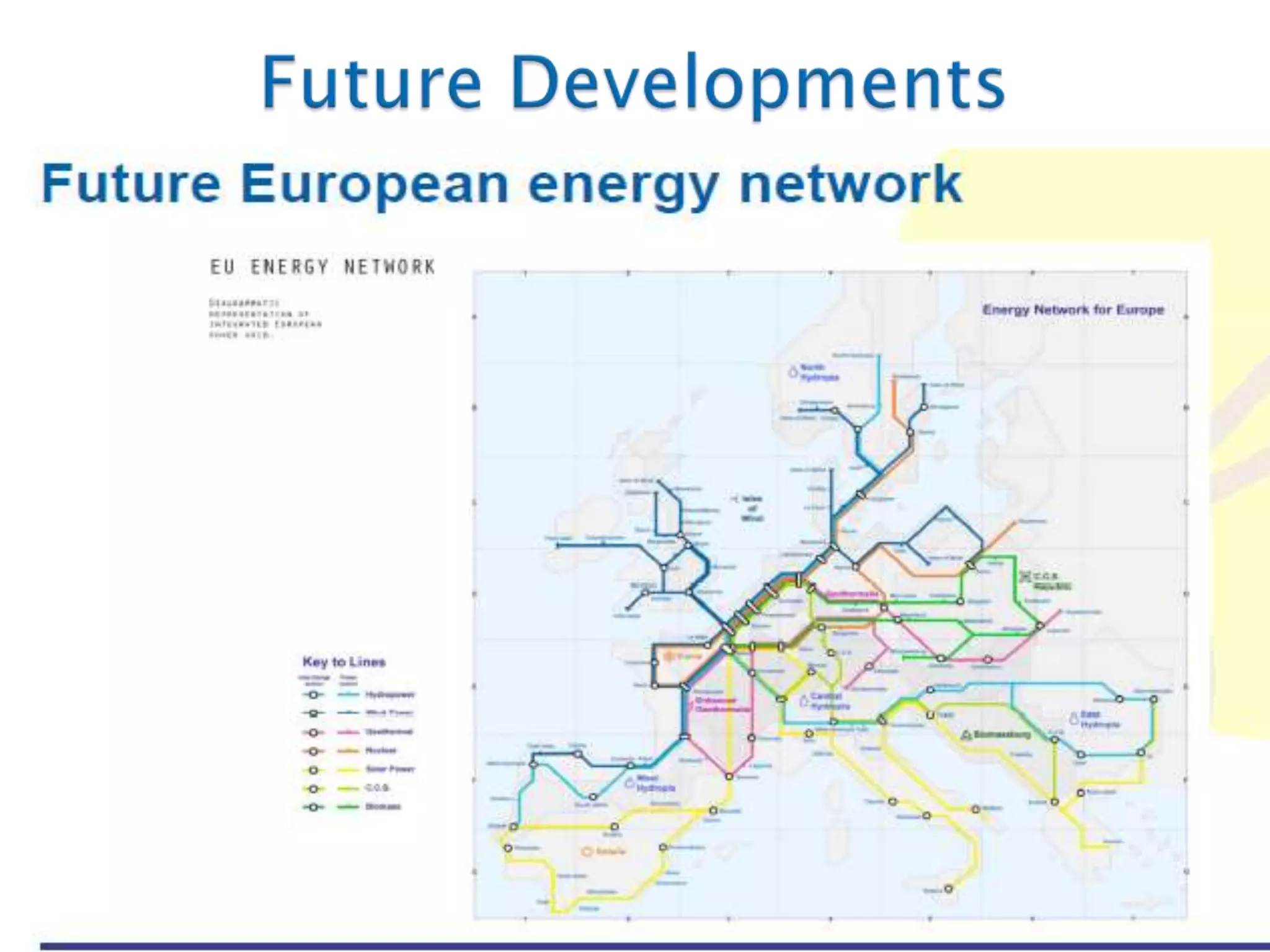
 Future developments,
 Conclusions
 Although the European Union has legislated in the area of
energy policy for many years, and evolved out of
the European Coal and Steel Community.
 The concept of introducing a mandatory and
comprehensive European energy policy was only approved
at the meeting of the informal European Council on 27
October 2005 at Hampton Court.
 The EU Treaty of Lisbon of 2007 legally includes solidarity in
matters of energy supply and changes to the energy policy
within the EU. Prior to the Treaty of Lisbon, EU energy
legislation has been based on the EU authority in the area
of the common market and environment.
 EU pays 2.5% of its annual GDP to import energy: € 270 bn for
oil, € 40 bn for gas
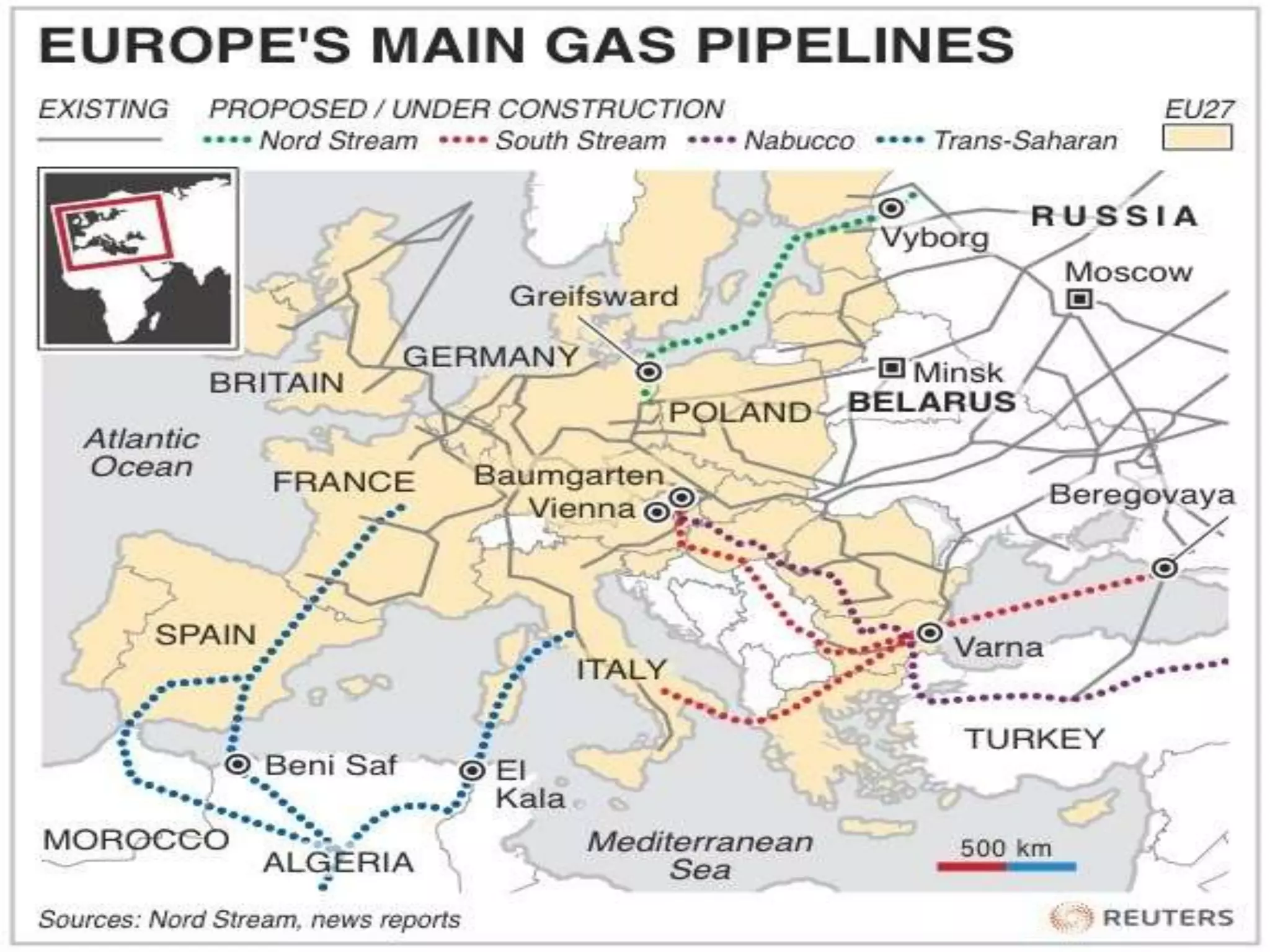
 Several Member States rely on a single supplier for gas
 EU = 20% of world energy use & largest global energy importer:
EU will increasingly compete for energy sources
 Energy represents 80% of EU GHG emissions
 Investment challenge around € 1 trillion by 2020 (mostly private
sector)
 Energy costs are an important and increasing part of households'
and businesses‘ expenses (40% energy consumption due to
building construction and management)
 EU’s primary energy demand will probably grow 0.7%
per year over the next 20 years.
 Oil and gas will continue to be the dominant fuel
sources with gas as the largest growth market of any
fuel.
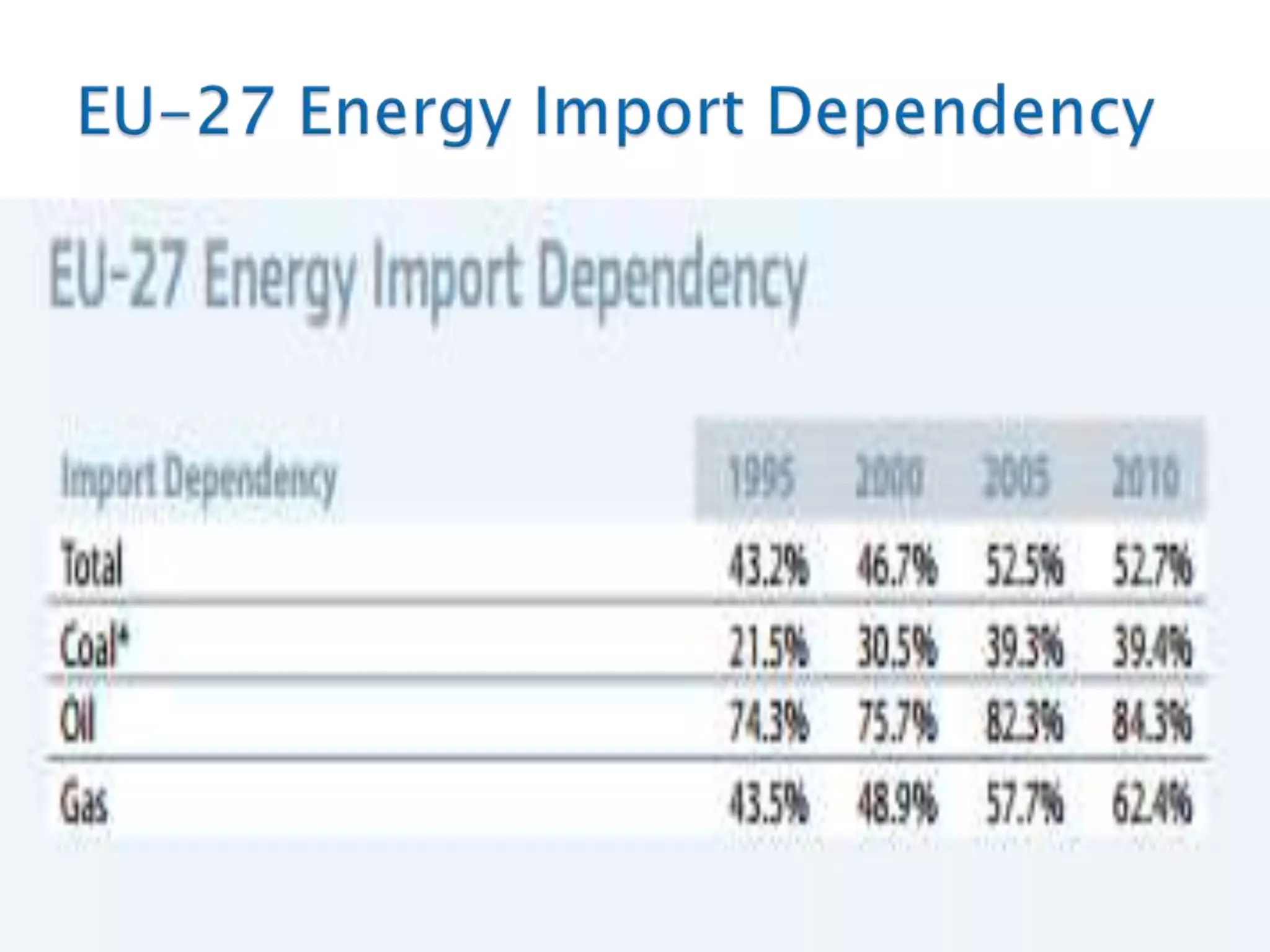
 EU’s import dependency is expected to grow through
2030, from 80 to 93 per cent in the case of oil, and
from 57 to 84 per cent in the case of gas.
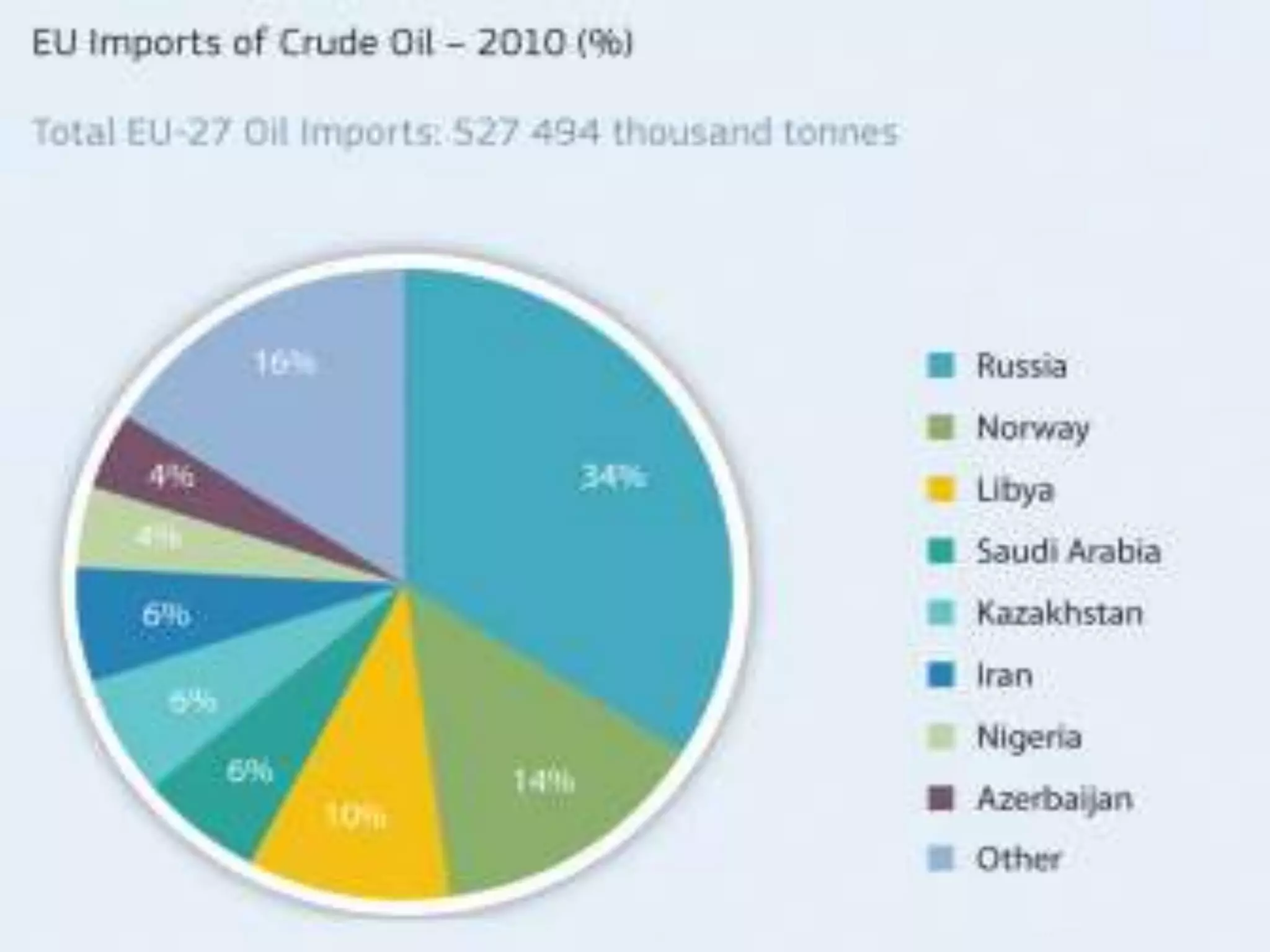
 Russia currently provides 25% of that imported gas. Its
share will rise to over 30% by 2015 and drop to about
27% by 2030.
A short video security of supply and Improve
Energy Security of Europe..
Let’s watch the video..
http://ec.europa.eu/energy/fpis_en.htm
 David Mitrany, the most prominent proponent of the
functionalist school of thought, is accredited with fashioning
this alternative view of international politics in response to
the security/conflict conception of the Realist and Neo-
realist scholars.
 Mitrany argues that greater interdependence in the form of
transnational ties between countries could lead to peace.
 He is of the view that cooperation should be arranged by
technical exports and not by politicians.
 The objective of functionalism towards global peace is achieved
through functional cooperation by the work of international
organizations (including intergovernmental and non-
governmental organizations).
 The activities of functional international organizations involve
taking actions on practical and technical problems rather than
those of military and political nature. They are also non-
controversial politically and involve a common interest to solve
international problems that could best be tackled in
a transnational manner
 UN Economic and Social Council
First of all, EU more focus on Technical,
Economic and Social Integration after that,
cooperate between Political issues.
According to this theory, Nowadays, EU
countries more dependent on each other. EU
structurally, must focus on the own
problems.
 Neofunctionalism reintroduced territorialism in the
functional theory and downplayed its global dimension.
 Neofunctionalism is simultaneously a theory and a strategy
of regional integration, building on the work of David
Mitrany. Neofunctionalists focused their attention in the
process of integration among states, i.e. regional
integration. Initially, states integrate in limited functional or
economic areas.
 According to neofunctionalists, there are two kinds of
spillover: functional and political. Functional spillover is
the interconnection of various economic sectors or issue-
areas, and the integration in one policy-area spilling over
into others.
 Political spillover is the creation of supranational
governance models, as far-reaching as the European
Union, or as voluntary as the United Nations.
The Common Energy Strategy of Europe very
good example for regional integration and
Spill over effect.
 Move Together, Create Network, Build Alliances, In
one Word Cooperate.. That’s the Best way to Win..
 Let’s watch the short video..
 http://ec.europa.eu/avservices/video/player.
cfm?sitelang=en&ref=I073149
 The European Energy Program for Recovery A response to the
economic crisis and to security of energy supply concerns
 European Economic Recovery Plan proposed by the Commission
in November 2008; endorsed by European Council in December
2008
 European Energy Program for Recovery proposed by
Commission in January 2009; adopted by EP and the Council on
13 July 2009; in force 1 August 2009 EEPR Financial envelope of
almost € 4 billion € 2,365 million: gas & electricity infrastructure
projects, € 565 million: offshore wind energy projects, € 1,050
million: CCS projects
 Not one solution, but some features are clear
We need:
 Energy Efficiency … available at which cost?
 Natural Gas, Coal … with CO2 capture & storage?
 Biofuels, Renewables … with lower costs, higher
availability?
 Nuclear Energy … safe waste management?
 Fuel Cells … lower cost and technical advances?
 Fusion … maybe, in the very long term?
THANK YOU FOR YOUR
ATTENTION !

THE EU ENERGY POLICY WHAT IS MAIN PURPOSE OF EU ENERGY STRATEGY?

  • 1.
  • 2.
     Developments ofEnergy Strategy EU  What is main purpose of EU energy strategy?  EU Energy Security and Consumption  Energy Policy Functionalist approach  Latest developments,  Future developments,  Conclusions
  • 3.
     Although theEuropean Union has legislated in the area of energy policy for many years, and evolved out of the European Coal and Steel Community.  The concept of introducing a mandatory and comprehensive European energy policy was only approved at the meeting of the informal European Council on 27 October 2005 at Hampton Court.  The EU Treaty of Lisbon of 2007 legally includes solidarity in matters of energy supply and changes to the energy policy within the EU. Prior to the Treaty of Lisbon, EU energy legislation has been based on the EU authority in the area of the common market and environment.
  • 4.
     EU pays2.5% of its annual GDP to import energy: € 270 bn for oil, € 40 bn for gas  Several Member States rely on a single supplier for gas  EU = 20% of world energy use & largest global energy importer: EU will increasingly compete for energy sources  Energy represents 80% of EU GHG emissions  Investment challenge around € 1 trillion by 2020 (mostly private sector)  Energy costs are an important and increasing part of households' and businesses‘ expenses (40% energy consumption due to building construction and management)
  • 14.
     EU’s primaryenergy demand will probably grow 0.7% per year over the next 20 years.  Oil and gas will continue to be the dominant fuel sources with gas as the largest growth market of any fuel.  EU’s import dependency is expected to grow through 2030, from 80 to 93 per cent in the case of oil, and from 57 to 84 per cent in the case of gas.  Russia currently provides 25% of that imported gas. Its share will rise to over 30% by 2015 and drop to about 27% by 2030.
  • 15.
    A short videosecurity of supply and Improve Energy Security of Europe.. Let’s watch the video.. http://ec.europa.eu/energy/fpis_en.htm
  • 16.
     David Mitrany,the most prominent proponent of the functionalist school of thought, is accredited with fashioning this alternative view of international politics in response to the security/conflict conception of the Realist and Neo- realist scholars.  Mitrany argues that greater interdependence in the form of transnational ties between countries could lead to peace.  He is of the view that cooperation should be arranged by technical exports and not by politicians.
  • 17.
     The objectiveof functionalism towards global peace is achieved through functional cooperation by the work of international organizations (including intergovernmental and non- governmental organizations).  The activities of functional international organizations involve taking actions on practical and technical problems rather than those of military and political nature. They are also non- controversial politically and involve a common interest to solve international problems that could best be tackled in a transnational manner  UN Economic and Social Council
  • 18.
    First of all,EU more focus on Technical, Economic and Social Integration after that, cooperate between Political issues. According to this theory, Nowadays, EU countries more dependent on each other. EU structurally, must focus on the own problems.
  • 19.
     Neofunctionalism reintroducedterritorialism in the functional theory and downplayed its global dimension.  Neofunctionalism is simultaneously a theory and a strategy of regional integration, building on the work of David Mitrany. Neofunctionalists focused their attention in the process of integration among states, i.e. regional integration. Initially, states integrate in limited functional or economic areas.
  • 20.
     According toneofunctionalists, there are two kinds of spillover: functional and political. Functional spillover is the interconnection of various economic sectors or issue- areas, and the integration in one policy-area spilling over into others.  Political spillover is the creation of supranational governance models, as far-reaching as the European Union, or as voluntary as the United Nations.
  • 21.
    The Common EnergyStrategy of Europe very good example for regional integration and Spill over effect.
  • 22.
     Move Together,Create Network, Build Alliances, In one Word Cooperate.. That’s the Best way to Win..  Let’s watch the short video..  http://ec.europa.eu/avservices/video/player. cfm?sitelang=en&ref=I073149
  • 23.
     The EuropeanEnergy Program for Recovery A response to the economic crisis and to security of energy supply concerns  European Economic Recovery Plan proposed by the Commission in November 2008; endorsed by European Council in December 2008  European Energy Program for Recovery proposed by Commission in January 2009; adopted by EP and the Council on 13 July 2009; in force 1 August 2009 EEPR Financial envelope of almost € 4 billion € 2,365 million: gas & electricity infrastructure projects, € 565 million: offshore wind energy projects, € 1,050 million: CCS projects
  • 26.
     Not onesolution, but some features are clear We need:  Energy Efficiency … available at which cost?  Natural Gas, Coal … with CO2 capture & storage?  Biofuels, Renewables … with lower costs, higher availability?  Nuclear Energy … safe waste management?  Fuel Cells … lower cost and technical advances?  Fusion … maybe, in the very long term?
  • 27.
    THANK YOU FORYOUR ATTENTION !