How did Oil change the course of international politics of the 20 th  Century?
US OIL DEPENDENCE Foreign and Domestic Policy
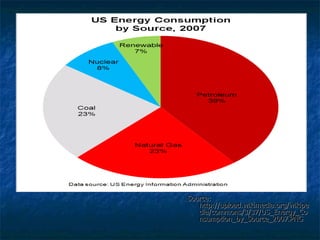
Source:  http://upload.wikimedia.org/wikipedia/commons/3/37/US_Energy_Consumption_by_Source_2007.PNG
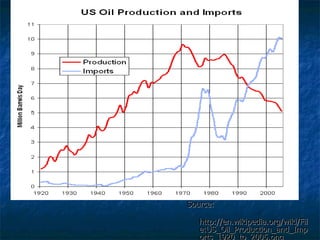
Source: http://en.wikipedia.org/wiki/File:US_Oil_Production_and_Imports_1920_to_2005.png
STRATEGIES TO DECREASE  DEPENDENCE
Exploring and drilling for new oil fields Arctic National Wildlife Refuge (ANWR) which supposedly contained on of the largest unexplored productive geologic basins in the US. However, after a report saying that there is probably 10.3 billions barrels of oil technically recoverable in ANWR, drilling was planned to start in 2010.
CONSTRAINTS 1) the speed and magnitude of oil production in ANWR, the gulf and Mexico and other geologically complex reservoirs.  2) It is cheaper to produce in foreign places (such as the Persian Gulf) then do it in the US.  3) Many environmentalists are against drilling in potentially rich areas in the US because of the environmental implications.
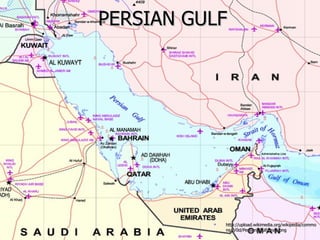
PERSIAN GULF 1) It holds more resources than any other producers, for example in 2000, it was proven that the Gulf a reserve of 672 billions of barrels of oil.  2) Oil can be extracted from the Gulf at a lower cost than other sites. 3) Located near international markets.
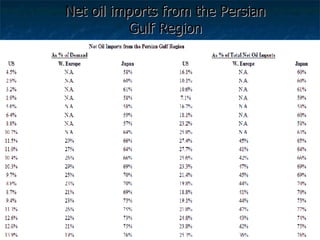
Net oil imports from the Persian Gulf Region
GLOBAL ENERGY SCENE EU; RUSSIA
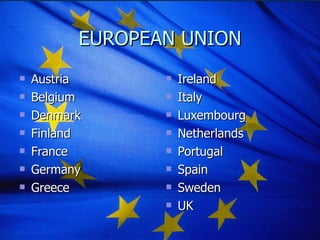
The EU is the second greatest consumer after the US. The oil gap between production and consumption in the EU is larger than that in the US, particularly when Europe ’ s poor reserves are taken into consideration.   European Union
Ireland Italy Luxembourg Netherlands Portugal Spain Sweden UK Austria Belgium Denmark Finland France Germany Greece EUROPEAN UNION
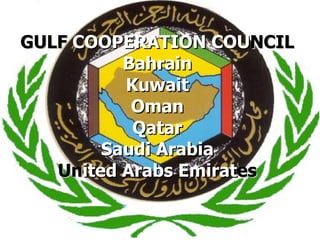
GULF  COOPERATION COU NCIL Bahrain Kuwait Oman Qatar Saudi Arabia Un ited Arabs Emirat es
In order to make the Russian Oil industry more competitive and more attractive to foreign investor, Russia has created an energy partnership with Western Europe; the Energy Charter Treaty, signed in Lisbon in Dec 1994.  RUSSIA
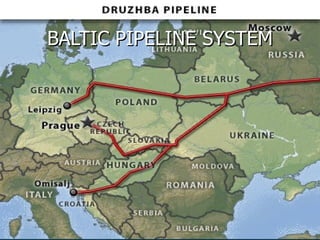
BALTIC PIPELINE SYSTEM
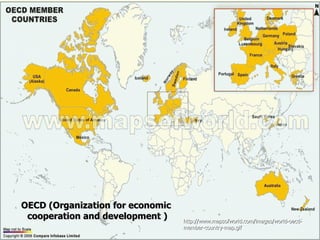
OECD ( Organization for economic  cooperation and development  ) http://www.mapsofworld.com/images/world-oecd-member-country-map.gif
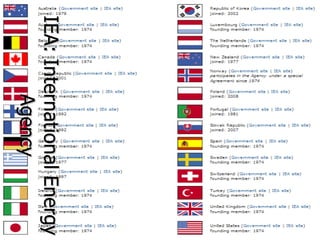
IEA: International Energy Agency
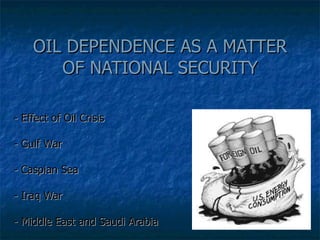
OIL DEPENDENCE AS A MATTER OF NATIONAL SECURITY - Effect of Oil Crisis - Gulf War - Caspian Sea - Iraq War - Middle East and Saudi Arabia
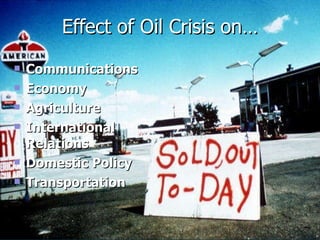
Communications Economy Agriculture International Relations Domestic Policy Transportation Effect of Oil Crisis on…
PERSIAN GULF http://upload.wikimedia.org/wikipedia/commons/0/0d/Persian_Gulf_map.png
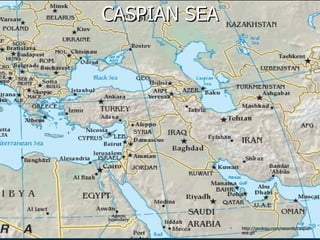
CASPIAN SEA http://geology.com/records/caspian-sea.gif
 
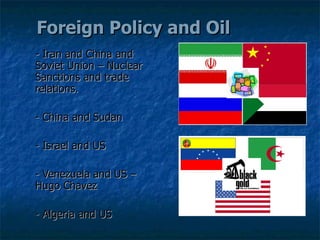
Foreign Policy and Oil  - Iran and China and Soviet Union – Nuclear Sanctions and trade relations. - China and Sudan - Israel and US - Venezuela and US – Hugo Chavez - Algeria and US
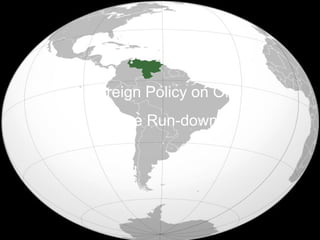
Foreign Policy on Oil :  The Run-down
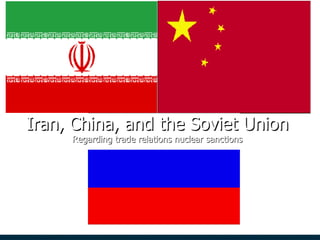
Iran, China, and the Soviet Union Regarding trade relations nuclear sanctions
Iran, China, and the Soviet Union Regarding trade relations nuclear sanctions Political pressure over the arms race: the US wants Iran to stop the development of its nuclear program, accusing Iran of producing nuclear weapons However, China with its status and veto power in the UN defies the US by defending Iran, as they are close allies In the past, Russia did not necessarily oppose Iran’s nuclear program; as Russia has come to depend more on its trade relations with the US, however, it has more recently withdrawn its support of Iran, which the US takes to be agreement with their policy on the Iranian nuclear program
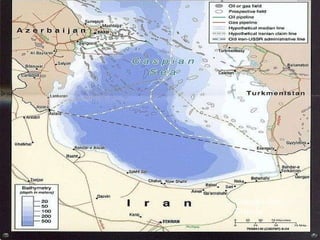
Caspian Sea Dispute
China and Sudan Assaults in the name of oil China and Sudan are close trading partners China has been supplying arms and technology to Sudan China opts for inaction faced with the issue of the war in Darfur
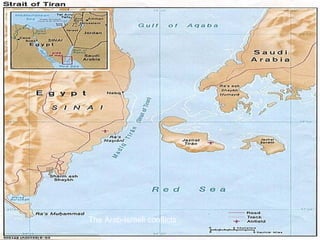
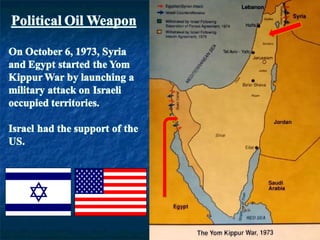
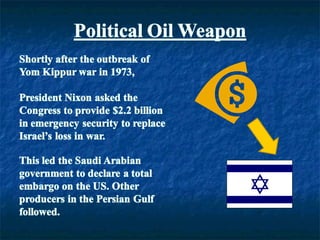
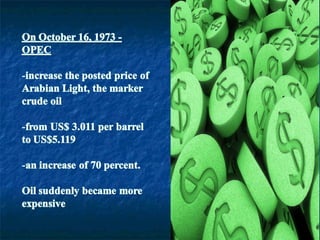
The United States and Israel The Arab embargo on oil Notable Arab-Israeli conflicts: The Six-Day War (1967) The Yom Kippur War (1973) By 1973, the prices for oil had been largely destabilized by the shifting of the value of US currency and the wars fought by the Arab nations – the OPEC was slow to adjust their prices, and this period was dubbed an “oil crisis”
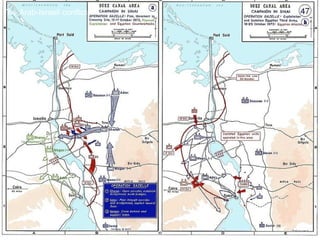
The Arab-Israeli conflicts
The United States and Israel The Arab embargo on oil The Arab embargo on the US was soon after lifted Consequences: search for alternative energy, destabilization of oil-dependent economies (e.g. Canada), solidification of the concept of “oil weapon” (control of oil = control of power)
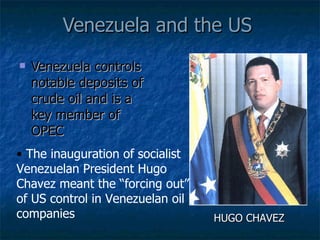
Venezuela and the US Venezuela controls notable deposits of crude oil and is a key member of OPEC The inauguration of socialist Venezuelan President Hugo Chavez meant the “forcing out” of US control in Venezuelan oil companies HUGO CHAVEZ
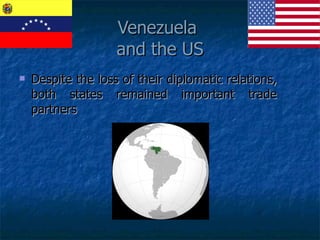
Venezuela  and the US Despite the loss of their diplomatic relations, both states remained important trade partners
Algeria and the US Algeria supports the US in international affairs as the US in turn supports it through trade and aid (General) Characteristic relationship between the US and a Third World country
Oil as a Political Weapon
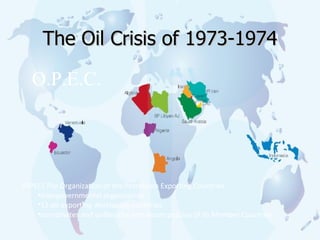
The Oil Crisis of 1973-1974 O.P.E.C. (OPEC) The Organization of the Petroleum Exporting Countries intergovernmental organization 12 oil-exporting developing countries  coordinates and unifies the petroleum policies of its Member Countries
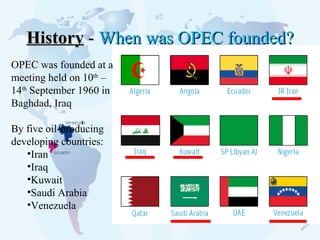
History  -  When was OPEC founded? OPEC was founded at a meeting held on 10 th  –14 th  September 1960 in Baghdad, Iraq  By five oil-producing developing countries:  Iran  Iraq  Kuwait  Saudi Arabia Venezuela
 
 
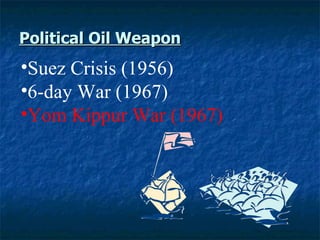
Political Oil Weapon Suez Crisis (1956)  6-day War (1967) Yom Kippur War (1967)


How Does Oil Change Politics

  • 1.
    How did Oilchange the course of international politics of the 20 th Century?
  • 2.
    US OIL DEPENDENCEForeign and Domestic Policy
  • 3.
  • 4.
  • 5.
  • 6.
    Exploring and drillingfor new oil fields Arctic National Wildlife Refuge (ANWR) which supposedly contained on of the largest unexplored productive geologic basins in the US. However, after a report saying that there is probably 10.3 billions barrels of oil technically recoverable in ANWR, drilling was planned to start in 2010.
  • 7.
    CONSTRAINTS 1) thespeed and magnitude of oil production in ANWR, the gulf and Mexico and other geologically complex reservoirs. 2) It is cheaper to produce in foreign places (such as the Persian Gulf) then do it in the US. 3) Many environmentalists are against drilling in potentially rich areas in the US because of the environmental implications.
  • 8.
    PERSIAN GULF 1)It holds more resources than any other producers, for example in 2000, it was proven that the Gulf a reserve of 672 billions of barrels of oil. 2) Oil can be extracted from the Gulf at a lower cost than other sites. 3) Located near international markets.
  • 9.
    Net oil importsfrom the Persian Gulf Region
  • 10.
  • 11.
    The EU isthe second greatest consumer after the US. The oil gap between production and consumption in the EU is larger than that in the US, particularly when Europe ’ s poor reserves are taken into consideration. European Union
  • 12.
    Ireland Italy LuxembourgNetherlands Portugal Spain Sweden UK Austria Belgium Denmark Finland France Germany Greece EUROPEAN UNION
  • 13.
    GULF COOPERATIONCOU NCIL Bahrain Kuwait Oman Qatar Saudi Arabia Un ited Arabs Emirat es
  • 14.
    In order tomake the Russian Oil industry more competitive and more attractive to foreign investor, Russia has created an energy partnership with Western Europe; the Energy Charter Treaty, signed in Lisbon in Dec 1994. RUSSIA
  • 15.
  • 16.
    OECD ( Organizationfor economic cooperation and development ) http://www.mapsofworld.com/images/world-oecd-member-country-map.gif
  • 17.
  • 18.
    OIL DEPENDENCE ASA MATTER OF NATIONAL SECURITY - Effect of Oil Crisis - Gulf War - Caspian Sea - Iraq War - Middle East and Saudi Arabia
  • 19.
    Communications Economy AgricultureInternational Relations Domestic Policy Transportation Effect of Oil Crisis on…
  • 20.
  • 21.
  • 22.
  • 23.
    Foreign Policy andOil - Iran and China and Soviet Union – Nuclear Sanctions and trade relations. - China and Sudan - Israel and US - Venezuela and US – Hugo Chavez - Algeria and US
  • 24.
    Foreign Policy onOil : The Run-down
  • 25.
    Iran, China, andthe Soviet Union Regarding trade relations nuclear sanctions
  • 26.
    Iran, China, andthe Soviet Union Regarding trade relations nuclear sanctions Political pressure over the arms race: the US wants Iran to stop the development of its nuclear program, accusing Iran of producing nuclear weapons However, China with its status and veto power in the UN defies the US by defending Iran, as they are close allies In the past, Russia did not necessarily oppose Iran’s nuclear program; as Russia has come to depend more on its trade relations with the US, however, it has more recently withdrawn its support of Iran, which the US takes to be agreement with their policy on the Iranian nuclear program
  • 27.
  • 28.
    China and SudanAssaults in the name of oil China and Sudan are close trading partners China has been supplying arms and technology to Sudan China opts for inaction faced with the issue of the war in Darfur
  • 29.
    The United Statesand Israel The Arab embargo on oil Notable Arab-Israeli conflicts: The Six-Day War (1967) The Yom Kippur War (1973) By 1973, the prices for oil had been largely destabilized by the shifting of the value of US currency and the wars fought by the Arab nations – the OPEC was slow to adjust their prices, and this period was dubbed an “oil crisis”
  • 30.
  • 31.
  • 32.
    The United Statesand Israel The Arab embargo on oil The Arab embargo on the US was soon after lifted Consequences: search for alternative energy, destabilization of oil-dependent economies (e.g. Canada), solidification of the concept of “oil weapon” (control of oil = control of power)
  • 33.
    Venezuela and theUS Venezuela controls notable deposits of crude oil and is a key member of OPEC The inauguration of socialist Venezuelan President Hugo Chavez meant the “forcing out” of US control in Venezuelan oil companies HUGO CHAVEZ
  • 34.
    Venezuela andthe US Despite the loss of their diplomatic relations, both states remained important trade partners
  • 35.
    Algeria and theUS Algeria supports the US in international affairs as the US in turn supports it through trade and aid (General) Characteristic relationship between the US and a Third World country
  • 36.
    Oil as aPolitical Weapon
  • 37.
    The Oil Crisisof 1973-1974 O.P.E.C. (OPEC) The Organization of the Petroleum Exporting Countries intergovernmental organization 12 oil-exporting developing countries coordinates and unifies the petroleum policies of its Member Countries
  • 38.
    History - When was OPEC founded? OPEC was founded at a meeting held on 10 th –14 th September 1960 in Baghdad, Iraq By five oil-producing developing countries: Iran Iraq Kuwait Saudi Arabia Venezuela
  • 39.
  • 40.
  • 41.
    Political Oil WeaponSuez Crisis (1956) 6-day War (1967) Yom Kippur War (1967)
  • 42.
  • 43.
  • 44.
  • 45.
  • 46.
  • 47.
  • 48.
  • 49.
  • 50.
  • 51.