Download to read offline
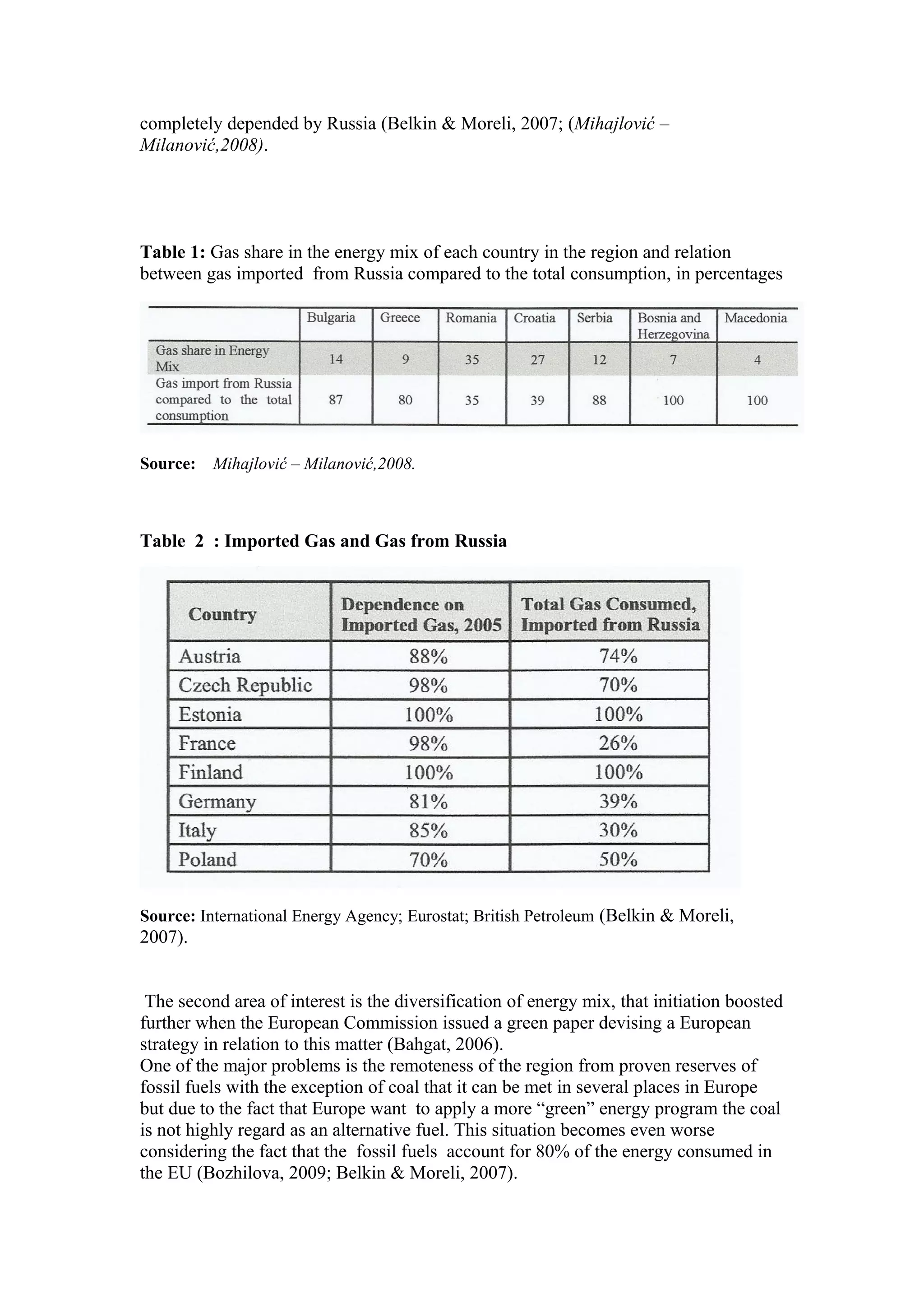
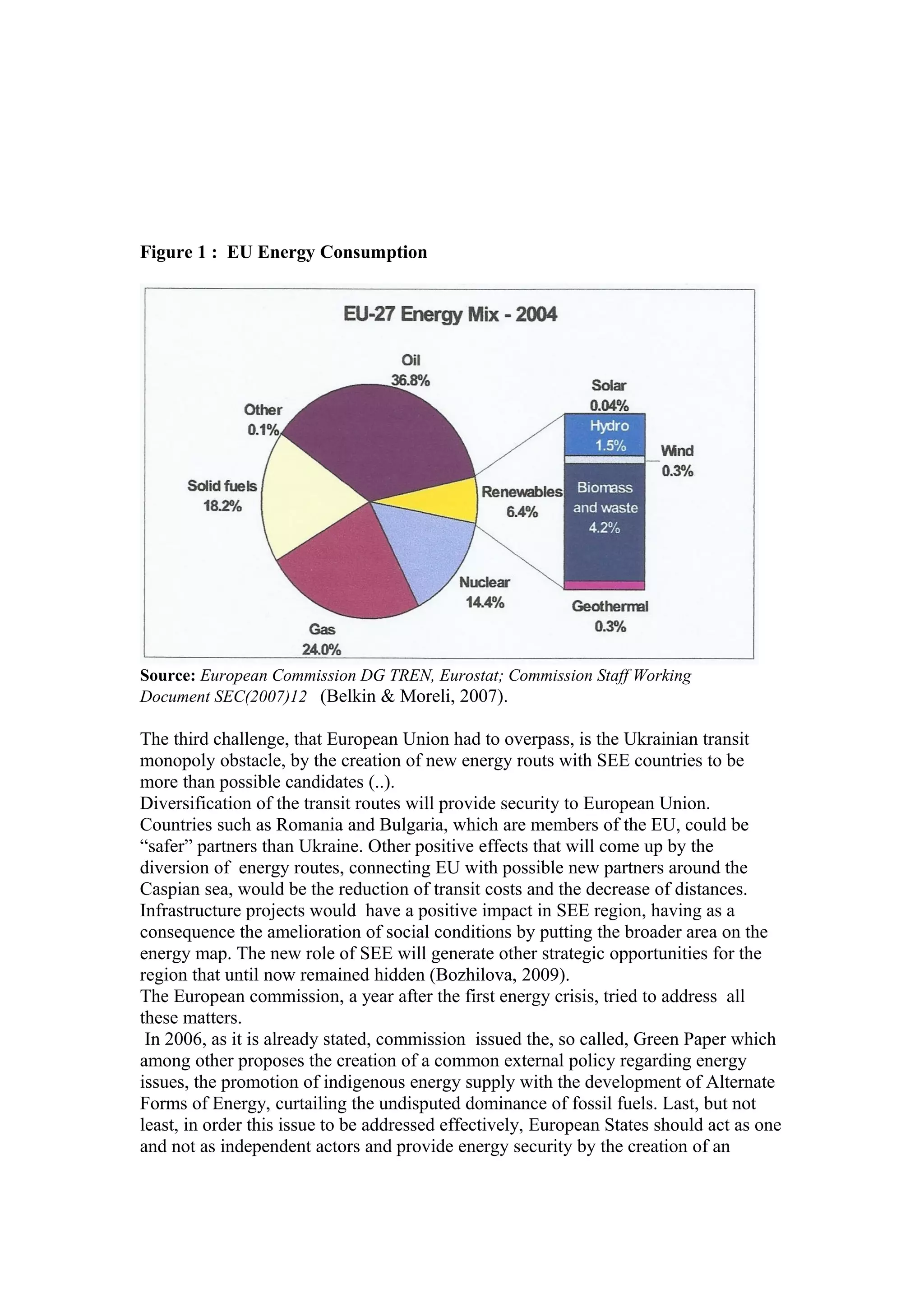
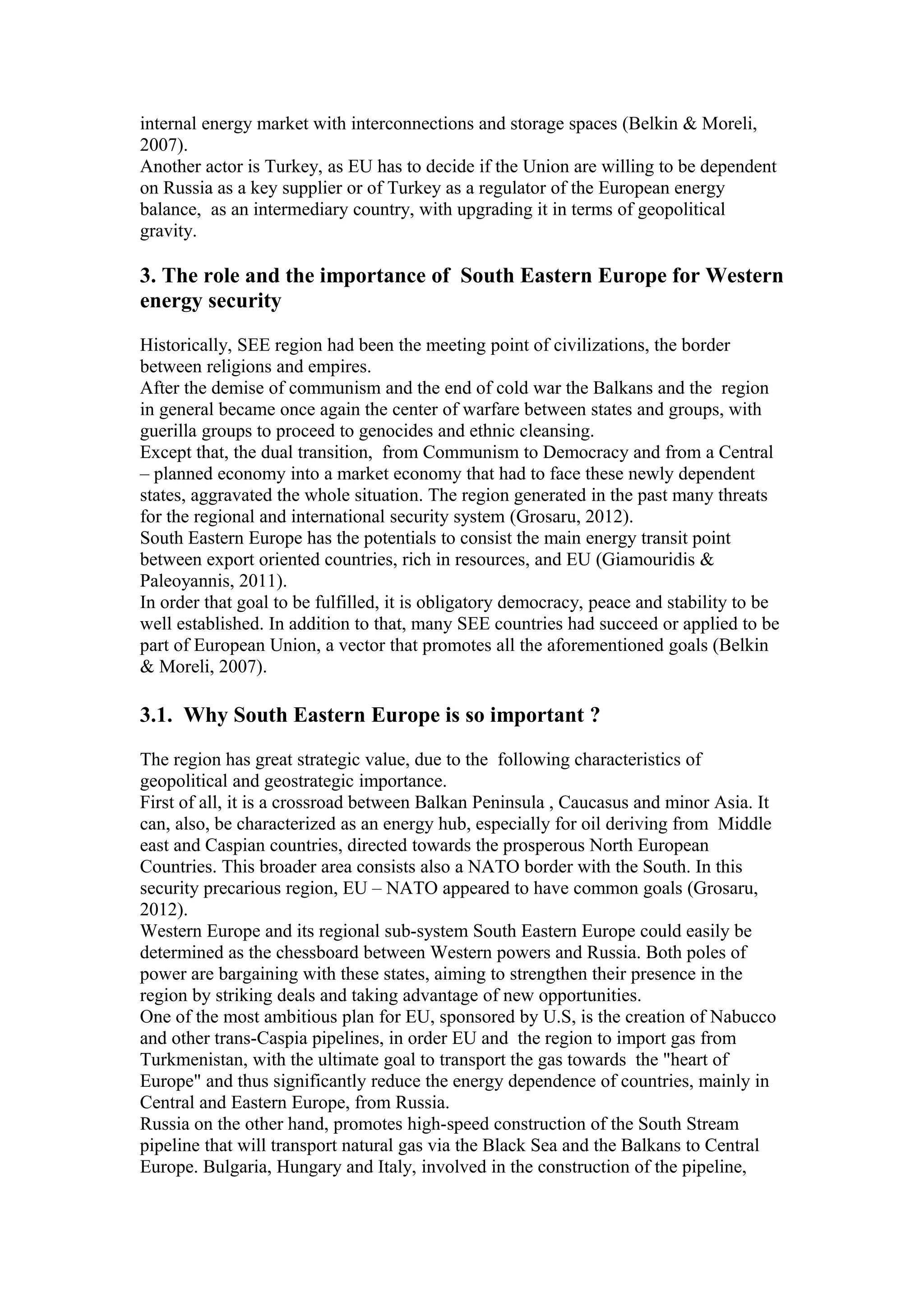
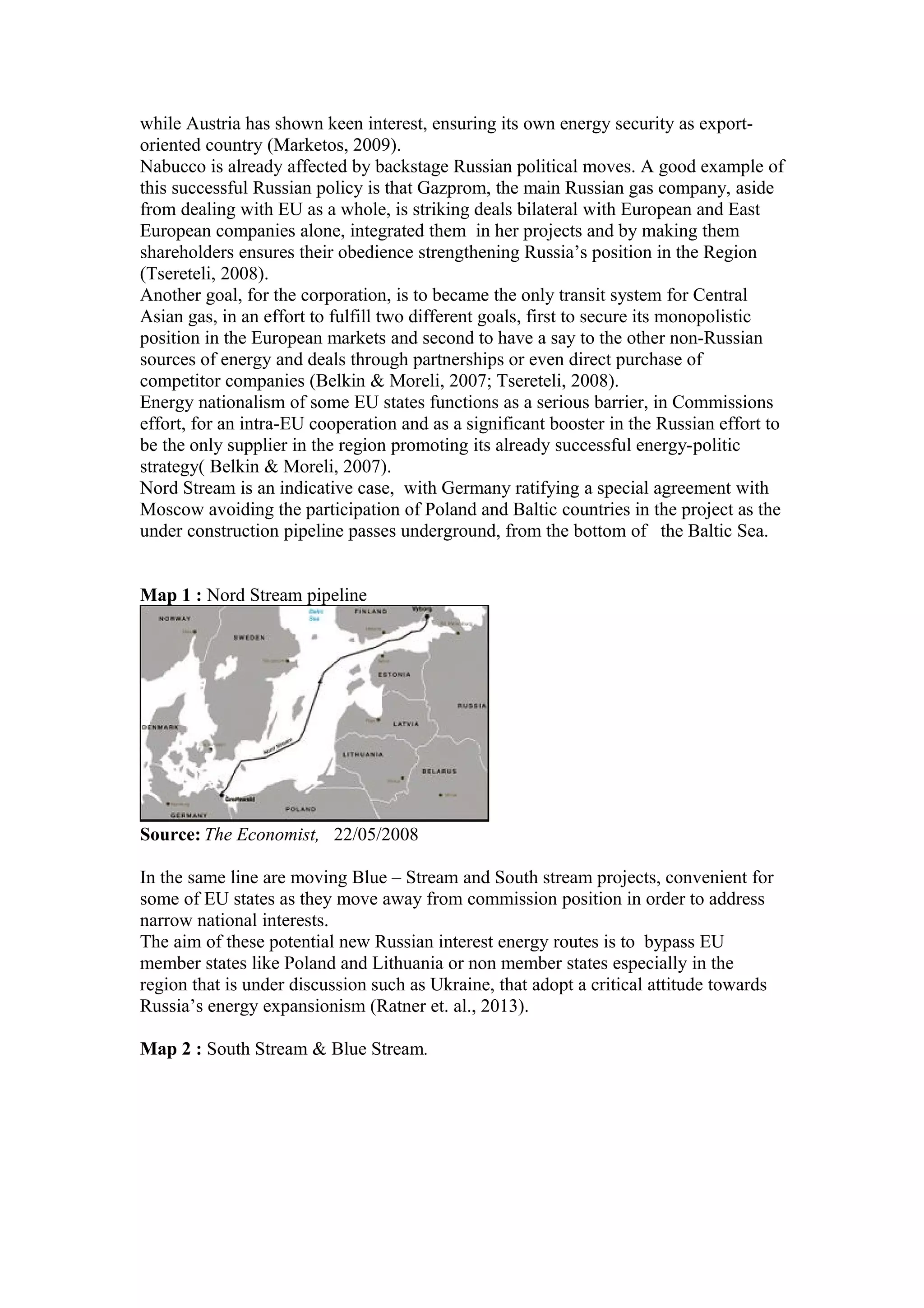
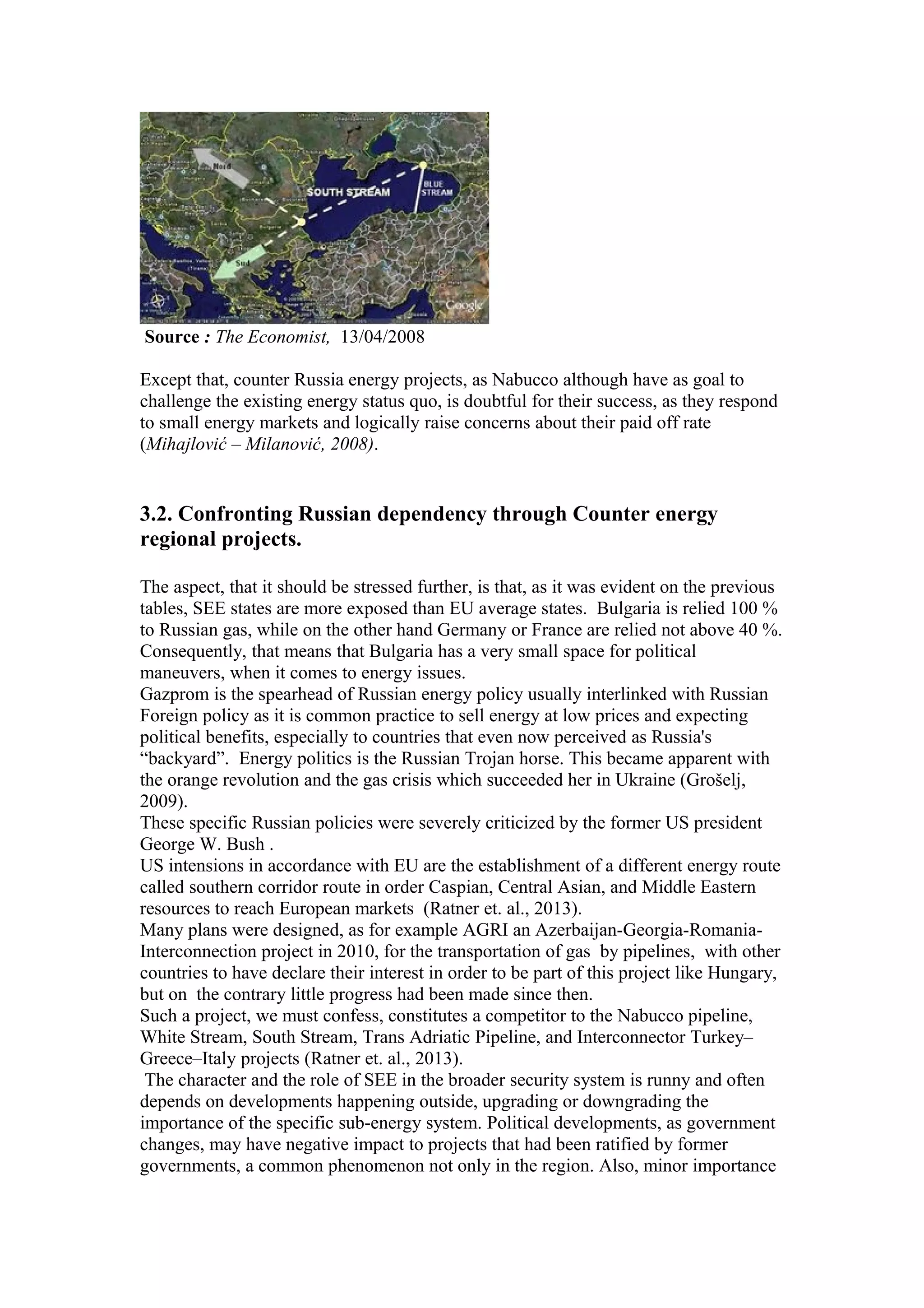
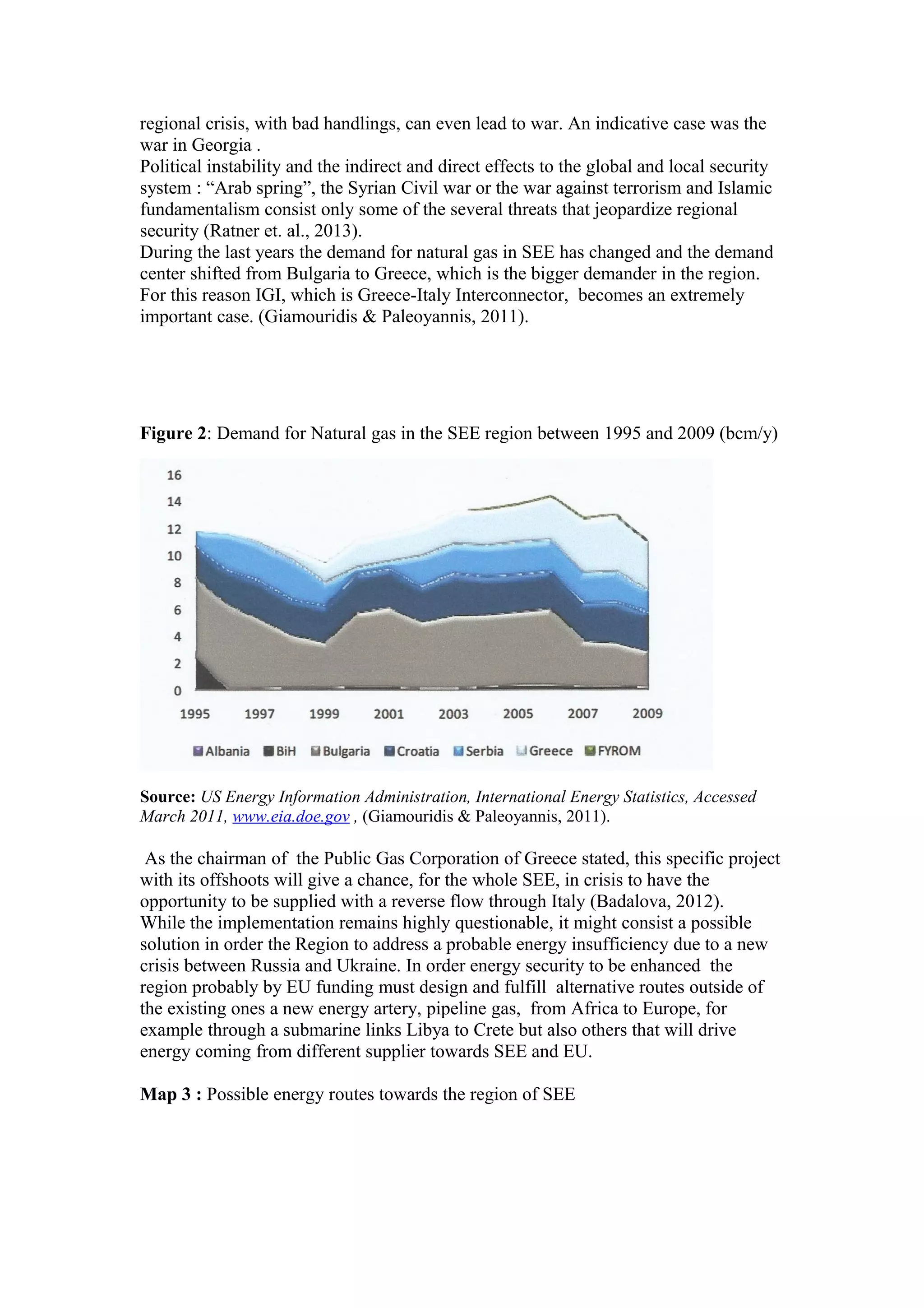
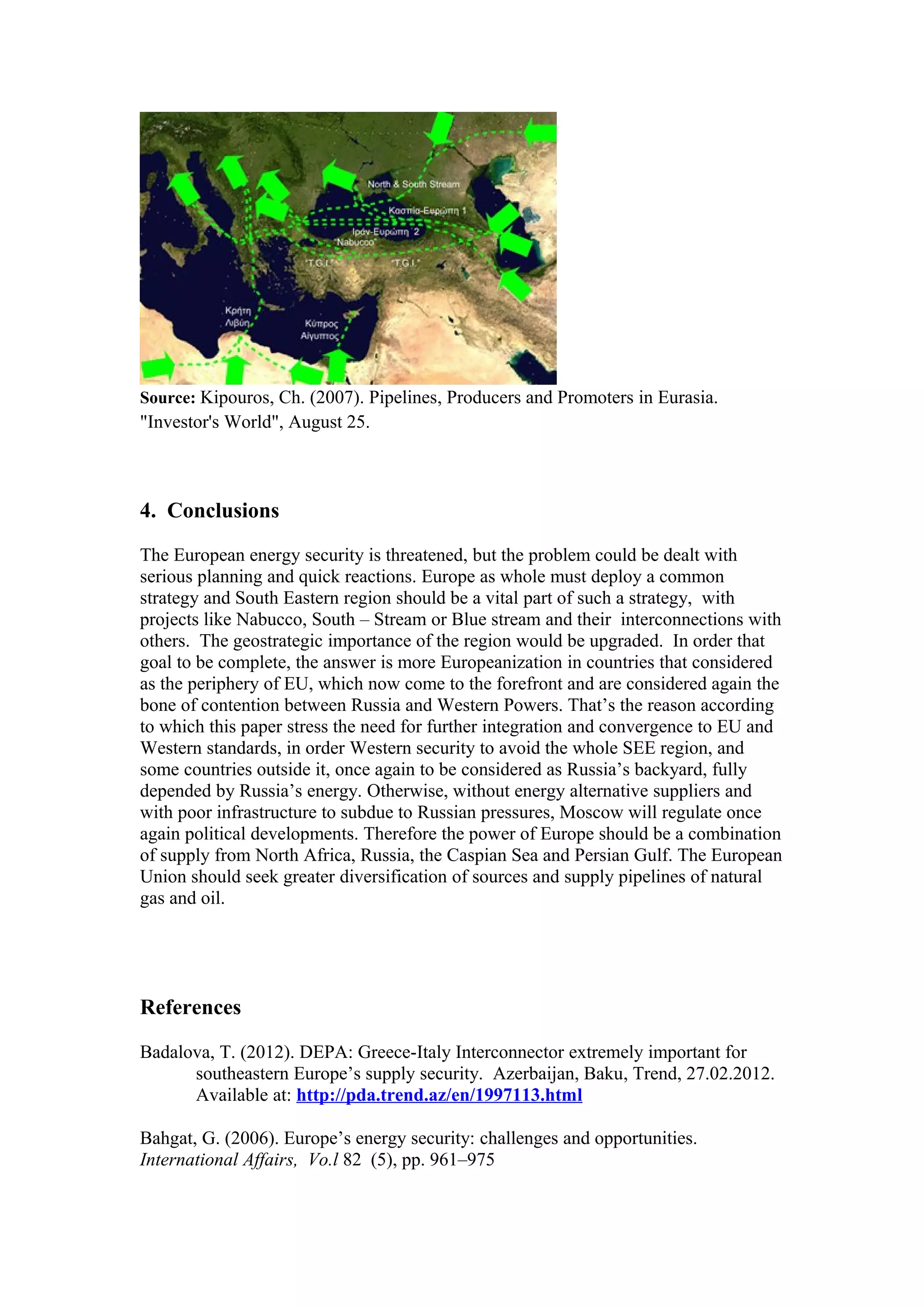

South Eastern Europe has a unique geopolitical position as an energy transit region between major energy exporters like Russia and importers like the European Union. Ensuring stable energy supplies to the EU while reducing Russian dependency is challenging due to the region's historical instability and Russia's efforts to control pipelines. Completing projects like Nabucco could allow the EU to diversify its energy sources away from Russia by accessing Caspian and Central Asian gas through new routes across South Eastern Europe. However, such projects face political and economic obstacles, and some EU states prioritize narrow interests over the bloc's strategic goals. Overall, stability in the region is crucial to solidifying its role in enhancing Western energy security.


