1
Copyrights (c) 2012 Pragmatic Cohesion
Consulting
The Empathic Business Analyst
Introduction
• It is easy to measure ‘something’.
• It is hard to measure the ‘right thing’.
• Knowing what you are not measuring is very
important because it can define things that you
may not take into account.
• Stakeholders’ feelings and attitudes are
extremely important and hard to measure; they
can only be revealed to a Business Analyst if the
stakeholders trust her and also trust what she
will do with that kind of information.
2
Copyrights (c) 2012 Pragmatic Cohesion
Consulting
Introduction
• Stakeholders’ feelings and attitudes are strongly
connected to the following concepts:
– Climate
– Culture
– Morale
– Identity
– Mission
• Climate and Morale are experienced at the
individual stakeholder level.
• Culture, Identity, and Mission are defined at the
organization or team level.
3
Copyrights (c) 2012 Pragmatic Cohesion
Consulting
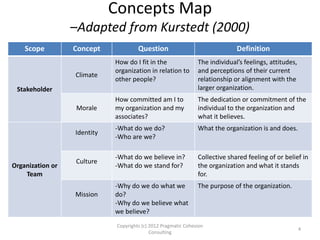
Concepts Map
–Adapted from Kurstedt (2000)
Scope Concept Question Definition
Stakeholder
Climate
How do I fit in the
organization in relation to
other people?
The individual’s feelings, attitudes,
and perceptions of their current
relationship or alignment with the
larger organization.
Morale
How committed am I to
my organization and my
associates?
The dedication or commitment of the
individual to the organization and
what it believes.
Organization or
Team
Identity
-What do we do?
-Who are we?
What the organization is and does.
Culture
-What do we believe in?
-What do we stand for?
Collective shared feeling of or belief in
the organization and what it stands
for.
Mission
-Why do we do what we
do?
-Why do we believe what
we believe?
The purpose of the organization.
4
Copyrights (c) 2012 Pragmatic Cohesion
Consulting
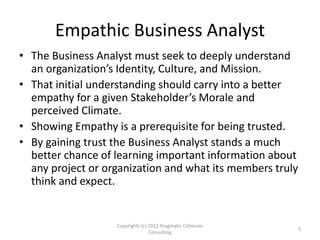
Empathic Business Analyst
• The Business Analyst must seek to deeply understand
an organization’s Identity, Culture, and Mission.
• That initial understanding should carry into a better
empathy for a given Stakeholder’s Morale and
perceived Climate.
• Showing Empathy is a prerequisite for being trusted.
• By gaining trust the Business Analyst stands a much
better chance of learning important information about
any project or organization and what its members truly
think and expect.
Copyrights (c) 2012 Pragmatic Cohesion
Consulting
5
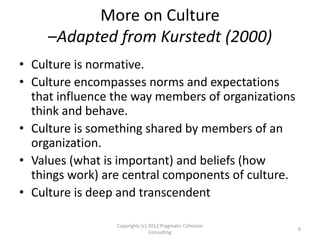
More on Culture
–Adapted from Kurstedt (2000)
• Culture is normative.
• Culture encompasses norms and expectations
that influence the way members of organizations
think and behave.
• Culture is something shared by members of an
organization.
• Values (what is important) and beliefs (how
things work) are central components of culture.
• Culture is deep and transcendent
Copyrights (c) 2012 Pragmatic Cohesion
Consulting
6
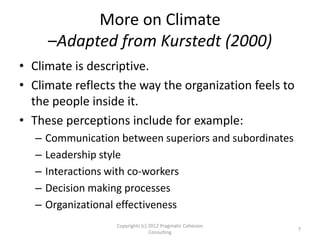
More on Climate
–Adapted from Kurstedt (2000)
• Climate is descriptive.
• Climate reflects the way the organization feels to
the people inside it.
• These perceptions include for example:
– Communication between superiors and subordinates
– Leadership style
– Interactions with co-workers
– Decision making processes
– Organizational effectiveness
Copyrights (c) 2012 Pragmatic Cohesion
Consulting
7
Copyrights (c) 2012 Pragmatic Cohesion
Consulting
8
For Comments and Questions contact didier@pragmaticohesion.com
References:
• Kurstedt, H. (2000), Management Systems Theory, Applications,and Design,
Virginia Polytechnic Institute and State University - ISE Department,
Blacksburg VA. PP 1283-1306

The empathic business analyst

  • 1.
    1 Copyrights (c) 2012Pragmatic Cohesion Consulting The Empathic Business Analyst
  • 2.
    Introduction • It iseasy to measure ‘something’. • It is hard to measure the ‘right thing’. • Knowing what you are not measuring is very important because it can define things that you may not take into account. • Stakeholders’ feelings and attitudes are extremely important and hard to measure; they can only be revealed to a Business Analyst if the stakeholders trust her and also trust what she will do with that kind of information. 2 Copyrights (c) 2012 Pragmatic Cohesion Consulting
  • 3.
    Introduction • Stakeholders’ feelingsand attitudes are strongly connected to the following concepts: – Climate – Culture – Morale – Identity – Mission • Climate and Morale are experienced at the individual stakeholder level. • Culture, Identity, and Mission are defined at the organization or team level. 3 Copyrights (c) 2012 Pragmatic Cohesion Consulting
  • 4.
    Concepts Map –Adapted fromKurstedt (2000) Scope Concept Question Definition Stakeholder Climate How do I fit in the organization in relation to other people? The individual’s feelings, attitudes, and perceptions of their current relationship or alignment with the larger organization. Morale How committed am I to my organization and my associates? The dedication or commitment of the individual to the organization and what it believes. Organization or Team Identity -What do we do? -Who are we? What the organization is and does. Culture -What do we believe in? -What do we stand for? Collective shared feeling of or belief in the organization and what it stands for. Mission -Why do we do what we do? -Why do we believe what we believe? The purpose of the organization. 4 Copyrights (c) 2012 Pragmatic Cohesion Consulting
  • 5.
    Empathic Business Analyst •The Business Analyst must seek to deeply understand an organization’s Identity, Culture, and Mission. • That initial understanding should carry into a better empathy for a given Stakeholder’s Morale and perceived Climate. • Showing Empathy is a prerequisite for being trusted. • By gaining trust the Business Analyst stands a much better chance of learning important information about any project or organization and what its members truly think and expect. Copyrights (c) 2012 Pragmatic Cohesion Consulting 5
  • 6.
    More on Culture –Adaptedfrom Kurstedt (2000) • Culture is normative. • Culture encompasses norms and expectations that influence the way members of organizations think and behave. • Culture is something shared by members of an organization. • Values (what is important) and beliefs (how things work) are central components of culture. • Culture is deep and transcendent Copyrights (c) 2012 Pragmatic Cohesion Consulting 6
  • 7.
    More on Climate –Adaptedfrom Kurstedt (2000) • Climate is descriptive. • Climate reflects the way the organization feels to the people inside it. • These perceptions include for example: – Communication between superiors and subordinates – Leadership style – Interactions with co-workers – Decision making processes – Organizational effectiveness Copyrights (c) 2012 Pragmatic Cohesion Consulting 7
  • 8.
    Copyrights (c) 2012Pragmatic Cohesion Consulting 8 For Comments and Questions contact didier@pragmaticohesion.com References: • Kurstedt, H. (2000), Management Systems Theory, Applications,and Design, Virginia Polytechnic Institute and State University - ISE Department, Blacksburg VA. PP 1283-1306