THE DIGITAL DIVIDE
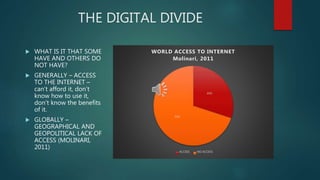
 WHAT IS IT THAT SOME
HAVE AND OTHERS DO
NOT HAVE?
 GENERALLY – ACCESS
TO THE INTERNET –
can’t afford it, don’t
know how to use it,
don’t know the benefits
of it.
 GLOBALLY –
GEOGRAPHICAL AND
GEOPOLITICAL LACK OF
ACCESS (MOLINARI,
2011)
30%
70%
WORLD ACCESS TO INTERNET
Molinari, 2011
ACCESS NO ACCESS
AUSTRALIAN SCHOOL STUDENTS
 FOR SCHOOL STUDENTS: WHAT PARENTS
CAN AFFORD AND WHAT SOCIETY EXPECTS
(HOWELL, 2011, P.55)
BUT
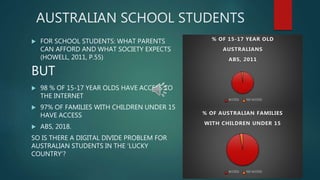
 98 % OF 15-17 YEAR OLDS HAVE ACCESS TO
THE INTERNET
 97% OF FAMILIES WITH CHILDREN UNDER 15
HAVE ACCESS
 ABS, 2018.
SO IS THERE A DIGITAL DIVIDE PROBLEM FOR
AUSTRALIAN STUDENTS IN THE ‘LUCKY
COUNTRY’?
% OF 15-17 YEAR OLD
AUSTRALIANS
ABS, 2011
ACCESS NO ACCESS
% OF AUSTRALIAN FAMILIES
WITH CHILDREN UNDER 15
ACCESS NO ACCESS
‘RECONCEPTUALISING’ THE DIGITAL
DIVIDE
 WARSHAUER, 2002, USED VIGNETTES
IN IRELAND TO DEMONSTATE A NEED
TO SEE THE DIVIDE IN TERMS OF
SOCIAL INCLUSION NOT ACCESS
ALONE.
 NEED TO LOOK AT WHAT IS
ACCESSED, WHY IT IS ACCESSED AND
HOW BENEFITS OF INTERNET ARE
SHARED (WEI & HINDMAN, 2011).
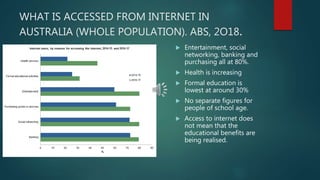
WHAT IS ACCESSED FROM INTERNET IN
AUSTRALIA (WHOLE POPULATION). ABS, 2O18.
 Entertainment, social
networking, banking and
purchasing all at 80%.
 Health is increasing
 Formal education is
lowest at around 30%
 No separate figures for
people of school age.
 Access to internet does
not mean that the
educational benefits are
being realised.
Digital divide as educational, social
and political participation.
 Just providing access, laptops for example, is
never enough. (Pēna-López, 2010).
 Warshauer, found laptops made a difference in
literacy expected for the 21st Century but no
difference in the divide between rich and poor
or in better achievements in reading /writing
test scores. (2008, p. 65).
 Wei & Hindman consider that the internet
reinforces inequalities of power and
knowledge even more than traditional media
and that the digital divide ‘does matter’. (2011,
p.230).
The educational divide.
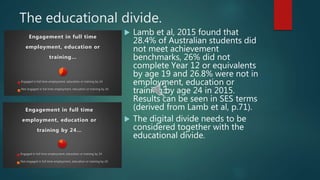
 Lamb et al, 2015 found that
28.4% of Australian students did
not meet achievement
benchmarks, 26% did not
complete Year 12 or equivalents
by age 19 and 26.8% were not in
employment, education or
training by age 24 in 2015.
Results can be seen in SES terms
(derived from Lamb et al, p.71).
 The digital divide needs to be
considered together with the
educational divide.
Engagement in full time
employment, education or
training…
Engaged in full time employment, education or training by 24
Not engaged in full time employment, education or training by 24.
Engagement in full time
employment, education or
training by 24…
Engaged in full time employment, education or training by 24
Not engaged in full time employment, education or training by 24.
Educational challenge to bridge the
gaps.
 Need to see the possibilities of digital teaching in
an age of ‘digitalised, marketised’ children. There is
increased potential for empowerment but more
vulnerability as well. (Craft, 2012).
 Teachers need to lead by becoming masters of use
of ICT not merely doing enough to catch up with a
digital generation.
 Needs more focus in teacher training and
professional developments.
 There are huge challenges for work-loads and
resources to reach digital expertise expected by
society in the 21st Century.

The digital divide

  • 1.
    THE DIGITAL DIVIDE WHAT IS IT THAT SOME HAVE AND OTHERS DO NOT HAVE?  GENERALLY – ACCESS TO THE INTERNET – can’t afford it, don’t know how to use it, don’t know the benefits of it.  GLOBALLY – GEOGRAPHICAL AND GEOPOLITICAL LACK OF ACCESS (MOLINARI, 2011) 30% 70% WORLD ACCESS TO INTERNET Molinari, 2011 ACCESS NO ACCESS
  • 2.
    AUSTRALIAN SCHOOL STUDENTS FOR SCHOOL STUDENTS: WHAT PARENTS CAN AFFORD AND WHAT SOCIETY EXPECTS (HOWELL, 2011, P.55) BUT  98 % OF 15-17 YEAR OLDS HAVE ACCESS TO THE INTERNET  97% OF FAMILIES WITH CHILDREN UNDER 15 HAVE ACCESS  ABS, 2018. SO IS THERE A DIGITAL DIVIDE PROBLEM FOR AUSTRALIAN STUDENTS IN THE ‘LUCKY COUNTRY’? % OF 15-17 YEAR OLD AUSTRALIANS ABS, 2011 ACCESS NO ACCESS % OF AUSTRALIAN FAMILIES WITH CHILDREN UNDER 15 ACCESS NO ACCESS
  • 3.
    ‘RECONCEPTUALISING’ THE DIGITAL DIVIDE WARSHAUER, 2002, USED VIGNETTES IN IRELAND TO DEMONSTATE A NEED TO SEE THE DIVIDE IN TERMS OF SOCIAL INCLUSION NOT ACCESS ALONE.  NEED TO LOOK AT WHAT IS ACCESSED, WHY IT IS ACCESSED AND HOW BENEFITS OF INTERNET ARE SHARED (WEI & HINDMAN, 2011).
  • 4.
    WHAT IS ACCESSEDFROM INTERNET IN AUSTRALIA (WHOLE POPULATION). ABS, 2O18.  Entertainment, social networking, banking and purchasing all at 80%.  Health is increasing  Formal education is lowest at around 30%  No separate figures for people of school age.  Access to internet does not mean that the educational benefits are being realised.
  • 5.
    Digital divide aseducational, social and political participation.  Just providing access, laptops for example, is never enough. (Pēna-López, 2010).  Warshauer, found laptops made a difference in literacy expected for the 21st Century but no difference in the divide between rich and poor or in better achievements in reading /writing test scores. (2008, p. 65).  Wei & Hindman consider that the internet reinforces inequalities of power and knowledge even more than traditional media and that the digital divide ‘does matter’. (2011, p.230).
  • 6.
    The educational divide. Lamb et al, 2015 found that 28.4% of Australian students did not meet achievement benchmarks, 26% did not complete Year 12 or equivalents by age 19 and 26.8% were not in employment, education or training by age 24 in 2015. Results can be seen in SES terms (derived from Lamb et al, p.71).  The digital divide needs to be considered together with the educational divide. Engagement in full time employment, education or training… Engaged in full time employment, education or training by 24 Not engaged in full time employment, education or training by 24. Engagement in full time employment, education or training by 24… Engaged in full time employment, education or training by 24 Not engaged in full time employment, education or training by 24.
  • 7.
    Educational challenge tobridge the gaps.  Need to see the possibilities of digital teaching in an age of ‘digitalised, marketised’ children. There is increased potential for empowerment but more vulnerability as well. (Craft, 2012).  Teachers need to lead by becoming masters of use of ICT not merely doing enough to catch up with a digital generation.  Needs more focus in teacher training and professional developments.  There are huge challenges for work-loads and resources to reach digital expertise expected by society in the 21st Century.