(1)The development of self
IntroductionThe origins of self are located in early childhood experience
The concept of selfHumans characteristically act with self-awareness, exercise self-control, exhibit conscience, guilt and make decisions based on some imagery of what they are, what they have been, and what they hope to be.The wider social community enters the person through its language, which in turn furnishes the foundations for the self.
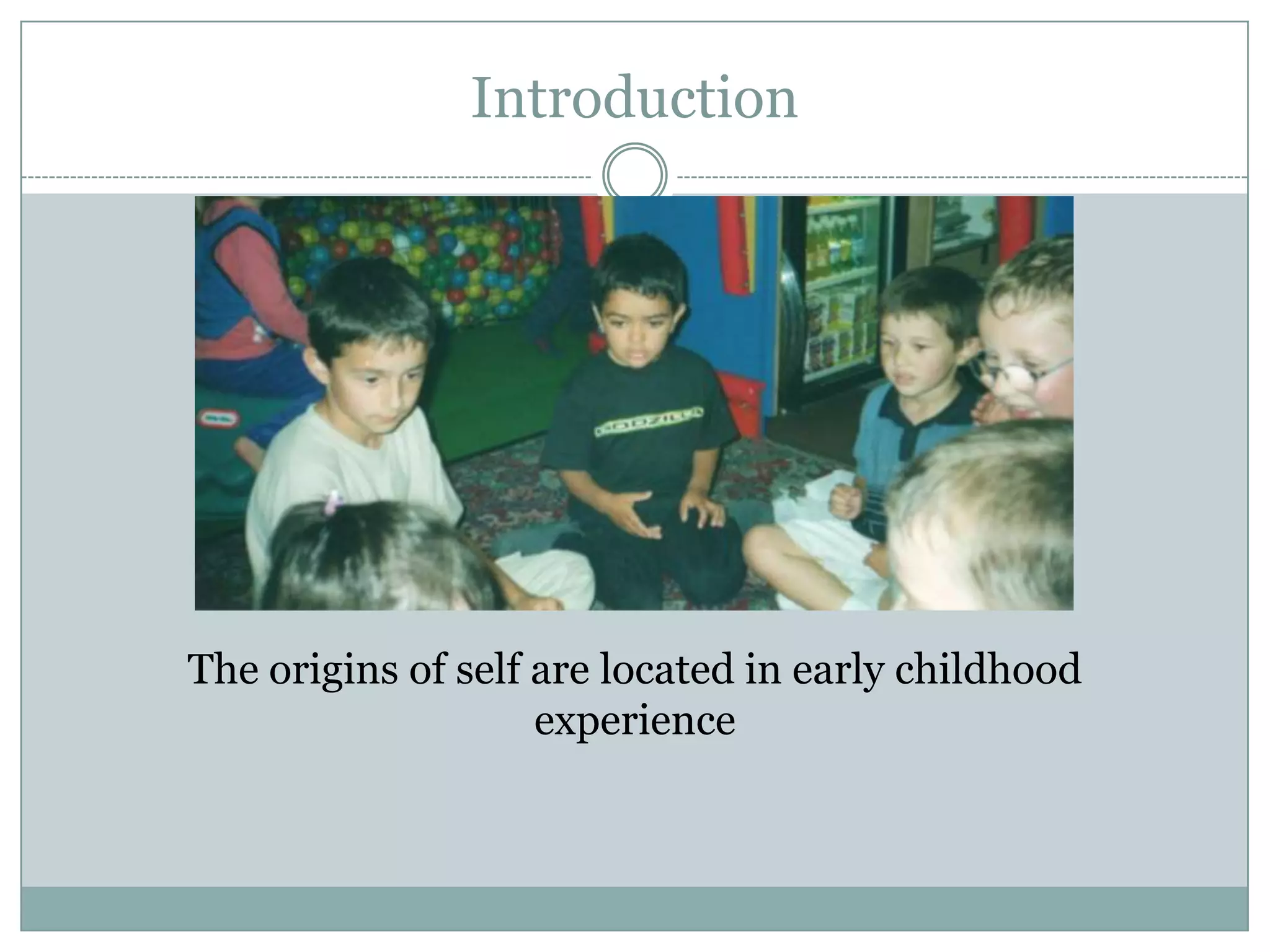
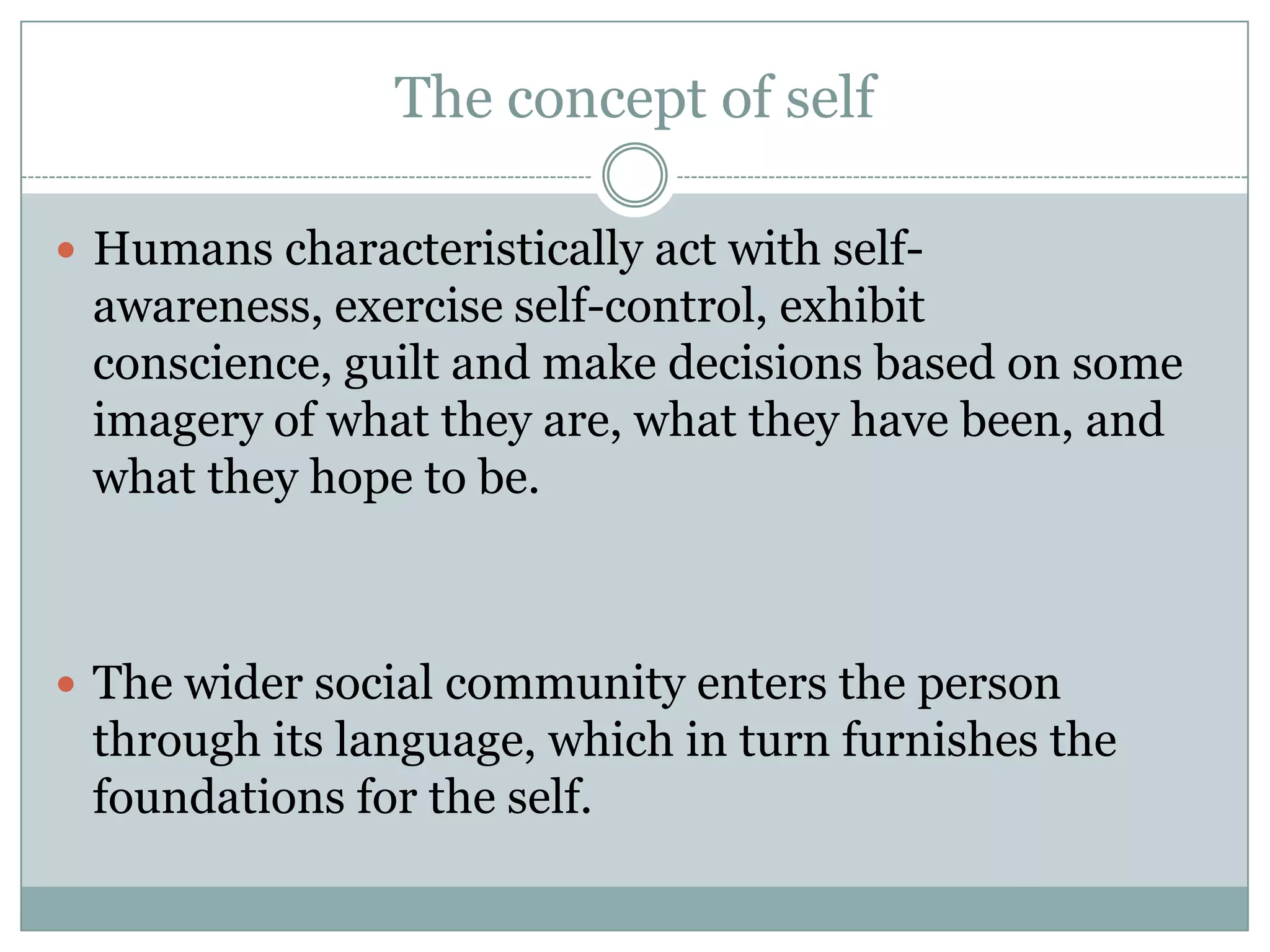
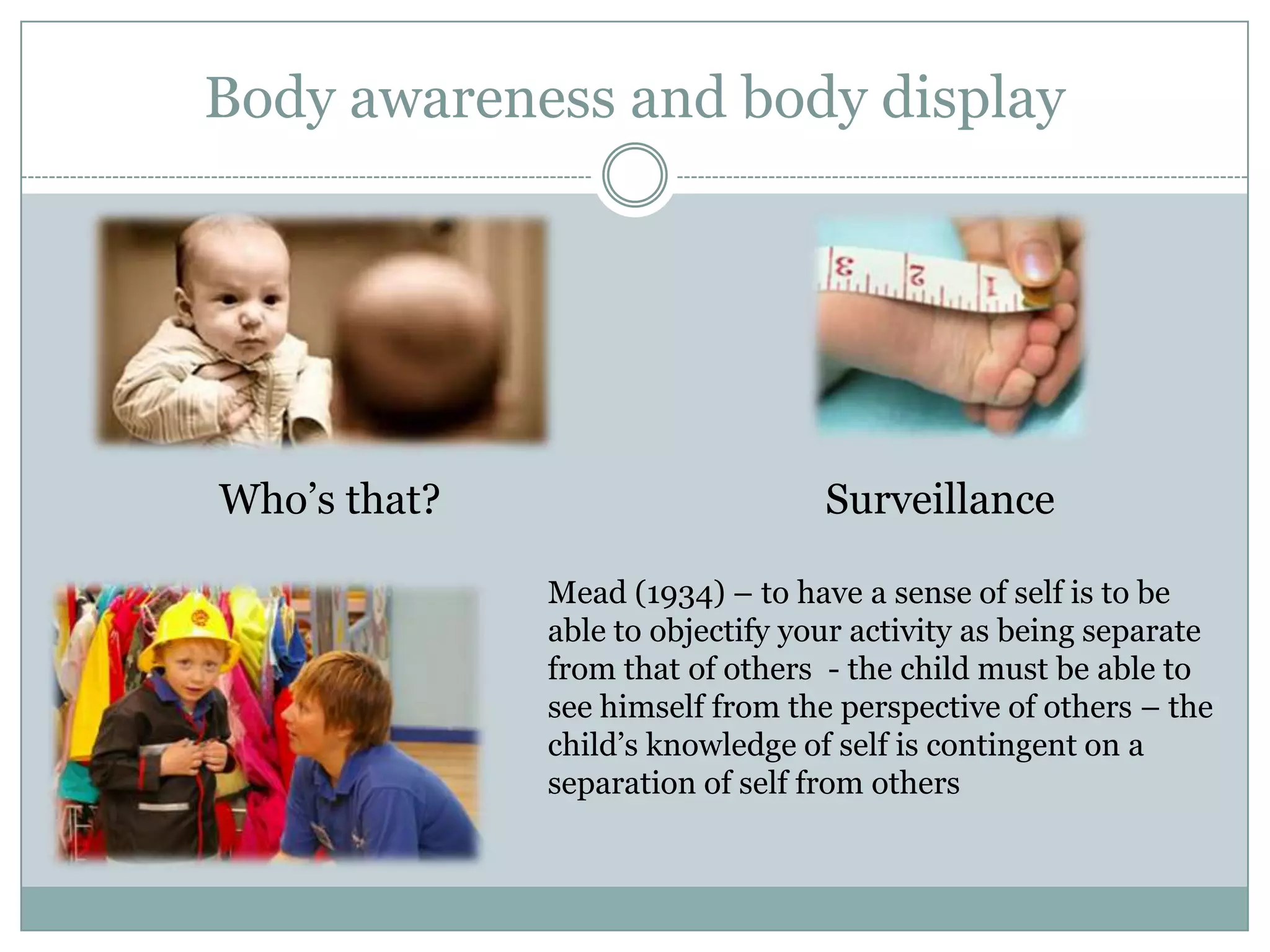
Body awareness and body displayWho’s that?SurveillanceMead (1934) – to have a sense of self is to be able to objectify your activity as being separate from that of others  - the child must be able to see himself from the perspective of others – the child’s knowledge of self is contingent on a separation of self from others
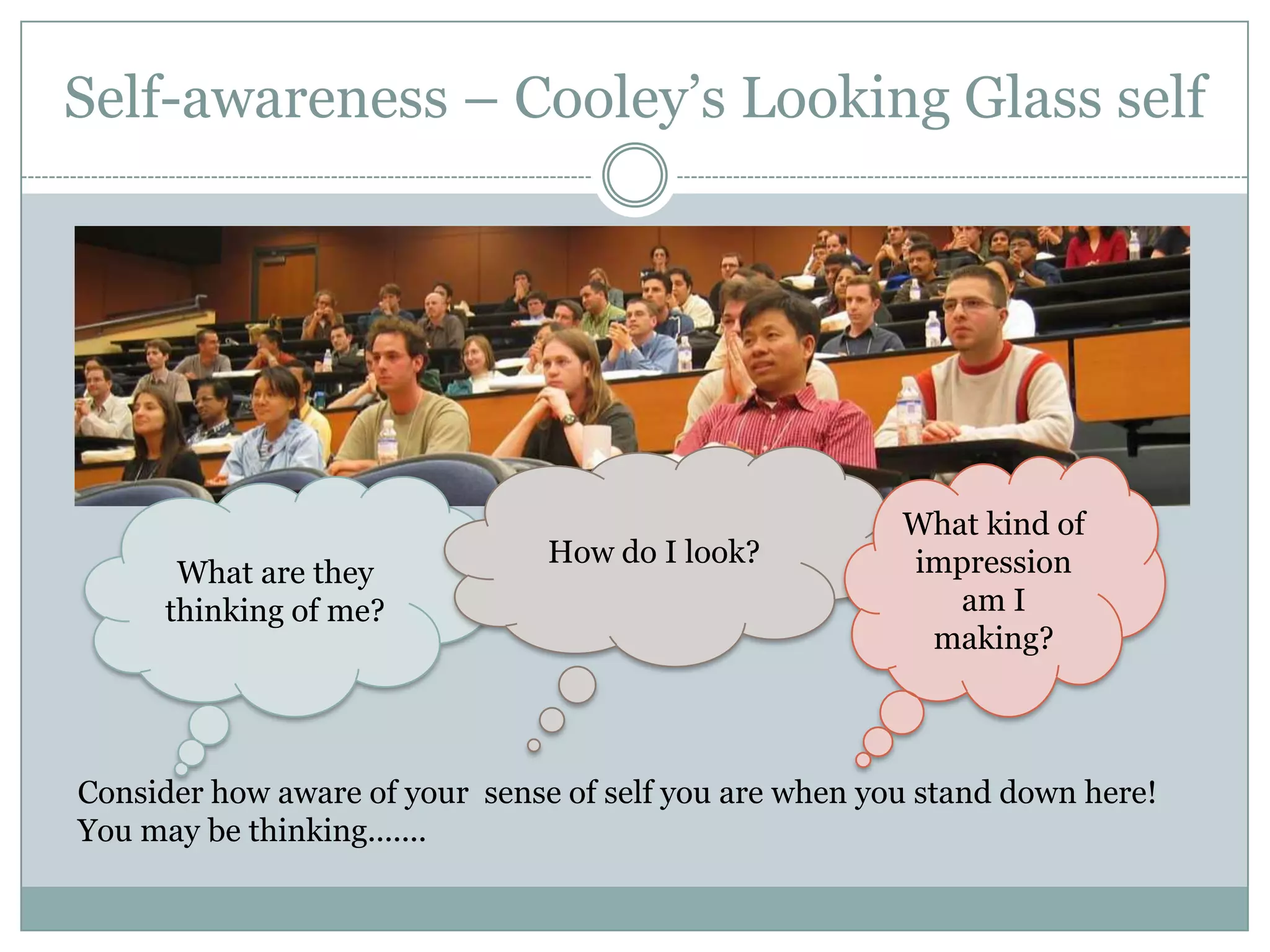
Self-awareness – Cooley’s Looking Glass selfHow do I look?What kind of impression am I making?What are they thinking of me?Consider how aware of your  sense of self you are when you stand down here!You may be thinking.......
Development of identityCooley’s Looking Glass SelfIdentities are created through social interaction and social relationshipsI know who I am by understanding how others see me
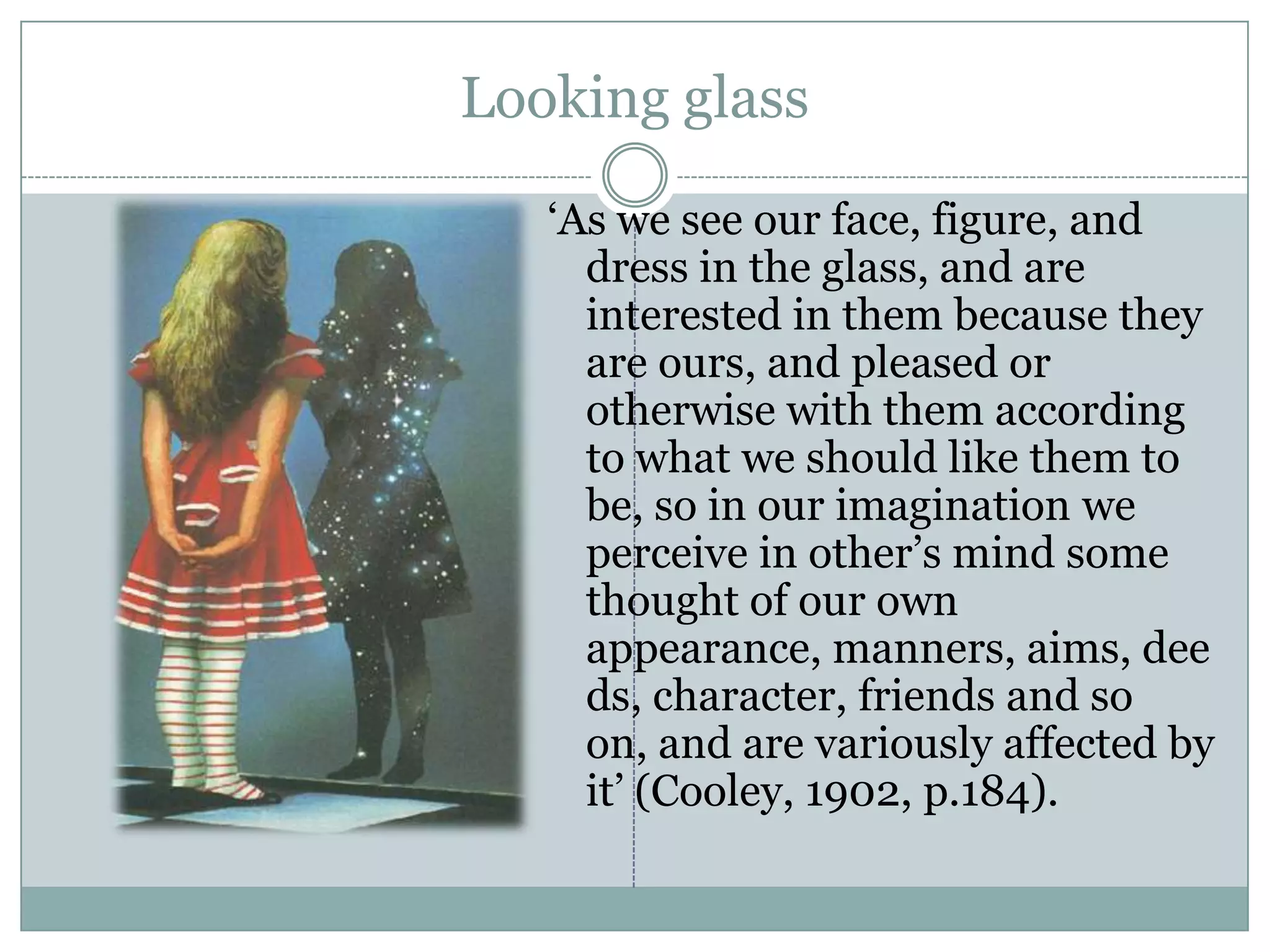
Looking glass‘As we see our face, figure, and dress in the glass, and are interested in them because they are ours, and pleased or otherwise with them according to what we should like them to be, so in our imagination we perceive in other’s mind some thought of our own appearance, manners, aims, deeds, character, friends and so on, and are variously affected by it’ (Cooley, 1902, p.184).

The development of self concept

  • 1.
  • 2.
    IntroductionThe origins ofself are located in early childhood experience
  • 3.
    The concept ofselfHumans characteristically act with self-awareness, exercise self-control, exhibit conscience, guilt and make decisions based on some imagery of what they are, what they have been, and what they hope to be.The wider social community enters the person through its language, which in turn furnishes the foundations for the self.
  • 4.
    Body awareness andbody displayWho’s that?SurveillanceMead (1934) – to have a sense of self is to be able to objectify your activity as being separate from that of others - the child must be able to see himself from the perspective of others – the child’s knowledge of self is contingent on a separation of self from others
  • 5.
    Self-awareness – Cooley’sLooking Glass selfHow do I look?What kind of impression am I making?What are they thinking of me?Consider how aware of your sense of self you are when you stand down here!You may be thinking.......
  • 6.
    Development of identityCooley’sLooking Glass SelfIdentities are created through social interaction and social relationshipsI know who I am by understanding how others see me
  • 7.
    Looking glass‘As wesee our face, figure, and dress in the glass, and are interested in them because they are ours, and pleased or otherwise with them according to what we should like them to be, so in our imagination we perceive in other’s mind some thought of our own appearance, manners, aims, deeds, character, friends and so on, and are variously affected by it’ (Cooley, 1902, p.184).