A discipline thatexpands our awareness and
analysis of the human social relationships,
cultures, and institutions that profoundly shape
both our lives and human history.
SOciology
3.
• The selfis not present at birth
• It develops only with social
experience wherein language,
gestures, and objects are used to
communicate meaningfully
• Assumes that human behavior is
influenced by group life
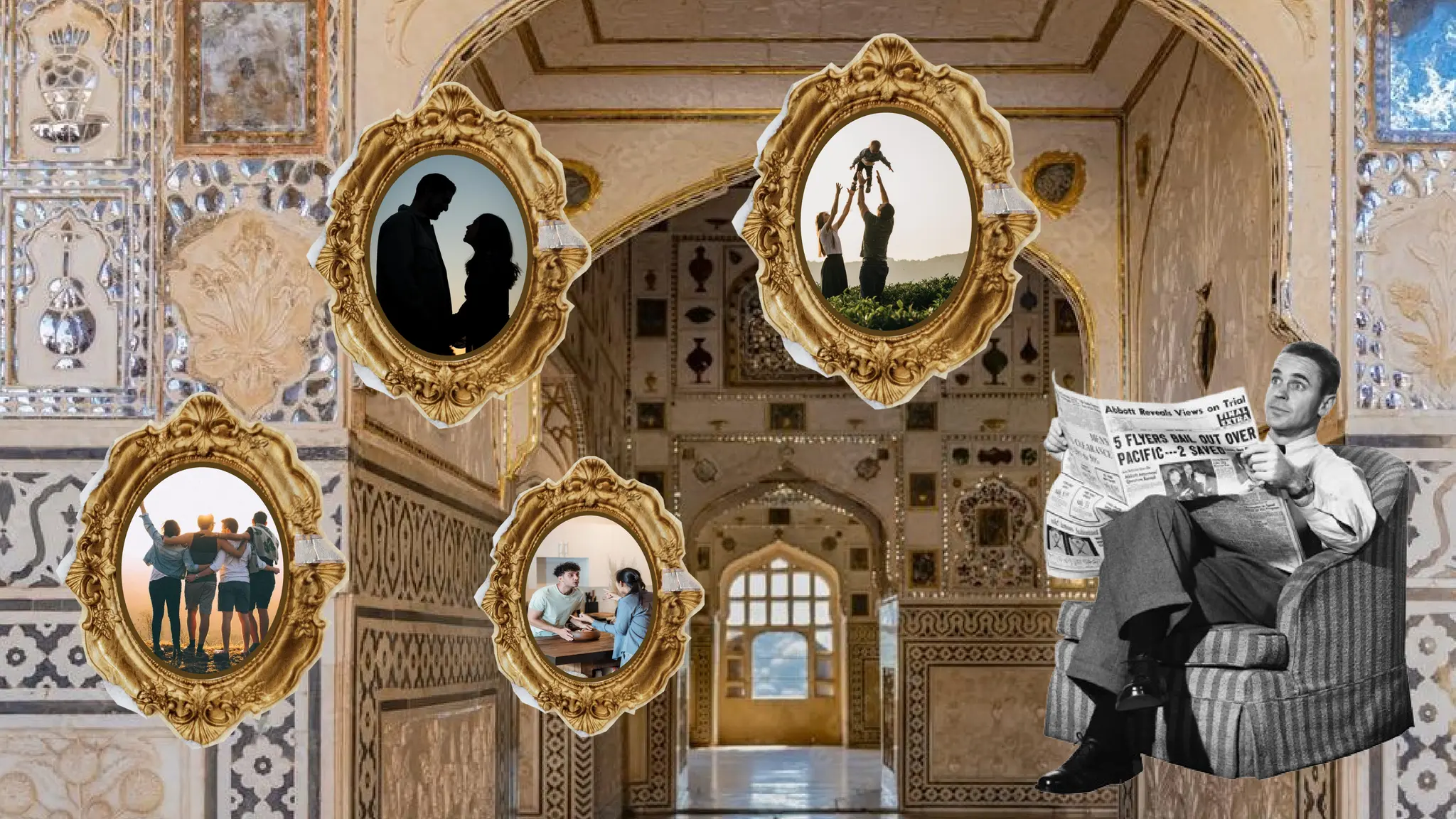
• view of the self is formed thru
interactions with other people,
groups, and social institutions
The Self as a
product of Social
Interaction
• describes theprocess wherein
individuals base their sense of self on
how they believe others view them
• since these perceptions are subjective,
there might be some wrong
interpretations of how others view
him/her
• would be critical if s/he thinks others
judge him/her unfavorably because
s/he could develop a negative self-
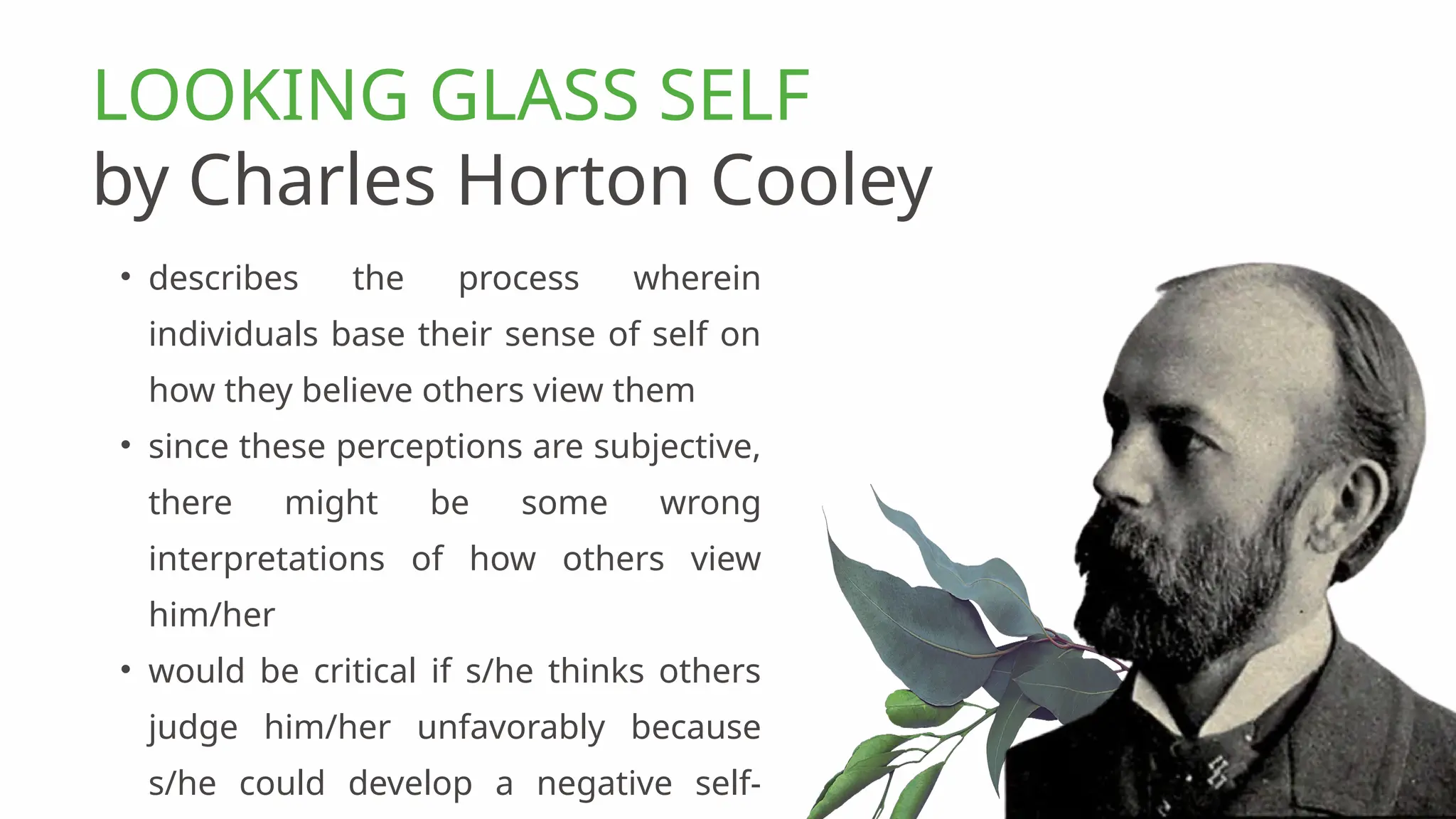
LOOKING GLASS SELF
by Charles Horton Cooley
6.
• We imaginehow we must
appear to others
• We imagine the judgment of
that appearance
• We develop our self through
the judgment of others
Three Main Components
8.
• based onthe perspective that the self emerges
from social interactions (observing and
interacting with others; responding to others’
opinions about oneself, and internalizing
external opinions, and internal feelings about
the self)
• Me - represents learned behaviors, attitudes,
expectations of others and of society
• I - considered as the present and future phase
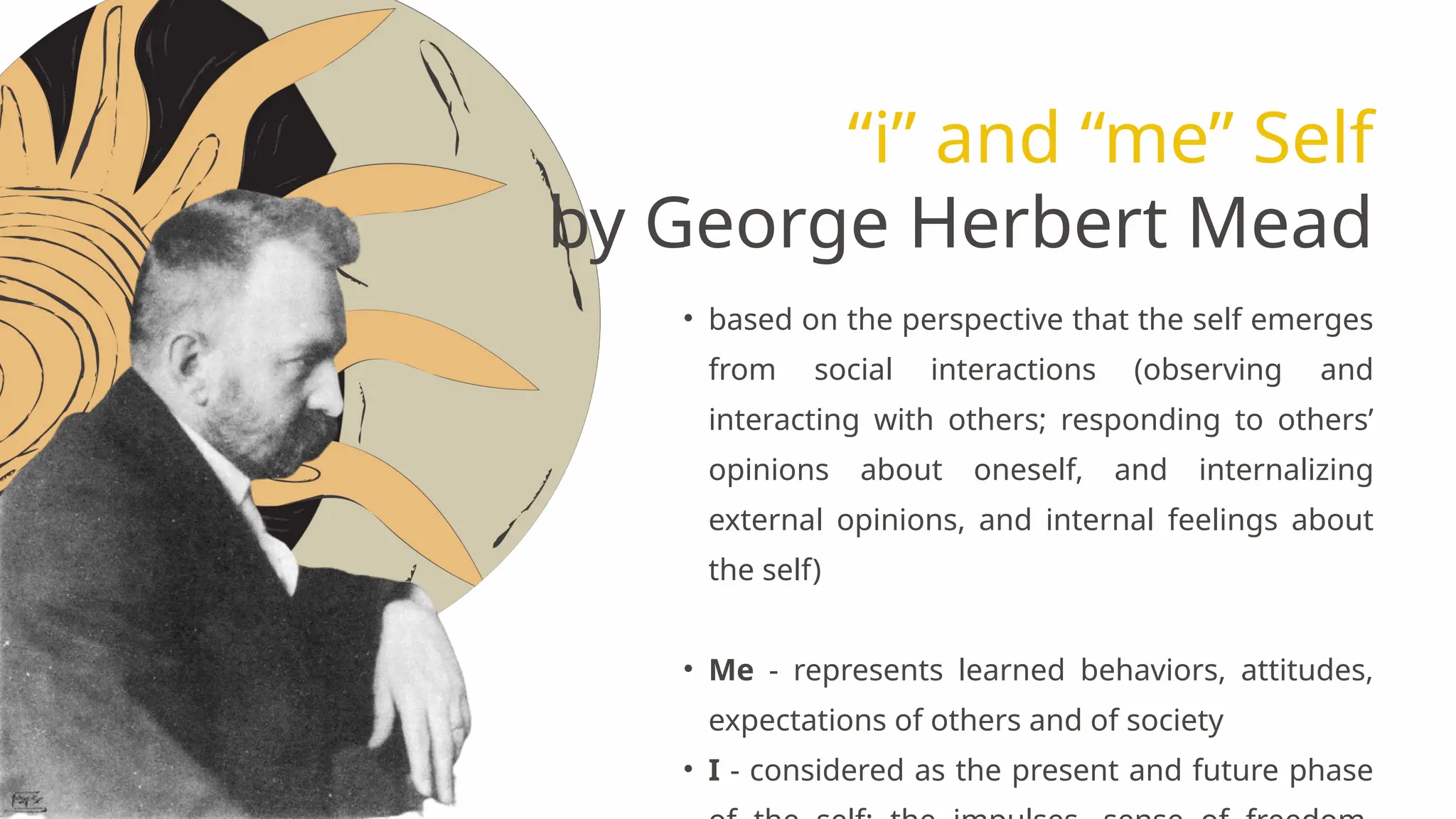
“i” and “me” Self
by George Herbert Mead
9.
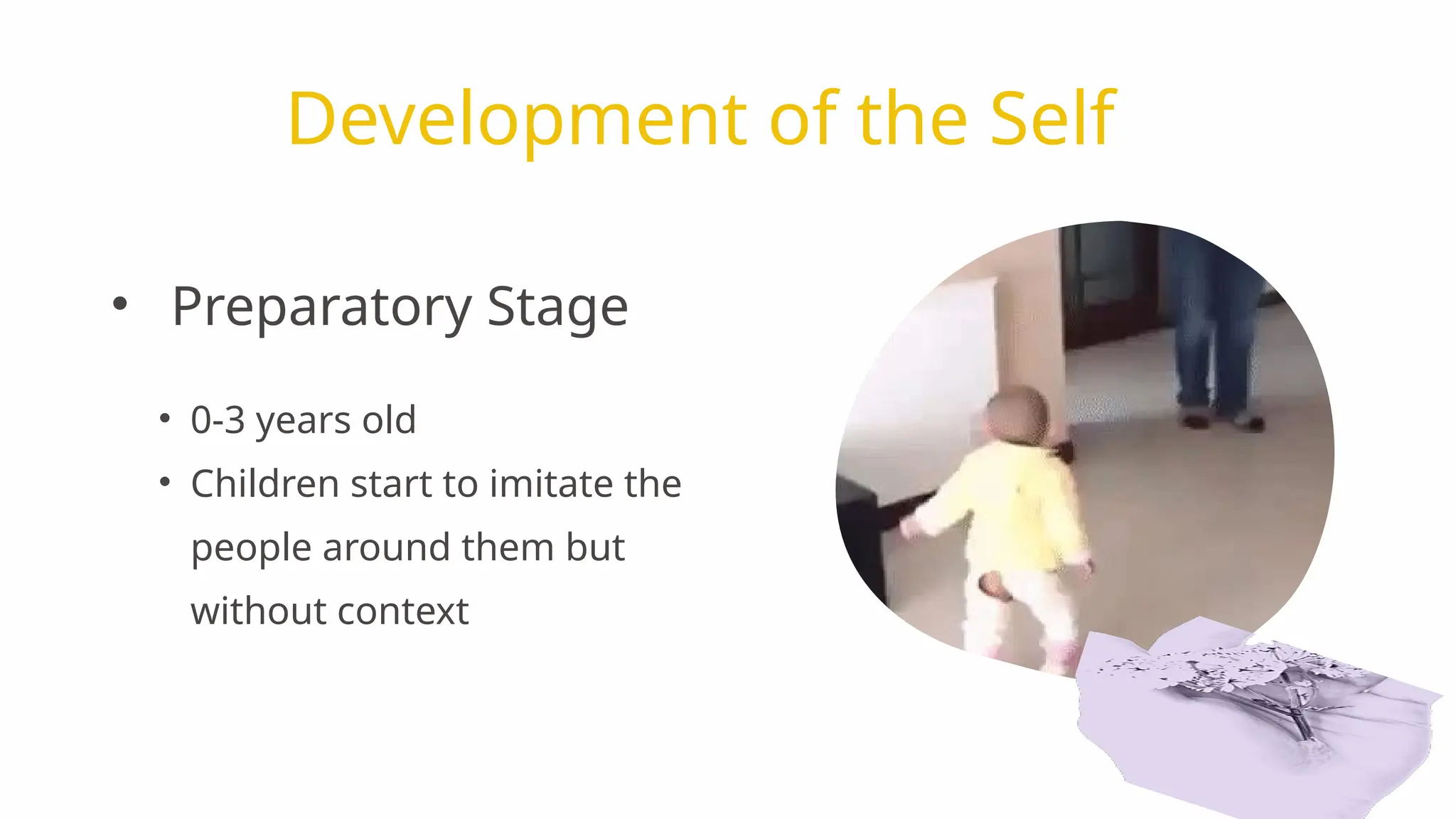
• 0-3 yearsold
• Children start to imitate the
people around them but
without context
Development of the Self
• Preparatory Stage
10.
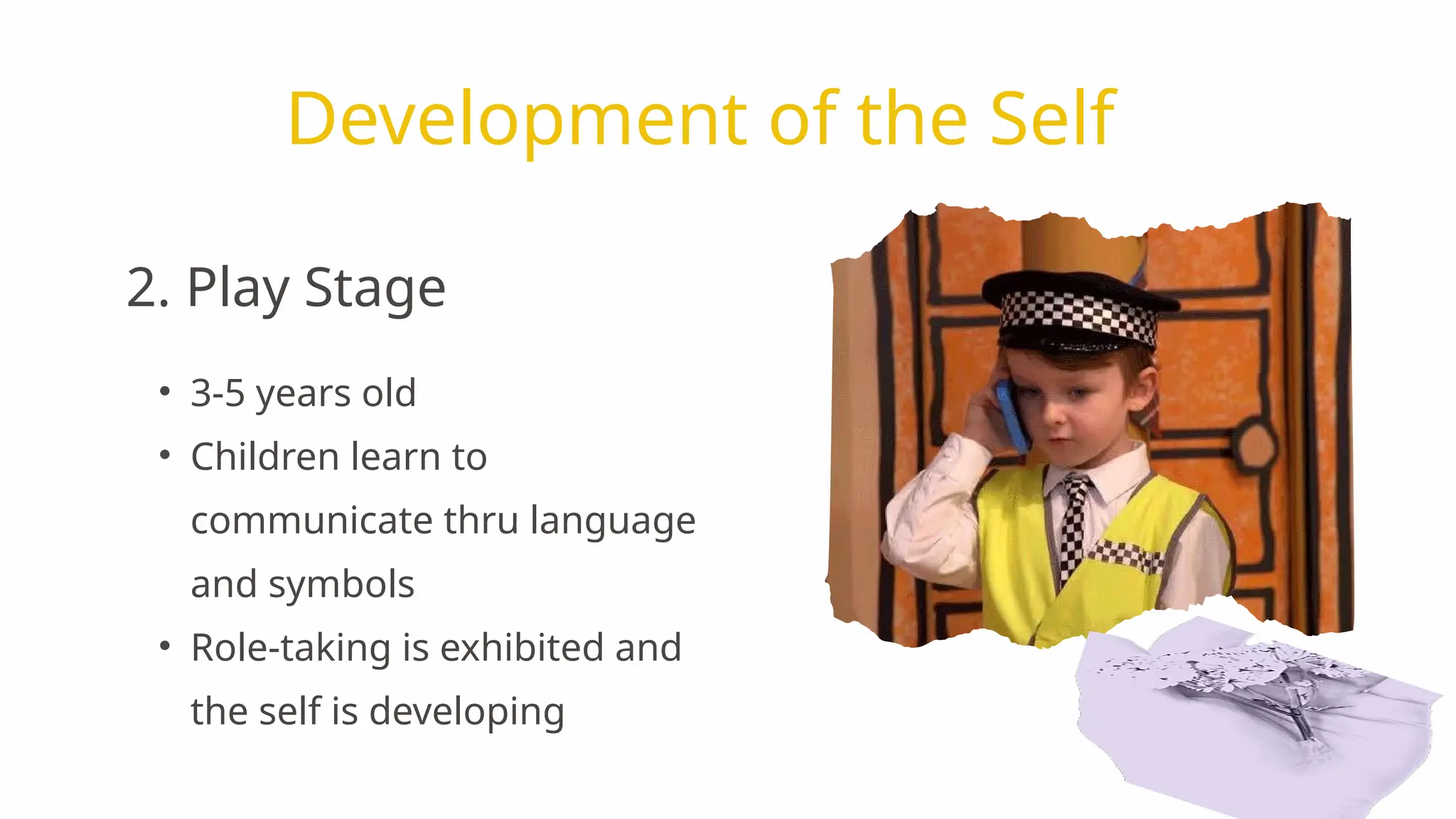
• 3-5 yearsold
• Children learn to
communicate thru language
and symbols
• Role-taking is exhibited and
the self is developing
Development of the Self
2. Play Stage
11.
• begins inthe early school
years; about 8-9 years old
• Children understand not only
their own social position but
also of others around them
• During this stage the self is
now present
Development of the Self
3. Game Stage
12.
• the attainmentand stability of self-identity is
freely chosen
• it is no longer restricted by customs and
traditions
• self-identity continuously change due to the
demands of multitude of social contexts, new
information technologies, and globalization
The Self as a product of Postmodern
Society by Gerry Lanuza
13.
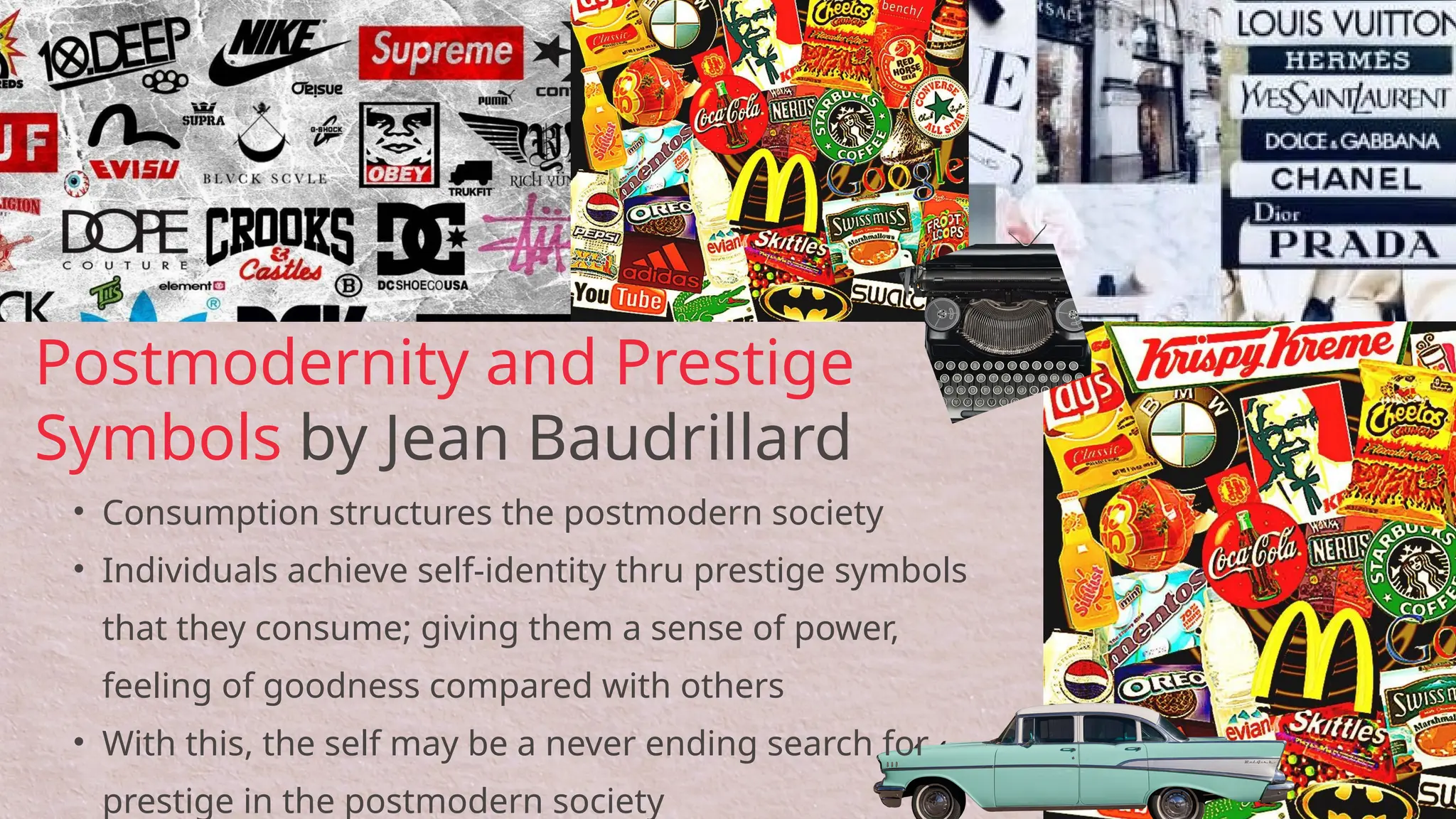
• Consumption structuresthe postmodern society
• Individuals achieve self-identity thru prestige symbols
that they consume; giving them a sense of power,
feeling of goodness compared with others
• With this, the self may be a never ending search for
prestige in the postmodern society
Postmodernity and Prestige
Symbols by Jean Baudrillard