+ The Common Core: Getting There Globally
For the Middle School Classroom
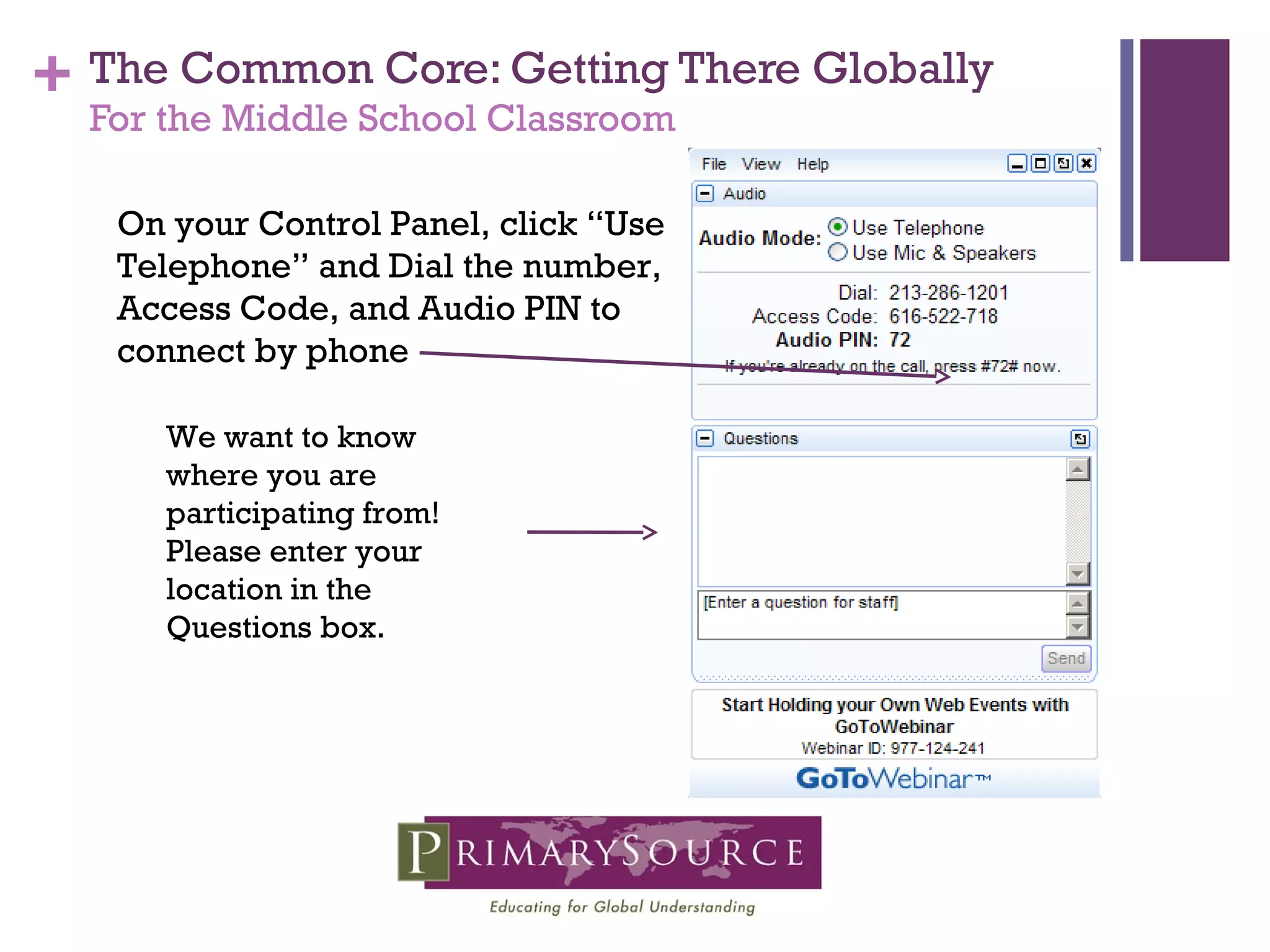
We want to know
where you are
participating from!
Please enter your
location in the
Questions box.
On your Control Panel, click “Use
Telephone” and Dial the number,
Access Code, and Audio PIN to
connect by phone
+
The Common Core:
Getting There Globally
For the Middle School Classroom
Elizabeth Howald
Program Director, Primary Source
Start Recording
+ The Common Core: Getting
There Globally
For the Middle School Classroom
Elizabeth Howald
Program Director
+
Primary Source
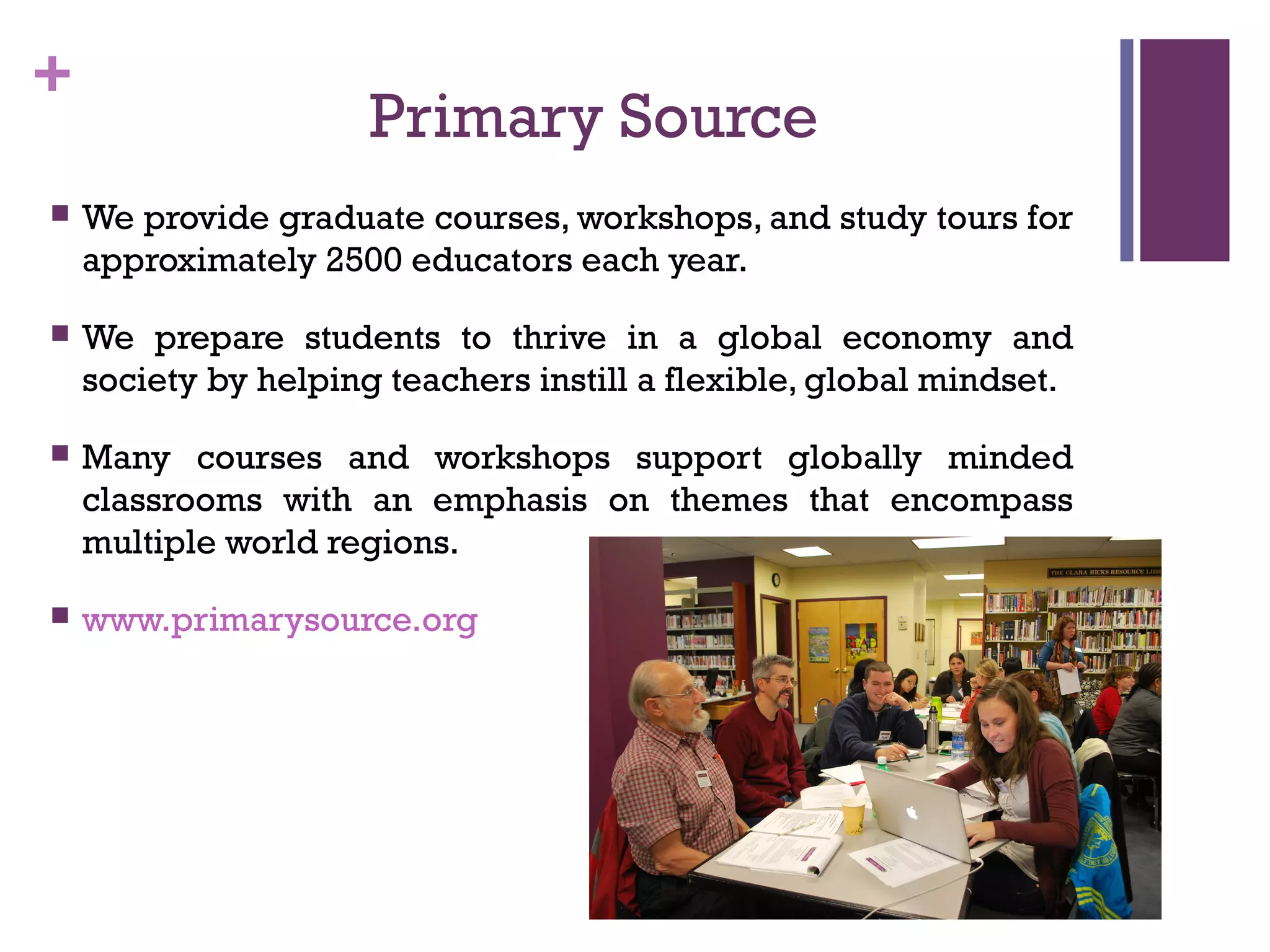
 We provide graduate courses, workshops, and study tours for
approximately 2500 educators each year.
 We prepare students to thrive in a global economy and
society by helping teachers instill a flexible, global mindset.
 Many courses and workshops support globally minded
classrooms with an emphasis on themes that encompass
multiple world regions.
 www.primarysource.org
+
Session Goals
Overview of Common Core State
Standards and Global Content
Strategies for Integrating Global Material
within the Common Core
Resources
Questions
+
Common Core Overview
Mission Statement
“The Common Core State Standards provide a consistent, clear
understanding of what students are expected to learn, so
teachers and parents know what they need to do to help them.
The standards are designed to be robust and relevant to the real
world, reflecting the knowledge and skills that our young people
need for success in college and careers.With American students
fully prepared for the future, our communities will be best
positioned to compete successfully in the global economy.”
Common Core State Standards Initiative, June 2009
http://www.corestandards.org/
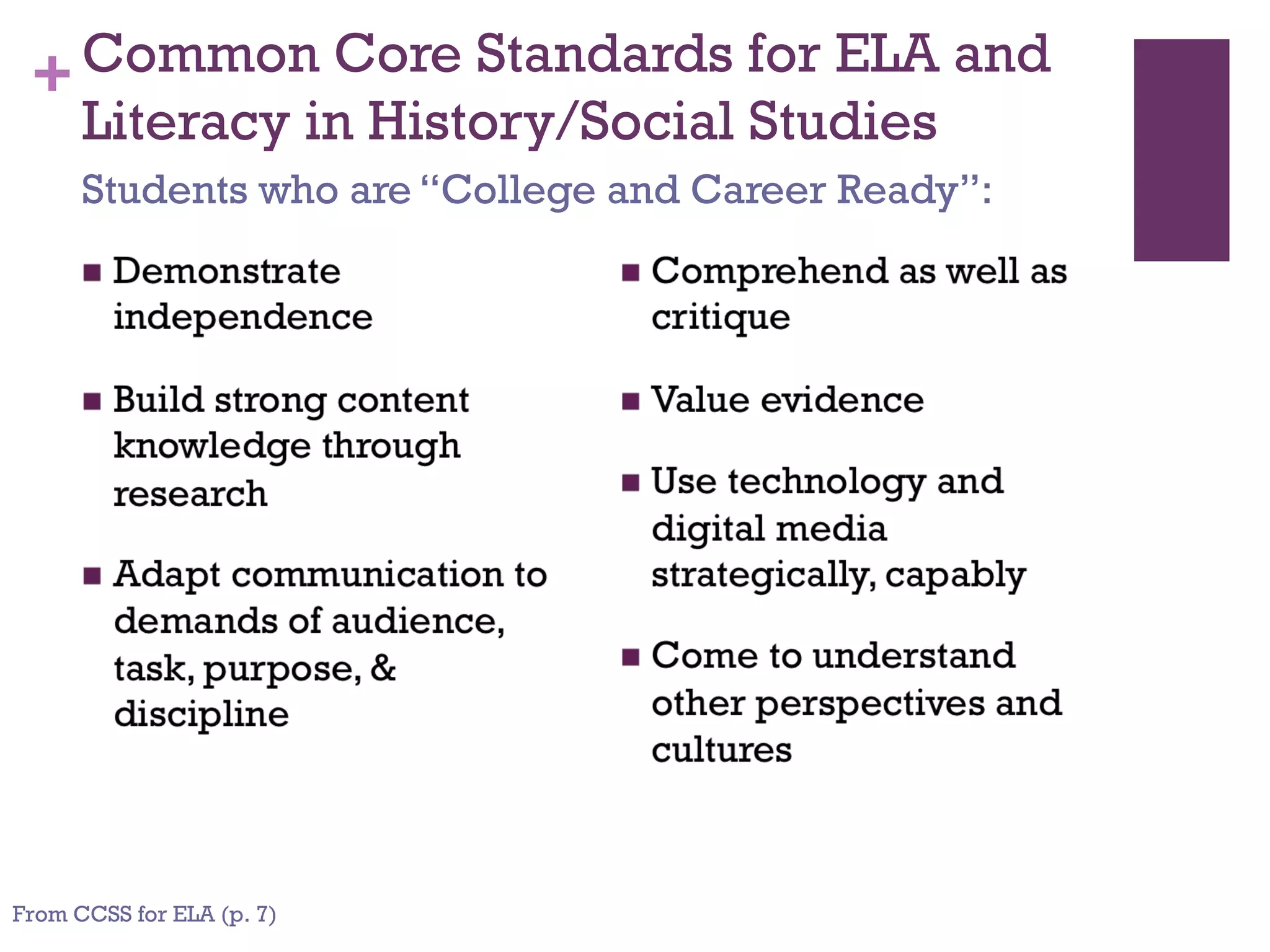
+Common Core Standards for ELA and
Literacy in History/Social Studies
Students who are “College and Career Ready”:
From CCSS for ELA (p. 7)
+New or Notable about the
Common Core for ELA/Literacy
 Continues & enhances emphasis on critical thinking and
higher-order thinking skills
 Continues an integrated literacy model (writing, speaking,
listening, & reading)
 Highlights interpretive skills across range of texts, digital
information, & media
 Emphasizes reading of “complex,” challenging texts
 Stresses student fluency with informational texts
 Interdisciplinary: posits shared responsibility for
students’ literacy development
+
Anchor Standards for Reading
 Key Ideas and Details
1. Read closely to determine what the text says explicitly and to
make logical inferences from it; cite specific textual evidence
when writing or speaking to support conclusions drawn from
the text.
2. Determine central ideas or themes of a text and analyze their
development; summarize the key supporting details and
ideas.
3. Analyze how and why individuals, events, or ideas develop
and interact over the course of a text.
4. Range of Reading and Level of Text Complexity
+
Anchor Standards for Reading
 Craft and Structure
1. Interpret words and phrases as they are used in a text,
including determining technical, connotative, and figurative
meanings, and analyze how specific word choices shape
meaning.
2. Analyze the structure of texts, including how specific
sentences, paragraphs, and larger portions of the text (e.g., a
section, chapter, scene, or stanza) relate to each other and
the whole.
3. Assess how point of view or purpose shapes the content and
style of a text.
+
Anchor Standards for Reading
 Integration of Knowledge and Ideas
1. Integrate and evaluate content presented in diverse
formats and media, including visually and quantitatively,
as well as in words.
2. Delineate and evaluate the argument and specific claims
in a text, including the validity of the reasoning as well as
the relevance and sufficiency of the evidence.
3. Analyze how two or more texts address similar themes in
order to build knowledge or to compare the approaches
the authors take.
+
Anchor Standards for Reading
 Range of Reading and Level of Text Complexity
1. Read and comprehend complex literary and informational
texts independently and proficiently.
+
Anchor Standards for Writing
 Text Types and Purposes
1. Write arguments to support claims in an analysis of
substantive topics or texts using valid reasoning and relevant
and sufficient evidence.
2. Write informative/explanatory texts to examine and convey
complex ideas and information clearly and accurately
through the effective selection, organization, and analysis of
content.
3. Write narratives to develop real or imagined experiences or
events using effective technique, well-chosen details, and
well-structured event sequences.
+
Anchor Standards for Writing
 Production and Distribution of Writing
1. Produce clear and coherent writing in which the
development, organization, and style are appropriate to task,
purpose, and audience.
2. Develop and strengthen writing as needed by planning,
revising, editing, rewriting, or trying a new approach.
3. Use technology, including the Internet, to produce and
publish writing and to interact and collaborate with others.
+
Anchor Standards for Writing
 Research to Build Present Knowledge
1. Conduct short as well as more sustained research projects
based on focused questions, demonstrating understanding of
the subject under investigation.
2. Gather relevant information from multiple print and digital
sources, assess the credibility and accuracy of each source,
and integrate the information while avoiding plagiarism.
3. Draw evidence from literary or informational texts to support
analysis, reflection, and research.
+
Where Global Enters Common Core
Mission Statement
“The Common Core State Standards provide a consistent, clear
understanding of what students are expected to learn, so
teachers and parents know what they need to do to help them.
The standards are designed to be robust and relevant to the real
world, reflecting the knowledge and skills that our young people
need for success in college and careers. With American
students fully prepared for the future, our communities will
be best positioned to compete successfully in the global
economy.”
Common Core State Standards Initiative, June 2009
http://www.corestandards.org/
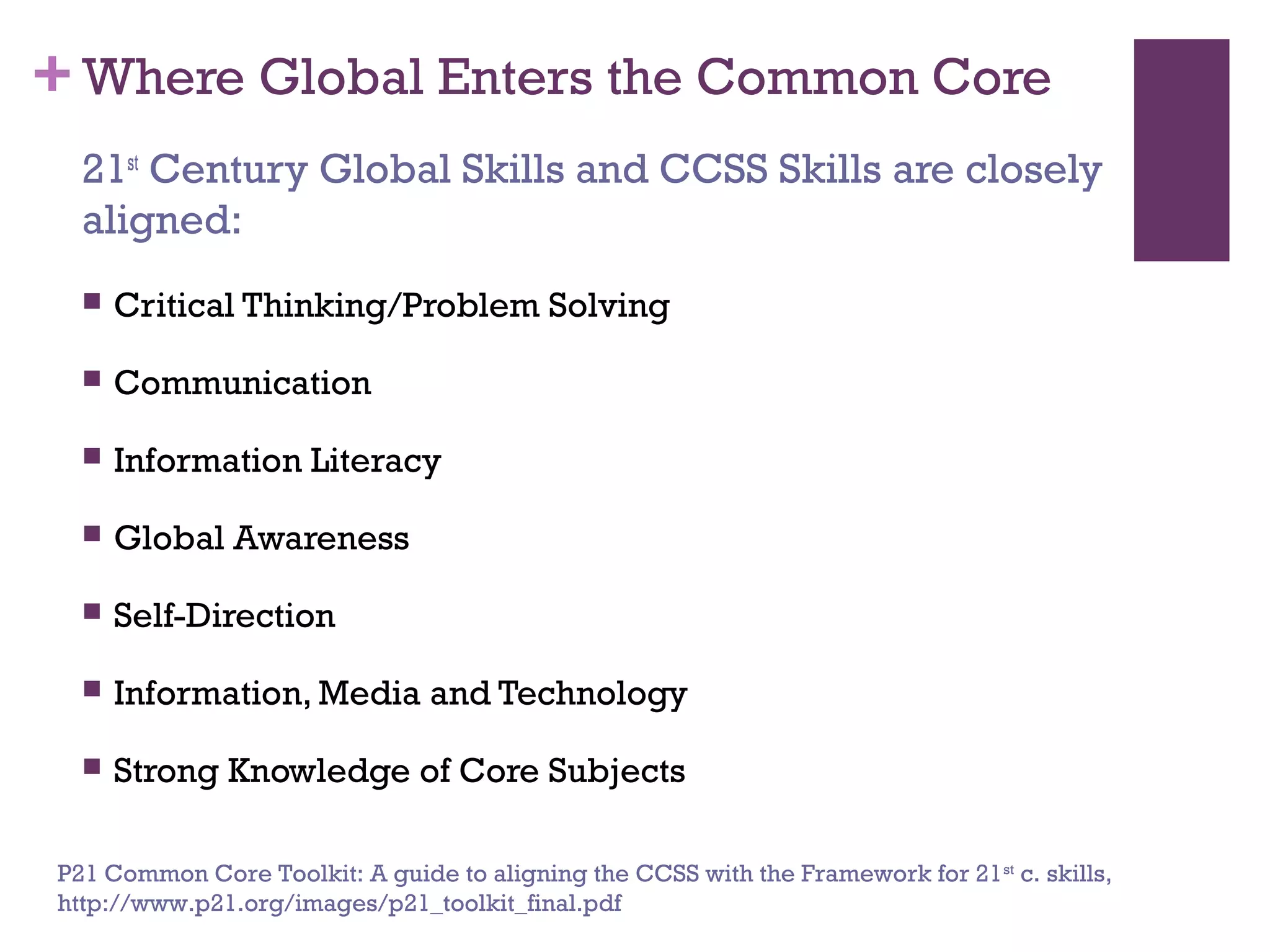
+Where Global Enters the Common Core
 Critical Thinking/Problem Solving
 Communication
 Information Literacy
 Global Awareness
 Self-Direction
 Information, Media and Technology
 Strong Knowledge of Core Subjects
21st
Century Global Skills and CCSS Skills are closely
aligned:
P21 Common Core Toolkit: A guide to aligning the CCSS with the Framework for 21st
c. skills,
http://www.p21.org/images/p21_toolkit_final.pdf
+Why a global approach?
 “To become college and career ready, students must grapple
with works of exceptional craft and thought whose range
extends across genres, cultures, and centuries. Such
works offer profound insights into the human condition and
serve as models for students’ own thinking and writing…
Through wide and deep reading of literature and literary
nonfiction of steadily increasing sophistication, students
gain a reservoir of literary and cultural knowledge,
references, and images; the ability to evaluation intricate
arguments; and the capacity to surmount the challenges
posed by complex texts.”
(CCSS for ELA Anchor Standards for Reading – A Note on
Range and Content of Student Reading)
Global Content is Indicated in the CCSS:
+
What types of informational texts
are you using to teach about the
world?
What types could you use?
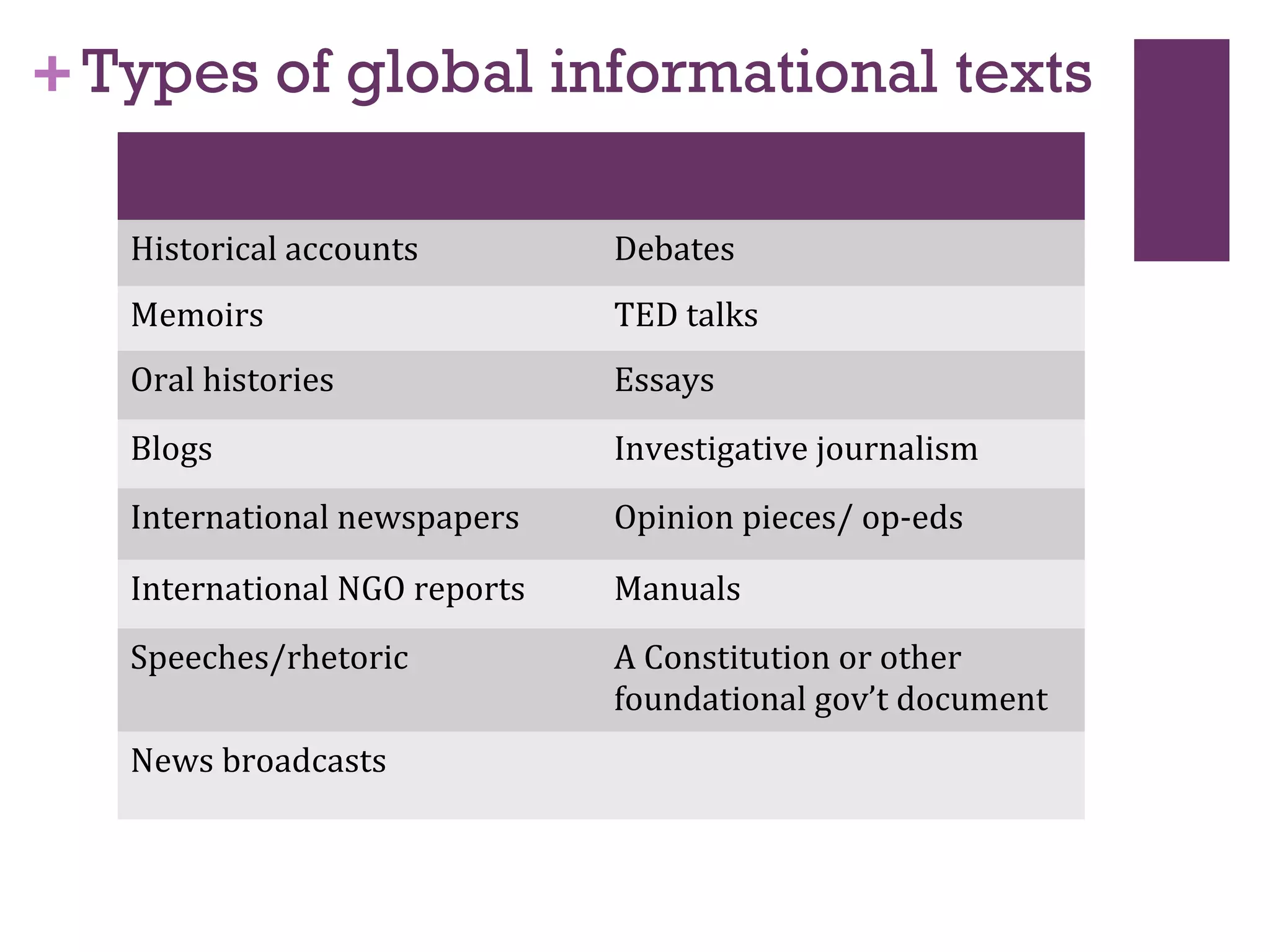
+Types of global informational texts
Historical accounts Debates
Memoirs TED talks
Oral histories Essays
Blogs Investigative journalism
International newspapers Opinion pieces/ op-eds
International NGO reports Manuals
Speeches/rhetoric A Constitution or other
foundational gov’t document
News broadcasts
+
Examples and Instructional
Strategies for a Global Common
Core
+
Identifying Central Ideas
 Standard 2:
 Determine central ideas or information of a primary
or secondary source; provide an accurate summary
of the source distinct from prior knowledge or
assumptions
 Method: “Find-A-Poem”
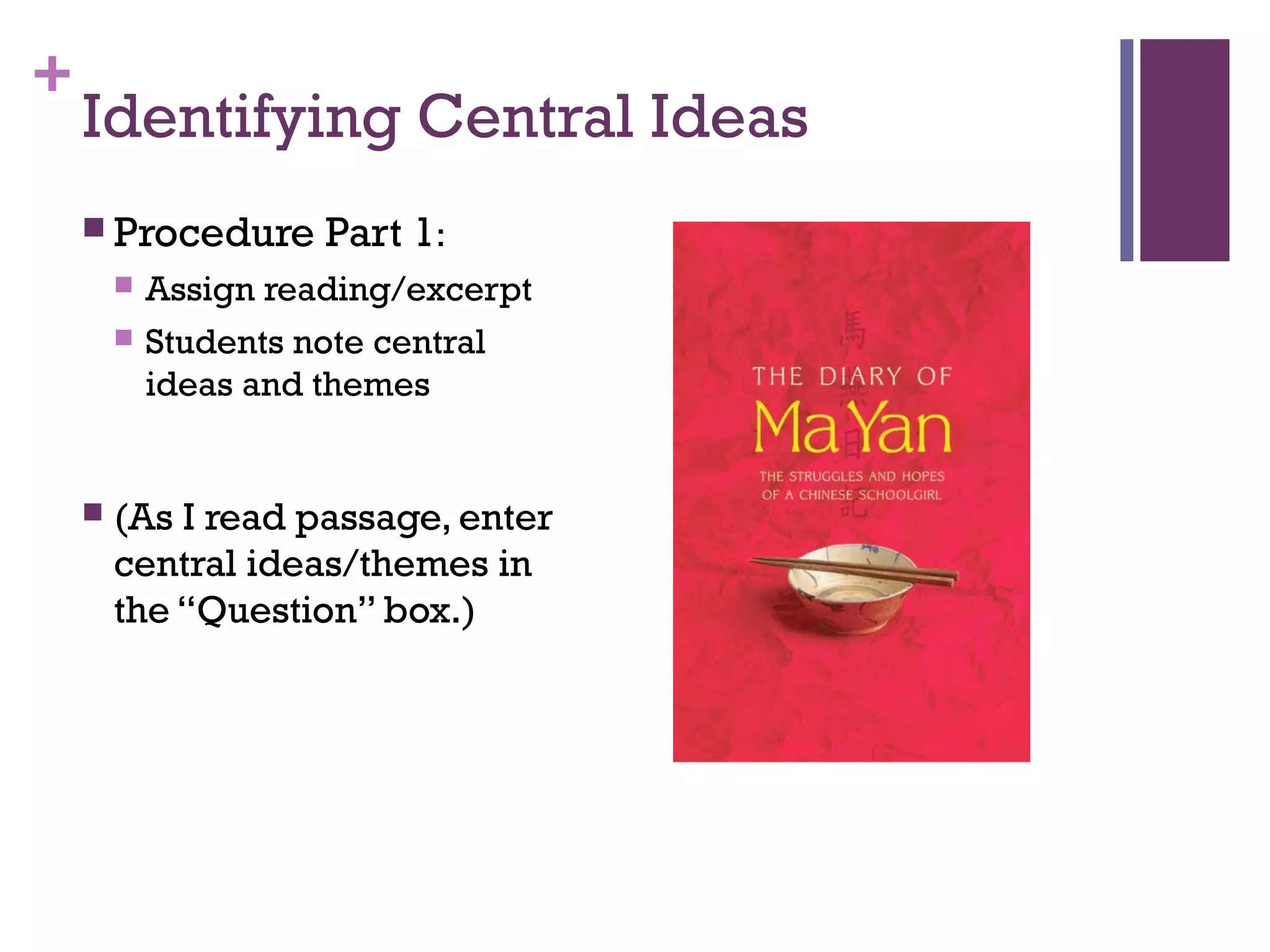
 “The Diary of MaYan: The Struggles and Hopes of a
Chinese School Girl”
 Memoir = Informational Nonfiction Text
+
Identifying Central Ideas
 Procedure Part 1:
 Assign reading/excerpt
 Students note central
ideas and themes
 (As I read passage, enter
central ideas/themes in
the “Question” box.)
+
Identifying Central Ideas
 Procedure Part 2
 Discussion:
 What was the tone of this excerpt?
 What were central ideas/themes of the excerpt?
 poverty/educational access
 schooling as necessity/way out of poverty
 women’s rights
 boys v. girls in education
 Procedure Part 3
 “Find a Poem” in the assigned text
 Circle/underline words/phrases
 Use text to create a poem about a central idea
+Identifying Central Ideas
The boys can study. Not girls.
Not me.
Why?!
Without education,
how will I live?
how will I work?
Without school,
I am only a peasant.
Forever.
A sentence to work the land.
Like my mother.
Without knowledge.
Without vacation.
A sentence to earn money
not for me,
for my education
for my school
but for my brothers.
For the boys.
Why?!
+Identifying Central Ideas with Memoir
Additional Examples
•Memoirs:
•Tasting the Sky: Memories of a Palestinian Childhood
•Mao’s Last Dancer (Young Readers’ Edition)
•The Girl with the White Flag
•Red Land, Yellow River: A Story from the Cultural
Revolution
•Children of War: Voices of Iraqi Refugees
•Also consider:
•Newspaper articles
•Speeches
•Plays
•Literature
•etc.
+
Identifying Points of View/Purpose
 Standard 6
 Identify aspects of a text that reveal an author’s point
of view or purpose (e.g., loaded language, inclusion
or avoidance of particular facts, etc.)
 Consider using:
 campaign/political speeches (US regions & global)
 newspaper articles
 works of art
 music
+
Identifying Points of View/Purpose
 Procedure:
1. Introduce idea of American
songs or musicians with a
PoV/Purpose
 The Beatles, Bob Dylan,
Woody Guthrie, U2, Green
Day, and more.
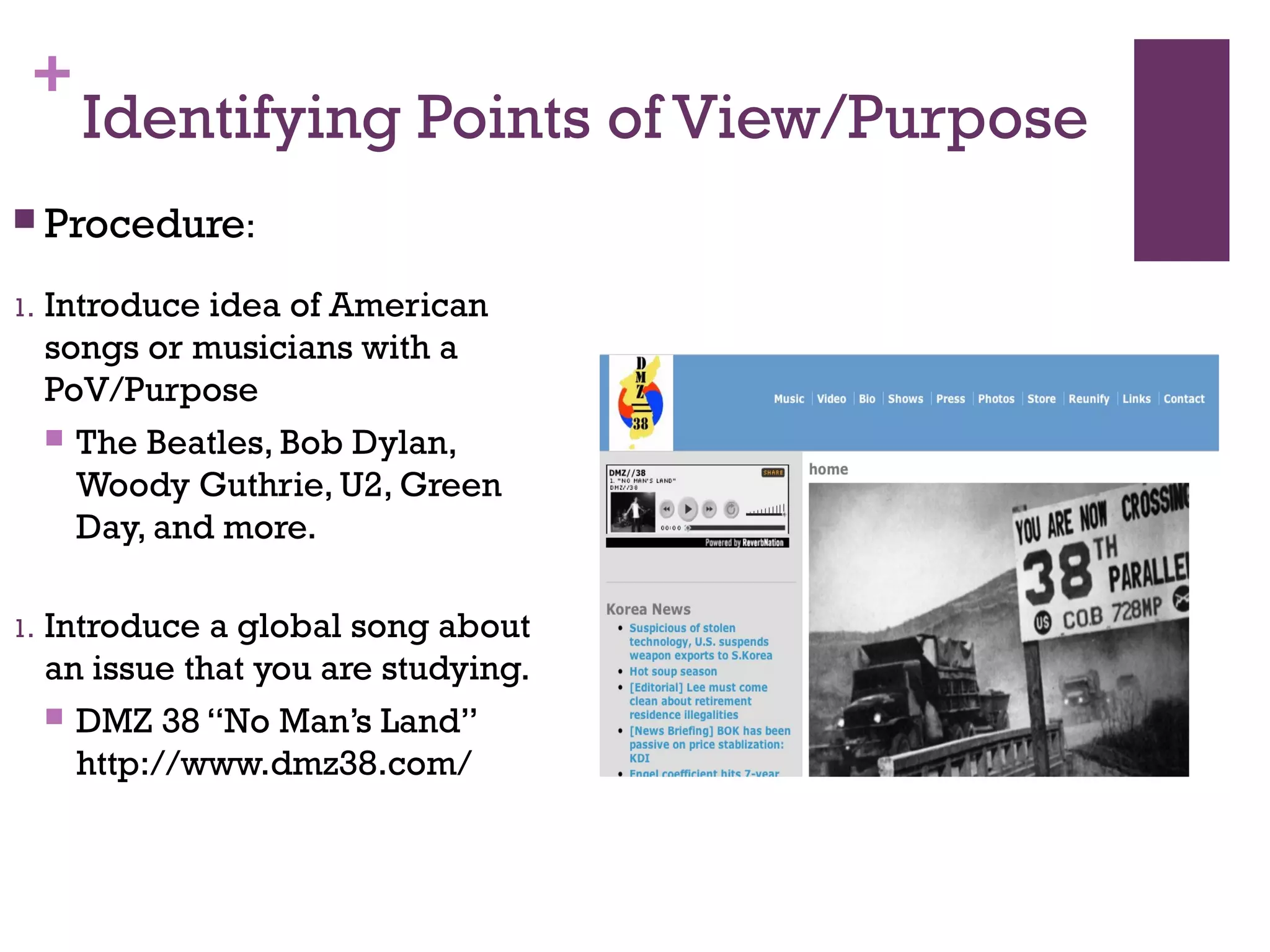
1. Introduce a global song about
an issue that you are studying.
 DMZ 38 “No Man’s Land”
http://www.dmz38.com/
+Identifying Points of View/Purpose
Caught in between
A nightmare and a dream
The silence is here
Where no hears you scream
Seeing, believing
The landmines at yr feet
The gap is even
Where halves of Chosun meet
No cars
No lights
No cameras
Or human rights
No clocks
No signs
No buildings
Not a Soul in sight…
+Identifying Points of View/Purpose
 What is the issue at the center of the song?
 Who created the song?
 What might his/her purpose or goal be? What
does he/she want to happen on the Korean
Peninsula?
 How might his/her experiences (location,
socioeconomic, cultural, etc.) influence point of
view?
 Why might people in North or South Korea agree
or disagree with the songwriter?
+
Identifying Points of View/Purpose
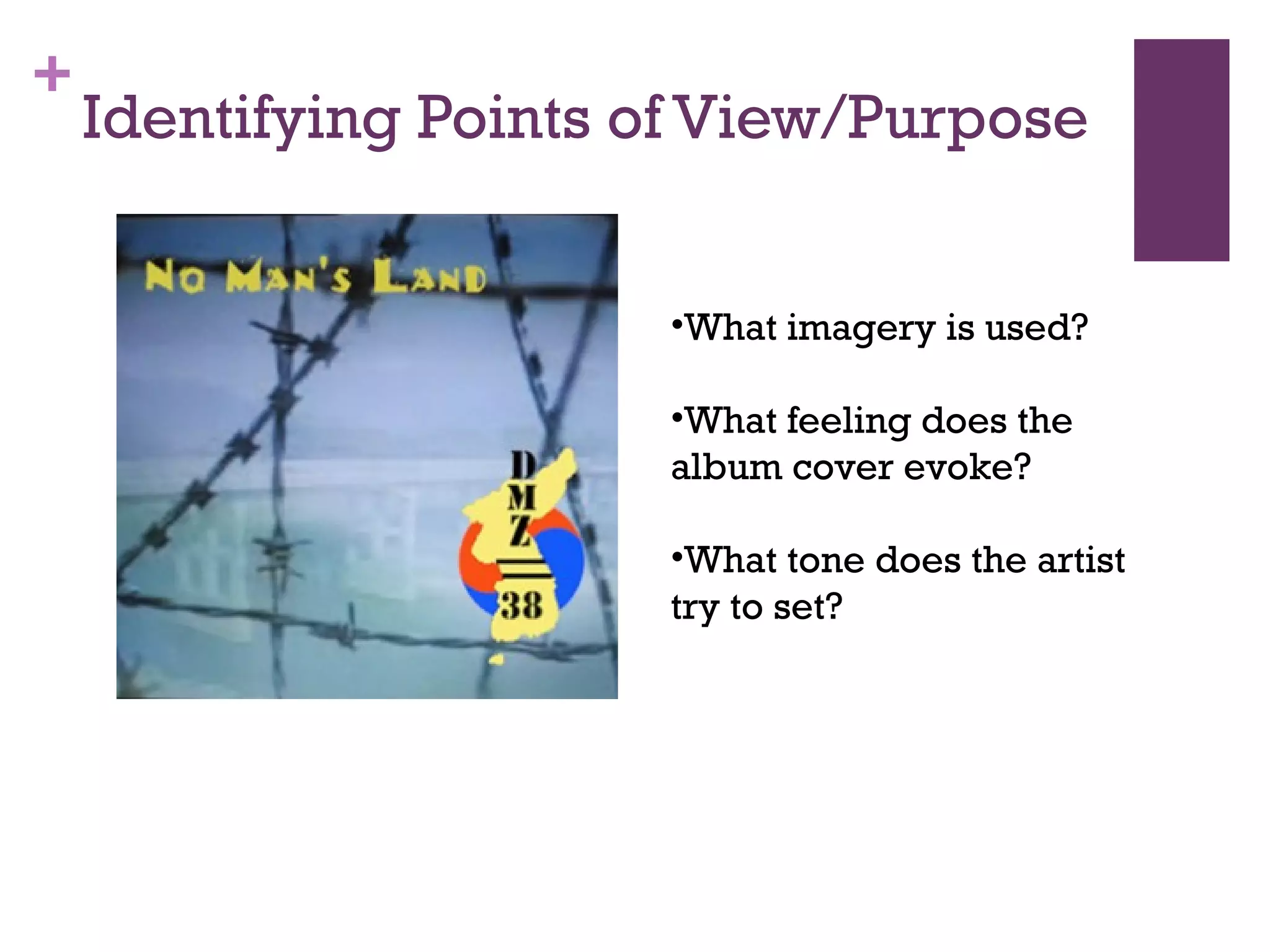
•What imagery is used?
•What feeling does the
album cover evoke?
•What tone does the artist
try to set?
+
Identifying Points of View/Purpose
 Speeches:
 President Obama’s 2010 Speech on the War in Iraq with
Juan Cole’s “The Speech Obama Should Give about the
Iraq War (But Won’t) from the same date.
 Campaign speeches
 Historical Letters (Nat’l Archives, Library of Congress)
 News Releases/Government Memos
 Global Newspapers
 Works of art: Monuments, statues, murals, graffiti
Additional Examples
+Pairing Images & Texts
 Standard 7:
 Integrate visual information (e.g., in charts, graphs,
photographs, videos, or maps) with other
information in print and digital texts.
 What kinds of visuals do you use in your class?
 Share your answers in the “Question” box; provide links
where applicable!
 Consider billboards, murals, maps, graphs, charts,
photos, political cartoons, statues/monuments, etc.
+
Pairing Images and Texts
 Teaching Environmental Issues in India with Photos
1. Gallery Walk: multiple images of different types
1. Looking 10 x 2: record 10 observations…twice!
1. Four Corners: examining parts before the whole
1. Captions: thinking about point of view; empathy
1. Tableau: interactive;“in their shoes”
+
JM Suarez, 2008
Ganges River at Varanasi
+
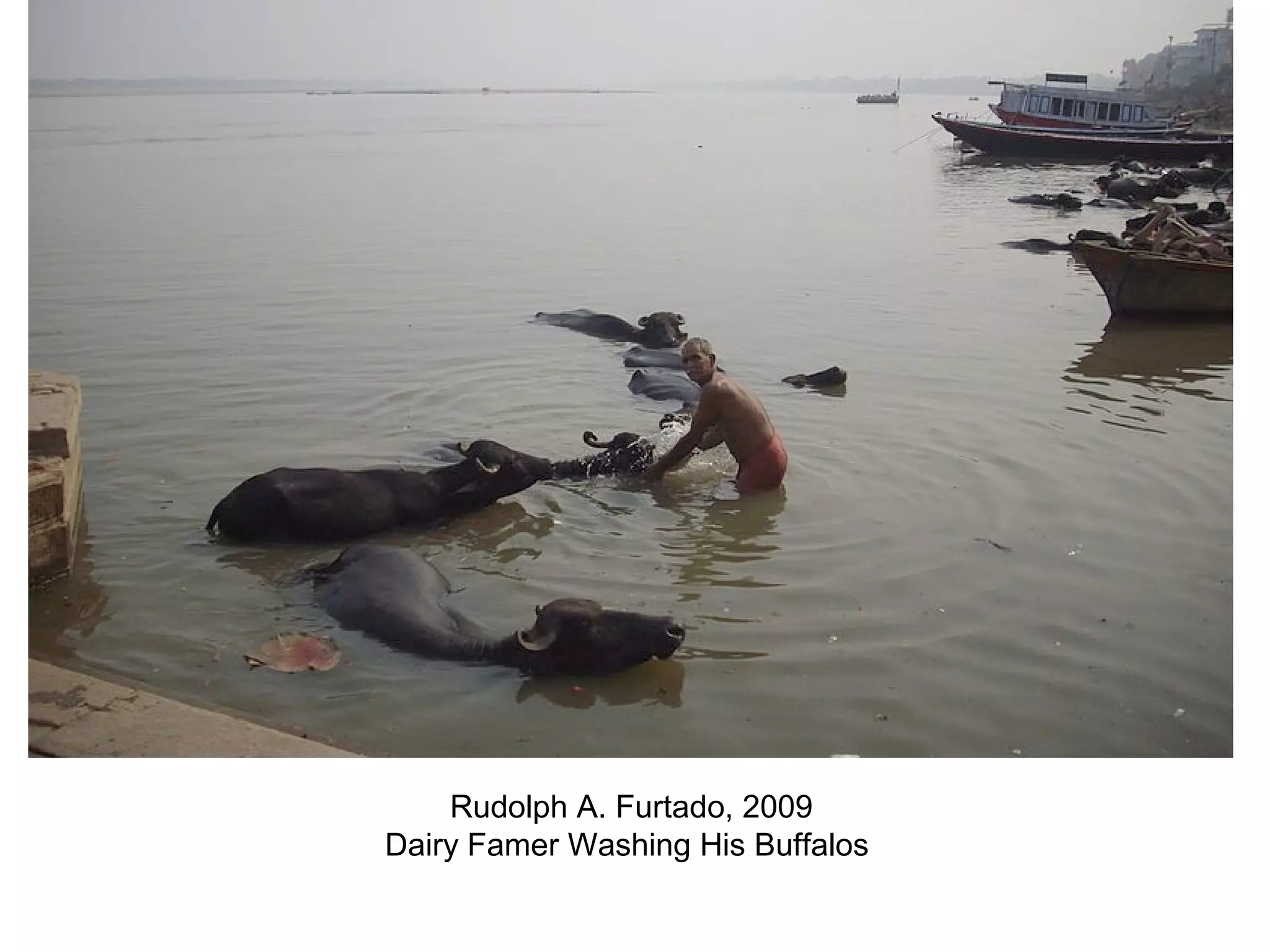
Rudolph A. Furtado, 2009
Dairy Famer Washing His Buffalos
+
Pairing Images and Texts
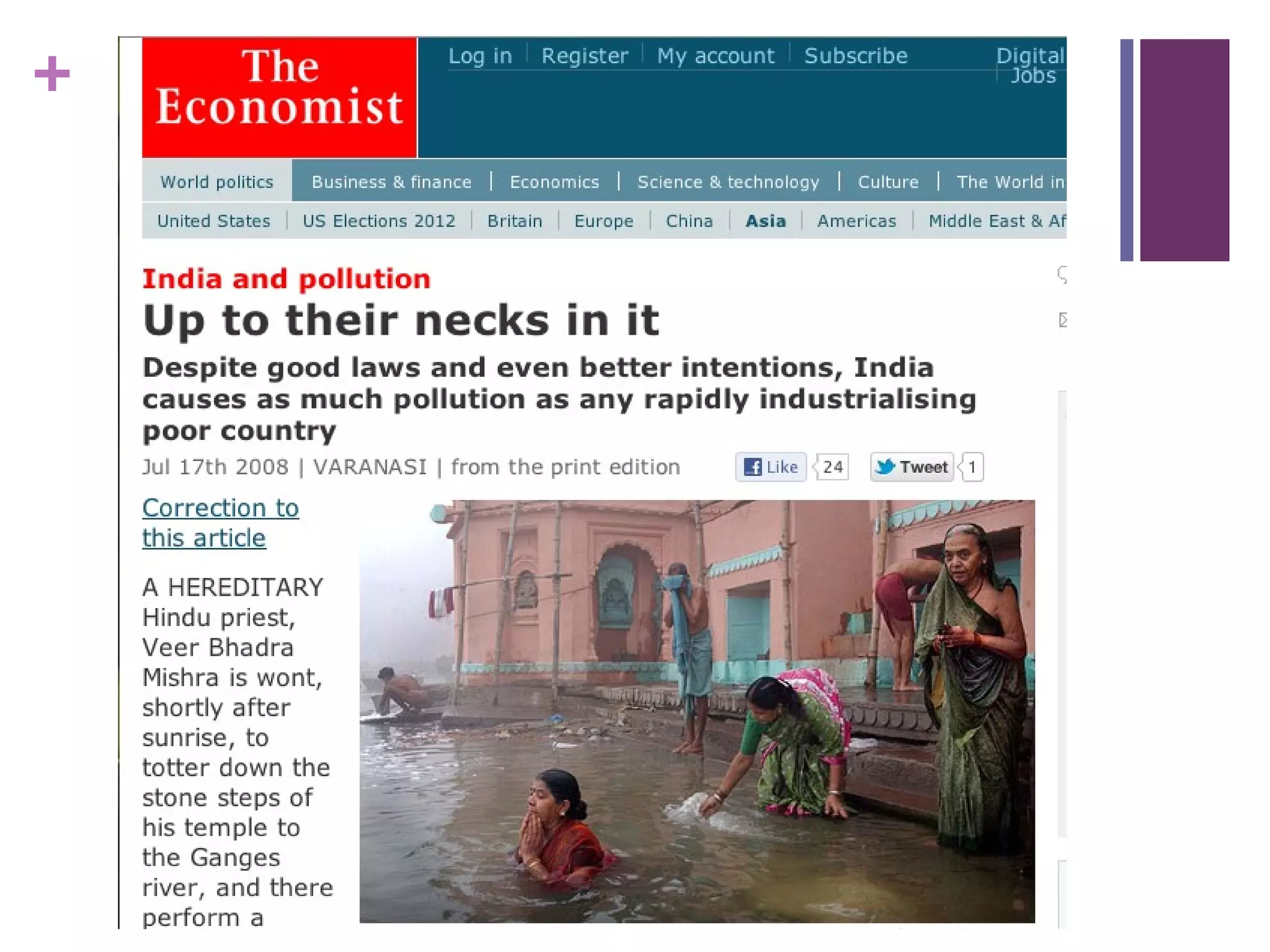
 Before Moving to the Text:
 What facts about this topic do we know based on the
image?
 What can we infer about this topic from the image?
 What questions do we have about this topic that are
not answered or addressed in the image?
 Is there a point of view or purpose behind the
picture? If so, how does this inform how we interpret
it?
 “India and Pollution: Up to Their Necks in It”
 The Economist 2008
+
+Pairing Images and Texts
 Other Informational Texts (all available online)
1. India’s “The Water (Prevention and Control of
Pollution) Act,” 1974
2. India’s “The Air (Prevention and Control of Pollution)
Act,” 1981, 1987
3. India’s “The Environment Protection Act,” 1986, 1991
4. India’s “The Wild Life(Protection) Amendment Act,”
1972, 1993, 2002
5. PM Dec. 2011 Speech on the Environment
+
Pairing Photos and Texts
 Processing
 Graphic Organizer (Venn Diagram)
 Discussion:
 Messages conveyed in image compared
to/contrasted with text(s).
 Tone of image compared to/contrasted with text(s)
 How does the image support the text? How does it
challenge the text?
 How does the text support the image? How does it
challenge the image?
+
Pairing Photos and Texts
 Incorporating Common Core Writing Standards
 1) Write arguments based on discipline-specific
content.
 What should be done about pollution in India?
 Who is to blame for India’s pollution?
 Should tanneries/industries along rivers be shut down?
 7) Conduct short research projects to answer a question,
drawing on several sources.
 Research industrial pollution in other countries
 Present findings orally or using a Web 2.0 tool
+Pairing Images & Texts
 Chris Jordan Images with excerpts from “Stuff:The
Secret Lives of Everyday Things”
 Images/Info from “Hungry Planet:What the World
Eats” with global recipe
 Angel Island Image with Poem or Letter
 Chinese Propaganda Posters & “Little Red Book”
 Iconic Images with Speeches, Letters
Additional Examples
+
Resources
+
More on the Common Core
 Common Core State Standards Initiative
http://www.corestandards.org/
 Partnership for 21st
Century Skills Common Core Toolkit
http://www.p21.org/tools-and-resources/publications/p21-
common-core-toolkit
 Partnership for Assessment of Readiness for College and
Careers http://www.parcconline.org/ and Smarter Balanced
Assessment Consortium http://www.k12.wa.us/smarter/
 Measuring Text Complexity (Kansas DOE)
http://www.ksde.org/Default.aspx?tabid=4605
+
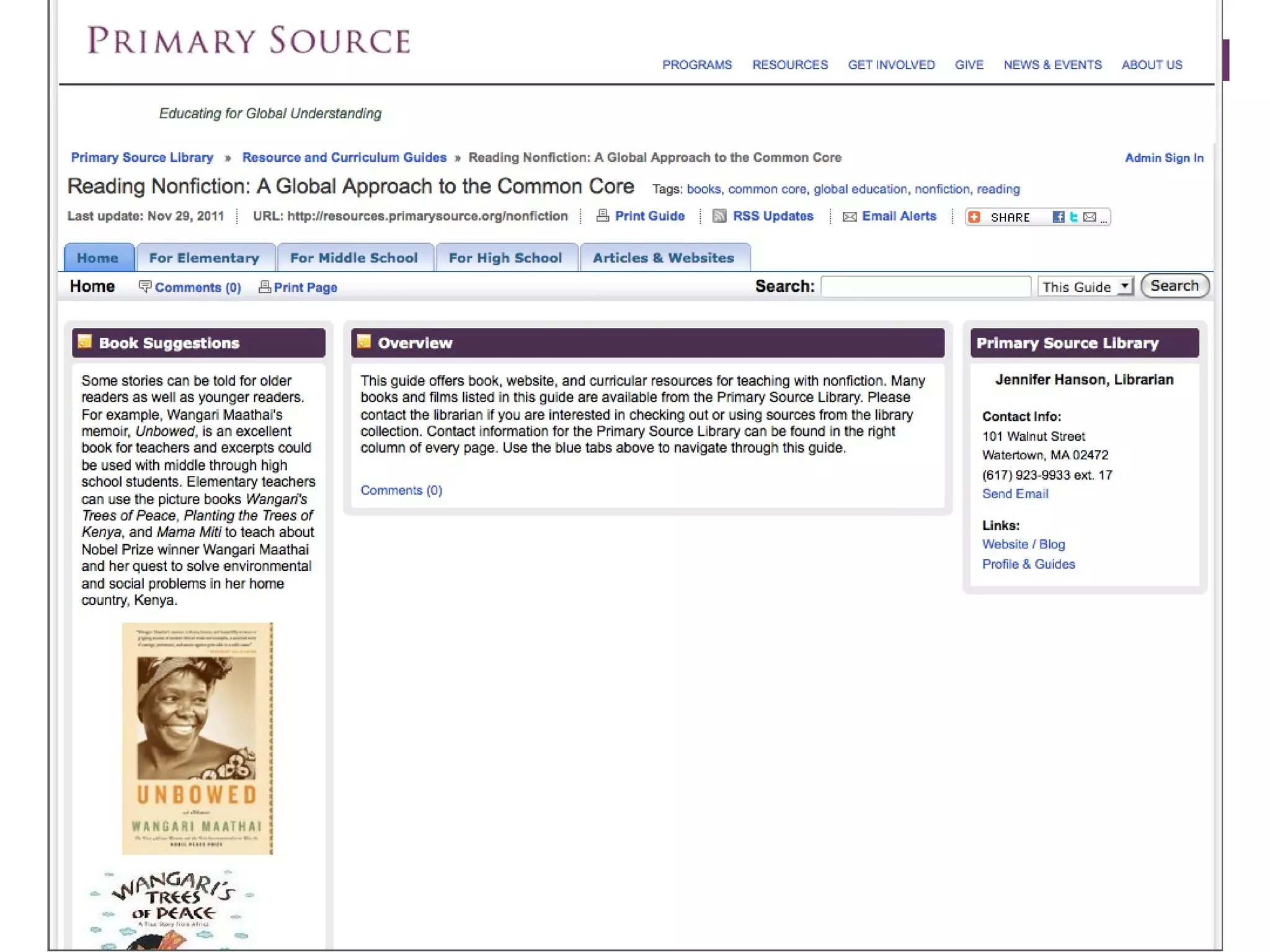
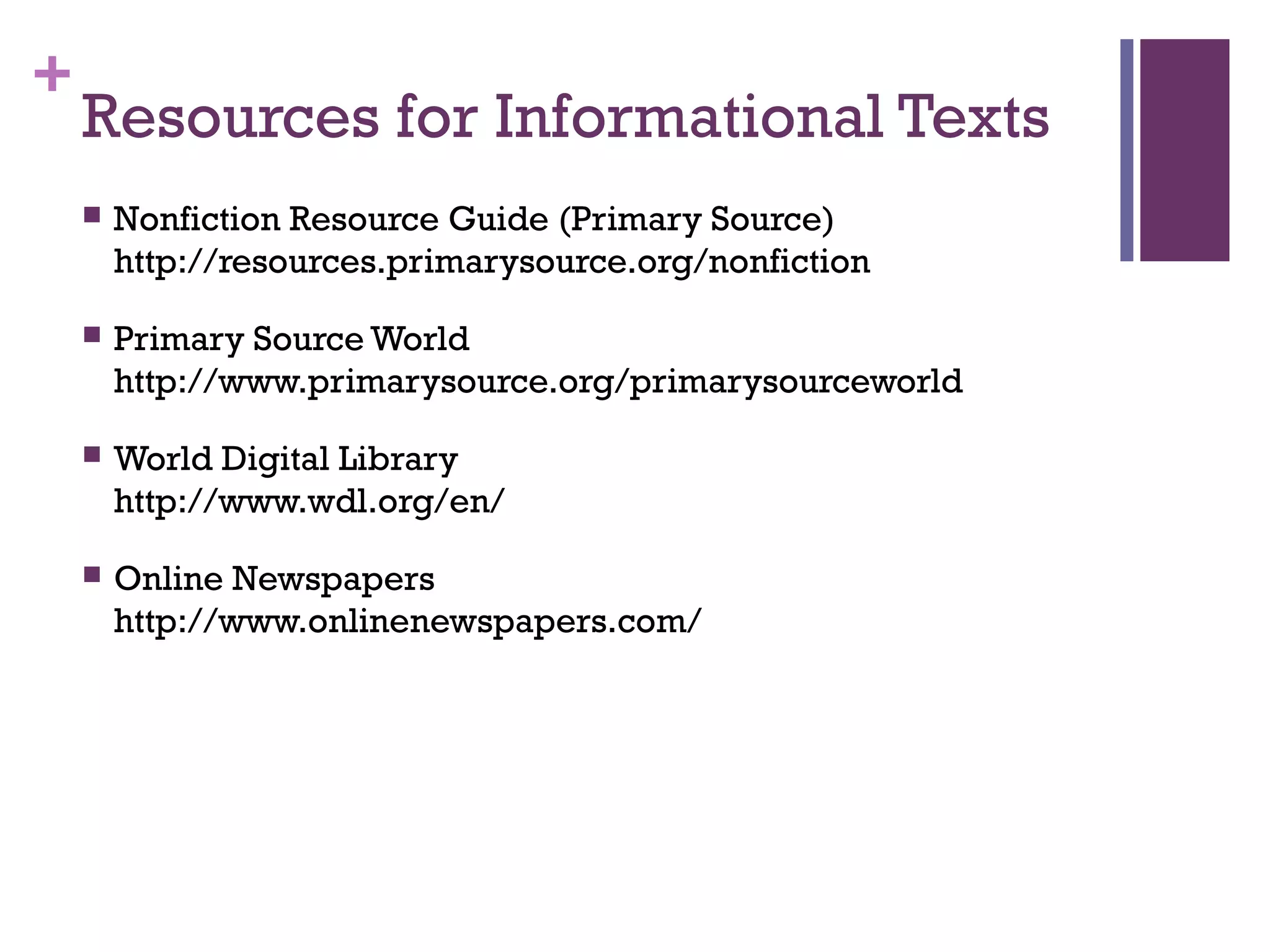
Resources for Informational Texts
 Nonfiction Resource Guide (Primary Source)
http://resources.primarysource.org/nonfiction
+
Resources for Informational Texts
 Nonfiction Resource Guide (Primary Source)
http://resources.primarysource.org/nonfiction
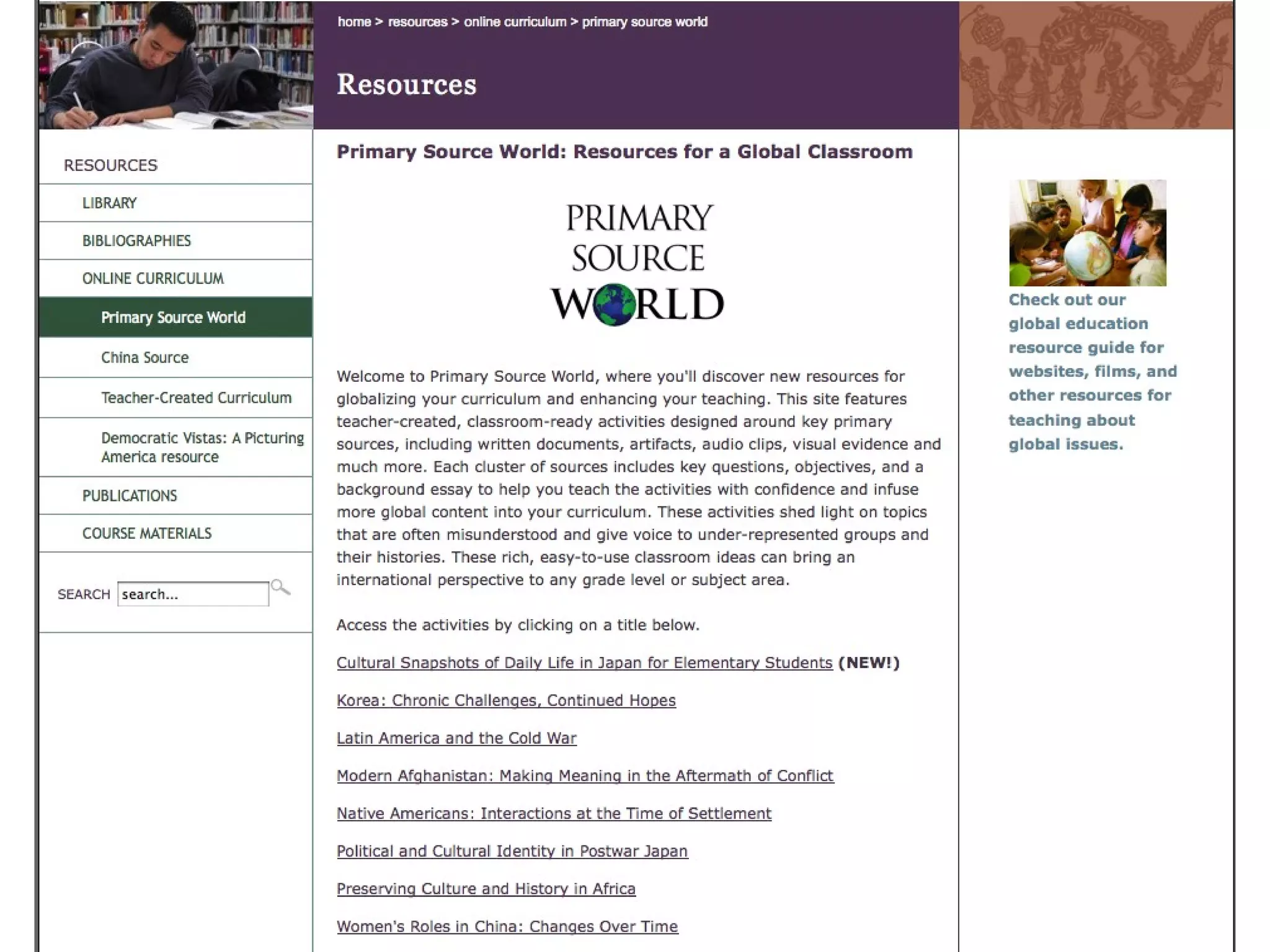
 Primary Source World
http://www.primarysource.org/primarysourceworld
+
Resources for Informational Texts
 Nonfiction Resource Guide (Primary Source)
http://resources.primarysource.org/nonfiction
 Primary Source World
http://www.primarysource.org/primarysourceworld
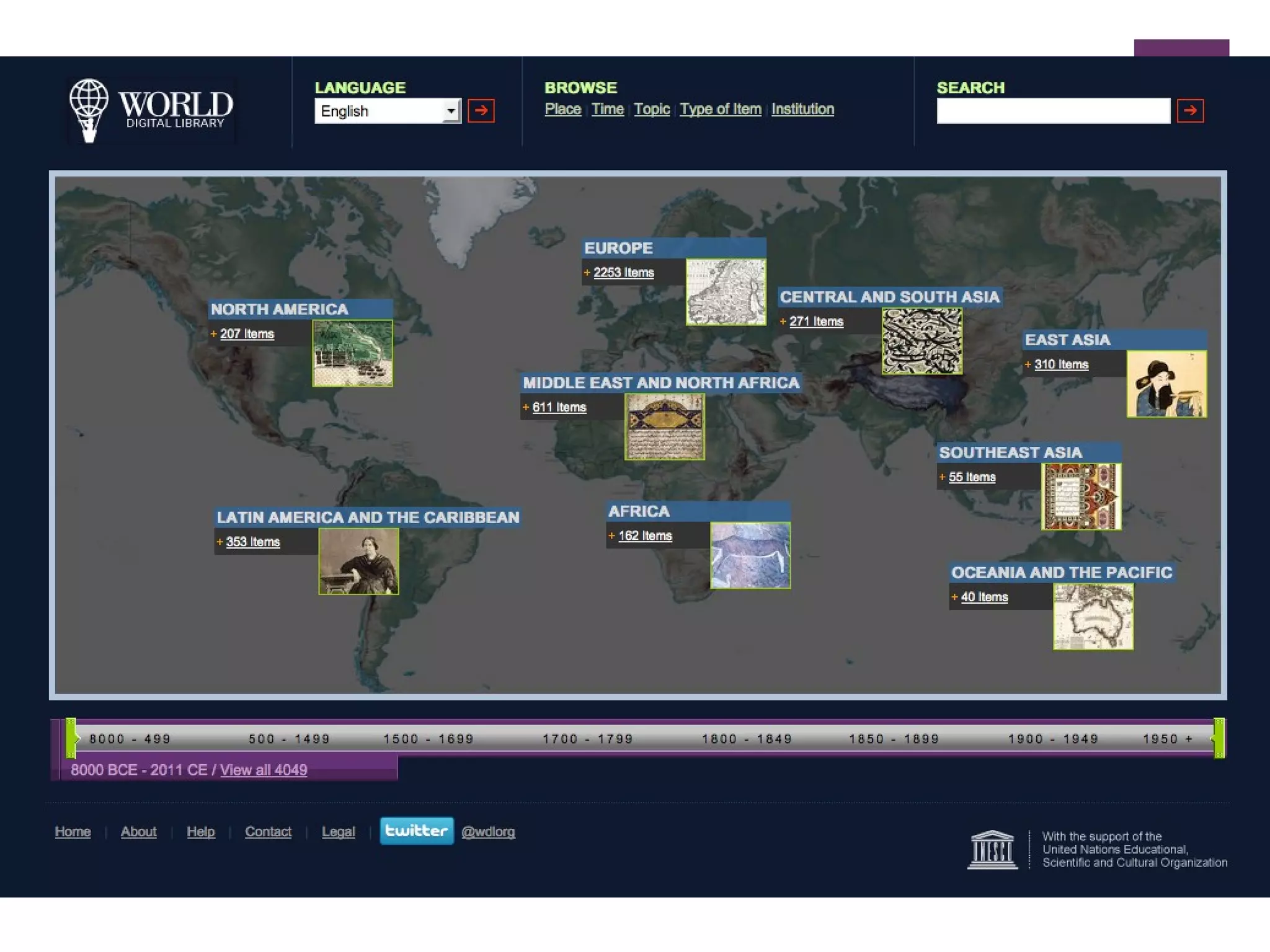
 World Digital Library
http://www.wdl.org/en/
+
Resources for Informational Texts
 Nonfiction Resource Guide (Primary Source)
http://resources.primarysource.org/nonfiction
 Primary Source World
http://www.primarysource.org/primarysourceworld
 World Digital Library
http://www.wdl.org/en/
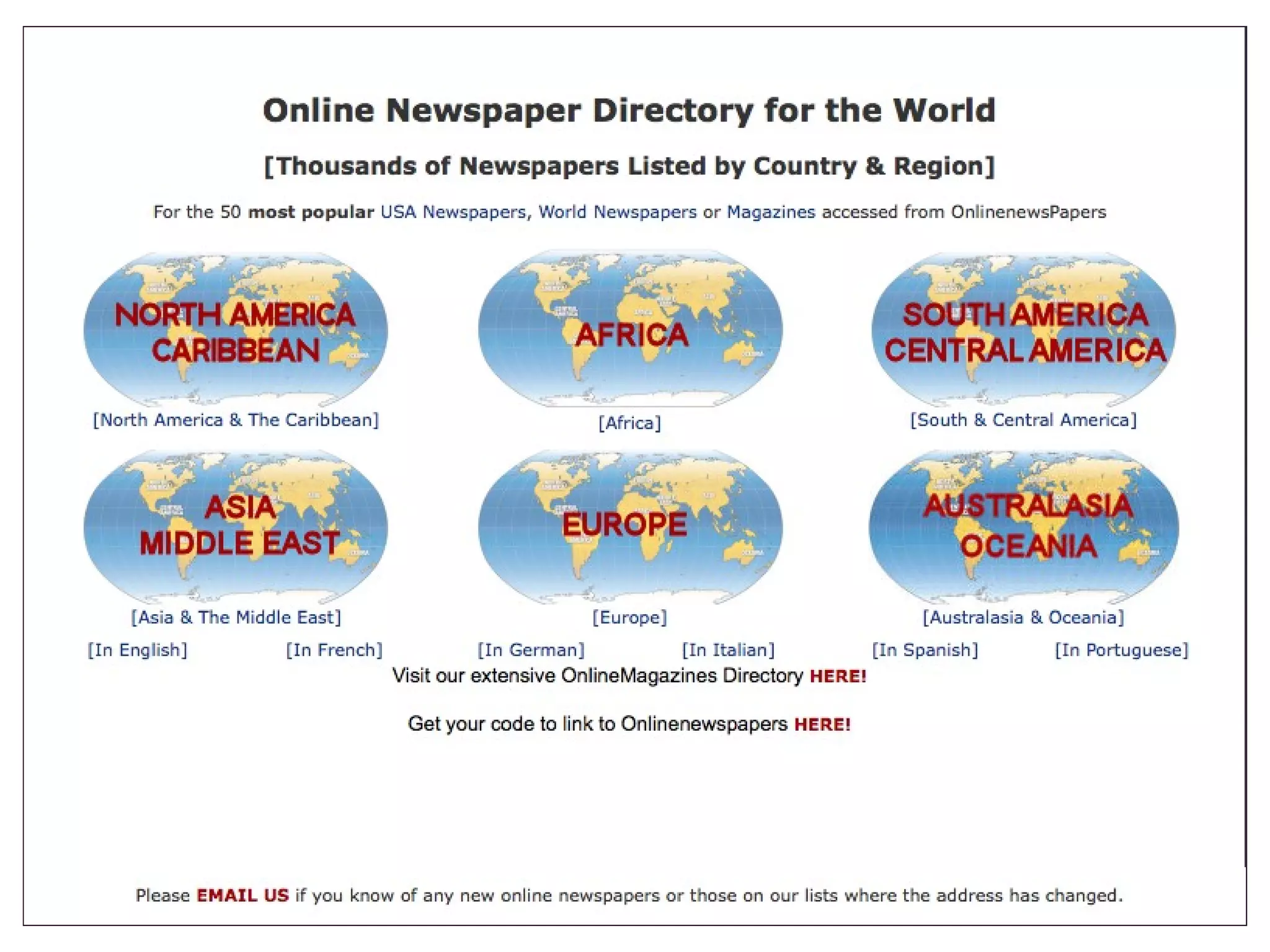
 Online Newspapers
http://www.onlinenewspapers.com/
+
QUESTIONS?
Type your question into the “Question” box
on your screen
or
Use your phone or computer microphone to
ask a question. Raise your hand to indicate
that you have a question, and we’ll un-mute
you.
+
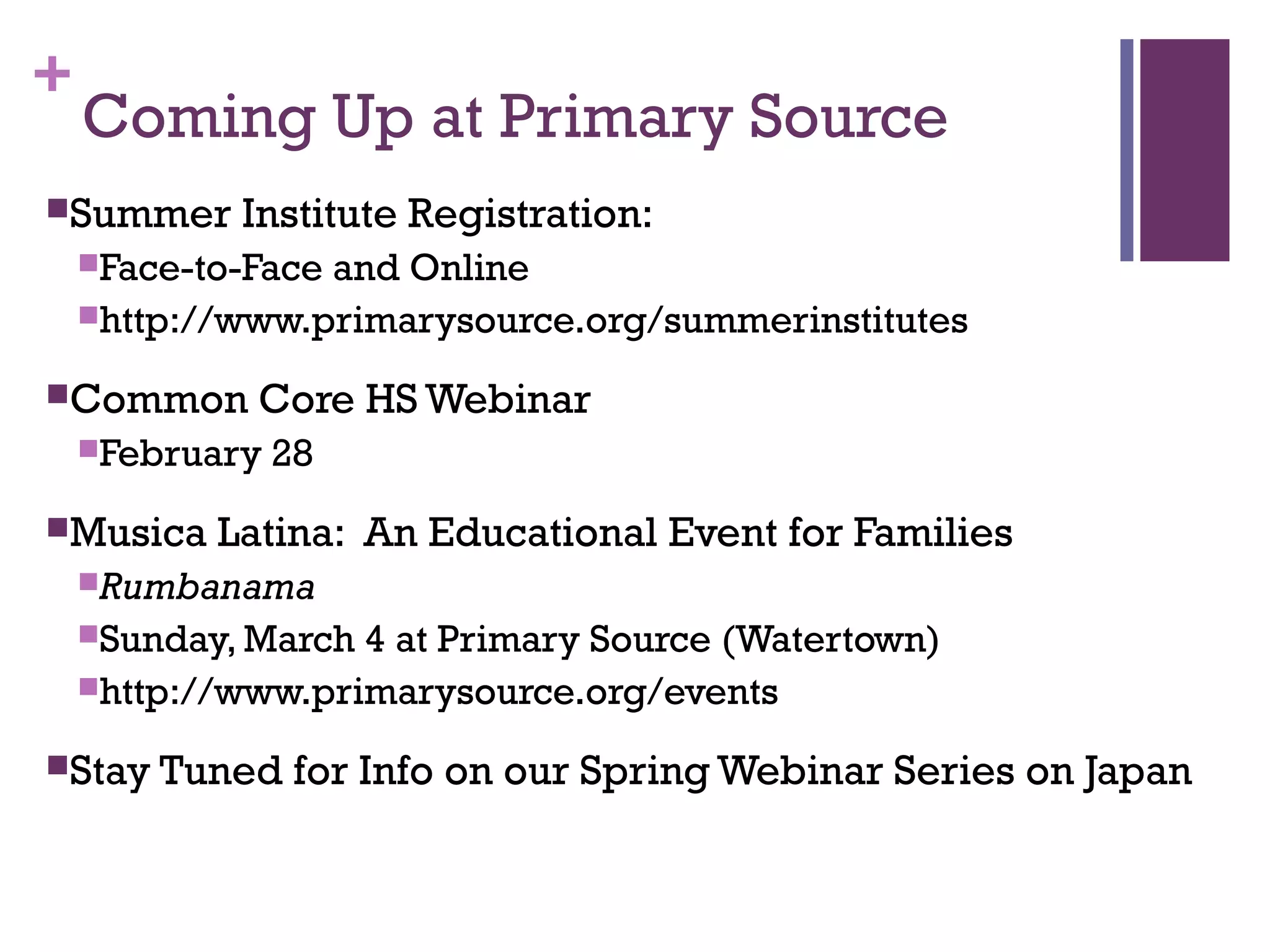
Coming Up at Primary Source
Summer Institute Registration:
Face-to-Face and Online
http://www.primarysource.org/summerinstitutes
Common Core HS Webinar
February 28
Musica Latina: An Educational Event for Families
Rumbanama
Sunday, March 4 at Primary Source (Watertown)
http://www.primarysource.org/events
Stay Tuned for Info on our Spring Webinar Series on Japan
+
Stay in Touch!
www.primarysource.org
 Explore Primary Source World
 http://www.primarysource.org/primarysourceworld
 Explore our other online resources:
 http://www.primarysource.org/resourceguides

The Common Core: Getting There Globally (MS)

  • 1.
    + The CommonCore: Getting There Globally For the Middle School Classroom We want to know where you are participating from! Please enter your location in the Questions box. On your Control Panel, click “Use Telephone” and Dial the number, Access Code, and Audio PIN to connect by phone
  • 2.
    + The Common Core: GettingThere Globally For the Middle School Classroom Elizabeth Howald Program Director, Primary Source Start Recording
  • 3.
    + The CommonCore: Getting There Globally For the Middle School Classroom Elizabeth Howald Program Director
  • 4.
    + Primary Source  Weprovide graduate courses, workshops, and study tours for approximately 2500 educators each year.  We prepare students to thrive in a global economy and society by helping teachers instill a flexible, global mindset.  Many courses and workshops support globally minded classrooms with an emphasis on themes that encompass multiple world regions.  www.primarysource.org
  • 5.
    + Session Goals Overview ofCommon Core State Standards and Global Content Strategies for Integrating Global Material within the Common Core Resources Questions
  • 6.
    + Common Core Overview MissionStatement “The Common Core State Standards provide a consistent, clear understanding of what students are expected to learn, so teachers and parents know what they need to do to help them. The standards are designed to be robust and relevant to the real world, reflecting the knowledge and skills that our young people need for success in college and careers.With American students fully prepared for the future, our communities will be best positioned to compete successfully in the global economy.” Common Core State Standards Initiative, June 2009 http://www.corestandards.org/
  • 7.
    +Common Core Standardsfor ELA and Literacy in History/Social Studies Students who are “College and Career Ready”: From CCSS for ELA (p. 7)
  • 8.
    +New or Notableabout the Common Core for ELA/Literacy  Continues & enhances emphasis on critical thinking and higher-order thinking skills  Continues an integrated literacy model (writing, speaking, listening, & reading)  Highlights interpretive skills across range of texts, digital information, & media  Emphasizes reading of “complex,” challenging texts  Stresses student fluency with informational texts  Interdisciplinary: posits shared responsibility for students’ literacy development
  • 9.
    + Anchor Standards forReading  Key Ideas and Details 1. Read closely to determine what the text says explicitly and to make logical inferences from it; cite specific textual evidence when writing or speaking to support conclusions drawn from the text. 2. Determine central ideas or themes of a text and analyze their development; summarize the key supporting details and ideas. 3. Analyze how and why individuals, events, or ideas develop and interact over the course of a text. 4. Range of Reading and Level of Text Complexity
  • 10.
    + Anchor Standards forReading  Craft and Structure 1. Interpret words and phrases as they are used in a text, including determining technical, connotative, and figurative meanings, and analyze how specific word choices shape meaning. 2. Analyze the structure of texts, including how specific sentences, paragraphs, and larger portions of the text (e.g., a section, chapter, scene, or stanza) relate to each other and the whole. 3. Assess how point of view or purpose shapes the content and style of a text.
  • 11.
    + Anchor Standards forReading  Integration of Knowledge and Ideas 1. Integrate and evaluate content presented in diverse formats and media, including visually and quantitatively, as well as in words. 2. Delineate and evaluate the argument and specific claims in a text, including the validity of the reasoning as well as the relevance and sufficiency of the evidence. 3. Analyze how two or more texts address similar themes in order to build knowledge or to compare the approaches the authors take.
  • 12.
    + Anchor Standards forReading  Range of Reading and Level of Text Complexity 1. Read and comprehend complex literary and informational texts independently and proficiently.
  • 13.
    + Anchor Standards forWriting  Text Types and Purposes 1. Write arguments to support claims in an analysis of substantive topics or texts using valid reasoning and relevant and sufficient evidence. 2. Write informative/explanatory texts to examine and convey complex ideas and information clearly and accurately through the effective selection, organization, and analysis of content. 3. Write narratives to develop real or imagined experiences or events using effective technique, well-chosen details, and well-structured event sequences.
  • 14.
    + Anchor Standards forWriting  Production and Distribution of Writing 1. Produce clear and coherent writing in which the development, organization, and style are appropriate to task, purpose, and audience. 2. Develop and strengthen writing as needed by planning, revising, editing, rewriting, or trying a new approach. 3. Use technology, including the Internet, to produce and publish writing and to interact and collaborate with others.
  • 15.
    + Anchor Standards forWriting  Research to Build Present Knowledge 1. Conduct short as well as more sustained research projects based on focused questions, demonstrating understanding of the subject under investigation. 2. Gather relevant information from multiple print and digital sources, assess the credibility and accuracy of each source, and integrate the information while avoiding plagiarism. 3. Draw evidence from literary or informational texts to support analysis, reflection, and research.
  • 16.
    + Where Global EntersCommon Core Mission Statement “The Common Core State Standards provide a consistent, clear understanding of what students are expected to learn, so teachers and parents know what they need to do to help them. The standards are designed to be robust and relevant to the real world, reflecting the knowledge and skills that our young people need for success in college and careers. With American students fully prepared for the future, our communities will be best positioned to compete successfully in the global economy.” Common Core State Standards Initiative, June 2009 http://www.corestandards.org/
  • 17.
    +Where Global Entersthe Common Core  Critical Thinking/Problem Solving  Communication  Information Literacy  Global Awareness  Self-Direction  Information, Media and Technology  Strong Knowledge of Core Subjects 21st Century Global Skills and CCSS Skills are closely aligned: P21 Common Core Toolkit: A guide to aligning the CCSS with the Framework for 21st c. skills, http://www.p21.org/images/p21_toolkit_final.pdf
  • 18.
    +Why a globalapproach?  “To become college and career ready, students must grapple with works of exceptional craft and thought whose range extends across genres, cultures, and centuries. Such works offer profound insights into the human condition and serve as models for students’ own thinking and writing… Through wide and deep reading of literature and literary nonfiction of steadily increasing sophistication, students gain a reservoir of literary and cultural knowledge, references, and images; the ability to evaluation intricate arguments; and the capacity to surmount the challenges posed by complex texts.” (CCSS for ELA Anchor Standards for Reading – A Note on Range and Content of Student Reading) Global Content is Indicated in the CCSS:
  • 19.
    + What types ofinformational texts are you using to teach about the world? What types could you use?
  • 20.
    +Types of globalinformational texts Historical accounts Debates Memoirs TED talks Oral histories Essays Blogs Investigative journalism International newspapers Opinion pieces/ op-eds International NGO reports Manuals Speeches/rhetoric A Constitution or other foundational gov’t document News broadcasts
  • 21.
  • 22.
    + Identifying Central Ideas Standard 2:  Determine central ideas or information of a primary or secondary source; provide an accurate summary of the source distinct from prior knowledge or assumptions  Method: “Find-A-Poem”  “The Diary of MaYan: The Struggles and Hopes of a Chinese School Girl”  Memoir = Informational Nonfiction Text
  • 23.
    + Identifying Central Ideas Procedure Part 1:  Assign reading/excerpt  Students note central ideas and themes  (As I read passage, enter central ideas/themes in the “Question” box.)
  • 24.
    + Identifying Central Ideas Procedure Part 2  Discussion:  What was the tone of this excerpt?  What were central ideas/themes of the excerpt?  poverty/educational access  schooling as necessity/way out of poverty  women’s rights  boys v. girls in education  Procedure Part 3  “Find a Poem” in the assigned text  Circle/underline words/phrases  Use text to create a poem about a central idea
  • 25.
    +Identifying Central Ideas Theboys can study. Not girls. Not me. Why?! Without education, how will I live? how will I work? Without school, I am only a peasant. Forever. A sentence to work the land. Like my mother. Without knowledge. Without vacation. A sentence to earn money not for me, for my education for my school but for my brothers. For the boys. Why?!
  • 26.
    +Identifying Central Ideaswith Memoir Additional Examples •Memoirs: •Tasting the Sky: Memories of a Palestinian Childhood •Mao’s Last Dancer (Young Readers’ Edition) •The Girl with the White Flag •Red Land, Yellow River: A Story from the Cultural Revolution •Children of War: Voices of Iraqi Refugees •Also consider: •Newspaper articles •Speeches •Plays •Literature •etc.
  • 27.
    + Identifying Points ofView/Purpose  Standard 6  Identify aspects of a text that reveal an author’s point of view or purpose (e.g., loaded language, inclusion or avoidance of particular facts, etc.)  Consider using:  campaign/political speeches (US regions & global)  newspaper articles  works of art  music
  • 28.
    + Identifying Points ofView/Purpose  Procedure: 1. Introduce idea of American songs or musicians with a PoV/Purpose  The Beatles, Bob Dylan, Woody Guthrie, U2, Green Day, and more. 1. Introduce a global song about an issue that you are studying.  DMZ 38 “No Man’s Land” http://www.dmz38.com/
  • 29.
    +Identifying Points ofView/Purpose Caught in between A nightmare and a dream The silence is here Where no hears you scream Seeing, believing The landmines at yr feet The gap is even Where halves of Chosun meet No cars No lights No cameras Or human rights No clocks No signs No buildings Not a Soul in sight…
  • 30.
    +Identifying Points ofView/Purpose  What is the issue at the center of the song?  Who created the song?  What might his/her purpose or goal be? What does he/she want to happen on the Korean Peninsula?  How might his/her experiences (location, socioeconomic, cultural, etc.) influence point of view?  Why might people in North or South Korea agree or disagree with the songwriter?
  • 31.
    + Identifying Points ofView/Purpose •What imagery is used? •What feeling does the album cover evoke? •What tone does the artist try to set?
  • 32.
    + Identifying Points ofView/Purpose  Speeches:  President Obama’s 2010 Speech on the War in Iraq with Juan Cole’s “The Speech Obama Should Give about the Iraq War (But Won’t) from the same date.  Campaign speeches  Historical Letters (Nat’l Archives, Library of Congress)  News Releases/Government Memos  Global Newspapers  Works of art: Monuments, statues, murals, graffiti Additional Examples
  • 33.
    +Pairing Images &Texts  Standard 7:  Integrate visual information (e.g., in charts, graphs, photographs, videos, or maps) with other information in print and digital texts.  What kinds of visuals do you use in your class?  Share your answers in the “Question” box; provide links where applicable!  Consider billboards, murals, maps, graphs, charts, photos, political cartoons, statues/monuments, etc.
  • 34.
    + Pairing Images andTexts  Teaching Environmental Issues in India with Photos 1. Gallery Walk: multiple images of different types 1. Looking 10 x 2: record 10 observations…twice! 1. Four Corners: examining parts before the whole 1. Captions: thinking about point of view; empathy 1. Tableau: interactive;“in their shoes”
  • 35.
    + JM Suarez, 2008 GangesRiver at Varanasi
  • 36.
    + Rudolph A. Furtado,2009 Dairy Famer Washing His Buffalos
  • 37.
    + Pairing Images andTexts  Before Moving to the Text:  What facts about this topic do we know based on the image?  What can we infer about this topic from the image?  What questions do we have about this topic that are not answered or addressed in the image?  Is there a point of view or purpose behind the picture? If so, how does this inform how we interpret it?  “India and Pollution: Up to Their Necks in It”  The Economist 2008
  • 38.
  • 39.
    +Pairing Images andTexts  Other Informational Texts (all available online) 1. India’s “The Water (Prevention and Control of Pollution) Act,” 1974 2. India’s “The Air (Prevention and Control of Pollution) Act,” 1981, 1987 3. India’s “The Environment Protection Act,” 1986, 1991 4. India’s “The Wild Life(Protection) Amendment Act,” 1972, 1993, 2002 5. PM Dec. 2011 Speech on the Environment
  • 40.
    + Pairing Photos andTexts  Processing  Graphic Organizer (Venn Diagram)  Discussion:  Messages conveyed in image compared to/contrasted with text(s).  Tone of image compared to/contrasted with text(s)  How does the image support the text? How does it challenge the text?  How does the text support the image? How does it challenge the image?
  • 41.
    + Pairing Photos andTexts  Incorporating Common Core Writing Standards  1) Write arguments based on discipline-specific content.  What should be done about pollution in India?  Who is to blame for India’s pollution?  Should tanneries/industries along rivers be shut down?  7) Conduct short research projects to answer a question, drawing on several sources.  Research industrial pollution in other countries  Present findings orally or using a Web 2.0 tool
  • 42.
    +Pairing Images &Texts  Chris Jordan Images with excerpts from “Stuff:The Secret Lives of Everyday Things”  Images/Info from “Hungry Planet:What the World Eats” with global recipe  Angel Island Image with Poem or Letter  Chinese Propaganda Posters & “Little Red Book”  Iconic Images with Speeches, Letters Additional Examples
  • 43.
  • 44.
    + More on theCommon Core  Common Core State Standards Initiative http://www.corestandards.org/  Partnership for 21st Century Skills Common Core Toolkit http://www.p21.org/tools-and-resources/publications/p21- common-core-toolkit  Partnership for Assessment of Readiness for College and Careers http://www.parcconline.org/ and Smarter Balanced Assessment Consortium http://www.k12.wa.us/smarter/  Measuring Text Complexity (Kansas DOE) http://www.ksde.org/Default.aspx?tabid=4605
  • 45.
    + Resources for InformationalTexts  Nonfiction Resource Guide (Primary Source) http://resources.primarysource.org/nonfiction
  • 47.
    + Resources for InformationalTexts  Nonfiction Resource Guide (Primary Source) http://resources.primarysource.org/nonfiction  Primary Source World http://www.primarysource.org/primarysourceworld
  • 49.
    + Resources for InformationalTexts  Nonfiction Resource Guide (Primary Source) http://resources.primarysource.org/nonfiction  Primary Source World http://www.primarysource.org/primarysourceworld  World Digital Library http://www.wdl.org/en/
  • 51.
    + Resources for InformationalTexts  Nonfiction Resource Guide (Primary Source) http://resources.primarysource.org/nonfiction  Primary Source World http://www.primarysource.org/primarysourceworld  World Digital Library http://www.wdl.org/en/  Online Newspapers http://www.onlinenewspapers.com/
  • 53.
    + QUESTIONS? Type your questioninto the “Question” box on your screen or Use your phone or computer microphone to ask a question. Raise your hand to indicate that you have a question, and we’ll un-mute you.
  • 54.
    + Coming Up atPrimary Source Summer Institute Registration: Face-to-Face and Online http://www.primarysource.org/summerinstitutes Common Core HS Webinar February 28 Musica Latina: An Educational Event for Families Rumbanama Sunday, March 4 at Primary Source (Watertown) http://www.primarysource.org/events Stay Tuned for Info on our Spring Webinar Series on Japan
  • 55.
    + Stay in Touch! www.primarysource.org Explore Primary Source World  http://www.primarysource.org/primarysourceworld  Explore our other online resources:  http://www.primarysource.org/resourceguides

Editor's Notes

  • #27 Eilenberg based on the Charles Perault Lon Po Po – Red Riding Hood