GAMIFICATION
  Using Game Mechanics to Enhance eLearning

TH202                           Twitter: @trickyraymer
RICK RAYMER
Gaming and Simulation Coordinator
       Twitter: @trickyraymer
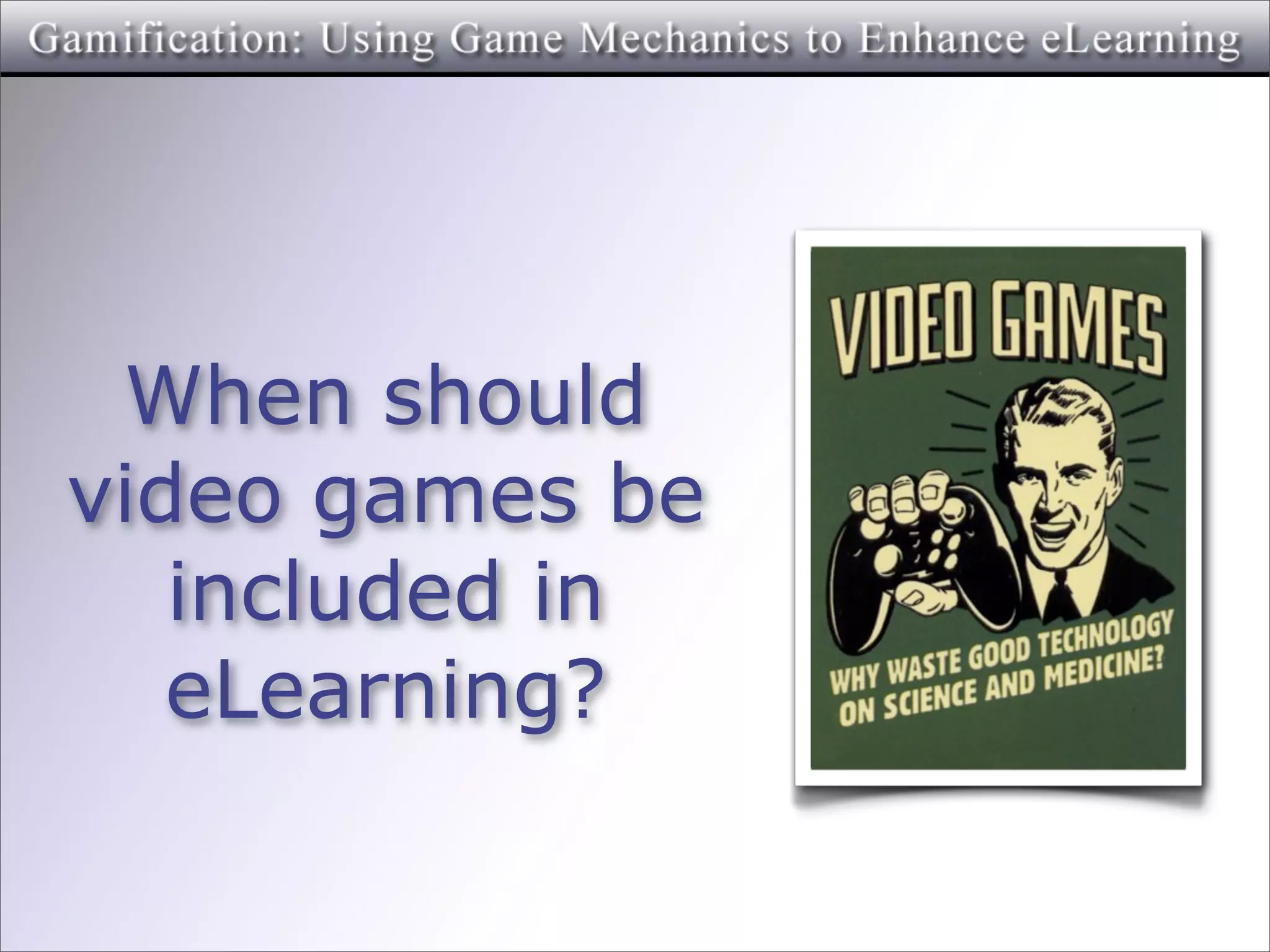
When should
video games be
   included in
   eLearning?
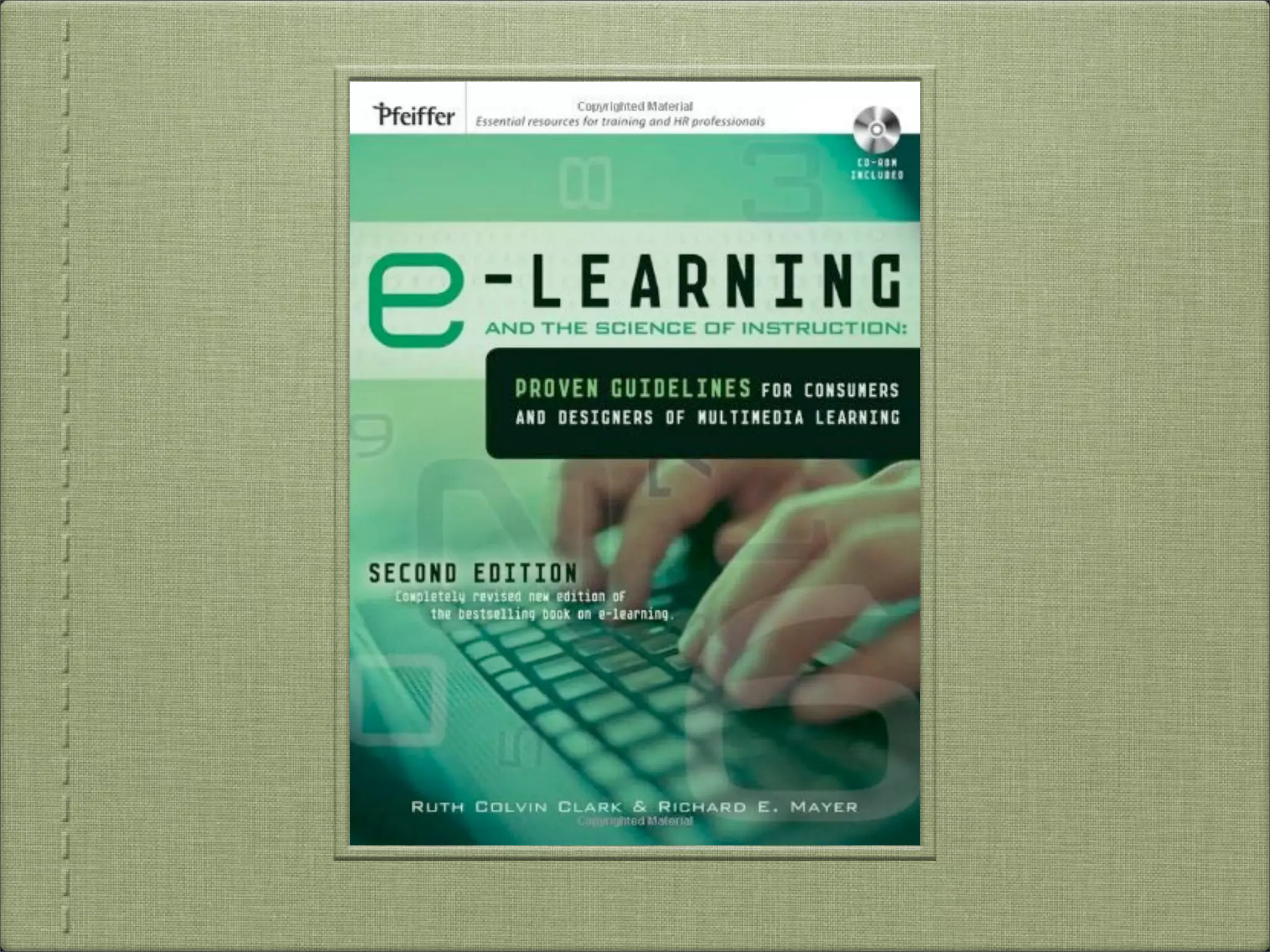
Clark & Meyer: E-Learning
and the Science of Instruction

• When the goals, rules, activities, feedback, and
  consequences of the game or simulation can be
  aligned to the desired learning outcomes
• When structure and guidance to help learners is
  provided to reach instructional goals
• However, open-ended games and simulations
  that require unguided exploration should be
  avoided
SUMMARY
   Only use games if they directly
   support your education goals.

Make learning essential to the game.
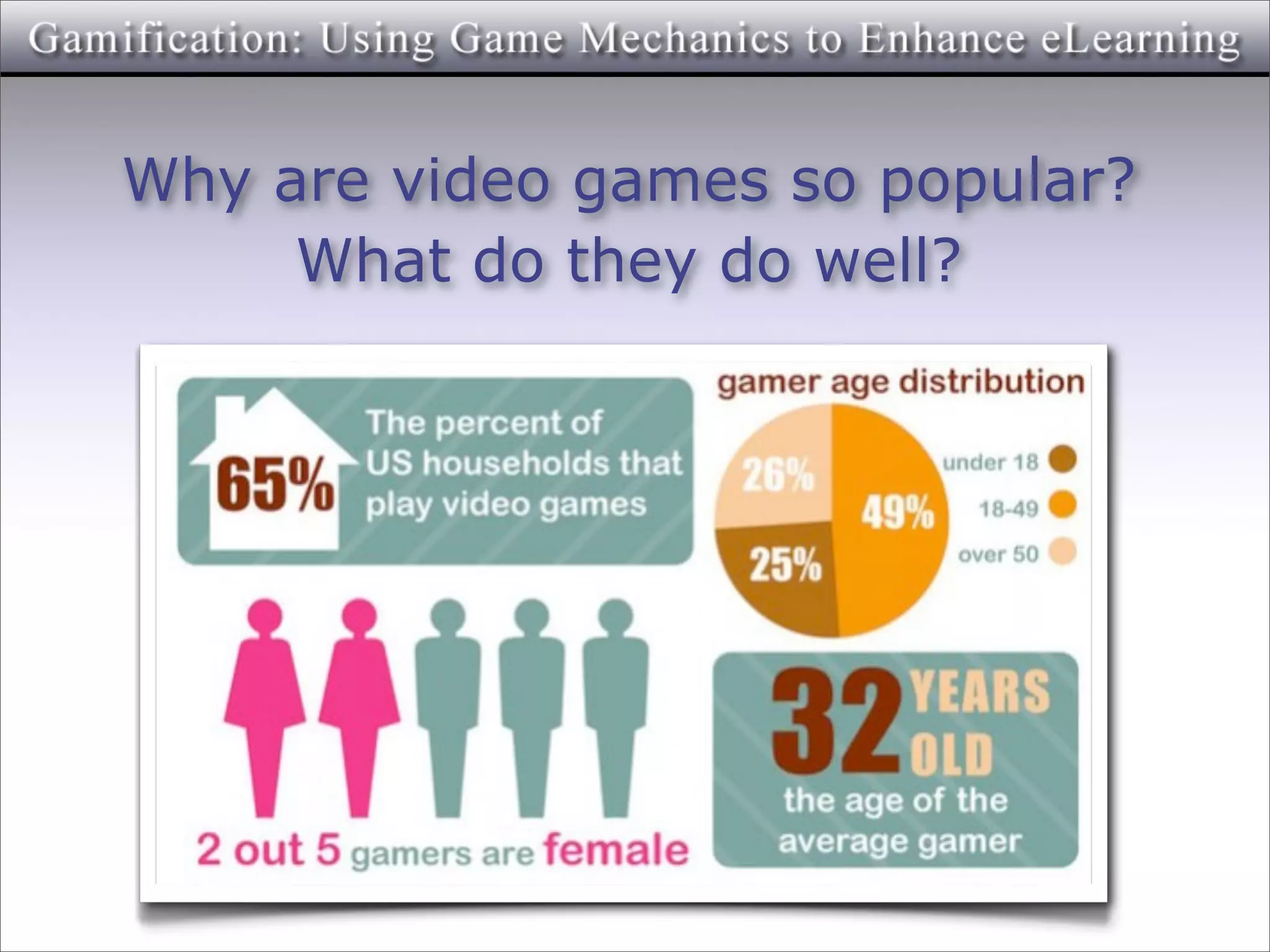
Why are video games so popular?
     What do they do well?
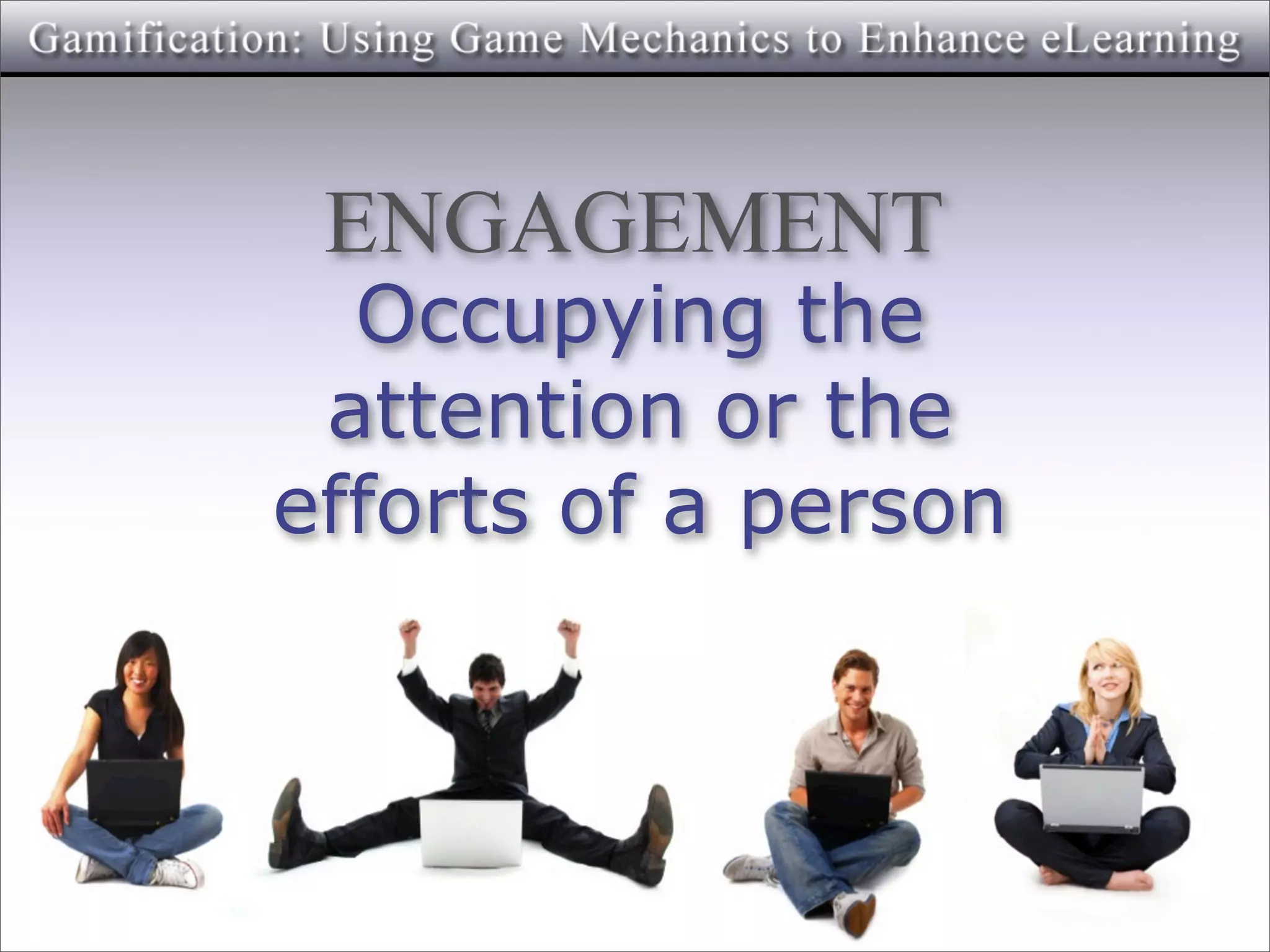
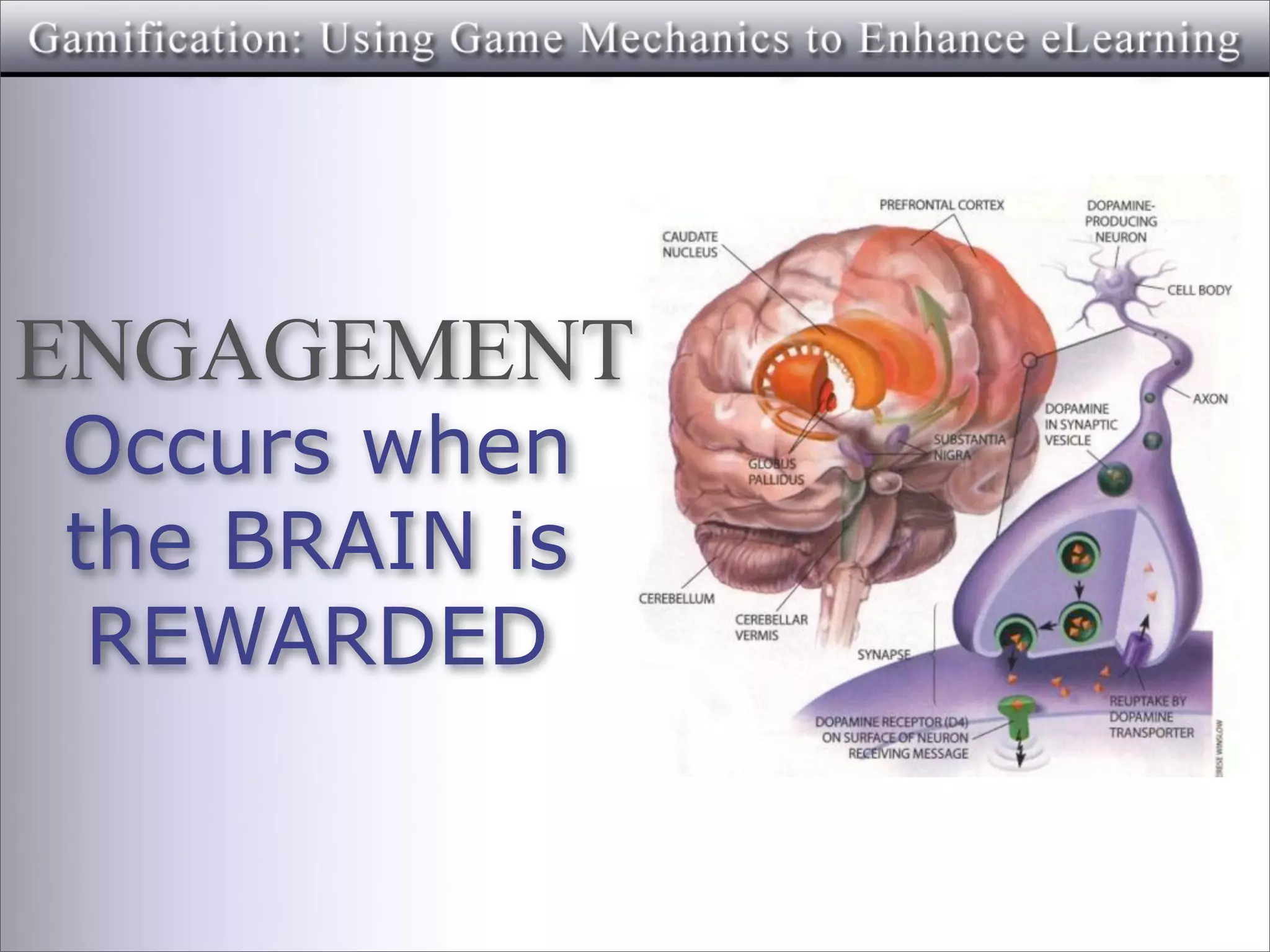
ENGAGEMENT
  Occupying the
 attention or the
efforts of a person
ENGAGEMENT
Occurs when
the BRAIN is
 REWARDED
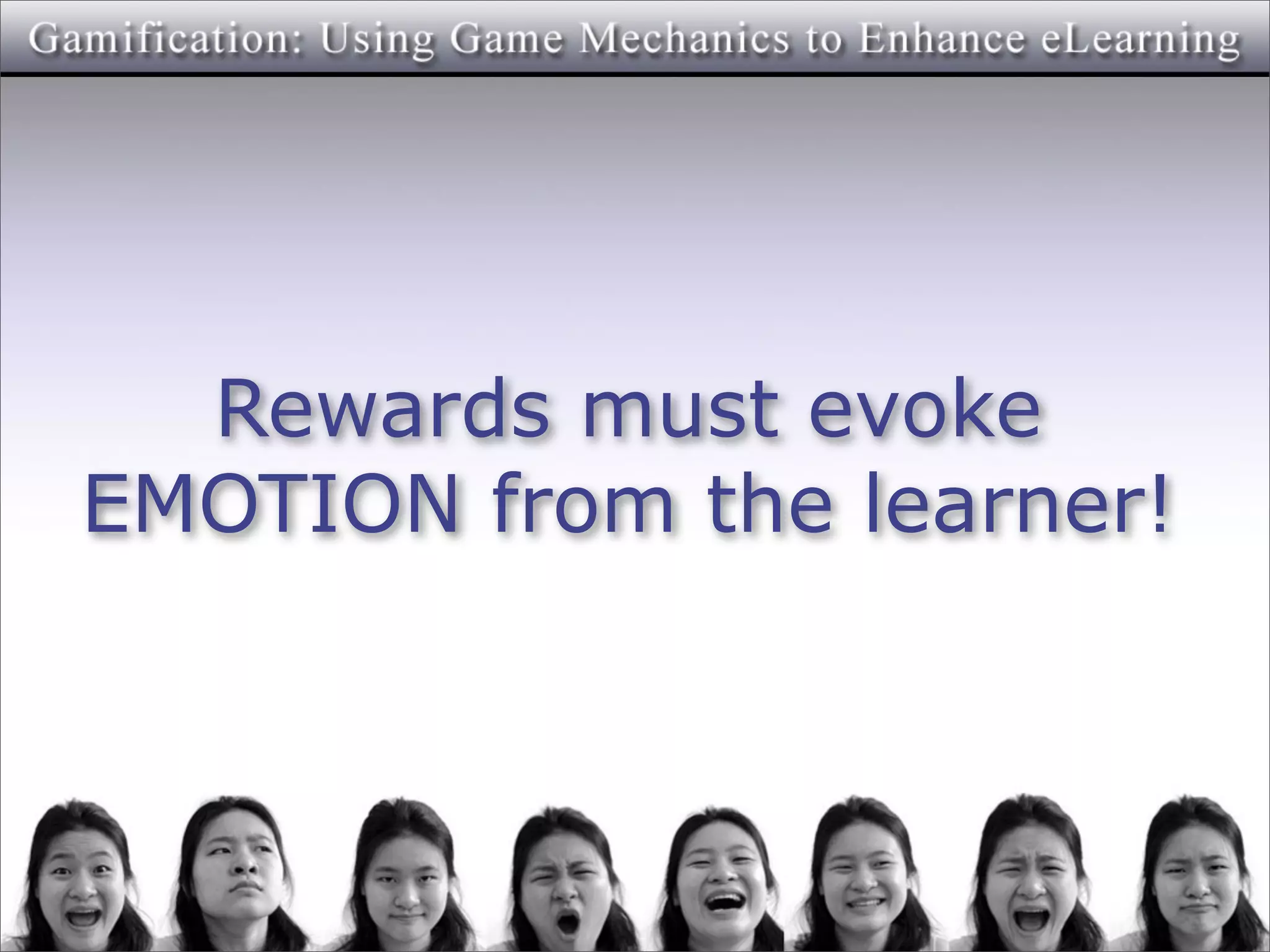
Rewards must evoke
EMOTION from the learner!
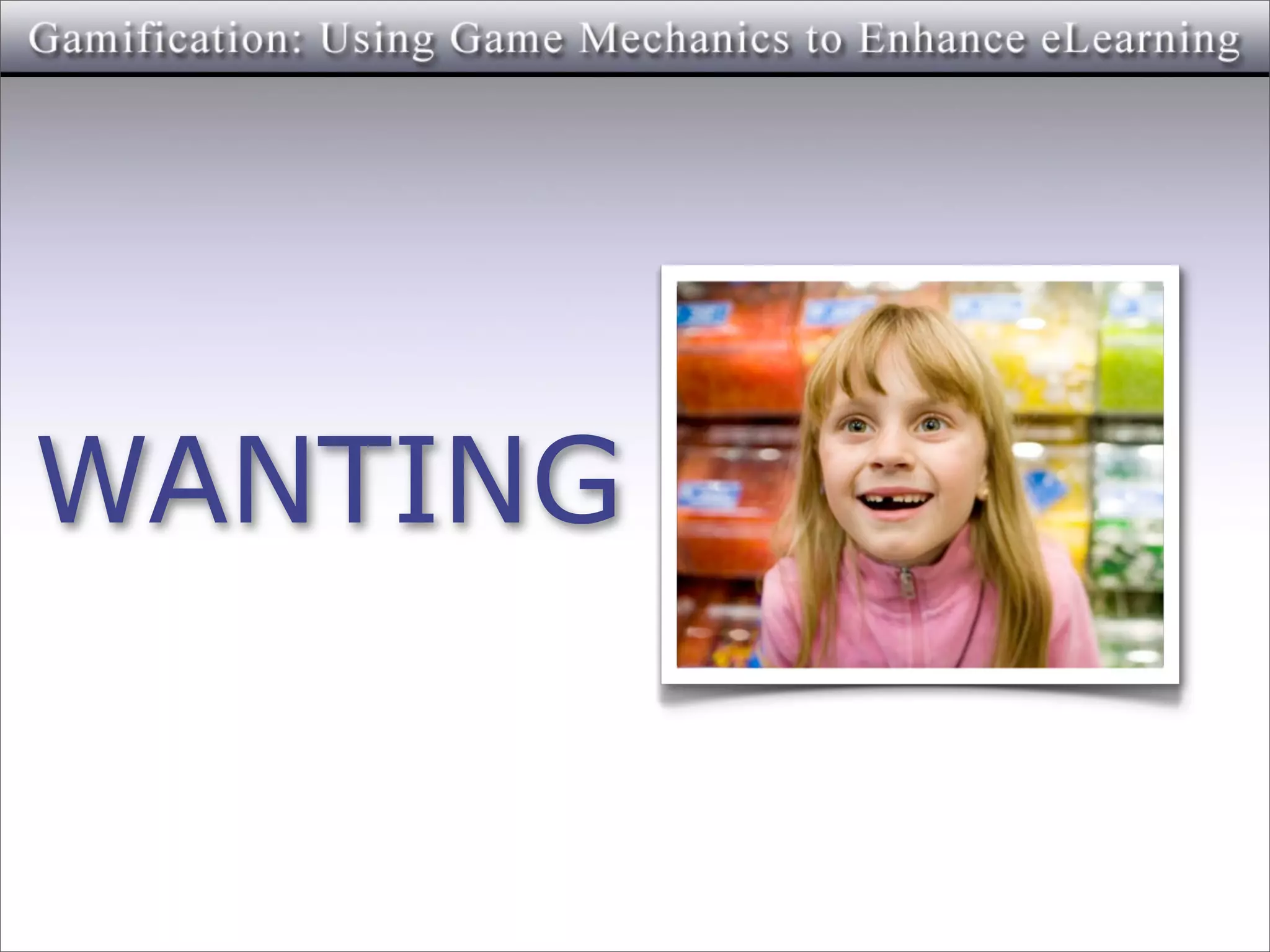
WANTING
LIKING
WANTING+LIKING=REWARDING
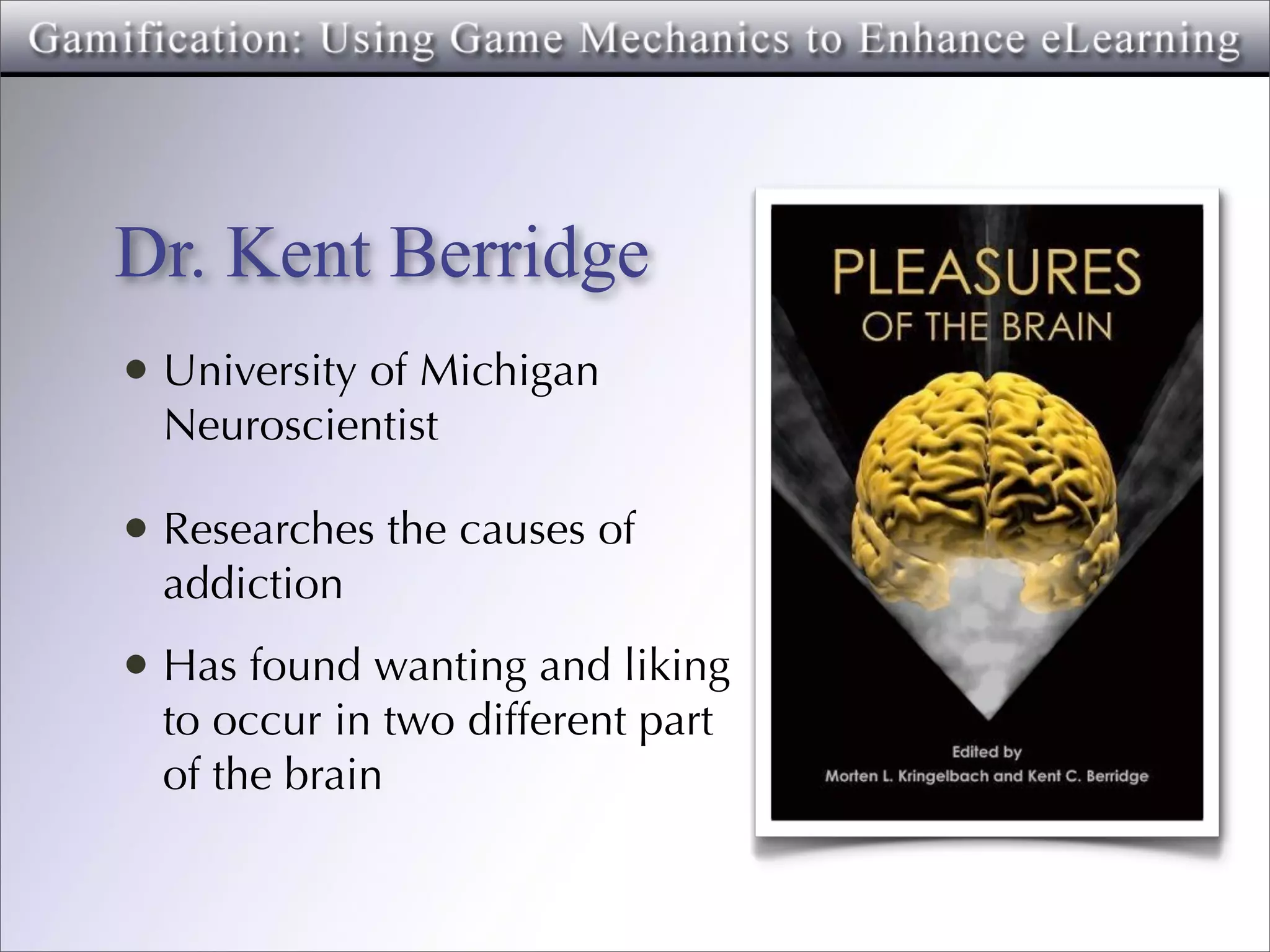
Dr. Kent Berridge
• University of Michigan
  Neuroscientist

• Researches the causes of
  addiction
• Has found wanting and liking
  to occur in two different part
  of the brain
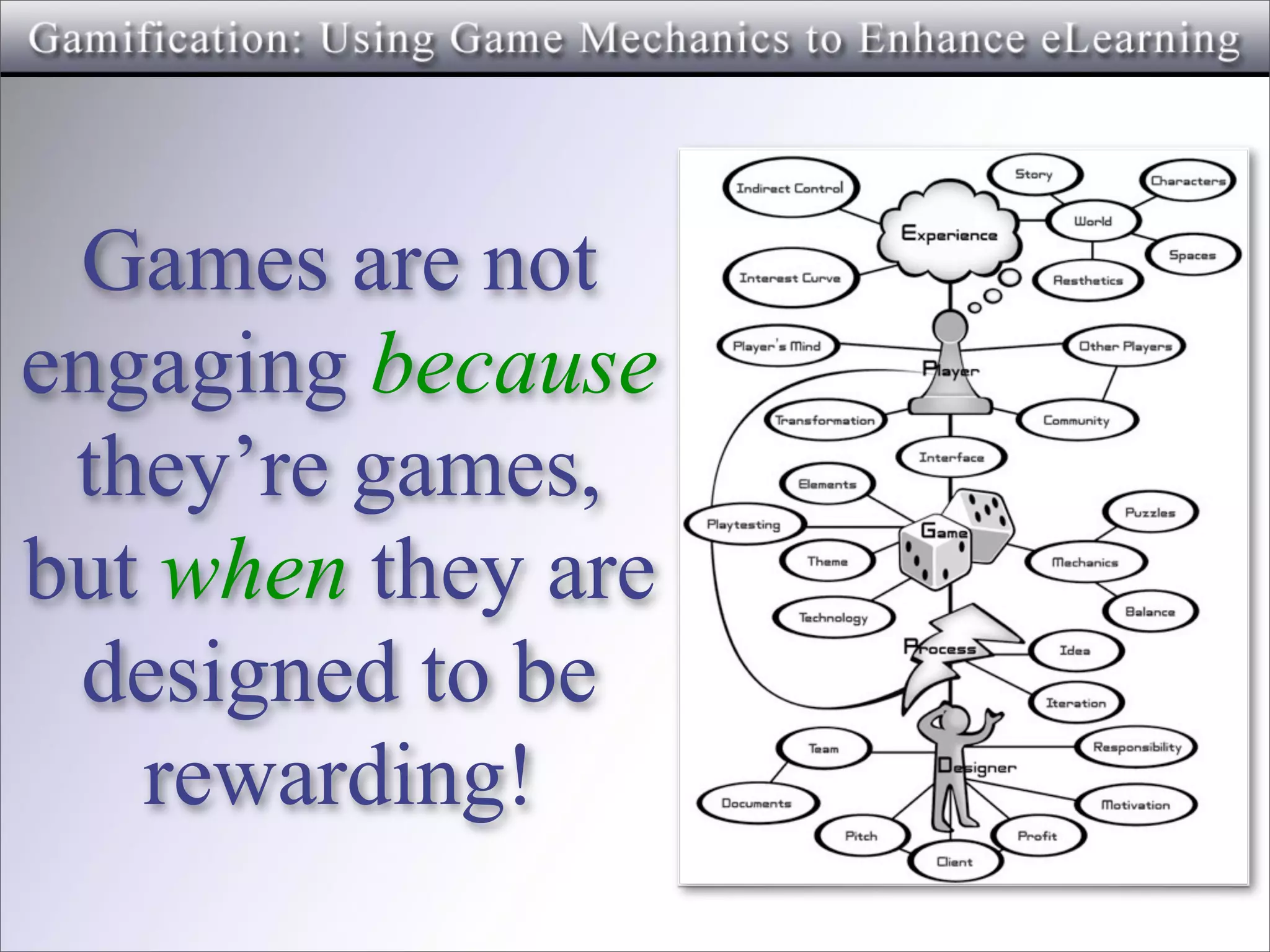
Games are not
engaging because
 they’re games,
but when they are
 designed to be
   rewarding!
What is
Gamification?
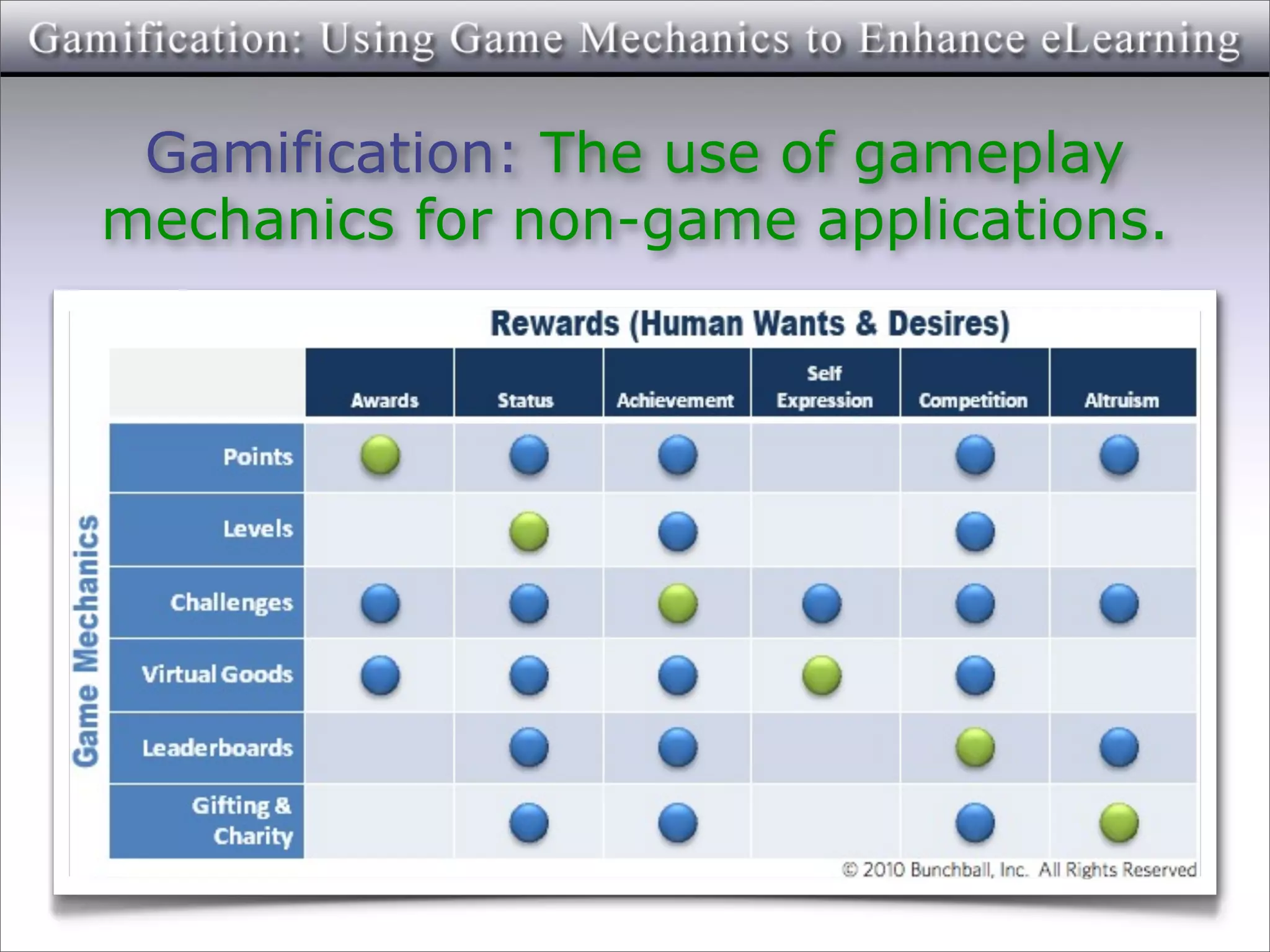
Gamification: The use of gameplay
mechanics for non-game applications.
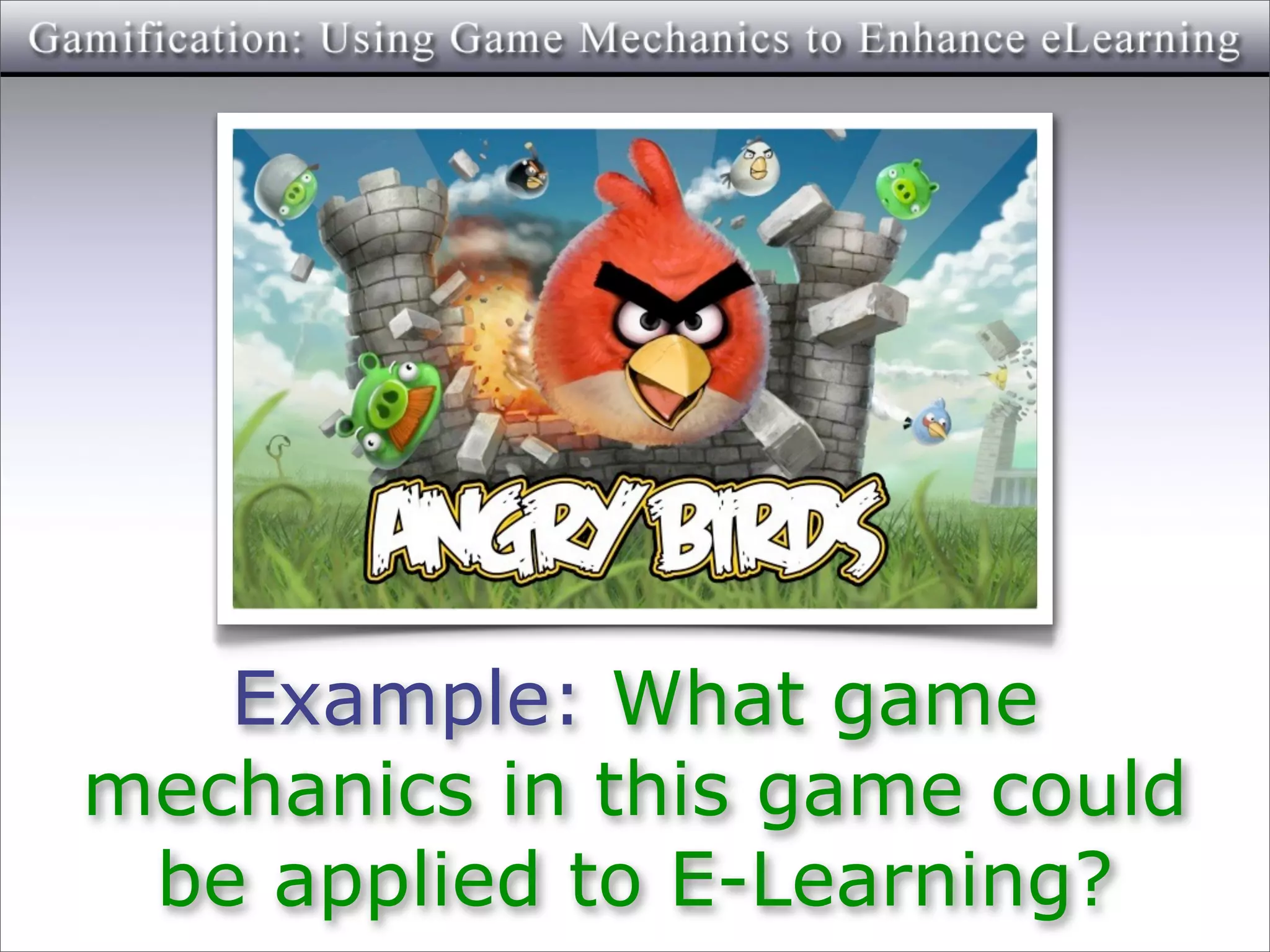
Example: What game
mechanics in this game could
 be applied to E-Learning?
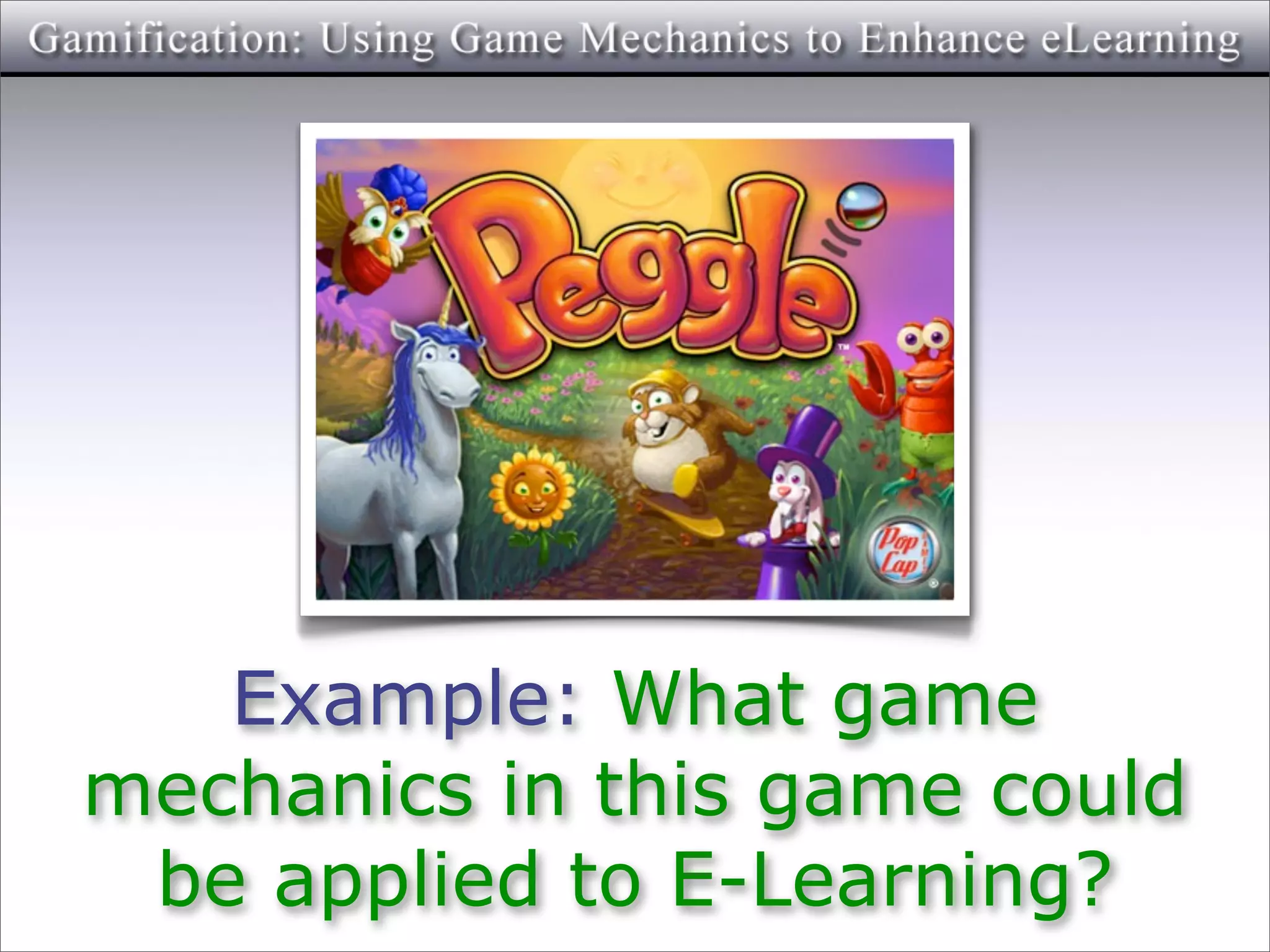
Example: What game
mechanics in this game could
 be applied to E-Learning?
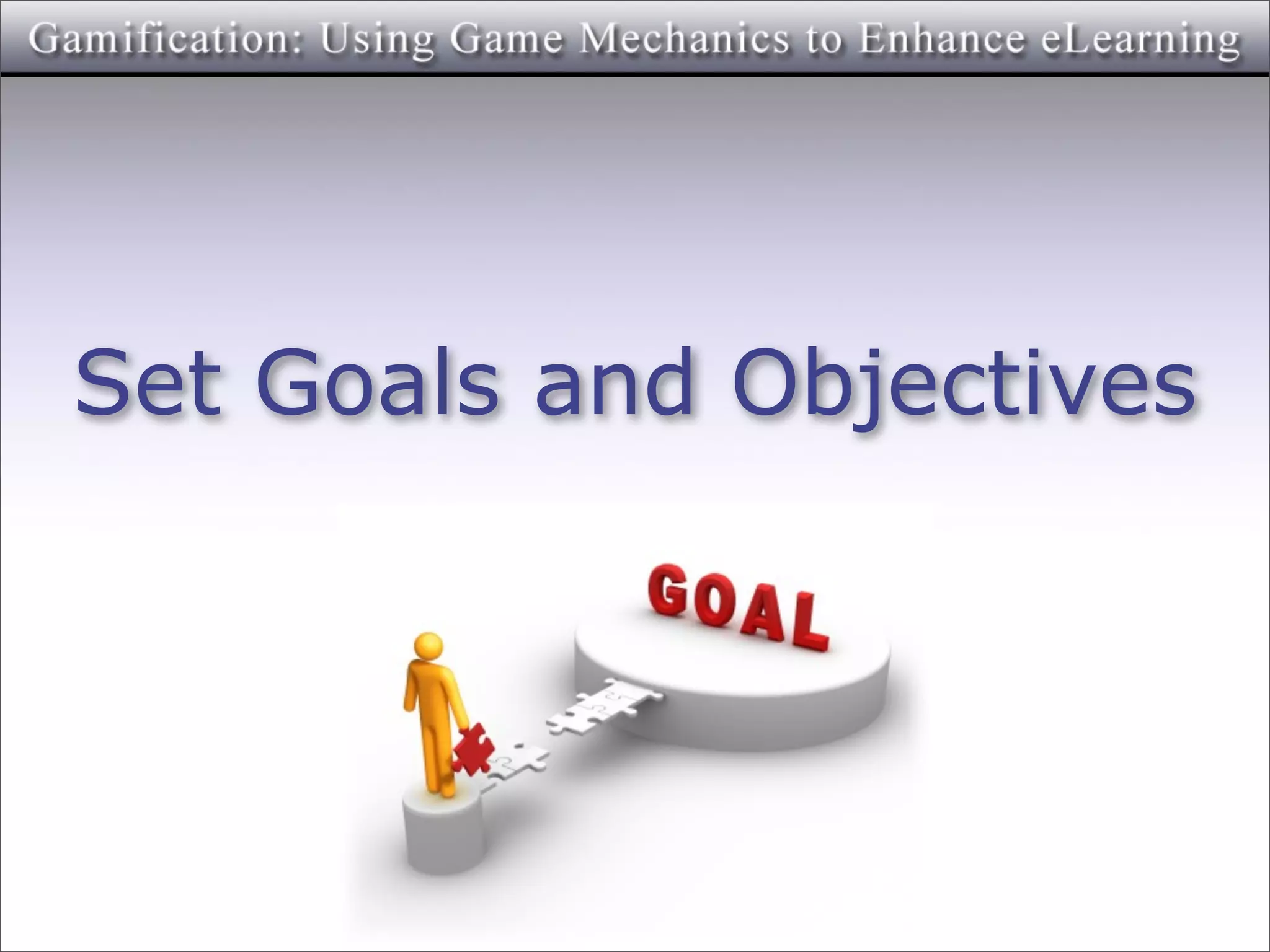
Set Goals and Objectives
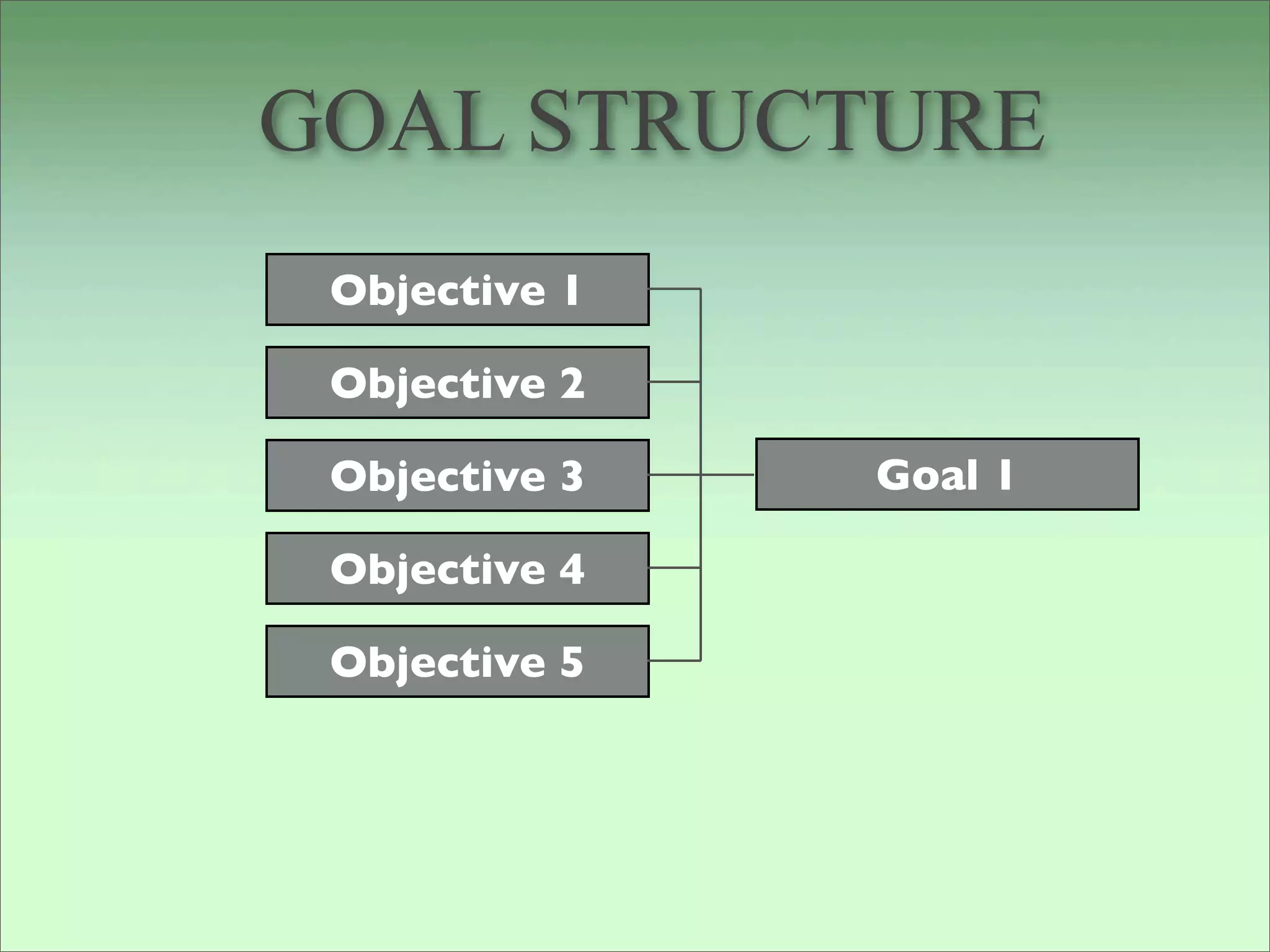
GOAL STRUCTURE
 Objective 1

 Objective 2

 Objective 3   Goal 1

 Objective 4

 Objective 5
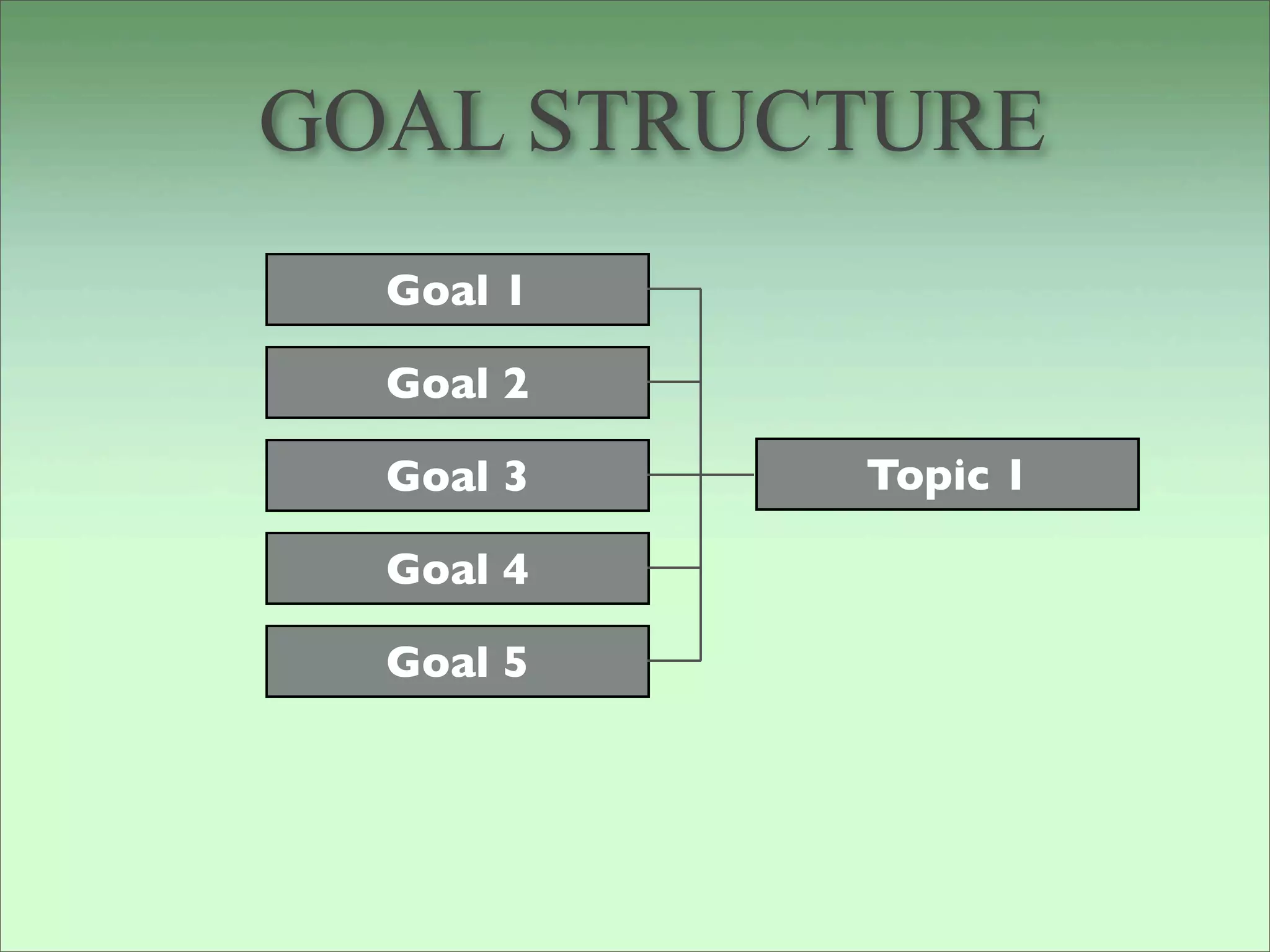
GOAL STRUCTURE
  Goal 1

  Goal 2

  Goal 3   Topic 1

  Goal 4

  Goal 5
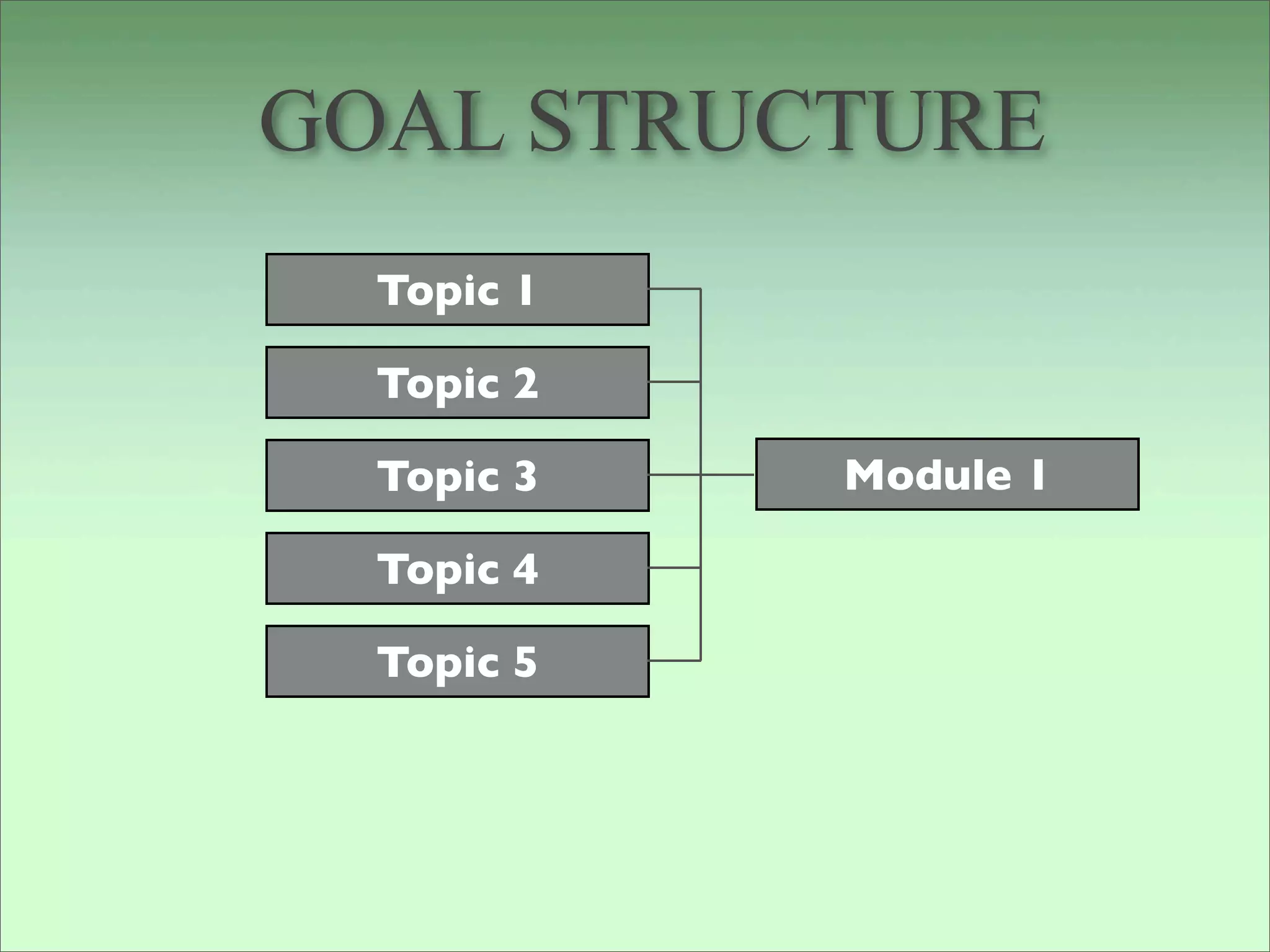
GOAL STRUCTURE
  Topic 1

  Topic 2

  Topic 3   Module 1

  Topic 4

  Topic 5
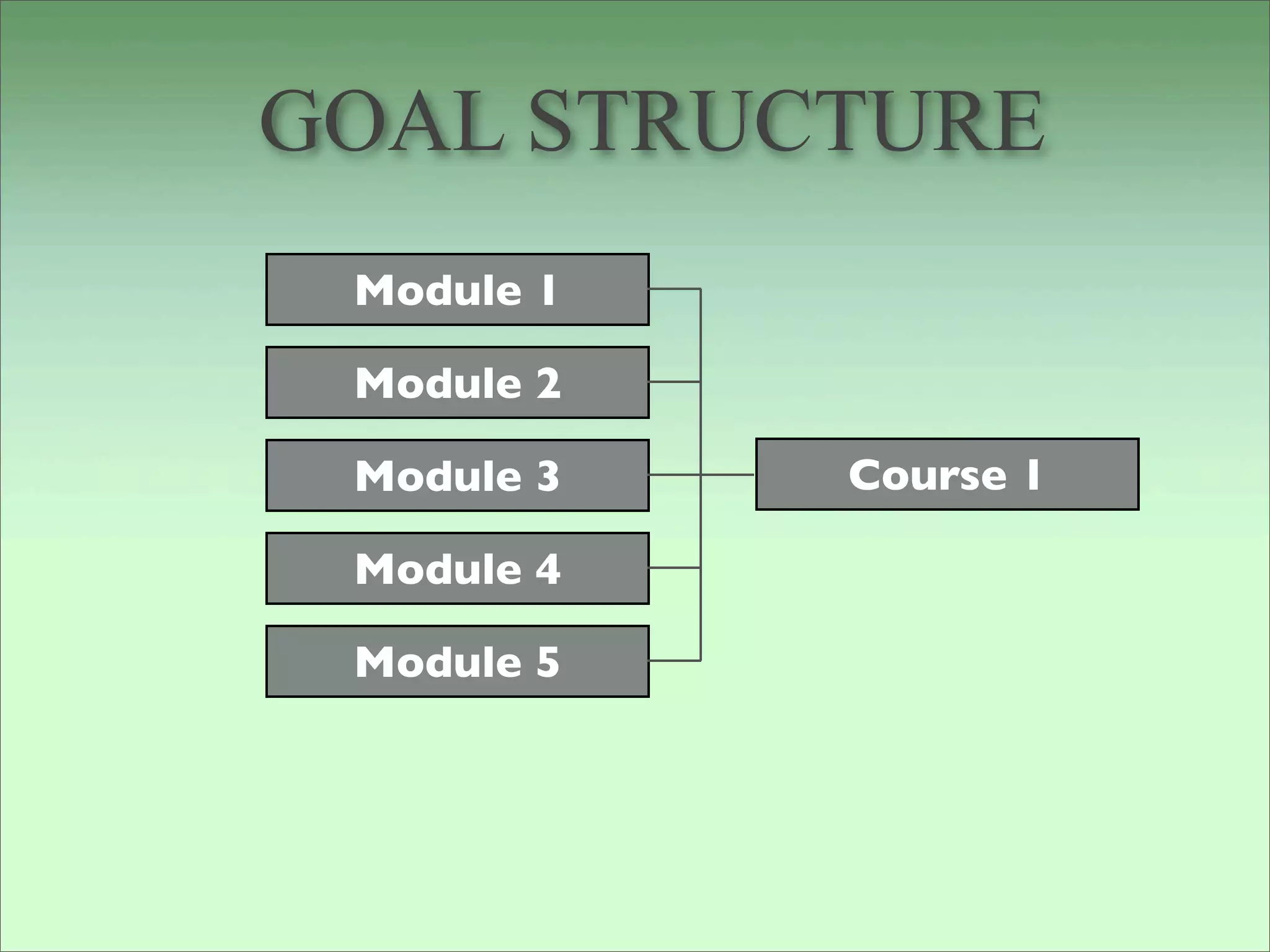
GOAL STRUCTURE
 Module 1

 Module 2

 Module 3   Course 1

 Module 4

 Module 5
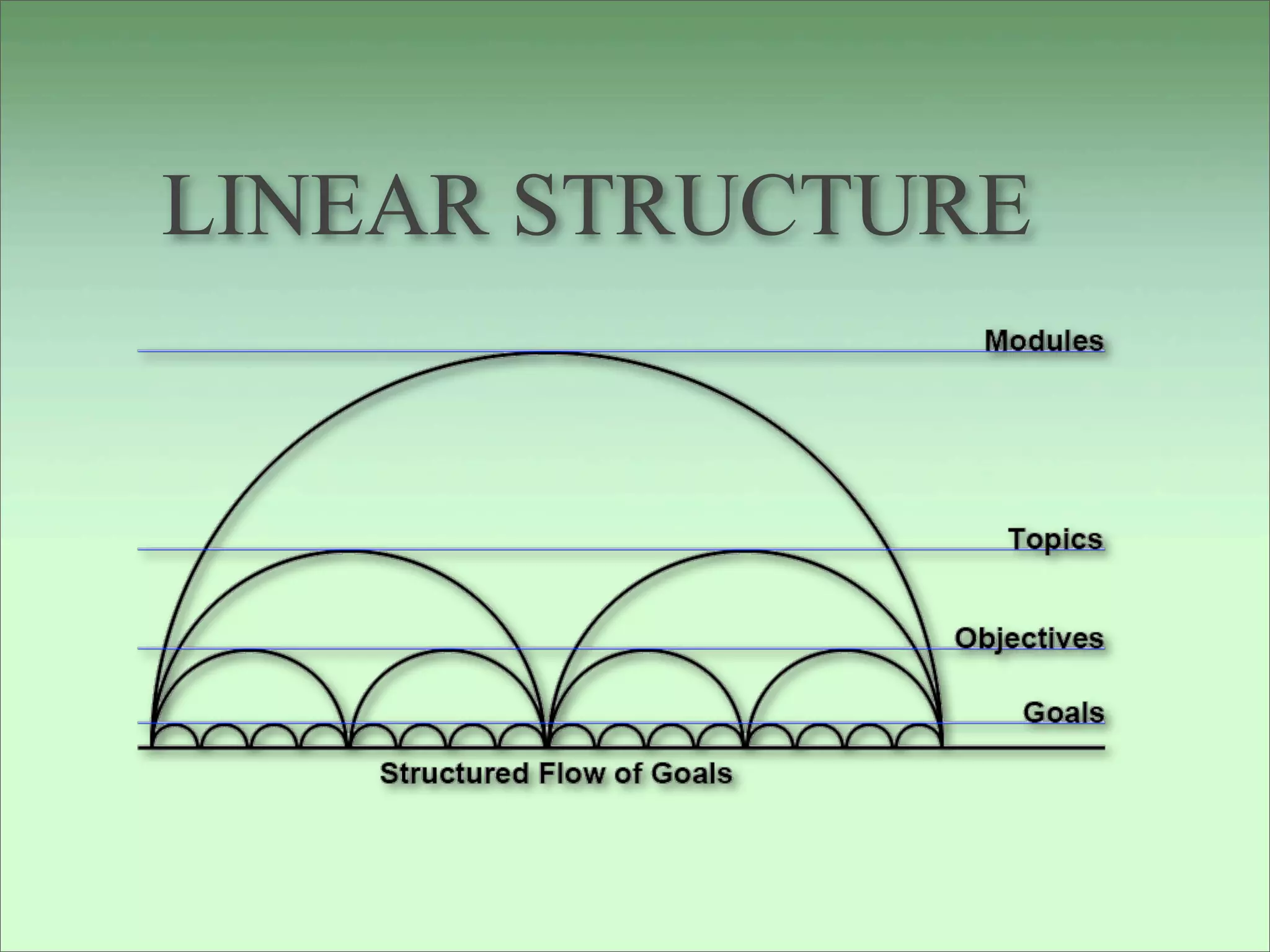
LINEAR STRUCTURE
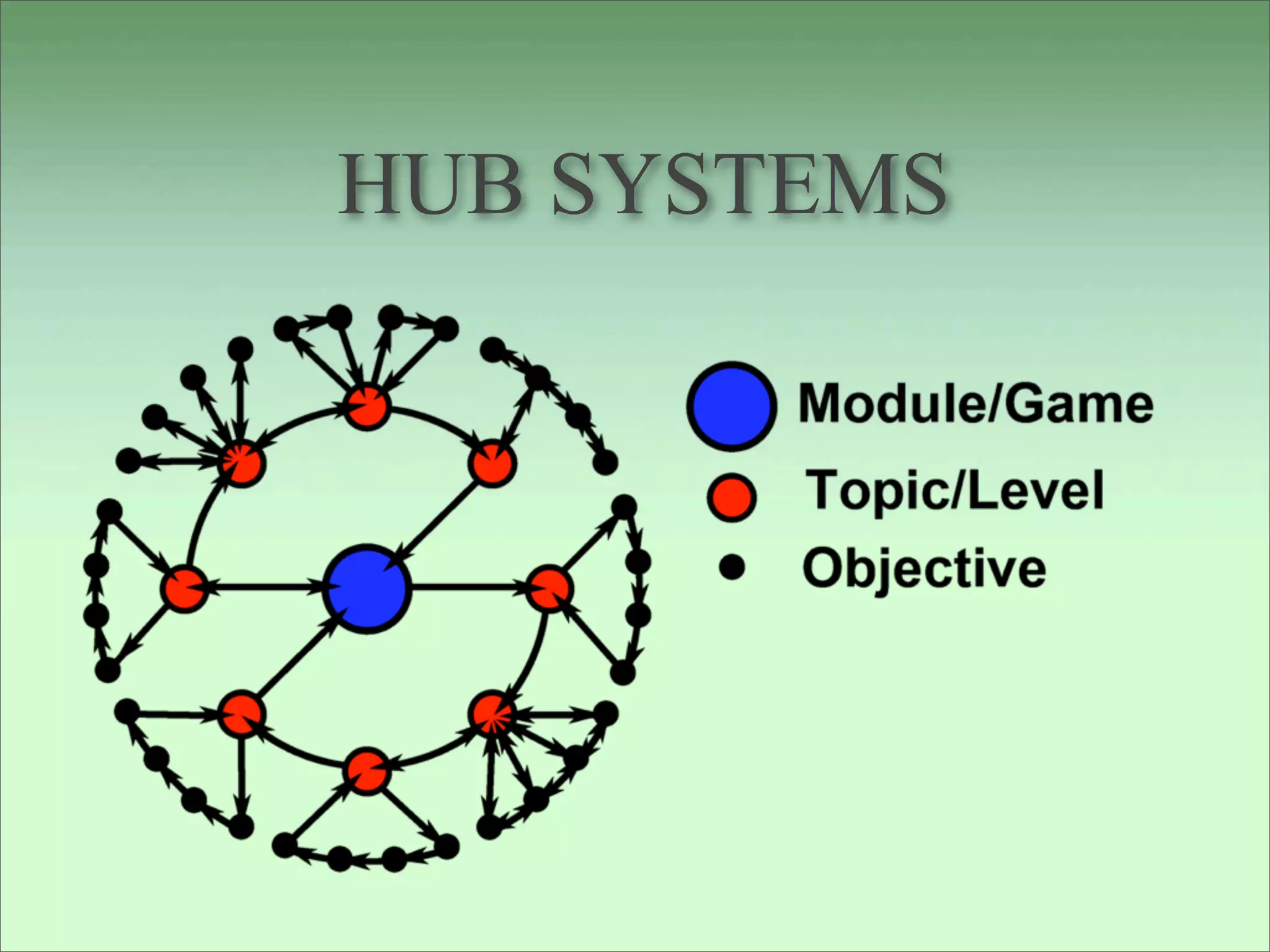
HUB SYSTEMS
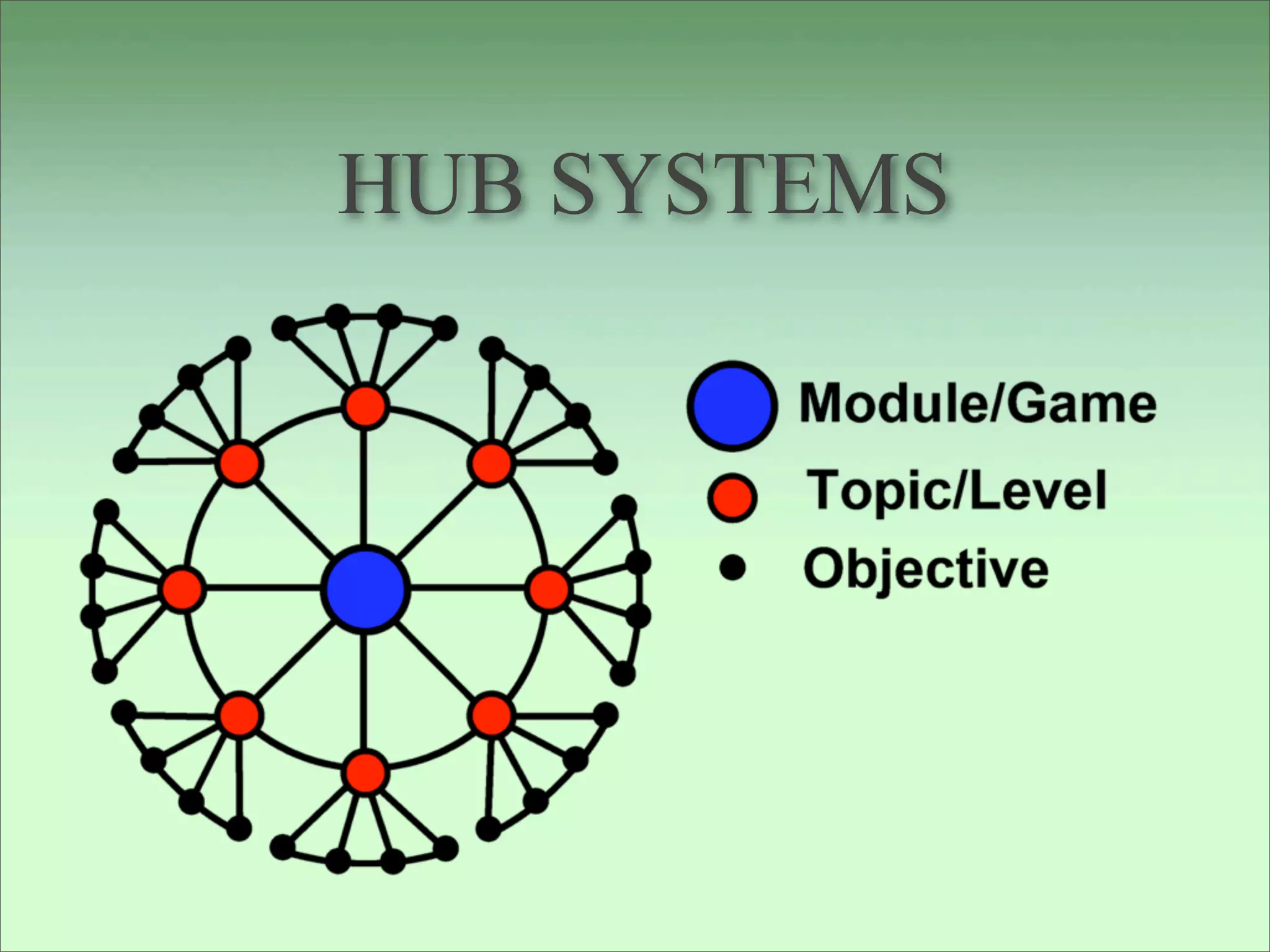
HUB SYSTEMS
HUB SYSTEMS
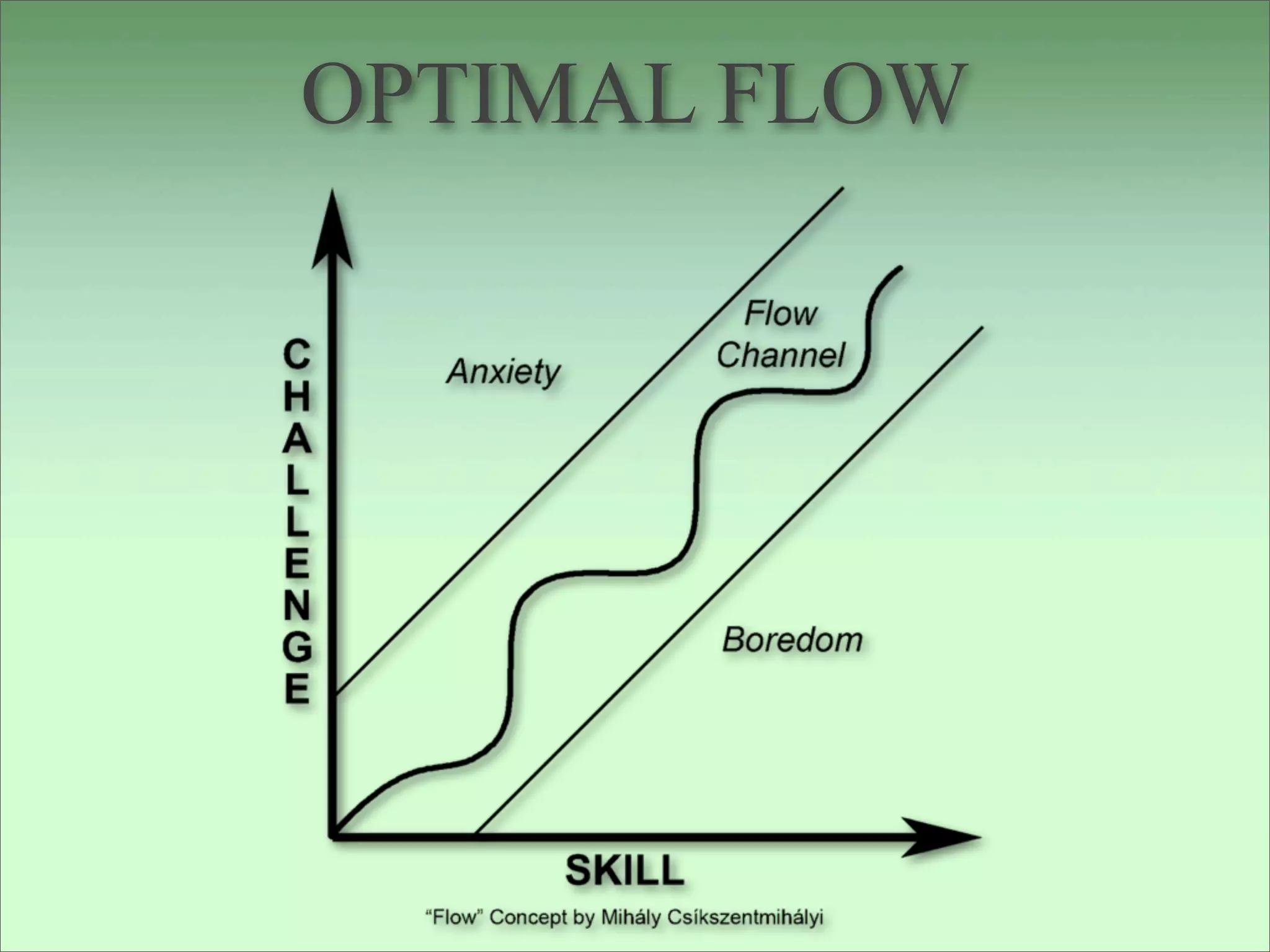
OPTIMAL FLOW
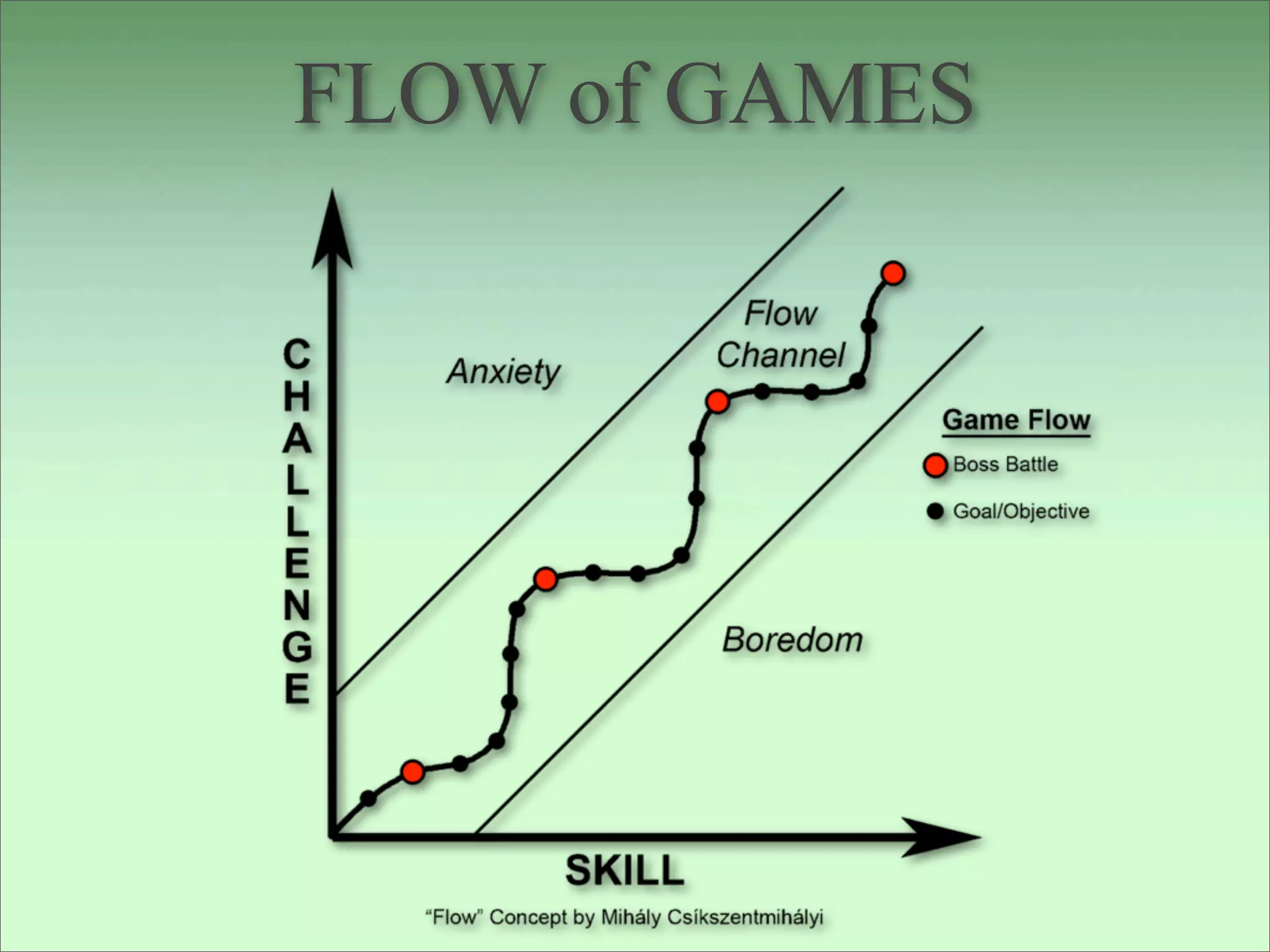
FLOW of GAMES
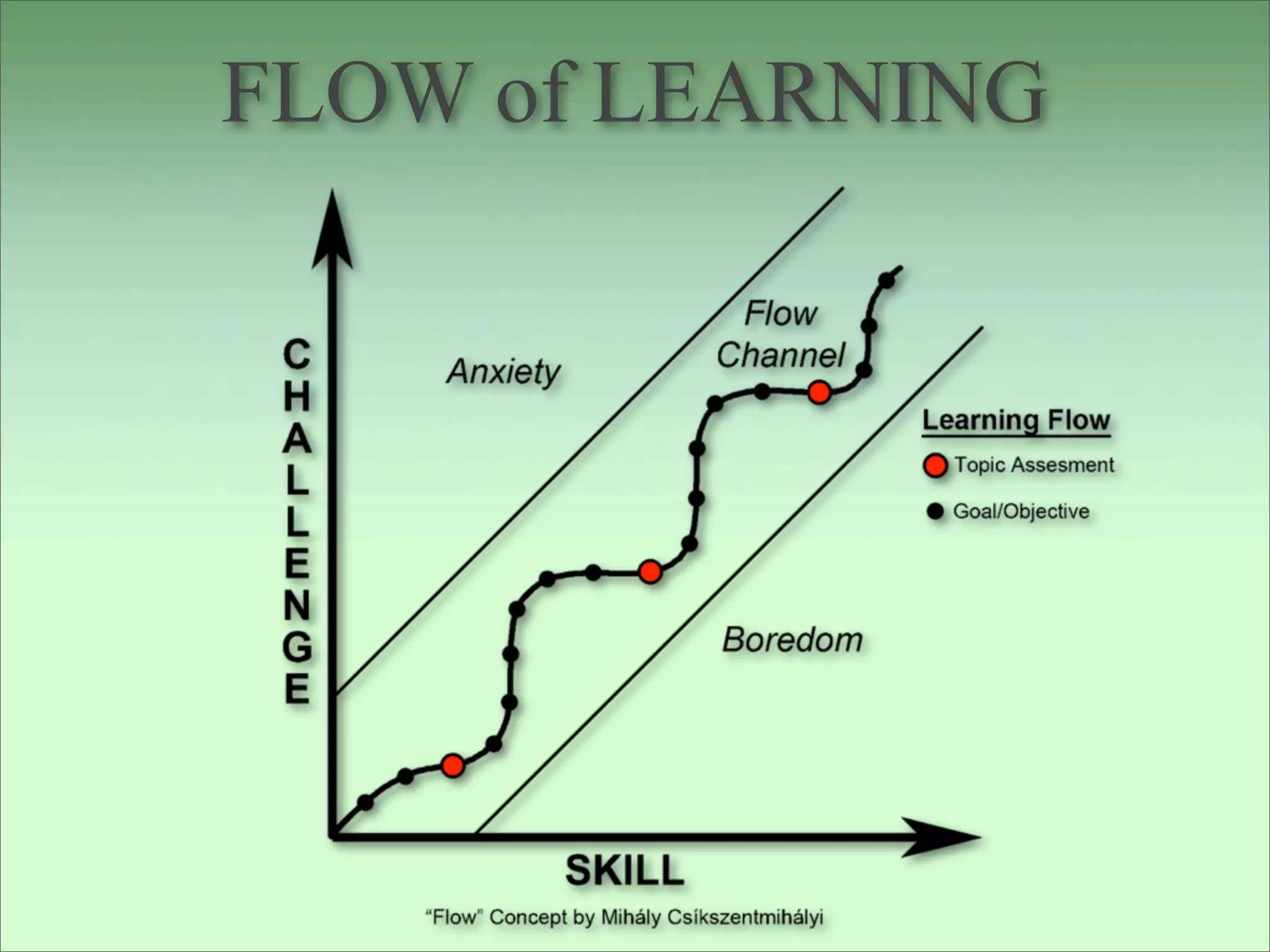
FLOW of LEARNING
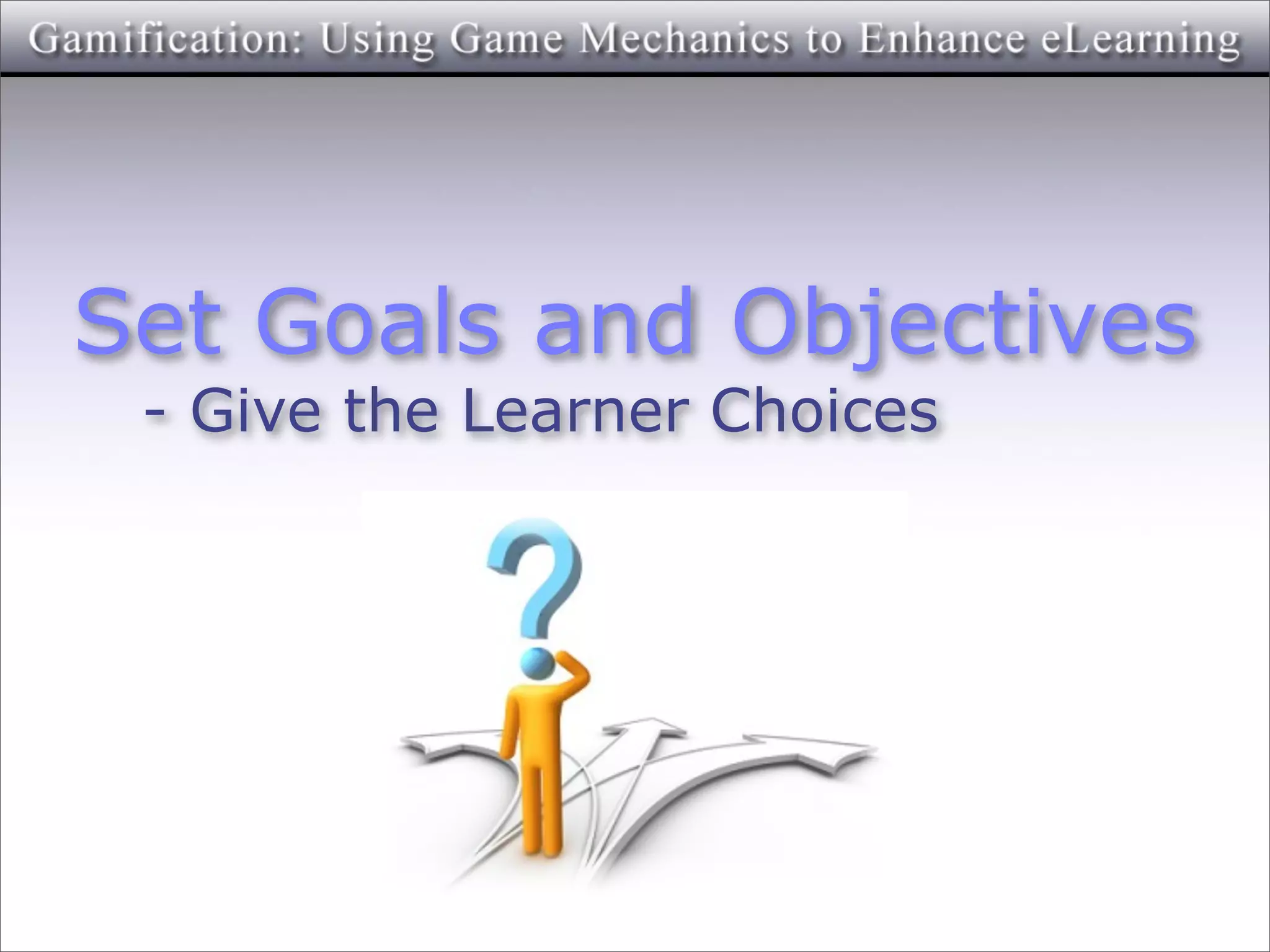
Set Goals and Objectives
 - Give the Learner Choices
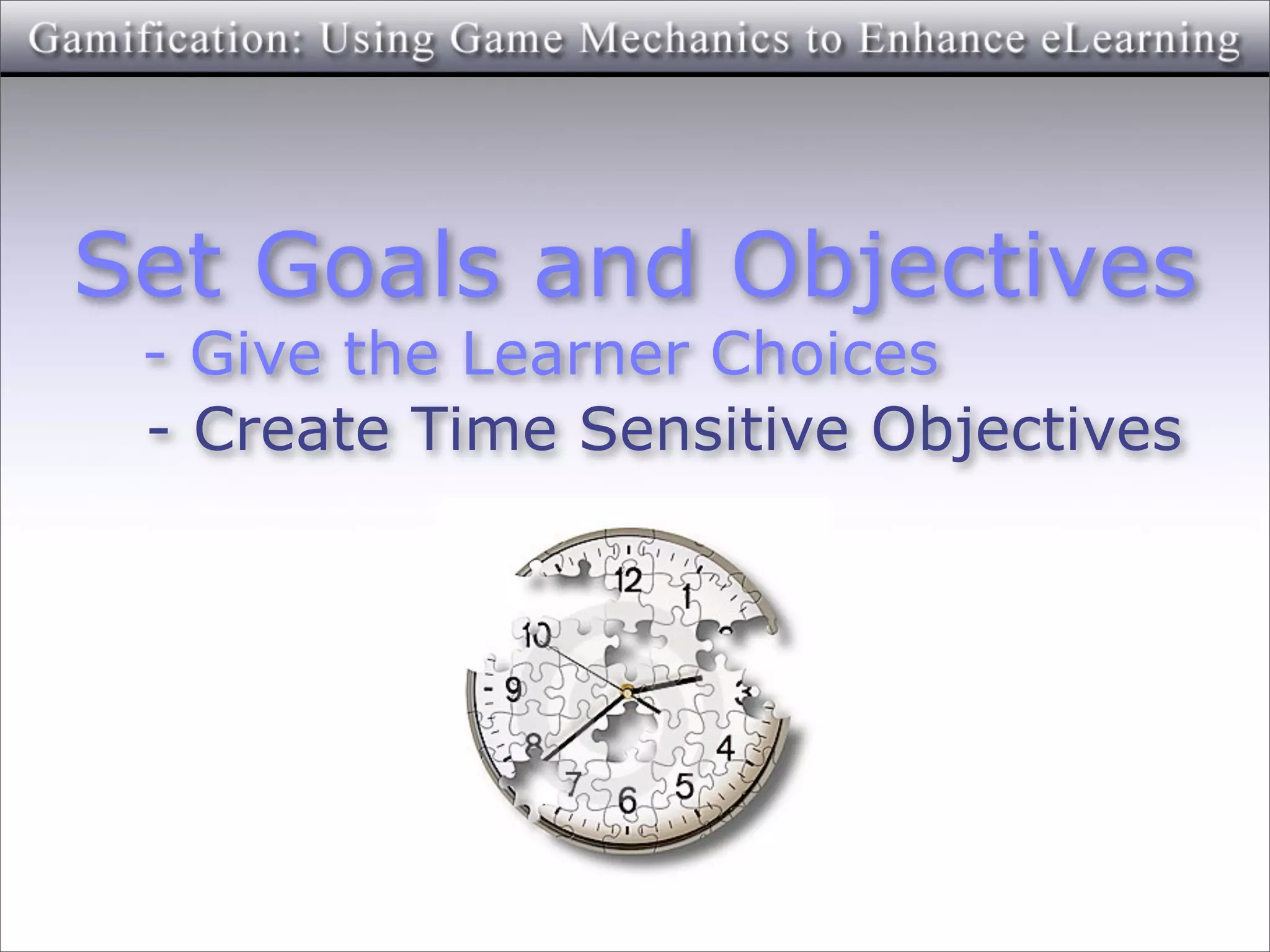
Set Goals and Objectives
 - Give the Learner Choices
 - Create Time Sensitive Objectives
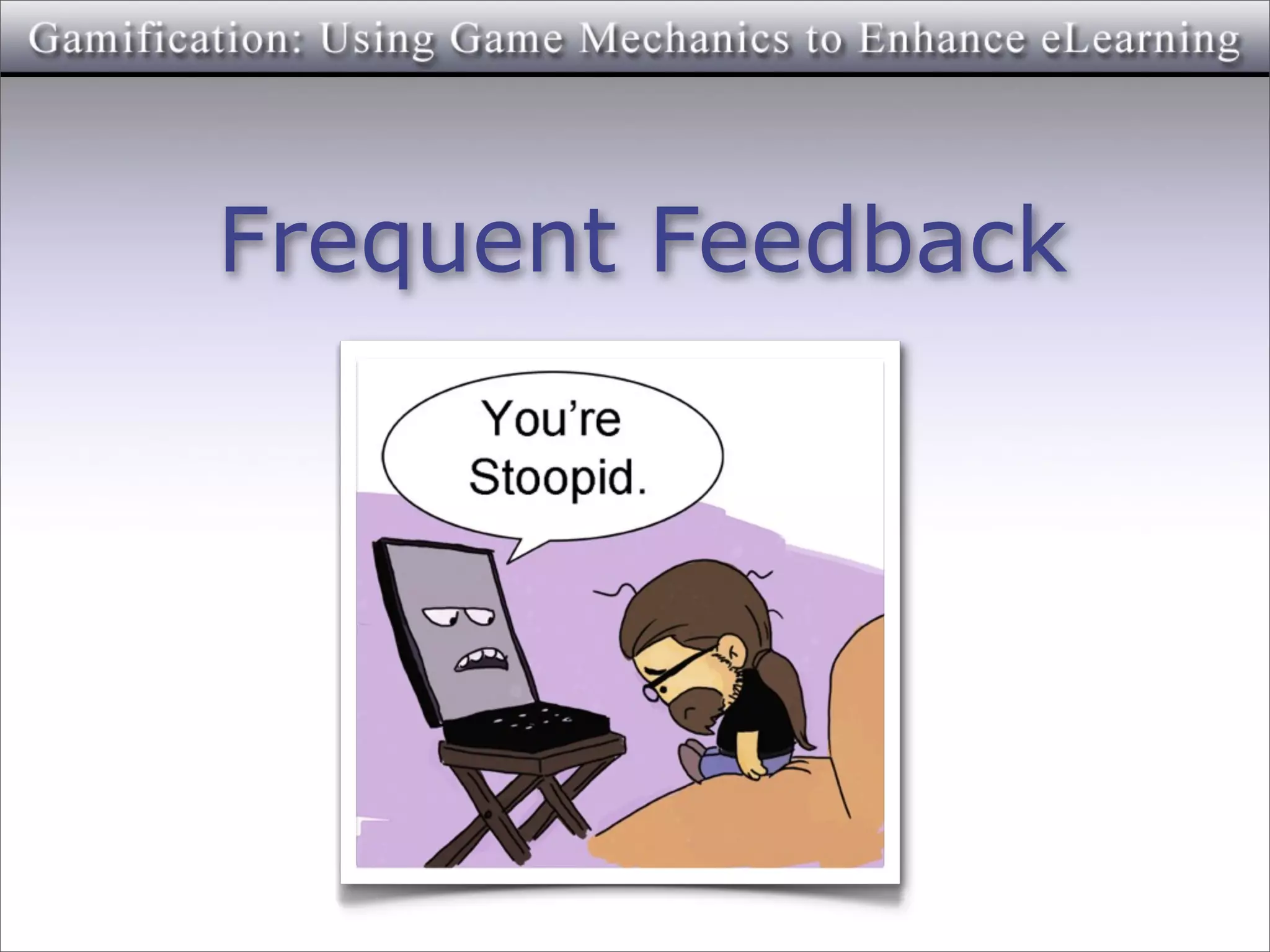
Frequent Feedback
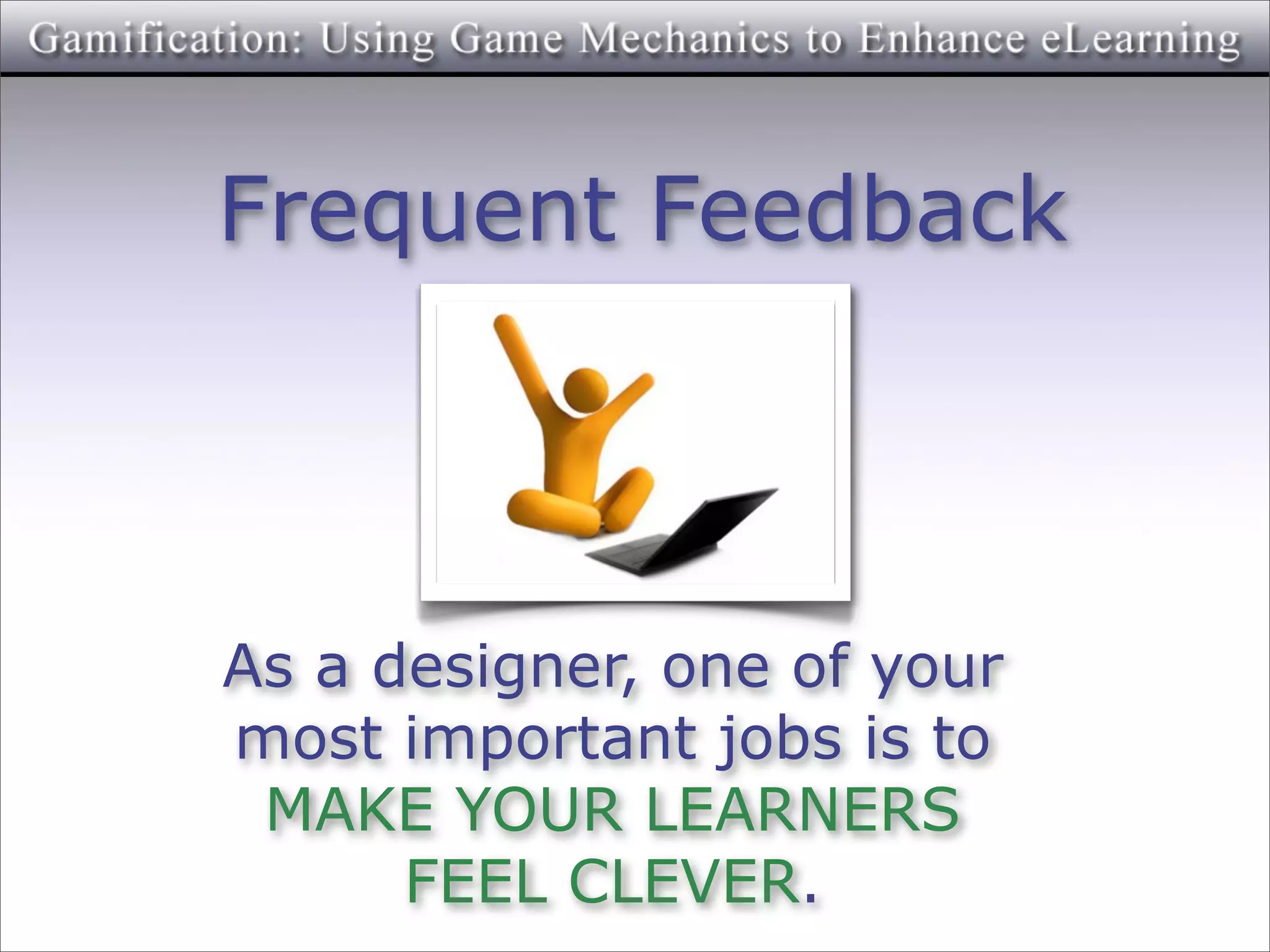
Frequent Feedback


As a designer, one of your
most important jobs is to
 MAKE YOUR LEARNERS
      FEEL CLEVER.
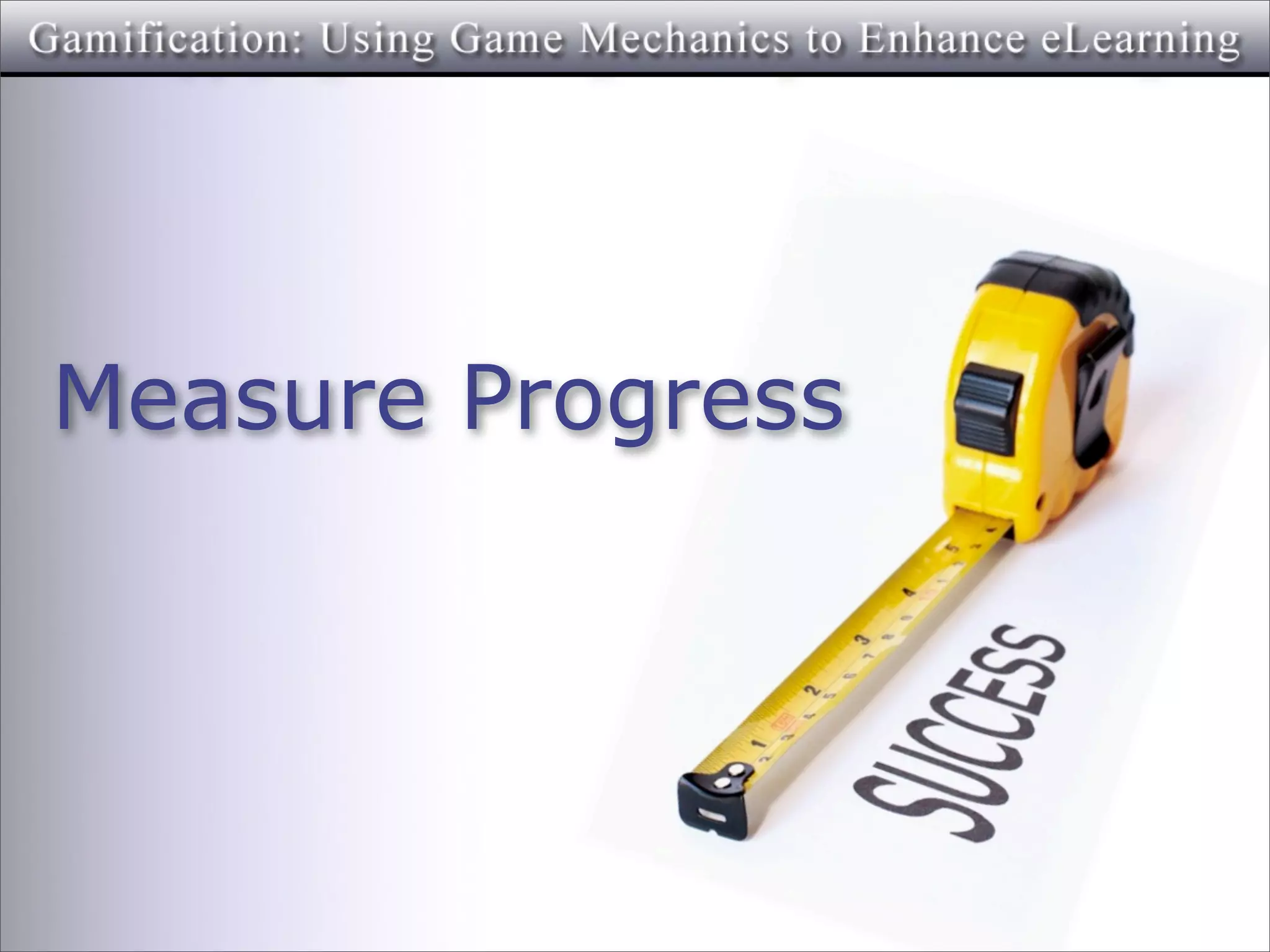
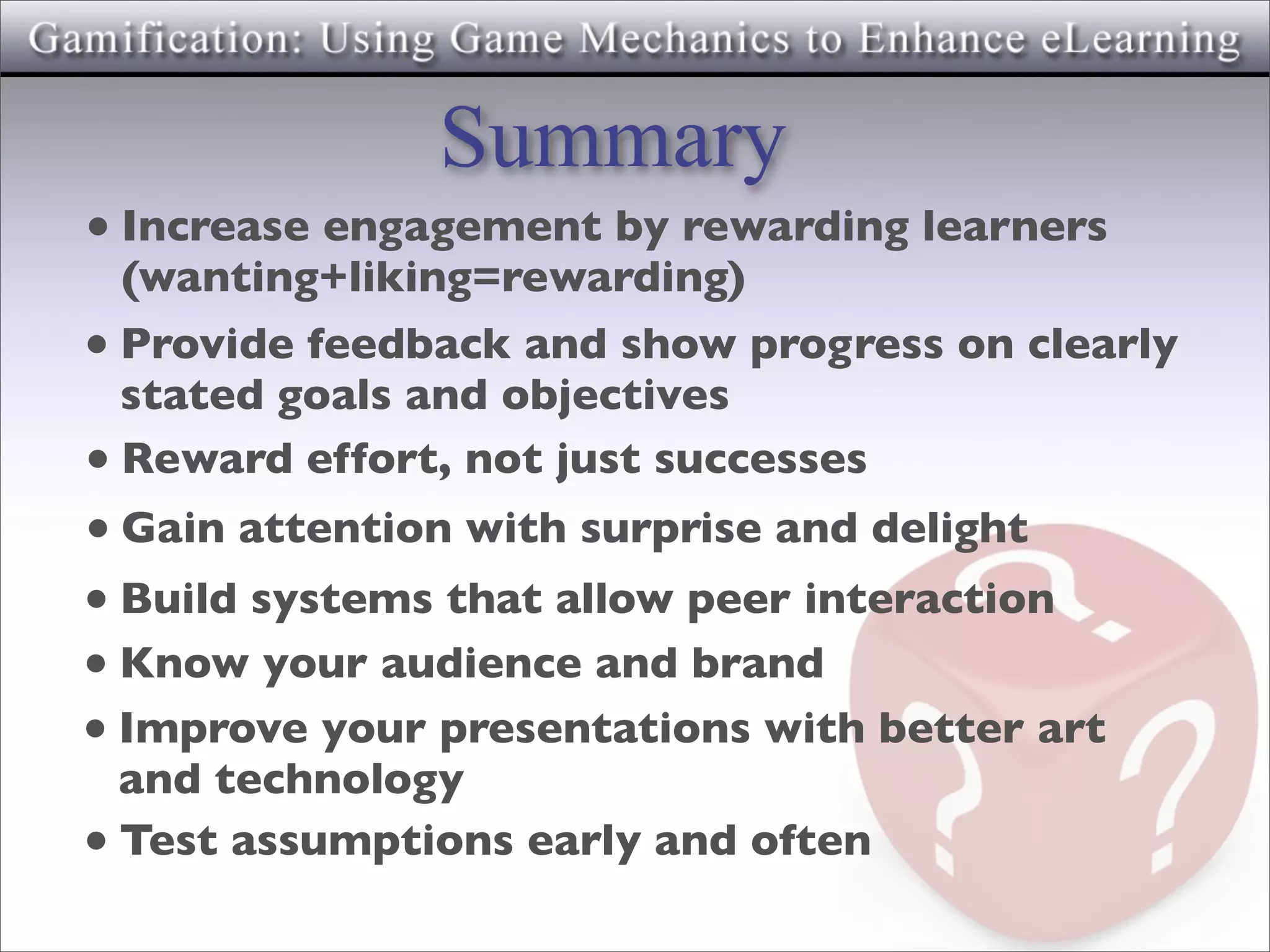
Measure Progress
Measure Progress
  - Visual Representation
    of Experience
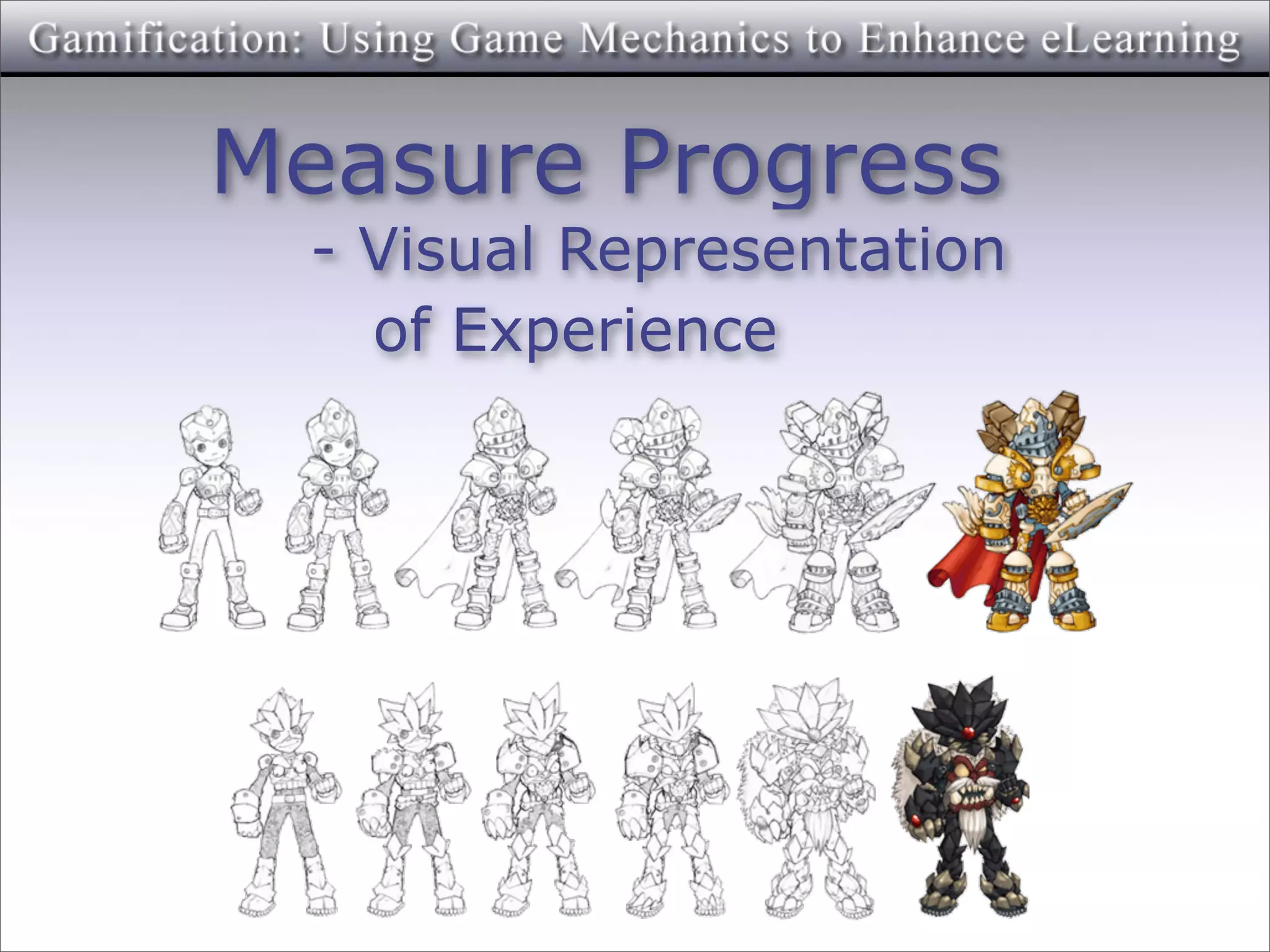
Reward Effort
Reward Effort
- Incremental Rewards
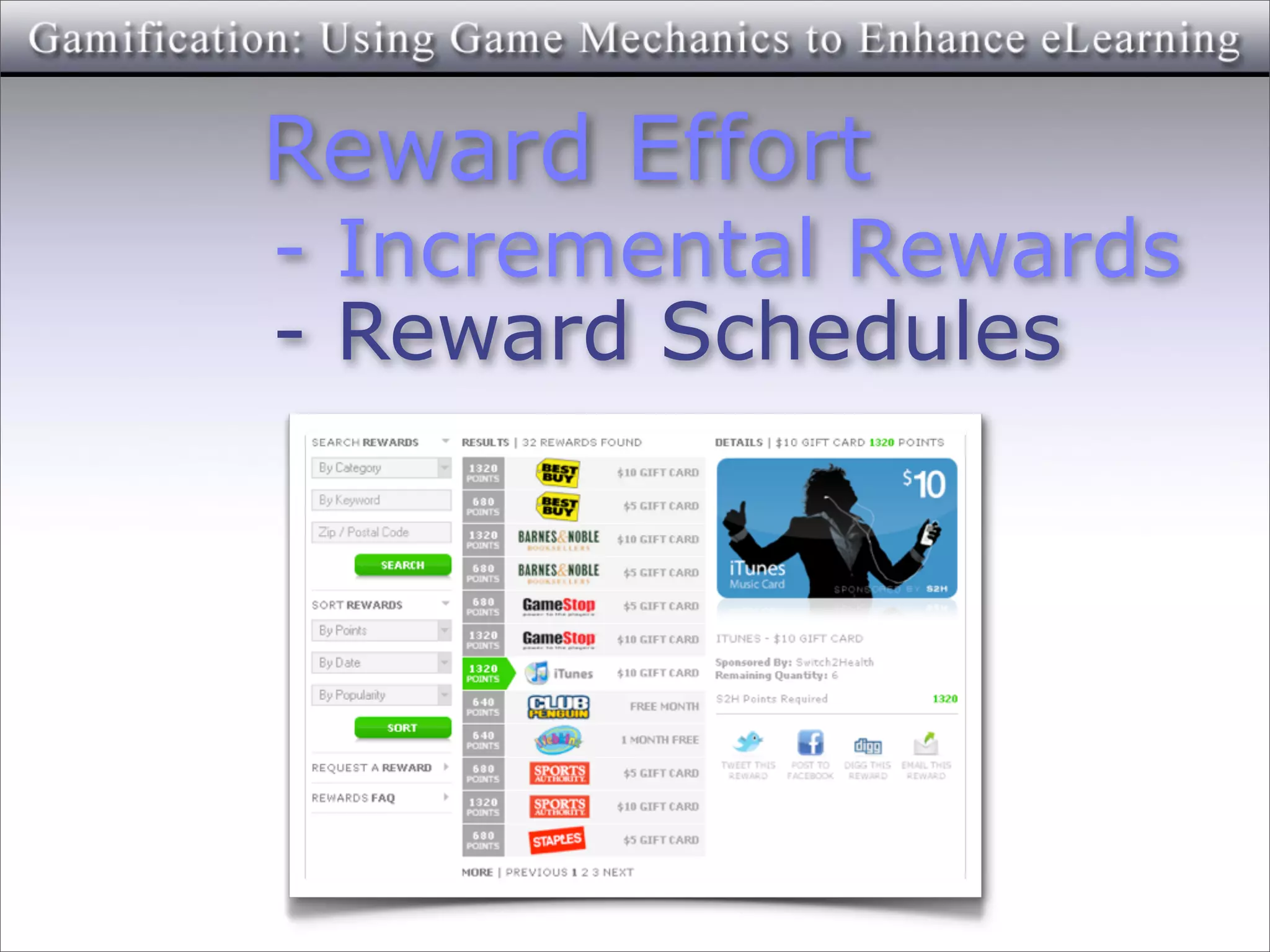
Reward Effort
- Incremental Rewards
- Reward Schedules
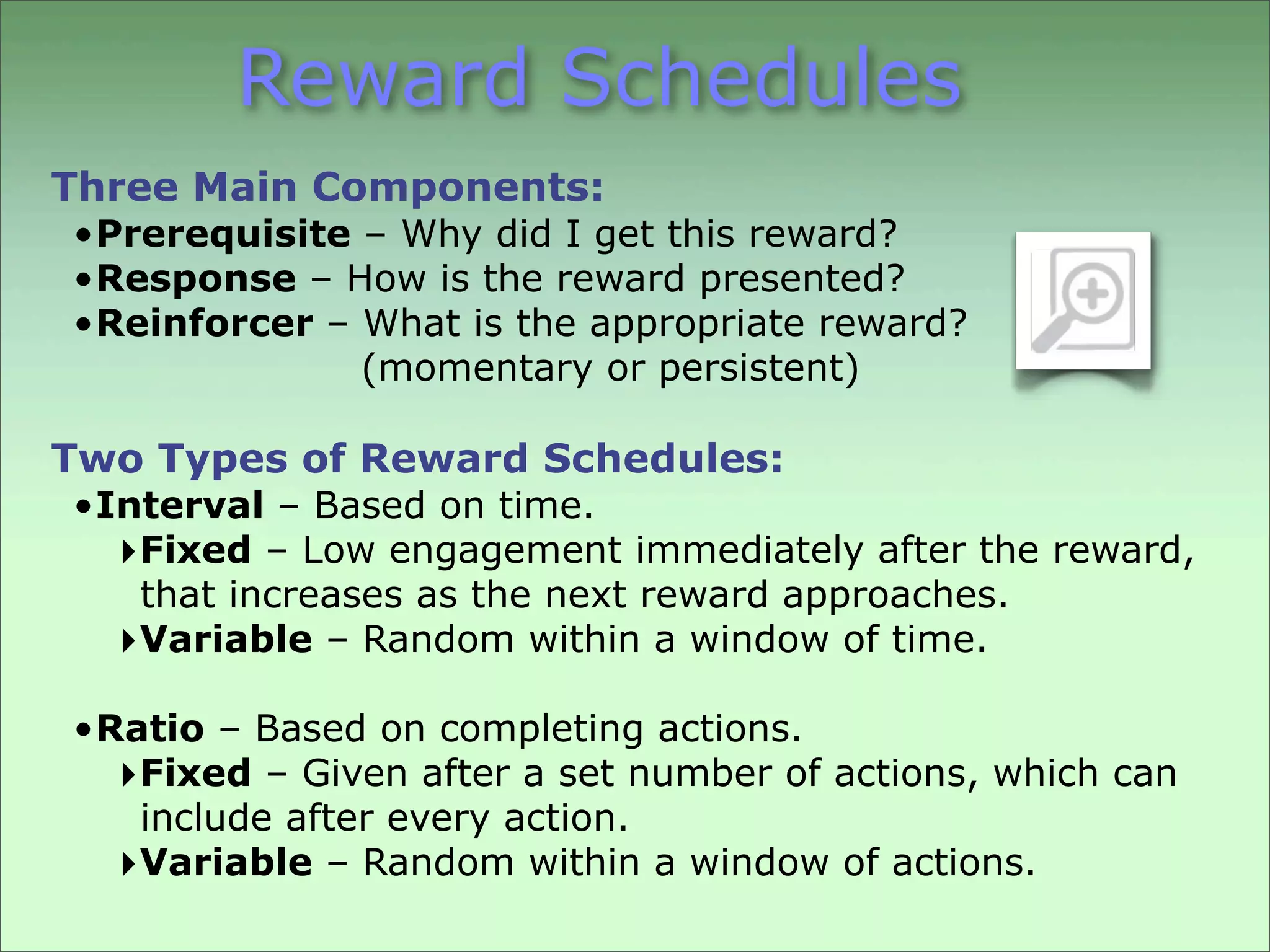
Reward Schedules
Three Main Components:
• Prerequisite – Why did I get this reward?
• Response – How is the reward presented?
• Reinforcer – What is the appropriate reward?
               (momentary or persistent)

Two Types of Reward Schedules:
• Interval – Based on time.
   ‣Fixed – Low engagement immediately after the reward,
    that increases as the next reward approaches.
   ‣Variable – Random within a window of time.
• Ratio – Based on completing actions.
   ‣Fixed – Given after a set number of actions, which can
    include after every action.
   ‣Variable – Random within a window of actions.
Reward Effort
- Incremental Rewards
- Reward Schedules
- Probability and Danger
Reward Effort
-   Incremental Rewards
-   Reward Schedules
-   Probability and Danger
-   Adaptive Systems
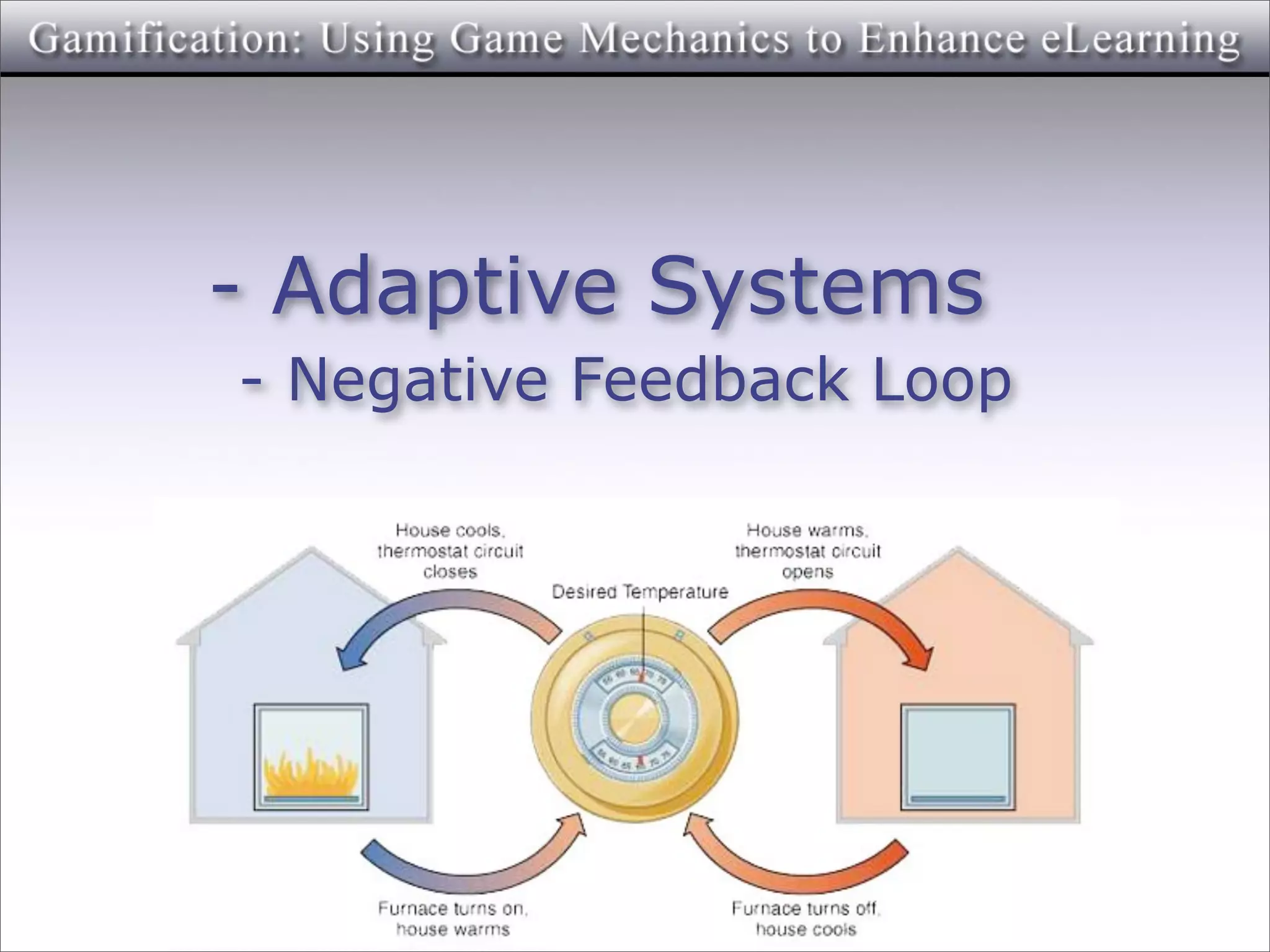
- Adaptive Systems
- Negative Feedback Loop
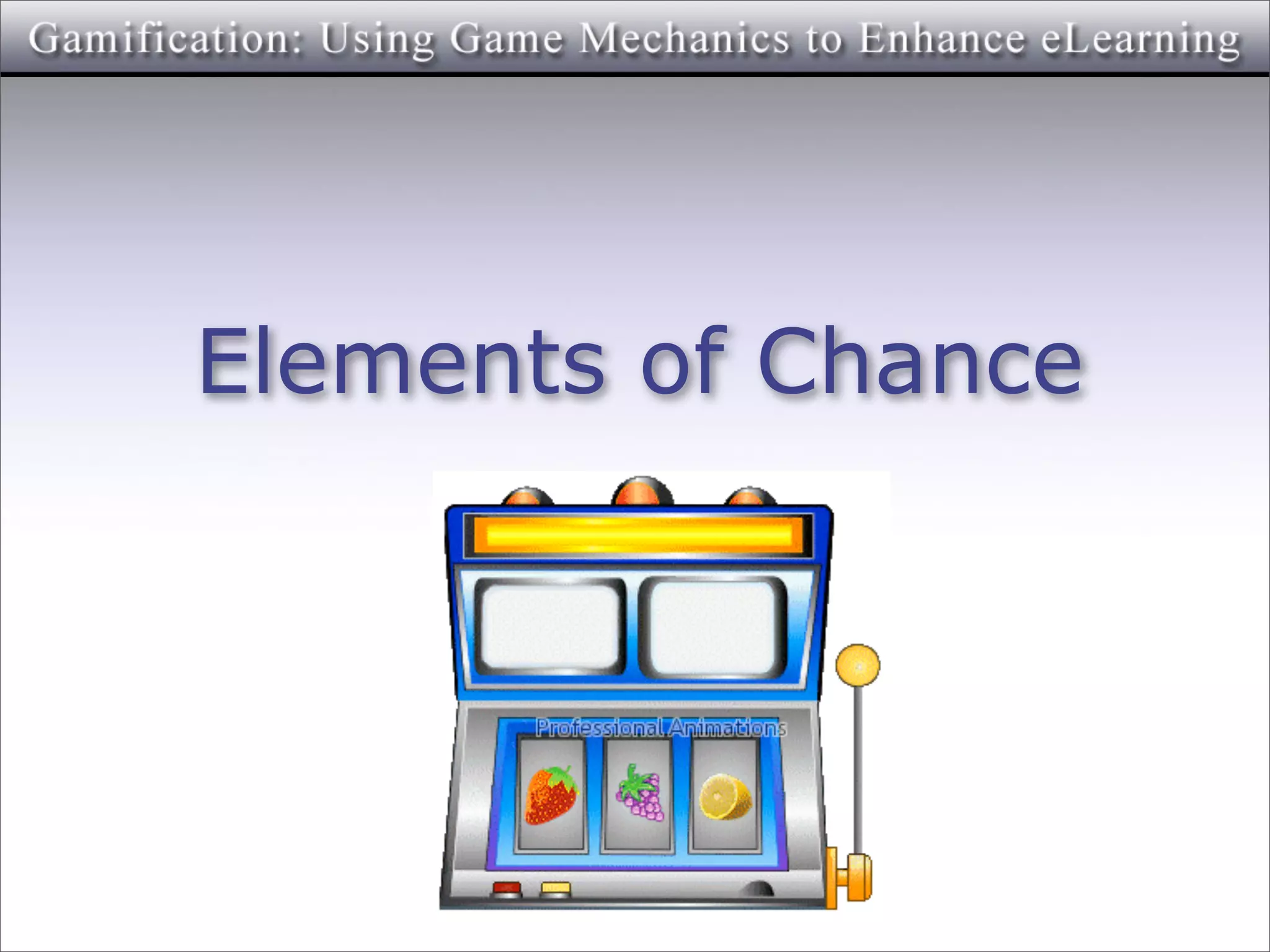
Elements of Chance
Elements of Chance
 - Surprise and Delight
Moments of Intense
   Attention
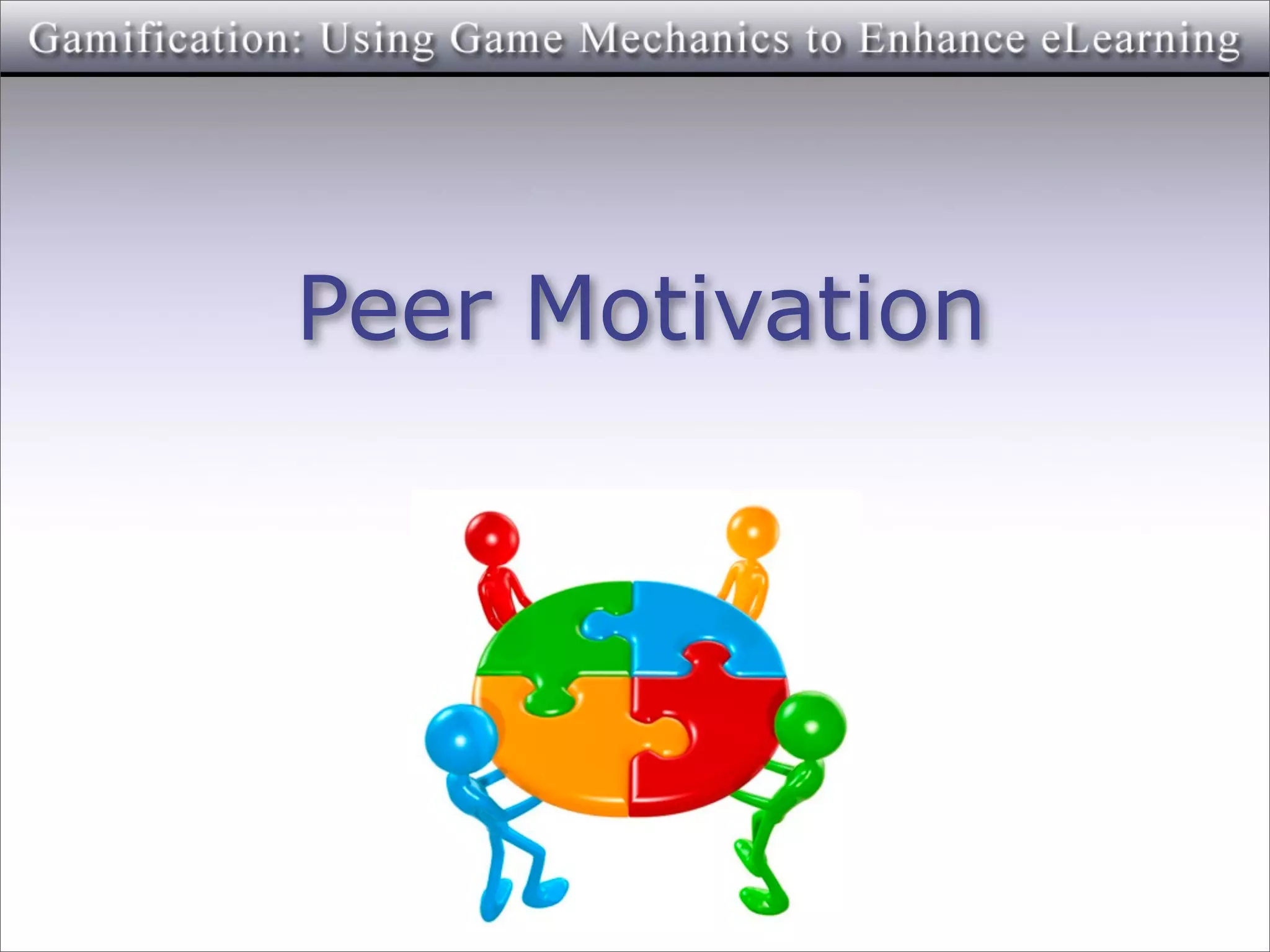
Peer Motivation
Suggestions for
Specific Project
    Phases
Pre-Concept Phase
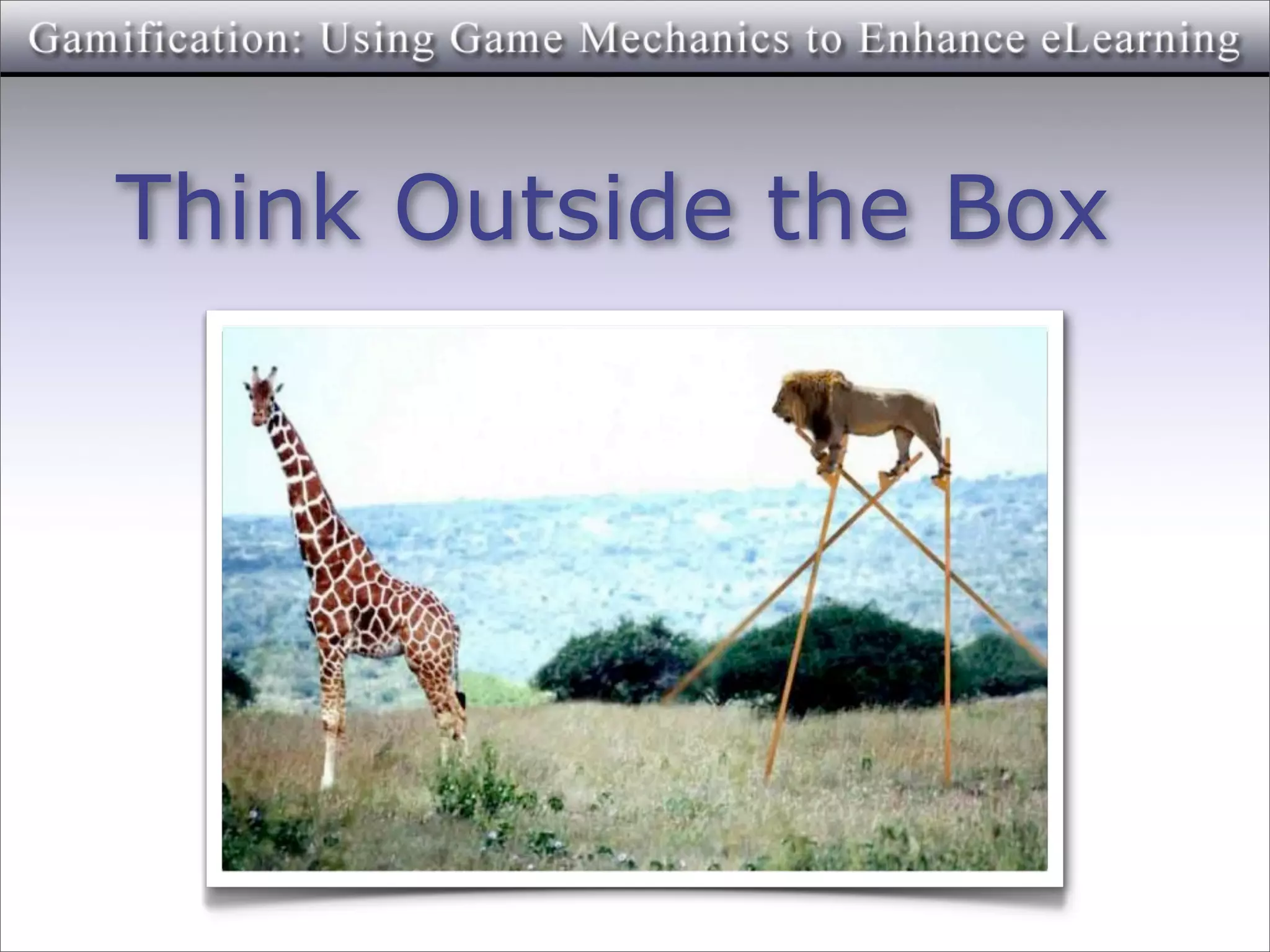
Think Outside the Box
    -Know the Box
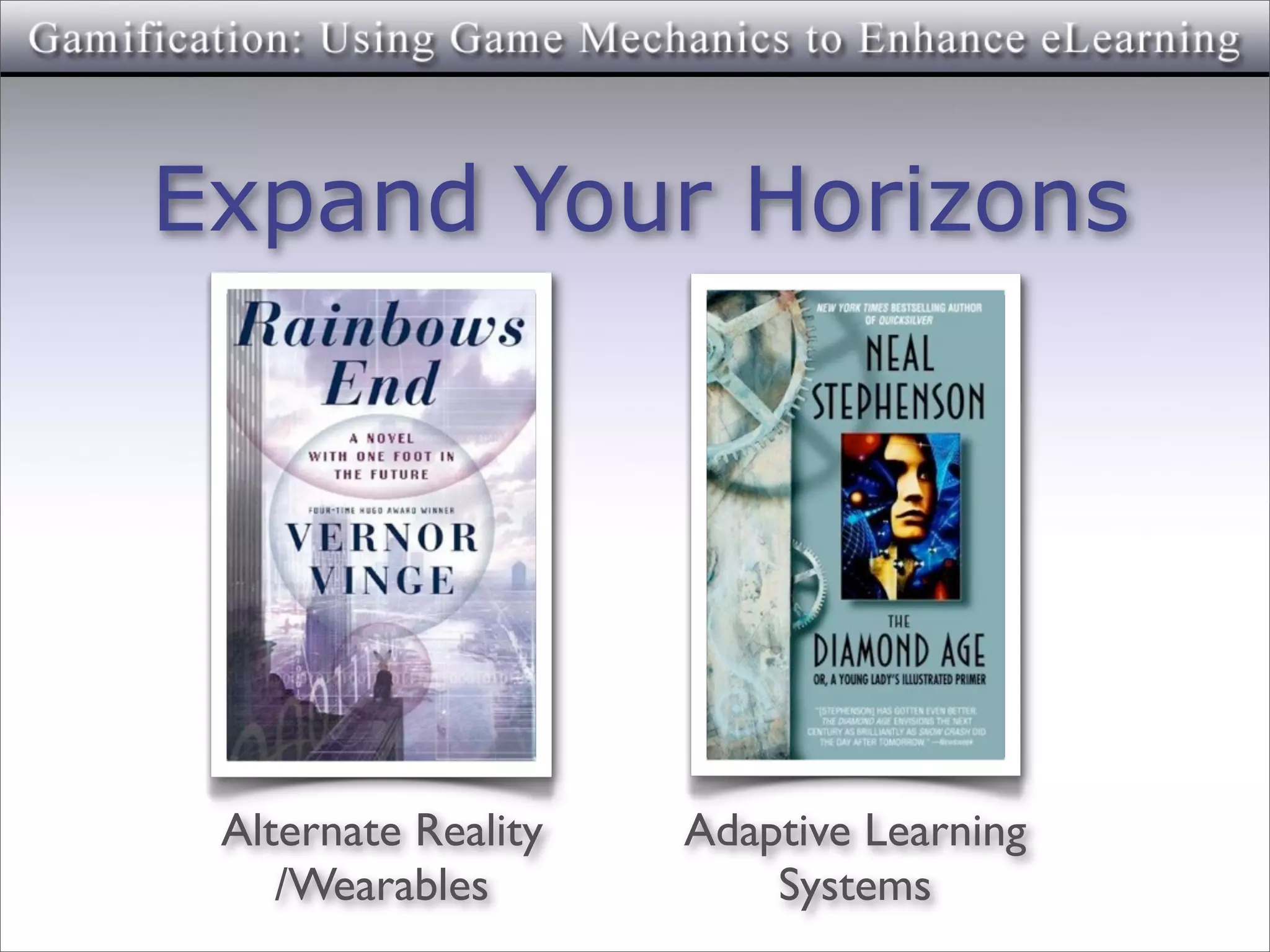
Expand Your Horizons


 Alternate Reality   Adaptive Learning
    /Wearables           Systems
Play Games
Brainstorm
- Individually & In Groups
Brainstorm
-Never Dismiss Ideas As Stupid
The Well Is Deep
Concept Phase
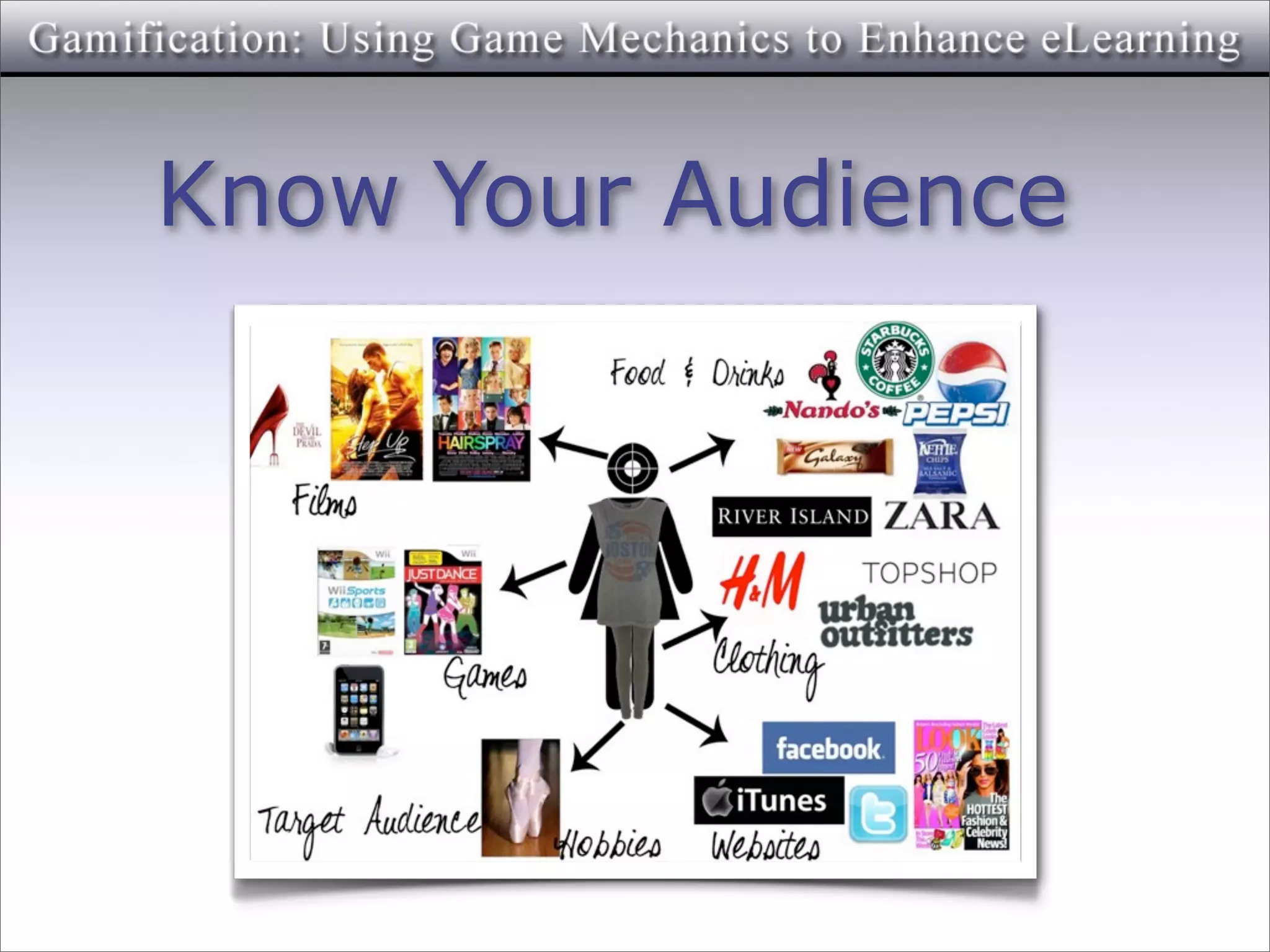
Know Your Audience
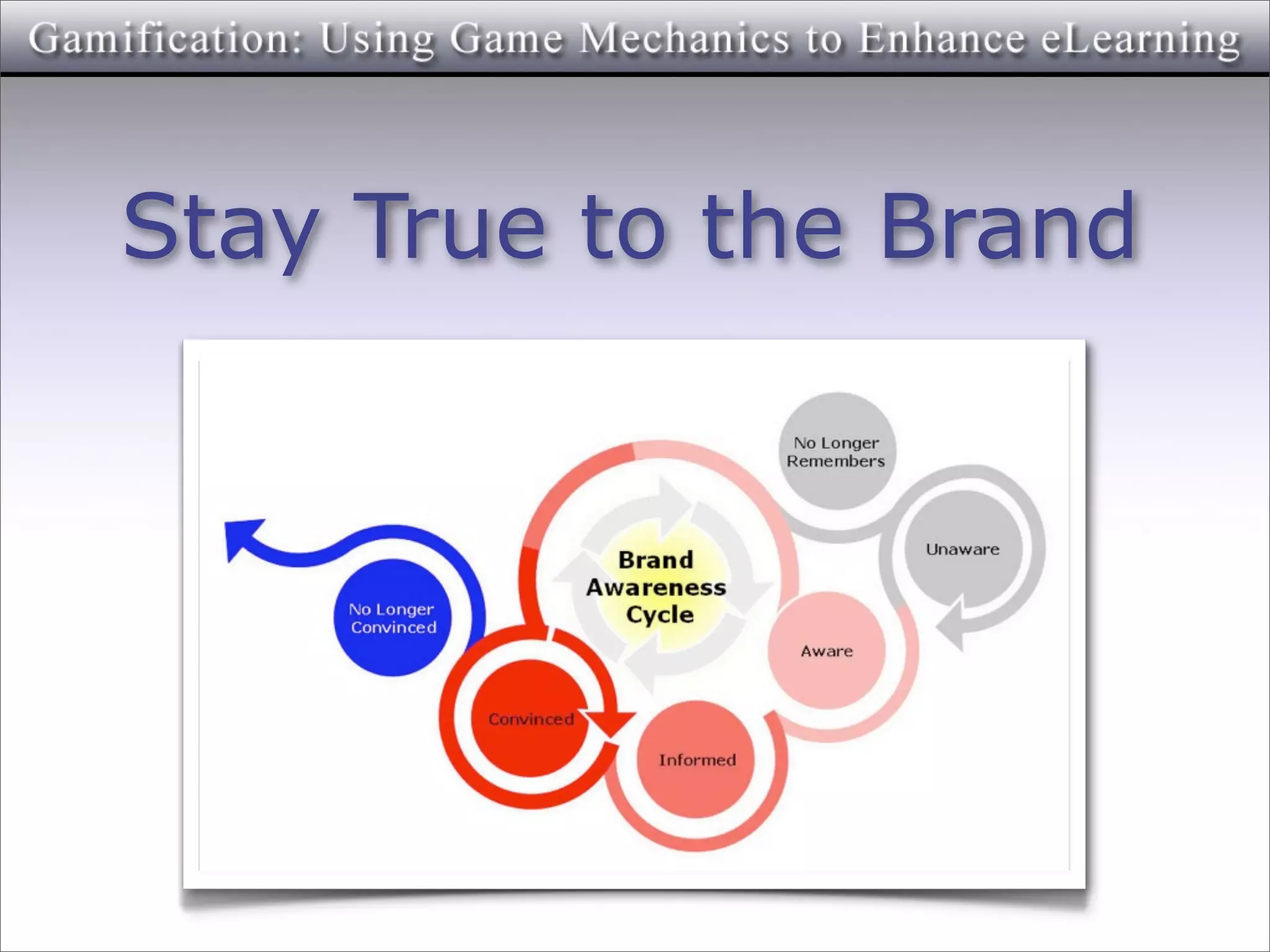
Stay True to the Brand
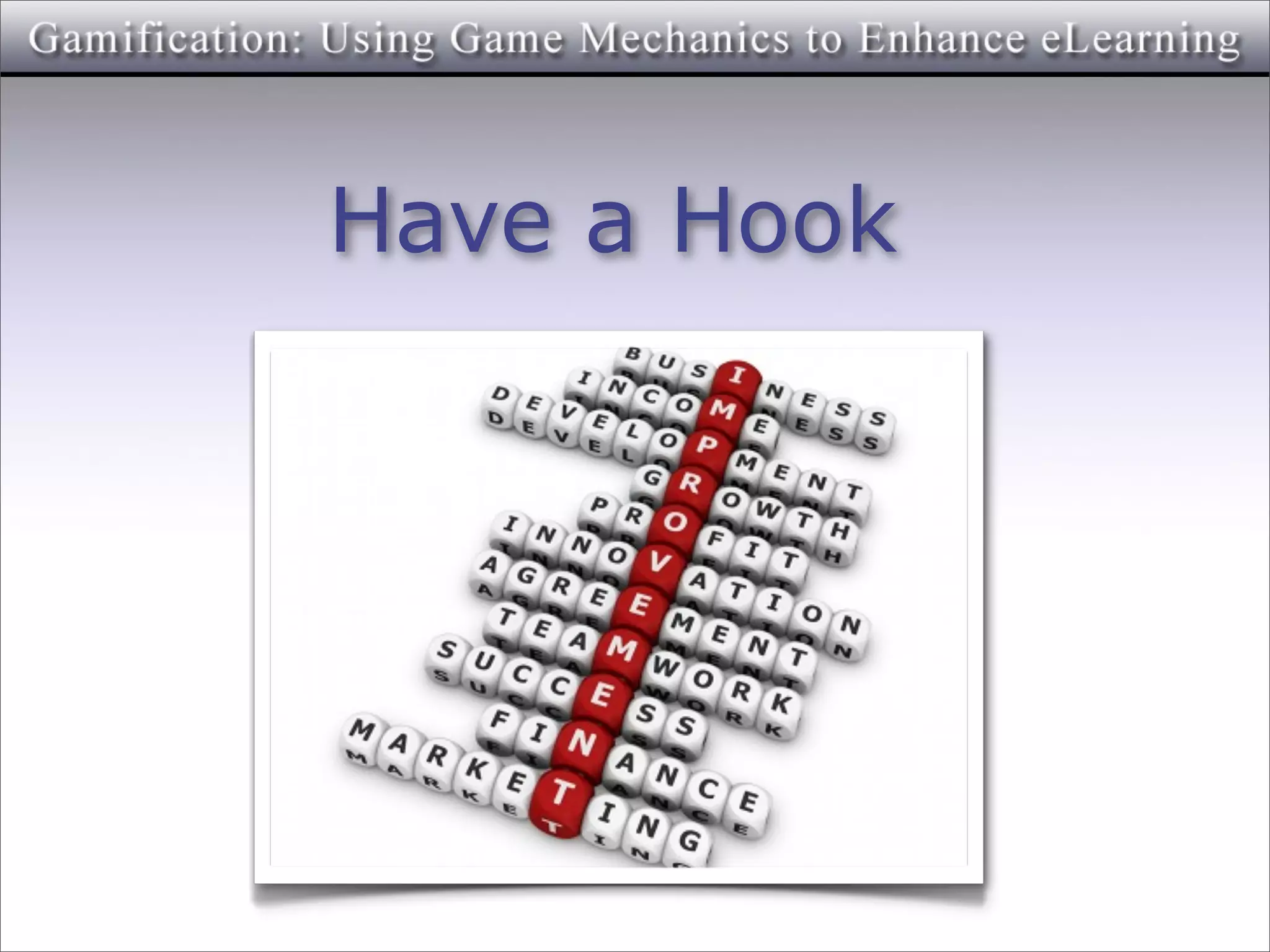
Have a Hook
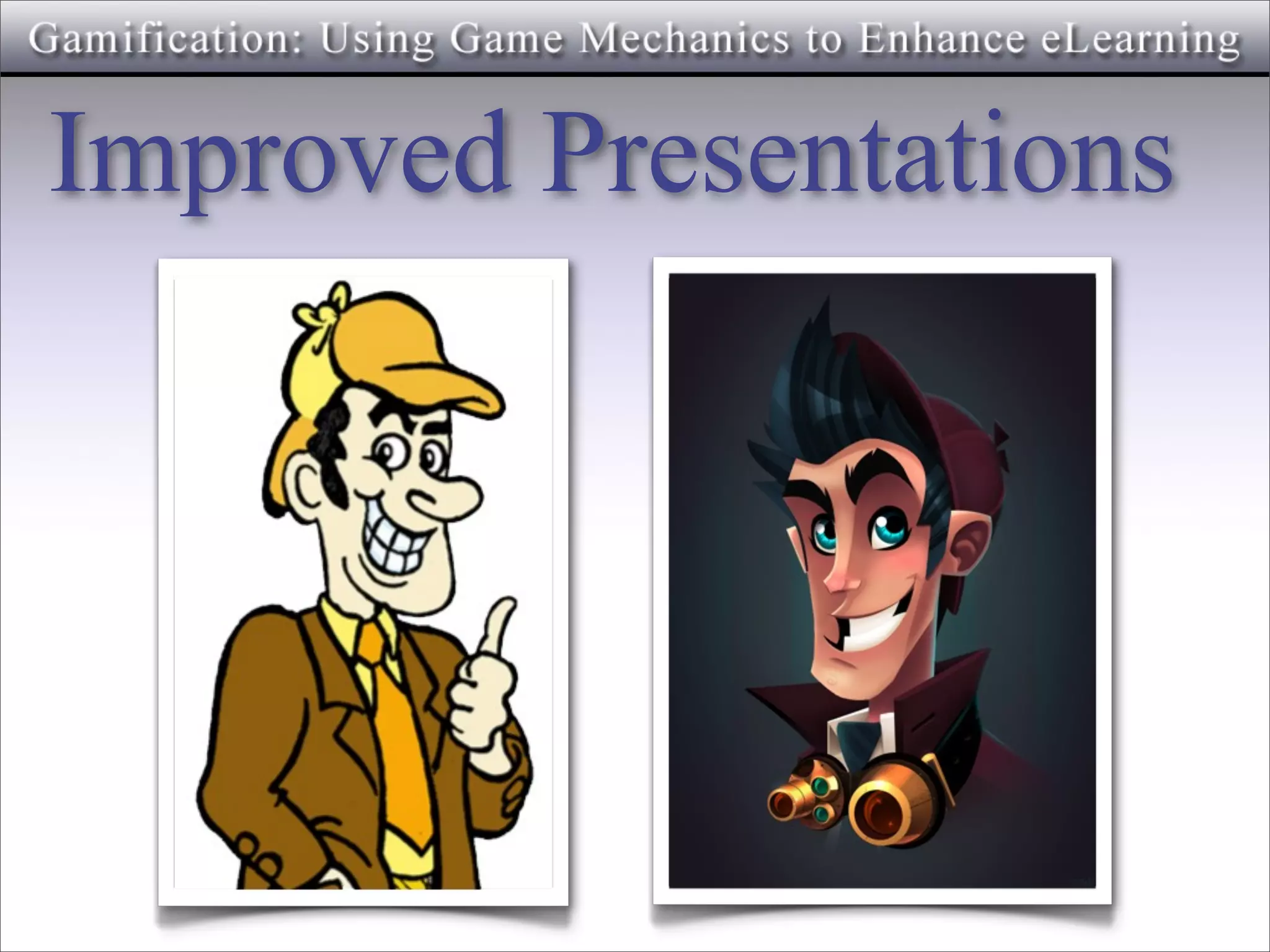
Improved Presentations
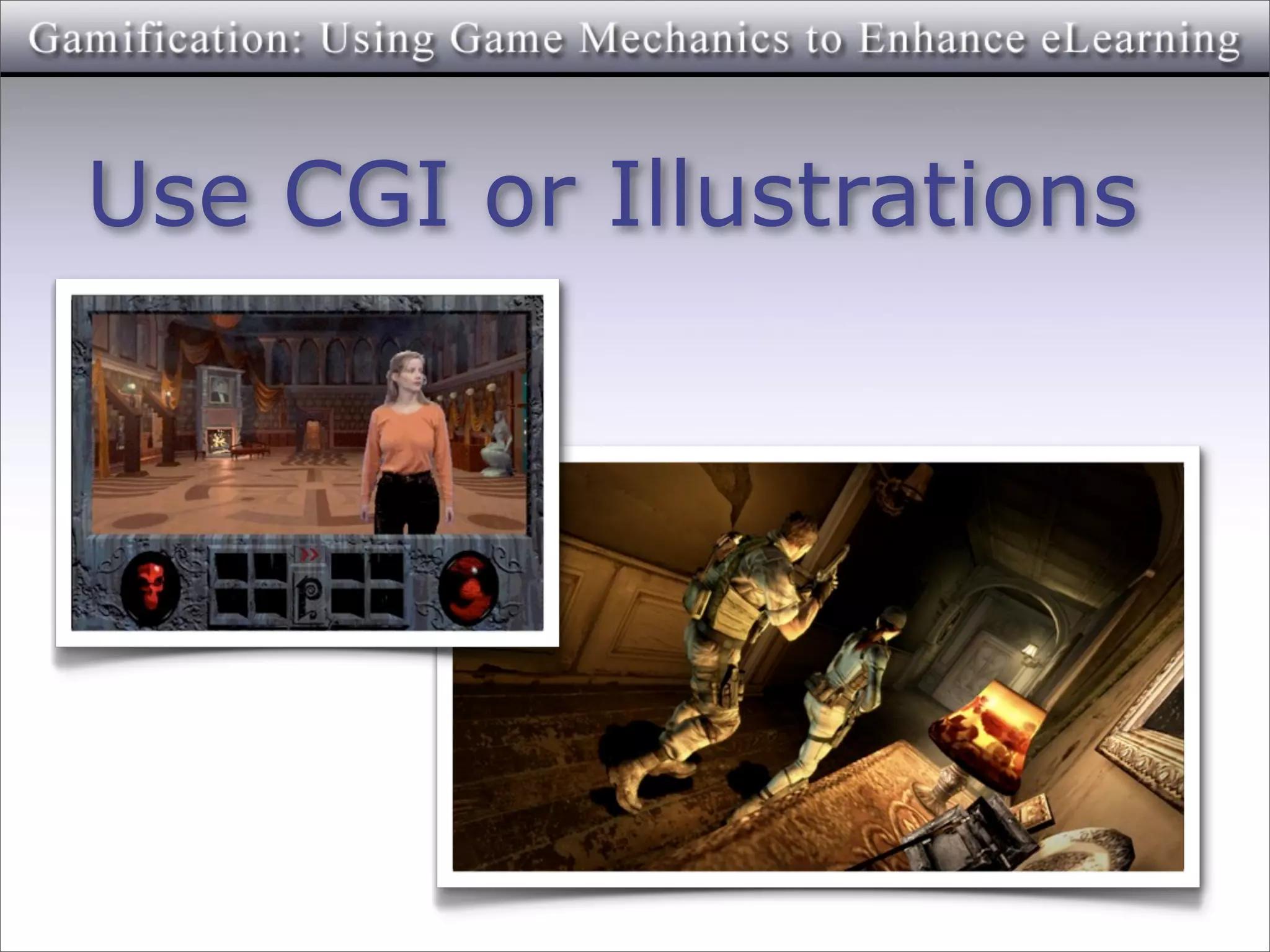
Use CGI or Illustrations
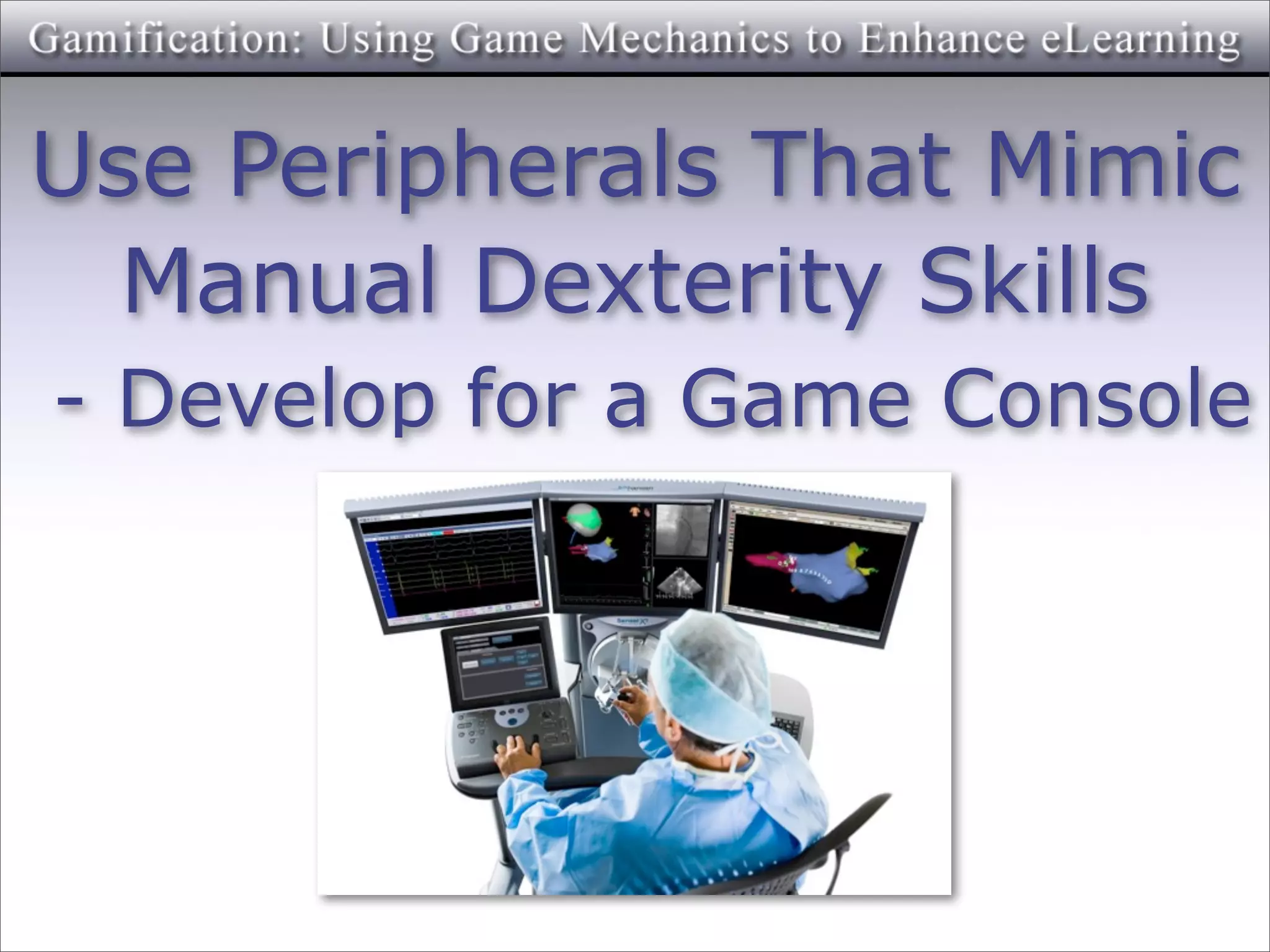
Use Peripherals That Mimic
  Manual Dexterity Skills
- Develop for a Game Console
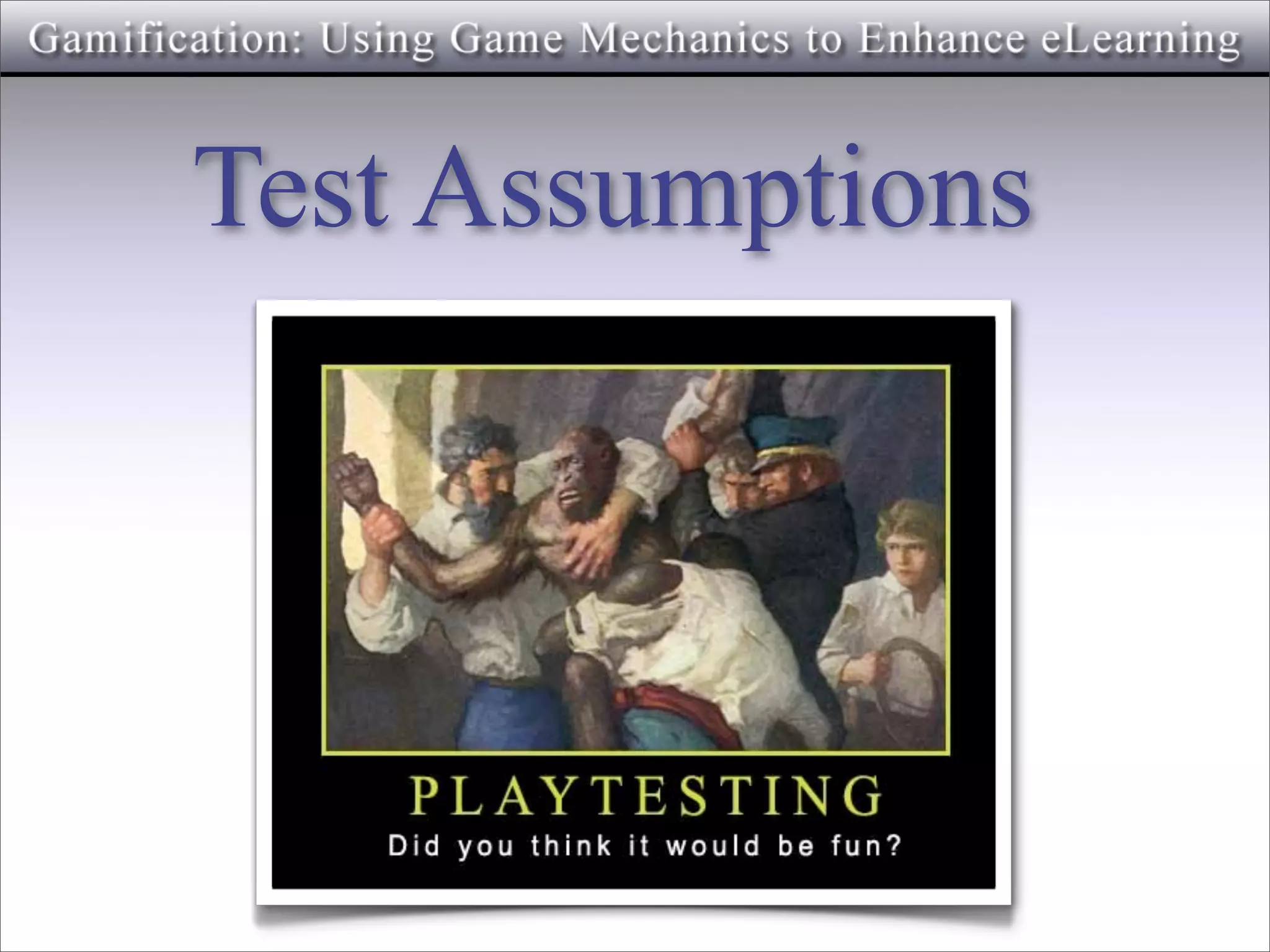
Test Assumptions
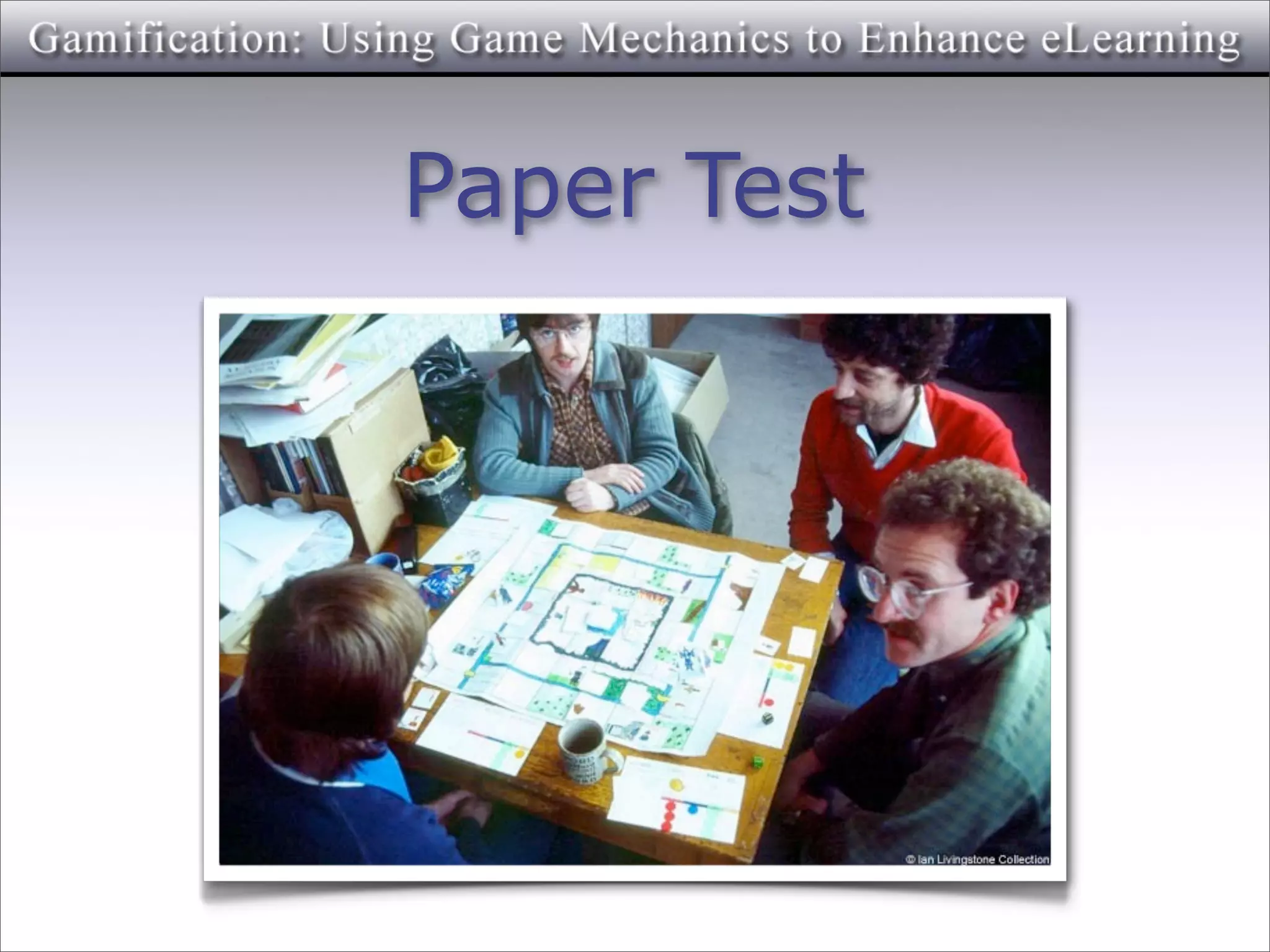
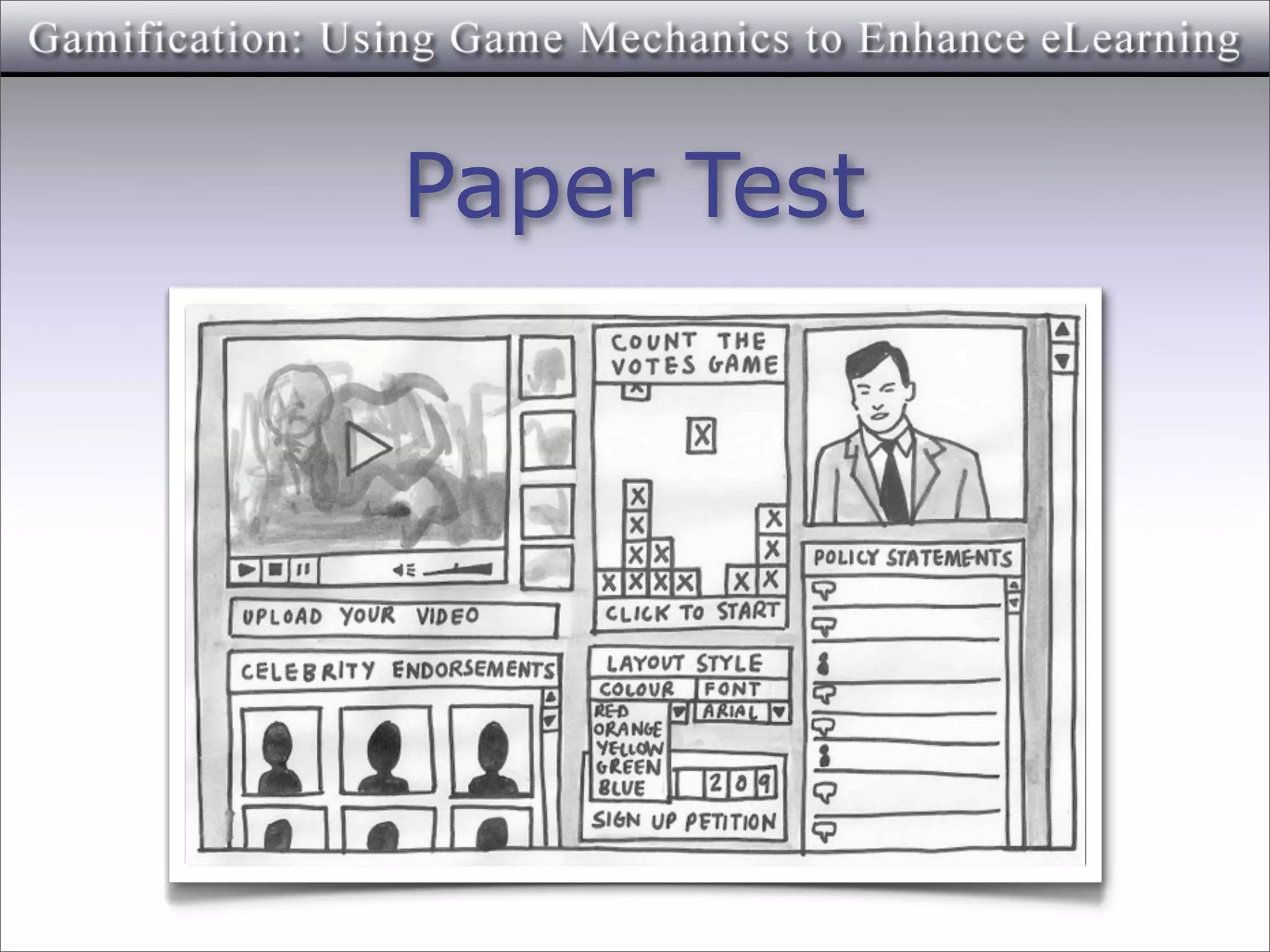
Paper Test
Paper Test
Test Early & Often
Summary
• Increase engagement by rewarding learners
  (wanting+liking=rewarding)
• Provide feedback and show progress on clearly
  stated goals and objectives
• Reward effort, not just successes
• Gain attention with surprise and delight
• Build systems that allow peer interaction
• Know your audience and brand
• Improve your presentations with better art
  and technology
• Test assumptions early and often
Thank You!

RICK RAYMER
 rraymer@ncbionetwork.org

Th202 slides