• 16/2/17
Evidence Based Surgery
• Shinuo Liu
AHV6121
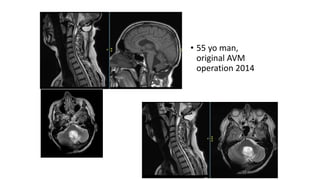
• 55 yo man,
original AVM
operation 2014
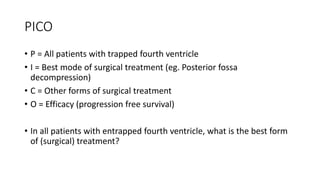
PICO
• P = All patients with trapped fourth ventricle
• I = Best mode of surgical treatment (eg. Posterior fossa
decompression)
• C = Other forms of surgical treatment
• O = Efficacy (progression free survival)
• In all patients with entrapped fourth ventricle, what is the best form
of (surgical) treatment?
Search Terms
• Entrapped Fourth Ventricle
• Trapped Fourth Ventricle
• Isolated Fourth Ventricle
• Sequestered Fourth Ventricle
• Surgery
• Therapy
• Shunt
Search criteria
• Inclusion
• ?All patients
• Exclusion
• ?adults
• Case reports?
• Related to neural tube defects
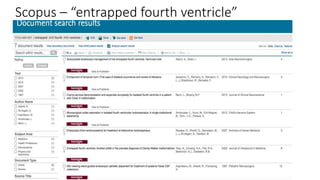
Scopus – “entrapped fourth ventricle”
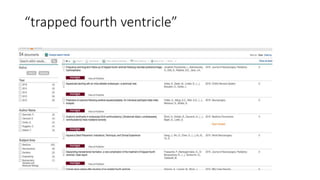
“trapped fourth ventricle”
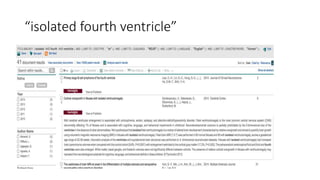
“isolated fourth ventricle”
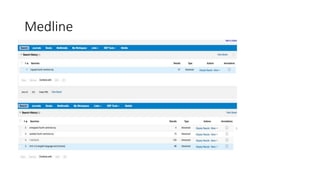
Medline
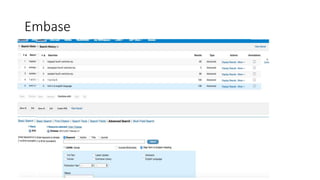
Embase
Results
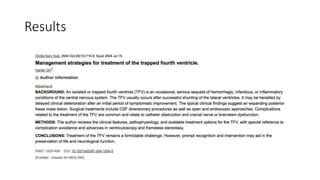
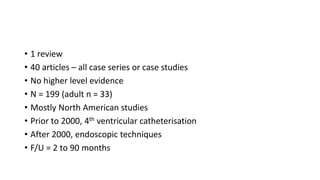
• 1 review
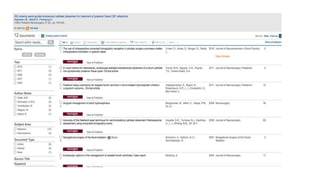
• 40 articles – all case series or case studies
• No higher level evidence
• N = 199 (adult n = 33)
• Mostly North American studies
• Prior to 2000, 4th ventricular catheterisation
• After 2000, endoscopic techniques
• F/U = 2 to 90 months
• All small cohorts
• Heterogeneous population
• Unclear aetiology
• Unclear previous treatment
• Unclear outcome, variable F/U
• Vast majority had clinical and radiological success = publication bias?
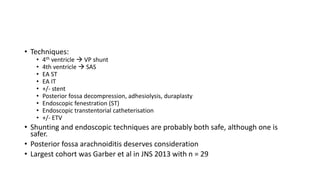
• Techniques:
• 4th ventricle  VP shunt
• 4th ventricle  SAS
• EA ST
• EA IT
• +/- stent
• Posterior fossa decompression, adhesiolysis, duraplasty
• Endoscopic fenestration (ST)
• Endoscopic transtentorial catheterisation
• +/- ETV
• Shunting and endoscopic techniques are probably both safe, although one is
safer.
• Posterior fossa arachnoiditis deserves consideration
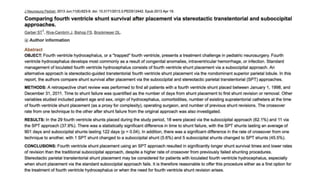
• Largest cohort was Garber et al in JNS 2013 with n = 29
• Case by case – consider aetiology
• Unclear whether paeds = adults
• Stenting ?
Tfv
Tfv
Tfv
Tfv
Tfv

Tfv

  • 1.
    • 16/2/17 Evidence BasedSurgery • Shinuo Liu
  • 2.
    AHV6121 • 55 yoman, original AVM operation 2014
  • 3.
    PICO • P =All patients with trapped fourth ventricle • I = Best mode of surgical treatment (eg. Posterior fossa decompression) • C = Other forms of surgical treatment • O = Efficacy (progression free survival) • In all patients with entrapped fourth ventricle, what is the best form of (surgical) treatment?
  • 4.
    Search Terms • EntrappedFourth Ventricle • Trapped Fourth Ventricle • Isolated Fourth Ventricle • Sequestered Fourth Ventricle • Surgery • Therapy • Shunt
  • 5.
    Search criteria • Inclusion •?All patients • Exclusion • ?adults • Case reports? • Related to neural tube defects
  • 6.
    Scopus – “entrappedfourth ventricle”
  • 8.
  • 9.
  • 10.
  • 11.
  • 12.
  • 13.
    • 1 review •40 articles – all case series or case studies • No higher level evidence • N = 199 (adult n = 33) • Mostly North American studies • Prior to 2000, 4th ventricular catheterisation • After 2000, endoscopic techniques • F/U = 2 to 90 months
  • 14.
    • All smallcohorts • Heterogeneous population • Unclear aetiology • Unclear previous treatment • Unclear outcome, variable F/U • Vast majority had clinical and radiological success = publication bias?
  • 15.
    • Techniques: • 4thventricle  VP shunt • 4th ventricle  SAS • EA ST • EA IT • +/- stent • Posterior fossa decompression, adhesiolysis, duraplasty • Endoscopic fenestration (ST) • Endoscopic transtentorial catheterisation • +/- ETV • Shunting and endoscopic techniques are probably both safe, although one is safer. • Posterior fossa arachnoiditis deserves consideration • Largest cohort was Garber et al in JNS 2013 with n = 29
  • 17.
    • Case bycase – consider aetiology • Unclear whether paeds = adults • Stenting ?