Text Structures
By Keyon Payton-Kilgore
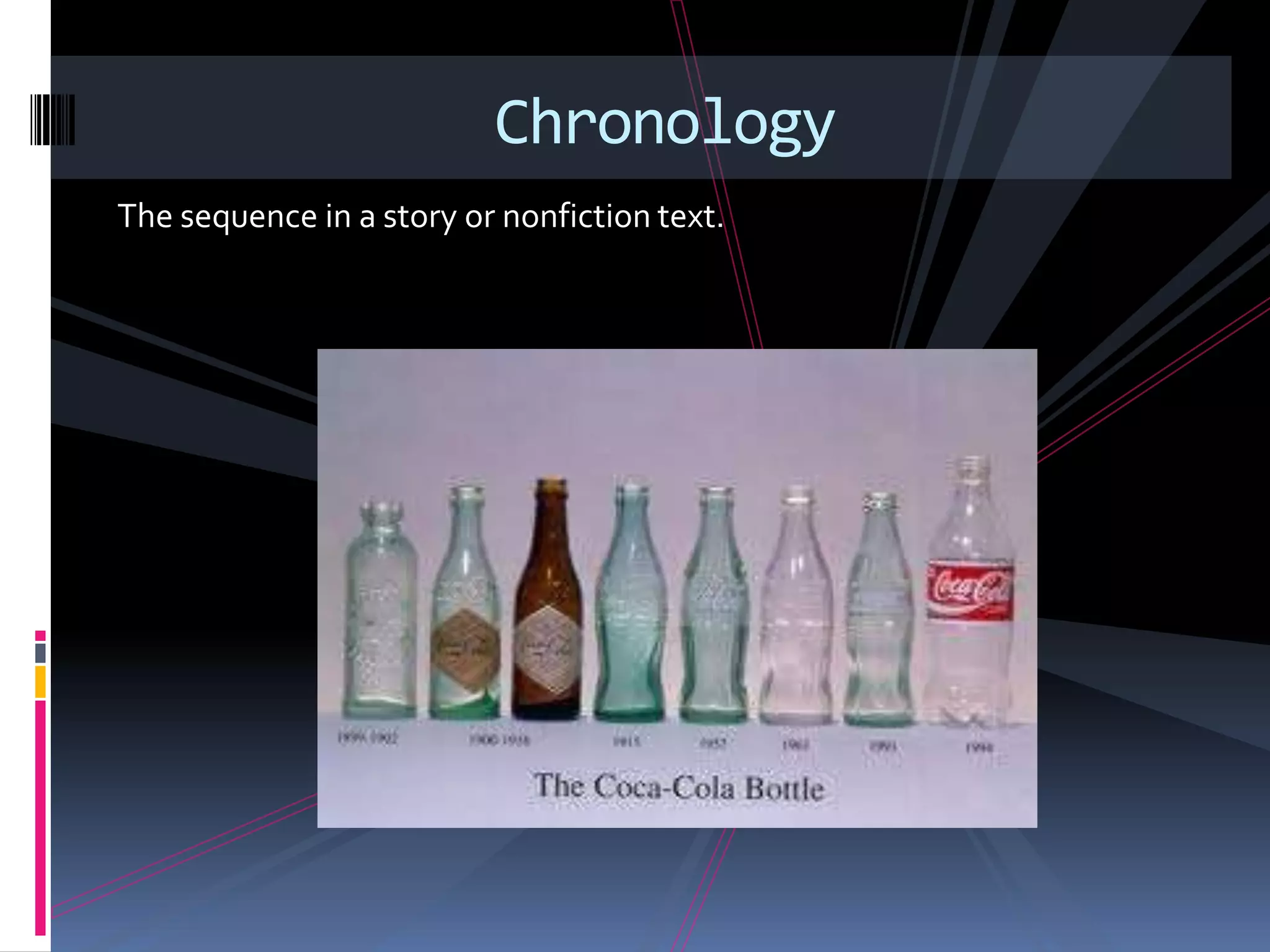
Chronology
The sequence in a story or nonfiction text.
Clues
Time-line of events
Steps in a process(“how to”)
Autobiography/biography
Key/Signal words
First, Afterward, Then, Before, Finally, Next, Later,
Then…
Does the text give a picture of the multiple events in someone’s life?
How does the sequence in the story help you understand the text?
Can you retell what happened in the text in order?
Why is the sequence important to understand the steps in the procedure?
How would a different structure change the author’s purpose?

                        QUESTIONS
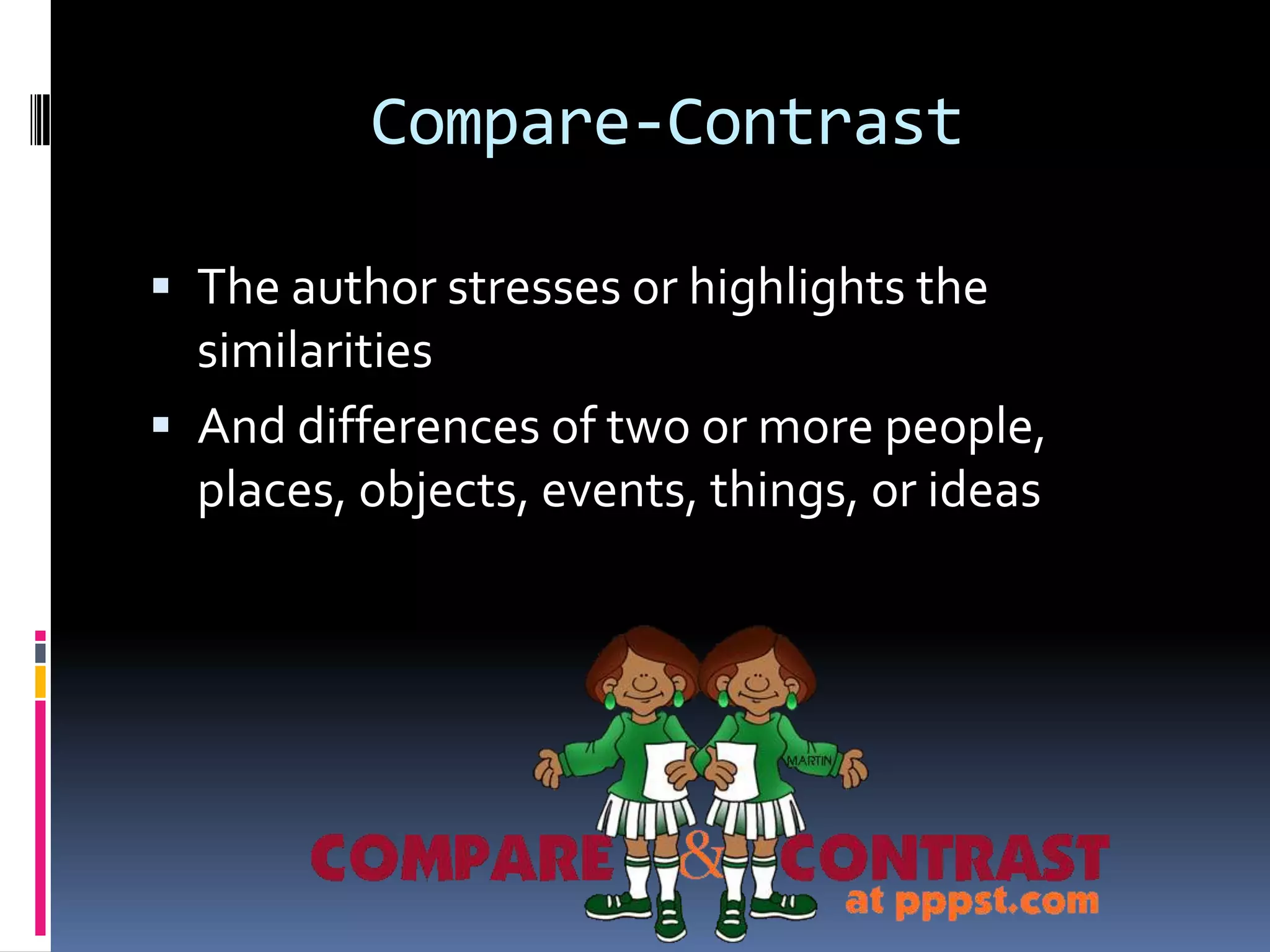
Compare-Contrast

 The author stresses or highlights the
  similarities
 And differences of two or more people,
  places, objects, events, things, or ideas
Clues

 Separate sections connected by an
  introductory paragraph.
 Charts or diagrams that show facts about two
  or more things side by side (e.g. Venn
  diagram
 May also have a question and answer text
  structure
Key/signal words

Both, same, alike, also, similar, different, however, unlike, although,
whereas, different from, instead, but, even though
Questions
What is being compared?
What is being contrasted?
Why is the author comparing and/or contrasting__________?
What are the advantages of…?
What are the disadvantages of …?
How would a different structure change the author's purpose?
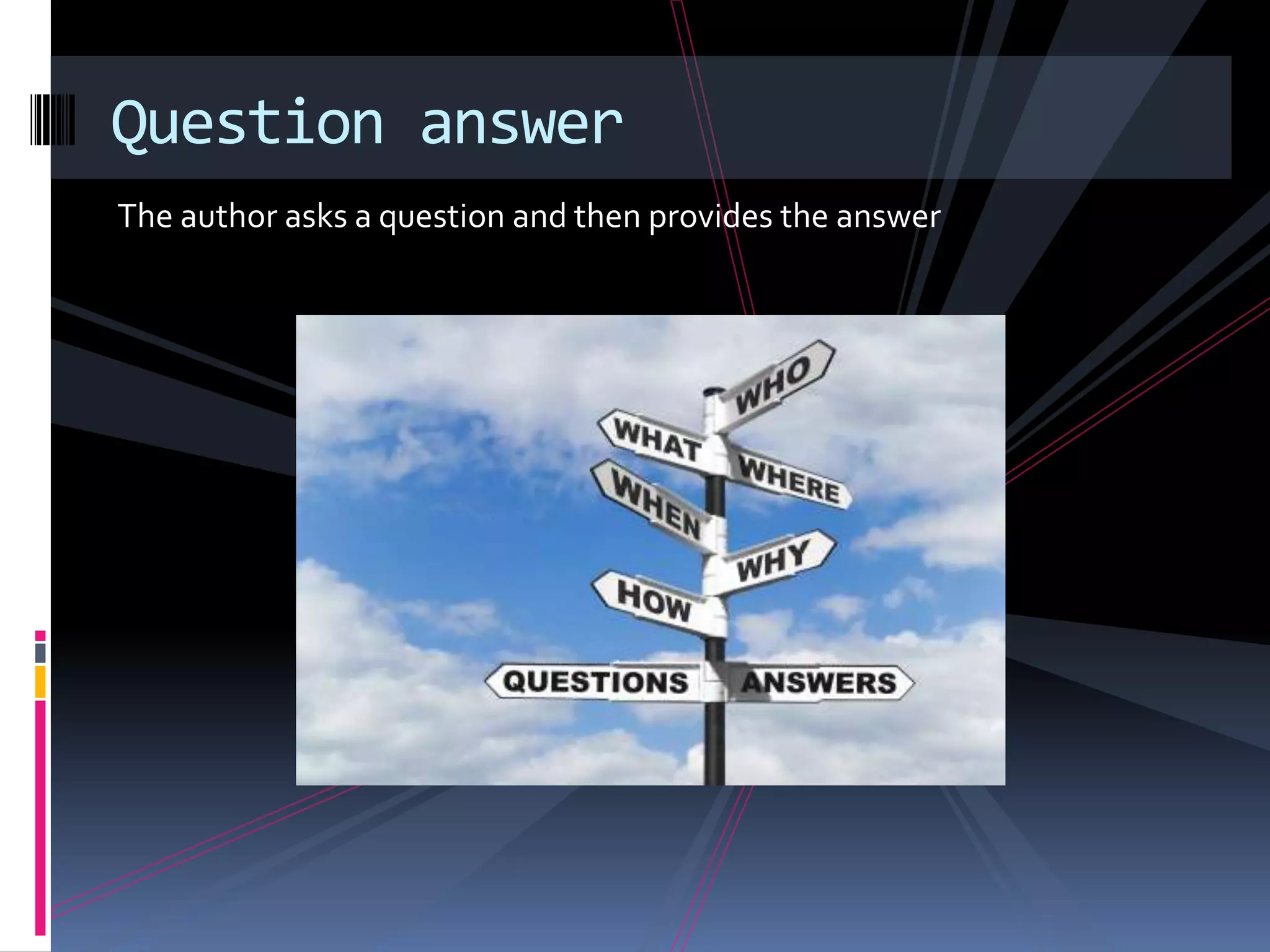
Question answer
The author asks a question and then provides the answer
Clues
Ask a question
An interview
Key/signal words
Who, what, when, why, how, true or false, yes or no
Question
How did the author answer____________?
Why did the author use this structure in this passage?
How would a different structure change the author's purpose?
Problem solution
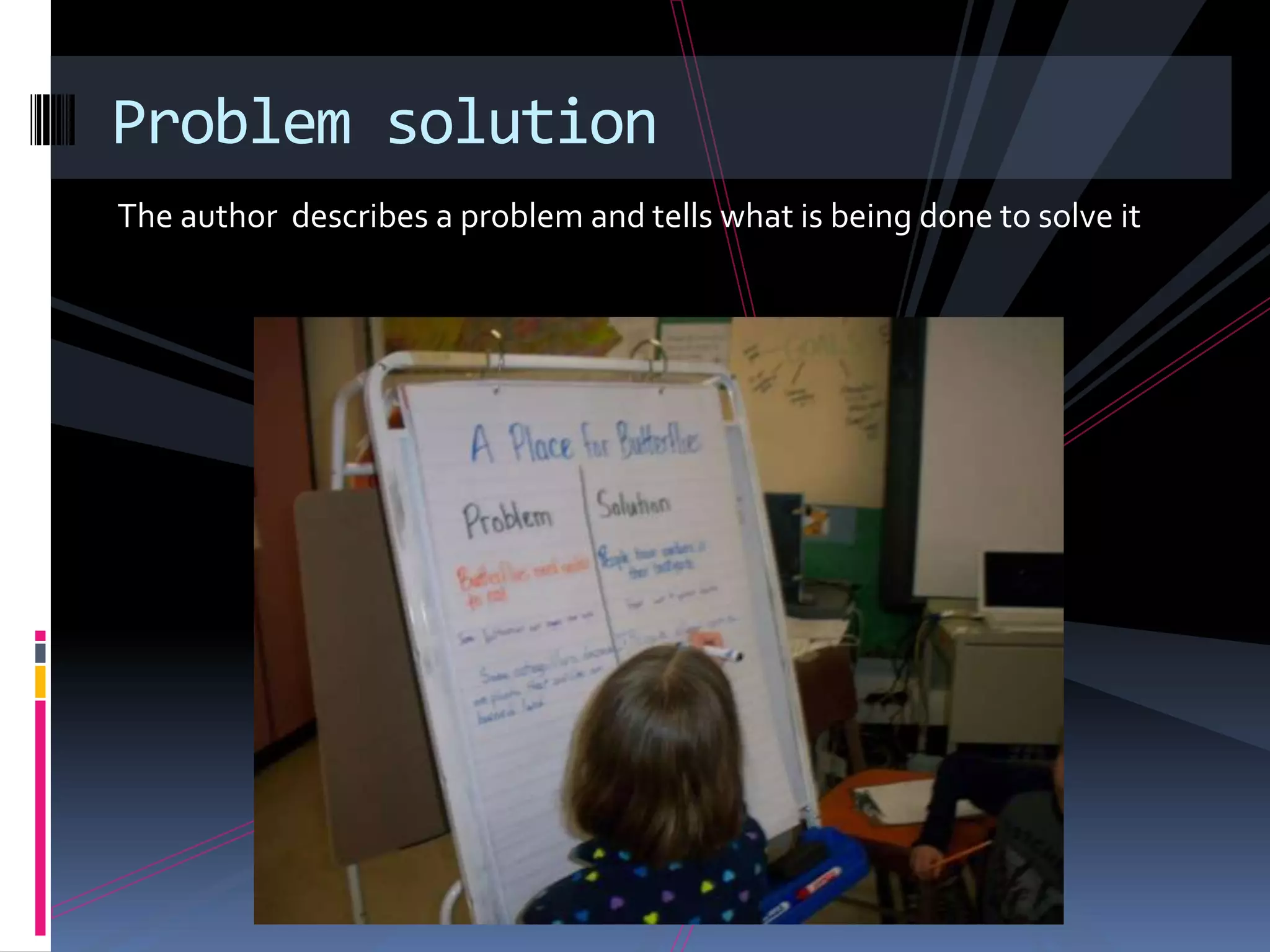
The author describes a problem and tells what is being done to solve it
Clues

   Not very common as a structure of an entire
   text although it is embedded within many text

   Some text use a question/answer structure to
   establish the problem and solution
Key/signal words
The problem is, the solution is, the question is, solved question, reason for
question


   What was the problem introduced in the text?
   How is the problem solved?
   Does the author provide a solution for________?
   Why did the author use this structure in the passage?
   How would a different structure change the author’s purpose?
Cause and Effect
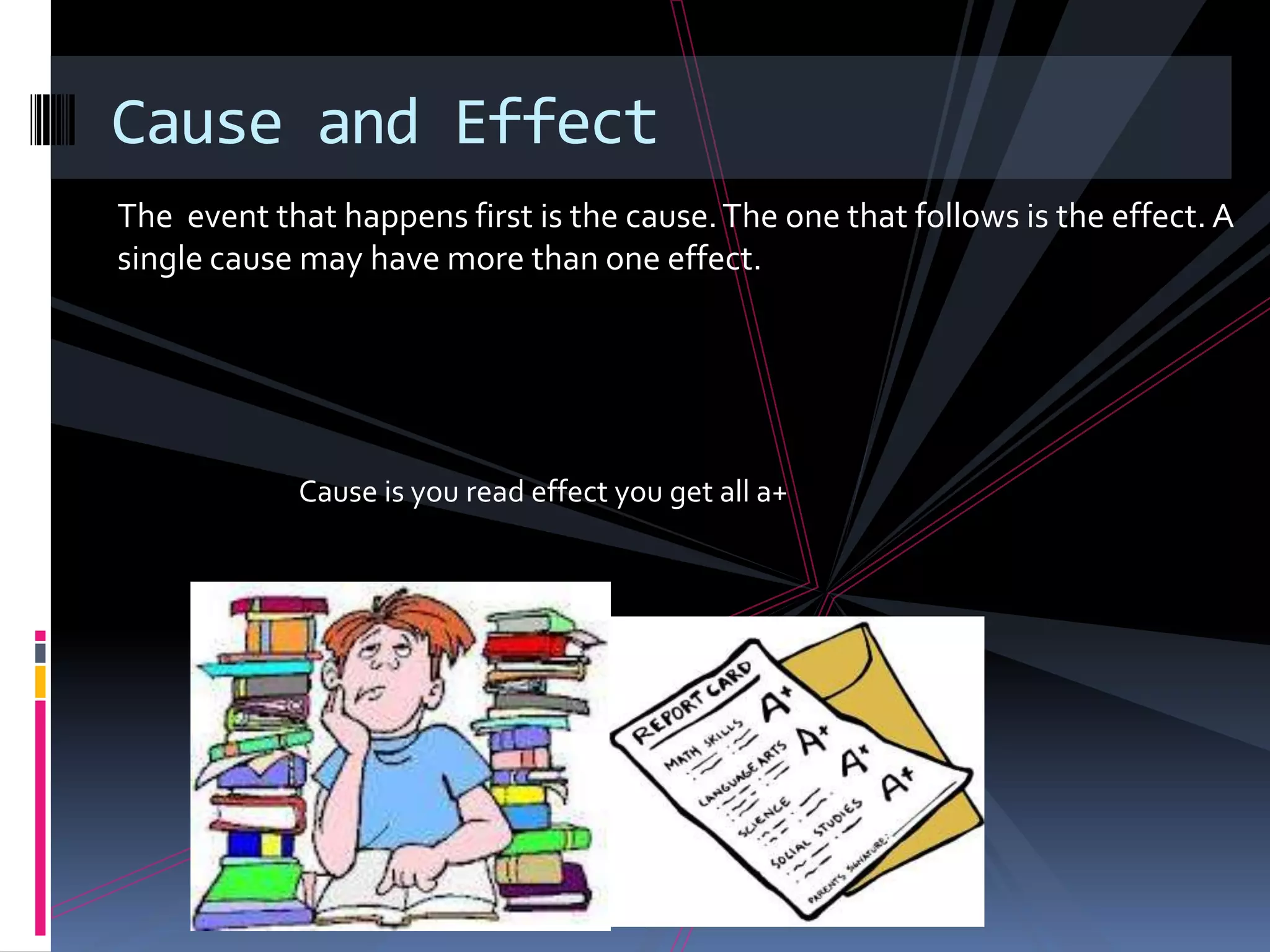
The event that happens first is the cause. The one that follows is the effect. A
single cause may have more than one effect.


            Cause is you read effect you get all a+
Clues
Not very common as a structure of an entire text, although it is embedded
within many texts.
Key/signal words
Because, since, as a result of, therefore, consequently, caused by, effects were
Question
What is the cause/effect the author is explaining?
What causes___________to happen?
What is the effect of_______________?
Why did the author use this structure in the passage?
How would a different structure change the author's purpose?
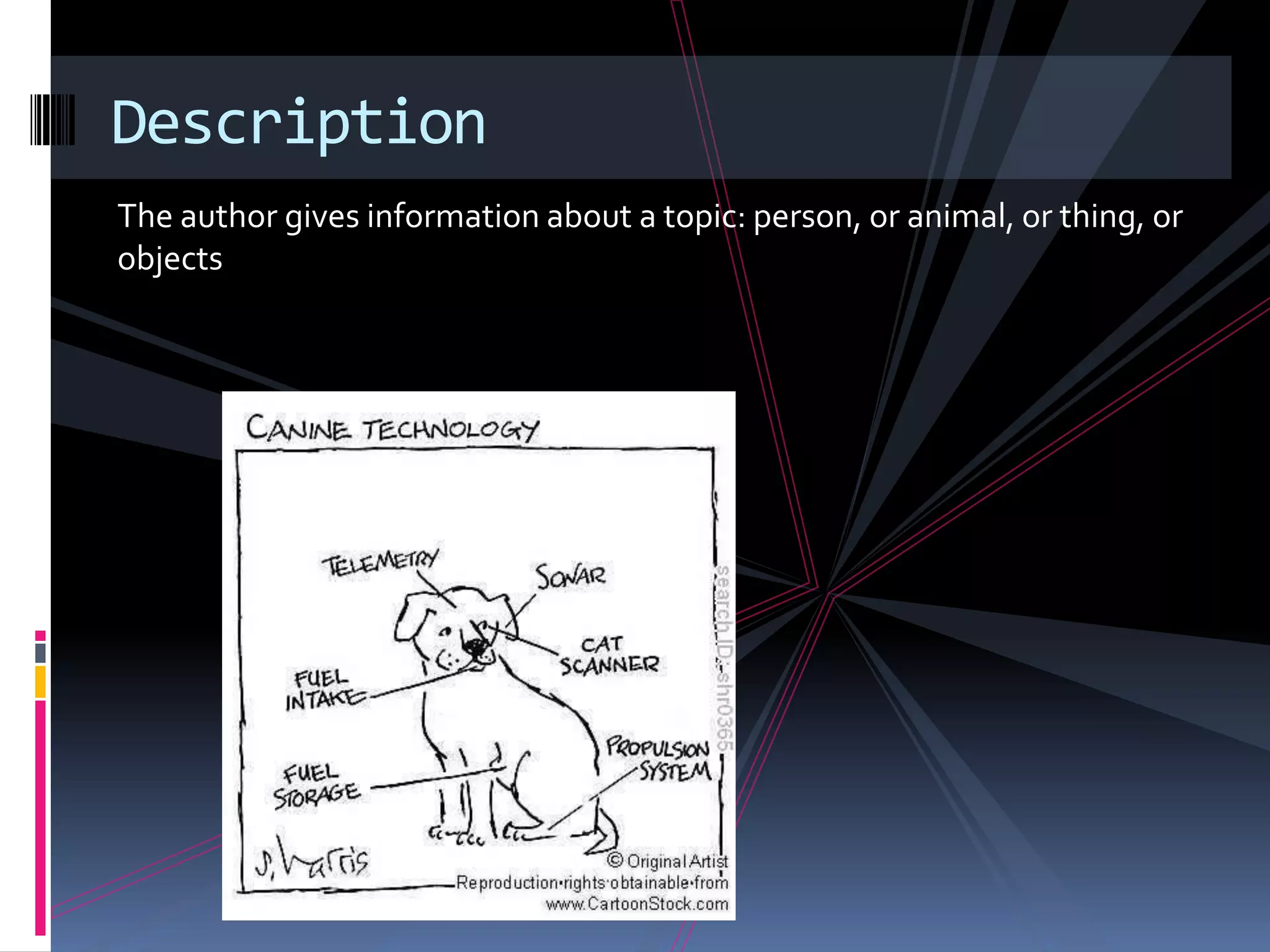
Description
The author gives information about a topic: person, or animal, or thing, or
objects
Clues
Most common type of information text structure.
Key/signal words
Questions
Who/what is being described?
Why is the author giving us information about__________?
Does the author’s description help you create an image?

Text structures

  • 1.
  • 2.
    Chronology The sequence ina story or nonfiction text.
  • 3.
    Clues Time-line of events Stepsin a process(“how to”) Autobiography/biography
  • 4.
    Key/Signal words First, Afterward,Then, Before, Finally, Next, Later, Then…
  • 5.
    Does the textgive a picture of the multiple events in someone’s life? How does the sequence in the story help you understand the text? Can you retell what happened in the text in order? Why is the sequence important to understand the steps in the procedure? How would a different structure change the author’s purpose? QUESTIONS
  • 6.
    Compare-Contrast  The authorstresses or highlights the similarities  And differences of two or more people, places, objects, events, things, or ideas
  • 7.
    Clues  Separate sectionsconnected by an introductory paragraph.  Charts or diagrams that show facts about two or more things side by side (e.g. Venn diagram  May also have a question and answer text structure
  • 8.
    Key/signal words Both, same,alike, also, similar, different, however, unlike, although, whereas, different from, instead, but, even though
  • 9.
    Questions What is beingcompared? What is being contrasted? Why is the author comparing and/or contrasting__________? What are the advantages of…? What are the disadvantages of …? How would a different structure change the author's purpose?
  • 10.
    Question answer The authorasks a question and then provides the answer
  • 11.
  • 12.
    Key/signal words Who, what,when, why, how, true or false, yes or no
  • 13.
    Question How did theauthor answer____________? Why did the author use this structure in this passage? How would a different structure change the author's purpose?
  • 14.
    Problem solution The authordescribes a problem and tells what is being done to solve it
  • 15.
    Clues Not very common as a structure of an entire text although it is embedded within many text Some text use a question/answer structure to establish the problem and solution
  • 16.
    Key/signal words The problemis, the solution is, the question is, solved question, reason for
  • 17.
    question What was the problem introduced in the text? How is the problem solved? Does the author provide a solution for________? Why did the author use this structure in the passage? How would a different structure change the author’s purpose?
  • 18.
    Cause and Effect Theevent that happens first is the cause. The one that follows is the effect. A single cause may have more than one effect. Cause is you read effect you get all a+
  • 19.
    Clues Not very commonas a structure of an entire text, although it is embedded within many texts.
  • 20.
    Key/signal words Because, since,as a result of, therefore, consequently, caused by, effects were
  • 21.
    Question What is thecause/effect the author is explaining? What causes___________to happen? What is the effect of_______________? Why did the author use this structure in the passage? How would a different structure change the author's purpose?
  • 22.
    Description The author givesinformation about a topic: person, or animal, or thing, or objects
  • 23.
    Clues Most common typeof information text structure.
  • 24.
  • 25.
    Questions Who/what is beingdescribed? Why is the author giving us information about__________? Does the author’s description help you create an image?