THE PROBLEM-
SOLUTION ESSAY
Prof. Julia I. Martínez
2
The problem-solution essay is a formal
piece of writing in which we suggest
solutions to a problem.
3
Problem-solution essays
 They analyse the problem(s) associated with
a particular issue or situation and put
forward possible solutions, together with
any expected results/consequences.
 The writer’s opinion may be mentioned,
directly or indirectly, in the introduction
and/or the conclusion.
4
A good opinion essay should consist of:
 An introductory paragraph, which states
the problem (reasons why it has arisen can
also be included);
 A main body, in which the suggestions and
their results/consequences are presented
(each suggestion should be discussed in a
new paragraph); and
 A concluding paragraph, summarising the
main points of the essay, and/or giving the
writer’s opinion.
5
Points to consider:
 Present each suggestions in a separate paragraph,
and remember to include the result or consequence
of each of the suggestions made.
 Well-known quotations, rhetorical questions or
thought provoking statements are useful devices to
make your composition more interesting.
 Before you begin writing, you should always make
a list of the points you will present.
 Do not use informal style or very strong language.
 Use appropriate linking words/phrases to show the
links between paragraphs, as well as to link
sentences within paragraphs.
6
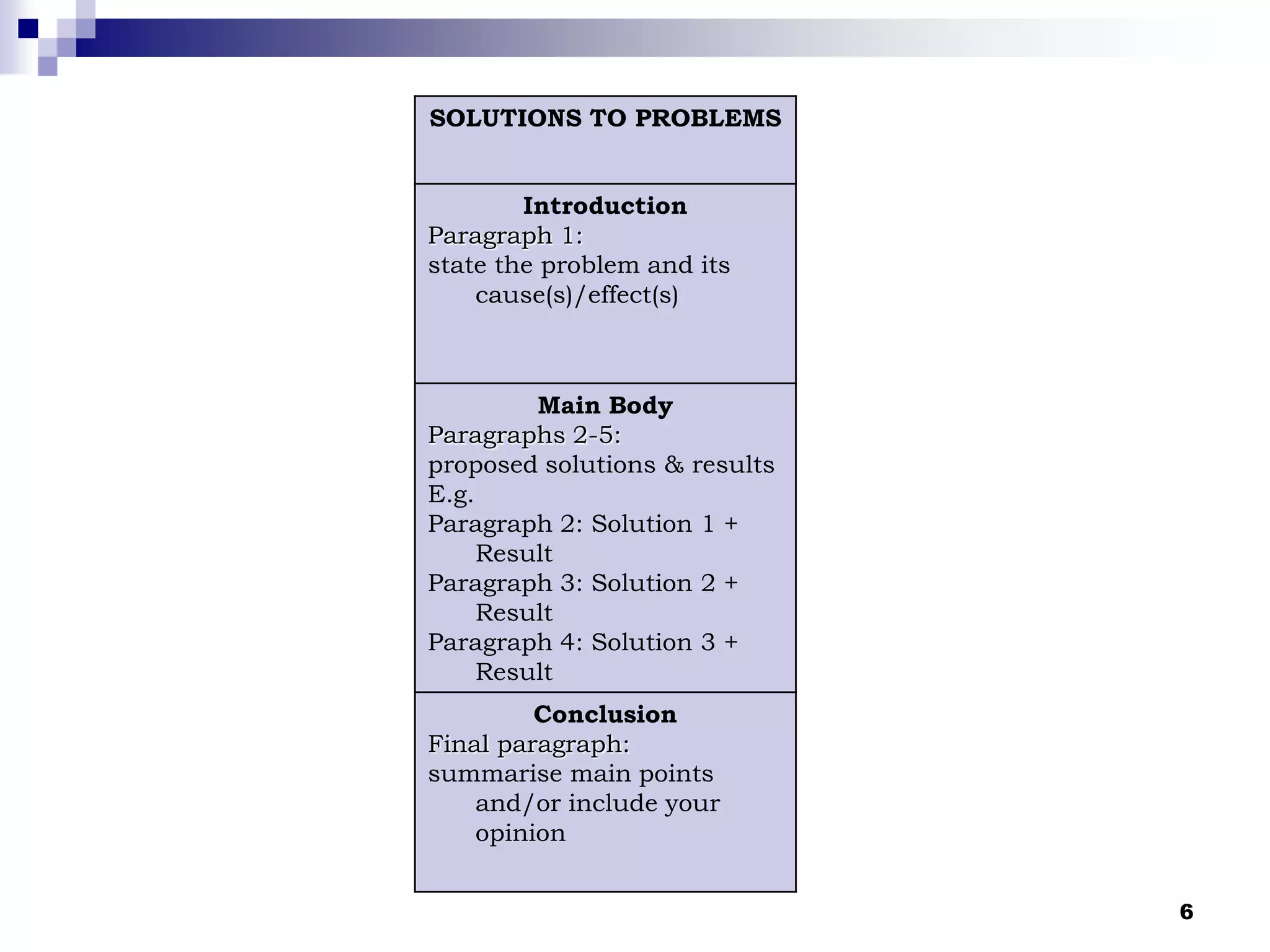
SOLUTIONS TO PROBLEMS
Introduction
Paragraph 1:
state the problem and its
cause(s)/effect(s)
Main Body
Paragraphs 2-5:
proposed solutions & results
E.g.
Paragraph 2: Solution 1 +
Result
Paragraph 3: Solution 2 +
Result
Paragraph 4: Solution 3 +
Result
Conclusion
Final paragraph:
summarise main points
and/or include your
opinion
7
Bibliography:
 Evans, Virginia. Successful Writing
Proficiency. UK: Express Publishing.
1998 (New Edition, 2002).
 Evans, V. (1998). Successful Writing
Upper-Intermediate. EU: Express
Publishing (New edition, 2004).

The problem solution essay

  • 1.
  • 2.
    2 The problem-solution essayis a formal piece of writing in which we suggest solutions to a problem.
  • 3.
    3 Problem-solution essays  Theyanalyse the problem(s) associated with a particular issue or situation and put forward possible solutions, together with any expected results/consequences.  The writer’s opinion may be mentioned, directly or indirectly, in the introduction and/or the conclusion.
  • 4.
    4 A good opinionessay should consist of:  An introductory paragraph, which states the problem (reasons why it has arisen can also be included);  A main body, in which the suggestions and their results/consequences are presented (each suggestion should be discussed in a new paragraph); and  A concluding paragraph, summarising the main points of the essay, and/or giving the writer’s opinion.
  • 5.
    5 Points to consider: Present each suggestions in a separate paragraph, and remember to include the result or consequence of each of the suggestions made.  Well-known quotations, rhetorical questions or thought provoking statements are useful devices to make your composition more interesting.  Before you begin writing, you should always make a list of the points you will present.  Do not use informal style or very strong language.  Use appropriate linking words/phrases to show the links between paragraphs, as well as to link sentences within paragraphs.
  • 6.
    6 SOLUTIONS TO PROBLEMS Introduction Paragraph1: state the problem and its cause(s)/effect(s) Main Body Paragraphs 2-5: proposed solutions & results E.g. Paragraph 2: Solution 1 + Result Paragraph 3: Solution 2 + Result Paragraph 4: Solution 3 + Result Conclusion Final paragraph: summarise main points and/or include your opinion
  • 7.
    7 Bibliography:  Evans, Virginia.Successful Writing Proficiency. UK: Express Publishing. 1998 (New Edition, 2002).  Evans, V. (1998). Successful Writing Upper-Intermediate. EU: Express Publishing (New edition, 2004).