Ten Leading Causes of Death in 
world due to Severe illnesses
 HEART DISEASE 
 MALIGNA NT NEOPLASM 
 CEREBROVASCULAR DISEASE 
 CHORIC LOWER RESP. DISEASE 
 ACCIDENTS 
 ALZHEIMER’S DISEASE 
 DIABETES MELLITUS 
 INFLUENZA AND PNEUMONIA 
 NEPHRITIS,NEPRITIC 
SYNDROME,NEPHROSIS 
 SEPTICEMIA
MALIGNA 
NT 
NEOPLASM
Cancer Patient according to 
geographic
Cancer Patient
Cancer vs heart disease
Risk factor 
Smoking 
 Tobacco smoking is a strong, modifiable risk 
factor for cardiovascular disease, pulmonary 
disease, and cancer. Smokers have an 
approximately 1 in 3 lifetime risk of dying 
prematurely from a tobacco-related cancer or 
cardiovascular or pulmonary disease. Tobacco 
use causes more deaths from cardiovascular 
disease than from cancer. Lung cancer and 
cancers of the larynx, oropharynx, esophagus, 
kidney, bladder, pancreas, and stomach are all 
tobacco-related.
Diet Modification 
 diets high in fat are associated with increased risk 
for cancers of the breast, colon, prostate, and 
endometrium. These cancers have their highest 
incidence and mortalities in western cultures, 
where fat comprises an average of one-third of 
the total calories consumed
Suspected 
Carcinogens
Screening 
Recommendations 
for Asymptomatic 
Normal-Risk 
Subjects
TUMOR 
MARKERS
TREATMENT 
 Staging and treatment planning 
 Cancer stage is an assessment of the extent of 
tumor spread and treatment is based on staging. 
 Most malignancies are staged by the tumor, lymph 
node, and metastasis (TNM) system from stages I 
to IV. The T classification is based on the size and 
extent of local invasion. The N classification 
describes the extent of lymph node involvement, 
and the M classification is based on the presence or 
absence of distant metastasis.
Staging and treatment planning 
 Appropriate radiologic staging must be performed 
before therapy, usually including computed tomographic 
(CT) imaging. Fluorodeoxyglucose-positron emission 
tomography (FDG-PET) adds to CT in select 
malignancies. Brain imaging with magnetic resonance 
imaging ([MRI] preferable) or CT with intravenous 
contrast should be considered in advanced melanoma 
and lung and kidney cancer. See tumor type discussion 
for further details. 
 Complete surgical staging provides more accurate 
extent of the disease than clinical staging and is 
possible only in patients with resectable disease when 
surgery is performed with an intent to cure. 
 Tumor grade is an assessment by the pathologist of the 
tumor's similarity to the cell of origin and the 
proliferation rate, usually low, moderate, or high grade.
Principles of radiation 
 Curative intent radiotherapy is used in 
several settings. 
 Neoadjuvant: Preoperative therapy intended to reduce 
both the extent of surgery and the risk of local relapse. 
 Adjuvant: Postoperative intended to reduce the risk of 
local relapse. 
 Definitive: High dose with curative intent, usually not 
followed by surgery. 
 Concurrent chemo radiation: Chemotherapy with 
definitive radiation significantly increases toxicity but 
increases efficacy in some settings.
Palliative radiotherapy 
is used in lower dosing to 
reduce symptoms, including 
bony pain, obstruction 
(esophageal, bronchial), 
bleeding (GI, gynecologic, 
bronchial, cutaneous), and 
neurologic symptoms (brain 
metastasis)
Principles of chemotherapy 
 Traditional, cytotoxic chemotherapy targets all dividing 
cells and has broad toxicities. 
 Chemotherapy is typically given in 2-, 3-, or 4-week 
“cycles.” In most regimens, intravenous treatment is given 
on the first day of the cycle, with no further treatment until 
the next cycle. In other regimens, treatments are weekly 
for 2 or 3 weeks, with 1 week off prior to the next cycle. 
 Curative intent chemotherapy includes neoadjuvant, 
adjuvant, and chemoradiation protocols in solid tumors. 
Chemotherapy alone is curative in many lymphomas, 
leukemias, and germ cell tumors (GST). 
 Palliative chemotherapy is used in advanced solid tumors 
and hematologic malignancies, with a focus on prolonging 
survival without overly affecting quality of life. Should only 
be used in patients with a good performance status.
Chemotherapy on various disease
Surgical Management 
 Goals of therapy, cure versus palliation, must guide 
any surgical intervention. 
 Surgical resection is often performed only when there 
is a possibility of cure, though palliative surgery is 
performed to relieve discomfort (mastectomy for local 
control in a patient with metastatic disease) in some 
malignancies. 
 Complete lymph node staging provides useful 
information for postoperative treatment planning 
(adjuvant therapy). 
 Surgical resection of isolated metastatic sites in 
select patients can improve survival. Examples 
include solitary brain metastases, pulmonary 
metastases from colorectal cancer or sarcomas, and
Hormonal Therapy 
 Endocrine or hormonal therapy for cancer, the 
earliest form of systemic therapy, is almost 
entirely limited to breast cancer and prostate 
cancer . Many premenopausal breast cancers 
are thought to be under the influence of 
estrogens, and hormonal deprivation 
(ablation) may produce long-term responses 
in properly selected patients (those with 
estrogen and/or progesterone receptor 
positivity who have predominantly soft tissue 
or bone disease).
Aromatase Inhibitors 
 Patients who have experienced a prolonged 
objective response or stable disease with 
hormonal therapy may be candidates for 
second, third-, or fourth-line hormonal 
therapy. 
 Recently, aromatase inhibitors (e.g., 
anastrazole, letrozole, exemestane), which 
decrease the conversion of metabolites in fat 
and muscle into estrogen, have been found to 
be more effective than tamoxifen as first-line 
therapy in both the adjuvant and metastatic 
settings
Corticosteroids 
 The corticosteroids, typically 
prednisone or dexamethasone, 
are widely used in the treatment 
of hematologic and oncologic 
cancers. In Hodgkin's disease , 
the non-Hodgkin's lymphomas , 
and multiple myeloma 
,corticosteroids have antitumor 
activity.
Immunotherapy 
Two cancers that are 
characterized by often 
unpredictable clinical behavior, 
melanoma and renal cell 
carcinoma , are treated with 
interferon or interleukin-2 or both 
, Dramatic responses are 
uncommon, and immunotherapy 
is only a minor component of 
cancer therapy.
Molecularly Targeted Agents 
 Targeted agents are drugs directed at a 
specific molecular point, such as a protein 
tyrosine kinase, or at the presence of a 
specific antigen on a tumor cell. Tyrosine 
kinase inhibitors include imatinib and 
erlotinib. The current best example of the 
success of tyrosine kinase inhibitor 
therapy is the dramatic response of 
chronic myelogenous leukemia (CML ) to 
imatinib (Gleevec). Imatinib also has 
activity against gastrointestinal stromal 
cell tumors.
Bone Marrow/Stem Cell 
Transplantation 
 Because the major dose-limiting 
toxicity of most chemotherapeutic 
agents is myelosuppression, 
approaches have been developed to 
harvest the pluripotent stem cells 
found in bone marrow, peripheral 
blood, or, less often, cord blood before 
marrow-damaging chemotherapy, so 
that the stem cells can be reinfused 
later . This technique is most effective 
for acute leukemias , relapsed 
lymphomas, and germ cell tumors.
CANCER OF UNKNOWN 
PRIMARY ORIGIN 
 The first signs or symptoms of cancer are 
frequently the result of metastases to visceral or 
nodal sites. In most such patients, routine clinical 
evaluation with a comprehensive history, physical 
examination, complete blood cell count, screening 
chemistries, and directed radiologic evaluation of 
specific symptoms or signs identifies the primary 
tumor. Patients who have no primary tumor 
located after this routine clinical evaluation are 
defined as having cancer of unknown primary site. 
Further clinical and pathologic evaluation will 
identify the primary site in only a few patients, and 
approximately 80% will never have a primary site 
identified during their subsequent clinical course.
 The initial clinical and pathologic evaluation 
should focus on identifying a primary site 
when possible and on identifying patients for 
whom specific treatment is indicated. In most 
patients with cancer of unknown primary site, 
the diagnosis of advanced cancer is strongly 
suspected after the initial history and physical 
examination.
Biopsy 
 The diagnosis of metastatic cancer should be 
confirmed by biopsy of the most accessible 
metastatic lesion. Fine-needle aspiration may 
or may not provide sufficient material for 
optimal histologic examination and special 
pathologic procedures. If tissue is inadequate, 
a larger biopsy sample should be obtained so 
all necessary stains and procedures can be 
performed.
RECOMMENDED 
EVALUATION 
FOLLOWING INITIAL 
LIGHT MICROSCOPIC 
DIAGNOSIS
 SPECIFIC 
PATIENT 
SUBSETS AND 
RECOMMENDED 
TREATMENT
Curability of Cancers with 
Chemotherapy 
 A. Advanced Cancers With Possible 
Cure 
 Acute lymphoid and acute myeloid 
leukemia (pediatric/adult) 
 Hodgkin's disease (pediatric/adult) 
 Lymphomas—certain types 
(pediatric/adult) 
 Germ cell neoplasms 
 Embryonal carcinoma 
 Teratocarcinoma
. Advanced Cancers With Possible 
Cure 
Choriocarcinoma 
Gestational trophoblastic neoplasia 
Pediatric neoplasms 
Wilms' tumor 
Embryonal rhabdomyosarcoma 
Ewing's sarcoma 
Peripheral neuroepithelioma 
Neuroblastoma 
Small cell lung carcinoma 
Ovarian carcinoma
Advanced Cancers Possibly Cured by 
Chemotherapy and Radiation 
 Squamous carcinoma (head and neck) 
 Squamous carcinoma (anus) 
 Breast carcinoma 
 Carcinoma of the uterine cervix 
 Non-small cell lung carcinoma (stage III) 
 Small cell lung carcinoma
Cancers Possibly Cured With 
Chemotherapy as Adjuvant to 
Surgery 
 Breast carcinoma 
 Colorectal carcinomaa 
 Osteogenic sarcoma 
 Soft tissue sarcoma
Cancers Possibly Cured with 
"High-Dose" Chemotherapy With 
Stem Cell Support 
 Relapsed leukemias, lymphoid and myeloid 
 Relapsed lymphomas, Hodgkin's and non- 
Hodgkin's 
 Chronic myeloid leukemia 
 Multiple myeloma
Cancers Responsive With Useful Palliation, But Not Cure, by 
Chemotherapy 
 Bladder carcinoma 
 Chronic myeloid 
leukemia 
 Hairy cell leukemia 
 Chronic lymphocytic 
leukemia 
 Lymphoma—certain 
types 
 Multiple myeloma 
 Gastric carcinoma 
 Cervix carcinoma 
 Endometrial 
carcinoma 
 Soft tissue sarcoma 
•Head and neck 
cancer 
•Adrenocortical 
carcinoma 
•Islet-cell 
neoplasms 
•Breast 
carcinoma 
•Colorectal 
carcinoma 
•Renal 
carcinoma
Tumor Poorly Responsive in 
Advanced Stages to 
Chemotherapy 
 Pancreatic carcinoma 
 Biliary-tract neoplasms 
 Thyroid carcinoma 
 Carcinoma of the vulva 
 Non-small cell lung carcinoma 
 Prostate carcinoma 
 Melanoma 
 Hepatocellular carcinoma 
 Salivary gland cancer
SEPTICEMIA 
Septic shock
OVERVIEW 
• Septic shock is the most common cause of mortality 
in the intensive care unit. It is the 10th leading cause 
of death overall. 
• Despite aggressive treatment mortality ranges from 
15% in patients with sepsis to 40-60% in patients 
with septic shock.
Reference Diseases 
 Incidence in US (cases per 100,000) 
 AIDS1 17 
 Colon and rectal cancer2 48 
 Breast cancer2 112 
 Congestive heart failure3 ~196 
 Severe sepsis4 ~300 
 Number of deaths in US each year 
 Acute myocardial infarction5 218,000 
 Severe sepsis4 215,000 
1Centers for Disease Control and Prevention. 2000. Incidence rate for 1999. 
2American Cancer Society. 2001. Incidence rate for 1993-1997. 
4Angus DC et al. 2001. Crit Care Med 29:1303-1310. 
5National Center for Health Statistics. 2001.
SIRS 
Sepis 
Severe sepsis-SIRS 
Septic shock 
MODS
SIRS 
(Systemic Inflammatory Response Syndrome) is a systemic 
inflammatory response to non specific insults 
Clinically?! 
1. hyperthermia >38°C or hypothermia <36°C 
2. • tachycardia >90 bpm 
3. • tachypnoea >20 r.p.m. or PaCO2 <4.3 kPa 
4. • neutrophilia >12 × 10–9 l–1 or neutropenia <4 
000 
SIRS is either due to Infection or others (major 
burn-major traume-pancreatitis –hypovolemic shock)
Sepis 
•The systemic inflammatory response to infection. 
Clinically?! 
• Known or suspected infection, 
plus 
• >2 SIRS Criteria. 
Severe sepsis-SIRS 
•Severe sepsis resulting in at least one organ 
failure 
Clinically?! 
•Sepsis plus >1 organ dysfunction.
Septic shock 
•Sepsis induced shock with hypotension 
despite adequate resuscitation along with the 
presence of perfusion abnormalities which may 
include, but are not limited to lactic acidosis, 
oliguria, or an acute alteration in mental status. 
MODS 
(multiple organ dysfunction syndrome) The presence of 
altered organ function in an acutely ill patient such that 
homeostasis cannot be maintained without intervention.
SIRS 
systemic 
inflammatory 
response 
syndrome 
SEPSIS 
SIRS with a presumed or confirmed 
infectious process 
•Severe sepsis 
Sepsis with ≥1 sign of organ failure 
Septic shock 
SIRS + Infection + Organ 
Failure + Refractory 
Hypotension
Caustive 
organisms 
• Gram –ve the 
commonest 
• Staphylococcus 
• Candida 
Sources of 
infection 
• Endogenus source 
1. Causes ofPeritonitis 
2. Perforated viscous 
3. Gangrenous bowel 
4. Genitourinary 
infection 
• Exogenus source 
 Infected CVP 
Predisposing 
factors 
• Old age 
• DM 
• Corticosteroid 
therpy 
• Malignancy 
• Major operation
 It is not precisely understood, but it involves a complex interaction 
between the pathogen and the host's immune system. 
 Physiological response to localized infection: 
o Influx of activated PMN leukocytes & monocytes  release of inflammatory 
mediators 
o Local vasodilatation & increased endothelial permeability 
o Activation of the coagulation cascade. 
 The same occurs in septic shock but at a systemic level. 
 Diffuse endothelial disruption 
 Increased vascular permeability 
 Vasodilatation 
 Thrombosis of end organ capillaries
Infection 
Inflammatory 
Mediators 
Endothelial 
Dysfunction 
Vasodilation 
Hypotension Microvascular Plugging 
Vasoconstriction Edema 
Maldistribution of Microvascular Blood Flow 
Ischemia 
Cell Death 
Organ Dysfunction
Pathogenesis of SIRS/MODS in 
surgical patients 
Preoperative Illness 
Trauma or 
Operation 
Tissue Injury 
Inadequate 
Resuscitation 
optimal oxygen 
delivery and 
support 
Recovery 
Excessive 
Inflammatory 
Response 
SIRS/MODS
 Lungs 
 Kidneys 
 CVS 
 CNS 
 PNS 
Acute Organ Dysfunction 
 Coagulation 
 GI 
 Liver 
 Endocrine 
 Skeletal Muscle 
 Adult Respiratory Distress Syndrome18% 
 Acute Tubular Necrosis 50% 
 Shock 
 Metabolic encephalopathy 
 Critical Illness Polyneuropathy 
 Disseminated Intravascular Coagulopathy 
38% 
 Gastroparesis and ileus 
 Cholestasis 
 Adrenal insufficiency 
 Rhabdomyolysis
Identifying Acute Organ Dysfunction 
as a Marker of Severe Sepsis 
Tachycardia 
Hypotensio 
n 
 CVP 
 PAOP 
Altered 
Consciousness 
Confusion 
Psychosis 
Tachypnea 
PaO2 <70 mm 
Hg 
SaO2 <90% 
PaO2/FiO2 300 
Jaundice 
 Enzymes 
 Albumin 
 PT 
Oliguria 
Anuria 
 Creatinine 
 Platelets 
 PT/APTT 
 Protein C 
 D-dimer
• You must suspect sepsis in patient with predisposing 
factors,dont wait for septic shock 
• The diagnosis of sepsis requires the taking of an 
EXCELLENT history, physical examination, 
appropriate laboratory tests, and a close follow-up 
of hemodynamic status 
• Early recognition is live saving in such rapid 
overwhelming situation
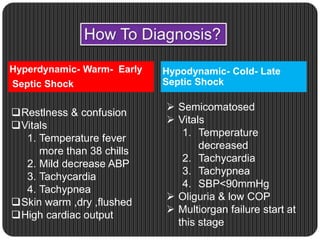
Hyperdynamic- Warm- Early 
Septic Shock 
Restlness & confusion 
Vitals 
1. Temperature fever 
more than 38 chills 
2. Mild decrease ABP 
3. Tachycardia 
4. Tachypnea 
Skin warm ,dry ,flushed 
High cardiac output 
Hypodynamic- Cold- Late 
Septic Shock 
 Semicomatosed 
 Vitals 
1. Temperature 
decreased 
2. Tachycardia 
3. Tachypnea 
4. SBP<90mmHg 
 Oliguria & low COP 
 Multiorgan failure start at 
this stage
Work-up… 
 Laboratory studies 
o CBC 
o Coagulation studies 
o Blood & urine cultures 
 Imaging studies 
o Chest radiography 
o Abdominal radiography 
o Others according to the suspected cause.
• Glucose control is important in the management of sepsis, 
with hyperglycemia associated with higher mortality 
• LFTs and bilirubin, alkaline phosphatase, and lipase 
levels are important in evaluating multiorgan 
dysfunction or a potential source (eg, biliary disease, 
pancreatitis, hepatitis). 
• Serum lactate …It is the best serum marker for tissue perfusion. 
Lactate levels >2.5 mmol/L are associated with an increase in mortality.
Septic Shock & 
MODS 
Septic 
• Control Infection Source 
Shock 
• Optimize Organ Perfusion 
(Resuscitation) 
MODS 
• Support Dysfunctional 
Systems & Monitoring
Shock 
• Optimize Organ Perfusion 
(Resuscitation) 
1)Circulatory support 
I. Fluid replacment to achieve cvp 10-12 
cm H2o 
II. Packed RBCS if low HCT 
III. Drugs Inotropes & vassopressor 
2)Respiratory support 
3)Renal support haemodyalisis in ARF 
4)TTT of DIC fresh frozen plazma
EGDT is a 3-step protocol 
aimed at optimizing tissue 
perfusion
Septic 
• Control Infection Source 
Eliminate surgical causes?! 
 Huge abscess 
 Peritonitis 
 gangernous bowel 
Antibiotic therapy 
Parentral ,compined ,broad spetrum.
• Antibiotics should be administered within the first hour of 
recognition of septic shock, and delays in antibiotic 
administration have been associated with increased 
mortality. 
• Selection of particular antibiotic agents is empirically based 
on 
 an assessment of the patient's underlying host defenses, 
 the potential source of infection, and 
 the most likely responsible organisms. 
• One regimen for septic shock of unknown cause is 
ogentamicin or tobramycin 5.1 mg/kg IV 
once/day 
o3rd generation cephalosporin “cefotaxime 2 g q 
6 to 8 h or ceftriaxone 2 g once/day” 
oor if pseudomonas is suspected ceftazidime 2 
g IV q 8 h”
MODS 
• Support Dysfunctional 
Systems & Monitoring 
•Renal replacement therapies (dialysis). 
•Cardiovascular support (pressors, 
inotropes). 
•Mechanical ventilation. 
•Blood Transfusion for hematologic 
dysfunction.
Recent guidline is that steroids should be administered only in 
patients with septic shock whose hypotension is poorly 
responsive to fluid resuscitation and vasopressor therapy. 
NEVER resuscitate with glucose 5%
Sudden Cardiac 
Death 
Risk factors & Managements
Risk Factors for SCD 
 Old aged 
 Male 
 Has PMHx of Coronory Artery Diseases 
 High total cholesterol level 
 Arterial hypertonia (Hypertrophy of Left Ventricle) 
 Diet factors 
 Has active physical lifestyle 
 Smoking 
 Tachycardia / Variable heart rhythm 
 Prolonged Q-T segment
Stages of SCD 
Prodromal 
Period 
Acute Cardiac 
Symptoms 
Disturbances in 
blood circulation 
Biological 
Death
Evidence of clinical death 
Main Features 
• Asystolic 
• Absent of pulsation at major vessels 
(Carotid artery) 
Additional Features 
• Dilated pupils 
• Areflexia ( Absent Corneal Reflex and 
Pupil reflex towards light ) 
• Skin paleness (pallor)
1. SPrCimDar yM eavnalaugateiomn eofn ptatient’s condition 
2. Basic Life Support (CPR) 
3. Advanced measures to maintain life 
support & 
full resuscitation of patient 
4. Treatment during post- resuscitation 
period 
5. Long- term treatment
Criteria of adequate 
1C. RPeRt u rning of pulse on major 
vessels, synchronous with 
compression 
on chest. 
2. Present of pupil reflex 
3. Pink condition of patient
Algorithm of management of 
ventricular tachycardia 
1. 3 - multiple defibrillator (200 J, 300 J, 360 J) 
(if not effective) 
2. Continue resuscitation method, tracheal 
intubation, prepare lines for IV 
(If not effective) 
3. Introduce Adrenaline IV 1 mg bolus 
(if not effective) 
4. Second defibrillator (360 J) 
(if not effective) 
5. Antiarrhythmic Drugs 
Amiodarone ( 300mg IV) 
Lidocaine (2.0 -1.5 mg/kg IV) 
Magnesium Sulfate (1.0-2.0 g IV)
Antiarrhythmic Drugs 
1. It is to stabilize patient’s condition 
2. If patient’s condition is still unstable, 
continue with defibrillator 
3. All Anti-arrhythmic drugs have pro-arrhythmic 
effects. 
4. Do not use more than 1 anti-arrhythmic 
drug
Atropine in Sudden Cardiac 
Death 
Indications 
1. Asystolic 
2. Heart arrest or bradyarrythmia 
1st bolus dose 0.6 - 1.0 mg 
If atropine is not effective, change to 
adrenaline or euphiline.
Alzheimer’s Disease
What is Alzheimer’s Disease 
(AD)? 
 Of all the diseases to be diagnosed with, Alzheimer’s 
strikes the most fear into people’s hearts. 
 It is progressive and debilitating. 
 It will rob you of: 
 The ability to communicate 
 Think clearly 
 Function 
 Awareness of yourself and environment 
 All controls including the ability to dress yourself, eat or 
keep up on personal hygiene. 
 Memories of your family and loved ones. 
 Will eventually lead to death.
60-80% cases of dementia fall under 
Alzheimer’s Disease In AD Patients: 
 The areas that control memory & 
thinking are affected first. 
 Plaques form when protein pieces 
called beta-amyloid clump together. 
These are dense and mostly insoluble. 
 Neurofibrillary tangles are aggregates 
of the protein tau which has 
accumulated inside the cells. 
 Where tangles form the transport 
system falls apart and disintegrates. 
 Nutrients and essential supplies 
can’t move through cells and they 
die. 
 This process spreads throughout the 
brain. 
 Deficient in an important 
neurotransmitter, acetylcholine, which 
is involved in memory function and 
Clusters of plaques and dying 
nerve cells in a person with AD
Healthy Brain (L) AD Brain (R) 
The bottom image shows the two brains together to see the difference in size.
Diagnosing AD 
 Diagnosis is not a simple process and includes: 
 Brain Scans 
 Cognitive Assessments 
 Laboratory Tests 
 On average, patients with AD live 7-10 years after 
initial diagnosis. 
 The disease can last as long as 20 years. 
 4.5 million Americans have 
AD. 
 Affects women more than 
men: 
 2/3 of those diagnosed are women.
Signs & Symptoms 
 Depression can be a symptom and may begin 
occurring up to 3 years prior to diagnosis of AD. 
 Most people put this off as not a big deal when it 
could mean a great difference in outcome if 
examined. 
 Memory Loss 
 Behavioral Issues not normal to the patient. 
 Confusion about time and place. 
 Trouble finding appropriate words or loss of 
speech. 
 Poor judgment. 
 Changes in mood and personality, such as 
suspicion.
Types of Alzheimer’s 
 Early Onset Alzheimer’s 
 Diagnosed before the age of 65. 
 Rare 
 Late Onset Alzheimer’s 
 Occurs after the age of 65. 
 Most common 
 Familial Alzheimer’s 
 Entirely inherited 
 Extremely rare
Cures 
 There are no known cures for Alzheimer’s. 
 There are many studies underway with some 
promising results in slowing the disease down. 
 Memantine has shown encouraging results among 
those in advanced stages of AD. 
 Melatonin has also shown some promise but 
needs further study. 
 Antioxidants are extremely important. 
 Exercise for the body & brain at any stage. 
 A blue dye, methylene blue (MTC), slowed 
progression by 81%. It causes tau filaments 
to dissolve.
Prevention 
 The general consensus is that prevention is the 
key in dealing with AD. 
 Exercise regularly both body and mind. 
 Maintain a normal healthy body weight. 
 Enjoy leisure activities. 
 Stay connected and social. 
 Practice stress reduction techniques. 
 Consume a diet rich in antioxidants. 
 Avoid trans fat and saturated fat. 
 Eat a diet that is 75% raw. 
 Avoid toxins as much as possible in your food and 
environment.
CEREBROVASCULAR 
DISORDERS
CEREBROVASCULAR 
DISORDERS 
refers to any functional 
abnormality of the central 
nervous system that occurs 
when the normal blood supply 
to the brain is disrupted.
STROKE 
a sudden neurological 
event which results in 
the new onset of 
neurological 
symptoms.
TYPES 
of 
STRO 
KE
ISCHE 
MIC 
STROK 
E 
“BRAIN
MOTOR LOSS 
-disturbance of voluntary 
motor control on the side of 
the body opposite the location 
of the stroke lesion 
•Hemiplegia 
•Hemiparesis
COMMUNICATION LOSS 
•Dysarthria 
•Apraxia 
•Agnosia 
•Dysphasia or Aphasia
PERCEPTUAL DISTURBANCES 
•Homonymous Hemianopsia 
•Disturbance in Visual-Spatial Relations 
- Unilateral Neglect 
•Loss of Peripheral Vision 
•Night Blindness 
•Diplopia 
•Horner’s Syndrome
SENSORY LOSS 
•Slight Impairment of Touch 
•Loss of Proprioception 
•Difficulty in interpreting visual, 
tactile, and auditory stimuli
COGNITIVE IMPAIRMENT & 
PSYCHOLOGICAL EFFECTS 
Memory Loss 
Poor Comprehension 
Limited Attention Span 
Forgetfulness 
Lack of Motivation 
Depression 
Emotional Lability 
Hostility 
Frustration 
Resentment 
Lack of Cooperation
ASSESSMENT & 
DIAGNOSTICS 
•Patient History 
•Complete Physical and Neurologic Examination 
•Initial Assessment: Airway Patency, 
Cardiovascular Status, Gross Neurologic Losses 
•Stroke Time Course Classification
STROKE TIME COURSE 
CLASSIFICATION 
Stage 1: Transient Ischemic Attack 
Stage 2: Reversible Ischemic Neurologic Deficits 
Stage 3: Stroke in Evolution 
Stage 4: Completed Stroke
DIAGNOSTIC TESTS 
•CT Scan 
•12-Lead ECG 
•Carotid ultrasound 
•Cerebral Angiography 
•Transcranial Doppler Flow Studies 
•Transthoracic or Transesophageal Echocardiography 
•MRI of the brain and/or neck 
•Xenon CT 
•Single Photon Emission CT
MEDICAL MANAGEMENT 
1. Treatment of TIA from atrial fibrillation or 
suspected embolic or thrombotic causes 
2. Thrombolytic Therapy for Ischemic Stroke 
3. Therapy for Patients with Ischemic Stroke 
NOT Receiving Thrombolytic Therapy 
4. Managing Potential Complications
NURSING MANAGEMENT 
•Improving Mobility and Preventing Joint Deformities 
•Managing Sensory-Perceptual Difficulties 
•Attaining Bowel and Bladder Control 
•Improving Thought Processes 
•Improving Communication 
•Maintaining Skin Integrity 
•Improving Family Coping 
•Helping the Patient Cope with Sexual Dysfunction
SURGICAL MANAGEMENT 
CAROTID ENDARTERECTOMY 
- Main surgical procedure for the management of 
TIAs and small stroke 
- Indicated for patients with symptoms of TIA or 
mild stroke found to be due to carotid stenosis 
- Complications: stroke, cranial nerve injuries, 
infection, hematoma at the incision site, carotid 
artery disruption
HEMMORH 
AGIC 
STROKE 
CEREBRAL 
ANEURYSM 
SUBARACHNOID 
HEMORRHAGE
Elements of 
Communicating 
Bad News the P-SPIKES 
Approach
Acronym Steps Aim of the Interaction 
P 
Preparation Mentally prepare for the interaction with the 
patient and/or family. 
S Setting of the interaction Ensure the appropriate setting for a serious 
and potentially emotionally charged discussion. 
P Patient's perception and 
preparation 
Begin the discussion by establishing the 
baseline and whether the patient and family 
can grasp the information. 
Ease tension by having the patient and family 
contribute. 
I Invitation and information 
needs 
Discover what information needs the patient 
and/or family have and what limits they want 
regarding the bad information. 
K Knowledge of the condition Provide the bad news or other information to 
the patient and/or family sensitively. 
E Empathy and exploration Identify the cause of the emotions—e.g., poor 
prognosis. 
Empathize with the patient and/or family's 
feelings. 
Explore by asking open-ended questions. 
S Summary and planning Delineate for the patient and the family the next 
steps, including additional tests or
Common Physical and 
Psychological Symptoms of 
Terminally Ill Patients
Palliative Care
What is Palliative Care? 
 Medical care that focuses on alleviating the 
intensity of symptoms of disease. 
 Palliative care focuses on reducing the 
prominence and severity of symptoms.
What is Palliative Care? 
 The World Health Organization describes 
palliative care as "an approach that improves the 
quality of life of patients and their families facing 
the problems associated with life-threatening 
illness, through the prevention and relief of 
suffering by means of early identification and 
impeccable assessment and treatment of pain 
and other problems, physical, psychosocial and 
spiritual."
WHO Definition of Palliative Care 
Palliative care: 
 provides relief from pain and other distressing 
symptoms; 
 affirms life and regards dying as a normal 
process; 
 intends neither to hasten or postpone death; 
 integrates the psychological and spiritual aspects 
of patient care; 
 offers a support system to help patients live as 
actively as possible until death;
WHO Definition of Palliative Care 
(cont.) 
 offers a support system to help the family cope 
during the patients illness and in their own 
bereavement; 
 uses a team approach to address the needs of 
patients and their families, including bereavement 
counseling, if indicated; 
 will enhance quality of life, and may also 
positively influence the course of illness; 
 is applicable early in the course of illness, in 
conjunction with other therapies that are intended 
to prolong life, such as chemotherapy or radiation 
therapy, and includes those investigations 
needed to better understand and manage 
distressing clinical complications.
What is the goal of Palliative 
Care? 
 The goal is to improve the quality of life for 
individuals who are suffering from severe 
diseases. 
 Palliative care offers a diverse array of assistance 
and care to the patient.
The History of Palliative Care 
 Started as a hospice movement in the 19th 
century, religious orders created hospices that 
provided care for the sick and dying in London 
and Ireland. 
 In recent years, Palliative care has become a 
large movement, affecting much of the 
population. 
 Began as a volunteer-led movement in the United 
states and has developed into a vital part of the 
health care system.
Palliative vs. Hospice Care 
 Division made between these two terms in the 
United States 
 Hospice is a “type” of palliative care for those who 
are at the end of their lives.
Palliative vs. Hospice Care 
 Palliative care can be provided from the time of 
diagnosis. 
 Palliative care can be given simultaneously with 
curative treatment. 
 Both services have foundations in the same 
philosophy of reducing the severity of the 
symptoms of a sickness or old age. 
 Other countries do not make such a distinction
Who receives Palliative Care? 
 Individuals struggling with various diseases 
 Individuals with chronic diseases such as cancer, 
cardiac disease, kidney failure, Alzheimer's, 
HIV/AIDS,etc
Cancer and Palliative Care 
 It is generally estimated that roughly 7.2 to 7.5 
million people worldwide die from cancer each 
year. 
 More than 70% of all cancer deaths occur in 
developing countries, where resources available 
for prevention, diagnosis and treatment of cancer 
are limited or nonexistent. 
 More than 40% of all cancers can be prevented. 
Others can be detected early, treated and cured. 
Even with late-stage cancer, the suffering of 
patients can be relieved with good palliative care.
Palliative Care and Cancer Care 
 Palliative care is given throughout a patient’s 
experience with cancer. 
 Care can begin at diagnosis and continue through 
treatment, follow-up care, and the end of life.
Palliative Care and Cancer 
 "Everyone has a right to be treated, and die, with 
dignity. The relief of pain - physical, emotional, 
spiritual and social - is a human right," said Dr 
Catherine Camus, WHO Assistant Director- 
General for Noncommunicable Diseases and 
Mental Health. "Palliative care is an urgent need 
worldwide for people living with advanced stages 
of cancer, particularly in developing countries, 
where a high proportion of people with cancer are 
diagnosed when treatment is no longer effective."
“Cancer Control: Knowledge Into 
Action” 
 Excerpts from the WHO guide for Palliative Care: 
“Palliative care is an urgent humanitarian need 
worldwide 
for people with cancer and other chronic fatal 
diseases. 
Palliative care is particularly needed in places where 
a high proportion of patients present in advanced 
stages 
and there is little chance of cure.”
Who Provides Palliative Care? 
 Usually provided by a team of individuals 
 Interdisciplinary group of professionals 
 Team includes experts in multiple fields: 
 Doctors 
 Nurses 
 social workers 
 massage therapists 
 Pharmacists 
 Nutritionists
Volunteers 
Patient 
and 
Family 
Physicians 
Spiritual 
Counselors 
Social Workers 
Pharmacists 
Nurses 
Therapists 
Home Health 
Aides
Kübler-Ross model 
The Kübler-Ross model, 
or the five stages of grief, 
is a series of emotional 
stages experienced when 
faced with impending 
death or death of 
someone.
KUBLER ROSS - REACTION TO 
TERMINAL ILLNESS
KUBLER ROSS - REACTION TO 
TERMINAL ILLNESS 
Denial
KUBLER ROSS - REACTION TO 
TERMINAL ILLNESS 
No I am not
KUBLER ROSS - REACTION TO 
TERMINAL ILLNESS 
Denial 
Anger
KUBLER ROSS - REACTION TO 
TERMINAL ILLNESS 
Denial 
Why me?
KUBLER ROSS - REACTION TO 
TERMINAL ILLNESS 
Denial 
Anger 
Bargaining
KUBLER ROSS - REACTION TO 
TERMINAL ILLNESS 
Denial 
Anger 
Make deals
KUBLER ROSS - REACTION TO 
TERMINAL ILLNESS 
Denial 
Anger 
Bargaining 
Depression
KUBLER ROSS - REACTION TO 
TERMINAL ILLNESS 
Denial 
Anger 
Bargaining 
Sense of lose
KUBLER ROSS - REACTION TO 
TERMINAL ILLNESS 
Denial 
Anger 
Bargaining 
Depression 
Acceptance
KUBLER ROSS - REACTION TO 
TERMINAL ILLNESS 
Denial 
Anger 
Bargaining 
Depression 
Make peace with death
KUBLER ROSS - REACTION TO 
TERMINAL ILLNESS 
Denial 
Anger 
Bargaining 
Depression 
Acceptance
Children grieving in divorce 
Denial 
Children feel the need to believe that their 
parents will get back together, or will change their 
mind about the divorce. Example: “Mom and Dad 
will stay together.” 
Anger 
Children feel the need to blame someone for 
their sadness and loss. Example: “I hate Mom for 
leaving us.”
Children grieving in divorce 
Bargaining 
 In this stage, children feel as if they have some 
say in the situation if they bring a bargain to the 
table. This helps them keep focused on the 
positive that the situation might change, and less 
focused on the negative, the sadness they’ll 
experience after the divorce. Example: “If I do all 
of my chores maybe Mom won’t leave Dad.”
Children grieving in divorce 
Depression 
This involves the child experiencing sadness 
when they know there is nothing else to be done, 
and they realize they cannot stop the divorce. 
The parents need to let the child experience this 
process of grieving because if they do not, it only 
shows their inability to cope with the situation. 
Example: “I’m sorry that I cannot fix this situation 
for you.” Acceptance
Children grieving in divorce 
Acceptance 
 This does not necessarily mean that the child will 
be completely happy again. The acceptance is 
just moving past the depression and starting to 
accept the divorce. The sooner the parents start 
to move on from the situation, the sooner the 
children can begin to accept the reality of it
Approaches to Palliative Care 
 Not a “one size fits all approach” 
 Care is tailored to help the specific needs of the 
patient 
 Since palliative care is utilized to help with various 
diseases, the care provided must fit the 
symptoms.
SUGGESTED QUESTIONS FOR THE CLINICAL 
INTERVIEW WITH PATIENTS FACING THE END OF 
LIFE 
 Tell me the story of your illness. [the 
patient's perspective] 
 Tell me how you first found out about your 
illness. [hearing bad news] 
 What is your understanding now about the 
illness? [patient's understanding or 
explanatory model] 
 What do you want to be told about your 
illness? [shared decision making and 
information preferences] 
 How has the illness affected you? 
[patient's coping]
SUGGESTED QUESTIONS FOR THE 
CLINICAL INTERVIEW WITH PATIENTS 
FACING THE END OF LIFE 
 How has your family (or close friends) been 
affected? [family's coping] What have you 
discussed with them? 
 How have you been helped? [supports] 
 Have there been other tough times you have 
had to face? [previous coping] 
 Do you have a religious or spiritual practice or 
set of beliefs? 
 Have you been thinking about dying? 
[addressing death and dying] What kinds of 
thoughts have you had? What worries?
FEW NURSING 
INTERVENTIONS 
Pain – 
 limit unnecessary painful procedures 
 sedation and giving pre-emptive analgesia prior to a 
procedure (e.g., including sucrose for procedures in 
neonates) 
 Address coincident depression, anxiety, sense of fear or 
lack of control. 
 Consider guided imagery, relaxation, hypnosis, 
art/pet/play therapy, acupuncture/acupressure, 
biofeedback, massage, heat/cold, yoga, transcutaneous 
electric nerve stimulation, distraction.
Dyspnoea or air hunger- 
 Suction secretions if present 
 positioning, comfortable loose clothing, fan to 
provide cool, blowing air. 
 Limit volume of IV fluids, consider diuretics if fluid 
overload/ pulmonary oedema present. 
 Behavioural strategies including breathing 
exercises, guided imagery, relaxation, music
Management of Dyspnea
Fatigue – 
 Sleep hygiene 
 Gentle exercise 
 Address potentially contributing factors (e.g., 
anaemia, depression, side effects of medications)
Nausea/vomiting – 
 Consider dietary modifications (bland, soft, adjust 
timing/ volume of foods or 
 feeds) Aromatherapy: peppermint, lavender; 
acupuncture/ 
 Constipation - Increase fibres in diet, encourage 
fluids
Oral lesions/dysphagia – 
 Oral hygiene and appropriate liquid, solid and oral 
medication formulation 
 (texture, taste, fluidity). Treat infections, 
complications (mucositis, pharyngitis, dental 
abscess, esophagitis).Orophayngeal motility 
study and speech (feeding team) consultation
Anorexia– 
 Manage treatable lesions causing oral pain, 
dysphagia, and anorexia. 
 Support caloric intake during phase of illness 
when anorexia is reversible. 
 Acknowledge that anorexia is intrinsic to the 
dying process and may not be reversible. 
Prevent/treat coexisting constipation
Pruritus – 
 Moisturize skin, Try specialized anti-itch lotions, 
 Apply cold packs, Counter stimulation, distraction, 
and relaxation.
Medications for Constipation
Diarrhoea – 
 Evaluate/treat if obstipation, Assess and treat 
infection, Dietary modification. 
Depression – 
 Psychotherapy, behavioural techniques
Anxiety – 
 Psychotherapy (individual and family), 
behavioural techniques 
Agitation/terminal restlessness – 
 Evaluate for organic or drug causes, Educate 
family, Orient and reassure child; provide calm.
Medications for the Management of 
Delirium
NURSING CARE 
Answering the question 
Helping the parents 
Helping the dying child
ORGAN DONATION 
 Benefit another human being 
 irreversible cessation of neurologic function of the 
brain 
 discuss the topic with family 
 Healthy child who dies unexpectedly, children 
with cancer, chronic disease etc should be 
considered for organ donation
PATIENTS' PERSPECTIVE ON 
A “GOOD DEATH” 
 Control pain and other 
symptoms 
 Avoid inappropriate 
prolongation of dying when life 
is no longer enjoyable 
 Relieve burden on the family 
 Achieve a sense of control 
 Strengthen relationships with 
loved ones
Common 
and 
uncommo 
n clinical 
courses in 
the last 
days of 
terminally 
ill patients
GRIEF AND 
BEREAVEMENT 
Grief is the emotional response to 
that loss. 
Bereavement is the 
acknowledgment of the objective 
fact that one has experienced a 
death.
BEREAVEMENT 
 The word 'bereavement' comes from the ancient 
German for 'seize by violence'. 
 Today the word 'bereavement' is used to describe 
the period of grief and mourning we go through after 
someone close to us dies. 
 Bereavement is about trying to accept what 
happened, learning to adjust to life without that 
person
STAGES OF BEREAVEMENT 
Ways to mourn 
and 
express the loss 
Accepting the loss 
Experiencing pain that 
comes with grief 
Trying to adjust 
without that person 
Finding new place to put 
emotional energy
The importance of mourning 
 Mourning allows to say goodbye. 
 Seeing the body, watching the burial, or scattering 
the ashes is a way of affirming what has happened. 
 Sometimes we need to see evidence that a person 
really has died before we can truly enter into the 
grieving process.
COUNSELLING 
DEFINITION 
Counselling is a definitively structured 
permissive relationship which allows the client to 
gain an understanding of himself to a degree 
which enables him to take new positive steps in 
the light of his new orientation. 
- ROGES
Characteristics 
2 individual 
Self 
realization 
Realistic goals 
Attitude & action
Bereavement counselling 
-to help people cope more effectively with the death of 
their patient or a loved one. Specifically, 
bereavement counselling can: 
 offer an understanding of the mourning process 
 explore areas that could potentially prevent you from 
moving on 
 help resolve areas of conflict still remaining 
 help you to adjust to a new sense of self 
 address possible issues of depression or suicidal 
thoughts
CONCLUSION 
Knowledge about hospitalization, 
terminally ill child and the nursing 
management help nurses to provide the 
adequate and quality care, to support 
the family and child and to help her by 
self satisfaction. Even though time heals 
the wound, an adequate support 
accelerates the process.
What does Palliative Care Provide to 
the Patient? 
 Helps patients gain the strength and peace of 
mind to carry on with daily life 
 Aid the ability to tolerate medical treatments 
 Helps patients to better understand their choices 
for care
What Does Palliative Care 
Provide for the Patient’s Family? 
 Helps families understand the choices available 
for care 
 Improves everyday life of patient; reducing the 
concern of loved ones 
 Allows for valuable 
support system 
Image courtesy of mdanderson.org
Approaches to Palliative Care 
A palliative care team delivers many forms of help 
to a patient suffering from a severe illness, 
including : 
 Close communication with doctors 
 Expert management of pain and other symptoms 
 Help navigating the healthcare system 
 Guidance with difficult and complex treatment choices 
 Emotional and spiritual support for the patient and 
their family
Palliative Care Is Effective 
 Successful palliative care teams require 
nurturing individuals who are willing to 
collaborate with one another. 
 Researchers have studied the positive effects 
palliative care has on patients. Recent studies 
show that patients who receive palliative care 
report improvement in: 
 Pain and other distressing symptoms, such as 
nausea or shortness of breath 
 Communication with their doctors and family 
members 
 Emotional and psychological state
Where to find Palliative Care? 
 In most cases, palliative care is provided in the 
hospital. 
 The process begins when doctors refer 
individuals to the palliative care team. 
 In the hospital, palliative care is provided by a 
team of experts.
Settings for Palliative Care 
 Outpatient practice 
 Hospital Inpatient 
 Unit based 
 Consultation Team 
 Home care 
 Nursing Home 
 Hospice
Cost of Palliative Care 
 Most insurance plans cover all or part of the 
palliative care treatment given in hospitals. 
 Medicare and Medicaid also typically cover 
palliative care.
WPRO Palliative Care Systems
Terminal illness care

Terminal illness care

  • 2.
    Ten Leading Causesof Death in world due to Severe illnesses
  • 3.
     HEART DISEASE  MALIGNA NT NEOPLASM  CEREBROVASCULAR DISEASE  CHORIC LOWER RESP. DISEASE  ACCIDENTS  ALZHEIMER’S DISEASE  DIABETES MELLITUS  INFLUENZA AND PNEUMONIA  NEPHRITIS,NEPRITIC SYNDROME,NEPHROSIS  SEPTICEMIA
  • 4.
  • 5.
  • 7.
  • 8.
  • 9.
    Risk factor Smoking  Tobacco smoking is a strong, modifiable risk factor for cardiovascular disease, pulmonary disease, and cancer. Smokers have an approximately 1 in 3 lifetime risk of dying prematurely from a tobacco-related cancer or cardiovascular or pulmonary disease. Tobacco use causes more deaths from cardiovascular disease than from cancer. Lung cancer and cancers of the larynx, oropharynx, esophagus, kidney, bladder, pancreas, and stomach are all tobacco-related.
  • 10.
    Diet Modification diets high in fat are associated with increased risk for cancers of the breast, colon, prostate, and endometrium. These cancers have their highest incidence and mortalities in western cultures, where fat comprises an average of one-third of the total calories consumed
  • 11.
  • 14.
    Screening Recommendations forAsymptomatic Normal-Risk Subjects
  • 18.
  • 20.
    TREATMENT  Stagingand treatment planning  Cancer stage is an assessment of the extent of tumor spread and treatment is based on staging.  Most malignancies are staged by the tumor, lymph node, and metastasis (TNM) system from stages I to IV. The T classification is based on the size and extent of local invasion. The N classification describes the extent of lymph node involvement, and the M classification is based on the presence or absence of distant metastasis.
  • 21.
    Staging and treatmentplanning  Appropriate radiologic staging must be performed before therapy, usually including computed tomographic (CT) imaging. Fluorodeoxyglucose-positron emission tomography (FDG-PET) adds to CT in select malignancies. Brain imaging with magnetic resonance imaging ([MRI] preferable) or CT with intravenous contrast should be considered in advanced melanoma and lung and kidney cancer. See tumor type discussion for further details.  Complete surgical staging provides more accurate extent of the disease than clinical staging and is possible only in patients with resectable disease when surgery is performed with an intent to cure.  Tumor grade is an assessment by the pathologist of the tumor's similarity to the cell of origin and the proliferation rate, usually low, moderate, or high grade.
  • 22.
    Principles of radiation  Curative intent radiotherapy is used in several settings.  Neoadjuvant: Preoperative therapy intended to reduce both the extent of surgery and the risk of local relapse.  Adjuvant: Postoperative intended to reduce the risk of local relapse.  Definitive: High dose with curative intent, usually not followed by surgery.  Concurrent chemo radiation: Chemotherapy with definitive radiation significantly increases toxicity but increases efficacy in some settings.
  • 23.
    Palliative radiotherapy isused in lower dosing to reduce symptoms, including bony pain, obstruction (esophageal, bronchial), bleeding (GI, gynecologic, bronchial, cutaneous), and neurologic symptoms (brain metastasis)
  • 24.
    Principles of chemotherapy  Traditional, cytotoxic chemotherapy targets all dividing cells and has broad toxicities.  Chemotherapy is typically given in 2-, 3-, or 4-week “cycles.” In most regimens, intravenous treatment is given on the first day of the cycle, with no further treatment until the next cycle. In other regimens, treatments are weekly for 2 or 3 weeks, with 1 week off prior to the next cycle.  Curative intent chemotherapy includes neoadjuvant, adjuvant, and chemoradiation protocols in solid tumors. Chemotherapy alone is curative in many lymphomas, leukemias, and germ cell tumors (GST).  Palliative chemotherapy is used in advanced solid tumors and hematologic malignancies, with a focus on prolonging survival without overly affecting quality of life. Should only be used in patients with a good performance status.
  • 25.
  • 26.
    Surgical Management Goals of therapy, cure versus palliation, must guide any surgical intervention.  Surgical resection is often performed only when there is a possibility of cure, though palliative surgery is performed to relieve discomfort (mastectomy for local control in a patient with metastatic disease) in some malignancies.  Complete lymph node staging provides useful information for postoperative treatment planning (adjuvant therapy).  Surgical resection of isolated metastatic sites in select patients can improve survival. Examples include solitary brain metastases, pulmonary metastases from colorectal cancer or sarcomas, and
  • 27.
    Hormonal Therapy Endocrine or hormonal therapy for cancer, the earliest form of systemic therapy, is almost entirely limited to breast cancer and prostate cancer . Many premenopausal breast cancers are thought to be under the influence of estrogens, and hormonal deprivation (ablation) may produce long-term responses in properly selected patients (those with estrogen and/or progesterone receptor positivity who have predominantly soft tissue or bone disease).
  • 29.
    Aromatase Inhibitors Patients who have experienced a prolonged objective response or stable disease with hormonal therapy may be candidates for second, third-, or fourth-line hormonal therapy.  Recently, aromatase inhibitors (e.g., anastrazole, letrozole, exemestane), which decrease the conversion of metabolites in fat and muscle into estrogen, have been found to be more effective than tamoxifen as first-line therapy in both the adjuvant and metastatic settings
  • 30.
    Corticosteroids  Thecorticosteroids, typically prednisone or dexamethasone, are widely used in the treatment of hematologic and oncologic cancers. In Hodgkin's disease , the non-Hodgkin's lymphomas , and multiple myeloma ,corticosteroids have antitumor activity.
  • 31.
    Immunotherapy Two cancersthat are characterized by often unpredictable clinical behavior, melanoma and renal cell carcinoma , are treated with interferon or interleukin-2 or both , Dramatic responses are uncommon, and immunotherapy is only a minor component of cancer therapy.
  • 32.
    Molecularly Targeted Agents  Targeted agents are drugs directed at a specific molecular point, such as a protein tyrosine kinase, or at the presence of a specific antigen on a tumor cell. Tyrosine kinase inhibitors include imatinib and erlotinib. The current best example of the success of tyrosine kinase inhibitor therapy is the dramatic response of chronic myelogenous leukemia (CML ) to imatinib (Gleevec). Imatinib also has activity against gastrointestinal stromal cell tumors.
  • 34.
    Bone Marrow/Stem Cell Transplantation  Because the major dose-limiting toxicity of most chemotherapeutic agents is myelosuppression, approaches have been developed to harvest the pluripotent stem cells found in bone marrow, peripheral blood, or, less often, cord blood before marrow-damaging chemotherapy, so that the stem cells can be reinfused later . This technique is most effective for acute leukemias , relapsed lymphomas, and germ cell tumors.
  • 35.
    CANCER OF UNKNOWN PRIMARY ORIGIN  The first signs or symptoms of cancer are frequently the result of metastases to visceral or nodal sites. In most such patients, routine clinical evaluation with a comprehensive history, physical examination, complete blood cell count, screening chemistries, and directed radiologic evaluation of specific symptoms or signs identifies the primary tumor. Patients who have no primary tumor located after this routine clinical evaluation are defined as having cancer of unknown primary site. Further clinical and pathologic evaluation will identify the primary site in only a few patients, and approximately 80% will never have a primary site identified during their subsequent clinical course.
  • 36.
     The initialclinical and pathologic evaluation should focus on identifying a primary site when possible and on identifying patients for whom specific treatment is indicated. In most patients with cancer of unknown primary site, the diagnosis of advanced cancer is strongly suspected after the initial history and physical examination.
  • 37.
    Biopsy  Thediagnosis of metastatic cancer should be confirmed by biopsy of the most accessible metastatic lesion. Fine-needle aspiration may or may not provide sufficient material for optimal histologic examination and special pathologic procedures. If tissue is inadequate, a larger biopsy sample should be obtained so all necessary stains and procedures can be performed.
  • 38.
    RECOMMENDED EVALUATION FOLLOWINGINITIAL LIGHT MICROSCOPIC DIAGNOSIS
  • 40.
     SPECIFIC PATIENT SUBSETS AND RECOMMENDED TREATMENT
  • 42.
    Curability of Cancerswith Chemotherapy  A. Advanced Cancers With Possible Cure  Acute lymphoid and acute myeloid leukemia (pediatric/adult)  Hodgkin's disease (pediatric/adult)  Lymphomas—certain types (pediatric/adult)  Germ cell neoplasms  Embryonal carcinoma  Teratocarcinoma
  • 43.
    . Advanced CancersWith Possible Cure Choriocarcinoma Gestational trophoblastic neoplasia Pediatric neoplasms Wilms' tumor Embryonal rhabdomyosarcoma Ewing's sarcoma Peripheral neuroepithelioma Neuroblastoma Small cell lung carcinoma Ovarian carcinoma
  • 44.
    Advanced Cancers PossiblyCured by Chemotherapy and Radiation  Squamous carcinoma (head and neck)  Squamous carcinoma (anus)  Breast carcinoma  Carcinoma of the uterine cervix  Non-small cell lung carcinoma (stage III)  Small cell lung carcinoma
  • 45.
    Cancers Possibly CuredWith Chemotherapy as Adjuvant to Surgery  Breast carcinoma  Colorectal carcinomaa  Osteogenic sarcoma  Soft tissue sarcoma
  • 46.
    Cancers Possibly Curedwith "High-Dose" Chemotherapy With Stem Cell Support  Relapsed leukemias, lymphoid and myeloid  Relapsed lymphomas, Hodgkin's and non- Hodgkin's  Chronic myeloid leukemia  Multiple myeloma
  • 47.
    Cancers Responsive WithUseful Palliation, But Not Cure, by Chemotherapy  Bladder carcinoma  Chronic myeloid leukemia  Hairy cell leukemia  Chronic lymphocytic leukemia  Lymphoma—certain types  Multiple myeloma  Gastric carcinoma  Cervix carcinoma  Endometrial carcinoma  Soft tissue sarcoma •Head and neck cancer •Adrenocortical carcinoma •Islet-cell neoplasms •Breast carcinoma •Colorectal carcinoma •Renal carcinoma
  • 48.
    Tumor Poorly Responsivein Advanced Stages to Chemotherapy  Pancreatic carcinoma  Biliary-tract neoplasms  Thyroid carcinoma  Carcinoma of the vulva  Non-small cell lung carcinoma  Prostate carcinoma  Melanoma  Hepatocellular carcinoma  Salivary gland cancer
  • 51.
  • 52.
    OVERVIEW • Septicshock is the most common cause of mortality in the intensive care unit. It is the 10th leading cause of death overall. • Despite aggressive treatment mortality ranges from 15% in patients with sepsis to 40-60% in patients with septic shock.
  • 53.
    Reference Diseases Incidence in US (cases per 100,000)  AIDS1 17  Colon and rectal cancer2 48  Breast cancer2 112  Congestive heart failure3 ~196  Severe sepsis4 ~300  Number of deaths in US each year  Acute myocardial infarction5 218,000  Severe sepsis4 215,000 1Centers for Disease Control and Prevention. 2000. Incidence rate for 1999. 2American Cancer Society. 2001. Incidence rate for 1993-1997. 4Angus DC et al. 2001. Crit Care Med 29:1303-1310. 5National Center for Health Statistics. 2001.
  • 55.
    SIRS Sepis Severesepsis-SIRS Septic shock MODS
  • 56.
    SIRS (Systemic InflammatoryResponse Syndrome) is a systemic inflammatory response to non specific insults Clinically?! 1. hyperthermia >38°C or hypothermia <36°C 2. • tachycardia >90 bpm 3. • tachypnoea >20 r.p.m. or PaCO2 <4.3 kPa 4. • neutrophilia >12 × 10–9 l–1 or neutropenia <4 000 SIRS is either due to Infection or others (major burn-major traume-pancreatitis –hypovolemic shock)
  • 57.
    Sepis •The systemicinflammatory response to infection. Clinically?! • Known or suspected infection, plus • >2 SIRS Criteria. Severe sepsis-SIRS •Severe sepsis resulting in at least one organ failure Clinically?! •Sepsis plus >1 organ dysfunction.
  • 58.
    Septic shock •Sepsisinduced shock with hypotension despite adequate resuscitation along with the presence of perfusion abnormalities which may include, but are not limited to lactic acidosis, oliguria, or an acute alteration in mental status. MODS (multiple organ dysfunction syndrome) The presence of altered organ function in an acutely ill patient such that homeostasis cannot be maintained without intervention.
  • 59.
    SIRS systemic inflammatory response syndrome SEPSIS SIRS with a presumed or confirmed infectious process •Severe sepsis Sepsis with ≥1 sign of organ failure Septic shock SIRS + Infection + Organ Failure + Refractory Hypotension
  • 62.
    Caustive organisms •Gram –ve the commonest • Staphylococcus • Candida Sources of infection • Endogenus source 1. Causes ofPeritonitis 2. Perforated viscous 3. Gangrenous bowel 4. Genitourinary infection • Exogenus source  Infected CVP Predisposing factors • Old age • DM • Corticosteroid therpy • Malignancy • Major operation
  • 64.
     It isnot precisely understood, but it involves a complex interaction between the pathogen and the host's immune system.  Physiological response to localized infection: o Influx of activated PMN leukocytes & monocytes  release of inflammatory mediators o Local vasodilatation & increased endothelial permeability o Activation of the coagulation cascade.  The same occurs in septic shock but at a systemic level.  Diffuse endothelial disruption  Increased vascular permeability  Vasodilatation  Thrombosis of end organ capillaries
  • 66.
    Infection Inflammatory Mediators Endothelial Dysfunction Vasodilation Hypotension Microvascular Plugging Vasoconstriction Edema Maldistribution of Microvascular Blood Flow Ischemia Cell Death Organ Dysfunction
  • 67.
    Pathogenesis of SIRS/MODSin surgical patients Preoperative Illness Trauma or Operation Tissue Injury Inadequate Resuscitation optimal oxygen delivery and support Recovery Excessive Inflammatory Response SIRS/MODS
  • 68.
     Lungs Kidneys  CVS  CNS  PNS Acute Organ Dysfunction  Coagulation  GI  Liver  Endocrine  Skeletal Muscle  Adult Respiratory Distress Syndrome18%  Acute Tubular Necrosis 50%  Shock  Metabolic encephalopathy  Critical Illness Polyneuropathy  Disseminated Intravascular Coagulopathy 38%  Gastroparesis and ileus  Cholestasis  Adrenal insufficiency  Rhabdomyolysis
  • 69.
    Identifying Acute OrganDysfunction as a Marker of Severe Sepsis Tachycardia Hypotensio n  CVP  PAOP Altered Consciousness Confusion Psychosis Tachypnea PaO2 <70 mm Hg SaO2 <90% PaO2/FiO2 300 Jaundice  Enzymes  Albumin  PT Oliguria Anuria  Creatinine  Platelets  PT/APTT  Protein C  D-dimer
  • 71.
    • You mustsuspect sepsis in patient with predisposing factors,dont wait for septic shock • The diagnosis of sepsis requires the taking of an EXCELLENT history, physical examination, appropriate laboratory tests, and a close follow-up of hemodynamic status • Early recognition is live saving in such rapid overwhelming situation
  • 72.
    Hyperdynamic- Warm- Early Septic Shock Restlness & confusion Vitals 1. Temperature fever more than 38 chills 2. Mild decrease ABP 3. Tachycardia 4. Tachypnea Skin warm ,dry ,flushed High cardiac output Hypodynamic- Cold- Late Septic Shock  Semicomatosed  Vitals 1. Temperature decreased 2. Tachycardia 3. Tachypnea 4. SBP<90mmHg  Oliguria & low COP  Multiorgan failure start at this stage
  • 74.
    Work-up…  Laboratorystudies o CBC o Coagulation studies o Blood & urine cultures  Imaging studies o Chest radiography o Abdominal radiography o Others according to the suspected cause.
  • 75.
    • Glucose controlis important in the management of sepsis, with hyperglycemia associated with higher mortality • LFTs and bilirubin, alkaline phosphatase, and lipase levels are important in evaluating multiorgan dysfunction or a potential source (eg, biliary disease, pancreatitis, hepatitis). • Serum lactate …It is the best serum marker for tissue perfusion. Lactate levels >2.5 mmol/L are associated with an increase in mortality.
  • 77.
    Septic Shock & MODS Septic • Control Infection Source Shock • Optimize Organ Perfusion (Resuscitation) MODS • Support Dysfunctional Systems & Monitoring
  • 78.
    Shock • OptimizeOrgan Perfusion (Resuscitation) 1)Circulatory support I. Fluid replacment to achieve cvp 10-12 cm H2o II. Packed RBCS if low HCT III. Drugs Inotropes & vassopressor 2)Respiratory support 3)Renal support haemodyalisis in ARF 4)TTT of DIC fresh frozen plazma
  • 79.
    EGDT is a3-step protocol aimed at optimizing tissue perfusion
  • 81.
    Septic • ControlInfection Source Eliminate surgical causes?!  Huge abscess  Peritonitis  gangernous bowel Antibiotic therapy Parentral ,compined ,broad spetrum.
  • 82.
    • Antibiotics shouldbe administered within the first hour of recognition of septic shock, and delays in antibiotic administration have been associated with increased mortality. • Selection of particular antibiotic agents is empirically based on  an assessment of the patient's underlying host defenses,  the potential source of infection, and  the most likely responsible organisms. • One regimen for septic shock of unknown cause is ogentamicin or tobramycin 5.1 mg/kg IV once/day o3rd generation cephalosporin “cefotaxime 2 g q 6 to 8 h or ceftriaxone 2 g once/day” oor if pseudomonas is suspected ceftazidime 2 g IV q 8 h”
  • 83.
    MODS • SupportDysfunctional Systems & Monitoring •Renal replacement therapies (dialysis). •Cardiovascular support (pressors, inotropes). •Mechanical ventilation. •Blood Transfusion for hematologic dysfunction.
  • 84.
    Recent guidline isthat steroids should be administered only in patients with septic shock whose hypotension is poorly responsive to fluid resuscitation and vasopressor therapy. NEVER resuscitate with glucose 5%
  • 86.
    Sudden Cardiac Death Risk factors & Managements
  • 87.
    Risk Factors forSCD  Old aged  Male  Has PMHx of Coronory Artery Diseases  High total cholesterol level  Arterial hypertonia (Hypertrophy of Left Ventricle)  Diet factors  Has active physical lifestyle  Smoking  Tachycardia / Variable heart rhythm  Prolonged Q-T segment
  • 88.
    Stages of SCD Prodromal Period Acute Cardiac Symptoms Disturbances in blood circulation Biological Death
  • 89.
    Evidence of clinicaldeath Main Features • Asystolic • Absent of pulsation at major vessels (Carotid artery) Additional Features • Dilated pupils • Areflexia ( Absent Corneal Reflex and Pupil reflex towards light ) • Skin paleness (pallor)
  • 90.
    1. SPrCimDar yMeavnalaugateiomn eofn ptatient’s condition 2. Basic Life Support (CPR) 3. Advanced measures to maintain life support & full resuscitation of patient 4. Treatment during post- resuscitation period 5. Long- term treatment
  • 91.
    Criteria of adequate 1C. RPeRt u rning of pulse on major vessels, synchronous with compression on chest. 2. Present of pupil reflex 3. Pink condition of patient
  • 92.
    Algorithm of managementof ventricular tachycardia 1. 3 - multiple defibrillator (200 J, 300 J, 360 J) (if not effective) 2. Continue resuscitation method, tracheal intubation, prepare lines for IV (If not effective) 3. Introduce Adrenaline IV 1 mg bolus (if not effective) 4. Second defibrillator (360 J) (if not effective) 5. Antiarrhythmic Drugs Amiodarone ( 300mg IV) Lidocaine (2.0 -1.5 mg/kg IV) Magnesium Sulfate (1.0-2.0 g IV)
  • 93.
    Antiarrhythmic Drugs 1.It is to stabilize patient’s condition 2. If patient’s condition is still unstable, continue with defibrillator 3. All Anti-arrhythmic drugs have pro-arrhythmic effects. 4. Do not use more than 1 anti-arrhythmic drug
  • 94.
    Atropine in SuddenCardiac Death Indications 1. Asystolic 2. Heart arrest or bradyarrythmia 1st bolus dose 0.6 - 1.0 mg If atropine is not effective, change to adrenaline or euphiline.
  • 96.
  • 97.
    What is Alzheimer’sDisease (AD)?  Of all the diseases to be diagnosed with, Alzheimer’s strikes the most fear into people’s hearts.  It is progressive and debilitating.  It will rob you of:  The ability to communicate  Think clearly  Function  Awareness of yourself and environment  All controls including the ability to dress yourself, eat or keep up on personal hygiene.  Memories of your family and loved ones.  Will eventually lead to death.
  • 98.
    60-80% cases ofdementia fall under Alzheimer’s Disease In AD Patients:  The areas that control memory & thinking are affected first.  Plaques form when protein pieces called beta-amyloid clump together. These are dense and mostly insoluble.  Neurofibrillary tangles are aggregates of the protein tau which has accumulated inside the cells.  Where tangles form the transport system falls apart and disintegrates.  Nutrients and essential supplies can’t move through cells and they die.  This process spreads throughout the brain.  Deficient in an important neurotransmitter, acetylcholine, which is involved in memory function and Clusters of plaques and dying nerve cells in a person with AD
  • 99.
    Healthy Brain (L)AD Brain (R) The bottom image shows the two brains together to see the difference in size.
  • 100.
    Diagnosing AD Diagnosis is not a simple process and includes:  Brain Scans  Cognitive Assessments  Laboratory Tests  On average, patients with AD live 7-10 years after initial diagnosis.  The disease can last as long as 20 years.  4.5 million Americans have AD.  Affects women more than men:  2/3 of those diagnosed are women.
  • 101.
    Signs & Symptoms  Depression can be a symptom and may begin occurring up to 3 years prior to diagnosis of AD.  Most people put this off as not a big deal when it could mean a great difference in outcome if examined.  Memory Loss  Behavioral Issues not normal to the patient.  Confusion about time and place.  Trouble finding appropriate words or loss of speech.  Poor judgment.  Changes in mood and personality, such as suspicion.
  • 102.
    Types of Alzheimer’s  Early Onset Alzheimer’s  Diagnosed before the age of 65.  Rare  Late Onset Alzheimer’s  Occurs after the age of 65.  Most common  Familial Alzheimer’s  Entirely inherited  Extremely rare
  • 103.
    Cures  Thereare no known cures for Alzheimer’s.  There are many studies underway with some promising results in slowing the disease down.  Memantine has shown encouraging results among those in advanced stages of AD.  Melatonin has also shown some promise but needs further study.  Antioxidants are extremely important.  Exercise for the body & brain at any stage.  A blue dye, methylene blue (MTC), slowed progression by 81%. It causes tau filaments to dissolve.
  • 104.
    Prevention  Thegeneral consensus is that prevention is the key in dealing with AD.  Exercise regularly both body and mind.  Maintain a normal healthy body weight.  Enjoy leisure activities.  Stay connected and social.  Practice stress reduction techniques.  Consume a diet rich in antioxidants.  Avoid trans fat and saturated fat.  Eat a diet that is 75% raw.  Avoid toxins as much as possible in your food and environment.
  • 105.
  • 106.
    CEREBROVASCULAR DISORDERS refersto any functional abnormality of the central nervous system that occurs when the normal blood supply to the brain is disrupted.
  • 107.
    STROKE a suddenneurological event which results in the new onset of neurological symptoms.
  • 108.
  • 110.
    ISCHE MIC STROK E “BRAIN
  • 122.
    MOTOR LOSS -disturbanceof voluntary motor control on the side of the body opposite the location of the stroke lesion •Hemiplegia •Hemiparesis
  • 123.
    COMMUNICATION LOSS •Dysarthria •Apraxia •Agnosia •Dysphasia or Aphasia
  • 124.
    PERCEPTUAL DISTURBANCES •HomonymousHemianopsia •Disturbance in Visual-Spatial Relations - Unilateral Neglect •Loss of Peripheral Vision •Night Blindness •Diplopia •Horner’s Syndrome
  • 125.
    SENSORY LOSS •SlightImpairment of Touch •Loss of Proprioception •Difficulty in interpreting visual, tactile, and auditory stimuli
  • 126.
    COGNITIVE IMPAIRMENT & PSYCHOLOGICAL EFFECTS Memory Loss Poor Comprehension Limited Attention Span Forgetfulness Lack of Motivation Depression Emotional Lability Hostility Frustration Resentment Lack of Cooperation
  • 127.
    ASSESSMENT & DIAGNOSTICS •Patient History •Complete Physical and Neurologic Examination •Initial Assessment: Airway Patency, Cardiovascular Status, Gross Neurologic Losses •Stroke Time Course Classification
  • 128.
    STROKE TIME COURSE CLASSIFICATION Stage 1: Transient Ischemic Attack Stage 2: Reversible Ischemic Neurologic Deficits Stage 3: Stroke in Evolution Stage 4: Completed Stroke
  • 129.
    DIAGNOSTIC TESTS •CTScan •12-Lead ECG •Carotid ultrasound •Cerebral Angiography •Transcranial Doppler Flow Studies •Transthoracic or Transesophageal Echocardiography •MRI of the brain and/or neck •Xenon CT •Single Photon Emission CT
  • 134.
    MEDICAL MANAGEMENT 1.Treatment of TIA from atrial fibrillation or suspected embolic or thrombotic causes 2. Thrombolytic Therapy for Ischemic Stroke 3. Therapy for Patients with Ischemic Stroke NOT Receiving Thrombolytic Therapy 4. Managing Potential Complications
  • 135.
    NURSING MANAGEMENT •ImprovingMobility and Preventing Joint Deformities •Managing Sensory-Perceptual Difficulties •Attaining Bowel and Bladder Control •Improving Thought Processes •Improving Communication •Maintaining Skin Integrity •Improving Family Coping •Helping the Patient Cope with Sexual Dysfunction
  • 136.
    SURGICAL MANAGEMENT CAROTIDENDARTERECTOMY - Main surgical procedure for the management of TIAs and small stroke - Indicated for patients with symptoms of TIA or mild stroke found to be due to carotid stenosis - Complications: stroke, cranial nerve injuries, infection, hematoma at the incision site, carotid artery disruption
  • 138.
    HEMMORH AGIC STROKE CEREBRAL ANEURYSM SUBARACHNOID HEMORRHAGE
  • 143.
    Elements of Communicating Bad News the P-SPIKES Approach
  • 144.
    Acronym Steps Aimof the Interaction P Preparation Mentally prepare for the interaction with the patient and/or family. S Setting of the interaction Ensure the appropriate setting for a serious and potentially emotionally charged discussion. P Patient's perception and preparation Begin the discussion by establishing the baseline and whether the patient and family can grasp the information. Ease tension by having the patient and family contribute. I Invitation and information needs Discover what information needs the patient and/or family have and what limits they want regarding the bad information. K Knowledge of the condition Provide the bad news or other information to the patient and/or family sensitively. E Empathy and exploration Identify the cause of the emotions—e.g., poor prognosis. Empathize with the patient and/or family's feelings. Explore by asking open-ended questions. S Summary and planning Delineate for the patient and the family the next steps, including additional tests or
  • 145.
    Common Physical and Psychological Symptoms of Terminally Ill Patients
  • 147.
  • 148.
    What is PalliativeCare?  Medical care that focuses on alleviating the intensity of symptoms of disease.  Palliative care focuses on reducing the prominence and severity of symptoms.
  • 149.
    What is PalliativeCare?  The World Health Organization describes palliative care as "an approach that improves the quality of life of patients and their families facing the problems associated with life-threatening illness, through the prevention and relief of suffering by means of early identification and impeccable assessment and treatment of pain and other problems, physical, psychosocial and spiritual."
  • 150.
    WHO Definition ofPalliative Care Palliative care:  provides relief from pain and other distressing symptoms;  affirms life and regards dying as a normal process;  intends neither to hasten or postpone death;  integrates the psychological and spiritual aspects of patient care;  offers a support system to help patients live as actively as possible until death;
  • 151.
    WHO Definition ofPalliative Care (cont.)  offers a support system to help the family cope during the patients illness and in their own bereavement;  uses a team approach to address the needs of patients and their families, including bereavement counseling, if indicated;  will enhance quality of life, and may also positively influence the course of illness;  is applicable early in the course of illness, in conjunction with other therapies that are intended to prolong life, such as chemotherapy or radiation therapy, and includes those investigations needed to better understand and manage distressing clinical complications.
  • 152.
    What is thegoal of Palliative Care?  The goal is to improve the quality of life for individuals who are suffering from severe diseases.  Palliative care offers a diverse array of assistance and care to the patient.
  • 153.
    The History ofPalliative Care  Started as a hospice movement in the 19th century, religious orders created hospices that provided care for the sick and dying in London and Ireland.  In recent years, Palliative care has become a large movement, affecting much of the population.  Began as a volunteer-led movement in the United states and has developed into a vital part of the health care system.
  • 154.
    Palliative vs. HospiceCare  Division made between these two terms in the United States  Hospice is a “type” of palliative care for those who are at the end of their lives.
  • 155.
    Palliative vs. HospiceCare  Palliative care can be provided from the time of diagnosis.  Palliative care can be given simultaneously with curative treatment.  Both services have foundations in the same philosophy of reducing the severity of the symptoms of a sickness or old age.  Other countries do not make such a distinction
  • 156.
    Who receives PalliativeCare?  Individuals struggling with various diseases  Individuals with chronic diseases such as cancer, cardiac disease, kidney failure, Alzheimer's, HIV/AIDS,etc
  • 157.
    Cancer and PalliativeCare  It is generally estimated that roughly 7.2 to 7.5 million people worldwide die from cancer each year.  More than 70% of all cancer deaths occur in developing countries, where resources available for prevention, diagnosis and treatment of cancer are limited or nonexistent.  More than 40% of all cancers can be prevented. Others can be detected early, treated and cured. Even with late-stage cancer, the suffering of patients can be relieved with good palliative care.
  • 158.
    Palliative Care andCancer Care  Palliative care is given throughout a patient’s experience with cancer.  Care can begin at diagnosis and continue through treatment, follow-up care, and the end of life.
  • 159.
    Palliative Care andCancer  "Everyone has a right to be treated, and die, with dignity. The relief of pain - physical, emotional, spiritual and social - is a human right," said Dr Catherine Camus, WHO Assistant Director- General for Noncommunicable Diseases and Mental Health. "Palliative care is an urgent need worldwide for people living with advanced stages of cancer, particularly in developing countries, where a high proportion of people with cancer are diagnosed when treatment is no longer effective."
  • 160.
    “Cancer Control: KnowledgeInto Action”  Excerpts from the WHO guide for Palliative Care: “Palliative care is an urgent humanitarian need worldwide for people with cancer and other chronic fatal diseases. Palliative care is particularly needed in places where a high proportion of patients present in advanced stages and there is little chance of cure.”
  • 161.
    Who Provides PalliativeCare?  Usually provided by a team of individuals  Interdisciplinary group of professionals  Team includes experts in multiple fields:  Doctors  Nurses  social workers  massage therapists  Pharmacists  Nutritionists
  • 162.
    Volunteers Patient and Family Physicians Spiritual Counselors Social Workers Pharmacists Nurses Therapists Home Health Aides
  • 163.
    Kübler-Ross model TheKübler-Ross model, or the five stages of grief, is a series of emotional stages experienced when faced with impending death or death of someone.
  • 164.
    KUBLER ROSS -REACTION TO TERMINAL ILLNESS
  • 165.
    KUBLER ROSS -REACTION TO TERMINAL ILLNESS Denial
  • 166.
    KUBLER ROSS -REACTION TO TERMINAL ILLNESS No I am not
  • 167.
    KUBLER ROSS -REACTION TO TERMINAL ILLNESS Denial Anger
  • 168.
    KUBLER ROSS -REACTION TO TERMINAL ILLNESS Denial Why me?
  • 169.
    KUBLER ROSS -REACTION TO TERMINAL ILLNESS Denial Anger Bargaining
  • 170.
    KUBLER ROSS -REACTION TO TERMINAL ILLNESS Denial Anger Make deals
  • 171.
    KUBLER ROSS -REACTION TO TERMINAL ILLNESS Denial Anger Bargaining Depression
  • 172.
    KUBLER ROSS -REACTION TO TERMINAL ILLNESS Denial Anger Bargaining Sense of lose
  • 173.
    KUBLER ROSS -REACTION TO TERMINAL ILLNESS Denial Anger Bargaining Depression Acceptance
  • 174.
    KUBLER ROSS -REACTION TO TERMINAL ILLNESS Denial Anger Bargaining Depression Make peace with death
  • 175.
    KUBLER ROSS -REACTION TO TERMINAL ILLNESS Denial Anger Bargaining Depression Acceptance
  • 176.
    Children grieving indivorce Denial Children feel the need to believe that their parents will get back together, or will change their mind about the divorce. Example: “Mom and Dad will stay together.” Anger Children feel the need to blame someone for their sadness and loss. Example: “I hate Mom for leaving us.”
  • 177.
    Children grieving indivorce Bargaining  In this stage, children feel as if they have some say in the situation if they bring a bargain to the table. This helps them keep focused on the positive that the situation might change, and less focused on the negative, the sadness they’ll experience after the divorce. Example: “If I do all of my chores maybe Mom won’t leave Dad.”
  • 178.
    Children grieving indivorce Depression This involves the child experiencing sadness when they know there is nothing else to be done, and they realize they cannot stop the divorce. The parents need to let the child experience this process of grieving because if they do not, it only shows their inability to cope with the situation. Example: “I’m sorry that I cannot fix this situation for you.” Acceptance
  • 179.
    Children grieving indivorce Acceptance  This does not necessarily mean that the child will be completely happy again. The acceptance is just moving past the depression and starting to accept the divorce. The sooner the parents start to move on from the situation, the sooner the children can begin to accept the reality of it
  • 180.
    Approaches to PalliativeCare  Not a “one size fits all approach”  Care is tailored to help the specific needs of the patient  Since palliative care is utilized to help with various diseases, the care provided must fit the symptoms.
  • 181.
    SUGGESTED QUESTIONS FORTHE CLINICAL INTERVIEW WITH PATIENTS FACING THE END OF LIFE  Tell me the story of your illness. [the patient's perspective]  Tell me how you first found out about your illness. [hearing bad news]  What is your understanding now about the illness? [patient's understanding or explanatory model]  What do you want to be told about your illness? [shared decision making and information preferences]  How has the illness affected you? [patient's coping]
  • 182.
    SUGGESTED QUESTIONS FORTHE CLINICAL INTERVIEW WITH PATIENTS FACING THE END OF LIFE  How has your family (or close friends) been affected? [family's coping] What have you discussed with them?  How have you been helped? [supports]  Have there been other tough times you have had to face? [previous coping]  Do you have a religious or spiritual practice or set of beliefs?  Have you been thinking about dying? [addressing death and dying] What kinds of thoughts have you had? What worries?
  • 183.
    FEW NURSING INTERVENTIONS Pain –  limit unnecessary painful procedures  sedation and giving pre-emptive analgesia prior to a procedure (e.g., including sucrose for procedures in neonates)  Address coincident depression, anxiety, sense of fear or lack of control.  Consider guided imagery, relaxation, hypnosis, art/pet/play therapy, acupuncture/acupressure, biofeedback, massage, heat/cold, yoga, transcutaneous electric nerve stimulation, distraction.
  • 184.
    Dyspnoea or airhunger-  Suction secretions if present  positioning, comfortable loose clothing, fan to provide cool, blowing air.  Limit volume of IV fluids, consider diuretics if fluid overload/ pulmonary oedema present.  Behavioural strategies including breathing exercises, guided imagery, relaxation, music
  • 185.
  • 186.
    Fatigue – Sleep hygiene  Gentle exercise  Address potentially contributing factors (e.g., anaemia, depression, side effects of medications)
  • 187.
    Nausea/vomiting – Consider dietary modifications (bland, soft, adjust timing/ volume of foods or  feeds) Aromatherapy: peppermint, lavender; acupuncture/  Constipation - Increase fibres in diet, encourage fluids
  • 188.
    Oral lesions/dysphagia –  Oral hygiene and appropriate liquid, solid and oral medication formulation  (texture, taste, fluidity). Treat infections, complications (mucositis, pharyngitis, dental abscess, esophagitis).Orophayngeal motility study and speech (feeding team) consultation
  • 189.
    Anorexia–  Managetreatable lesions causing oral pain, dysphagia, and anorexia.  Support caloric intake during phase of illness when anorexia is reversible.  Acknowledge that anorexia is intrinsic to the dying process and may not be reversible. Prevent/treat coexisting constipation
  • 190.
    Pruritus – Moisturize skin, Try specialized anti-itch lotions,  Apply cold packs, Counter stimulation, distraction, and relaxation.
  • 191.
  • 192.
    Diarrhoea – Evaluate/treat if obstipation, Assess and treat infection, Dietary modification. Depression –  Psychotherapy, behavioural techniques
  • 193.
    Anxiety – Psychotherapy (individual and family), behavioural techniques Agitation/terminal restlessness –  Evaluate for organic or drug causes, Educate family, Orient and reassure child; provide calm.
  • 194.
    Medications for theManagement of Delirium
  • 195.
    NURSING CARE Answeringthe question Helping the parents Helping the dying child
  • 196.
    ORGAN DONATION Benefit another human being  irreversible cessation of neurologic function of the brain  discuss the topic with family  Healthy child who dies unexpectedly, children with cancer, chronic disease etc should be considered for organ donation
  • 197.
    PATIENTS' PERSPECTIVE ON A “GOOD DEATH”  Control pain and other symptoms  Avoid inappropriate prolongation of dying when life is no longer enjoyable  Relieve burden on the family  Achieve a sense of control  Strengthen relationships with loved ones
  • 198.
    Common and uncommo n clinical courses in the last days of terminally ill patients
  • 199.
    GRIEF AND BEREAVEMENT Grief is the emotional response to that loss. Bereavement is the acknowledgment of the objective fact that one has experienced a death.
  • 200.
    BEREAVEMENT  Theword 'bereavement' comes from the ancient German for 'seize by violence'.  Today the word 'bereavement' is used to describe the period of grief and mourning we go through after someone close to us dies.  Bereavement is about trying to accept what happened, learning to adjust to life without that person
  • 201.
    STAGES OF BEREAVEMENT Ways to mourn and express the loss Accepting the loss Experiencing pain that comes with grief Trying to adjust without that person Finding new place to put emotional energy
  • 202.
    The importance ofmourning  Mourning allows to say goodbye.  Seeing the body, watching the burial, or scattering the ashes is a way of affirming what has happened.  Sometimes we need to see evidence that a person really has died before we can truly enter into the grieving process.
  • 203.
    COUNSELLING DEFINITION Counsellingis a definitively structured permissive relationship which allows the client to gain an understanding of himself to a degree which enables him to take new positive steps in the light of his new orientation. - ROGES
  • 204.
    Characteristics 2 individual Self realization Realistic goals Attitude & action
  • 205.
    Bereavement counselling -tohelp people cope more effectively with the death of their patient or a loved one. Specifically, bereavement counselling can:  offer an understanding of the mourning process  explore areas that could potentially prevent you from moving on  help resolve areas of conflict still remaining  help you to adjust to a new sense of self  address possible issues of depression or suicidal thoughts
  • 206.
    CONCLUSION Knowledge abouthospitalization, terminally ill child and the nursing management help nurses to provide the adequate and quality care, to support the family and child and to help her by self satisfaction. Even though time heals the wound, an adequate support accelerates the process.
  • 207.
    What does PalliativeCare Provide to the Patient?  Helps patients gain the strength and peace of mind to carry on with daily life  Aid the ability to tolerate medical treatments  Helps patients to better understand their choices for care
  • 208.
    What Does PalliativeCare Provide for the Patient’s Family?  Helps families understand the choices available for care  Improves everyday life of patient; reducing the concern of loved ones  Allows for valuable support system Image courtesy of mdanderson.org
  • 209.
    Approaches to PalliativeCare A palliative care team delivers many forms of help to a patient suffering from a severe illness, including :  Close communication with doctors  Expert management of pain and other symptoms  Help navigating the healthcare system  Guidance with difficult and complex treatment choices  Emotional and spiritual support for the patient and their family
  • 210.
    Palliative Care IsEffective  Successful palliative care teams require nurturing individuals who are willing to collaborate with one another.  Researchers have studied the positive effects palliative care has on patients. Recent studies show that patients who receive palliative care report improvement in:  Pain and other distressing symptoms, such as nausea or shortness of breath  Communication with their doctors and family members  Emotional and psychological state
  • 211.
    Where to findPalliative Care?  In most cases, palliative care is provided in the hospital.  The process begins when doctors refer individuals to the palliative care team.  In the hospital, palliative care is provided by a team of experts.
  • 212.
    Settings for PalliativeCare  Outpatient practice  Hospital Inpatient  Unit based  Consultation Team  Home care  Nursing Home  Hospice
  • 213.
    Cost of PalliativeCare  Most insurance plans cover all or part of the palliative care treatment given in hospitals.  Medicare and Medicaid also typically cover palliative care.
  • 214.