






Nursing Concept of
Terminal CaseMutia Rahmah, S.Kep., Ns
School of Nursing, Medical Faculty
Lambung Mangkurat University
2015
Tujuan Umum
 Mahasiswa mampu mendefinisikan istilah terminal, kondisi terminal,
penyakit terminal
 Mahasiswa mampu memahami kriteria penyakit terminal
 Mahasiswa mampu memahami jenis penyakit terminal
 Mahasiswa mampu memahami implikasi penyakit terminal
 Mahasiswa mampu memahami hubungan penyakit terminal dan kematian
 Mahasiswa mampu memahami tahapan berduka
 Mahasiswa mampu memahami dimensi respon berduka
 Mahasiswa mampu memahami faktor yang mempengaruhi berduka
Tujuan Khusus
Mahasiswa mampu memahami konsep keperawatan
pada kasus terminal
Palliative care
Terminal care
Terminal illness
Terminal condition
Patient who diagnosed with
“Breast cancer”
vs
“Abrasion skin”
Do you know???....
Definition
• The term ‘terminal phase’ or ‘mode’
refers to the hours or days immediately
preceding death.
• Terminal care is active care with a
focus on symptom management and
dignity (Departement of Health and
Human Services. 2009).
• Terminal condition is a progressive
process that lead to death through
stages of process decrease in
physiological, psychosocial & spiritual
(Kubler-Ross, 1969; Carpenito, 2007)
Cont...
• Palliative care is the active total care
of patients whose disease is not
responsive to curative treatment.
Control of pain, of other symptoms,
and of psychological, social and
spiritual problems is paramount. The
goal of palliative care is achievement
of the best possible quality of life for
patients and their families
(Higginson, 2009).
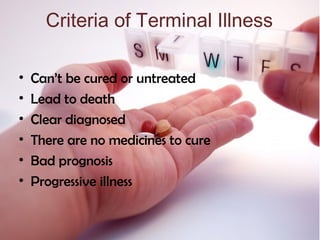
Criteria of Terminal Illness
• Can’t be cured or untreated
• Lead to death
• Clear diagnosed
• There are no medicines to cure
• Bad prognosis
• Progressive illness
Types of Terminal Illness
• Cancer, main categories are of:
a) Lung, trachea, bronchus
b) Ear, nose and throat
c) Female breast
d) Lymphatic
e) Digestive tract
f) Genitourinary
g) Leukaemia
h) Haemopoietic.
• Progressive non-malignant diseases, which can have a palliative period. These include:
a) Diseases of the circulatory system e.g. cardiovascular, cerebro-vascular diseases
b) Diseases of the respiratory system
c) Diseases of the nervous system and sense organs e.g. motor neurone disease, multiple sclerosis,
dementia
d) AIDS/HIV.
• Children’s terminal illnesses and hereditary diseases, including:
a) Hereditary degenerative disorder e.g. muscular dystrophy
b) Cystic fibrosis.
Implication of Terminal Illness
• To manage terminal illness more than
manage medical issues
• The condition can occur along phase of the
disease
• To keep client’s condition to be controlled
requires adherence to the regimens of therapy
• Cronic illness will influence to families
• Client with terminal illness & families must
accept responsibility in daily care
• Provider of terminal illness is a process of
colaboration
• Terminal condition cause ethical dilemma for
client/families, health provider and
community
• Living with terminal illness means living with
“uncertainty”
Relationship between
Terminal Illness and Death
• Generally, death is a part of life
• Death will give rise to a feeling of pain & fear
• Not only patient, but also families or caregivers.
7 problems that will be faced by client/families
1) Managing cries
2) Managing regimens
3) Controlling symptoms
4) Dealing with the lack of money to pay for treatments
5) Managing the trajectory
6) Managing social isolation
7) Normalizing
How about your
feeling if something
which you need
(handphone) was
lost...........??
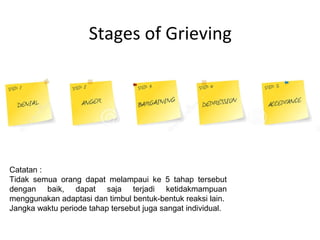
Stages of Grieving
Catatan :
Tidak semua orang dapat melampaui ke 5 tahap tersebut
dengan baik, dapat saja terjadi ketidakmampuan
menggunakan adaptasi dan timbul bentuk-bentuk reaksi lain.
Jangka waktu periode tahap tersebut juga sangat individual.
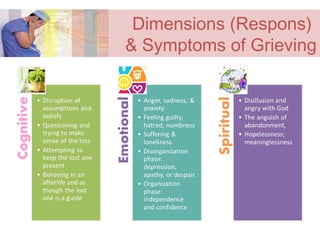
Dimensions (Respons)
& Symptoms of Grieving
Cont...
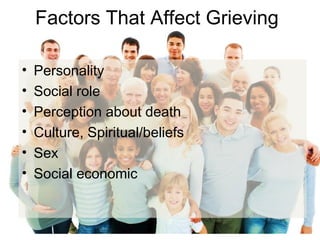
Factors That Affect Grieving
• Personality
• Social role
• Perception about death
• Culture, Spiritual/beliefs
• Sex
• Social economic
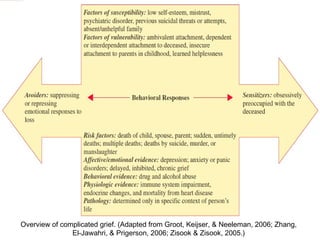
Overview of complicated grief. (Adapted from Groot, Keijser, & Neeleman, 2006; Zhang,
El-Jawahri, & Prigerson, 2006; Zisook & Zisook, 2005.)
Terminal care is an important part
of palliative care and usually refers to
the management of patients during their
last few days or weeks or even months
of life from a point at which it becomes
clear that the patient is in a progressive
state of decline.
References
• Sheila L.V. 2005. Psychiatric-Mental Health Nursing , 5th
Edition. Lippincott Williams &Wilkins
• Departement of Health and Human Services. 2009. Care
Management Guidelines Terminal Care. Tasmania.
• Cemy Nur Fitria. Palliative Care pada Penderita Penyakit
Terminal. Gaster, Vol.7 No.1, 2010.
• Higginson. 2009. Palliative and Terminal Care. p.183-259
• Murtiwi, Elly Nurachmah, Tuti Nuraini. Kualitas Hidup Klien
Kanker Yang Menerima Pelayanan Hospis Atau Homecare:
Suatu Analisis Kuantitatif. JIK; Vol.9 No.1, 2005.
Thank You

Nursing concept terminal care

  • 1.
    Nursing Concept of TerminalCaseMutia Rahmah, S.Kep., Ns School of Nursing, Medical Faculty Lambung Mangkurat University 2015
  • 2.
    Tujuan Umum  Mahasiswamampu mendefinisikan istilah terminal, kondisi terminal, penyakit terminal  Mahasiswa mampu memahami kriteria penyakit terminal  Mahasiswa mampu memahami jenis penyakit terminal  Mahasiswa mampu memahami implikasi penyakit terminal  Mahasiswa mampu memahami hubungan penyakit terminal dan kematian  Mahasiswa mampu memahami tahapan berduka  Mahasiswa mampu memahami dimensi respon berduka  Mahasiswa mampu memahami faktor yang mempengaruhi berduka Tujuan Khusus Mahasiswa mampu memahami konsep keperawatan pada kasus terminal
  • 3.
    Palliative care Terminal care Terminalillness Terminal condition Patient who diagnosed with “Breast cancer” vs “Abrasion skin” Do you know???....
  • 4.
    Definition • The term‘terminal phase’ or ‘mode’ refers to the hours or days immediately preceding death. • Terminal care is active care with a focus on symptom management and dignity (Departement of Health and Human Services. 2009). • Terminal condition is a progressive process that lead to death through stages of process decrease in physiological, psychosocial & spiritual (Kubler-Ross, 1969; Carpenito, 2007)
  • 5.
    Cont... • Palliative careis the active total care of patients whose disease is not responsive to curative treatment. Control of pain, of other symptoms, and of psychological, social and spiritual problems is paramount. The goal of palliative care is achievement of the best possible quality of life for patients and their families (Higginson, 2009).
  • 6.
    Criteria of TerminalIllness • Can’t be cured or untreated • Lead to death • Clear diagnosed • There are no medicines to cure • Bad prognosis • Progressive illness
  • 7.
    Types of TerminalIllness • Cancer, main categories are of: a) Lung, trachea, bronchus b) Ear, nose and throat c) Female breast d) Lymphatic e) Digestive tract f) Genitourinary g) Leukaemia h) Haemopoietic. • Progressive non-malignant diseases, which can have a palliative period. These include: a) Diseases of the circulatory system e.g. cardiovascular, cerebro-vascular diseases b) Diseases of the respiratory system c) Diseases of the nervous system and sense organs e.g. motor neurone disease, multiple sclerosis, dementia d) AIDS/HIV. • Children’s terminal illnesses and hereditary diseases, including: a) Hereditary degenerative disorder e.g. muscular dystrophy b) Cystic fibrosis.
  • 8.
    Implication of TerminalIllness • To manage terminal illness more than manage medical issues • The condition can occur along phase of the disease • To keep client’s condition to be controlled requires adherence to the regimens of therapy • Cronic illness will influence to families • Client with terminal illness & families must accept responsibility in daily care • Provider of terminal illness is a process of colaboration • Terminal condition cause ethical dilemma for client/families, health provider and community • Living with terminal illness means living with “uncertainty”
  • 9.
    Relationship between Terminal Illnessand Death • Generally, death is a part of life • Death will give rise to a feeling of pain & fear • Not only patient, but also families or caregivers. 7 problems that will be faced by client/families 1) Managing cries 2) Managing regimens 3) Controlling symptoms 4) Dealing with the lack of money to pay for treatments 5) Managing the trajectory 6) Managing social isolation 7) Normalizing
  • 11.
    How about your feelingif something which you need (handphone) was lost...........??
  • 12.
    Stages of Grieving Catatan: Tidak semua orang dapat melampaui ke 5 tahap tersebut dengan baik, dapat saja terjadi ketidakmampuan menggunakan adaptasi dan timbul bentuk-bentuk reaksi lain. Jangka waktu periode tahap tersebut juga sangat individual.
  • 14.
  • 15.
  • 16.
    Factors That AffectGrieving • Personality • Social role • Perception about death • Culture, Spiritual/beliefs • Sex • Social economic
  • 17.
    Overview of complicatedgrief. (Adapted from Groot, Keijser, & Neeleman, 2006; Zhang, El-Jawahri, & Prigerson, 2006; Zisook & Zisook, 2005.)
  • 18.
    Terminal care isan important part of palliative care and usually refers to the management of patients during their last few days or weeks or even months of life from a point at which it becomes clear that the patient is in a progressive state of decline.
  • 19.
    References • Sheila L.V.2005. Psychiatric-Mental Health Nursing , 5th Edition. Lippincott Williams &Wilkins • Departement of Health and Human Services. 2009. Care Management Guidelines Terminal Care. Tasmania. • Cemy Nur Fitria. Palliative Care pada Penderita Penyakit Terminal. Gaster, Vol.7 No.1, 2010. • Higginson. 2009. Palliative and Terminal Care. p.183-259 • Murtiwi, Elly Nurachmah, Tuti Nuraini. Kualitas Hidup Klien Kanker Yang Menerima Pelayanan Hospis Atau Homecare: Suatu Analisis Kuantitatif. JIK; Vol.9 No.1, 2005.
  • 20.