TECHNOLOGY TRANSFER
Definitions, Importance, process and Applications
Geethanjali College of Pharmacy
Prepared by:
P. Rithika Naidu
P. Pravallika Reddy
P. Soundarya Netha
P. Bharath
P. sravani
Guided by
P. Naga Chandrika, M.Pharm, (Ph.D)
Definition of Technology Transfer
The process of transferring knowledge, skills, and technologies from one
organization to another, or from one site to another, to improve efficiency, reduce
costs, and enhance product quality." (WHO)
In pharmaceutical industry, Technology Transfer refers to the process of
successful progress from drug discovery to product development, clinical
trails and ultimately full scale commercialization.
Definitions of Technology Transfer :
 World Intellectual Property Organization (WIPO): "Technology
transfer is the process by which technology is transferred
from one organization to another, often through the transfer
of intellectual property rights, technical expertise, and other
forms of knowledge.“
 United Nations Conference on Trade and Development
(UNCTAD): "Technology transfer refers to the transfer of
technology from one entity to another, including the transfer
of knowledge, skills, and expertise, as well as the transfer of
intellectual property rights.“
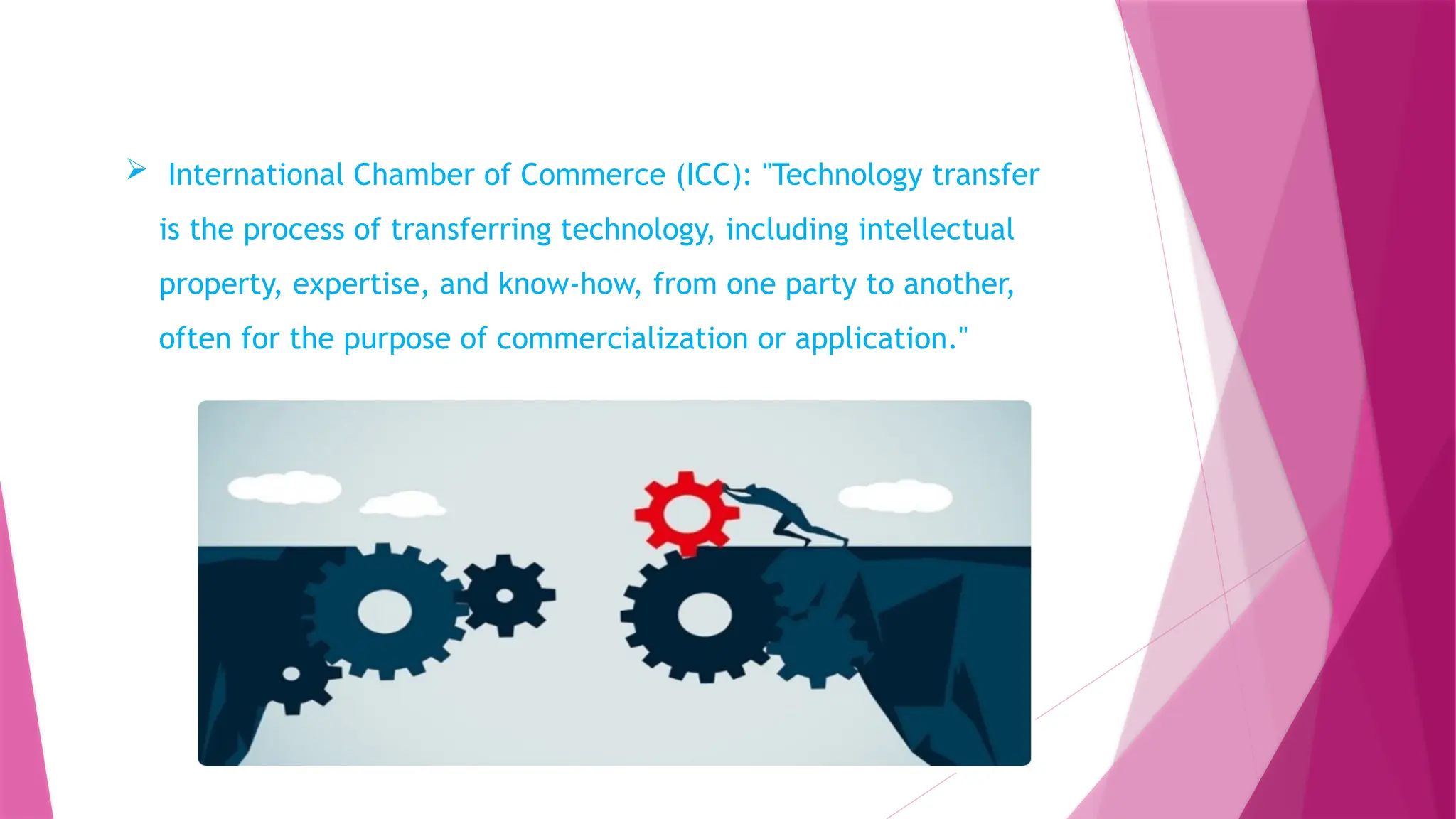
 International Chamber of Commerce (ICC): "Technology transfer
is the process of transferring technology, including intellectual
property, expertise, and know-how, from one party to another,
often for the purpose of commercialization or application."
Types of
Technology Transfer
Intra-organizational transfer [within company]
Inter-organizational transfer [between company]
International transfer [across countries]
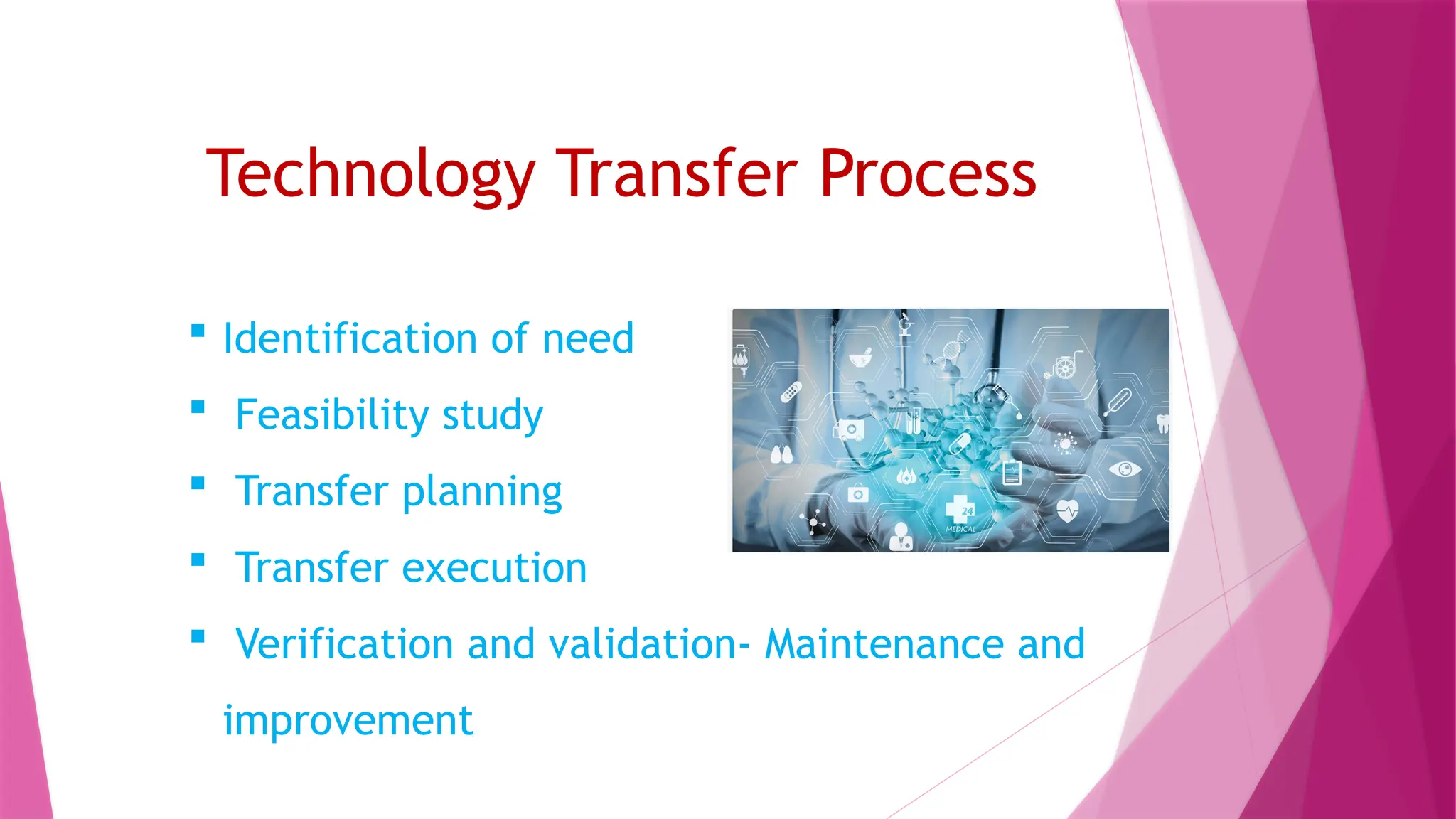
Technology Transfer Process
 Identification of need
 Feasibility study
 Transfer planning
 Transfer execution
 Verification and validation- Maintenance and
improvement
Principles of Technology Transfer
 Clear communication
 Defined roles and responsibilities
 Risk management-
 Quality by Design (QbD)
 Regulatory compliance
 Ensuring that analytical assays are
transferred ahead of the process
Purpose of Technology Transfer
1. Research and Development (R&D)
2. Scale-up
3. Commercial Production.
Key Stages in Technology Transfer
 Ensuring product quality and consistency
 Reducing time to market
 Facilitating regulatory compliance
Benefits of Technology Transfer
 Improved efficiency
 Reduced costs
 Enhanced product quality
 Increased regulatory compliance
 Competitive advantage
Regulatory considerations
 FDA guidelines (US)
 EMA guidelines (EU)
 ICH guidelines (International)
 cGMP compliance
Challenges in Technology Transfer
 Technical difficulties
 Regulatory issues
 Intellectual property concerns
 Training and personnel issues
 Cultural differences
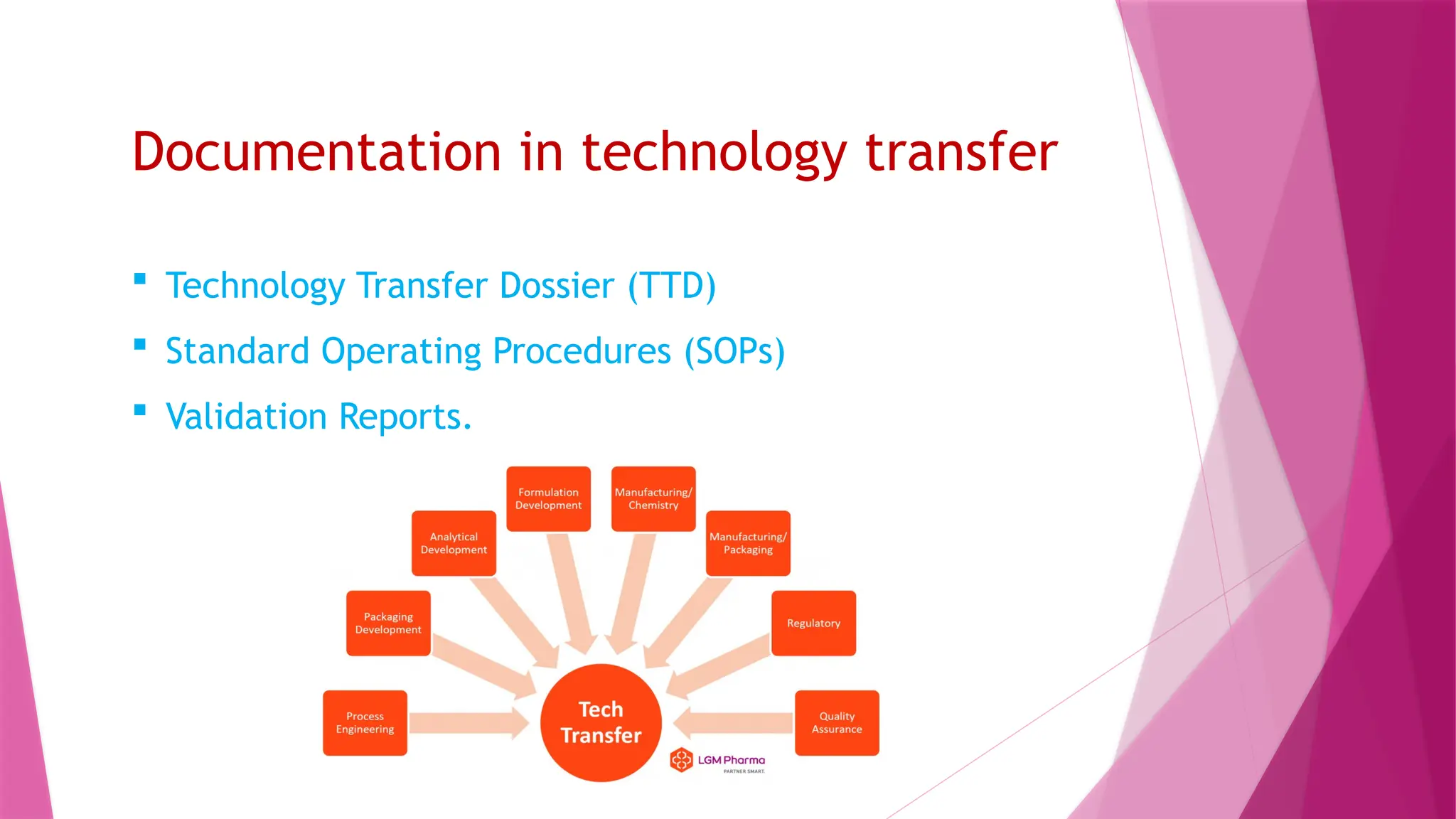
Documentation in technology transfer
 Technology Transfer Dossier (TTD)
 Standard Operating Procedures (SOPs)
 Validation Reports.
Conclusion:
 Technology transfer is critical in industrial pharmacy for
improving efficiency and product quality.
 Understanding the definition, principles, and process of
technology transfer is essential for successful implementation.
 importance of efficient processes for successful
commercialization.
THANK YOU

TECHNOLOGY TRANSFER Definitions, Importance, process and Applicationsip 88.pptx

  • 1.
    TECHNOLOGY TRANSFER Definitions, Importance,process and Applications Geethanjali College of Pharmacy Prepared by: P. Rithika Naidu P. Pravallika Reddy P. Soundarya Netha P. Bharath P. sravani Guided by P. Naga Chandrika, M.Pharm, (Ph.D)
  • 2.
    Definition of TechnologyTransfer The process of transferring knowledge, skills, and technologies from one organization to another, or from one site to another, to improve efficiency, reduce costs, and enhance product quality." (WHO) In pharmaceutical industry, Technology Transfer refers to the process of successful progress from drug discovery to product development, clinical trails and ultimately full scale commercialization.
  • 3.
    Definitions of TechnologyTransfer :  World Intellectual Property Organization (WIPO): "Technology transfer is the process by which technology is transferred from one organization to another, often through the transfer of intellectual property rights, technical expertise, and other forms of knowledge.“  United Nations Conference on Trade and Development (UNCTAD): "Technology transfer refers to the transfer of technology from one entity to another, including the transfer of knowledge, skills, and expertise, as well as the transfer of intellectual property rights.“
  • 4.
     International Chamberof Commerce (ICC): "Technology transfer is the process of transferring technology, including intellectual property, expertise, and know-how, from one party to another, often for the purpose of commercialization or application."
  • 5.
    Types of Technology Transfer Intra-organizationaltransfer [within company] Inter-organizational transfer [between company] International transfer [across countries]
  • 6.
    Technology Transfer Process Identification of need  Feasibility study  Transfer planning  Transfer execution  Verification and validation- Maintenance and improvement
  • 7.
    Principles of TechnologyTransfer  Clear communication  Defined roles and responsibilities  Risk management-  Quality by Design (QbD)  Regulatory compliance  Ensuring that analytical assays are transferred ahead of the process
  • 8.
    Purpose of TechnologyTransfer 1. Research and Development (R&D) 2. Scale-up 3. Commercial Production. Key Stages in Technology Transfer  Ensuring product quality and consistency  Reducing time to market  Facilitating regulatory compliance
  • 9.
    Benefits of TechnologyTransfer  Improved efficiency  Reduced costs  Enhanced product quality  Increased regulatory compliance  Competitive advantage
  • 10.
    Regulatory considerations  FDAguidelines (US)  EMA guidelines (EU)  ICH guidelines (International)  cGMP compliance Challenges in Technology Transfer  Technical difficulties  Regulatory issues  Intellectual property concerns  Training and personnel issues  Cultural differences
  • 11.
    Documentation in technologytransfer  Technology Transfer Dossier (TTD)  Standard Operating Procedures (SOPs)  Validation Reports.
  • 12.
    Conclusion:  Technology transferis critical in industrial pharmacy for improving efficiency and product quality.  Understanding the definition, principles, and process of technology transfer is essential for successful implementation.  importance of efficient processes for successful commercialization.
  • 13.