Technological Pedagogical Content Knowledge
(TPACK)
Technological Pedagogical Content Knowledge (TPACK)
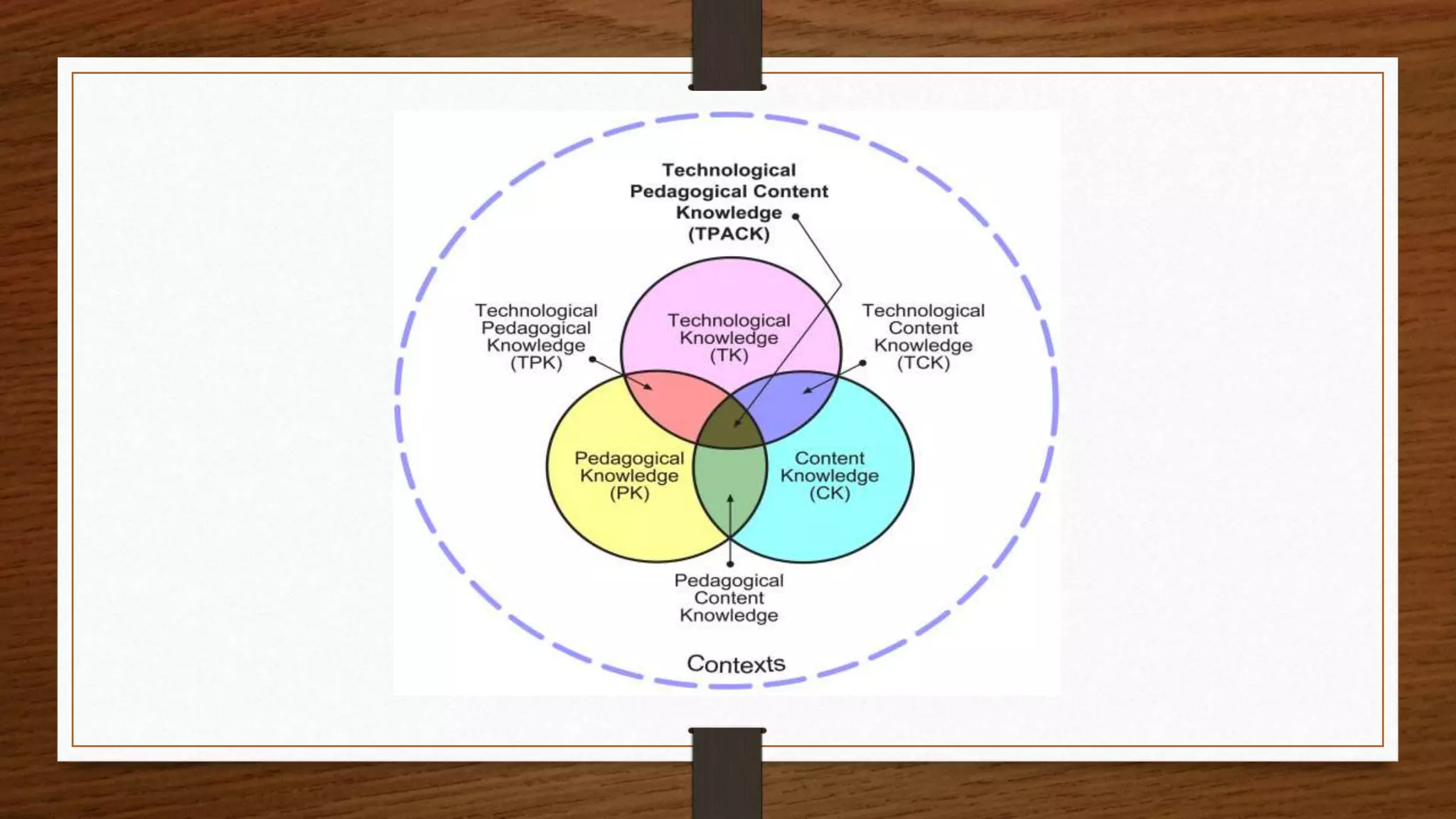
A framework that integrates technology in education to
help encapsulate the complex interactions among
content, pedagogy, and technology.
Content Knowledge (CK)
• Teacher’s knowledge about the subject matter.
• Includes concepts, theories, ideas, established practices and
approaches toward developing such knowledge.
Pedagogical Knowledge (PK)
• Teacher’s deep knowledge about the process and practices or methods
of teaching and learning.
• This includes lesson planning, classroom management skills,
understanding how students learn, and student assessment.
Pedagogical Content Knowledge (PCK)
• Covers conditions that promote learning: teaching, learning,
curriculum, assessment, reporting, pedagogy.
• There is transformation of the subject matter for teaching which
happens when teacher interprets the subject matter.
Technological Knowledge (TK)
• Understanding of technology which is beyond the definition of
computer literacy is a must in TK. Thus, appreciation and mastery of
information technology for information processing, communication,
and problem solving are important.
Technological Content Knowledge (TCK)
• TCK is an understanding of the way in which technology and content
affect and restrict one another.
• Teachers need to figure out which specific technologies are
appropriate in delivering the subject-matter to have a better
understanding and appreciation of the lesson.
Technological Pedagogical Knowledge (TPK)
• TPK is an understanding of how teaching and learning can change
when particular technologies are used in particular methods.
•The focus of TPK is to have an understanding of the affordances of
technology and how they can influence differently the context and
intentions of teaching.
Technology Integration Planning
(TIP)
Technological Pedagogical Content Knowledge

Technological Pedagogical Content Knowledge

  • 1.
  • 2.
    Technological Pedagogical ContentKnowledge (TPACK) A framework that integrates technology in education to help encapsulate the complex interactions among content, pedagogy, and technology.
  • 4.
    Content Knowledge (CK) •Teacher’s knowledge about the subject matter. • Includes concepts, theories, ideas, established practices and approaches toward developing such knowledge.
  • 5.
    Pedagogical Knowledge (PK) •Teacher’s deep knowledge about the process and practices or methods of teaching and learning. • This includes lesson planning, classroom management skills, understanding how students learn, and student assessment.
  • 6.
    Pedagogical Content Knowledge(PCK) • Covers conditions that promote learning: teaching, learning, curriculum, assessment, reporting, pedagogy. • There is transformation of the subject matter for teaching which happens when teacher interprets the subject matter.
  • 7.
    Technological Knowledge (TK) •Understanding of technology which is beyond the definition of computer literacy is a must in TK. Thus, appreciation and mastery of information technology for information processing, communication, and problem solving are important.
  • 8.
    Technological Content Knowledge(TCK) • TCK is an understanding of the way in which technology and content affect and restrict one another. • Teachers need to figure out which specific technologies are appropriate in delivering the subject-matter to have a better understanding and appreciation of the lesson.
  • 9.
    Technological Pedagogical Knowledge(TPK) • TPK is an understanding of how teaching and learning can change when particular technologies are used in particular methods. •The focus of TPK is to have an understanding of the affordances of technology and how they can influence differently the context and intentions of teaching.
  • 11.