Solid Defense
Kevin Cardwell
2
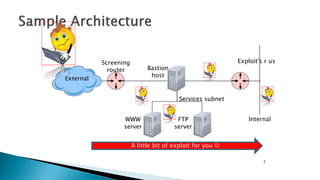
External
Screening
router
Internal
Bastion
host
WWW
server
FTP
server
Services subnet
Exploit's r us
A little bit of exploit for you 
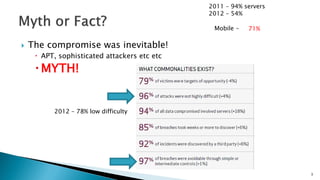
 The compromise was inevitable!
 APT, sophisticated attackers etc etc
MYTH!
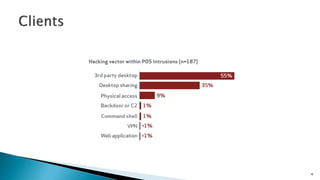
2011 – 94% servers
2012 – 54%
Mobile - 71%
2012 – 78% low difficulty
3
4
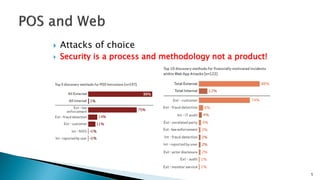
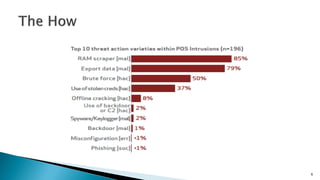
 Attacks of choice
 Security is a process and methodology not a product!
5
6
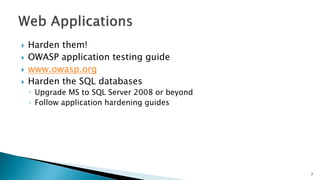
 Harden them!
 OWASP application testing guide
 www.owasp.org
 Harden the SQL databases
◦ Upgrade MS to SQL Server 2008 or beyond
◦ Follow application hardening guides
7
 NSA Guides
◦ http://www.nsa.gov/ia/guidance/security_configuration_guides/index.
shtml
 Center for Internet Security
◦ Benchmarks
 www.cisecurity.org
8
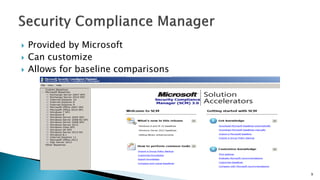
 Provided by Microsoft
 Can customize
 Allows for baseline comparisons
9
 Application Whitelisting
 Patch Applications
 Patch Operating System
 Minimize the number of users with privileged rights
◦ Disable the local admin account on domain computers
10
11
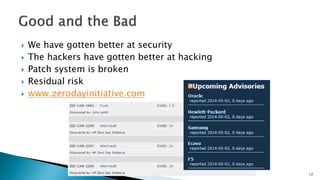
 We have gotten better at security
 The hackers have gotten better at hacking
 Patch system is broken
 Residual risk
 www.zerodayinitiative.com
12
Proven Defense Measures
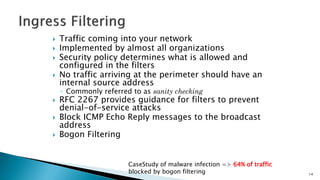
 Traffic coming into your network
 Implemented by almost all organizations
 Security policy determines what is allowed and
configured in the filters
 No traffic arriving at the perimeter should have an
internal source address
◦ Commonly referred to as sanity checking
 RFC 2267 provides guidance for filters to prevent
denial-of-service attacks
 Block ICMP Echo Reply messages to the broadcast
address
 Bogon Filtering
CaseStudy of malware infection => 64% of traffic
blocked by bogon filtering 14
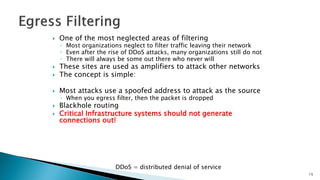
 One of the most neglected areas of filtering
◦ Most organizations neglect to filter traffic leaving their network
◦ Even after the rise of DDoS attacks, many organizations still do not
◦ There will always be some out there who never will
 These sites are used as amplifiers to attack other networks
 The concept is simple:
 Most attacks use a spoofed address to attack as the source
◦ When you egress filter, then the packet is dropped
 Blackhole routing
 Critical Infrastructure systems should not generate
connections out!
DDoS = distributed denial of service
15
 If workstation site is not 24/7
◦ Shut off access going out to the Internet
 Block the well known malware ports of communication
 http
 ssh
 https
 Etc
◦ Monitor for attempts
 All malware will attempt outbound connections
 If no one is there, should be none
 If 24/7
◦ Only monitor critical systems
 Servers should not initiate connections to the Internet
◦ Subscribe to a service
 Watch for lookups of known malware nets
16
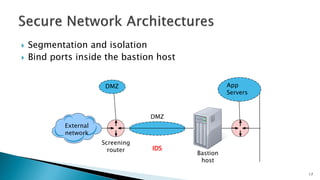
 Segmentation and isolation
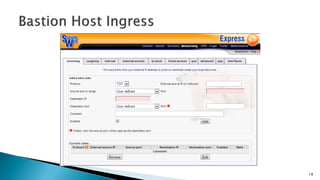
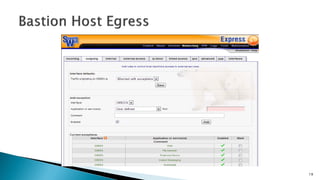
 Bind ports inside the bastion host
External
network
Screening
router
Bastion
host
DMZ
DMZ App
Servers
IDS
17
18
19
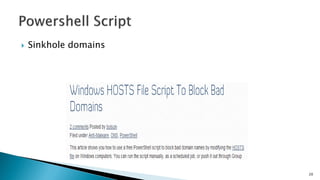
 Sinkhole domains
20
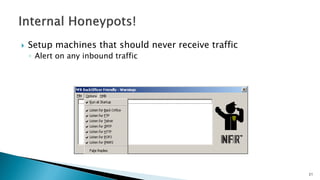
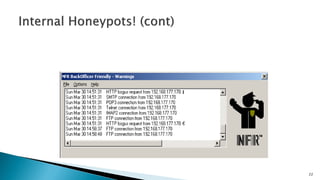
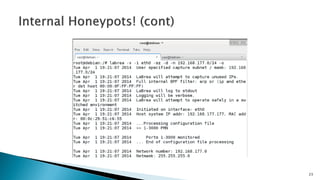
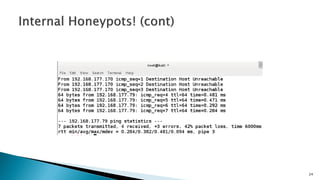
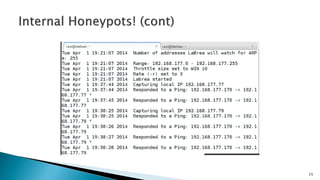
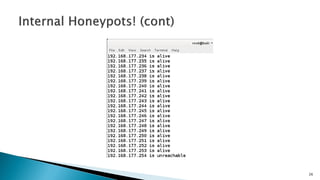
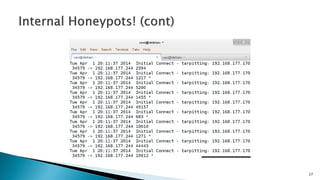
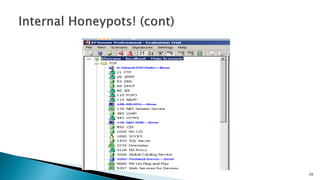
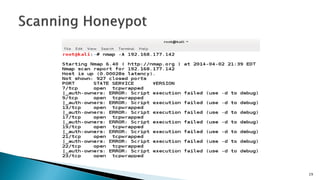
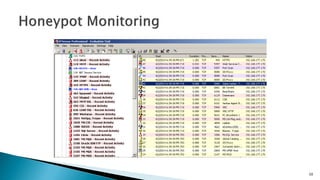
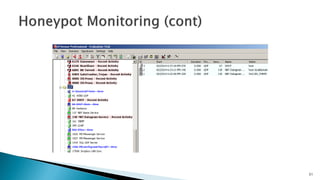
 Setup machines that should never receive traffic
◦ Alert on any inbound traffic
21
22
23
24
25
26
27
28
29
30
31
 We can defend!
 cesi@ieee.org
32

Technical track kevin cardwell-10-00 am-solid-defense

  • 1.
  • 2.
  • 3.
     The compromisewas inevitable!  APT, sophisticated attackers etc etc MYTH! 2011 – 94% servers 2012 – 54% Mobile - 71% 2012 – 78% low difficulty 3
  • 4.
  • 5.
     Attacks ofchoice  Security is a process and methodology not a product! 5
  • 6.
  • 7.
     Harden them! OWASP application testing guide  www.owasp.org  Harden the SQL databases ◦ Upgrade MS to SQL Server 2008 or beyond ◦ Follow application hardening guides 7
  • 8.
     NSA Guides ◦http://www.nsa.gov/ia/guidance/security_configuration_guides/index. shtml  Center for Internet Security ◦ Benchmarks  www.cisecurity.org 8
  • 9.
     Provided byMicrosoft  Can customize  Allows for baseline comparisons 9
  • 10.
     Application Whitelisting Patch Applications  Patch Operating System  Minimize the number of users with privileged rights ◦ Disable the local admin account on domain computers 10
  • 11.
  • 12.
     We havegotten better at security  The hackers have gotten better at hacking  Patch system is broken  Residual risk  www.zerodayinitiative.com 12
  • 13.
  • 14.
     Traffic cominginto your network  Implemented by almost all organizations  Security policy determines what is allowed and configured in the filters  No traffic arriving at the perimeter should have an internal source address ◦ Commonly referred to as sanity checking  RFC 2267 provides guidance for filters to prevent denial-of-service attacks  Block ICMP Echo Reply messages to the broadcast address  Bogon Filtering CaseStudy of malware infection => 64% of traffic blocked by bogon filtering 14
  • 15.
     One ofthe most neglected areas of filtering ◦ Most organizations neglect to filter traffic leaving their network ◦ Even after the rise of DDoS attacks, many organizations still do not ◦ There will always be some out there who never will  These sites are used as amplifiers to attack other networks  The concept is simple:  Most attacks use a spoofed address to attack as the source ◦ When you egress filter, then the packet is dropped  Blackhole routing  Critical Infrastructure systems should not generate connections out! DDoS = distributed denial of service 15
  • 16.
     If workstationsite is not 24/7 ◦ Shut off access going out to the Internet  Block the well known malware ports of communication  http  ssh  https  Etc ◦ Monitor for attempts  All malware will attempt outbound connections  If no one is there, should be none  If 24/7 ◦ Only monitor critical systems  Servers should not initiate connections to the Internet ◦ Subscribe to a service  Watch for lookups of known malware nets 16
  • 17.
     Segmentation andisolation  Bind ports inside the bastion host External network Screening router Bastion host DMZ DMZ App Servers IDS 17
  • 18.
  • 19.
  • 20.
  • 21.
     Setup machinesthat should never receive traffic ◦ Alert on any inbound traffic 21
  • 22.
  • 23.
  • 24.
  • 25.
  • 26.
  • 27.
  • 28.
  • 29.
  • 30.
  • 31.
  • 32.
     We candefend!  cesi@ieee.org 32