Technical Terms Test

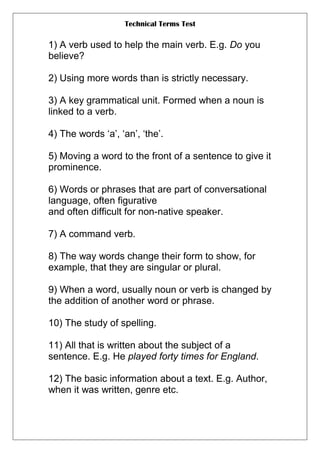
1) A verb used to help the main verb. E.g. Do you
believe?

2) Using more words than is strictly necessary.

3) A key grammatical unit. Formed when a noun is
linked to a verb.

4) The words ‘a’, ‘an’, ‘the’.

5) Moving a word to the front of a sentence to give it
prominence.

6) Words or phrases that are part of conversational
language, often figurative
and often difficult for non-native speaker.

7) A command verb.

8) The way words change their form to show, for
example, that they are singular or plural.

9) When a word, usually noun or verb is changed by
the addition of another word or phrase.

10) The study of spelling.

11) All that is written about the subject of a
sentence. E.g. He played forty times for England.

12) The basic information about a text. E.g. Author,
when it was written, genre etc.
Technical Terms Test


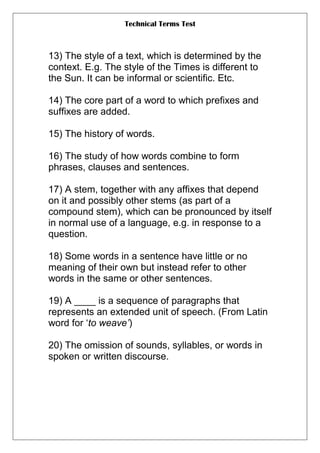
13) The style of a text, which is determined by the
context. E.g. The style of the Times is different to
the Sun. It can be informal or scientific. Etc.

14) The core part of a word to which prefixes and
suffixes are added.

15) The history of words.

16) The study of how words combine to form
phrases, clauses and sentences.

17) A stem, together with any affixes that depend
on it and possibly other stems (as part of a
compound stem), which can be pronounced by itself
in normal use of a language, e.g. in response to a
question.

18) Some words in a sentence have little or no
meaning of their own but instead refer to other
words in the same or other sentences.

19) A ____ is a sequence of paragraphs that
represents an extended unit of speech. (From Latin
word for ‘to weave’)

20) The omission of sounds, syllables, or words in
spoken or written discourse.

Technical terms test

  • 1.
    Technical Terms Test 1)A verb used to help the main verb. E.g. Do you believe? 2) Using more words than is strictly necessary. 3) A key grammatical unit. Formed when a noun is linked to a verb. 4) The words ‘a’, ‘an’, ‘the’. 5) Moving a word to the front of a sentence to give it prominence. 6) Words or phrases that are part of conversational language, often figurative and often difficult for non-native speaker. 7) A command verb. 8) The way words change their form to show, for example, that they are singular or plural. 9) When a word, usually noun or verb is changed by the addition of another word or phrase. 10) The study of spelling. 11) All that is written about the subject of a sentence. E.g. He played forty times for England. 12) The basic information about a text. E.g. Author, when it was written, genre etc.
  • 2.
    Technical Terms Test 13)The style of a text, which is determined by the context. E.g. The style of the Times is different to the Sun. It can be informal or scientific. Etc. 14) The core part of a word to which prefixes and suffixes are added. 15) The history of words. 16) The study of how words combine to form phrases, clauses and sentences. 17) A stem, together with any affixes that depend on it and possibly other stems (as part of a compound stem), which can be pronounced by itself in normal use of a language, e.g. in response to a question. 18) Some words in a sentence have little or no meaning of their own but instead refer to other words in the same or other sentences. 19) A ____ is a sequence of paragraphs that represents an extended unit of speech. (From Latin word for ‘to weave’) 20) The omission of sounds, syllables, or words in spoken or written discourse.