Tech Framework for e-InclusionPrakash KumarCisco Internet Business Solutions Groupe-Revolution Chandigarh September, 2011
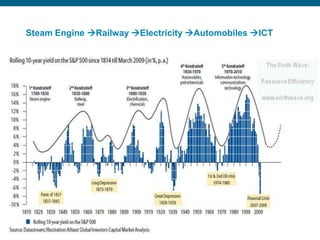
Steam Engine Railway Electricity Automobiles ICT
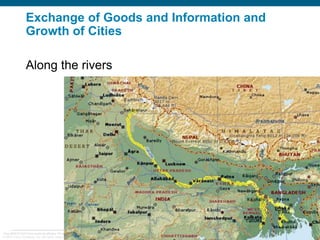
Exchange of Goods and Information and Growth of Cities Along the rivers
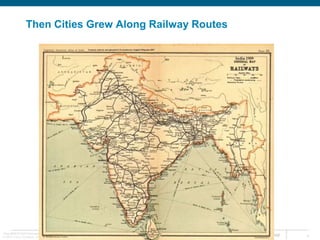
Then Cities Grew Along Railway Routes
Exchange of Goods and Information and Growth of Cities Along the riversAlong Railways RoutesAlong Major HighwaysWhen information can come to your premises?How has it disrupted the traditional way of doing business?What should we do to leverage it for our development (industry, society, government etc)How does it lead to inclusion?
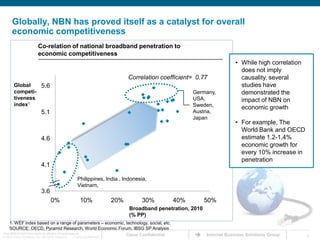
Globally, NBN has proved itself as a catalyst for overall economic competitivenessCo-relation of national broadband penetration to economic competitivenessWhile high correlation does not imply causality, several studies have demonstrated the impact of NBN on economic growth
For example, The World Bank and OECD estimate 1.2-1.4% economic growth for every 10% increase in penetrationCorrelation coefficient=  0.77Global competi-tivenessindex1Germany, USA, Sweden, Austria, JapanPhilippines, India , Indonesia, Vietnam, Broadband penetration, 2010 (% PP)1. WEF index based on a range of parameters – economic, technology, social, etc.SOURCE: OECD, Pyramid Research, World Economic Forum, IBSG SP Analysis
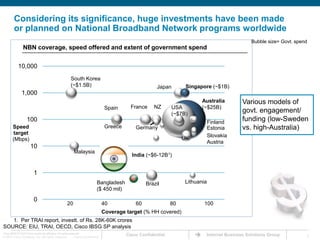
Considering its significance, huge investments have been made or planned on National Broadband Network programs worldwideBubble size= Govt. spendNBN coverage, speed offered and extent of government spendSouth Korea (~$1.5B)Singapore (~$1B)JapanVarious models of govt. engagement/ funding (low-Sweden vs. high-Australia)Australia (~$25B)NZFranceUSA (~$7B)SpainFinlandGreeceGermanyEstoniaSlovakiaAustriaUKMalaysiaIndia (~$6-12B1)LithuaniaBangladesh ($ 450 mil)Brazil20100406080       1.  Per TRAI report, investt. of Rs. 28K-60KcroresSOURCE: EIU, TRAI, OECD, Cisco IBSG SP analysis
Internet: The Next HighwayInternet is the next river of information and knowledgeShould its penetration remain at 7%?Even where available its quality is like our rural roads/state highwaysNoFN plans to cover 250,000 Panchayats by 2014What about our cities where Internet is not available in all localities? Cities and Towns where SMBs are located.Should it be left to Telephone companies?
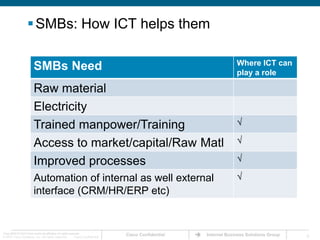
SMBs: How ICT helps them
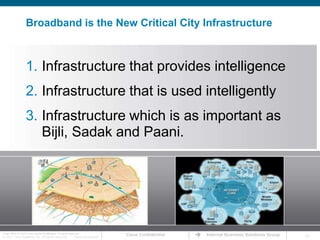
Broadband is the New Critical City InfrastructureInfrastructure that provides intelligenceInfrastructure that is used intelligentlyInfrastructure which is as important as Bijli, Sadak and Paani.Physical and virtual environment are intertwinedLocation freedom of social and economic activities
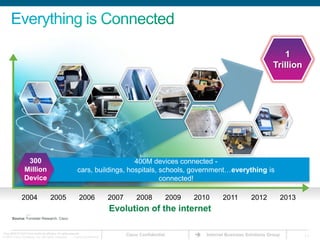
20042009200520062007200820112012201320101 Trillion300 Million DeviceEvolution of the internet400M devices connected - cars, buildings, hospitals, schools, government…everything is connected! Source: Forrester Research, CiscoEverything is Connected
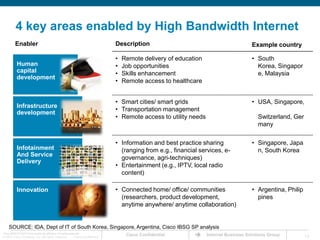
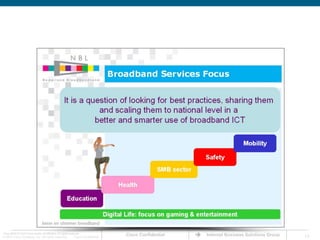
4 key areas enabled by High Bandwidth InternetDescriptionEnablerExample countryHuman capital developmentInfrastructure developmentInfotainmentAnd Service DeliveryInnovationRemote delivery of education
Job opportunities
Skills enhancement
Remote access to healthcare
South Korea, Singapore, Malaysia
Smart cities/ smart grids
Transportation management
Remote access to utility needs
USA, Singapore, Switzerland, Germany
Information and best practice sharing (ranging from e.g., financial services, e-governance, agri-techniques)

Tech Framework for e-Inclusion_Prakash_Cisco - Presentation by Mr Prakash Kumar

  • 1.
    Tech Framework fore-InclusionPrakash KumarCisco Internet Business Solutions Groupe-Revolution Chandigarh September, 2011
  • 2.
    Steam Engine RailwayElectricity Automobiles ICT
  • 3.
    Exchange of Goodsand Information and Growth of Cities Along the rivers
  • 4.
    Then Cities GrewAlong Railway Routes
  • 5.
    Exchange of Goodsand Information and Growth of Cities Along the riversAlong Railways RoutesAlong Major HighwaysWhen information can come to your premises?How has it disrupted the traditional way of doing business?What should we do to leverage it for our development (industry, society, government etc)How does it lead to inclusion?
  • 6.
    Globally, NBN hasproved itself as a catalyst for overall economic competitivenessCo-relation of national broadband penetration to economic competitivenessWhile high correlation does not imply causality, several studies have demonstrated the impact of NBN on economic growth
  • 7.
    For example, TheWorld Bank and OECD estimate 1.2-1.4% economic growth for every 10% increase in penetrationCorrelation coefficient= 0.77Global competi-tivenessindex1Germany, USA, Sweden, Austria, JapanPhilippines, India , Indonesia, Vietnam, Broadband penetration, 2010 (% PP)1. WEF index based on a range of parameters – economic, technology, social, etc.SOURCE: OECD, Pyramid Research, World Economic Forum, IBSG SP Analysis
  • 8.
    Considering its significance,huge investments have been made or planned on National Broadband Network programs worldwideBubble size= Govt. spendNBN coverage, speed offered and extent of government spendSouth Korea (~$1.5B)Singapore (~$1B)JapanVarious models of govt. engagement/ funding (low-Sweden vs. high-Australia)Australia (~$25B)NZFranceUSA (~$7B)SpainFinlandGreeceGermanyEstoniaSlovakiaAustriaUKMalaysiaIndia (~$6-12B1)LithuaniaBangladesh ($ 450 mil)Brazil20100406080 1. Per TRAI report, investt. of Rs. 28K-60KcroresSOURCE: EIU, TRAI, OECD, Cisco IBSG SP analysis
  • 9.
    Internet: The NextHighwayInternet is the next river of information and knowledgeShould its penetration remain at 7%?Even where available its quality is like our rural roads/state highwaysNoFN plans to cover 250,000 Panchayats by 2014What about our cities where Internet is not available in all localities? Cities and Towns where SMBs are located.Should it be left to Telephone companies?
  • 10.
    SMBs: How ICThelps them
  • 11.
    Broadband is theNew Critical City InfrastructureInfrastructure that provides intelligenceInfrastructure that is used intelligentlyInfrastructure which is as important as Bijli, Sadak and Paani.Physical and virtual environment are intertwinedLocation freedom of social and economic activities
  • 12.
    20042009200520062007200820112012201320101 Trillion300 MillionDeviceEvolution of the internet400M devices connected - cars, buildings, hospitals, schools, government…everything is connected! Source: Forrester Research, CiscoEverything is Connected
  • 13.
    4 key areasenabled by High Bandwidth InternetDescriptionEnablerExample countryHuman capital developmentInfrastructure developmentInfotainmentAnd Service DeliveryInnovationRemote delivery of education
  • 14.
  • 15.
  • 16.
    Remote access tohealthcare
  • 17.
  • 18.
  • 19.
  • 20.
    Remote access toutility needs
  • 21.
  • 22.
    Information and bestpractice sharing (ranging from e.g., financial services, e-governance, agri-techniques)

Editor's Notes

  • #12 Another major transition is the evolution of the internet. The foundation for the city of the future will be the network and the information it carries, enabling the delivery of vital services from transportation utilities and security to entertainment, education, and healthcare. Everything will be connected, intelligent, and green: from office buildings and appliances to hospitals and schools. Citizens and businesses will enjoy unprecedented levels of collaboration, productivity, and economic growth without compromising the environment. Managing and operating such a smart, connected community will be efficient, coordinated, and secure. 
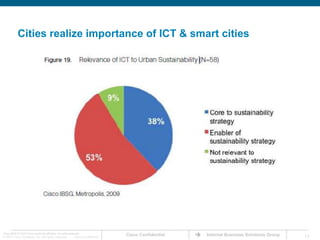
  • #14 And its clear that city leaders see ICT in citiesas an enabler of sustainability which is itself an indication of many cities goals
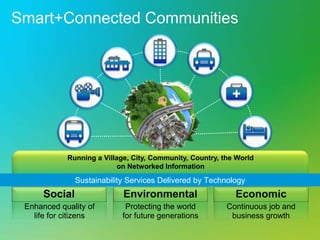
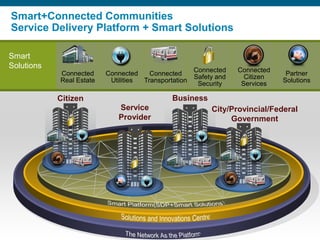
  • #20 A city of the future is a community that is run on networked information providing integrated services. Using intelligent networking capabilities, Cisco helps to create smart, connected communities that bring together new public and private partnerships in a common purpose: sustaining economic growth, engaging people of all ages and abilities, and addressing ongoing environmental issues and quality of life concerns.  Cisco® Smart+Connected Communities is Cisco’s visionary answer: using intelligent networking capabilities to weave together people, services, community assets, and information into a single pervasive solution. Cisco’s Smart+Connected Communities initiative helps transform physical communities to connected communities and achieve economic, social, and environmental sustainability. Cisco works with customers from idea to execution, taking advantage of industry solutions built on the network as an open, integrated platform, a broad ecosystem of partners and innovative business models to change how communities are designed, built, managed, and renewed. Cisco Smart+Connected Communities enables citizens, mayors, developers, urban planners and other community stakeholders to address the challenges and opportunities of an urbanized world. It drives economic, social, and environmental sustainability.
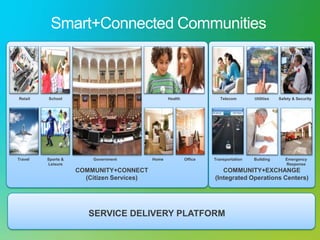
  • #21 The foundation for this city of the future will be the network and the information it carries, enabling the delivery of vital services from transportation utilities and security to entertainment, education, and healthcare. Everything will be connected, intelligent, and green: offices, buildings, appliances, hospitals and schools. Two vital facets of Cisco Smart+Connected Communities facilitate efficient delivery and management of services within a community. Community+Connect helps deliver comprehensive services to residents and businesses in a connected community. Community+Exchange helps enable the management and operation of a connected community to share information and collaborate across a community’s ecosystem of government agencies and private sector partners. Both Community+Connect and Community+Exchange are facilitated by the underlying Cisco Service Delivery Platform.The Cisco Service Delivery Platform is the foundational network underlying the community that enables Cisco, its partners, government, enterprises andcustomers to create and deploy new services and applications for the community, leveraging Cisco’s market leading architectures like IPNGN& Cloud, Borderless Networks etc.Cisco’s Community+Connect Services will transform constituent experiences as they live, work, learn, and play in a Smart+Connected Community. With the network as the underlying service delivery platform, Cisco and its public and private partners can deliver services for home, office, school, hospitals, malls, stadiums, travel, and government services in the community. Such as taking class from home and a school where learning takes place beyond the classroom walls; or a smart, connected home where you have access to real-time services about your home’s energy consumption, visit a doctor and transact a government service from the comfort of your living room. Cisco’s Community+Exchange, is a back-office Integrated Operations Center with Services that help in the planning and day-to-day operations and management of a community. By providing the network as a highly secure and resilient service delivery platform, customers can share information and collaborate across a community’s ecosystem of government agencies and private sector partners to facilitate utilities, transportation, telecommunications, safety and security, building systems, emergency response, and government social services. People that and businesses will enjoy unprecedented levels of collaboration, productivity, and economic growth without compromising the environment.. Our Smart+Connected Communities initiative enables citizens, mayors, developers, urban planners and other community stakeholders to address the challenges and opportunities of an urbanized world. The value is Sustainability – and Cisco is changing the definition to include Economic, Social as well as Environmental Sustainability.Fostering Social Sustainability: Enabling an enhances quality of life and standard of living in the community across health, education, etc. Boosting Economic Sustainability: By facilitating new job opportunities for citizens, inviting new businesses and helping key industries to flourish, improving business efficiencies, and increasing productivity and driving economic growth and Promoting Environment Sustainability: helping reduce the environmental impact by greener solutions, and better management of resources.
  • #22 Cisco works with customers from idea to execution, taking advantage of industry solutions built on the network as an open, integrated platform, a broad ecosystem of partners and innovative business models to change how communities are designed, built, managed, and renewed. Cisco Smart+Connected Communities enables citizens, mayors, developers, urban planners and other community stakeholders to address the challenges and opportunities of an urbanized world. It drives economic, social, and environmental sustainability.Two vital facets of Cisco Smart+Connected Communities facilitate efficient delivery and management of services within a community. Community+Connect helps deliver comprehensive services to residents and businesses in a connected community. Community+Exchange helps enable the management and operation of a connected community to share information and collaborate across a community’s ecosystem of government agencies and private sector partners. Both Community+Connect and Community+Exchange are facilitated by the underlying Cisco Service Delivery Platform.Community+ConnectCisco’s Community+Connect transforms constituent experiences as they live, work, learn, and play in a Smart+Connected Community by leveraging real-time information and applications. With the network as the underlying service delivery platform, Cisco and its public and private partners can deliver services for home, work, school, hospitals, malls, stadiums, travel, and government and drive economic, social, and environmental sustainability. Community+ExchangeCisco’s Community+Exchange, is a back-office operations center that helps with the planning and day-to-day operations and management of a community. By providing the network as a highly secure and resilient service delivery platform, you can share information and collaborate across a community's ecosystem of government agencies and private sector partners to facilitate utilities, transportation, telecommunications, safety and security, building systems, health, and government social services. These two key facets of S+CC are built upon the Network as the Platform … and Service Delivery Platform … and let’s talk about SDP a bit more…