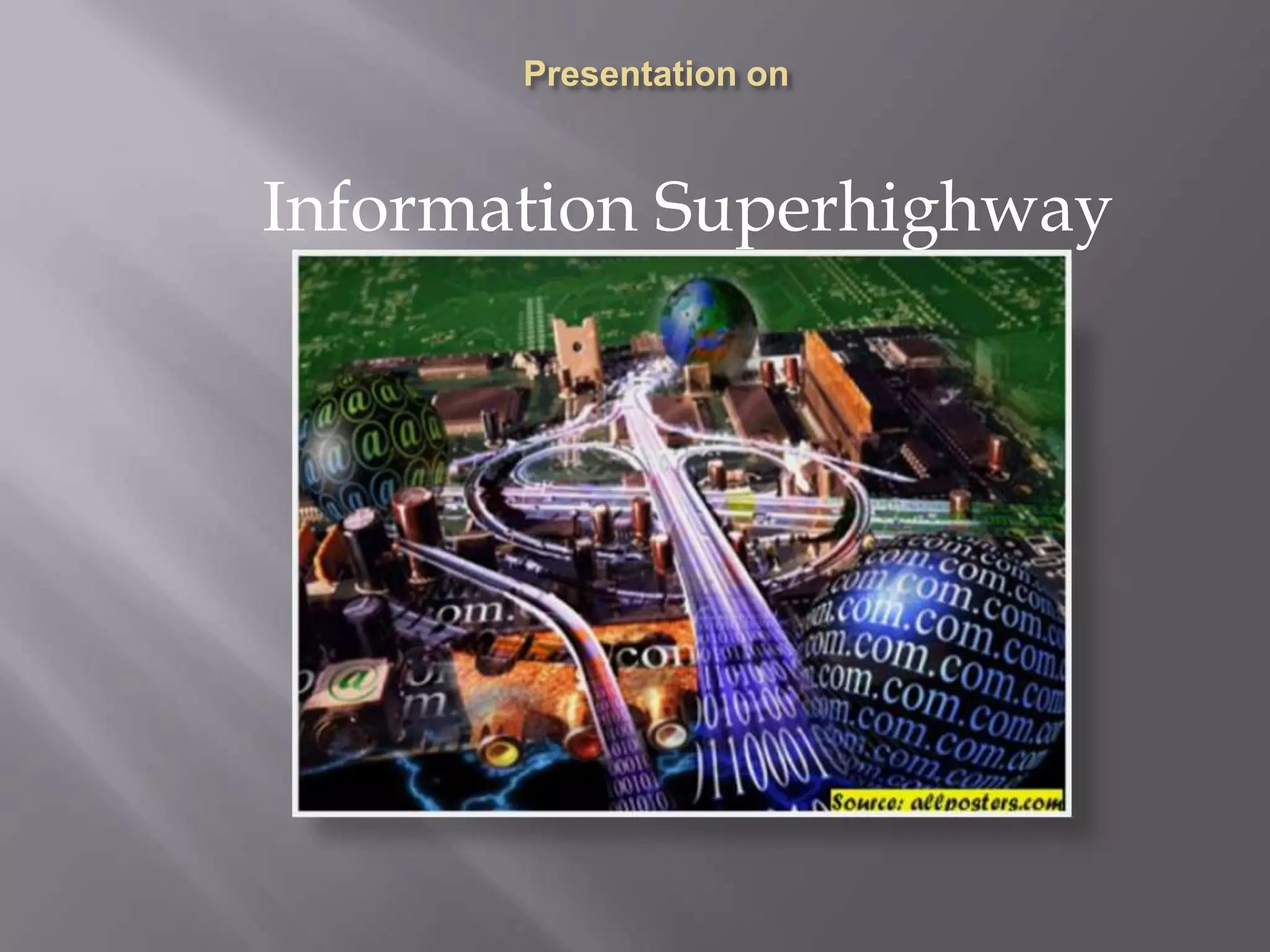
Information Superhighway
   Kishor Mahara
   Khem Raj Rawal
   Suman Pokhrel
   Aditya Bhattarai
   Jayaram Bhattarai
   Introduction

   Market forces influencing I-way

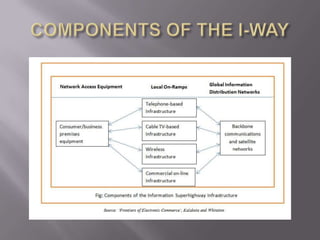
   Components of I-way
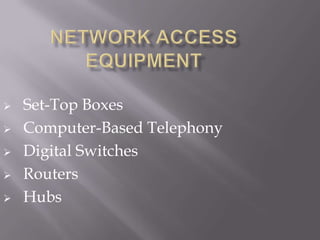
           1.Network access equipment
           2.The last mile
           3.Global information distribution networks


   Public policy issues shaping the i-way
   Clarify what I-Way is

   Describe market forces influencing I-Way

   Illustrate the components of I-Way

   Explain public policy issues shaping I-Way
   History
•   1994, Al Gore introduced the term.

    -"Information Superhighway (will) allow us to share
    information, to connect, and to communicate as a global
    community".

   Definition
•   High-capacity, interactive electronic pipeline providing
    integrated services.

•   The Information Superhighway is very much a physical
    network, an infrastructure of modern high-speed links.
   Links everyone at home or office to everything else.

   The Information Superhighway is a physical network,
    facilitating the broadband, two-way transmission of any type
    of digital information, within its own virtual space.
   Digitization
       1. Integrity of the information
       2. Manipulation
       3. Compression
       4. Convergence
   In practicality it is identical to internet provided
       -connections are broadband
       -they are continuously running.
   Broadband
       -ability to stack frequencies on a single
       transmission medium, providing multiple
       channels on the same wire.
       -supports 150-750 kbps in both            upstream
    and downstream.
-connections to internet must be able to support    two
    way video communication as a broadband          enough.

   Internet and infrastructure
       -As internet develops into I-way, changes will take place in
    infrastructure not in internet.

   Inernet and worldwide web(www)
       -it is possible to use internet without www.
       -explosion of the www made the internet I-way.
   Demands and requirements of market participants.

    •   Users: becoming information publishers.

    •   Consumers, end users, or businesses:
        consuming information products/services.

    •   ISPs: commercial, government or private.

    •   Value added information providers:
        includes third party brokers, intermediaries, originators
        of services who add value to services provided by others.
   Strategic alliances and I-way infrastructure:

    •   Large resource requirement.


    •   Alliance between communication, entertainment, and
        information sectors.

    •   Alliance to reduce risks, spread costs and acquire costly
        expertise in different area instantly.
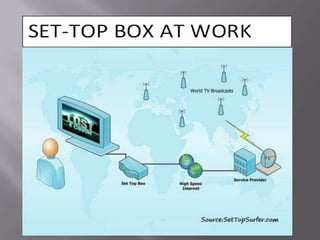
   Set-Top Boxes
   Computer-Based Telephony
   Digital Switches
   Routers
   Hubs
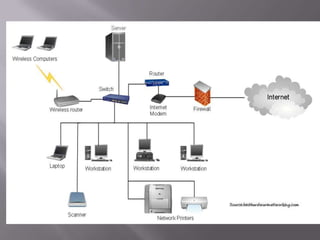
   Computer-Based Telephony

   Digital Switches

   Routers

   Hubs
   Wiring linking homes with backbone
   Requirement of huge investment
   Divided into four categories
   Also known as “Last Mile”
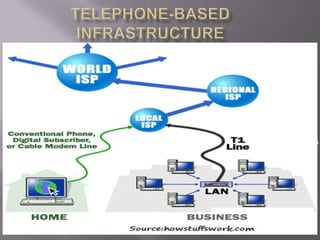
   Telephone-Based Infrastructure
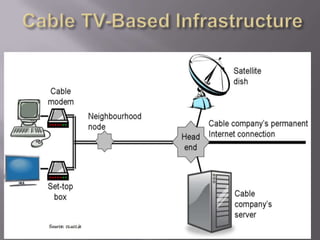
   Cable TV-Based Infrastructure
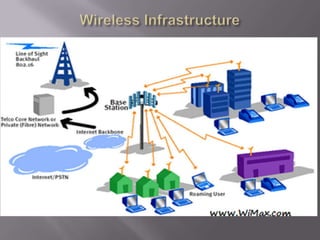
   Wireless Infrastructure
   Commercial On-Line Infrastructure
   Most common last mile infrastructure

   Can handle millions of simultaneous calls

   Lacks digital transmission
   Wired Cable TV

   Wireless Cable TV
   Cellular, Microwave, and Specialized
    mobile radio data networks

   Advantages over terrestrial networks
   Application and Growth

   The Microsoft Network
   Long-Distance Networks

   Satellite Networks
   Cost
   Subsidies
   Allocation of Scare Resources
   Regulation
   Universal Access
   Information Policy Issues
   Social and Religious Barriers
   Andrew B. Whinston and Ravi Kalakota, „’Frontiers of
    Electronic Commerce”

   en.wikipedia.org/wiki/Information_superhighway

   lbl.gov/Science/Articles/Archive/information-
    superhighway
Queries are heartily
   welcome…

Information Super Highway

  • 1.
  • 2.
    Kishor Mahara  Khem Raj Rawal  Suman Pokhrel  Aditya Bhattarai  Jayaram Bhattarai
  • 3.
    Introduction  Market forces influencing I-way  Components of I-way 1.Network access equipment 2.The last mile 3.Global information distribution networks  Public policy issues shaping the i-way
  • 4.
    Clarify what I-Way is  Describe market forces influencing I-Way  Illustrate the components of I-Way  Explain public policy issues shaping I-Way
  • 5.
    History • 1994, Al Gore introduced the term. -"Information Superhighway (will) allow us to share information, to connect, and to communicate as a global community".  Definition • High-capacity, interactive electronic pipeline providing integrated services. • The Information Superhighway is very much a physical network, an infrastructure of modern high-speed links.
  • 6.
    Links everyone at home or office to everything else.  The Information Superhighway is a physical network, facilitating the broadband, two-way transmission of any type of digital information, within its own virtual space.  Digitization 1. Integrity of the information 2. Manipulation 3. Compression 4. Convergence
  • 7.
    In practicality it is identical to internet provided -connections are broadband -they are continuously running.  Broadband -ability to stack frequencies on a single transmission medium, providing multiple channels on the same wire. -supports 150-750 kbps in both upstream and downstream.
  • 8.
    -connections to internetmust be able to support two way video communication as a broadband enough.  Internet and infrastructure -As internet develops into I-way, changes will take place in infrastructure not in internet.  Inernet and worldwide web(www) -it is possible to use internet without www. -explosion of the www made the internet I-way.
  • 9.
    Demands and requirements of market participants. • Users: becoming information publishers. • Consumers, end users, or businesses: consuming information products/services. • ISPs: commercial, government or private. • Value added information providers: includes third party brokers, intermediaries, originators of services who add value to services provided by others.
  • 10.
    Strategic alliances and I-way infrastructure: • Large resource requirement. • Alliance between communication, entertainment, and information sectors. • Alliance to reduce risks, spread costs and acquire costly expertise in different area instantly.
  • 12.
    Set-Top Boxes  Computer-Based Telephony  Digital Switches  Routers  Hubs
  • 14.
    Computer-Based Telephony  Digital Switches  Routers  Hubs
  • 16.
    Wiring linking homes with backbone  Requirement of huge investment  Divided into four categories  Also known as “Last Mile”
  • 17.
    Telephone-Based Infrastructure  Cable TV-Based Infrastructure  Wireless Infrastructure  Commercial On-Line Infrastructure
  • 18.
    Most common last mile infrastructure  Can handle millions of simultaneous calls  Lacks digital transmission
  • 19.
    Wired Cable TV  Wireless Cable TV
  • 20.
    Cellular, Microwave, and Specialized mobile radio data networks  Advantages over terrestrial networks
  • 21.
    Application and Growth  The Microsoft Network
  • 22.
    Long-Distance Networks  Satellite Networks
  • 23.
    Cost  Subsidies  Allocation of Scare Resources  Regulation  Universal Access  Information Policy Issues  Social and Religious Barriers
  • 24.
    Andrew B. Whinston and Ravi Kalakota, „’Frontiers of Electronic Commerce”  en.wikipedia.org/wiki/Information_superhighway  lbl.gov/Science/Articles/Archive/information- superhighway
  • 25.