© 2020 PCC
• A carefully designed, static group of individuals who are
often based in the same building and have time to
interact successfully and efficiently
• They know each other, their individuals’ skills, strengths
and weaknesses and are interdependent in achieving a
shared goal
What’s a team
© 2020 PCC
• Amy Edmondson, a lecturer at Harvard Business School,
has developed the concept of teaming, as a verb, to
describe ‘teamwork on the fly’
• Teaming is the co-ordination and communication of
people, often across disciplinary boundaries, to get
interdependent work done
Edmondson, A.C. (2012). Teamwork on the fly. Harvard Business Review, 90, no. 4 (April, 2012): 72- 80
Teaming is a verb
© 2020 PCC
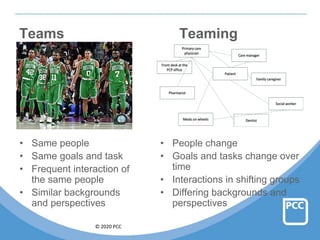
Teams Teaming
• Same people
• Same goals and task
• Frequent interaction of
the same people
• Similar backgrounds
and perspectives
• People change
• Goals and tasks change over
time
• Interactions in shifting groups
• Differing backgrounds and
perspectives
© 2020 PCC
When teaming matters most
• When work, or patient’s needs, are complex and
unpredictable
• When you’re working with new and different people from
different parts of the organisation or business
• When you’re working across geographical and
organisational boundaries
© 2020 PCC
Why teaming matters now
During the Covid 19 outbreak teams may choose to adopt
‘teaming’. Teaming is not a design choice it is simply a
necessity for certain kinds of work and it takes leadership
to:
• Bring out and understand different views
• Analyse and generate new and nuanced options
• Examine implications systematically
• Make decisions and move forward
Edmondson, A.C. (2012). Teamwork on the fly. Harvard Business Review, 90, no. 4 (April, 2012): 72- 80
© 2020 PCC
Find out more
We discuss teaming as part of our leadership programmes.
We give delegates the tools to determine how they can turn
a group of strangers into a team and develop their
leadership skills and capabilities.
To find out more about teaming go to https://pcc-
cic.org.uk/article/teaming-more-dynamic-way-work and if
you would like more information our leadership programmes
please contact enquiries@pcc-cic.org.uk

Teaming

  • 1.
    © 2020 PCC •A carefully designed, static group of individuals who are often based in the same building and have time to interact successfully and efficiently • They know each other, their individuals’ skills, strengths and weaknesses and are interdependent in achieving a shared goal What’s a team
  • 2.
    © 2020 PCC •Amy Edmondson, a lecturer at Harvard Business School, has developed the concept of teaming, as a verb, to describe ‘teamwork on the fly’ • Teaming is the co-ordination and communication of people, often across disciplinary boundaries, to get interdependent work done Edmondson, A.C. (2012). Teamwork on the fly. Harvard Business Review, 90, no. 4 (April, 2012): 72- 80 Teaming is a verb
  • 3.
    © 2020 PCC TeamsTeaming • Same people • Same goals and task • Frequent interaction of the same people • Similar backgrounds and perspectives • People change • Goals and tasks change over time • Interactions in shifting groups • Differing backgrounds and perspectives
  • 4.
    © 2020 PCC Whenteaming matters most • When work, or patient’s needs, are complex and unpredictable • When you’re working with new and different people from different parts of the organisation or business • When you’re working across geographical and organisational boundaries
  • 5.
    © 2020 PCC Whyteaming matters now During the Covid 19 outbreak teams may choose to adopt ‘teaming’. Teaming is not a design choice it is simply a necessity for certain kinds of work and it takes leadership to: • Bring out and understand different views • Analyse and generate new and nuanced options • Examine implications systematically • Make decisions and move forward Edmondson, A.C. (2012). Teamwork on the fly. Harvard Business Review, 90, no. 4 (April, 2012): 72- 80
  • 6.
    © 2020 PCC Findout more We discuss teaming as part of our leadership programmes. We give delegates the tools to determine how they can turn a group of strangers into a team and develop their leadership skills and capabilities. To find out more about teaming go to https://pcc- cic.org.uk/article/teaming-more-dynamic-way-work and if you would like more information our leadership programmes please contact enquiries@pcc-cic.org.uk

Editor's Notes