TEACHING WRITING
Paula Alejandra Linares
Marly Lizzeth Reyes Díaz
Diana Carolina Riapira Gaitán
1. Strive to offer techniques that are as
interactive as possible
It is a process-oriented approach to writing
instruction interactive (as students work in
pairs and groups to generate ideas)
As well as learner-centered (with great
opportunities for students to initiate
activities and exchange ideas)
Also, writing techniques that focus on
purposes other than composition such
as: letters, forms memos, directions
and short reports.
On the other hand, group collaboration,
brainstorming and critiquing are a part of
many writing-focused techniques.
2. Sensitively apply methods of responding to
and correct your students’ writing
Error correction in writing must be
approached in a different manner because
writing, unlike speaking, often includes an
extensive planning stage.
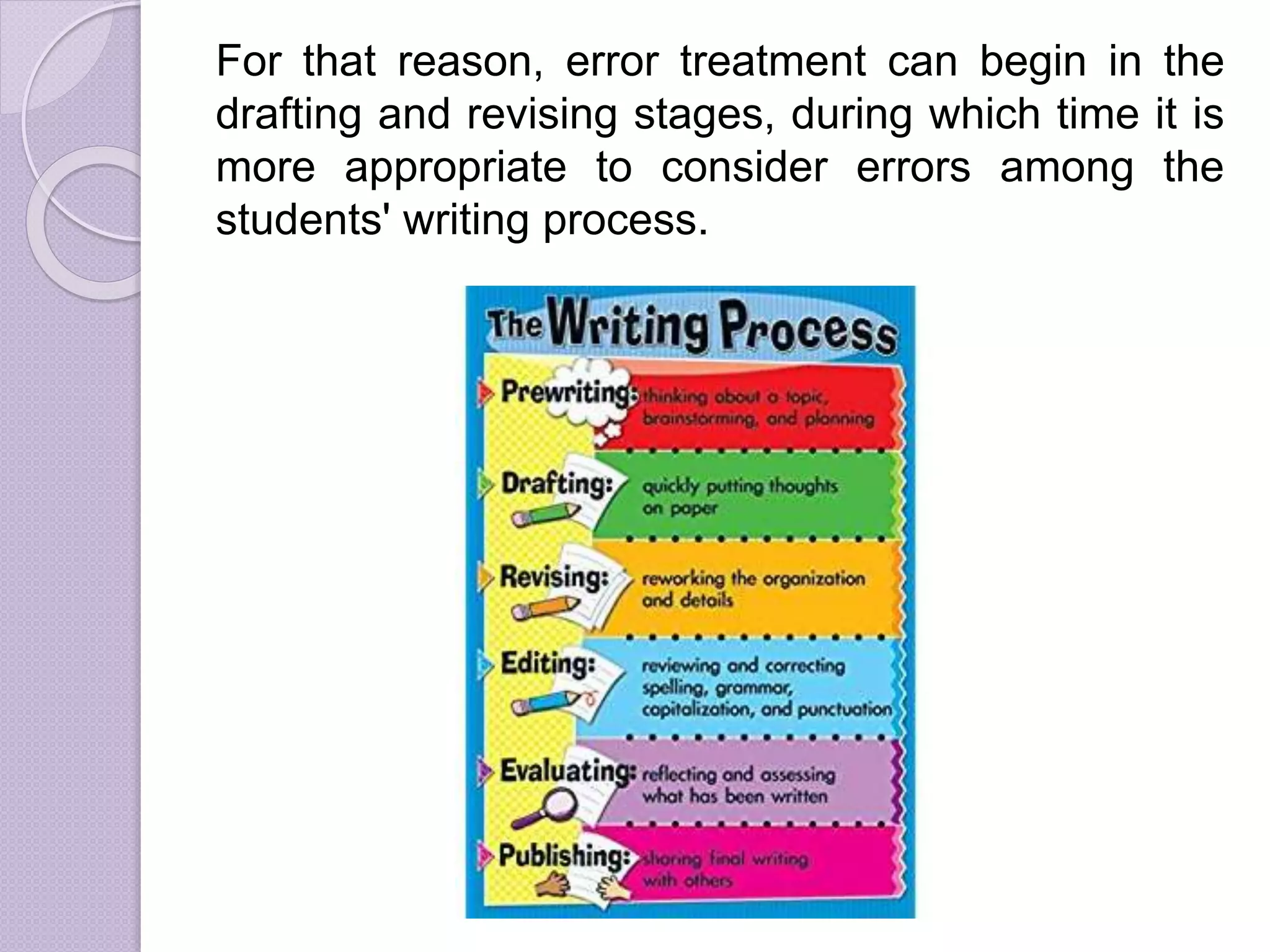
For that reason, error treatment can begin in the
drafting and revising stages, during which time it is
more appropriate to consider errors among the
students' writing process.
Teachers can use self-correction, peer-correction
and by instructor-initiated comments.
 Here are some guidelines for responding to
the first draft:
a. Comment on the introductory paragraph
b. Comment on features that appear to be
irrelevant to the topic.
c. Generally resist the temptation to rewrite a
student's sentences
 For the subsequent drafts:
a. Comment on the adequacy and strength of the
conclusion
b. Check cohesive devices within and across
paragraphs
c. Comment on the specific clarity and strength of
all main ideas, supporting ideas, and on
argument and logic.
3. Clearly instruct students on the rhetorical,
formal conventions of writing
Each type of writing has its formal
properties. Make them explicit.
 For academic writing, for example, some
of the features of English rhetorical
discourse that writer use to explain,
propose solutions debate, and argue are
as follows:
 A clear statement of the thesis or topic or purpose
 Use of main ideas to develop or clarify the thesis
 Use supporting ideas
 Supporting by “telling”: describing
 Supporting by “showing”: giving evidence, facts,
statistics, etc.
 Supporting by linking cause and effect
 Supporting by using comparison and/or contrast
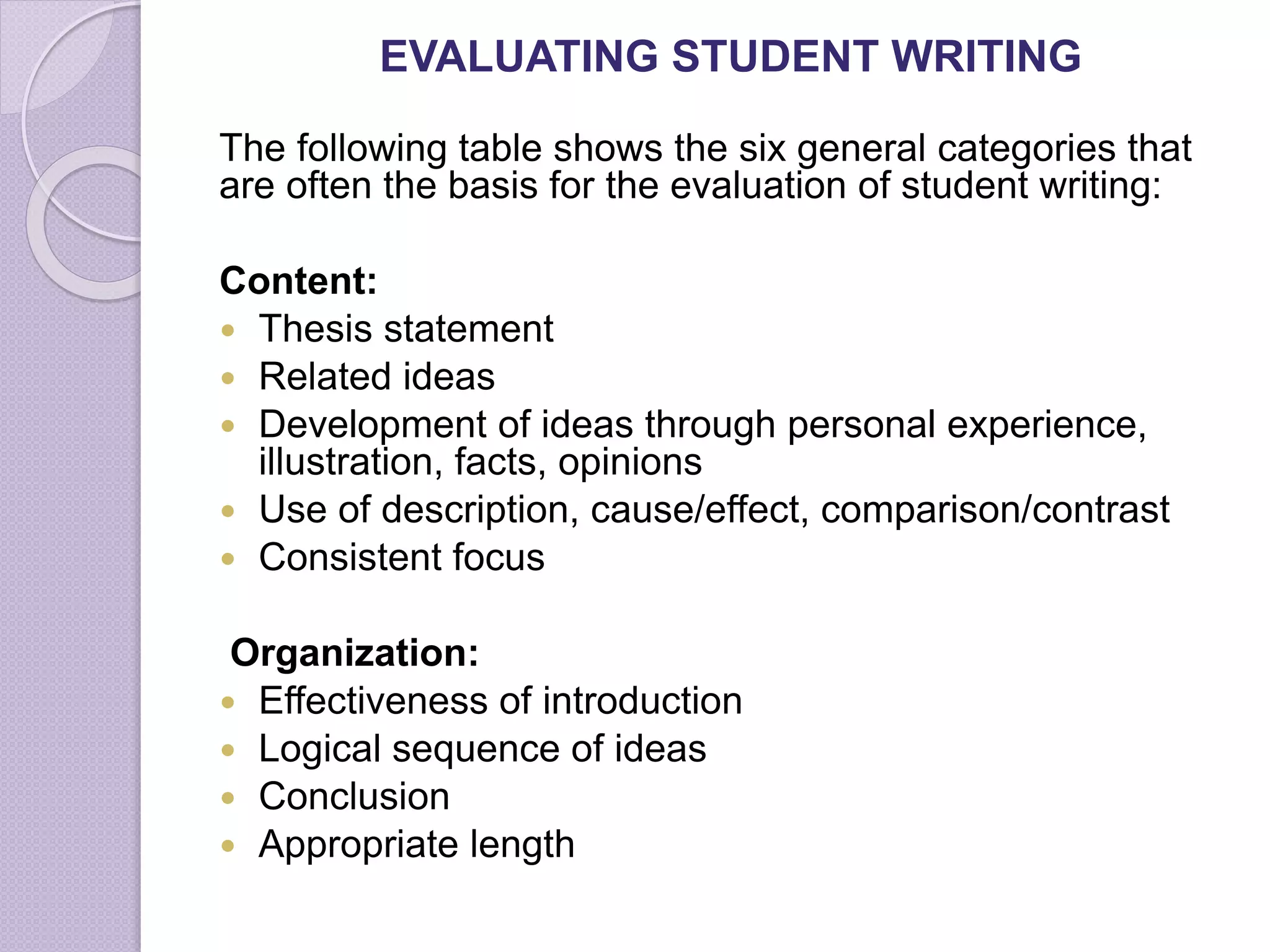
EVALUATING STUDENT WRITING
The following table shows the six general categories that
are often the basis for the evaluation of student writing:
Content:
 Thesis statement
 Related ideas
 Development of ideas through personal experience,
illustration, facts, opinions
 Use of description, cause/effect, comparison/contrast
 Consistent focus
Organization:
 Effectiveness of introduction
 Logical sequence of ideas
 Conclusion
 Appropriate length
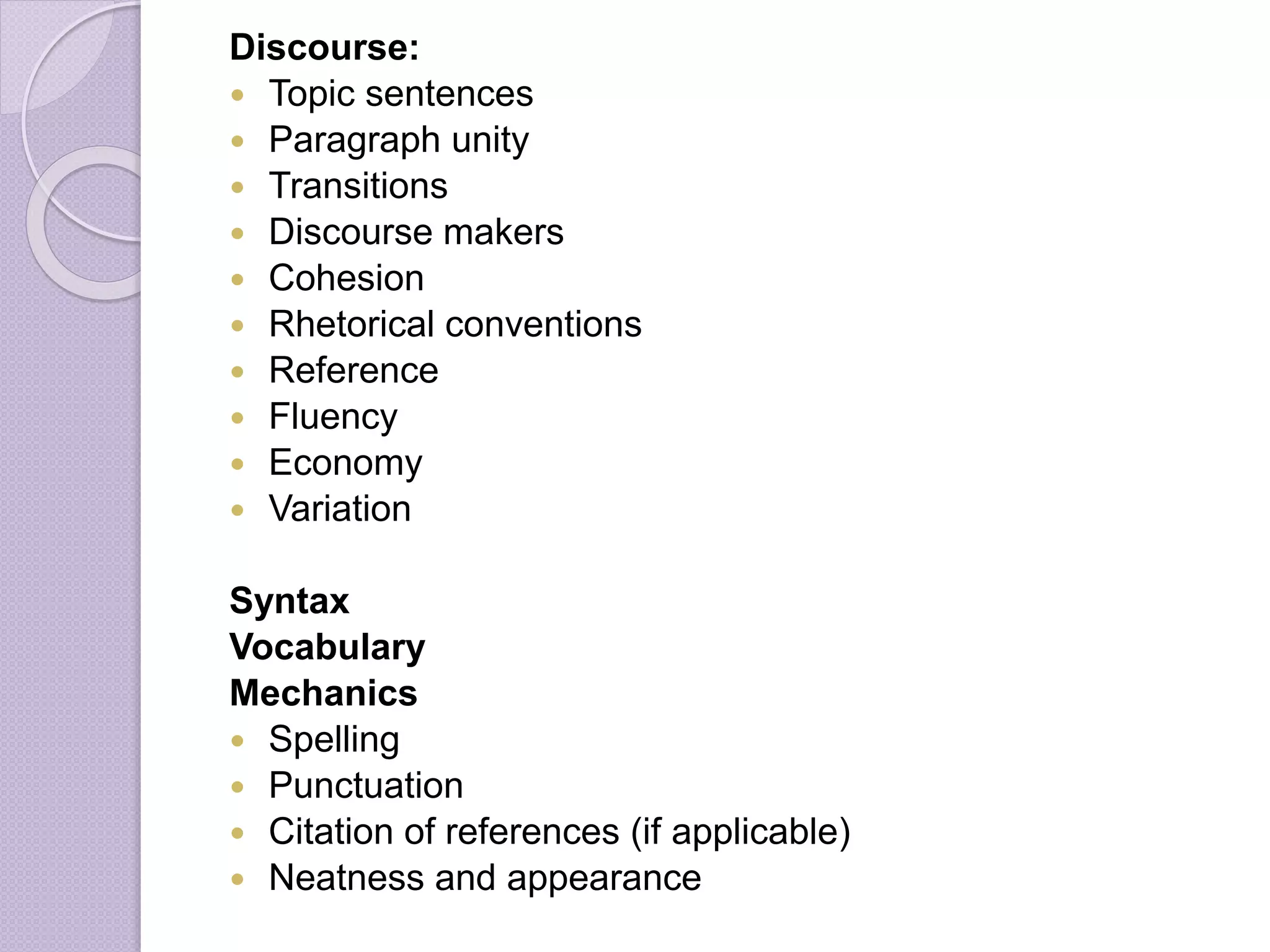
Discourse:
 Topic sentences
 Paragraph unity
 Transitions
 Discourse makers
 Cohesion
 Rhetorical conventions
 Reference
 Fluency
 Economy
 Variation
Syntax
Vocabulary
Mechanics
 Spelling
 Punctuation
 Citation of references (if applicable)
 Neatness and appearance
In your evaluation of students’ writing,
the most instructive evaluative feedback
you can give are your comments, both
specific and summative, regarding the
student’s work.

Teaching writing

  • 1.
    TEACHING WRITING Paula AlejandraLinares Marly Lizzeth Reyes Díaz Diana Carolina Riapira Gaitán
  • 2.
    1. Strive tooffer techniques that are as interactive as possible It is a process-oriented approach to writing instruction interactive (as students work in pairs and groups to generate ideas)
  • 3.
    As well aslearner-centered (with great opportunities for students to initiate activities and exchange ideas)
  • 4.
    Also, writing techniquesthat focus on purposes other than composition such as: letters, forms memos, directions and short reports.
  • 5.
    On the otherhand, group collaboration, brainstorming and critiquing are a part of many writing-focused techniques.
  • 6.
    2. Sensitively applymethods of responding to and correct your students’ writing Error correction in writing must be approached in a different manner because writing, unlike speaking, often includes an extensive planning stage.
  • 7.
    For that reason,error treatment can begin in the drafting and revising stages, during which time it is more appropriate to consider errors among the students' writing process.
  • 8.
    Teachers can useself-correction, peer-correction and by instructor-initiated comments.
  • 9.
     Here aresome guidelines for responding to the first draft: a. Comment on the introductory paragraph b. Comment on features that appear to be irrelevant to the topic. c. Generally resist the temptation to rewrite a student's sentences
  • 10.
     For thesubsequent drafts: a. Comment on the adequacy and strength of the conclusion b. Check cohesive devices within and across paragraphs c. Comment on the specific clarity and strength of all main ideas, supporting ideas, and on argument and logic.
  • 11.
    3. Clearly instructstudents on the rhetorical, formal conventions of writing Each type of writing has its formal properties. Make them explicit.  For academic writing, for example, some of the features of English rhetorical discourse that writer use to explain, propose solutions debate, and argue are as follows:
  • 12.
     A clearstatement of the thesis or topic or purpose  Use of main ideas to develop or clarify the thesis  Use supporting ideas  Supporting by “telling”: describing  Supporting by “showing”: giving evidence, facts, statistics, etc.  Supporting by linking cause and effect  Supporting by using comparison and/or contrast
  • 13.
    EVALUATING STUDENT WRITING Thefollowing table shows the six general categories that are often the basis for the evaluation of student writing: Content:  Thesis statement  Related ideas  Development of ideas through personal experience, illustration, facts, opinions  Use of description, cause/effect, comparison/contrast  Consistent focus Organization:  Effectiveness of introduction  Logical sequence of ideas  Conclusion  Appropriate length
  • 14.
    Discourse:  Topic sentences Paragraph unity  Transitions  Discourse makers  Cohesion  Rhetorical conventions  Reference  Fluency  Economy  Variation Syntax Vocabulary Mechanics  Spelling  Punctuation  Citation of references (if applicable)  Neatness and appearance
  • 15.
    In your evaluationof students’ writing, the most instructive evaluative feedback you can give are your comments, both specific and summative, regarding the student’s work.