Teaching Strategies
Responding to
Learners Diverse
Backgrounds
Strand
Learners’ linguistic, cultural,
socio- economic and religious
backgrounds
Indicator
3.2.2 Establish a learner-centered
culture by using teaching strategies
that respond to learners’ linguistic,
cultural, socio-economic and
religious background
Key
Concepts
Learner-centered
culture
Teaching strategies
Linguistic
background
Cultural background
Socio-economic
background
Self-
reflection
learner-centered pedagogy
The responsibility of creating meaningful learning
experiences lies in the collaboration between the learners
and their teacher. Establishing learner-centered culture can be
framed by teachers who value the great role of learners
during the instructional process; promote shared commitment
to learning; and see learners’ diverse identity as an
advantage in developing a positive, inclusive and
collaborative classroom climate through doing any of the
following recommendations (Yale Center for Teaching and
Learning, 2018)
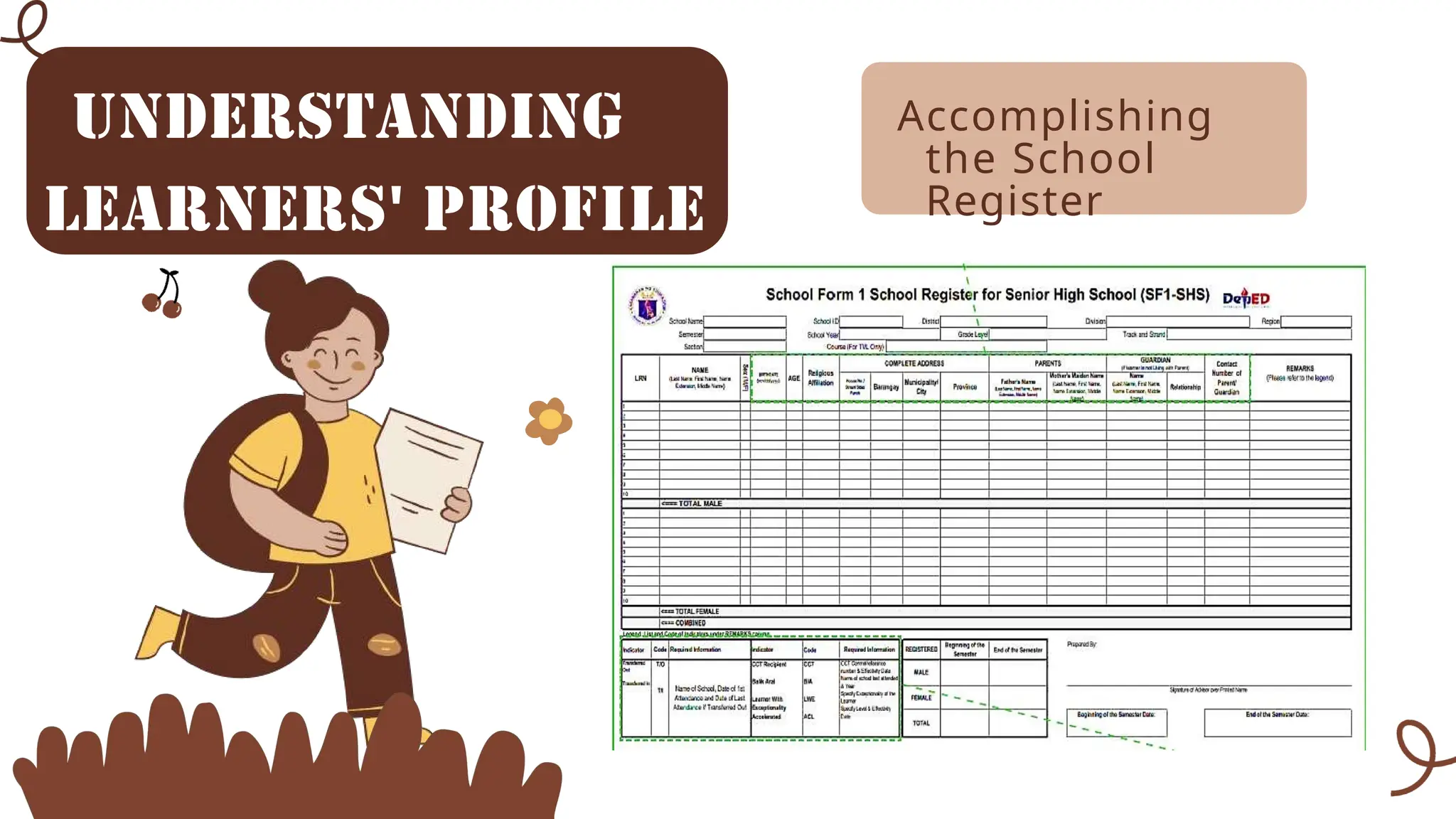
Accomplishing
the School
Register
Understanding
Learners' Profile
Understanding
Learners' Profile
Conducting
Survey with
Learners
Understanding
Learners' Profile
Using Class
Bulletin
Board
Classroom
- Based
Activity
Plan: The
Human
Bingo Game
Understanding
Learners' Profile
Consolidating
Class
Profile
Teaching strategy
responsive to
learners' linguistic
background
 Determine your learners’
linguistic background.
 Involve your learners in
discourses, sharing or
brainstorming activities on topics
that are relatable to them.
 Promote cooperative learning
strategies in giving authentic
and purposeful activities.
 Maximize learners’ “talking time”
in the class.
 Collaborate with the learners’
parents or family, and community
to enrich learning activities.
 Adjust teaching strategies to
meet your learners’
background.
 A fundamental belief in the ability of all
students to learn.
 A wide range of curricular content.
 Establish inclusion by highlighting how the
topic relates to the learners.
 Develop positive attitudes by allowing the
learners to choose between activities and
assessments that let them showcase their
values, strengths and experiences.
 Enhance meaning by drawing connections
with real-world issues, asking learners to
use opinions and existing knowledge to
address them.
 Foster confidence by offering different
assessment modalities to demonstrate
skills and understanding.
Teaching strategy
responsive to learners'
cultural background
 Determine your learners’
socio-economic
background.
 Teach with their social
needs in mind. Students
from low-income families
are more likely to develop
social conduct problems.
 Address health concerns.
Teaching strategy
responsive to socio -
economic background
 Determine your learners’
religious background.
 Using a variety of
strategies and resources
to foster religious
diversity
 Incorporating content
about religion into the
curriculum
Teaching strategy
responsive to religious
background
Teaching strategy
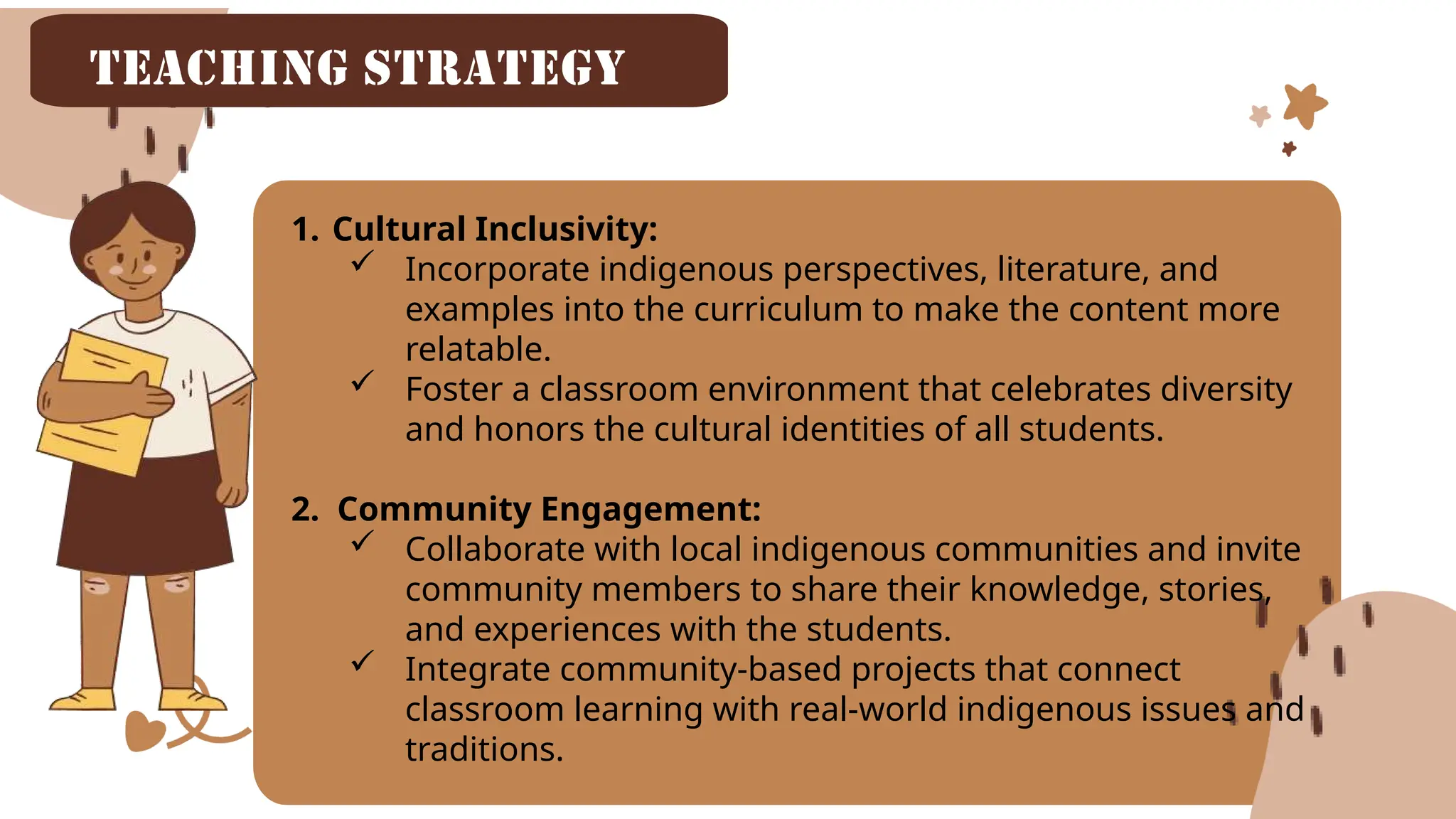
1. Cultural Inclusivity:
 Incorporate indigenous perspectives, literature, and
examples into the curriculum to make the content more
relatable.
 Foster a classroom environment that celebrates diversity
and honors the cultural identities of all students.
2. Community Engagement:
 Collaborate with local indigenous communities and invite
community members to share their knowledge, stories,
and experiences with the students.
 Integrate community-based projects that connect
classroom learning with real-world indigenous issues and
traditions.
Teaching strategy
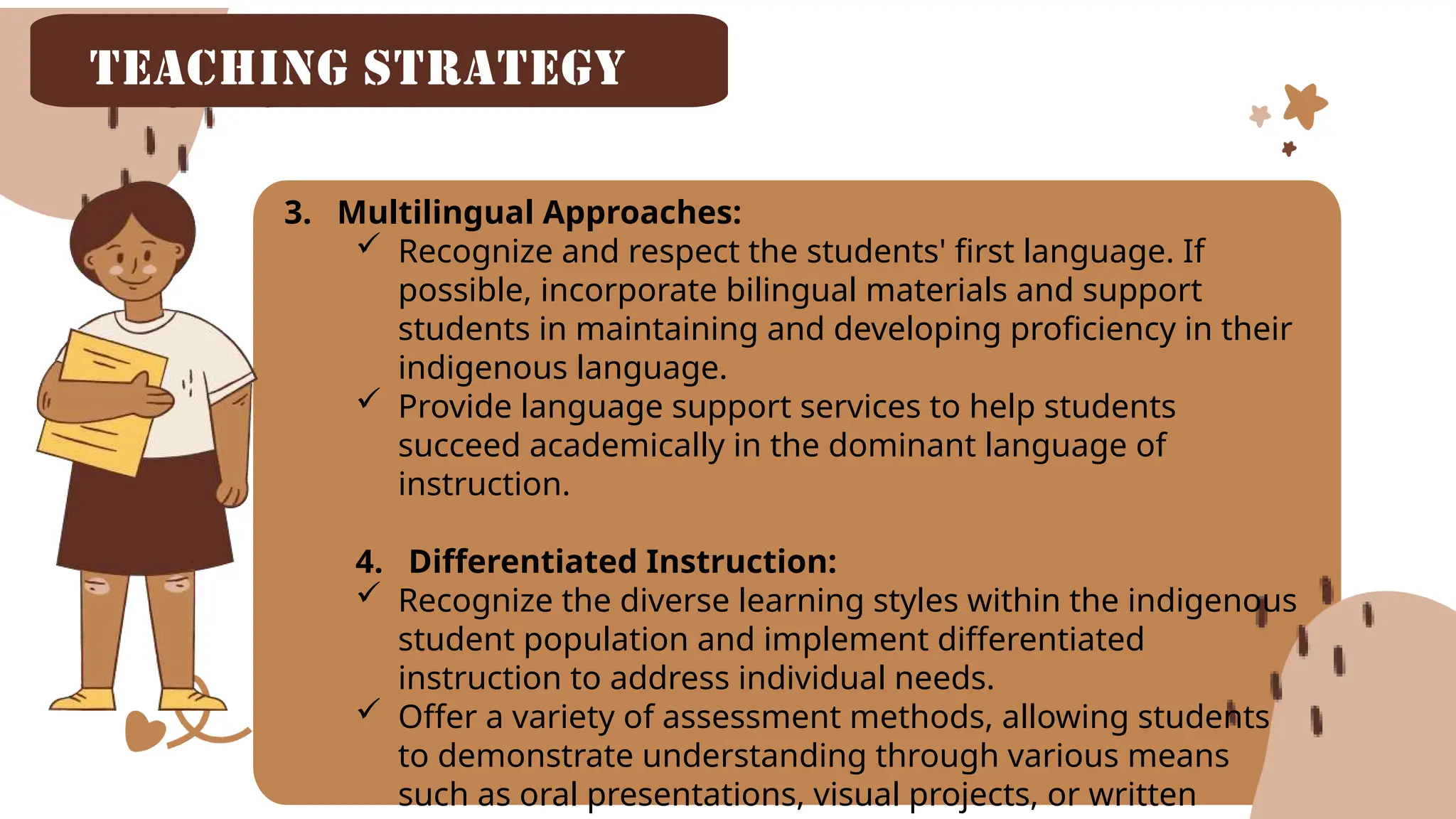
3. Multilingual Approaches:
 Recognize and respect the students' first language. If
possible, incorporate bilingual materials and support
students in maintaining and developing proficiency in their
indigenous language.
 Provide language support services to help students
succeed academically in the dominant language of
instruction.
4. Differentiated Instruction:
 Recognize the diverse learning styles within the indigenous
student population and implement differentiated
instruction to address individual needs.
 Offer a variety of assessment methods, allowing students
to demonstrate understanding through various means
such as oral presentations, visual projects, or written
Teaching strategy
5. Culturally Responsive Pedagogy:
 Embrace a teaching approach that values and integrates
the cultural backgrounds of students into instructional
methods.
 Incorporate culturally relevant teaching materials and
adjust instructional methods to align with indigenous ways
of learning.
6. Holistic Learning:
 Recognize the importance of holistic education that
addresses not only academic but also social, emotional,
and cultural aspects of students' well-being.
 Incorporate traditional teaching methods, such as
storytelling or experiential learning, to engage students on
multiple levels.
Teaching strategy
7. Flexible Scheduling:
 Be flexible in scheduling to accommodate cultural events,
ceremonies, or community activities that students may
need to participate in.
 Allow time for reflection and discussion, fostering a
learning environment that values cultural sharing and
understanding.
8. Culturally Competent Professional Development:
 Ensure educators receive training in cultural competence
to understand and appreciate the diverse needs of
indigenous learners.
 Encourage ongoing professional development to stay
informed about best practices and cultural sensitivity.
Teaching strategy
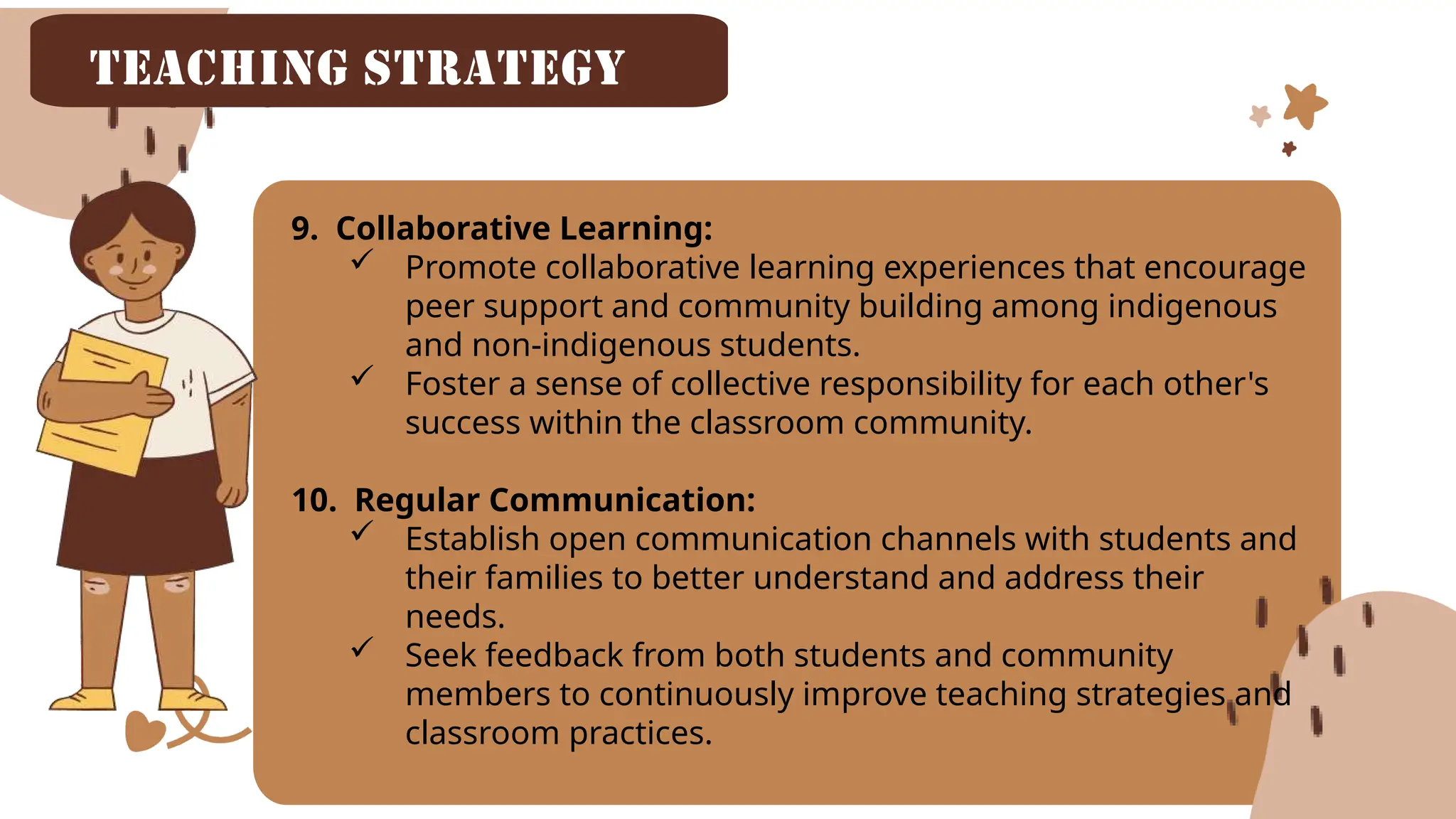
9. Collaborative Learning:
 Promote collaborative learning experiences that encourage
peer support and community building among indigenous
and non-indigenous students.
 Foster a sense of collective responsibility for each other's
success within the classroom community.
10. Regular Communication:
 Establish open communication channels with students and
their families to better understand and address their
needs.
 Seek feedback from both students and community
members to continuously improve teaching strategies and
classroom practices.
Thank
You!

teaching-strategies-responding-to-learners-diverse-backgrounds

  • 1.
  • 2.
    Strand Learners’ linguistic, cultural, socio-economic and religious backgrounds Indicator 3.2.2 Establish a learner-centered culture by using teaching strategies that respond to learners’ linguistic, cultural, socio-economic and religious background
  • 3.
  • 4.
  • 5.
    learner-centered pedagogy The responsibilityof creating meaningful learning experiences lies in the collaboration between the learners and their teacher. Establishing learner-centered culture can be framed by teachers who value the great role of learners during the instructional process; promote shared commitment to learning; and see learners’ diverse identity as an advantage in developing a positive, inclusive and collaborative classroom climate through doing any of the following recommendations (Yale Center for Teaching and Learning, 2018)
  • 6.
  • 7.
  • 8.
  • 9.
  • 10.
  • 11.
    Teaching strategy responsive to learners'linguistic background  Determine your learners’ linguistic background.  Involve your learners in discourses, sharing or brainstorming activities on topics that are relatable to them.  Promote cooperative learning strategies in giving authentic and purposeful activities.  Maximize learners’ “talking time” in the class.  Collaborate with the learners’ parents or family, and community to enrich learning activities.  Adjust teaching strategies to meet your learners’ background.
  • 12.
     A fundamentalbelief in the ability of all students to learn.  A wide range of curricular content.  Establish inclusion by highlighting how the topic relates to the learners.  Develop positive attitudes by allowing the learners to choose between activities and assessments that let them showcase their values, strengths and experiences.  Enhance meaning by drawing connections with real-world issues, asking learners to use opinions and existing knowledge to address them.  Foster confidence by offering different assessment modalities to demonstrate skills and understanding. Teaching strategy responsive to learners' cultural background
  • 13.
     Determine yourlearners’ socio-economic background.  Teach with their social needs in mind. Students from low-income families are more likely to develop social conduct problems.  Address health concerns. Teaching strategy responsive to socio - economic background
  • 14.
     Determine yourlearners’ religious background.  Using a variety of strategies and resources to foster religious diversity  Incorporating content about religion into the curriculum Teaching strategy responsive to religious background
  • 15.
    Teaching strategy 1. CulturalInclusivity:  Incorporate indigenous perspectives, literature, and examples into the curriculum to make the content more relatable.  Foster a classroom environment that celebrates diversity and honors the cultural identities of all students. 2. Community Engagement:  Collaborate with local indigenous communities and invite community members to share their knowledge, stories, and experiences with the students.  Integrate community-based projects that connect classroom learning with real-world indigenous issues and traditions.
  • 16.
    Teaching strategy 3. MultilingualApproaches:  Recognize and respect the students' first language. If possible, incorporate bilingual materials and support students in maintaining and developing proficiency in their indigenous language.  Provide language support services to help students succeed academically in the dominant language of instruction. 4. Differentiated Instruction:  Recognize the diverse learning styles within the indigenous student population and implement differentiated instruction to address individual needs.  Offer a variety of assessment methods, allowing students to demonstrate understanding through various means such as oral presentations, visual projects, or written
  • 17.
    Teaching strategy 5. CulturallyResponsive Pedagogy:  Embrace a teaching approach that values and integrates the cultural backgrounds of students into instructional methods.  Incorporate culturally relevant teaching materials and adjust instructional methods to align with indigenous ways of learning. 6. Holistic Learning:  Recognize the importance of holistic education that addresses not only academic but also social, emotional, and cultural aspects of students' well-being.  Incorporate traditional teaching methods, such as storytelling or experiential learning, to engage students on multiple levels.
  • 18.
    Teaching strategy 7. FlexibleScheduling:  Be flexible in scheduling to accommodate cultural events, ceremonies, or community activities that students may need to participate in.  Allow time for reflection and discussion, fostering a learning environment that values cultural sharing and understanding. 8. Culturally Competent Professional Development:  Ensure educators receive training in cultural competence to understand and appreciate the diverse needs of indigenous learners.  Encourage ongoing professional development to stay informed about best practices and cultural sensitivity.
  • 19.
    Teaching strategy 9. CollaborativeLearning:  Promote collaborative learning experiences that encourage peer support and community building among indigenous and non-indigenous students.  Foster a sense of collective responsibility for each other's success within the classroom community. 10. Regular Communication:  Establish open communication channels with students and their families to better understand and address their needs.  Seek feedback from both students and community members to continuously improve teaching strategies and classroom practices.
  • 21.