Teaching reading skills Using co-operative learning methods Lynne Ferguson
Useful strategies for teaching higher order reading Ways of engaging boys in the learning process Introduction to some co-operative learning strategies W.A.L.T.
“  Boys, much more than girls, read and look at a wider range of textual material. Very little of it, comparatively, is fiction. We may have made the mistake of bemoaning the demise of reading amongst…. Boys when what we mean is that they give up reading story books.” “ In teaching methods there are important differences in the ways boys set about completing an essay or producing coursework. Long term targets are just unrealistic, when there are always more interesting ways to pass the time.”  Raising Boys` Achievement, Jon Pickering. What are little boys made of?  Slugs?  Snails?
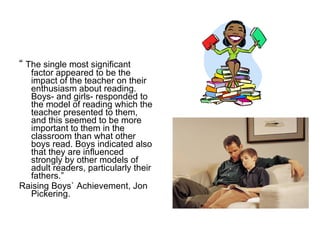
“  The single most significant factor appeared to be the impact of the teacher on their enthusiasm about reading. Boys- and girls- responded to the model of reading which the teacher presented to them, and this seemed to be more important to them in the classroom than what other boys read. Boys indicated also that they are influenced strongly by other models of adult readers, particularly their fathers.” Raising Boys` Achievement, Jon Pickering.
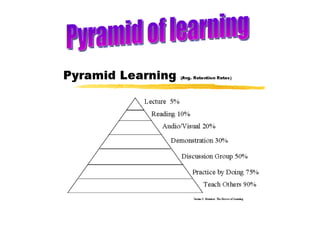
Pyramid of learning
It promotes “positive interdependence.” It embeds social skills, ie PSD in the curriculum. It encourages active learning. It values “individual accountability.” What is co-operative learning?
I can read material on a topic and explain it to others, answering questions if required.  [Academic skill] I can encourage others in their reading and explanation.  [social skill] 2  Skills for today
Working co-operatively on a reading task. Everyone in the group understands the task. Everyone in the group understands the text selected. All are engaged in the learning process. Any one person in the group can be asked to summarise and explain to other groups. Mission Impossible?
Sit down 2 facing 2 Design a badge with the following information: In the middle, your first name. Top left corner, a picture of your favourite food. Top right corner, a picture of favourite holiday. Bottom right, picture of best group activity. Group Formation
Create a name for your group which reflects either; An era in History,  or A person or group in History,  and The people in the group. Group  Identity
Reader: Reads the group's material out loud to the group, carefully and with expression, so that group members can understand and remember it. Encourager: Watches to make certain everyone is participating and invites reluctant members to contribute. Checker: Checks on the comprehension of group members by asking them to explain or summarise material learned or discussed. Timer: Keeps an eye on the clock to make sure the task is completed on time and the group progress through the tasks at a reasonable pace. Group Activity
As a group you have 4 minutes to design a poster which has: 1. The name of the Group. 2. A symbol or picture which represents the group. Task One
Each group has been given a task on a card. The materials handler gets the appropriate resource. The reader finds and reads the correct material. The task is complete when everyone in the group understands and can explain the material. It is the  group's  responsibility to make sure everyone understands the material. Task Two
As a group, make a mind map of your topic. Formative assessment Constant Review Evacuation
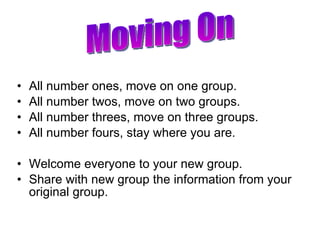
All number ones, move on one group. All number twos, move on two groups. All number threes, move on three groups. All number fours, stay where you are. Welcome everyone to your new group. Share with new group the information from your original group. Moving On
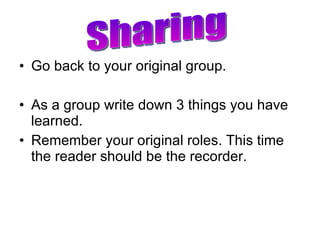
Go back to your original group. As a group write down 3 things you have learned. Remember your original roles. This time the reader should be the recorder. Sharing
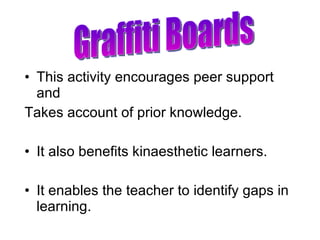
This activity encourages peer support and  Takes account of prior knowledge. It also benefits kinaesthetic learners. It enables the teacher to identify gaps in learning. Graffiti Boards
I can read material on a topic and explain it to others, answering questions if required.  [Academic skill] I can encourage others in their reading and explanation.  [social skill] 2 Skills for today.  How did I do?
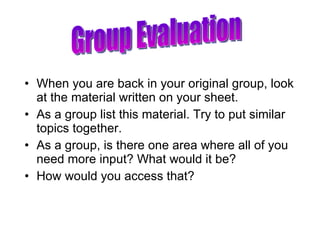
When you are back in your original group, look at the material written on your sheet. As a group list this material. Try to put similar topics together. As a group, is there one area where all of you need more input? What would it be? How would you access that? Group Evaluation
www.jigsaw.org www.cooperation.org/ www.kaganonline.com Raising Boys Achievement by Jon Pickering Bringing or the best in boys, communication strategies for teachers by Neall Scott Partnership Formative Assessment in the Secondary Classroom by Shirley Clarke. 2005 Gender Issues in raising the attainment of boys and girls. Glasgow 2001 Resources
In your groups think about some of the techniques you have practised today. Plan how you could use these techniques either in an existing lesson or  create a new one. Now, do it yourself!

Teaching Reading Power Point

  • 1.
    Teaching reading skillsUsing co-operative learning methods Lynne Ferguson
  • 2.
    Useful strategies forteaching higher order reading Ways of engaging boys in the learning process Introduction to some co-operative learning strategies W.A.L.T.
  • 3.
    “ Boys,much more than girls, read and look at a wider range of textual material. Very little of it, comparatively, is fiction. We may have made the mistake of bemoaning the demise of reading amongst…. Boys when what we mean is that they give up reading story books.” “ In teaching methods there are important differences in the ways boys set about completing an essay or producing coursework. Long term targets are just unrealistic, when there are always more interesting ways to pass the time.” Raising Boys` Achievement, Jon Pickering. What are little boys made of? Slugs? Snails?
  • 4.
    “ Thesingle most significant factor appeared to be the impact of the teacher on their enthusiasm about reading. Boys- and girls- responded to the model of reading which the teacher presented to them, and this seemed to be more important to them in the classroom than what other boys read. Boys indicated also that they are influenced strongly by other models of adult readers, particularly their fathers.” Raising Boys` Achievement, Jon Pickering.
  • 5.
  • 6.
    It promotes “positiveinterdependence.” It embeds social skills, ie PSD in the curriculum. It encourages active learning. It values “individual accountability.” What is co-operative learning?
  • 7.
    I can readmaterial on a topic and explain it to others, answering questions if required. [Academic skill] I can encourage others in their reading and explanation. [social skill] 2 Skills for today
  • 8.
    Working co-operatively ona reading task. Everyone in the group understands the task. Everyone in the group understands the text selected. All are engaged in the learning process. Any one person in the group can be asked to summarise and explain to other groups. Mission Impossible?
  • 9.
    Sit down 2facing 2 Design a badge with the following information: In the middle, your first name. Top left corner, a picture of your favourite food. Top right corner, a picture of favourite holiday. Bottom right, picture of best group activity. Group Formation
  • 10.
    Create a namefor your group which reflects either; An era in History, or A person or group in History, and The people in the group. Group Identity
  • 11.
    Reader: Reads thegroup's material out loud to the group, carefully and with expression, so that group members can understand and remember it. Encourager: Watches to make certain everyone is participating and invites reluctant members to contribute. Checker: Checks on the comprehension of group members by asking them to explain or summarise material learned or discussed. Timer: Keeps an eye on the clock to make sure the task is completed on time and the group progress through the tasks at a reasonable pace. Group Activity
  • 12.
    As a groupyou have 4 minutes to design a poster which has: 1. The name of the Group. 2. A symbol or picture which represents the group. Task One
  • 13.
    Each group hasbeen given a task on a card. The materials handler gets the appropriate resource. The reader finds and reads the correct material. The task is complete when everyone in the group understands and can explain the material. It is the group's responsibility to make sure everyone understands the material. Task Two
  • 14.
    As a group,make a mind map of your topic. Formative assessment Constant Review Evacuation
  • 15.
    All number ones,move on one group. All number twos, move on two groups. All number threes, move on three groups. All number fours, stay where you are. Welcome everyone to your new group. Share with new group the information from your original group. Moving On
  • 16.
    Go back toyour original group. As a group write down 3 things you have learned. Remember your original roles. This time the reader should be the recorder. Sharing
  • 17.
    This activity encouragespeer support and Takes account of prior knowledge. It also benefits kinaesthetic learners. It enables the teacher to identify gaps in learning. Graffiti Boards
  • 18.
    I can readmaterial on a topic and explain it to others, answering questions if required. [Academic skill] I can encourage others in their reading and explanation. [social skill] 2 Skills for today. How did I do?
  • 19.
    When you areback in your original group, look at the material written on your sheet. As a group list this material. Try to put similar topics together. As a group, is there one area where all of you need more input? What would it be? How would you access that? Group Evaluation
  • 20.
    www.jigsaw.org www.cooperation.org/ www.kaganonline.comRaising Boys Achievement by Jon Pickering Bringing or the best in boys, communication strategies for teachers by Neall Scott Partnership Formative Assessment in the Secondary Classroom by Shirley Clarke. 2005 Gender Issues in raising the attainment of boys and girls. Glasgow 2001 Resources
  • 21.
    In your groupsthink about some of the techniques you have practised today. Plan how you could use these techniques either in an existing lesson or create a new one. Now, do it yourself!