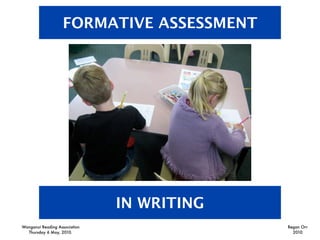
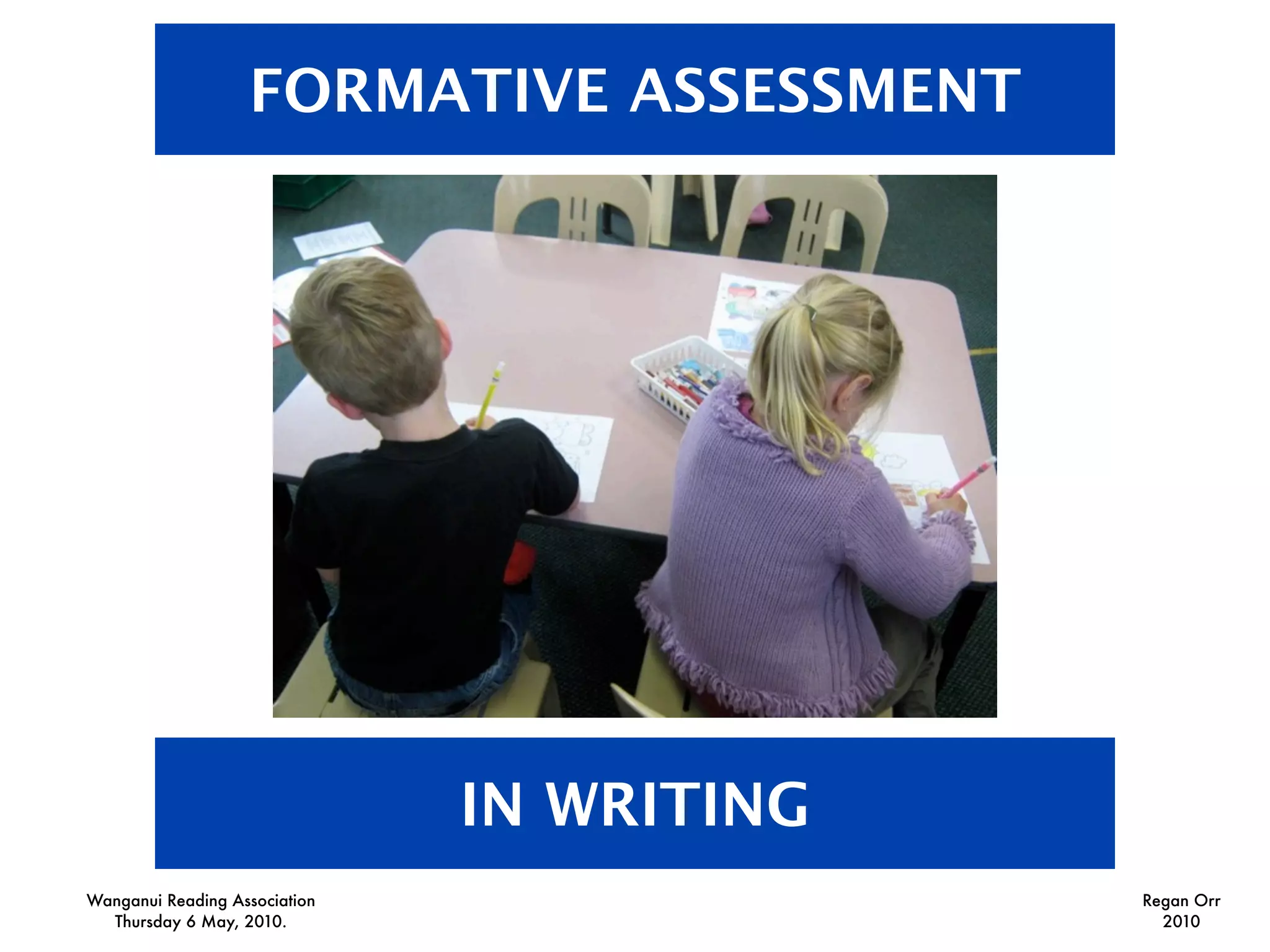
FORMATIVE ASSESSMENT


                               IN WRITING
Wanganui Reading Association                Regan Orr
  Thursday 6 May, 2010.                       2010
It was all about ‘stuff’!

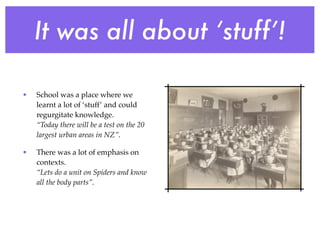
•   School was a place where we
    learnt a lot of ‘stuff’ and could
    regurgitate knowledge.
    “Today there will be a test on the 20
    largest urban areas in NZ”.

•   There was a lot of emphasis on
    contexts.
    “Lets do a unit on Spiders and know
    all the body parts”.
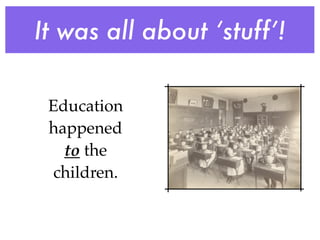
It was all about ‘stuff’!

 Education
 happened
   to the
 children.
There has been a change!
 Our focus needs to be with providing children with the skills and
       deeper understanding to contribute to a global society.
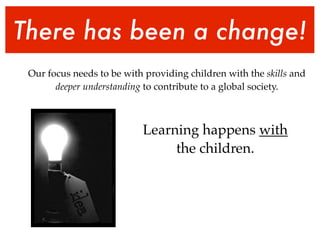
There has been a change!
 Our focus needs to be with providing children with the skills and
       deeper understanding to contribute to a global society.


                           Learning happens with
                                the children.
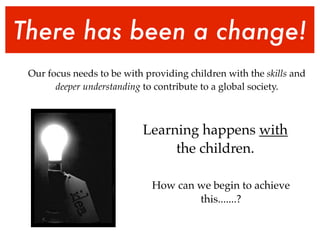
There has been a change!
 Our focus needs to be with providing children with the skills and
       deeper understanding to contribute to a global society.


                           Learning happens with
                                the children.

                              How can we begin to achieve
                                      this.......?
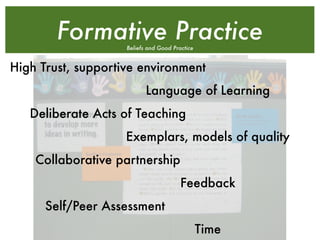
Formative Practice
                    Beliefs and Good Practice


High Trust, supportive environment
                           Language of Learning
   Deliberate Acts of Teaching
                    Exemplars, models of quality
    Collaborative partnership
                                        Feedback
      Self/Peer Assessment
                                                Time
The Learning Process...


Developing a formative culture to achieve success.
Check Point
      Co-constructed

        Discussed

         Clarified

Deliberate Acts of Teaching

        Scaffolded

 Fear of Failure removed

   Owned the process
The Learning Process...


  ...as the car came to a slow halt, my
  eyes fell upon the bizarre house and
     it’s eccentric owner Mr Brown...
Check Point
       Actively Engaged and motivated

An awareness of success - knew what to achieve.

            Optimised writing time

          Success Criteria was visible

                 Self-assessed

                 Peer-assessed

          Feedback and Feedforward
It works!
           Children are more excited and engaged to write.
                 Children ‘own’ the learning process.
 Children are not ‘left in the dark’ as to what they have to achieve.
   Children can monitor their own learning and see where they can
                 improve - self-managing learners.
              Actively encourages Higher Order Thinking
                           and questioning.
Higher achievement and engagement from boys - they know what to do.
                 Benefits for boys also assists the girls.

      Greater support and collaboration amongst the children.

 Slowing the pace of learning has led to improved quality of writing.
Back in Time...
2004: Use of LI and SC to guide writing. Needs based. MOE Exemplars implemented in
the classroom.
2004: Children assessing against SC and showing where they had met the criteria.
2005: Exemplars being sourced from a range of material. Buddy Assessment introduced.
2006: (Feb) Introduction to the children of our school-wide matrix - children
understanding what it meant.

2006: Matrix being used to guide writing, self and buddy assessment.

2006: (Sept.) Major shift - share exemplars for 2-3 weeks. Focus on one ‘text type’ for
the term. Co-construction with students of matrix. Children use ‘their’ matrix to guide
writing. Noticeable difference in children’s writing.
2007 - 2008: Each new term, separate matrix created according to text type focus.
Exemplars shared and analysed for at least 2-3 weeks. Writing programme changed:
Typical session - Exemplars shared, write for 20 minutes, buddy share, class share.
Greater emphasis placed on sharing the writing and providing evidence of how SC has
been met.
Questions?


For todays slides and further reading
   on Formative Assessment, visit:
     http://regano.edublogs.org

Formative Assessment in Writing

  • 1.
    FORMATIVE ASSESSMENT IN WRITING Wanganui Reading Association Regan Orr Thursday 6 May, 2010. 2010
  • 2.
    It was allabout ‘stuff’! • School was a place where we learnt a lot of ‘stuff’ and could regurgitate knowledge. “Today there will be a test on the 20 largest urban areas in NZ”. • There was a lot of emphasis on contexts. “Lets do a unit on Spiders and know all the body parts”.
  • 3.
    It was allabout ‘stuff’! Education happened to the children.
  • 4.
    There has beena change! Our focus needs to be with providing children with the skills and deeper understanding to contribute to a global society.
  • 5.
    There has beena change! Our focus needs to be with providing children with the skills and deeper understanding to contribute to a global society. Learning happens with the children.
  • 6.
    There has beena change! Our focus needs to be with providing children with the skills and deeper understanding to contribute to a global society. Learning happens with the children. How can we begin to achieve this.......?
  • 7.
    Formative Practice Beliefs and Good Practice High Trust, supportive environment Language of Learning Deliberate Acts of Teaching Exemplars, models of quality Collaborative partnership Feedback Self/Peer Assessment Time
  • 8.
    The Learning Process... Developinga formative culture to achieve success.
  • 9.
    Check Point Co-constructed Discussed Clarified Deliberate Acts of Teaching Scaffolded Fear of Failure removed Owned the process
  • 10.
    The Learning Process... ...as the car came to a slow halt, my eyes fell upon the bizarre house and it’s eccentric owner Mr Brown...
  • 11.
    Check Point Actively Engaged and motivated An awareness of success - knew what to achieve. Optimised writing time Success Criteria was visible Self-assessed Peer-assessed Feedback and Feedforward
  • 12.
    It works! Children are more excited and engaged to write. Children ‘own’ the learning process. Children are not ‘left in the dark’ as to what they have to achieve. Children can monitor their own learning and see where they can improve - self-managing learners. Actively encourages Higher Order Thinking and questioning. Higher achievement and engagement from boys - they know what to do. Benefits for boys also assists the girls. Greater support and collaboration amongst the children. Slowing the pace of learning has led to improved quality of writing.
  • 13.
    Back in Time... 2004:Use of LI and SC to guide writing. Needs based. MOE Exemplars implemented in the classroom. 2004: Children assessing against SC and showing where they had met the criteria. 2005: Exemplars being sourced from a range of material. Buddy Assessment introduced. 2006: (Feb) Introduction to the children of our school-wide matrix - children understanding what it meant. 2006: Matrix being used to guide writing, self and buddy assessment. 2006: (Sept.) Major shift - share exemplars for 2-3 weeks. Focus on one ‘text type’ for the term. Co-construction with students of matrix. Children use ‘their’ matrix to guide writing. Noticeable difference in children’s writing. 2007 - 2008: Each new term, separate matrix created according to text type focus. Exemplars shared and analysed for at least 2-3 weeks. Writing programme changed: Typical session - Exemplars shared, write for 20 minutes, buddy share, class share. Greater emphasis placed on sharing the writing and providing evidence of how SC has been met.
  • 14.
    Questions? For todays slidesand further reading on Formative Assessment, visit: http://regano.edublogs.org