
Teaching in Virtual Worlds Karen Brooks
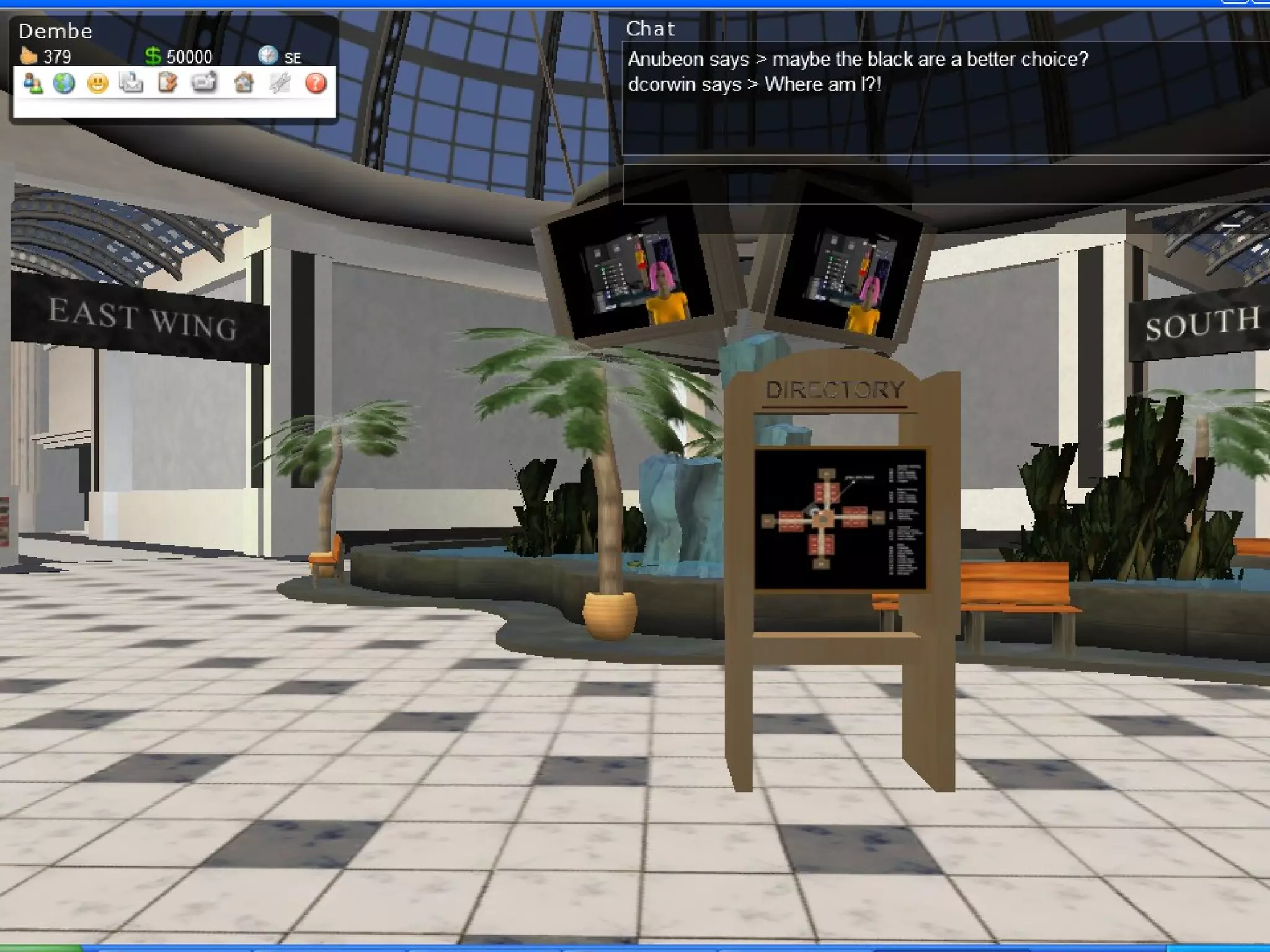
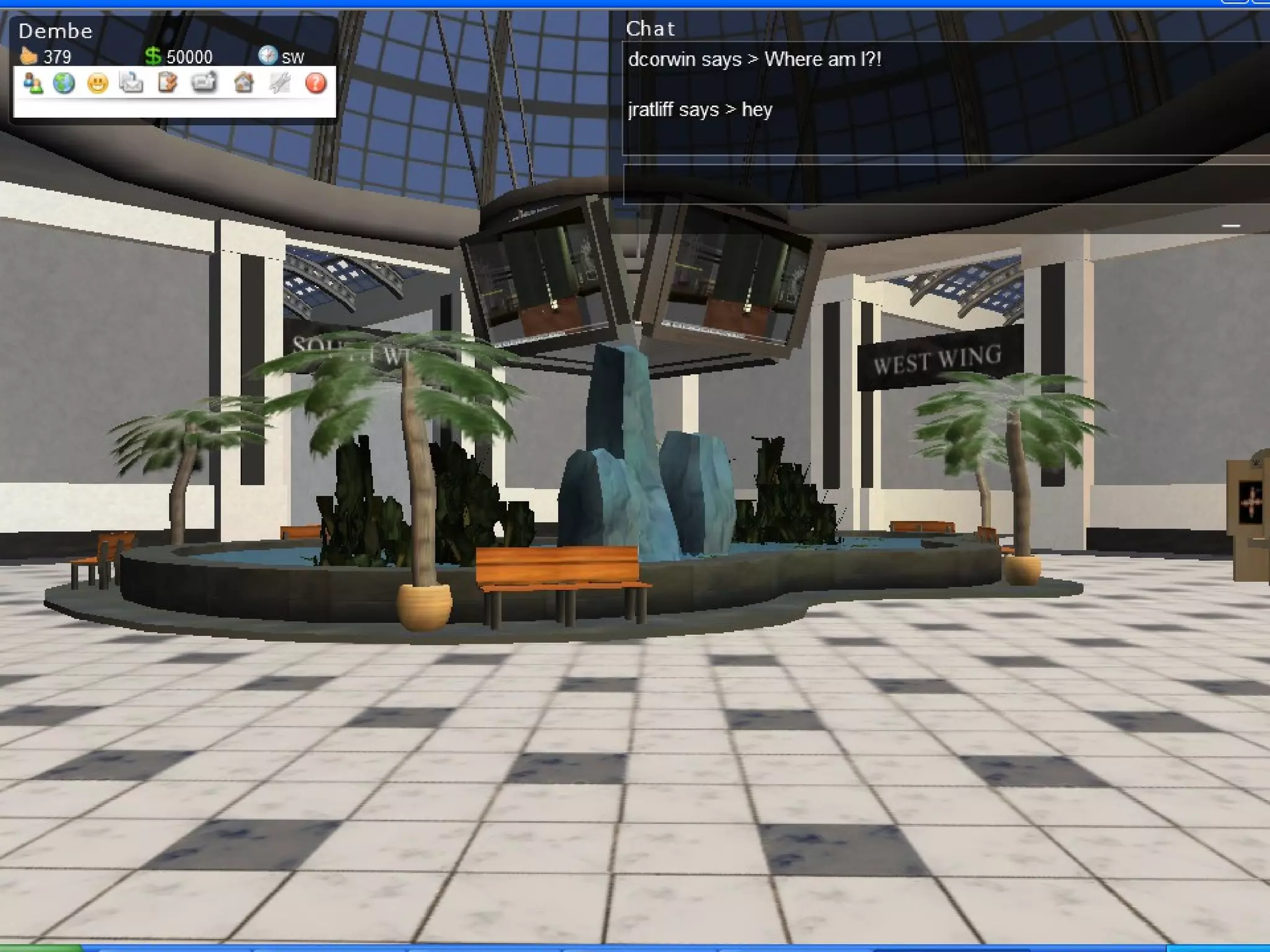
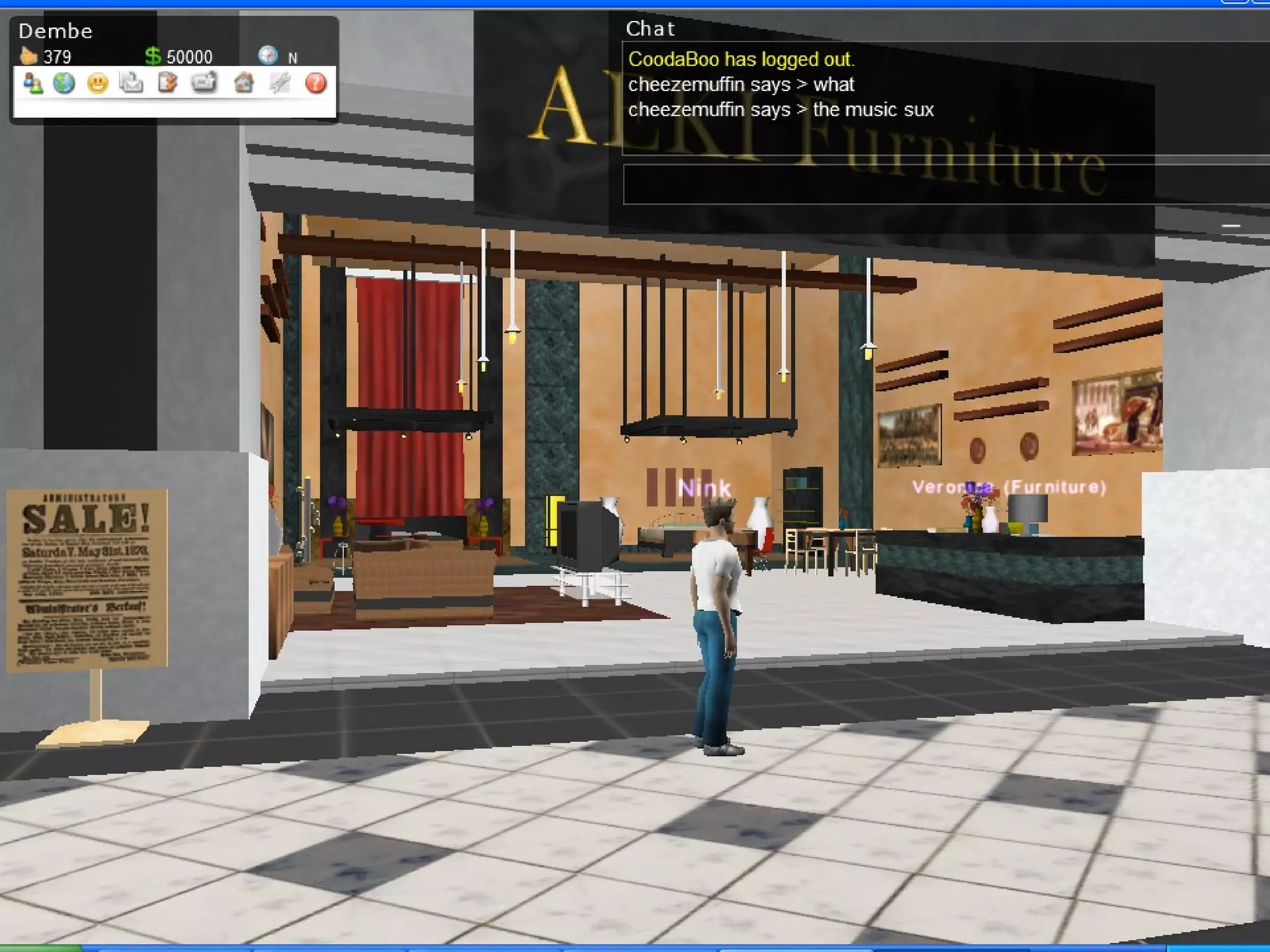
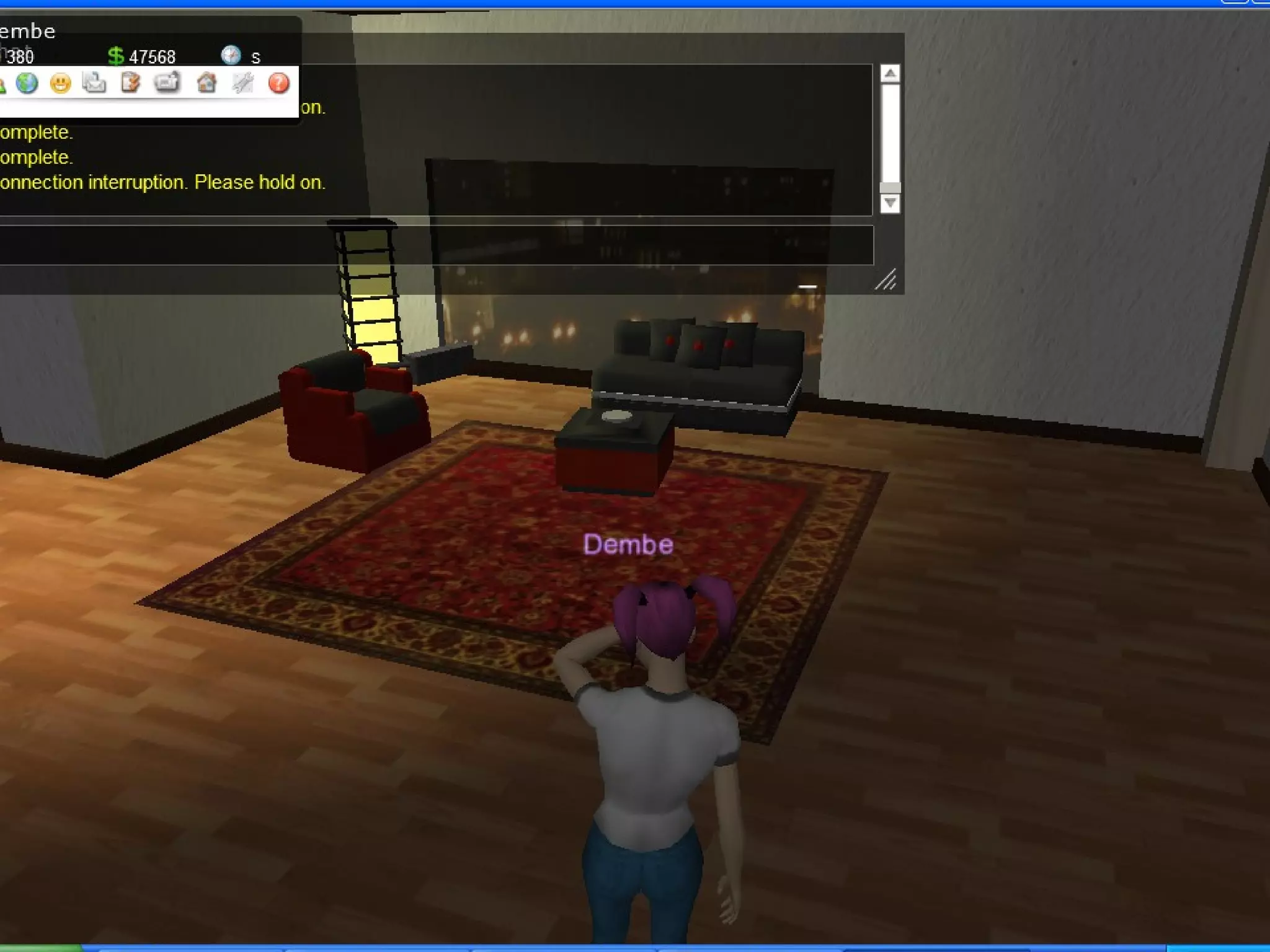
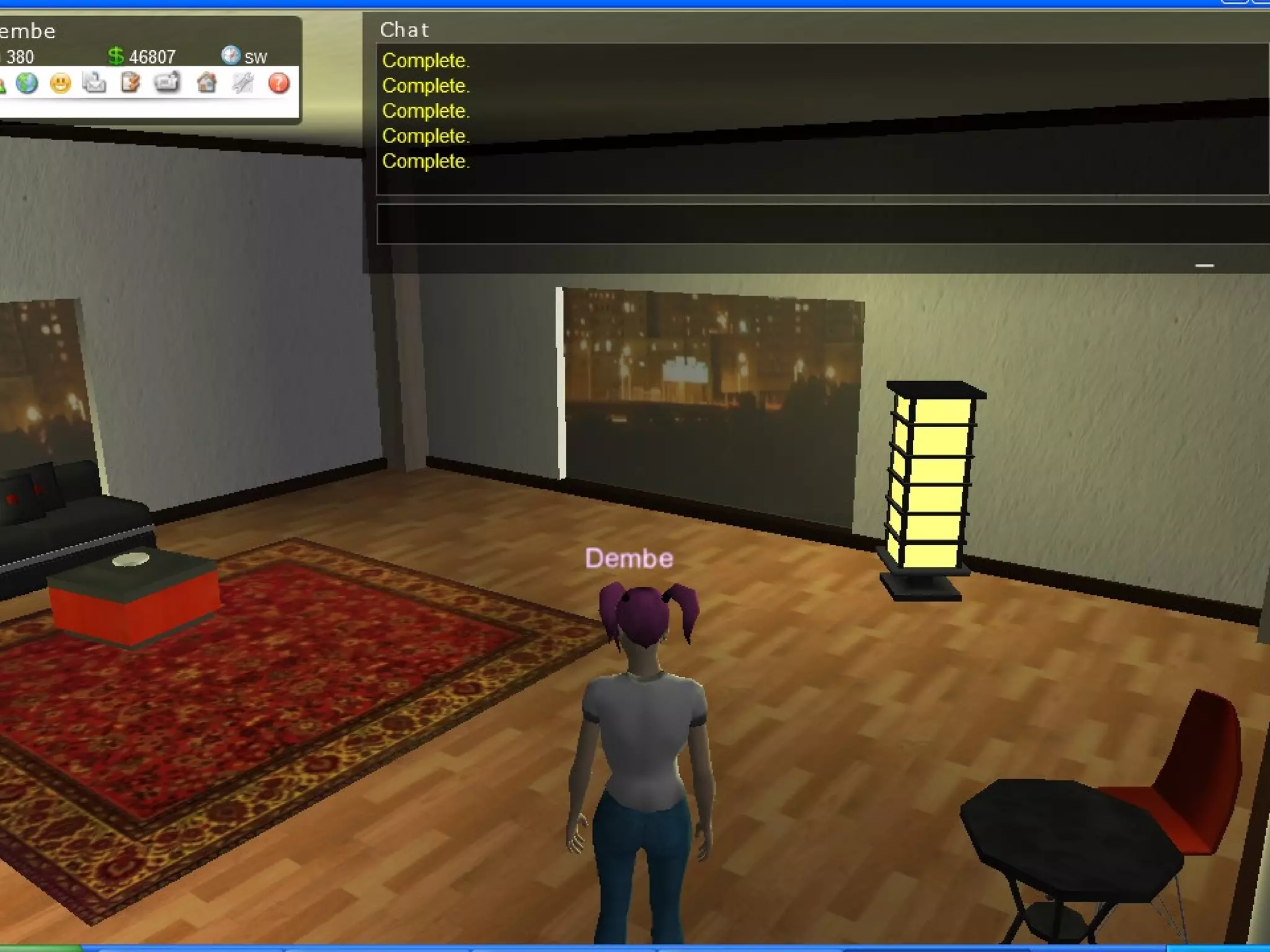
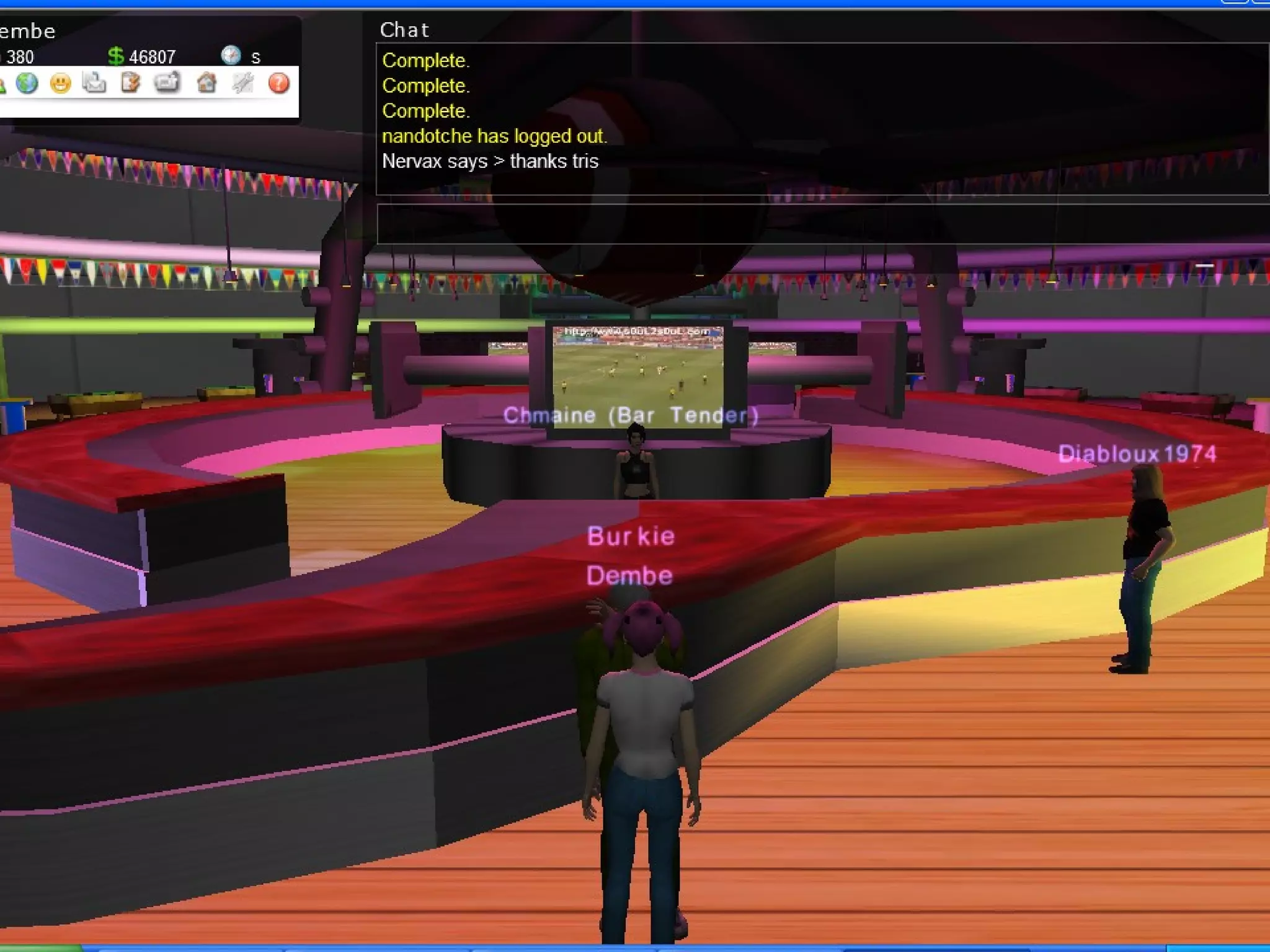
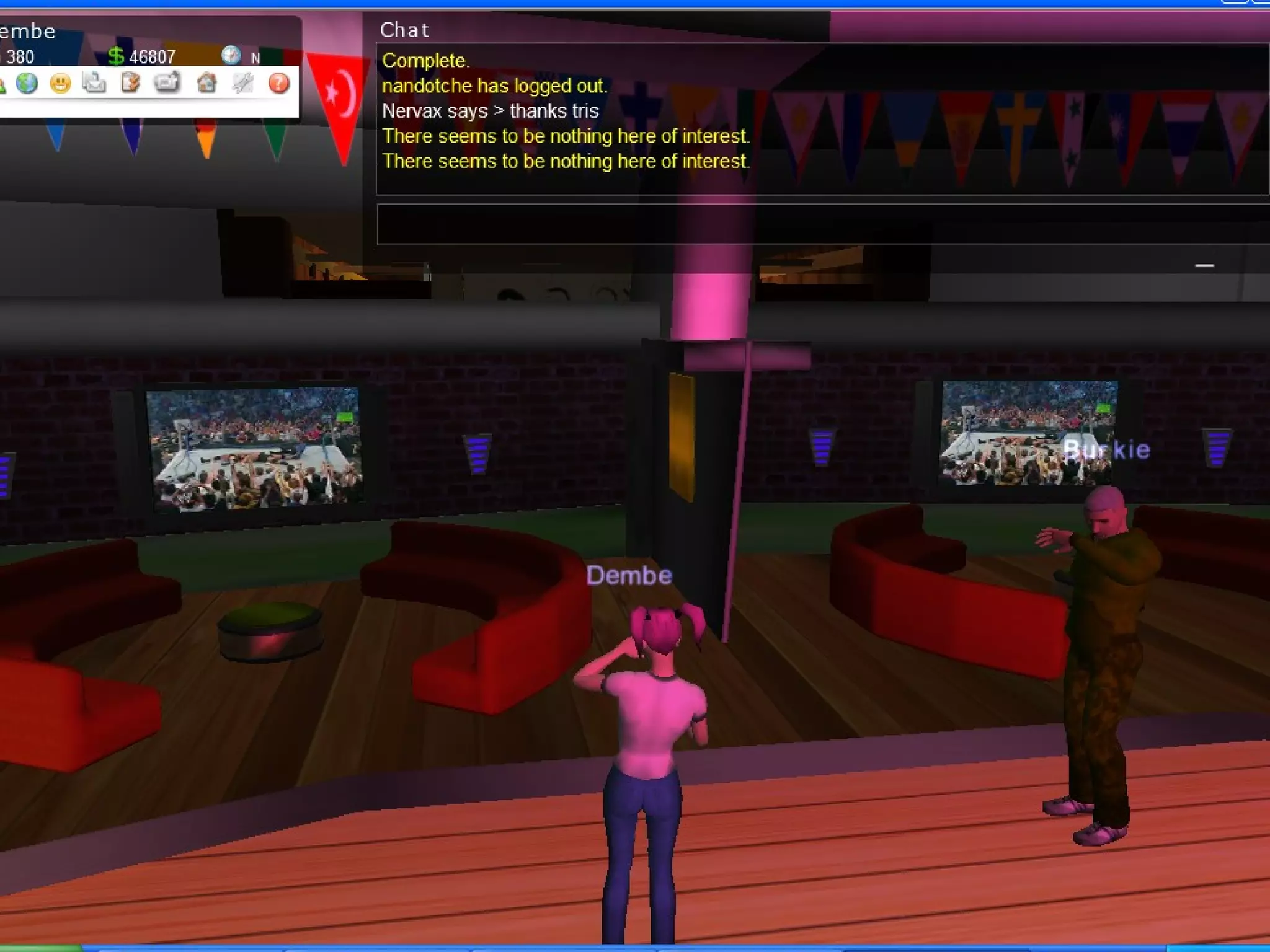
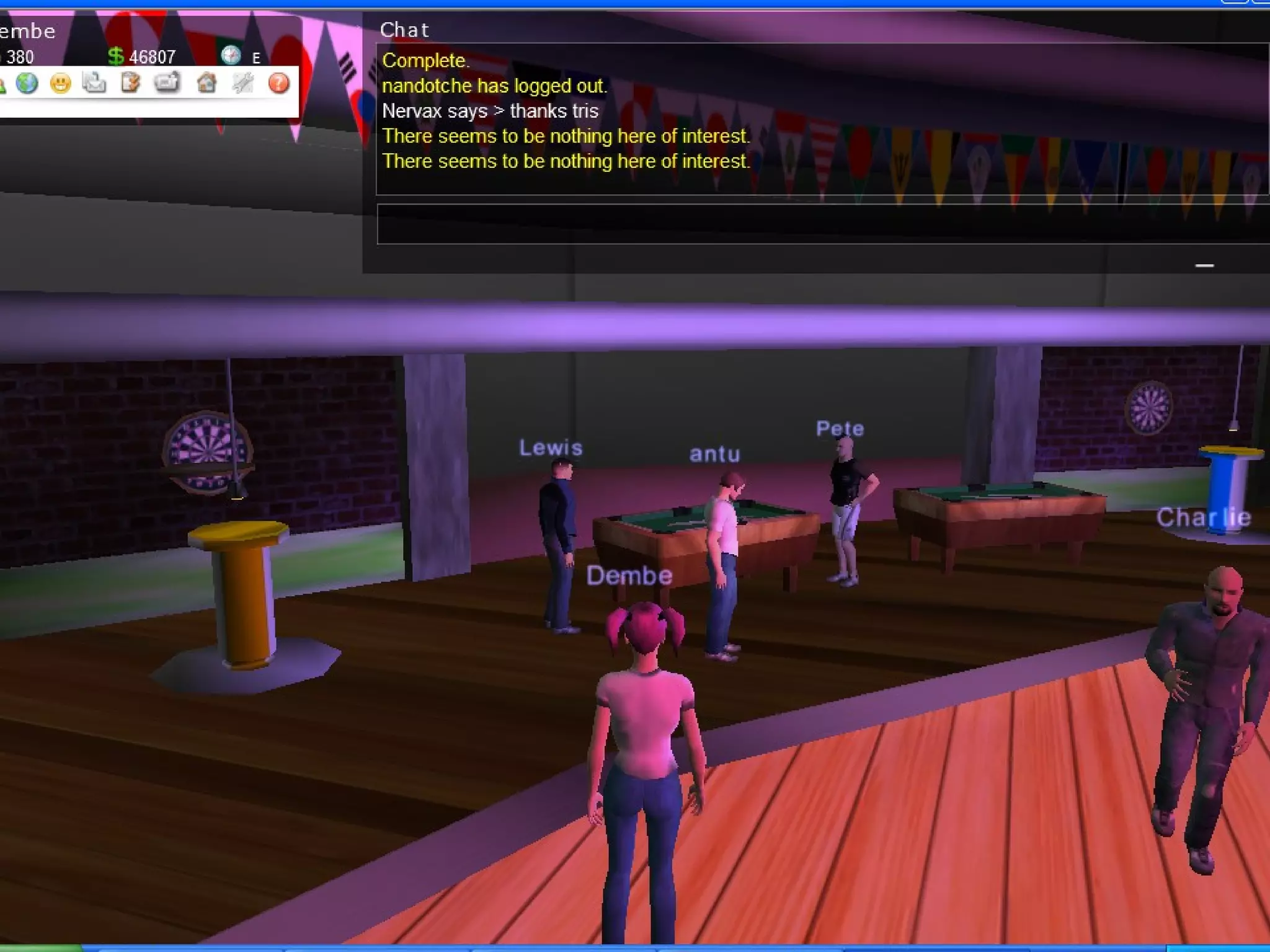
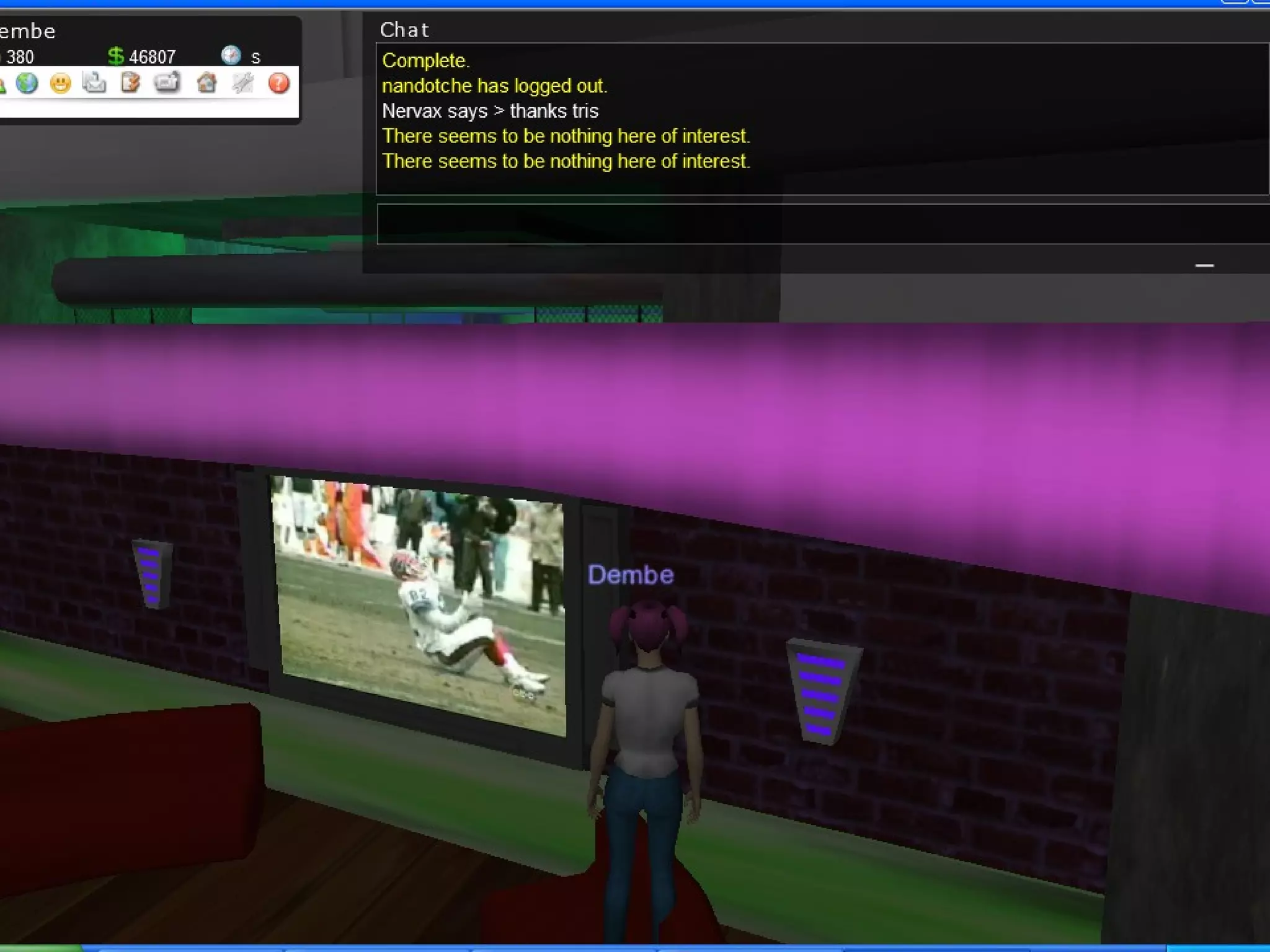
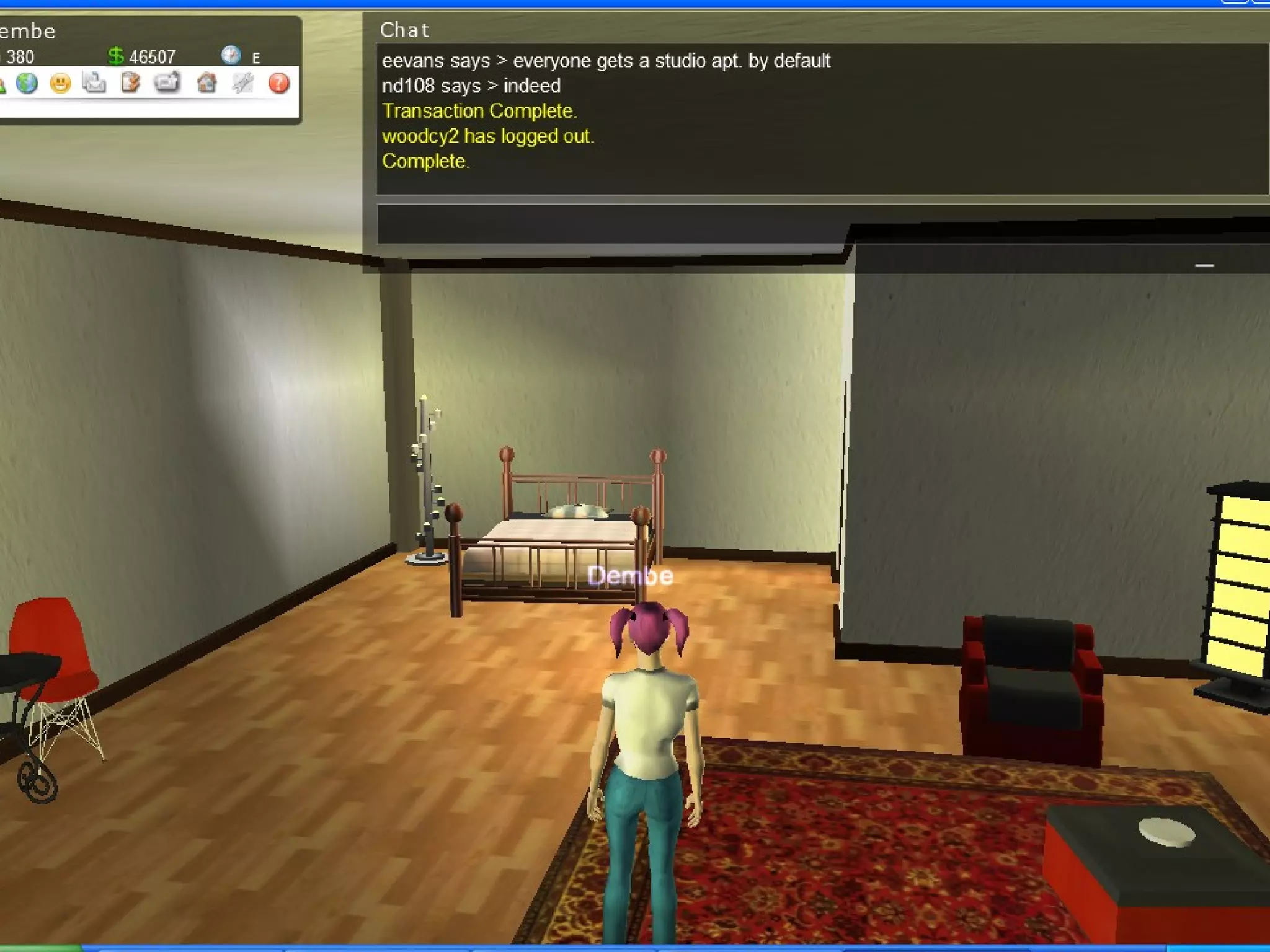
What is a Virtual World? MUVE  (plural MUVEs) refers to online, multi-user virtual environments, sometimes called virtual worlds. an extension of our real world that exists only online. A virtual world is a computer-based simulated environment intended for its users to inhabit and interact via avatars.
 
Game Based Learning Theory   http://serc.carleton.edu/introgeo/games/   Game based learning (GBL) is a branch of serious games that deals with applications that have defined learning outcomes. It uses simulation and MUVEs as the teaching tool. GBL uses competitive exercises, either pitting the students against each other or getting them to challenge themselves in order to motivate them to learn better. Games often have a fantasy element that engages players in a learning activity through a storyline. In order to create a truly educational game, the instructor needs to make sure that learning the material is essential to scoring and winning.
Why use GBL? Motivates students to learn  Immerses them in the material so they learn more effectively  Encourages them to learn from their mistakes It uses environments they consider fun and are currently using.
 
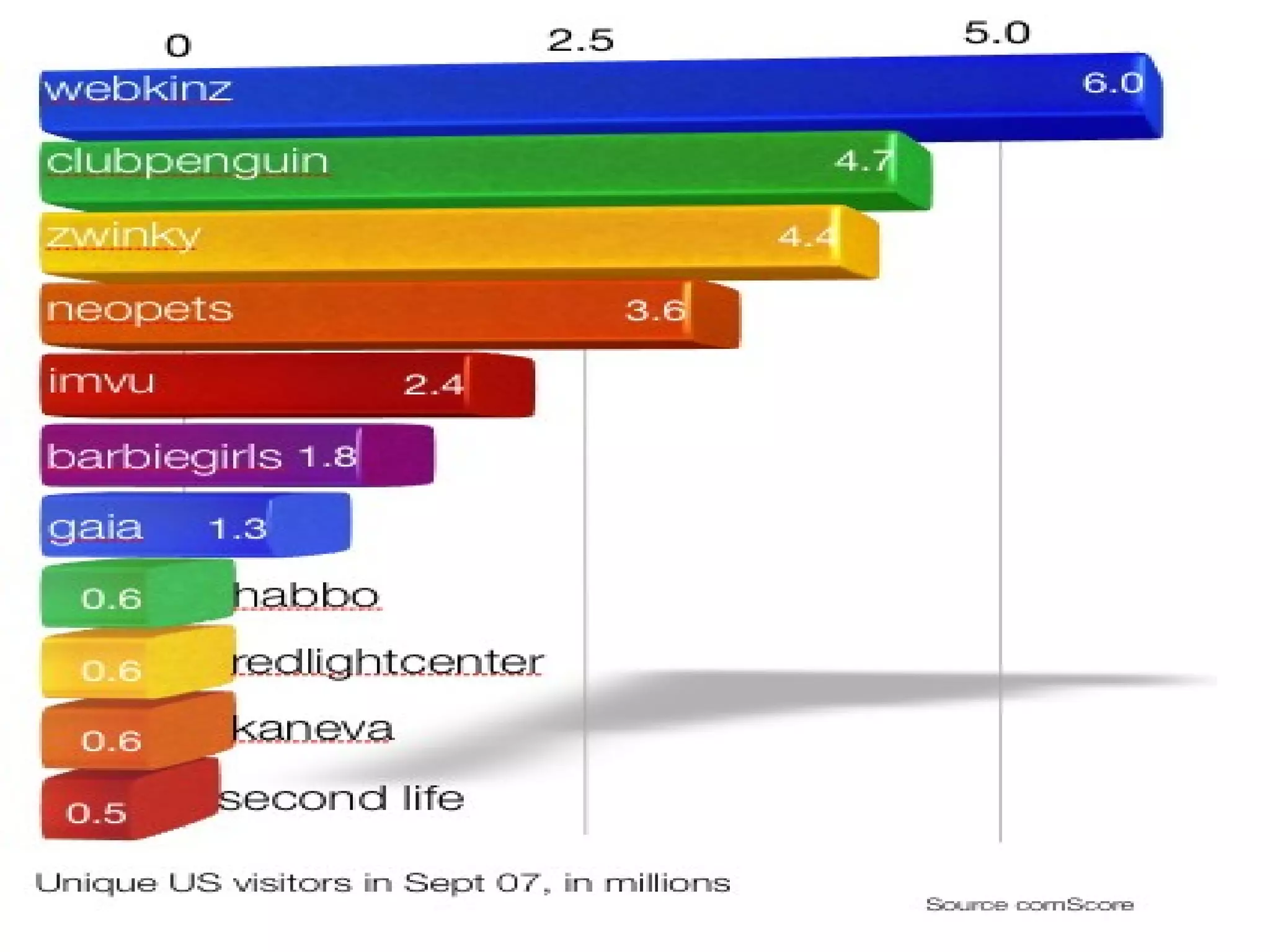
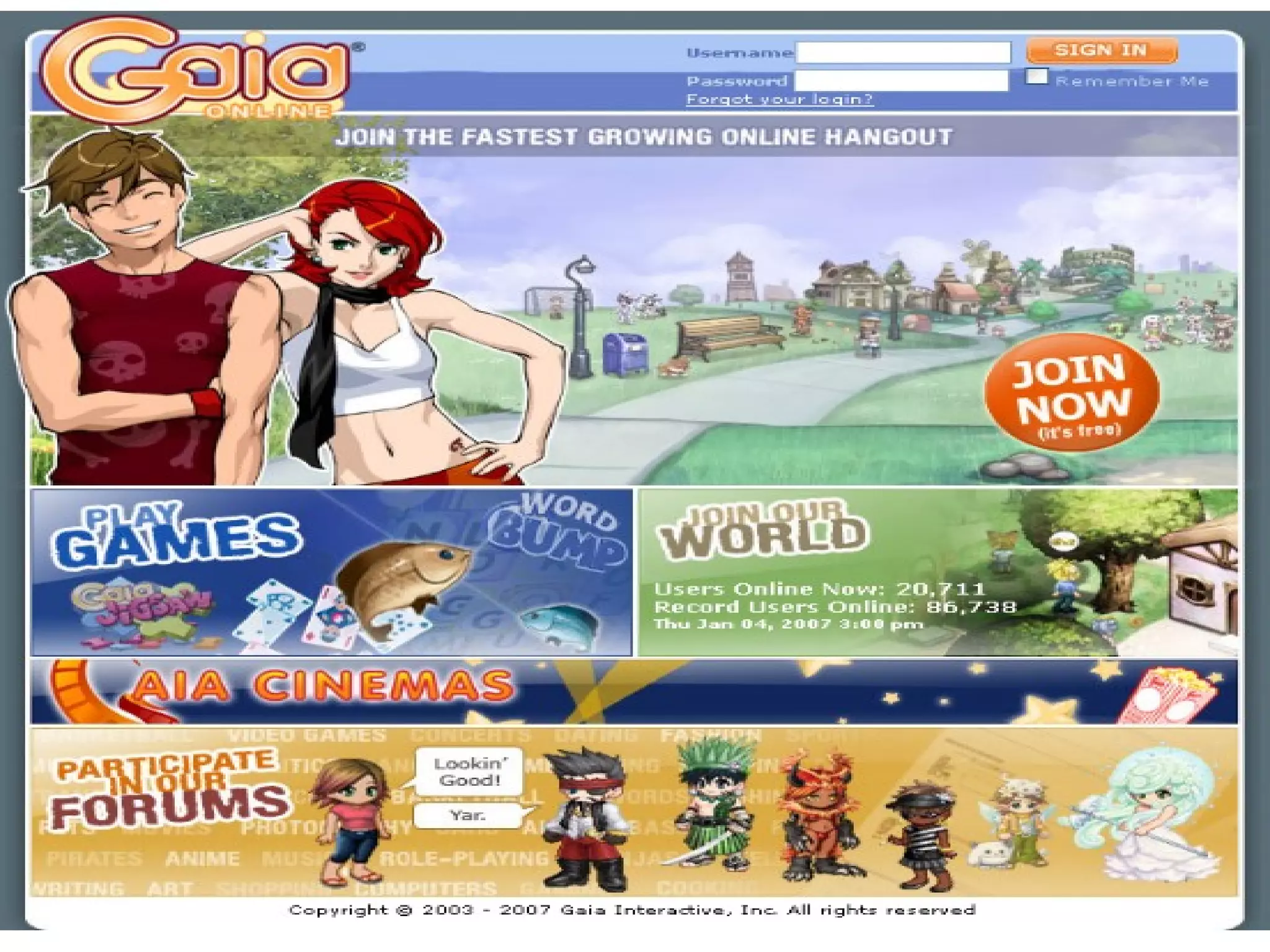
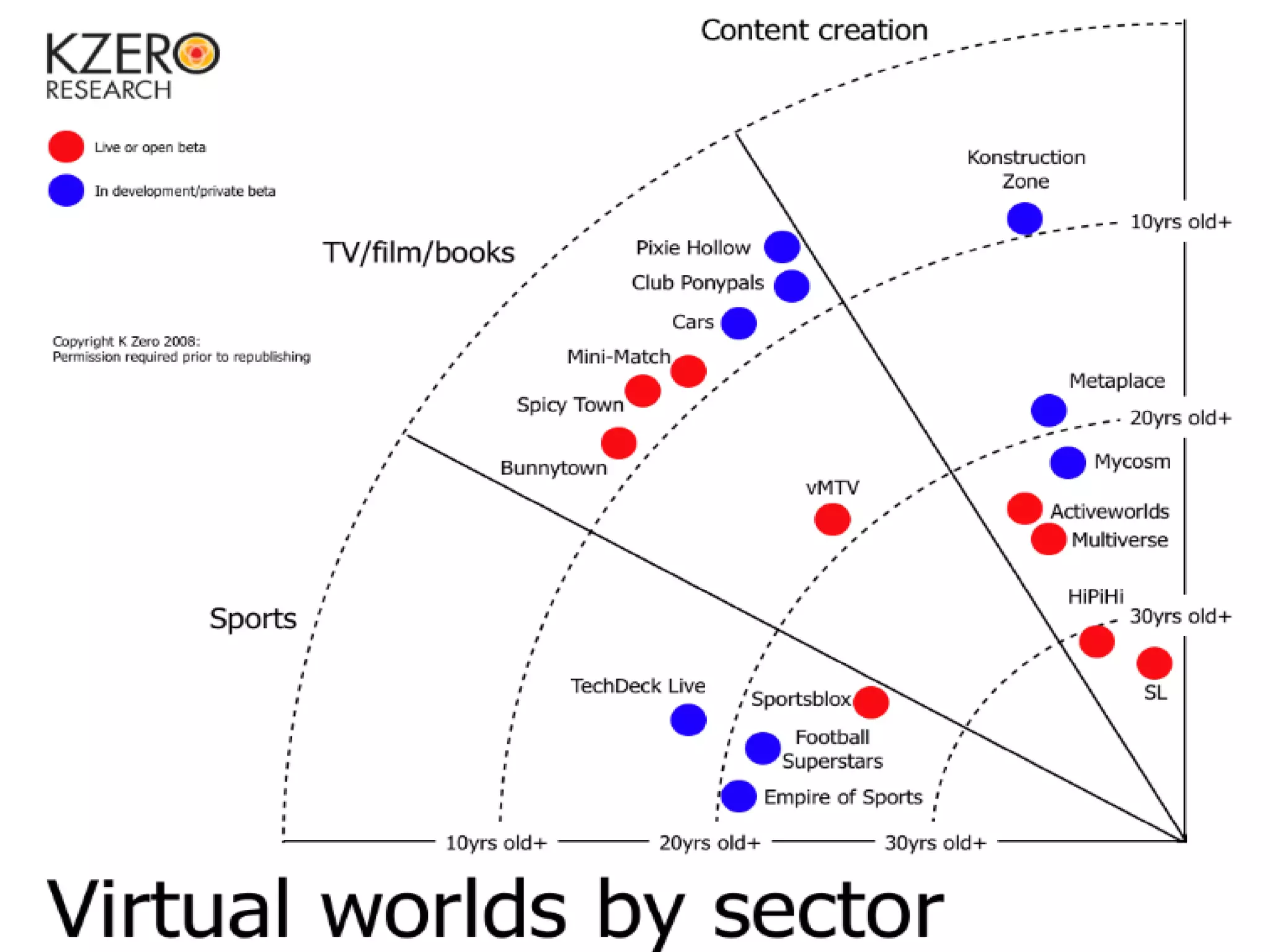
Trends in Virtual Worlds Increase in 5-15 year olds who use Virtual Worlds in 2009 Increase in girls using Virtual Worlds in 2009 An explosion of Virtual Worlds on the Internet in 2008 Teen-focused virtual worlds are huge.
How Are Kids Currently Using Virtual Worlds?
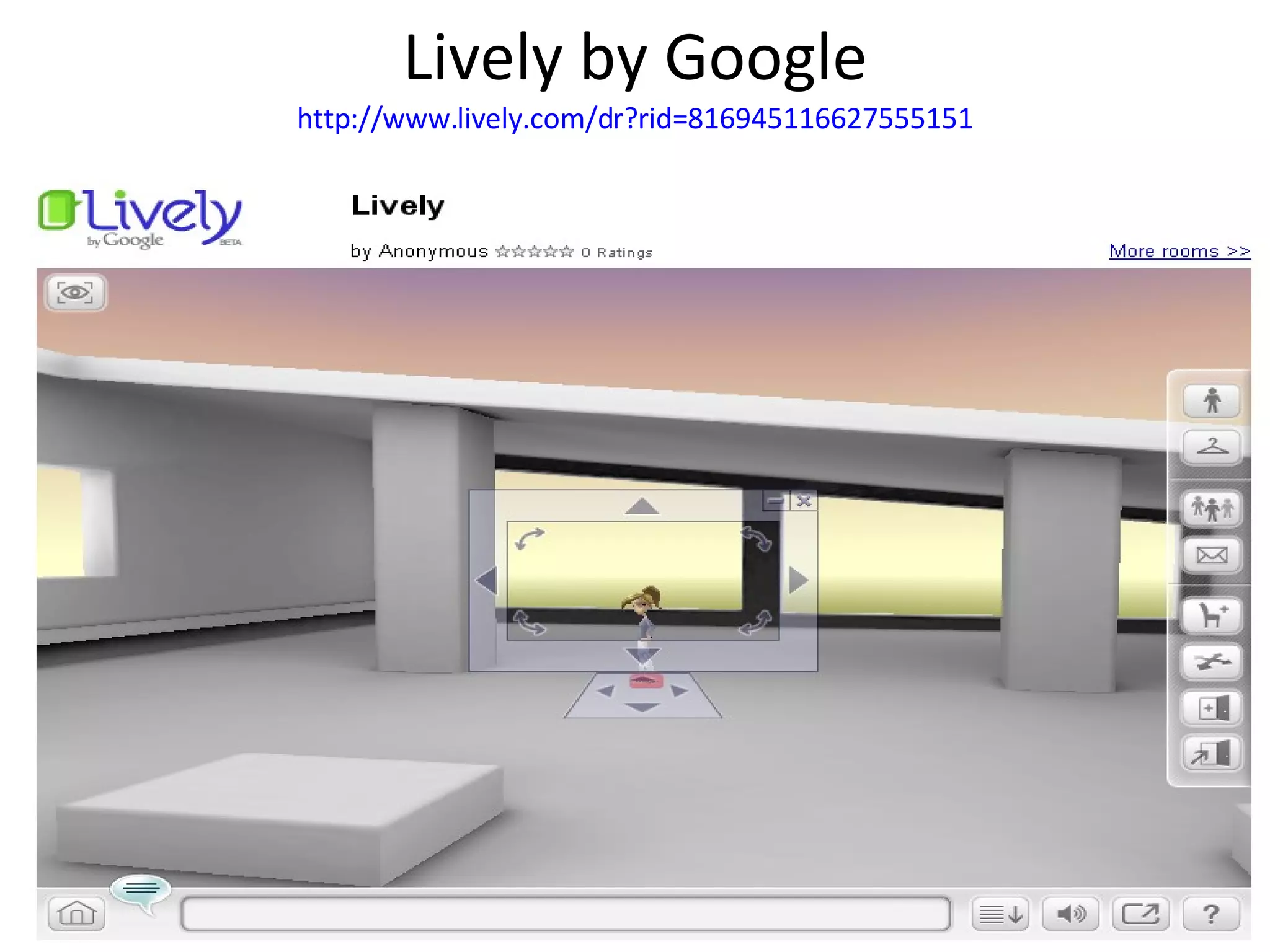
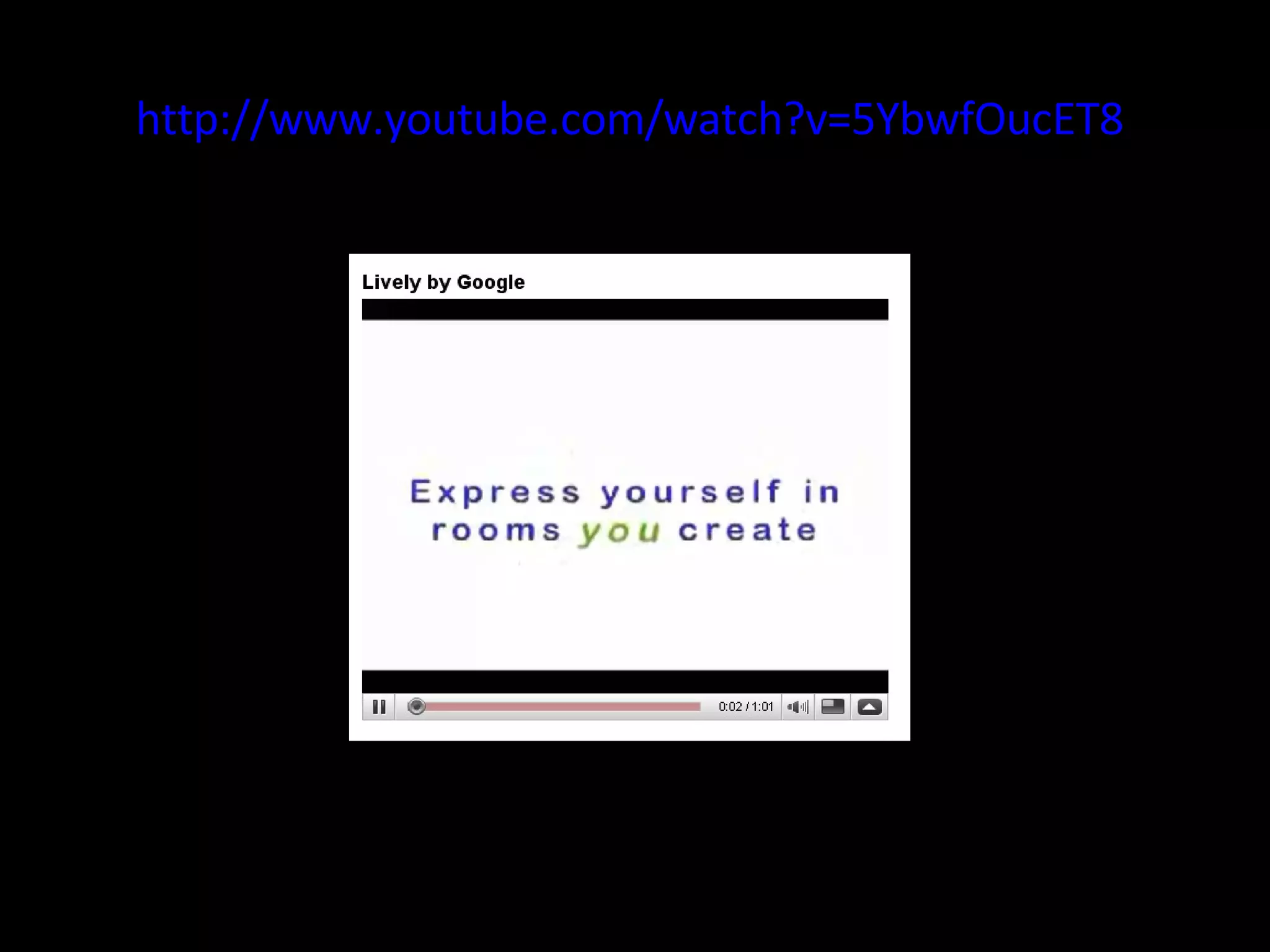
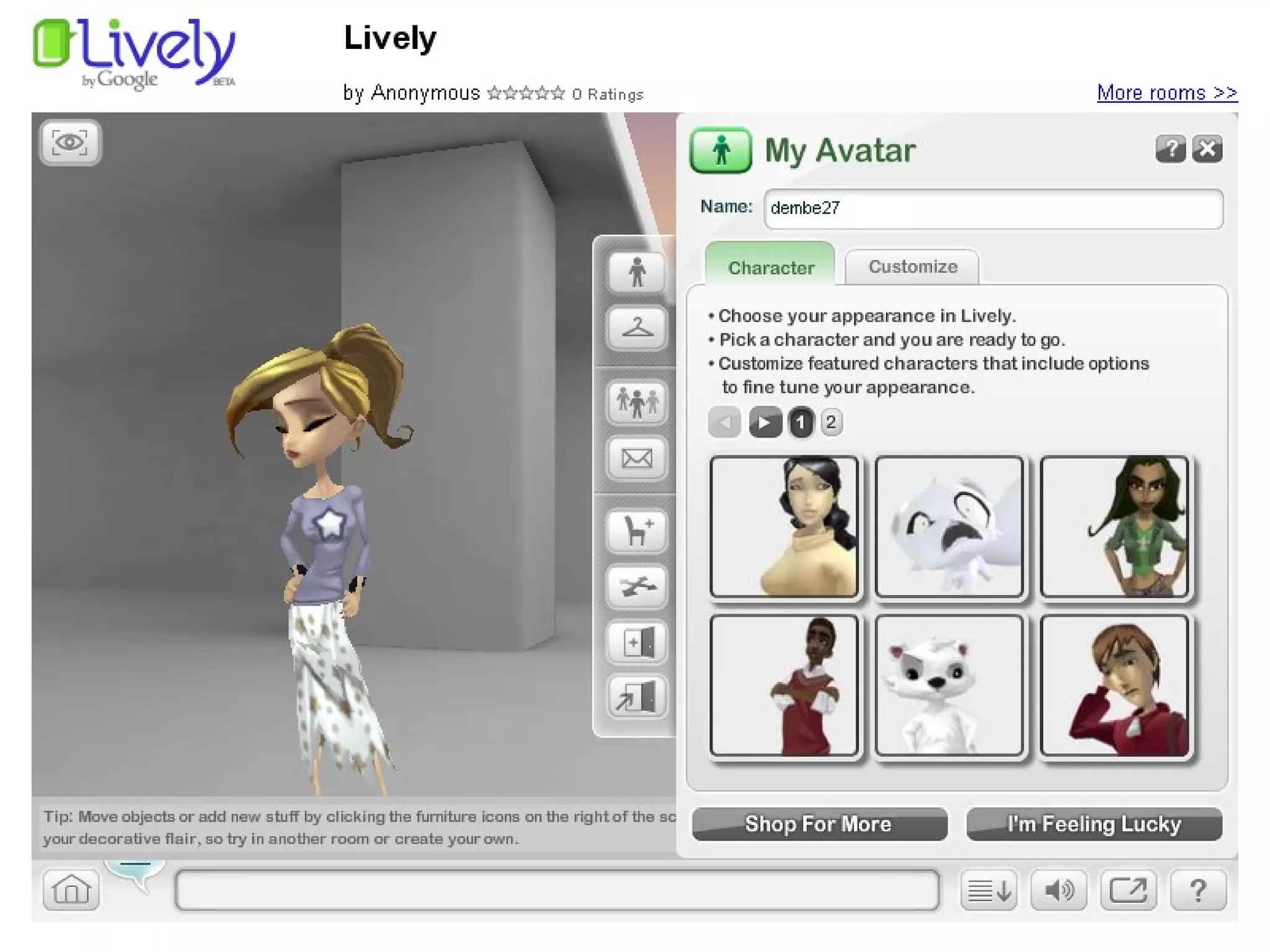
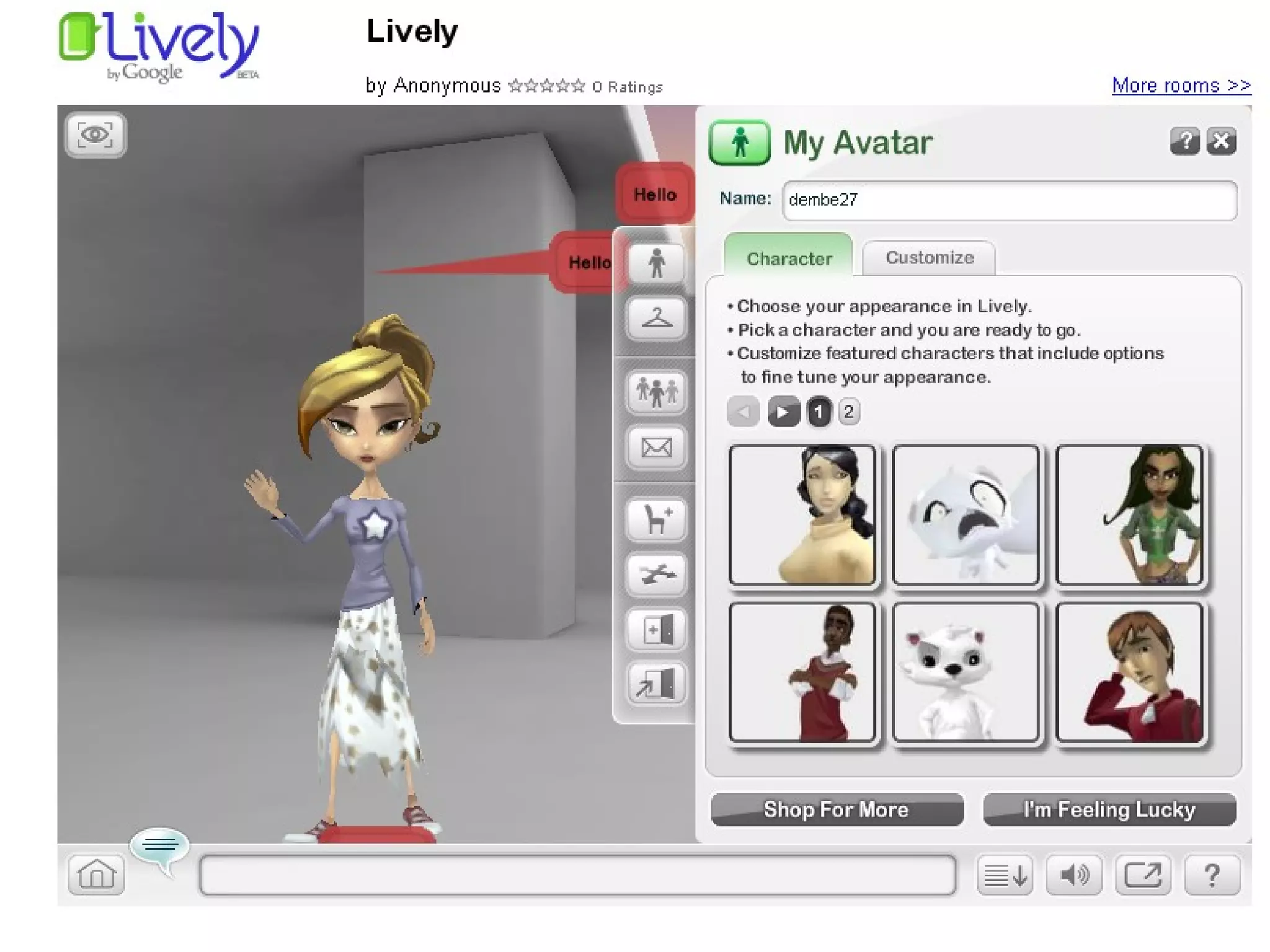
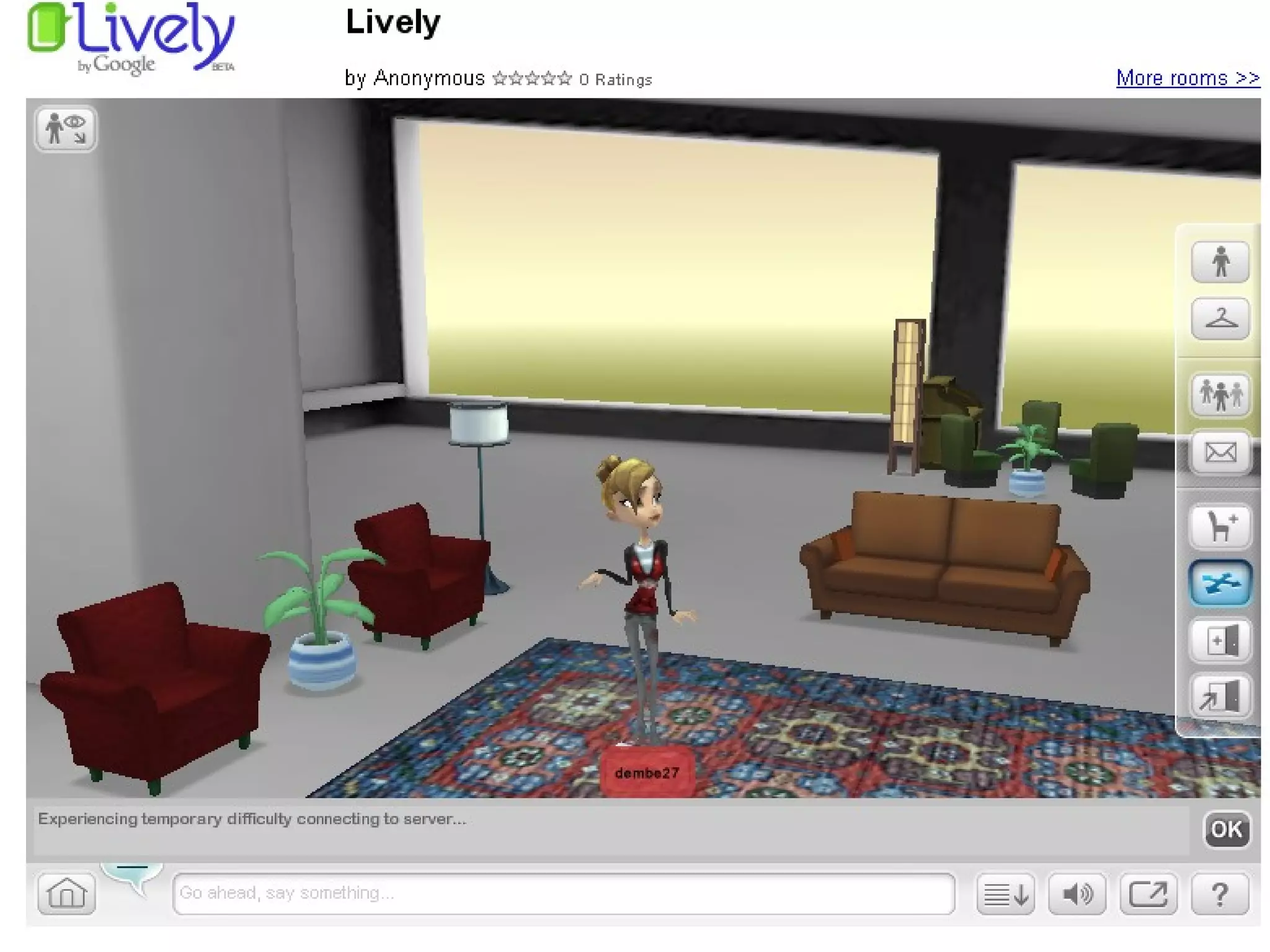
Lively by Google http://www.lively.com/dr?rid=816945116627555151
http://www.youtube.com/watch?v=5YbwfOucET8


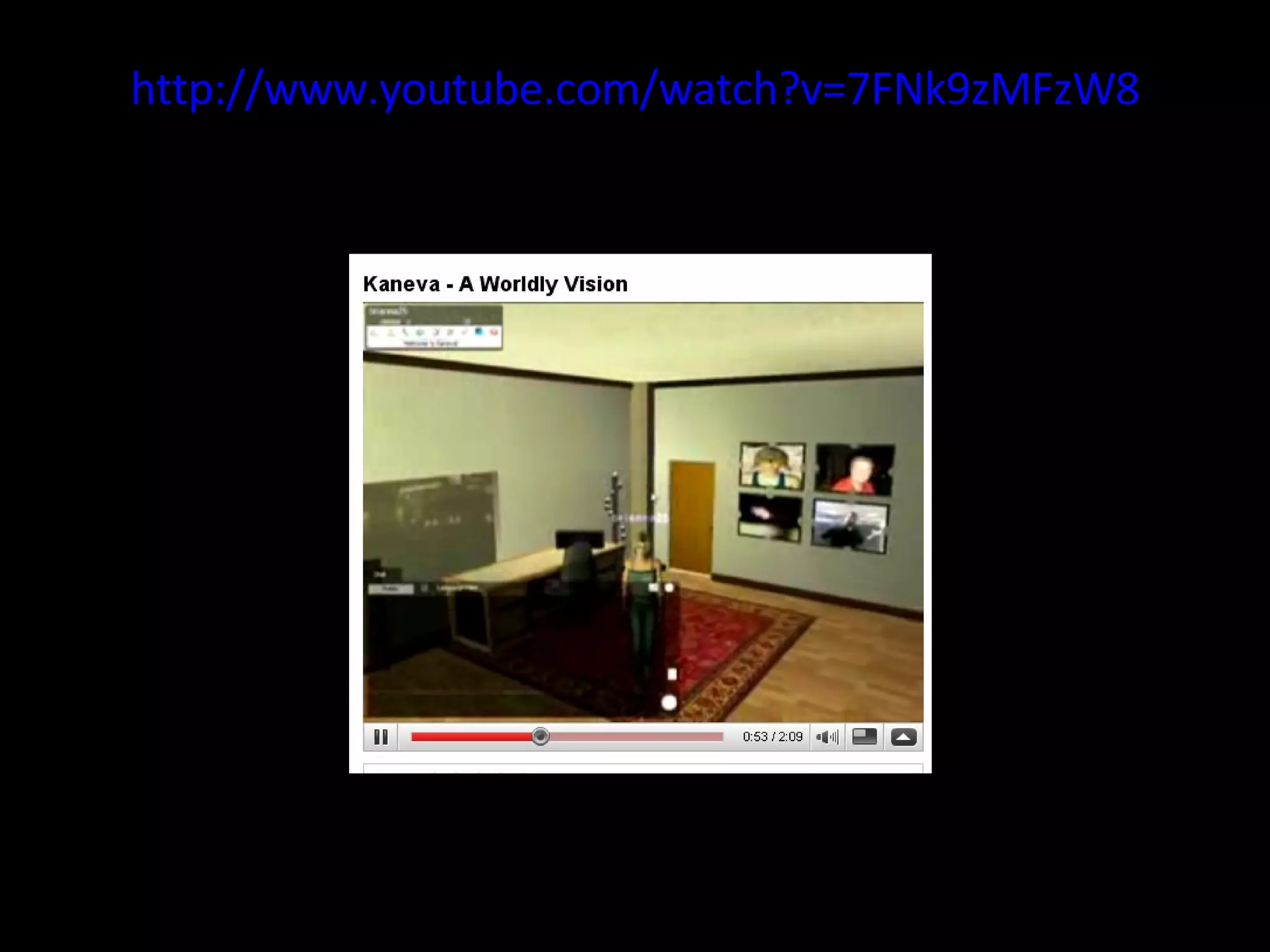
http://www.youtube.com/watch?v=7FNk9zMFzW8


So How Can They Be Educational?
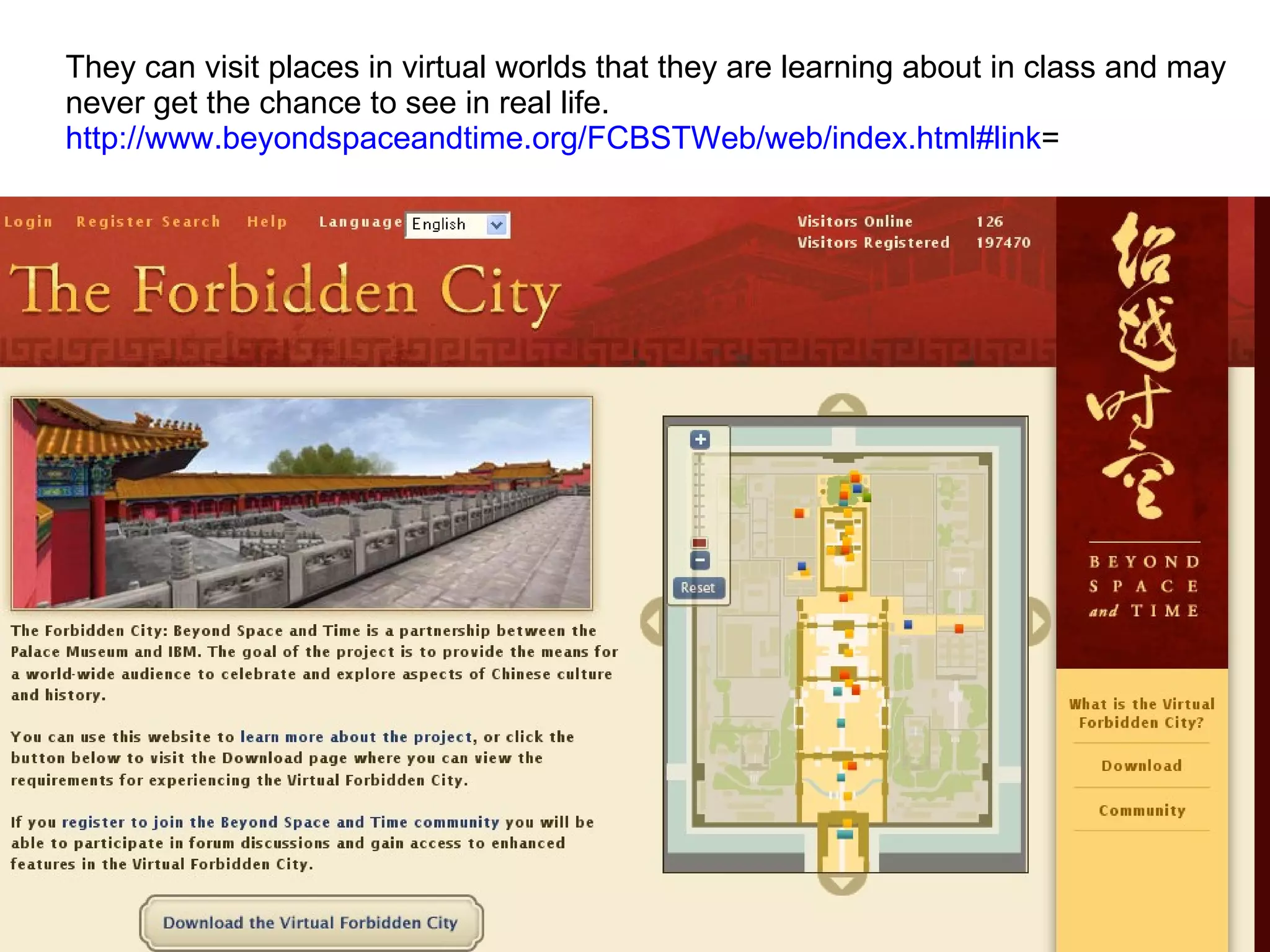
They can visit places in virtual worlds that they are learning about in class and may  never get the chance to see in real life. http://www.beyondspaceandtime.org/FCBSTWeb/web/index.html#link =
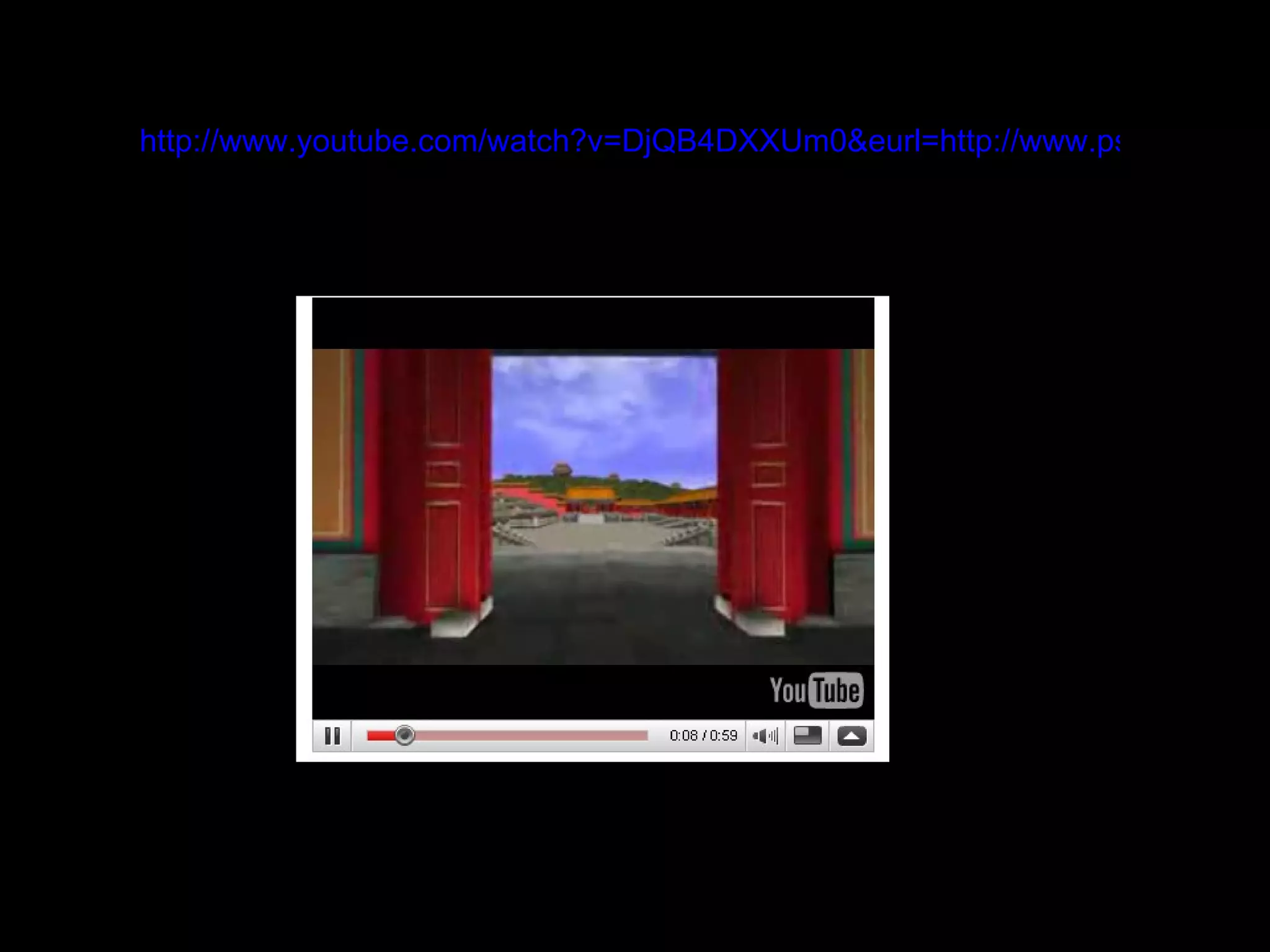
http://www.youtube.com/watch?v=DjQB4DXXUm0&eurl=http://www.psfk.com/2008/10/visit-beijings-forbidden-city-via-virtual-world.html
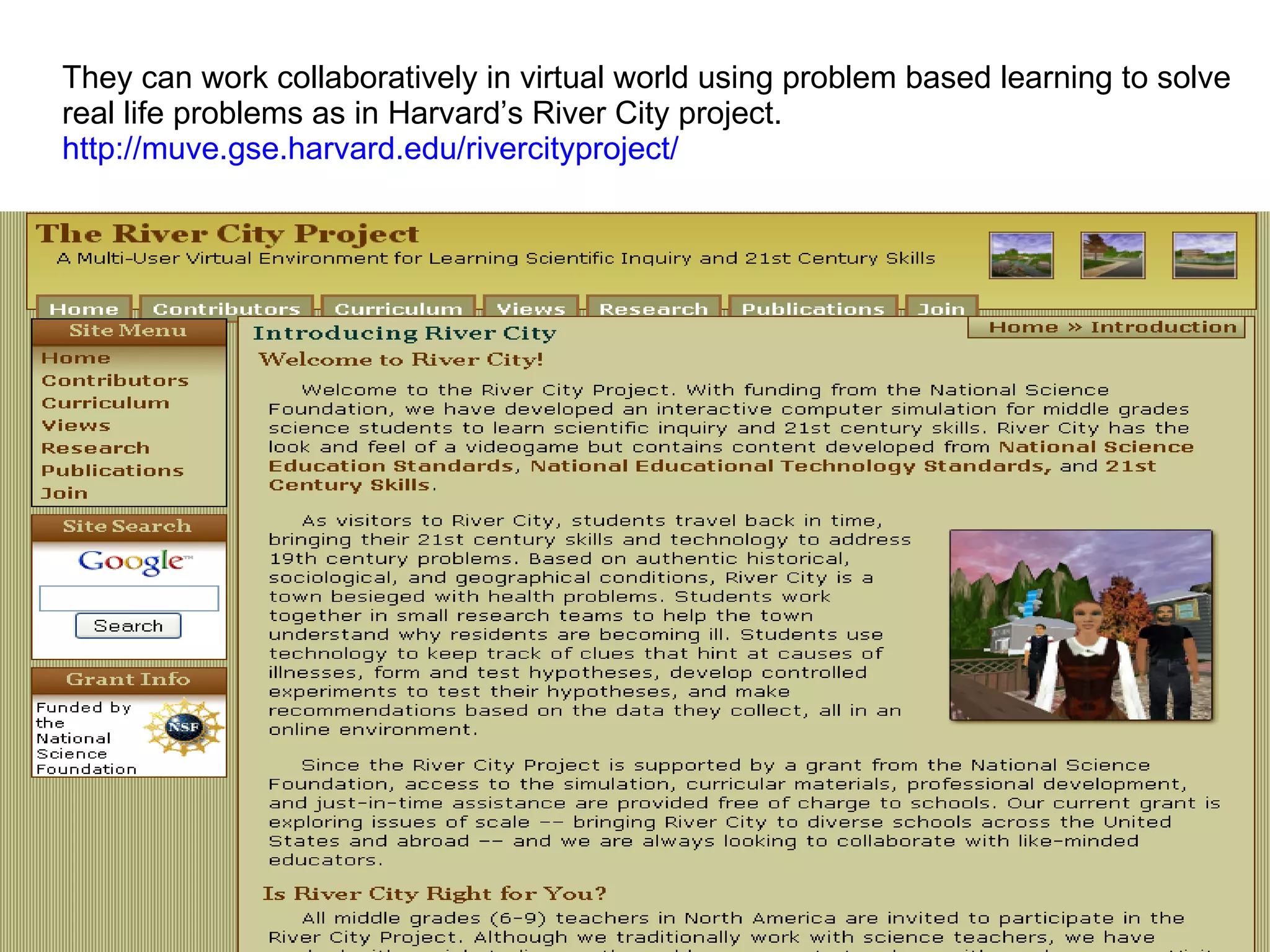
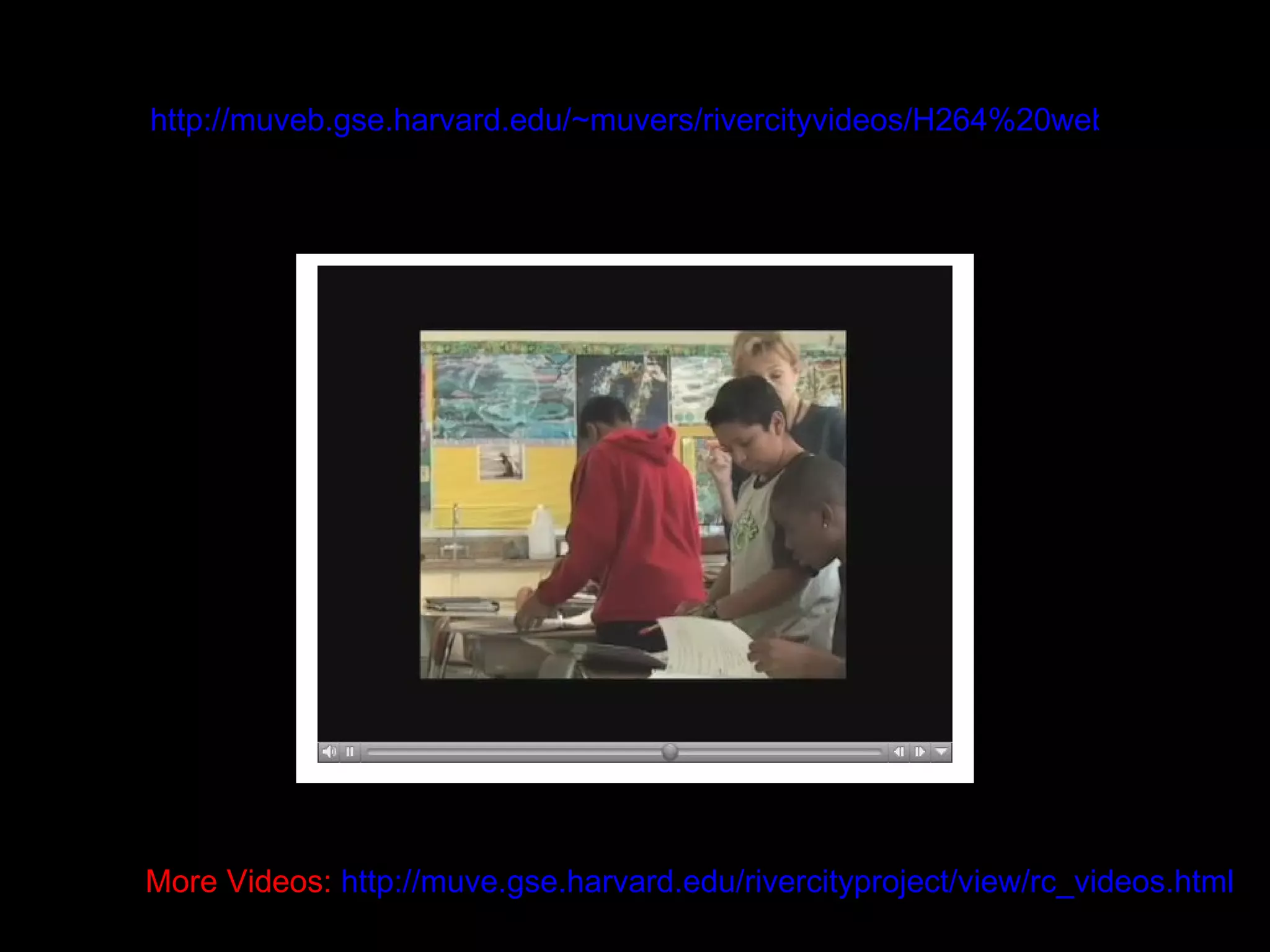
They can work collaboratively in virtual world using problem based learning to solve  real life problems as in Harvard’s River City project. http://muve.gse.harvard.edu/rivercityproject/
http://muveb.gse.harvard.edu/~muvers/rivercityvideos/H264%20web/RC%20Project-pro-RC%20Full%20Sequence.mov More Videos:  http://muve.gse.harvard.edu/rivercityproject/view/rc_videos.html
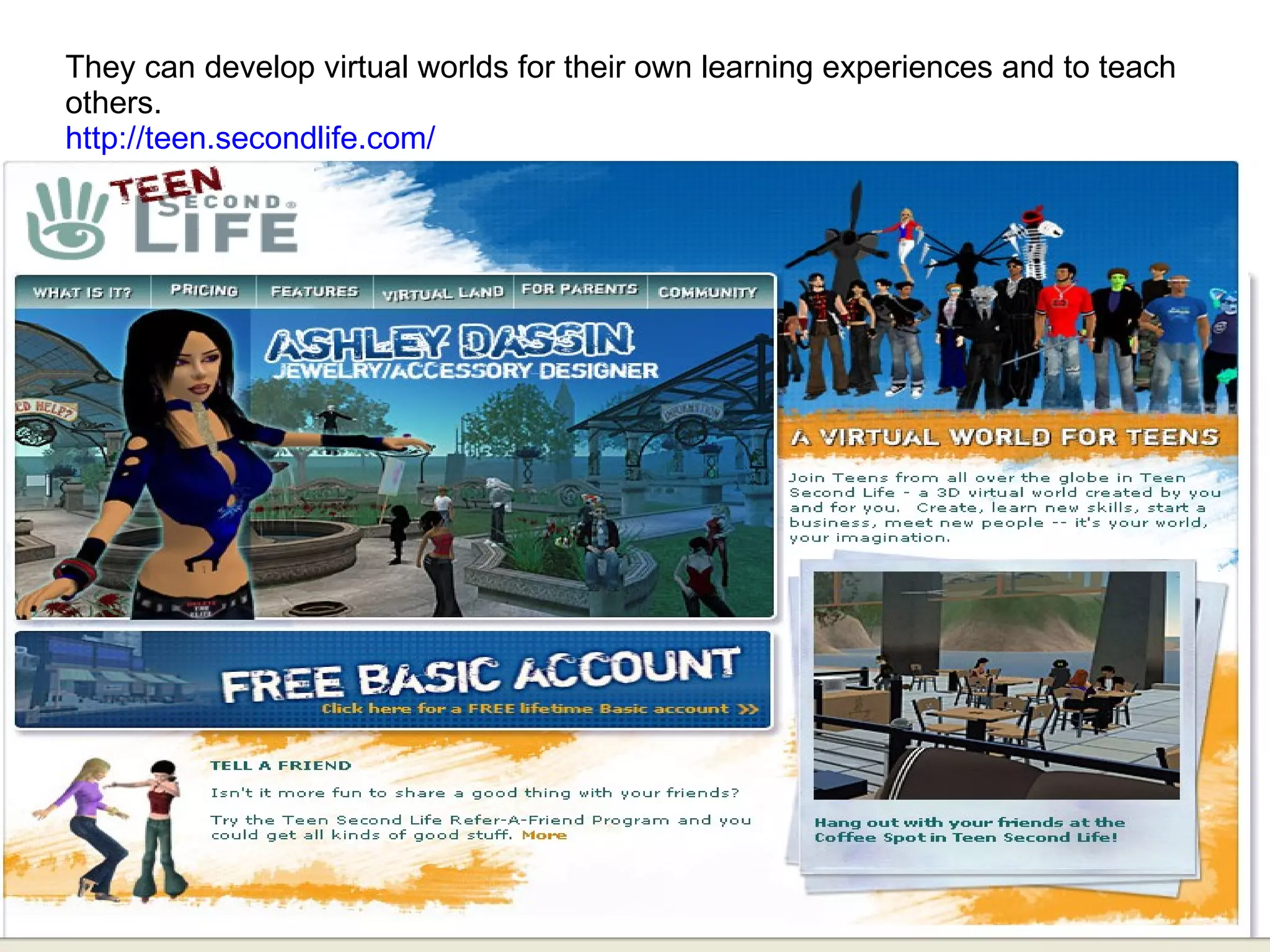
They can develop virtual worlds for their own learning experiences and to teach others. http://teen.secondlife.com/
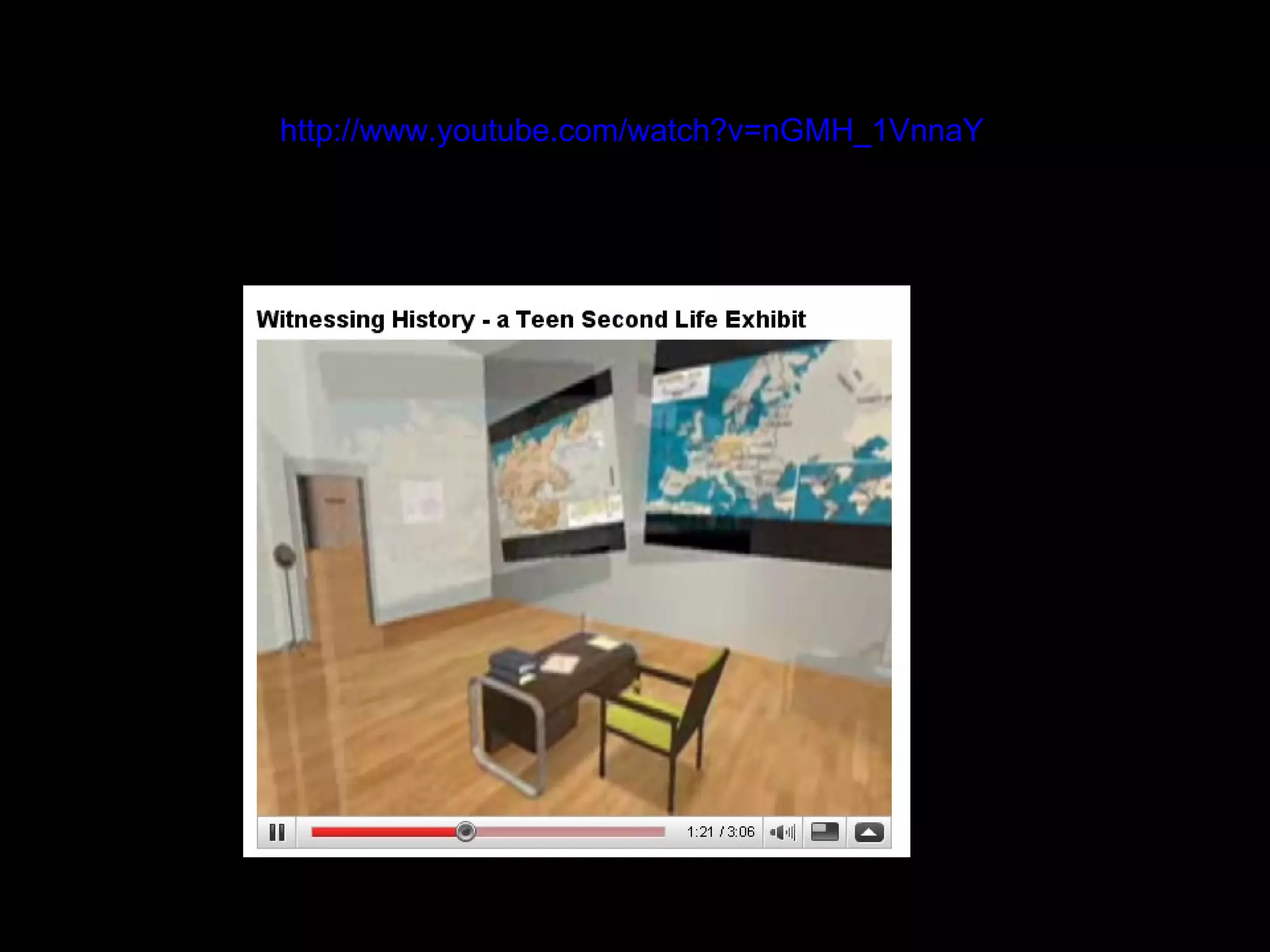
http://www.youtube.com/watch?v=nGMH_1VnnaY
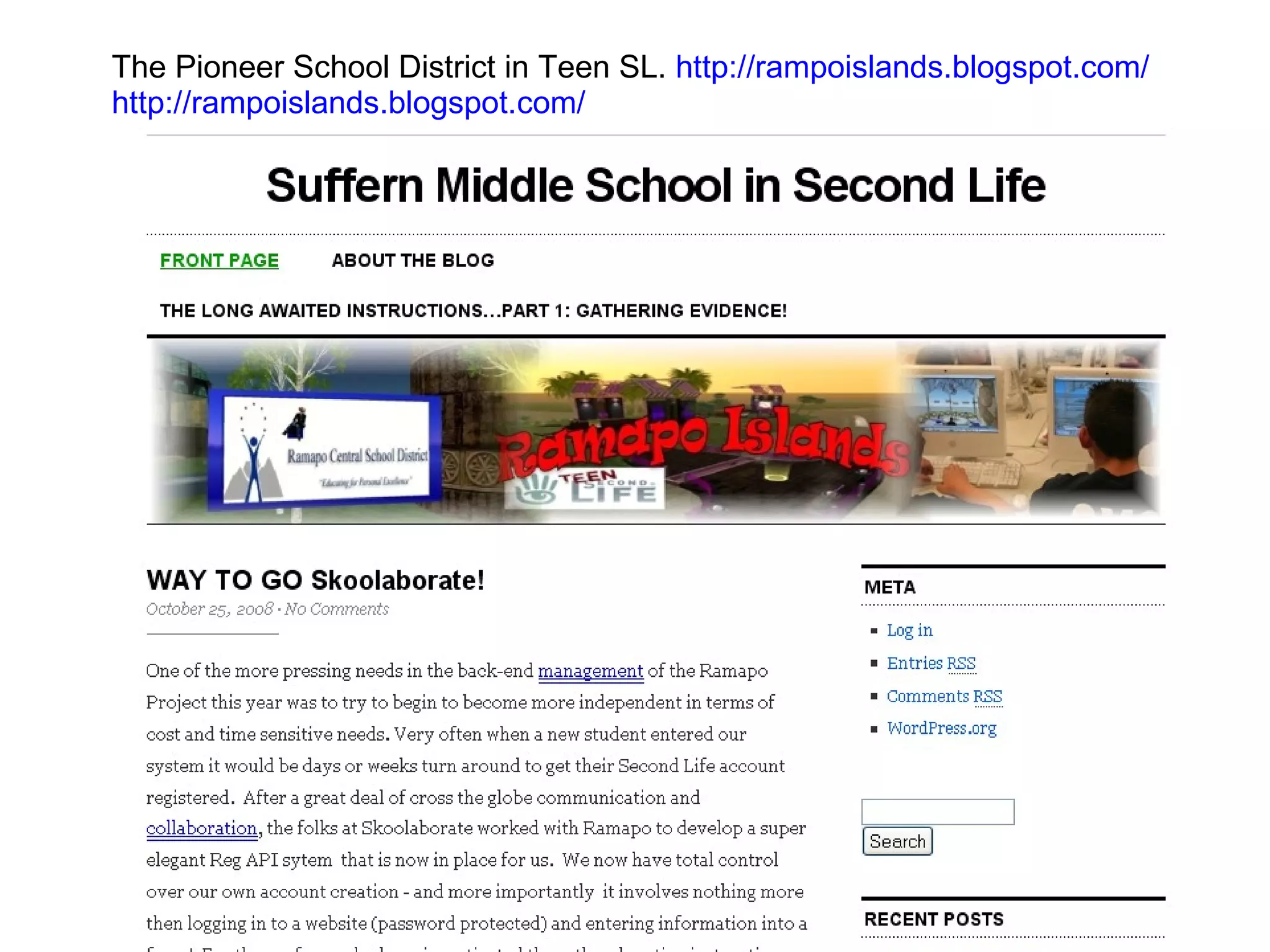
The Pioneer School District in Teen SL.  http://rampoislands.blogspot.com/ http://rampoislands.blogspot.com/
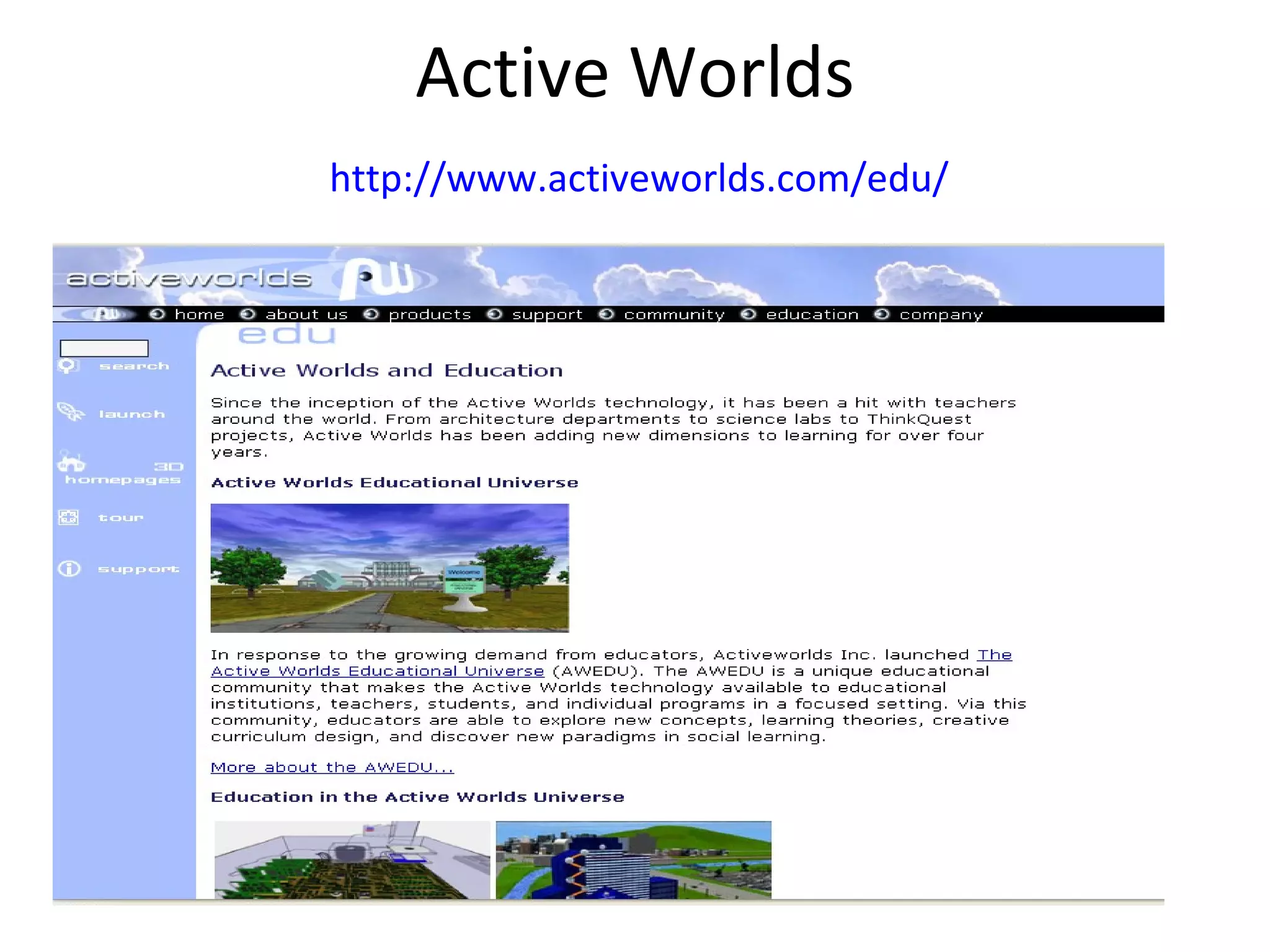
Active Worlds   http://www.activeworlds.com/edu/
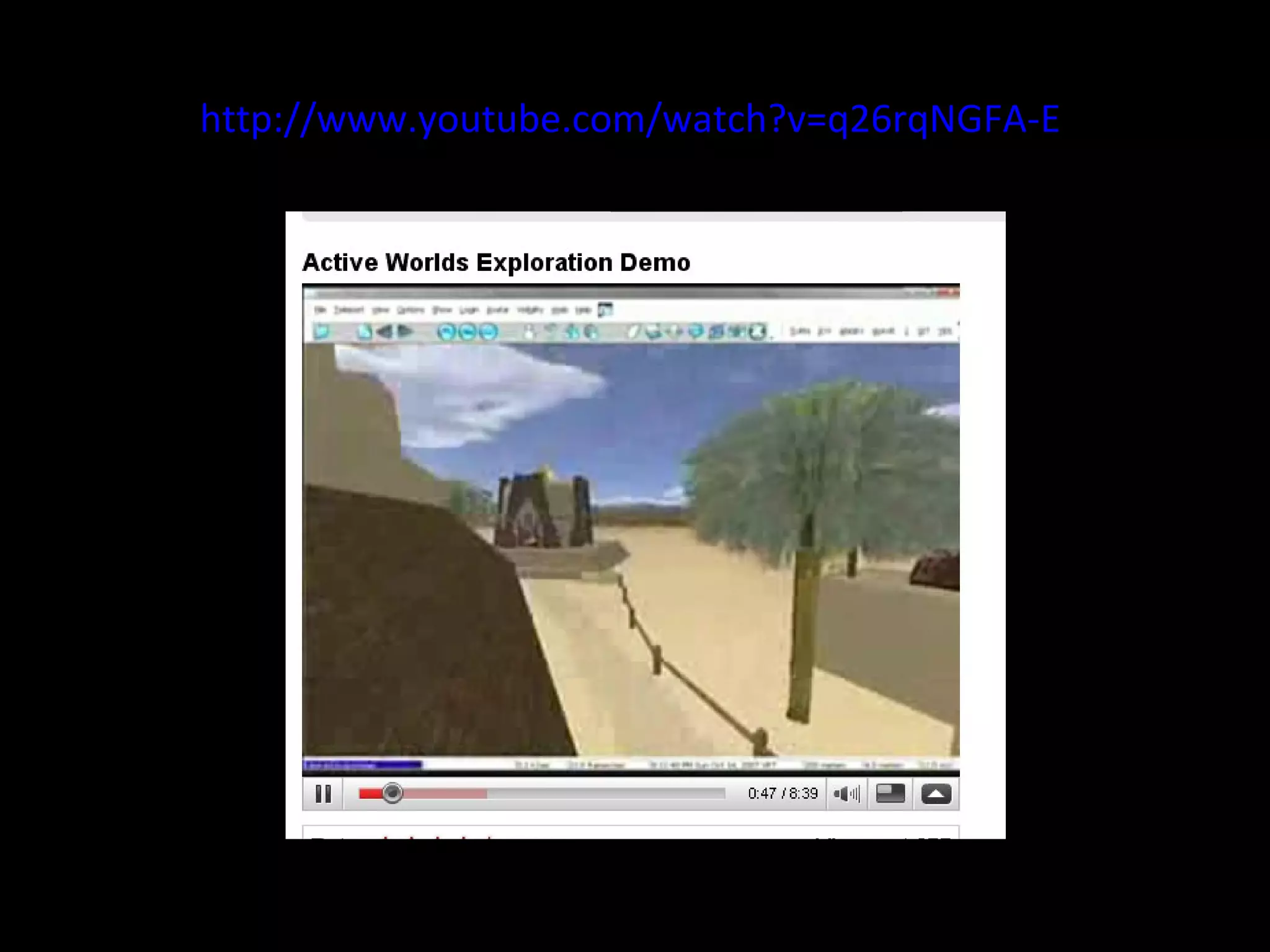
http://www.youtube.com/watch?v=q26rqNGFA-E
Other Virtual Worlds to Explore They may be educational or social http://www.virtualworldsreview.com/info/categories.shtml   http://www.zanpo.com/  Create a Virtual City http://www.byond.com/games/  Can create your own games – 2D http://www.myminilife.com/  Create your own mini life – social network http://www.multiverse.net/index.html
Simulations to Check Out for Education http://www.mcvideogame.com/index-eng.html  Run the McDonalds Company http://www.3rdworldfarmer.com/  Third World Farmer http://www.electrocity.co.nz/  Build a City – it needs a Mayor http://www.digital-humans.org/main.htm  Virtual Soldier http://www.socialstudiescentral.com/?q=node/88  SS Simulations http://www.globalisland.nu/pages_intro/en/index.php?lang=en  Global Island http://www.chemcollective.org/applets/vlab.php  ChemCollective
Continued Using Virtual Worlds to create lessons -  http://en.wikipedia.org/wiki/Math_Girl http://www.eduweb.com/portfolio/designsatellite/  Design Your Own Satellite
Now Let’s Explore

Teaching In Virtual Worlds

  • 1.
    Teaching in VirtualWorlds Karen Brooks
  • 2.
    What is aVirtual World? MUVE (plural MUVEs) refers to online, multi-user virtual environments, sometimes called virtual worlds. an extension of our real world that exists only online. A virtual world is a computer-based simulated environment intended for its users to inhabit and interact via avatars.
  • 3.
  • 4.
    Game Based LearningTheory http://serc.carleton.edu/introgeo/games/ Game based learning (GBL) is a branch of serious games that deals with applications that have defined learning outcomes. It uses simulation and MUVEs as the teaching tool. GBL uses competitive exercises, either pitting the students against each other or getting them to challenge themselves in order to motivate them to learn better. Games often have a fantasy element that engages players in a learning activity through a storyline. In order to create a truly educational game, the instructor needs to make sure that learning the material is essential to scoring and winning.
  • 5.
    Why use GBL?Motivates students to learn Immerses them in the material so they learn more effectively Encourages them to learn from their mistakes It uses environments they consider fun and are currently using.
  • 6.
  • 7.
    Trends in VirtualWorlds Increase in 5-15 year olds who use Virtual Worlds in 2009 Increase in girls using Virtual Worlds in 2009 An explosion of Virtual Worlds on the Internet in 2008 Teen-focused virtual worlds are huge.
  • 8.
    How Are KidsCurrently Using Virtual Worlds?
  • 9.
    Lively by Googlehttp://www.lively.com/dr?rid=816945116627555151
  • 10.
  • 11.
  • 12.
  • 13.
  • 14.
  • 15.
  • 16.
  • 17.
  • 18.
  • 19.
  • 20.
  • 21.
  • 22.
  • 23.
  • 24.
  • 25.
  • 26.
  • 27.
  • 28.
  • 29.
  • 30.
  • 31.
  • 32.
  • 33.
  • 34.
  • 35.
  • 36.
  • 37.
  • 38.
    So How CanThey Be Educational?
  • 39.
    They can visitplaces in virtual worlds that they are learning about in class and may never get the chance to see in real life. http://www.beyondspaceandtime.org/FCBSTWeb/web/index.html#link =
  • 40.
  • 41.
    They can workcollaboratively in virtual world using problem based learning to solve real life problems as in Harvard’s River City project. http://muve.gse.harvard.edu/rivercityproject/
  • 42.
  • 43.
    They can developvirtual worlds for their own learning experiences and to teach others. http://teen.secondlife.com/
  • 44.
  • 45.
    The Pioneer SchoolDistrict in Teen SL. http://rampoislands.blogspot.com/ http://rampoislands.blogspot.com/
  • 46.
    Active Worlds http://www.activeworlds.com/edu/
  • 47.
  • 48.
    Other Virtual Worldsto Explore They may be educational or social http://www.virtualworldsreview.com/info/categories.shtml http://www.zanpo.com/ Create a Virtual City http://www.byond.com/games/ Can create your own games – 2D http://www.myminilife.com/ Create your own mini life – social network http://www.multiverse.net/index.html
  • 49.
    Simulations to CheckOut for Education http://www.mcvideogame.com/index-eng.html Run the McDonalds Company http://www.3rdworldfarmer.com/ Third World Farmer http://www.electrocity.co.nz/ Build a City – it needs a Mayor http://www.digital-humans.org/main.htm Virtual Soldier http://www.socialstudiescentral.com/?q=node/88 SS Simulations http://www.globalisland.nu/pages_intro/en/index.php?lang=en Global Island http://www.chemcollective.org/applets/vlab.php ChemCollective
  • 50.
    Continued Using VirtualWorlds to create lessons - http://en.wikipedia.org/wiki/Math_Girl http://www.eduweb.com/portfolio/designsatellite/ Design Your Own Satellite
  • 51.