THE ROADMAP TO QUALITY IN TEACHER
EDUCATION
DR. AMI RATHORE
ASSISTANT PROFESSOR
LOKMANYA TILAK TEACHERS
TRAINING COLLEGE DABOK
DR. SUNITA MURDIA
ASSISTANT PROFESSOR
LOKMANYA TILAK TEACHERS
TRAINING COLLEGE DABOK
INTERNATIONAL CONFERENCE
ON
RE-EXAMININGTEACHER EDUCATION IN THE LIGHT
OF GLOBAL PERSPECTIVE
13TH -14TH APRIL 2013
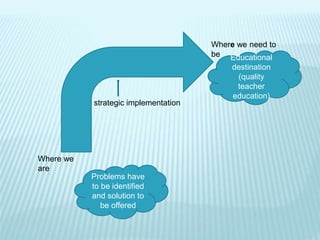
Where we
are
Problems have
to be identified
and solution to
be offered
Where we need to
be Educational
destination
(quality
teacher
education)
strategic implementation
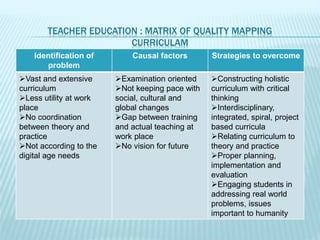
TEACHER EDUCATION : MATRIX OF QUALITY MAPPING
CURRICULAM
Identification of
problem
Causal factors Strategies to overcome
Vast and extensive
curriculum
Less utility at work
place
No coordination
between theory and
practice
Not according to the
digital age needs
Examination oriented
Not keeping pace with
social, cultural and
global changes
Gap between training
and actual teaching at
work place
No vision for future
Constructing holistic
curriculum with critical
thinking
Interdisciplinary,
integrated, spiral, project
based curricula
Relating curriculum to
theory and practice
Proper planning,
implementation and
evaluation
Engaging students in
addressing real world
problems, issues
important to humanity
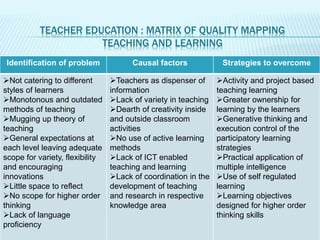
TEACHER EDUCATION : MATRIX OF QUALITY MAPPING
TEACHING AND LEARNING
Identification of problem Causal factors Strategies to overcome
Not catering to different
styles of learners
Monotonous and outdated
methods of teaching
Mugging up theory of
teaching
General expectations at
each level leaving adequate
scope for variety, flexibility
and encouraging
innovations
Little space to reflect
No scope for higher order
thinking
Lack of language
proficiency
Teachers as dispenser of
information
Lack of variety in teaching
Dearth of creativity inside
and outside classroom
activities
No use of active learning
methods
Lack of ICT enabled
teaching and learning
Lack of coordination in the
development of teaching
and research in respective
knowledge area
Activity and project based
teaching learning
Greater ownership for
learning by the learners
Generative thinking and
execution control of the
participatory learning
strategies
Practical application of
multiple intelligence
Use of self regulated
learning
Learning objectives
designed for higher order
thinking skills
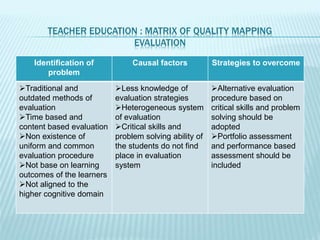
TEACHER EDUCATION : MATRIX OF QUALITY MAPPING
EVALUATION
Identification of
problem
Causal factors Strategies to overcome
Traditional and
outdated methods of
evaluation
Time based and
content based evaluation
Non existence of
uniform and common
evaluation procedure
Not base on learning
outcomes of the learners
Not aligned to the
higher cognitive domain
Less knowledge of
evaluation strategies
Heterogeneous system
of evaluation
Critical skills and
problem solving ability of
the students do not find
place in evaluation
system
Alternative evaluation
procedure based on
critical skills and problem
solving should be
adopted
Portfolio assessment
and performance based
assessment should be
included
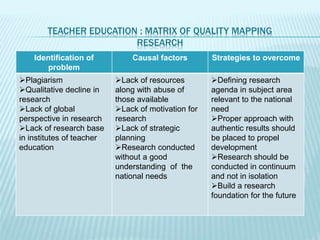
TEACHER EDUCATION : MATRIX OF QUALITY MAPPING
RESEARCH
Identification of
problem
Causal factors Strategies to overcome
Plagiarism
Qualitative decline in
research
Lack of global
perspective in research
Lack of research base
in institutes of teacher
education
Lack of resources
along with abuse of
those available
Lack of motivation for
research
Lack of strategic
planning
Research conducted
without a good
understanding of the
national needs
Defining research
agenda in subject area
relevant to the national
need
Proper approach with
authentic results should
be placed to propel
development
Research should be
conducted in continuum
and not in isolation
Build a research
foundation for the future
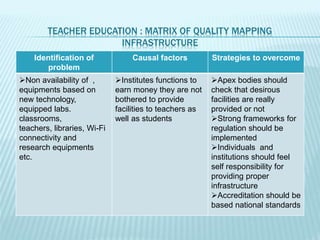
TEACHER EDUCATION : MATRIX OF QUALITY MAPPING
INFRASTRUCTURE
Identification of
problem
Causal factors Strategies to overcome
Non availability of ,
equipments based on
new technology,
equipped labs.
classrooms,
teachers, libraries, Wi-Fi
connectivity and
research equipments
etc.
Institutes functions to
earn money they are not
bothered to provide
facilities to teachers as
well as students
Apex bodies should
check that desirous
facilities are really
provided or not
Strong frameworks for
regulation should be
implemented
Individuals and
institutions should feel
self responsibility for
providing proper
infrastructure
Accreditation should be
based national standards
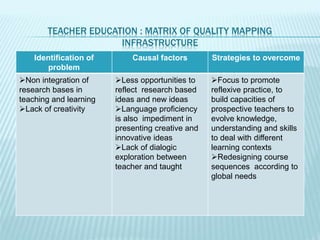
TEACHER EDUCATION : MATRIX OF QUALITY MAPPING
INFRASTRUCTURE
Identification of
problem
Causal factors Strategies to overcome
Non integration of
research bases in
teaching and learning
Lack of creativity
Less opportunities to
reflect research based
ideas and new ideas
Language proficiency
is also impediment in
presenting creative and
innovative ideas
Lack of dialogic
exploration between
teacher and taught
Focus to promote
reflexive practice, to
build capacities of
prospective teachers to
evolve knowledge,
understanding and skills
to deal with different
learning contexts
Redesigning course
sequences according to
global needs
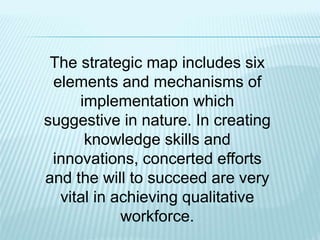
The strategic map includes six
elements and mechanisms of
implementation which
suggestive in nature. In creating
knowledge skills and
innovations, concerted efforts
and the will to succeed are very
vital in achieving qualitative
workforce.
THANK YOU

Teacher education power point presentation

  • 1.
    THE ROADMAP TOQUALITY IN TEACHER EDUCATION DR. AMI RATHORE ASSISTANT PROFESSOR LOKMANYA TILAK TEACHERS TRAINING COLLEGE DABOK DR. SUNITA MURDIA ASSISTANT PROFESSOR LOKMANYA TILAK TEACHERS TRAINING COLLEGE DABOK INTERNATIONAL CONFERENCE ON RE-EXAMININGTEACHER EDUCATION IN THE LIGHT OF GLOBAL PERSPECTIVE 13TH -14TH APRIL 2013
  • 2.
    Where we are Problems have tobe identified and solution to be offered Where we need to be Educational destination (quality teacher education) strategic implementation
  • 3.
    TEACHER EDUCATION :MATRIX OF QUALITY MAPPING CURRICULAM Identification of problem Causal factors Strategies to overcome Vast and extensive curriculum Less utility at work place No coordination between theory and practice Not according to the digital age needs Examination oriented Not keeping pace with social, cultural and global changes Gap between training and actual teaching at work place No vision for future Constructing holistic curriculum with critical thinking Interdisciplinary, integrated, spiral, project based curricula Relating curriculum to theory and practice Proper planning, implementation and evaluation Engaging students in addressing real world problems, issues important to humanity
  • 4.
    TEACHER EDUCATION :MATRIX OF QUALITY MAPPING TEACHING AND LEARNING Identification of problem Causal factors Strategies to overcome Not catering to different styles of learners Monotonous and outdated methods of teaching Mugging up theory of teaching General expectations at each level leaving adequate scope for variety, flexibility and encouraging innovations Little space to reflect No scope for higher order thinking Lack of language proficiency Teachers as dispenser of information Lack of variety in teaching Dearth of creativity inside and outside classroom activities No use of active learning methods Lack of ICT enabled teaching and learning Lack of coordination in the development of teaching and research in respective knowledge area Activity and project based teaching learning Greater ownership for learning by the learners Generative thinking and execution control of the participatory learning strategies Practical application of multiple intelligence Use of self regulated learning Learning objectives designed for higher order thinking skills
  • 5.
    TEACHER EDUCATION :MATRIX OF QUALITY MAPPING EVALUATION Identification of problem Causal factors Strategies to overcome Traditional and outdated methods of evaluation Time based and content based evaluation Non existence of uniform and common evaluation procedure Not base on learning outcomes of the learners Not aligned to the higher cognitive domain Less knowledge of evaluation strategies Heterogeneous system of evaluation Critical skills and problem solving ability of the students do not find place in evaluation system Alternative evaluation procedure based on critical skills and problem solving should be adopted Portfolio assessment and performance based assessment should be included
  • 6.
    TEACHER EDUCATION :MATRIX OF QUALITY MAPPING RESEARCH Identification of problem Causal factors Strategies to overcome Plagiarism Qualitative decline in research Lack of global perspective in research Lack of research base in institutes of teacher education Lack of resources along with abuse of those available Lack of motivation for research Lack of strategic planning Research conducted without a good understanding of the national needs Defining research agenda in subject area relevant to the national need Proper approach with authentic results should be placed to propel development Research should be conducted in continuum and not in isolation Build a research foundation for the future
  • 7.
    TEACHER EDUCATION :MATRIX OF QUALITY MAPPING INFRASTRUCTURE Identification of problem Causal factors Strategies to overcome Non availability of , equipments based on new technology, equipped labs. classrooms, teachers, libraries, Wi-Fi connectivity and research equipments etc. Institutes functions to earn money they are not bothered to provide facilities to teachers as well as students Apex bodies should check that desirous facilities are really provided or not Strong frameworks for regulation should be implemented Individuals and institutions should feel self responsibility for providing proper infrastructure Accreditation should be based national standards
  • 8.
    TEACHER EDUCATION :MATRIX OF QUALITY MAPPING INFRASTRUCTURE Identification of problem Causal factors Strategies to overcome Non integration of research bases in teaching and learning Lack of creativity Less opportunities to reflect research based ideas and new ideas Language proficiency is also impediment in presenting creative and innovative ideas Lack of dialogic exploration between teacher and taught Focus to promote reflexive practice, to build capacities of prospective teachers to evolve knowledge, understanding and skills to deal with different learning contexts Redesigning course sequences according to global needs
  • 9.
    The strategic mapincludes six elements and mechanisms of implementation which suggestive in nature. In creating knowledge skills and innovations, concerted efforts and the will to succeed are very vital in achieving qualitative workforce.
  • 10.