 TATA SONS : ORGANISATIONAL
CHANGES.
 TATA MOTORS:
 CULTURE AT TATA :
MUDASIR MUZAFAR BHAT
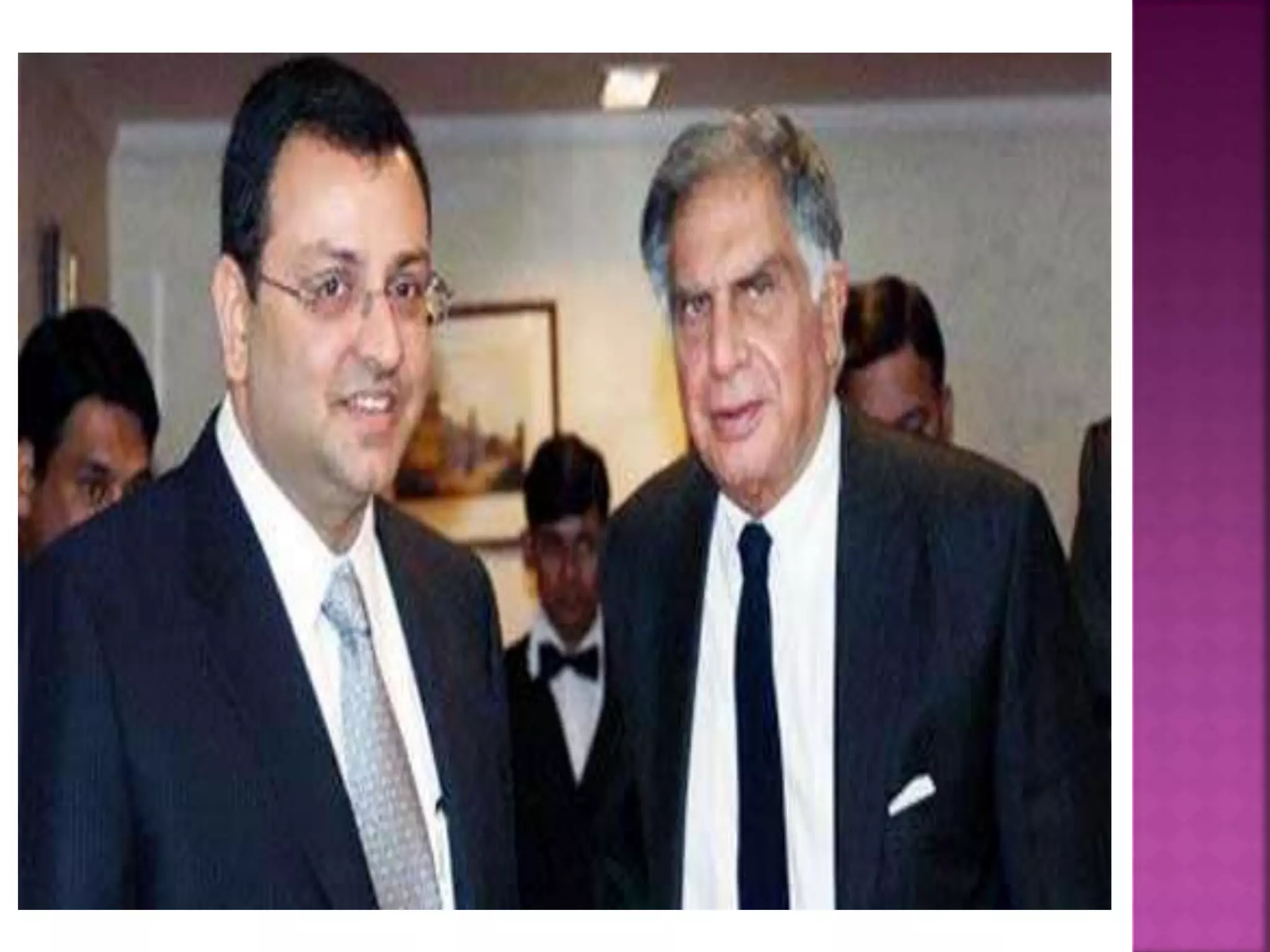
 On the selection of his successor, Ratan Tata said that
he was impressed by the "quality and caliber" of
Mistry's participation on the Tata Sons board and
praised his "astute observations and humility".
 Mistry is the younger son of construction tycoon
Pallonji Shapoorji Mistry, who holds an 18.5 percent
stake in Tata Sons, the single largest shareholder.
Mistry joined the board of Shapoorji Pallonji & Co as
director in 1991.
 NOTHING OF MISTRY WAS KNOWN TILL TIME
NOT EVE N WIKI KNEW HIM
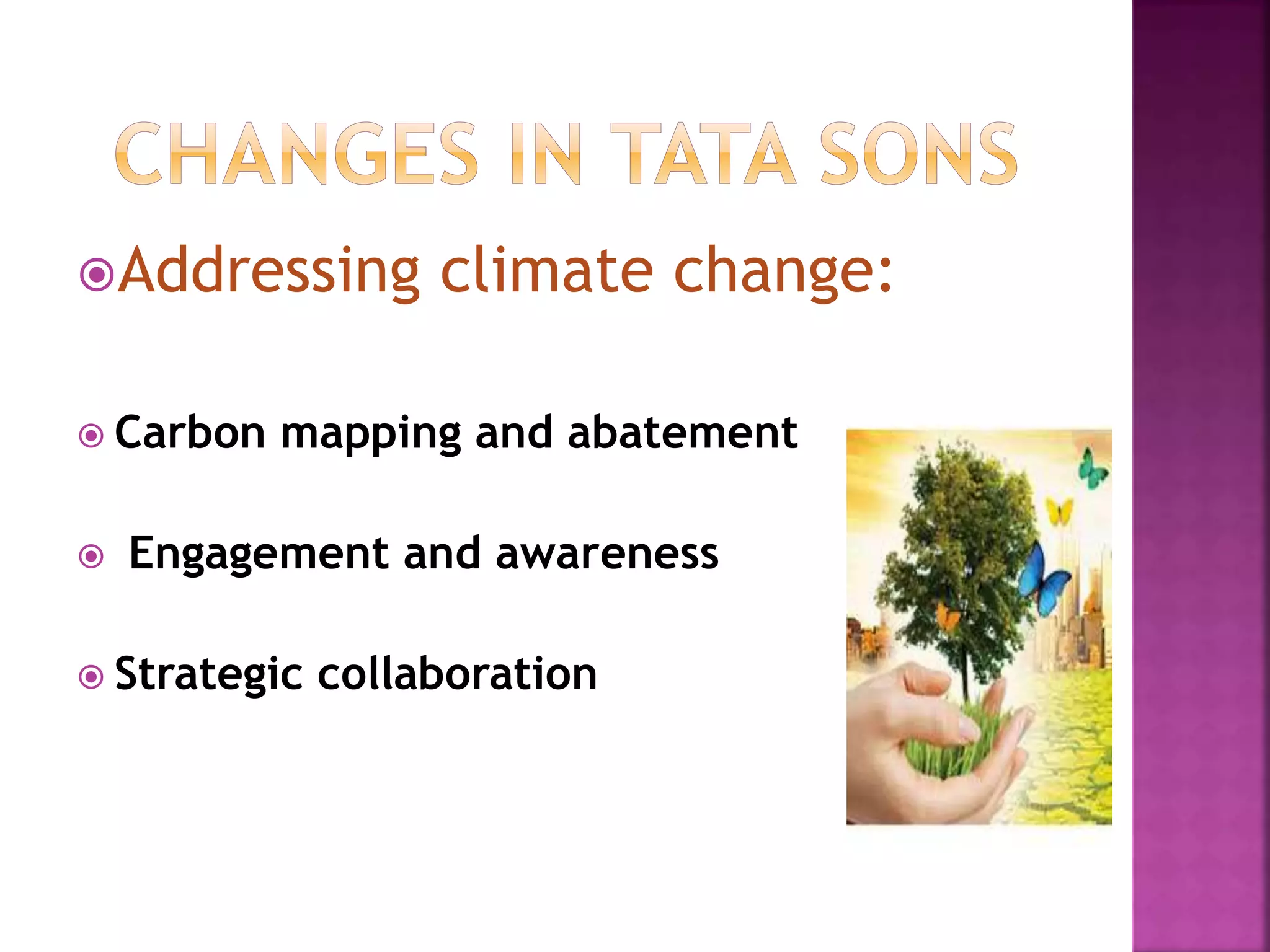
Addressing climate change:
 Carbon mapping and abatement
 Engagement and awareness
 Strategic collaboration
 In the first major organizational restructuring since
Cyrus P Mistry took the reins, Tata Sons, the
holding firm of the over-$100 billion salt-to-
software Tata Group, ON 31ST APRIL announced
the formation of a group executive council (GEC),
which will provide strategic and operational
support to the chairman.
The GEC replaced the GCC and the GEO which
was earlier used to direct future business
endeavours of the group and also streamlined
operations
 1. The first major step was HIRING, not
FIRING:
 2. Parting ways amicably:
 3. Informing people about changes that
might happen:
 Culture of:
 Creativity
 Innovation
 And charity..
 Leads to what we see a 100 billion us dollar
organization.
TATA MOTORS : CHANGE OVER THE
YEARS , WHAT AND HOW
ORGANIZATIONAL CHANGE AT TATA MOTORS
 INTRODUCTION:
 Tata Motors was predominantly a manufacturer of
commercial vehicles. Cyclical business. Market in
India shrank by more than 40 percent. 5 billion
rupee loss in 2001. In 2001 they decided on a
recovery strategy that had three distinct phases:
 PHASE 1 Move to a system of market pricing.
Reduce break-even point. E-sourcing. Exploitation
information technology
ORGANIZATIONAL CHANGE AT TATA MOTORS
 INTRODUCTION:
 Tata Motors was predominantly a manufacturer of
commercial vehicles. Cyclical business. Market in
India shrank by more than 40 percent. 5 billion
rupee loss in 2001. In 2001 they decided on a
recovery strategy that had three distinct phases:
 PHASE 1 Move to a system of market pricing.
Reduce break-even point. E-sourcing. Exploitation
information technology
 PHASE 2 Improving product quality. Upgrading
product features.
 PHASE 3 International diversification
ORGANIZATIONAL CHANGE AT TATA MOTORS
 INTRODUCTION:
 Tata Motors was predominantly a manufacturer of
commercial vehicles. Cyclical business. Market in
India shrank by more than 40 percent. 5 billion
rupee loss in 2001. In 2001 they decided on a
recovery strategy that had three distinct phases:
 PHASE 1 Move to a system of market pricing.
Reduce break-even point. E-sourcing. Exploitation
information technology
EIGHT STEPS FOLLOWED BY TATA MOTORS TO
CREATE ORGANIZATIONAL CHANGE :
 Step 1 : Create urgency
 Step 2 : Form a powerful coalition
 Step 3 : Create a vision for change
 Step 4 : Communicate the vision
EMPLOYEES MOTIVATION TO ACCEPT
THE CHANGE
 There are 4 techniques to be taken care of for
motivating change management:
 Clarity
 Communication
 Consistency
 Capability
TATA CULTURE
Here is a cultural model that is both simple
and powerful in its ability to help you
change organizations
TATA GROUP: LEADERSHIP WITH TRUST.
'TATA' means 'management Thinking and Acting
that leads to employee Thinking and Acting’
Embodying the tata values and culture :
Integrity
Understanding
Excellence
Unity
Responsibility
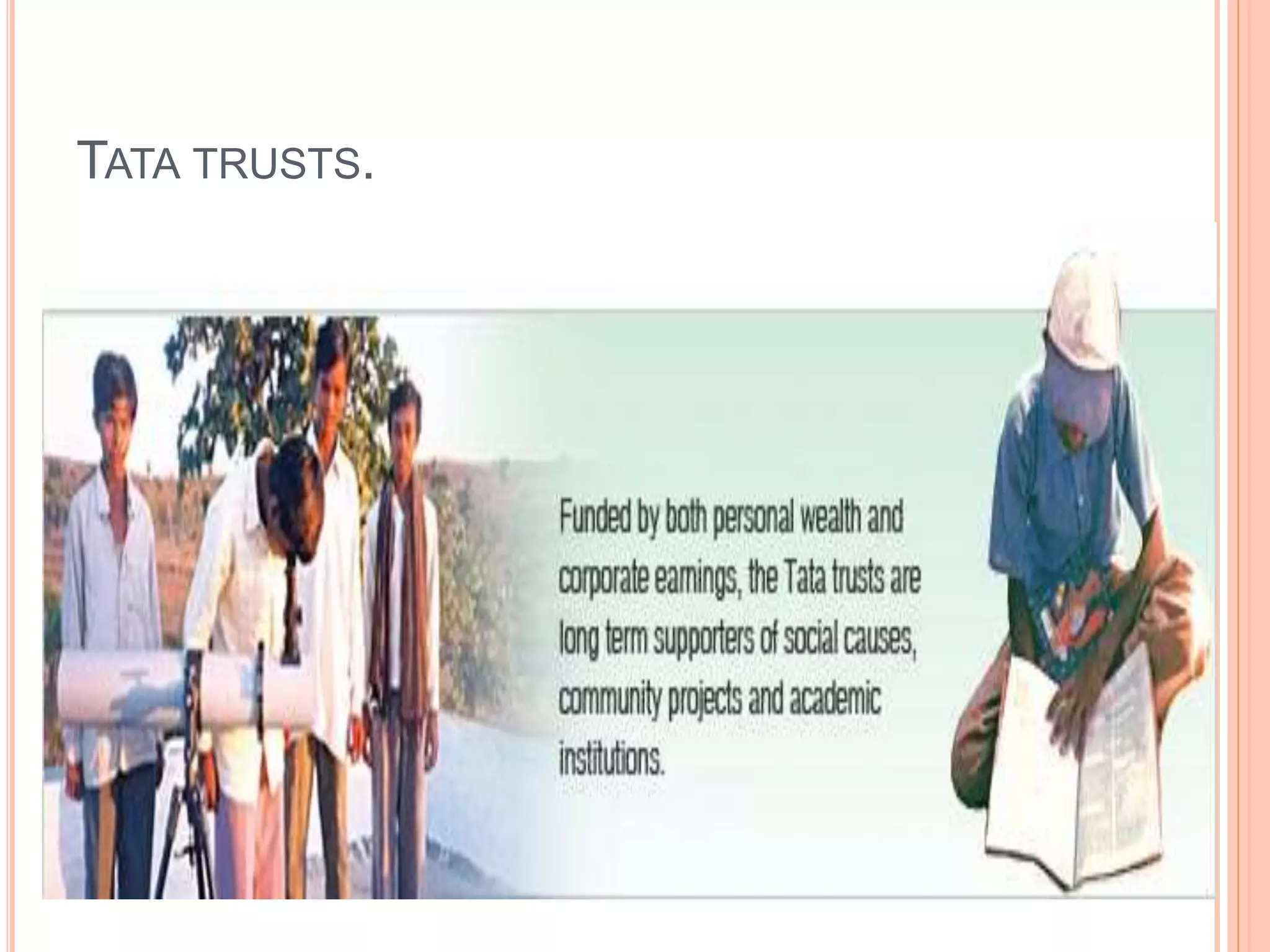
TATA TRUSTS.
TATA AFFIRMATIVE ACTION PROGRAMME
 Group policy on affirmative action
Tata companies believe in social equity
Tata companies adhere to the principle of equal opportunity,
irrespective of caste, whether in recruitment or career
advancement within the organisation
Tata companies are also committed to directly conducting or
supporting initiatives to ensure an equal footing for socially and
economically disadvantaged sections in the country at large, and
specifically the Scheduled Caste and Scheduled Tribe
communities
THANKS
 FOR
•PATIENT
 LISTENING
mudasirmuzafar@gmail.com
THANKS
Presented by:
MUDASIR MUZAFAR BHAT
Feedback at:
mudasirmuzafar@gmail.com

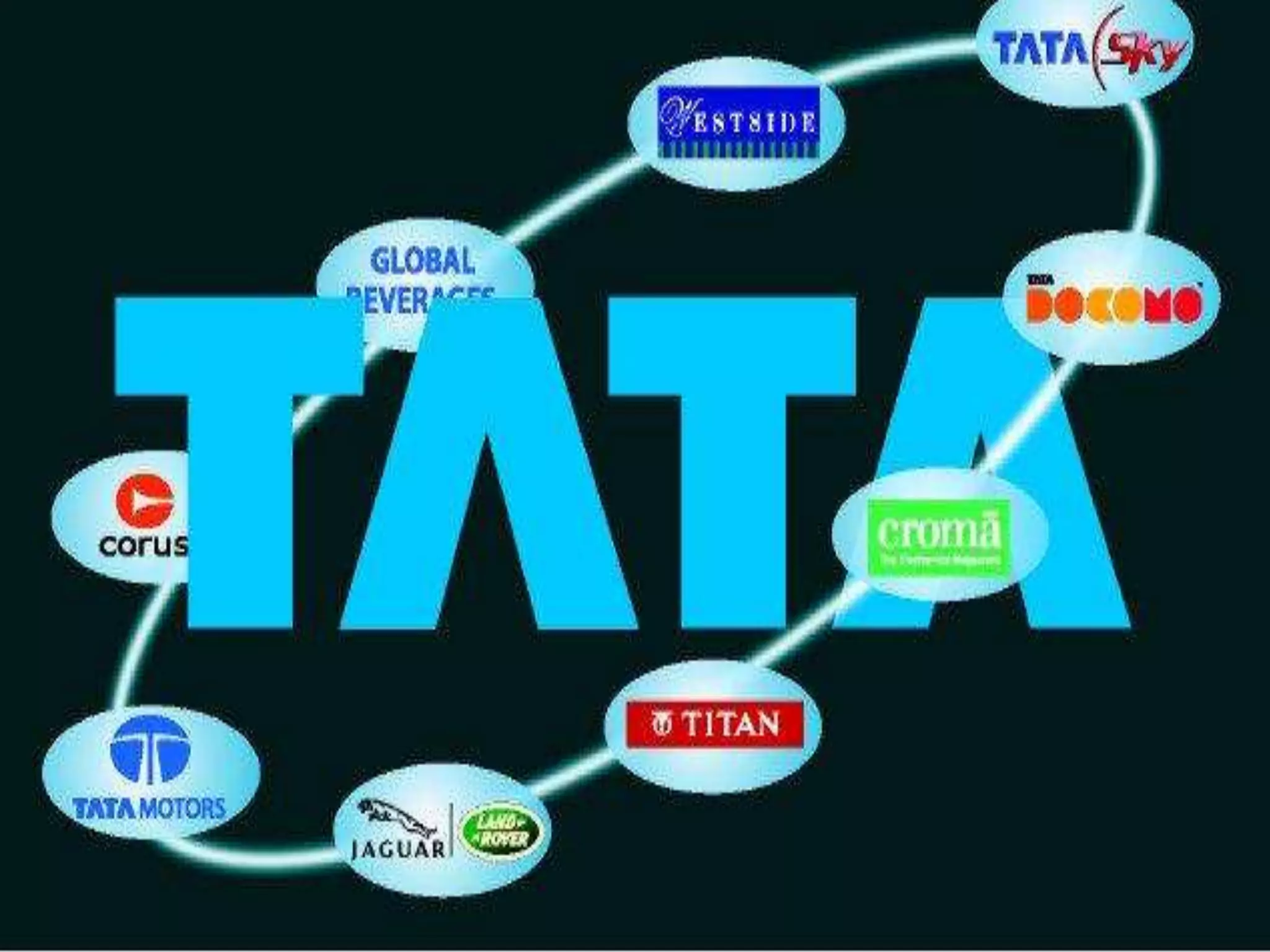
Tata group: an overview

  • 2.
     TATA SONS: ORGANISATIONAL CHANGES.  TATA MOTORS:  CULTURE AT TATA : MUDASIR MUZAFAR BHAT
  • 4.
     On theselection of his successor, Ratan Tata said that he was impressed by the "quality and caliber" of Mistry's participation on the Tata Sons board and praised his "astute observations and humility".  Mistry is the younger son of construction tycoon Pallonji Shapoorji Mistry, who holds an 18.5 percent stake in Tata Sons, the single largest shareholder. Mistry joined the board of Shapoorji Pallonji & Co as director in 1991.  NOTHING OF MISTRY WAS KNOWN TILL TIME NOT EVE N WIKI KNEW HIM
  • 5.
    Addressing climate change: Carbon mapping and abatement  Engagement and awareness  Strategic collaboration
  • 6.
     In thefirst major organizational restructuring since Cyrus P Mistry took the reins, Tata Sons, the holding firm of the over-$100 billion salt-to- software Tata Group, ON 31ST APRIL announced the formation of a group executive council (GEC), which will provide strategic and operational support to the chairman. The GEC replaced the GCC and the GEO which was earlier used to direct future business endeavours of the group and also streamlined operations
  • 7.
     1. Thefirst major step was HIRING, not FIRING:  2. Parting ways amicably:  3. Informing people about changes that might happen:
  • 8.
     Culture of: Creativity  Innovation  And charity..  Leads to what we see a 100 billion us dollar organization.
  • 9.
    TATA MOTORS :CHANGE OVER THE YEARS , WHAT AND HOW
  • 10.
    ORGANIZATIONAL CHANGE ATTATA MOTORS  INTRODUCTION:  Tata Motors was predominantly a manufacturer of commercial vehicles. Cyclical business. Market in India shrank by more than 40 percent. 5 billion rupee loss in 2001. In 2001 they decided on a recovery strategy that had three distinct phases:  PHASE 1 Move to a system of market pricing. Reduce break-even point. E-sourcing. Exploitation information technology
  • 11.
    ORGANIZATIONAL CHANGE ATTATA MOTORS  INTRODUCTION:  Tata Motors was predominantly a manufacturer of commercial vehicles. Cyclical business. Market in India shrank by more than 40 percent. 5 billion rupee loss in 2001. In 2001 they decided on a recovery strategy that had three distinct phases:  PHASE 1 Move to a system of market pricing. Reduce break-even point. E-sourcing. Exploitation information technology
  • 12.
     PHASE 2Improving product quality. Upgrading product features.  PHASE 3 International diversification
  • 13.
    ORGANIZATIONAL CHANGE ATTATA MOTORS  INTRODUCTION:  Tata Motors was predominantly a manufacturer of commercial vehicles. Cyclical business. Market in India shrank by more than 40 percent. 5 billion rupee loss in 2001. In 2001 they decided on a recovery strategy that had three distinct phases:  PHASE 1 Move to a system of market pricing. Reduce break-even point. E-sourcing. Exploitation information technology
  • 14.
    EIGHT STEPS FOLLOWEDBY TATA MOTORS TO CREATE ORGANIZATIONAL CHANGE :  Step 1 : Create urgency  Step 2 : Form a powerful coalition  Step 3 : Create a vision for change  Step 4 : Communicate the vision
  • 15.
    EMPLOYEES MOTIVATION TOACCEPT THE CHANGE  There are 4 techniques to be taken care of for motivating change management:  Clarity  Communication  Consistency  Capability
  • 16.
    TATA CULTURE Here isa cultural model that is both simple and powerful in its ability to help you change organizations
  • 17.
    TATA GROUP: LEADERSHIPWITH TRUST. 'TATA' means 'management Thinking and Acting that leads to employee Thinking and Acting’ Embodying the tata values and culture : Integrity Understanding Excellence Unity Responsibility
  • 18.
  • 19.
    TATA AFFIRMATIVE ACTIONPROGRAMME  Group policy on affirmative action Tata companies believe in social equity Tata companies adhere to the principle of equal opportunity, irrespective of caste, whether in recruitment or career advancement within the organisation Tata companies are also committed to directly conducting or supporting initiatives to ensure an equal footing for socially and economically disadvantaged sections in the country at large, and specifically the Scheduled Caste and Scheduled Tribe communities
  • 20.
  • 21.
    THANKS Presented by: MUDASIR MUZAFARBHAT Feedback at: mudasirmuzafar@gmail.com