8
7
6
5
4
3
 
 
PICTURE   START
 
History Company’s Profile Research and Development Product Range Key Strategies Future Prospects
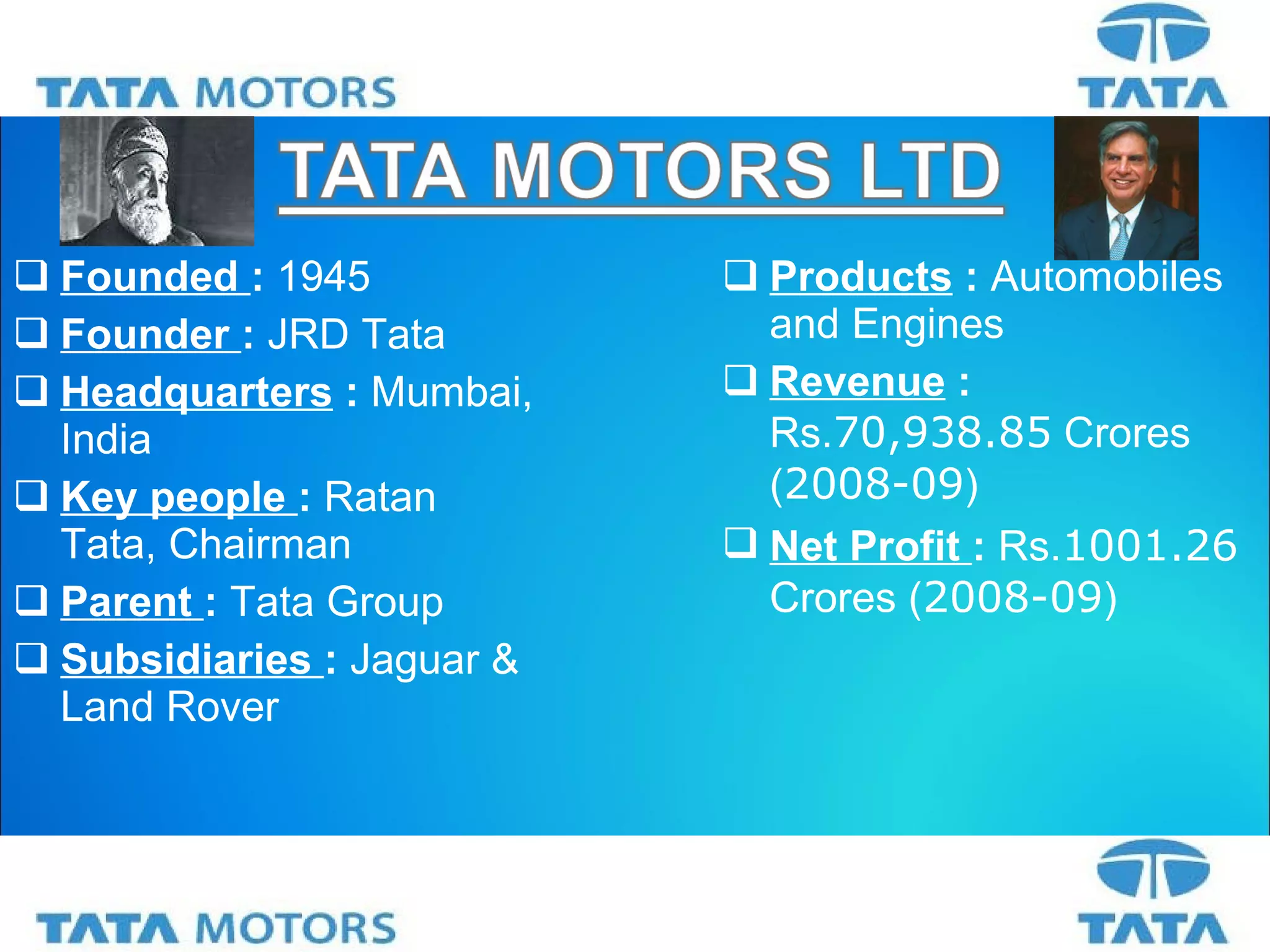
Founded  :  1945 Founder  :  JRD Tata Headquarters   :  Mumbai, India Key people  :  Ratan  Tata, Chairman Parent  :  Tata Group Subsidiaries  :  Jaguar & Land Rover Products  :  Automobiles and Engines Revenue   :  Rs. 70,938.85  Crores ( 2008-09 ) Net Profit  :  Rs. 1001.26  Crores ( 2008-09 )
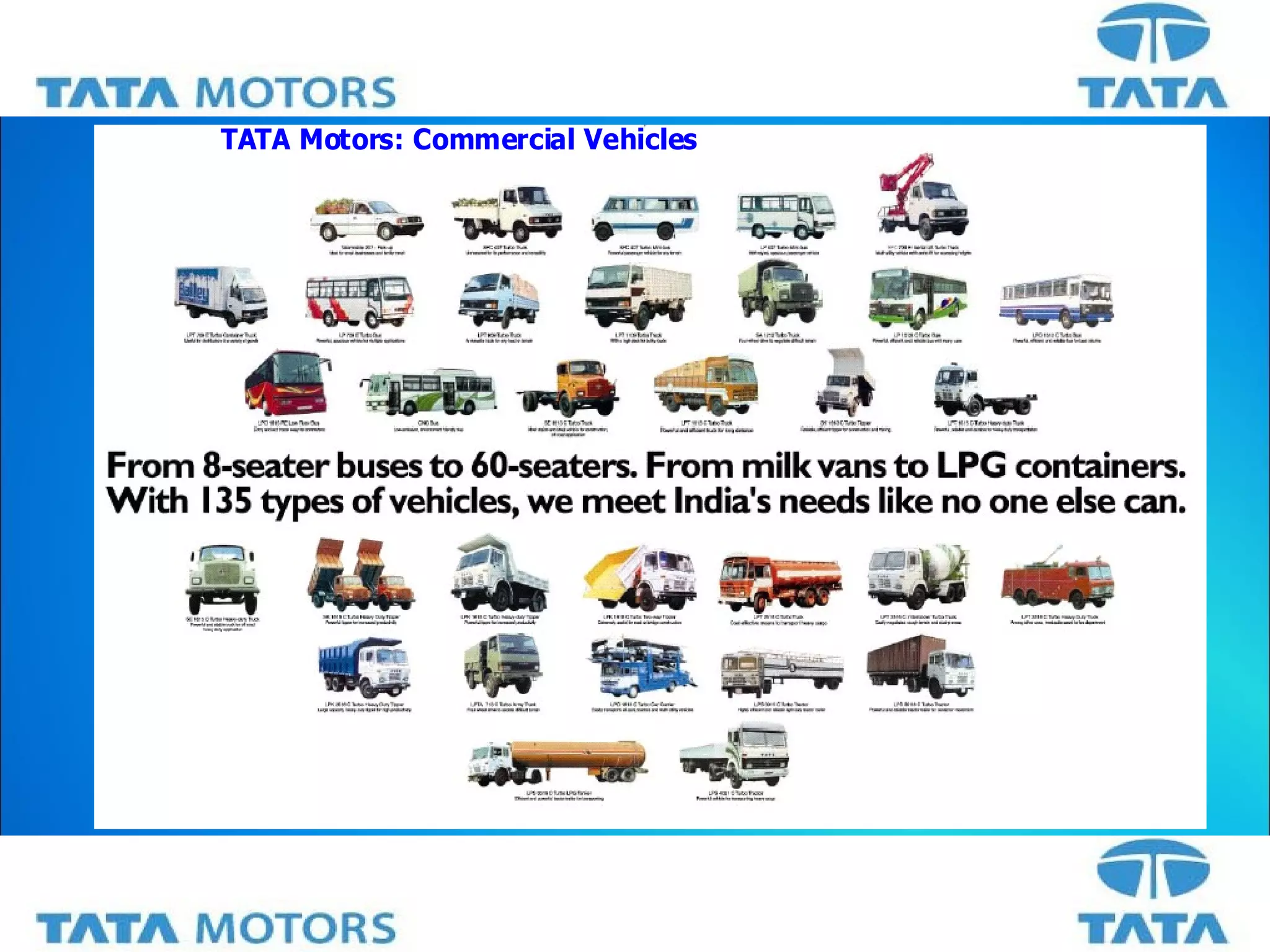
130 models of light , medium and heavy commercial vehicles 1 st  Company from India’s Engineering sector to be listed in NYSE (Sept 04)
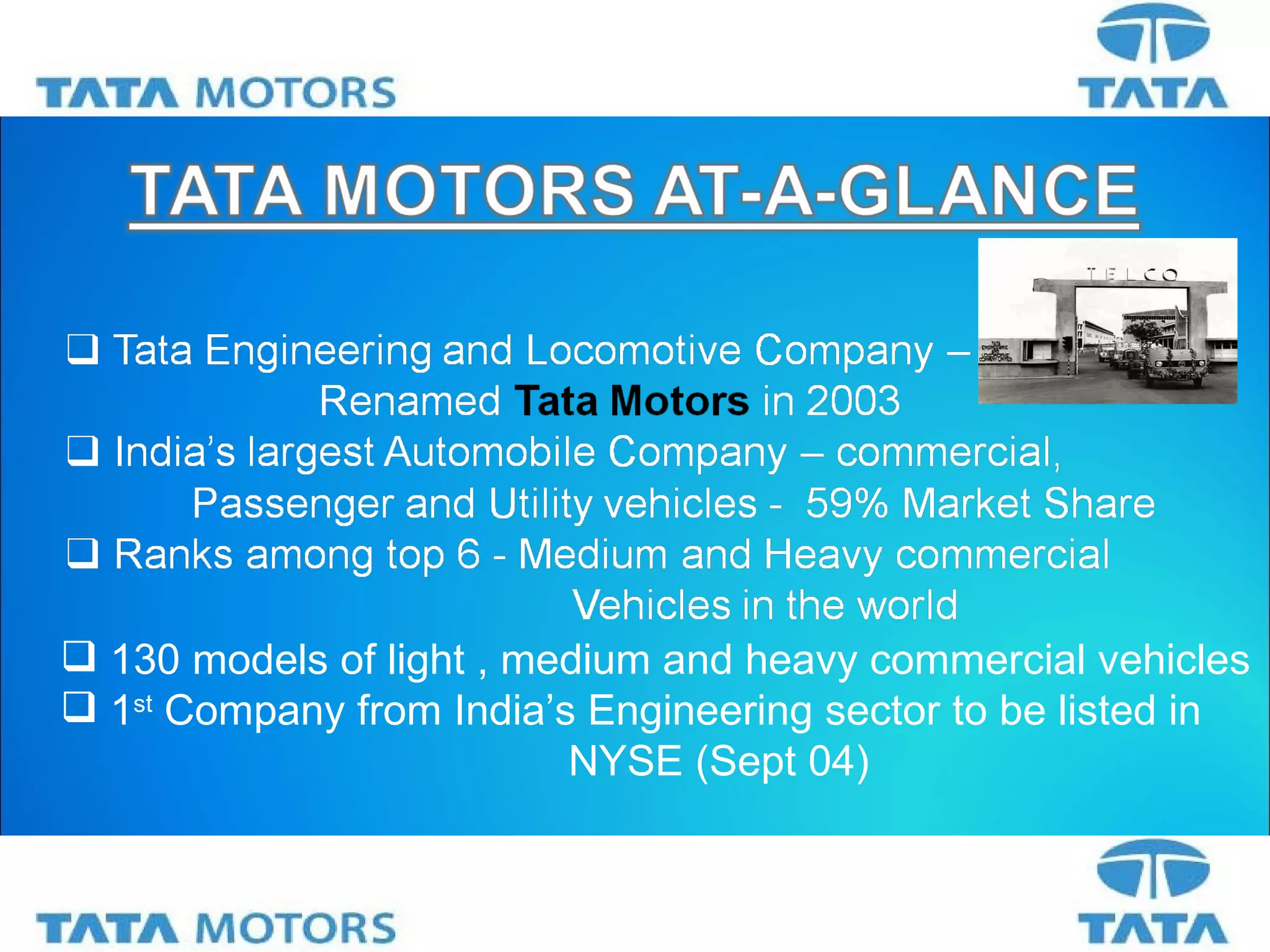
Developed India’s 1 st  indigenous Passenger  Car  -  Tata Indica  in 1998 Rolled out its Millionth vehicle - 1991     Two-Million Mark - 1998 The company began manufacturing commercial  vehicles in 1954 with a 15-year collaboration  agreement with Daimler Benz of Germany.
Over 1400 engineers & scientists – 6 R&D units   -- India, South Korea, Spain and UK Key Factor -  World-class automotive R&D Engineering Research Centre (ERC): -  Research Centre at Jamshedpur -  The Engineering Research Centre in Pune was setup   in 1966 and is among the finest in the country Awards   : 1.  'The DSIR National Award for R&D Effort  in Industry - 1999‘   2.   'National Award for Successful   Commercialisation of Indigenous Technology    by an Industrial Concern - 2000.'
 
International strategy based on the  competitive advantage   : New product (Eg: Tata Nano, the cheapest car in the World). Acquisitions (Eg: Land Rover and Jaguar brands from Ford Motors) Partnership with established companies (Eg: Alliance with Fiat since 2006)   to enhance the product portfolio and knowledge exchange  Facilities for learning from other companies. Developing programmes for intensive management development. Consolidate position in India by  exploiting opportunities  : New mobility of young Indians. Government’s substantial road-building program GDP growth
Strengths Well-known brand with good reputation Planned and smart international strategy Smart approach in responding to the market demand. Alliances with key players Fast product development ability Weaknesses Low level of infrastructures Lack of experience in certain new  sectors. Opportunities New long-awaited product (Nano) Government support Emerging markets high demand for  passengers cars at low costs. Threats Downturn of the world economy High level of competition Sustainability and environmentalism Oil rising prices
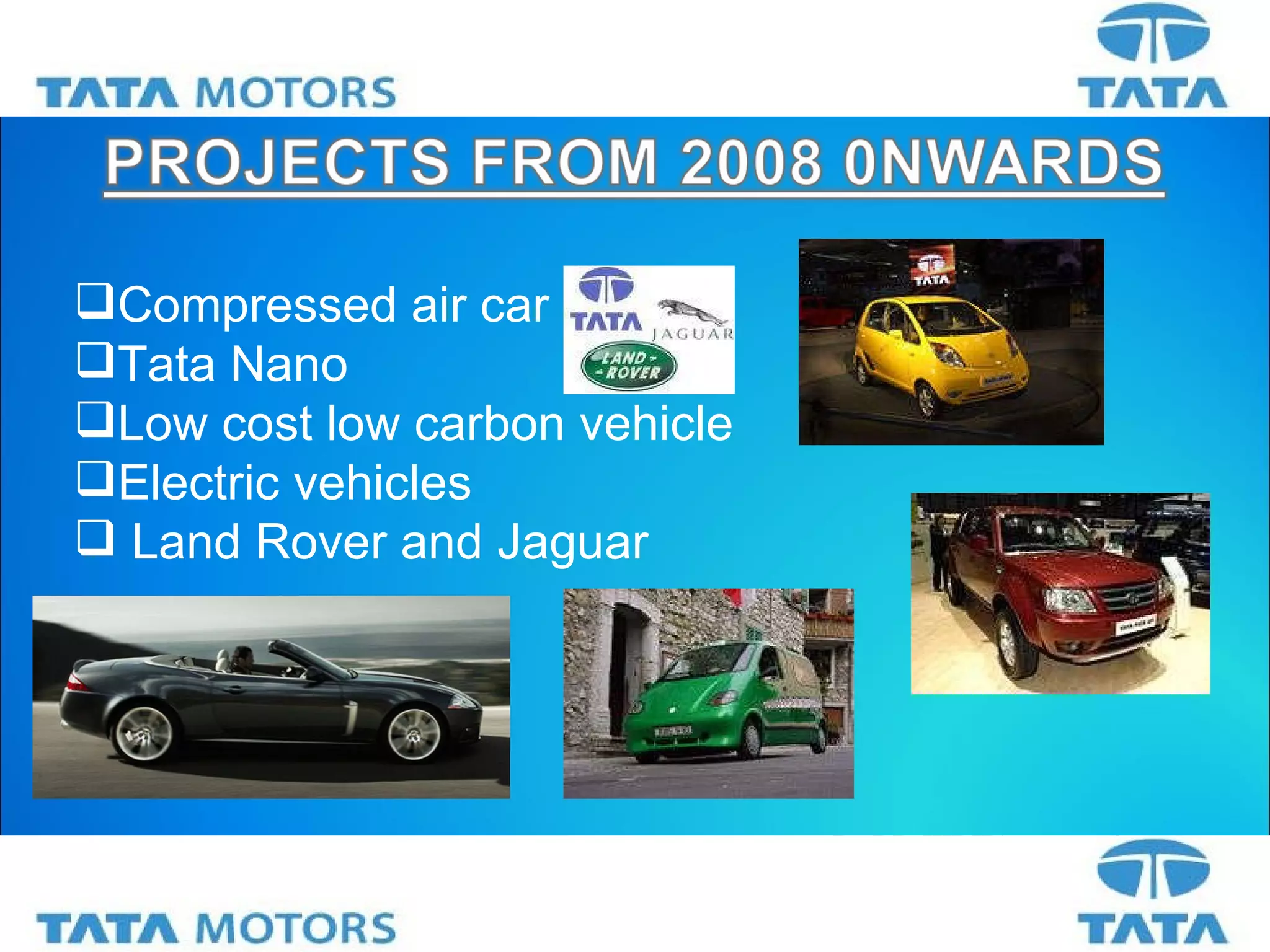
Compressed air car  Tata Nano Low cost low carbon vehicle Electric vehicles Land Rover and Jaguar
Amitesh Divya Hansita
 

Tata Motors Ppt

  • 1.
  • 2.
  • 3.
  • 4.
  • 5.
  • 6.
  • 7.
  • 8.
  • 9.
  • 10.
    PICTURE START
  • 11.
  • 12.
    History Company’s ProfileResearch and Development Product Range Key Strategies Future Prospects
  • 13.
    Founded : 1945 Founder : JRD Tata Headquarters : Mumbai, India Key people : Ratan Tata, Chairman Parent : Tata Group Subsidiaries : Jaguar & Land Rover Products : Automobiles and Engines Revenue : Rs. 70,938.85 Crores ( 2008-09 ) Net Profit : Rs. 1001.26 Crores ( 2008-09 )
  • 14.
    130 models oflight , medium and heavy commercial vehicles 1 st Company from India’s Engineering sector to be listed in NYSE (Sept 04)
  • 15.
    Developed India’s 1st indigenous Passenger Car - Tata Indica in 1998 Rolled out its Millionth vehicle - 1991 Two-Million Mark - 1998 The company began manufacturing commercial vehicles in 1954 with a 15-year collaboration agreement with Daimler Benz of Germany.
  • 16.
    Over 1400 engineers& scientists – 6 R&D units -- India, South Korea, Spain and UK Key Factor - World-class automotive R&D Engineering Research Centre (ERC): - Research Centre at Jamshedpur - The Engineering Research Centre in Pune was setup in 1966 and is among the finest in the country Awards : 1. 'The DSIR National Award for R&D Effort in Industry - 1999‘ 2. 'National Award for Successful Commercialisation of Indigenous Technology by an Industrial Concern - 2000.'
  • 17.
  • 18.
    International strategy basedon the competitive advantage : New product (Eg: Tata Nano, the cheapest car in the World). Acquisitions (Eg: Land Rover and Jaguar brands from Ford Motors) Partnership with established companies (Eg: Alliance with Fiat since 2006) to enhance the product portfolio and knowledge exchange Facilities for learning from other companies. Developing programmes for intensive management development. Consolidate position in India by exploiting opportunities : New mobility of young Indians. Government’s substantial road-building program GDP growth
  • 19.
    Strengths Well-known brandwith good reputation Planned and smart international strategy Smart approach in responding to the market demand. Alliances with key players Fast product development ability Weaknesses Low level of infrastructures Lack of experience in certain new sectors. Opportunities New long-awaited product (Nano) Government support Emerging markets high demand for passengers cars at low costs. Threats Downturn of the world economy High level of competition Sustainability and environmentalism Oil rising prices
  • 20.
    Compressed air car Tata Nano Low cost low carbon vehicle Electric vehicles Land Rover and Jaguar
  • 21.
  • 22.