TASK 3
Challenges and perspectives for OER
development and re-use

Group 1

Livia Di Paola
Ana Martínez Alonso
Beatriz Mª Luzón Medina
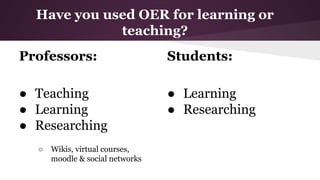
Have you used OER for learning or
teaching?
Professors:

Students:

● Teaching
● Learning
● Researching

● Learning
● Researching

○

Wikis, virtual courses,
moodle & social networks
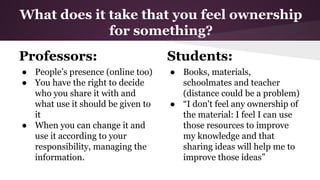
What does it take that you feel ownership
for something?
Professors:

Students:

● People’s presence (online too)
● You have the right to decide
who you share it with and
what use it should be given to
it
● When you can change it and
use it according to your
responsibility, managing the
information.

● Books, materials,
schoolmates and teacher
(distance could be a problem)
● “I don't feel any ownership of
the material: I feel I can use
those resources to improve
my knowledge and that
sharing ideas will help me to
improve those ideas”
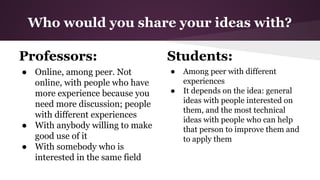
Who would you share your ideas with?
Professors:
● Online, among peer. Not
online, with people who have
more experience because you
need more discussion; people
with different experiences
● With anybody willing to make
good use of it
● With somebody who is
interested in the same field

Students:
●
●

Among peer with different
experiences
It depends on the idea: general
ideas with people interested on
them, and the most technical
ideas with people who can help
that person to improve them and
to apply them
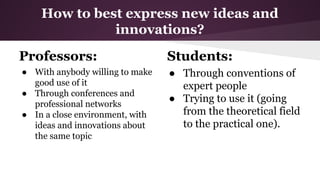
How to best express new ideas and
innovations?
Professors:

Students:

● With anybody willing to make
good use of it
● Through conferences and
professional networks
● In a close environment, with
ideas and innovations about
the same topic

● Through conventions of
expert people
● Trying to use it (going
from the theoretical field
to the practical one).
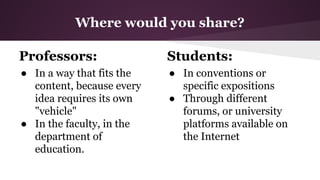
Where would you share?
Professors:

Students:

● In a way that fits the
content, because every
idea requires its own
"vehicle"
● In the faculty, in the
department of
education.

● In conventions or
specific expositions
● Through different
forums, or university
platforms available on
the Internet
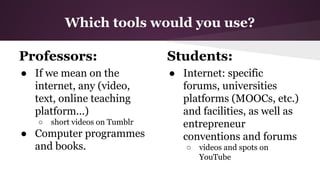
Which tools would you use?
Professors:

Students:

● If we mean on the
internet, any (video,
text, online teaching
platform...)

● Internet: specific
forums, universities
platforms (MOOCs, etc.)
and facilities, as well as
entrepreneur
conventions and forums

○

short videos on Tumblr

● Computer programmes
and books.

○

videos and spots on
YouTube
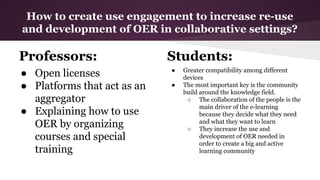
How to create use engagement to increase re-use
and development of OER in collaborative settings?

Professors:
● Open licenses
● Platforms that act as an
aggregator
● Explaining how to use
OER by organizing
courses and special
training

Students:
●
●

Greater compatibility among different
devices
The most important key is the community
build around the knowledge field.
○ The collaboration of the people is the
main driver of the e-learning
because they decide what they need
and what they want to learn
○ They increase the use and
development of OER needed in
order to create a big and active
learning community
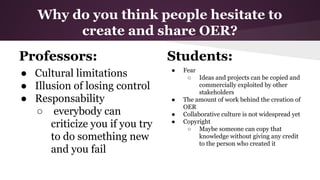
Why do you think people hesitate to
create and share OER?
Professors:
● Cultural limitations
● Illusion of losing control
● Responsability
○ everybody can
criticize you if you try
to do something new
and you fail

Students:
●

●
●
●

Fear
○ Ideas and projects can be copied and
commercially exploited by other
stakeholders
The amount of work behind the creation of
OER
Collaborative culture is not widespread yet
Copyright
○ Maybe someone can copy that
knowledge without giving any credit
to the person who created it
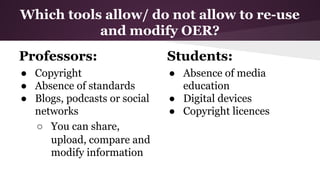
Which tools allow/ do not allow to re-use
and modify OER?
Professors:

Students:

● Copyright
● Absence of standards
● Blogs, podcasts or social
networks
○ You can share,
upload, compare and
modify information

● Absence of media
education
● Digital devices
● Copyright licences
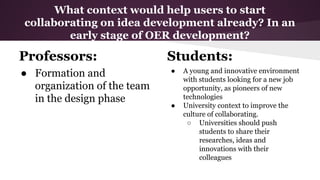
What context would help users to start
collaborating on idea development already? In an
early stage of OER development?

Professors:
● Formation and
organization of the team
in the design phase

Students:
●

●

A young and innovative environment
with students looking for a new job
opportunity, as pioneers of new
technologies
University context to improve the
culture of collaborating.
○ Universities should push
students to share their
researches, ideas and
innovations with their
colleagues
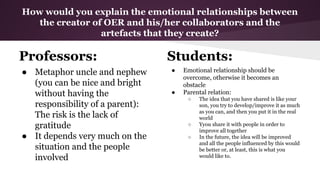
How would you explain the emotional relationships between
the creator of OER and his/her collaborators and the
artefacts that they create?

Professors:
● Metaphor uncle and nephew
(you can be nice and bright
without having the
responsibility of a parent):
The risk is the lack of
gratitude
● It depends very much on the
situation and the people
involved

Students:
●

●

Emotional relationship should be
overcome, otherwise it becomes an
obstacle
Parental relation:
○

○
○

The idea that you have shared is like your
son, you try to develop/improve it as much
as you can, and then you put it in the real
world
Yyou share it with people in order to
improve all together
In the future, the idea will be improved
and all the people influenced by this would
be better or, at least, this is what you
would like to.
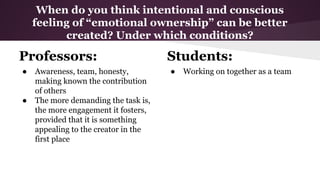
When do you think intentional and conscious
feeling of “emotional ownership” can be better
created? Under which conditions?

Professors:
●

●

Awareness, team, honesty,
making known the contribution
of others
The more demanding the task is,
the more engagement it fosters,
provided that it is something
appealing to the creator in the
first place

Students:
●

Working on together as a team
Thank you
for your
attention!

Task 3 challenges and perspectives for oer development and re-use

  • 1.
    TASK 3 Challenges andperspectives for OER development and re-use Group 1 Livia Di Paola Ana Martínez Alonso Beatriz Mª Luzón Medina
  • 2.
    Have you usedOER for learning or teaching? Professors: Students: ● Teaching ● Learning ● Researching ● Learning ● Researching ○ Wikis, virtual courses, moodle & social networks
  • 3.
    What does ittake that you feel ownership for something? Professors: Students: ● People’s presence (online too) ● You have the right to decide who you share it with and what use it should be given to it ● When you can change it and use it according to your responsibility, managing the information. ● Books, materials, schoolmates and teacher (distance could be a problem) ● “I don't feel any ownership of the material: I feel I can use those resources to improve my knowledge and that sharing ideas will help me to improve those ideas”
  • 4.
    Who would youshare your ideas with? Professors: ● Online, among peer. Not online, with people who have more experience because you need more discussion; people with different experiences ● With anybody willing to make good use of it ● With somebody who is interested in the same field Students: ● ● Among peer with different experiences It depends on the idea: general ideas with people interested on them, and the most technical ideas with people who can help that person to improve them and to apply them
  • 5.
    How to bestexpress new ideas and innovations? Professors: Students: ● With anybody willing to make good use of it ● Through conferences and professional networks ● In a close environment, with ideas and innovations about the same topic ● Through conventions of expert people ● Trying to use it (going from the theoretical field to the practical one).
  • 6.
    Where would youshare? Professors: Students: ● In a way that fits the content, because every idea requires its own "vehicle" ● In the faculty, in the department of education. ● In conventions or specific expositions ● Through different forums, or university platforms available on the Internet
  • 7.
    Which tools wouldyou use? Professors: Students: ● If we mean on the internet, any (video, text, online teaching platform...) ● Internet: specific forums, universities platforms (MOOCs, etc.) and facilities, as well as entrepreneur conventions and forums ○ short videos on Tumblr ● Computer programmes and books. ○ videos and spots on YouTube
  • 8.
    How to createuse engagement to increase re-use and development of OER in collaborative settings? Professors: ● Open licenses ● Platforms that act as an aggregator ● Explaining how to use OER by organizing courses and special training Students: ● ● Greater compatibility among different devices The most important key is the community build around the knowledge field. ○ The collaboration of the people is the main driver of the e-learning because they decide what they need and what they want to learn ○ They increase the use and development of OER needed in order to create a big and active learning community
  • 9.
    Why do youthink people hesitate to create and share OER? Professors: ● Cultural limitations ● Illusion of losing control ● Responsability ○ everybody can criticize you if you try to do something new and you fail Students: ● ● ● ● Fear ○ Ideas and projects can be copied and commercially exploited by other stakeholders The amount of work behind the creation of OER Collaborative culture is not widespread yet Copyright ○ Maybe someone can copy that knowledge without giving any credit to the person who created it
  • 10.
    Which tools allow/do not allow to re-use and modify OER? Professors: Students: ● Copyright ● Absence of standards ● Blogs, podcasts or social networks ○ You can share, upload, compare and modify information ● Absence of media education ● Digital devices ● Copyright licences
  • 11.
    What context wouldhelp users to start collaborating on idea development already? In an early stage of OER development? Professors: ● Formation and organization of the team in the design phase Students: ● ● A young and innovative environment with students looking for a new job opportunity, as pioneers of new technologies University context to improve the culture of collaborating. ○ Universities should push students to share their researches, ideas and innovations with their colleagues
  • 12.
    How would youexplain the emotional relationships between the creator of OER and his/her collaborators and the artefacts that they create? Professors: ● Metaphor uncle and nephew (you can be nice and bright without having the responsibility of a parent): The risk is the lack of gratitude ● It depends very much on the situation and the people involved Students: ● ● Emotional relationship should be overcome, otherwise it becomes an obstacle Parental relation: ○ ○ ○ The idea that you have shared is like your son, you try to develop/improve it as much as you can, and then you put it in the real world Yyou share it with people in order to improve all together In the future, the idea will be improved and all the people influenced by this would be better or, at least, this is what you would like to.
  • 13.
    When do youthink intentional and conscious feeling of “emotional ownership” can be better created? Under which conditions? Professors: ● ● Awareness, team, honesty, making known the contribution of others The more demanding the task is, the more engagement it fosters, provided that it is something appealing to the creator in the first place Students: ● Working on together as a team
  • 14.