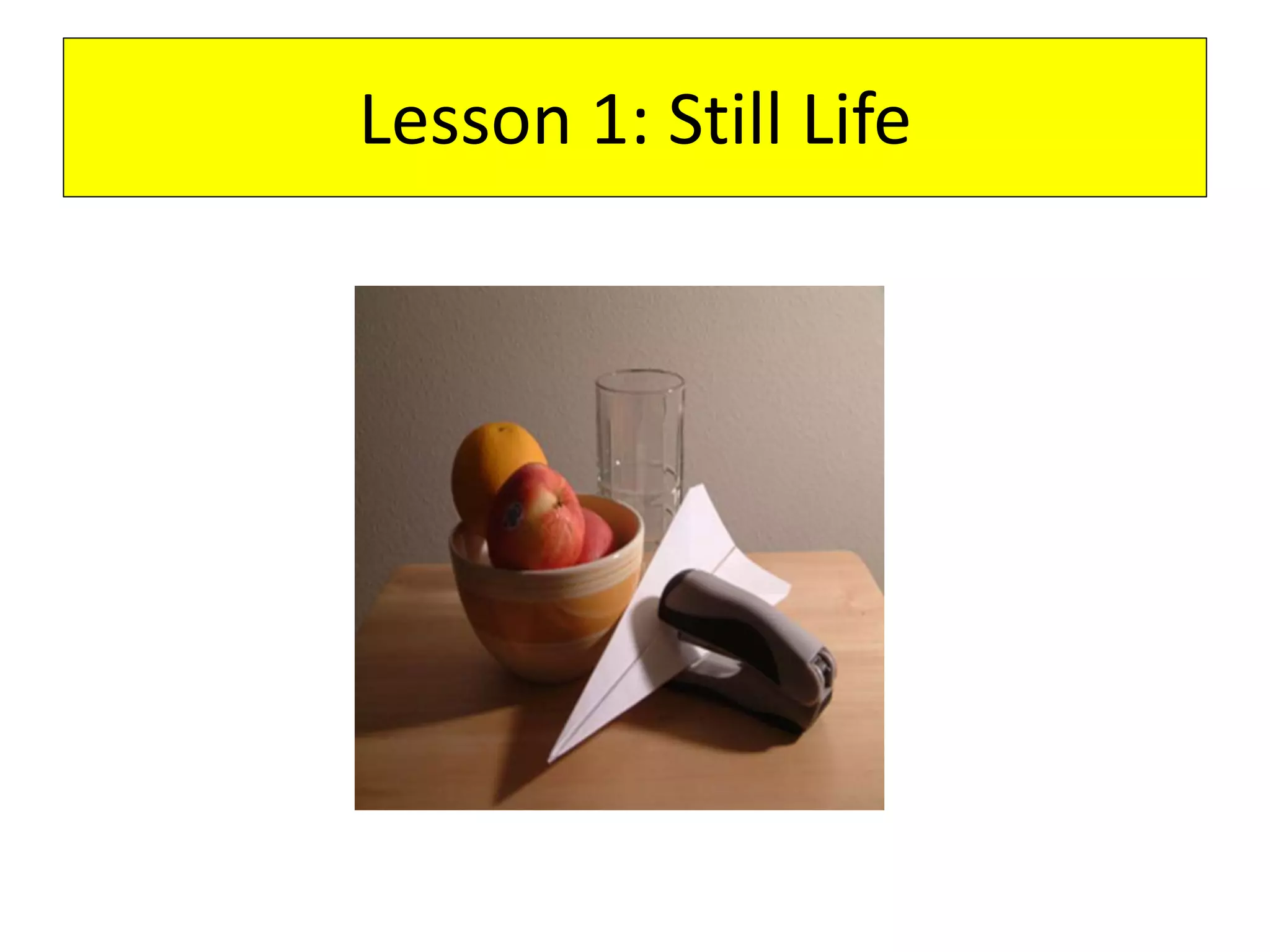
Lesson 1: Still Life
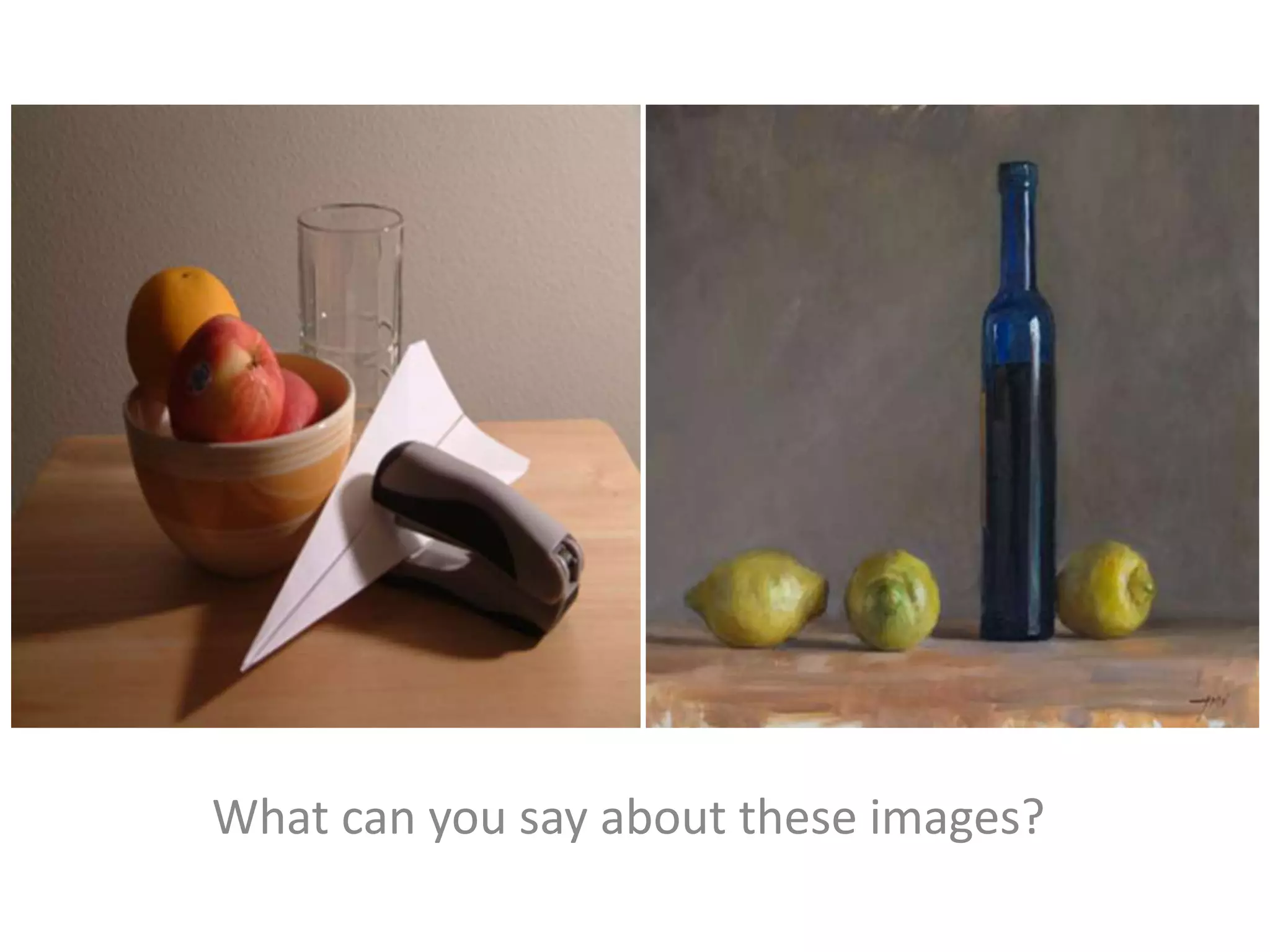
What can you say about these images?
Q1. What is a still life?
Q2. What then, is NOT still life?
Q3. Why have artists used still life?
Q4. How might we create our own still
life in our lesson?
NOW:
ON THE PAPER IN FRONT OF YOU:
Write down the following
questions
GROUP QUIZ (6 groups)
Still Life
A1.
Inanimate objects, not living, arranged
in a particular way used by artists to
improve drawing or painting skills.
These objects could be natural or man
made.
A2.
Moving living things, the human body.
A3.
As a way of practicing drawing and
painting to improving skills and create
artwork.
A4.
By arranging objects and recording
them from a specific viewpoint
Still Life
Portrayal of something inanimate: a representation of
inanimate objects such as fruit, flowers, or food, often in a
domestic setting, in paintings, pictures, or photographs.
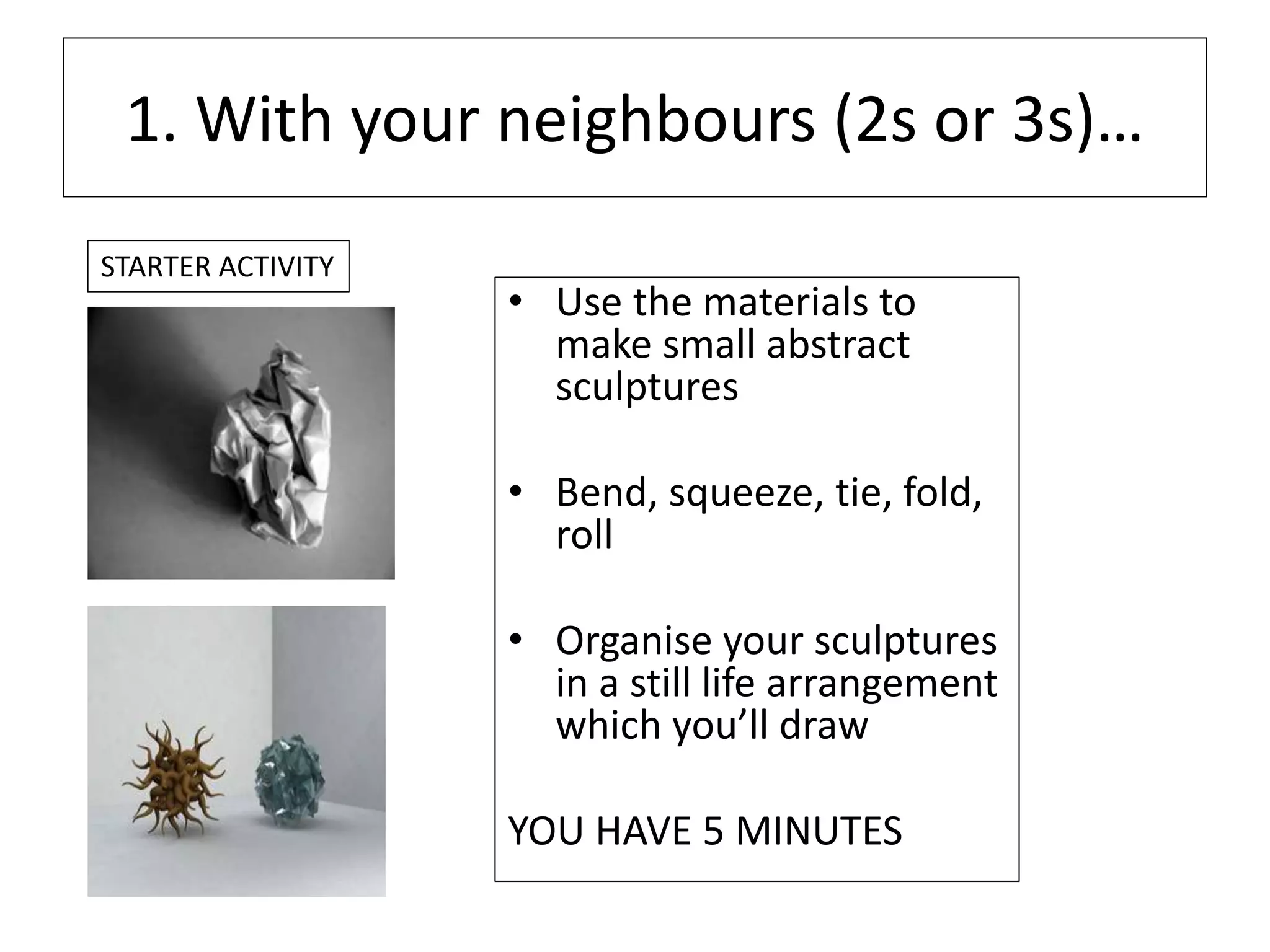
1. With your neighbours (2s or 3s)…
• Use the materials to
make small abstract
sculptures
• Bend, squeeze, tie, fold,
roll
• Organise your sculptures
in a still life arrangement
which you’ll draw
YOU HAVE 5 MINUTES
STARTER ACTIVITY
2. Gestural drawings
Make a small drawing
of the objects from the
angle you are sitting at.
You have 60 SECONDS
to include ALL of it
3. Continuous line
Now repeat the
drawing using one
continuous line-
you must NOT take
your pencil off the
page until the
drawing is complete
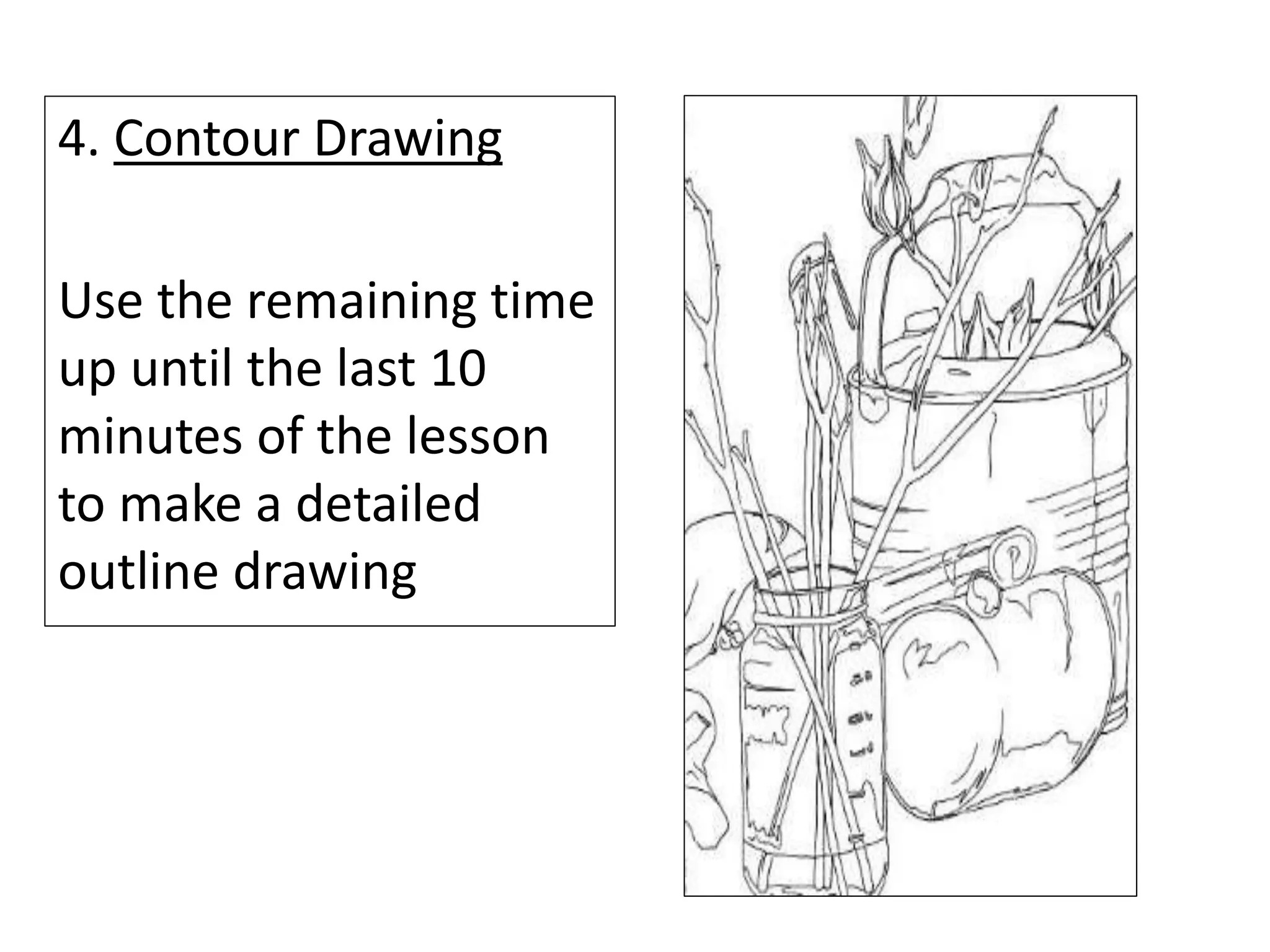
4. Contour Drawing
Use the remaining time
up until the last 10
minutes of the lesson
to make a detailed
outline drawing
Preparation: Now that you can
see how much information you
can record in a short amount of
time, you are going to create a
REALISTIC version of your piece.
Using all the techniques you have
already tried, create an
OBSEVATIONAL drawing of your
chosen objects.
ALWAYS LOOK AT YOUR OBJECTS.
MAIN ACTIVITY
Using a green pen… WWW, EBI
Which is your best technique? why? how could you improve your work?

Task 1 still life

  • 1.
  • 2.
    What can yousay about these images?
  • 3.
    Q1. What isa still life? Q2. What then, is NOT still life? Q3. Why have artists used still life? Q4. How might we create our own still life in our lesson? NOW: ON THE PAPER IN FRONT OF YOU: Write down the following questions GROUP QUIZ (6 groups)
  • 4.
    Still Life A1. Inanimate objects,not living, arranged in a particular way used by artists to improve drawing or painting skills. These objects could be natural or man made. A2. Moving living things, the human body. A3. As a way of practicing drawing and painting to improving skills and create artwork. A4. By arranging objects and recording them from a specific viewpoint
  • 5.
    Still Life Portrayal ofsomething inanimate: a representation of inanimate objects such as fruit, flowers, or food, often in a domestic setting, in paintings, pictures, or photographs.
  • 6.
    1. With yourneighbours (2s or 3s)… • Use the materials to make small abstract sculptures • Bend, squeeze, tie, fold, roll • Organise your sculptures in a still life arrangement which you’ll draw YOU HAVE 5 MINUTES STARTER ACTIVITY
  • 7.
    2. Gestural drawings Makea small drawing of the objects from the angle you are sitting at. You have 60 SECONDS to include ALL of it
  • 8.
    3. Continuous line Nowrepeat the drawing using one continuous line- you must NOT take your pencil off the page until the drawing is complete
  • 9.
    4. Contour Drawing Usethe remaining time up until the last 10 minutes of the lesson to make a detailed outline drawing
  • 10.
    Preparation: Now thatyou can see how much information you can record in a short amount of time, you are going to create a REALISTIC version of your piece. Using all the techniques you have already tried, create an OBSEVATIONAL drawing of your chosen objects. ALWAYS LOOK AT YOUR OBJECTS. MAIN ACTIVITY
  • 11.
    Using a greenpen… WWW, EBI Which is your best technique? why? how could you improve your work?