Confidential, Dynatrace LLC
Talking to People
The Forgotten DevOps Tool
Peter Varhol, Dynatrace LLC
About me
• International speaker and writer
• Degrees in Math, CS, Psychology
• Evangelist at Dynatrace
• Former university professor, tech
journalist
“Conversation? It died in 2009.”
Confidential, Dynatrace LLC
Agenda
• Why DevOps?
• What is killing conversation
• Giving up control
• Next steps
Why Devops?
• It’s all about these things
• We don’t talk enough
What Do We Do Instead?
The economy's biggest problem now: the smartphone?
The economy has a problem: Workers just aren't producing as
much as they once did.
Some blame social media. Employees might feel like they're toiling
away at the office, but if they are tweeting and Facebook messaging
their friends, that's not doing much to boost the economy.
Have you Ever . . .
• Checked email in a meeting?
• Updated Facebook for a quick break?
• Pulled out your phone because you
were bored?
• Stopped texting because you didn’t like
where the conversation was going?
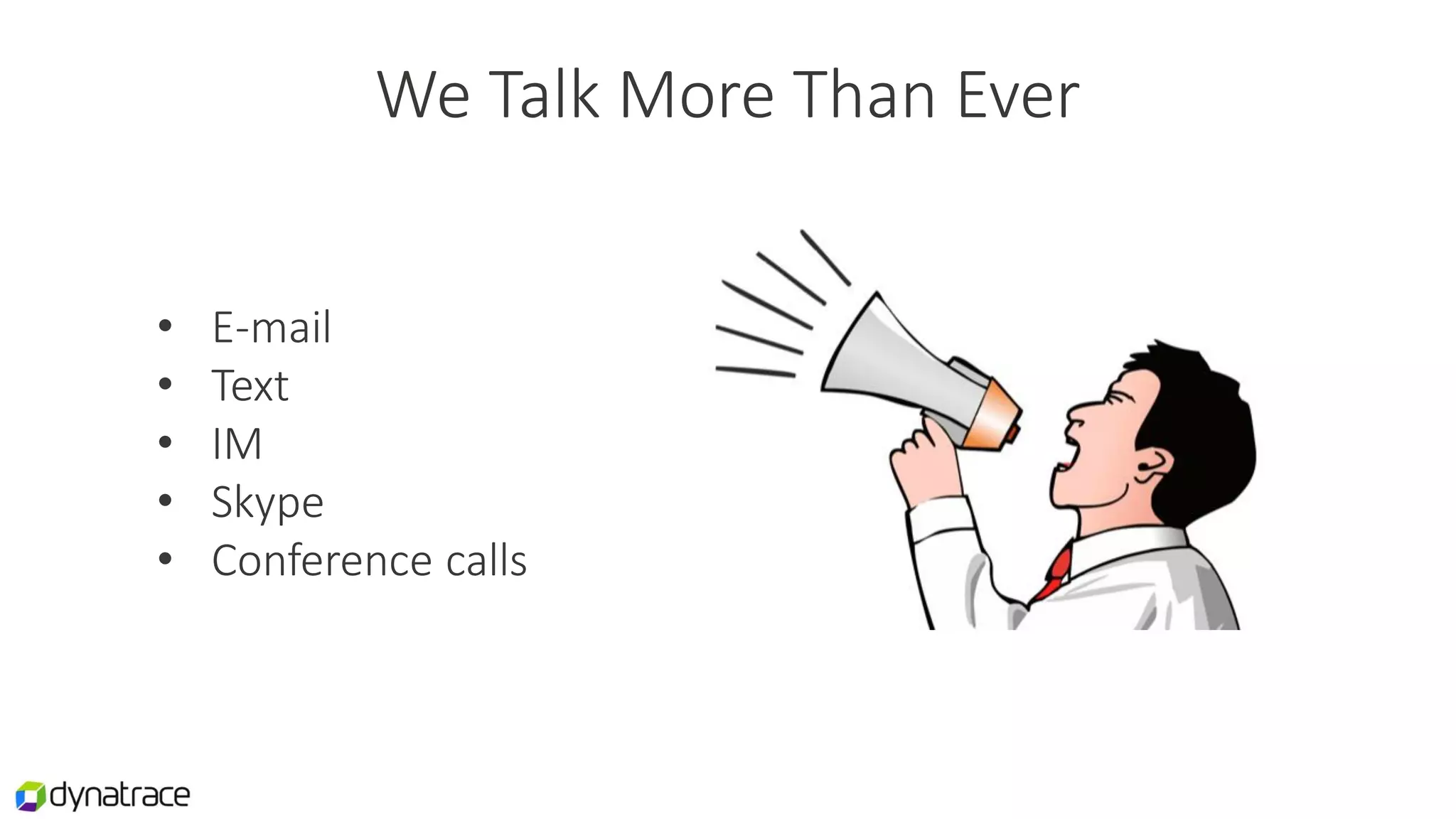
We Talk More Than Ever
• E-mail
• Text
• IM
• Skype
• Conference calls
Even
• Yes, Emoji
But We Say Less Than Ever
• “Let’s touch base”
• We comment on the inane
• We script our conversations
• No spontaneity
Why Do We Do This?
It’s All About Control
• We are juggling more tasks than ever
• Our lives feel out of control
• Talking to people is unpredictable
• We try to make it predictable
• We don’t want the stress
We are in control when we’re not face to face
• We can choose to initiate a
conversation
• We can edit what we say
• We can choose when it’s over
No,
We Are Not Invincible
But We Have a Need to Be in Control
• We are afraid to be spontaneous
• We want to be the person we
would like to be
• That means not showing our
true selves
Our Excuses
• I don’t have the time
• I’m not good face to face
• I stress at encounters
• I need “white space”
• I’m more productive online
• I need a record
Why Talk At All?
• The 7 percent rule
• 7 percent of information exchanged is verbal
• The non-verbal component was body
language (55 percent) and tone of voice (38
percent)
• This is a measure of information conveyed
What We Lose Through Our Devices
• Spontaneity
• Flow of random ideas
• Unexpected solutions
• Unexpected problems
• Most important
• Practice
Enter DevOps
• Breaks down silos
• Combines elements of development and operations
• Enables fast deployments
• Identifies and fixes problems quickly
The Role of Communications
• Streamline processes
• Share insights
• Get work done
• Solve problems
Designing for Conversation
• Put people together in non-meeting settings
• Lunchroom
• Offsites
• Work spaces
• Standups
And Leadership
• Lead by example
• Put the phone away during meetings
• Provide time for conversation
• Don’t send mixed messages
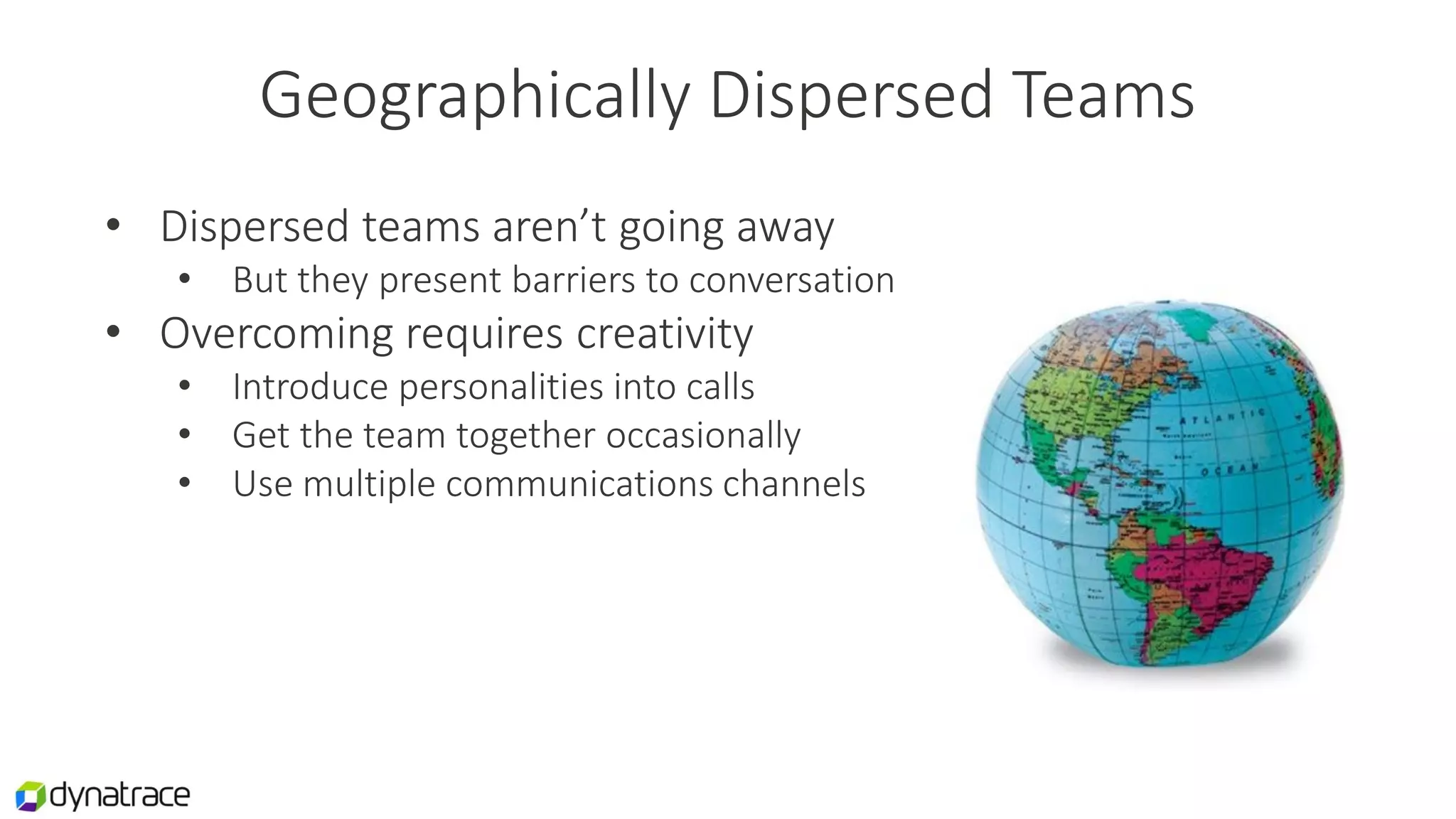
Geographically Dispersed Teams
• Dispersed teams aren’t going away
• But they present barriers to conversation
• Overcoming requires creativity
• Introduce personalities into calls
• Get the team together occasionally
• Use multiple communications channels
The Role of ChatOps
• Intriguing technology for combining
communications and action
• Talk to team members
• Exchange data and files
• Execute scripts and perform other
actions
Why Talk?
• You solve problems more quickly
• You address issues you never knew you had
• You establish trust
• You get practice
References
• Reclaiming Conversation: The Power of Talk in the Digital
Age, by Sherry Turkle
• U.S. economy's biggest problem now: the smartphone
• http://money.cnn.com/2016/08/23/news/economy/us-
economy-low-productivity/index.html
Thank You
Peter Varhol
Dynatrace LLC
peter.varhol@Dynatrace.com

Talking to people: the forgotten DevOps tool

  • 1.
    Confidential, Dynatrace LLC Talkingto People The Forgotten DevOps Tool Peter Varhol, Dynatrace LLC
  • 2.
    About me • Internationalspeaker and writer • Degrees in Math, CS, Psychology • Evangelist at Dynatrace • Former university professor, tech journalist
  • 3.
  • 4.
  • 5.
    Agenda • Why DevOps? •What is killing conversation • Giving up control • Next steps
  • 6.
    Why Devops? • It’sall about these things • We don’t talk enough
  • 7.
    What Do WeDo Instead? The economy's biggest problem now: the smartphone? The economy has a problem: Workers just aren't producing as much as they once did. Some blame social media. Employees might feel like they're toiling away at the office, but if they are tweeting and Facebook messaging their friends, that's not doing much to boost the economy.
  • 8.
    Have you Ever. . . • Checked email in a meeting? • Updated Facebook for a quick break? • Pulled out your phone because you were bored? • Stopped texting because you didn’t like where the conversation was going?
  • 10.
    We Talk MoreThan Ever • E-mail • Text • IM • Skype • Conference calls
  • 11.
  • 12.
    But We SayLess Than Ever • “Let’s touch base” • We comment on the inane • We script our conversations • No spontaneity
  • 13.
    Why Do WeDo This?
  • 14.
    It’s All AboutControl • We are juggling more tasks than ever • Our lives feel out of control • Talking to people is unpredictable • We try to make it predictable • We don’t want the stress
  • 15.
    We are incontrol when we’re not face to face • We can choose to initiate a conversation • We can edit what we say • We can choose when it’s over
  • 17.
    No, We Are NotInvincible
  • 18.
    But We Havea Need to Be in Control • We are afraid to be spontaneous • We want to be the person we would like to be • That means not showing our true selves
  • 19.
    Our Excuses • Idon’t have the time • I’m not good face to face • I stress at encounters • I need “white space” • I’m more productive online • I need a record
  • 20.
    Why Talk AtAll? • The 7 percent rule • 7 percent of information exchanged is verbal • The non-verbal component was body language (55 percent) and tone of voice (38 percent) • This is a measure of information conveyed
  • 21.
    What We LoseThrough Our Devices • Spontaneity • Flow of random ideas • Unexpected solutions • Unexpected problems • Most important • Practice
  • 22.
    Enter DevOps • Breaksdown silos • Combines elements of development and operations • Enables fast deployments • Identifies and fixes problems quickly
  • 23.
    The Role ofCommunications • Streamline processes • Share insights • Get work done • Solve problems
  • 24.
    Designing for Conversation •Put people together in non-meeting settings • Lunchroom • Offsites • Work spaces • Standups
  • 25.
    And Leadership • Leadby example • Put the phone away during meetings • Provide time for conversation • Don’t send mixed messages
  • 26.
    Geographically Dispersed Teams •Dispersed teams aren’t going away • But they present barriers to conversation • Overcoming requires creativity • Introduce personalities into calls • Get the team together occasionally • Use multiple communications channels
  • 27.
    The Role ofChatOps • Intriguing technology for combining communications and action • Talk to team members • Exchange data and files • Execute scripts and perform other actions
  • 28.
    Why Talk? • Yousolve problems more quickly • You address issues you never knew you had • You establish trust • You get practice
  • 29.
    References • Reclaiming Conversation:The Power of Talk in the Digital Age, by Sherry Turkle • U.S. economy's biggest problem now: the smartphone • http://money.cnn.com/2016/08/23/news/economy/us- economy-low-productivity/index.html
  • 30.
    Thank You Peter Varhol DynatraceLLC peter.varhol@Dynatrace.com