it's smarter to rent
than to buy ….
Agenda
 Introduction
 What is Cloud Computing?
 Cloud service models
Software as a Service (SaaS)
Platform as a Service (PaaS)
Infrastructure as a Service (IaaS)
 Cloud implementation types
 Advantages of Cloud Computing
 Dis-Advantages of Cloud Computing
 Conclusion
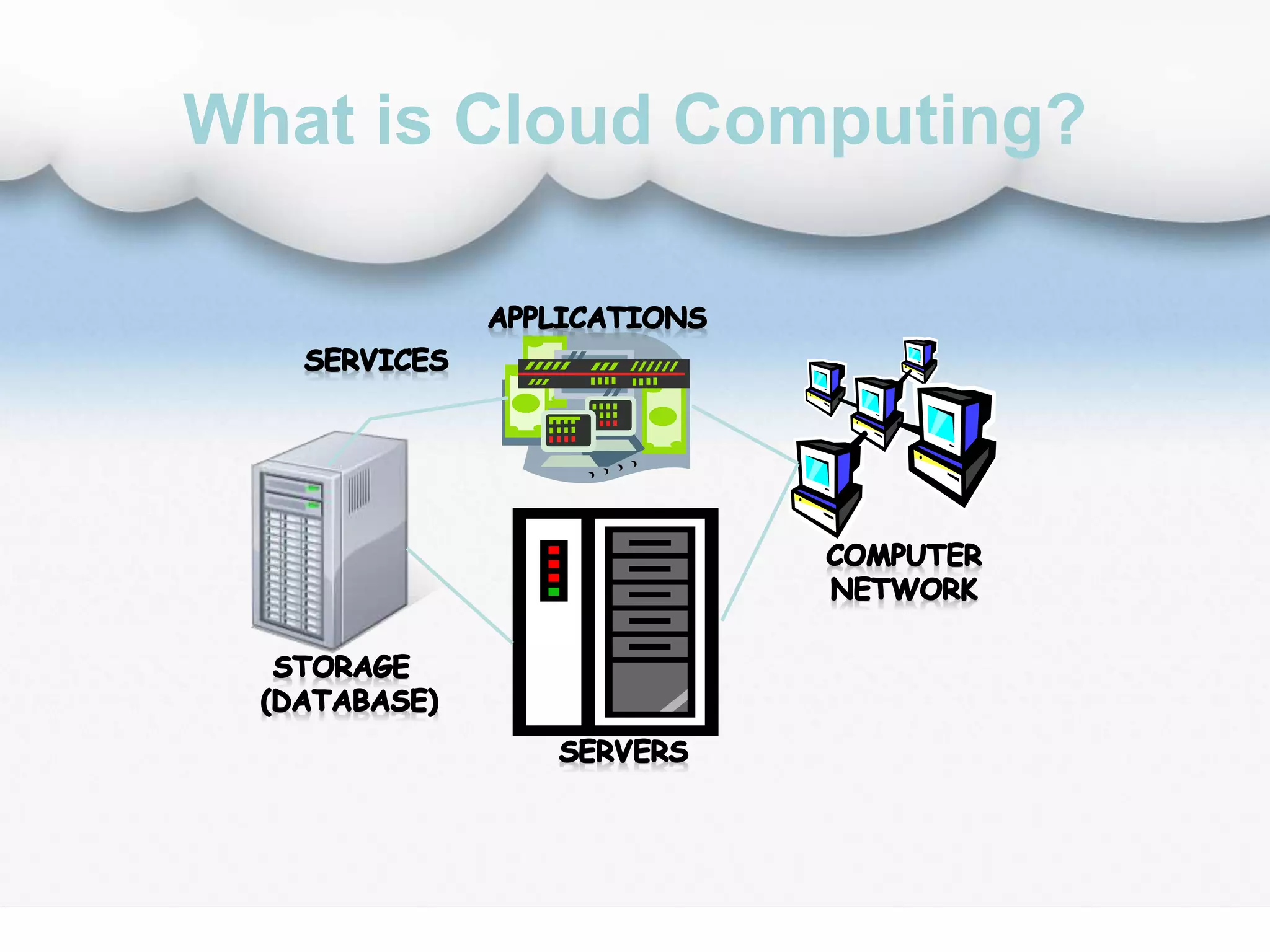
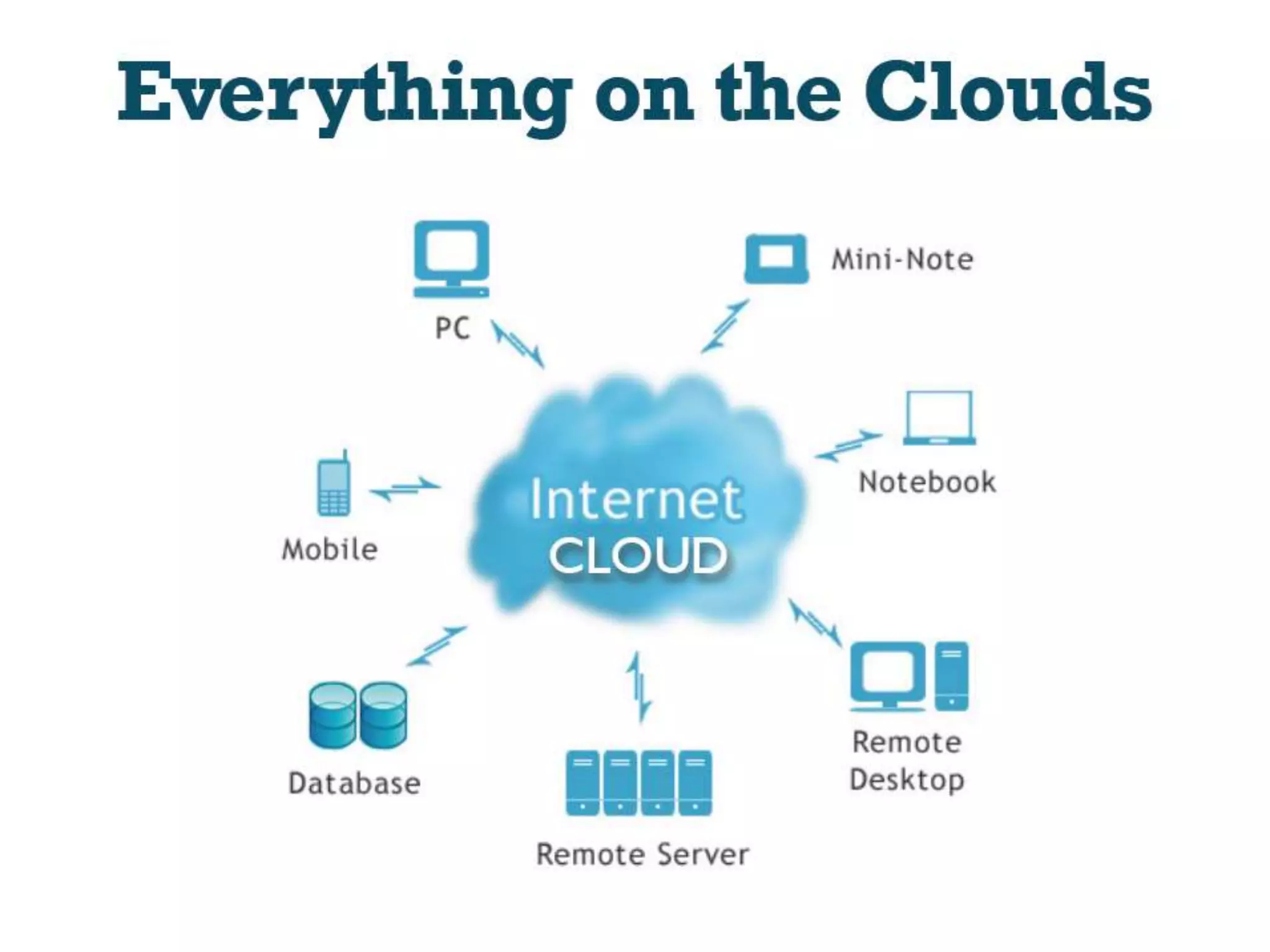
What is Cloud Computing?
DEFINITION :
Cloud Computing is the
type of Internet-based
computing where
different services such
as Servers,Storage are
delivered to an
organization’s
computers and Devices
through the Internet.
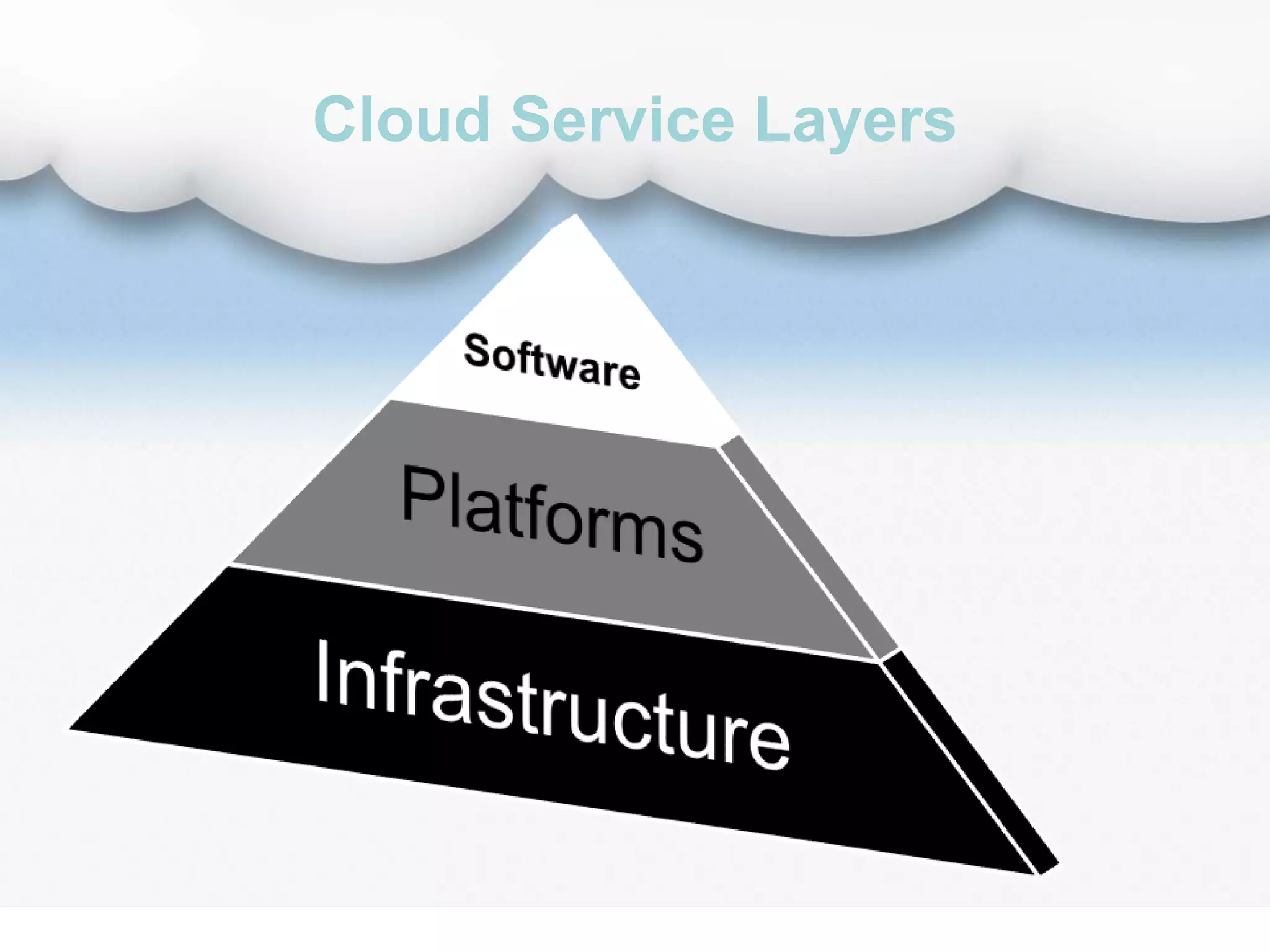
Cloud Service Layers
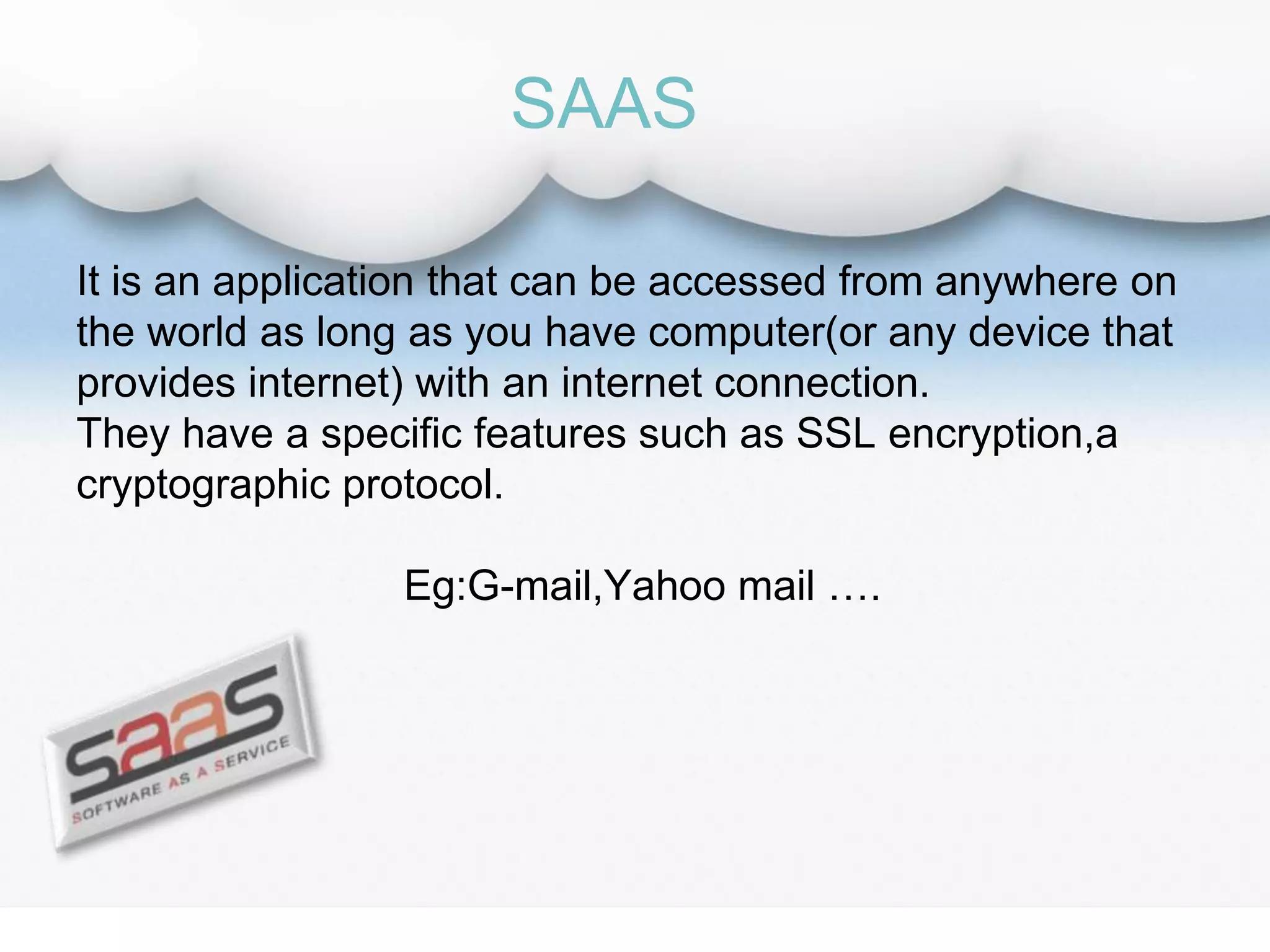
It is an application that can be accessed from anywhere on
the world as long as you have computer(or any device that
provides internet) with an internet connection.
They have a specific features such as SSL encryption,a
cryptographic protocol.
Eg:G-mail,Yahoo mail ….
SAAS
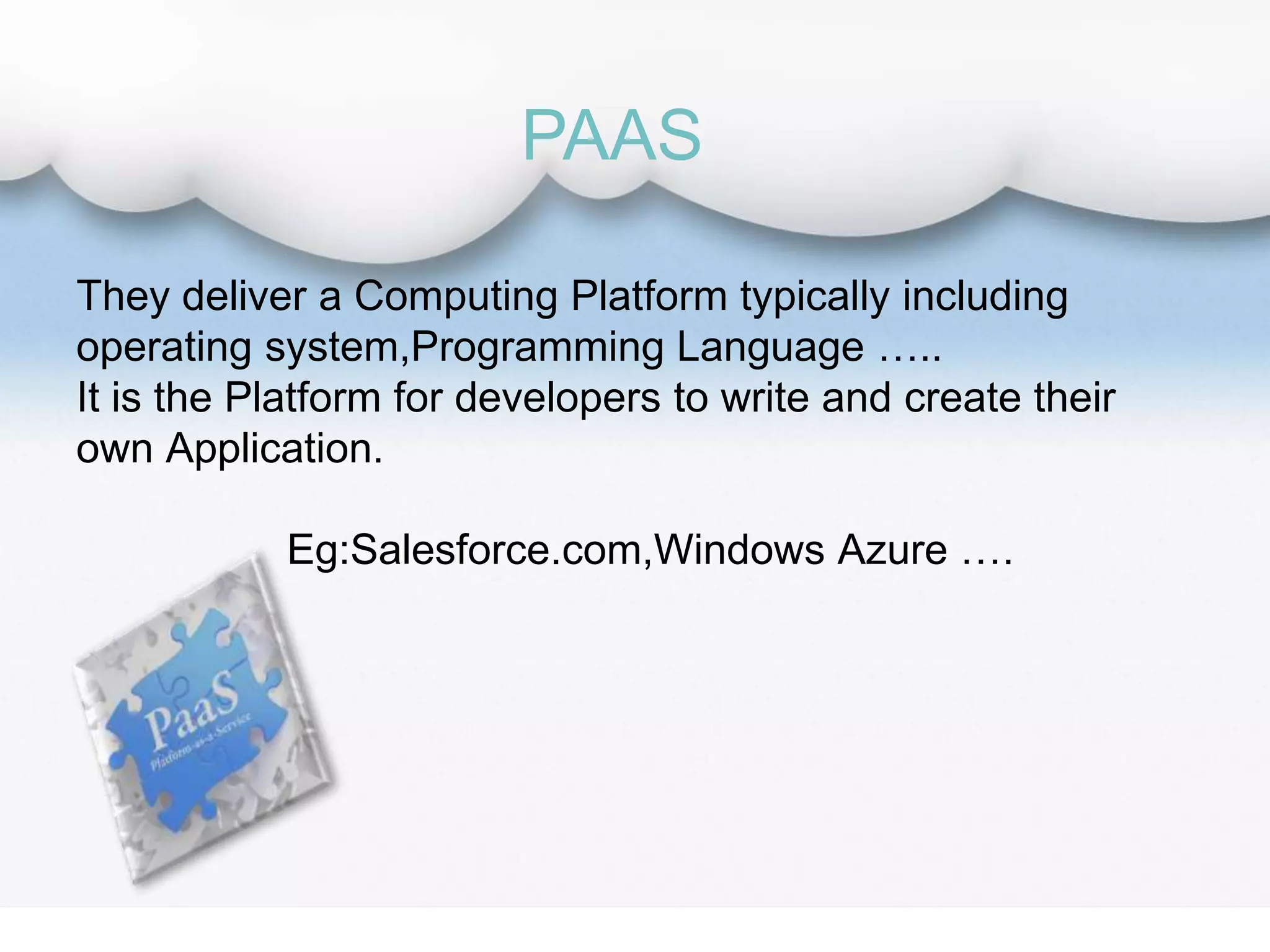
They deliver a Computing Platform typically including
operating system,Programming Language …..
It is the Platform for developers to write and create their
own Application.
Eg:Salesforce.com,Windows Azure ….
PAAS
It is also known as Hardware as a service.It is a computing
power that can rent for limited period of time.
Eg:Firewalls,Amazon EC2 …..
IAAS
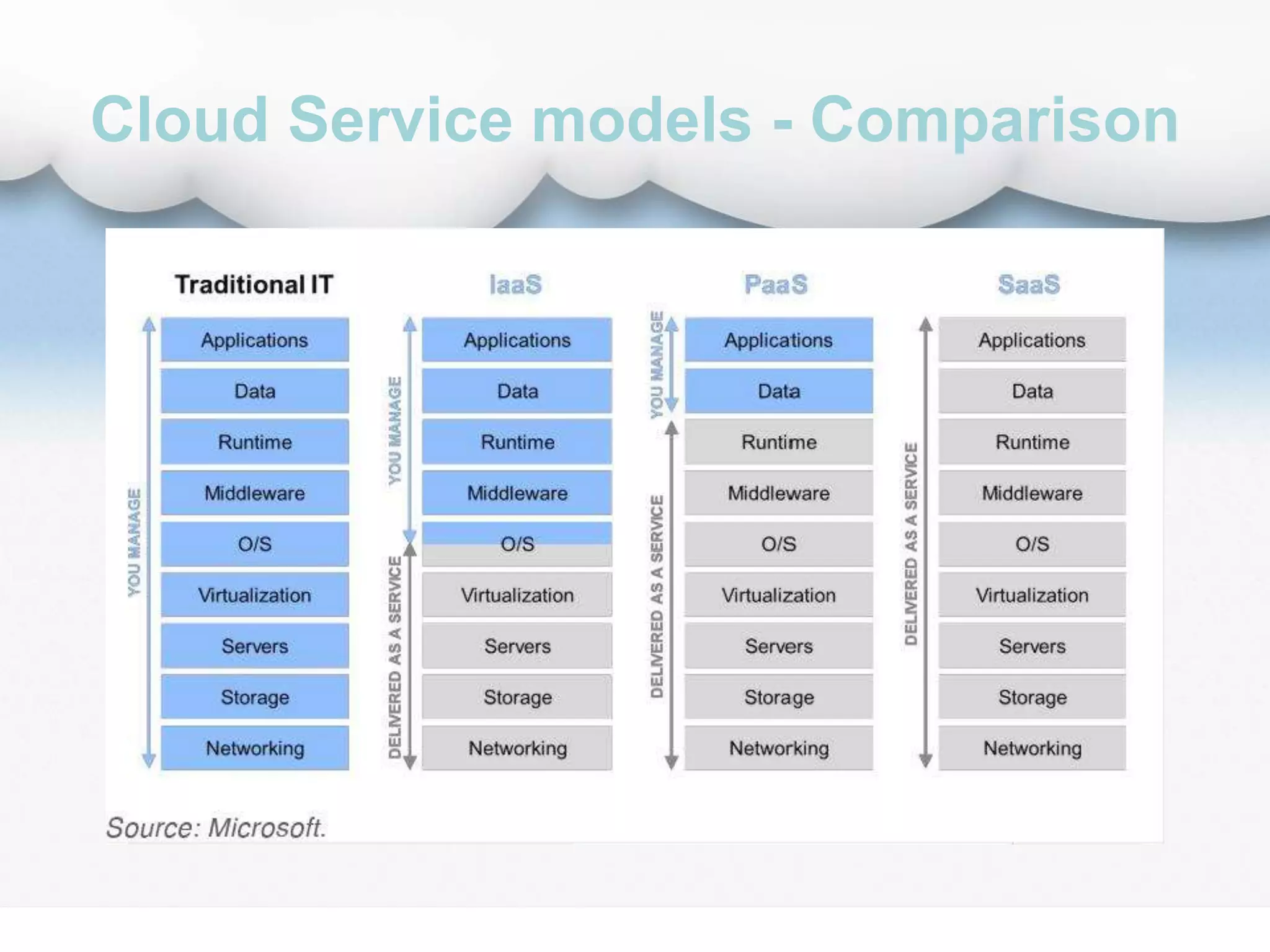
Cloud Service models - Comparison
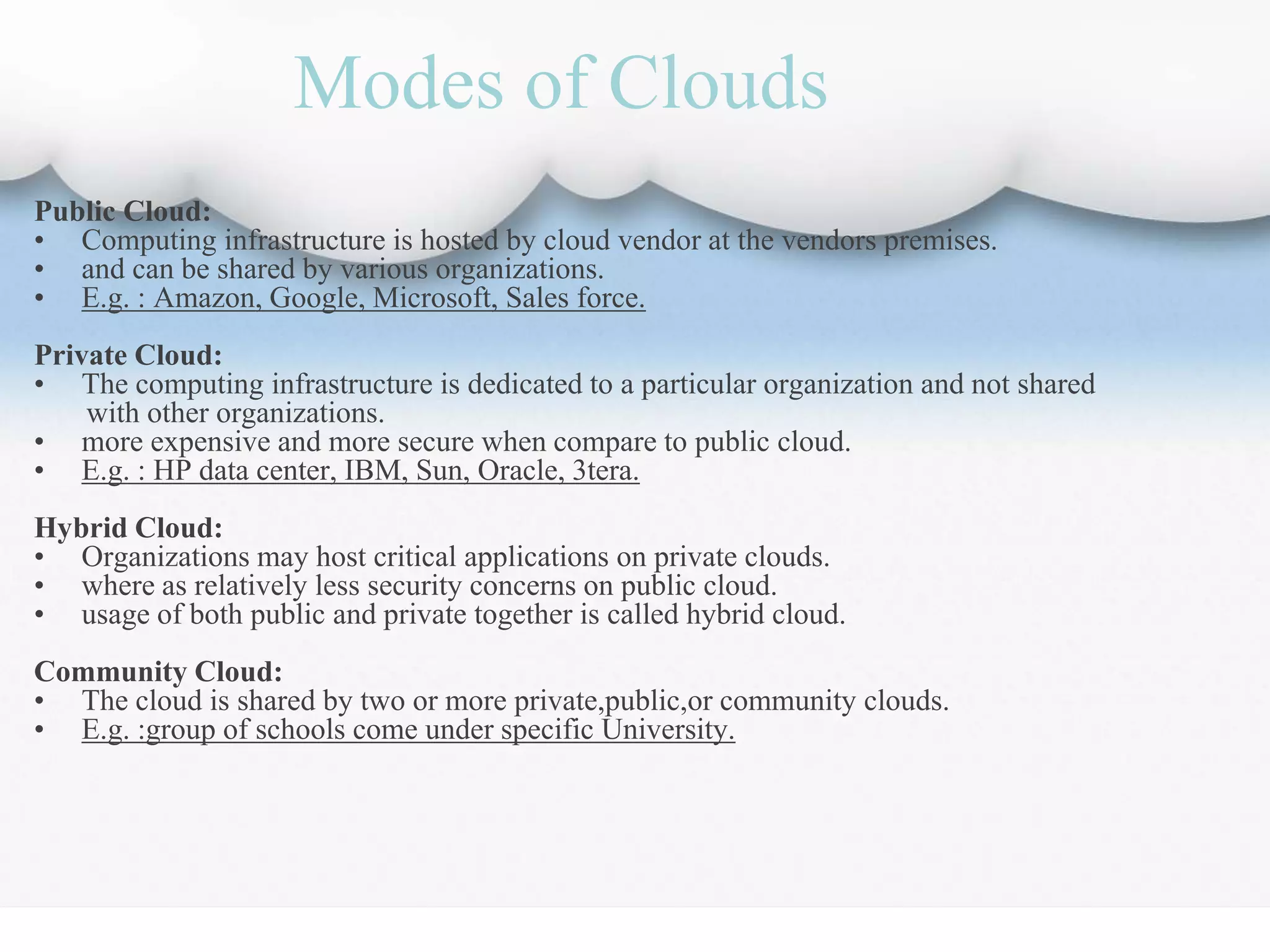
Modes of Clouds
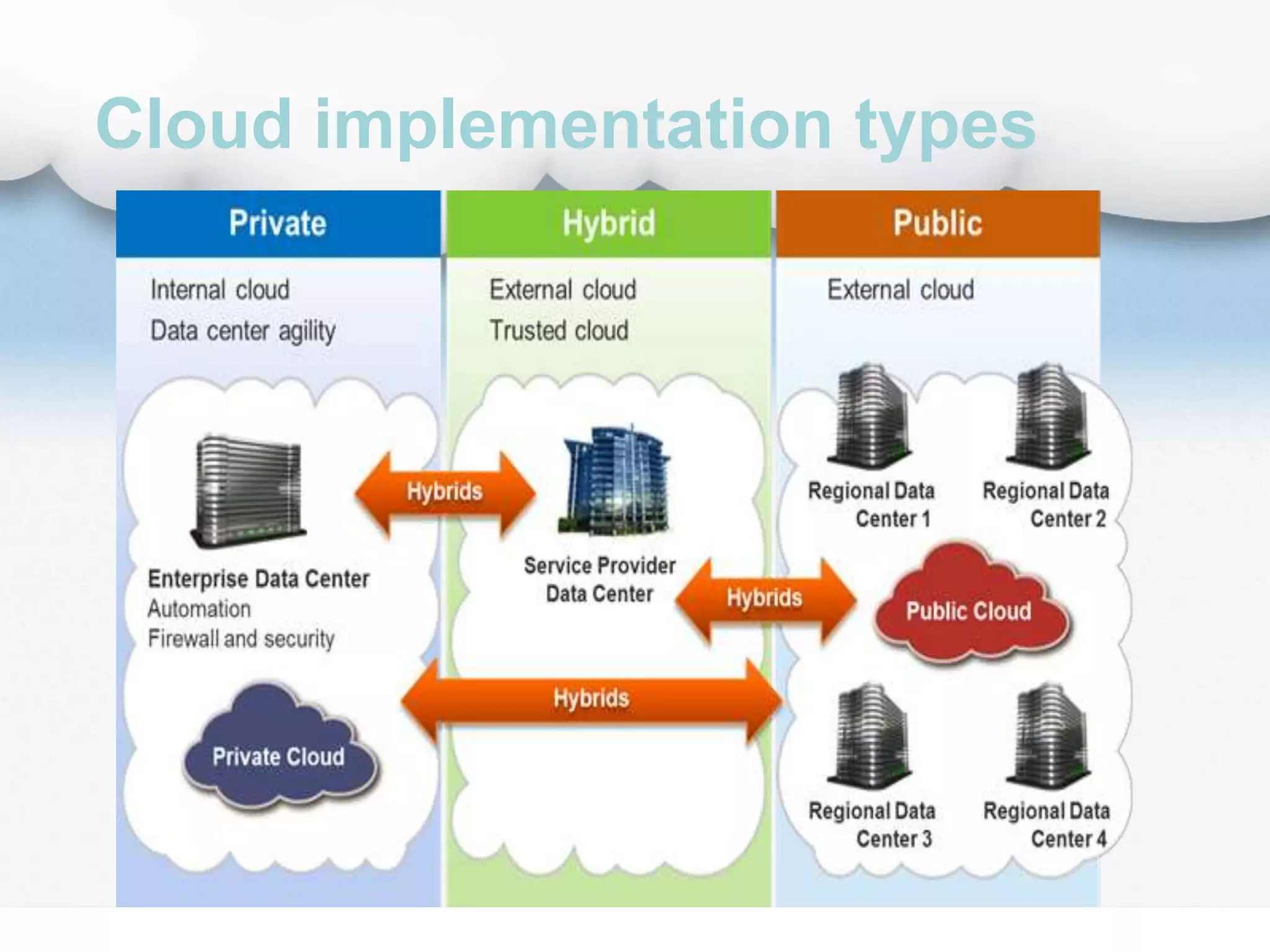
Public Cloud:
• Computing infrastructure is hosted by cloud vendor at the vendors premises.
• and can be shared by various organizations.
• E.g. : Amazon, Google, Microsoft, Sales force.
Private Cloud:
• The computing infrastructure is dedicated to a particular organization and not shared
with other organizations.
• more expensive and more secure when compare to public cloud.
• E.g. : HP data center, IBM, Sun, Oracle, 3tera.
Hybrid Cloud:
• Organizations may host critical applications on private clouds.
• where as relatively less security concerns on public cloud.
• usage of both public and private together is called hybrid cloud.
Community Cloud:
• The cloud is shared by two or more private,public,or community clouds.
• E.g. :group of schools come under specific University.
Cloud implementation types
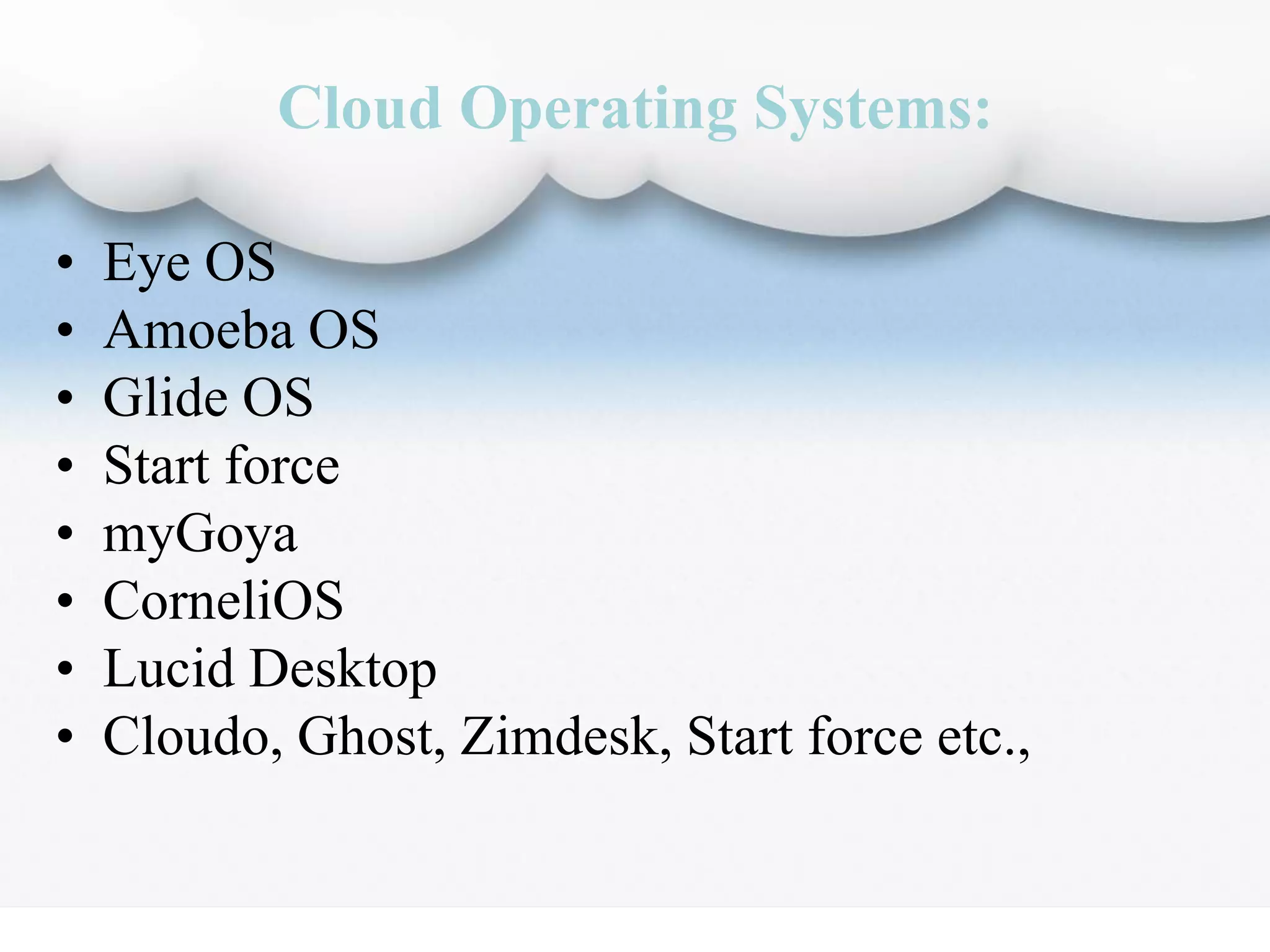
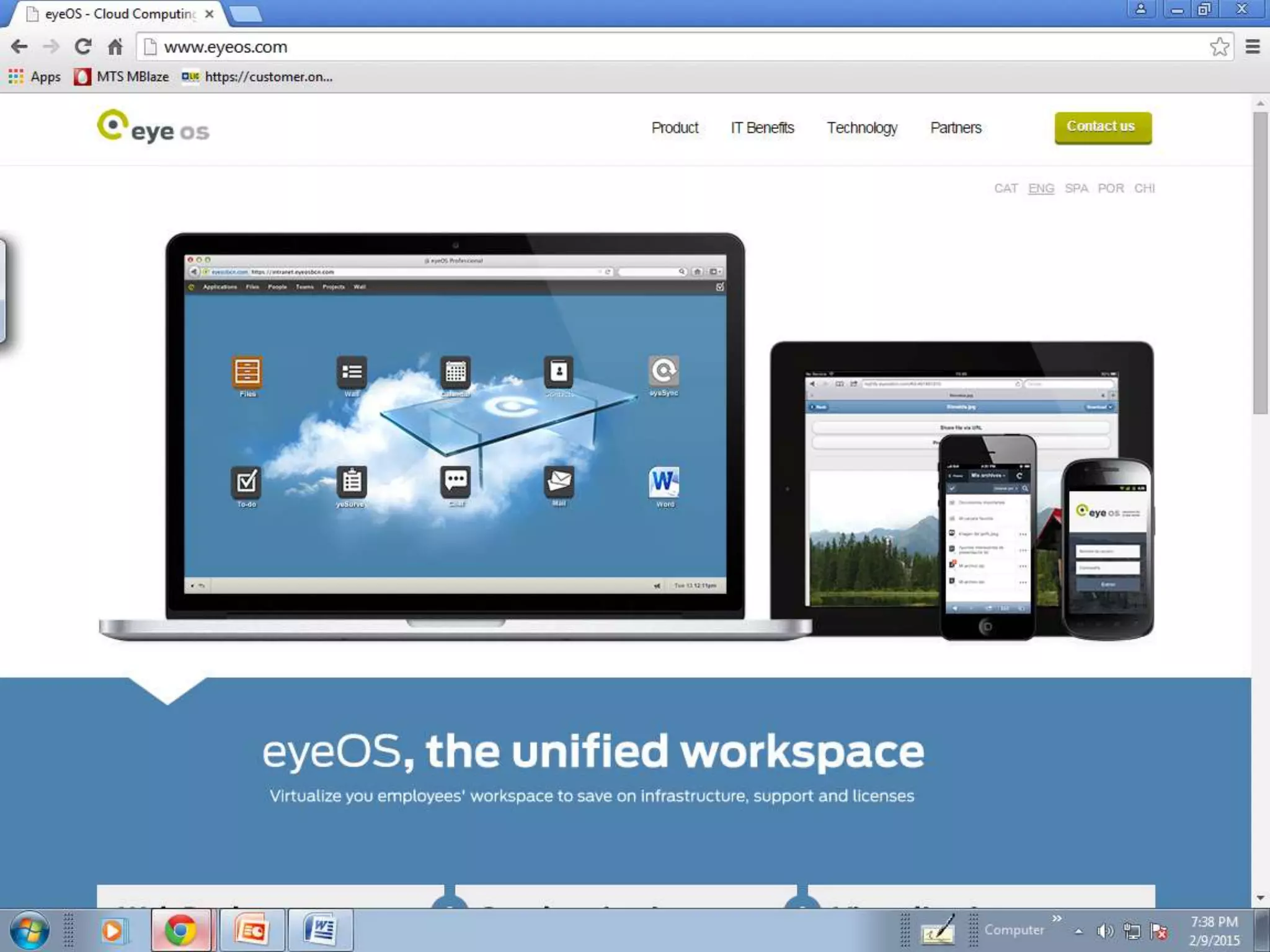
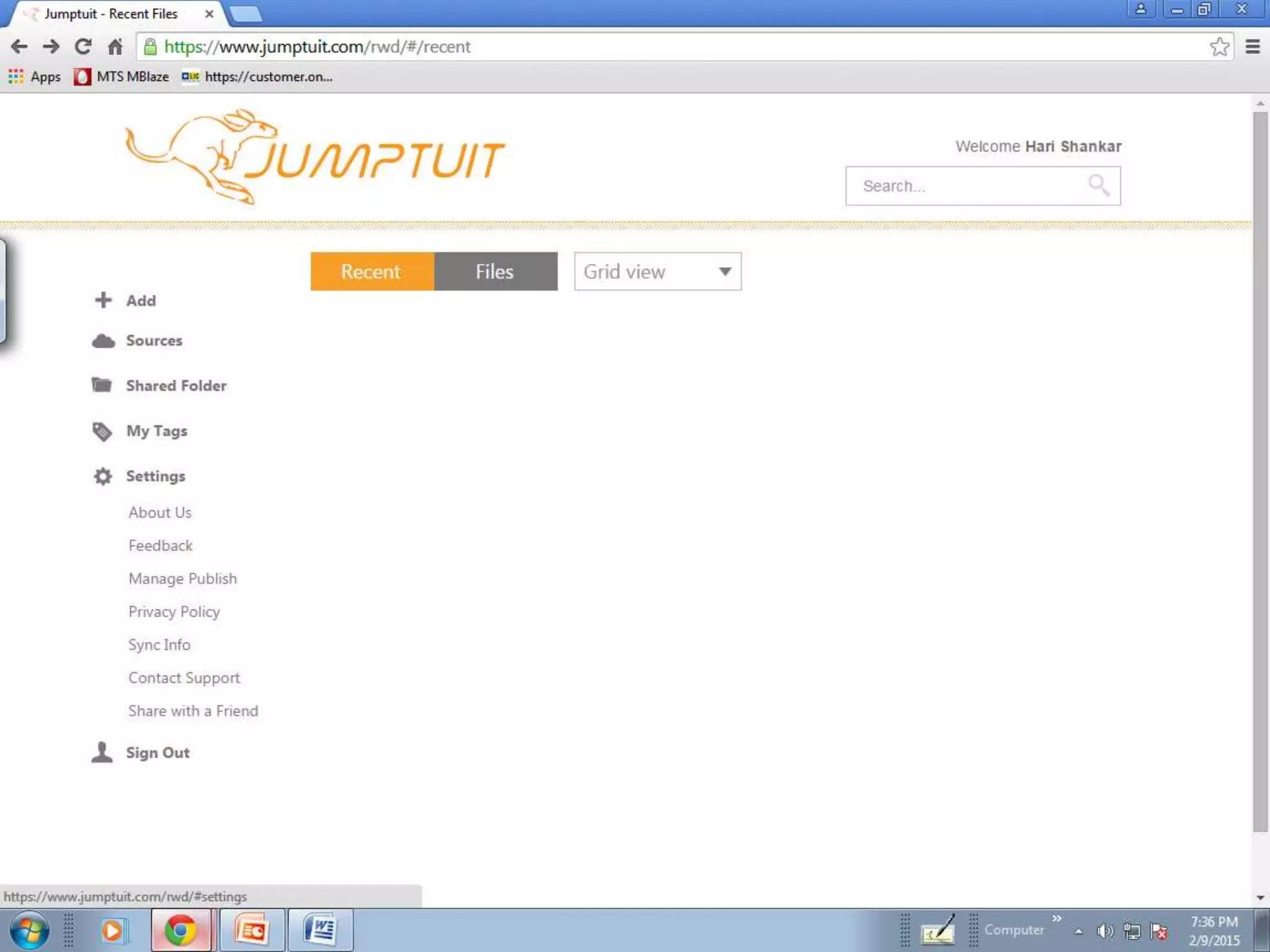
Cloud Operating Systems:
• Eye OS
• Amoeba OS
• Glide OS
• Start force
• myGoya
• CorneliOS
• Lucid Desktop
• Cloudo, Ghost, Zimdesk, Start force etc.,
Advantages of Cloud Computing :
• Lower Computing Cost
• Improved Performance
• Reduced Software Cost
• Instant Software Updates
• Unlimited Storage Capacity
• Increased Data Reliability
• Device Independence and the “always on!, anywhere
and any place”
• Free From Maintenance …..
DIS-ADVANTAGES OF CLOUD
COMPUTING :
• Storage Performance will never be as fast as
LOCAL DRIVES because they are stored in
Internet.
• Some users will not believe in the File security in
the cloud.
BY
HARI SHANKAR K
AMIRTH RAJ T

Cloud computing ppt

  • 1.
    it's smarter torent than to buy ….
  • 2.
    Agenda  Introduction  Whatis Cloud Computing?  Cloud service models Software as a Service (SaaS) Platform as a Service (PaaS) Infrastructure as a Service (IaaS)  Cloud implementation types  Advantages of Cloud Computing  Dis-Advantages of Cloud Computing  Conclusion
  • 3.
    What is CloudComputing?
  • 4.
    DEFINITION : Cloud Computingis the type of Internet-based computing where different services such as Servers,Storage are delivered to an organization’s computers and Devices through the Internet.
  • 6.
  • 7.
    It is anapplication that can be accessed from anywhere on the world as long as you have computer(or any device that provides internet) with an internet connection. They have a specific features such as SSL encryption,a cryptographic protocol. Eg:G-mail,Yahoo mail …. SAAS
  • 8.
    They deliver aComputing Platform typically including operating system,Programming Language ….. It is the Platform for developers to write and create their own Application. Eg:Salesforce.com,Windows Azure …. PAAS
  • 9.
    It is alsoknown as Hardware as a service.It is a computing power that can rent for limited period of time. Eg:Firewalls,Amazon EC2 ….. IAAS
  • 10.
  • 11.
    Modes of Clouds PublicCloud: • Computing infrastructure is hosted by cloud vendor at the vendors premises. • and can be shared by various organizations. • E.g. : Amazon, Google, Microsoft, Sales force. Private Cloud: • The computing infrastructure is dedicated to a particular organization and not shared with other organizations. • more expensive and more secure when compare to public cloud. • E.g. : HP data center, IBM, Sun, Oracle, 3tera. Hybrid Cloud: • Organizations may host critical applications on private clouds. • where as relatively less security concerns on public cloud. • usage of both public and private together is called hybrid cloud. Community Cloud: • The cloud is shared by two or more private,public,or community clouds. • E.g. :group of schools come under specific University.
  • 12.
  • 13.
    Cloud Operating Systems: •Eye OS • Amoeba OS • Glide OS • Start force • myGoya • CorneliOS • Lucid Desktop • Cloudo, Ghost, Zimdesk, Start force etc.,
  • 17.
    Advantages of CloudComputing : • Lower Computing Cost • Improved Performance • Reduced Software Cost • Instant Software Updates • Unlimited Storage Capacity • Increased Data Reliability • Device Independence and the “always on!, anywhere and any place” • Free From Maintenance …..
  • 18.
    DIS-ADVANTAGES OF CLOUD COMPUTING: • Storage Performance will never be as fast as LOCAL DRIVES because they are stored in Internet. • Some users will not believe in the File security in the cloud.
  • 19.