&
In This Together Series
Maintaining Your Culture in the Stay At Home
Economy
Ryan Scheuermann, Director of Engineering at InVision
- an 800-person fully remote unicorn
hello@salesimpactacademy.co.uk
CEOs and Founders
Webinar will be live at
4pm UK Time
presents
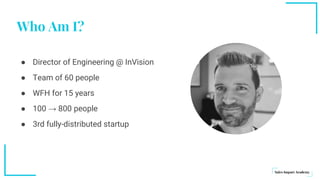
Who Am I?
● Director of Engineering @ InVision
● Team of 60 people
● WFH for 15 years
● 100 → 800 people
● 3rd fully-distributed startup
● Trust & psychological safety
● Autonomy
● Context
● Connection
Agenda
Trust &
psychological
safety
“A team is not a group of
people who work together. A
team is a group of people who
trust each other.”
- Simon Sinek
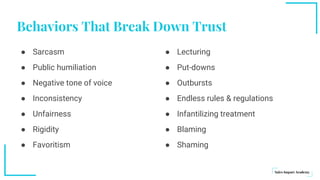
Behaviors That Break Down Trust
● Sarcasm
● Public humiliation
● Negative tone of voice

● Inconsistency
● Unfairness
● Rigidity
● Favoritism
● Lecturing
● Put-downs
● Outbursts
● Endless rules & regulations
● Infantilizing treatment
● Blaming
● Shaming
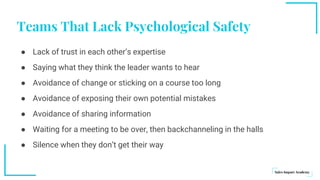
Teams That Lack Psychological Safety
● Lack of trust in each other’s expertise
● Saying what they think the leader wants to hear
● Avoidance of change or sticking on a course too long
● Avoidance of exposing their own potential mistakes
● Avoidance of sharing information
● Waiting for a meeting to be over, then backchanneling in the halls
● Silence when they don’t get their way
Behaviors You Want
● Showing interest in each other as people
● Expressing emotions such as enthusiasm, openness, and joy
● Not being rejected for stating what they think
● Openly sharing information
● Believing that others have positive intentions
● Constructive disagreement with leaders
● Leaders promote “outside the box” thinking, without judgement
Building A Safe Environment
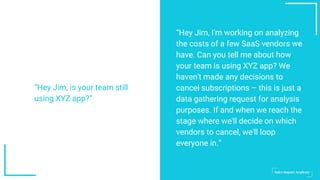
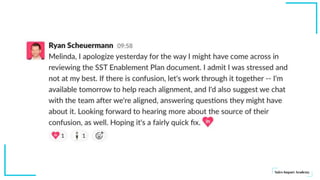
“Hey Jim, I'm working on analyzing
the costs of a few SaaS vendors we
have. Can you tell me about how
your team is using XYZ app? We
haven't made any decisions to
cancel subscriptions – this is just a
data gathering request for analysis
purposes. If and when we reach the
stage where we'll decide on which
vendors to cancel, we'll loop
everyone in.”
“Hey Jim, is your team still
using XYZ app?”
Assume the best &
Assume the worst
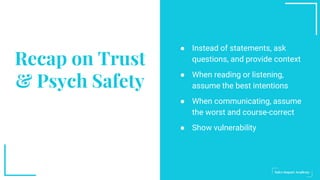
● Instead of statements, ask
questions, and provide context
● When reading or listening,
assume the best intentions
● When communicating, assume
the worst and course-correct
● Show vulnerability
Recap on Trust
& Psych Safety
Agenda
● Trust & psychological safety
● Autonomy
● Context
● Connection
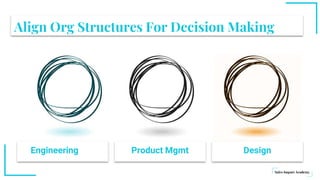
Engineering Product Mgmt Design
Align Org Structures For Decision Making
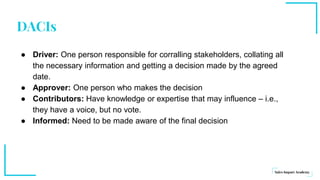
DACIs
● Driver: One person responsible for corralling stakeholders, collating all
the necessary information and getting a decision made by the agreed
date.
● Approver: One person who makes the decision
● Contributors: Have knowledge or expertise that may influence – i.e.,
they have a voice, but no vote.
● Informed: Need to be made aware of the final decision
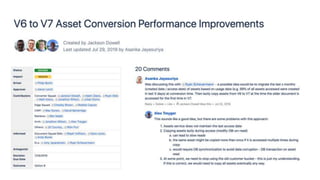
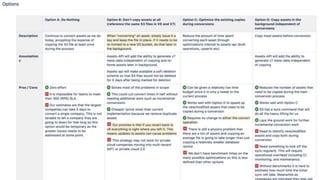
DACIs
DACIs
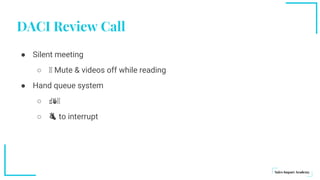
DACI Review Call
● Silent meeting
○ 🤫 Mute & videos off while reading
● Hand queue system
○ ☝️✌️🤫
○ 👌 to interrupt
Organizational
memory
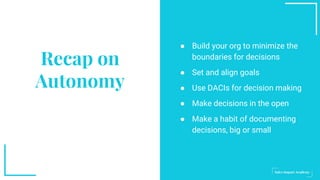
● Build your org to minimize the
boundaries for decisions
● Set and align goals
● Use DACIs for decision making
● Make decisions in the open
● Make a habit of documenting
decisions, big or small
Recap on
Autonomy
Agenda
● Trust & psychological safety
● Autonomy
● Context
● Connection
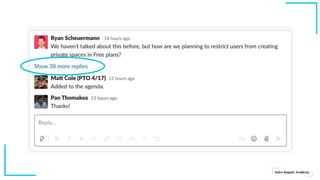
DACI Review CallEcho Chambers
Don’t Repeat
Yourself
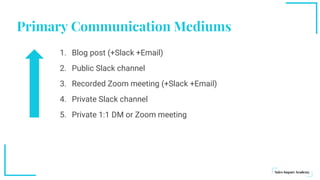
Primary Communication Mediums
1. Blog post (+Slack +Email)
2. Public Slack channel
3. Recorded Zoom meeting (+Slack +Email)
4. Private Slack channel
5. Private 1:1 DM or Zoom meeting
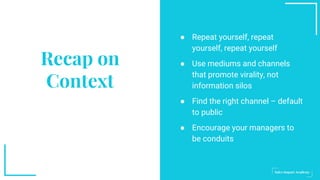
● Repeat yourself, repeat
yourself, repeat yourself
● Use mediums and channels
that promote virality, not
information silos
● Find the right channel – default
to public
● Encourage your managers to
be conduits
Recap on
Context
Agenda
● Trust & psychological safety
● Autonomy
● Context
● Connection
Connection &
Empathy
Trust &
Speed
Work Life
Integration
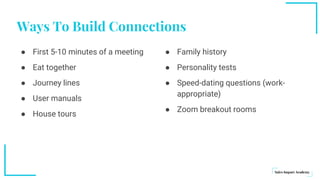
Ways To Build Connections
● First 5-10 minutes of a meeting
● Eat together
● Journey lines
● User manuals
● House tours
● Family history
● Personality tests
● Speed-dating questions (work-
appropriate)
● Zoom breakout rooms
Skip-level 1:1’s “As a boss, you’re not human
to someone.”
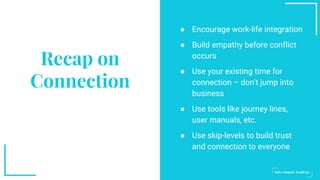
● Encourage work-life integration
● Build empathy before conflict
occurs
● Use your existing time for
connection – don't jump into
business
● Use tools like journey lines,
user manuals, etc.
● Use skip-levels to build trust
and connection to everyone
Recap on
Connection
Summary
● Build a safe environment
● Document decisions
● Spread context everywhere
● Make human connections
Q & A

Maintaining Your Culture Remotely

  • 1.
    & In This TogetherSeries Maintaining Your Culture in the Stay At Home Economy Ryan Scheuermann, Director of Engineering at InVision - an 800-person fully remote unicorn hello@salesimpactacademy.co.uk CEOs and Founders Webinar will be live at 4pm UK Time presents
  • 2.
    Who Am I? ●Director of Engineering @ InVision ● Team of 60 people ● WFH for 15 years ● 100 → 800 people ● 3rd fully-distributed startup
  • 3.
    ● Trust &psychological safety ● Autonomy ● Context ● Connection Agenda
  • 4.
    Trust & psychological safety “A teamis not a group of people who work together. A team is a group of people who trust each other.” - Simon Sinek
  • 5.
    Behaviors That BreakDown Trust ● Sarcasm ● Public humiliation ● Negative tone of voice ● Inconsistency ● Unfairness ● Rigidity ● Favoritism ● Lecturing ● Put-downs ● Outbursts ● Endless rules & regulations ● Infantilizing treatment ● Blaming ● Shaming
  • 6.
    Teams That LackPsychological Safety ● Lack of trust in each other’s expertise ● Saying what they think the leader wants to hear ● Avoidance of change or sticking on a course too long ● Avoidance of exposing their own potential mistakes ● Avoidance of sharing information ● Waiting for a meeting to be over, then backchanneling in the halls ● Silence when they don’t get their way
  • 7.
    Behaviors You Want ●Showing interest in each other as people ● Expressing emotions such as enthusiasm, openness, and joy ● Not being rejected for stating what they think ● Openly sharing information ● Believing that others have positive intentions ● Constructive disagreement with leaders ● Leaders promote “outside the box” thinking, without judgement
  • 8.
    Building A SafeEnvironment
  • 9.
    “Hey Jim, I'mworking on analyzing the costs of a few SaaS vendors we have. Can you tell me about how your team is using XYZ app? We haven't made any decisions to cancel subscriptions – this is just a data gathering request for analysis purposes. If and when we reach the stage where we'll decide on which vendors to cancel, we'll loop everyone in.” “Hey Jim, is your team still using XYZ app?”
  • 10.
    Assume the best& Assume the worst
  • 12.
    ● Instead ofstatements, ask questions, and provide context ● When reading or listening, assume the best intentions ● When communicating, assume the worst and course-correct ● Show vulnerability Recap on Trust & Psych Safety
  • 13.
    Agenda ● Trust &psychological safety ● Autonomy ● Context ● Connection
  • 14.
    Engineering Product MgmtDesign Align Org Structures For Decision Making
  • 15.
    DACIs ● Driver: Oneperson responsible for corralling stakeholders, collating all the necessary information and getting a decision made by the agreed date. ● Approver: One person who makes the decision ● Contributors: Have knowledge or expertise that may influence – i.e., they have a voice, but no vote. ● Informed: Need to be made aware of the final decision
  • 16.
  • 17.
  • 18.
    DACI Review Call ●Silent meeting ○ 🤫 Mute & videos off while reading ● Hand queue system ○ ☝️✌️🤫 ○ 👌 to interrupt
  • 19.
  • 21.
    ● Build yourorg to minimize the boundaries for decisions ● Set and align goals ● Use DACIs for decision making ● Make decisions in the open ● Make a habit of documenting decisions, big or small Recap on Autonomy
  • 22.
    Agenda ● Trust &psychological safety ● Autonomy ● Context ● Connection
  • 23.
  • 24.
  • 26.
    Primary Communication Mediums 1.Blog post (+Slack +Email) 2. Public Slack channel 3. Recorded Zoom meeting (+Slack +Email) 4. Private Slack channel 5. Private 1:1 DM or Zoom meeting
  • 28.
    ● Repeat yourself,repeat yourself, repeat yourself ● Use mediums and channels that promote virality, not information silos ● Find the right channel – default to public ● Encourage your managers to be conduits Recap on Context
  • 29.
    Agenda ● Trust &psychological safety ● Autonomy ● Context ● Connection
  • 31.
  • 32.
  • 33.
    Ways To BuildConnections ● First 5-10 minutes of a meeting ● Eat together ● Journey lines ● User manuals ● House tours ● Family history ● Personality tests ● Speed-dating questions (work- appropriate) ● Zoom breakout rooms
  • 34.
    Skip-level 1:1’s “Asa boss, you’re not human to someone.”
  • 35.
    ● Encourage work-lifeintegration ● Build empathy before conflict occurs ● Use your existing time for connection – don't jump into business ● Use tools like journey lines, user manuals, etc. ● Use skip-levels to build trust and connection to everyone Recap on Connection
  • 36.
    Summary ● Build asafe environment ● Document decisions ● Spread context everywhere ● Make human connections
  • 37.