Meaning , Process and Benefits
Talent Management
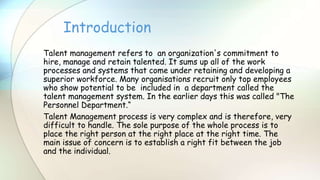
Talent management refers to an organization's commitment to
hire, manage and retain talented. It sums up all of the work
processes and systems that come under retaining and developing a
superior workforce. Many organisations recruit only top employees
who show potential to be included in a department called the
talent management system. In the earlier days this was called "The
Personnel Department.“
Talent Management process is very complex and is therefore, very
difficult to handle. The sole purpose of the whole process is to
place the right person at the right place at the right time. The
main issue of concern is to establish a right fit between the job
and the individual.
Introduction
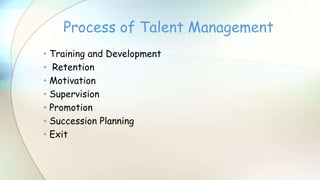
• Training and Development
• Retention
• Motivation
• Supervision
• Promotion
• Succession Planning
• Exit
Process of Talent Management
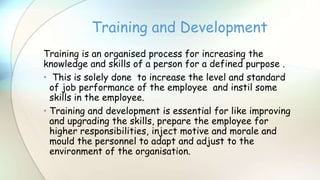
Training is an organised process for increasing the
knowledge and skills of a person for a defined purpose .
• This is solely done to increase the level and standard
of job performance of the employee and instil some
skills in the employee.
• Training and development is essential for like improving
and upgrading the skills, prepare the employee for
higher responsibilities, inject motive and morale and
mould the personnel to adapt and adjust to the
environment of the organisation.
Training and Development
Employee retention refers to the various policies and practices
which let the employees stick to an organization for a longer period
of time.
• Employees leave an organization out of frustration and constant
friction with their superiors or other team members. In some
cases low salary, lack of growth prospects and motivation compel
an employee to look for a change.
• Offering competitive benefits package, including health and life
insurance and a retirement plan to the employees and making
sure employees know what's expected of them and how they can
grow within your company will increase their tenure with the
institution. Promote from within whenever possible and give
employees a clear path of advancement
Retention
It is a fact that happy workers are productive than the
other half. Here’s how:
• Communicate Better
• Be an Example
• Empower them
• Offer Opportunities of Advancement
• Provide Incentives
• No Regrets
• Stable Future
Motivation
A developmental process designed to support and
enhance an individual’s acquisition of the motivation,
autonomy, self-awareness, and skills necessary to
effectively accomplish the job at hand.
All too often, employees are promoted to the role of
supervisor because of their strong technical expertise.
However, an effective supervisory relationship requires
that the supervisor not only be a content expert, but
that they also accept the enormous responsibility of
mentorship
Supervision
• Support Growth
• Unite with your team
• Praise Others
• Expect Excellence
• Require Accountability
• Verify Potential
• Appropriate Delegation
• Active Listening
• Encourage Risk Taking
• Reinforcing Relationships
Effective ways of Supervision
“Promotion is the transfer of an employee to a job which
pays more money or one that carries some preferred
status.”
• Promotion is the ultimate motivating factor for any
employee because it moves employee forward in
hierarchy ,with additional responsibility, higher respect,
honour, with increase in grade pay and allowances
• It stimulates self-development and creates interest in
the job. when it comes to promotion of an employee,
there are various reasons.
Promotion
Succession planning is a process whereby an organization ensures
that employees are recruited and developed to fill each key role
within the company.
• For successful succession planning, the organisation must take its
long term goals into consideration.
• When succession planning is done right, organisation , it has a
qualified pool of candidates ,ready to fill critical or key
positions. It helps individuals realize their career plans and
aspirations within the organization.
• Providing stability in leadership and other critical position is
another outcome of this process.
• PepsiCo, IBM and Nike are current examples of the so-called
"game planning" approach to succession and talent management
Succession Planning
Exit management is the process used within many businesses to terminate
employees contracts in a professional manner. Exit of an employee happens
when the employee terminates his contract by resigning or an employer
may terminate the contract by dismissing an employee.
In any organisation there are three types of employment contracts:
1. Short term employment- is when an employee is hired for less than one
year. These will normally end automatically once the end date is reached
2. A temporary contract- is usually around 3 months long .At the end of
the temporary contract the employer may wish to offer you a
permanent position or extend the temporary contract.
3. Long term contracts - are usually the extension of short term
contracts. The organisation recognises the potential and skills of the
employee and decides to retain him in the organisation. Dismissal is
when the organisation ends the contract of an employee due to reasons
like conduct , performance or illness.
The cycle doesn't end here. Its goes back to the acquiring employees to fill
positions in the organisation
Exit
• Right Person in the right Job
• Retaining the Top Talent
• Better Hiring
• Understanding Employees Better
• Better professional development decisions
Benefits of Talent Management
Talent has always been important but now it needs to
become an inseparable part of business strategy on par
with technology and finance. Companies need to respond
quickly to these trends and prepare for the new work
order with its novel ways of working, recruiting,
monitoring performance, rewarding and managing in order
to attract and retain vital talent.
Conclusion
Mubena Khaliq and
Shruti Narayanan
BBA SH-II
MOP Vaishnav College
Paper Presentation By:

Talent Management

  • 1.
    Meaning , Processand Benefits Talent Management
  • 2.
    Talent management refersto an organization's commitment to hire, manage and retain talented. It sums up all of the work processes and systems that come under retaining and developing a superior workforce. Many organisations recruit only top employees who show potential to be included in a department called the talent management system. In the earlier days this was called "The Personnel Department.“ Talent Management process is very complex and is therefore, very difficult to handle. The sole purpose of the whole process is to place the right person at the right place at the right time. The main issue of concern is to establish a right fit between the job and the individual. Introduction
  • 3.
    • Training andDevelopment • Retention • Motivation • Supervision • Promotion • Succession Planning • Exit Process of Talent Management
  • 4.
    Training is anorganised process for increasing the knowledge and skills of a person for a defined purpose . • This is solely done to increase the level and standard of job performance of the employee and instil some skills in the employee. • Training and development is essential for like improving and upgrading the skills, prepare the employee for higher responsibilities, inject motive and morale and mould the personnel to adapt and adjust to the environment of the organisation. Training and Development
  • 5.
    Employee retention refersto the various policies and practices which let the employees stick to an organization for a longer period of time. • Employees leave an organization out of frustration and constant friction with their superiors or other team members. In some cases low salary, lack of growth prospects and motivation compel an employee to look for a change. • Offering competitive benefits package, including health and life insurance and a retirement plan to the employees and making sure employees know what's expected of them and how they can grow within your company will increase their tenure with the institution. Promote from within whenever possible and give employees a clear path of advancement Retention
  • 6.
    It is afact that happy workers are productive than the other half. Here’s how: • Communicate Better • Be an Example • Empower them • Offer Opportunities of Advancement • Provide Incentives • No Regrets • Stable Future Motivation
  • 7.
    A developmental processdesigned to support and enhance an individual’s acquisition of the motivation, autonomy, self-awareness, and skills necessary to effectively accomplish the job at hand. All too often, employees are promoted to the role of supervisor because of their strong technical expertise. However, an effective supervisory relationship requires that the supervisor not only be a content expert, but that they also accept the enormous responsibility of mentorship Supervision
  • 8.
    • Support Growth •Unite with your team • Praise Others • Expect Excellence • Require Accountability • Verify Potential • Appropriate Delegation • Active Listening • Encourage Risk Taking • Reinforcing Relationships Effective ways of Supervision
  • 9.
    “Promotion is thetransfer of an employee to a job which pays more money or one that carries some preferred status.” • Promotion is the ultimate motivating factor for any employee because it moves employee forward in hierarchy ,with additional responsibility, higher respect, honour, with increase in grade pay and allowances • It stimulates self-development and creates interest in the job. when it comes to promotion of an employee, there are various reasons. Promotion
  • 10.
    Succession planning isa process whereby an organization ensures that employees are recruited and developed to fill each key role within the company. • For successful succession planning, the organisation must take its long term goals into consideration. • When succession planning is done right, organisation , it has a qualified pool of candidates ,ready to fill critical or key positions. It helps individuals realize their career plans and aspirations within the organization. • Providing stability in leadership and other critical position is another outcome of this process. • PepsiCo, IBM and Nike are current examples of the so-called "game planning" approach to succession and talent management Succession Planning
  • 11.
    Exit management isthe process used within many businesses to terminate employees contracts in a professional manner. Exit of an employee happens when the employee terminates his contract by resigning or an employer may terminate the contract by dismissing an employee. In any organisation there are three types of employment contracts: 1. Short term employment- is when an employee is hired for less than one year. These will normally end automatically once the end date is reached 2. A temporary contract- is usually around 3 months long .At the end of the temporary contract the employer may wish to offer you a permanent position or extend the temporary contract. 3. Long term contracts - are usually the extension of short term contracts. The organisation recognises the potential and skills of the employee and decides to retain him in the organisation. Dismissal is when the organisation ends the contract of an employee due to reasons like conduct , performance or illness. The cycle doesn't end here. Its goes back to the acquiring employees to fill positions in the organisation Exit
  • 12.
    • Right Personin the right Job • Retaining the Top Talent • Better Hiring • Understanding Employees Better • Better professional development decisions Benefits of Talent Management
  • 13.
    Talent has alwaysbeen important but now it needs to become an inseparable part of business strategy on par with technology and finance. Companies need to respond quickly to these trends and prepare for the new work order with its novel ways of working, recruiting, monitoring performance, rewarding and managing in order to attract and retain vital talent. Conclusion
  • 14.
    Mubena Khaliq and ShrutiNarayanan BBA SH-II MOP Vaishnav College Paper Presentation By: