Shantilal shah
GEC,bhavnagar
Tacheometric Surveying
Guided By prof.
Tachometry
Tachometry is a branch of surveying in which the
horizontal distances and the difference in elevations
are determined by optical means without the use of a
chain or tape.
Tacheometry is also known as tachymetry or
telemetry.
The method is more rapid though less accurate as
compared with chaining
Situation
1. In rough country, both horizontal and vertical
measurements are tedious and chaining is in accurate,
slow and difficult.
2. when obstacles such as steep and broken ground,
stretches of water or swamps are net with.
3. In locating contours and filling in detail in a topographic
survey, this method is usually the quickest & best.
4. when area to be surveyed is very large and accuracy
required is less.
Characteristics
1. horizontal angles and vertical elevations are
measured with tacheometry.
2. The horizontal and vertical distance between two
points is calculated from the observations taken by
tacheometer.
3. For tacheometric survey, only tacheometer and
stadia rod are required.
4. Use of chain is completely eliminated.
5. Accuracy is less compared with chaining or
Applications
1. Preparation of topographic maps which require both
horizontal distances and elevations.
2. Survey work in difficult terrain where direct
methods are inconvenient.
3. Filling details in a traverse.
4. location surveys for highways, railways, canals, etc.
5. hydrographic surveys.
Stadia method
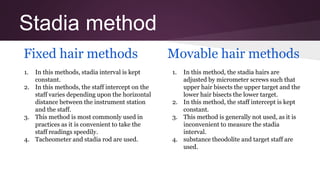
1. In this methods, stadia interval is kept
constant.
2. In this methods, the staff intercept on the
staff varies depending upon the horizontal
distance between the instrument station
and the staff.
3. This method is most commonly used in
practices as it is convenient to take the
staff readings speedily.
4. Tacheometer and stadia rod are used.
1. In this method, the stadia hairs are
adjusted by micrometer screws such that
upper hair bisects the upper target and the
lower hair bisects the lower target.
2. In this method, the staff intercept is kept
constant.
3. This method is generally not used, as it is
inconvenient to measure the stadia
interval.
4. substance theodolite and target staff are
used.
Movable hair methodsFixed hair methods
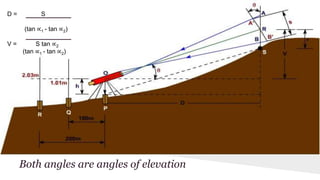
Both angles are angles of elevation
D = S
(tan ∝1 - tan ∝2)
V = S tan ∝2
(tan ∝1 - tan ∝2)
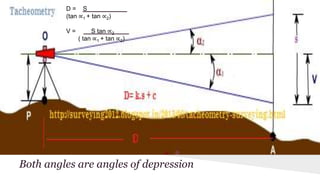
Both angles are angles of depression
D = S
(tan ∝1 + tan ∝2)
V = S tan ∝2
( tan ∝1 + tan ∝2)
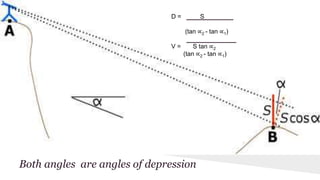
Both angles are angles of depression
D = S
(tan ∝2 - tan ∝1)
V = S tan ∝2
(tan ∝2 - tan ∝1)
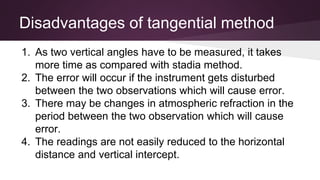
1. As two vertical angles have to be measured, it takes
more time as compared with stadia method.
2. The error will occur if the instrument gets disturbed
between the two observations which will cause error.
3. There may be changes in atmospheric refraction in the
period between the two observation which will cause
error.
4. The readings are not easily reduced to the horizontal
distance and vertical intercept.
Disadvantages of tangential method
Error in tacheometry
Like in other survey methods, tacheometry can also have the
following errors :
1. Instrumental errors
2. Personal errors
3. Errors due to natural causes
High degree of accuracy in tacheometric observations can be
achieved by :
● Taking proper care in manipulating the instrument.
● Limiting the length of sights.
● Using instruments of good quality.
● working in favourable atmospheric condition.
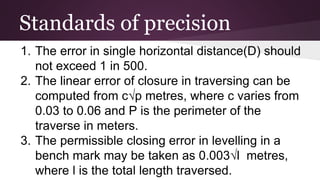
Standards of precision
1. The error in single horizontal distance(D) should
not exceed 1 in 500.
2. The linear error of closure in traversing can be
computed from c√p metres, where c varies from
0.03 to 0.06 and P is the perimeter of the
traverse in meters.
3. The permissible closing error in levelling in a
bench mark may be taken as 0.003√l metres,
where l is the total length traversed.
THANK YOU
STUDENT’SGK

Tacheometric surveying

  • 1.
  • 2.
  • 3.
    Tachometry Tachometry is abranch of surveying in which the horizontal distances and the difference in elevations are determined by optical means without the use of a chain or tape. Tacheometry is also known as tachymetry or telemetry. The method is more rapid though less accurate as compared with chaining
  • 4.
    Situation 1. In roughcountry, both horizontal and vertical measurements are tedious and chaining is in accurate, slow and difficult. 2. when obstacles such as steep and broken ground, stretches of water or swamps are net with. 3. In locating contours and filling in detail in a topographic survey, this method is usually the quickest & best. 4. when area to be surveyed is very large and accuracy required is less.
  • 5.
    Characteristics 1. horizontal anglesand vertical elevations are measured with tacheometry. 2. The horizontal and vertical distance between two points is calculated from the observations taken by tacheometer. 3. For tacheometric survey, only tacheometer and stadia rod are required. 4. Use of chain is completely eliminated. 5. Accuracy is less compared with chaining or
  • 6.
    Applications 1. Preparation oftopographic maps which require both horizontal distances and elevations. 2. Survey work in difficult terrain where direct methods are inconvenient. 3. Filling details in a traverse. 4. location surveys for highways, railways, canals, etc. 5. hydrographic surveys.
  • 7.
    Stadia method 1. Inthis methods, stadia interval is kept constant. 2. In this methods, the staff intercept on the staff varies depending upon the horizontal distance between the instrument station and the staff. 3. This method is most commonly used in practices as it is convenient to take the staff readings speedily. 4. Tacheometer and stadia rod are used. 1. In this method, the stadia hairs are adjusted by micrometer screws such that upper hair bisects the upper target and the lower hair bisects the lower target. 2. In this method, the staff intercept is kept constant. 3. This method is generally not used, as it is inconvenient to measure the stadia interval. 4. substance theodolite and target staff are used. Movable hair methodsFixed hair methods
  • 8.
    Both angles areangles of elevation D = S (tan ∝1 - tan ∝2) V = S tan ∝2 (tan ∝1 - tan ∝2)
  • 9.
    Both angles areangles of depression D = S (tan ∝1 + tan ∝2) V = S tan ∝2 ( tan ∝1 + tan ∝2)
  • 10.
    Both angles areangles of depression D = S (tan ∝2 - tan ∝1) V = S tan ∝2 (tan ∝2 - tan ∝1)
  • 11.
    1. As twovertical angles have to be measured, it takes more time as compared with stadia method. 2. The error will occur if the instrument gets disturbed between the two observations which will cause error. 3. There may be changes in atmospheric refraction in the period between the two observation which will cause error. 4. The readings are not easily reduced to the horizontal distance and vertical intercept. Disadvantages of tangential method
  • 12.
    Error in tacheometry Likein other survey methods, tacheometry can also have the following errors : 1. Instrumental errors 2. Personal errors 3. Errors due to natural causes High degree of accuracy in tacheometric observations can be achieved by : ● Taking proper care in manipulating the instrument. ● Limiting the length of sights. ● Using instruments of good quality. ● working in favourable atmospheric condition.
  • 13.
    Standards of precision 1.The error in single horizontal distance(D) should not exceed 1 in 500. 2. The linear error of closure in traversing can be computed from c√p metres, where c varies from 0.03 to 0.06 and P is the perimeter of the traverse in meters. 3. The permissible closing error in levelling in a bench mark may be taken as 0.003√l metres, where l is the total length traversed.
  • 14.