Is solid pharmaceutical dosage forms containing drug substances with or without
suitable diluents and prepared either by compression or molding methods.
advantages afforded to the manufacturer
1- simplicity
2- economy of preparation
3-stability
4-convenience in packaging, shipping and dispensing
advantages to the patient
1-accuracy of dosage
2- compactness
3-portability
4 blandness of taste
5-ease of administration.
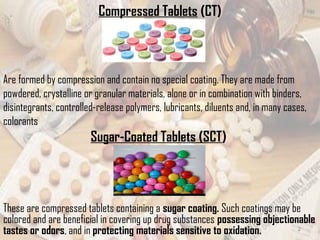
Compressed Tablets (CT)
Are formed by compression and contain no special coating. They are made from
powdered, crystalline or granular materials, alone or in combination with binders,
disintegrants, controlled-release polymers, lubricants, diluents and, in many cases,
colorants
Sugar-Coated Tablets (SCT)
These are compressed tablets containing a sugar coating. Such coatings may be
colored and are beneficial in covering up drug substances possessing objectionable
tastes or odors, and in protecting materials sensitive to oxidation. 2
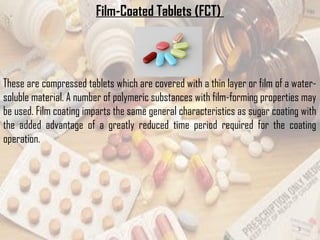
Film-Coated Tablets (FCT)
These are compressed tablets which are covered with a thin layer or film of a water-
soluble material. A number of polymeric substances with film-forming properties may
be used. Film coating imparts the same general characteristics as sugar coating with
the added advantage of a greatly reduced time period required for the coating
operation.
3
Enteric-Coated Tablets (ECT)
These are compressed tablets coated with substances that resist
solution in gastric fluid but disintegrate in the intestine. It can be used
for tablets containing drug substances which are inactivated or
destroyed in the stomach, for those which irritate the mucosa or as a
means of delayed release of the medication.
4
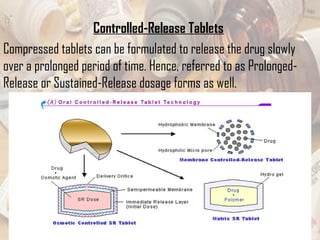
Controlled-Release Tablets
Compressed tablets can be formulated to release the drug slowly
over a prolonged period of time. Hence, referred to as Prolonged-
Release or Sustained-Release dosage forms as well.
5
Tablets for Solution
Compressed tablets to be used for preparing solutions or imparting given
characteristics to solutions must be labeled to indicate that they are not to be
swallowed. Examples of these tablet: Potassium Permanganate Tablets for Solution
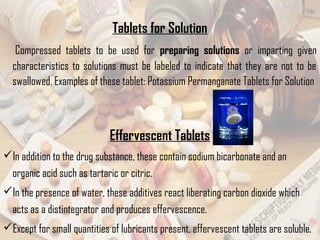
Effervescent Tablets
In addition to the drug substance, these contain sodium bicarbonate and an
organic acid such as tartaric or citric.
In the presence of water, these additives react liberating carbon dioxide which
acts as a distintegrator and produces effervescence.
Except for small quantities of lubricants present, effervescent tablets are soluble.6
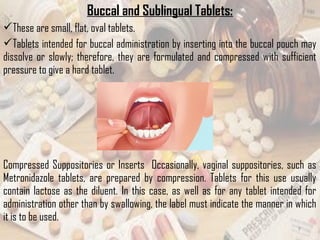
Buccal and Sublingual Tablets:
These are small, flat, oval tablets.
Tablets intended for buccal administration by inserting into the buccal pouch may
dissolve or slowly; therefore, they are formulated and compressed with sufficient
pressure to give a hard tablet.
Compressed Suppositories or Inserts Occasionally, vaginal suppositories, such as
Metronidazole tablets, are prepared by compression. Tablets for this use usually
contain lactose as the diluent. In this case, as well as for any tablet intended for
administration other than by swallowing, the label must indicate the manner in which
it is to be used.
7
Sublingual tablets:
 As those containing nitroglycerin, isoproterenol hydrochloride, are placed under
the tongue.
 Sublingual tablets dissolve rapidly and the drug substances are absorbed readily
by this form of administration.
Molded Tablets [Tablet Triturates (TT]
Tablet triturates usually are made from moist material using a triturate mold which
gives them the shape of cut sections of a cylinder. Such tablets must be
completely and rapidly soluble. The problem arising from compression of these
tablets is the failure to find a lubricant that is completely water soluble
8
Tablet preparations
There are three general methods of tablet preparation:
1-the wet-granulation method,
2- the dry-granulation method and
3- direct compression.
After compression, the tablets must have a number of additional attributes such
as
appearance,
 hardness,
disintegration ability,
appropriate dissolution characteristics and
uniformity which also are influenced both by :
the method of preparation and by
 the added materials present in the formulation. 9
Tablet Ingredients
In addition to the active or therapeutic ingredient, tablets contain a number of
inert materials( excipients). They are classified according to the part they play in
the finished tablet.
1- those which help to impart satisfactory processing and compression
characteristics to the formulation (diluents, binders, glidants and lubricants).
The second group of added substances helps to give additional desirable physical
characteristics to the finished tablet (disintegrants, colors, and in the case of
chewable tablets, flavors and sweetening agents, and in the case of controlled-
release tablets, polymers or waxes or other solubility-retarding materials
10
11
This is only summary of tablets, be
prepared for next brief detail of
tablets!!!

Tablets

  • 1.
    Is solid pharmaceuticaldosage forms containing drug substances with or without suitable diluents and prepared either by compression or molding methods. advantages afforded to the manufacturer 1- simplicity 2- economy of preparation 3-stability 4-convenience in packaging, shipping and dispensing advantages to the patient 1-accuracy of dosage 2- compactness 3-portability 4 blandness of taste 5-ease of administration.
  • 2.
    Compressed Tablets (CT) Areformed by compression and contain no special coating. They are made from powdered, crystalline or granular materials, alone or in combination with binders, disintegrants, controlled-release polymers, lubricants, diluents and, in many cases, colorants Sugar-Coated Tablets (SCT) These are compressed tablets containing a sugar coating. Such coatings may be colored and are beneficial in covering up drug substances possessing objectionable tastes or odors, and in protecting materials sensitive to oxidation. 2
  • 3.
    Film-Coated Tablets (FCT) Theseare compressed tablets which are covered with a thin layer or film of a water- soluble material. A number of polymeric substances with film-forming properties may be used. Film coating imparts the same general characteristics as sugar coating with the added advantage of a greatly reduced time period required for the coating operation. 3
  • 4.
    Enteric-Coated Tablets (ECT) Theseare compressed tablets coated with substances that resist solution in gastric fluid but disintegrate in the intestine. It can be used for tablets containing drug substances which are inactivated or destroyed in the stomach, for those which irritate the mucosa or as a means of delayed release of the medication. 4
  • 5.
    Controlled-Release Tablets Compressed tabletscan be formulated to release the drug slowly over a prolonged period of time. Hence, referred to as Prolonged- Release or Sustained-Release dosage forms as well. 5
  • 6.
    Tablets for Solution Compressedtablets to be used for preparing solutions or imparting given characteristics to solutions must be labeled to indicate that they are not to be swallowed. Examples of these tablet: Potassium Permanganate Tablets for Solution Effervescent Tablets In addition to the drug substance, these contain sodium bicarbonate and an organic acid such as tartaric or citric. In the presence of water, these additives react liberating carbon dioxide which acts as a distintegrator and produces effervescence. Except for small quantities of lubricants present, effervescent tablets are soluble.6
  • 7.
    Buccal and SublingualTablets: These are small, flat, oval tablets. Tablets intended for buccal administration by inserting into the buccal pouch may dissolve or slowly; therefore, they are formulated and compressed with sufficient pressure to give a hard tablet. Compressed Suppositories or Inserts Occasionally, vaginal suppositories, such as Metronidazole tablets, are prepared by compression. Tablets for this use usually contain lactose as the diluent. In this case, as well as for any tablet intended for administration other than by swallowing, the label must indicate the manner in which it is to be used. 7
  • 8.
    Sublingual tablets:  Asthose containing nitroglycerin, isoproterenol hydrochloride, are placed under the tongue.  Sublingual tablets dissolve rapidly and the drug substances are absorbed readily by this form of administration. Molded Tablets [Tablet Triturates (TT] Tablet triturates usually are made from moist material using a triturate mold which gives them the shape of cut sections of a cylinder. Such tablets must be completely and rapidly soluble. The problem arising from compression of these tablets is the failure to find a lubricant that is completely water soluble 8
  • 9.
    Tablet preparations There arethree general methods of tablet preparation: 1-the wet-granulation method, 2- the dry-granulation method and 3- direct compression. After compression, the tablets must have a number of additional attributes such as appearance,  hardness, disintegration ability, appropriate dissolution characteristics and uniformity which also are influenced both by : the method of preparation and by  the added materials present in the formulation. 9
  • 10.
    Tablet Ingredients In additionto the active or therapeutic ingredient, tablets contain a number of inert materials( excipients). They are classified according to the part they play in the finished tablet. 1- those which help to impart satisfactory processing and compression characteristics to the formulation (diluents, binders, glidants and lubricants). The second group of added substances helps to give additional desirable physical characteristics to the finished tablet (disintegrants, colors, and in the case of chewable tablets, flavors and sweetening agents, and in the case of controlled- release tablets, polymers or waxes or other solubility-retarding materials 10
  • 11.
    11 This is onlysummary of tablets, be prepared for next brief detail of tablets!!!