INVERTEBRATE CONSERVATION FACT SHEET

                             Upper Midwest Plants
                                                                             for Native Bees
Pollinators are
a vital part of
a healthy
environment.
Native bees
are North
America’s
most impor-
tant group of
pollinators.
Patches of
flowers can be
grown almost
anywhere and
will form an
important
food resource
for bees.


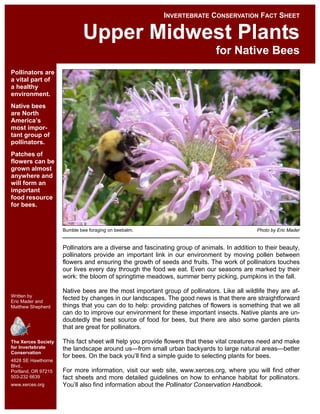
                     Bumble bee foraging on beebalm.                                         Photo by Eric Mader


                     Pollinators are a diverse and fascinating group of animals. In addition to their beauty,
                     pollinators provide an important link in our environment by moving pollen between
                     flowers and ensuring the growth of seeds and fruits. The work of pollinators touches
                     our lives every day through the food we eat. Even our seasons are marked by their
                     work: the bloom of springtime meadows, summer berry picking, pumpkins in the fall.

                     Native bees are the most important group of pollinators. Like all wildlife they are af-
Written by
Eric Mader and
                     fected by changes in our landscapes. The good news is that there are straightforward
Matthew Shepherd     things that you can do to help: providing patches of flowers is something that we all
                     can do to improve our environment for these important insects. Native plants are un-
                     doubtedly the best source of food for bees, but there are also some garden plants
                     that are great for pollinators.

The Xerces Society   This fact sheet will help you provide flowers that these vital creatures need and make
for Invertebrate     the landscape around us—from small urban backyards to large natural areas—better
Conservation
                     for bees. On the back you’ll find a simple guide to selecting plants for bees.
4828 SE Hawthorne
Blvd.,
Portland, OR 97215   For more information, visit our web site, www.xerces.org, where you will find other
503-232 6639         fact sheets and more detailed guidelines on how to enhance habitat for pollinators.
www.xerces.org       You’ll also find information about the Pollinator Conservation Handbook.
Choosing the Right Flowers
To help bees and other pollinator insects—like butterflies—you should provide a range of plants that will offer a succes-
sion of flowers, and thus pollen and nectar, through the whole growing season. Patches of foraging habitat can be cre-
ated in many different locations, from backyards and school grounds to golf courses and city parks. Even a small area
planted with the right flowers will be beneficial, because each patch will add to the mosaic of habitat available to bees
and other pollinators.

In such a short fact sheet it is not possible to give detailed lists of suitable plants for all areas of the Upper Midwest. Be-
low are two lists of good bee plants, the first of native plants and the second of garden plants. Both are short lists; there
are many more bee-friendly plants. However, these lists, combined with the following notes, will get you started on se-
lecting good bee plants. Your local chapters of the Wild Ones, the Native Plant Society and native plant nurseries are
worthwhile contacts for advice on choosing, obtaining, and caring for local plant species.
•   Use local native plants. Research suggests native plants are four times more attractive to native bees than exotic
    flowers. In gardens, heirloom varieties of herbs and perennials can also provide good foraging.
•   Choose several colors of flowers. Flower colors that particularly attract native bees are blue, purple, violet, white,
    and yellow.
•   Plant flowers in clumps. Flowers clustered into clumps of one species will attract more pollinators than individual
    plants scattered through the habitat patch. Where space allows, make the clumps four feet or more in diameter.
•   Include flowers of different shapes. Bees are all different sizes, have different tongue lengths, and will feed on
    different shaped flowers. Consequently, providing a range of flower shapes means more bees can benefit.
•   Have a diversity of plants flowering all season. By having several plant species flowering at once, and a se-
    quence of plants flowering through spring, summer, and fall, you can support a range of bee species that fly at differ-
    ent times of the season.

Native Plants
Native plants should be your first choice to help our native bees. Listed below are some plants that are good sources of
nectar and pollen for bees. This list is not exhaustive; there are many other plants good for bees. Individual species have
not been included. Not all of these genera will have species in your local area, but they do represent plants that will grow
in a variety of environments. Use a wildflower guide or contact local nurseries to find your local species.
                  Aster                Aster                    Lupine                  Lupinus
                  Beebalm              Monarda                  Milkweed                Asclepias
                  Blazing star         Liatris                  New Jersey tea          Ceanothus
                  Cup plant            Silphium                 Obedient plant          Physostegia
                  Wild indigo          Baptisia                 Penstemon               Penstemon
                  Fireweed             Chamerion                Prairie clover          Dalea
                  Goldenrod            Solidago                 Purple coneflower       Echinacea
                  Giant hyssop         Agastache                Rattlesnake master      Eryngium
                  Ironweed             Vernonia                 Spiderwort              Tradescantia
                  Joe Pye weed         Eupatorium               Steeplebush             Spiraea
                  Leadplant            Amorpha                  Sunflower               Helianthus
                  Lobelia              Lobelia                  Willow                  Salix

Garden Plants
Flower beds in gardens, business campuses, and parks are great places to have bee-friendly plants. Native plants will
create a beautiful garden but some people prefer “garden” plants. Many garden plants are varieties of native plants. This
list includes plants from other countries—”exotic” plants—and should be used as a supplement to the native plant list. As
with the native plants, this list is far from exhaustive.
                   Basil                  Ocimum              Oregano/marjoram      Origanum
                   Borage                 Borago              Rosemary              Rosmarinus
                   Catmint                Nepeta              Russian sage          Perovskia
                   Cosmos                 Cosmos              Spearmint             Mentha
                   Lavender               Lavandula           Squill                Scilla

           For more pollinator conservation information, go to www.xerces.org
 COPYRIGHT INFORMATION: We’re happy for you to copy this fact sheet or to use this text elsewhere. Please just credit The Xerces Society when-
 ever the text is used in another format. The photograph, however, is copyrighted and may not be used in any way except in this fact sheet. If you are
                                                    interested in photos of bees, please contact us.

Upper Midwest Plants for Native Bees - the Xerces Society

  • 1.
    INVERTEBRATE CONSERVATION FACTSHEET Upper Midwest Plants for Native Bees Pollinators are a vital part of a healthy environment. Native bees are North America’s most impor- tant group of pollinators. Patches of flowers can be grown almost anywhere and will form an important food resource for bees. Bumble bee foraging on beebalm. Photo by Eric Mader Pollinators are a diverse and fascinating group of animals. In addition to their beauty, pollinators provide an important link in our environment by moving pollen between flowers and ensuring the growth of seeds and fruits. The work of pollinators touches our lives every day through the food we eat. Even our seasons are marked by their work: the bloom of springtime meadows, summer berry picking, pumpkins in the fall. Native bees are the most important group of pollinators. Like all wildlife they are af- Written by Eric Mader and fected by changes in our landscapes. The good news is that there are straightforward Matthew Shepherd things that you can do to help: providing patches of flowers is something that we all can do to improve our environment for these important insects. Native plants are un- doubtedly the best source of food for bees, but there are also some garden plants that are great for pollinators. The Xerces Society This fact sheet will help you provide flowers that these vital creatures need and make for Invertebrate the landscape around us—from small urban backyards to large natural areas—better Conservation for bees. On the back you’ll find a simple guide to selecting plants for bees. 4828 SE Hawthorne Blvd., Portland, OR 97215 For more information, visit our web site, www.xerces.org, where you will find other 503-232 6639 fact sheets and more detailed guidelines on how to enhance habitat for pollinators. www.xerces.org You’ll also find information about the Pollinator Conservation Handbook.
  • 2.
    Choosing the RightFlowers To help bees and other pollinator insects—like butterflies—you should provide a range of plants that will offer a succes- sion of flowers, and thus pollen and nectar, through the whole growing season. Patches of foraging habitat can be cre- ated in many different locations, from backyards and school grounds to golf courses and city parks. Even a small area planted with the right flowers will be beneficial, because each patch will add to the mosaic of habitat available to bees and other pollinators. In such a short fact sheet it is not possible to give detailed lists of suitable plants for all areas of the Upper Midwest. Be- low are two lists of good bee plants, the first of native plants and the second of garden plants. Both are short lists; there are many more bee-friendly plants. However, these lists, combined with the following notes, will get you started on se- lecting good bee plants. Your local chapters of the Wild Ones, the Native Plant Society and native plant nurseries are worthwhile contacts for advice on choosing, obtaining, and caring for local plant species. • Use local native plants. Research suggests native plants are four times more attractive to native bees than exotic flowers. In gardens, heirloom varieties of herbs and perennials can also provide good foraging. • Choose several colors of flowers. Flower colors that particularly attract native bees are blue, purple, violet, white, and yellow. • Plant flowers in clumps. Flowers clustered into clumps of one species will attract more pollinators than individual plants scattered through the habitat patch. Where space allows, make the clumps four feet or more in diameter. • Include flowers of different shapes. Bees are all different sizes, have different tongue lengths, and will feed on different shaped flowers. Consequently, providing a range of flower shapes means more bees can benefit. • Have a diversity of plants flowering all season. By having several plant species flowering at once, and a se- quence of plants flowering through spring, summer, and fall, you can support a range of bee species that fly at differ- ent times of the season. Native Plants Native plants should be your first choice to help our native bees. Listed below are some plants that are good sources of nectar and pollen for bees. This list is not exhaustive; there are many other plants good for bees. Individual species have not been included. Not all of these genera will have species in your local area, but they do represent plants that will grow in a variety of environments. Use a wildflower guide or contact local nurseries to find your local species. Aster Aster Lupine Lupinus Beebalm Monarda Milkweed Asclepias Blazing star Liatris New Jersey tea Ceanothus Cup plant Silphium Obedient plant Physostegia Wild indigo Baptisia Penstemon Penstemon Fireweed Chamerion Prairie clover Dalea Goldenrod Solidago Purple coneflower Echinacea Giant hyssop Agastache Rattlesnake master Eryngium Ironweed Vernonia Spiderwort Tradescantia Joe Pye weed Eupatorium Steeplebush Spiraea Leadplant Amorpha Sunflower Helianthus Lobelia Lobelia Willow Salix Garden Plants Flower beds in gardens, business campuses, and parks are great places to have bee-friendly plants. Native plants will create a beautiful garden but some people prefer “garden” plants. Many garden plants are varieties of native plants. This list includes plants from other countries—”exotic” plants—and should be used as a supplement to the native plant list. As with the native plants, this list is far from exhaustive. Basil Ocimum Oregano/marjoram Origanum Borage Borago Rosemary Rosmarinus Catmint Nepeta Russian sage Perovskia Cosmos Cosmos Spearmint Mentha Lavender Lavandula Squill Scilla For more pollinator conservation information, go to www.xerces.org COPYRIGHT INFORMATION: We’re happy for you to copy this fact sheet or to use this text elsewhere. Please just credit The Xerces Society when- ever the text is used in another format. The photograph, however, is copyrighted and may not be used in any way except in this fact sheet. If you are interested in photos of bees, please contact us.