THER 608
Female Anatomy
Contents: ovary, oviduct, uterus,
cervix, vagina, and external genitalia
1
THER 406 Content # 4 Prof. Dr. Nasim
Ahmad
2
Typical
tubular
structures
of
the
female
tract
THER 406 Content # 4 Prof. Dr. Nasim
Ahmad
3
Prof. Dr. Nasim Ahmad 4
5
THER 406 Content # 4 Prof. Dr. Nasim
Ahmad
6
Major
structures
of
the
ovary
Functional Histology of the Mammalian Follicle
Functional Unit Charcateristic
Primary Follicle Oocyte enclosed by a single
layer of follicular cells
Secondary Follicle Flattened granulosa cells
Tertiary Follilce
(Vesicular Follilce) or
Antral Follicle
Under influence of Gn’s,
formation of liquor folliculi,
Graafian follicle Follicular cells increase in size,
antrum filled with follicular
fluid, oocyte compressed to one
side (cumulus oophorus) 7
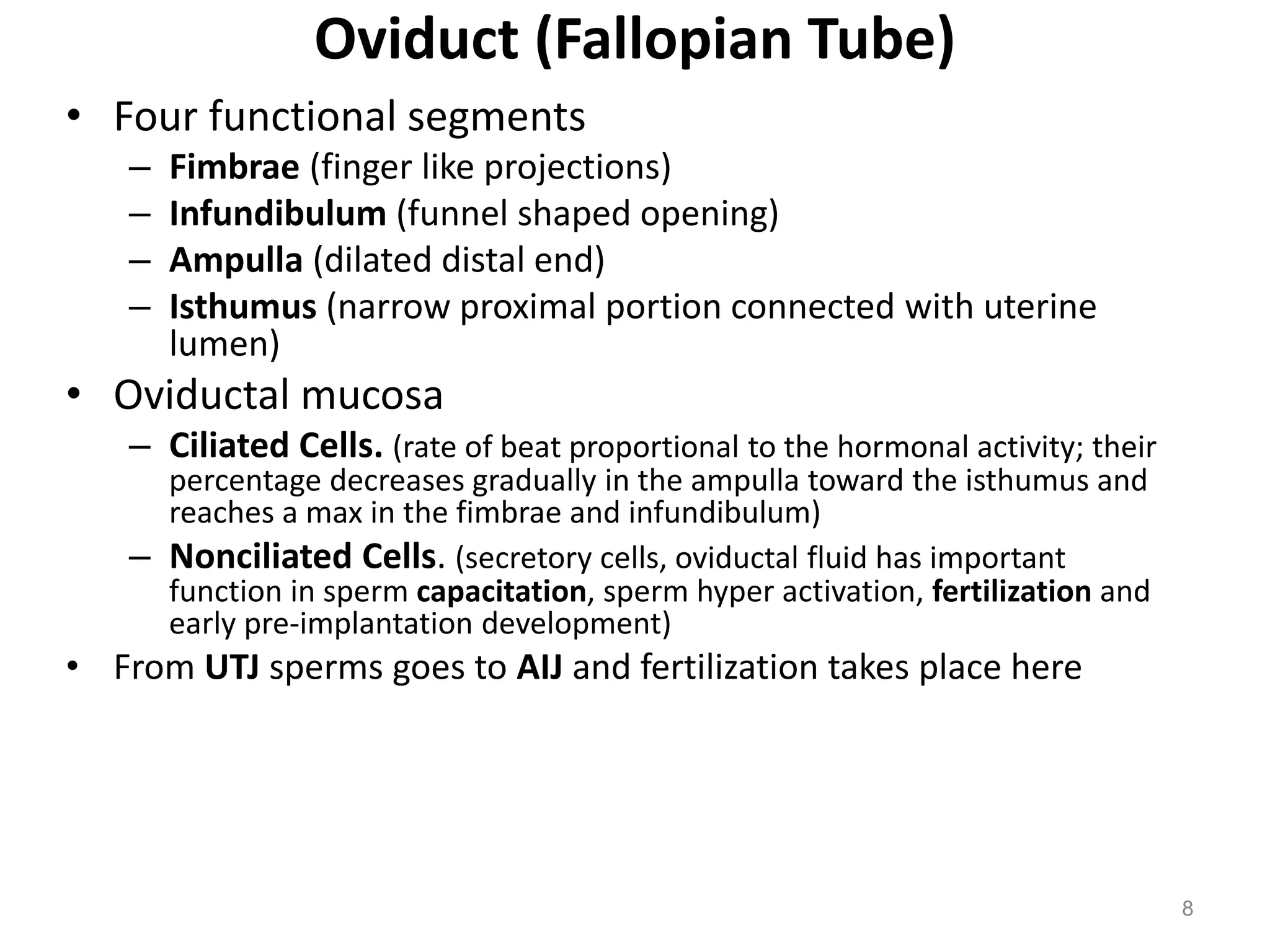
Oviduct (Fallopian Tube)
• Four functional segments
– Fimbrae (finger like projections)
– Infundibulum (funnel shaped opening)
– Ampulla (dilated distal end)
– Isthumus (narrow proximal portion connected with uterine
lumen)
• Oviductal mucosa
– Ciliated Cells. (rate of beat proportional to the hormonal activity; their
percentage decreases gradually in the ampulla toward the isthumus and
reaches a max in the fimbrae and infundibulum)
– Nonciliated Cells. (secretory cells, oviductal fluid has important
function in sperm capacitation, sperm hyper activation, fertilization and
early pre-implantation development)
• From UTJ sperms goes to AIJ and fertilization takes place here
8
THER 406 Content # 4 Prof. Dr. Nasim
Ahmad
9
Oviduct
and
its
components
Uterus
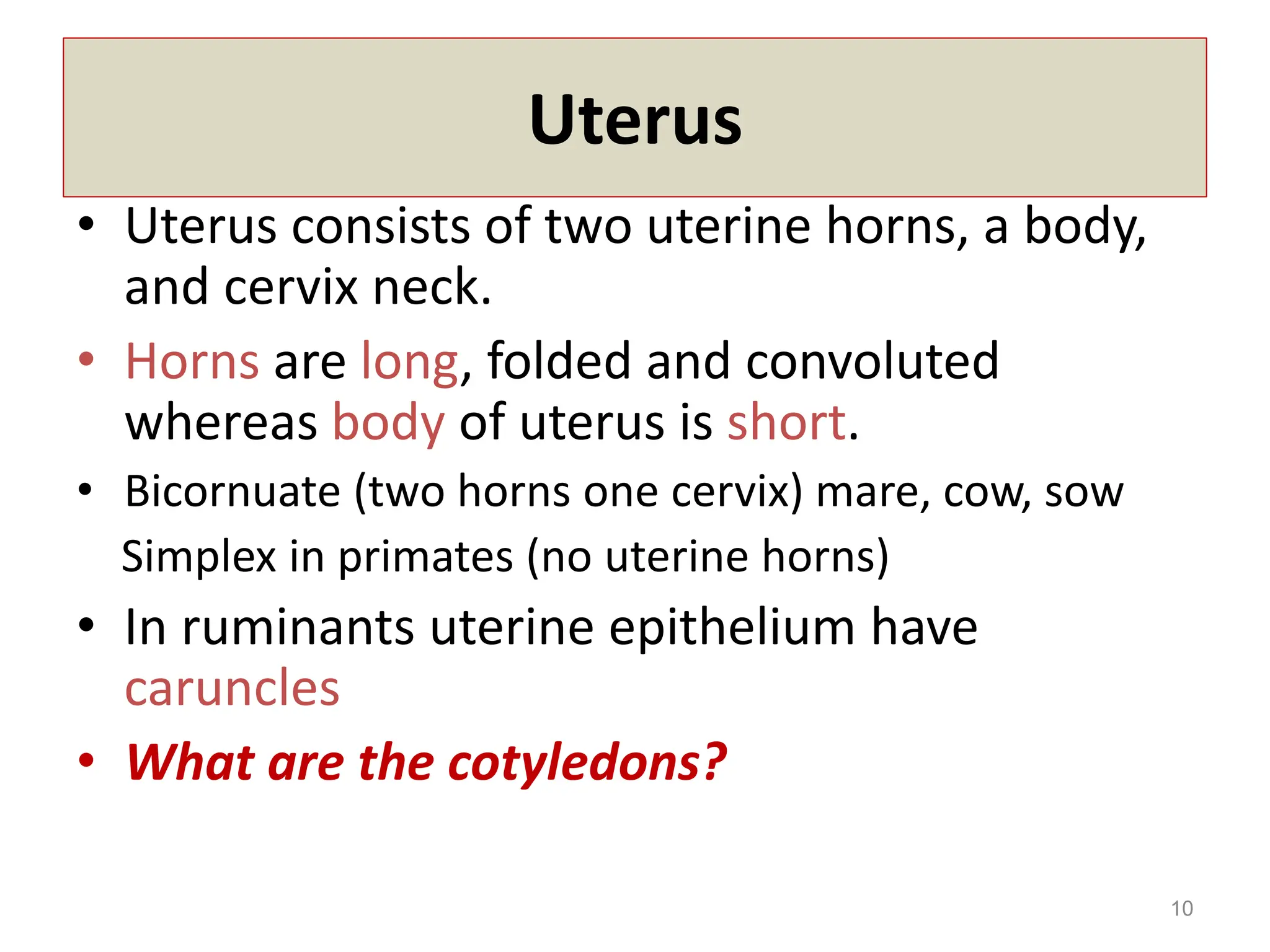
• Uterus consists of two uterine horns, a body,
and cervix neck.
• Horns are long, folded and convoluted
whereas body of uterus is short.
• Bicornuate (two horns one cervix) mare, cow, sow
Simplex in primates (no uterine horns)
• In ruminants uterine epithelium have
caruncles
• What are the cotyledons?
10
11
Types of uteri in mammals
THER 406 Conte 12
Excised
uterine
tissue
Endometrial Glands
• These are branched coiled tubular structures
lined with columnar epithelium.
• They open in to the endometrial surface
except the caruncular area.
• They regress with the luteal regression.
• They straighten up at the time of estrus and
become coiled as the progesterone level rises.
13
THER 406 Content # 4 Prof. Dr. Nasim
Ahmad
14
Schematic
illustration
of
uterine
tissue
Uterine Proteins
• Endometrial fluid contains mainly serum
proteins
• Uterine secretion plays a part in the control of
embryonic growth and implantation
• Uterine secretion provide an optimal
environment for the survival and capacitation
of spermatozoa
15
Uterine Contractions
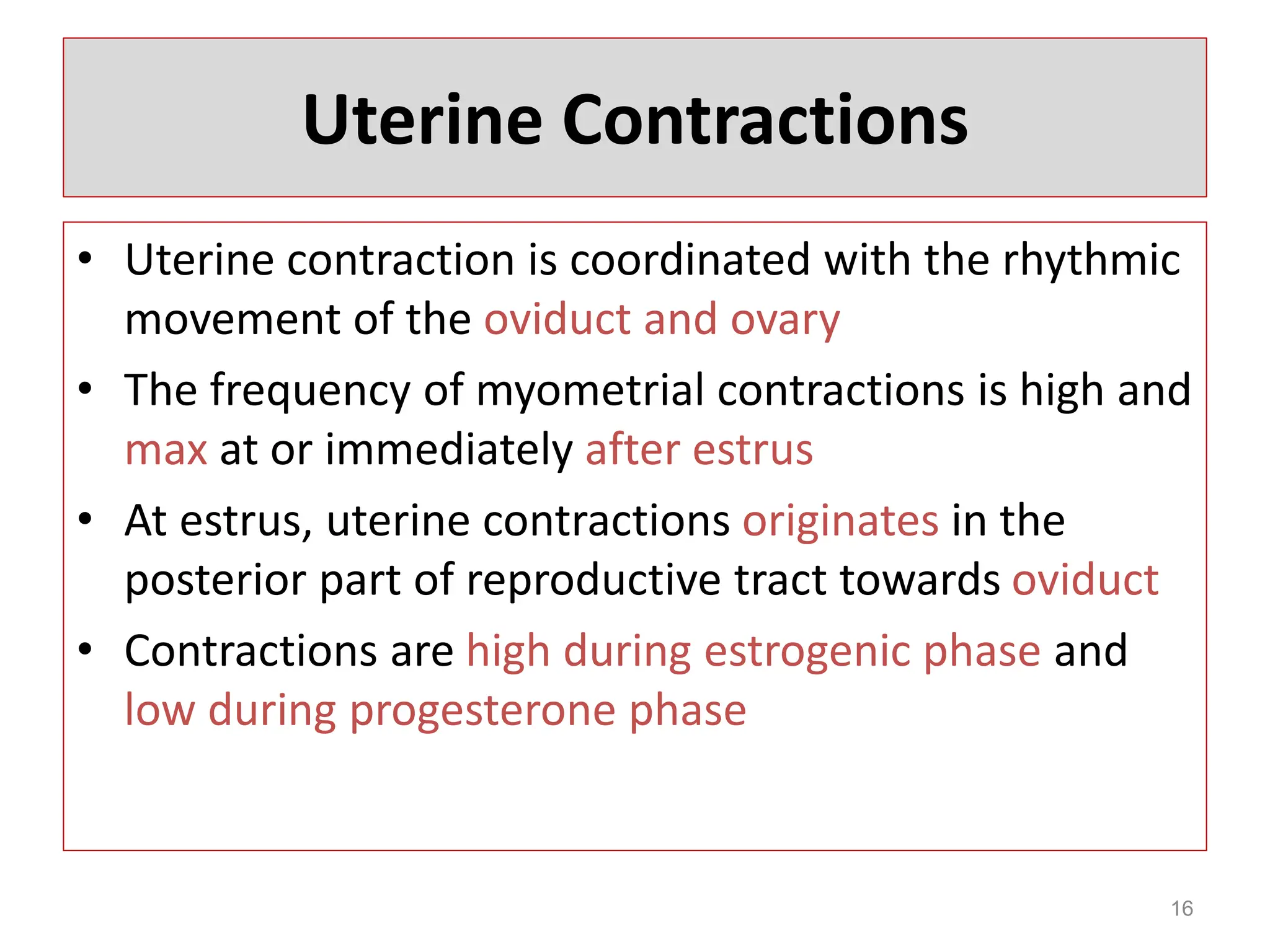
• Uterine contraction is coordinated with the rhythmic
movement of the oviduct and ovary
• The frequency of myometrial contractions is high and
max at or immediately after estrus
• At estrus, uterine contractions originates in the
posterior part of reproductive tract towards oviduct
• Contractions are high during estrogenic phase and
low during progesterone phase
16
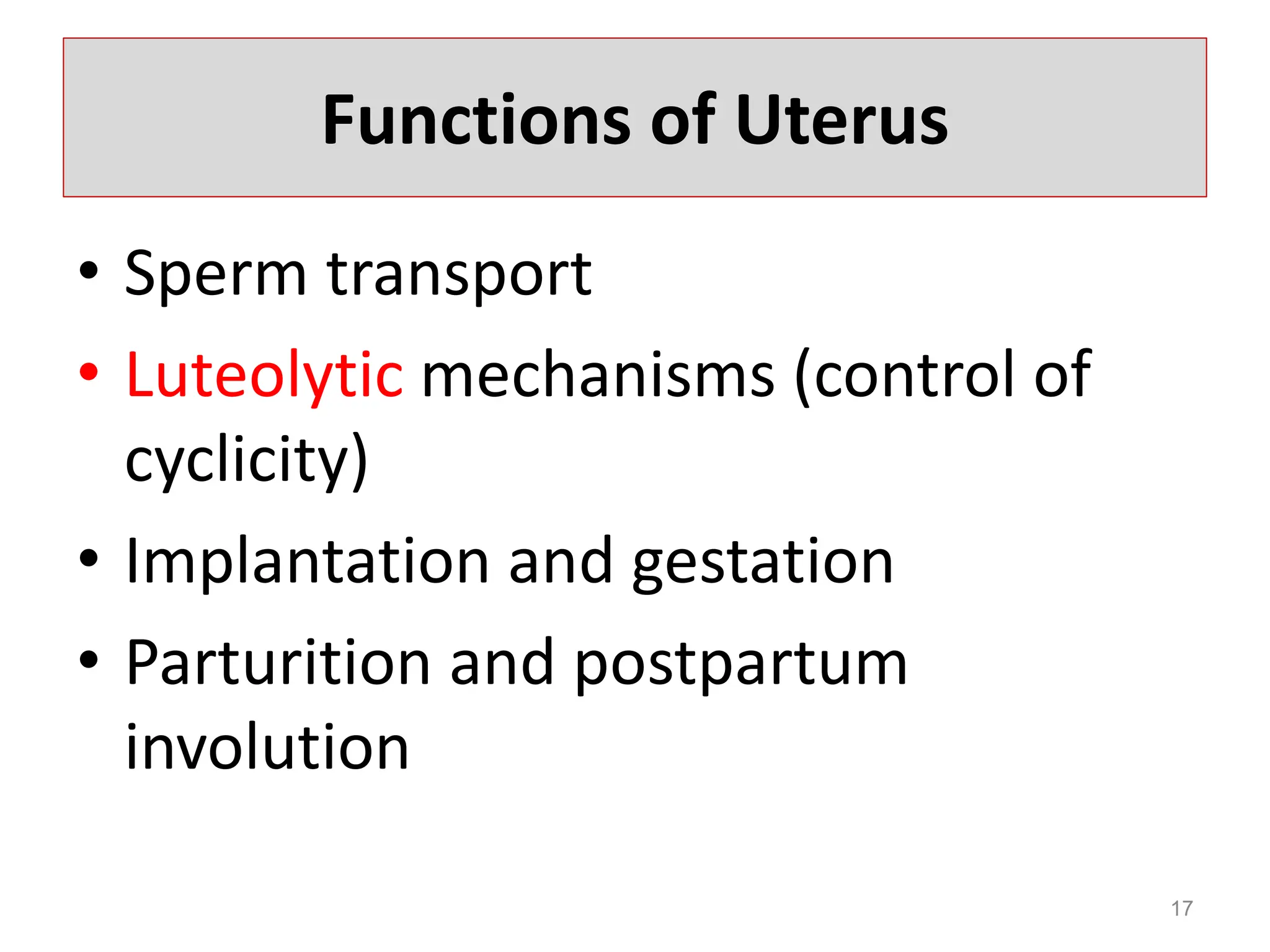
Functions of Uterus
• Sperm transport
• Luteolytic mechanisms (control of
cyclicity)
• Implantation and gestation
• Parturition and postpartum
involution
17
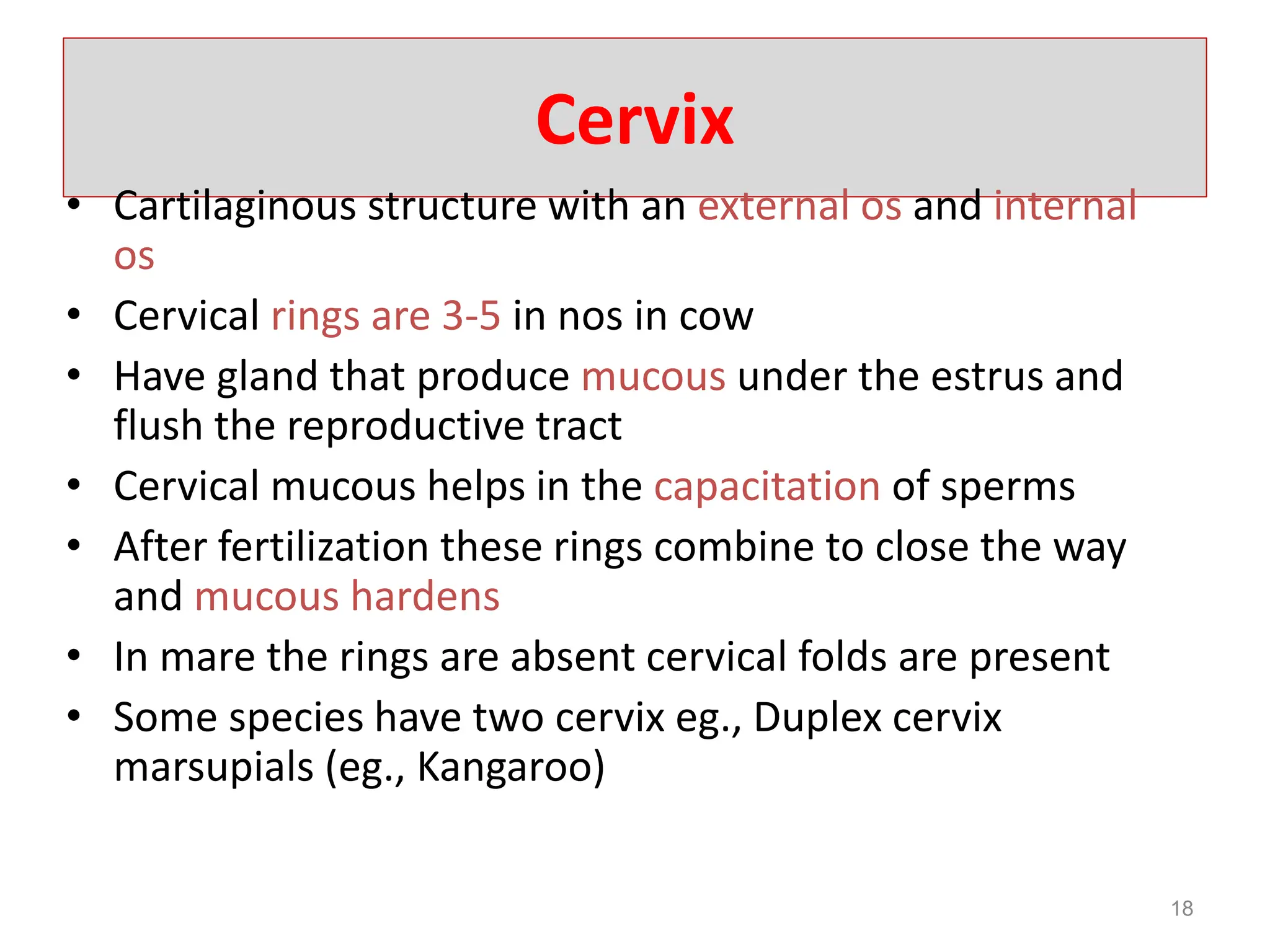
Cervix
• Cartilaginous structure with an external os and internal
os
• Cervical rings are 3-5 in nos in cow
• Have gland that produce mucous under the estrus and
flush the reproductive tract
• Cervical mucous helps in the capacitation of sperms
• After fertilization these rings combine to close the way
and mucous hardens
• In mare the rings are absent cervical folds are present
• Some species have two cervix eg., Duplex cervix
marsupials (eg., Kangaroo)
18
THER 406 Content # 4 Prof. Dr. Nasim
Ahmad
19
Excised
cervical
tissue
The Vagina
• Cow = two sphincter muscles internal and external
• Vaginal contraction plays role in psychosexual
response and sperm transport
• Vagina is one of the major site for sperm antigen
antibody reaction
• In natural breeding, semen is ejaculated at vaginal
fornix
20
Functions of Vagina
• Copulatory organ
• Following ejaculation seminal plasma is
absorbed through vaginal walls
• As pH of vaginal fluid is lethal to sperm so the
combinations of other secretions such as
cervical and seminal plasma induces a
buffering system that protects the sperm until
they are transported to the cervix
21

T Female reproductive system anatomy.ppt

  • 1.
    THER 608 Female Anatomy Contents:ovary, oviduct, uterus, cervix, vagina, and external genitalia 1
  • 2.
    THER 406 Content# 4 Prof. Dr. Nasim Ahmad 2 Typical tubular structures of the female tract
  • 3.
    THER 406 Content# 4 Prof. Dr. Nasim Ahmad 3
  • 4.
  • 5.
  • 6.
    THER 406 Content# 4 Prof. Dr. Nasim Ahmad 6 Major structures of the ovary
  • 7.
    Functional Histology ofthe Mammalian Follicle Functional Unit Charcateristic Primary Follicle Oocyte enclosed by a single layer of follicular cells Secondary Follicle Flattened granulosa cells Tertiary Follilce (Vesicular Follilce) or Antral Follicle Under influence of Gn’s, formation of liquor folliculi, Graafian follicle Follicular cells increase in size, antrum filled with follicular fluid, oocyte compressed to one side (cumulus oophorus) 7
  • 8.
    Oviduct (Fallopian Tube) •Four functional segments – Fimbrae (finger like projections) – Infundibulum (funnel shaped opening) – Ampulla (dilated distal end) – Isthumus (narrow proximal portion connected with uterine lumen) • Oviductal mucosa – Ciliated Cells. (rate of beat proportional to the hormonal activity; their percentage decreases gradually in the ampulla toward the isthumus and reaches a max in the fimbrae and infundibulum) – Nonciliated Cells. (secretory cells, oviductal fluid has important function in sperm capacitation, sperm hyper activation, fertilization and early pre-implantation development) • From UTJ sperms goes to AIJ and fertilization takes place here 8
  • 9.
    THER 406 Content# 4 Prof. Dr. Nasim Ahmad 9 Oviduct and its components
  • 10.
    Uterus • Uterus consistsof two uterine horns, a body, and cervix neck. • Horns are long, folded and convoluted whereas body of uterus is short. • Bicornuate (two horns one cervix) mare, cow, sow Simplex in primates (no uterine horns) • In ruminants uterine epithelium have caruncles • What are the cotyledons? 10
  • 11.
  • 12.
    THER 406 Conte12 Excised uterine tissue
  • 13.
    Endometrial Glands • Theseare branched coiled tubular structures lined with columnar epithelium. • They open in to the endometrial surface except the caruncular area. • They regress with the luteal regression. • They straighten up at the time of estrus and become coiled as the progesterone level rises. 13
  • 14.
    THER 406 Content# 4 Prof. Dr. Nasim Ahmad 14 Schematic illustration of uterine tissue
  • 15.
    Uterine Proteins • Endometrialfluid contains mainly serum proteins • Uterine secretion plays a part in the control of embryonic growth and implantation • Uterine secretion provide an optimal environment for the survival and capacitation of spermatozoa 15
  • 16.
    Uterine Contractions • Uterinecontraction is coordinated with the rhythmic movement of the oviduct and ovary • The frequency of myometrial contractions is high and max at or immediately after estrus • At estrus, uterine contractions originates in the posterior part of reproductive tract towards oviduct • Contractions are high during estrogenic phase and low during progesterone phase 16
  • 17.
    Functions of Uterus •Sperm transport • Luteolytic mechanisms (control of cyclicity) • Implantation and gestation • Parturition and postpartum involution 17
  • 18.
    Cervix • Cartilaginous structurewith an external os and internal os • Cervical rings are 3-5 in nos in cow • Have gland that produce mucous under the estrus and flush the reproductive tract • Cervical mucous helps in the capacitation of sperms • After fertilization these rings combine to close the way and mucous hardens • In mare the rings are absent cervical folds are present • Some species have two cervix eg., Duplex cervix marsupials (eg., Kangaroo) 18
  • 19.
    THER 406 Content# 4 Prof. Dr. Nasim Ahmad 19 Excised cervical tissue
  • 20.
    The Vagina • Cow= two sphincter muscles internal and external • Vaginal contraction plays role in psychosexual response and sperm transport • Vagina is one of the major site for sperm antigen antibody reaction • In natural breeding, semen is ejaculated at vaginal fornix 20
  • 21.
    Functions of Vagina •Copulatory organ • Following ejaculation seminal plasma is absorbed through vaginal walls • As pH of vaginal fluid is lethal to sperm so the combinations of other secretions such as cervical and seminal plasma induces a buffering system that protects the sperm until they are transported to the cervix 21