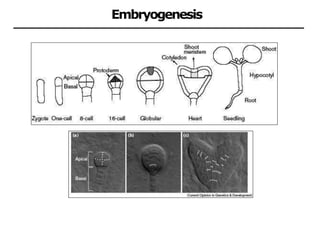
Embryogenesis
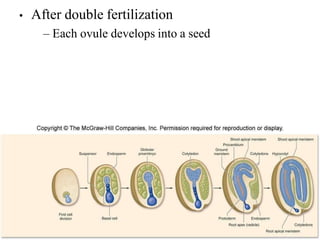
• After double fertilization
– Each ovule develops into a seed
seed(s)
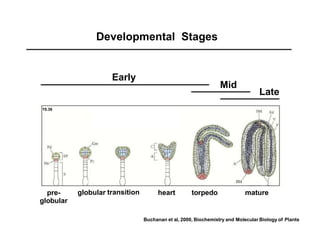
Developmental Stages
Early
Mid
Late
19.36
pre-
globular
globular transition heart torpedo mature
Buchanan et al, 2000, Biochemistry and Molecular Biology of Plants
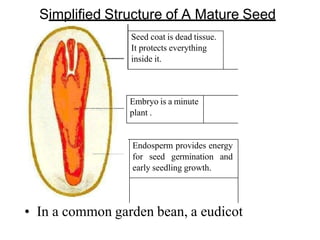
Simplified Structure of A Mature Seed
Seed coat is dead tissue.
It protects everything
inside it.
Embryo is a minute
plant .
Endosperm provides energy
for seed germination and
early seedling growth.
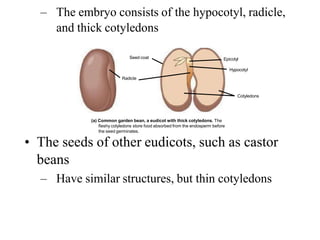
• In a common garden bean, a eudicot
– The embryo consists of the hypocotyl, radicle,
and thick cotyledons
(a) Common garden bean, a eudicot with thick cotyledons. The
fleshy cotyledons store food absorbed from the endosperm before
the seed germinates.
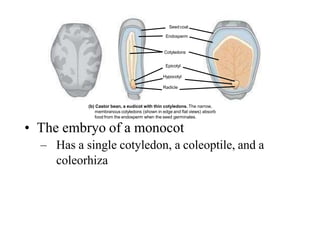
• The seeds of other eudicots, such as castor
beans
– Have similar structures, but thin cotyledons
Seed coat
Radicle
Epicotyl
Hypocotyl
Cotyledons
Hypocotyl
Radicle
Seedcoat
Endosperm
Cotyledons
Epicotyl
Hypocotyl
Radicle
(b) Castor bean, a eudicot with thin cotyledons. The narrow,
membranous cotyledons (shown in edge and flat views) absorb
food from the endosperm when the seed germinates.
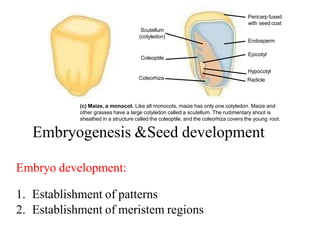
• The embryo of a monocot
– Has a single cotyledon, a coleoptile, and a
coleorhiza
(c) Maize, a monocot. Like all monocots, maize has only one cotyledon. Maize and
other grasses have a large cotyledon called a scutellum. The rudimentary shoot is
sheathed in a structure called the coleoptile, and the coleorhiza covers the young root.
Embryogenesis &Seed development
Embryo development:
1. Establishment of patterns
2. Establishment of meristem regions
Scutellum
(cotyledon)
Coleoptile
Coleorhiza
Pericarp fused
with seed coat
Endosperm
Epicotyl
Hypocotyl
Radicle

4. Development of Embryo_2.pptx embryo beginning

  • 1.
  • 2.
    • After doublefertilization – Each ovule develops into a seed seed(s)
  • 3.
    Developmental Stages Early Mid Late 19.36 pre- globular globular transitionheart torpedo mature Buchanan et al, 2000, Biochemistry and Molecular Biology of Plants
  • 4.
    Simplified Structure ofA Mature Seed Seed coat is dead tissue. It protects everything inside it. Embryo is a minute plant . Endosperm provides energy for seed germination and early seedling growth. • In a common garden bean, a eudicot
  • 5.
    – The embryoconsists of the hypocotyl, radicle, and thick cotyledons (a) Common garden bean, a eudicot with thick cotyledons. The fleshy cotyledons store food absorbed from the endosperm before the seed germinates. • The seeds of other eudicots, such as castor beans – Have similar structures, but thin cotyledons Seed coat Radicle Epicotyl Hypocotyl Cotyledons
  • 6.
    Hypocotyl Radicle Seedcoat Endosperm Cotyledons Epicotyl Hypocotyl Radicle (b) Castor bean,a eudicot with thin cotyledons. The narrow, membranous cotyledons (shown in edge and flat views) absorb food from the endosperm when the seed germinates. • The embryo of a monocot – Has a single cotyledon, a coleoptile, and a coleorhiza
  • 7.
    (c) Maize, amonocot. Like all monocots, maize has only one cotyledon. Maize and other grasses have a large cotyledon called a scutellum. The rudimentary shoot is sheathed in a structure called the coleoptile, and the coleorhiza covers the young root. Embryogenesis &Seed development Embryo development: 1. Establishment of patterns 2. Establishment of meristem regions Scutellum (cotyledon) Coleoptile Coleorhiza Pericarp fused with seed coat Endosperm Epicotyl Hypocotyl Radicle