Systems of Governments
What Do You Know? Name the city, county, state, and country you live in. Beside the name of each place, what is the leader of each kind of government is called?    City – Mayor Gwinnett – County Commissioner Georgia – Governor United States – President Why are there different levels in our government?
Why Do We Have Governments? They are organized ways for creating  laws/rules  designed to protect the  well-being  of the general public and to help manage  conflict. They determine the  power structure  (who has the power) within a country. In some countries, only  one  person or party maintains  centralized  control of the government, while in other countries power is  shared  between individuals and factions.
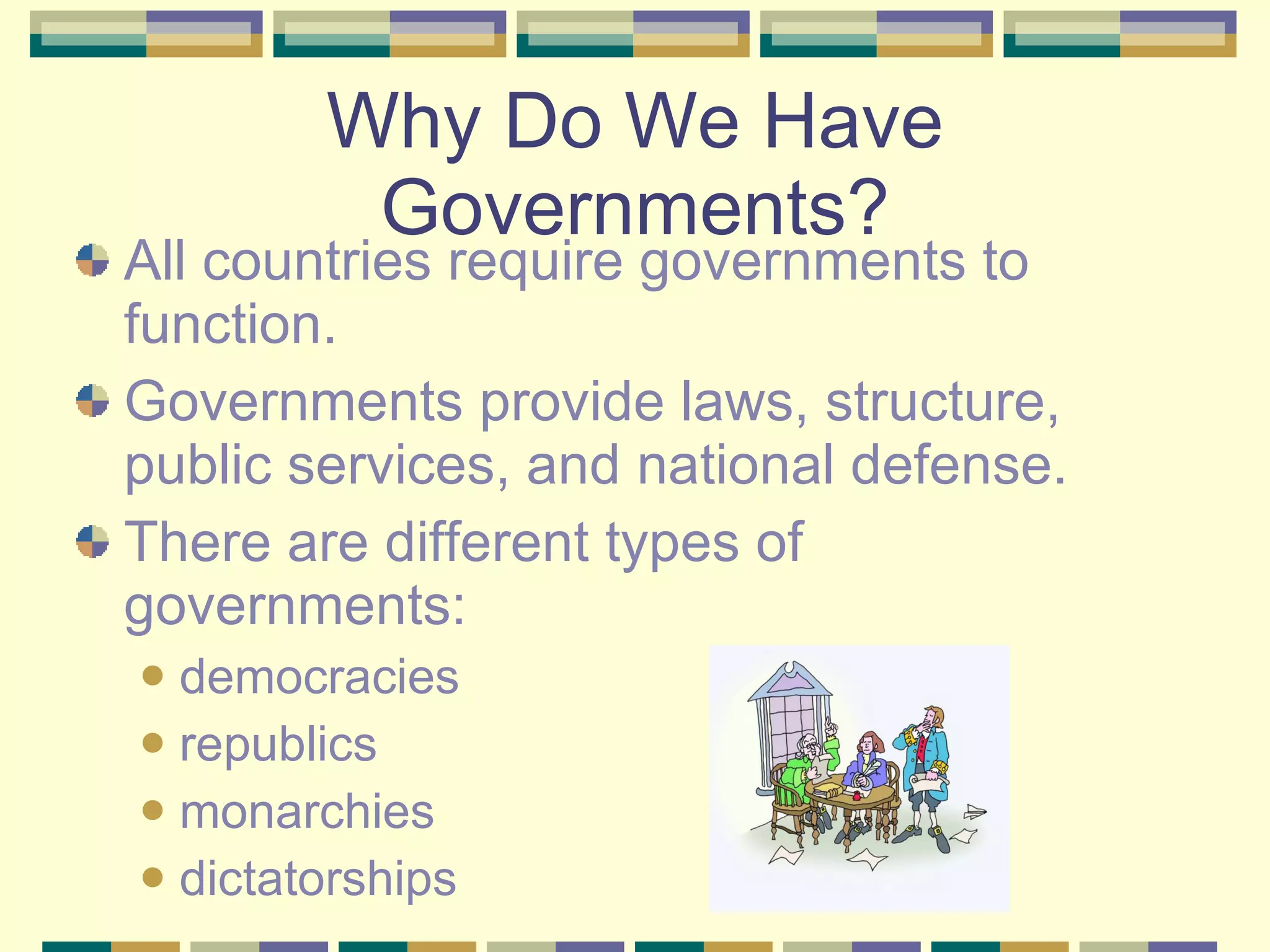
Why Do We Have Governments? All countries require governments to function. Governments provide laws, structure, public services, and national defense. There are different types of governments: democracies republics monarchies dictatorships
To study governments, geographers look at the following: Types  – Who rules and who participates. Systems  – How the power is distributed.
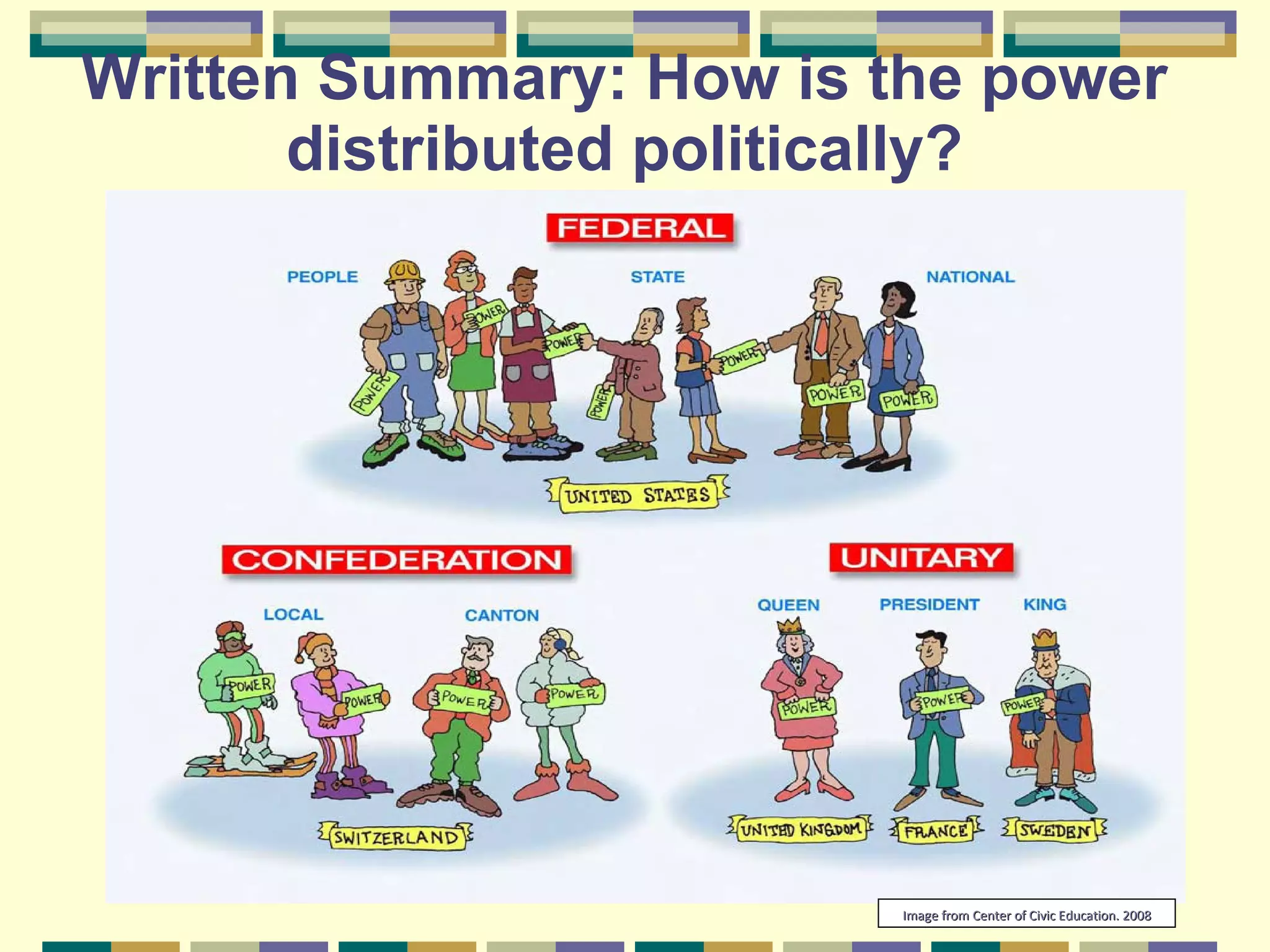
Systems  of Government are based on one question:  How is the power distributed? There are three ways governments distribute power: Unitary Confederation Federal
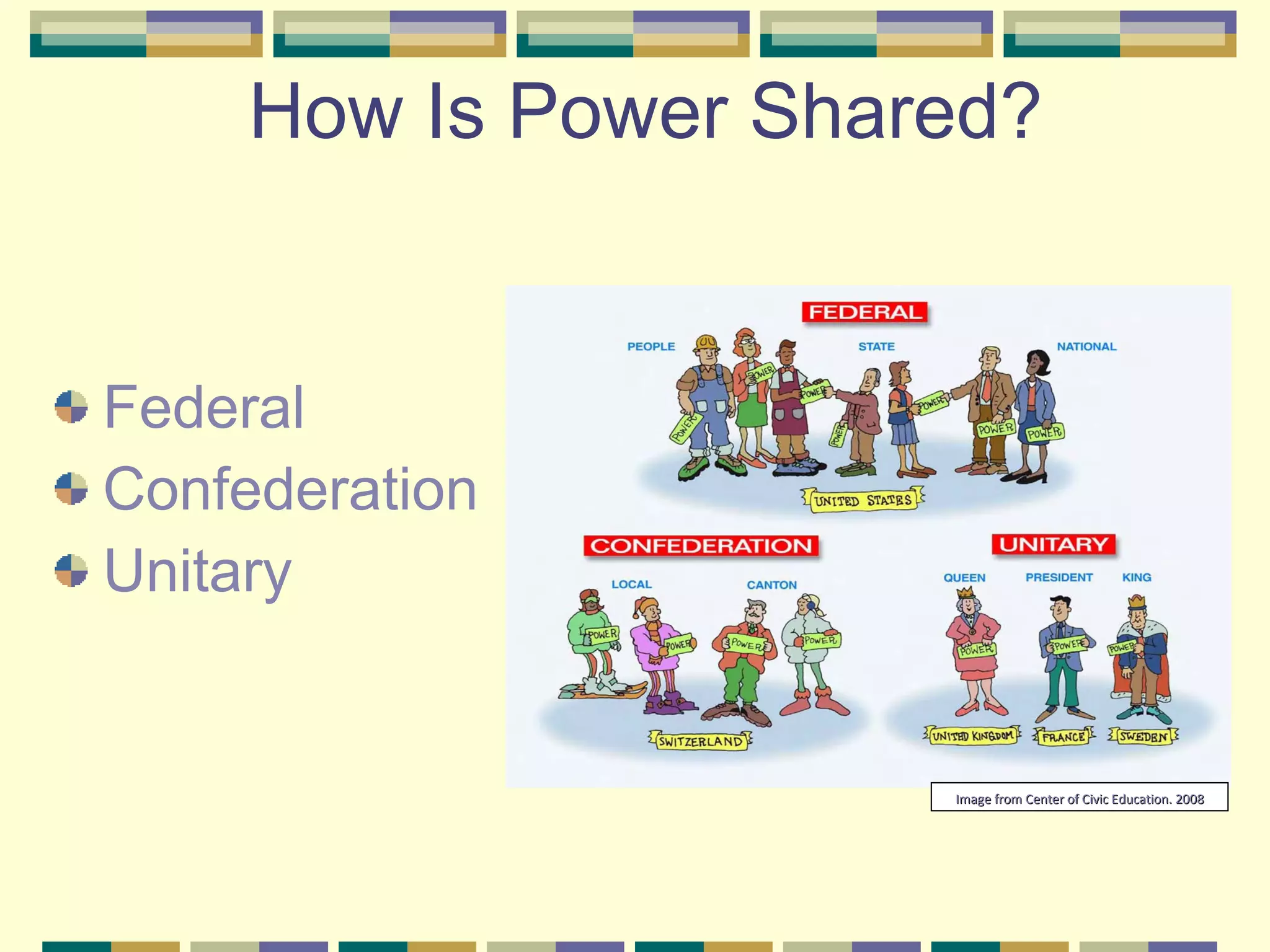
How Is Power Shared? Federal Confederation Unitary Image from Center of Civic Education. 2008
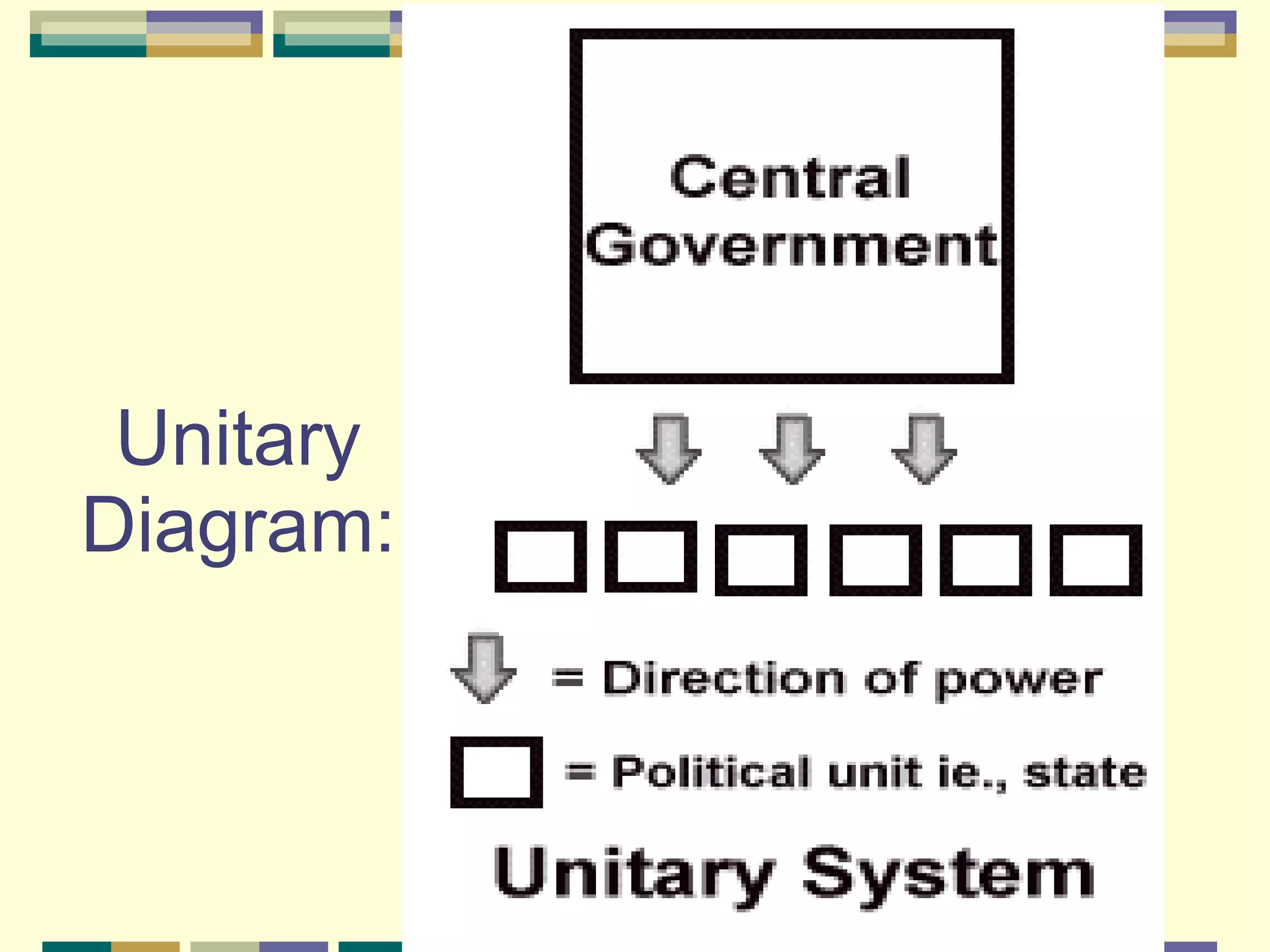
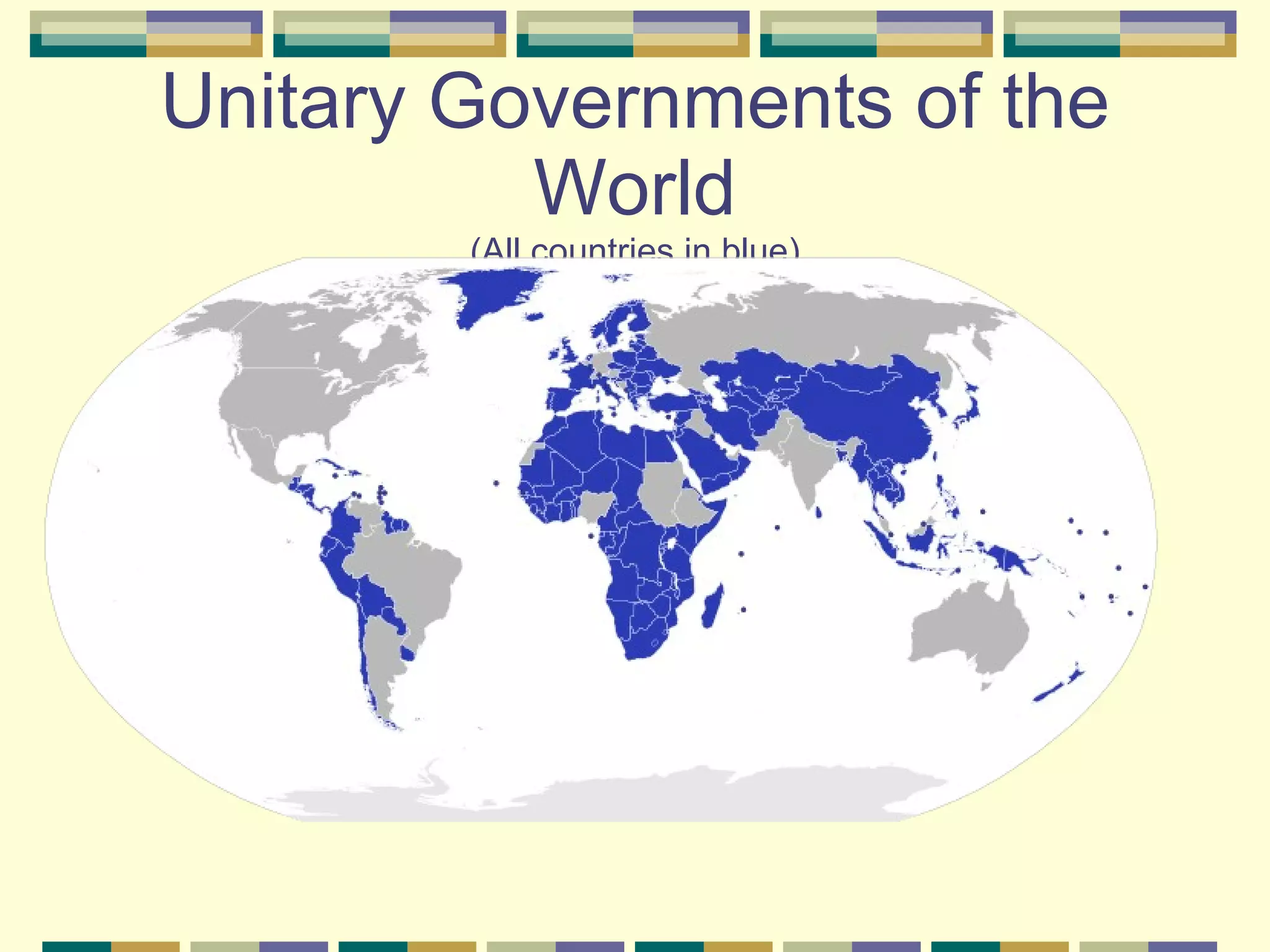
Unitary One central government controls everything. Power is not shared between states, counties, or provinces. Examples : United Kingdom, France, the Netherlands, Spain, and former Soviet Union
Unitary Diagram:
Unitary Governments of the World (All countries in blue)
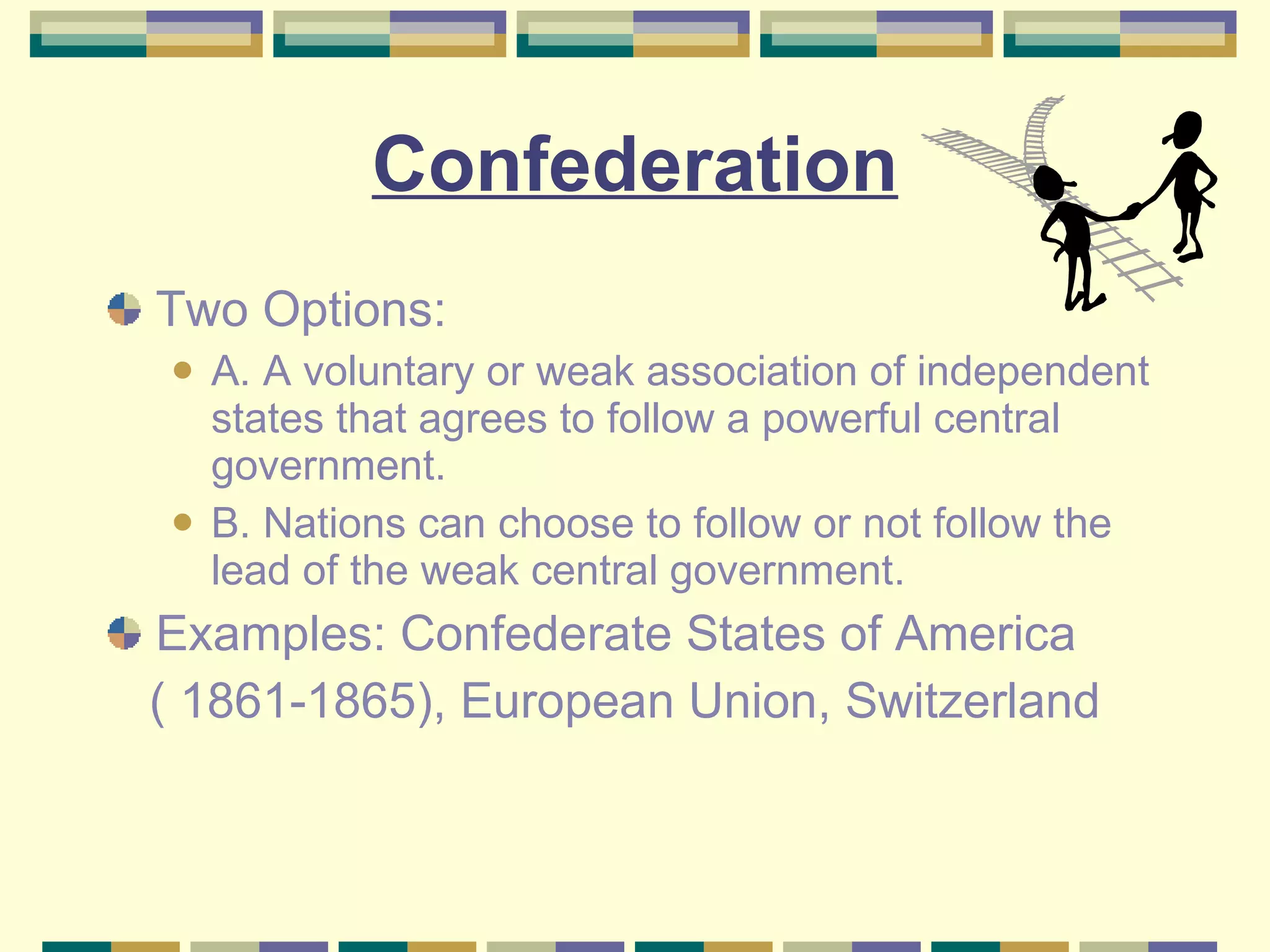
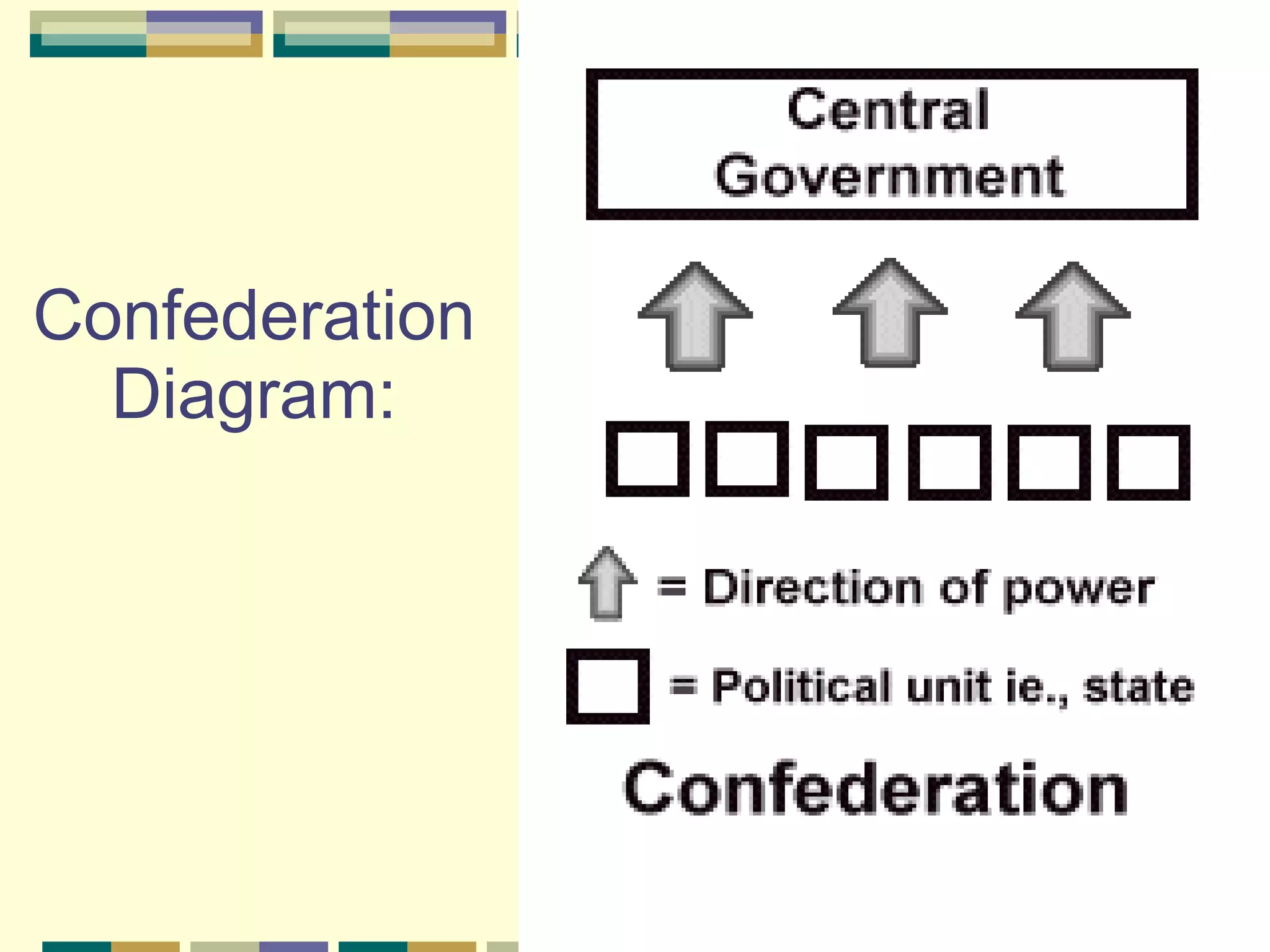
Confederation Two Options: A. A voluntary or weak association of independent states that agrees to follow a powerful central government. B. Nations can choose to follow or not follow the lead of the weak central government. Examples: Confederate States of America  ( 1861-1865), European Union, Switzerland
Confederation Diagram:
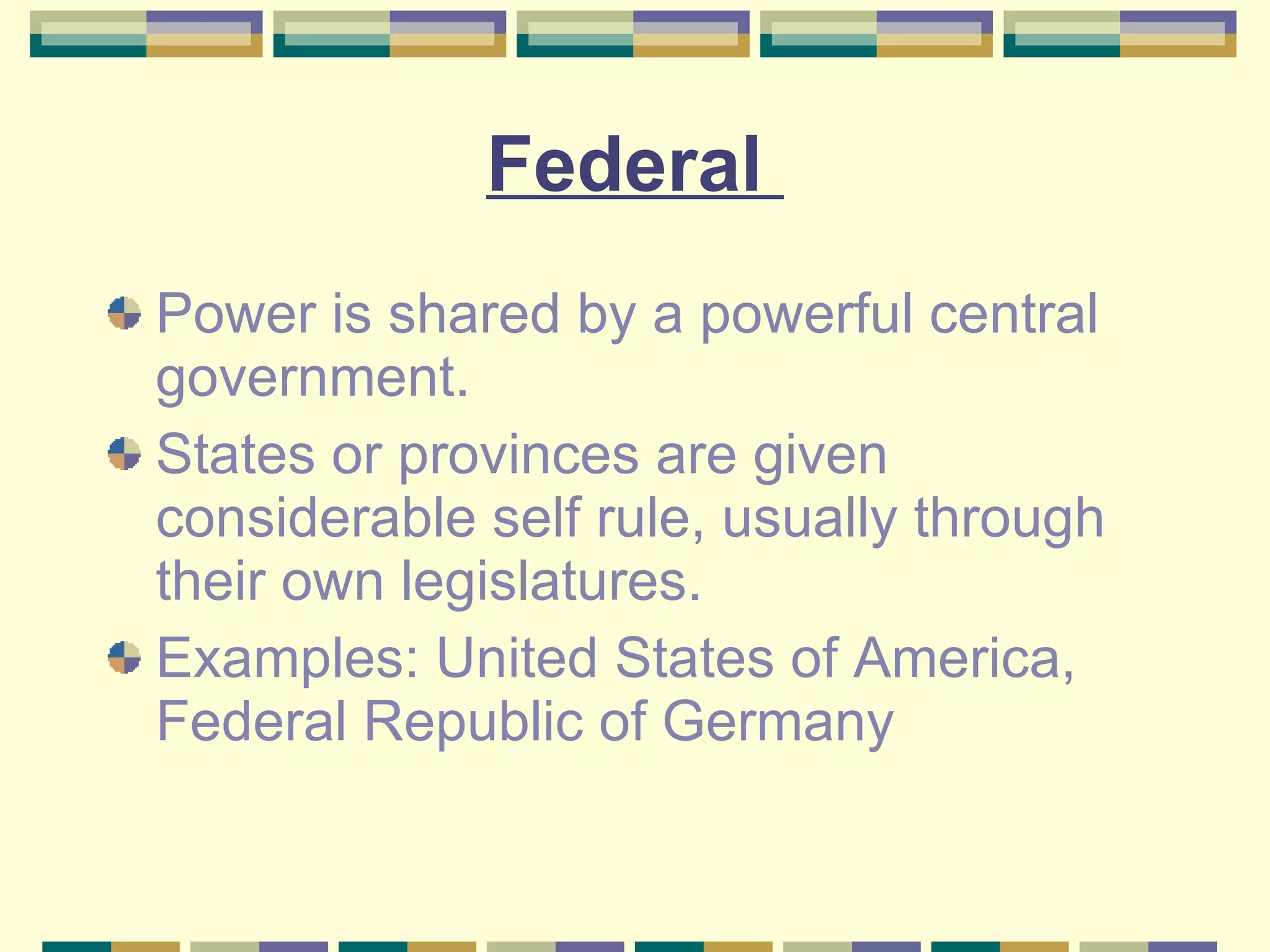
Federal  Power is shared by a powerful central government. States or provinces are given considerable self rule, usually through their own legislatures. Examples: United States of America, Federal Republic of Germany
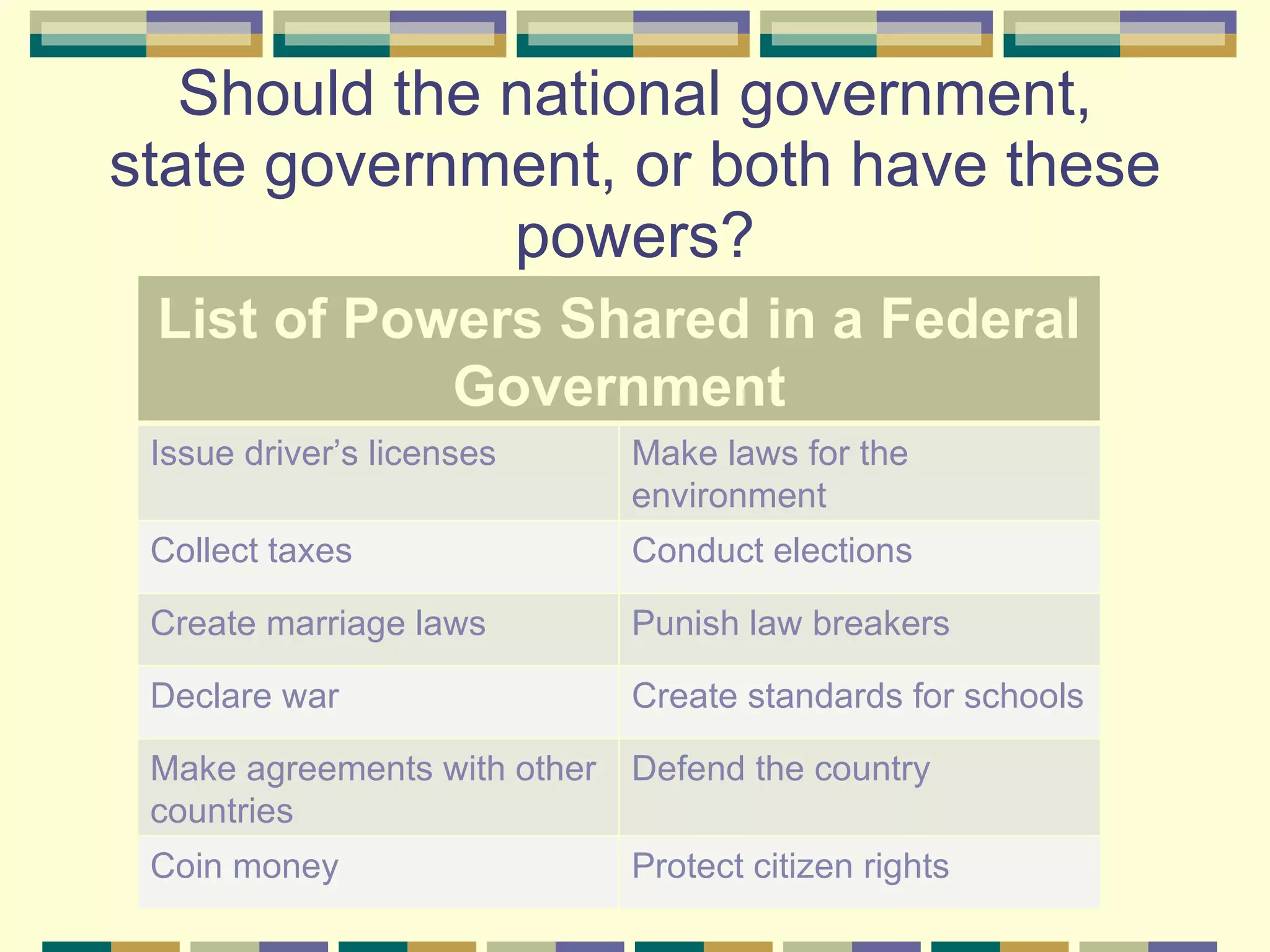
Should the national government, state government, or both have these powers? List of Powers Shared in a Federal Government Issue driver’s licenses Make laws for the environment Collect taxes Conduct elections Create marriage laws Punish law breakers Declare war Create standards for schools Make agreements with other countries Defend the country Coin money Protect citizen rights
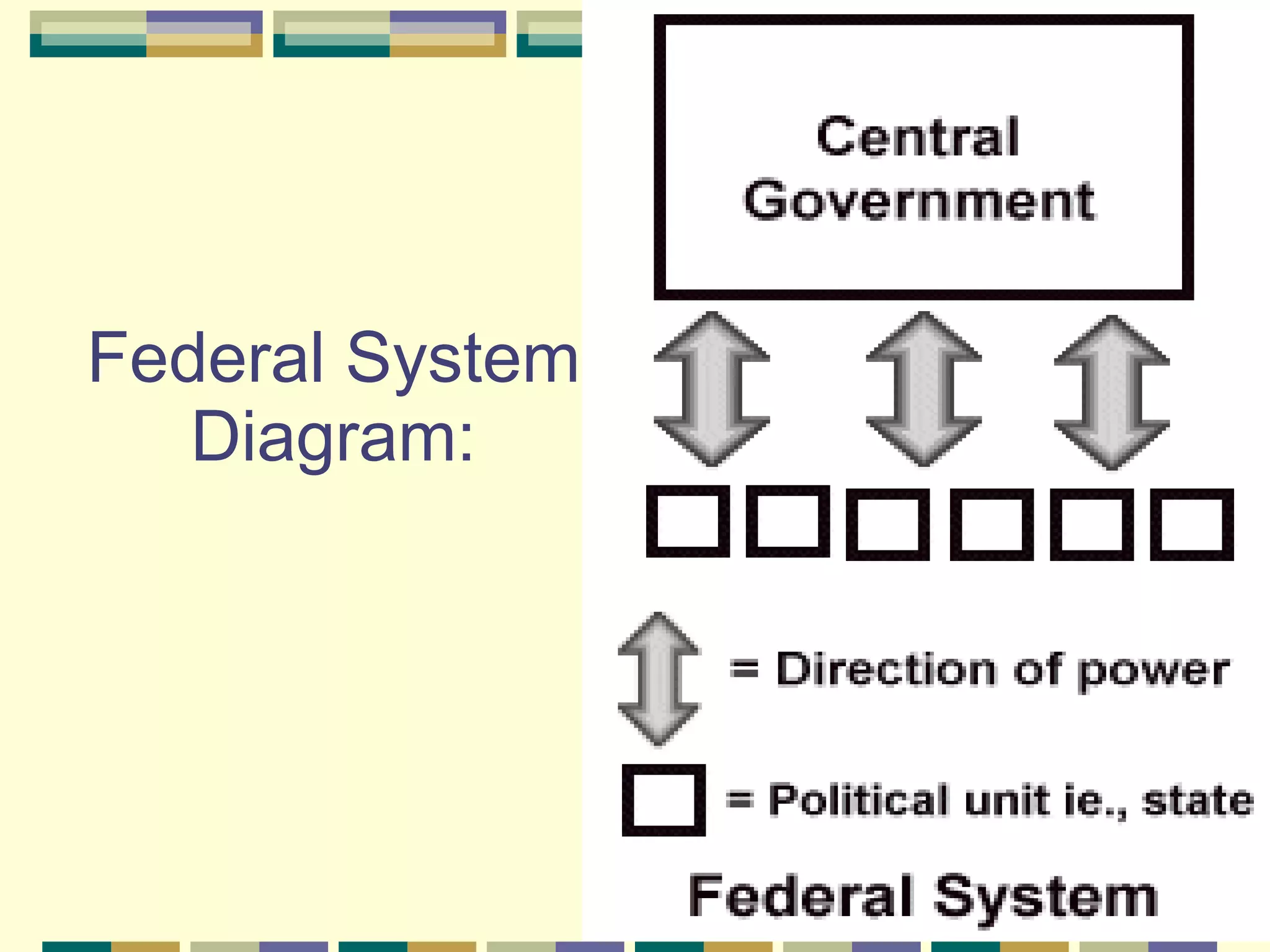
Federal System Diagram:
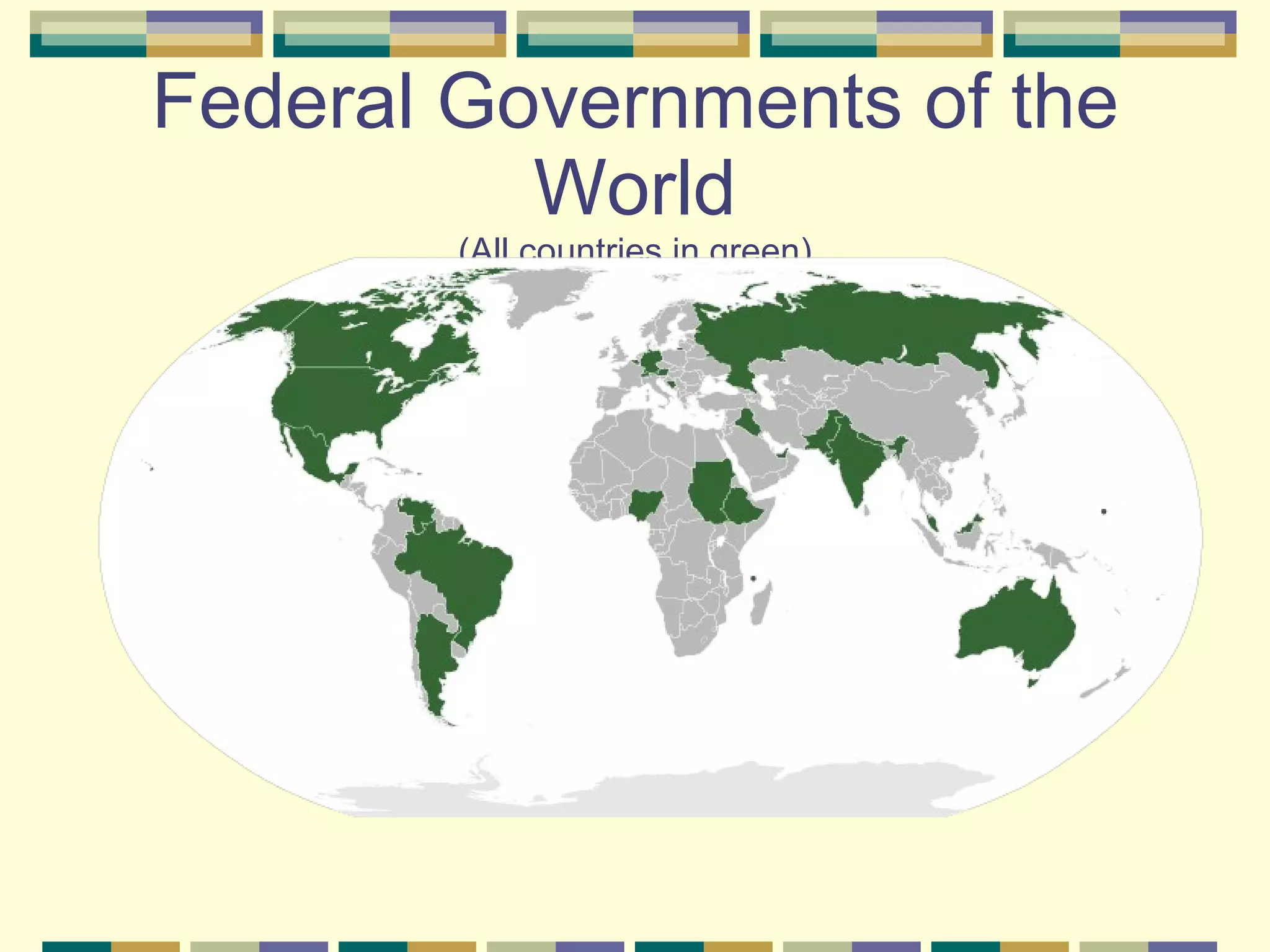
Federal Governments of the World (All countries in green)
Let’s Talk About IT! Let’s get in groups of three. Number yourselves one, two, and three. Ones  explain to the  twos  and  threes  how a unitary government system distributes power. Twos  explain to the  ones  and  threes  how a confederation government system distributes power. Threes  explain to the  ones  and  twos  how a federal government system distributes power.
Written Summary: How is the power distributed politically? Image from Center of Civic Education. 2008

Systems of government powerpoint (unitary, confederation, federal)updated 2010

  • 1.
  • 2.
    What Do YouKnow? Name the city, county, state, and country you live in. Beside the name of each place, what is the leader of each kind of government is called? City – Mayor Gwinnett – County Commissioner Georgia – Governor United States – President Why are there different levels in our government?
  • 3.
    Why Do WeHave Governments? They are organized ways for creating laws/rules designed to protect the well-being of the general public and to help manage conflict. They determine the power structure (who has the power) within a country. In some countries, only one person or party maintains centralized control of the government, while in other countries power is shared between individuals and factions.
  • 4.
    Why Do WeHave Governments? All countries require governments to function. Governments provide laws, structure, public services, and national defense. There are different types of governments: democracies republics monarchies dictatorships
  • 5.
    To study governments,geographers look at the following: Types – Who rules and who participates. Systems – How the power is distributed.
  • 6.
    Systems ofGovernment are based on one question: How is the power distributed? There are three ways governments distribute power: Unitary Confederation Federal
  • 7.
    How Is PowerShared? Federal Confederation Unitary Image from Center of Civic Education. 2008
  • 8.
    Unitary One centralgovernment controls everything. Power is not shared between states, counties, or provinces. Examples : United Kingdom, France, the Netherlands, Spain, and former Soviet Union
  • 9.
  • 10.
    Unitary Governments ofthe World (All countries in blue)
  • 11.
    Confederation Two Options:A. A voluntary or weak association of independent states that agrees to follow a powerful central government. B. Nations can choose to follow or not follow the lead of the weak central government. Examples: Confederate States of America ( 1861-1865), European Union, Switzerland
  • 12.
  • 13.
    Federal Poweris shared by a powerful central government. States or provinces are given considerable self rule, usually through their own legislatures. Examples: United States of America, Federal Republic of Germany
  • 14.
    Should the nationalgovernment, state government, or both have these powers? List of Powers Shared in a Federal Government Issue driver’s licenses Make laws for the environment Collect taxes Conduct elections Create marriage laws Punish law breakers Declare war Create standards for schools Make agreements with other countries Defend the country Coin money Protect citizen rights
  • 15.
  • 16.
    Federal Governments ofthe World (All countries in green)
  • 17.
    Let’s Talk AboutIT! Let’s get in groups of three. Number yourselves one, two, and three. Ones explain to the twos and threes how a unitary government system distributes power. Twos explain to the ones and threes how a confederation government system distributes power. Threes explain to the ones and twos how a federal government system distributes power.
  • 18.
    Written Summary: Howis the power distributed politically? Image from Center of Civic Education. 2008