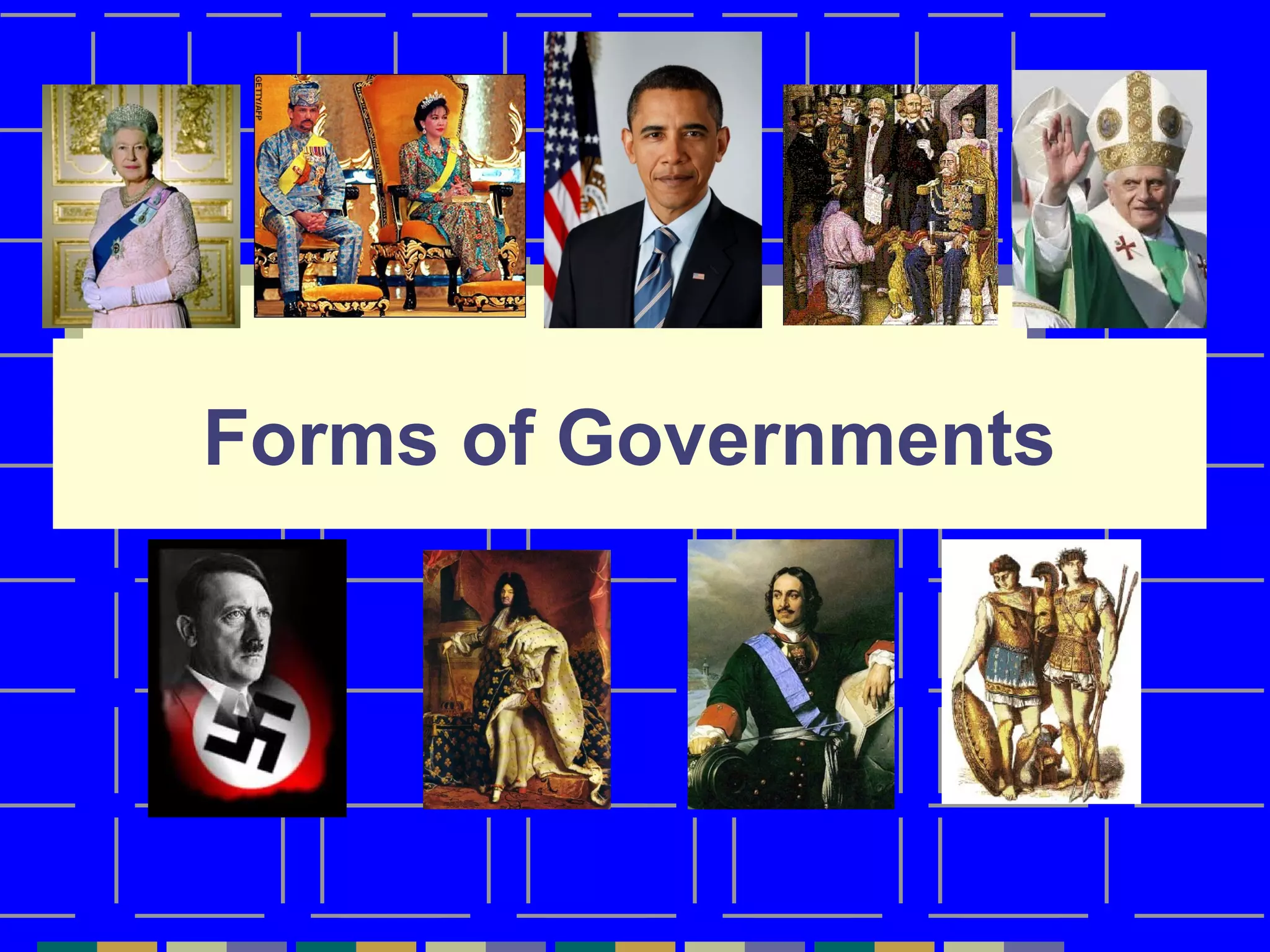
Forms of Governments
To study governments, geographers 
look at the following: 
Types – Who rules and who participates? 
Systems – How the power is distributed?
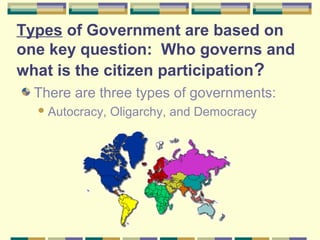
Types of Government are based on 
one key question: Who governs and 
what is the citizen participation? 
There are three types of governments: 
Autocracy, Oligarchy, and Democracy
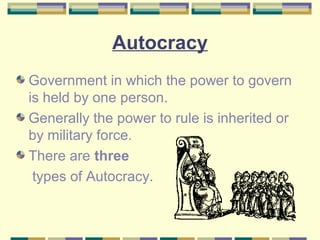
Autocracy 
Government in which the power to govern 
is held by one person. 
Generally the power to rule is inherited or 
by military force. 
There are three 
types of Autocracy.
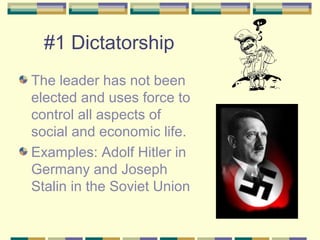
#1 Dictatorship 
The leader has not been 
elected and uses force to 
control all aspects of 
social and economic life. 
Examples: Adolf Hitler in 
Germany and Joseph 
Stalin in the Soviet Union
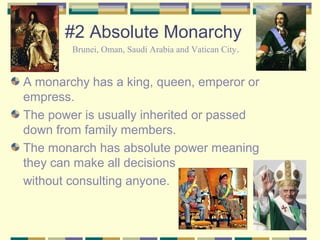
#2 Absolute Monarchy 
Brunei, Oman, Saudi Arabia and Vatican City. 
A monarchy has a king, queen, emperor or 
empress. 
The power is usually inherited or passed 
down from family members. 
The monarch has absolute power meaning 
they can make all decisions 
without consulting anyone.
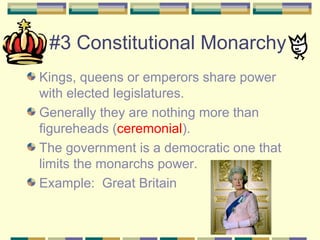
#3 Constitutional Monarchy 
Kings, queens or emperors share power 
with elected legislatures. 
Generally they are nothing more than 
figureheads (ceremonial). 
The government is a democratic one that 
limits the monarchs power. 
Example: Great Britain
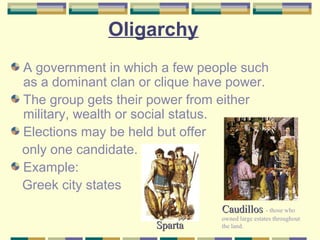
Oligarchy 
A government in which a few people such 
as a dominant clan or clique have power. 
The group gets their power from either 
military, wealth or social status. 
Elections may be held but offer 
only one candidate. 
Example: 
Greek city states 
CCaauuddiillllooss - those who 
owned large estates throughout 
SSppaarrttaa the land.
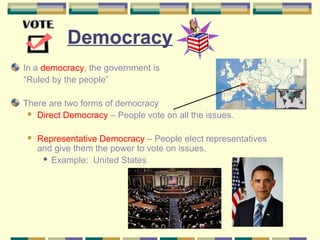
Democracy 
In a democracy, the government is 
“Ruled by the people” 
There are two forms of democracy 
 Direct Democracy – People vote on all the issues. 
 Representative Democracy – People elect representatives 
and give them the power to vote on issues. 
 Example: United States
In a democracy…. 
Individual freedom and equality is 
valued. 
Free elections are held 
Decisions are based on majority rule. 
All candidates can express their views 
freely. 
Citizens vote by secret ballot.
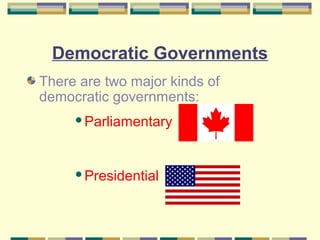
Democratic Governments 
There are two major kinds of 
democratic governments: 
Parliamentary 
Presidential
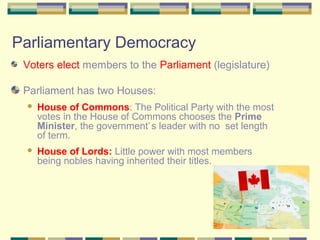
Parliamentary Democracy 
Voters elect members to the Parliament (legislature) 
Parliament has two Houses: 
 House of Commons: The Political Party with the most 
votes in the House of Commons chooses the Prime 
Minister, the government’s leader with no set length 
of term. 
 House of Lords: Little power with most members 
being nobles having inherited their titles.
Presidential 
Democracy 
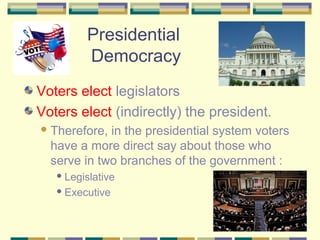
Voters elect legislators 
Voters elect (indirectly) the president. 
Therefore, in the presidential system voters 
have a more direct say about those who 
serve in two branches of the government : 
Legislative 
Executive
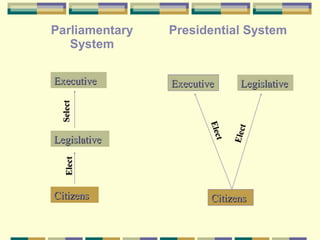
Parliamentary 
System 
Presidential System 
EExxeeccuuttiivvee LLeeggiissllaattiivvee 
EExxeeccuuttiivvee 
EElleecctt SSeelleecctt 
LLeeggiissllaattiivvee 
Elect 
Elect 
CCiittiizzeennss CCiittiizzeennss
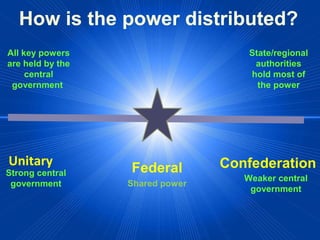
Systems of Government are based 
on one question: 
How is the power distributed? 
There are three ways governments 
distribute power: 
Unitary 
Confederation 
Federal
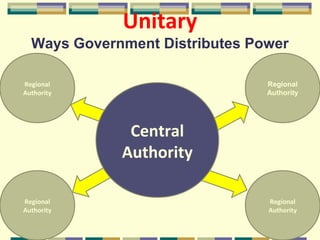
Unitary 
One central government controls 
everything. 
Power is not shared between states, 
counties or provinces. 
Examples : United Kingdom, France, 
the Netherlands, and Spain
Unitary 
Ways Government Distributes Power 
Central 
Authority 
Regional 
Authority 
Regional 
Authority 
Regional 
Authority 
Regional 
Authority
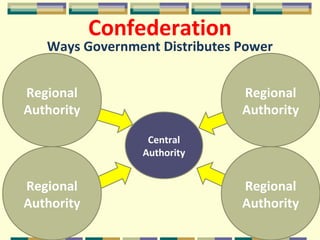
Confederation 
A voluntary association of independent states 
that agrees to follow a powerful central 
government. 
Nations can choose to follow or not follow the 
lead of the weak central government. 
Examples: Confederate States of America 
( 1861-1865), Russian Federation.
Confederation 
Ways Government Distributes Power 
Central 
Authority 
Regional 
Authority 
Regional 
Authority 
Regional 
Authority 
Regional 
Authority
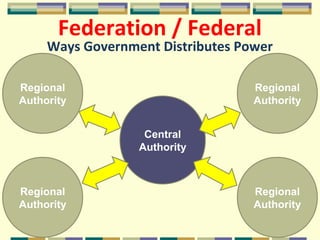
Federal 
Power is shared by a powerful central 
government. 
States or provinces are given 
considerable self rule, usually through 
their own legislatures. 
Examples: United States, Germany
Federation / Federal 
Ways Government Distributes Power 
Regional 
Authority 
Central 
Authority 
Regional 
Authority 
Regional 
Authority 
Regional 
Authority
How is the power distributed? 
Unitary Confederation 
Federal 
Shared power 
All key powers 
are held by the 
central 
government 
State/regional 
authorities 
hold most of 
the power 
Strong central 
government Weaker central 
government
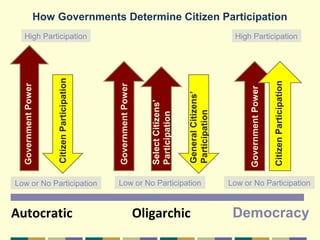
How Governments Determine Citizen Participation 
High Participation High Participation 
Citizen Participation 
Democracy Oligarchic Autocratic Government Power 
Government Power 
General Citizens’ 
Participation 
Government Power 
Citizen Participation 
Select Citizens’ 
Participation 
Low or No Participation Low or No Participation Low or No Participation
Putting it all together…. 
The United Kingdom is an autocratic 
constitutional monarchy with a 
parliamentary democracy and a unitary 
system. 
The United States is a presidential 
democracy with a federal system. 
What do those statements mean?
What do you remember? 
What are the three types of 
governments? 
Autocracy, Oligarchy, and Democracy 
What are the three systems of 
government? 
Unitary, Confederation, and Federal

Governmentppt 130305193216-phpapp01

  • 1.
  • 2.
    To study governments,geographers look at the following: Types – Who rules and who participates? Systems – How the power is distributed?
  • 3.
    Types of Governmentare based on one key question: Who governs and what is the citizen participation? There are three types of governments: Autocracy, Oligarchy, and Democracy
  • 4.
    Autocracy Government inwhich the power to govern is held by one person. Generally the power to rule is inherited or by military force. There are three types of Autocracy.
  • 5.
    #1 Dictatorship Theleader has not been elected and uses force to control all aspects of social and economic life. Examples: Adolf Hitler in Germany and Joseph Stalin in the Soviet Union
  • 6.
    #2 Absolute Monarchy Brunei, Oman, Saudi Arabia and Vatican City. A monarchy has a king, queen, emperor or empress. The power is usually inherited or passed down from family members. The monarch has absolute power meaning they can make all decisions without consulting anyone.
  • 7.
    #3 Constitutional Monarchy Kings, queens or emperors share power with elected legislatures. Generally they are nothing more than figureheads (ceremonial). The government is a democratic one that limits the monarchs power. Example: Great Britain
  • 8.
    Oligarchy A governmentin which a few people such as a dominant clan or clique have power. The group gets their power from either military, wealth or social status. Elections may be held but offer only one candidate. Example: Greek city states CCaauuddiillllooss - those who owned large estates throughout SSppaarrttaa the land.
  • 9.
    Democracy In ademocracy, the government is “Ruled by the people” There are two forms of democracy  Direct Democracy – People vote on all the issues.  Representative Democracy – People elect representatives and give them the power to vote on issues.  Example: United States
  • 10.
    In a democracy…. Individual freedom and equality is valued. Free elections are held Decisions are based on majority rule. All candidates can express their views freely. Citizens vote by secret ballot.
  • 11.
    Democratic Governments Thereare two major kinds of democratic governments: Parliamentary Presidential
  • 12.
    Parliamentary Democracy Voterselect members to the Parliament (legislature) Parliament has two Houses:  House of Commons: The Political Party with the most votes in the House of Commons chooses the Prime Minister, the government’s leader with no set length of term.  House of Lords: Little power with most members being nobles having inherited their titles.
  • 13.
    Presidential Democracy Voterselect legislators Voters elect (indirectly) the president. Therefore, in the presidential system voters have a more direct say about those who serve in two branches of the government : Legislative Executive
  • 14.
    Parliamentary System PresidentialSystem EExxeeccuuttiivvee LLeeggiissllaattiivvee EExxeeccuuttiivvee EElleecctt SSeelleecctt LLeeggiissllaattiivvee Elect Elect CCiittiizzeennss CCiittiizzeennss
  • 15.
    Systems of Governmentare based on one question: How is the power distributed? There are three ways governments distribute power: Unitary Confederation Federal
  • 16.
    Unitary One centralgovernment controls everything. Power is not shared between states, counties or provinces. Examples : United Kingdom, France, the Netherlands, and Spain
  • 17.
    Unitary Ways GovernmentDistributes Power Central Authority Regional Authority Regional Authority Regional Authority Regional Authority
  • 18.
    Confederation A voluntaryassociation of independent states that agrees to follow a powerful central government. Nations can choose to follow or not follow the lead of the weak central government. Examples: Confederate States of America ( 1861-1865), Russian Federation.
  • 19.
    Confederation Ways GovernmentDistributes Power Central Authority Regional Authority Regional Authority Regional Authority Regional Authority
  • 20.
    Federal Power isshared by a powerful central government. States or provinces are given considerable self rule, usually through their own legislatures. Examples: United States, Germany
  • 21.
    Federation / Federal Ways Government Distributes Power Regional Authority Central Authority Regional Authority Regional Authority Regional Authority
  • 22.
    How is thepower distributed? Unitary Confederation Federal Shared power All key powers are held by the central government State/regional authorities hold most of the power Strong central government Weaker central government
  • 23.
    How Governments DetermineCitizen Participation High Participation High Participation Citizen Participation Democracy Oligarchic Autocratic Government Power Government Power General Citizens’ Participation Government Power Citizen Participation Select Citizens’ Participation Low or No Participation Low or No Participation Low or No Participation
  • 24.
    Putting it alltogether…. The United Kingdom is an autocratic constitutional monarchy with a parliamentary democracy and a unitary system. The United States is a presidential democracy with a federal system. What do those statements mean?
  • 25.
    What do youremember? What are the three types of governments? Autocracy, Oligarchy, and Democracy What are the three systems of government? Unitary, Confederation, and Federal