Unitary Government By: Brookelyn Bennion Brandon Balamut C.J. Thomas Bella Sleister
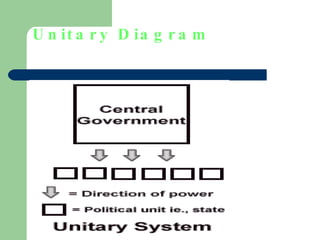
Unitary Government A unitary government is when a power is held in a single, central agency but has many local governments. The central power, Parliament, has total power over the smaller sub-divisions because it is a local authority for all government functions.
Unitary Diagram
Countries that are unitary Belgium, Bolivia, Canada, Costa Rica, Denmark, France, England, Iceland, Italy, Mexico, Philippines, Russia, ect. These countries choose to be unitary because the government wants power. A unitary government is always poking it’s nose around in other countries business because they want control.
STRENGTHS   of unitary government Smaller Government Better tax handling abilities Can manage economy better
Weaknesses  of unitary government Slow at making decisions because there are so many to make. Governs too big of an area. Bureaucracy No balance of power
Geography
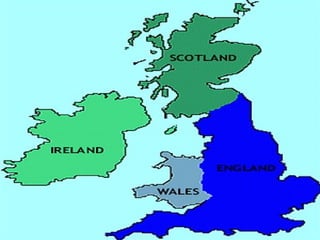
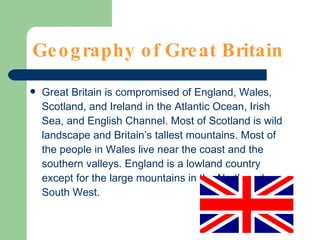
Geography of Great Britain Great Britain is compromised of England, Wales, Scotland, and Ireland in the Atlantic Ocean, Irish Sea, and English Channel. Most of Scotland is wild landscape and Britain’s tallest mountains. Most of the people in Wales live near the coast and the southern valleys. England is a lowland country except for the large mountains in the North and South West.
Demography of Great Britain In 2006, the population of Great Britain was recorded at 60,587,300 people. 86 percent of these people are White British and the rest is a mix of various ethnicities. 72 percent of these people are Christians while 2.7 percent are Muslim; the rest of the religions are below 1 percent. Education is a big thing to the British. Children are required to attend school from age five to sixteen just like in the US.
Form of Government Great Britain is a constitutional Monarchy and a Parliamentary Democracy. There is a queen, a Prime Minister ,and two houses of Parliament: House of Lords and House of Commons. The citizens elect a party into power and the head of the biggest party then becomes the Prime Minister. Parliament controls supreme Legislative power to make laws
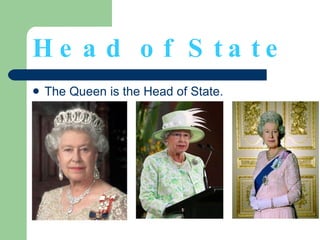
Head of State The Queen is the Head of State.
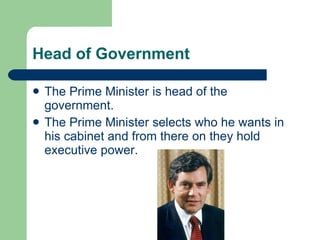
Head of Government The Prime Minister is head of the government.  The Prime Minister selects who he wants in his cabinet and from there on they hold executive power.
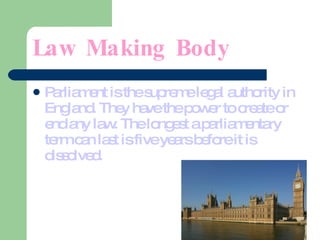
Law Making Body Parliament is the supreme legal authority in England. They have the power to create or end any law. The longest a parliamentary term can last is five years before it is dissolved.
Judicial Body The judicial body is independent of parliament and cannot review the constitutionality of legislation. There isn’t one highest national court in the U.K. The Judicial Committee of the Privy Council is one of the highest courts, along with the House of Lords.
Sub-National Governments Under Parliament there are two houses. One is the House of Lords and the other is the House of Commons. The House of Lords does not have much power and their main function is to revise legislation. The House of Commons consists of 646 elected members and the Prime Minister belongs to this group.
How do people in government achieve their positions? Every four to five years general elections are held to decide members of parliament. There are three major political parties including The Labors, The Conservatives, and The Liberal Democrats. Each party chooses a leader and whichever party wins the majority of the seats in parliament, there leader then becomes the Prime Minister.
Analyzing a Unitary Government This government works well for Great Britain. They have operated with this system for a very long time and it seems to suit the state well.
Current Events/Interesting Findings Great Britain’s government does not follow a written constitution. It governs partly by statutes and by common law and practice. The current Prime Minister is Gordon Brown. He replaced Tony Blair as head of the Labor Government in 2007.

Unitary Government

  • 1.
    Unitary Government By:Brookelyn Bennion Brandon Balamut C.J. Thomas Bella Sleister
  • 2.
    Unitary Government Aunitary government is when a power is held in a single, central agency but has many local governments. The central power, Parliament, has total power over the smaller sub-divisions because it is a local authority for all government functions.
  • 3.
  • 4.
    Countries that areunitary Belgium, Bolivia, Canada, Costa Rica, Denmark, France, England, Iceland, Italy, Mexico, Philippines, Russia, ect. These countries choose to be unitary because the government wants power. A unitary government is always poking it’s nose around in other countries business because they want control.
  • 5.
    STRENGTHS of unitary government Smaller Government Better tax handling abilities Can manage economy better
  • 6.
    Weaknesses ofunitary government Slow at making decisions because there are so many to make. Governs too big of an area. Bureaucracy No balance of power
  • 7.
  • 8.
    Geography of GreatBritain Great Britain is compromised of England, Wales, Scotland, and Ireland in the Atlantic Ocean, Irish Sea, and English Channel. Most of Scotland is wild landscape and Britain’s tallest mountains. Most of the people in Wales live near the coast and the southern valleys. England is a lowland country except for the large mountains in the North and South West.
  • 9.
    Demography of GreatBritain In 2006, the population of Great Britain was recorded at 60,587,300 people. 86 percent of these people are White British and the rest is a mix of various ethnicities. 72 percent of these people are Christians while 2.7 percent are Muslim; the rest of the religions are below 1 percent. Education is a big thing to the British. Children are required to attend school from age five to sixteen just like in the US.
  • 10.
    Form of GovernmentGreat Britain is a constitutional Monarchy and a Parliamentary Democracy. There is a queen, a Prime Minister ,and two houses of Parliament: House of Lords and House of Commons. The citizens elect a party into power and the head of the biggest party then becomes the Prime Minister. Parliament controls supreme Legislative power to make laws
  • 11.
    Head of StateThe Queen is the Head of State.
  • 12.
    Head of GovernmentThe Prime Minister is head of the government. The Prime Minister selects who he wants in his cabinet and from there on they hold executive power.
  • 13.
    Law Making BodyParliament is the supreme legal authority in England. They have the power to create or end any law. The longest a parliamentary term can last is five years before it is dissolved.
  • 14.
    Judicial Body Thejudicial body is independent of parliament and cannot review the constitutionality of legislation. There isn’t one highest national court in the U.K. The Judicial Committee of the Privy Council is one of the highest courts, along with the House of Lords.
  • 15.
    Sub-National Governments UnderParliament there are two houses. One is the House of Lords and the other is the House of Commons. The House of Lords does not have much power and their main function is to revise legislation. The House of Commons consists of 646 elected members and the Prime Minister belongs to this group.
  • 16.
    How do peoplein government achieve their positions? Every four to five years general elections are held to decide members of parliament. There are three major political parties including The Labors, The Conservatives, and The Liberal Democrats. Each party chooses a leader and whichever party wins the majority of the seats in parliament, there leader then becomes the Prime Minister.
  • 17.
    Analyzing a UnitaryGovernment This government works well for Great Britain. They have operated with this system for a very long time and it seems to suit the state well.
  • 18.
    Current Events/Interesting FindingsGreat Britain’s government does not follow a written constitution. It governs partly by statutes and by common law and practice. The current Prime Minister is Gordon Brown. He replaced Tony Blair as head of the Labor Government in 2007.