


Physiotherapy in
systemic
conditions
A. Thangamani ramalingam
PT, MSc(psy),PGDRM, ACspss MIAP
Diabetes Mellitus
 Diabetes mellitus is defined as a metabolic
disorder of multiple aetiology characterised by
chronic hyperglycaemia with disturbances of
carbohydrate, protein and fat metabolism
resulting from defects in insulin secretion, insulin
action, or both. The clinical diagnosis of diabetes
is often indicated by the presence of symptoms
such as polyuria, polydipsia, and unexplained
weight loss, and is confirmed by measurement of
abnormal hyperglycaemia
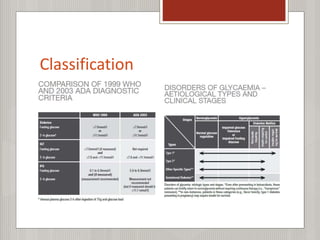
Classification
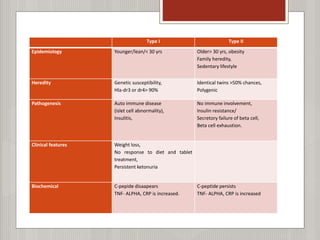
Type I Type II
Epidemiology Younger/lean/< 30 yrs Older> 30 yrs, obesity
Family heredity,
Sedentary lifestyle
Heredity Genetic susceptibility,
Hla-dr3 or dr4> 90%
Identical twins >50% chances,
Polygenic
Pathogenesis Auto immune disease
(islet cell abnormality),
Insulitis,
No immune involvement,
Insulin resistance/
Secretory failure of beta cell,
Beta cell exhaustion.
Clinical features Weight loss,
No response to diet and tablet
treatment,
Persistent ketonuria
Biochemical C-pepide disaapears
TNF- ALPHA, CRP is increased.
C-peptide persists
TNF- ALPHA, CRP is increased
Aims of management
Hypertension
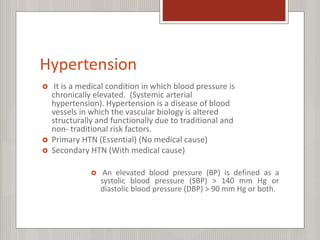
 It is a medical condition in which blood pressure is
chronically elevated. (Systemic arterial
hypertension). Hypertension is a disease of blood
vessels in which the vascular biology is altered
structurally and functionally due to traditional and
non- traditional risk factors.
 Primary HTN (Essential) (No medical cause)
 Secondary HTN (With medical cause)
 An elevated blood pressure (BP) is defined as a
systolic blood pressure (SBP) > 140 mm Hg or
diastolic blood pressure (DBP) > 90 mm Hg or both.
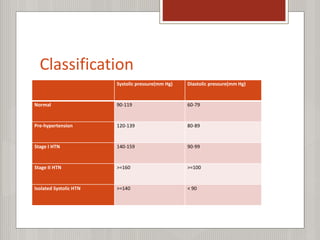
Classification
Systolic pressure(mm Hg) Diastolic pressure(mm Hg)
Normal 90-119 60-79
Pre-hypertension 120-139 80-89
Stage I HTN 140-159 90-99
Stage II HTN >=160 >=100
Isolated Systolic HTN >=140 < 90
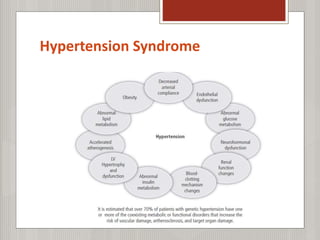
Hypertension Syndrome
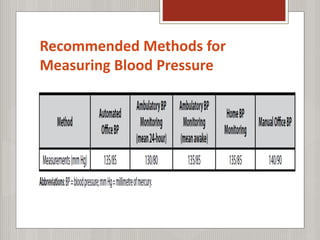
Recommended Methods for
Measuring Blood Pressure
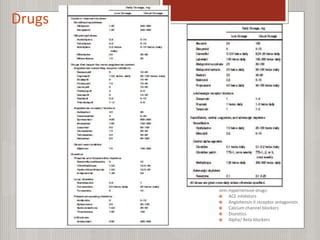
Drugs
Anti-hypertensive drugs:
 ACE inhibitors
 Angiotensin II receptor antagonists
 Calcium channel blockers
 Diuretics
 Alpha/ Beta blockers
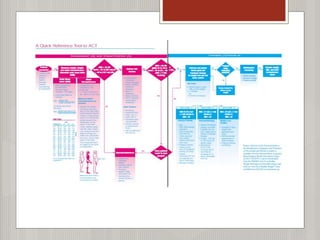
Diagnosis and Management of
Hypertension Algorithm
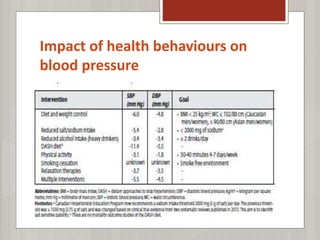
Impact of health behaviours on
blood pressure
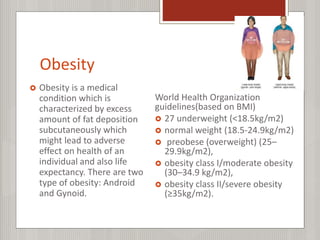
Obesity
 Obesity is a medical
condition which is
characterized by excess
amount of fat deposition
subcutaneously which
might lead to adverse
effect on health of an
individual and also life
expectancy. There are two
type of obesity: Android
and Gynoid.
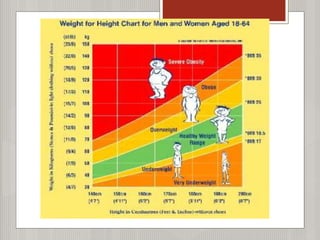
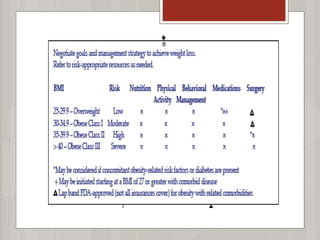
World Health Organization
guidelines(based on BMI)
 27 underweight (<18.5kg/m2)
 normal weight (18.5-24.9kg/m2)
 preobese (overweight) (25–
29.9kg/m2),
 obesity class I/moderate obesity
(30–34.9 kg/m2),
 obesity class II/severe obesity
(≥35kg/m2).
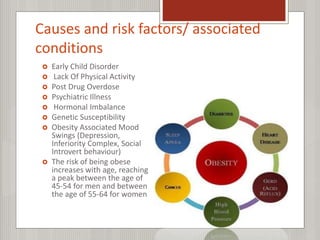
Causes and risk factors/ associated
conditions
 Early Child Disorder
 Lack Of Physical Activity
 Post Drug Overdose
 Psychiatric Illness
 Hormonal Imbalance
 Genetic Susceptibility
 Obesity Associated Mood
Swings (Depression,
Inferiority Complex, Social
Introvert behaviour)
 The risk of being obese
increases with age, reaching
a peak between the age of
45-54 for men and between
the age of 55-64 for women
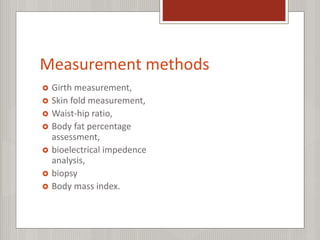
Measurement methods
 Girth measurement,
 Skin fold measurement,
 Waist-hip ratio,
 Body fat percentage
assessment,
 bioelectrical impedence
analysis,
 biopsy
 Body mass index.
QUALITY OF LIFE
 The World Health
Organization (WHO) defines
quality of life as “an
individuals’ perception of
their position in life in the
context of the culture in
which they live and in
relation to their goals,
expectations, standards and
concerns” .
 The sense of total well-
being that encompasses
both the physical and
psychological aspect of
patient’s life.
Systemic conditions(DM,HTN &Obesity)

Systemic conditions(DM,HTN &Obesity)

  • 1.
    Physiotherapy in systemic conditions A. Thangamaniramalingam PT, MSc(psy),PGDRM, ACspss MIAP
  • 2.
    Diabetes Mellitus  Diabetesmellitus is defined as a metabolic disorder of multiple aetiology characterised by chronic hyperglycaemia with disturbances of carbohydrate, protein and fat metabolism resulting from defects in insulin secretion, insulin action, or both. The clinical diagnosis of diabetes is often indicated by the presence of symptoms such as polyuria, polydipsia, and unexplained weight loss, and is confirmed by measurement of abnormal hyperglycaemia
  • 3.
  • 4.
    Type I TypeII Epidemiology Younger/lean/< 30 yrs Older> 30 yrs, obesity Family heredity, Sedentary lifestyle Heredity Genetic susceptibility, Hla-dr3 or dr4> 90% Identical twins >50% chances, Polygenic Pathogenesis Auto immune disease (islet cell abnormality), Insulitis, No immune involvement, Insulin resistance/ Secretory failure of beta cell, Beta cell exhaustion. Clinical features Weight loss, No response to diet and tablet treatment, Persistent ketonuria Biochemical C-pepide disaapears TNF- ALPHA, CRP is increased. C-peptide persists TNF- ALPHA, CRP is increased
  • 5.
  • 6.
    Hypertension  It isa medical condition in which blood pressure is chronically elevated. (Systemic arterial hypertension). Hypertension is a disease of blood vessels in which the vascular biology is altered structurally and functionally due to traditional and non- traditional risk factors.  Primary HTN (Essential) (No medical cause)  Secondary HTN (With medical cause)  An elevated blood pressure (BP) is defined as a systolic blood pressure (SBP) > 140 mm Hg or diastolic blood pressure (DBP) > 90 mm Hg or both.
  • 7.
    Classification Systolic pressure(mm Hg)Diastolic pressure(mm Hg) Normal 90-119 60-79 Pre-hypertension 120-139 80-89 Stage I HTN 140-159 90-99 Stage II HTN >=160 >=100 Isolated Systolic HTN >=140 < 90
  • 8.
  • 9.
  • 10.
    Drugs Anti-hypertensive drugs:  ACEinhibitors  Angiotensin II receptor antagonists  Calcium channel blockers  Diuretics  Alpha/ Beta blockers
  • 11.
    Diagnosis and Managementof Hypertension Algorithm
  • 12.
    Impact of healthbehaviours on blood pressure
  • 13.
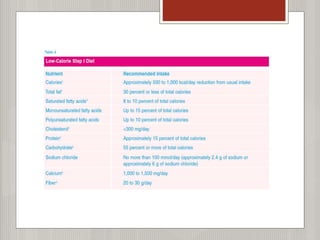
    Obesity  Obesity isa medical condition which is characterized by excess amount of fat deposition subcutaneously which might lead to adverse effect on health of an individual and also life expectancy. There are two type of obesity: Android and Gynoid. World Health Organization guidelines(based on BMI)  27 underweight (<18.5kg/m2)  normal weight (18.5-24.9kg/m2)  preobese (overweight) (25– 29.9kg/m2),  obesity class I/moderate obesity (30–34.9 kg/m2),  obesity class II/severe obesity (≥35kg/m2).
  • 15.
    Causes and riskfactors/ associated conditions  Early Child Disorder  Lack Of Physical Activity  Post Drug Overdose  Psychiatric Illness  Hormonal Imbalance  Genetic Susceptibility  Obesity Associated Mood Swings (Depression, Inferiority Complex, Social Introvert behaviour)  The risk of being obese increases with age, reaching a peak between the age of 45-54 for men and between the age of 55-64 for women
  • 17.
    Measurement methods  Girthmeasurement,  Skin fold measurement,  Waist-hip ratio,  Body fat percentage assessment,  bioelectrical impedence analysis,  biopsy  Body mass index.
  • 18.
    QUALITY OF LIFE The World Health Organization (WHO) defines quality of life as “an individuals’ perception of their position in life in the context of the culture in which they live and in relation to their goals, expectations, standards and concerns” .  The sense of total well- being that encompasses both the physical and psychological aspect of patient’s life.