Security Environment
ALA OPERATING SYSTEMS (2140702)
MADE BY:-
KUSHAGR SHARMA
150950107048
CSE-A, 4TH SEMESTER
Points To Be Covered are:-
 Security in os
 Security Goals
 Security Terminology
 Intruders
Security
 Security addresses the issue of preventing unauthorized access to resource.
 Basic methods used to protect software and hardware is passwords, backups, security
policies etc.
 Computer security deals with the prevention and detection of unauthorized action by the user.
 Different types of security in os are:
 Data Security
 Computer security
 Network security
 internet security
Security Goals
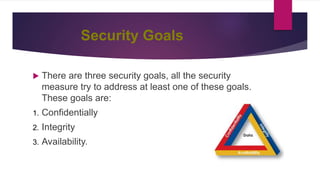
 There are three security goals, all the security
measure try to address at least one of these goals.
These goals are:
1. Confidentially
2. Integrity
3. Availability.
1. Confidentiality
 It refers the authorization of data disclosure from users.
 Sensitive information should not be shown to unauthorized user.
 Unique user-id and password are given to users for unpinning the goal of
confidentiality.
 It is not only applied to storage of data but also to the transmission of
data.
 Hence it means that people cannot read sensitive info either while it is on
a computer or is travelling across the network.
2. Integrity
 It refers to the trustworthiness of information resource.
 It includes that data should not be changed inappropriately,
either by accident or by deliberate margin.
 It ensures that information is not altered in transit.
 It also includes only preservation without corruption if
whatever was transmitted or entered into the system.
3. Availability
 Availability refers to the presence of data in system whenever needed by the
user.
 It means that people who are authorized to the info are not prevented to do so.
 Availability is dependent on how reliant the organization has become on
functioning of a computer and communication infrastructure.
 It could be affected purely technical issues, human causes or natural
phenomenon.
Security Terminology
1. Encryption: a process of encoding a plain text message into non-readable format.
2. Decryption: Transferring an encrypted message back into its normal form.
3. Plain text: The original raw form of message.
4. Cipher text: The encrypted form of plain text.
5. Vulnerability: Security flaws that allows attack to be successful.
6. Passive attack: Attempts to use info from system but does not affect the system.
7. Active attack: Invokes some modification of data or creation of a false stream.
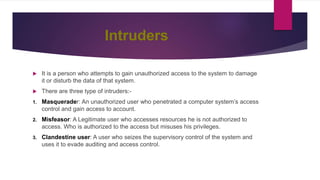
Intruders
 It is a person who attempts to gain unauthorized access to the system to damage
it or disturb the data of that system.
 There are three type of intruders:-
1. Masquerader: An unauthorized user who penetrated a computer system’s access
control and gain access to account.
2. Misfeasor: A Legitimate user who accesses resources he is not authorized to
access. Who is authorized to the access but misuses his privileges.
3. Clandestine user: A user who seizes the supervisory control of the system and
uses it to evade auditing and access control.
System Security enviroment in operating system

System Security enviroment in operating system

  • 1.
    Security Environment ALA OPERATINGSYSTEMS (2140702) MADE BY:- KUSHAGR SHARMA 150950107048 CSE-A, 4TH SEMESTER
  • 2.
    Points To BeCovered are:-  Security in os  Security Goals  Security Terminology  Intruders
  • 3.
    Security  Security addressesthe issue of preventing unauthorized access to resource.  Basic methods used to protect software and hardware is passwords, backups, security policies etc.  Computer security deals with the prevention and detection of unauthorized action by the user.  Different types of security in os are:  Data Security  Computer security  Network security  internet security
  • 4.
    Security Goals  Thereare three security goals, all the security measure try to address at least one of these goals. These goals are: 1. Confidentially 2. Integrity 3. Availability.
  • 5.
    1. Confidentiality  Itrefers the authorization of data disclosure from users.  Sensitive information should not be shown to unauthorized user.  Unique user-id and password are given to users for unpinning the goal of confidentiality.  It is not only applied to storage of data but also to the transmission of data.  Hence it means that people cannot read sensitive info either while it is on a computer or is travelling across the network.
  • 6.
    2. Integrity  Itrefers to the trustworthiness of information resource.  It includes that data should not be changed inappropriately, either by accident or by deliberate margin.  It ensures that information is not altered in transit.  It also includes only preservation without corruption if whatever was transmitted or entered into the system.
  • 7.
    3. Availability  Availabilityrefers to the presence of data in system whenever needed by the user.  It means that people who are authorized to the info are not prevented to do so.  Availability is dependent on how reliant the organization has become on functioning of a computer and communication infrastructure.  It could be affected purely technical issues, human causes or natural phenomenon.
  • 8.
    Security Terminology 1. Encryption:a process of encoding a plain text message into non-readable format. 2. Decryption: Transferring an encrypted message back into its normal form. 3. Plain text: The original raw form of message. 4. Cipher text: The encrypted form of plain text. 5. Vulnerability: Security flaws that allows attack to be successful. 6. Passive attack: Attempts to use info from system but does not affect the system. 7. Active attack: Invokes some modification of data or creation of a false stream.
  • 9.
    Intruders  It isa person who attempts to gain unauthorized access to the system to damage it or disturb the data of that system.  There are three type of intruders:- 1. Masquerader: An unauthorized user who penetrated a computer system’s access control and gain access to account. 2. Misfeasor: A Legitimate user who accesses resources he is not authorized to access. Who is authorized to the access but misuses his privileges. 3. Clandestine user: A user who seizes the supervisory control of the system and uses it to evade auditing and access control.