System proposal and CRS model design applying personal 
Information protection for BIG DATA analysis 
No: 6, 2nd Floor, 11th Main, Jaya Nager 4th Block, (Above raymond showrooms ), blr-11 
M:9611582234, 9945657526 
ABSTRACT 
Due to the recent development of IT technology, the capacity of data has 
surpassed the Zetta-byte, and improving the efficiency of business by increasing the 
predictive ability through an efficient analysis on t hese d ata has e merged a s a n issue 
of the current society. Even each general hospital is getting a large amount of 
information stored and managed. However, there are very few studies on the methods 
to utilize the clinical information efficiently. For the efficient analysis and utilization of 
BIG DATA stored in heterogeneous electronic medical record (EMR) data, a data-cleaning 
process to facilitate the utilization of data is needed. To this end, there is a 
need for the process of cleaning clinical information composed of text to make sure that 
the data can be processed mechanically. In this regard, in this paper, medical 
information, medication information, medical test resutls and allergy information were 
implemented up to Entry level using CDA, the interantional medical standards, and Care 
Record Summary integrating these information was created to ensure interoperatability 
and enable more efficient medical treatment. In addition, CRS model which is suitable 
for the situation of Korea was designed, and a system that enables utilization of clinical 
data was proposed.. 
Keywords— CDA, Care Record Summary, HL7, Big Data, EMR
No: 6, 2nd Floor, 11th Main, Jaya Nager 4th Block, (Above raymond showrooms ), blr-11 
M:9611582234, 9945657526 
INTRODUCTION 
With the recent development of IT technology, the capacity of data has 
surpassed the Zetta-byte, and improving the efficiency of business by increasing the 
predictive ability through an efficient analysis on these data has emerged as an issue of 
the current society. Even in each general hospital, large amount of information is being 
stored and managed. 
However, there are very few studies on the efficient use of the medical 
information. For the efficient analysis and utilization of BIG DATA stored in 
heterogeneous electronic medical record (EMR) data, a data-cleaning process to 
facilitate the utilization of data is needed. To this end, there is a need for the process of 
cleaning clinical information composed of text to make sure that the data can be 
processed mechanically. 
For the use of the cleaned clinical data, an environment that can easily take 
advantage of the clinical information is needed. In addition, since the clinical information 
includes personal information, the anonymization of personal information that removes 
patients’ personal information from the information is required before the analysis using 
clinical information.
No: 6, 2nd Floor, 11th Main, Jaya Nager 4th Block, (Above raymond showrooms ), blr-11 
M:9611582234, 9945657526 
Literature Survey 
1. Goal of Project: 
The CRS designed in this paper has its significance in that it proposed a method on 
how to structure the data using CRS as a method of converting unstructured medical 
information BIG DATA stacked on the each hospital into structured data that can be 
analyzed efficiently, thereby preparing a foundation for providing higher level of health 
care services by facilitating an analysis of the medical information BIG DATA and 
predicting the future 
2. Analysis on Existing Networks: 
All medical information of patients is not managed by the physician in charge 
unlike the practices in the United States, which poses the problem in determining the 
subject of updating CRS.
No: 6, 2nd Floor, 11th Main, Jaya Nager 4th Block, (Above raymond showrooms ), blr-11 
M:9611582234, 9945657526 
3.Idea on proposed System: 
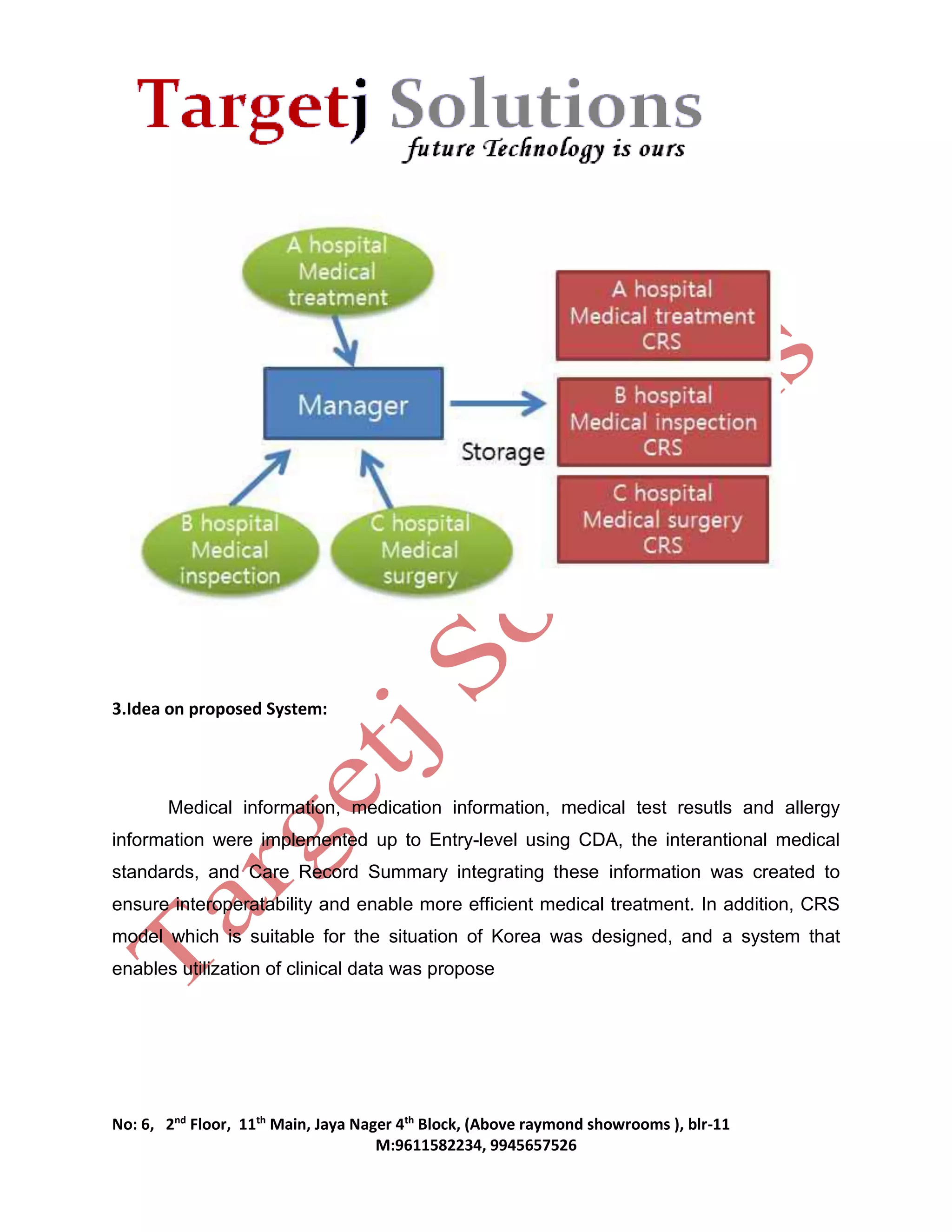
Medical information, medication information, medical test resutls and allergy 
information were implemented up to Entry-level using CDA, the interantional medical 
standards, and Care Record Summary integrating these information was created to 
ensure interoperatability and enable more efficient medical treatment. In addition, CRS 
model which is suitable for the situation of Korea was designed, and a system that 
enables utilization of clinical data was propose
No: 6, 2nd Floor, 11th Main, Jaya Nager 4th Block, (Above raymond showrooms ), blr-11 
M:9611582234, 9945657526 
Dissusion 
The CRS also realized interpretability by enabling compatibility between heterogeneous 
systems through implementing up to Entry level using standard code of CDA, a clinical 
document makeup standard and enabled efficient medical treatment through exchange 
of medical information between hospitals(XDS environment)[11] by making it possible to
view medical information at a glance. In addition, it is expected that it will help to 
promote efficient utilization of medical information and improve the quality of medical 
services by suggesting a system to store data after deleting personal information for the 
utilization of medical information and proposing a CRS service method that reflects the 
situation of Korea. 
For future work, a study of methods to utilize and analyze the medical information 
shared, and a research on the terminology will have to be added 
References 
[1] Dolin, R.H., Alschuler, L., Beebe, C., Biron, P.V., Boyer, S.L., Essin, D., 
Kimber, E., Lincoln, T., Mattison, J.E.: The HL7 clinical document 
architecture. J. Am. Med. Inform. Assoc. 8(6), 552–569 (2001) 
[2] Marcel Lucas Müller, Frank Ückert, Thomas Bürkle, Cross-institutional 
data exchange using the clinical document architecture (CDA) , Volume 
74, Issues 2–4, International Journal of Medical Informatics, March 2005 
[3] Canada Health Infoway, http://www.infoway-inforoute.ca accessed Oct 
2013 
[4] Singapore's National Electronic Health Record, http://www.moh.gov.sg, 
accessed Oct 2013 
[5] NHS (National Health Service), http://www.nhscarerecords.nhs.uk/ 
carerecords, accessed Oct 2013 
[6] Gil Kuperman (2008), NHIN Core Content Specification for Exchange of 
the Summary Patient Record 
No: 6, 2nd Floor, 11th Main, Jaya Nager 4th Block, (Above raymond showrooms ), blr-11 
M:9611582234, 9945657526

System proposal and crs model design applying

  • 1.
    System proposal andCRS model design applying personal Information protection for BIG DATA analysis No: 6, 2nd Floor, 11th Main, Jaya Nager 4th Block, (Above raymond showrooms ), blr-11 M:9611582234, 9945657526 ABSTRACT Due to the recent development of IT technology, the capacity of data has surpassed the Zetta-byte, and improving the efficiency of business by increasing the predictive ability through an efficient analysis on t hese d ata has e merged a s a n issue of the current society. Even each general hospital is getting a large amount of information stored and managed. However, there are very few studies on the methods to utilize the clinical information efficiently. For the efficient analysis and utilization of BIG DATA stored in heterogeneous electronic medical record (EMR) data, a data-cleaning process to facilitate the utilization of data is needed. To this end, there is a need for the process of cleaning clinical information composed of text to make sure that the data can be processed mechanically. In this regard, in this paper, medical information, medication information, medical test resutls and allergy information were implemented up to Entry level using CDA, the interantional medical standards, and Care Record Summary integrating these information was created to ensure interoperatability and enable more efficient medical treatment. In addition, CRS model which is suitable for the situation of Korea was designed, and a system that enables utilization of clinical data was proposed.. Keywords— CDA, Care Record Summary, HL7, Big Data, EMR
  • 2.
    No: 6, 2ndFloor, 11th Main, Jaya Nager 4th Block, (Above raymond showrooms ), blr-11 M:9611582234, 9945657526 INTRODUCTION With the recent development of IT technology, the capacity of data has surpassed the Zetta-byte, and improving the efficiency of business by increasing the predictive ability through an efficient analysis on these data has emerged as an issue of the current society. Even in each general hospital, large amount of information is being stored and managed. However, there are very few studies on the efficient use of the medical information. For the efficient analysis and utilization of BIG DATA stored in heterogeneous electronic medical record (EMR) data, a data-cleaning process to facilitate the utilization of data is needed. To this end, there is a need for the process of cleaning clinical information composed of text to make sure that the data can be processed mechanically. For the use of the cleaned clinical data, an environment that can easily take advantage of the clinical information is needed. In addition, since the clinical information includes personal information, the anonymization of personal information that removes patients’ personal information from the information is required before the analysis using clinical information.
  • 3.
    No: 6, 2ndFloor, 11th Main, Jaya Nager 4th Block, (Above raymond showrooms ), blr-11 M:9611582234, 9945657526 Literature Survey 1. Goal of Project: The CRS designed in this paper has its significance in that it proposed a method on how to structure the data using CRS as a method of converting unstructured medical information BIG DATA stacked on the each hospital into structured data that can be analyzed efficiently, thereby preparing a foundation for providing higher level of health care services by facilitating an analysis of the medical information BIG DATA and predicting the future 2. Analysis on Existing Networks: All medical information of patients is not managed by the physician in charge unlike the practices in the United States, which poses the problem in determining the subject of updating CRS.
  • 4.
    No: 6, 2ndFloor, 11th Main, Jaya Nager 4th Block, (Above raymond showrooms ), blr-11 M:9611582234, 9945657526 3.Idea on proposed System: Medical information, medication information, medical test resutls and allergy information were implemented up to Entry-level using CDA, the interantional medical standards, and Care Record Summary integrating these information was created to ensure interoperatability and enable more efficient medical treatment. In addition, CRS model which is suitable for the situation of Korea was designed, and a system that enables utilization of clinical data was propose
  • 5.
    No: 6, 2ndFloor, 11th Main, Jaya Nager 4th Block, (Above raymond showrooms ), blr-11 M:9611582234, 9945657526 Dissusion The CRS also realized interpretability by enabling compatibility between heterogeneous systems through implementing up to Entry level using standard code of CDA, a clinical document makeup standard and enabled efficient medical treatment through exchange of medical information between hospitals(XDS environment)[11] by making it possible to
  • 6.
    view medical informationat a glance. In addition, it is expected that it will help to promote efficient utilization of medical information and improve the quality of medical services by suggesting a system to store data after deleting personal information for the utilization of medical information and proposing a CRS service method that reflects the situation of Korea. For future work, a study of methods to utilize and analyze the medical information shared, and a research on the terminology will have to be added References [1] Dolin, R.H., Alschuler, L., Beebe, C., Biron, P.V., Boyer, S.L., Essin, D., Kimber, E., Lincoln, T., Mattison, J.E.: The HL7 clinical document architecture. J. Am. Med. Inform. Assoc. 8(6), 552–569 (2001) [2] Marcel Lucas Müller, Frank Ückert, Thomas Bürkle, Cross-institutional data exchange using the clinical document architecture (CDA) , Volume 74, Issues 2–4, International Journal of Medical Informatics, March 2005 [3] Canada Health Infoway, http://www.infoway-inforoute.ca accessed Oct 2013 [4] Singapore's National Electronic Health Record, http://www.moh.gov.sg, accessed Oct 2013 [5] NHS (National Health Service), http://www.nhscarerecords.nhs.uk/ carerecords, accessed Oct 2013 [6] Gil Kuperman (2008), NHIN Core Content Specification for Exchange of the Summary Patient Record No: 6, 2nd Floor, 11th Main, Jaya Nager 4th Block, (Above raymond showrooms ), blr-11 M:9611582234, 9945657526