SWOT SWOT Analysis
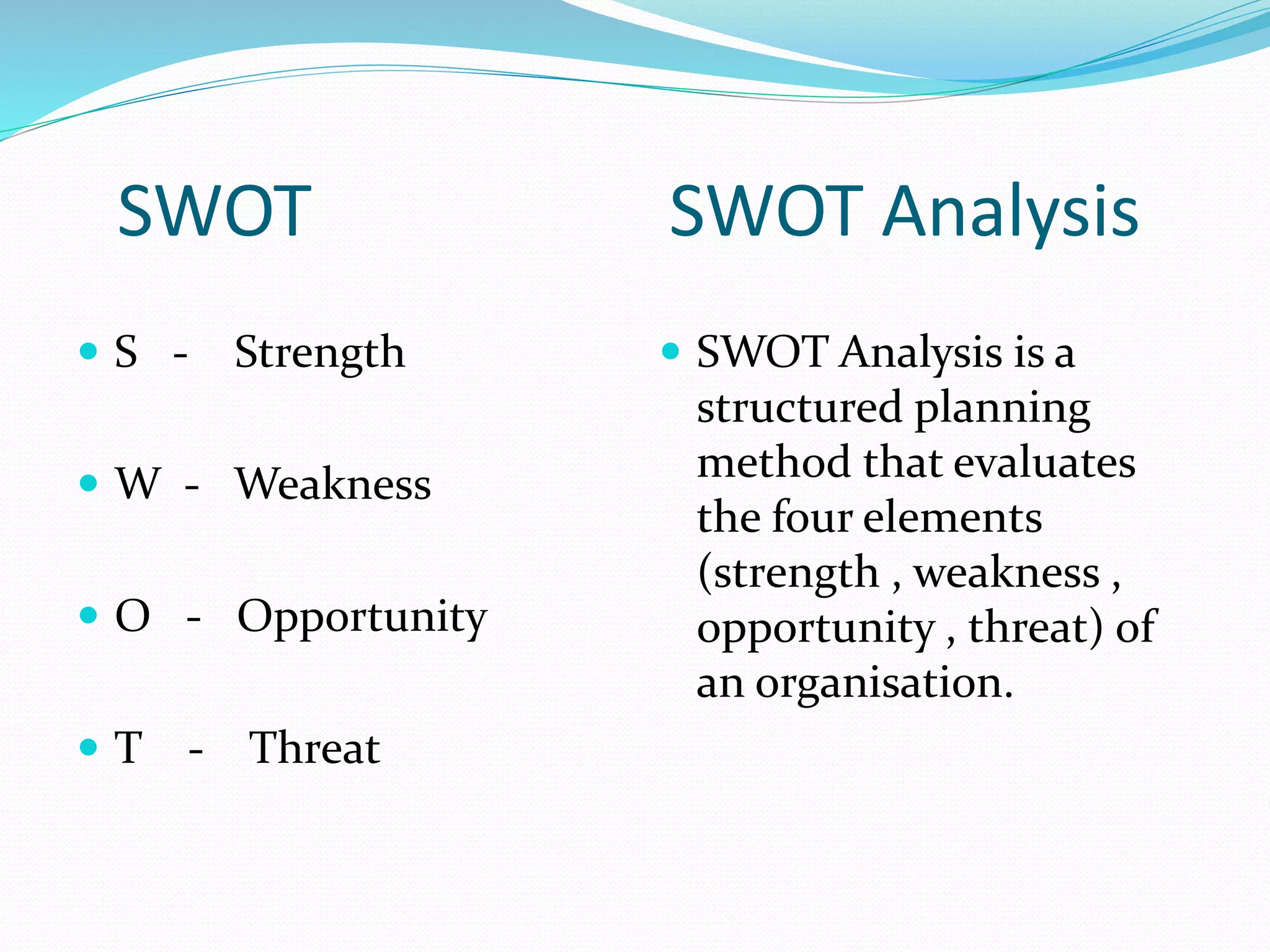
 S - Strength
 W - Weakness
 O - Opportunity
 T - Threat
 SWOT Analysis is a
structured planning
method that evaluates
the four elements
(strength , weakness ,
opportunity , threat) of
an organisation.
 Having an excellent staff.
 Good customer relationships.
 Ability to meet the demand.
 Strong relations with partners,
employees ,suppliers etc.
 Strong internal communication
system.
 Well-designed marketing
strategies.
 Accessable geographical location.
 Outdated market research data.
 Inefficient record maintenance
system.
 Infrequent cashflow system.
 Lack of co-ordination among the
individuals in the organisation.
 Maintenance of higher inventory
costs.
 Missed deadlines which leads to
cancellation of orders.
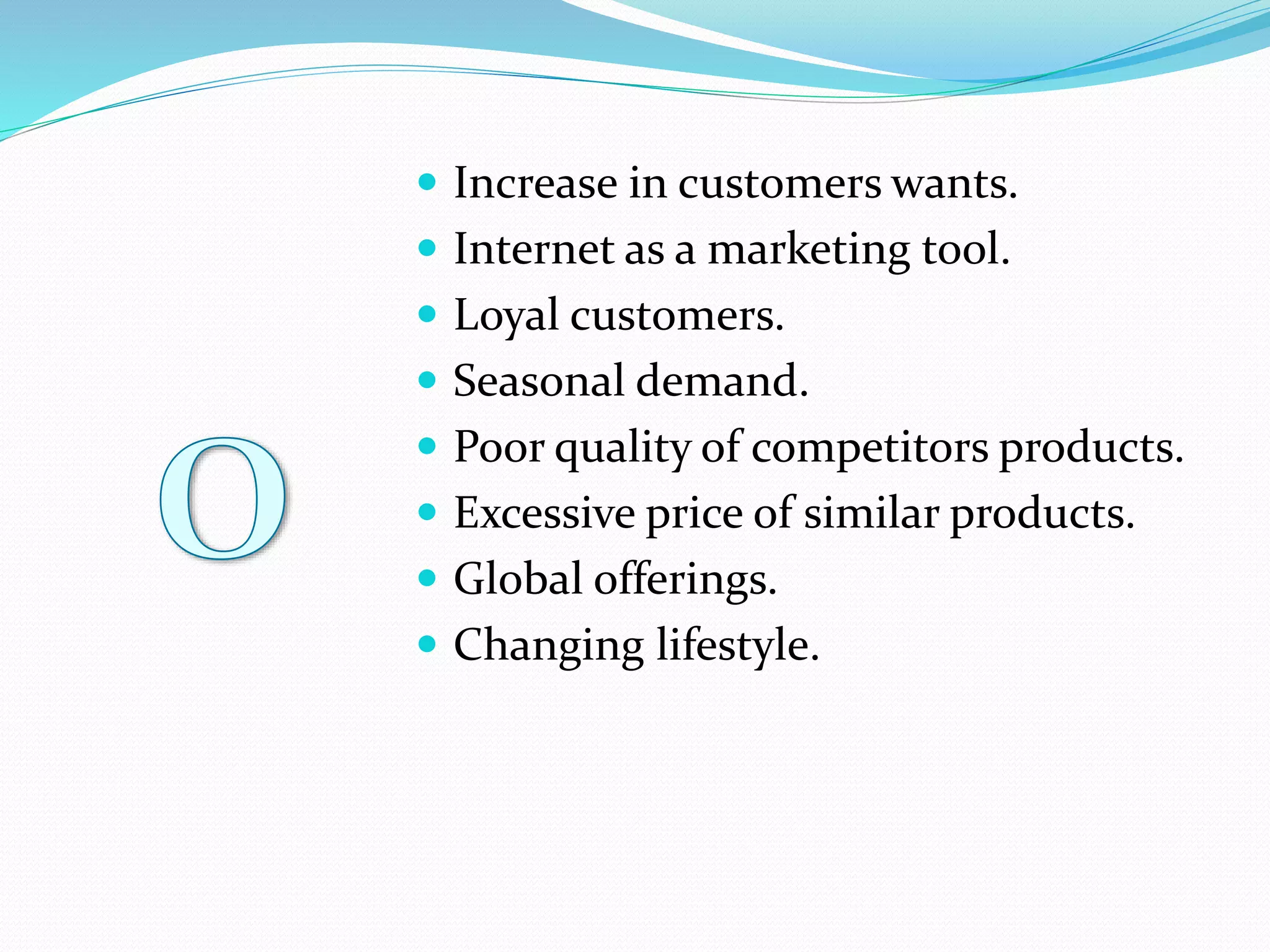
 Increase in customers wants.
 Internet as a marketing tool.
 Loyal customers.
 Seasonal demand.
 Poor quality of competitors products.
 Excessive price of similar products.
 Global offerings.
 Changing lifestyle.
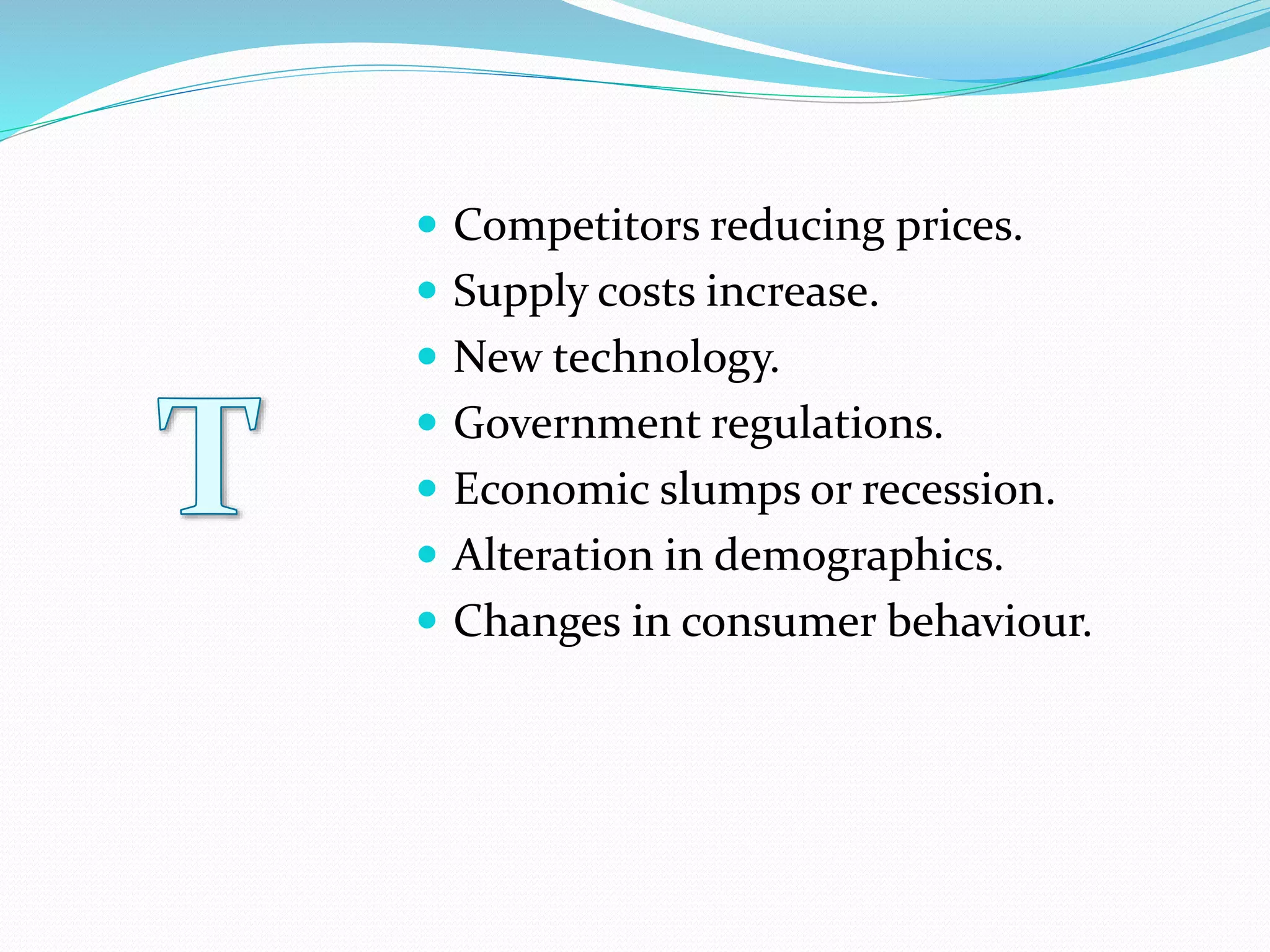
 Competitors reducing prices.
 Supply costs increase.
 New technology.
 Government regulations.
 Economic slumps or recession.
 Alteration in demographics.
 Changes in consumer behaviour.
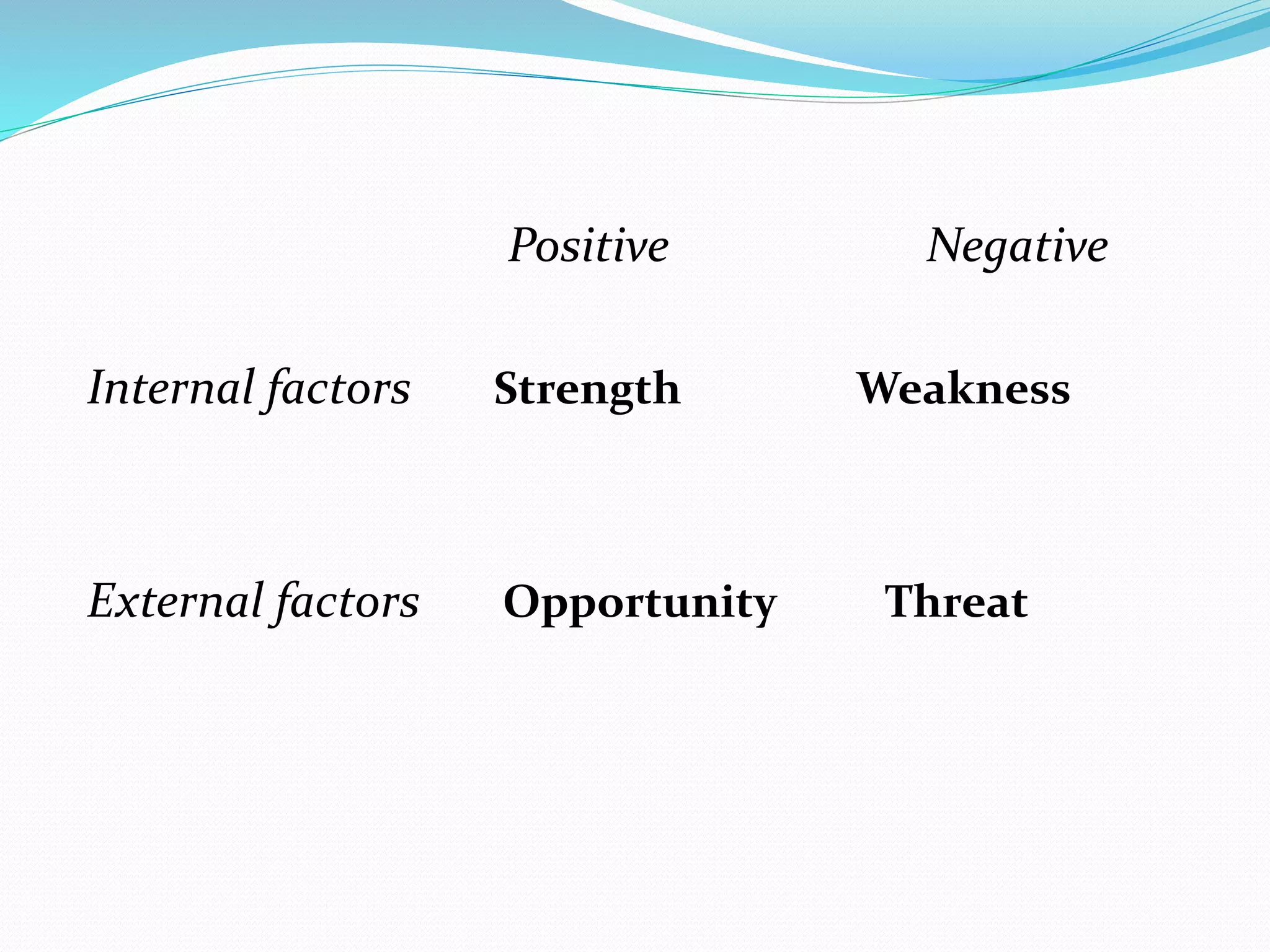
Positive Negative
Internal factors Strength Weakness
External factors Opportunity Threat
SWOT Analysis of ITC
 Strengths
• Established market
reputation.
• Expanding market share.
• Focus on new product
development.
• Diversified business
portfolio.
• Increasing financial
performance.
Weaknesses
• Lack of geographical reach.
• Over dependence on
cigarettes division.
• Limited liquidity position.
Opportunities
• Indian Hospitality sector.
• Favourable trends in Rural
market.
Threats
• Highly competitive market.
• Shortage of skilled labour.
• Rising counterfeit Goods
Market.
SWOT Analysis of INFOSYS
Strengths
• High skill level in IT.
• Strong financial position.
• Positioned as high-end
differentiated player.
• Large workforce.
Weaknesses
• Much smaller revenue than
its global competitors.
• Weak in high end
management consultancy.
• Struggles to grab high
profit US federal govt.
projects.
Opportunities
• New emerging market in
China , Korea.
• Greater scope for
product innovation.
• Growing domestic
demand for IT products.
Threats
• Global economic
slowdown.
• Management transmission
from founders to
professionals.
• Increased competition
from low waged countries
like China , Indonesia.
Advantages
 Source of information for strategic planning.
 Builds organisation’s strengths.
 Reverse its weaknesses.
 Maximizes its response to opportunities.
 Overcome organisation’s threats.
 Helps in identifying core competencies of the firm.
Limitations
 Sources of information.
 Oversimplification.
 Identifying elements.
 Lack of control.
Conclusion
SWOT Analysis can be used as a means of
gathering information from a range of perspectives
that may be able to use the results to strategic
advantage by either matching the strengths to
opportunities or by converting threats or weaknesses
into strengths and opportunities.
THANK YOU

Swot Analysis

  • 2.
    SWOT SWOT Analysis S - Strength  W - Weakness  O - Opportunity  T - Threat  SWOT Analysis is a structured planning method that evaluates the four elements (strength , weakness , opportunity , threat) of an organisation.
  • 3.
     Having anexcellent staff.  Good customer relationships.  Ability to meet the demand.  Strong relations with partners, employees ,suppliers etc.  Strong internal communication system.  Well-designed marketing strategies.  Accessable geographical location.
  • 4.
     Outdated marketresearch data.  Inefficient record maintenance system.  Infrequent cashflow system.  Lack of co-ordination among the individuals in the organisation.  Maintenance of higher inventory costs.  Missed deadlines which leads to cancellation of orders.
  • 5.
     Increase incustomers wants.  Internet as a marketing tool.  Loyal customers.  Seasonal demand.  Poor quality of competitors products.  Excessive price of similar products.  Global offerings.  Changing lifestyle.
  • 6.
     Competitors reducingprices.  Supply costs increase.  New technology.  Government regulations.  Economic slumps or recession.  Alteration in demographics.  Changes in consumer behaviour.
  • 7.
    Positive Negative Internal factorsStrength Weakness External factors Opportunity Threat
  • 8.
    SWOT Analysis ofITC  Strengths • Established market reputation. • Expanding market share. • Focus on new product development. • Diversified business portfolio. • Increasing financial performance. Weaknesses • Lack of geographical reach. • Over dependence on cigarettes division. • Limited liquidity position.
  • 9.
    Opportunities • Indian Hospitalitysector. • Favourable trends in Rural market. Threats • Highly competitive market. • Shortage of skilled labour. • Rising counterfeit Goods Market.
  • 10.
    SWOT Analysis ofINFOSYS Strengths • High skill level in IT. • Strong financial position. • Positioned as high-end differentiated player. • Large workforce. Weaknesses • Much smaller revenue than its global competitors. • Weak in high end management consultancy. • Struggles to grab high profit US federal govt. projects.
  • 11.
    Opportunities • New emergingmarket in China , Korea. • Greater scope for product innovation. • Growing domestic demand for IT products. Threats • Global economic slowdown. • Management transmission from founders to professionals. • Increased competition from low waged countries like China , Indonesia.
  • 12.
    Advantages  Source ofinformation for strategic planning.  Builds organisation’s strengths.  Reverse its weaknesses.  Maximizes its response to opportunities.  Overcome organisation’s threats.  Helps in identifying core competencies of the firm.
  • 13.
    Limitations  Sources ofinformation.  Oversimplification.  Identifying elements.  Lack of control.
  • 14.
    Conclusion SWOT Analysis canbe used as a means of gathering information from a range of perspectives that may be able to use the results to strategic advantage by either matching the strengths to opportunities or by converting threats or weaknesses into strengths and opportunities.
  • 15.