Sustaining Scholarly Infrastructures
Through Collective Action
The Lessons that Olson Can Teach Us
@cameronneylon
http://orcid.org/0000-0002-0068-716X
To read the paper search for
biorxiv neylon olson
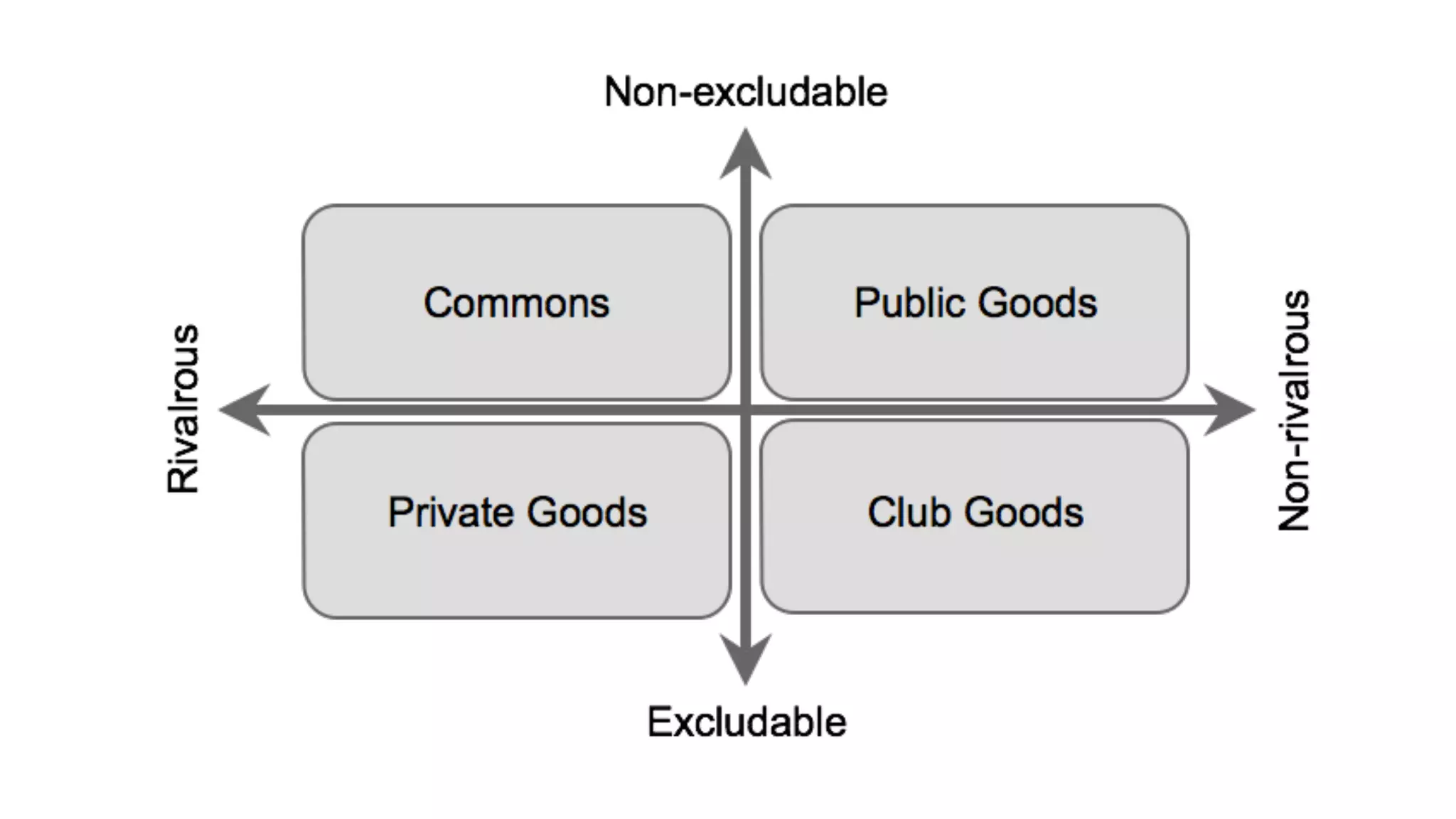
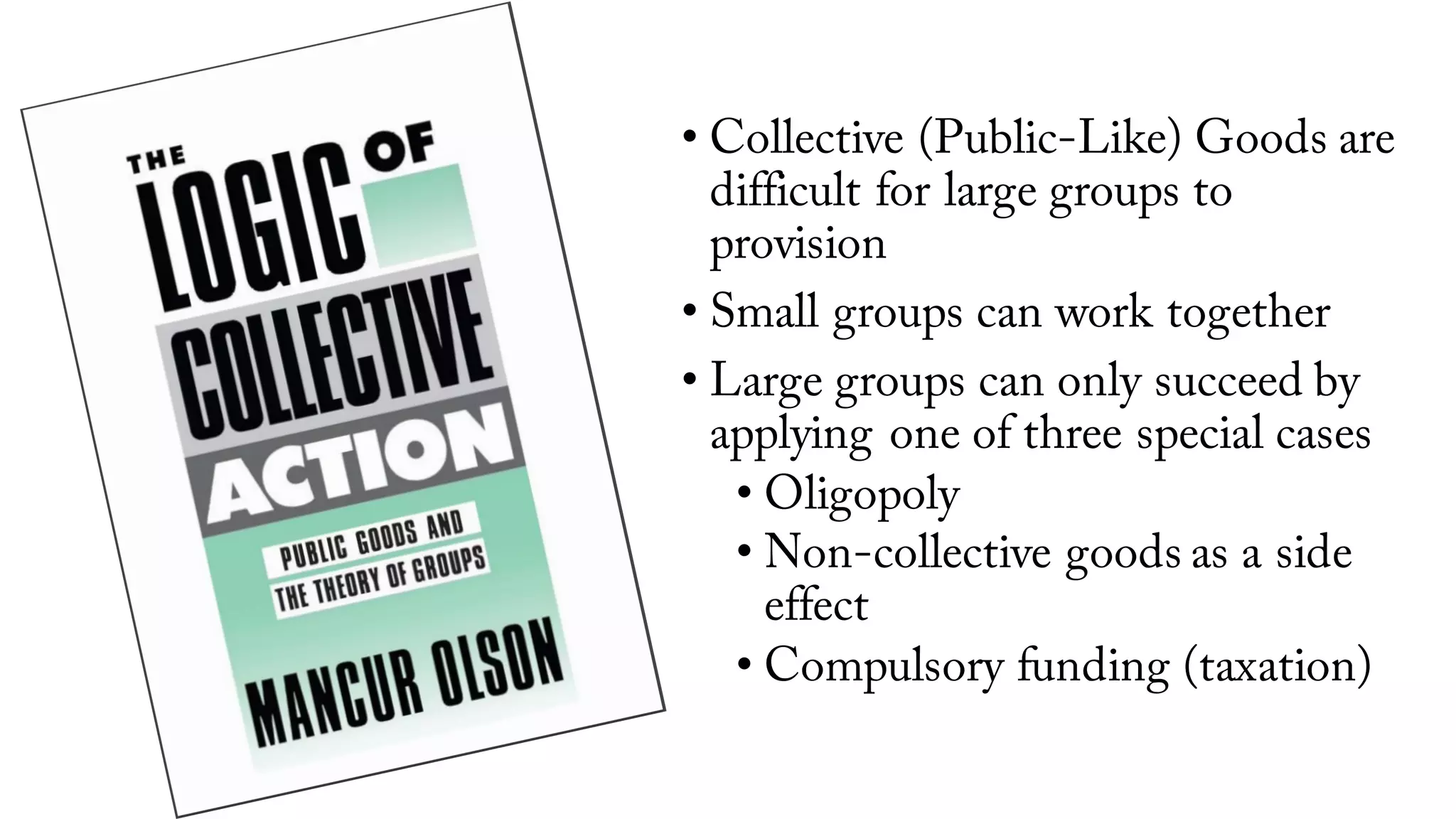
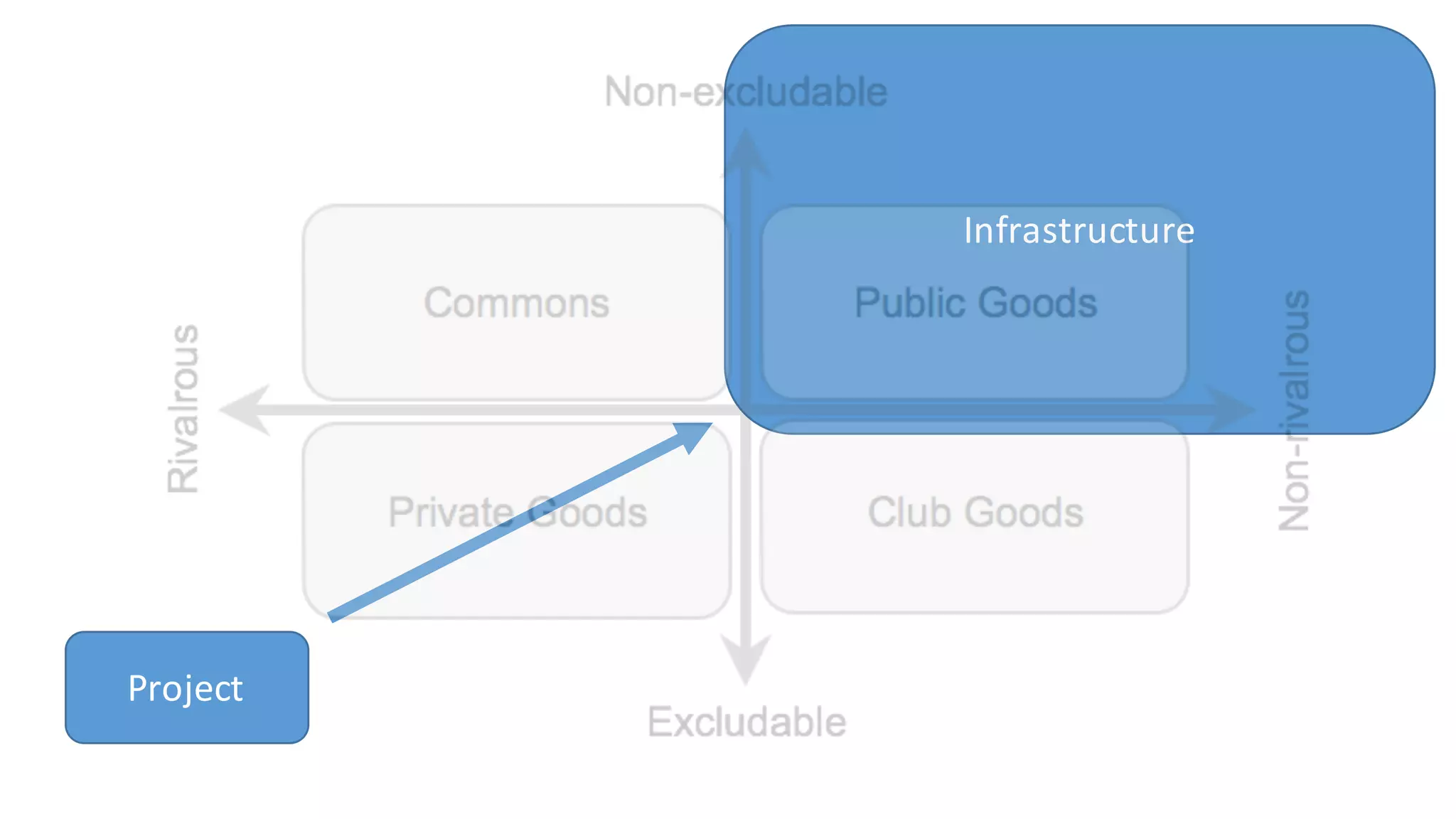
• Collective (Public-Like) Goods are
difficult for large groups to
provision
• Small groups can work together
• Large groups can only succeed by
applying one of three special cases
• Oligopoly
• Non-collective goods as a side
effect
• Compulsory funding (taxation)
Ways of beating the problem…
1. Oligopoly: Generally of funders or publishers, there are too many
institutions. EuropePMC is an example.
2. Non-collective side-product: Needs to be a natural service or non-
collective good generated as part of public good provisioning. Very
few good examples in open data world and this is predictable,
failure often results in a turn to a subscription model eg TAIR
3. Compulsion: Either compulsory membership models (professional
certificationis an example) or top slicing/overheads models
Crossref phased through all three approaches
Crossref provides a public good in the form of freely accessible
bibliographic metadata and the infrastructure that supports it.
Three phases
1. Effective oligopoly: 5-7 publishers dominate the space and were
essentially able to act unilaterally to set up and support Crossref
2. Non-collective side benefit: Members join to be able to assign
DOIs and to gain the benefits of traffic through the referrer
3. Compulsory contribution: No (STM) publisher will be taken
seriously unless it is assigning Crossref DOIs. Membership is (close
to) effectively compulsory for a serious publisher.
Project
Infrastructure
Project
Infrastructure
Project
Infrastructure
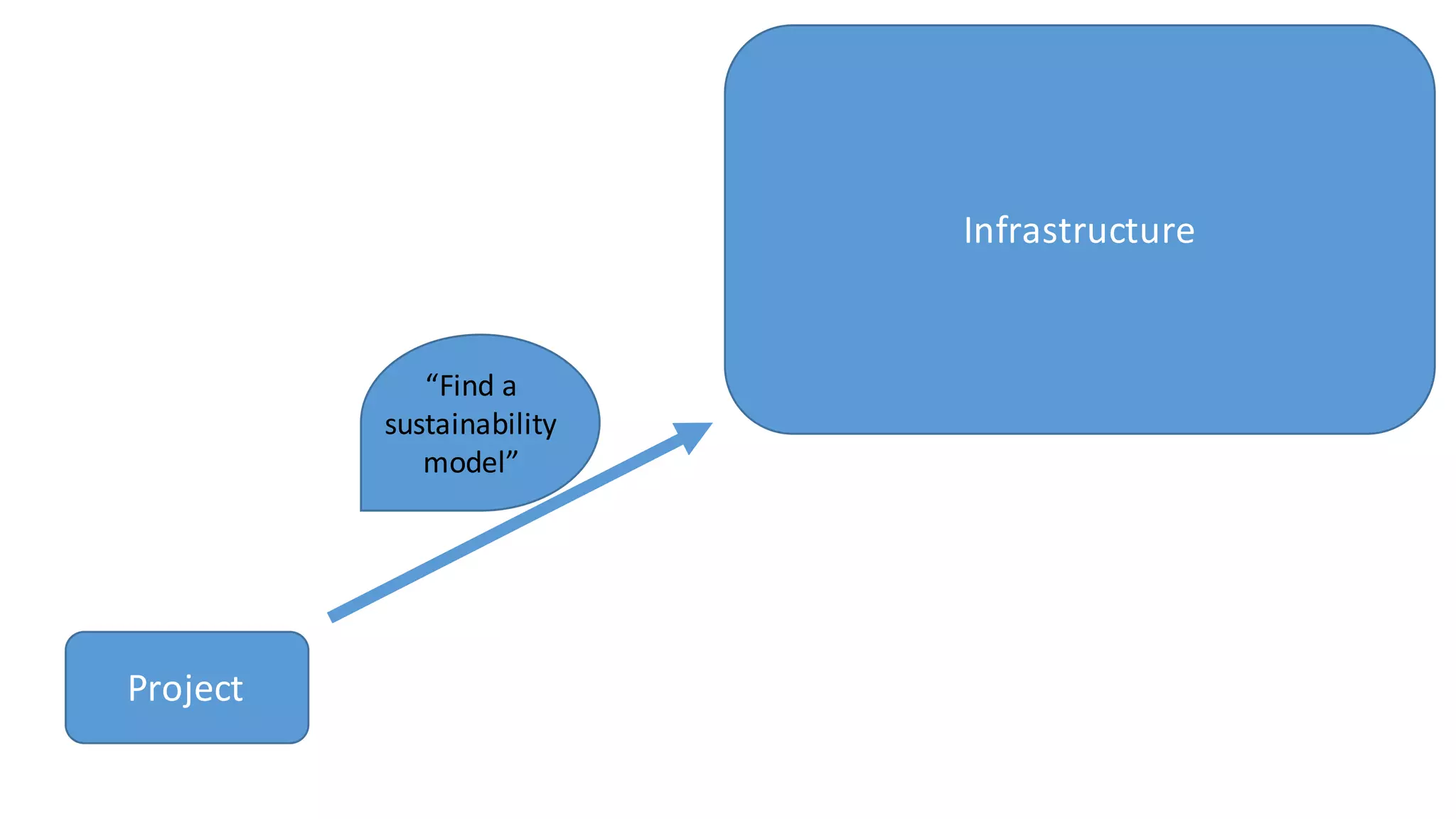
“Find	
  a	
  
sustainability	
  
model”
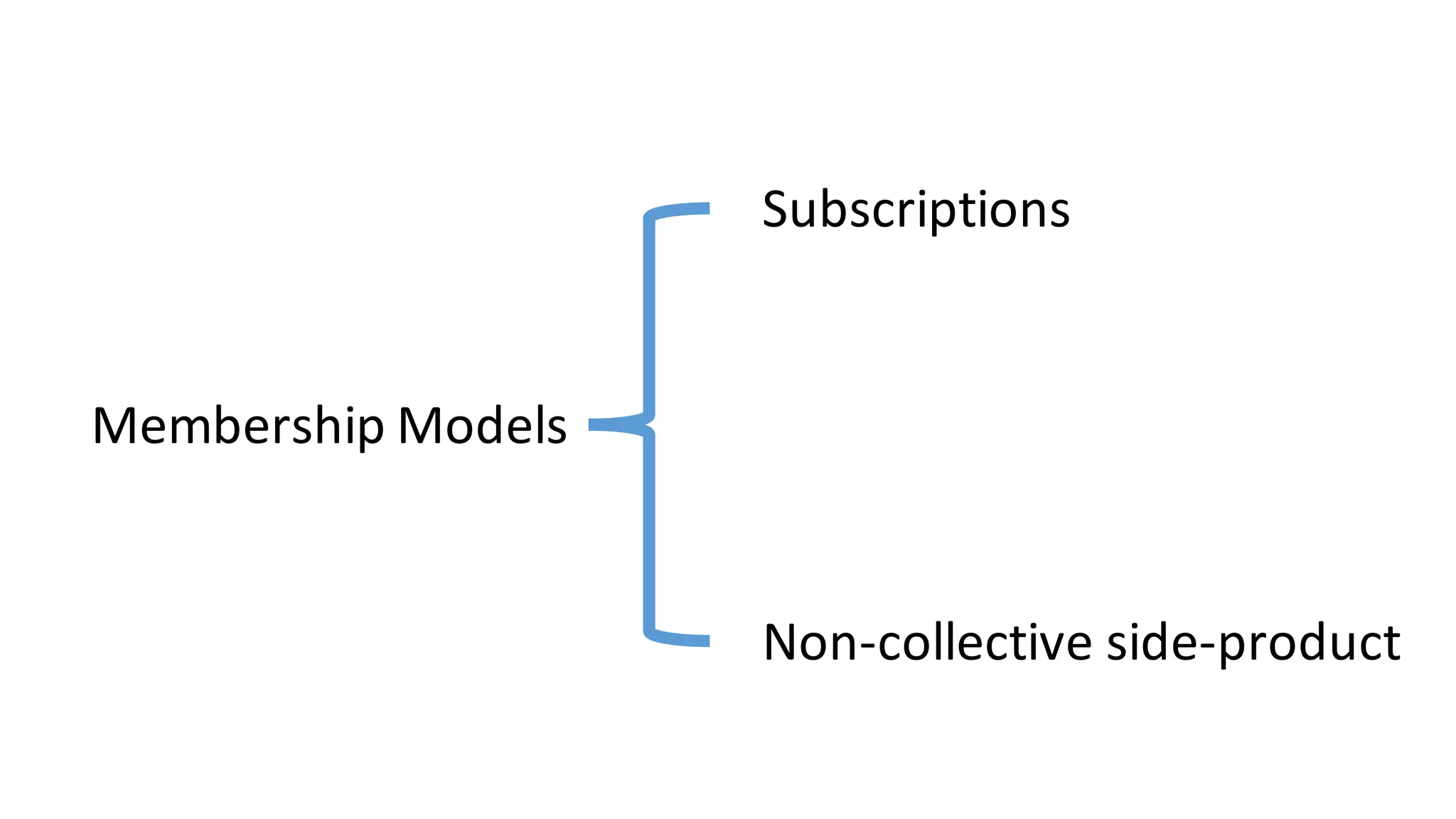
Membership	
  Models
Subscriptions
Non-­‐collective	
  side-­‐product
Project
Infrastructure
No taxation without representation
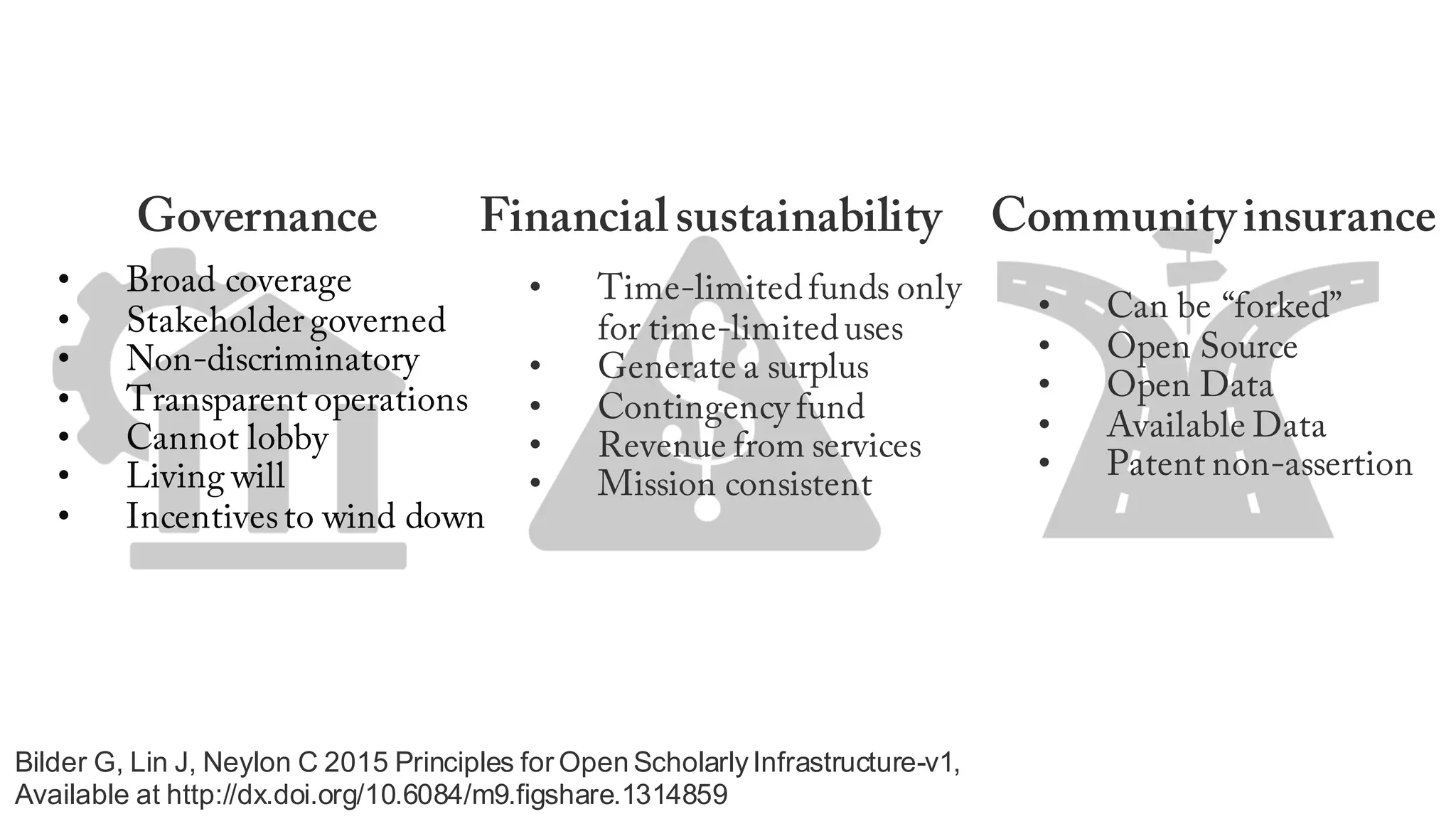
• Broad coverage
• Stakeholder governed
• Non-discriminatory
• Transparent operations
• Cannot lobby
• Living will
• Incentivesto wind down
• Time-limitedfunds only
for time-limiteduses
• Generate a surplus
• Contingency fund
• Revenue from services
• Mission consistent
• Can be “forked”
• Open Source
• Open Data
• Available Data
• Patent non-assertion
Governance Financial sustainability Communityinsurance
Bilder G,  Lin  J,  Neylon  C  2015  Principles  for  Open  Scholarly  Infrastructure-­v1,  
Available  at  http://dx.doi.org/10.6084/m9.figshare.1314859
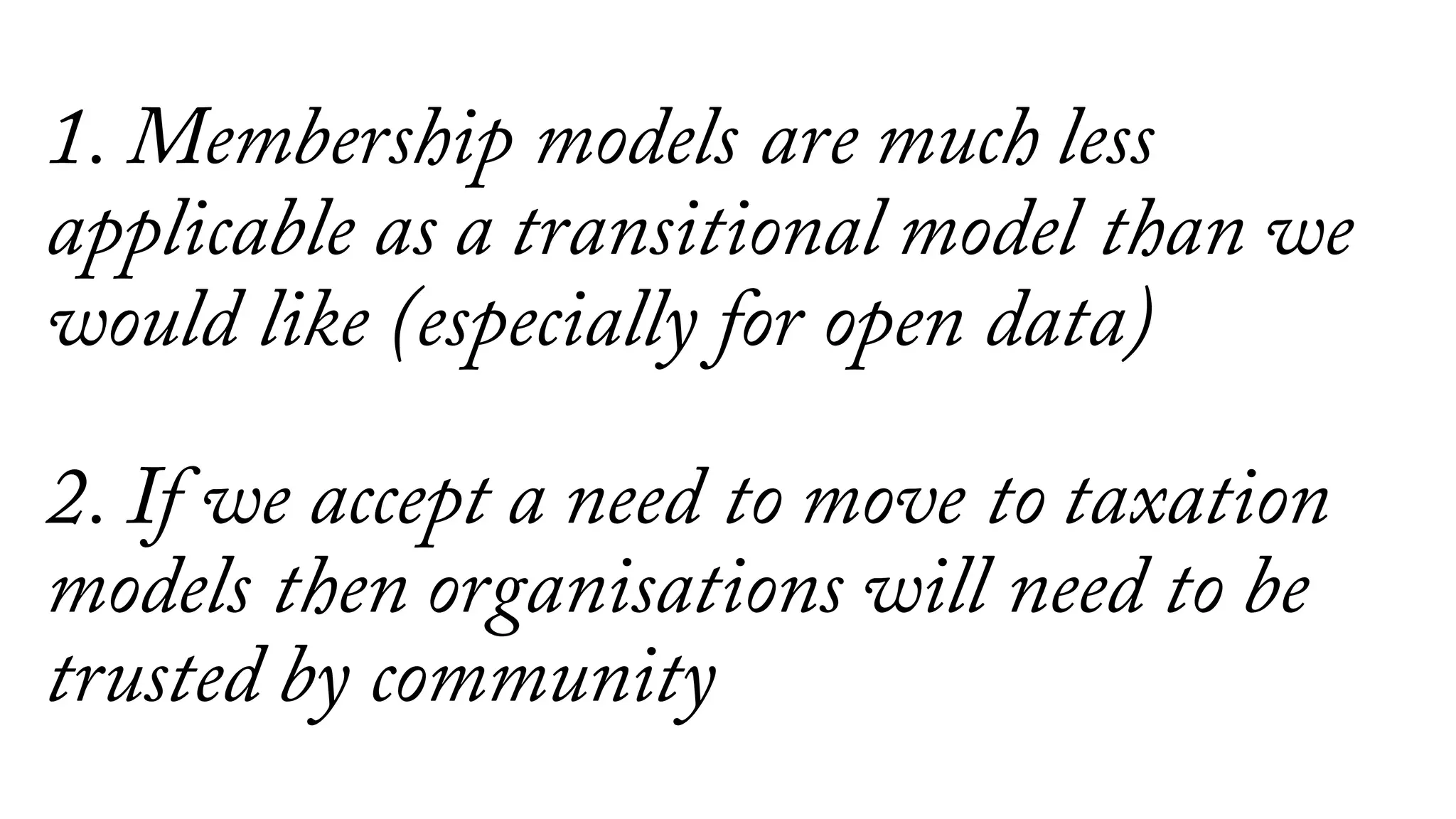
1. Membership models are much less
applicable as a transitional model than we
would like (especially for open data)
2. If we accept a need to move to taxation
models then organisations will need to be
trusted by community
@cameronneylon
http://orcid.org/0000-0002-0068-716X
Slides: http://bit.ly/2oa04BF
Sustaining Scholarly Infrastructures through Collective Action: The lessons that Olson can teach us

Sustaining Scholarly Infrastructures through Collective Action: The lessons that Olson can teach us

  • 1.
    Sustaining Scholarly Infrastructures ThroughCollective Action The Lessons that Olson Can Teach Us @cameronneylon http://orcid.org/0000-0002-0068-716X
  • 2.
    To read thepaper search for biorxiv neylon olson
  • 4.
    • Collective (Public-Like)Goods are difficult for large groups to provision • Small groups can work together • Large groups can only succeed by applying one of three special cases • Oligopoly • Non-collective goods as a side effect • Compulsory funding (taxation)
  • 5.
    Ways of beatingthe problem… 1. Oligopoly: Generally of funders or publishers, there are too many institutions. EuropePMC is an example. 2. Non-collective side-product: Needs to be a natural service or non- collective good generated as part of public good provisioning. Very few good examples in open data world and this is predictable, failure often results in a turn to a subscription model eg TAIR 3. Compulsion: Either compulsory membership models (professional certificationis an example) or top slicing/overheads models
  • 6.
    Crossref phased throughall three approaches Crossref provides a public good in the form of freely accessible bibliographic metadata and the infrastructure that supports it. Three phases 1. Effective oligopoly: 5-7 publishers dominate the space and were essentially able to act unilaterally to set up and support Crossref 2. Non-collective side benefit: Members join to be able to assign DOIs and to gain the benefits of traffic through the referrer 3. Compulsory contribution: No (STM) publisher will be taken seriously unless it is assigning Crossref DOIs. Membership is (close to) effectively compulsory for a serious publisher.
  • 7.
  • 8.
  • 9.
  • 10.
  • 11.
  • 12.
    No taxation withoutrepresentation
  • 13.
    • Broad coverage •Stakeholder governed • Non-discriminatory • Transparent operations • Cannot lobby • Living will • Incentivesto wind down • Time-limitedfunds only for time-limiteduses • Generate a surplus • Contingency fund • Revenue from services • Mission consistent • Can be “forked” • Open Source • Open Data • Available Data • Patent non-assertion Governance Financial sustainability Communityinsurance Bilder G,  Lin  J,  Neylon  C  2015  Principles  for  Open  Scholarly  Infrastructure-­v1,   Available  at  http://dx.doi.org/10.6084/m9.figshare.1314859
  • 14.
    1. Membership modelsare much less applicable as a transitional model than we would like (especially for open data) 2. If we accept a need to move to taxation models then organisations will need to be trusted by community
  • 15.