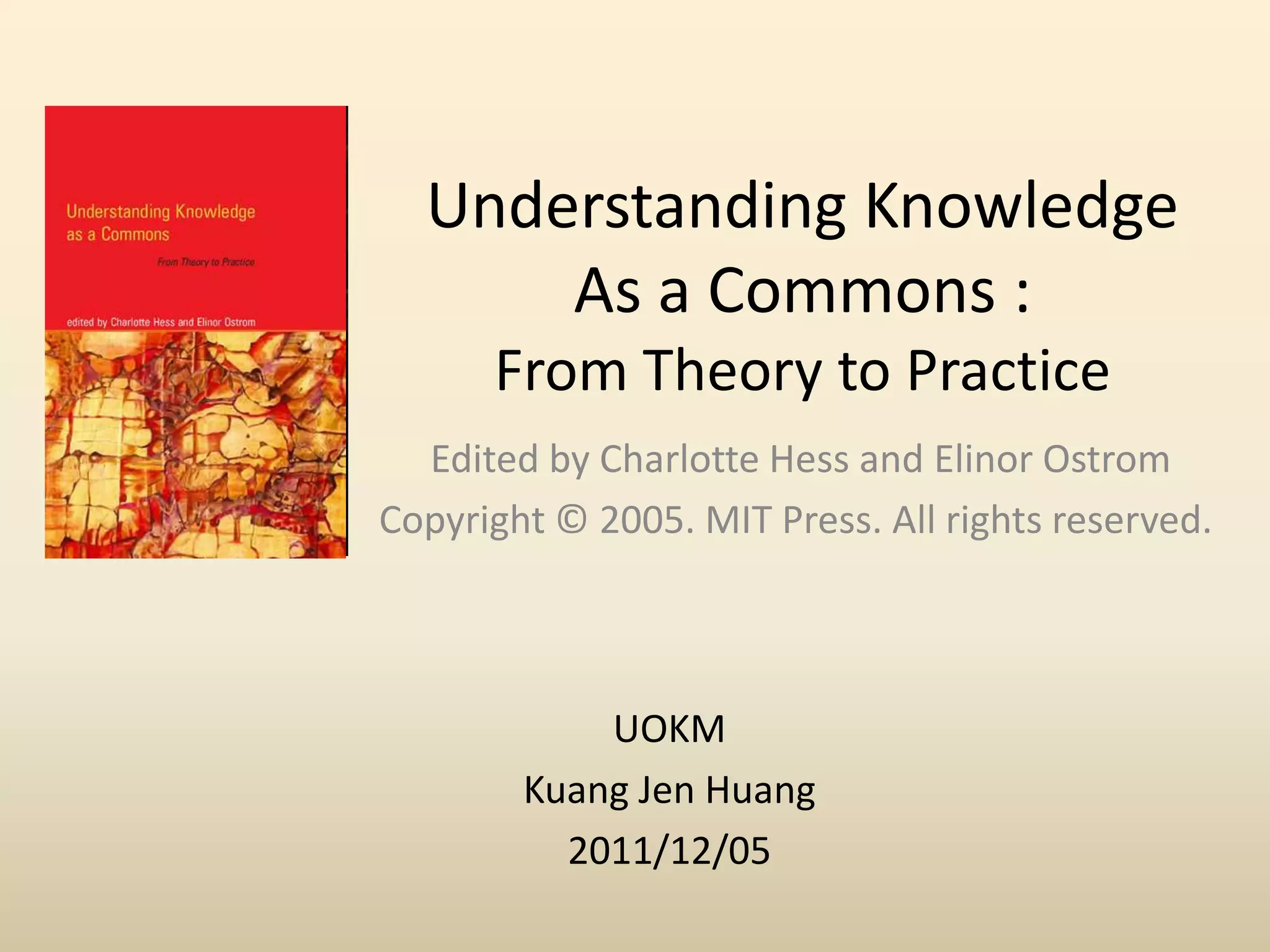
Understanding Knowledge
      As a Commons :
      From Theory to Practice
  Edited by Charlotte Hess and Elinor Ostrom
Copyright © 2005. MIT Press. All rights reserved.


            UOKM
        Kuang Jen Huang
          2011/12/05
Overview
 “Workshop on Scholarly Communication as a Commons"
                                                  in 2004

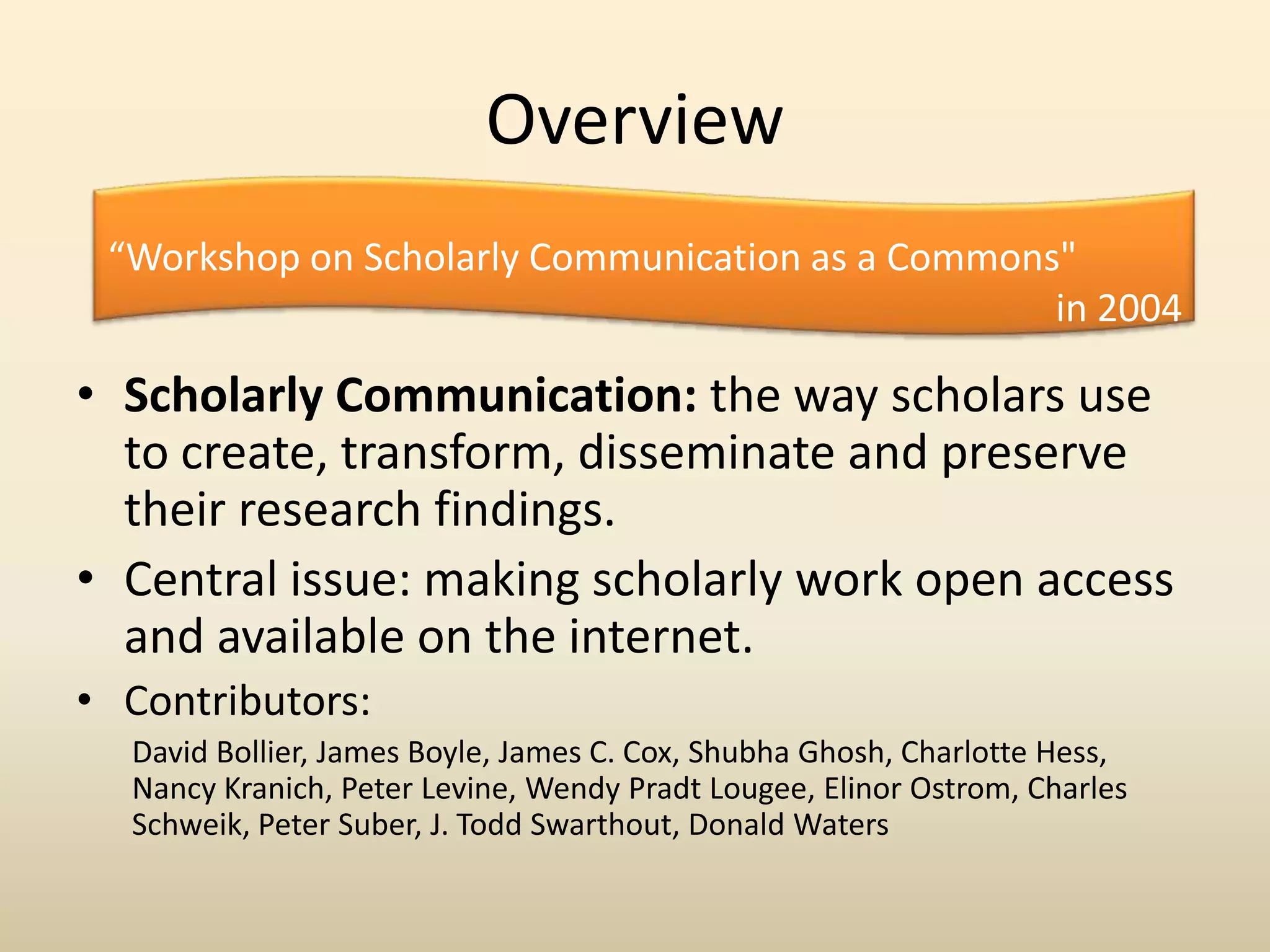
• Scholarly Communication: the way scholars use
  to create, transform, disseminate and preserve
  their research findings.
• Central issue: making scholarly work open access
  and available on the internet.
• Contributors:
  David Bollier, James Boyle, James C. Cox, Shubha Ghosh, Charlotte Hess,
  Nancy Kranich, Peter Levine, Wendy Pradt Lougee, Elinor Ostrom, Charles
  Schweik, Peter Suber, J. Todd Swarthout, Donald Waters
Outline
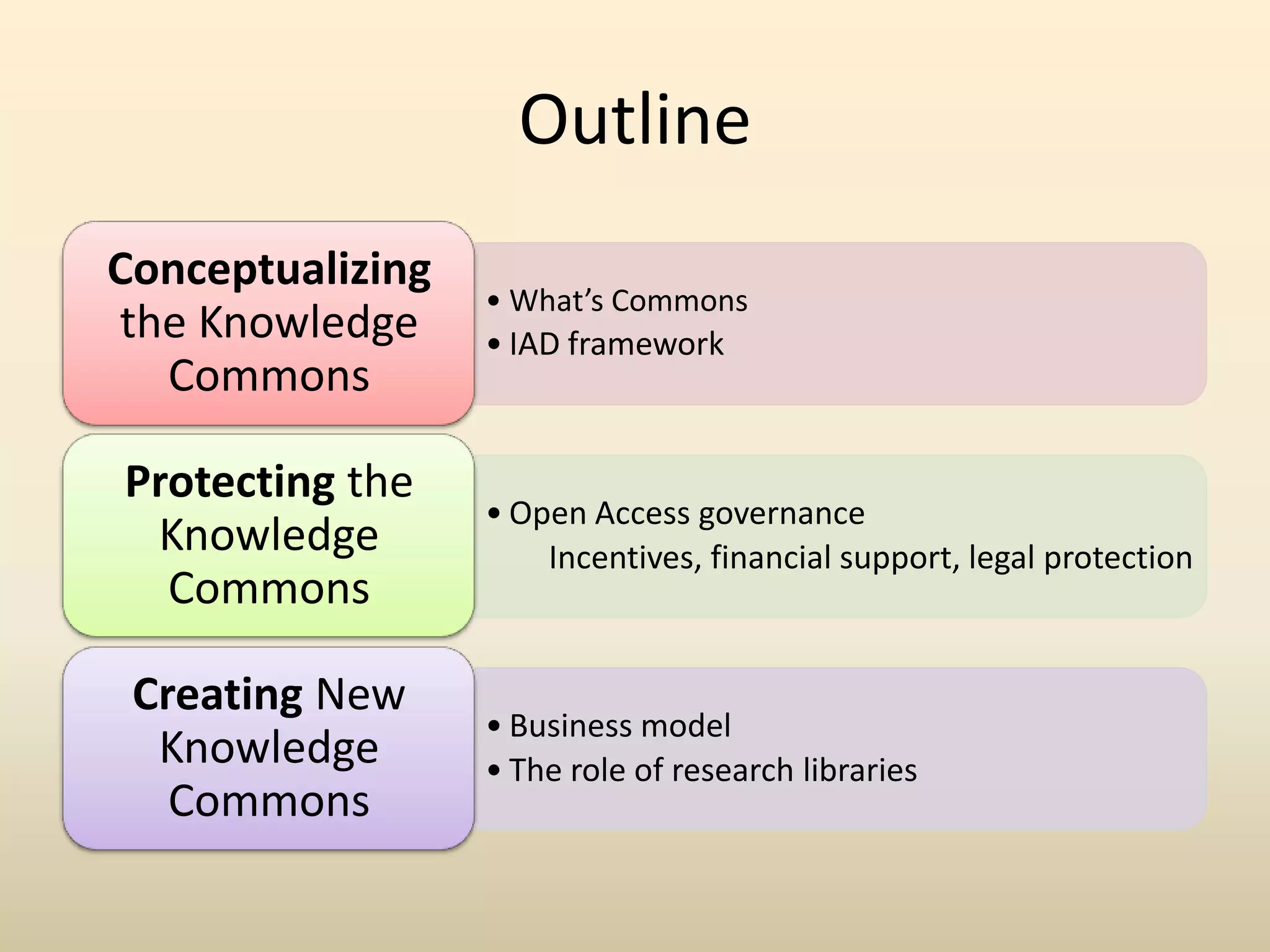
Conceptualizing
                  • What’s Commons
the Knowledge     • IAD framework
  Commons

Protecting the
                  • Open Access governance
 Knowledge            Incentives, financial support, legal protection
  Commons

 Creating New
                  • Business model
  Knowledge       • The role of research libraries
   Commons
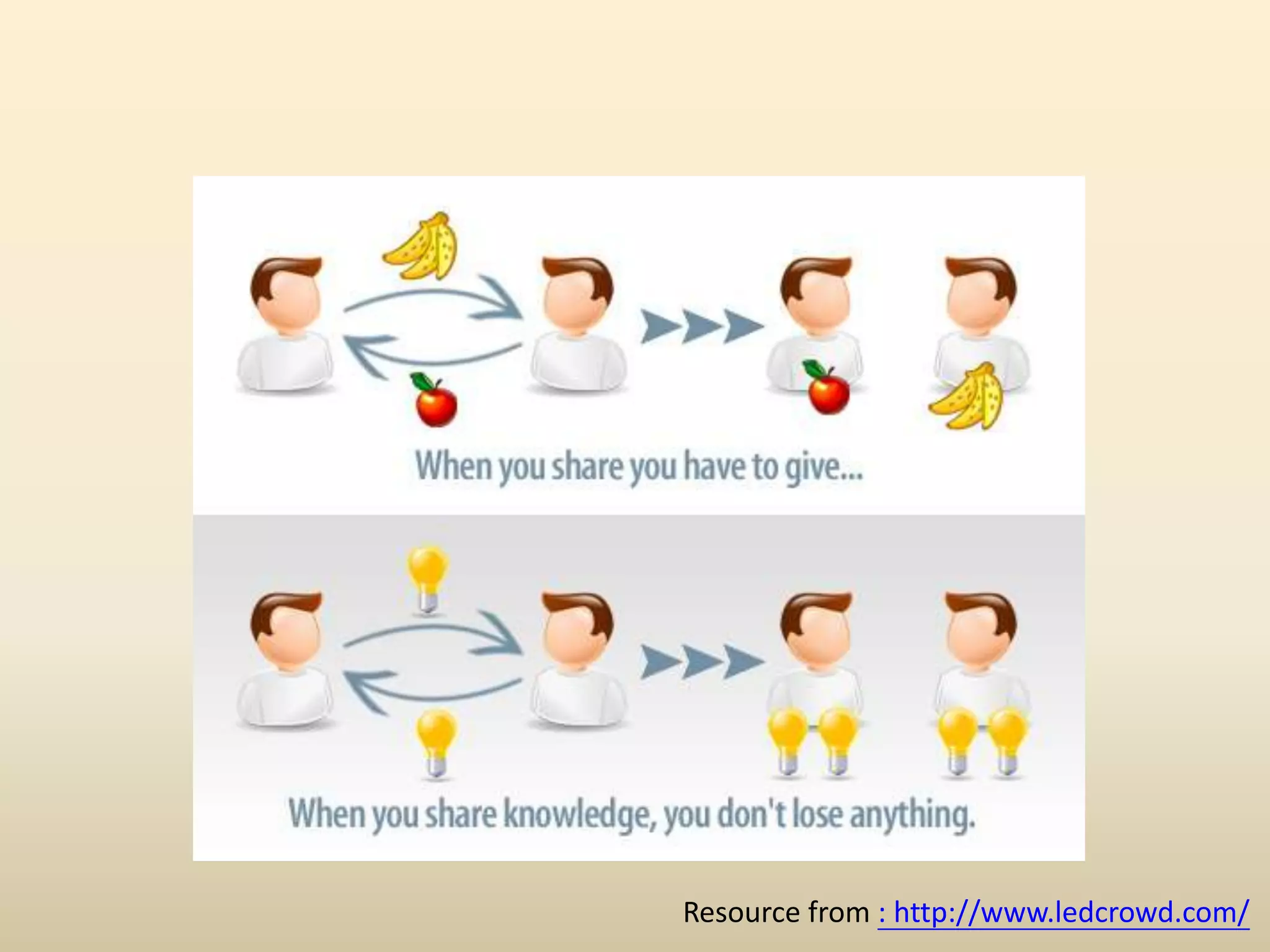
What’s commons?
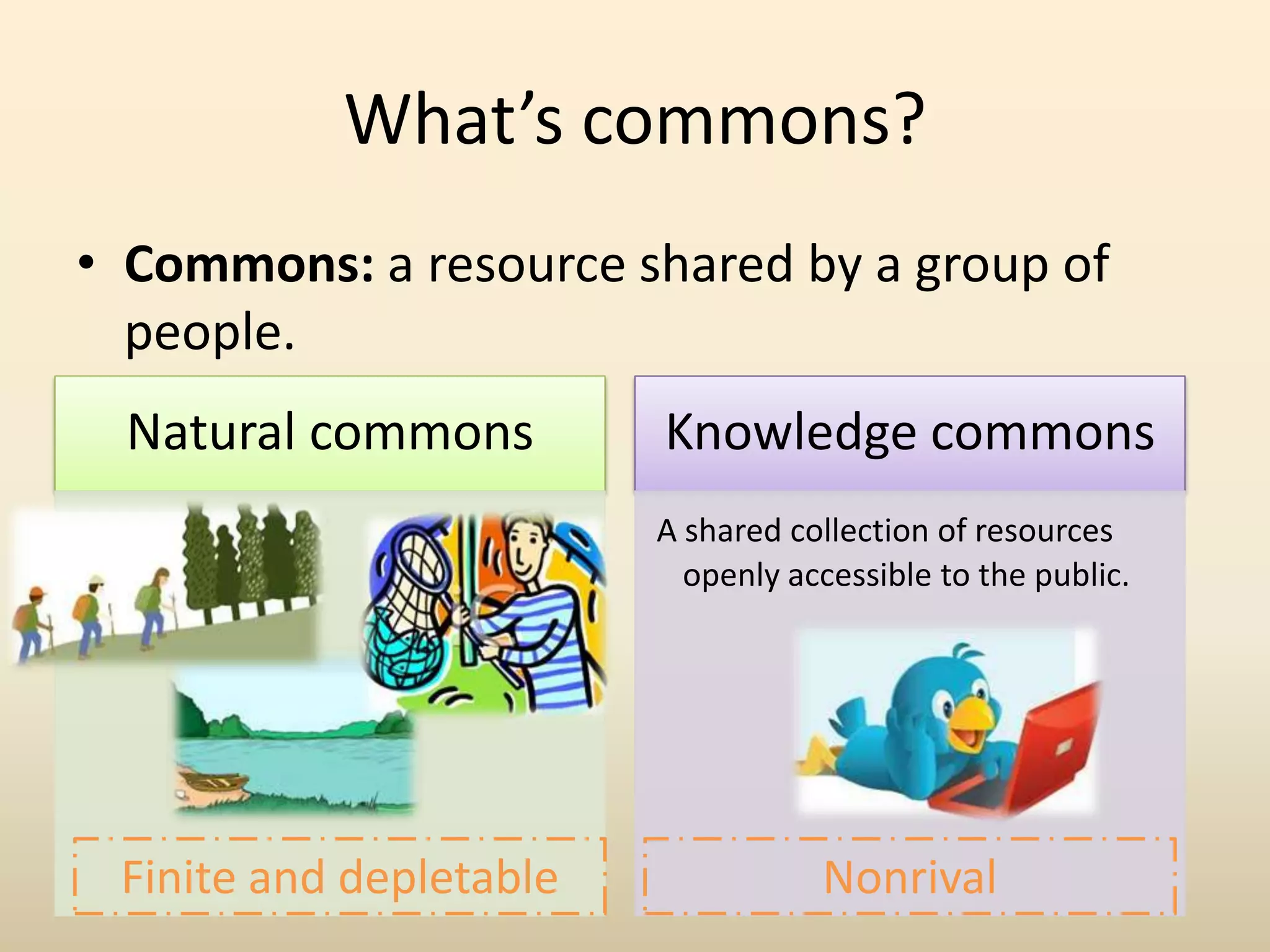
• Commons: a resource shared by a group of
  people.
  Natural commons        Knowledge commons
                         A shared collection of resources
                           openly accessible to the public.


 Finite and depletable              Nonrival
Resource from : http://www.ledcrowd.com/
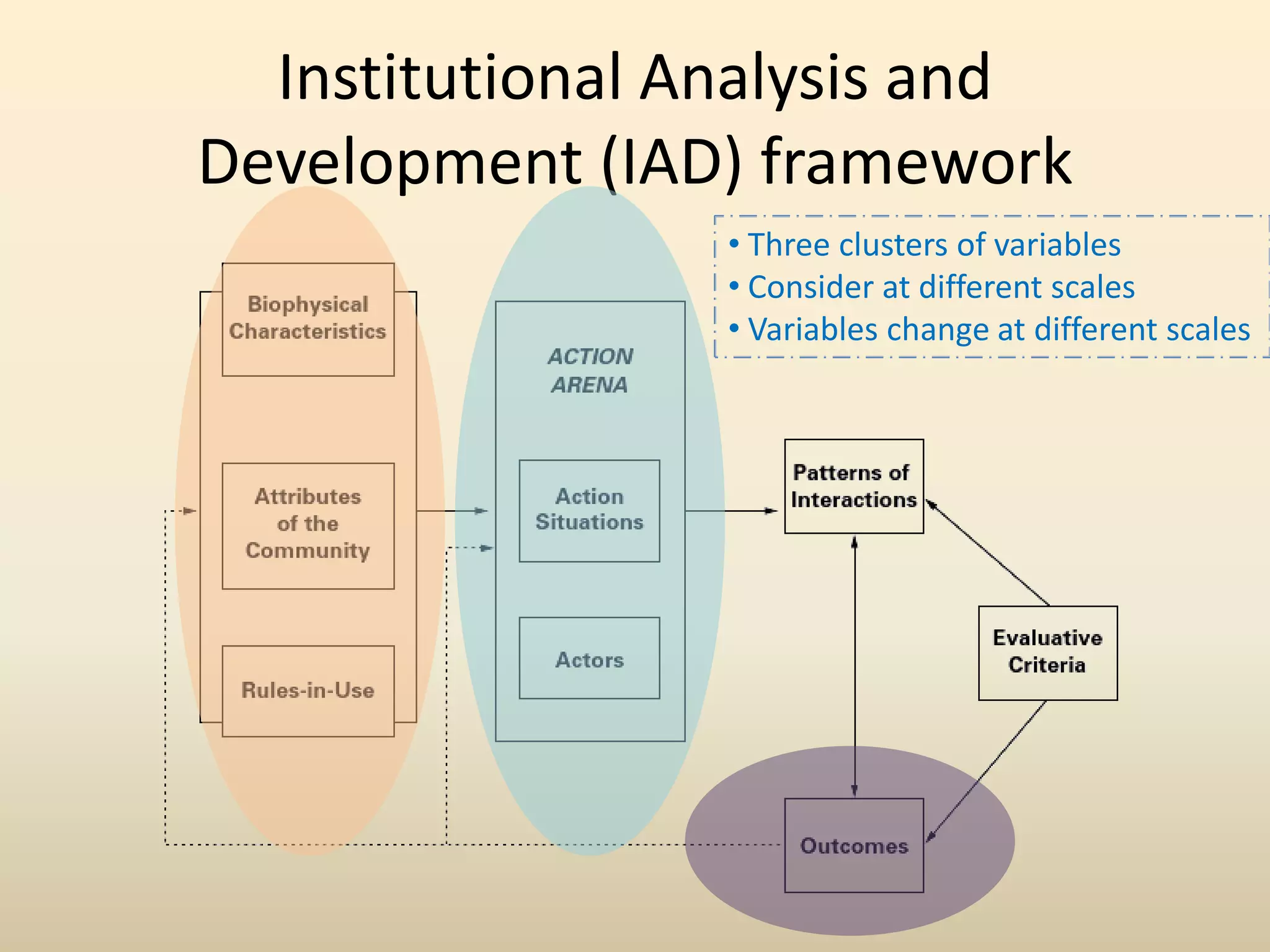
Institutional Analysis and
Development (IAD) framework
                • Three clusters of variables
                • Consider at different scales
                • Variables change at different scales
Open Access
• Free, online access to information without most copy
  right and licensing restrictions.
• Today, most Open Access archives are built around
  computer software. (Open Source Software)
• Online scholarly information can be accessed from
  anywhere but only if you have the necessary access
  rights.
• To transform the Open Source Software paradigm to
  scientific collaboration situations
   – Incentives
   – Financial support
   – Licensing (legal protection)
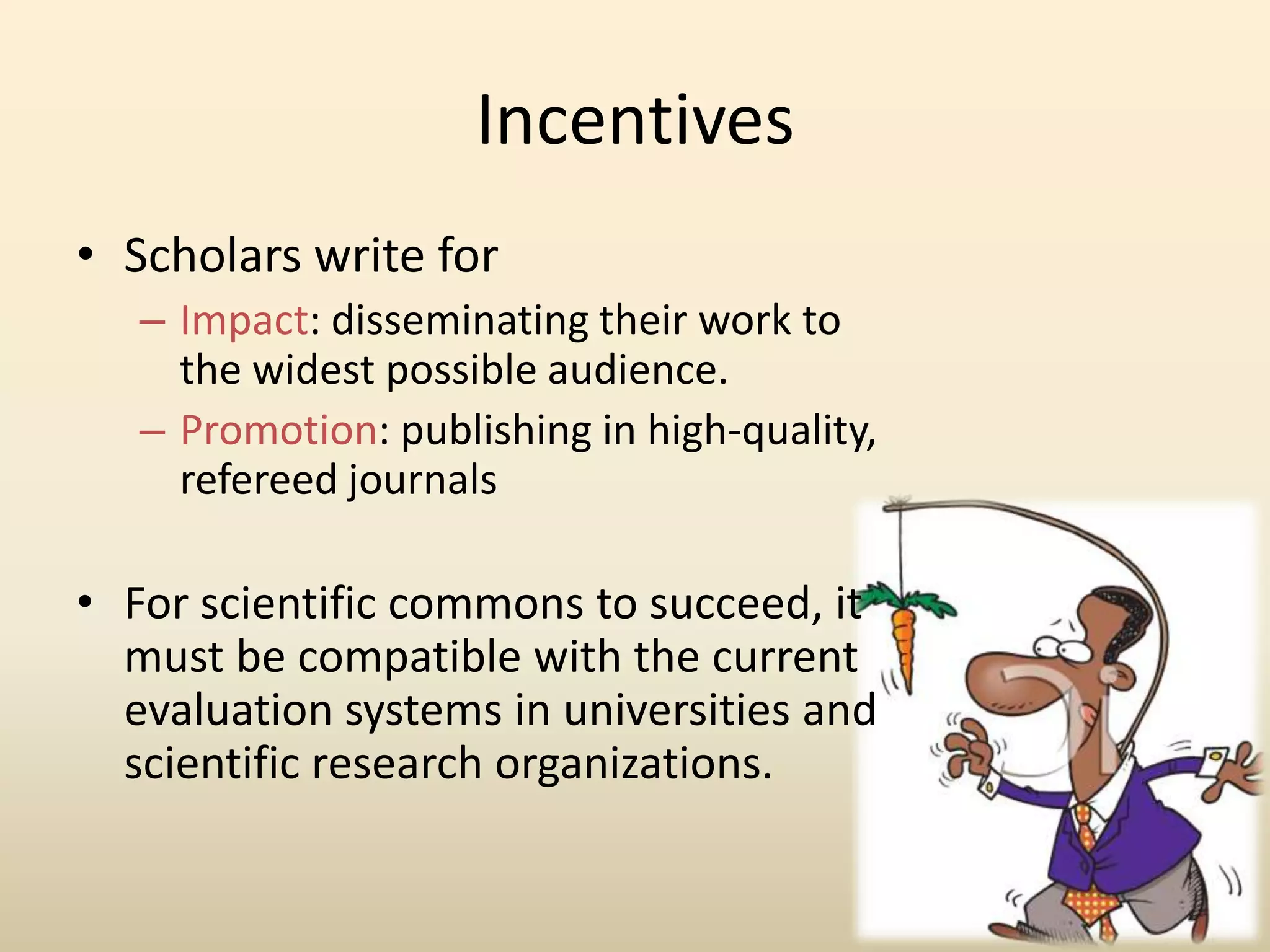
Incentives
• Scholars write for
   – Impact: disseminating their work to
     the widest possible audience.
   – Promotion: publishing in high-quality,
     refereed journals

• For scientific commons to succeed, it
  must be compatible with the current
  evaluation systems in universities and
  scientific research organizations.
Financial support
• for participants’ time and energy in contributing to the
  commons.
• for the administrative infrastructure that makes the
  commons available; coordinate activities.


• Different financial-support schemes in the open-
  source software domain:
   – The government-subsidy model; philanthropic funding;
     corporate consortia; corporate investment; venture capital
     banking; donations from participants or users; hybrid/mix
Legal protection
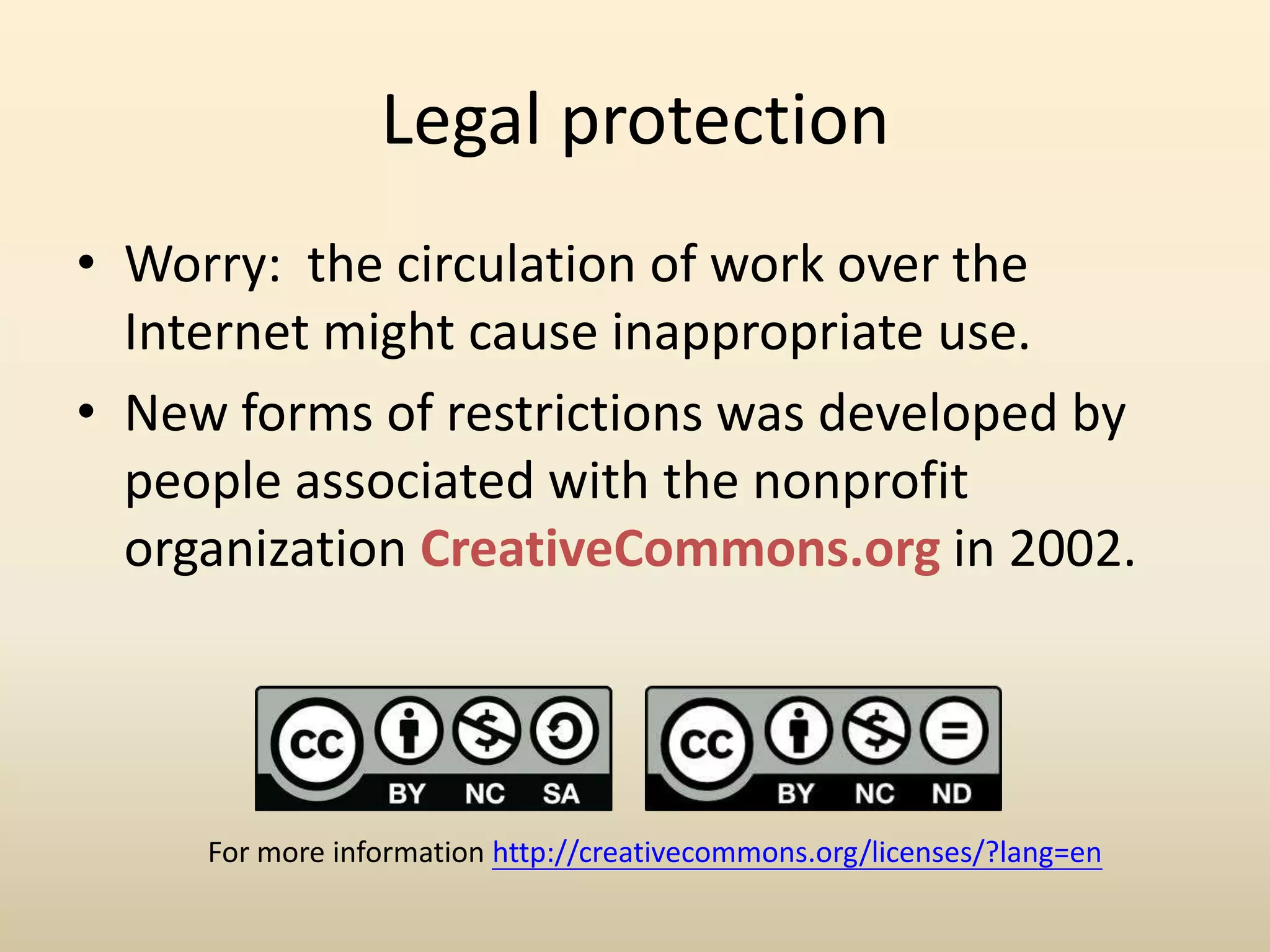
• Worry: the circulation of work over the
  Internet might cause inappropriate use.
• New forms of restrictions was developed by
  people associated with the nonprofit
  organization CreativeCommons.org in 2002.


     For more information http://creativecommons.org/licenses/?lang=en
“Science Commons” project
1) promoting open access to scientific publications
2) developing standard licensing models to
   facilitate wider access to scientific information
3) exploring ways to increase the sharing of
   scientific data


   For more information http://sciencecommons.org/index.php
Business model
• Traditional market: a producer creates and sells a
  product that consumers demand.
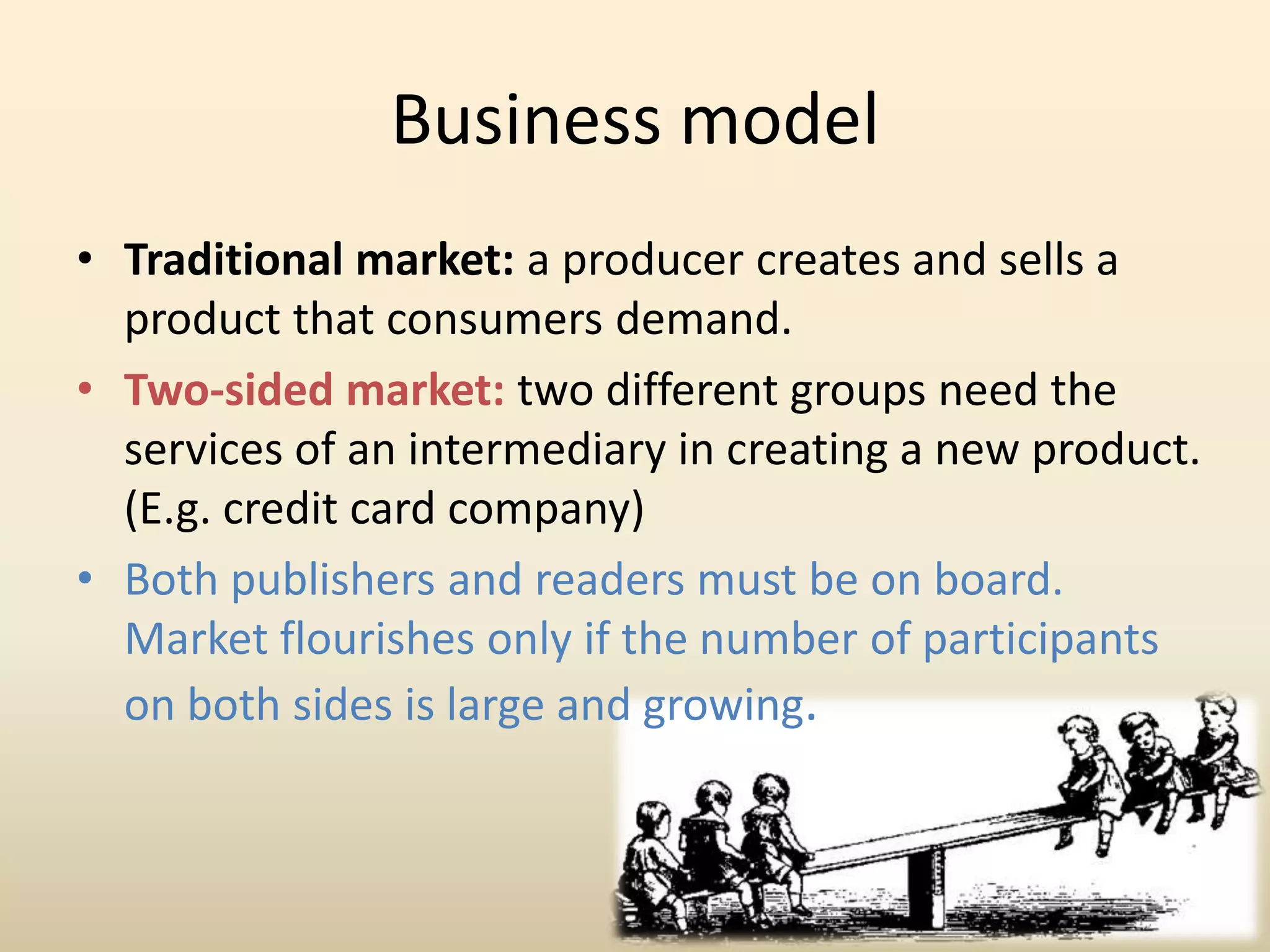
• Two-sided market: two different groups need the
  services of an intermediary in creating a new product.
  (E.g. credit card company)
• Both publishers and readers must be on board.
  Market flourishes only if the number of participants
  on both sides is large and growing.
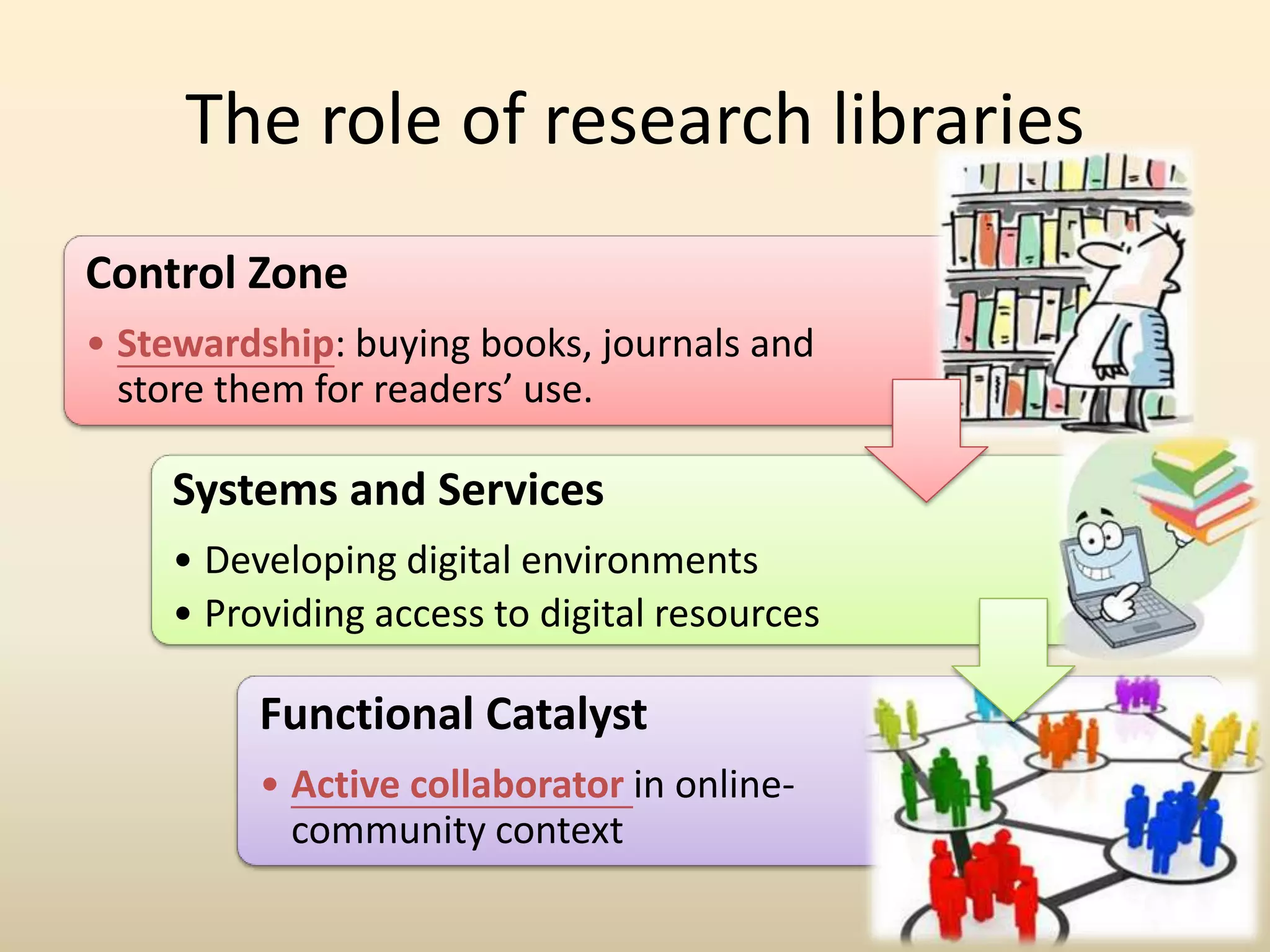
The role of research libraries
Control Zone
• Stewardship: buying books, journals and
  store them for readers’ use.

    Systems and Services
    • Developing digital environments
    • Providing access to digital resources

         Functional Catalyst
         • Active collaborator in online-
           community context
Summary
• In sum, this book explored the possibilities
  and challenges for sharing any kind of work or
  content to the public as a “commons” from
  the perspectives of political science,
  economics, and law.
Related Links
• TED speech: Richard Baraniuk on open-source learning
  http://www.ted.com/talks/richard_baraniuk_on_open_source_learning.html
• Openness, the knowledge commons and the critique of intellectual property
  http://www.re-public.gr/en/?p=88
• Open access: Reshaping rules of research
  http://www.thestar.com/article/185609
• Government-funded research to be housed in free public database
  http://findarticles.com/p/articles/mi_6836/is_1_102/ai_n28491381/
• Academic Patenting: How universities and public research organizations…
  http://www.wipo.int/sme/en/documents/academic_patenting.html
• Creative Commons Lisences http://creativecommons.org/licenses/?lang=en
• Science Commons http://sciencecommons.org/index.php

Understanding knowledge as a commons

  • 1.
    Understanding Knowledge As a Commons : From Theory to Practice Edited by Charlotte Hess and Elinor Ostrom Copyright © 2005. MIT Press. All rights reserved. UOKM Kuang Jen Huang 2011/12/05
  • 2.
    Overview “Workshop onScholarly Communication as a Commons" in 2004 • Scholarly Communication: the way scholars use to create, transform, disseminate and preserve their research findings. • Central issue: making scholarly work open access and available on the internet. • Contributors: David Bollier, James Boyle, James C. Cox, Shubha Ghosh, Charlotte Hess, Nancy Kranich, Peter Levine, Wendy Pradt Lougee, Elinor Ostrom, Charles Schweik, Peter Suber, J. Todd Swarthout, Donald Waters
  • 3.
    Outline Conceptualizing • What’s Commons the Knowledge • IAD framework Commons Protecting the • Open Access governance Knowledge Incentives, financial support, legal protection Commons Creating New • Business model Knowledge • The role of research libraries Commons
  • 4.
    What’s commons? • Commons:a resource shared by a group of people. Natural commons Knowledge commons A shared collection of resources openly accessible to the public. Finite and depletable Nonrival
  • 5.
    Resource from :http://www.ledcrowd.com/
  • 6.
    Institutional Analysis and Development(IAD) framework • Three clusters of variables • Consider at different scales • Variables change at different scales
  • 7.
    Open Access • Free,online access to information without most copy right and licensing restrictions. • Today, most Open Access archives are built around computer software. (Open Source Software) • Online scholarly information can be accessed from anywhere but only if you have the necessary access rights. • To transform the Open Source Software paradigm to scientific collaboration situations – Incentives – Financial support – Licensing (legal protection)
  • 8.
    Incentives • Scholars writefor – Impact: disseminating their work to the widest possible audience. – Promotion: publishing in high-quality, refereed journals • For scientific commons to succeed, it must be compatible with the current evaluation systems in universities and scientific research organizations.
  • 9.
    Financial support • forparticipants’ time and energy in contributing to the commons. • for the administrative infrastructure that makes the commons available; coordinate activities. • Different financial-support schemes in the open- source software domain: – The government-subsidy model; philanthropic funding; corporate consortia; corporate investment; venture capital banking; donations from participants or users; hybrid/mix
  • 10.
    Legal protection • Worry:the circulation of work over the Internet might cause inappropriate use. • New forms of restrictions was developed by people associated with the nonprofit organization CreativeCommons.org in 2002. For more information http://creativecommons.org/licenses/?lang=en
  • 11.
    “Science Commons” project 1)promoting open access to scientific publications 2) developing standard licensing models to facilitate wider access to scientific information 3) exploring ways to increase the sharing of scientific data For more information http://sciencecommons.org/index.php
  • 12.
    Business model • Traditionalmarket: a producer creates and sells a product that consumers demand. • Two-sided market: two different groups need the services of an intermediary in creating a new product. (E.g. credit card company) • Both publishers and readers must be on board. Market flourishes only if the number of participants on both sides is large and growing.
  • 13.
    The role ofresearch libraries Control Zone • Stewardship: buying books, journals and store them for readers’ use. Systems and Services • Developing digital environments • Providing access to digital resources Functional Catalyst • Active collaborator in online- community context
  • 14.
    Summary • In sum,this book explored the possibilities and challenges for sharing any kind of work or content to the public as a “commons” from the perspectives of political science, economics, and law.
  • 15.
    Related Links • TEDspeech: Richard Baraniuk on open-source learning http://www.ted.com/talks/richard_baraniuk_on_open_source_learning.html • Openness, the knowledge commons and the critique of intellectual property http://www.re-public.gr/en/?p=88 • Open access: Reshaping rules of research http://www.thestar.com/article/185609 • Government-funded research to be housed in free public database http://findarticles.com/p/articles/mi_6836/is_1_102/ai_n28491381/ • Academic Patenting: How universities and public research organizations… http://www.wipo.int/sme/en/documents/academic_patenting.html • Creative Commons Lisences http://creativecommons.org/licenses/?lang=en • Science Commons http://sciencecommons.org/index.php